A collection of worksheets designed to help students write structured biographical paragraphs about historical figures using mind maps and sentence starters. Each worksheet features a unique theme tailored to the figure's profession.
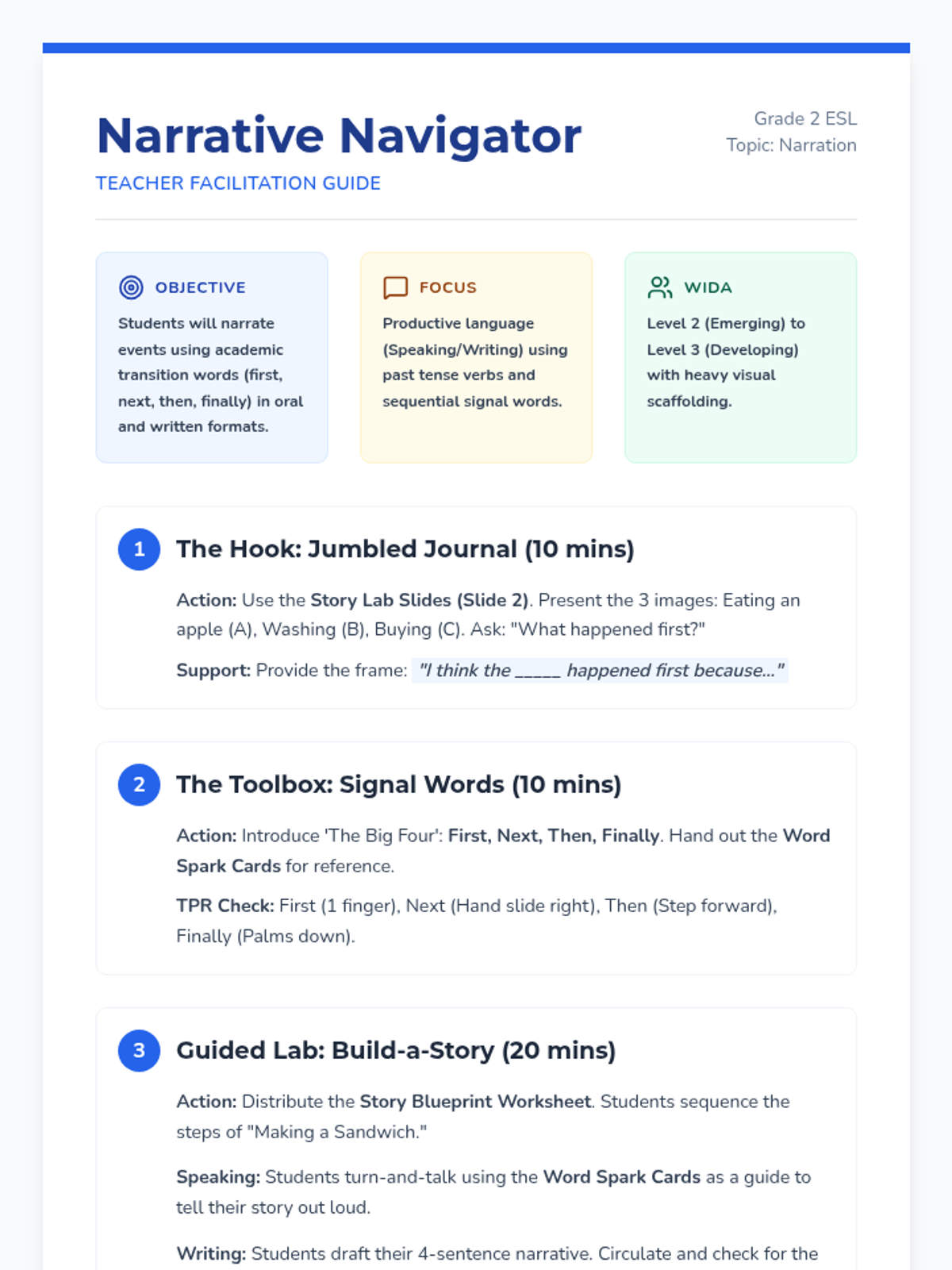
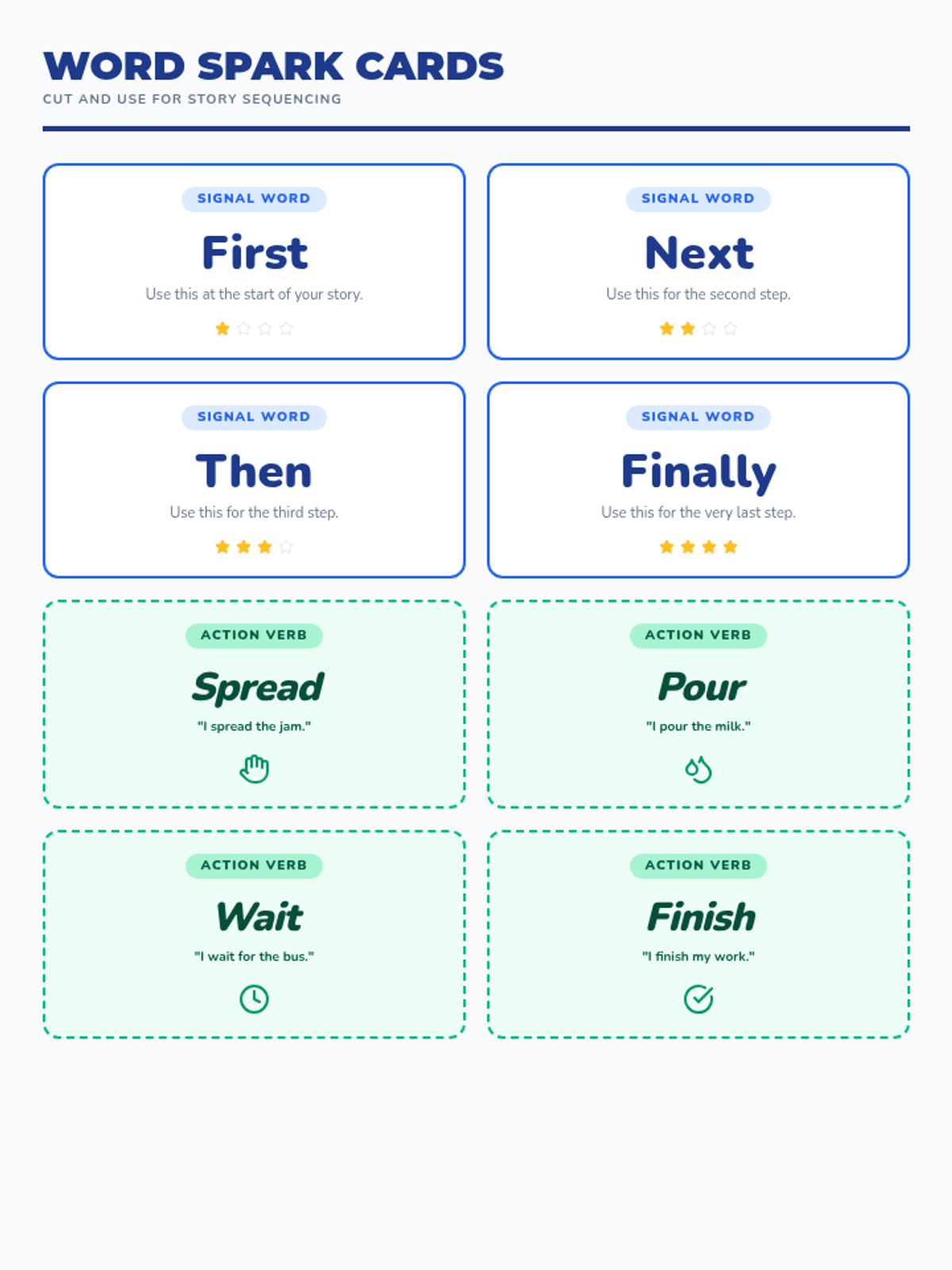
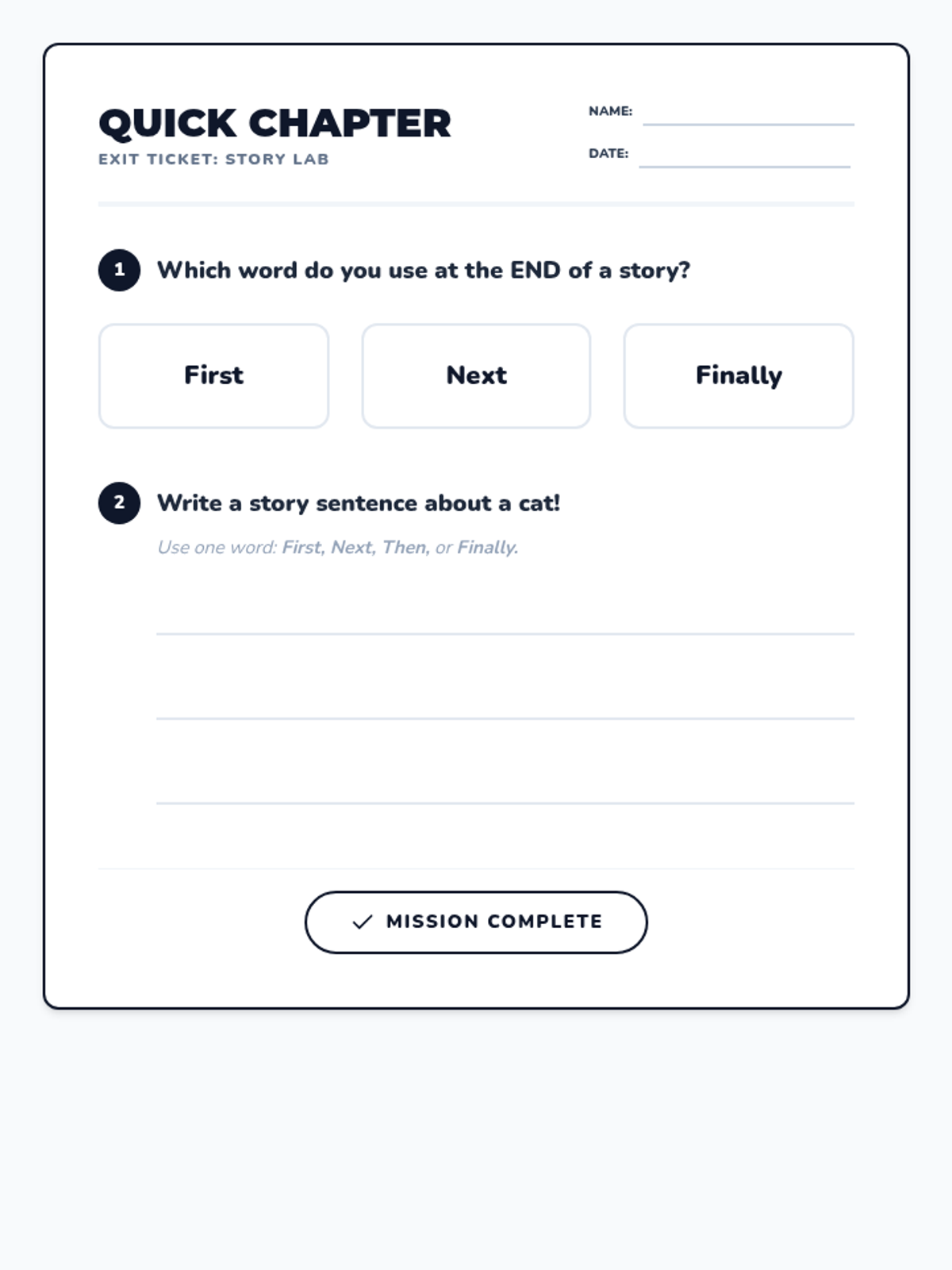
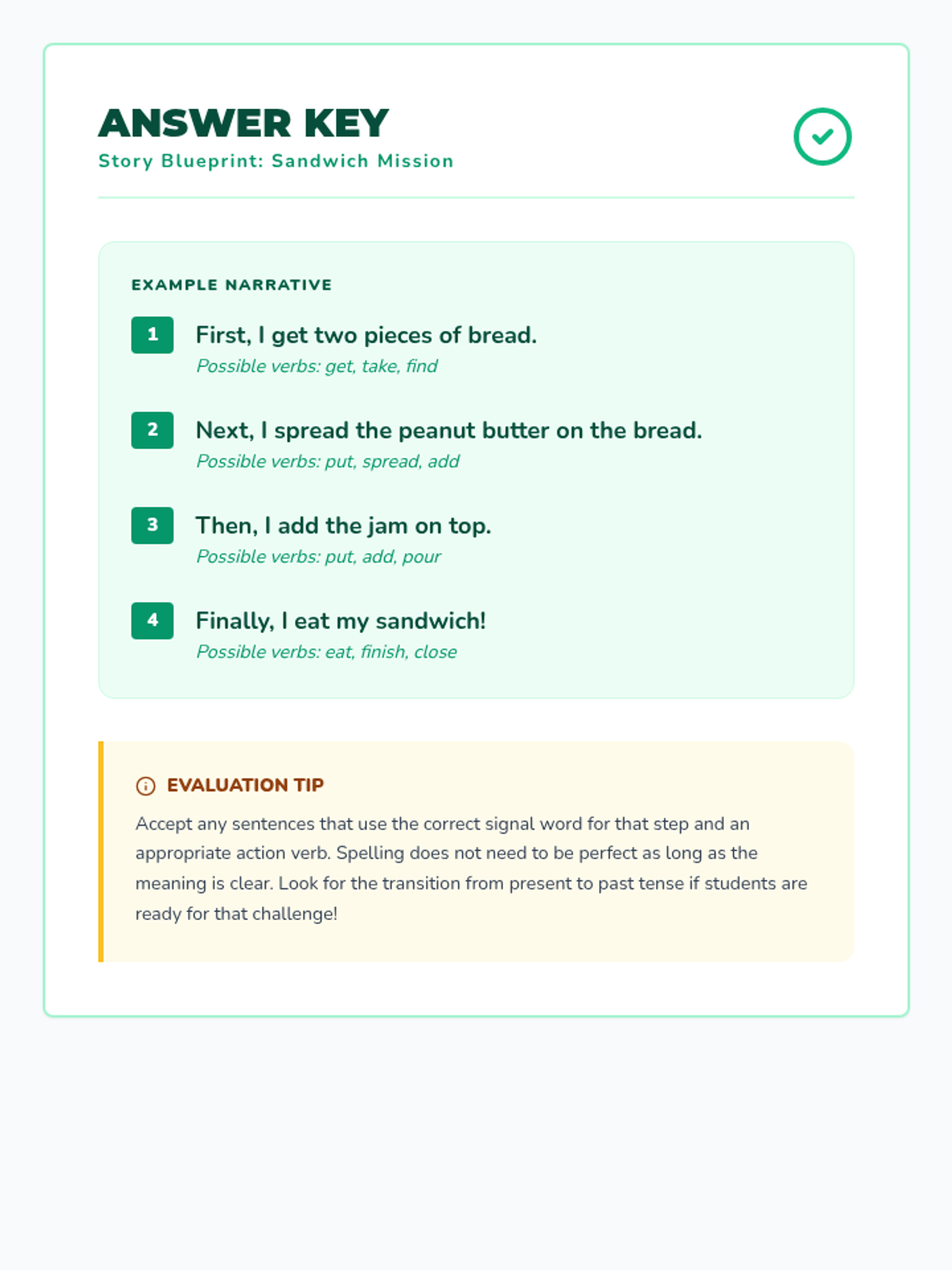
A comprehensive Grade 2 ESL lesson focused on the art of narration. Students develop academic language through sequencing words and transition phrases while practicing all four language domains (reading, writing, listening, and speaking) through a creative 'Story Lab' theme.
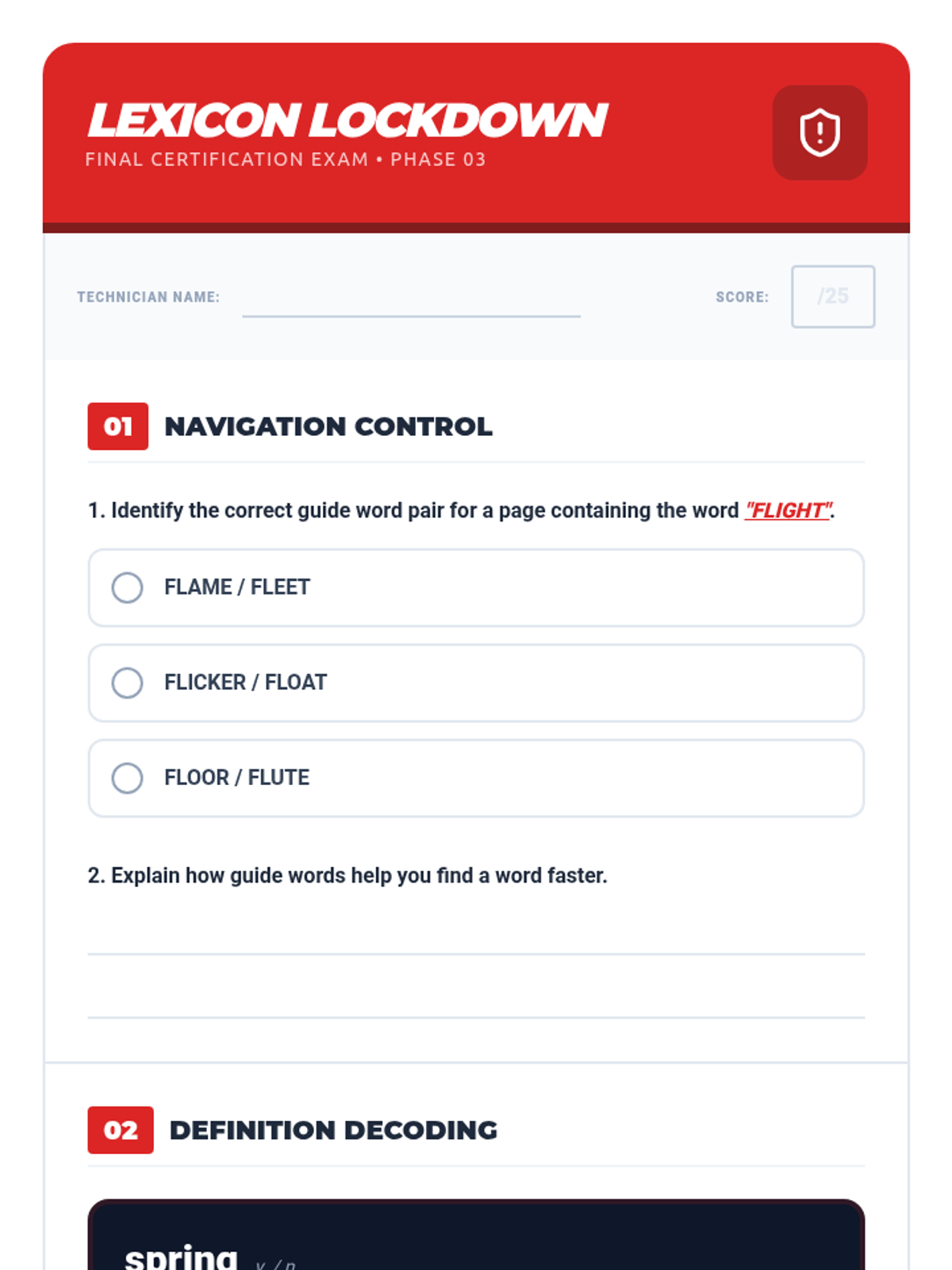
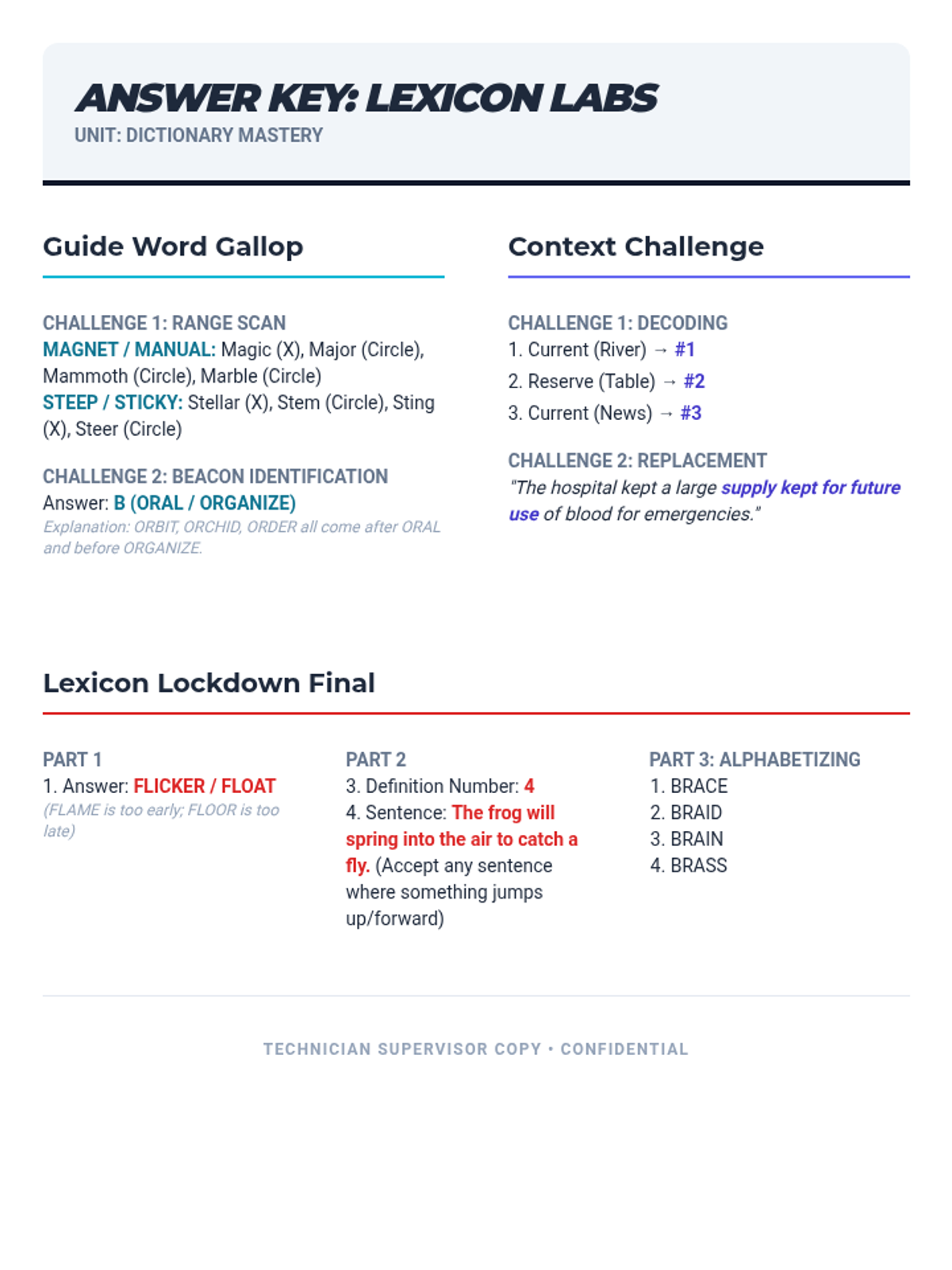
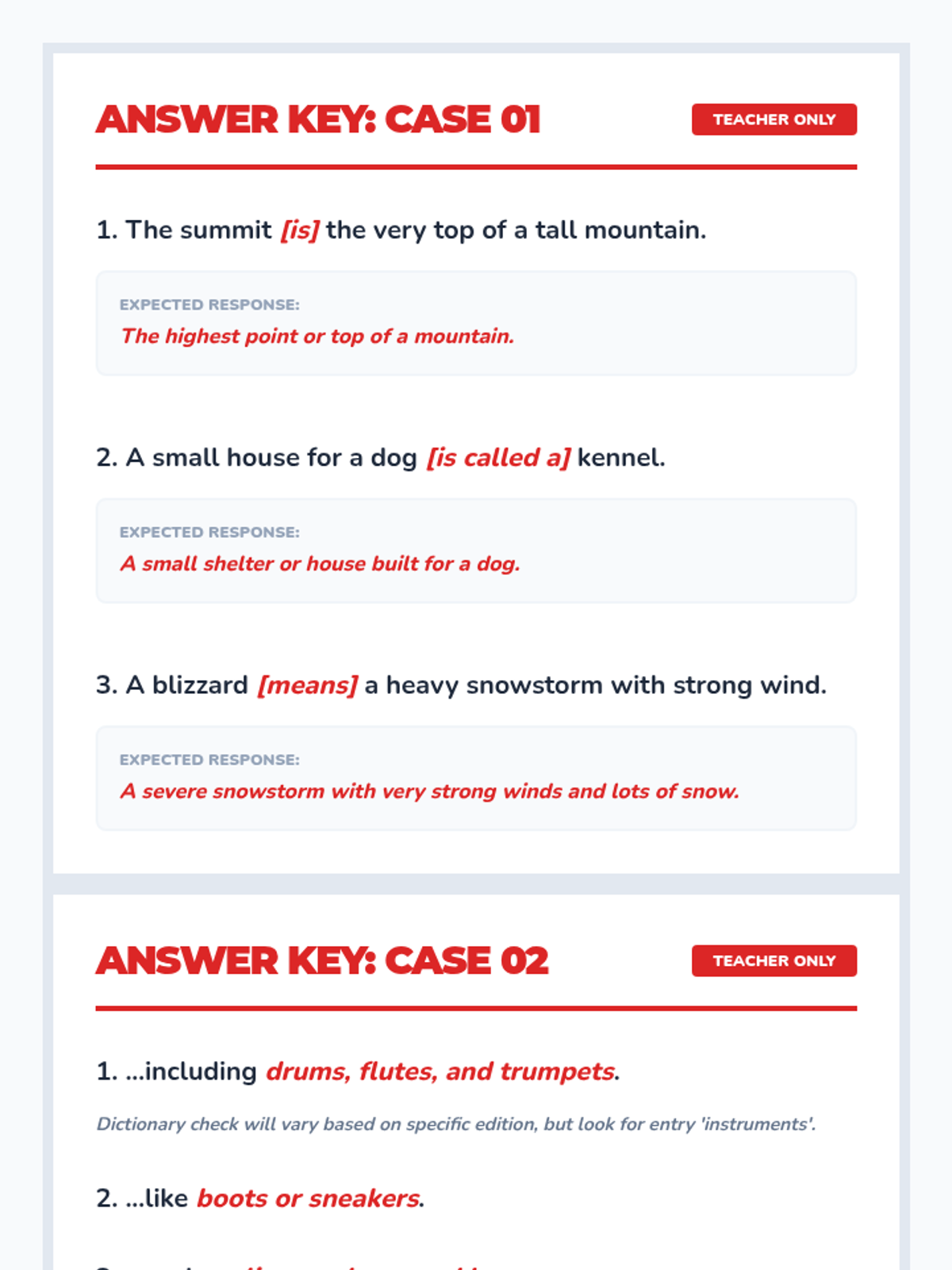
A cumulative review and formal assessment of dictionary navigation and entry analysis skills.
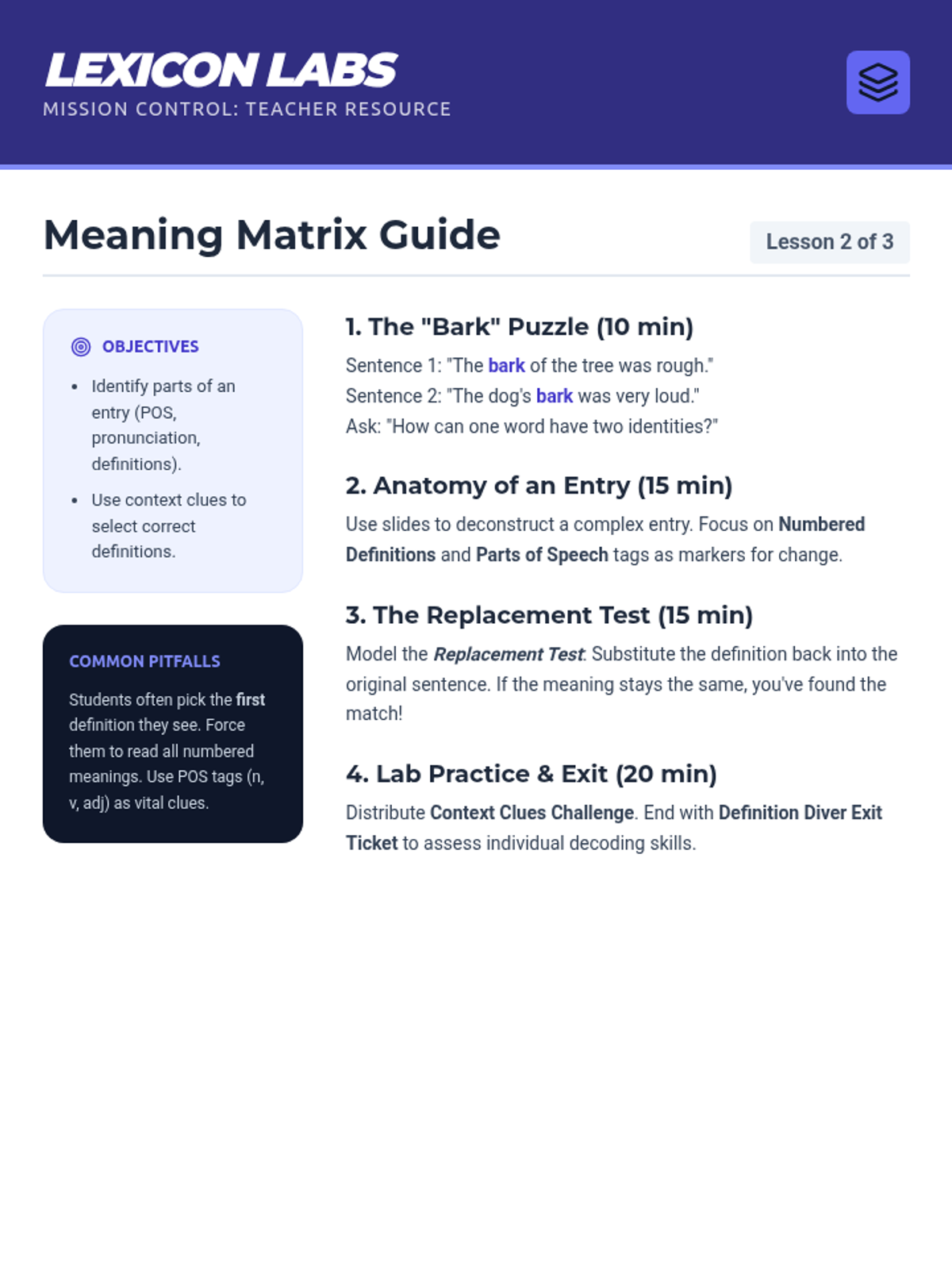
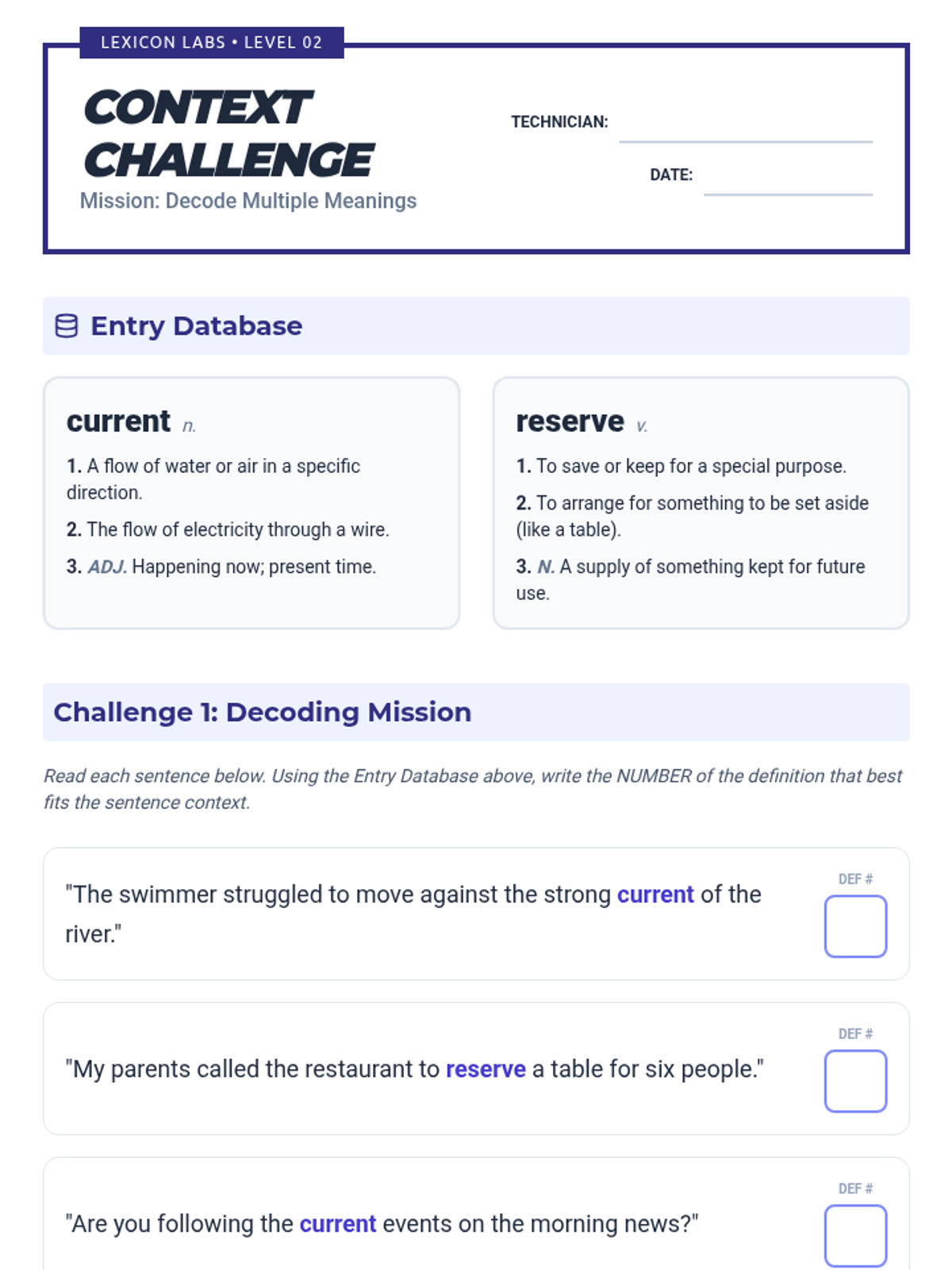
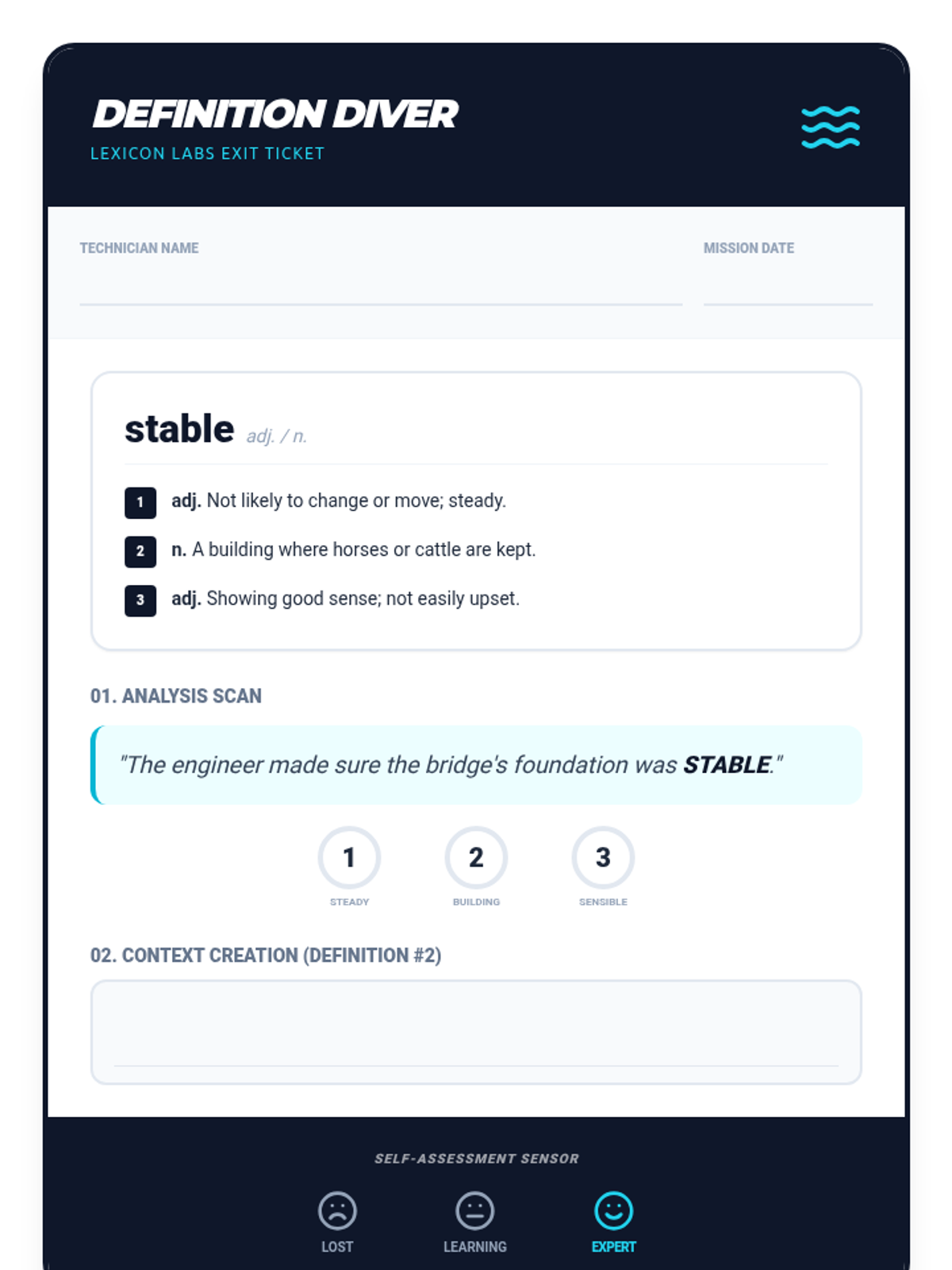
Focuses on the anatomy of a dictionary entry, specifically how to identify and choose between multiple definitions based on sentence context.
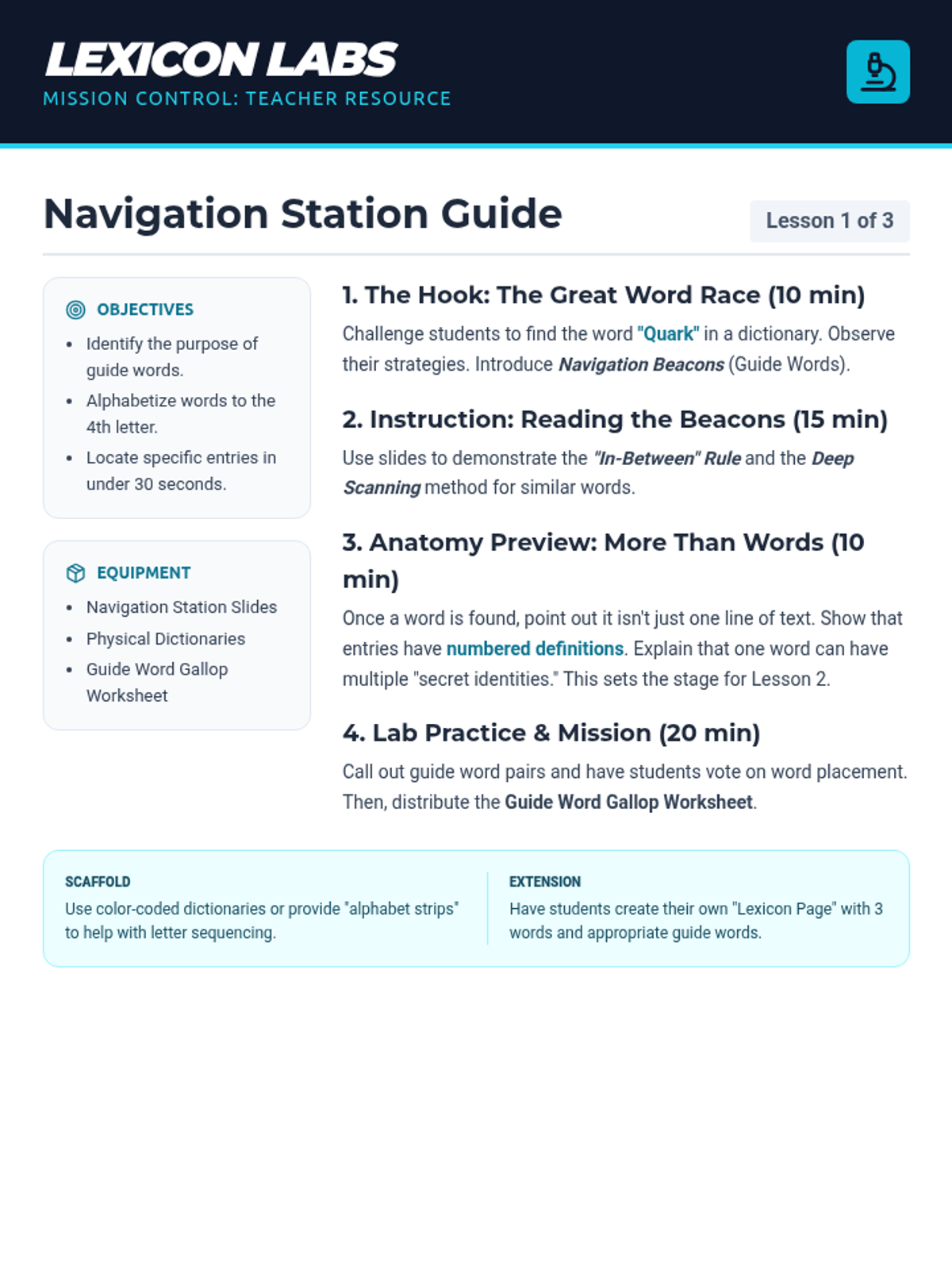
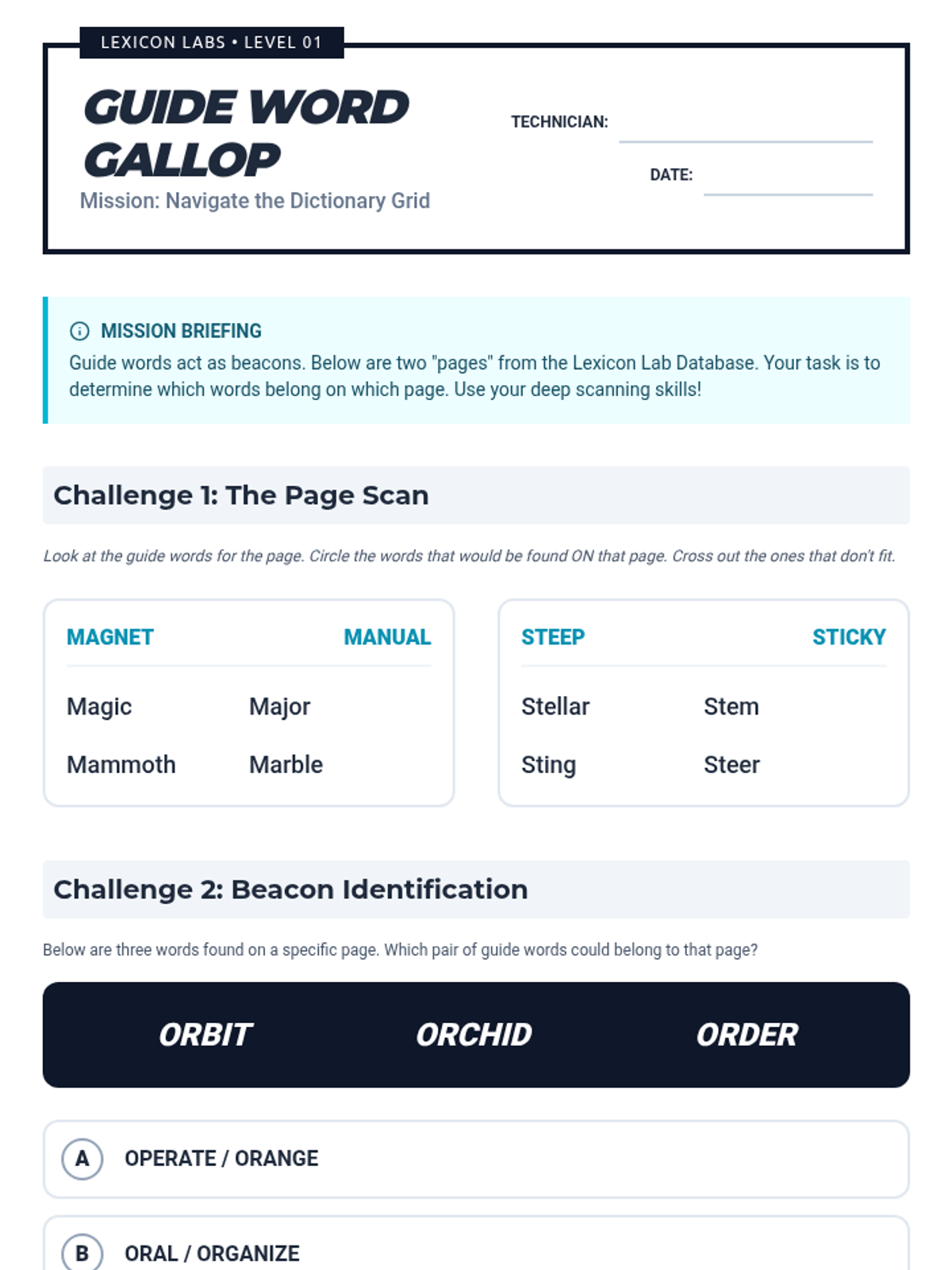
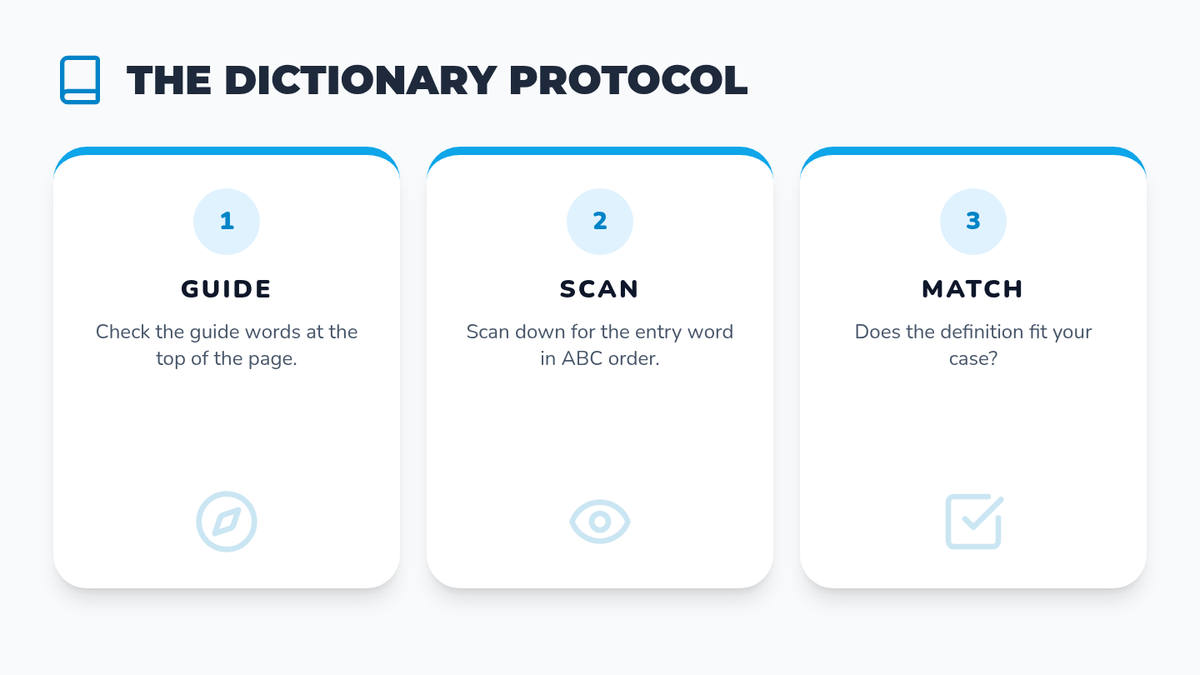
Introduction to the physical and digital structure of a dictionary, with a deep dive into using guide words for rapid word location.
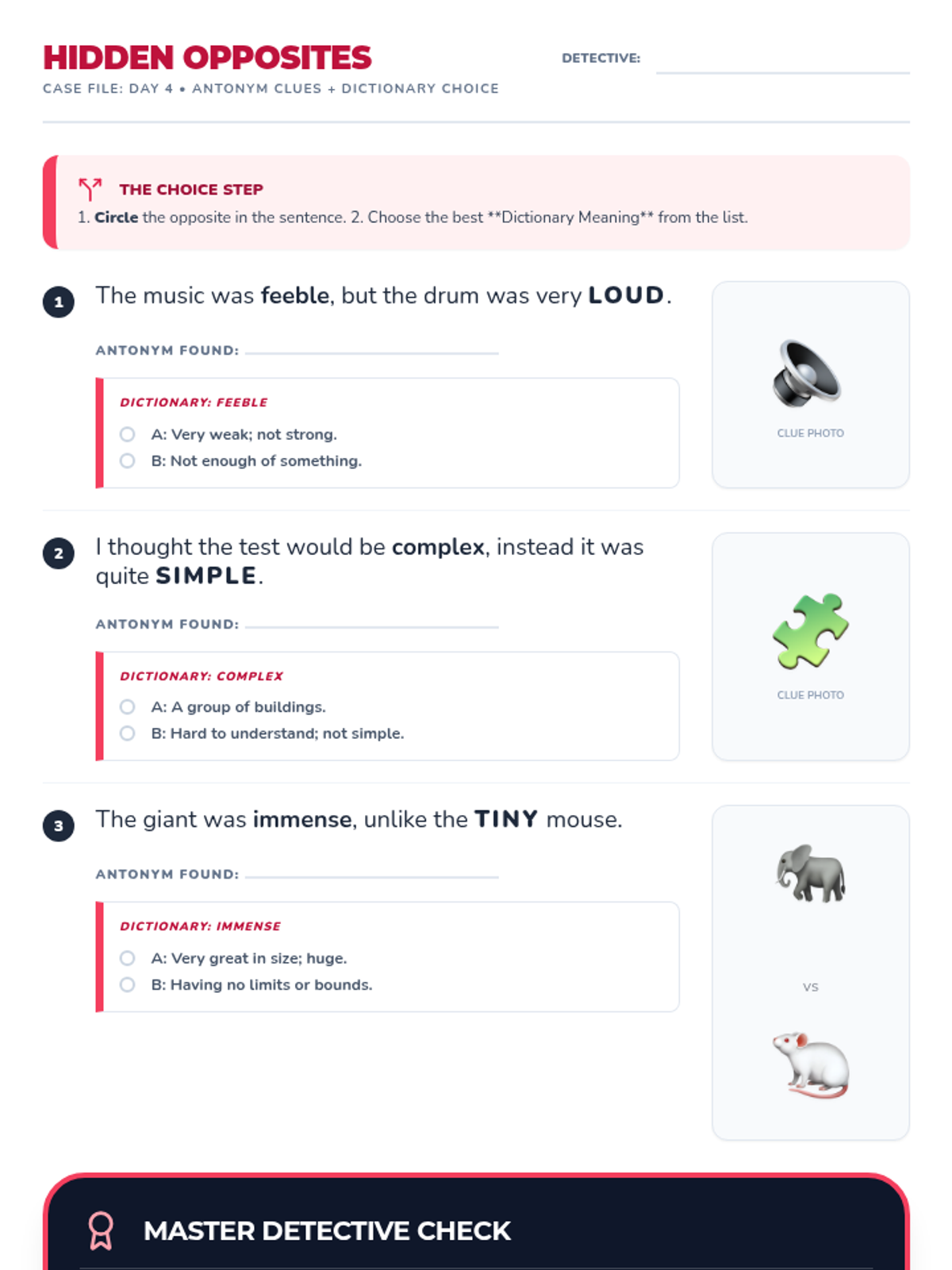
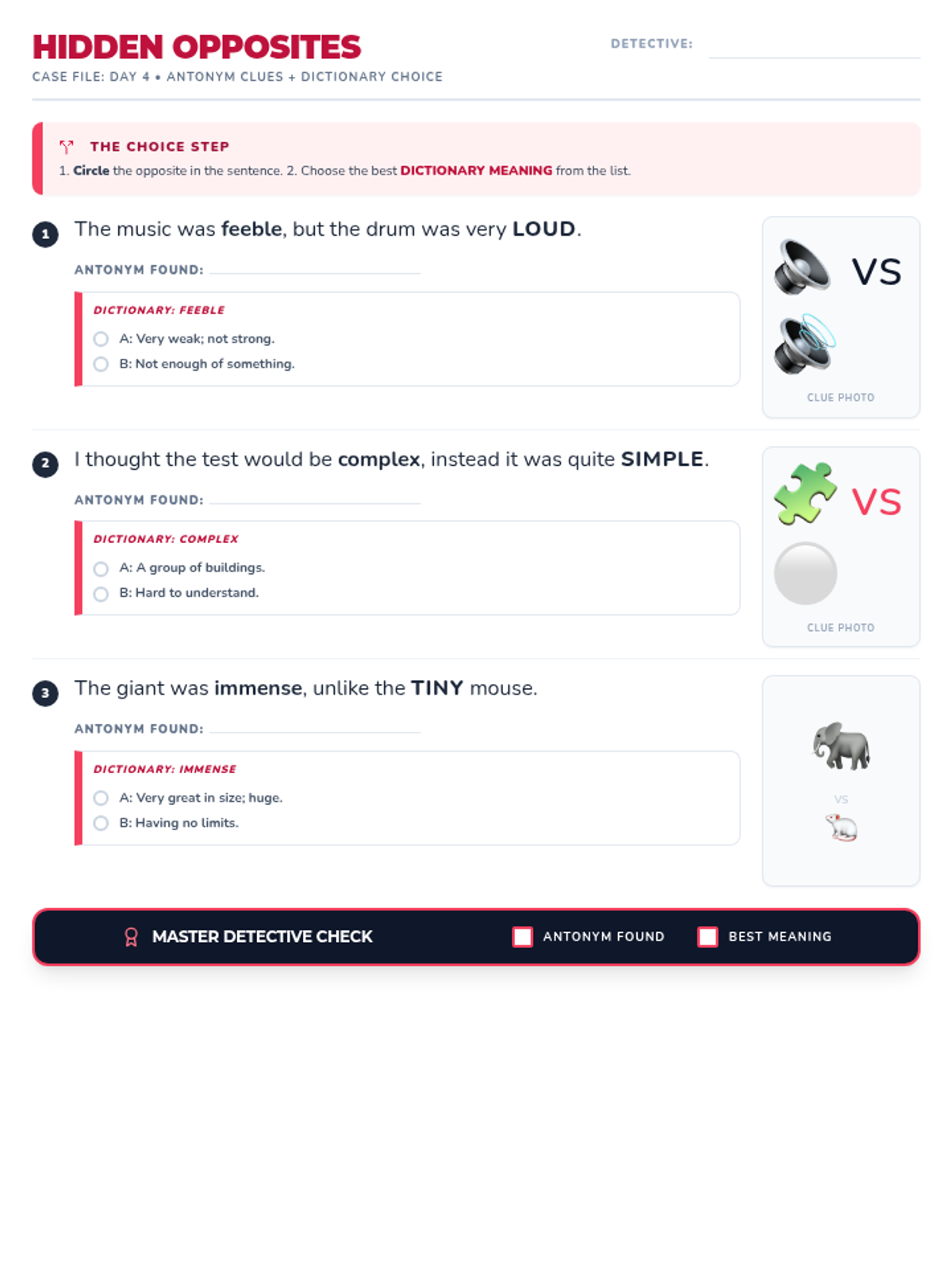
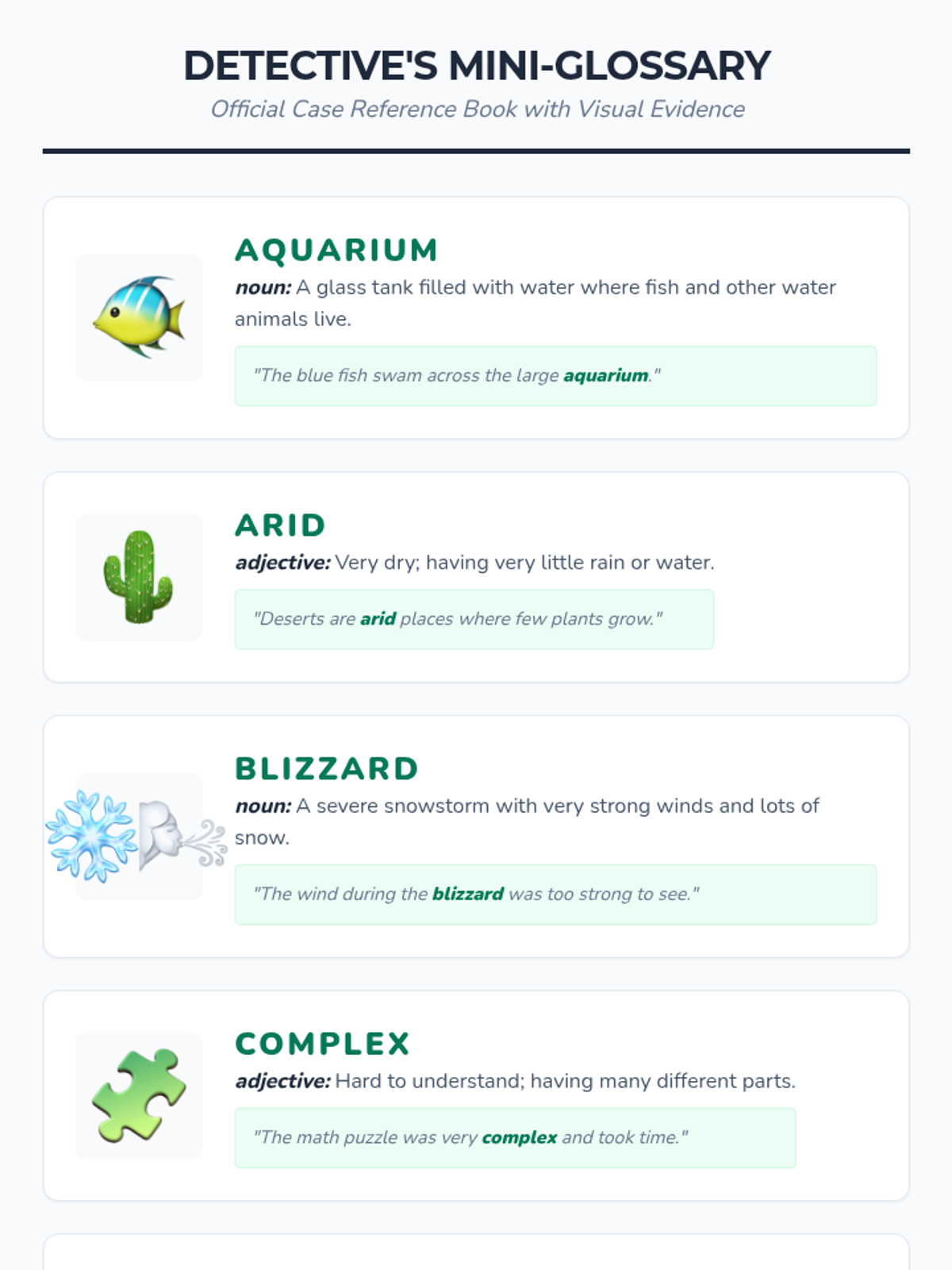
Students identify antonym clues to understand what a word is NOT, using contrasting pictures to solve the vocabulary puzzle.
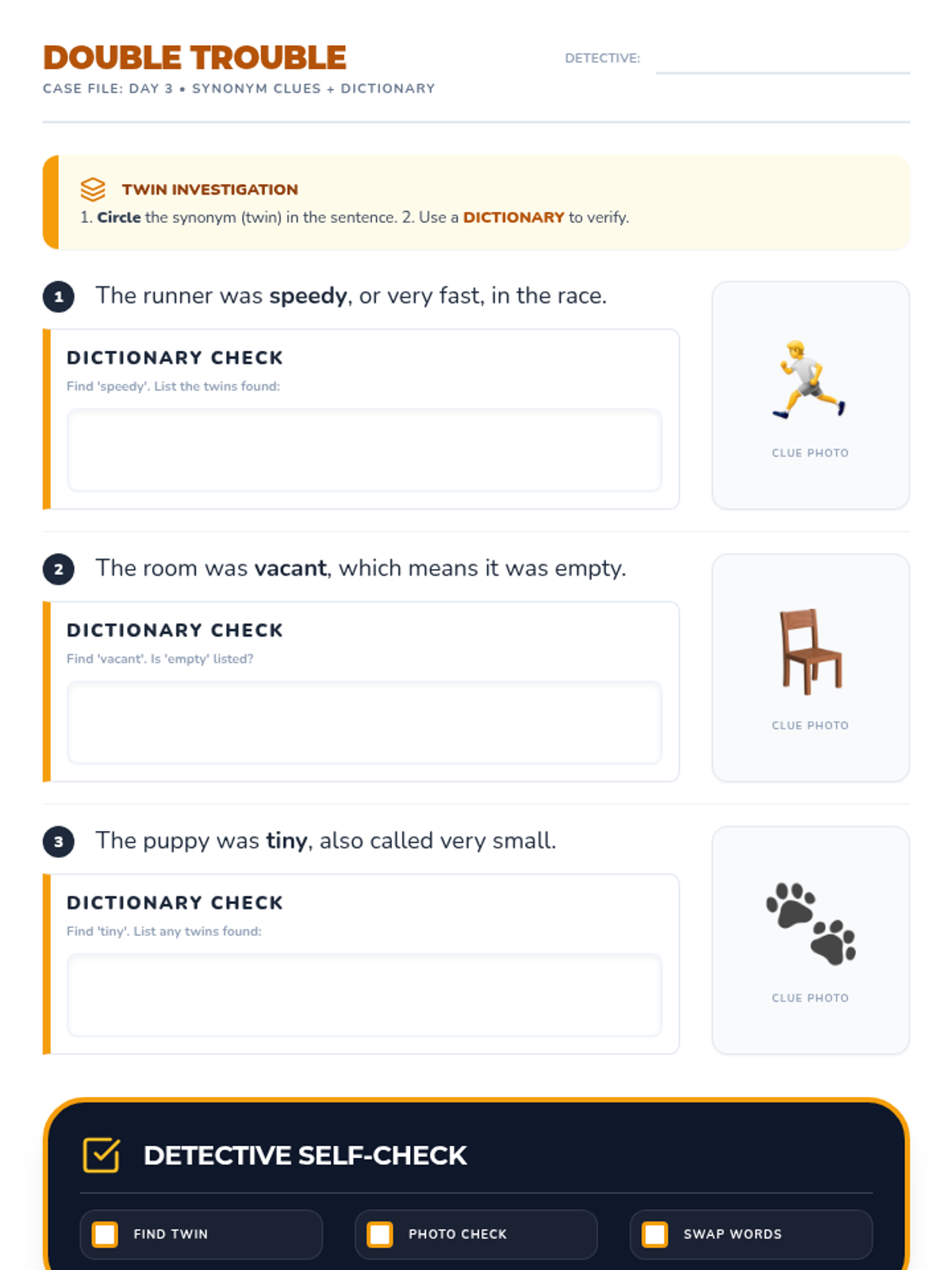
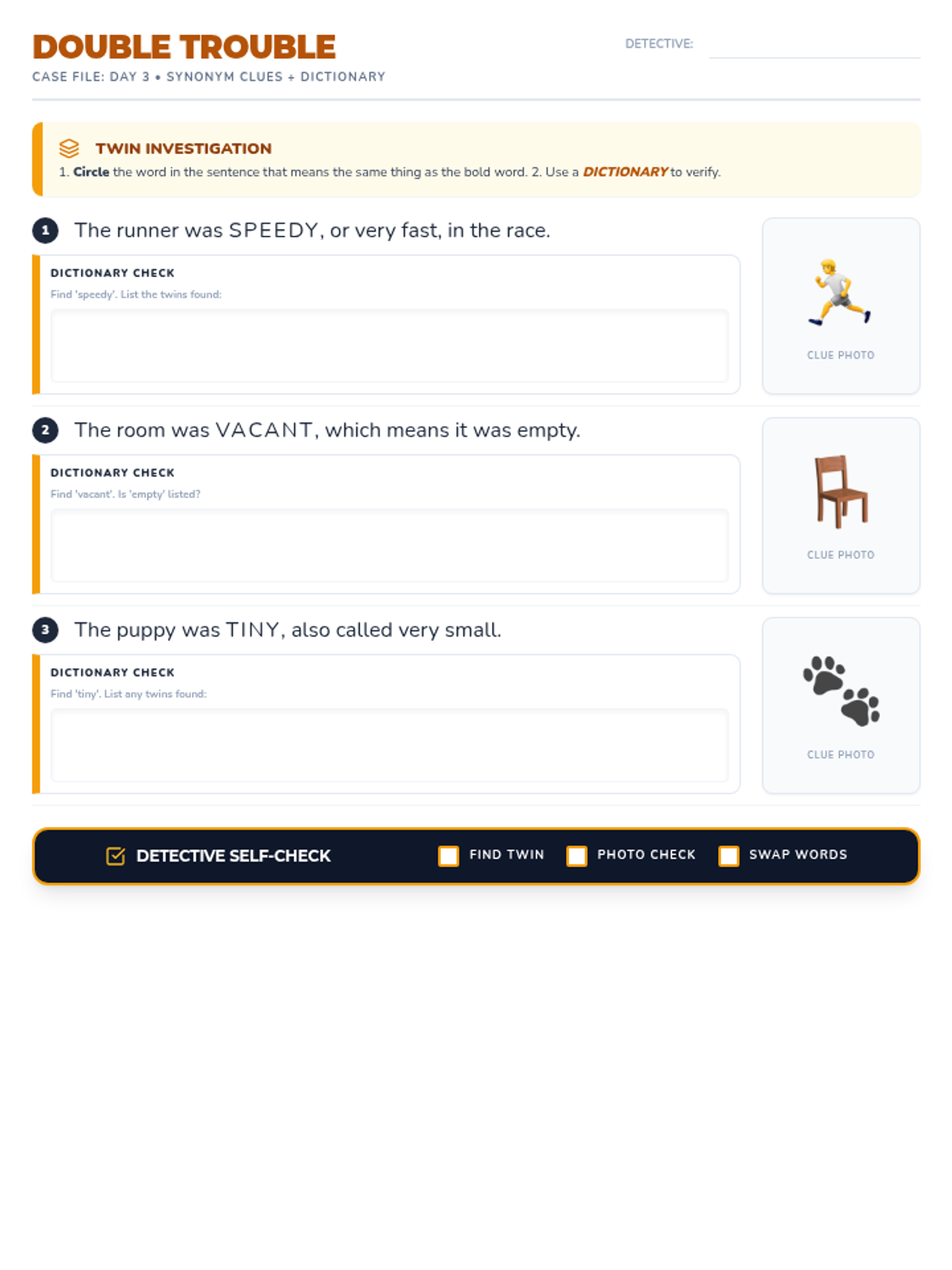
Students use synonym clues to find words that mean the same thing as the unknown word, using pictures to match similar concepts.
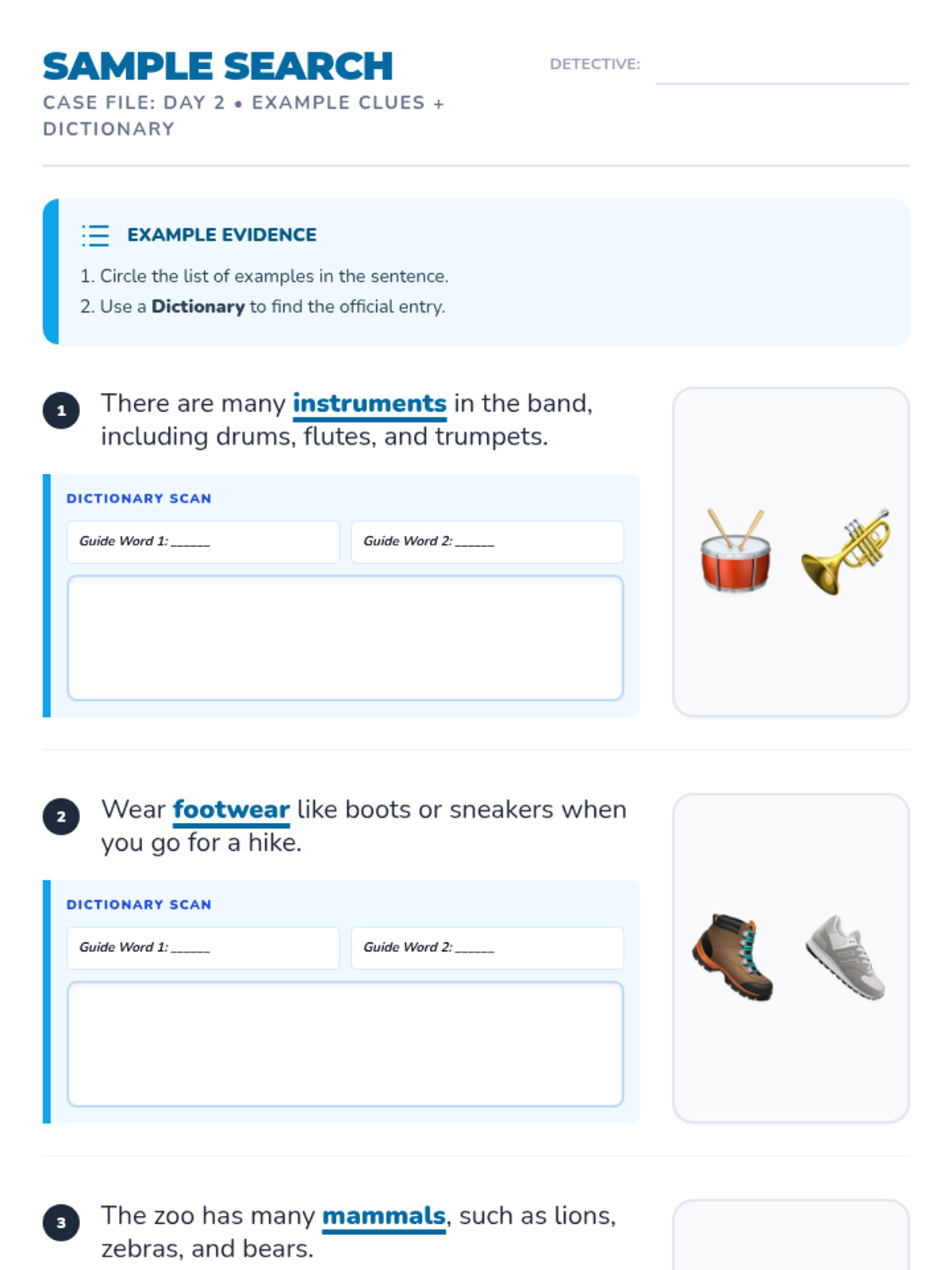
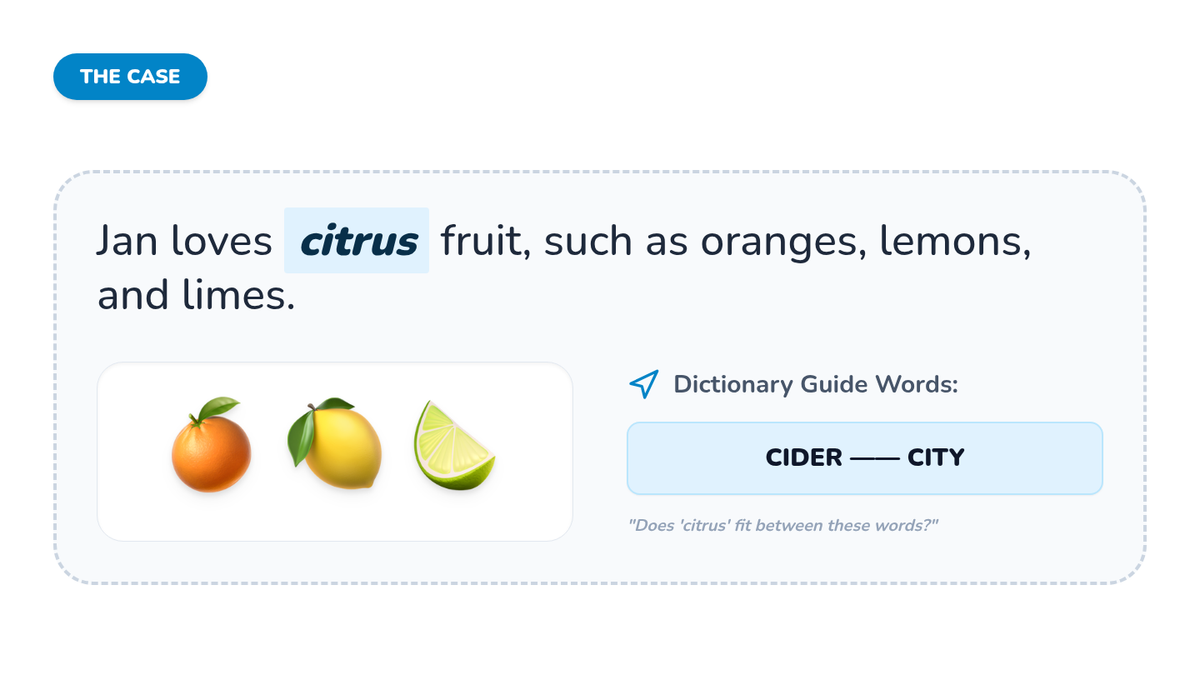
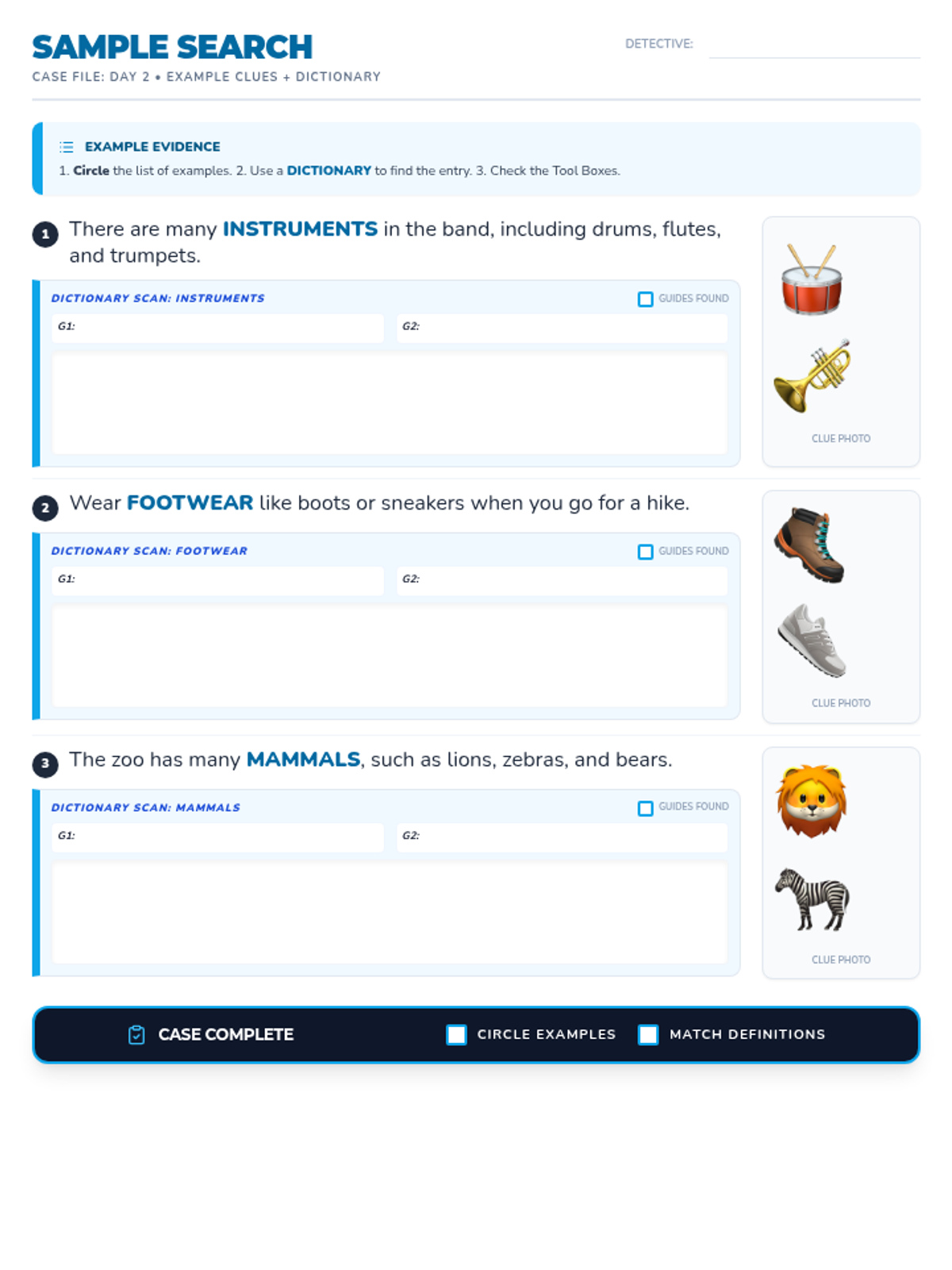
Students explore example clues, where a sentence provides specific instances of a word to help reveal its meaning, paired with helpful visual supports.
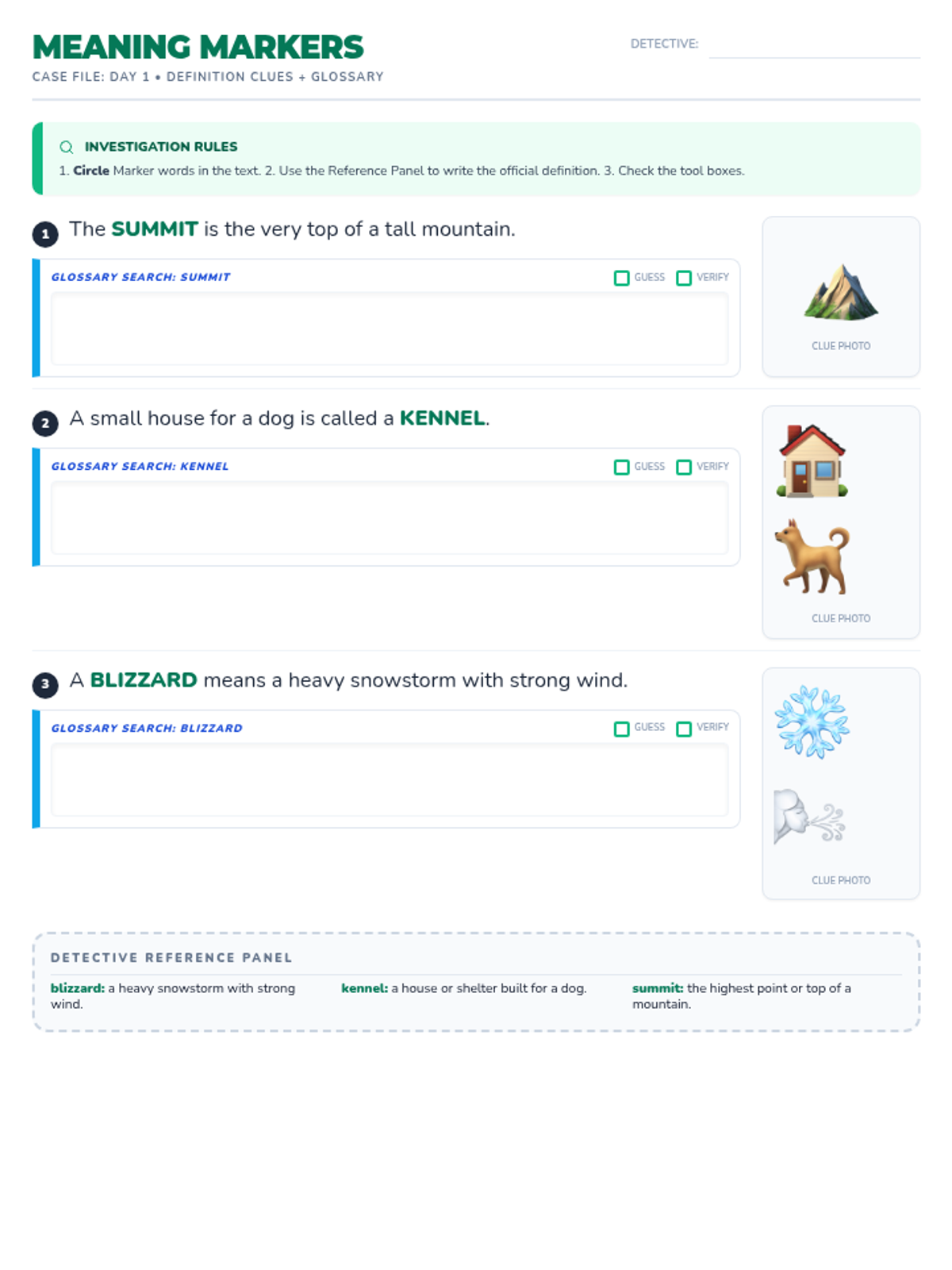
Students learn to identify definition clues in sentences where the meaning of a tricky word is explained directly, using illustrations to confirm their findings.
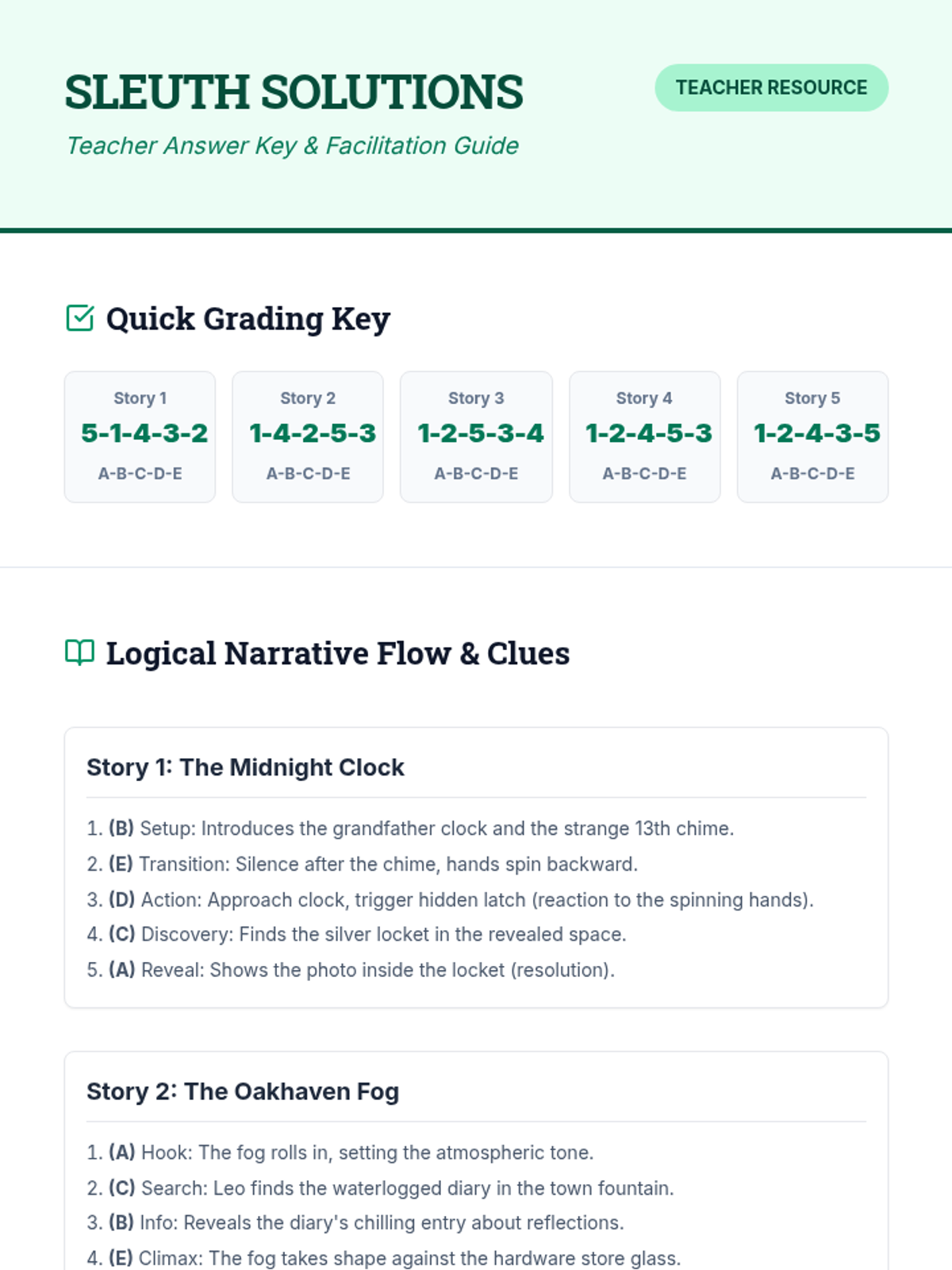
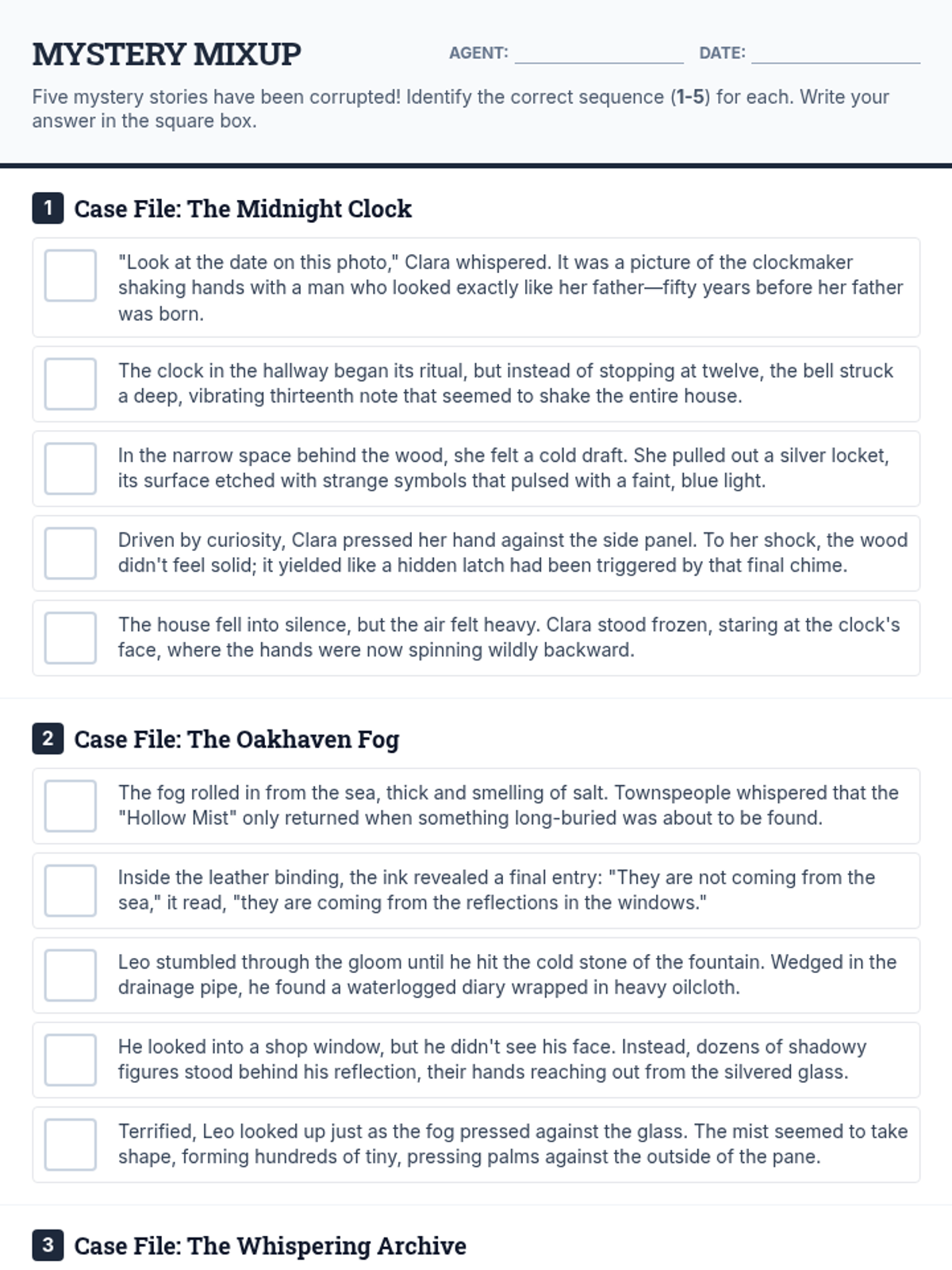
A lesson focused on narrative sequencing and logical flow through the lens of mystery and suspense stories. Students analyze transition words, cause and effect, and character development to reorder scrambled narratives.
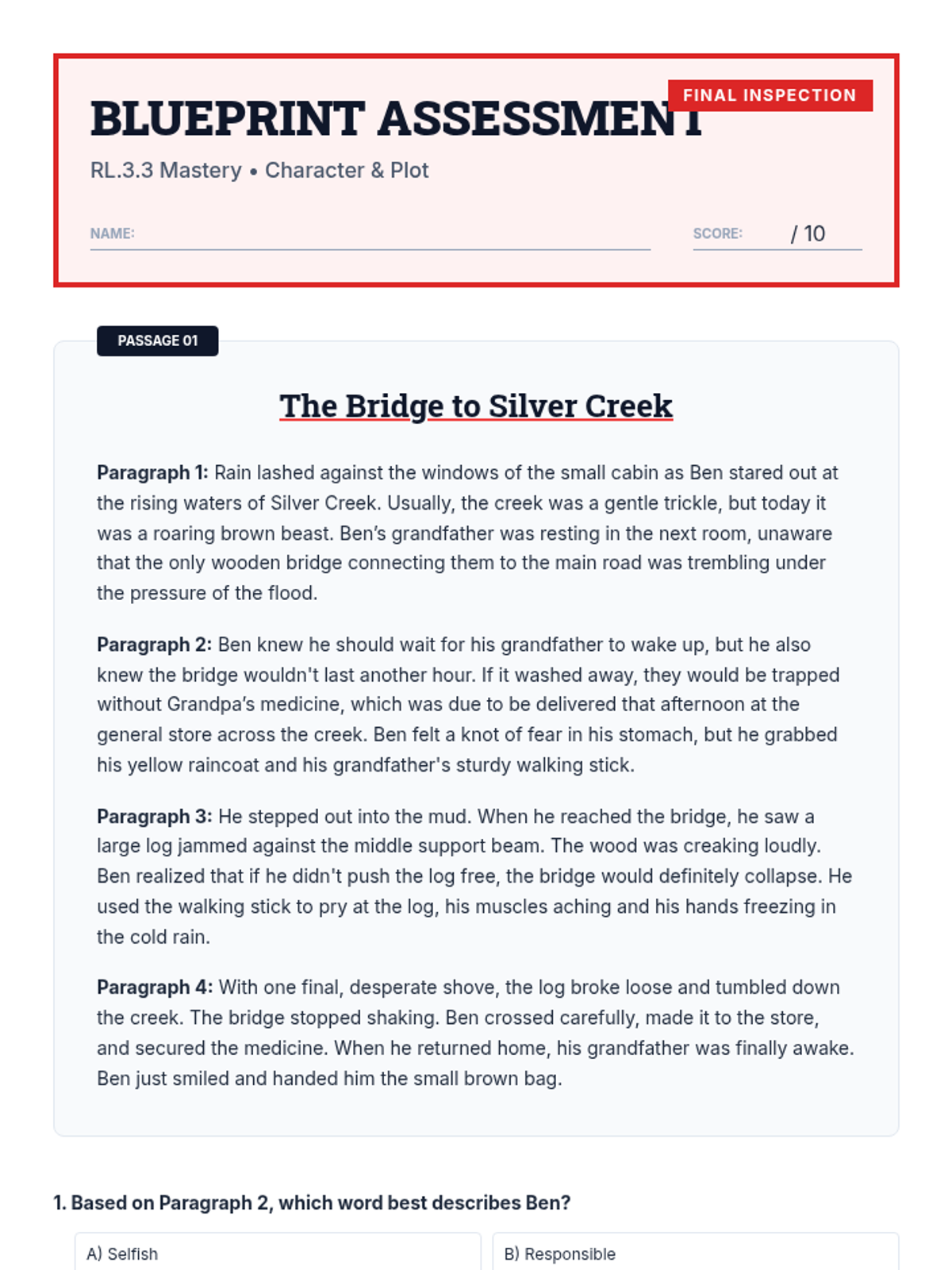
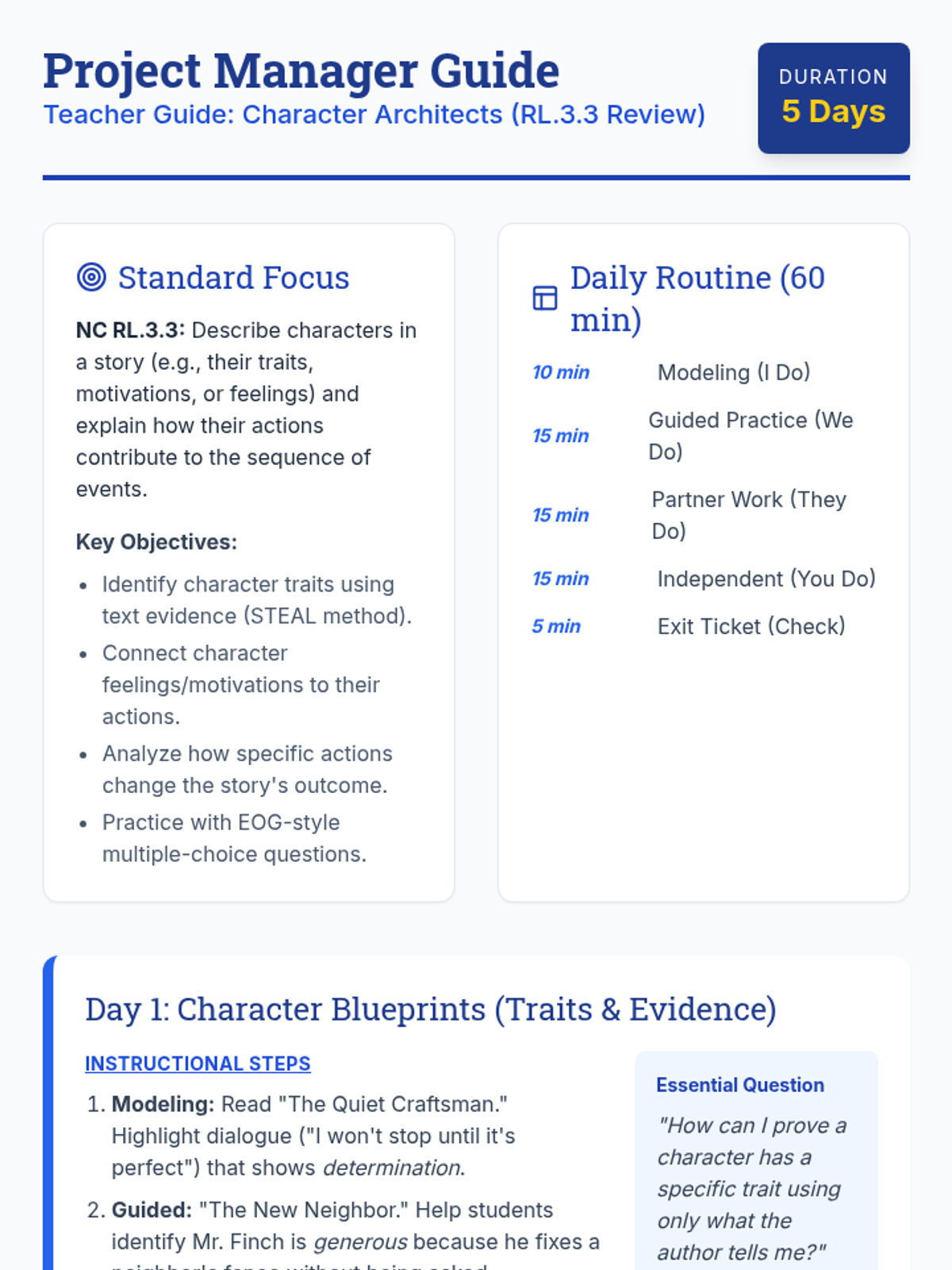
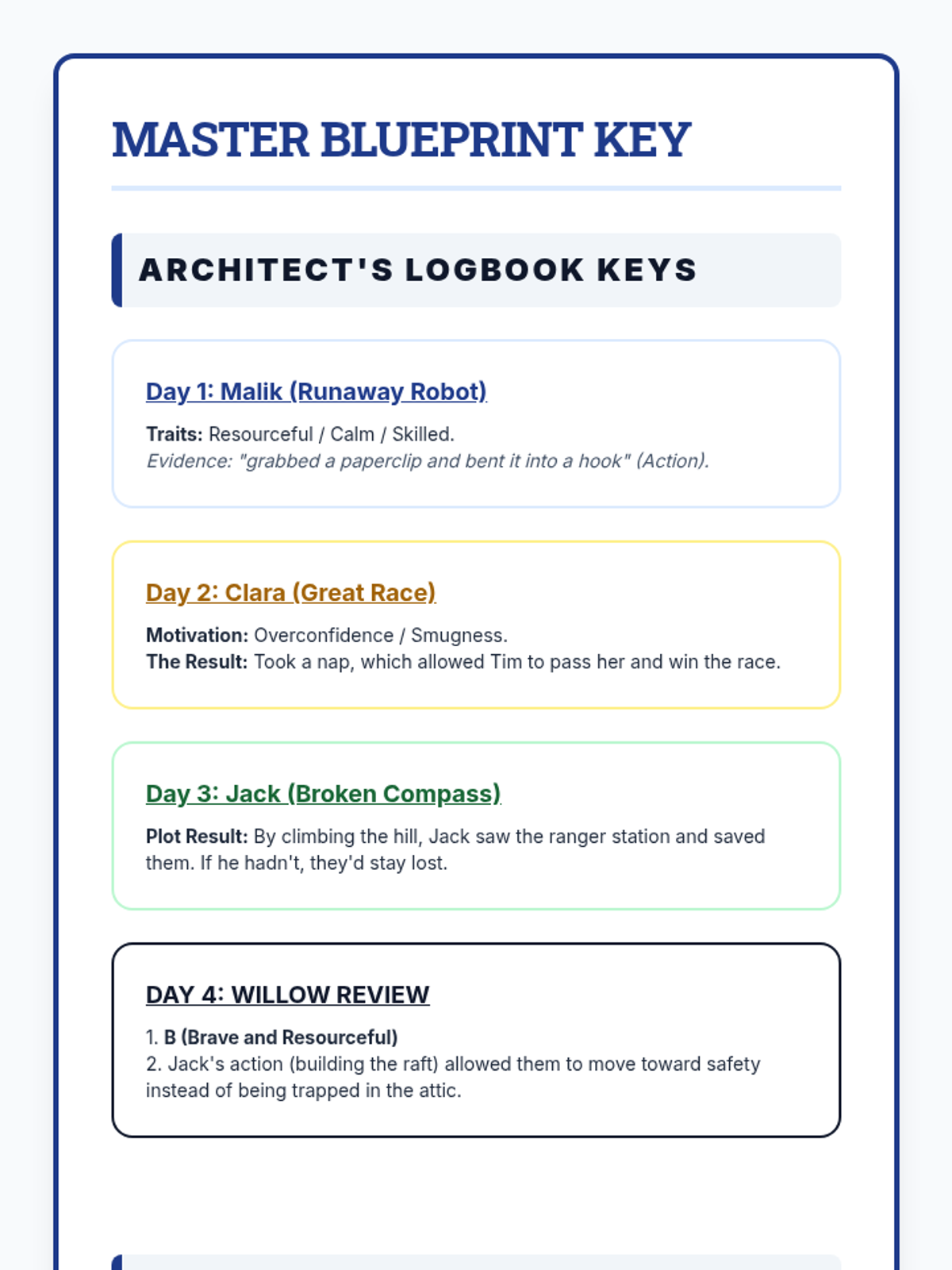
Final assessment of RL.3.3 mastery through an EOG-formatted test and reflection.
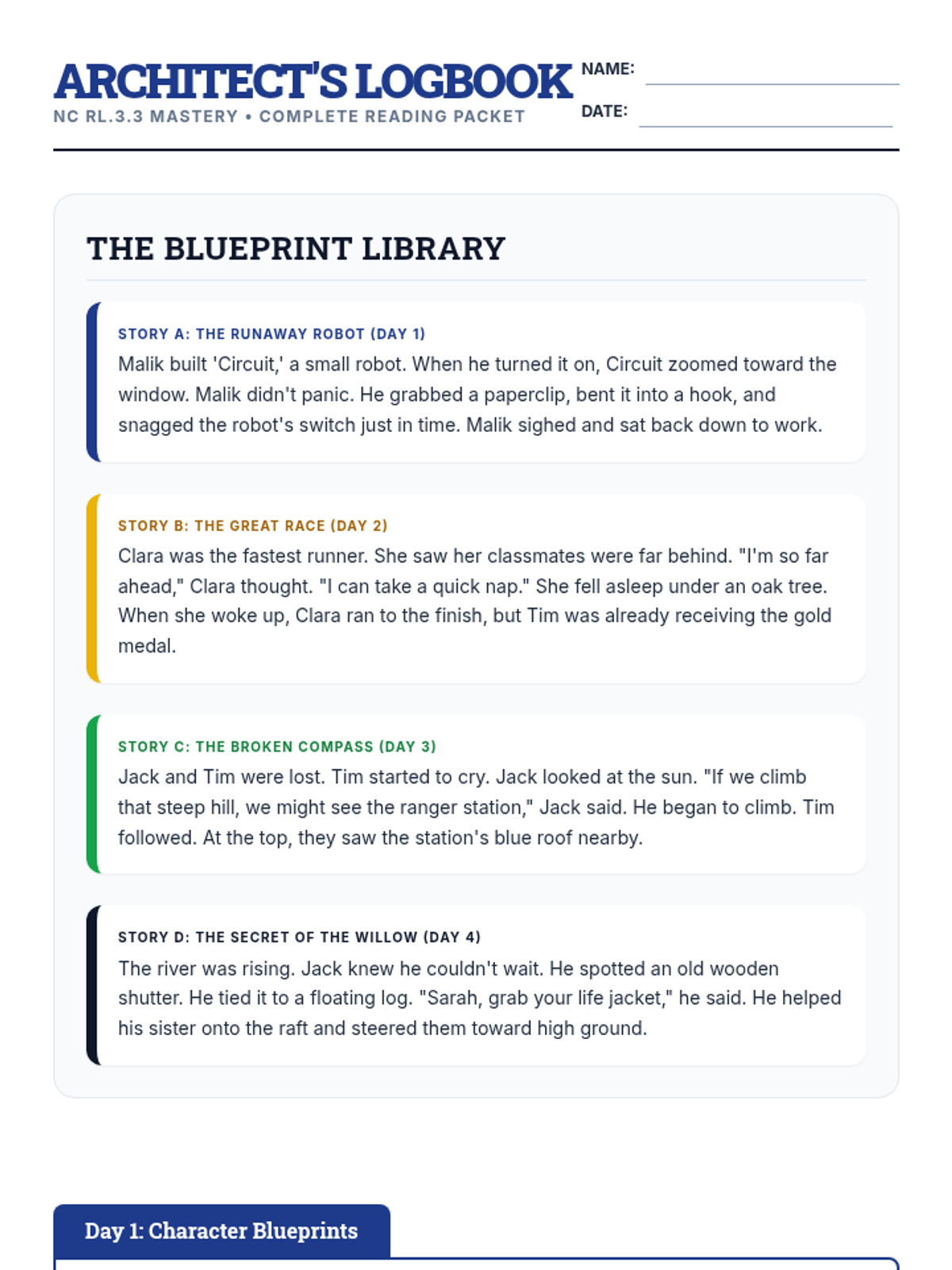
Integrated review of traits, motivations, and plot contribution using complex EOG-style passages.
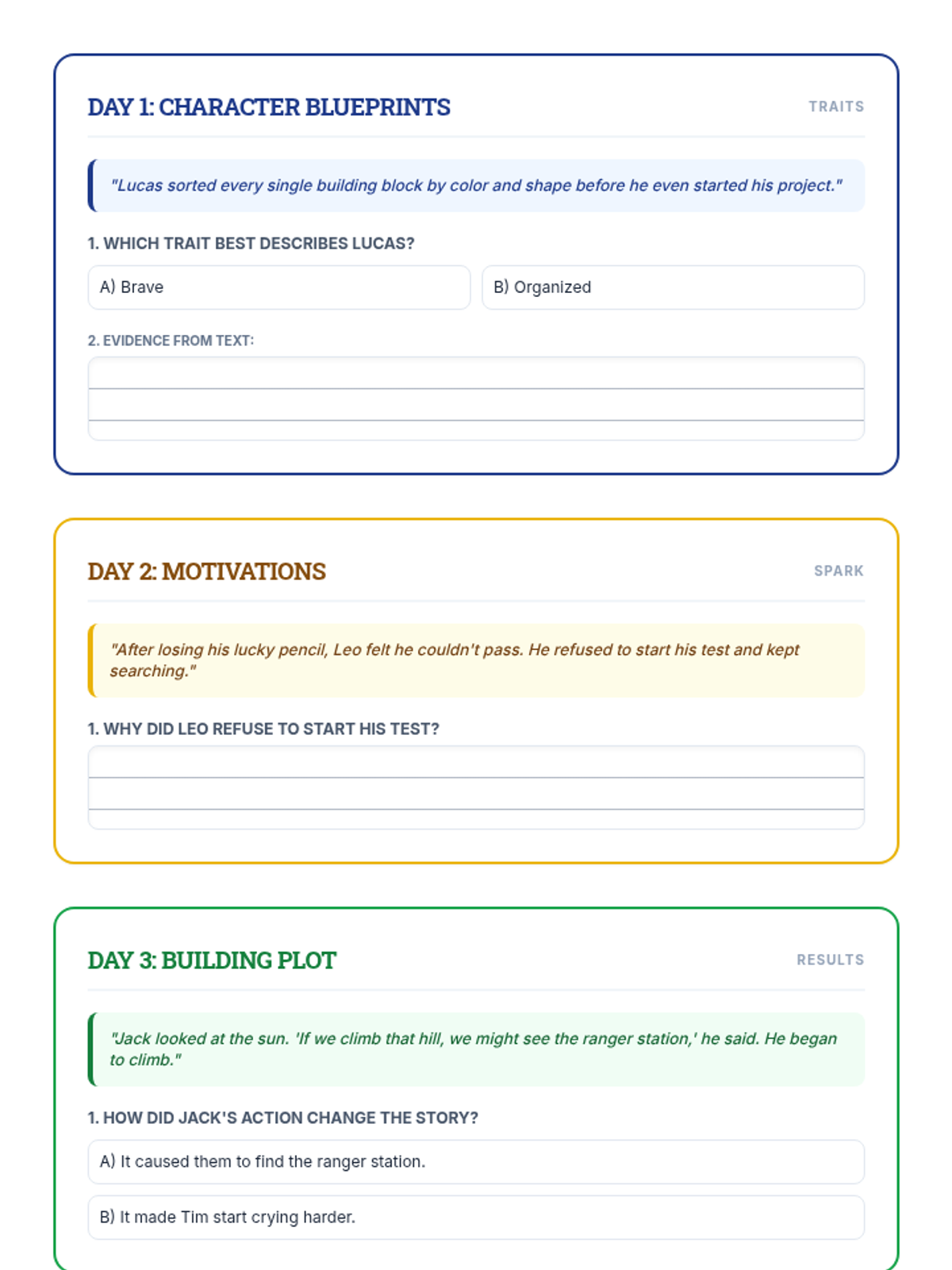
Focus on how character actions directly cause specific events in the story's sequence.
Focus on identifying character motivations and feelings and how they lead to specific actions.
Focus on identifying character traits using text evidence (what characters say, think, and do).
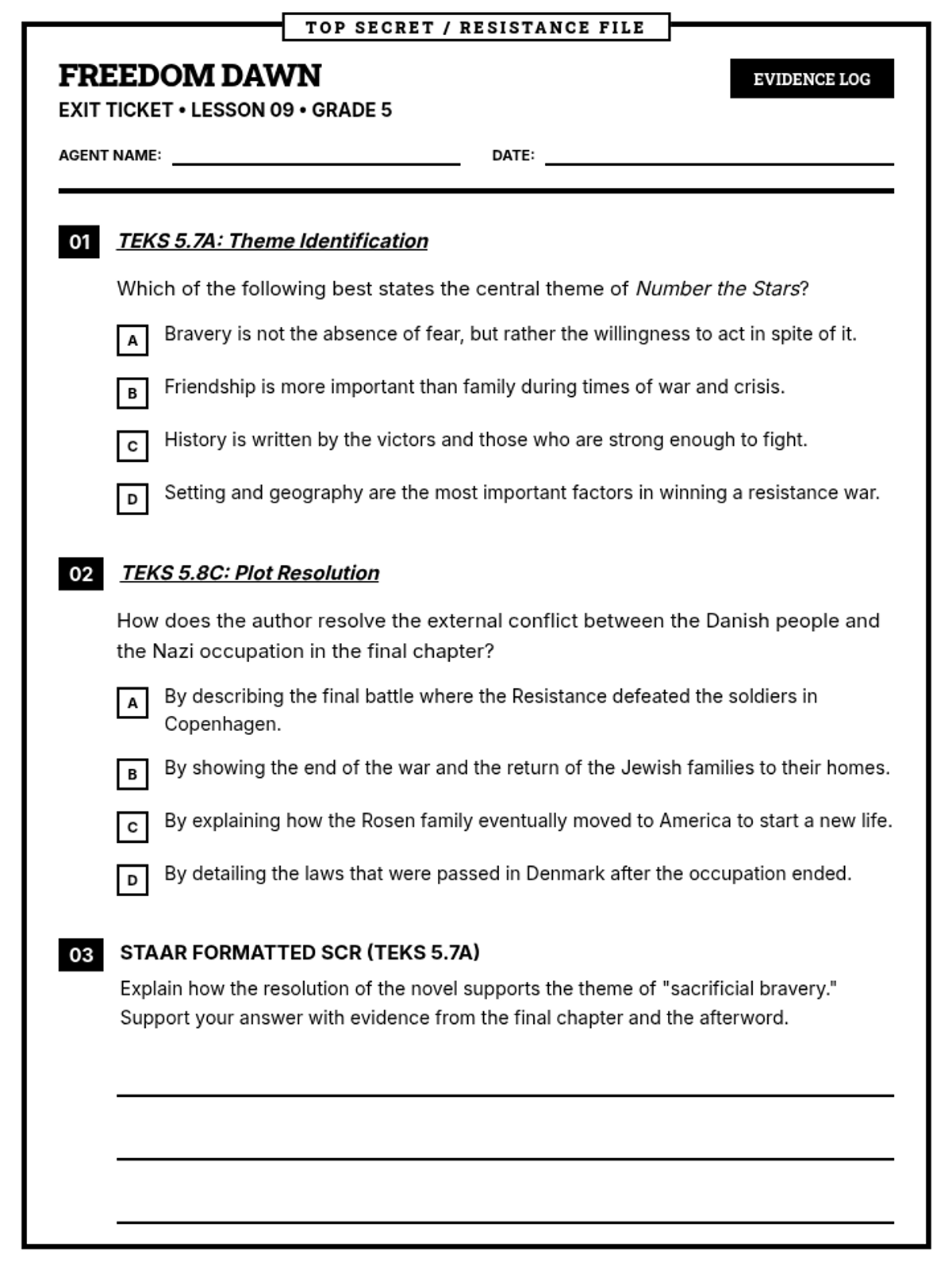
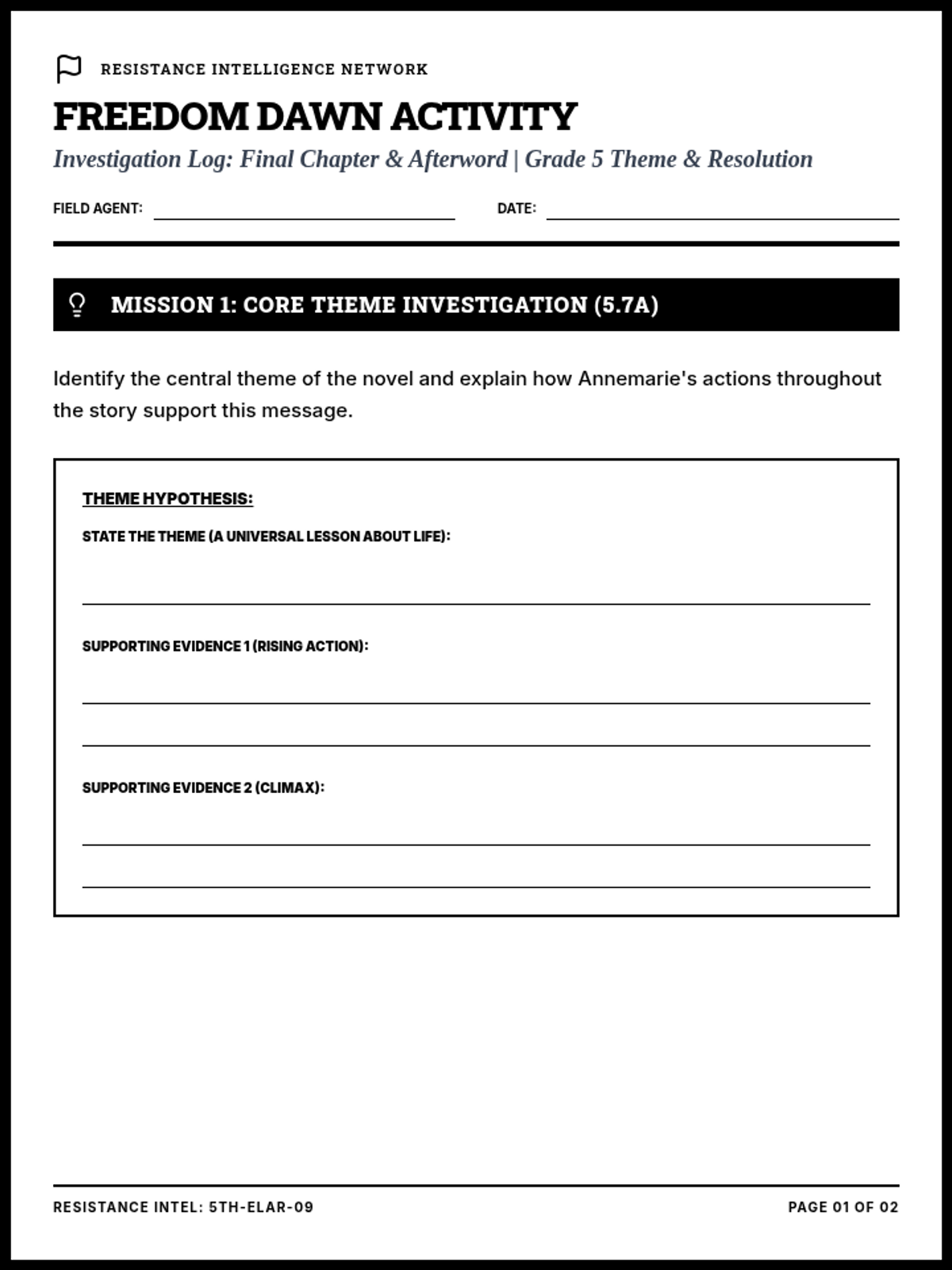
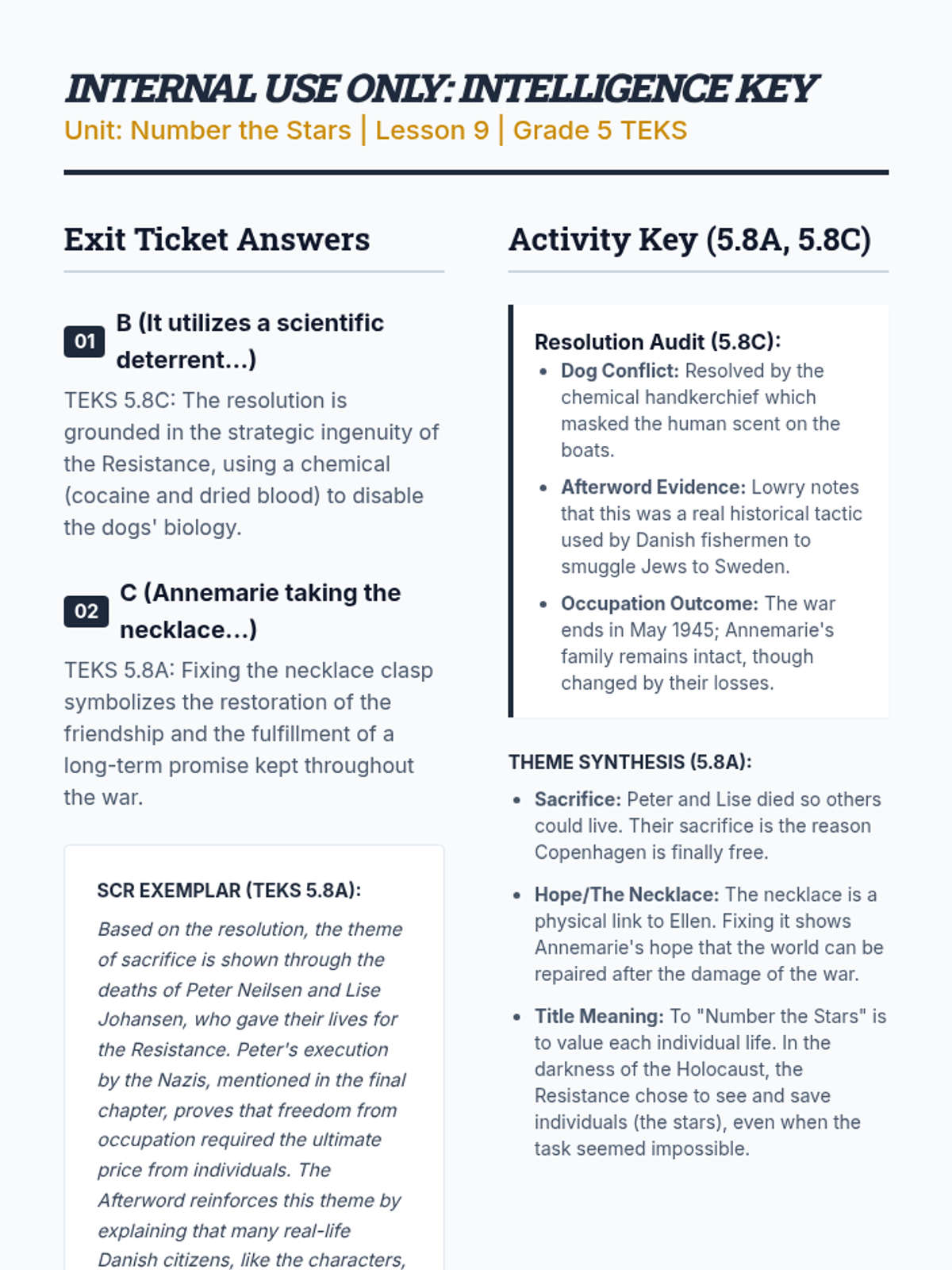
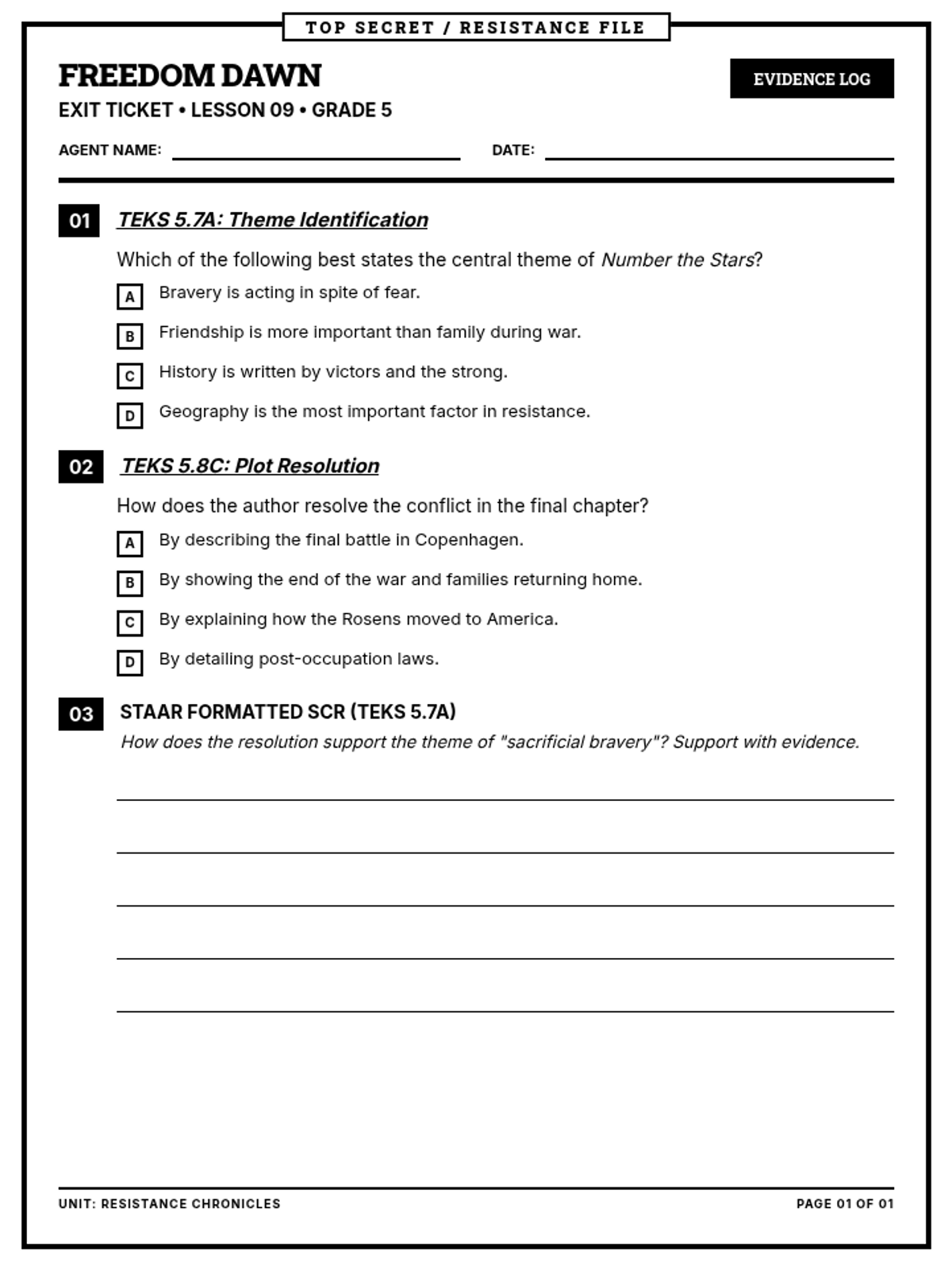
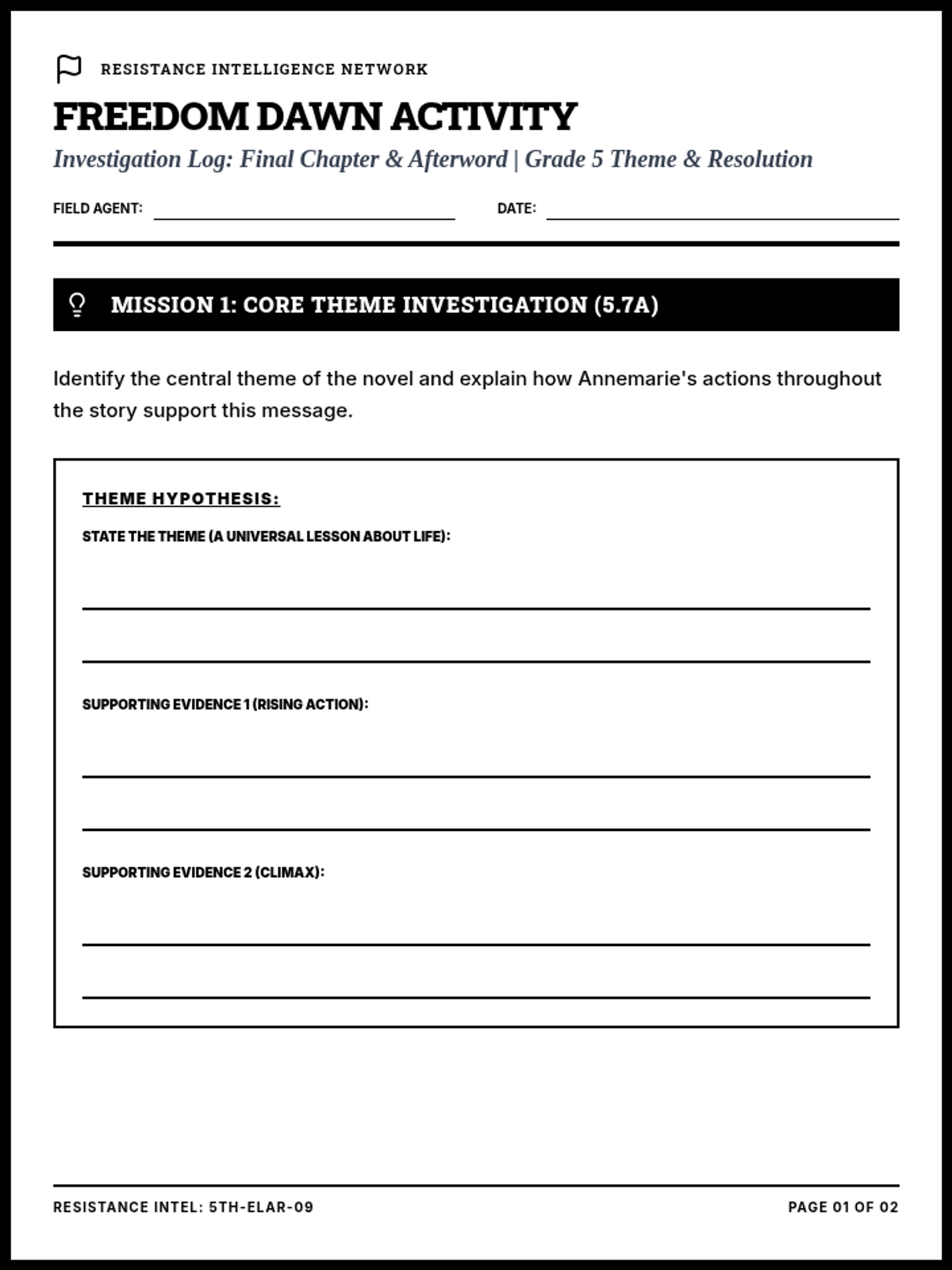
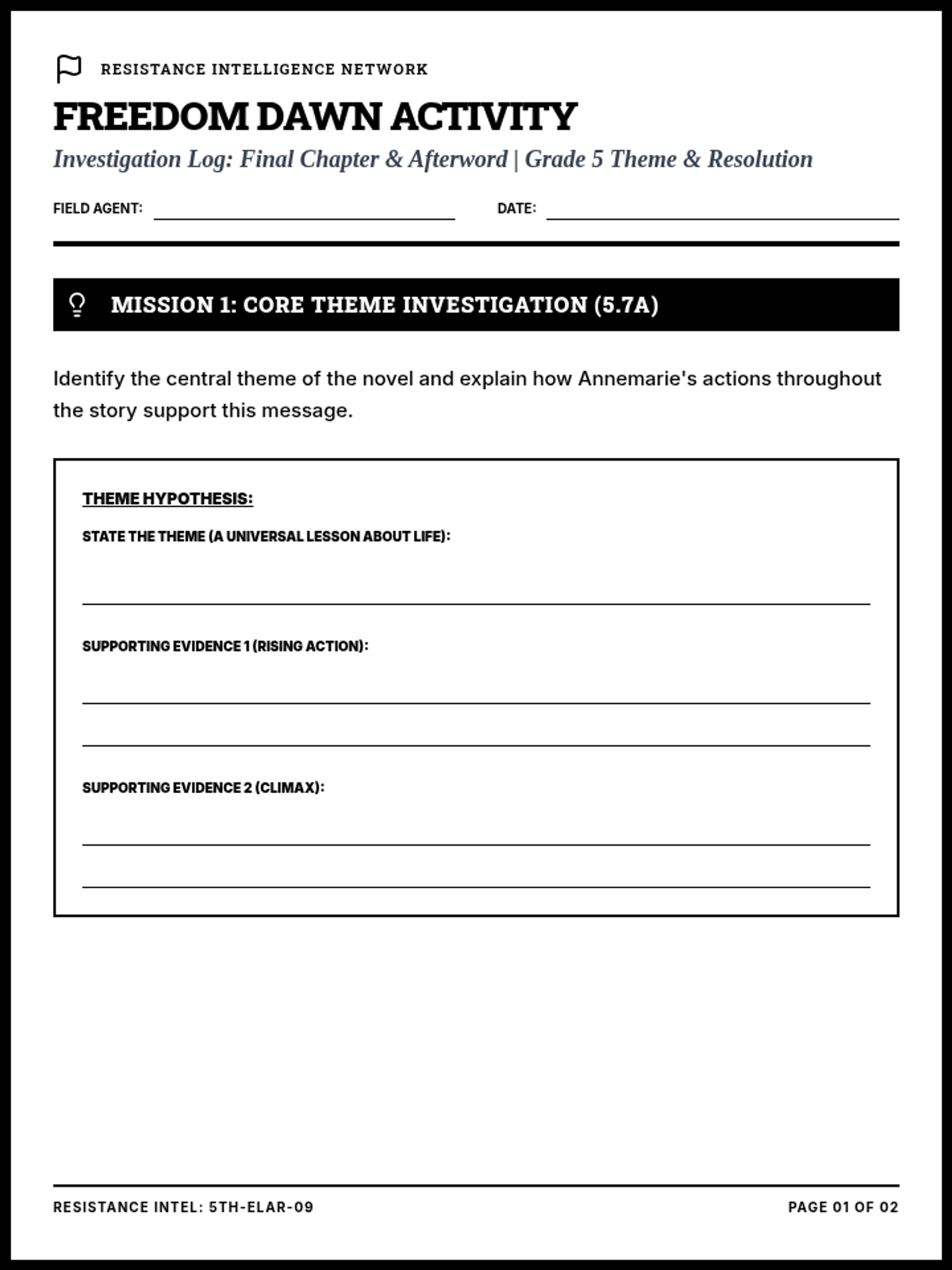
Students synthesize the entire novel's events, including the final chapter and afterword, to identify themes and analyze the resolution of the plot.
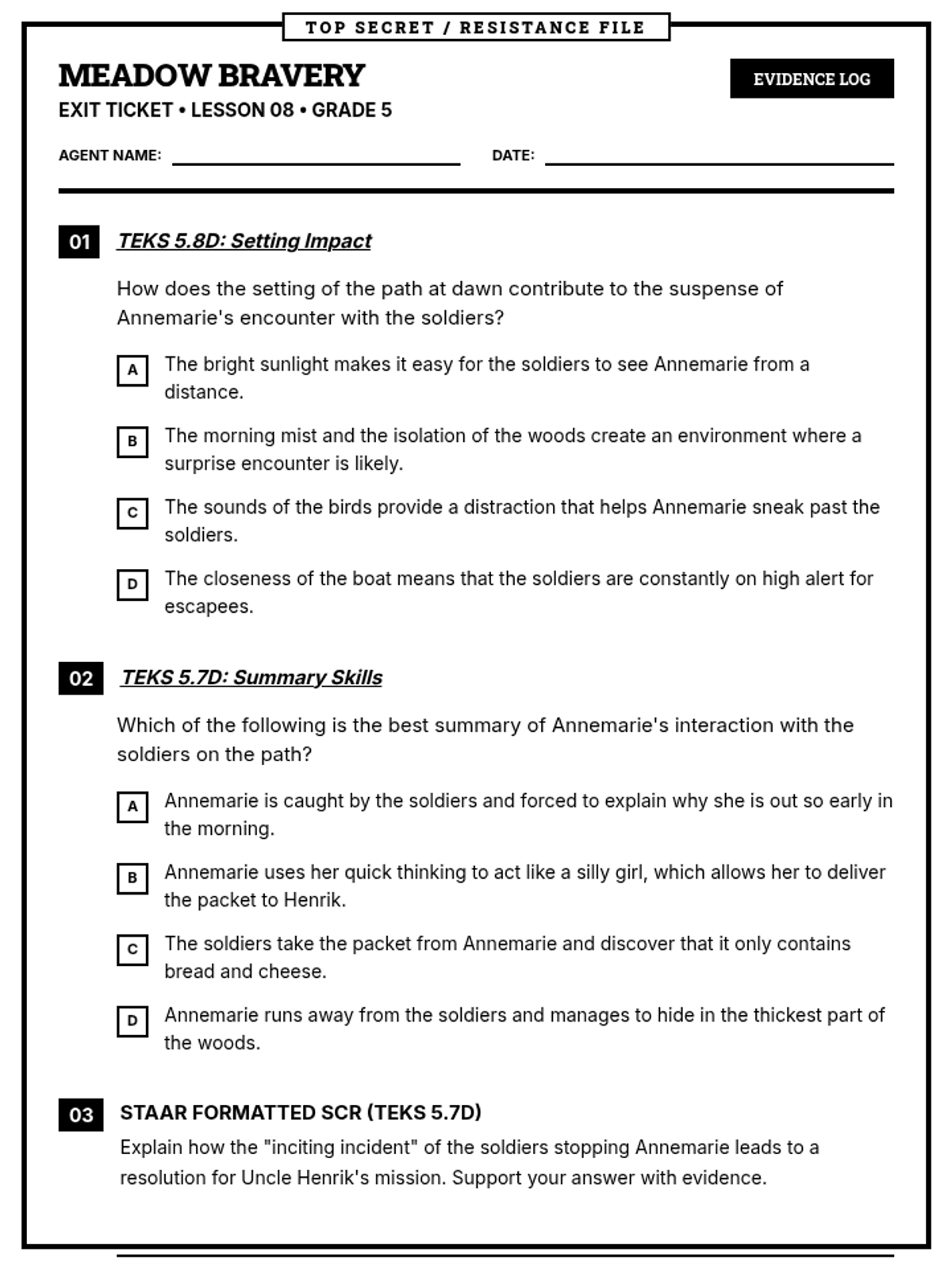
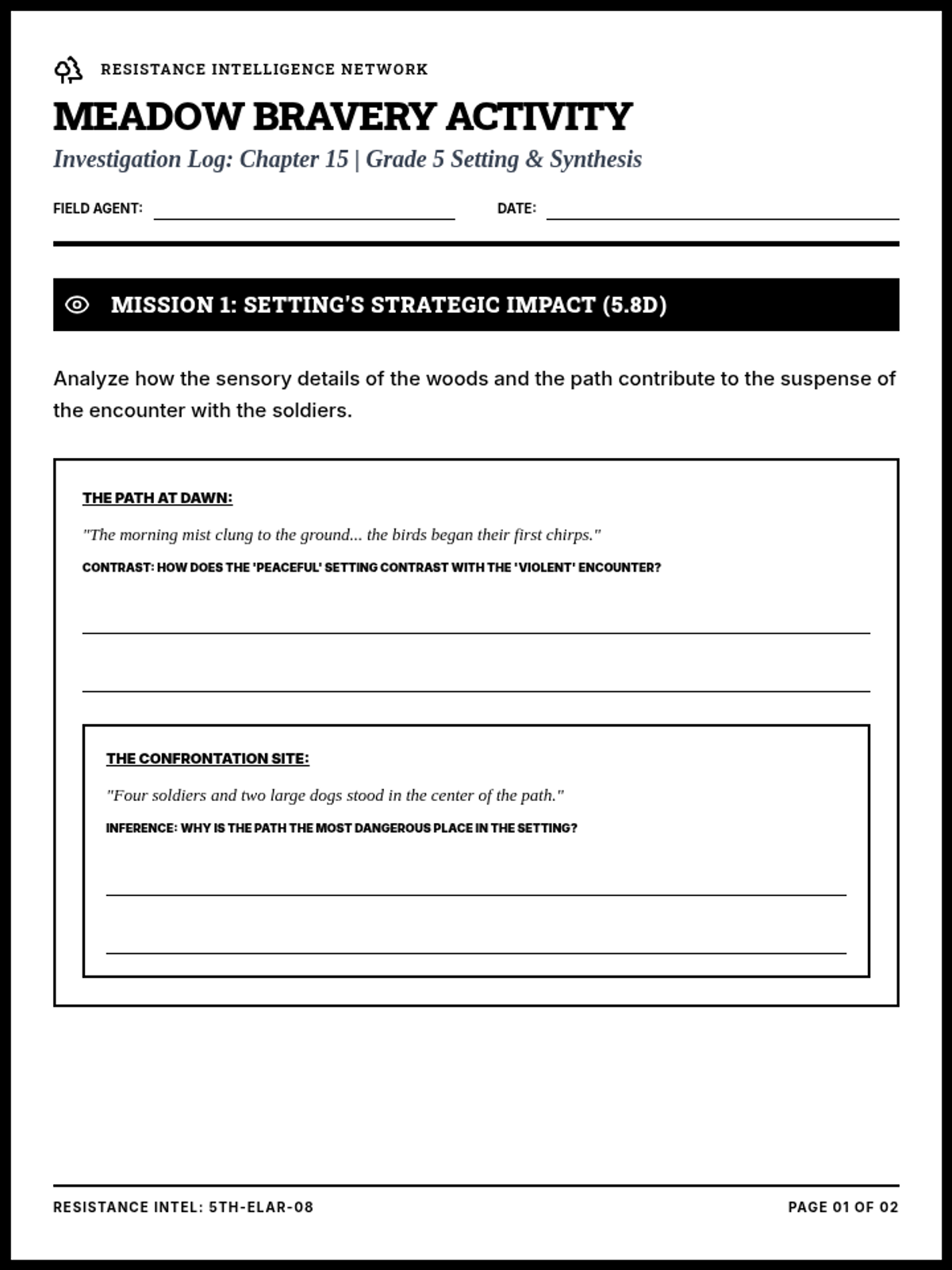
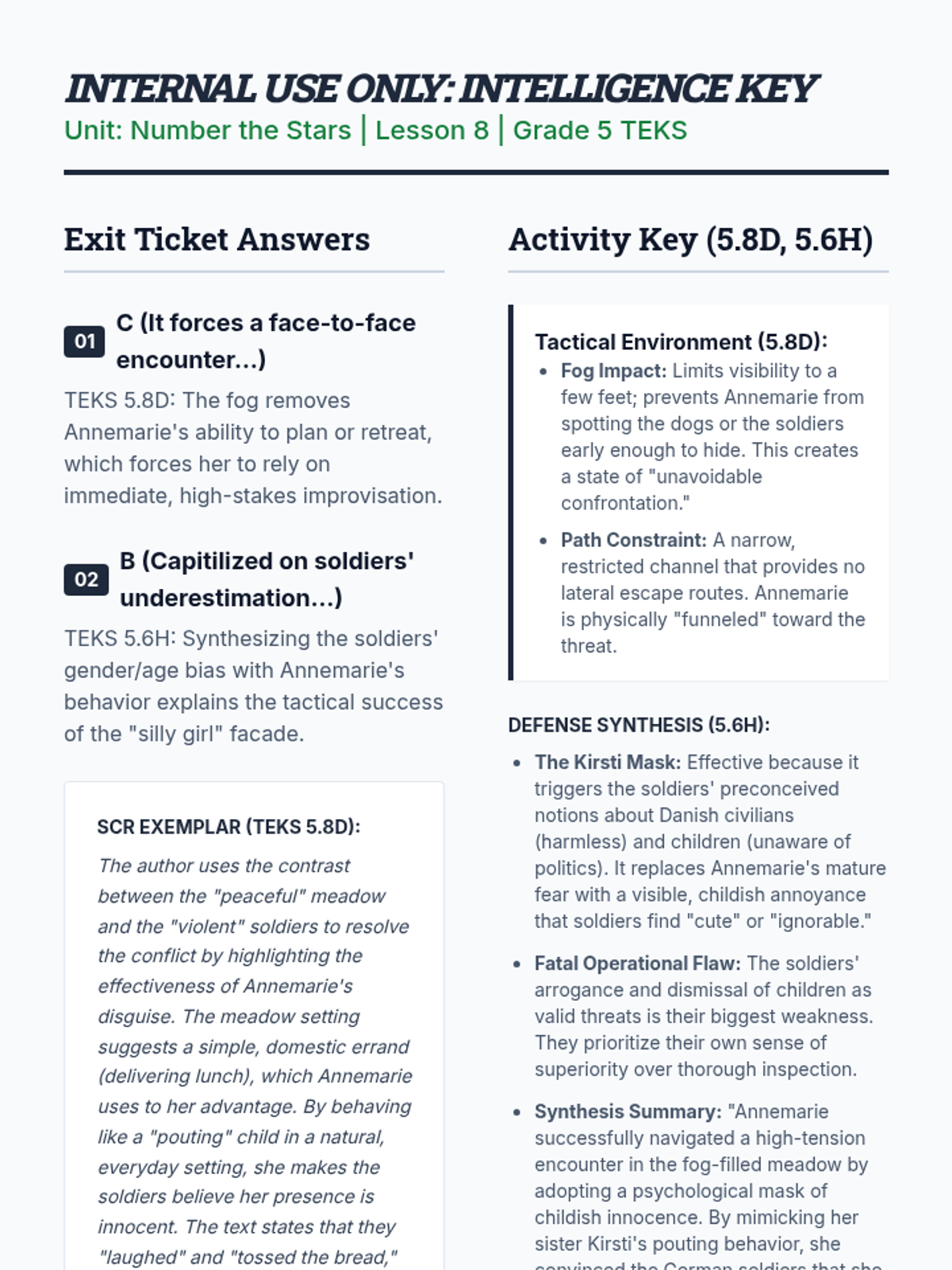
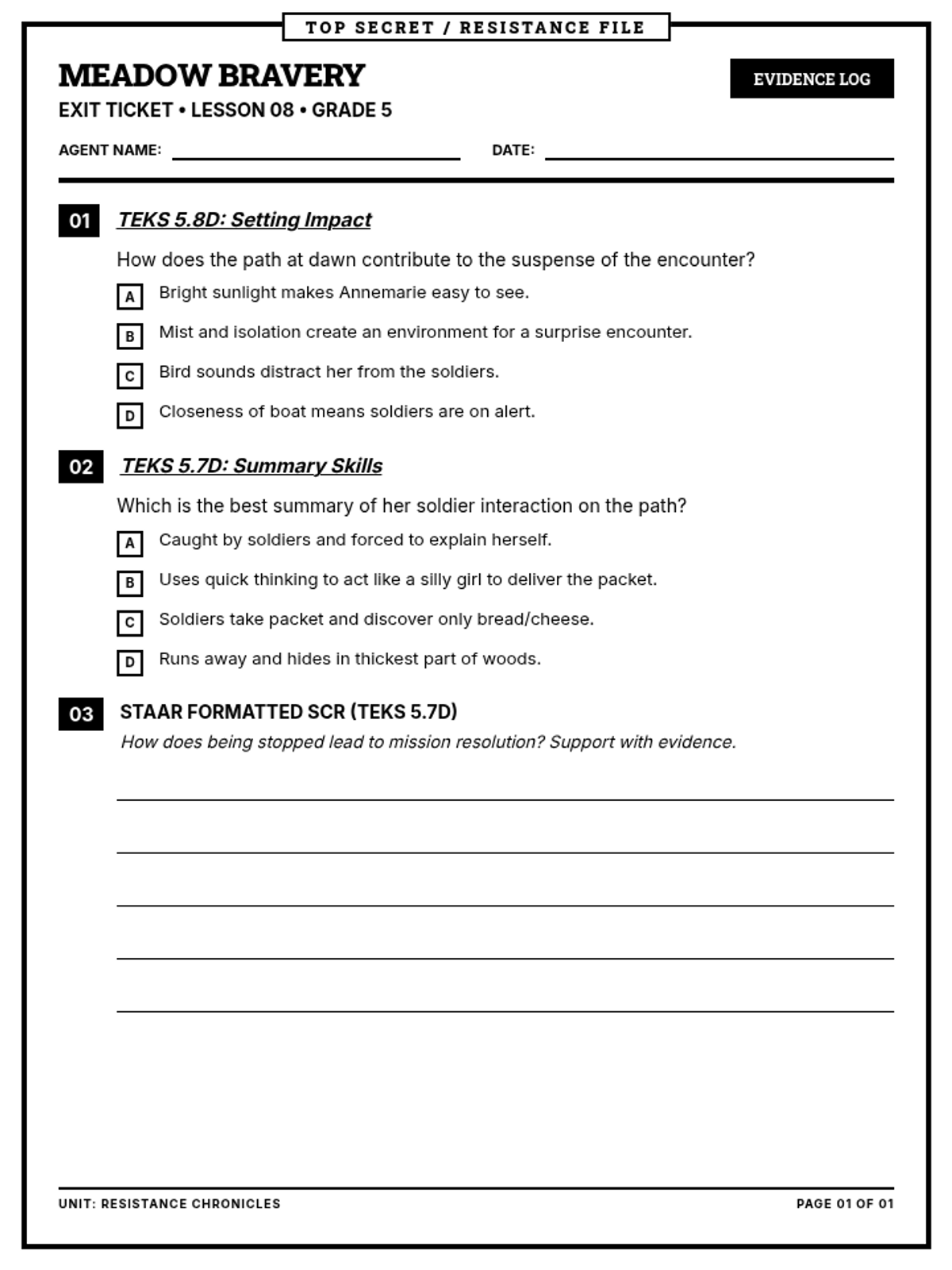
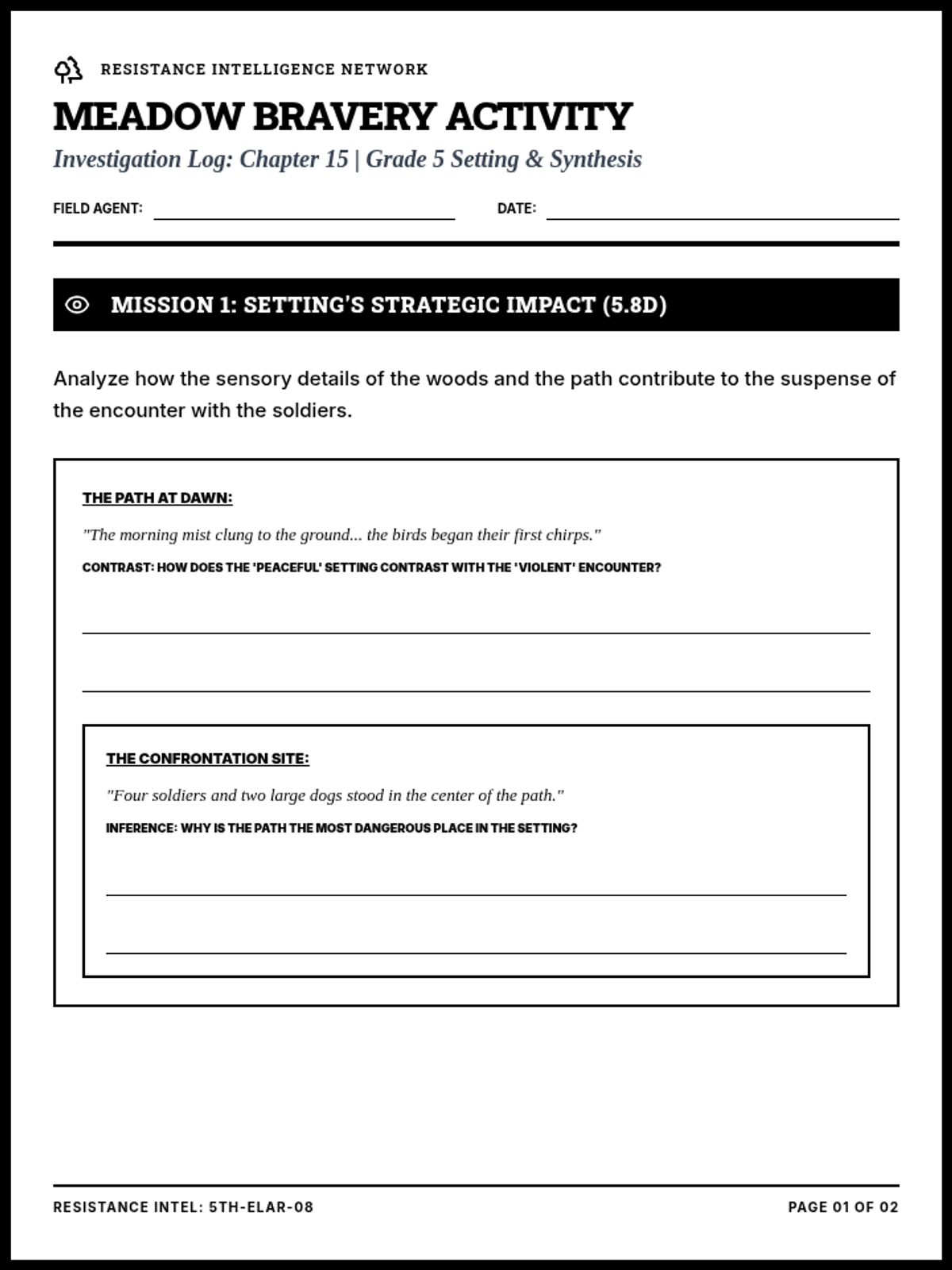
Students examine the setting's impact on the plot and synthesize details from Annemarie's encounter with the soldiers in the woods.
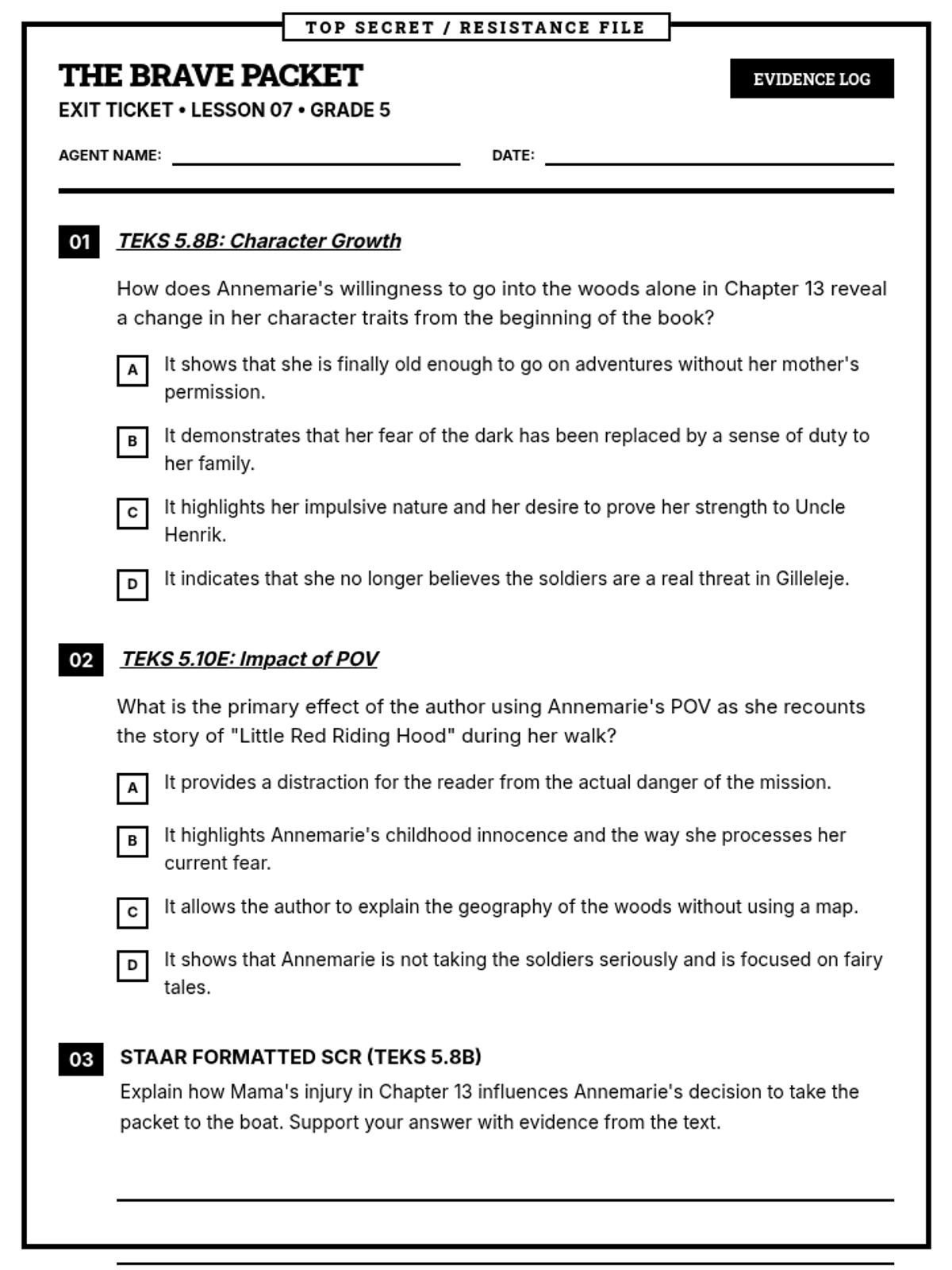
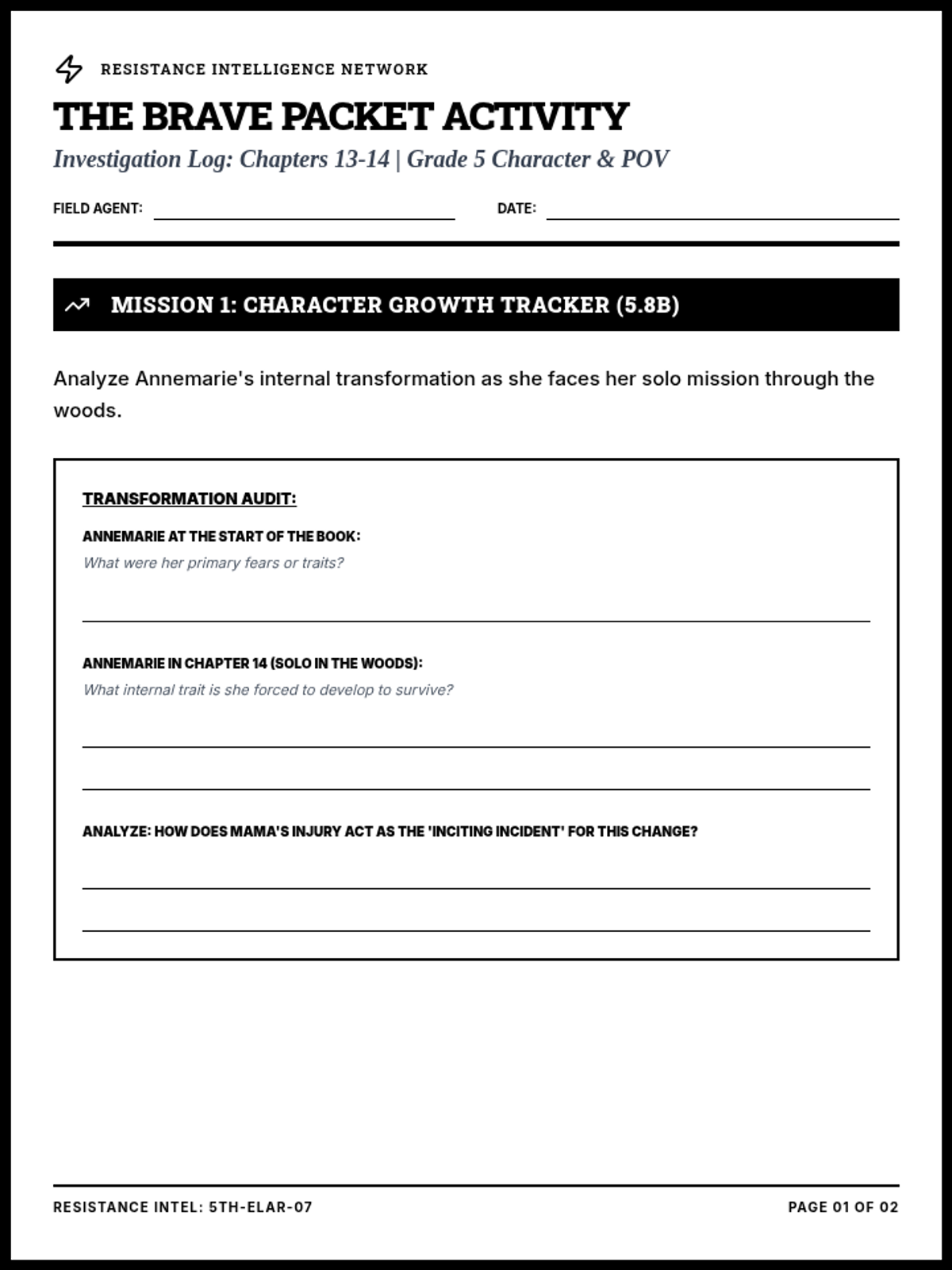
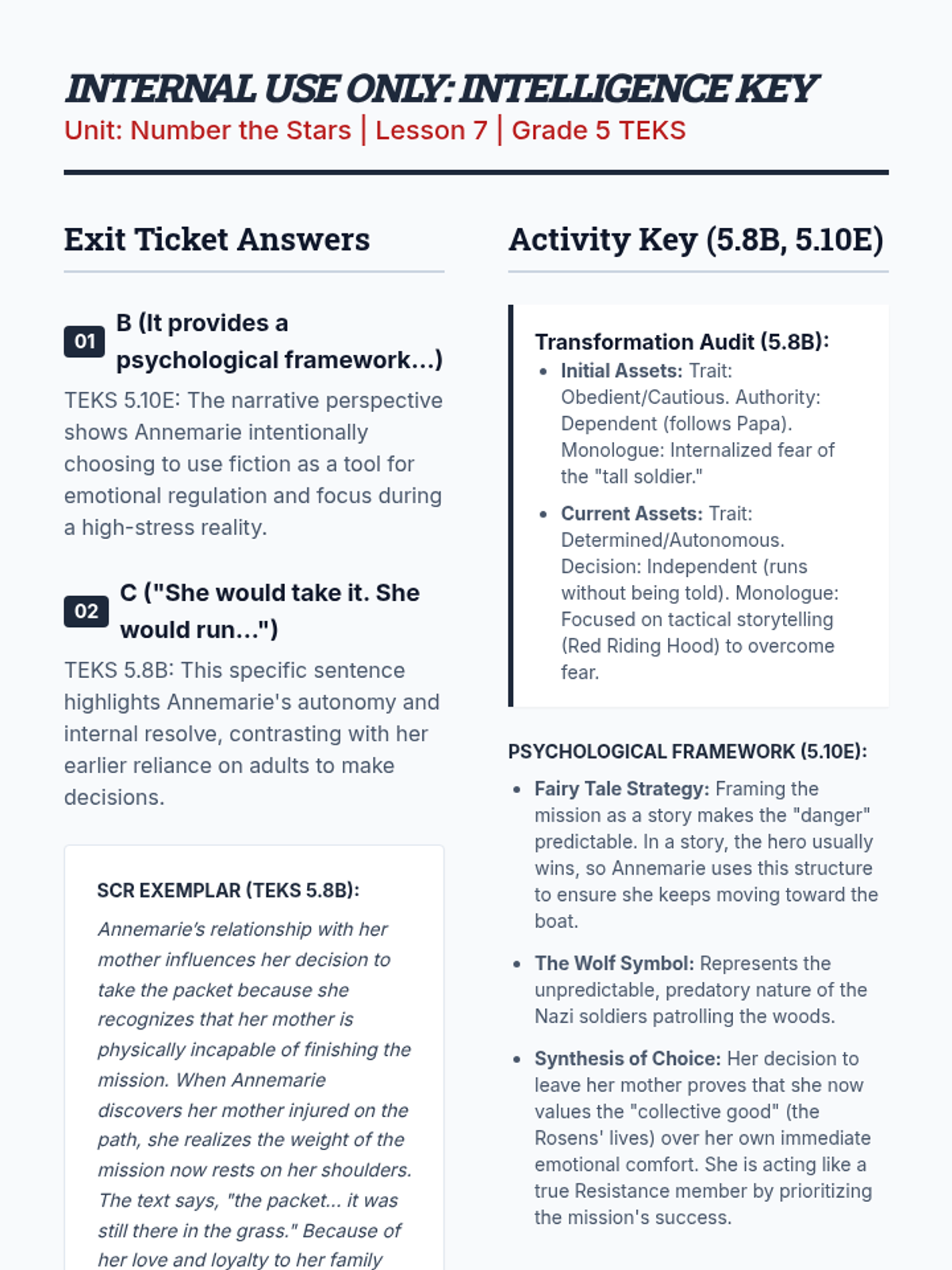
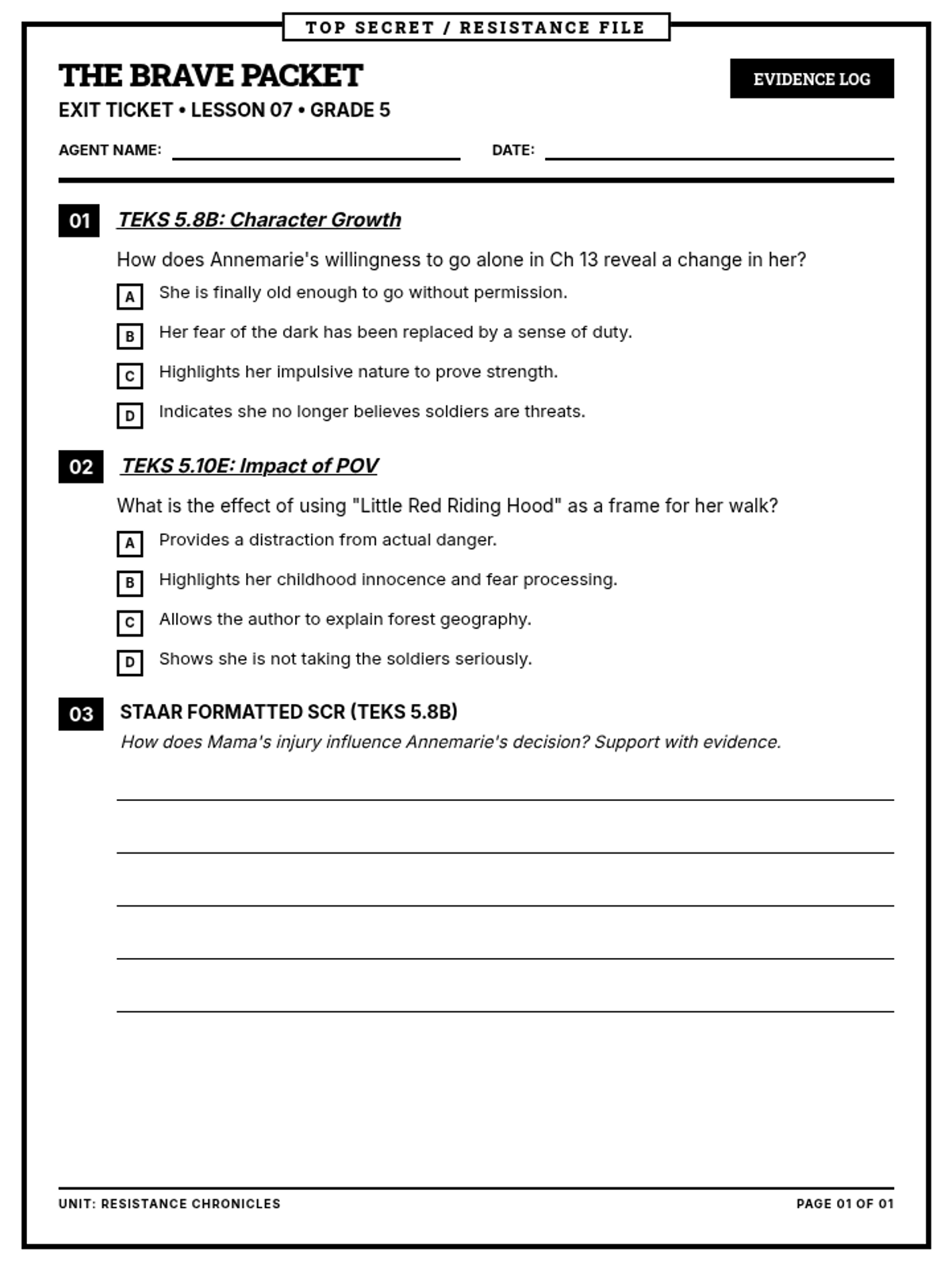
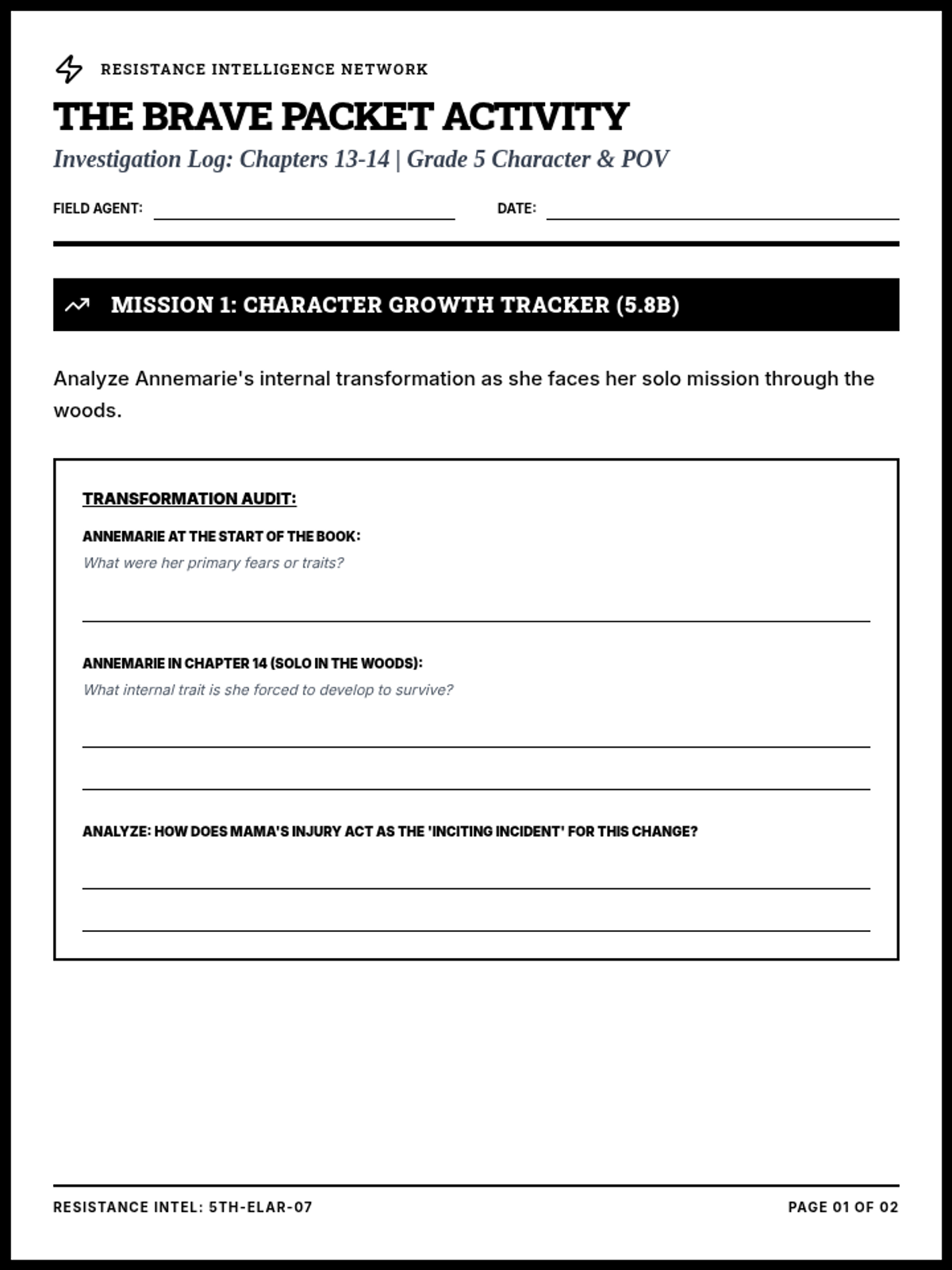
Students analyze character growth and the impact of point of view as Annemarie takes on a dangerous mission in chapters 13 and 14.
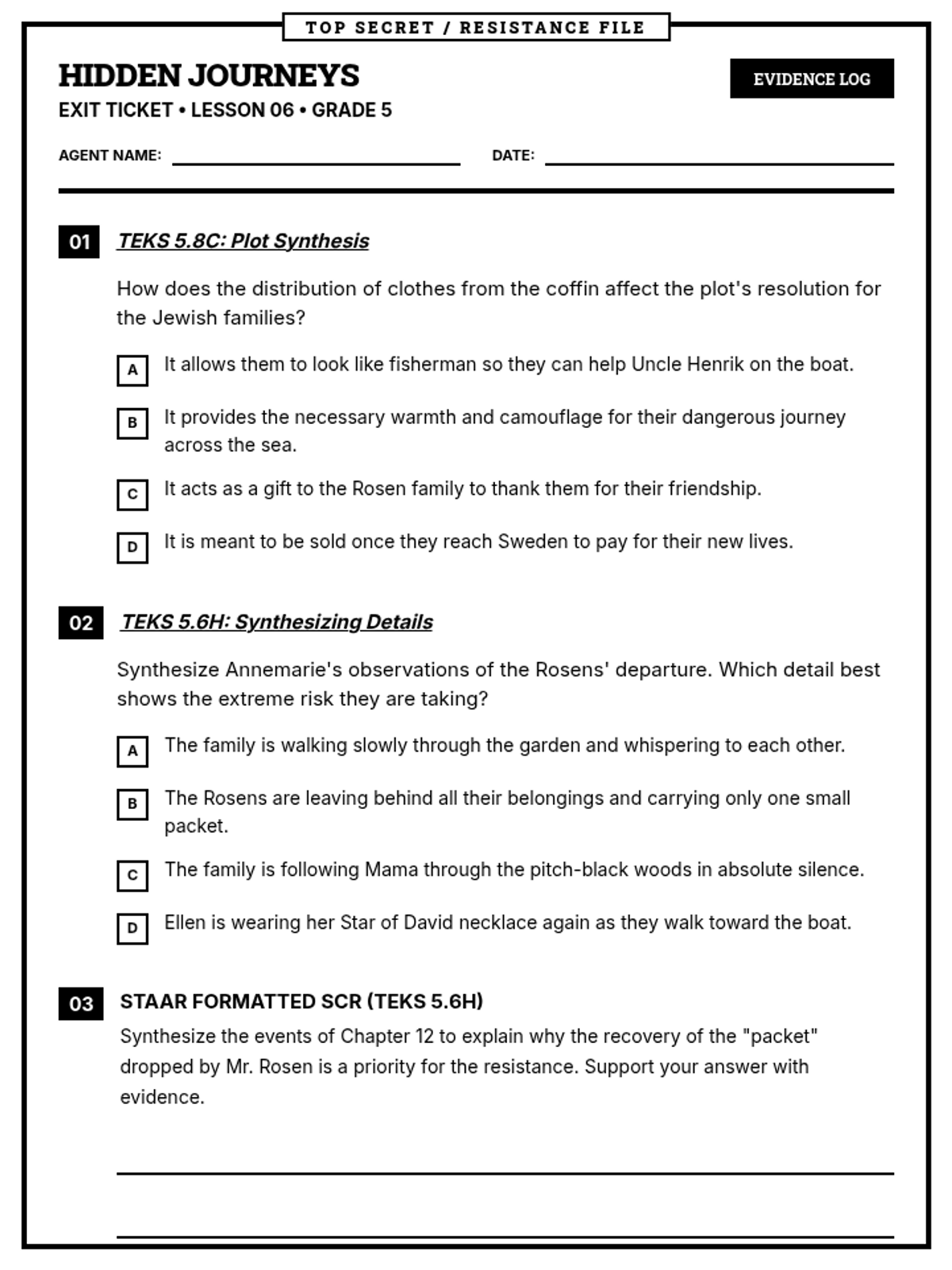
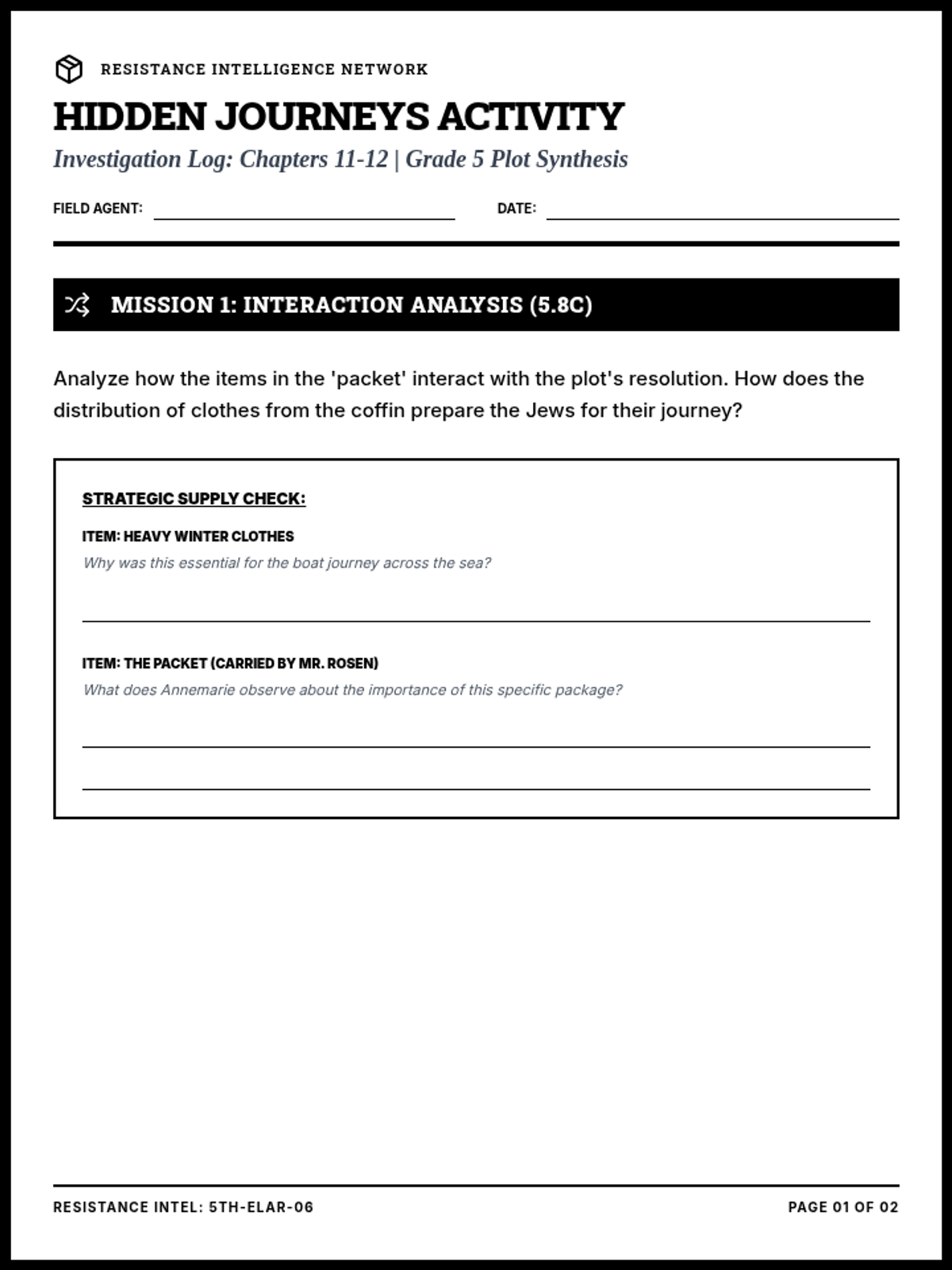
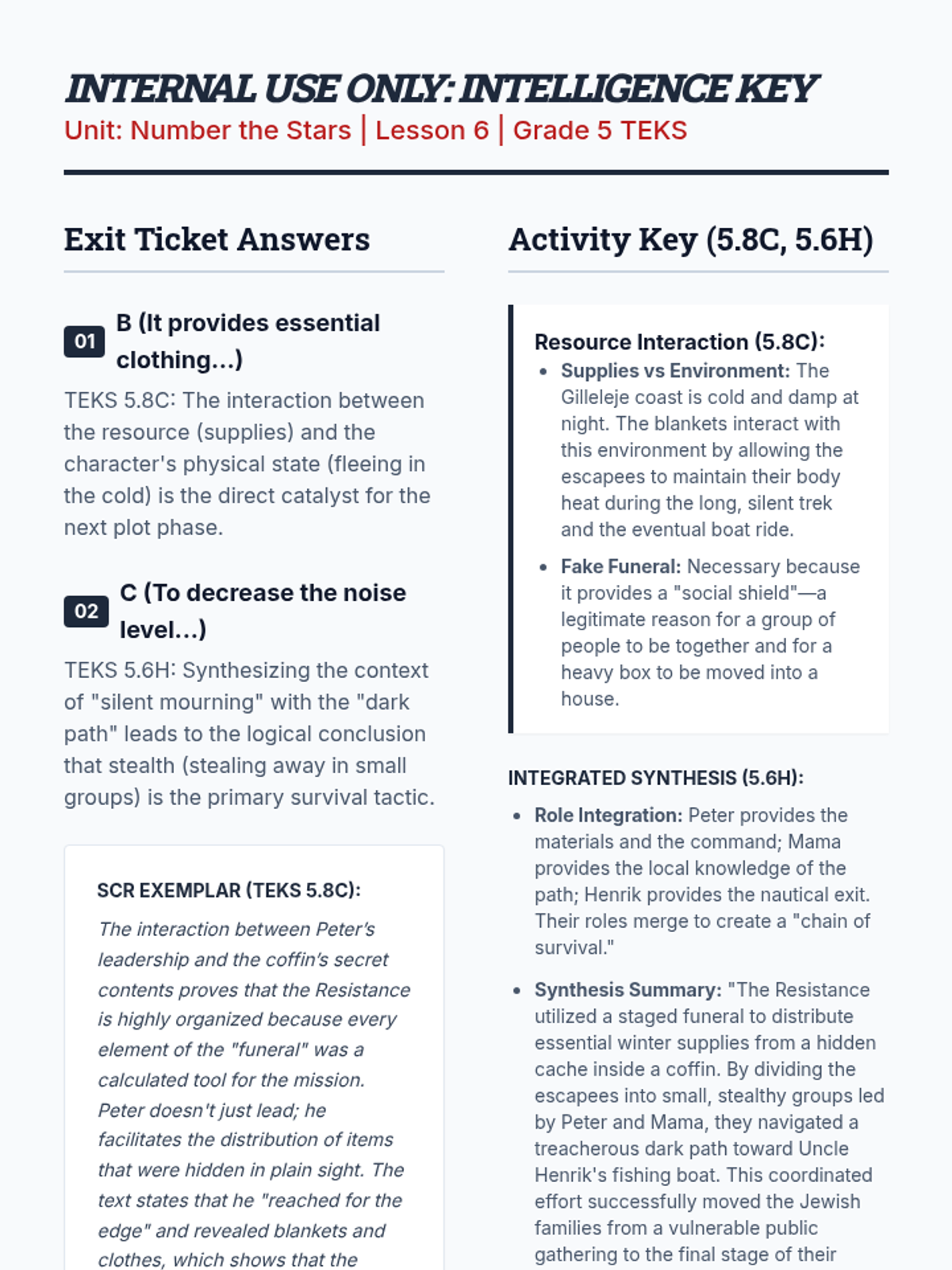
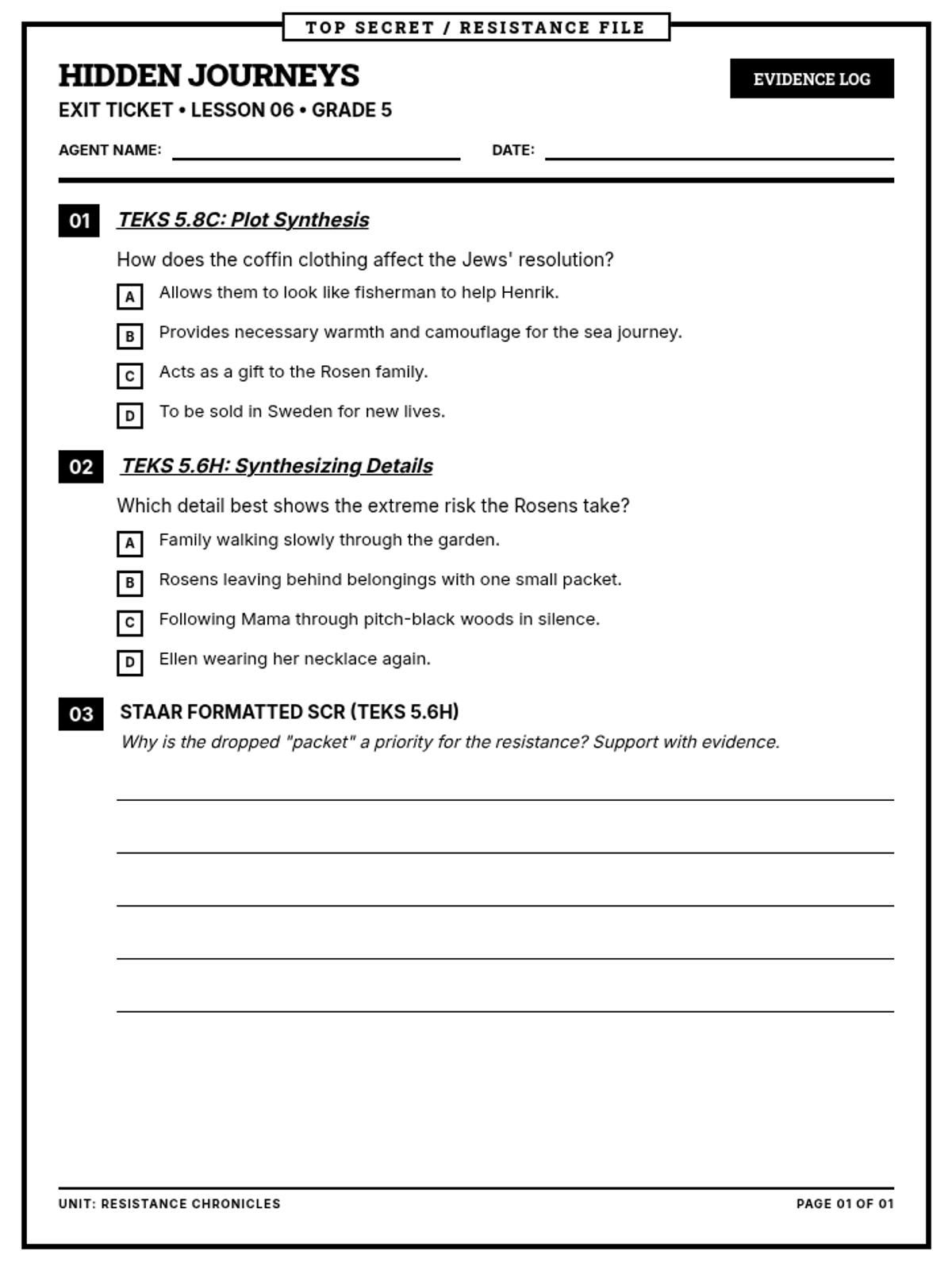
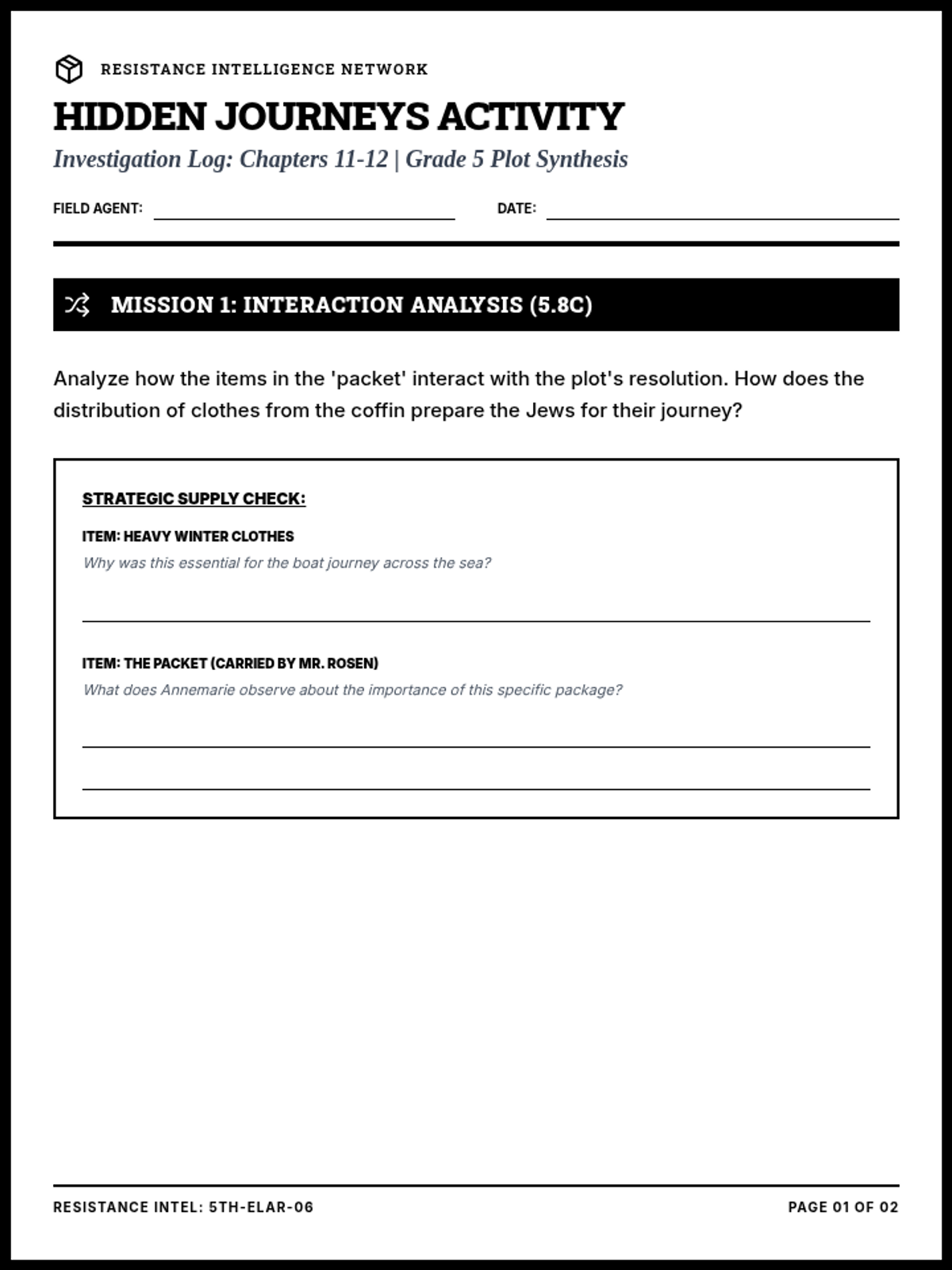
Focusing on chapters 11 and 12, students analyze plot elements and practice synthesizing information to summarize the escape to the boat.