A fast-paced, 30-minute lesson where students become literary detectives, learning to identify and use specific textual evidence to support claims about short fiction.
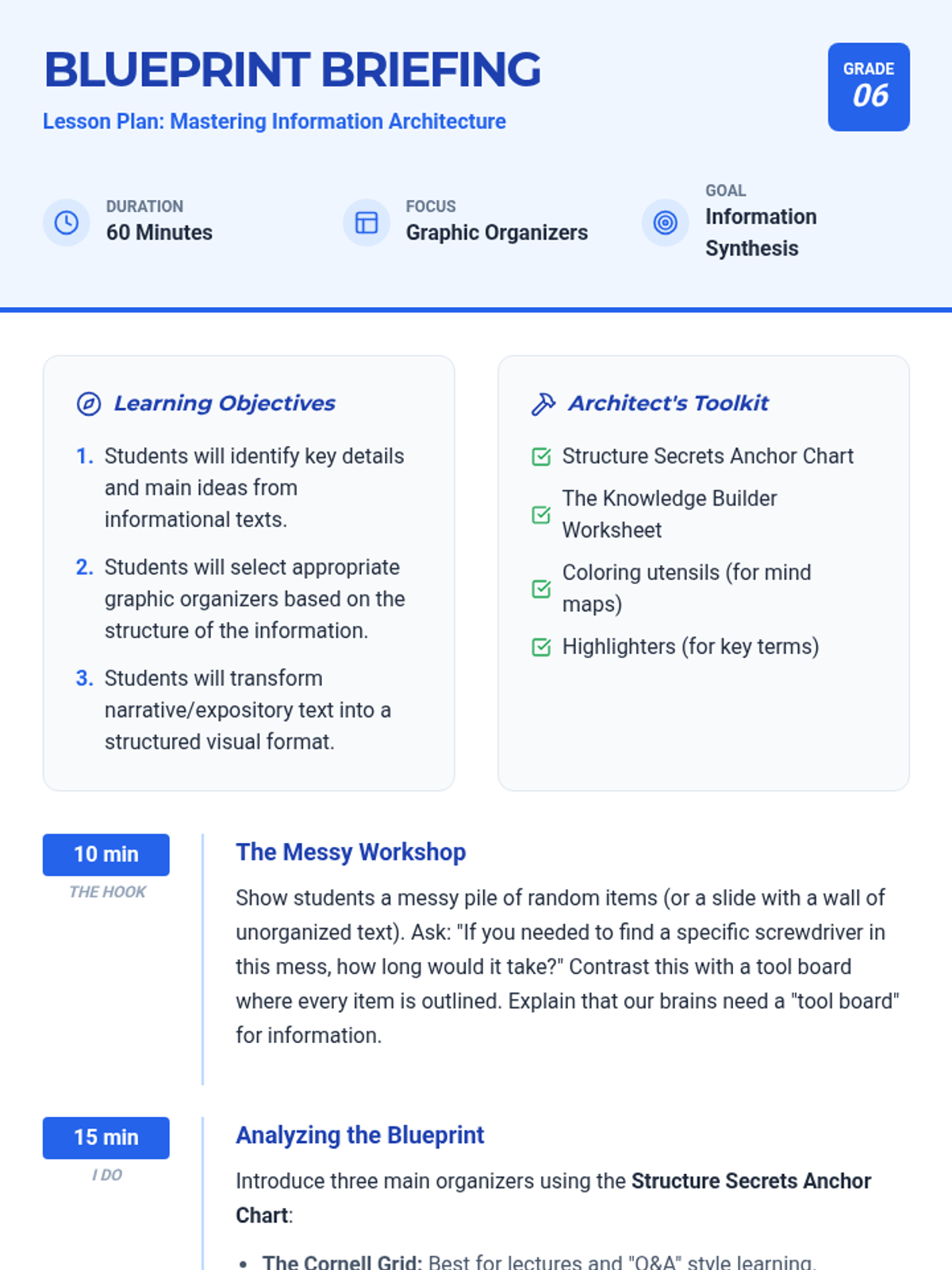
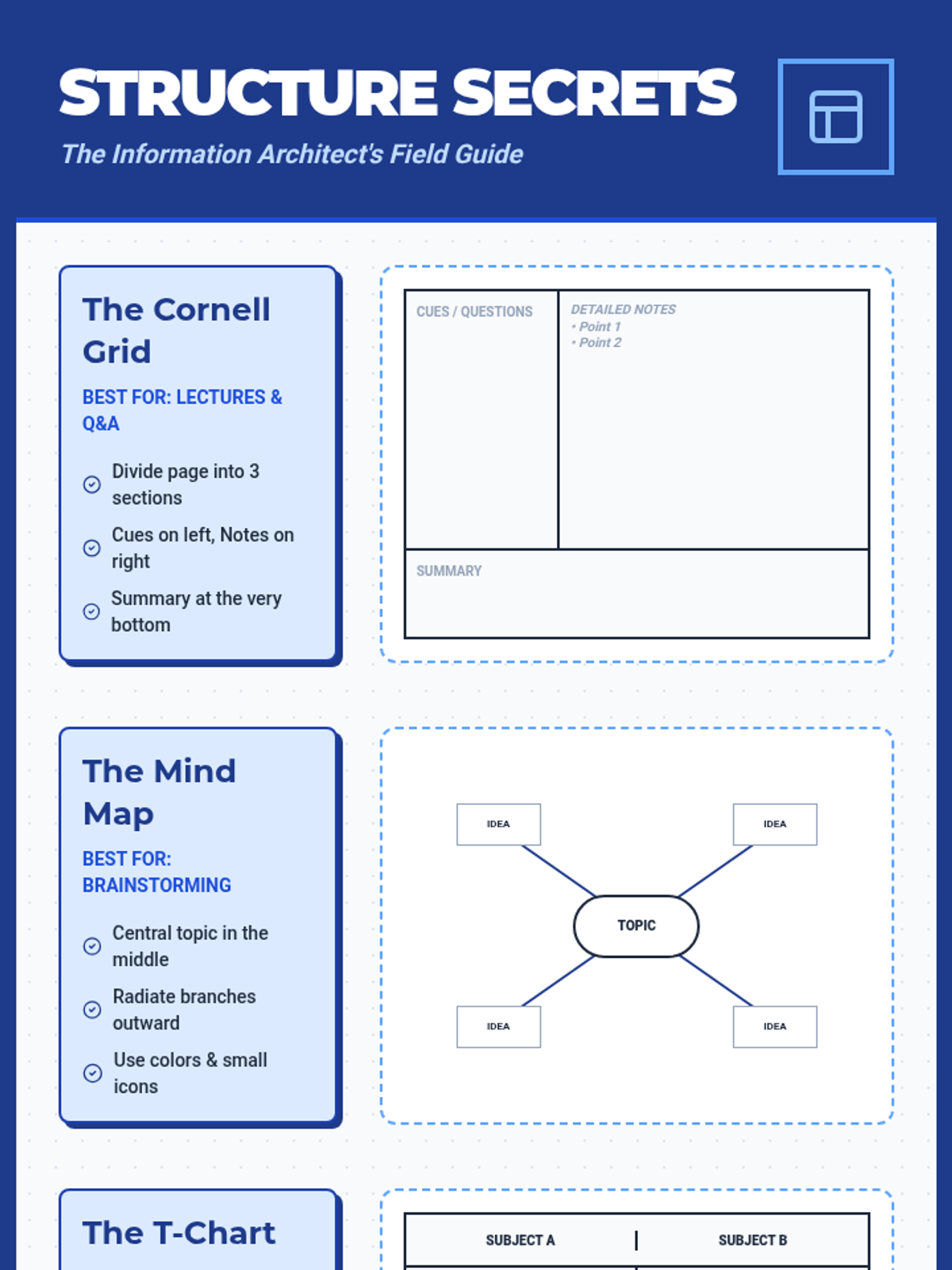
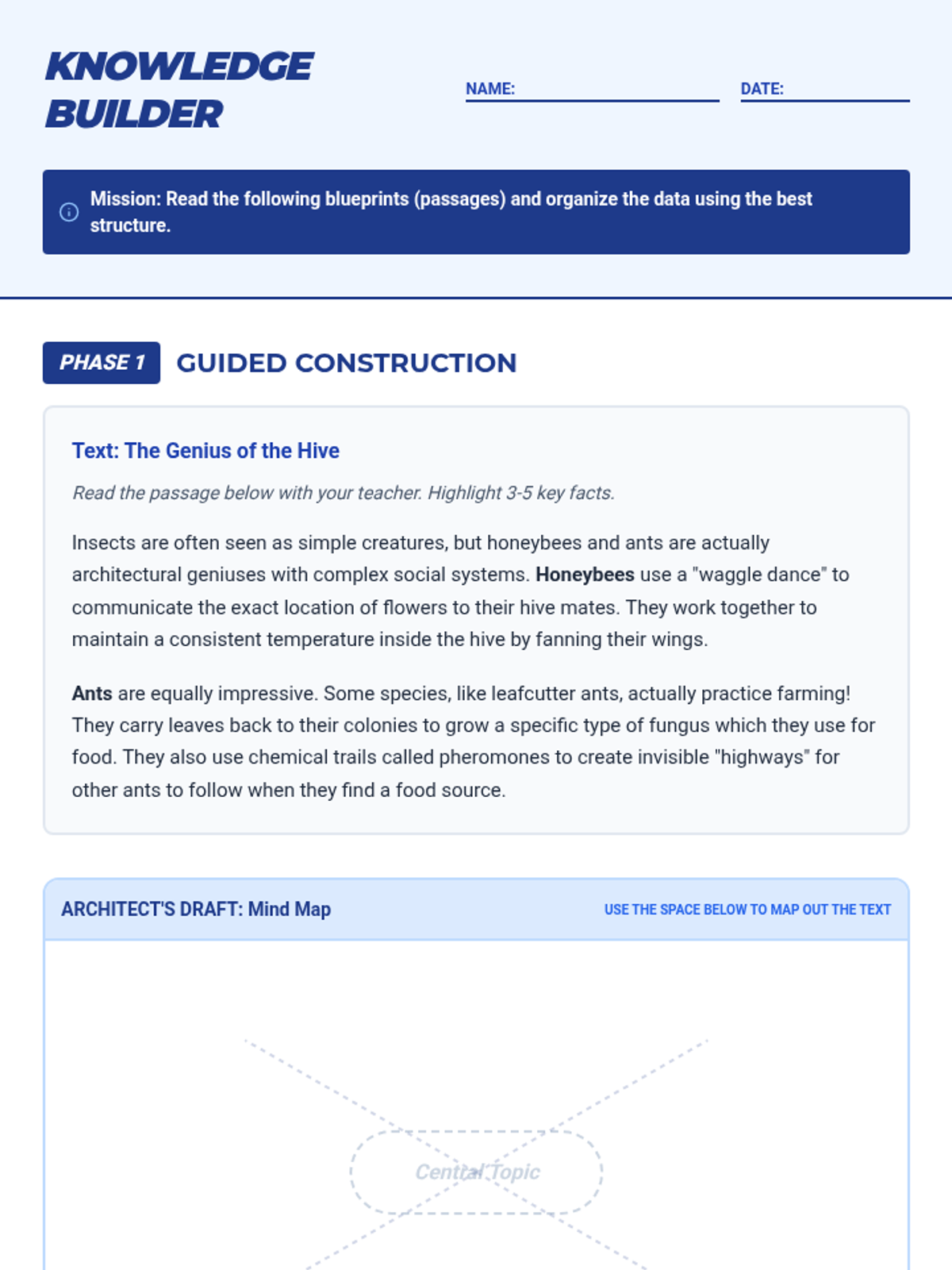
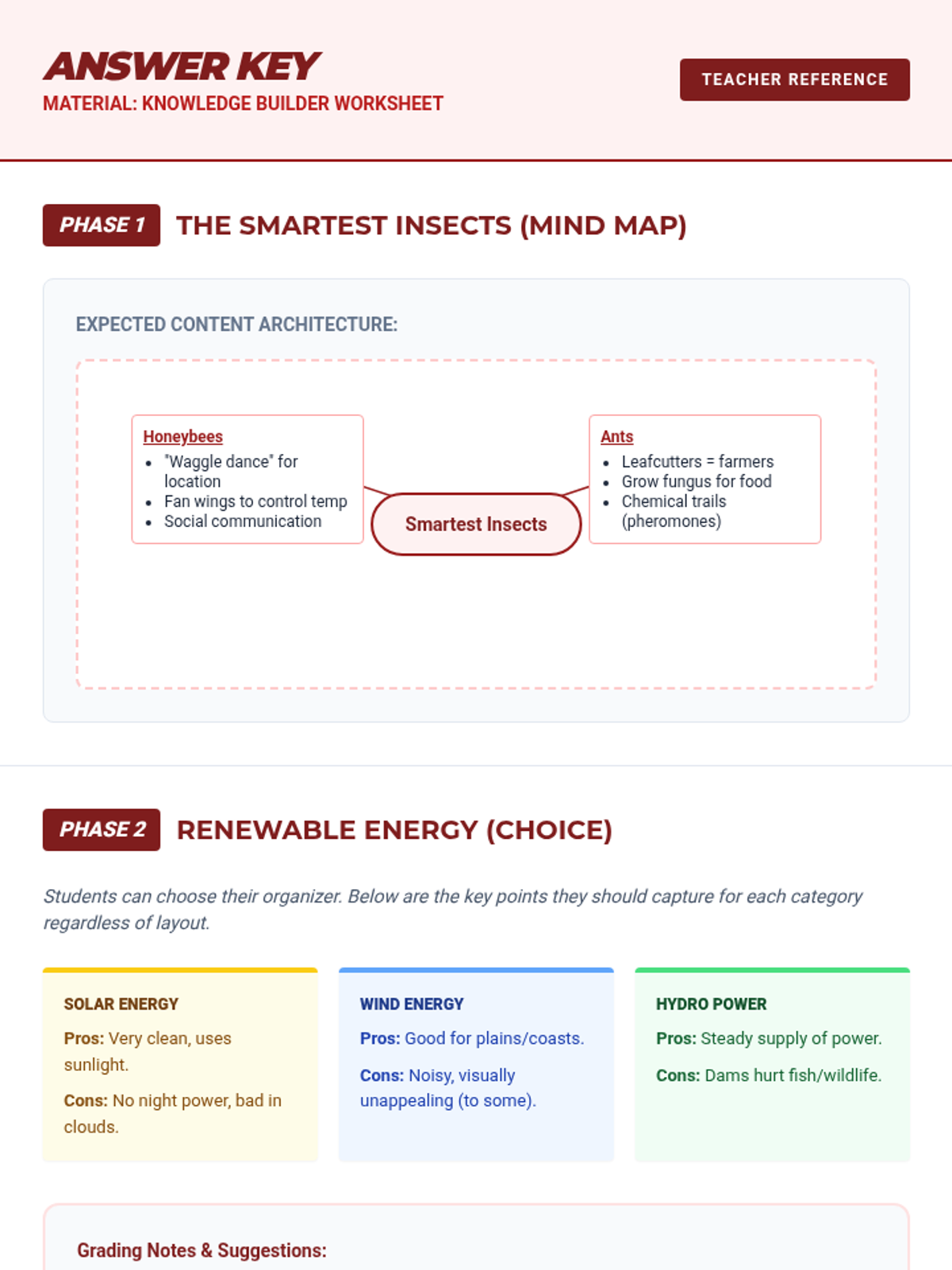
A comprehensive lesson teaching 6th graders how to use graphic organizers (Cornell notes, mind maps, and T-charts) to organize information effectively. Includes a detailed lesson plan, a visual anchor chart, and guided practice worksheets.
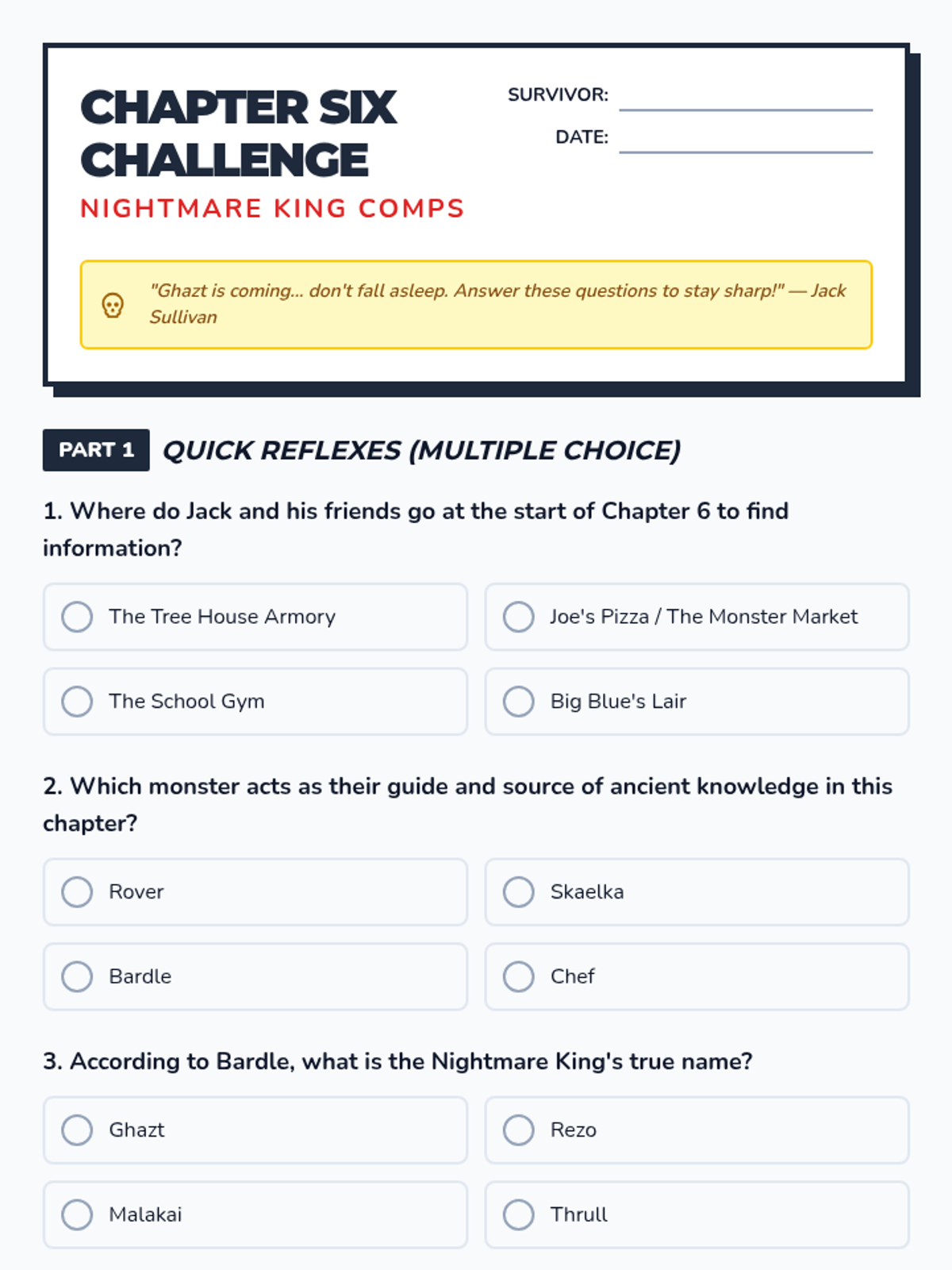
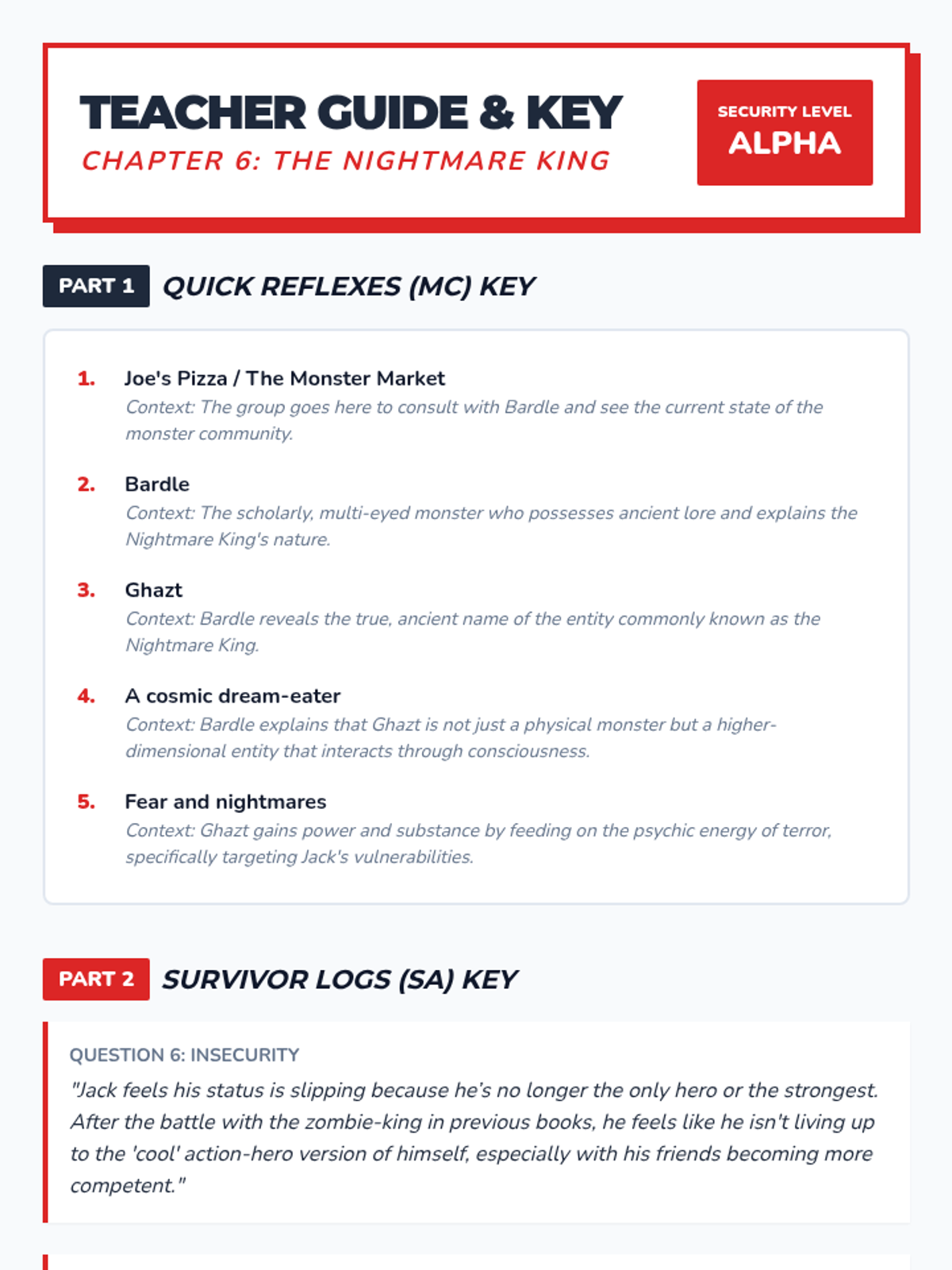
A deep dive into Chapter 6 of 'The Last Kids on Earth and the Nightmare King', focusing on character motivations and the introduction of the Nightmare King's lore.
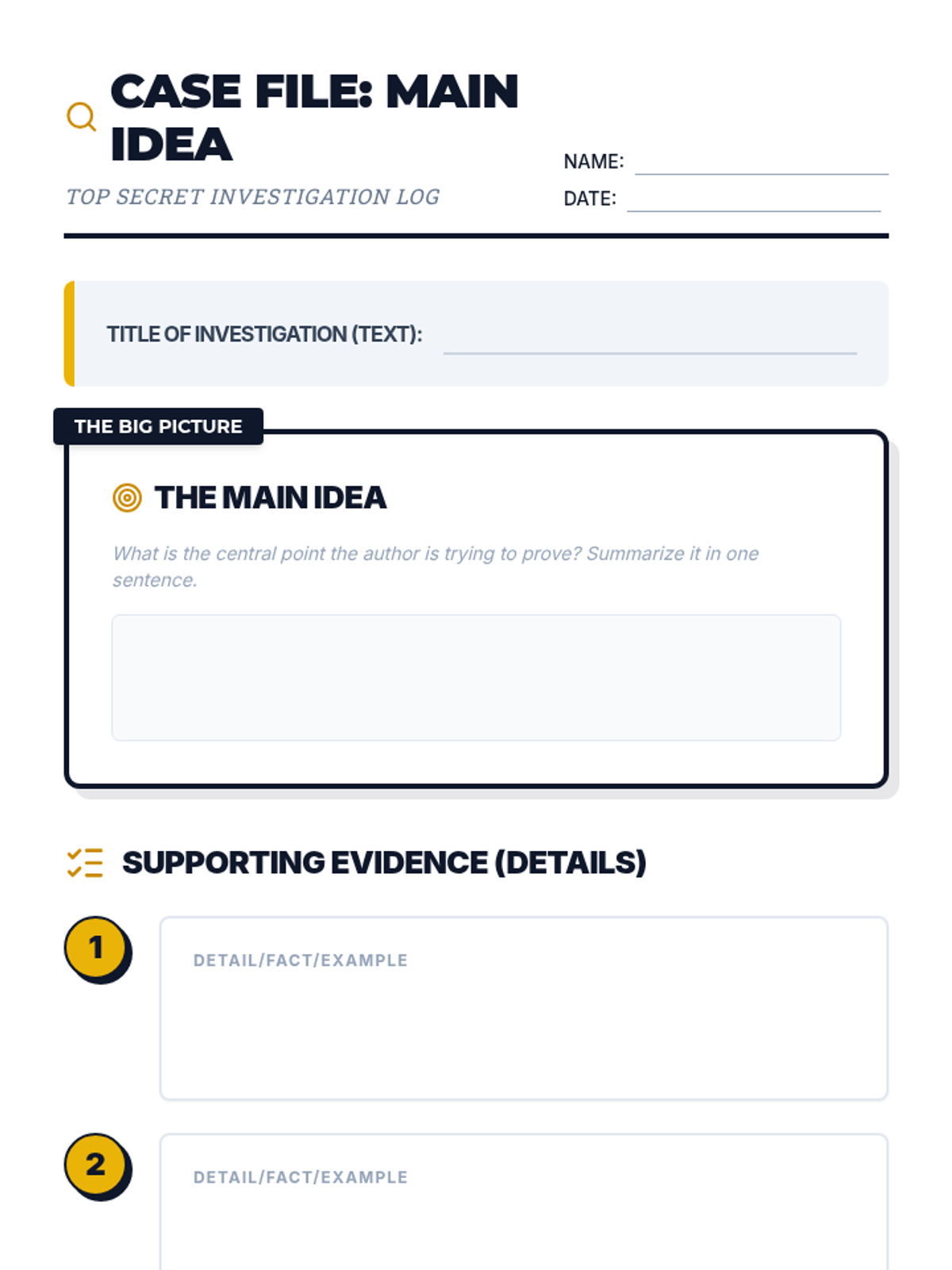
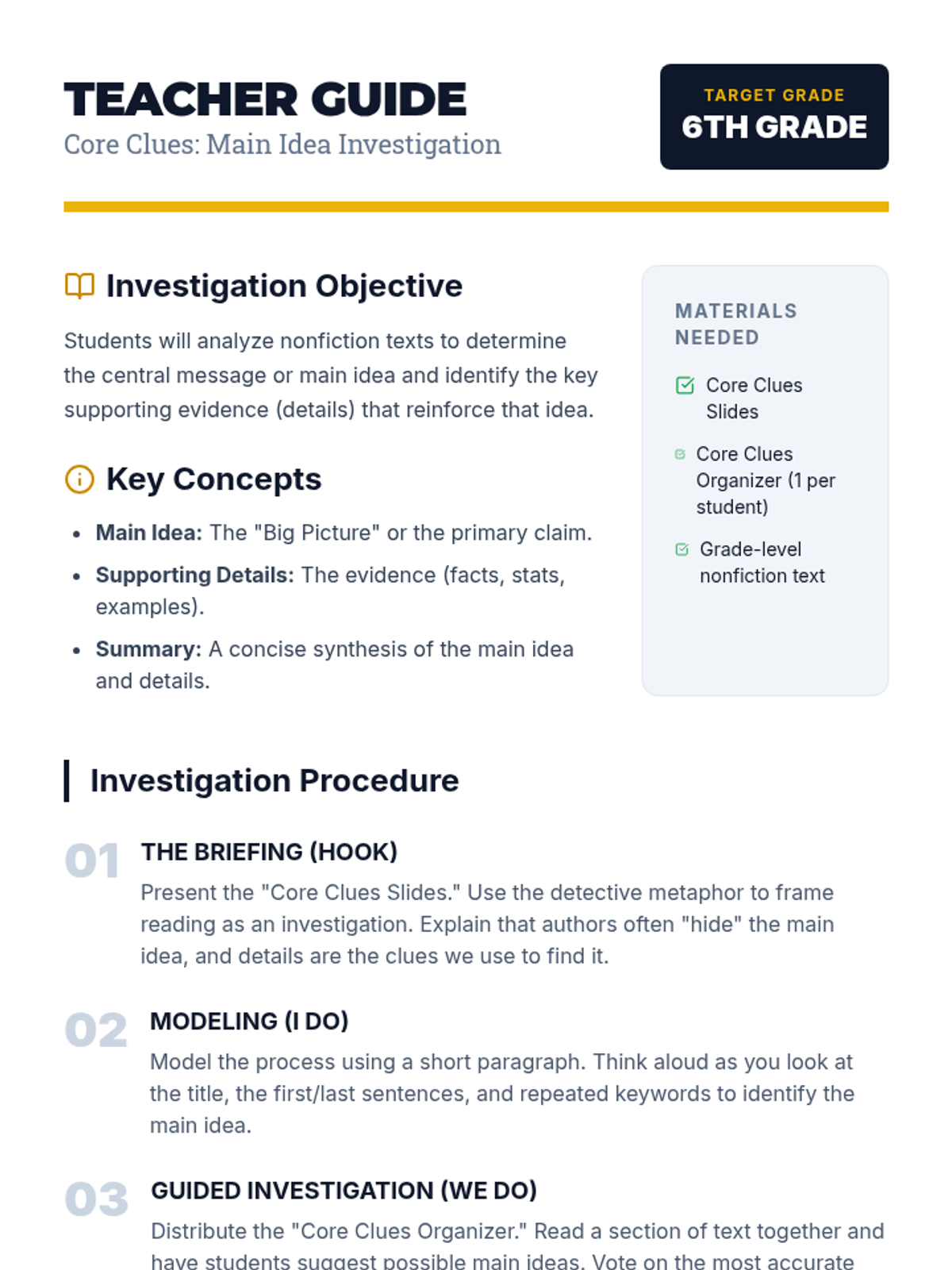
A lesson focused on identifying the main idea and supporting details in nonfiction texts using a detective-themed investigation approach. Students will learn to distinguish between the 'big picture' and the evidence that supports it.
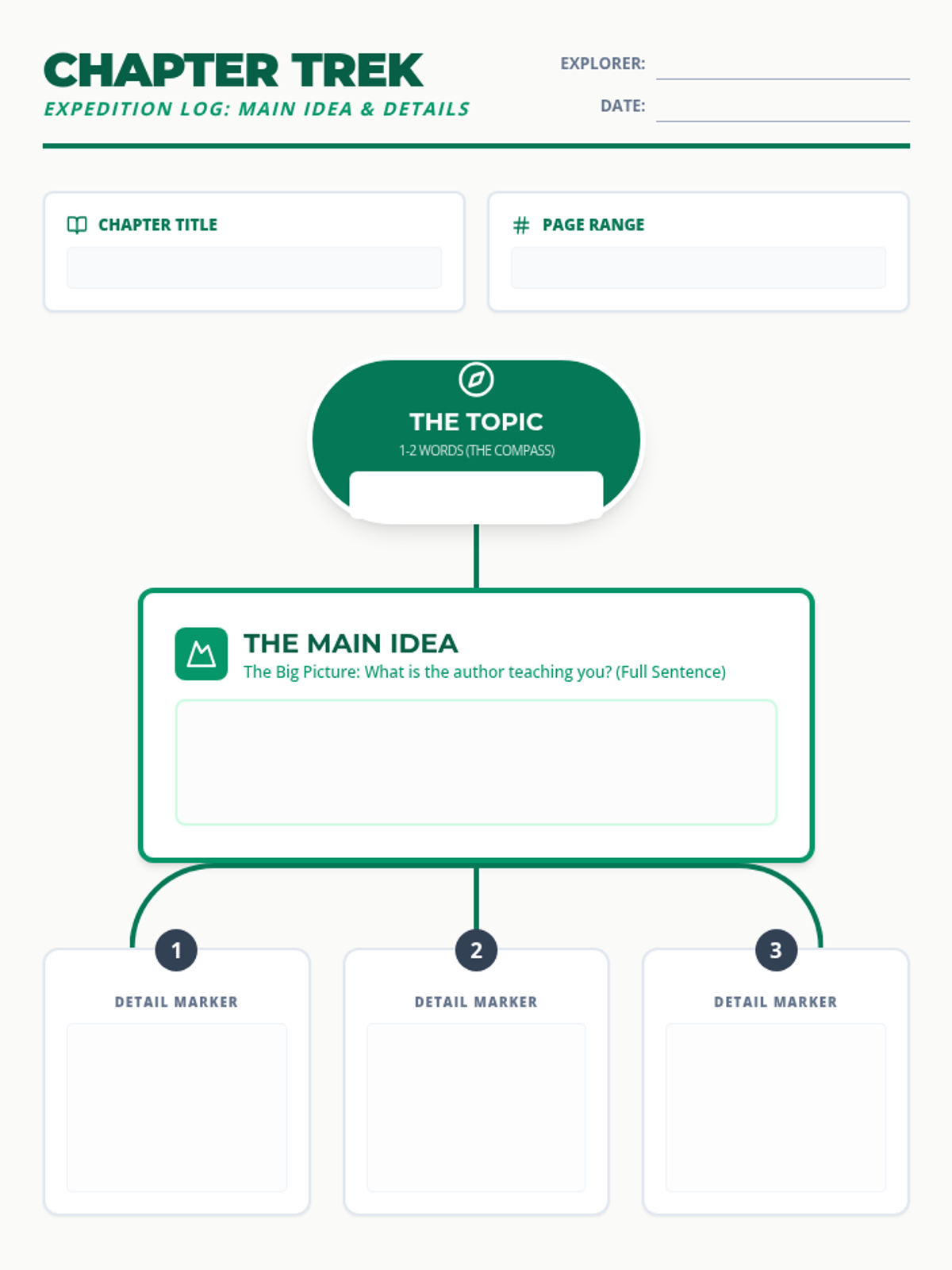
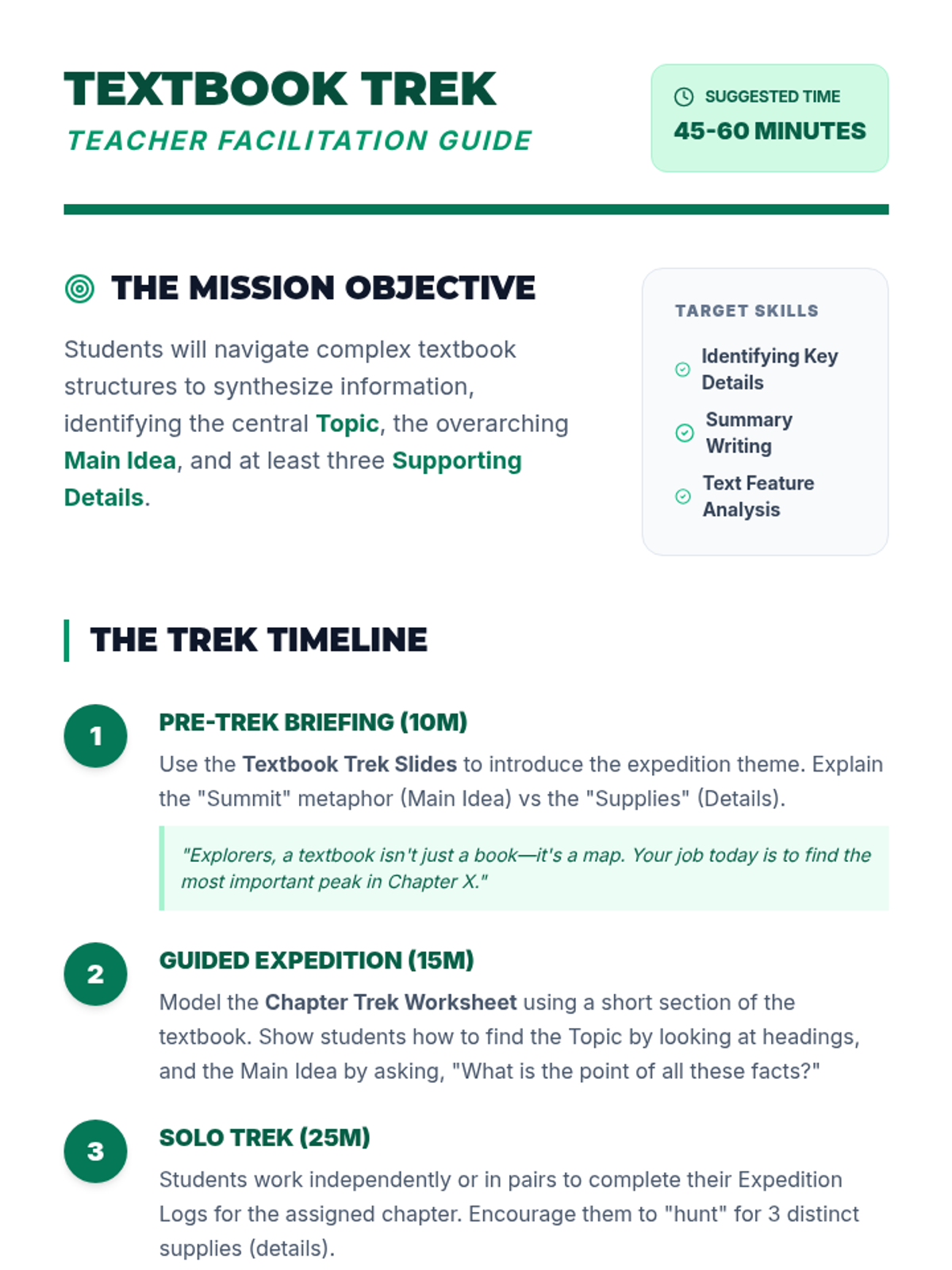
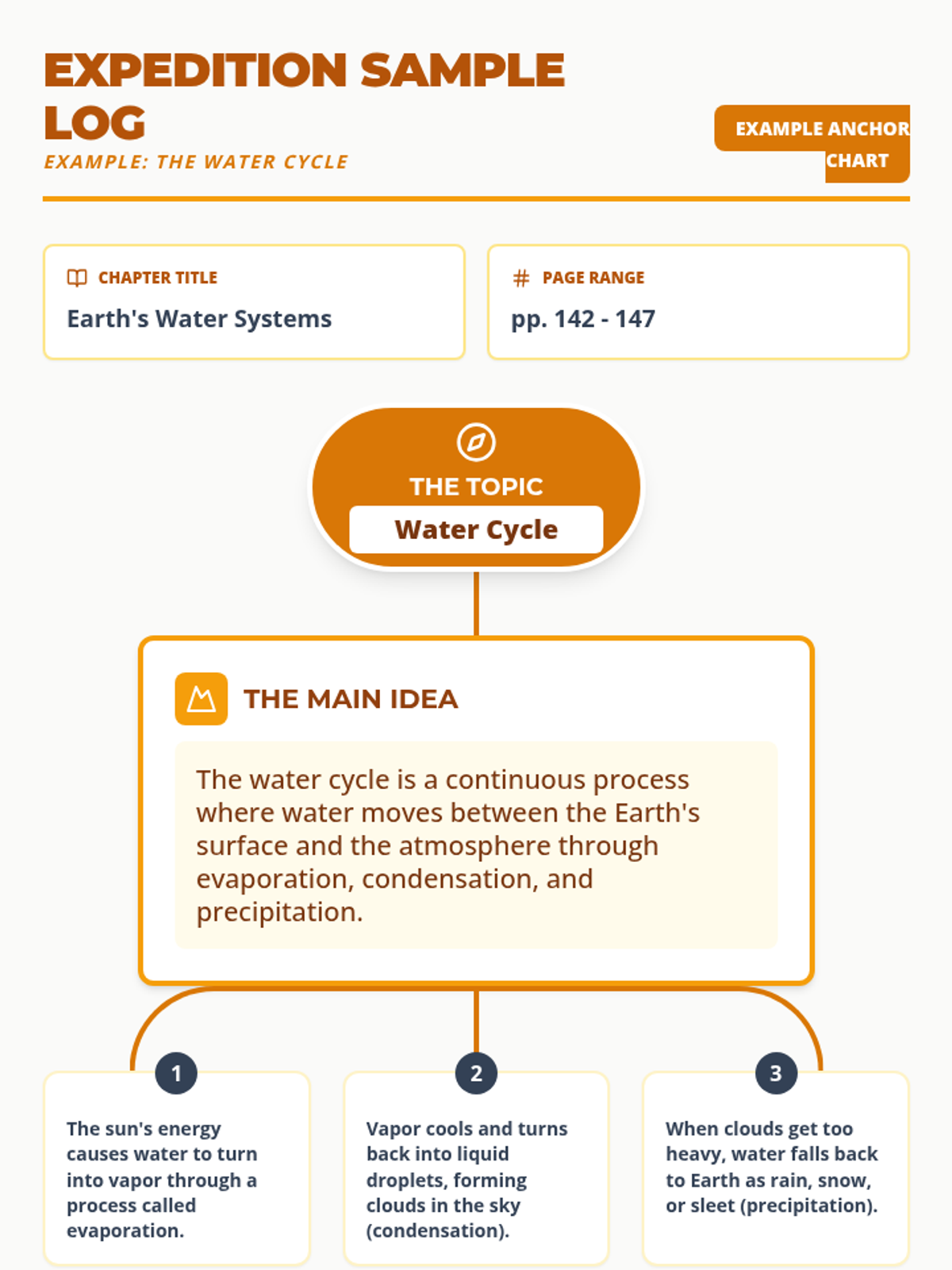
A lesson focused on identifying the topic, main idea, and supporting details in non-fiction textbook chapters using a 'Textbook Trek' expedition theme.
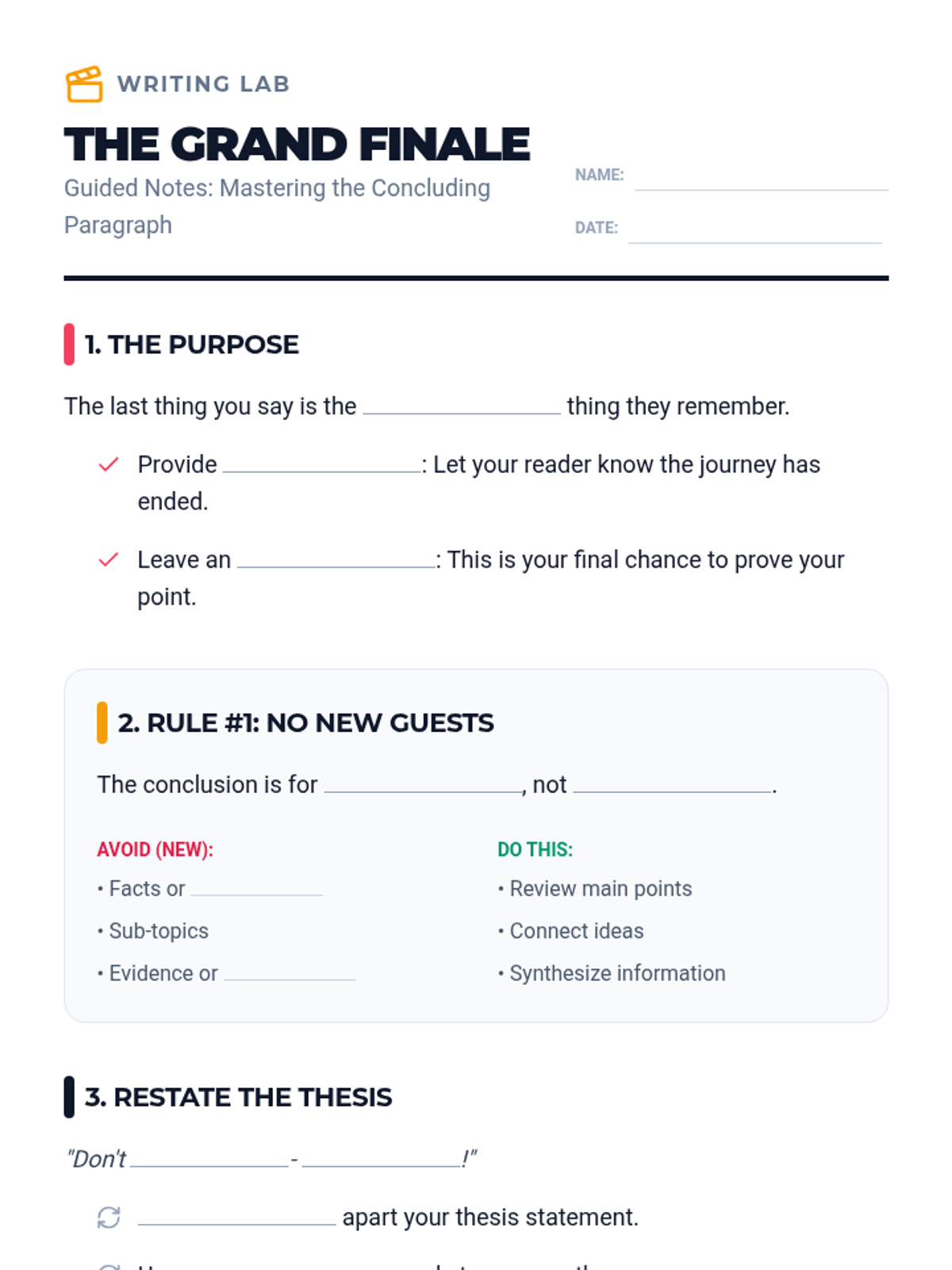
A comprehensive lesson on crafting effective concluding paragraphs, focusing on restating thesis statements, summarizing main points without adding new info, and achieving the ideal length of 4-6 sentences.
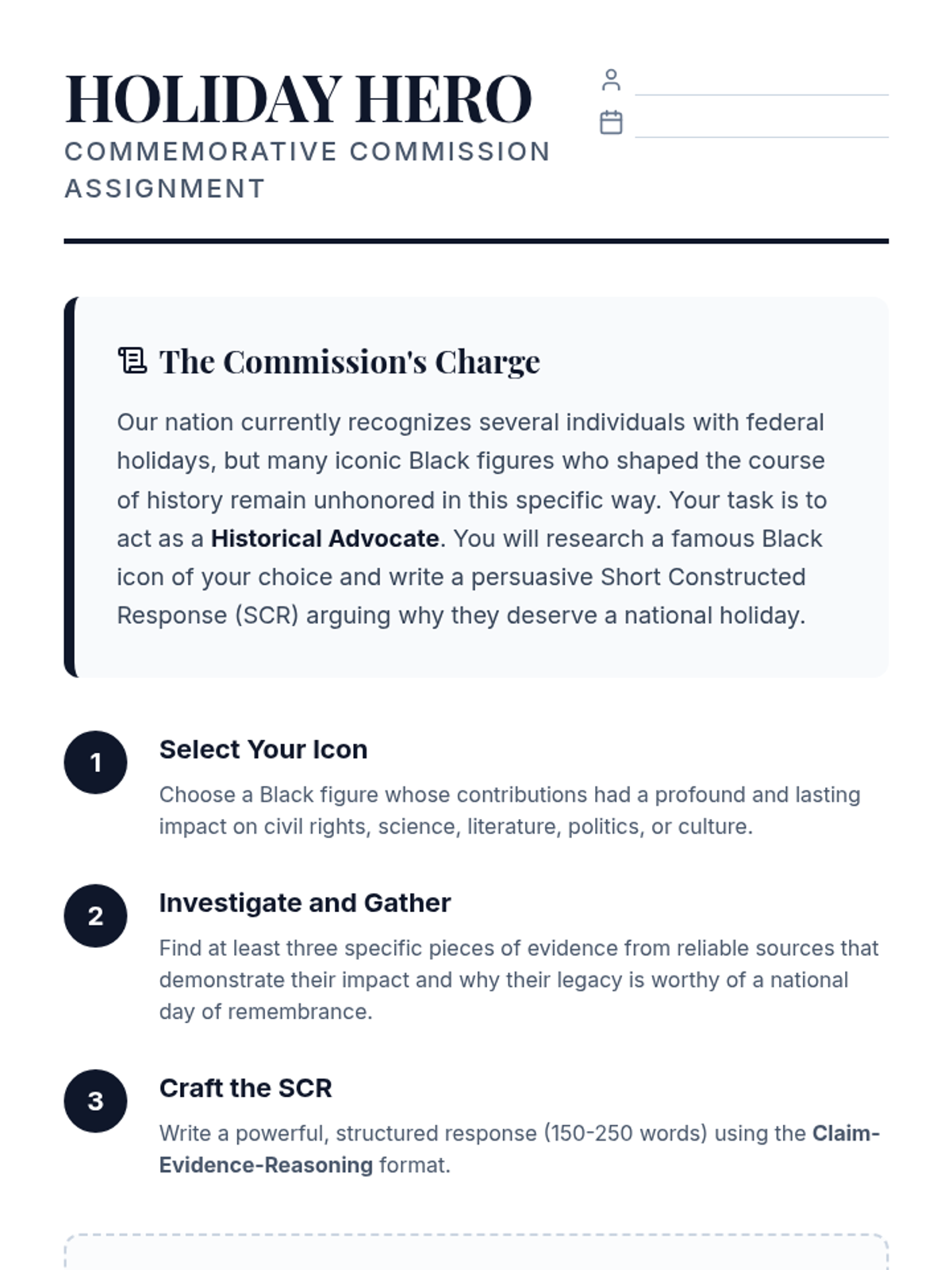
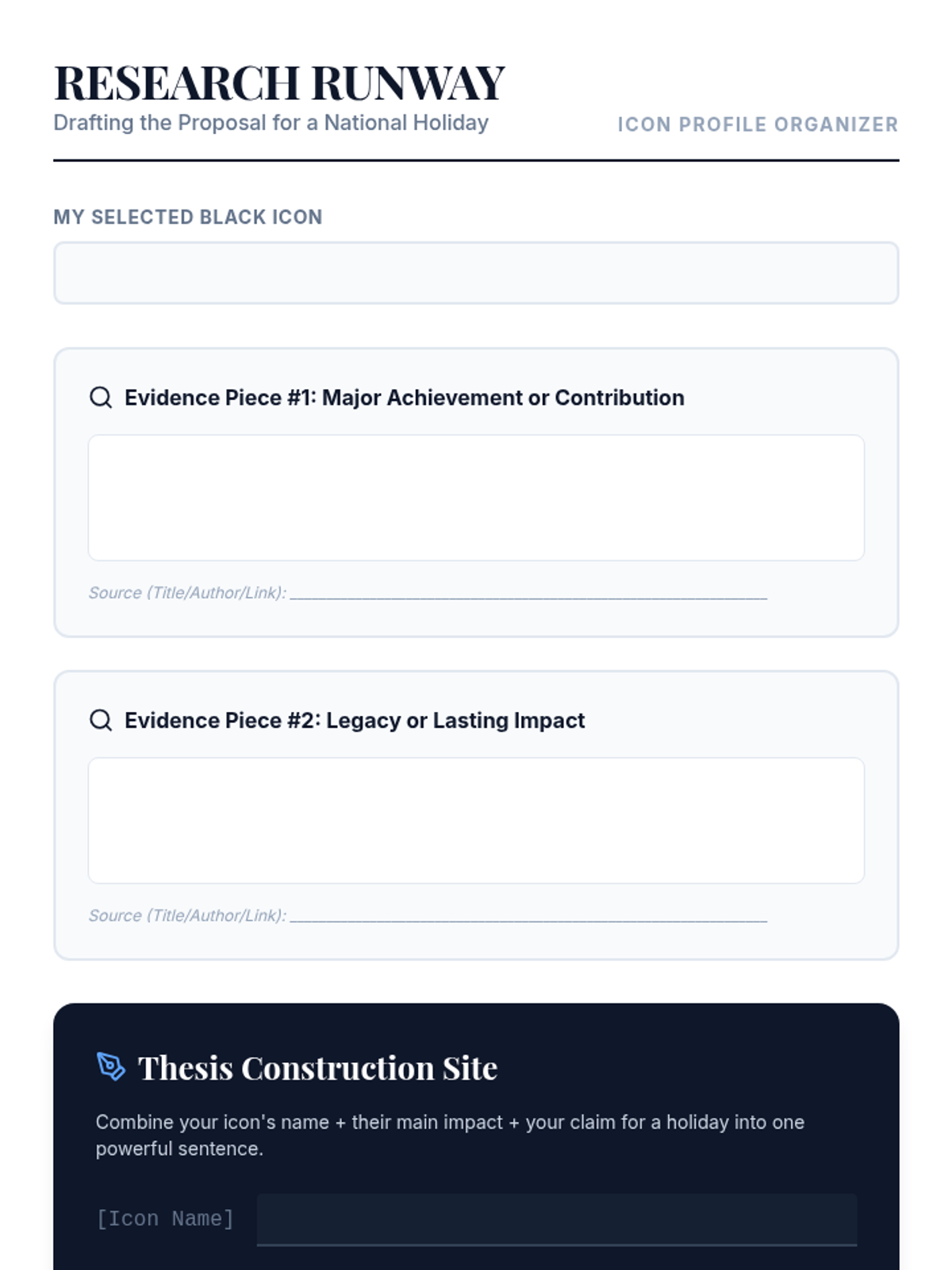
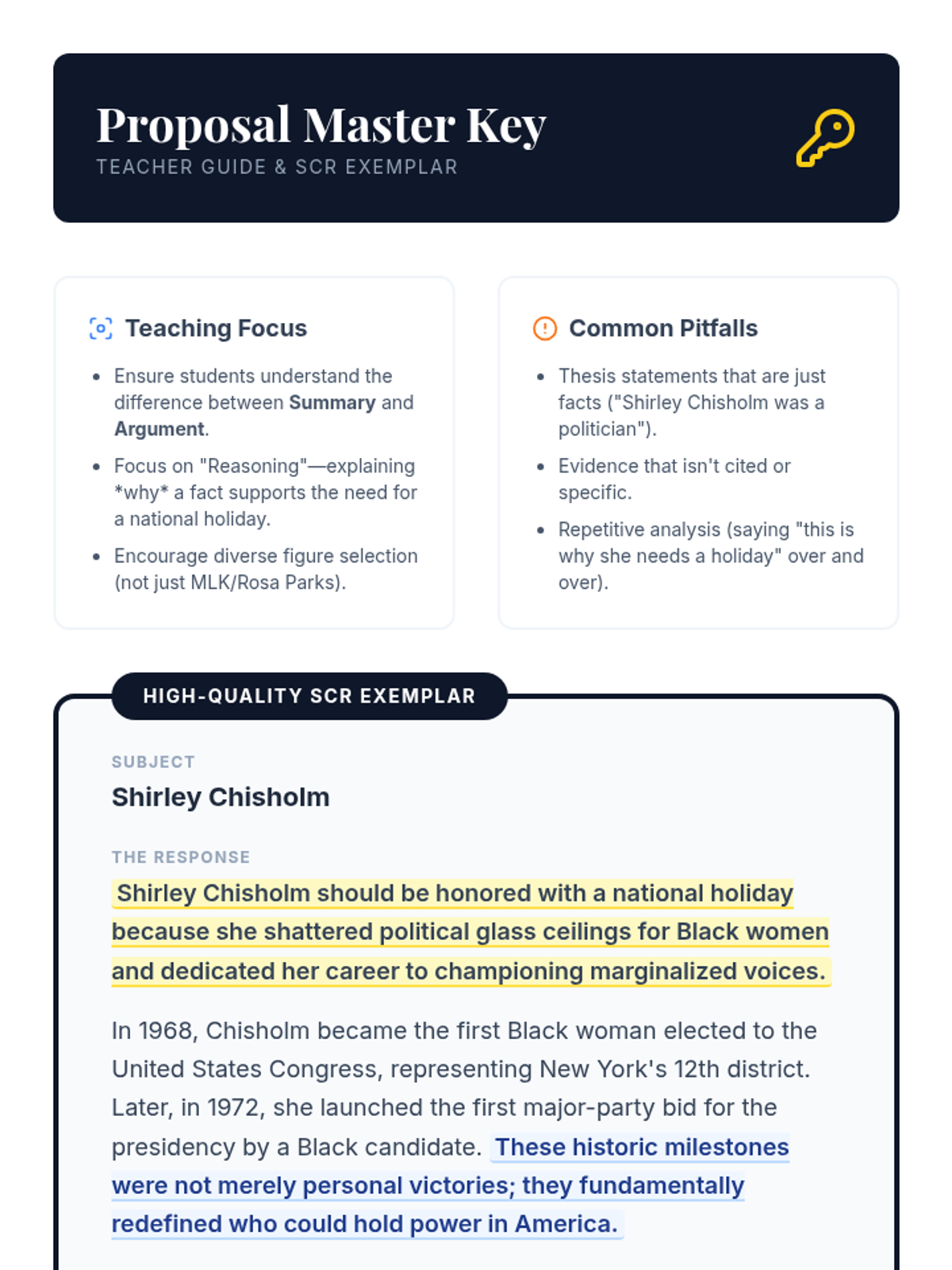
Students research an influential Black icon and argue for their recognition through a national holiday. This lesson focuses on research skills, thesis development, and the Short Constructed Response (SCR) format.
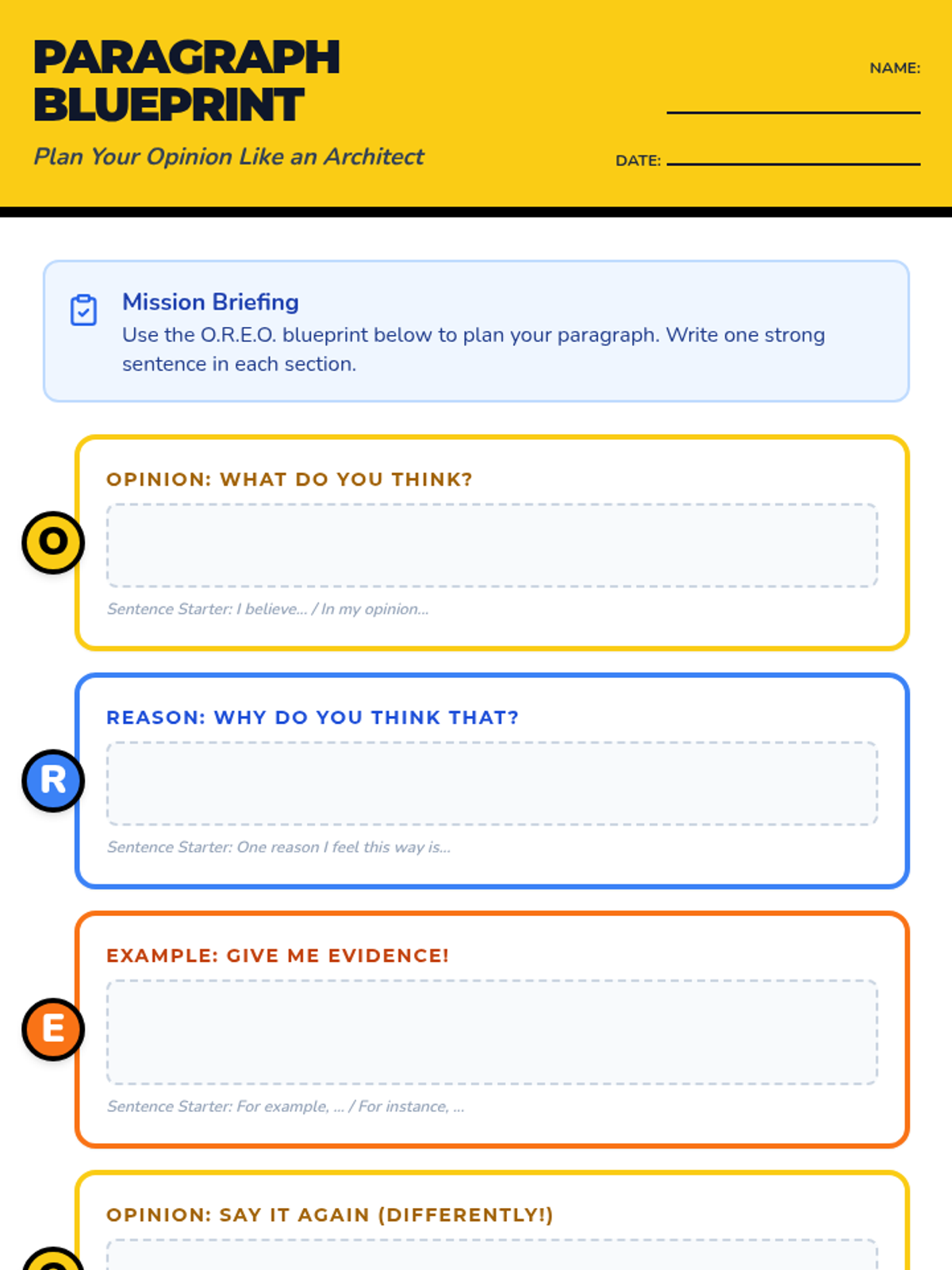
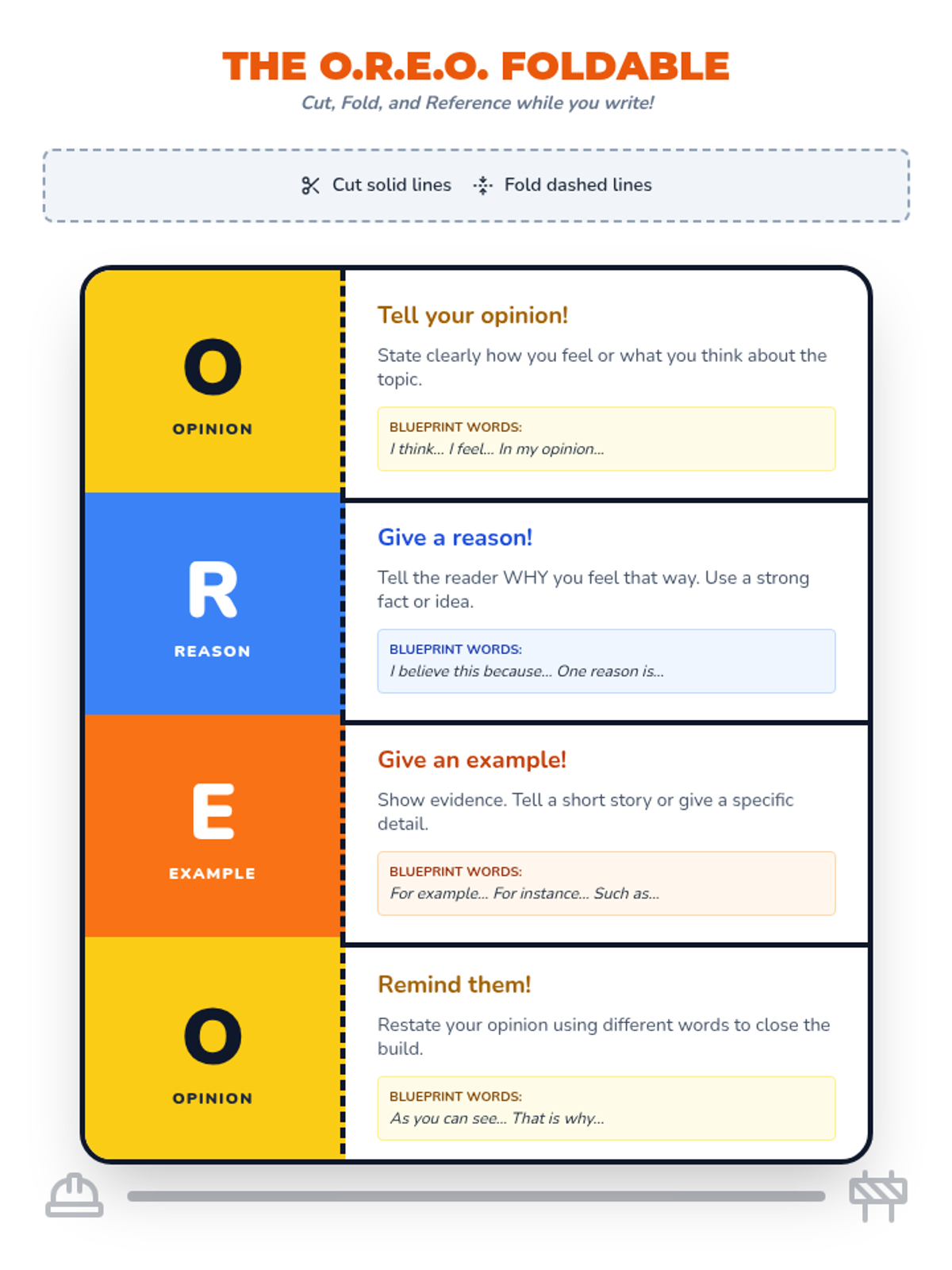
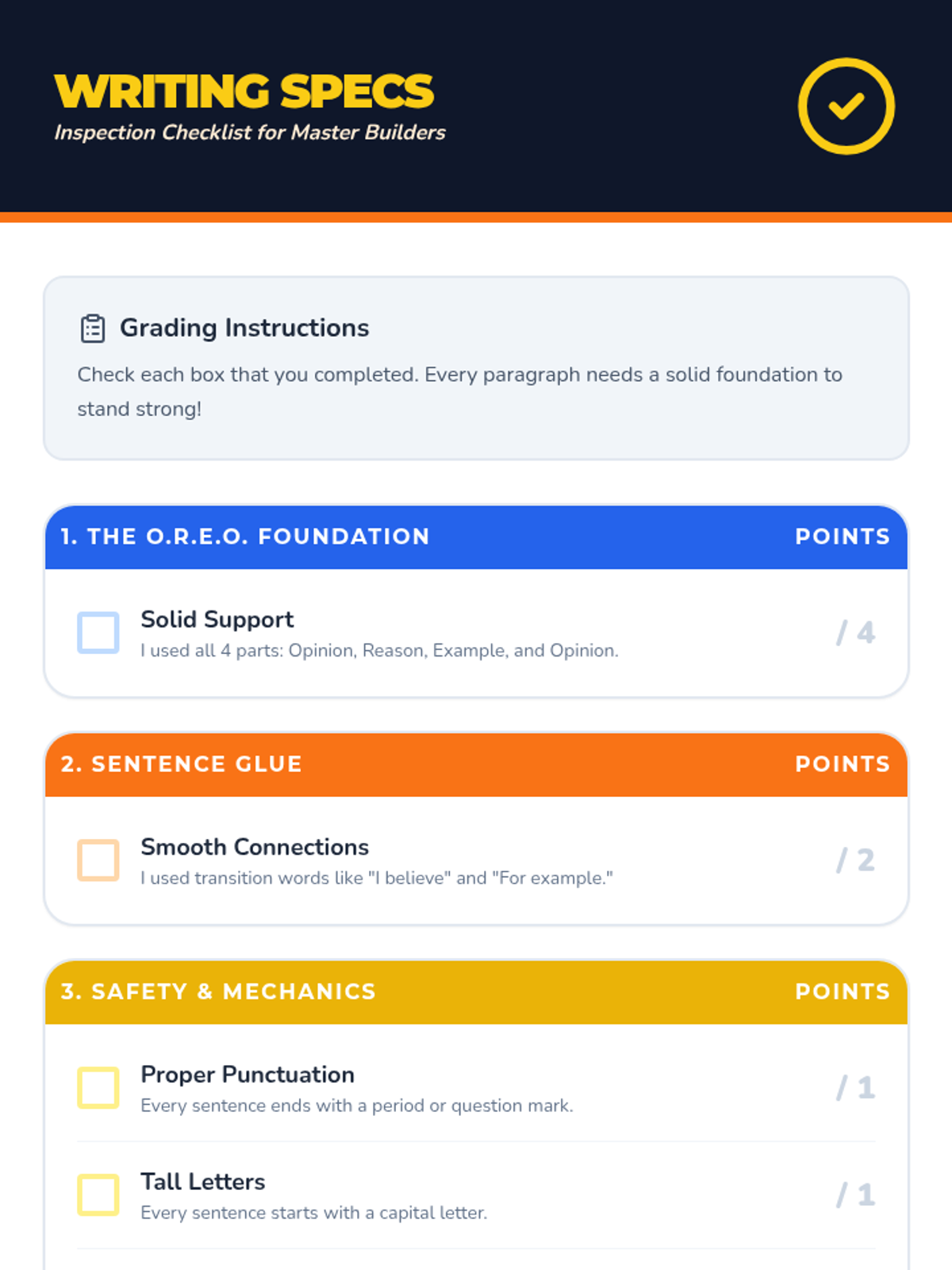
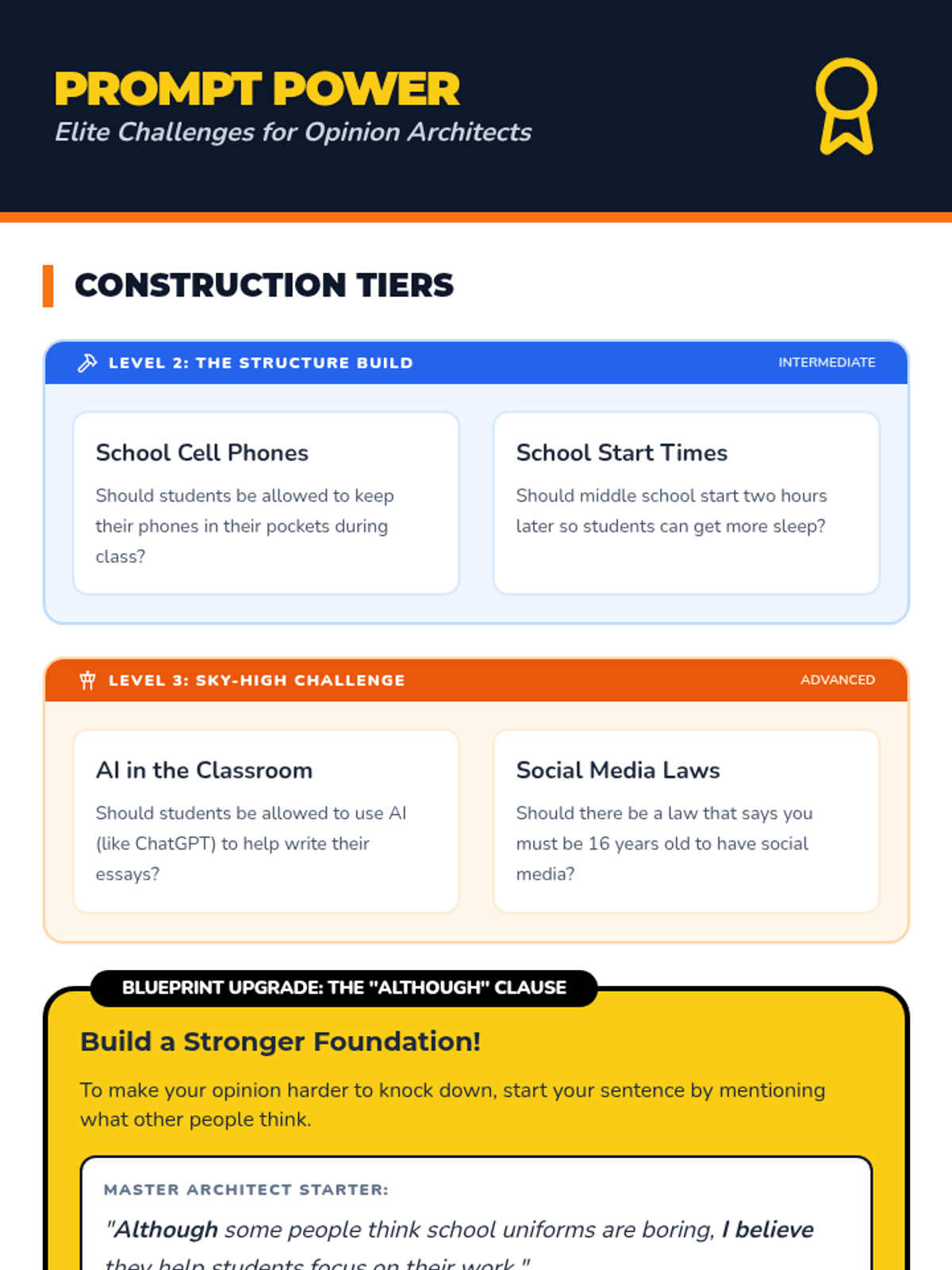
A comprehensive guide to building strong opinion paragraphs using the OREO method, designed with visual supports for 6th-grade special education students.
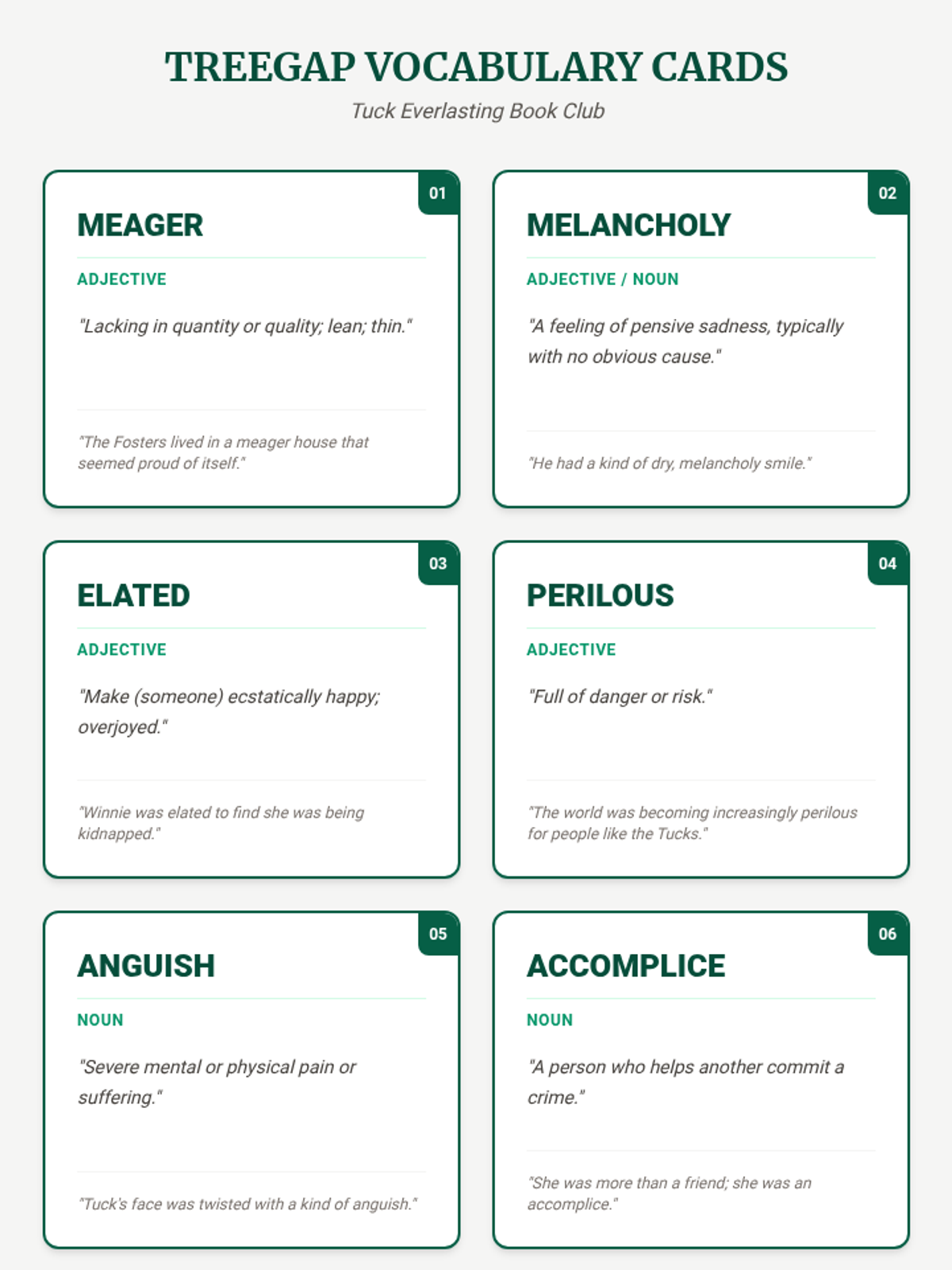
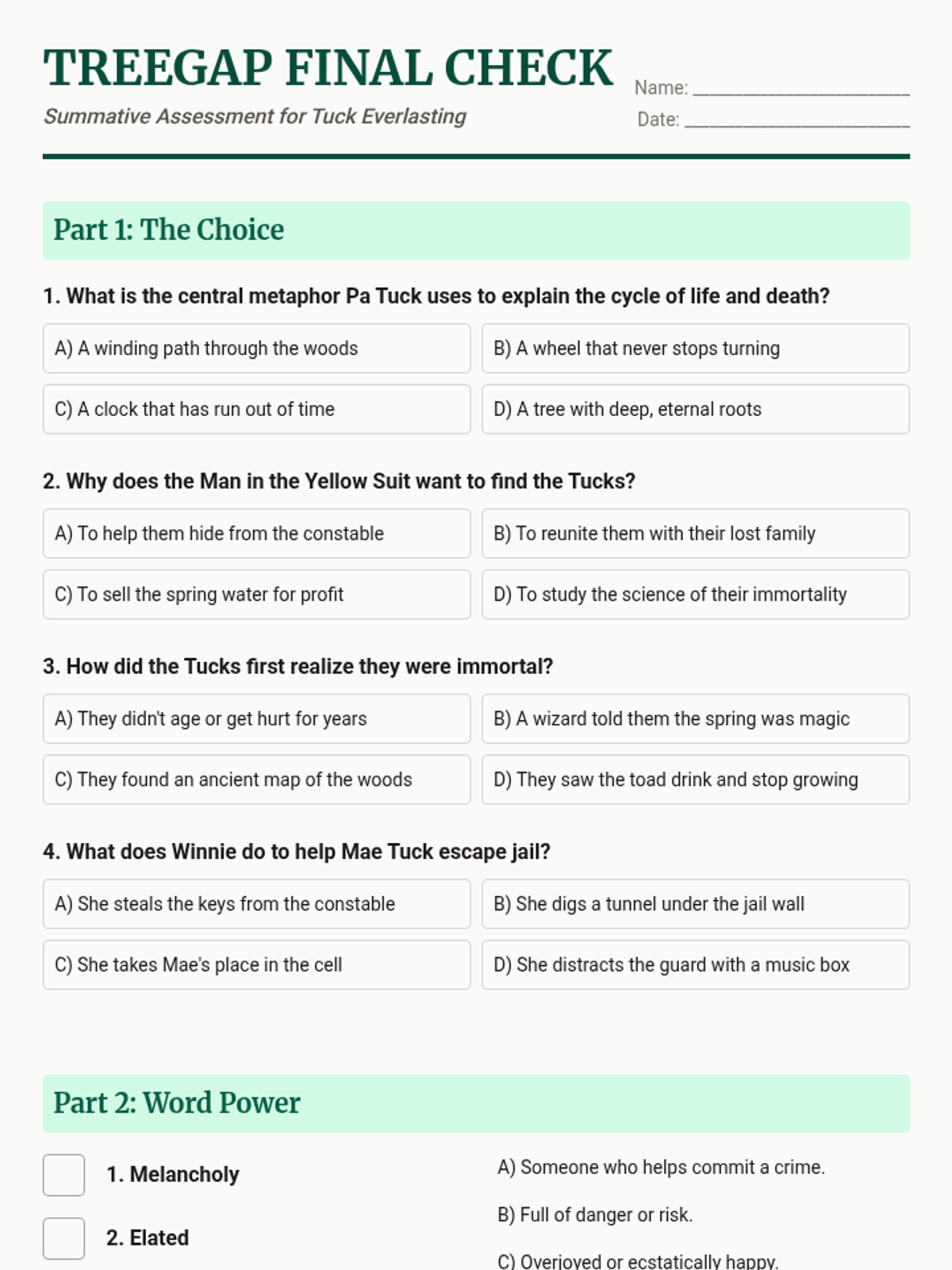
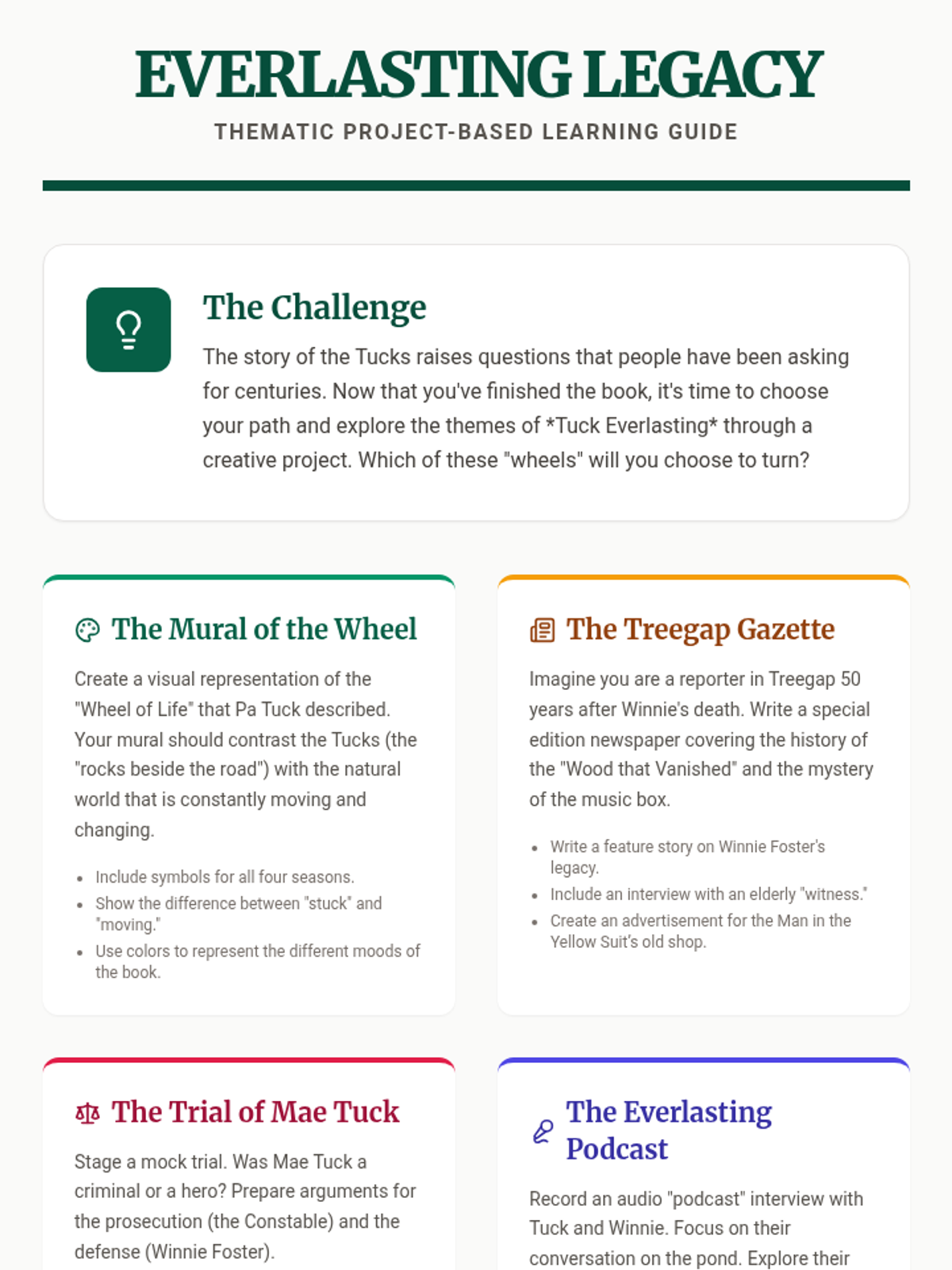
Final assessments and a project-based learning activity where students explore the book's themes creatively.
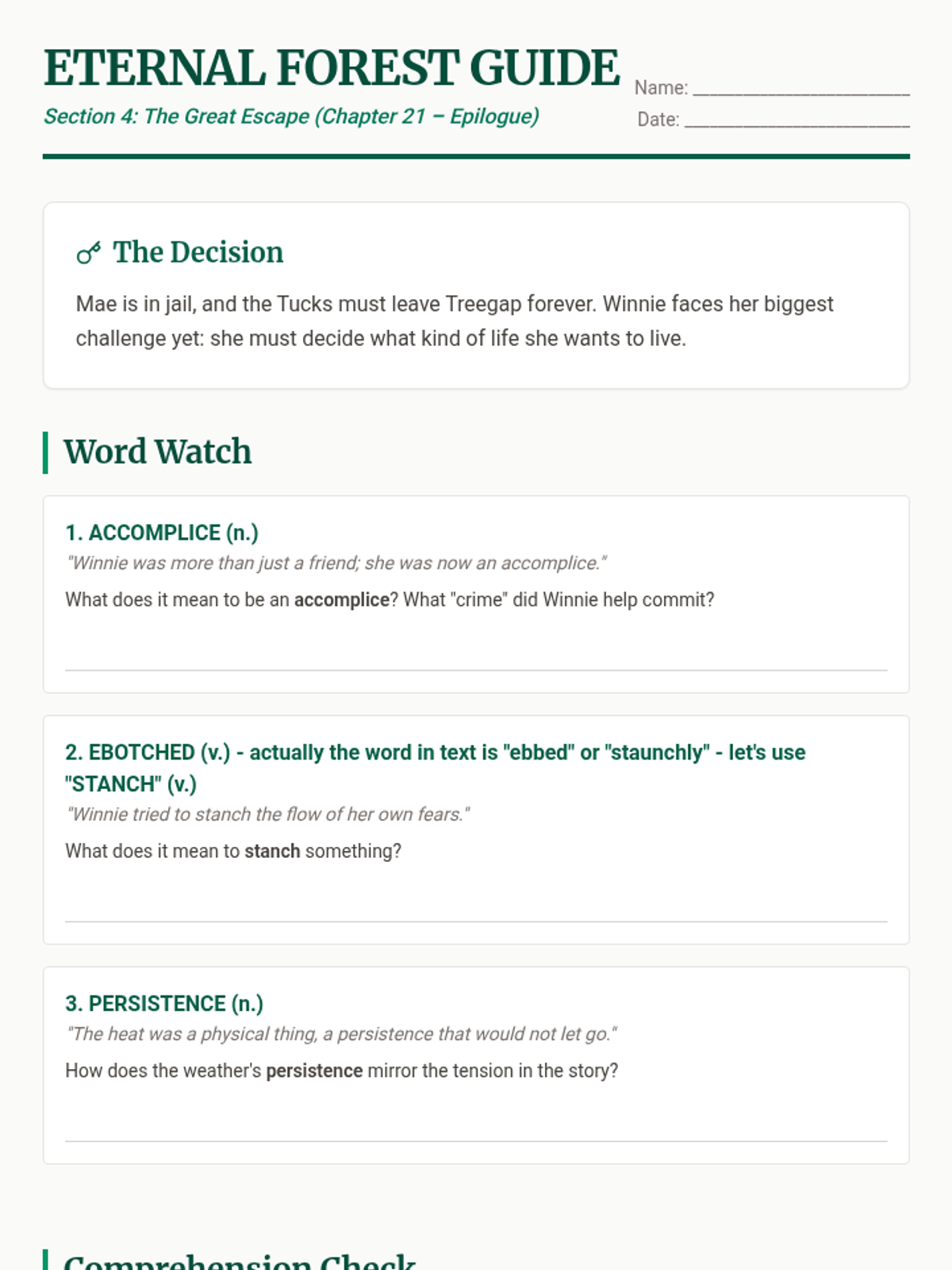
The aftermath of the rescue, Winnie's big decision, and the ultimate resolution of the story (Chapters 21-Epilogue).
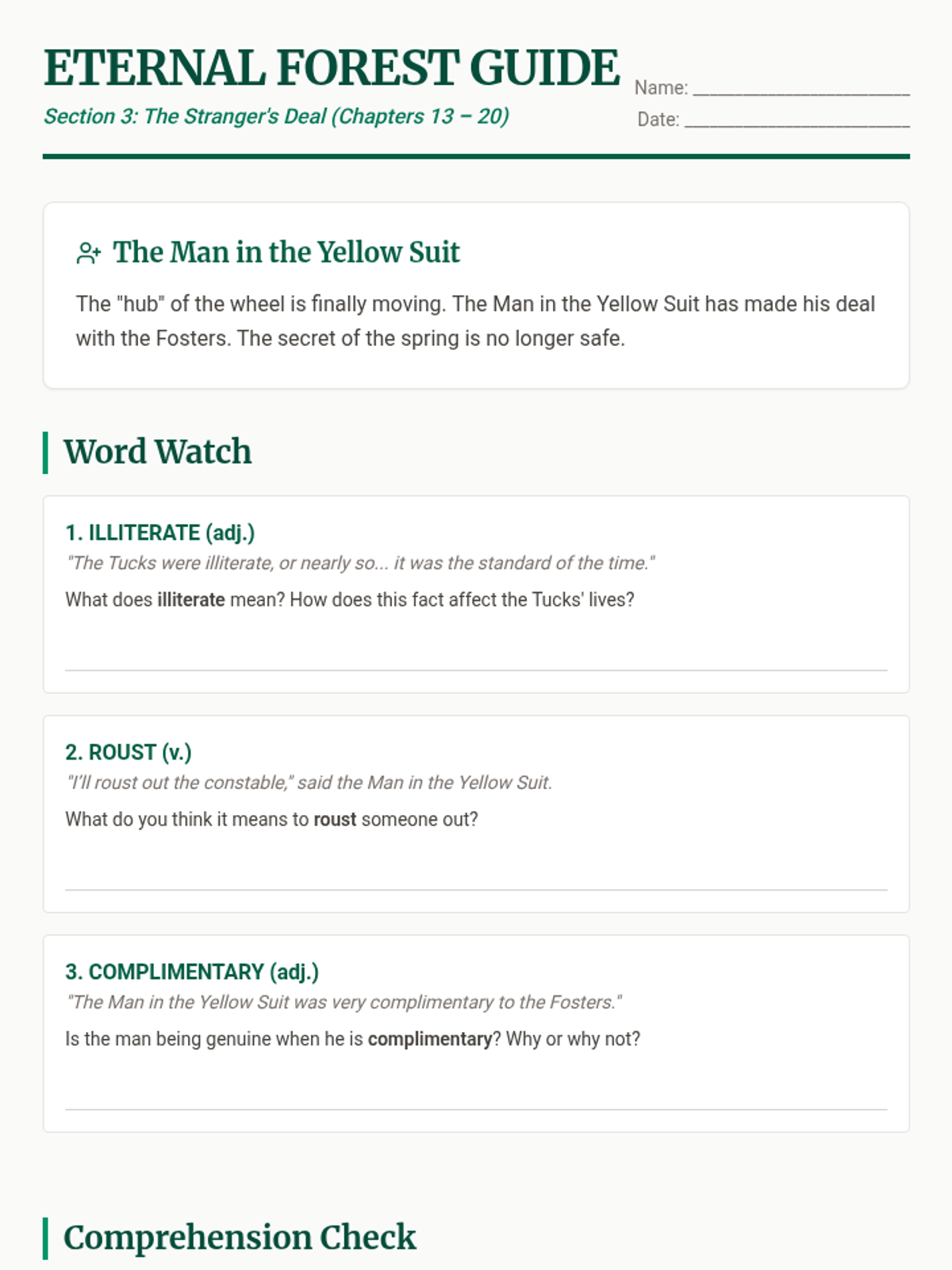
The tension rises as the man in the yellow suit makes his move and the Tucks face a dire threat (Chapters 13-20).
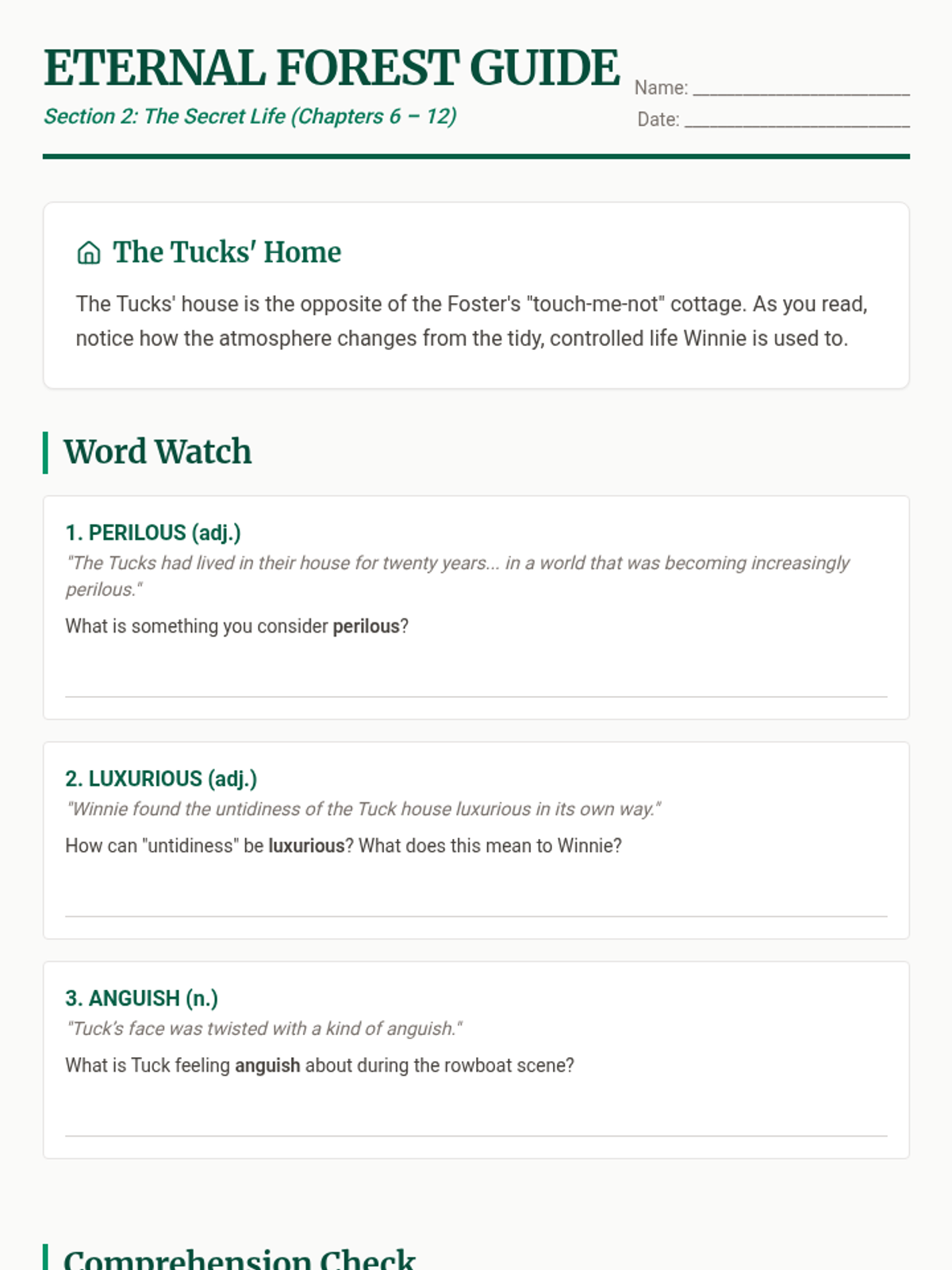
Exploring the Tucks' home life, their explanation of the spring, and Winnie's growing bond with the family (Chapters 6-12).