A hands-on activity where students use circle models and fraction strips to discover that the denominator represents the total number of equal parts in a whole.
Reviewing and consolidating strategies for comparing various types of fractions in different contexts.
Understanding how to compare fractions with the same numerator by looking at the size of the fractional parts.
Learning to compare fractions that share the same denominator using visual models and the greater than/less than symbols.
Introduction to comparing fractions, focusing on equivalence to whole numbers and the importance of referring to the same whole.
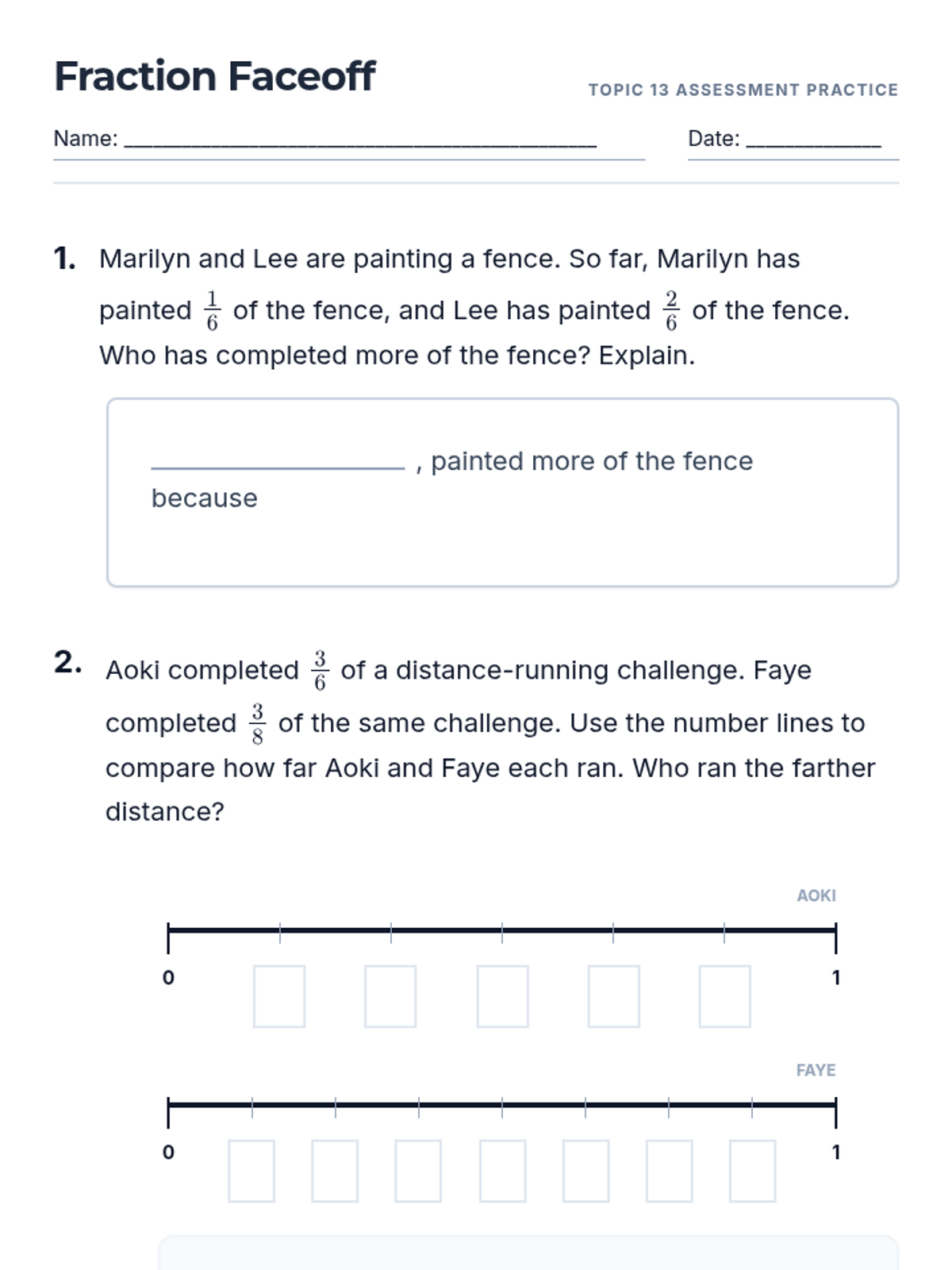
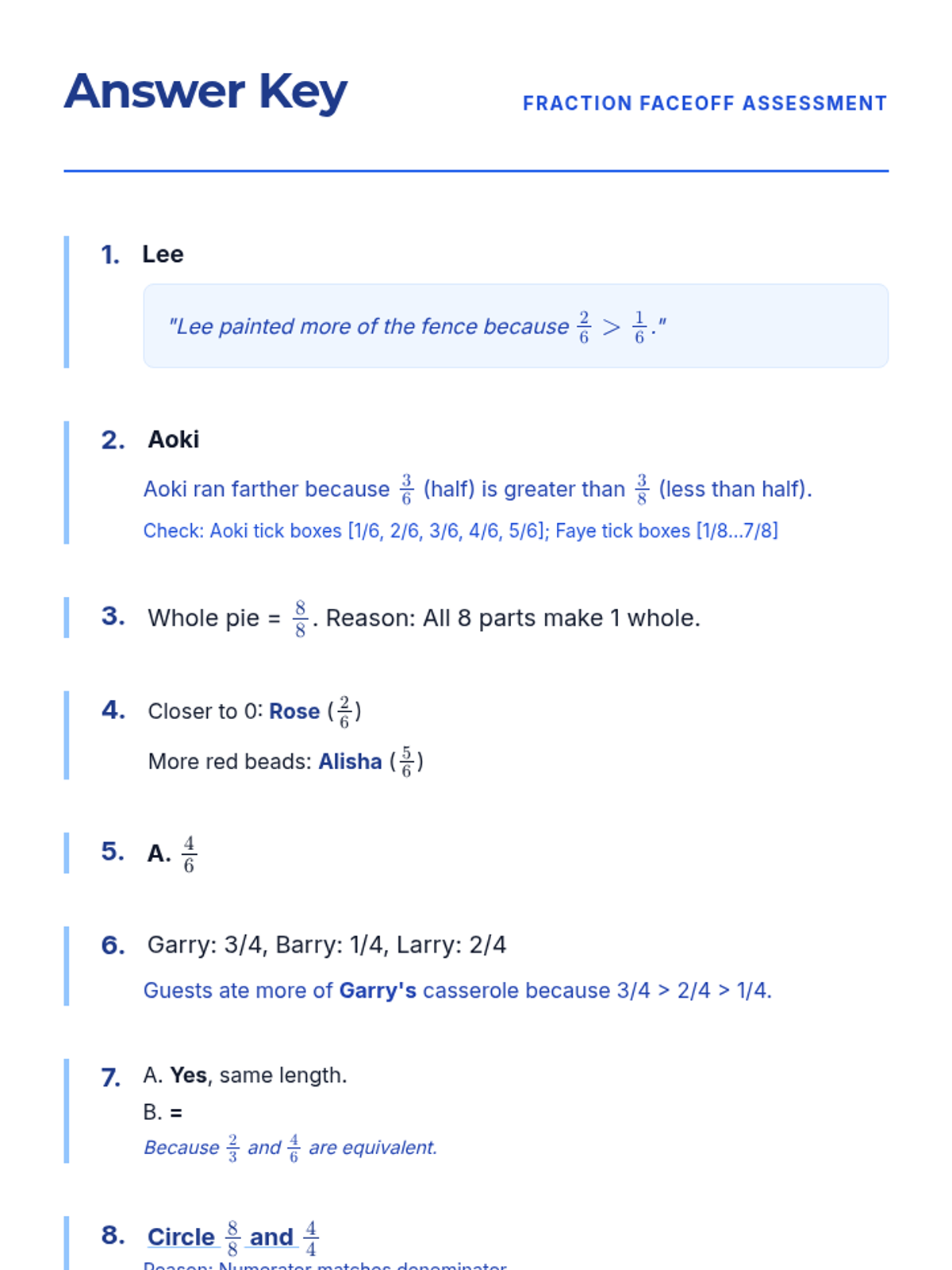
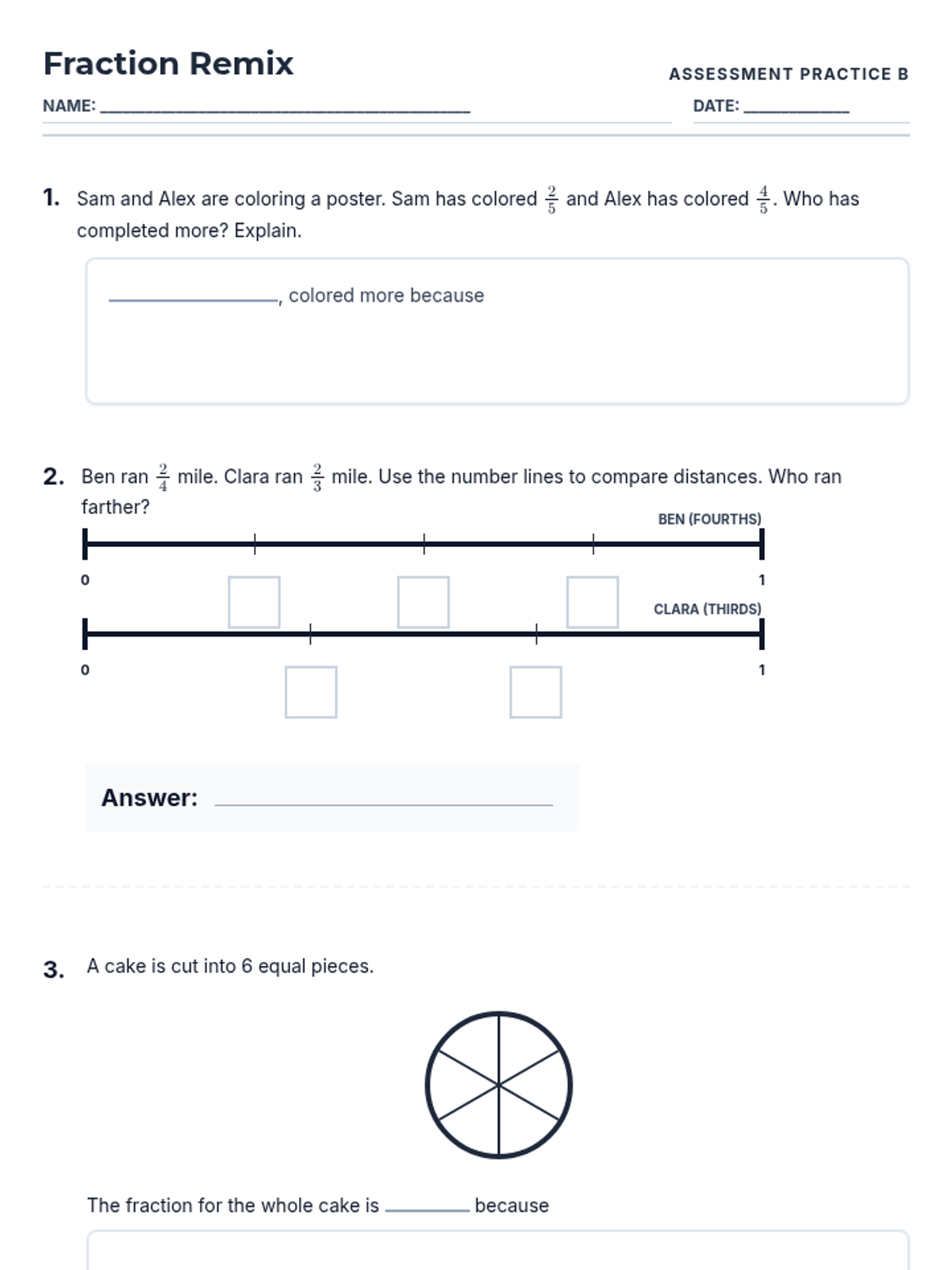
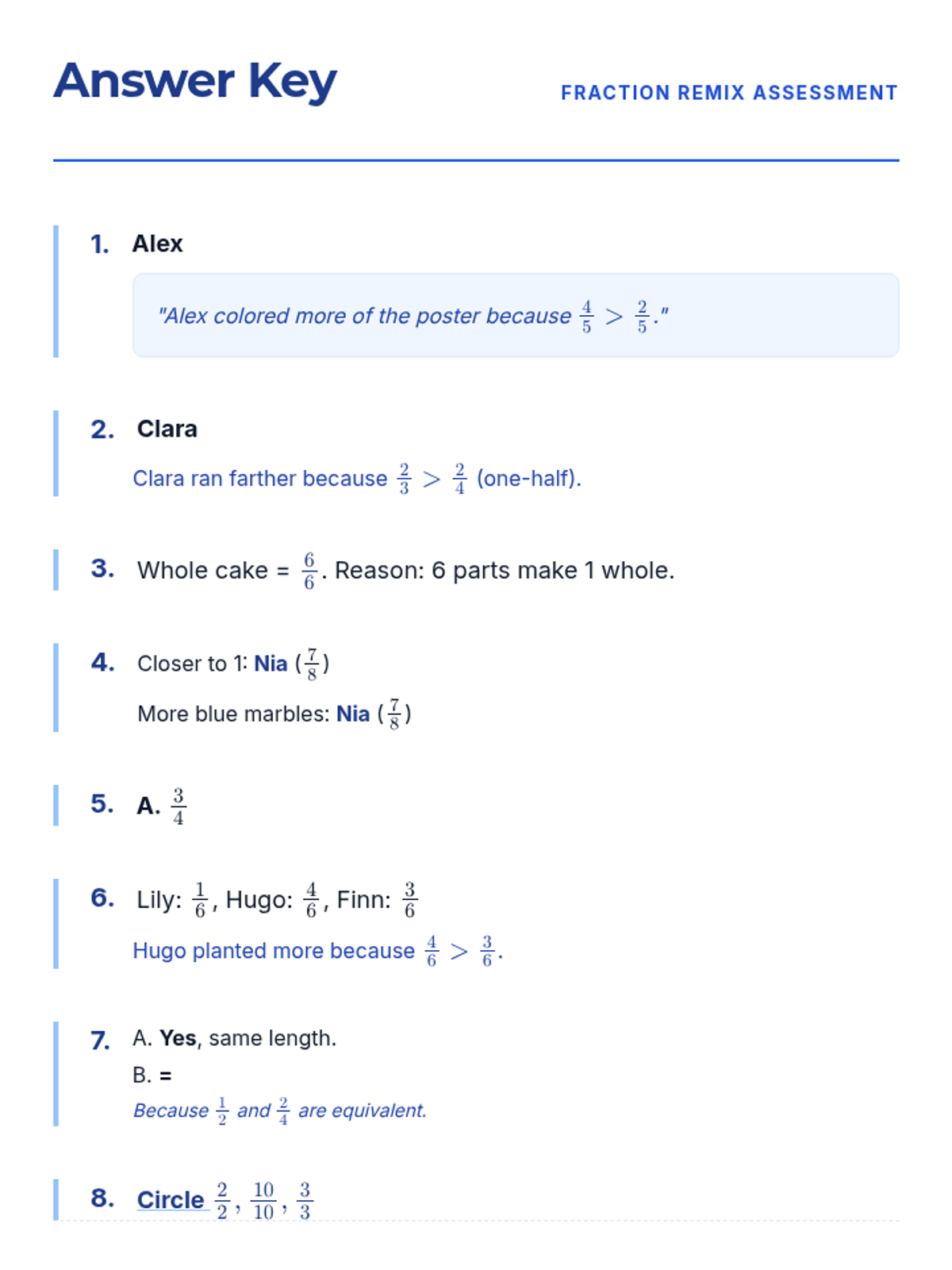
A comprehensive practice assessment focused on fraction comparison, equivalence, and representation, mirroring standardized testing formats with clear visuals and structured response areas.
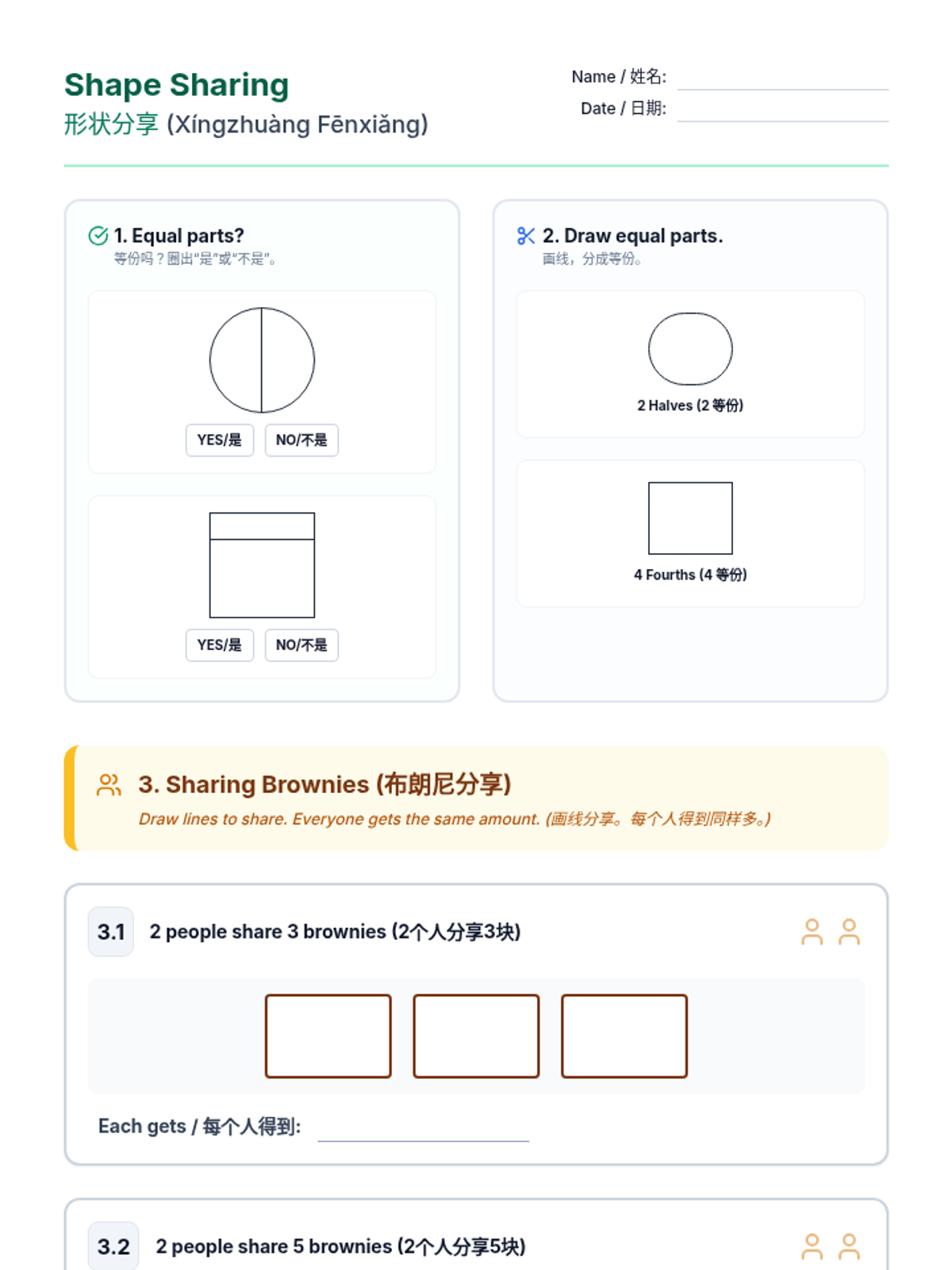
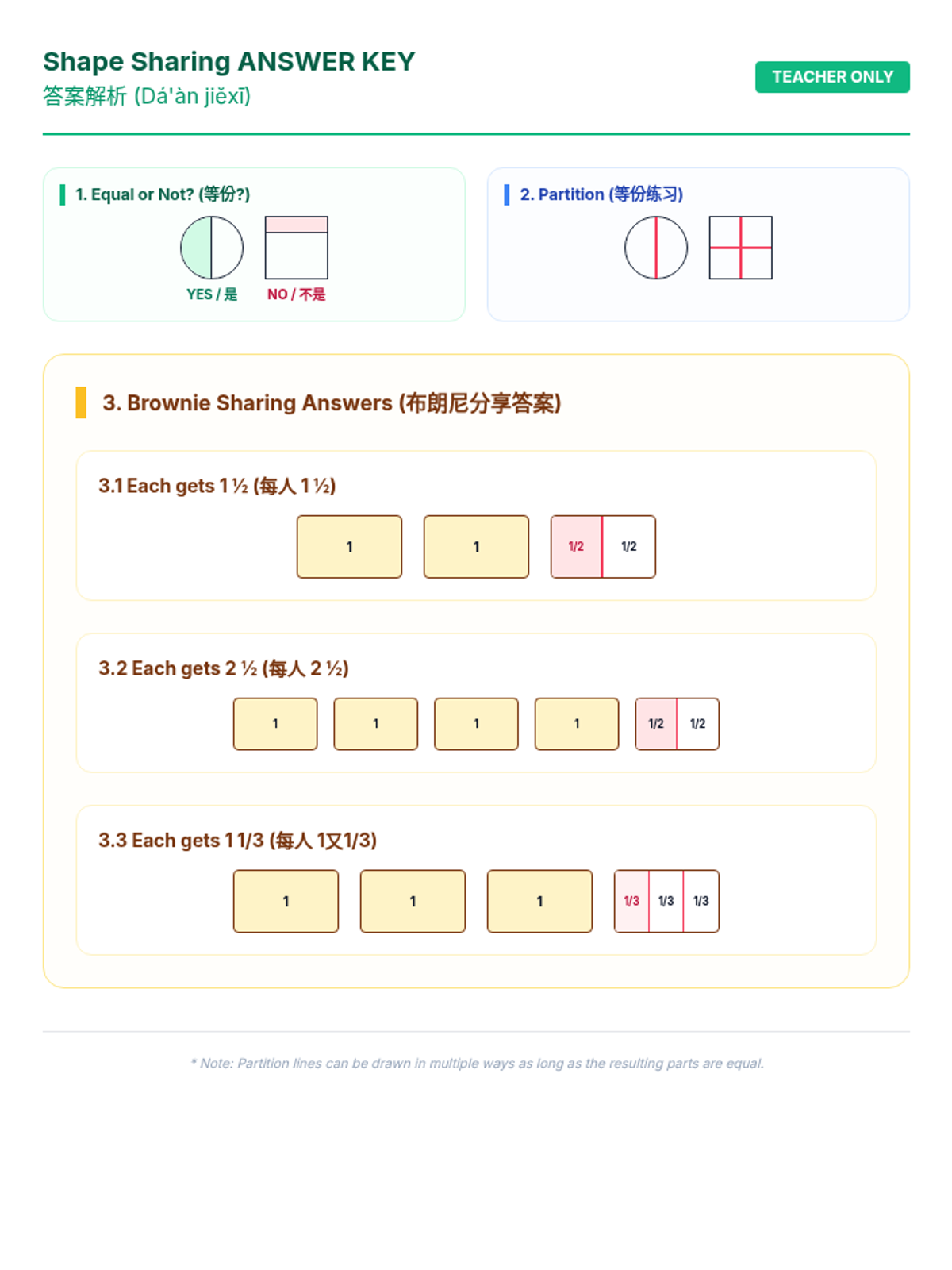
A bilingual (English/Simplified Chinese) lesson on partitioning shapes into equal shares (halves and fourths) for Level 1 ELL students. The lesson focuses on visual understanding and basic vocabulary like 'equal', 'half', and 'fourth'.
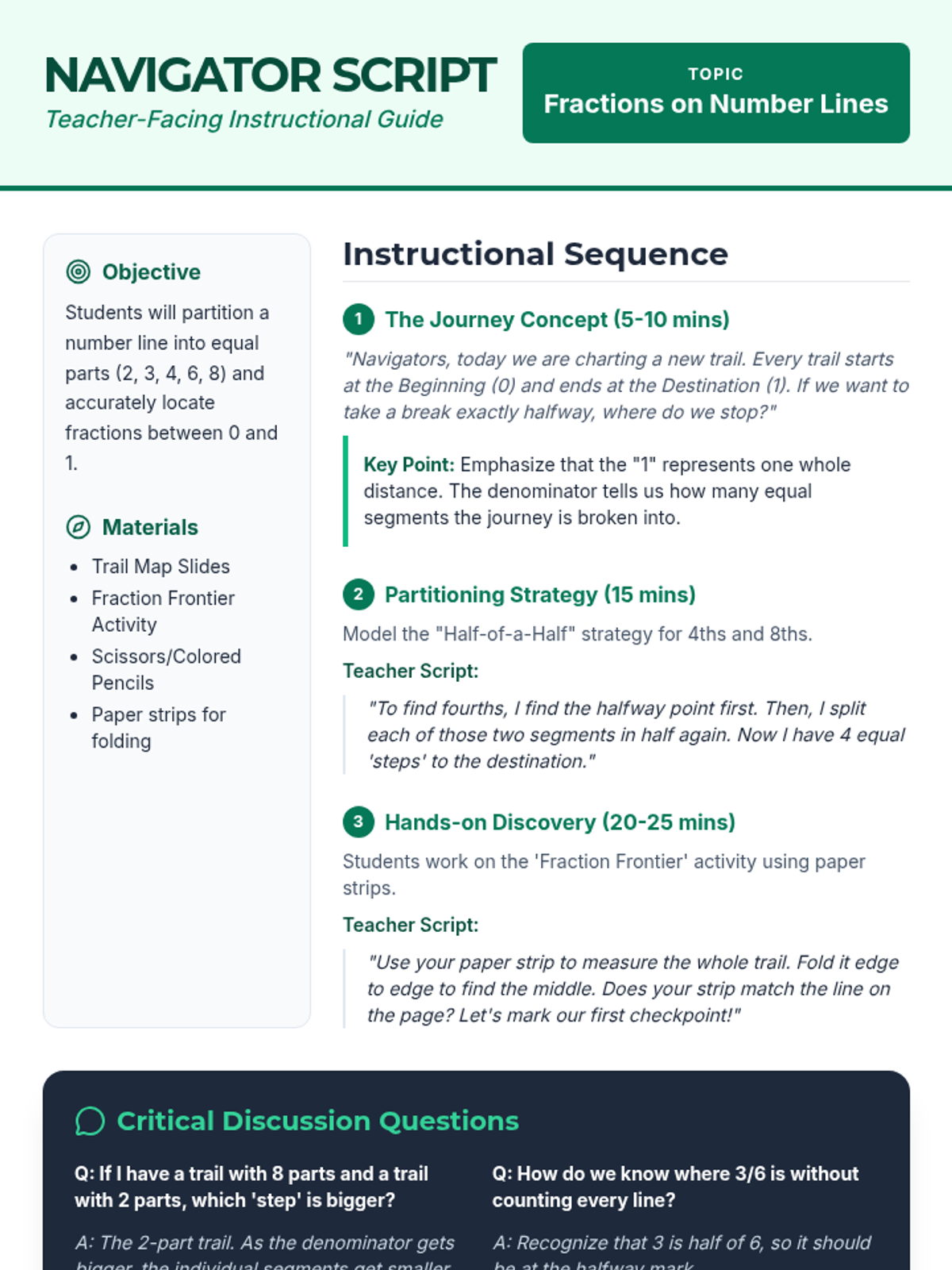
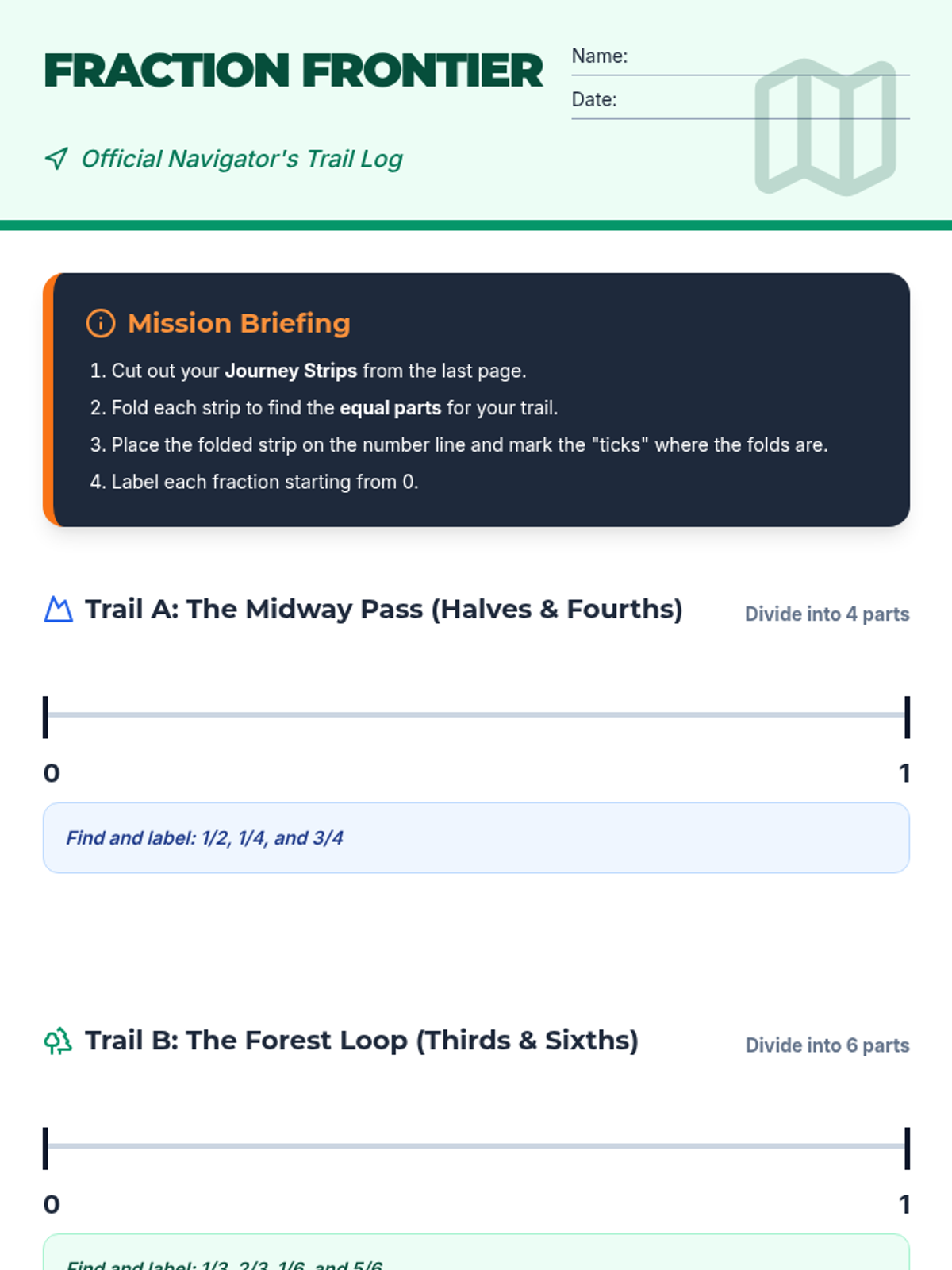
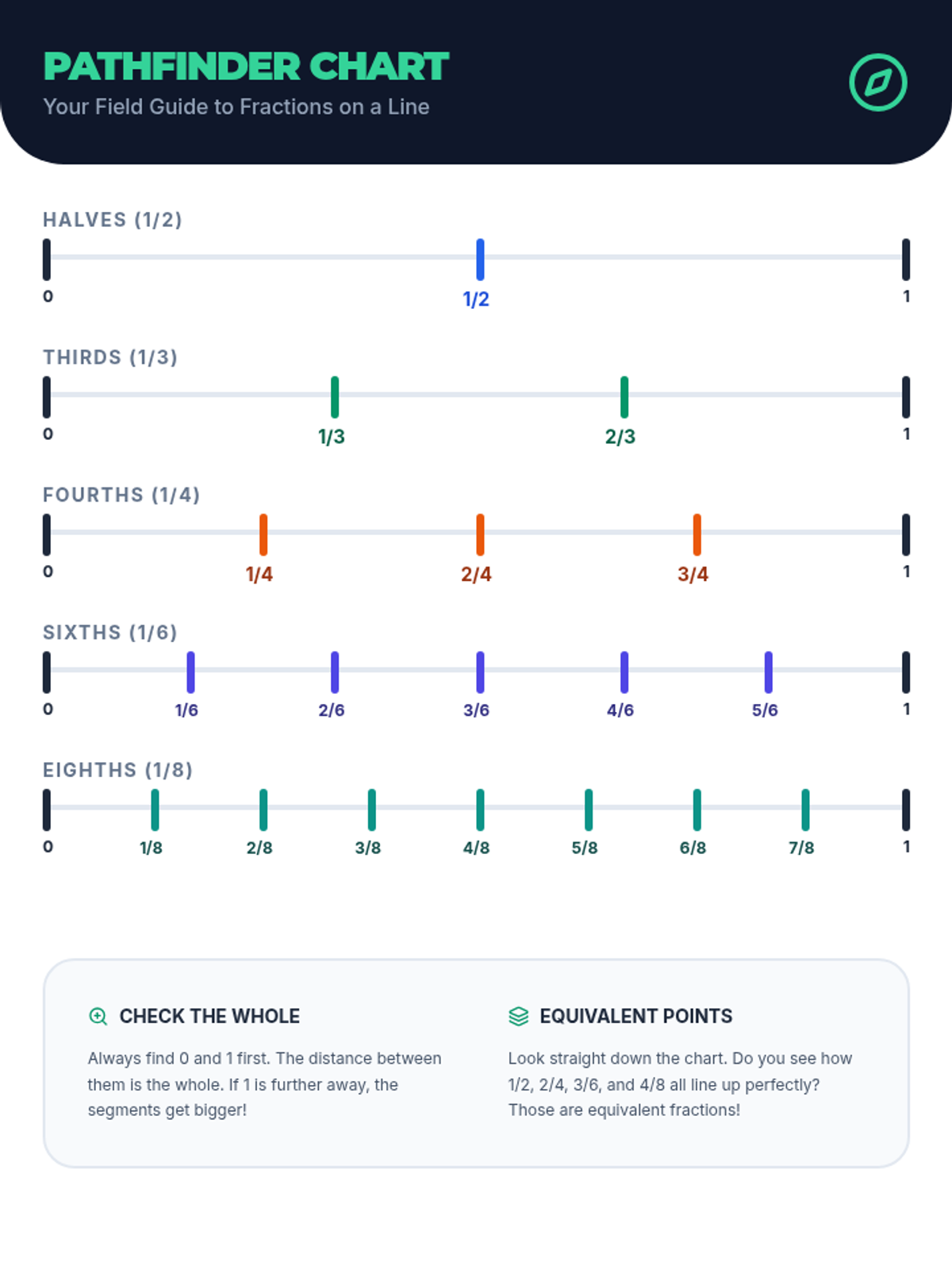
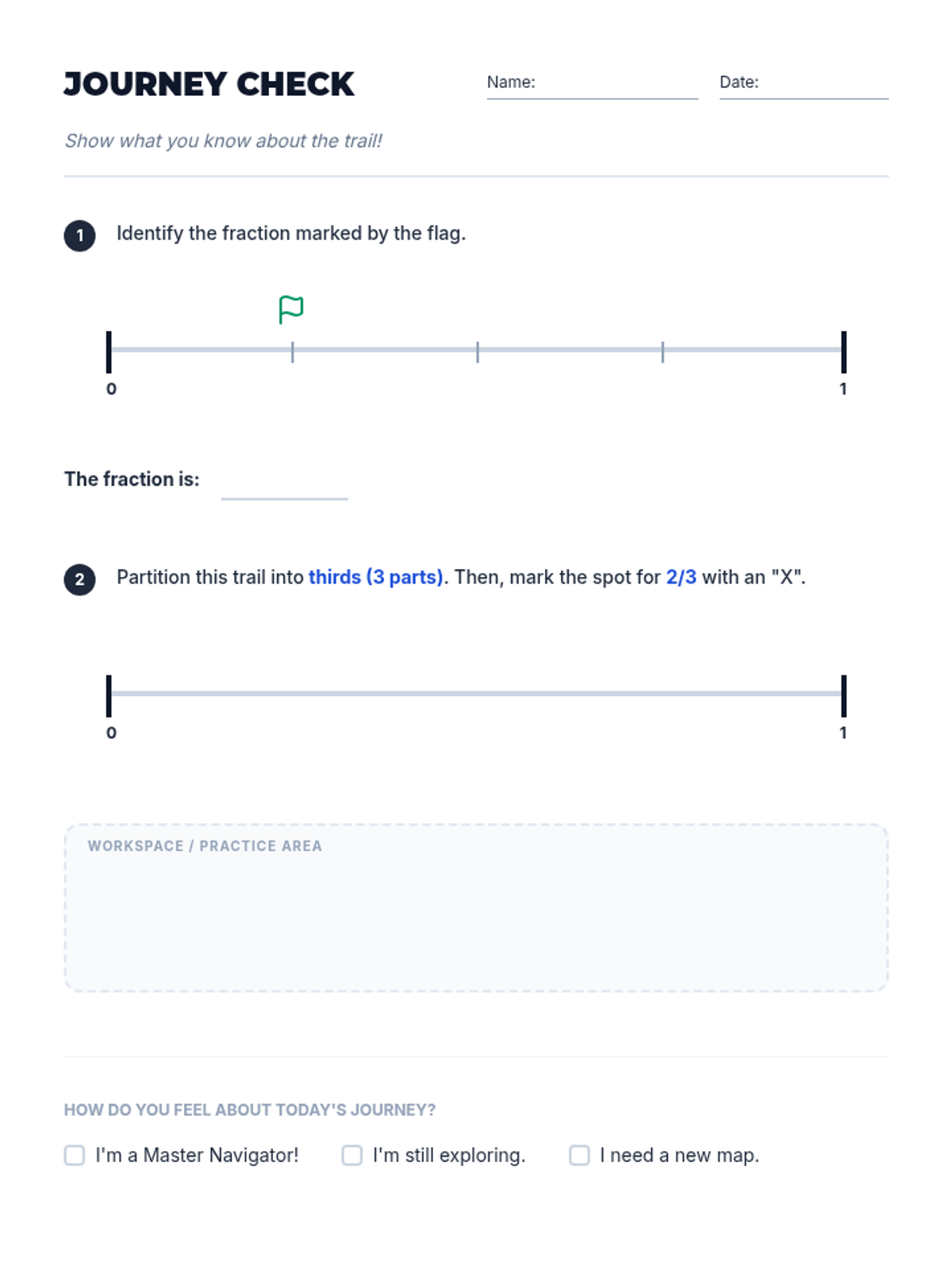
A remedial lesson focusing on partitioning and identifying fractions (halves, thirds, fourths, sixths, eighths) on a number line using a navigation and trail-blazing theme. Students practice partitioning distances from 0 to 1 and placing 'checkpoints' along the way.
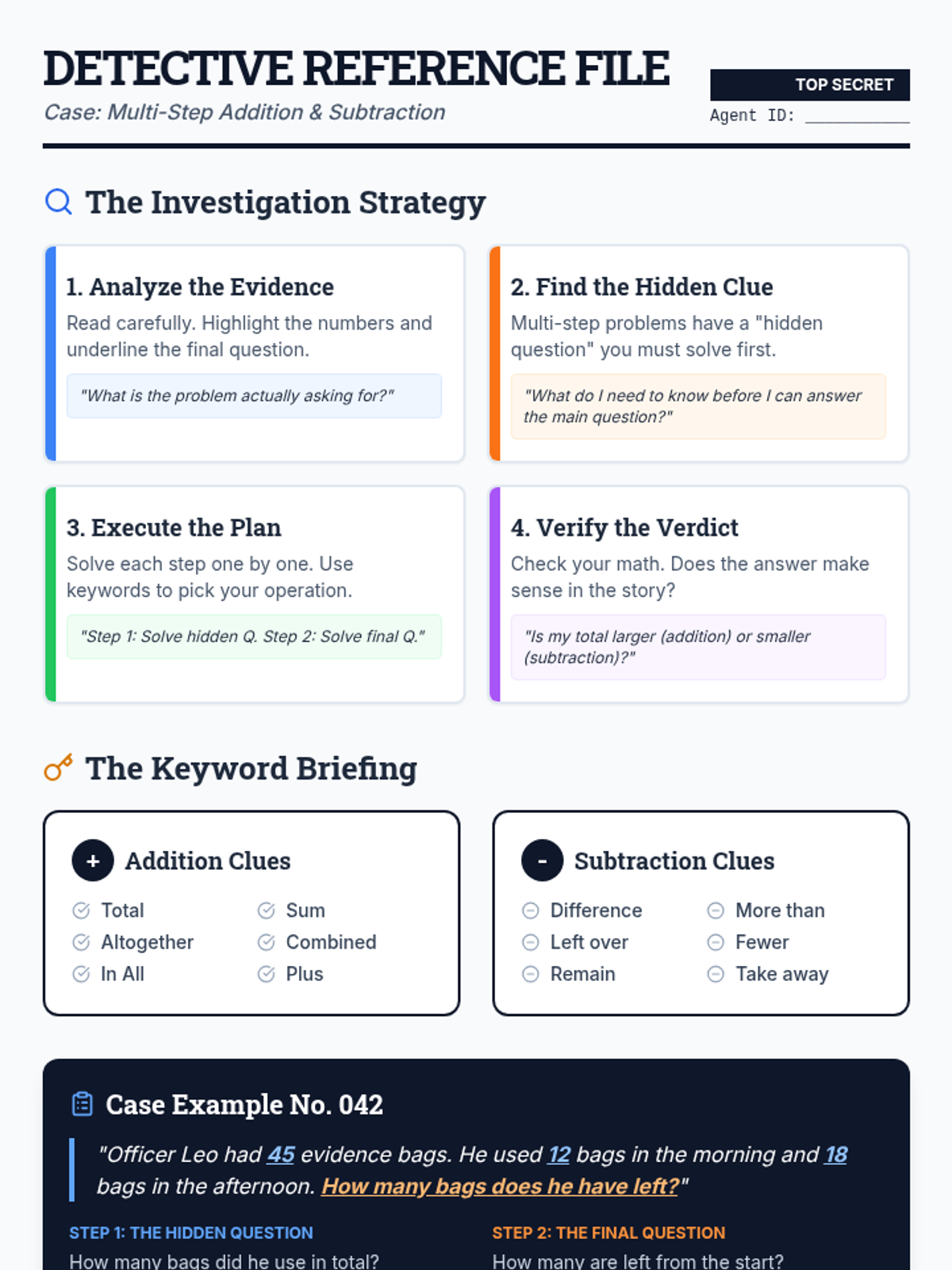
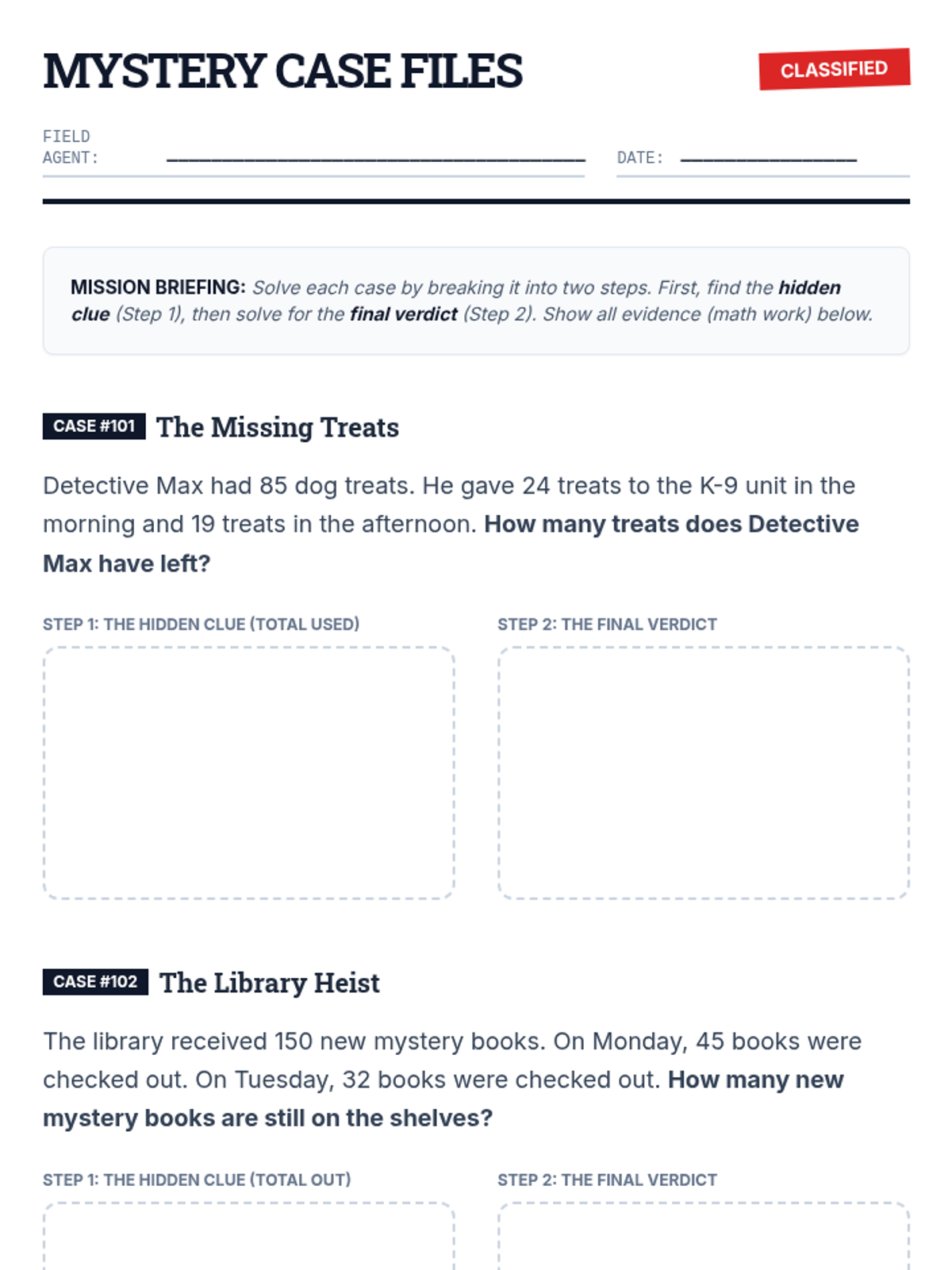
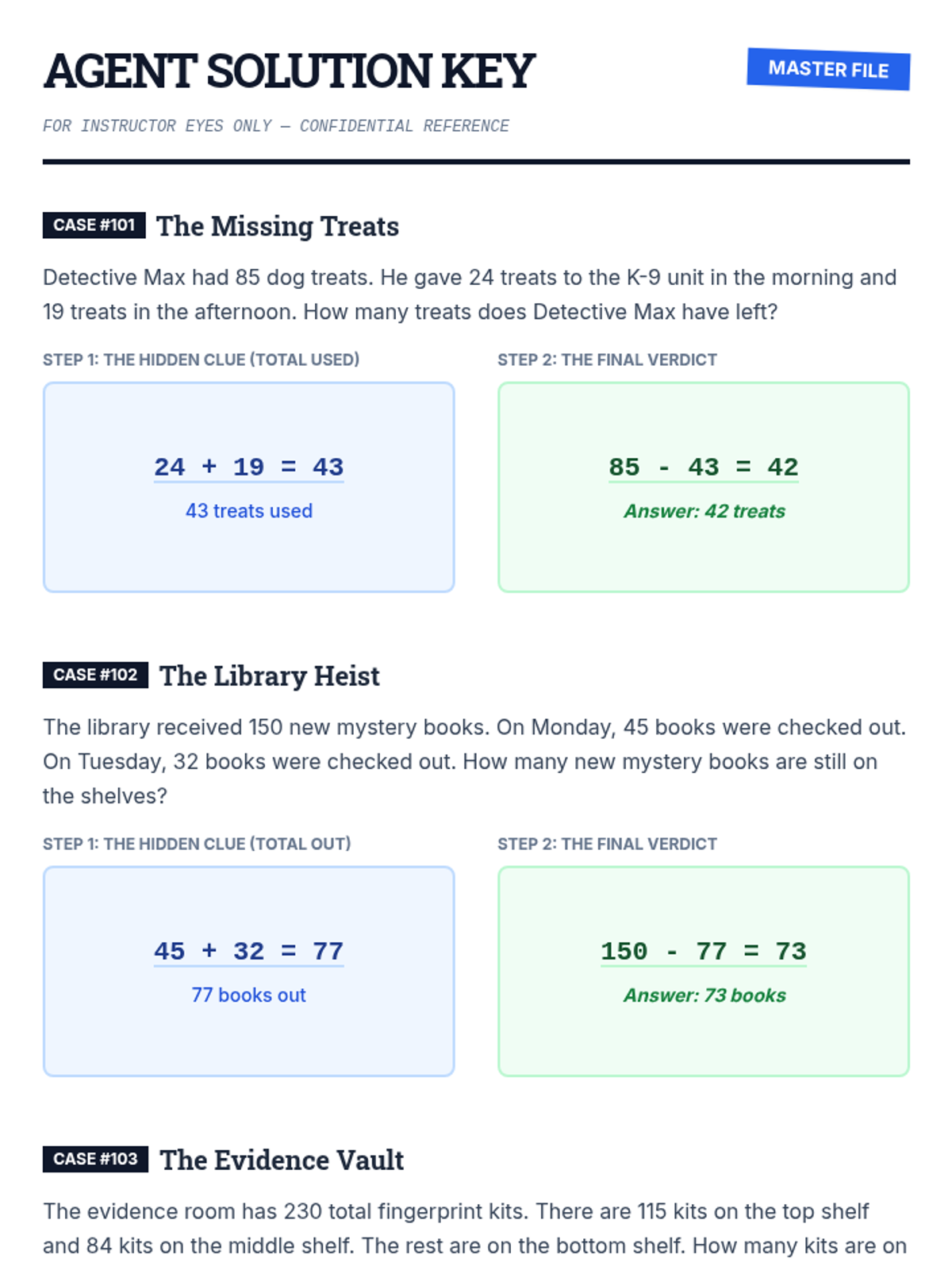
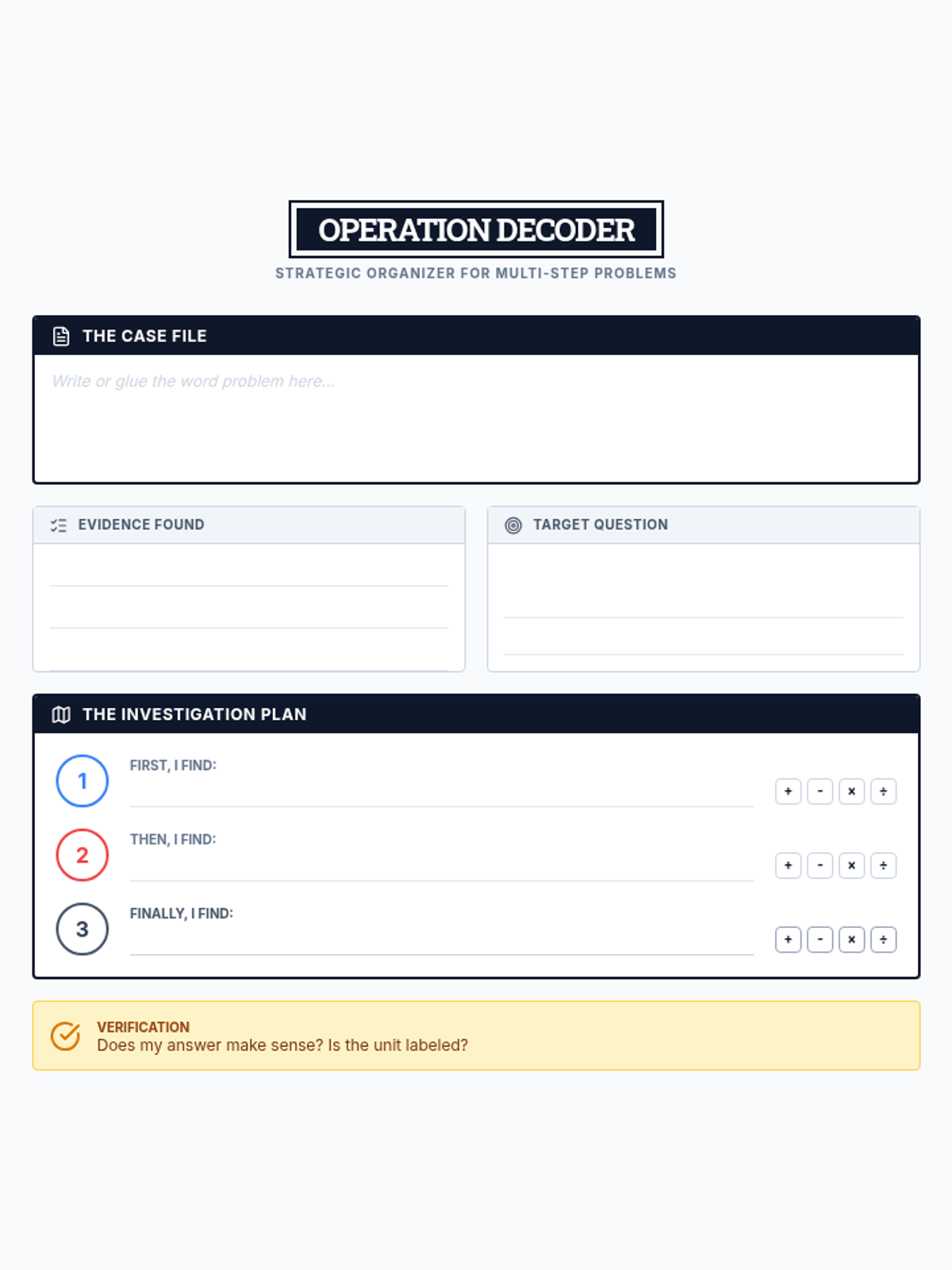
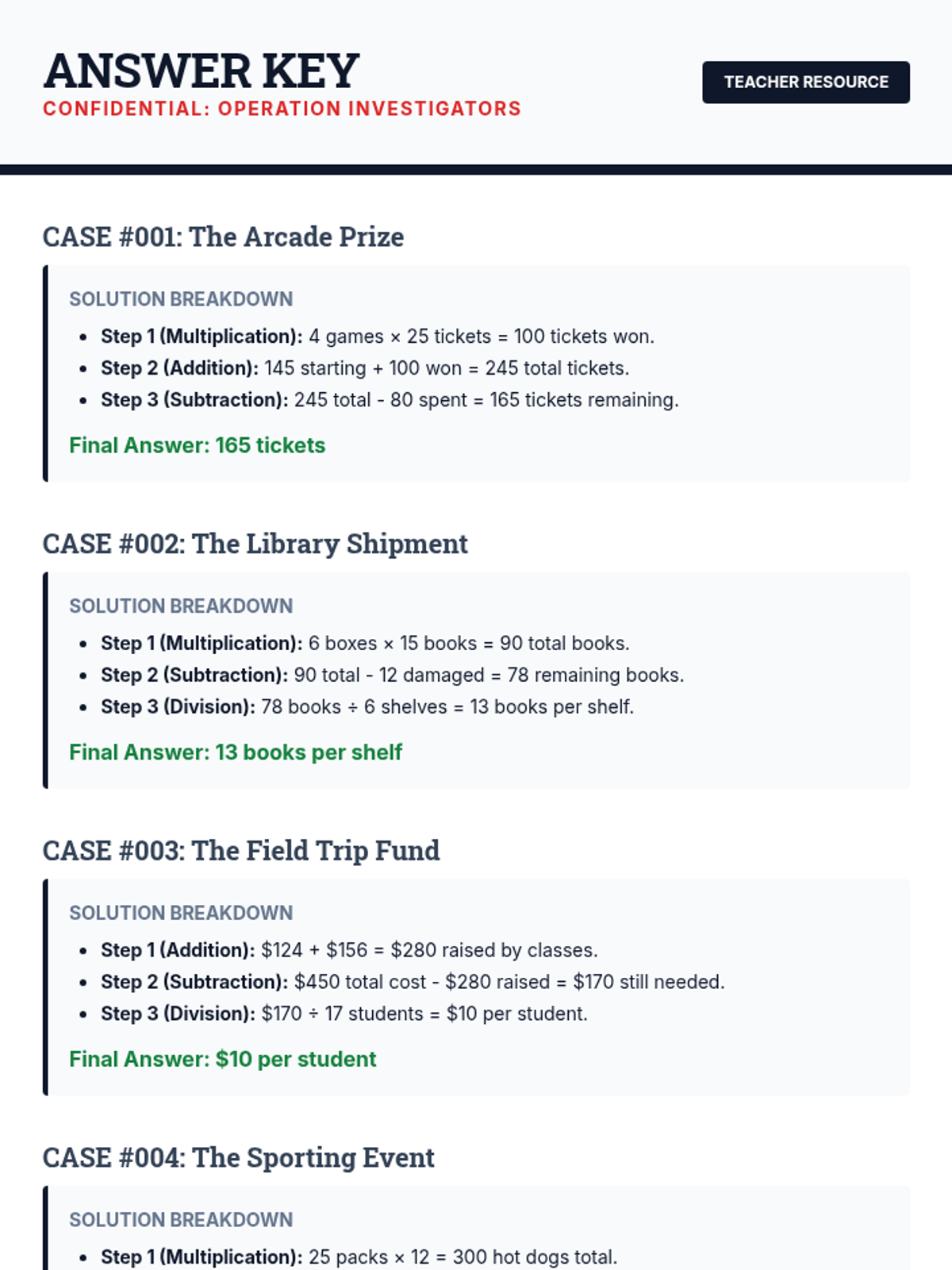
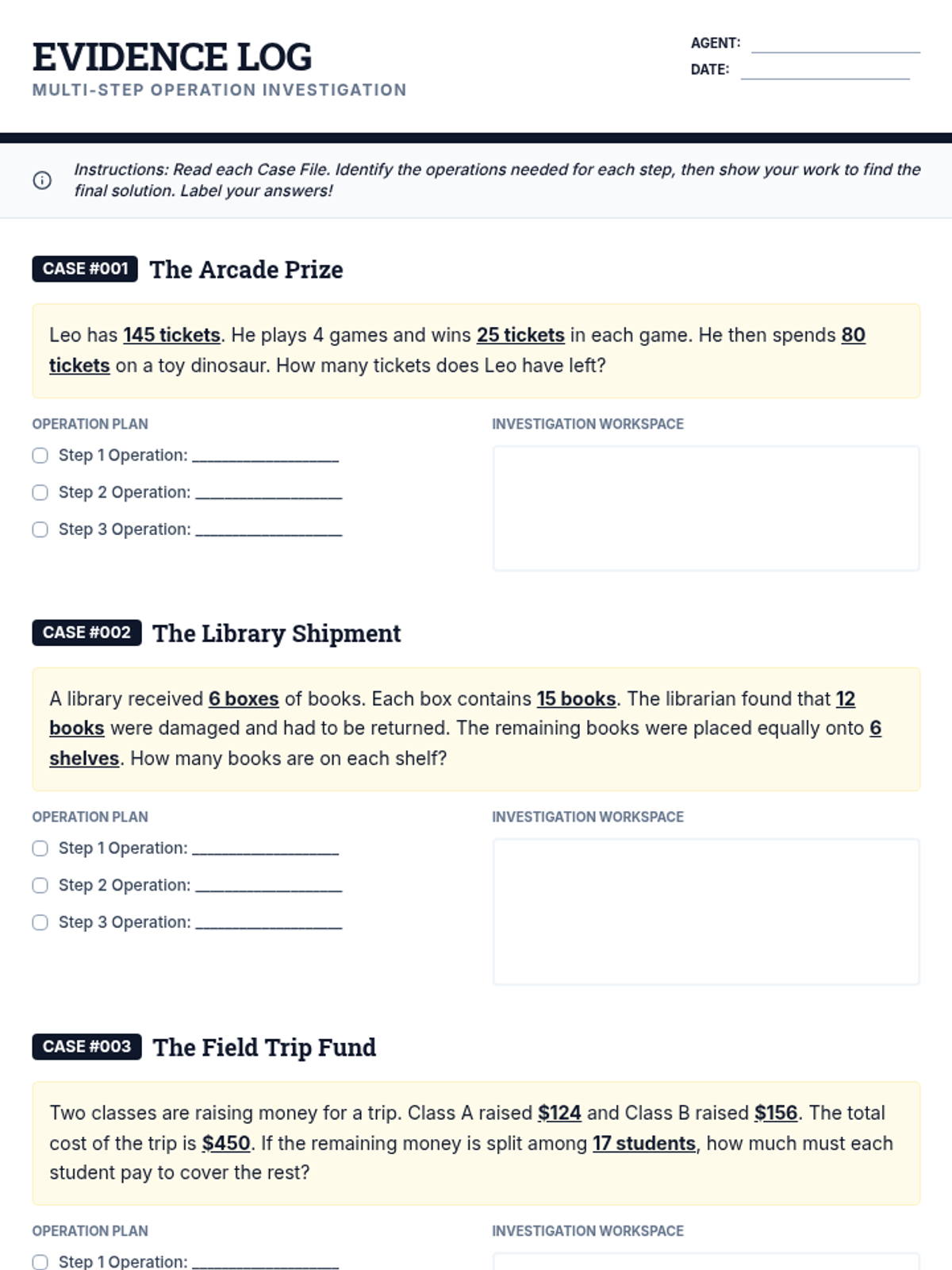
A lesson focused on breaking down and solving multi-step word problems using addition and subtraction through a detective-themed lens.
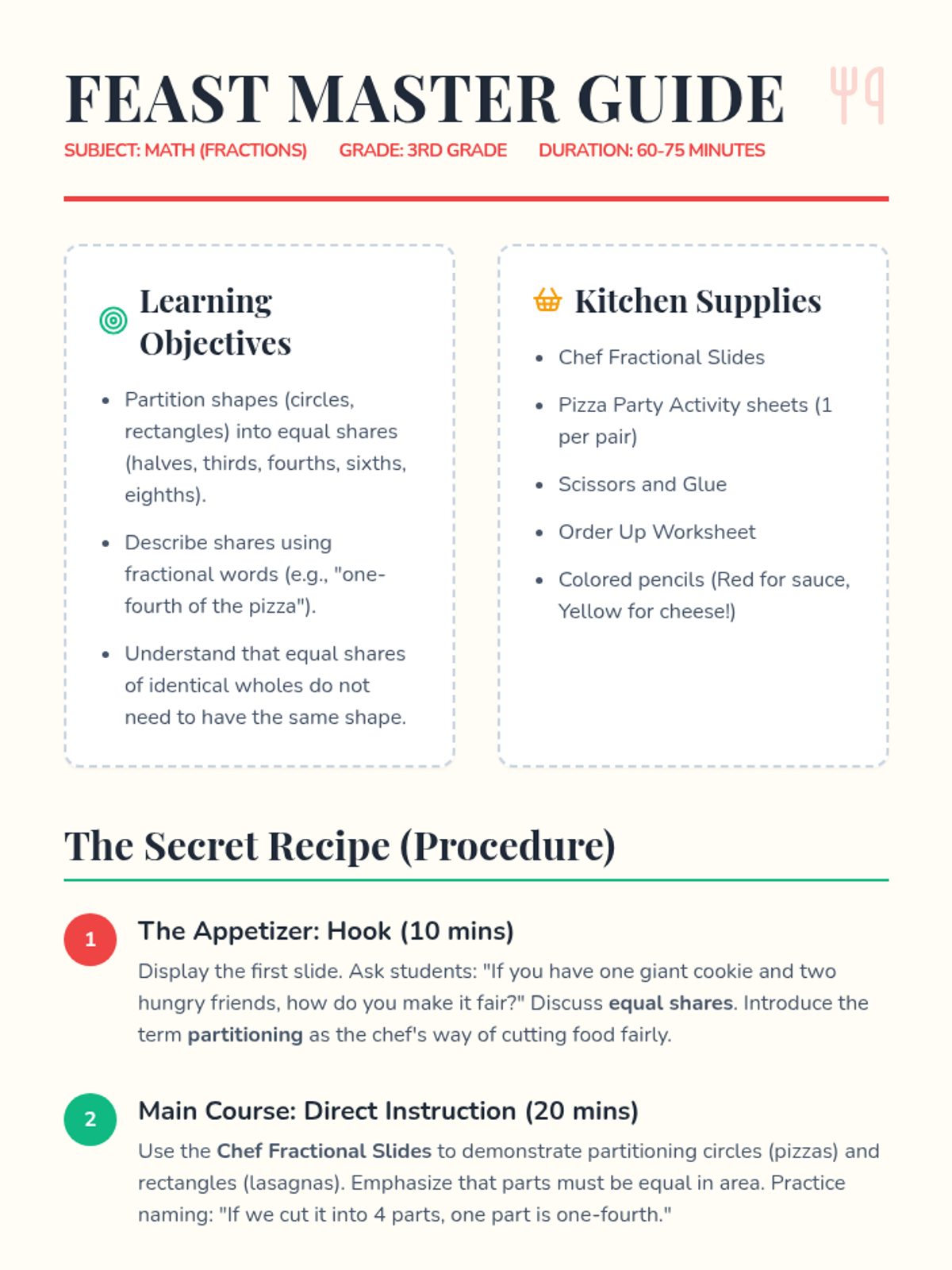
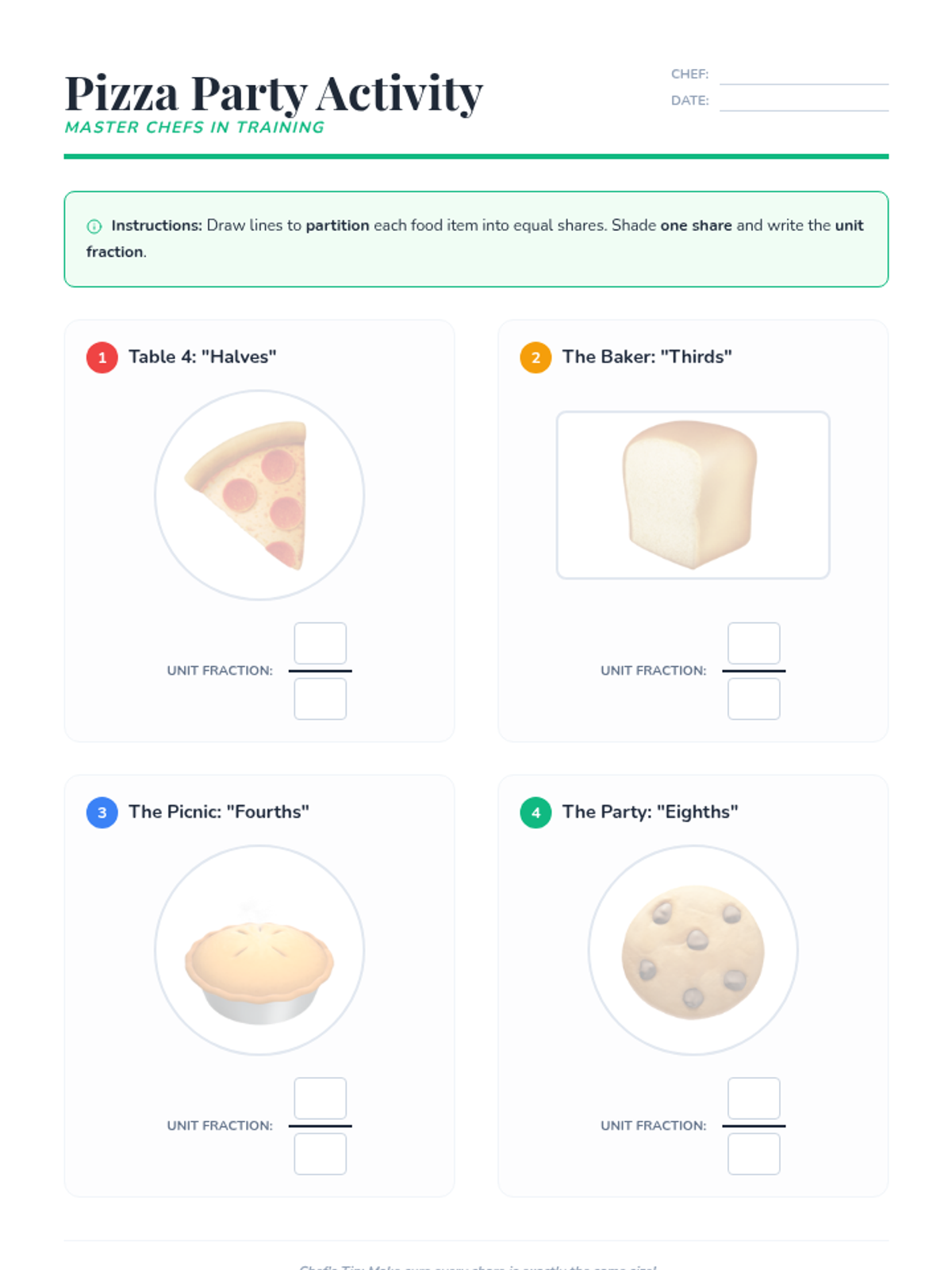
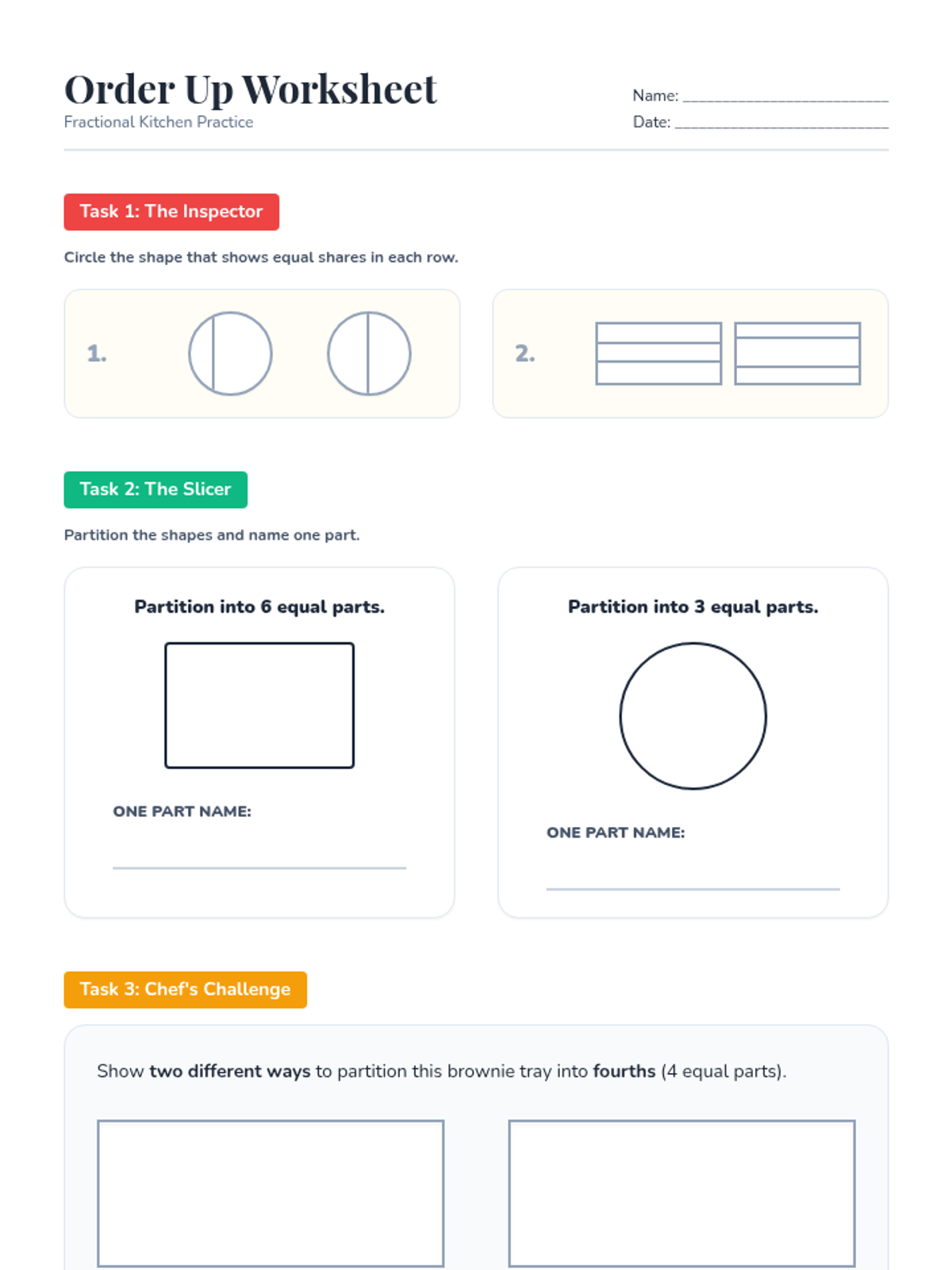
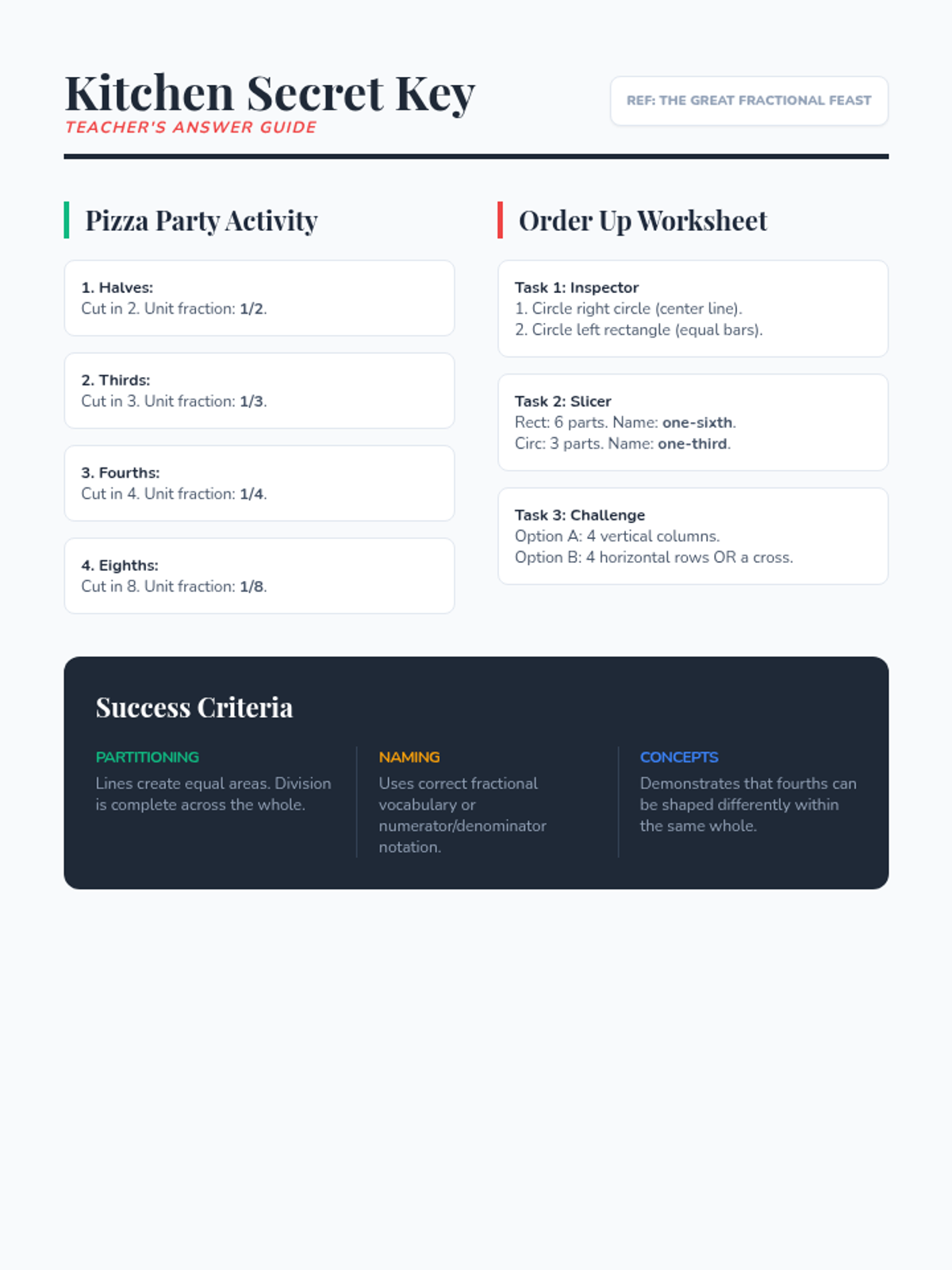
A delicious introduction to fractions where students partition food items into equal shares to understand unit fractions and naming parts of a whole.
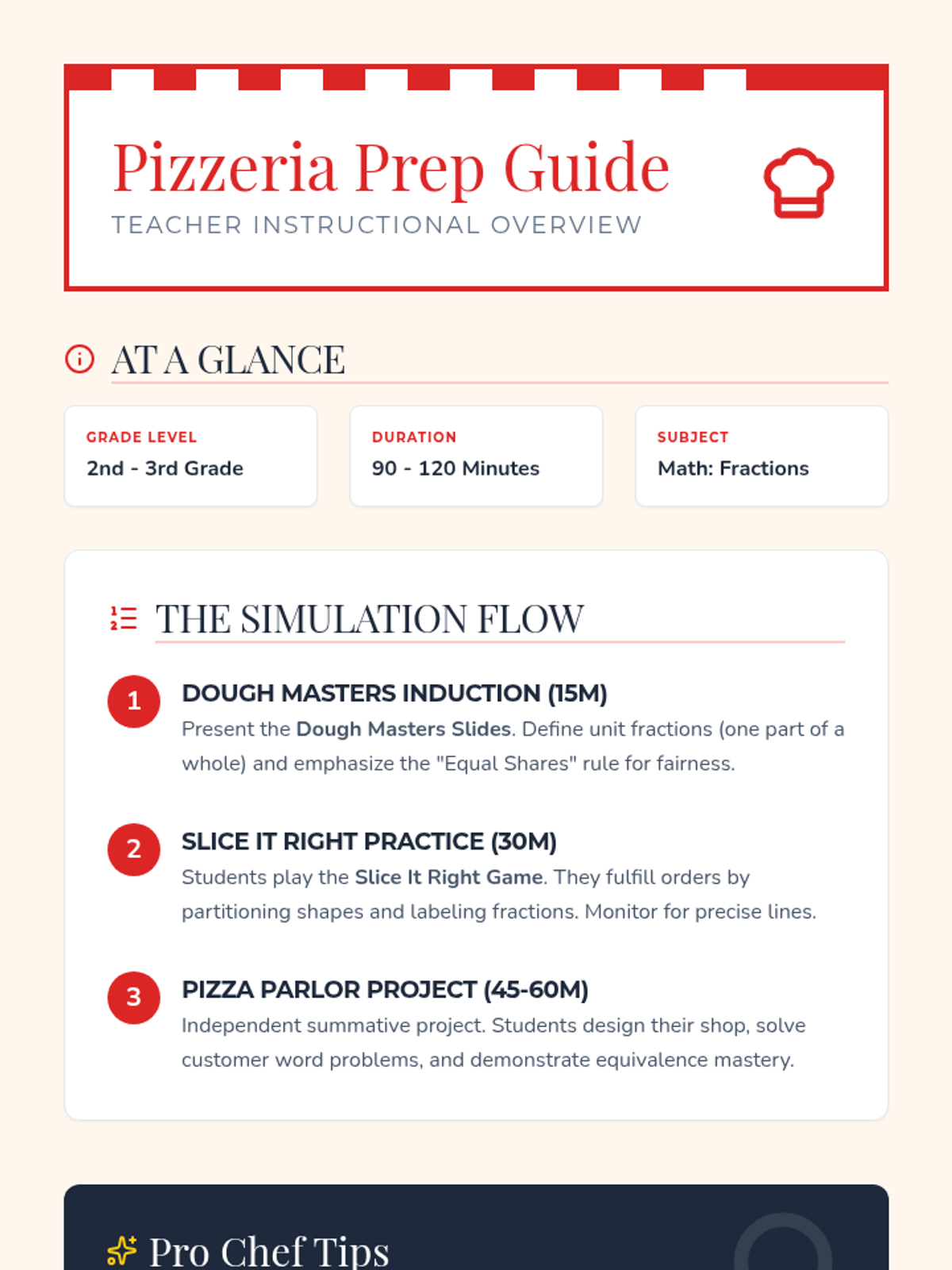
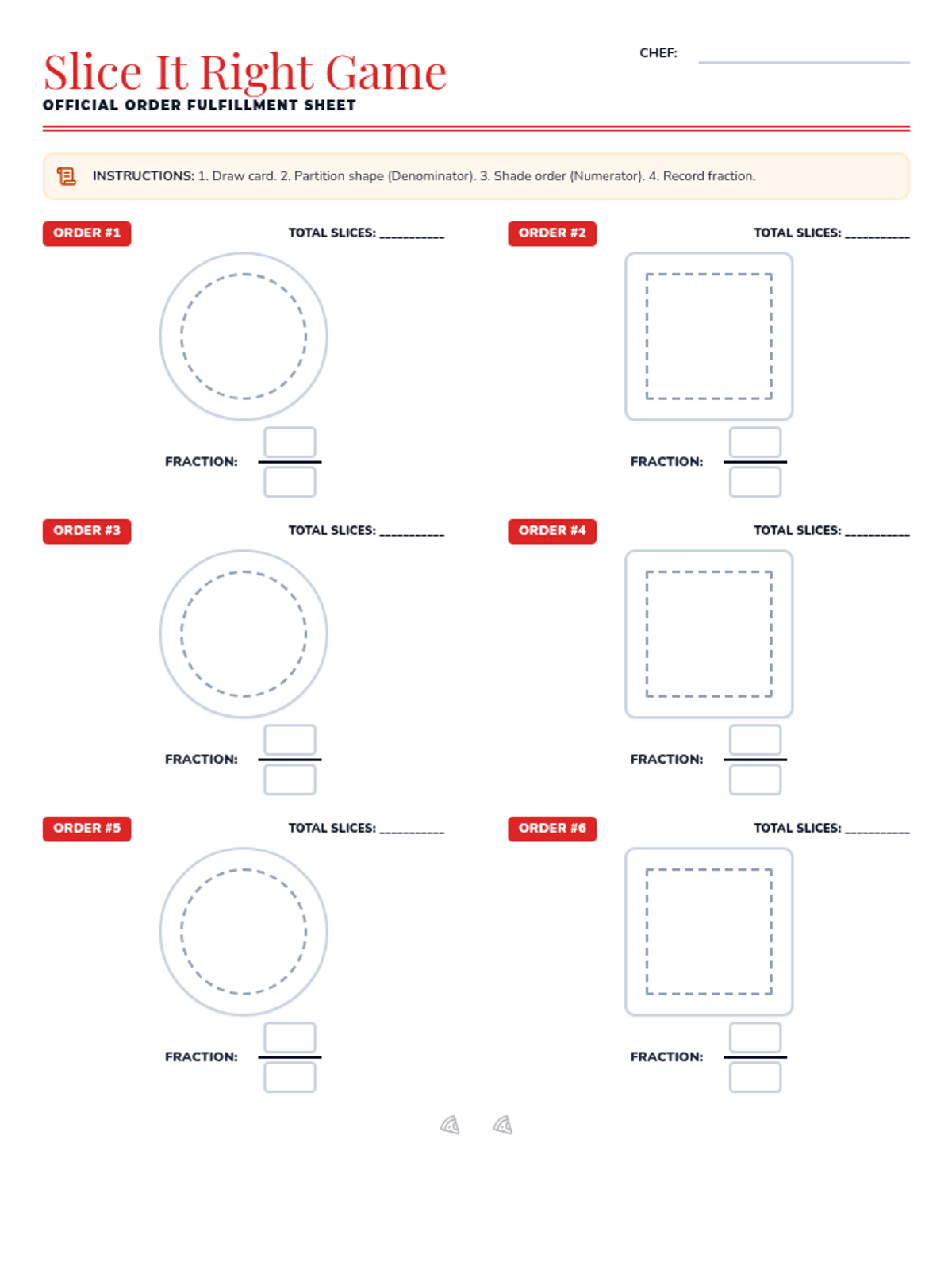
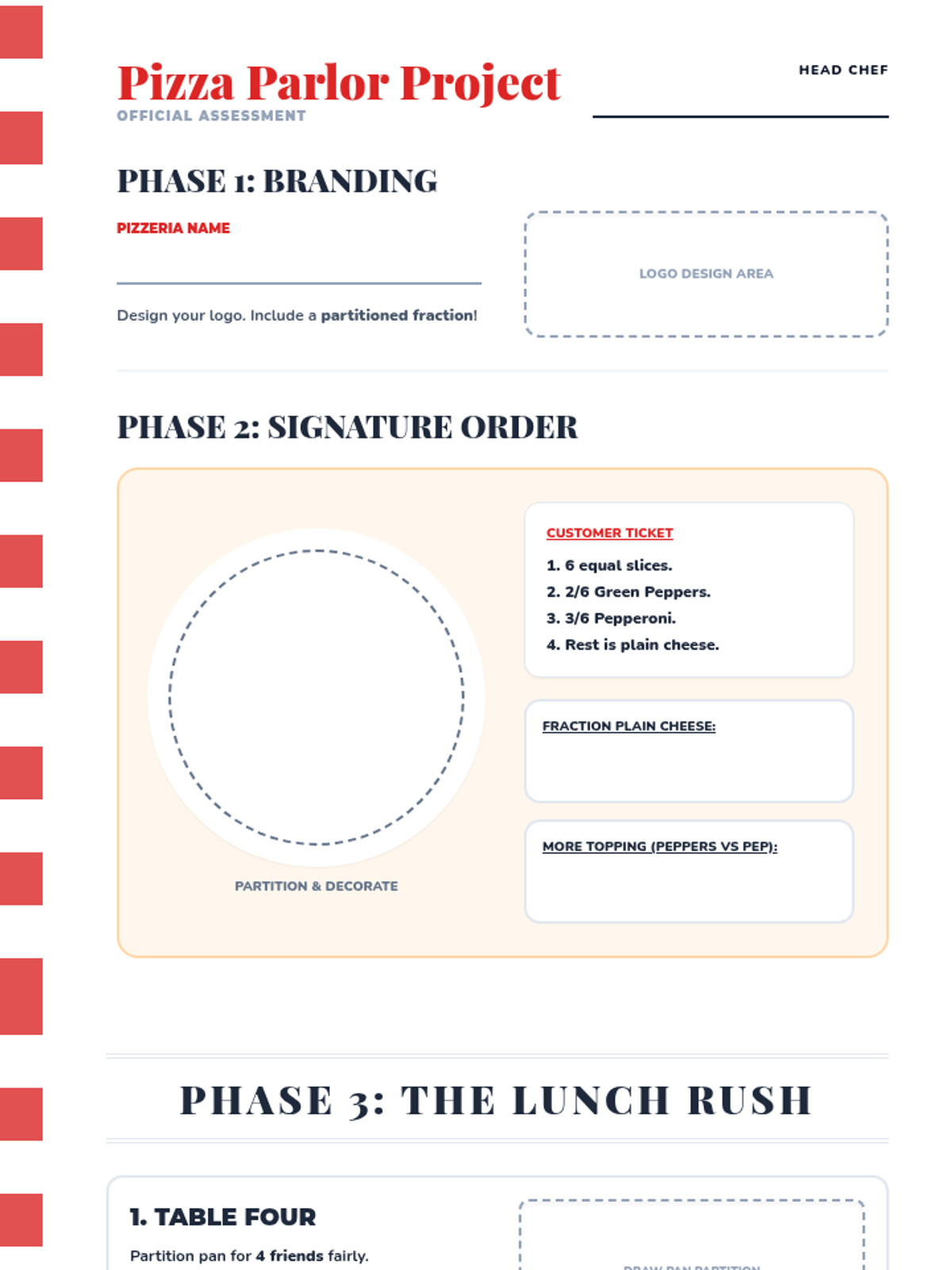
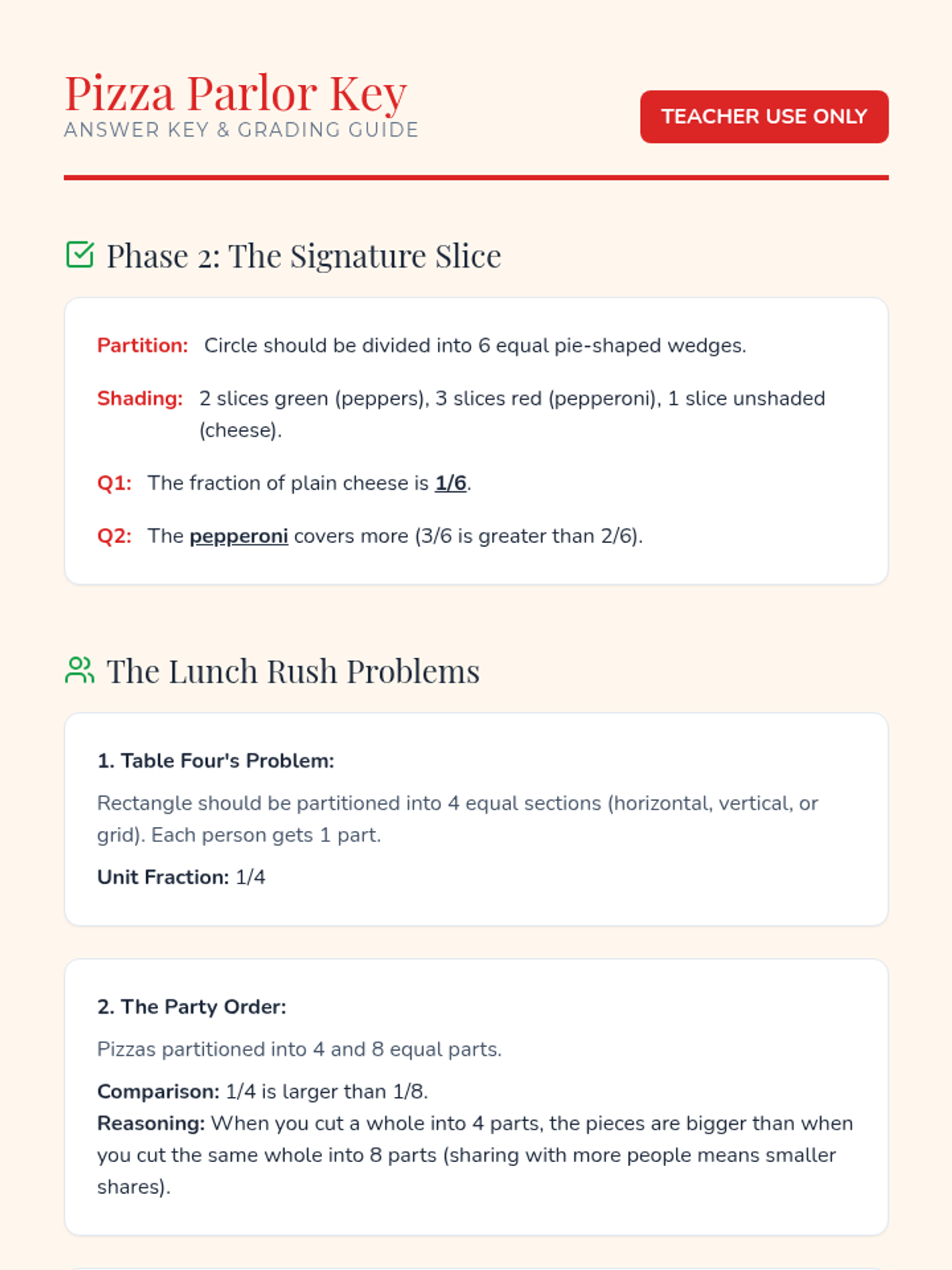
A comprehensive math simulation where students master unit fractions and partitioning through the lens of running a pizzeria. Includes instructional slides, a collaborative game, and an independent creative project.
Students learn to identify the necessary operations and sequence of steps required to solve complex, multi-part word problems.
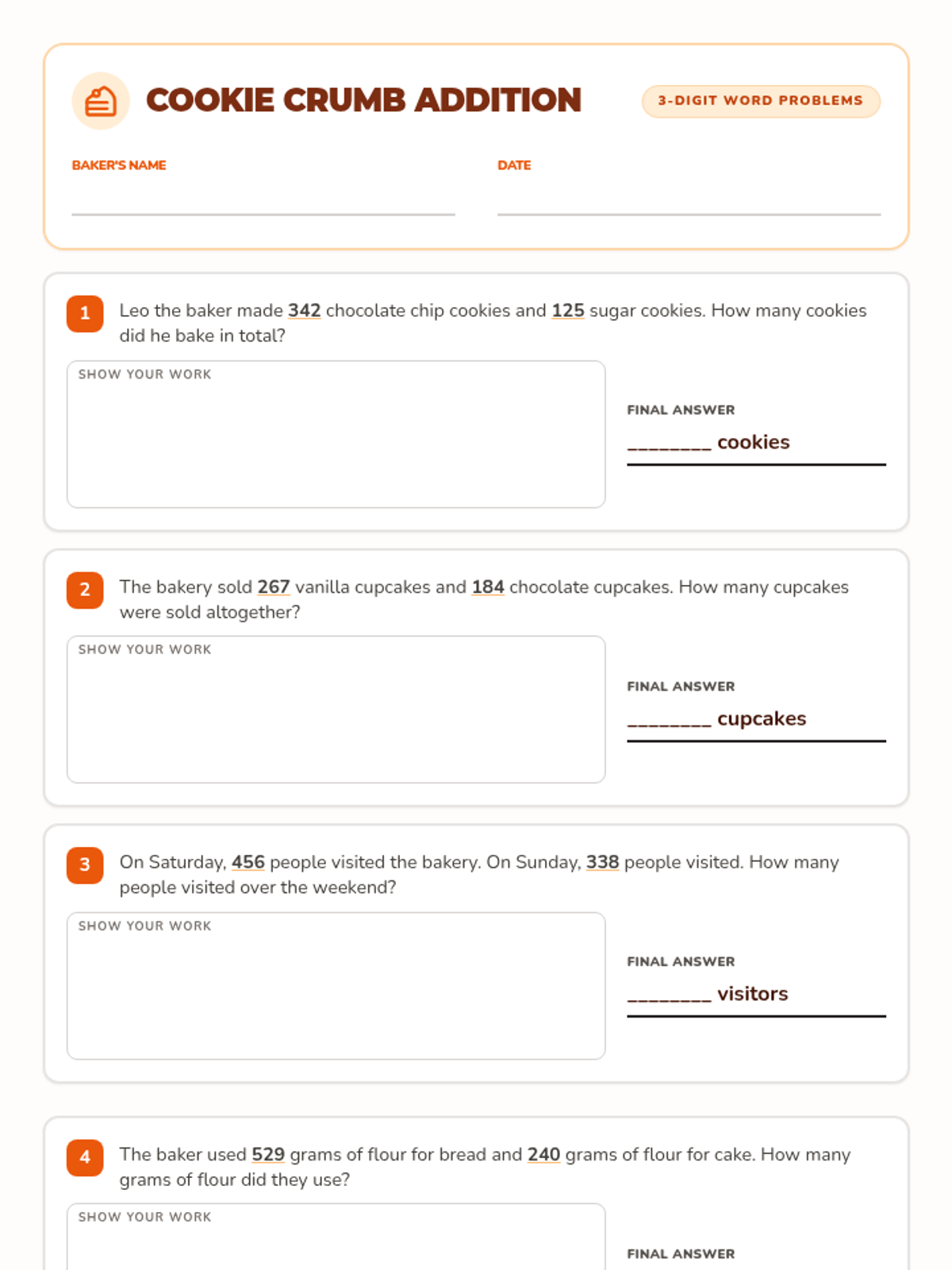
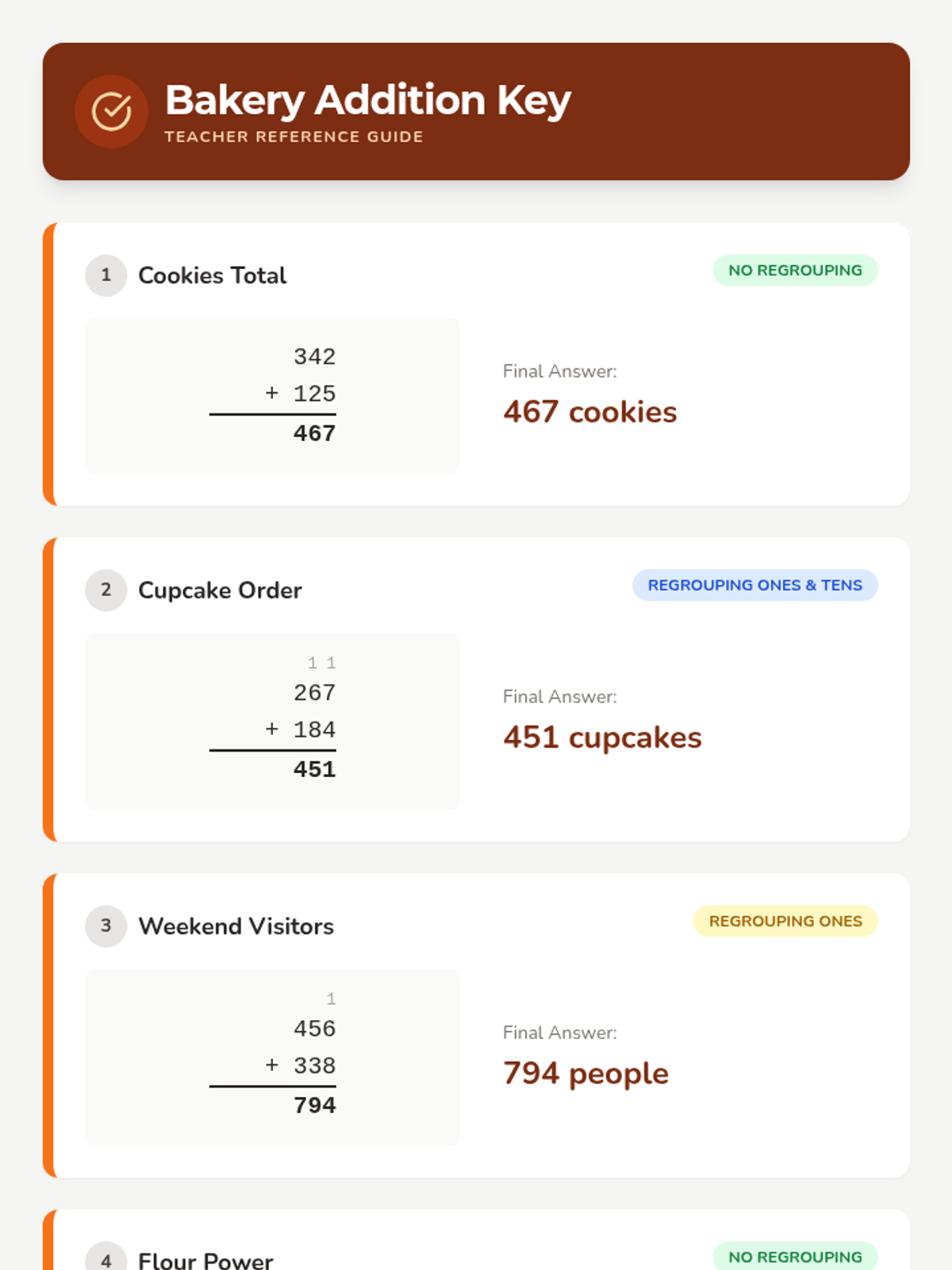
A lesson focused on solving one-step word problems using three-digit addition, both with and without regrouping. Includes a bakery-themed worksheet and a corresponding teacher answer key.
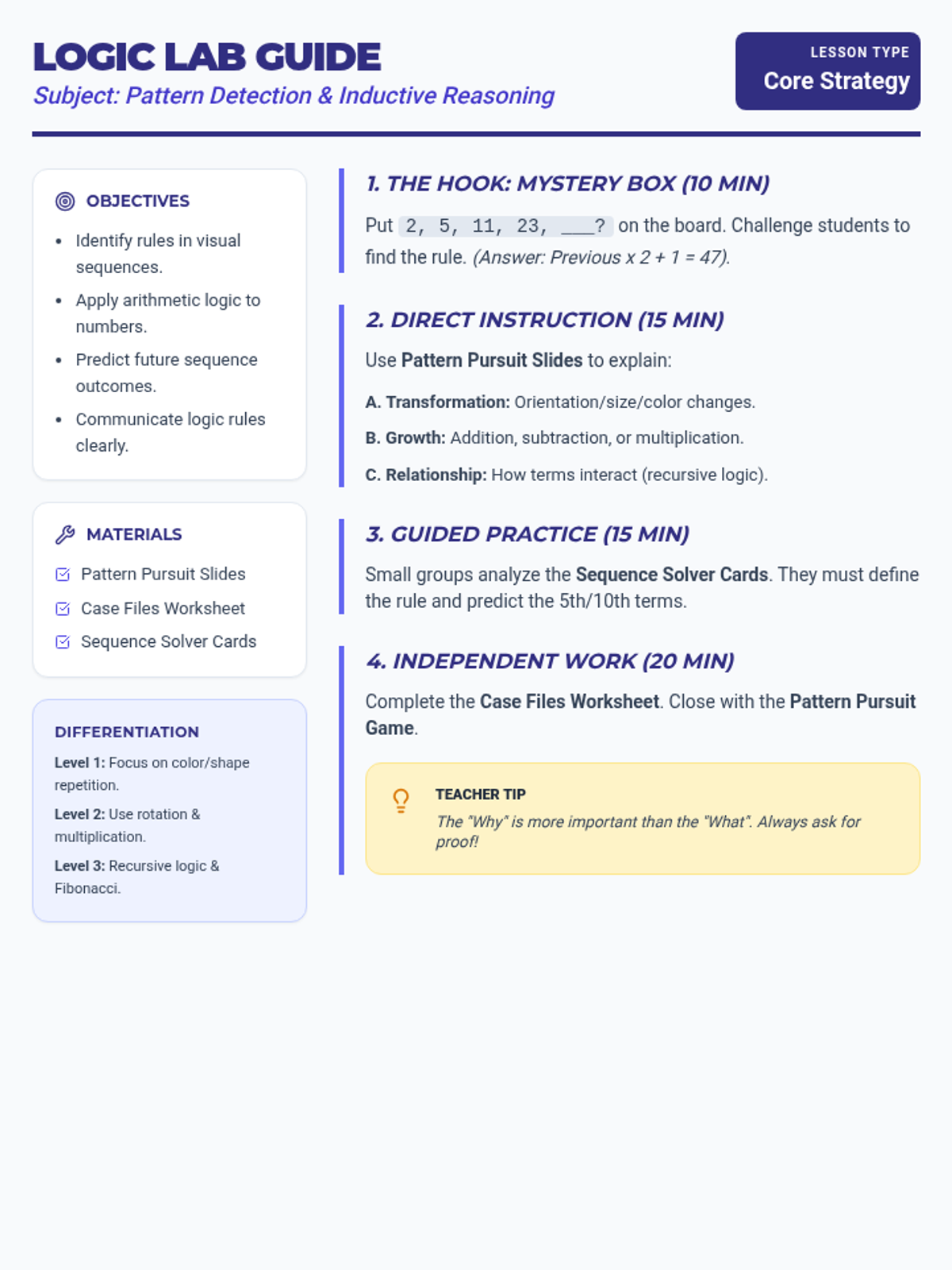
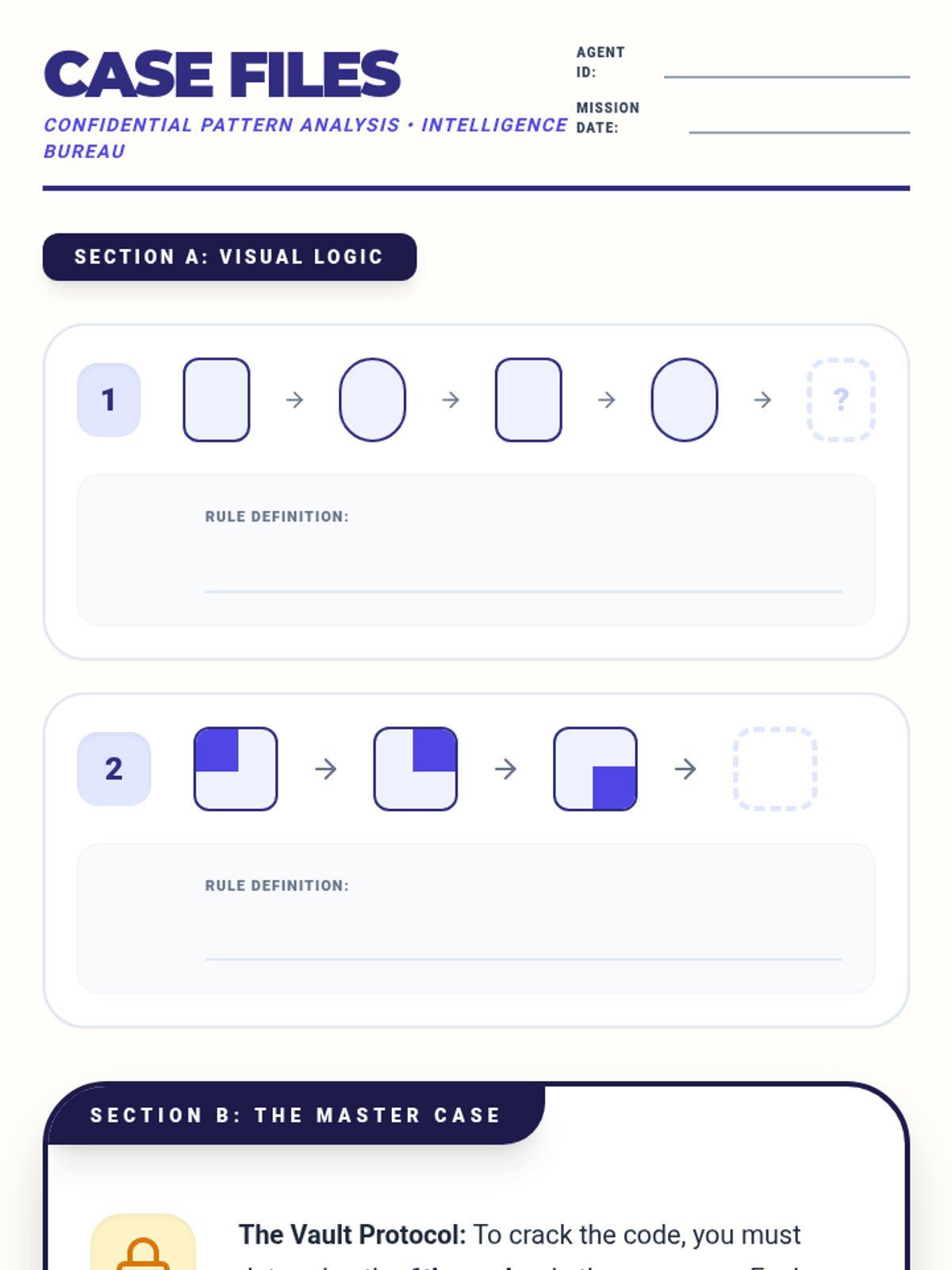
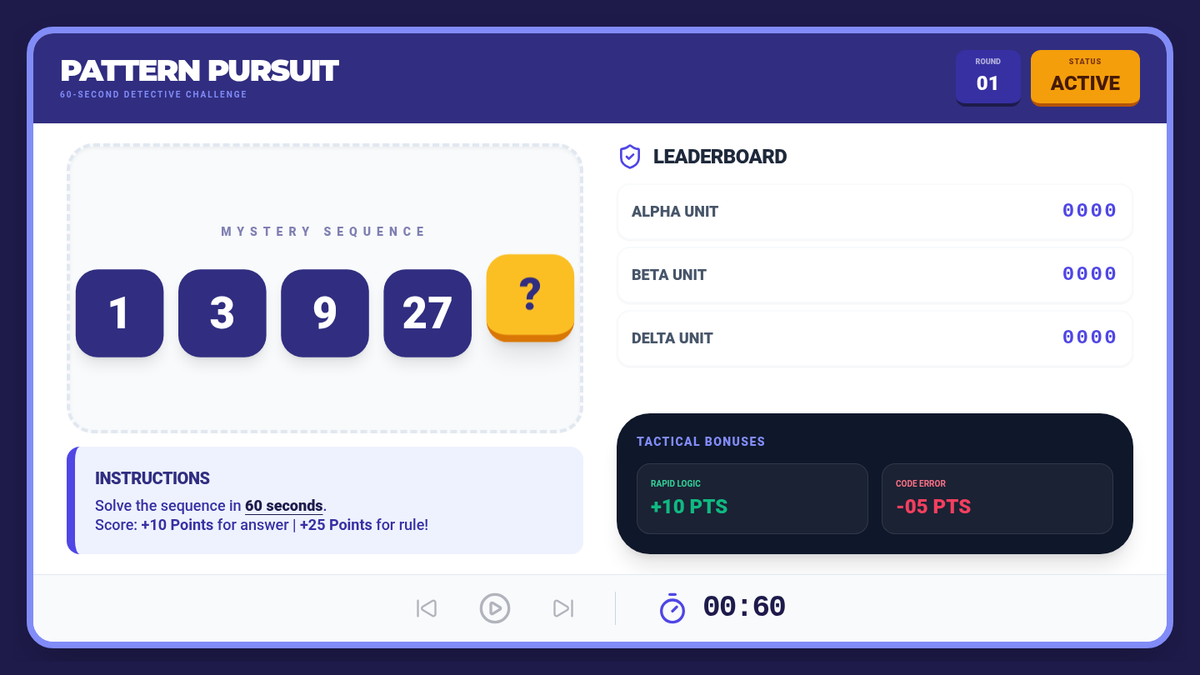
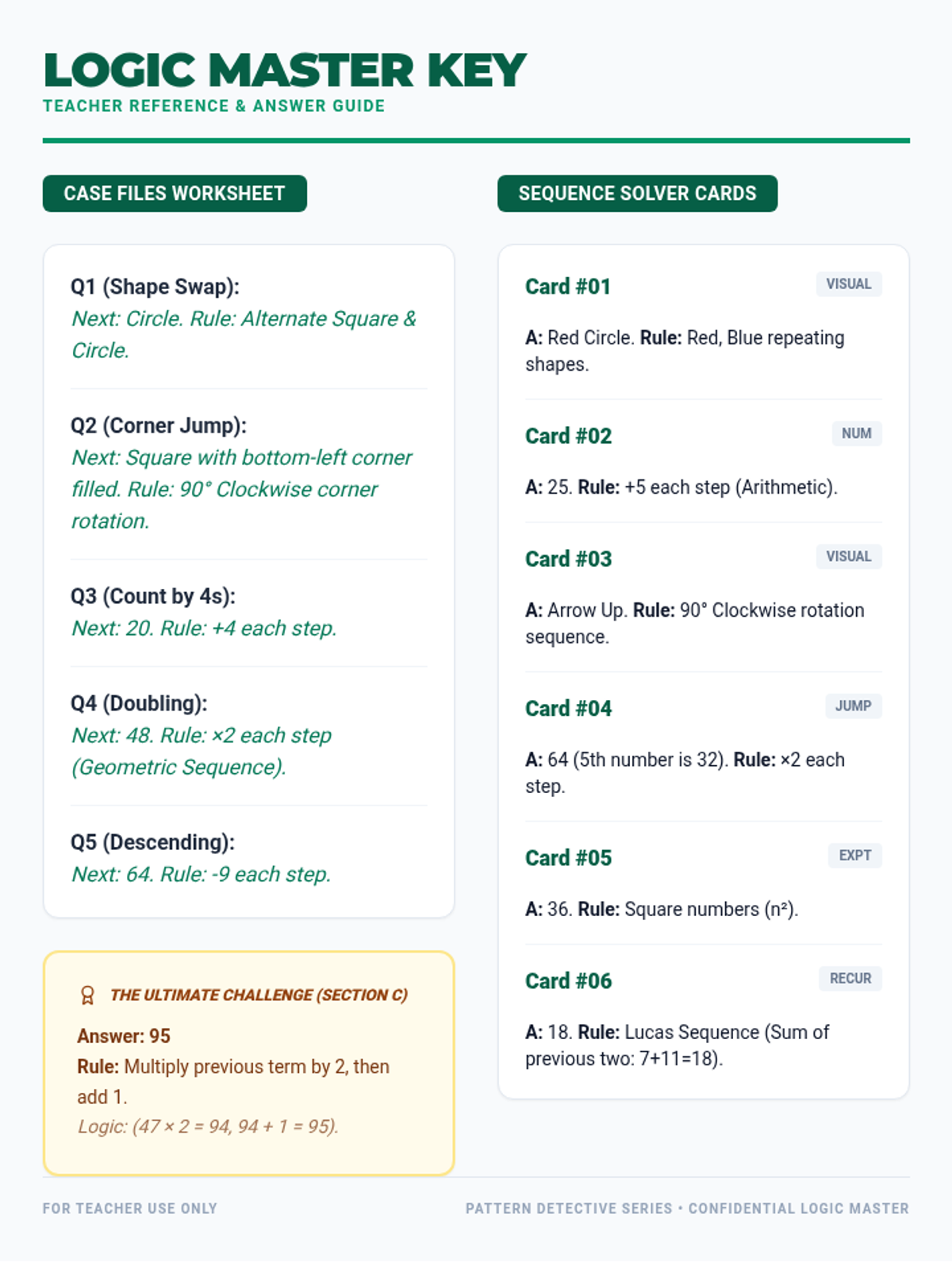
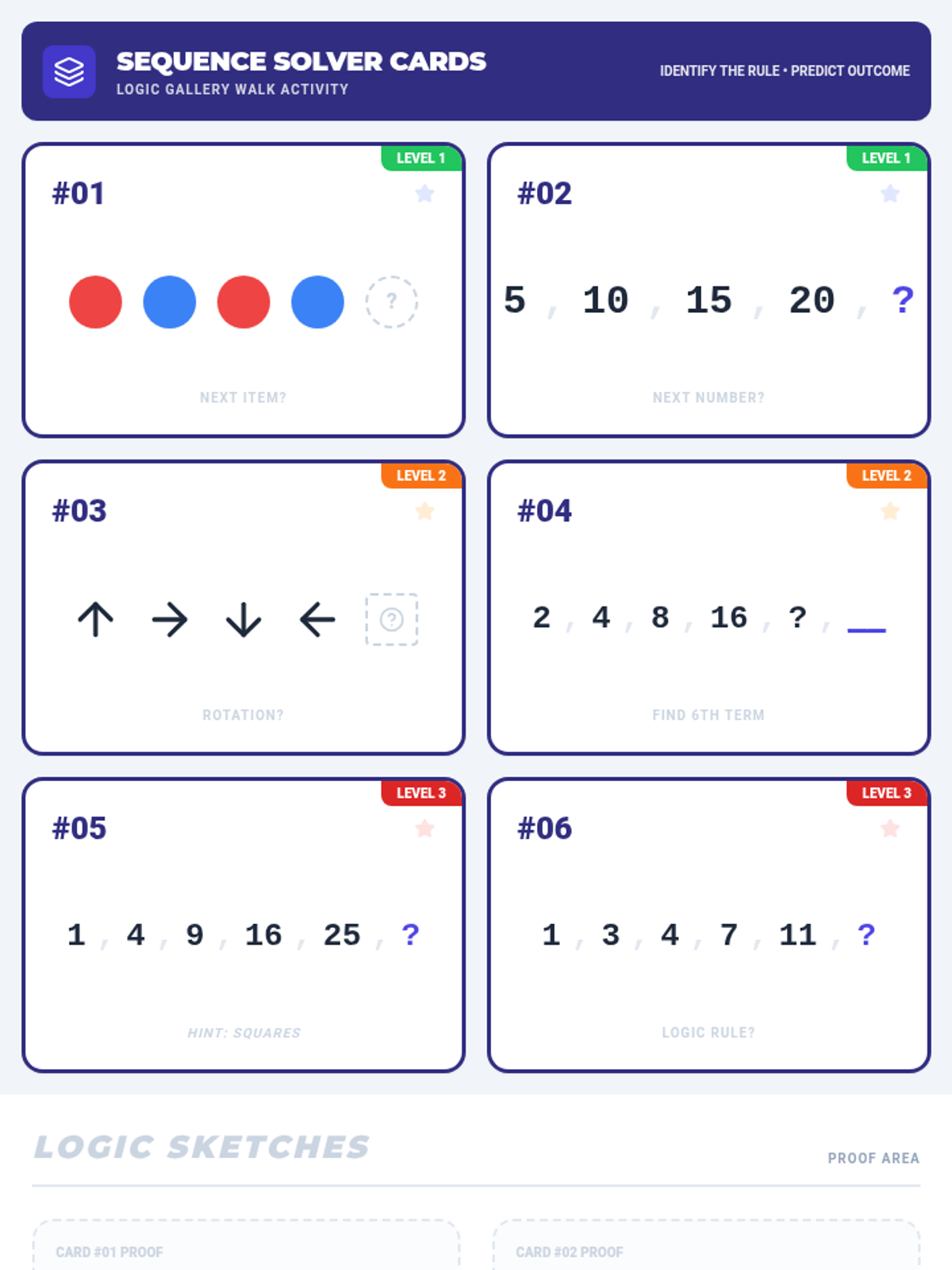
A comprehensive logic lesson where students act as detectives to identify rules in visual and numerical sequences, building inductive reasoning and prediction skills.