A collection of creative and engaging writing prompts for 4th-grade students using the RAFT (Role, Audience, Format, Topic) framework to explore different perspectives and styles.
Students analyze how internal conflicts and life experiences shape a protagonist's growth by mapping their journey as an 'architectural' process of building a personality.
Students explore the internal and external forces that shape character development, using an architectural metaphor to map a protagonist's growth and personal transformation.
This lesson focuses on Monkey D. Luffy's journey from a small village to the Grand Line, highlighting his determination and the significance of his iconic straw hat. Students practice reading fluency, vocabulary decoding, and thematic analysis.
A 20-minute intensive lesson on identifying main ideas and key details to write a concise non-fiction summary about rural Illinois communities.
A hands-on lesson focusing on identifying and forming contractions by matching word pairs to their shortened versions through interactive card games.
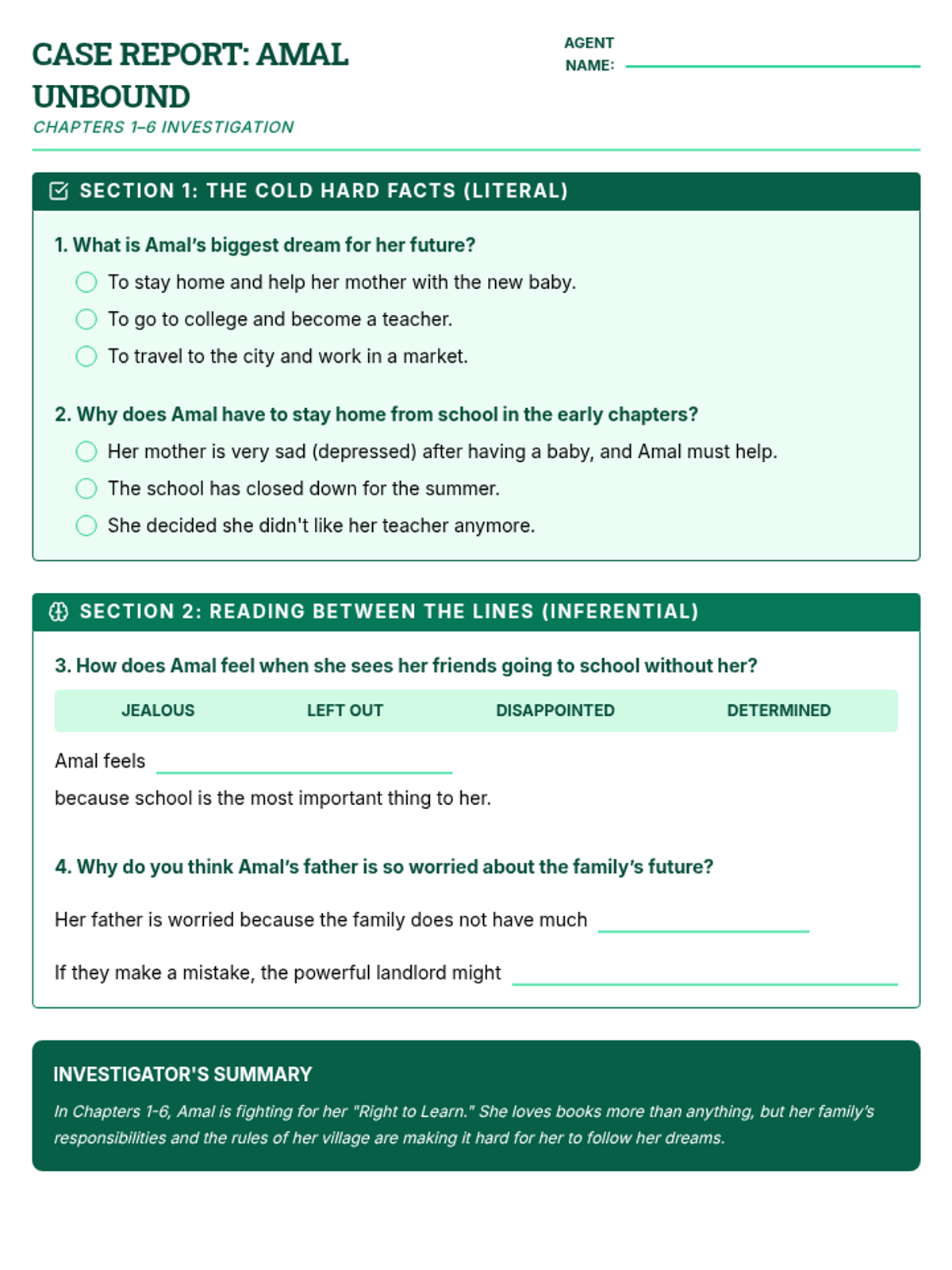
A unit focused on the novel 'Amal Unbound' by Aisha Saeed, exploring themes of education, gender roles, and social justice in rural Pakistan.
A lesson focused on developing inference skills in 5th-grade students through short, scenario-based reading passages. Students act as "detectives" to find clues and draw logical conclusions from text.
A lesson focused on the art of inference in literature, using short paragraph-length stories to teach students how to read between the lines and use evidence to support their conclusions.
Students step into the role of language detectives to decode common idioms, distinguishing between literal and figurative meanings through interactive exploration and context clues.
A reading comprehension lesson focused on identifying and analyzing problem-and-solution structures within environmental narratives. Students read about a community's effort to save a local wetland and answer targeted questions.
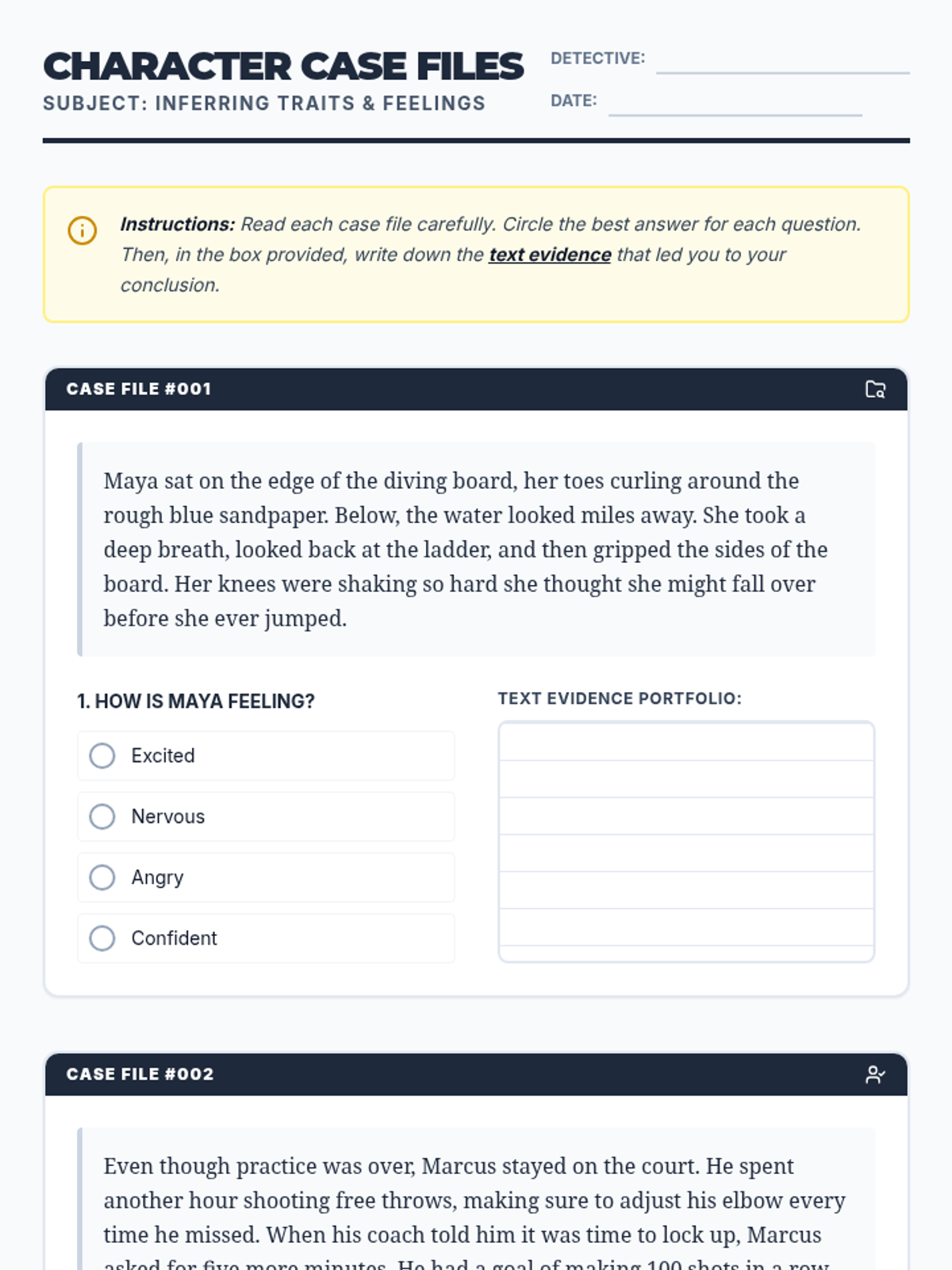
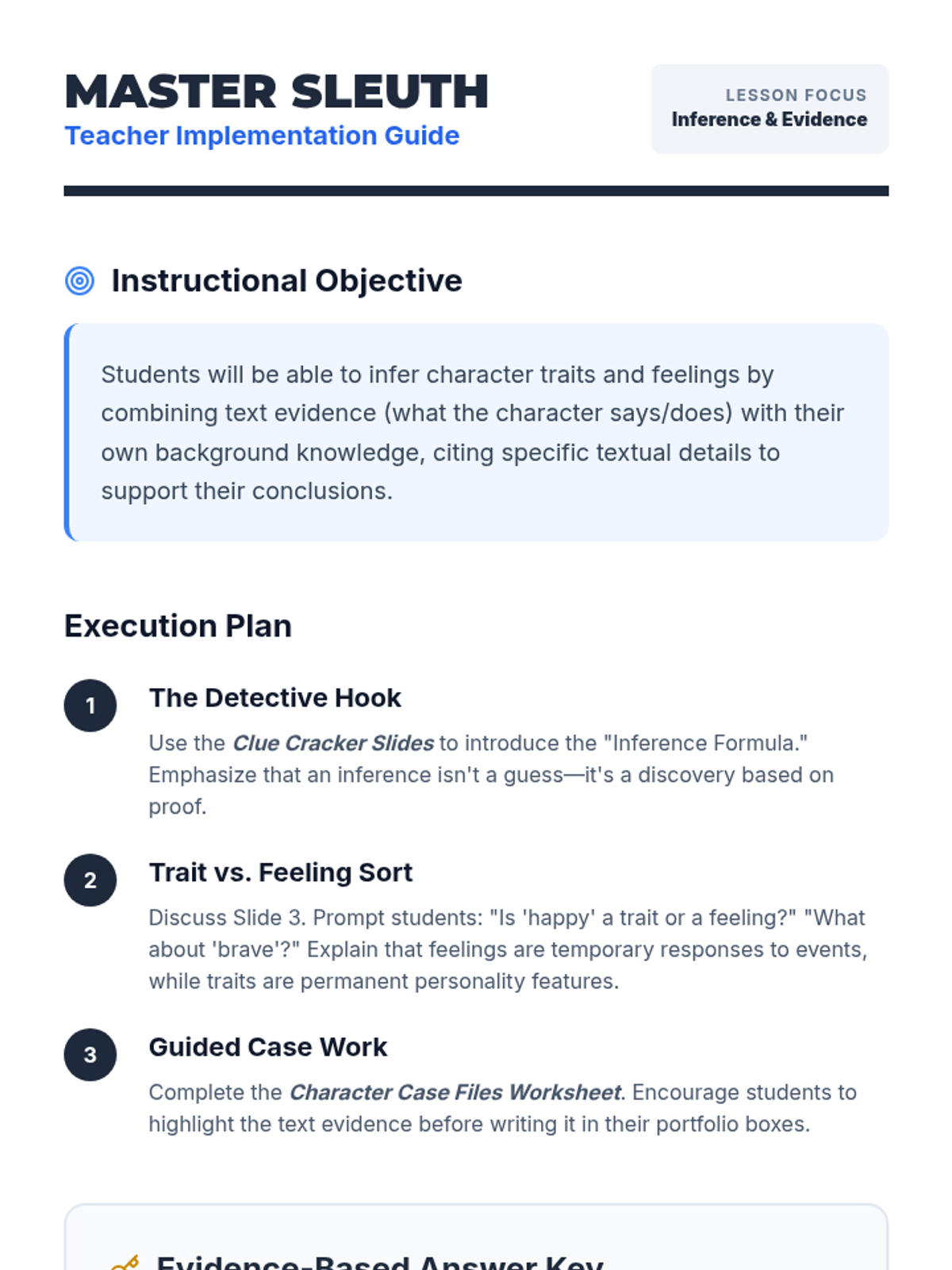
A lesson focused on teaching students how to use text evidence to infer character traits and feelings through a 'detective' lens.
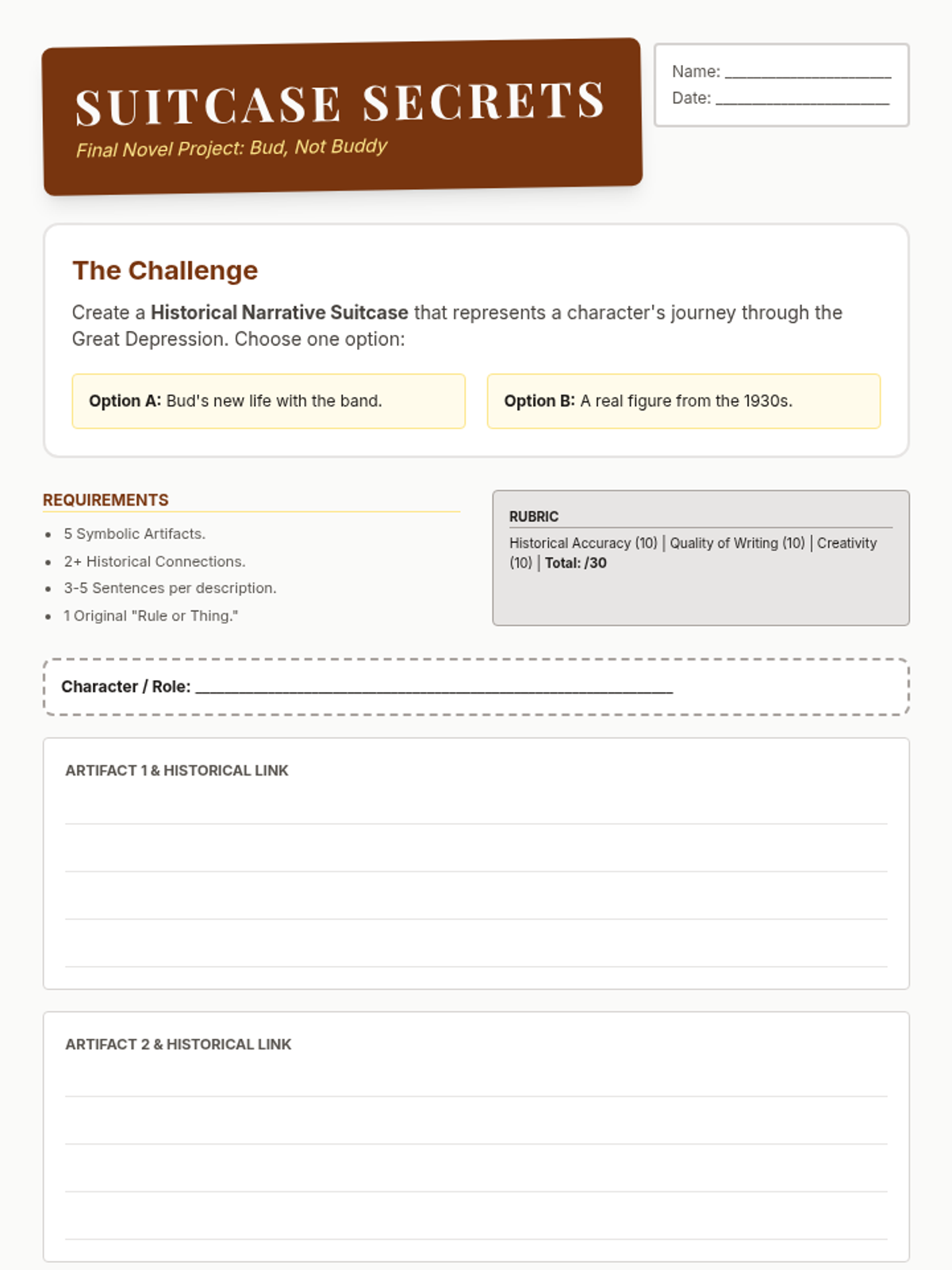
The final assessment and project lesson where students synthesize their learning through a creative portfolio project.
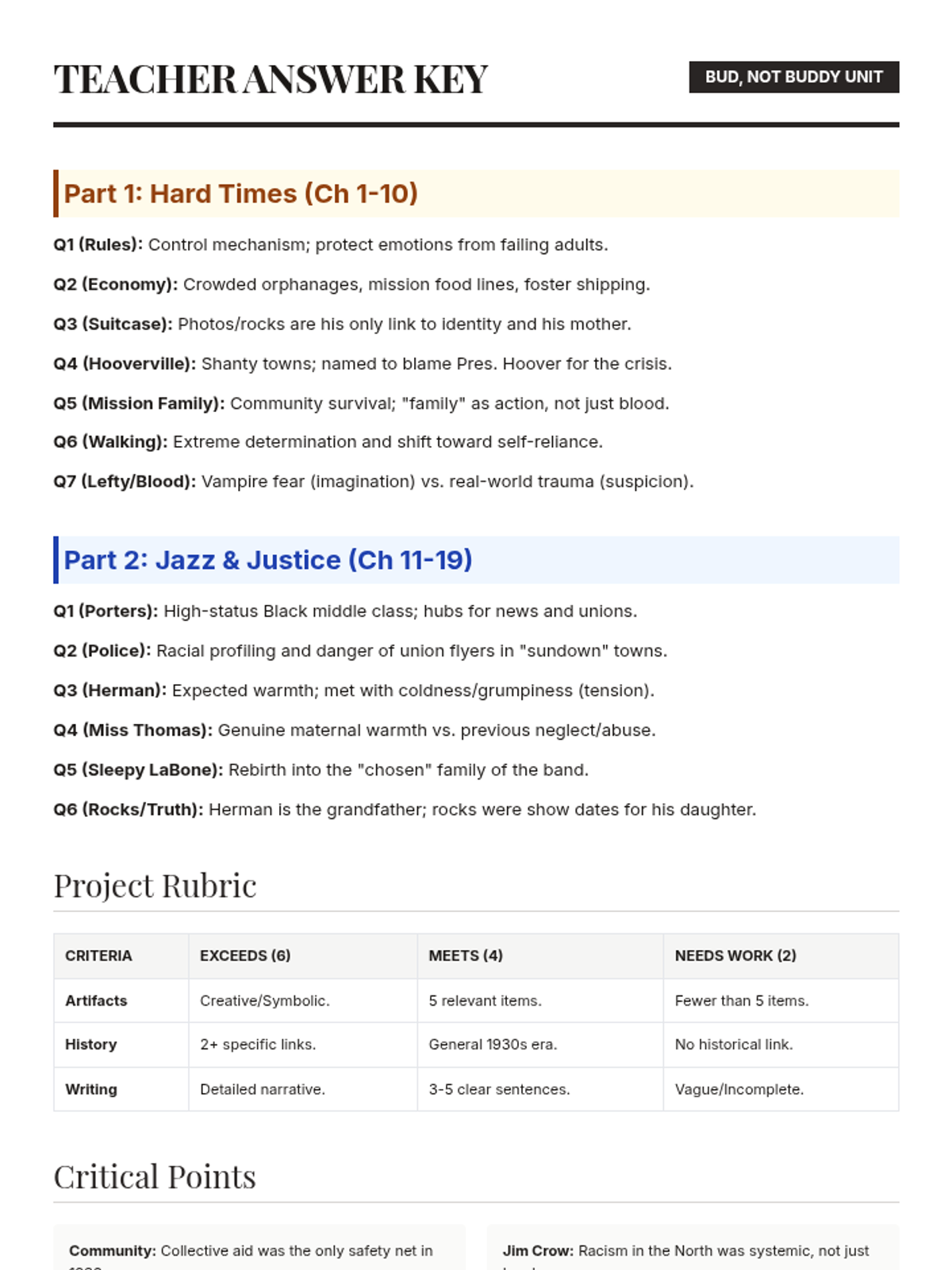
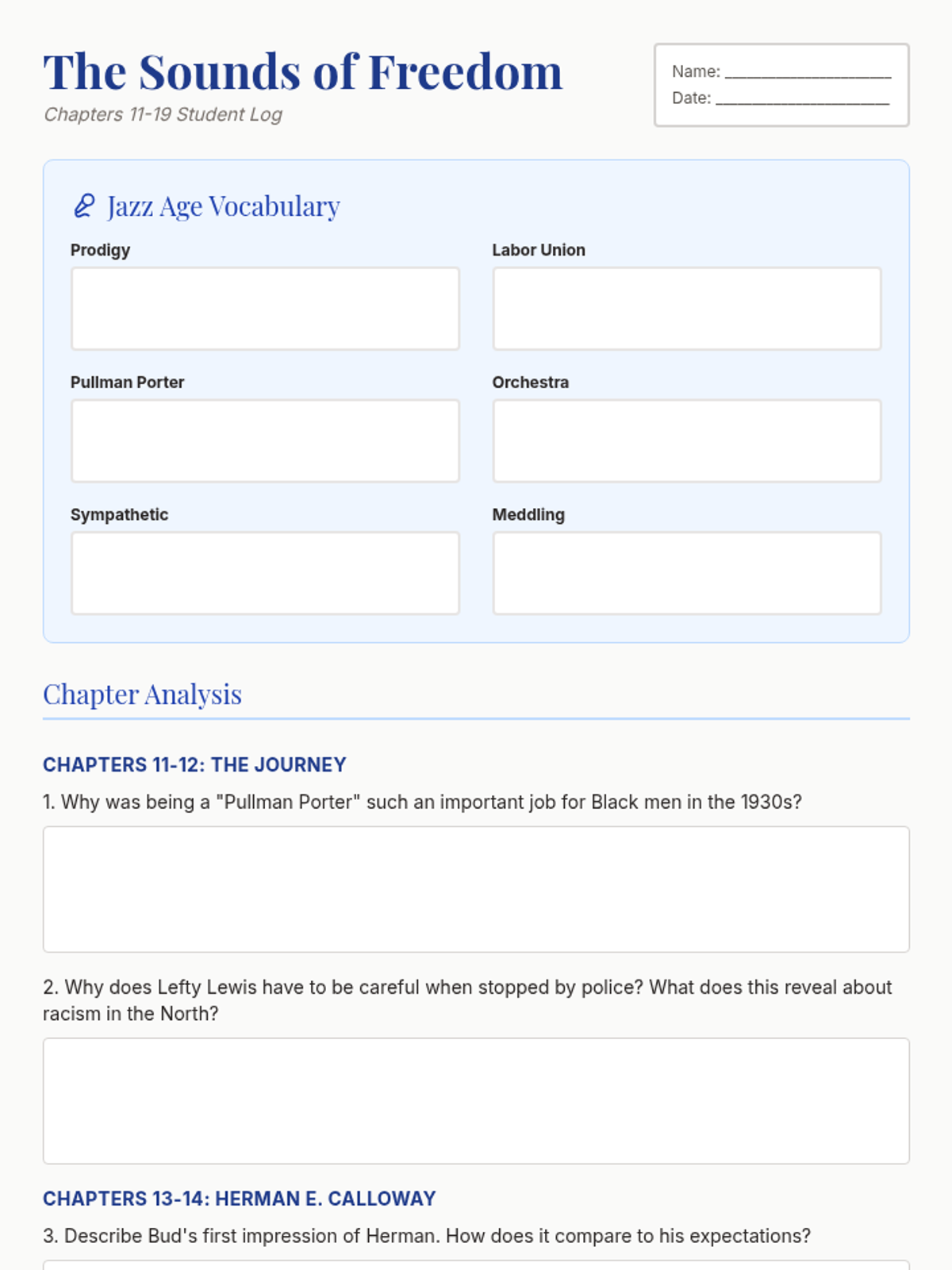
Covers the second half of the book (Chapters 11-19). Students explore the cultural impact of jazz music and the social complexities of the 1930s.
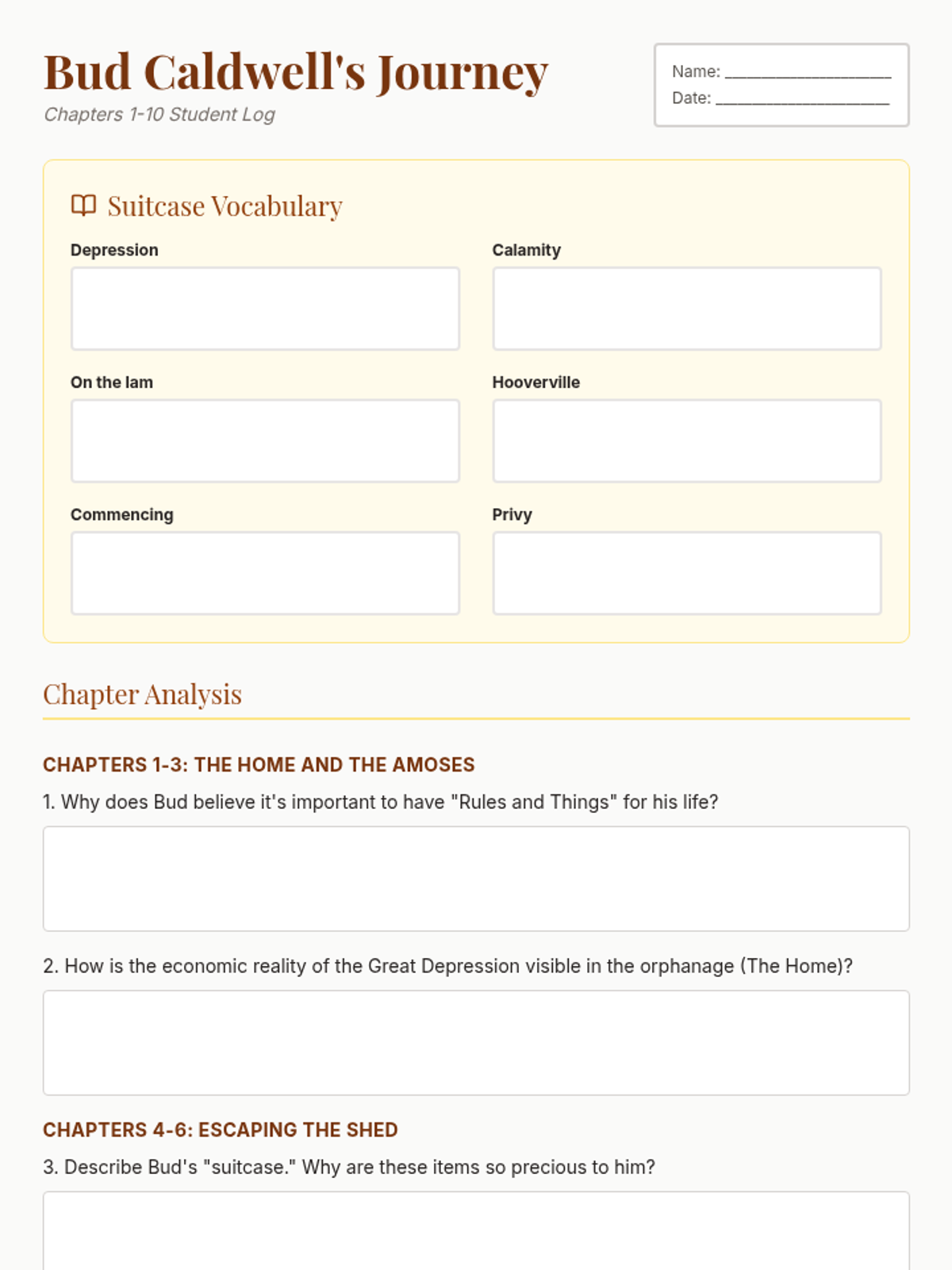
Introduces the novel and explores the early chapters (1-10). Students investigate the economic realities of the Great Depression and life in temporary settlements.
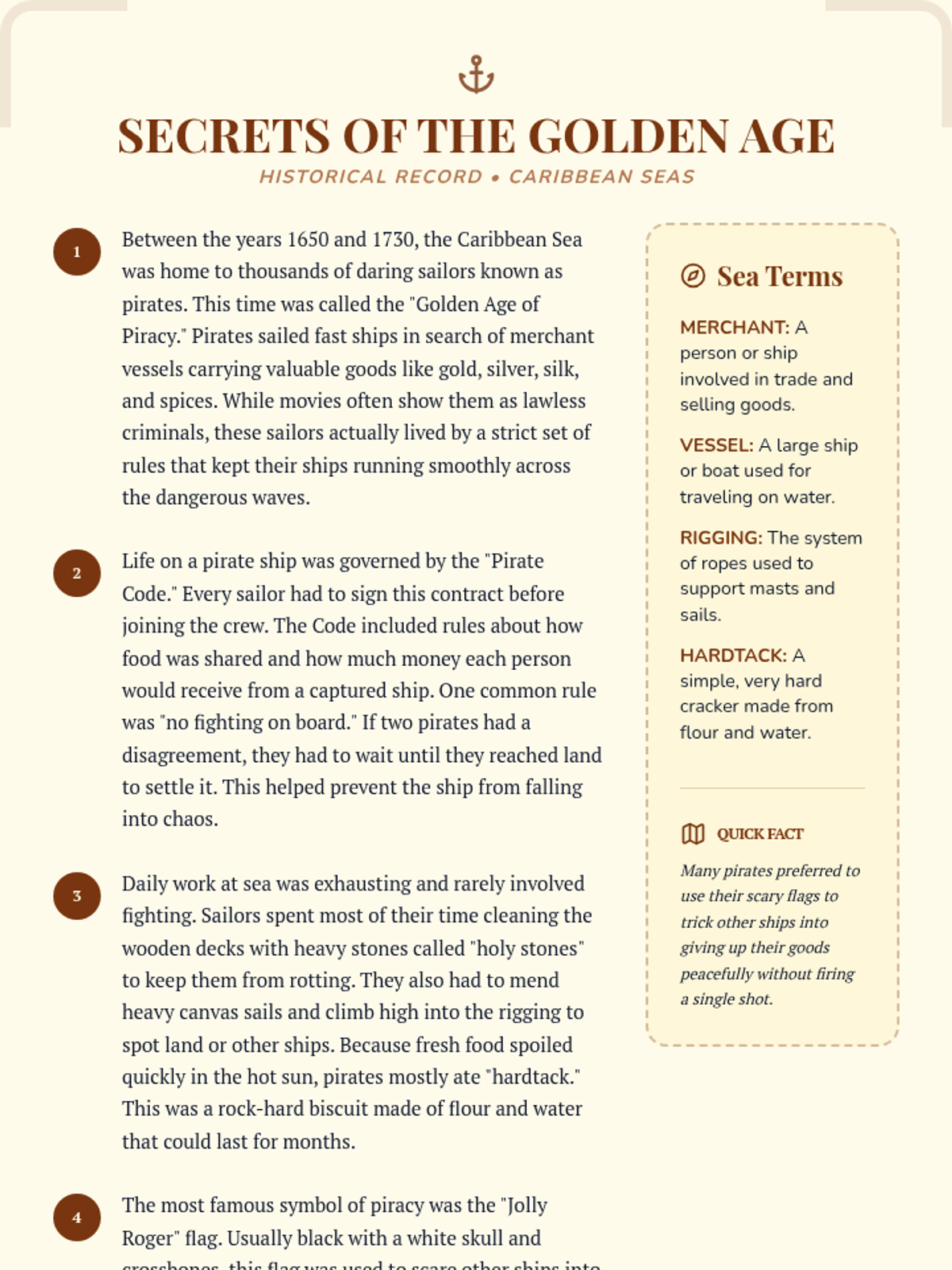
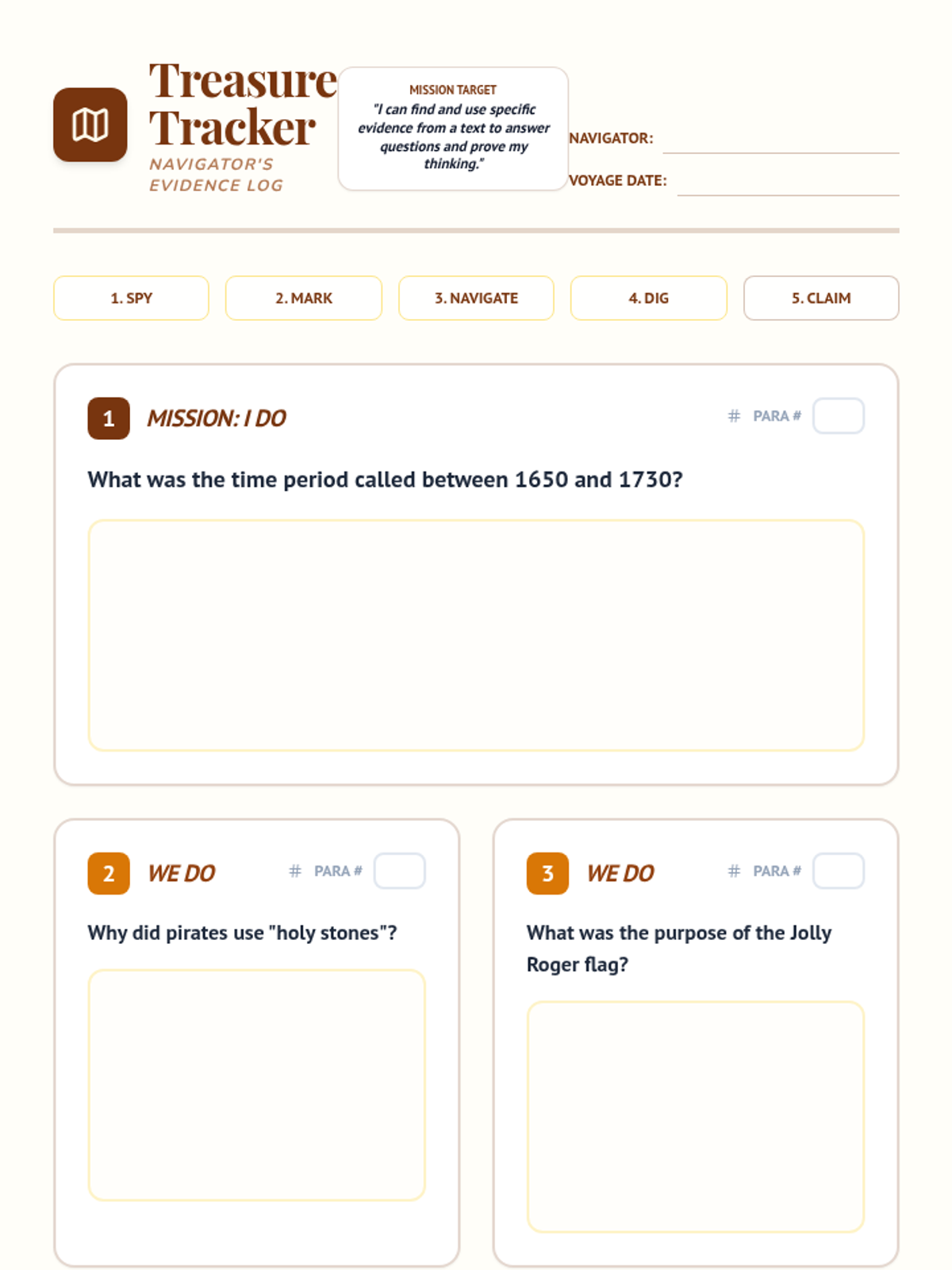
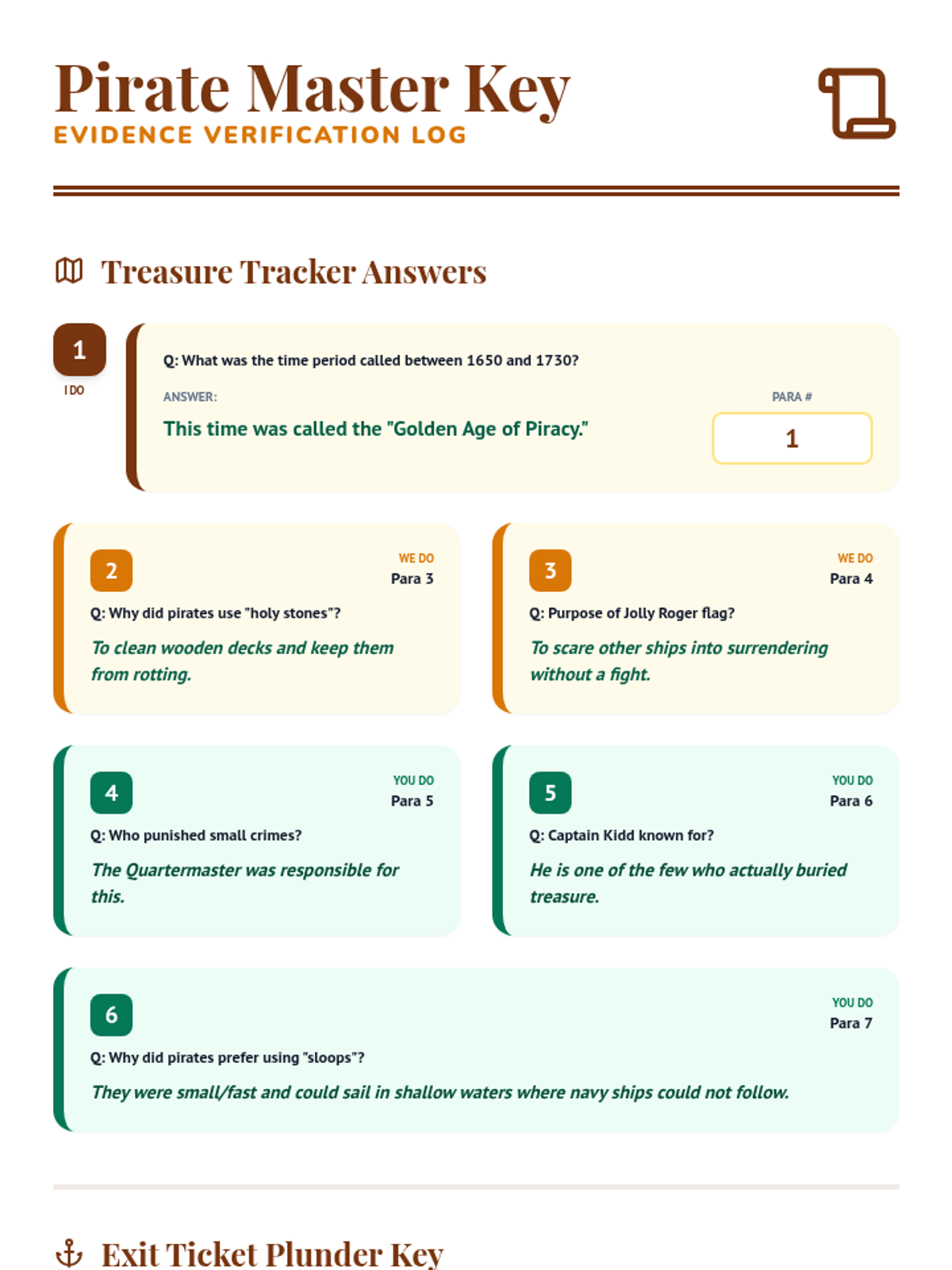
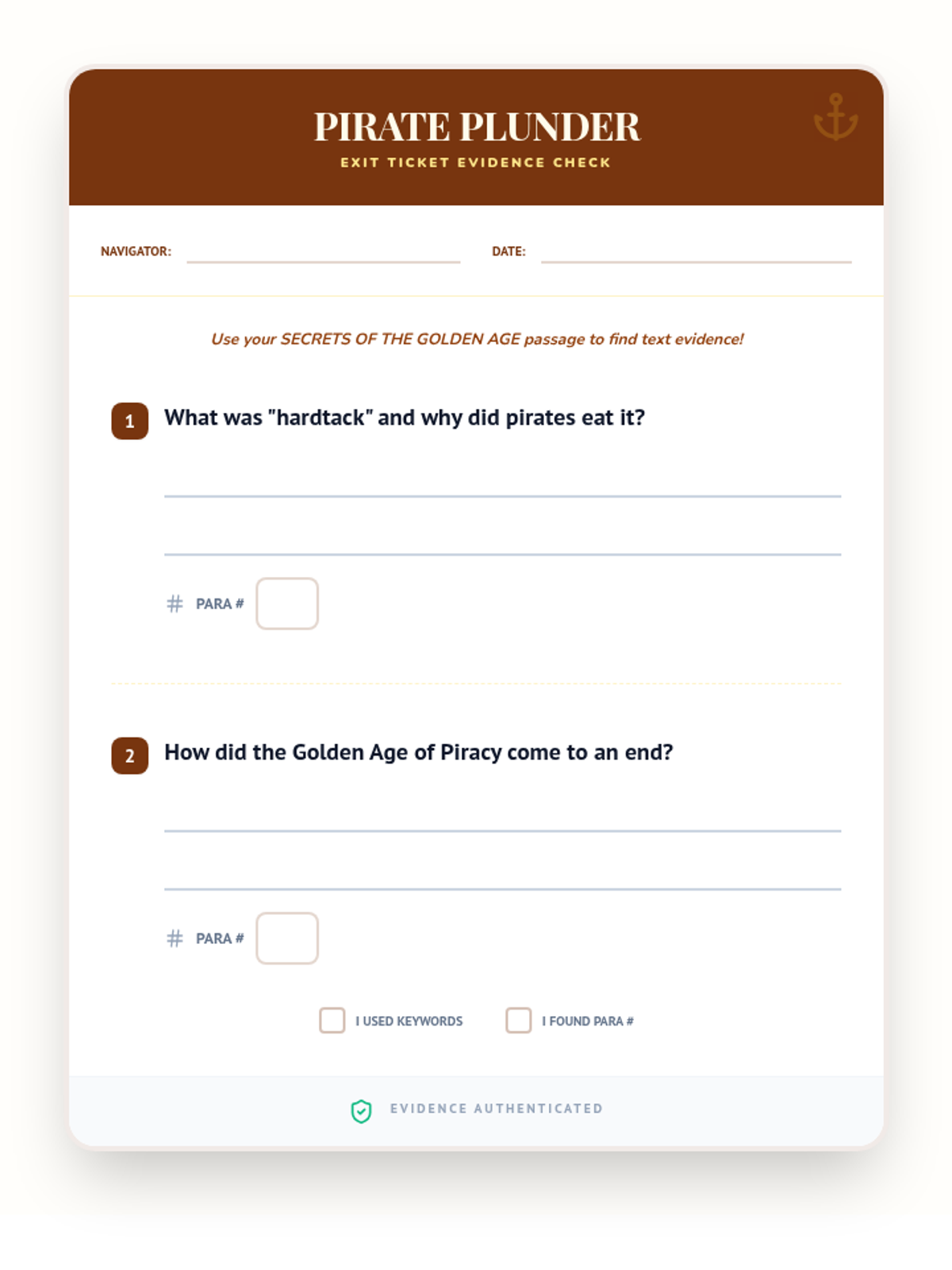
An explicit instruction lesson for 3rd graders on locating text evidence to answer text-dependent questions using an 'I Do, We Do, You Do' model, themed around pirate exploration. Students learn to 'spy' keywords and 'dig up' evidence using a five-step Navigator's Guide.
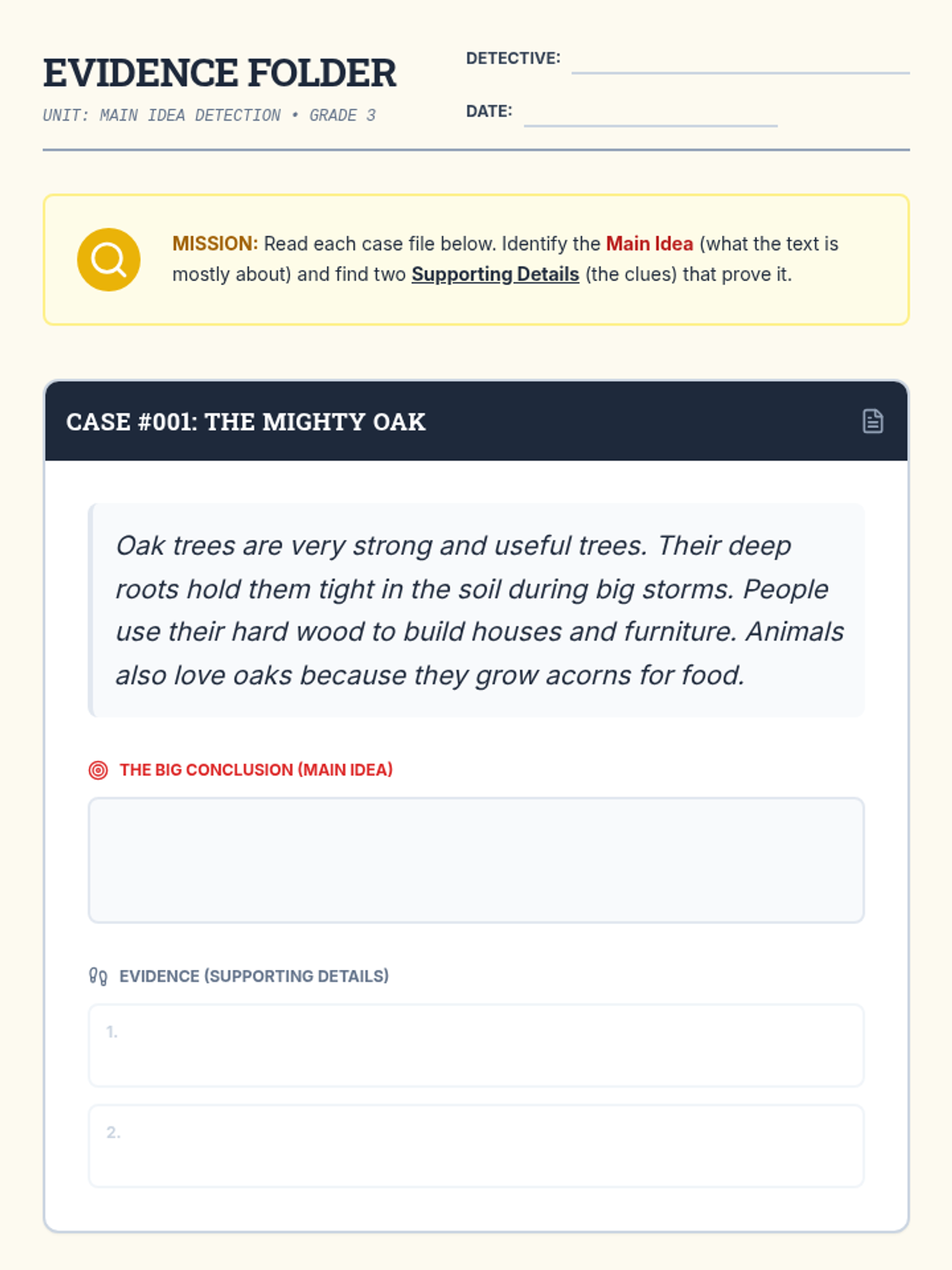
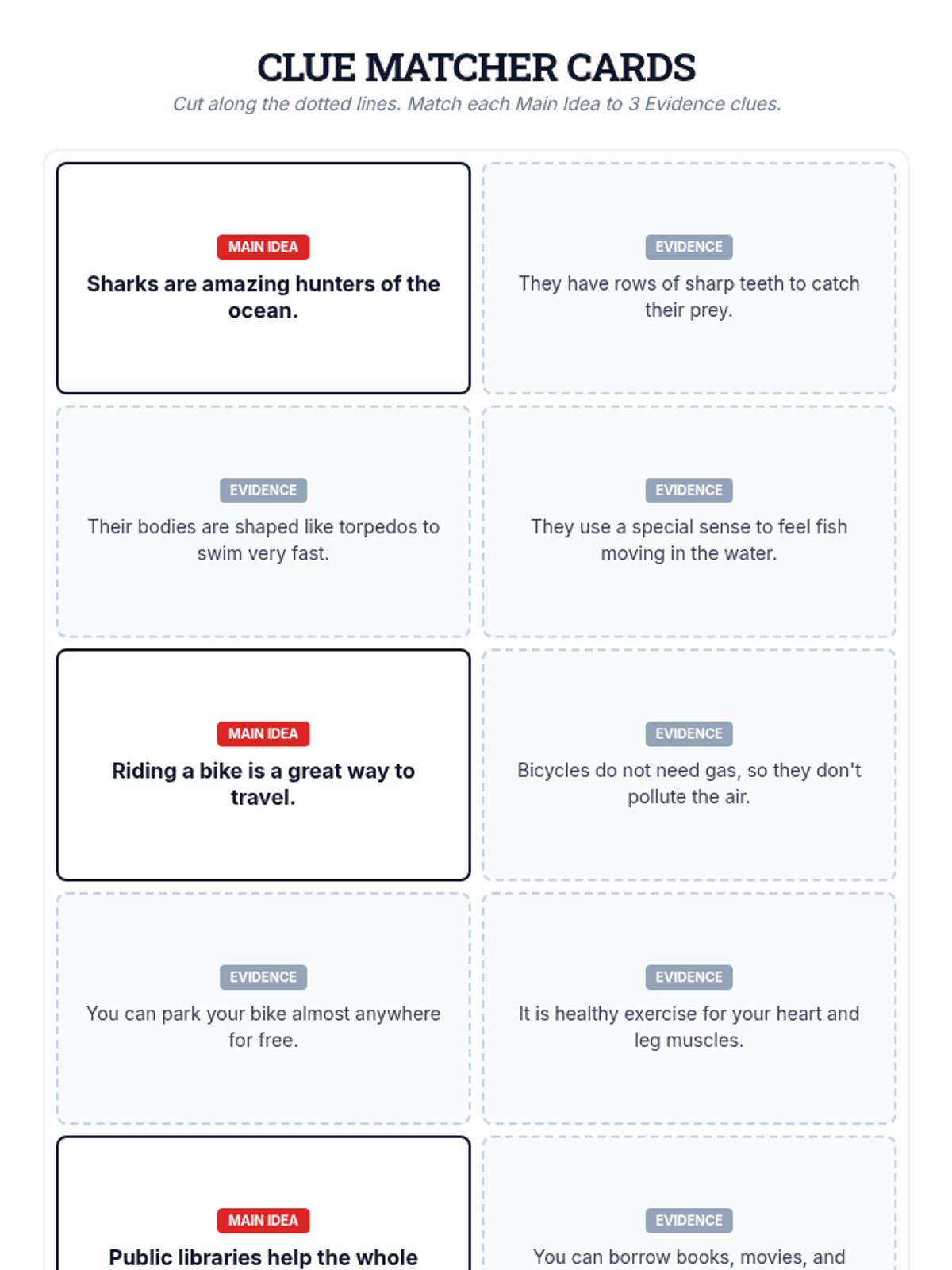
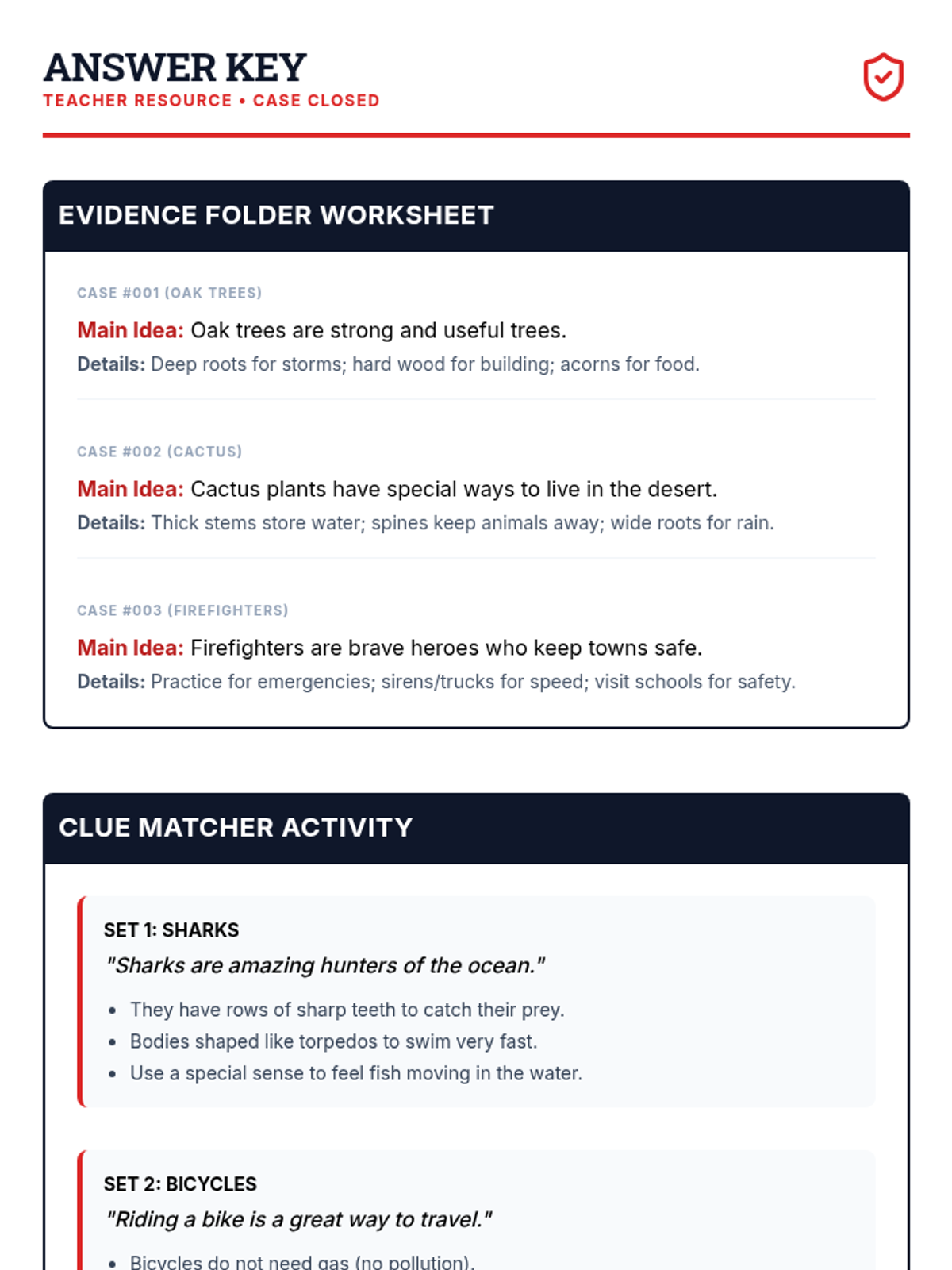
In this lesson, students will learn to identify the main idea and supporting details in simplified text structures using a detective-themed approach. The lesson includes a visual presentation, a practice worksheet, and a matching activity.
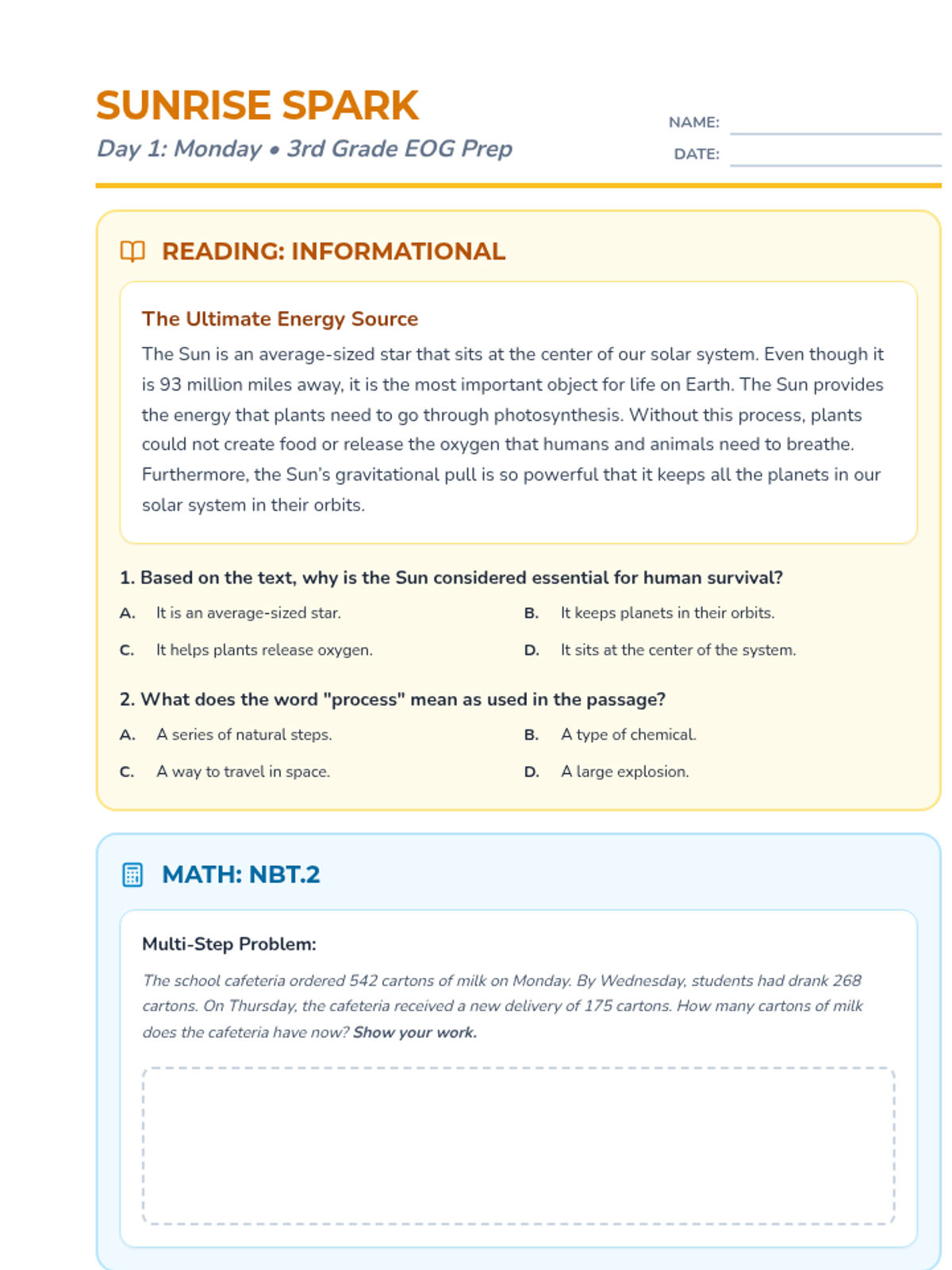
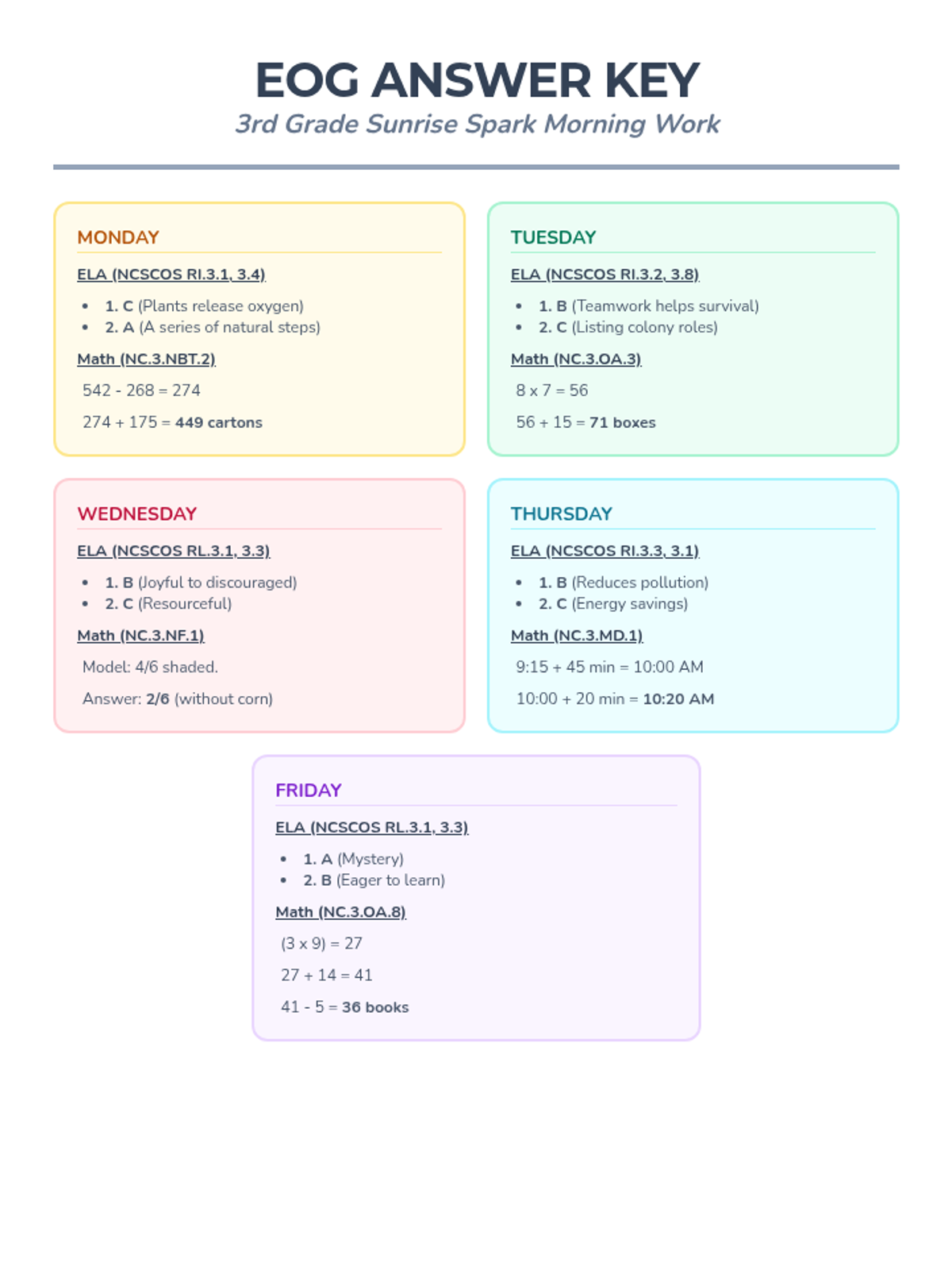
A 5-day morning work series featuring mixed math and ELA practice to start the school day with focus and energy.
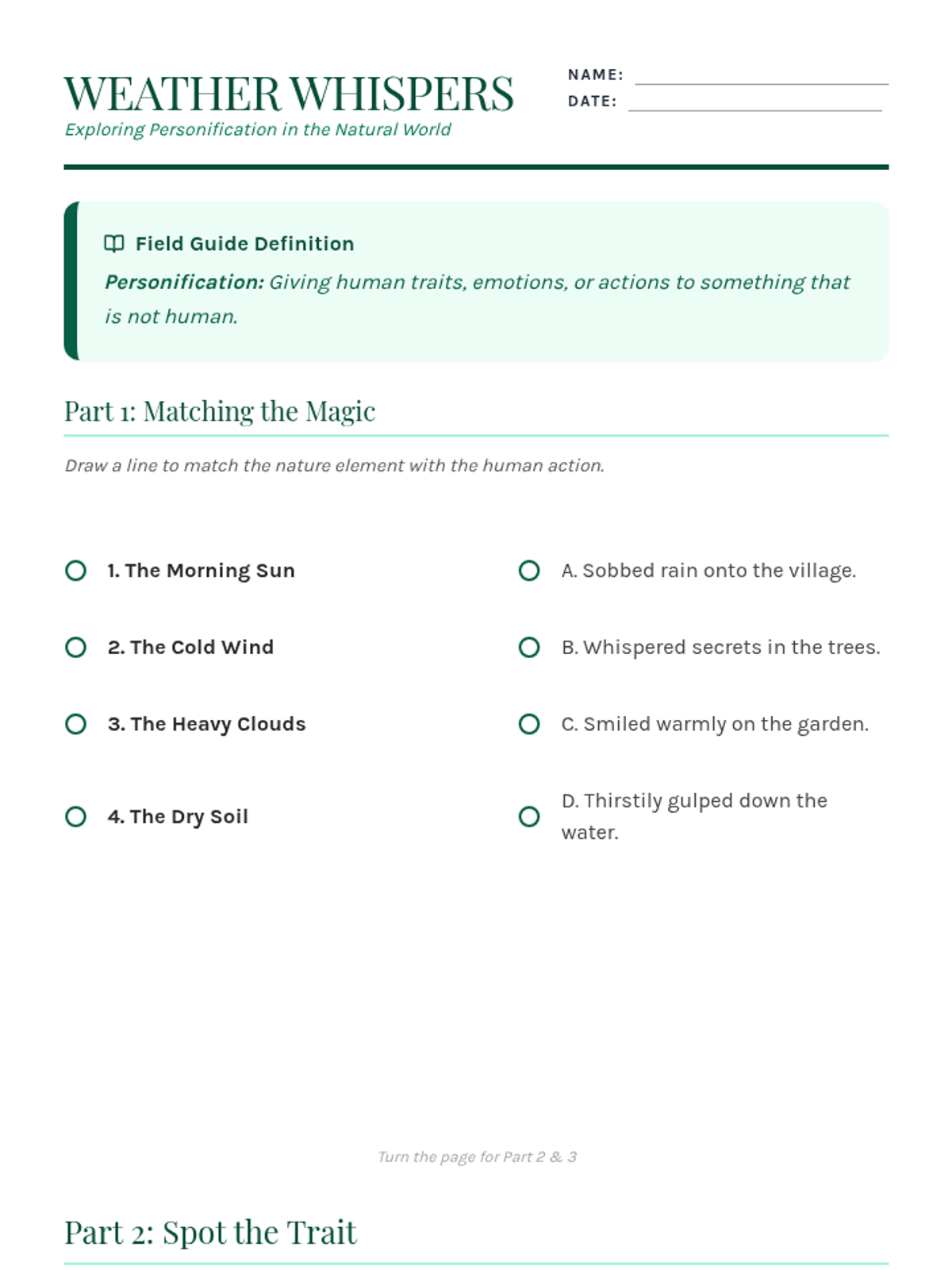
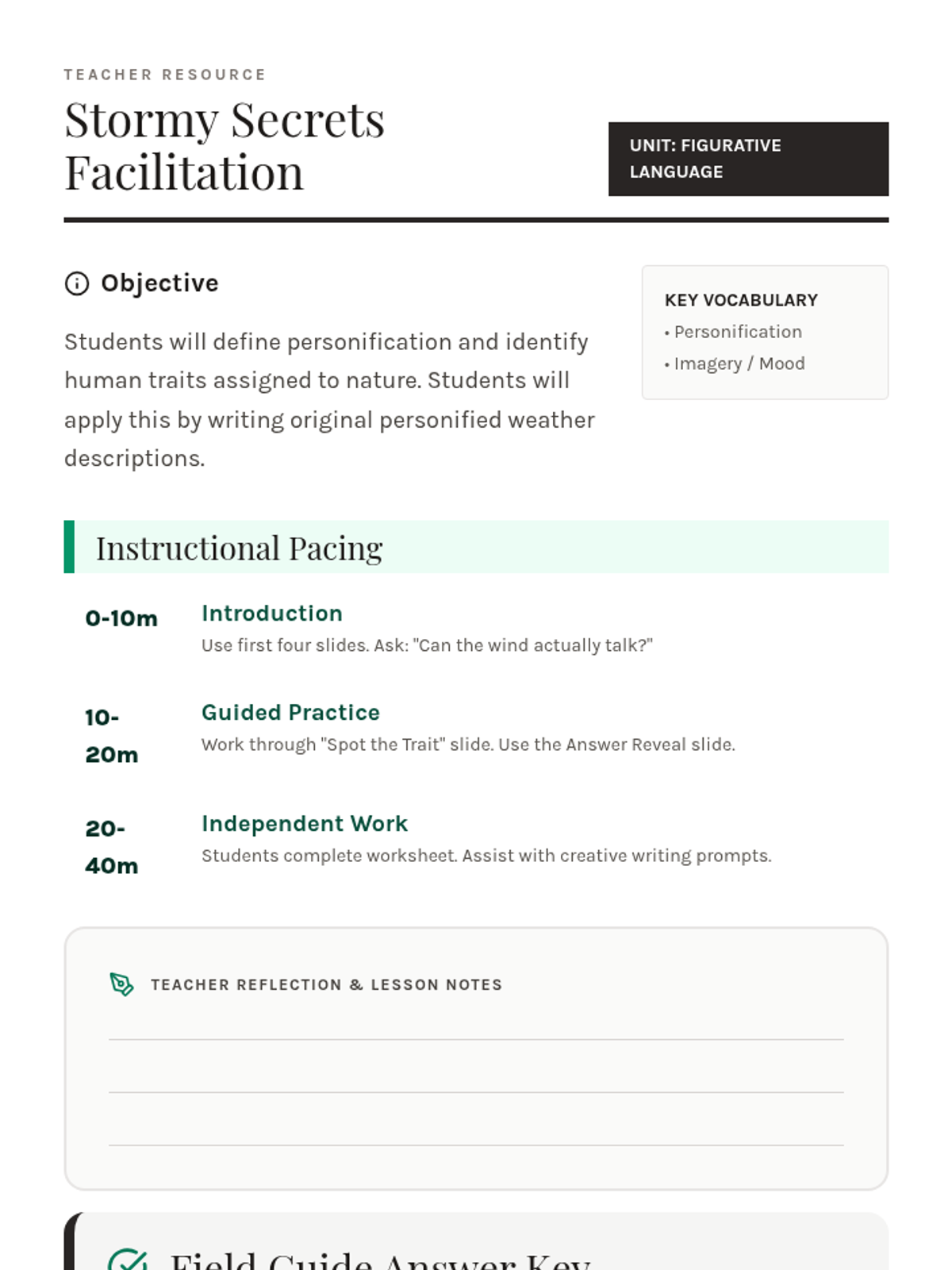
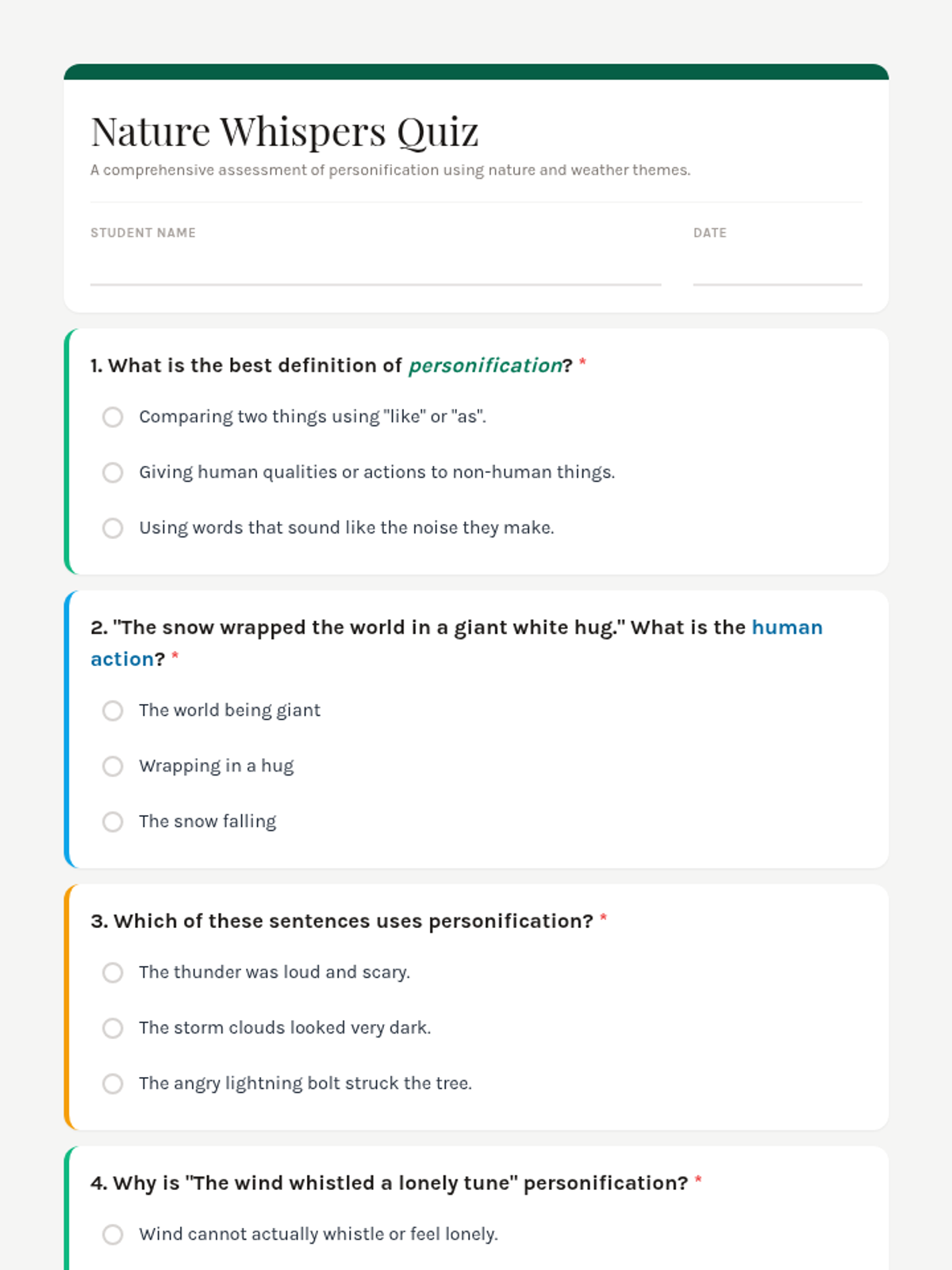
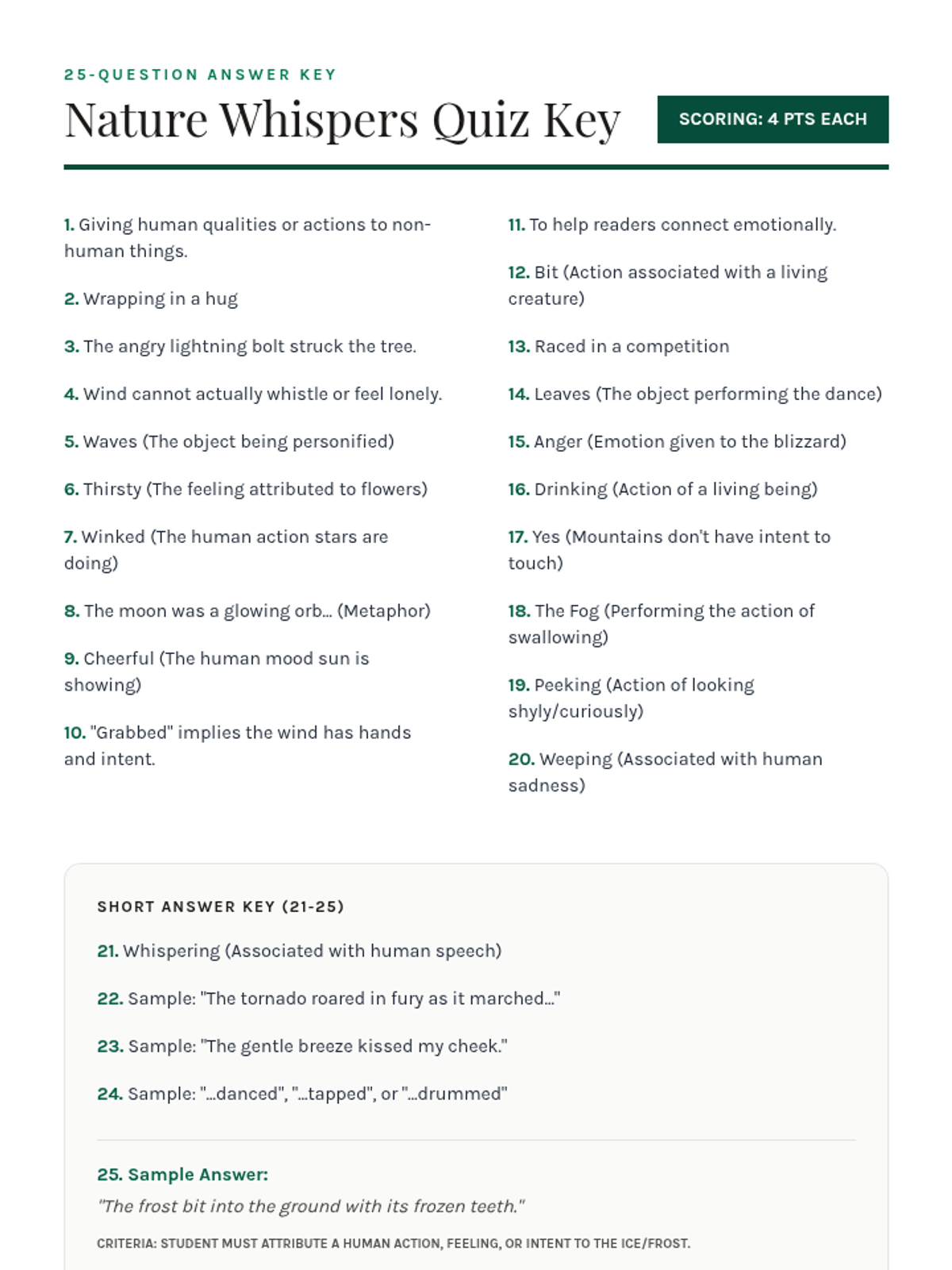
An introductory lesson on personification using nature and weather imagery to help students understand how human traits are attributed to non-human things.
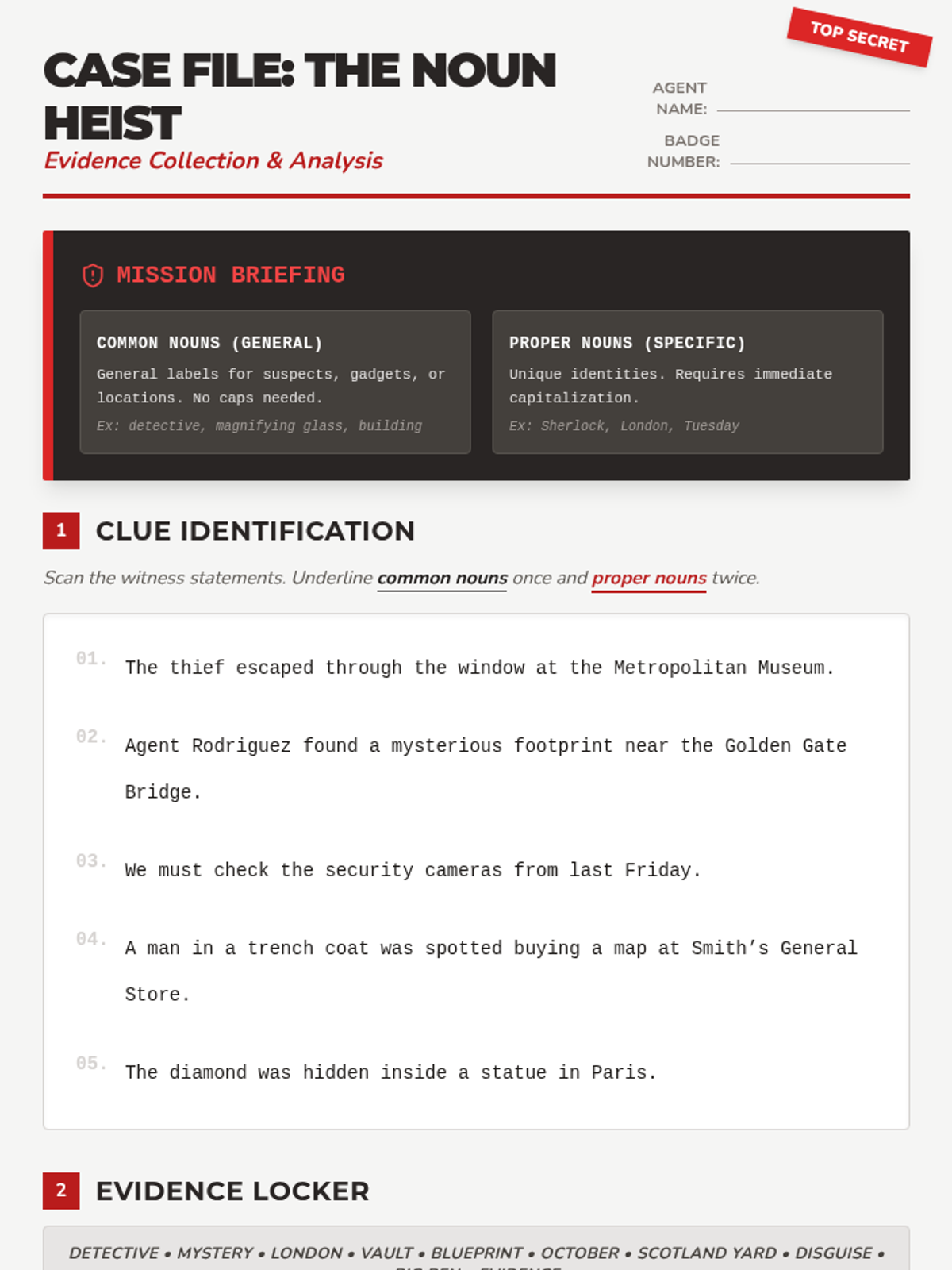
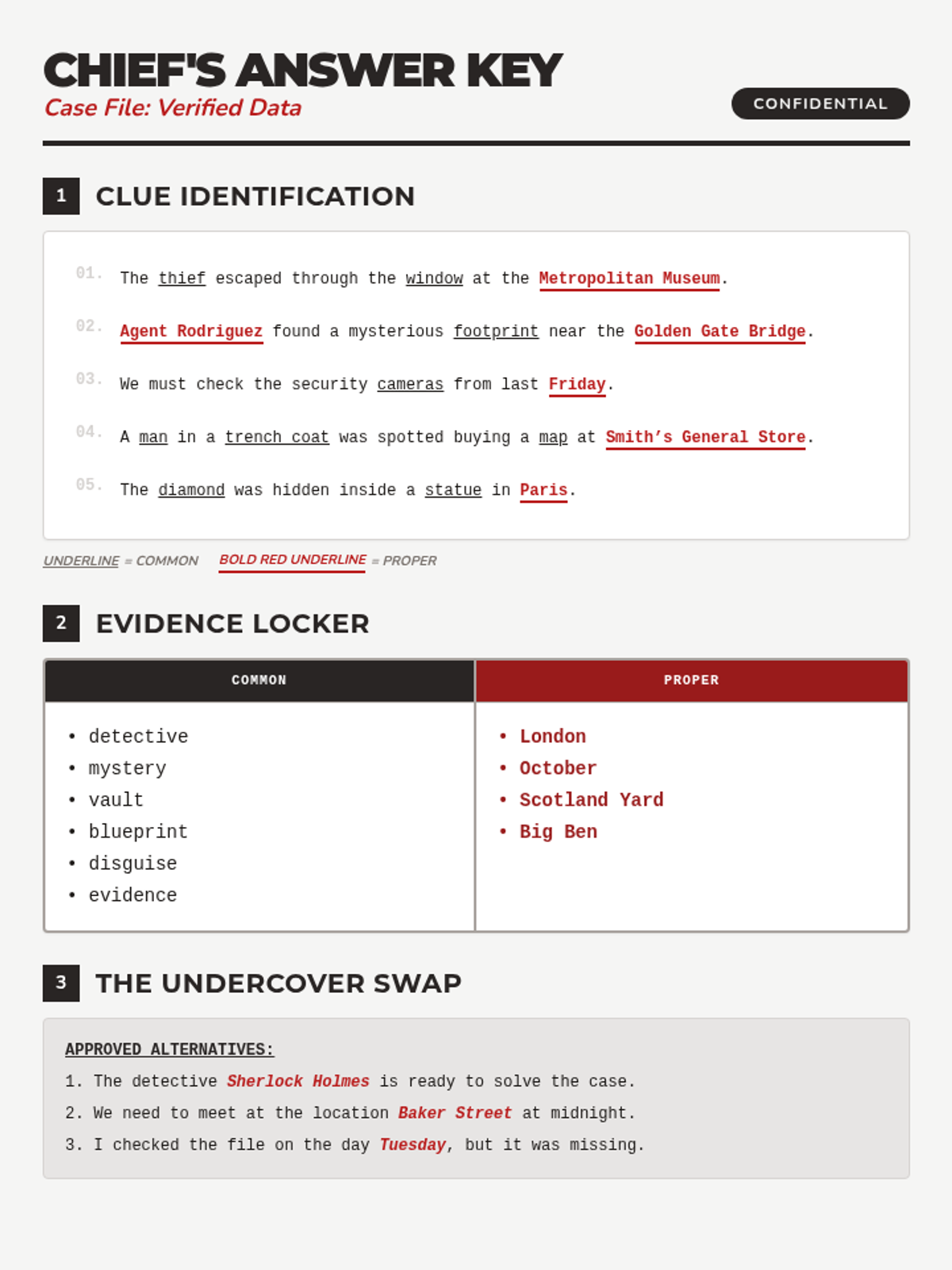
A mystery-themed lesson where students act as "Noun Detectives" to track down common and proper nouns across various case files.
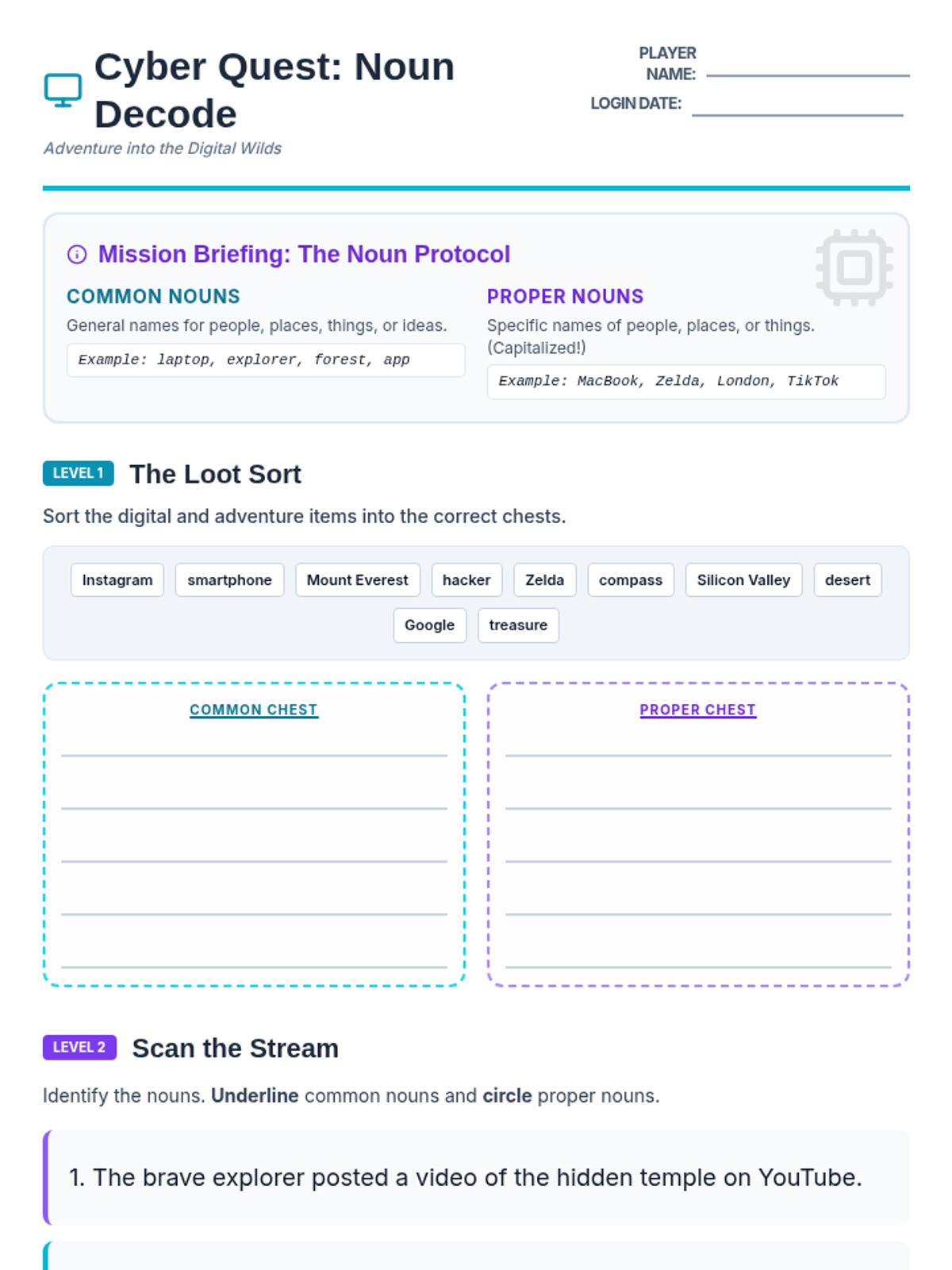
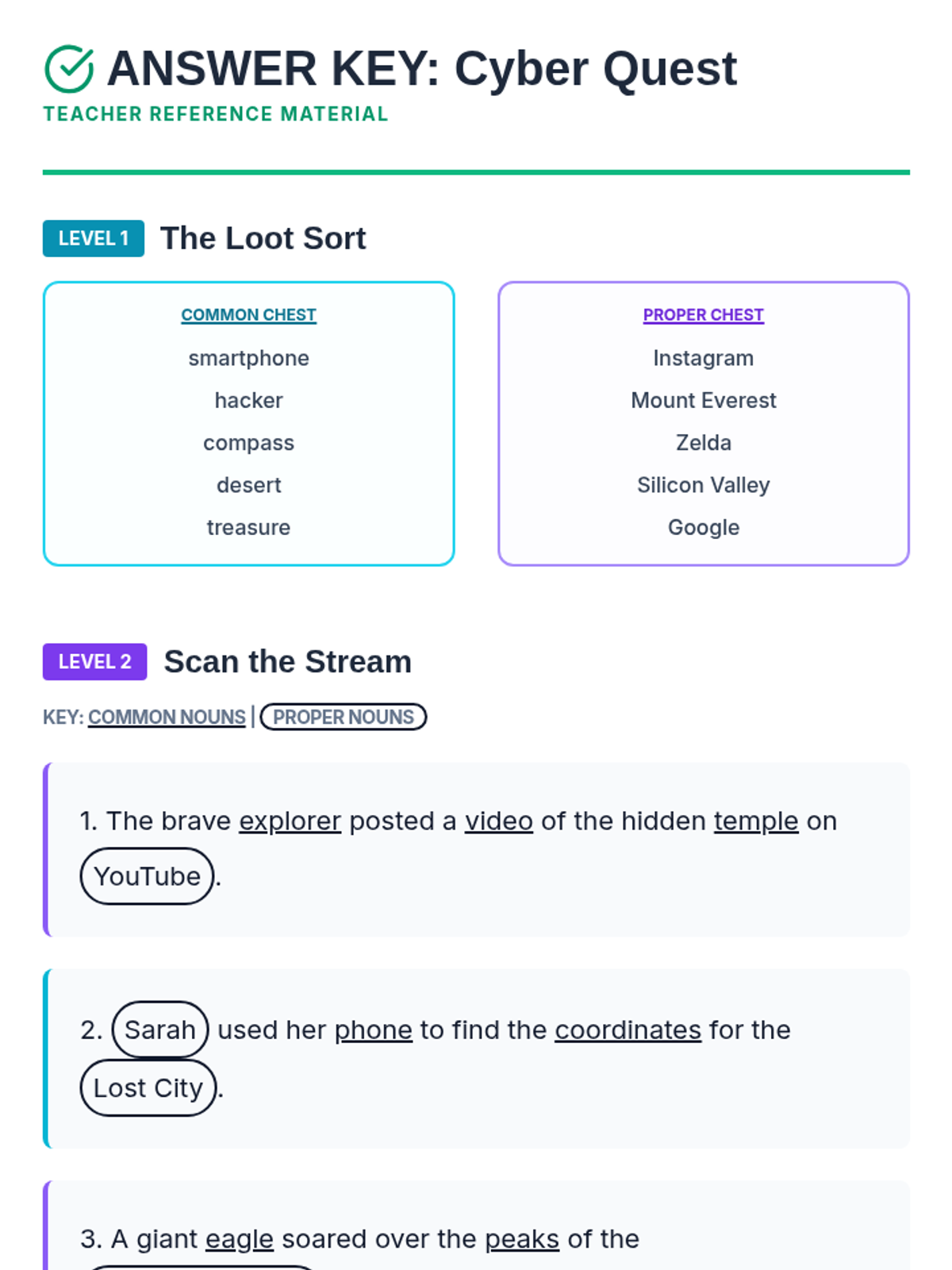
A tech-adventure themed lesson focused on identifying and correctly capitalizing common and proper nouns through the lens of digital explorers.
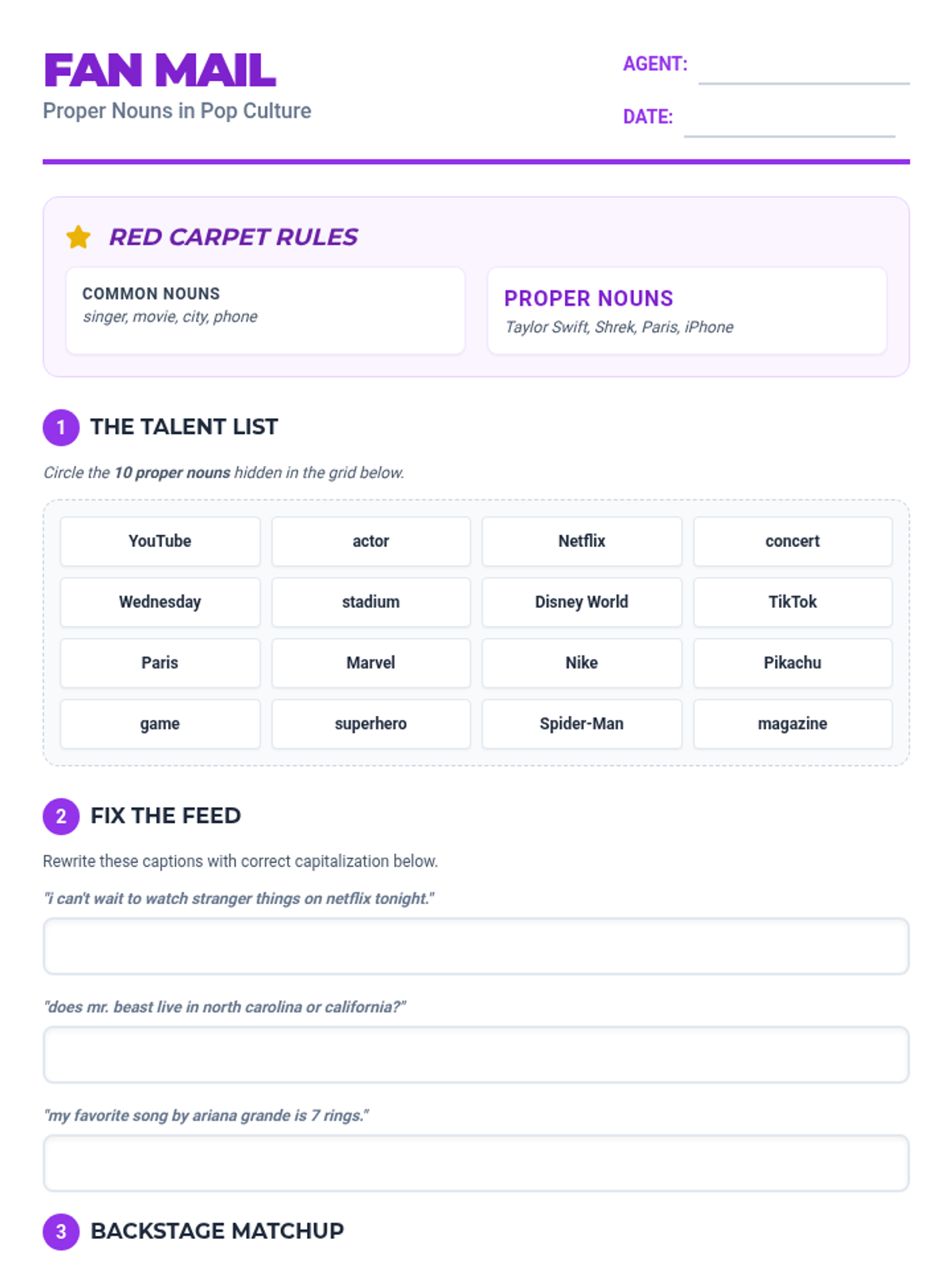
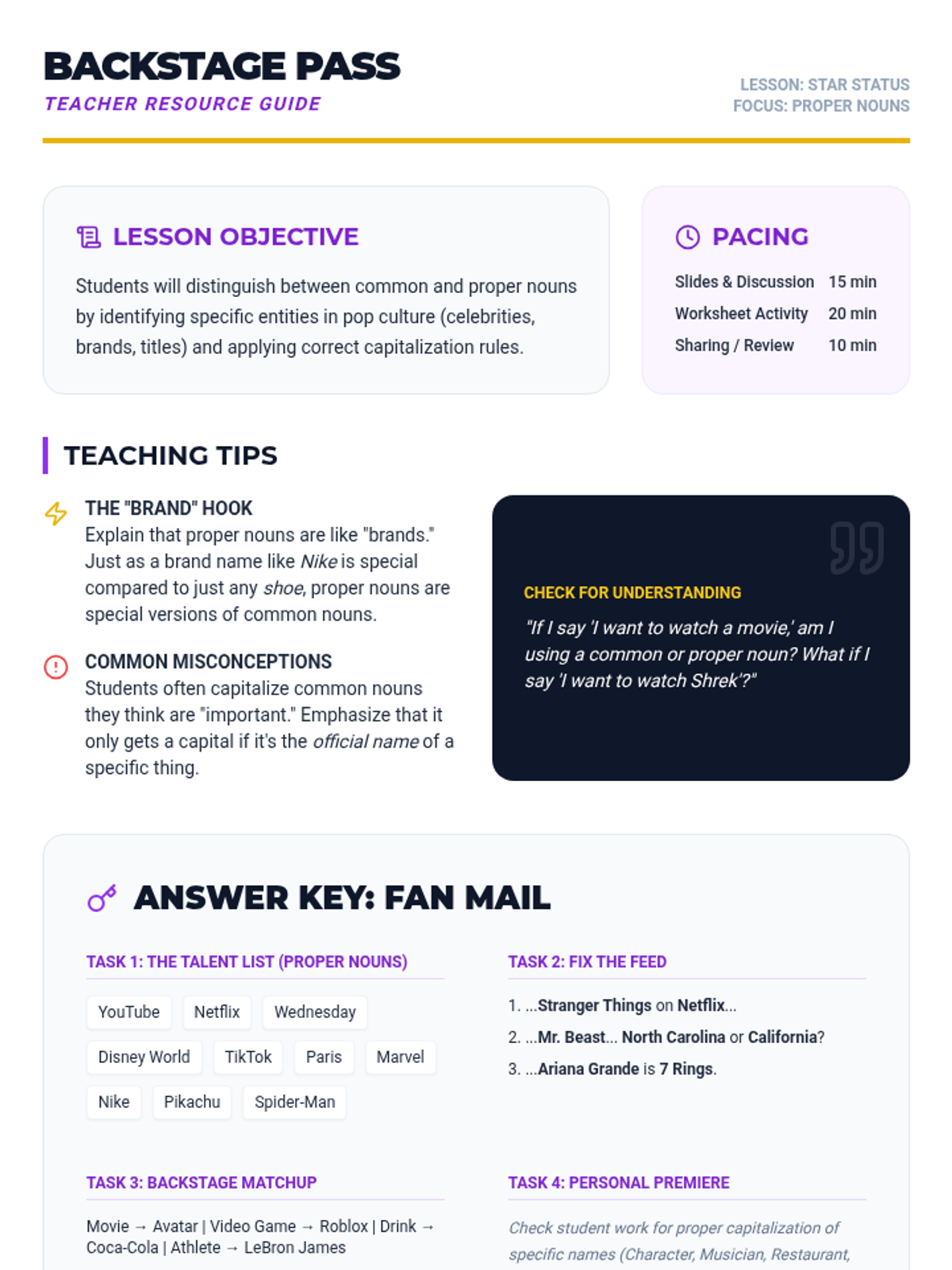
A high-energy lesson on proper nouns through the lens of celebrities, movies, and media brands, helping students distinguish between general categories and specific stars.

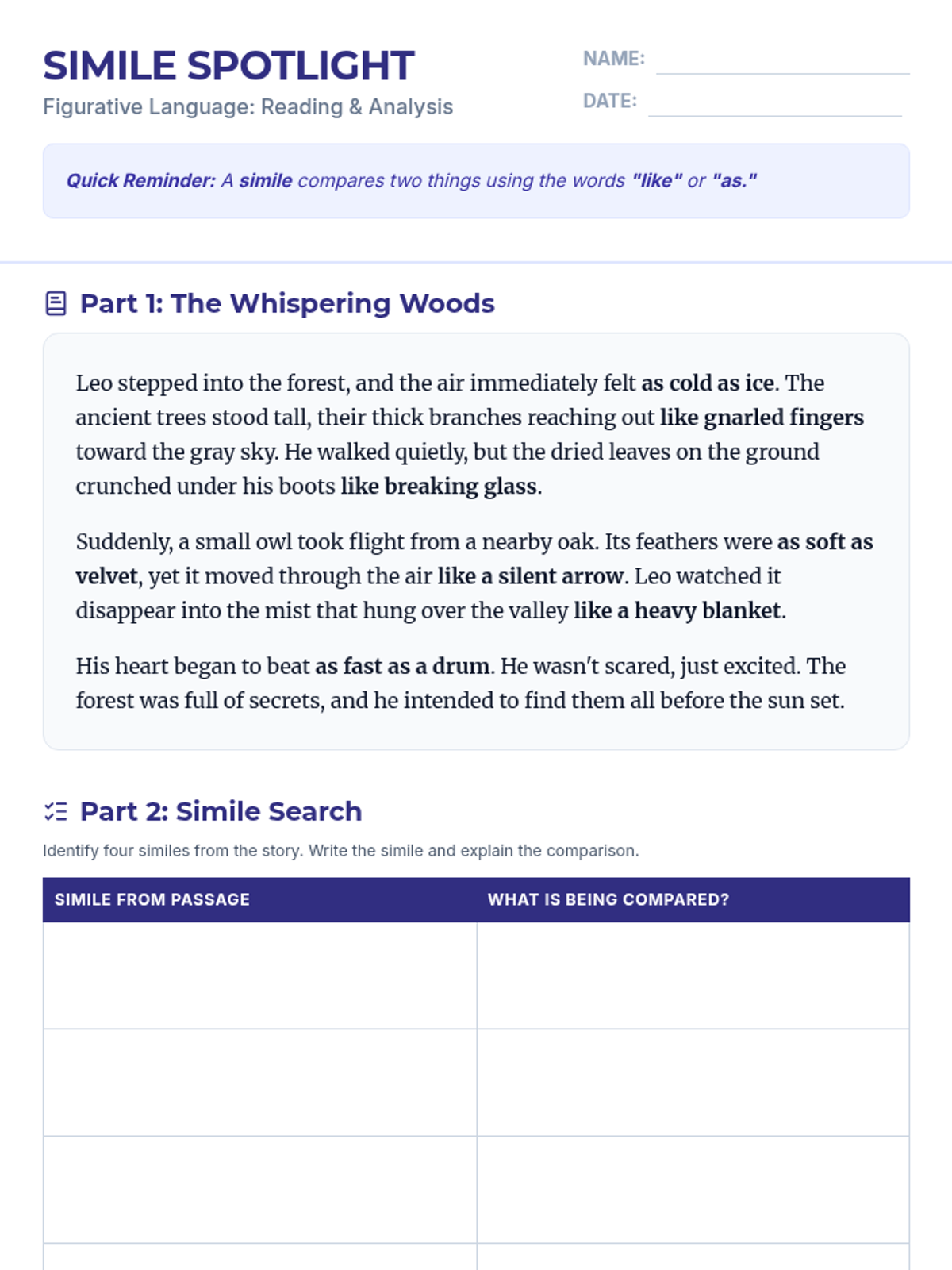
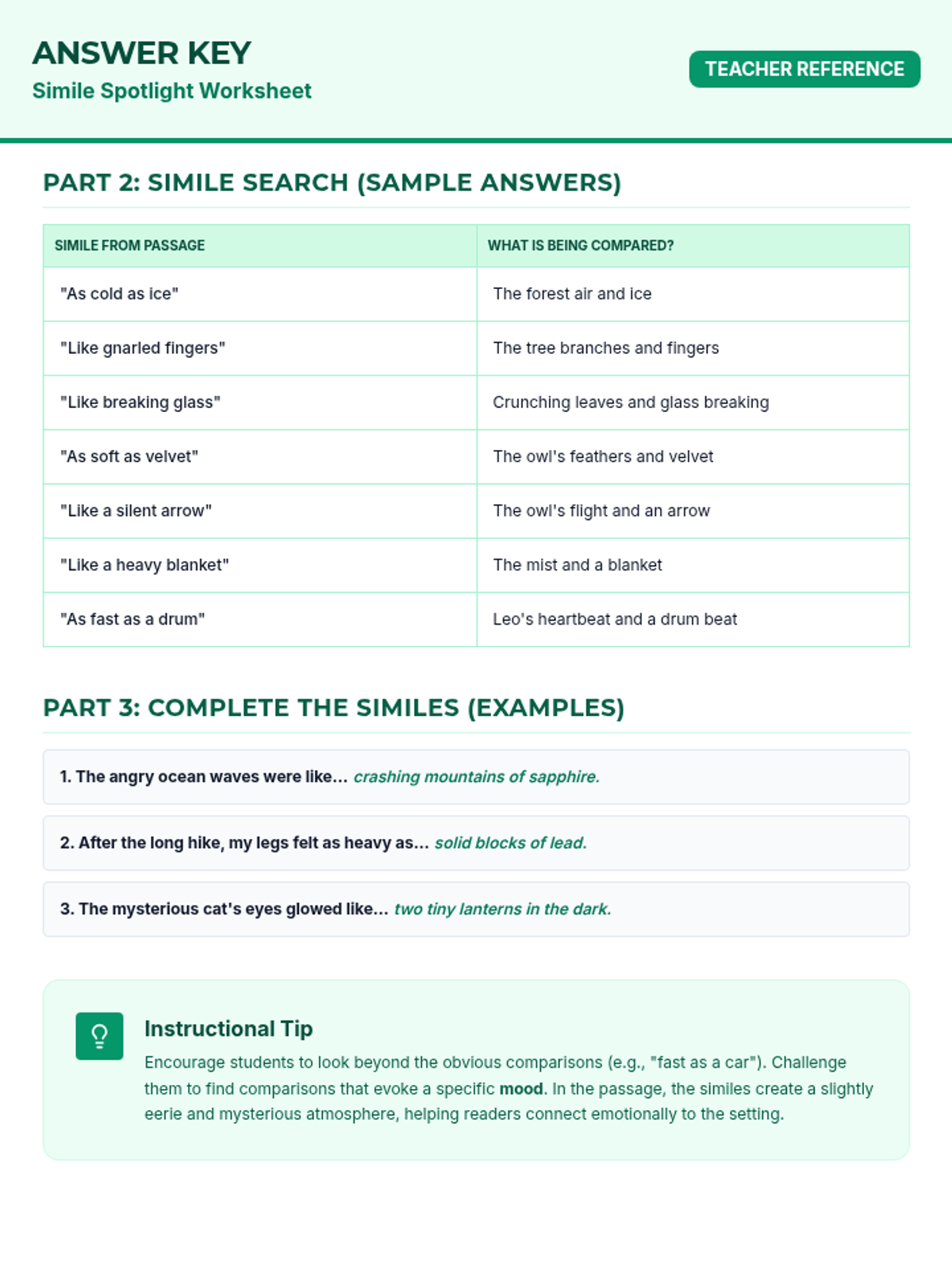
A lesson focused on identifying and using similes in literature through a descriptive reading passage and creative practice.
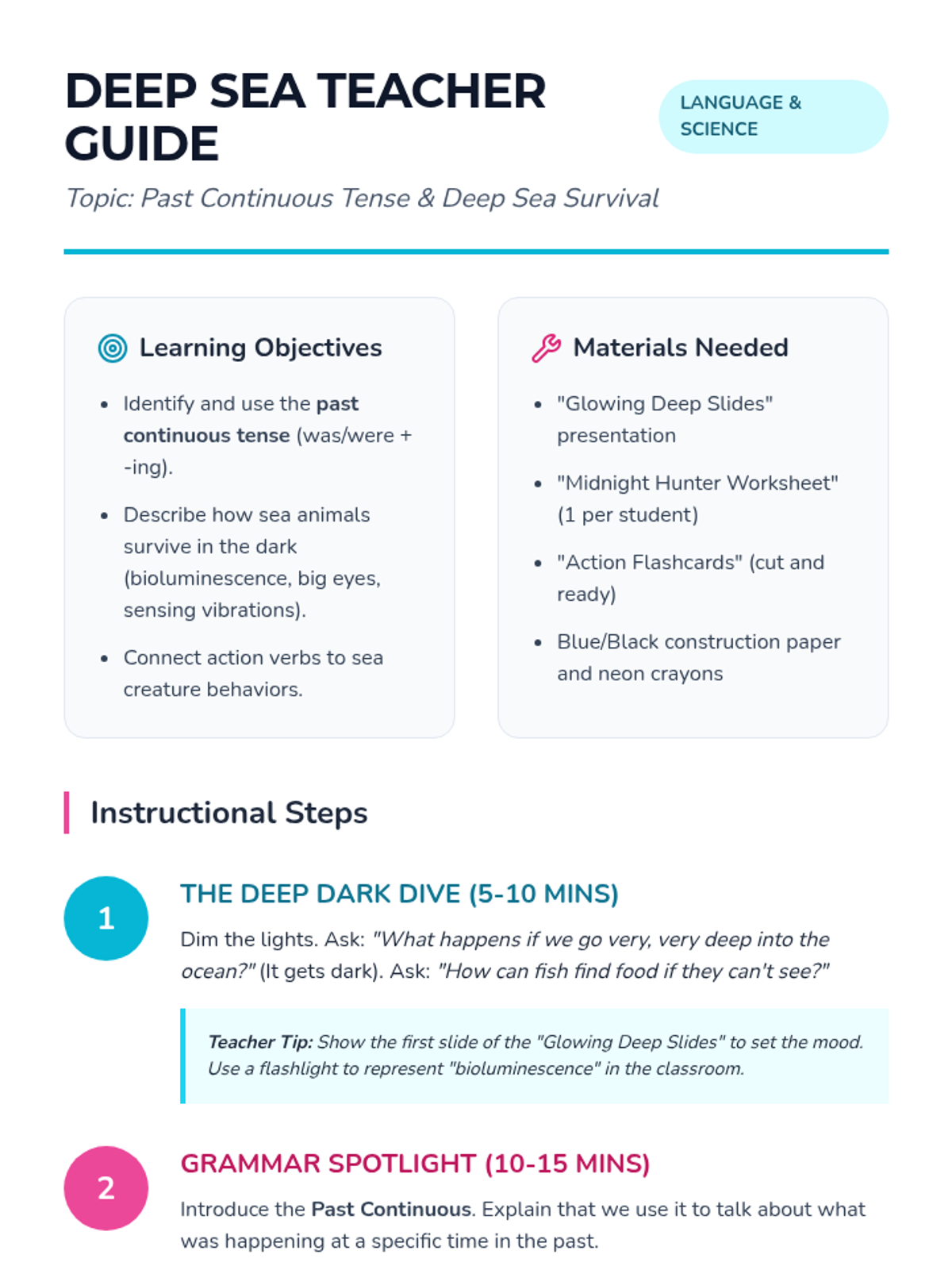
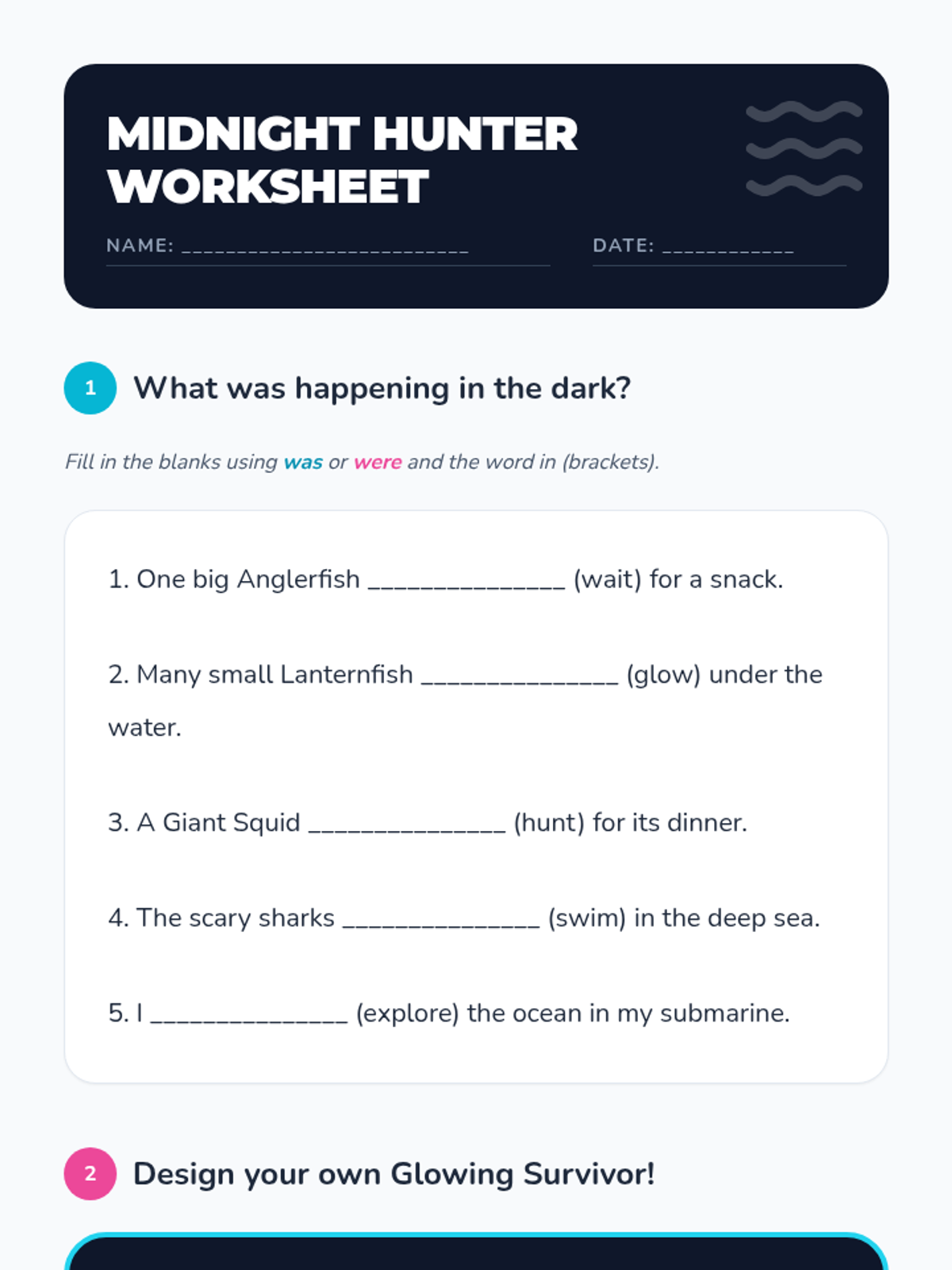
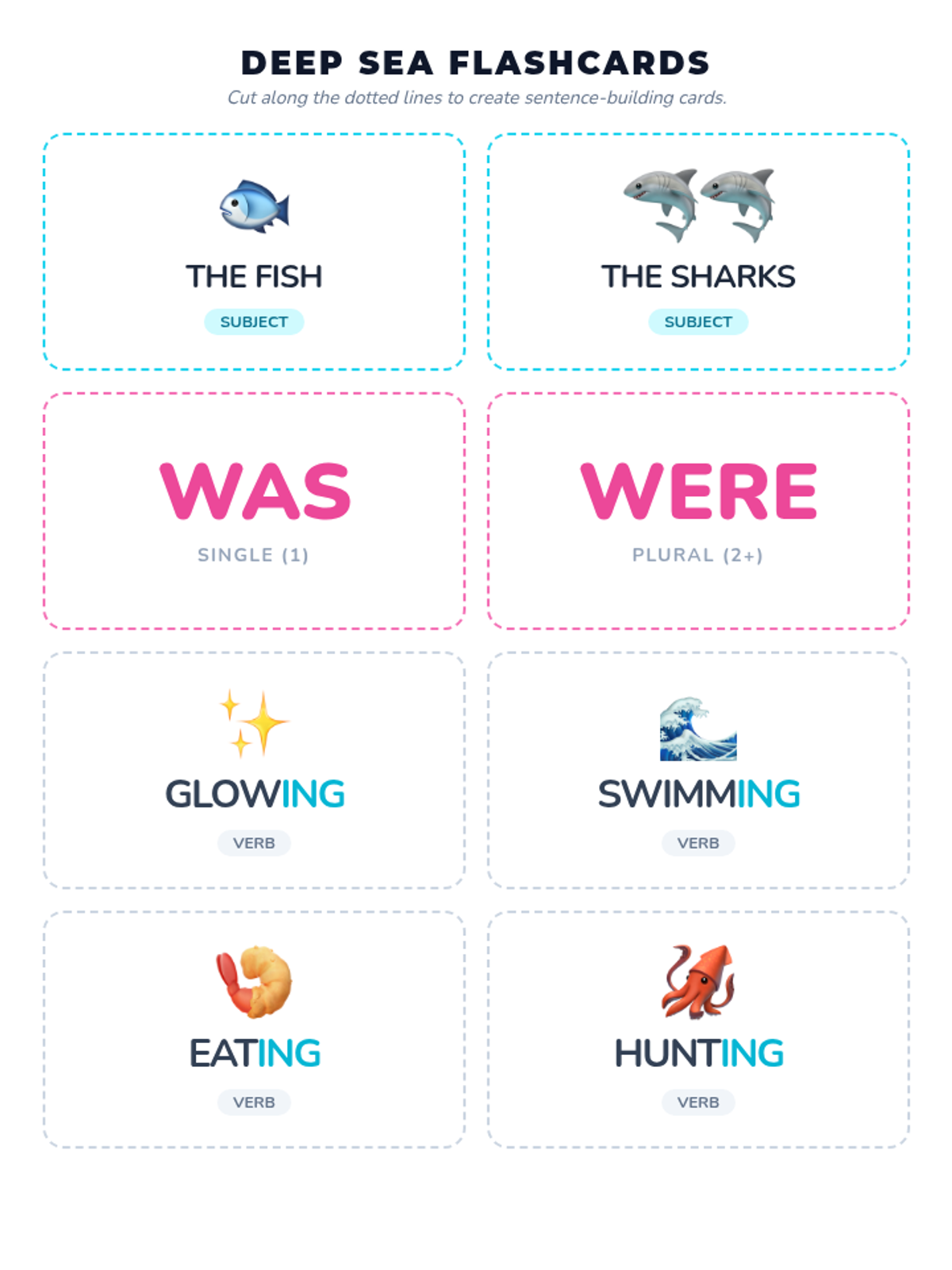
A language lesson for young learners that introduces the past continuous tense through the lens of deep-sea survival. Students explore how creatures use bioluminescence and special senses while practicing describing actions in the past.