Students are introduced to their country research mission, learn about credible kid-friendly websites, and begin gathering data across four key categories using a structured organizer.
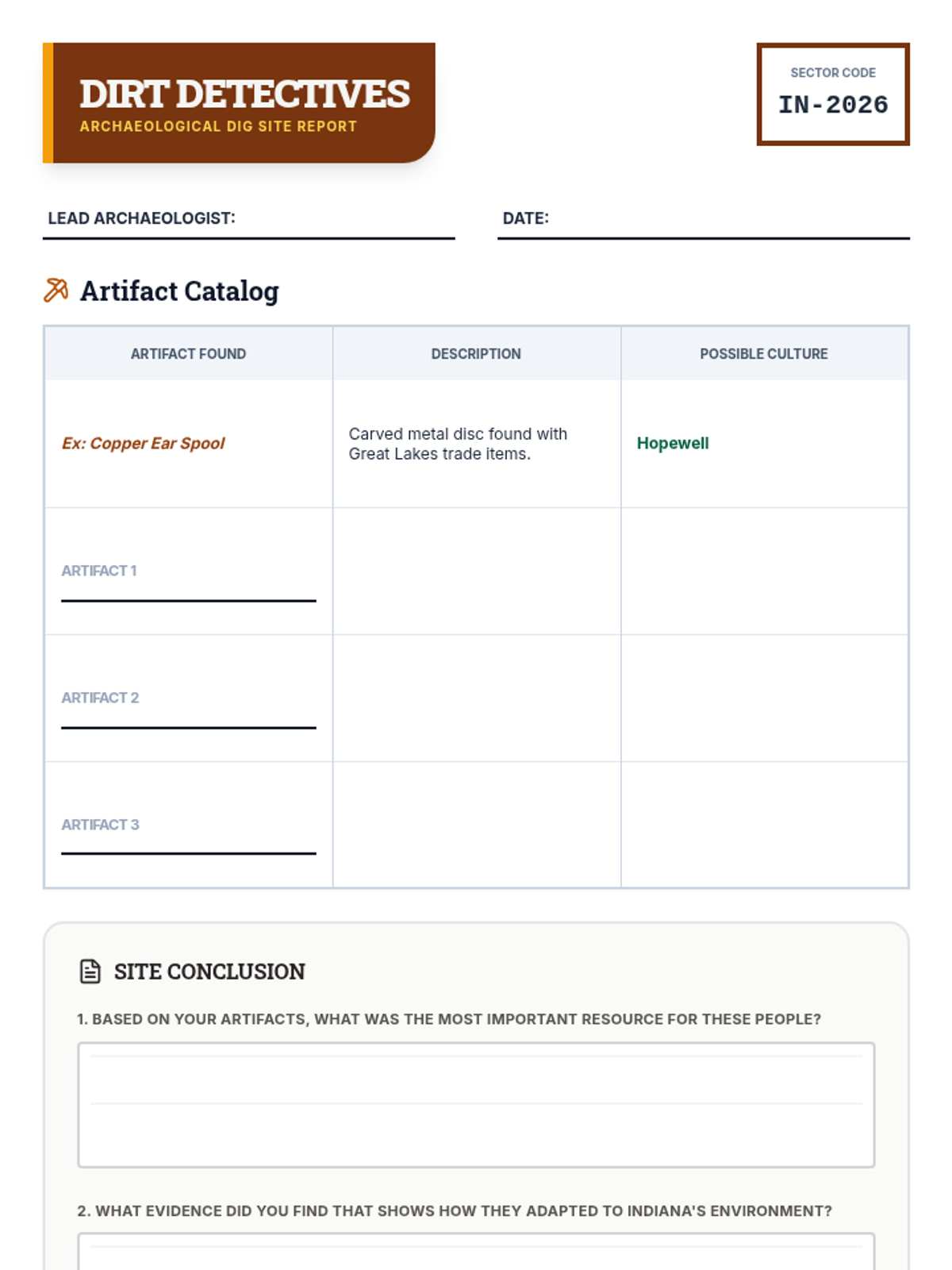
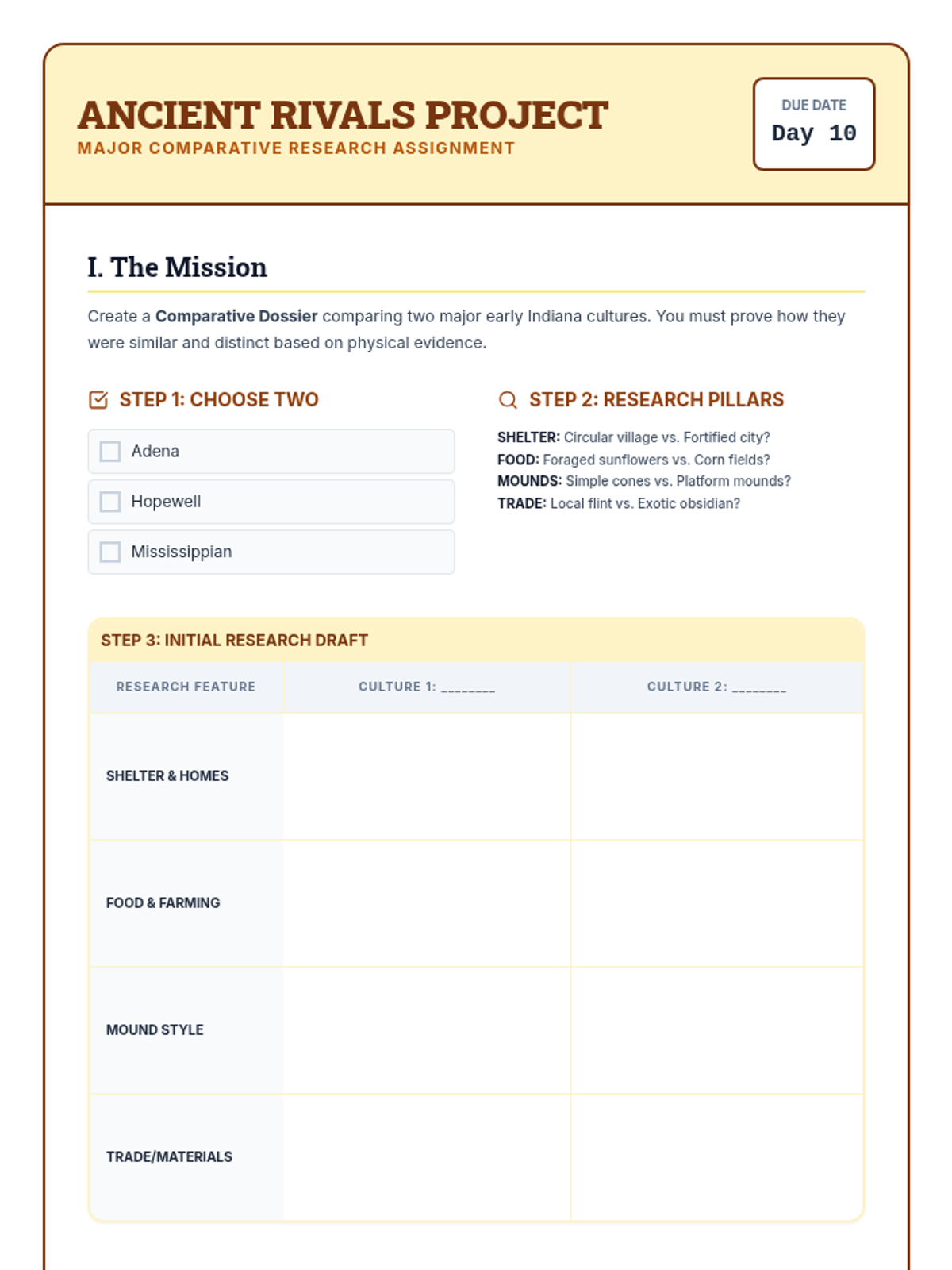
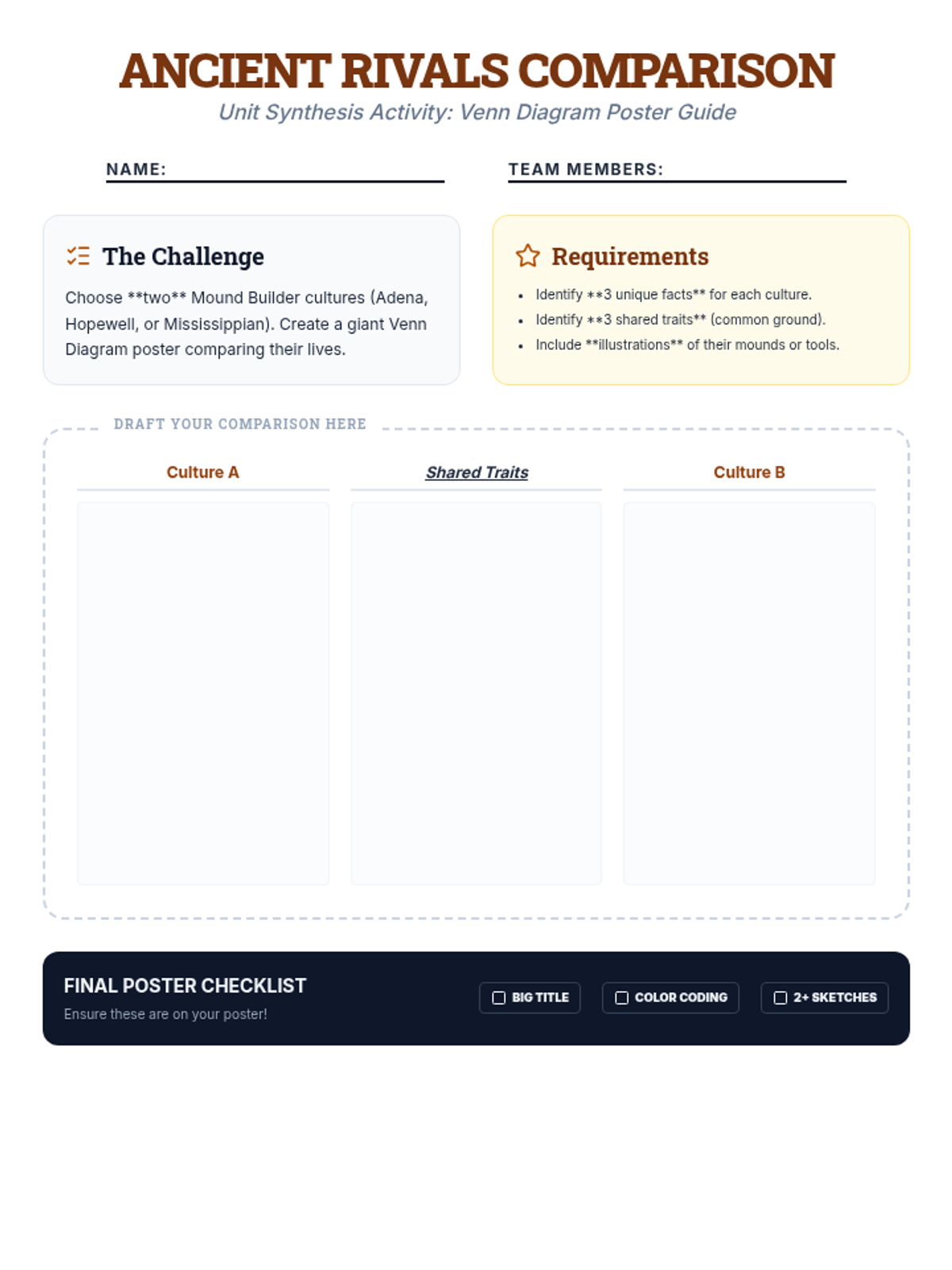
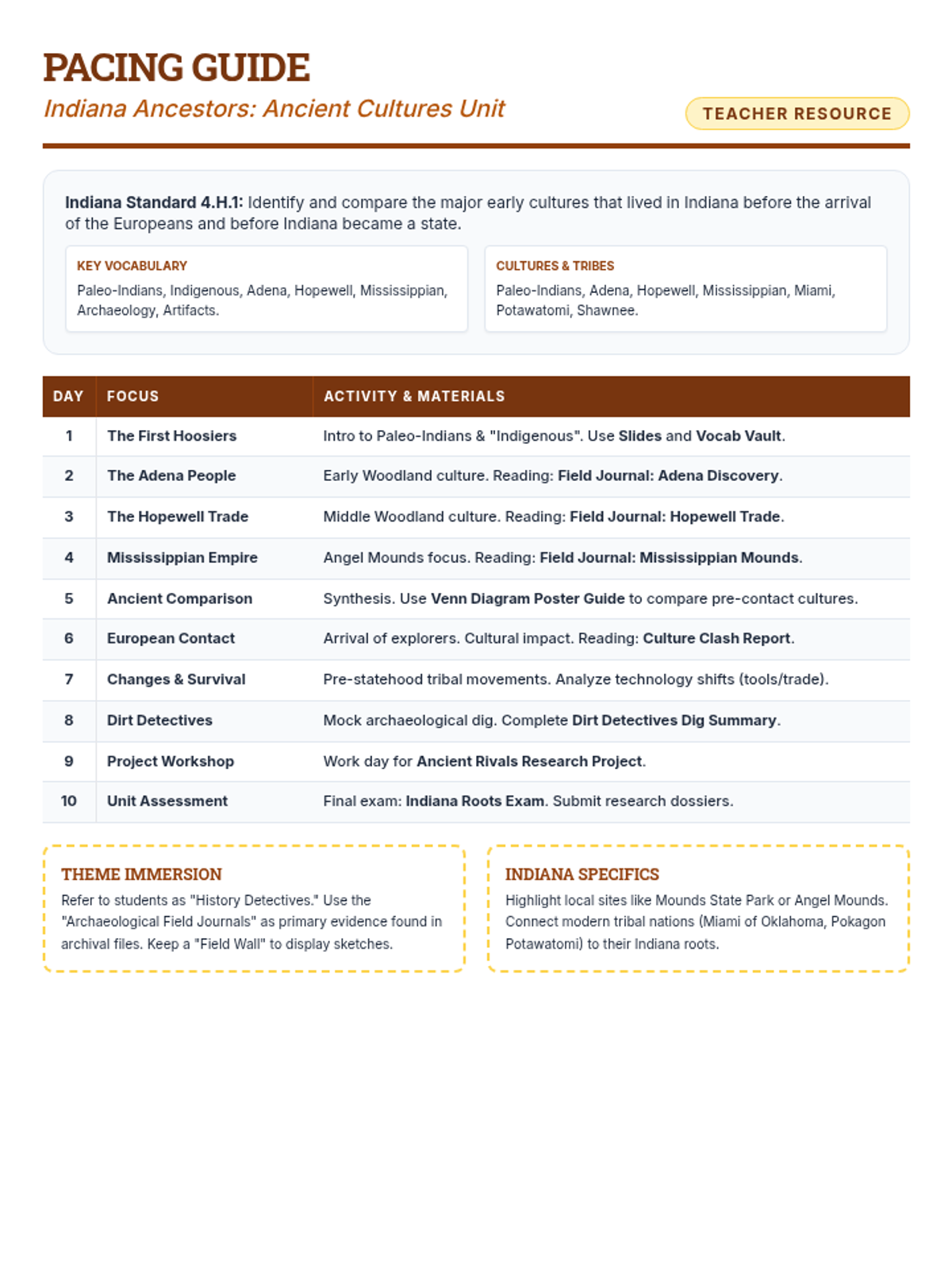
Culminating activities including a mock archaeological dig, a comparative research project, and a final unit assessment.
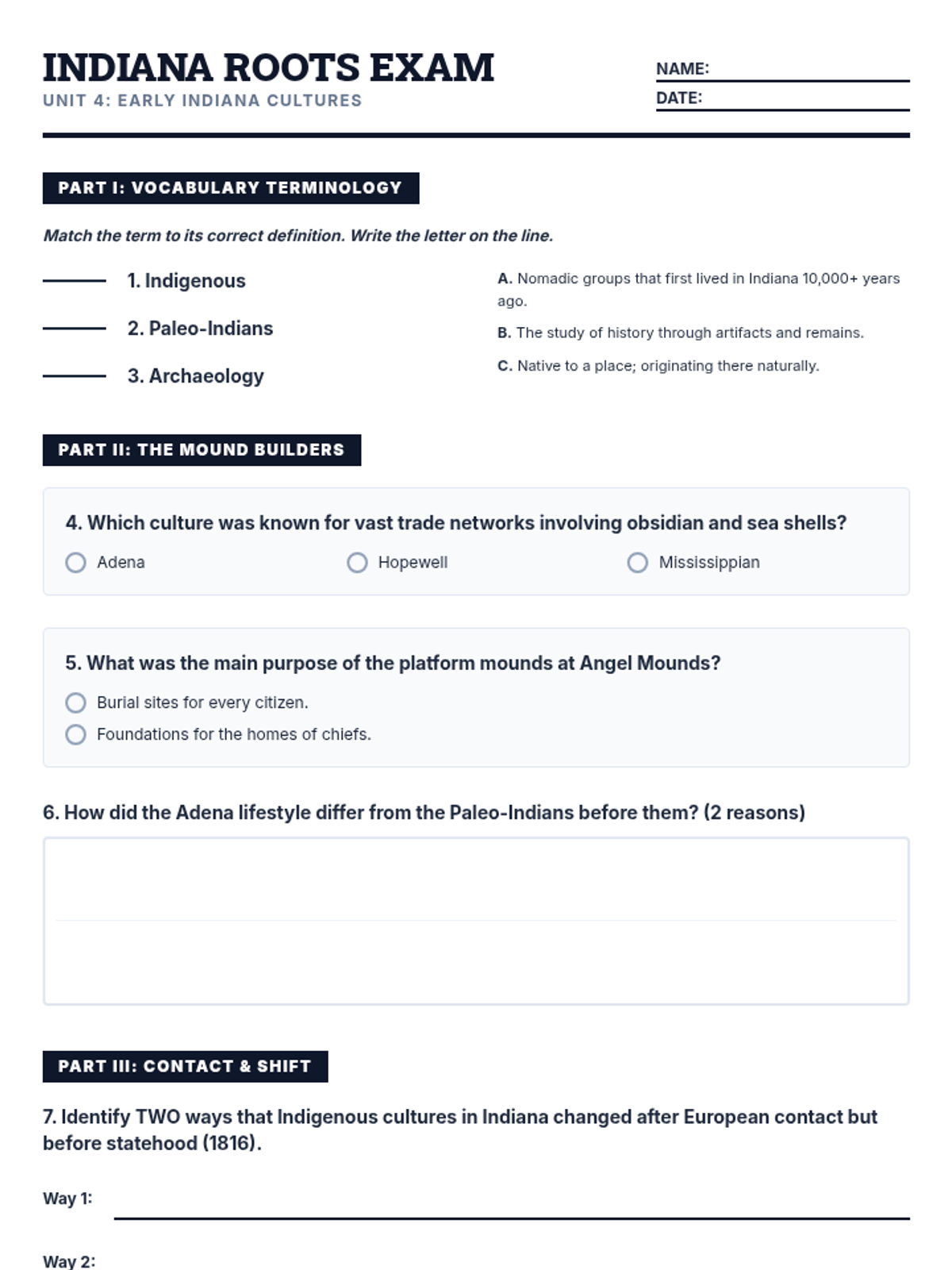
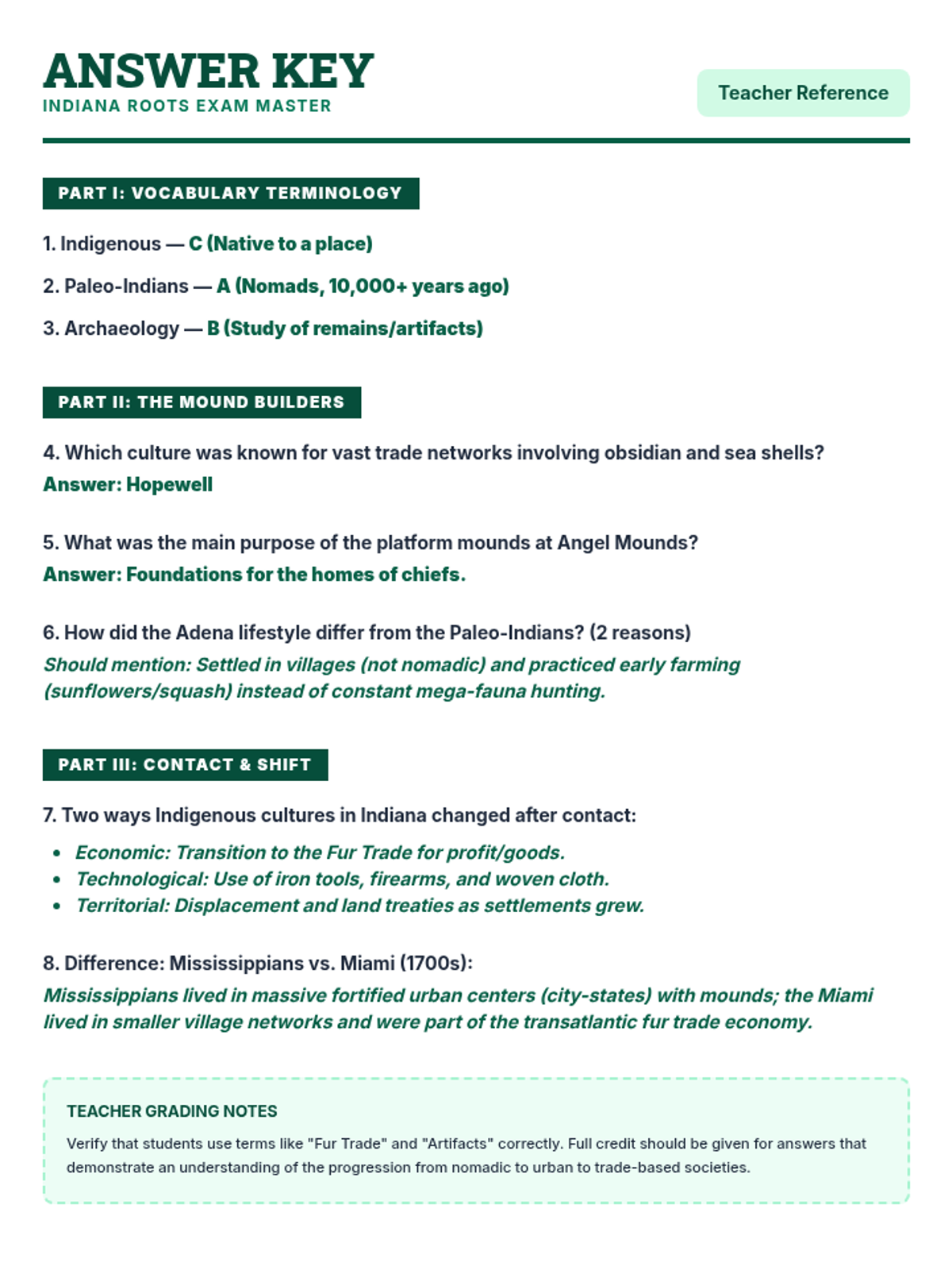
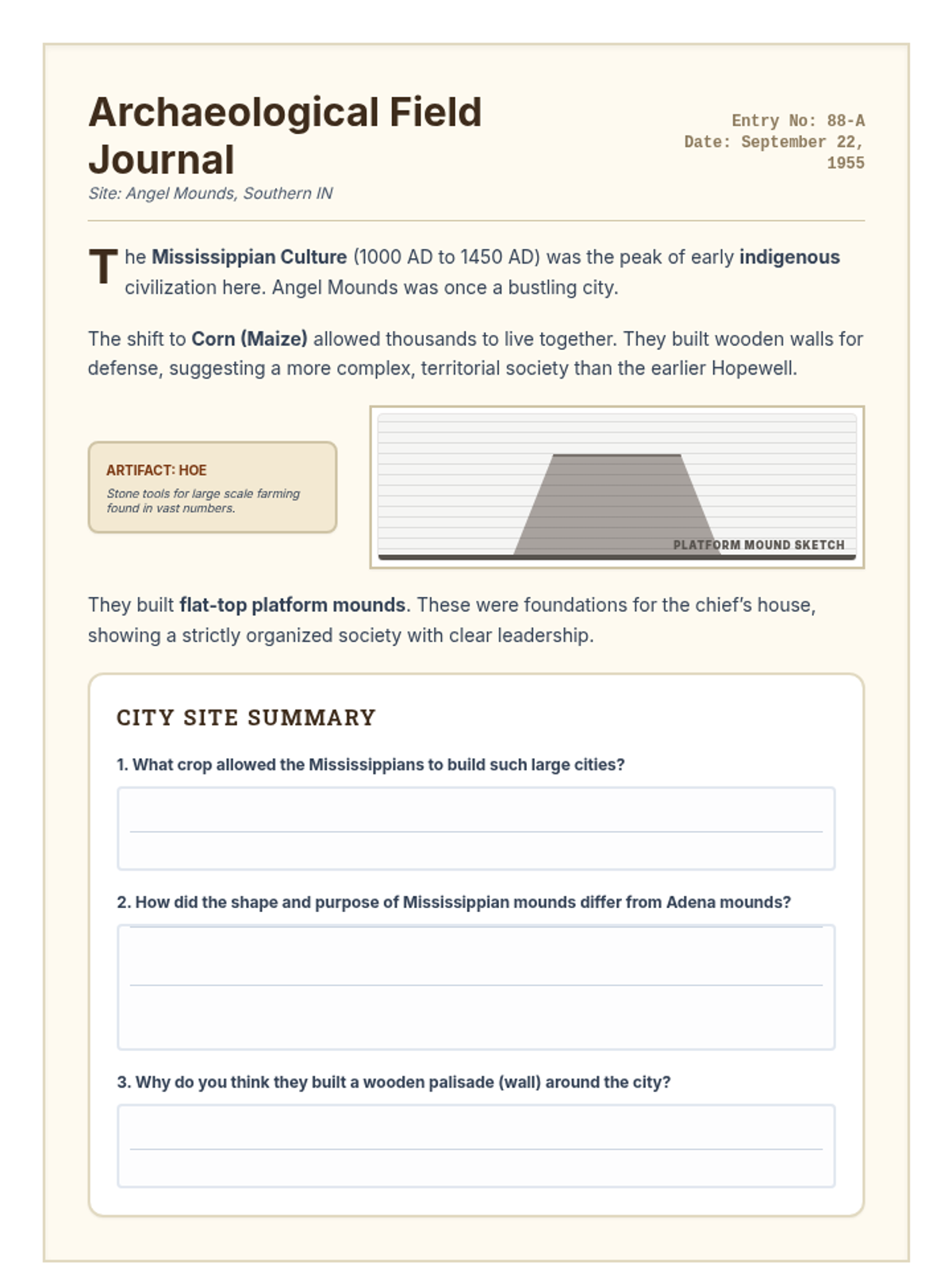
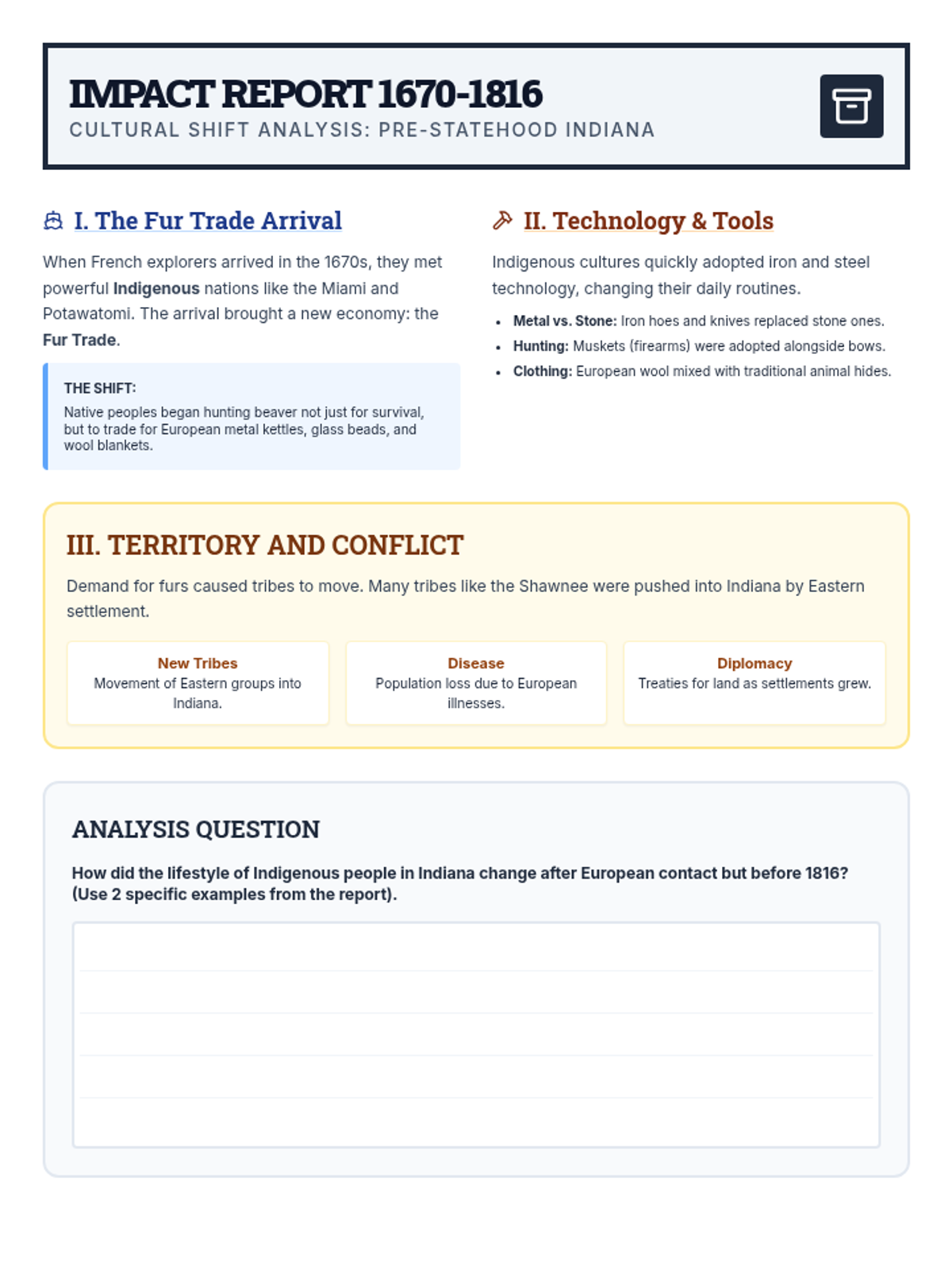
Exploration of the complex Mississippian culture at Angel Mounds and the significant cultural shifts caused by European contact before statehood.
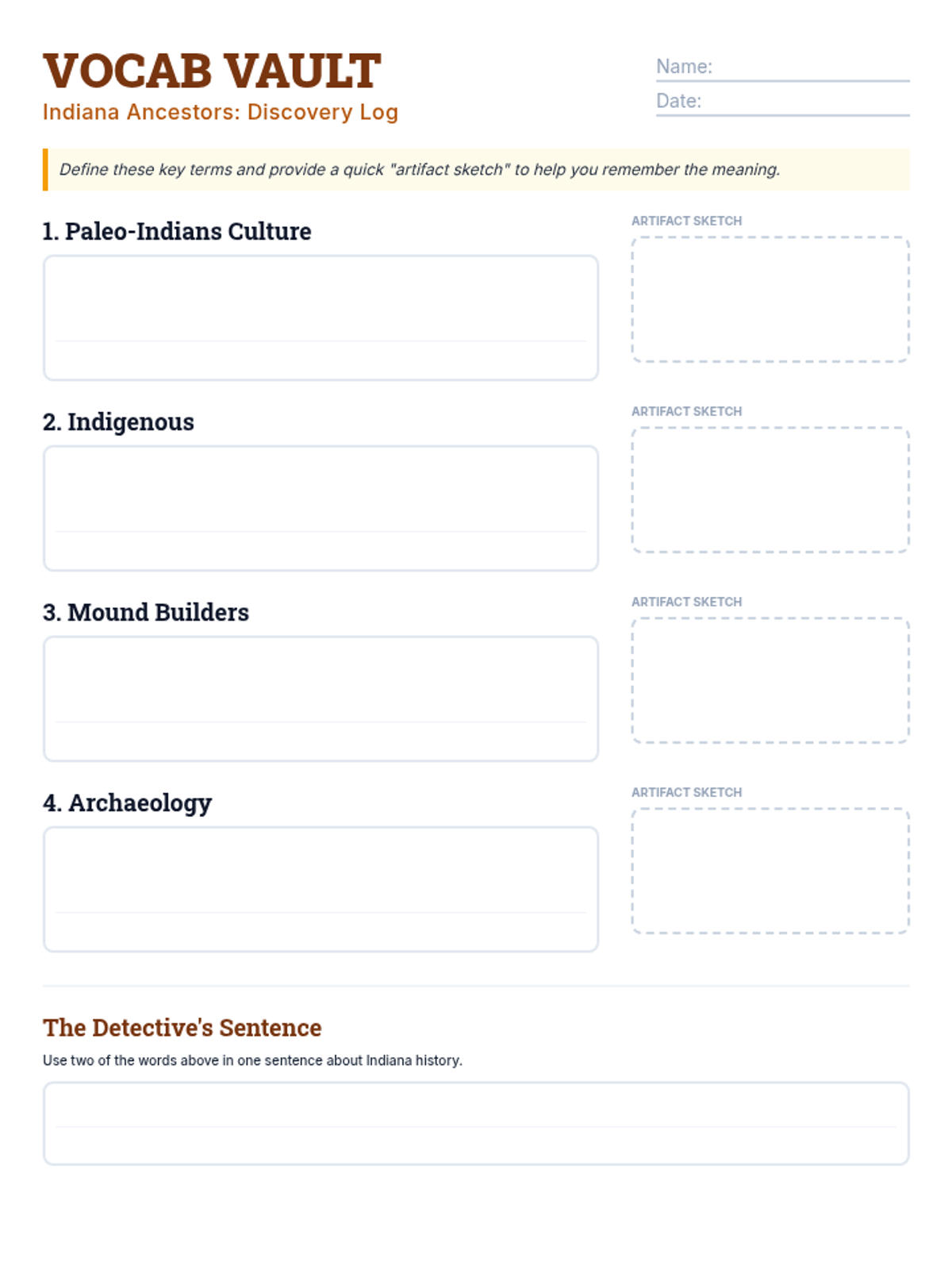
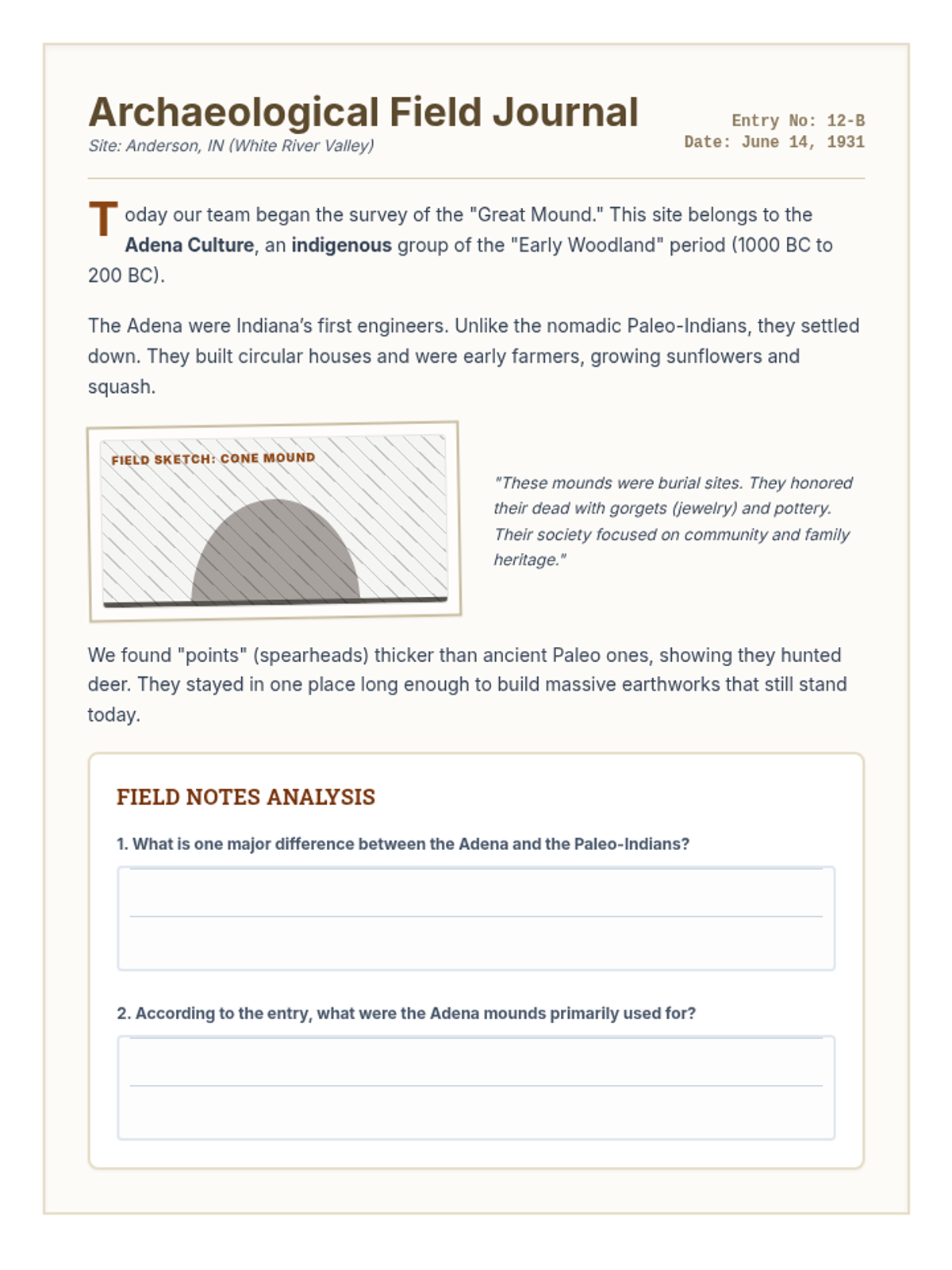
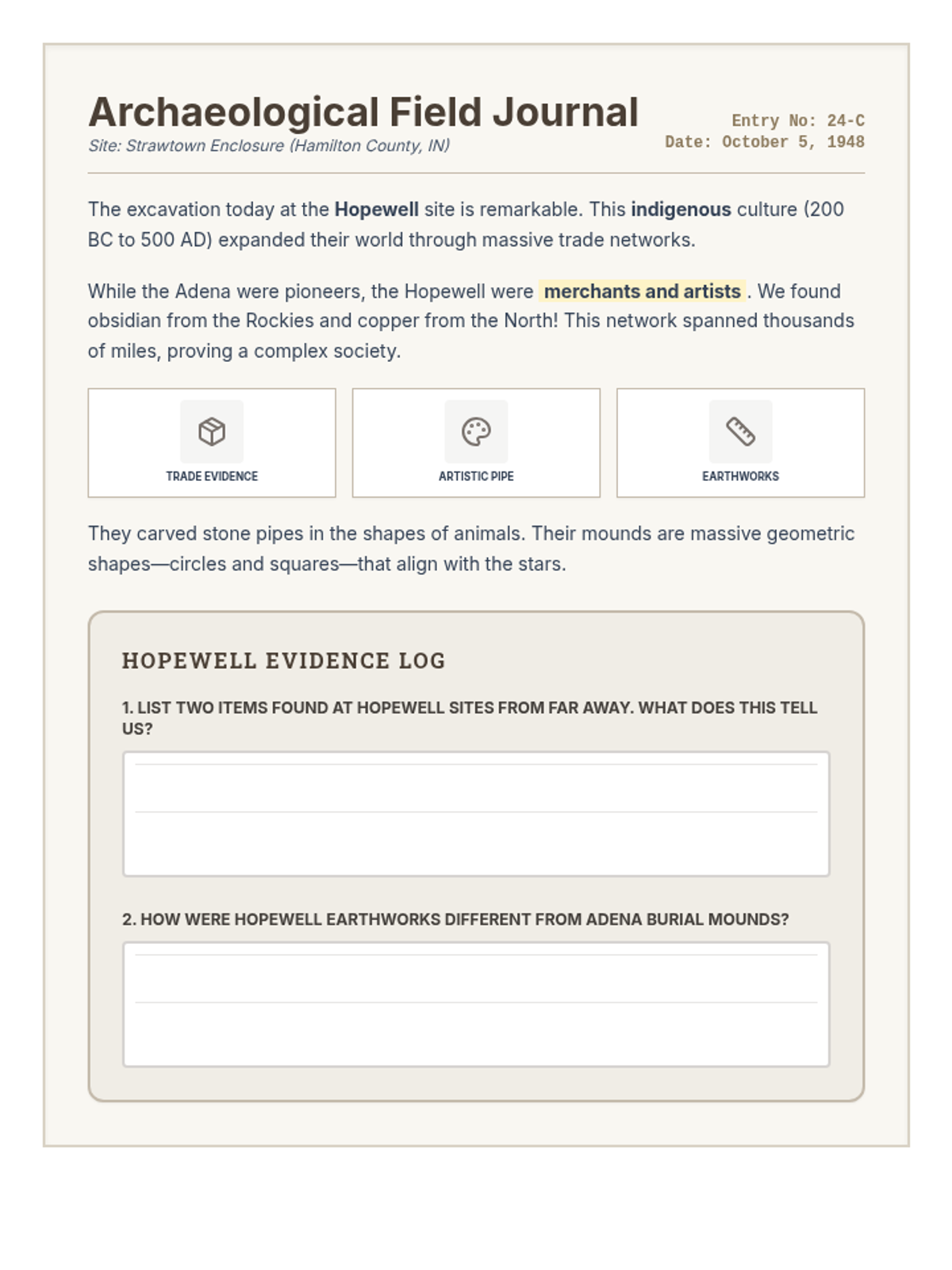
Introduction to Indiana's first inhabitants and the development of the Early and Middle Woodland mound-building cultures (Adena and Hopewell).
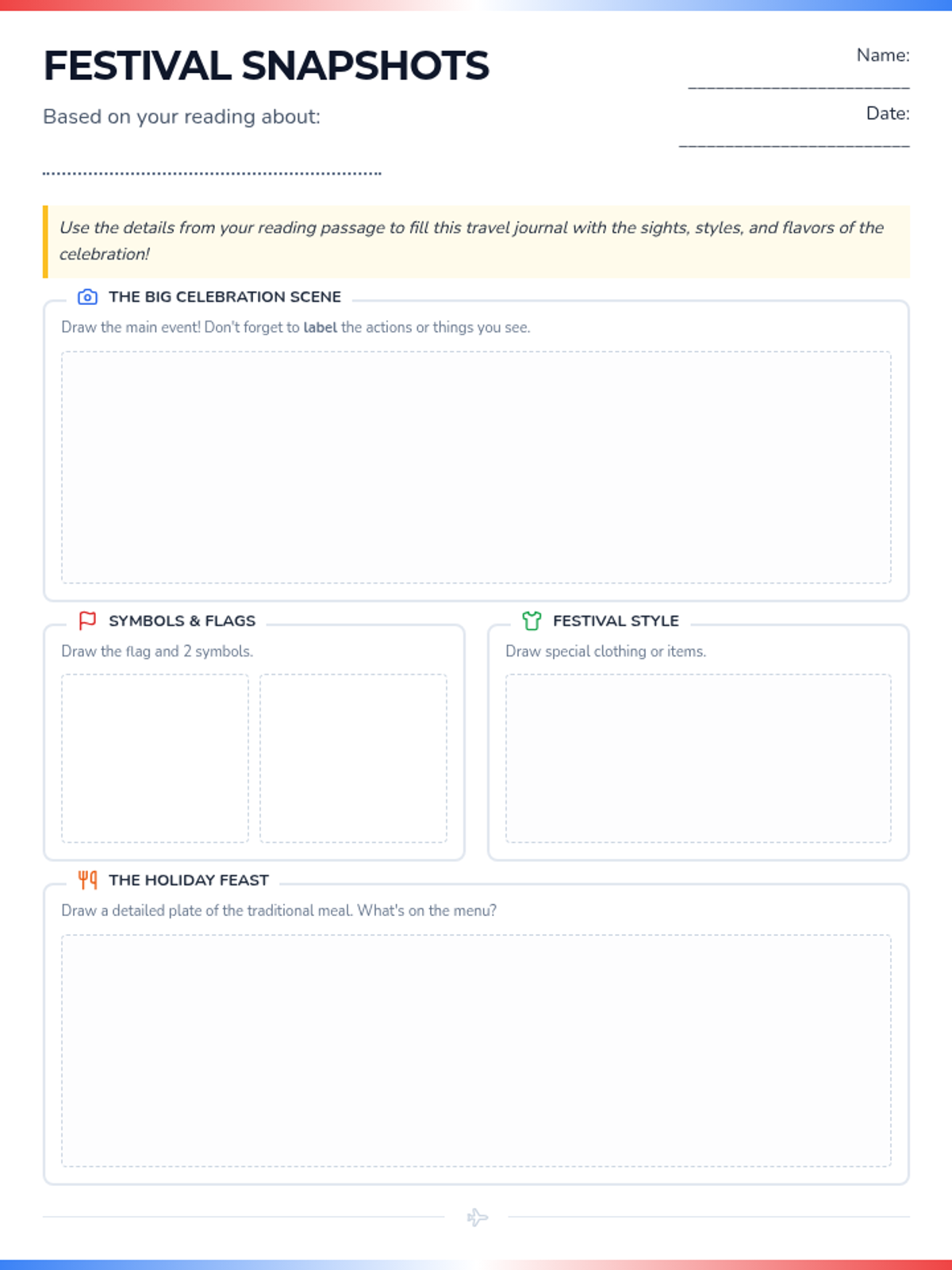
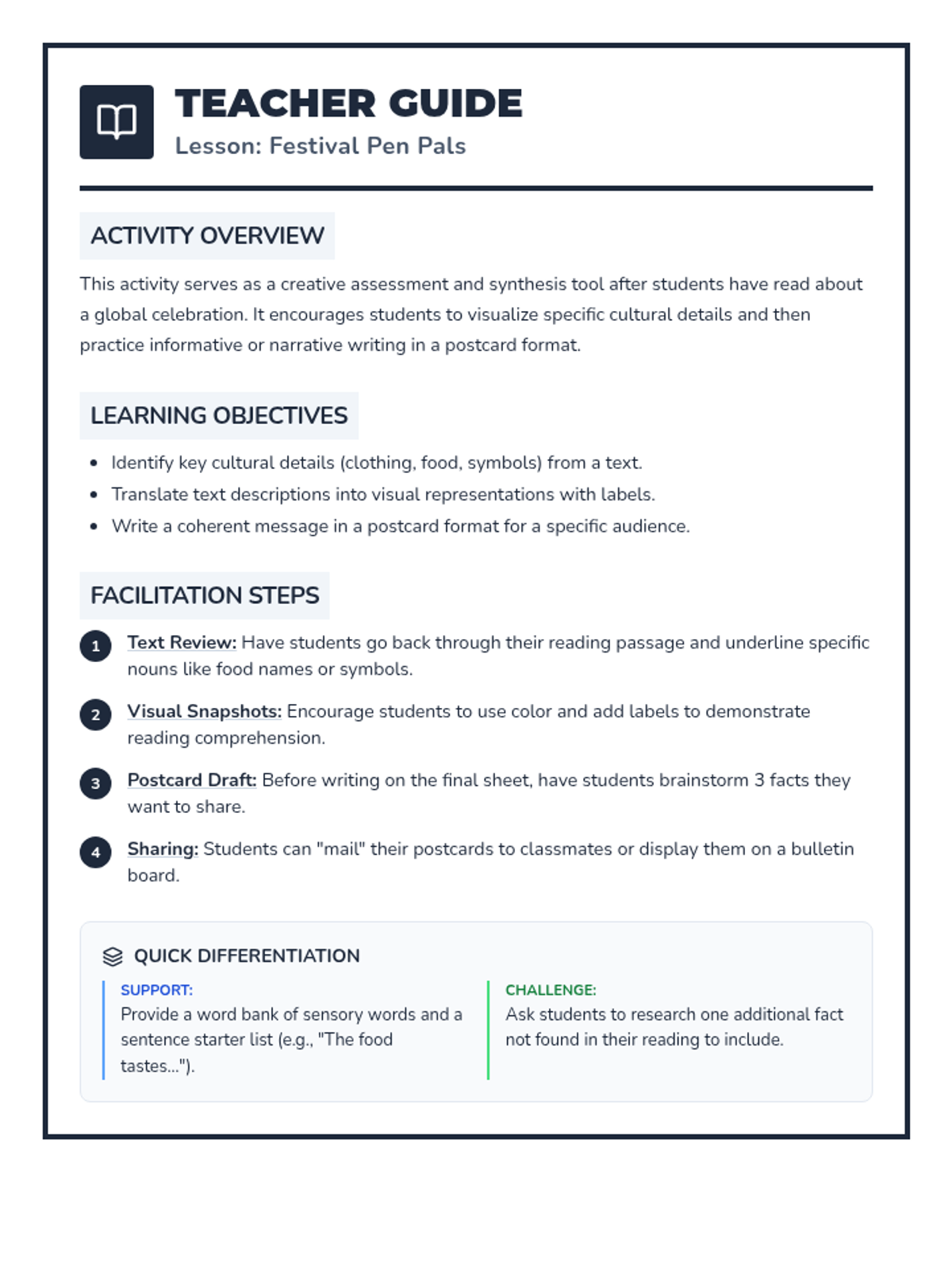
A creative social studies and literacy activity where students transform their reading about global celebrations into a detailed, illustrated postcard for a friend.
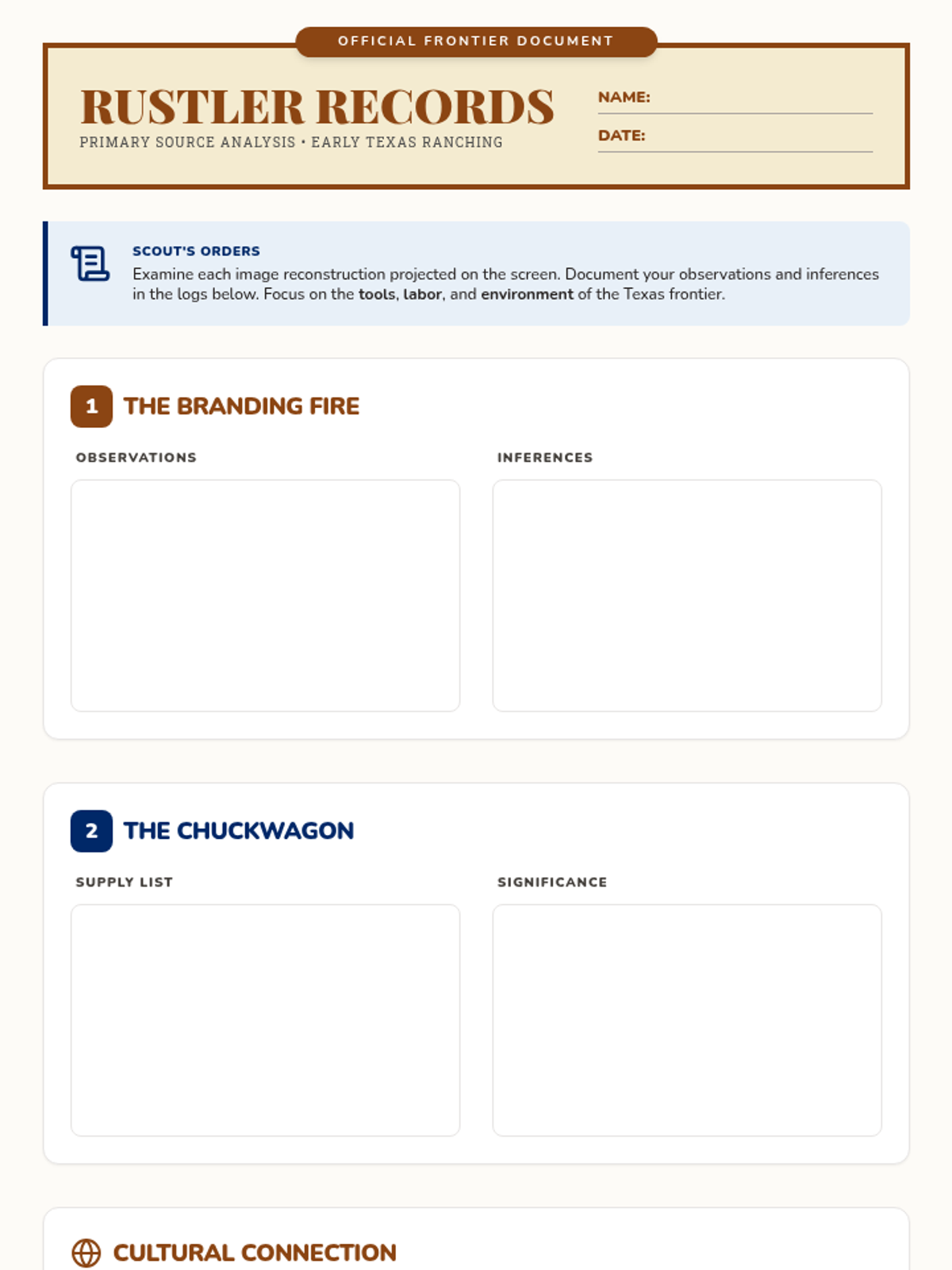
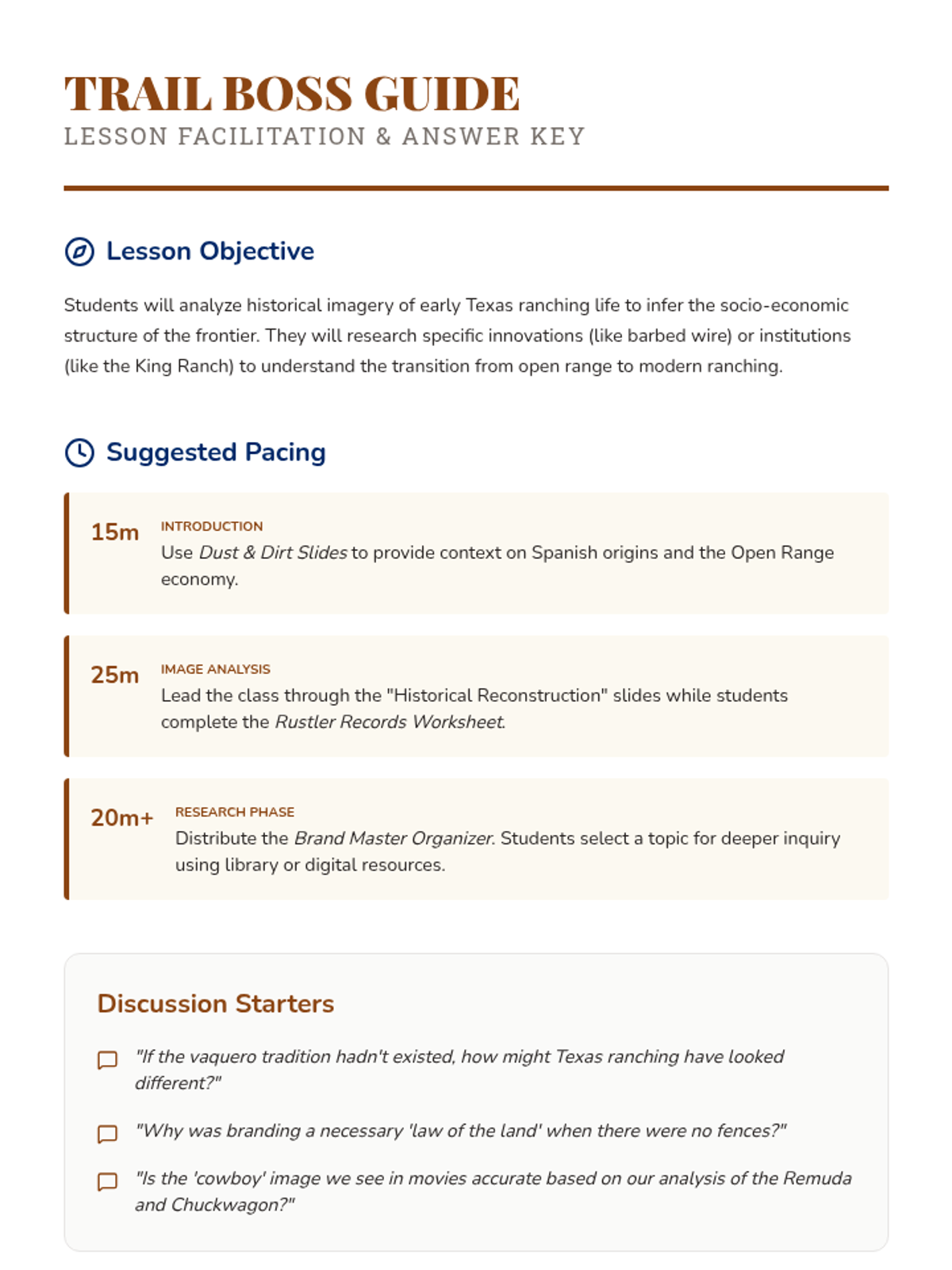
A deep dive into the origins and daily life of early Texas ranching, focusing on Spanish vaquero influences, the open range era, and the practicalities of frontier cattle management. Students analyze historical imagery and organize research on ranching innovations and hardships.
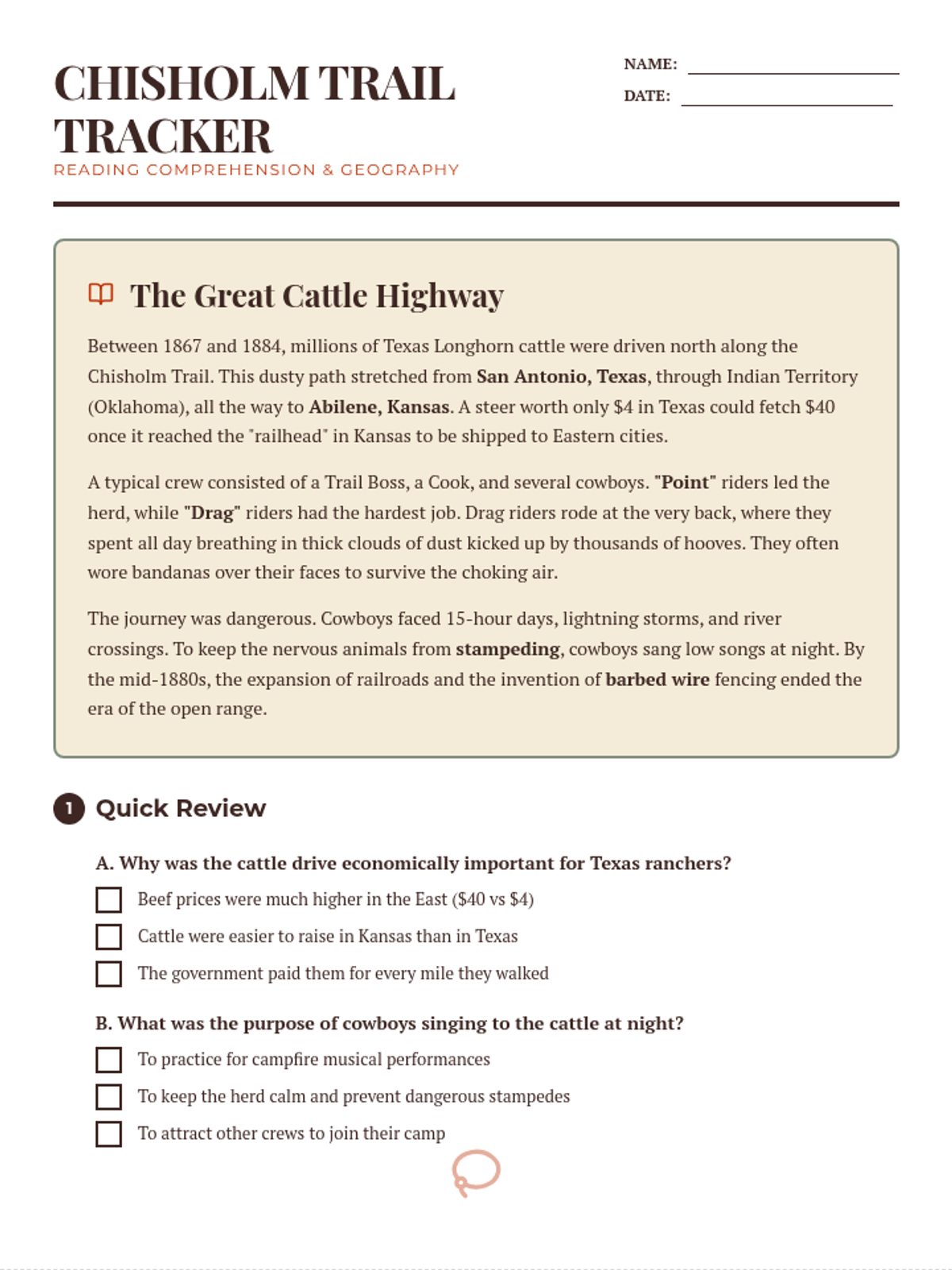
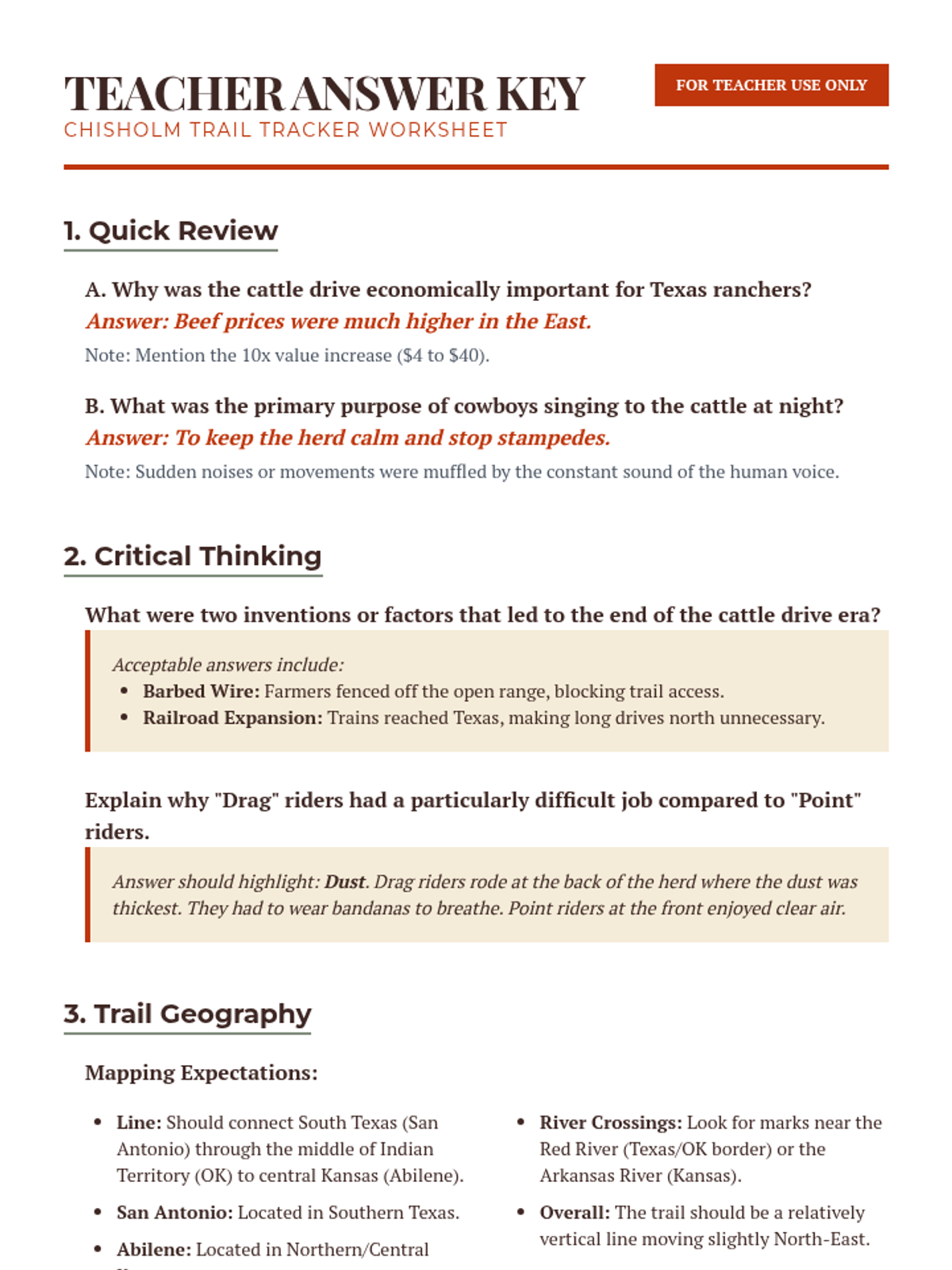
Explore the rugged daily life of a cowboy during the era of the great cattle drives, focusing on the logistics and challenges of the Chisholm Trail. Students will learn about the roles in a cattle crew and the environmental factors of the frontier.
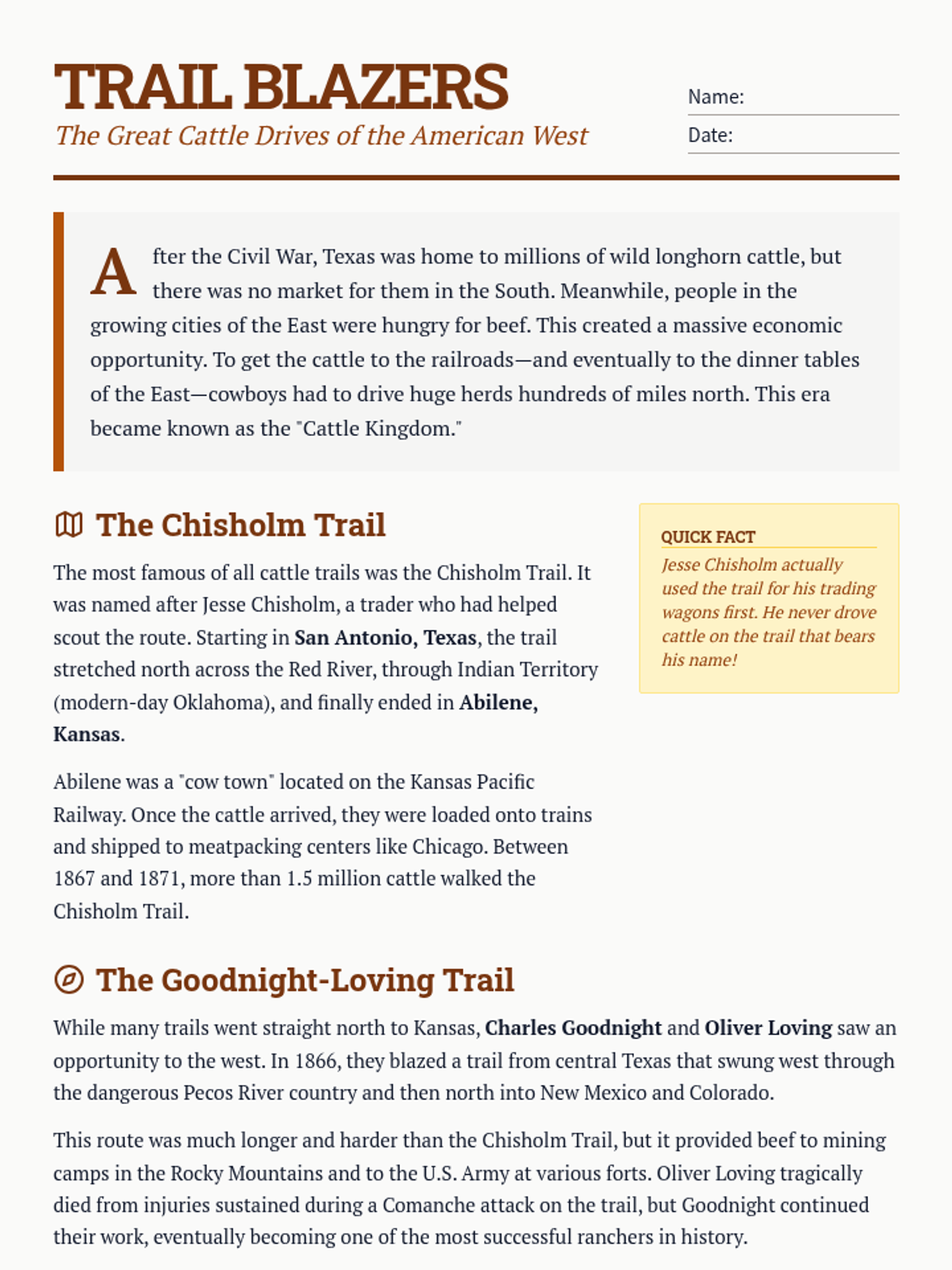
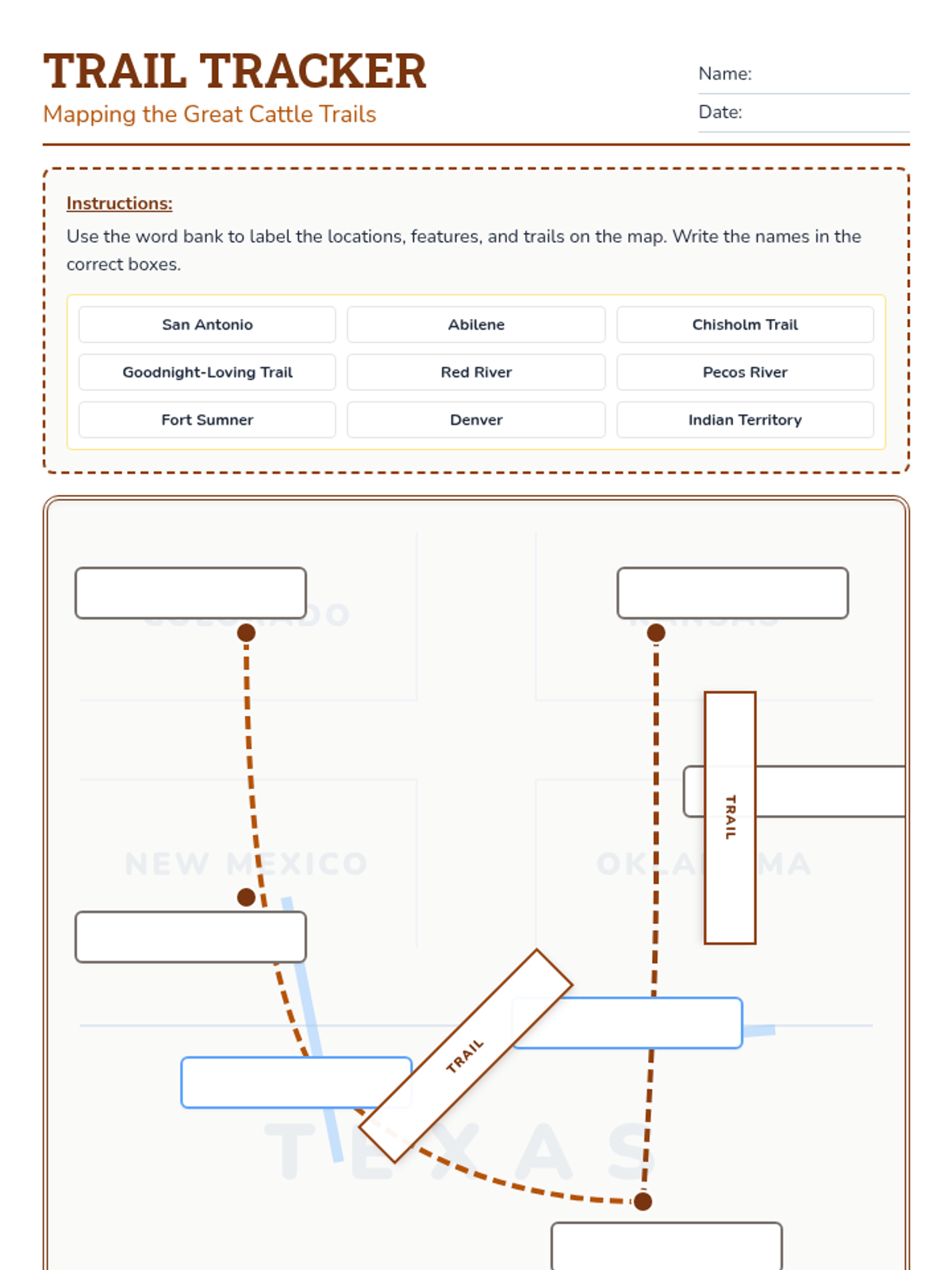
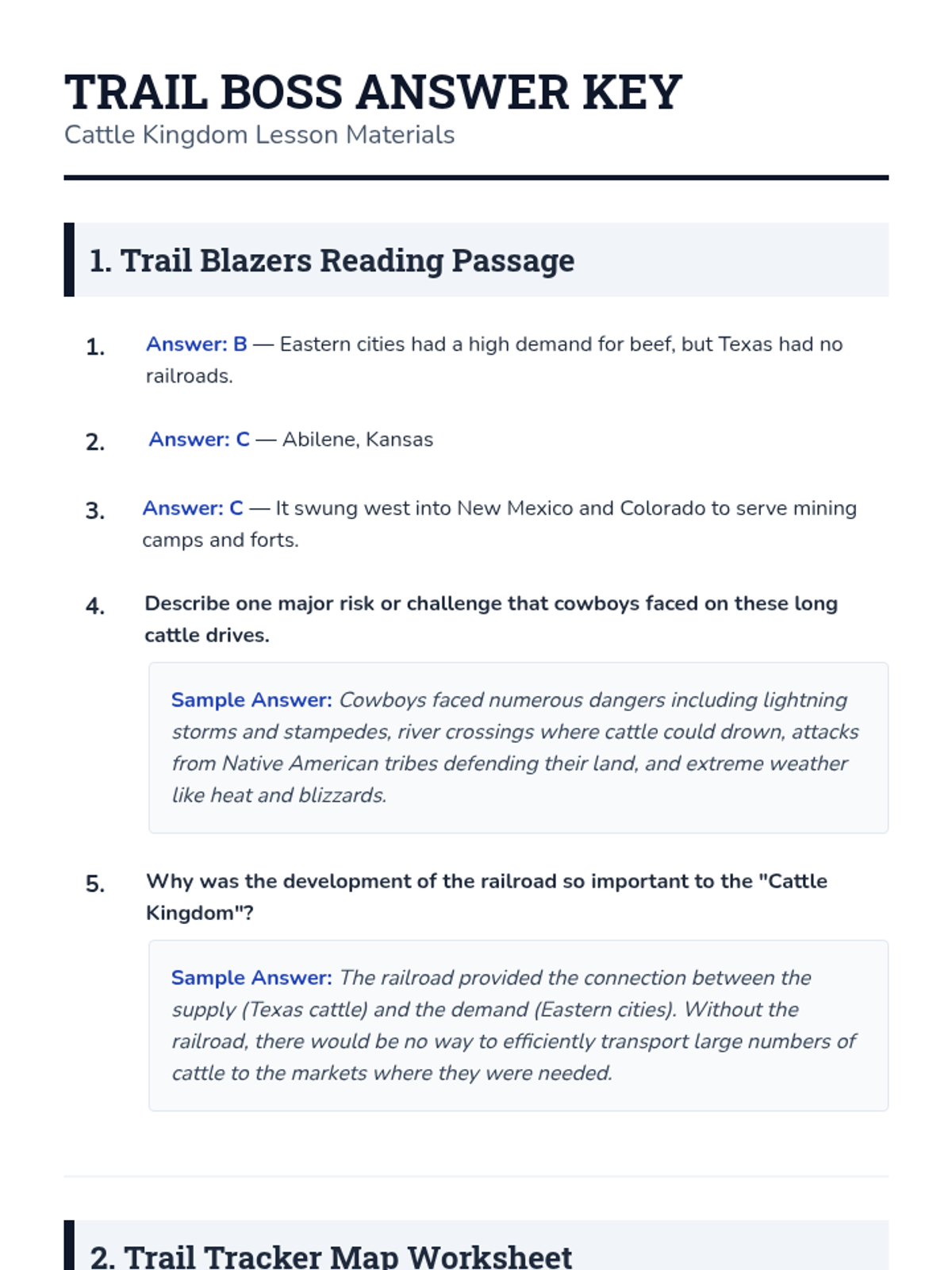
A lesson exploring the historic cattle trails of the American West, focusing on the Chisholm and Goodnight-Loving trails. Students will learn about the economic impact and geographic routes of these famous paths.
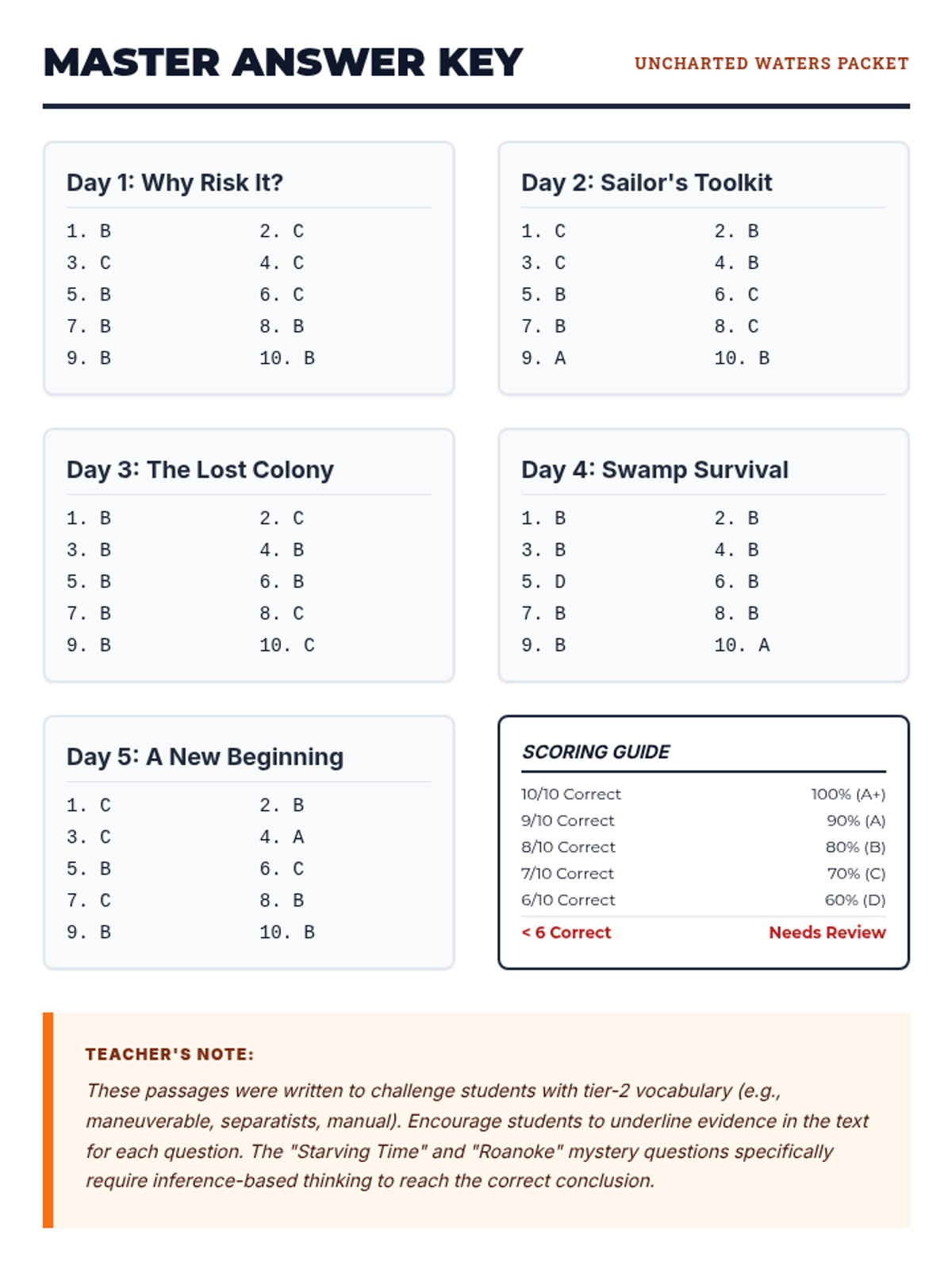
Comprehensive answer key and scoring guide for all 50 questions in the Uncharted Waters reading packet.
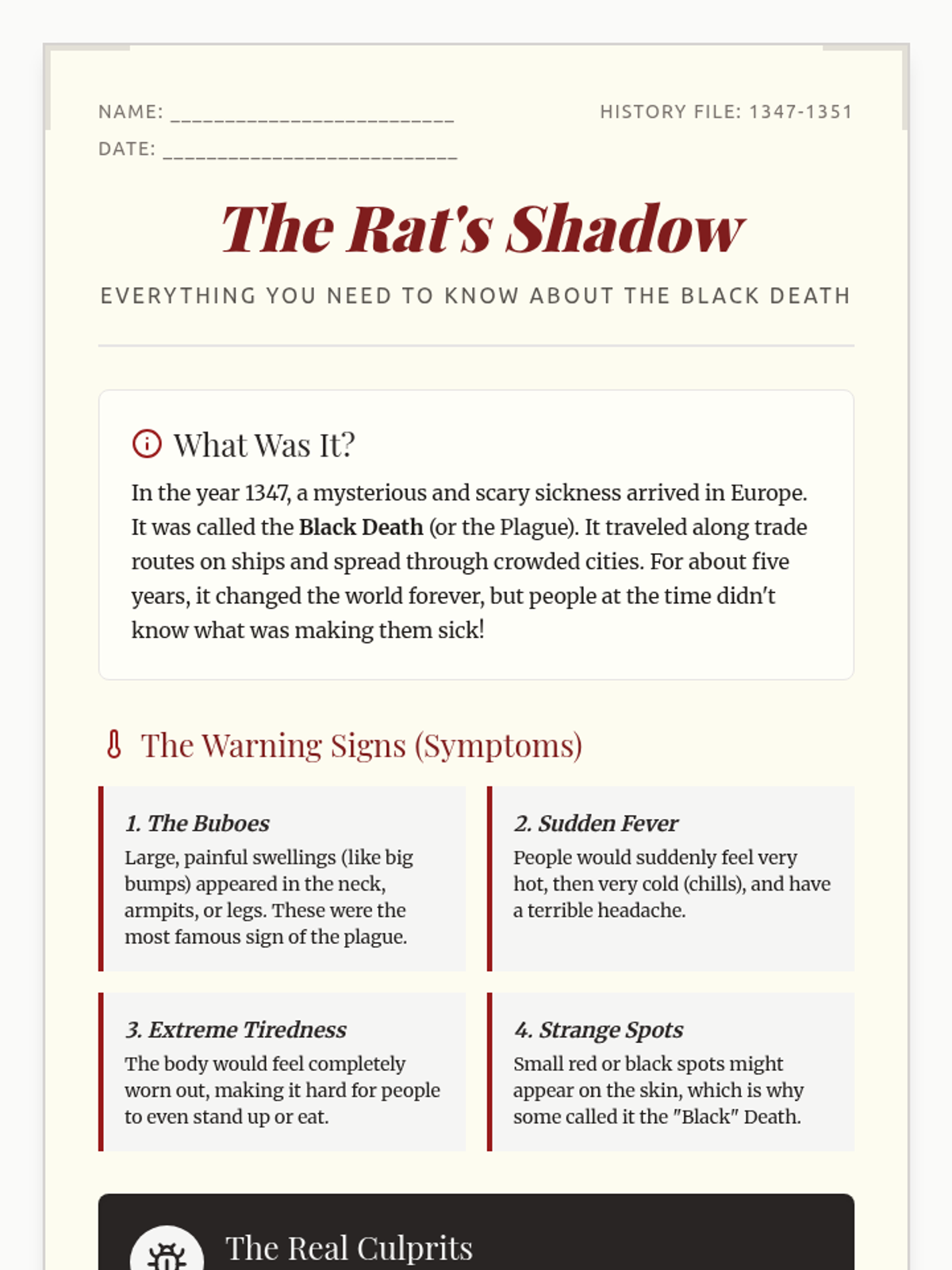
An introductory lesson on the Black Plague, focusing on its causes, the symptoms experienced by people in the Middle Ages, and the strange treatments used at the time.
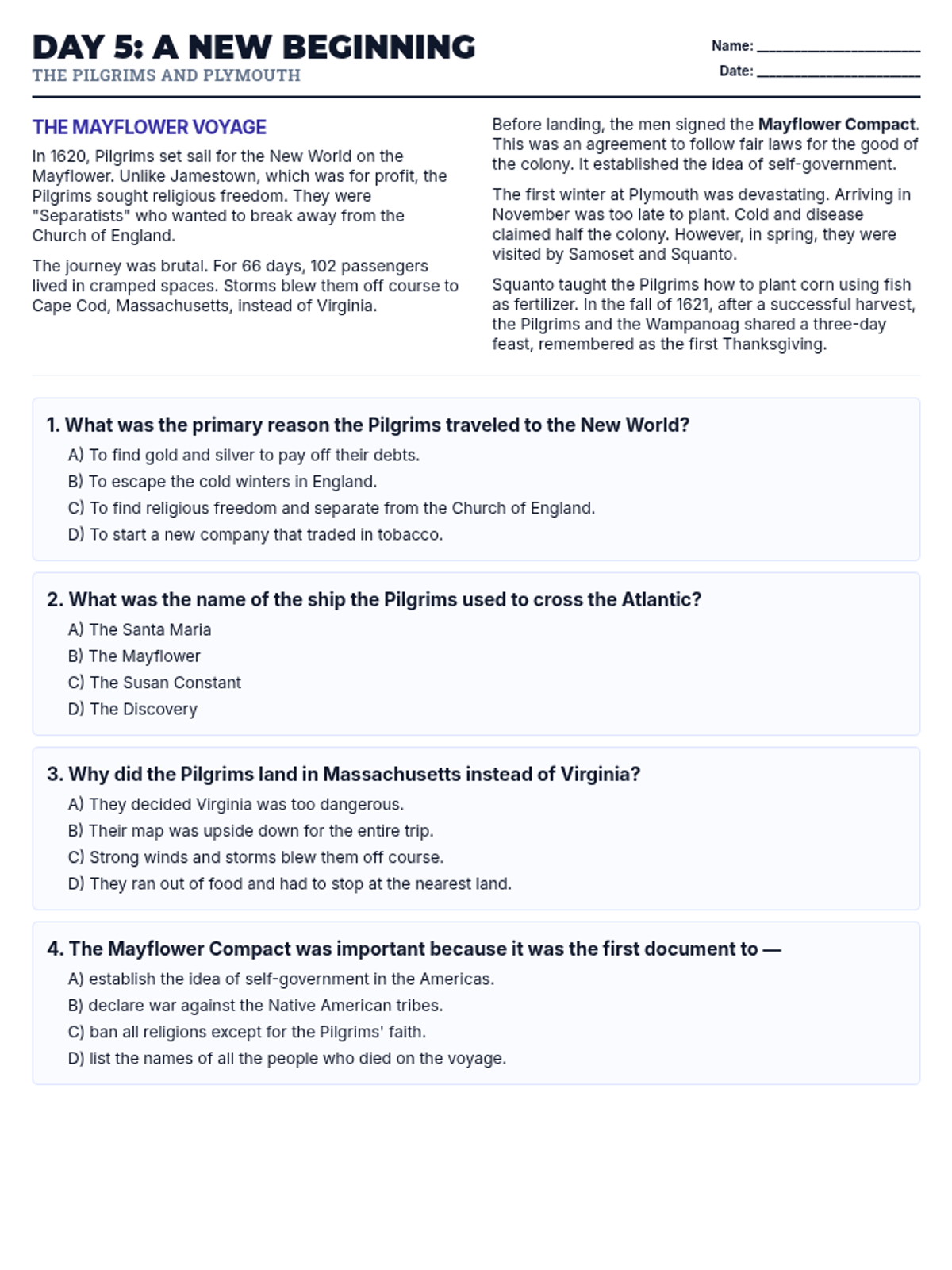
Covers the Pilgrims' journey on the Mayflower and the establishment of the Plymouth colony.
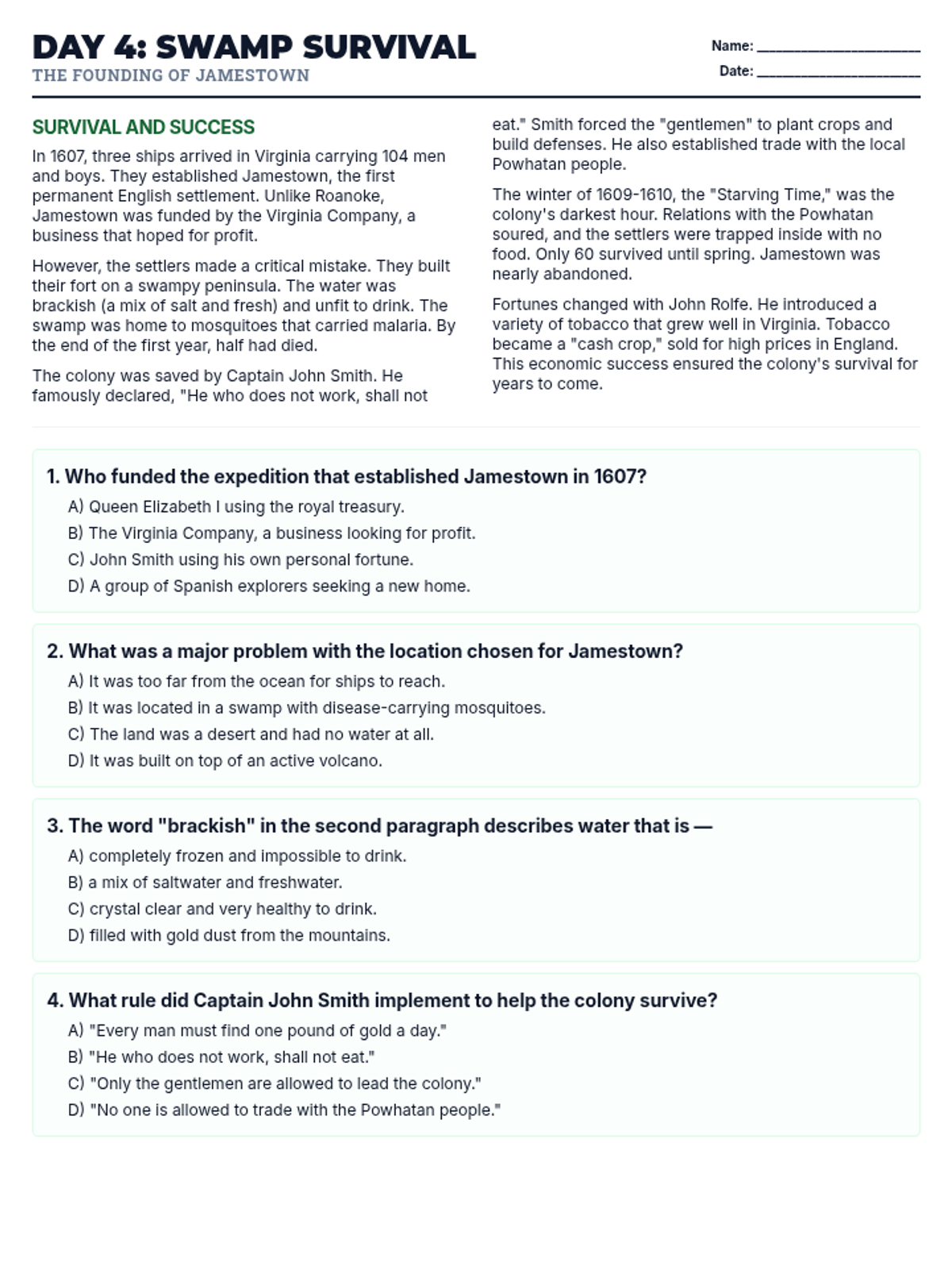
Examines the environmental and social struggles of the Jamestown settlement and its eventual economic success.