Learners explore historical examples of religious tolerance (e.g., Al-Andalus/Spain) and conflict (e.g., The Crusades). They identify factors that lead to peace or violence between religious groups.
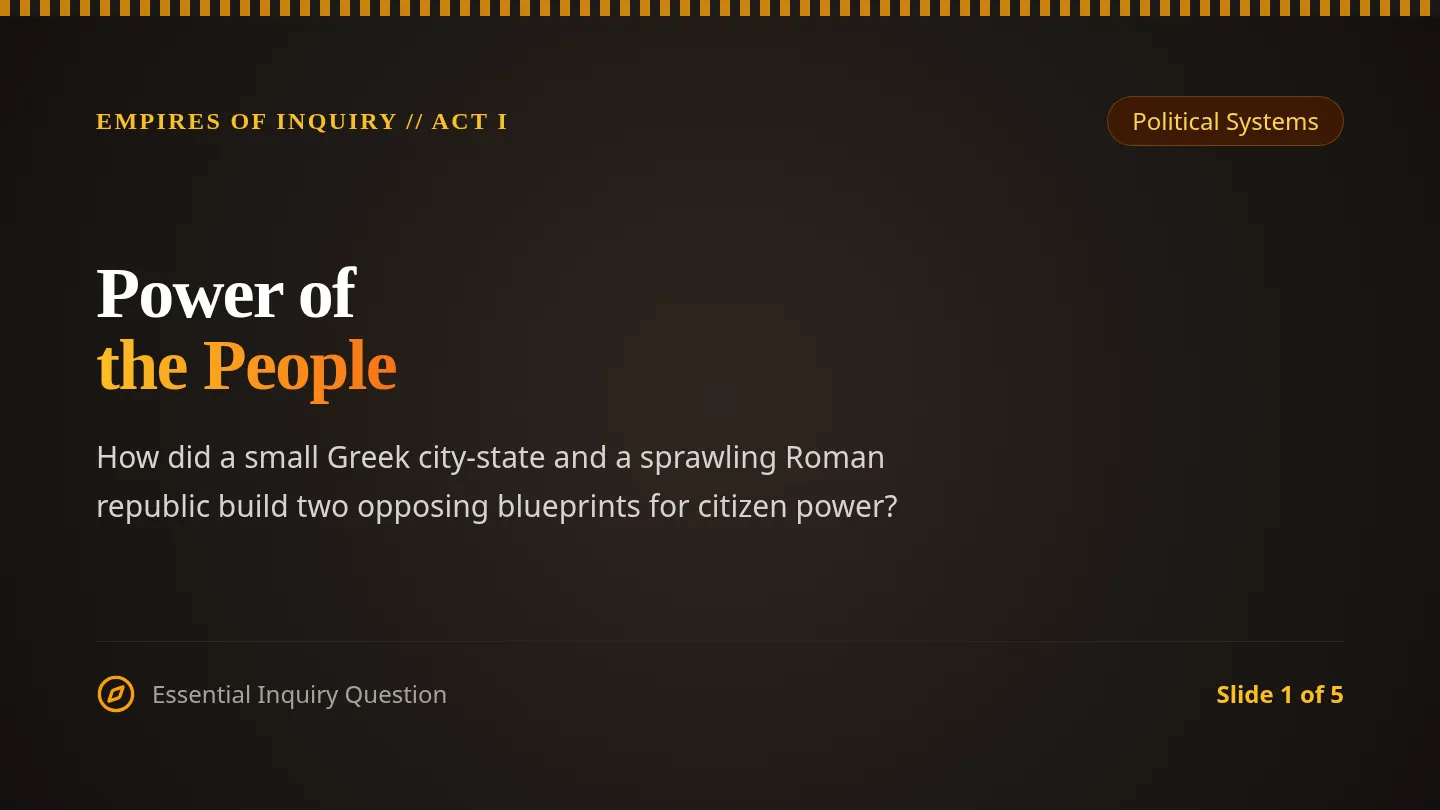
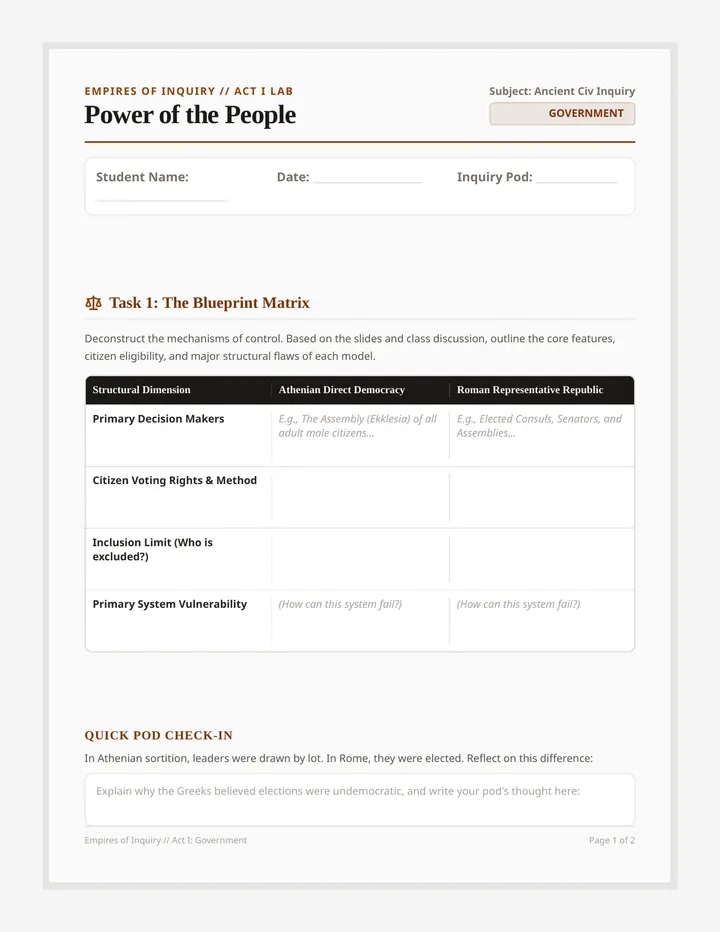
An inquiry-driven social studies sequence investigating Ancient Greece and Rome across four core pillars: government, philosophy, trade, and engineering. Students engage with primary sources, architectural achievements, and ethical dilemmas to construct arguments about classical legacies.
An introductory lesson exploring the immigrant experience and systemic barriers through Suli Breaks' spoken word poem 'Fences'. Students engage in a structured movement and discourse activity to analyze literal and metaphorical barriers, connecting themes to their own lived experiences.
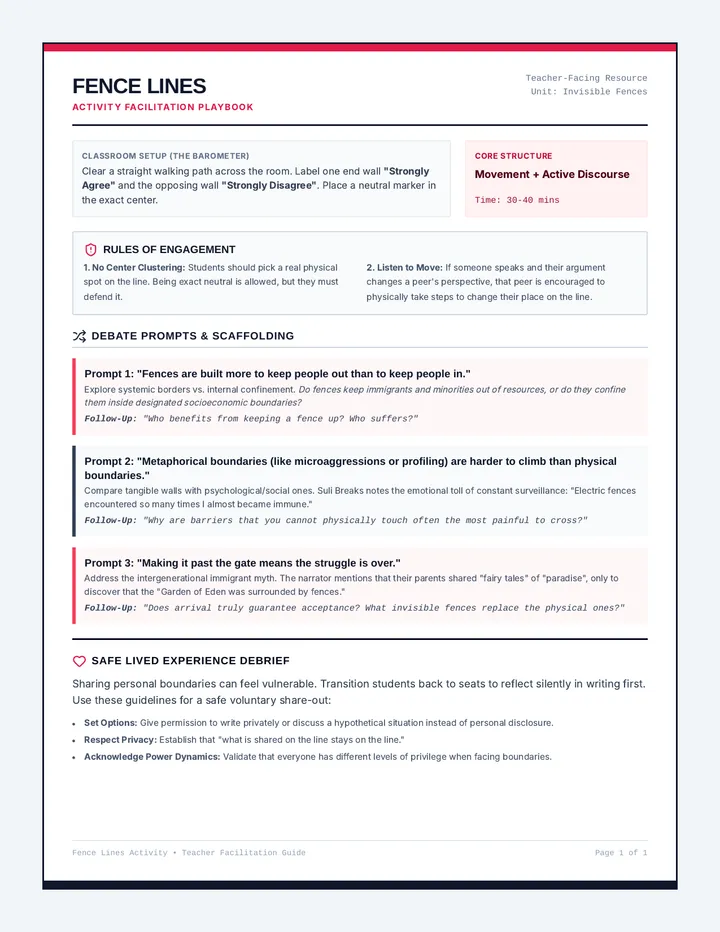
A 1-page teacher facilitation guide for the 'Fence Lines' movement and discourse activity. Provides structured guidelines for setting up the classroom barometer, lesson pacing, specific debate prompts, discussion scaffolds, and guidelines for managing sensitive personal reflections with care.
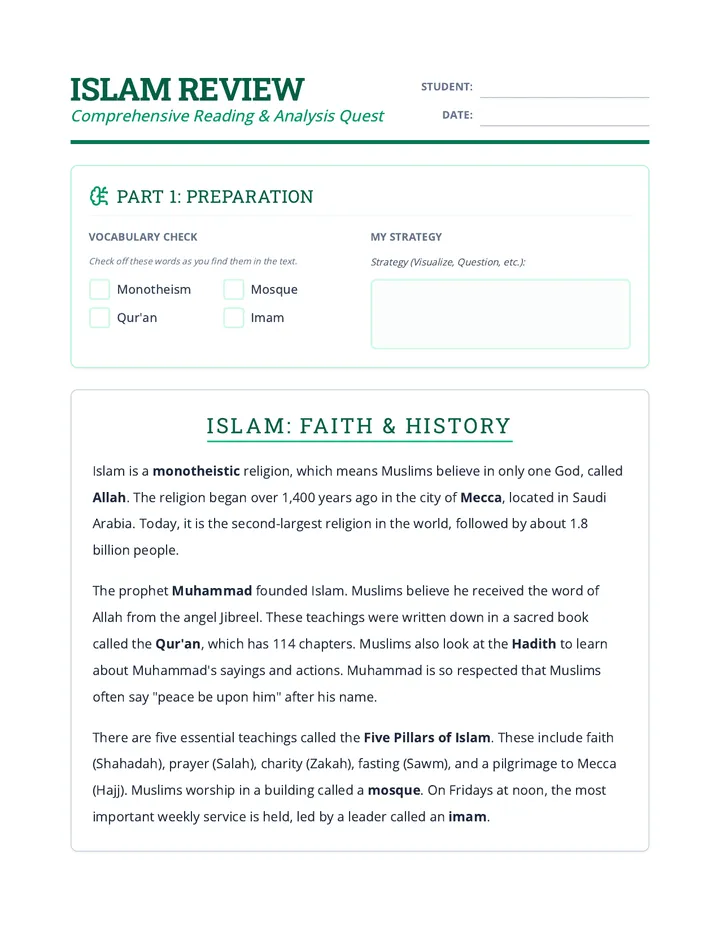
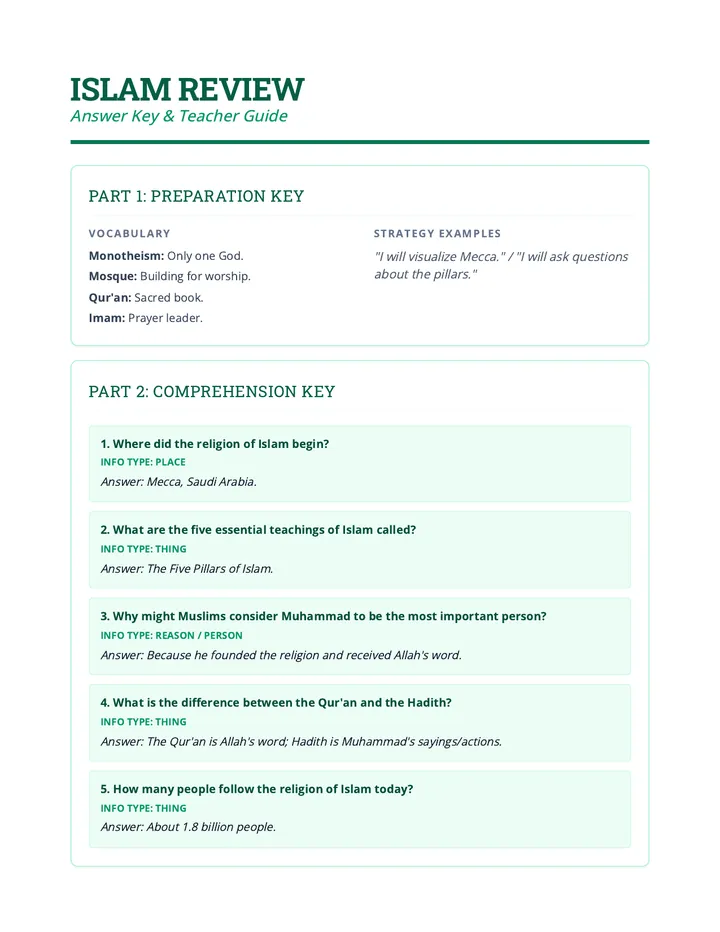
A comparative and deep-dive review sequence exploring foundational teachings, sacred texts, and cultural practices of major world religions.
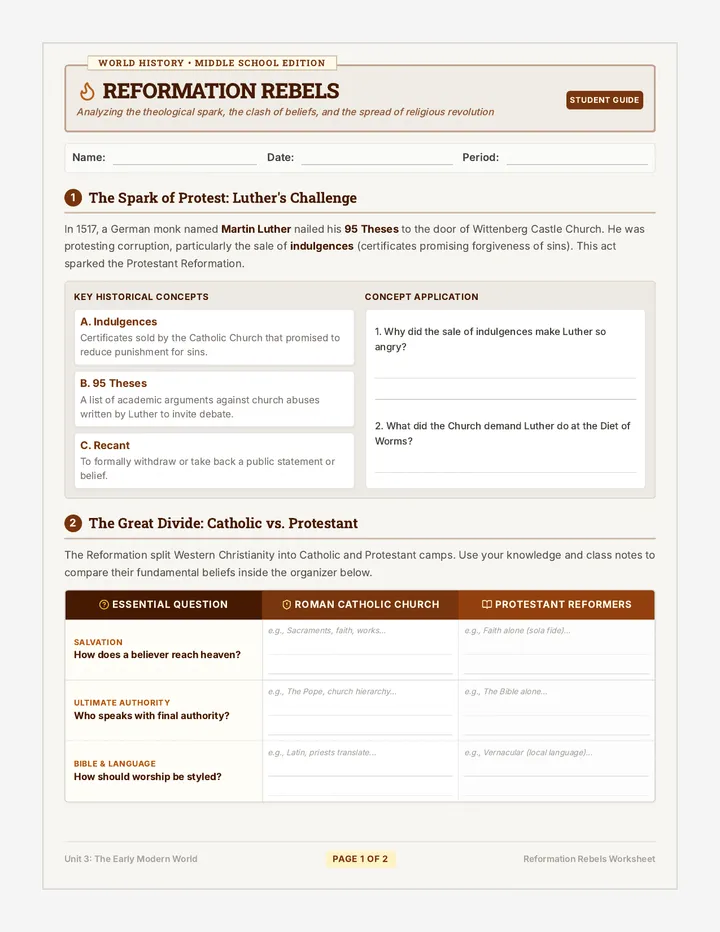
A middle school history lesson introducing the Protestant Reformation, focusing on Martin Luther's protest, the fundamental theological clashes, and the visual spread of Protestantism across Europe.
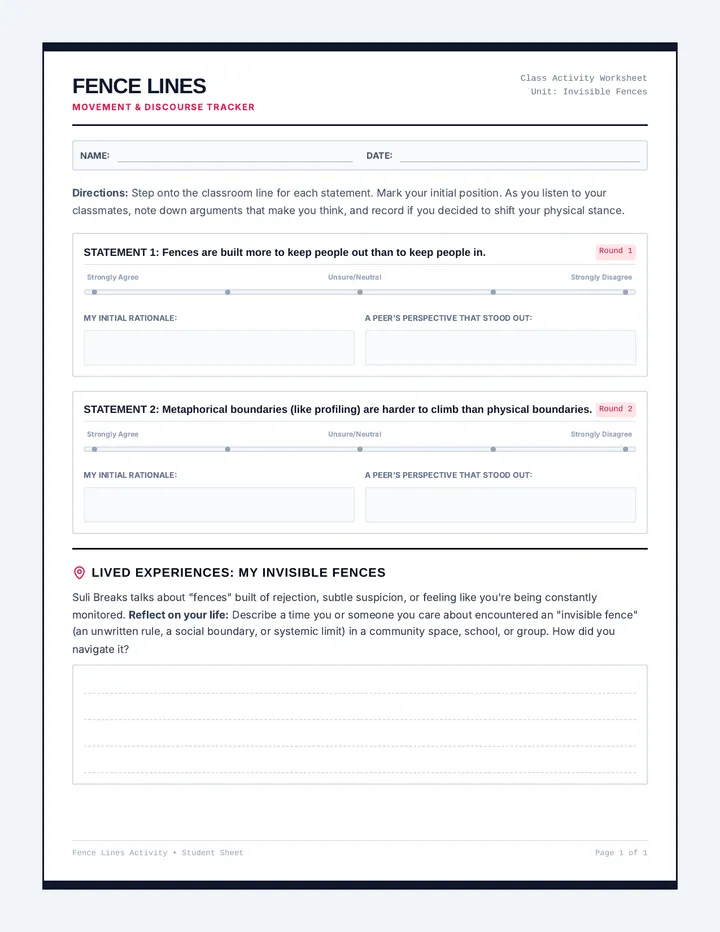
A 1-page student-facing tracker and reflection sheet for the 'Fence Lines' physical barometer activity. Includes visual scaling sliders for each movement prompt, spaces to record peer arguments, and a deep-dive writing area for real-world personal connections.
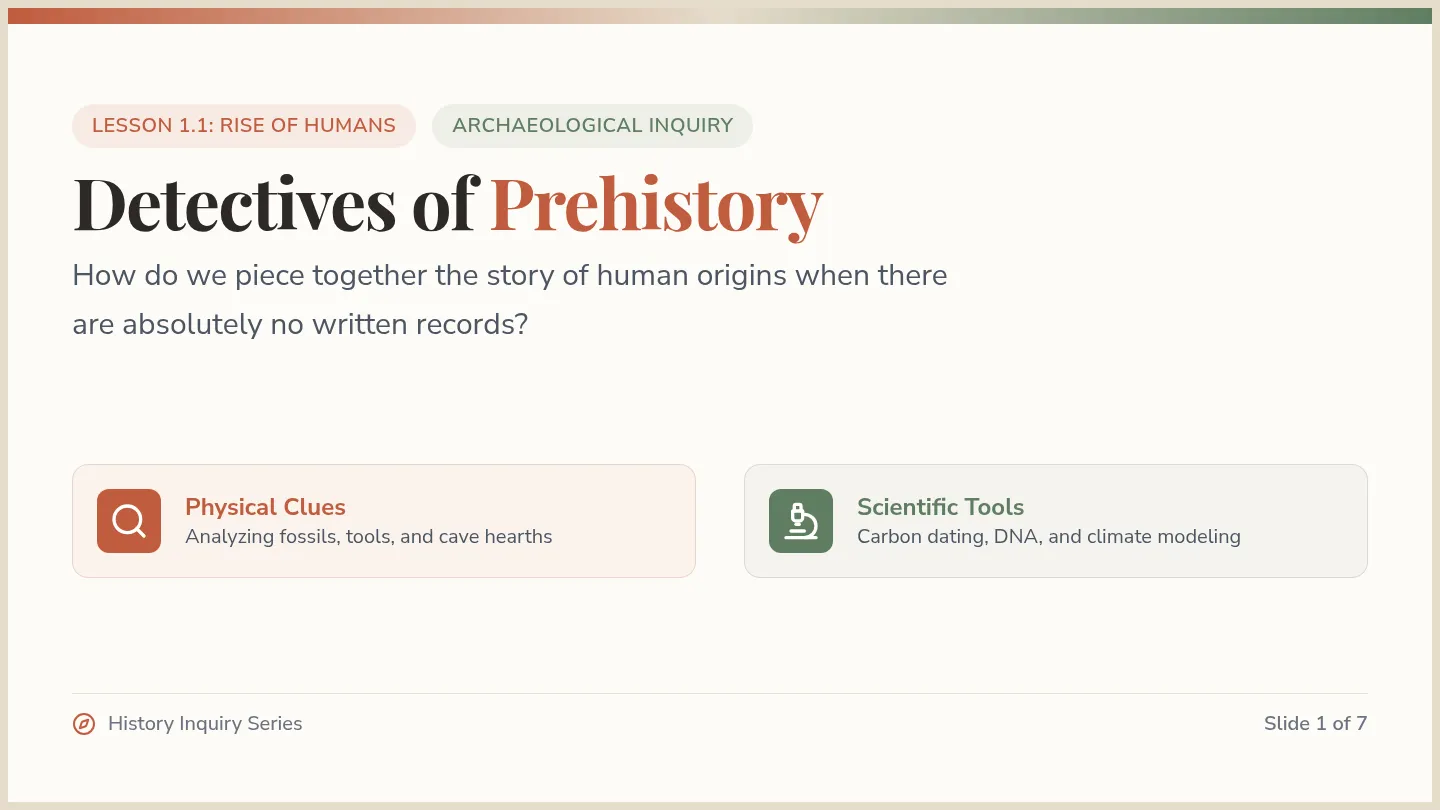
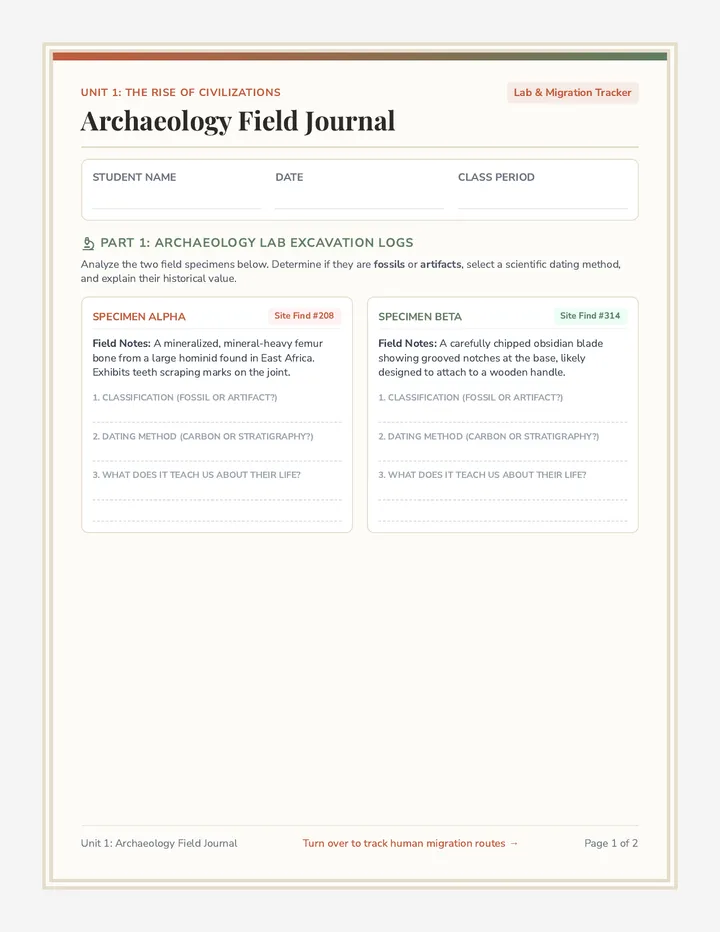
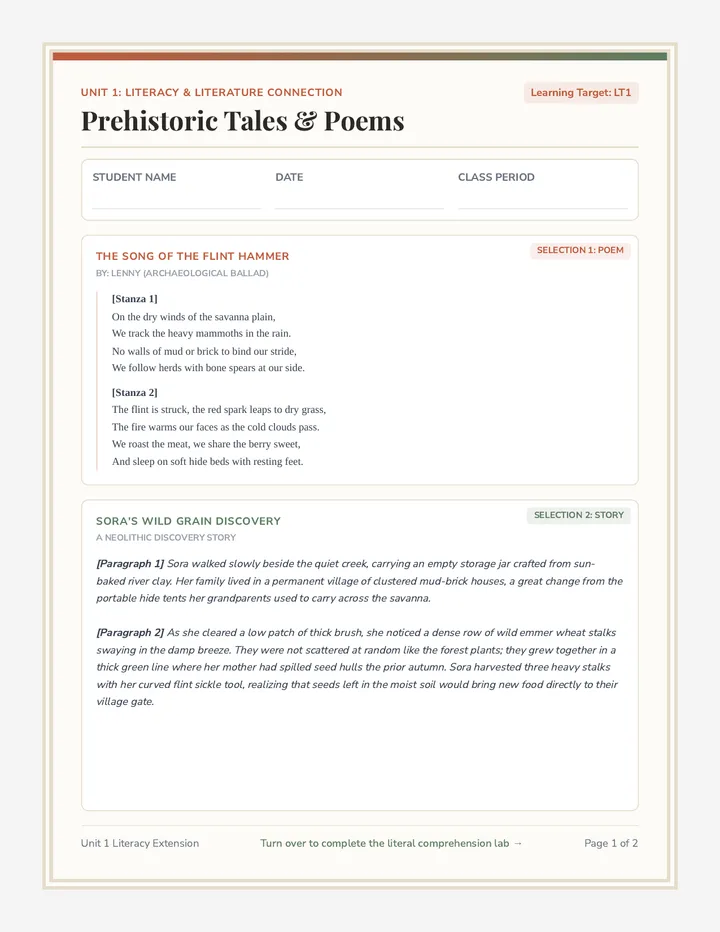
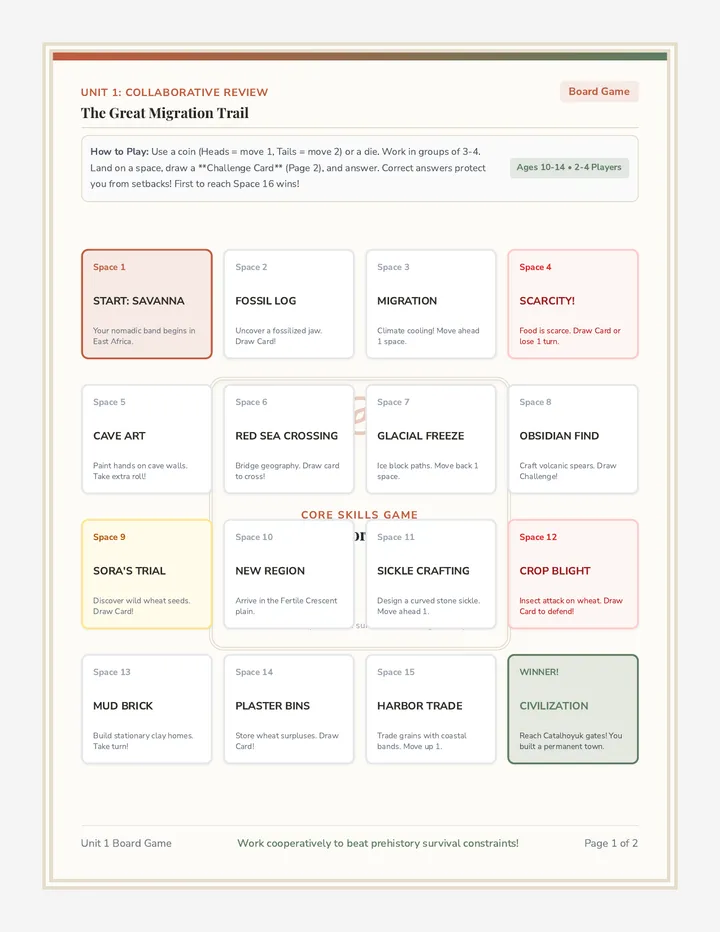
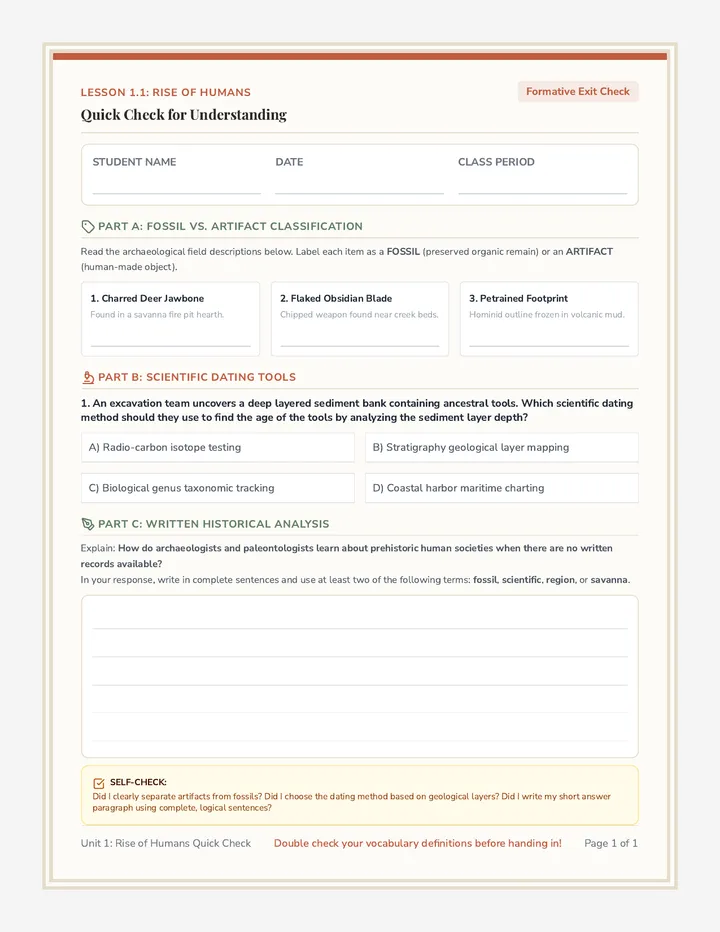
A middle-school history unit exploring the emergence of early humans, their prehistoric migrations, the radical transition of the agricultural revolution, and the foundations of early civilizations.
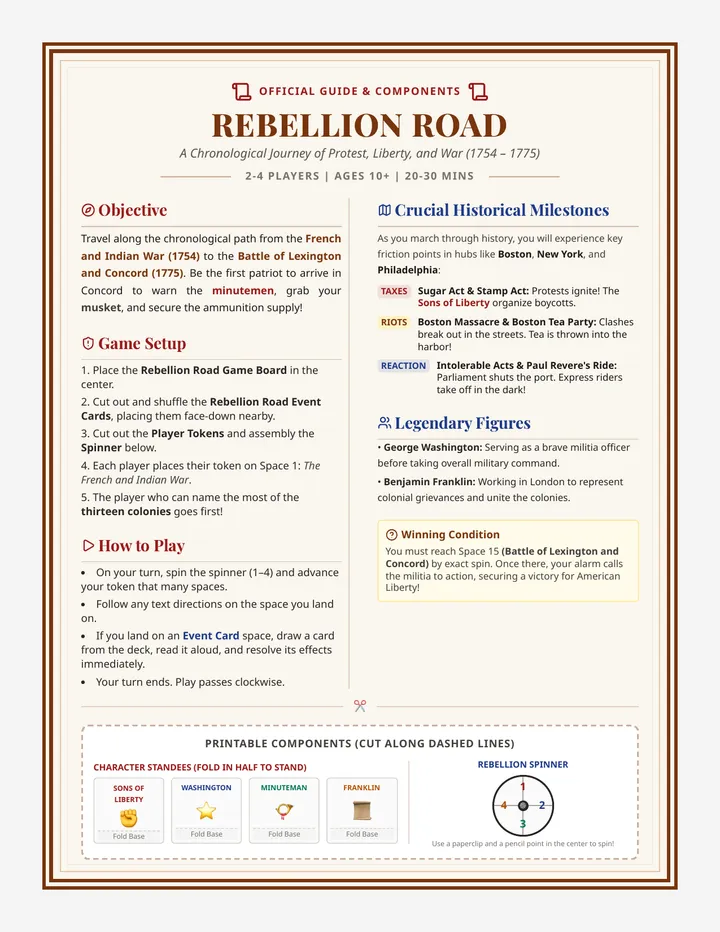
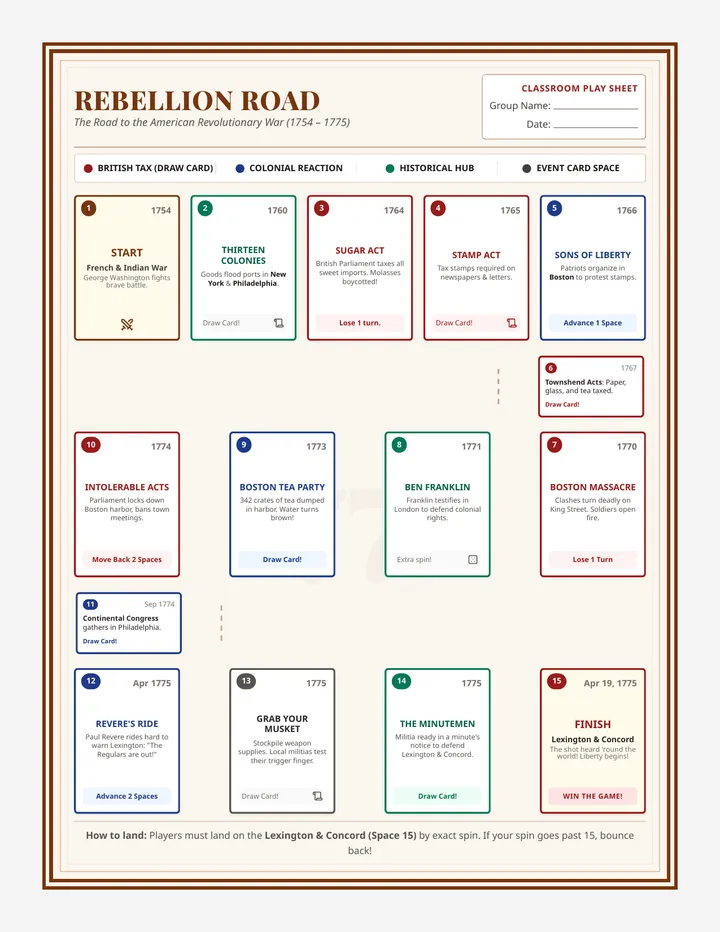
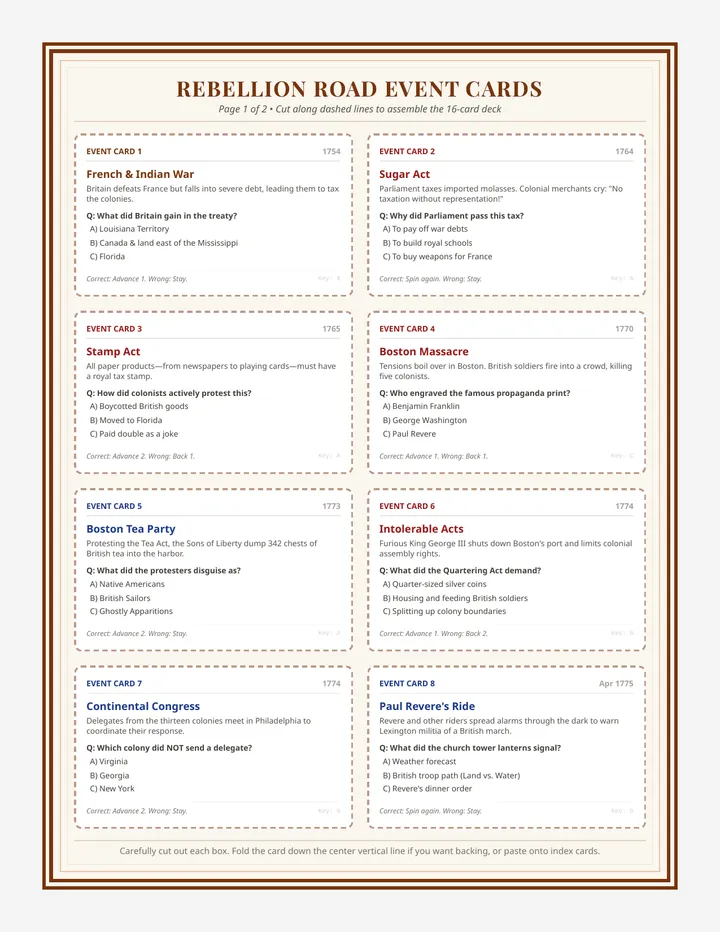
An immersive, print-ready educational board game teaching the major events, key figures, and critical concepts leading up to the American Revolutionary War from 1754 to 1775.
A printable 2-page graphic organizer and conceptual map worksheet for middle school students, exploring Martin Luther's protest, key theological differences between Catholicism and Protestantism, and the geopolitical spread of the Reformation.
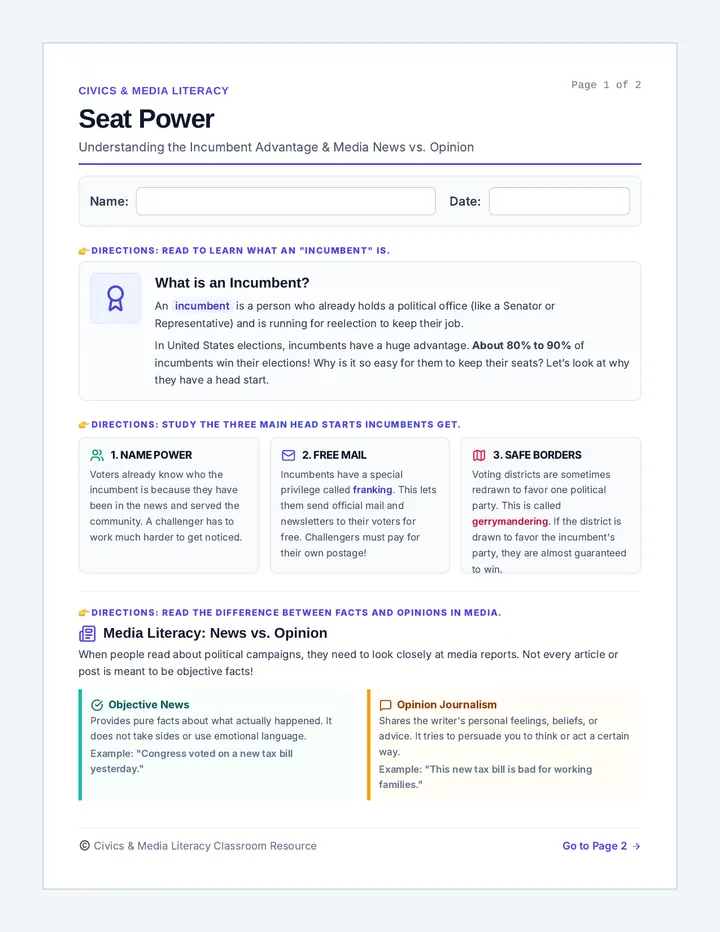
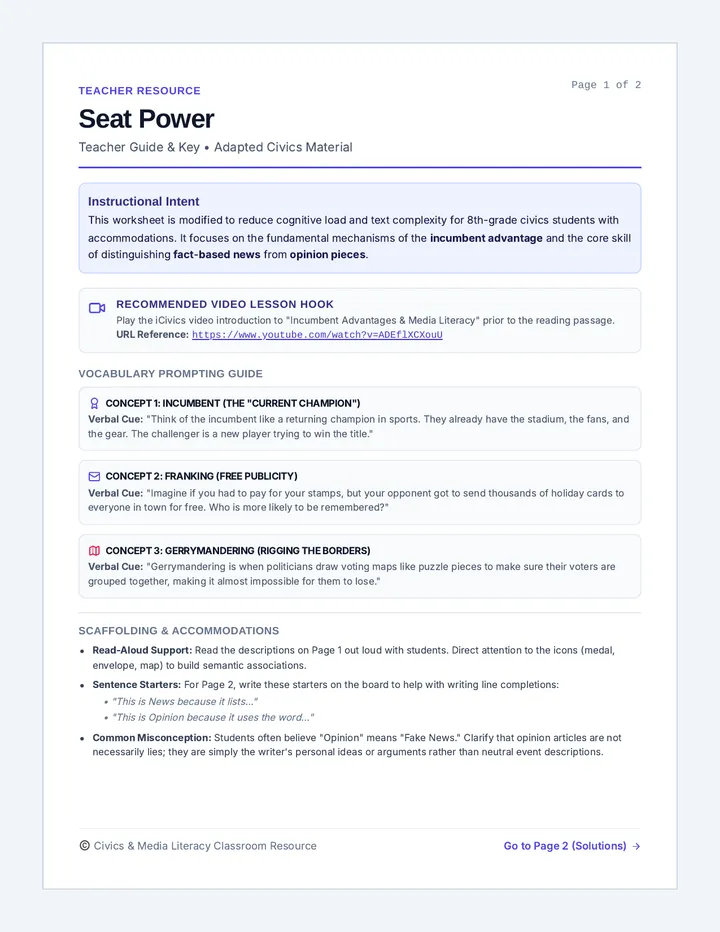
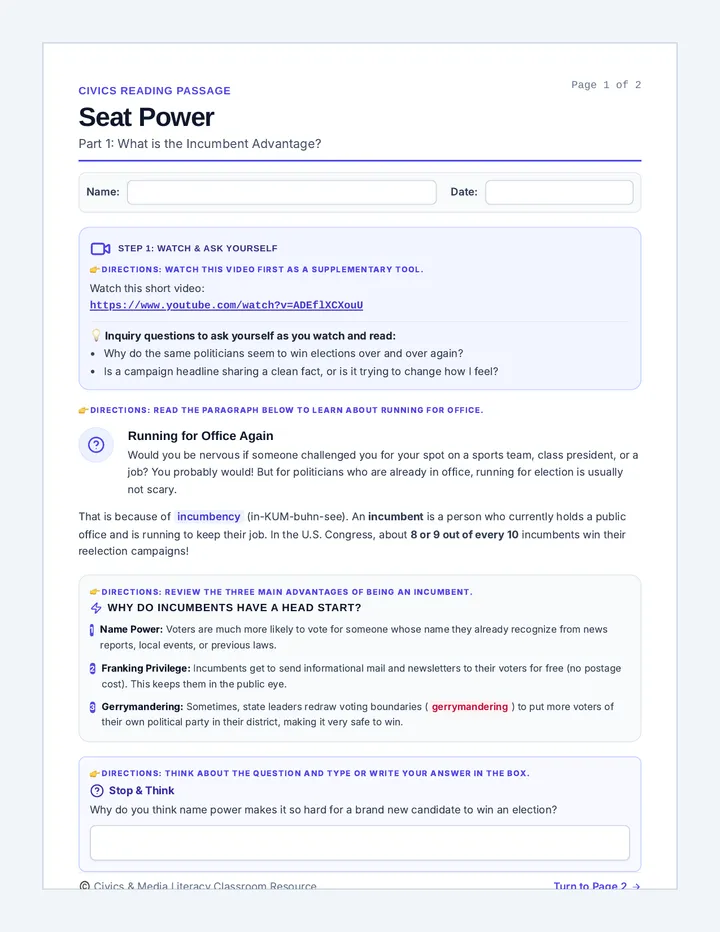
A foundational civics lesson on incumbency, electoral advantages, and media literacy. Students explore why current politicians usually win reelection and learn to distinguish between objective news reports and opinion articles.
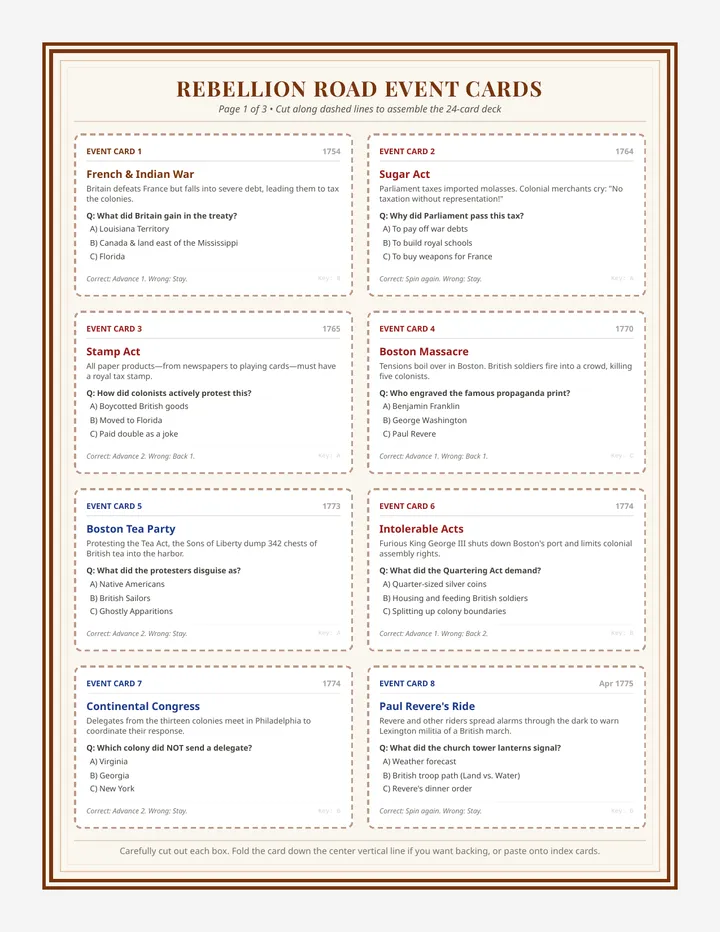
A expanded 24-card printable deck featuring critical events, key figures, and concepts leading to the Revolutionary War. Each card includes a historical summary, a multiple-choice question, and movement actions.
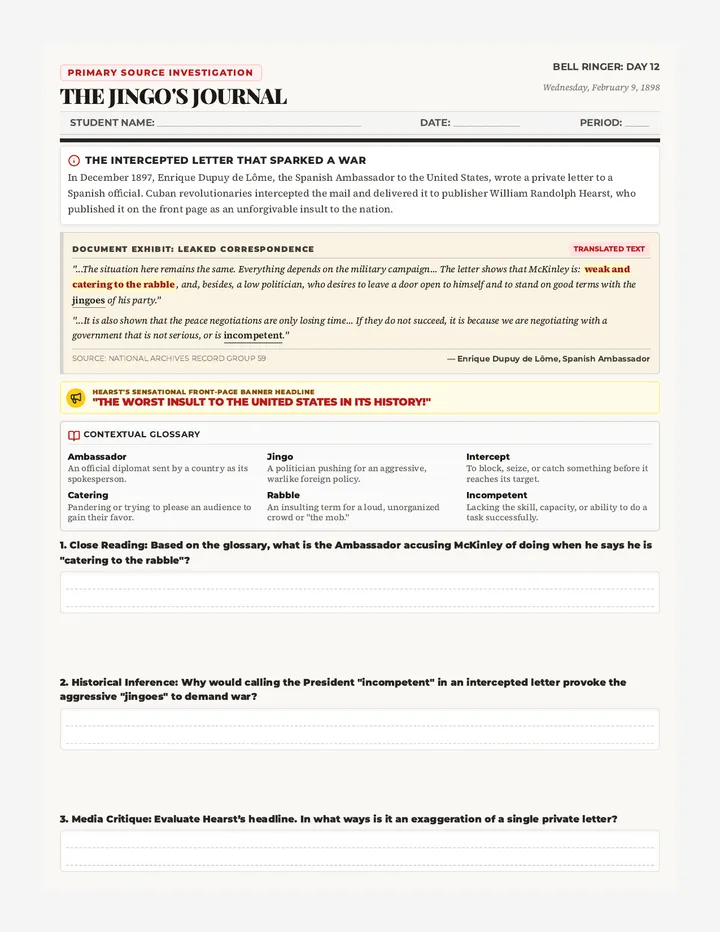
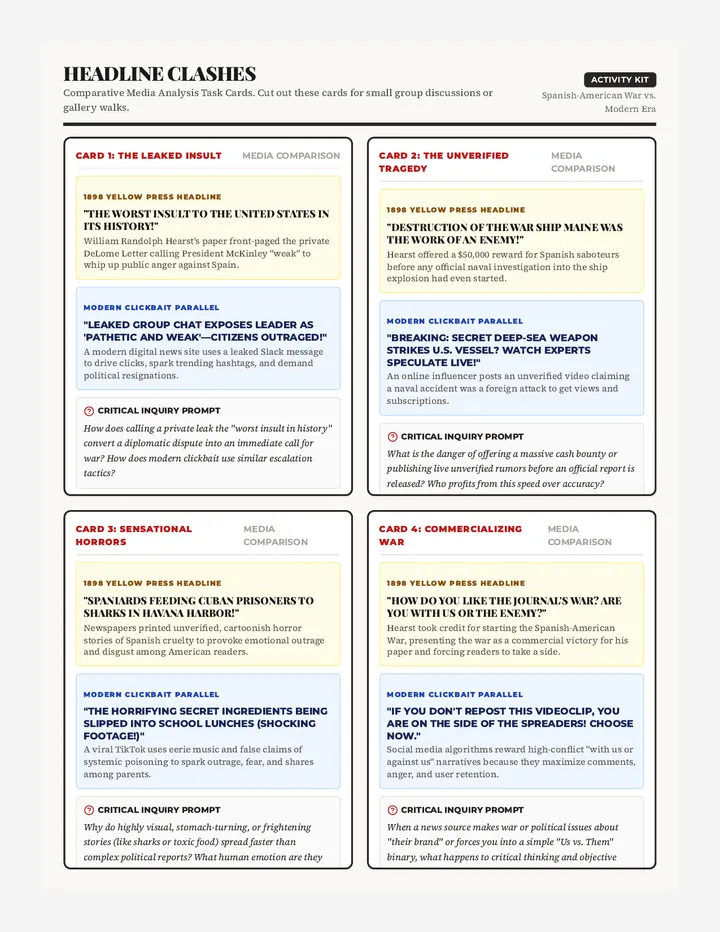
Students examine yellow journalism through the lens of the historical DeLome Letter leak of 1898. They analyze sensationalized media, understand the historical context of the Spanish-American War, and draw parallels to modern media.