Students read two short texts on the same topic and identify what information is shared between them and what is unique to each author.
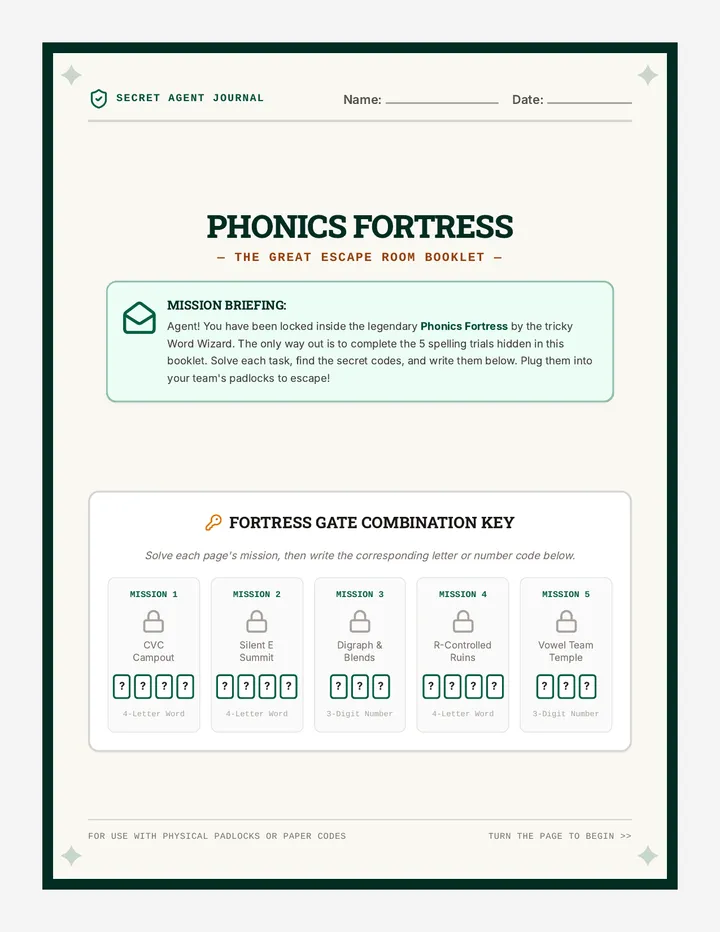
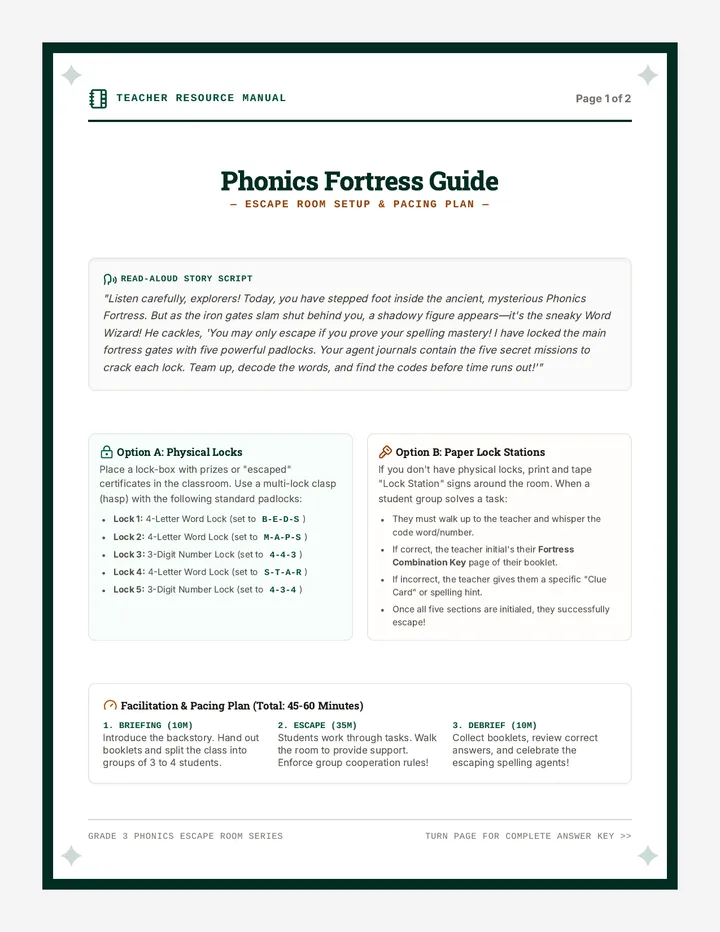
A comprehensive 5-day phonics breakout sequence where students complete daily independent spelling missions to crack codes. Covering CVC, Silent E, Digraphs/Blends, R-controlled vowels, and Vowel Teams, each day represents a new adventure challenge.
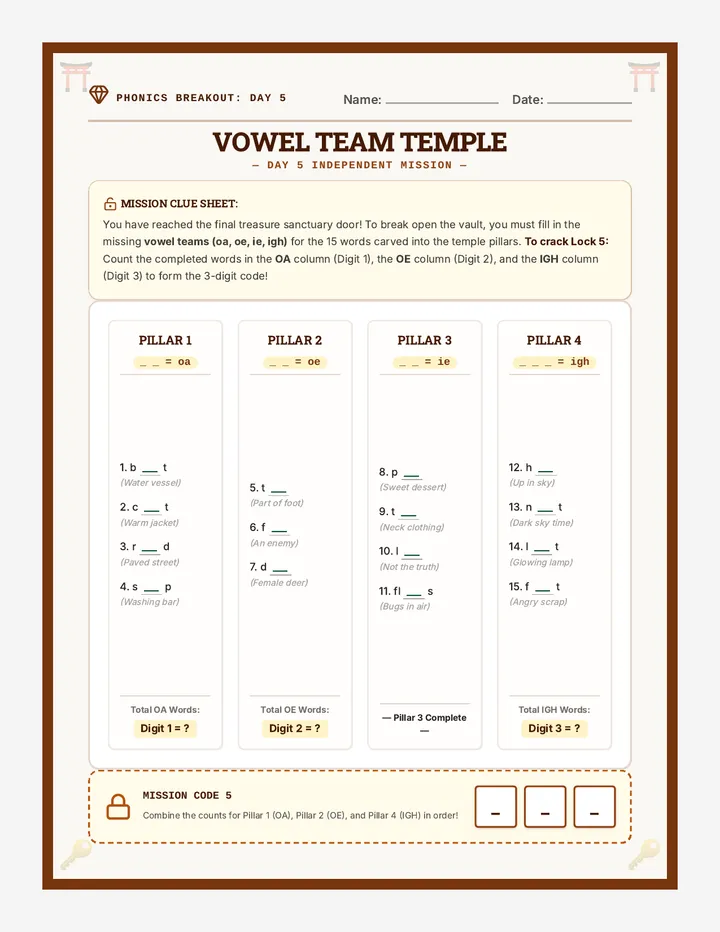
Day 5 of the Phonics Breakout Series. Students enter the Vowel Team Temple and solve vowel-team riddles (ai, ay, ee, ea, oa, oo) to open the final sanctuary vault with a 3-digit numeric code.
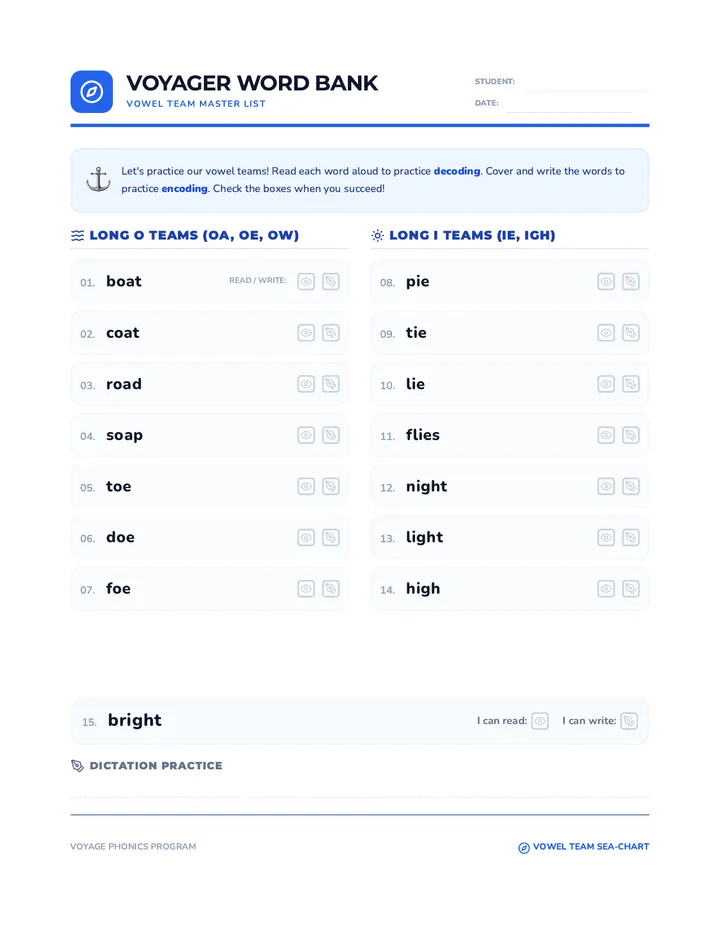
A printable phonics reference and student activity sheet featuring 15 targeted words with oa, oe, ie, and igh vowel teams. Includes check boxes for decoding (reading) and encoding (spelling) practice.
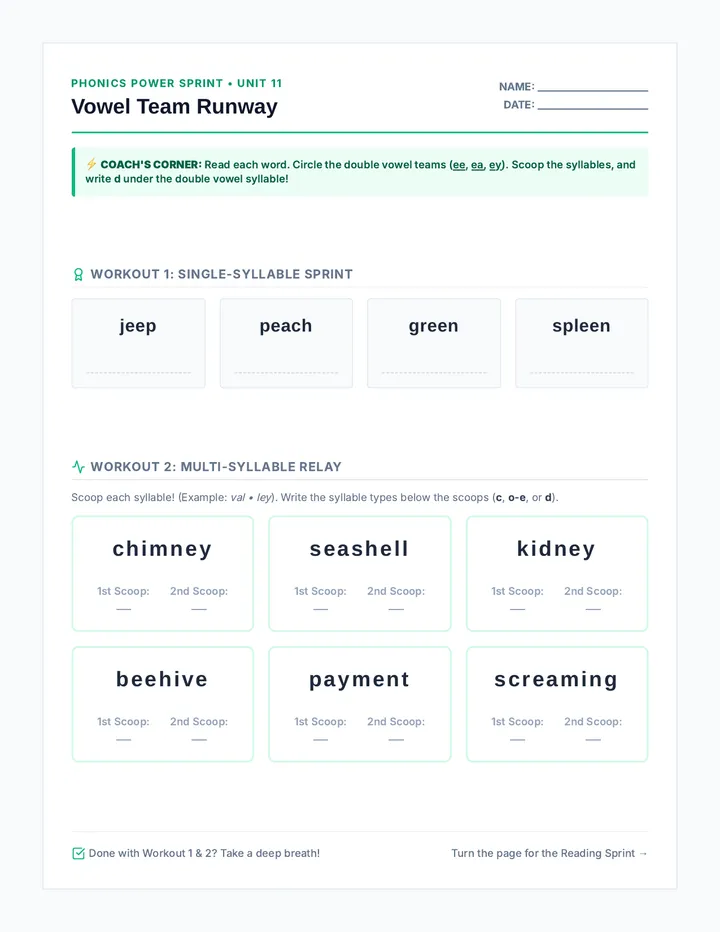
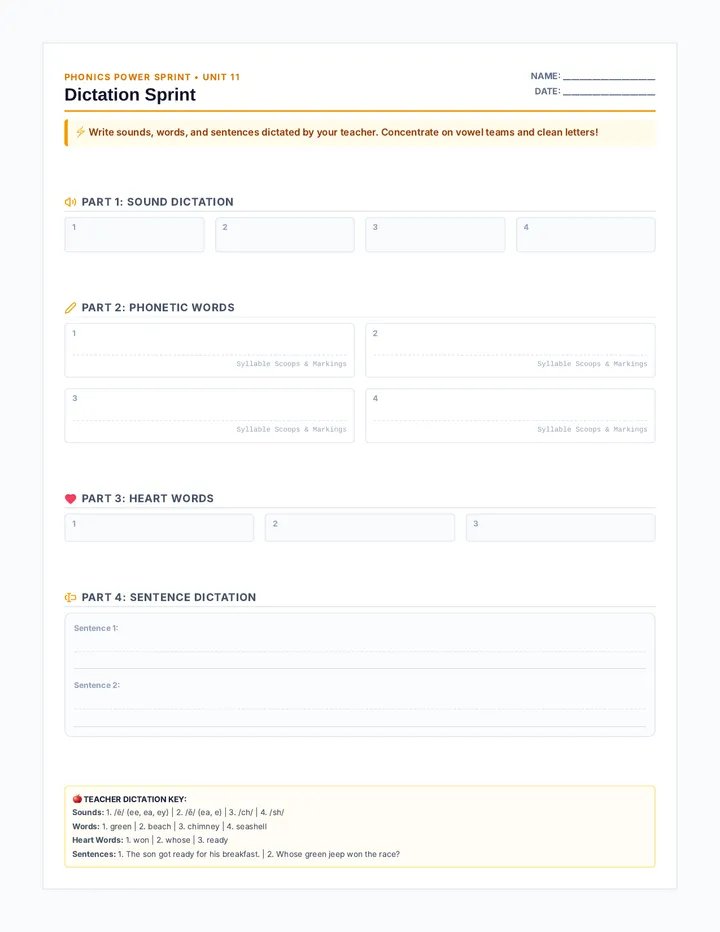
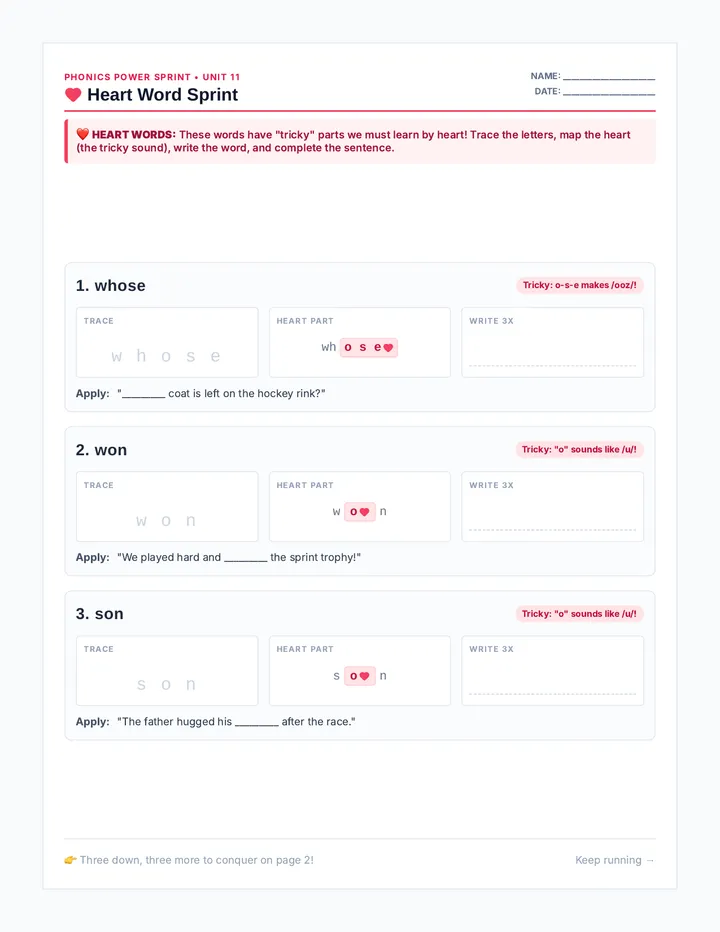
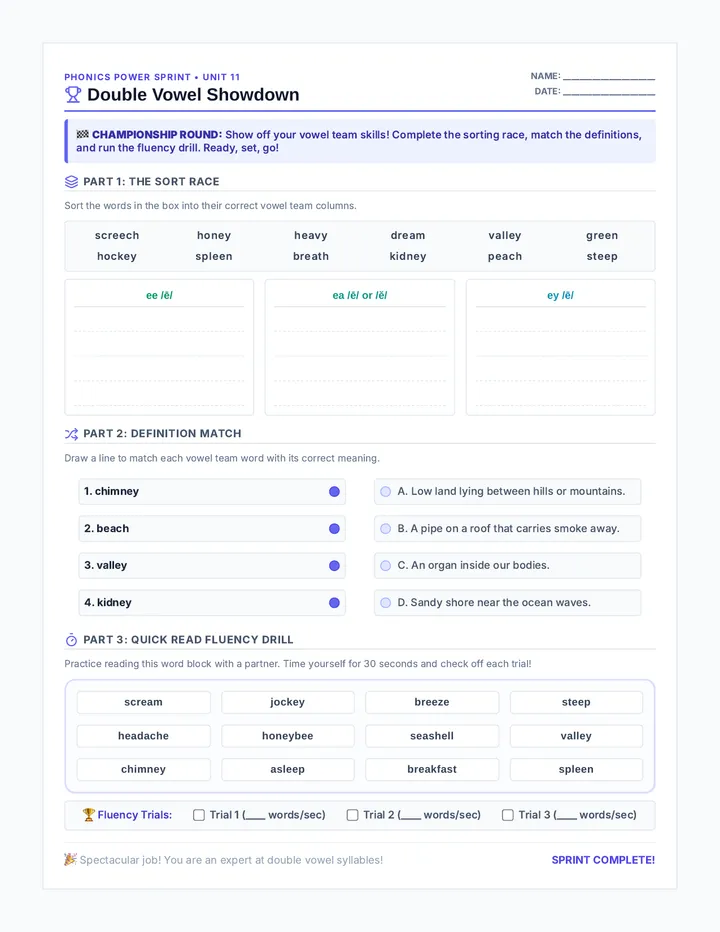
An accelerated, high-impact review of Fundations Level 2 phonics concepts, consolidating Units 11-17 into an intensive curriculum. This sequence focuses on double vowel syllables (vowel teams), multi-syllabic words, and essential high-frequency heart words to build rapid decoding and spelling mastery.
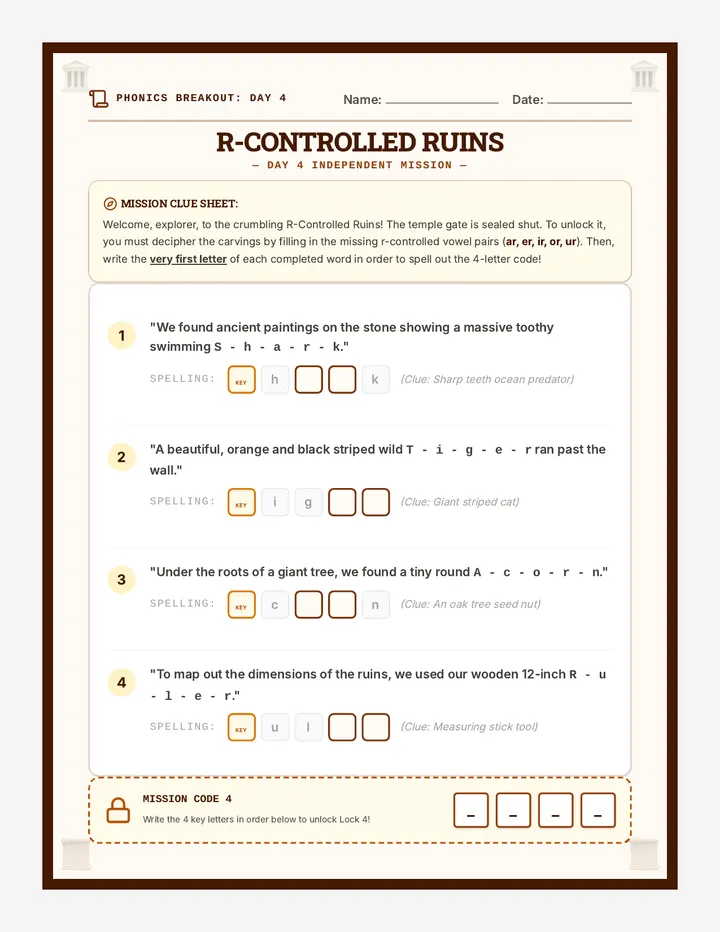
Day 4 of the Phonics Breakout Series. Students decipher ancient runes in the R-Controlled Ruins by writing missing ar, er, ir, or, and ur spelling patterns. Spells out a 4-letter word lock code.
Day 5 student worksheet for Vowel Team Temple. Features a sacred temple sanctuary theme, name/date inputs, a 15-word spelling fill-in-the-blank grid categorized by vowel teams (oa, oe, ie, igh), and a 3-digit numeric code box cracked by counting the completed words in each list.
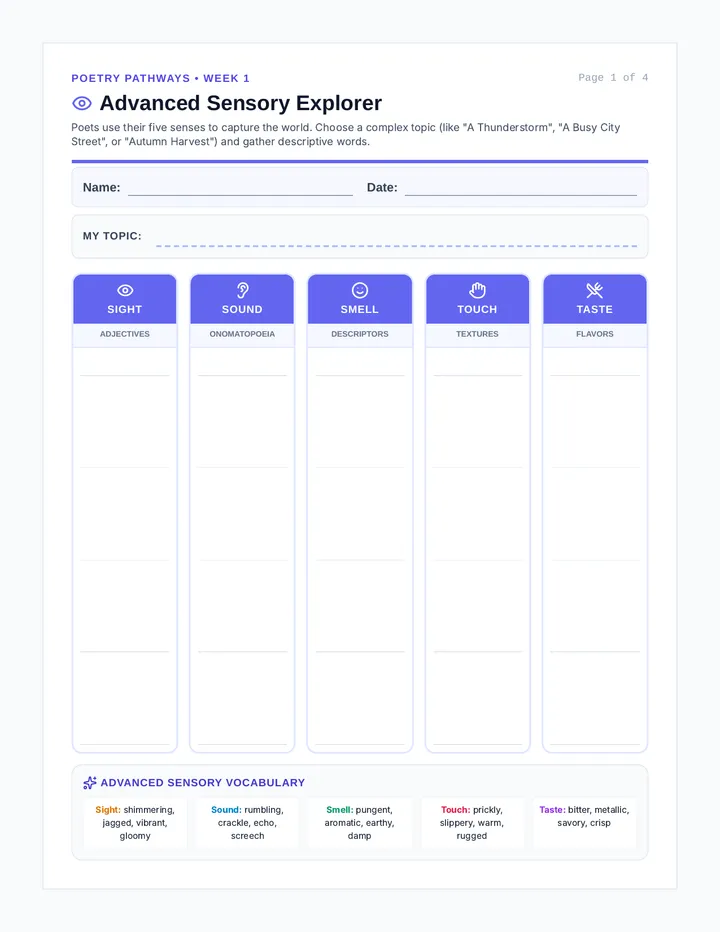
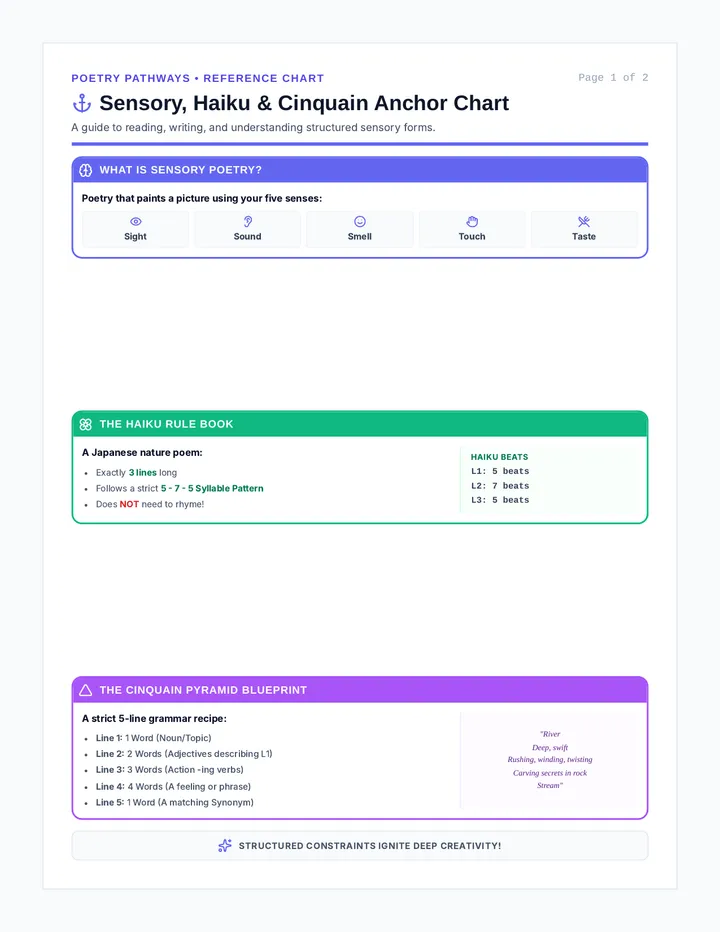
A comprehensive 4-week poetry curriculum designed for students requiring high structure and visual supports. It covers diverse poetry types (Haiku, Color, Acrostic, Couplets, Concrete, Free Verse, and Metaphor/Simile) with scaffolds like word banks, sentence frames, and graphic organizers.
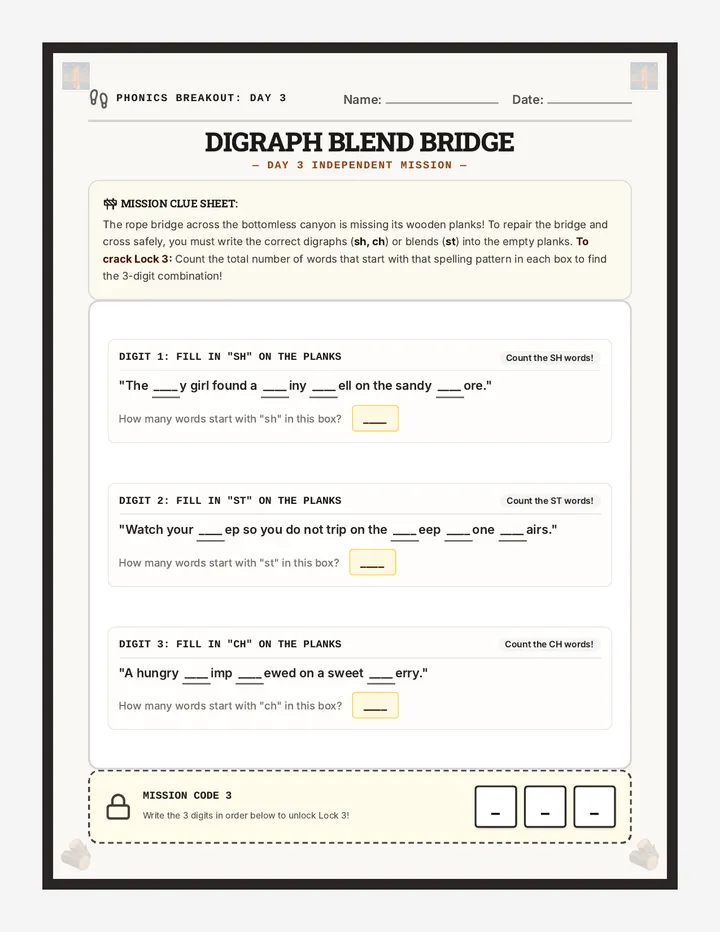
Day 3 of the Phonics Breakout Series. Students cross the rickety Digraph & Blend Bridge. They fill in missing blends and digraphs (sh, ch, th, st, gr, bl) and count word patterns to unlock a 3-digit numeric code lock.
Day 4 student worksheet for R-Controlled Ruins. Features an ancient stone ruins theme, name/date inputs, 4 spelling challenges requiring ar, er, ir, or, and ur fill-ins, and a designated combination box to solve a 4-letter word lock.
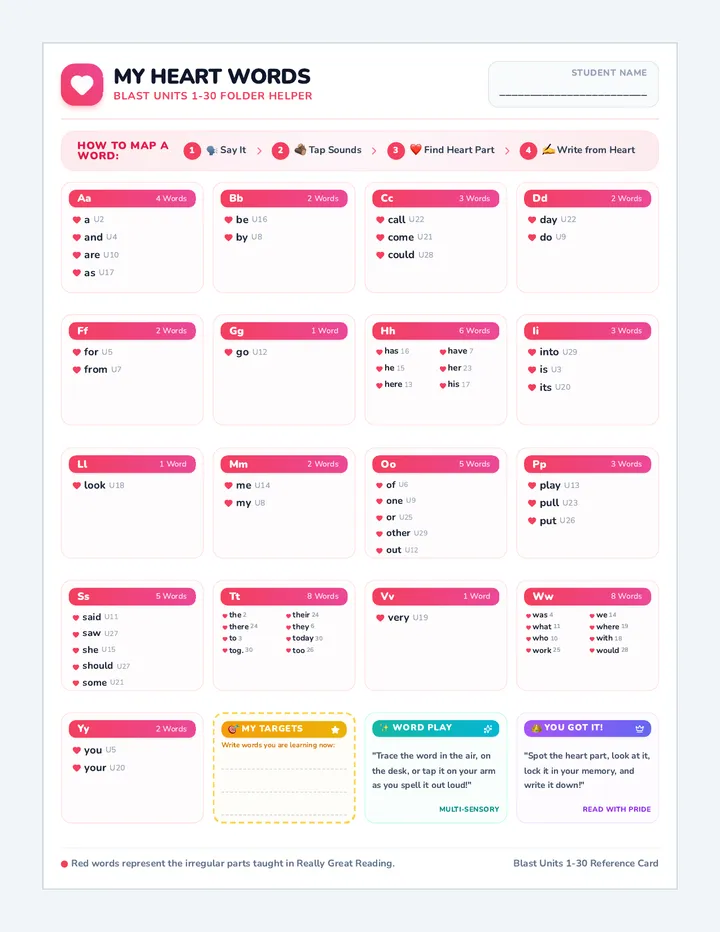
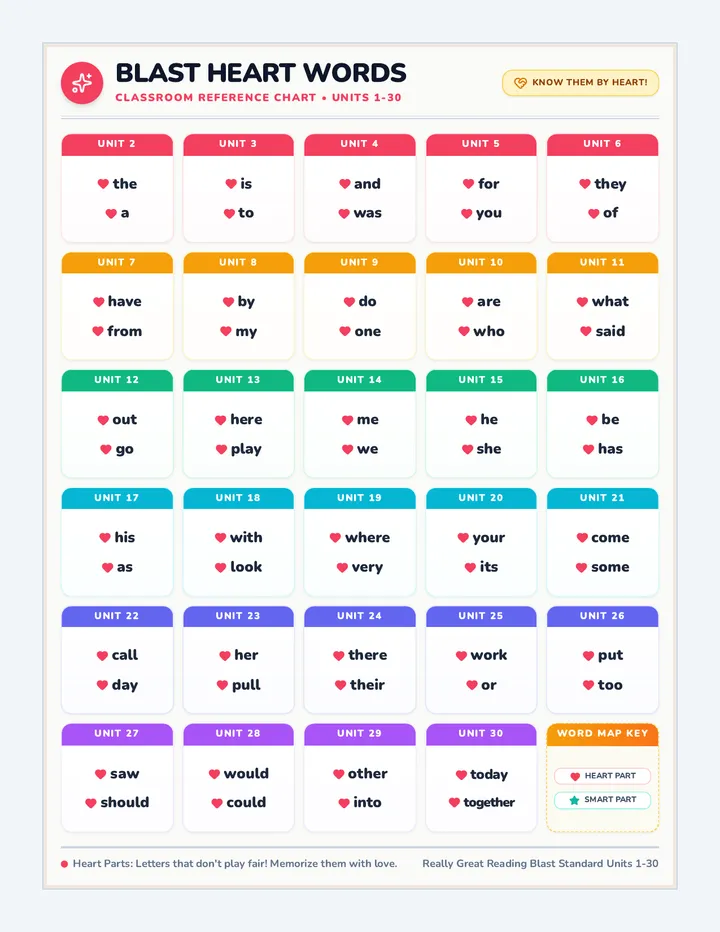
A complete suite of orthographic mapping references and student folder aids for Really Great Reading curricula, featuring both Countdown and Blast levels.
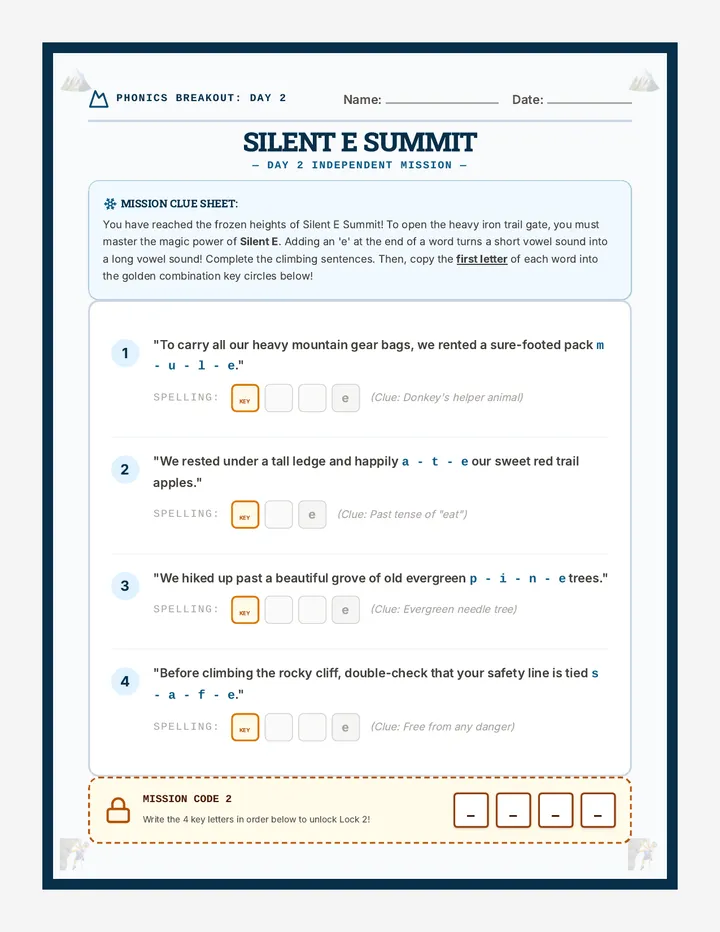
Day 2 of the Phonics Breakout Series. Students hike up the Silent E Mountain and use the magic power of silent letters to turn short vowel words into long vowel words. Spells out a 4-letter word lock code.
Day 3 student worksheet for Digraph & Blend Bridge. Features a rope bridge canyon theme, name/date inputs, fill-in-the-blank spelling challenges with digraphs and consonant blends (sh, st, ch), and count boxes to decode a 3-digit numeric code.