A targeted reteach lesson for RI.6.8 focusing on tracing claims, evaluating evidence, and distinguishing facts from opinions through a detective-themed investigation.
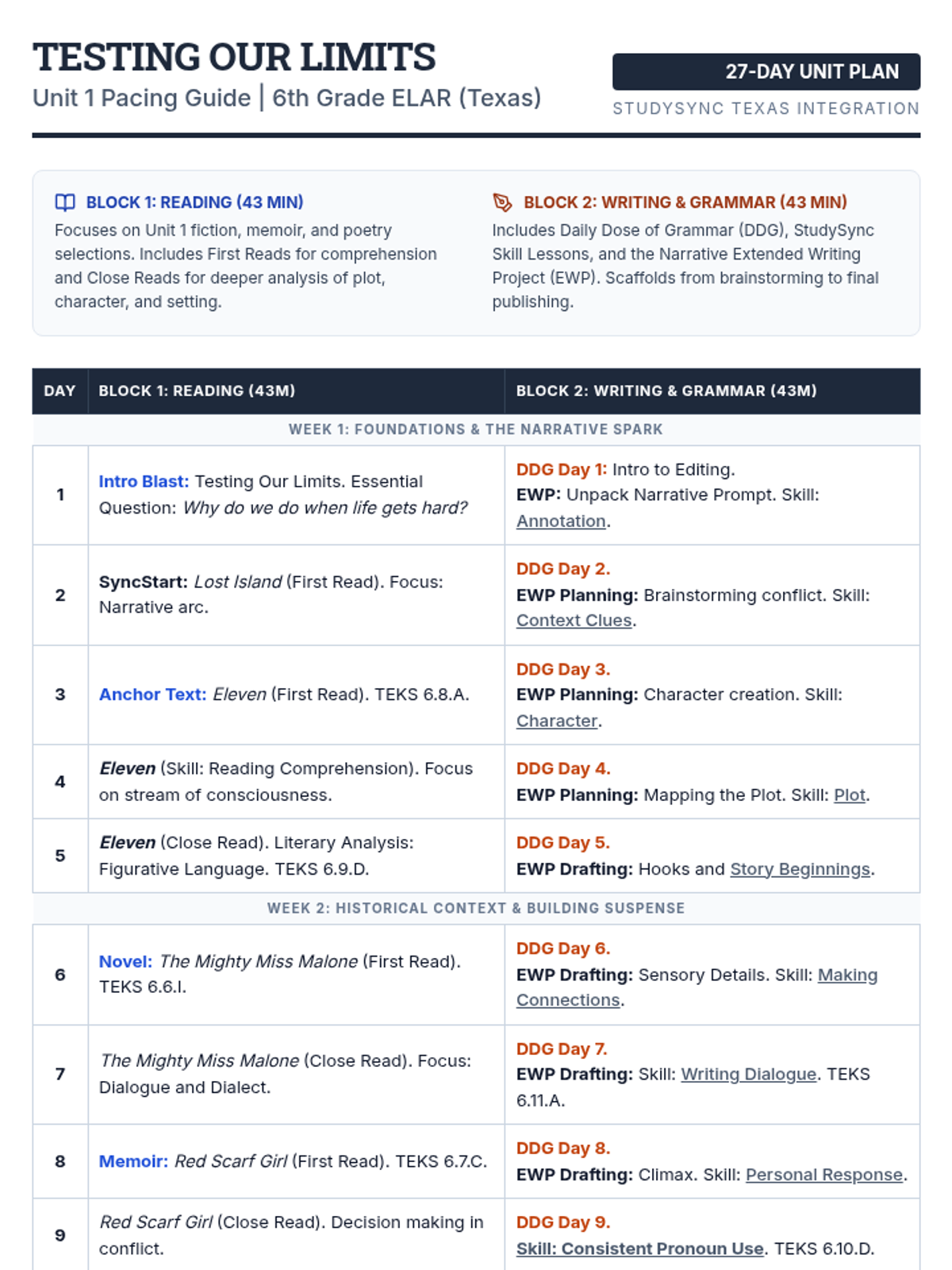
A 27-day teacher's guide and pacing document for Unit 1, split into Reading and Writing blocks.
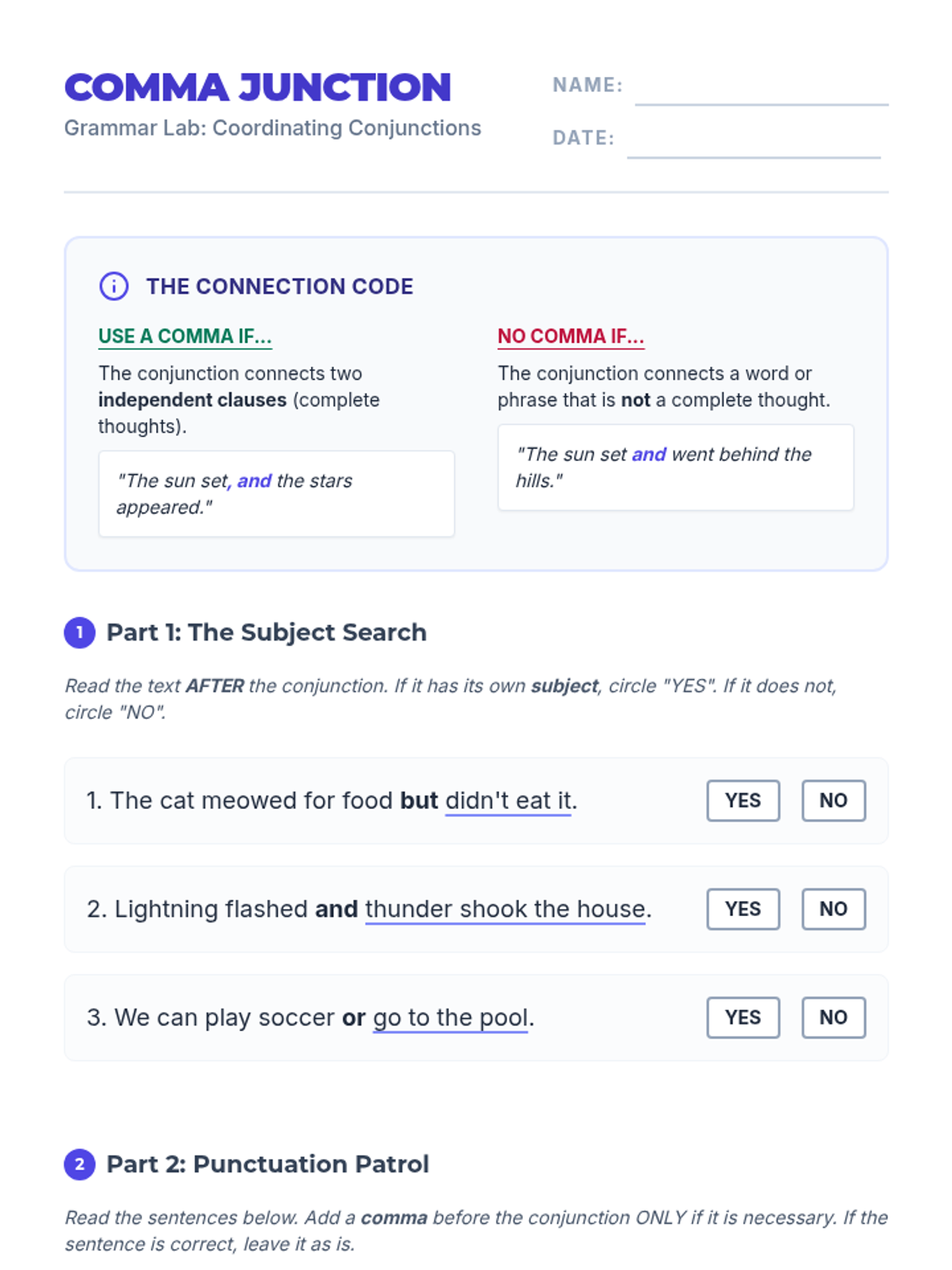
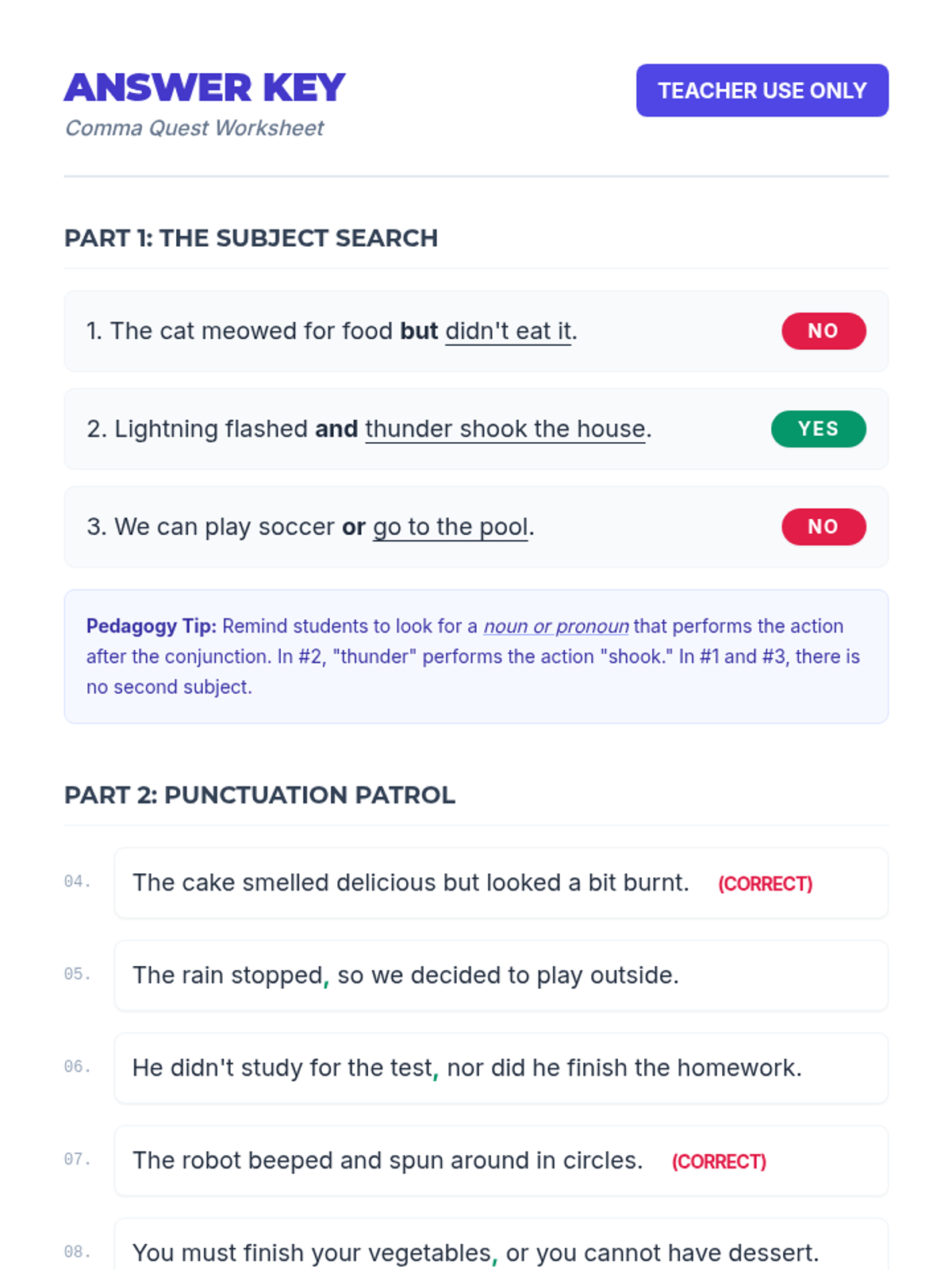
This lesson teaches students to distinguish between compound sentences that require a comma before a coordinating conjunction and simple sentences with compound parts that do not.
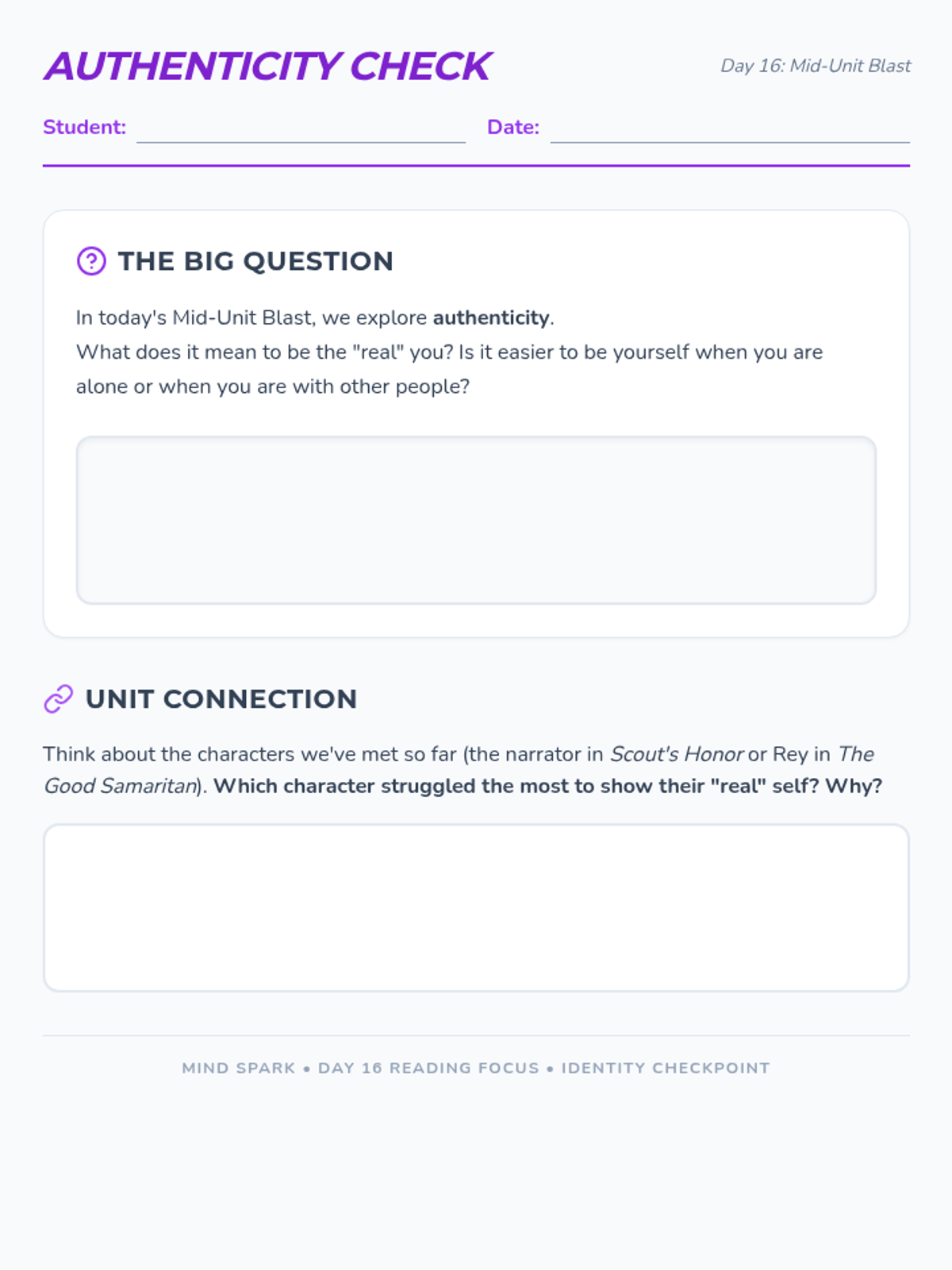
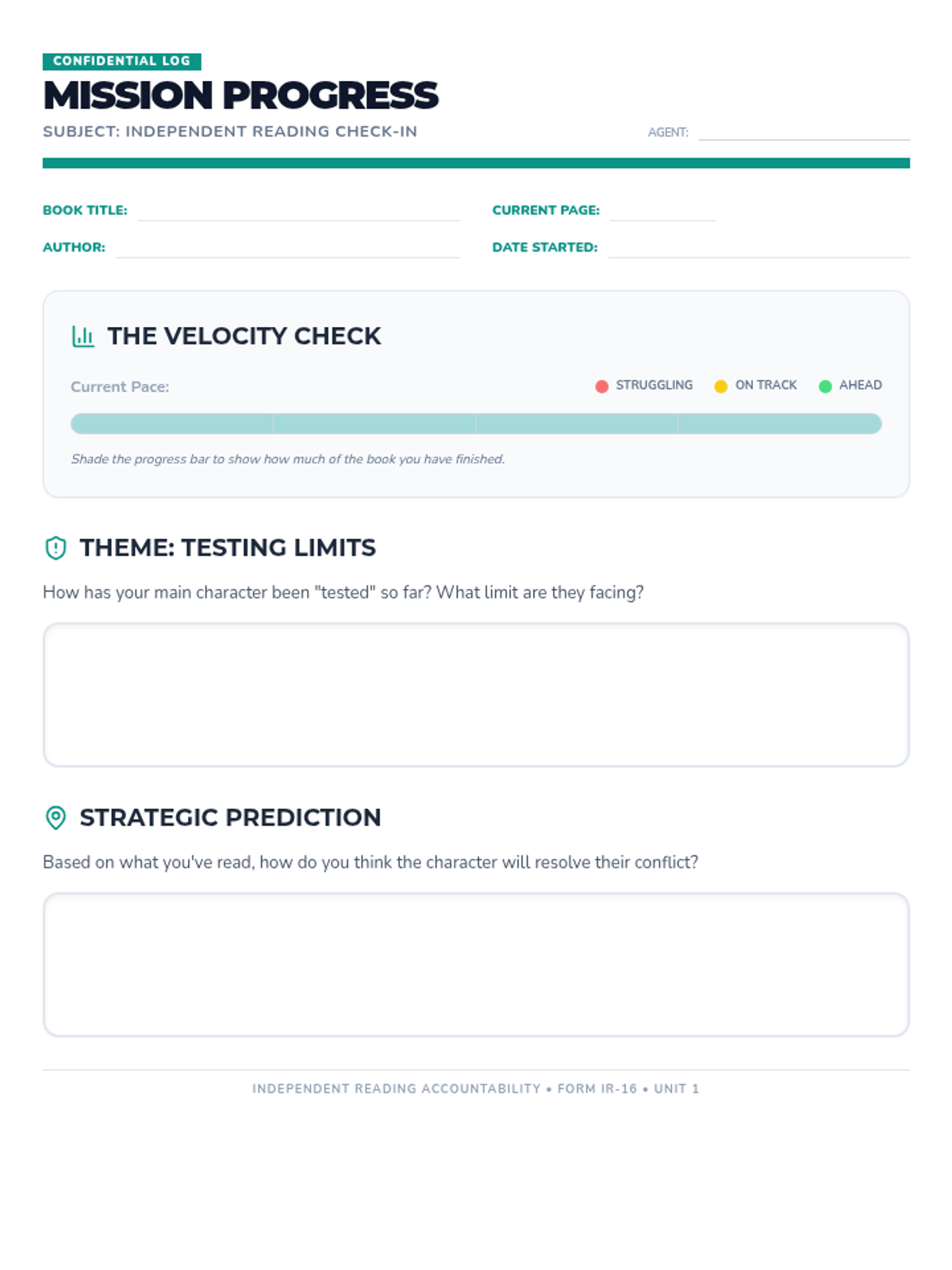
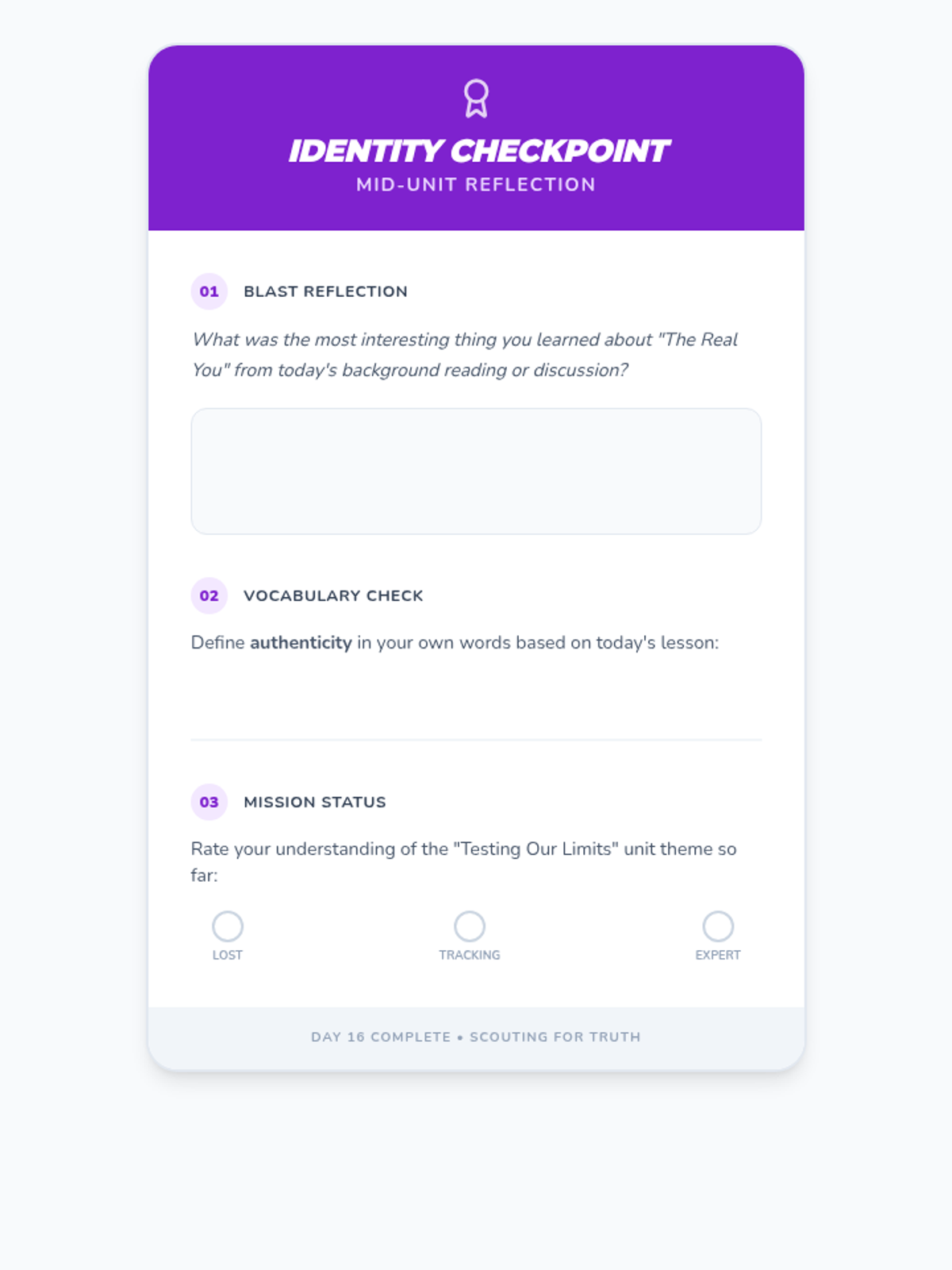
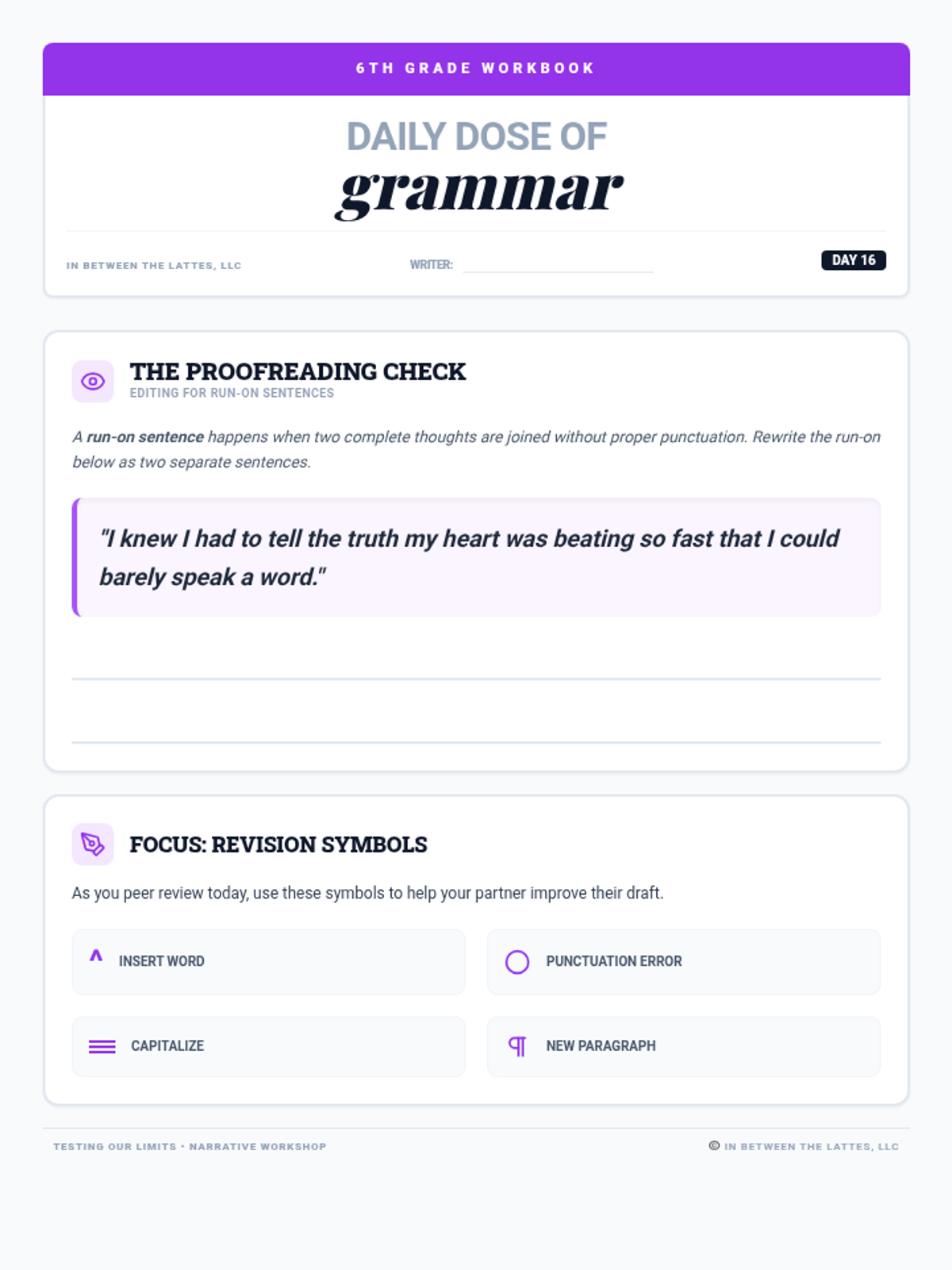
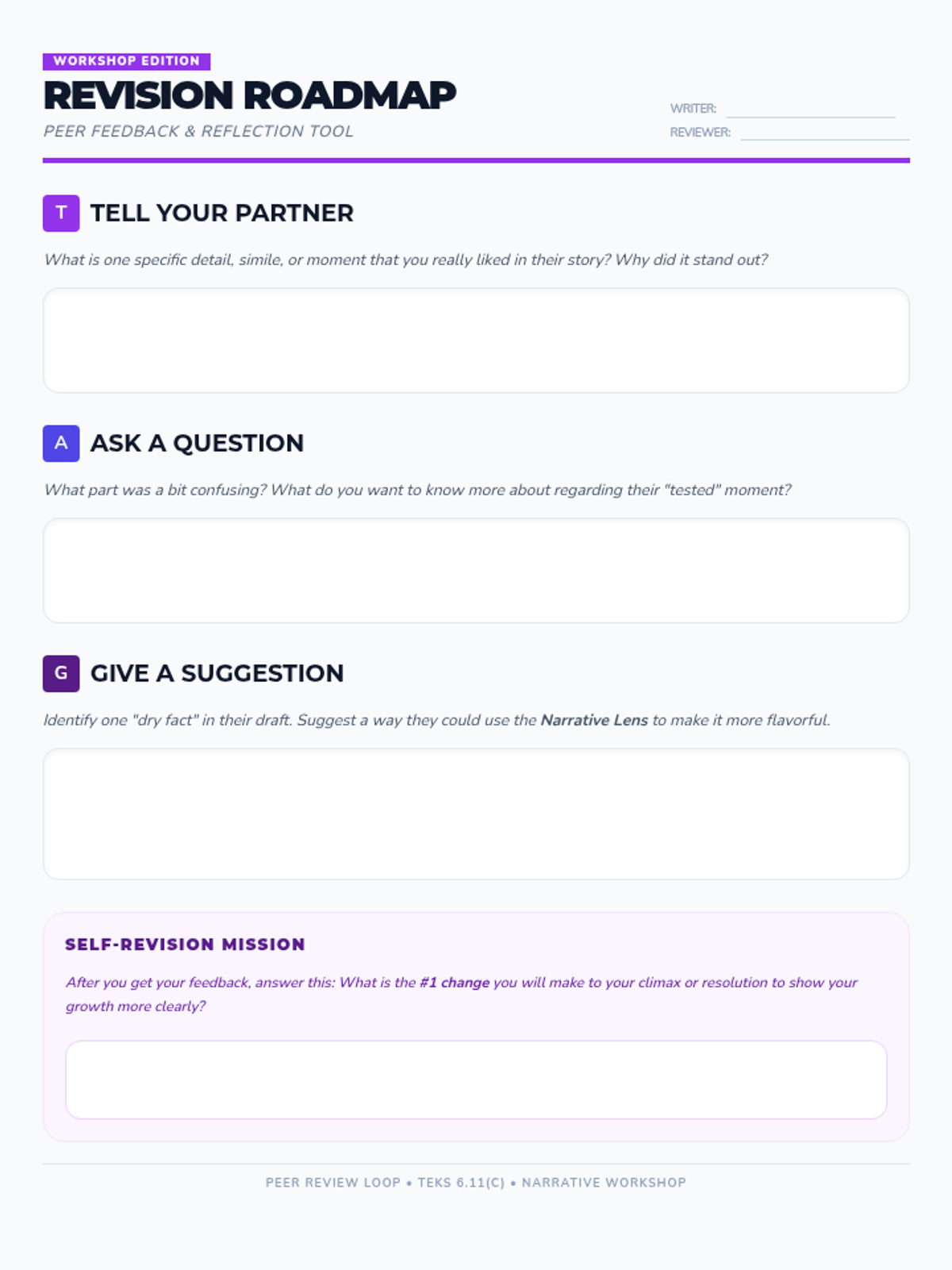
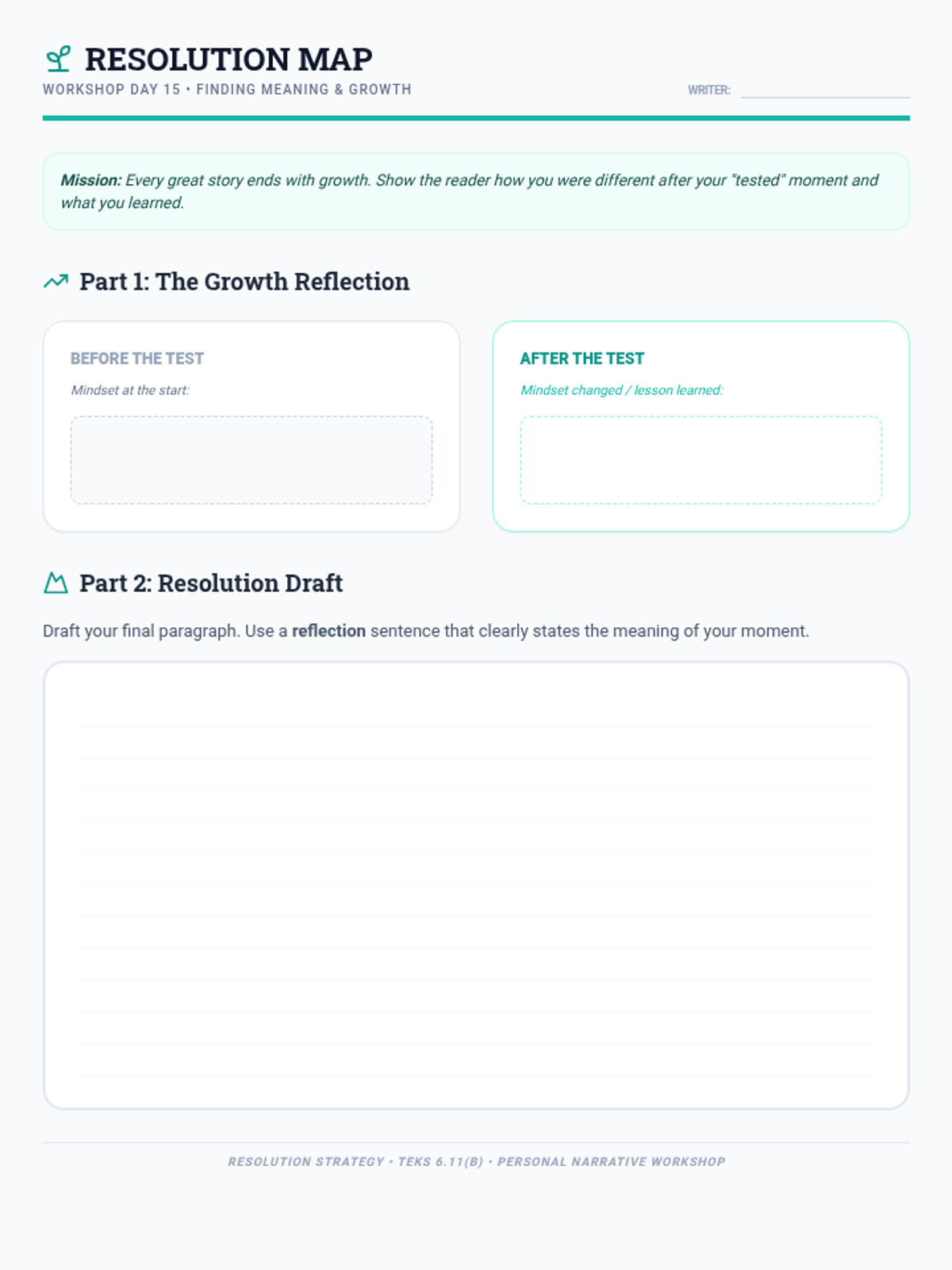
A mid-unit checkpoint focused on the 'The Real You' Blast and independent reading accountability. Students explore themes of identity and authenticity while engaging in peer review for their personal narrative drafts.
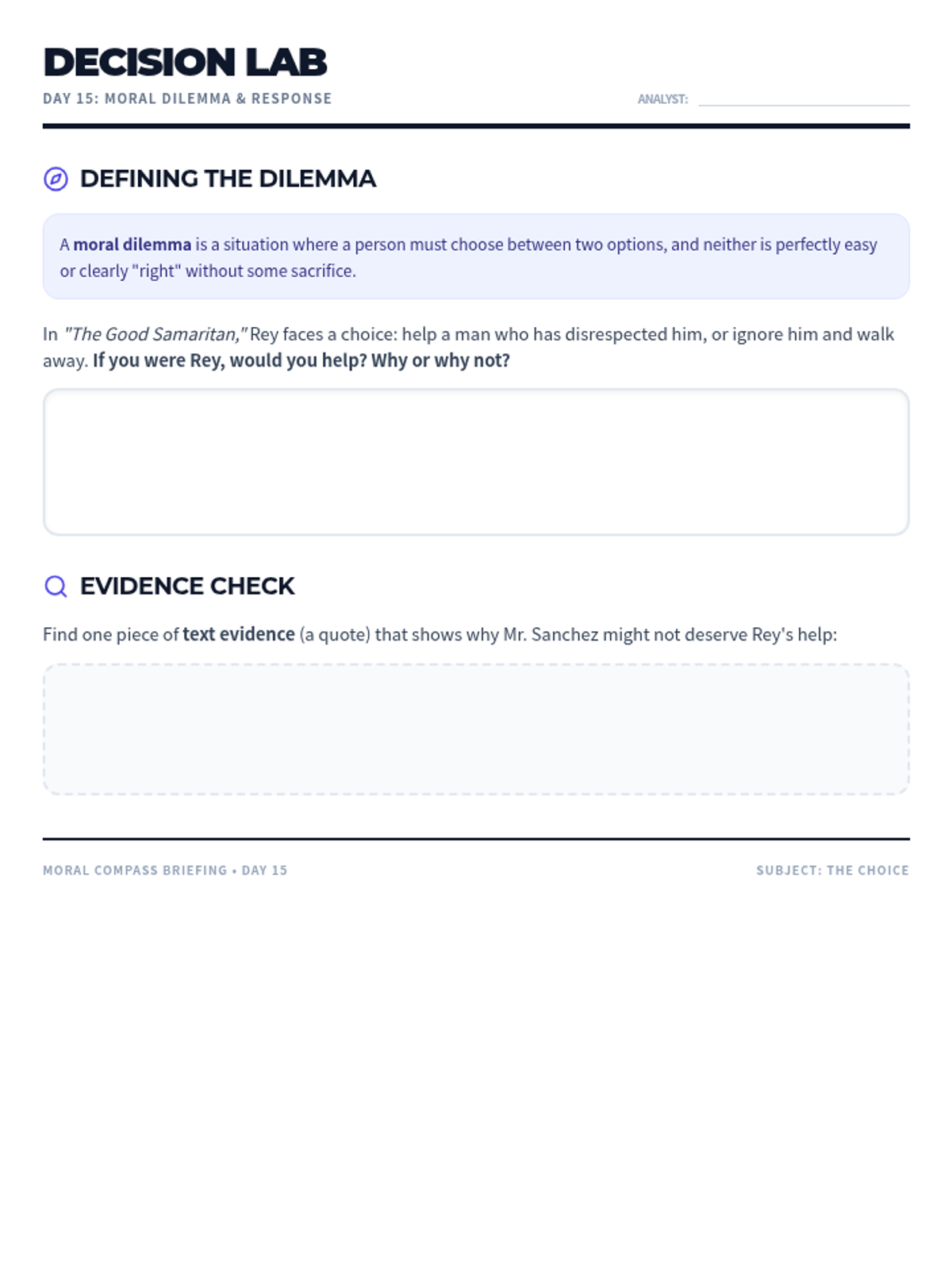
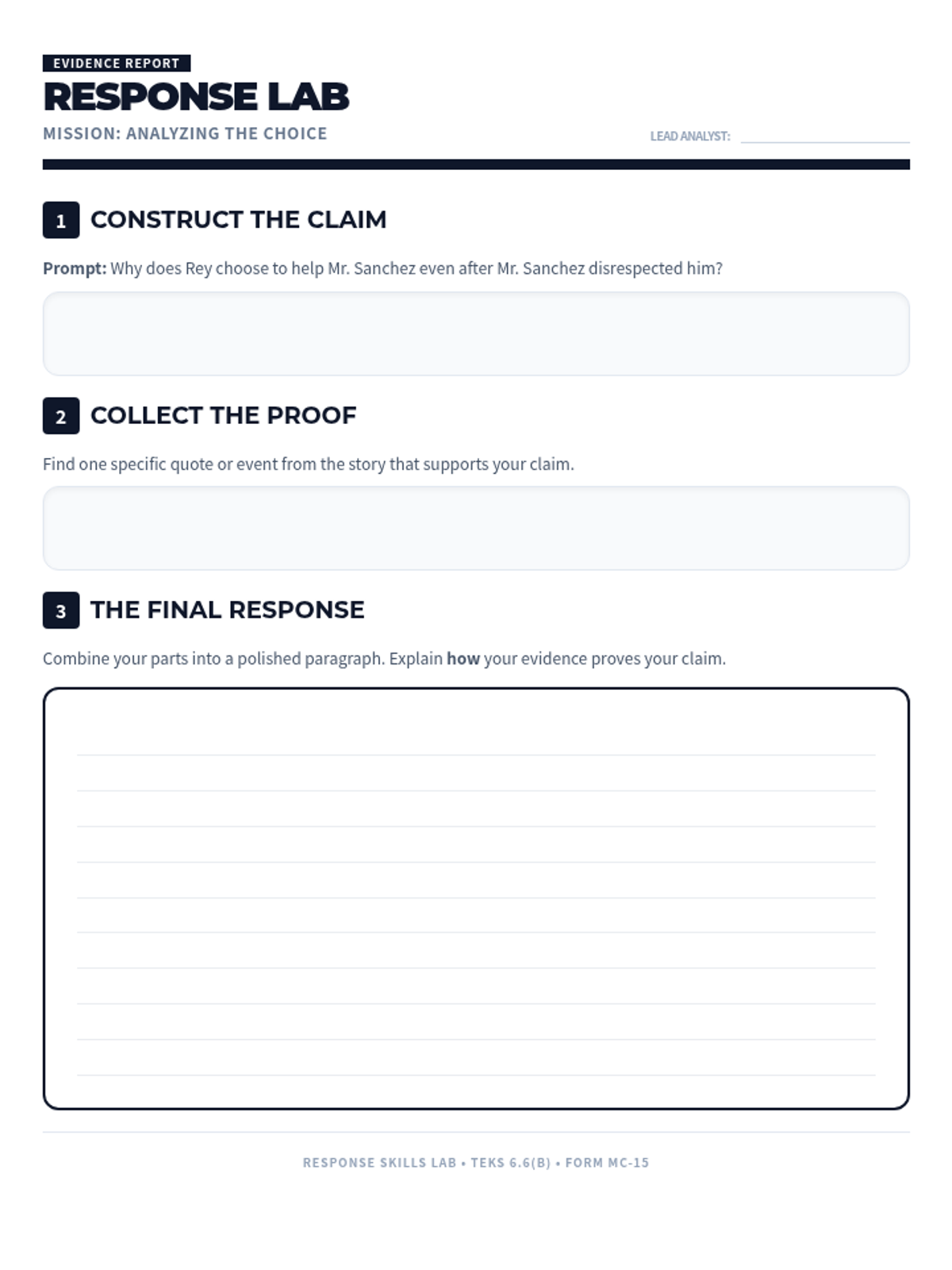
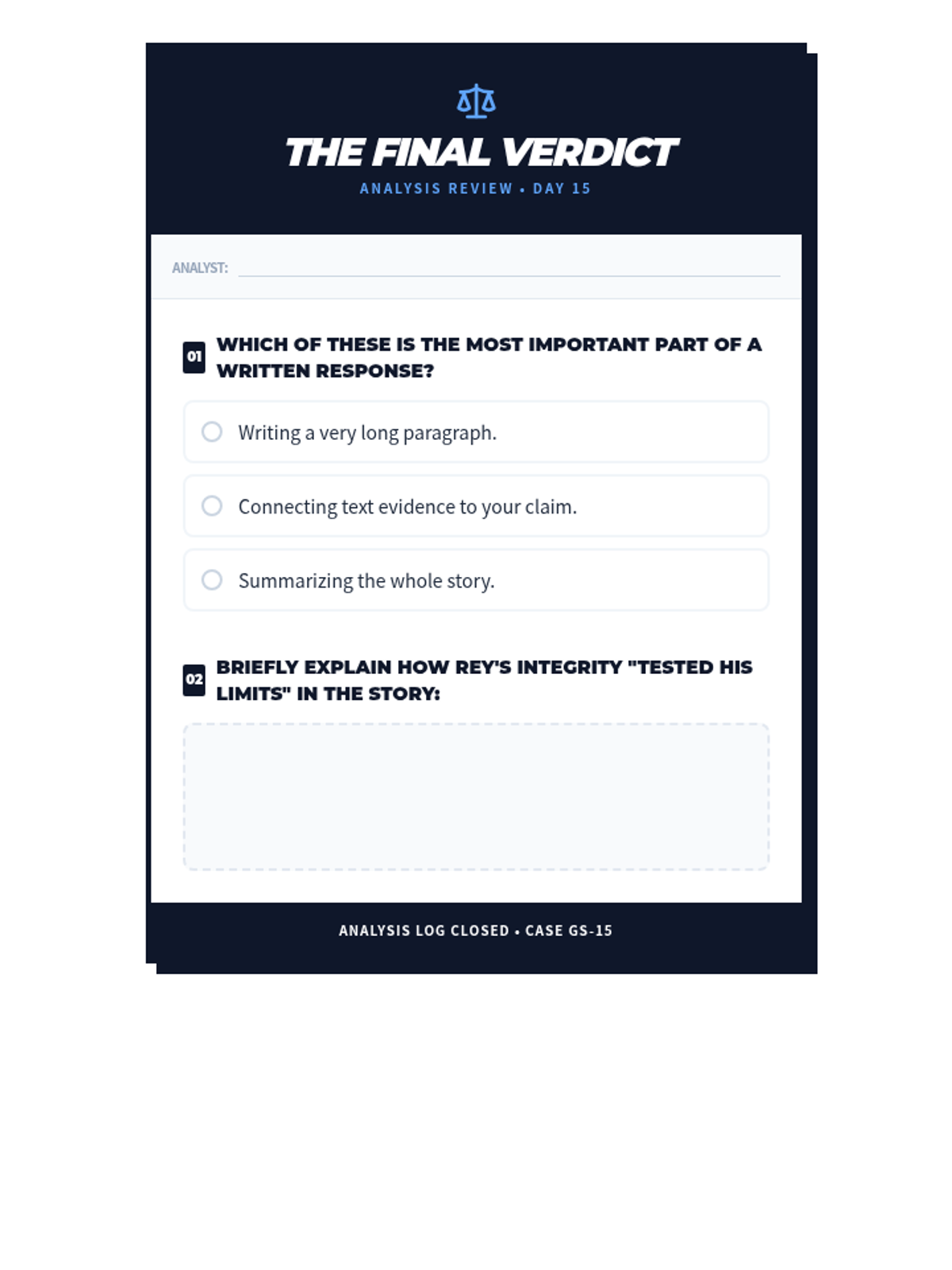
A lesson focusing on TEKS 6.6(B) written response skills through the analysis of the moral dilemma in 'The Good Samaritan'. Students practice crafting well-supported responses that connect character choices to central themes.
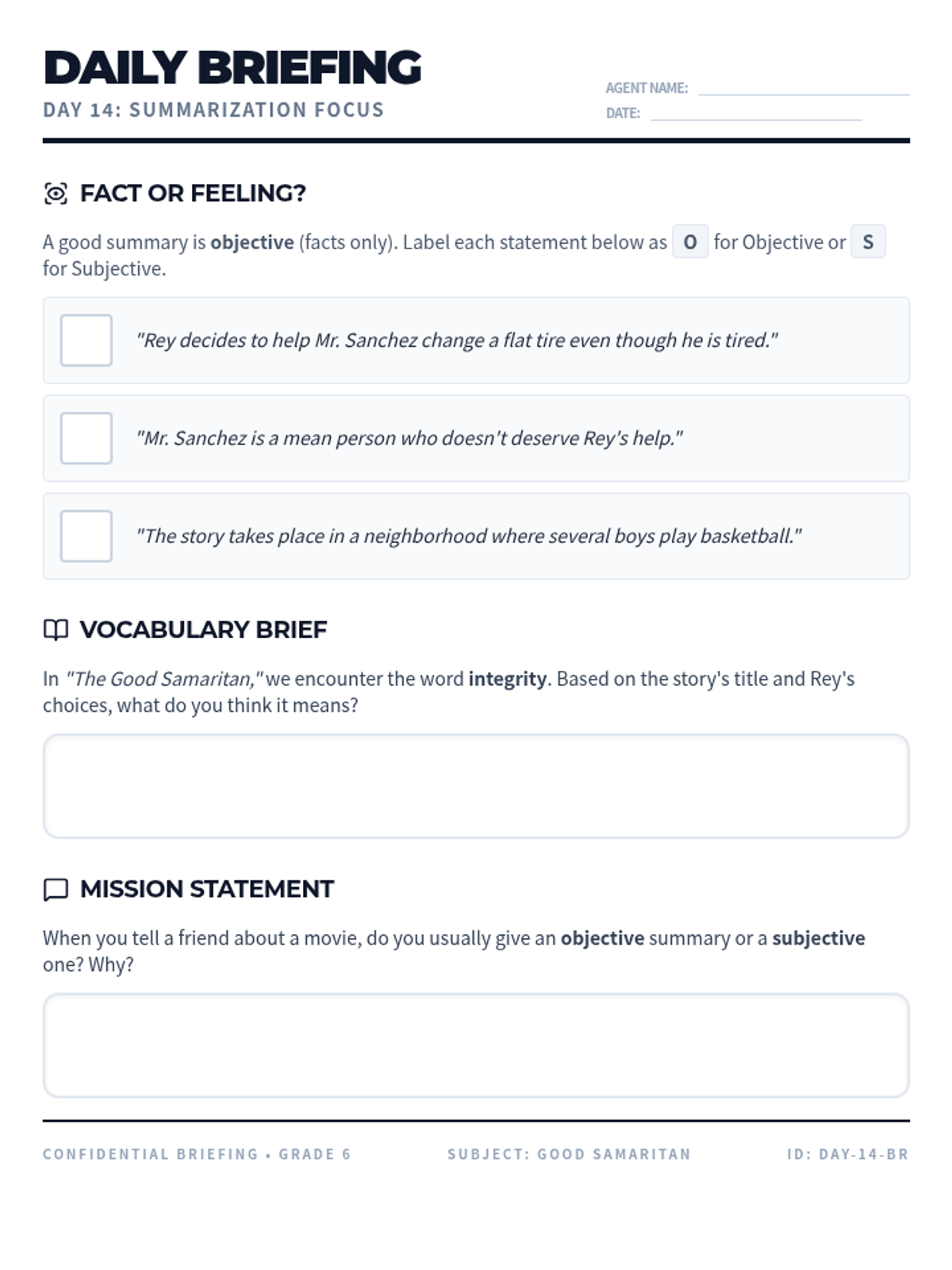
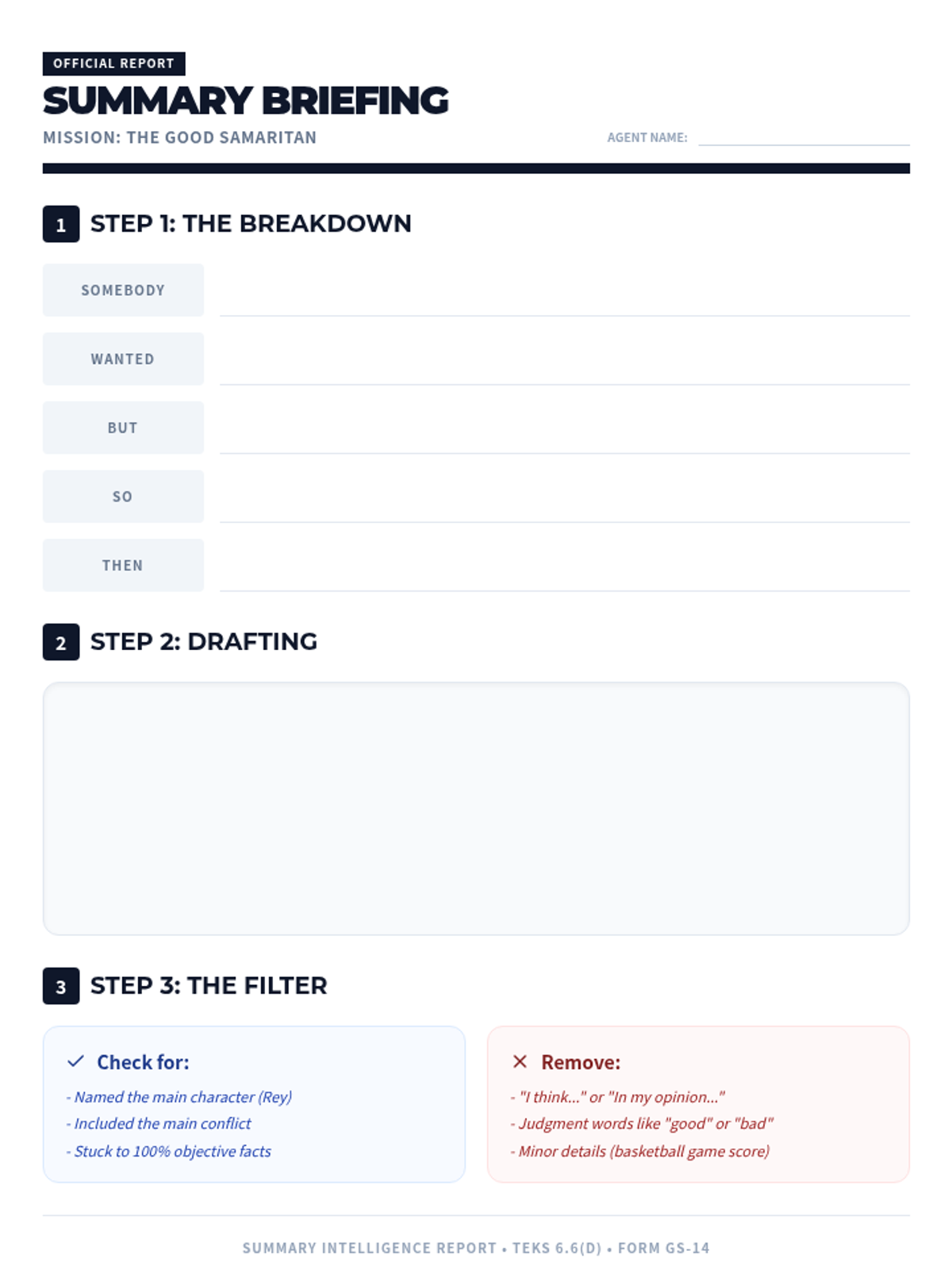
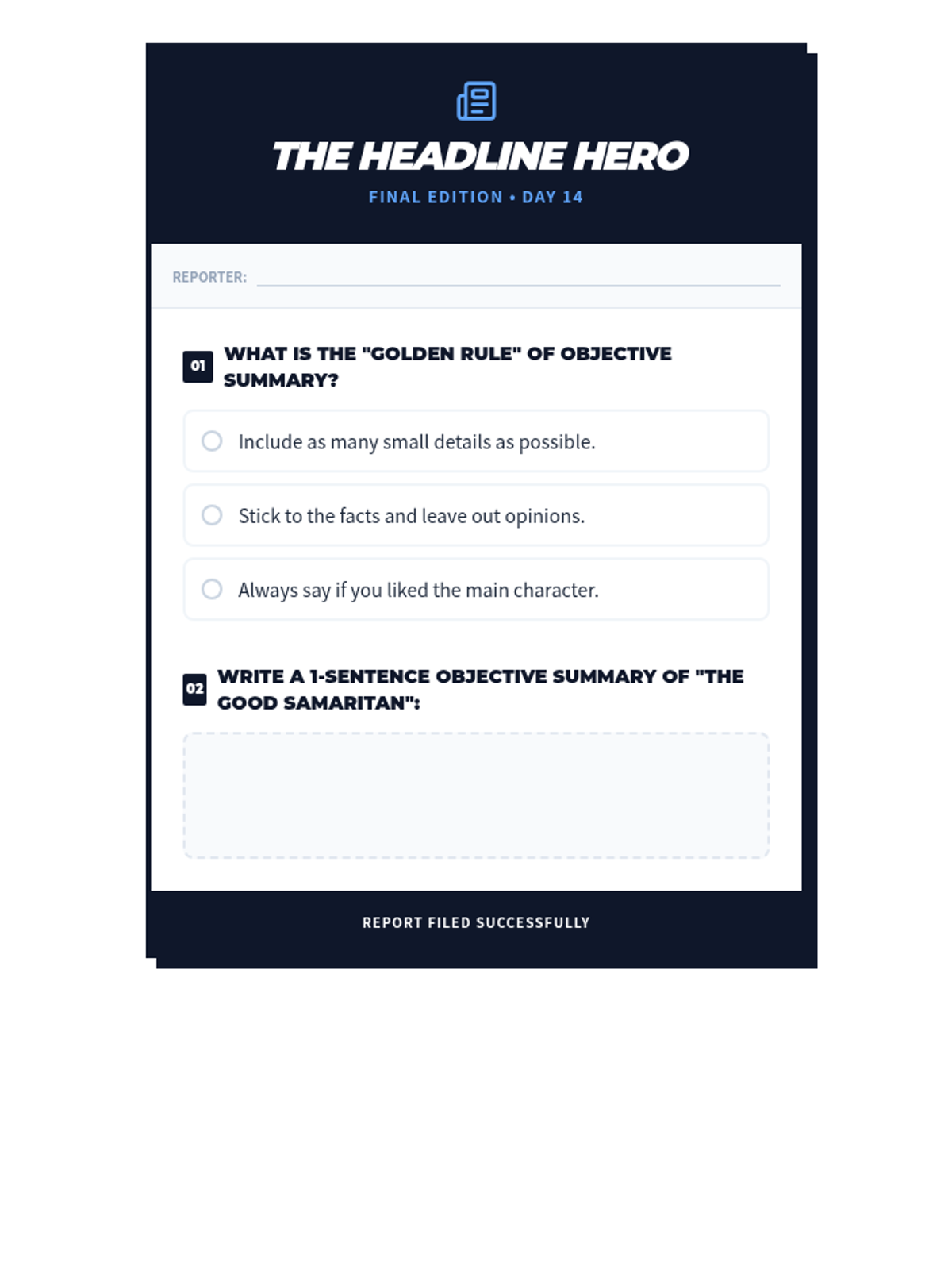
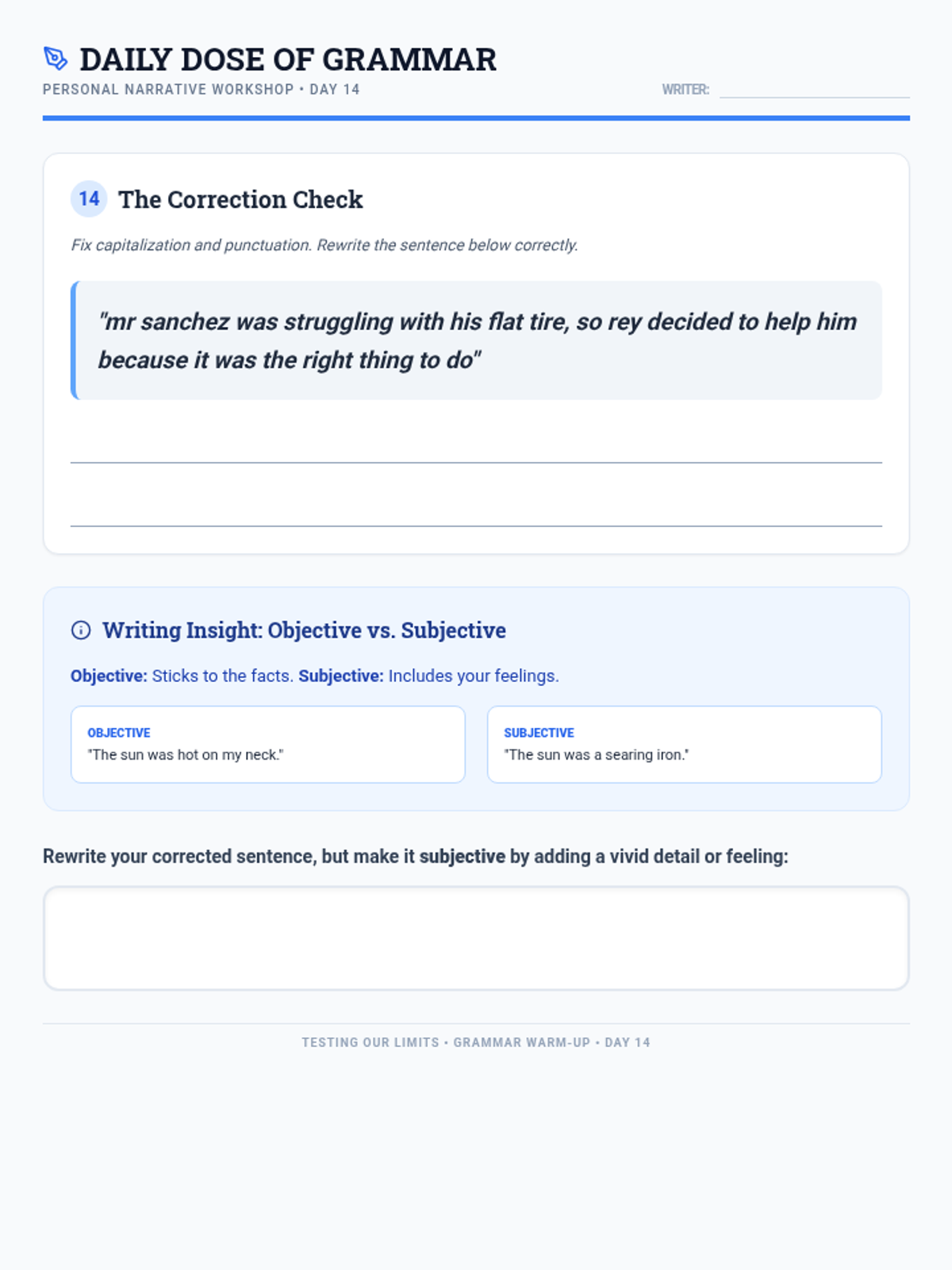
A lesson focused on developing effective summarization skills through the story 'Good Samaritan'. Students learn to distinguish between objective and subjective details while using the 'Somebody Wanted But So Then' (SWBST) method to capture the narrative arc.
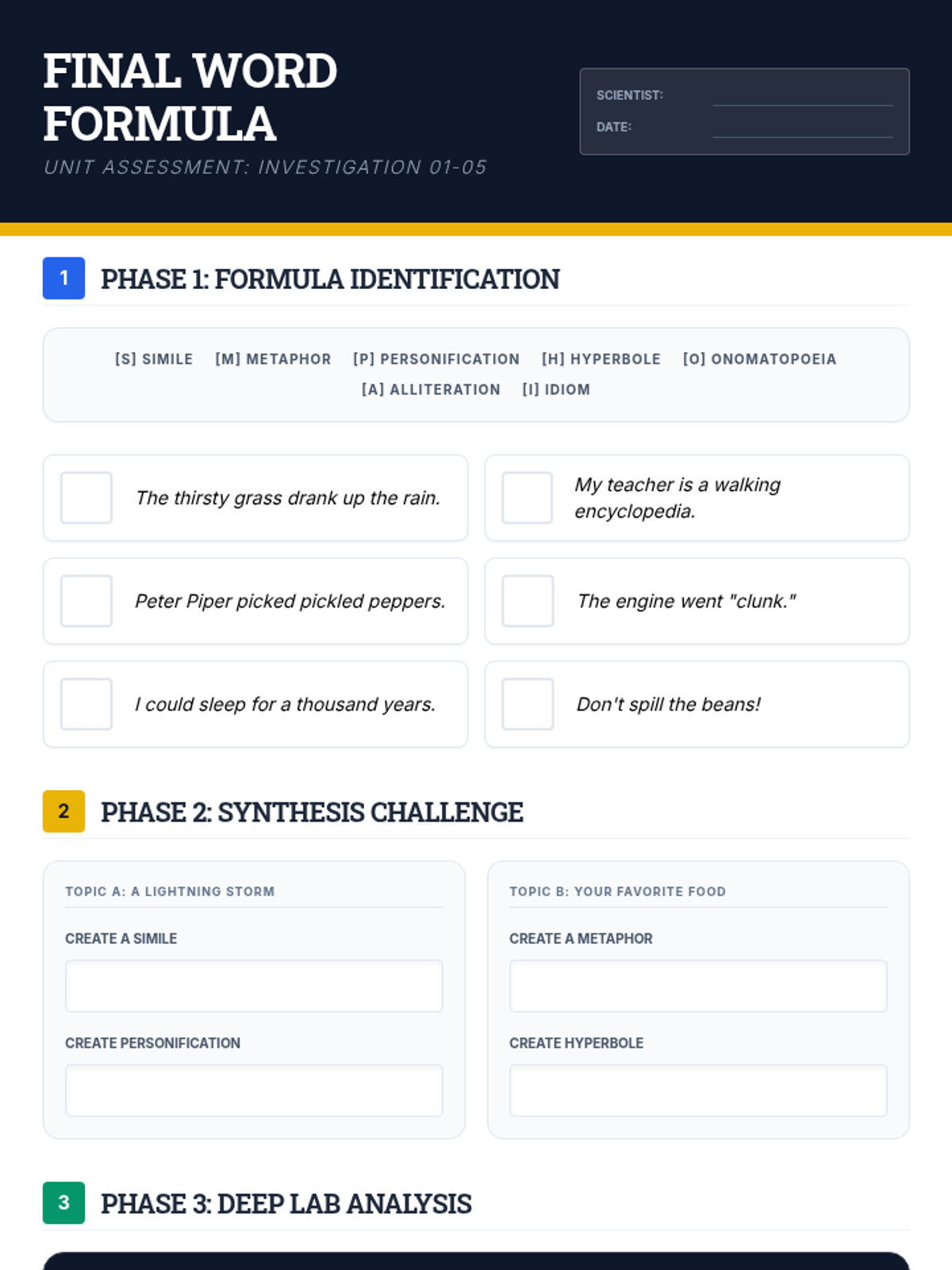
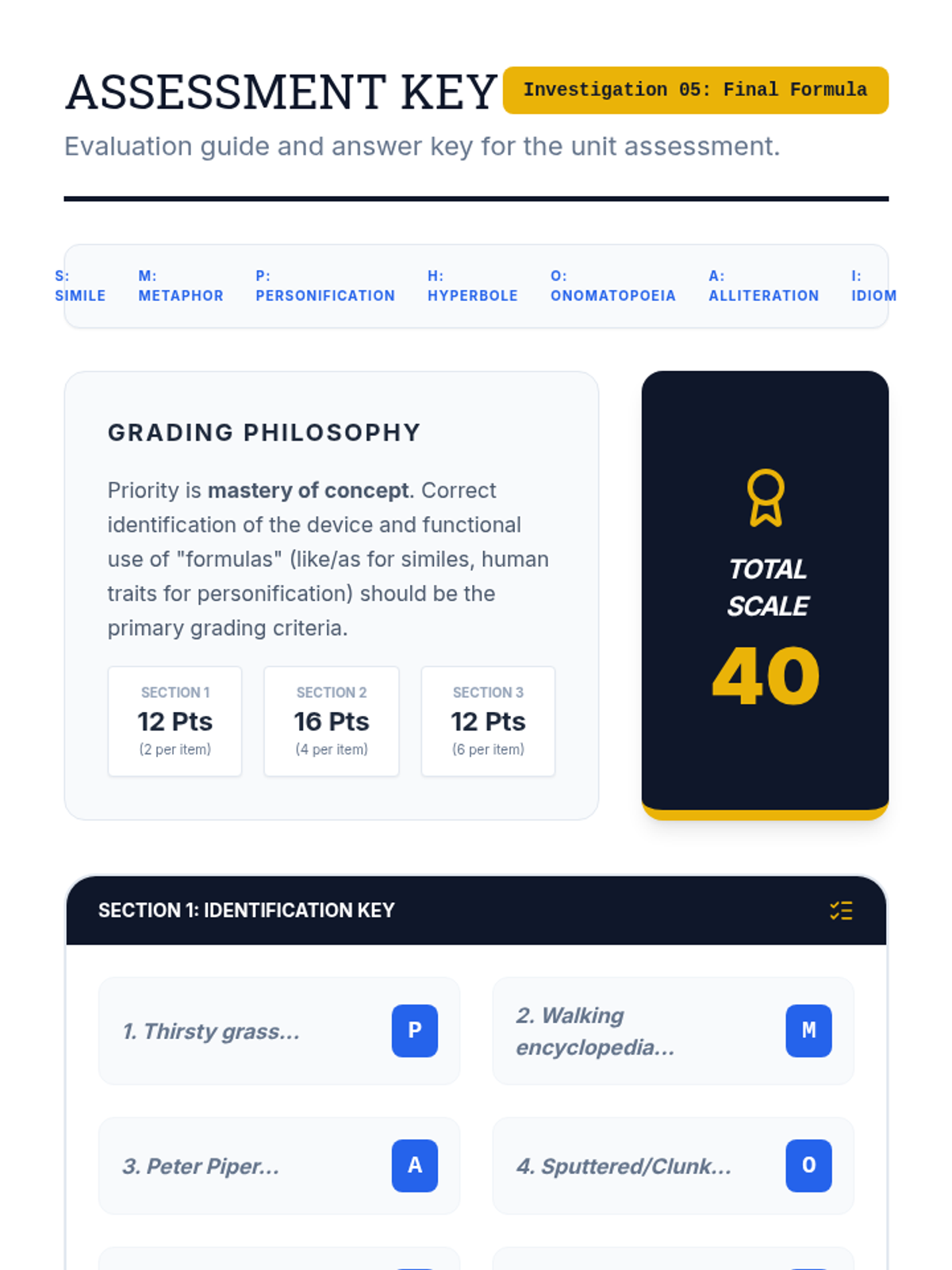
A cumulative review and final assessment of all figurative language types covered during the week-long investigation.
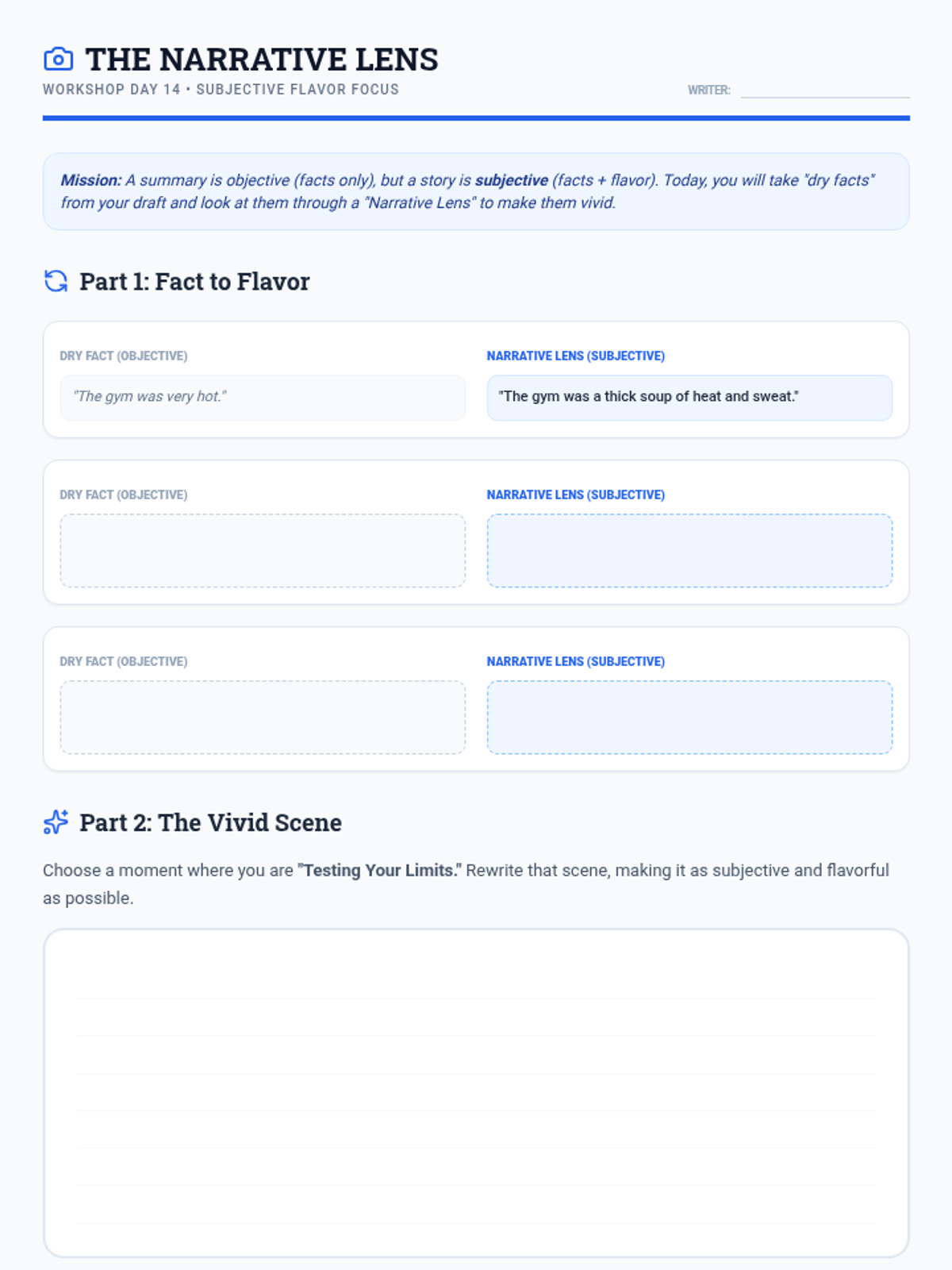
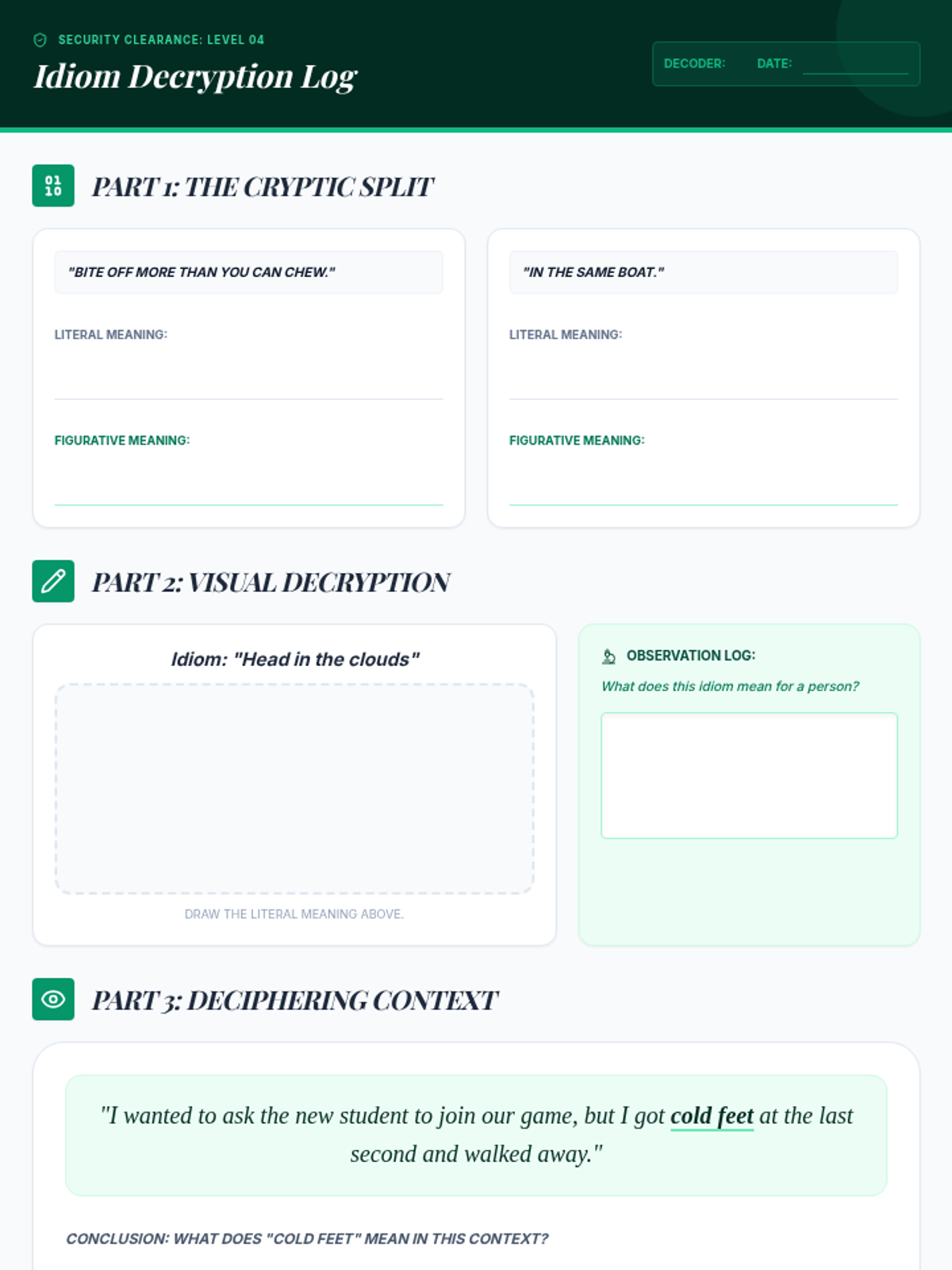
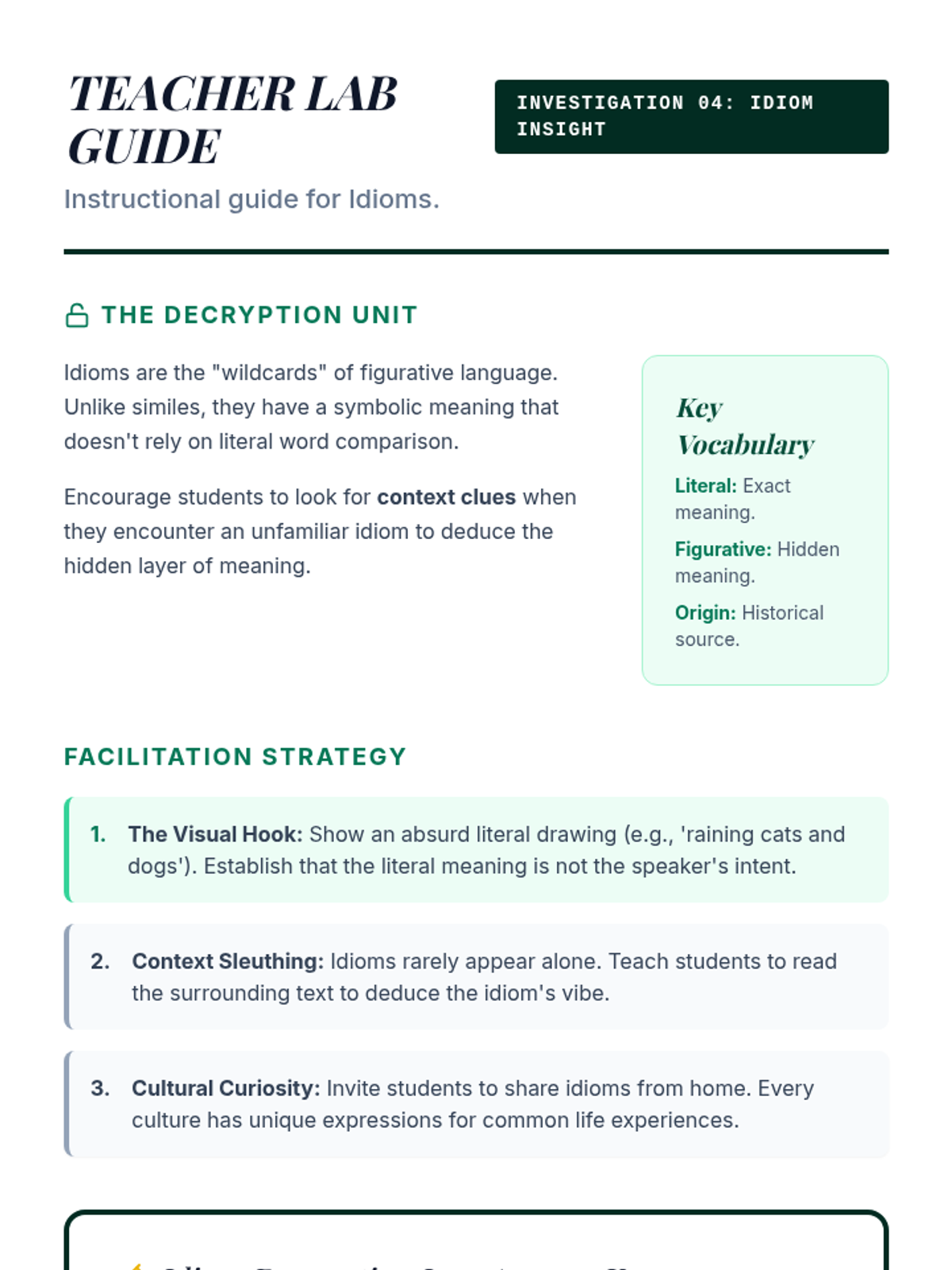
Students decode the strange and quirky world of idioms, learning to interpret figurative meanings rather than literal definitions.
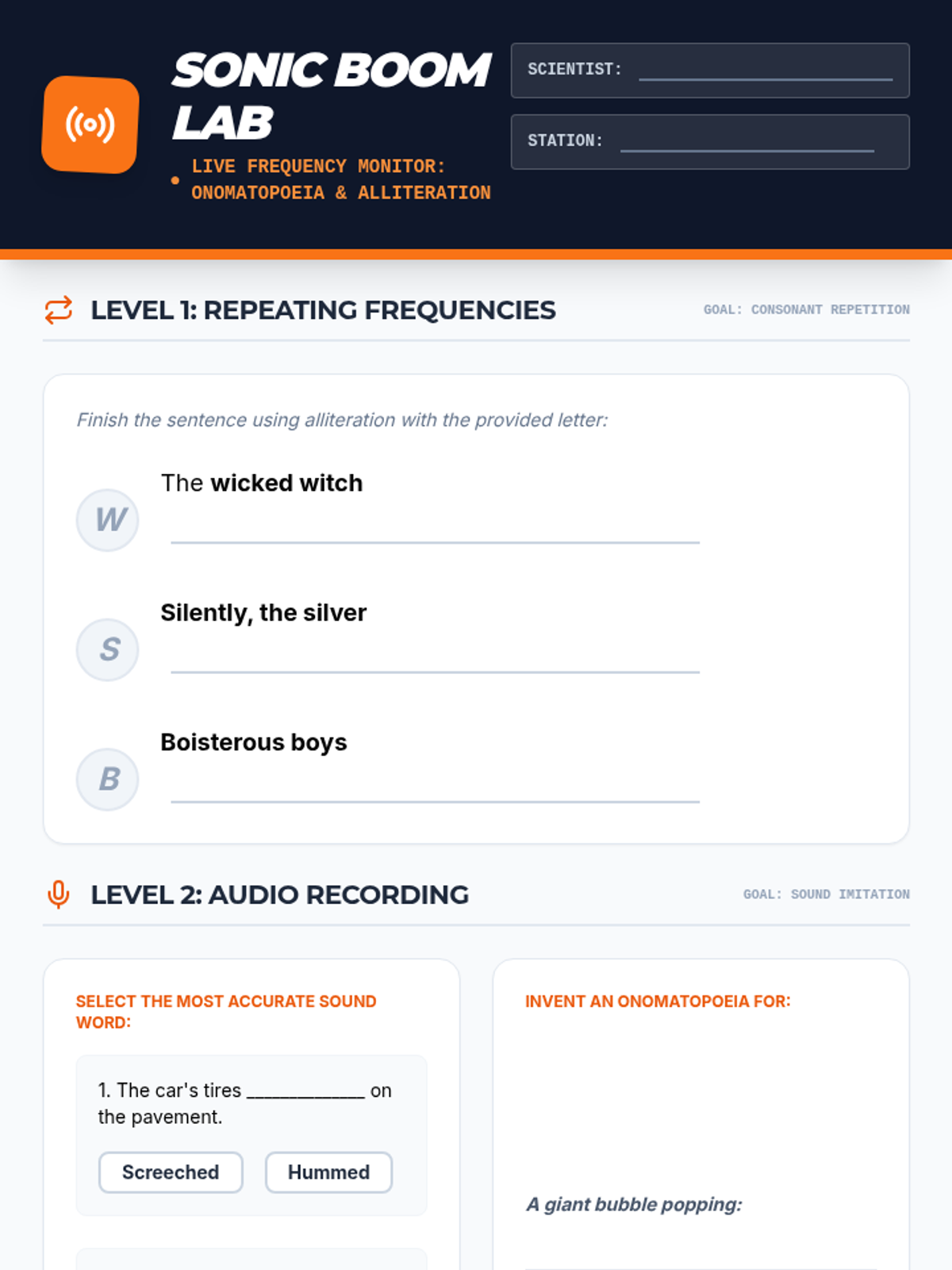
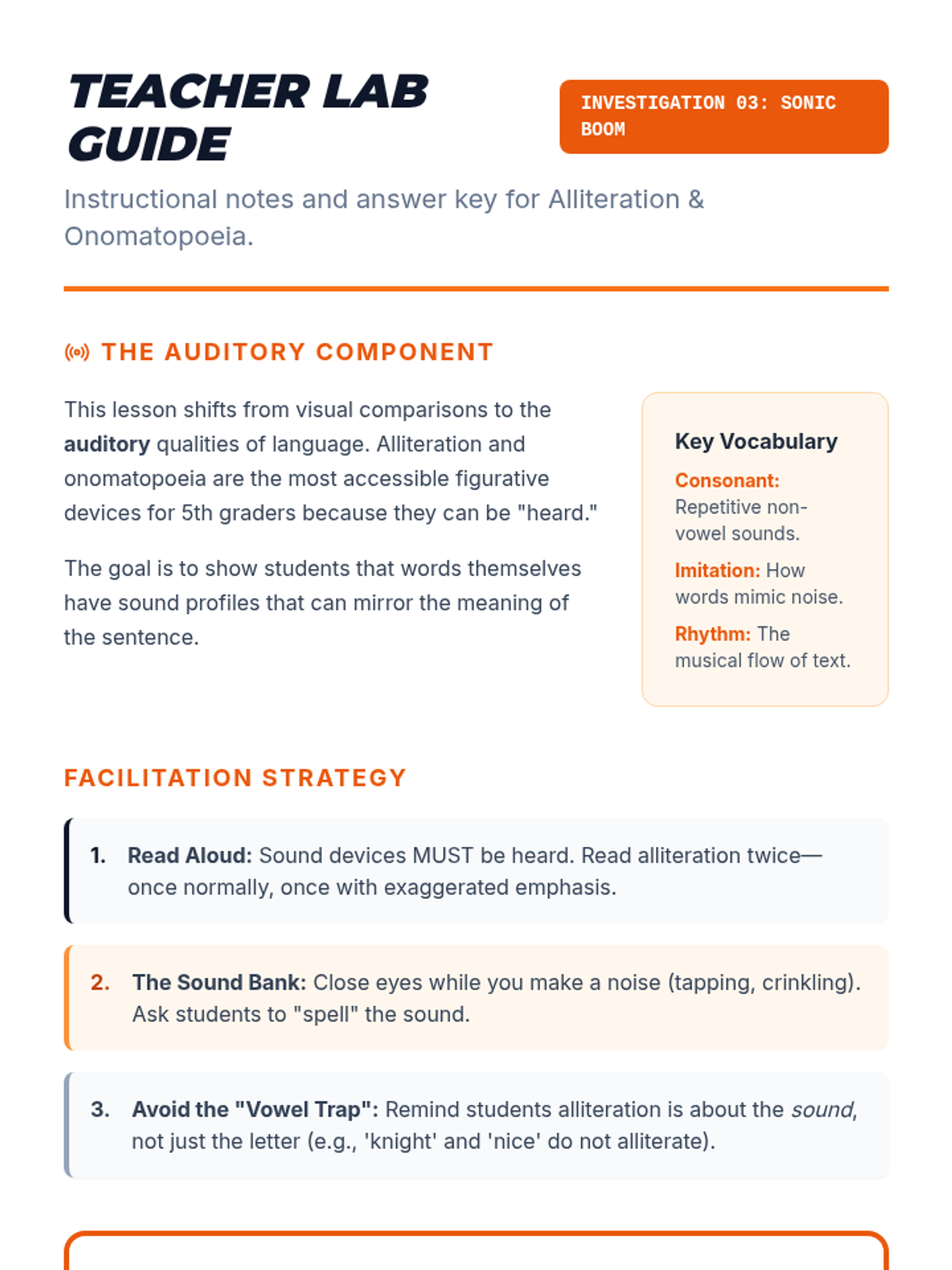
A focus on the auditory elements of figurative language, investigating how onomatopoeia and alliteration create 'sound-waves' in poetry and prose.
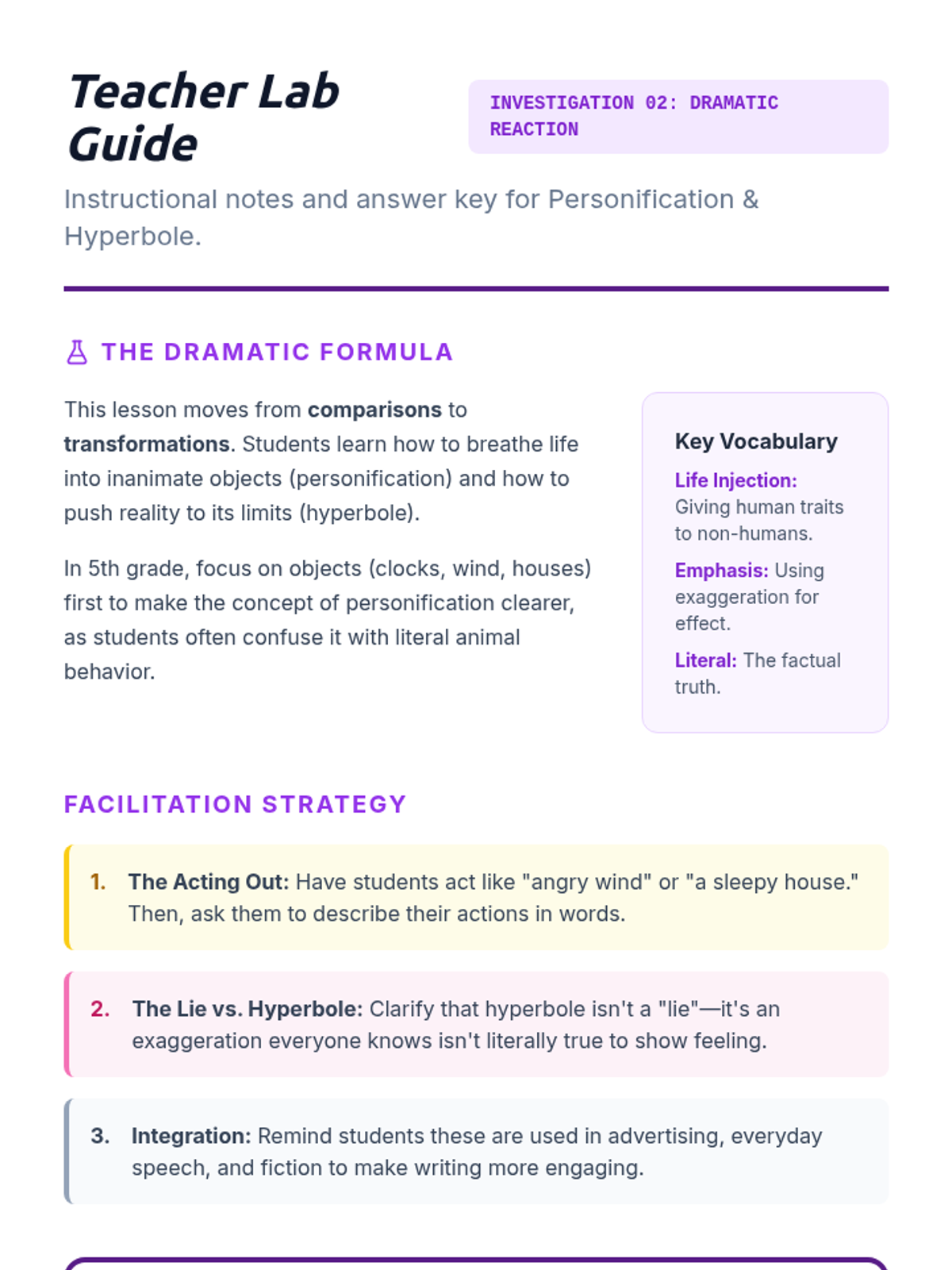
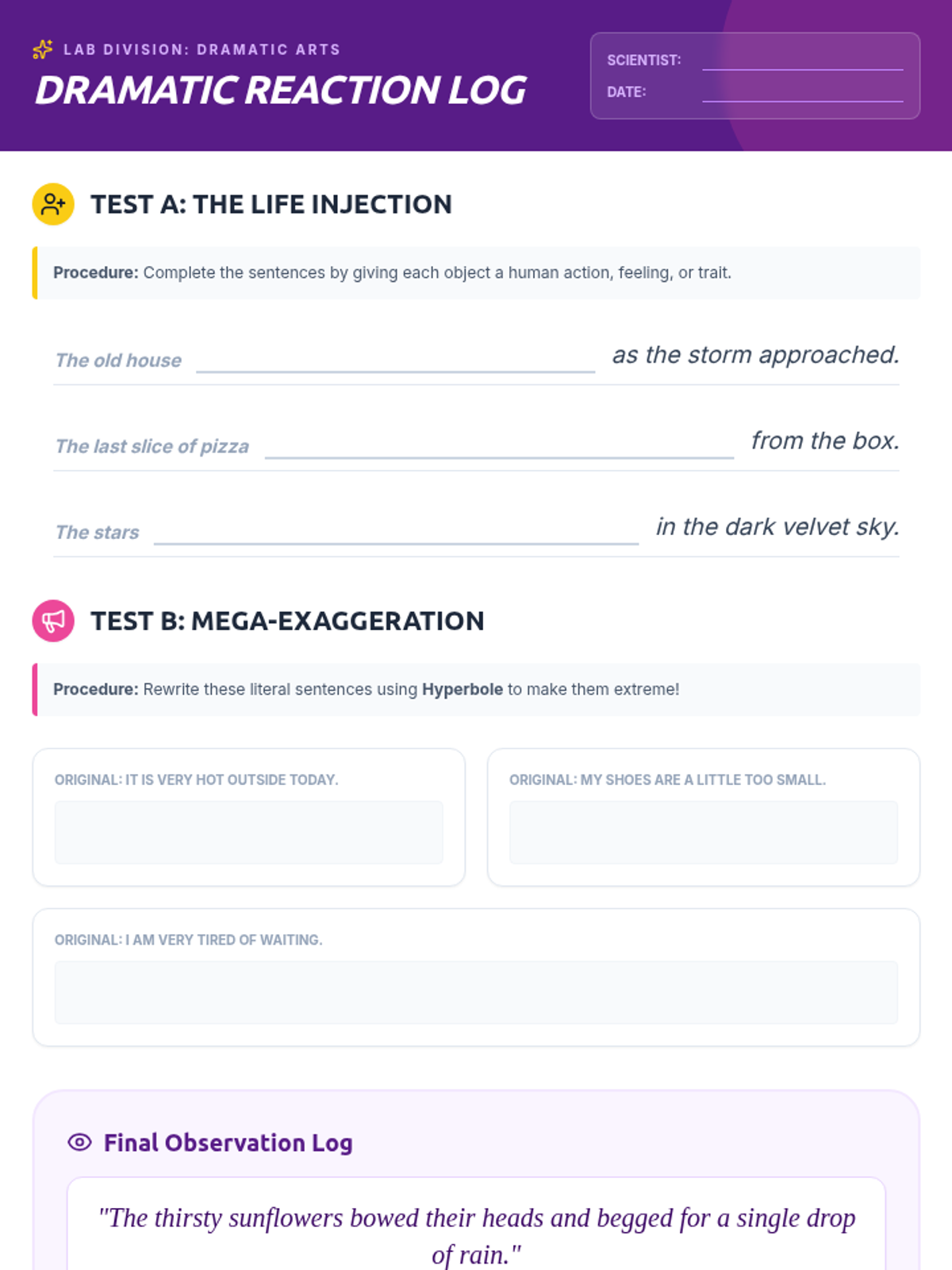
Students experiment with personification and hyperbole to add dramatic flair and personality to their writing, testing the limits of exaggeration.
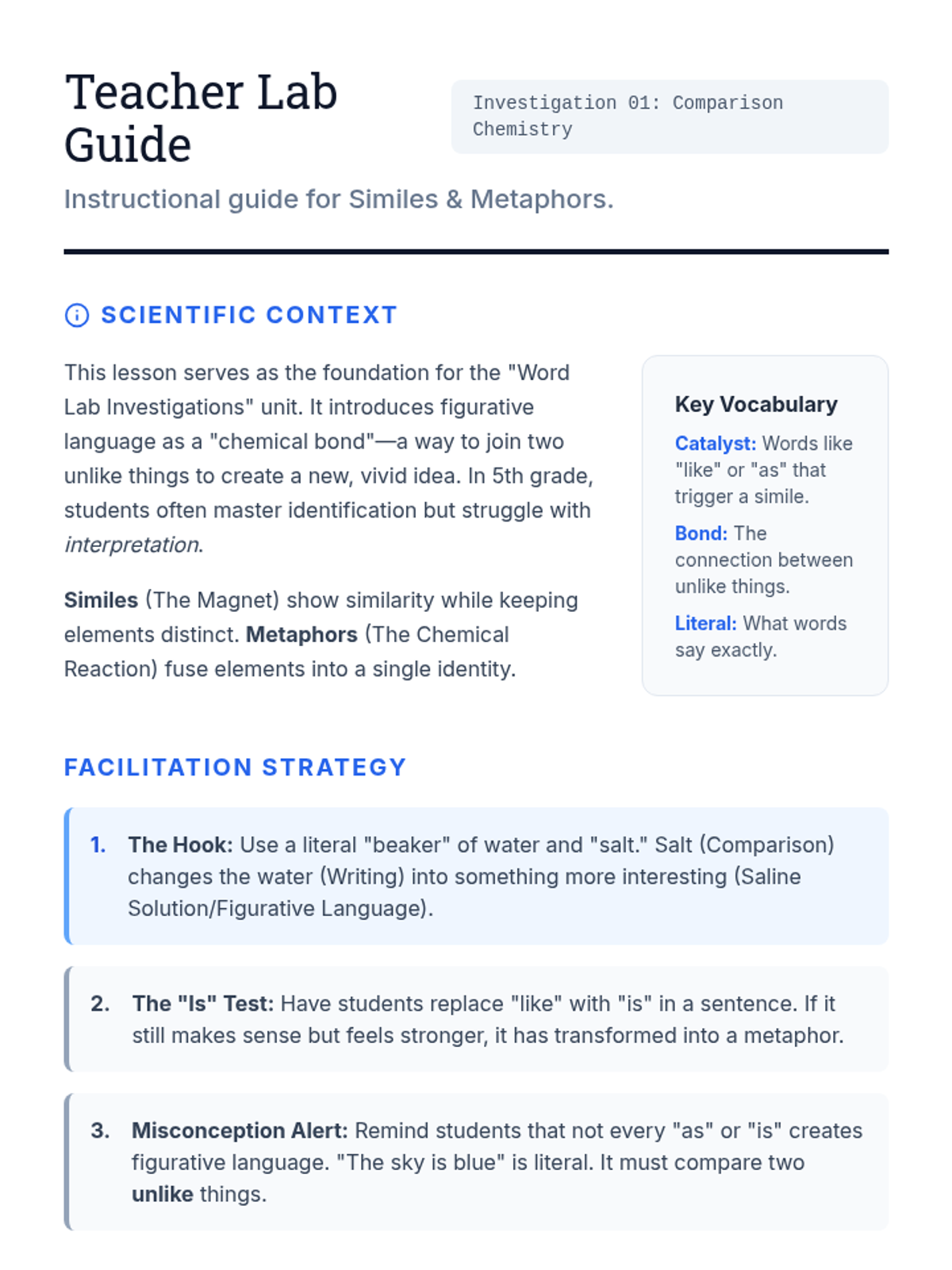
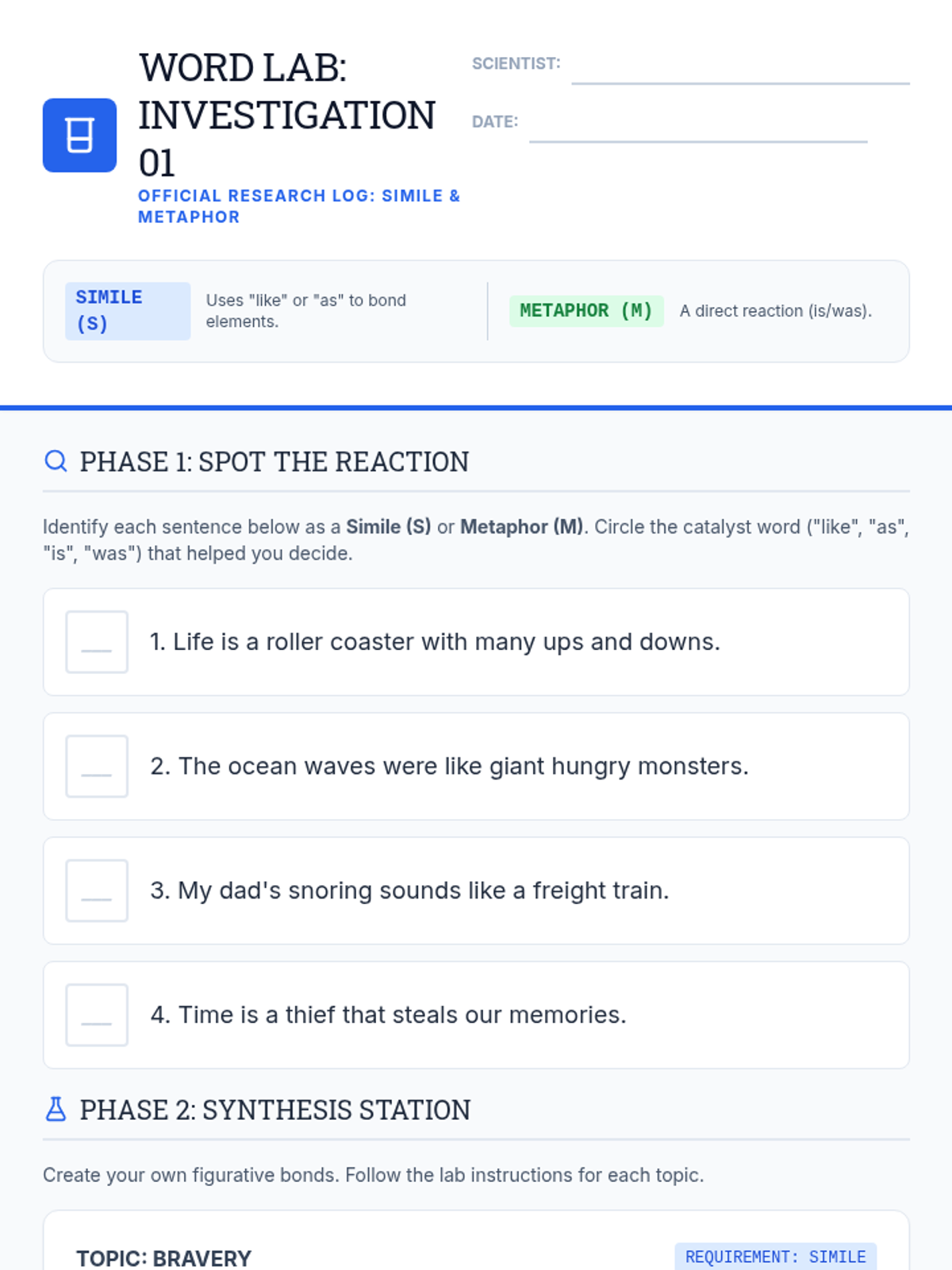
Students explore the building blocks of comparison by investigating similes and metaphors, learning to identify the differences and create their own scientific 'comparisons.'
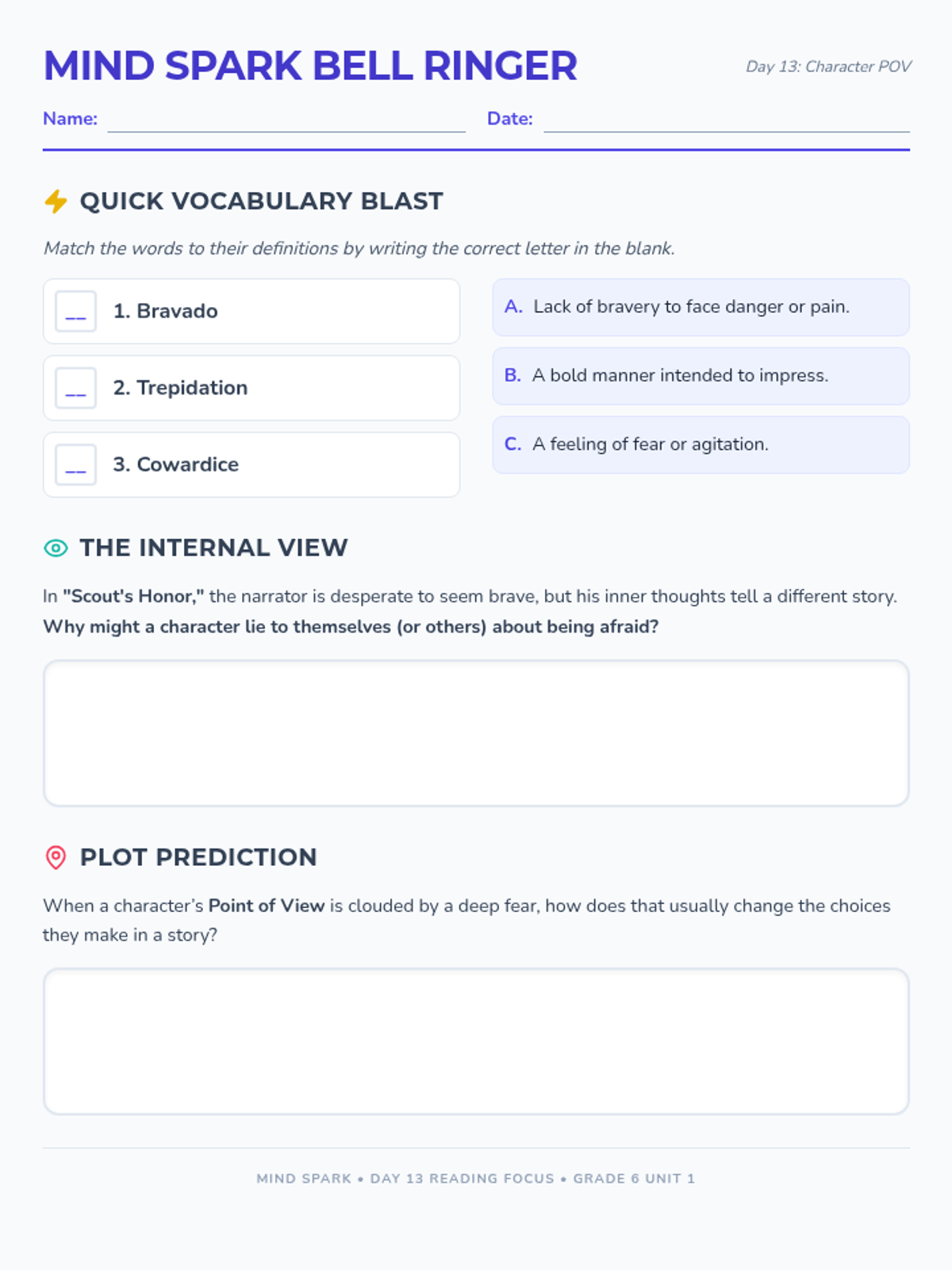
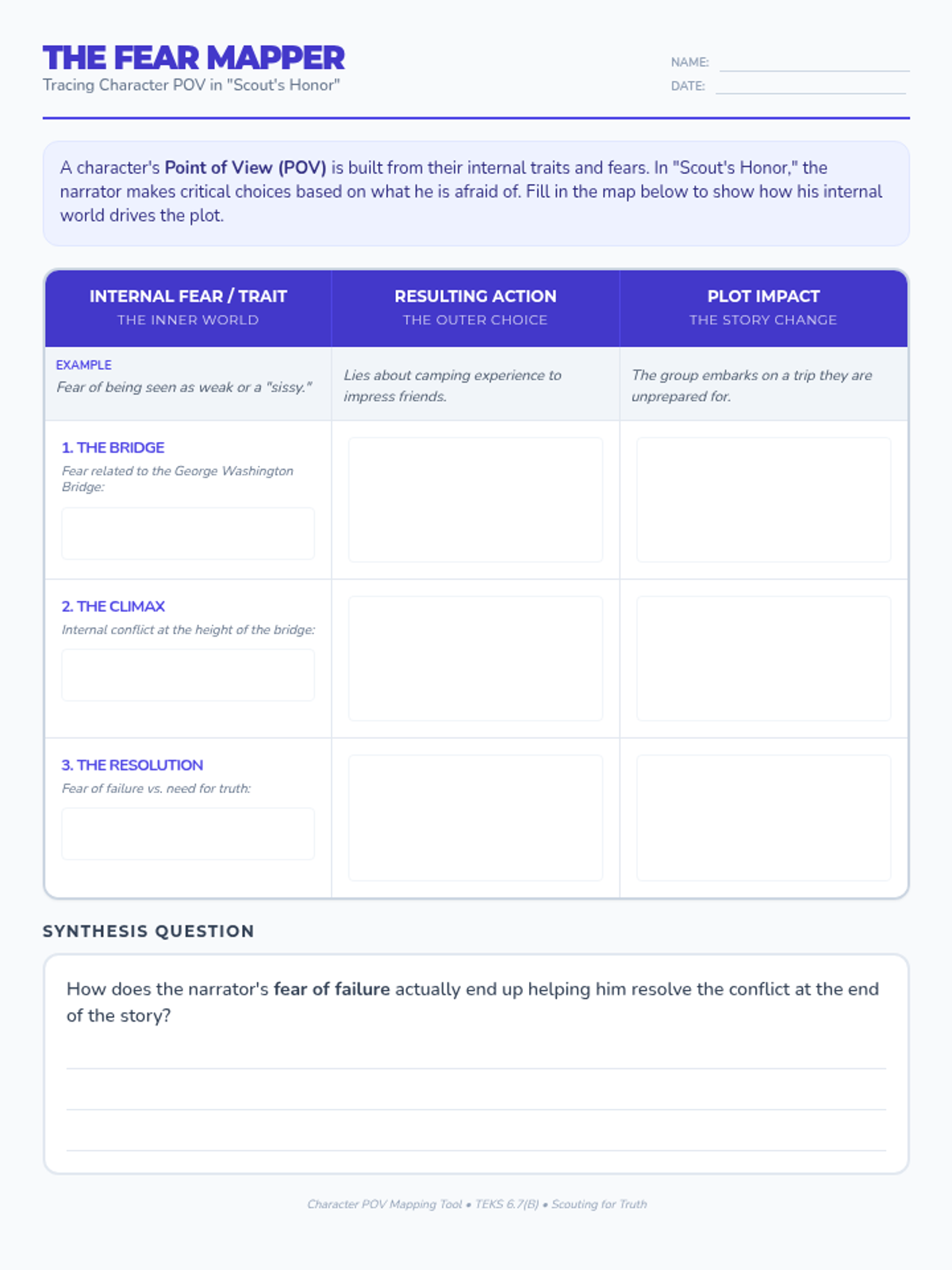
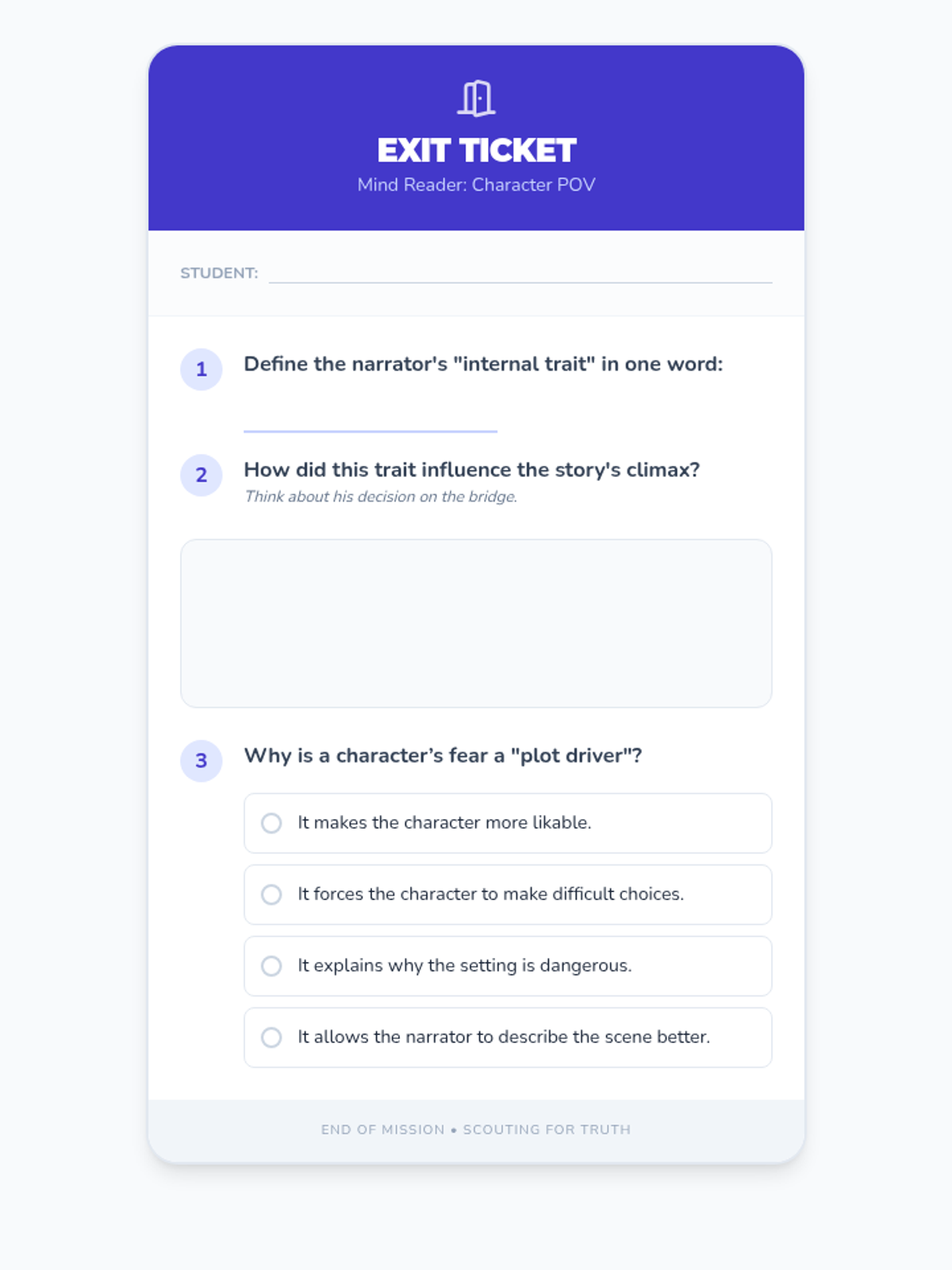
A lesson focused on analyzing how a narrator's internal fears and character traits drive the plot in the story 'Scout's Honor'. Students explore Point of View (POV) and its direct impact on narrative progression.
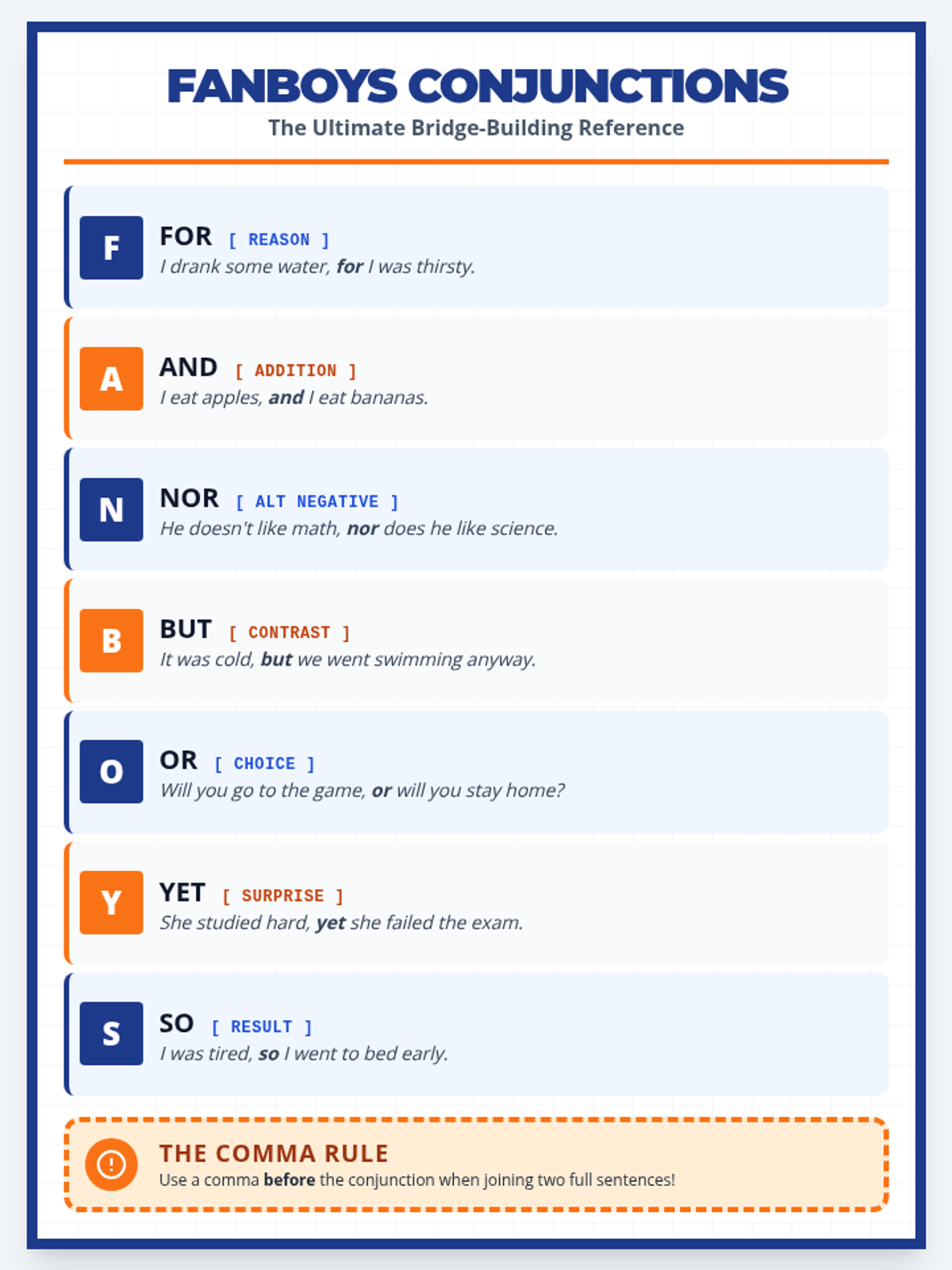
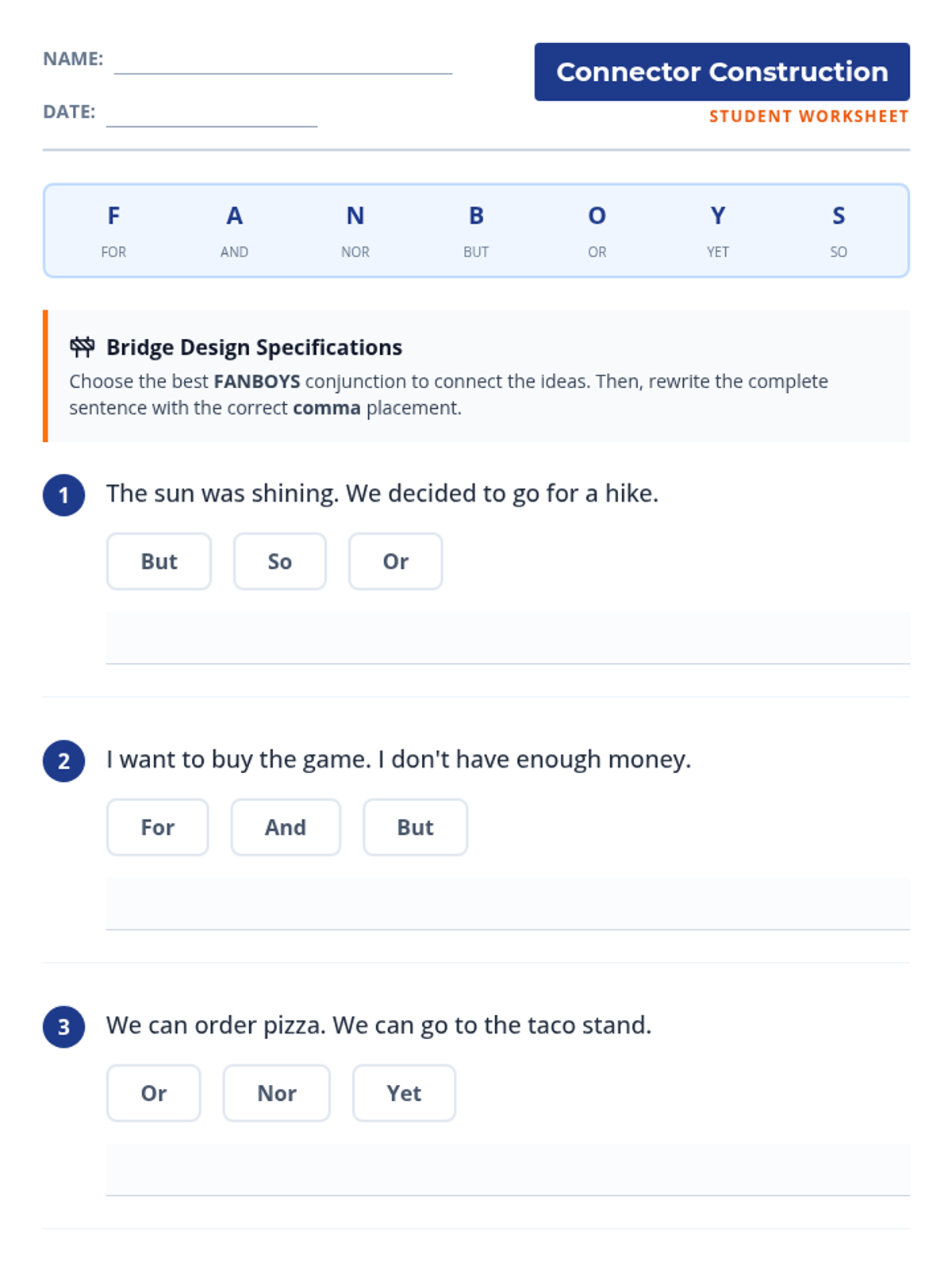
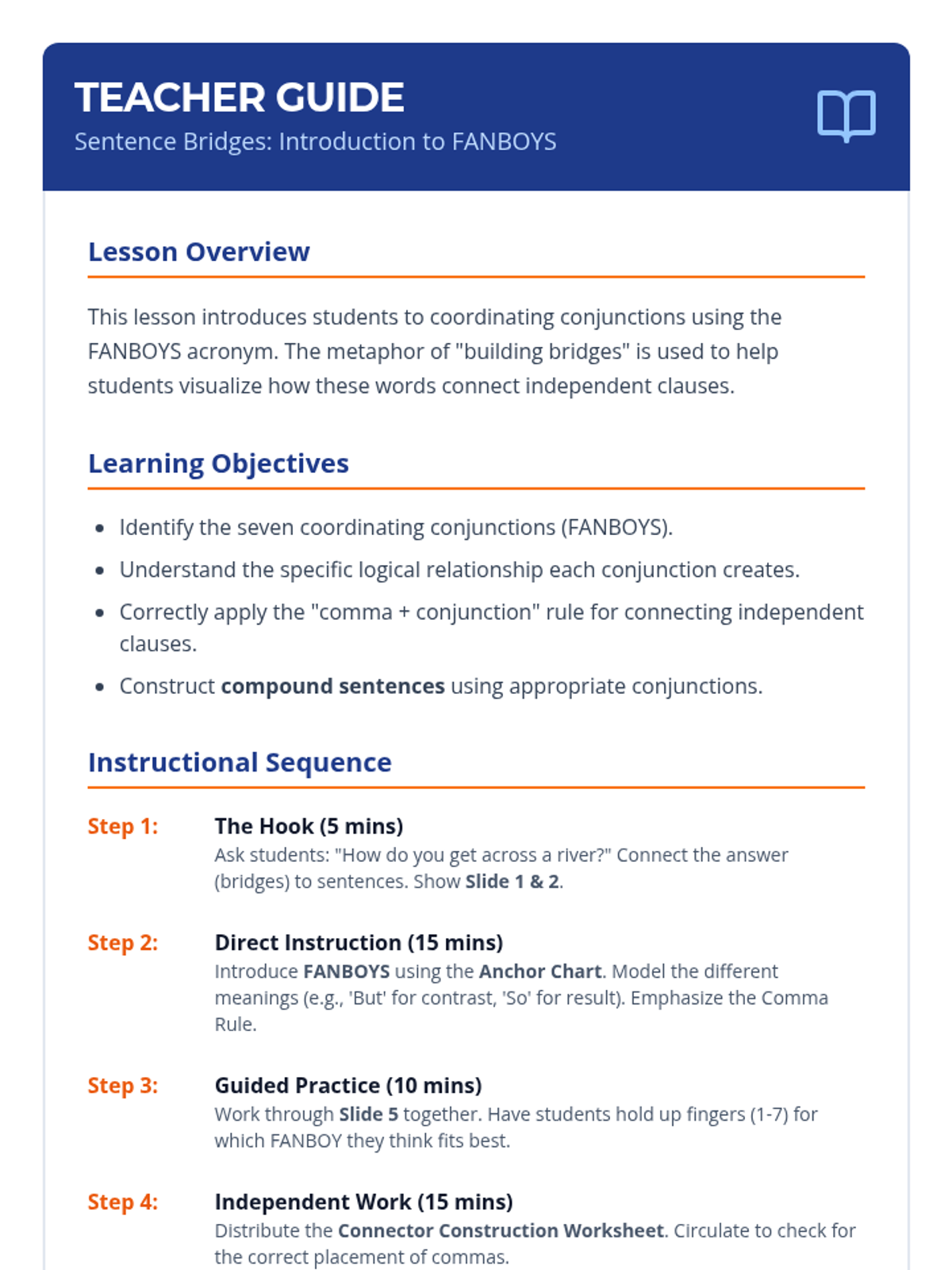
An introductory lesson on coordinating conjunctions (FANBOYS), focusing on how they act as bridges to connect independent clauses. Students will learn the specific function of each conjunction and practice using them to build complex sentences.
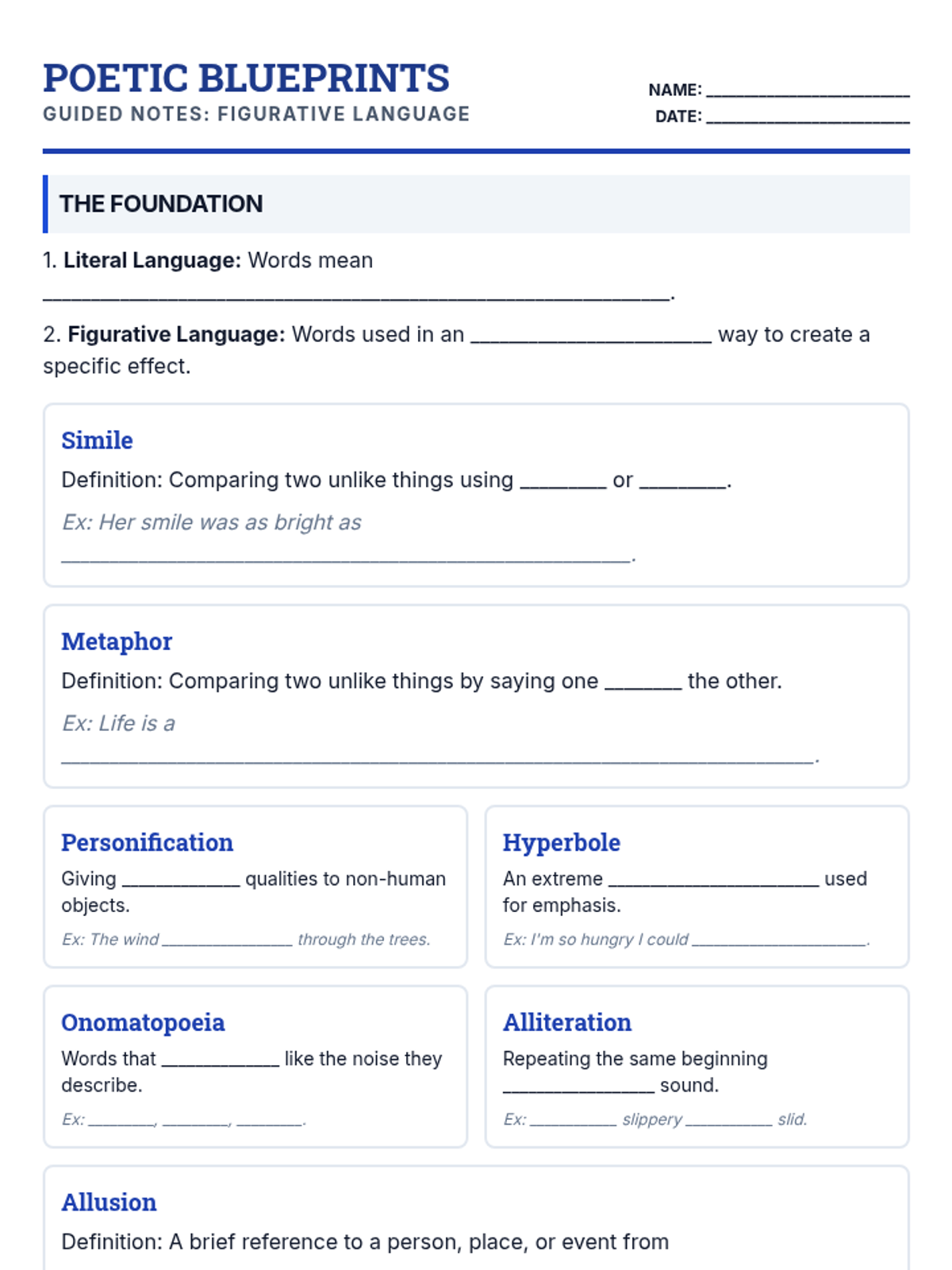
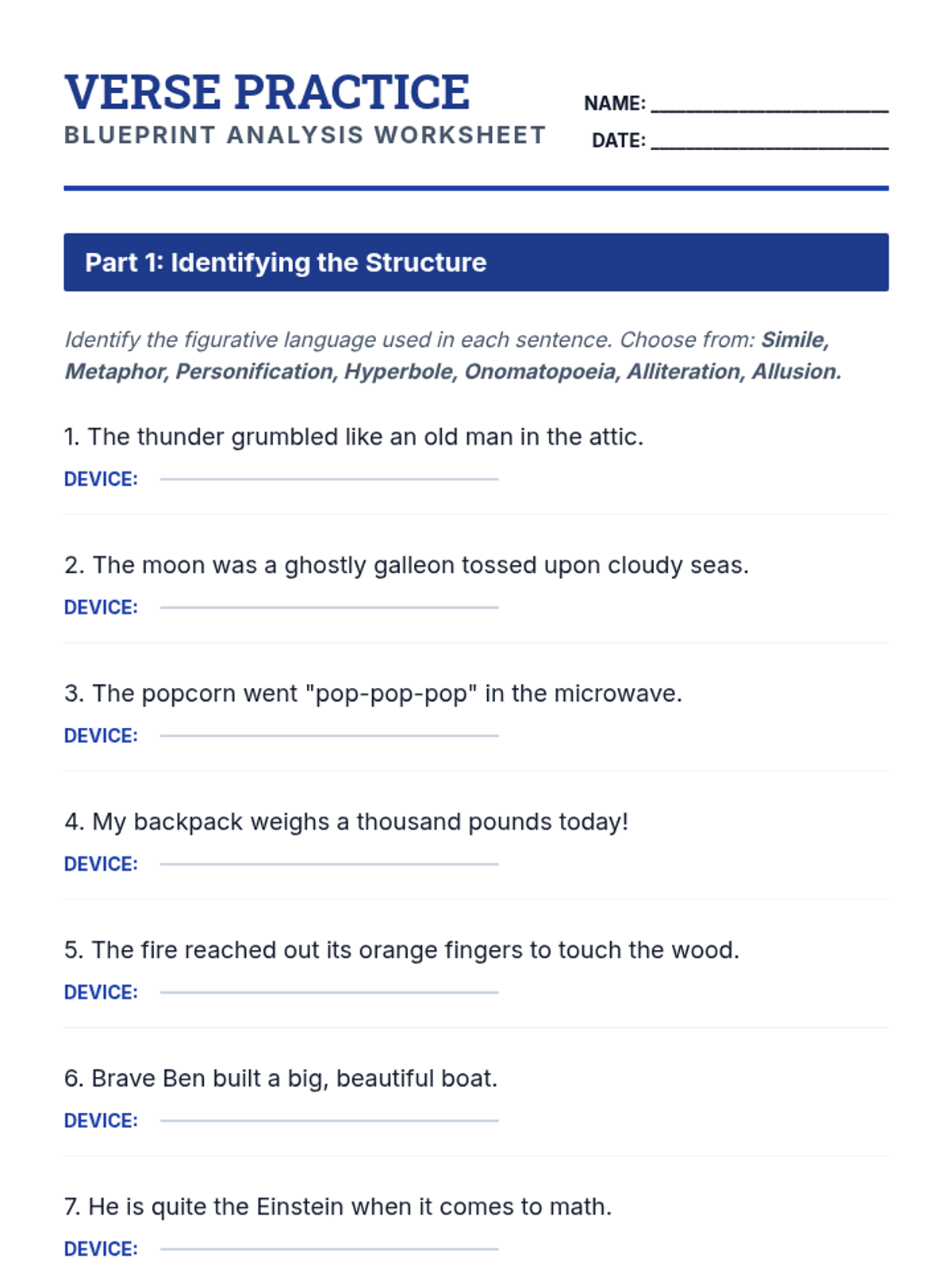
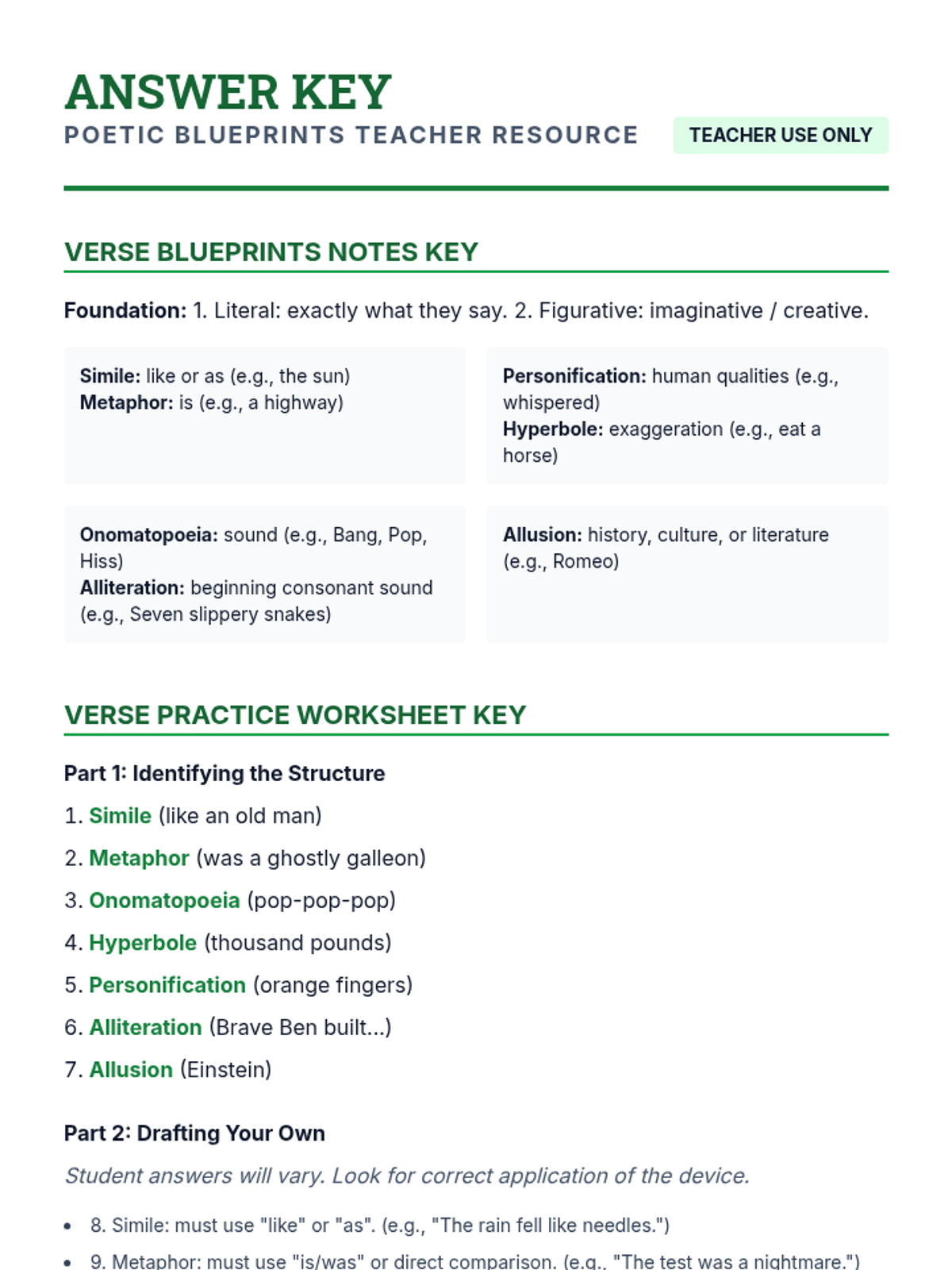
A lesson on identifying and analyzing figurative language in poetry, using the metaphor of 'blueprints' to understand how poets build meaning. Students will explore similes, metaphors, personification, and more through guided notes and practice.
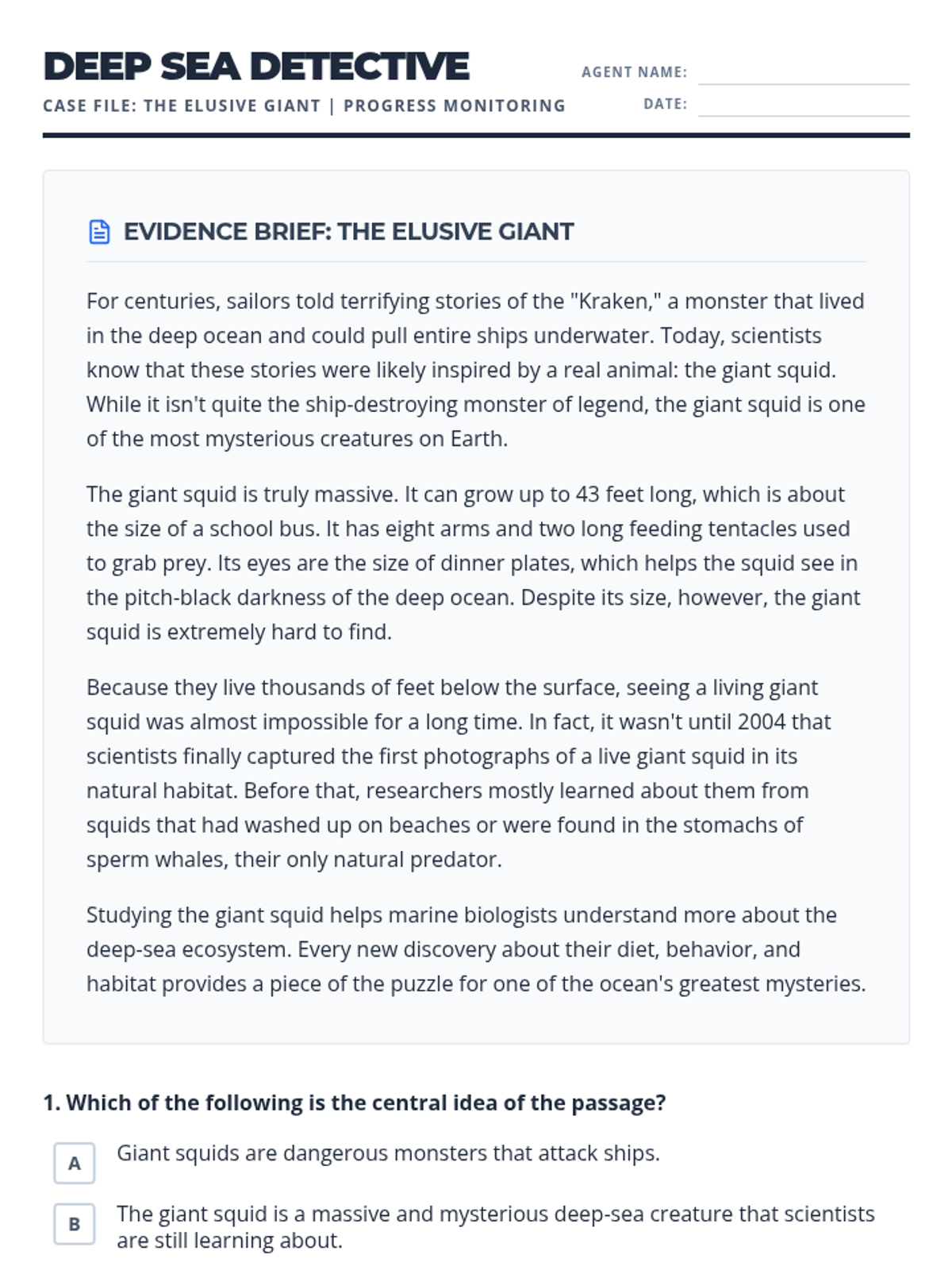
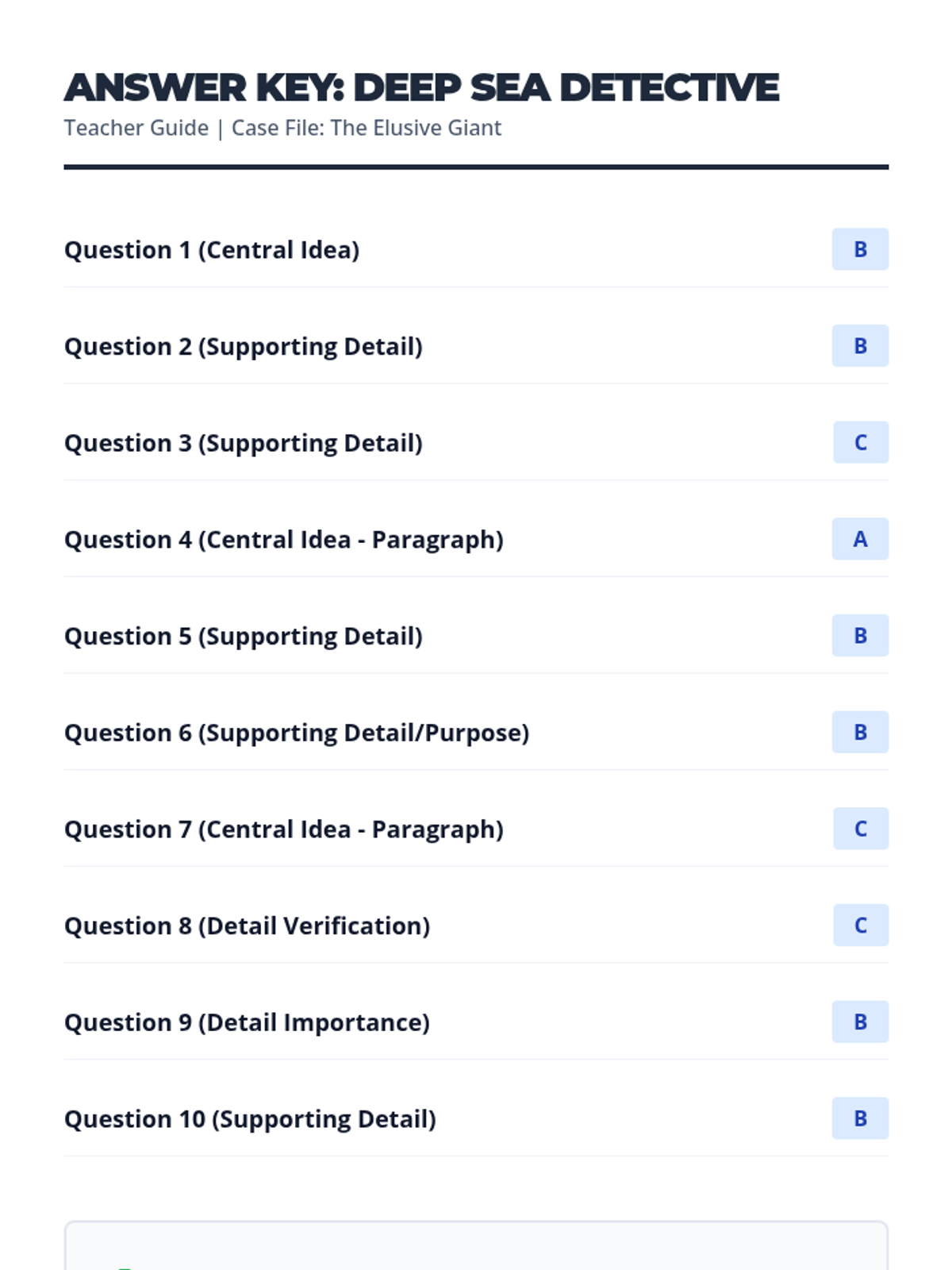
A progress monitoring assessment designed for a 6th-grade student to identify the central idea and supporting details in a non-fiction text. Includes a high-interest reading passage and a 10-question multiple-choice assessment.
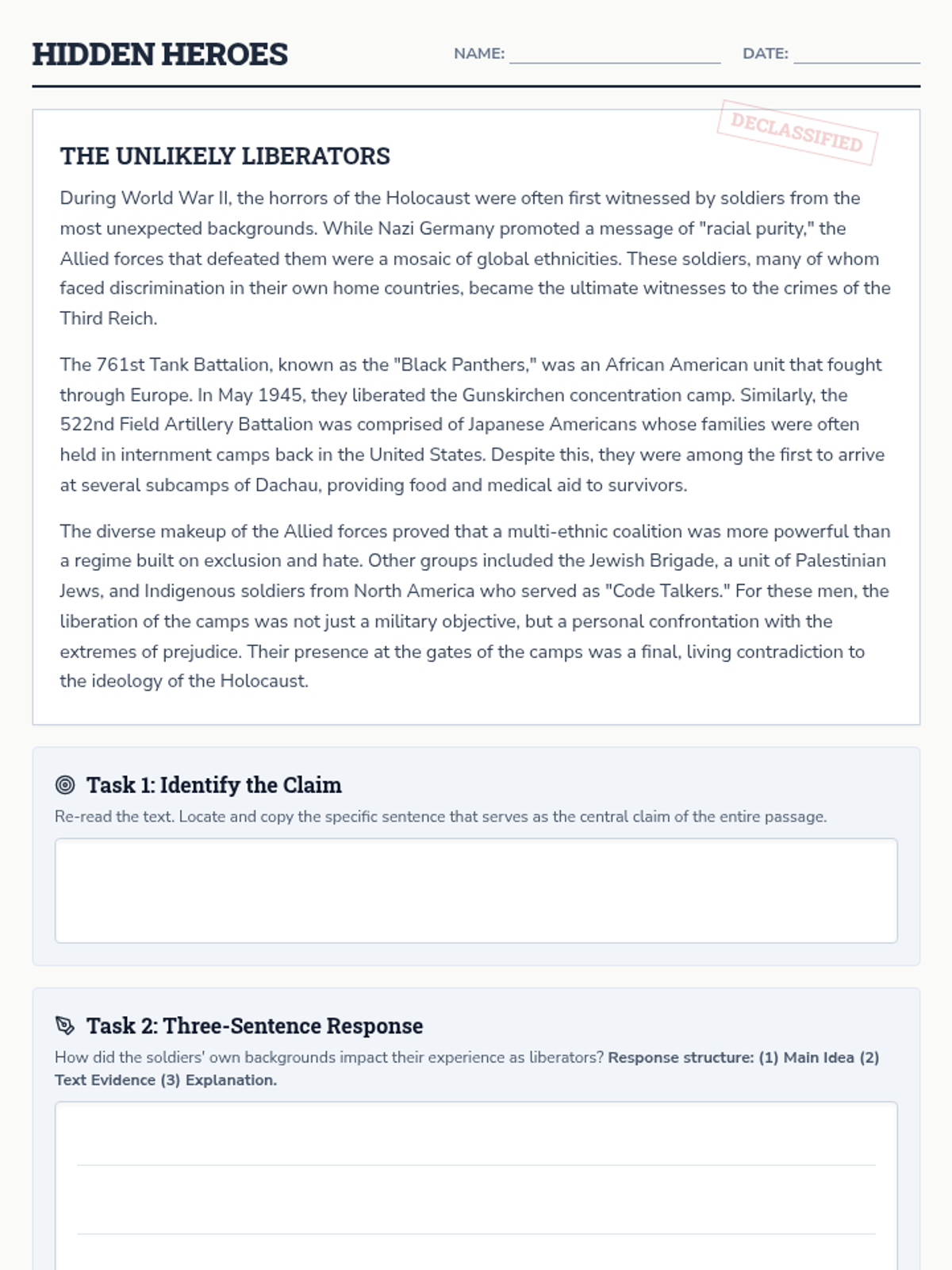
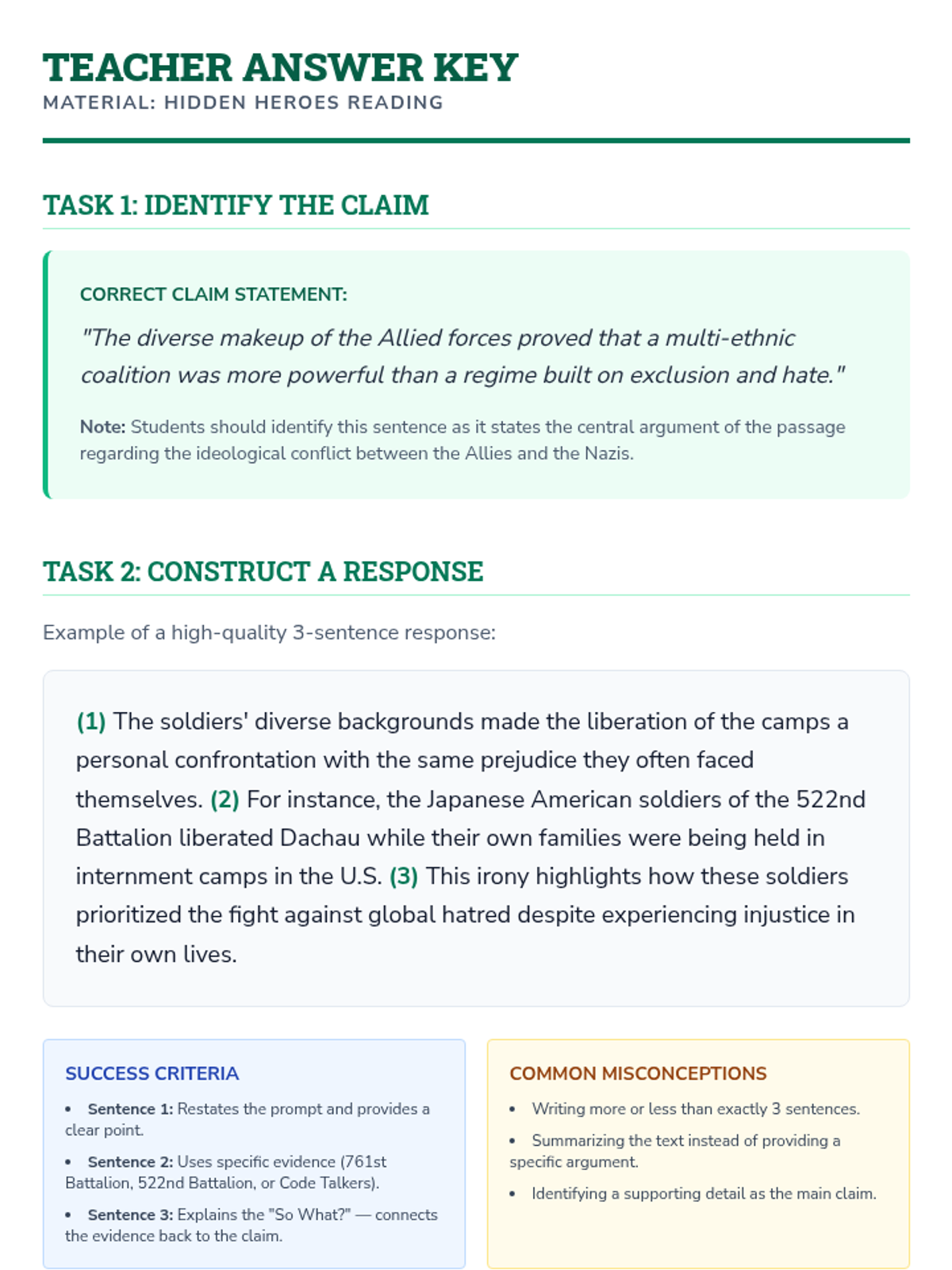
A lesson exploring the diverse backgrounds of Allied soldiers who fought in WWII and witnessed the Holocaust, focusing on claim identification and evidence-based writing.
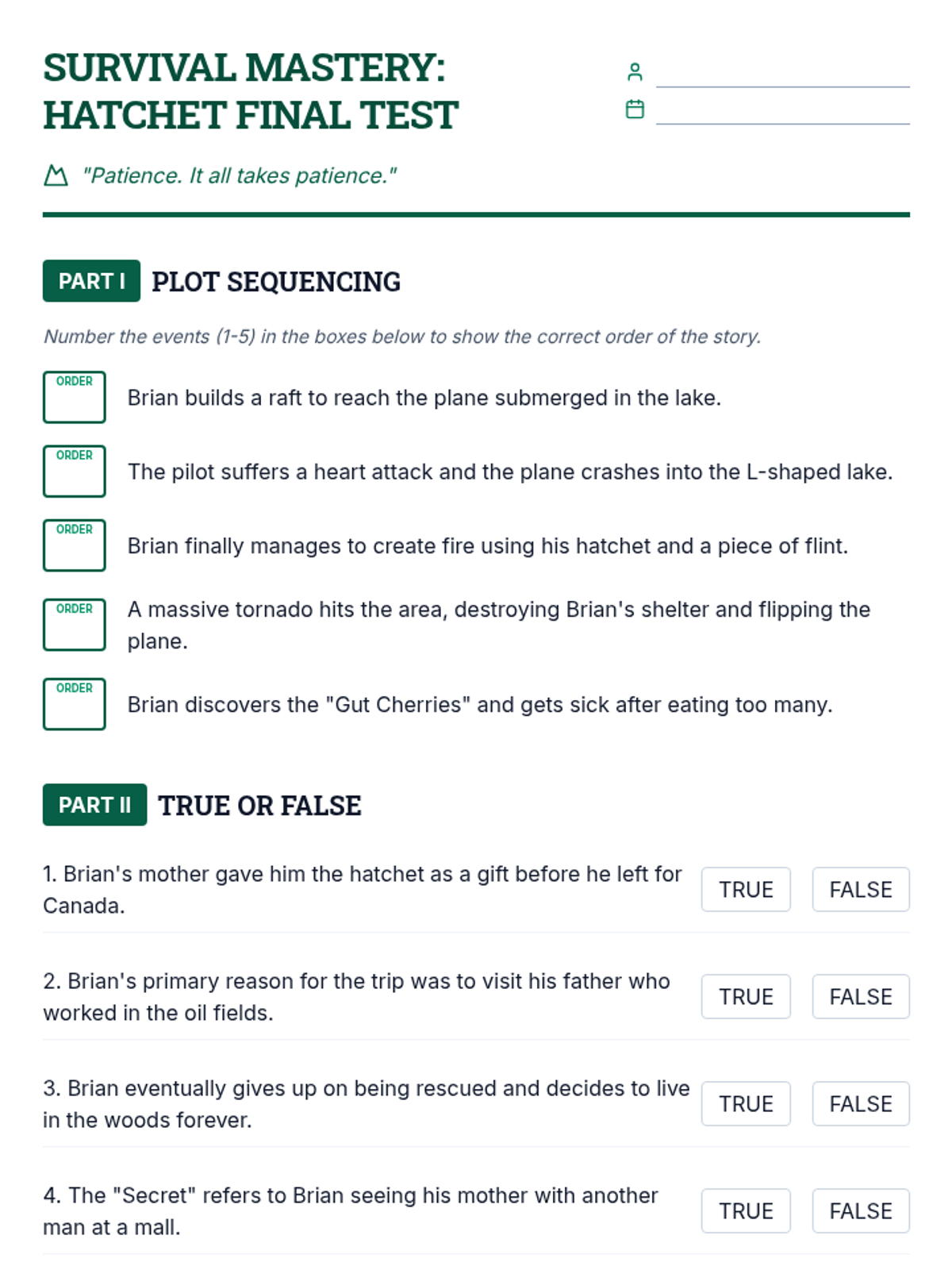
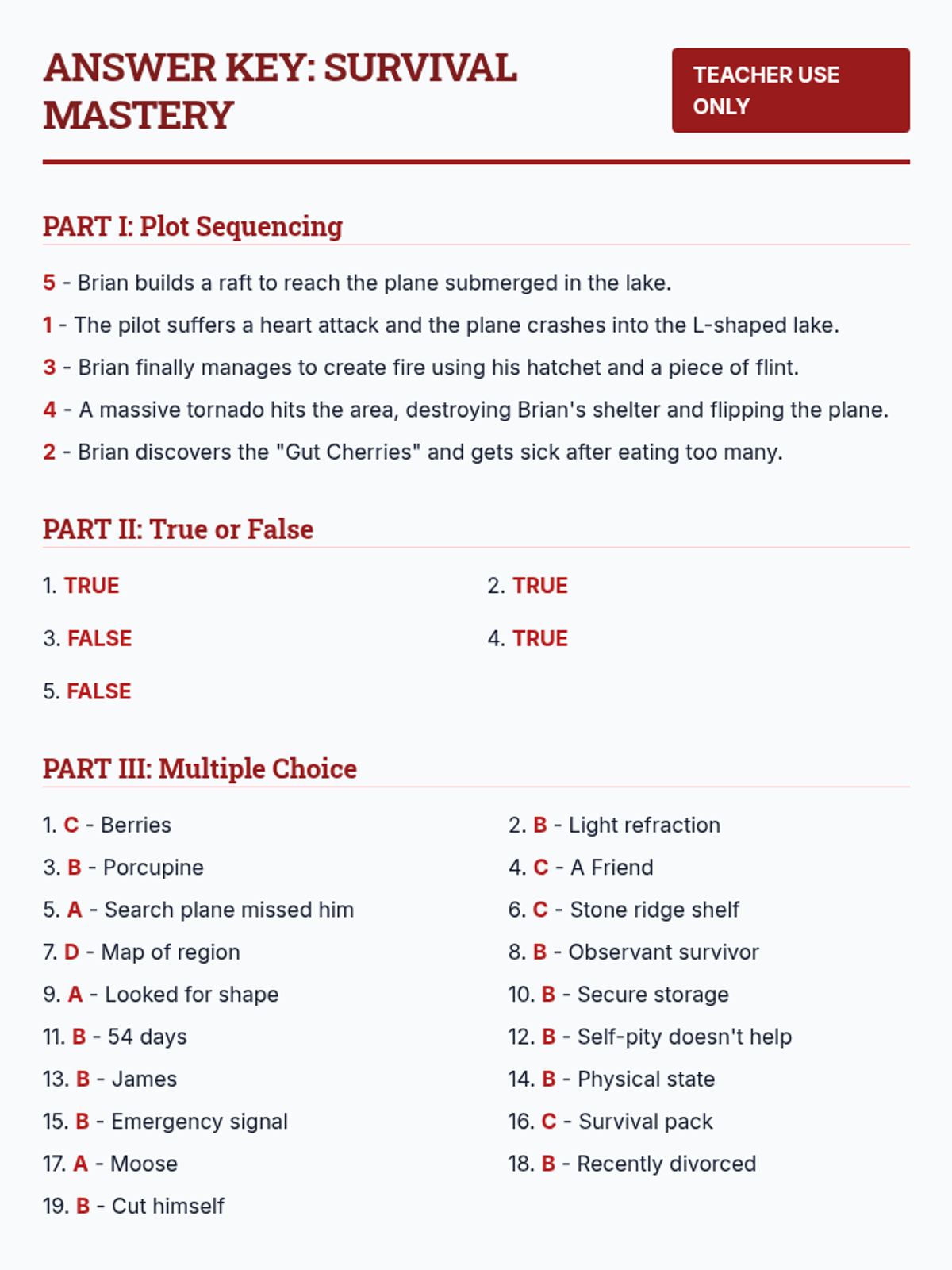
A comprehensive final assessment and review for Gary Paulsen's Hatchet, focusing on Brian's survival journey, character growth, and the novel's core themes.
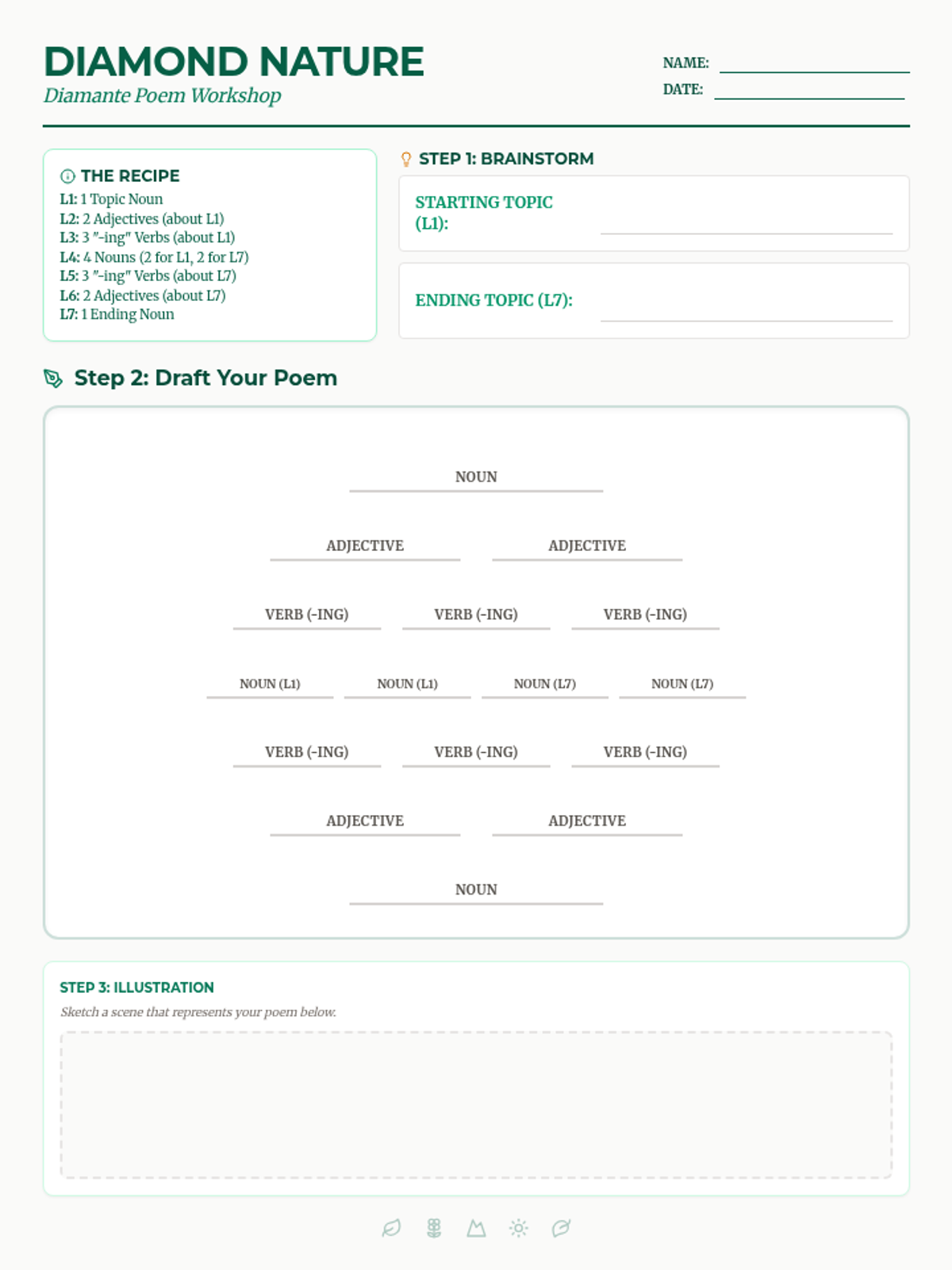
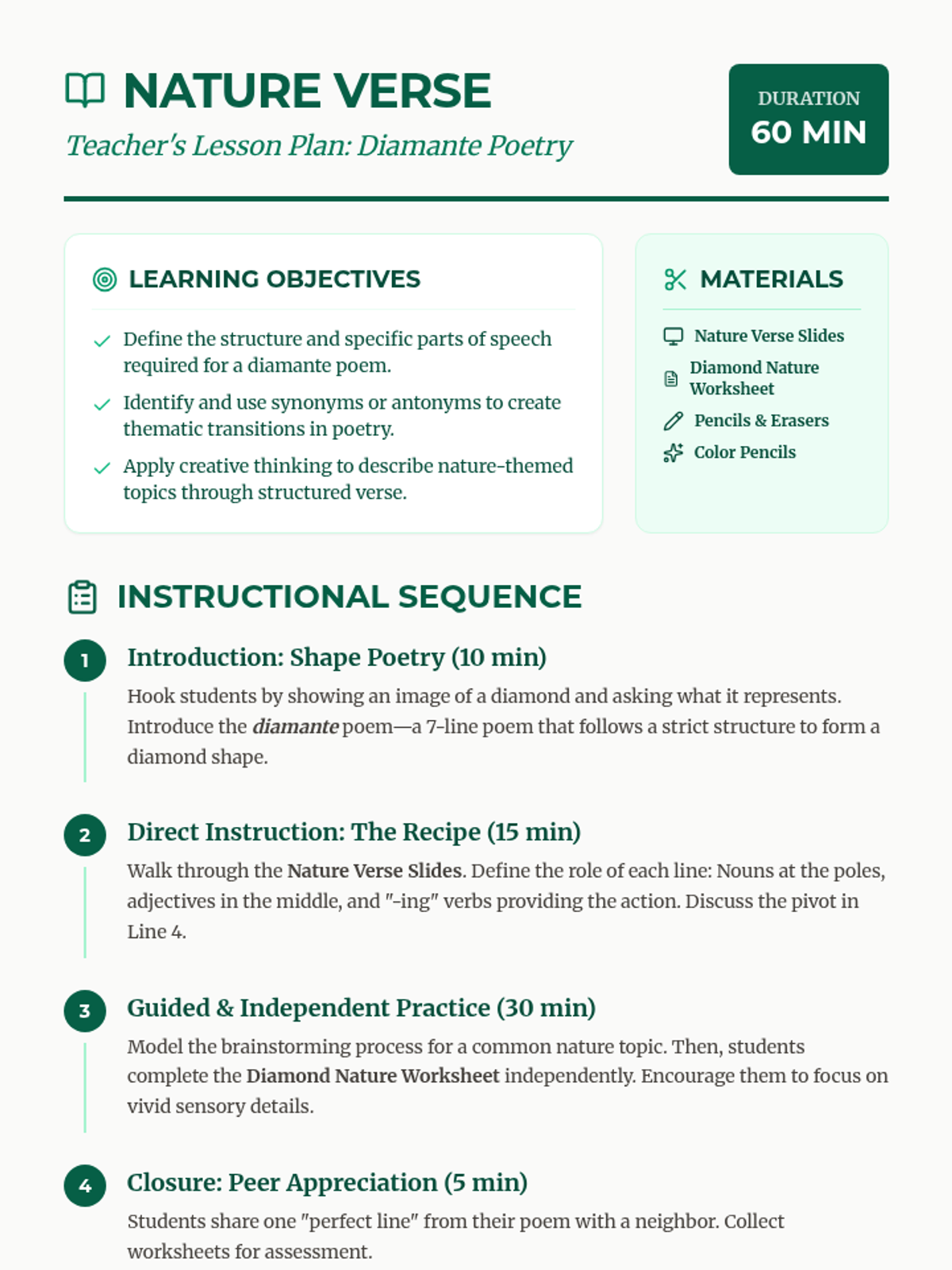
A lesson on writing diamante poems with a focus on nature, covering structure, parts of speech, and creative expression.