An exploration of Paleolithic cave art at sites like Lascaux and Chauvet, debating the origins of symbolic thought and the purpose of early human artistic expression.
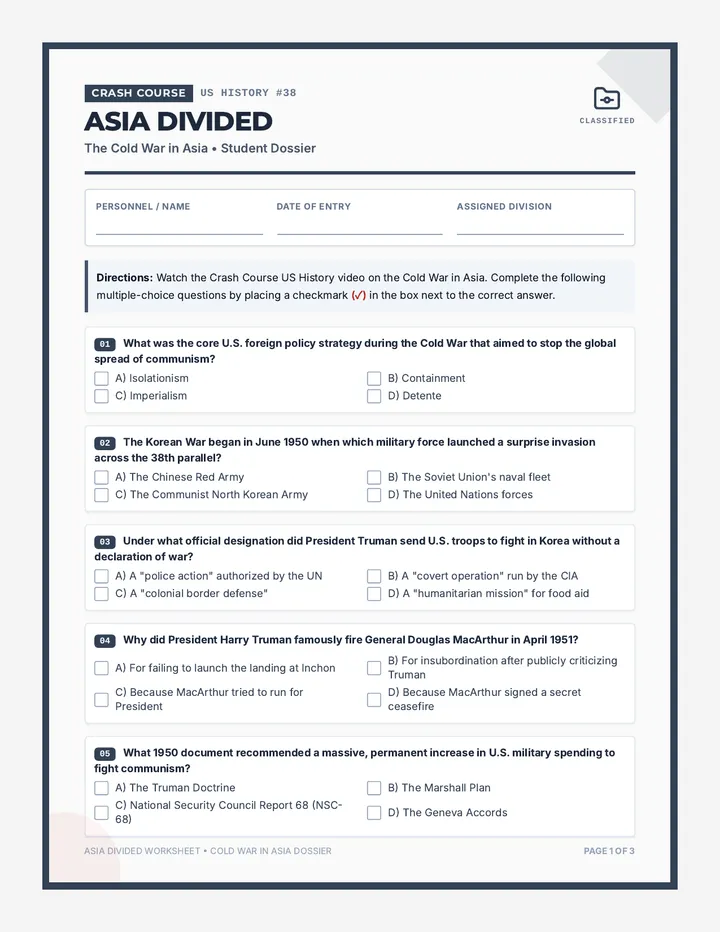
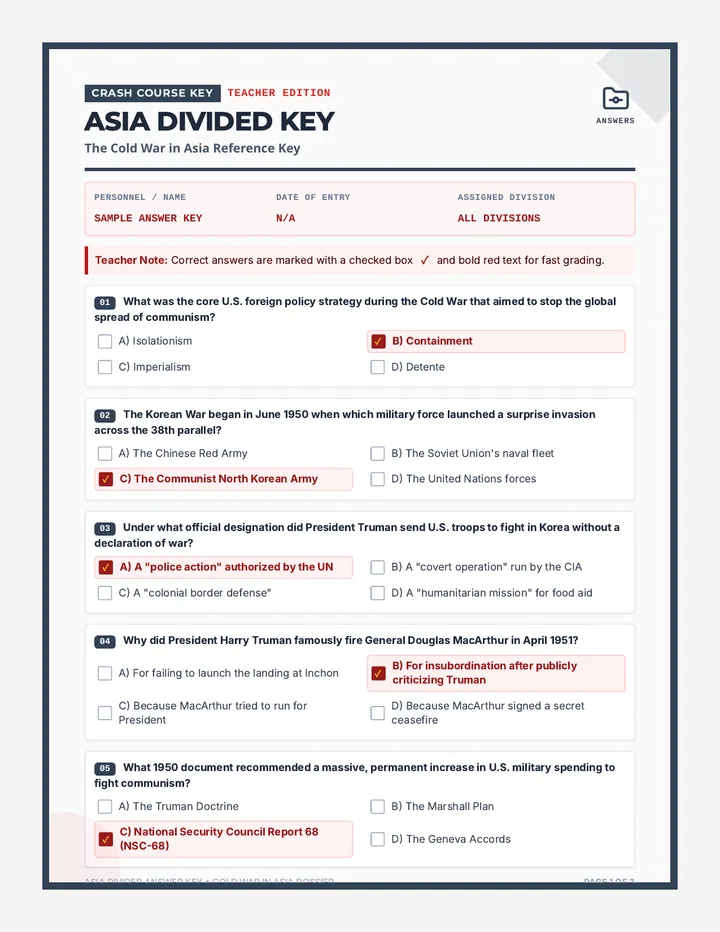
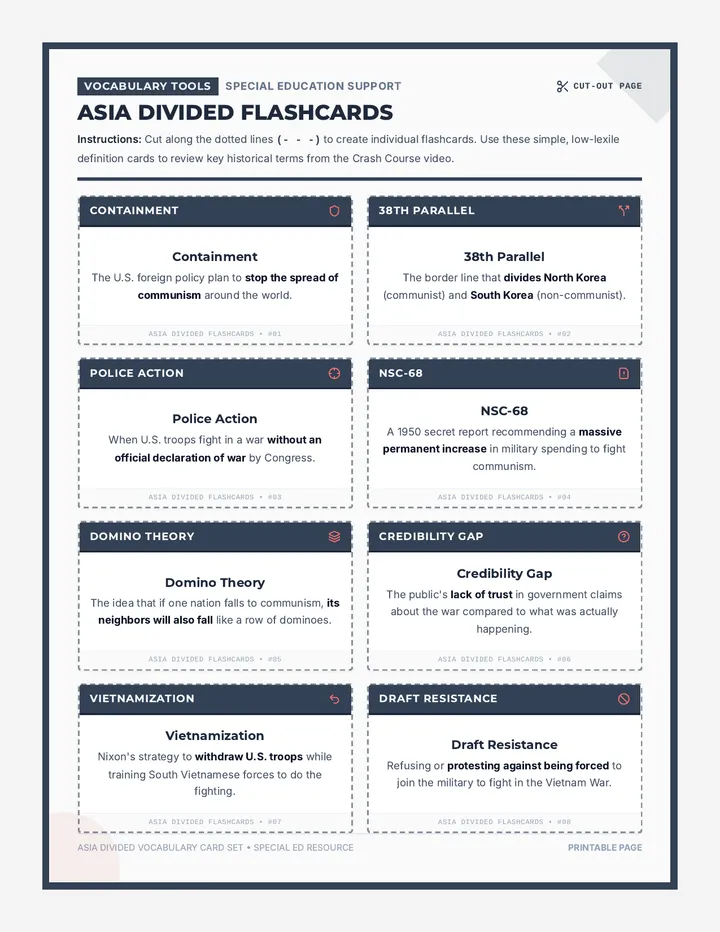
A comprehensive 50-minute lesson on the Cold War rivalry between the US and USSR, covering ideology, economic dominance, arms development, and international alliances like NATO and the Warsaw Pact.
A focused 15-minute exploration of the United Nations' origins, highlighting the pivotal role of Tennessee's own Cordell Hull, 'Father of the United Nations.'
Totalitarian Tactics, Radio Dispatch, Gatekeepers, War Room Briefings, Warrior Spirit, Justice Homefront, Home Front Heroines, Justice Denied, Home Front Heroes, Atomic Ambitions, and Yalta and Potsdam Conferences.
A comprehensive high school history lesson covering the Yalta and Potsdam Conferences, focusing on the division of Germany, the atomic bomb, and the onset of the Cold War.
A 25-minute intensive lesson on the Manhattan Project, focusing on the key sites (Oak Ridge, Los Alamos, Hanford) and President Truman's decision-making process for using the atomic bomb to end WWII.
A comprehensive lesson exploring the social, economic, and political impacts of World War II on the United States home front, covering rationing, industry, labor shifts, and civil unrest.
A focused examination of the constitutional issues, conditions, and historical impact of Japanese American internment during WWII, centered on Executive Order 9066 and the Korematsu v. US decision.
A comprehensive 35-minute lesson exploring the massive shift in American society as women entered the workforce and military during WWII, with a specific focus on Rosie the Riveter, Cornelia Fort, and the Women's Army Corps.
This lesson explores the economic and social impact of World War II on African Americans, focusing on the Double V campaign, the FEPC, and the integration of the military. Students will engage in a mock hearing to analyze employment discrimination and Truman's executive orders.