Students analyze the chemistry of automotive catalytic converters. They research how platinum and rhodium reduce harmful emissions and discuss the environmental impact and economic cost of these devices.
A 45-minute ESL lesson for grade 4 students at the Developing (Level 3) proficiency level. Students will explore life cycles, practice gathering information from texts, and learn to take notes and categorize data using graphic organizers.
How and why organisms use light for social interactions, communication, and complex behaviors. Students explore strategies like counter-illumination and burglar alarms.
How is light made? Students break down the chemical reaction of bioluminescence, exploring the interaction between luciferin, luciferase, and oxygen.
Discover the mysterious world of the deep ocean's midnight zone. Students explore how creatures create light in total darkness and identify the physical adaptations of bioluminescent marine life.
Uma aula completa sobre as principais teorias da origem da vida, abordando desde a abiogênese até os experimentos de Miller-Urey, alinhada à BNCC para o Ensino Fundamental II.
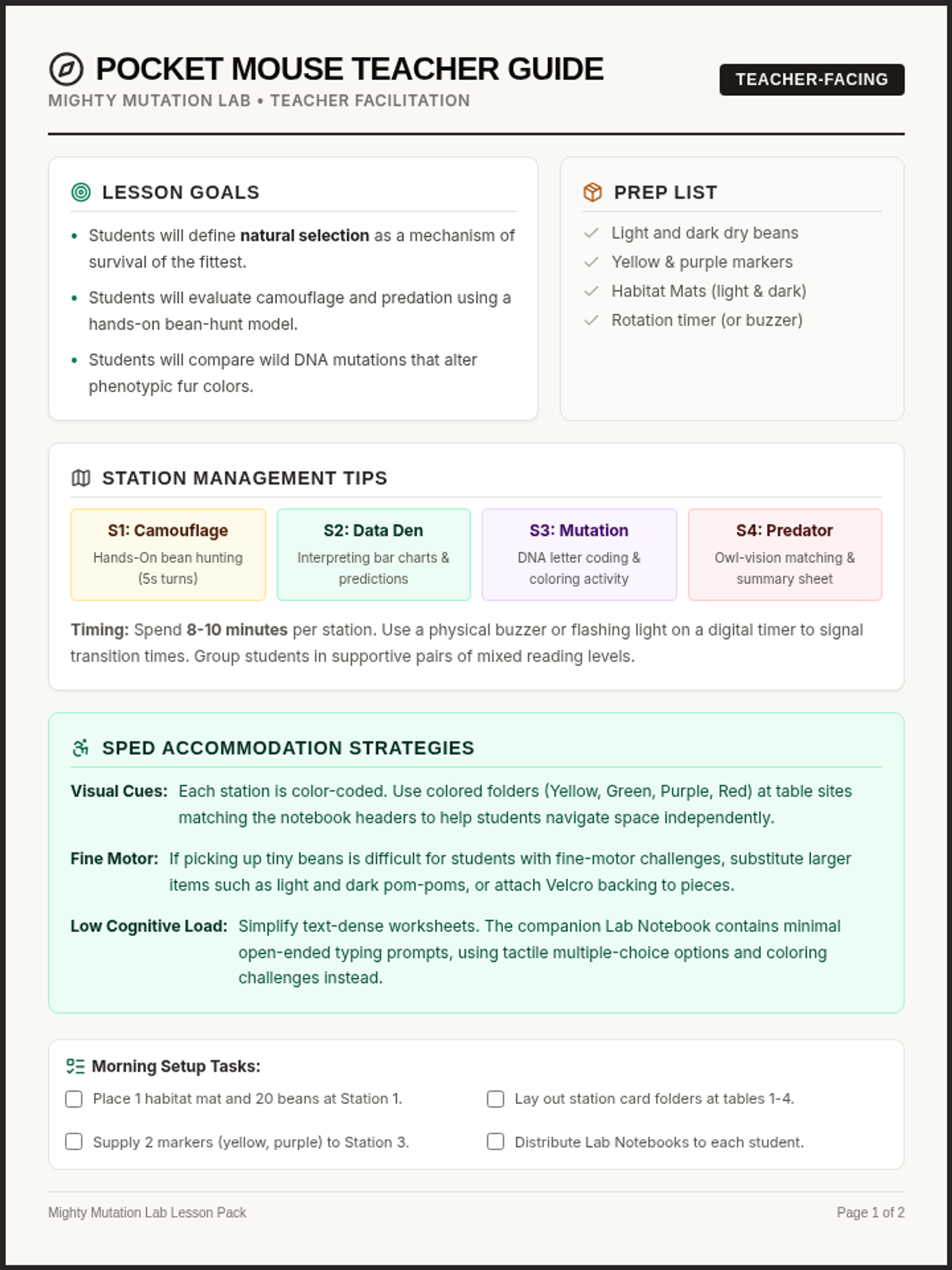
A rapid-fire intervention lesson designed to solidify the fundamentals of Newton's Laws through hands-on experimentation and visual mapping. Perfect for small group remediation or a quick refresher before transitioning to new physics concepts.
A foundational toolkit for setting up a physical engineering and maker space, covering physical layout, collaborative roles, and essential classroom routines.
A lesson exploring the differences between natural and invasive grasses as fire fuels, featuring case studies on the Tallgrass Prairie and Cheatgrass in the Great Basin. Students will analyze fire behavior and impact through comparative study and assessment.
A comprehensive daily lesson exploring wildland fuel types, their characteristics, and how they influence fire behavior across different regions. Students analyze grass, shrub, timber, and understory fuels through guided notes, diagrams, and real-world case studies.
An introductory lesson on sustainable development, exploring the three pillars of sustainability and how human actions impact the planet's future.
A comprehensive lesson on calculating the forces and torque acting on a rectangular current-carrying loop within a uniform magnetic field. Students will master the Right-Hand Rule and the torque equation through visual derivations and practice problems.
A quick, creative wrap-up lesson where students apply their knowledge of soil conservation practices to design a sustainable farm plot and craft a persuasive pitch.
A synthesis lesson where students compare and sort the needs of all living things to identify patterns.
Explores the survival requirements of animals and humans, highlighting food, water, air, and shelter.
Focuses on what plants need to grow and thrive, including sunlight, water, air, and soil.