A lesson focused on CCSS W.5.1.B where students learn to provide logically ordered reasons supported by genre-specific facts and details to explain their book preferences.

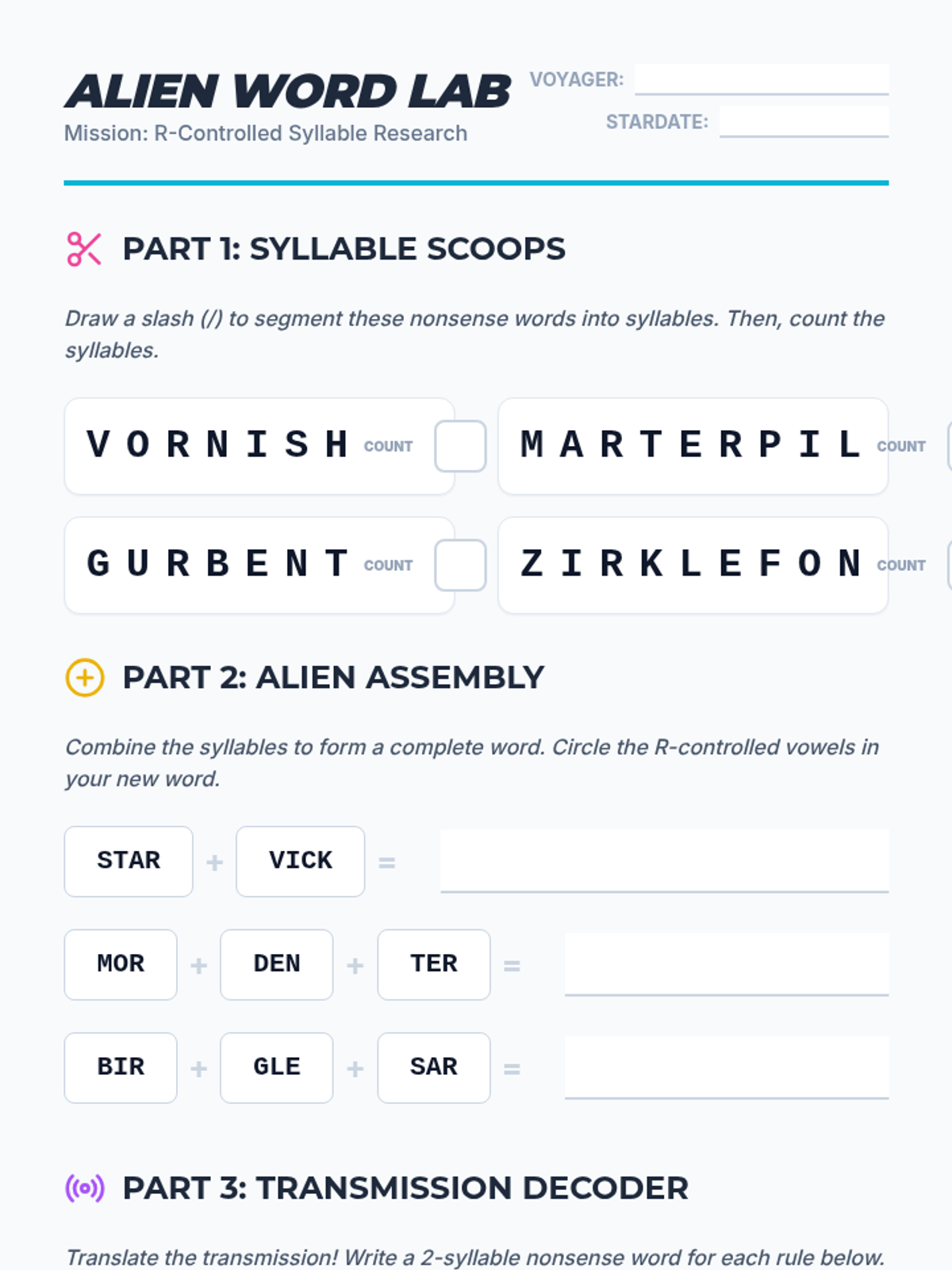
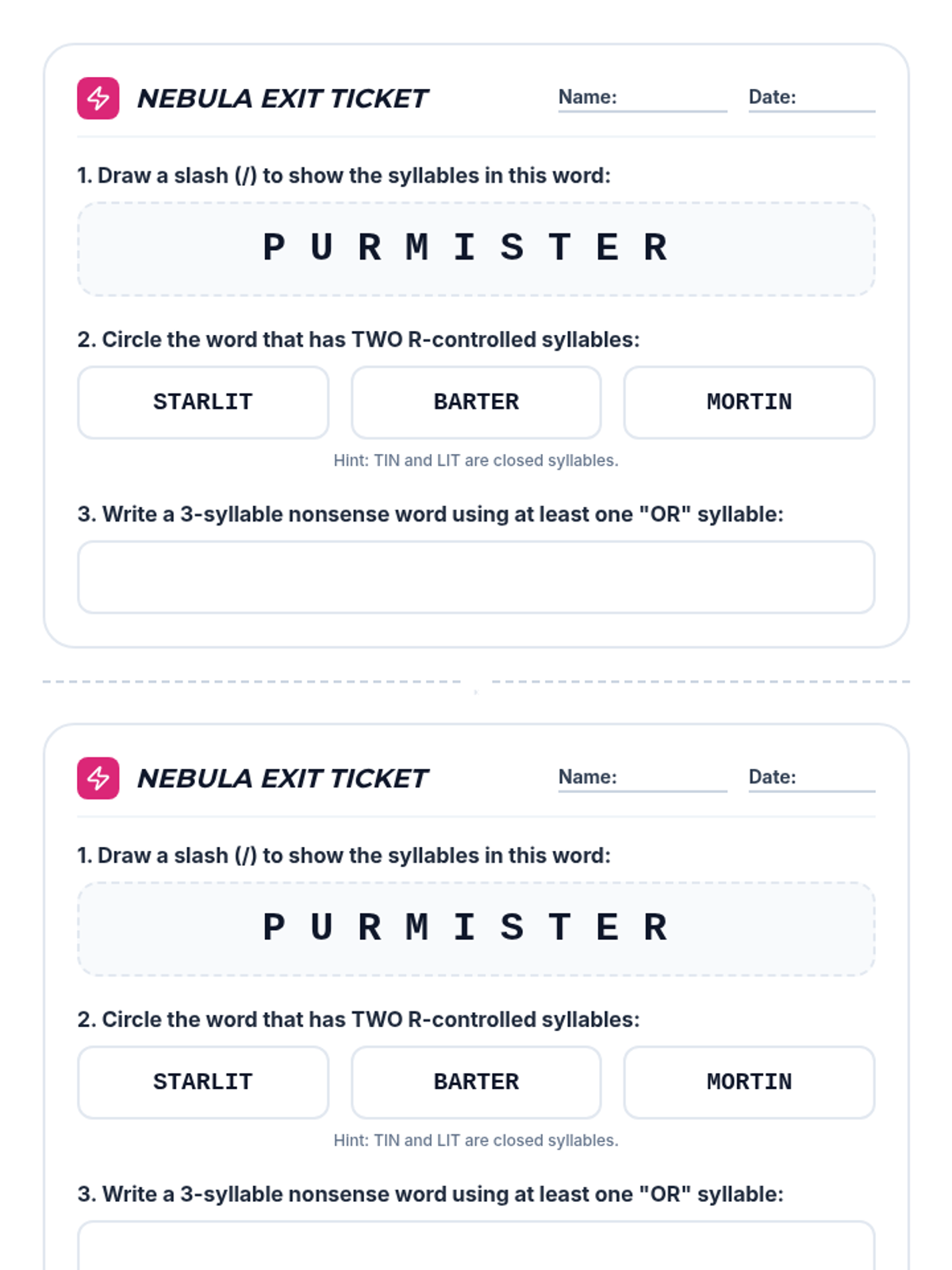
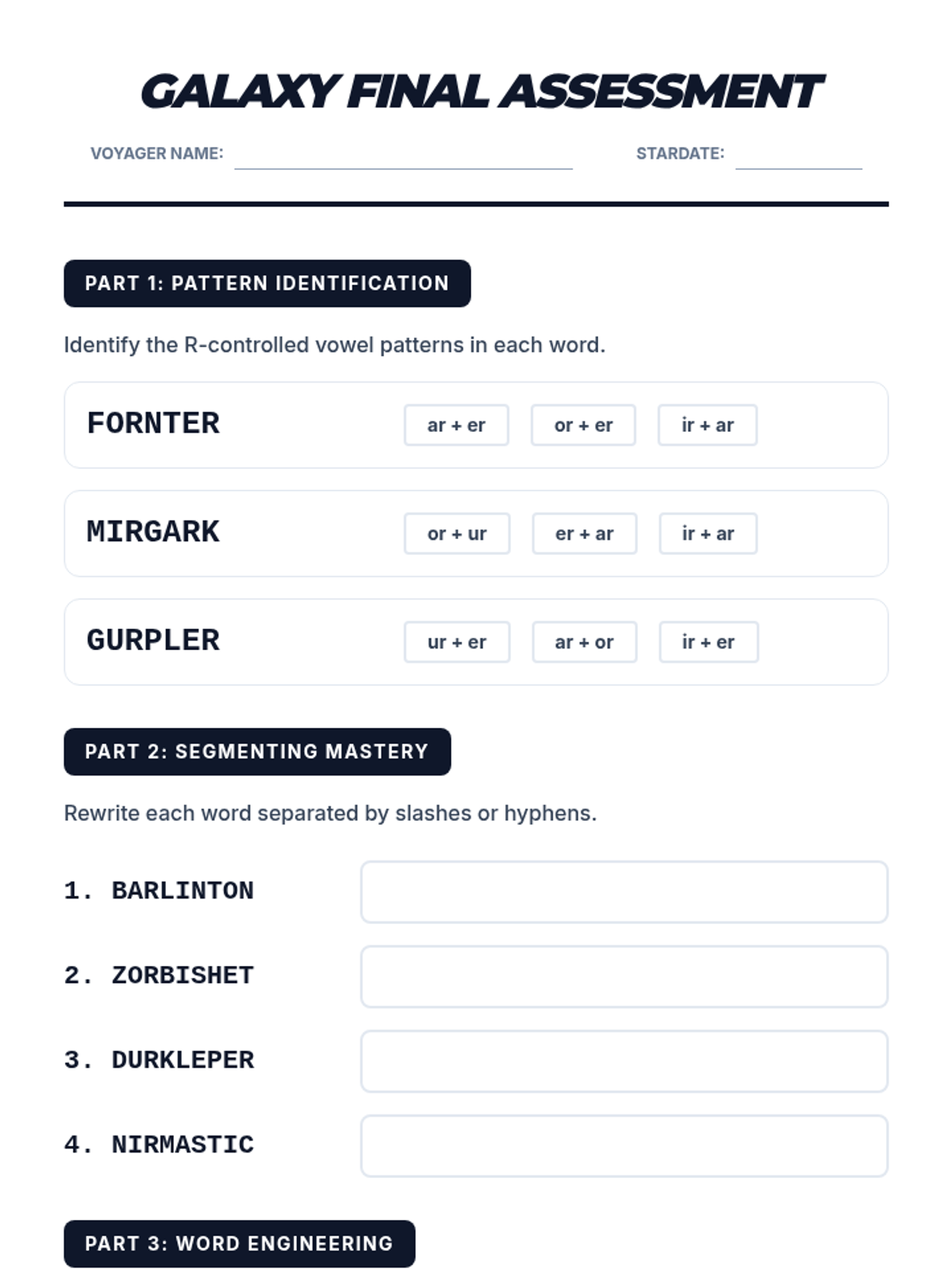
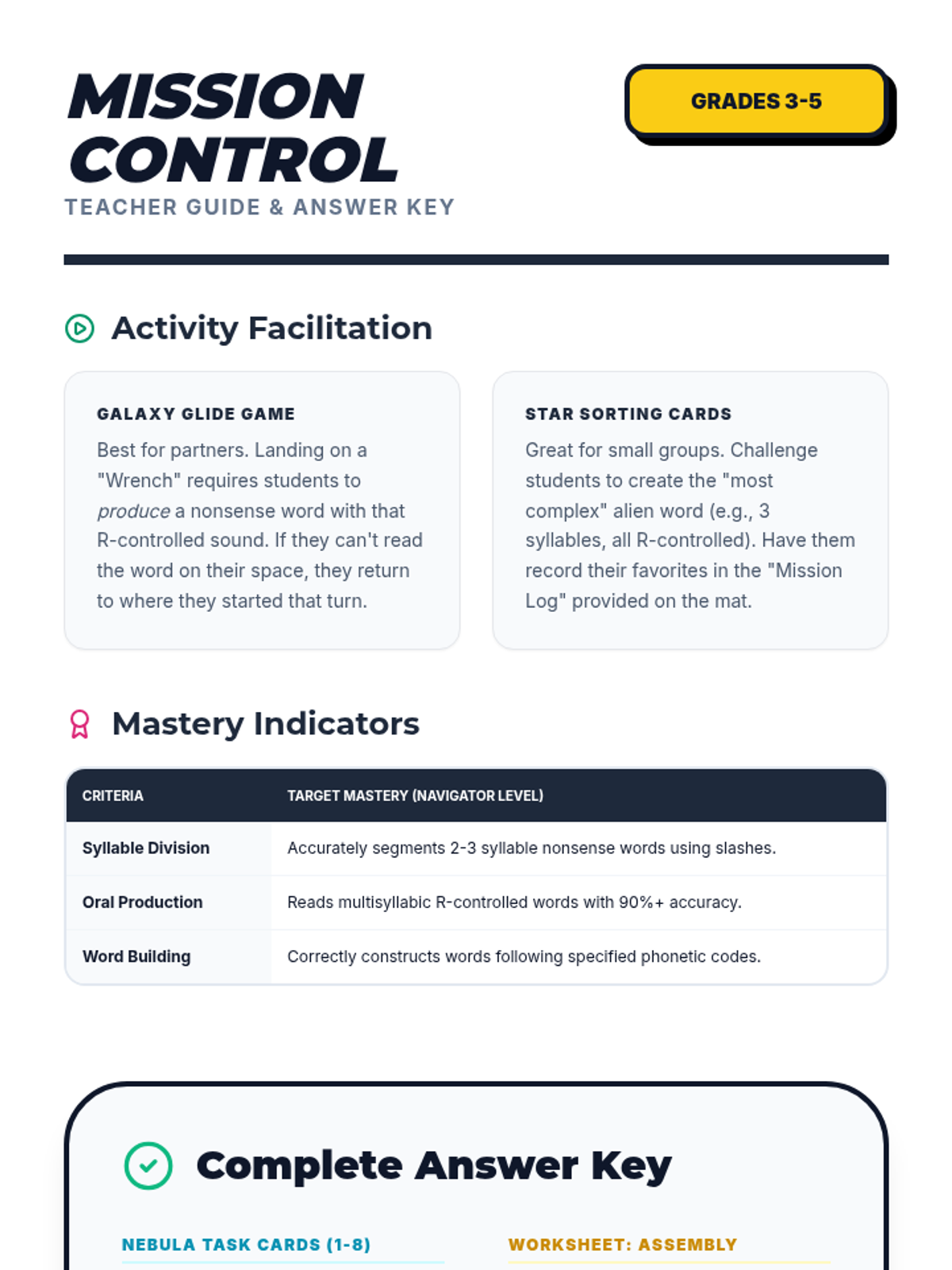
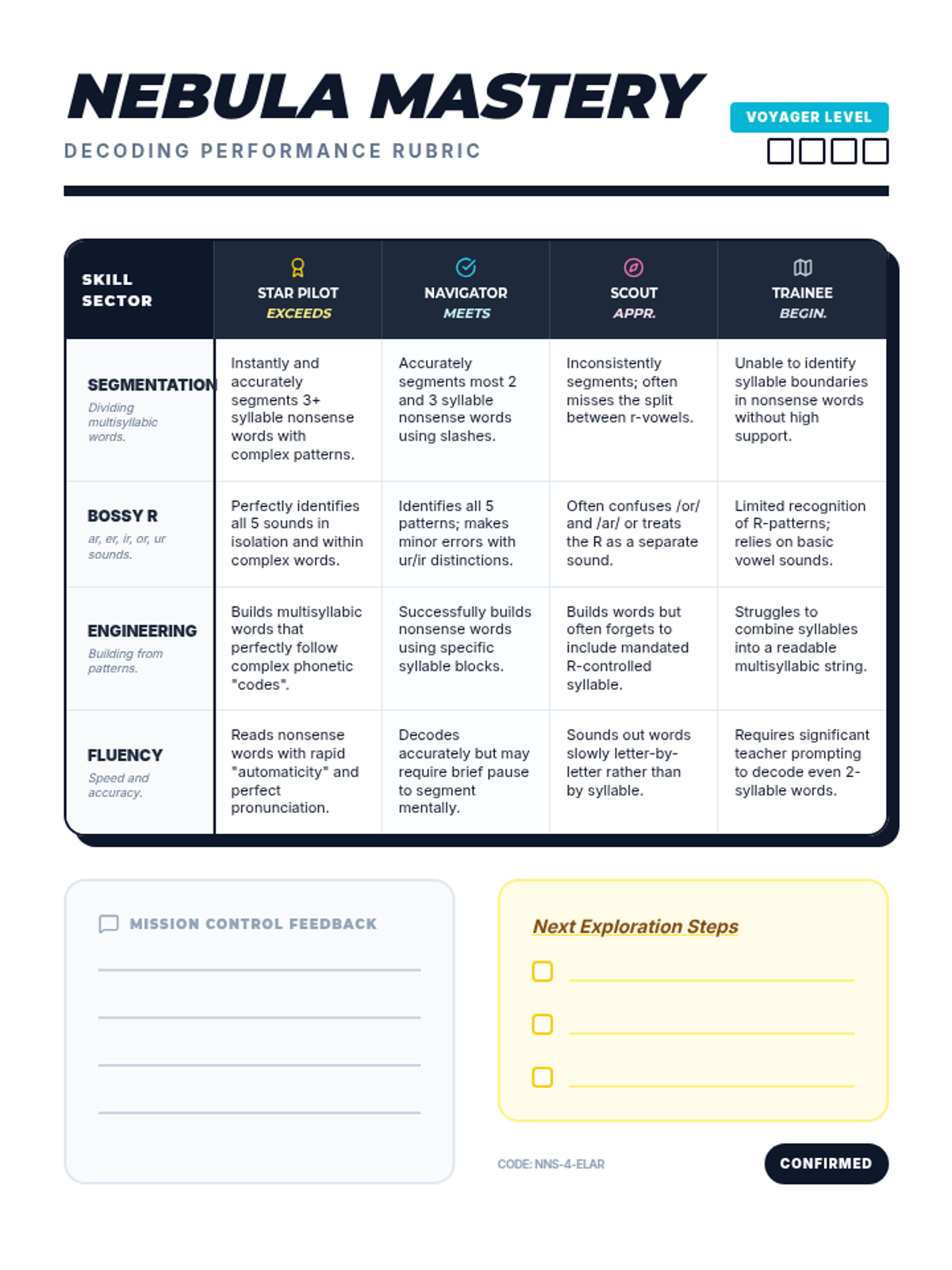
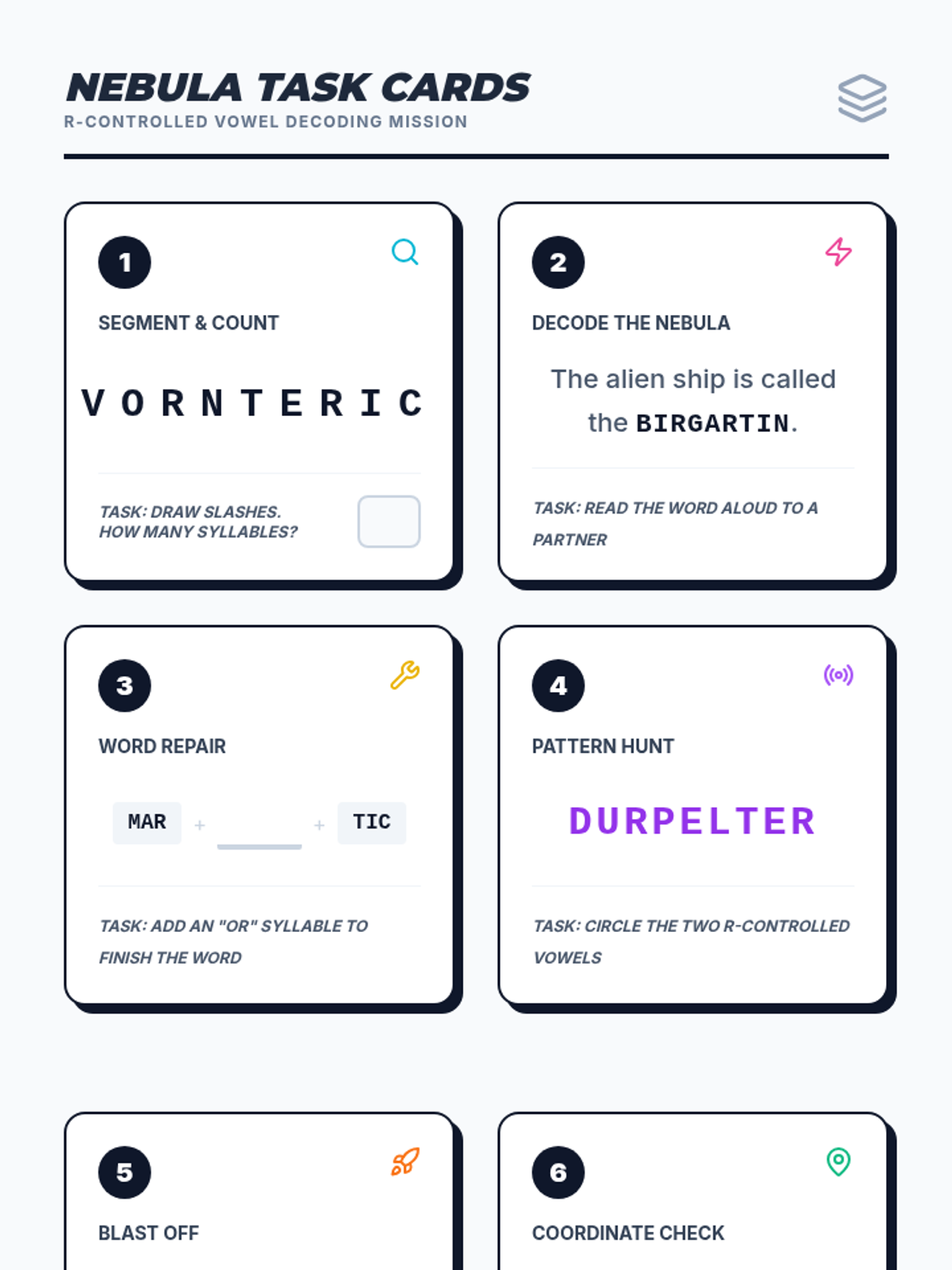
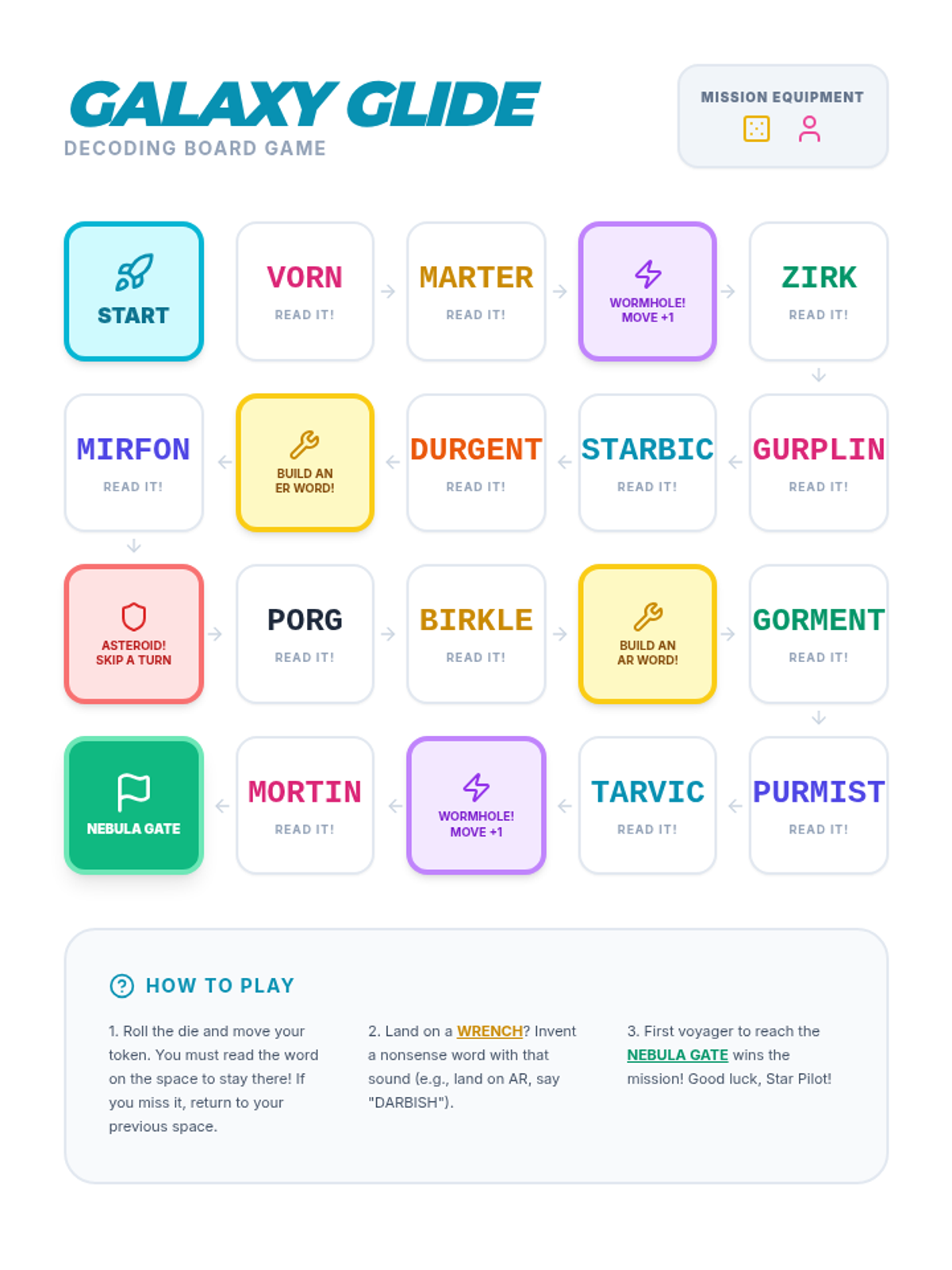
Students will identify, segment, and build multisyllabic nonsense words using R-controlled vowels (ar, er, ir, or, ur) to strengthen their decoding skills.
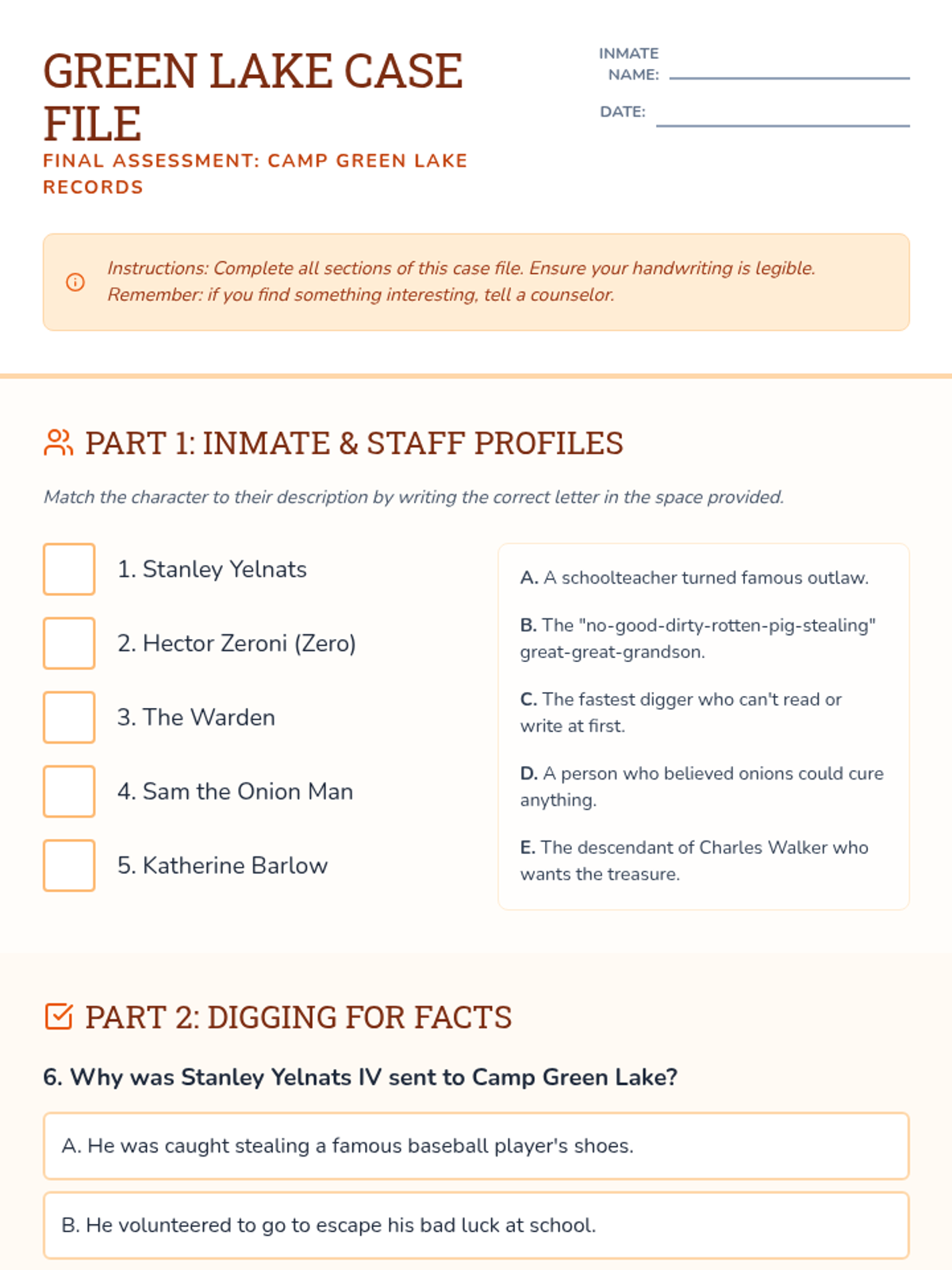
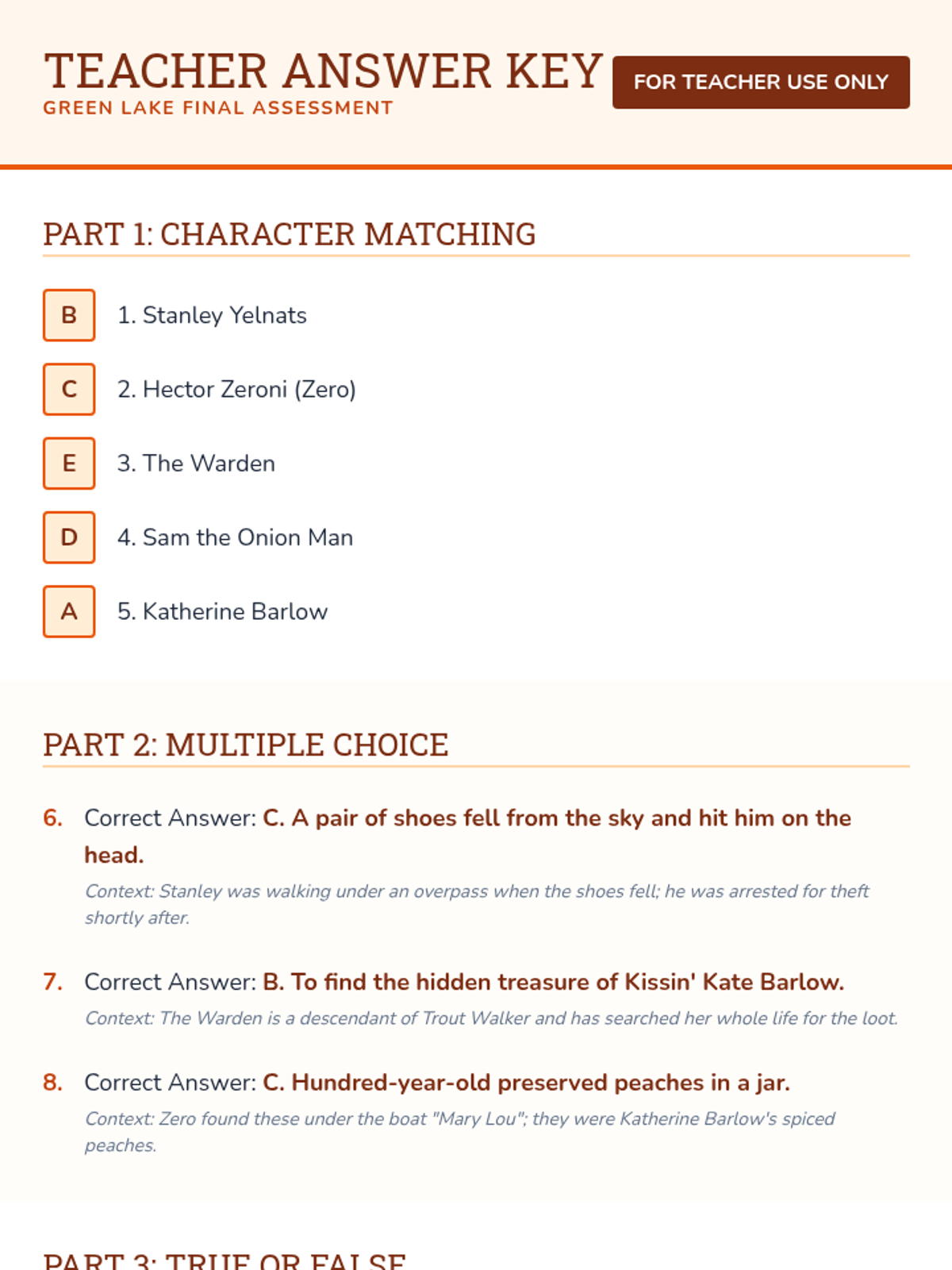
A final assessment and review lesson for the novel Holes by Louis Sachar, focusing on character identification, plot sequencing, and thematic connections. Students will complete a comprehensive test after a visual review of the major story arcs.
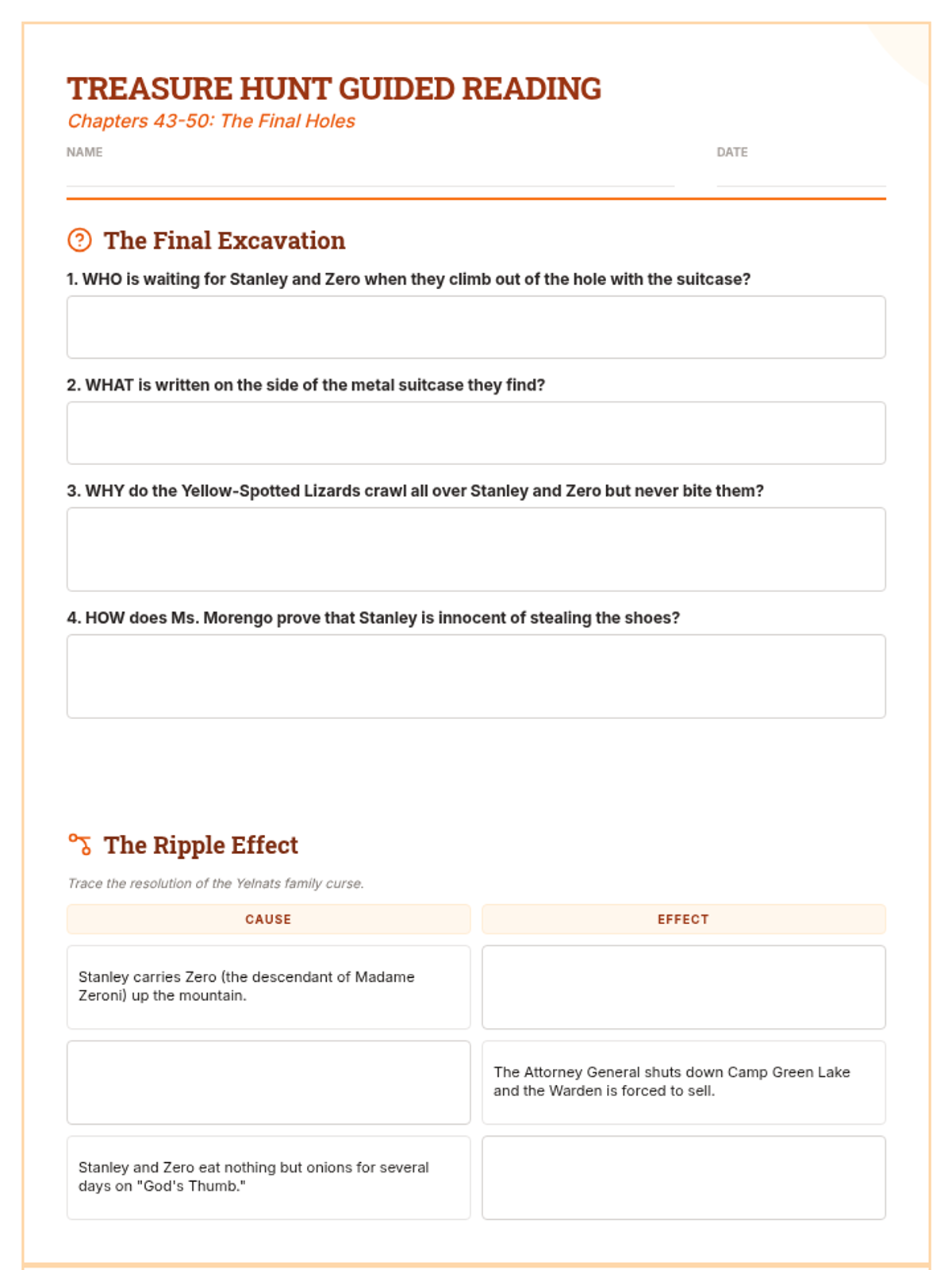
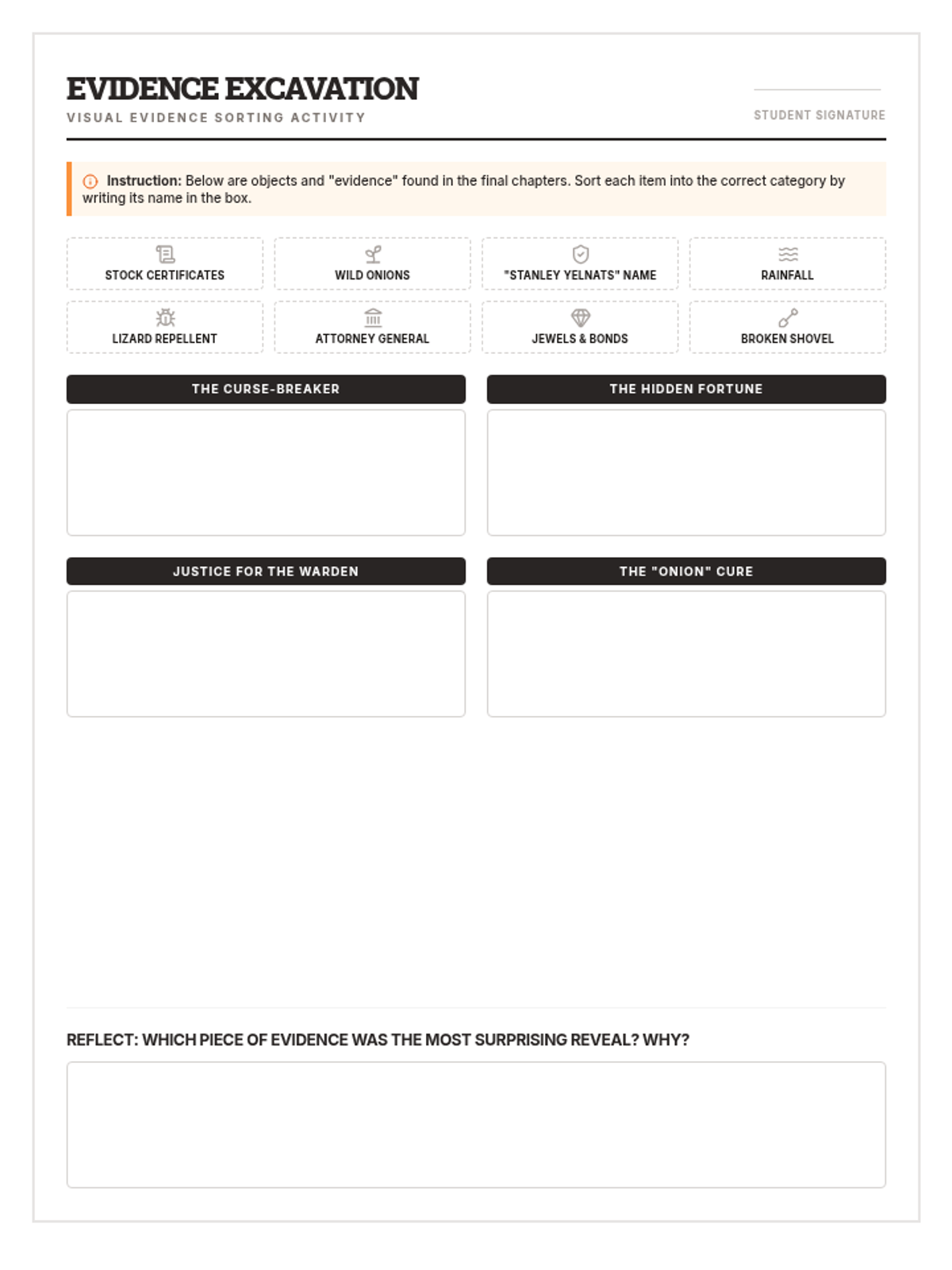
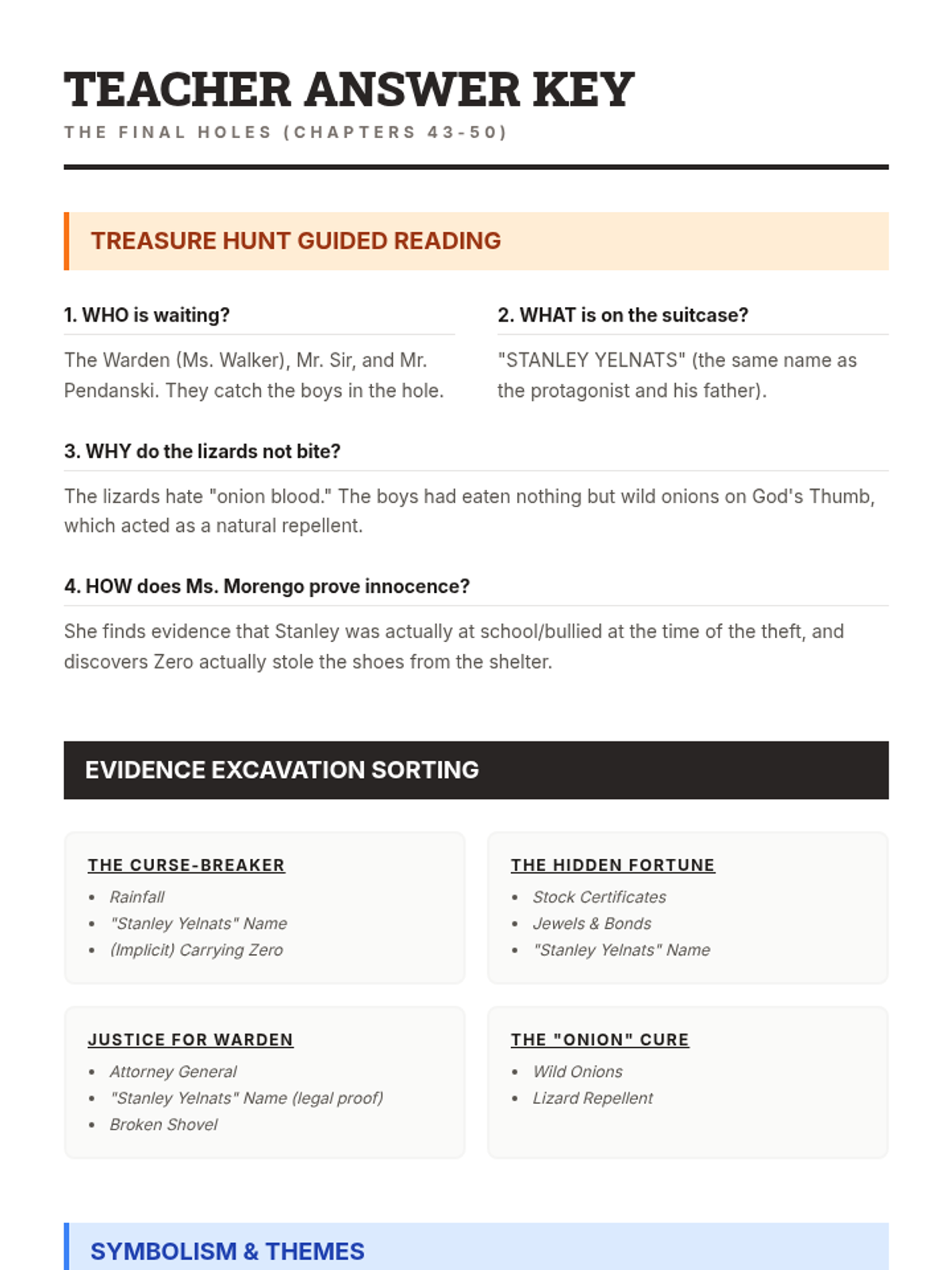
A comprehensive exploration of the final chapters of Holes (43-50), focusing on the resolution of the curse, the reveal of the treasure, and the symbolic cleansing of Camp Green Lake.
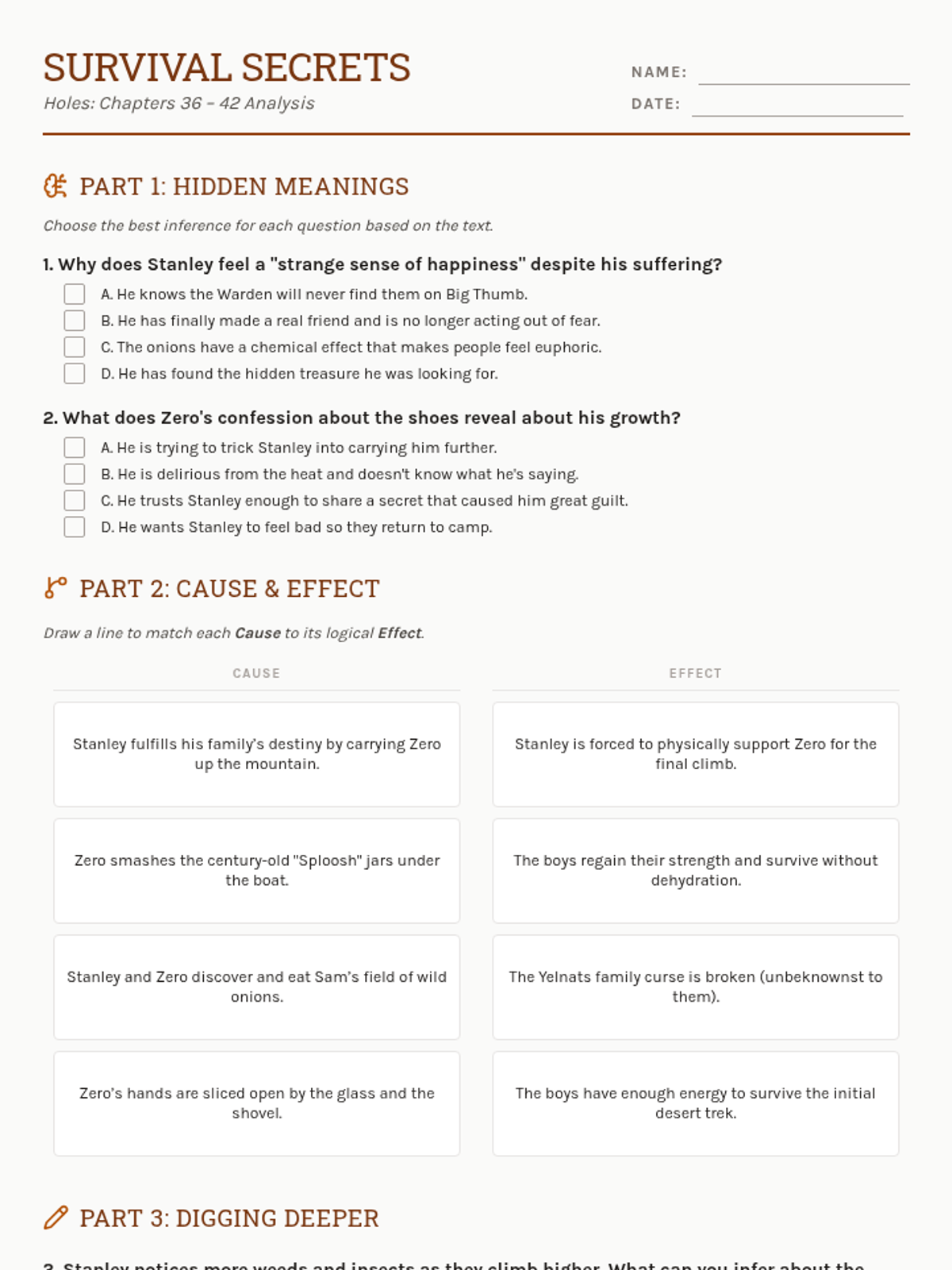
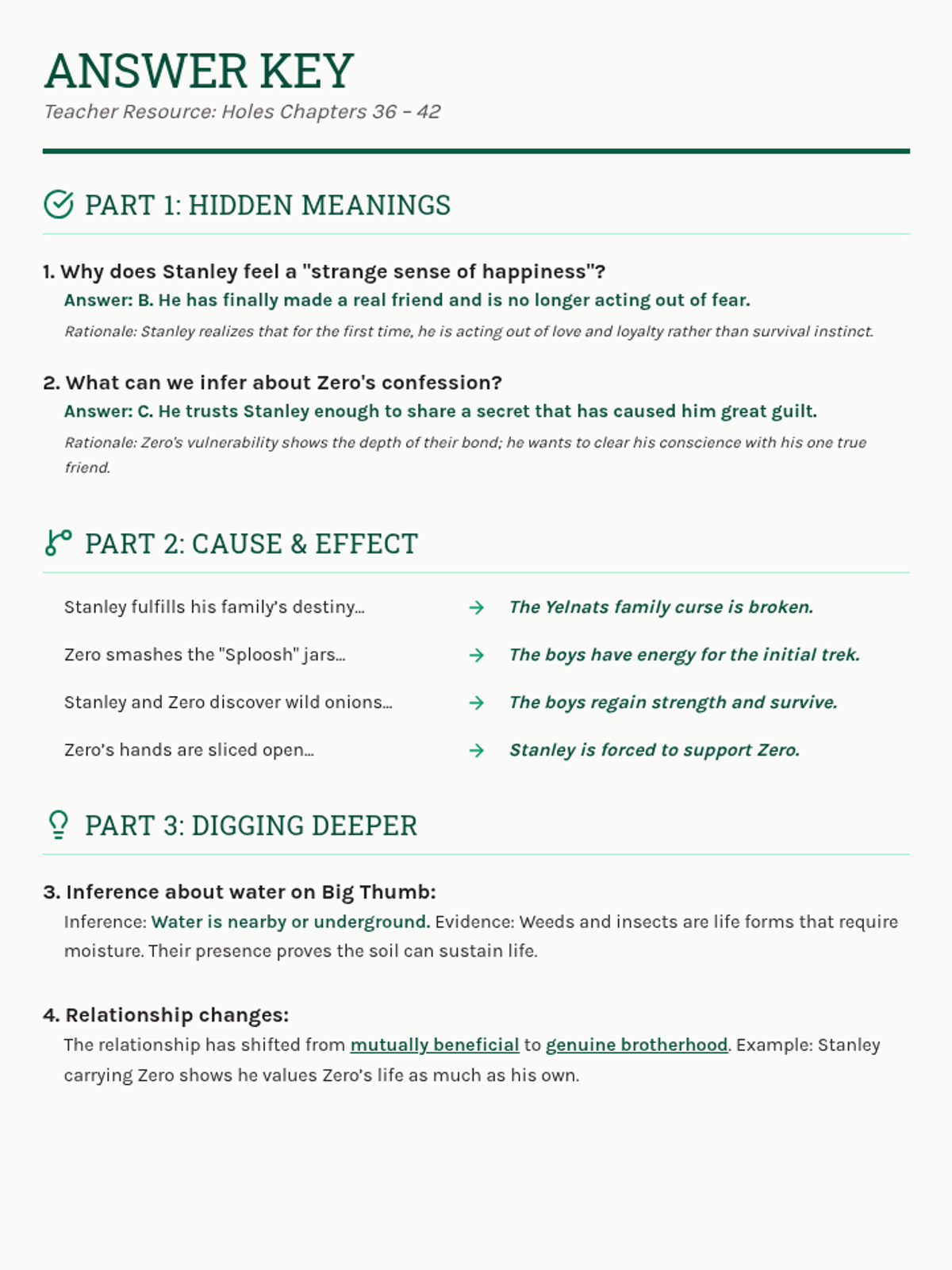
A lesson focused on analyzing character motivations and causal relationships in chapters 36-42 of Louis Sachar's Holes, specifically during the ascent of Big Thumb.
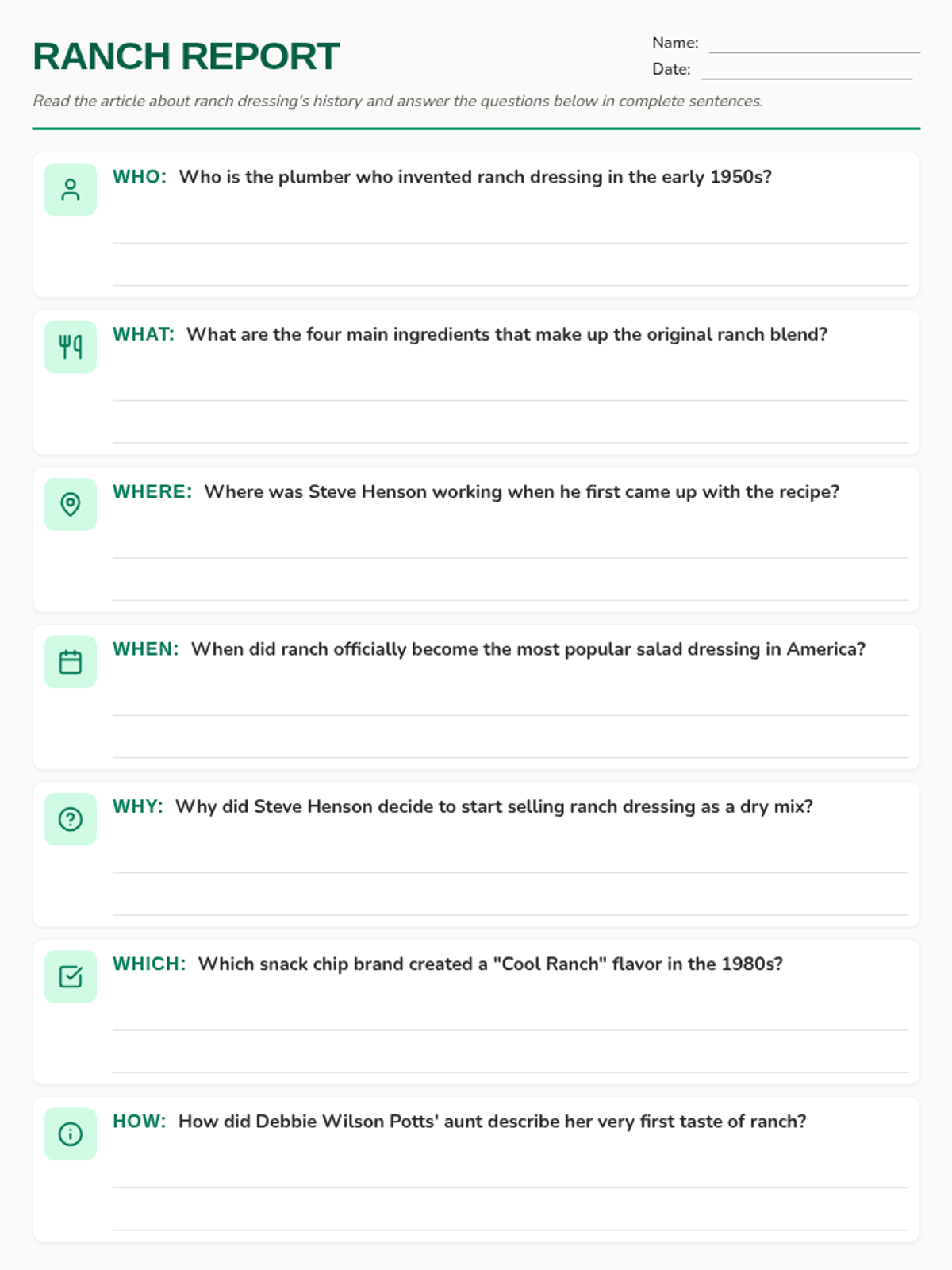
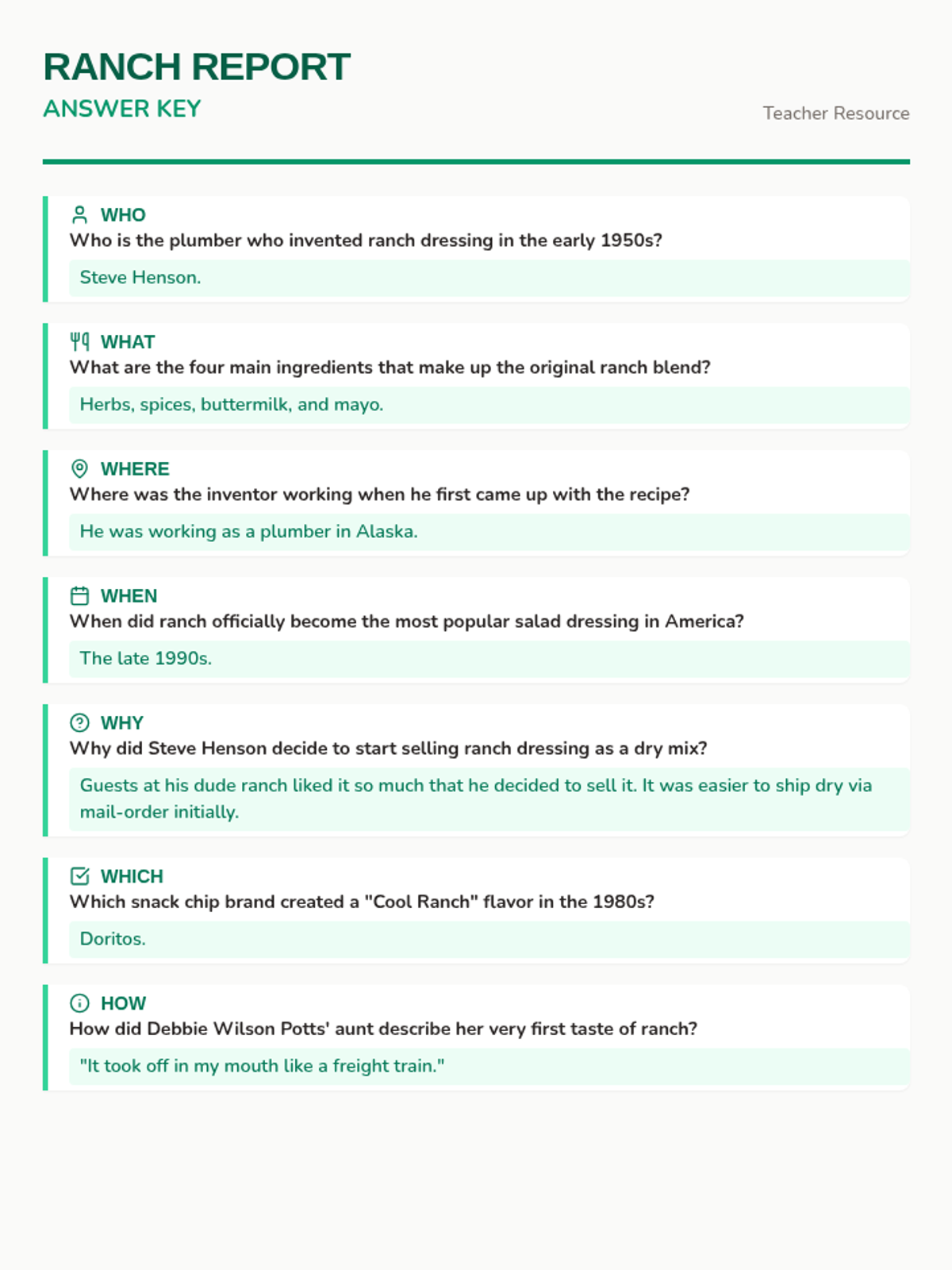
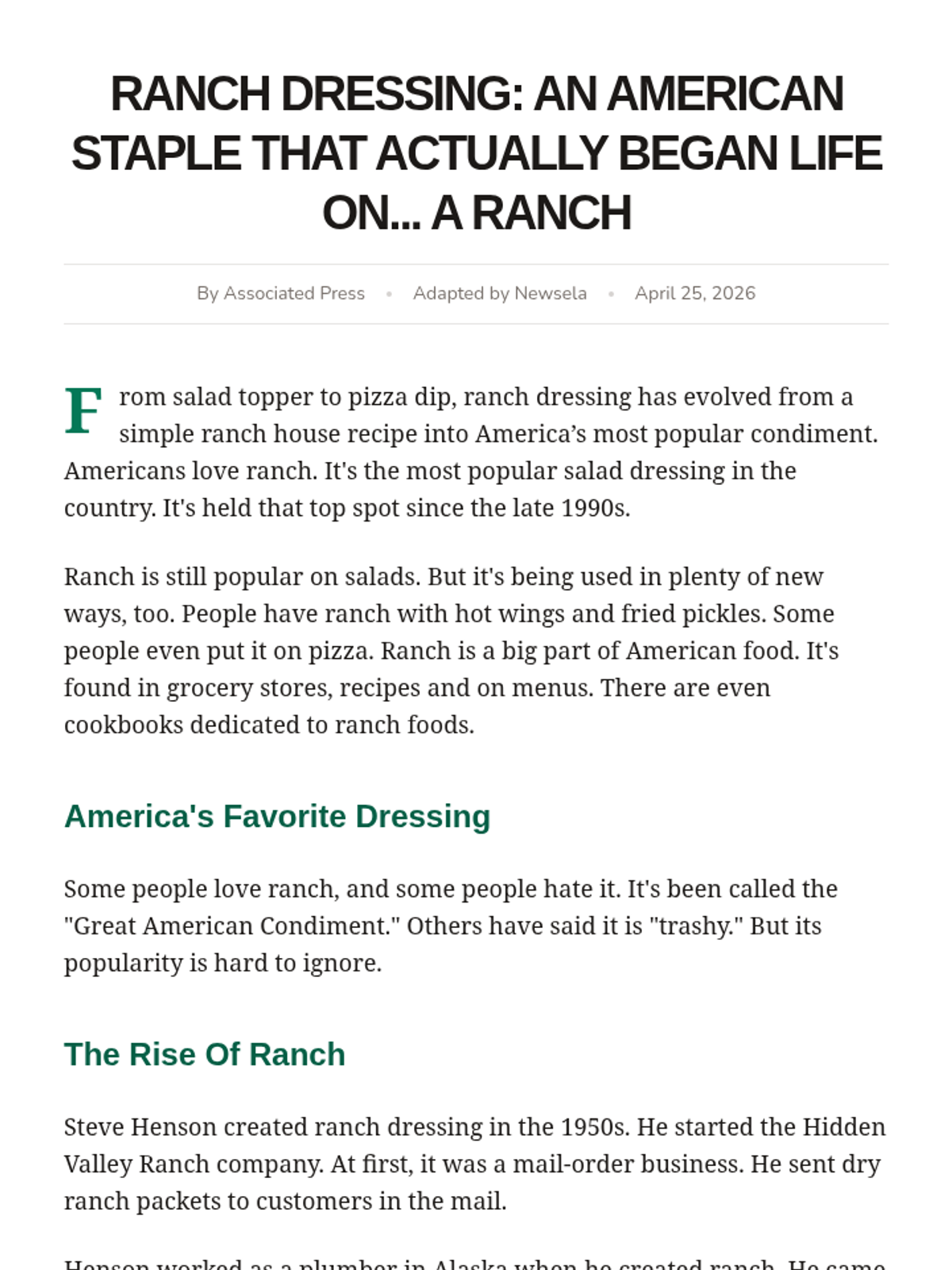
A lesson exploring the history and cultural impact of ranch dressing based on a Newsela article, featuring a reading comprehension worksheet and answer key.
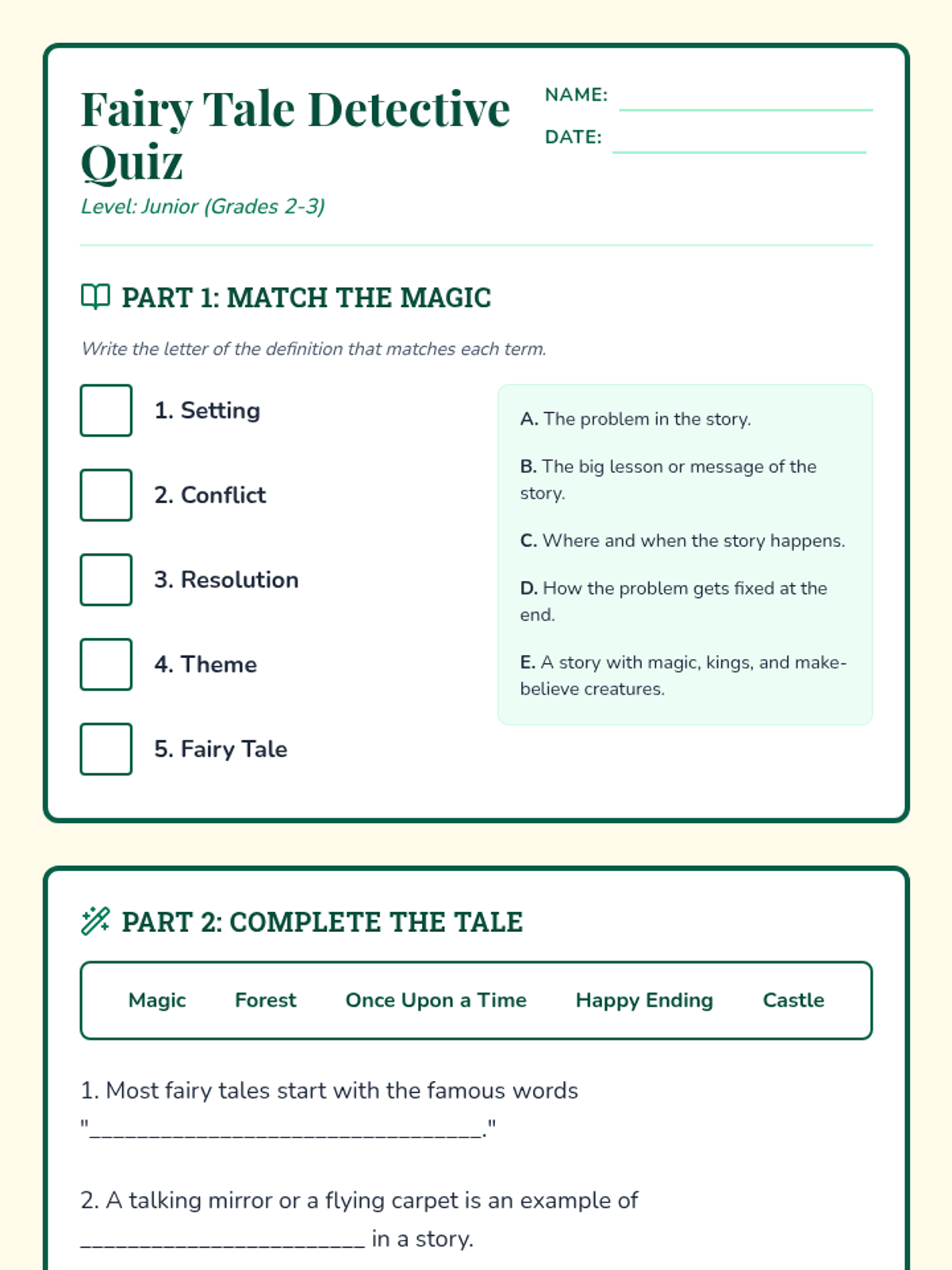
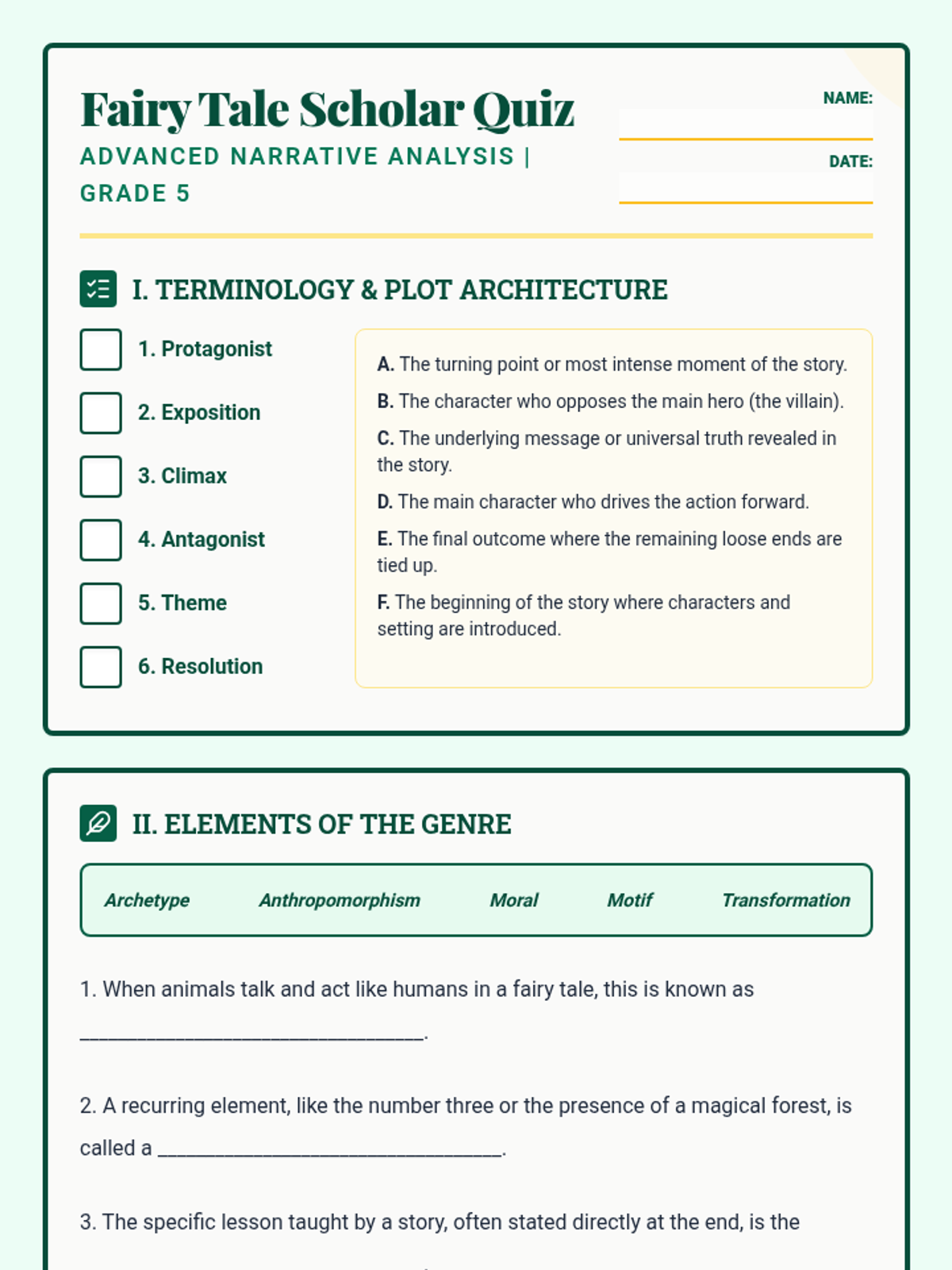
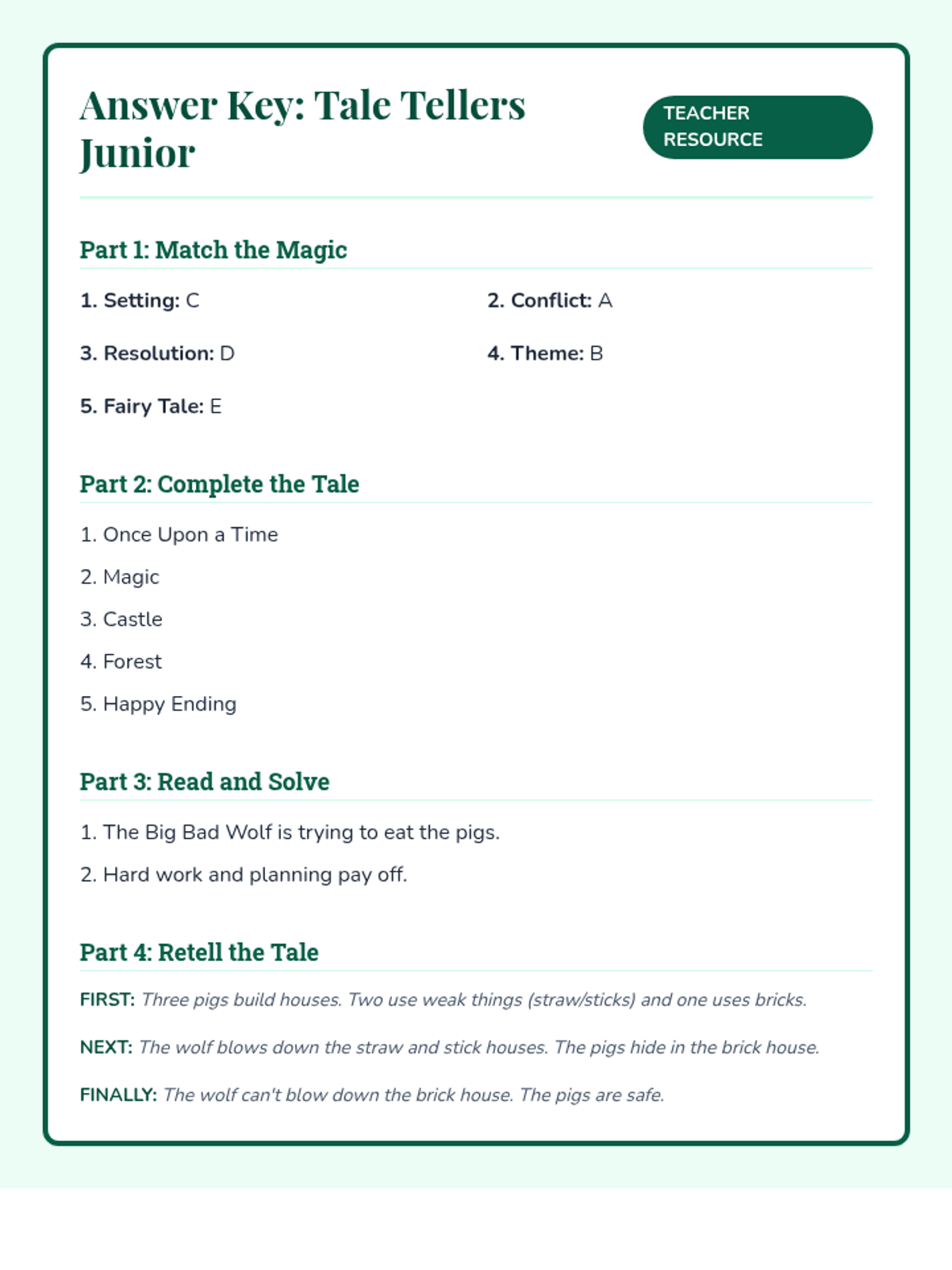
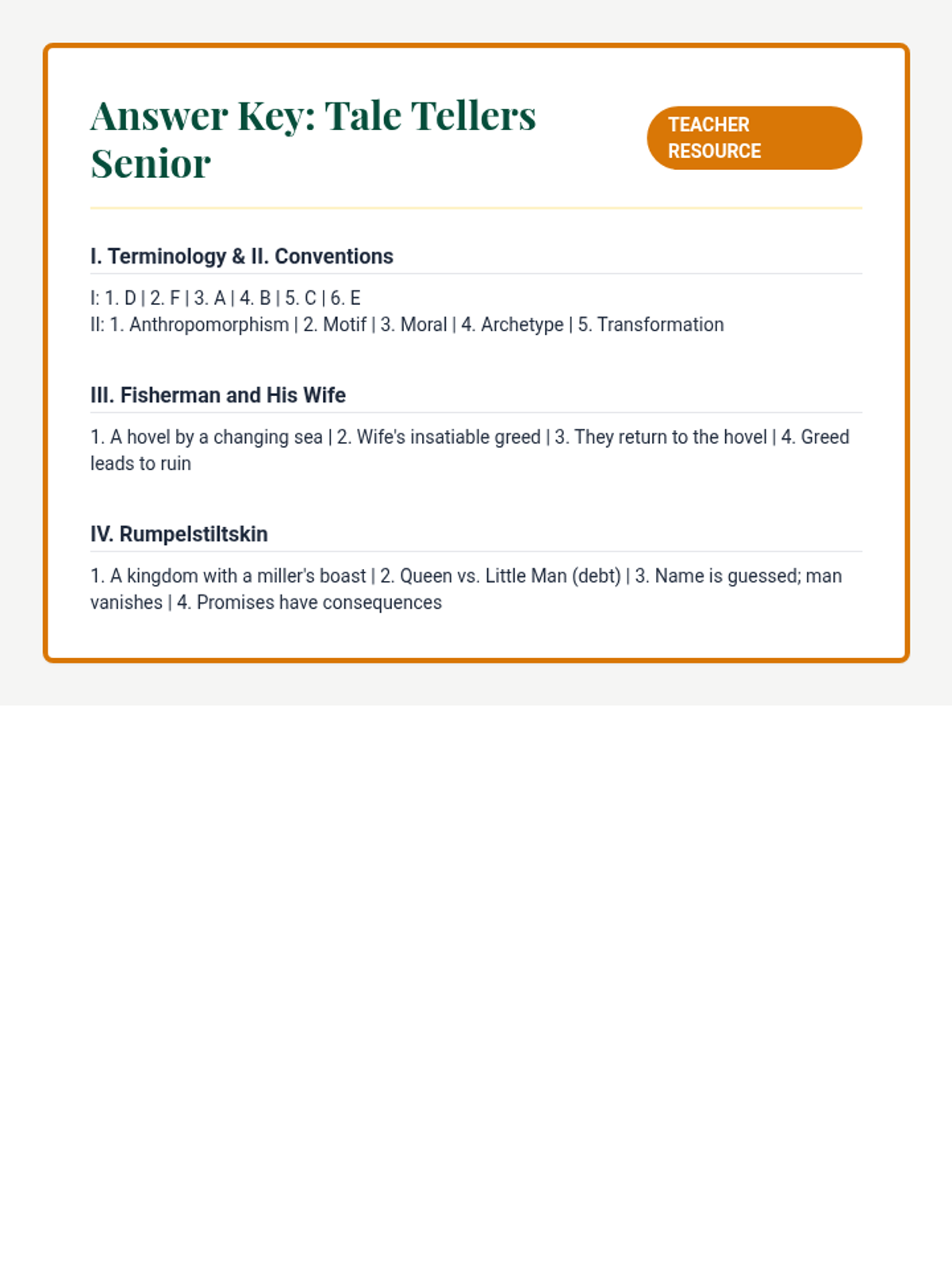
A comprehensive assessment on fairy tale elements and plot structures for elementary students, featuring two differentiated levels to meet specific grade-level standards.
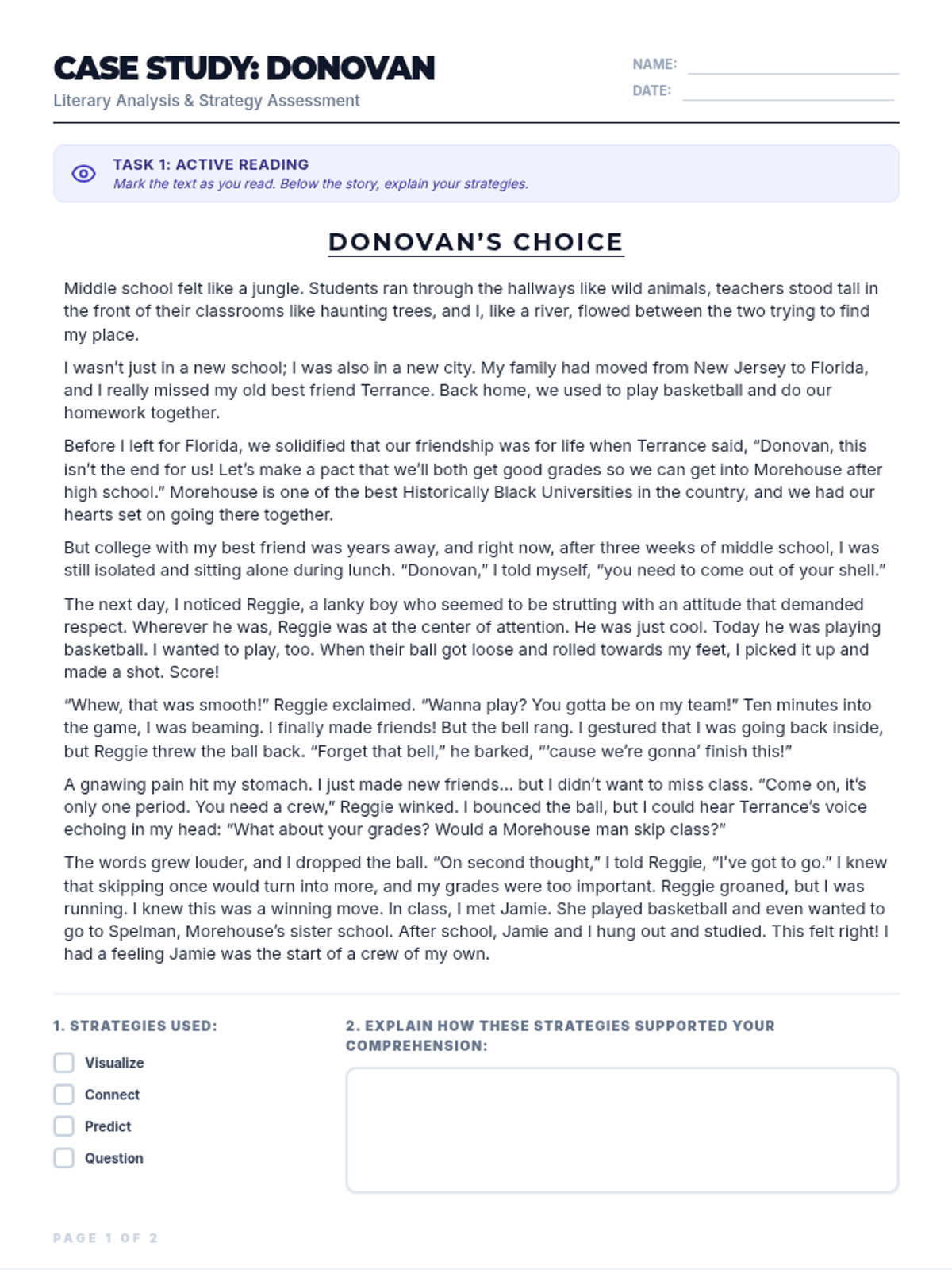
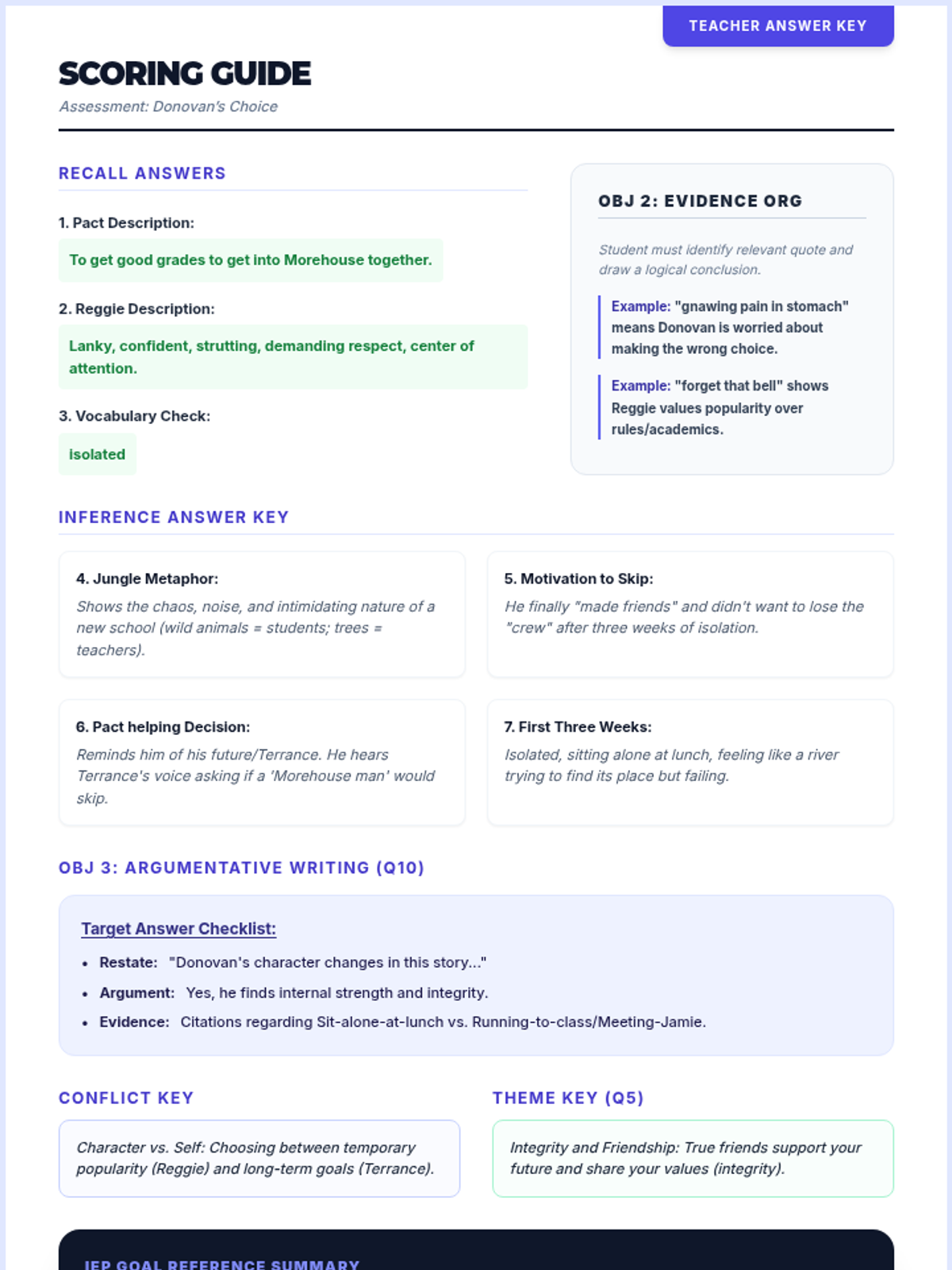
A literature-based assessment focused on evidence-based reading, active strategy reflection, and identifying conflict and theme through the story of Donovan's social choices.
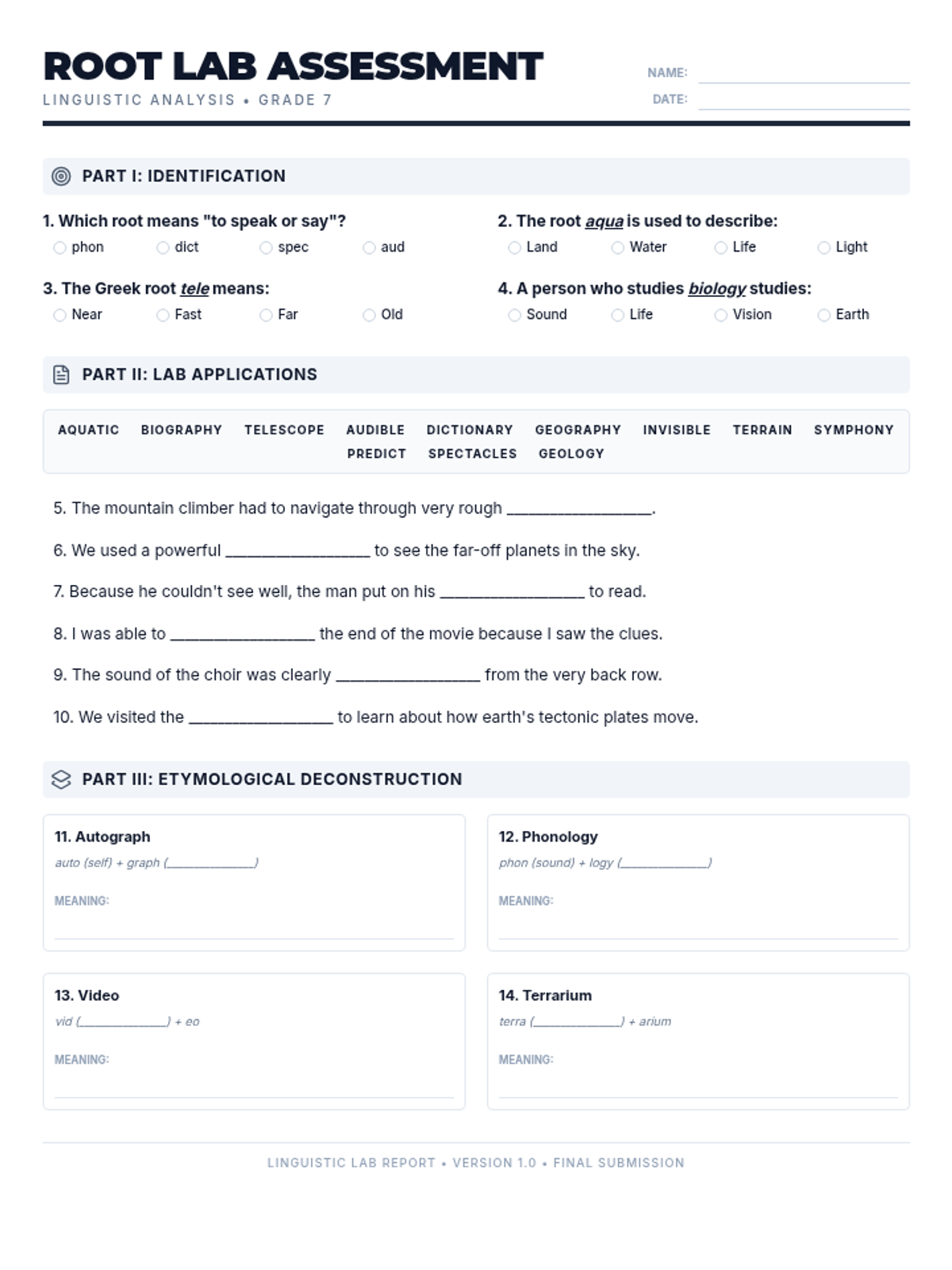
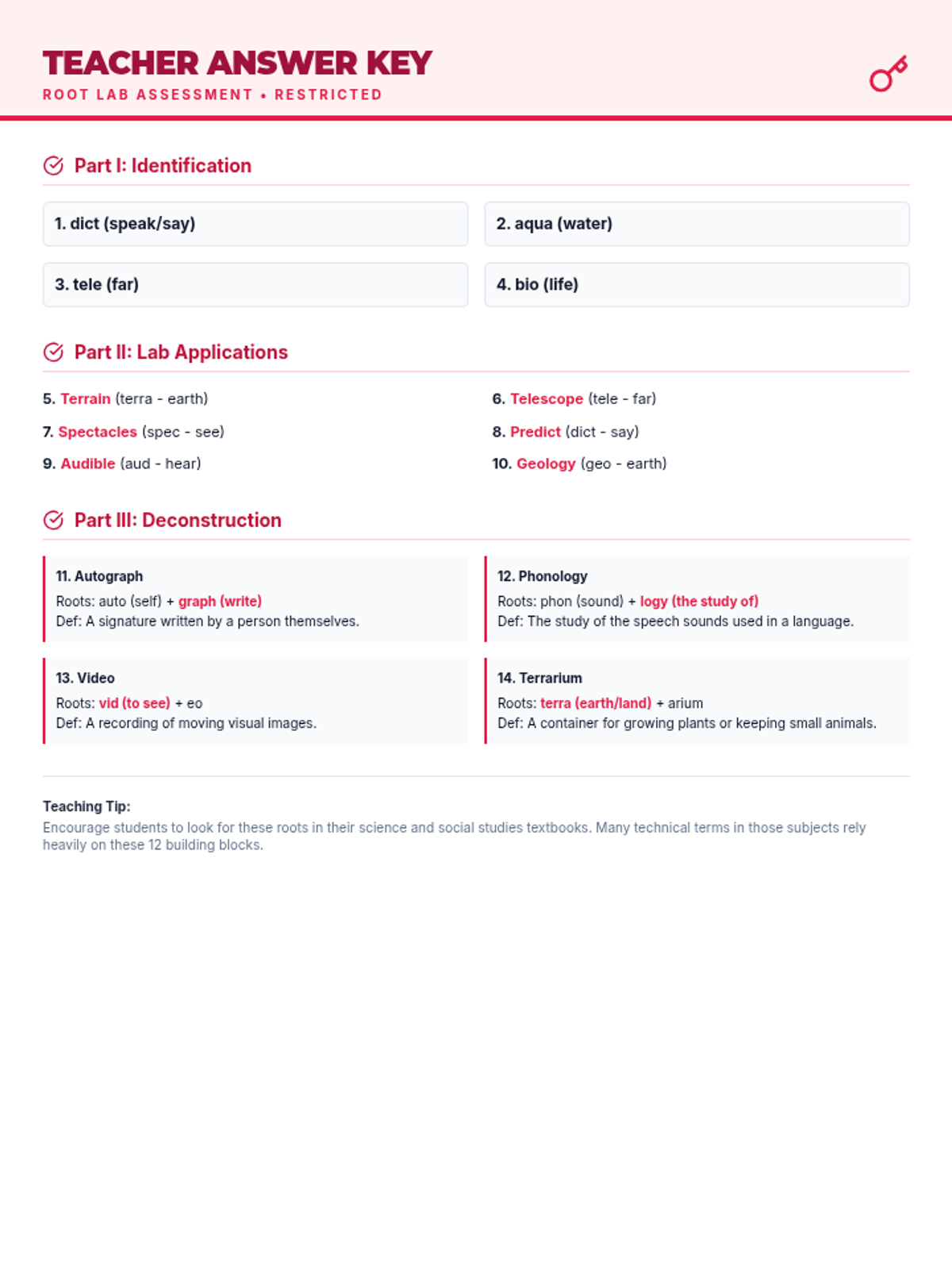
Students explore 10 common Greek and Latin roots, identifying their meanings and applying them to determine the definitions of complex academic vocabulary.
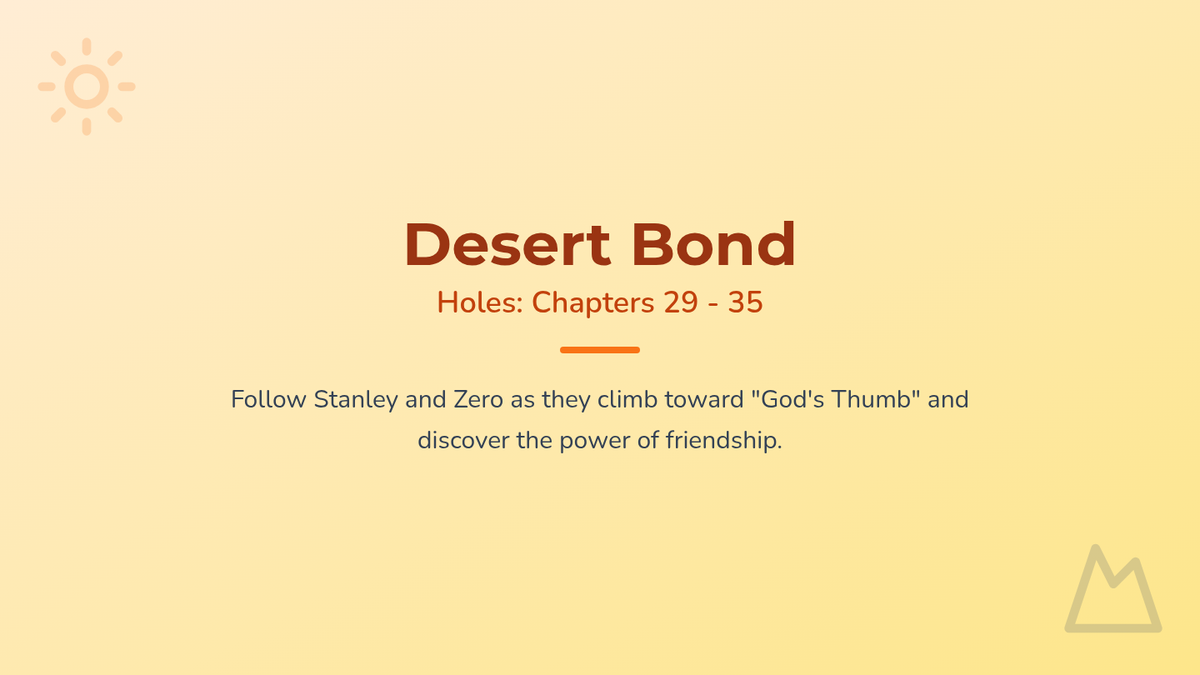
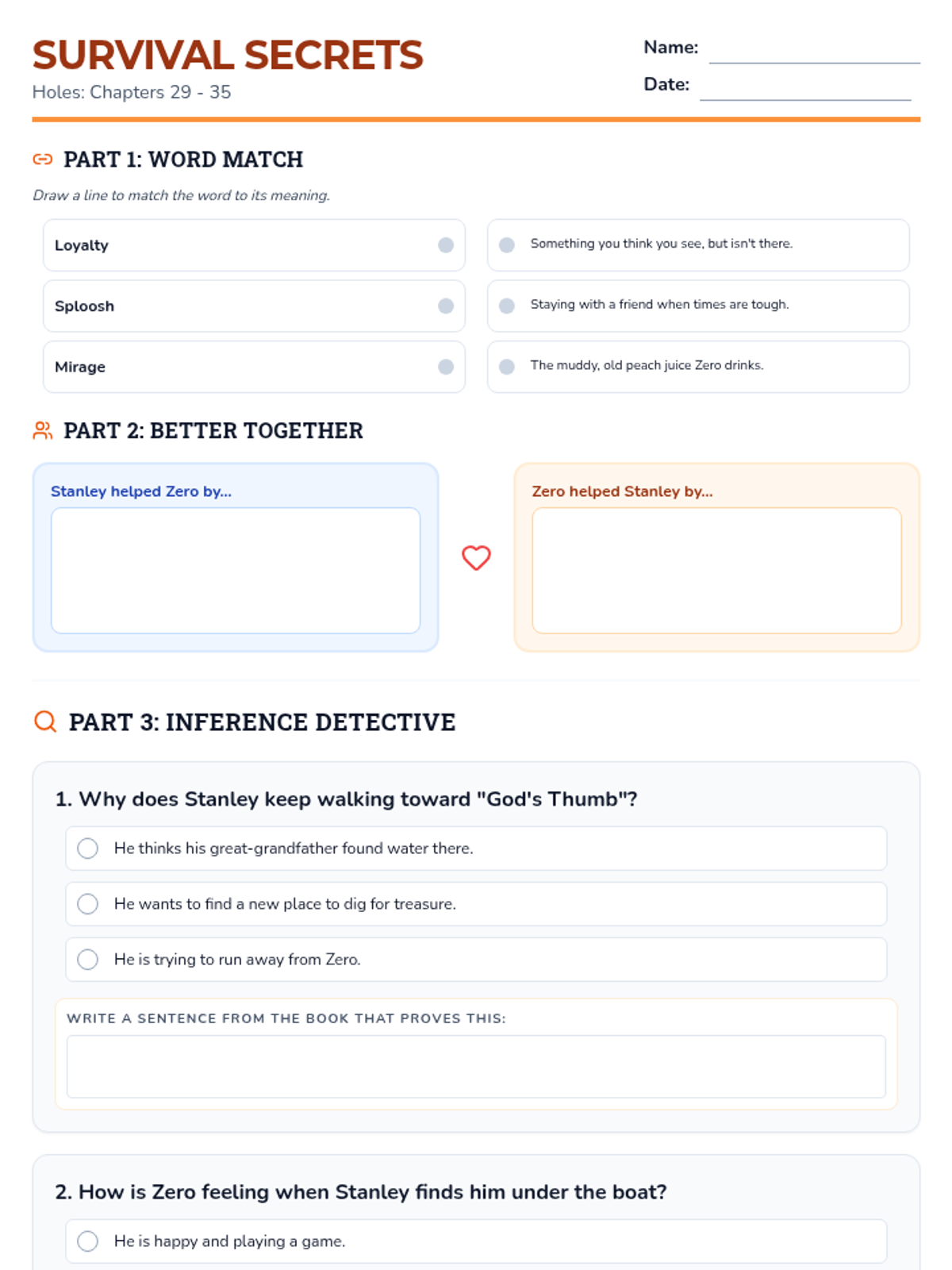
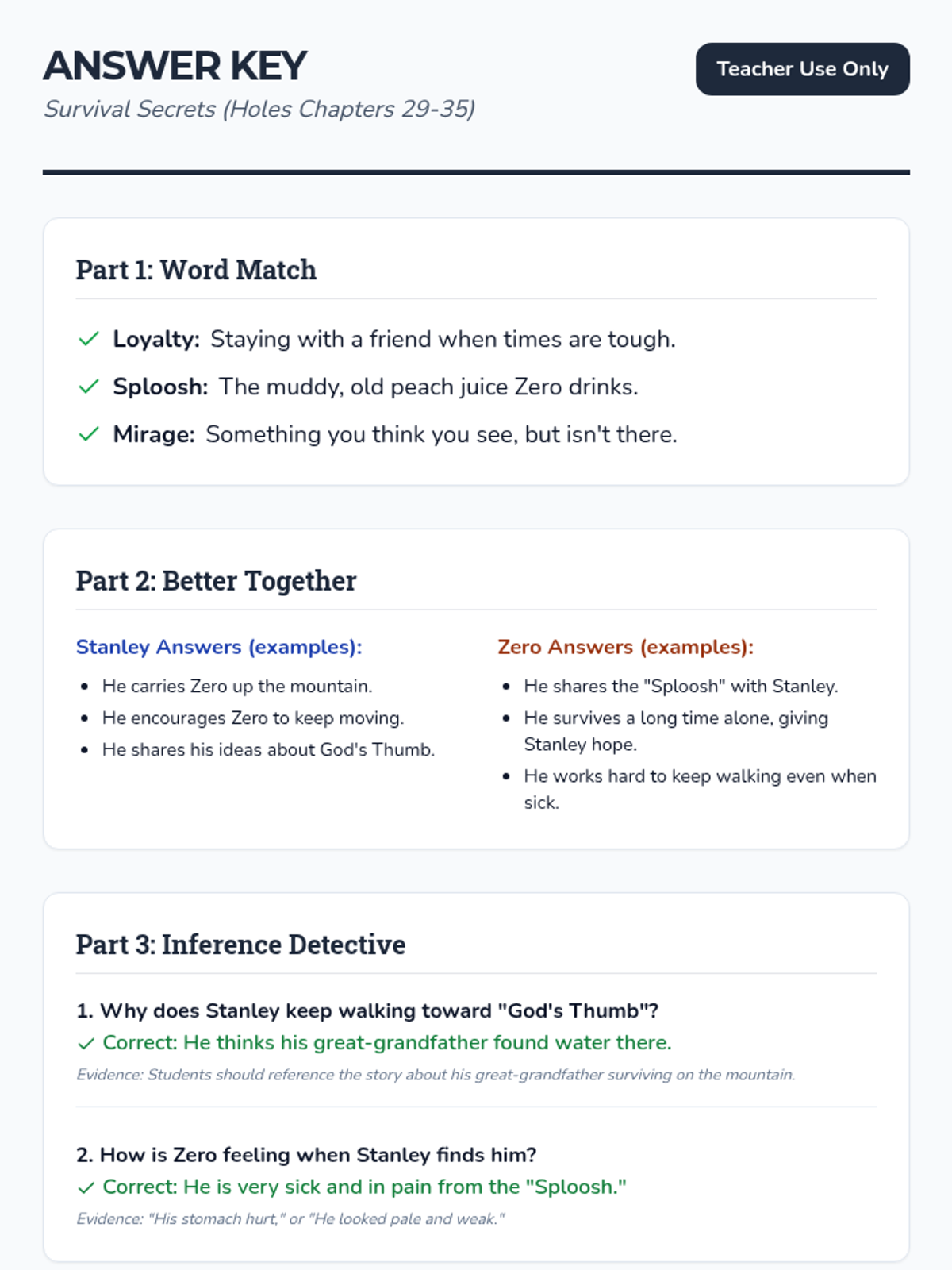
A lesson focused on chapters 29-35 of Louis Sachar's Holes, exploring the deepening friendship between Stanley and Zero as they face the challenges of the desert. Students will analyze character relationships, make inferences about their survival, and identify the central theme of loyalty.
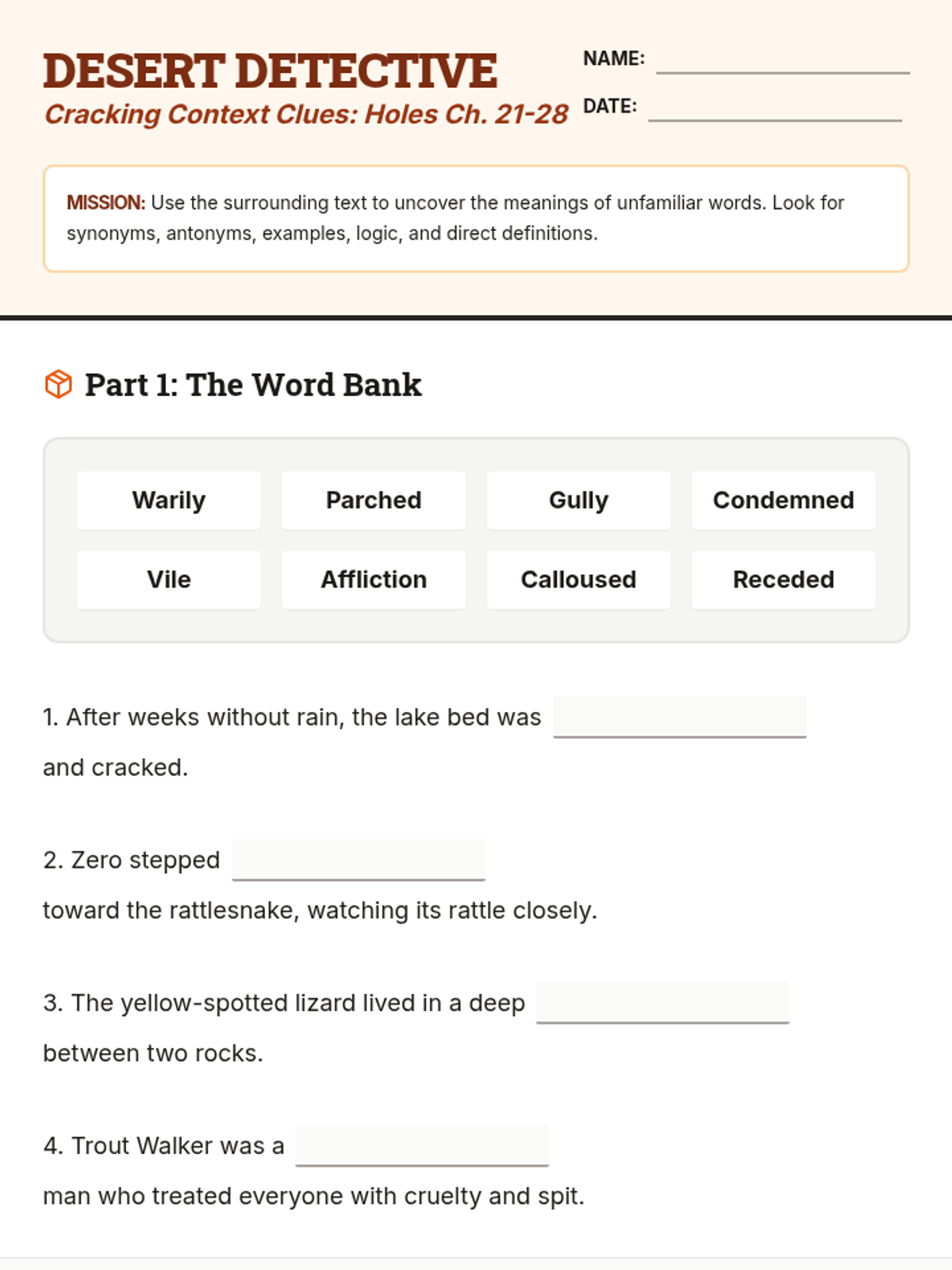
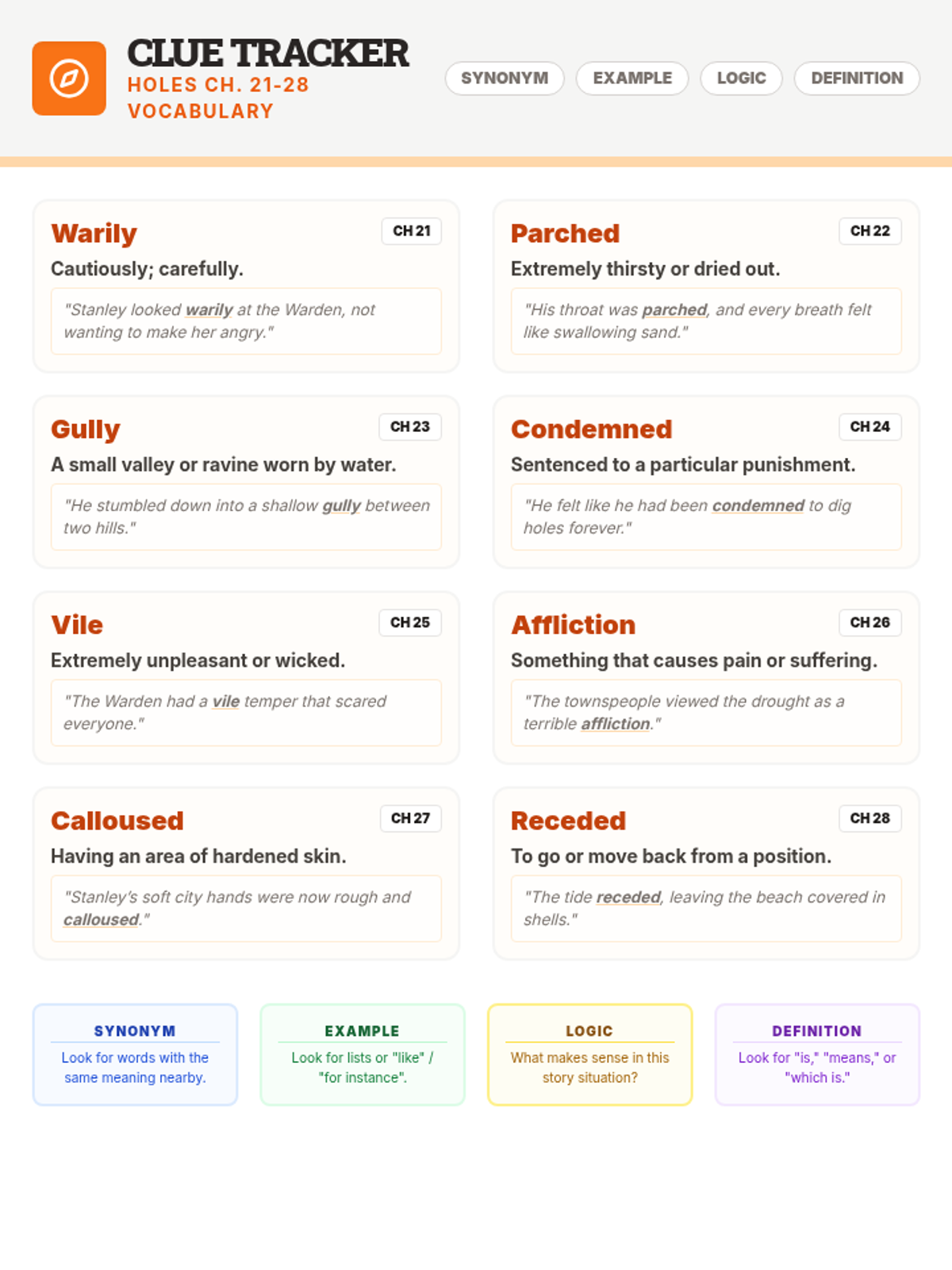
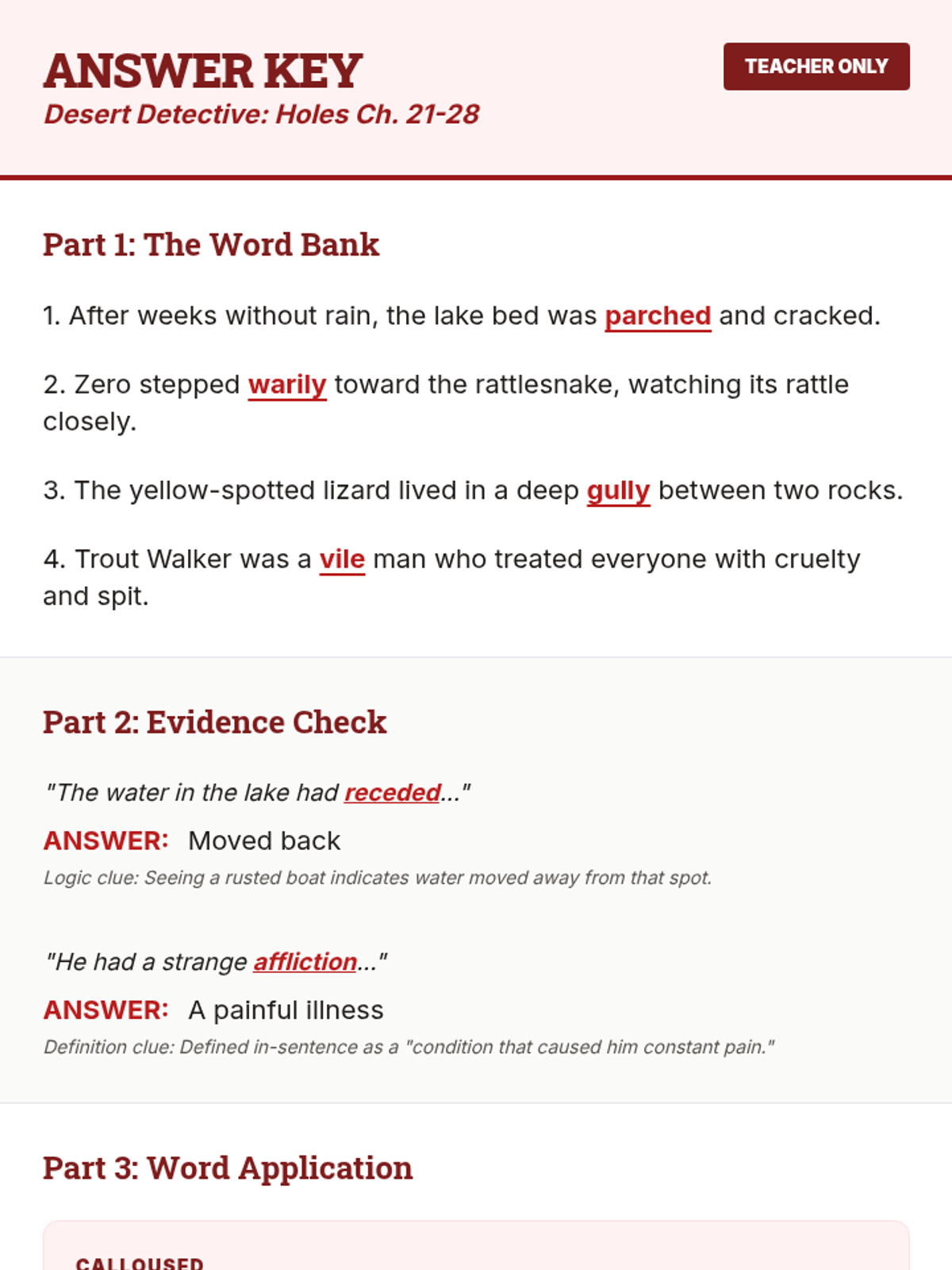
A deep dive into context clue strategies using key vocabulary from chapters 21-28 of Holes, featuring multi-level support for diverse learners.
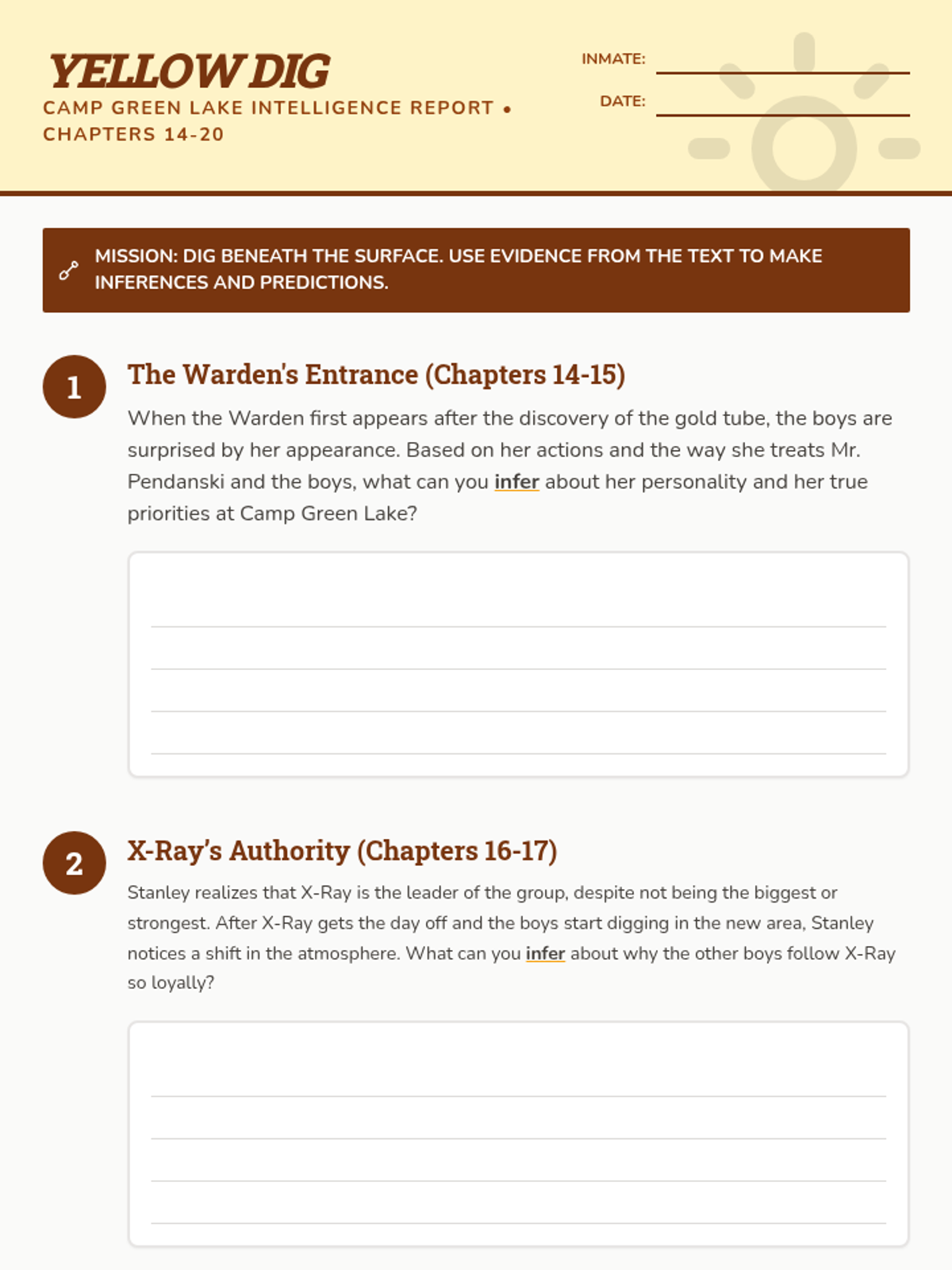
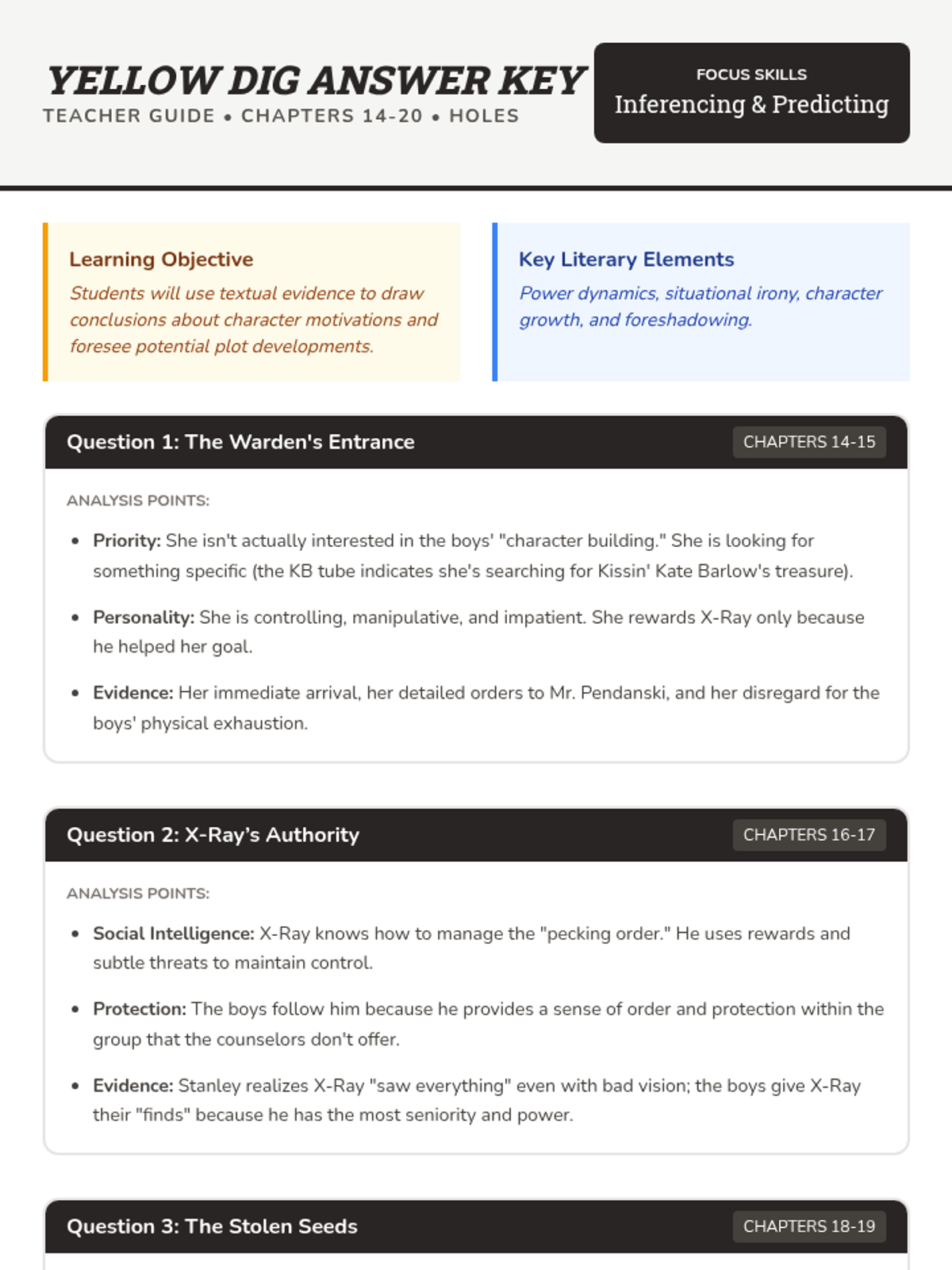
This lesson focuses on chapters 14-20 of Louis Sachar's 'Holes', emphasizing the development of inferencing and predicting skills as students analyze character motivations and plot developments.
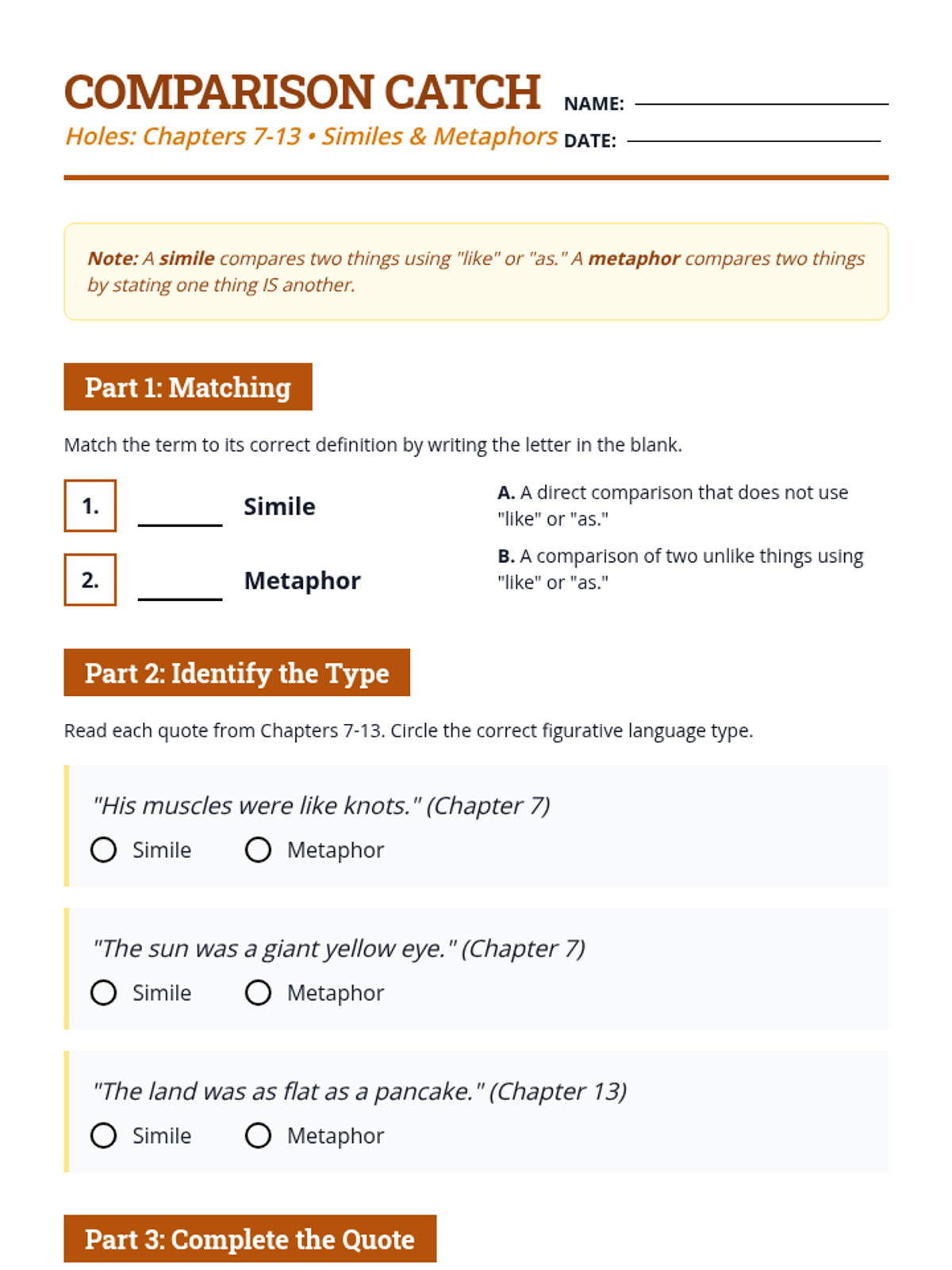
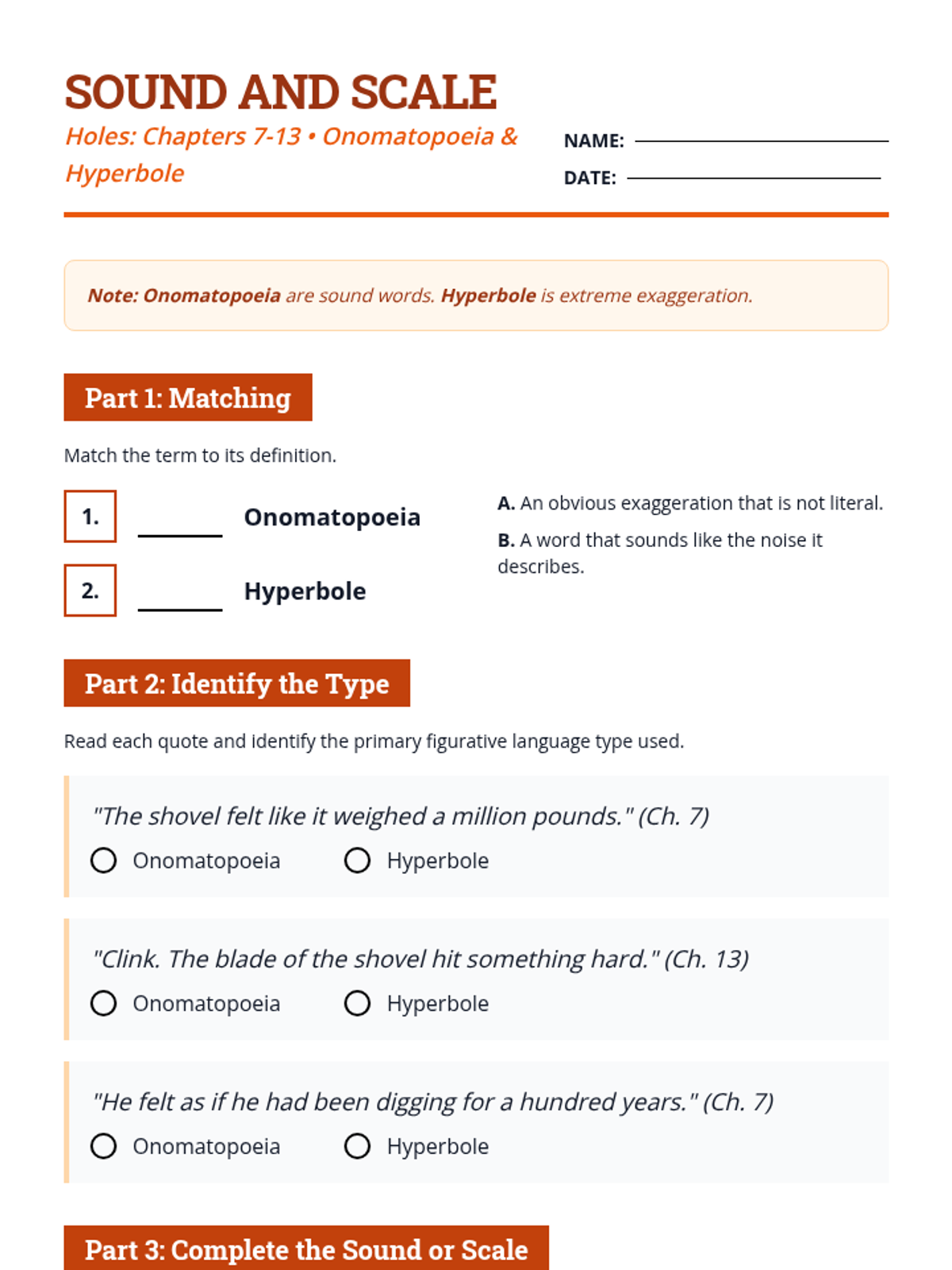
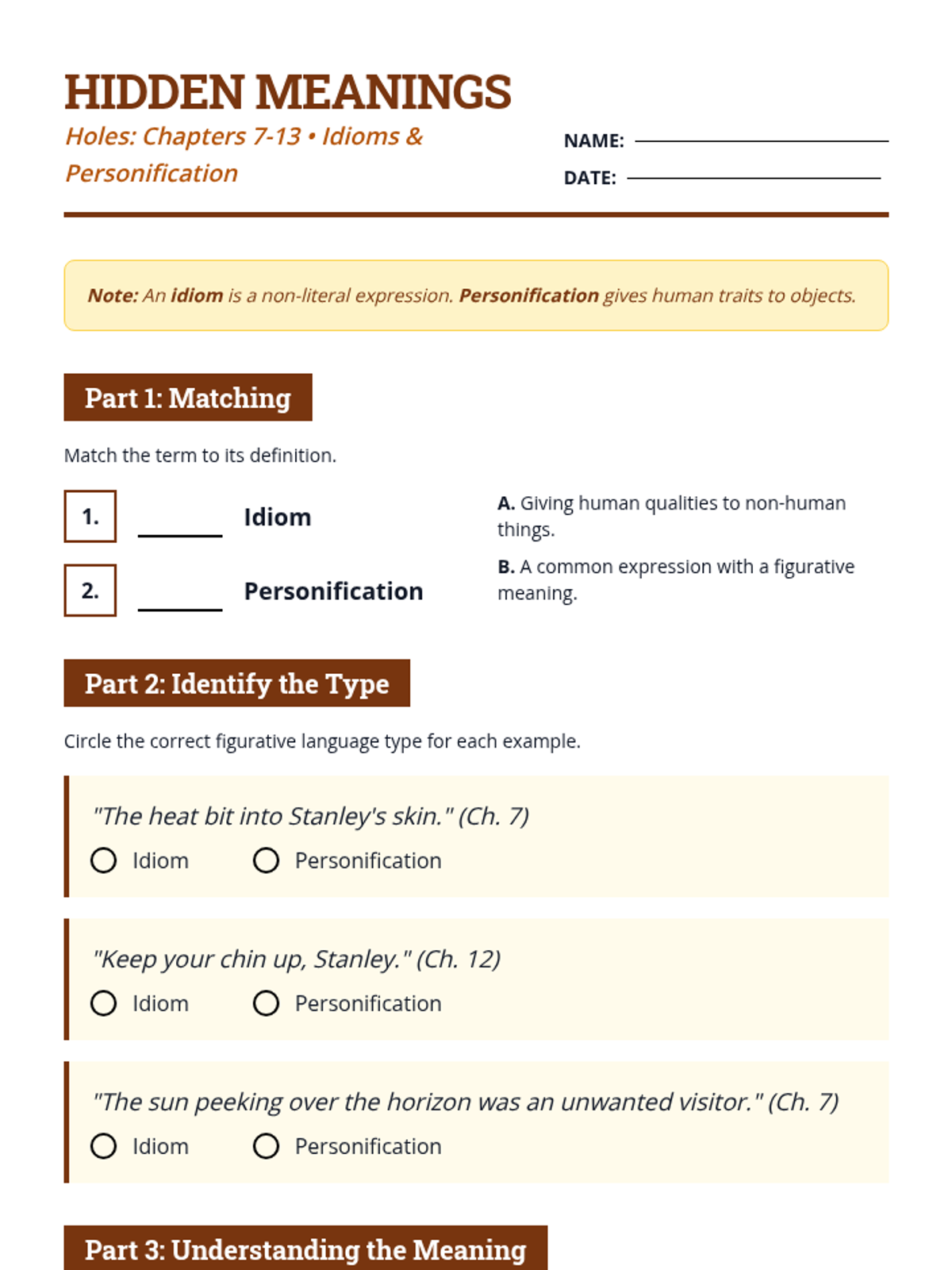
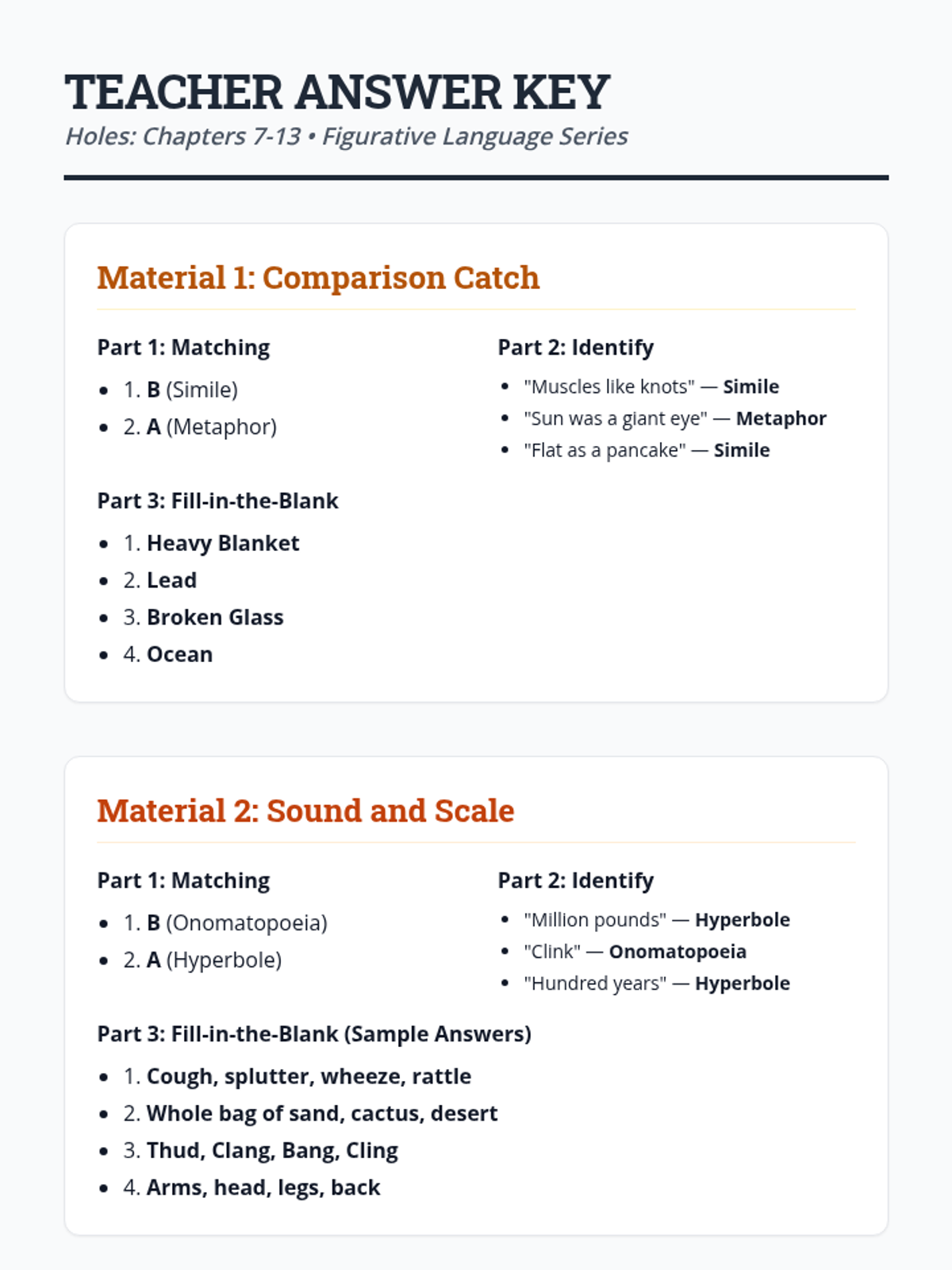
A lesson exploring figurative language in Chapters 7-13 of Louis Sachar's Holes, focusing on identifying and analyzing similes, metaphors, onomatopoeia, hyperbole, idioms, and personification through the lens of life at Camp Green Lake.
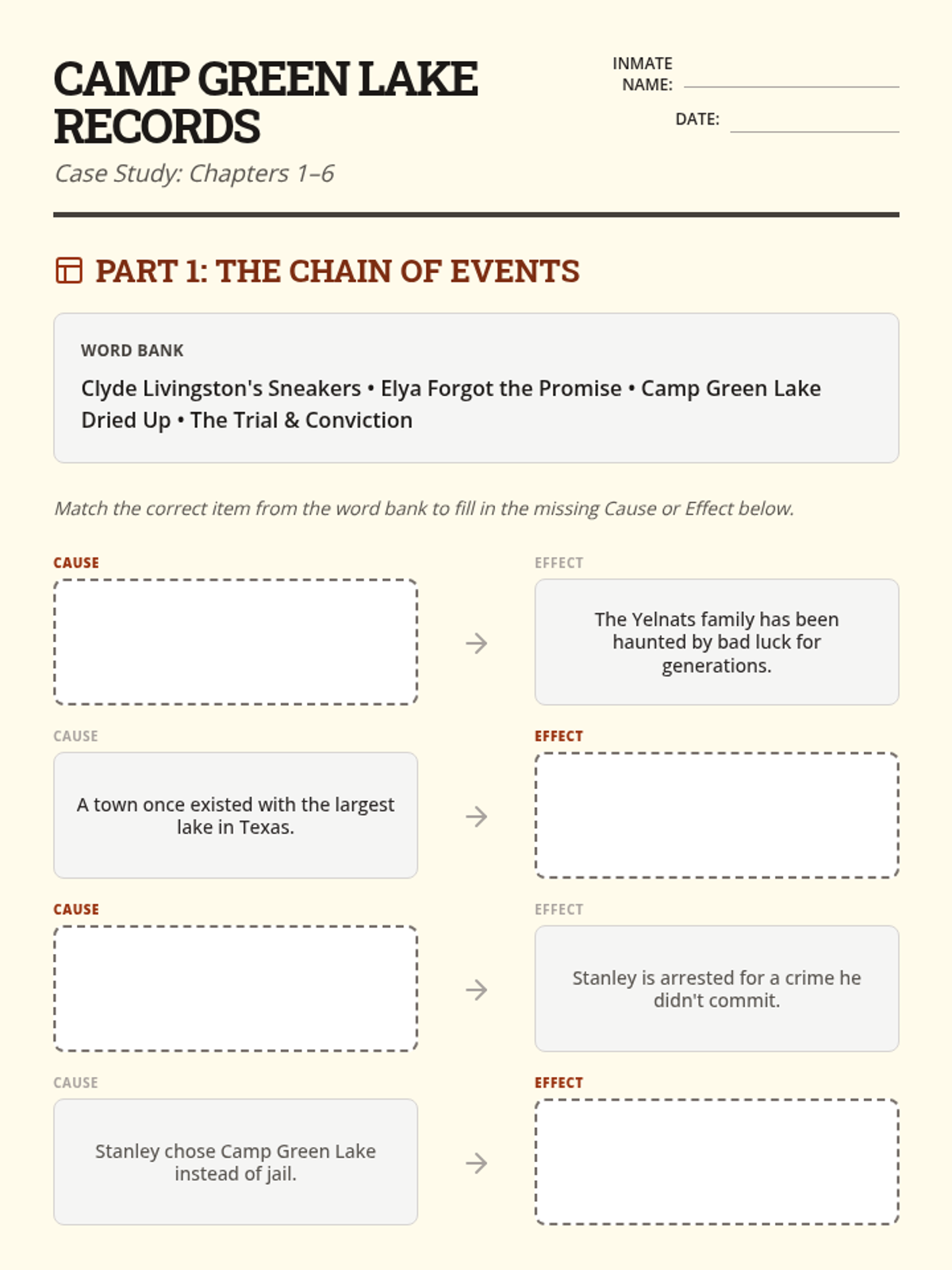
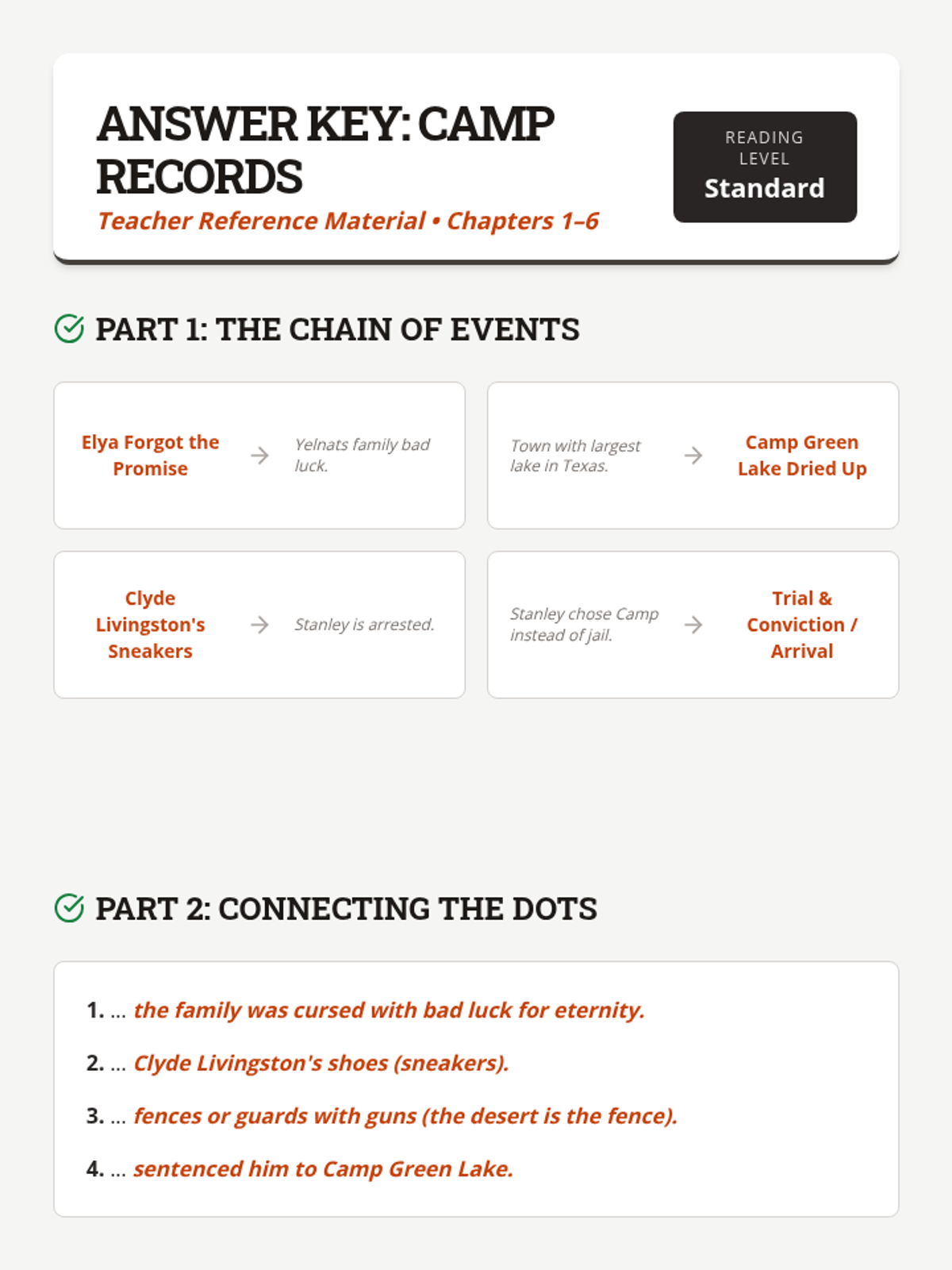
A focused exploration of cause and effect relationships in the opening chapters of Louis Sachar's 'Holes', covering Stanley's arrival at Camp Green Lake and the history of the Yelnats family curse.