This lesson focuses on helping students distinguish between claims, reasons, and evidence within the context of news articles. Students will learn to identify the logical 'why' (reasons) versus the factual 'how we know' (evidence).
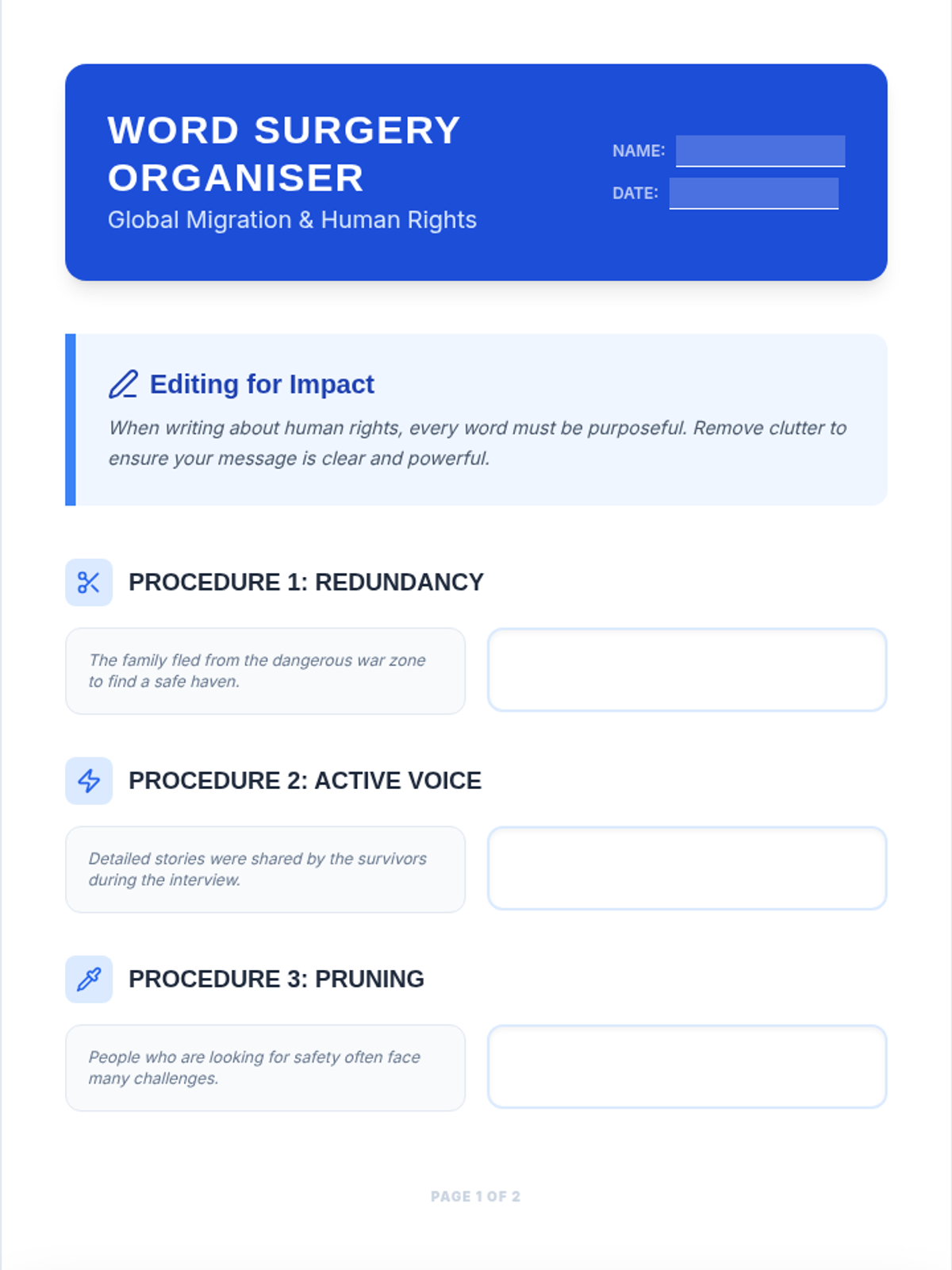
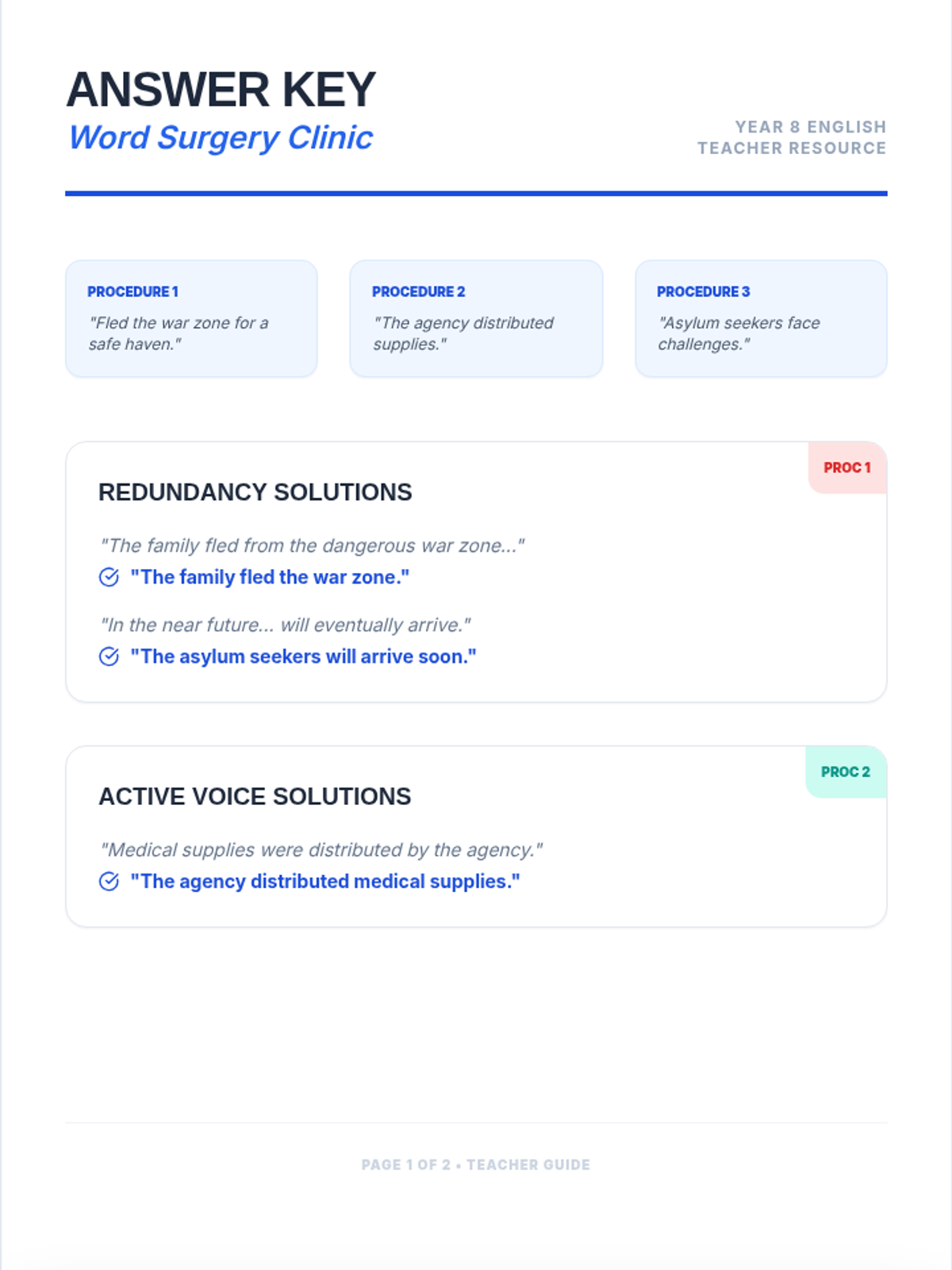
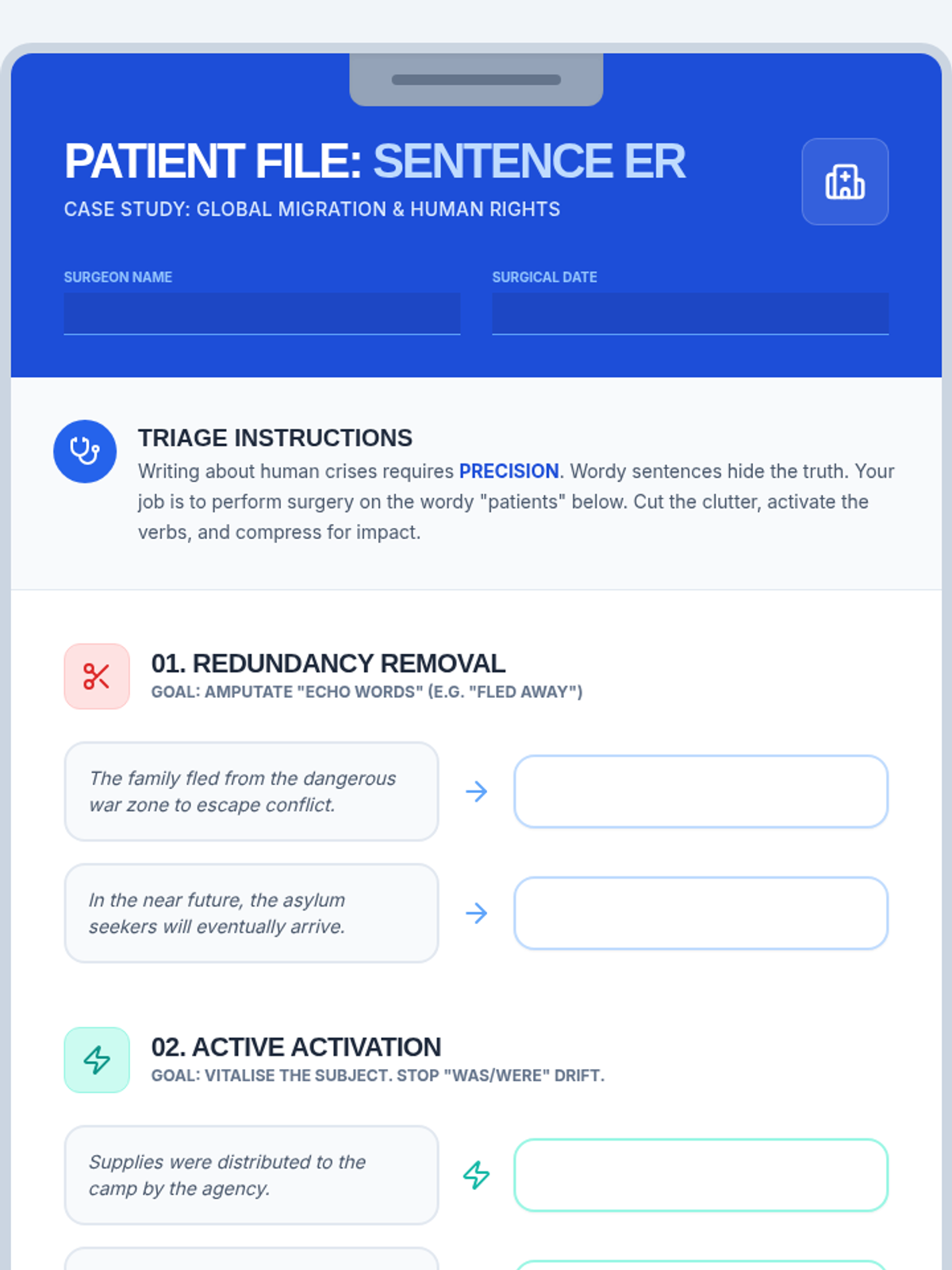
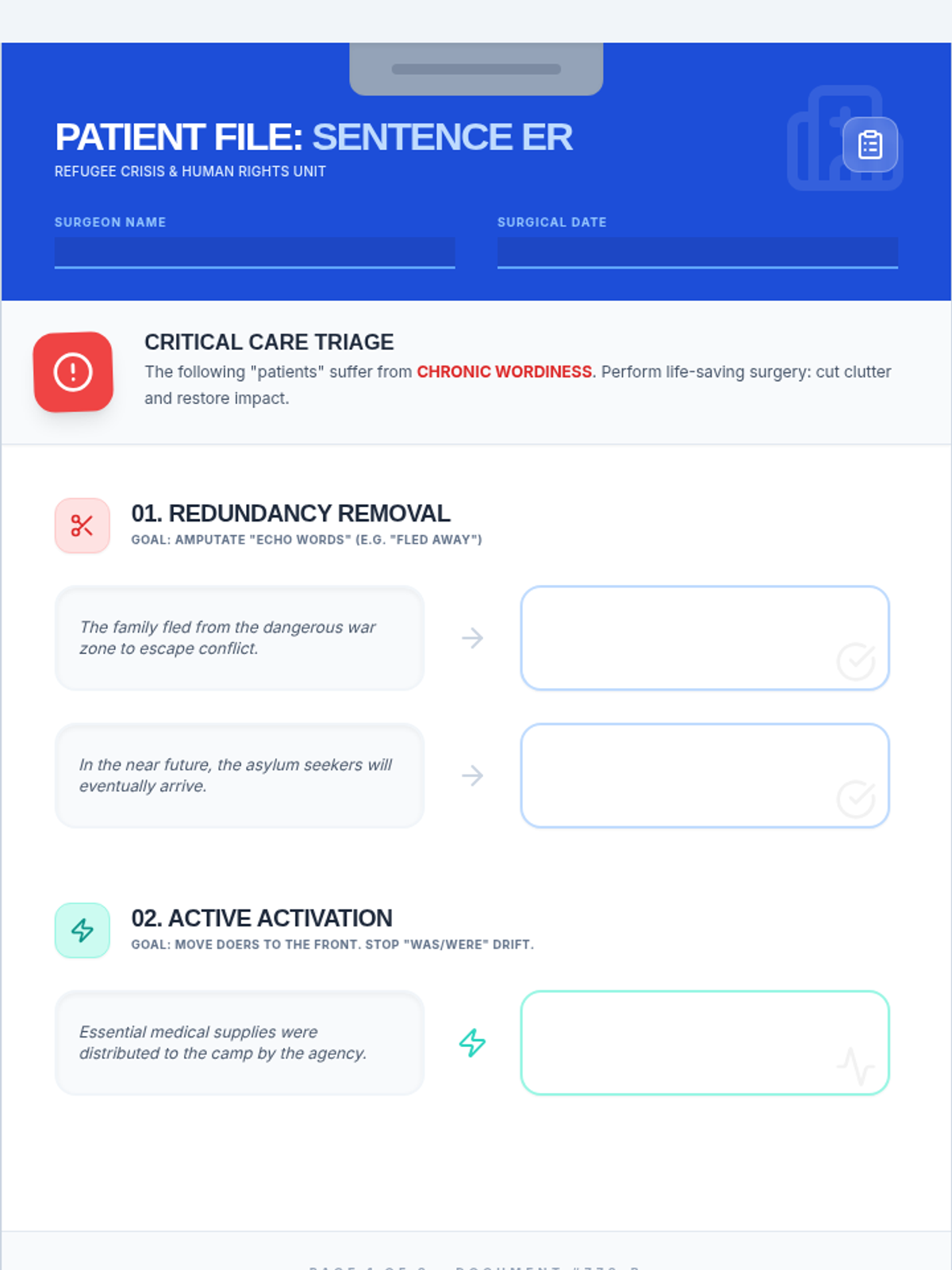
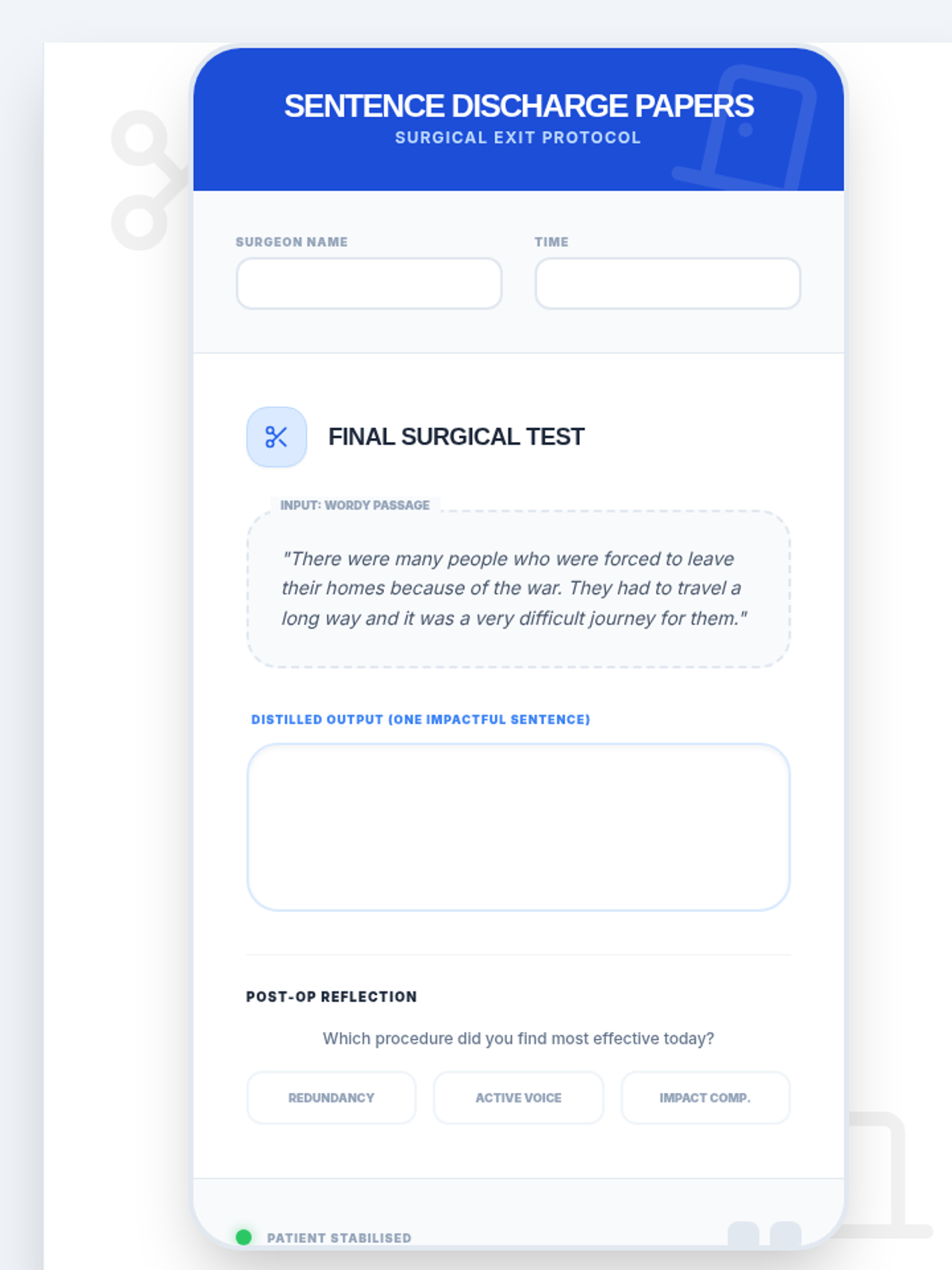
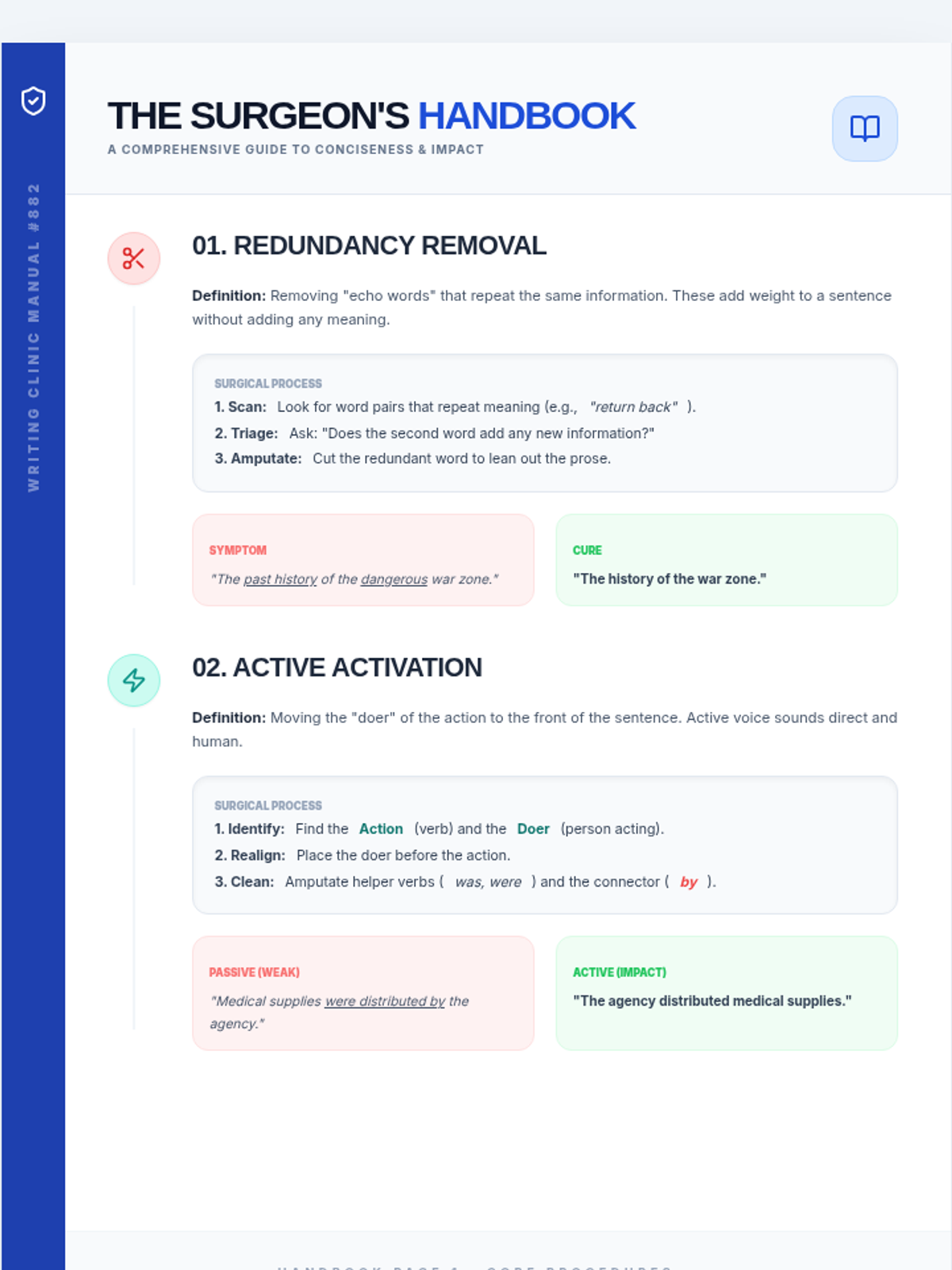
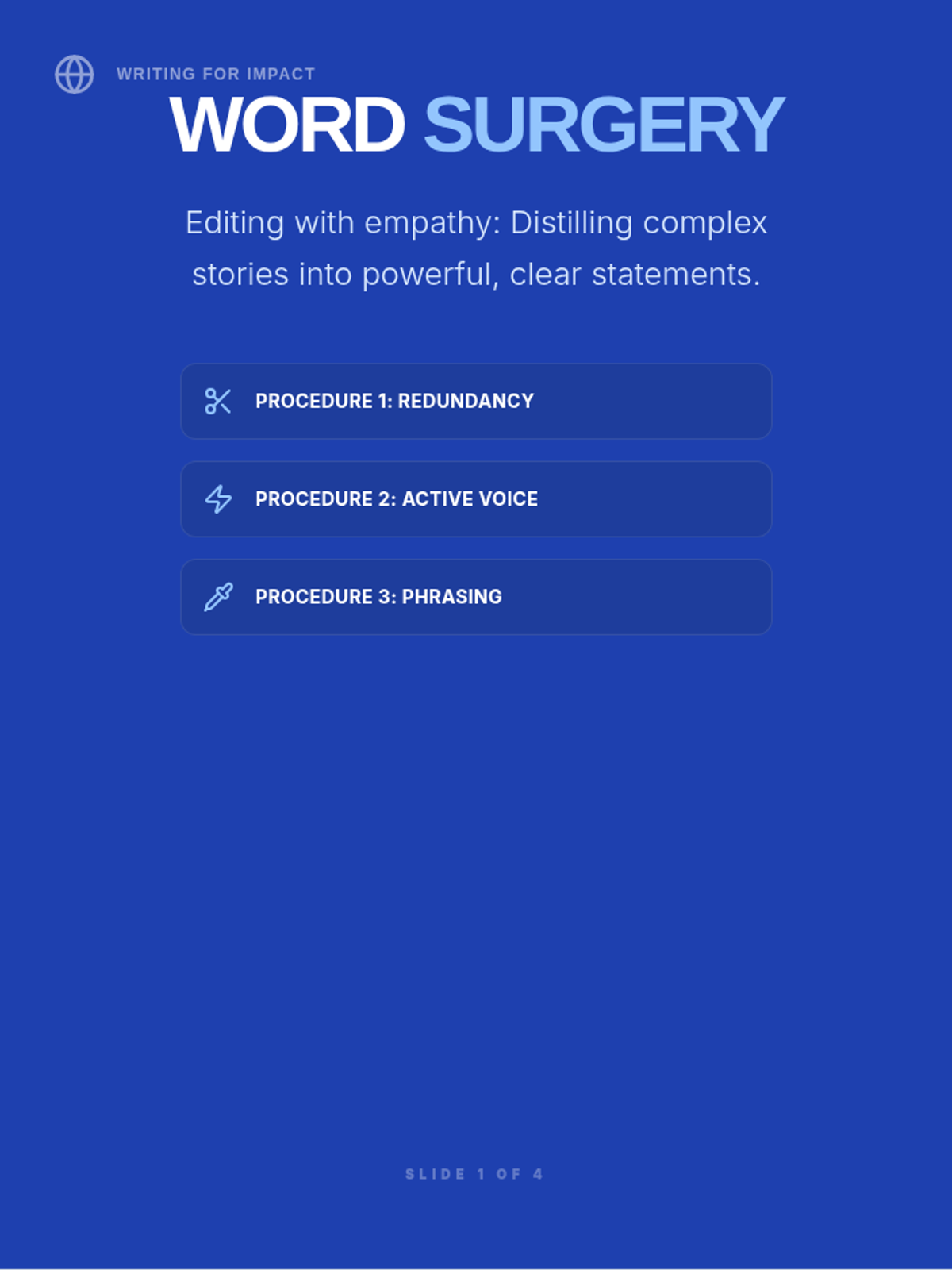
A lesson for Year 8 students on achieving conciseness by removing redundancy, converting passive voice to active, and pruning prepositional phrases.
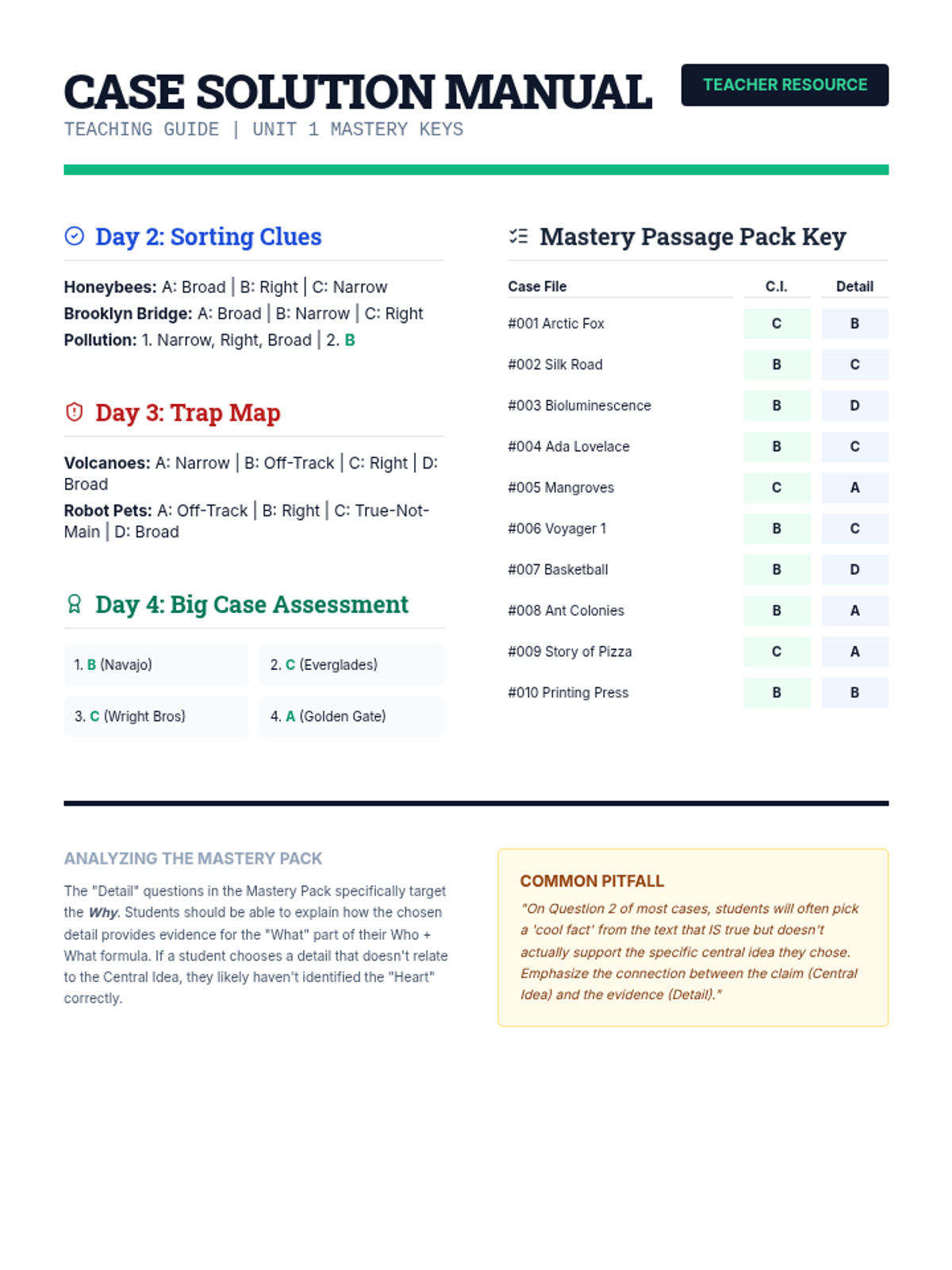
A comprehensive review and final assessment where students apply all strategies to solve complex central idea cases across multiple genres.
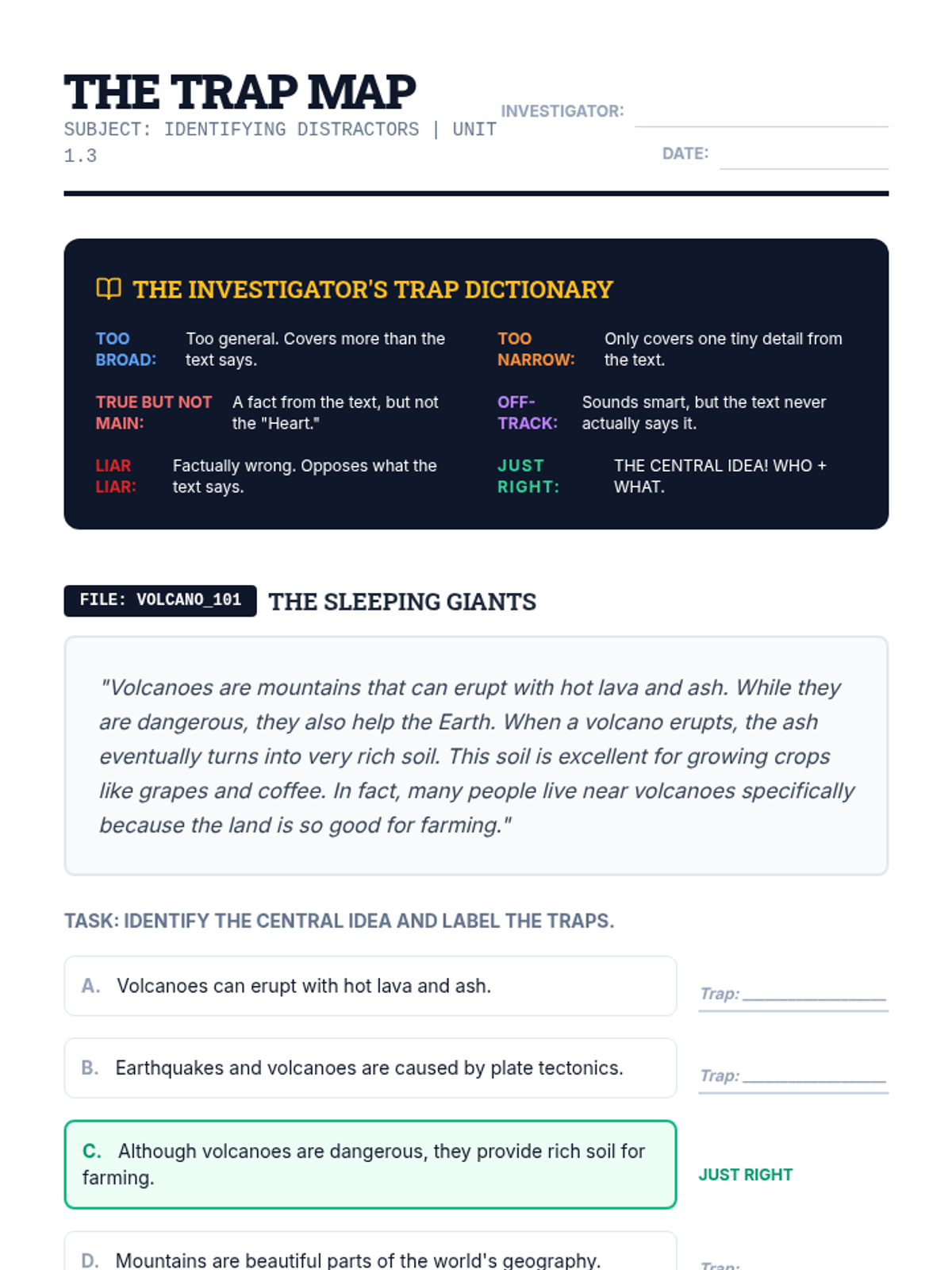
Deep dive into common 'traps' in central idea questions, such as 'true but not main' and 'off-track' options. Students learn to justify why certain answers are incorrect.
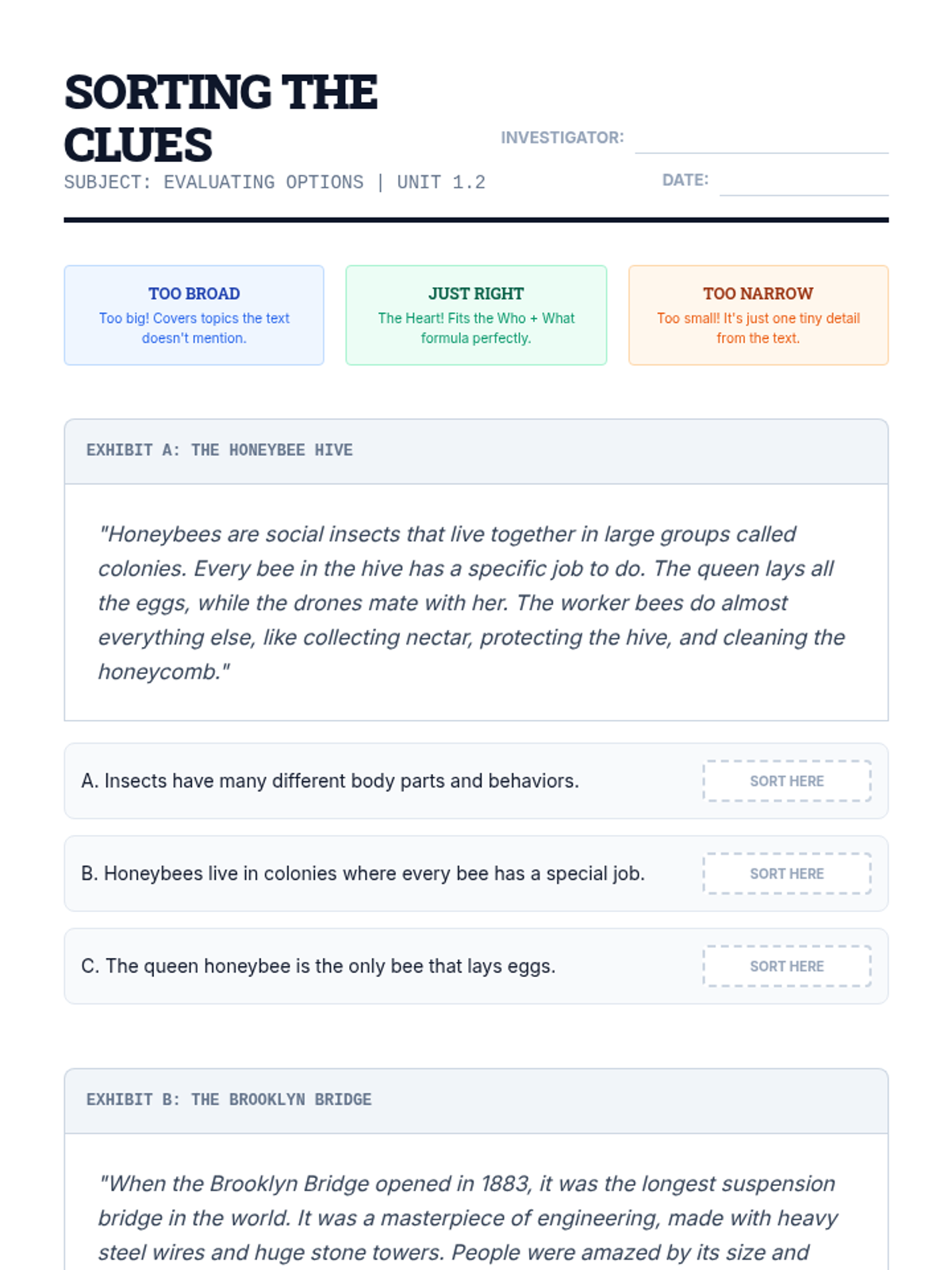
Focus on evaluating multiple-choice options by identifying 'too broad' and 'too narrow' distractors. Students use the 'Goldilocks Rule' to find the answer that is 'just right.'
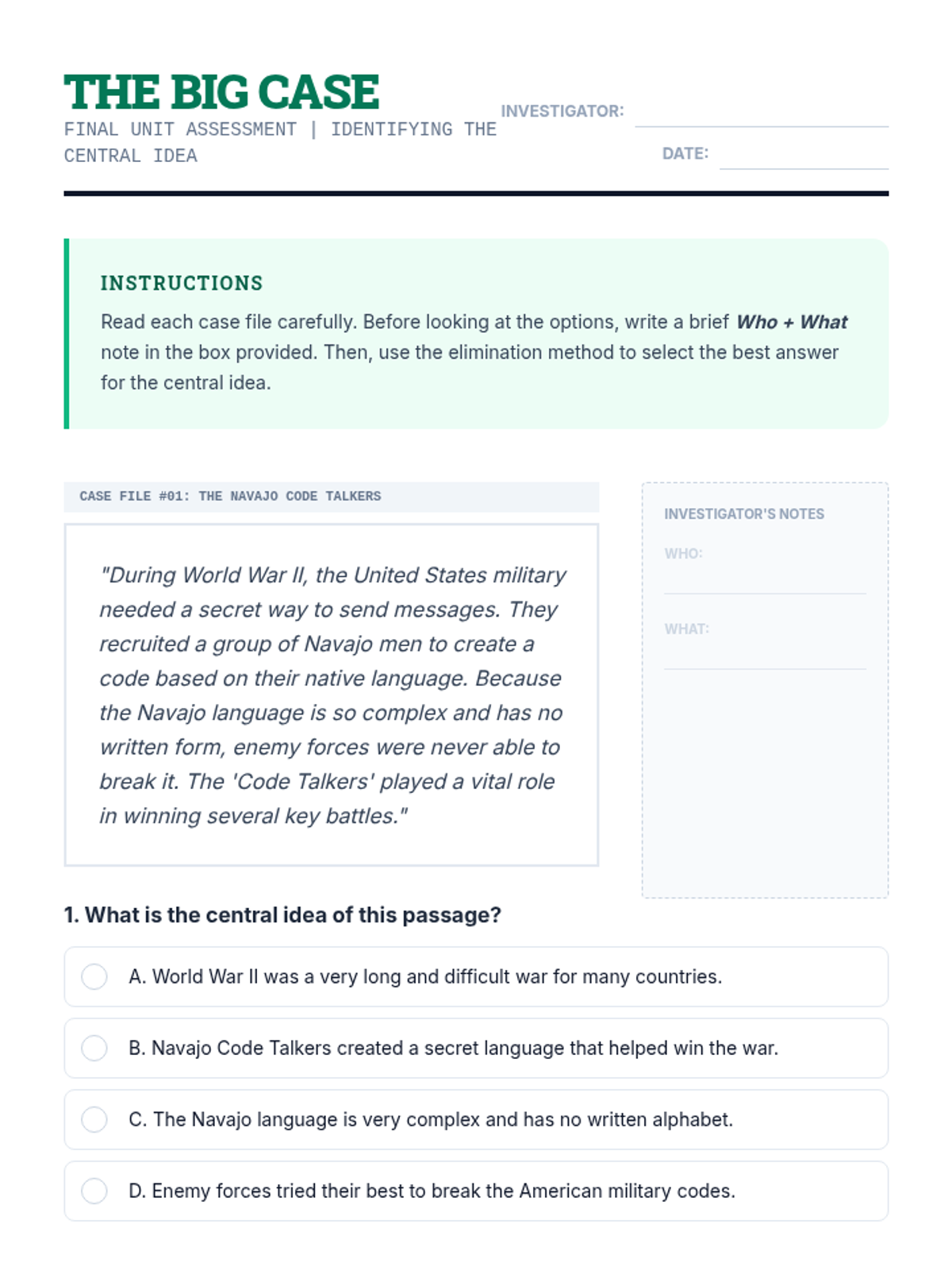
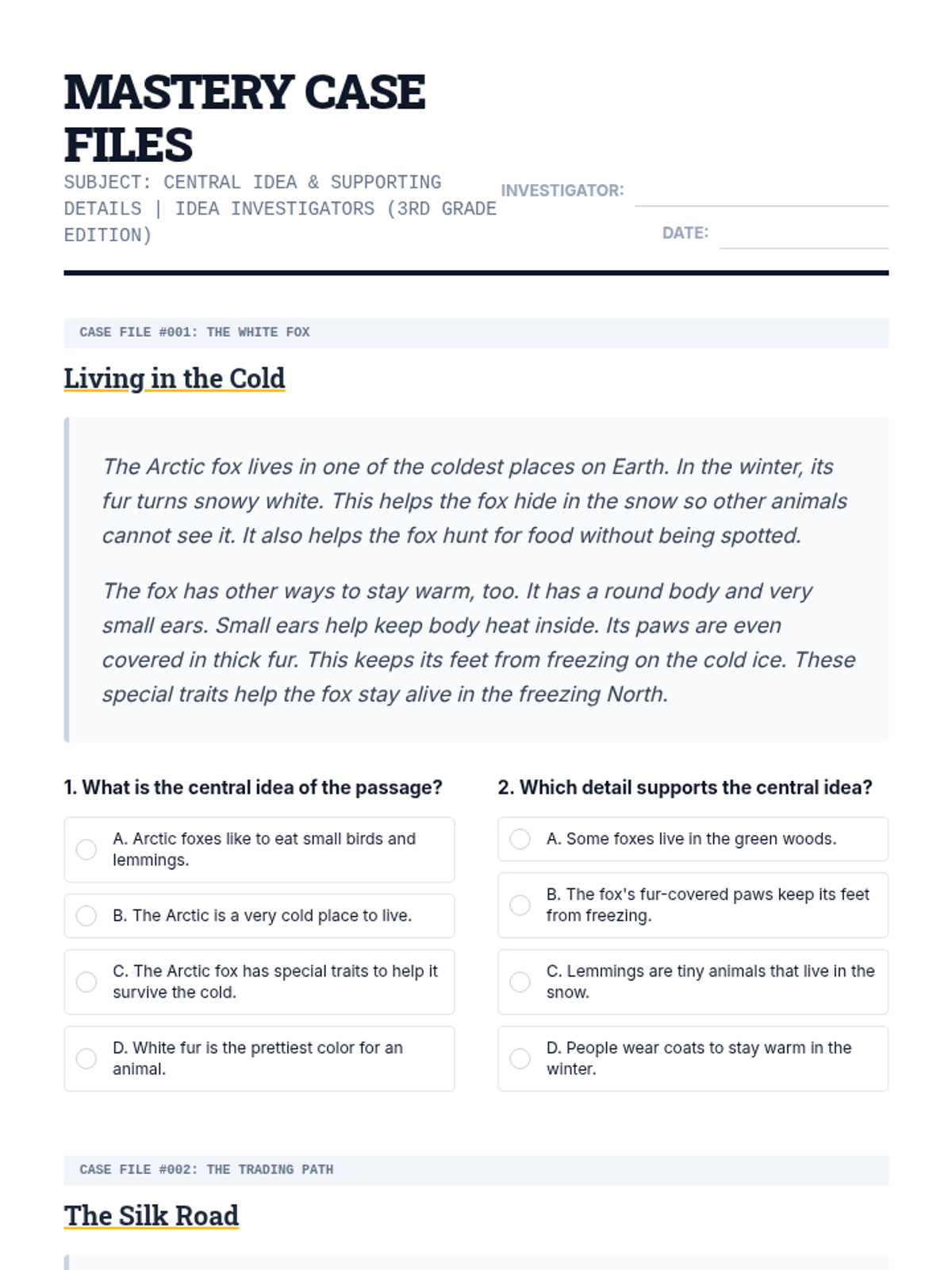
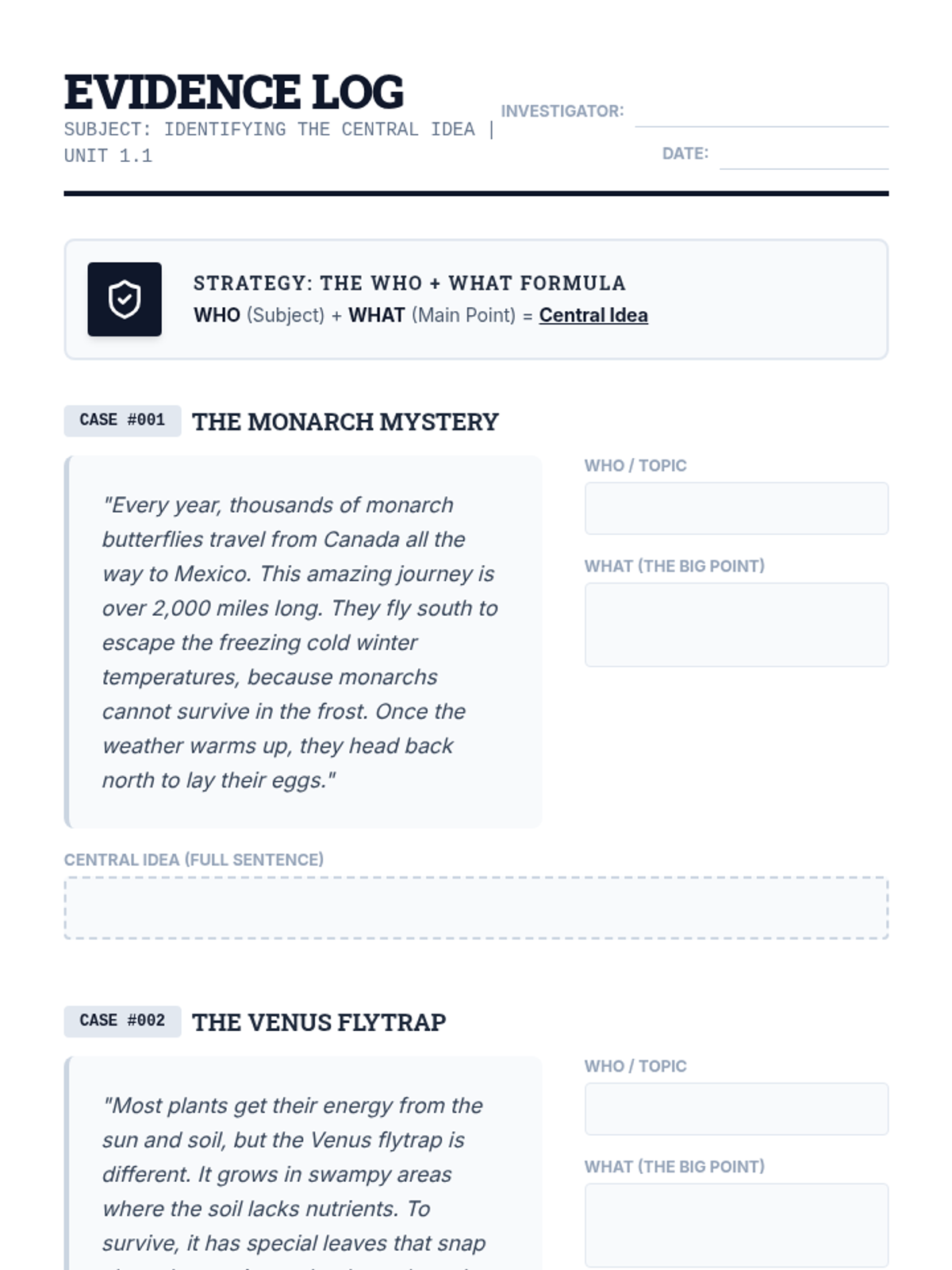
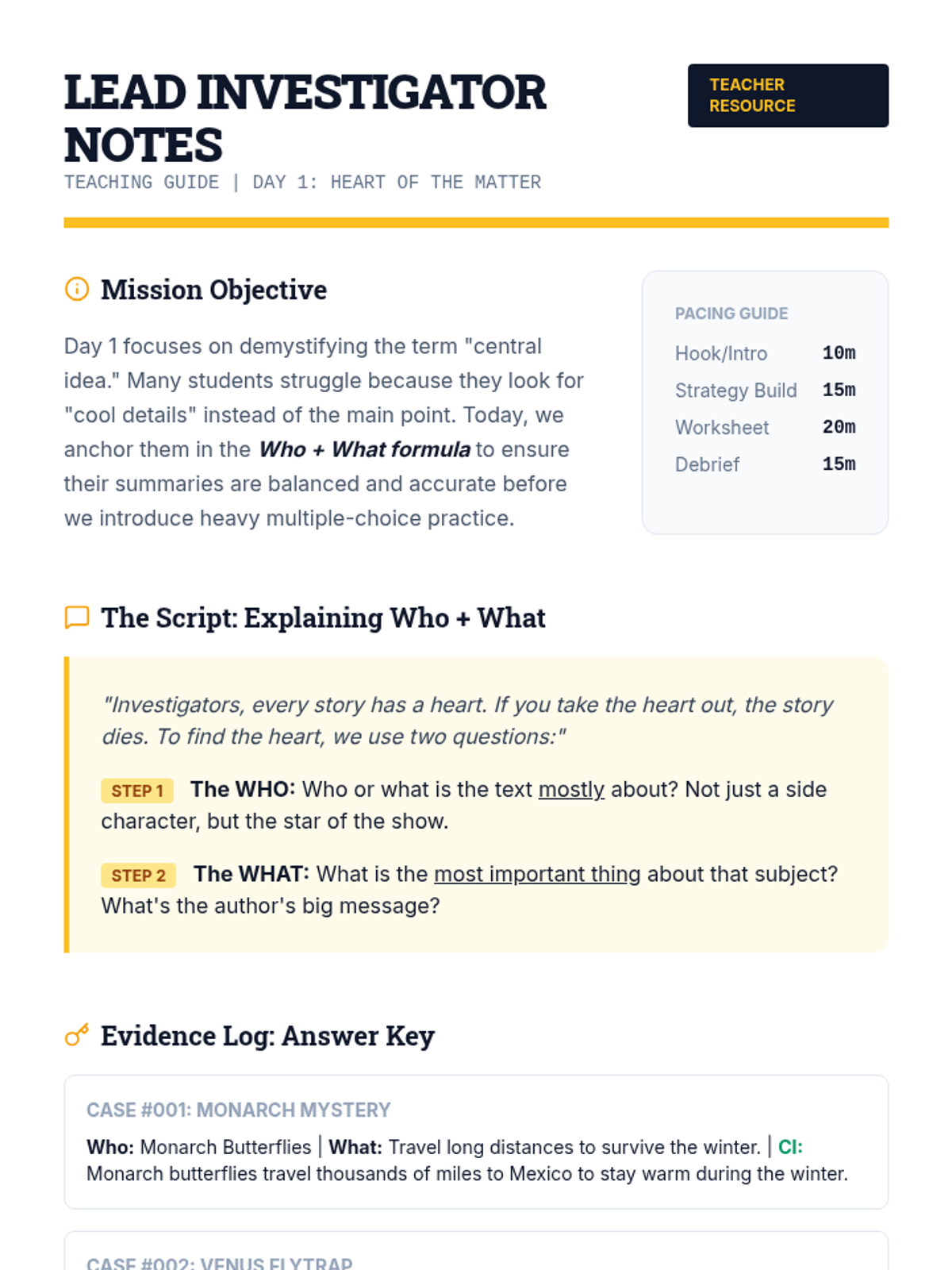
Introduction to the concept of a central idea using the 'Who + What' strategy. Students practice identifying the main point of short texts before being introduced to multiple-choice formats.
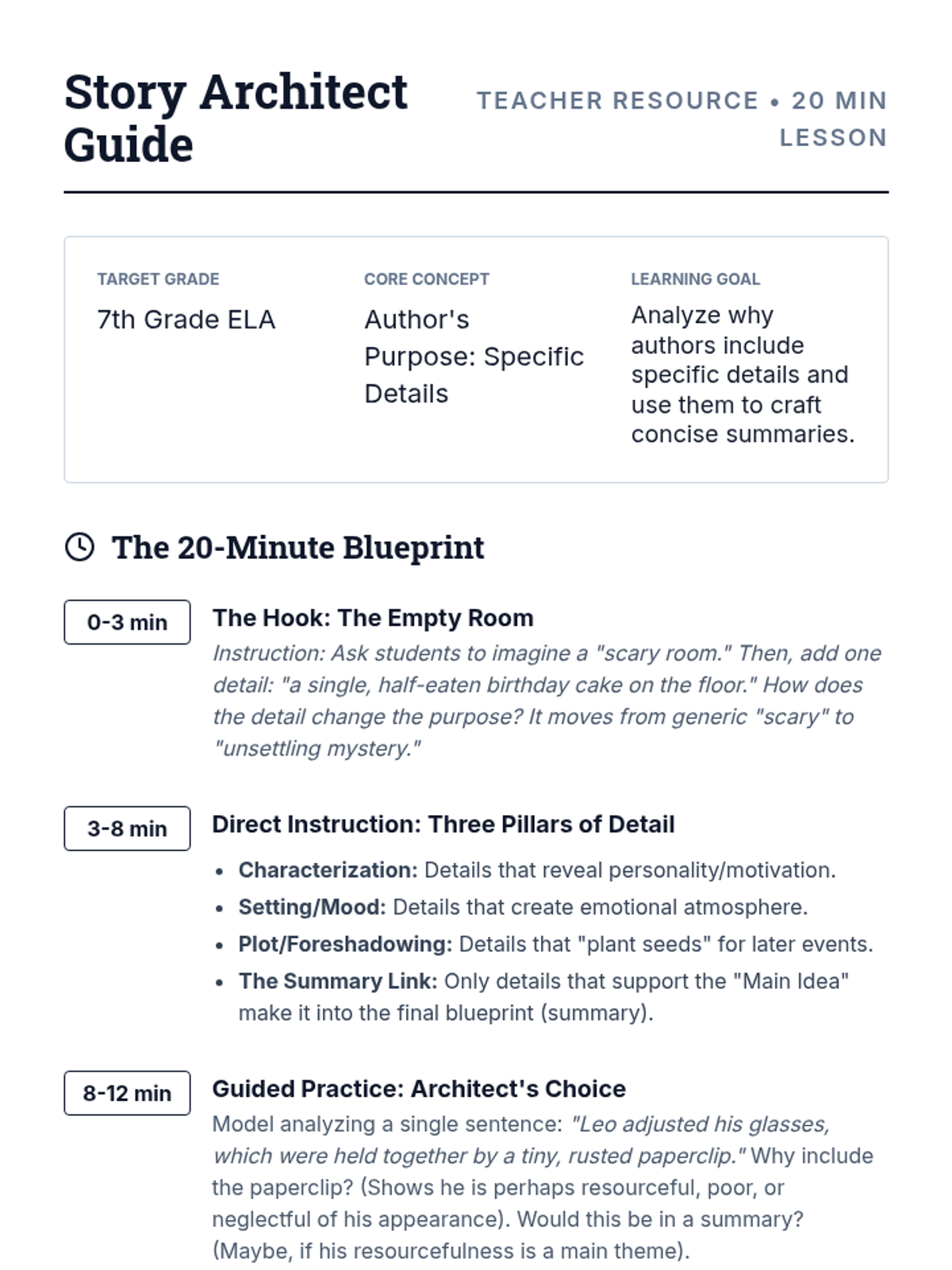
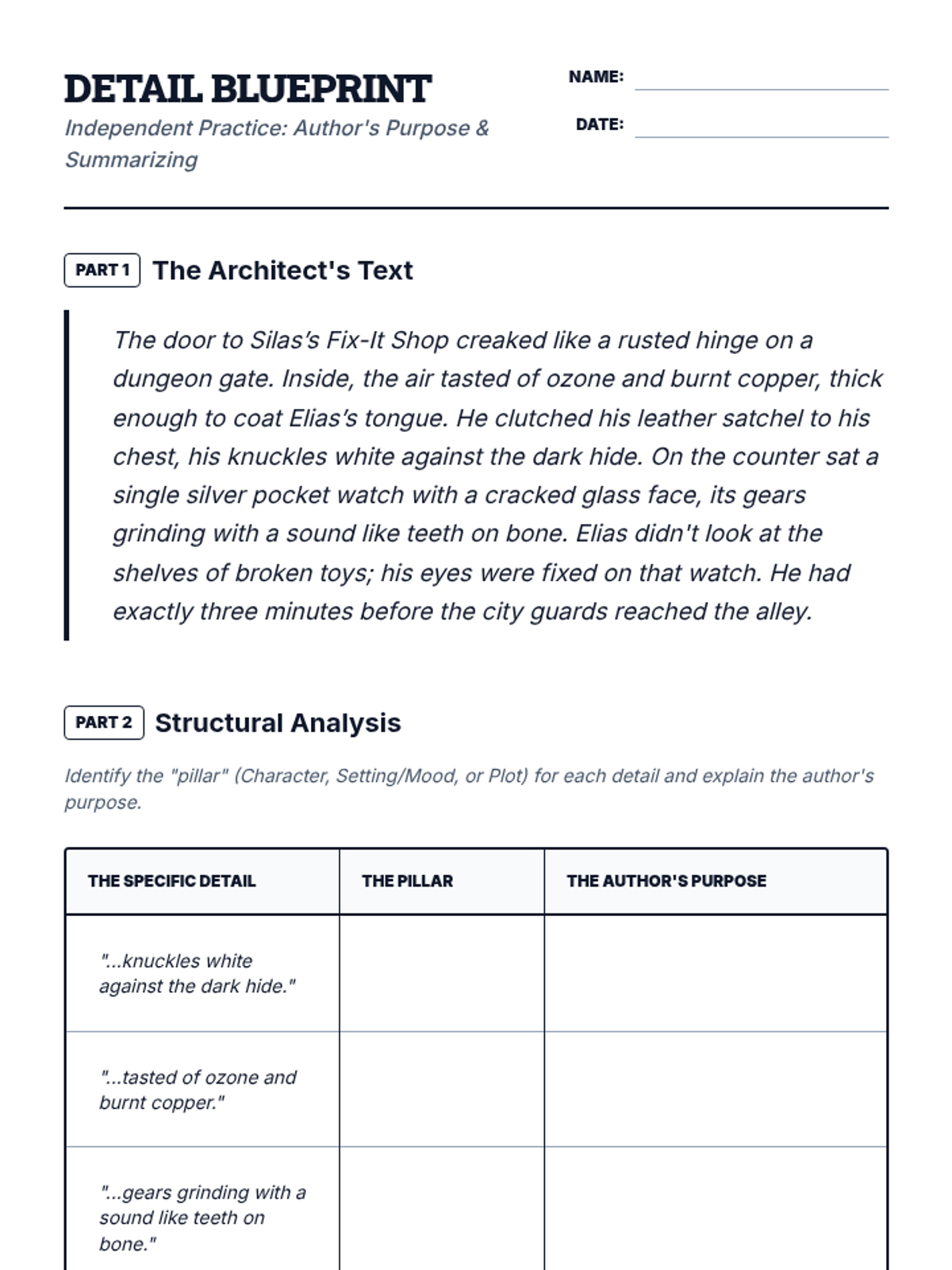
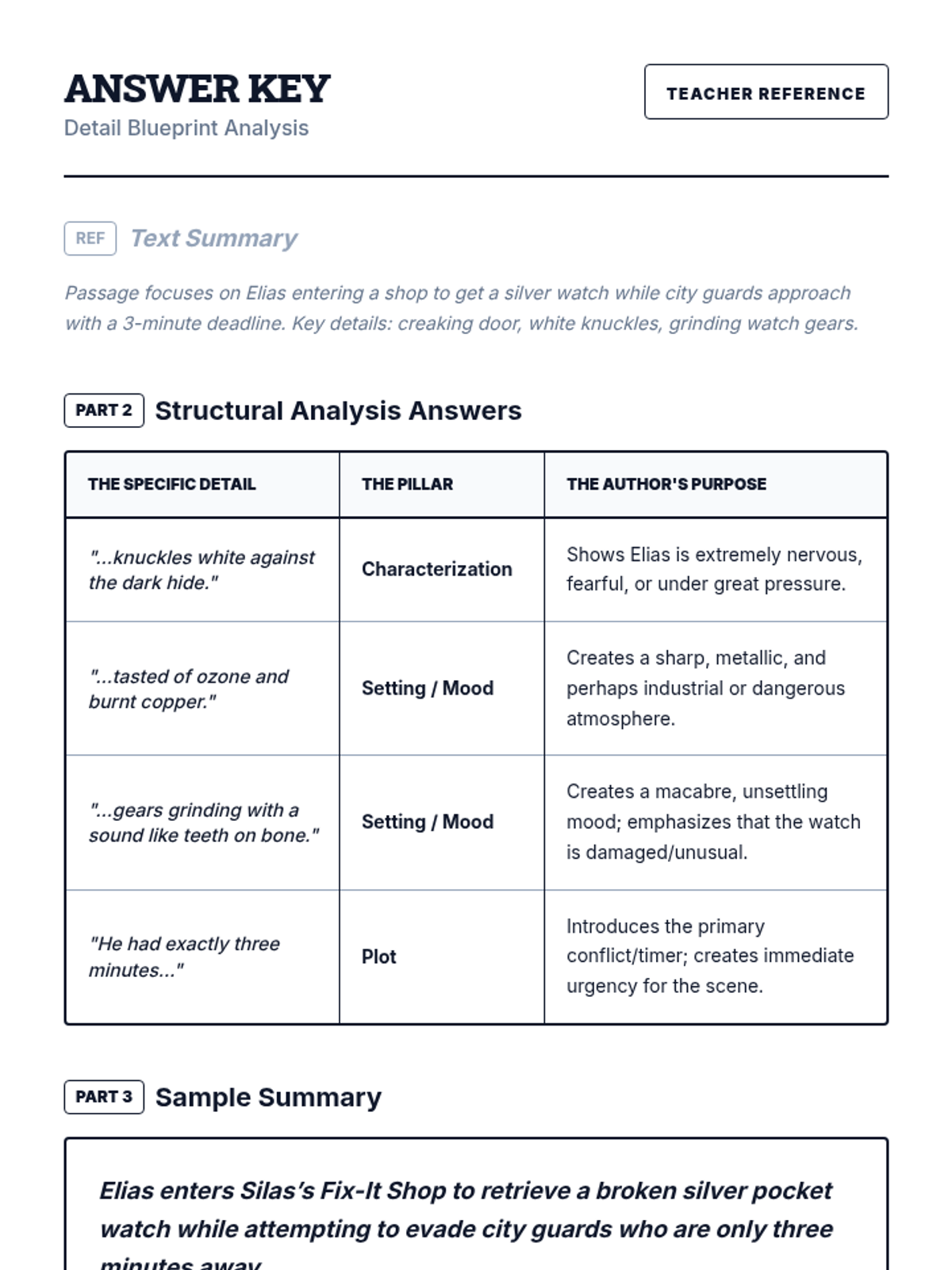
A fast-paced 20-minute ELA lesson for 7th graders focusing on how authors use specific details to build meaning and how these details inform effective summaries.
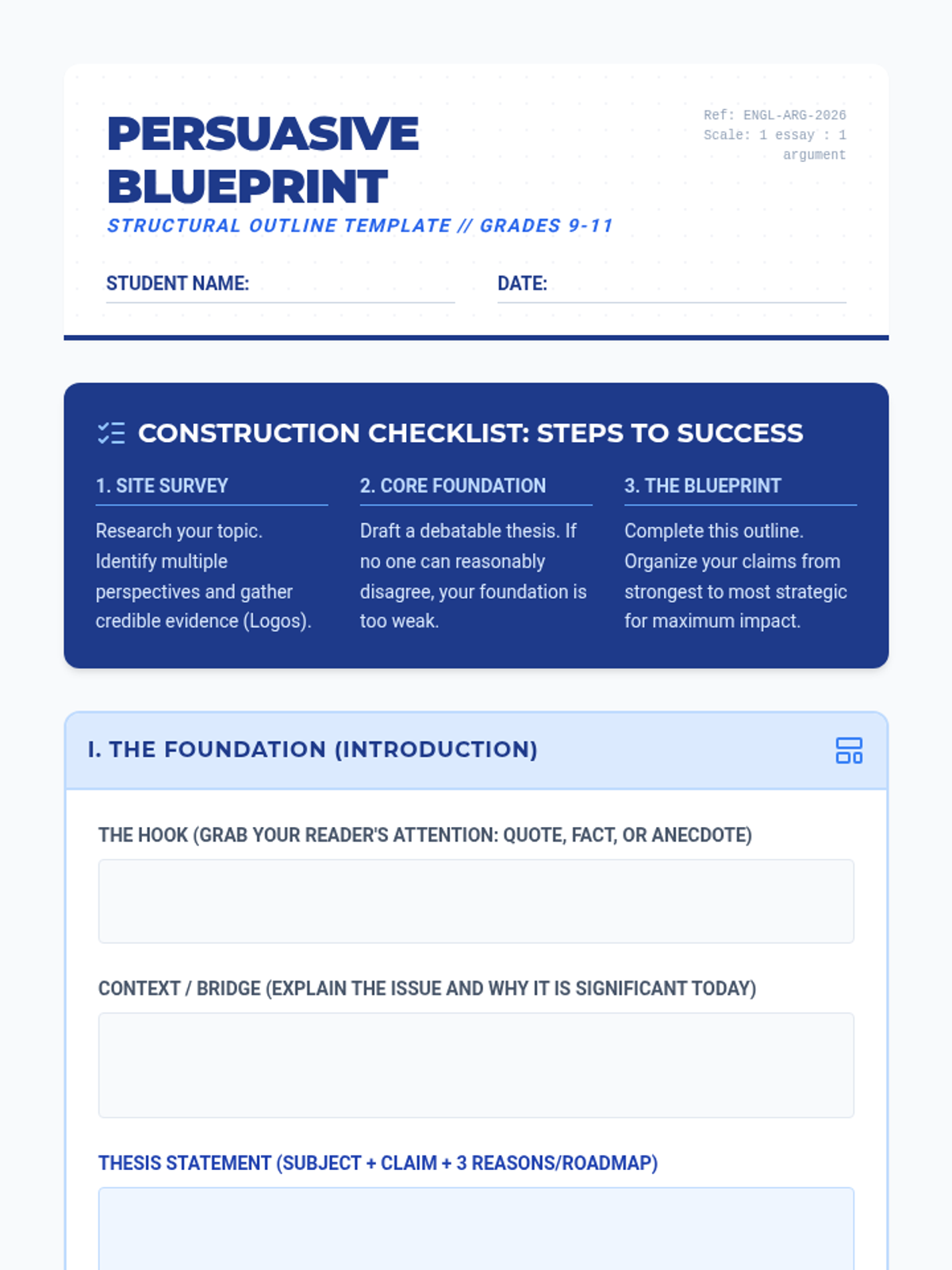
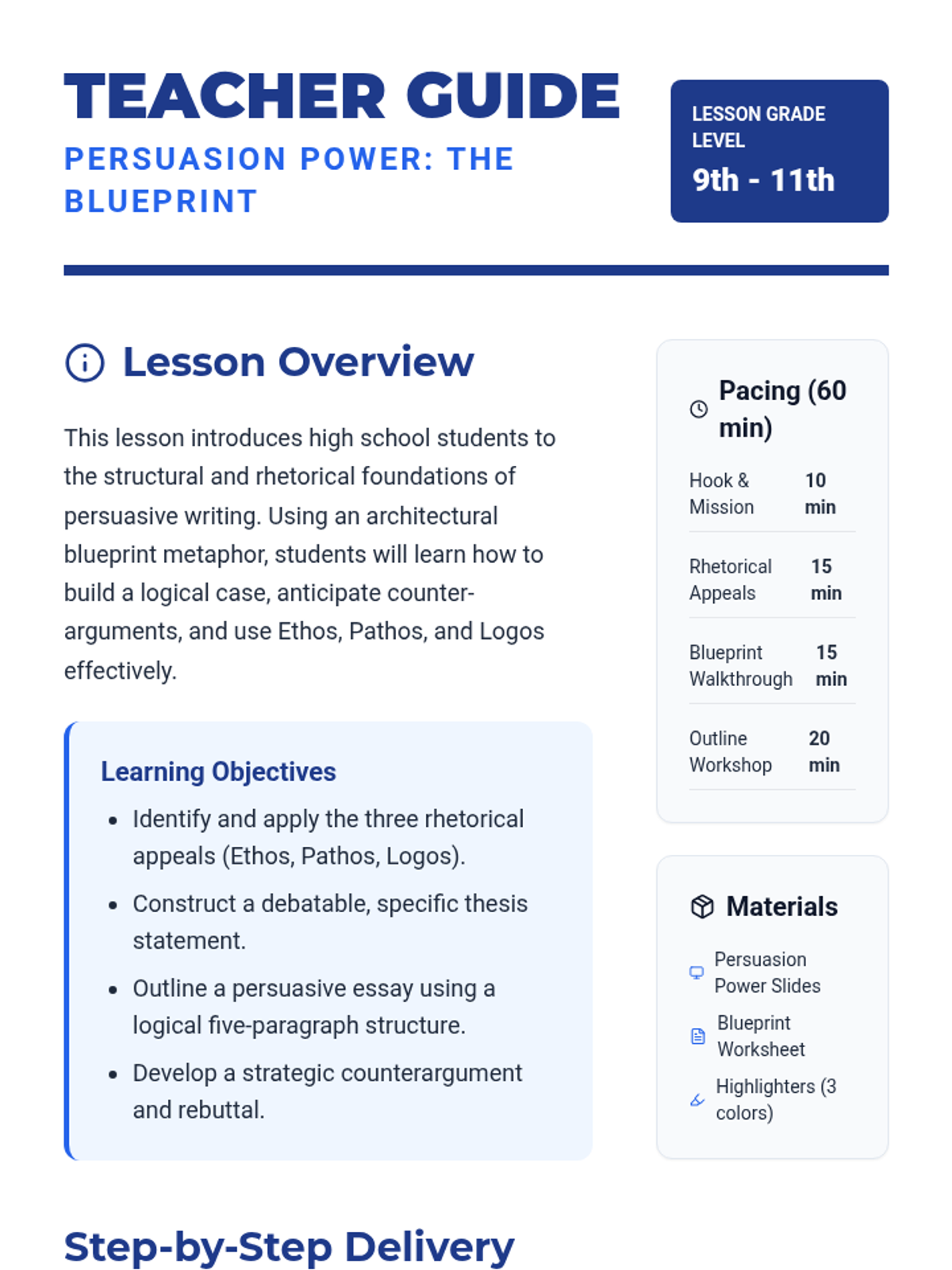
A comprehensive lesson on crafting compelling persuasive essays for high school students, focusing on structure, rhetorical appeals, and the drafting process.
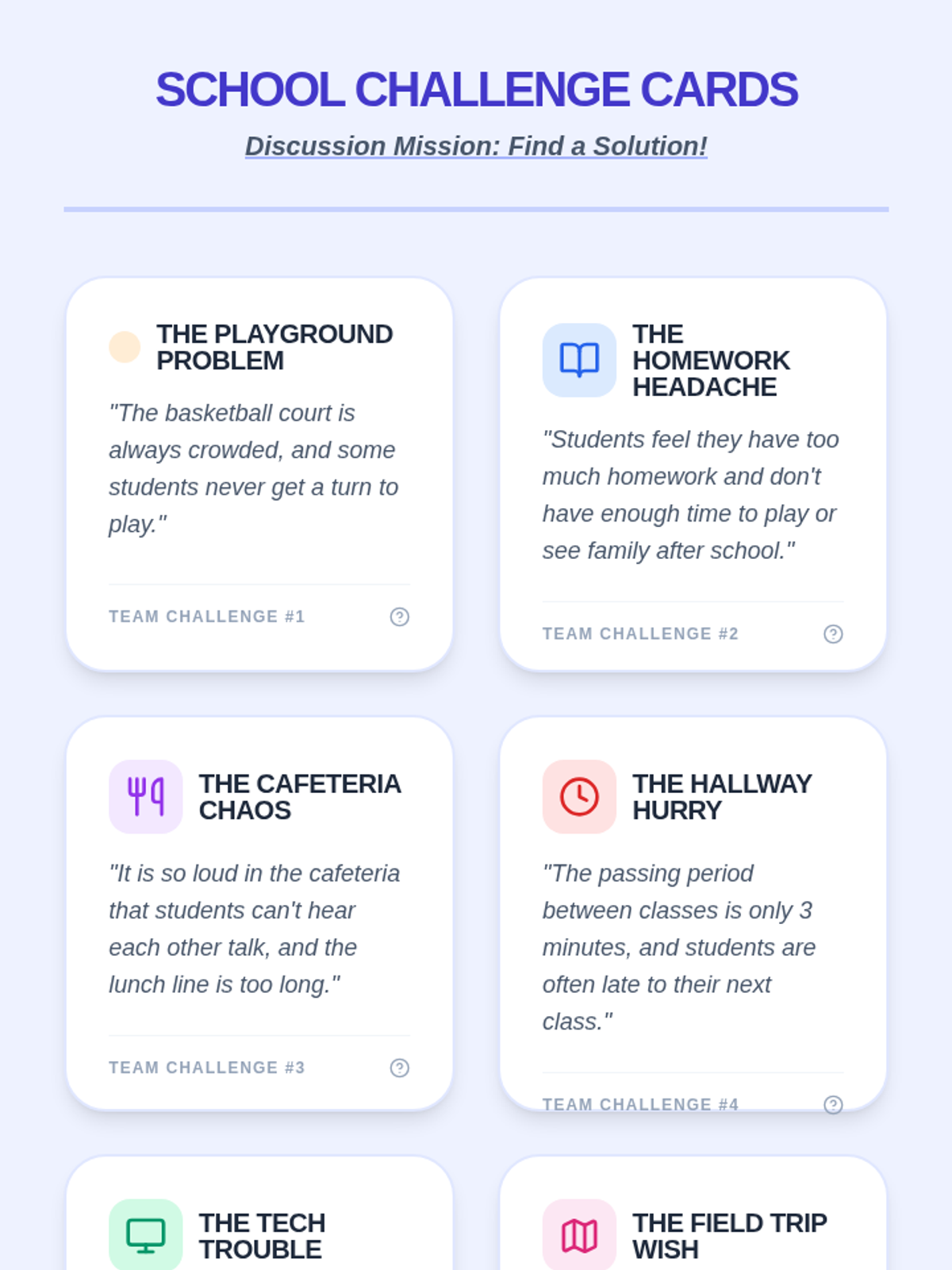
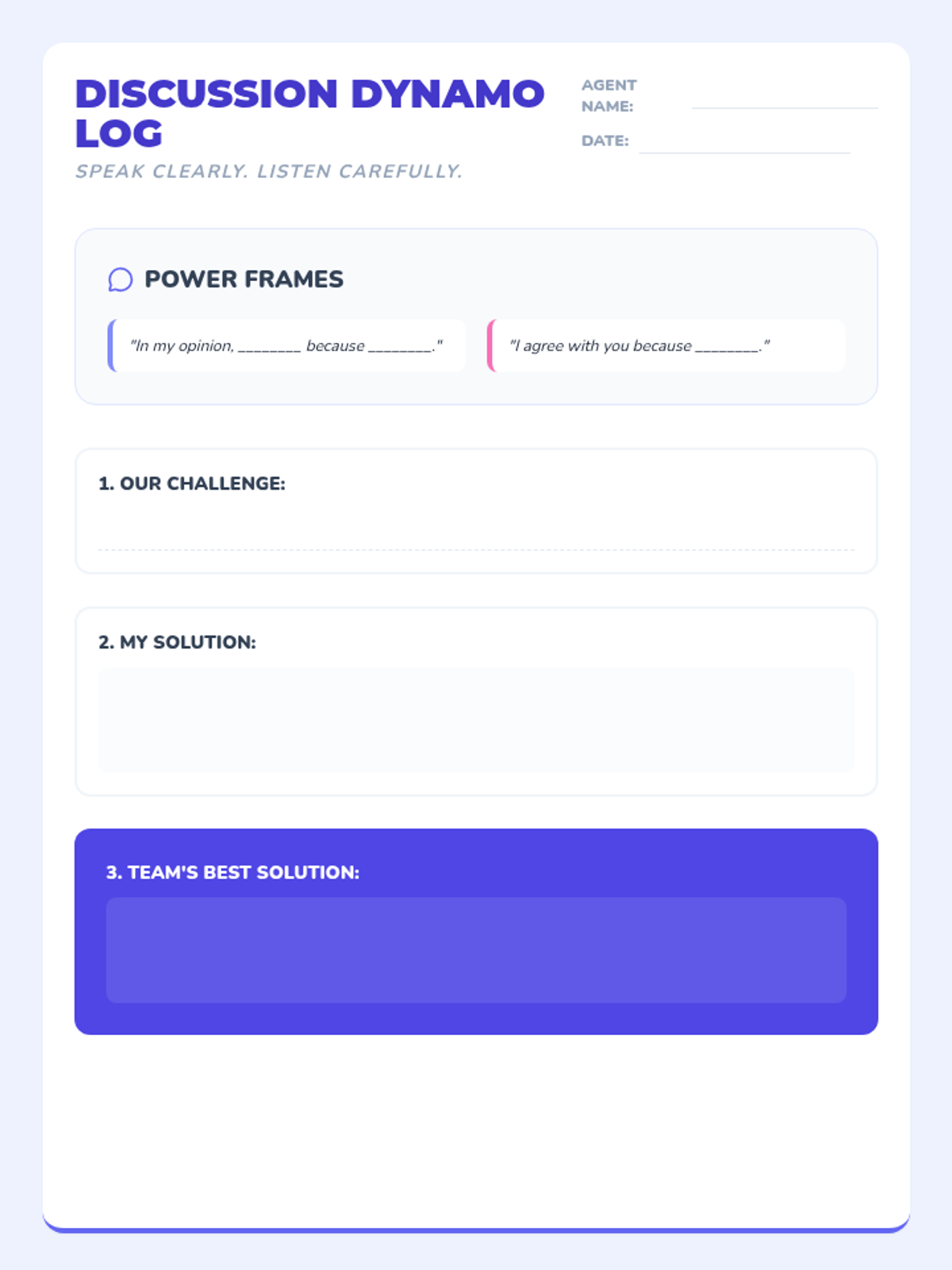
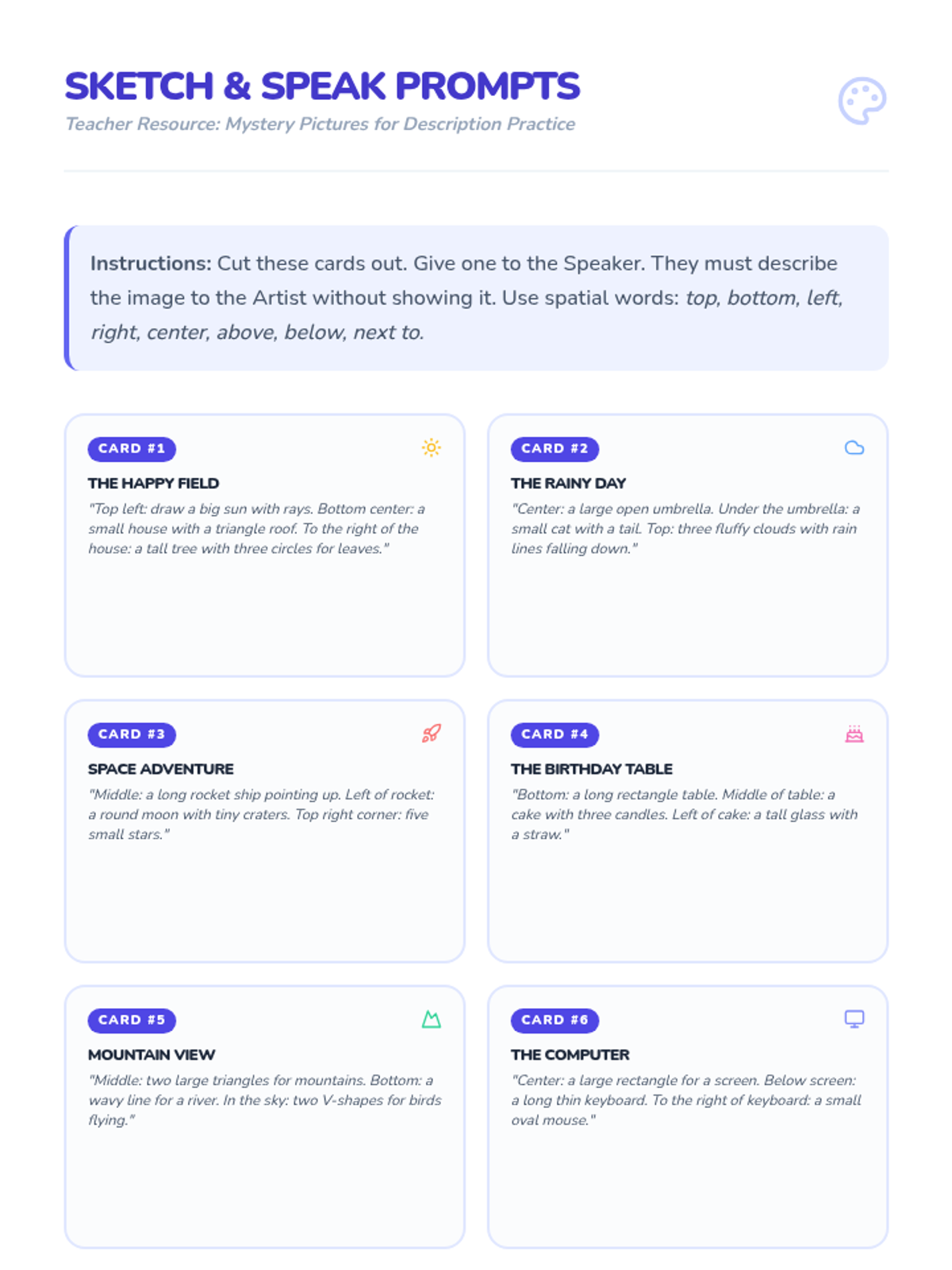
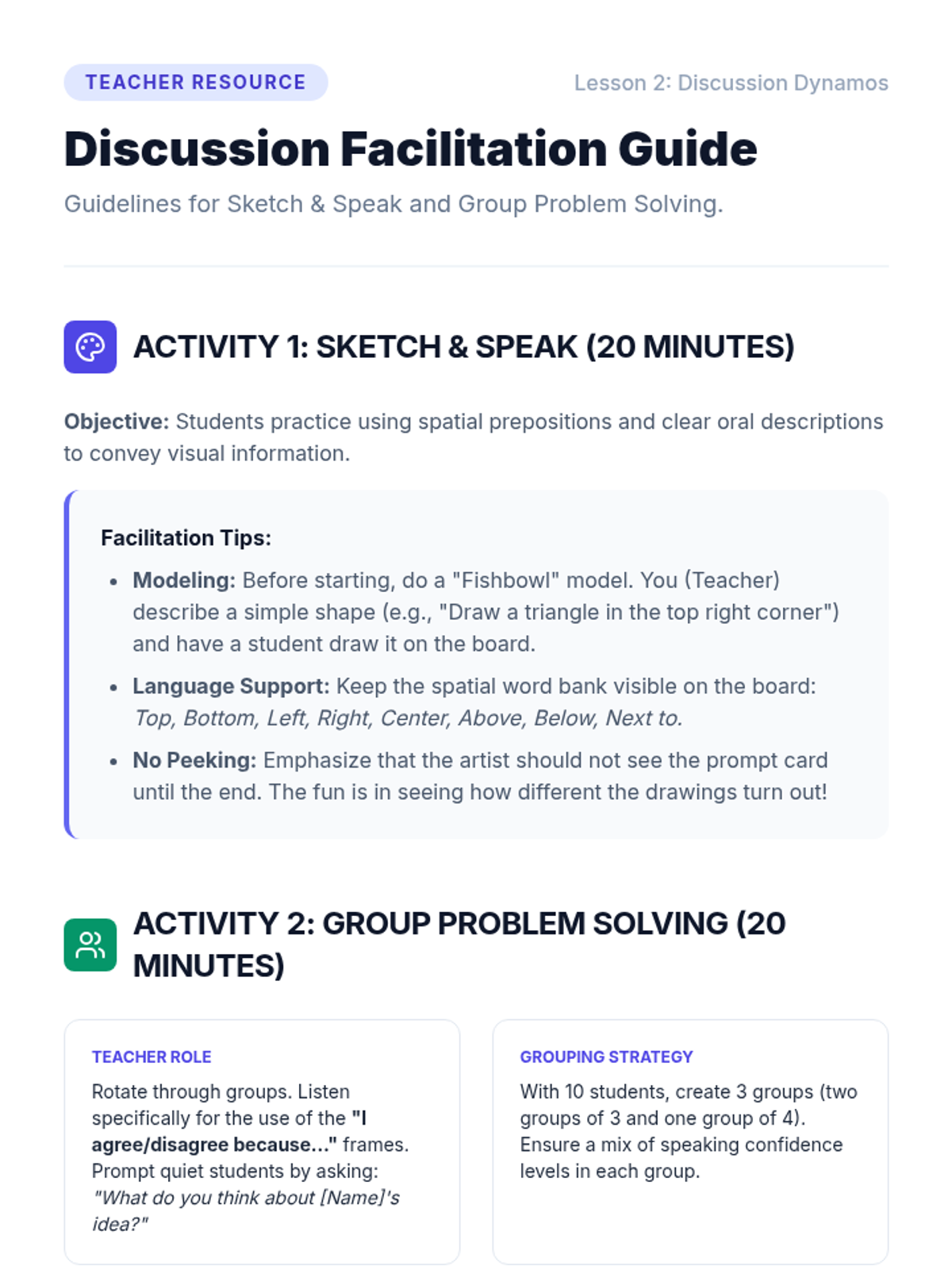
Students practice participating in academic discussions and providing precise verbal descriptions through a 'Sketch & Speak' partner activity. They use sentence frames to share opinions, solve school challenges, and practice oral clarity.
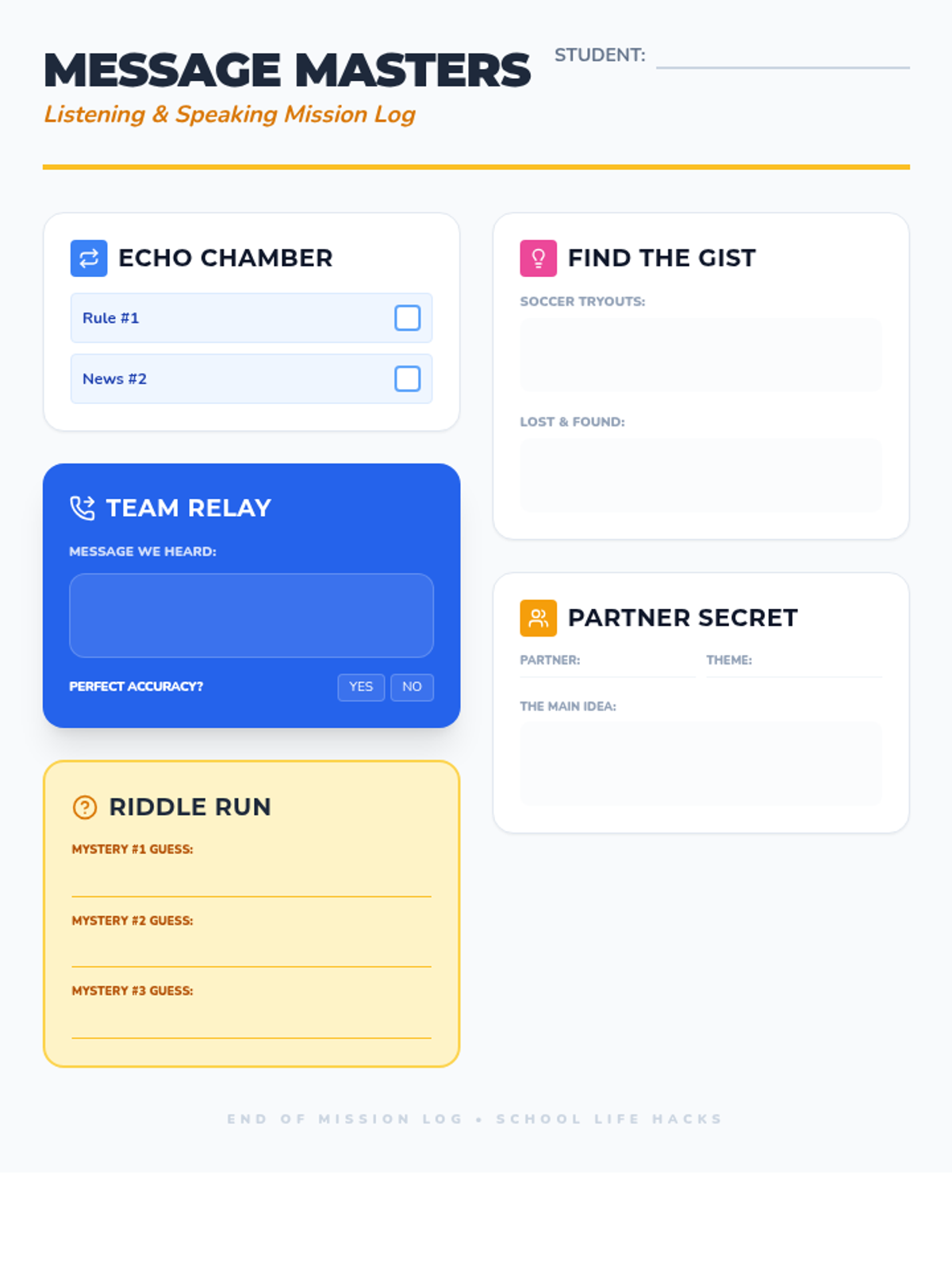
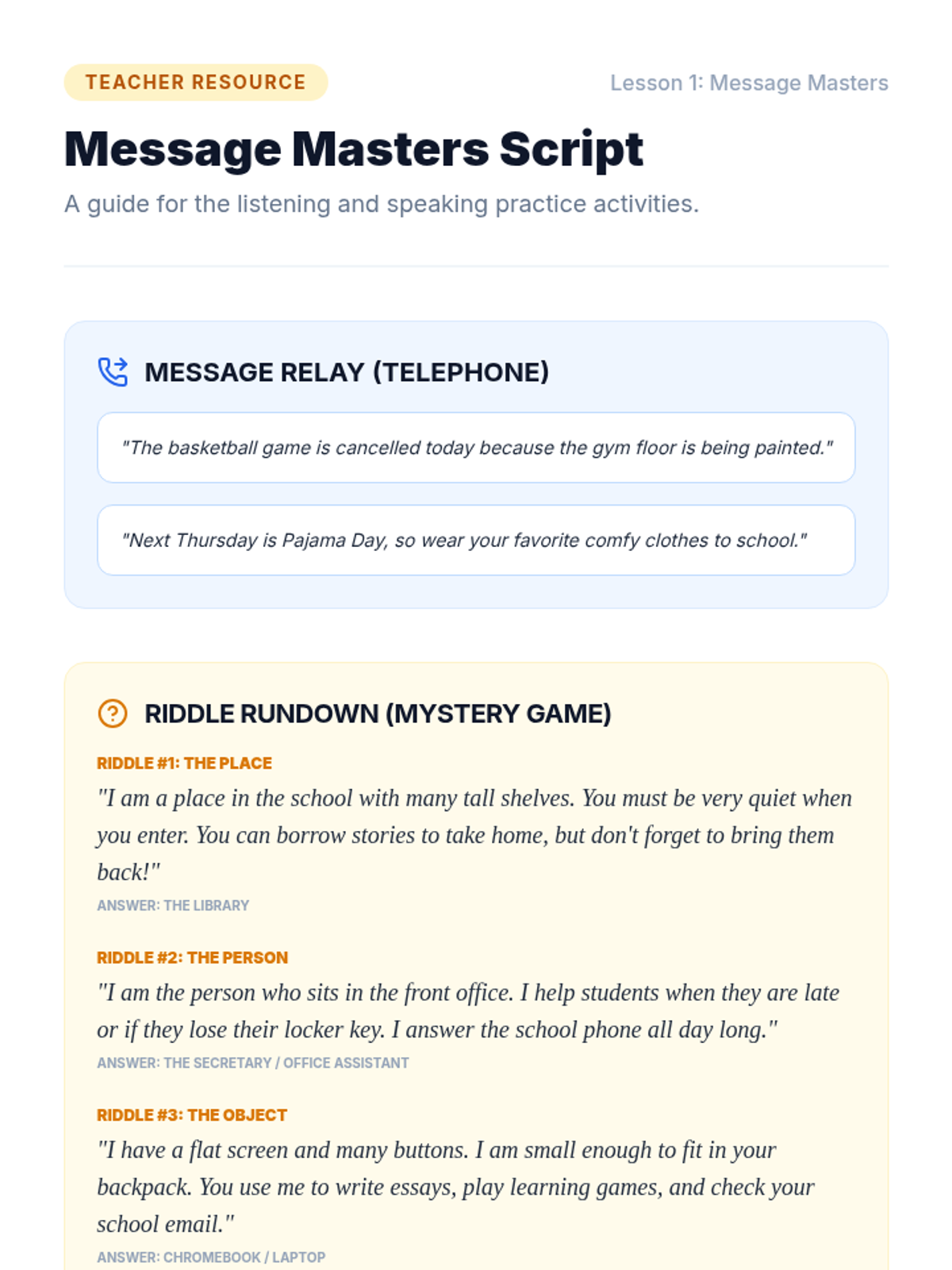
Students focus on 'Listen and Repeat' and 'Listening for Main Ideas' through school-based announcements and peer interactions. The lesson follows an I-Do, We-Do, You-Do structure to build confidence in auditory comprehension and oral mimicry.
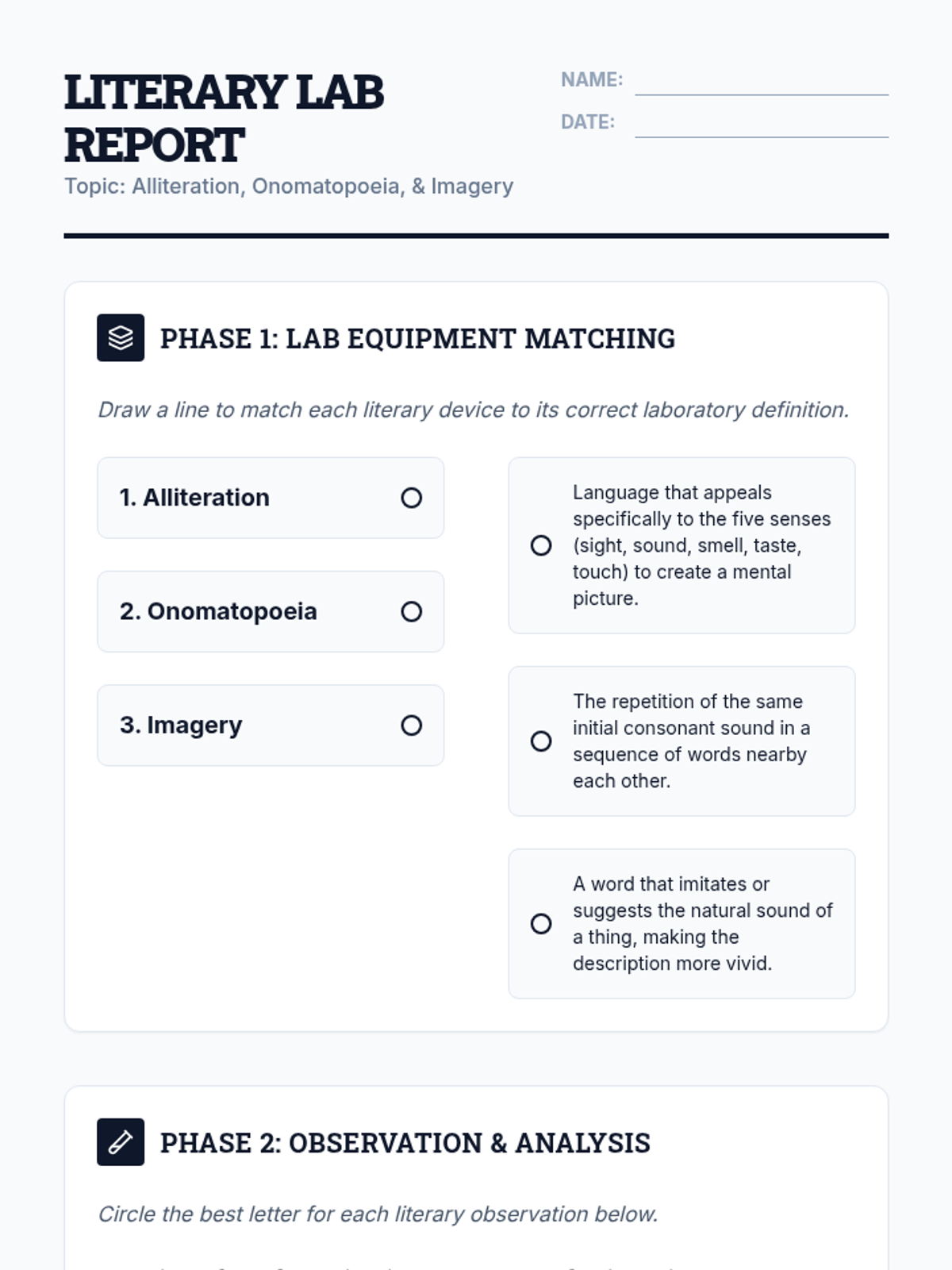
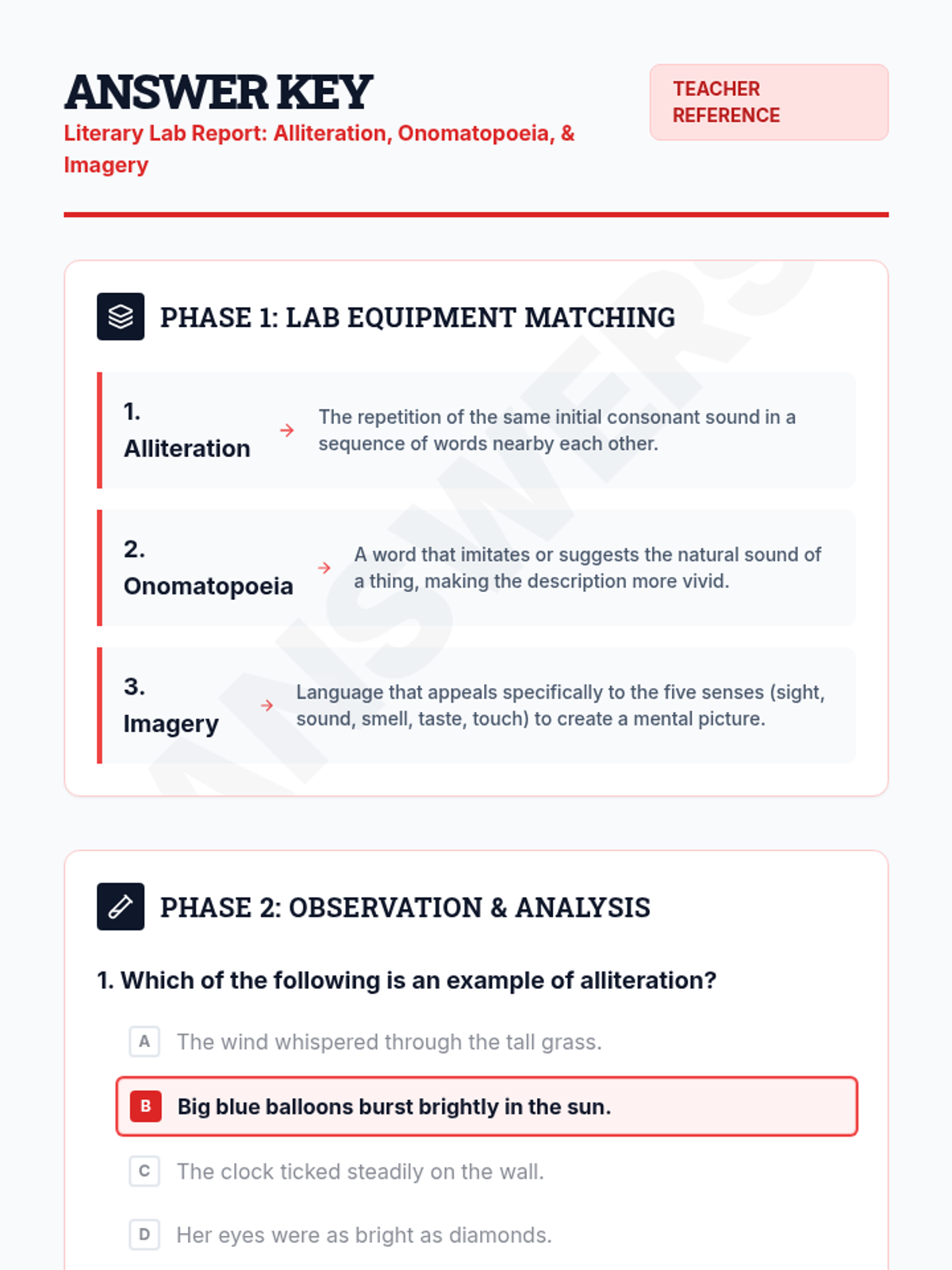
A focused exploration of three key literary devices: alliteration, onomatopoeia, and imagery. Students will learn to identify these tools in text and understand how they enhance sensory writing.
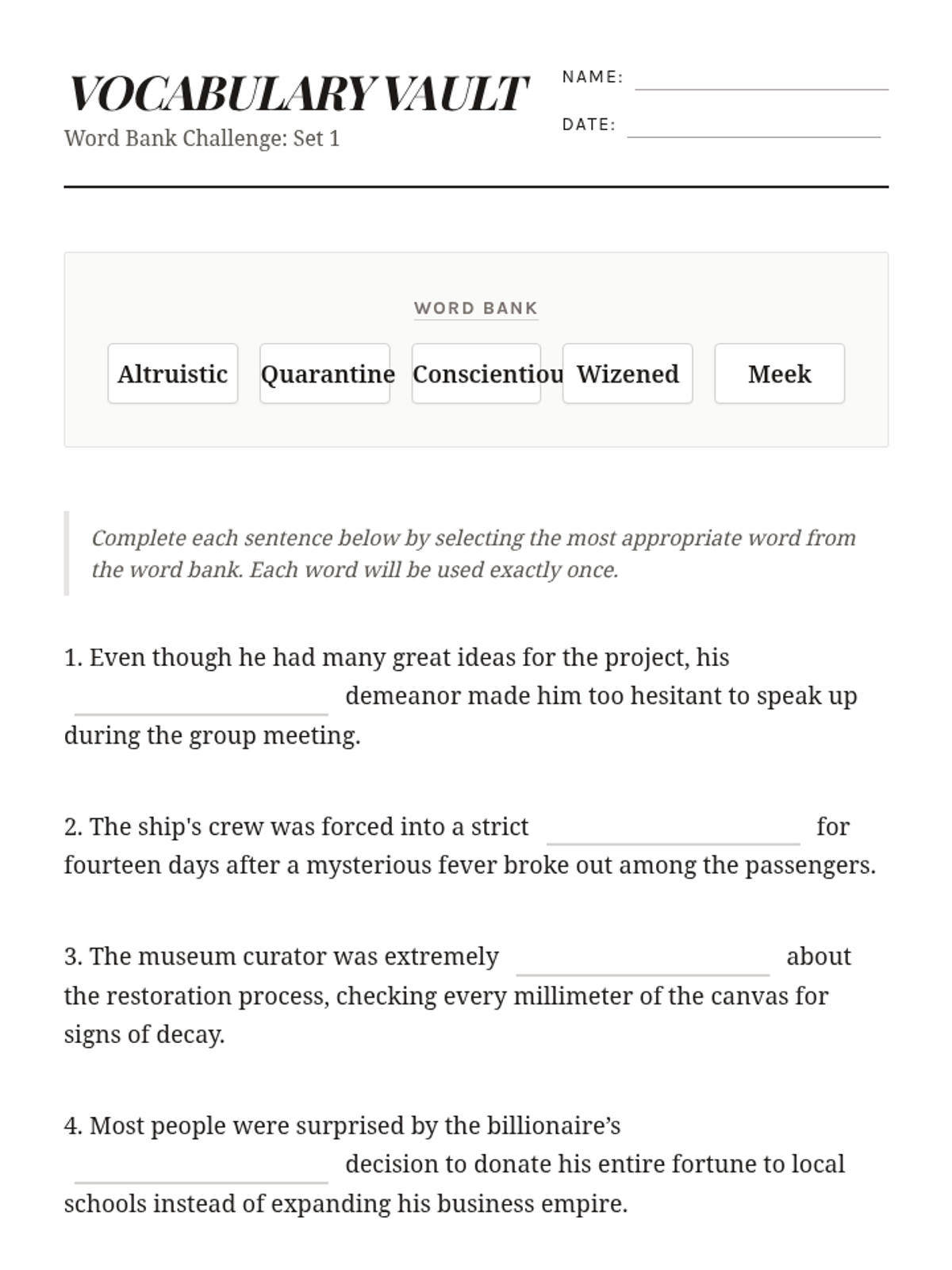
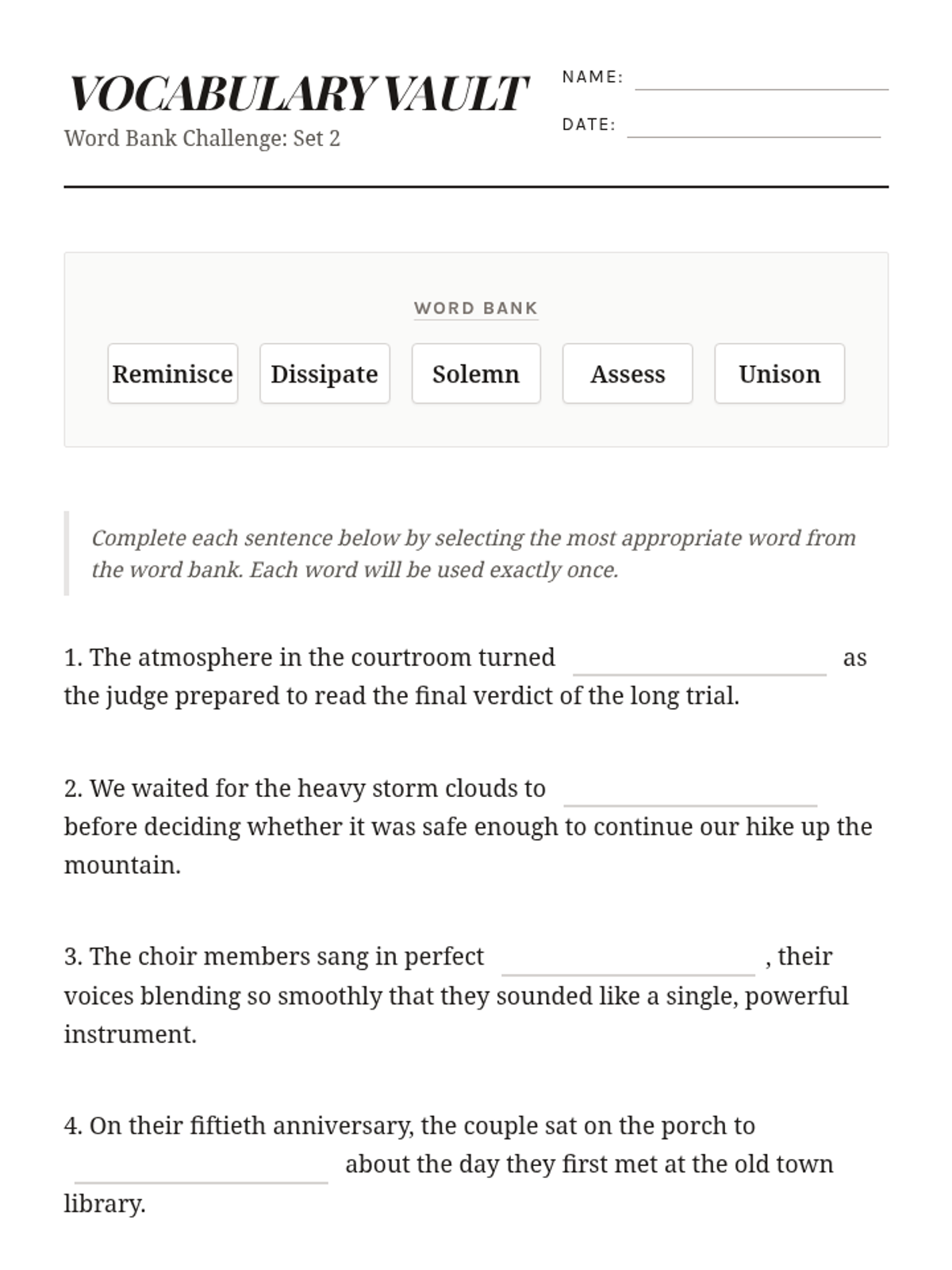
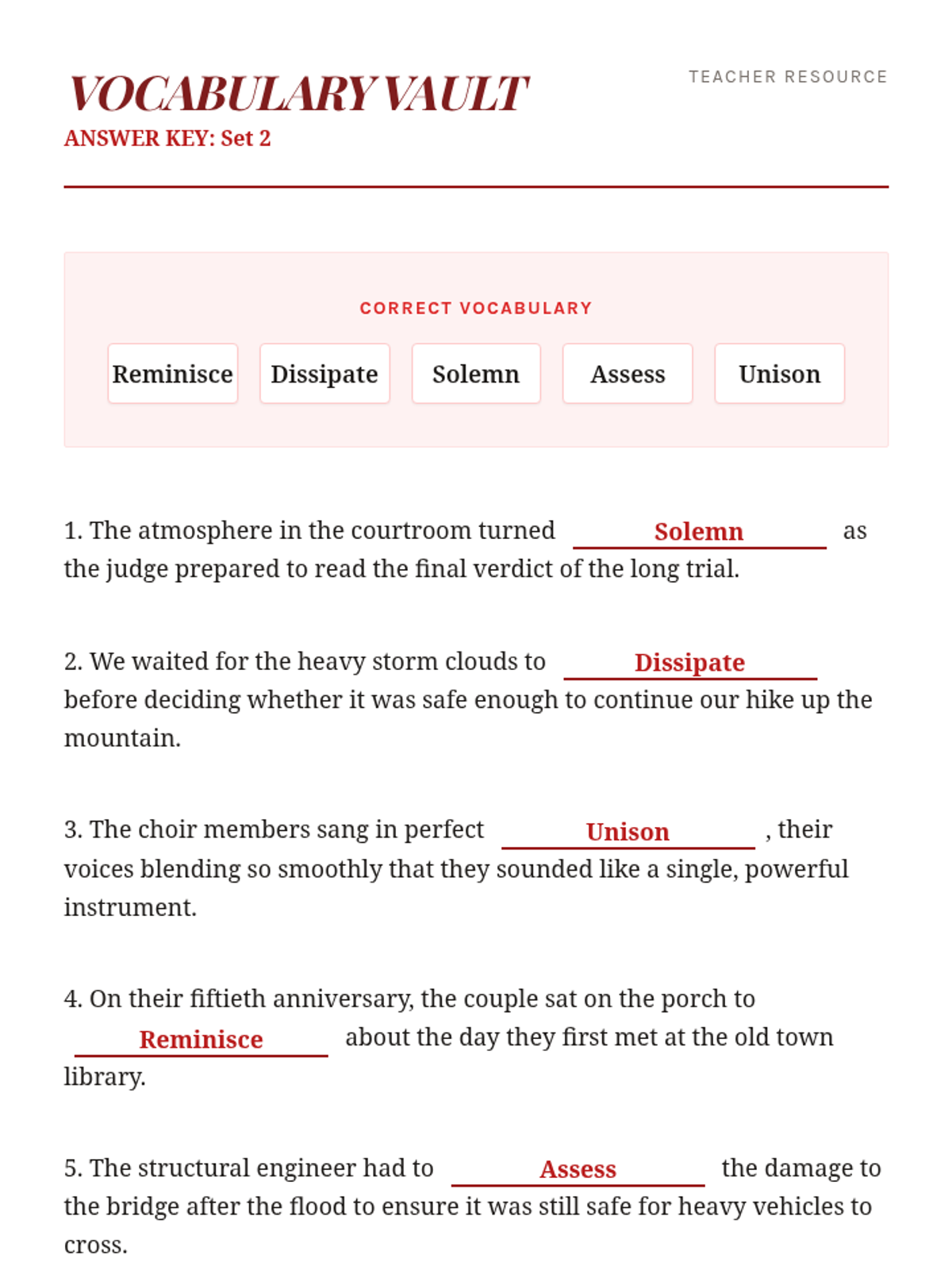
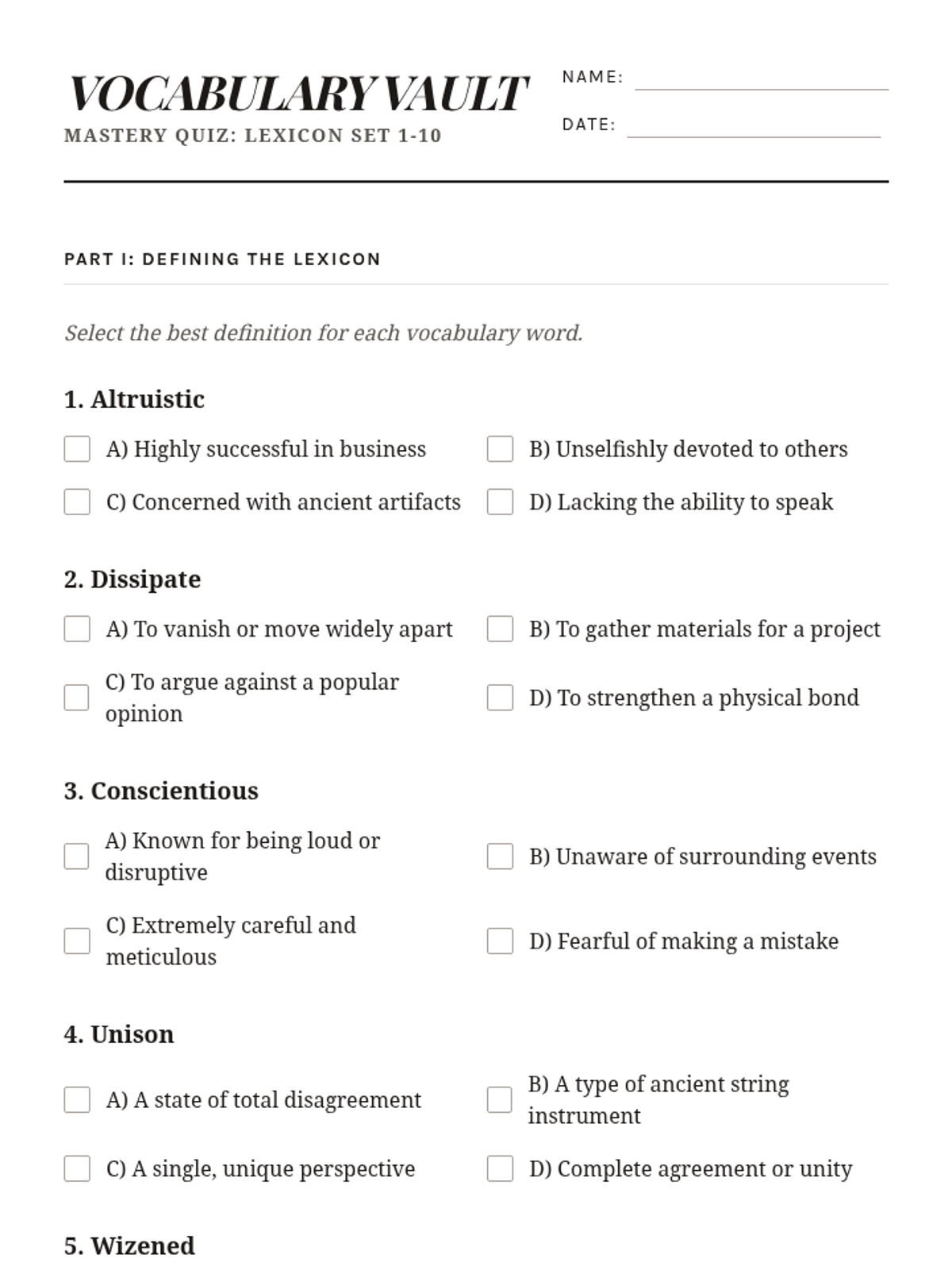
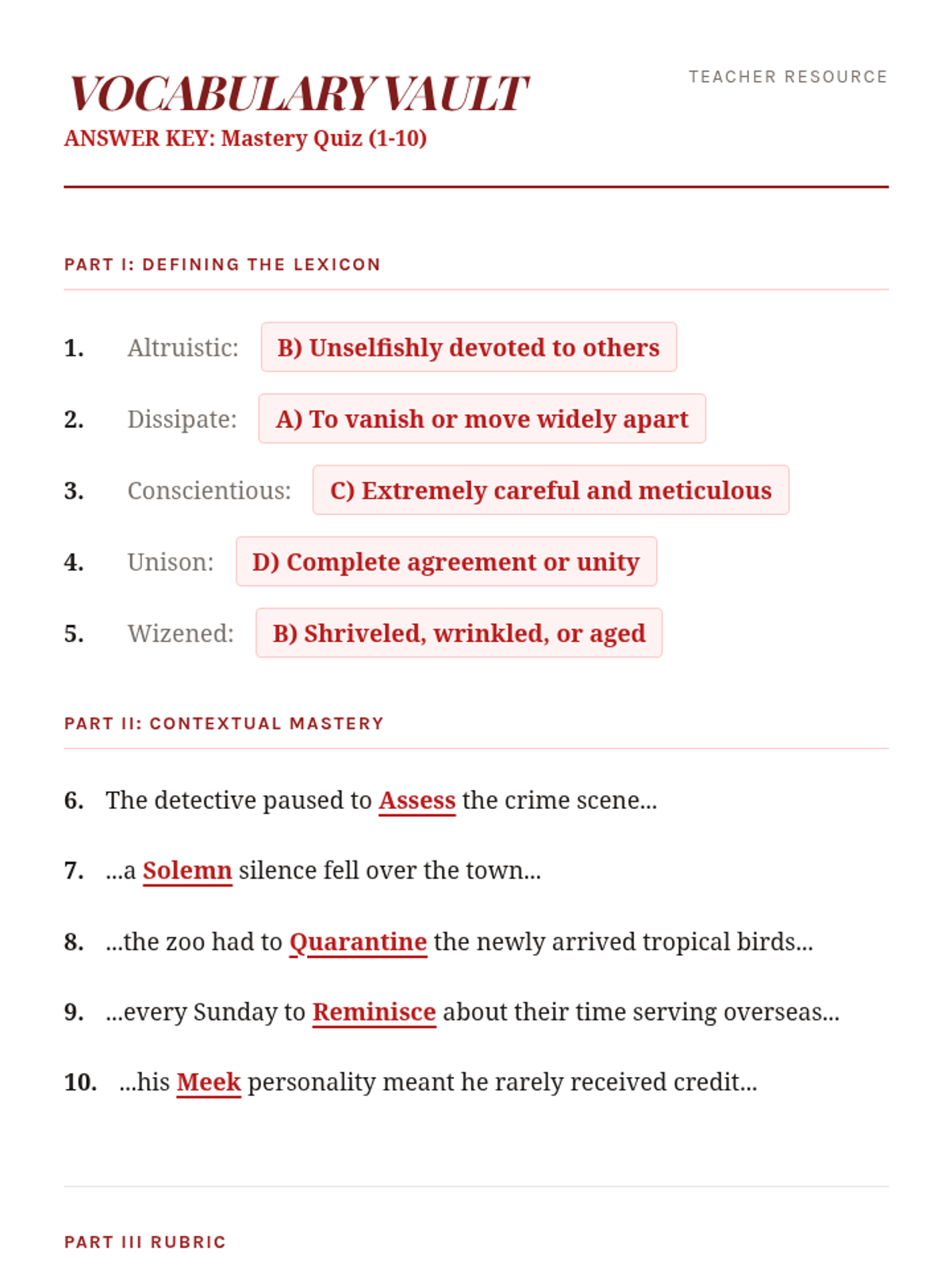
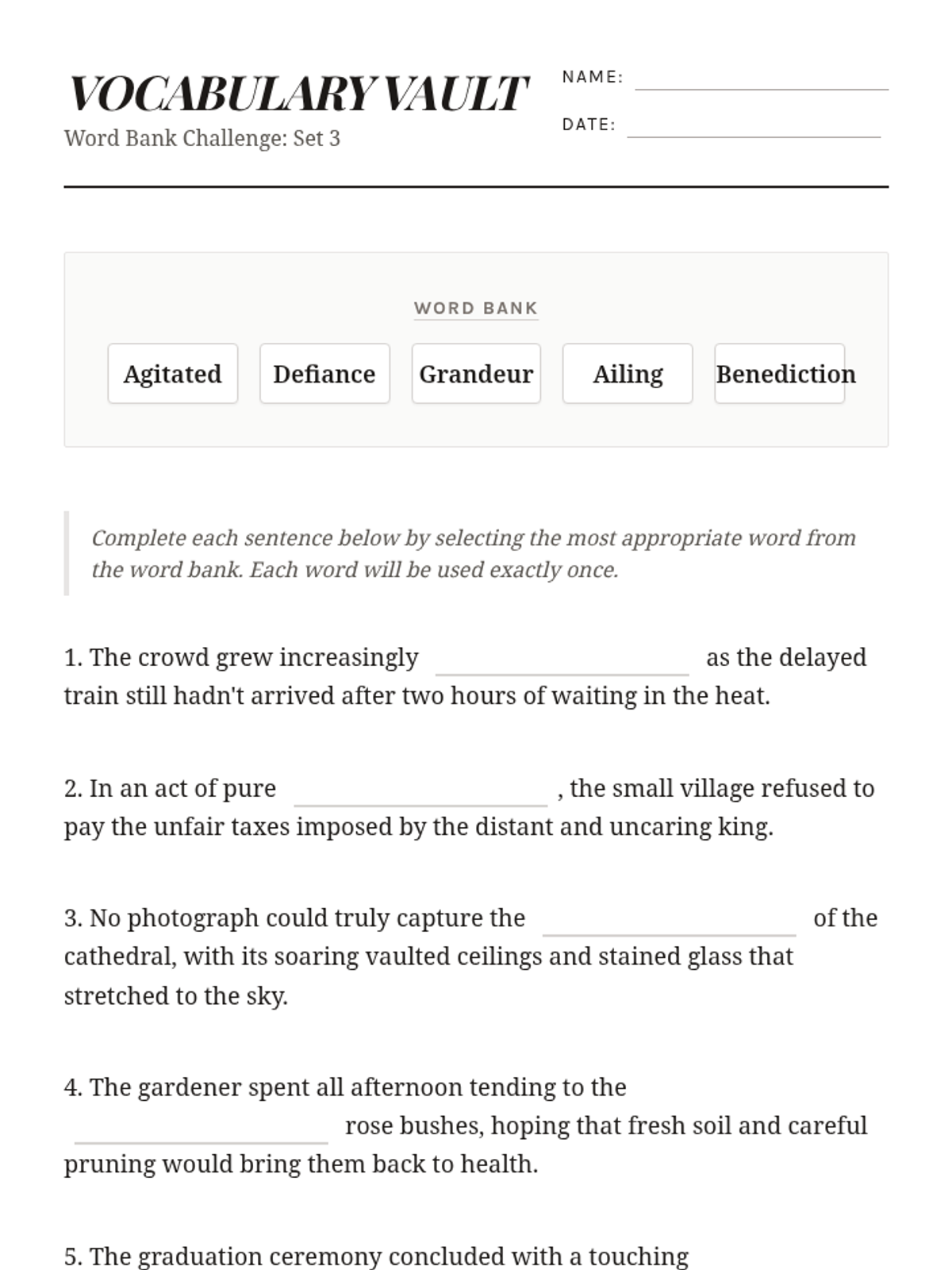
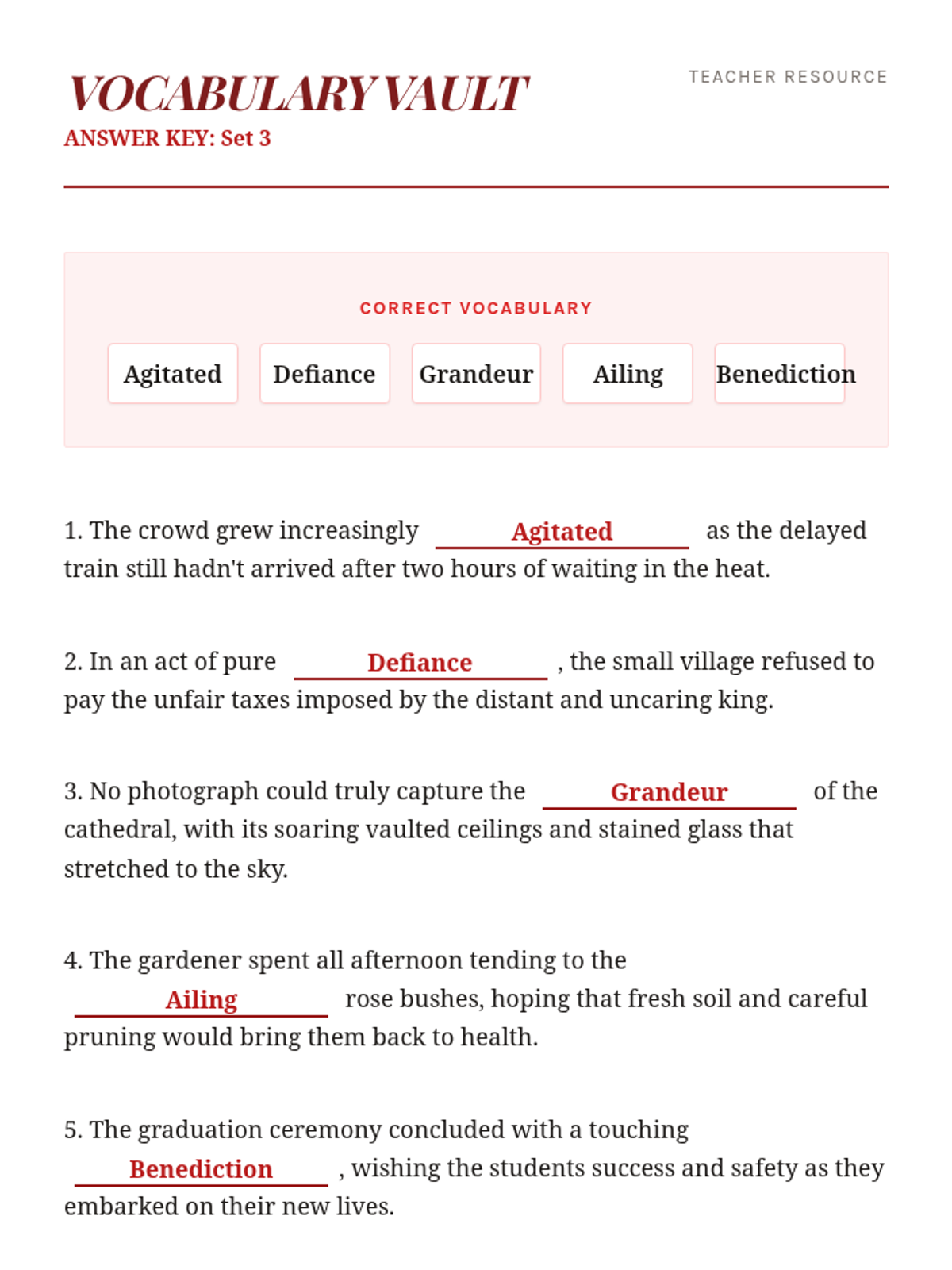
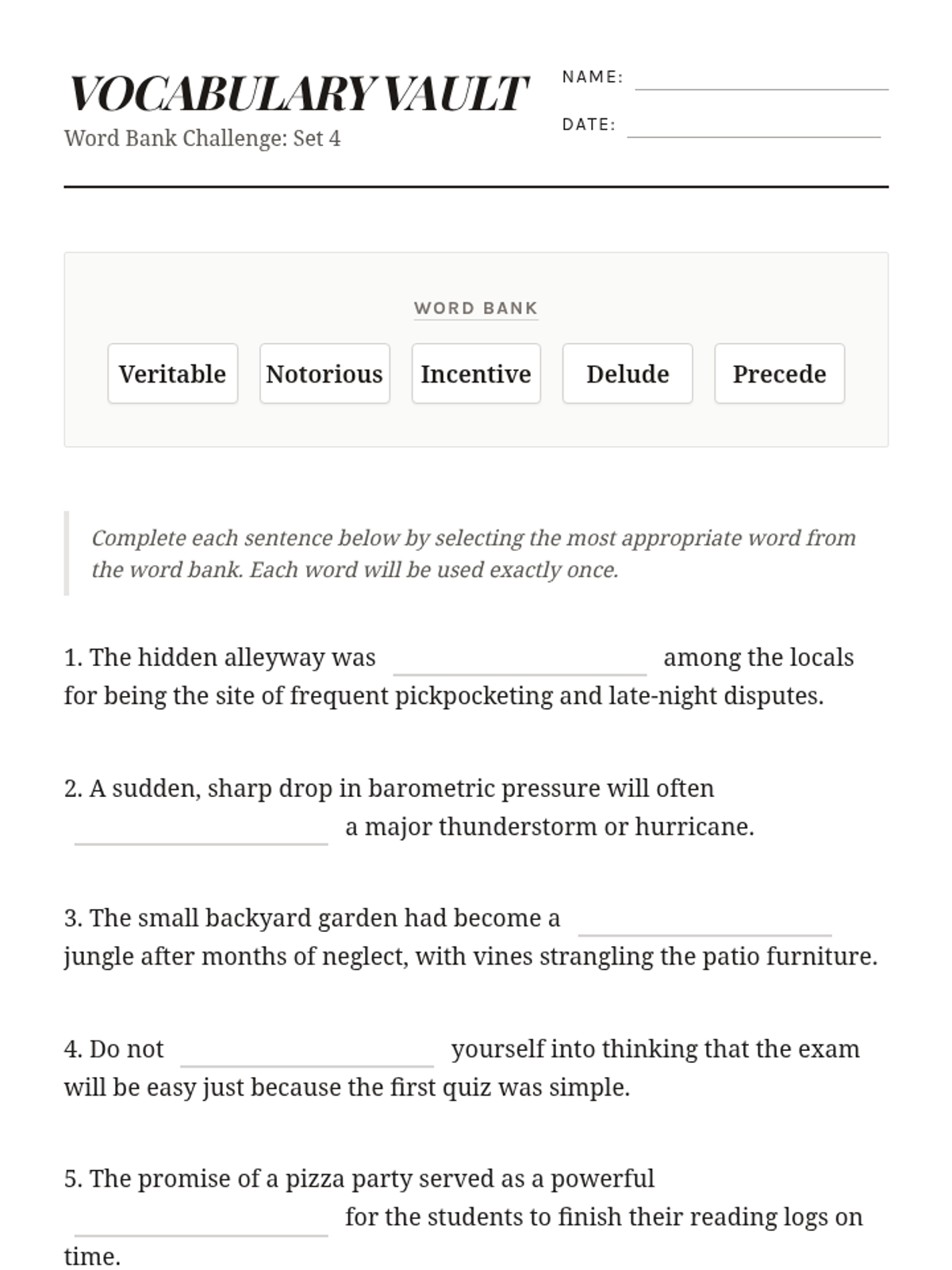
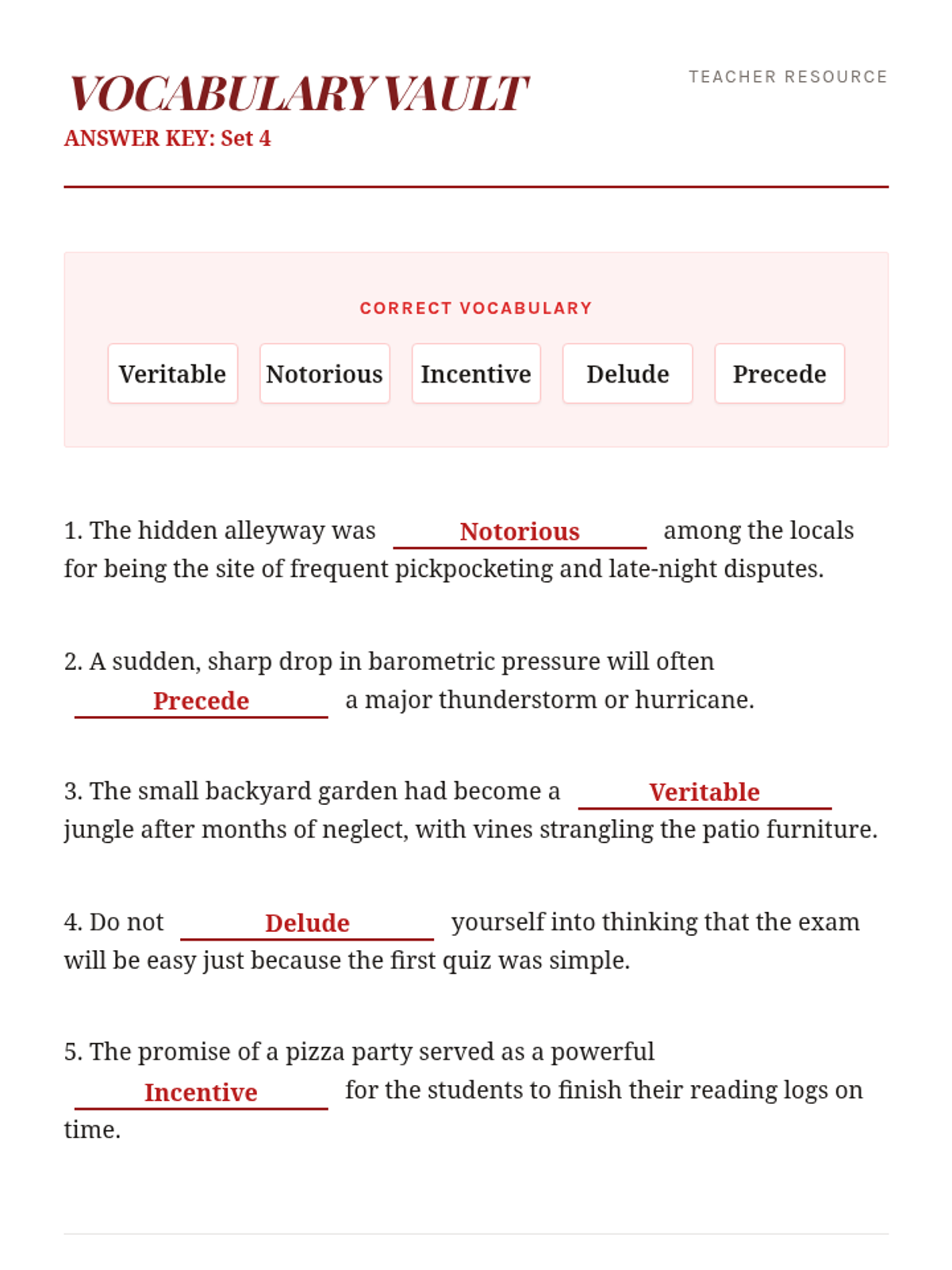
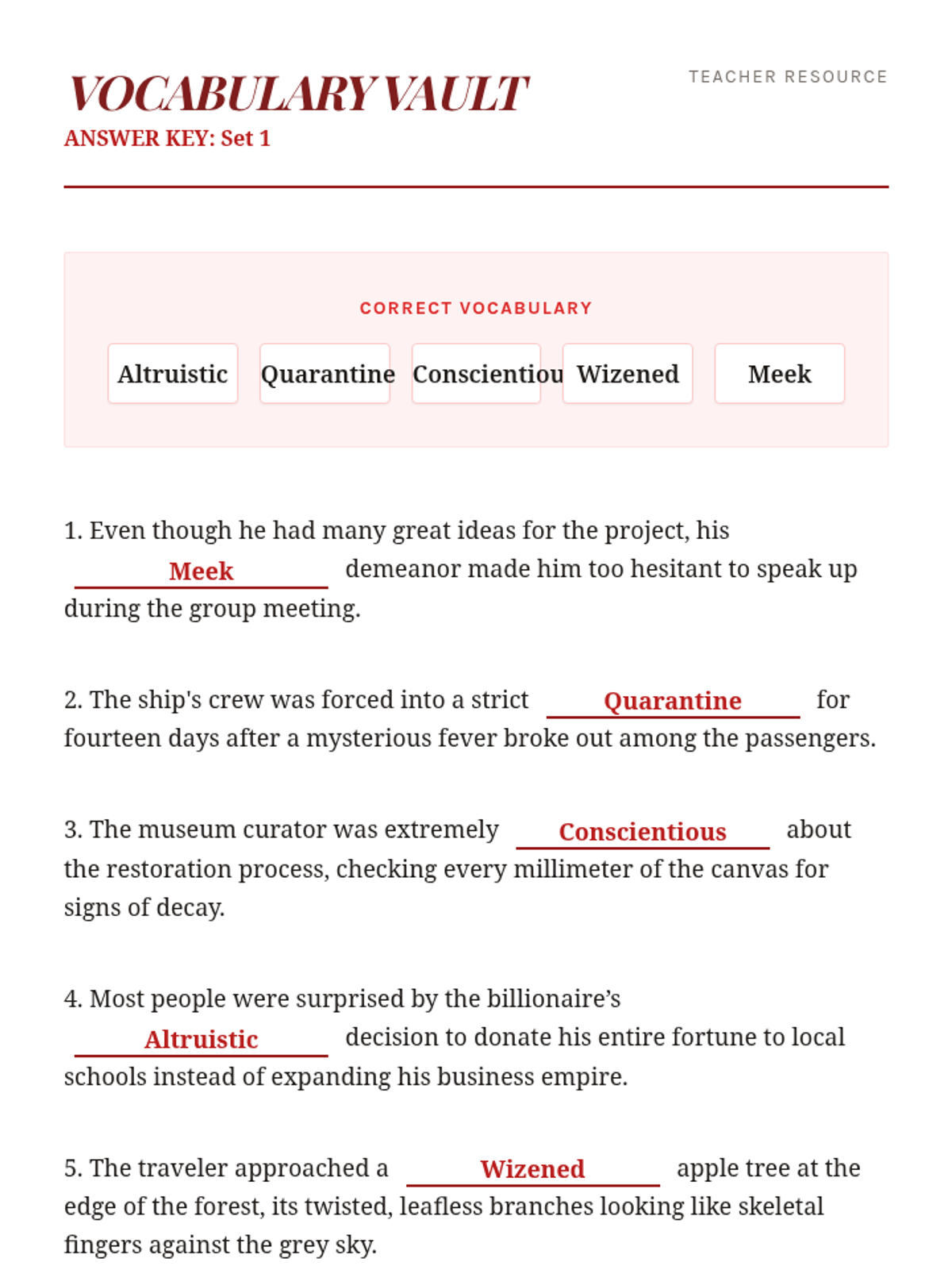
A comprehensive vocabulary unit focusing on twenty sophisticated literary terms, including altruistic, quarantine, conscientious, wizened, meek, reminisce, dissipate, solemn, assess, unison, agitated, defiance, grandeur, ailing, benediction, veritable, notorious, incentive, delude, and precede.
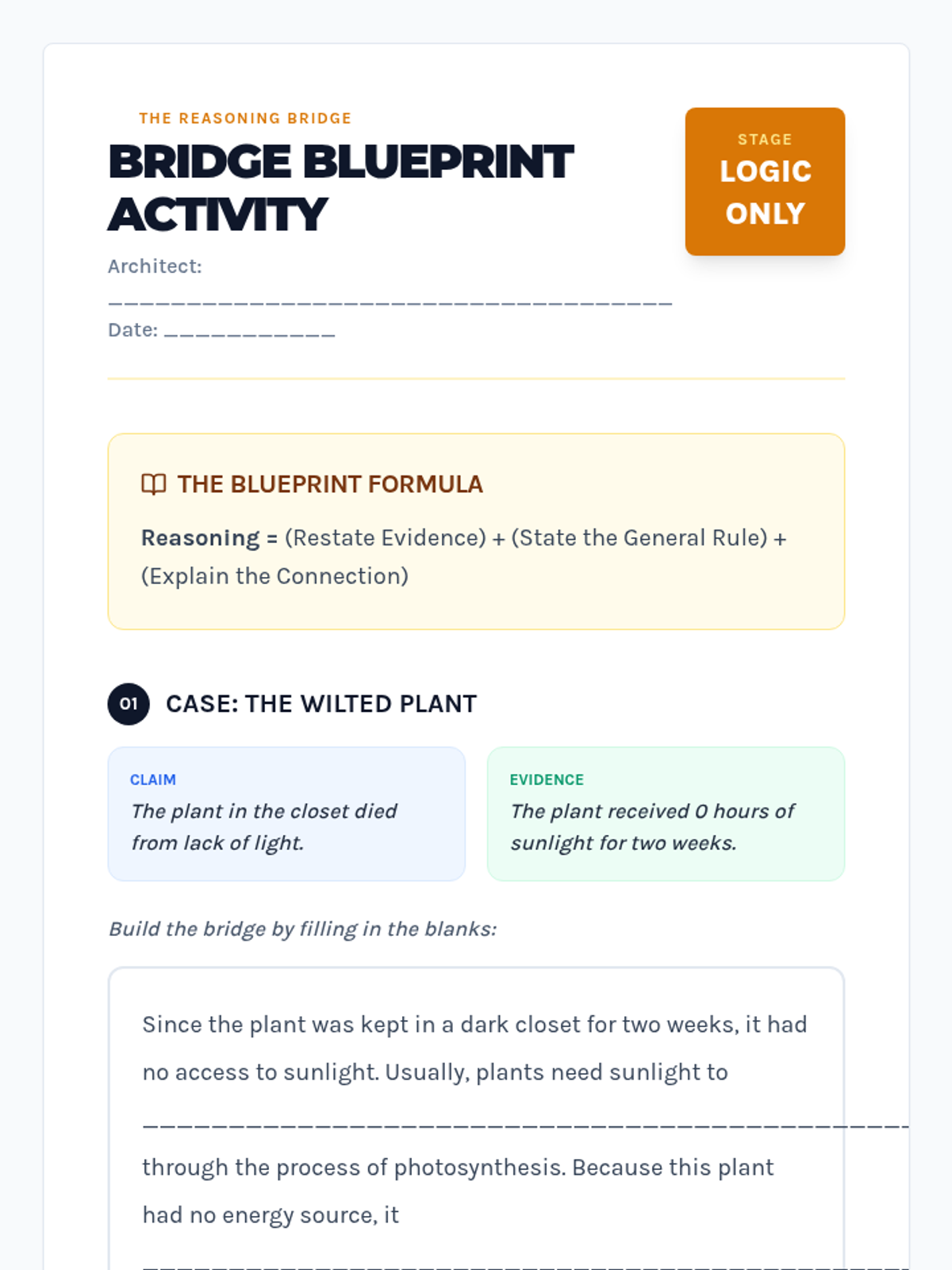
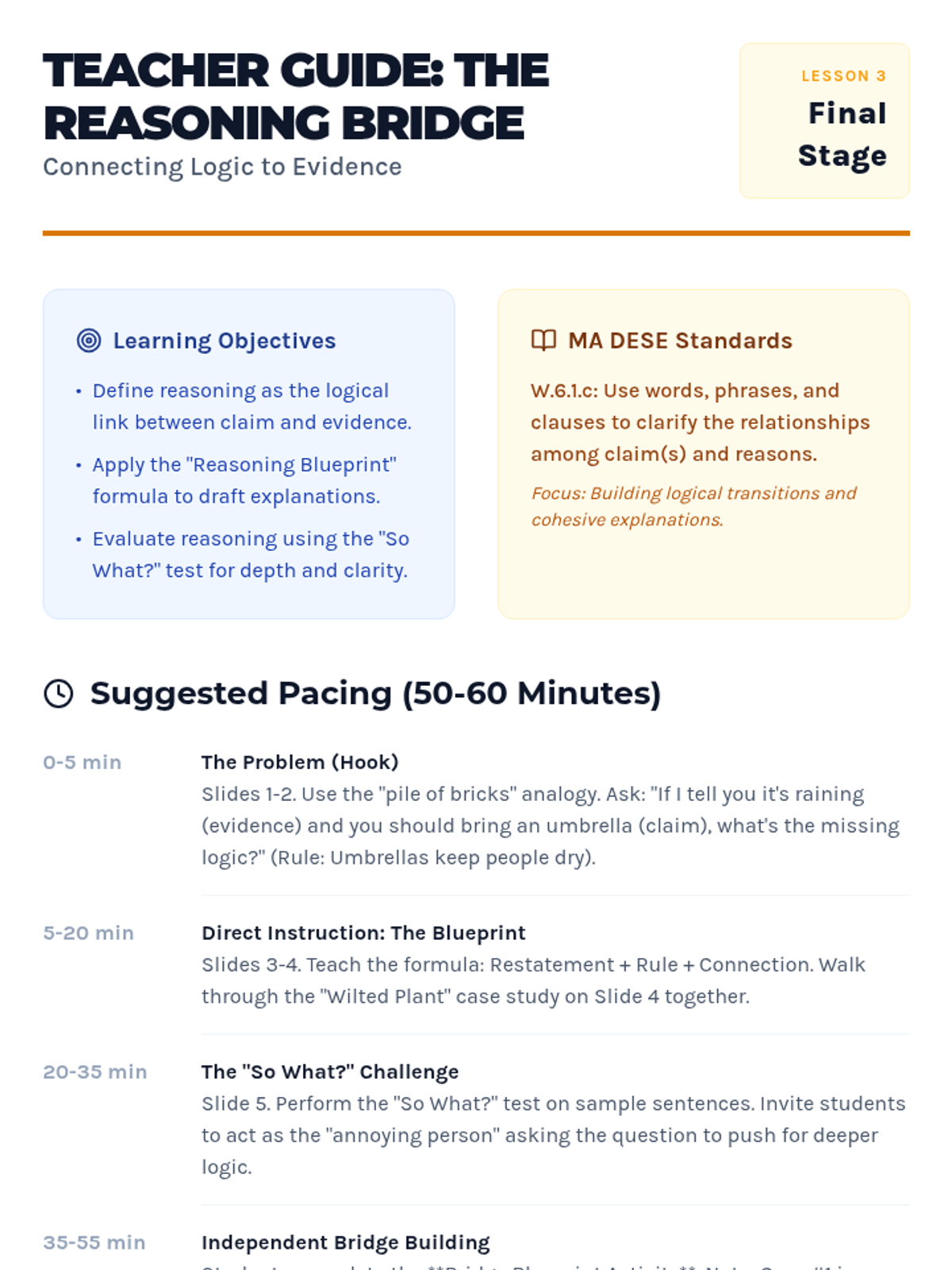
Students will master the art of "the bridge," learning to construct logical explanations that connect their evidence back to their claims using scientific principles or general rules.