Students develop their 'angle eye' by estimating angles around a point before calculating exact values. This lesson uses a high-engagement video tutorial to practice visualization and reinforces the 360-degree rule.
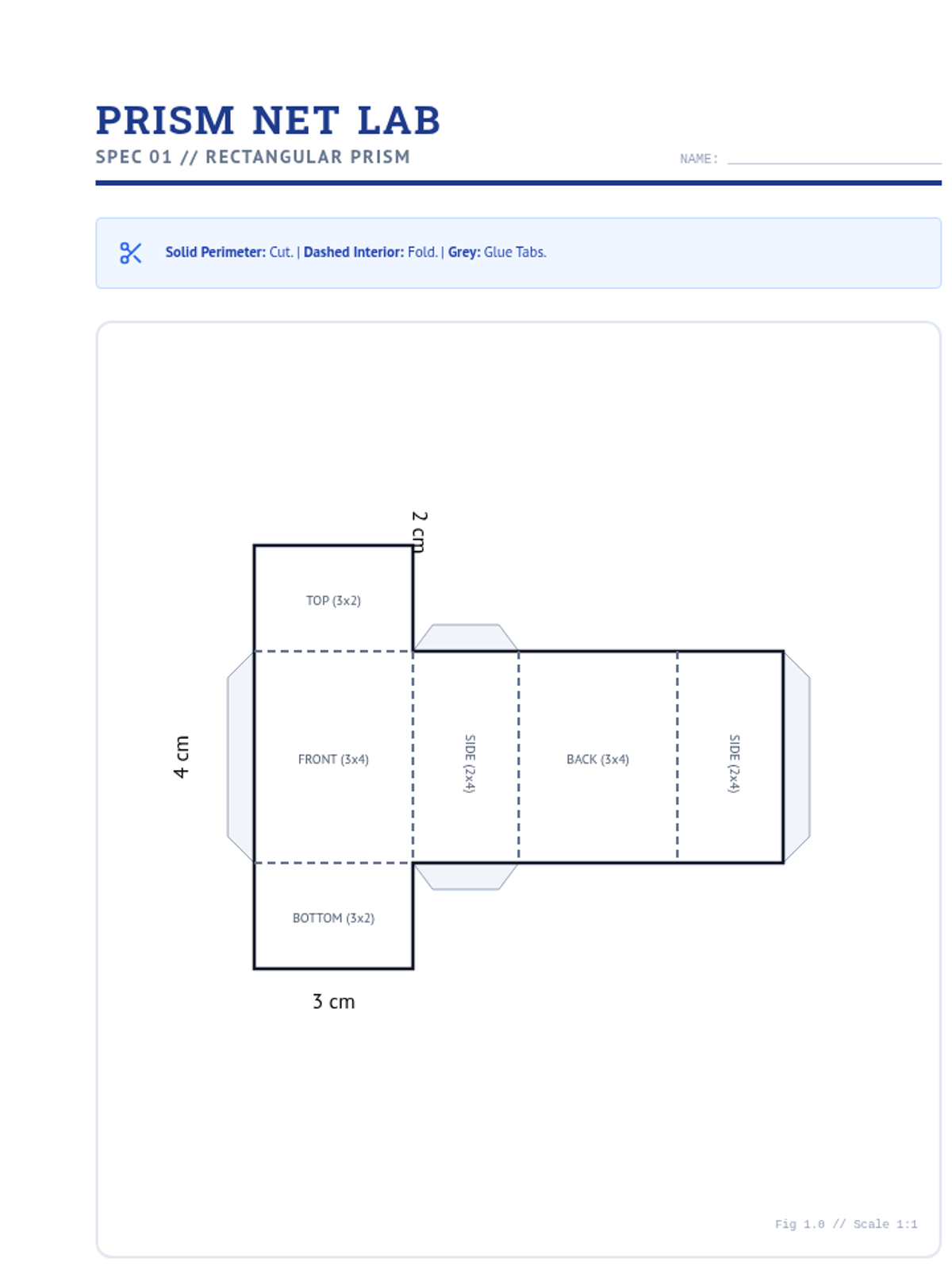
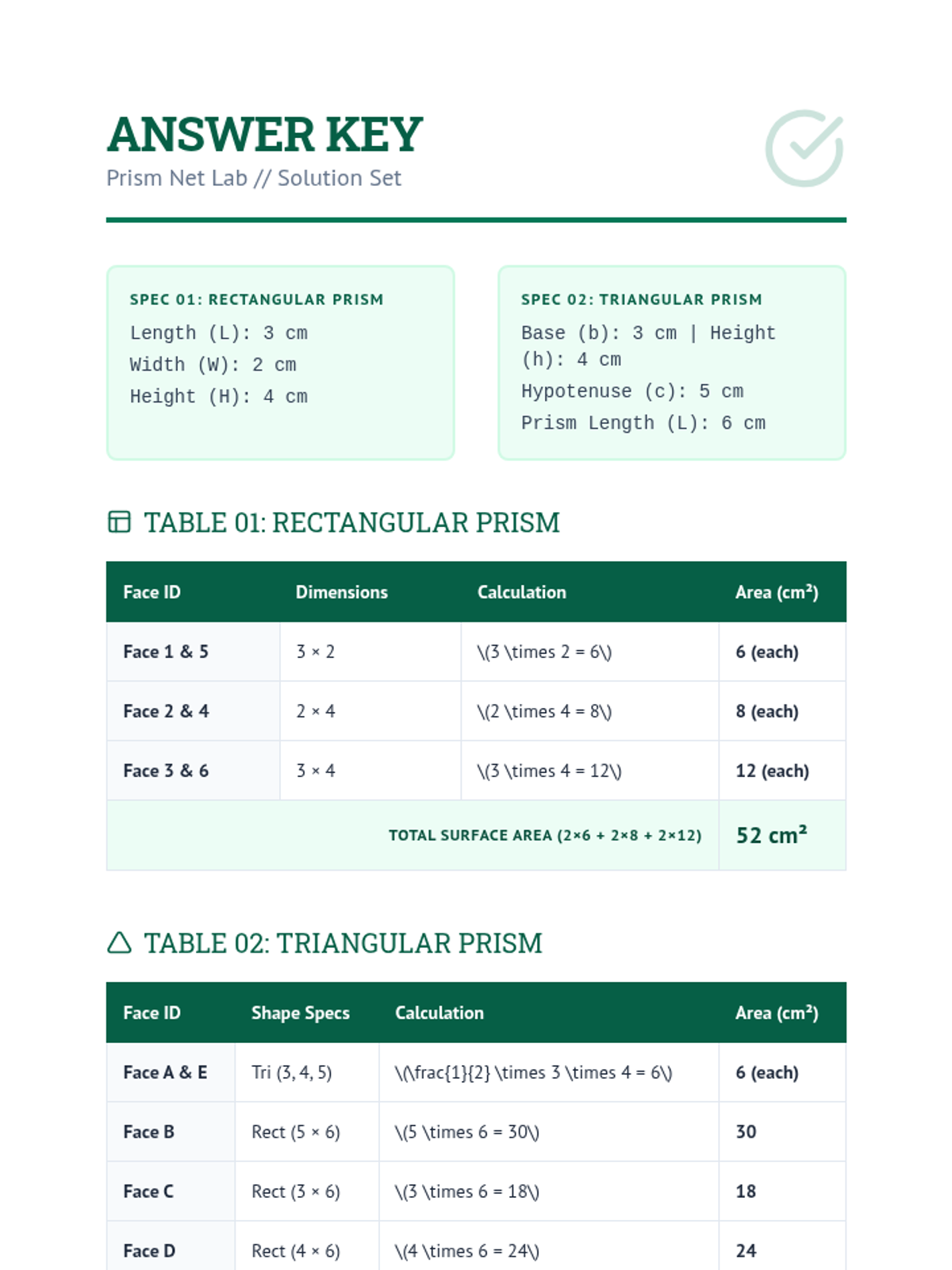
Students bridge the gap between 2D geometry and 3D space by constructing physical models of rectangular and triangular prisms. They identify faces, measure dimensions, and calculate total surface area through hands-on assembly.
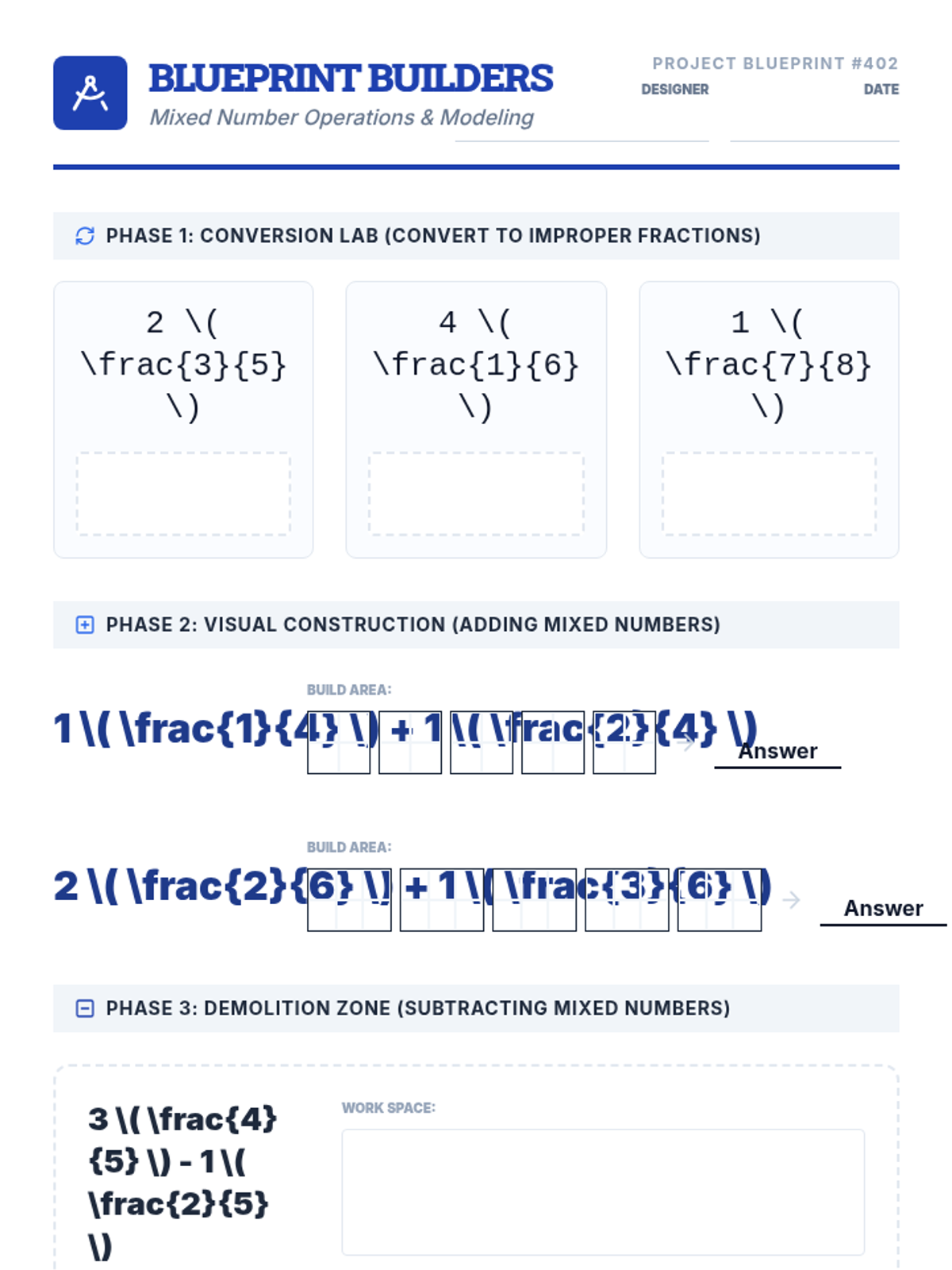
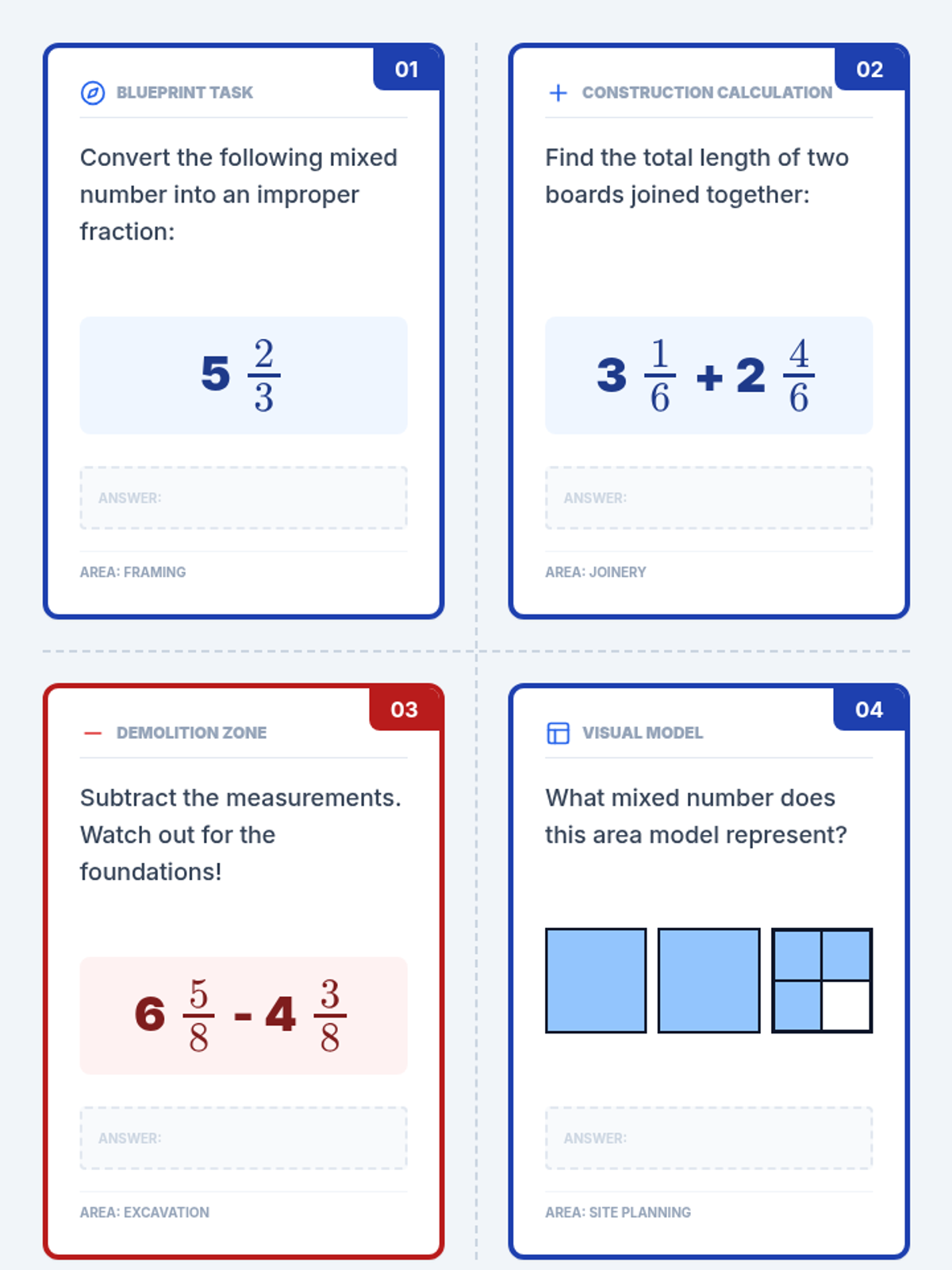
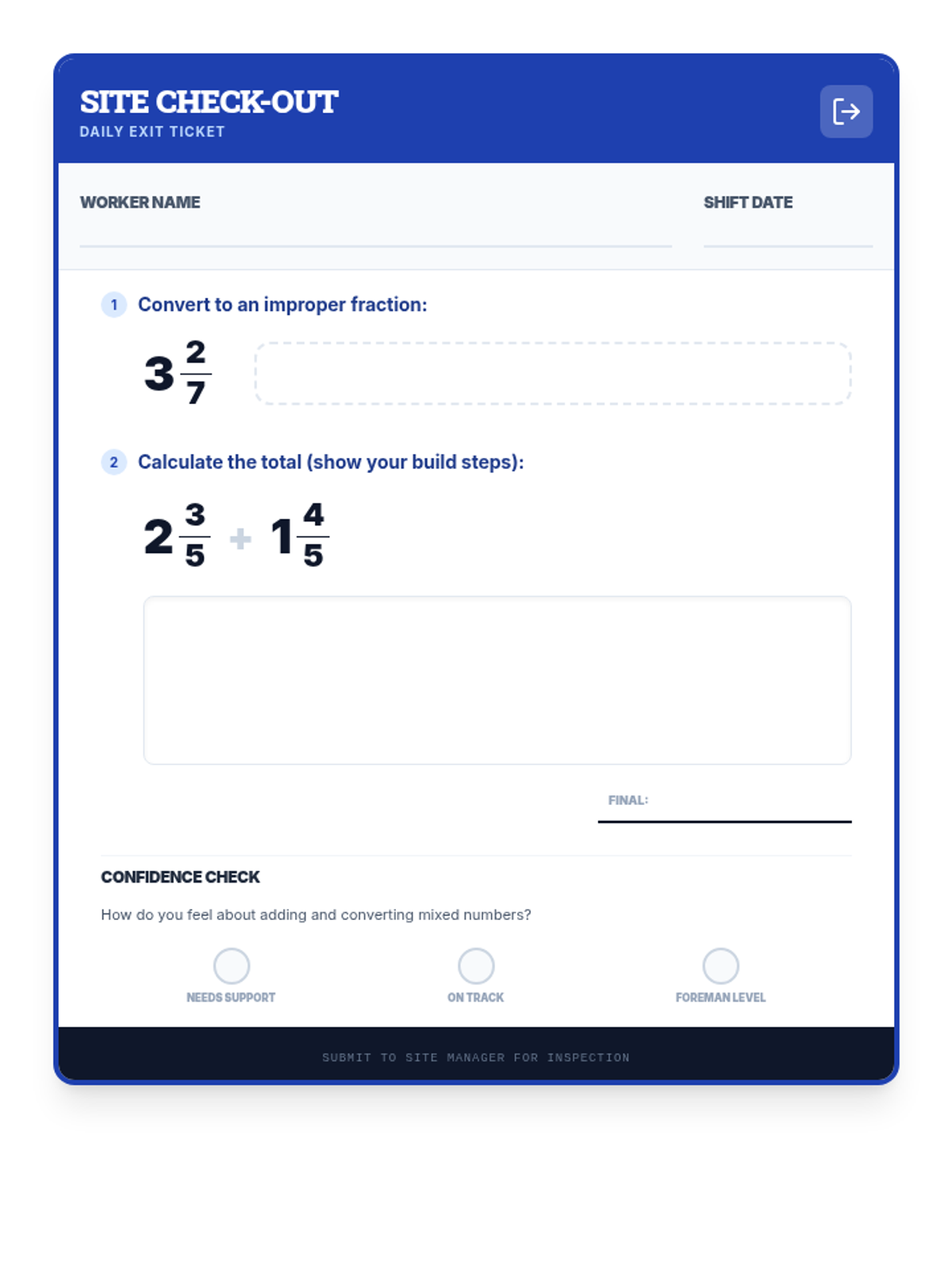
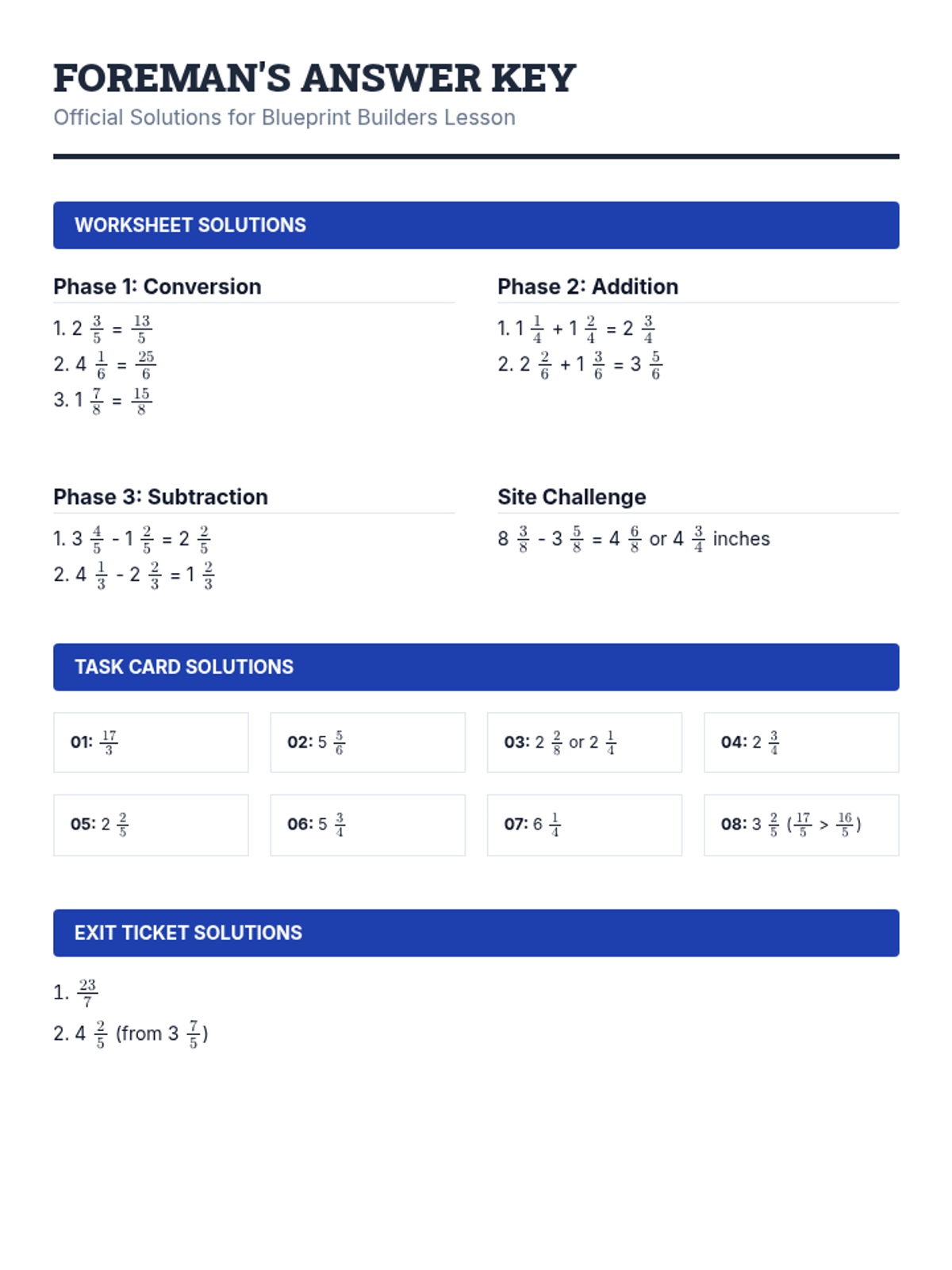
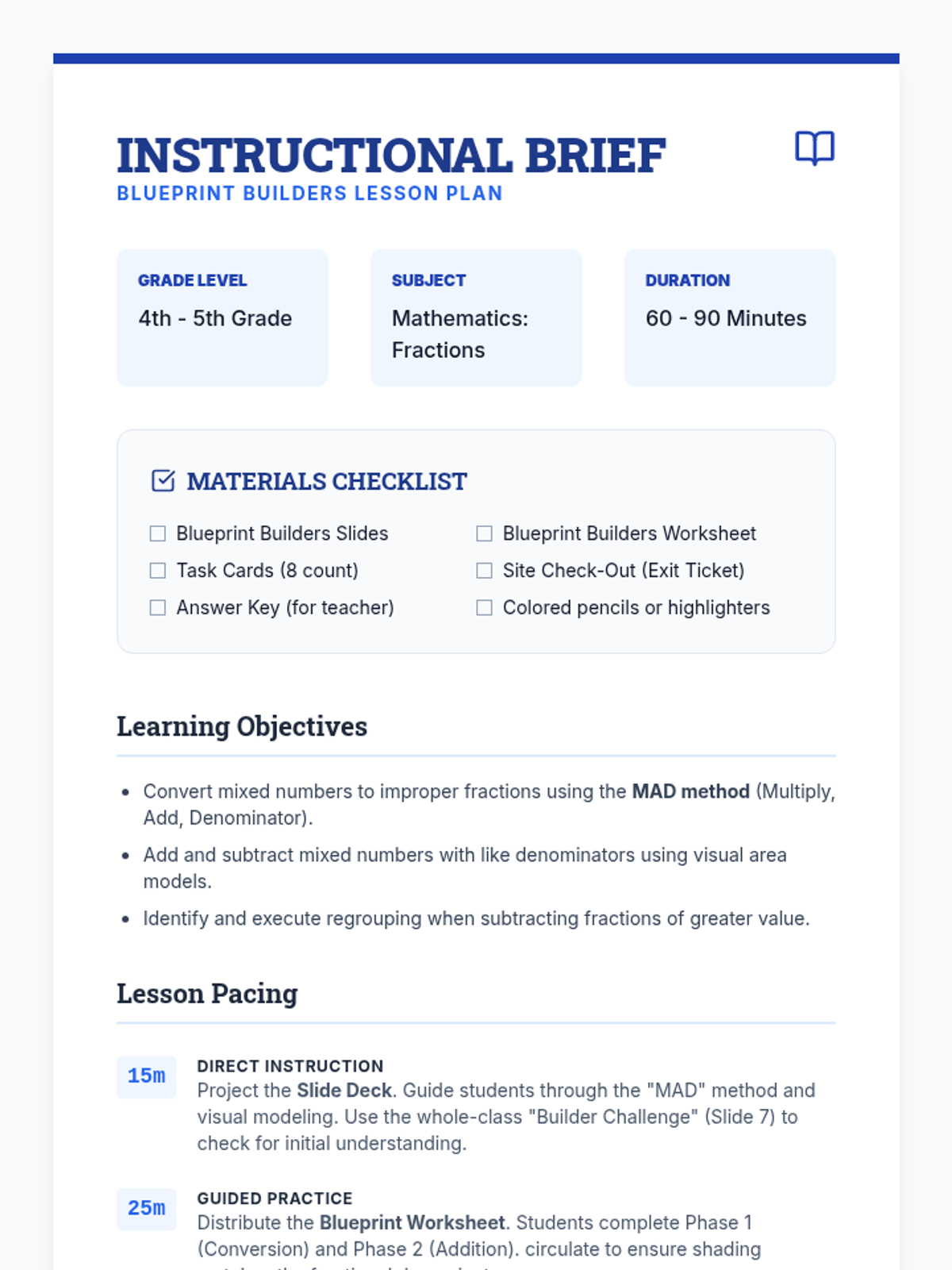
A comprehensive lesson on adding and subtracting mixed numbers using visual area models and improper fraction conversions, themed around architectural blueprints and construction.
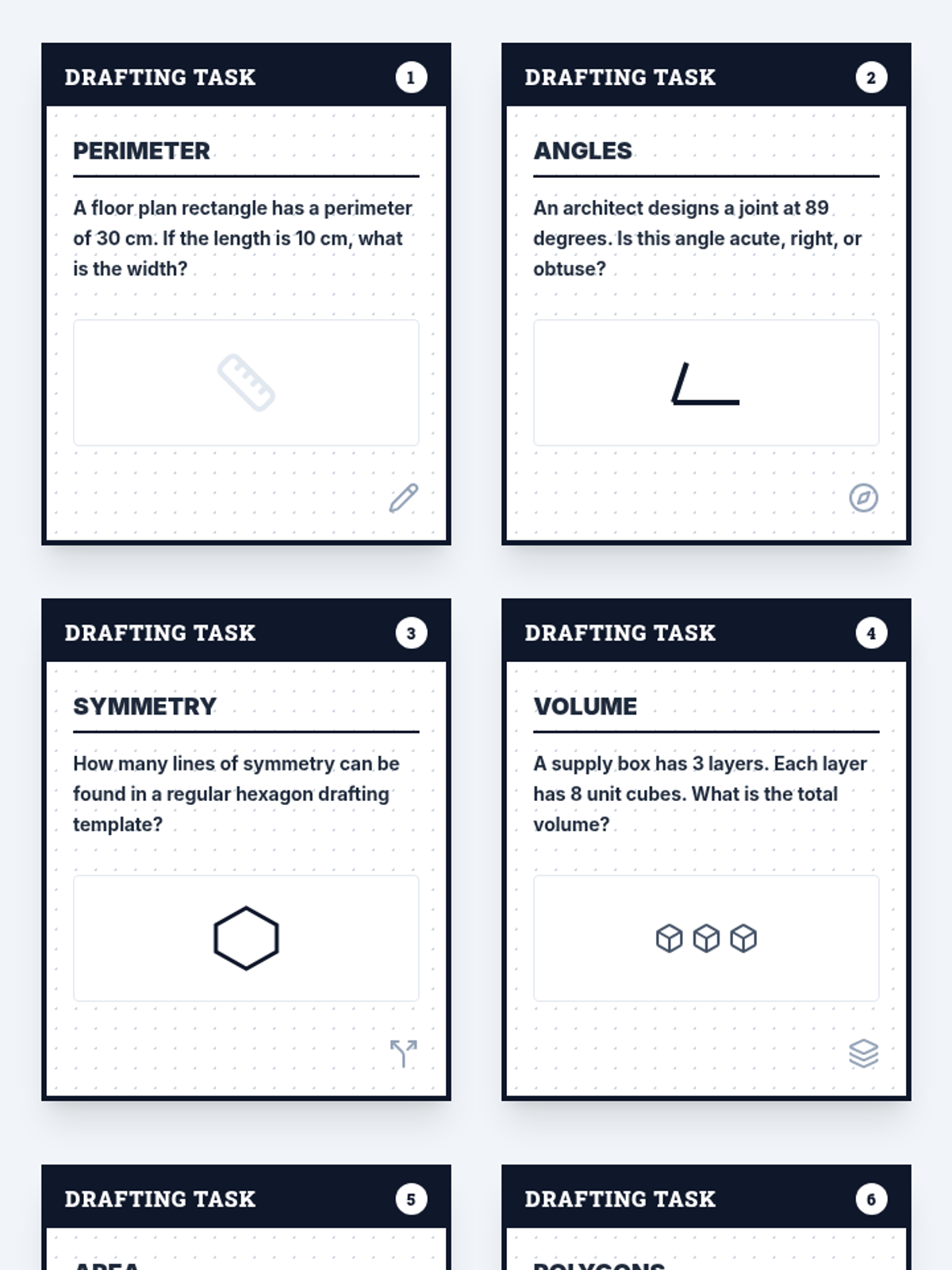
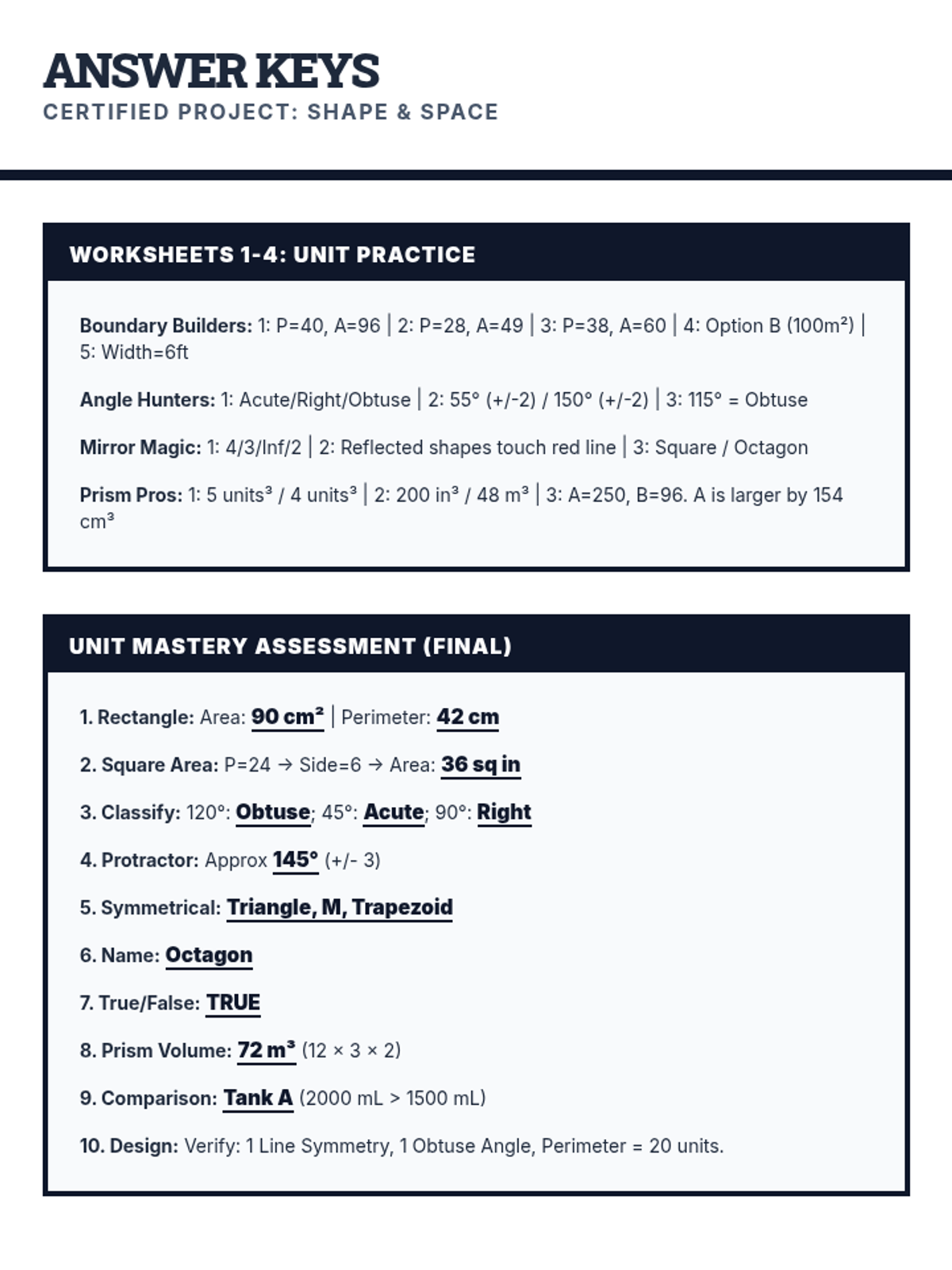
The culmination of the unit featuring comprehensive task cards for review and a final assessment to measure mastery across all topics.
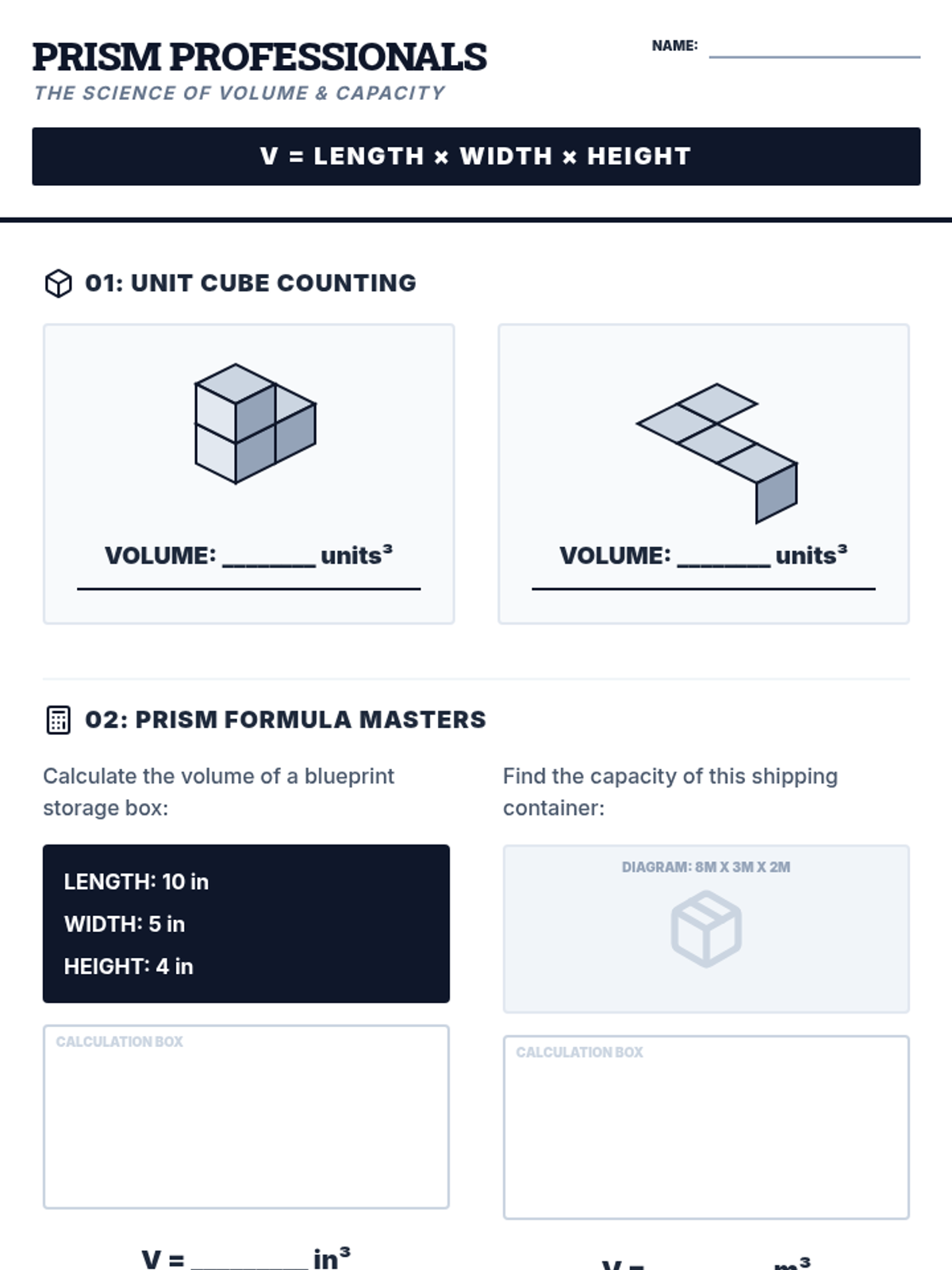
Introduces volume and capacity through the study of 3D objects and liquid measurements in real-world contexts.
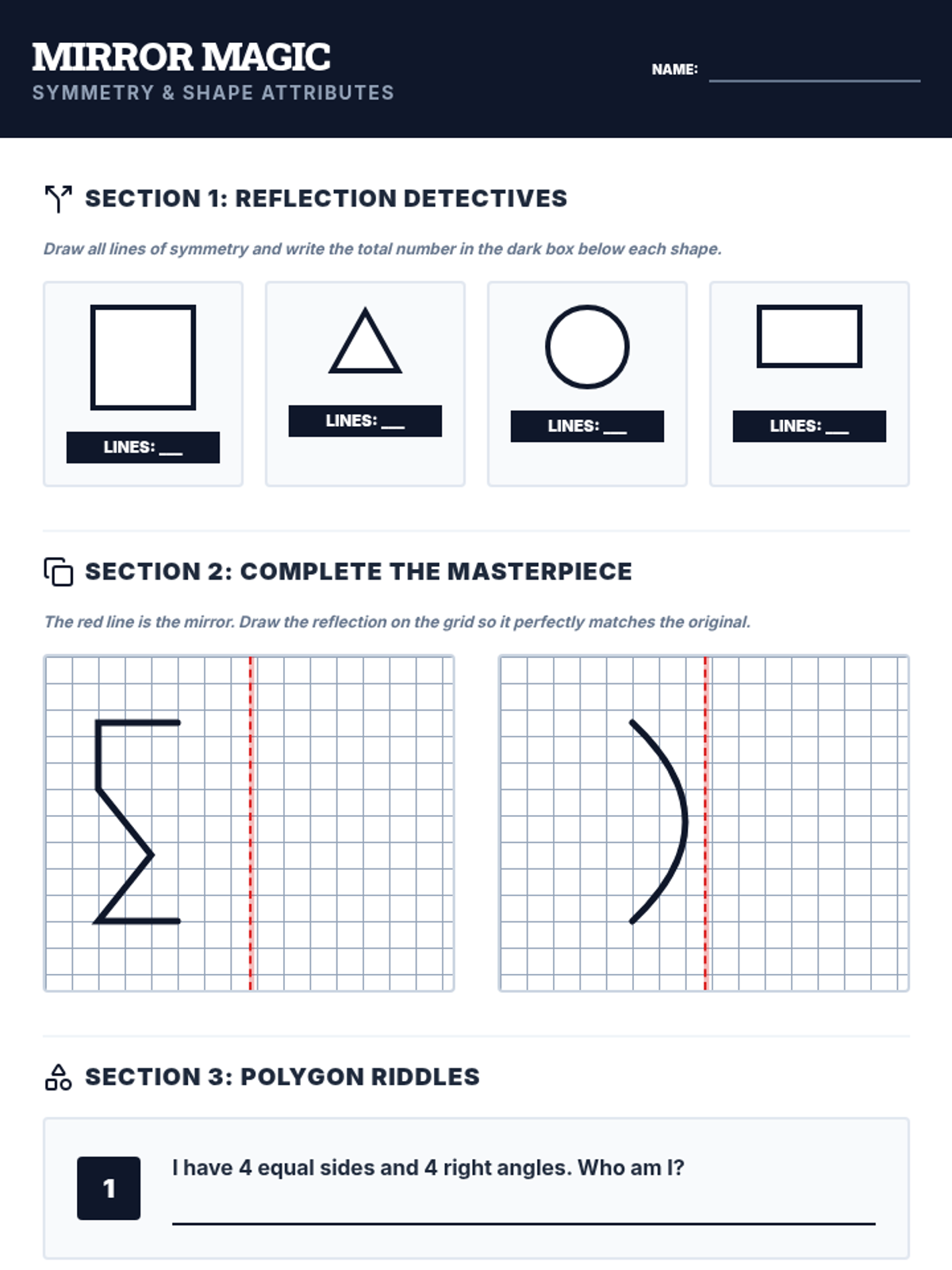
Focuses on identifying lines of symmetry and classifying 2D and 3D shapes based on their properties and attributes.
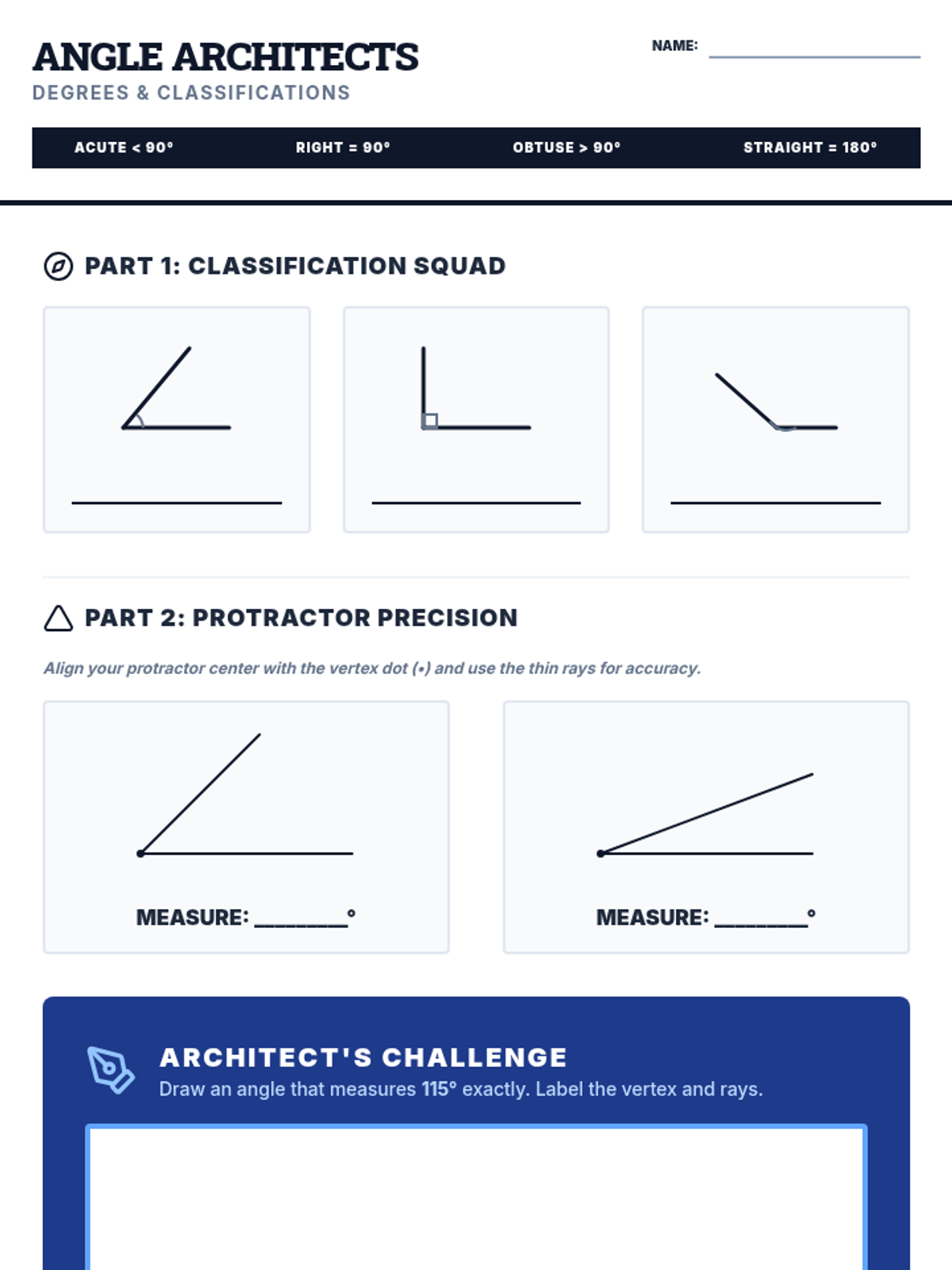
Students learn to identify, measure, and draw angles using protractors while understanding their role in geometric construction.
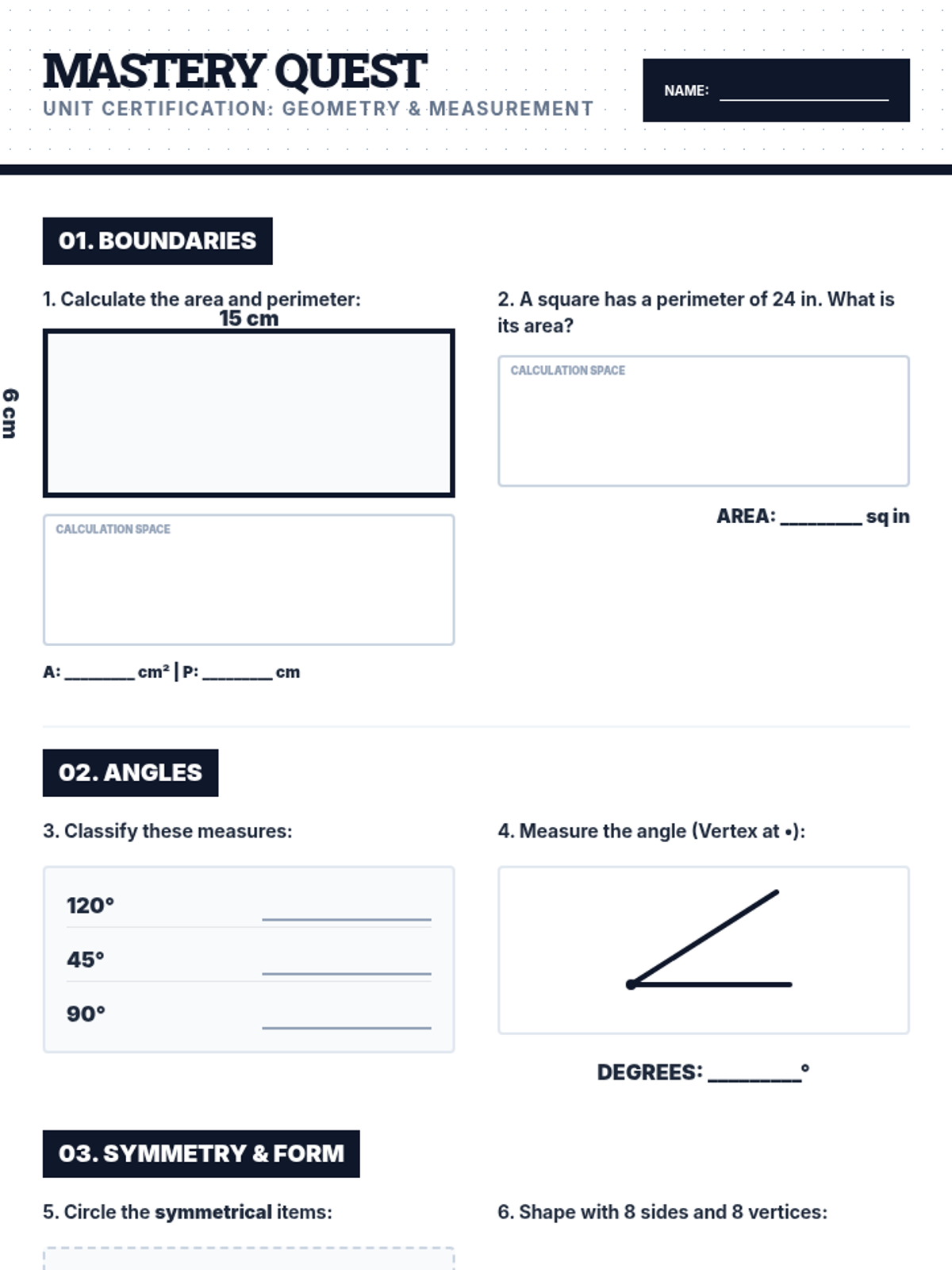
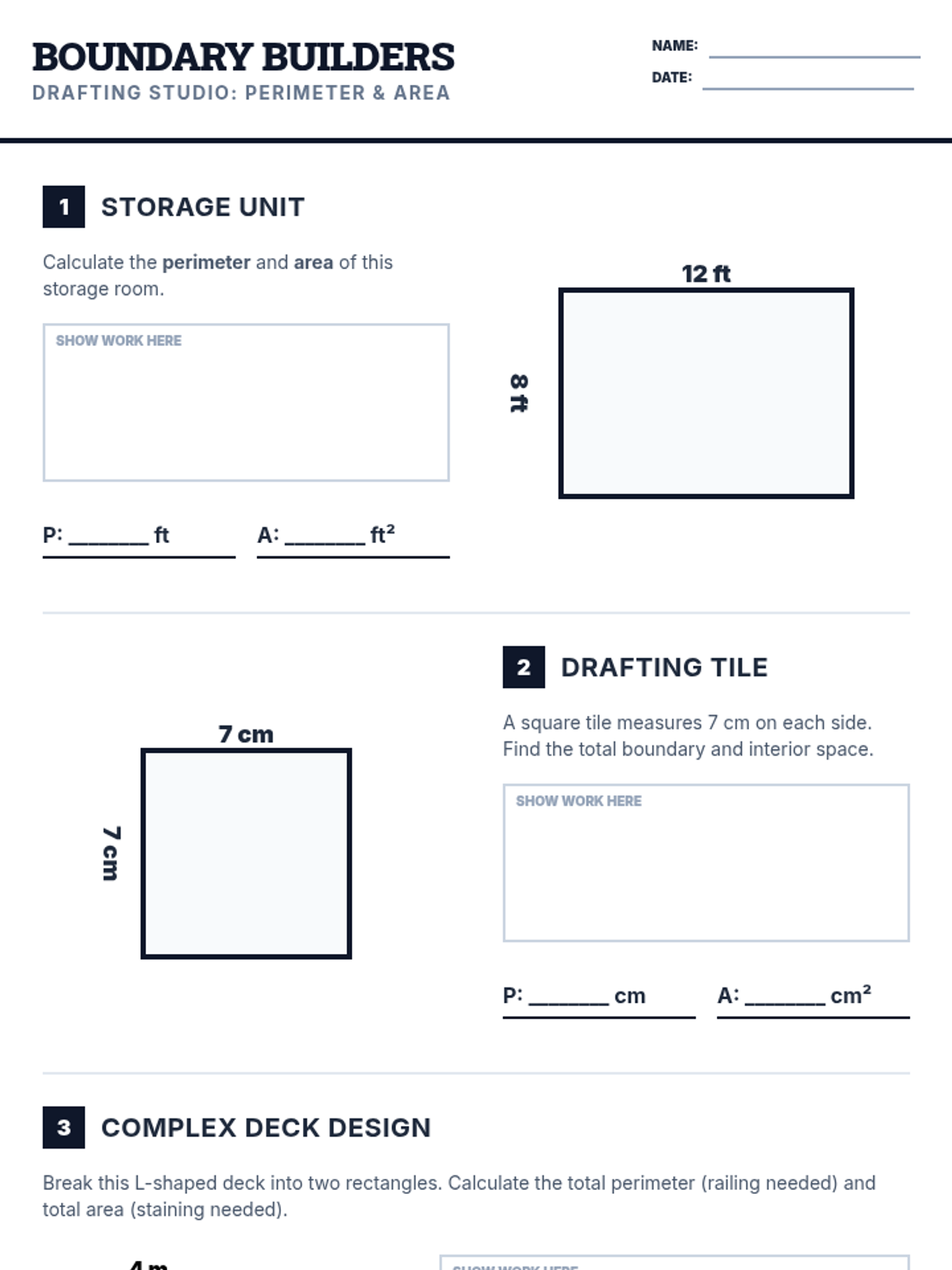
Students explore the relationships between perimeter and area through practical calculation and problem-solving on various polygons.
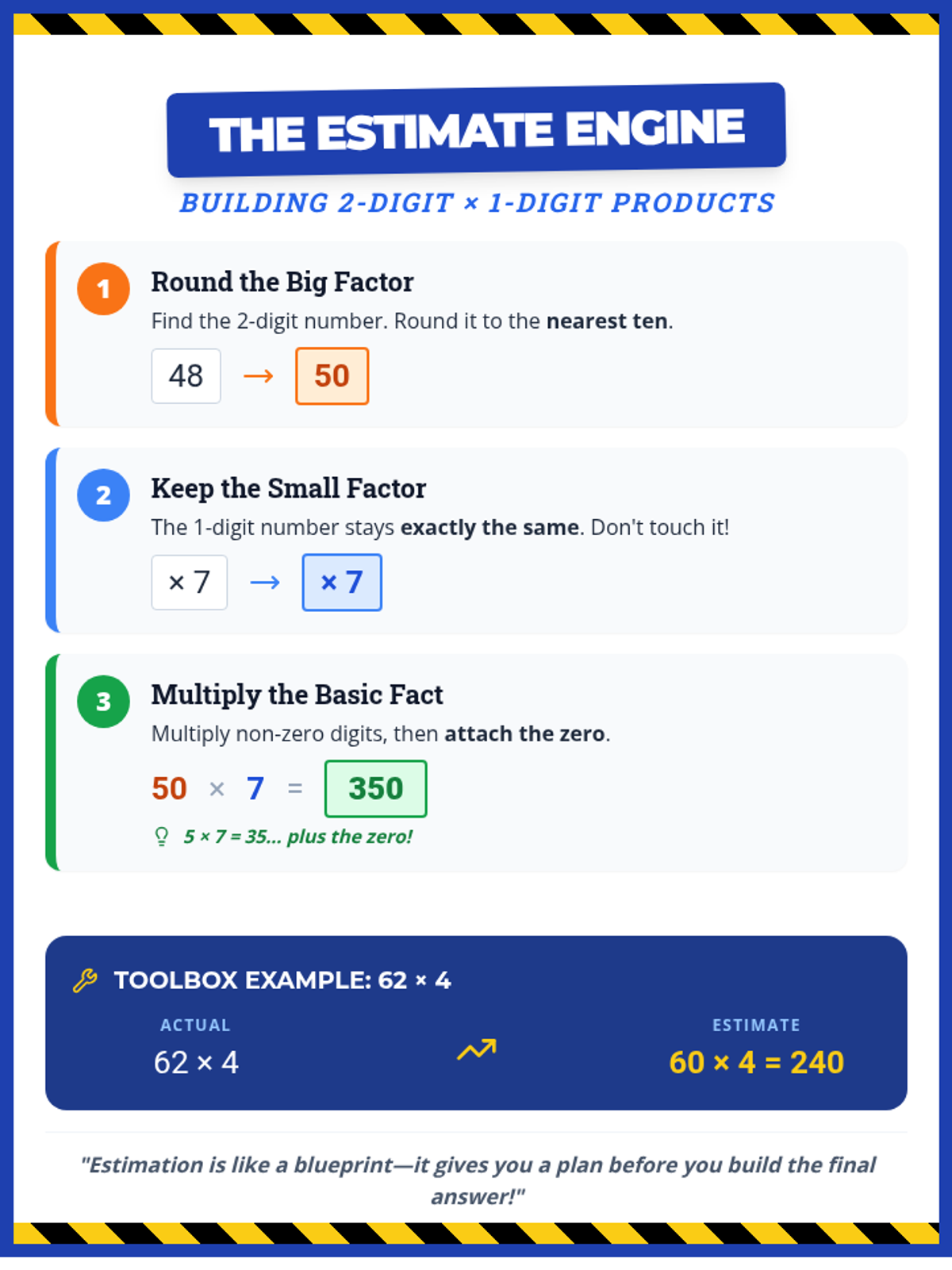
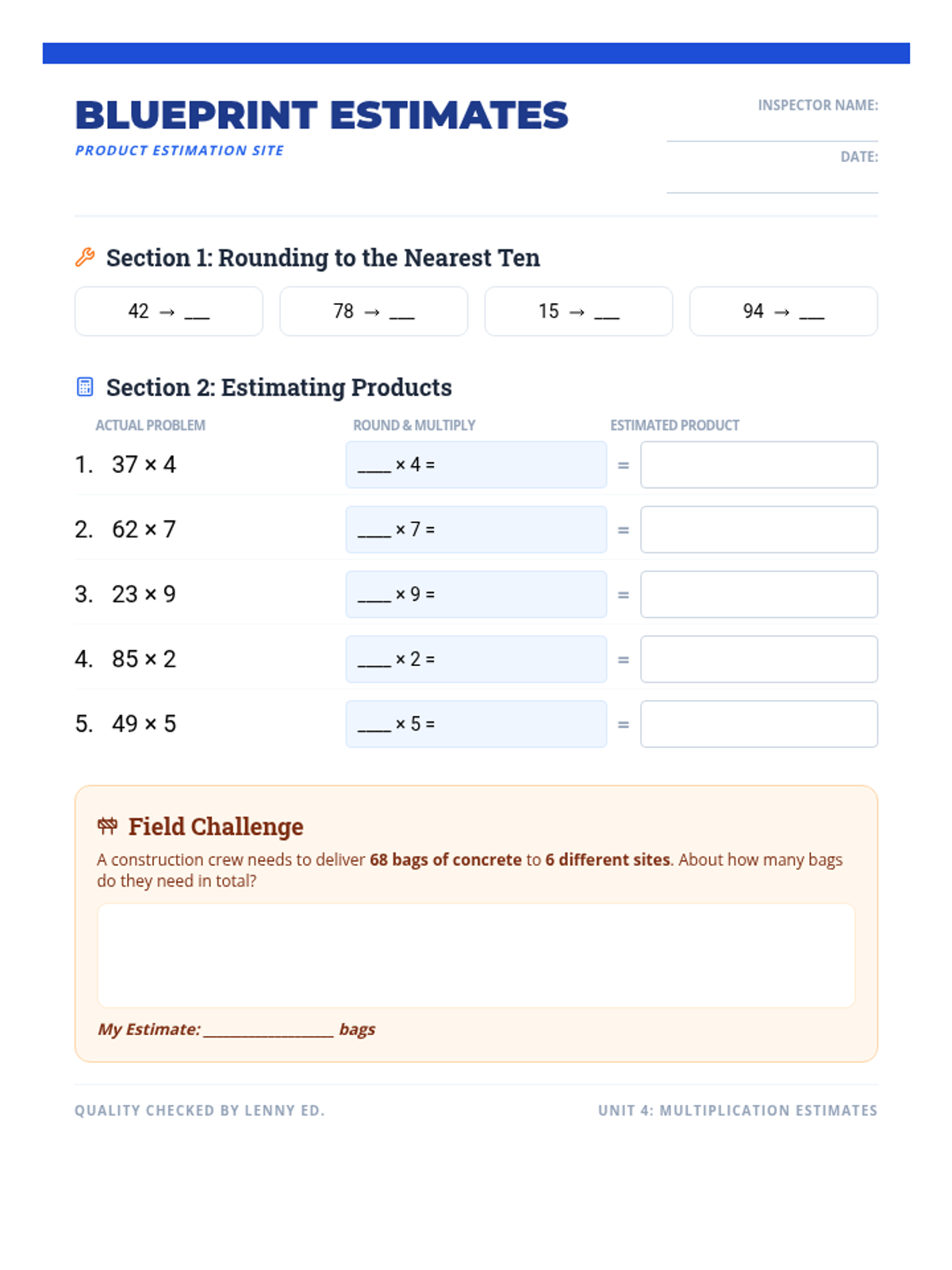
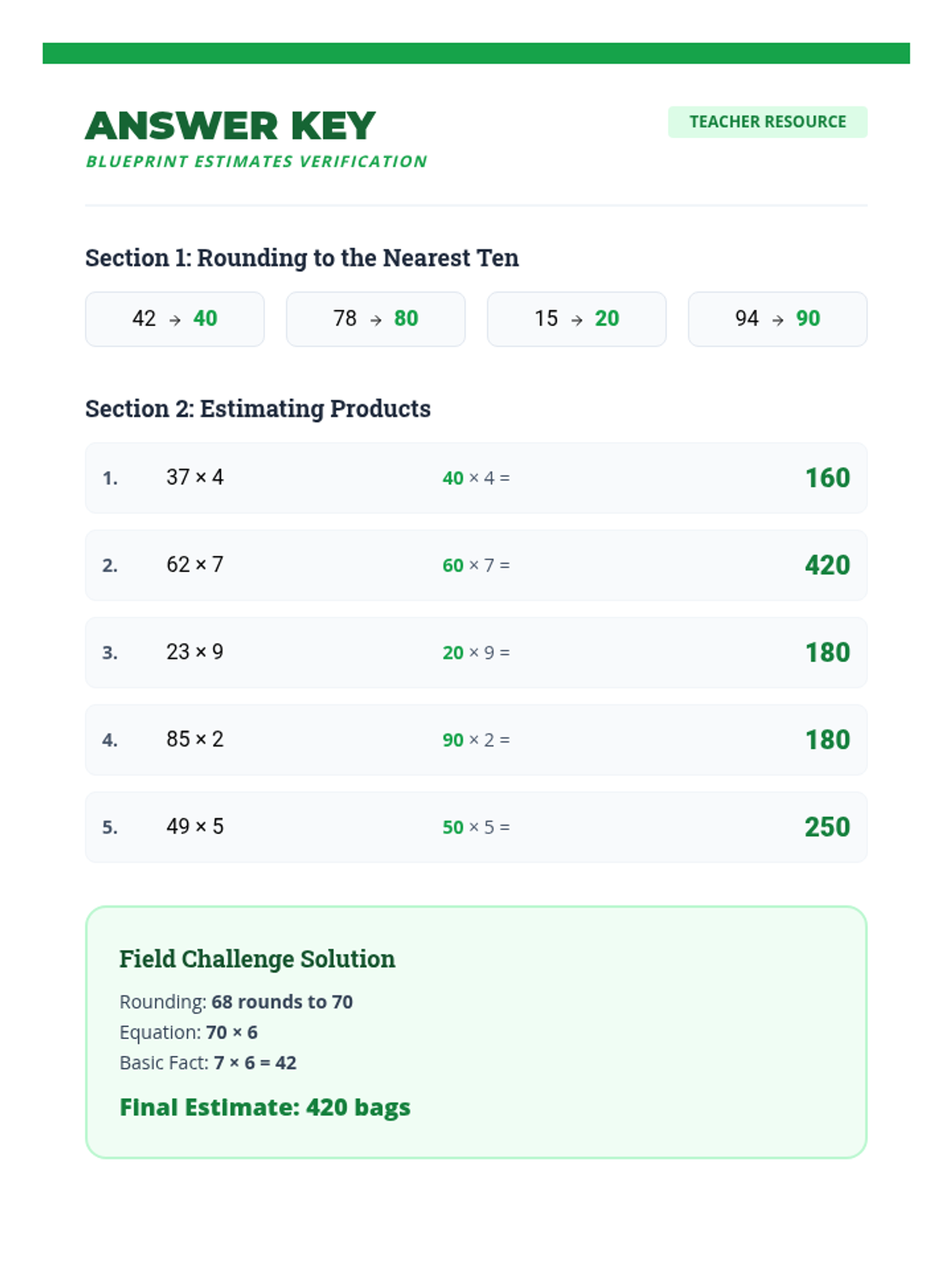
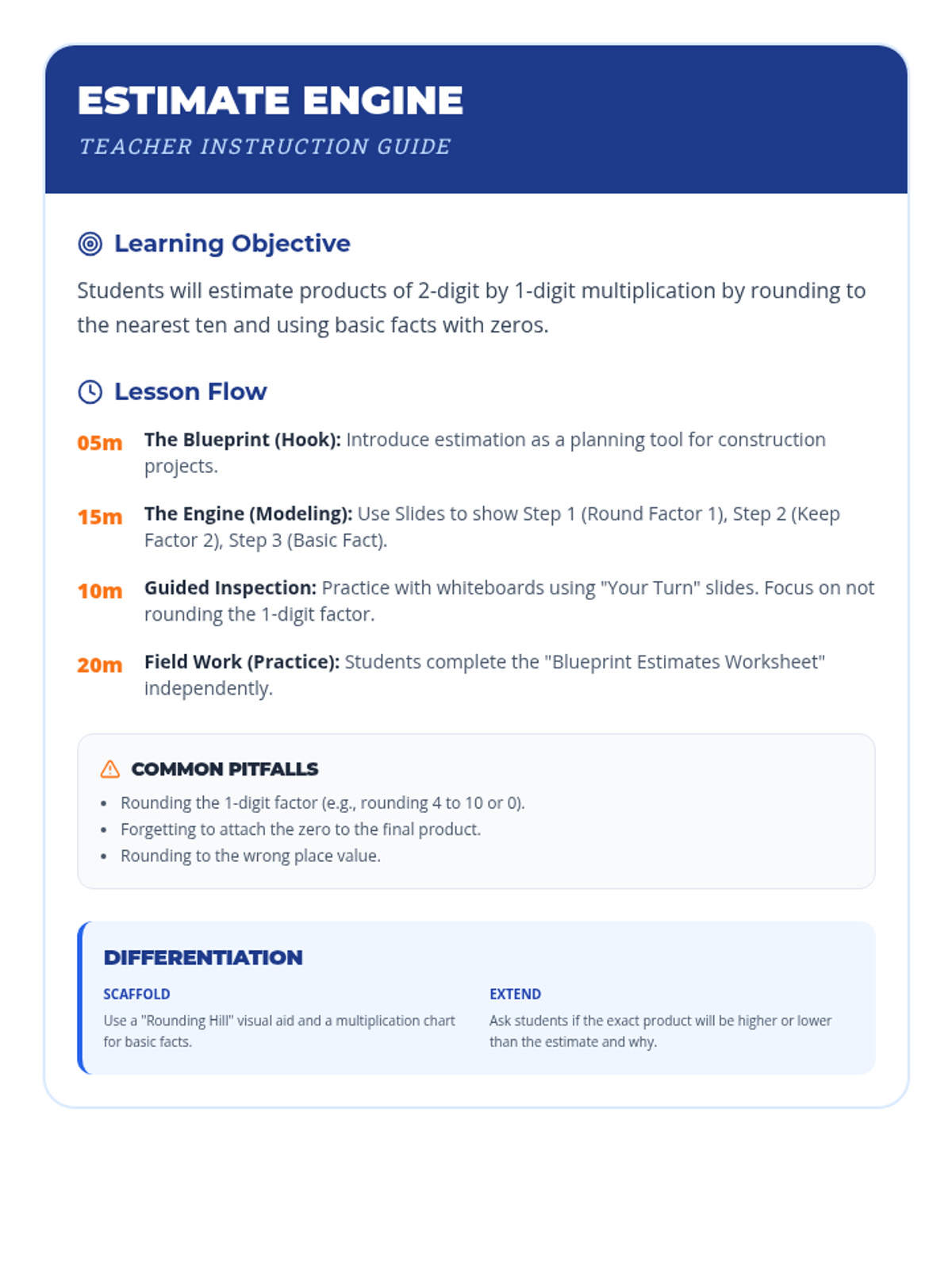
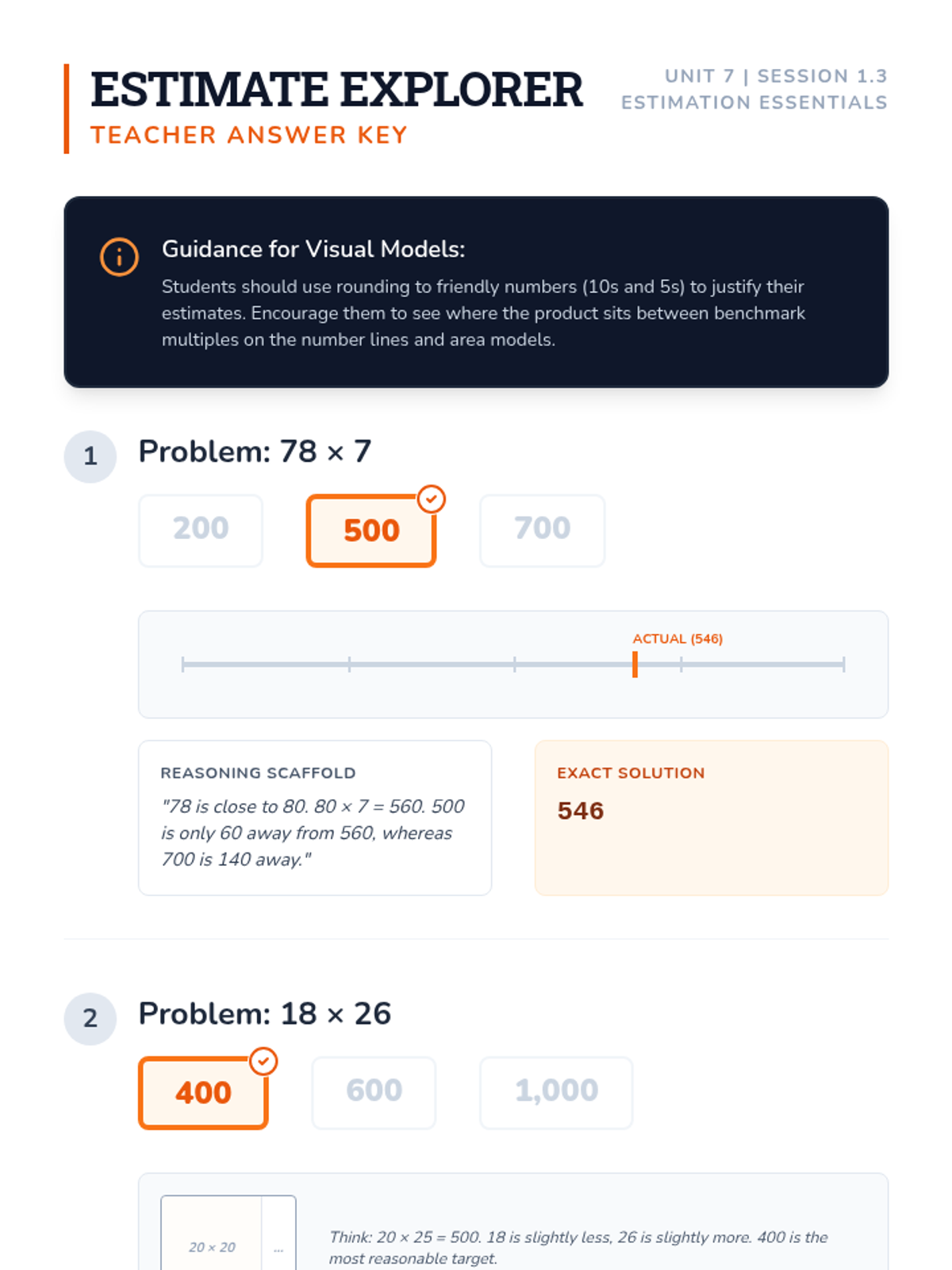
A comprehensive lesson on estimating products of 2-digit by 1-digit multiplication by rounding to the nearest ten, featuring a construction-themed approach to 'building' estimates.
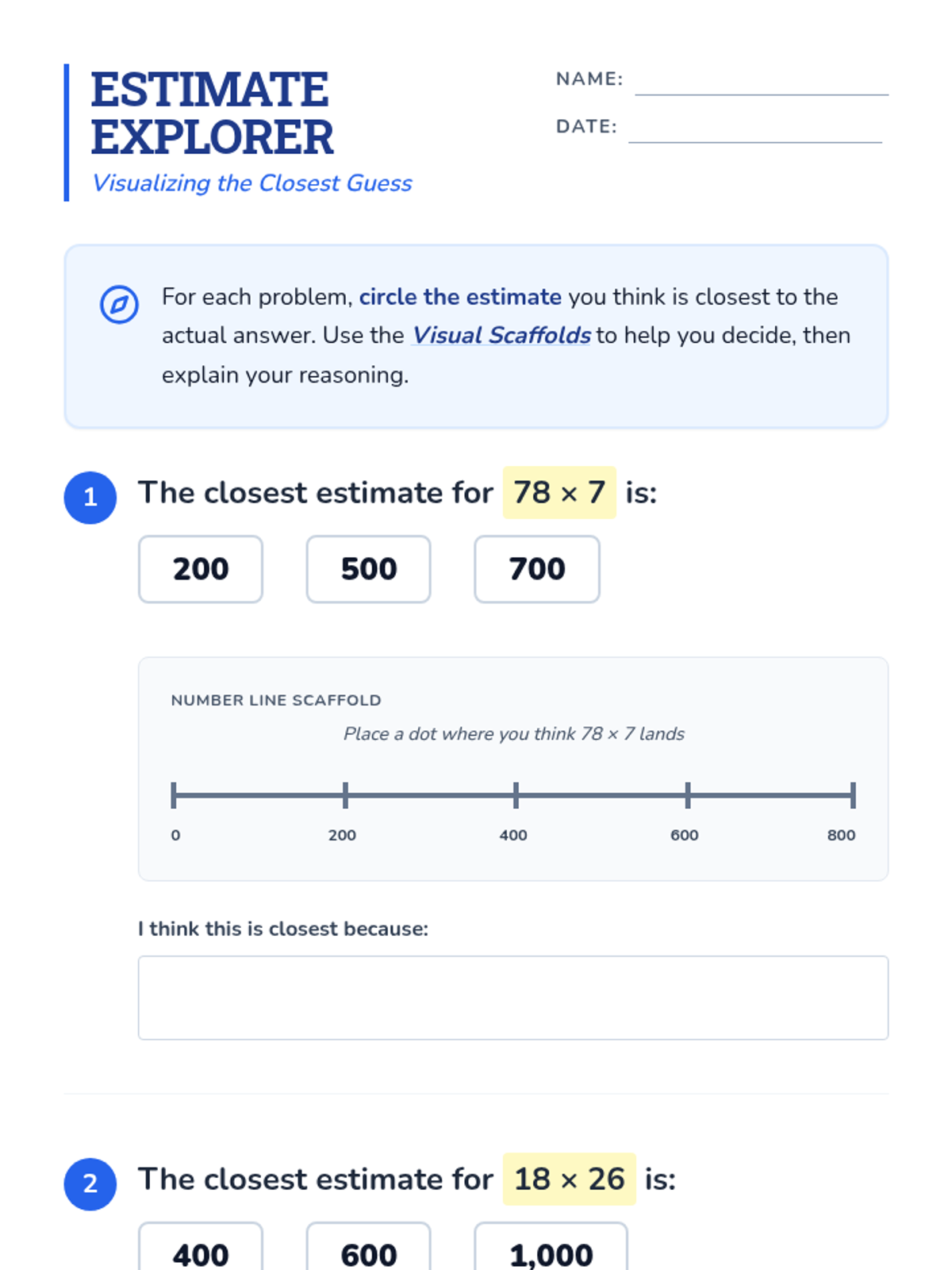
A lesson focused on developing estimation strategies for multiplication using visual models like number lines and area models to verify reasonableness.
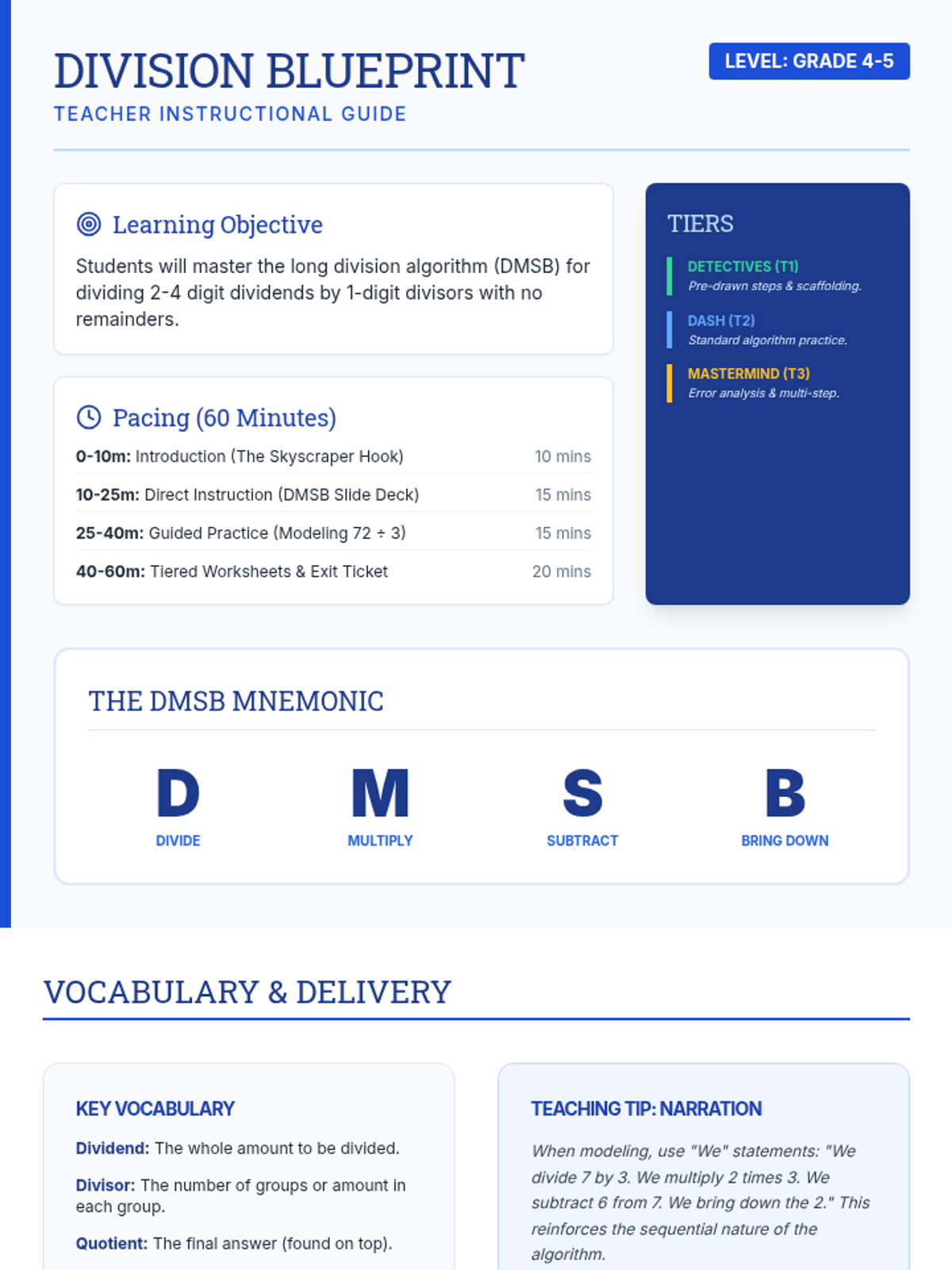
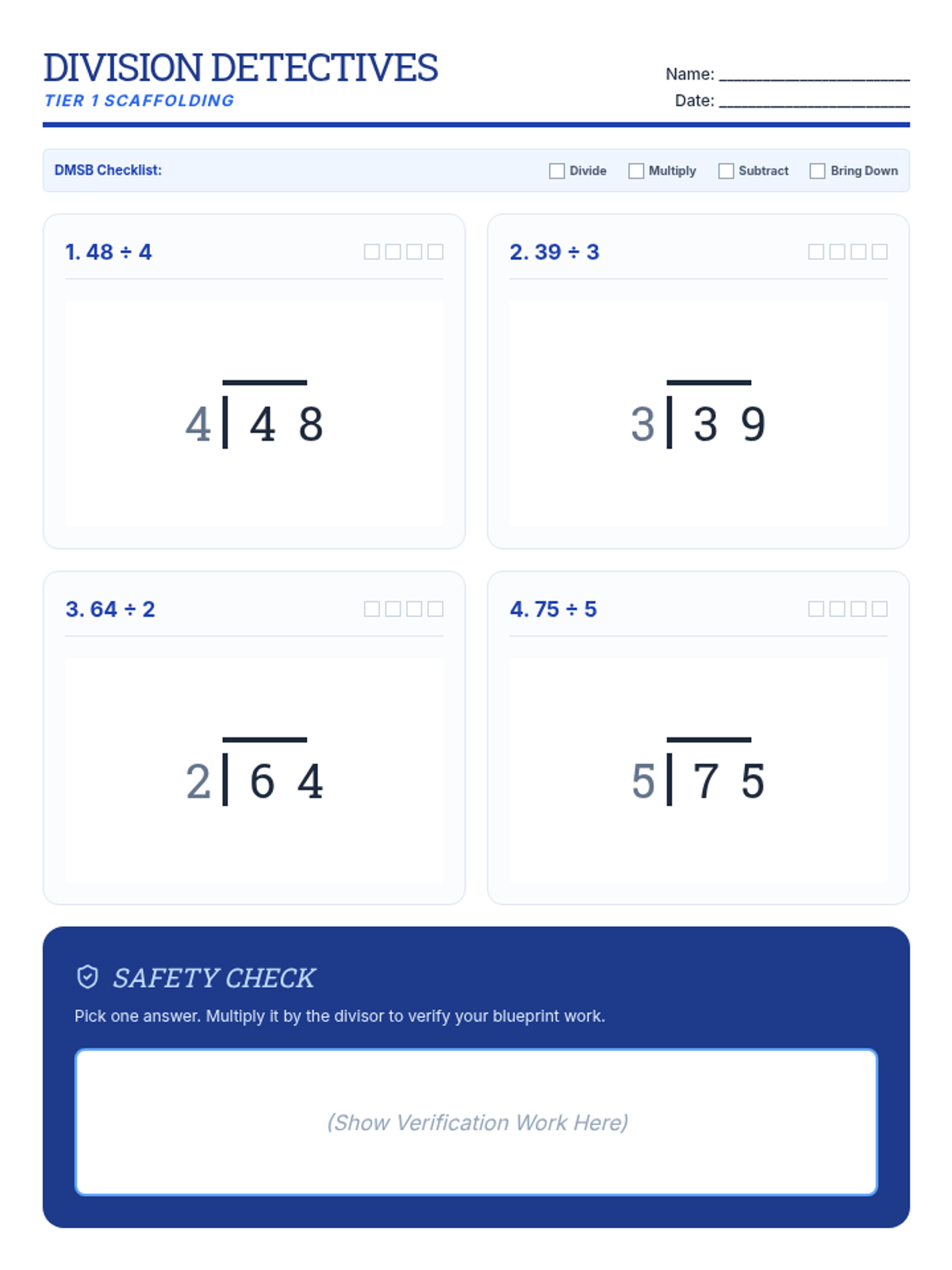
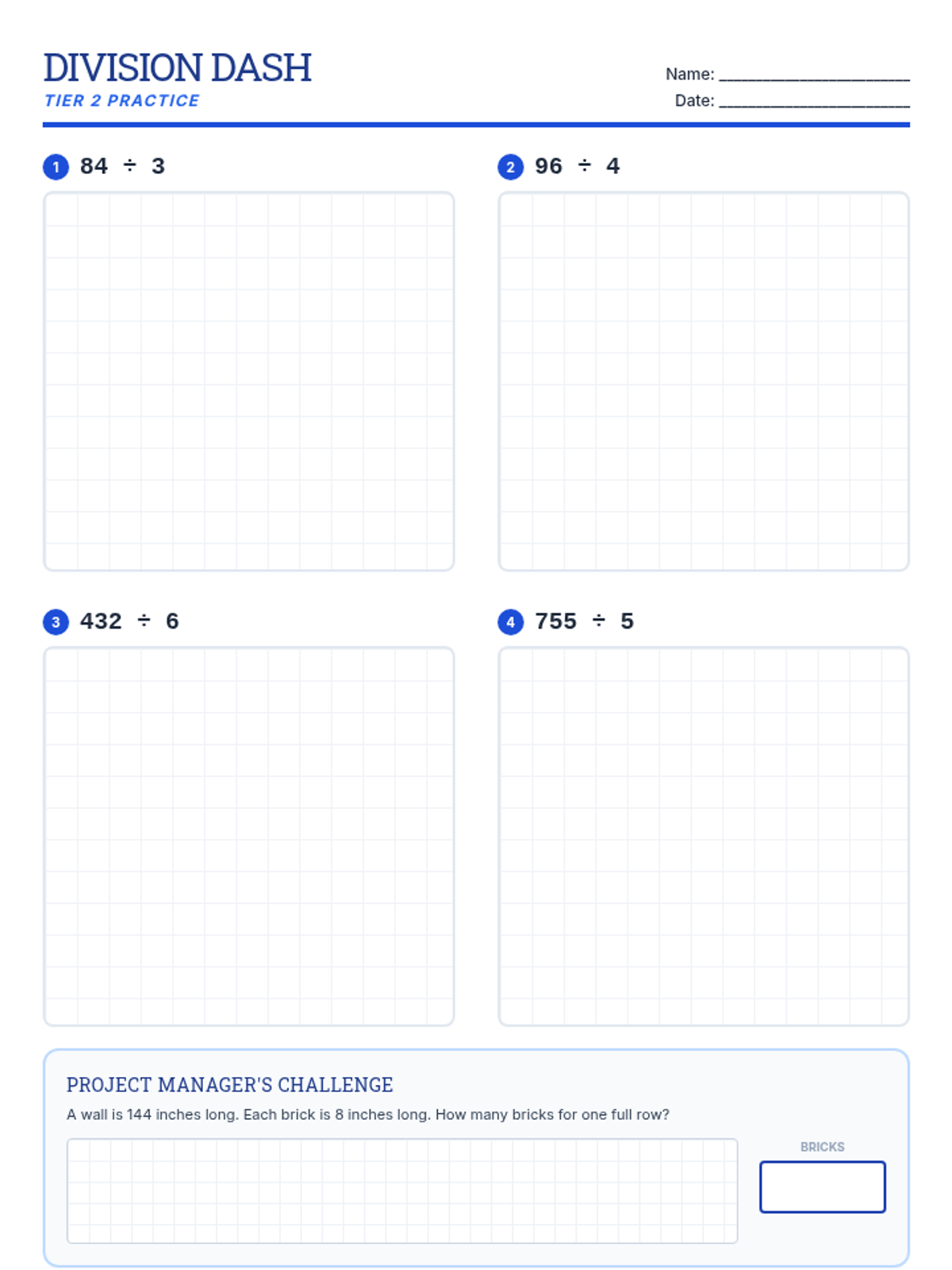
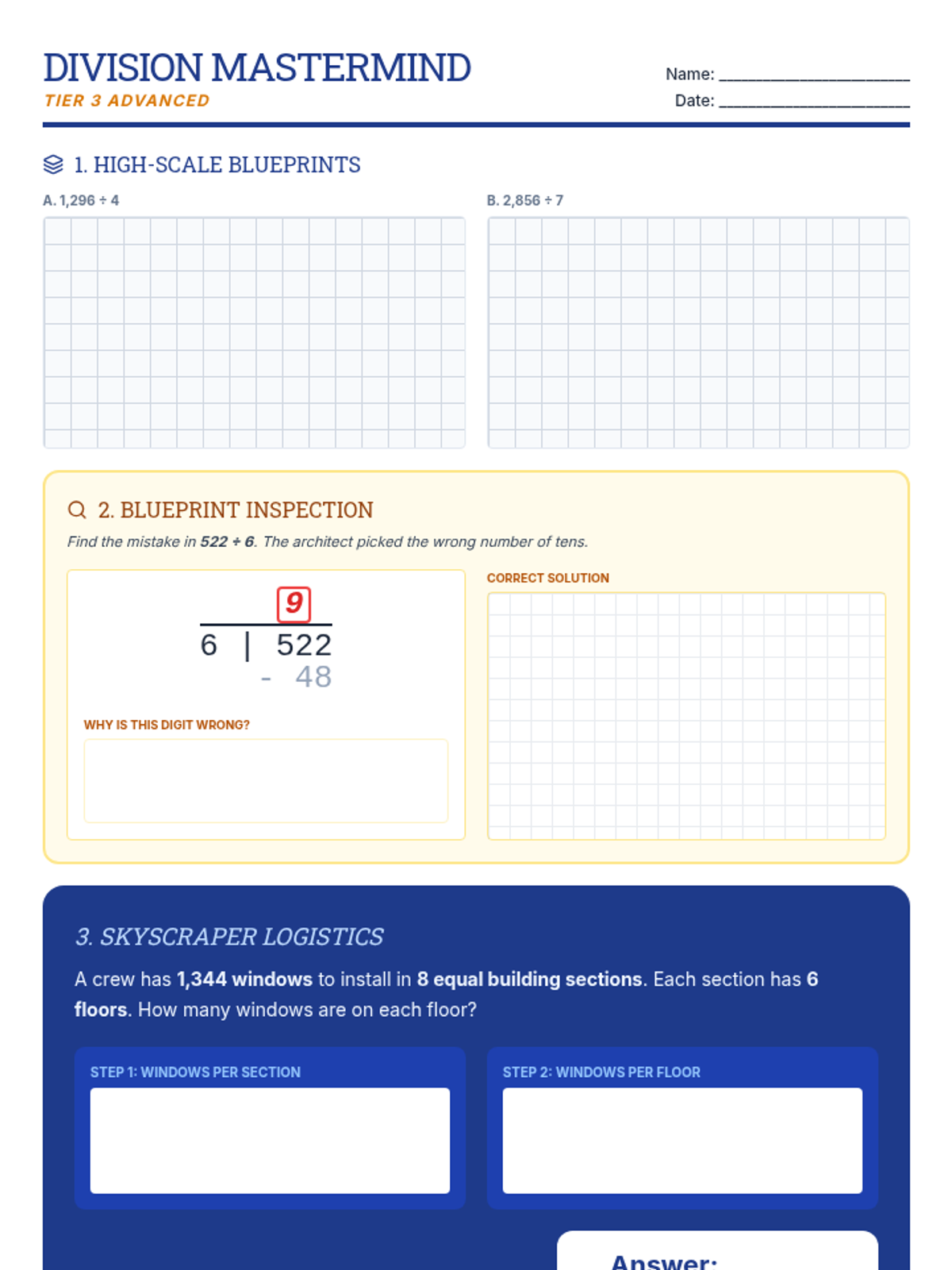
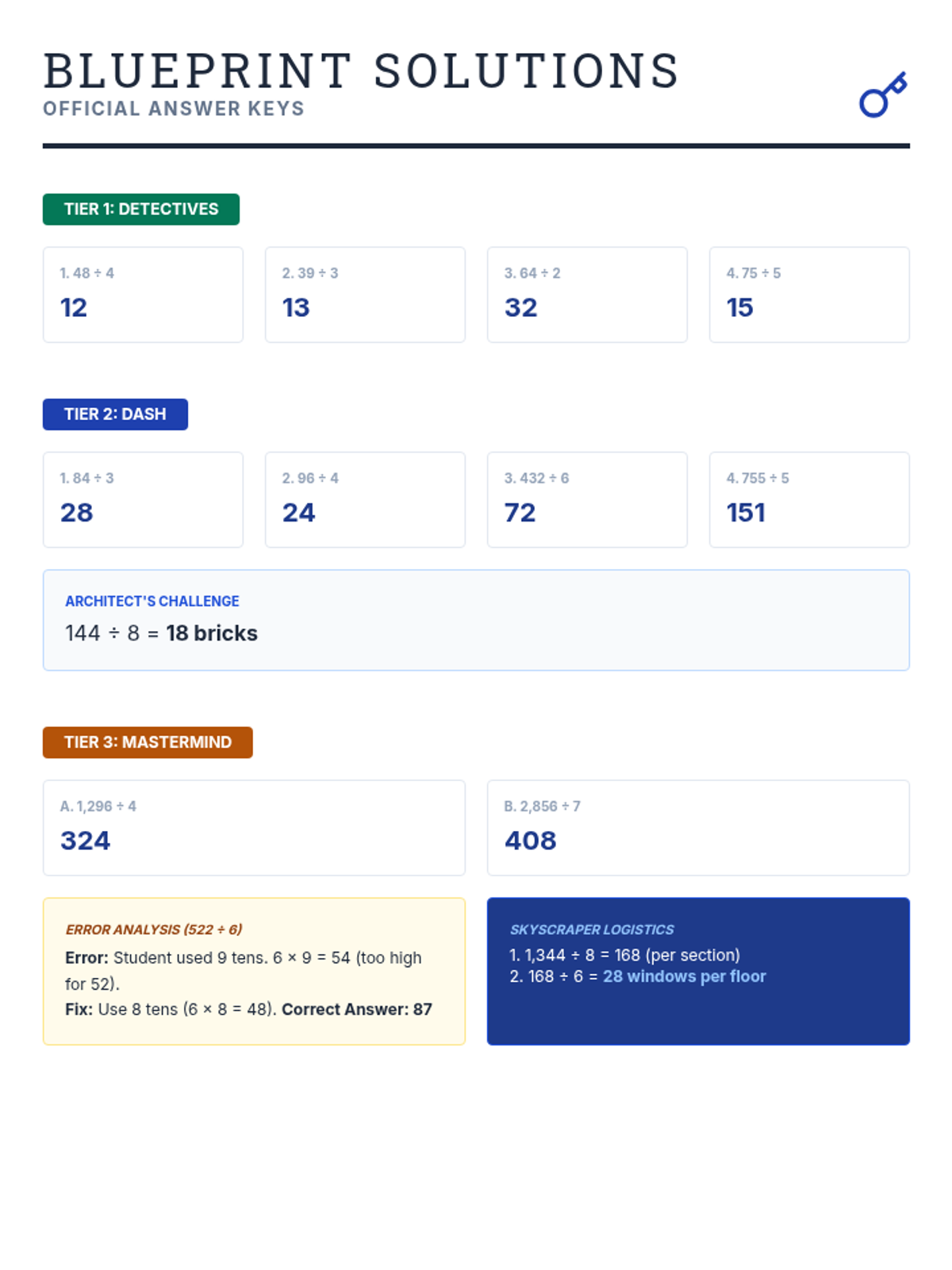
A comprehensive lesson on long division with no remainders, using the 'Divide, Multiply, Subtract, Bring Down' (DMSB) method. Includes scaffolded instruction, visual aids, and tiered practice materials to support all learners.
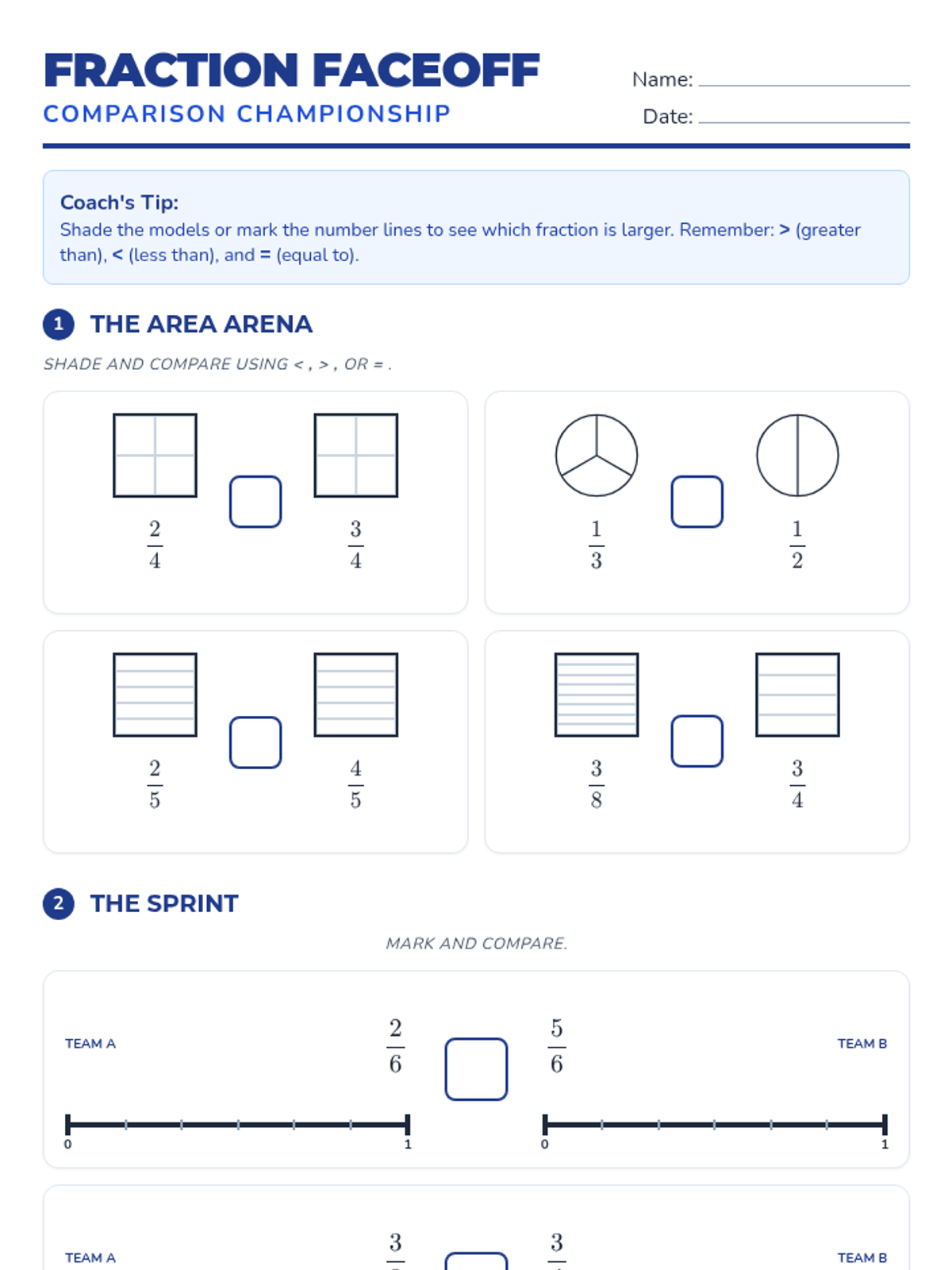
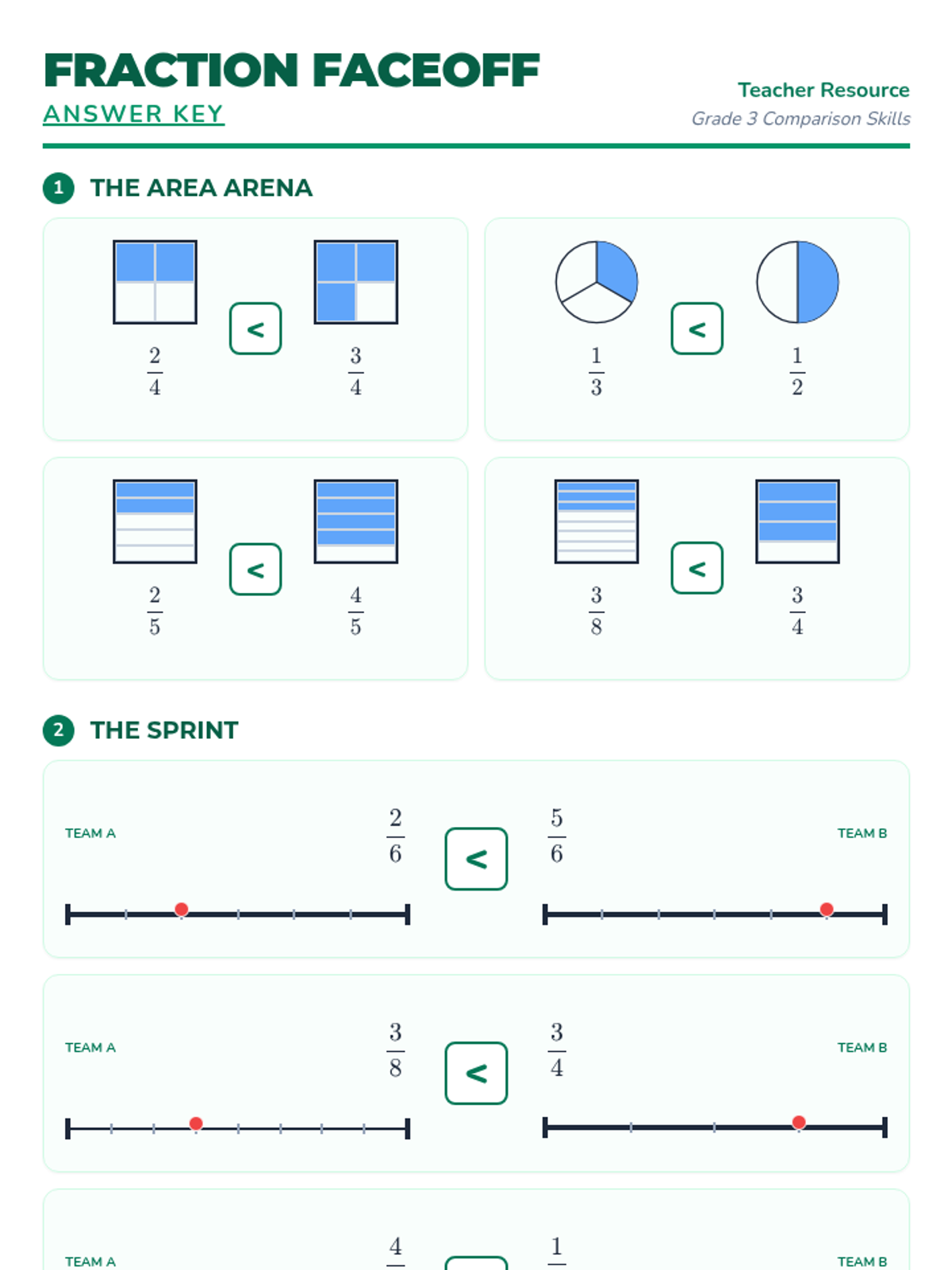
A lesson focused on comparing fractions with the same denominator or the same numerator using visual area models and number lines. Students will develop a conceptual understanding of fraction size through visual representation.
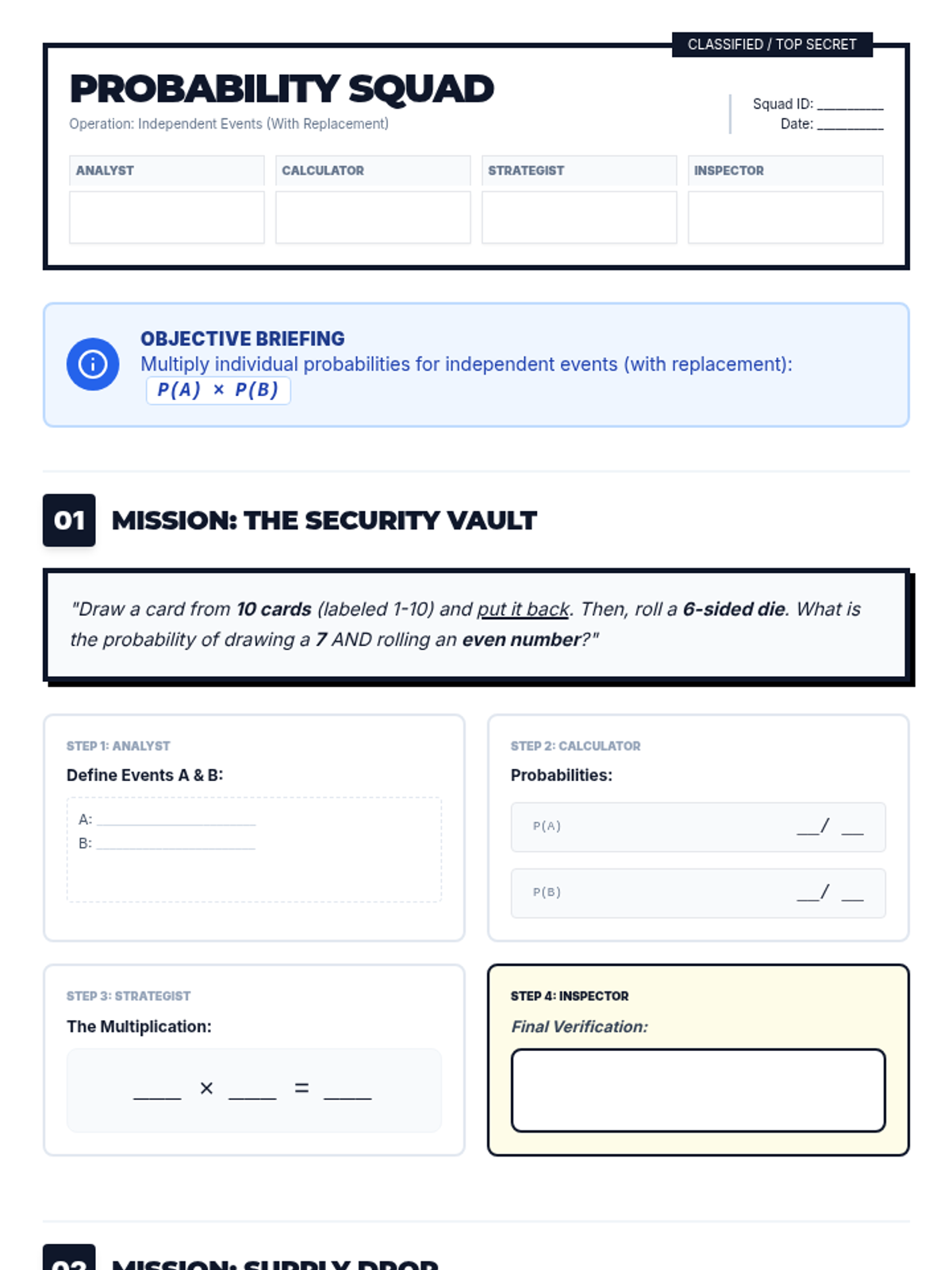
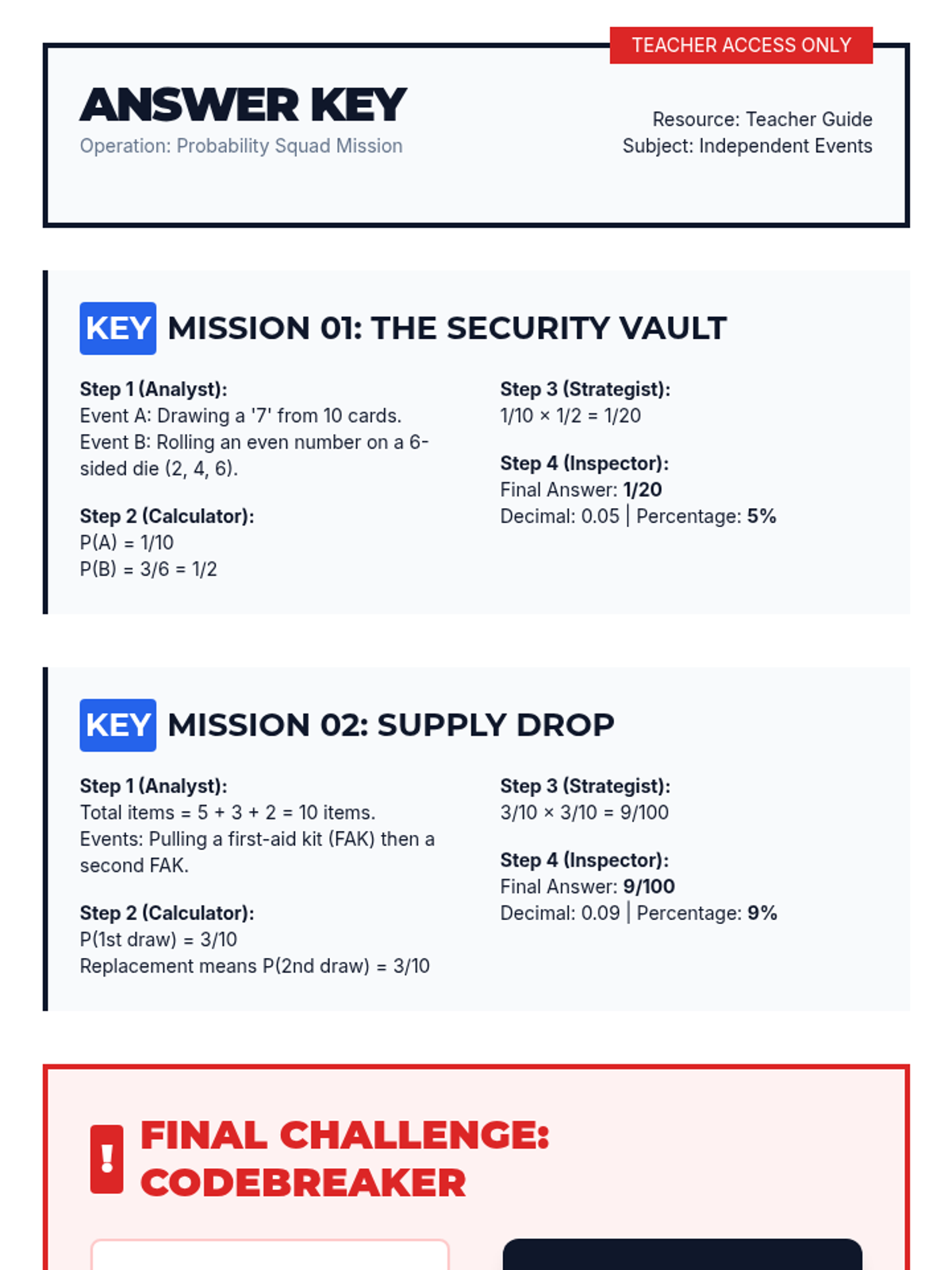
A collaborative lesson where students work in specialized roles to master compound probability of independent events with replacement through step-by-step mission scenarios.
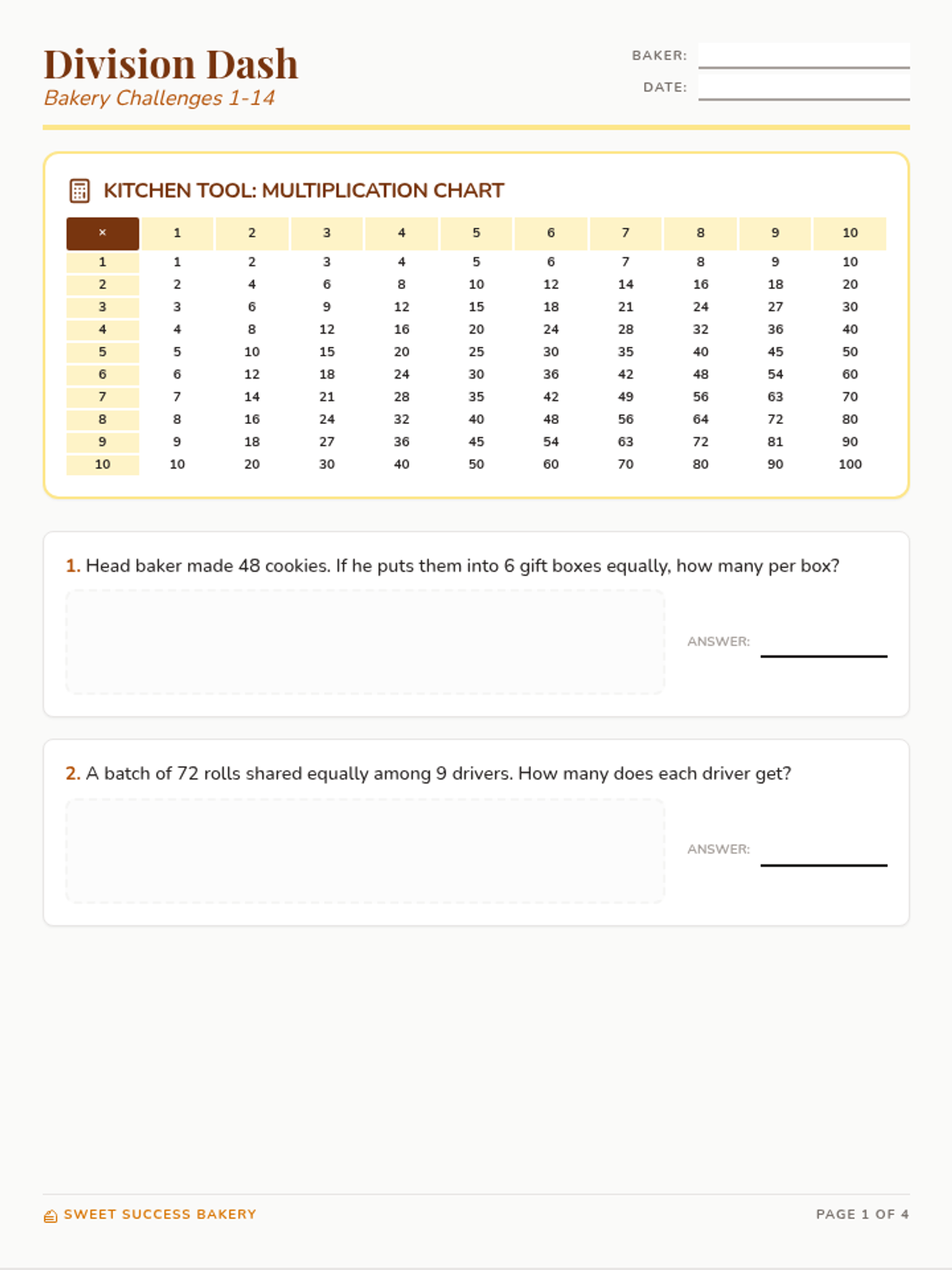
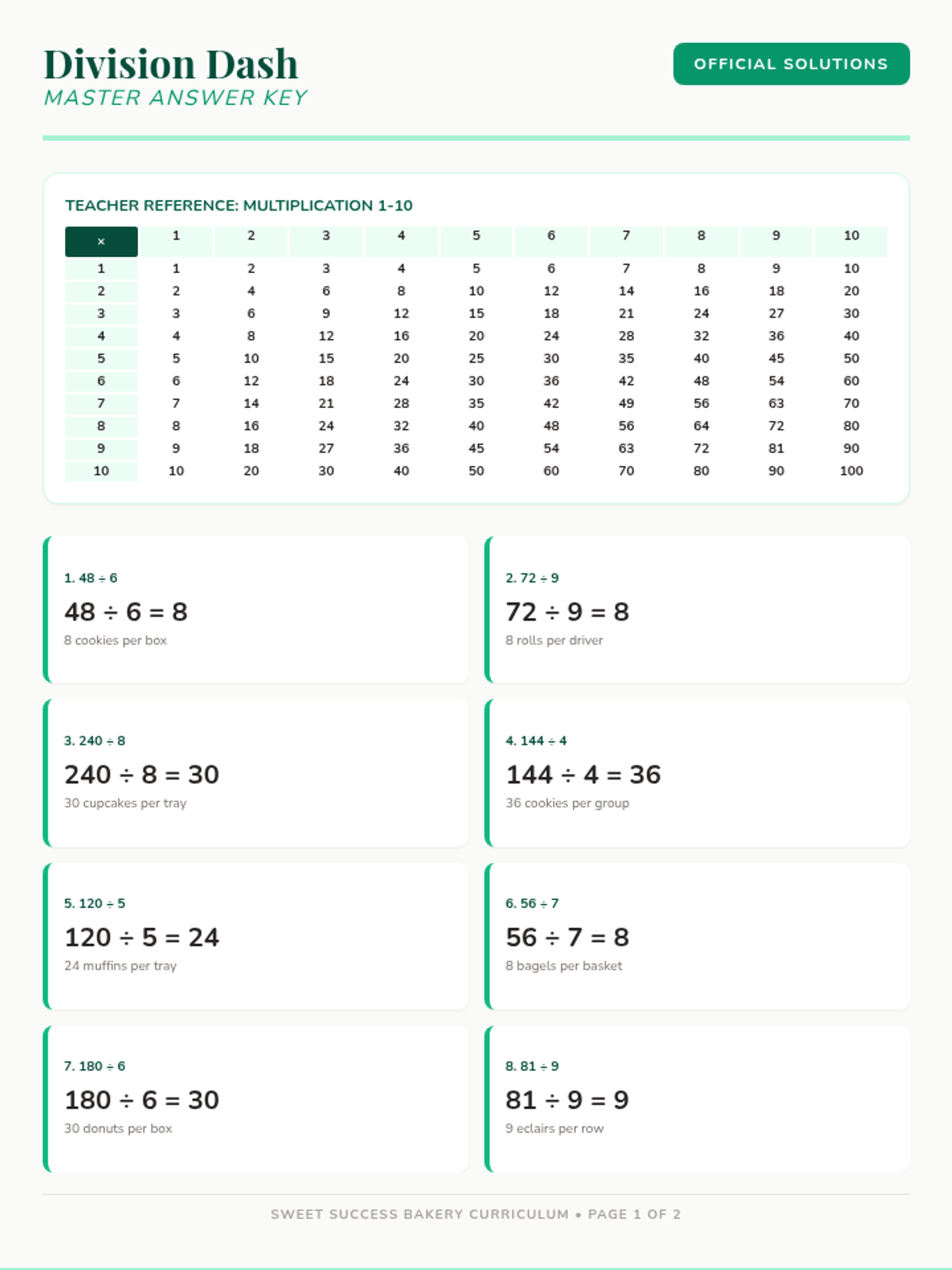
Students solve single-step division word problems using basic facts and larger numbers with 1-digit divisors, supported by a multiplication chart reference.
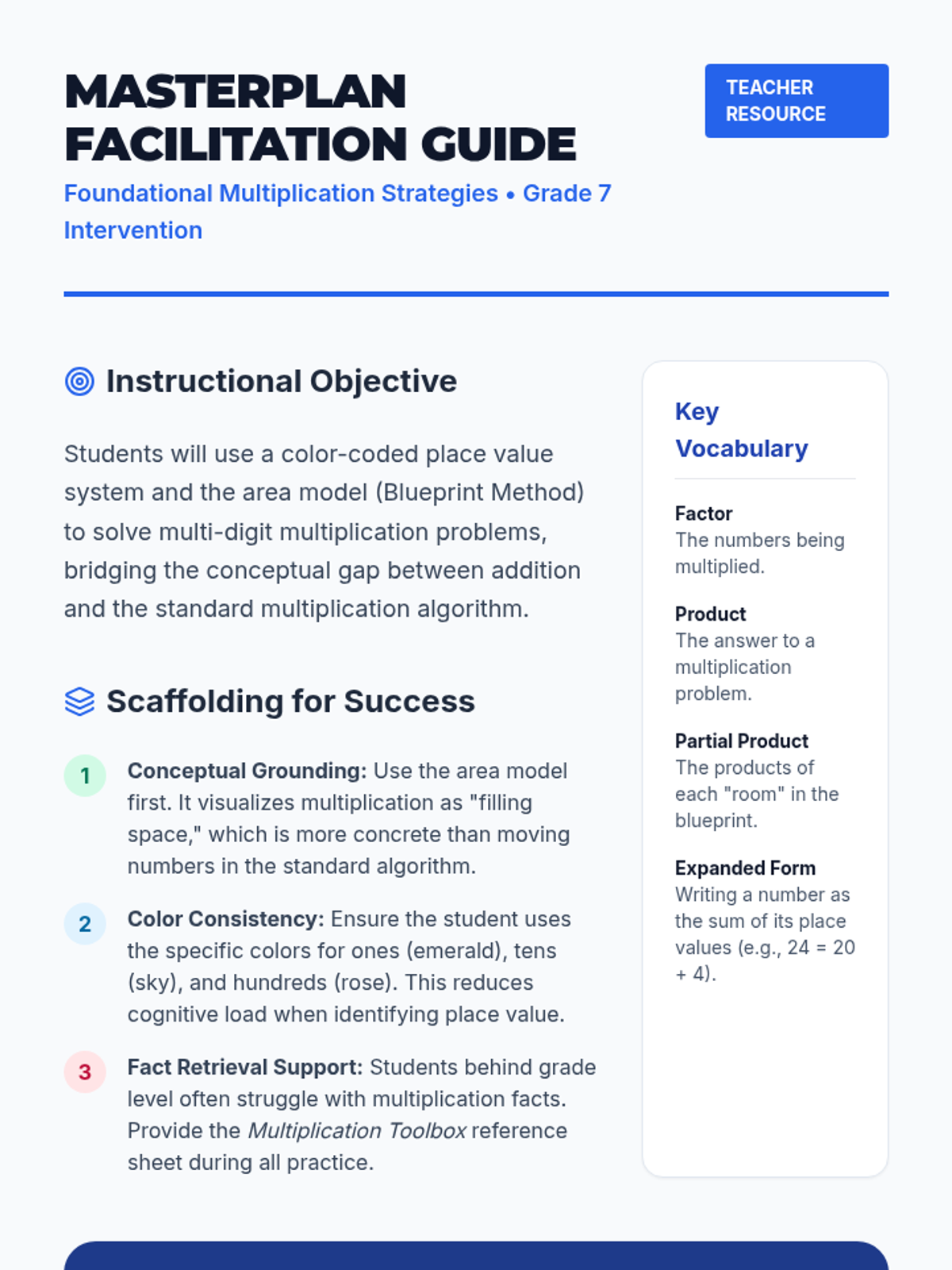
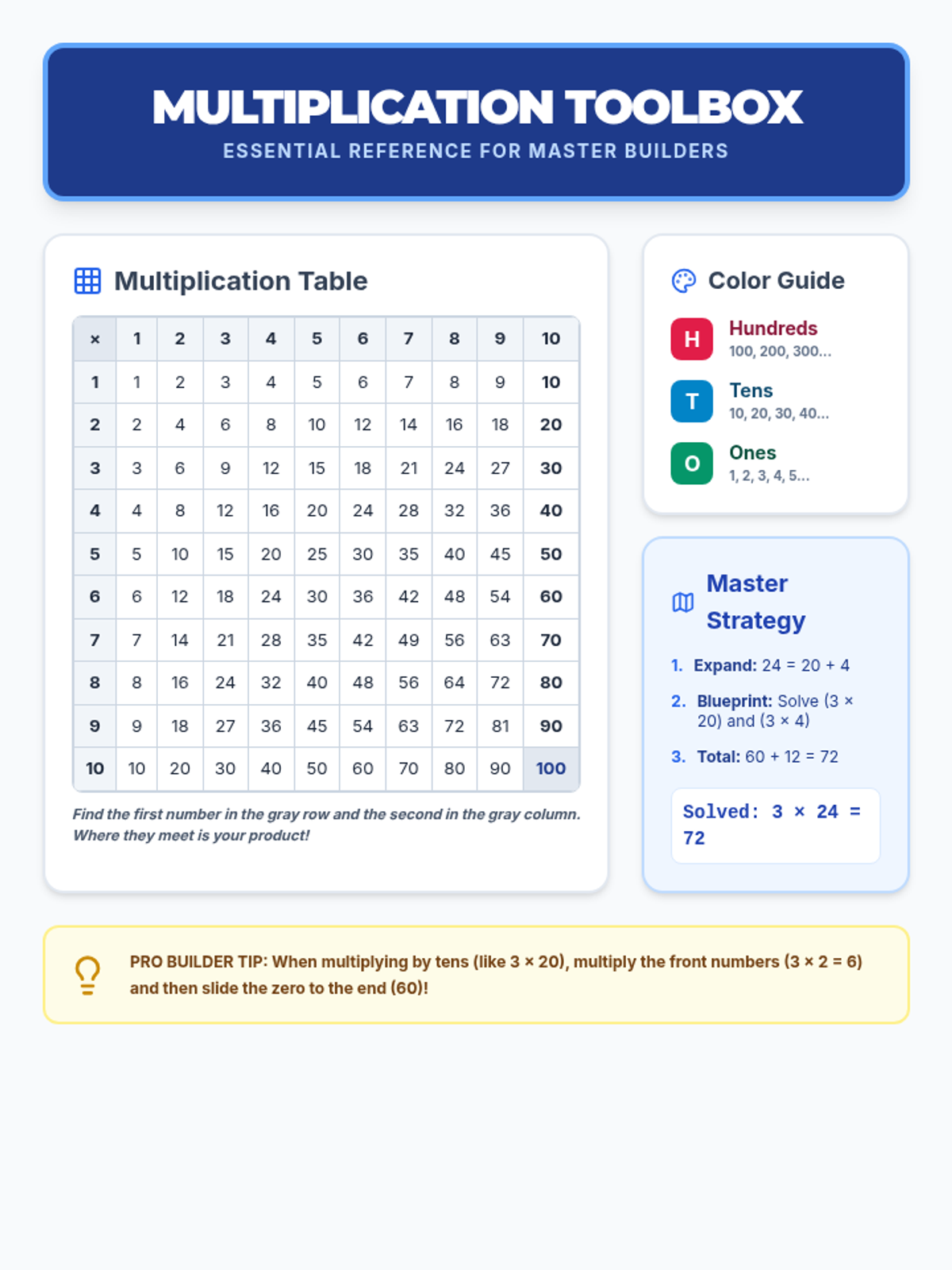
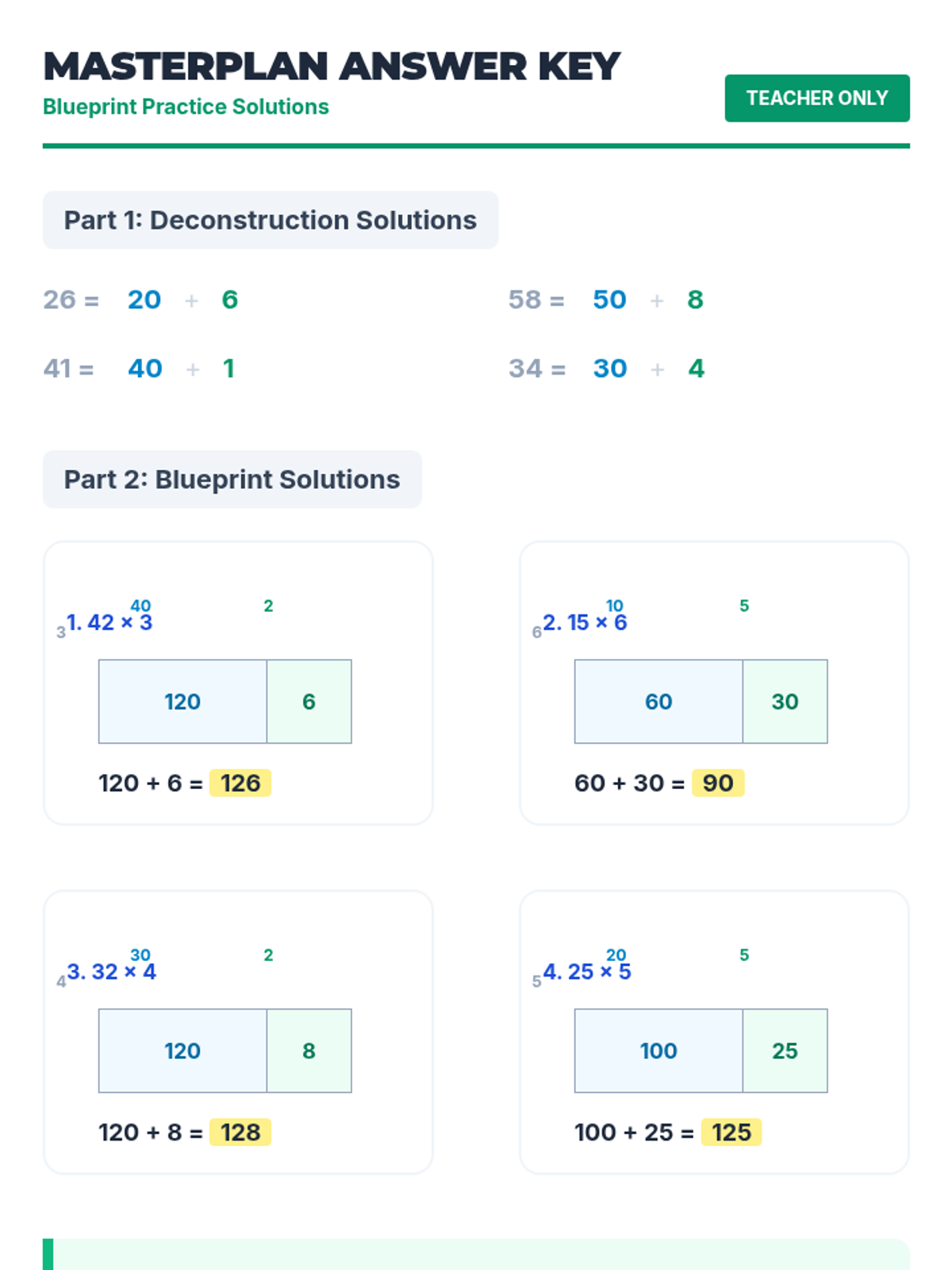
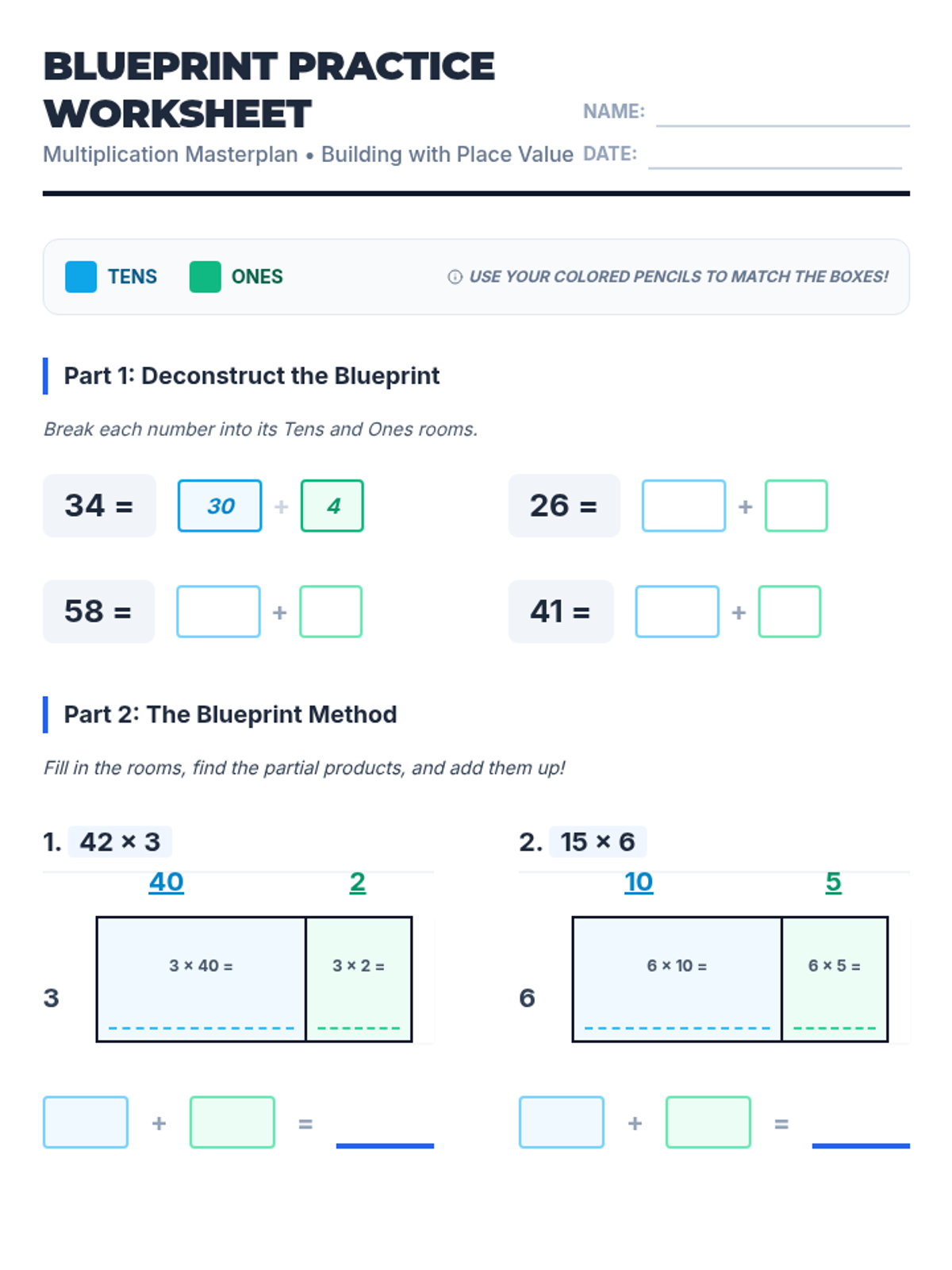
A foundational lesson on multi-digit multiplication using color-coded place value strategies and the area model to support students working significantly below grade level.
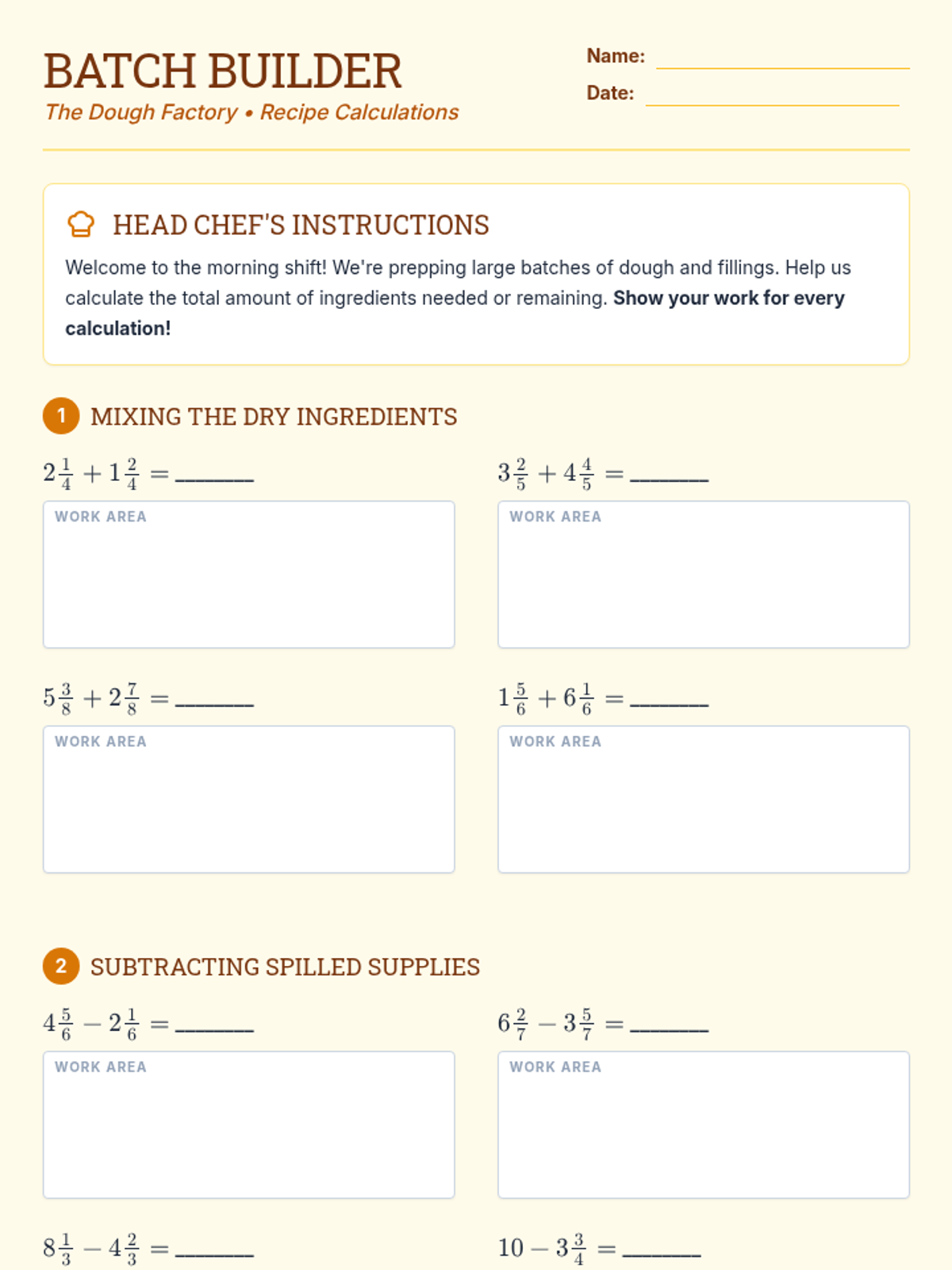
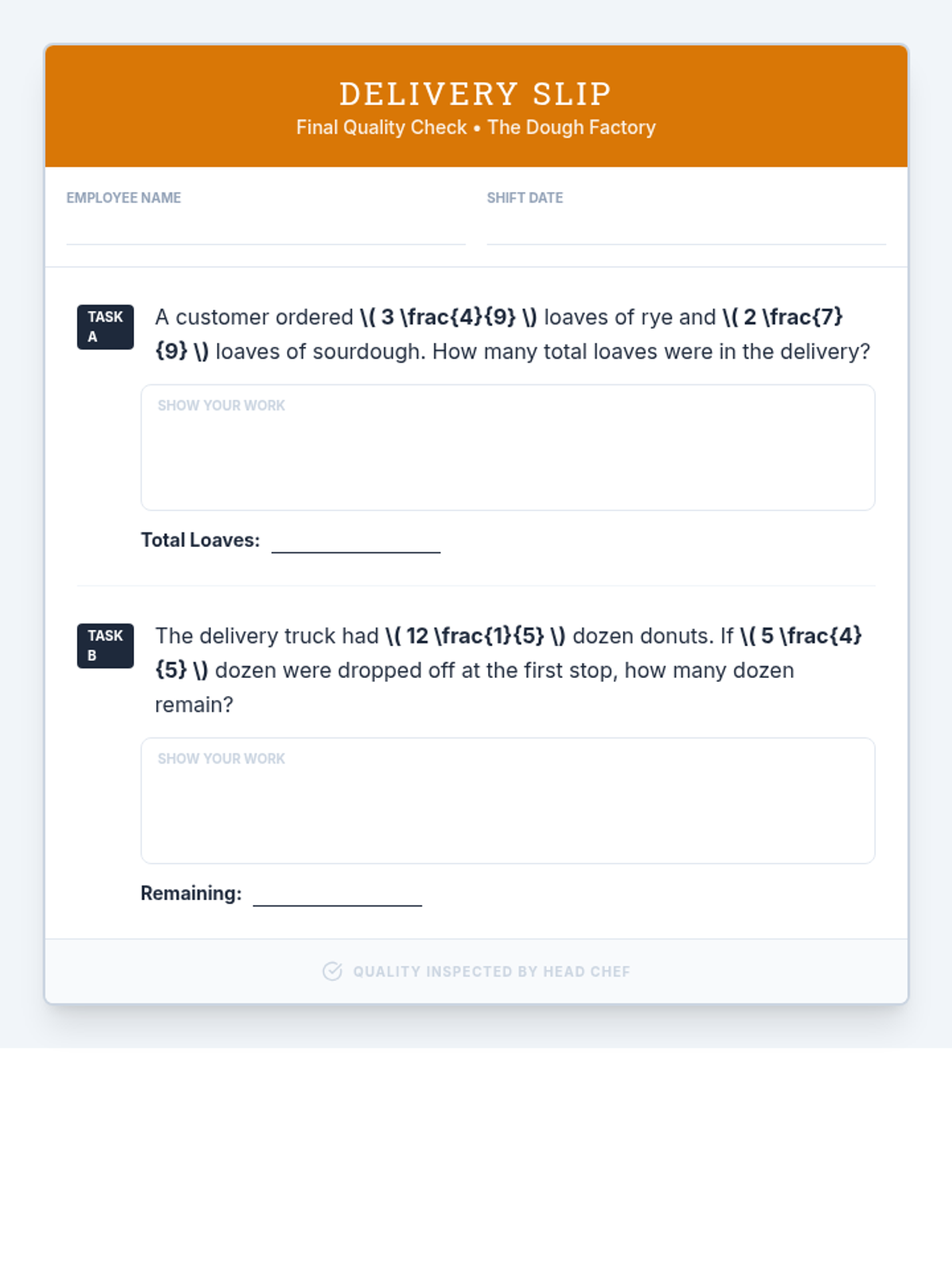
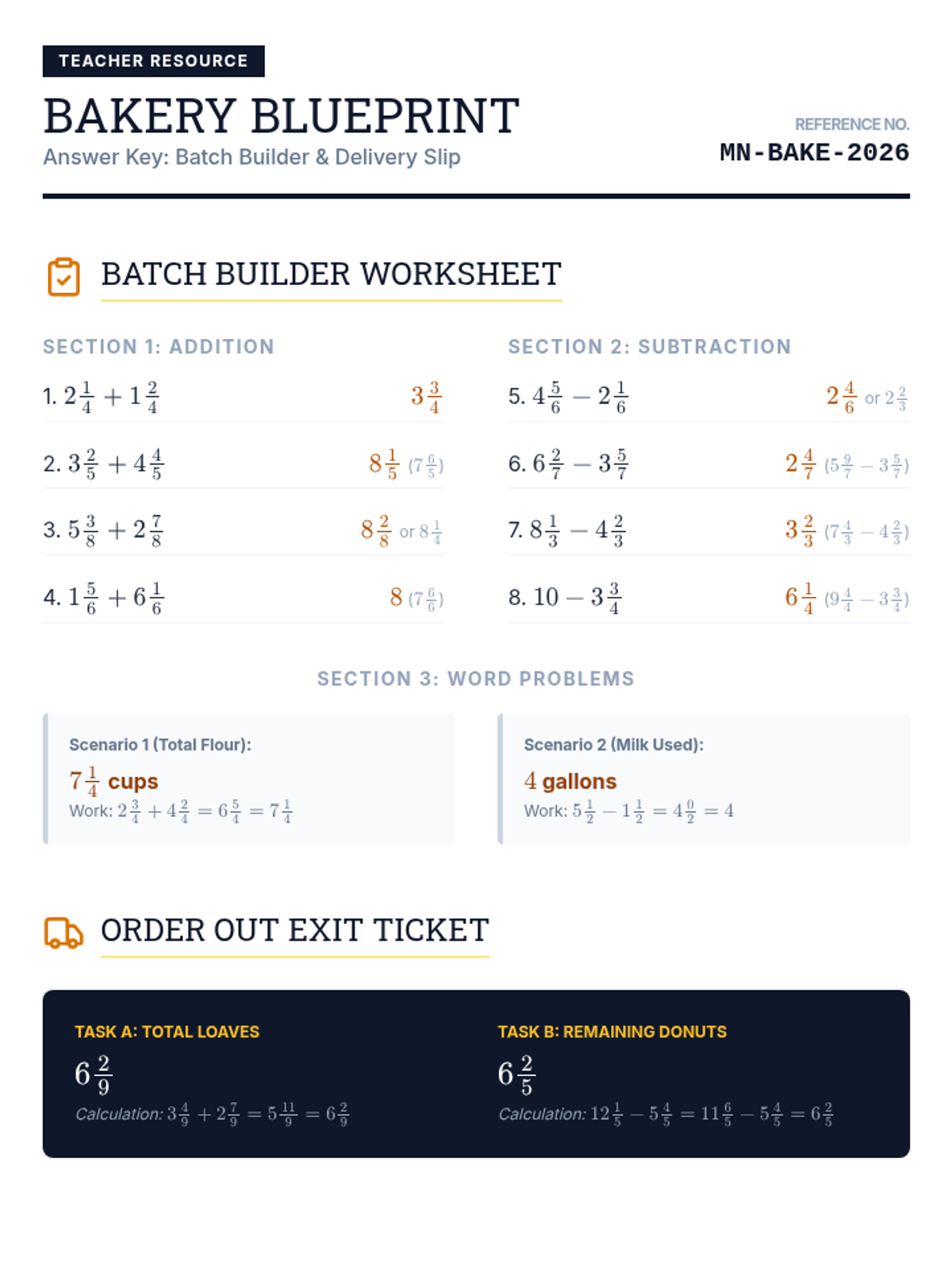
A lesson focused on adding and subtracting mixed numbers through the lens of a busy bakery, featuring word problems and computational practice.
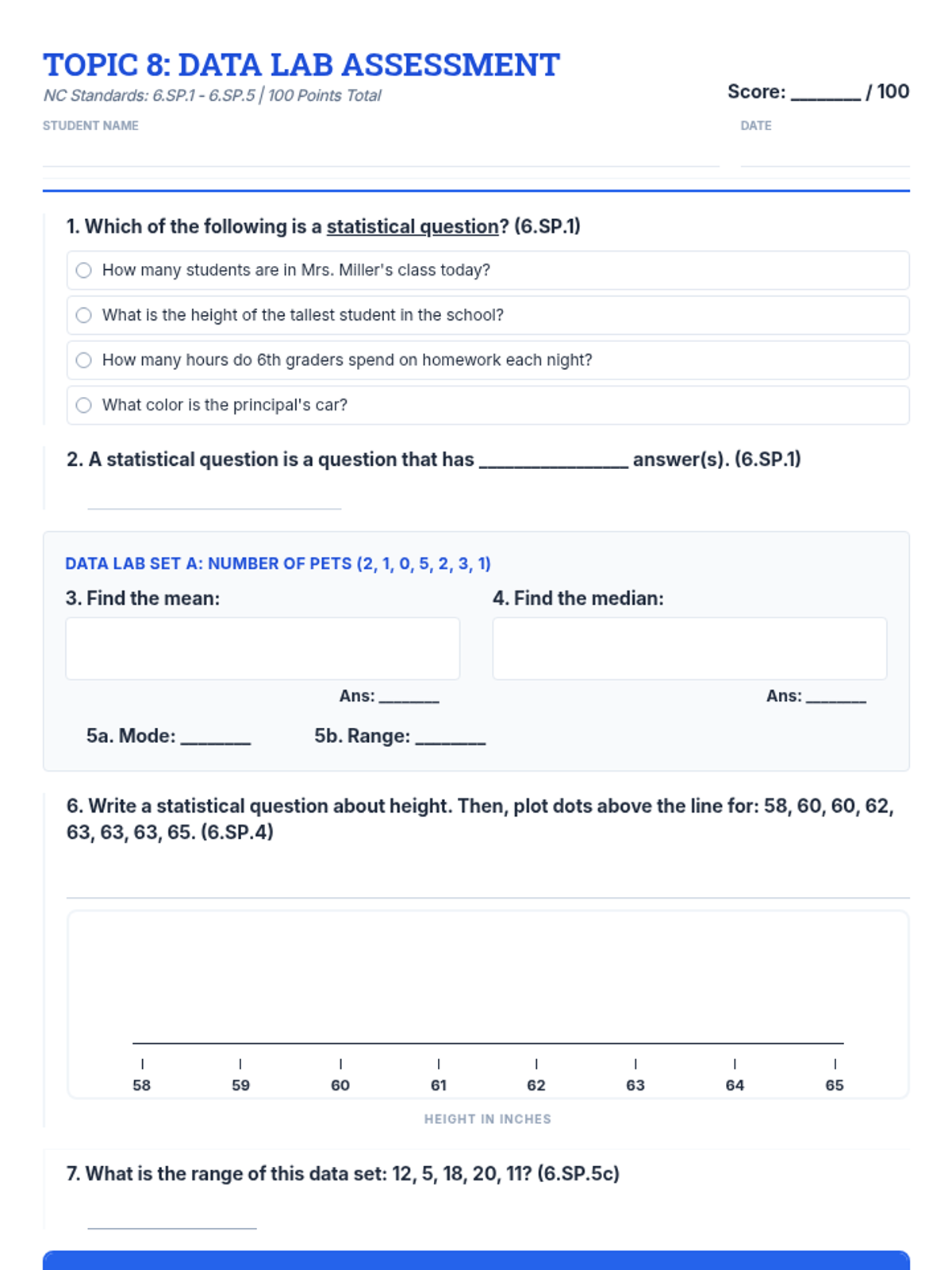
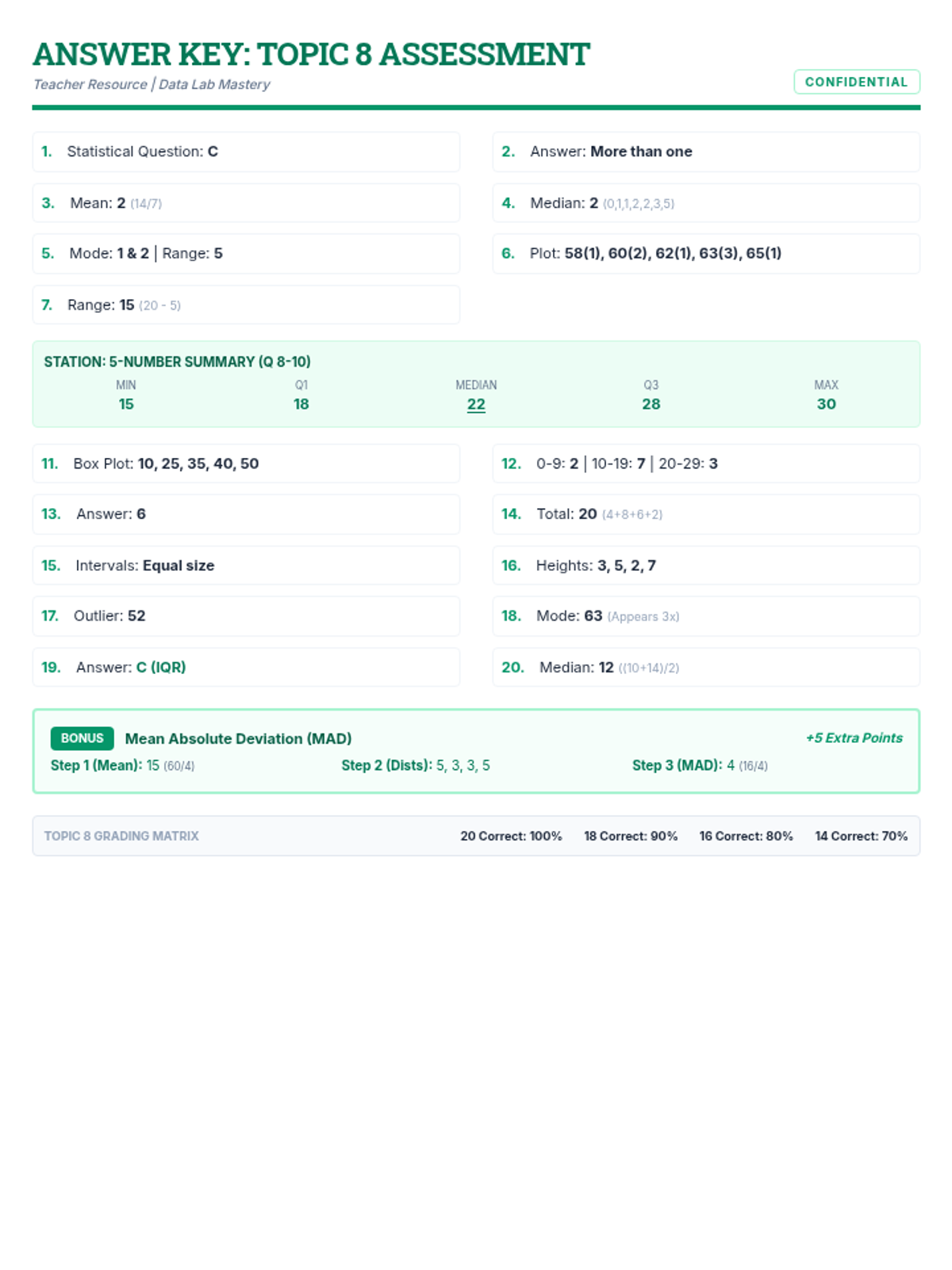
A comprehensive assessment covering 6th-grade statistics standards, including data display, measures of center and spread, and data interpretation. Students will create and analyze dot plots, histograms, and box plots while identifying statistical questions and describing distributions.
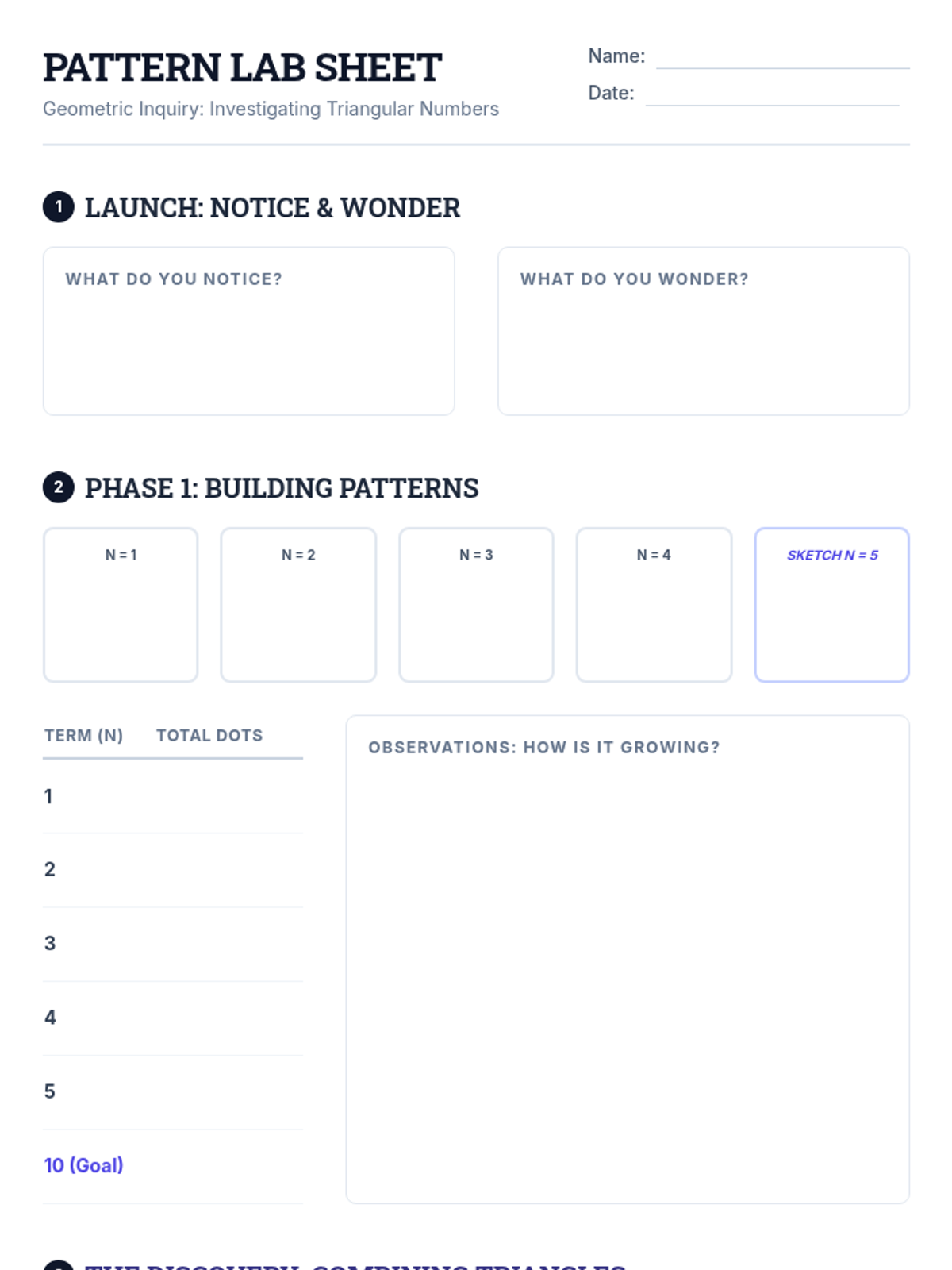
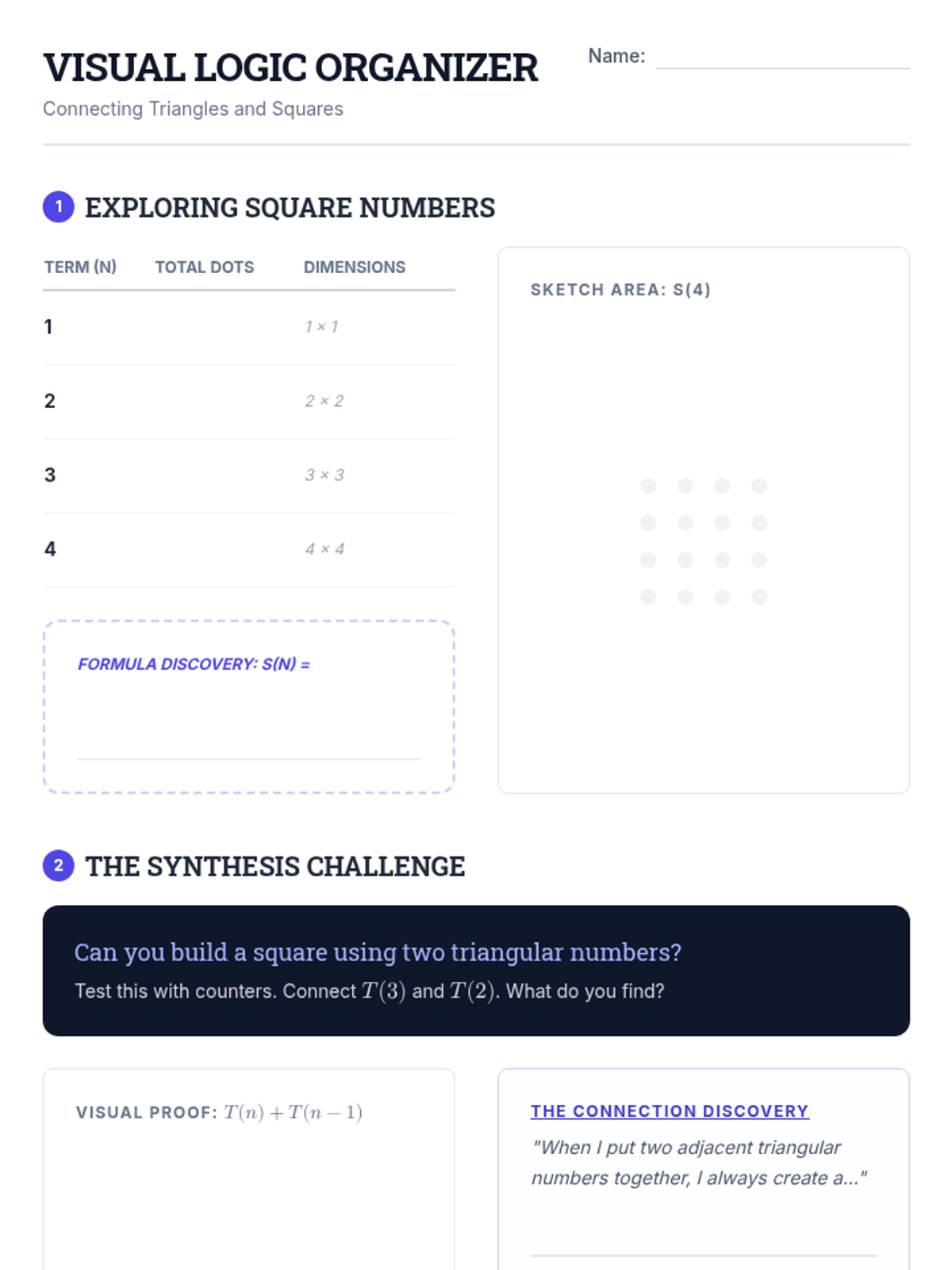
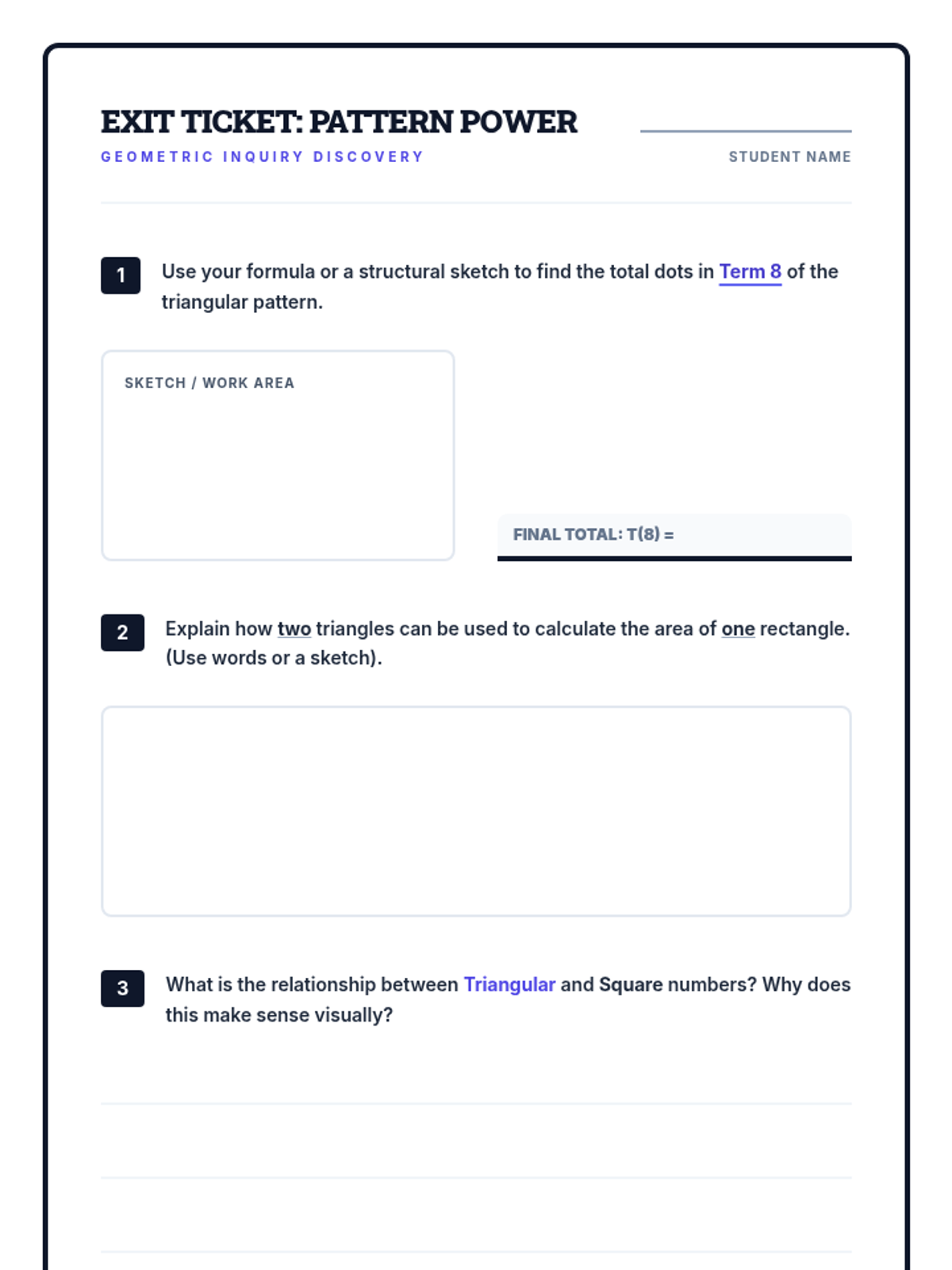
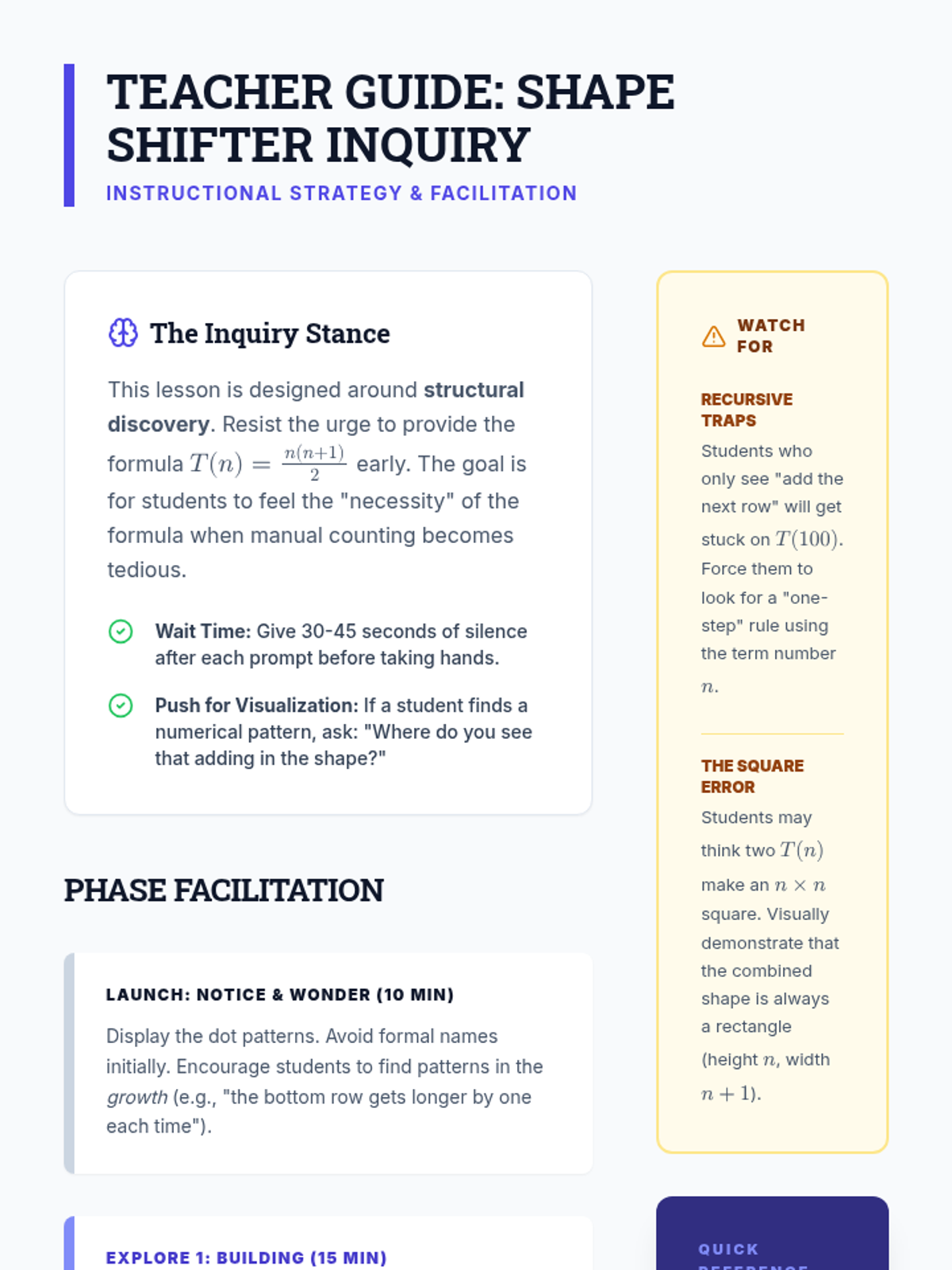
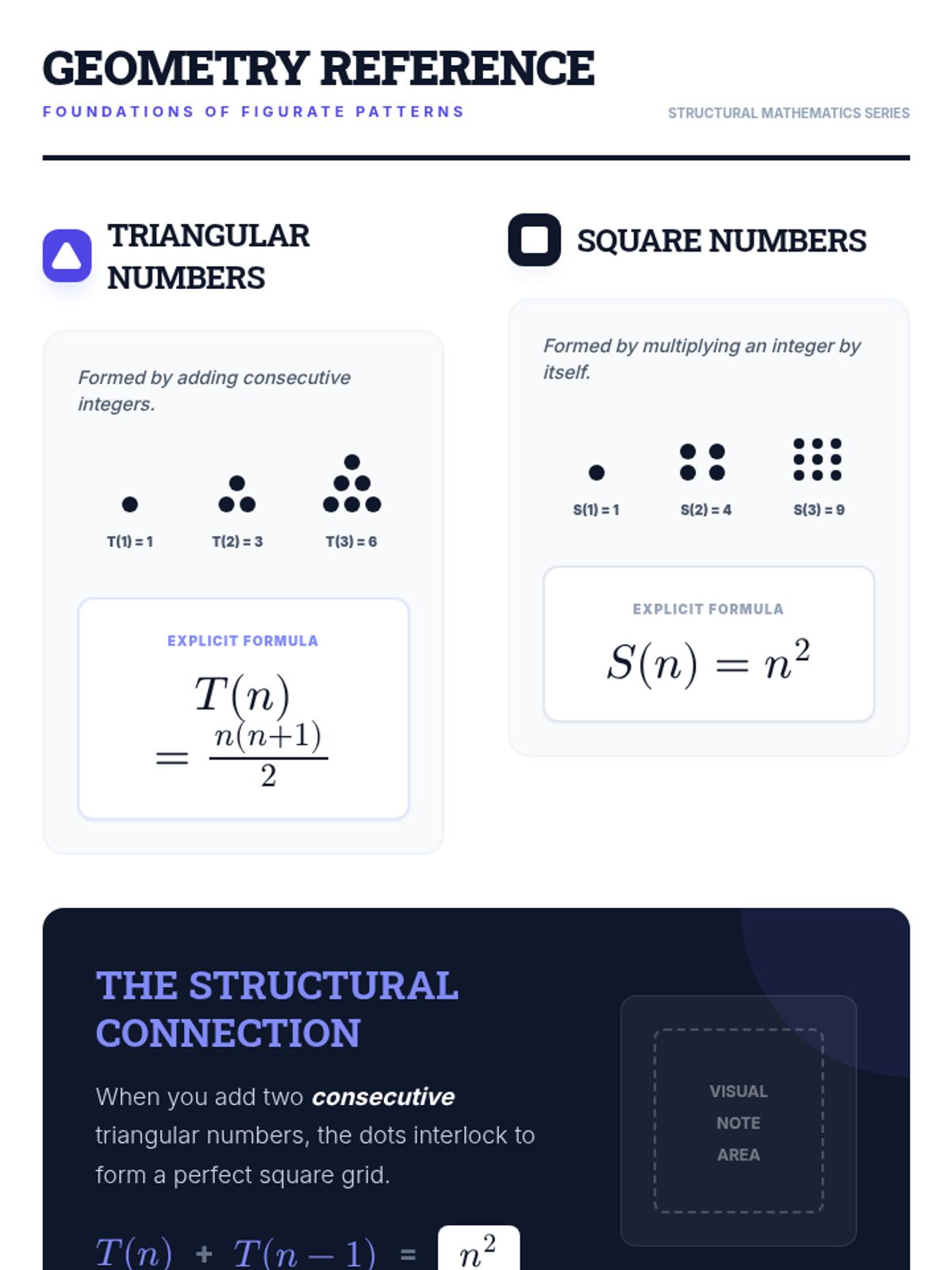
An inquiry-based exploration of triangular and square numbers where students discover formulas through visual manipulation and structural analysis.
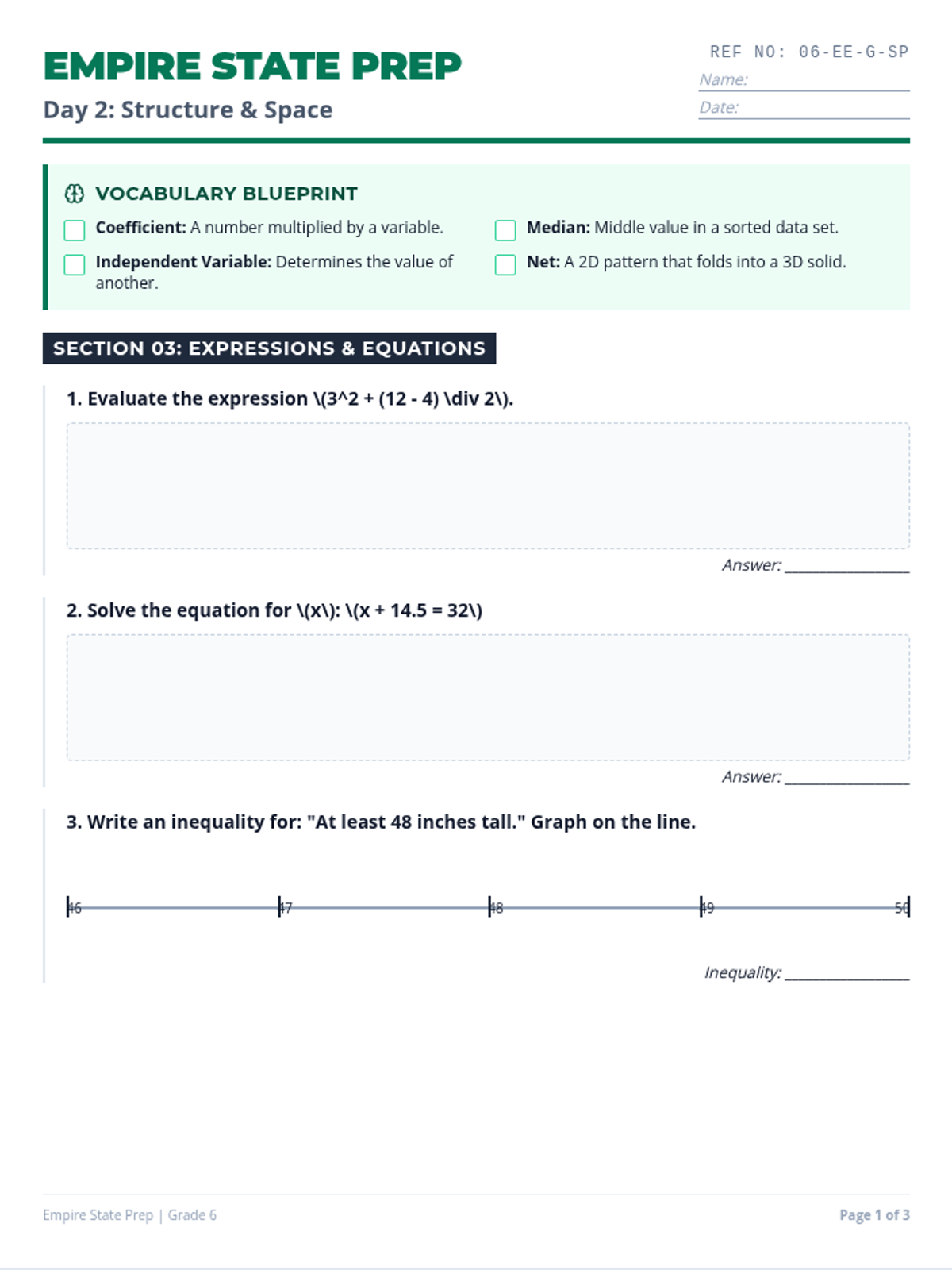
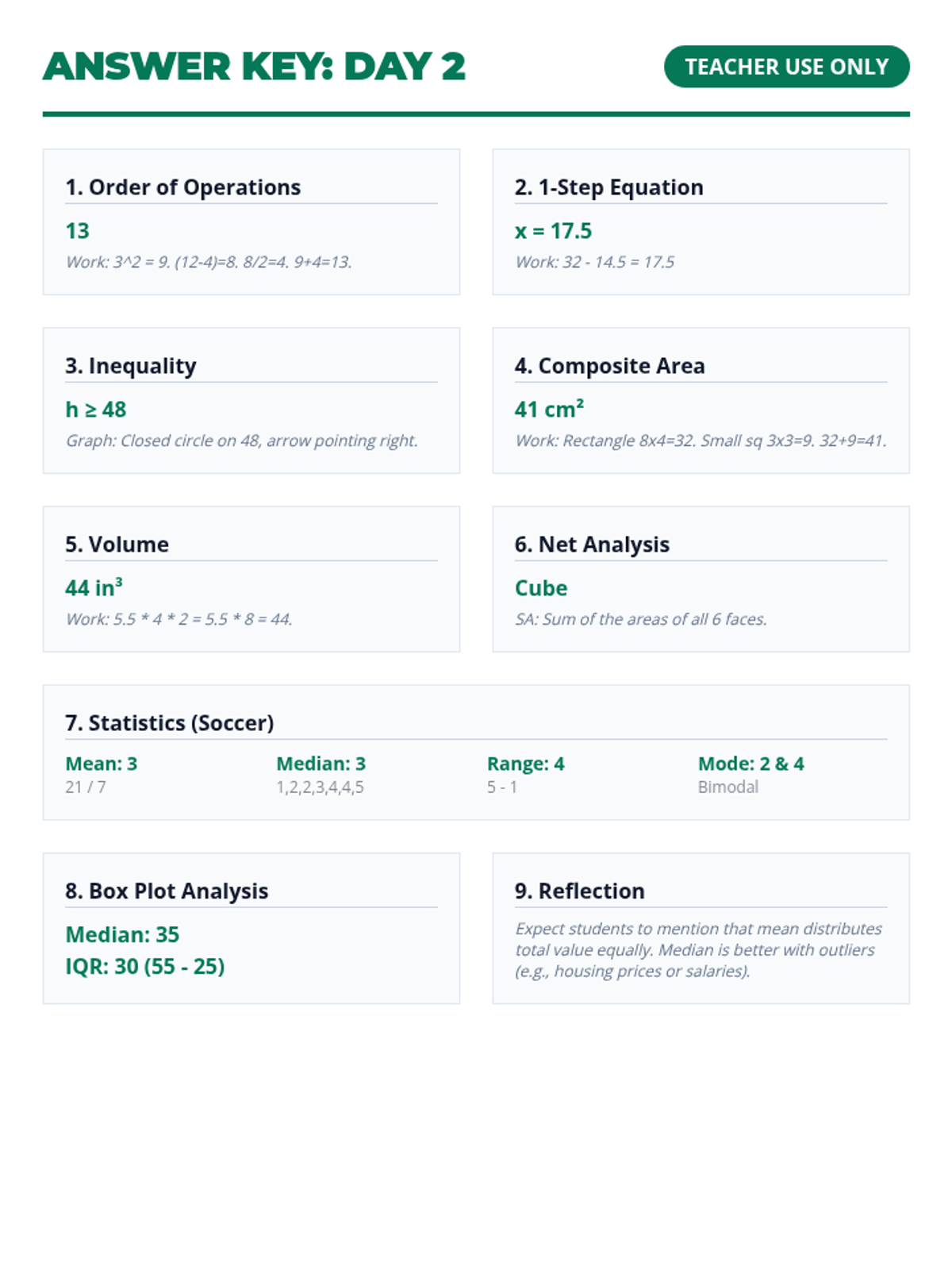
Focuses on Expressions and Equations, Geometry, and Statistics, including area, volume, data analysis, and algebraic thinking.
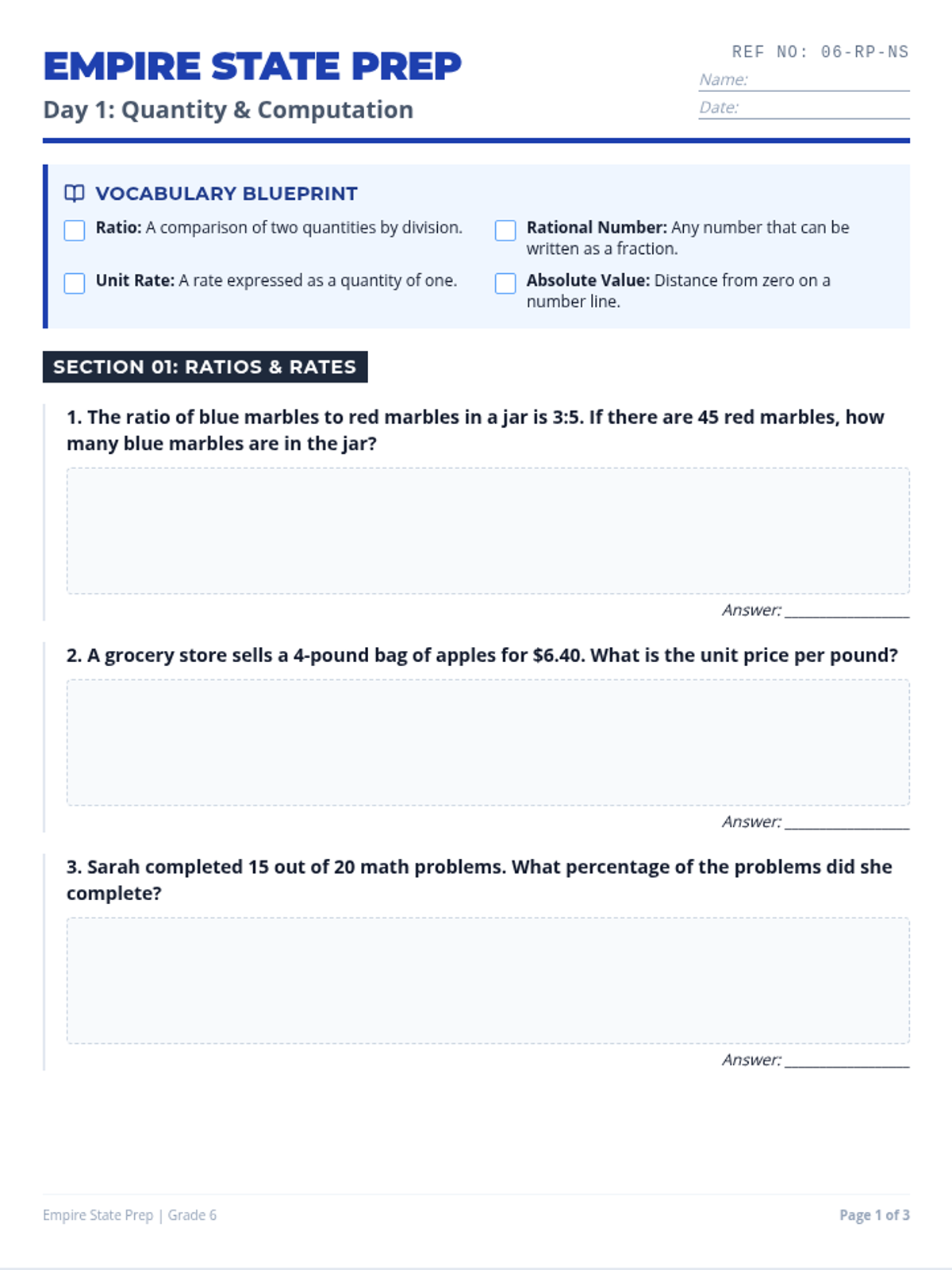
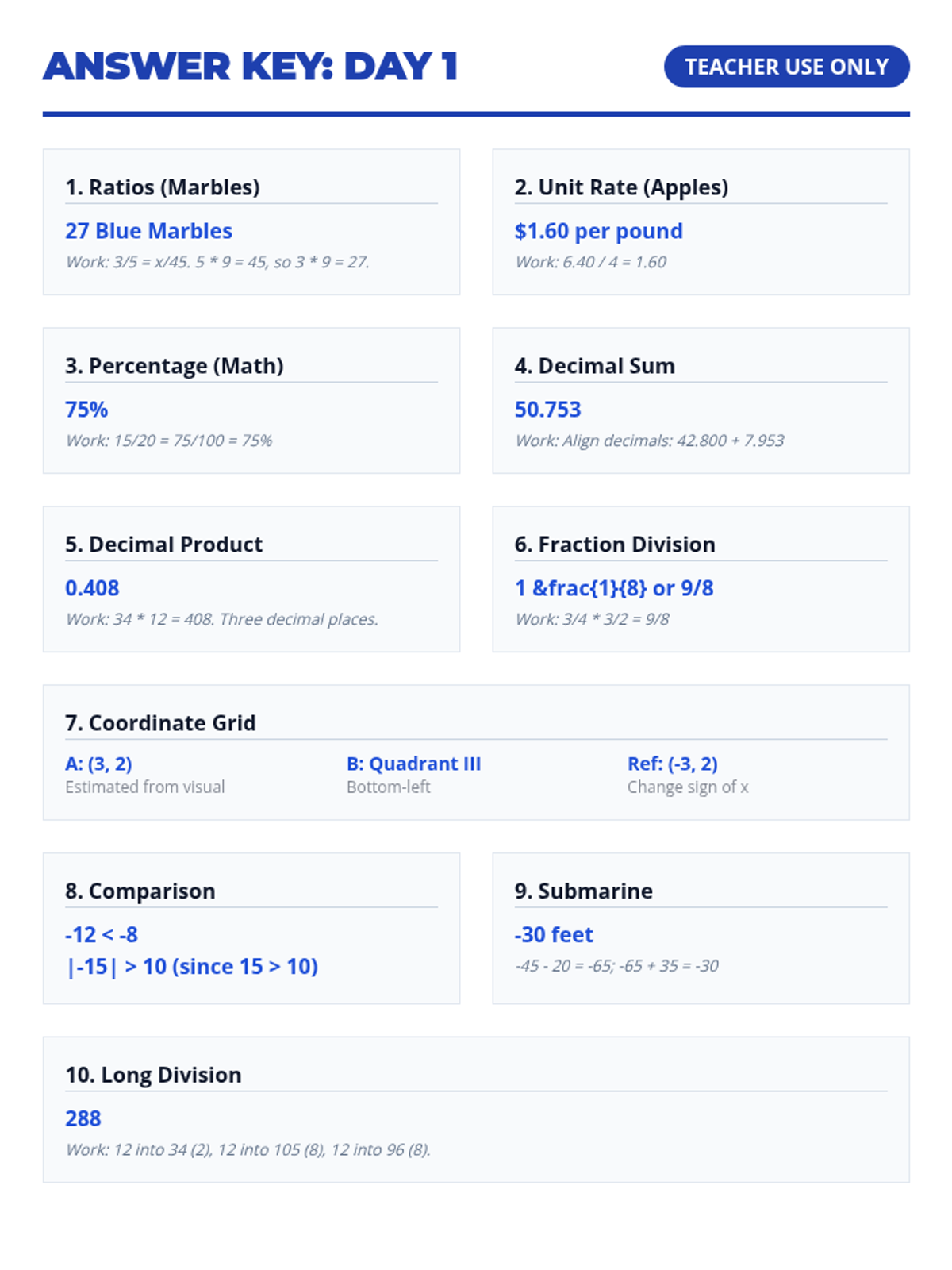
Focuses on Ratios and Proportions and The Number System, including operations with decimals/fractions and coordinate plane concepts.
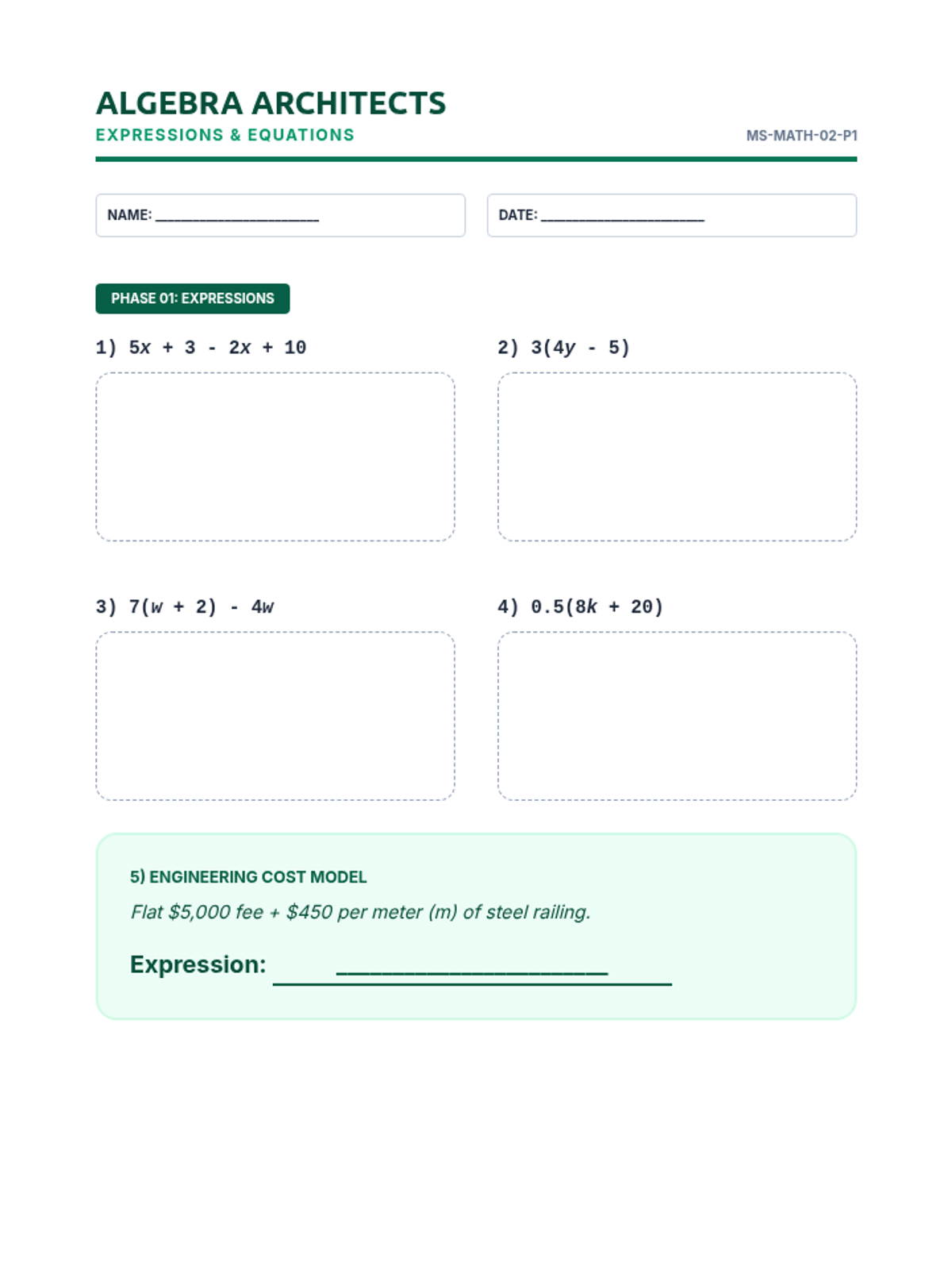
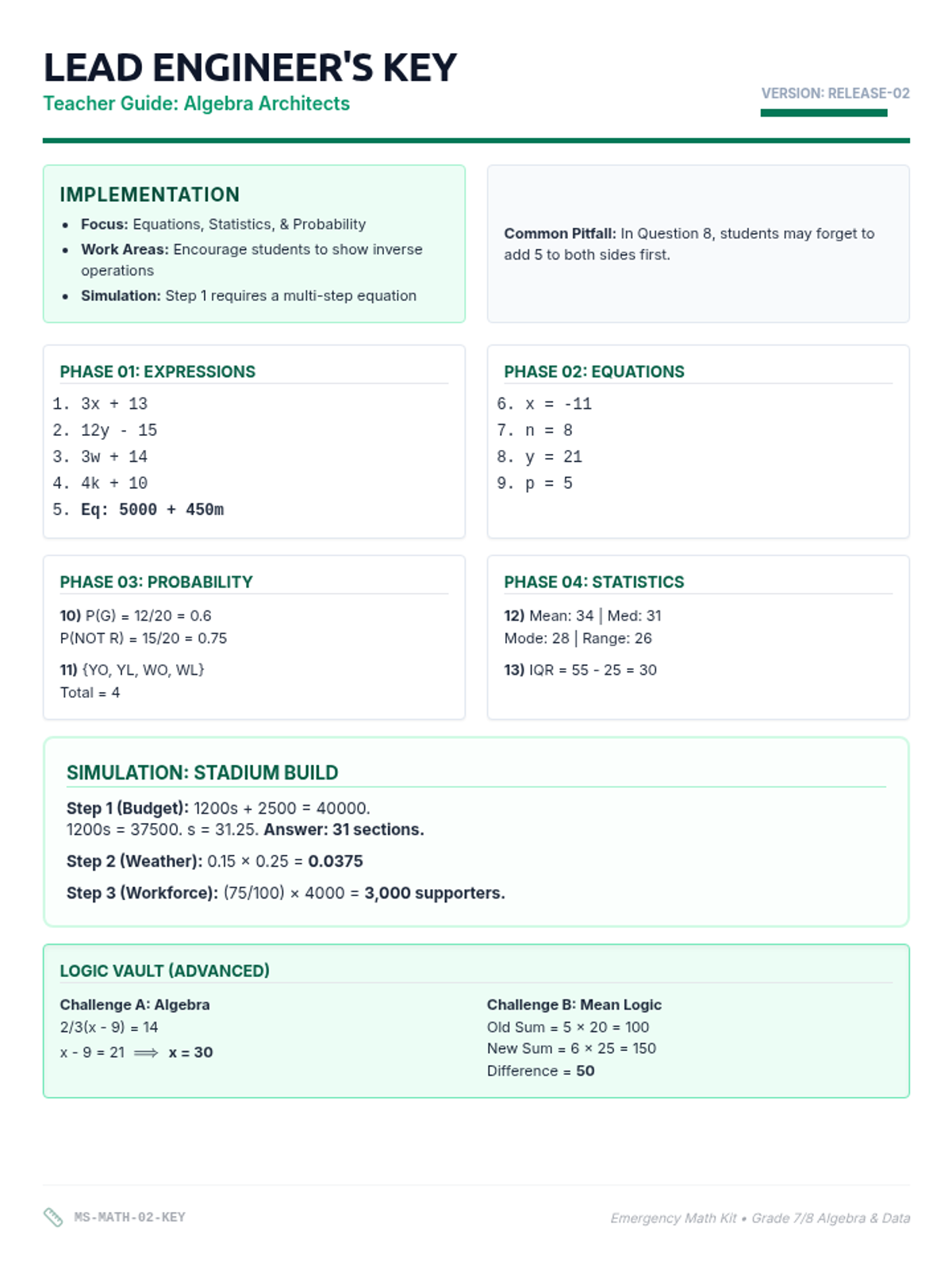
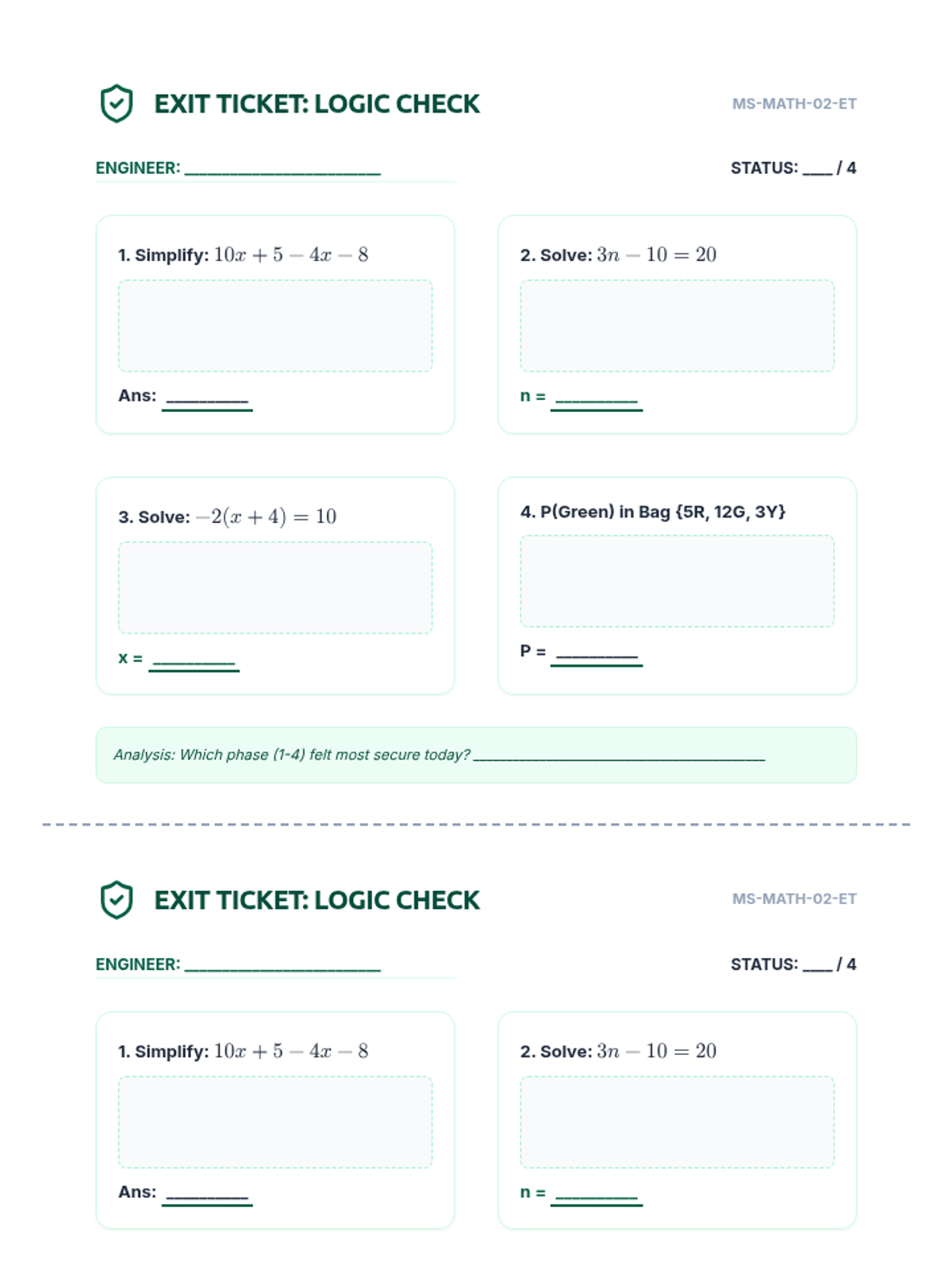
A 90-minute substitute-ready packet covering linear expressions, one- and two-step equations, probability, and statistics. Students act as "logic engineers" to solve real-world modeling problems and analyze data sets.