A remediation-focused lesson designed to help 5th-grade students master the protractor. Students will identify common errors like reading the wrong scale and improper alignment through a 'Scale Detective' activity and video-based instruction.
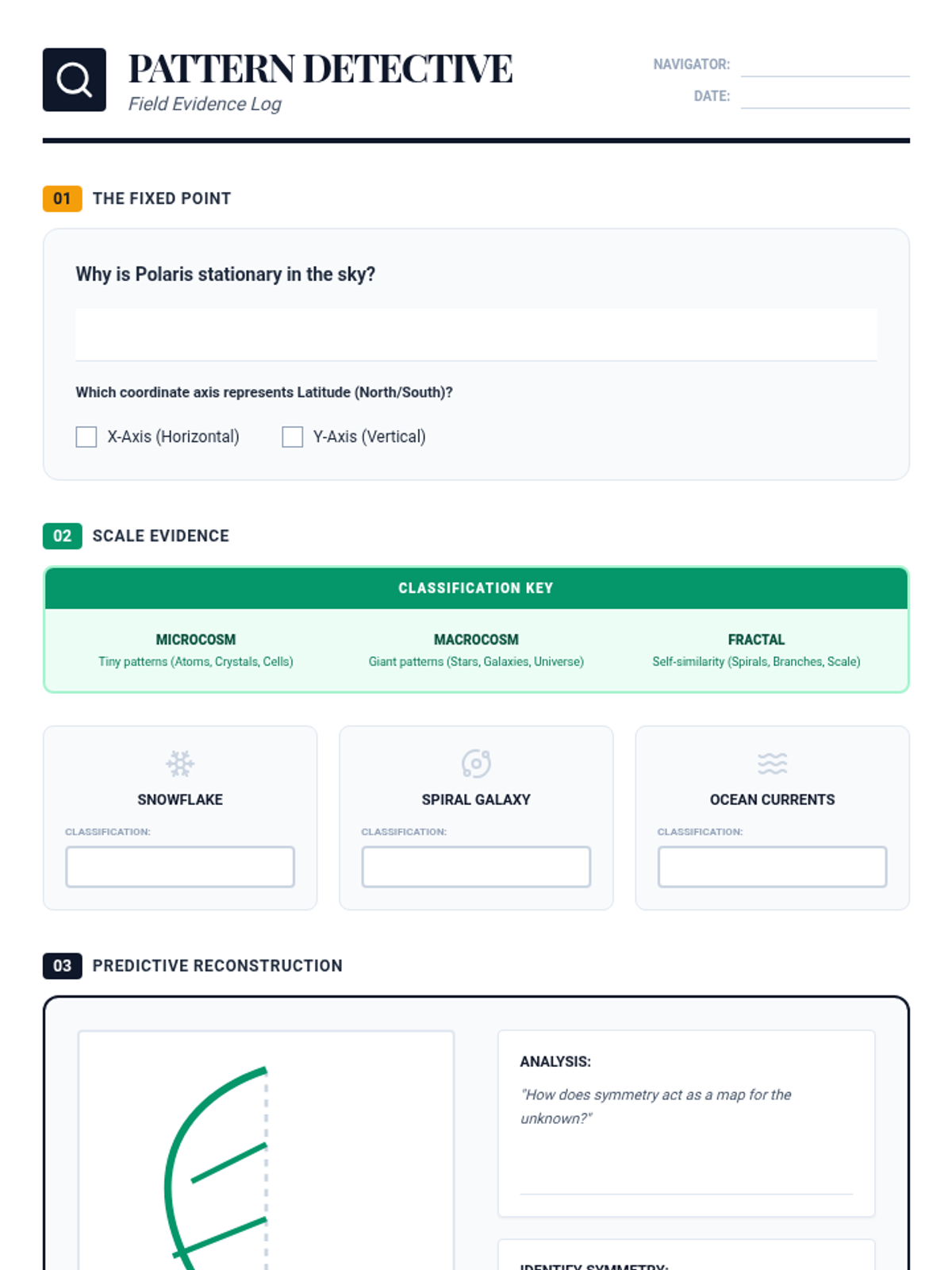
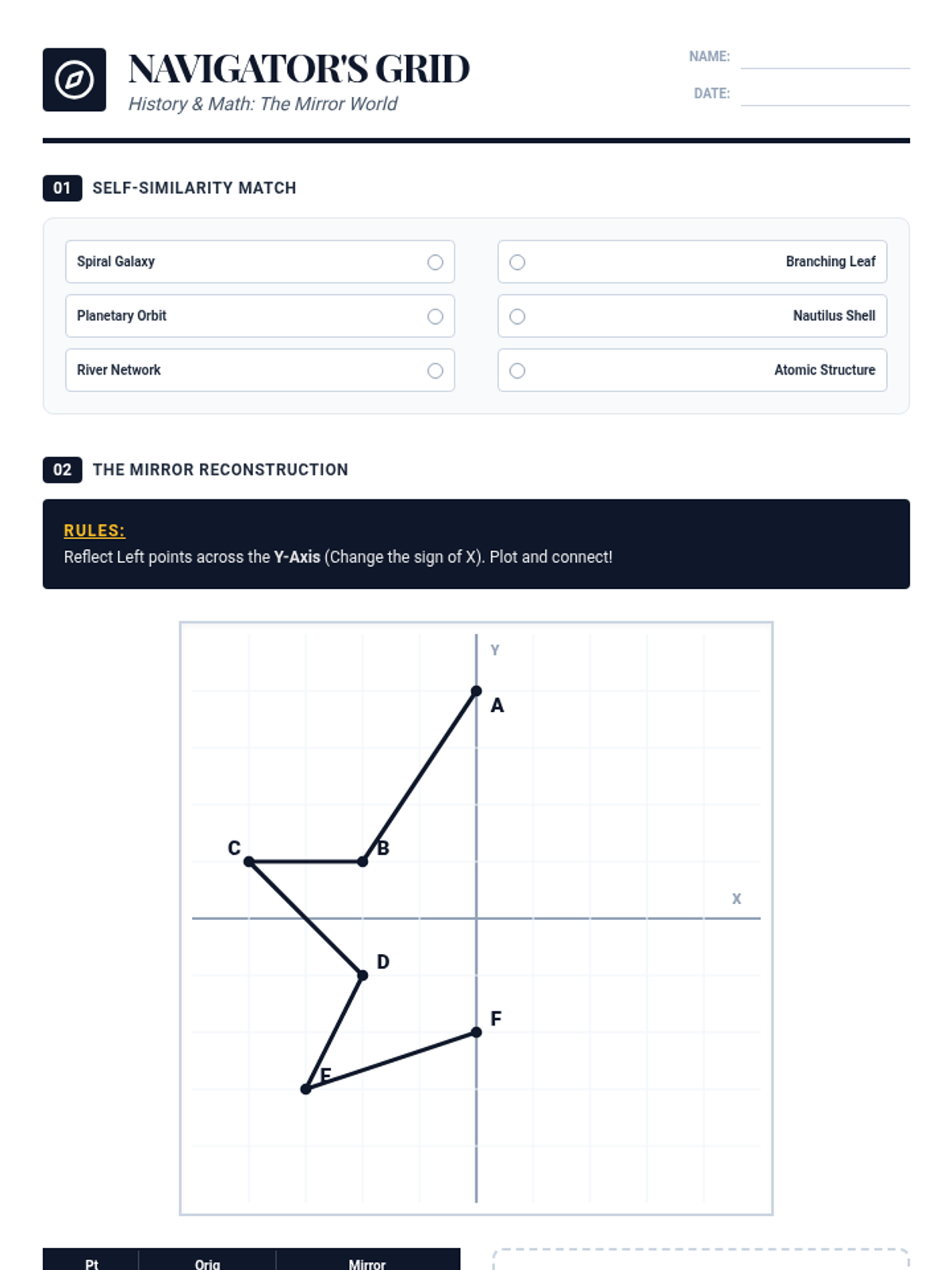
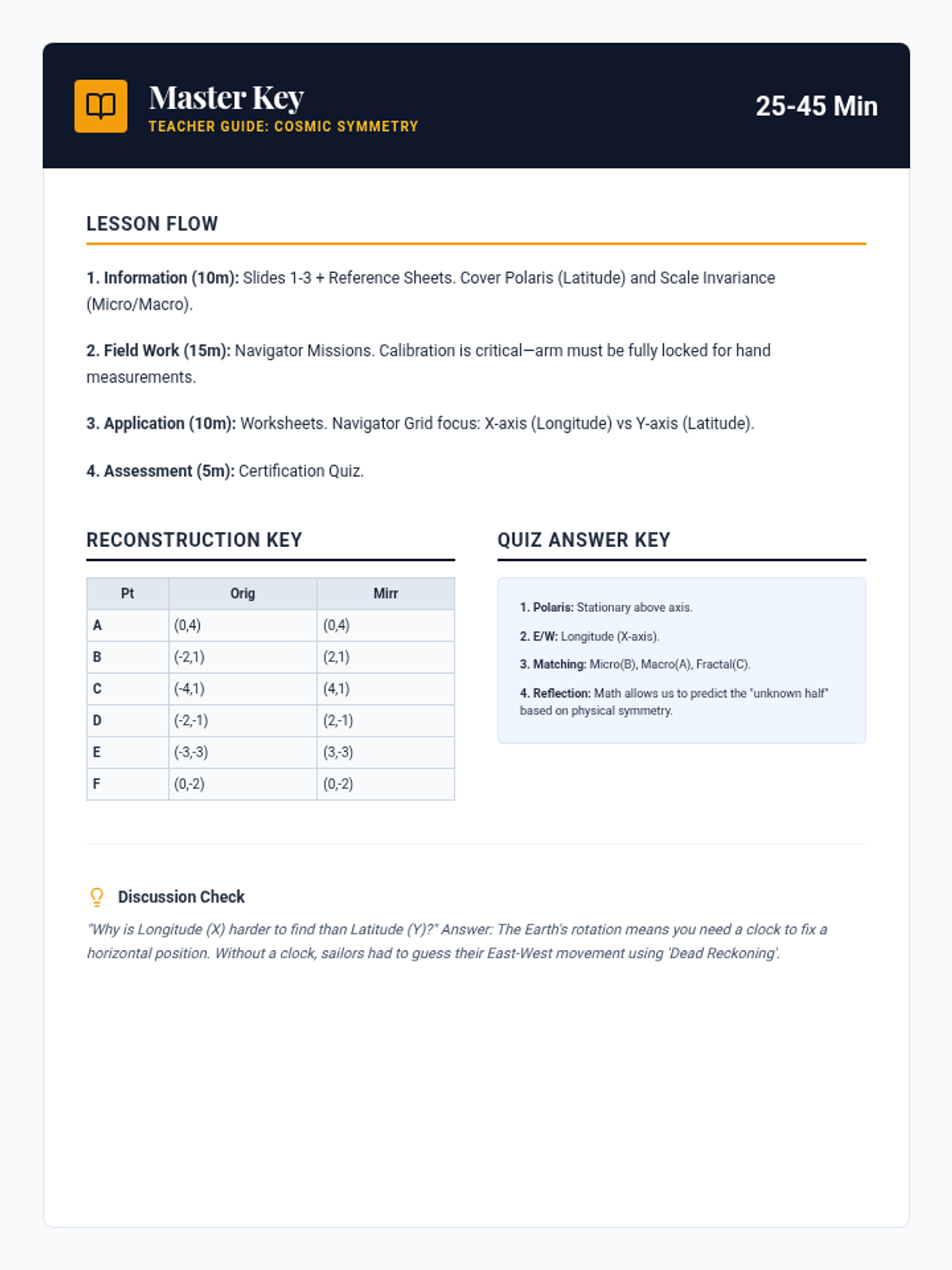
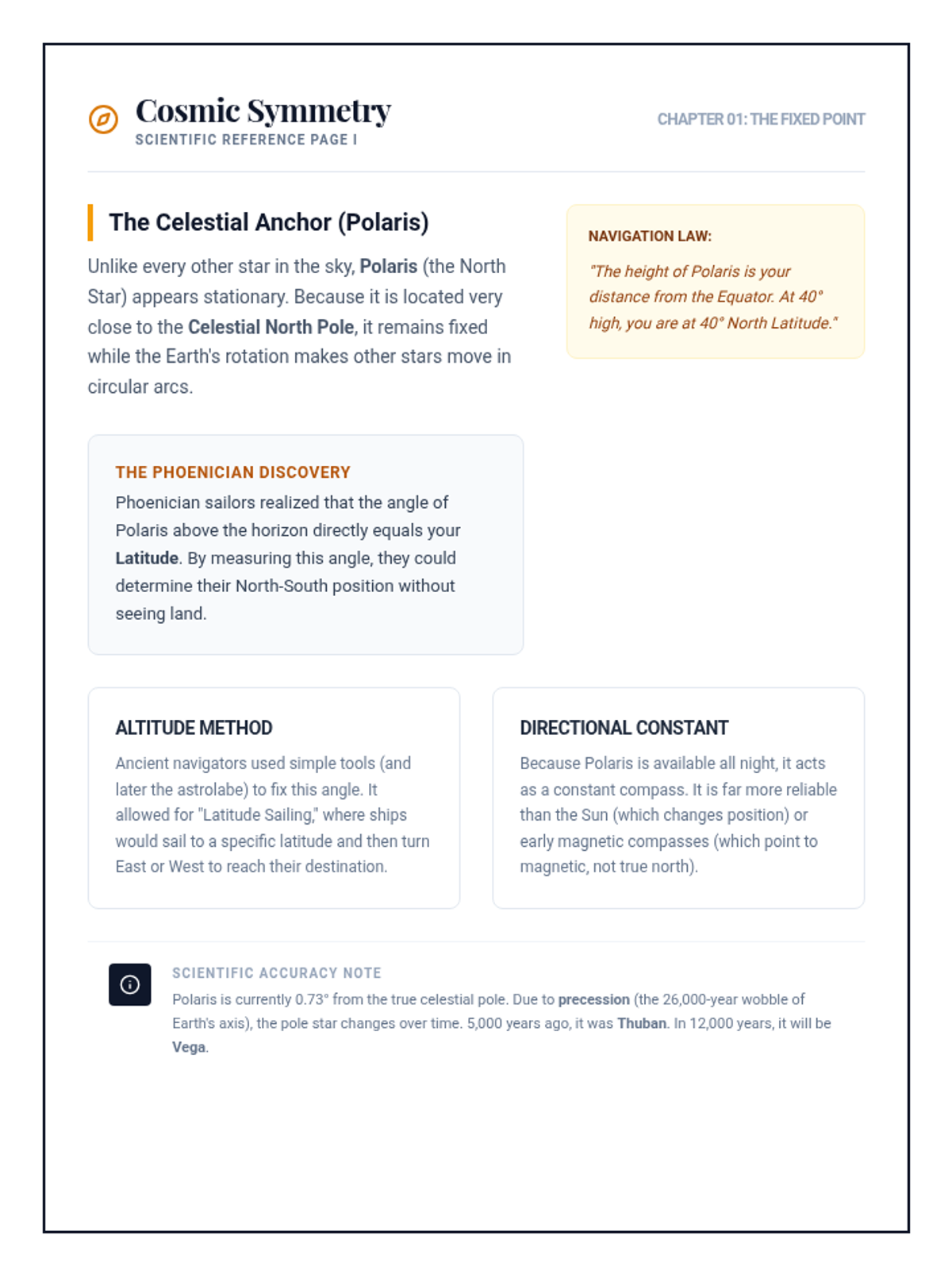
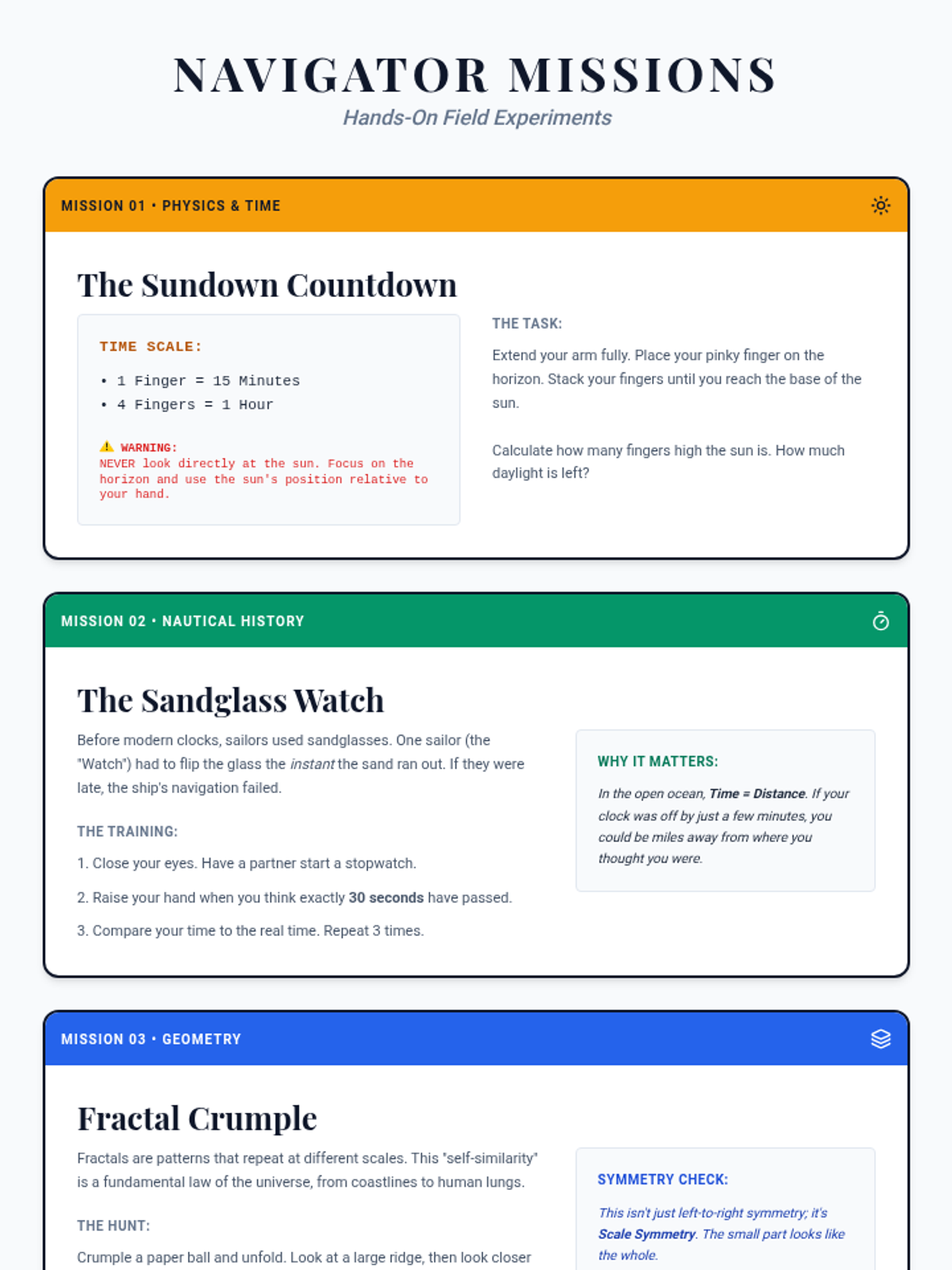
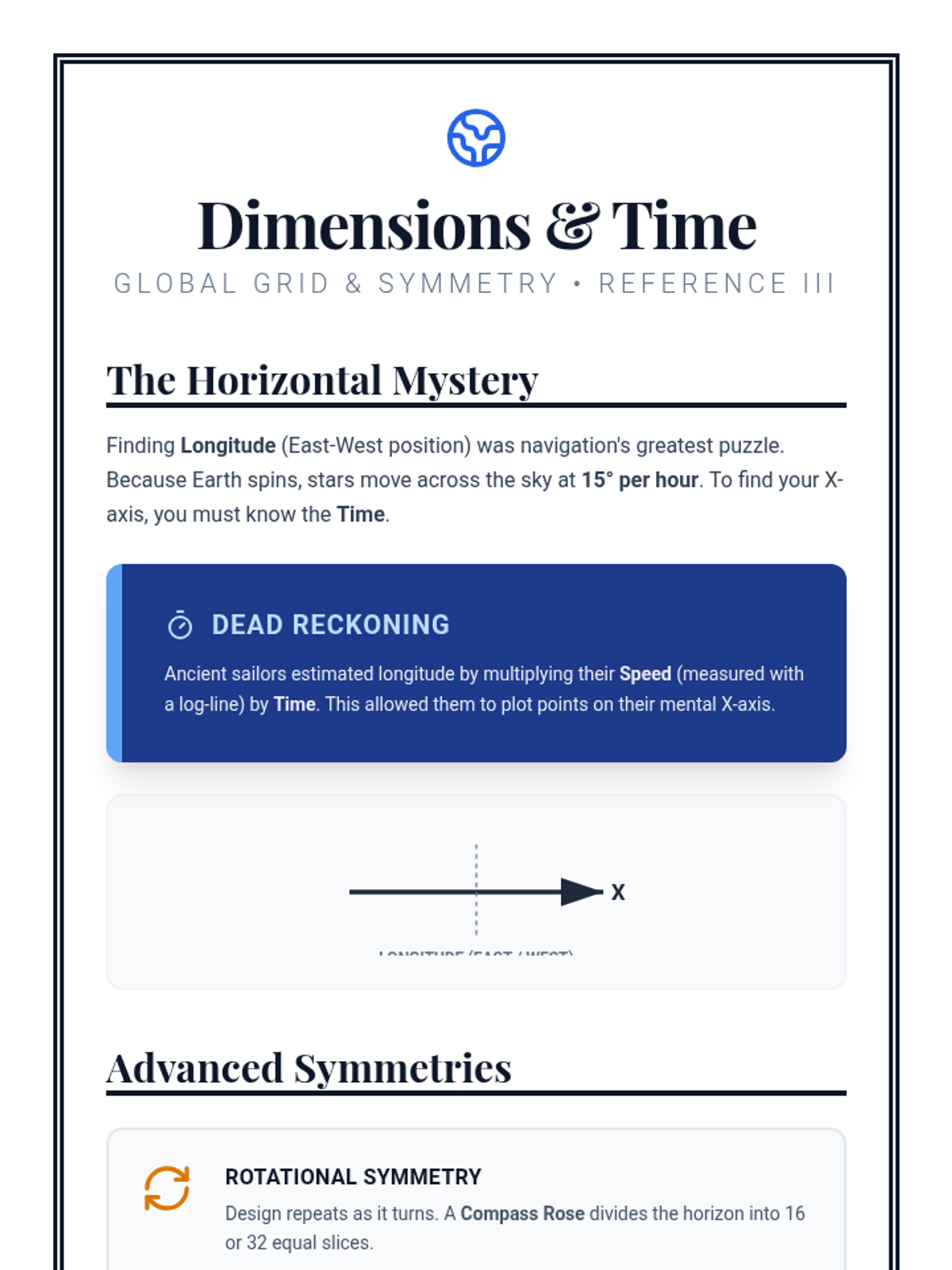
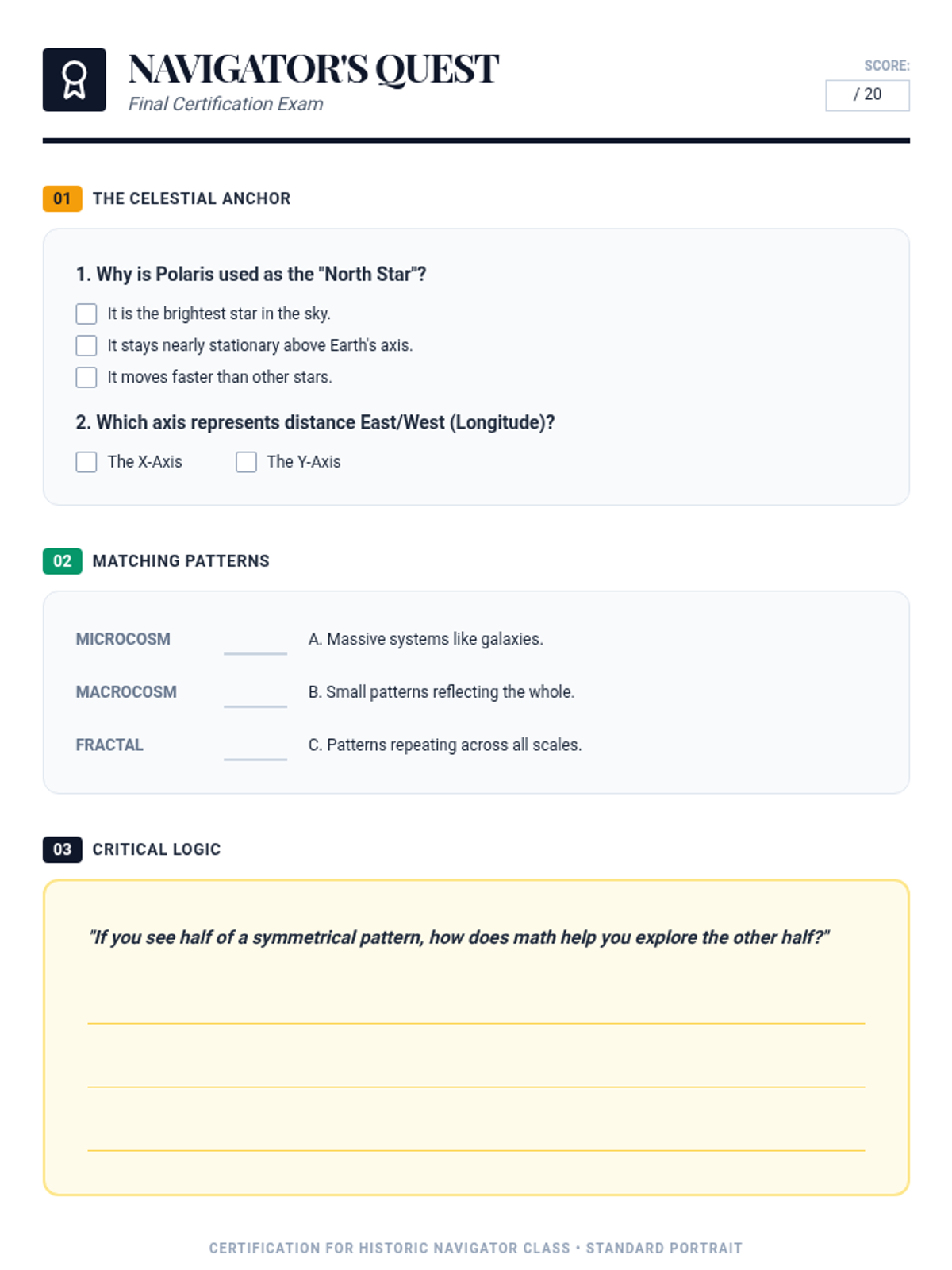
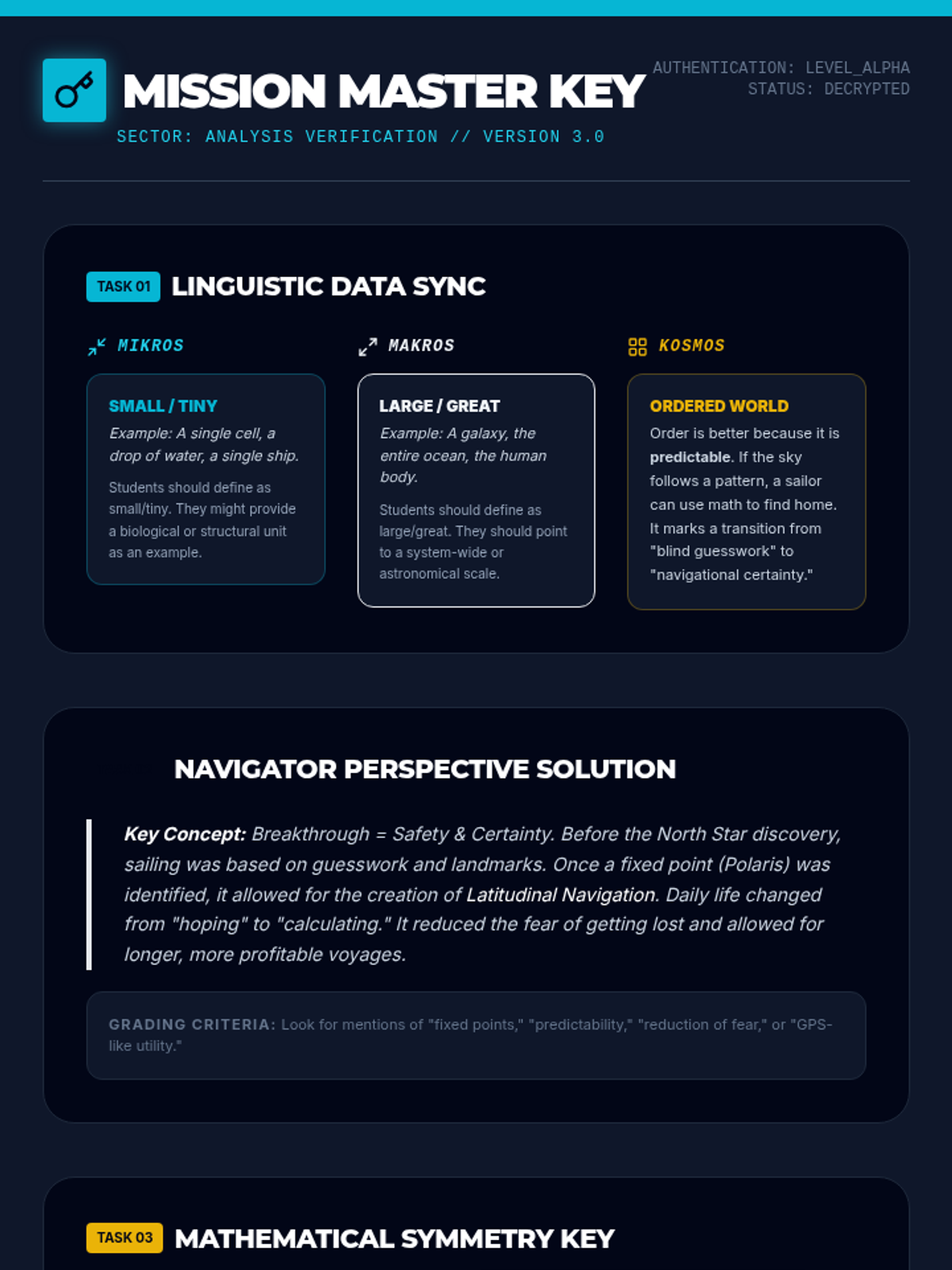
A 15-25 minute exploration into how ancient navigators used fixed points (the North Star) and the repeating patterns of the universe (microcosms, macrocosms, and symmetry) to navigate without modern technology.
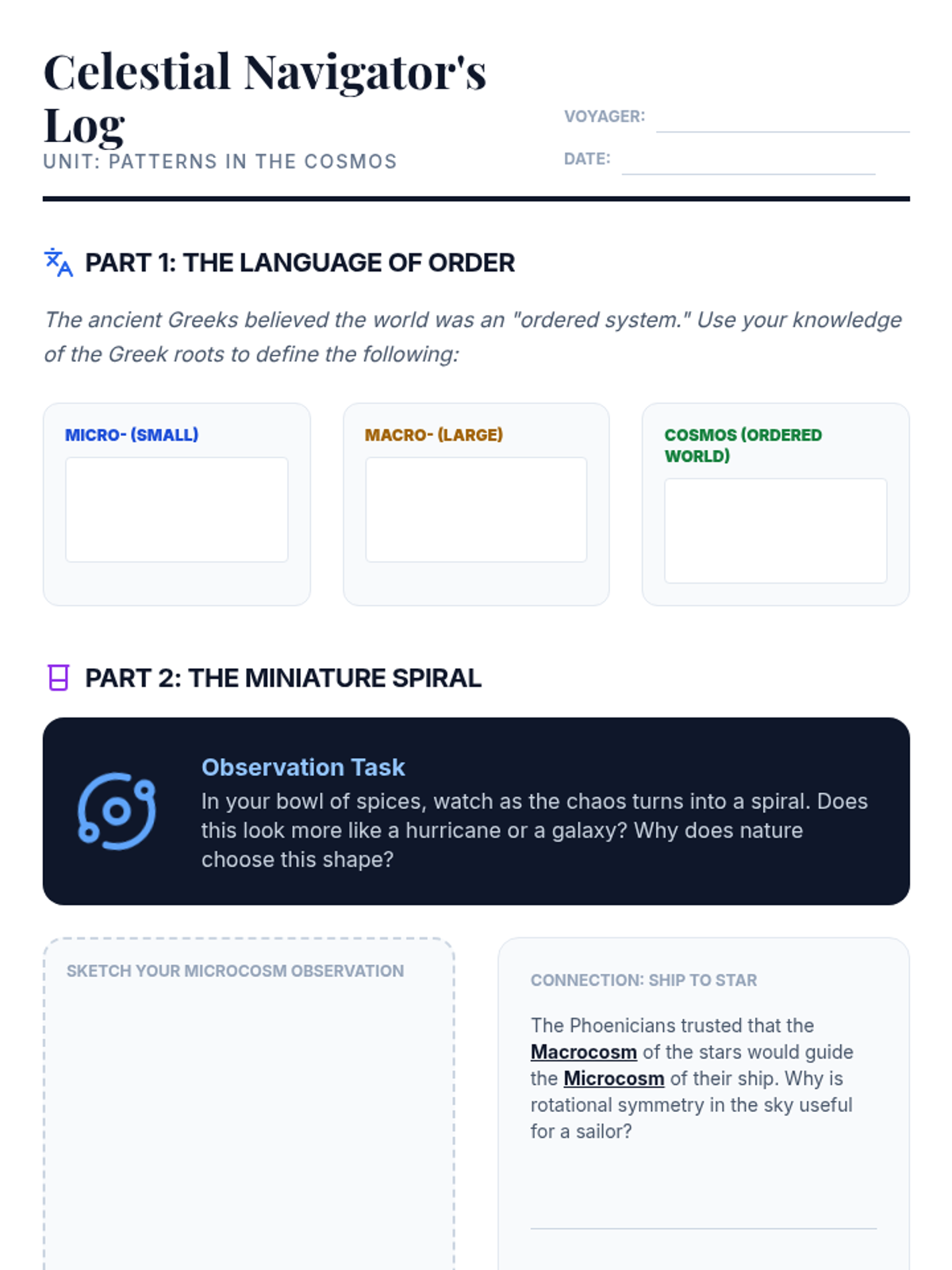
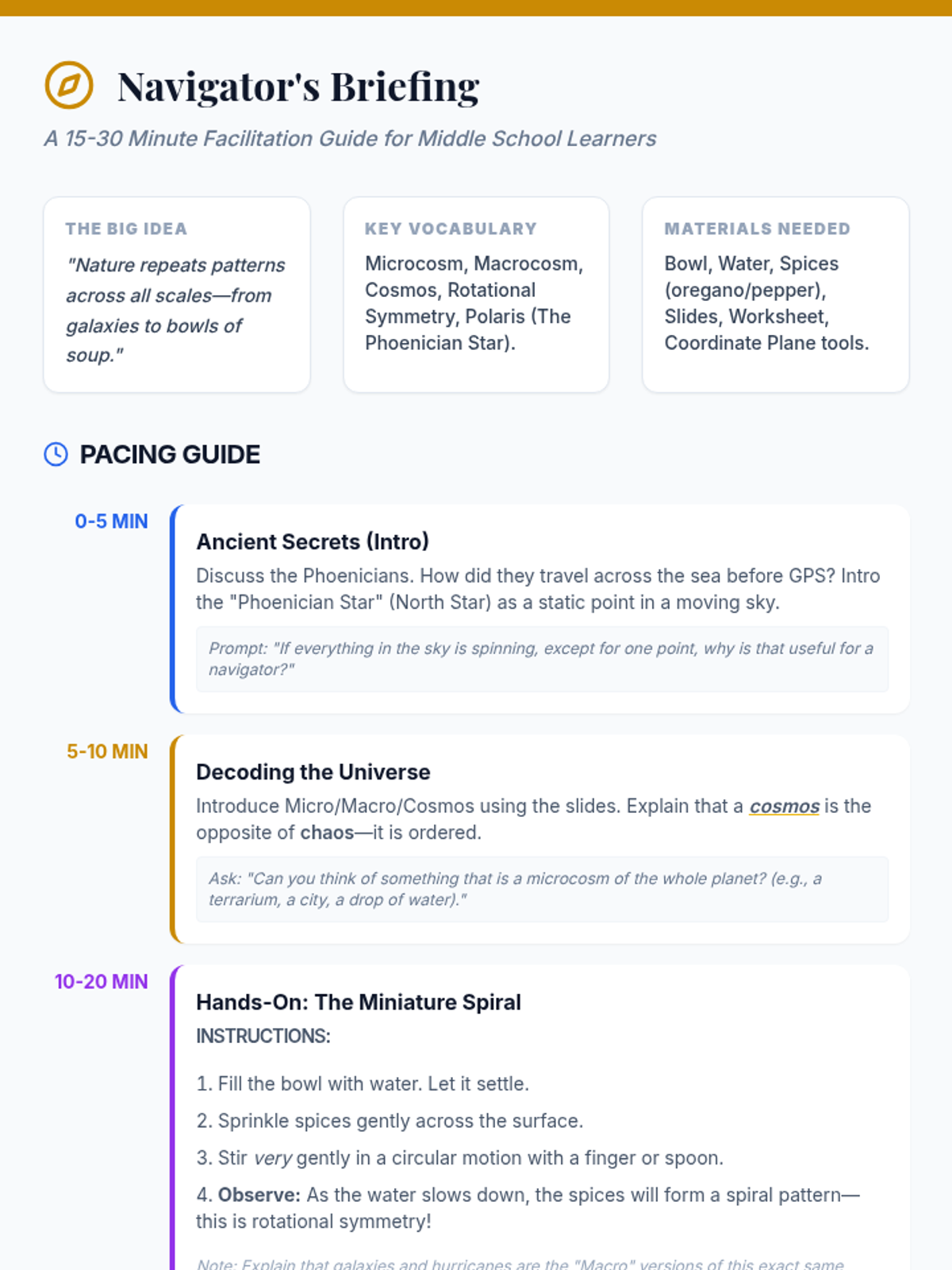
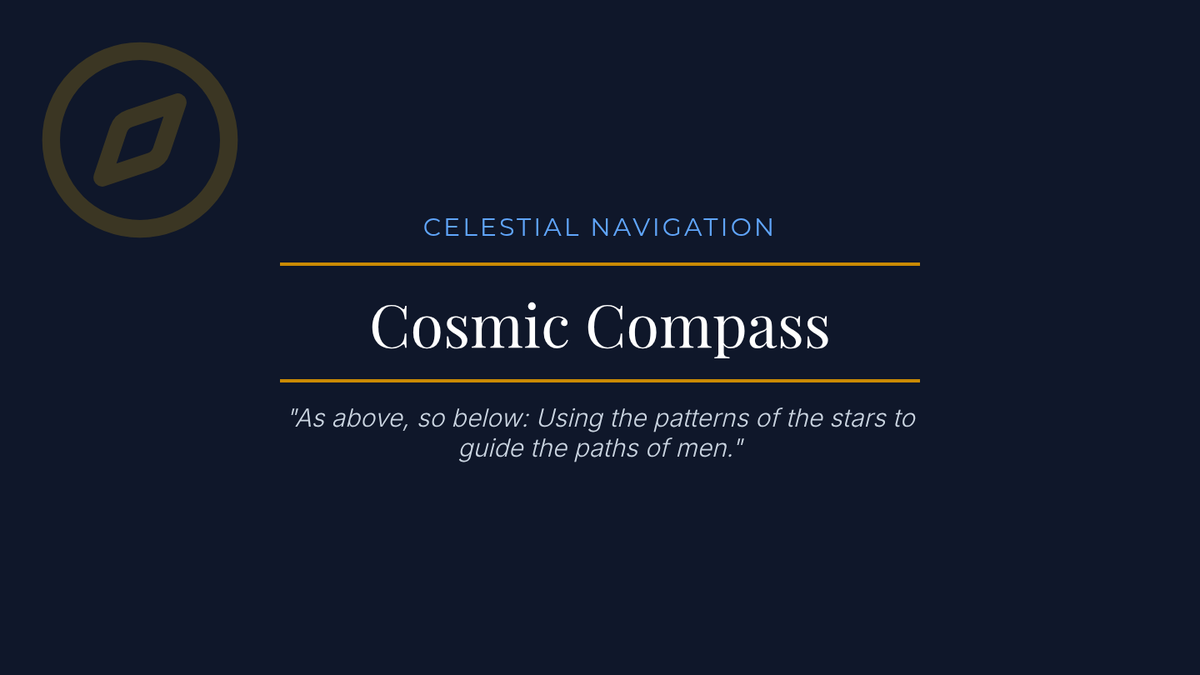
A 15-30 minute exploration of how ancient Phoenicians used the macrocosm of the stars to navigate the microcosm of their ships, featuring the root words micro/macro/cosmos and the mathematics of rotational symmetry.
Students transition from scouts to architects, applying their research to design a complex structure blueprint. They will calculate additive angles, classify polygons within their design, and present their final architectural plan.
Students become Geometry Scouts, researching and documenting real-world examples of lines, angles, and two-dimensional figures. They will use protractors to measure angles in their environment and identify geometric properties in architecture and nature.
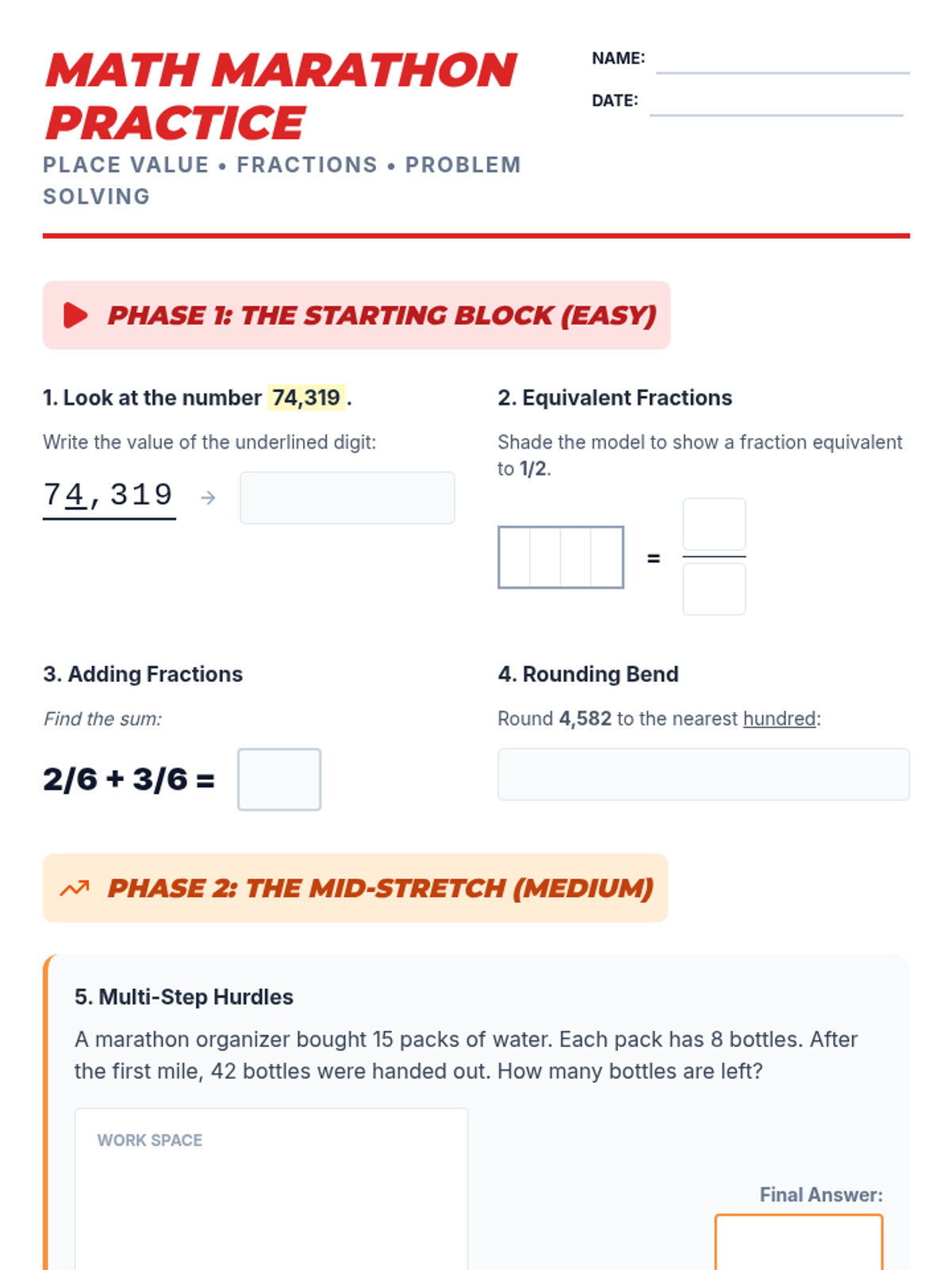
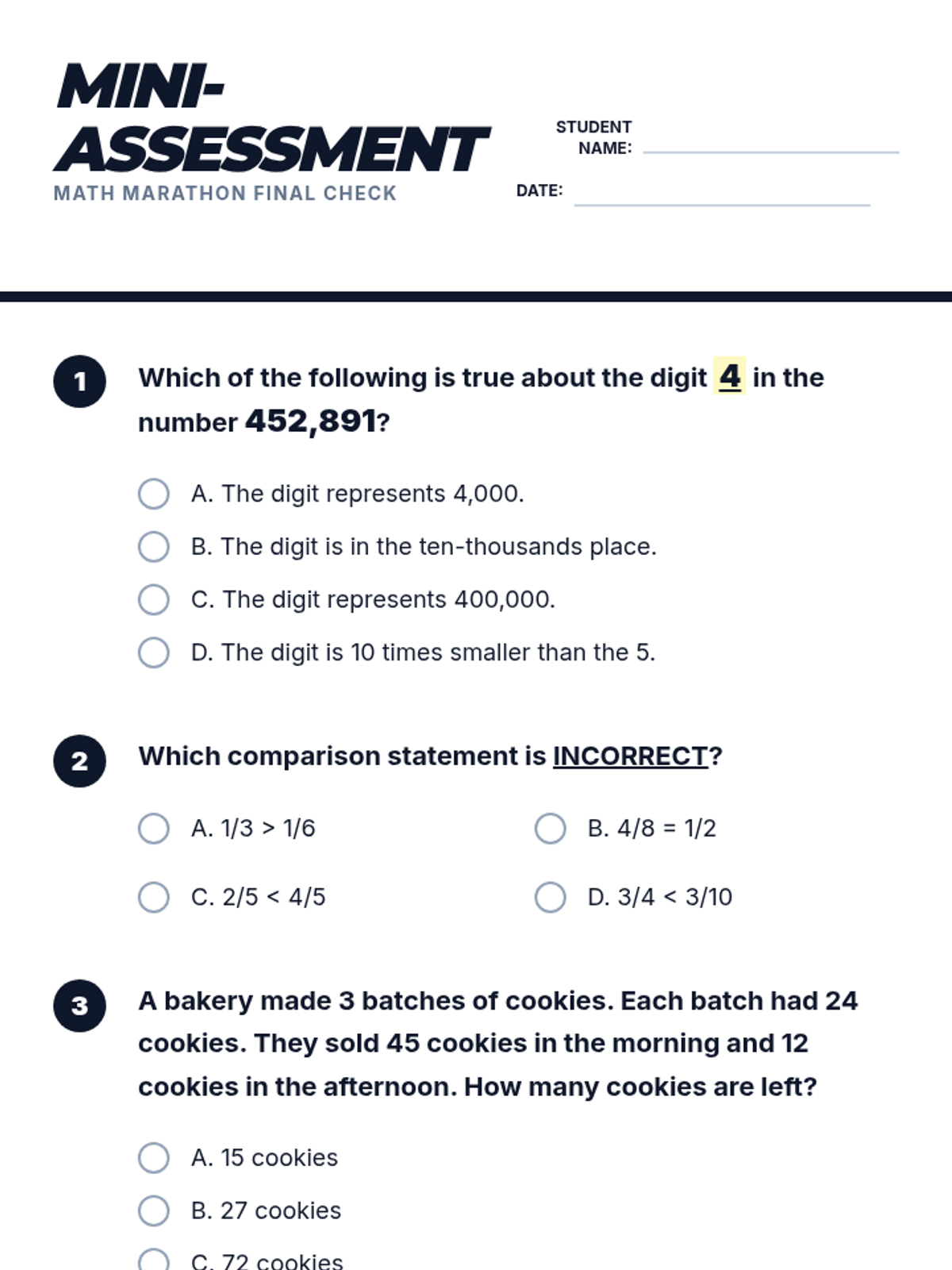
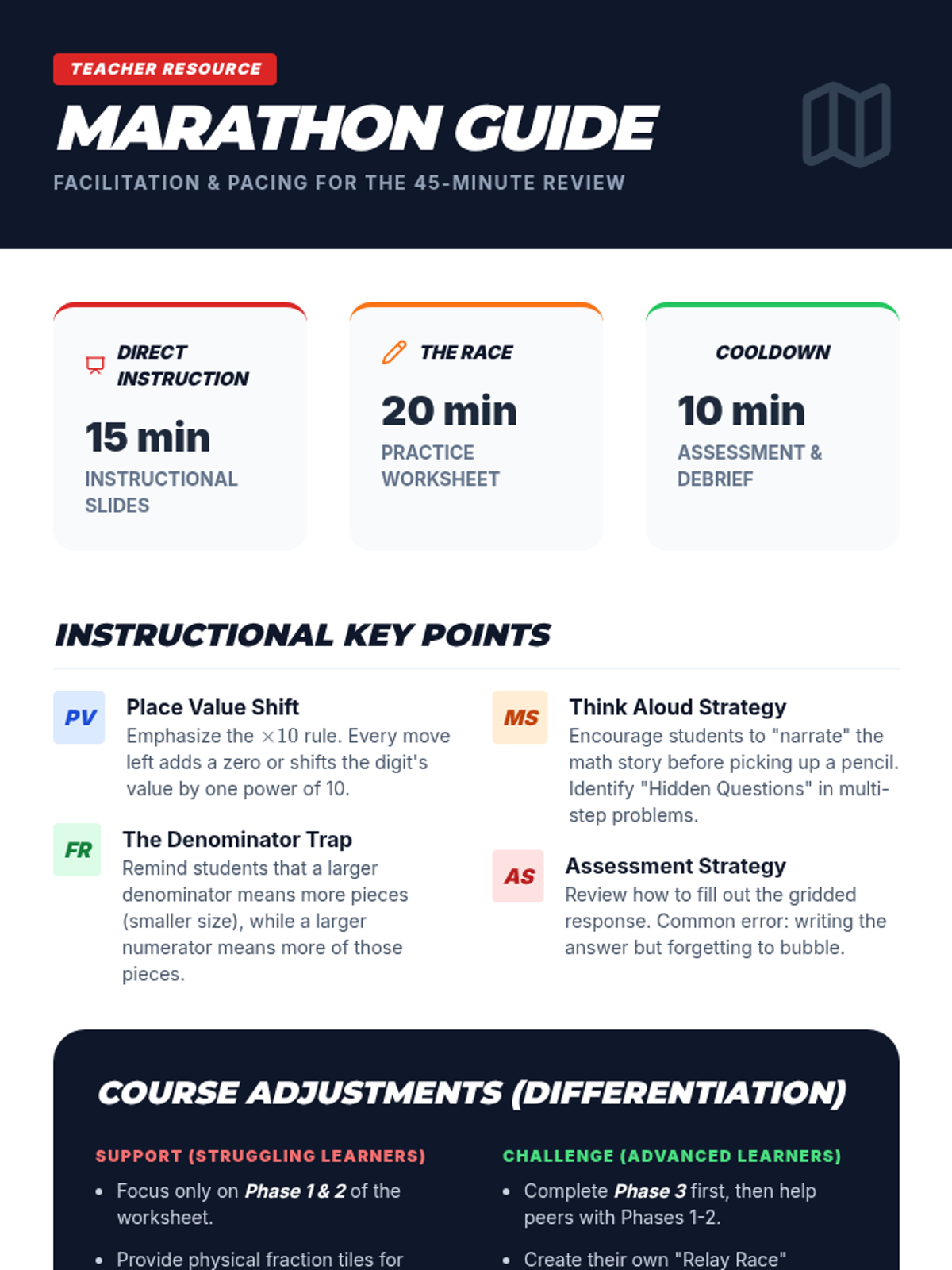
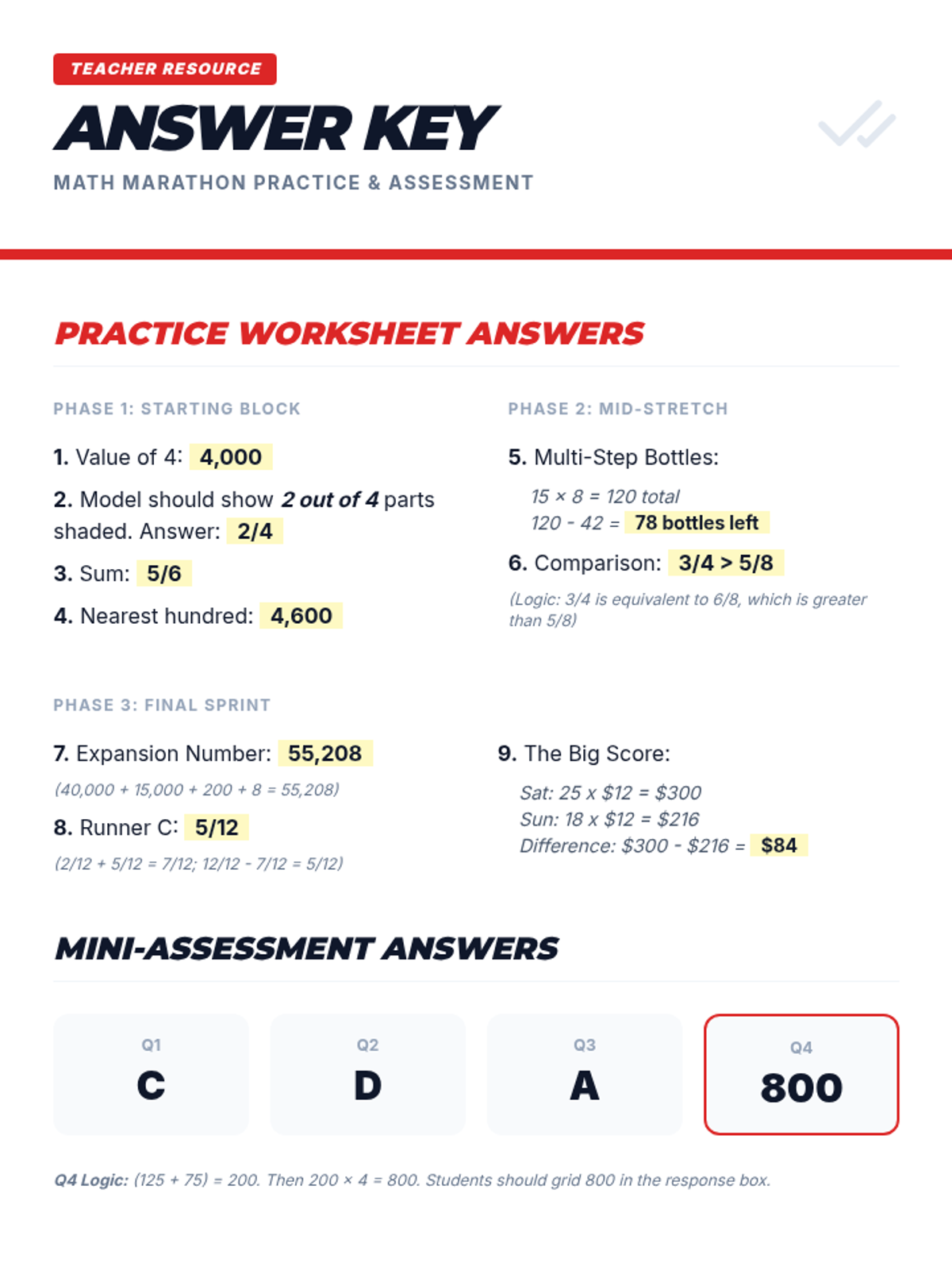
A high-energy, 45-minute comprehensive math review covering place value, fractions, and multi-step word problems for grades 3-5, designed as a 'Math Marathon'.
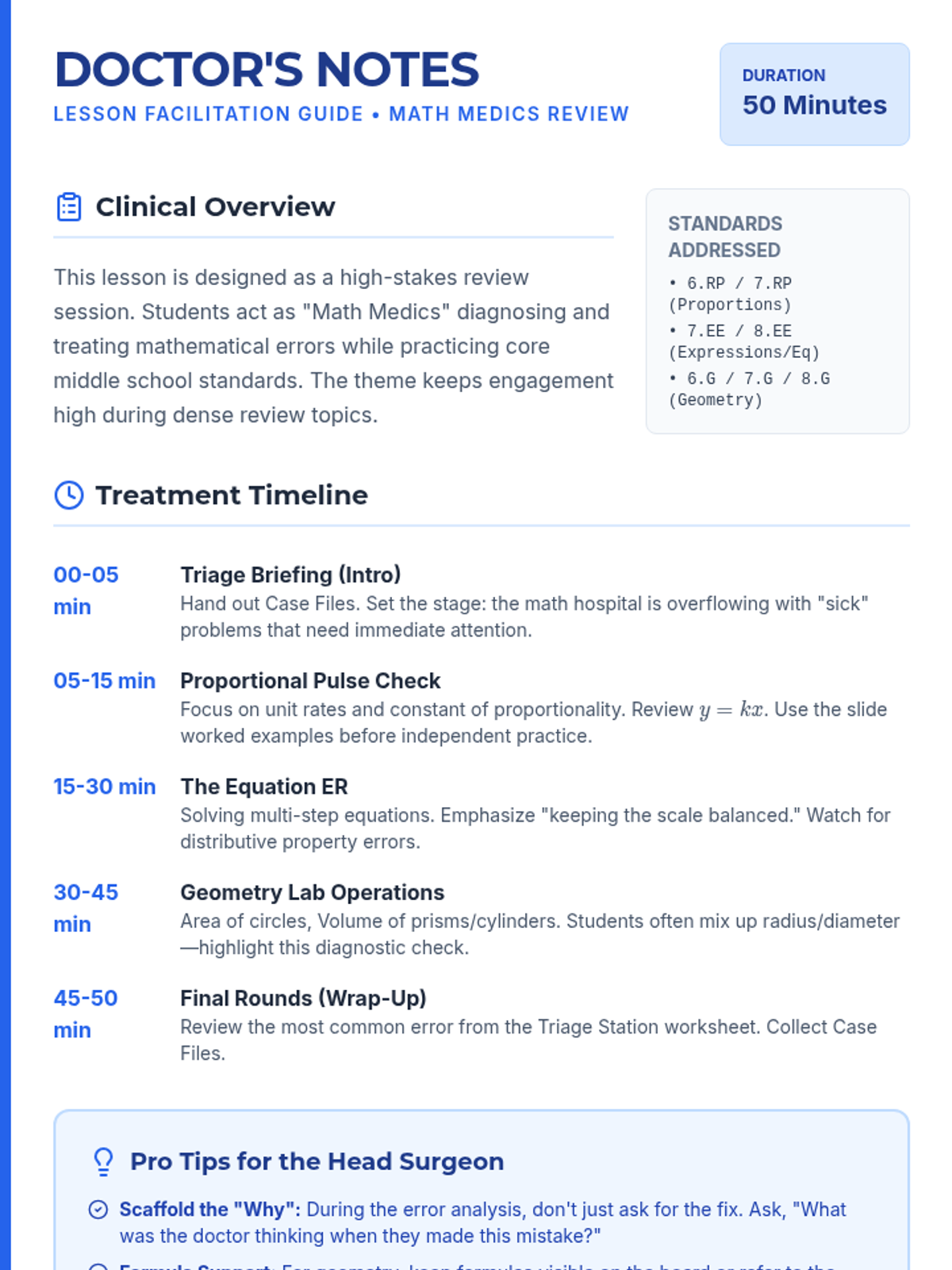
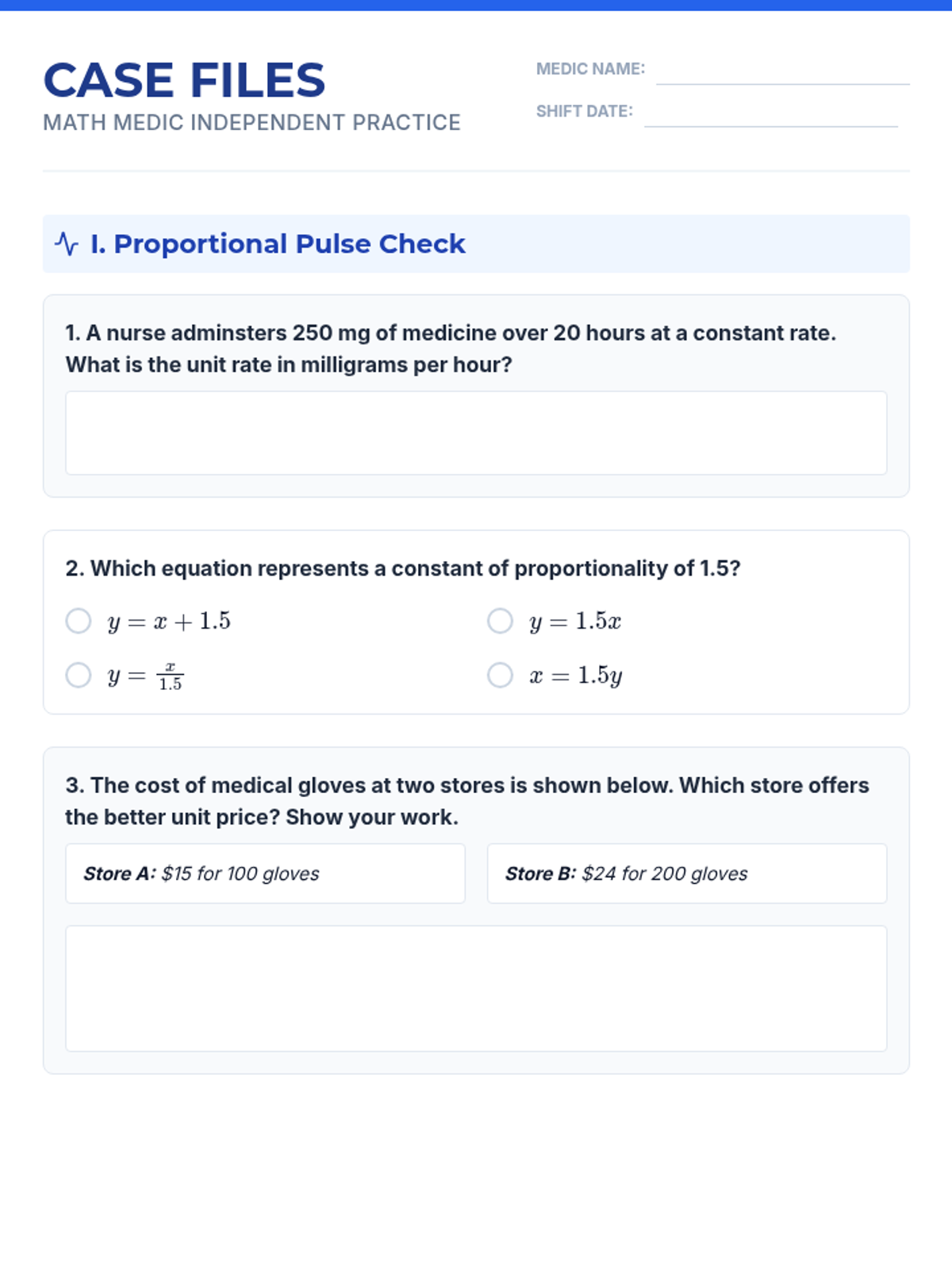
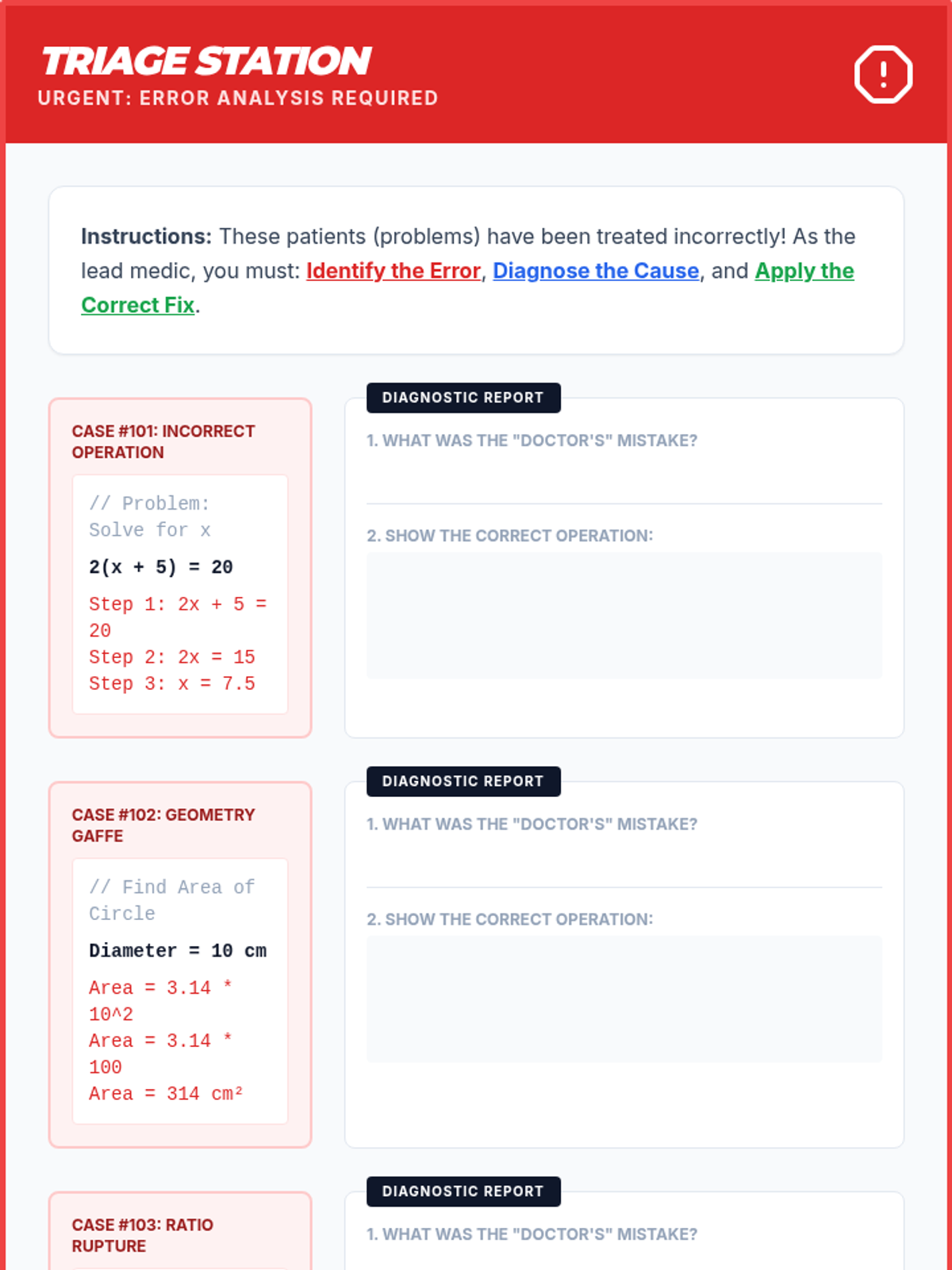
A high-energy, medical-themed 50-minute review of proportional relationships, equations, and geometry for middle school students, featuring error analysis and state-test style practice.
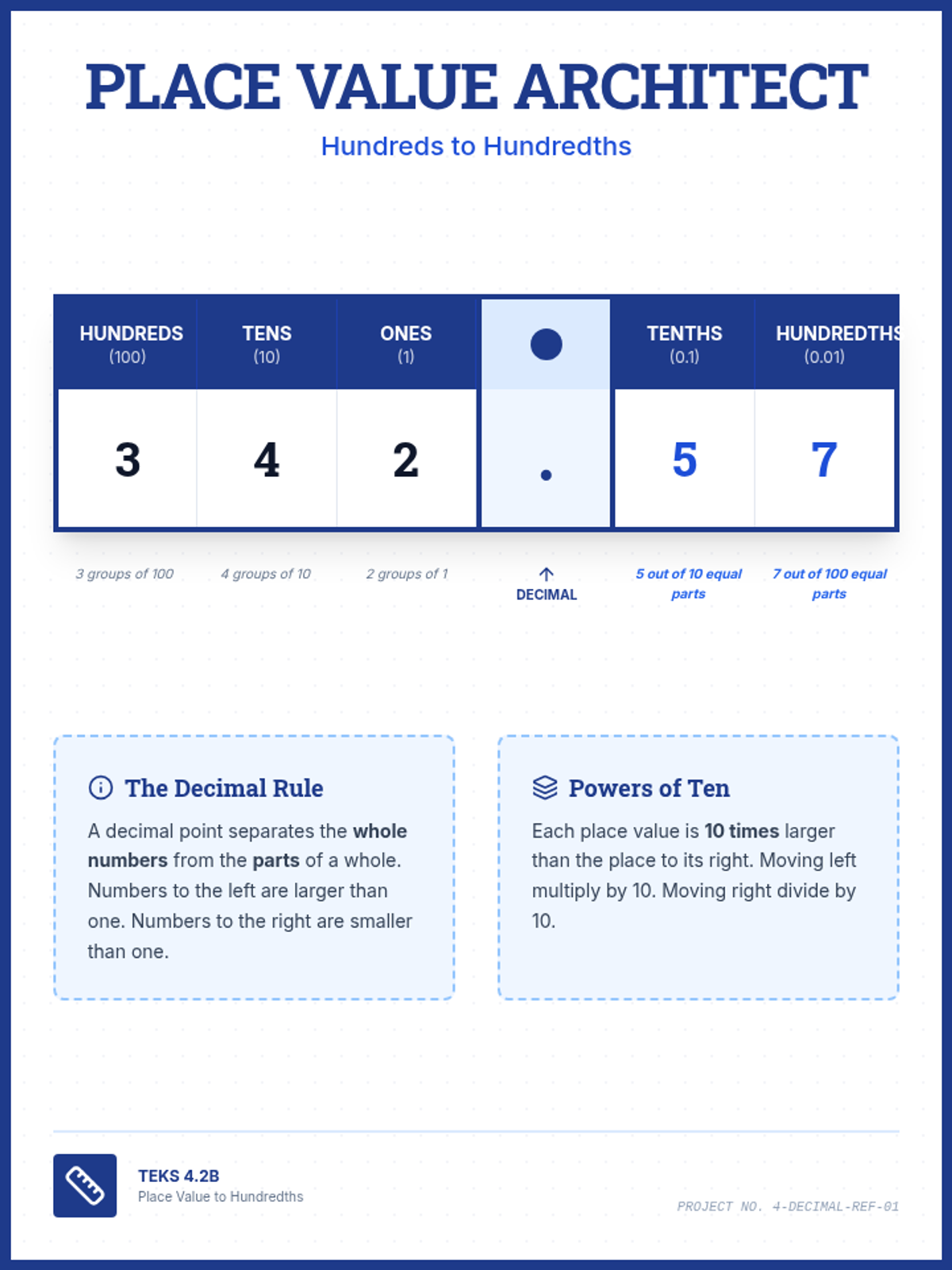
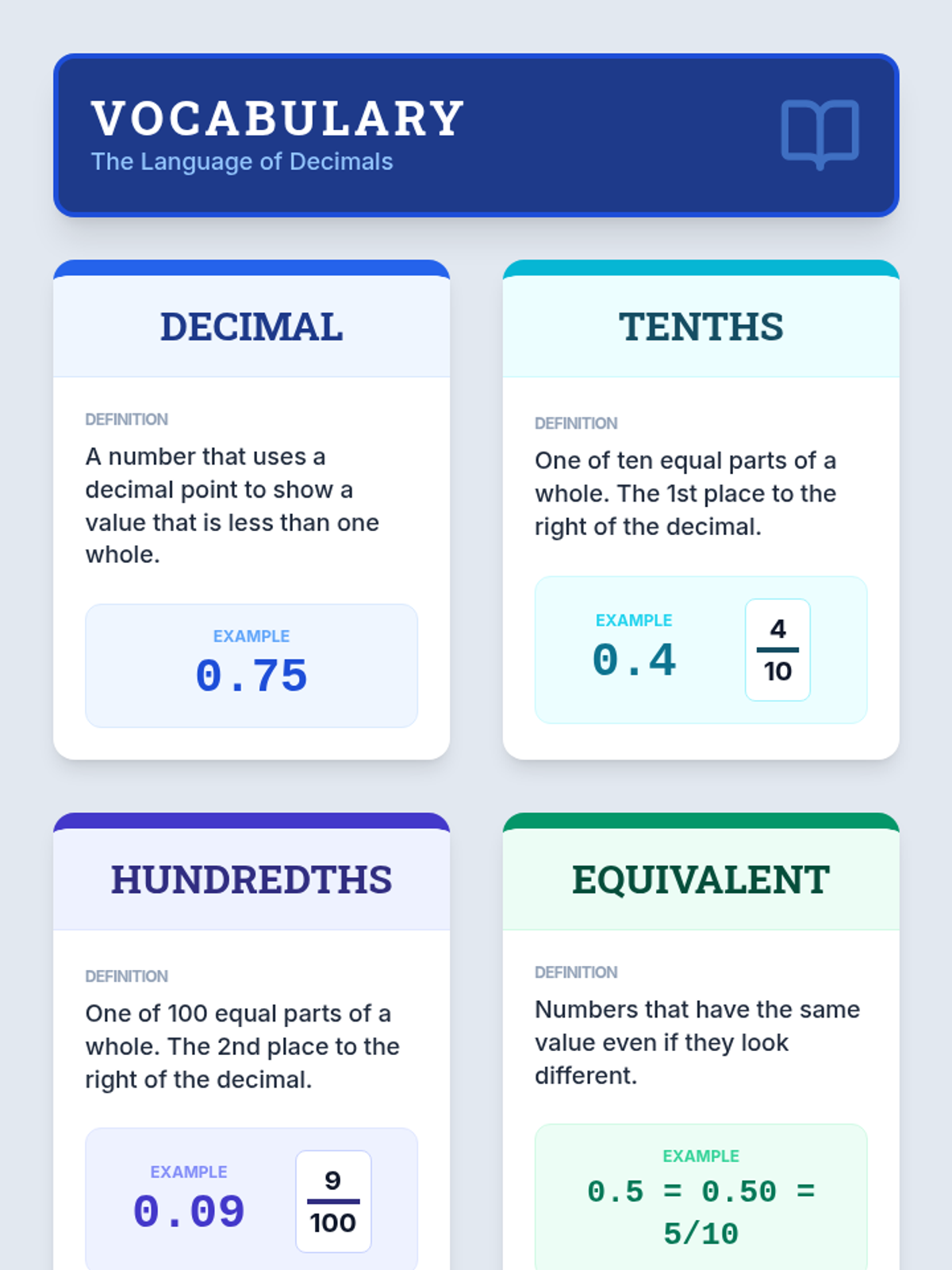
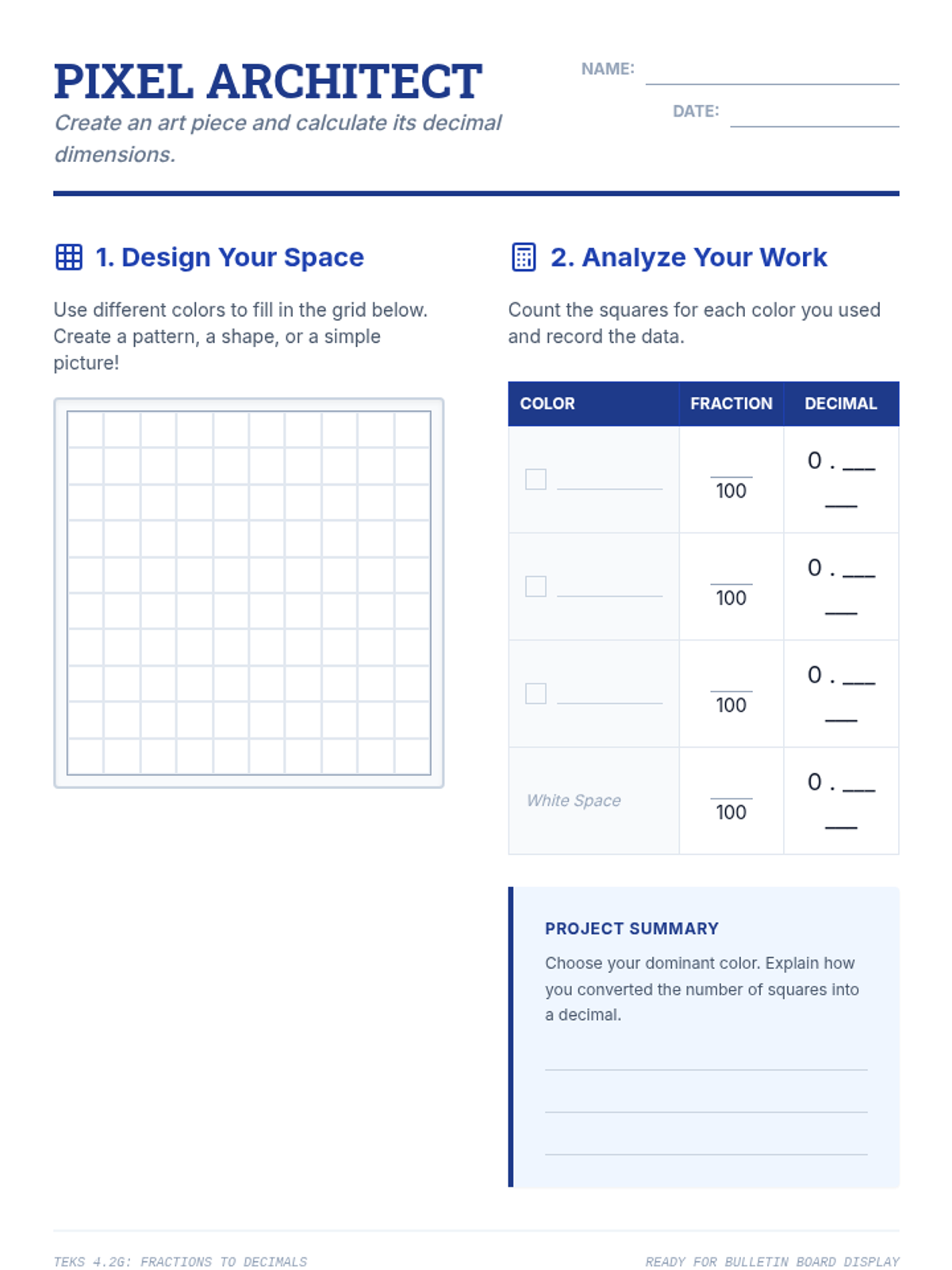
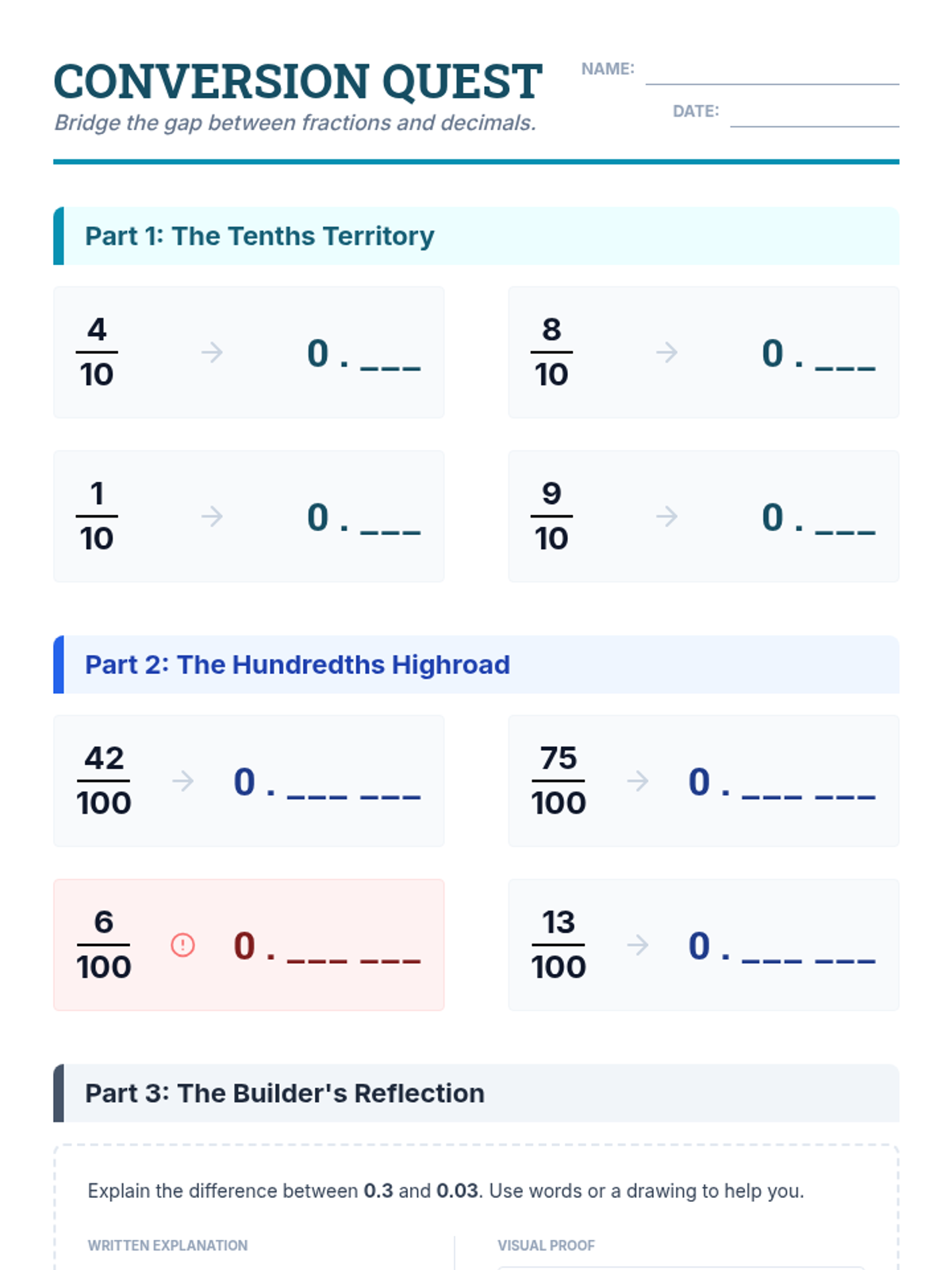
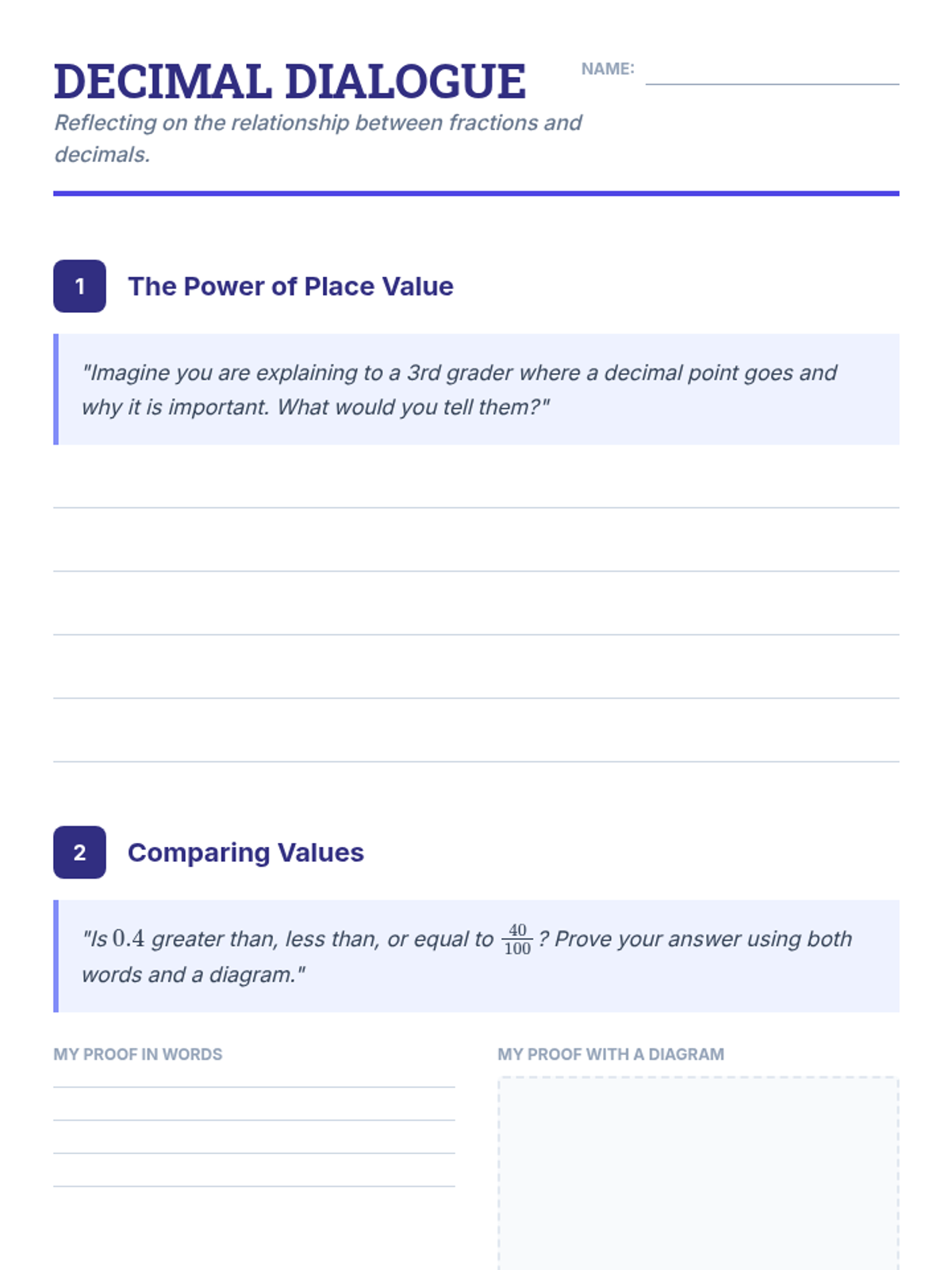
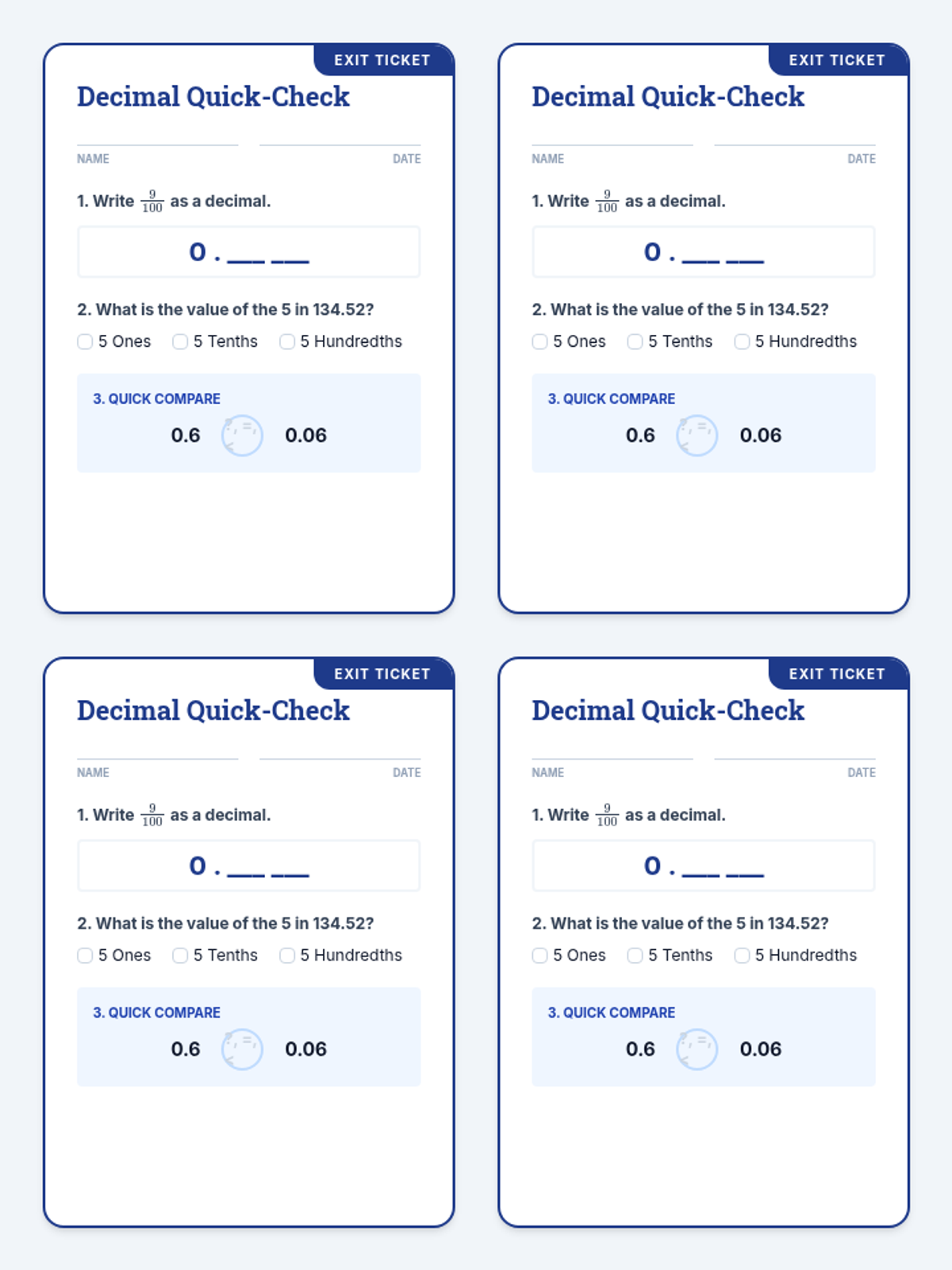
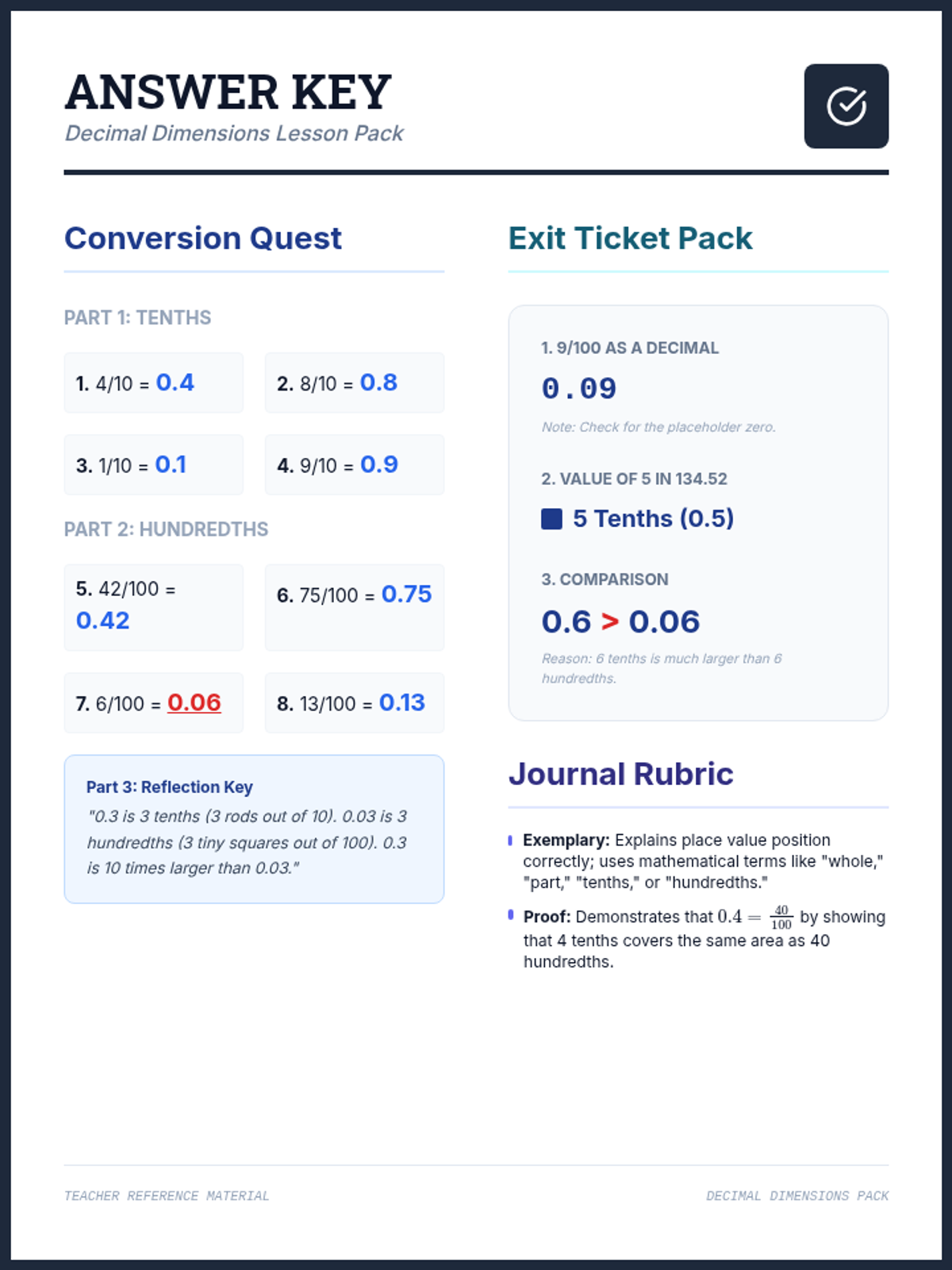
A comprehensive set of bulletin board resources and student activities focused on understanding fractions and decimals through the hundredths place, aligned with 4th Grade Texas TEKS.
A middle school math lesson exploring proportional reasoning through real-world scaling, mapping, and budgeting scenarios. Students use visual models and multiple pathways to solve authentic problems.
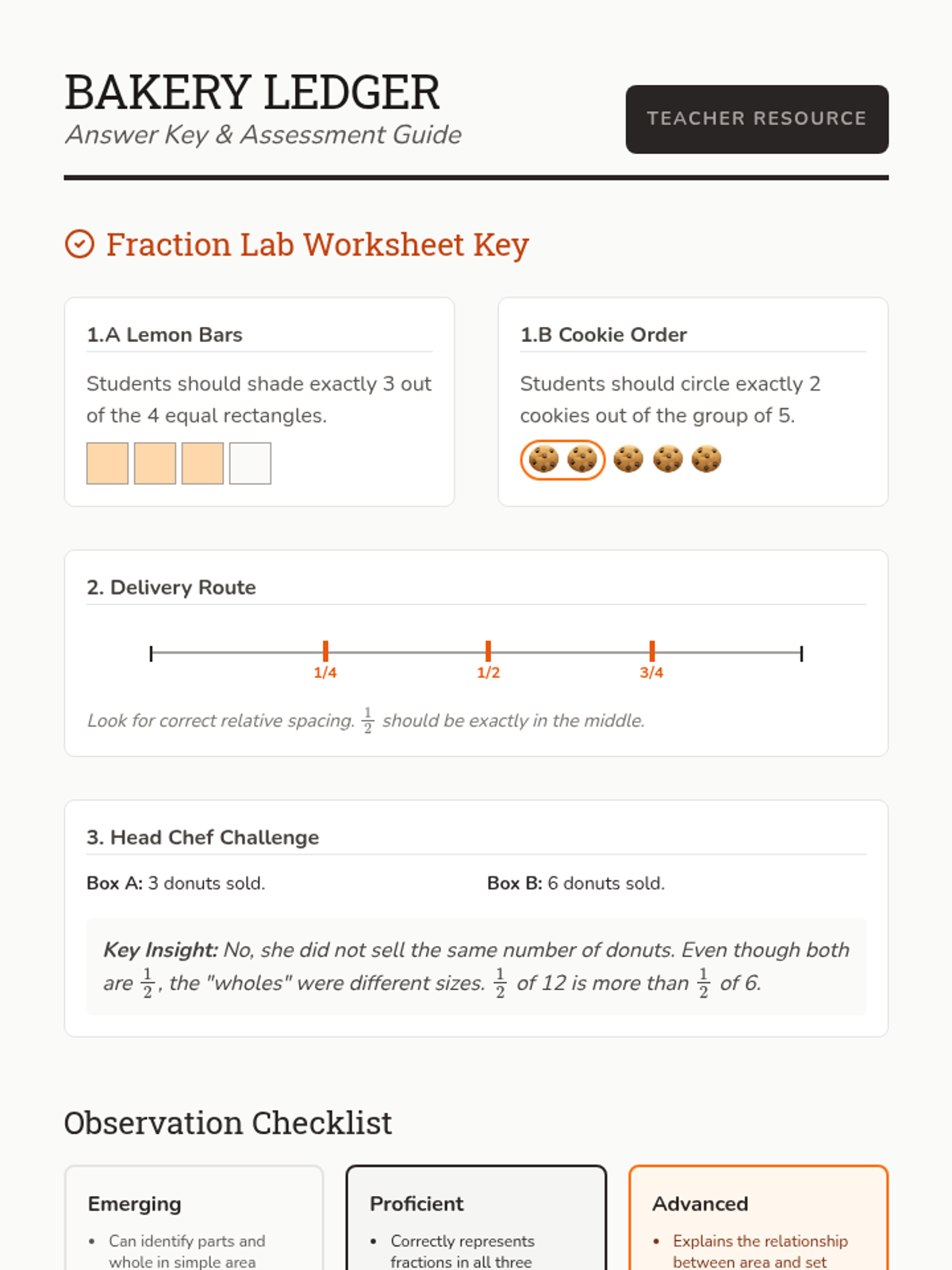
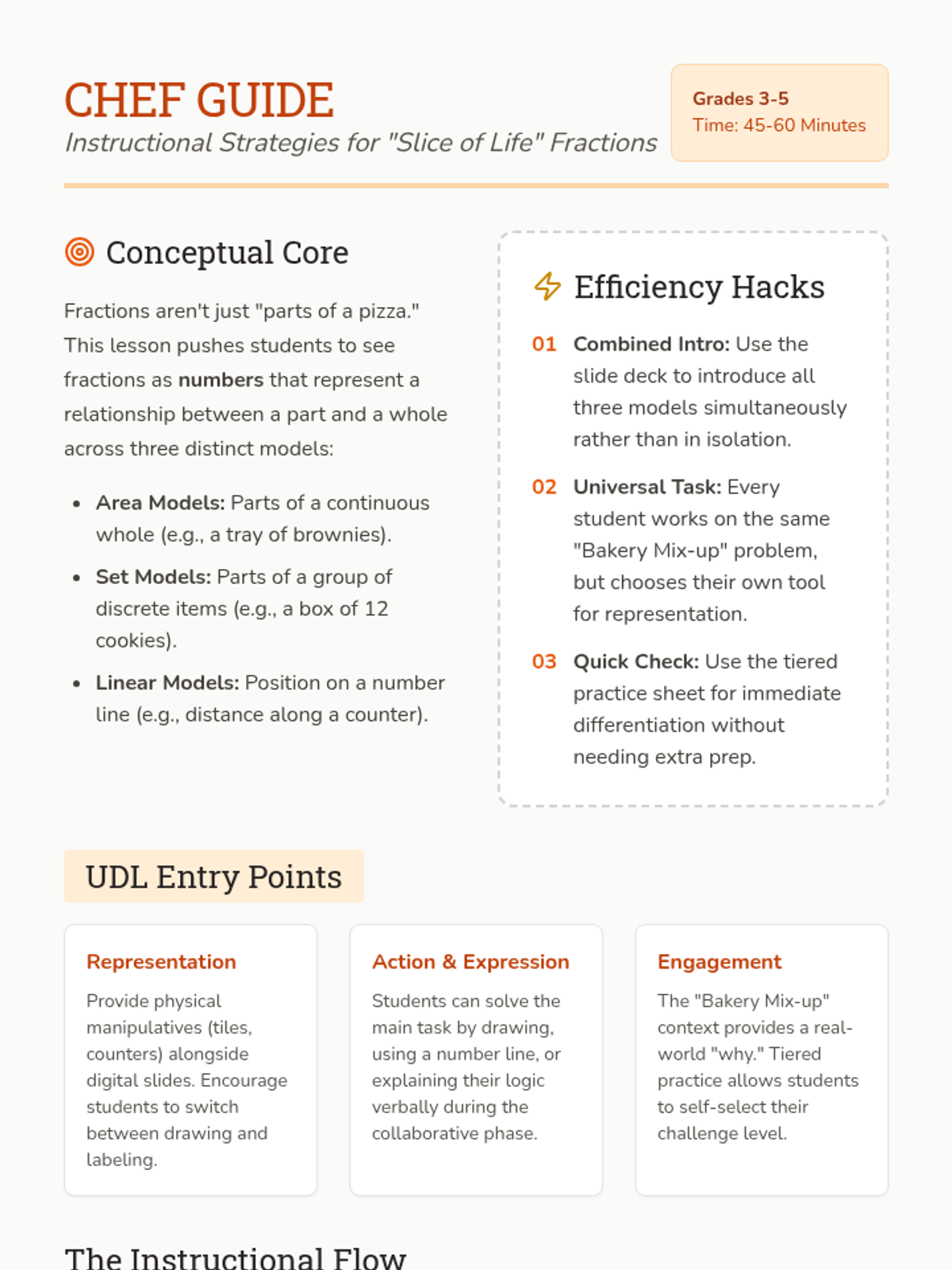
A conceptual introduction to fractions using a bakery theme. Students explore area, set, and linear models through a collaborative 'Great Bakery Mix-up' task designed with UDL principles to ensure all learners can access deep mathematical concepts.
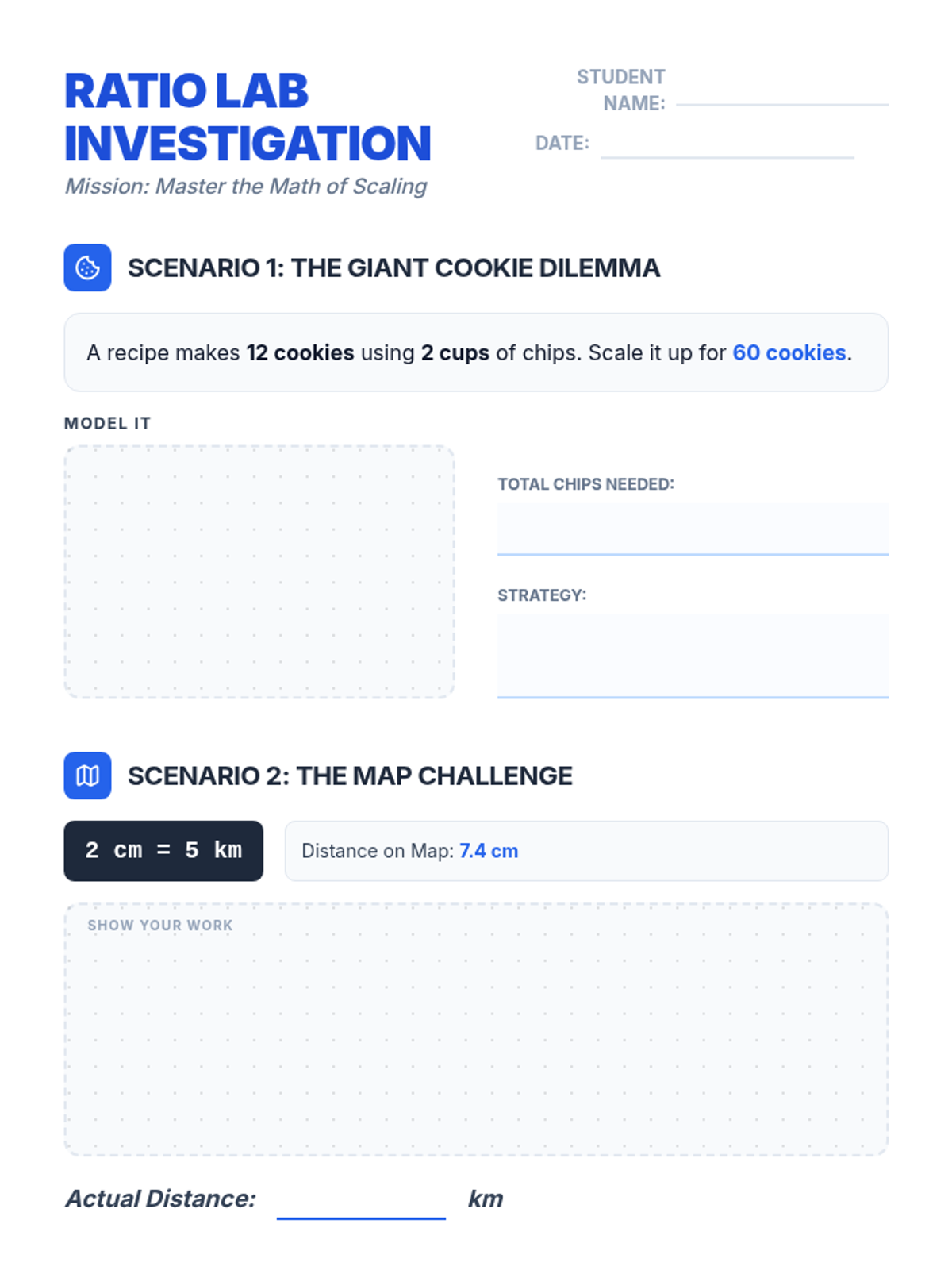
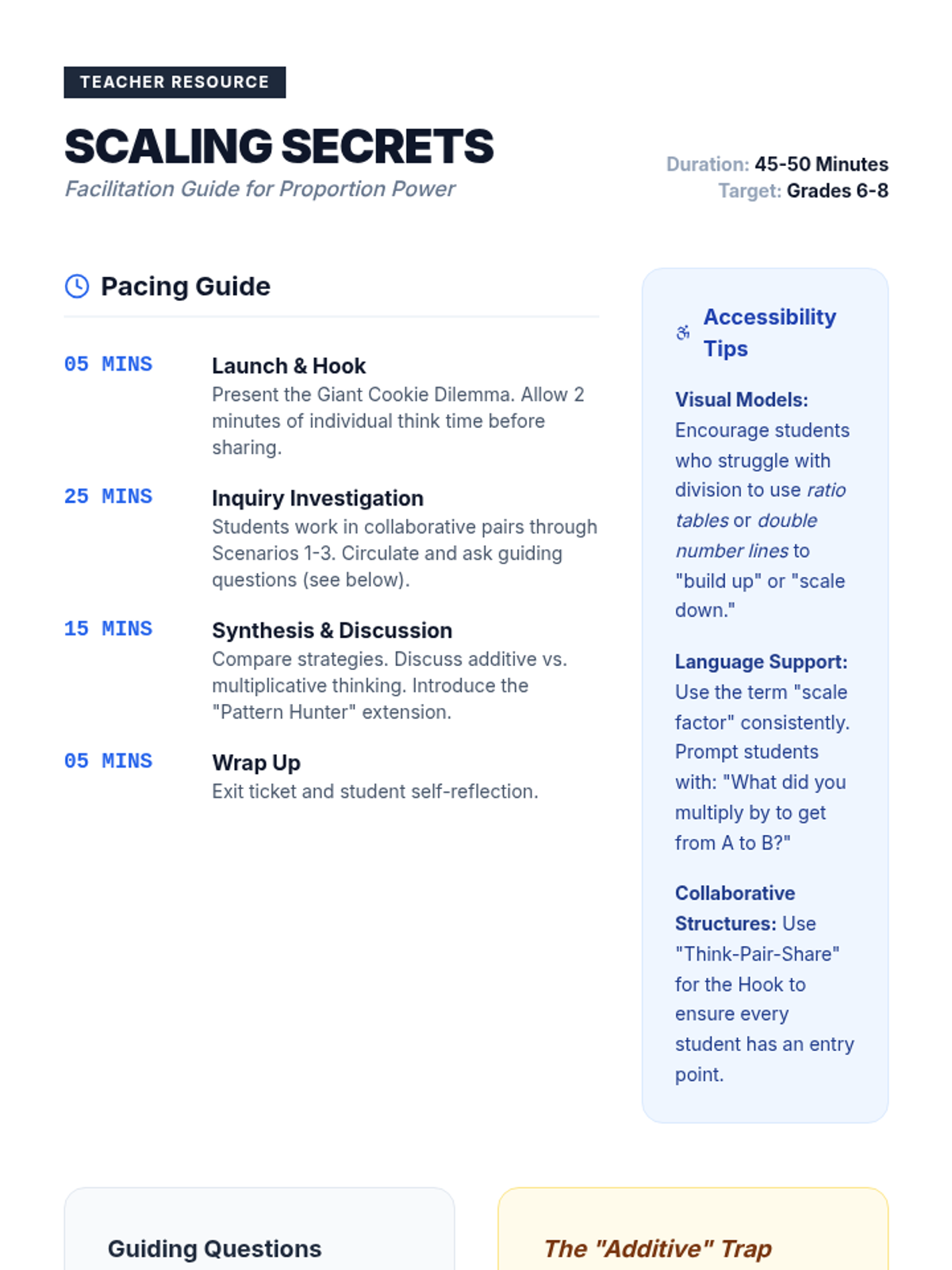
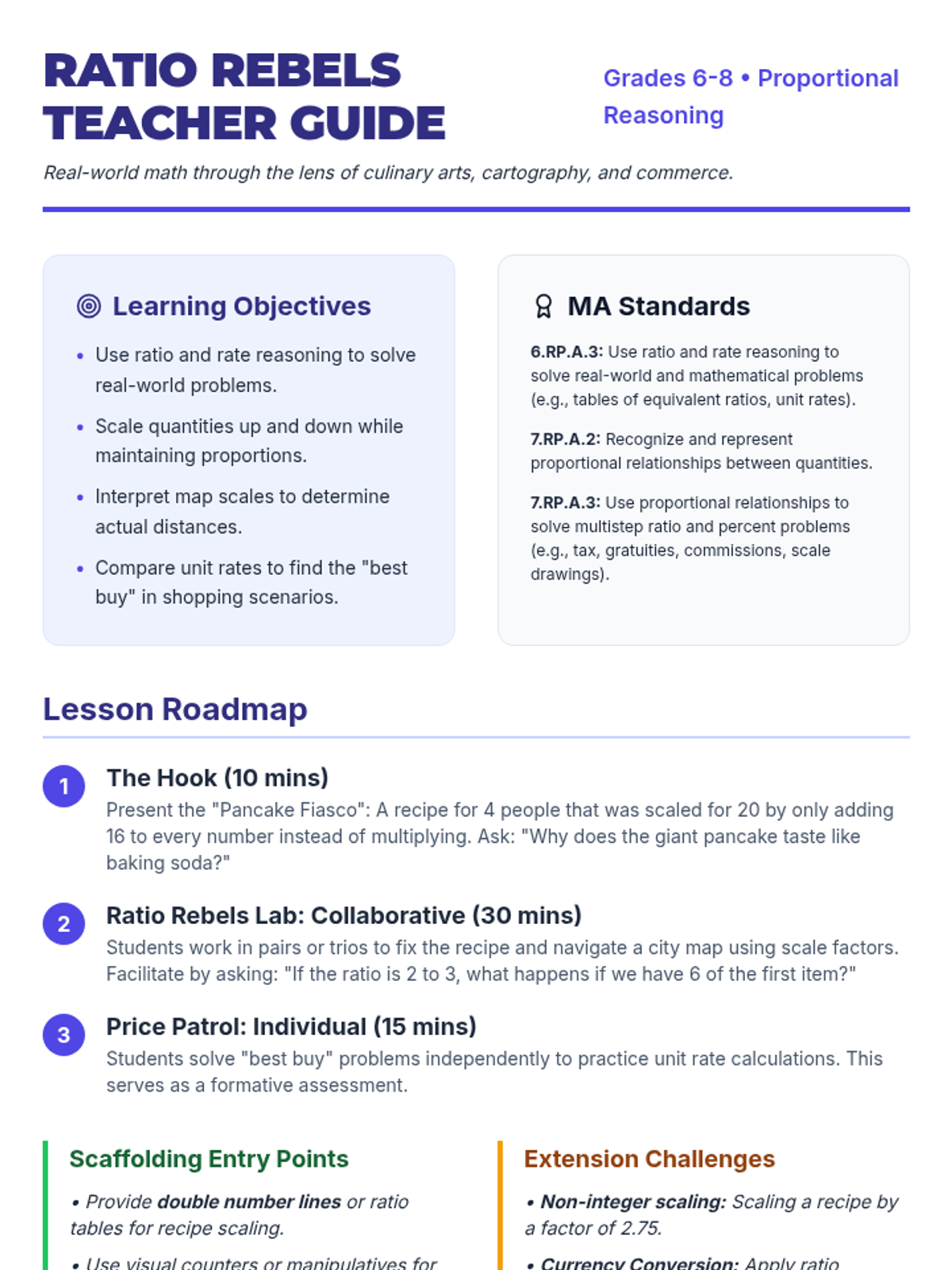
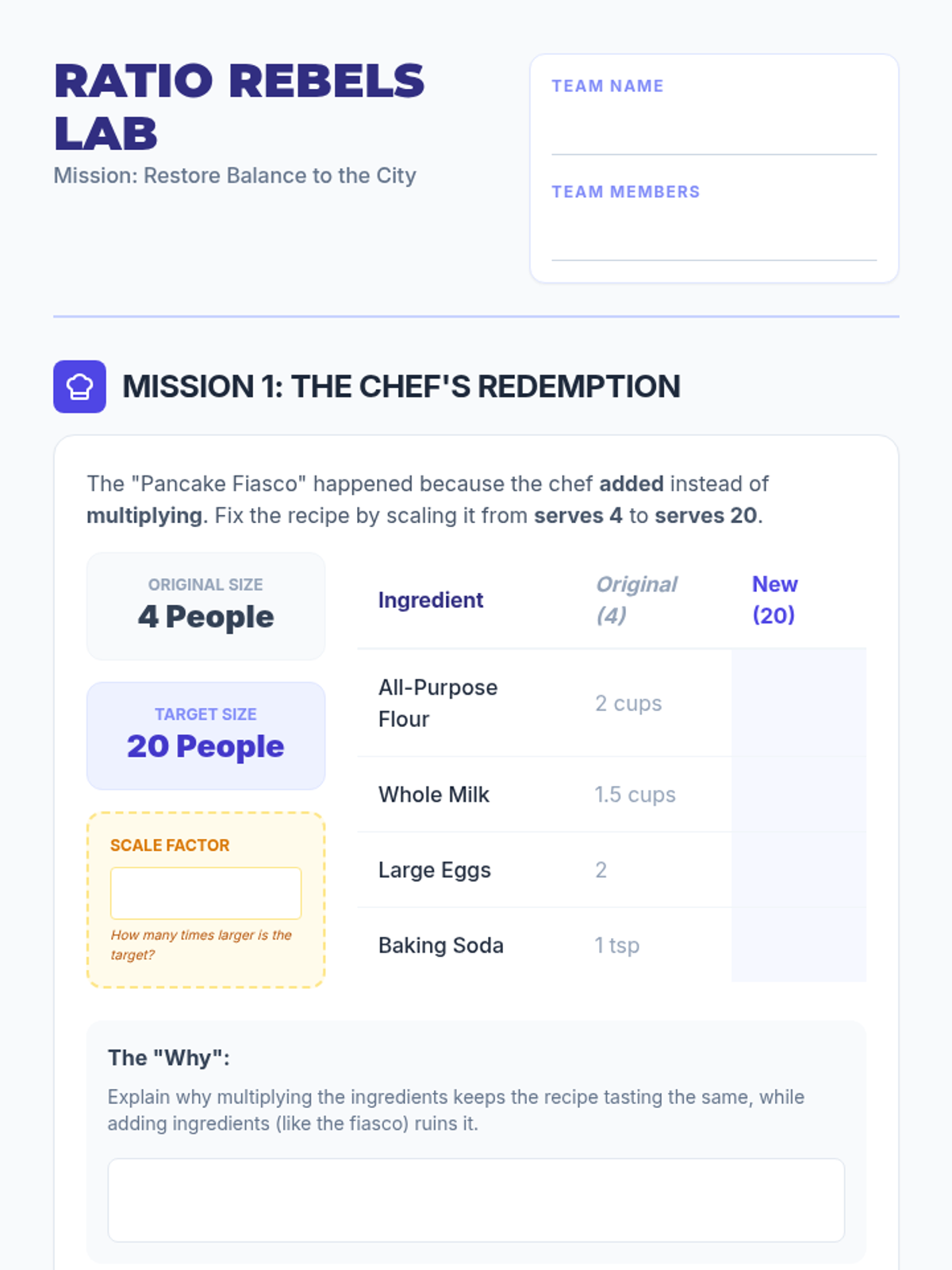
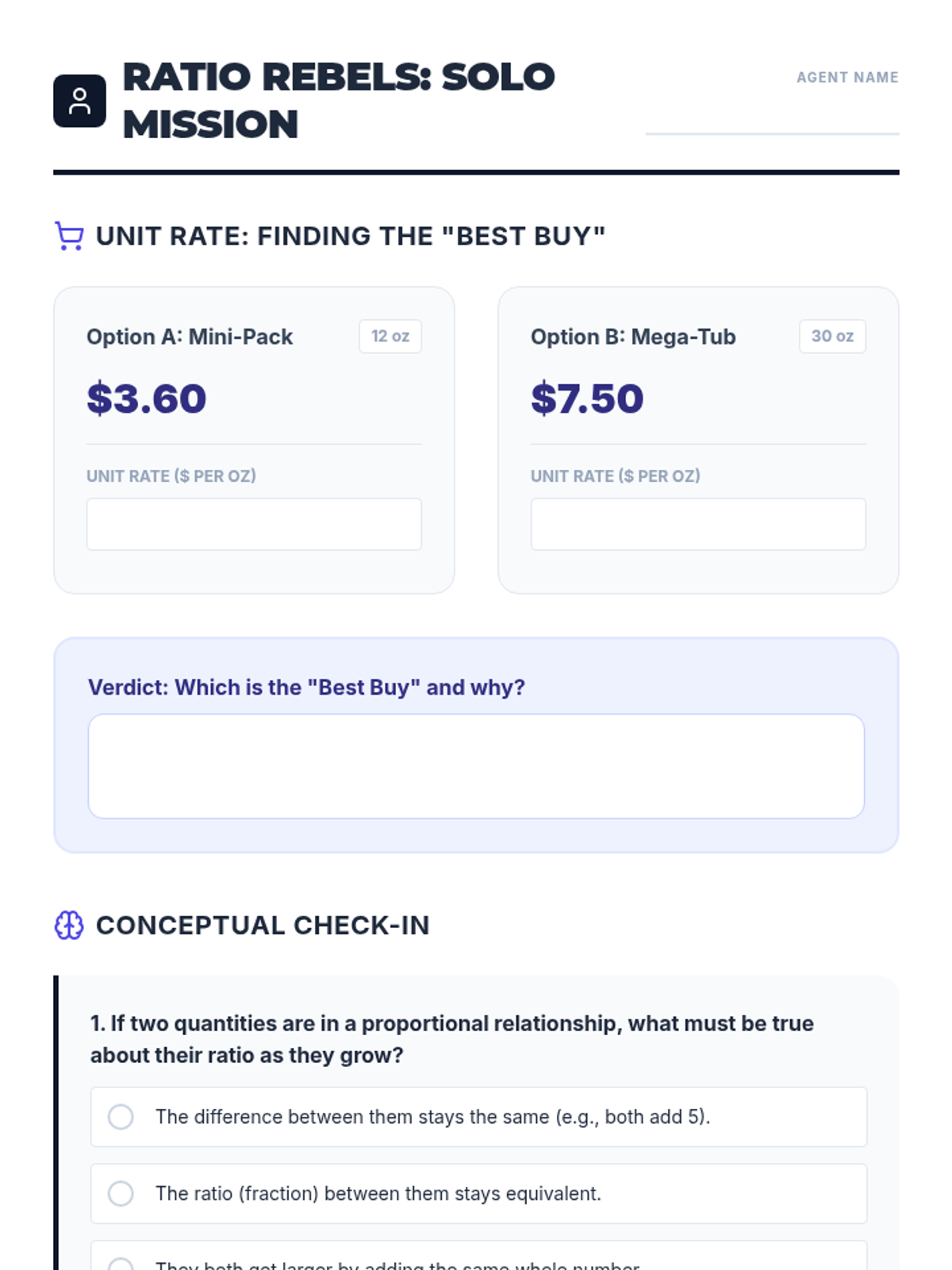
An inquiry-based exploration of proportional reasoning through recipe scaling, map navigation, and smart shopping for grades 6-8, aligned to Massachusetts curriculum frameworks.
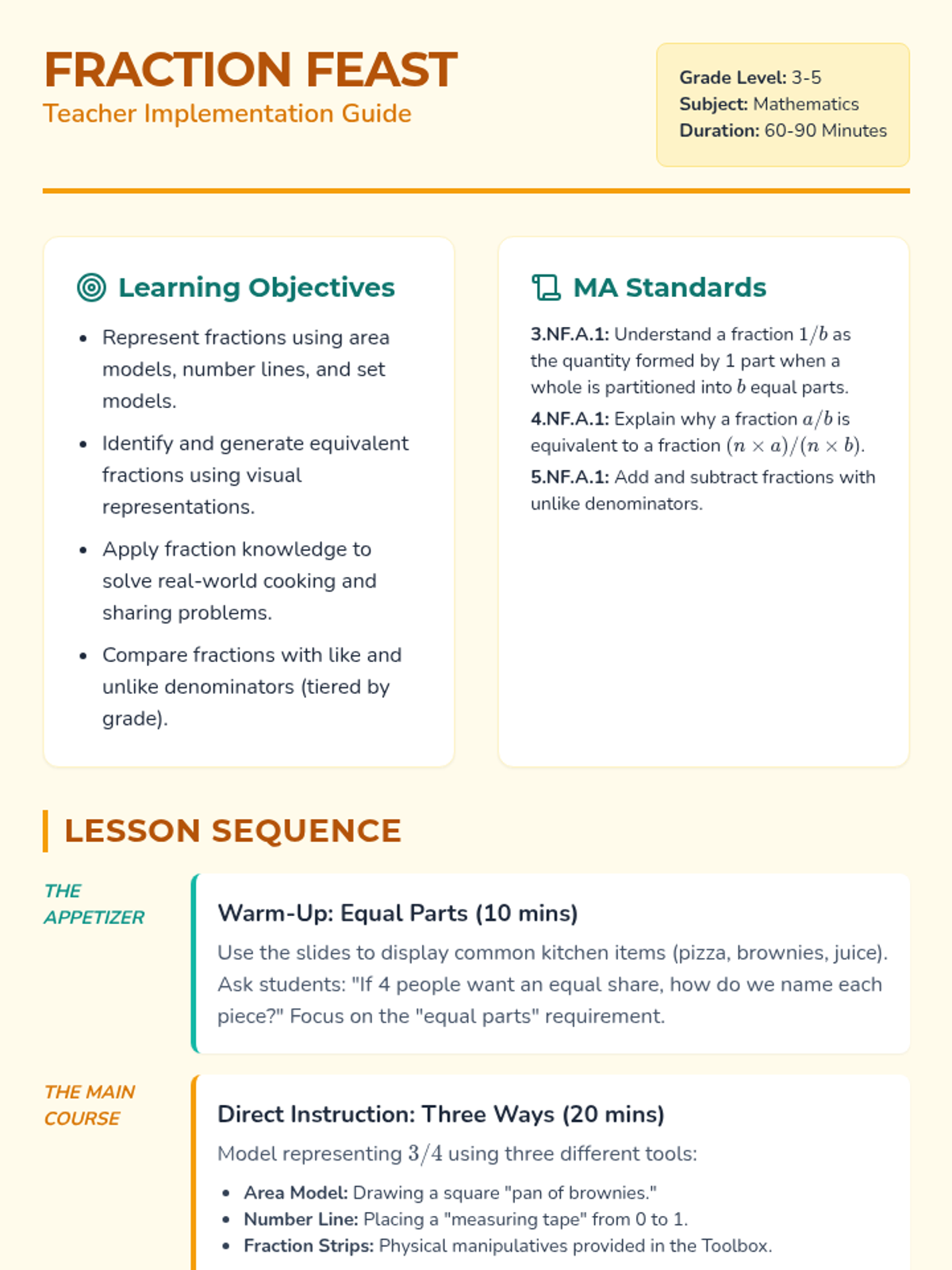
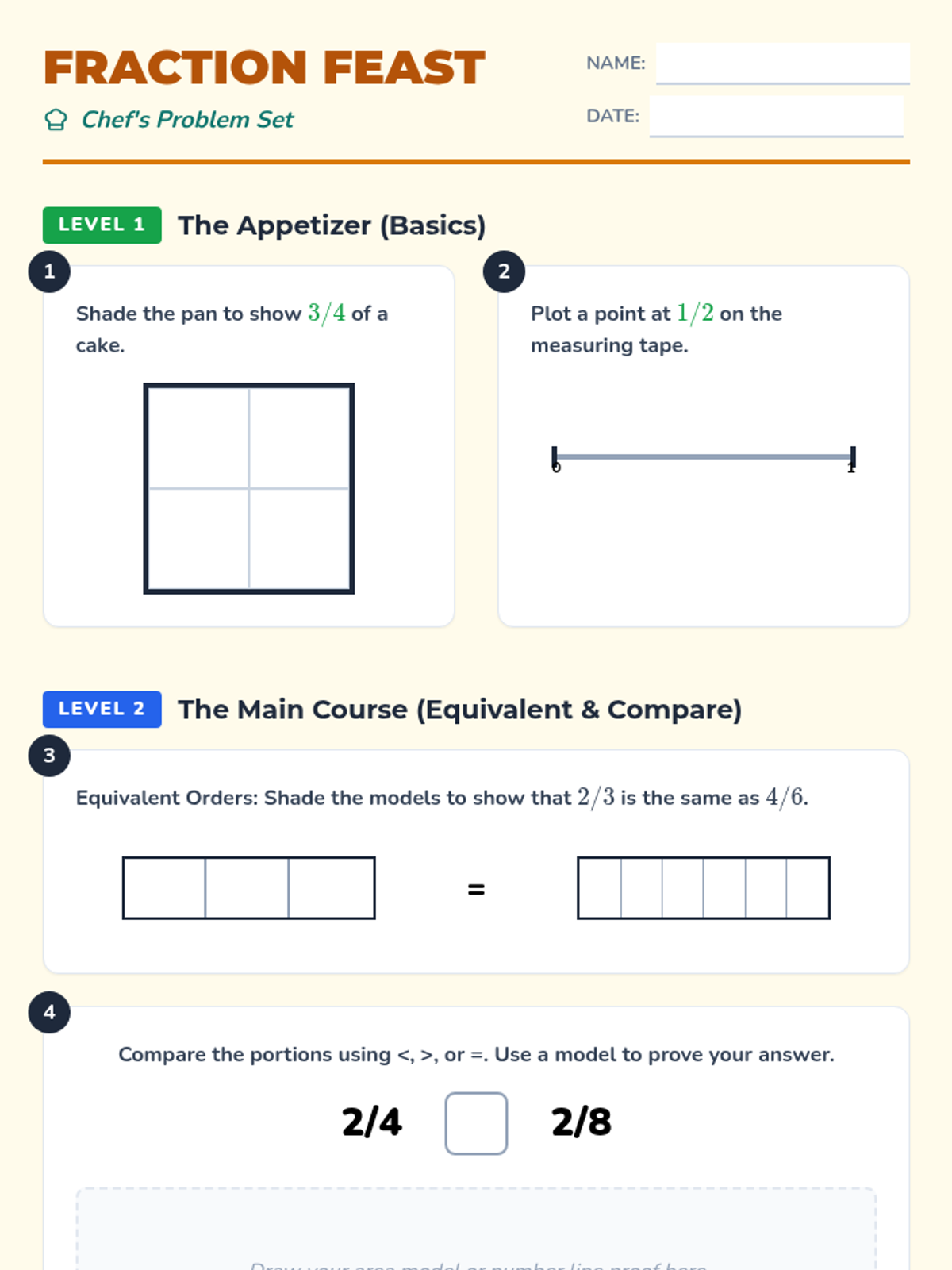
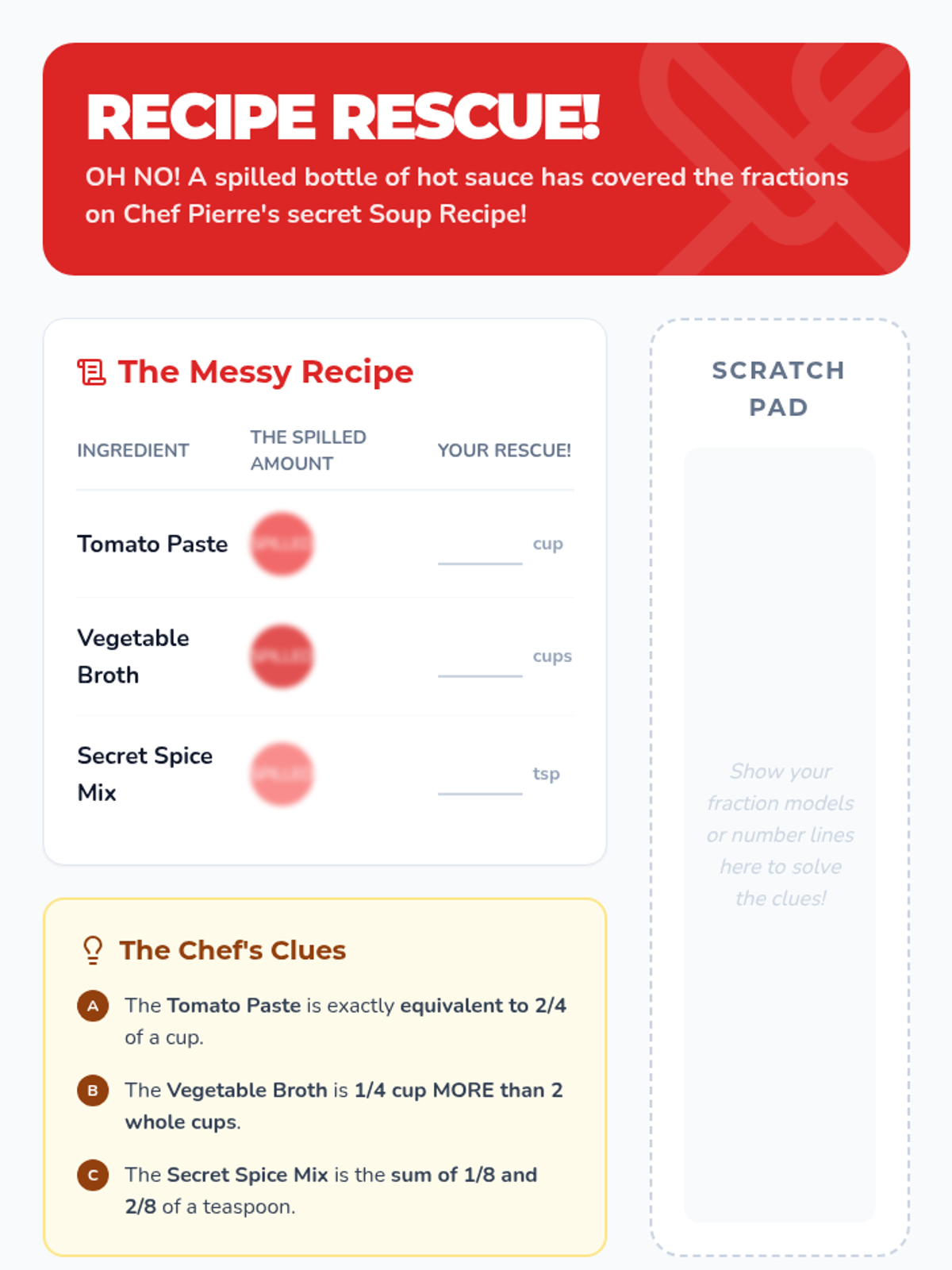
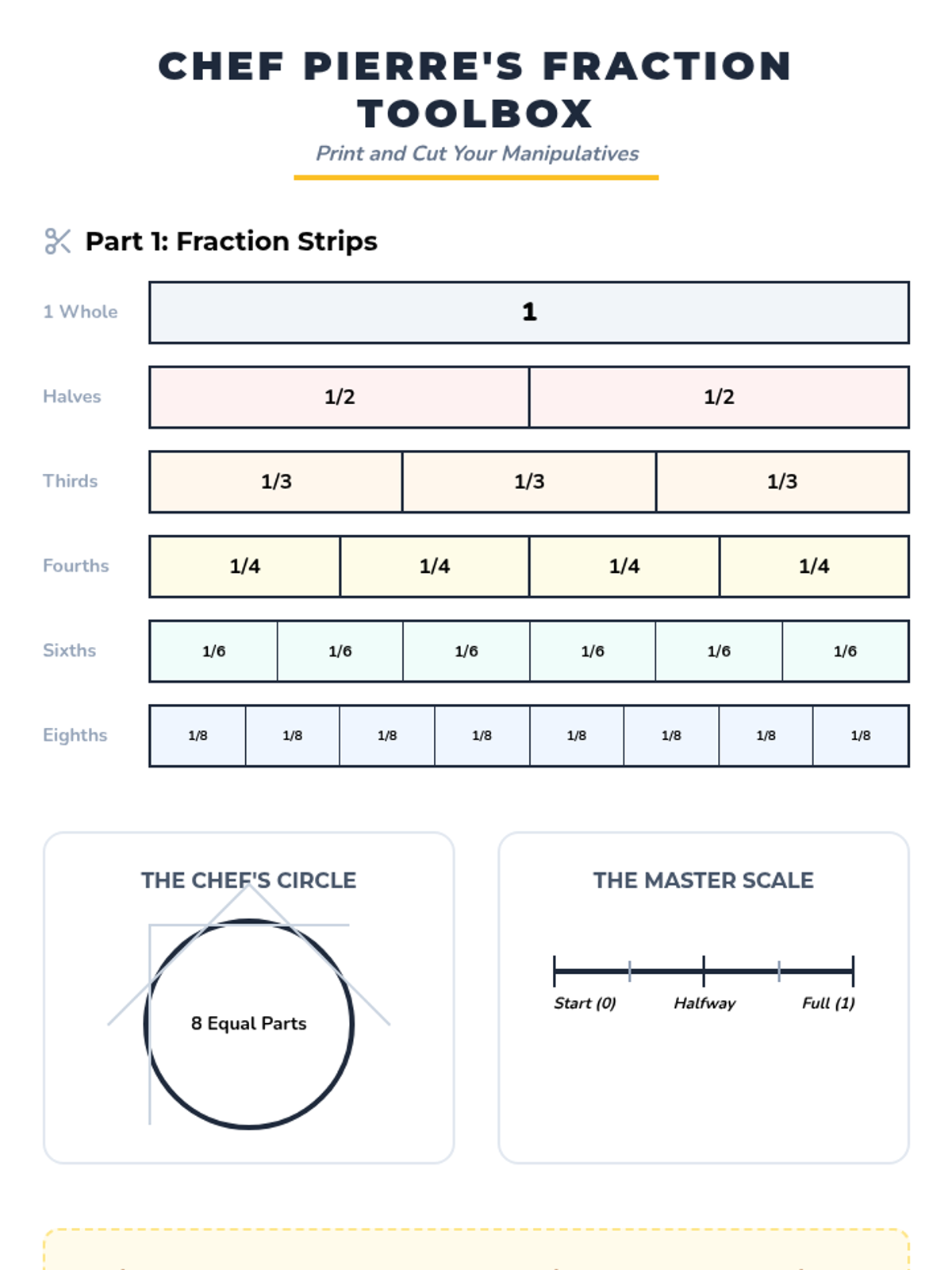
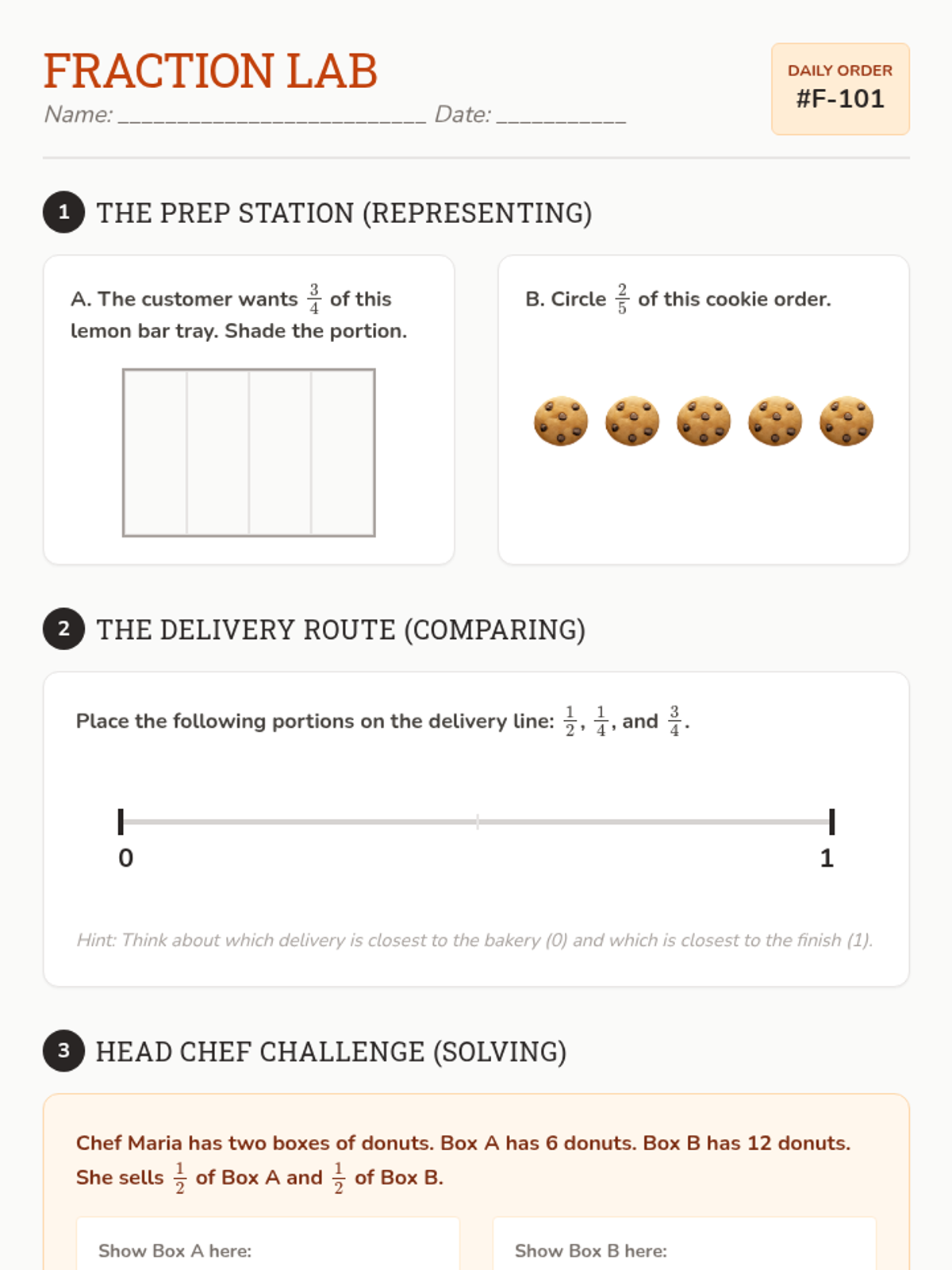
A hands-on, kitchen-themed lesson where students explore fractions through area models, number lines, and real-world cooking scenarios. Includes tiered tasks for grades 3-5 to master fractional representation and comparison.
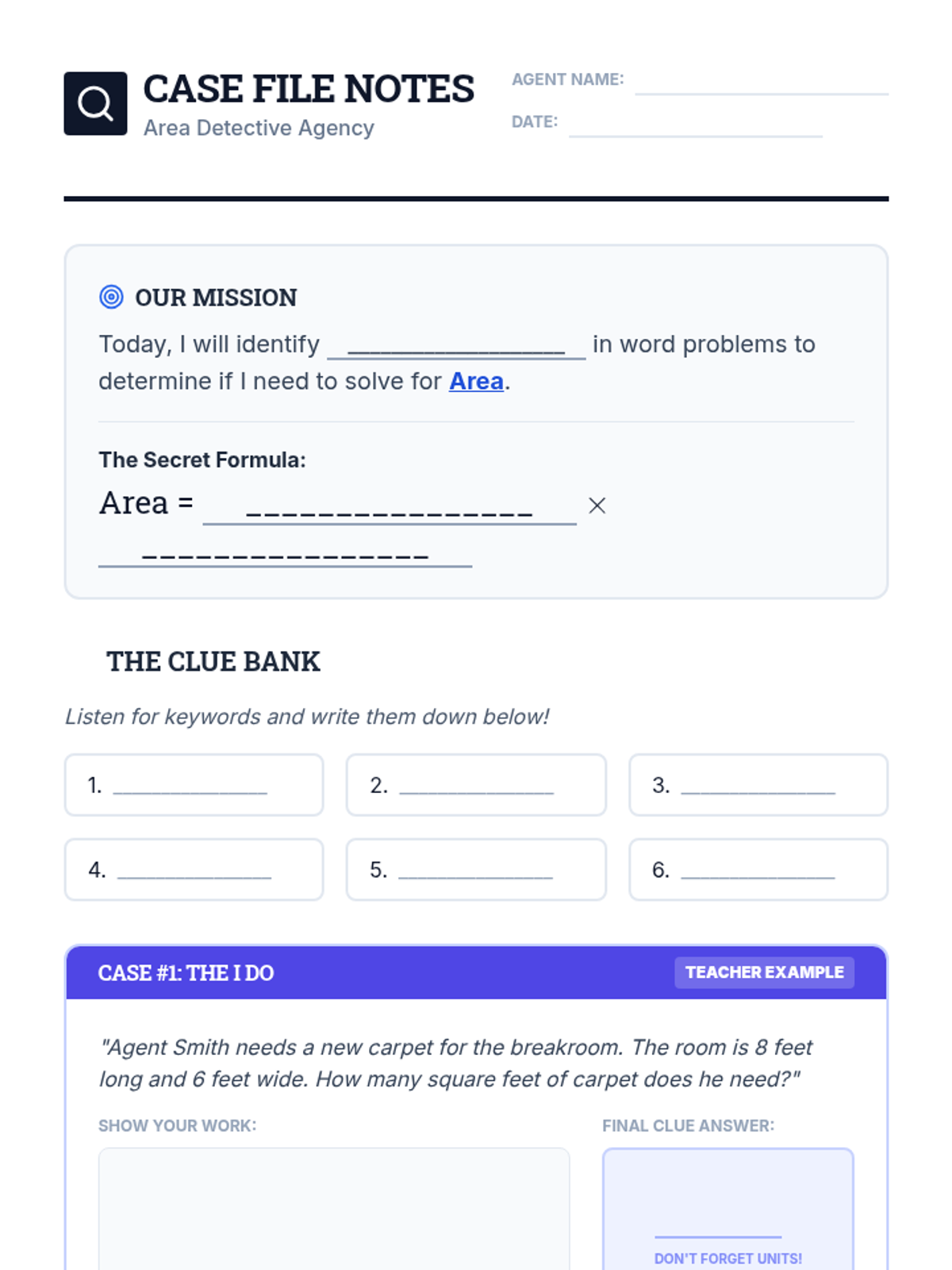
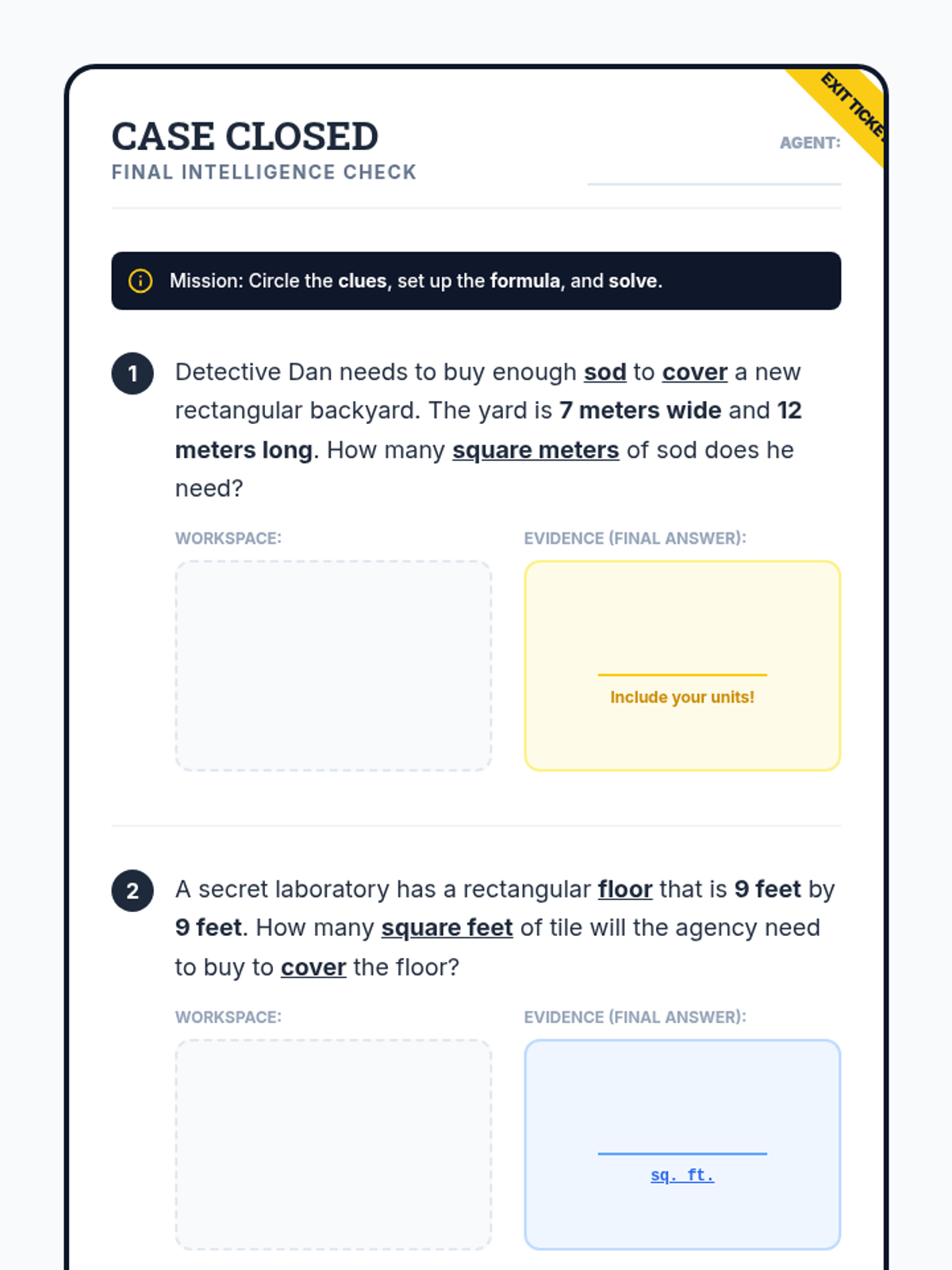
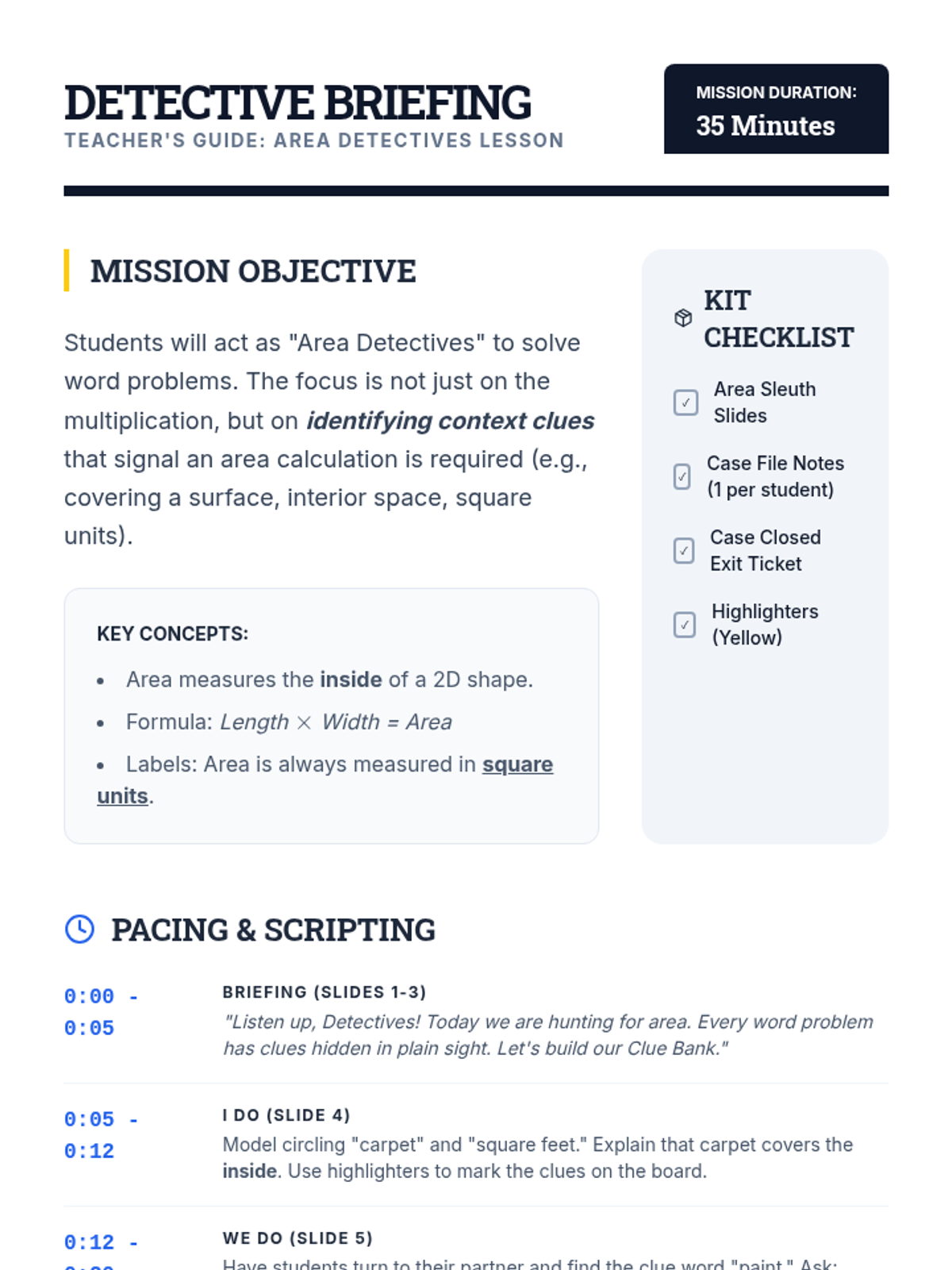
A 35-minute introductory lesson on solving area word problems using context clues and keywords. Students take on the role of 'Area Detectives' to identify when a problem is asking for area and how to calculate it using the length times width formula.
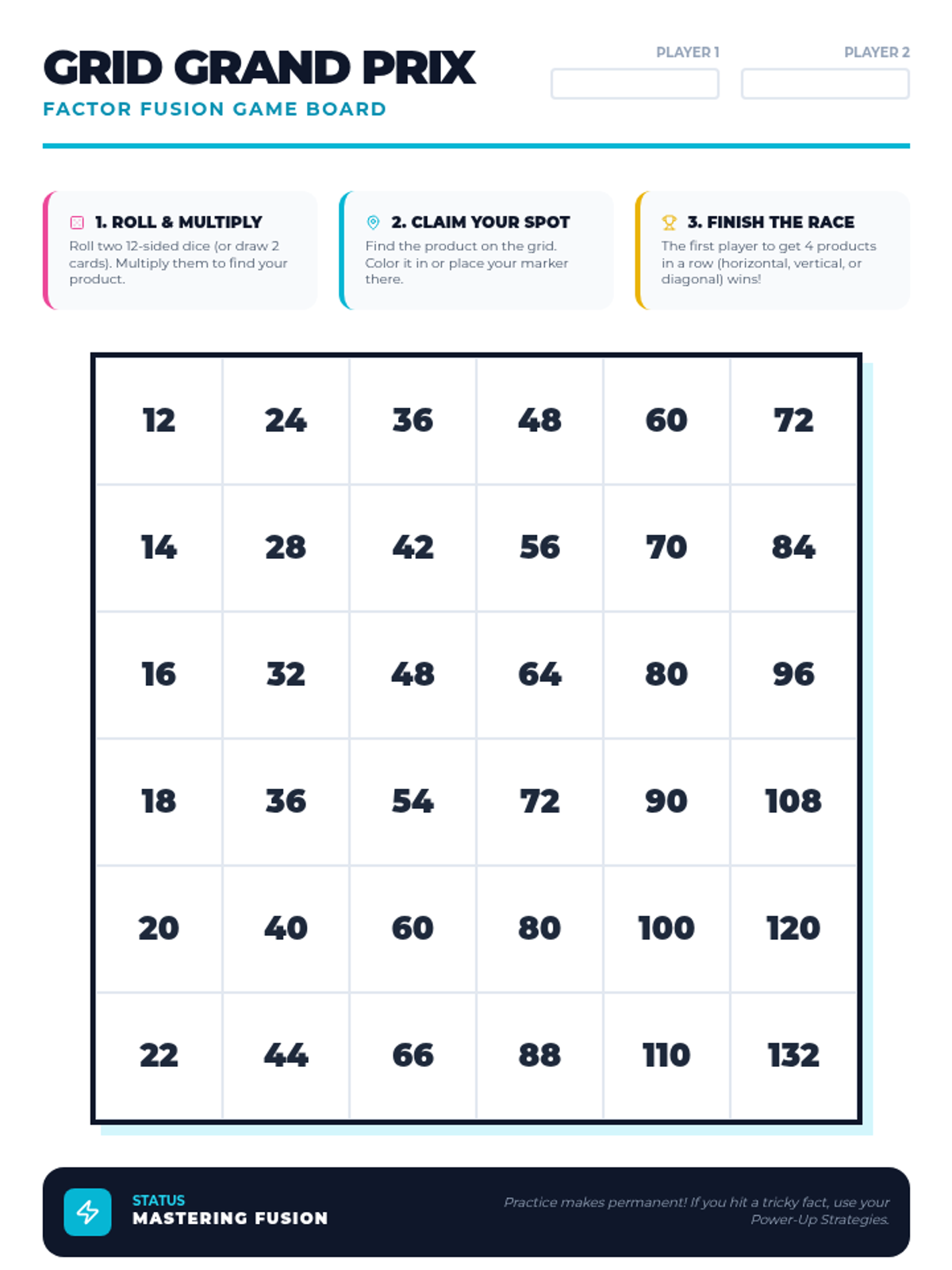
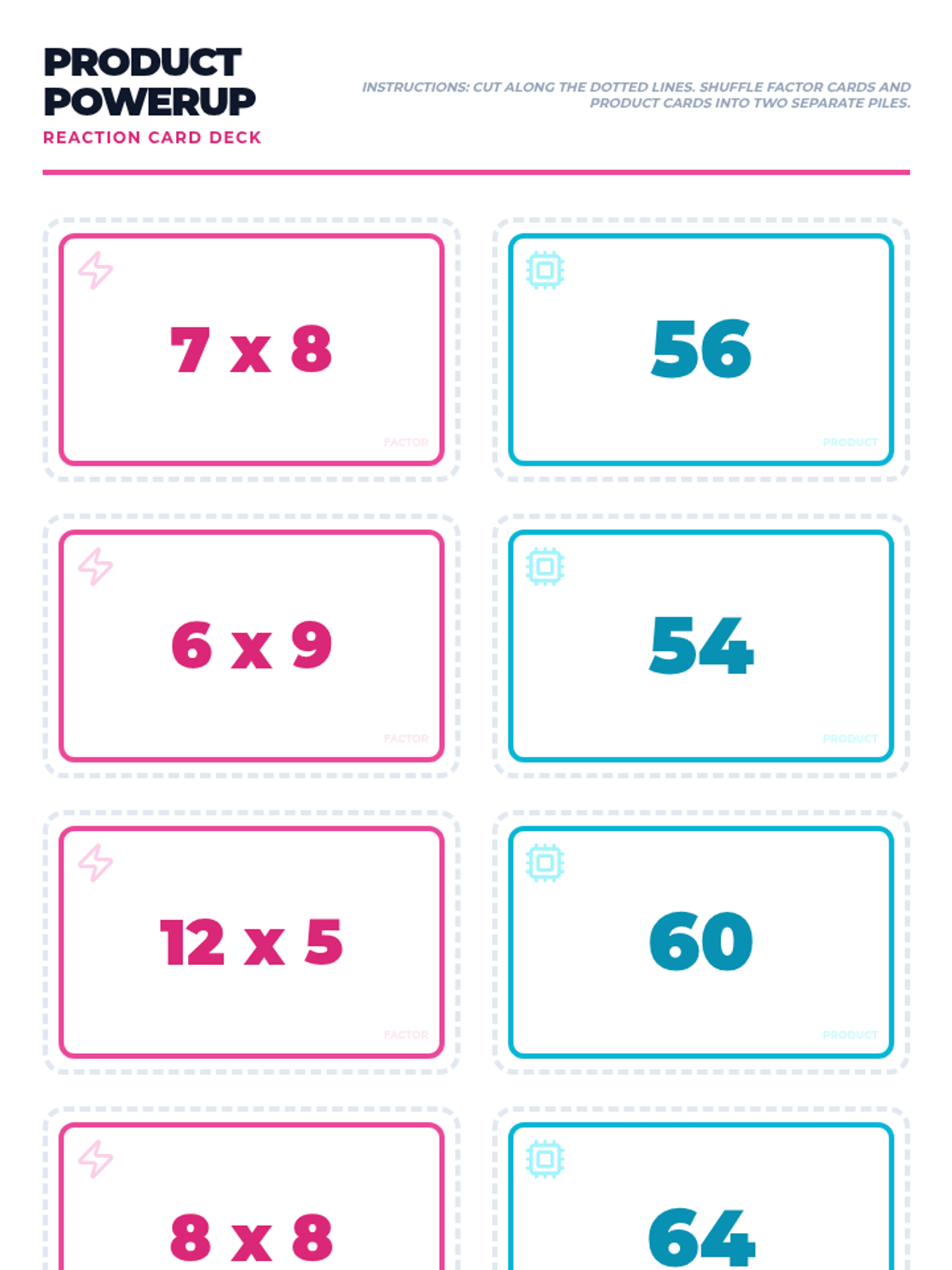
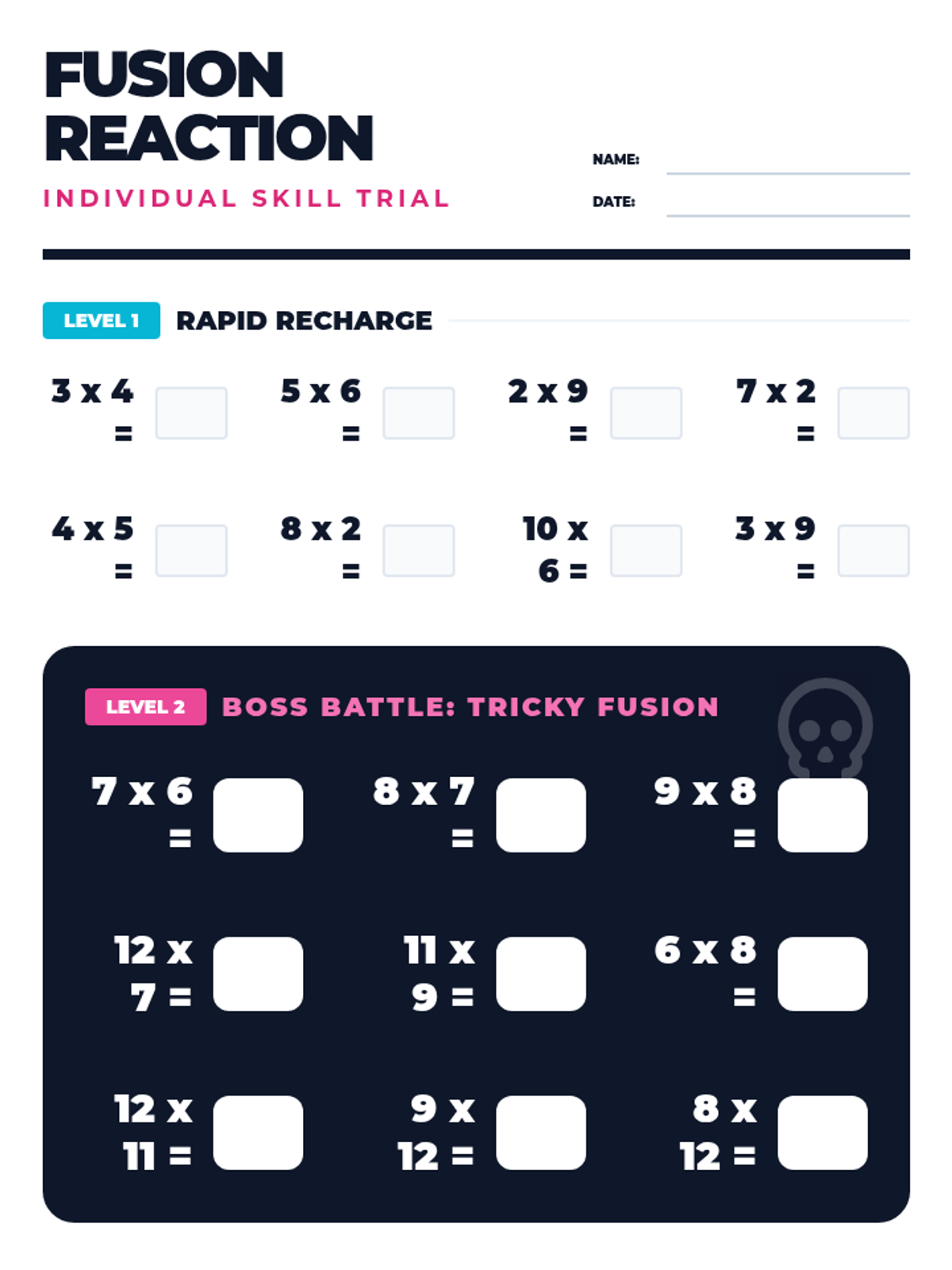
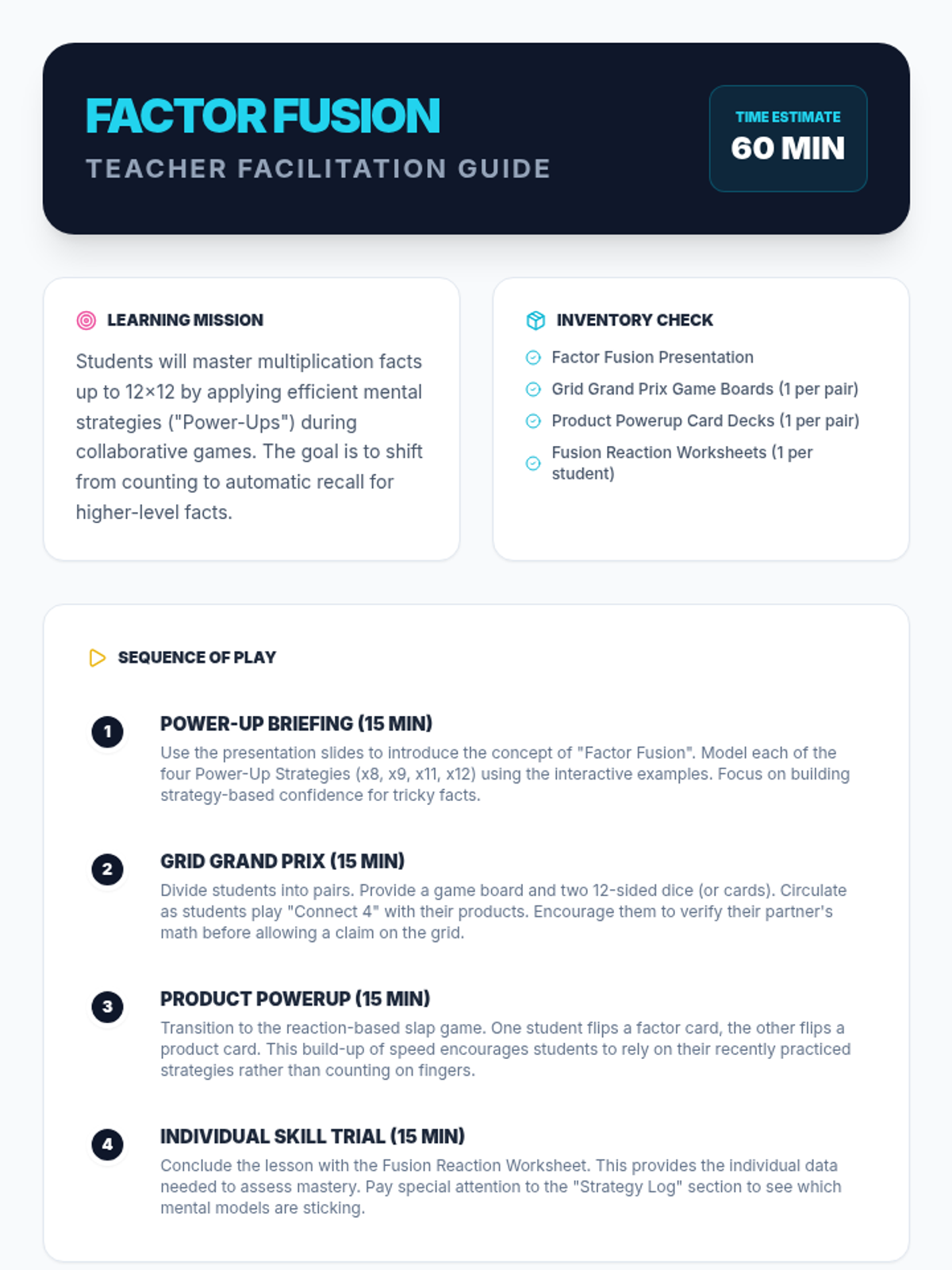
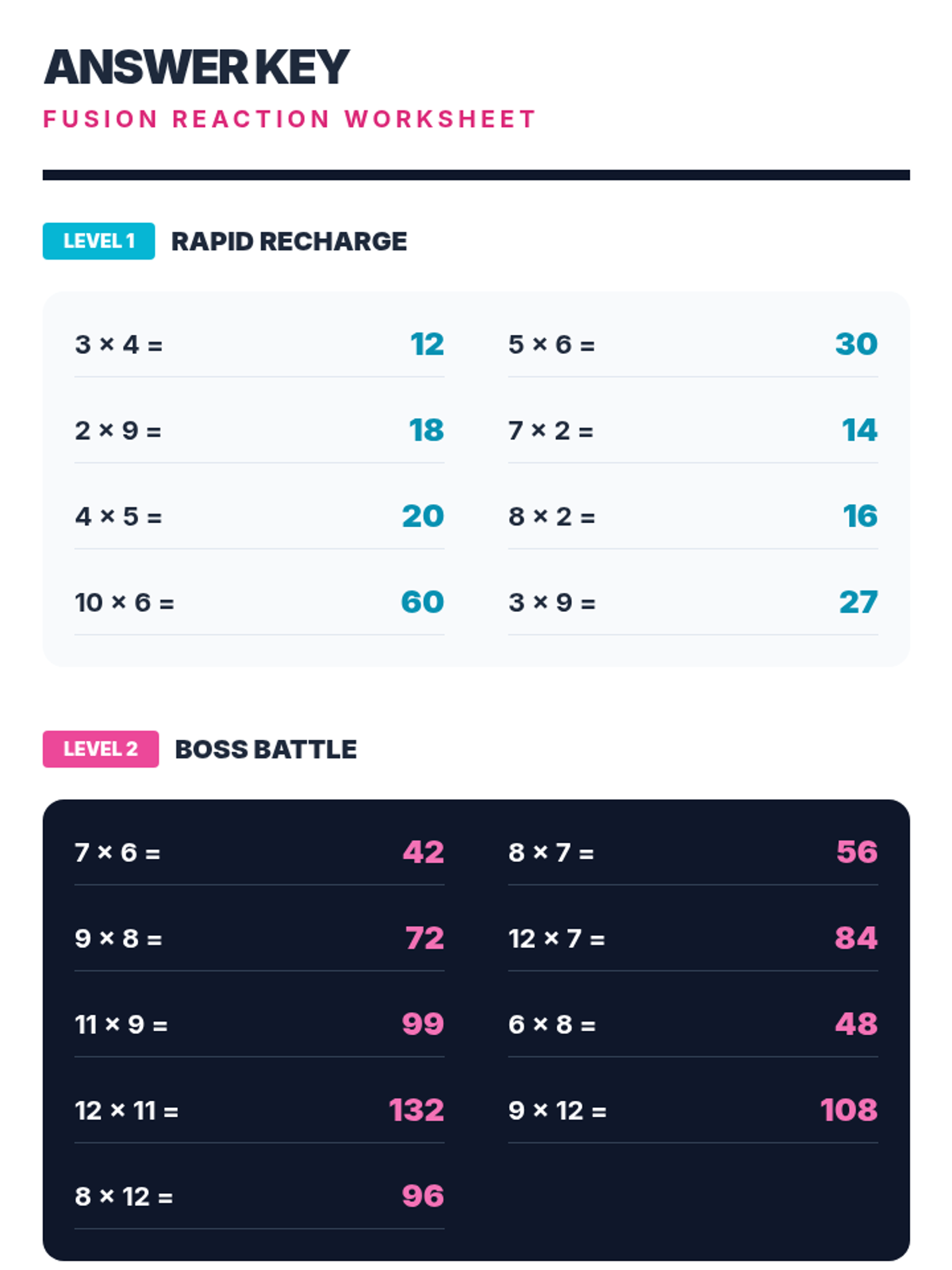
A high-energy lesson focused on mastering multiplication facts up to 12x12 through interactive arcade-themed games and collaborative challenges.
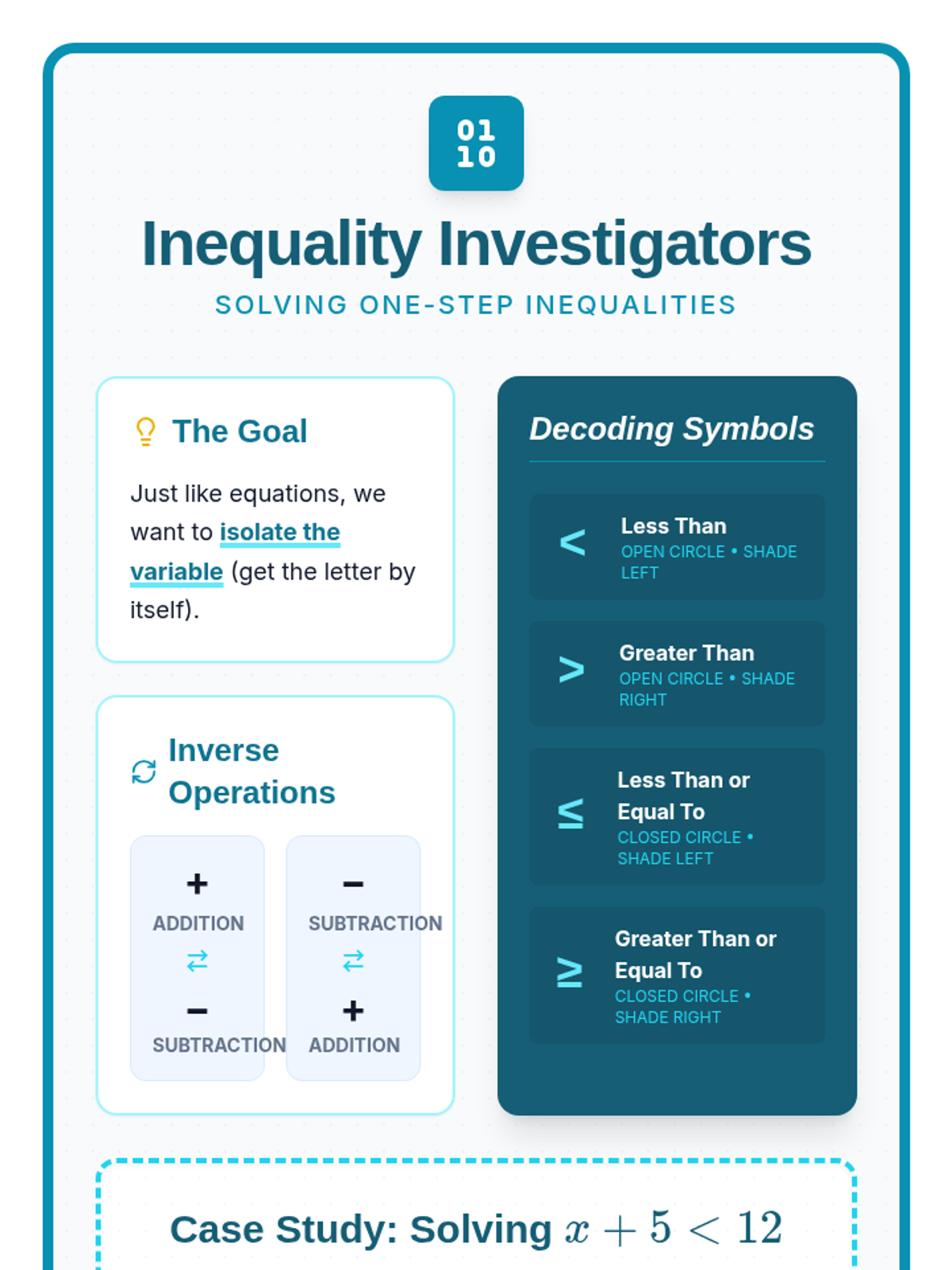
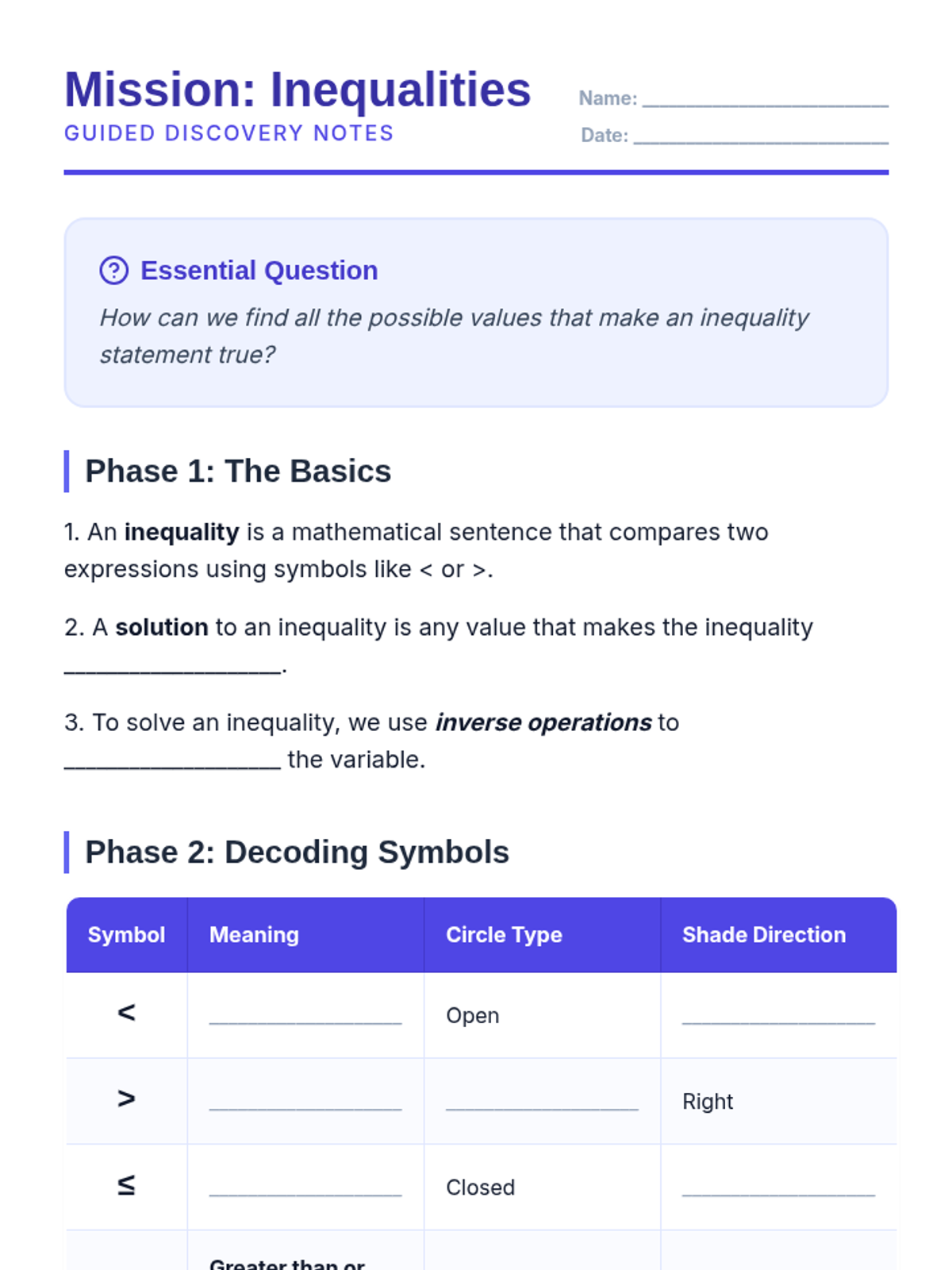
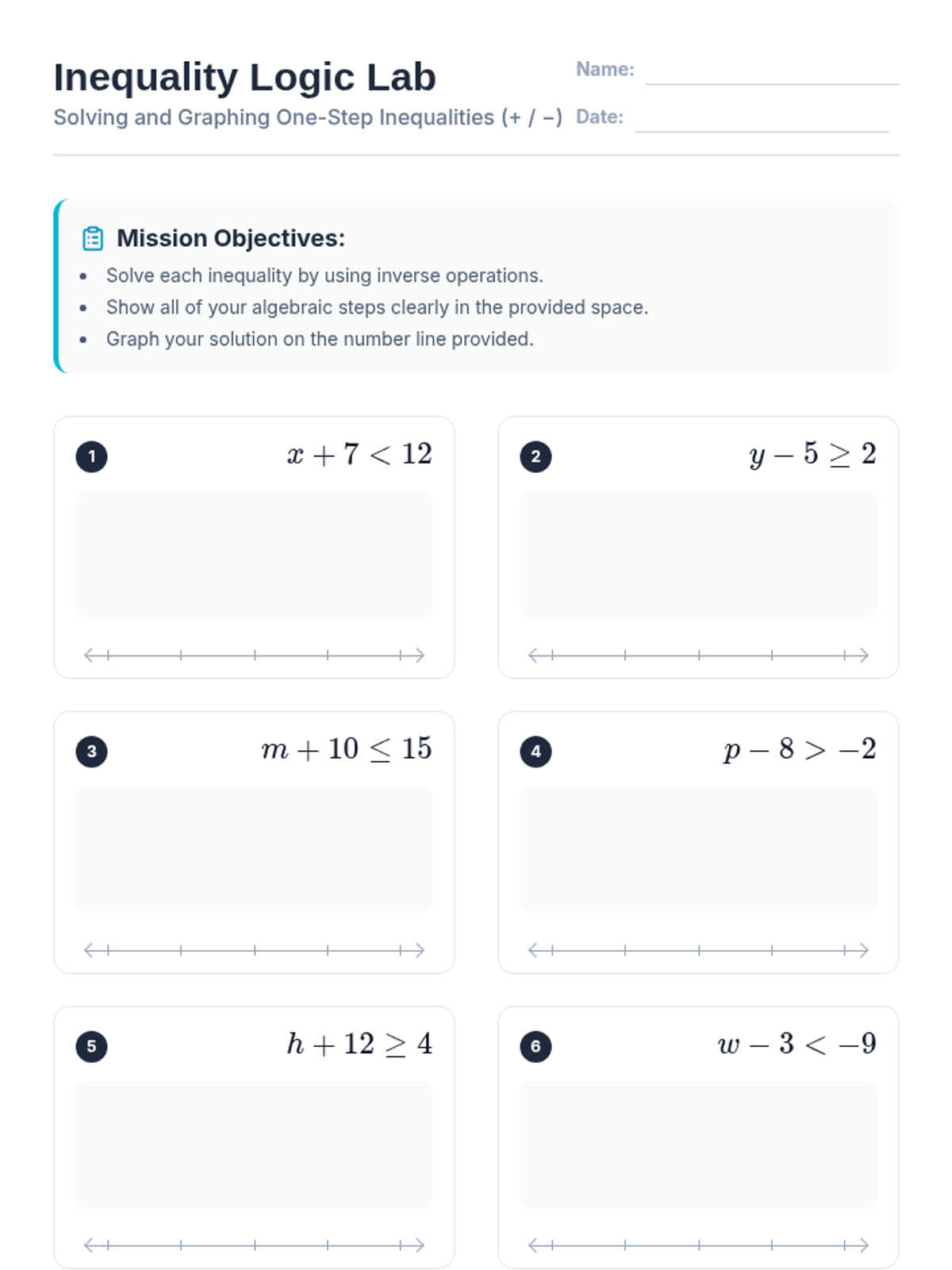
A comprehensive lesson on solving one-step inequalities using addition and subtraction, featuring a visual anchor chart, guided notes for instruction, and a practice worksheet with number line graphing.
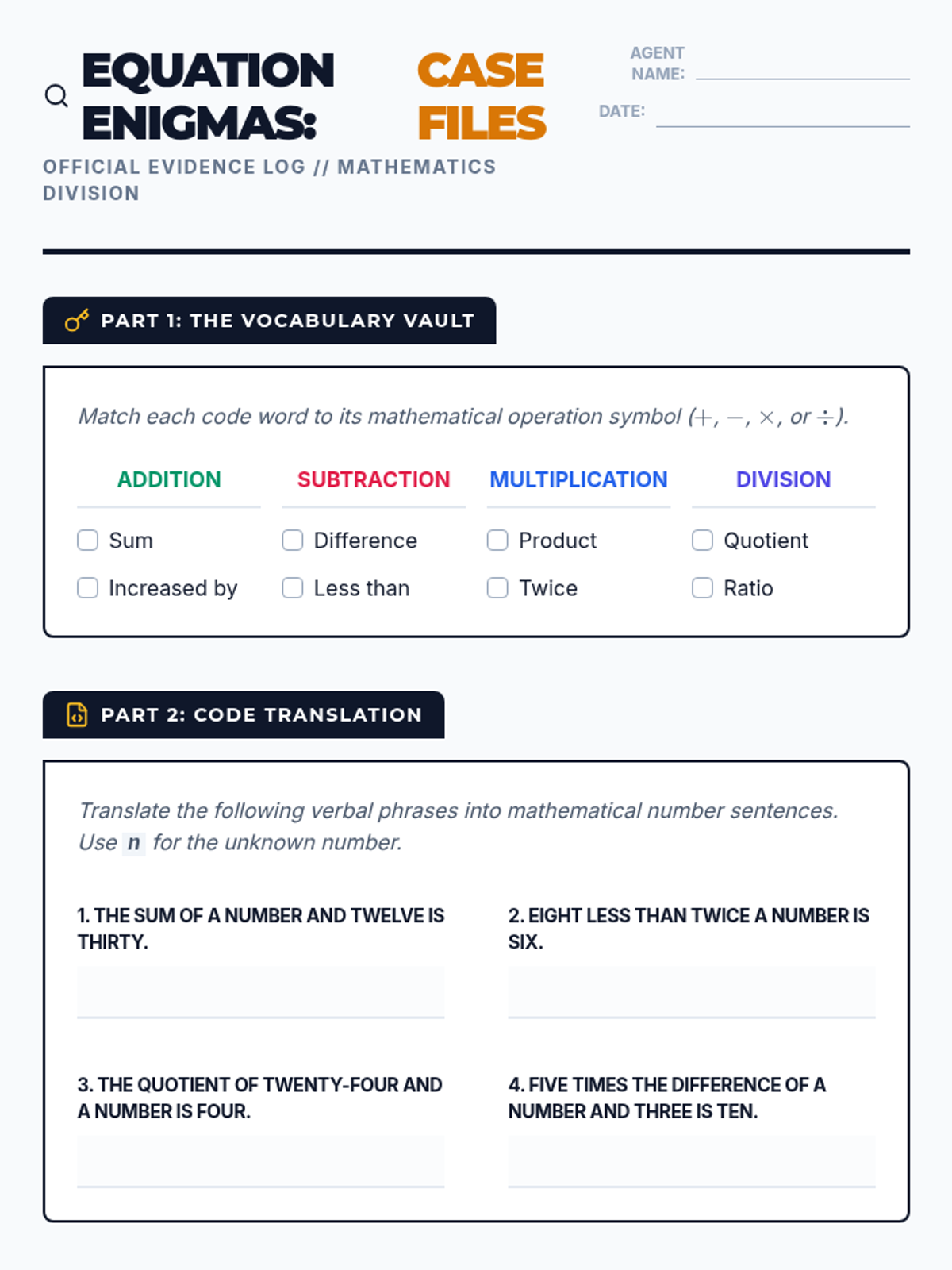
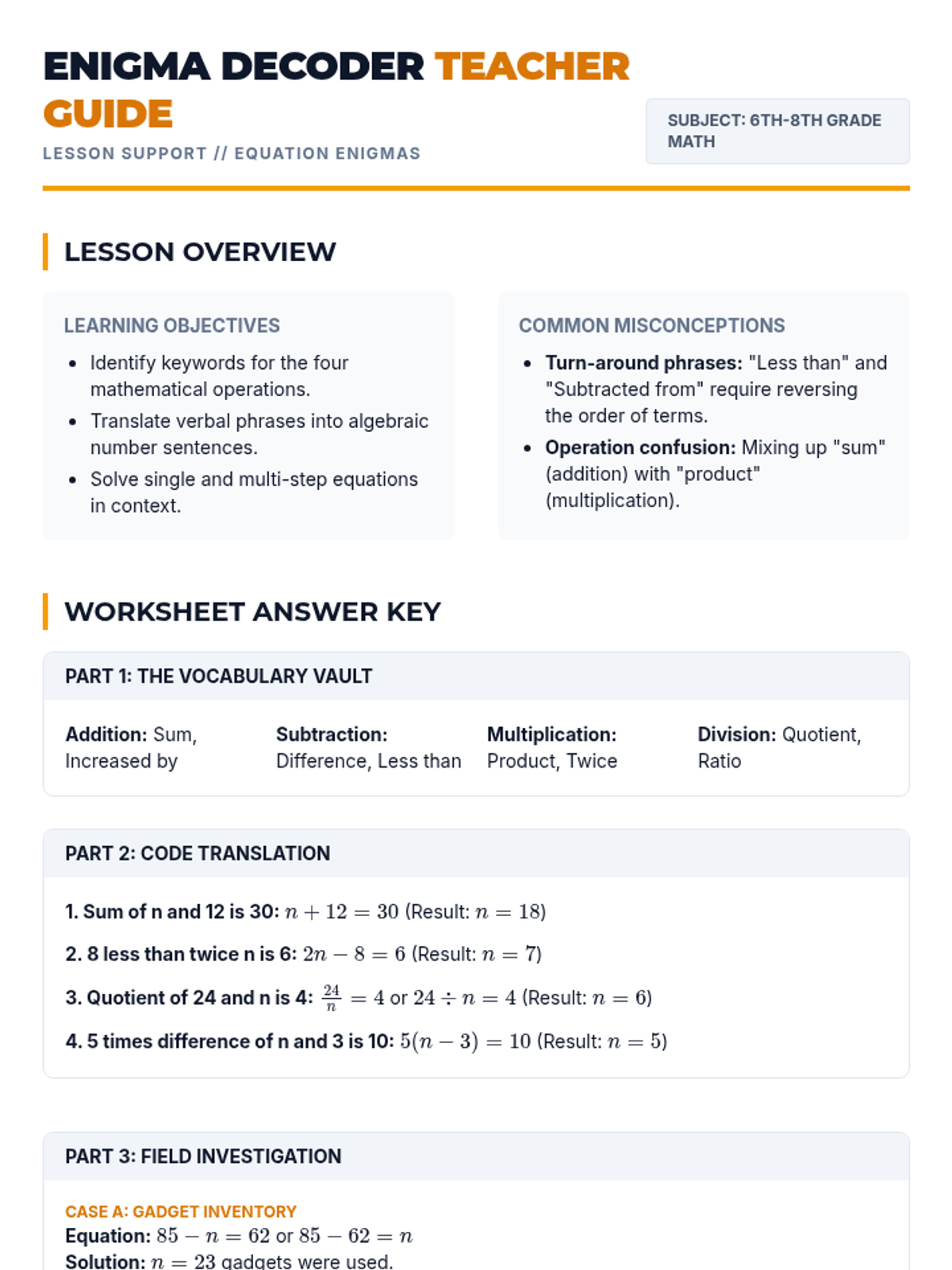
Students will learn to translate verbal phrases into mathematical number sentences using the four operations and solve for unknown values in real-world contexts.
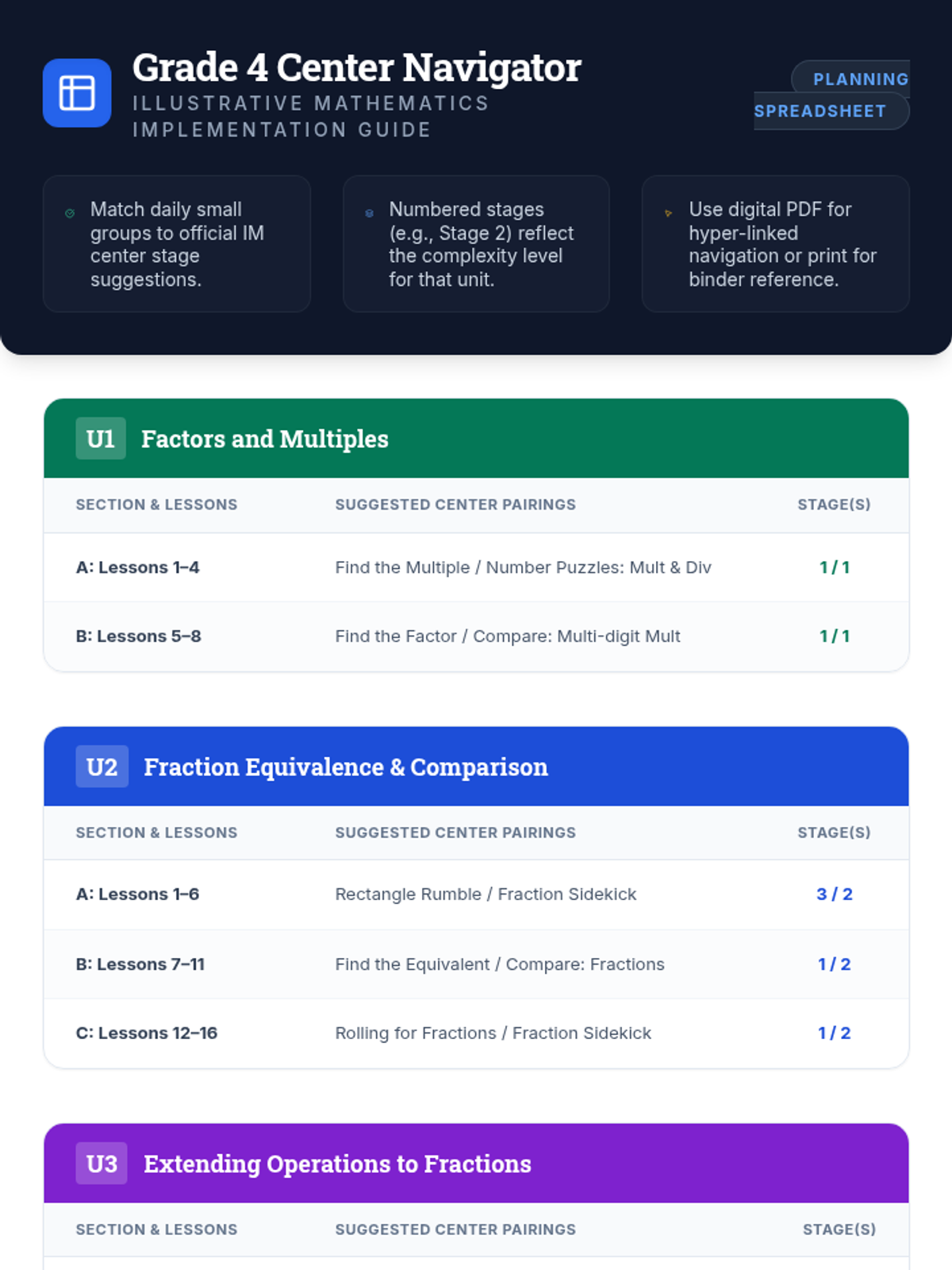
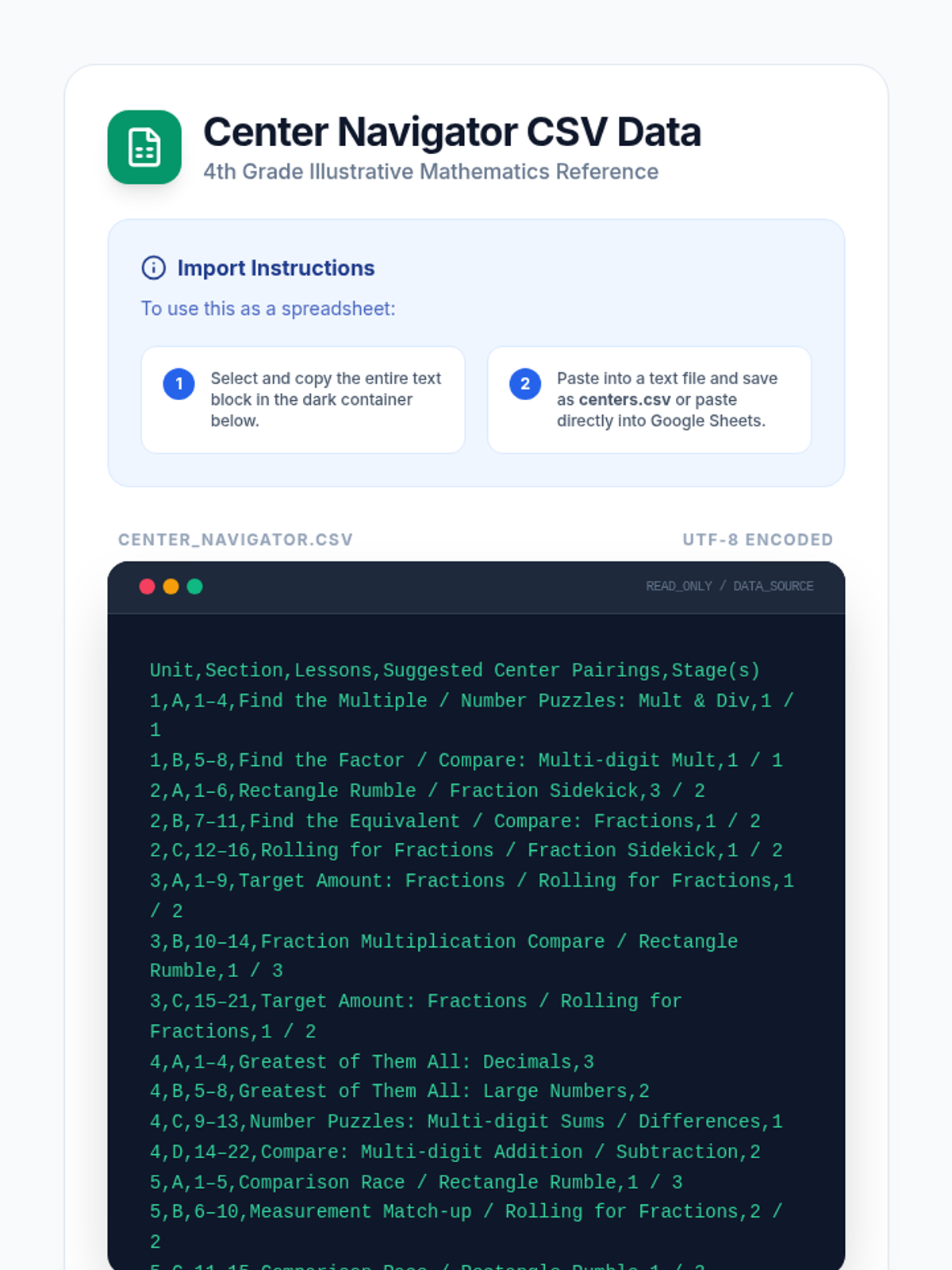
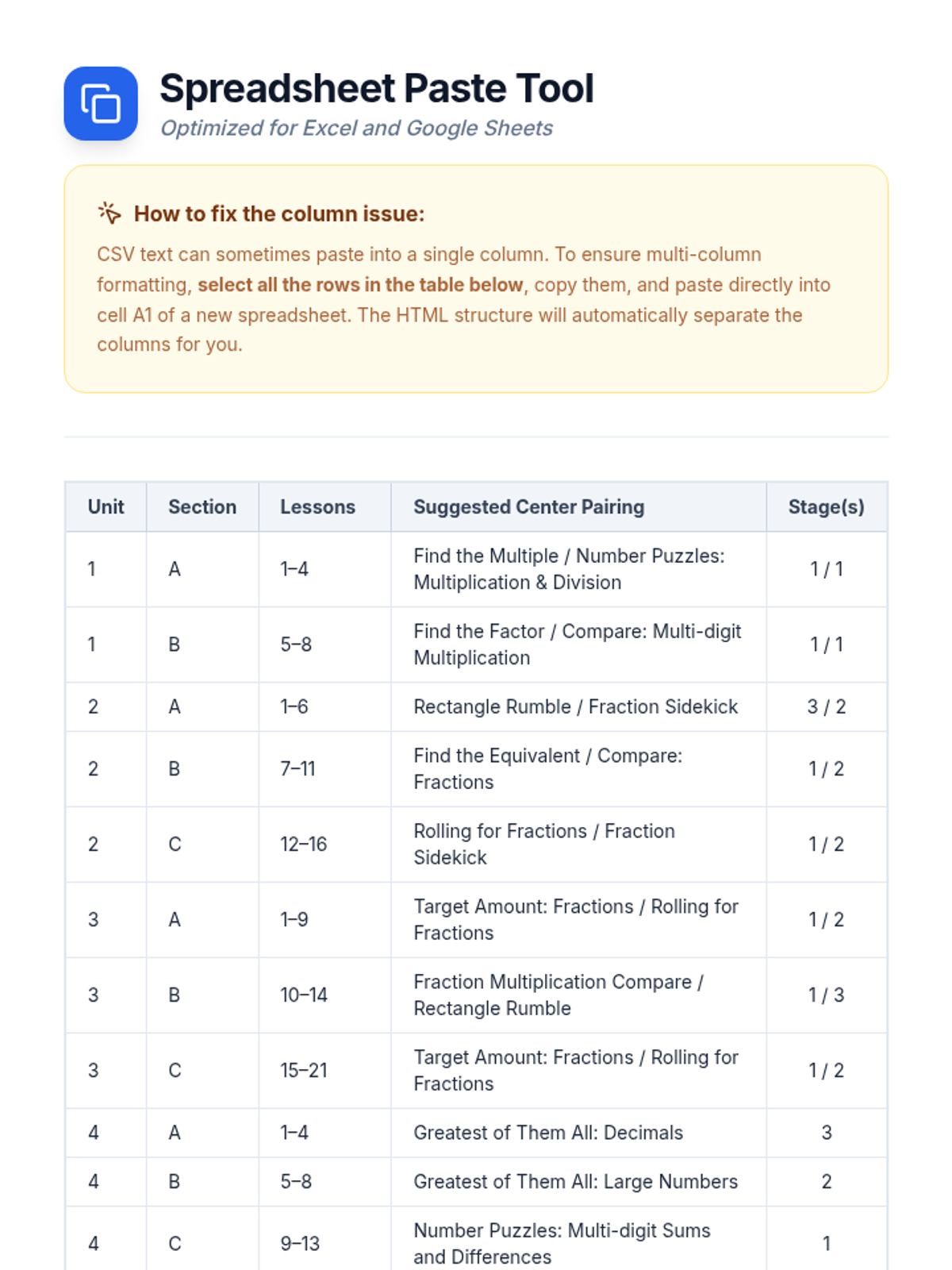
A collection of 4th-grade Illustrative Mathematics center planning resources, including a visual reference and a CSV data export.
Students represent and compare fractions on a number line, understanding distance from zero.
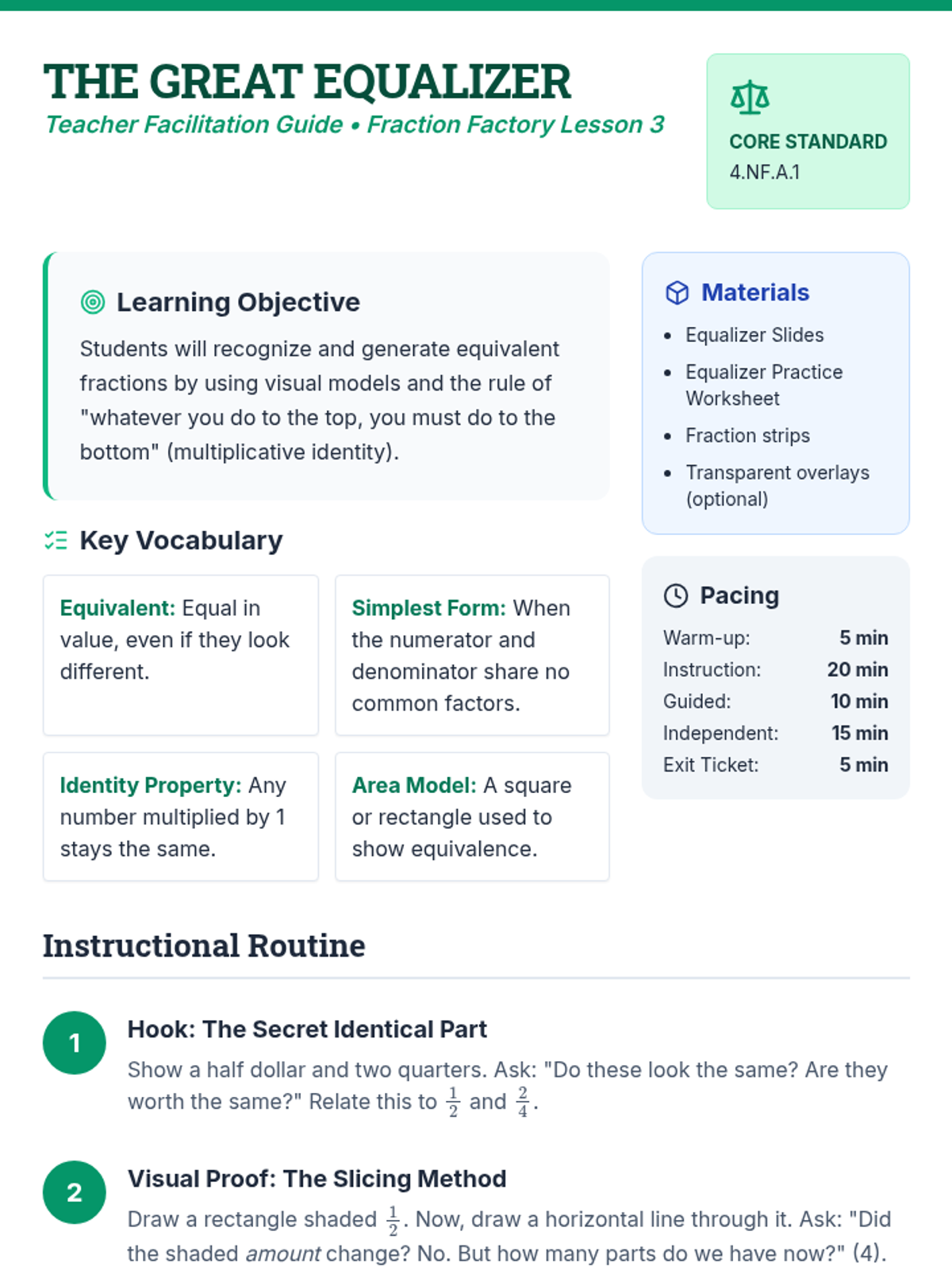
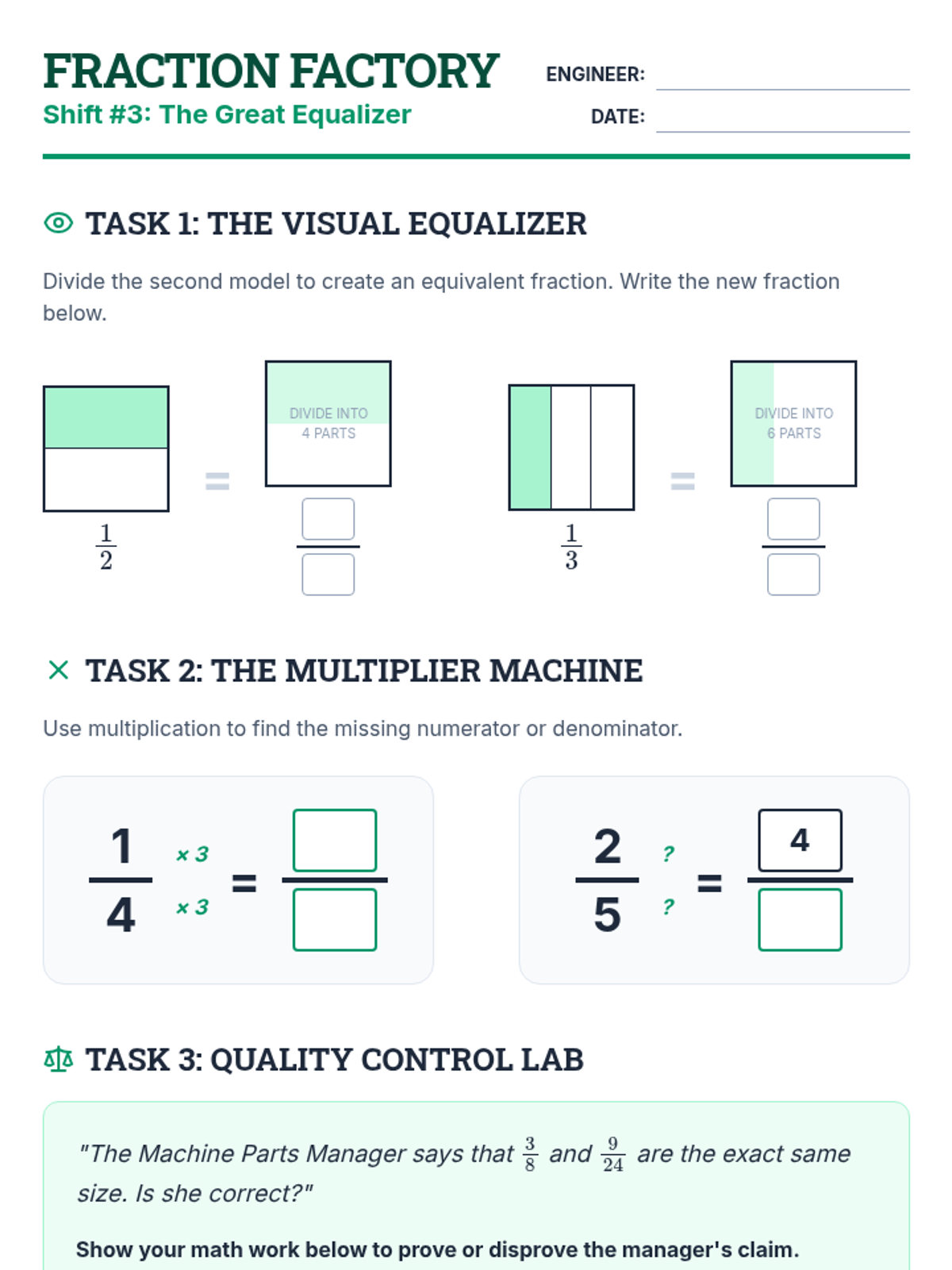
Students explore equivalent fractions using visual models and multiplication/division strategies.
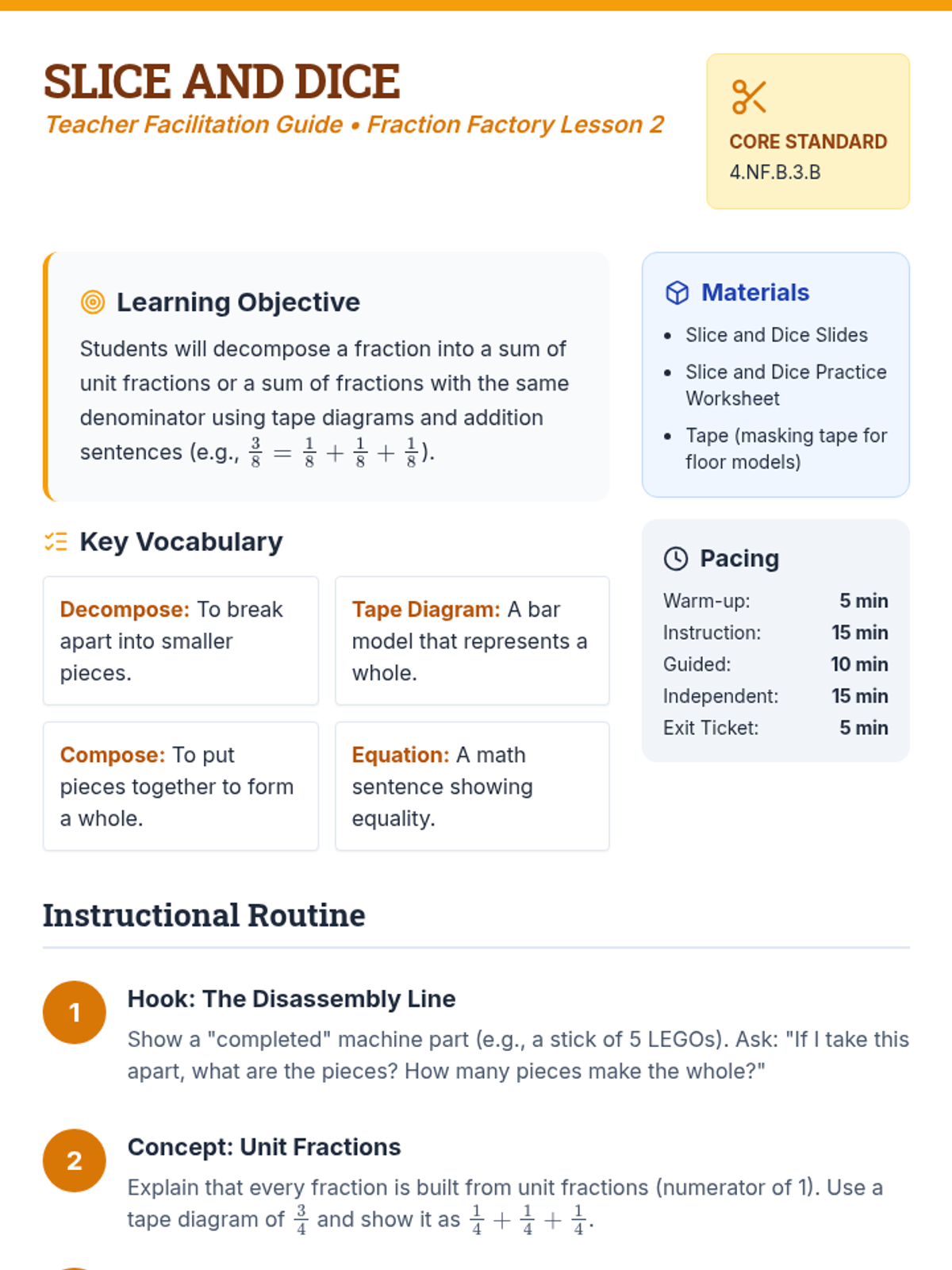
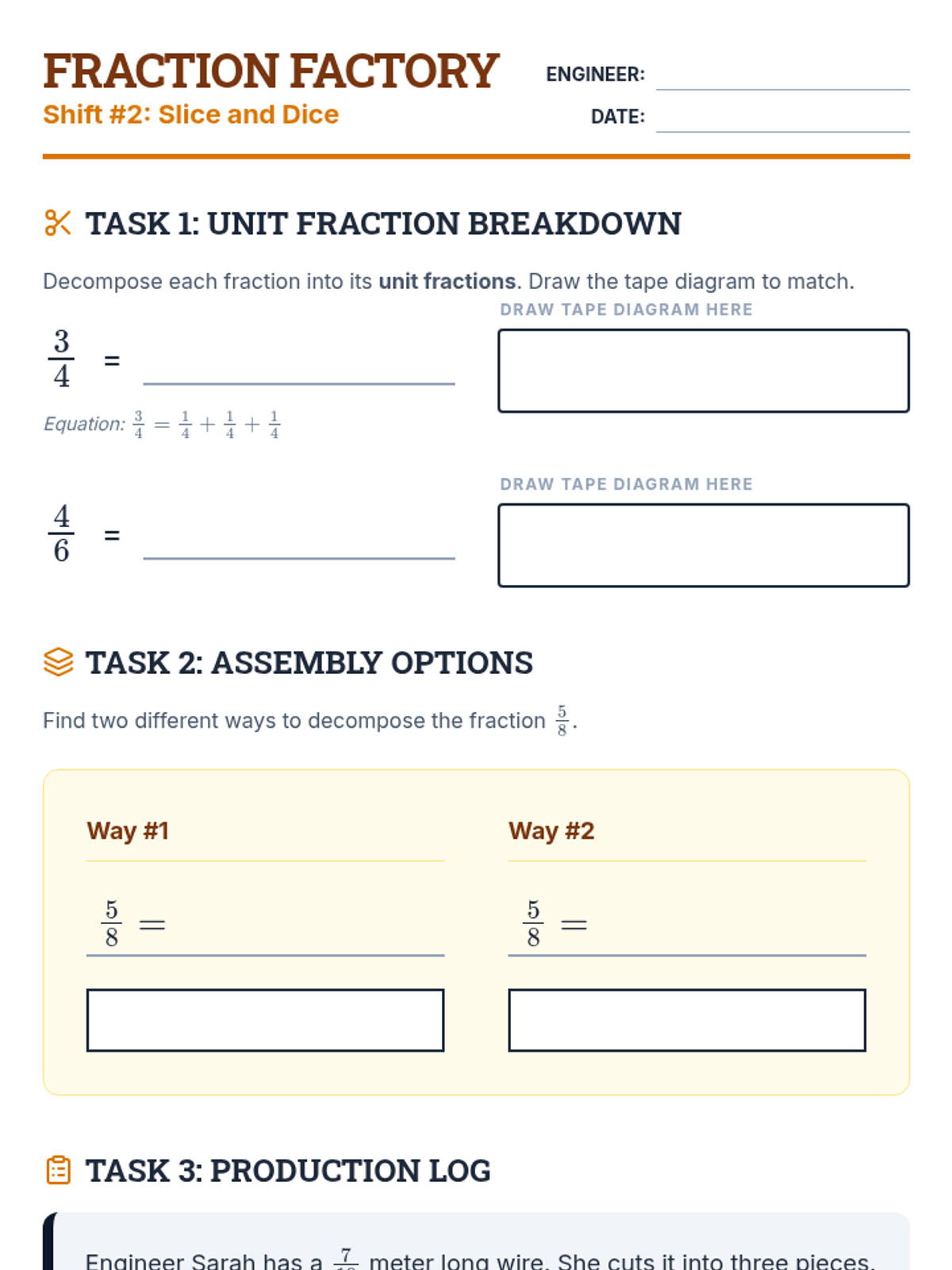
Students learn to decompose fractions into unit fractions and non-unit fractions using tape diagrams and addition sentences.
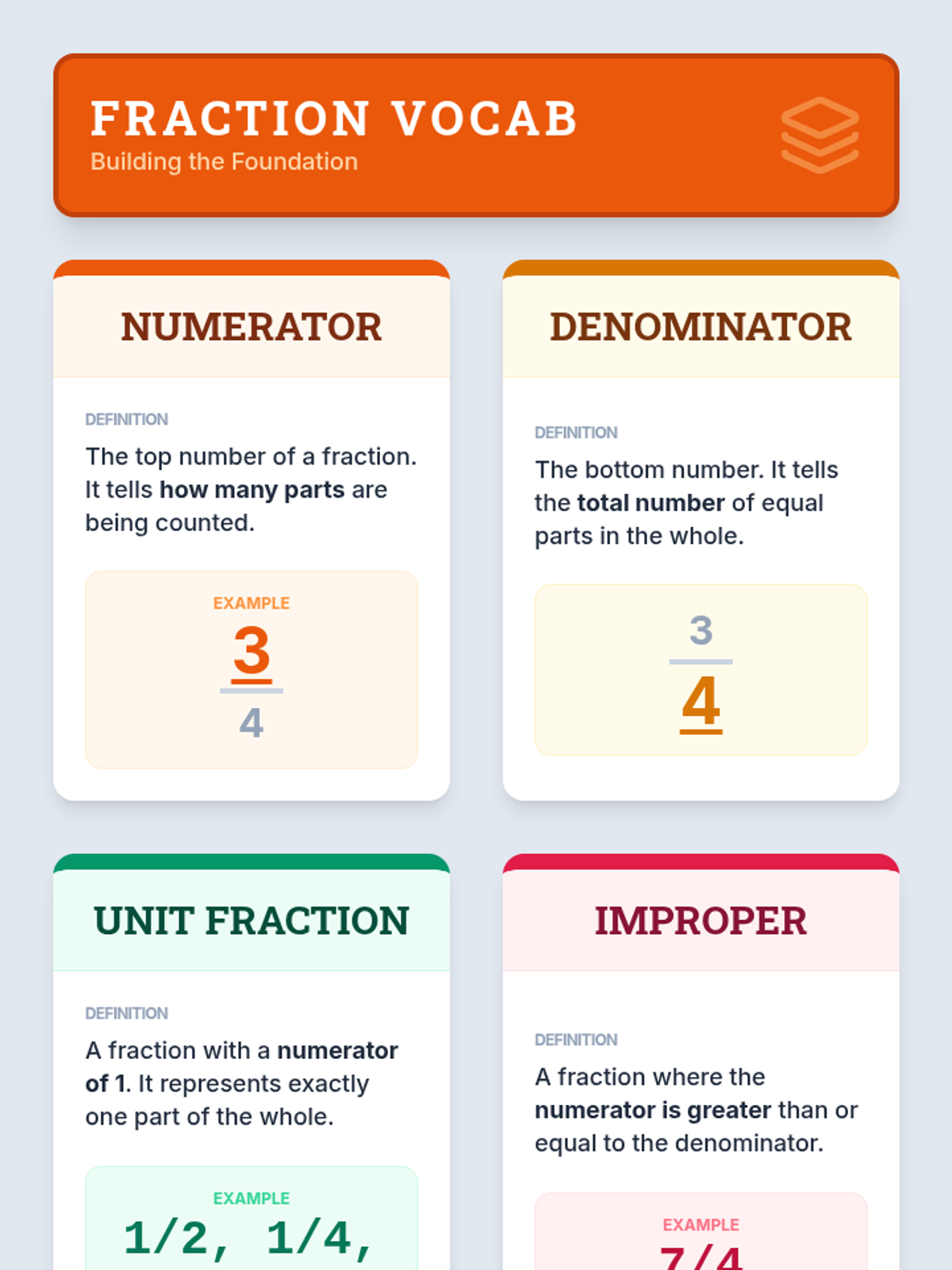
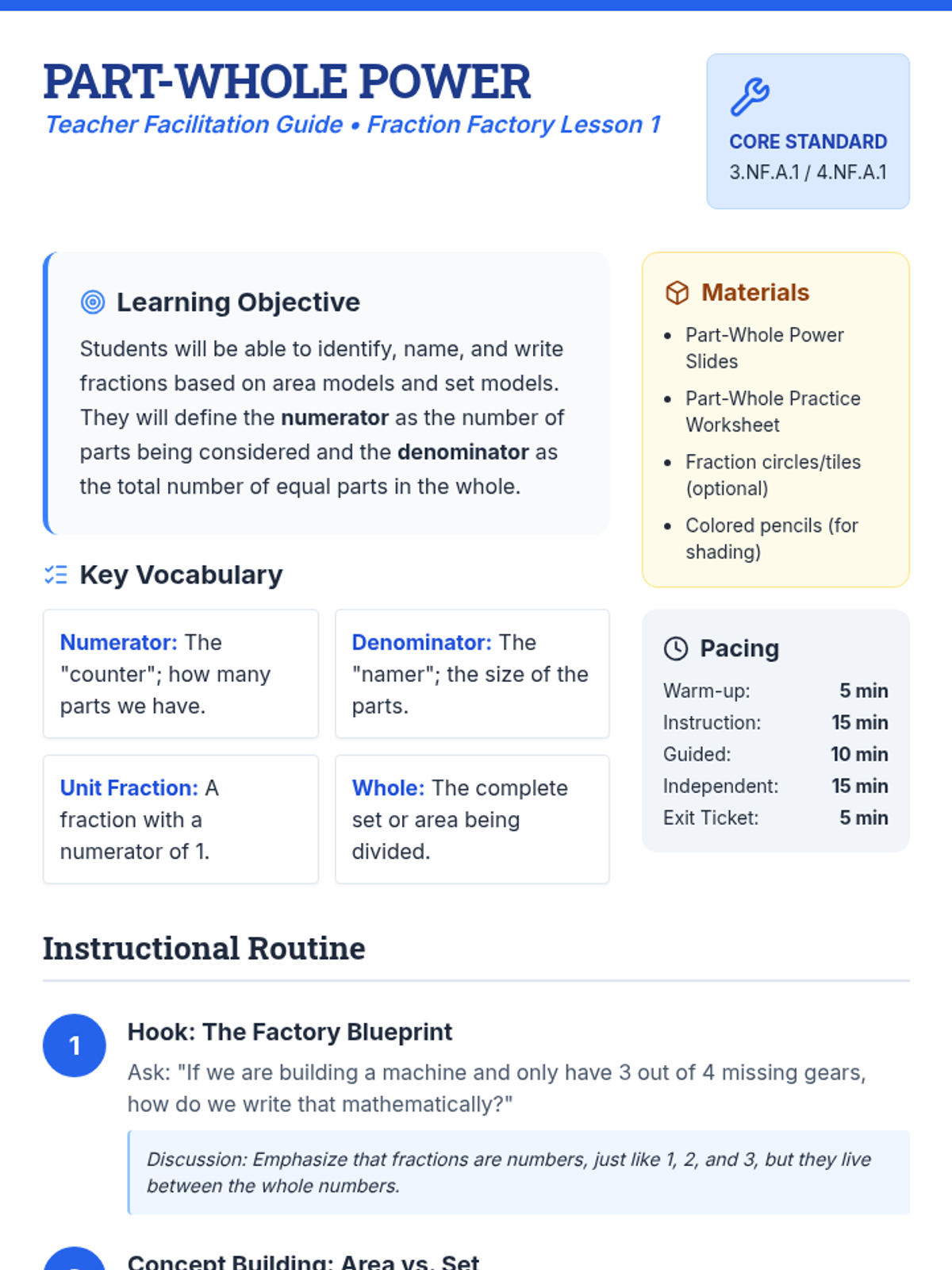
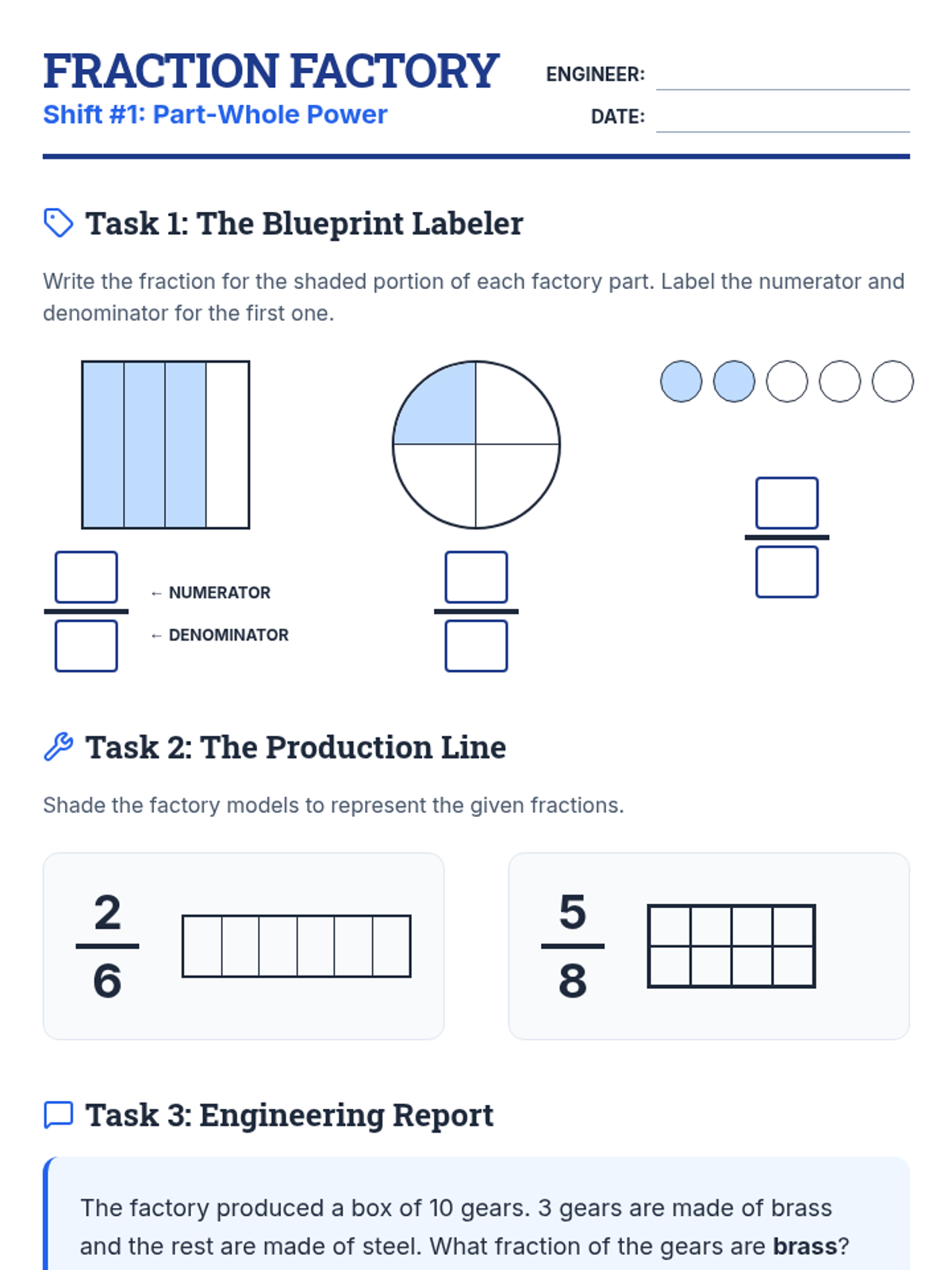
Students identify and label fractions using area models and set models, focusing on the meaning of the numerator and denominator.
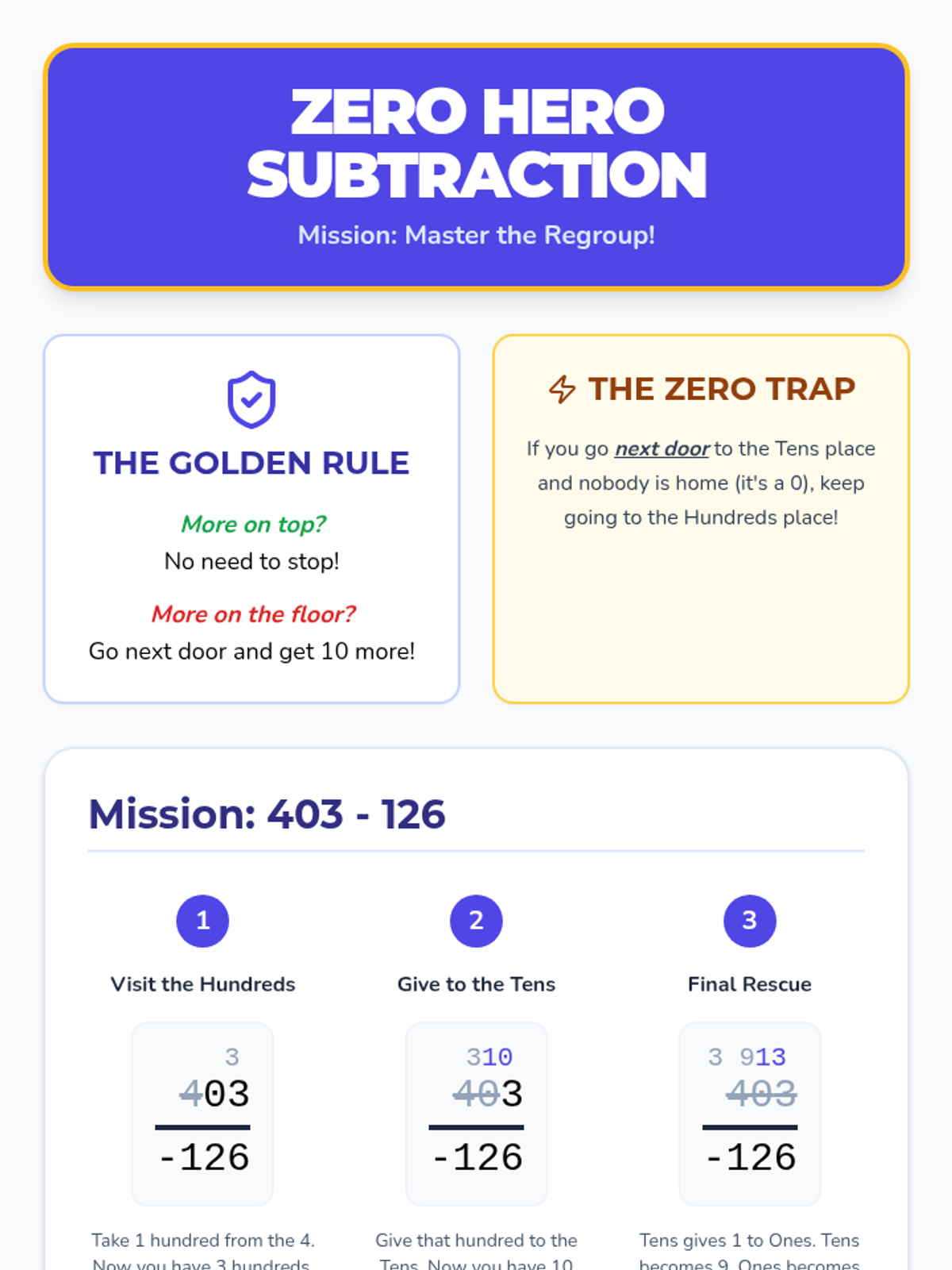
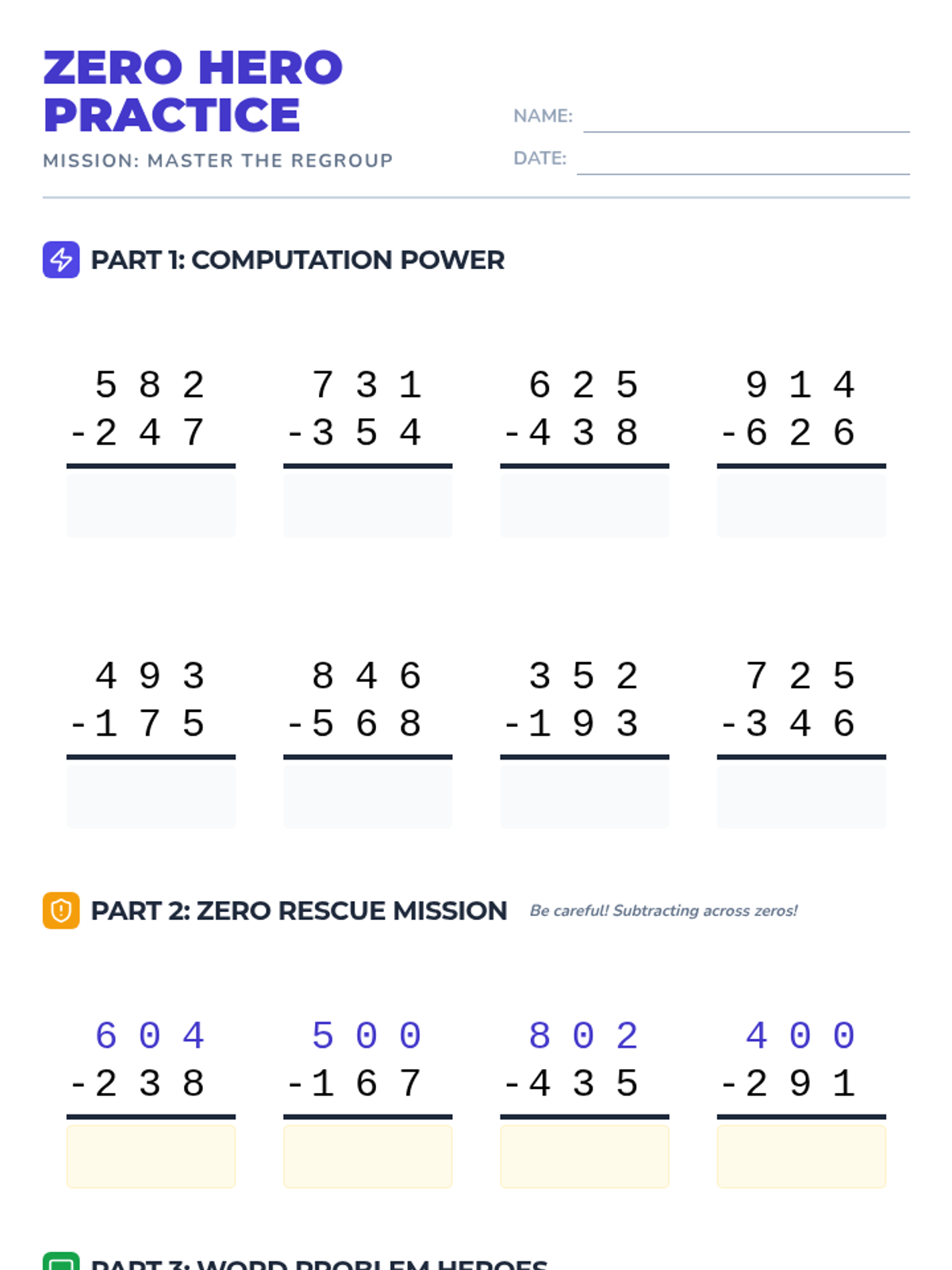
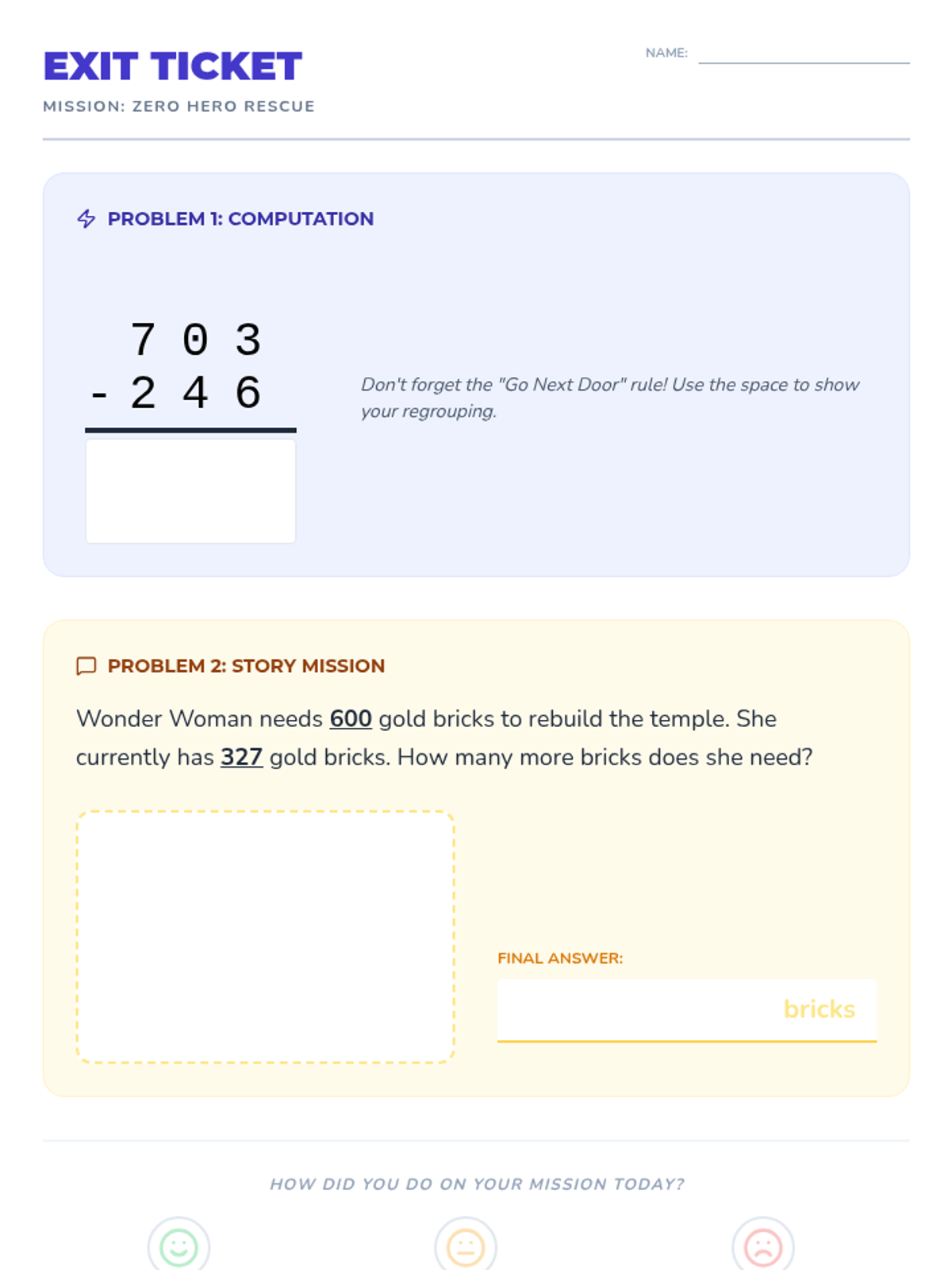
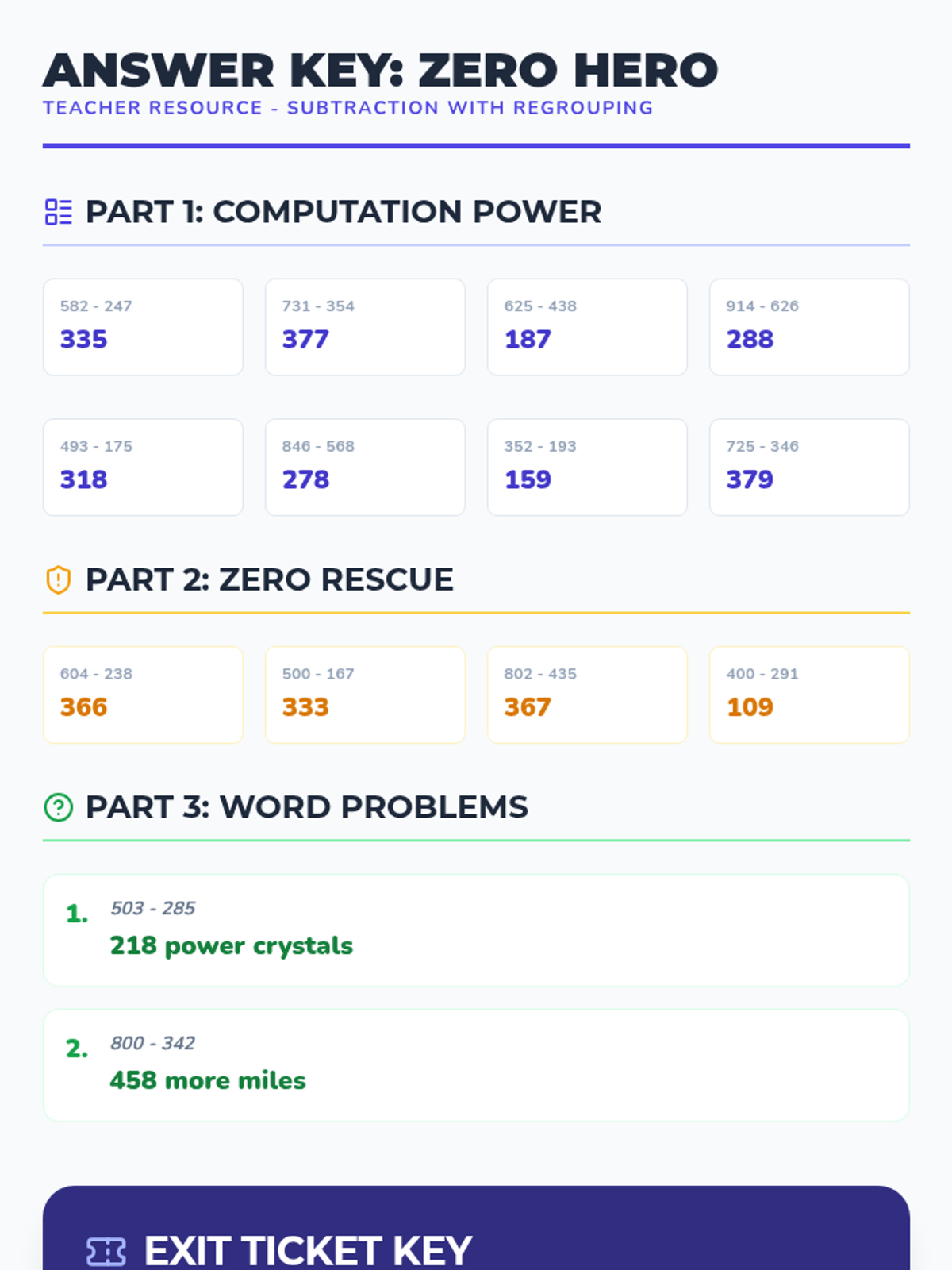
A lesson focused on mastering three-digit subtraction with regrouping, specifically targeting the challenge of subtracting across zeros and applying these skills to real-world word problems.
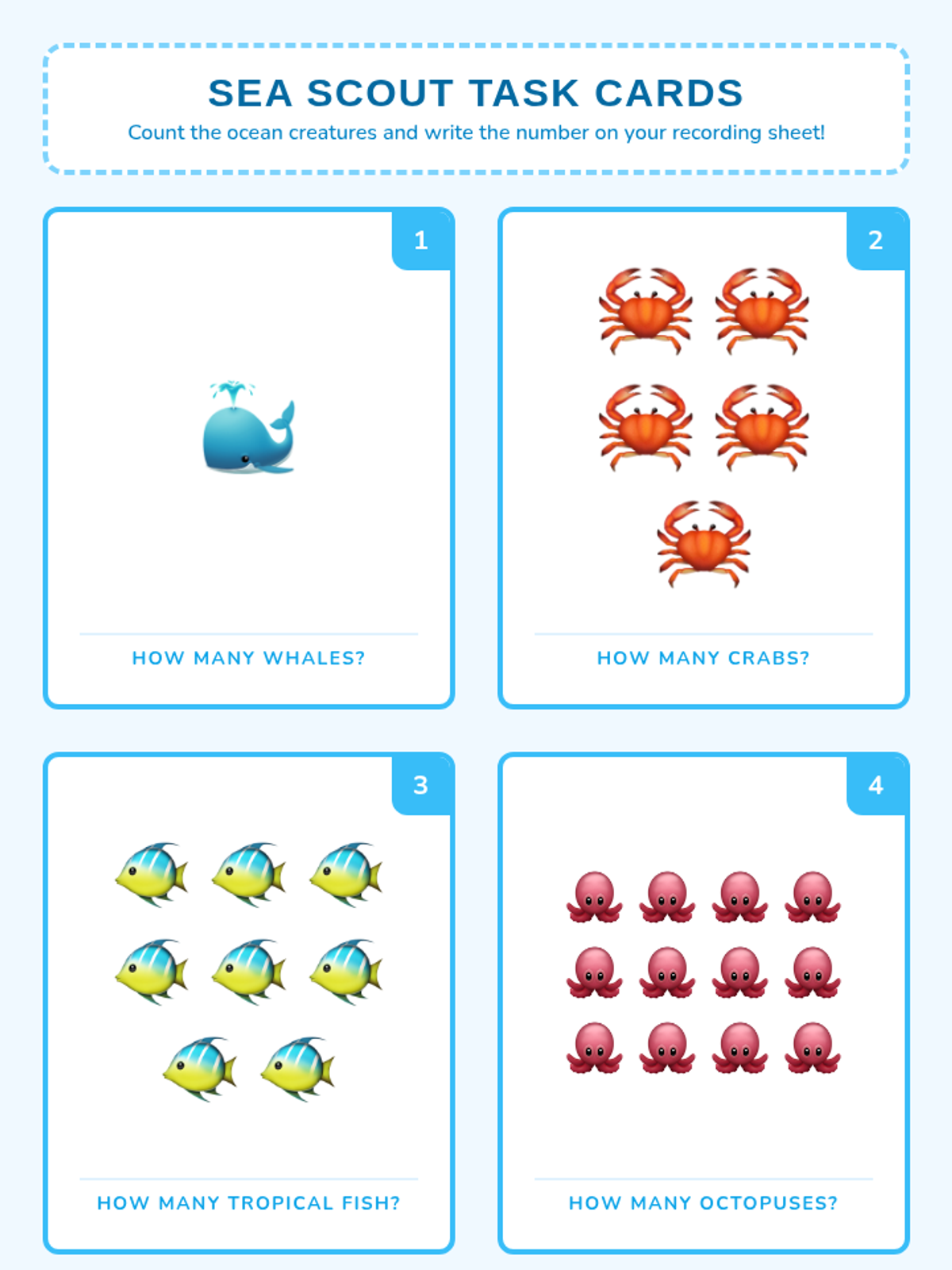
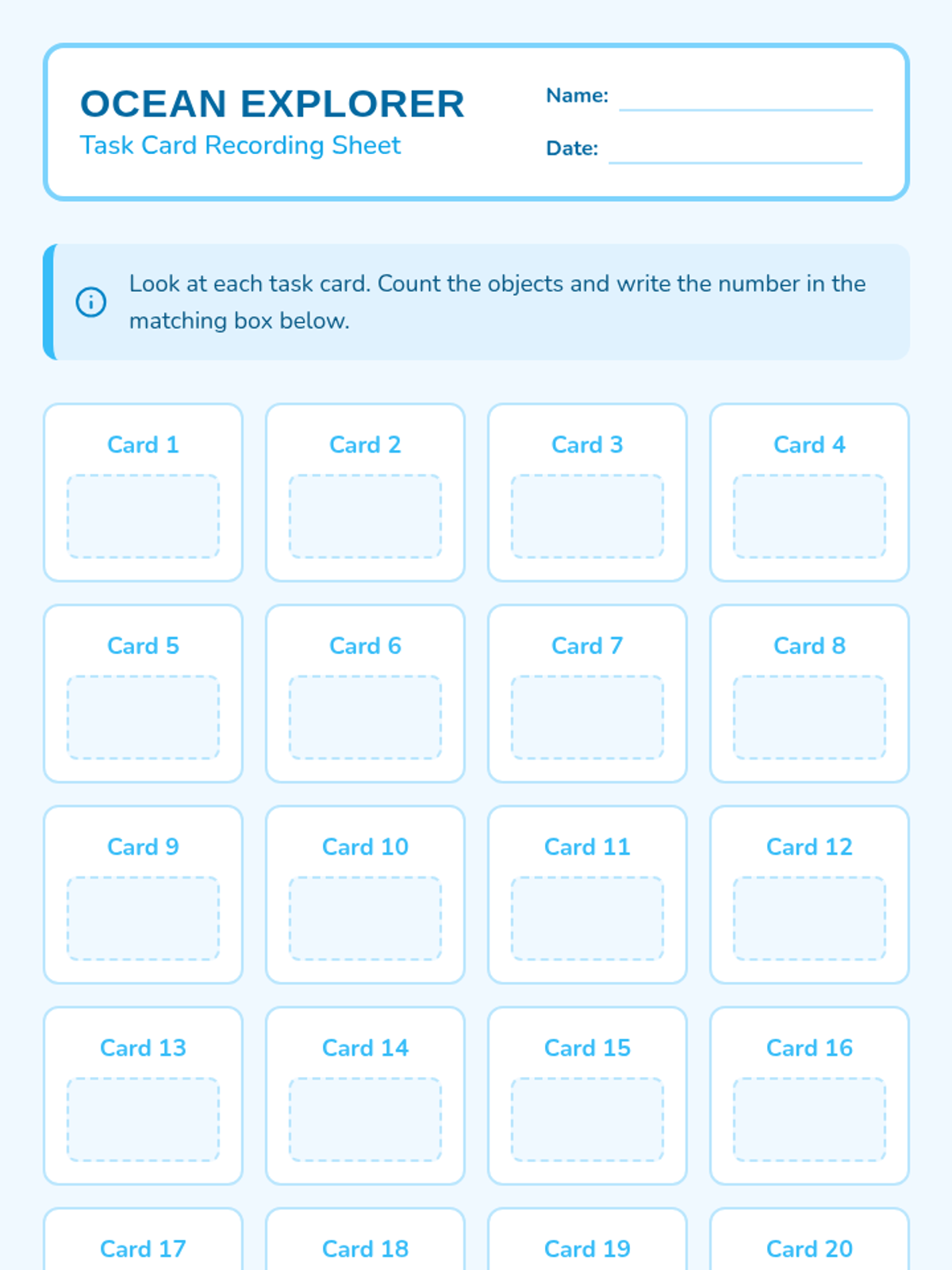
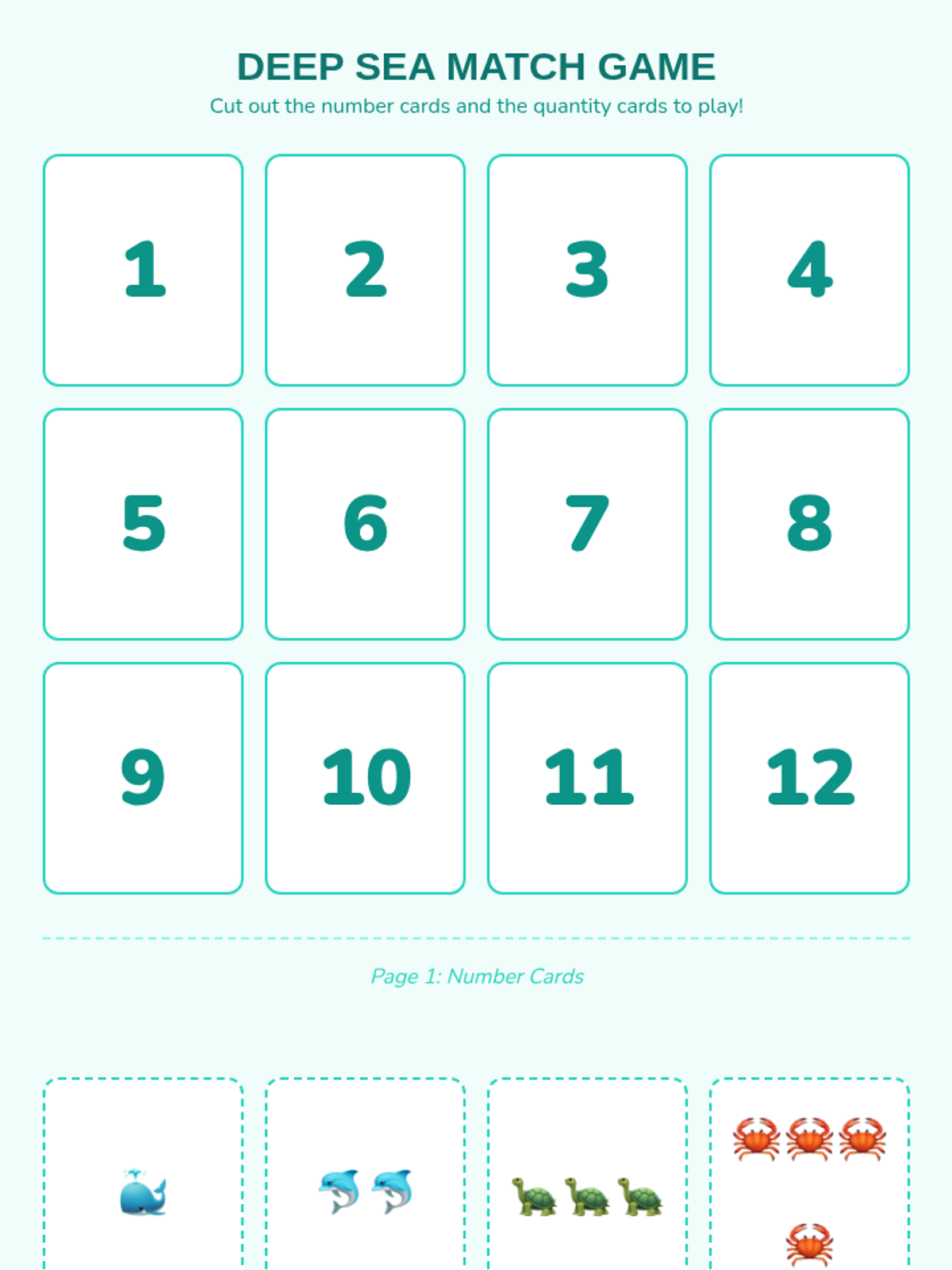
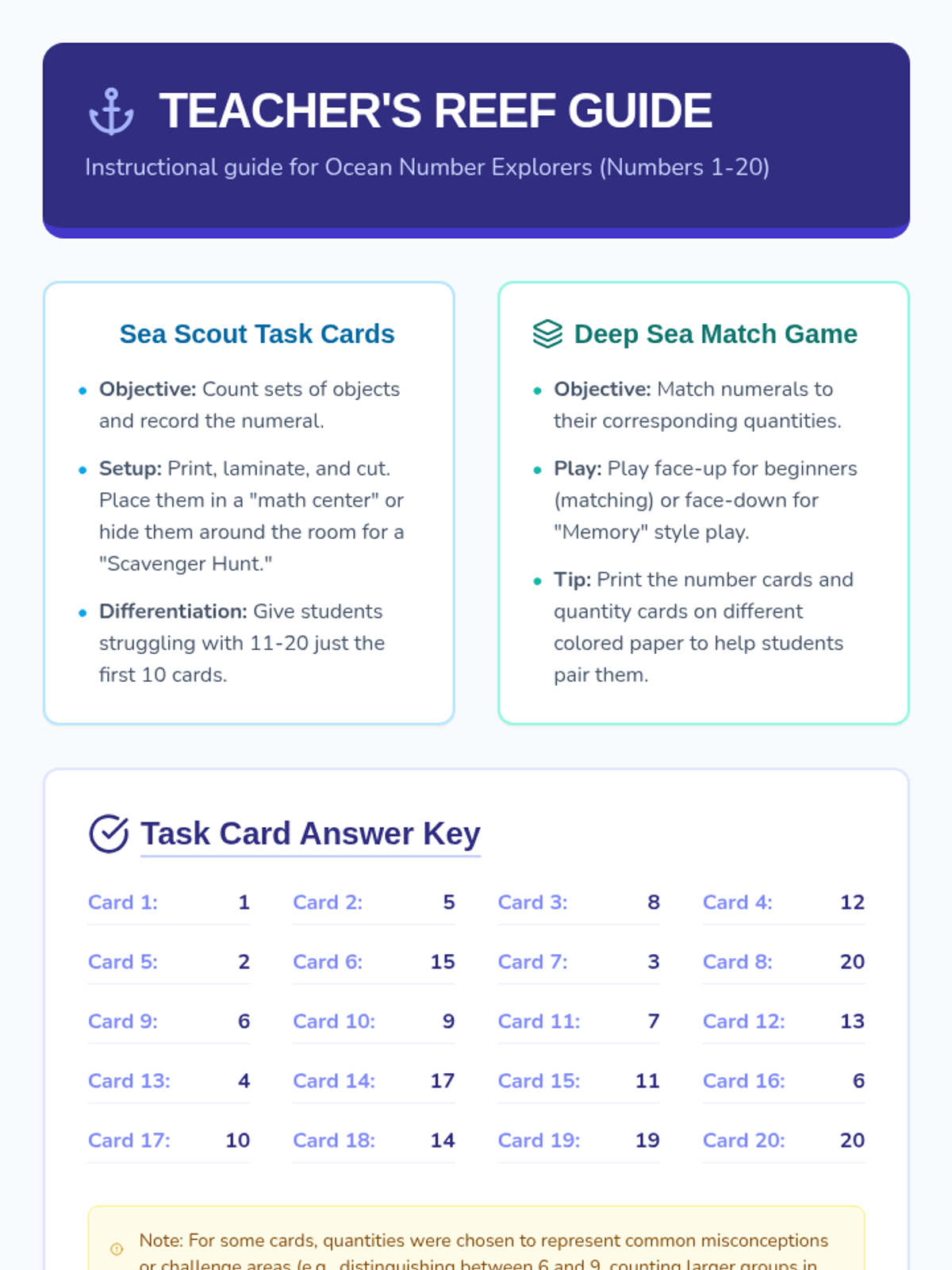
A collection of ocean-themed math activities focused on counting, identifying numbers 1-20, and developing one-to-one correspondence through task cards and a matching game.
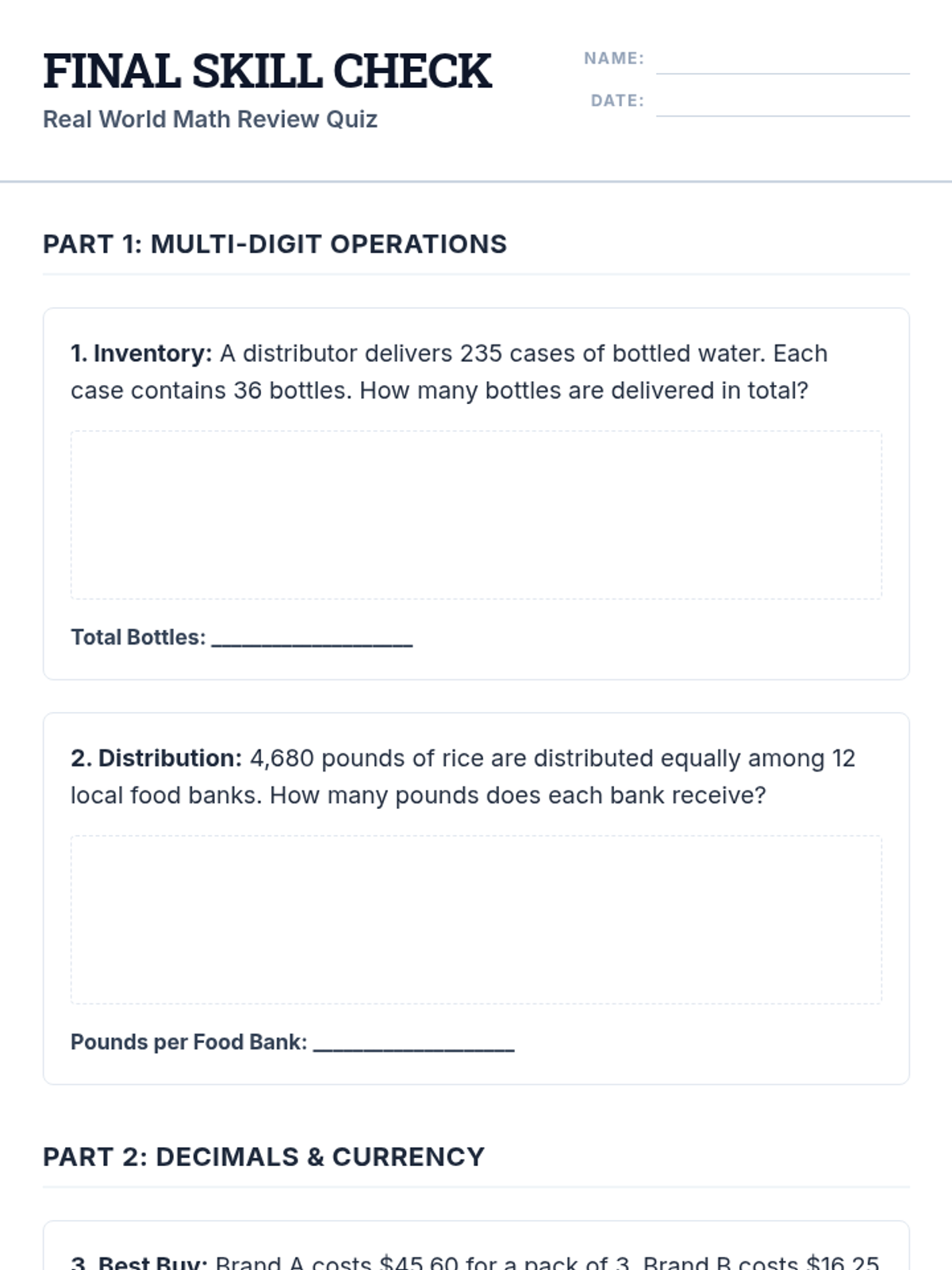
A comprehensive review lesson that synthesizes all the skills learned in the Real World Math series. Students will complete a final assessment covering multi-digit operations, decimals, fractions, and percentages through a variety of workplace and financial scenarios.
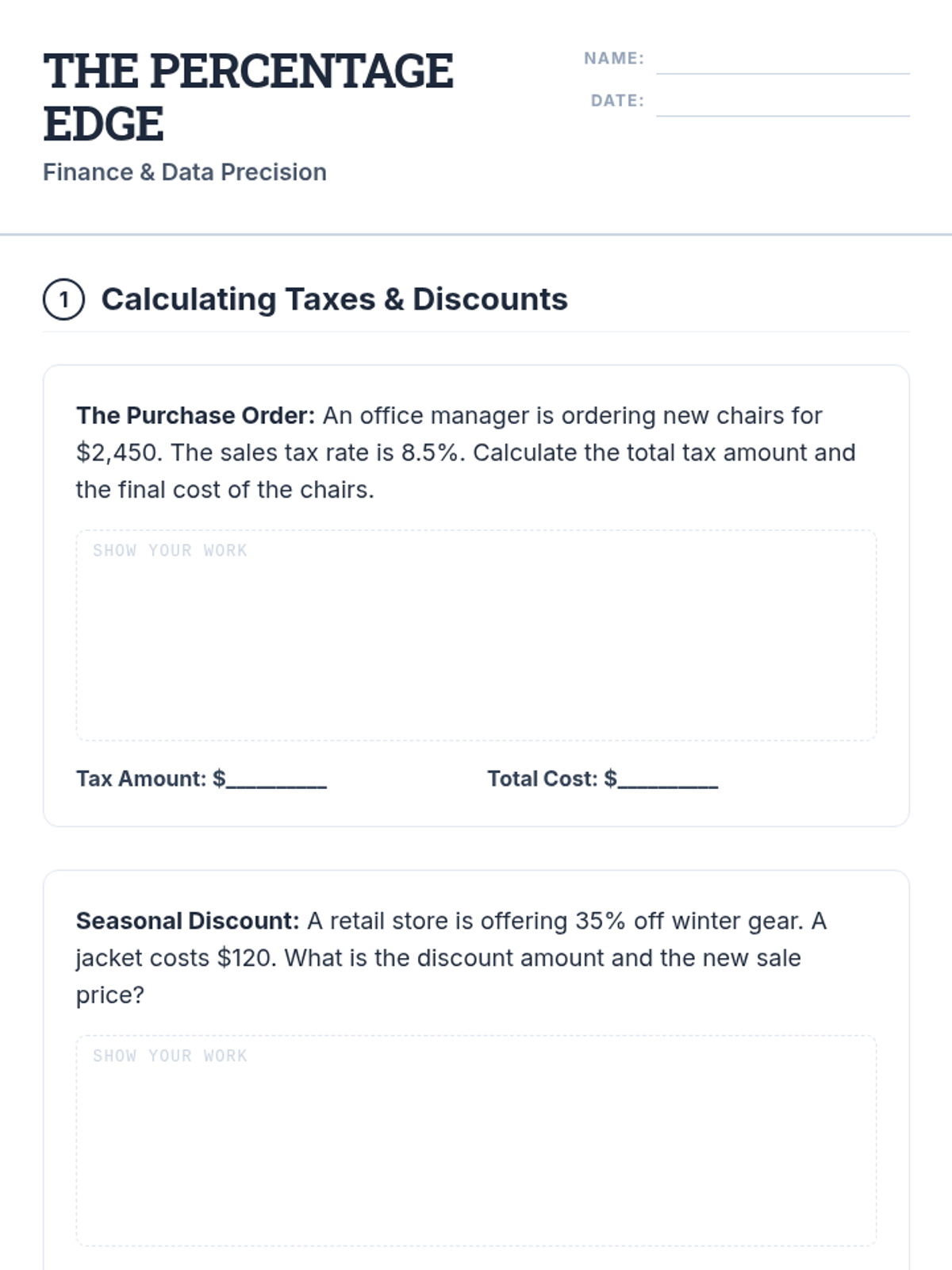
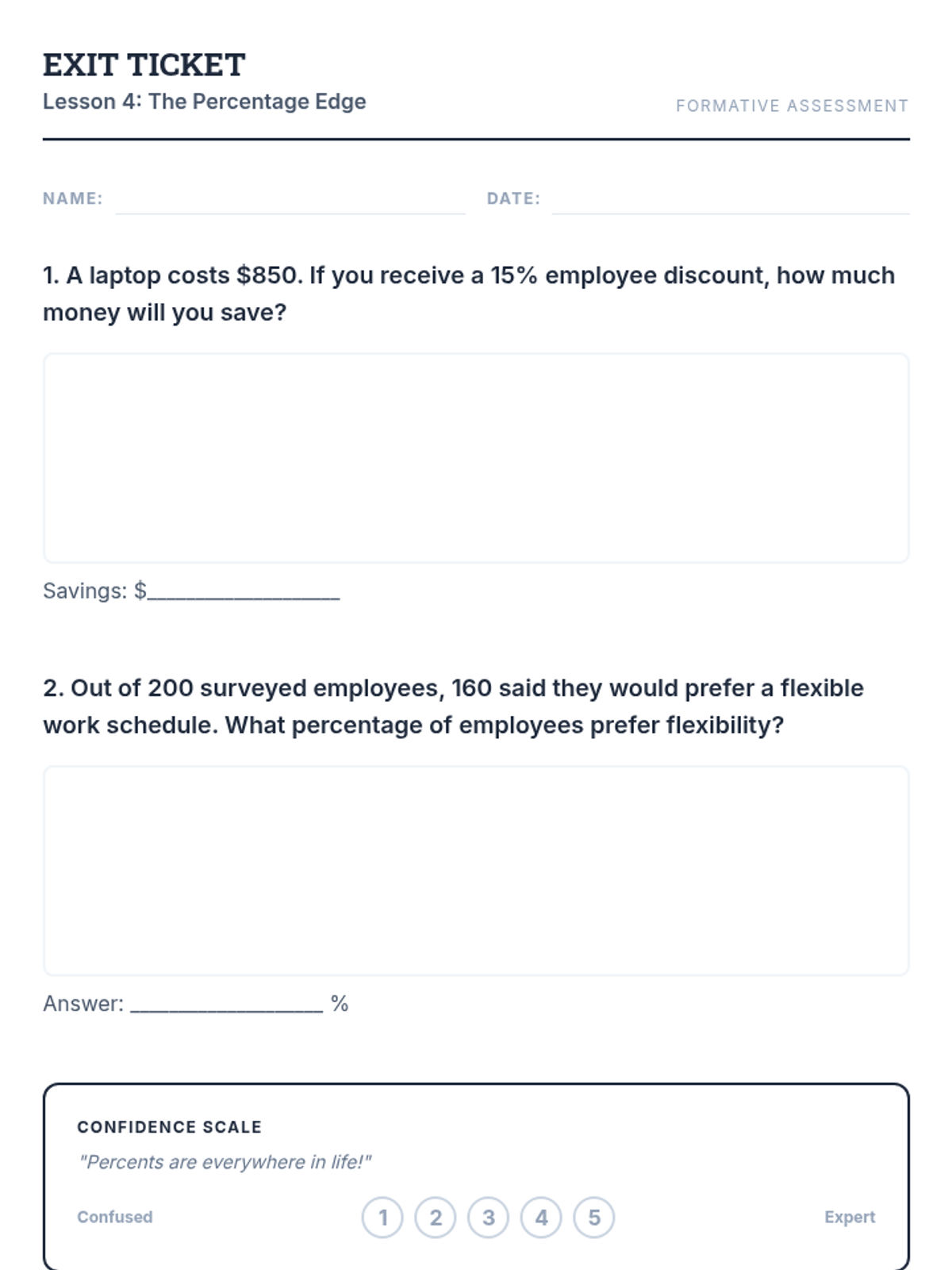
Understanding the power of percentages in finance and data. Students will solve for parts, wholes, and percentages in contexts like sales tax, interest rates, discounts, and performance statistics.
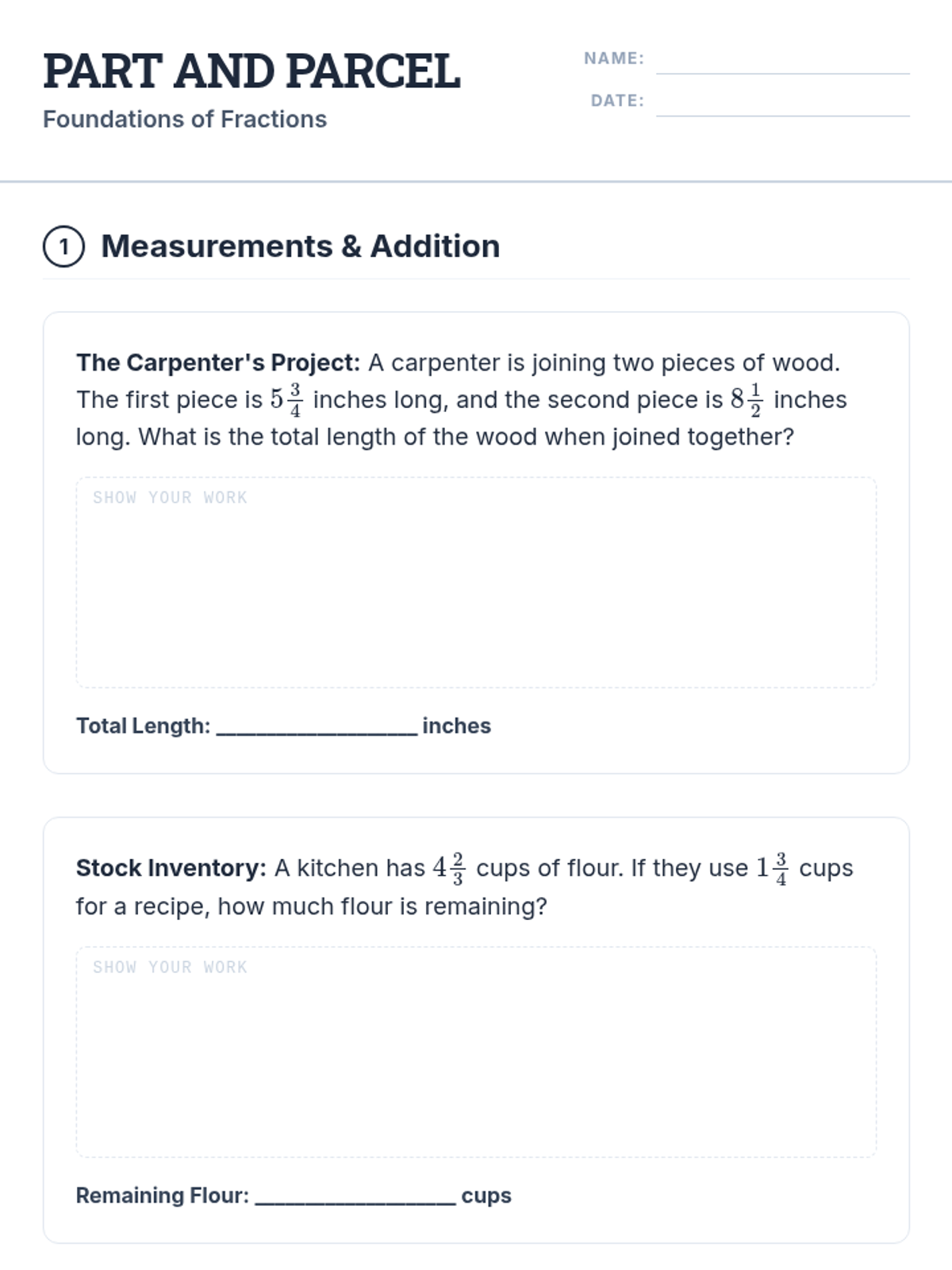
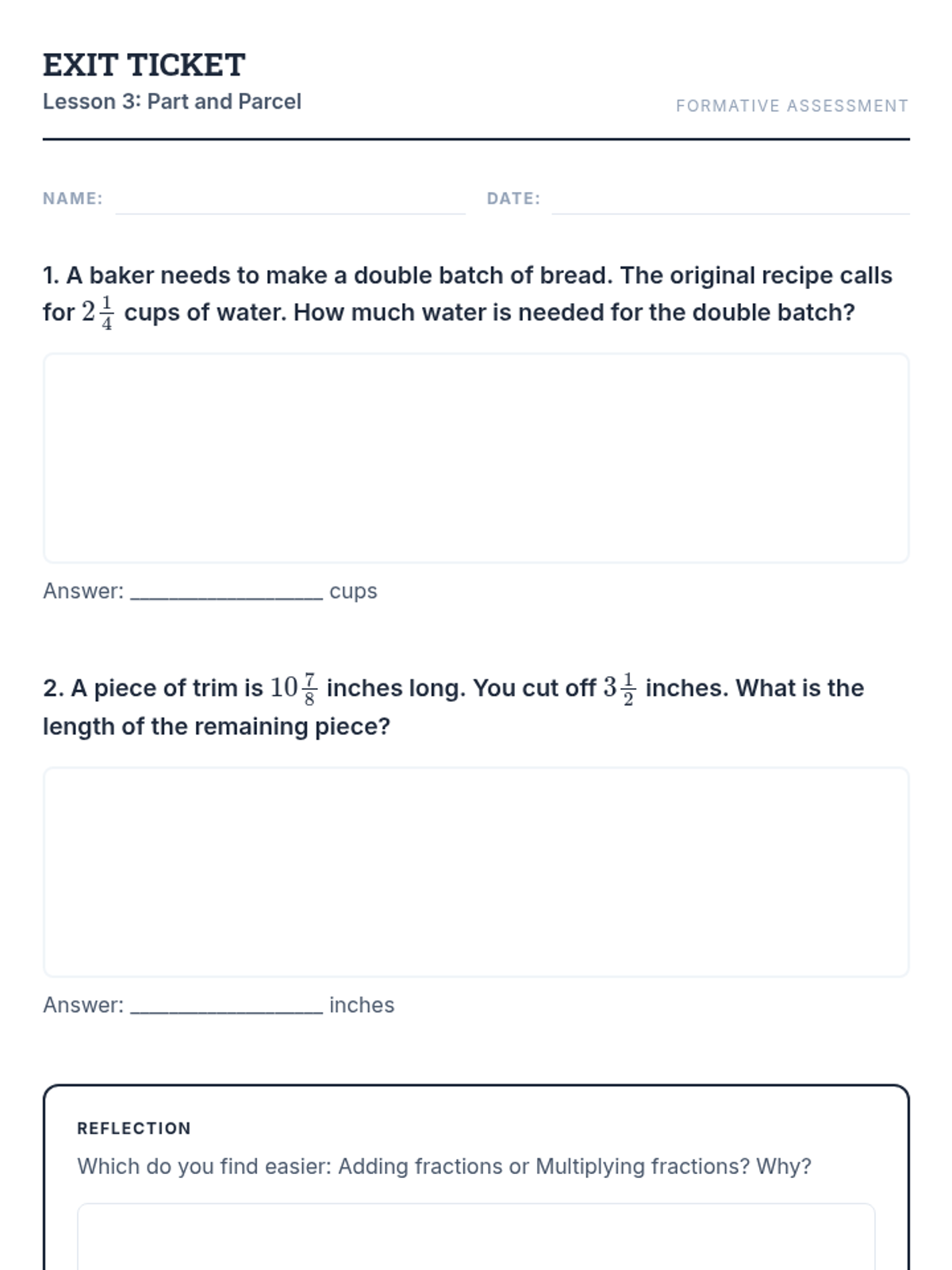
Developing a strong grasp of fractions in practical contexts such as construction, cooking, and time management. This lesson covers simplifying, adding/subtracting with unlike denominators, and multiplying/dividing fractions.
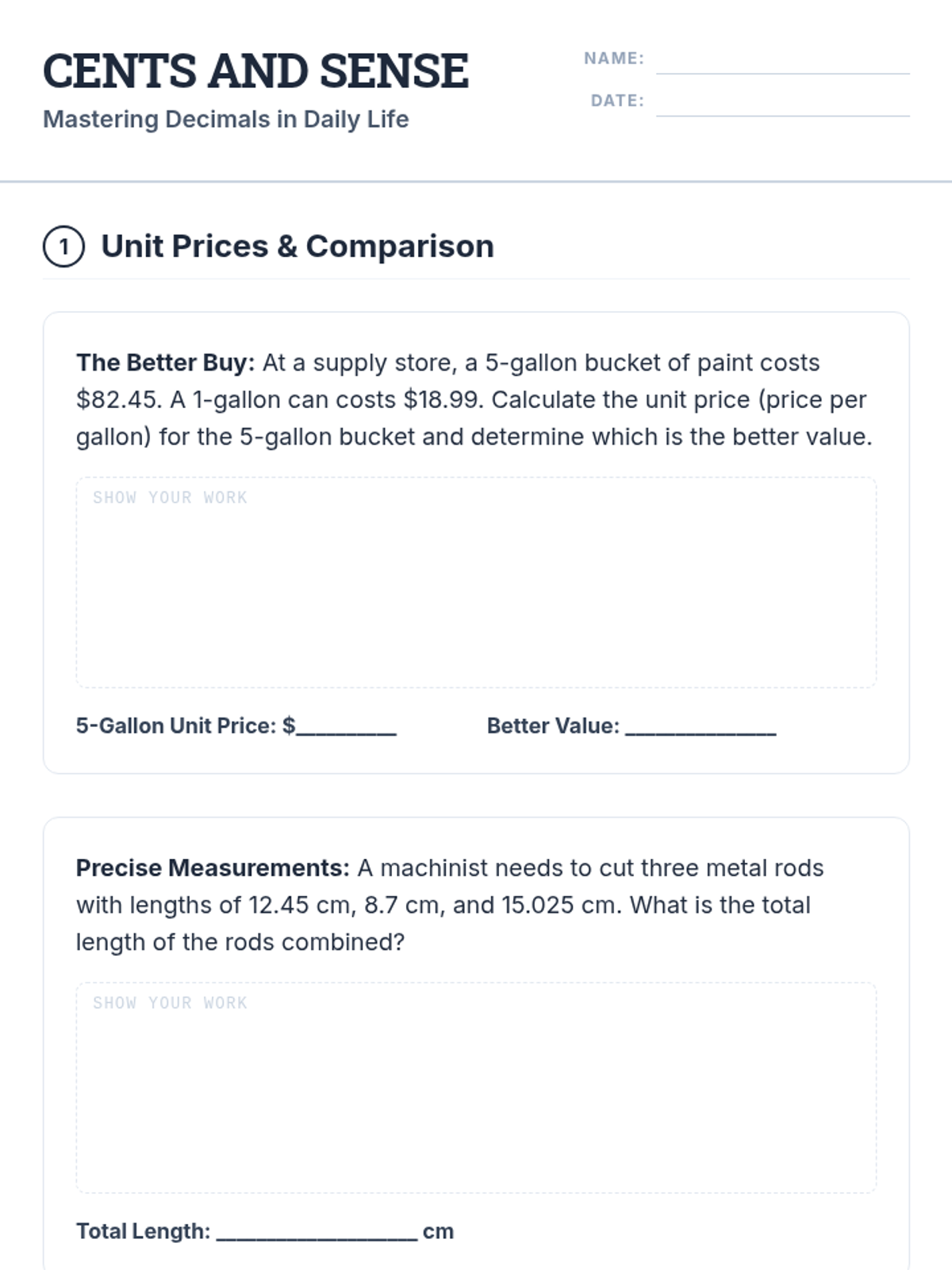
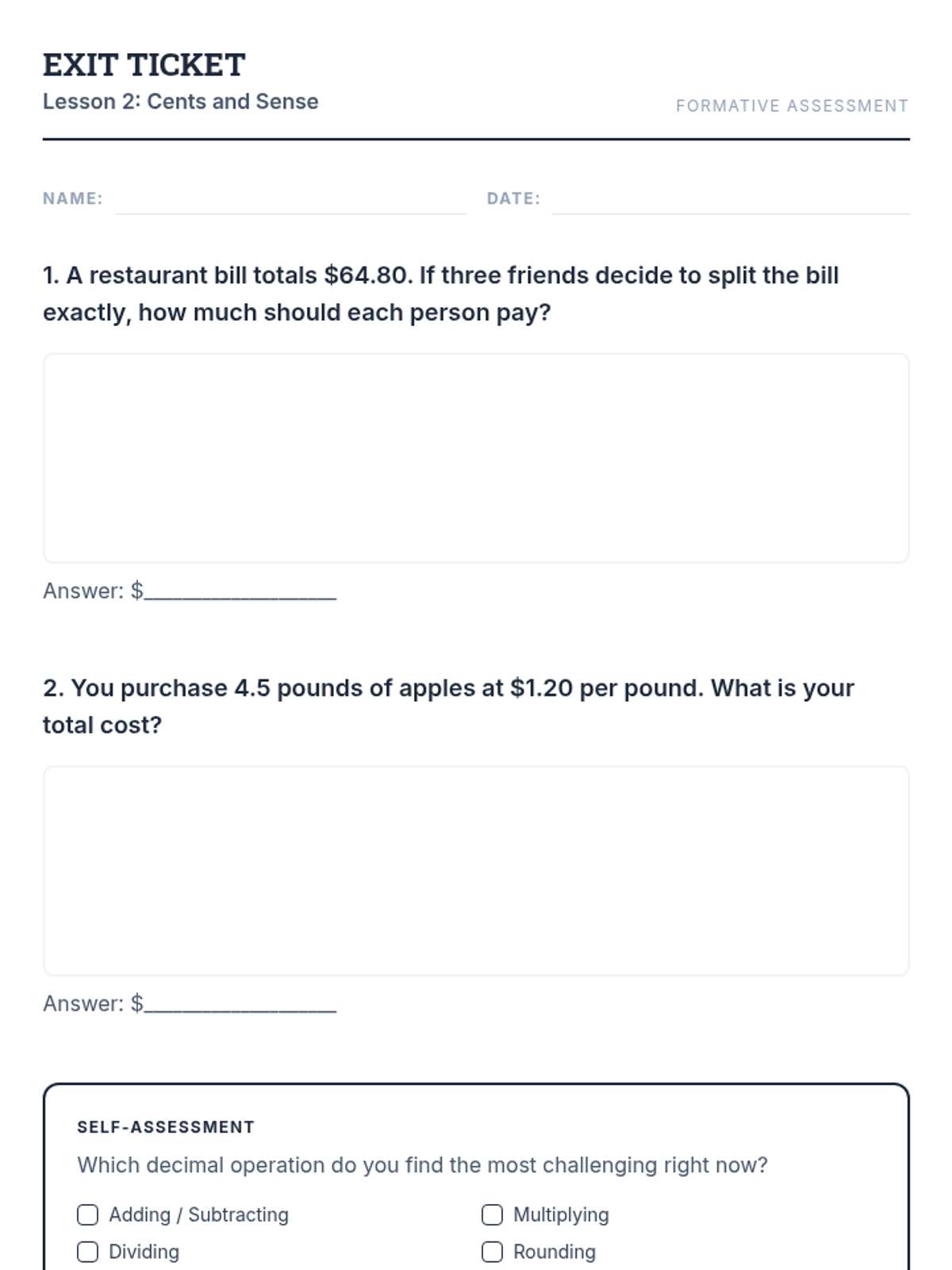
Mastering decimals through the lens of currency and precise measurements. Students learn to add, subtract, multiply, and divide decimals to calculate unit prices, handle cash transactions, and interpret technical specifications.
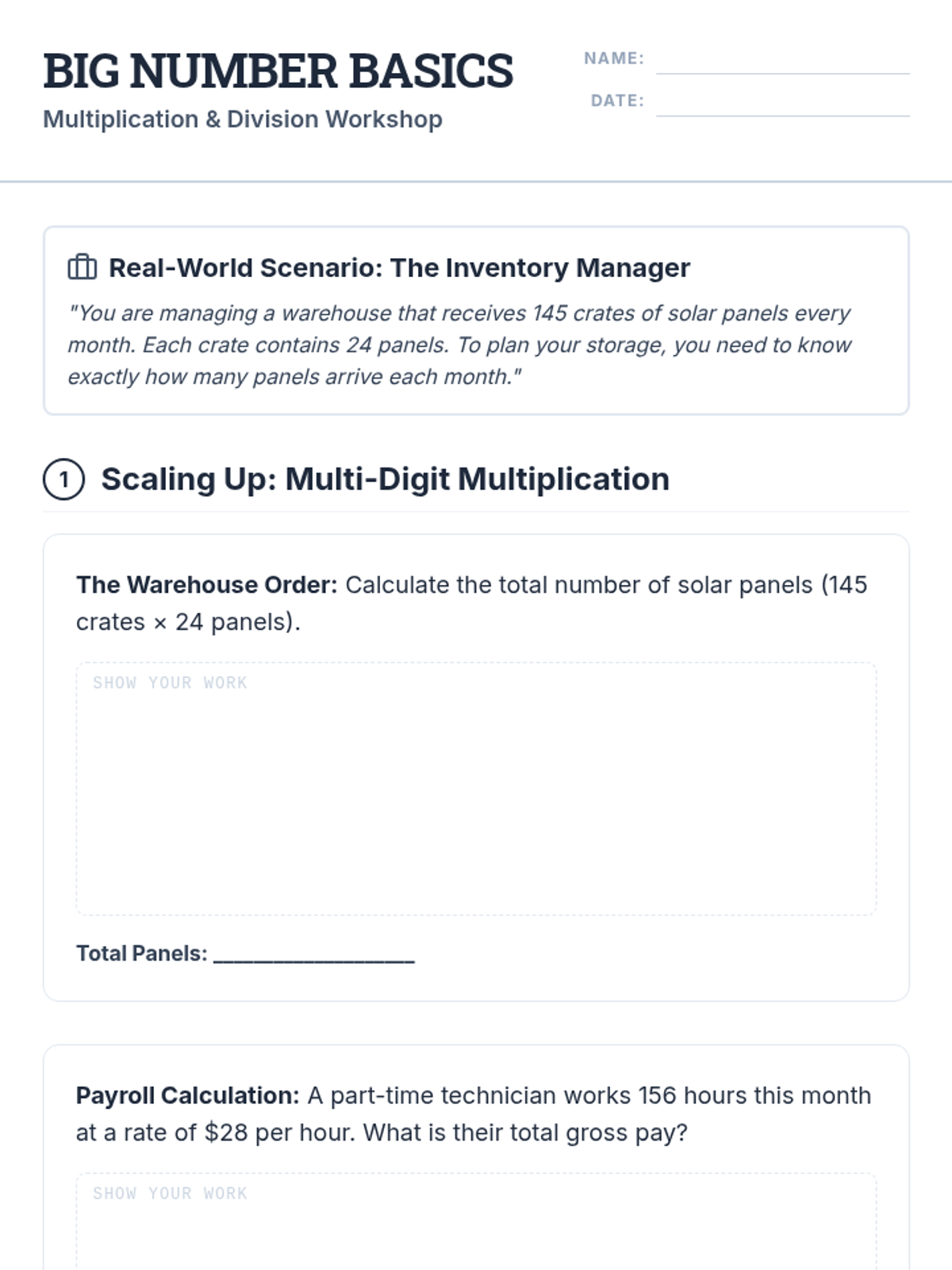
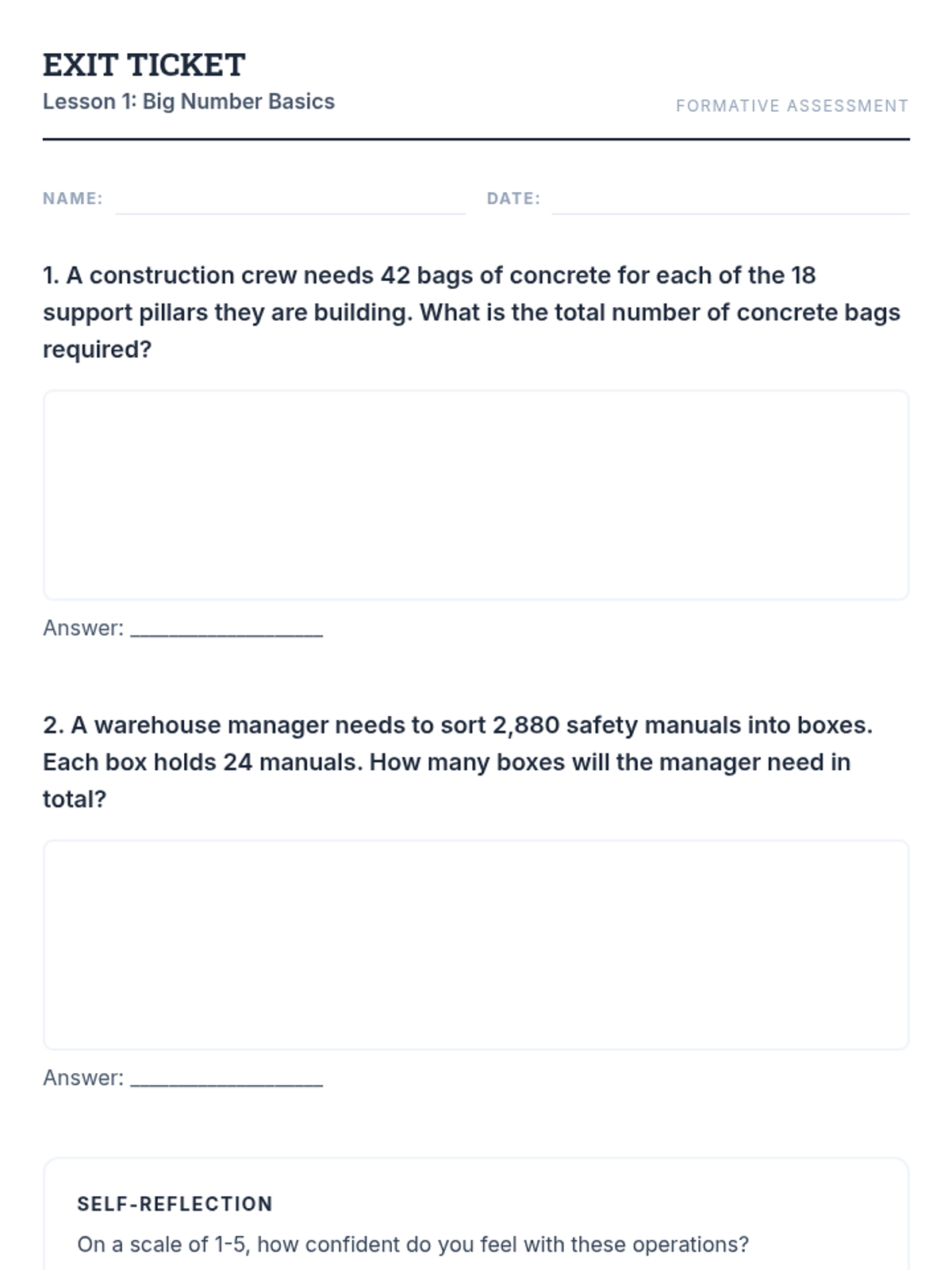
A foundational lesson on multi-digit multiplication and division focused on workplace budgeting and large-scale inventory management. Students will practice these operations through realistic scenarios like calculating monthly revenue and distributing supplies across departments.