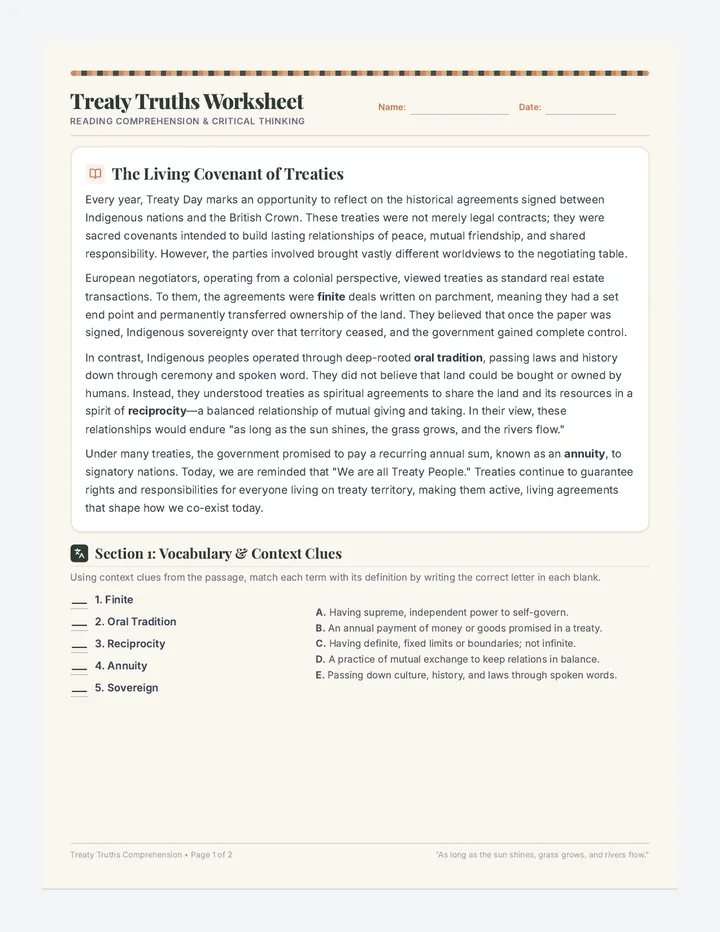
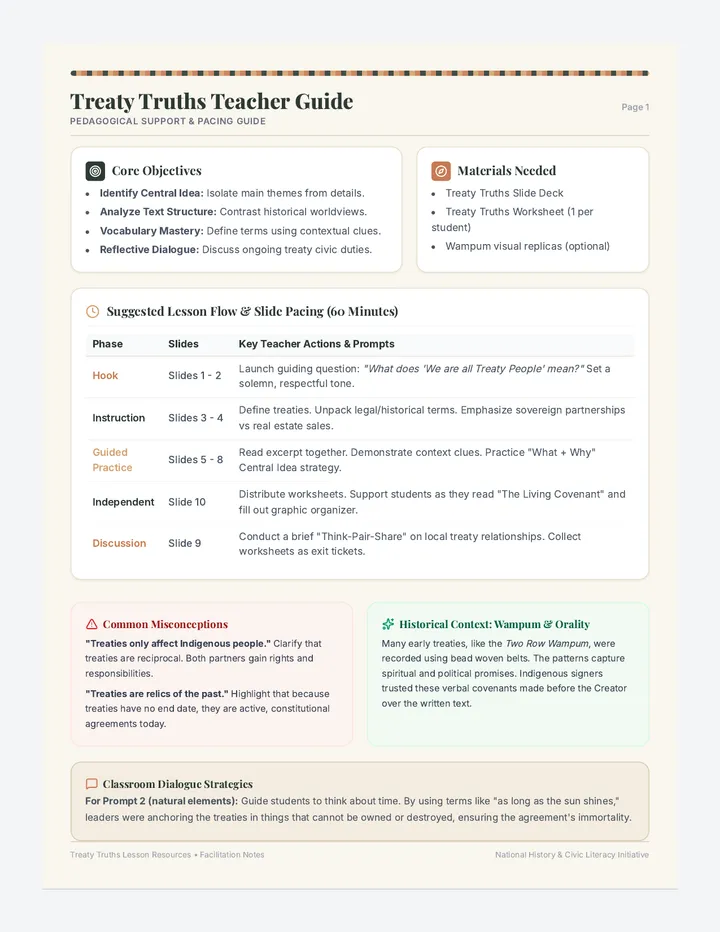
Students analyze the text of historical treaties to understand sovereign nation-to-nation agreements, identify coercive language, and recognize the impact of language barriers in diplomatic negotiations.
This lesson explores the Homestead Act of 1862 and the logistical realities of settling the American West, focusing on the grid system and survival challenges.
A lesson introducing students to famous figures from Ohio and their contributions to history, science, and sports.
A comprehensive guide to structuring an informative essay on the social, economic, and religious consequences of the Black Death in medieval Europe.
A comprehensive look at the rise and fall of Maximilian I of Mexico, exploring the French intervention and the clash between imperial dreams and republican reality.
A deep dive into the physical and human geography that shaped the rise of the Roman Empire, from the Tiber River to its expansion across three continents.
A summative assessment for the first third of the novel. Evaluates student mastery of vocabulary from Lessons 1-11, character motivation, and the central theme of corporate alienation through a mix of multiple choice, short answer, and a rigorous RACE response.
The family's recovery and the transition to a new source of productivity (Grete). Synthesis of the unit's themes.
Gregor's death and self-sacrifice. Analysis of the relief of the family and the 'cleansing' of the home.
Grete's formal rejection of Gregor's identity. Analysis of the shift from sibling love to the necessity of his removal.