Students analyze pairs of words with identical roots but different prefixes or suffixes to determine how their meanings overlap and diverge. Includes three targeted worksheets for practice and assessment.
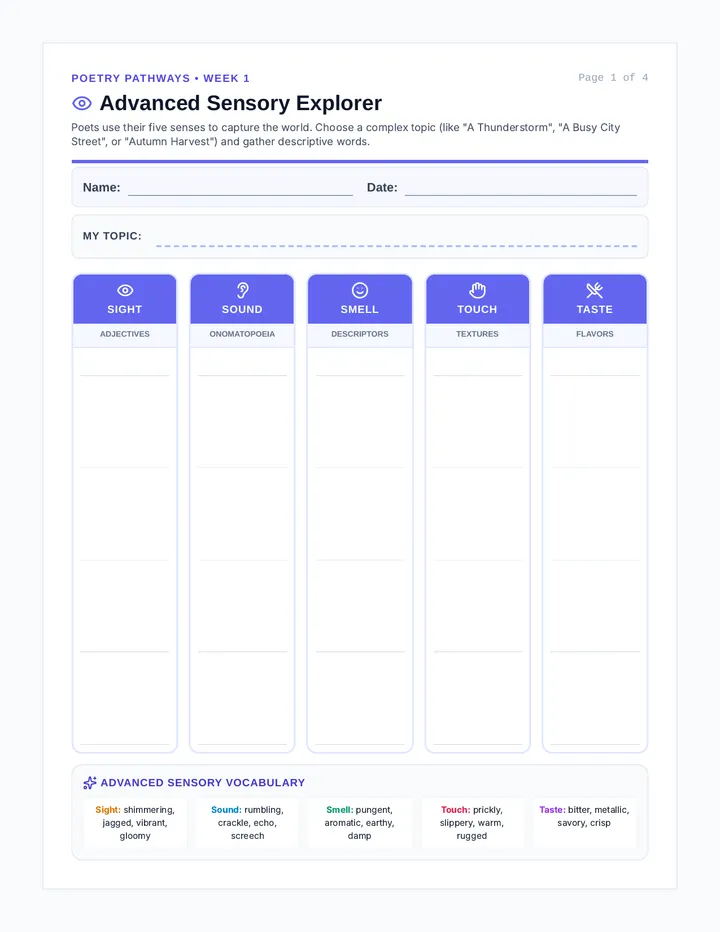
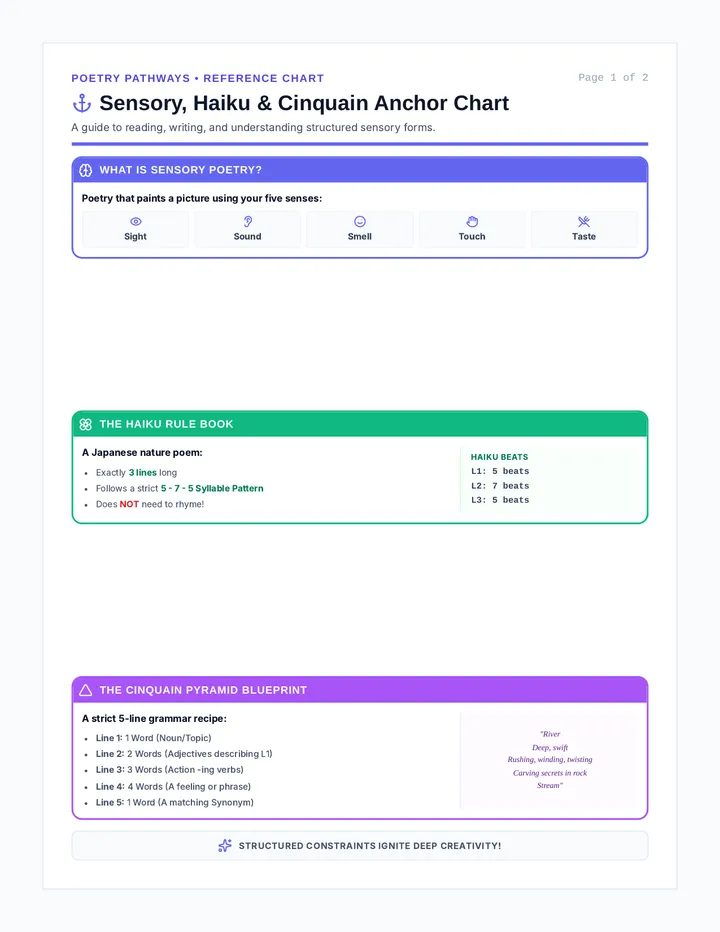
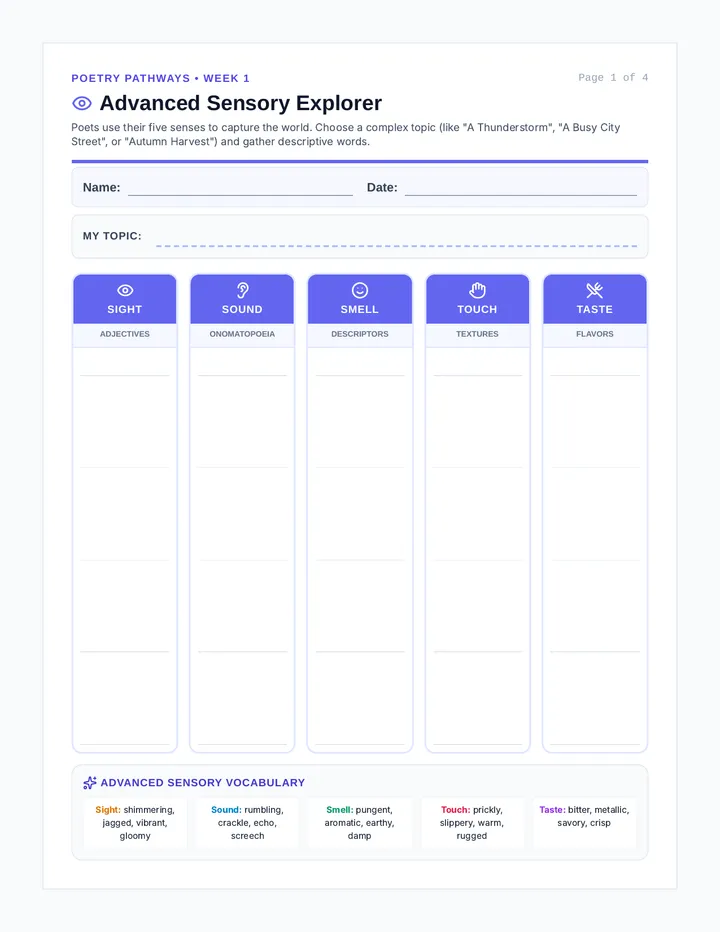
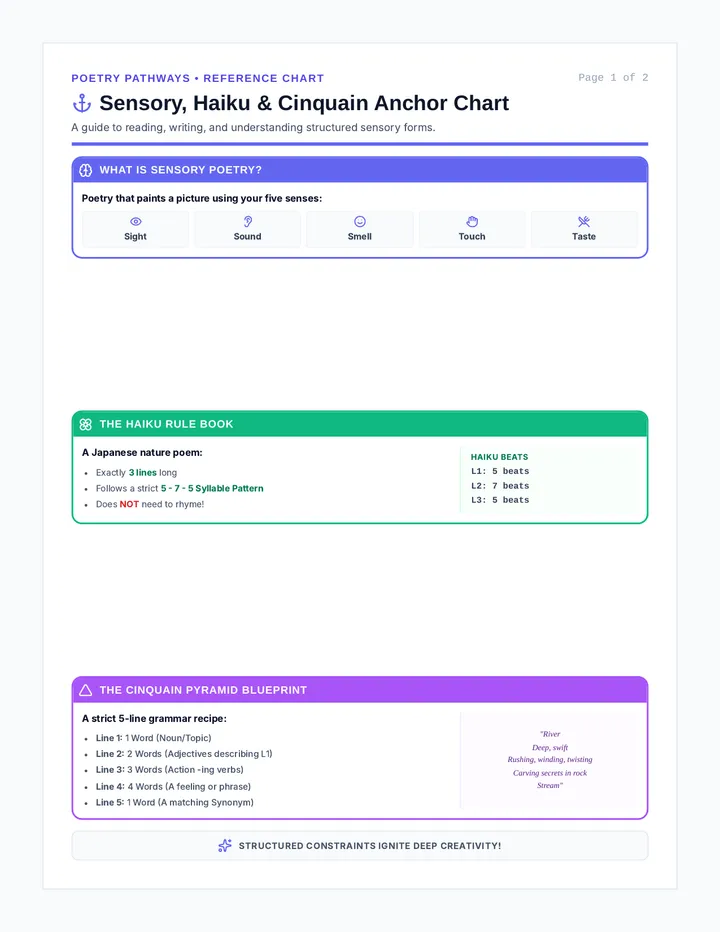
A comprehensive 4-week poetry curriculum designed for students requiring high structure and visual supports. It covers diverse poetry types (Haiku, Color, Acrostic, Couplets, Concrete, Free Verse, and Metaphor/Simile) with scaffolds like word banks, sentence frames, and graphic organizers.
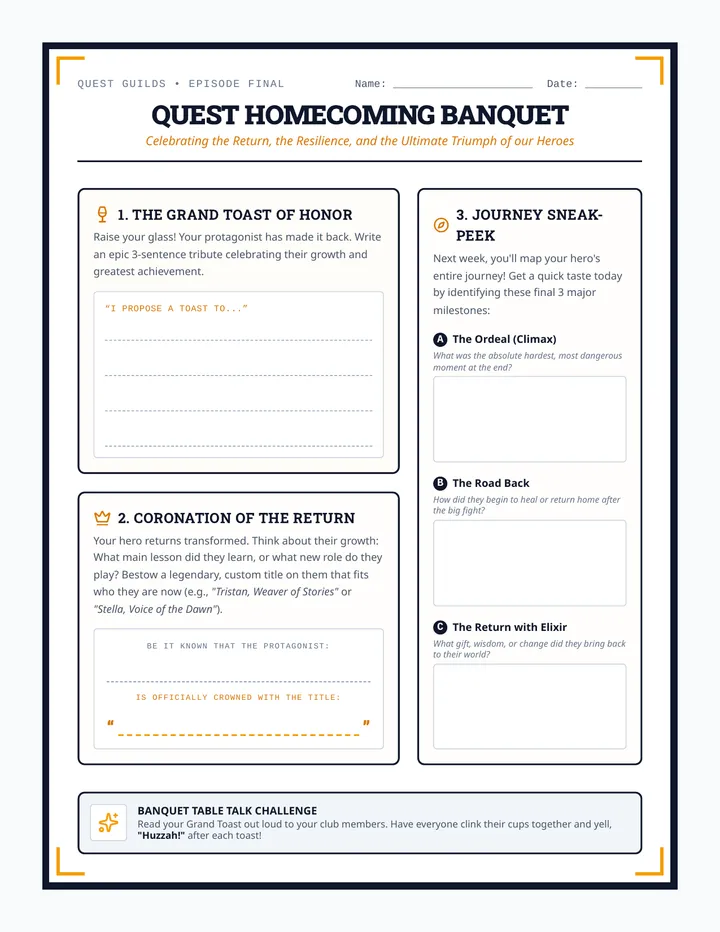
The celebratory final meeting of the book clubs, designed as a festive victory banquet. Students commemorate their protagonist's return through a grand ceremonial toast, active crossover badge trading with other groups, and a high-interest 5-minute teaser of the Hero's Journey mapping project.
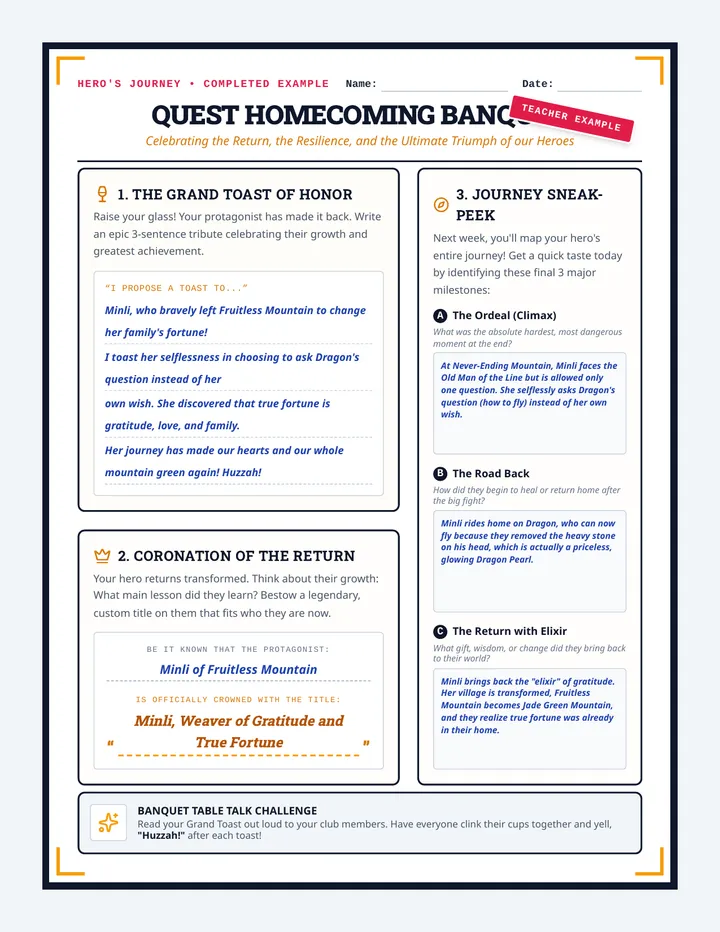
A completed 2-page teacher example of the Homecoming Banquet Placemat for the novel "Where the Mountain Meets the Moon" by Grace Lin. Features specific, high-quality sample student responses mapping Minli's journey while leaving classmate names and signatures blank for pedagogical modeling.
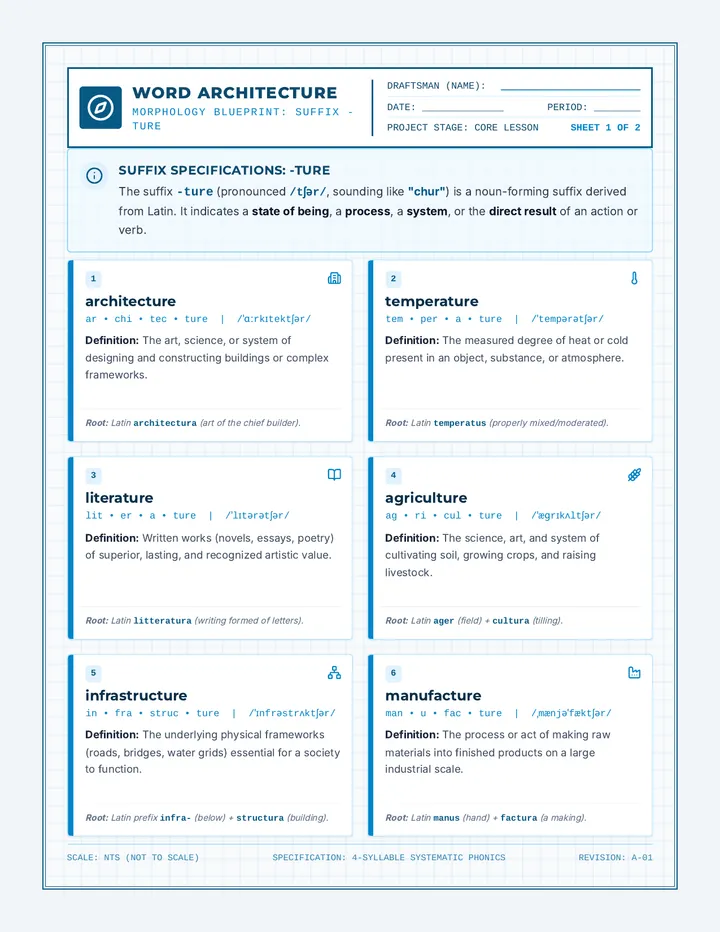
A middle school vocabulary lesson exploring 3-to-4 syllable academic words ending in the suffix -ture. Students examine pronunciation, morphological structure, definitions, and applications through a technical drafting/blueprint theme.
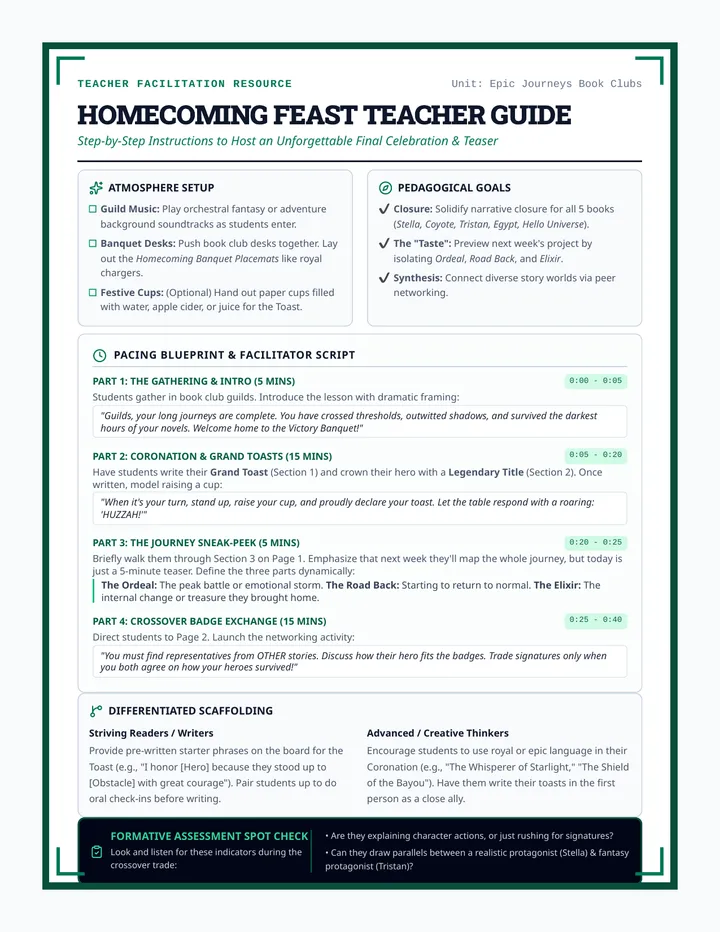
A 1-page teacher facilitation guide for running the final book club celebration meeting. Features a 45-minute step-by-step lesson plan, classroom setup checklist, teacher talk scripts for a theatrical 'Toast Ceremony', and instructions for scaffolding both the Hero's Journey preview and the crossover networking activity.
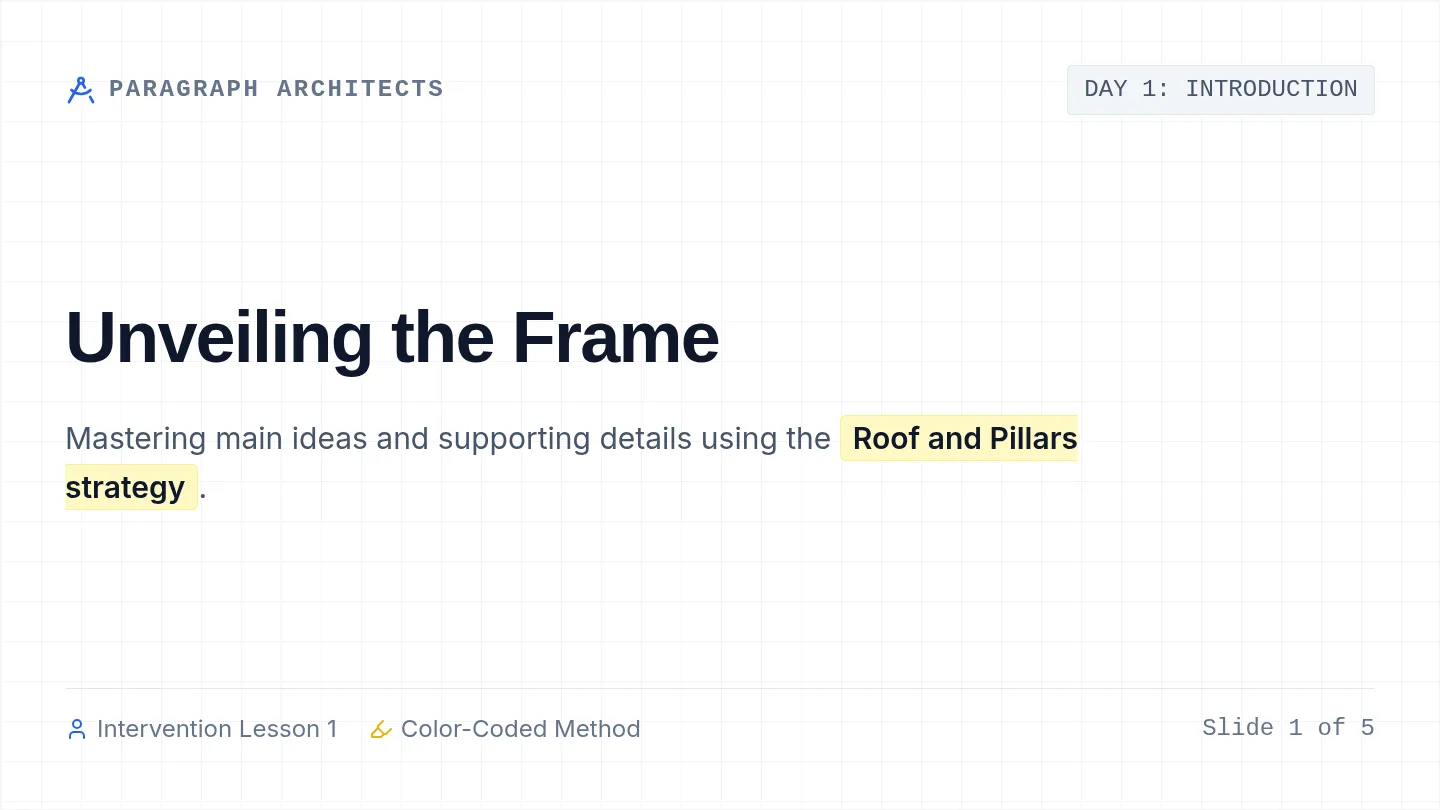
An intensive intervention lesson designed to help struggling readers master main idea identification using hands-on, color-coded highlighting strategies. Students learn to dismantle paragraph structures like blueprint architects, physically separating the 'roof' (main idea) from the 'supporting pillars' (details).
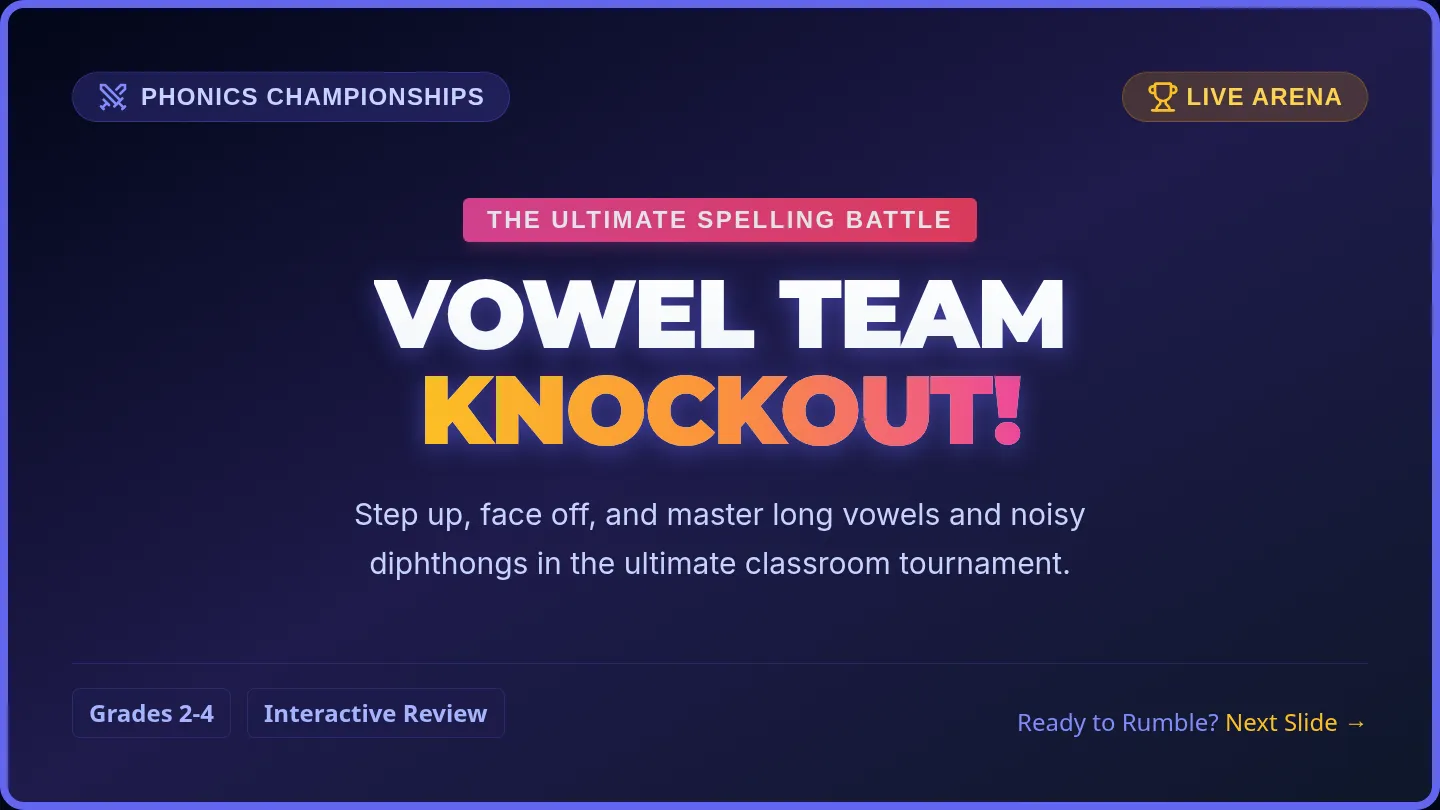
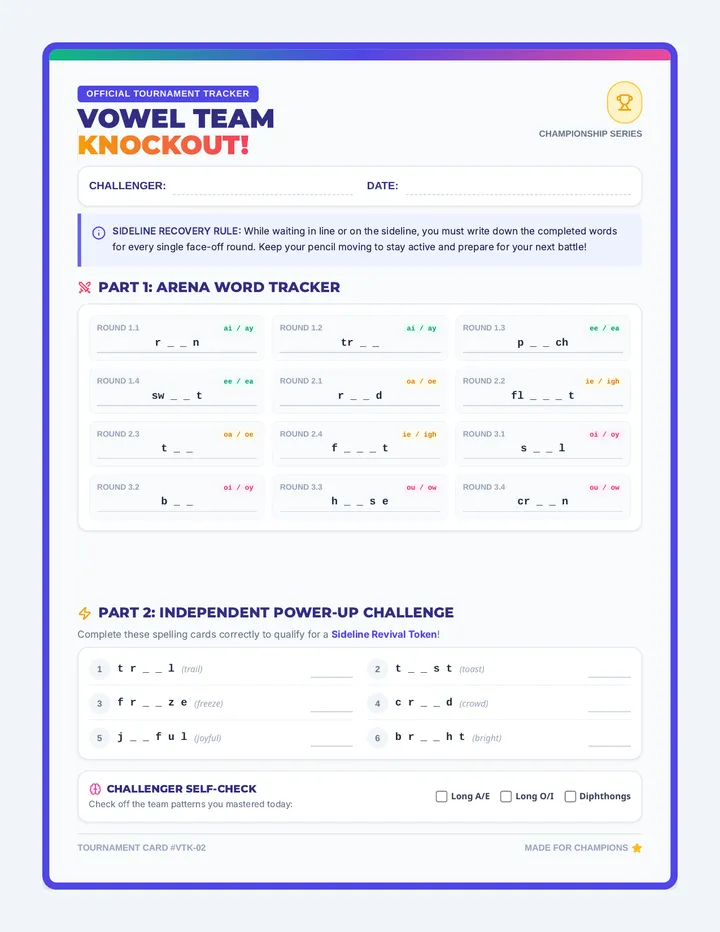
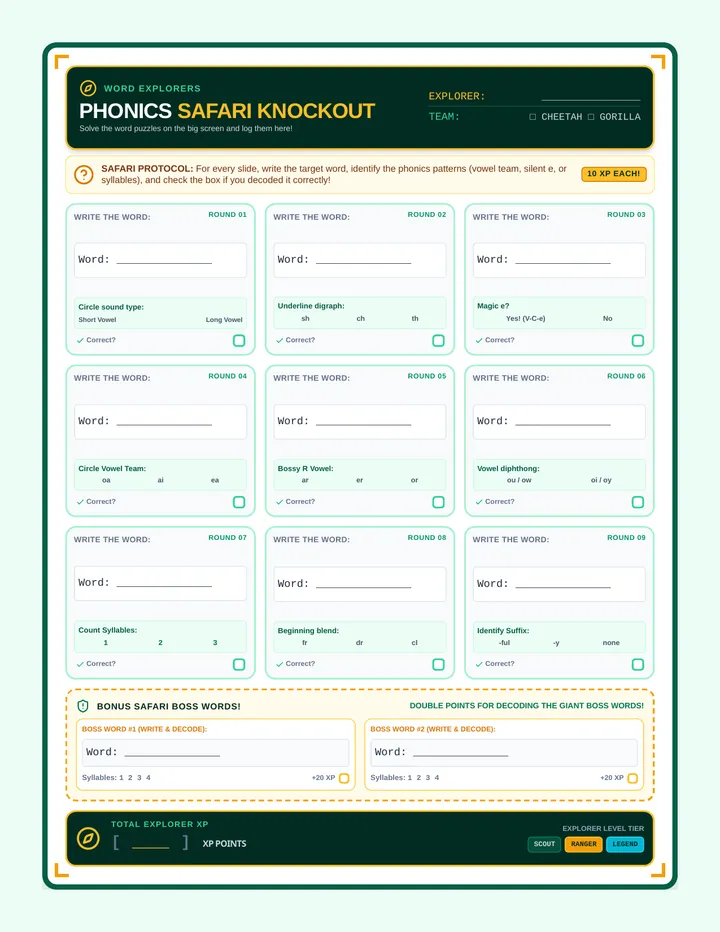
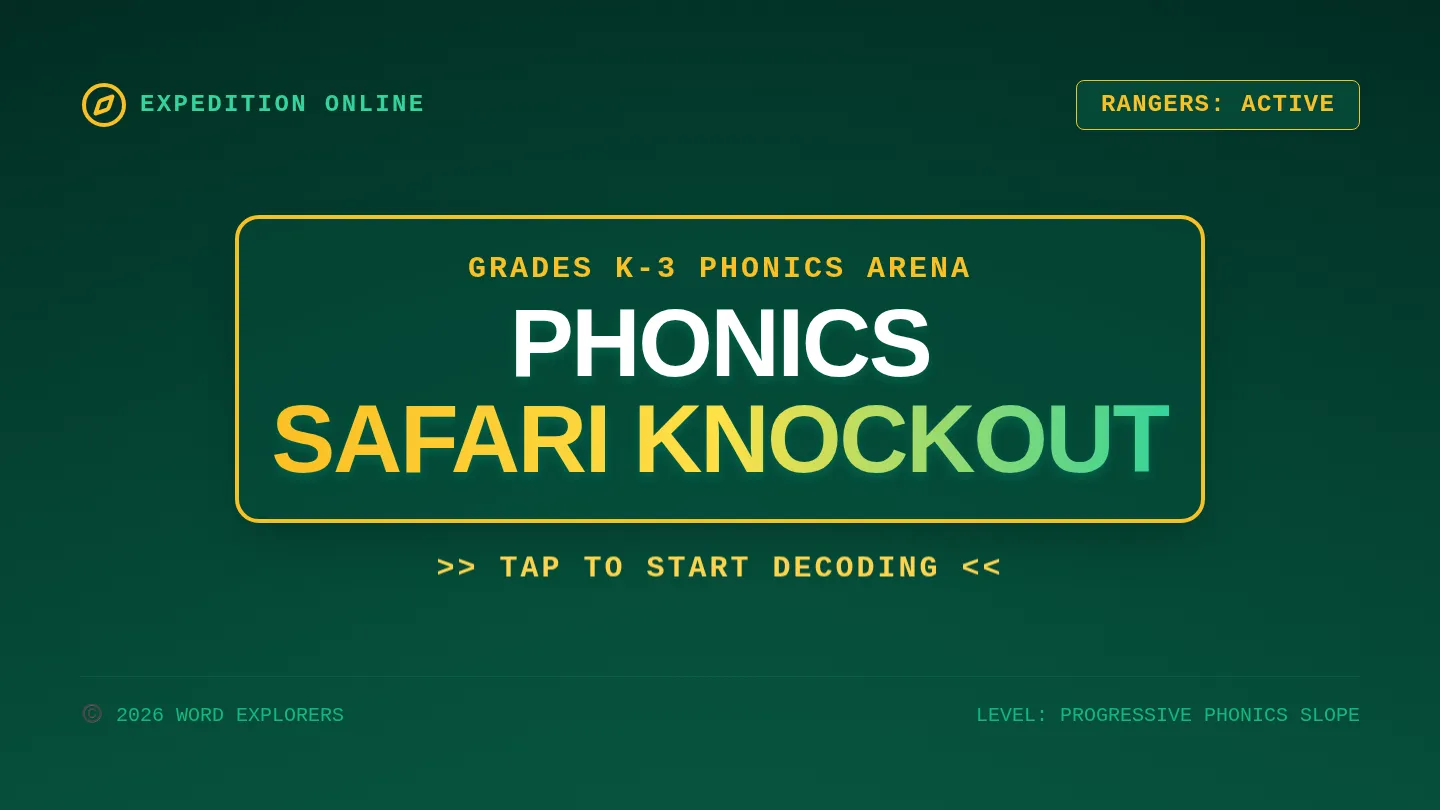
An energetic classroom phonics lesson where students compete in a friendly Knockout tournament to master vowel teams and diphthongs. Includes interactive instructional and gameplay slides, plus a student tracking sheet.
A 2-page celebratory student worksheet for the final book club meeting in a light, celebratory banquet theme. Page 1 features an epic toast-writing activity, a refined Coronation of the Return block with explicit directions and perfectly aligned CSS-dashed writing lines, and a 3-step Hero's Journey roadmap with Hero's Journey branding. Page 2 features a gamified crossover badge exchange board with responsive CSS-dashed layout borders for neat student handwriting alignment under the Hero's Journey brand.
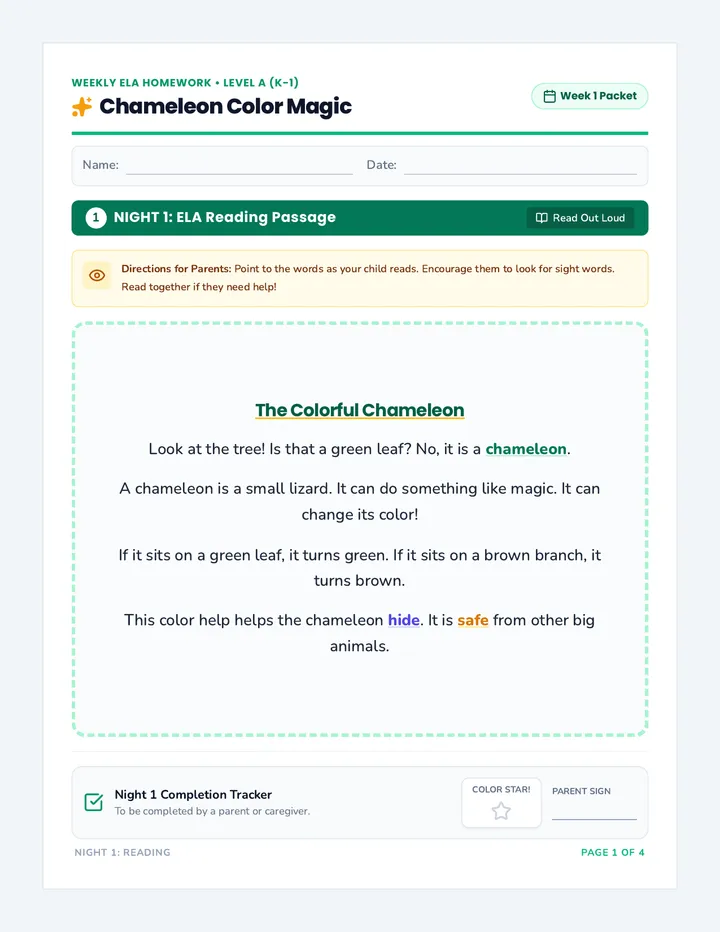
Weekly ELA homework packets focused on high-interest animal adaptations for elementary students (K-5). Each packet contains four nights of structured work: Night 1 (Reading), Night 2 (Vocabulary), Night 3 (Comprehension Activity), and Night 4 (Comprehension Questions), customized with visual icons, sentence frames, and simplified tracking guides for varying reading levels.
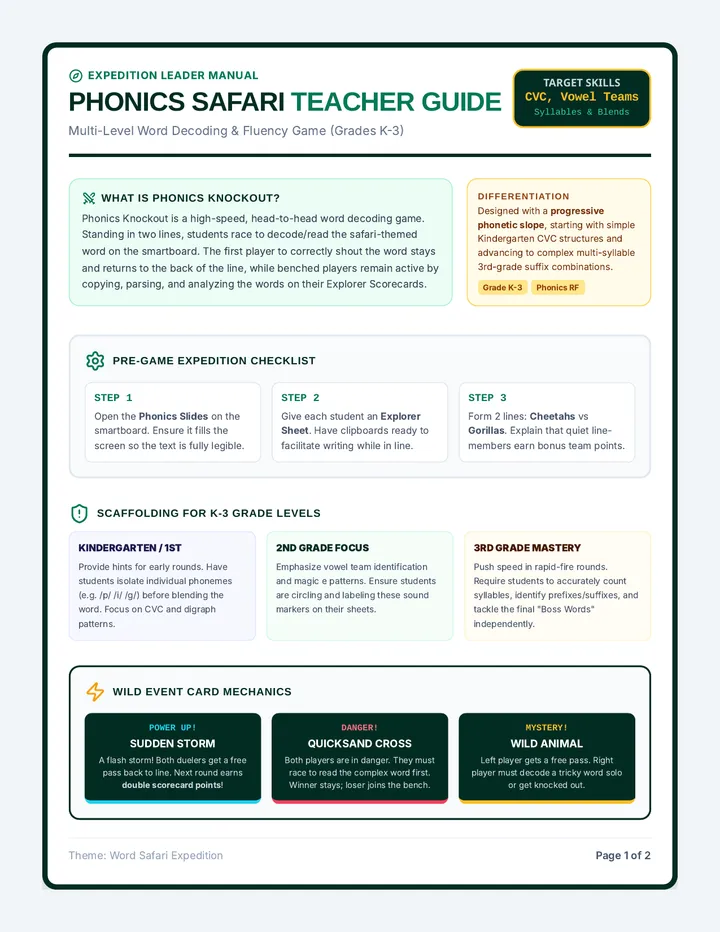
A high-energy, wild safari-themed classroom game for K-3 students focusing on key phonics skills including CVC words, silent 'e', vowel teams, and multi-syllable decoding. This lesson includes a widescreen smartboard presentation, a teacher facilitation guide with word keys, and an active-participation student tracker sheet.
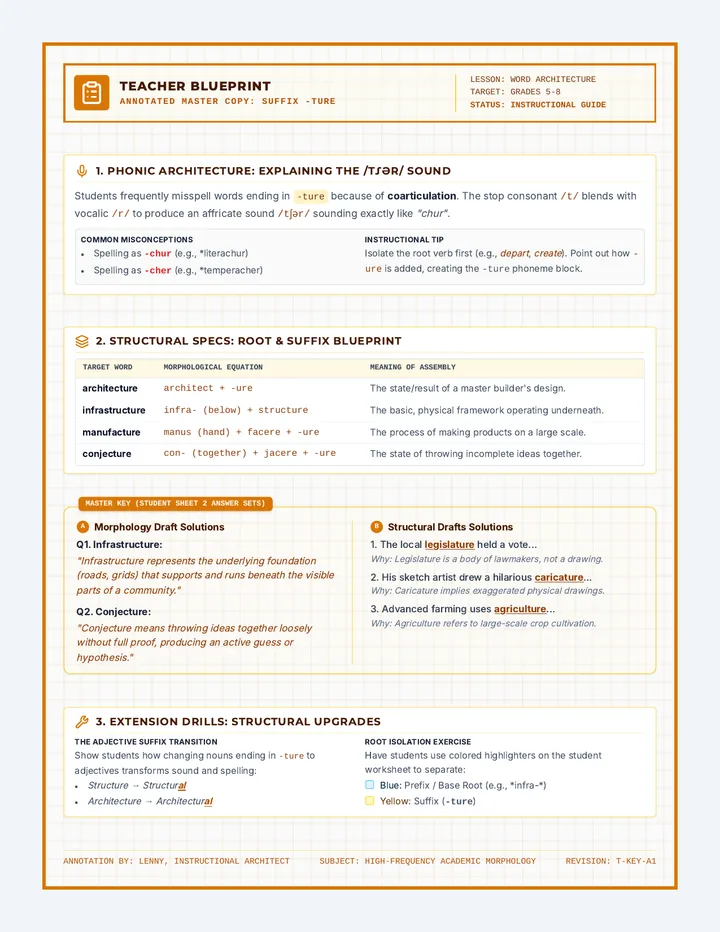
A teacher-facing lesson guide and master answer key with morphological breakdowns, pronunciation teaching strategies for the /tʃər/ sound, and lesson extensions. Styled with a warm amber draft annotation aesthetic.