A magical lesson exploring how adjectives transform plain sentences into descriptive ones through 'Adjective Alchemy'. Students will identify, match, and apply adjectives to enhance their writing.
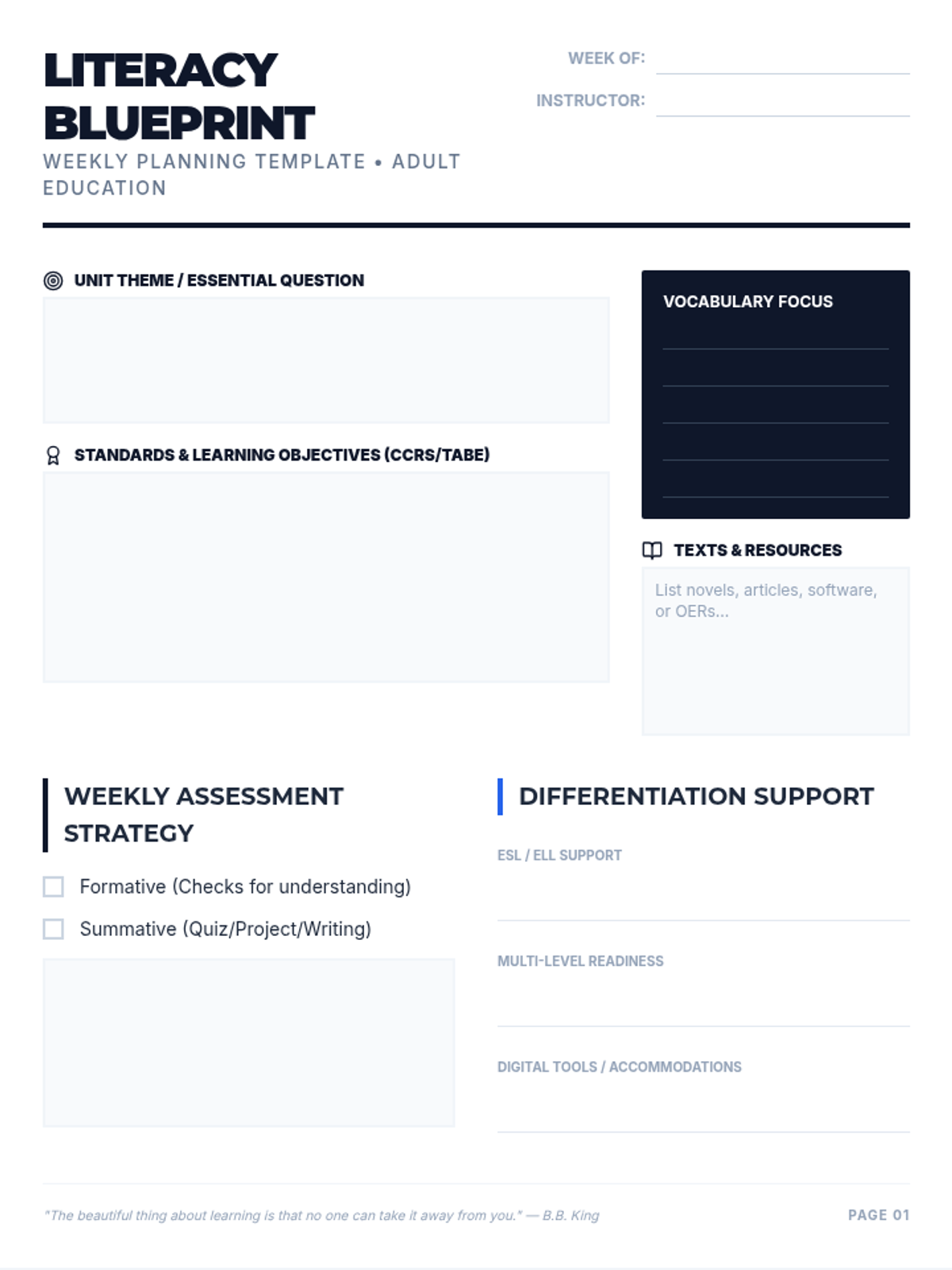
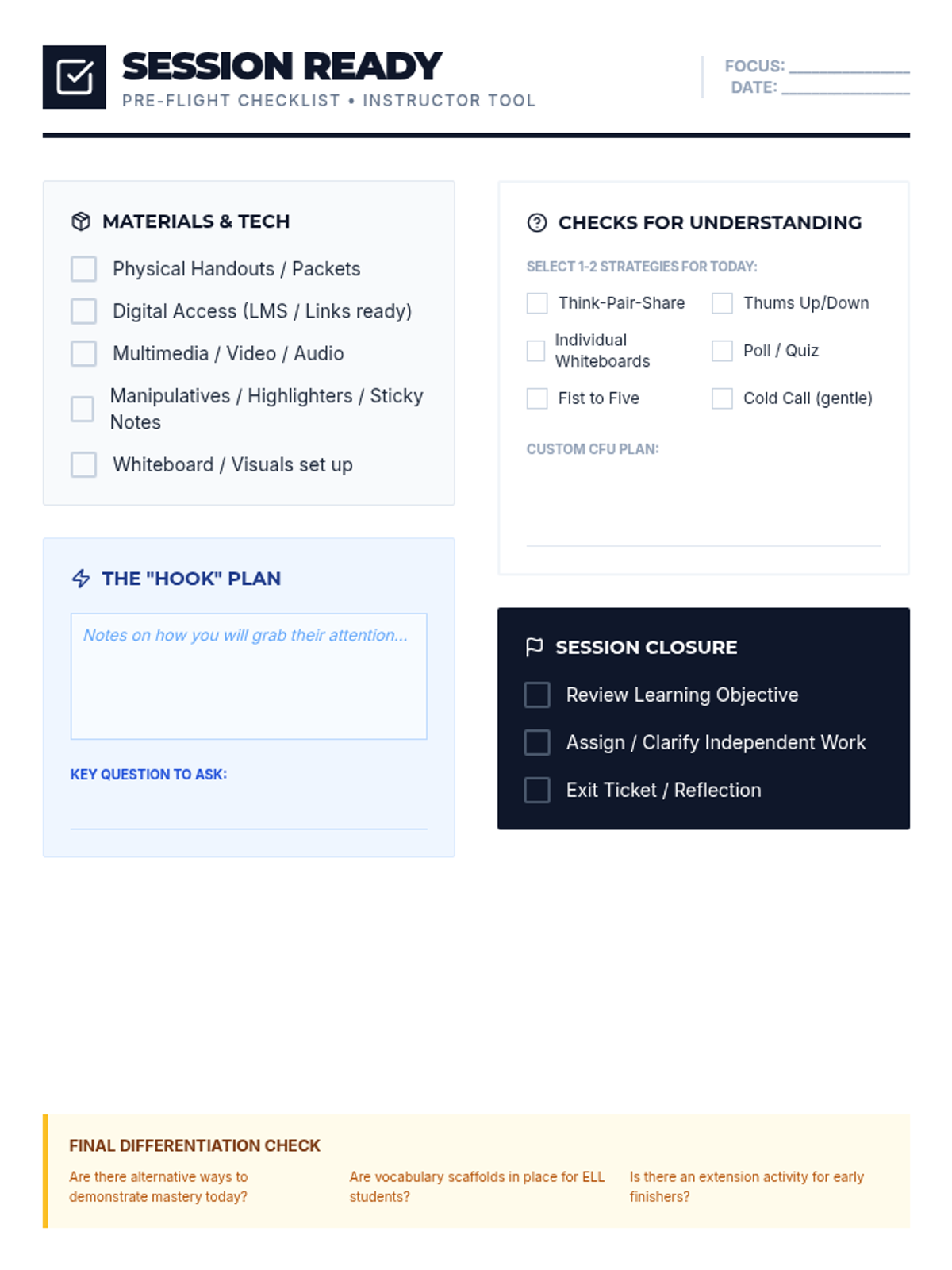
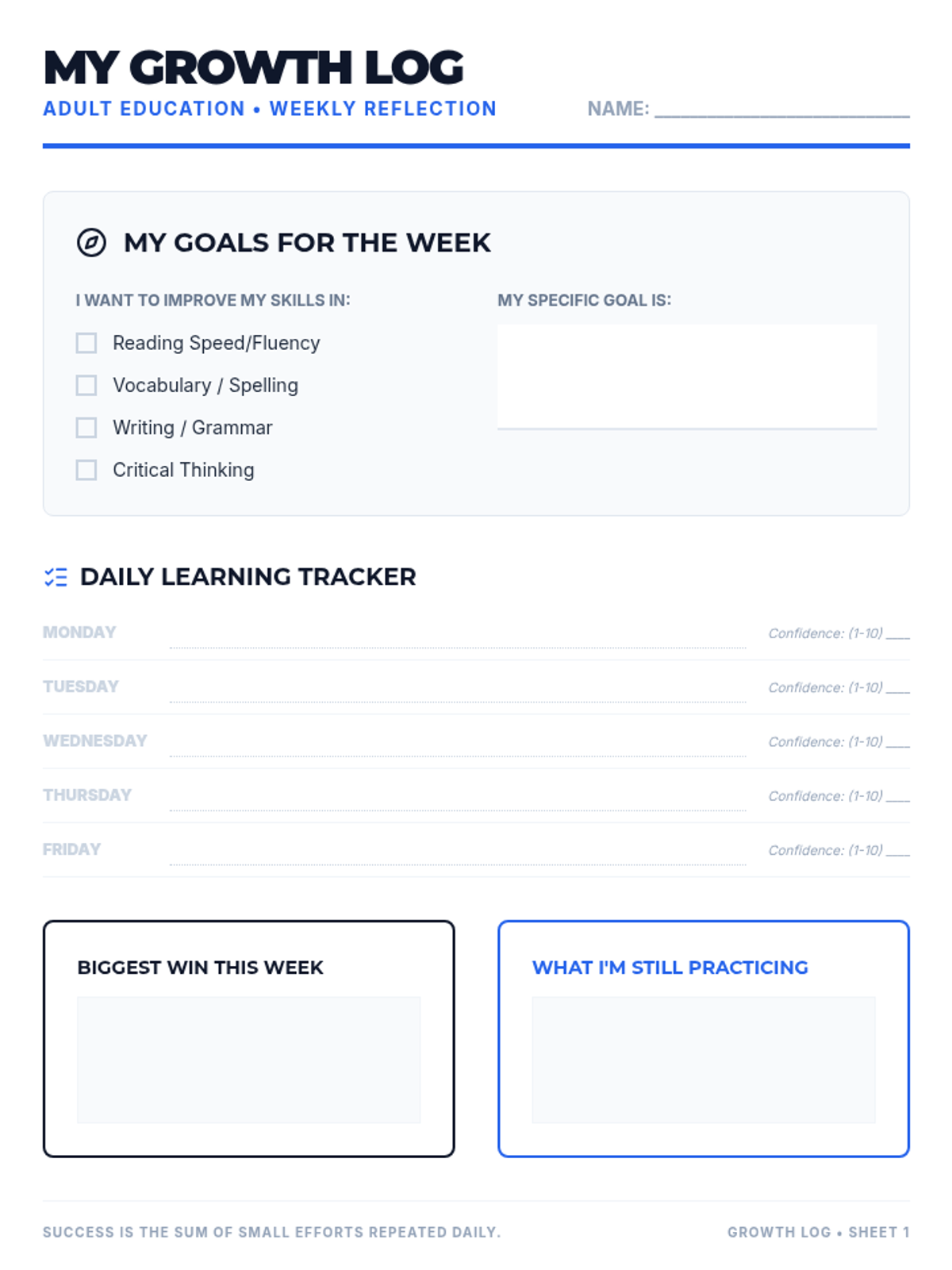
A comprehensive planning suite for Adult Education instructors focusing on Reading and Language Arts, featuring a weekly blueprint, session checklists, and student reflection tools.
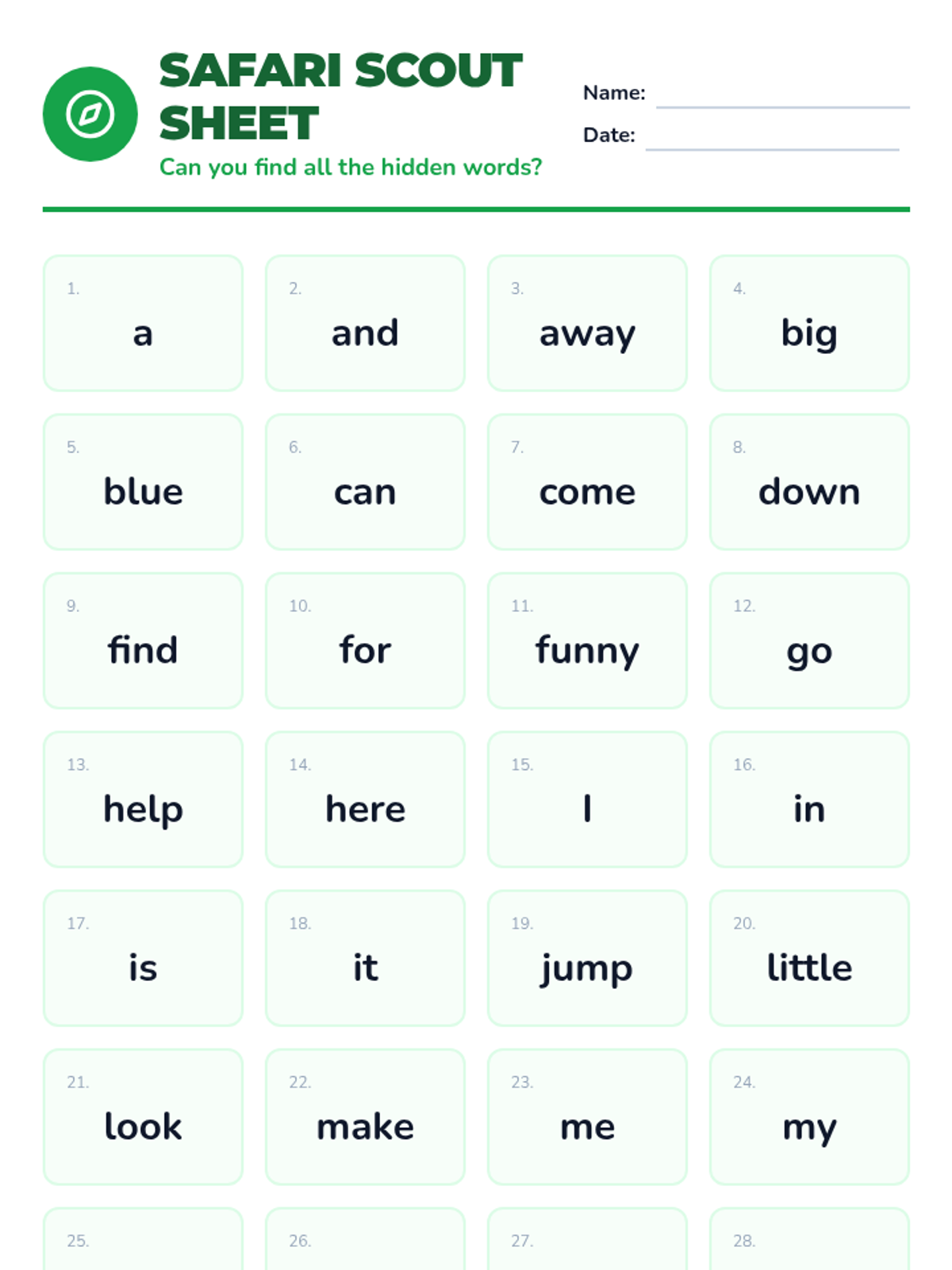
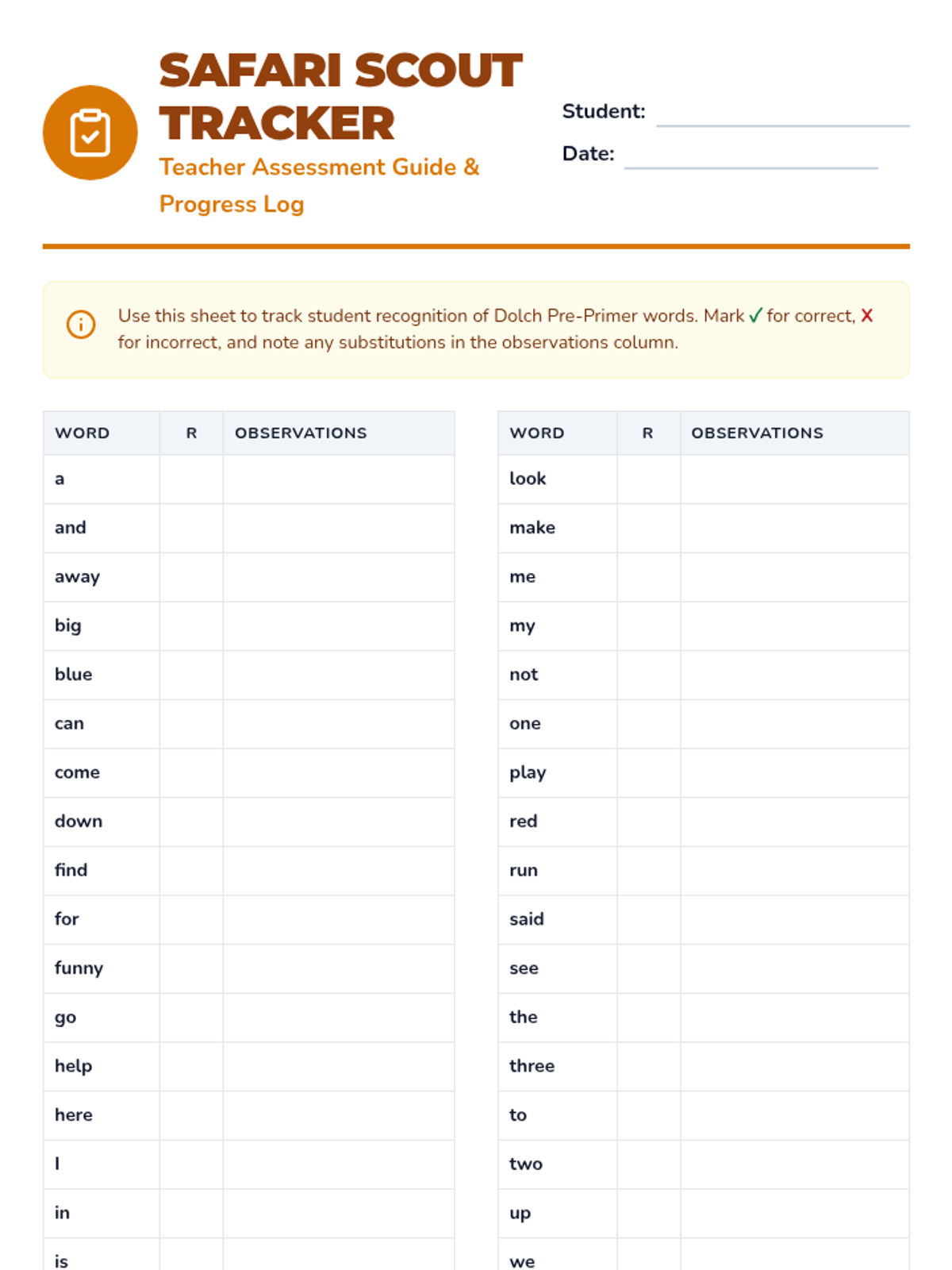
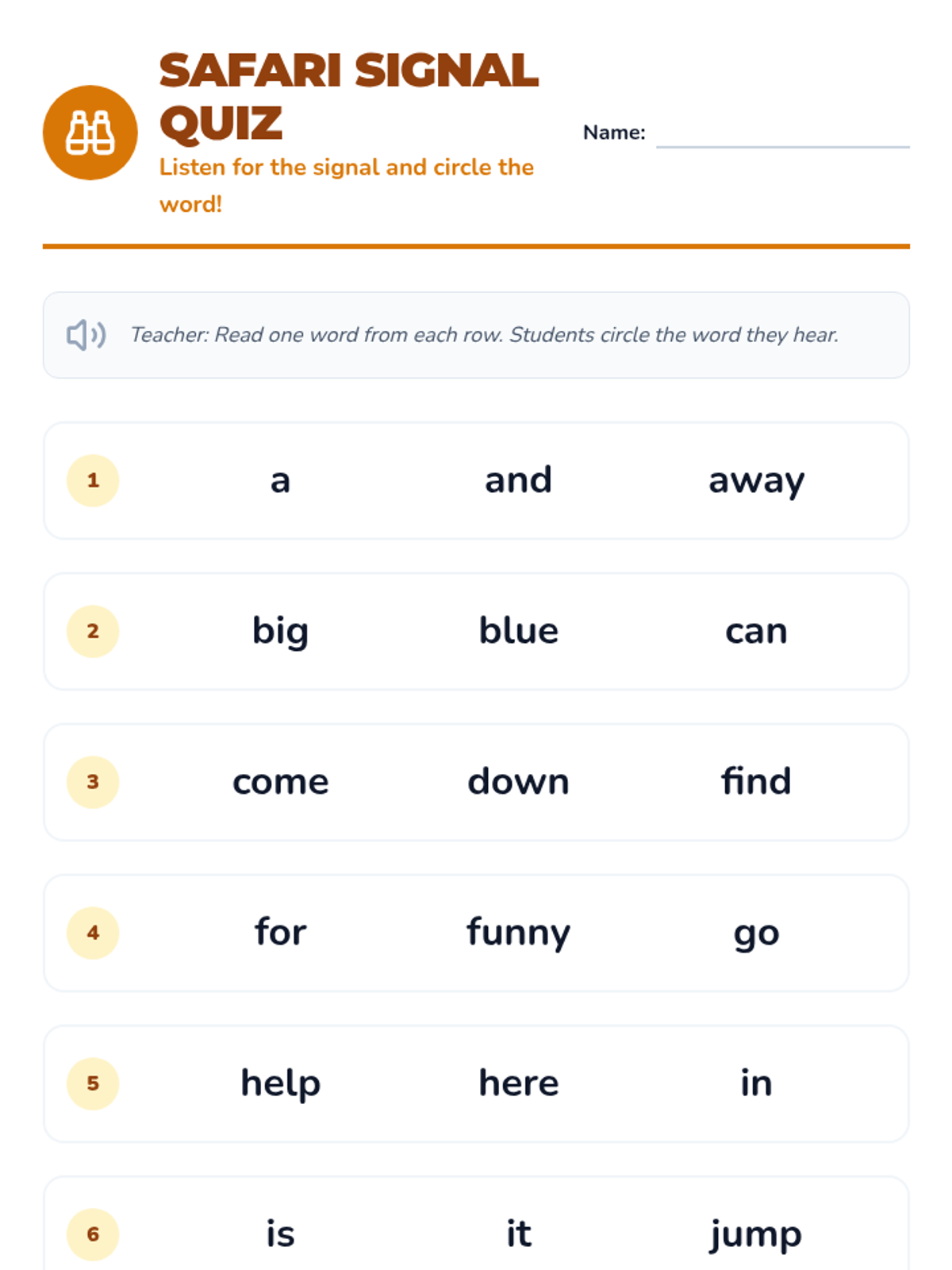
A beginner's journey through the Dolch Pre-Primer sight words, featuring interactive review slides and a 'Safari' themed assessment to track word recognition.
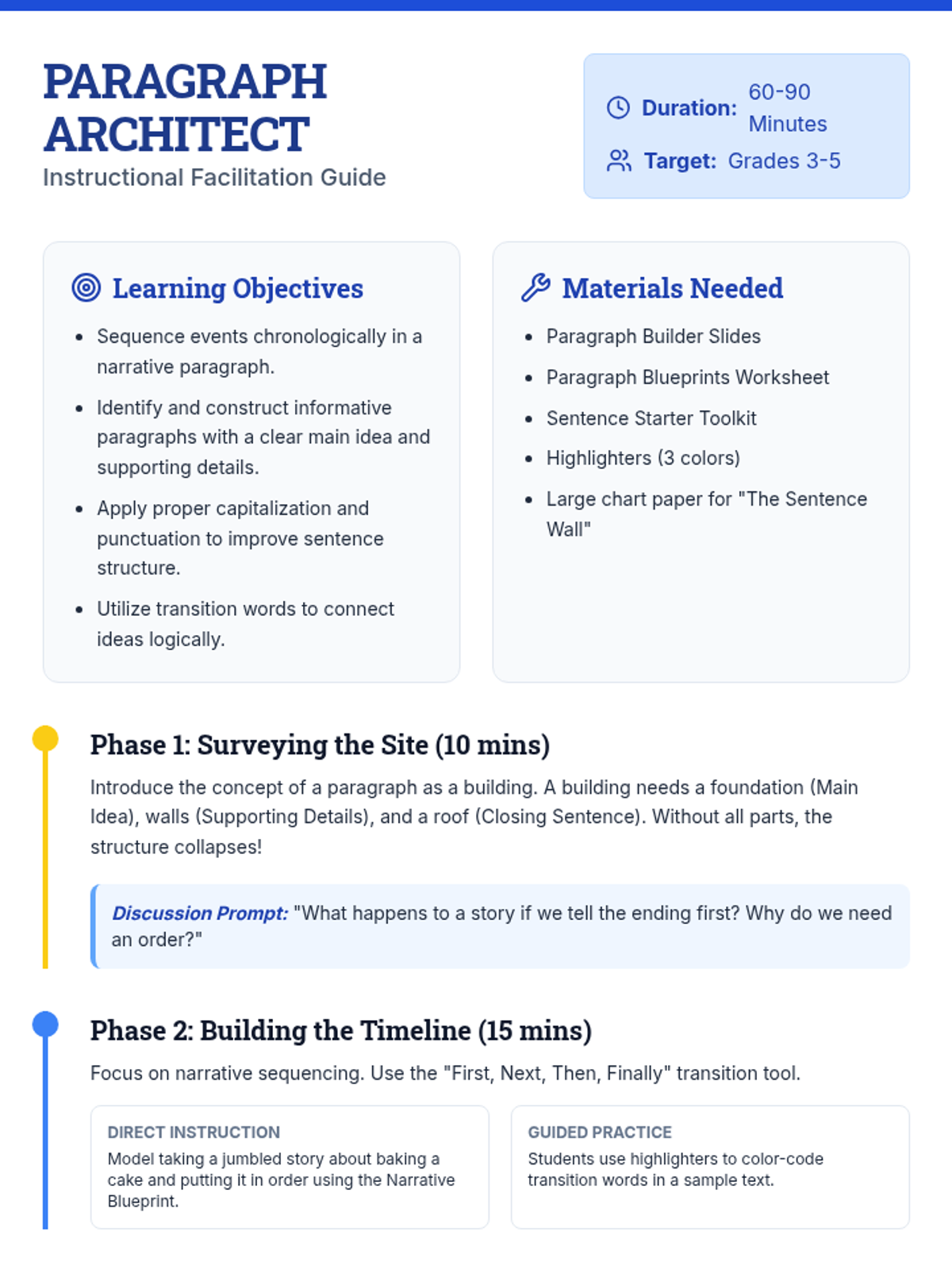
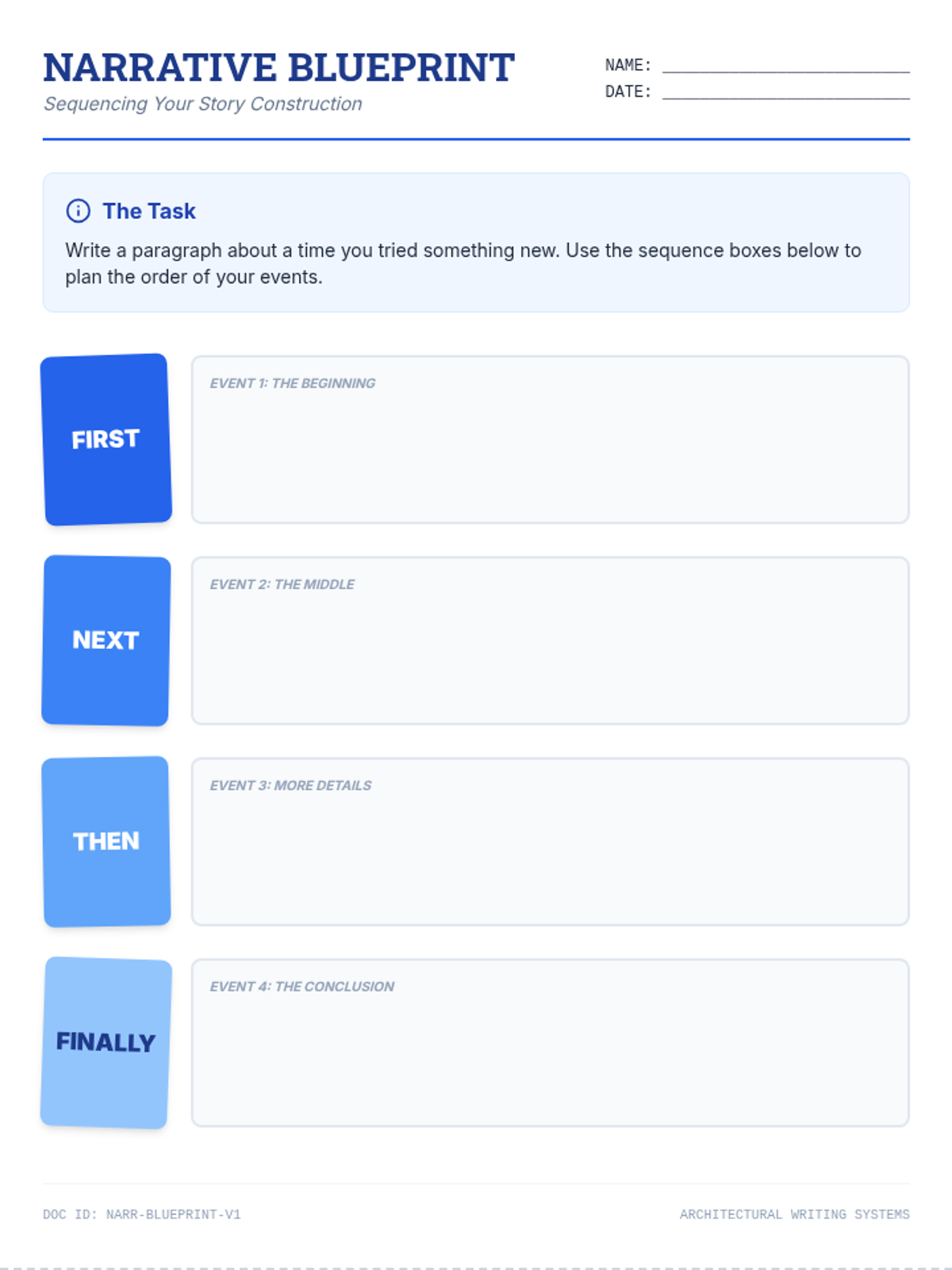
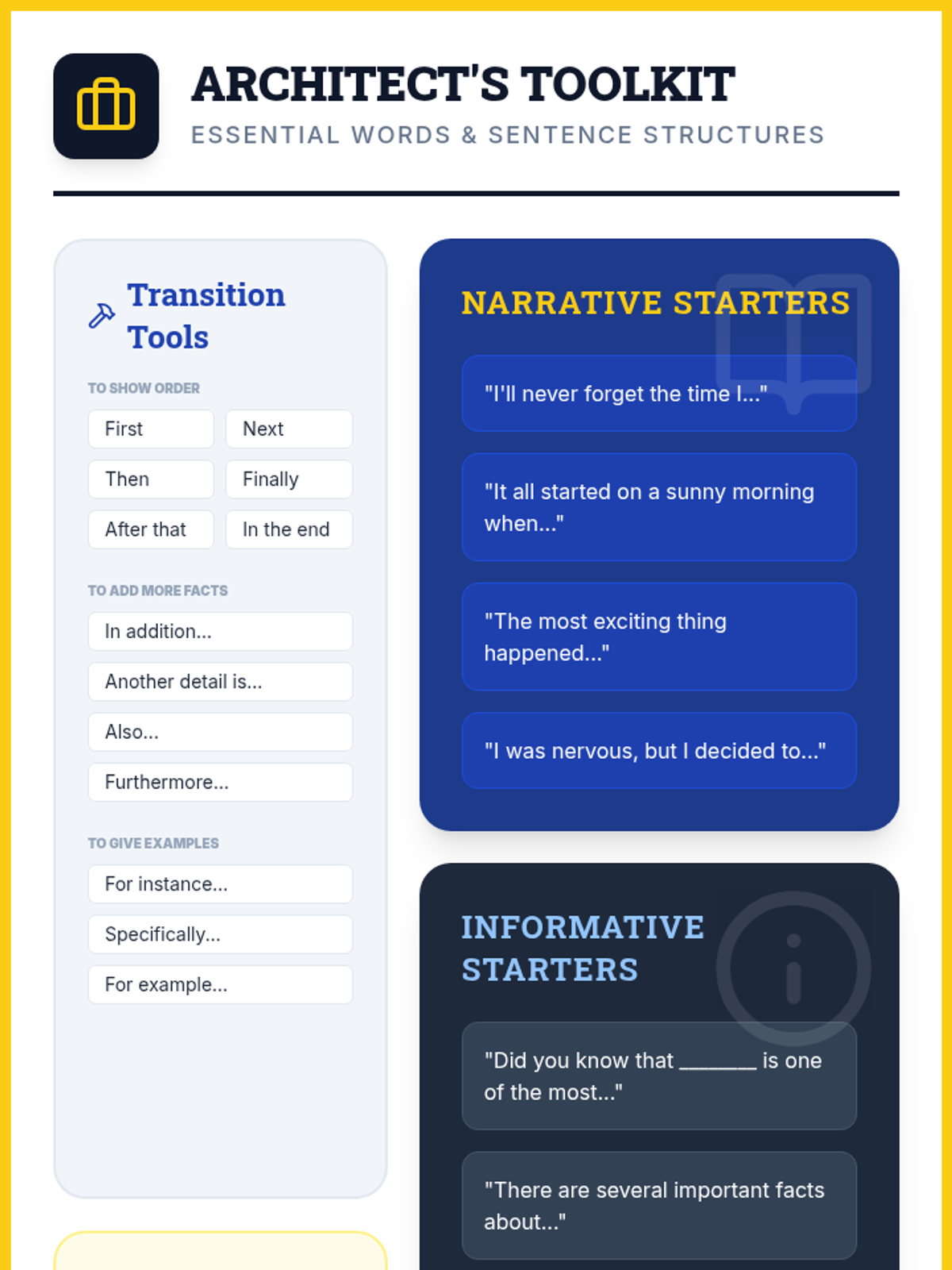
A comprehensive lesson on building strong paragraphs, focusing on narrative sequencing, informative structure, and sentence-level mechanics using an architectural theme.
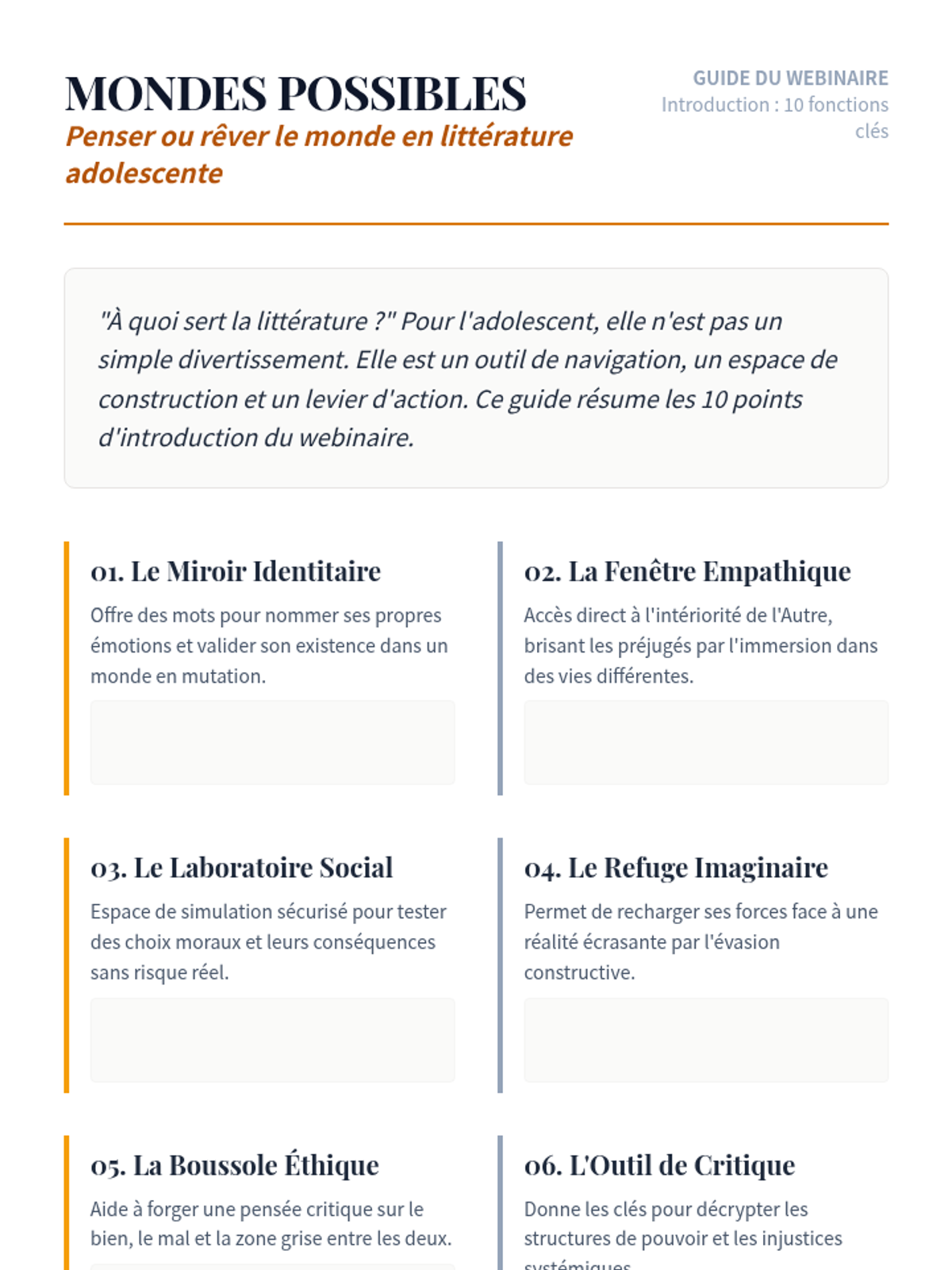
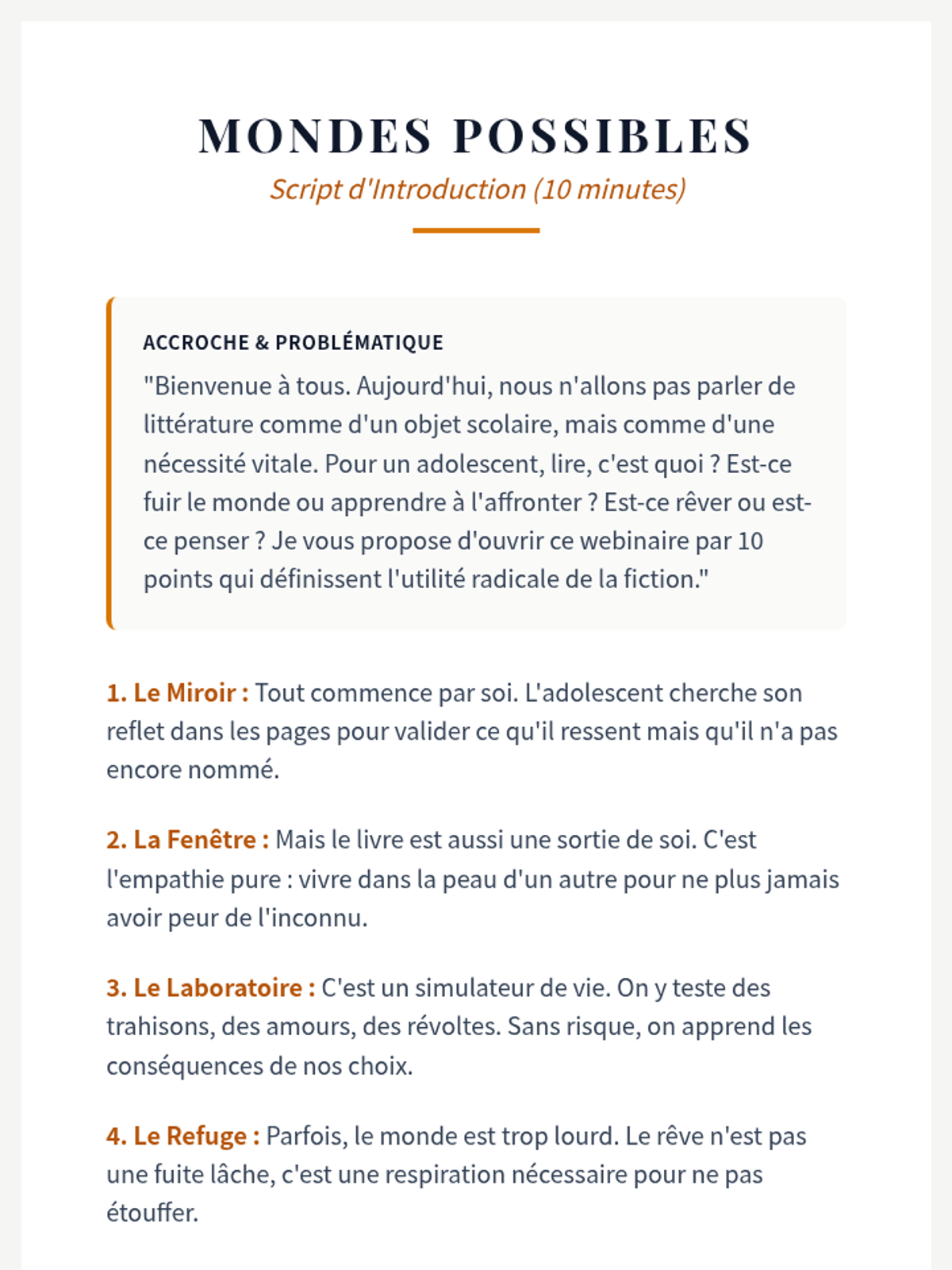
Une exploration des fonctions de la littérature pour adolescents, structurée autour de dix points clés pour aider les éducateurs à comprendre comment la fiction permet de penser et de rêver le monde.
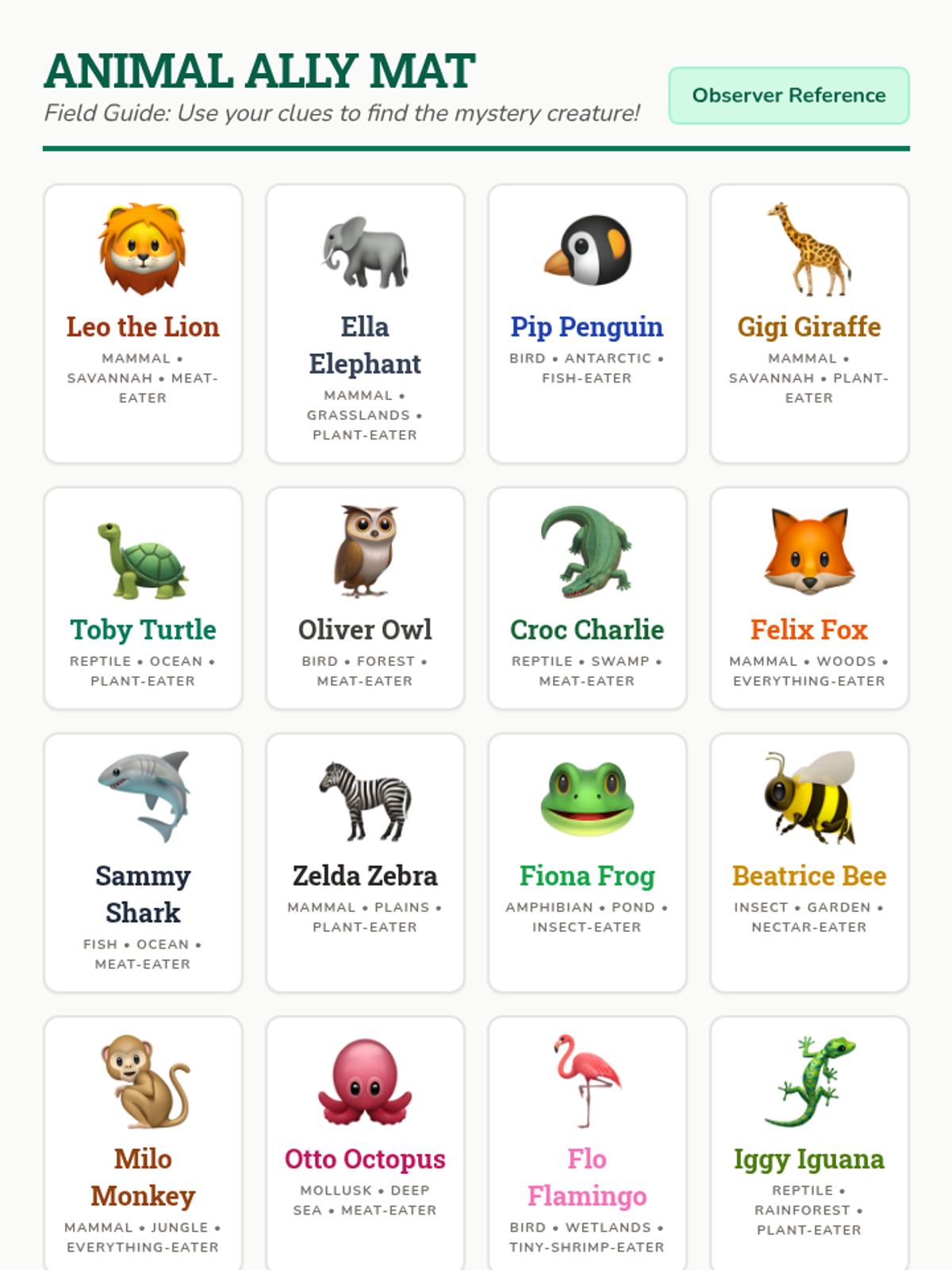
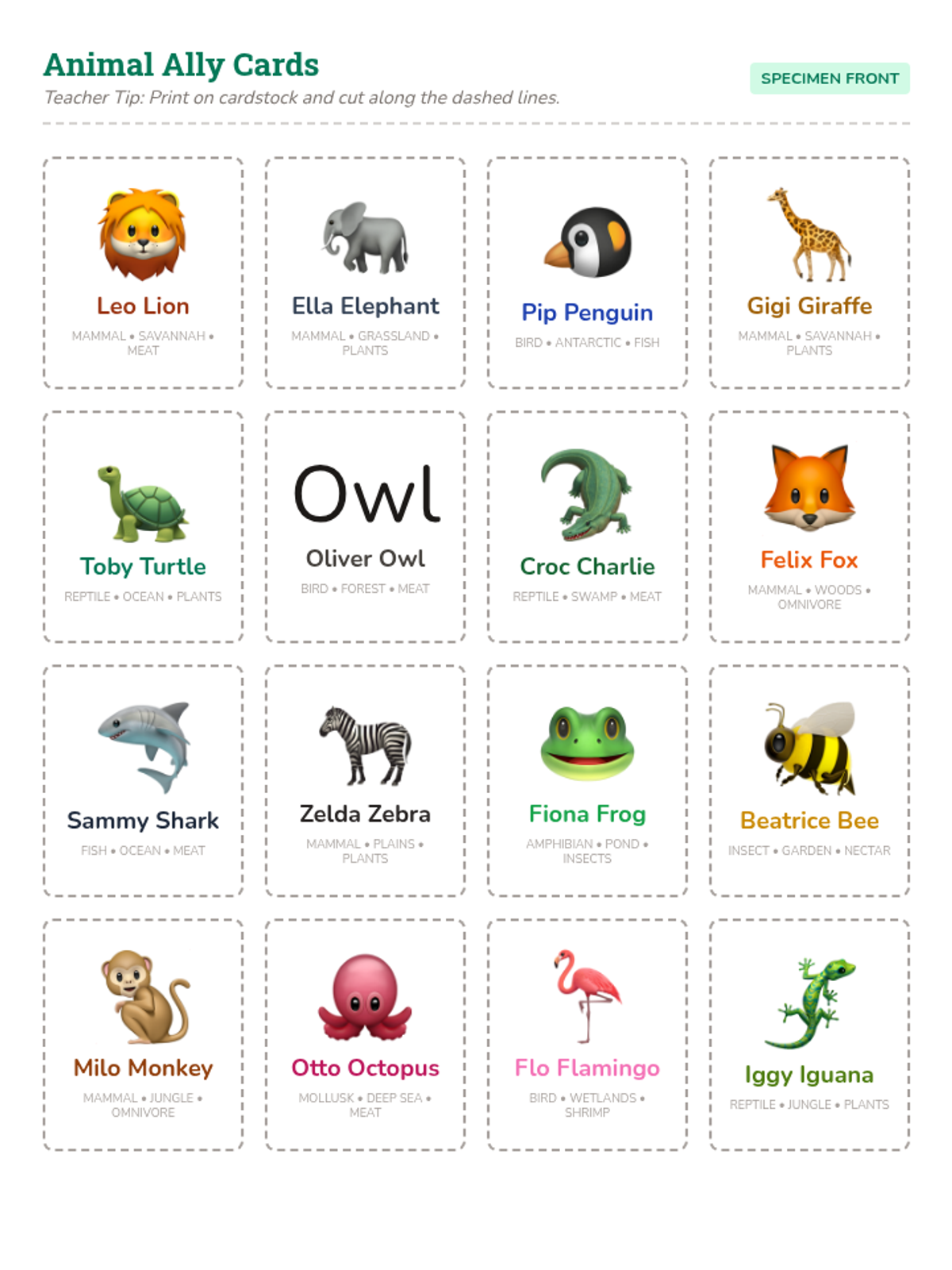
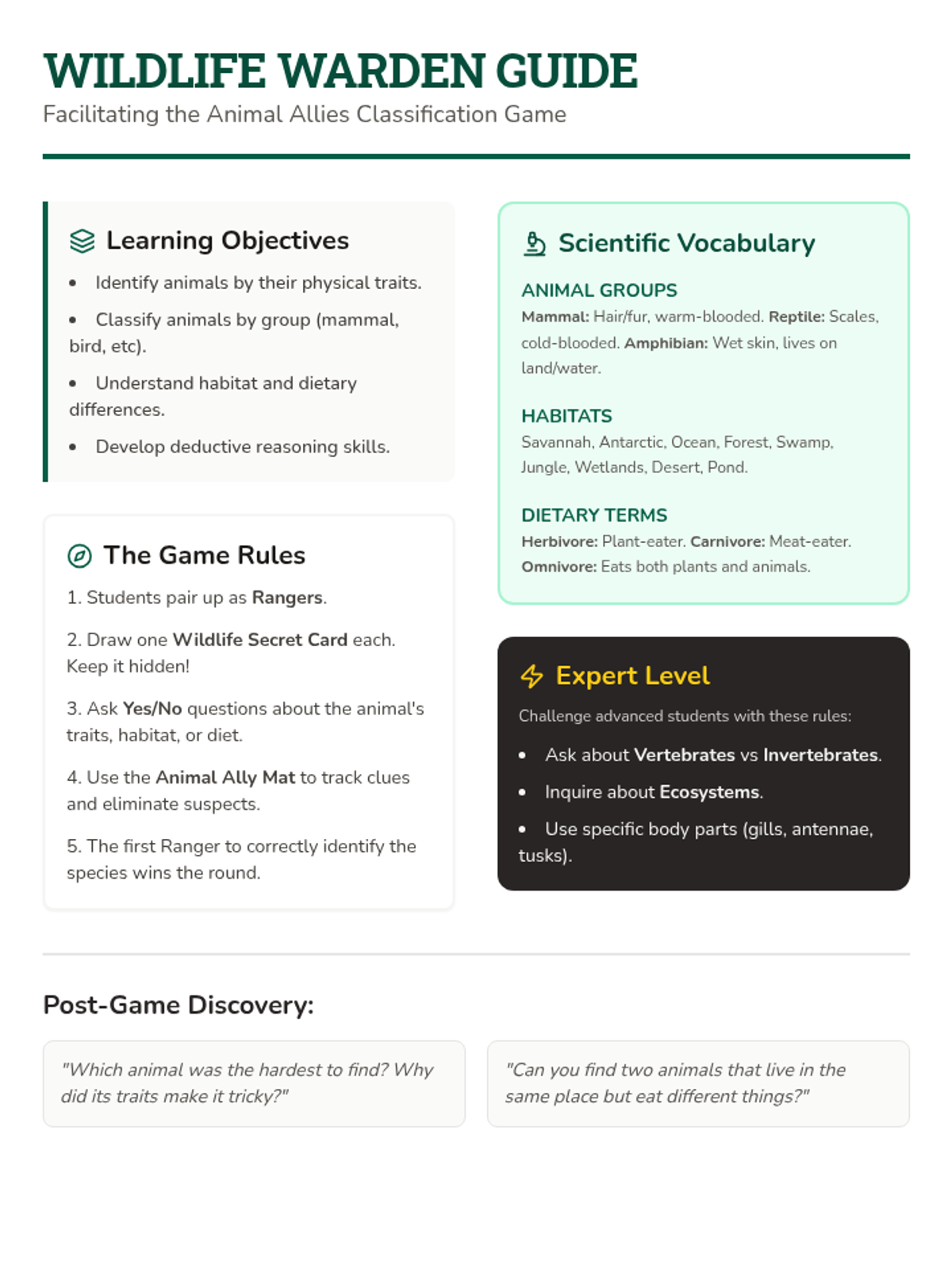
An engaging 'Guess Who' style game where students use descriptive language and biological traits to identify mystery animals. Focuses on classification, habitats, and physical characteristics.
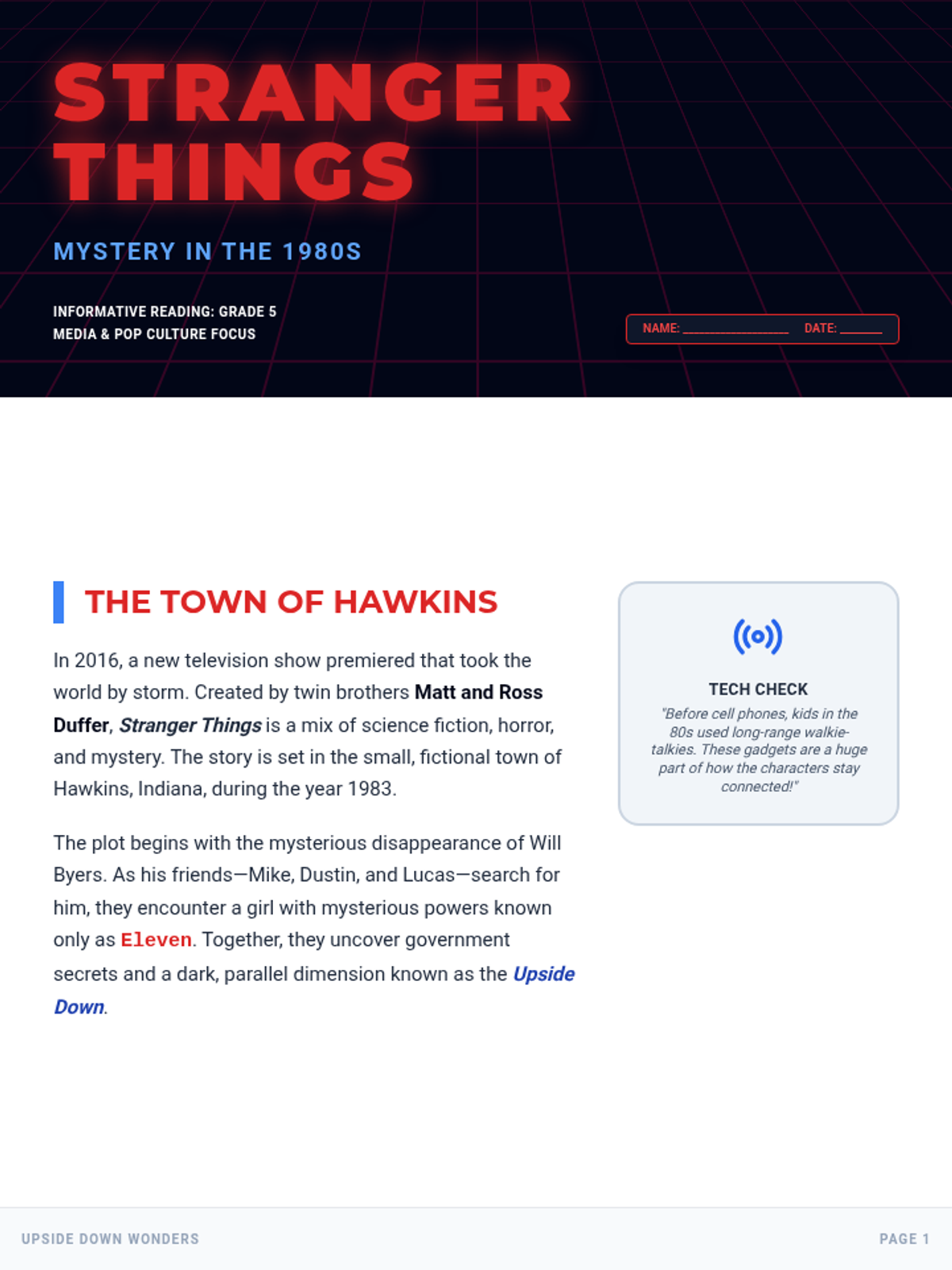
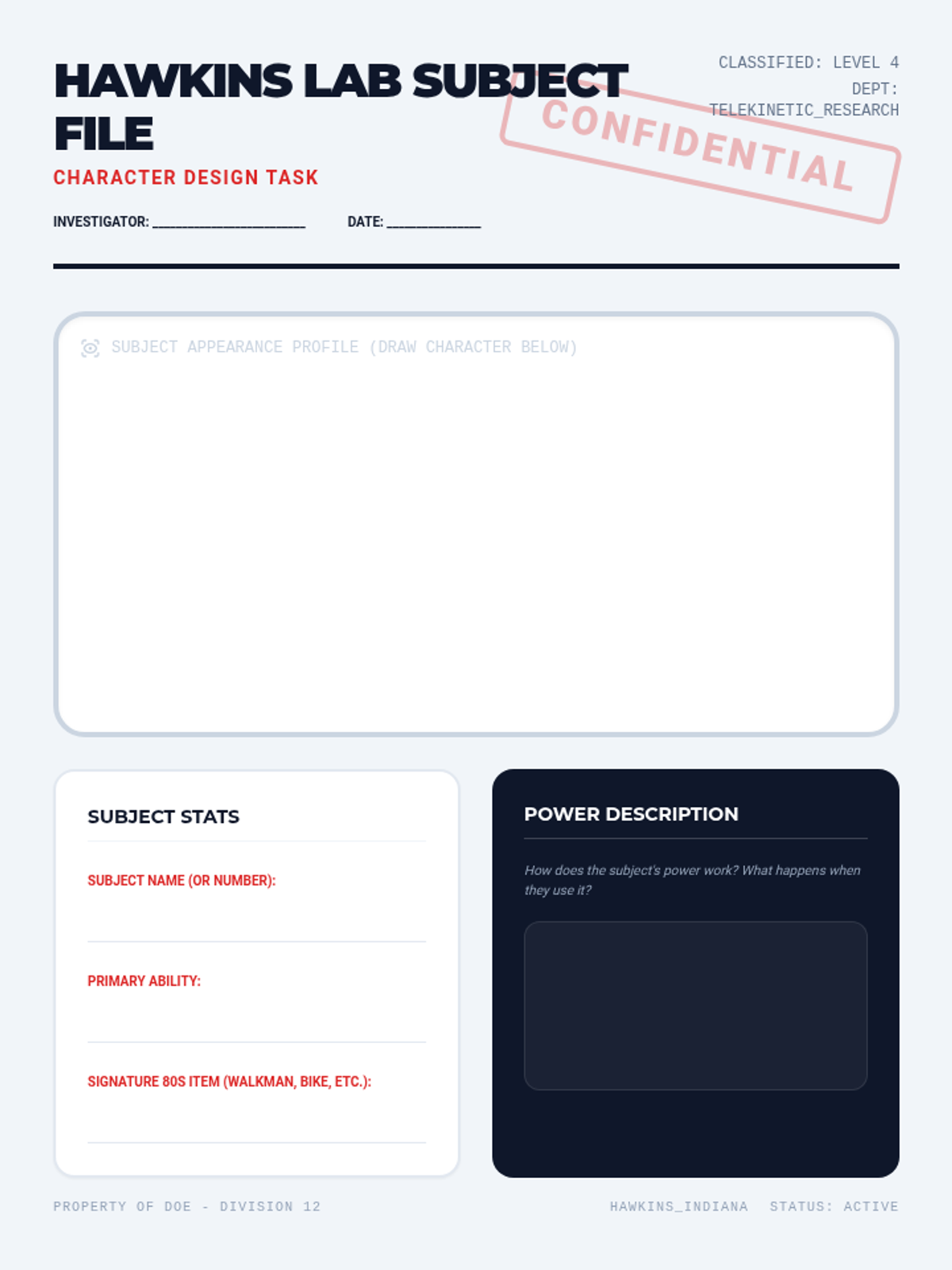
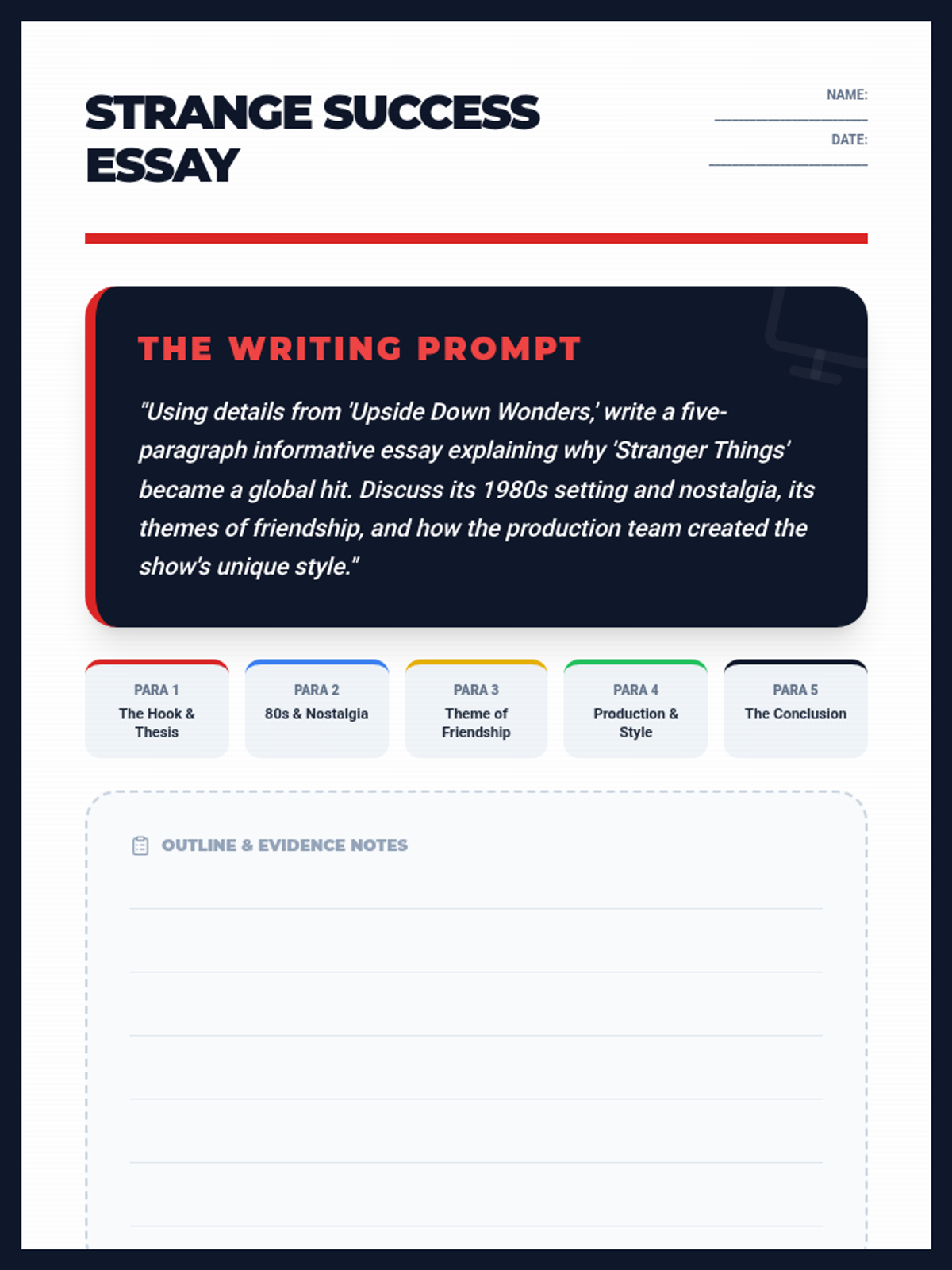
An informative lesson for 5th graders exploring the production, themes, and 1980s cultural influences of the hit show 'Stranger Things', accompanied by a creative character design activity.
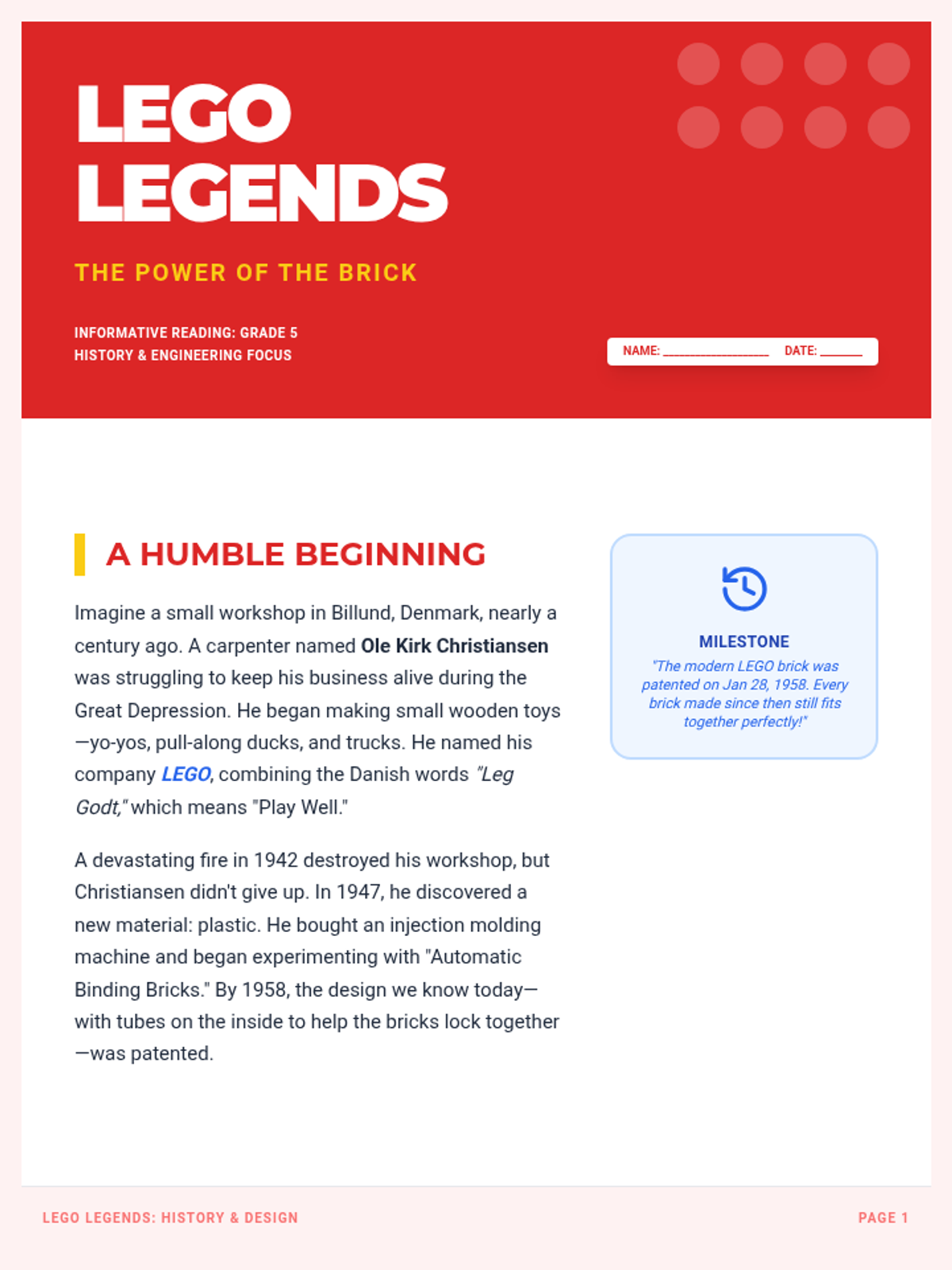
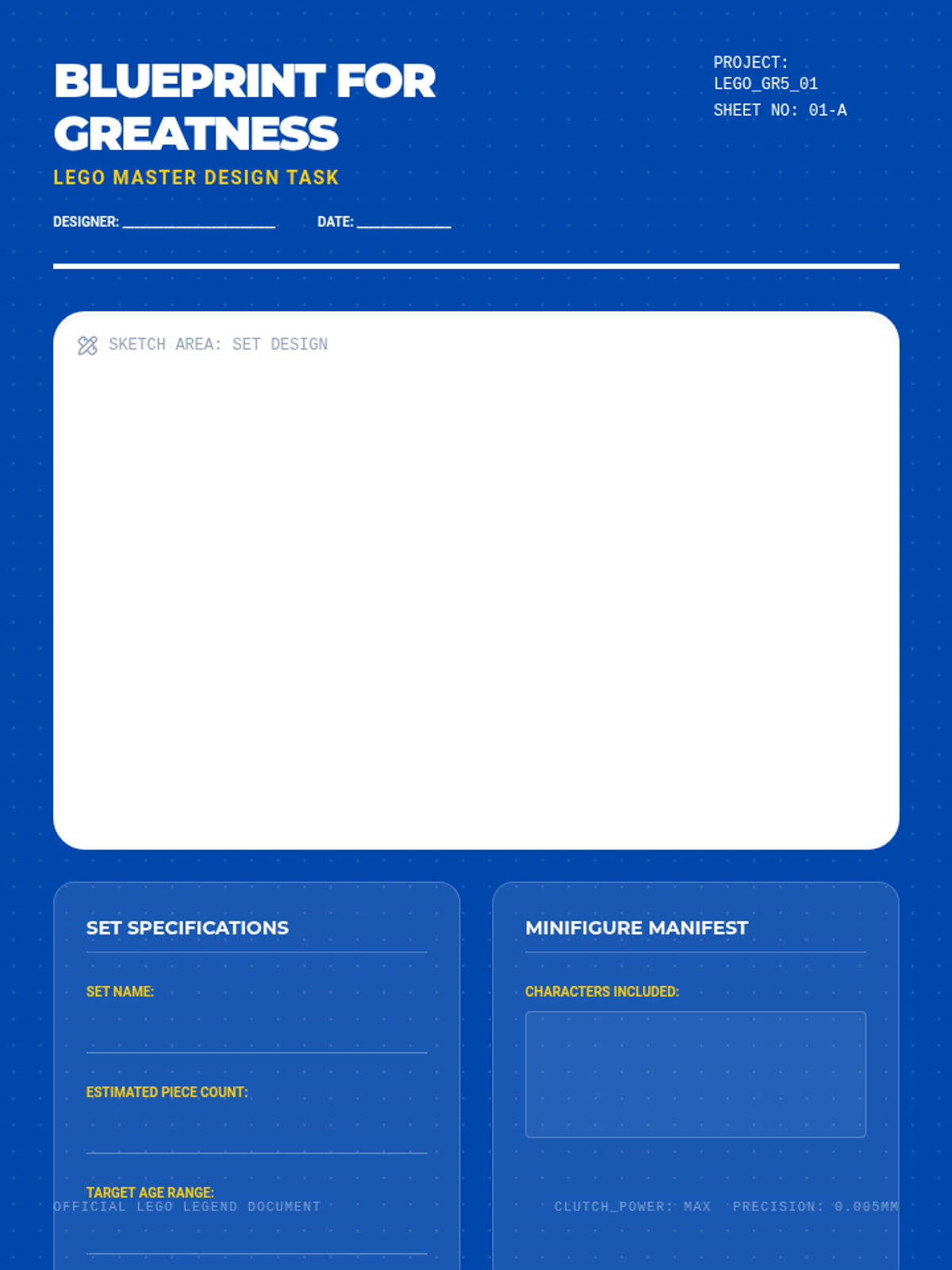
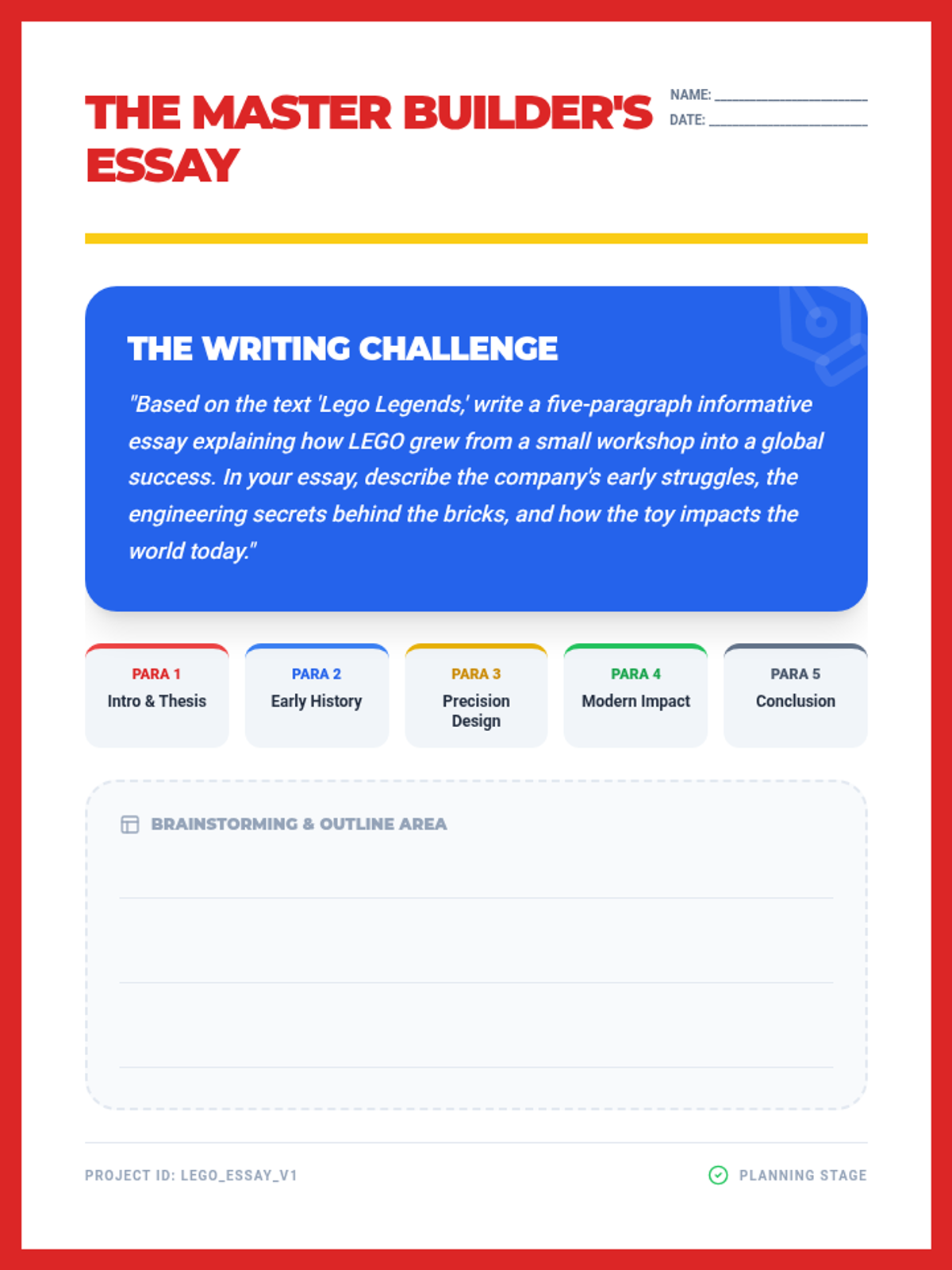
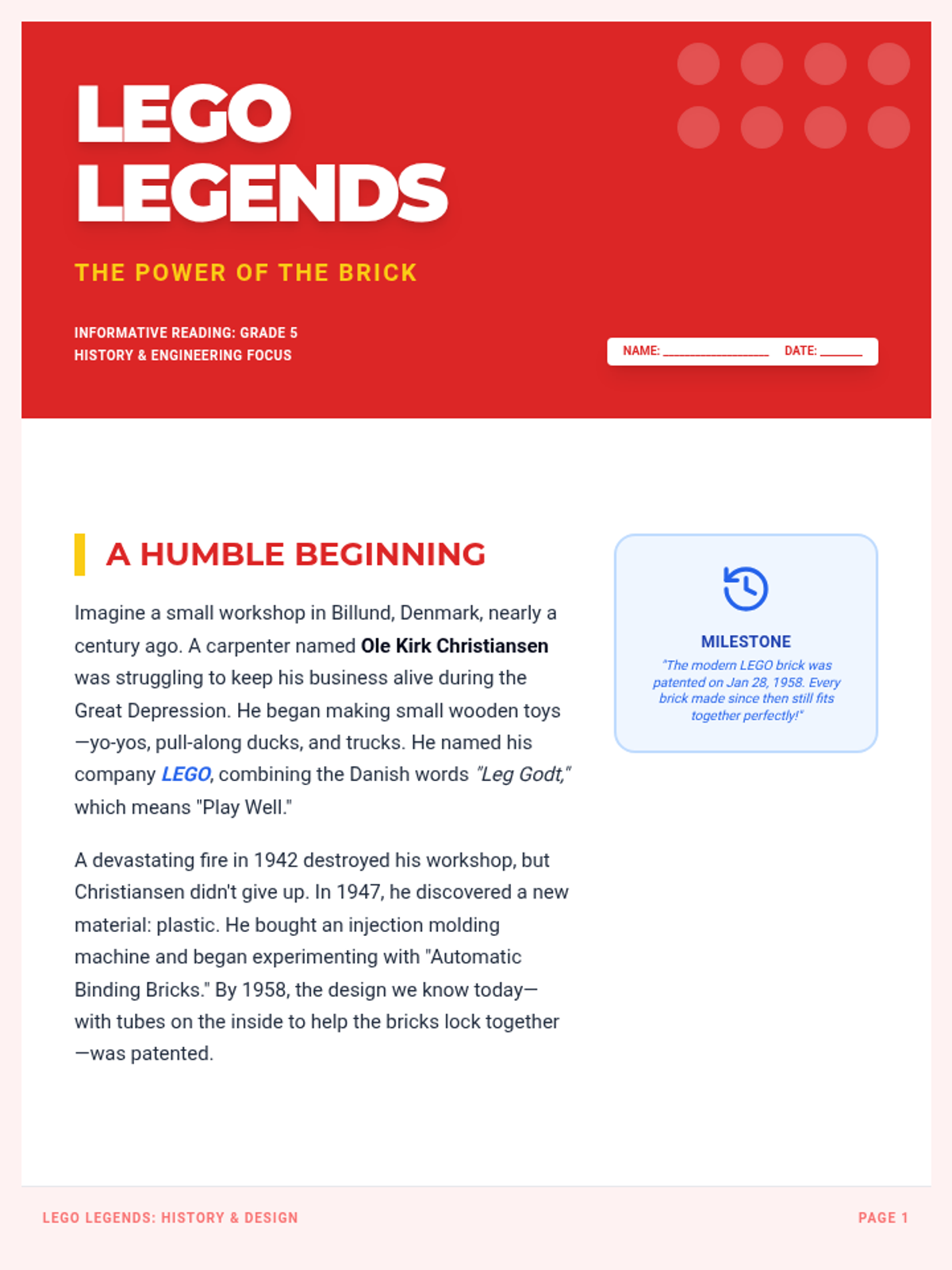
An informative lesson for 5th graders exploring the history, science, and cultural impact of LEGO bricks, accompanied by a creative blueprint activity.
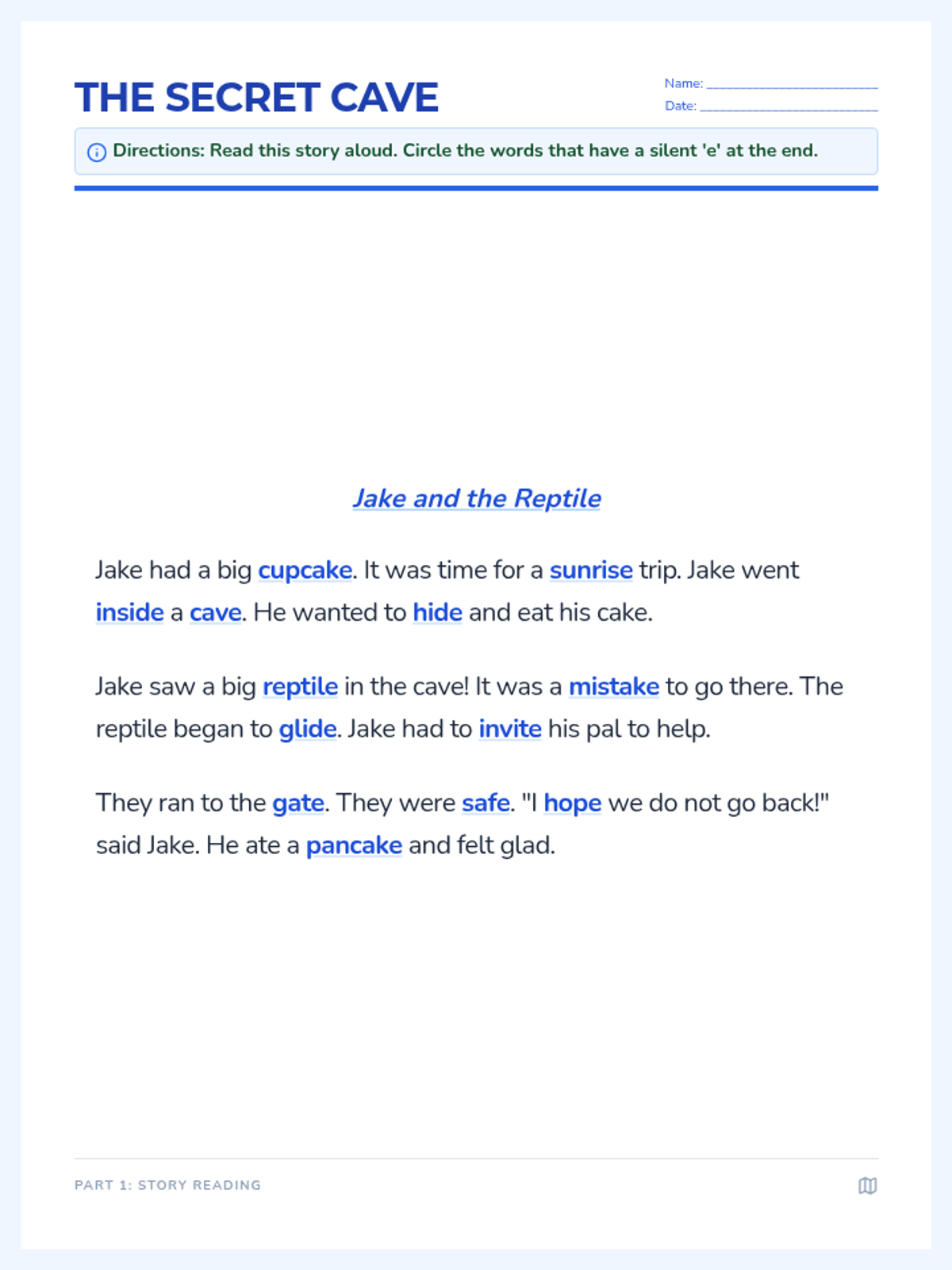
A phonics-focused lesson targeting the vowel-consonant-e (V-e) syllable type, featuring one-syllable words and two-syllable words that combine closed and V-e syllables.
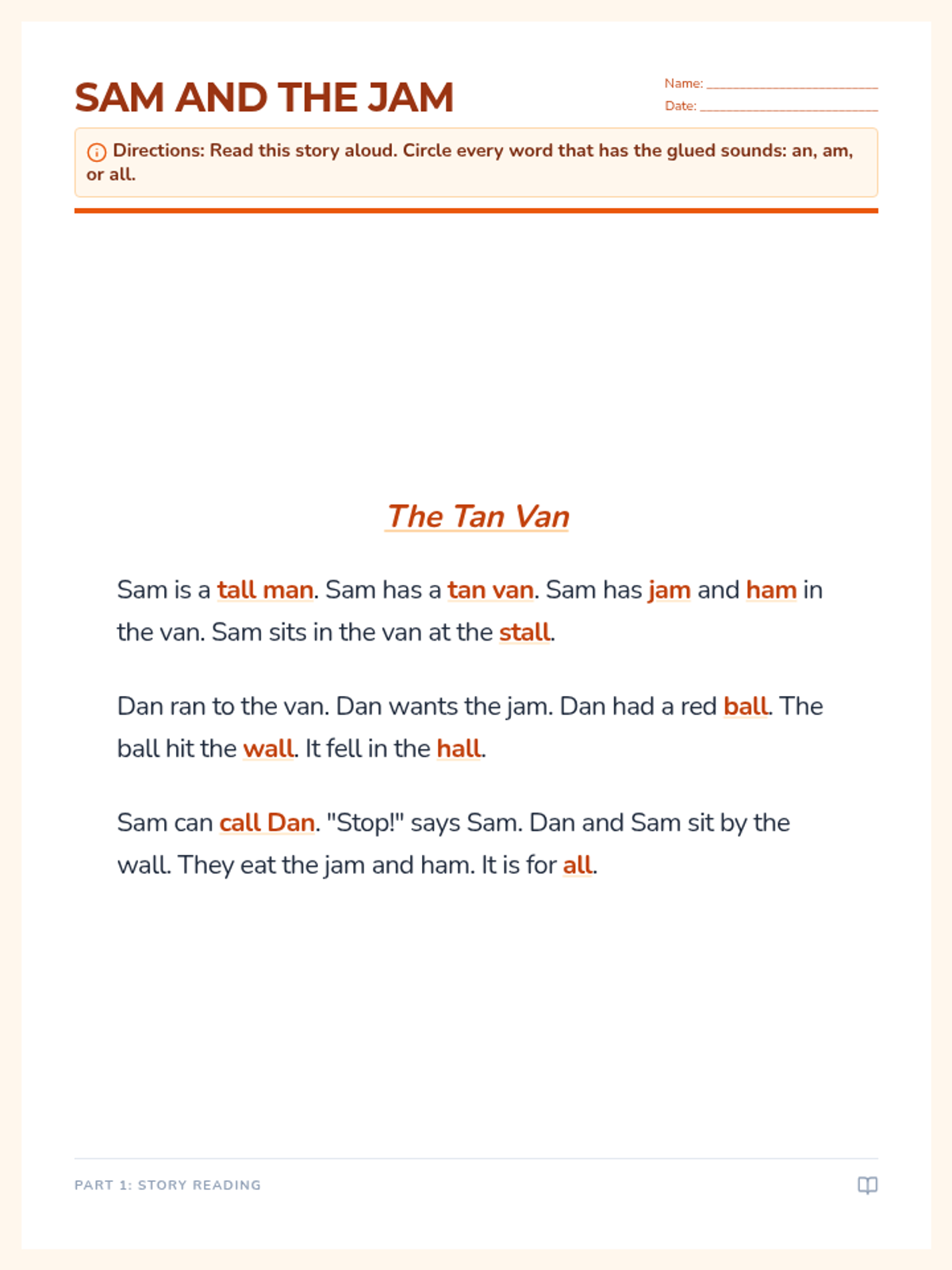
A phonics-focused lesson for first graders targeting the glued sounds 'an', 'am', and 'all' through a narrative story and fluency exercises.
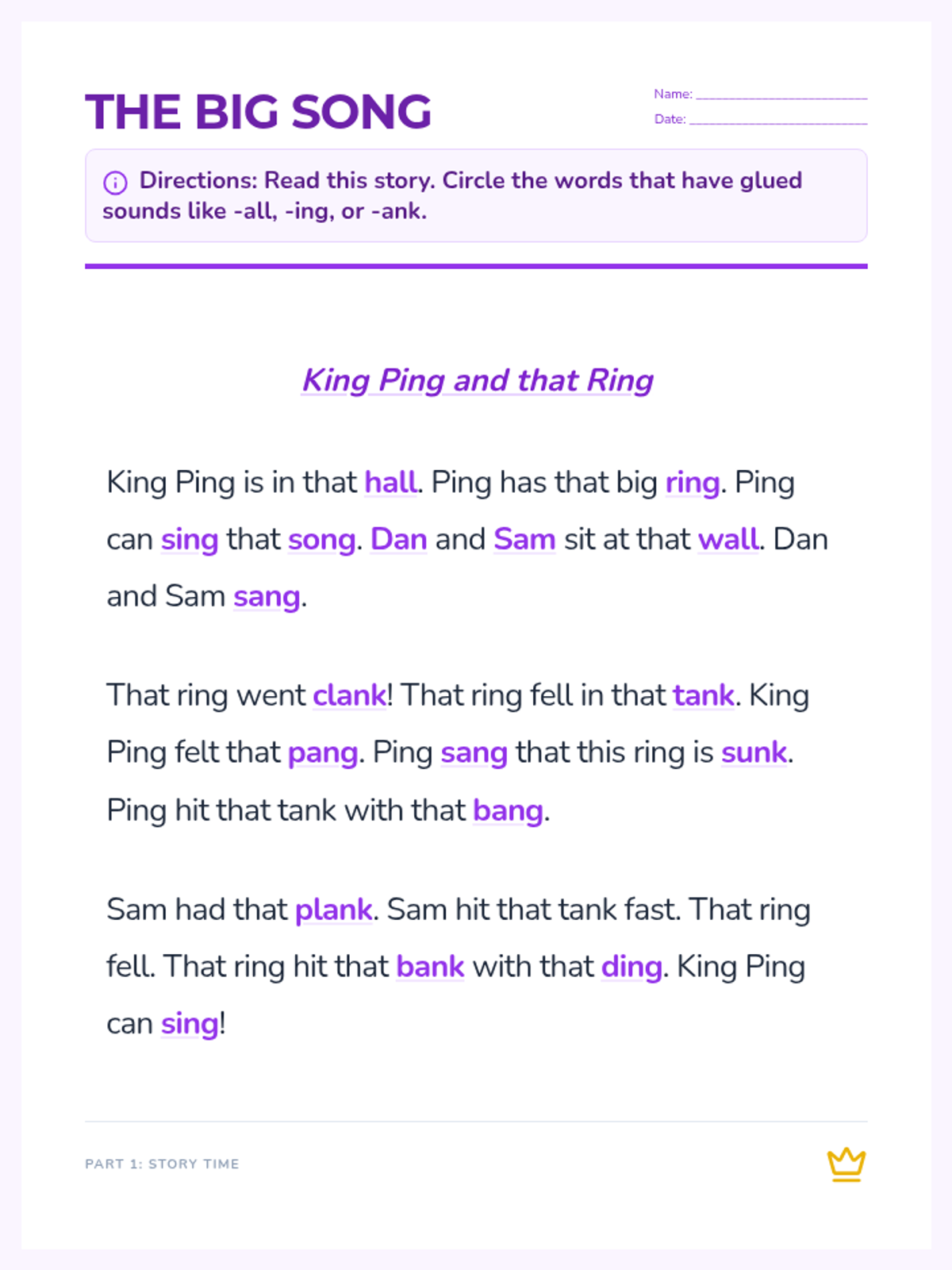
A phonics-focused lesson for first graders targeting glued sounds (all, am, an, ang, ing, ong, ung, ank, ink, onk, unk) through a narrative story and fluency exercises.
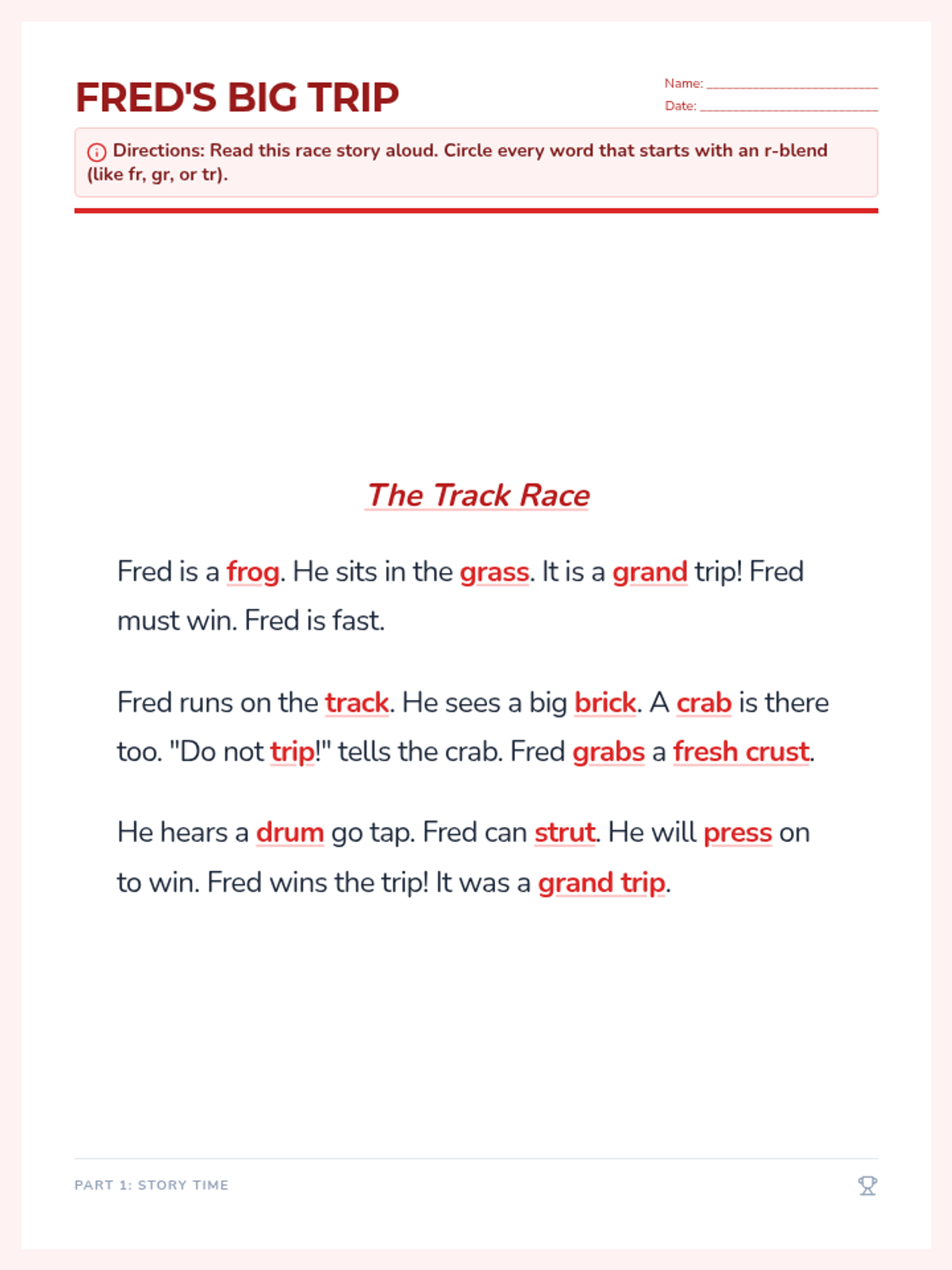
A phonics-focused lesson for first graders targeting r-blends (pr, tr, br, cr, str, dr, fr, gr) through a narrative story and fluency-building exercises.
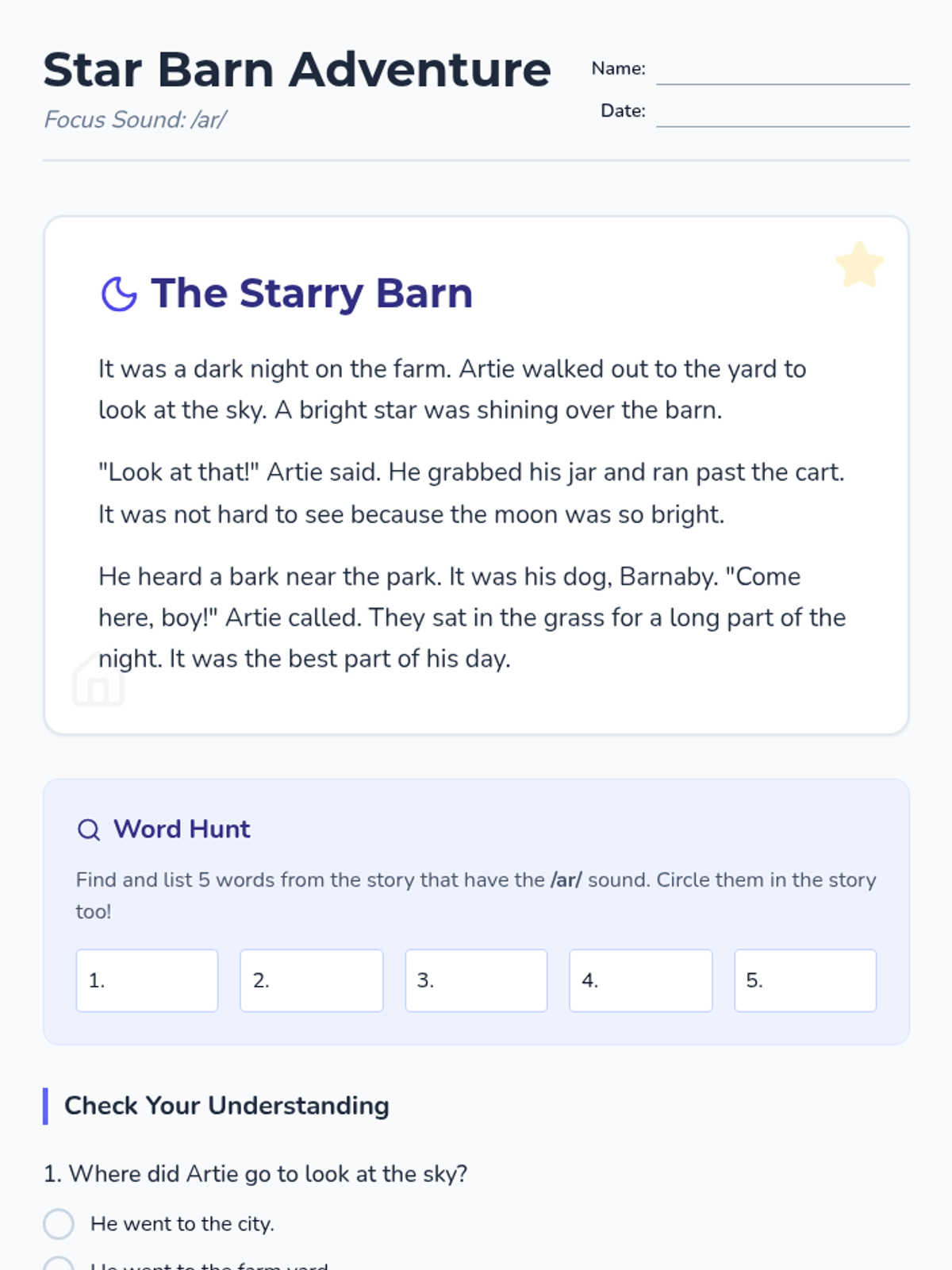
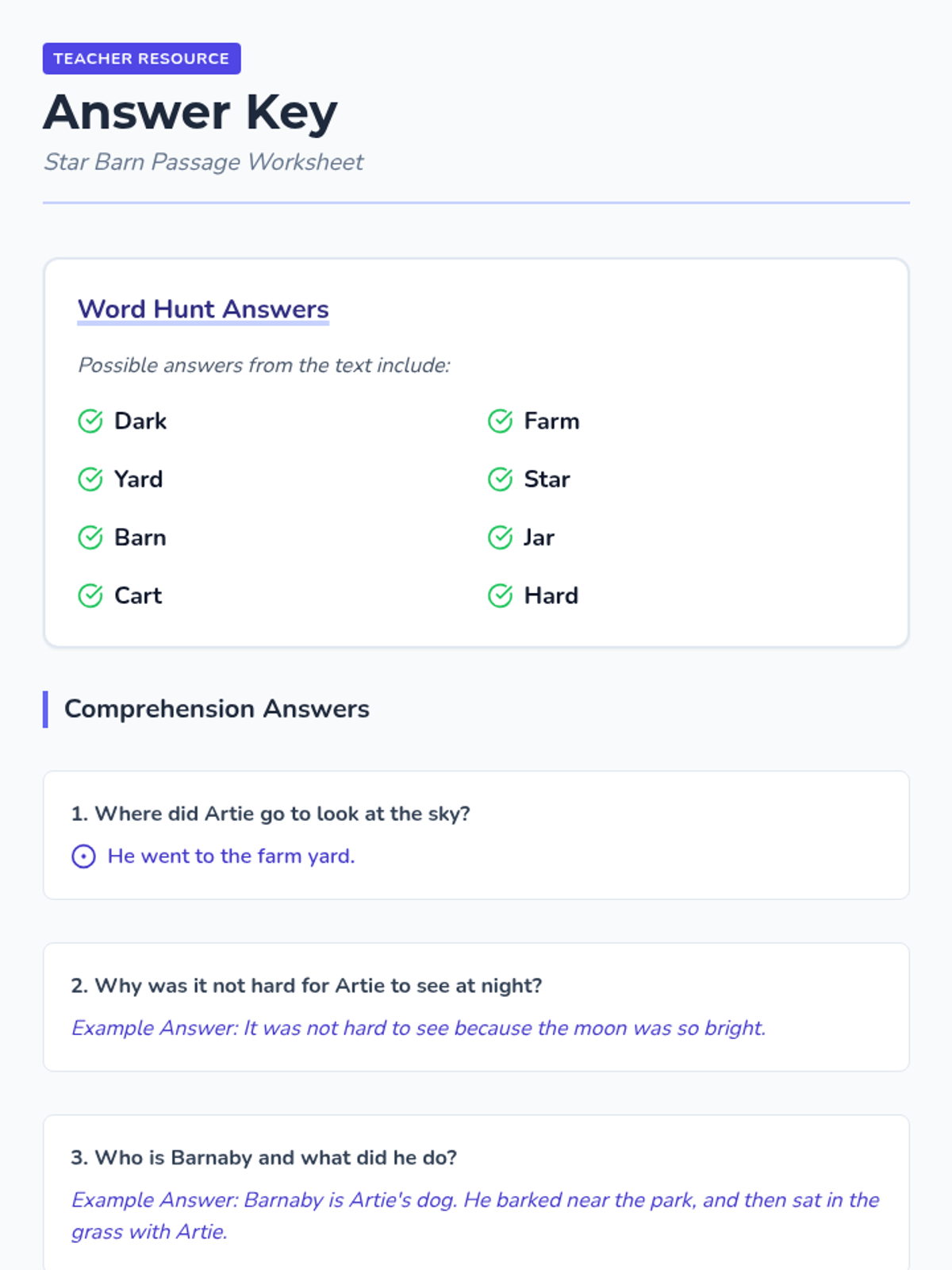
A foundational phonics lesson focusing on the 'ar' r-controlled vowel sound through an engaging narrative about a farm under the stars. Students will practice decoding and comprehension.
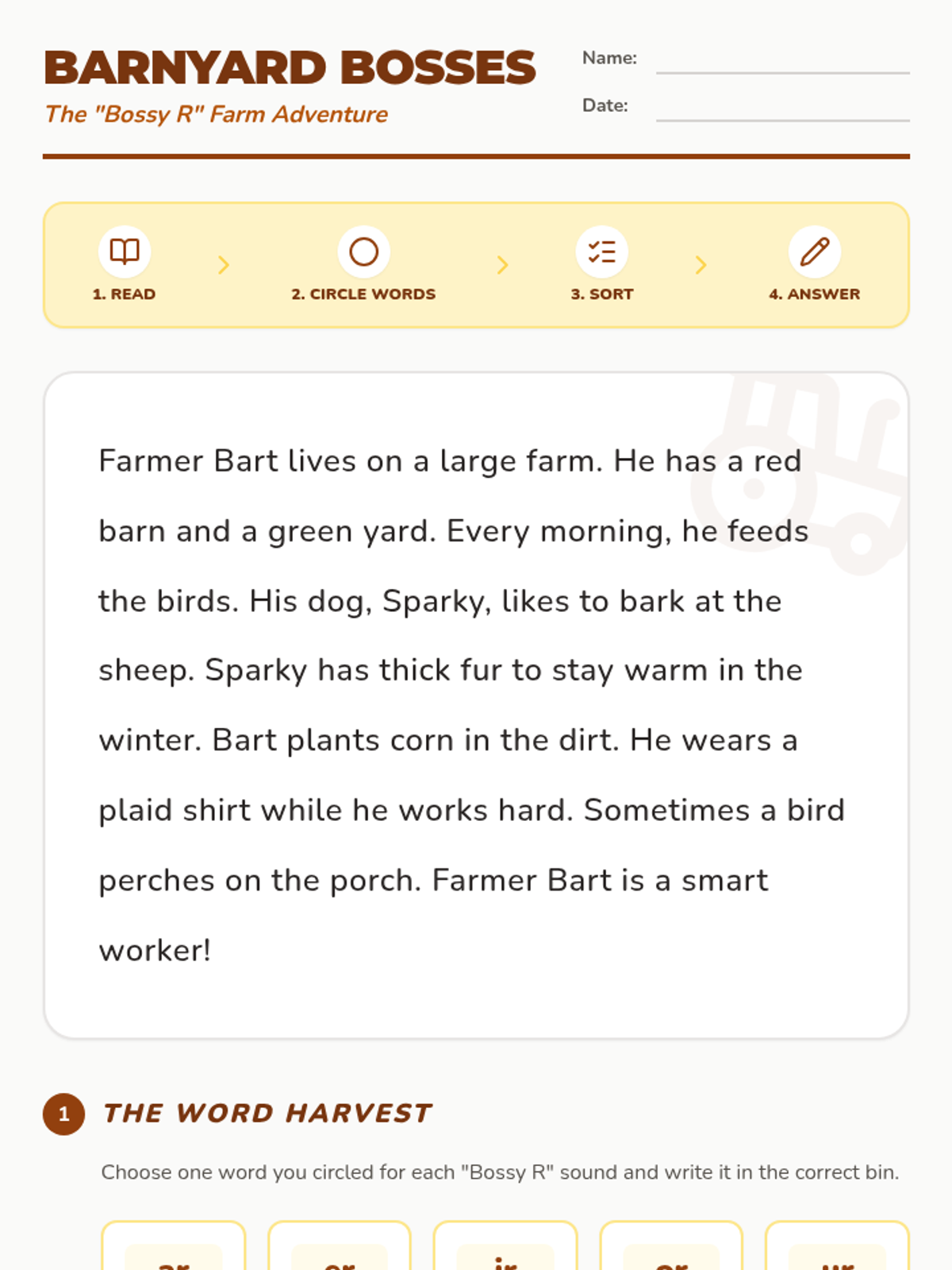
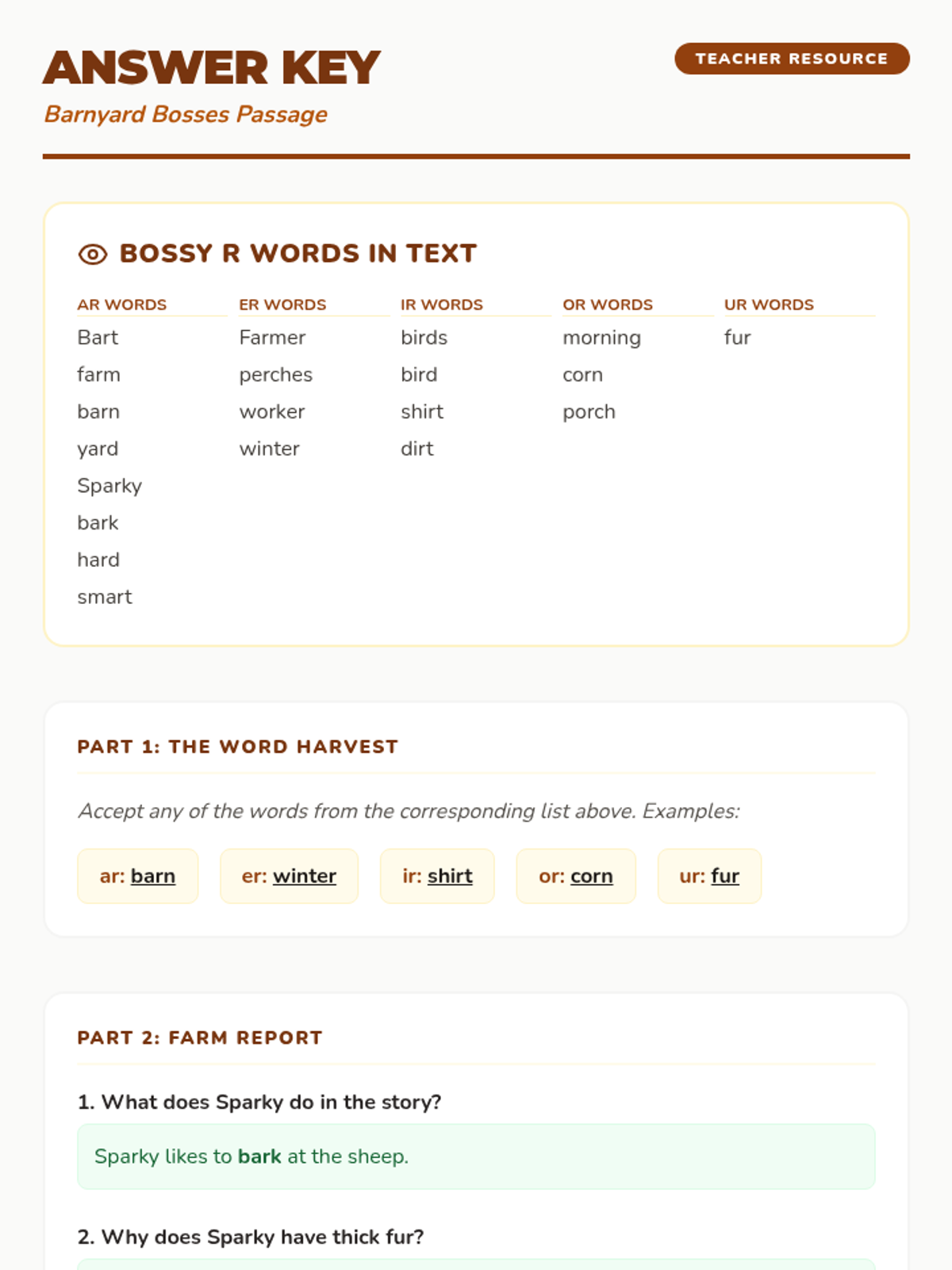
A foundational phonics lesson focusing on r-controlled vowels (ar, er, ir, or, ur) through a farm-themed reading adventure. Students will identify and decode 'bossy r' words in context.
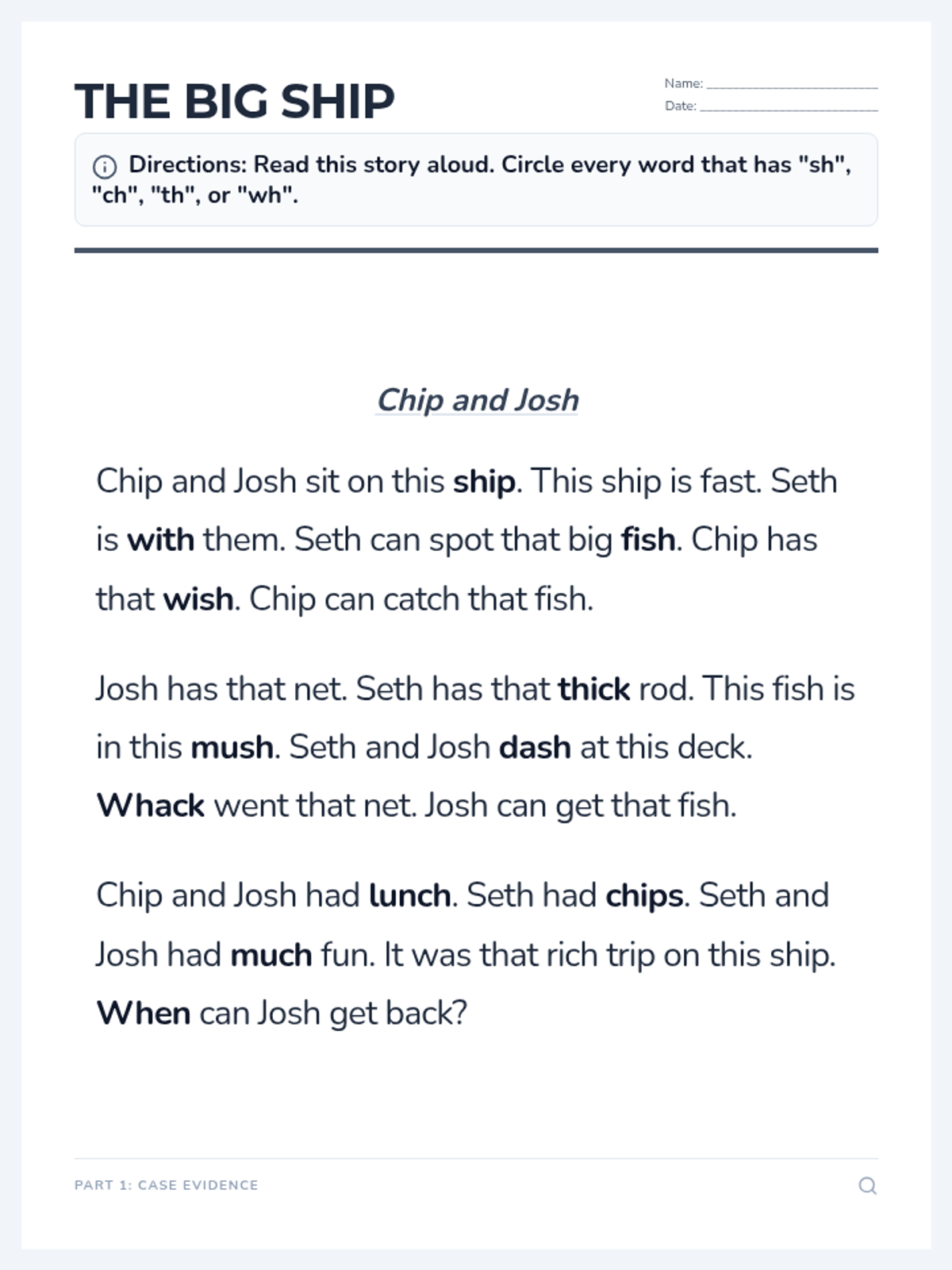
A phonics-focused lesson for third graders targeting common consonant digraphs (sh, ch, th, wh, ph) through a narrative adventure and fluency-building exercises.
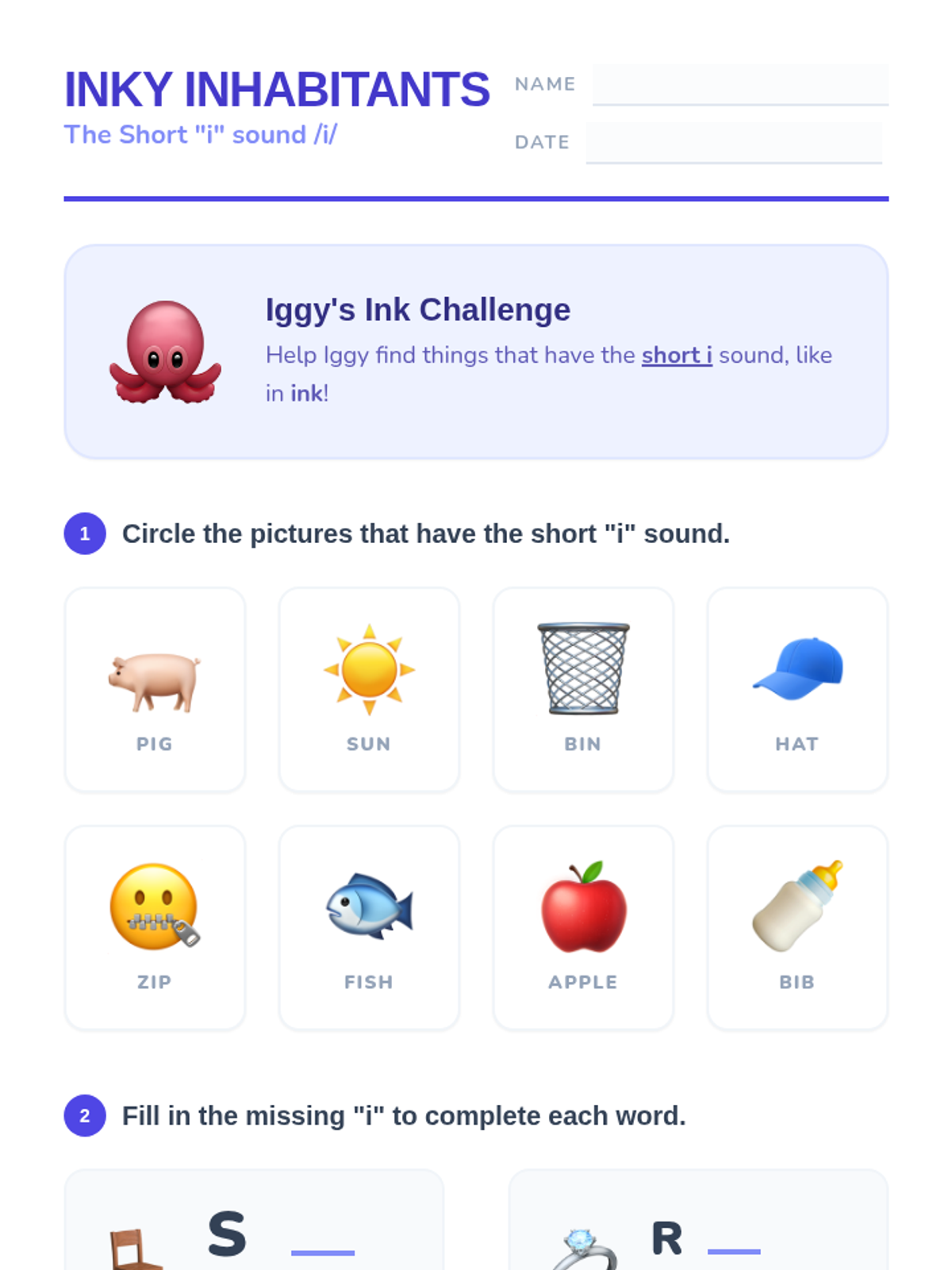
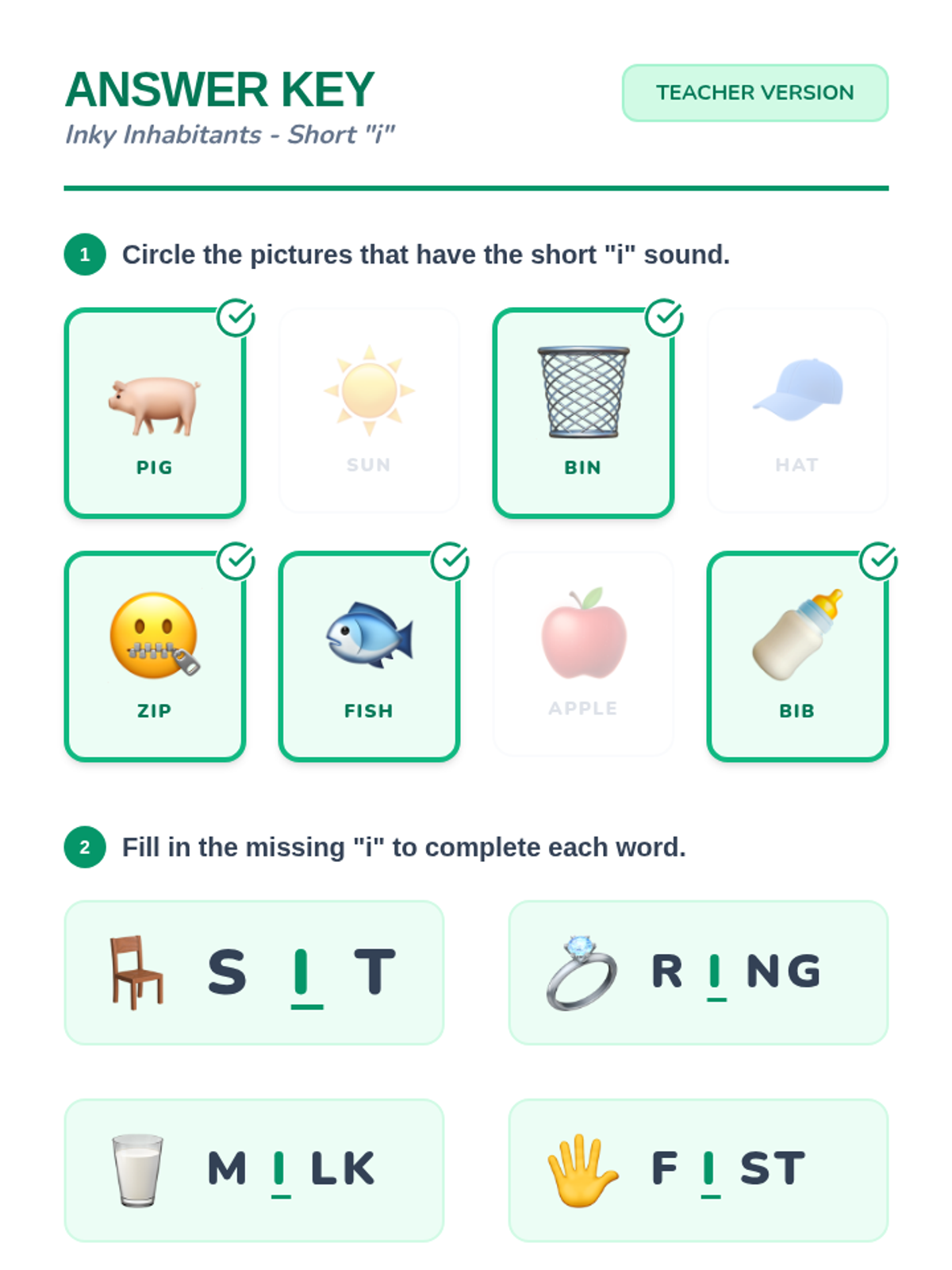
A fun, underwater-themed lesson focusing on identifying and reading words with the short 'i' vowel sound. Students will help Iggy the Octopus find 'inky' words through visual identification and word completion activities.
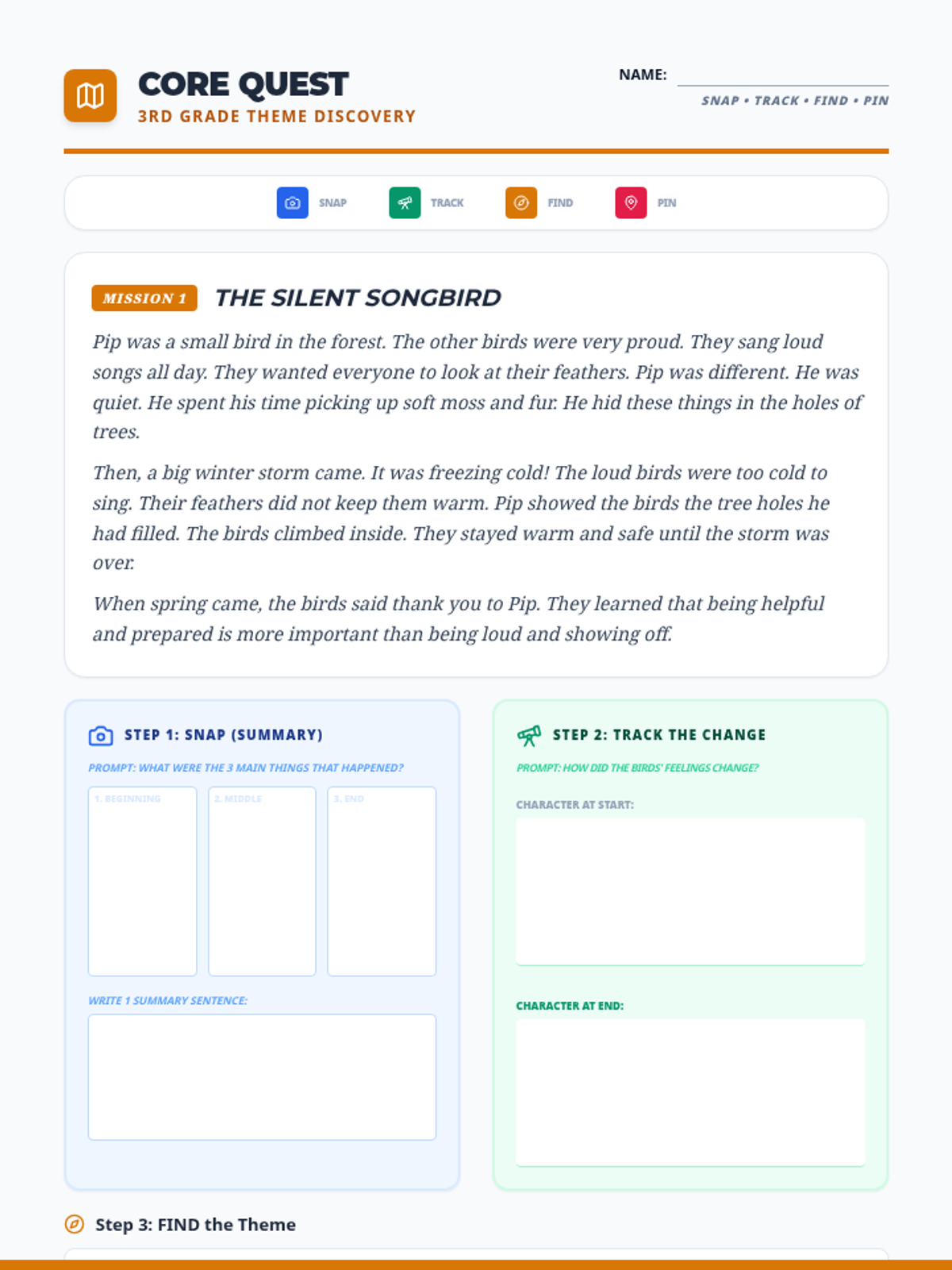
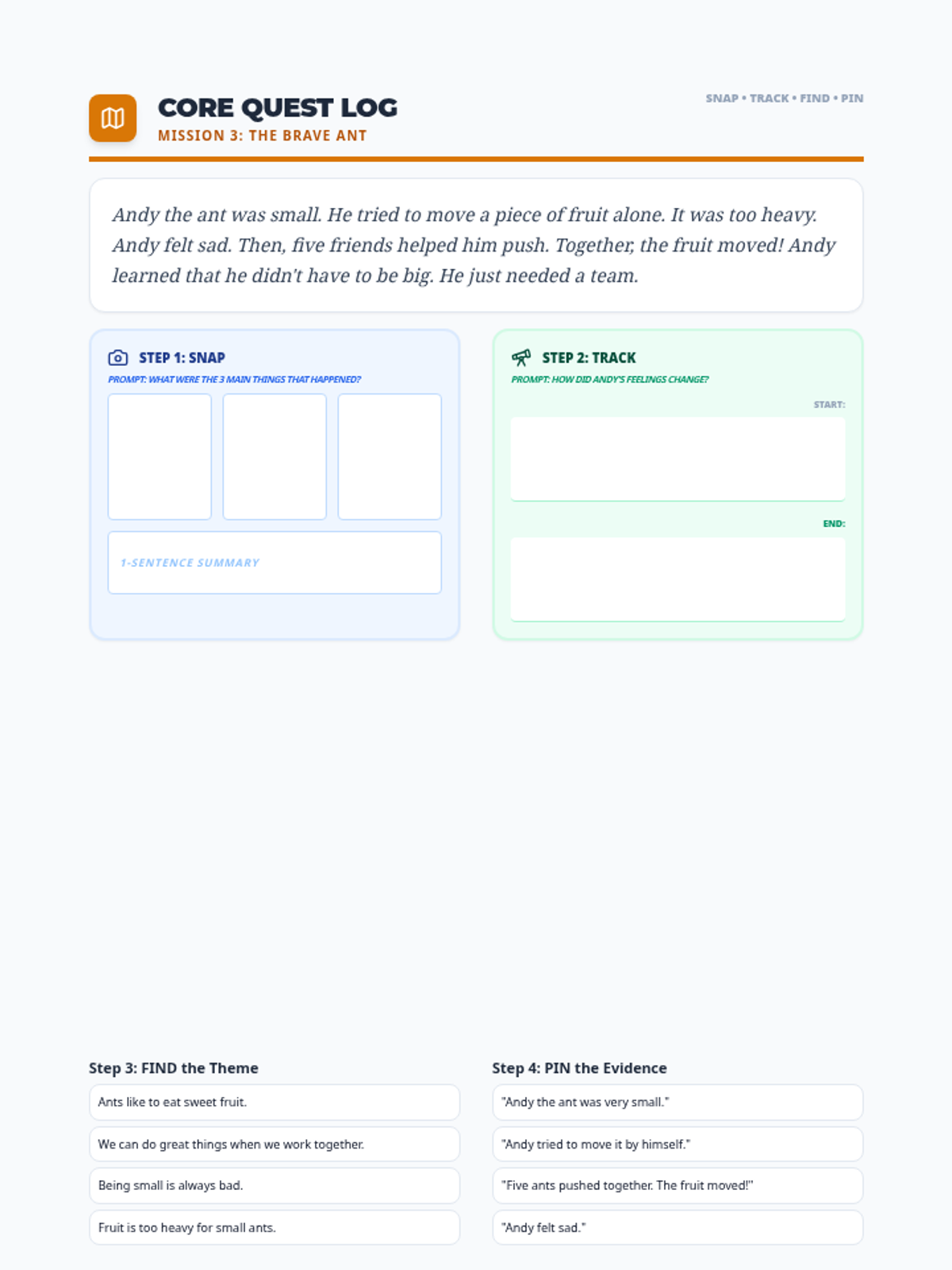
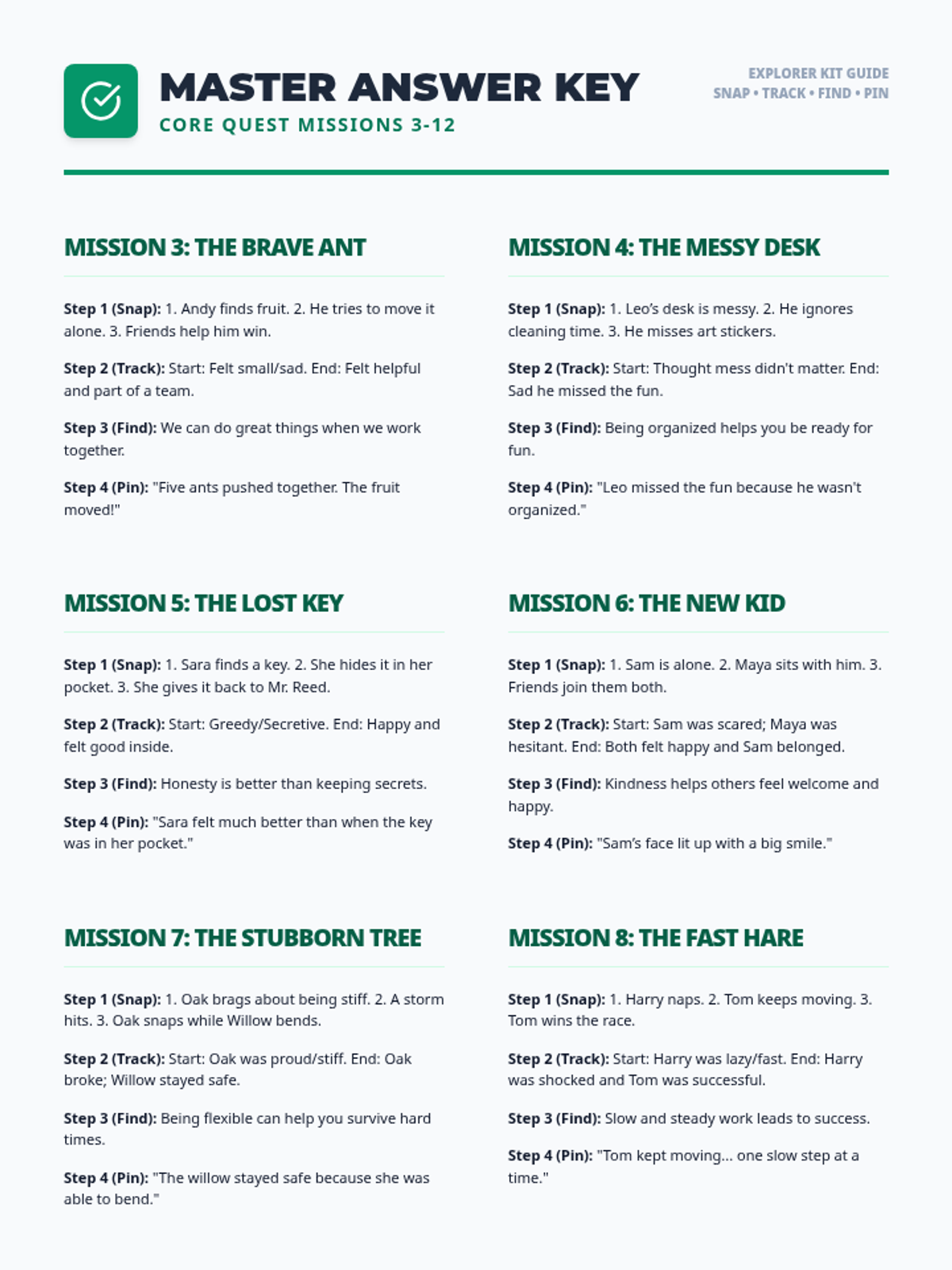
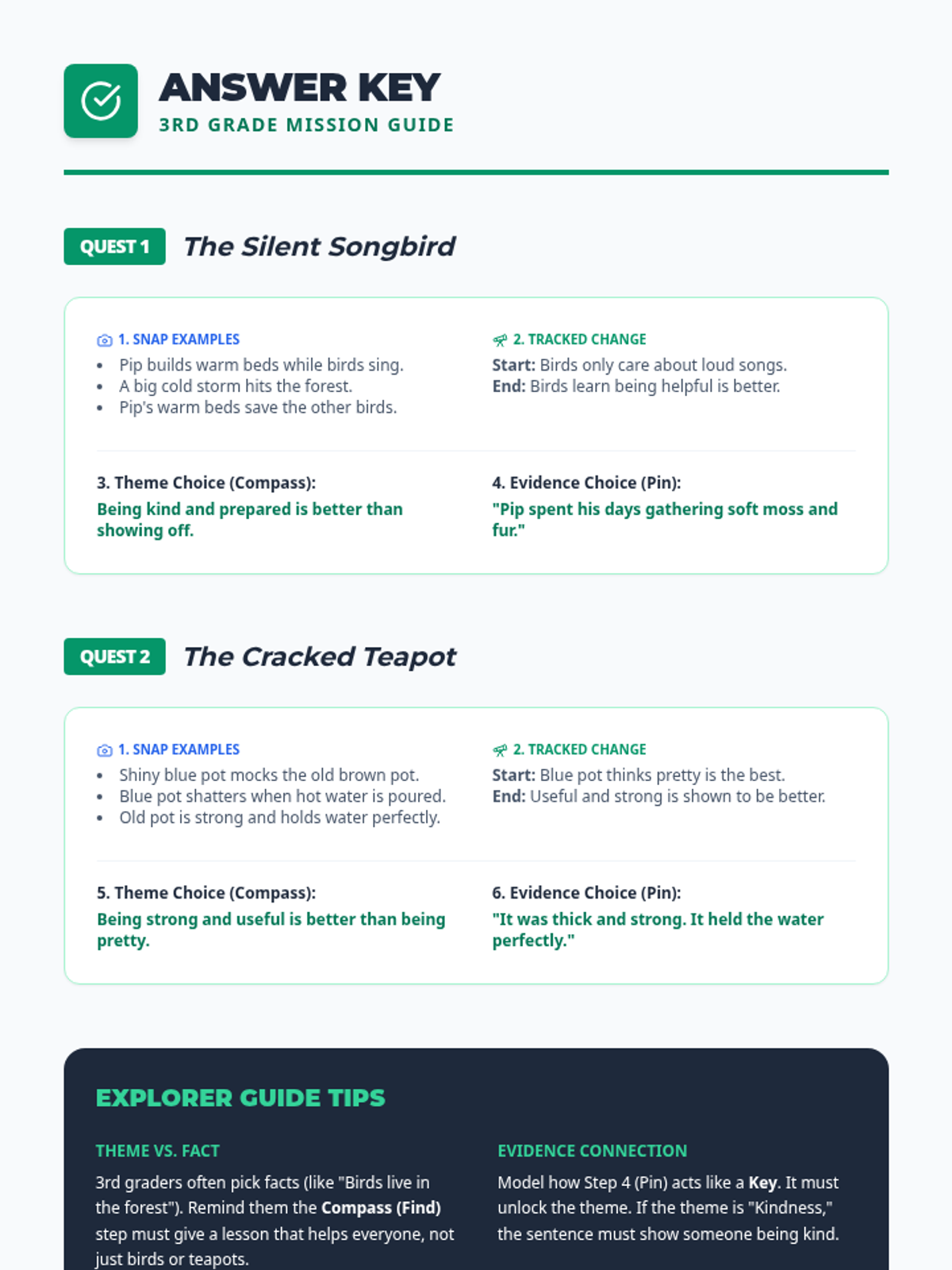
A lesson dedicated to identifying themes in narrative texts through summarization and evidence-based analysis, featuring a 'Core Quest' explorer theme and a 4-step discovery strategy.
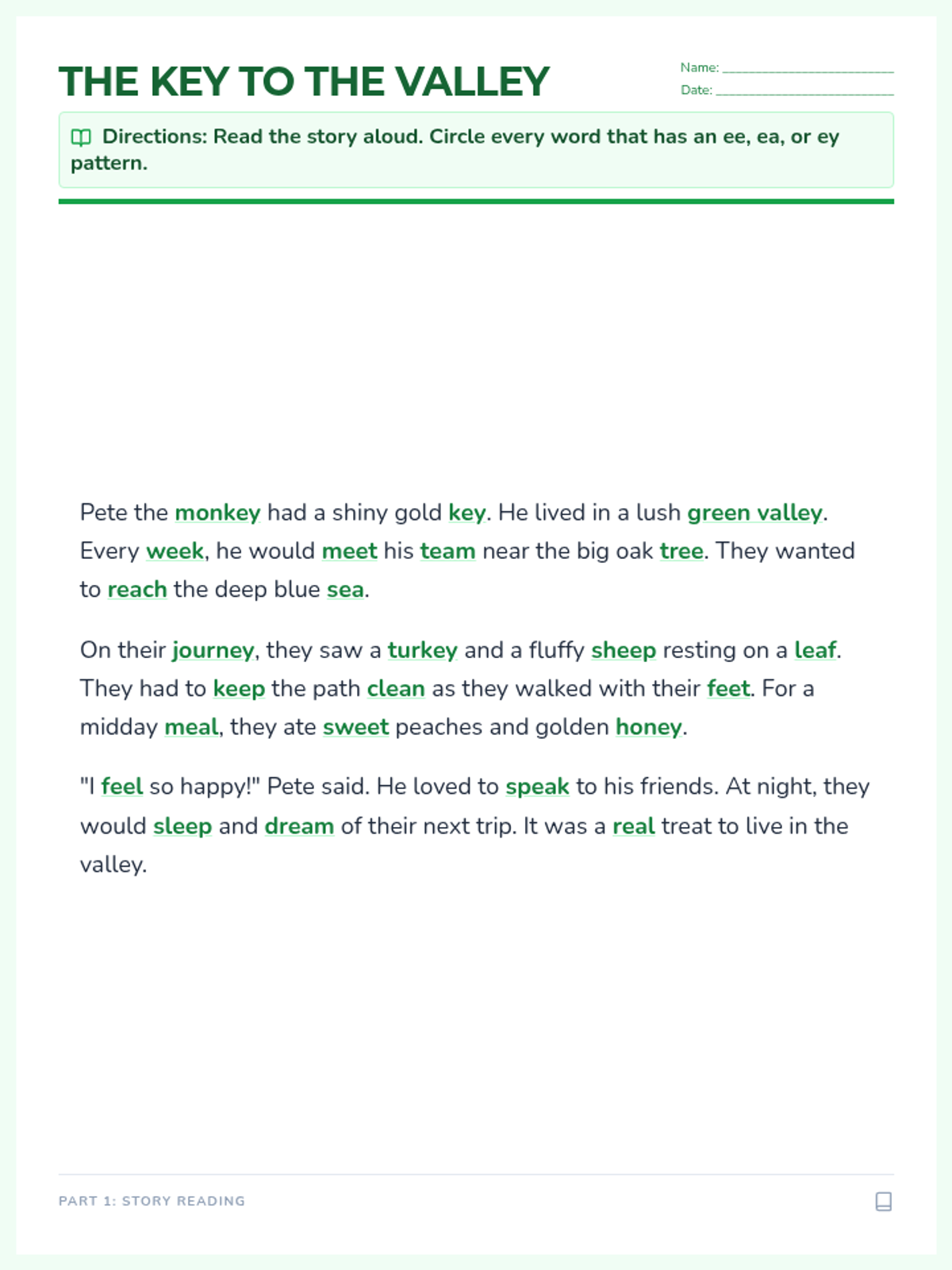
A phonics-focused lesson for third graders targeting the long e vowel patterns ee, ea, and ey through a narrative passage and fluency-building exercises.
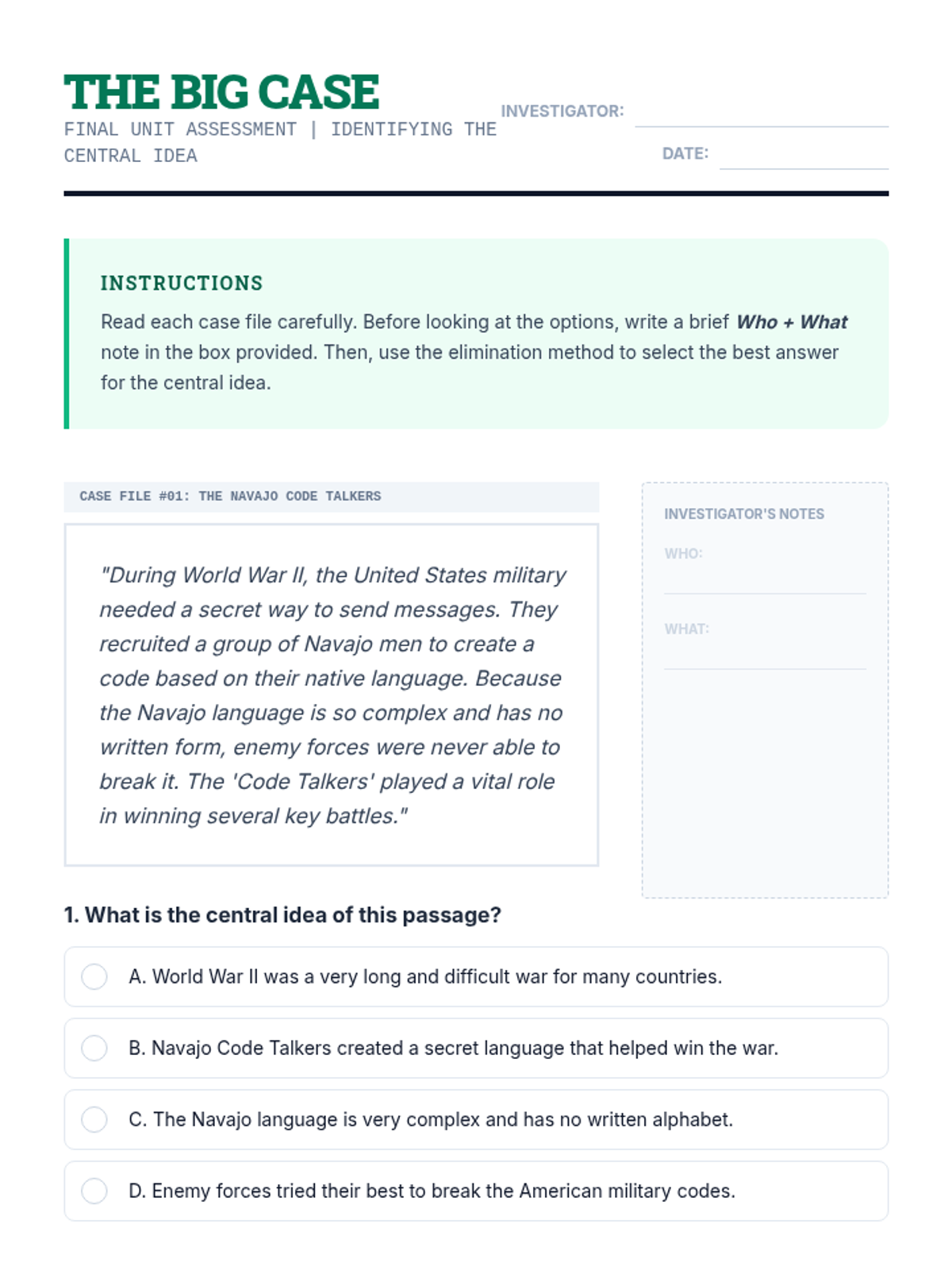
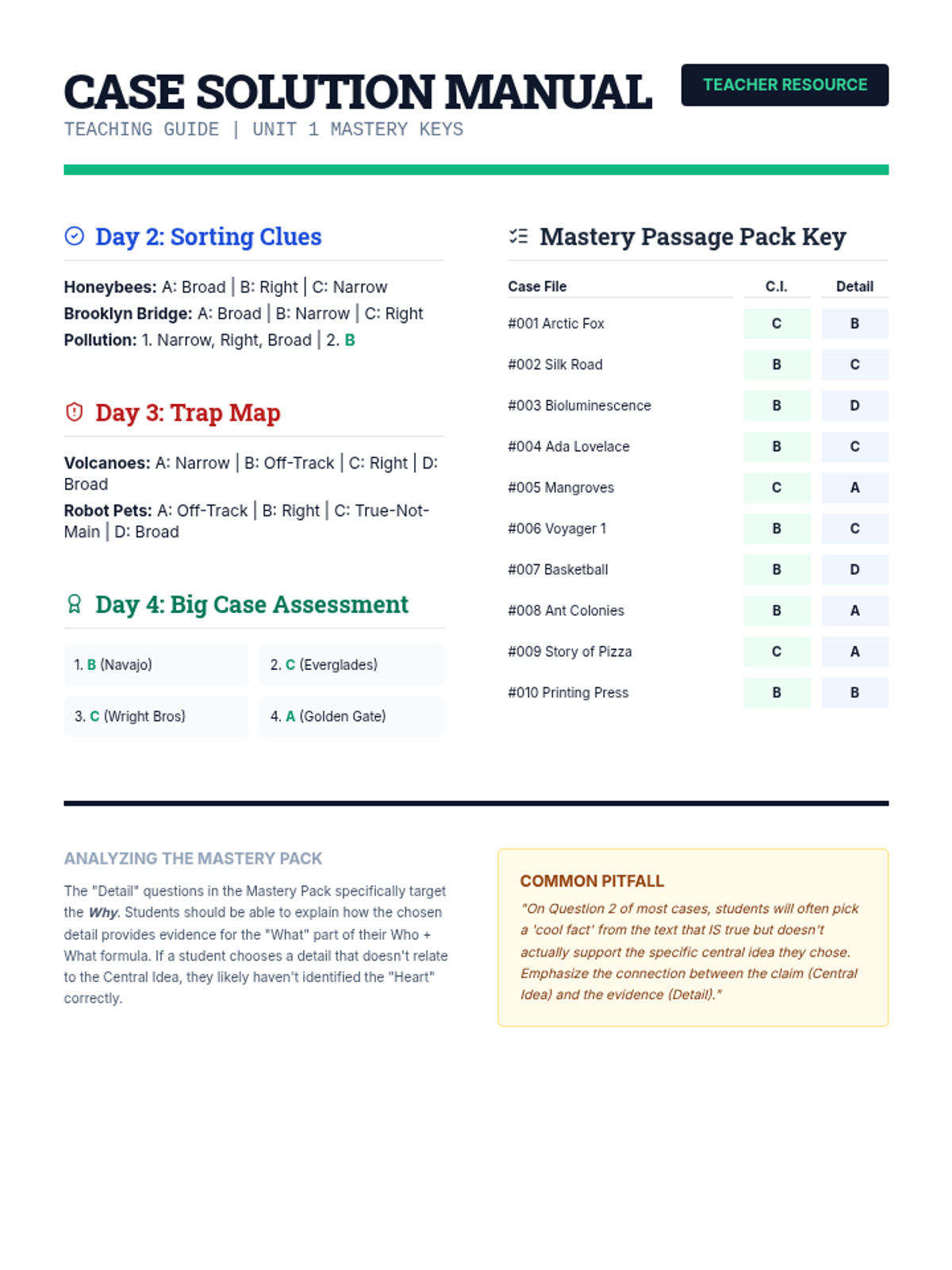
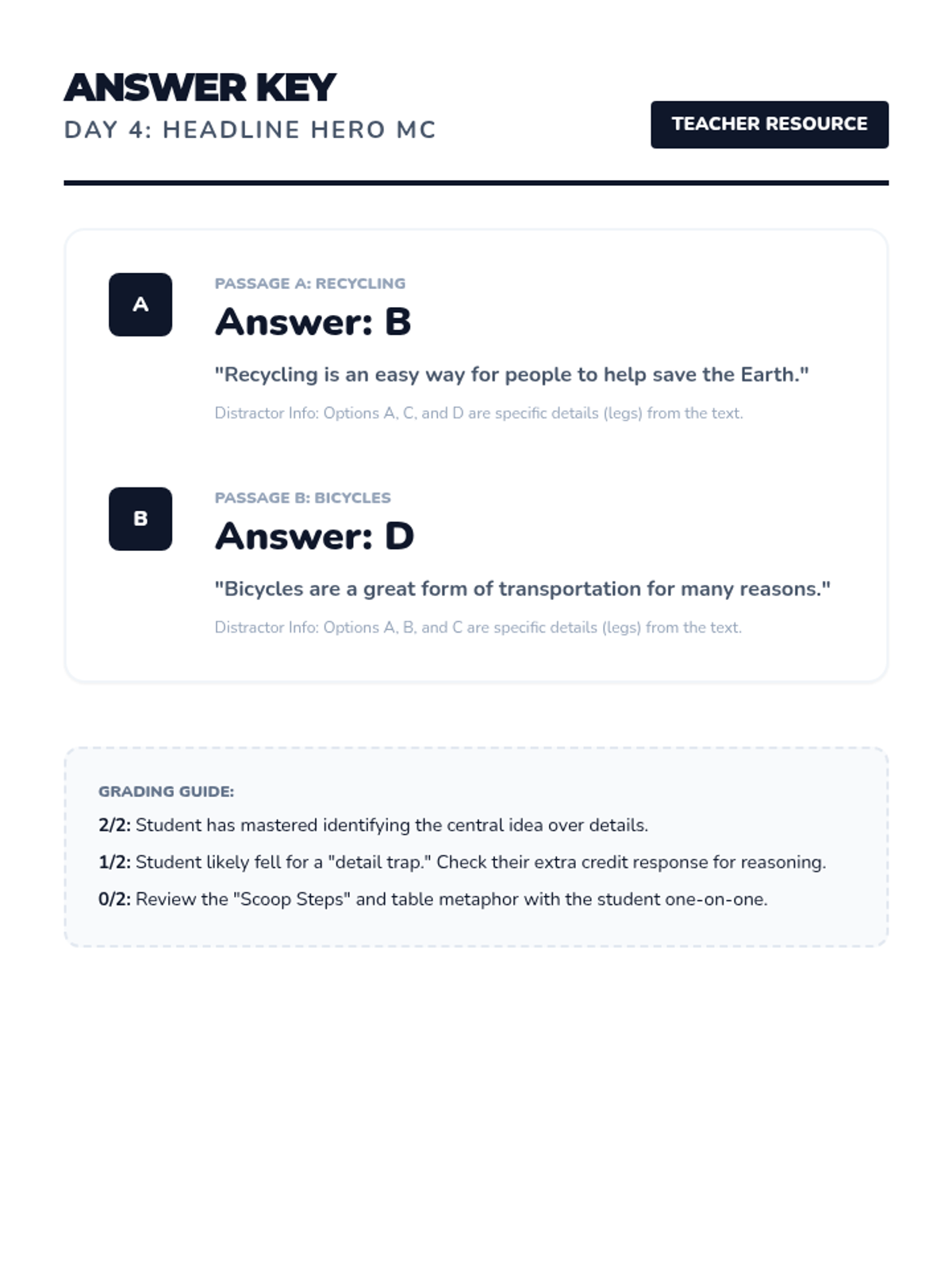
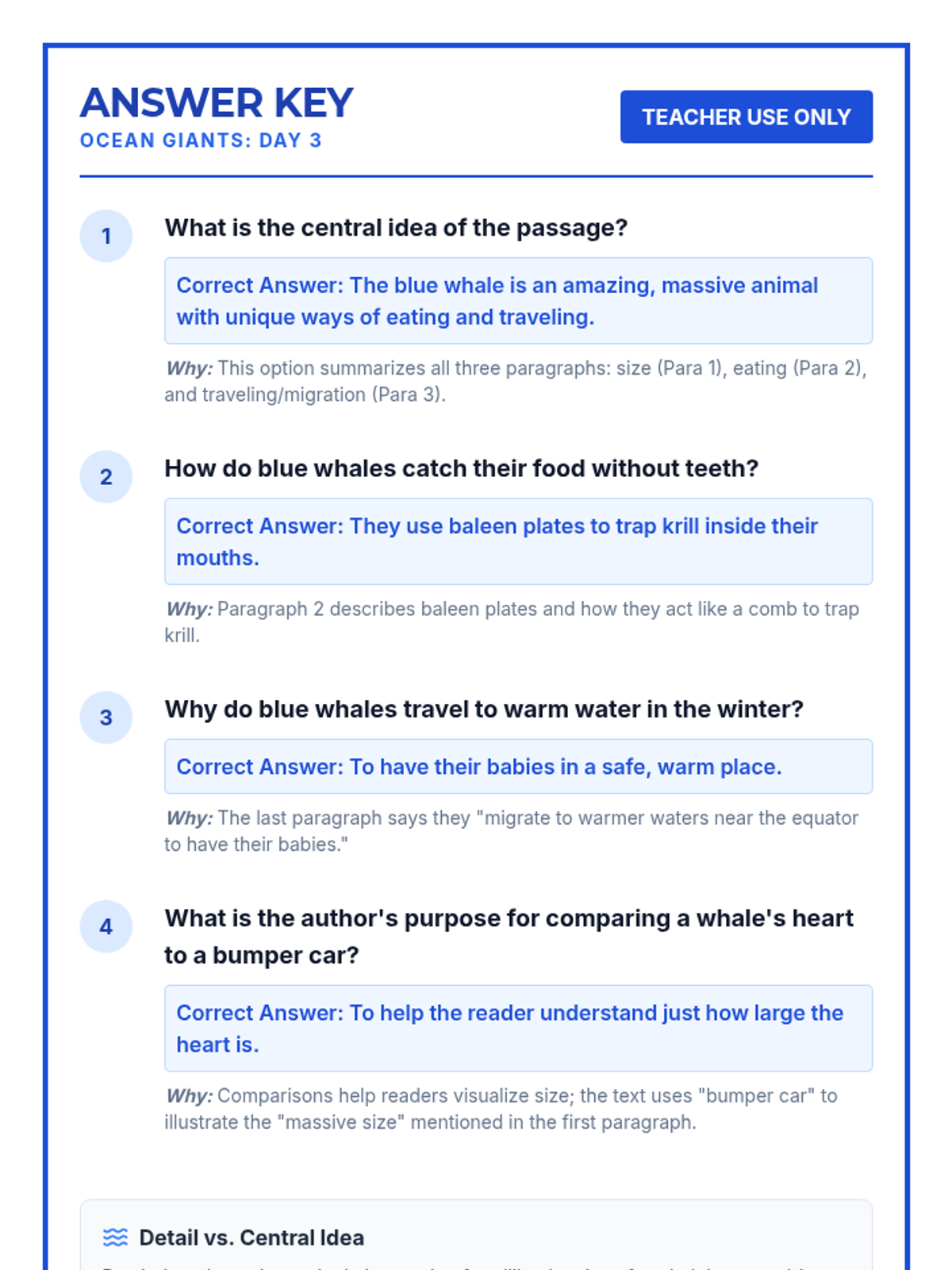
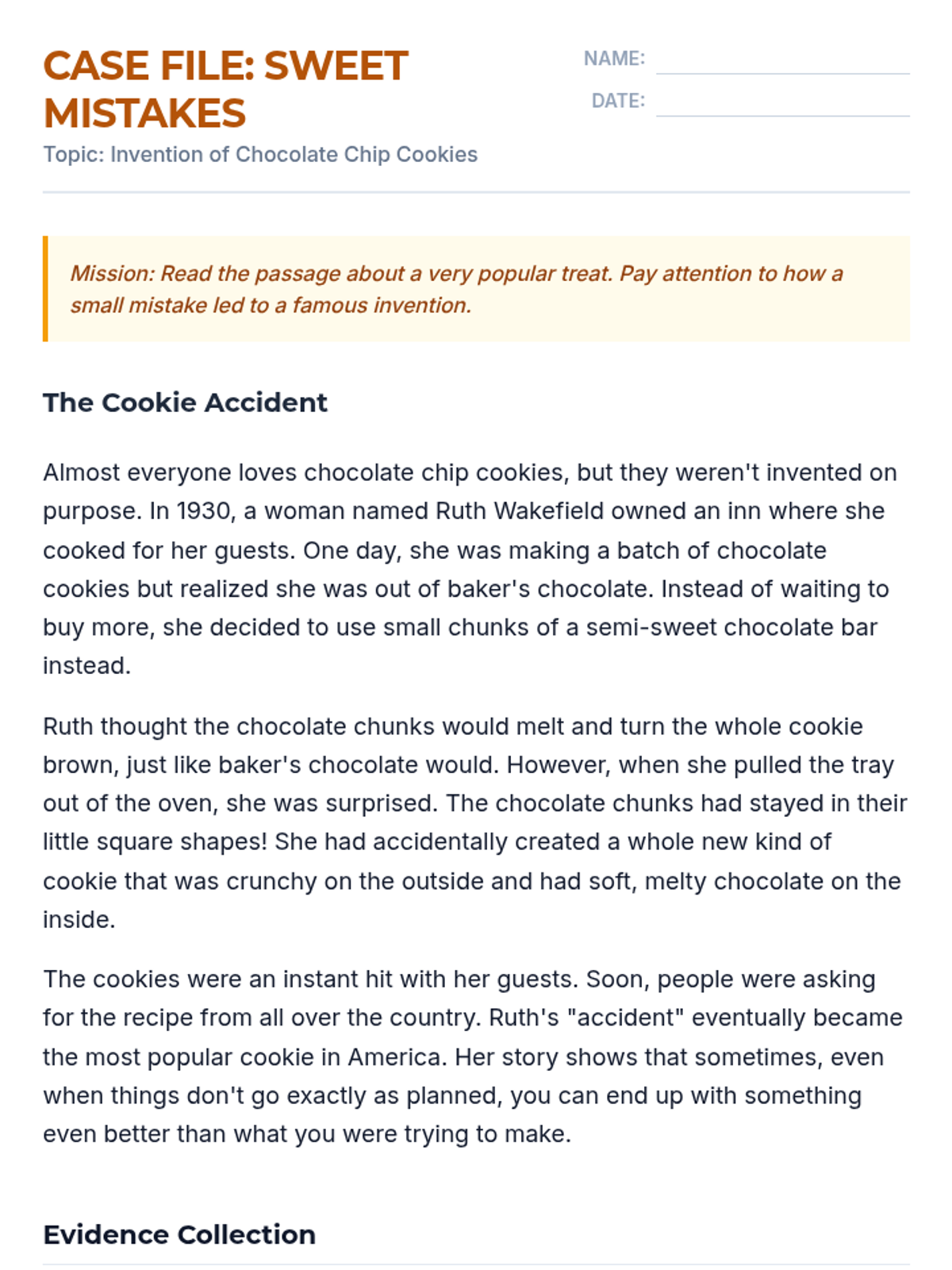
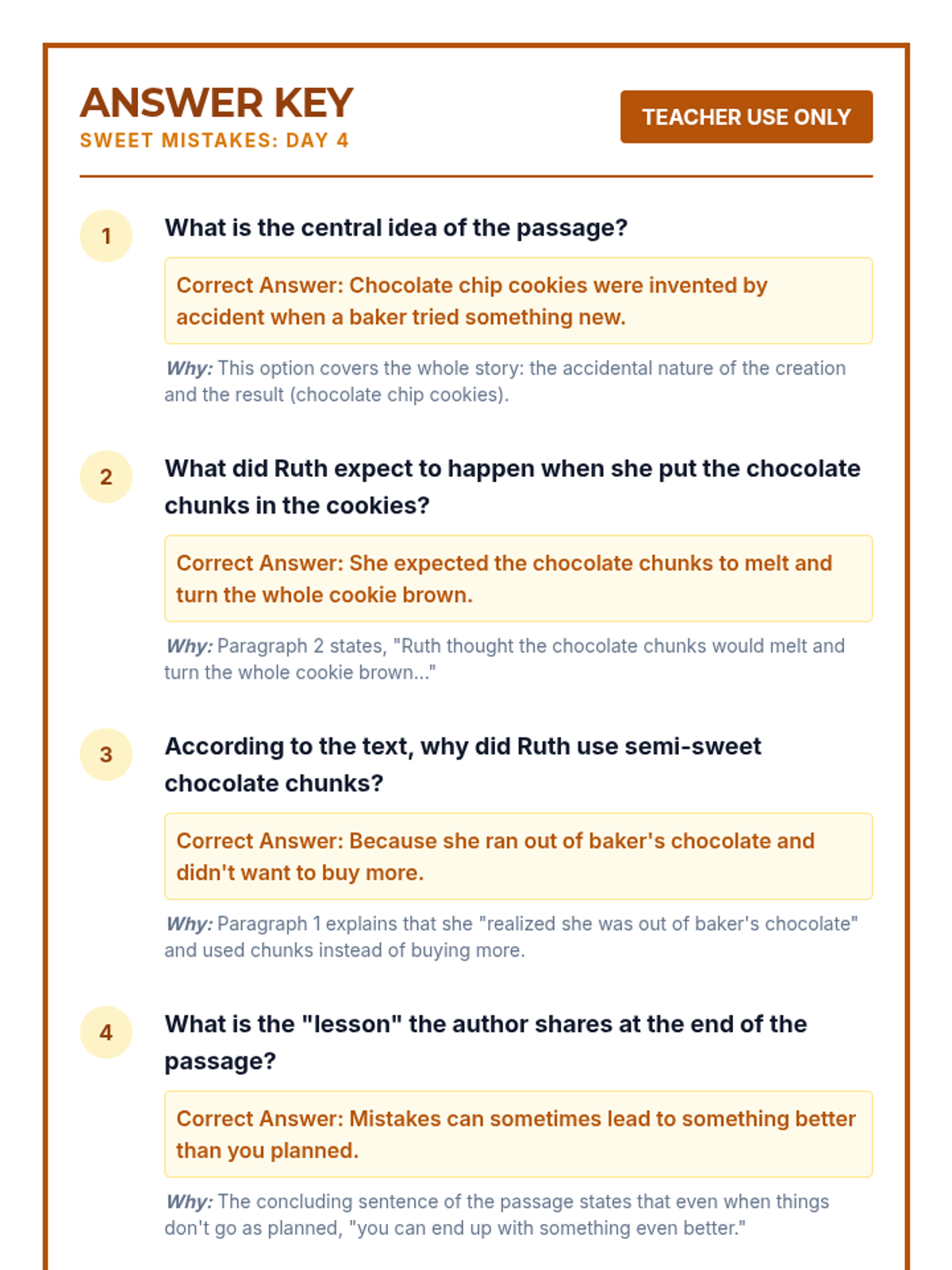
A comprehensive review and final assessment where students apply all strategies to solve complex central idea cases across multiple genres.
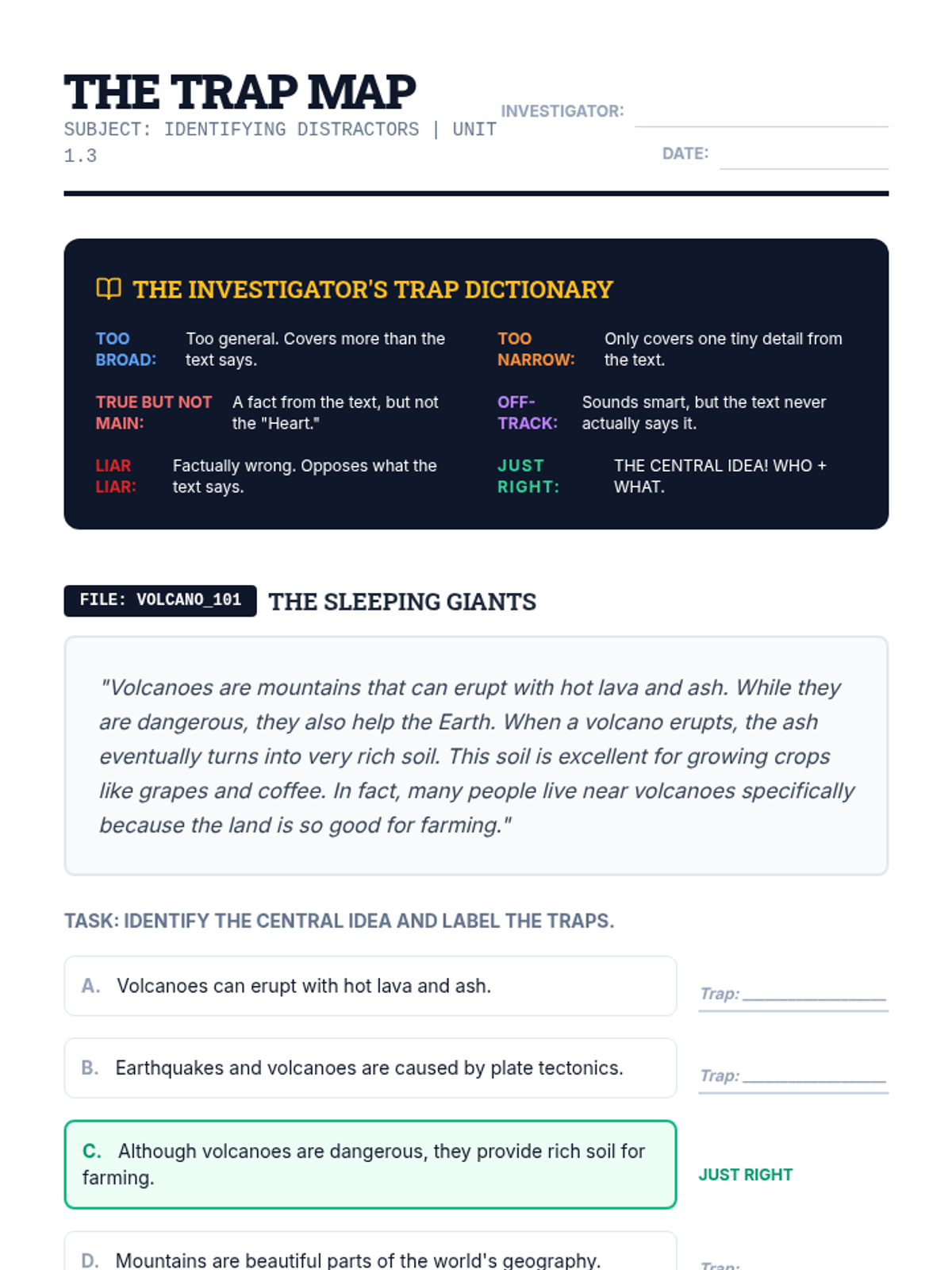
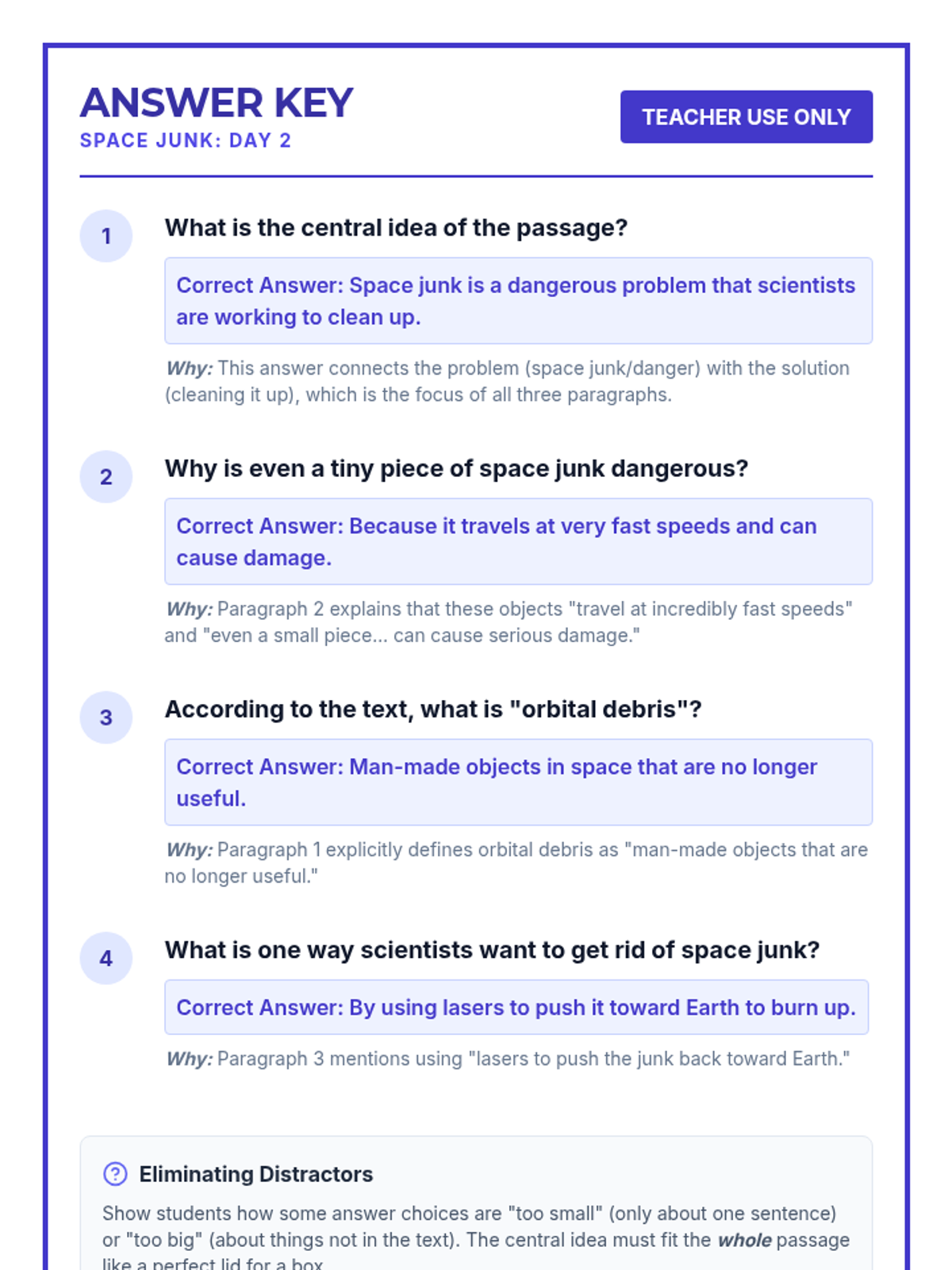
Deep dive into common 'traps' in central idea questions, such as 'true but not main' and 'off-track' options. Students learn to justify why certain answers are incorrect.
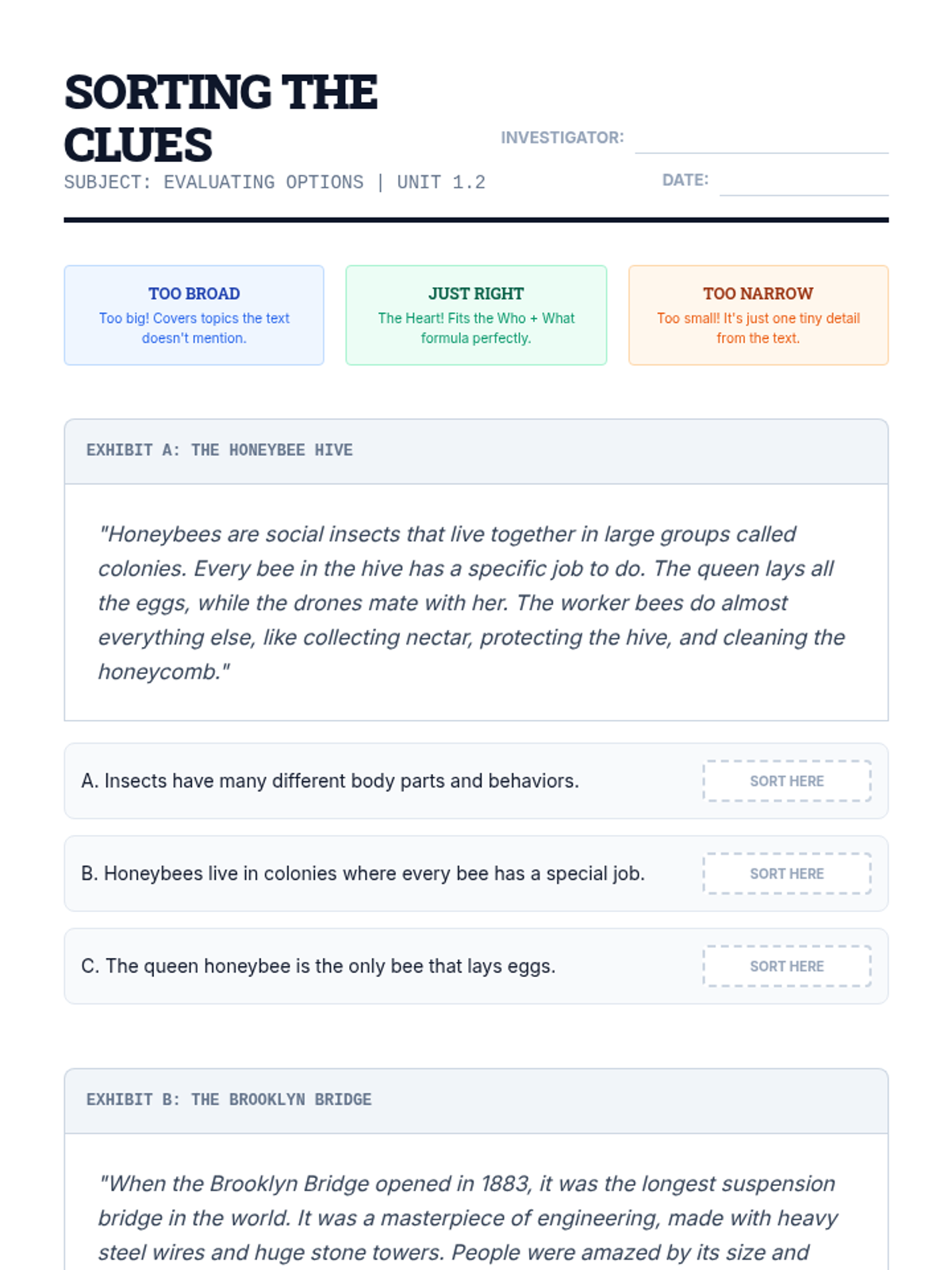
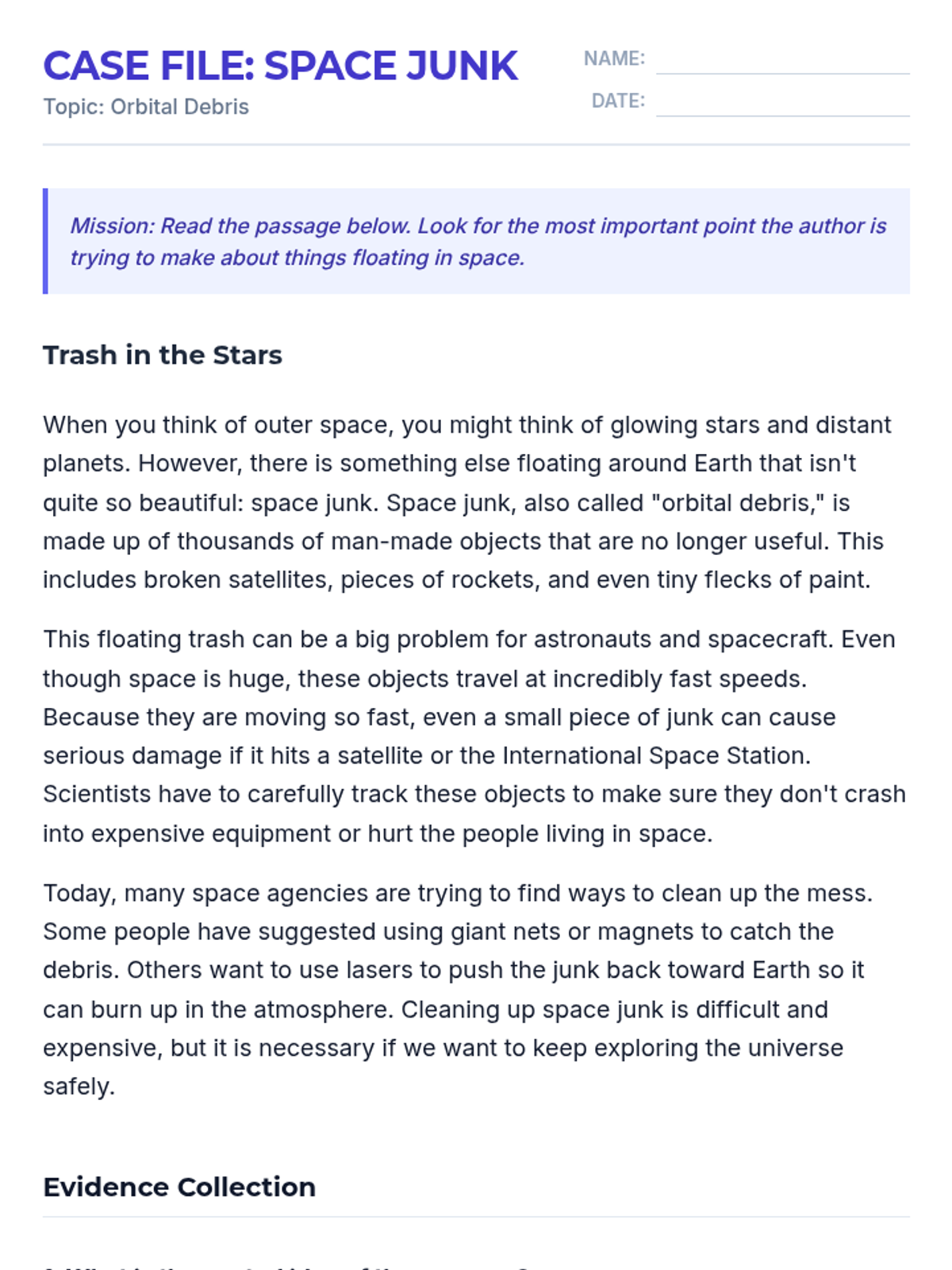
Focus on evaluating multiple-choice options by identifying 'too broad' and 'too narrow' distractors. Students use the 'Goldilocks Rule' to find the answer that is 'just right.'
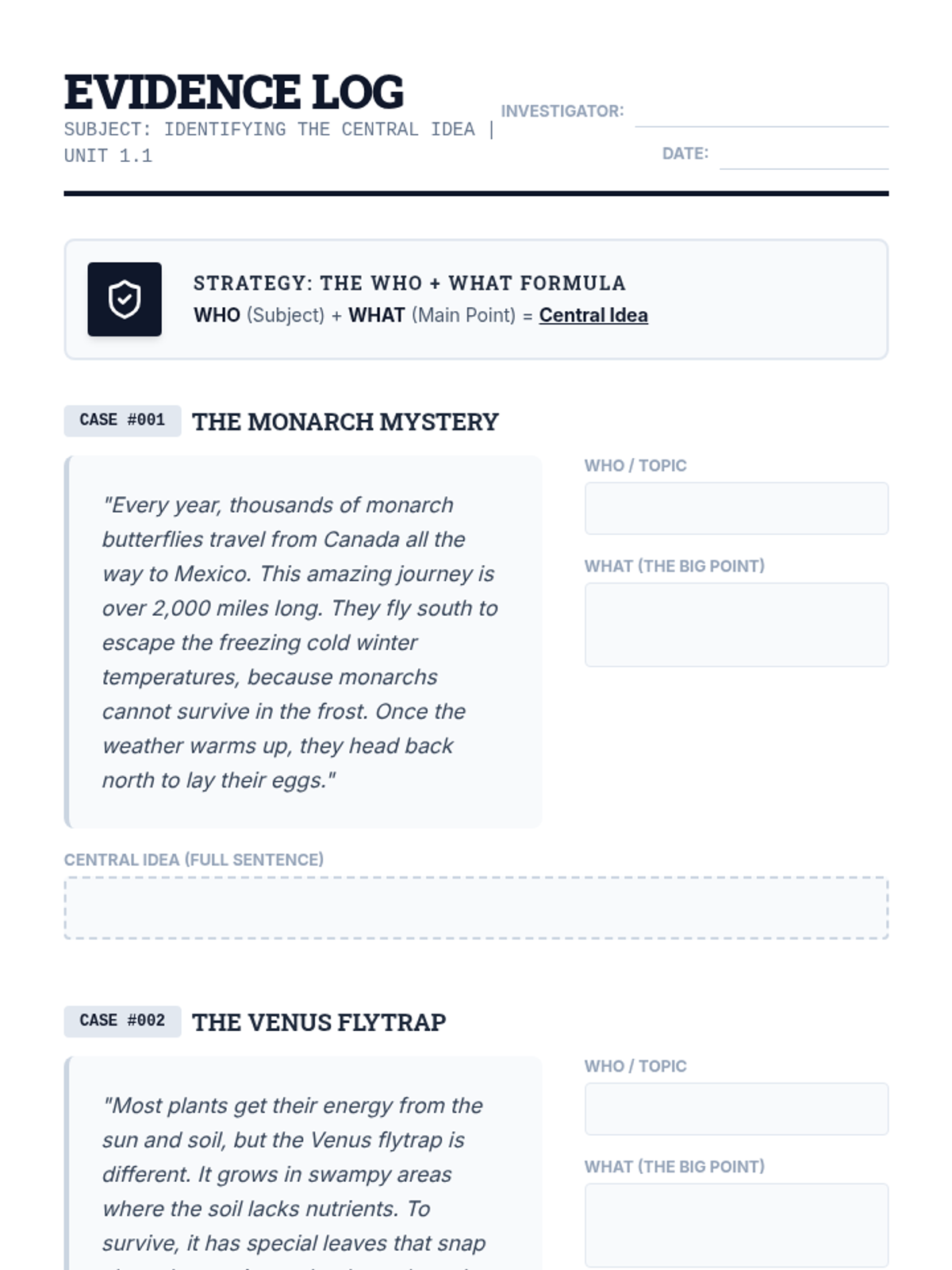
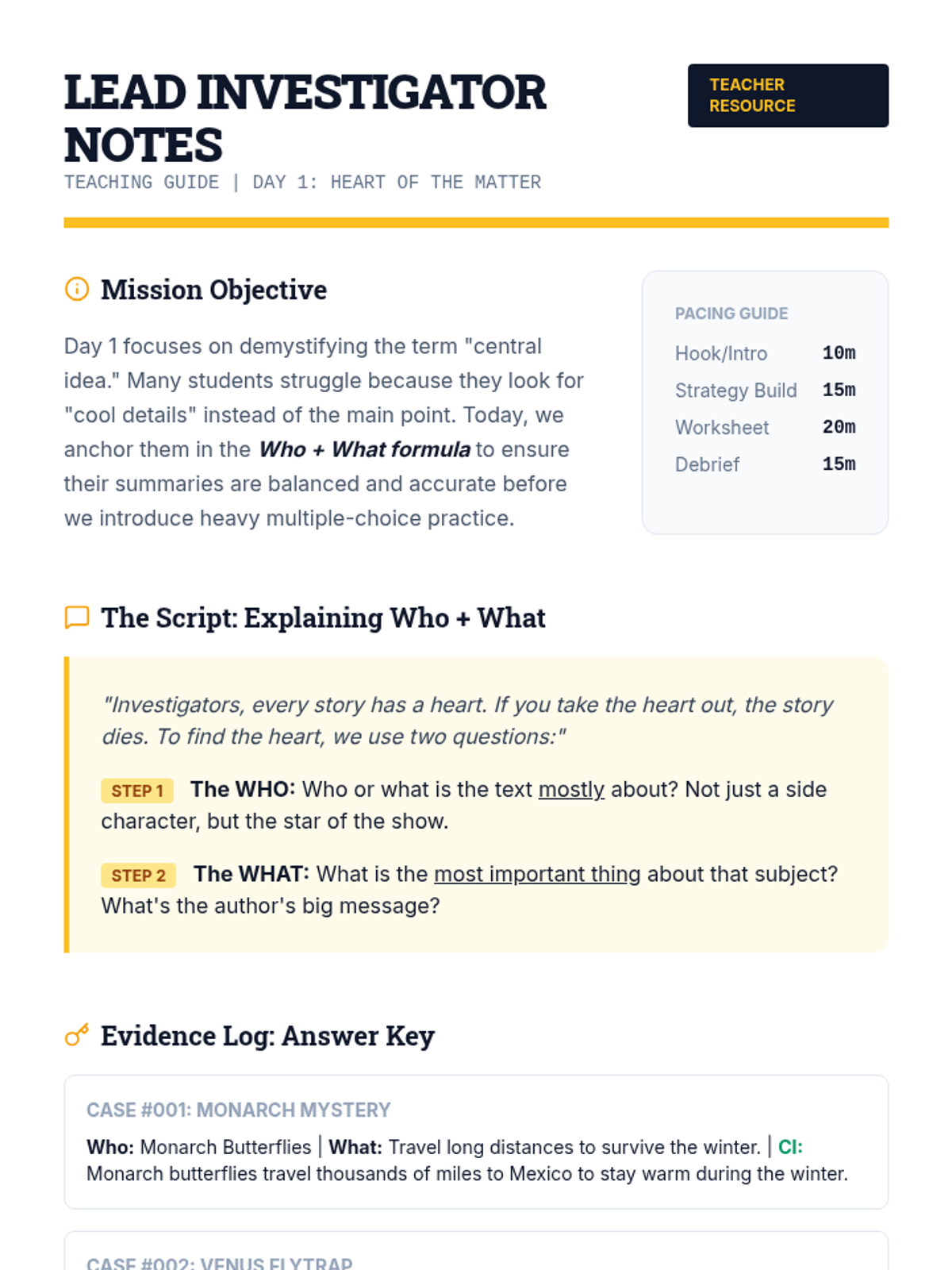
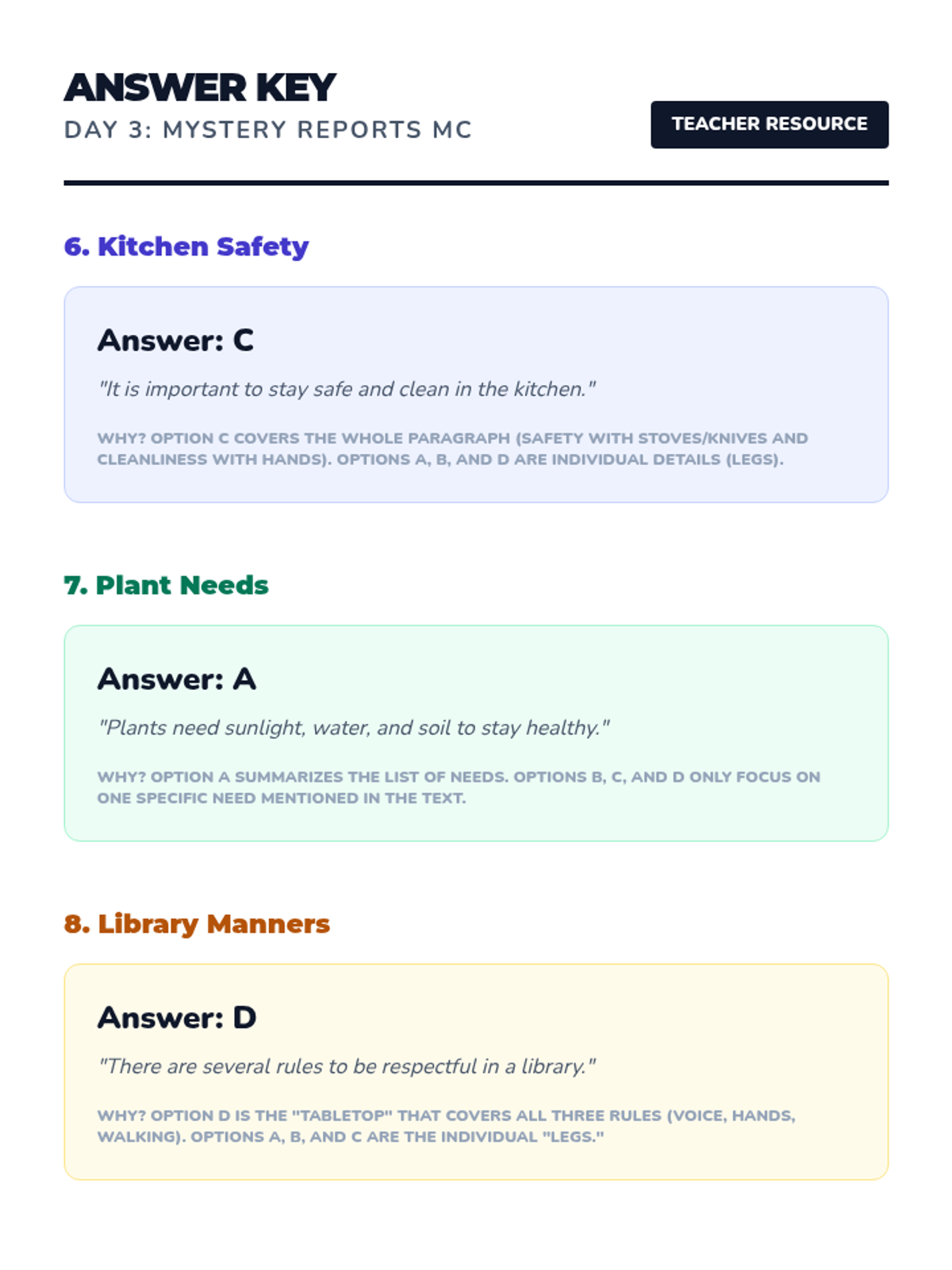
Introduction to the concept of a central idea using the 'Who + What' strategy. Students practice identifying the main point of short texts before being introduced to multiple-choice formats.
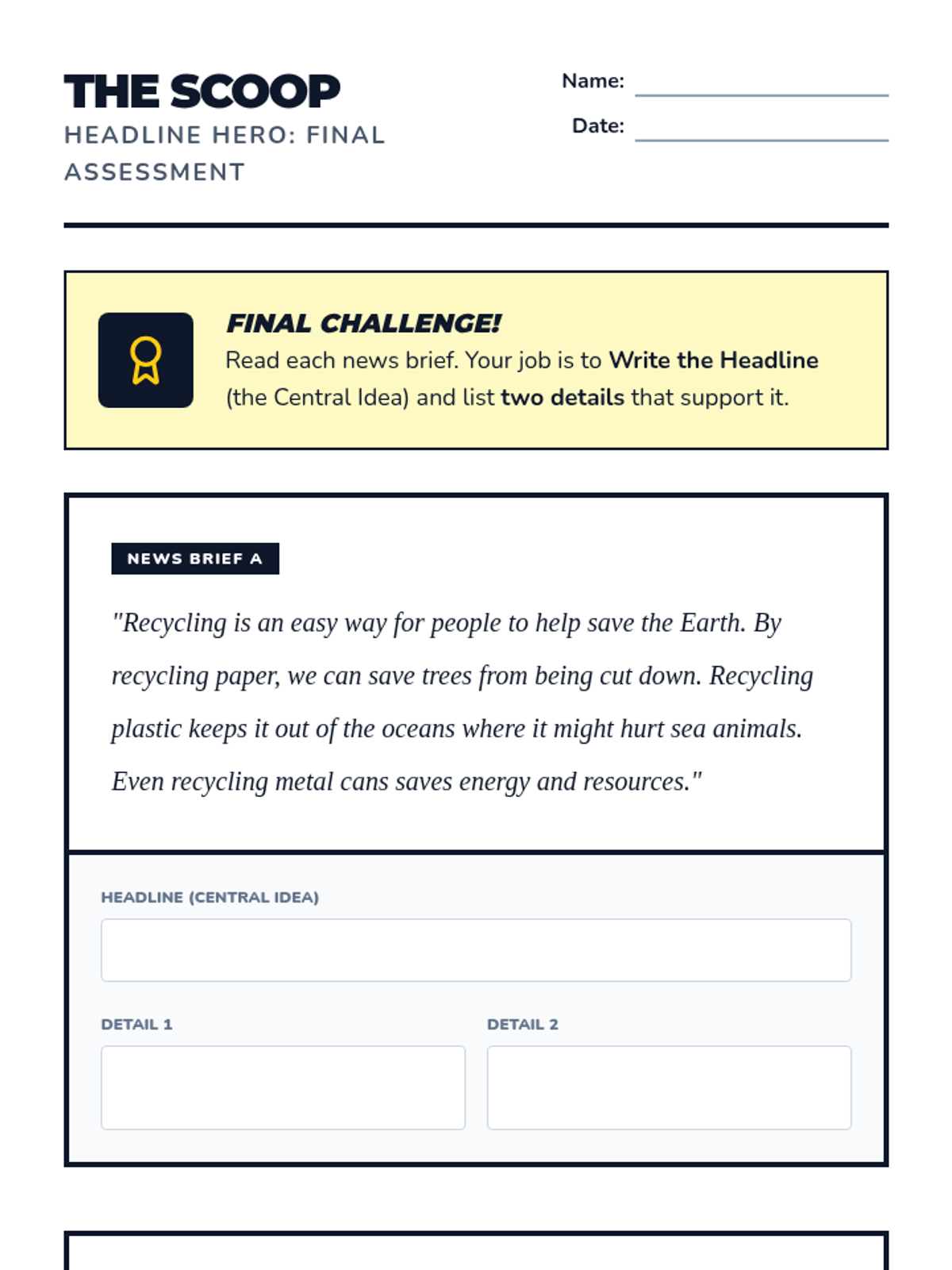
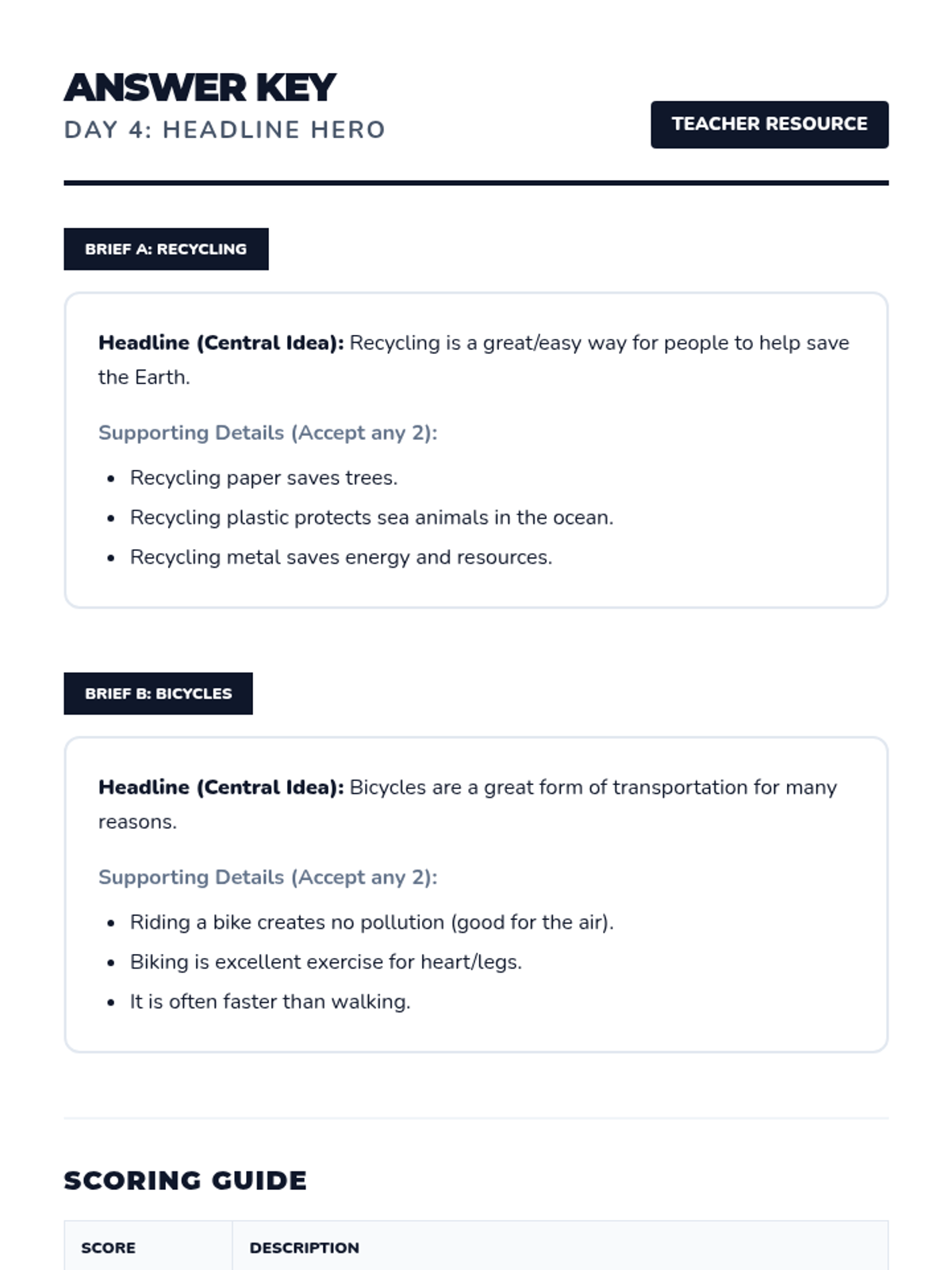
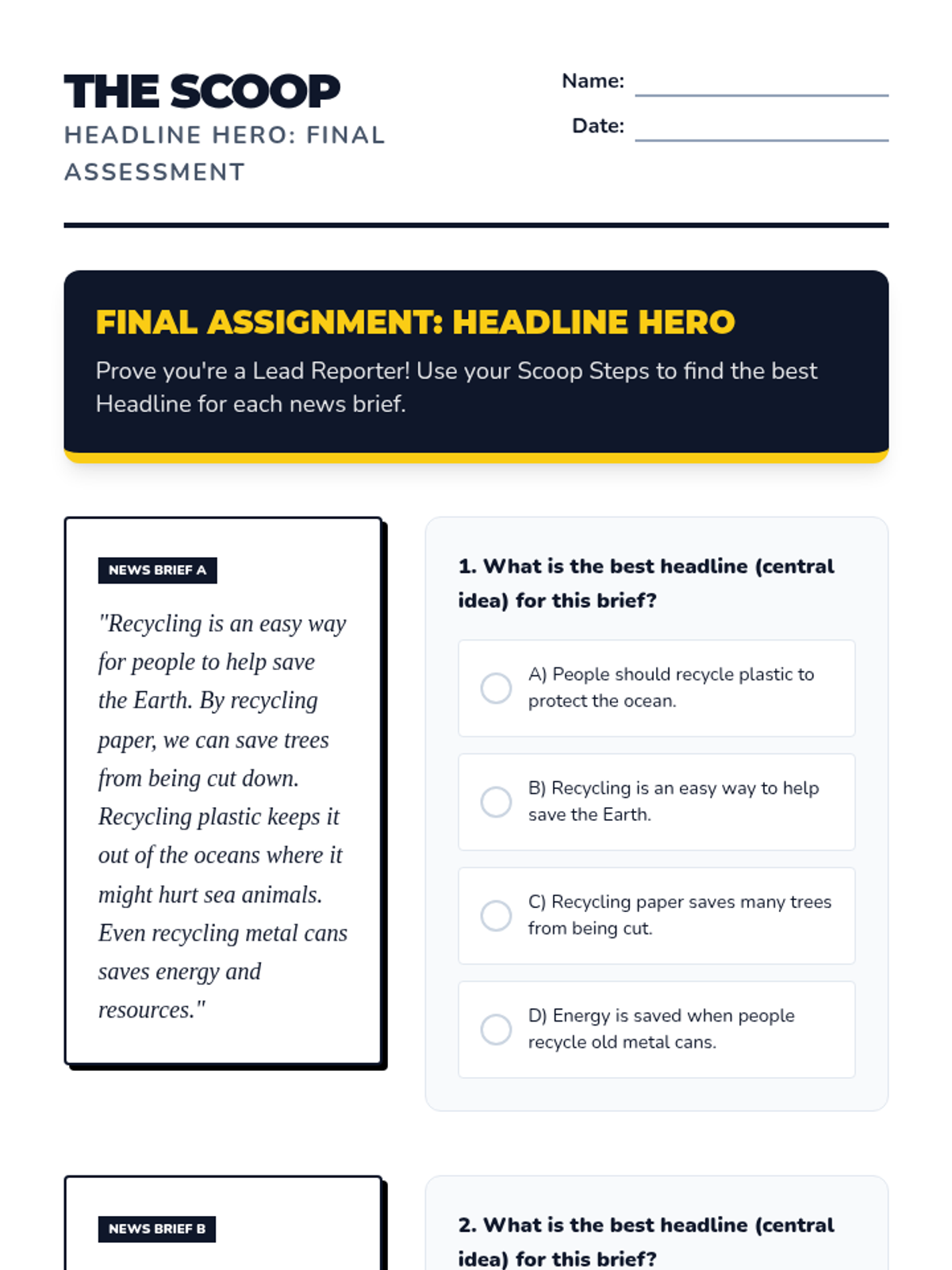
Final independent practice and formative assessment where students write their own headlines (central ideas) for various news briefs.
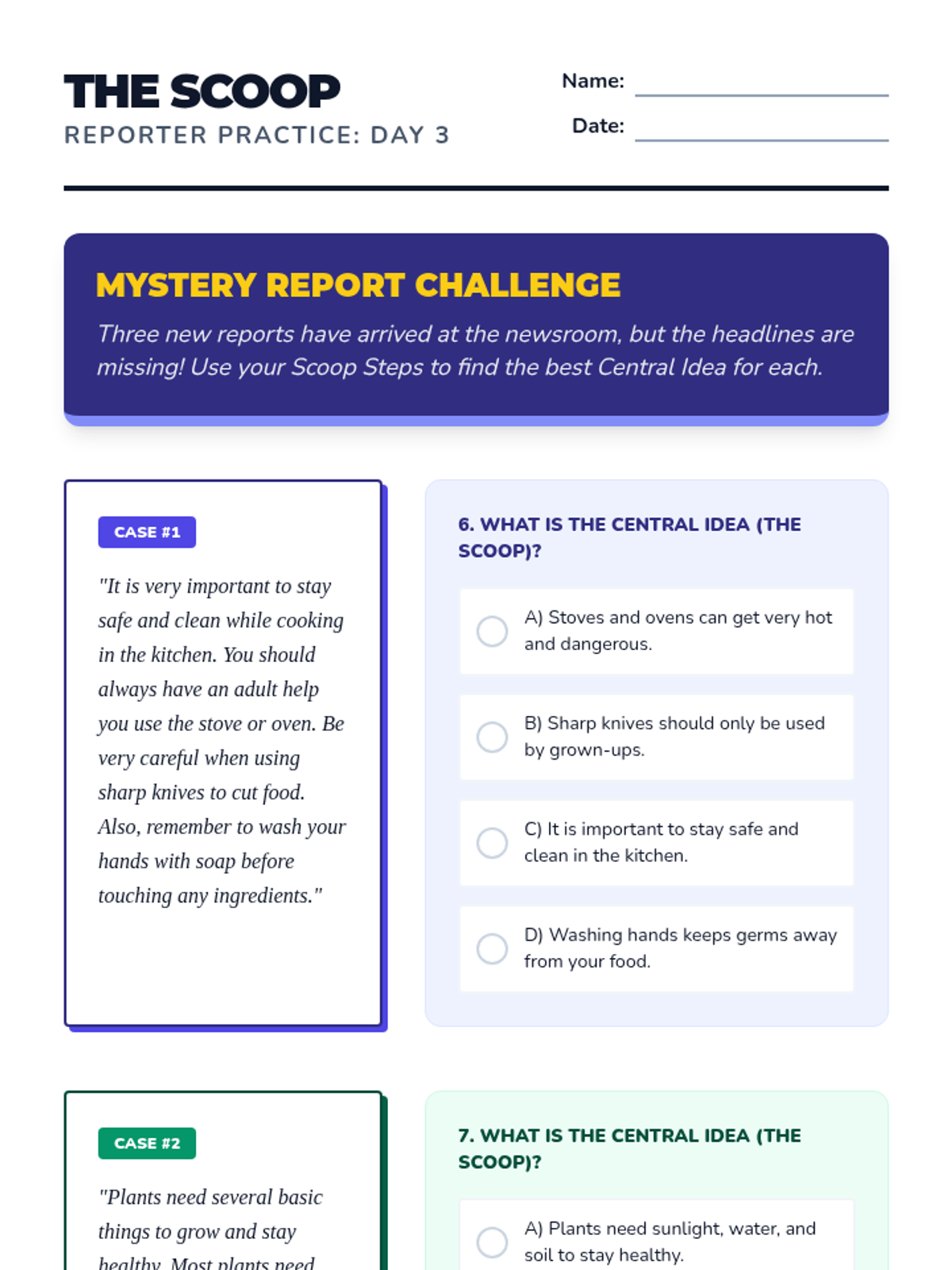
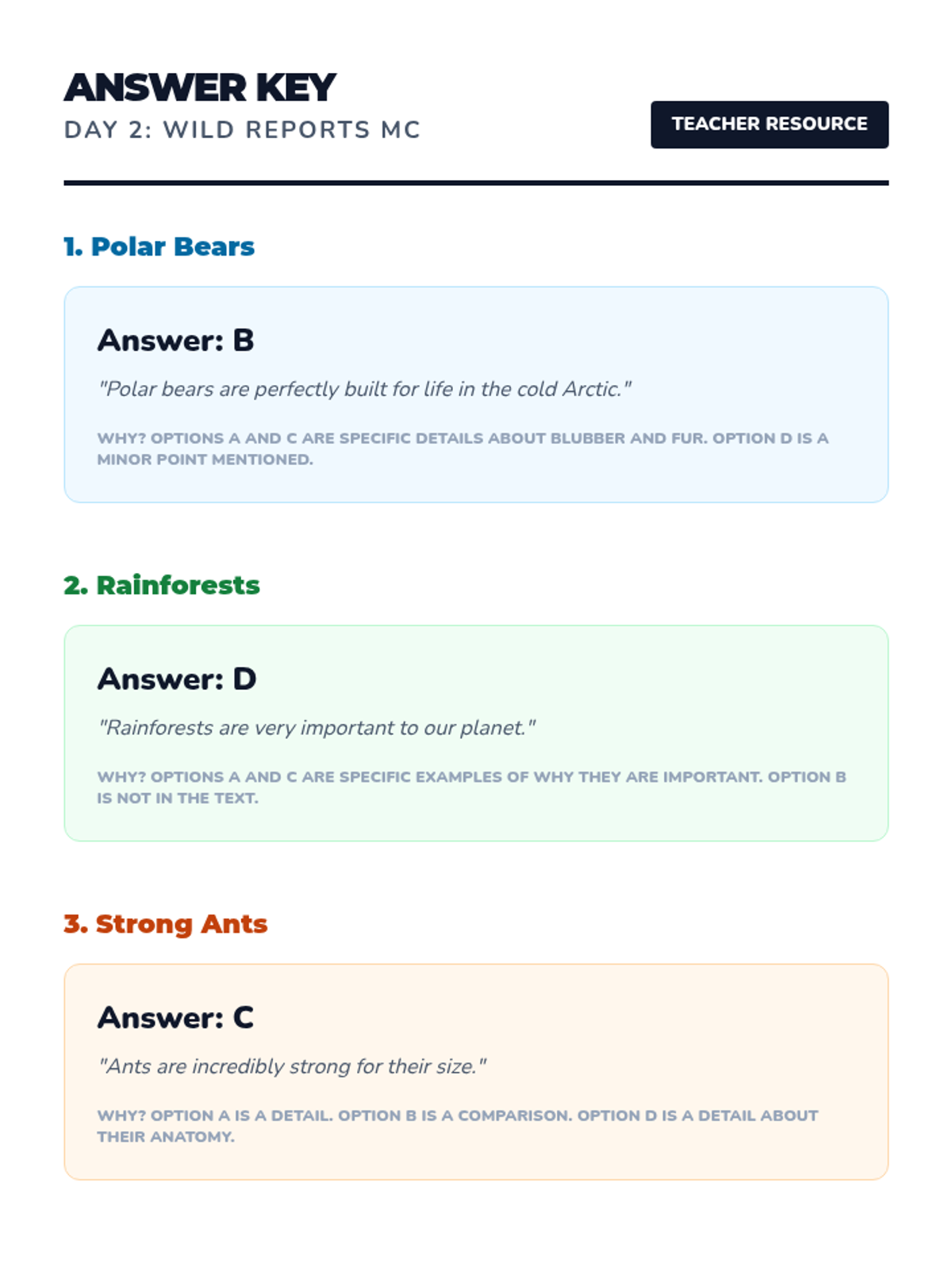
Independent practice focusing on inferring the central idea when given a cluster of specific supporting details.
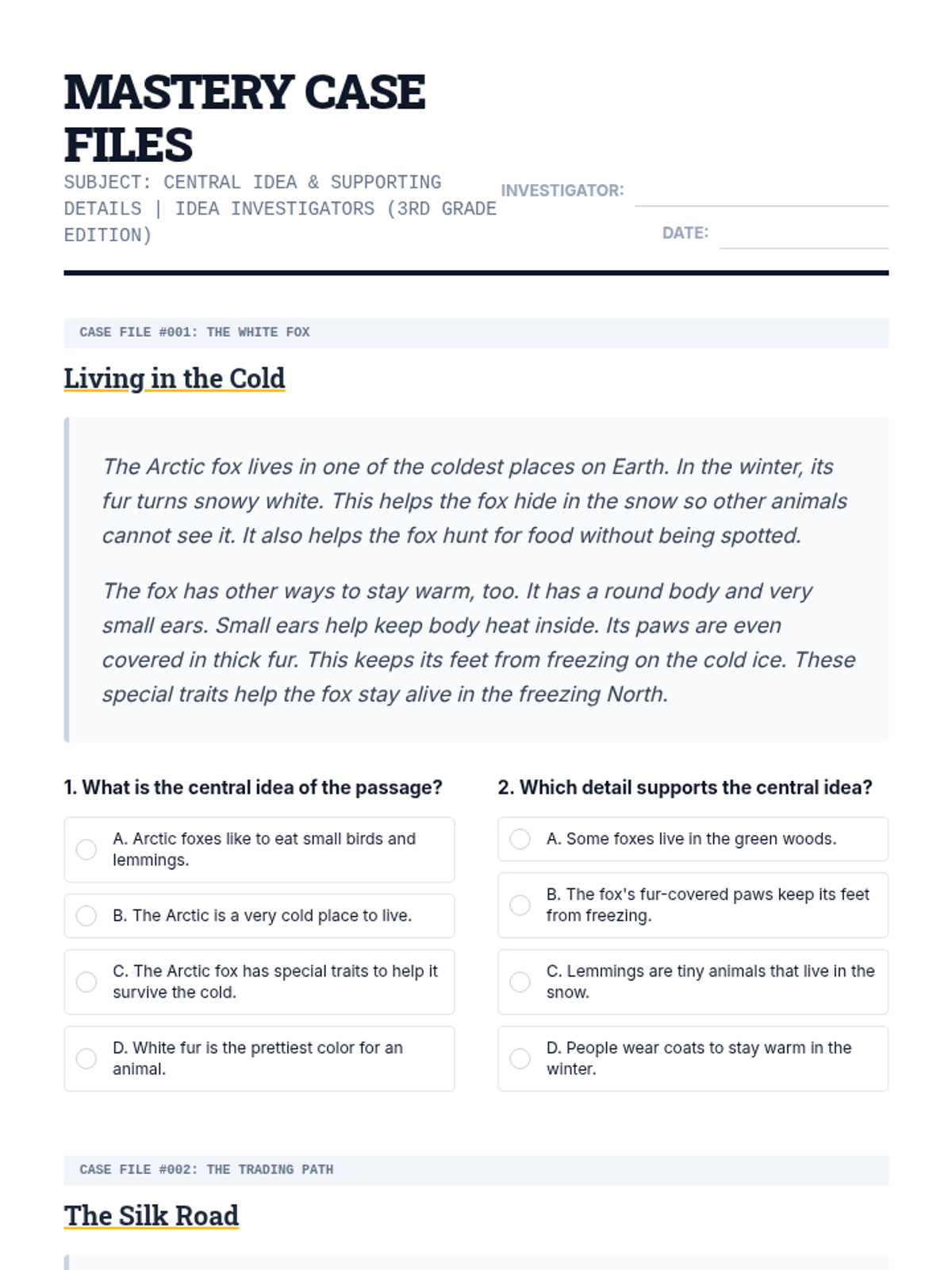
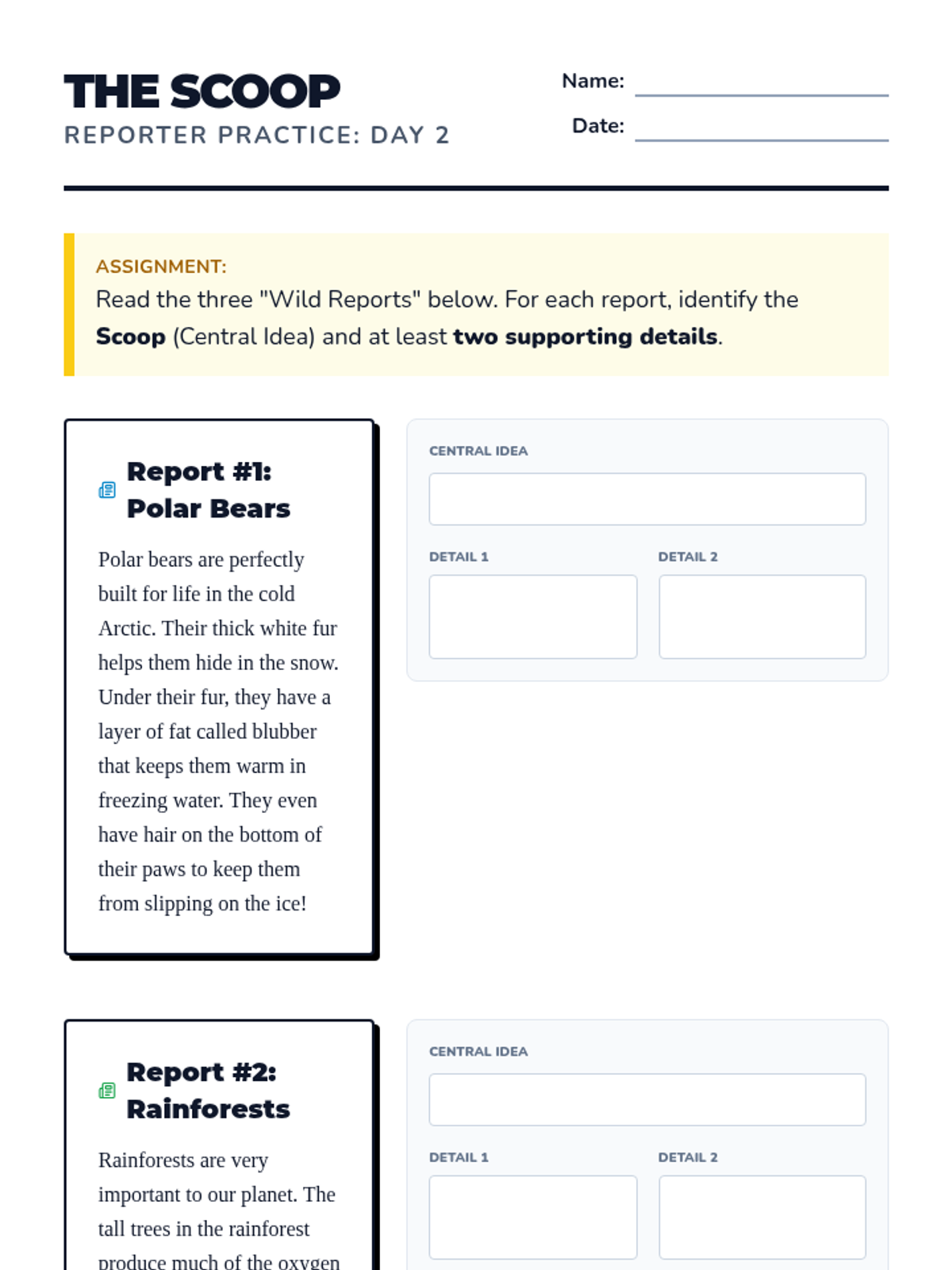
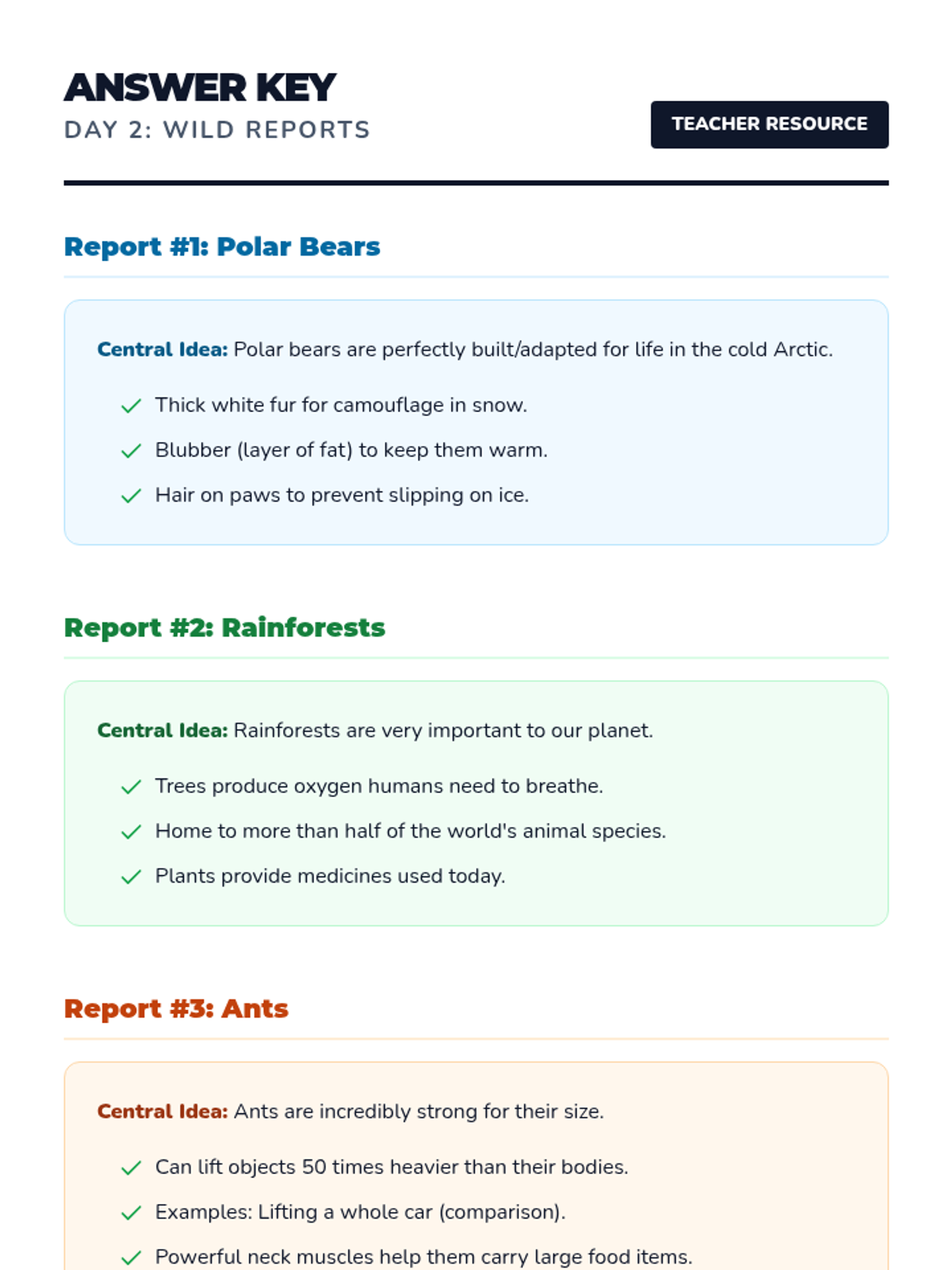
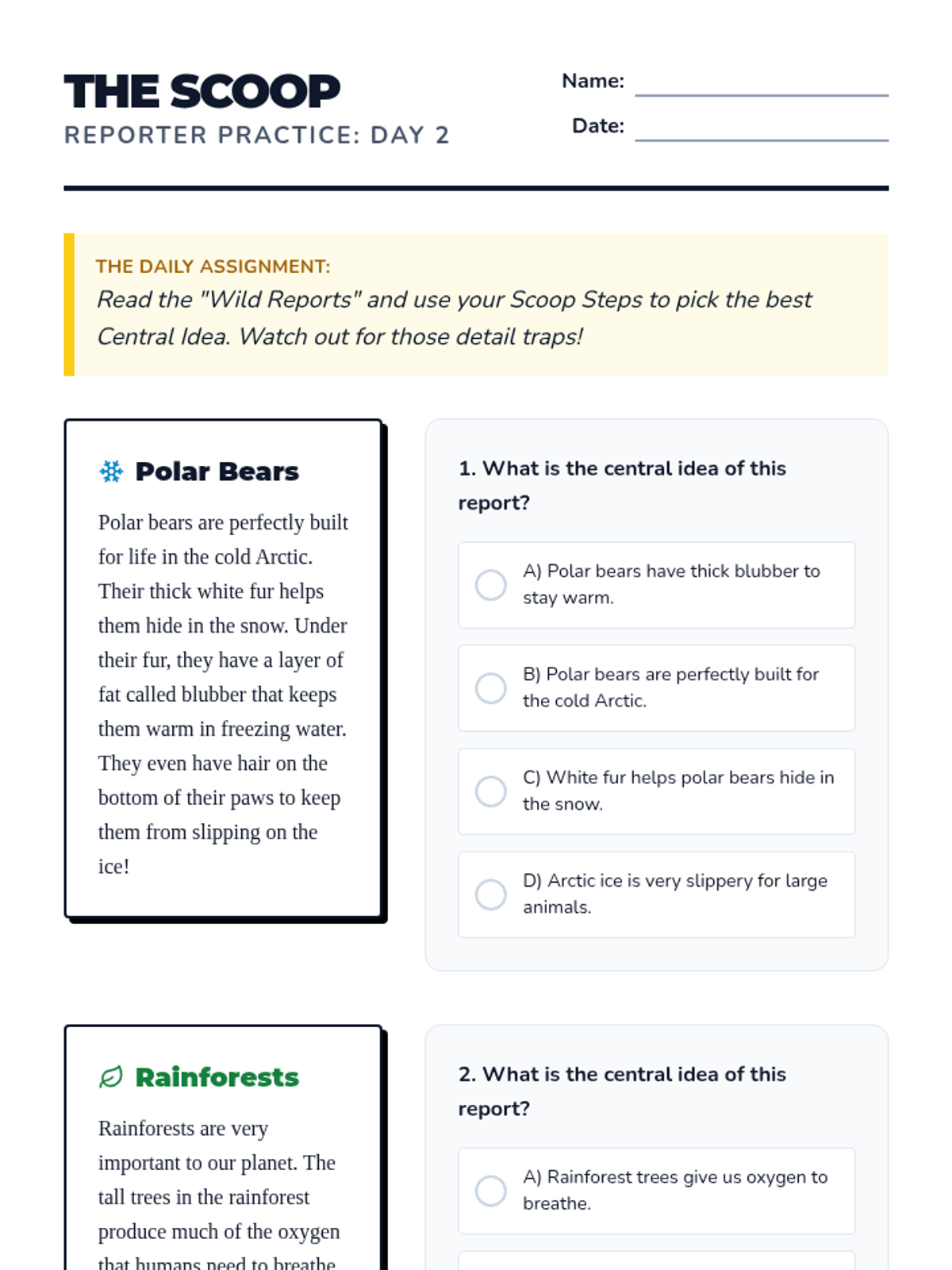
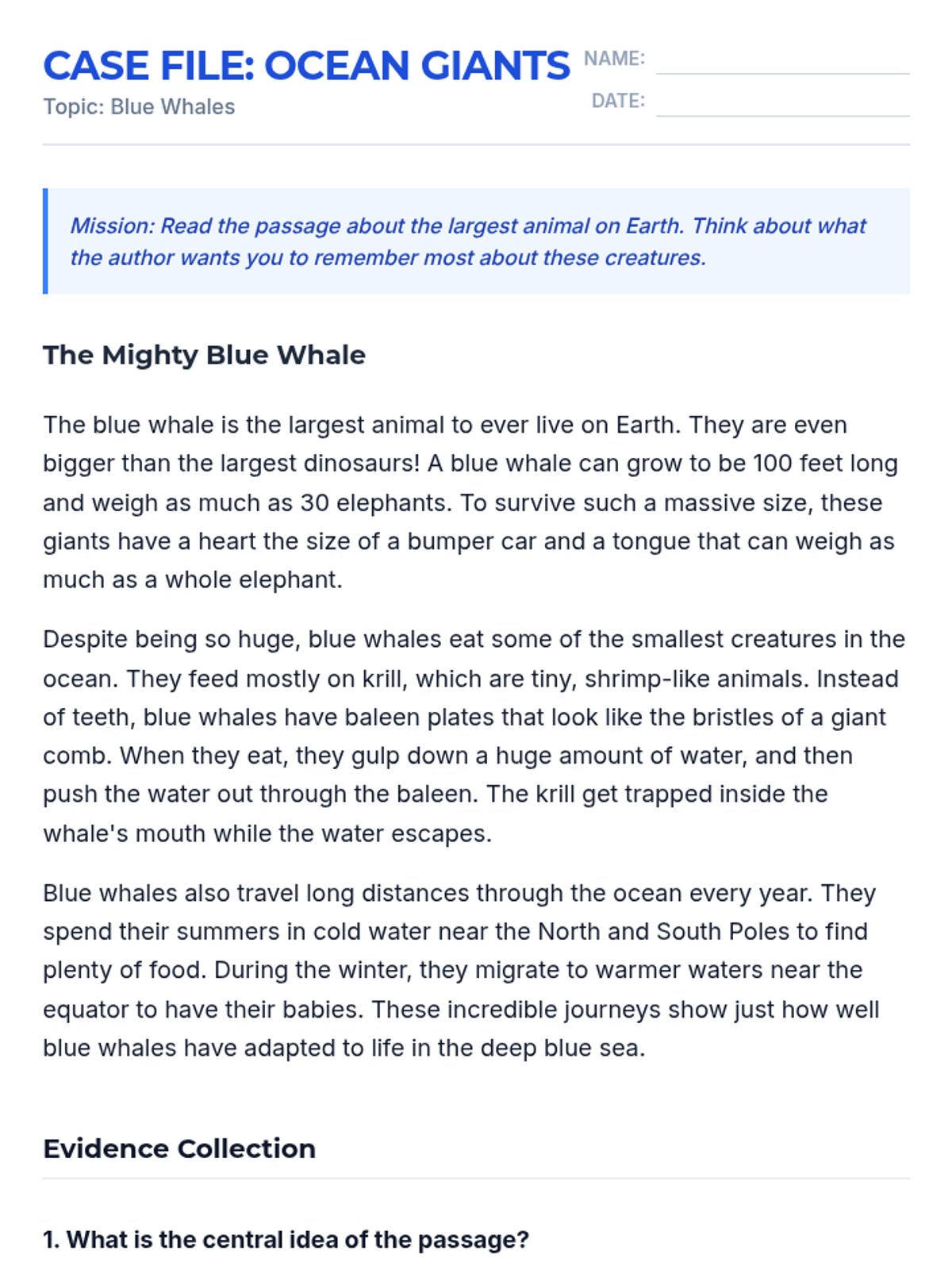
Independent practice focusing on high-interest animal facts. Students apply the central idea table strategy to multiple short passages.
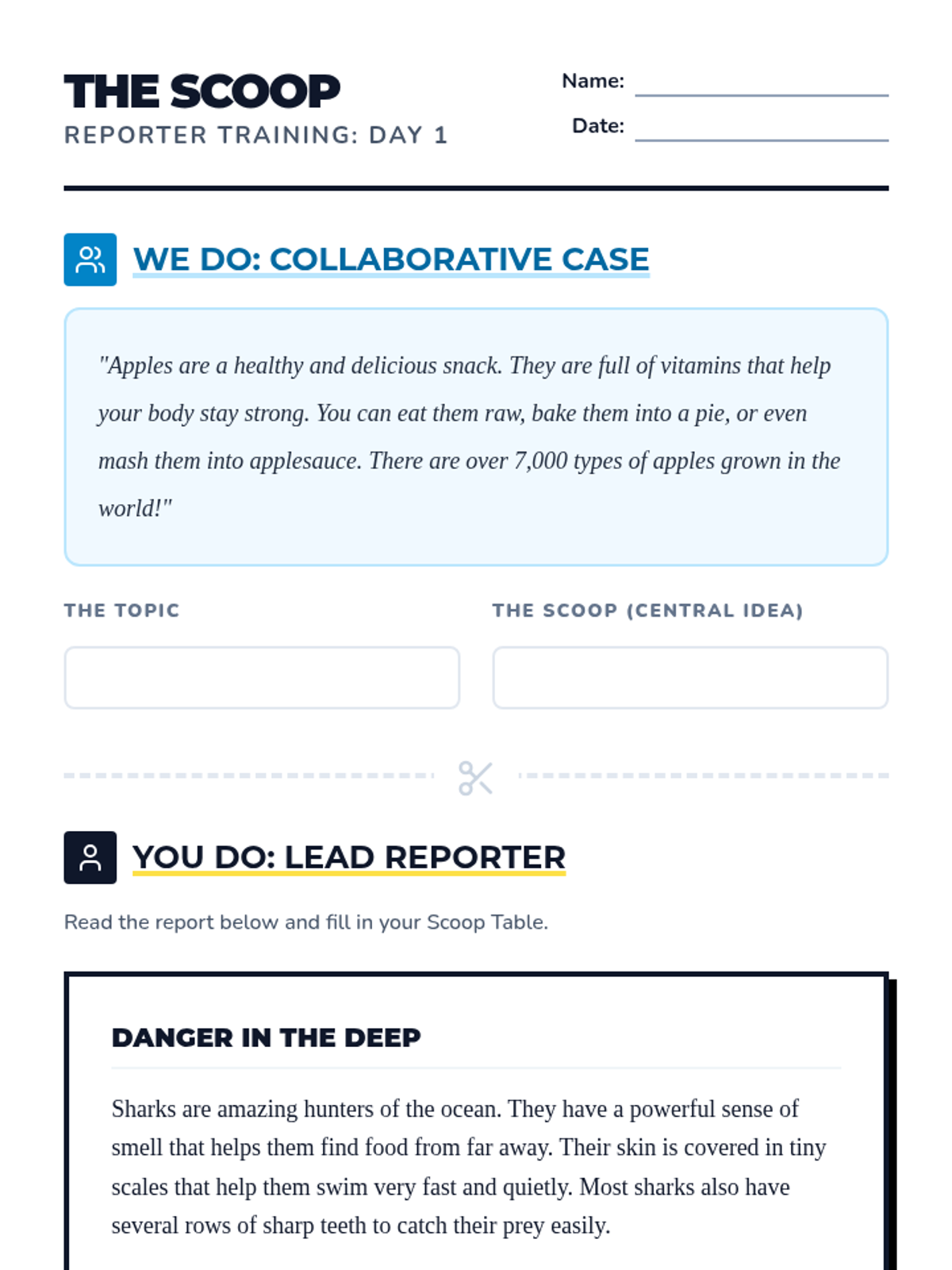
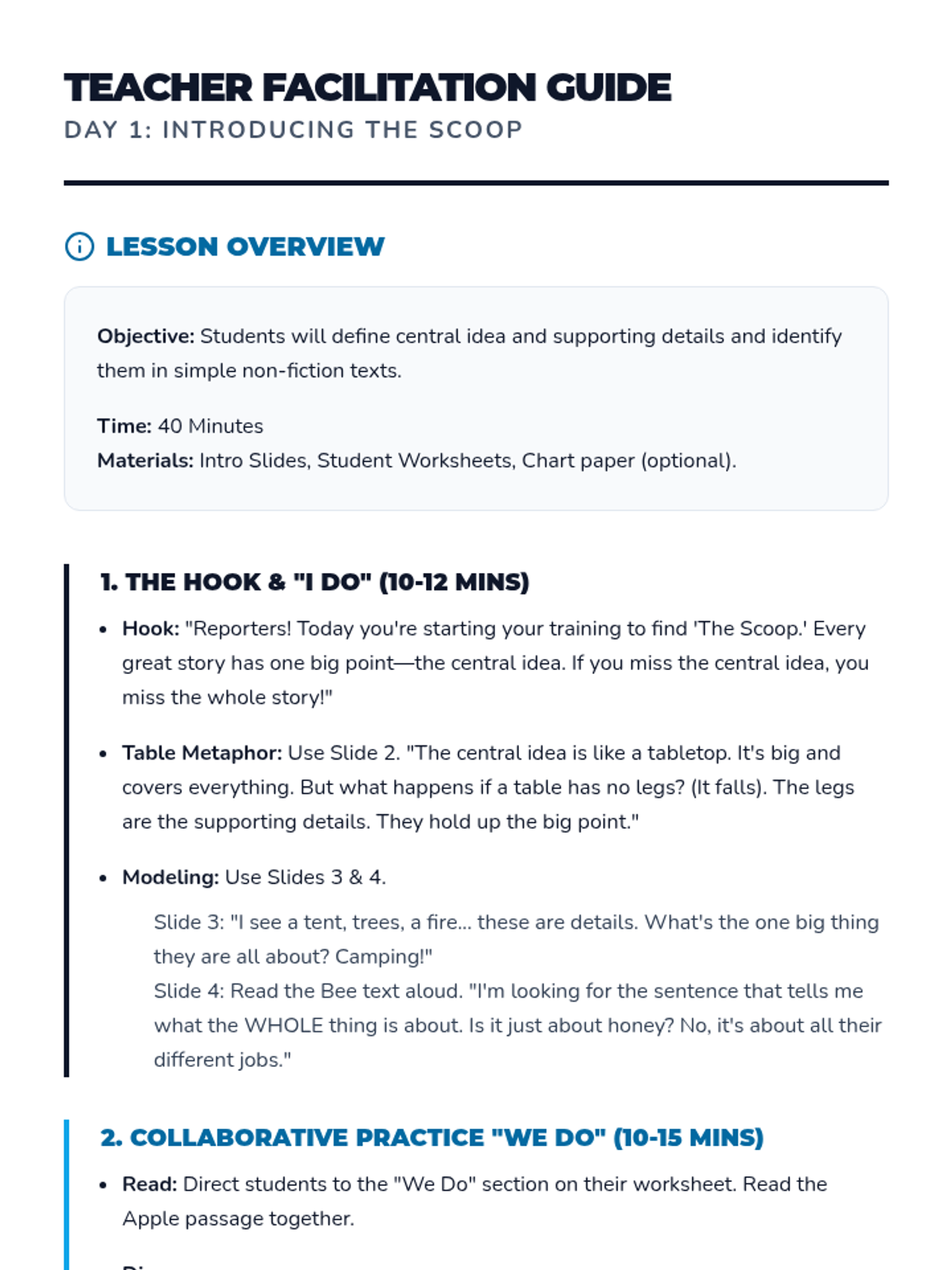
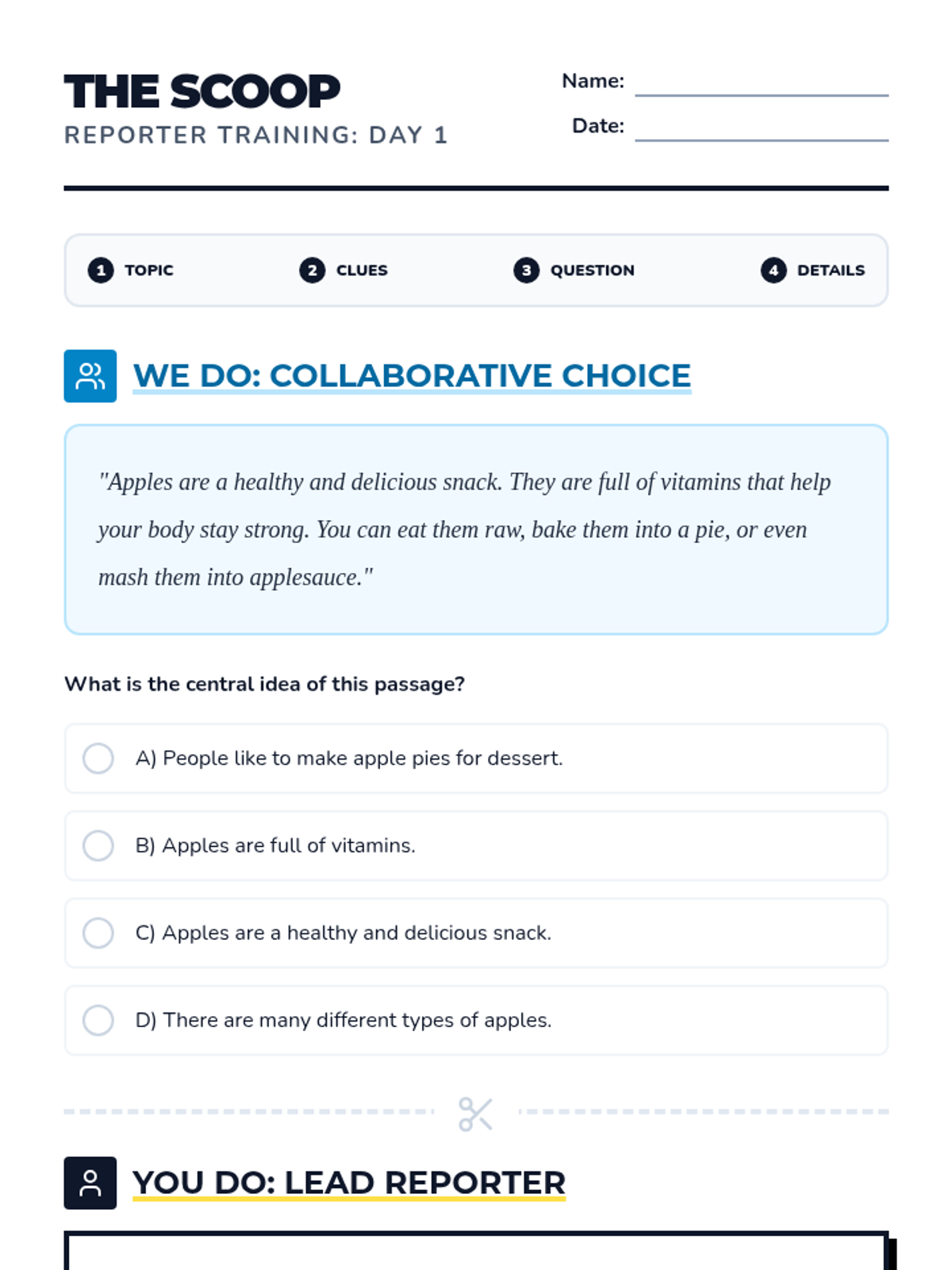
Introduction to central idea using the 'Tabletop' metaphor. Includes a direct instruction model (I Do), a collaborative practice (We Do), and initial independent work (You Do).
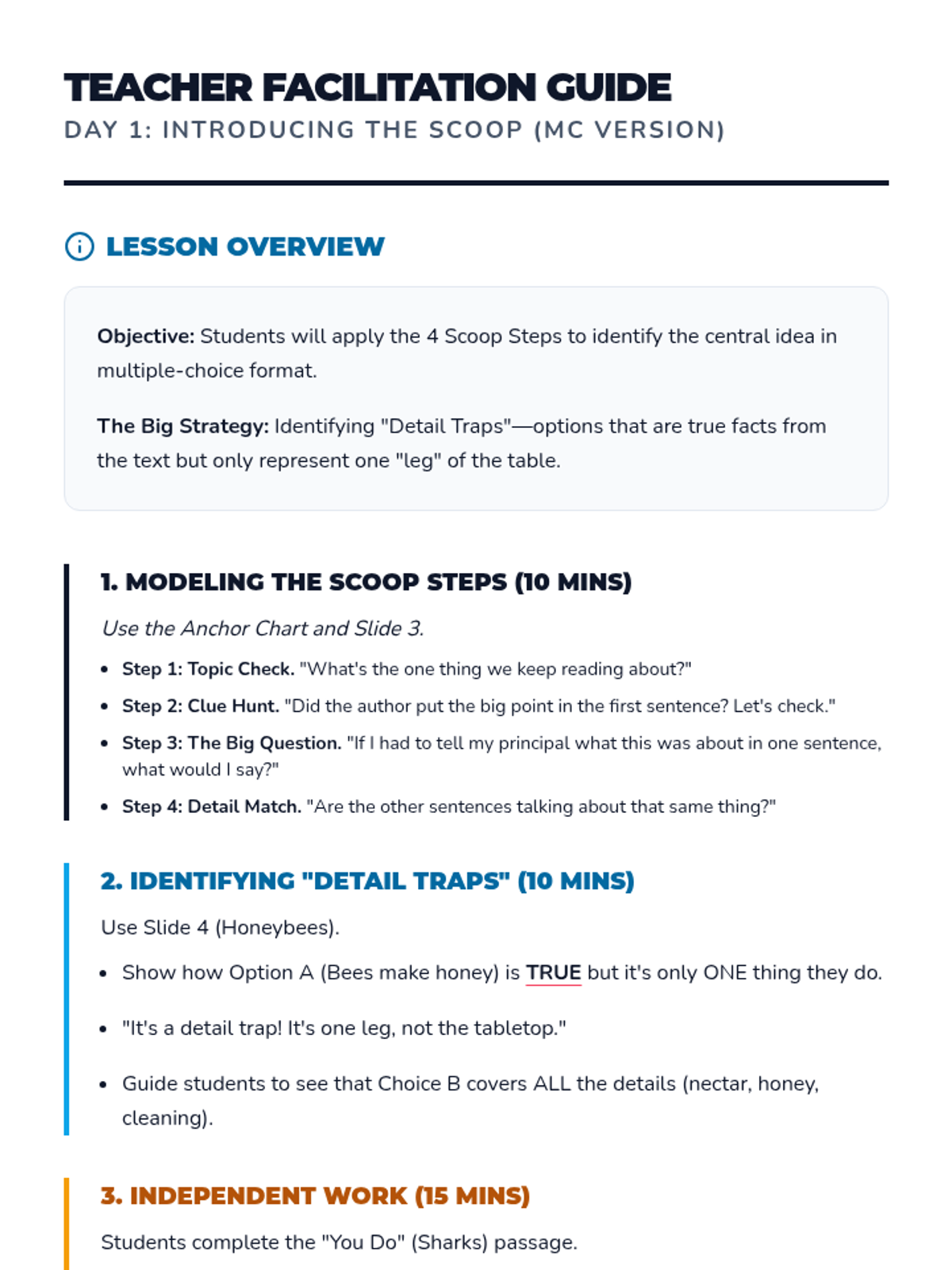
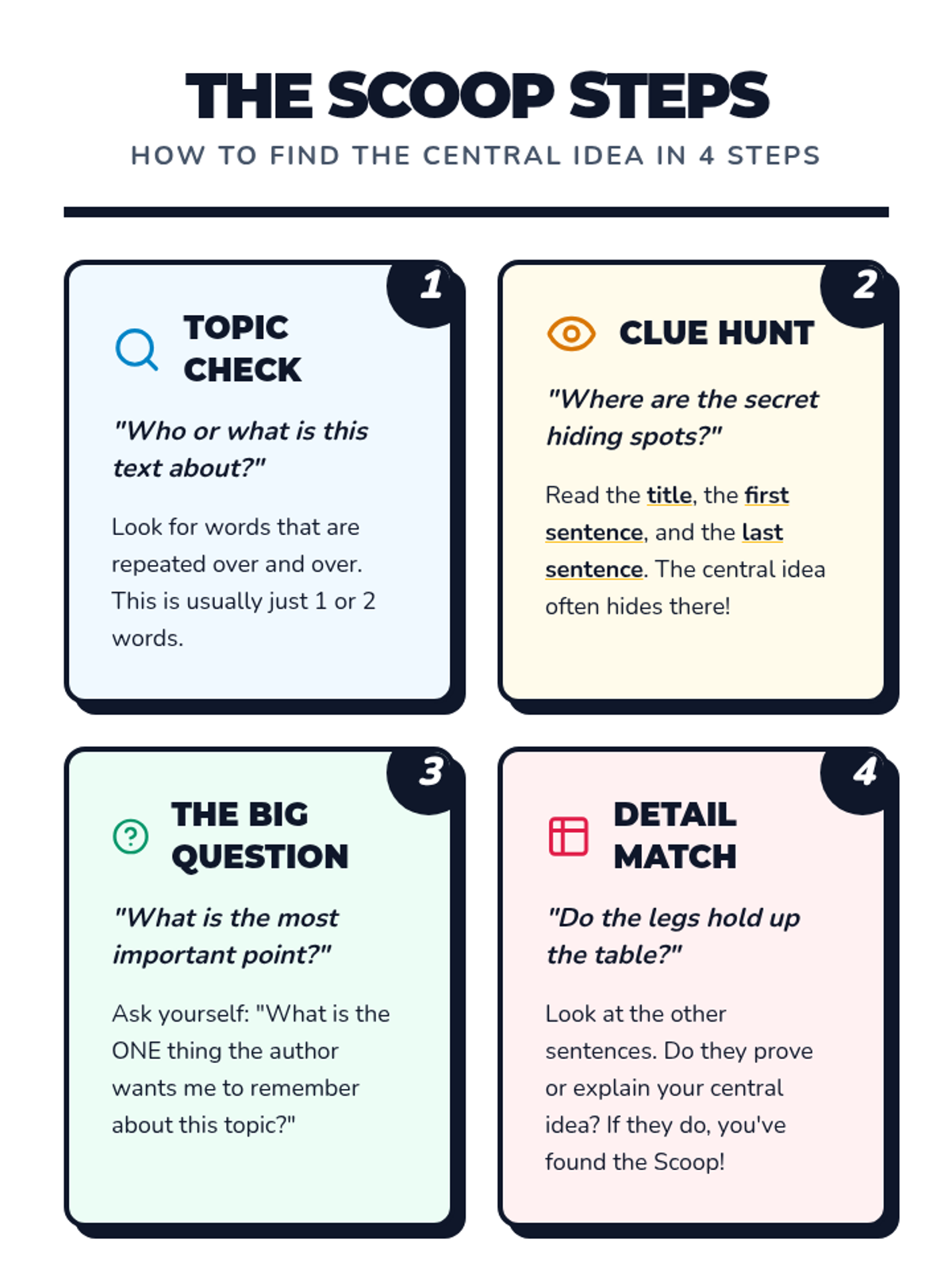
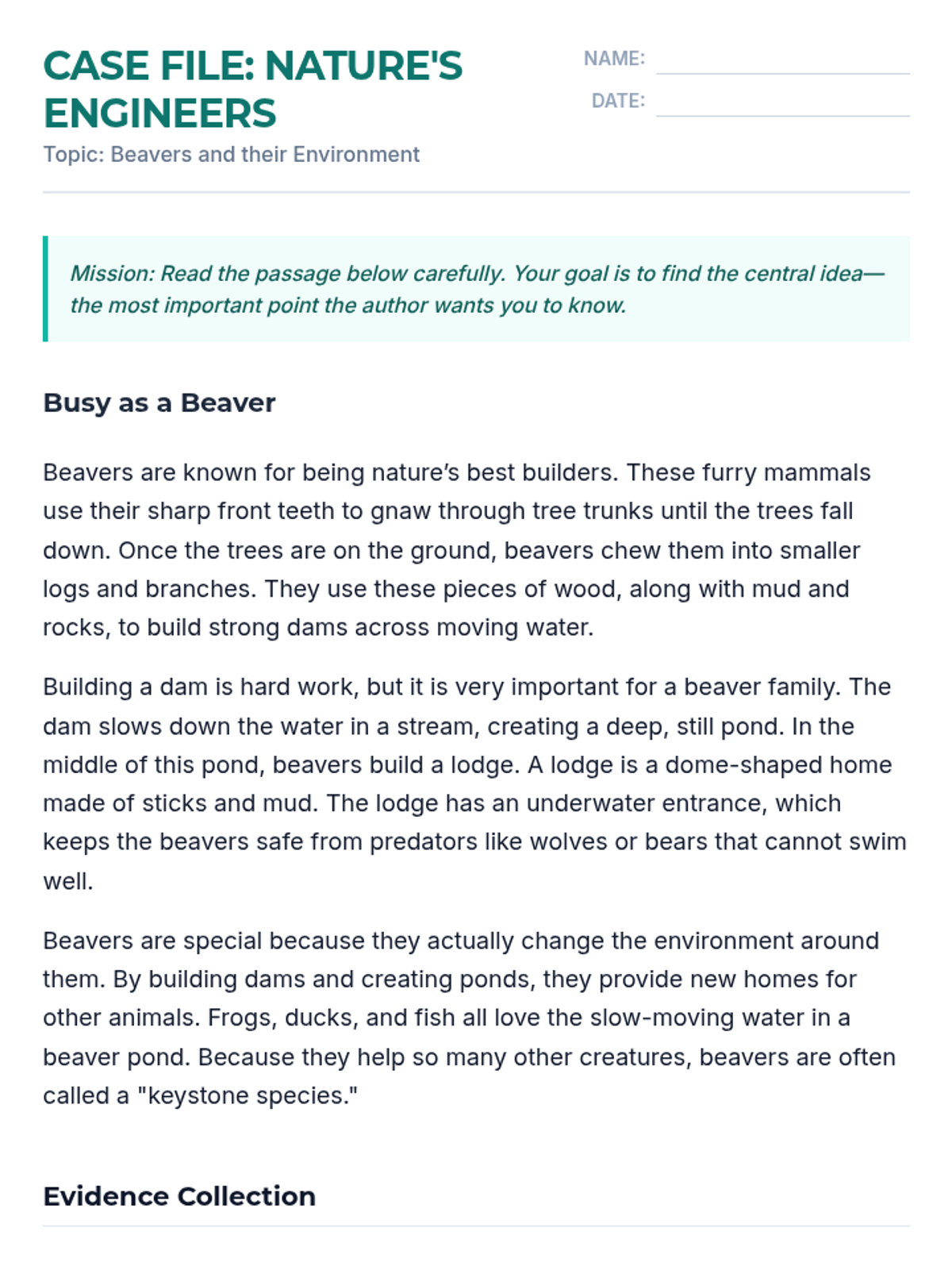
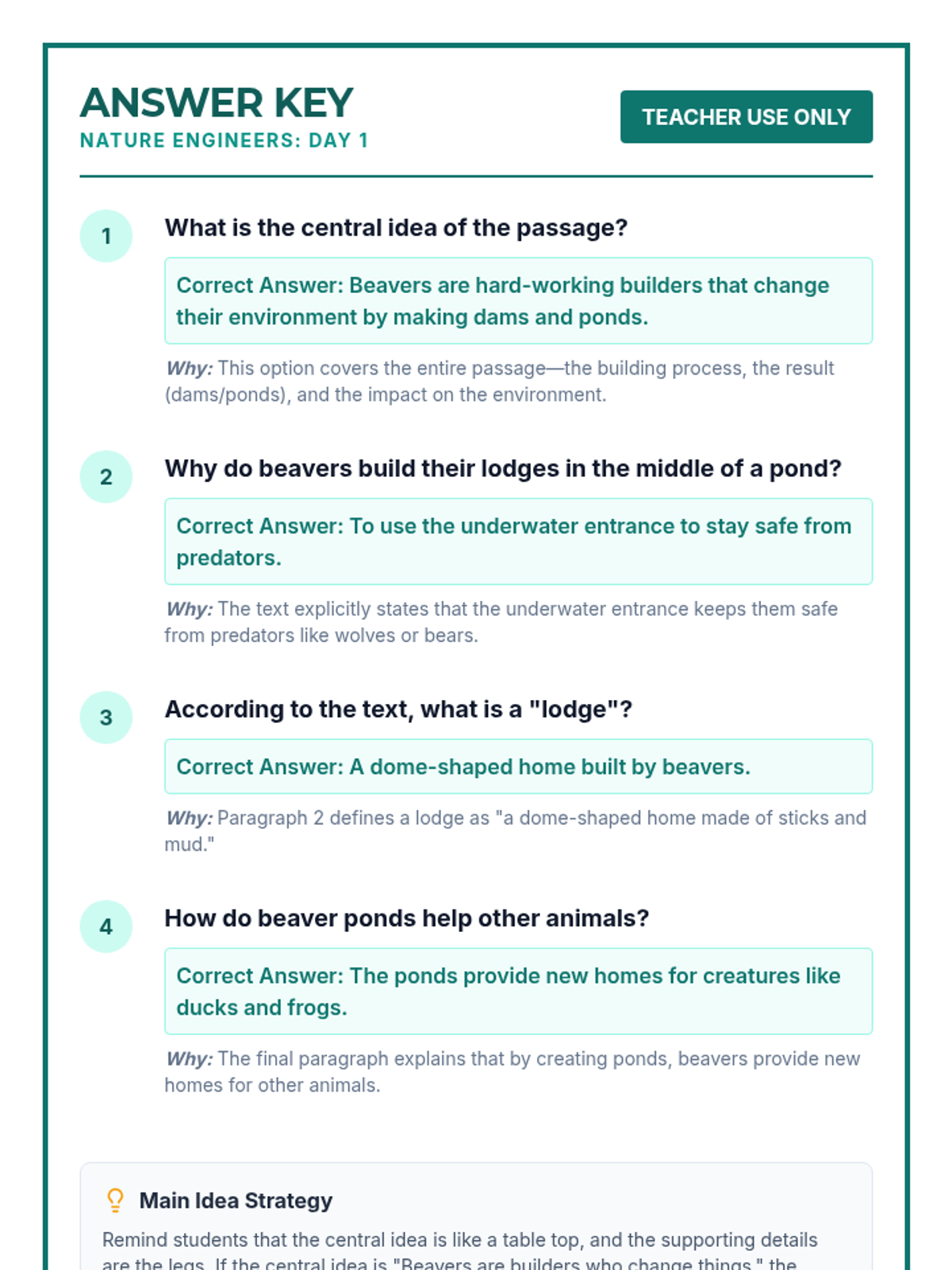
Day 1 focuses on identifying the central idea of a passage about nature's master builders: beavers.