A 7th-grade ELA unit exploring the morphological 'DNA' of the English language. Students analyze Greek and Latin roots to improve spelling accuracy, vocabulary acquisition, and the ability to construct complex words.
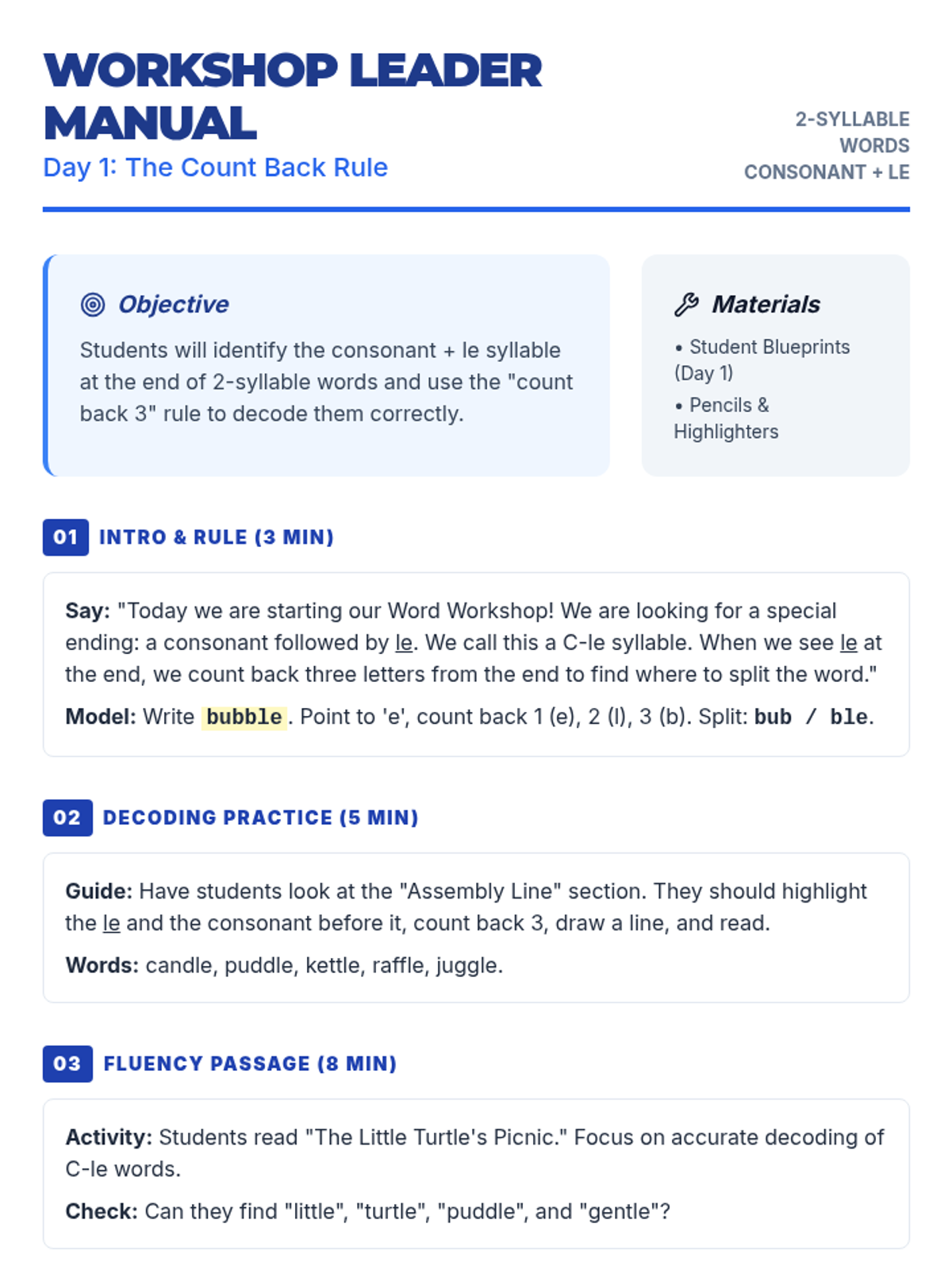
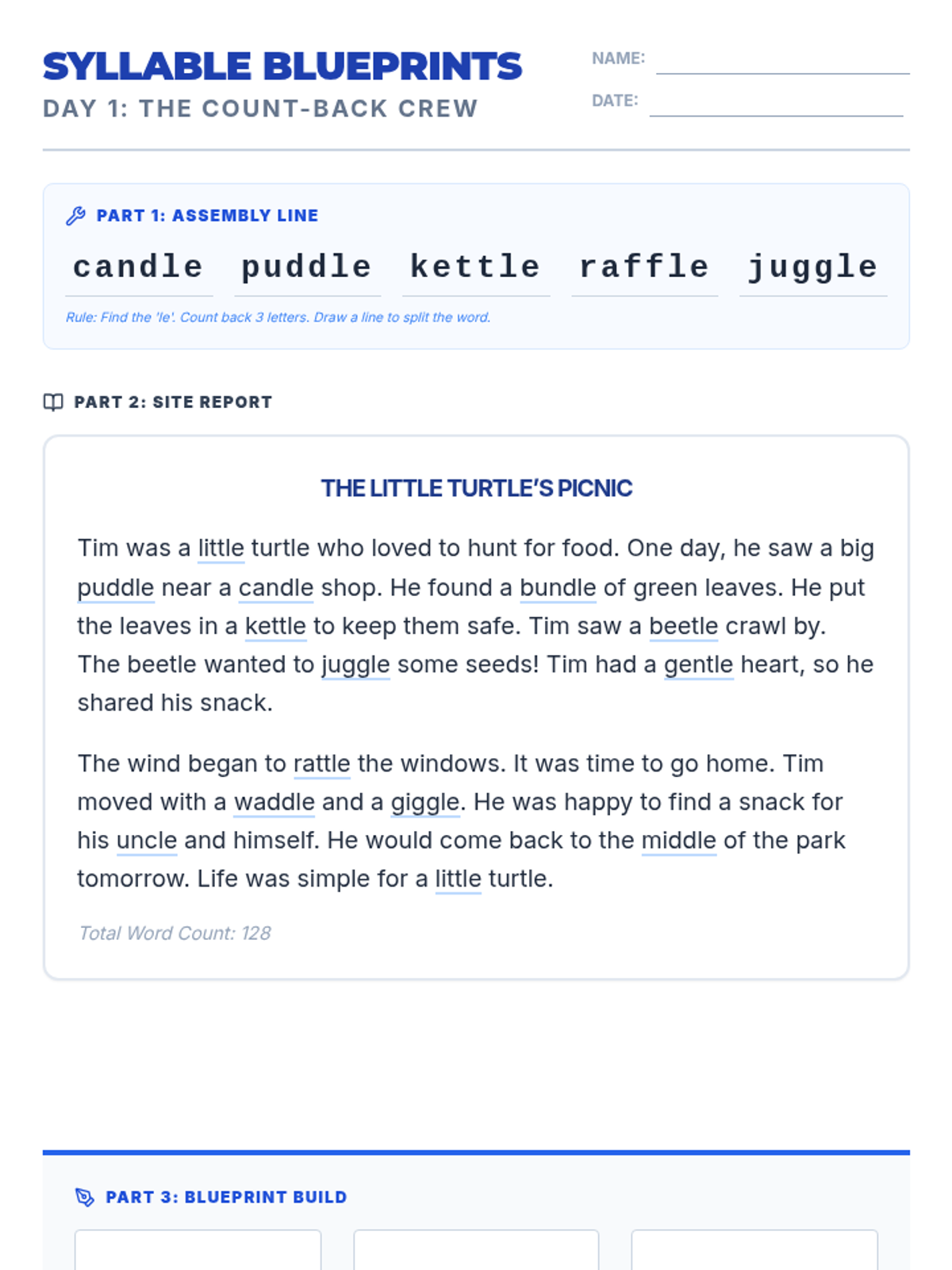
A 4-day intervention sequence focused on decoding and encoding 2-syllable words with consonant-le syllables. Students practice the 'count back three' strategy, analyze vowel sounds in the first syllable, and build reading fluency through themed passages.
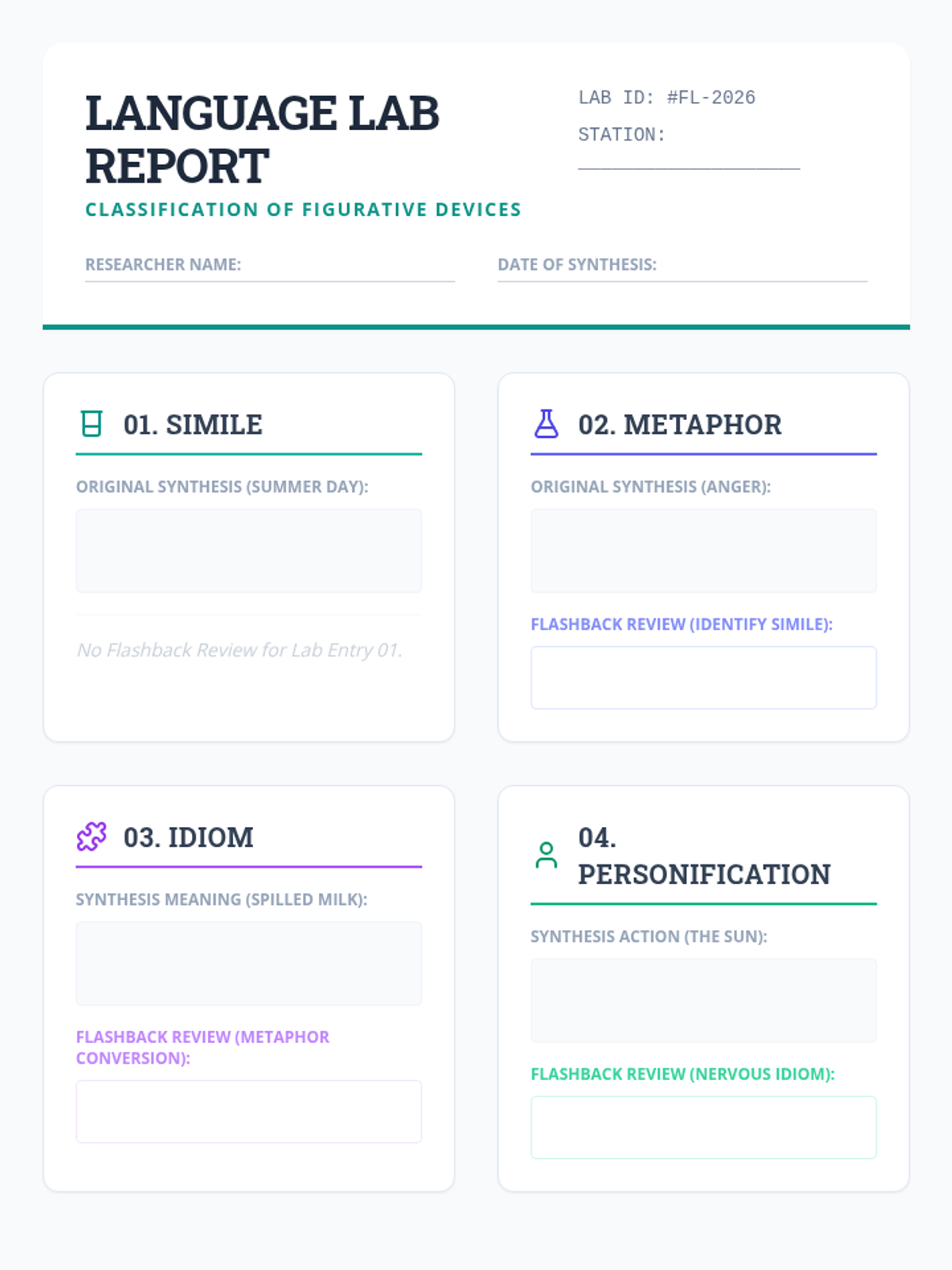
A comprehensive unit on figurative language, taking students from basic comparisons like similes and metaphors to complex devices like oxymorons and symbolism. Students act as 'Language Scientists' in a literary lab to synthesize and analyze text.
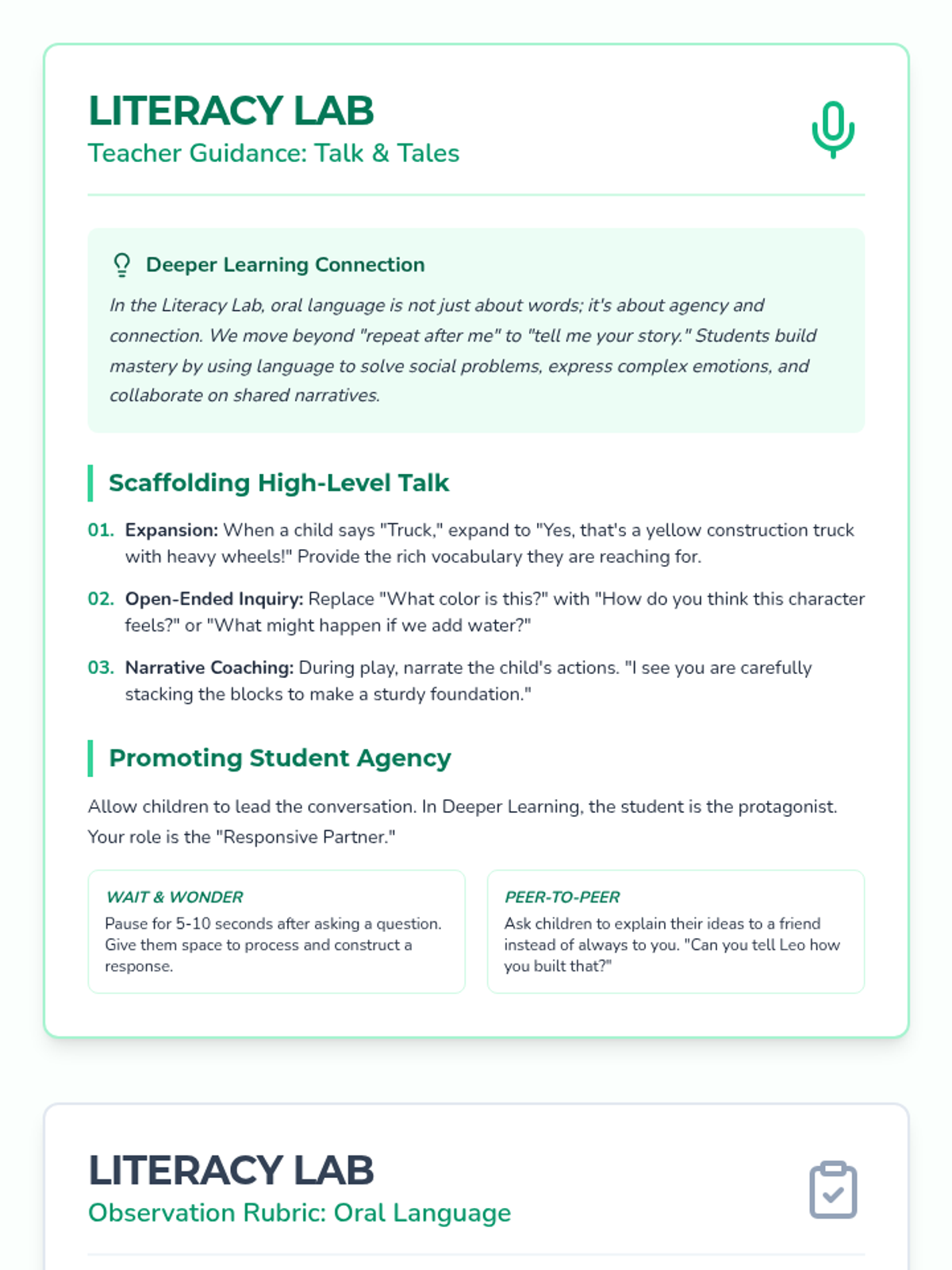
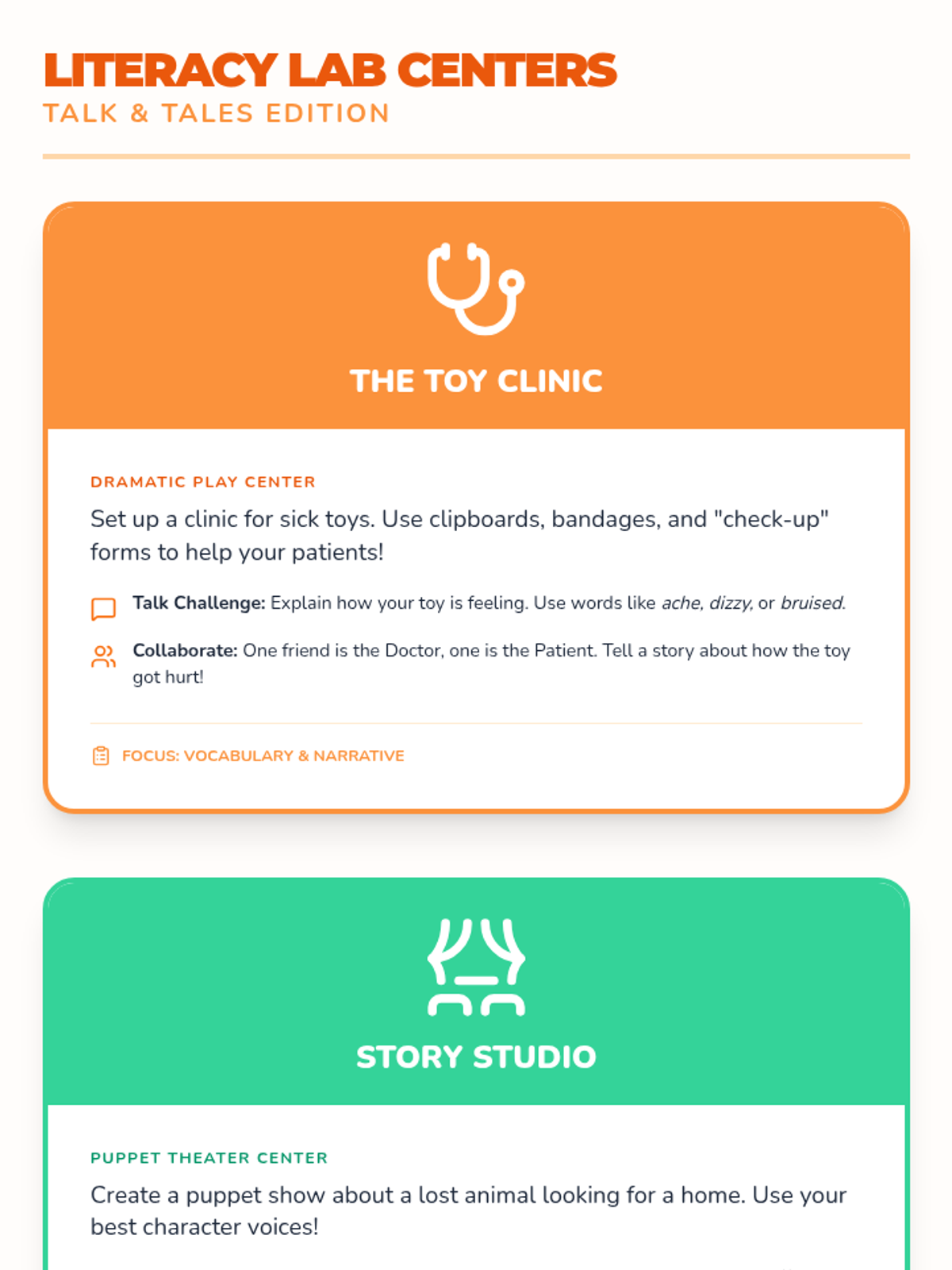
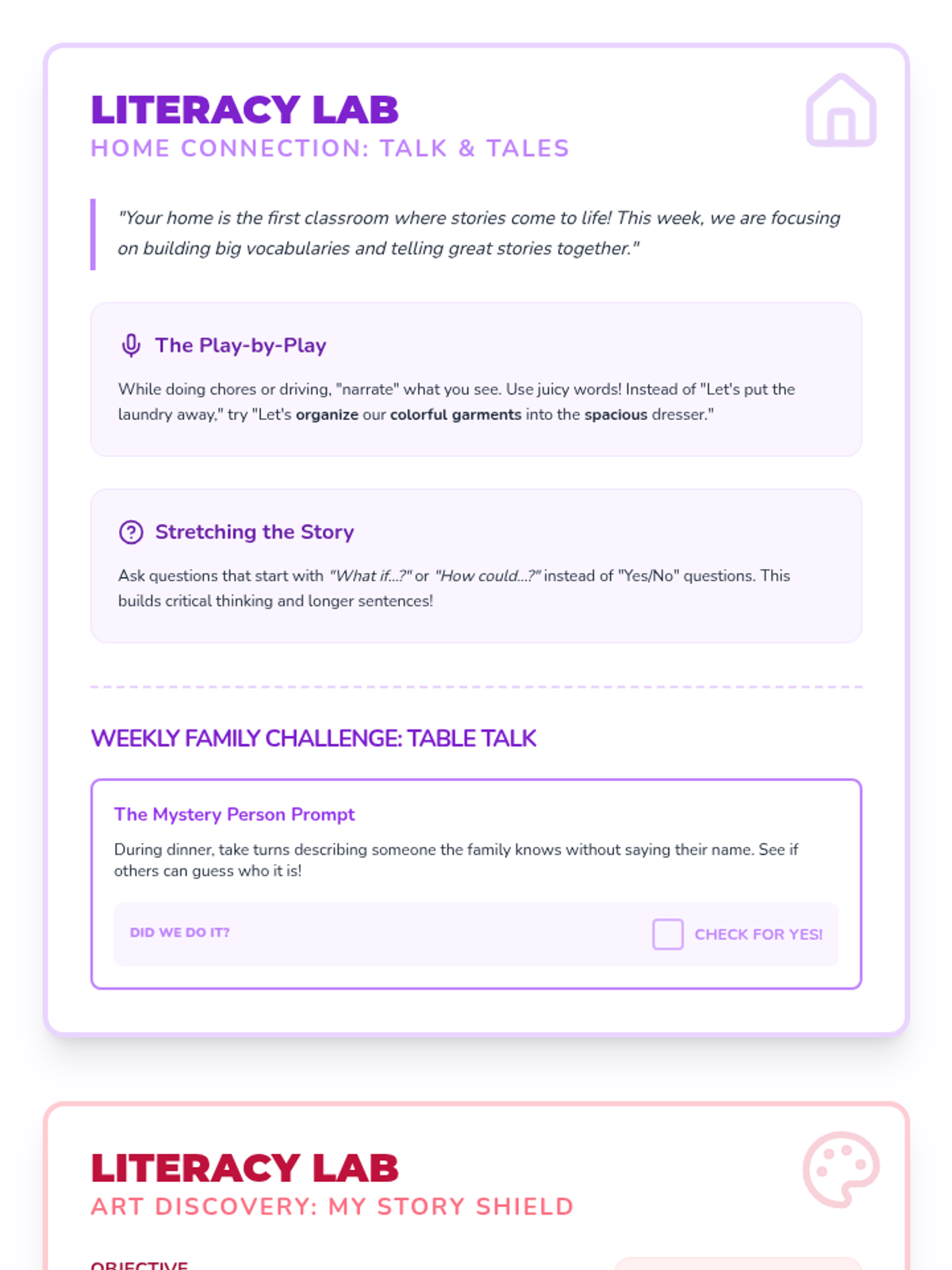
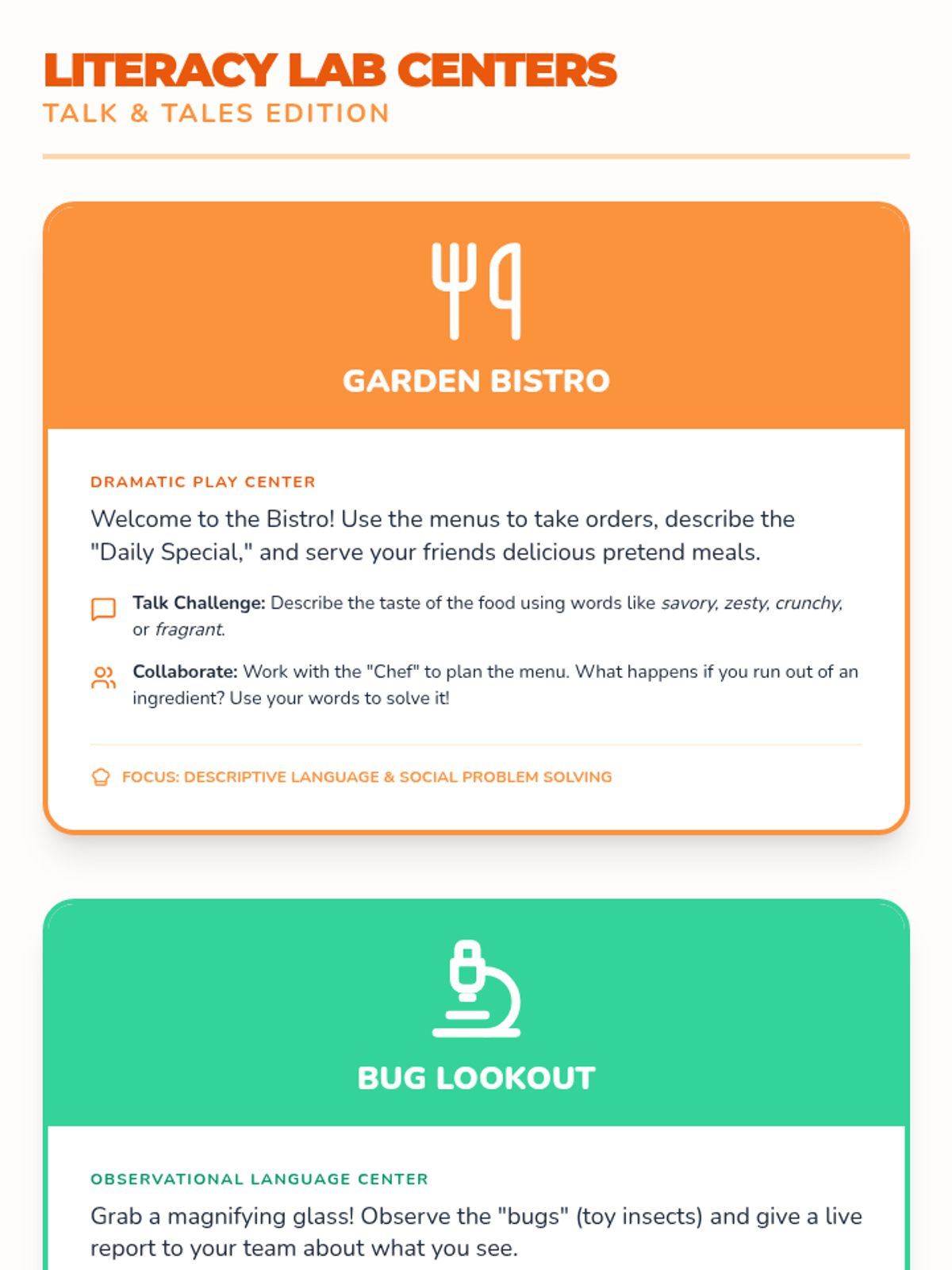
A comprehensive preschool literacy program designed around Deeper Learning principles. It focuses on developmentally appropriate stages from oral language to emergent writing, using play-based exploration and authentic communication.
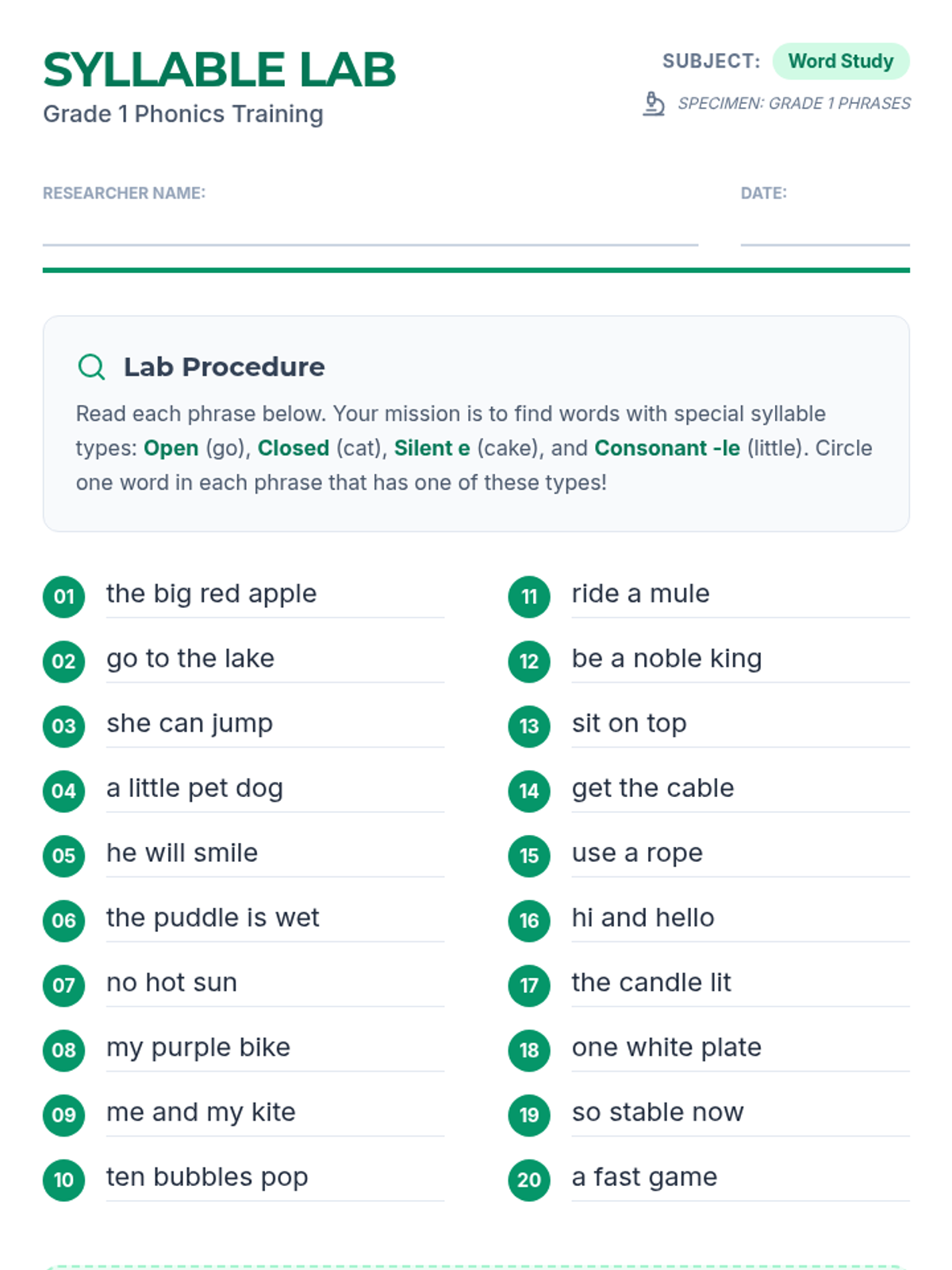
A comprehensive syllable mastery series for grades 1-4 focusing on open, closed, silent e, and consonant -le syllable types.
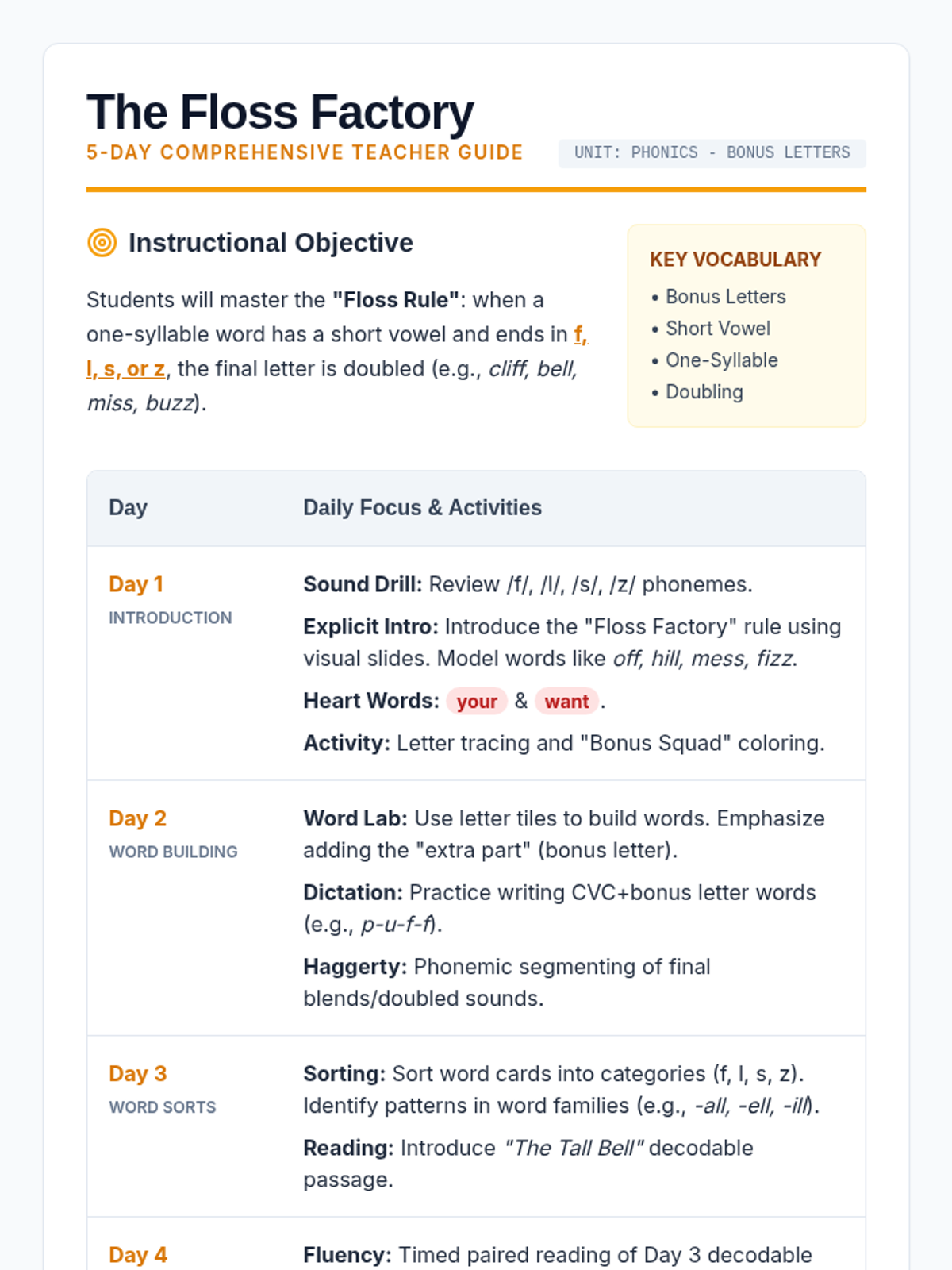
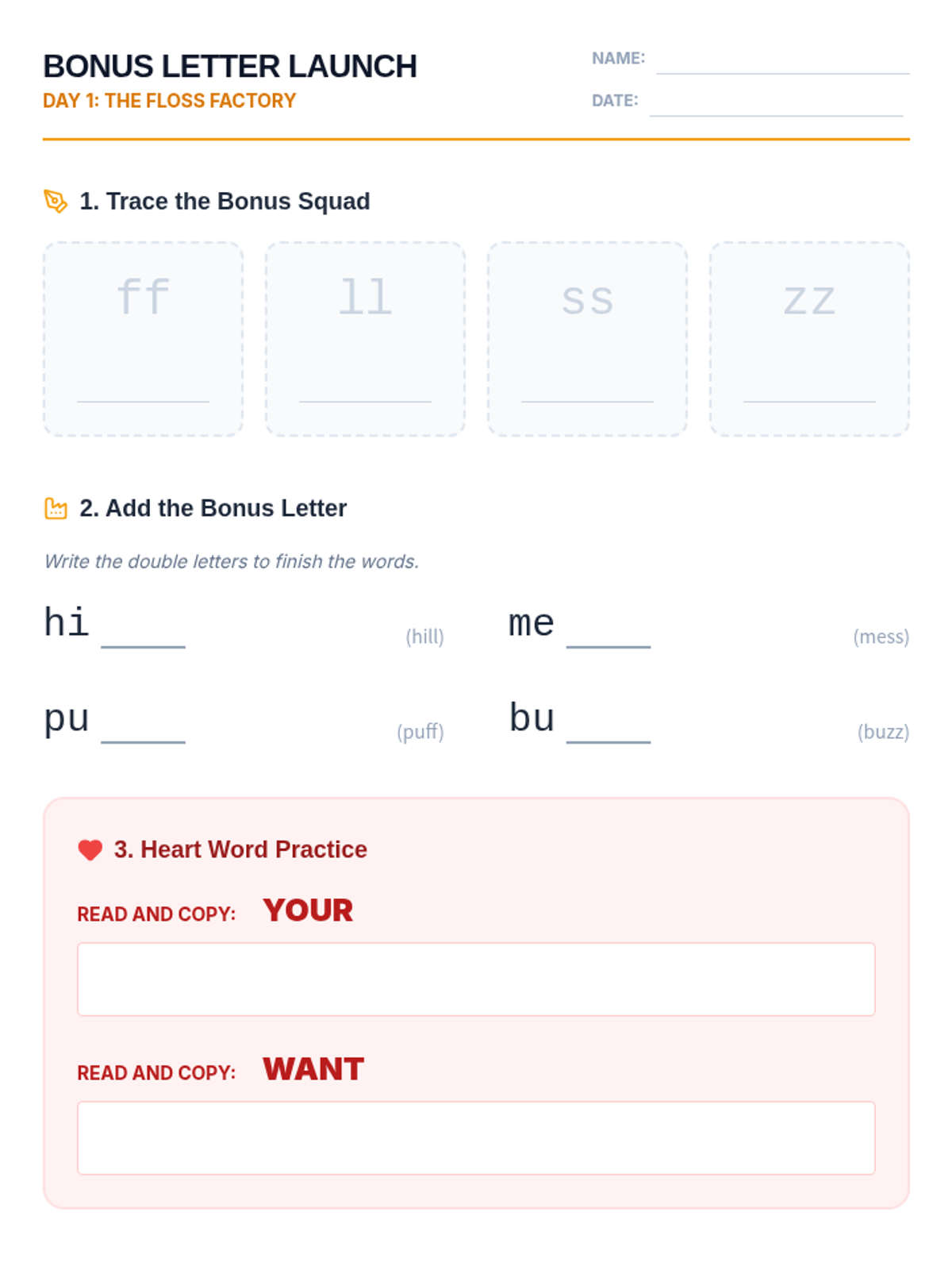
A comprehensive 5-day phonics unit focused on the "bonus letters" (Floss Rule: f, l, s, z) including heart words 'your' and 'want'. Students explore the concept of doubling final consonants in one-syllable short vowel words through a factory-themed learning experience.
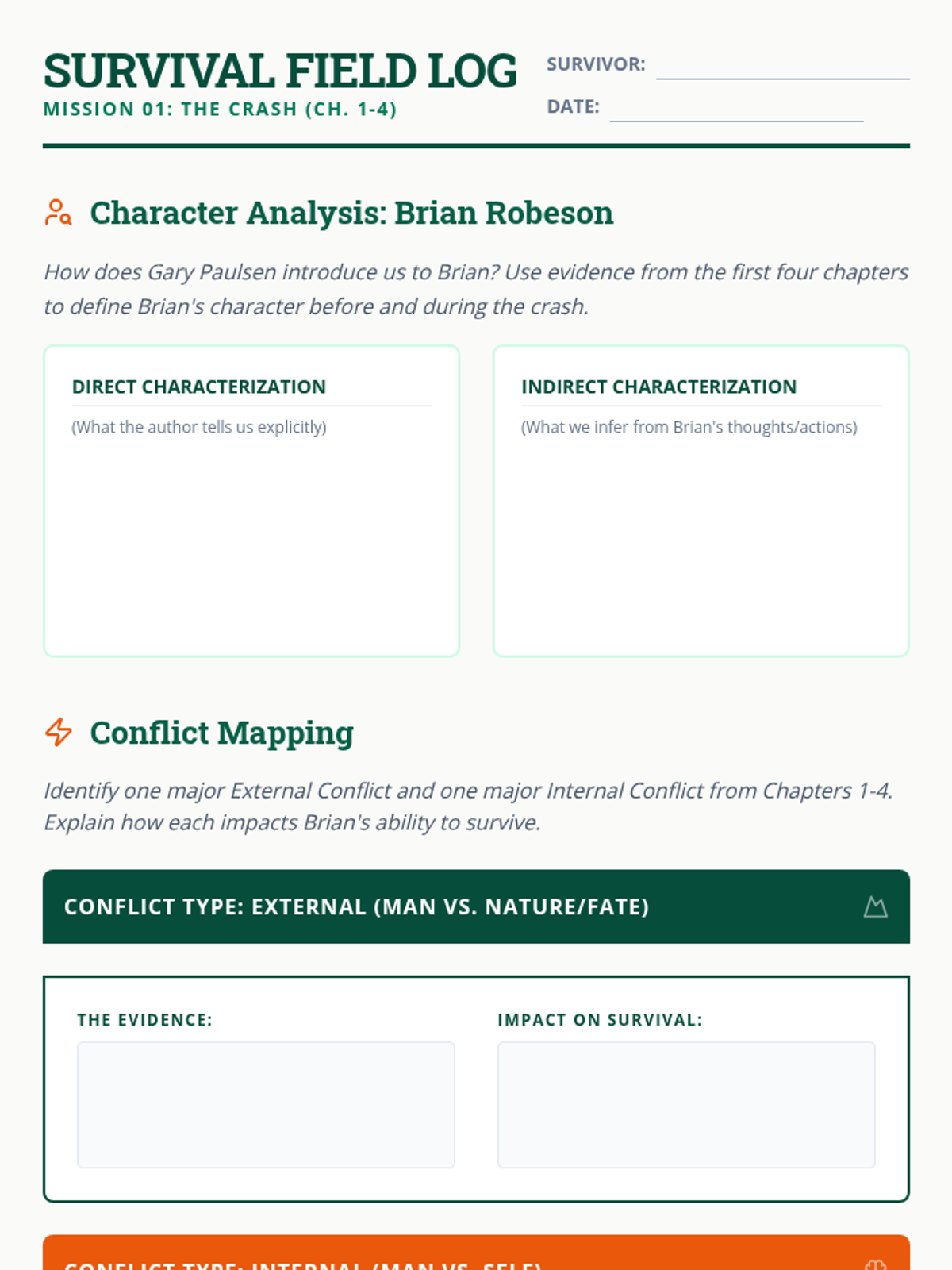
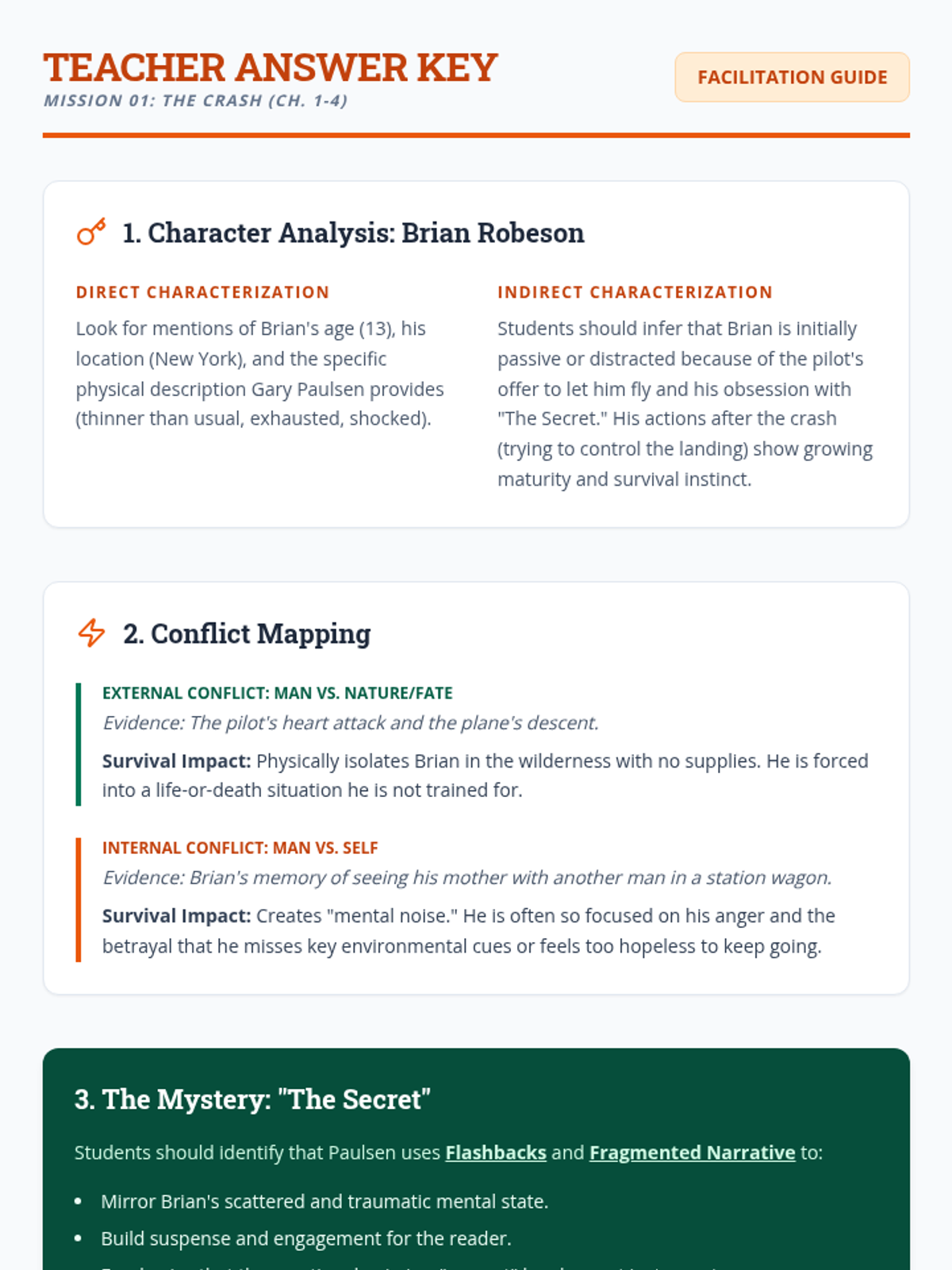
A comprehensive novel study for Gary Paulsen's Hatchet, focusing on 7th-grade reading standards including character development, plot structure, and theme. Students explore Brian Robeson's survival journey through the lens of a 'Survival Field Guide' aesthetic.
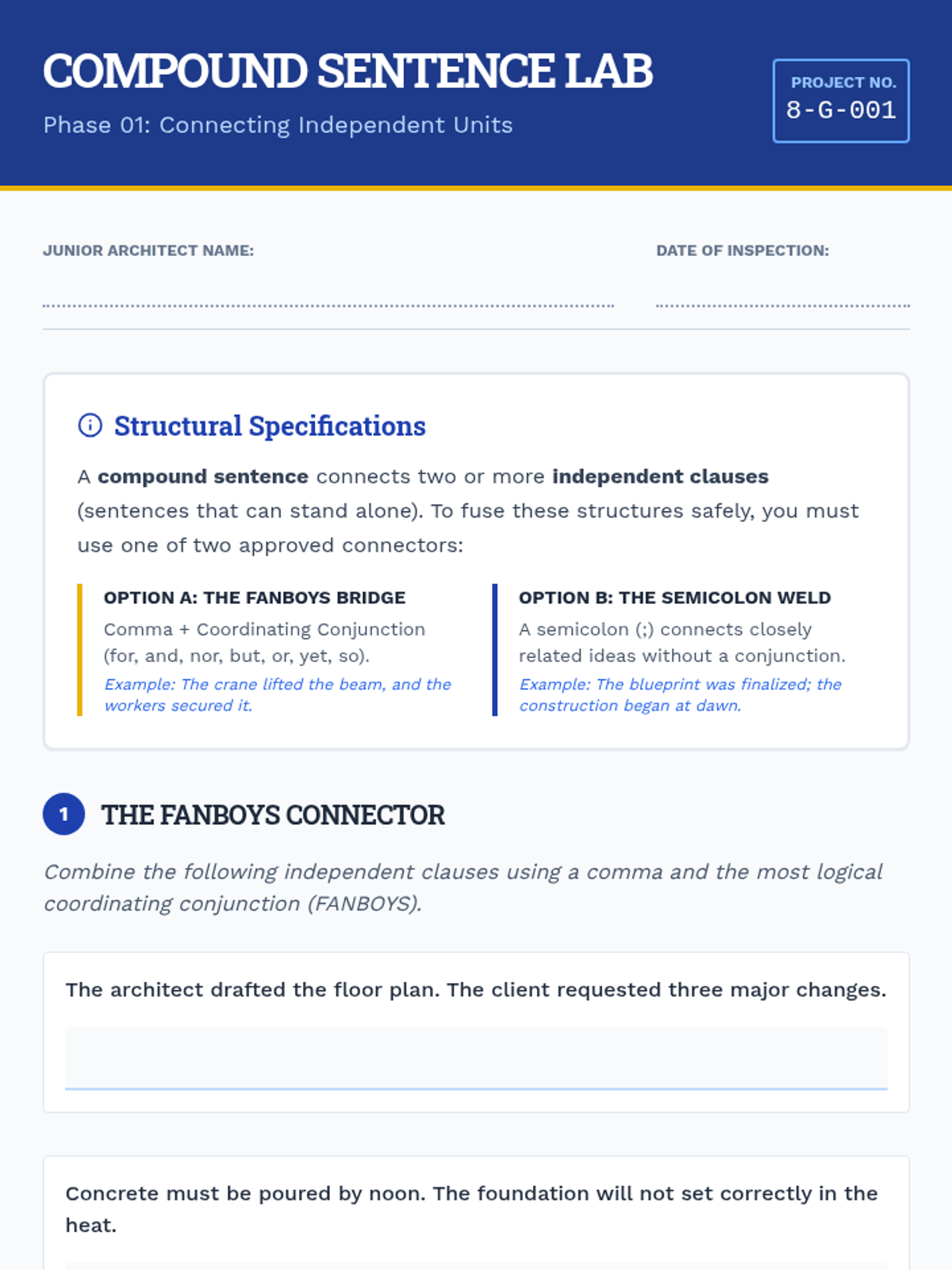
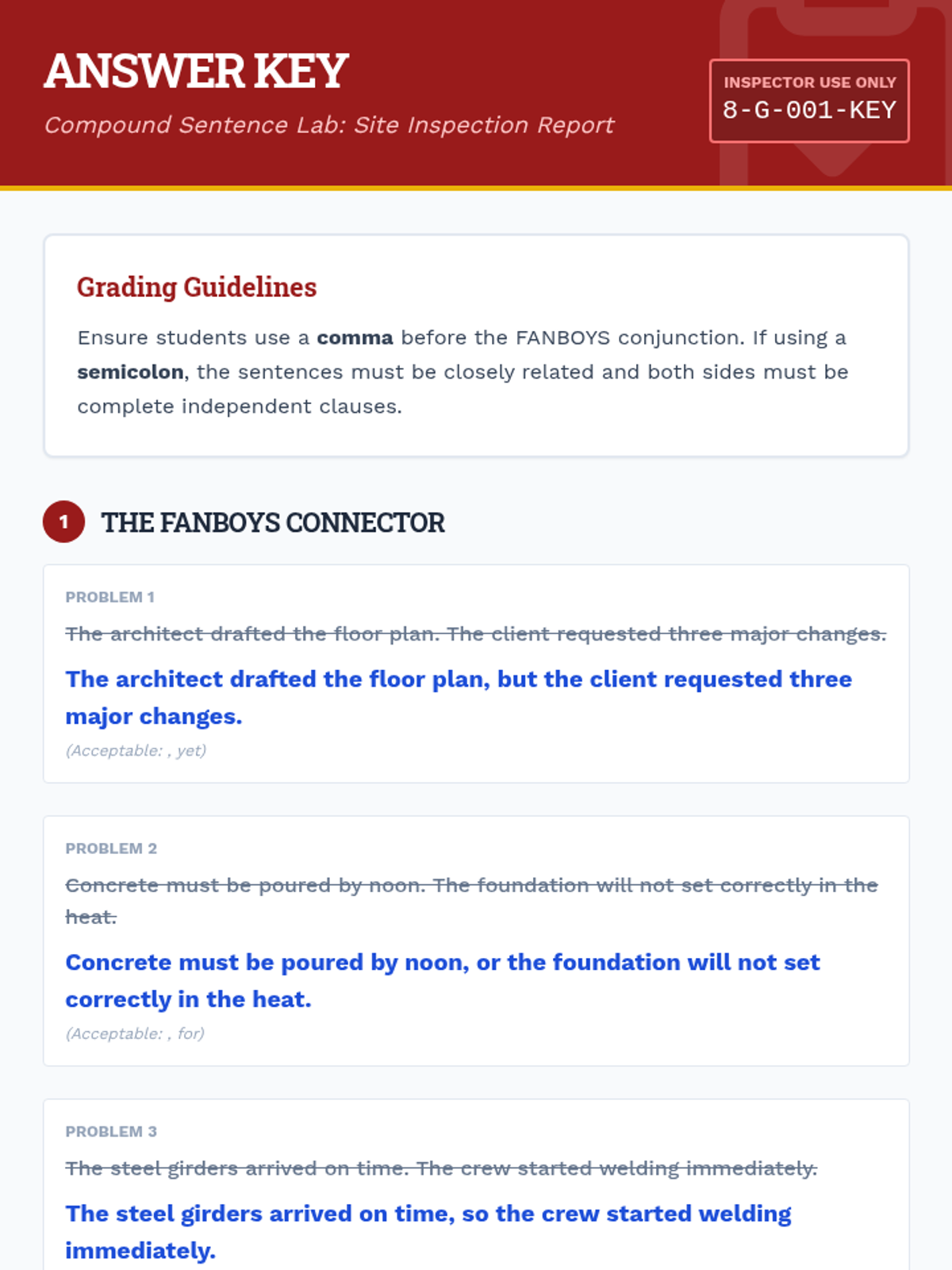
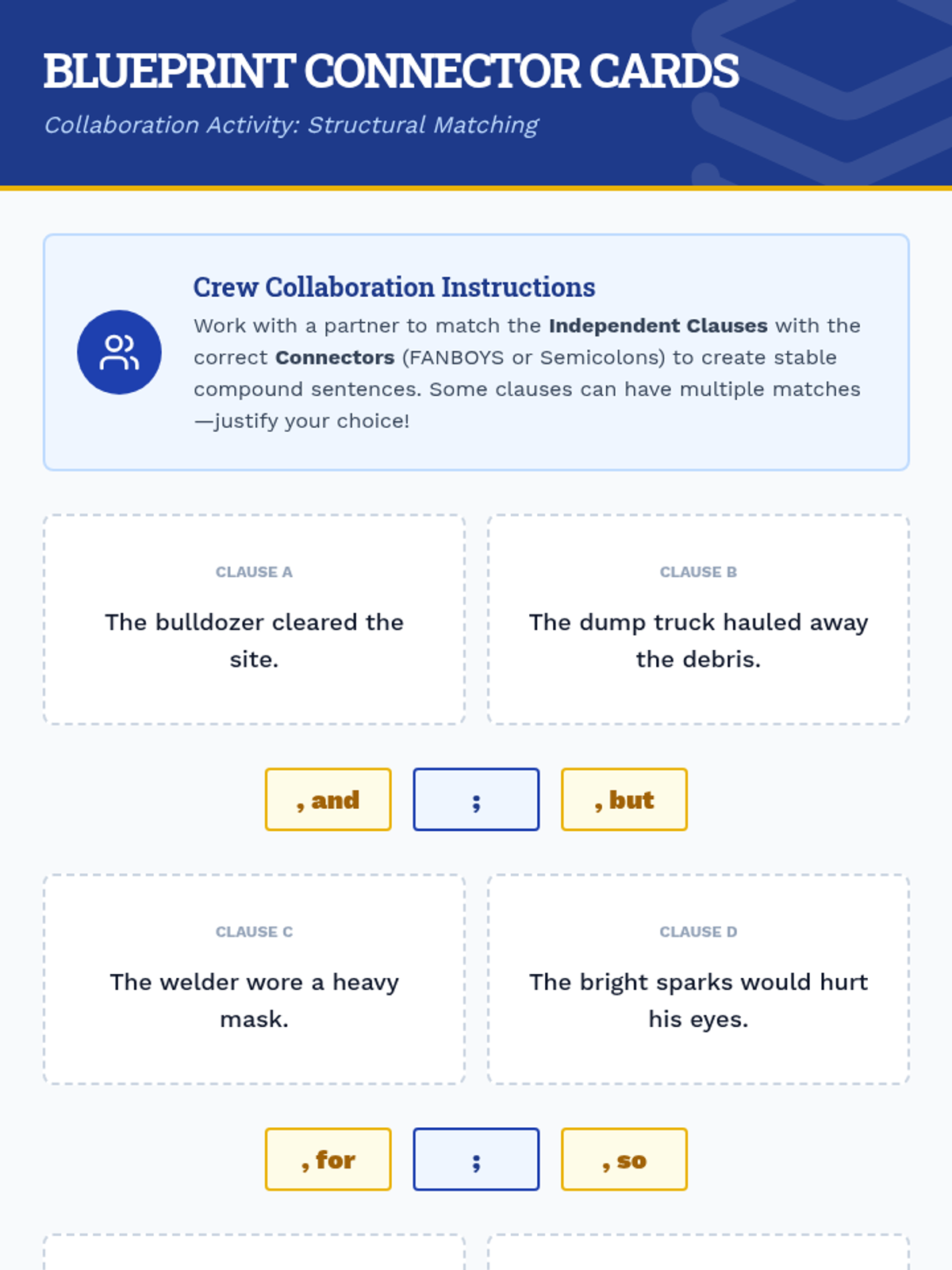
A three-part grammar intensive for 8th graders focusing on the mechanics of compound and complex sentences through architectural-themed practice and application.
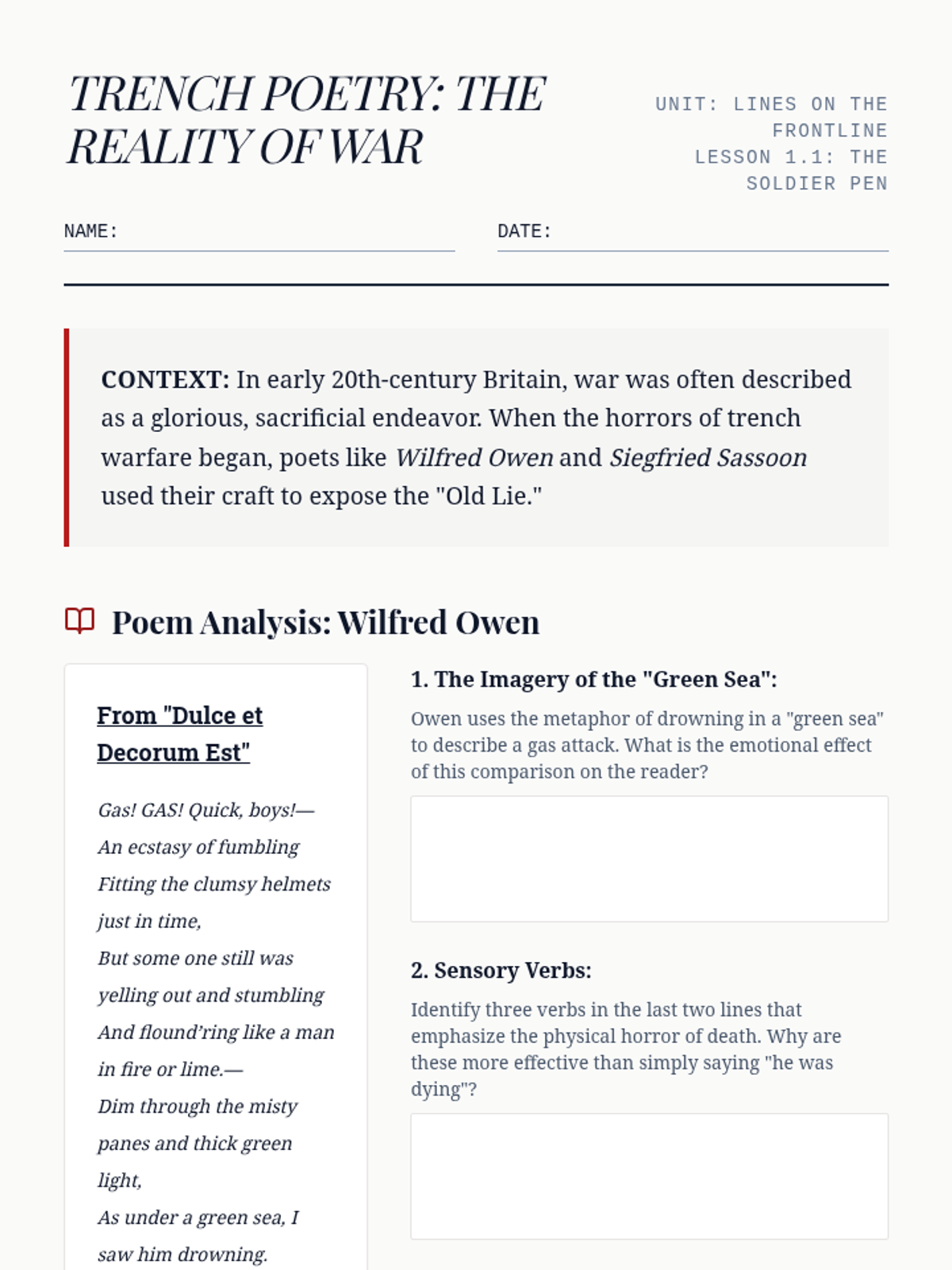
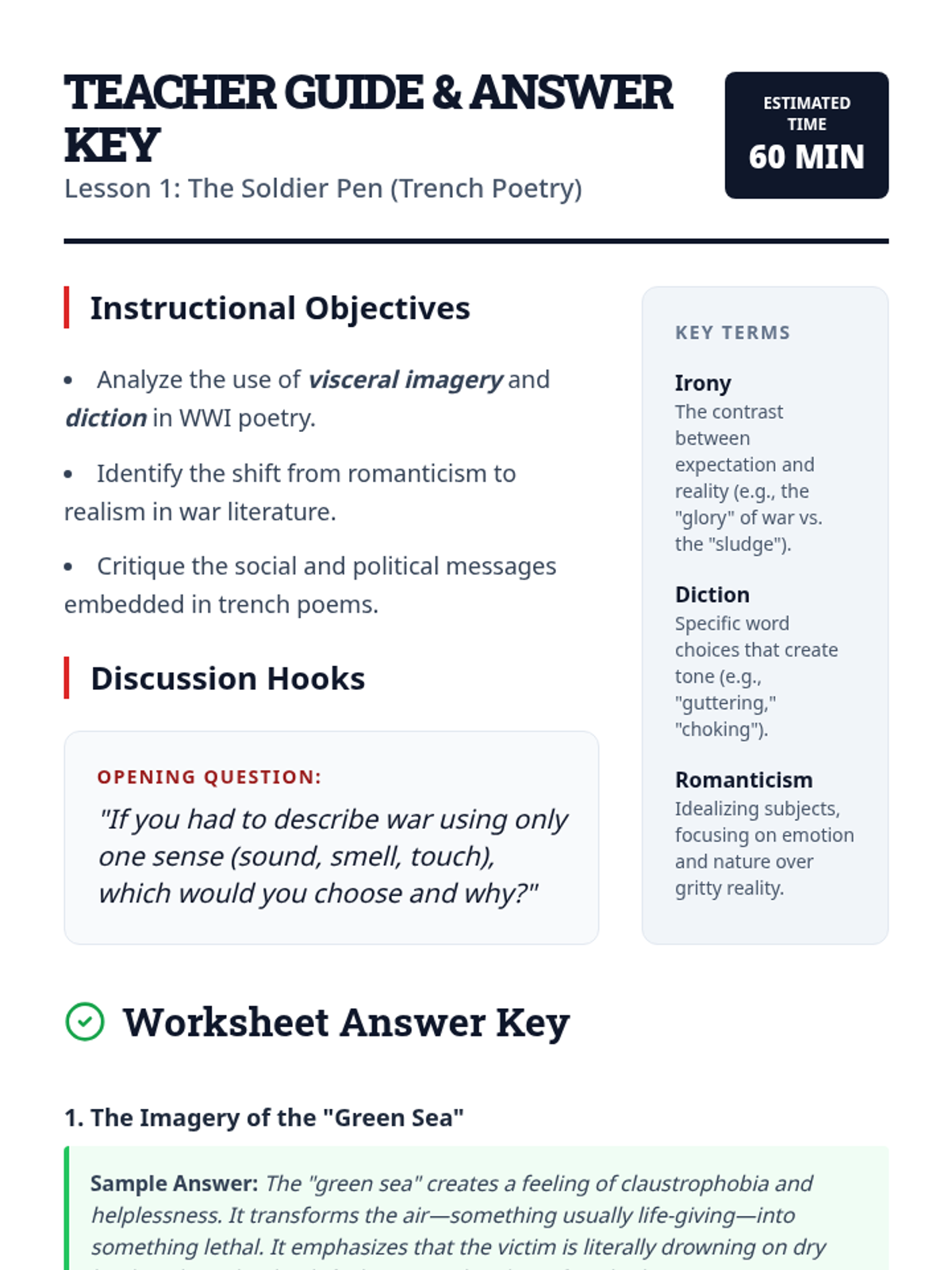
A high school ELA unit exploring the evolution of war and protest poetry, from the trenches of WWI to modern social movements, culminating in an original poetry portfolio.
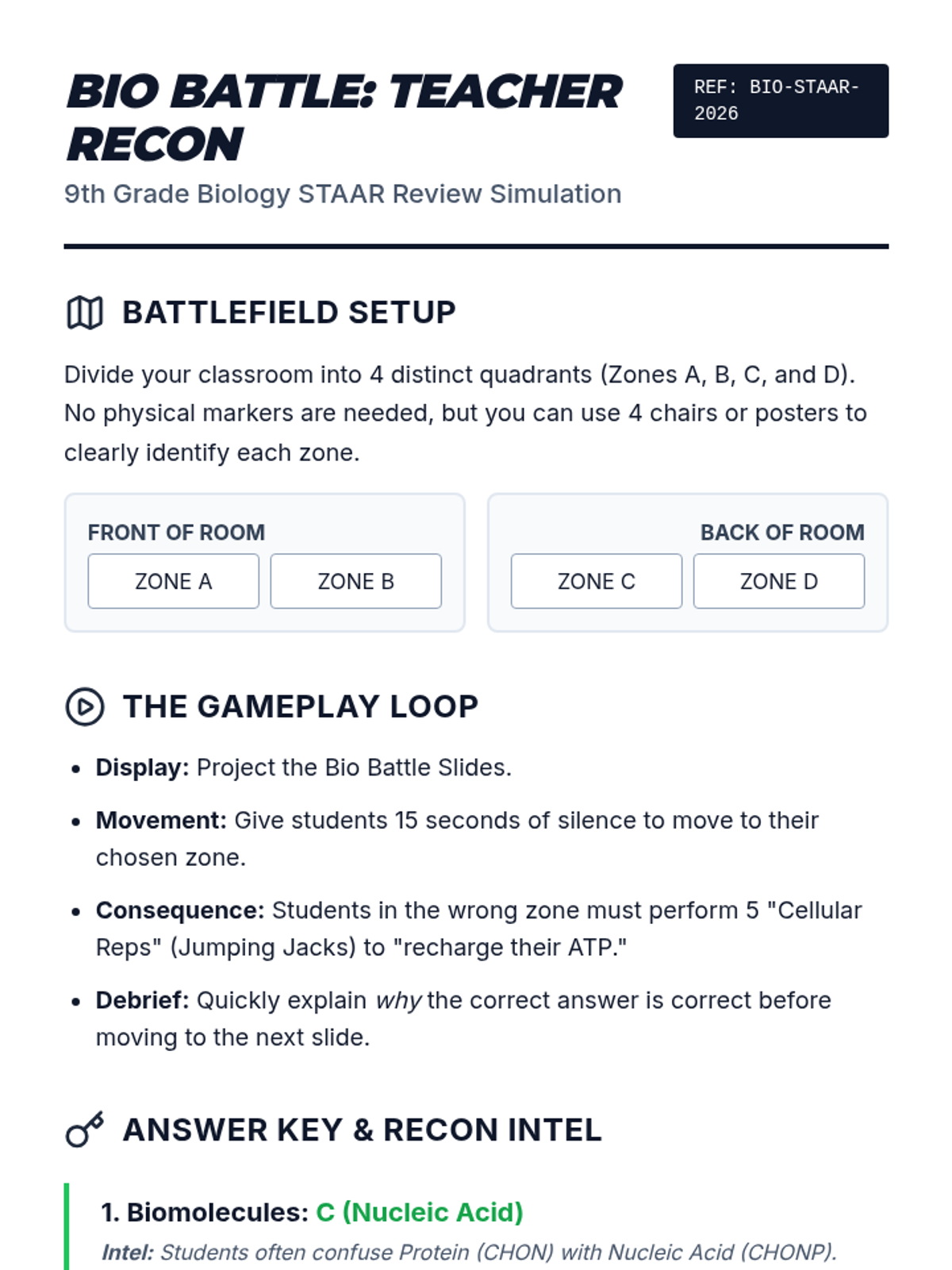
A comprehensive collection of high-impact review materials and activities designed to prepare 9th-grade students for the Texas STAAR assessments across multiple subjects, focusing on movement, memory, and mastery.
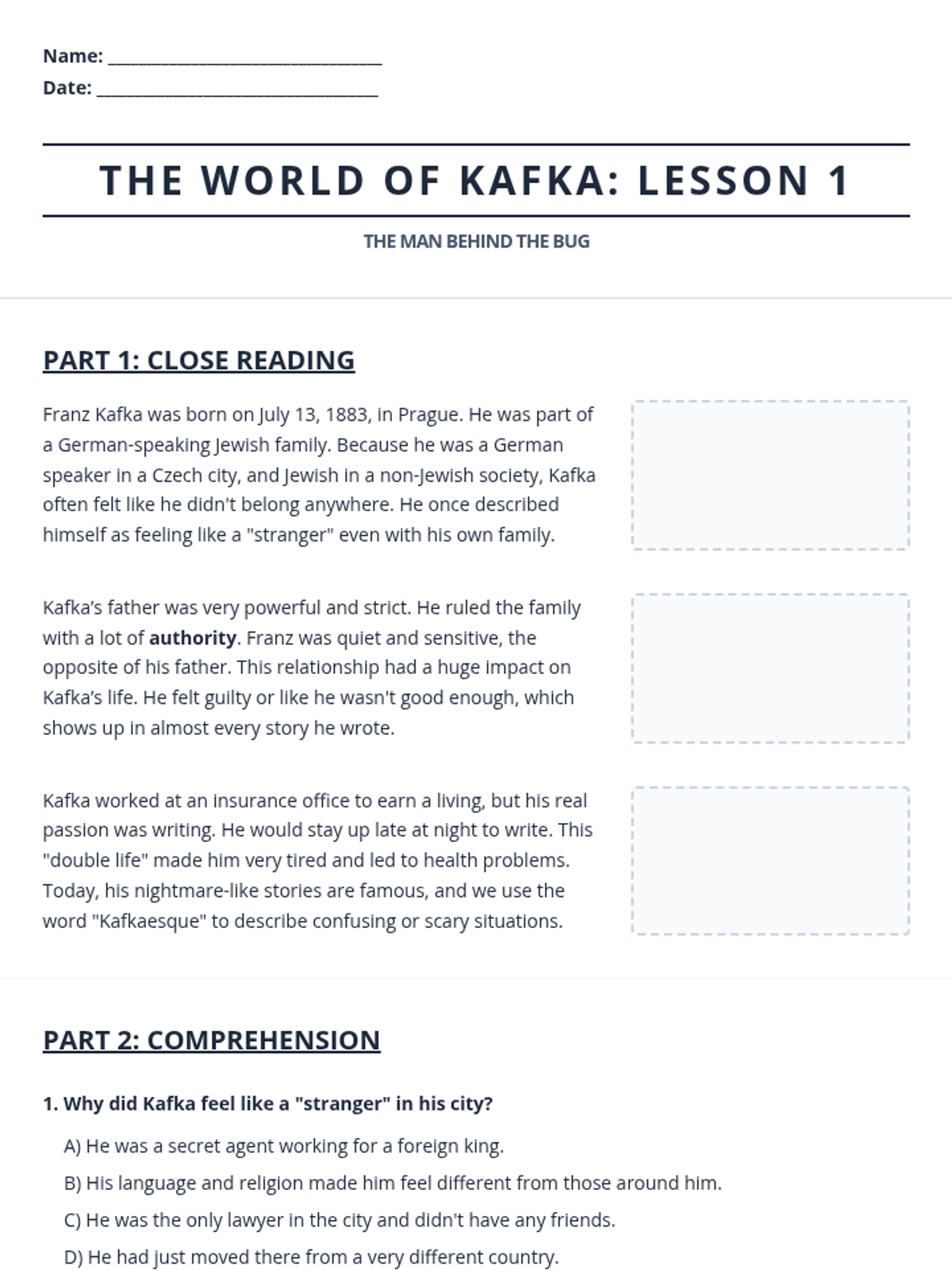
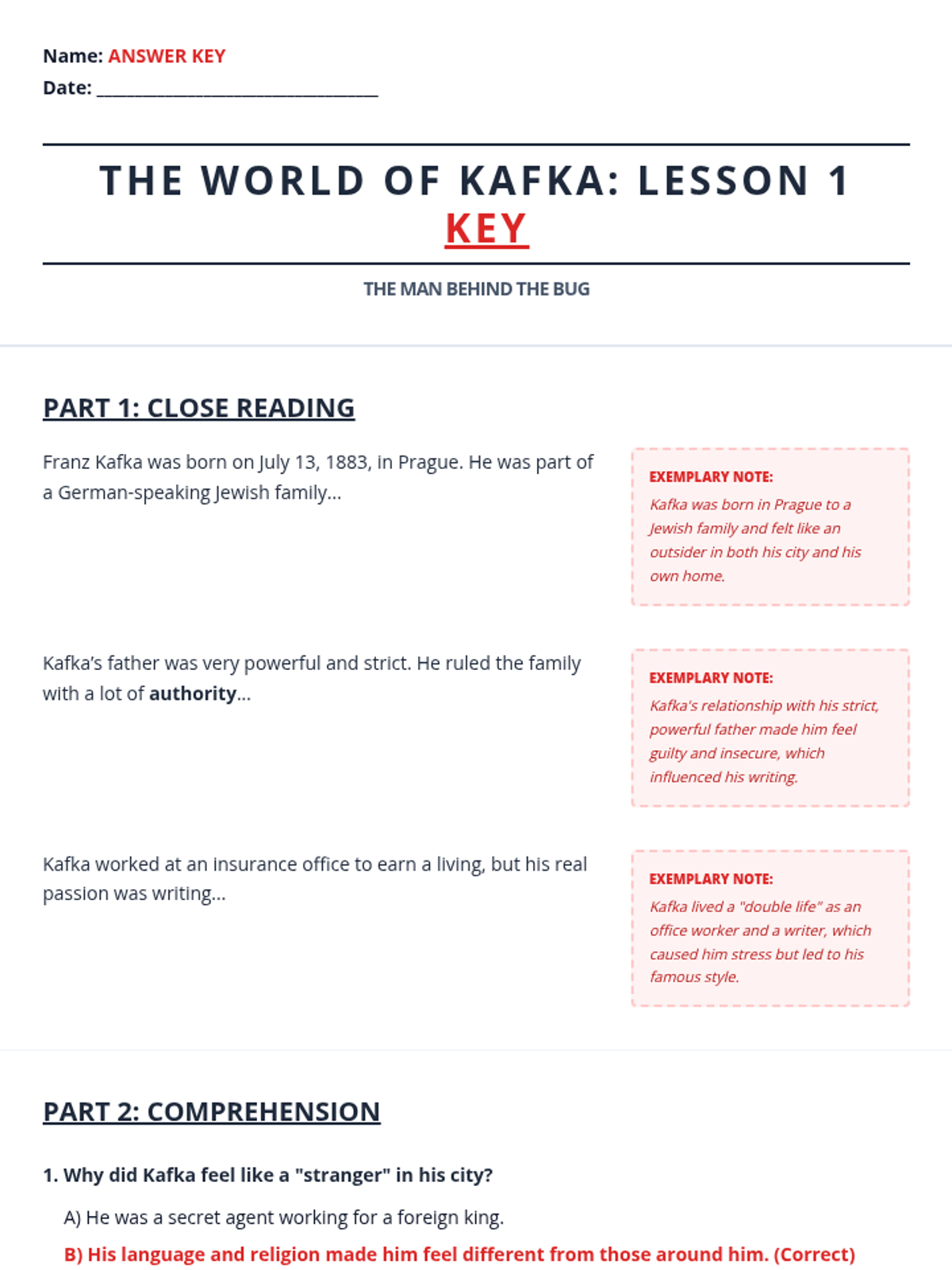
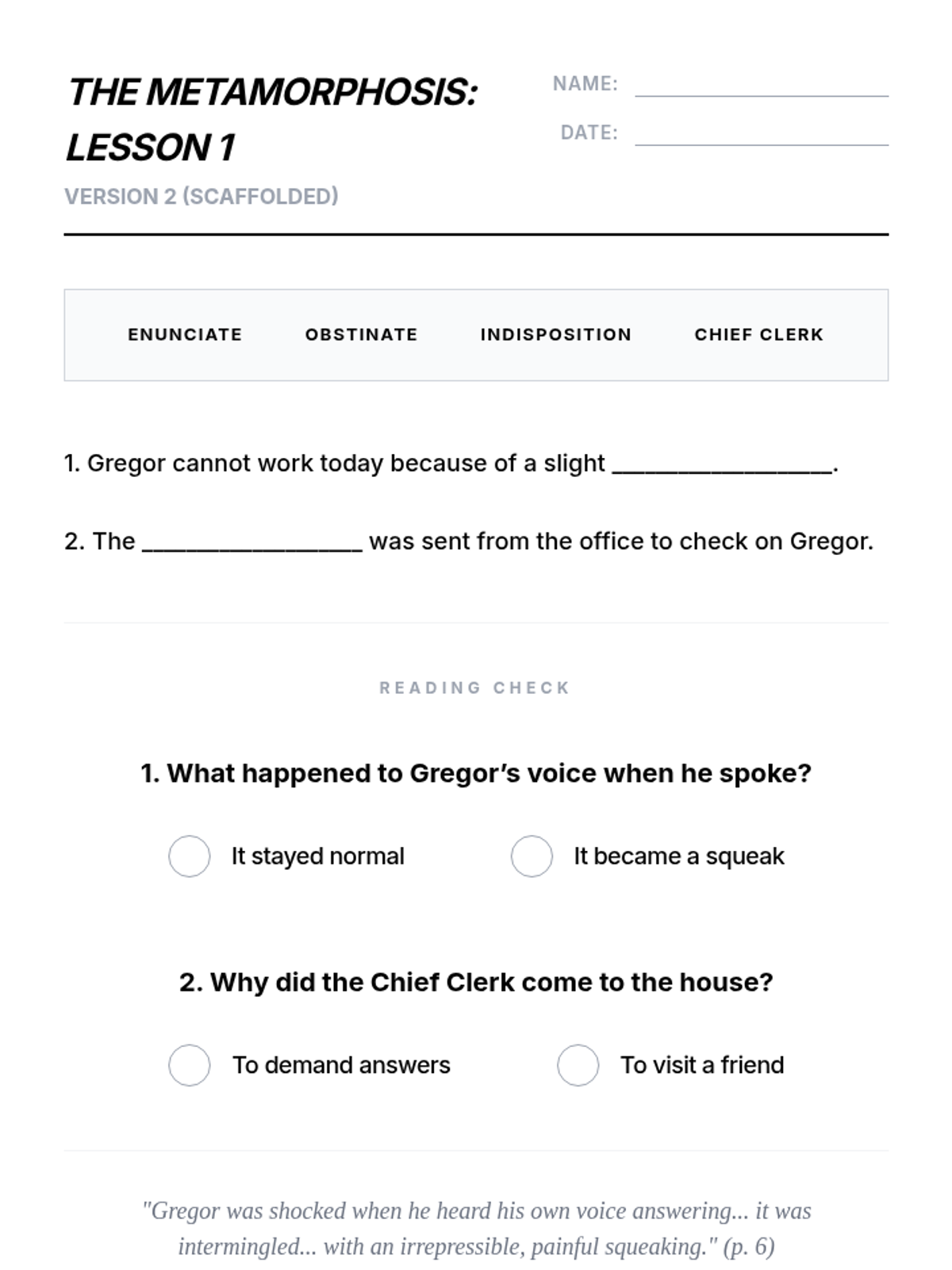
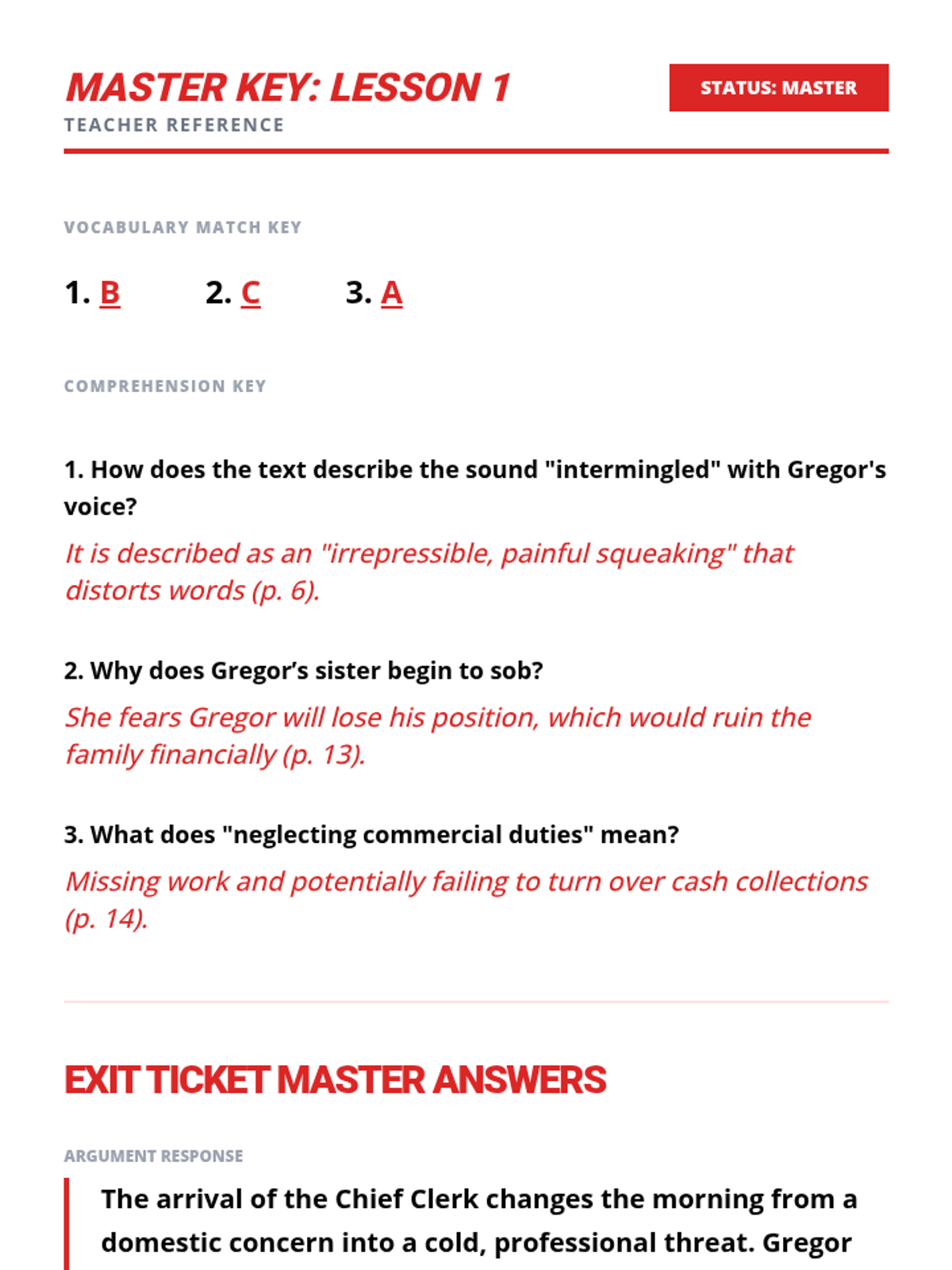
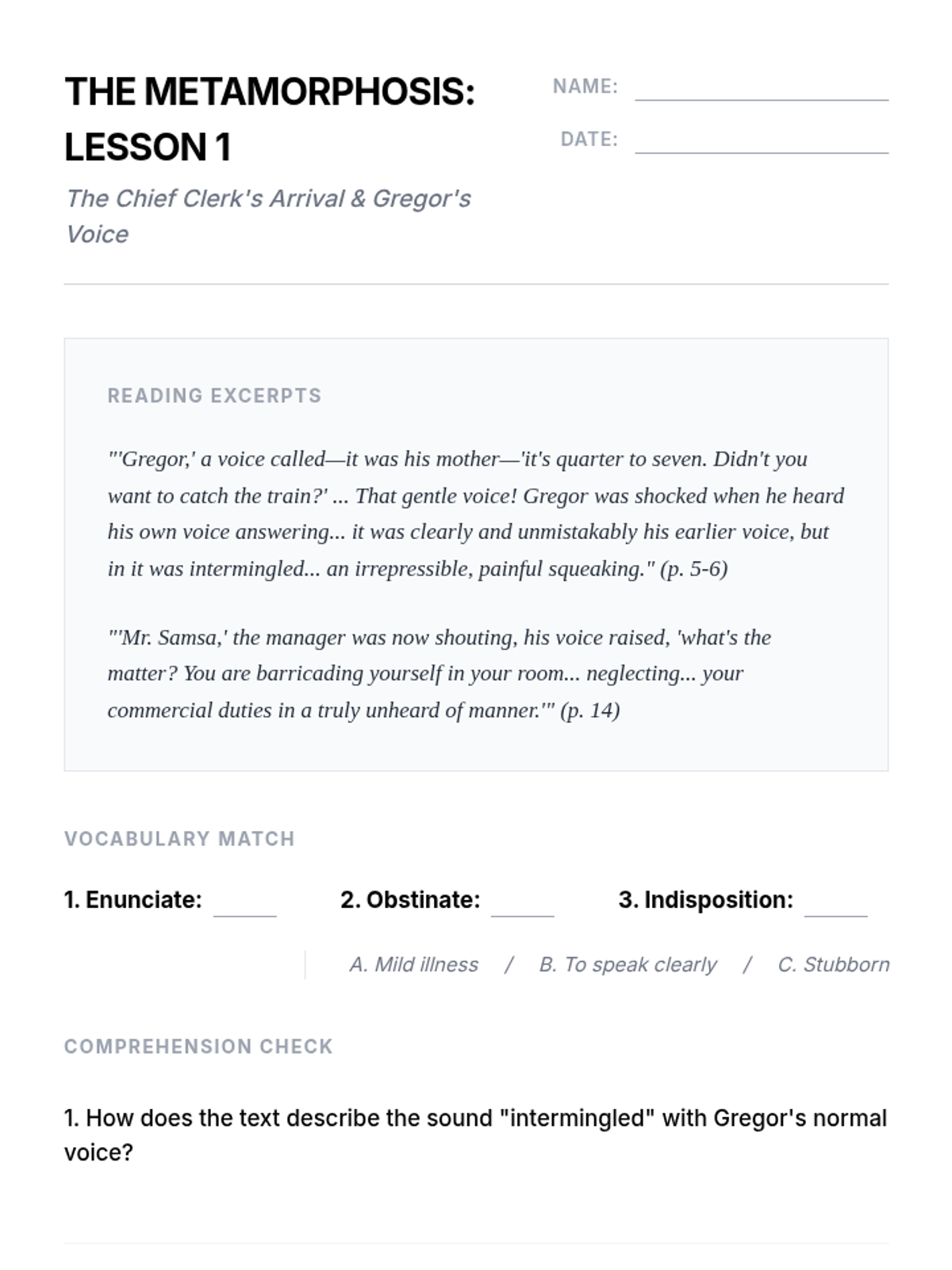
An eight-lesson unit on Franz Kafka and Section I of The Metamorphosis. Lessons 1-4 cover Kafka's biography, historical context, literary style, and major themes. Lessons 5-8 focus on a close reading of Section I. Includes a final compiled Unit Homework assignment.
A series of lessons exploring complex spelling patterns including assimilated suffixes and chameleon prefixes to improve student decoding and spelling accuracy.
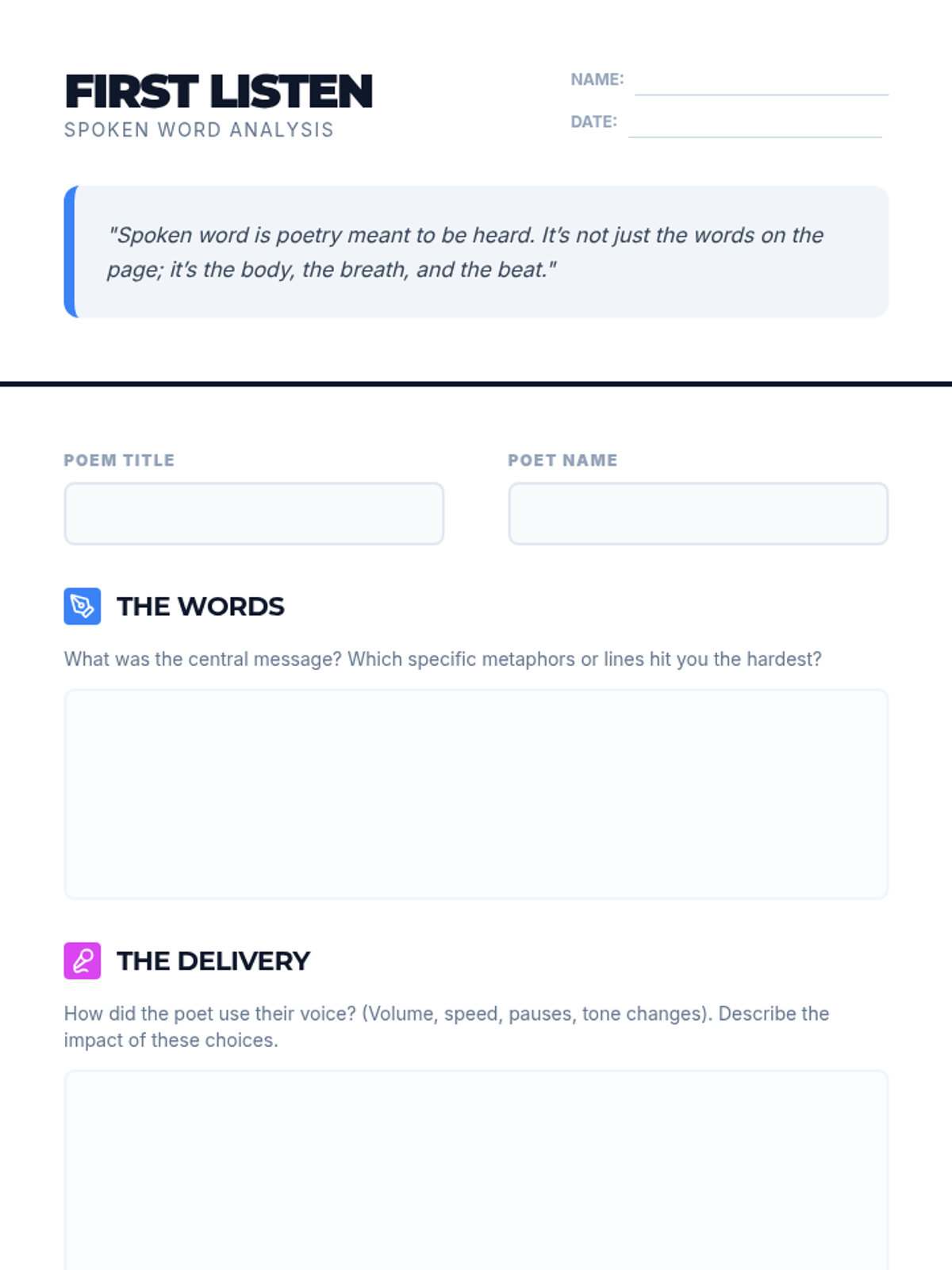
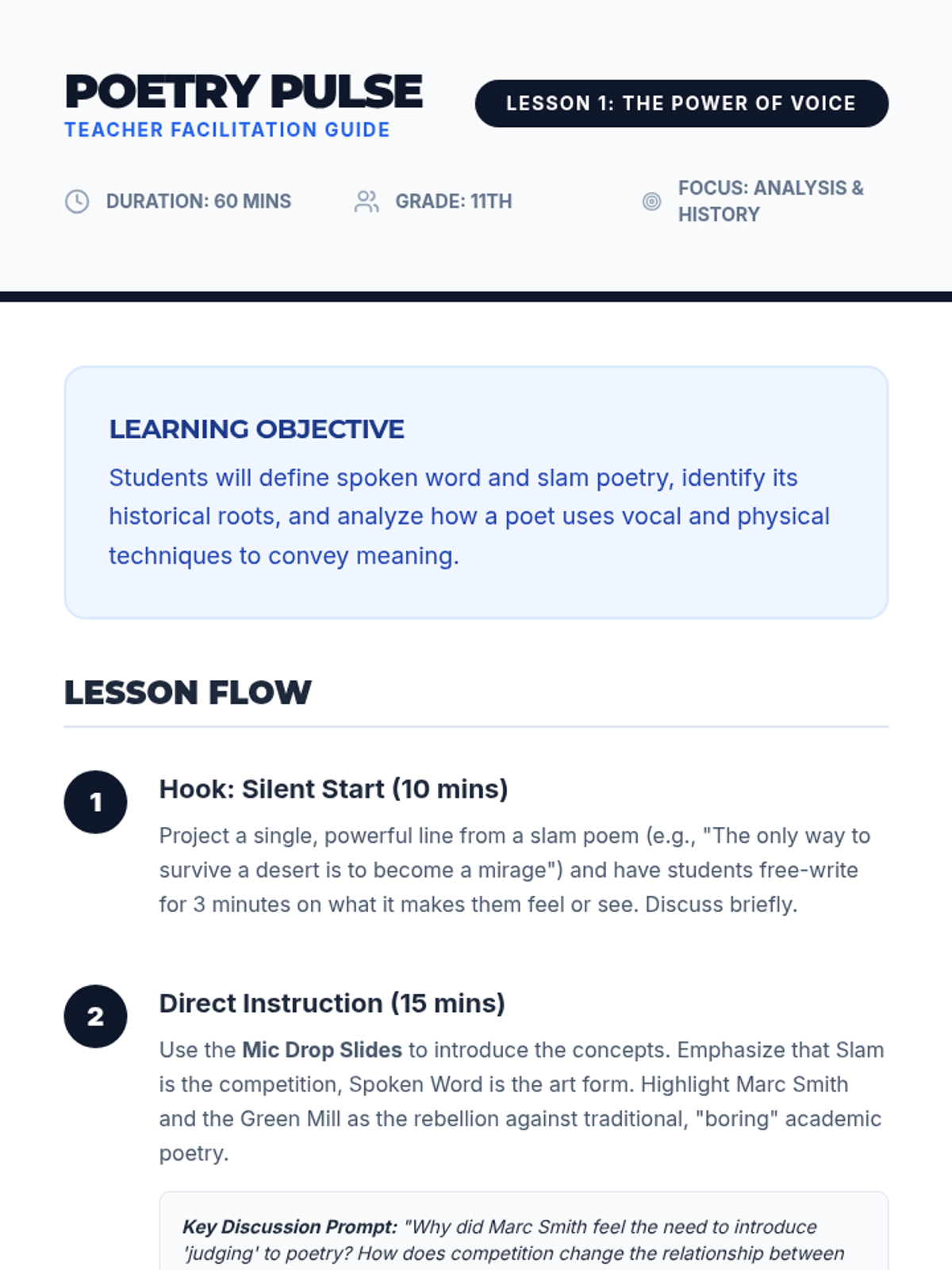
A dynamic high school unit exploring the roots, techniques, and performance of slam and spoken word poetry, culminating in a school-wide poetry slam.
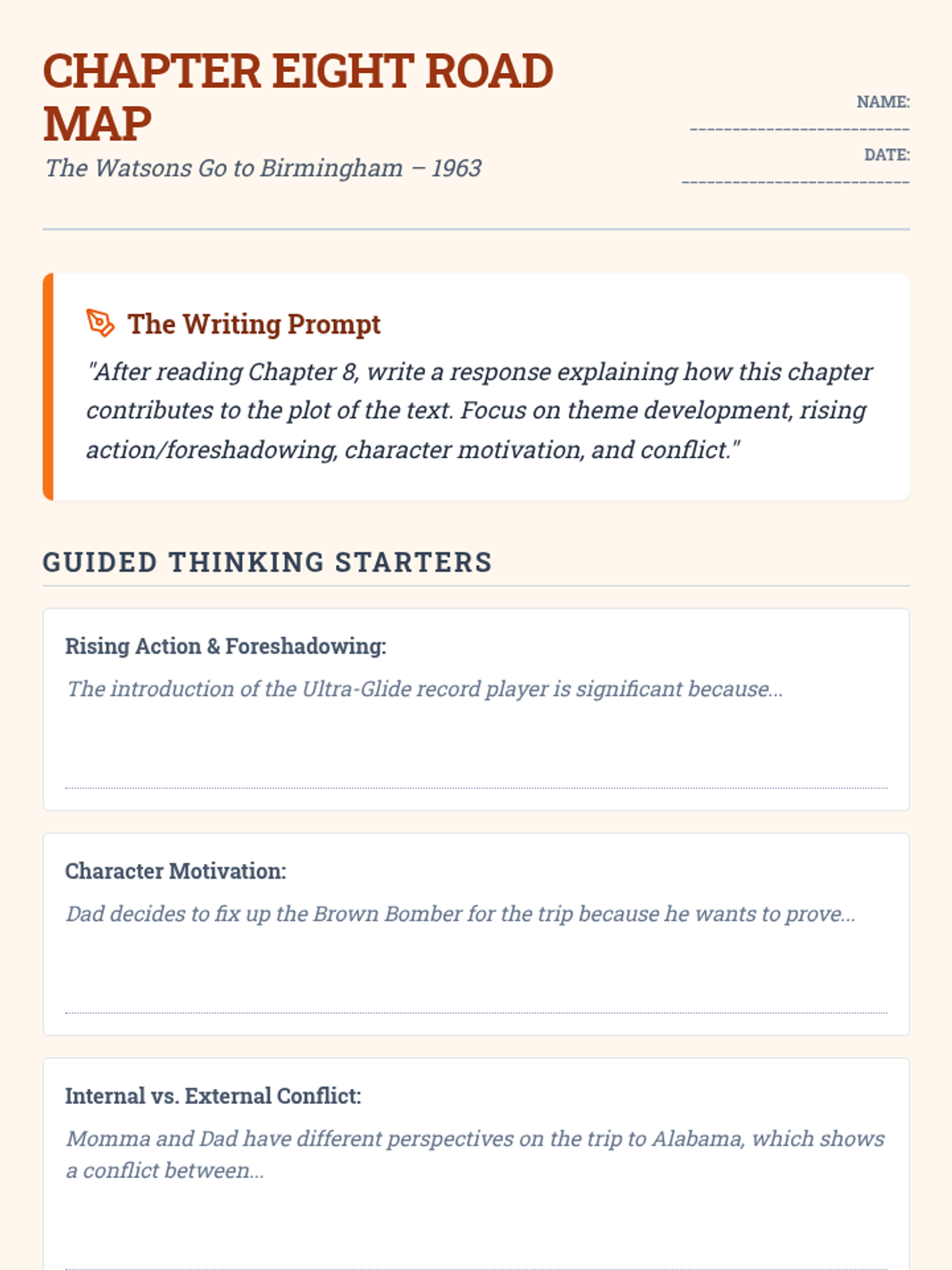
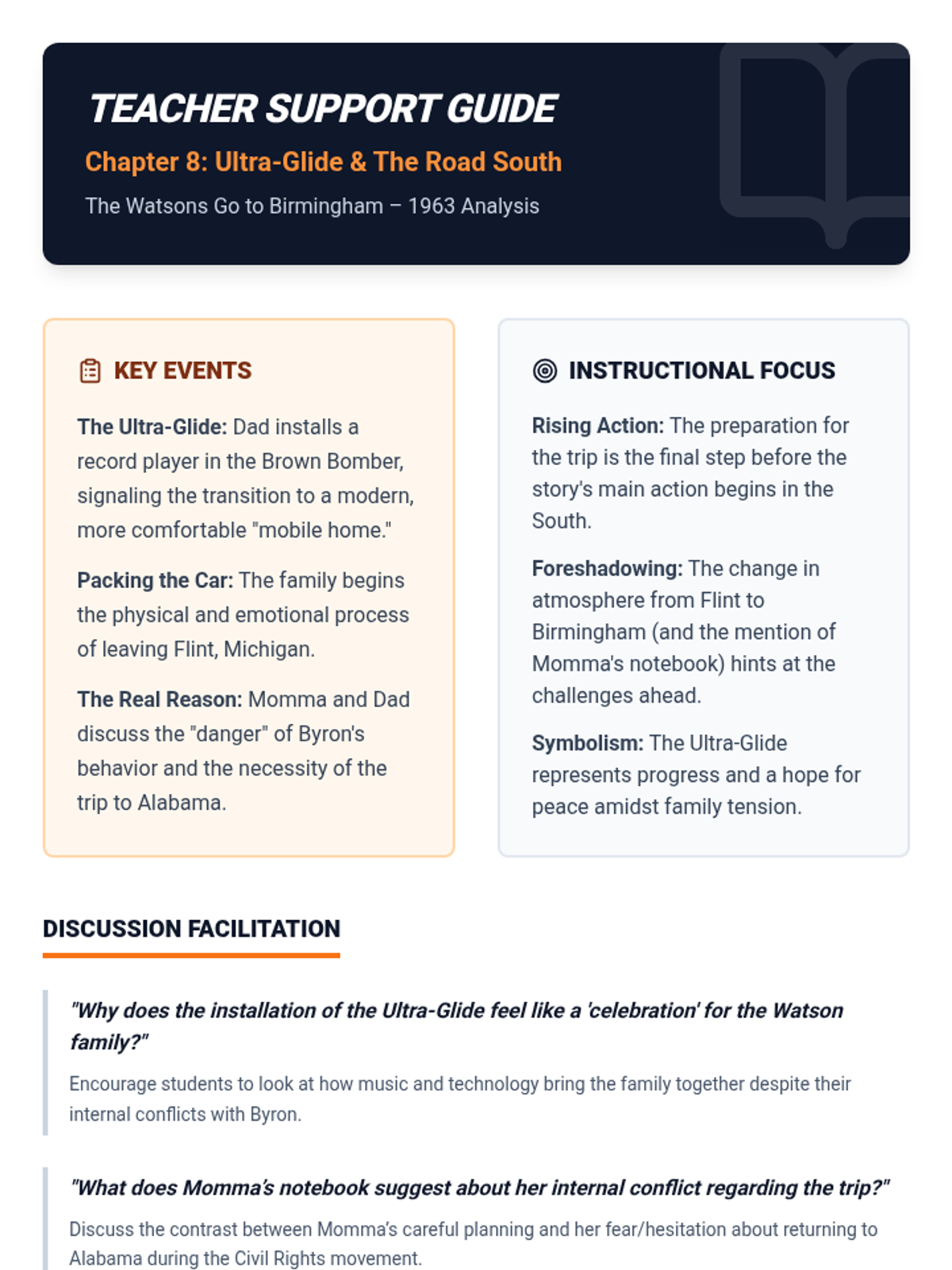
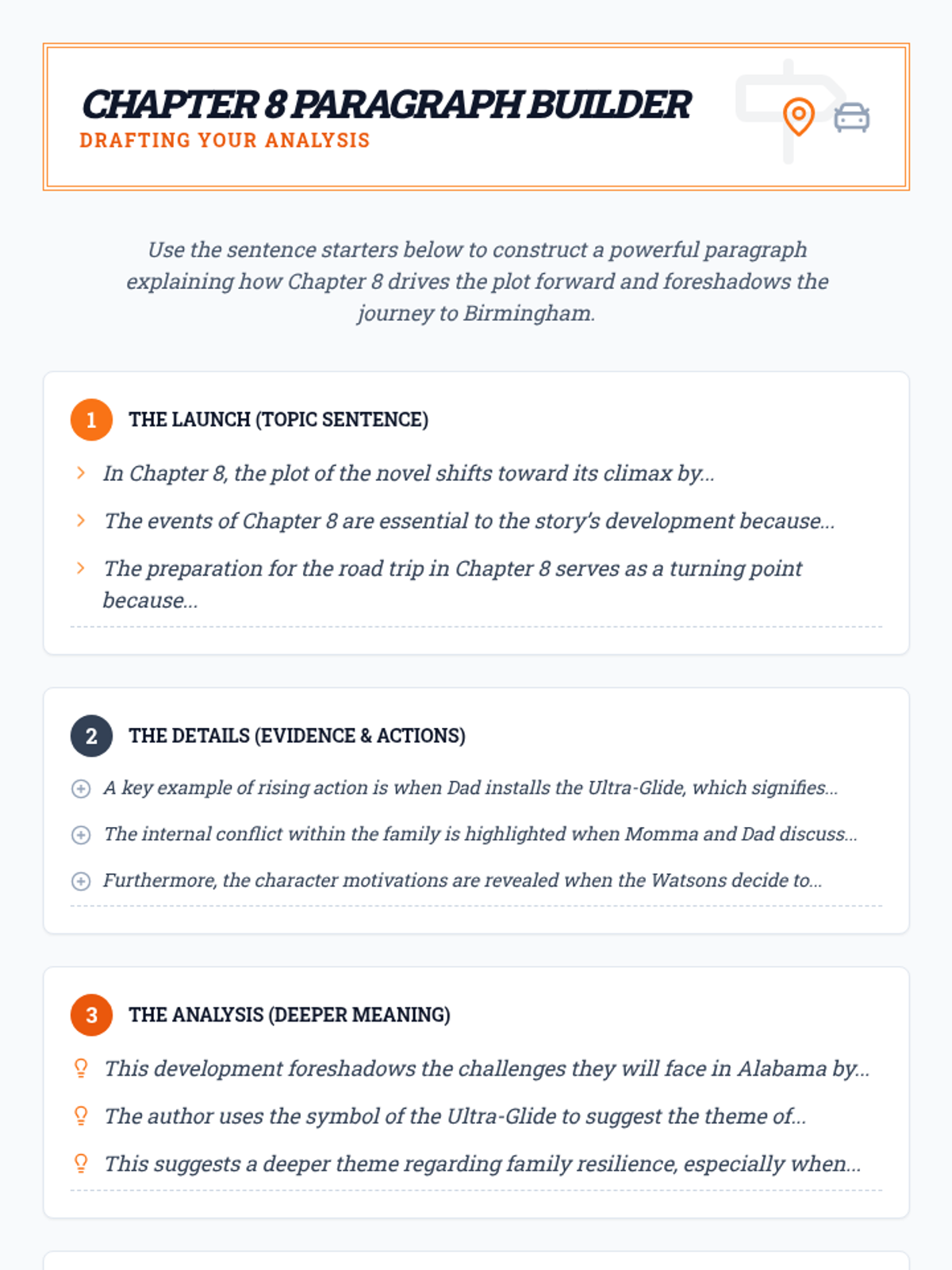
A series of lessons focused on analyzing key chapters of 'The Watsons Go to Birmingham - 1963', with a specific focus on plot development, theme, and author's craft.
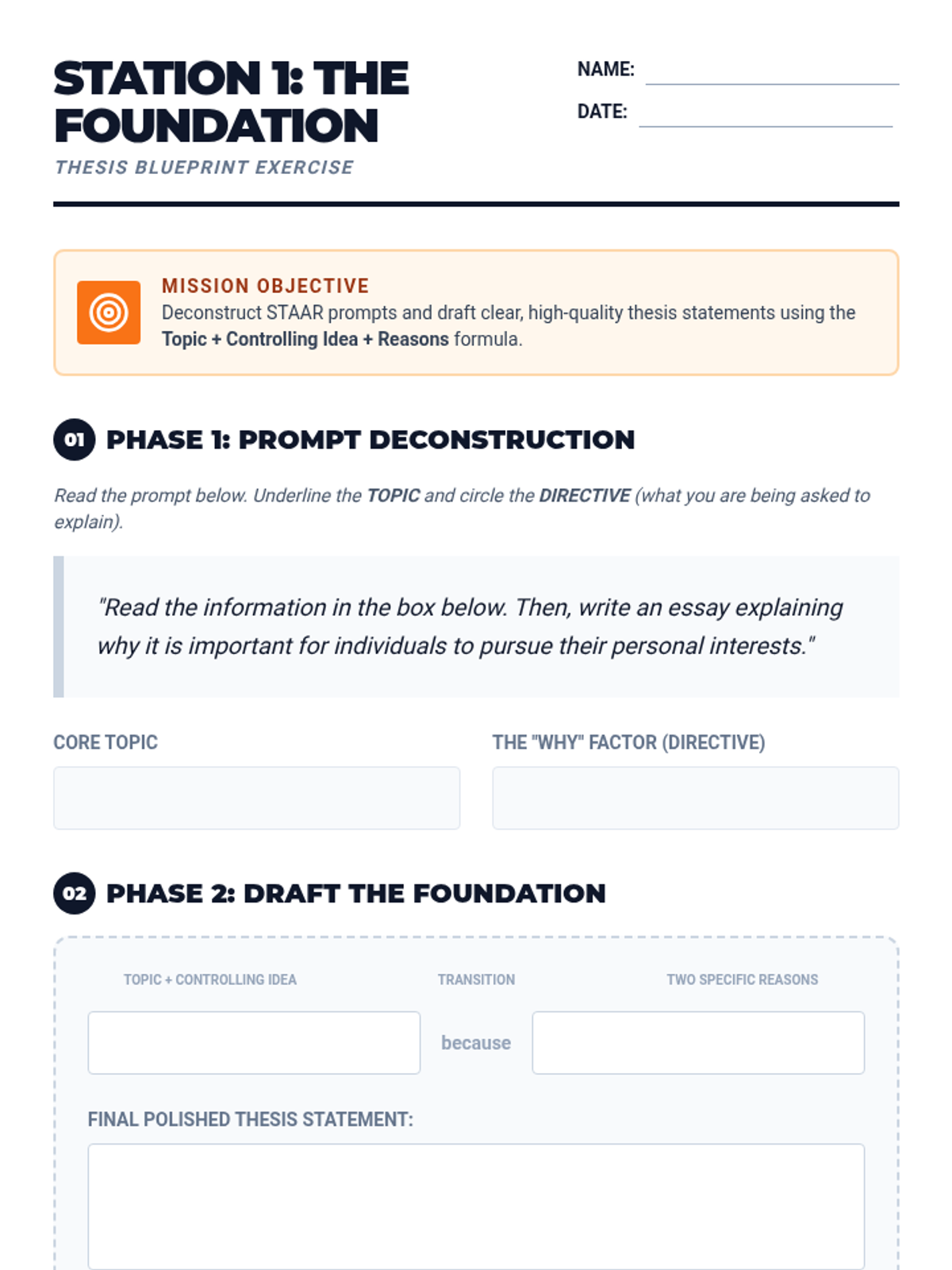
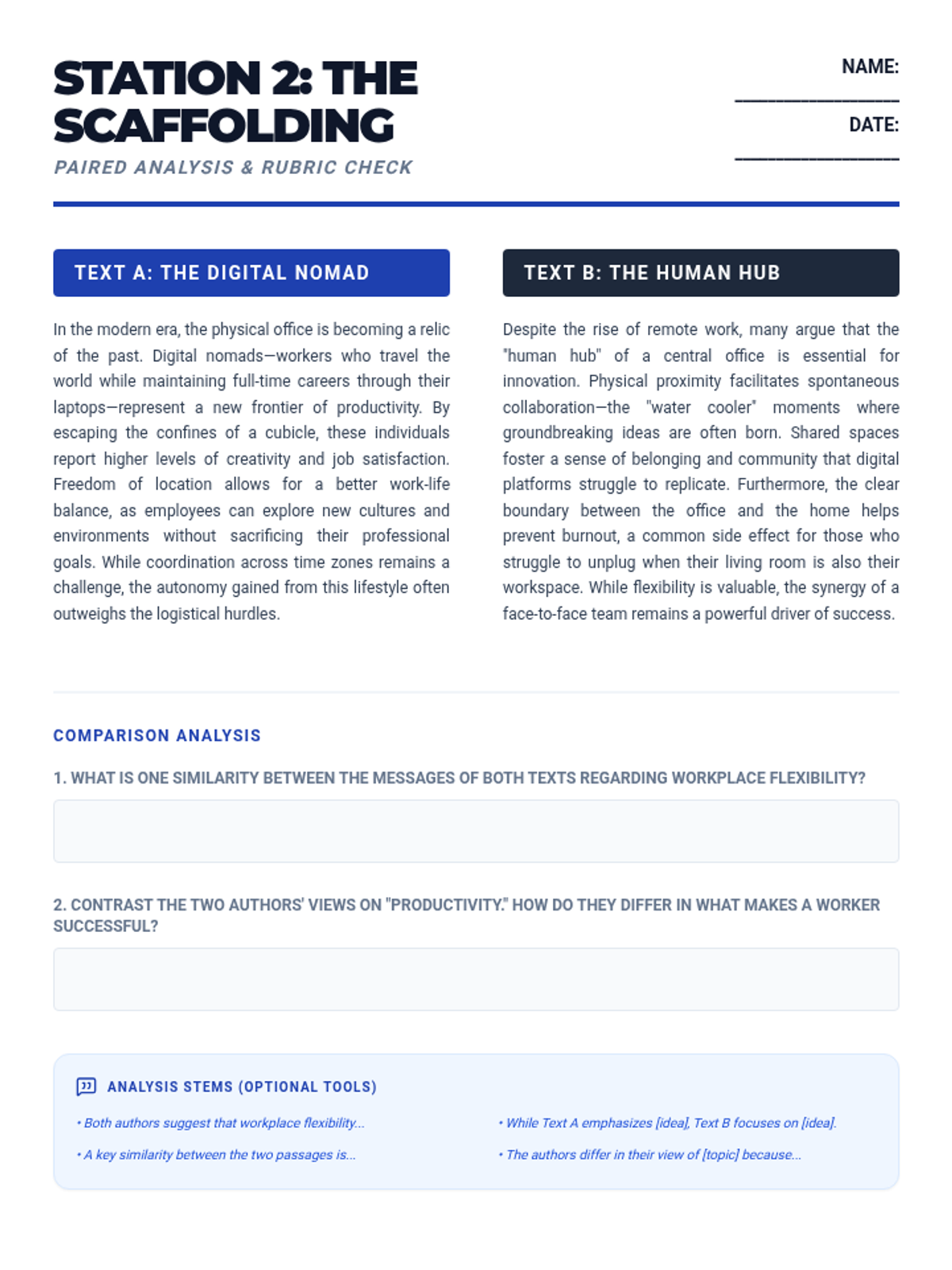
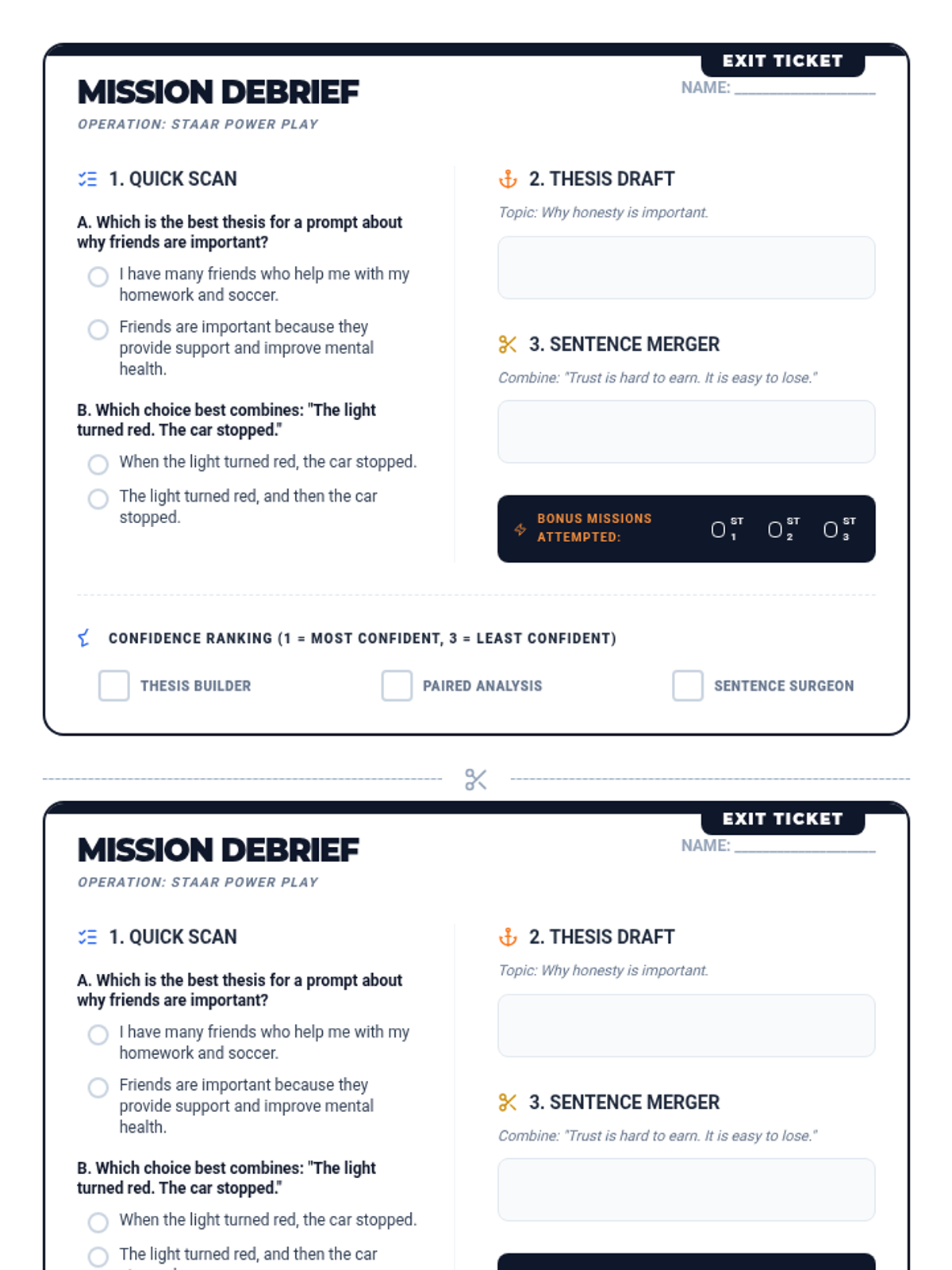
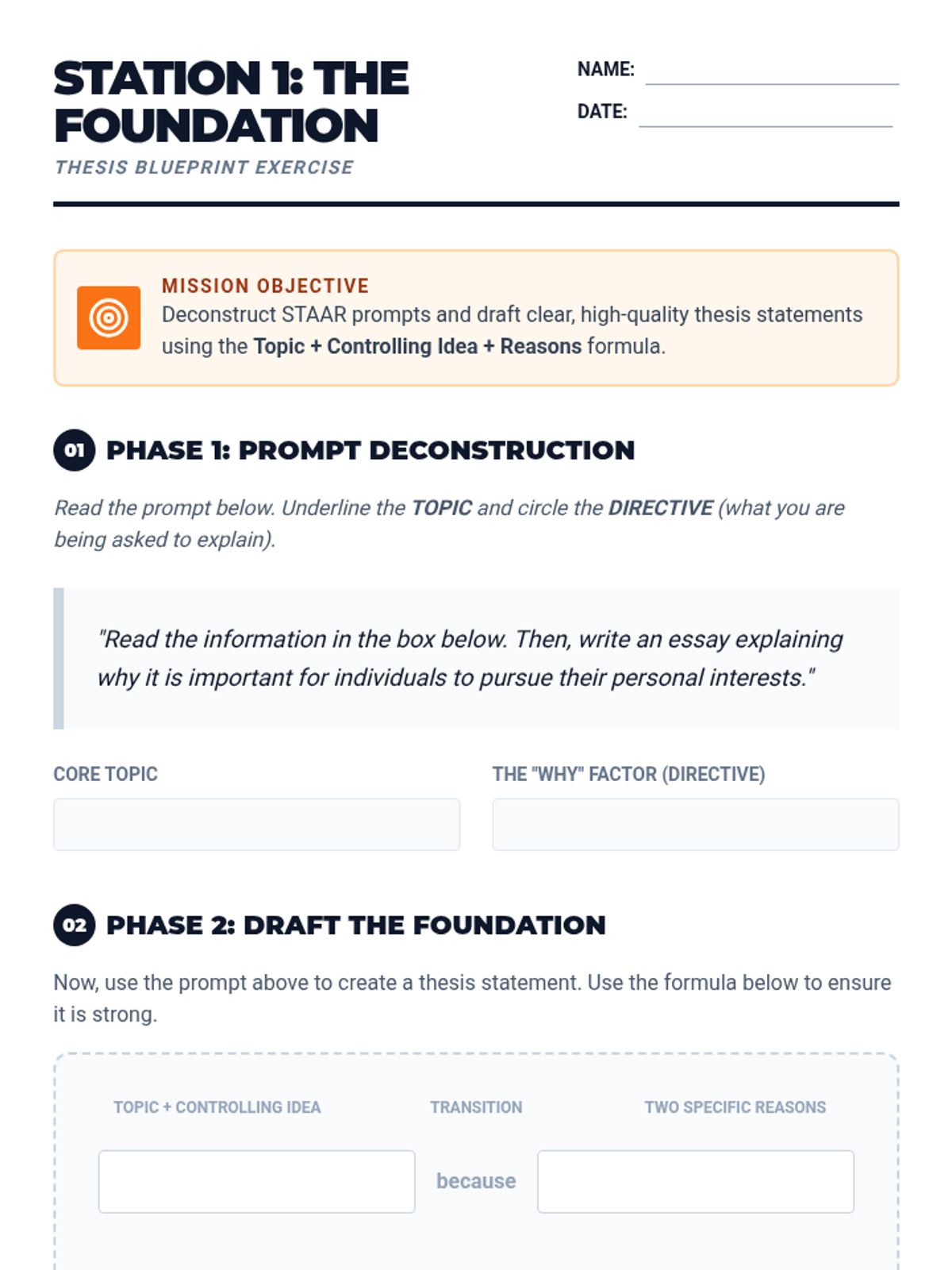
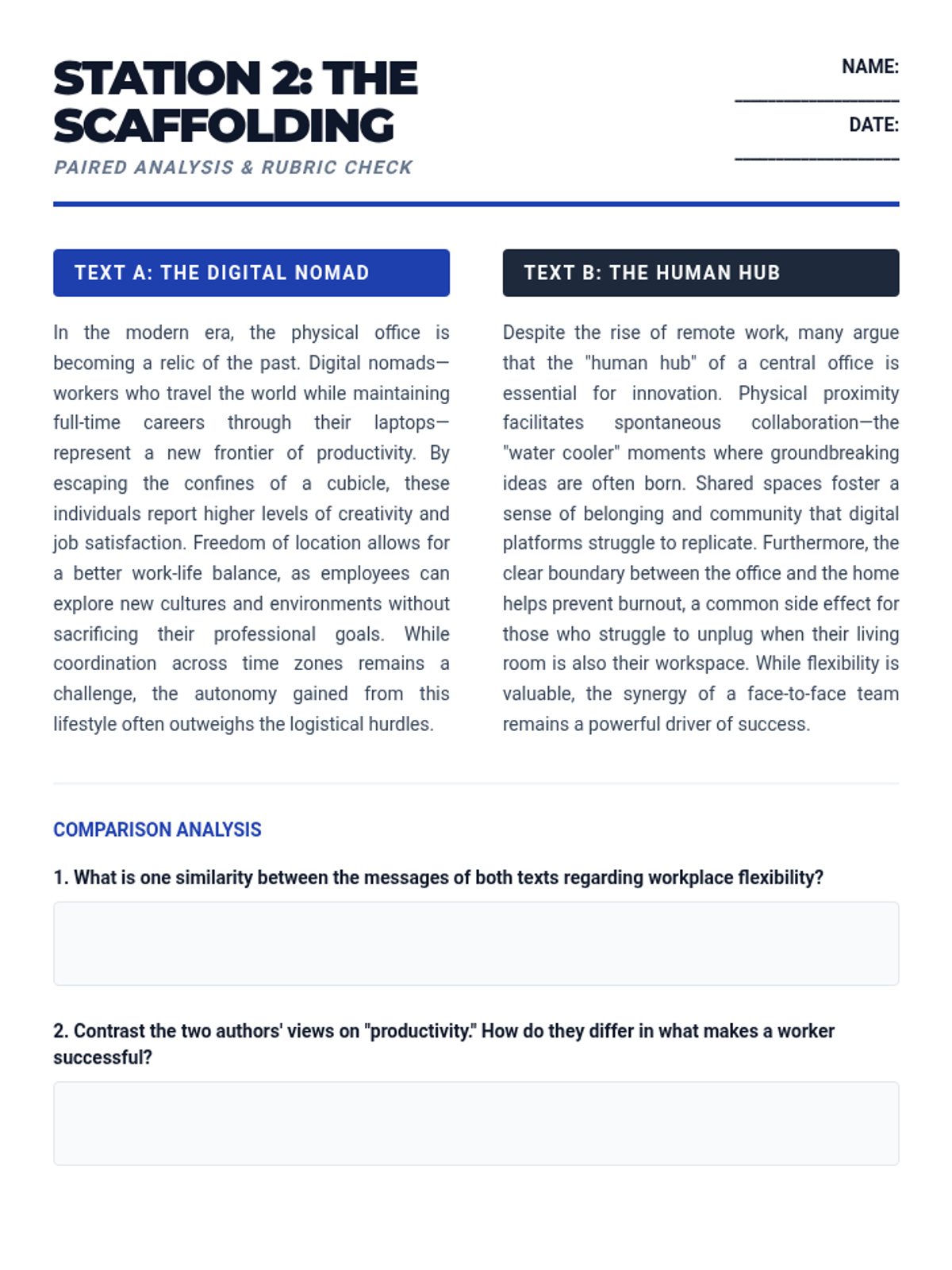
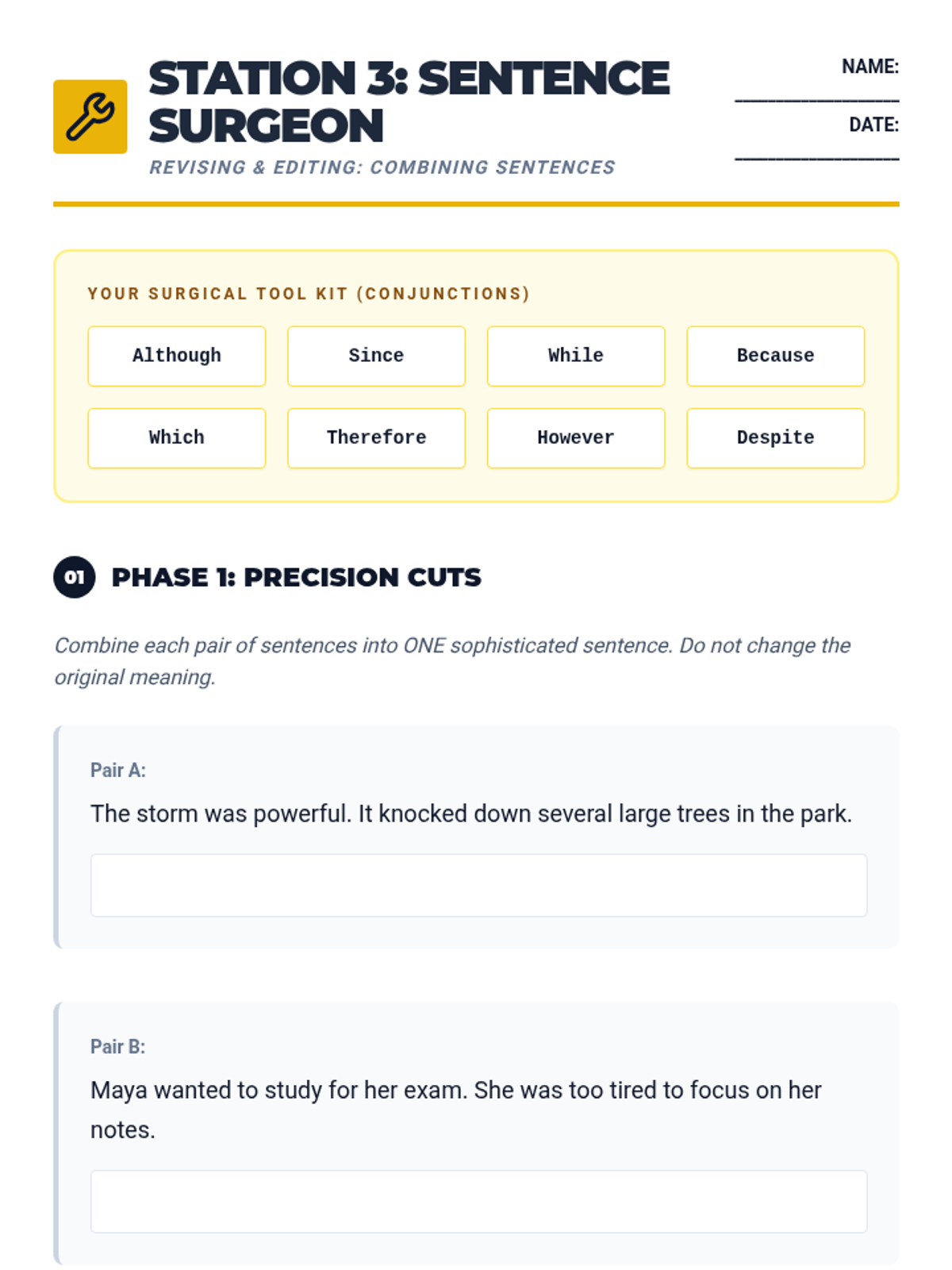
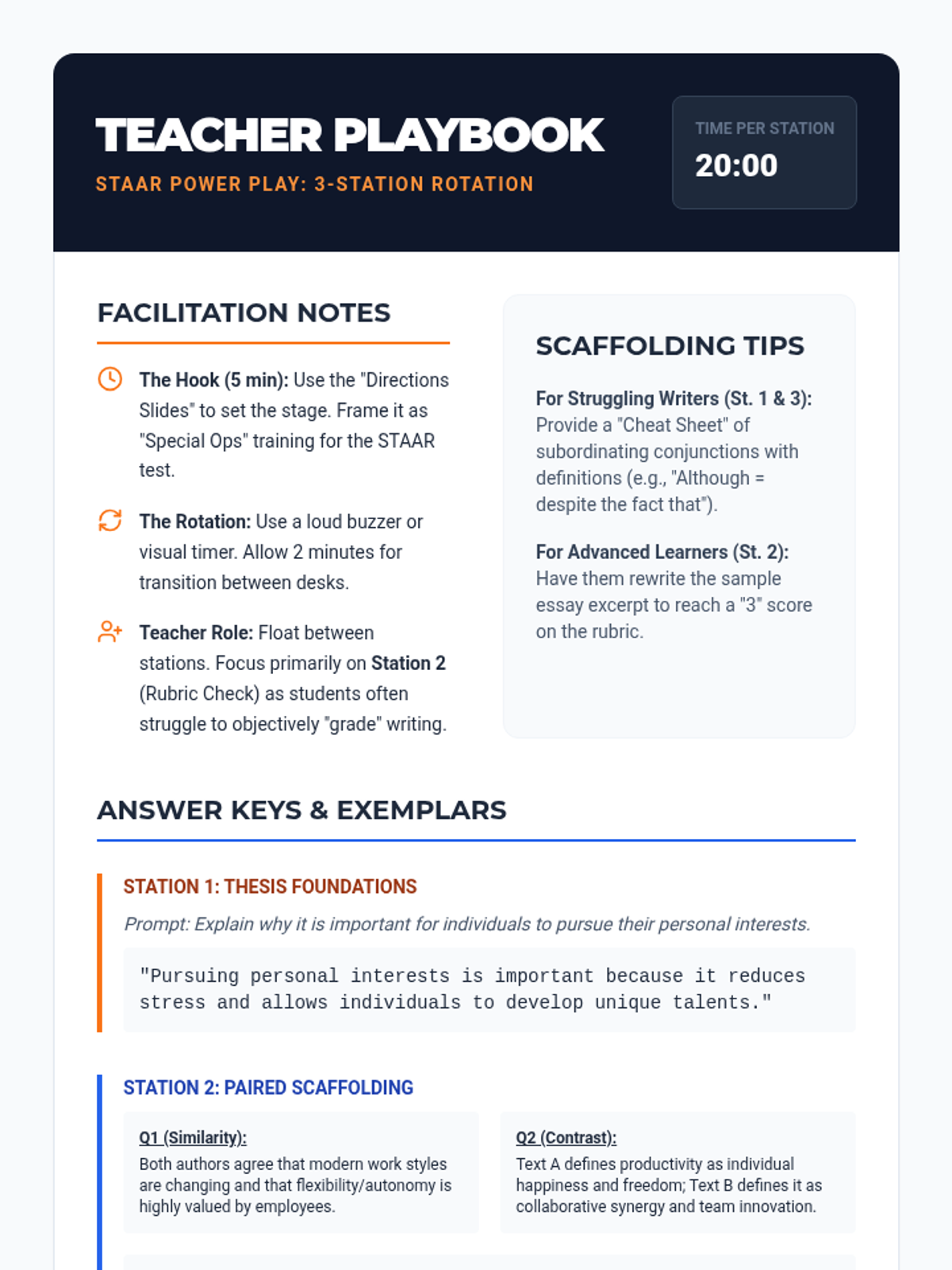
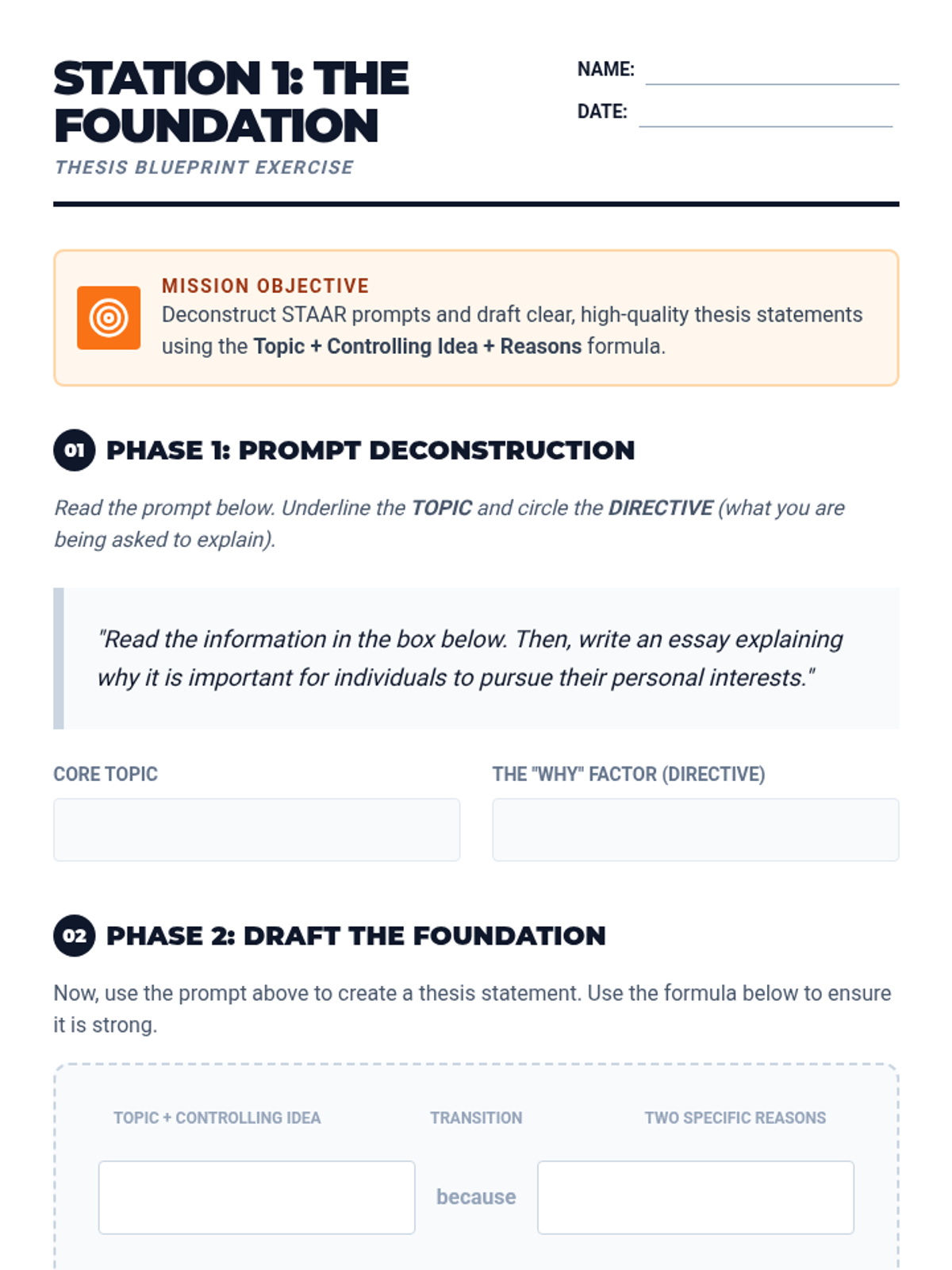
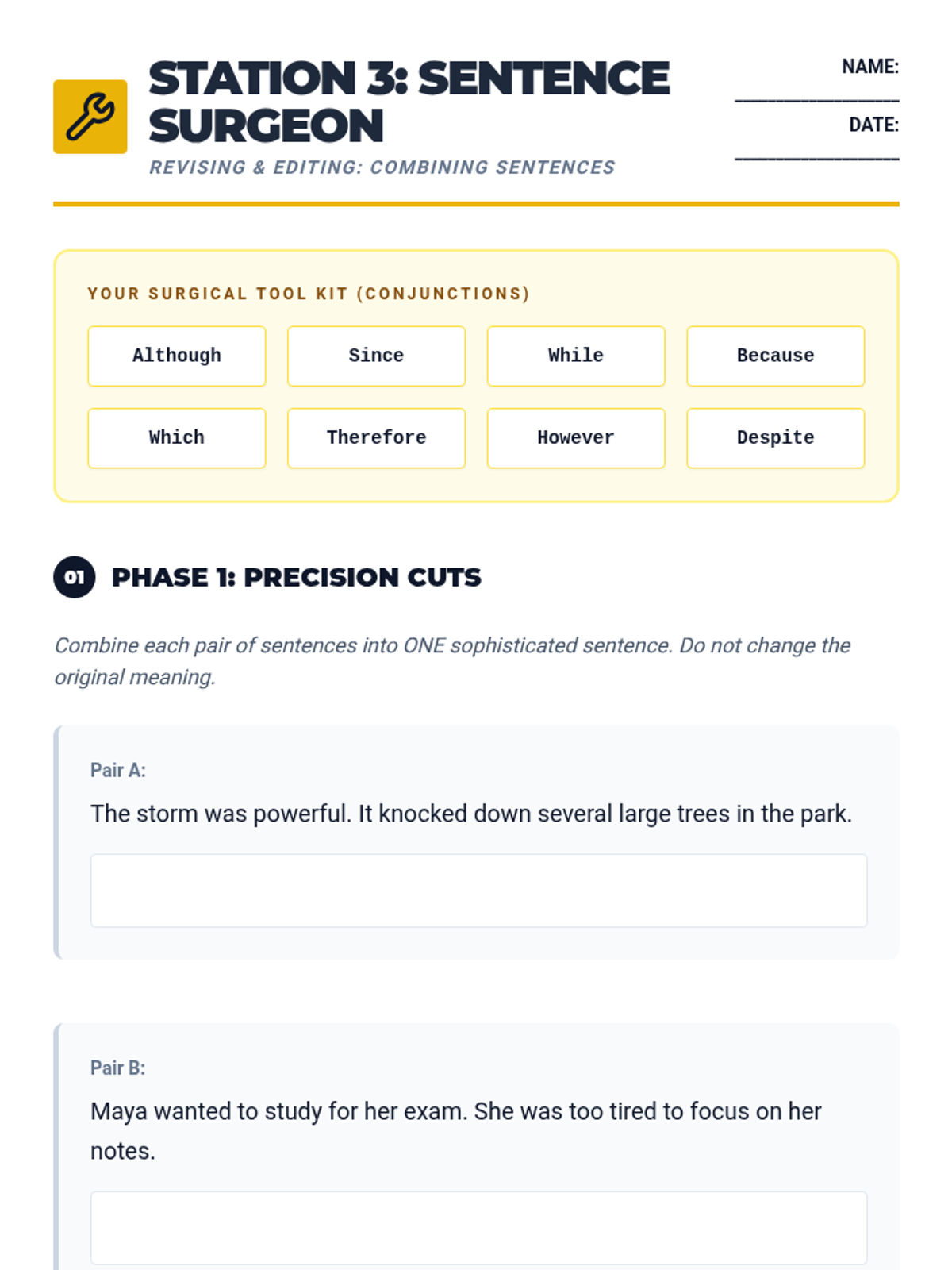
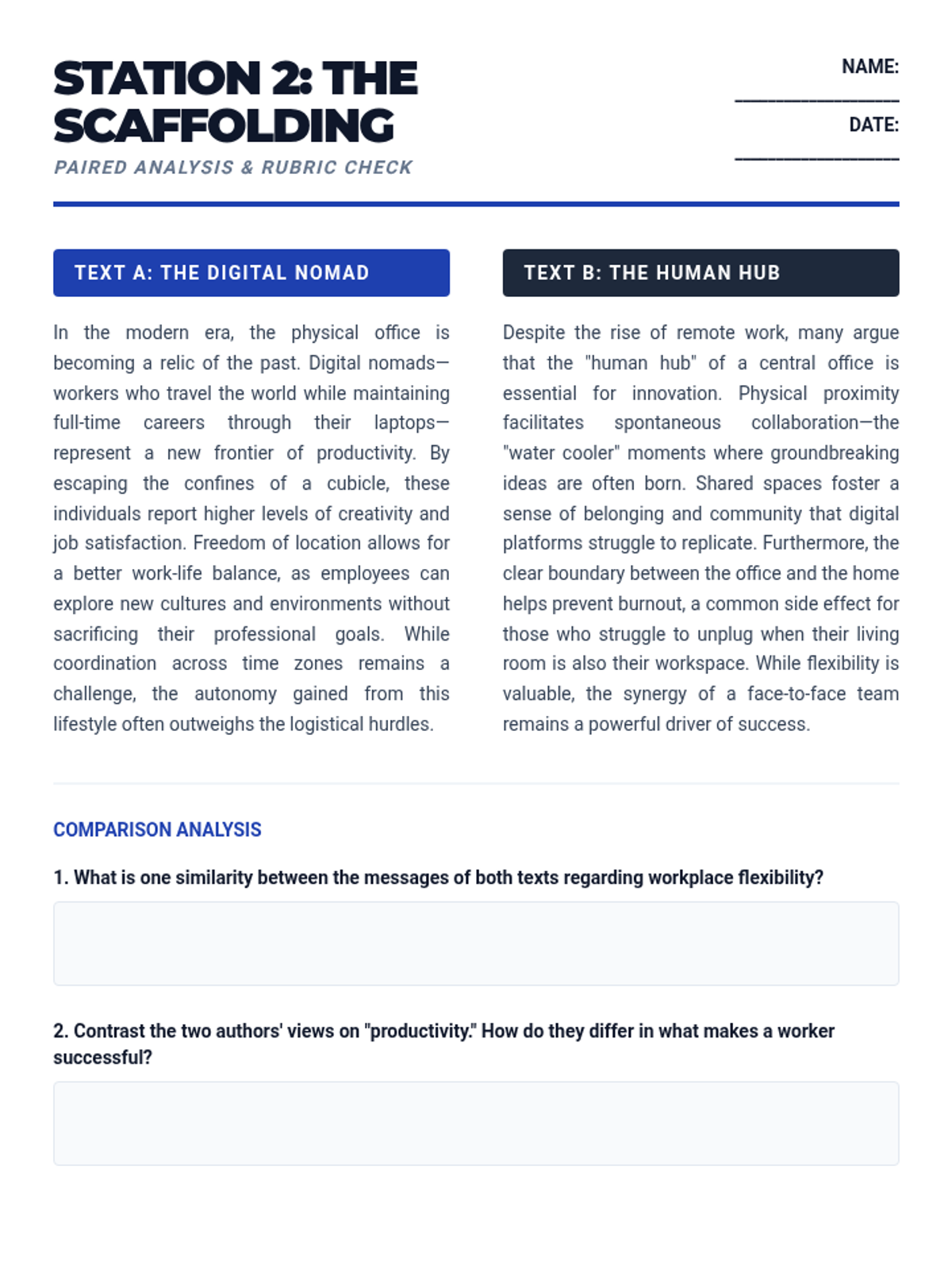
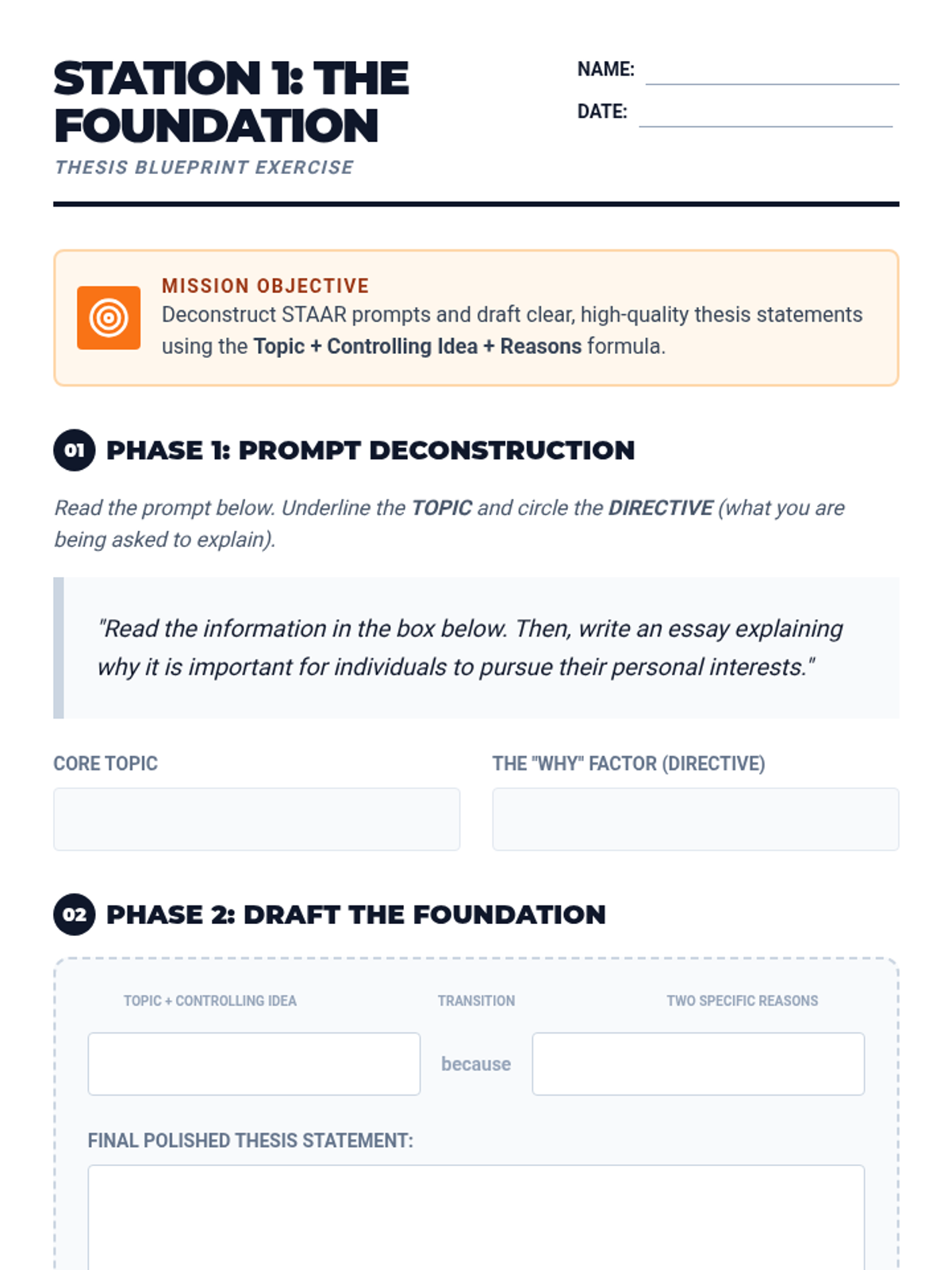
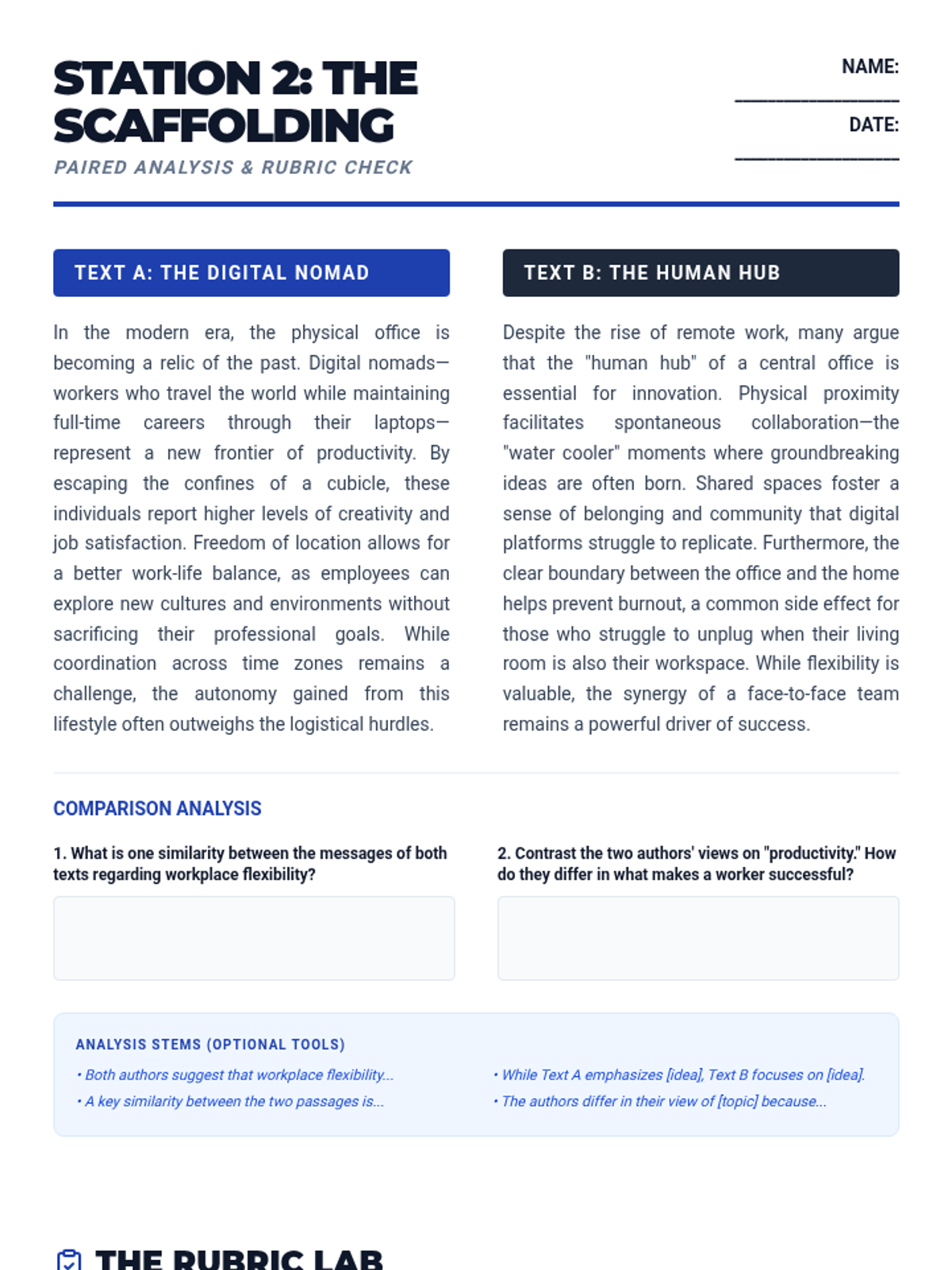
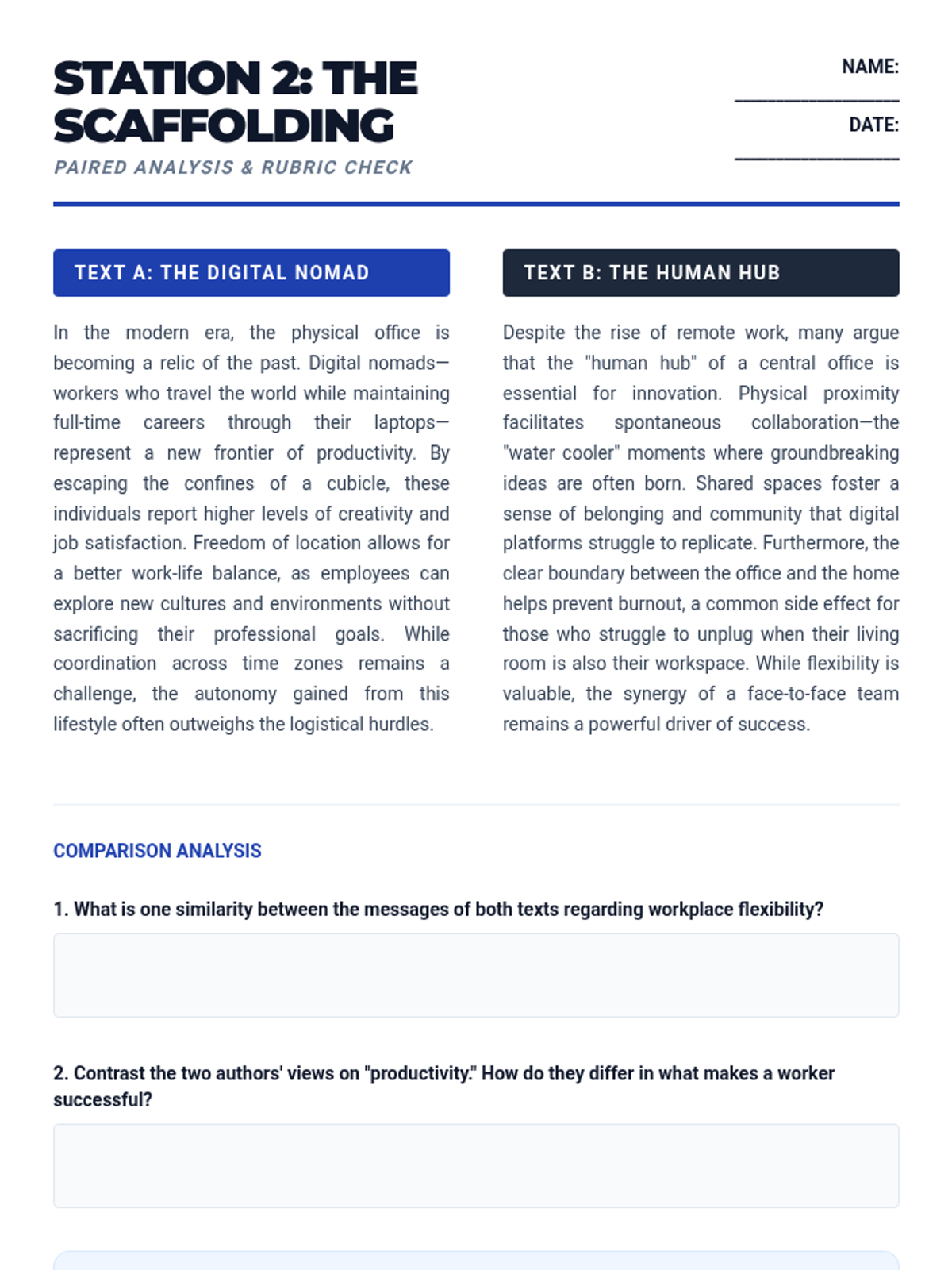
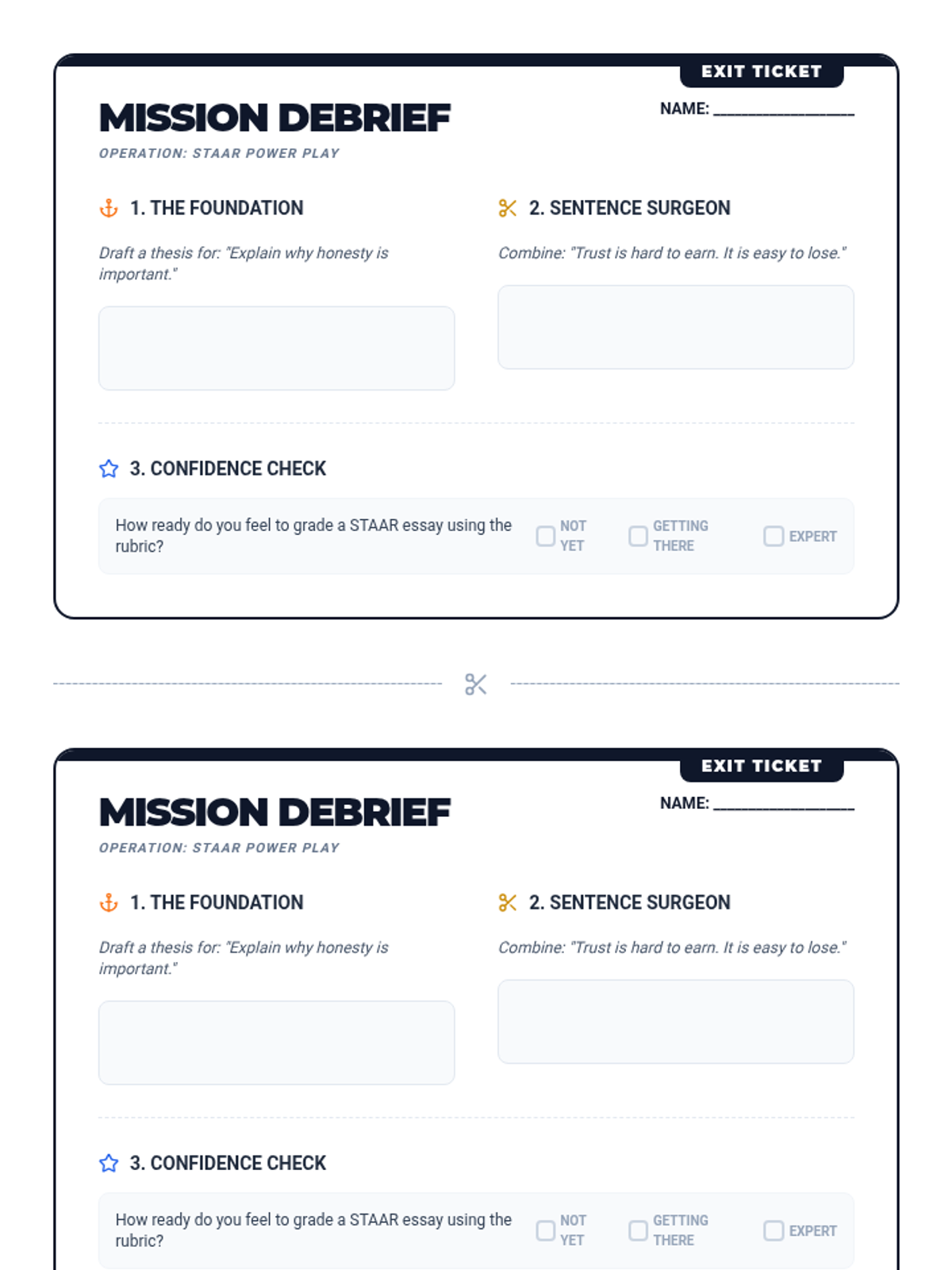
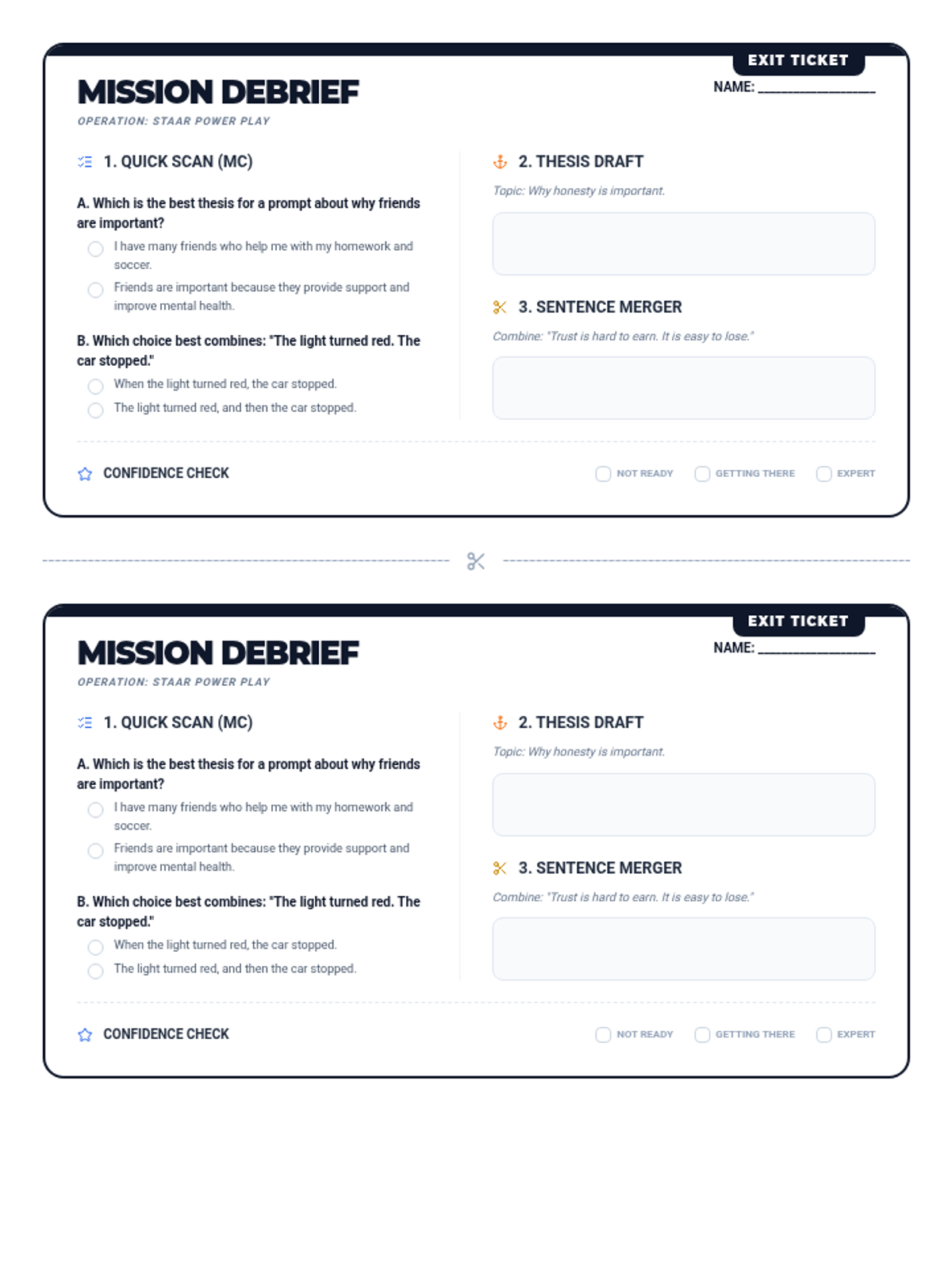
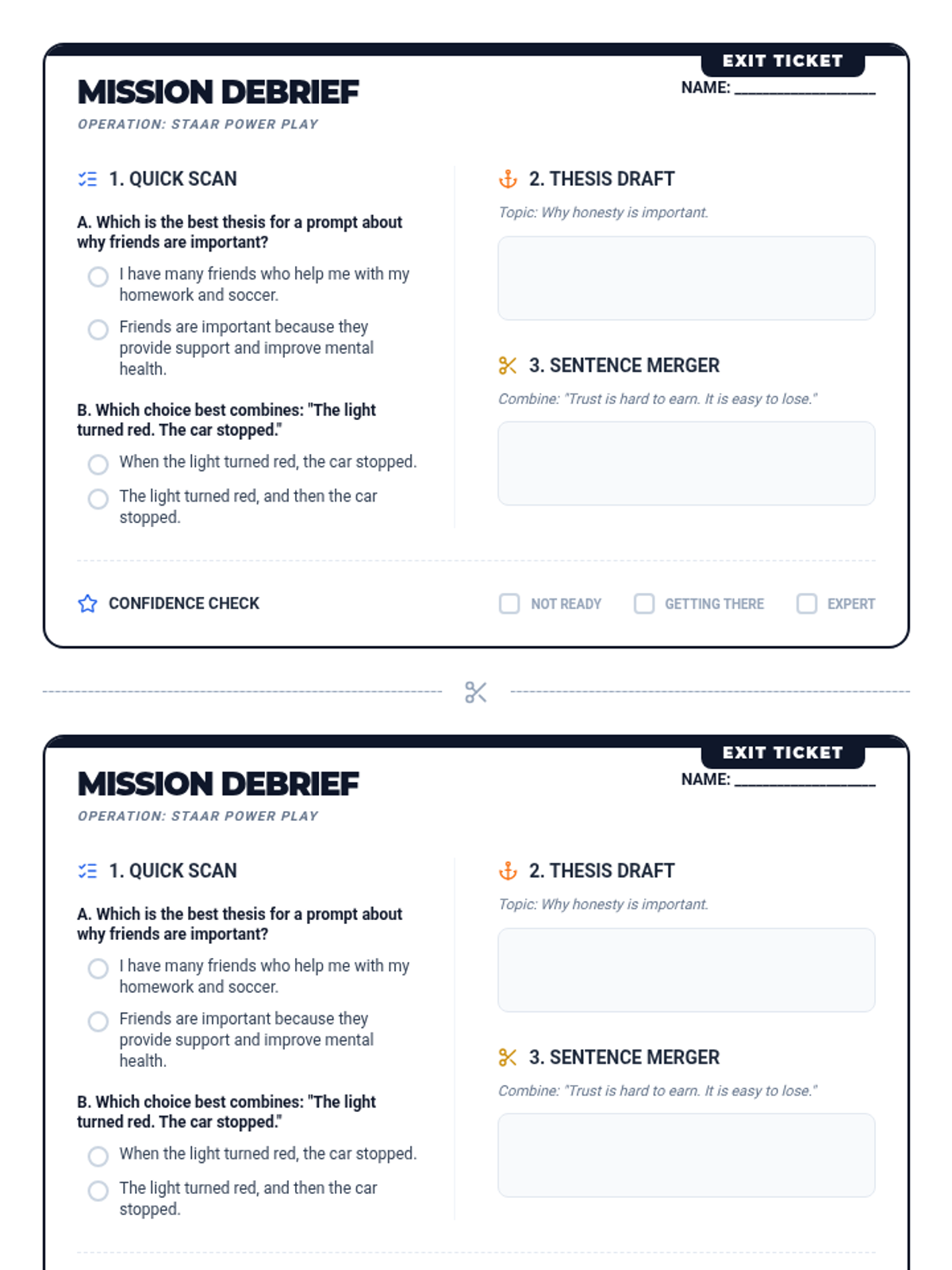
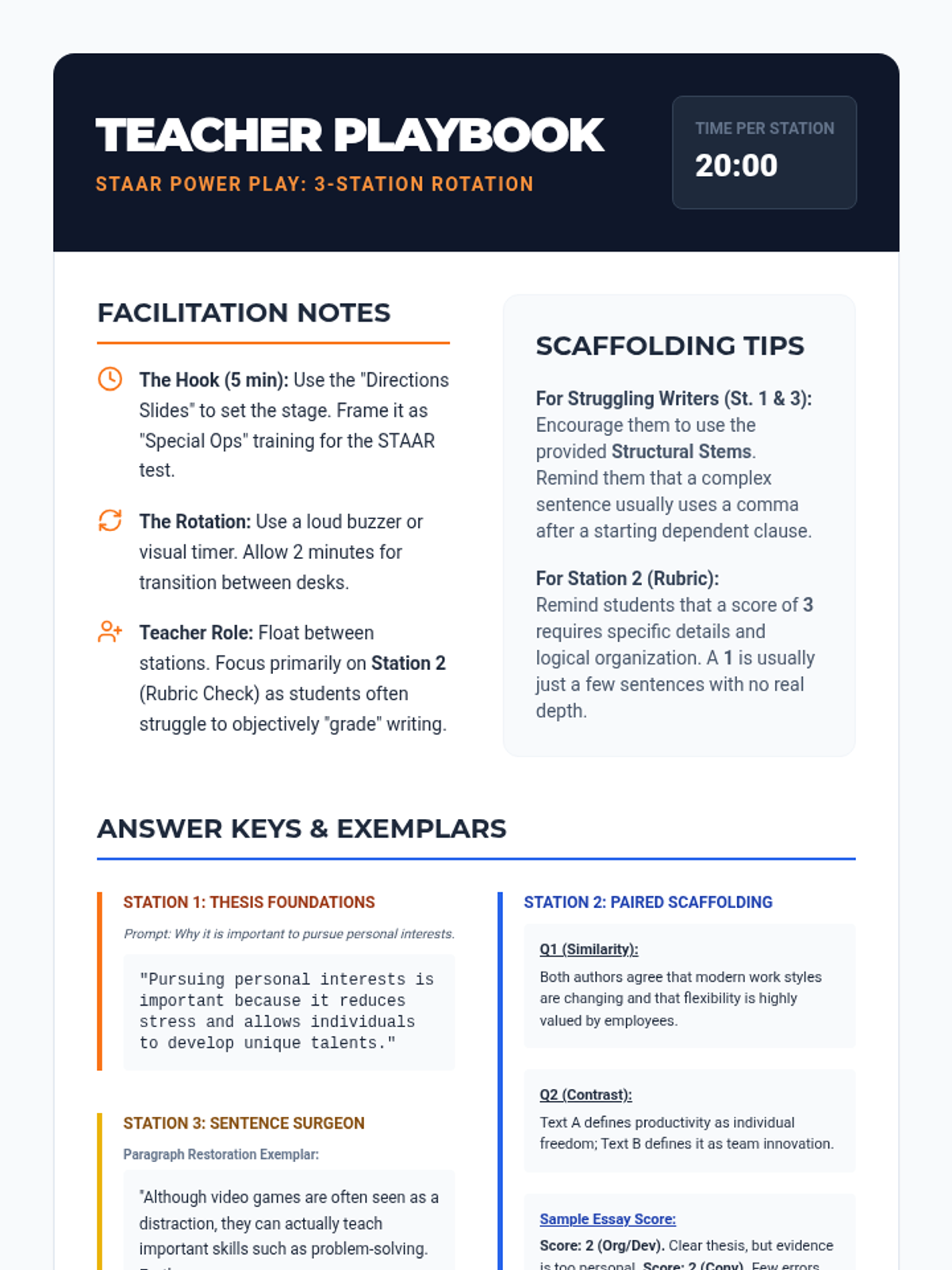
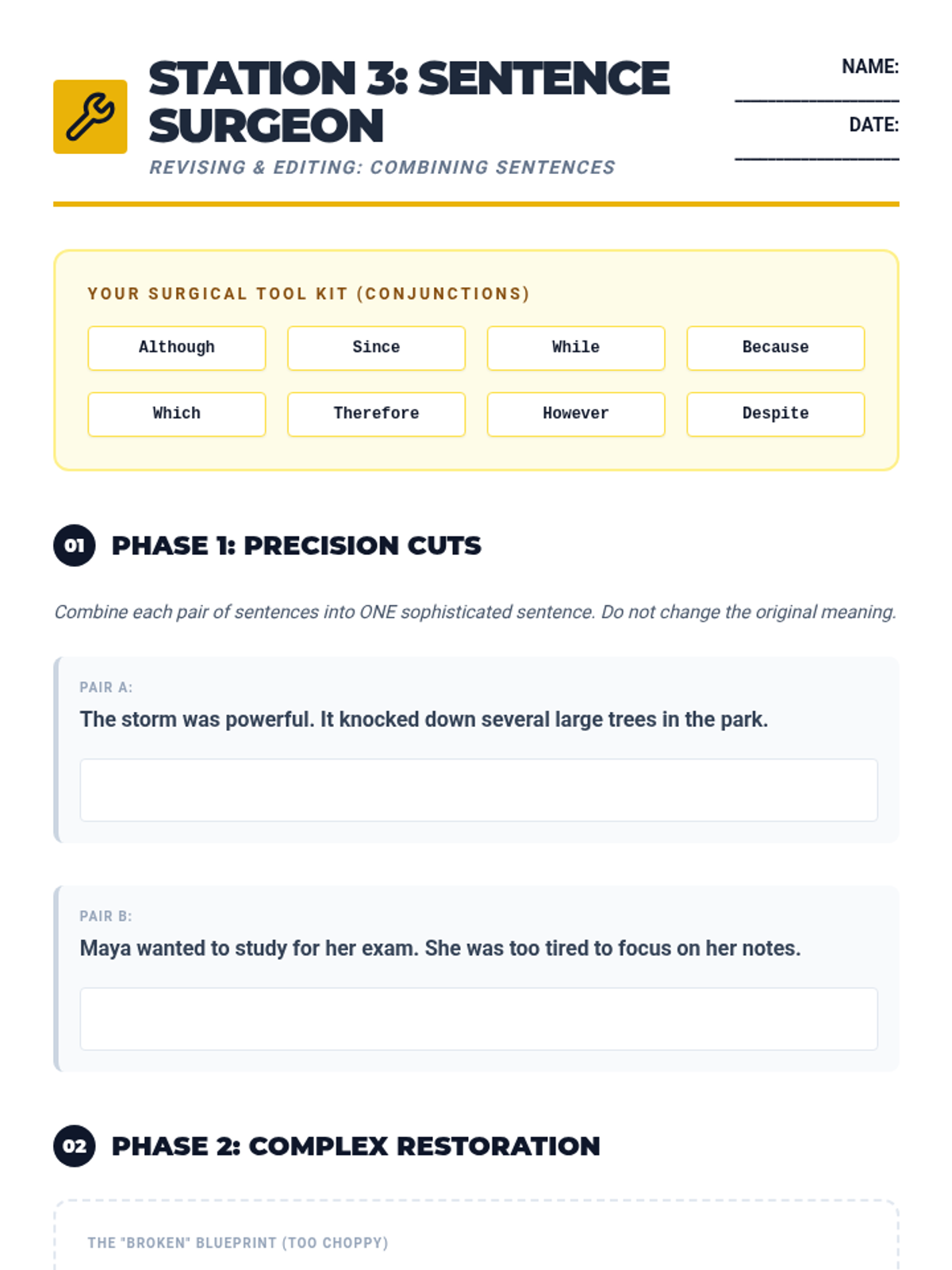
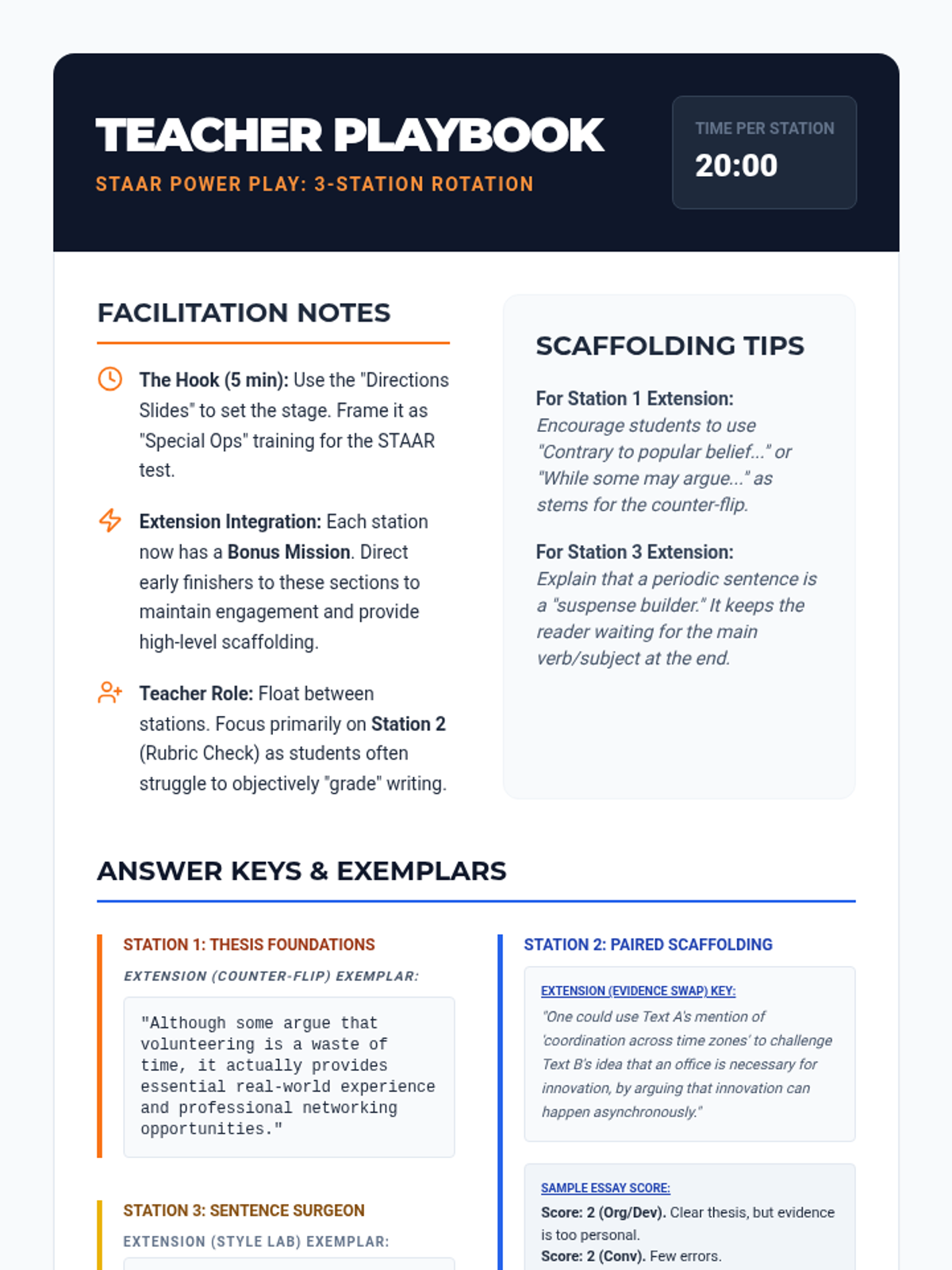
A series of three high-intensity stations designed to prepare students for the STAAR English assessment, focusing on thesis development, paired passage analysis, and sentence combining.
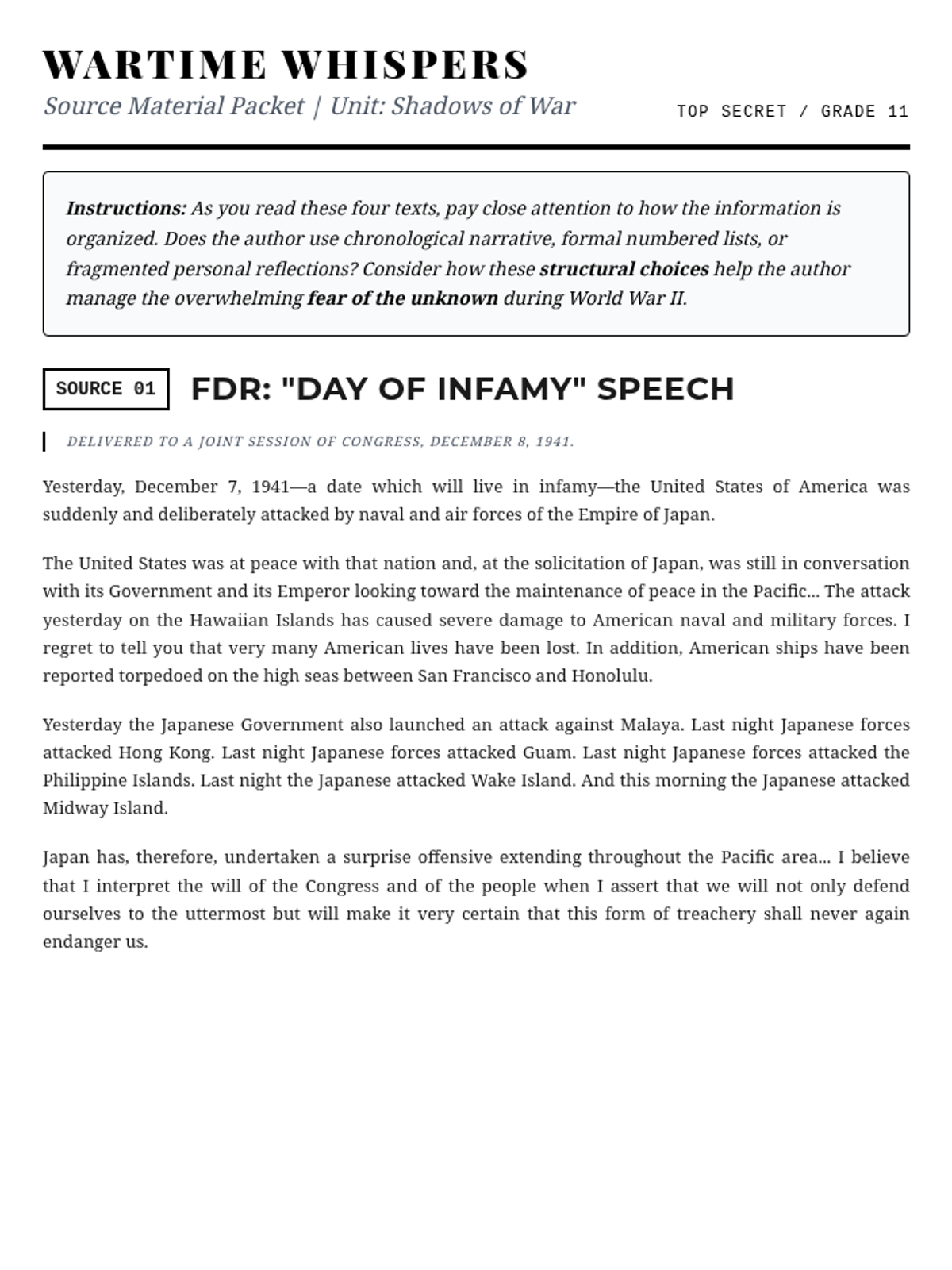
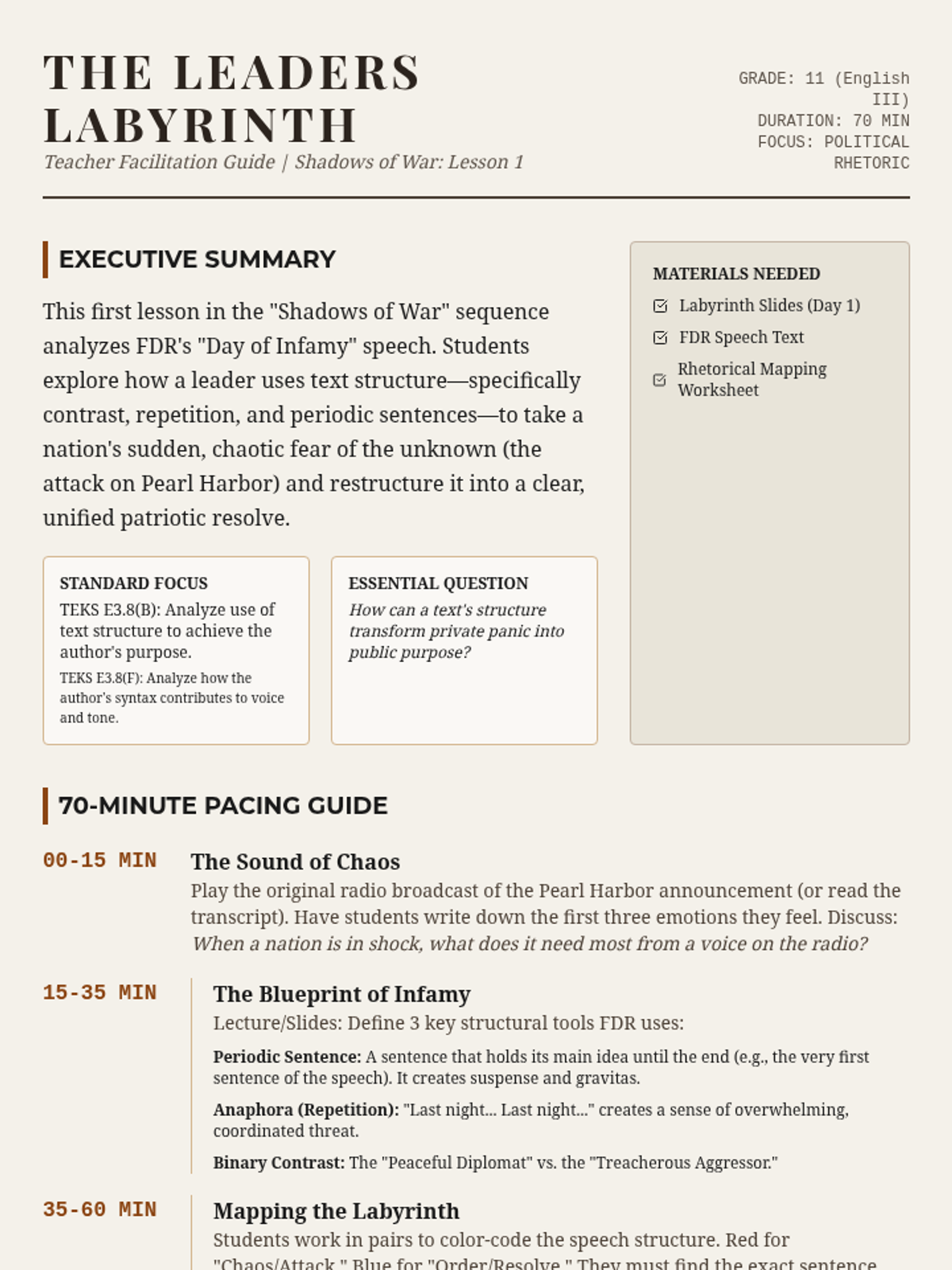
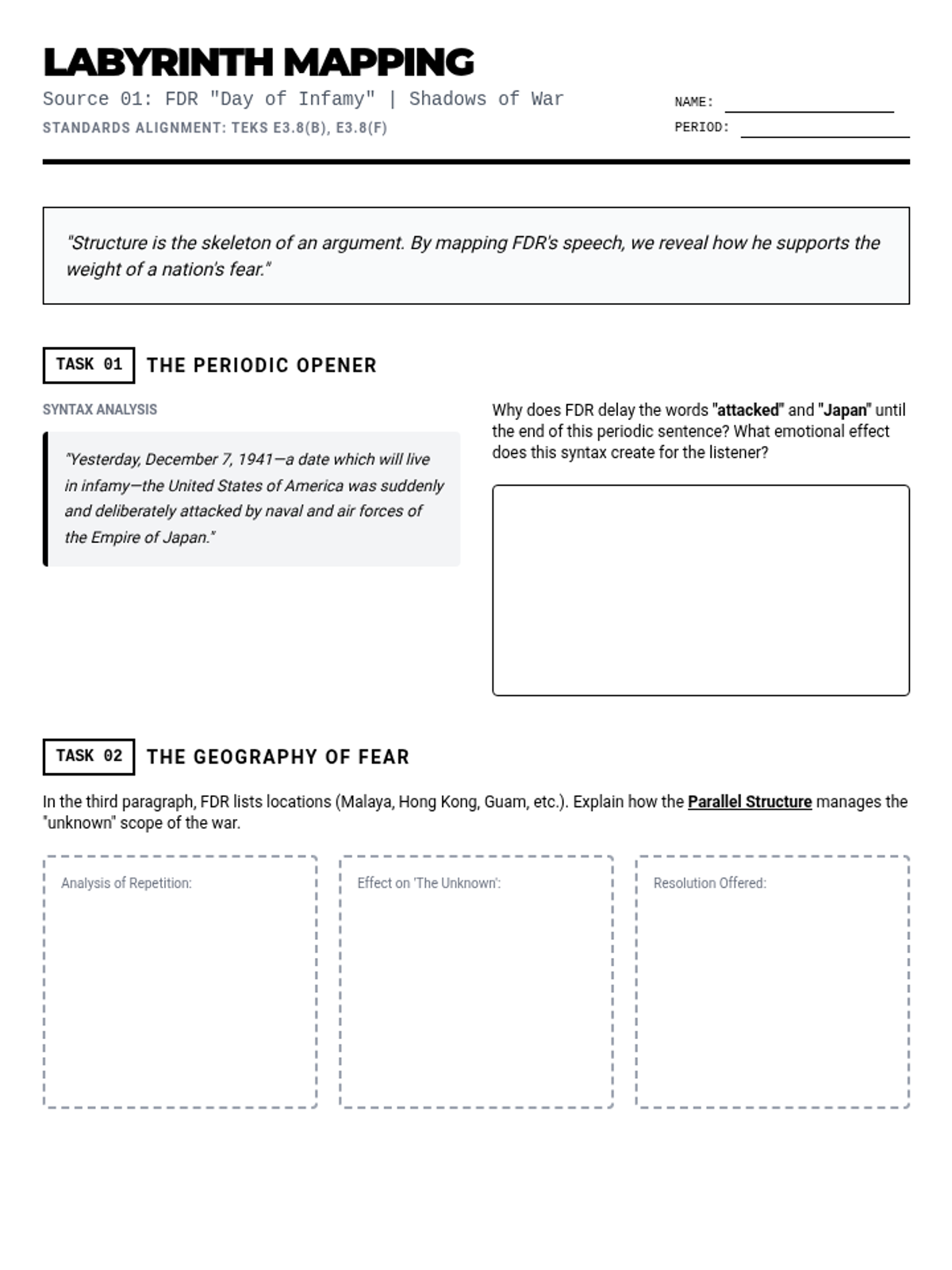
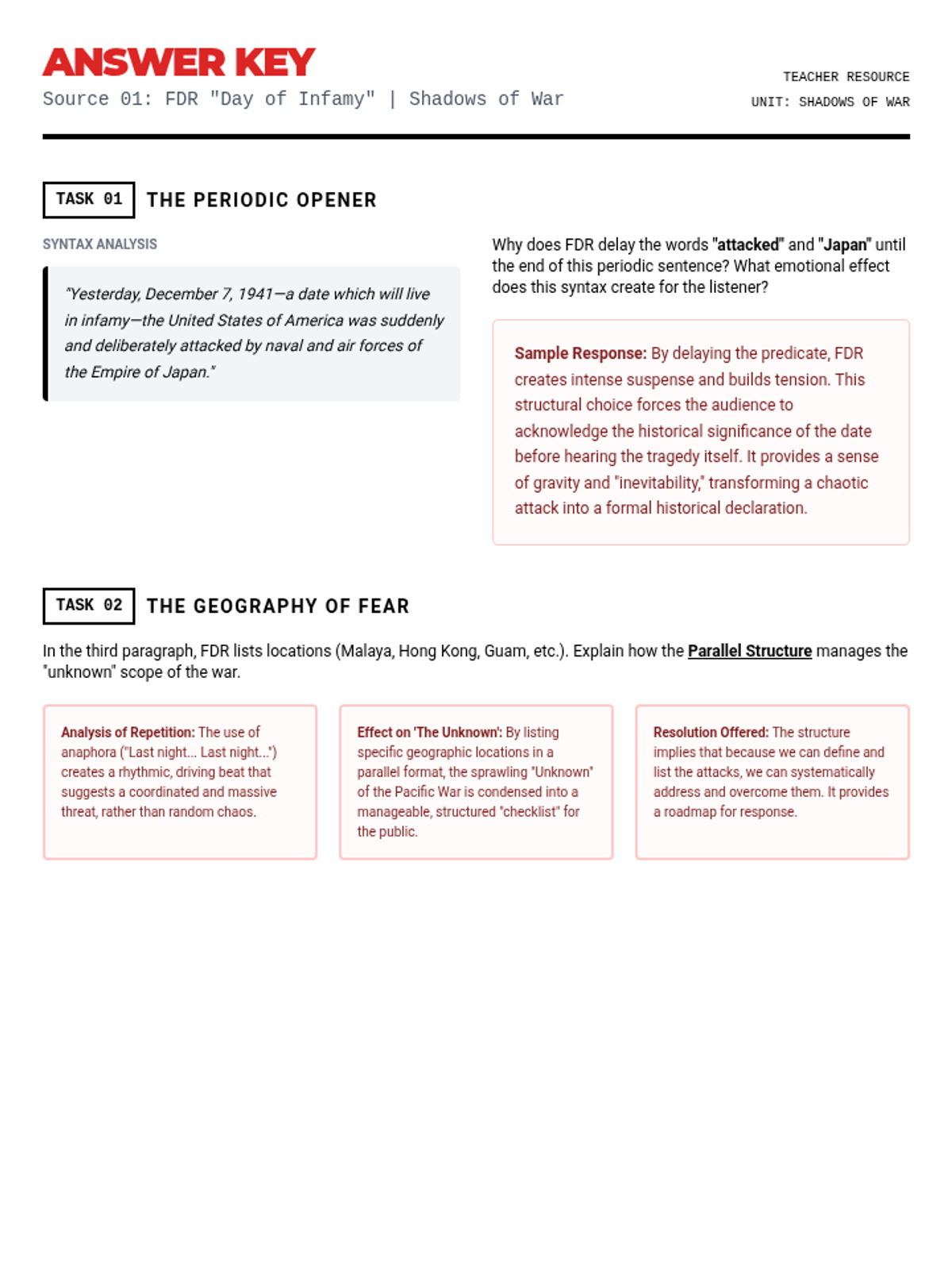
A 4-part unit for 11th-grade English/History analyzing text structure and author's purpose through the lens of fear and the unknown during WWII, examining political rhetoric, legal orders, personal diaries, and wartime superstition.
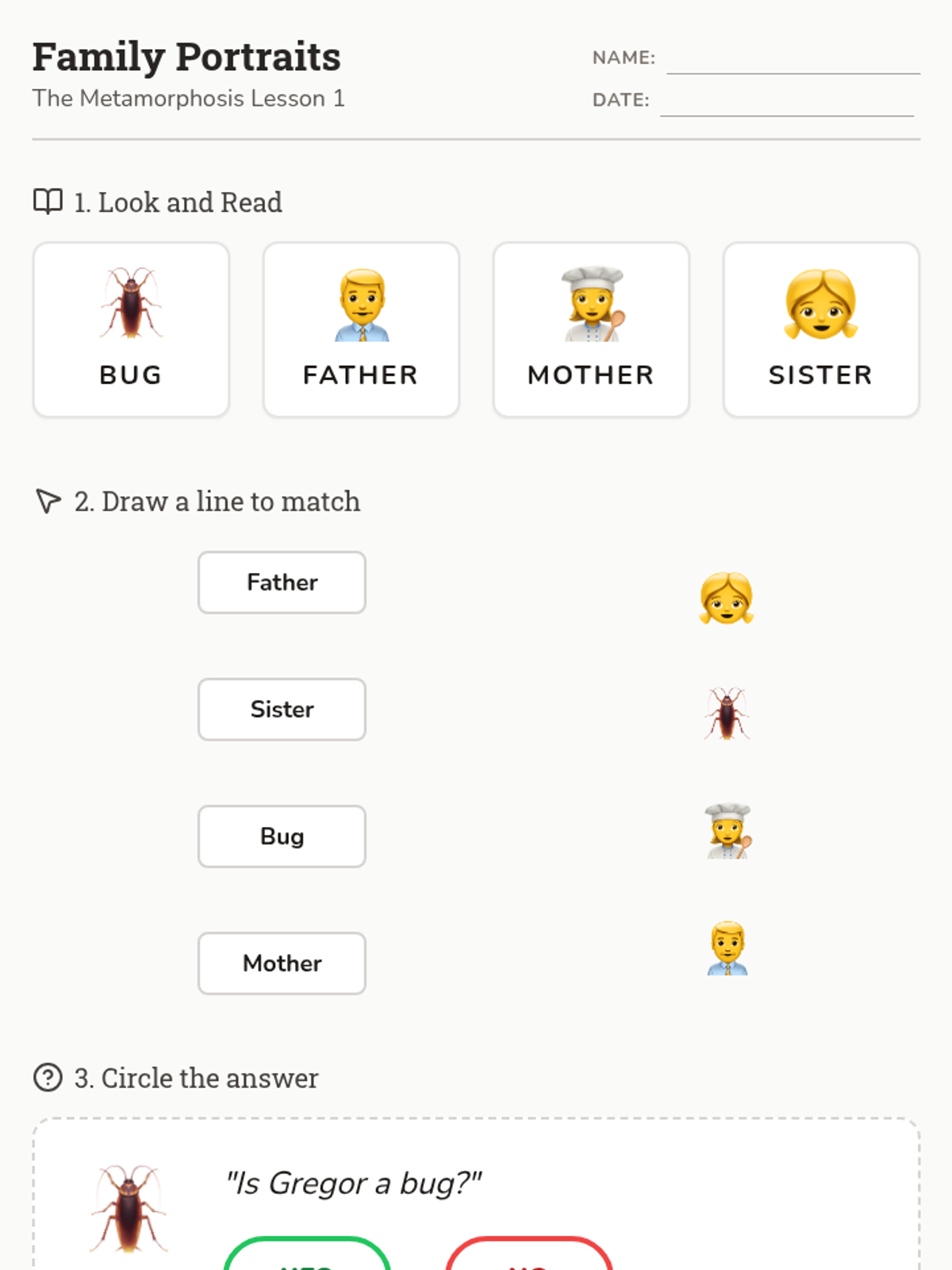
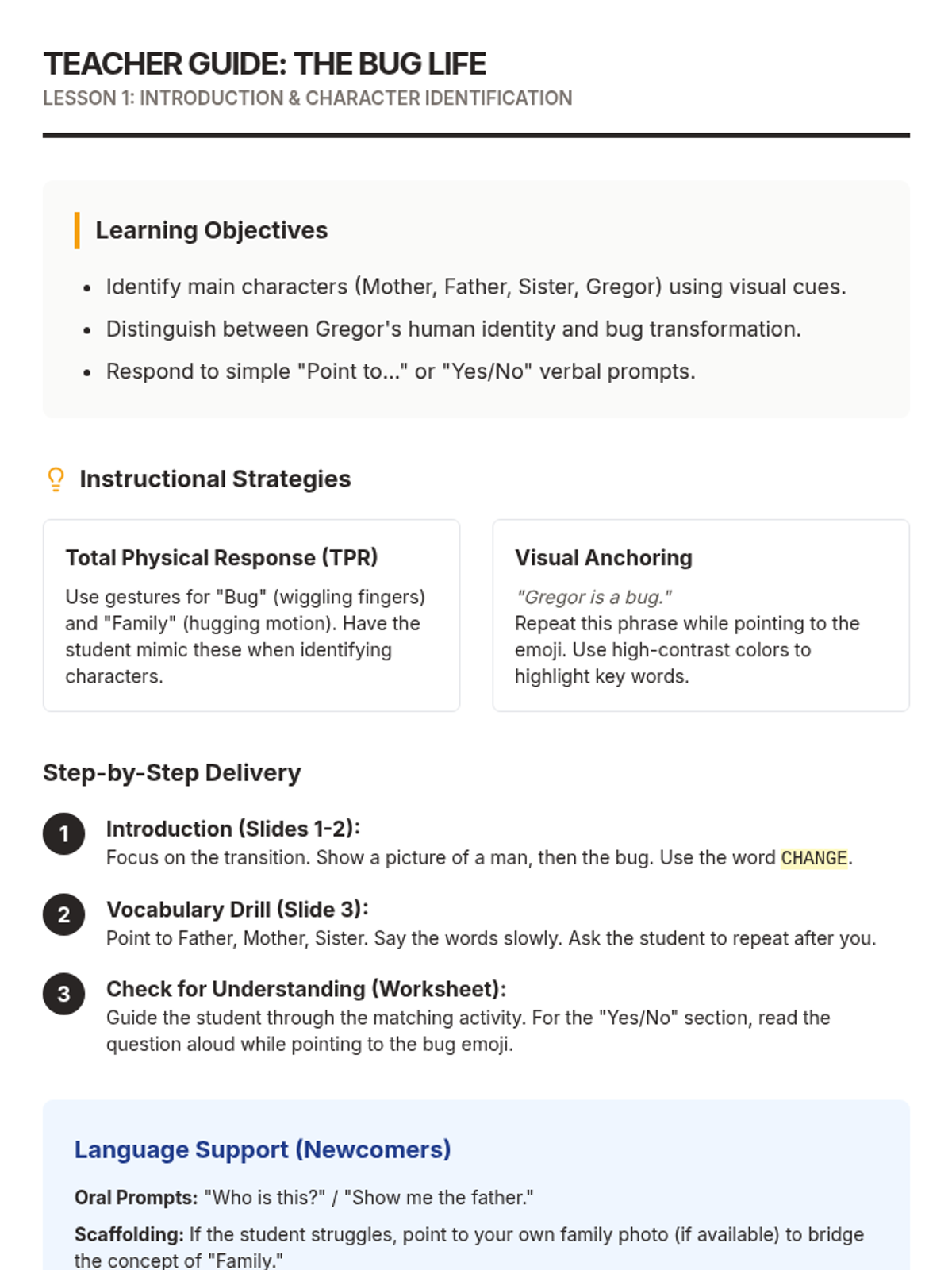
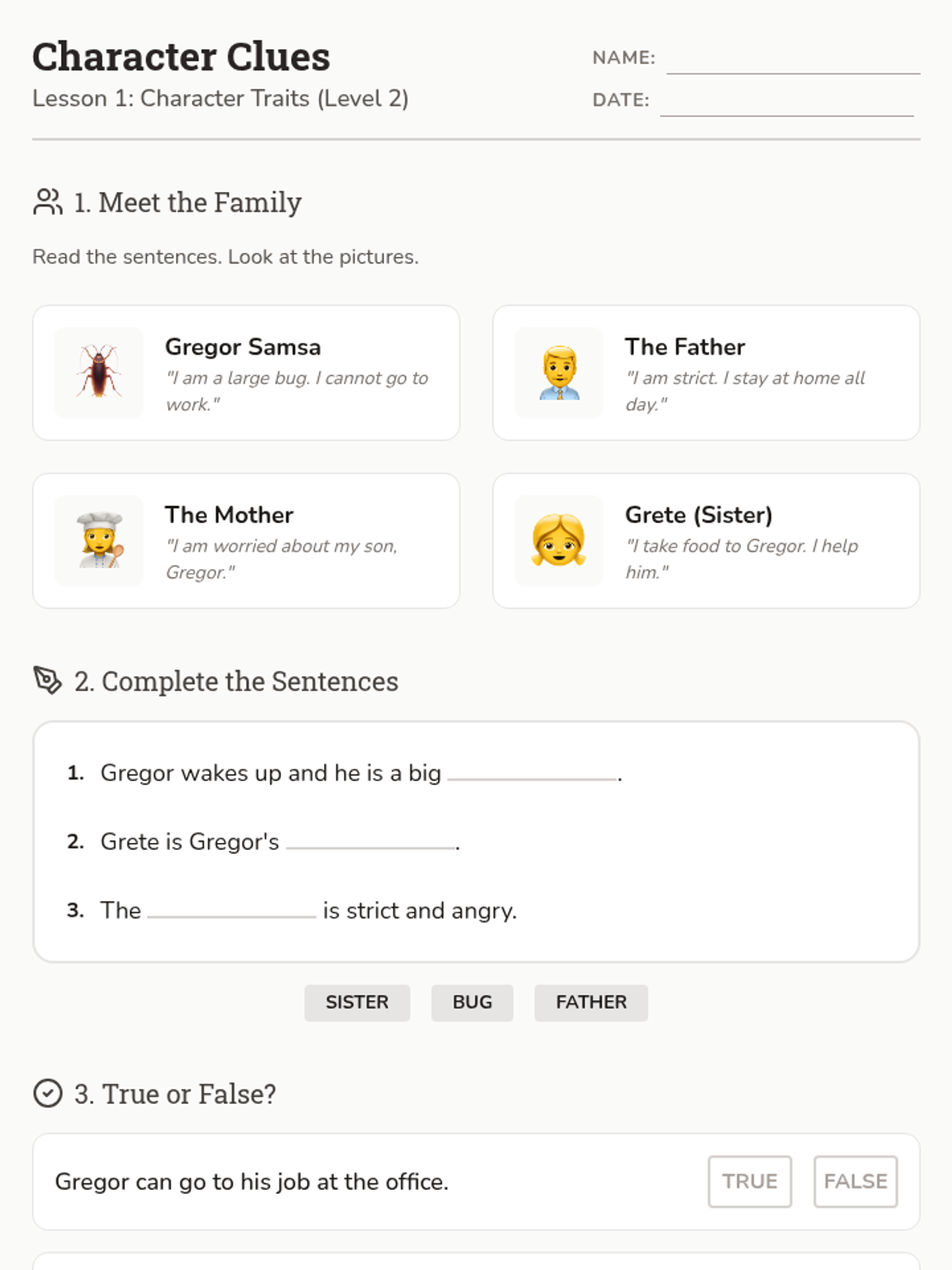
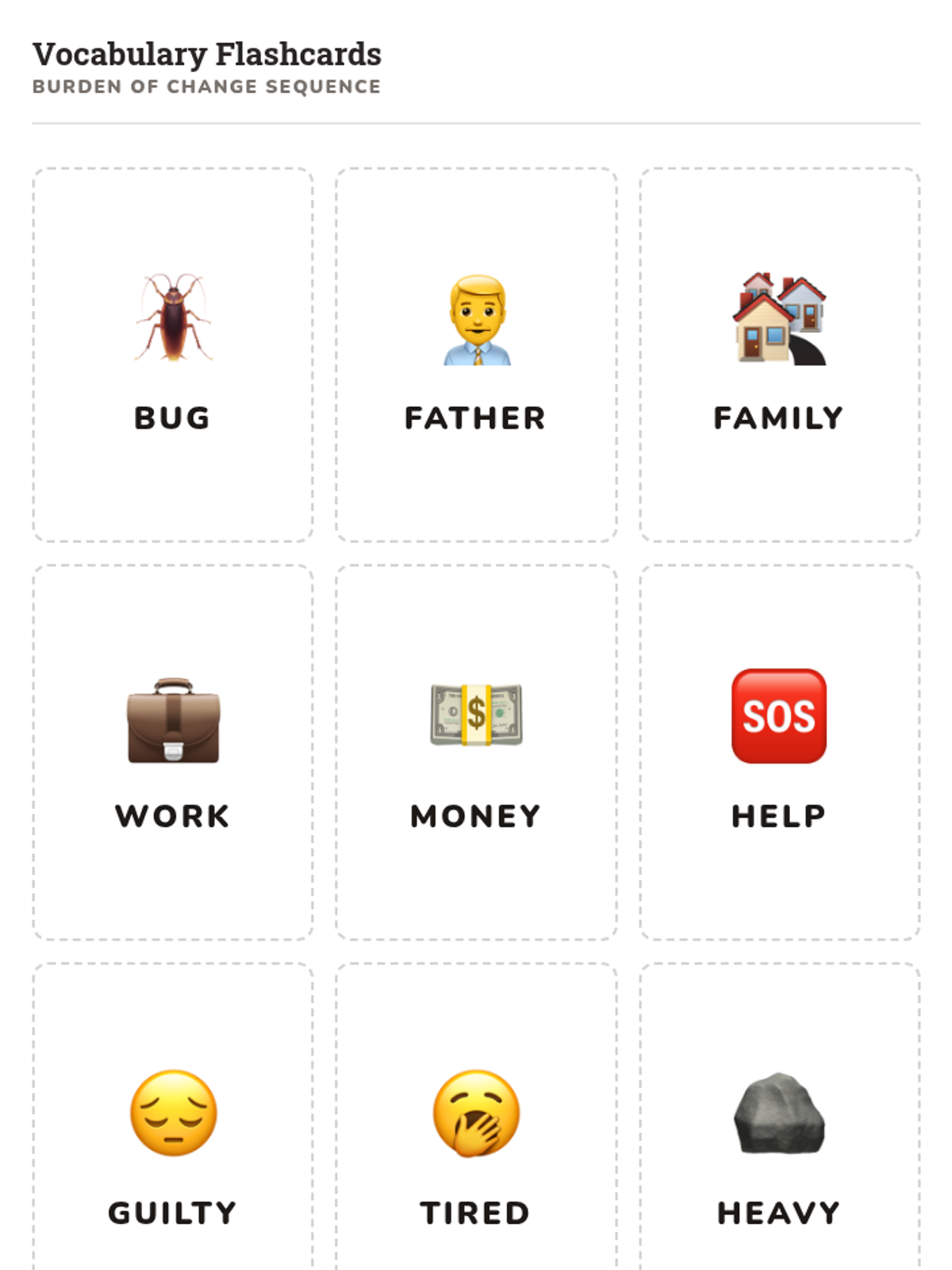
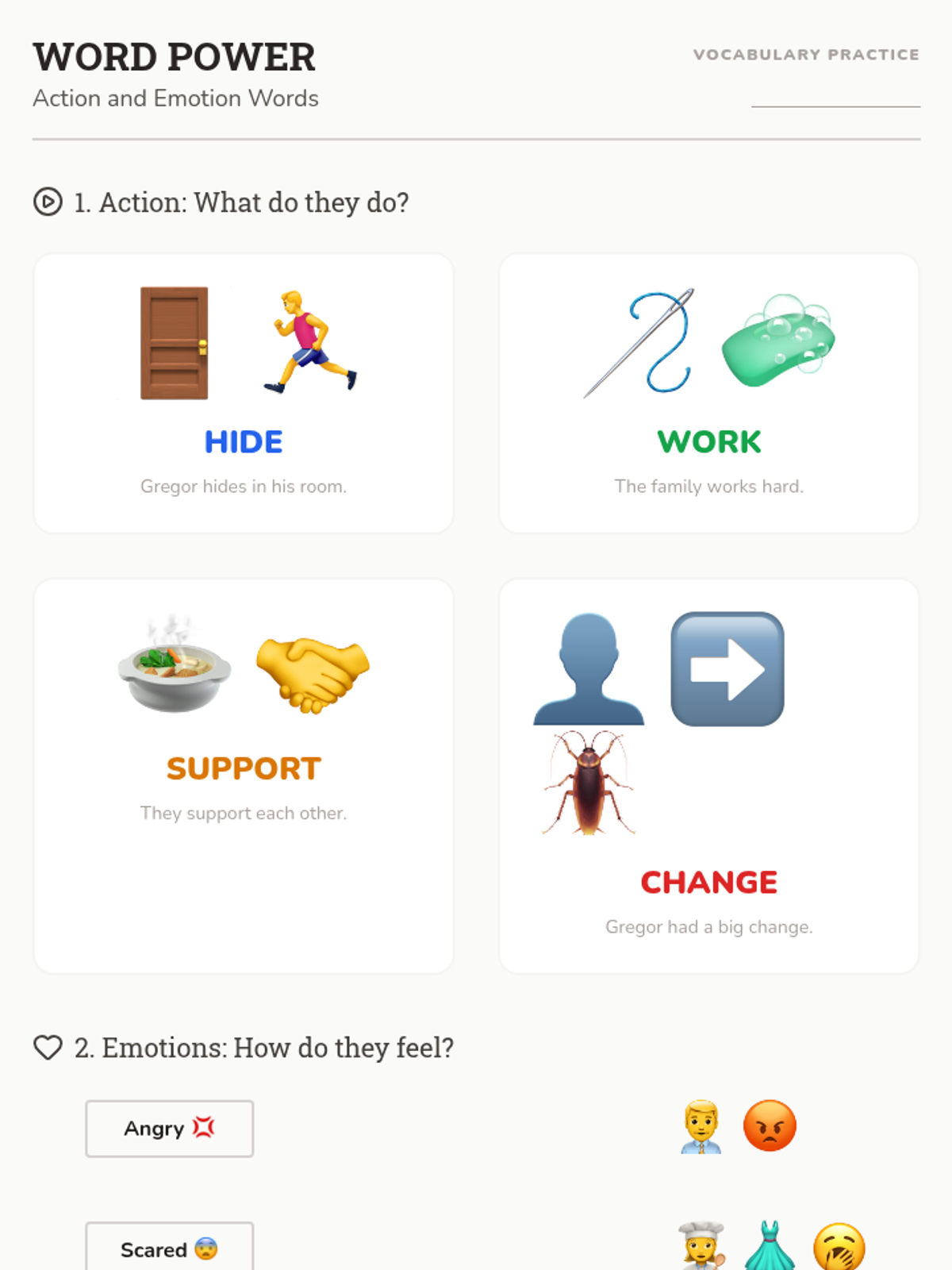
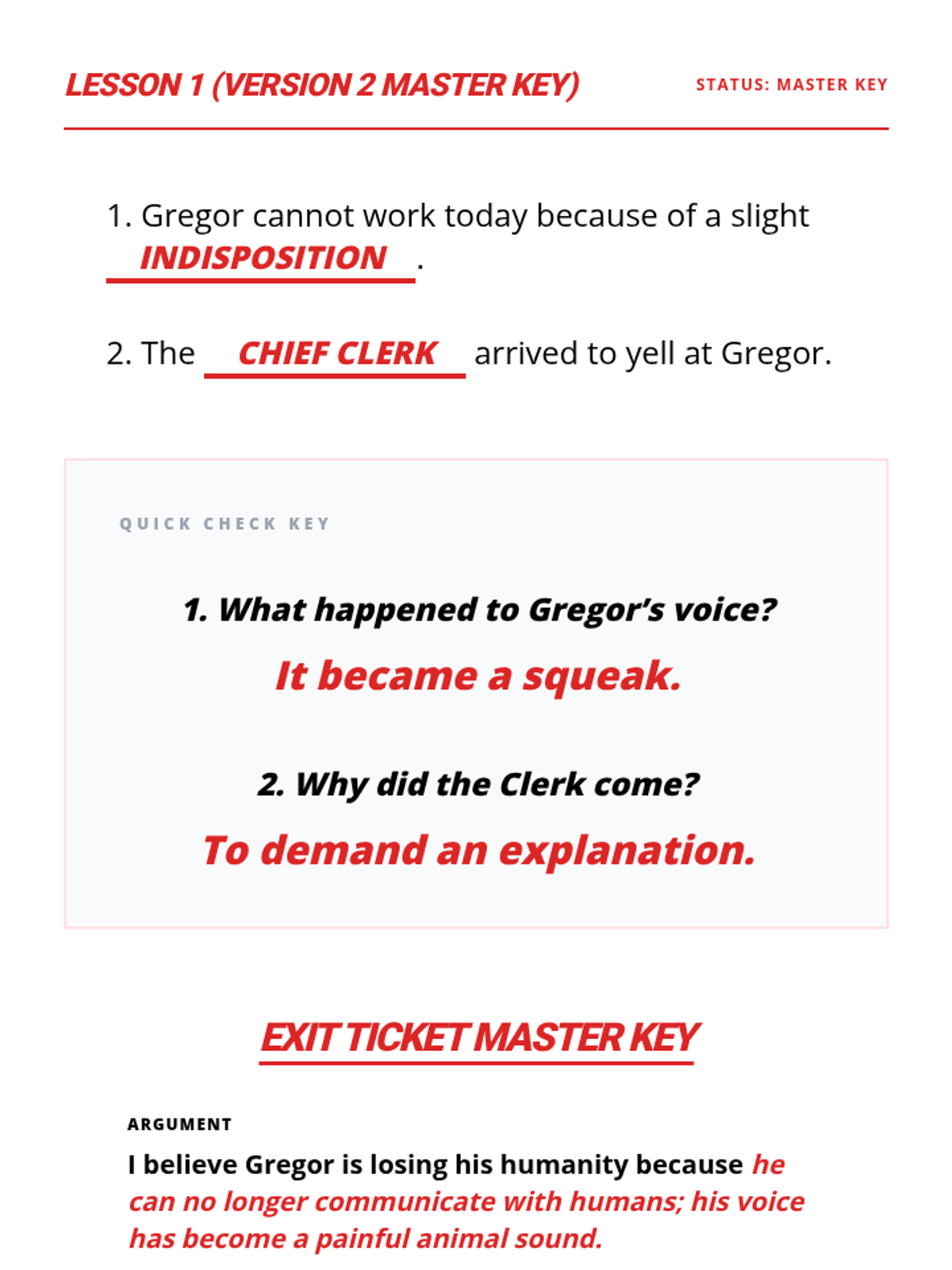
This 5-lesson sequence introduces a 10th-grade newcomer EL student to the theme of family responsibility and guilt in The Metamorphosis. Using heavy visual scaffolding, simple vocabulary, and structured graphic organizers, the lessons build toward a final Claim-Evidence-Reasoning paragraph.
A complete unit for the second part of Chapter 1 of The Metamorphosis, covering reading analysis, grammar skills (commas), and thematic exploration of authority.
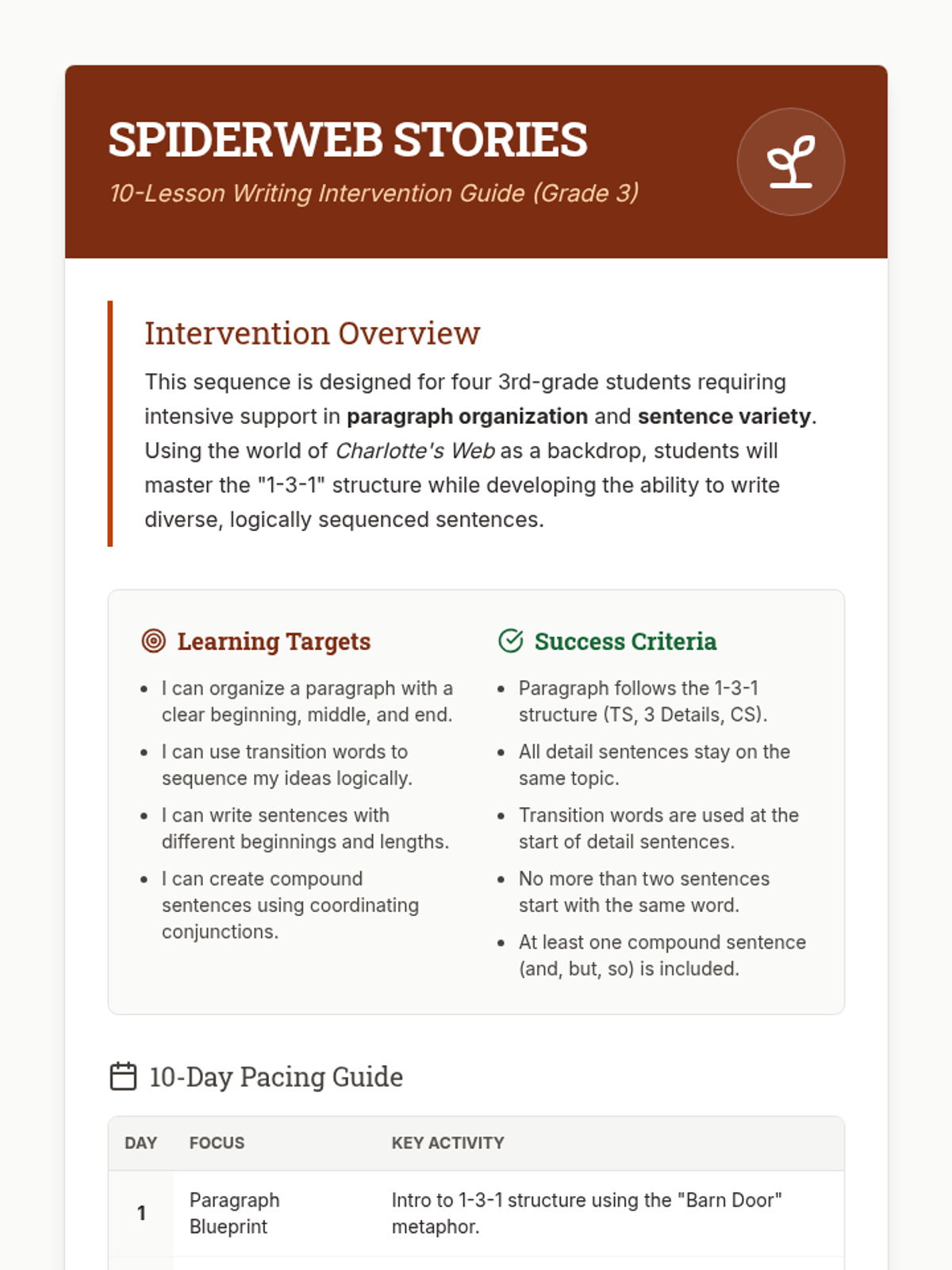
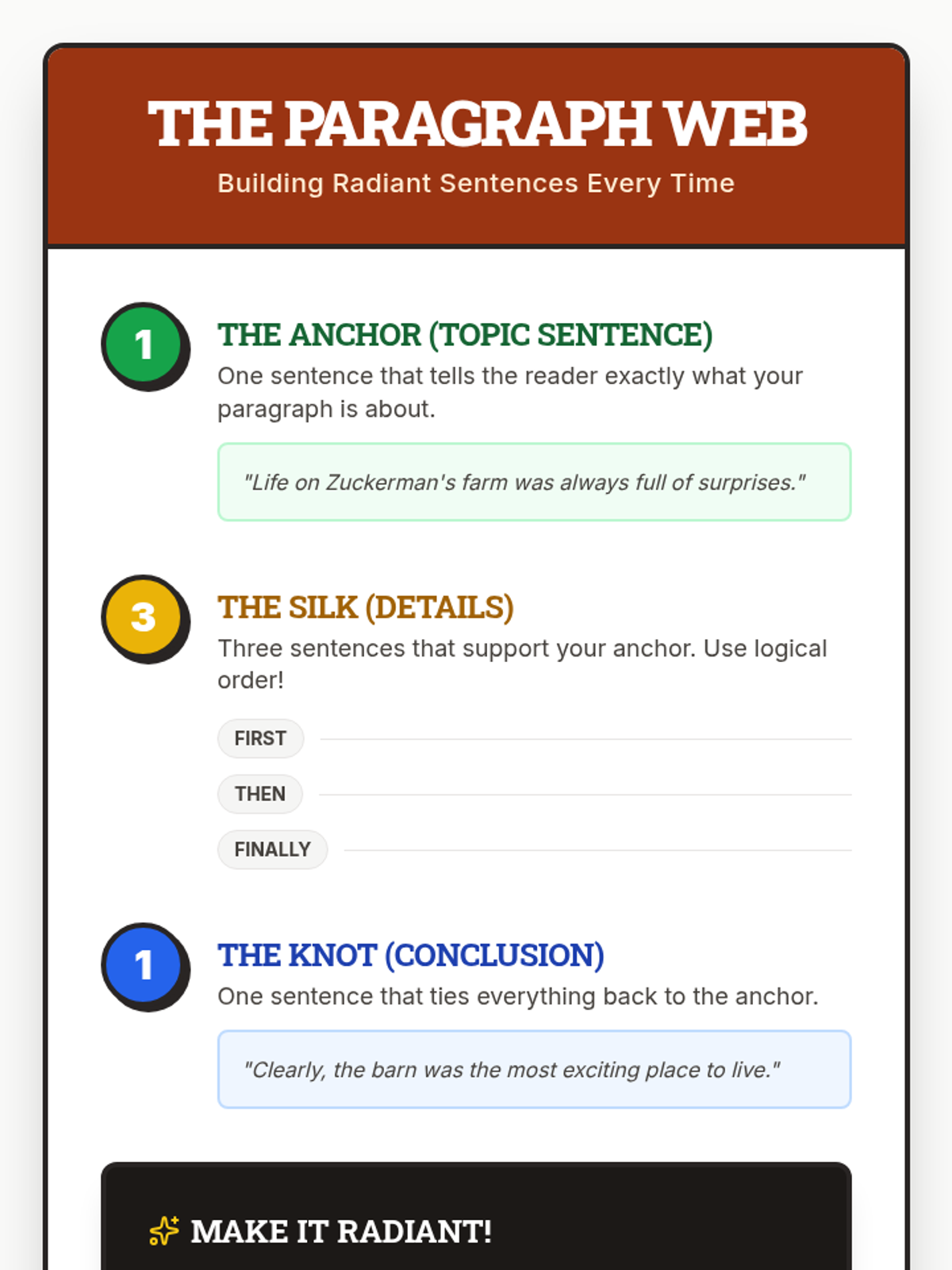
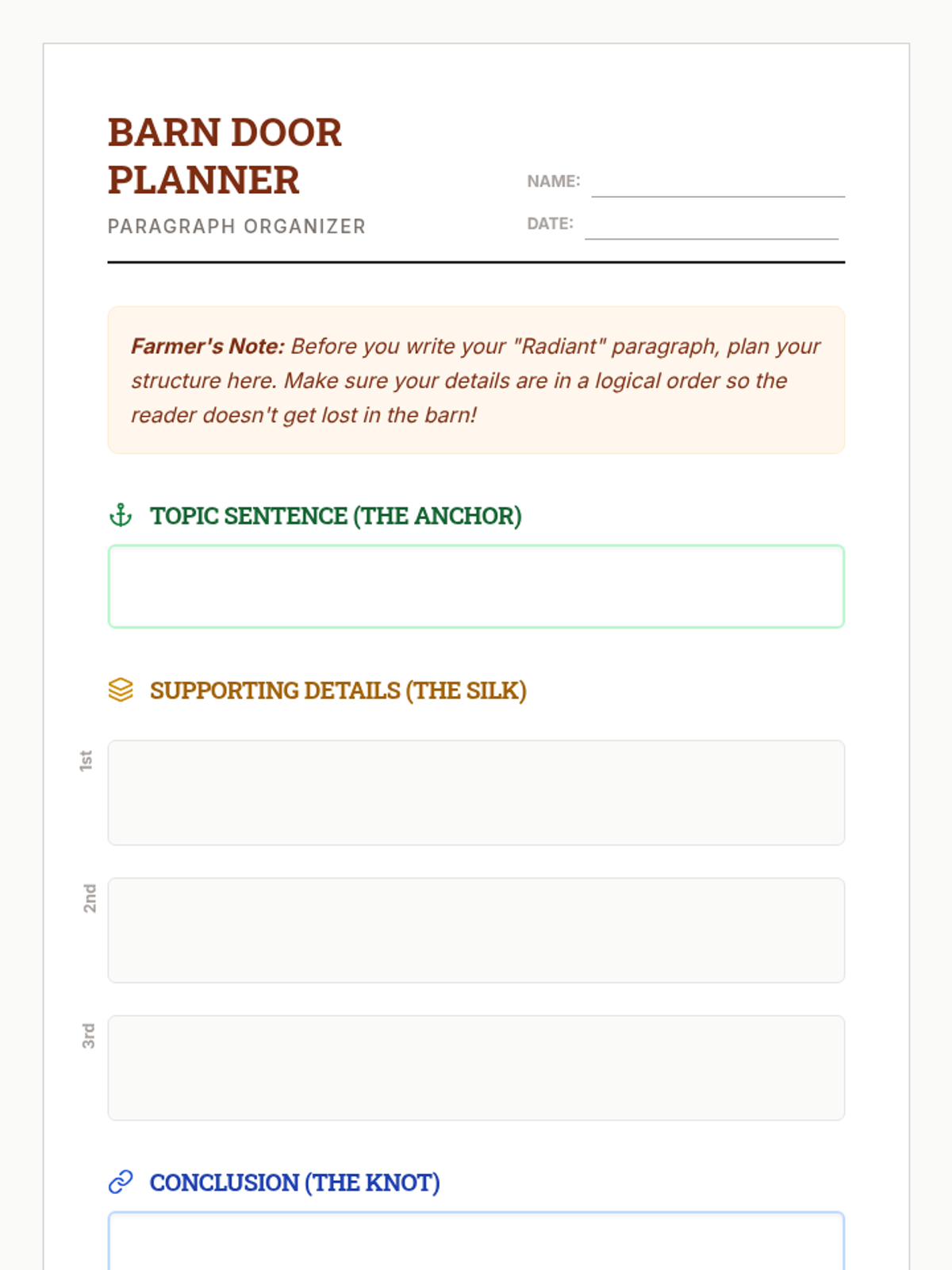
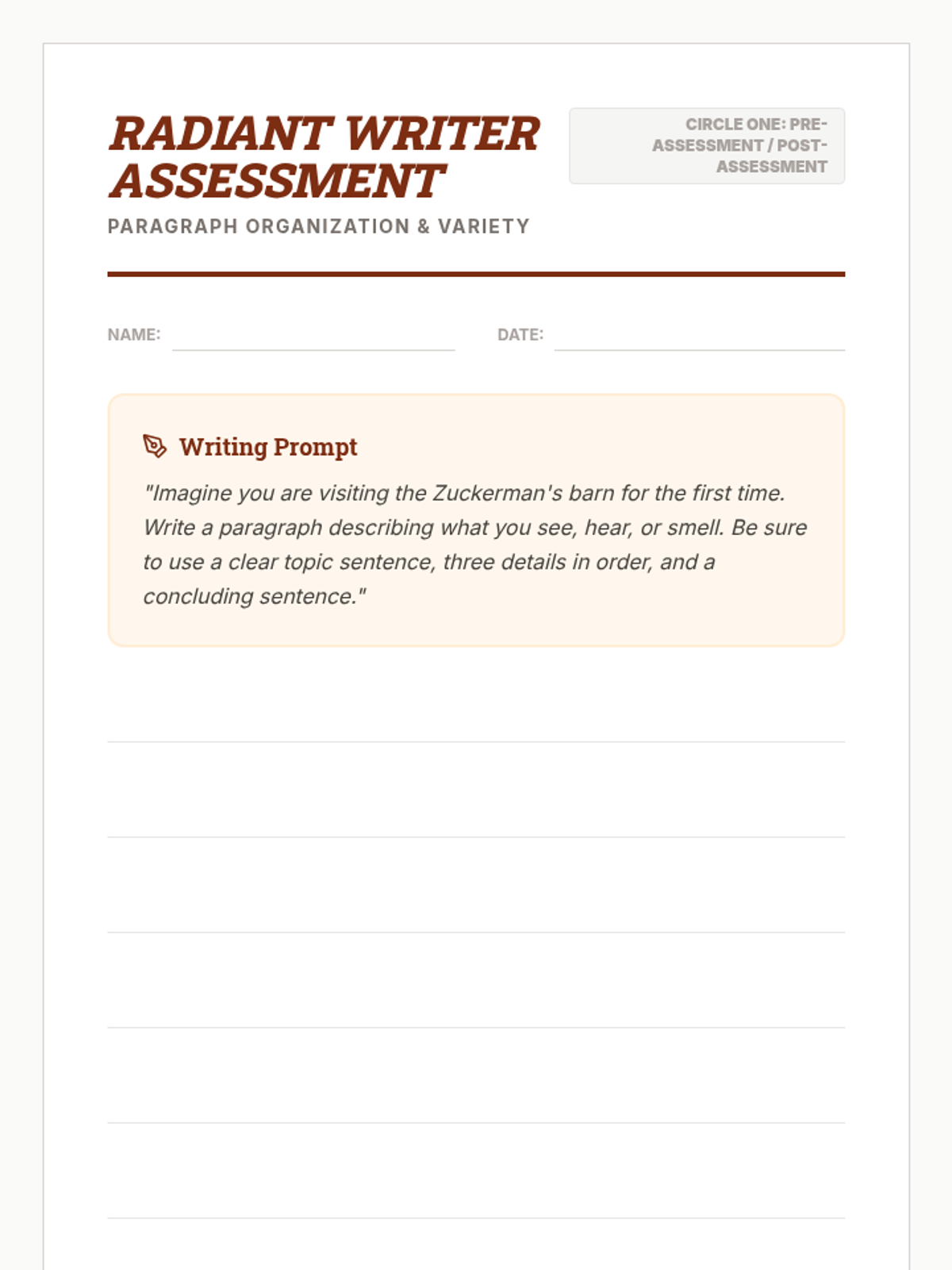
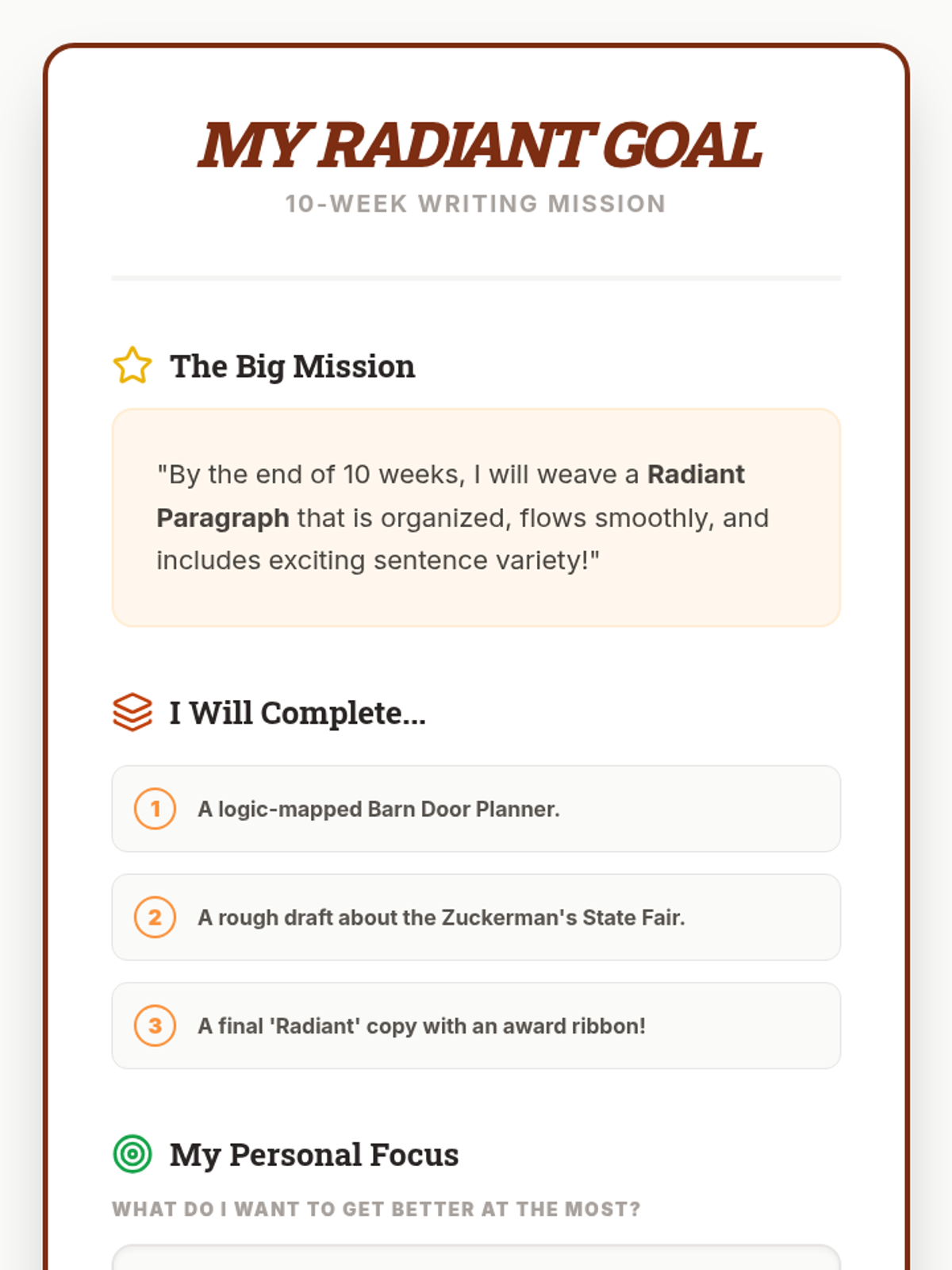
A 10-lesson writing intervention focused on paragraph organization, sequencing, and sentence variety, themed around the classic story Charlotte's Web. Students learn to construct 'radiant' paragraphs with a clear structure and diverse sentence types.
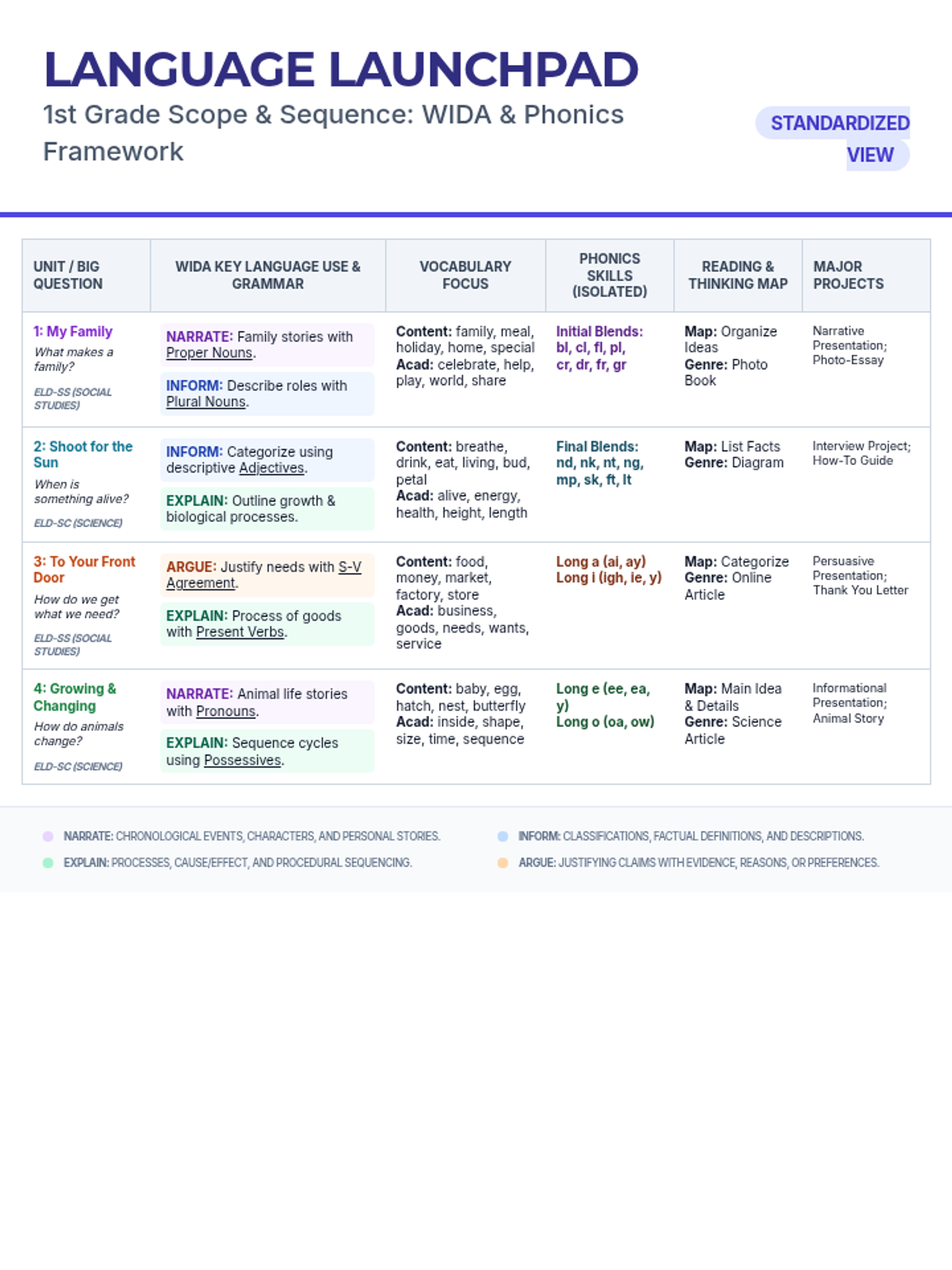
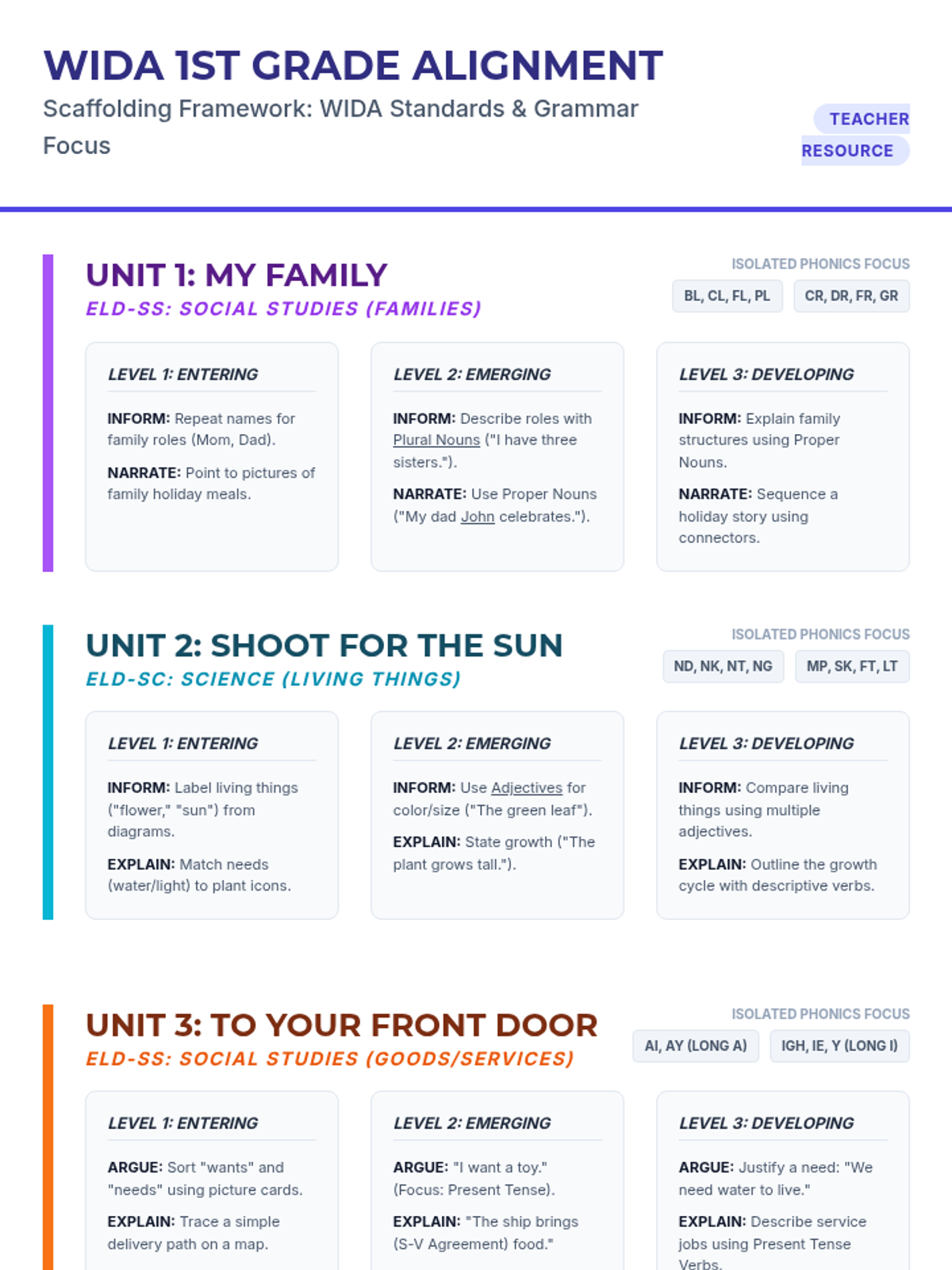
A comprehensive curriculum framework for primary English Language Learners, aligning theme-based social studies and science units with WIDA's four Key Language Uses: Narrate, Inform, Explain, and Argue. This sequence provides instructional scaffolding for students at proficiency levels 1-3.