A 5-lesson unit for 7th-grade students exploring the chemical composition of tobacco and e-cigarettes, focusing on toxicity, nicotine's origins as an insecticide, and environmental impacts.
A structured 7-week engineering curriculum for 12 builders, featuring rotating theme-based challenges, team collaborations, and progressive skill challenges for both Elementary and Middle school students.
A comprehensive 75-minute Lego builder session designed for Elementary (Ages 8-10) and Middle School (Ages 11-13) featuring collaborative engineering, creative themes, and structured challenges.
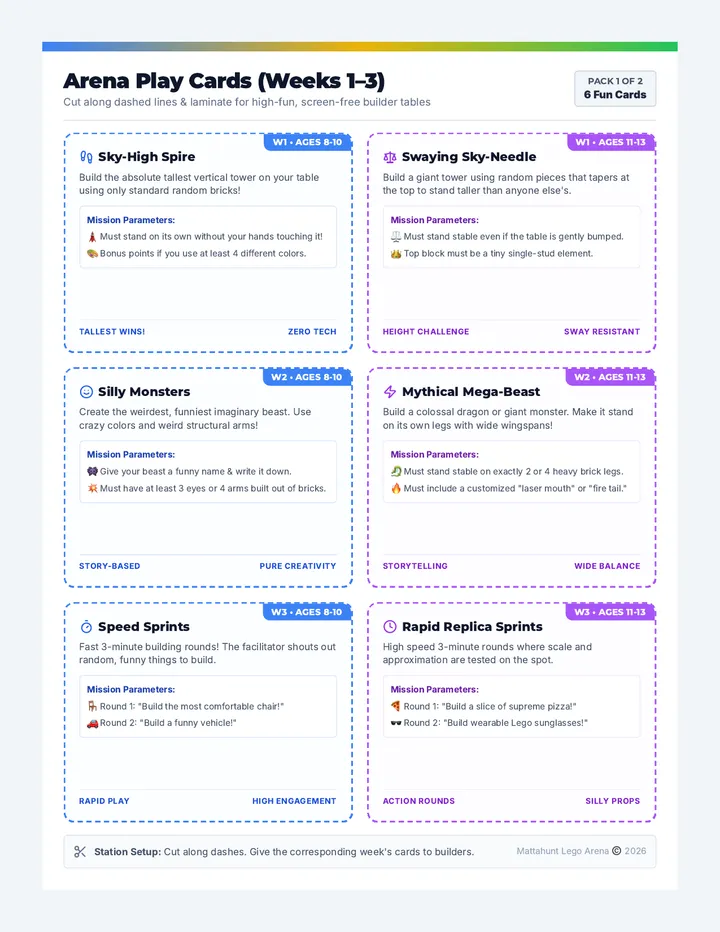
Laminated printable task cards with age-appropriate Lego design challenges, constraints, and engineering prompts for both Elementary and Middle School.
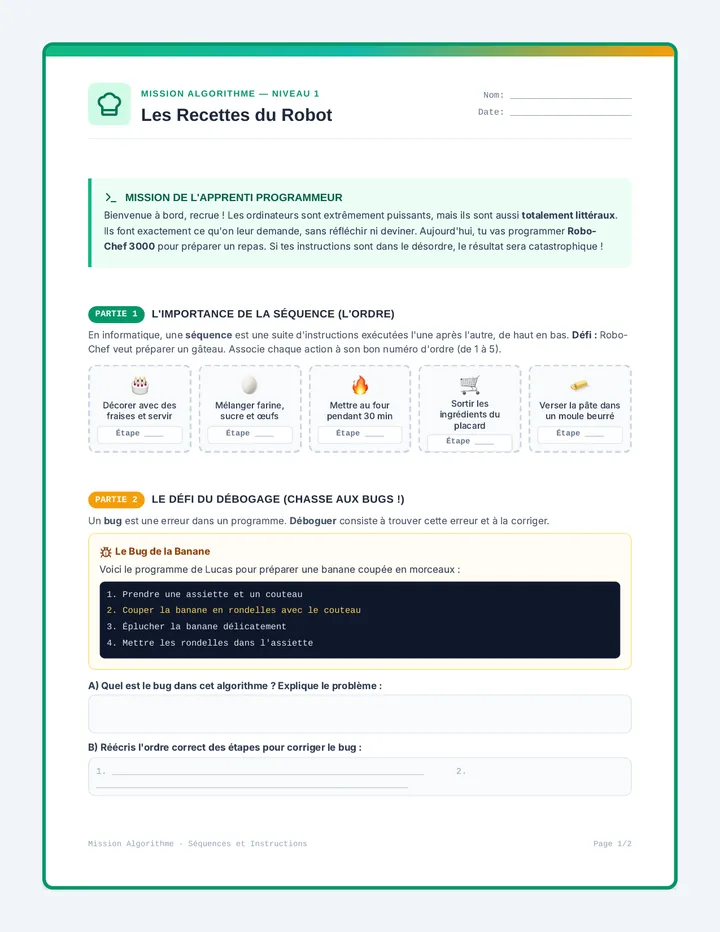
Une séquence d'initiation à l'algorithmique sans code pour débutants absolus. À travers des métaphores concrètes, les apprenants découvrent les trois piliers de la programmation : les séquences d'instructions, les conditions et les boucles.
This lesson explores the hierarchical organization of living organisms from cells to tissues, organs, organ systems, and whole organisms, aligned with NGSS MS/HS-LS1-2 standards.
A high-impact visual slide deck for displaying themes, design rules, timers, and active building prompts during the 75-minute Lego Arena session.
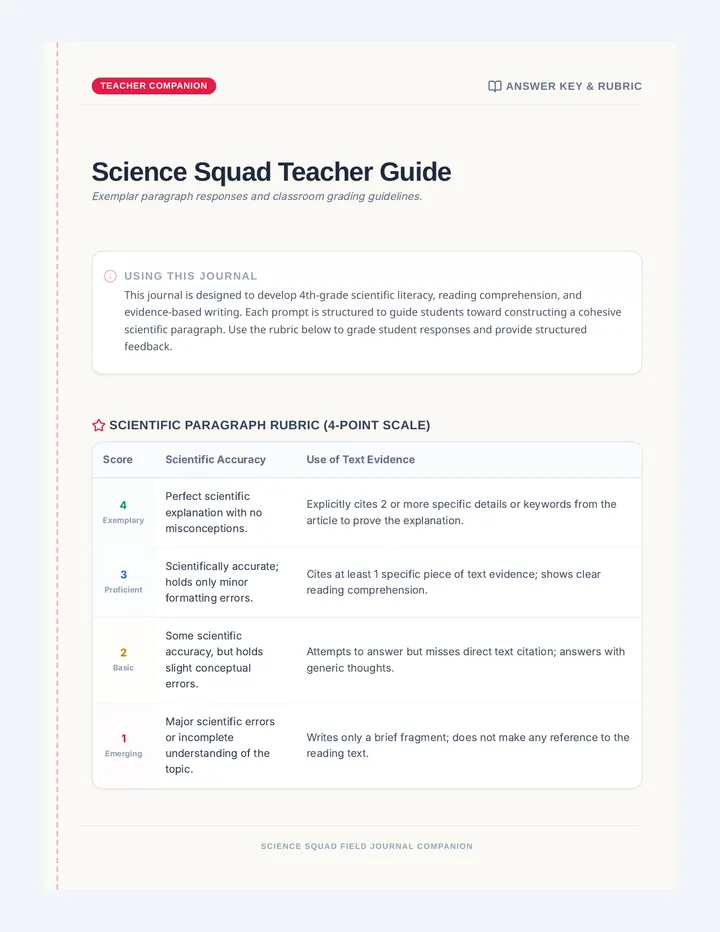
A multi-grade collection of scientific reading comprehension and response booklets designed to build disciplinary literacy in Earth, Life, and Physical sciences across elementary and middle school levels.
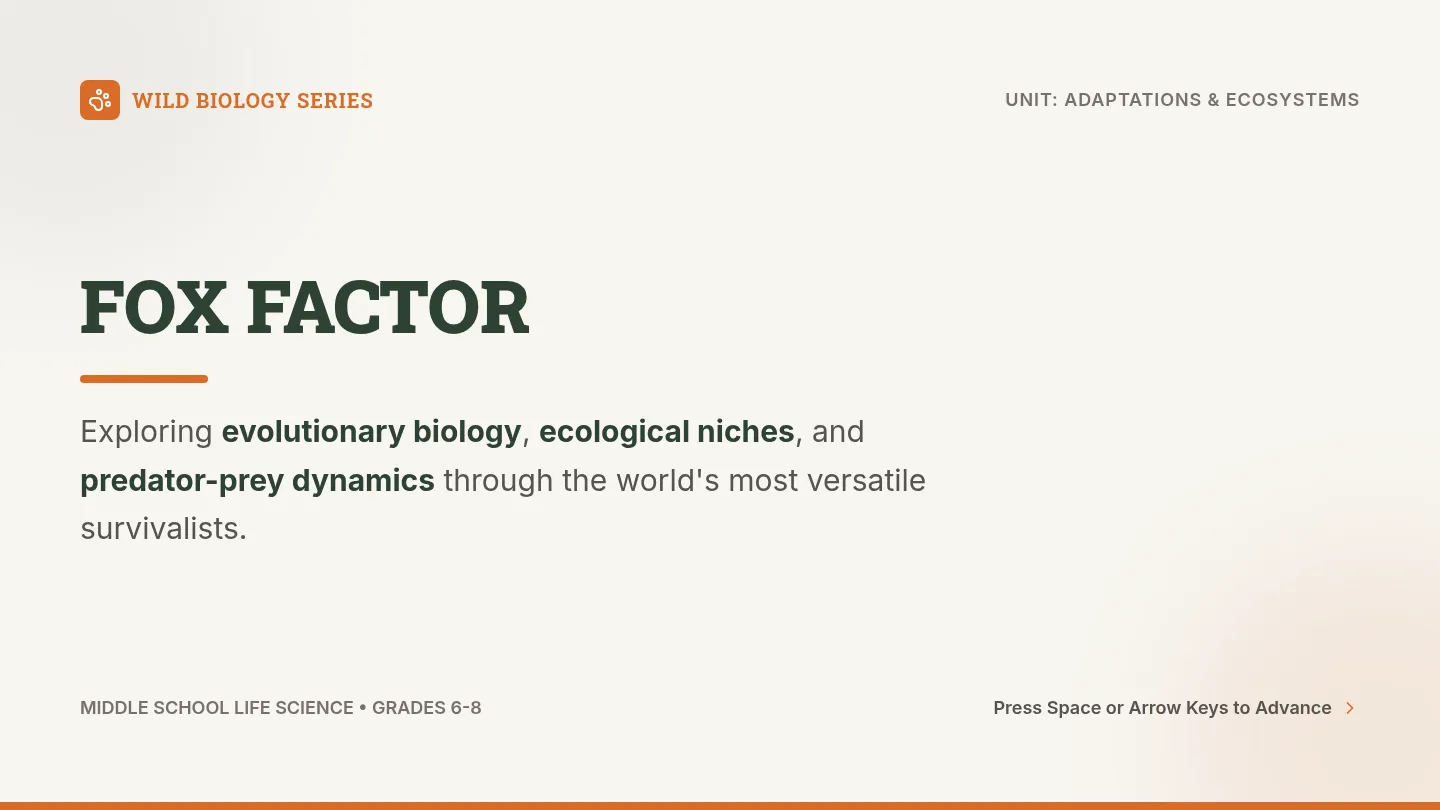
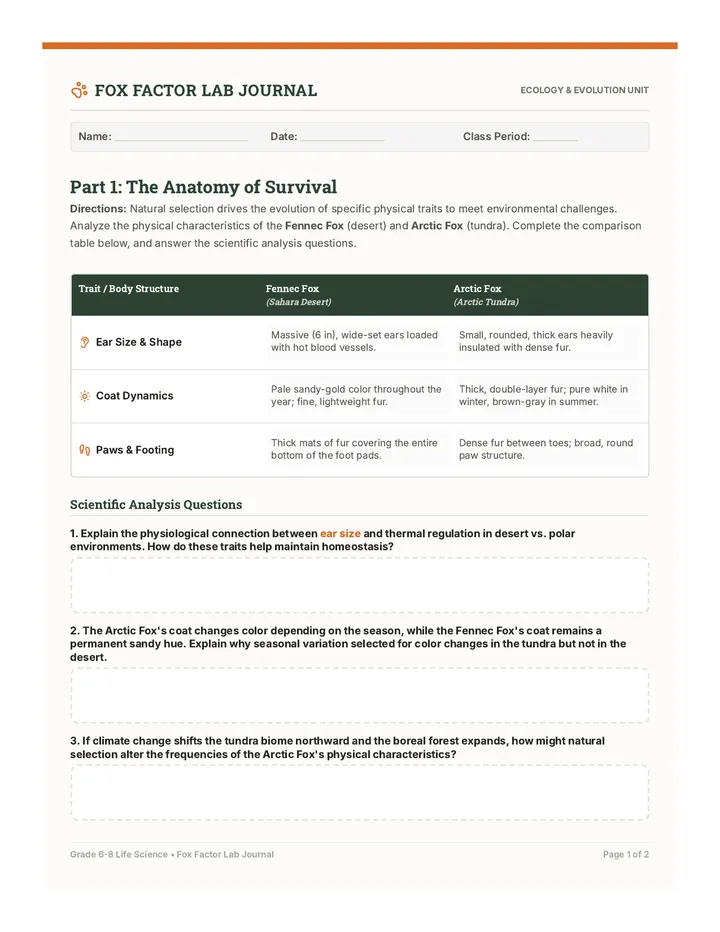
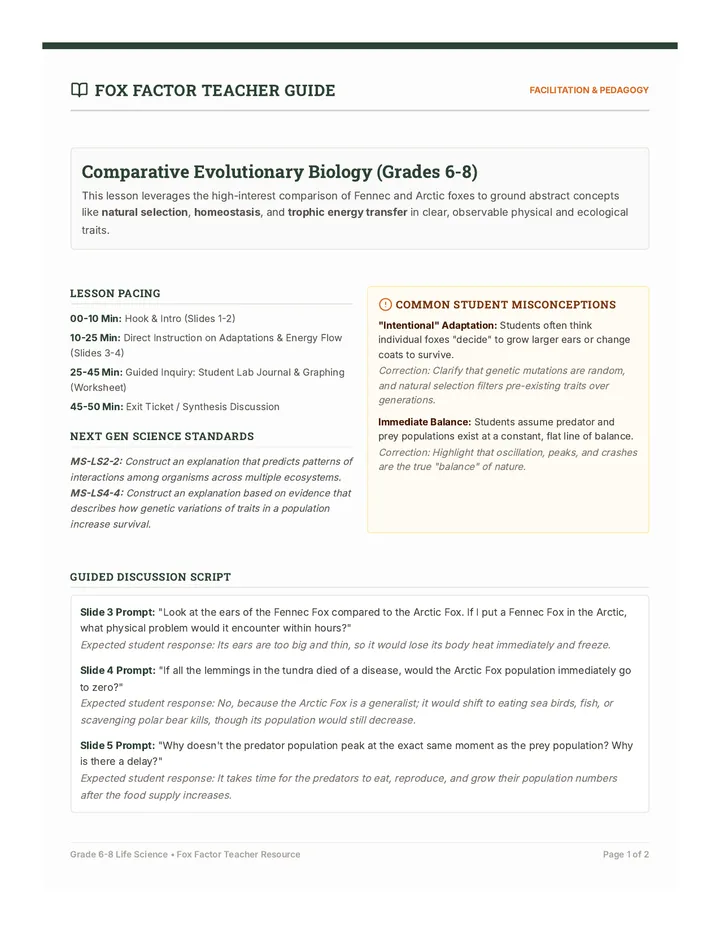
A middle school science lesson exploring evolutionary biology, ecological niches, and predator-prey dynamics through the comparative study of diverse fox species. Students analyze physical adaptations, food webs, and population cycle graphs.
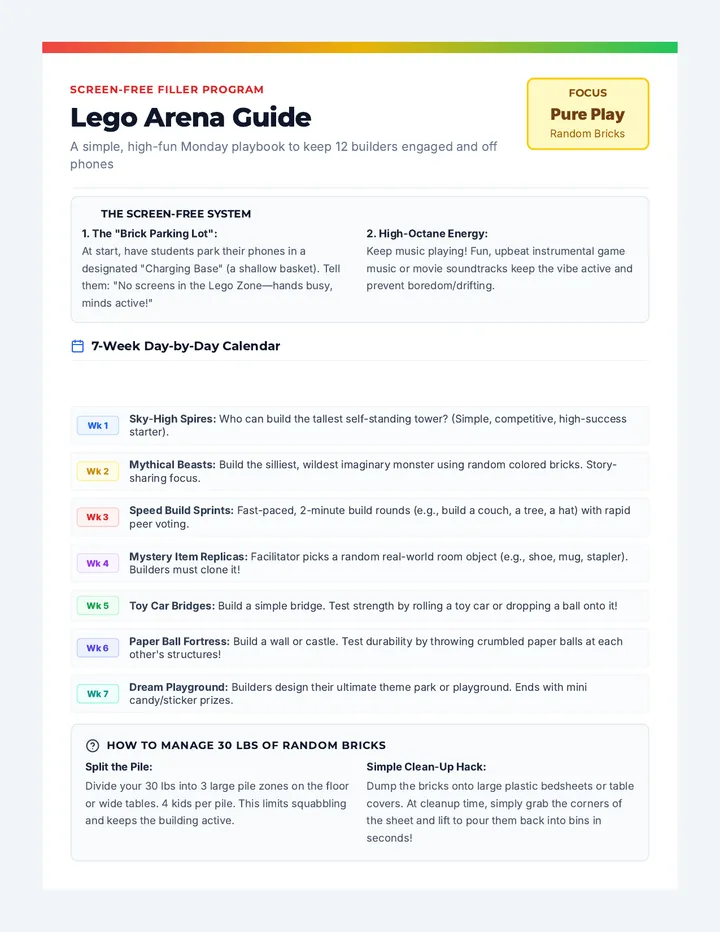
An all-in-one screen-free facilitator guide for a simplified 7-week Lego play program, focusing on high-engagement, phone-free gamified building challenges using random bricks.
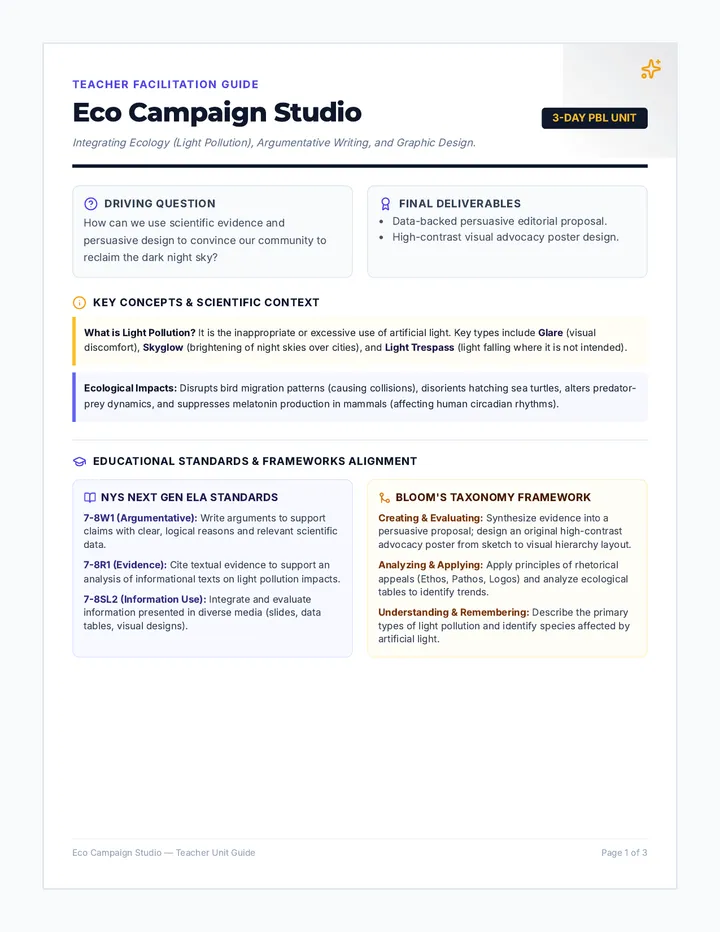
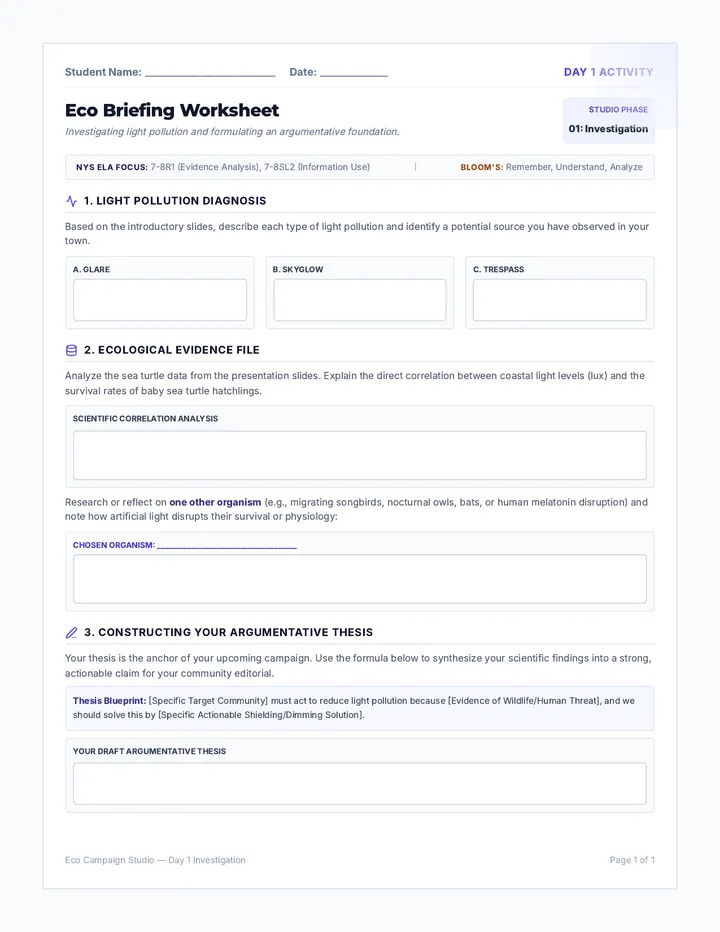
A cross-curricular, 3-day project-based unit combining science, argumentative writing, and graphic design. Students investigate the ecological impacts of light pollution, write a data-driven persuasive proposal, and design a community awareness campaign poster.
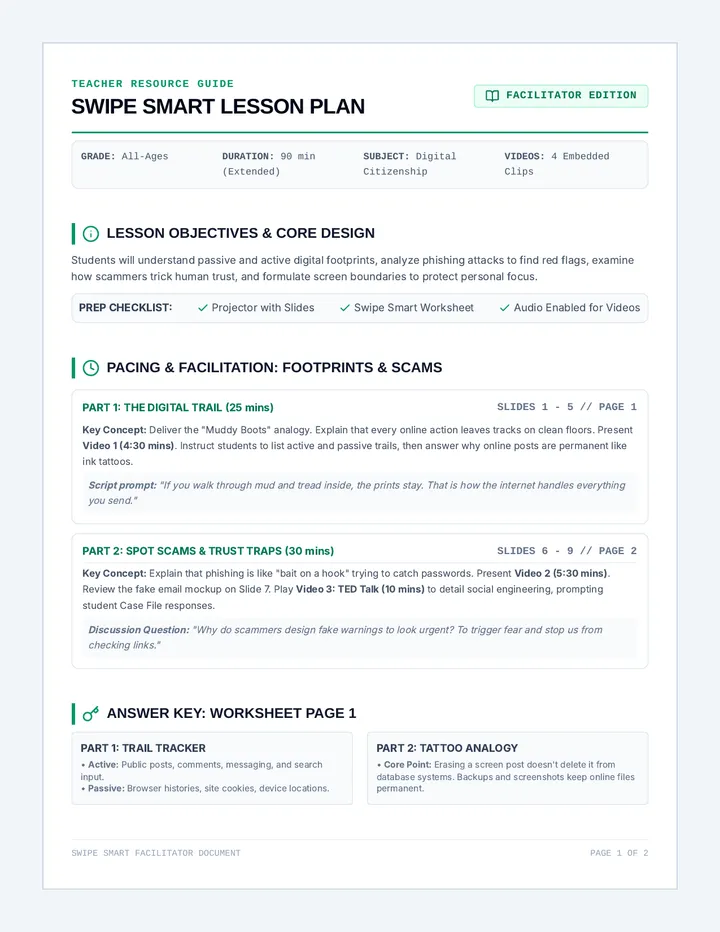
A comprehensive online safety curriculum combining key digital citizenship concepts: managing digital footprints, identifying online scams and phishing, and establishing healthy screen time habits.
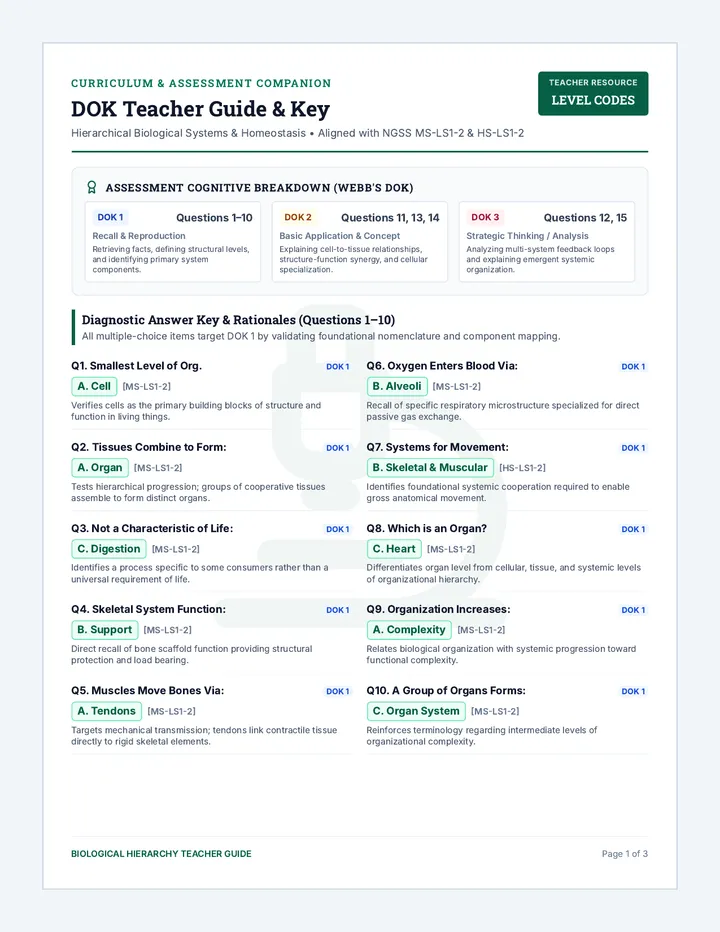
A premium 3-page teacher guide and coded answer key mapping biological hierarchy questions (MS/HS-LS1-2) to Webb's Depth of Knowledge (DOK) levels. Includes detailed rationales, multi-sentence college-bound exemplar responses, granular analytical rubrics, and pedagogical strategies for scaffolding and extension.