This sequence introduces 3rd-grade students to coordinate geometry and spatial reasoning. Students progress from using relative positional vocabulary to navigating absolute alpha-numeric grids, culminating in mapping and city planning projects.
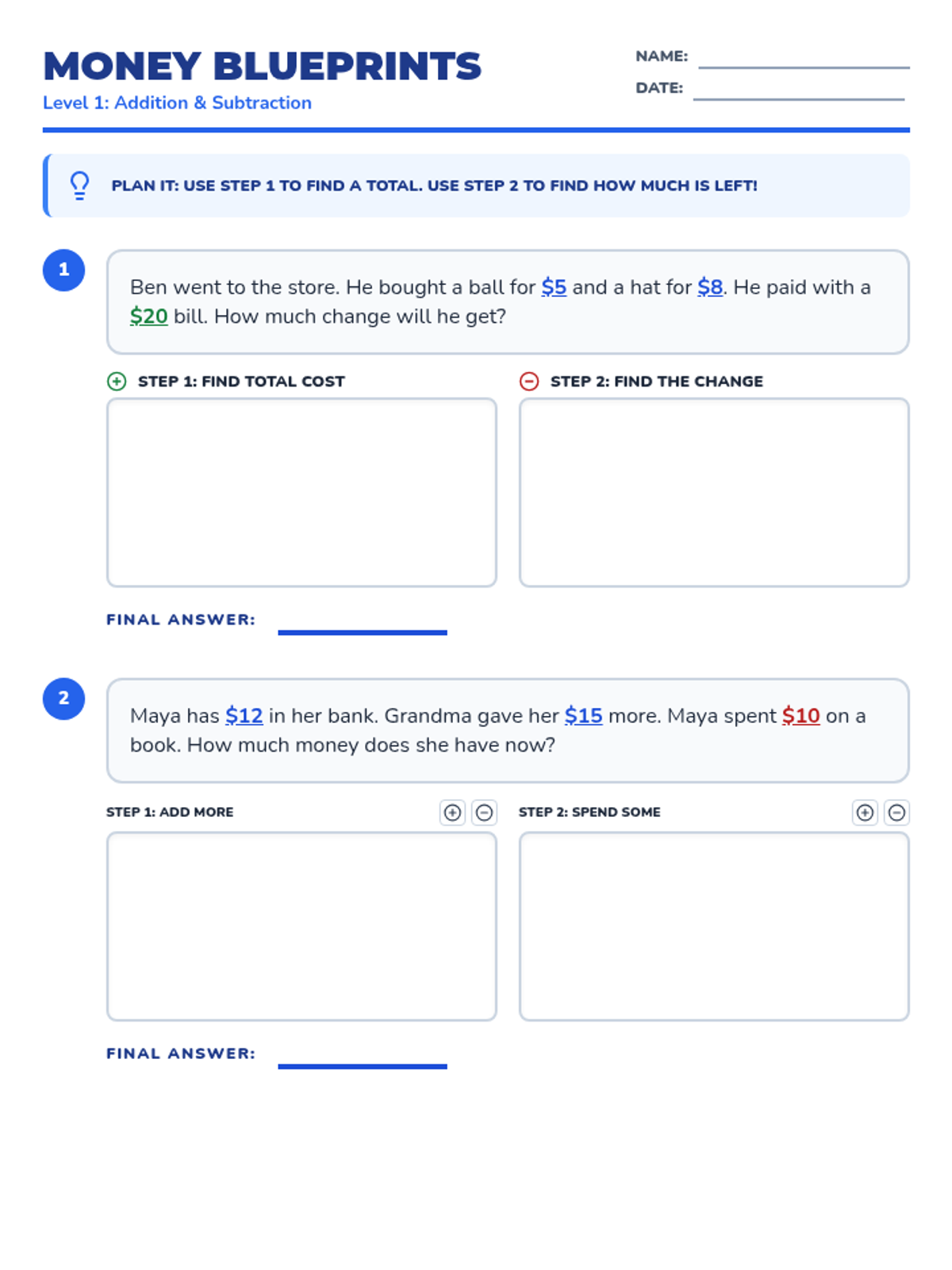
A comprehensive week-long math unit focused on identifying coin values and performing addition and subtraction of money up to $20 using a calculator in real-world contexts.
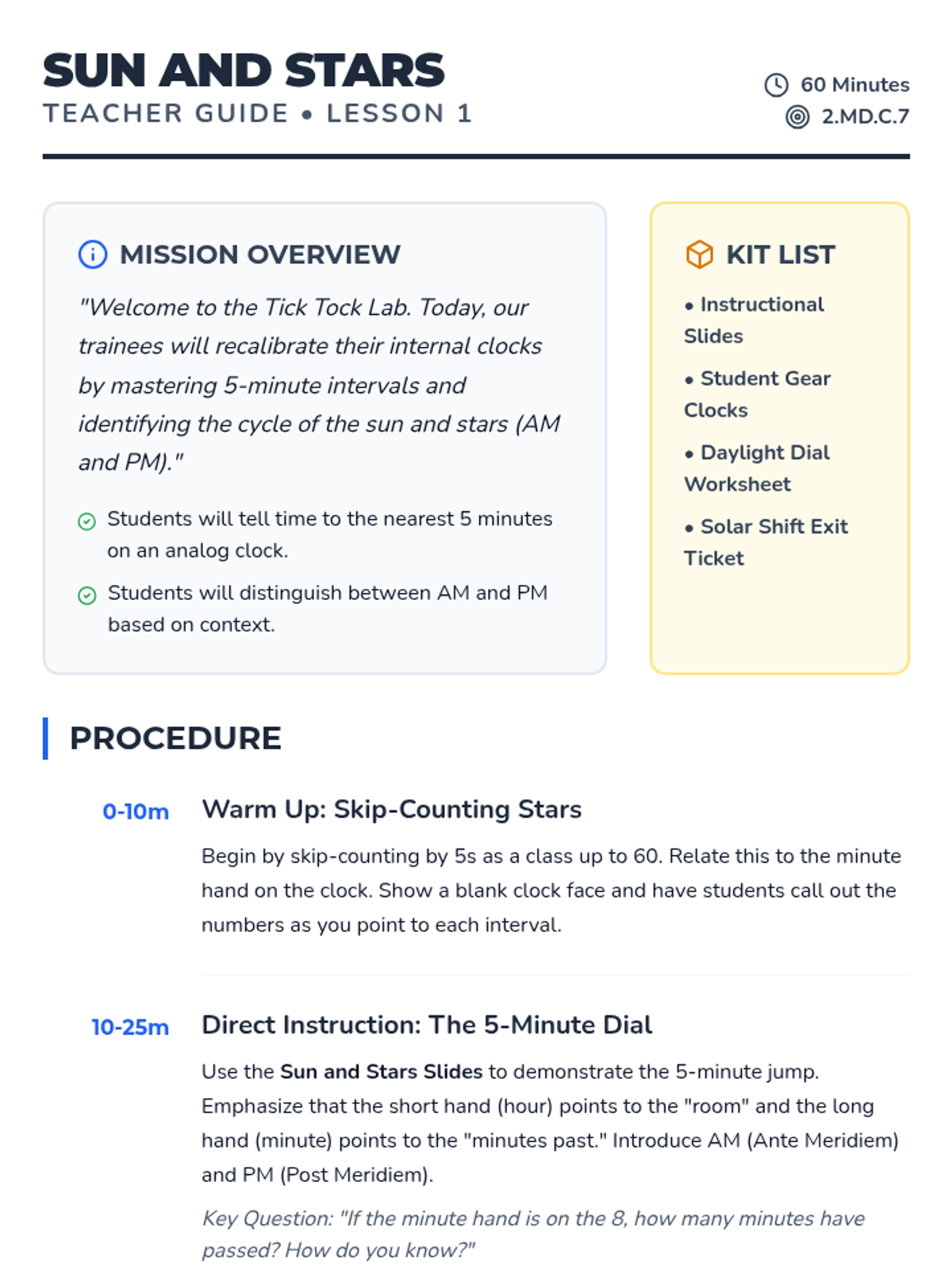
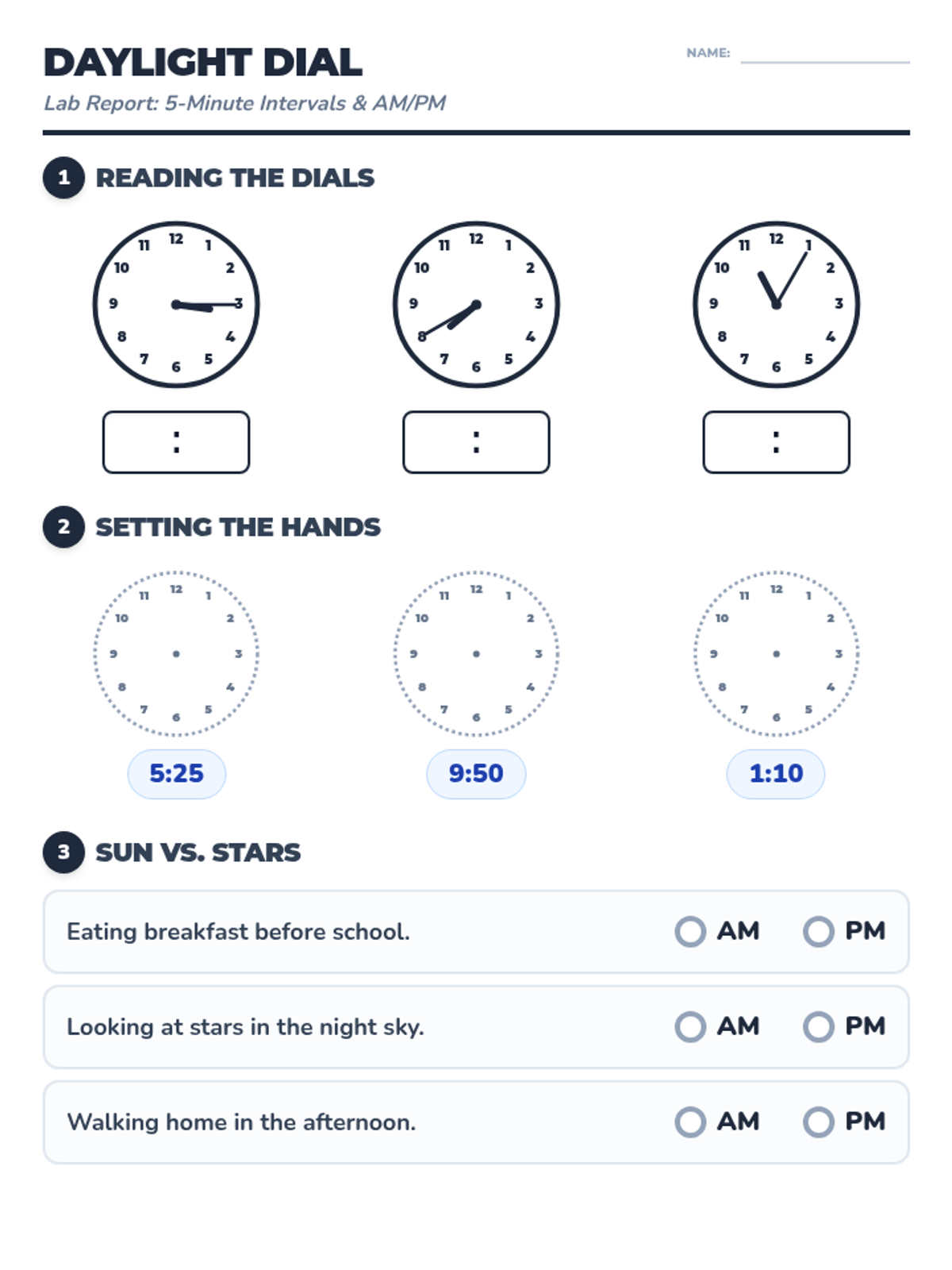
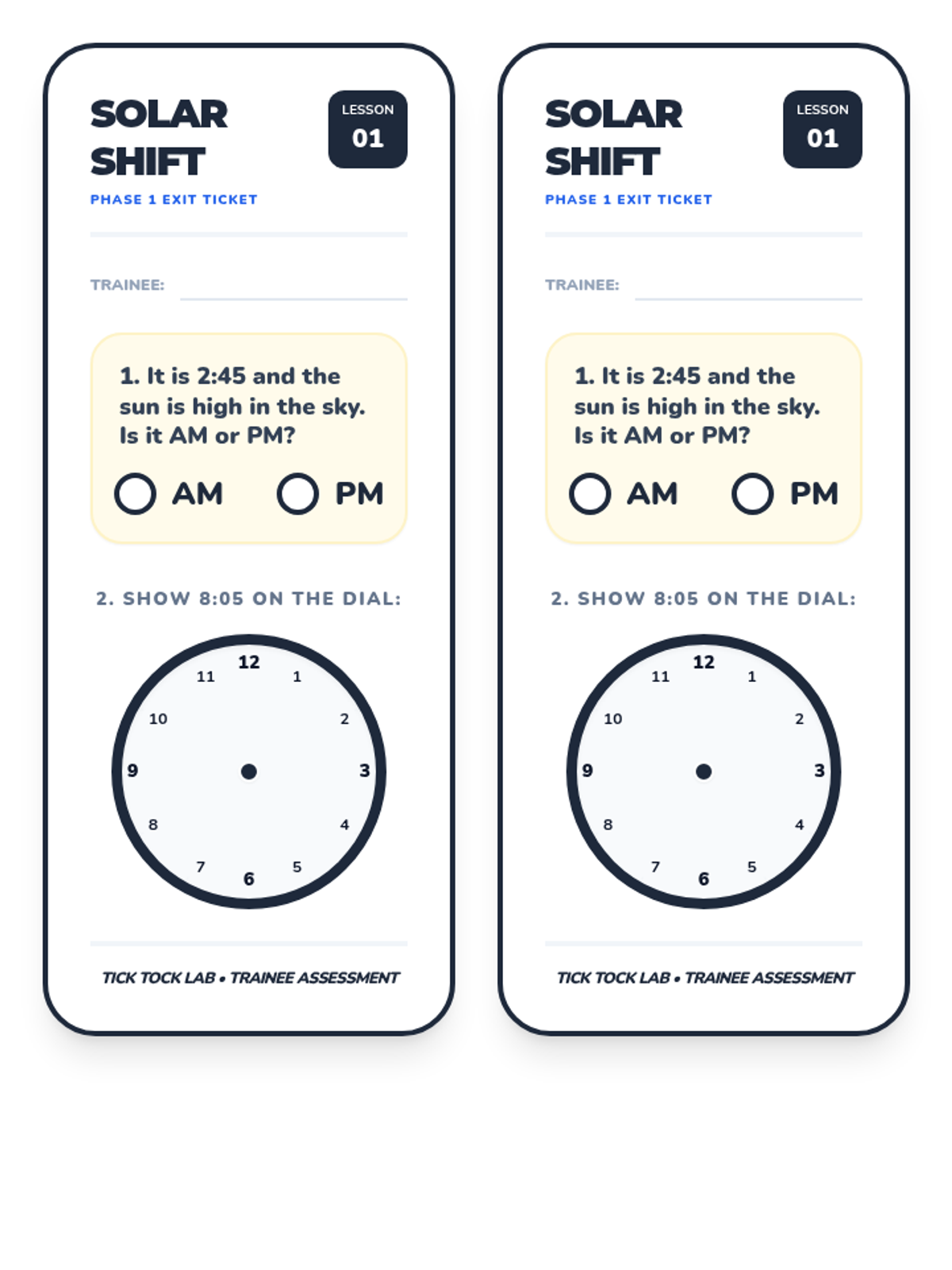
A comprehensive unit on calculating elapsed time, progressing from simple one-hour intervals to quarter-hour and five-minute increments using scenarios and analog clocks.
A 3-day math sequence for 3rd graders focused on multiplication comparisons and identifying patterns in tables using a fun Toy Factory theme.
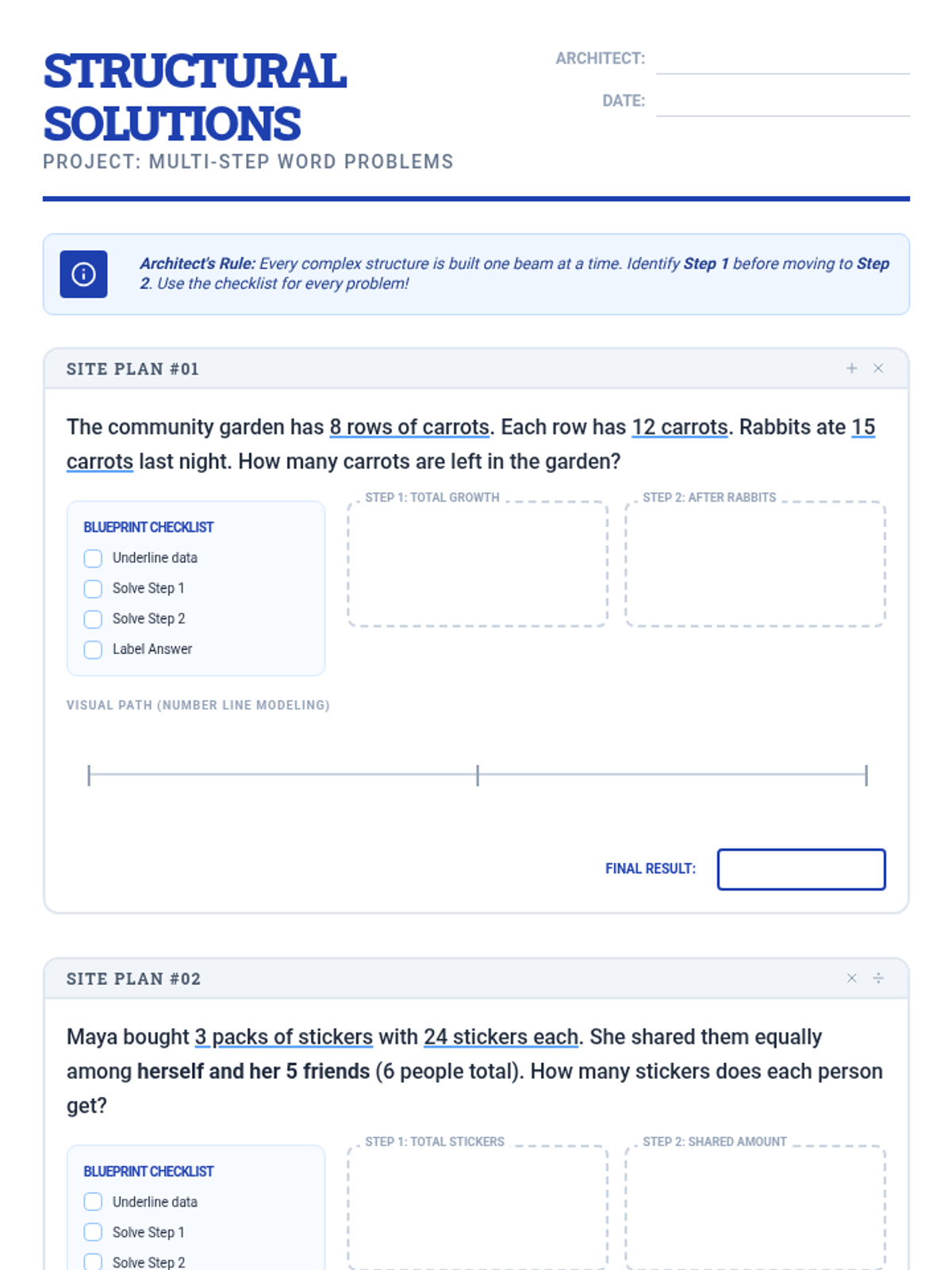
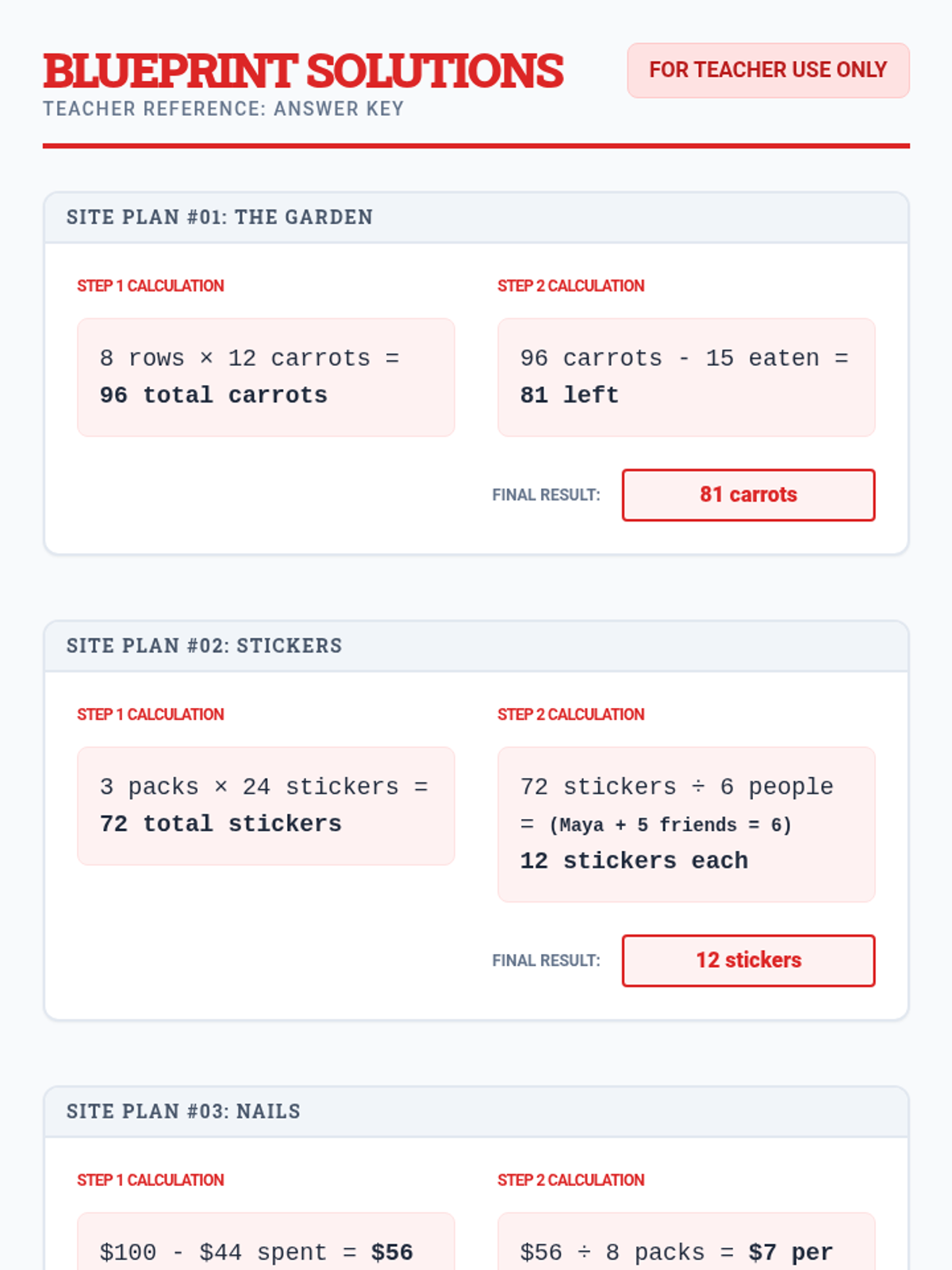
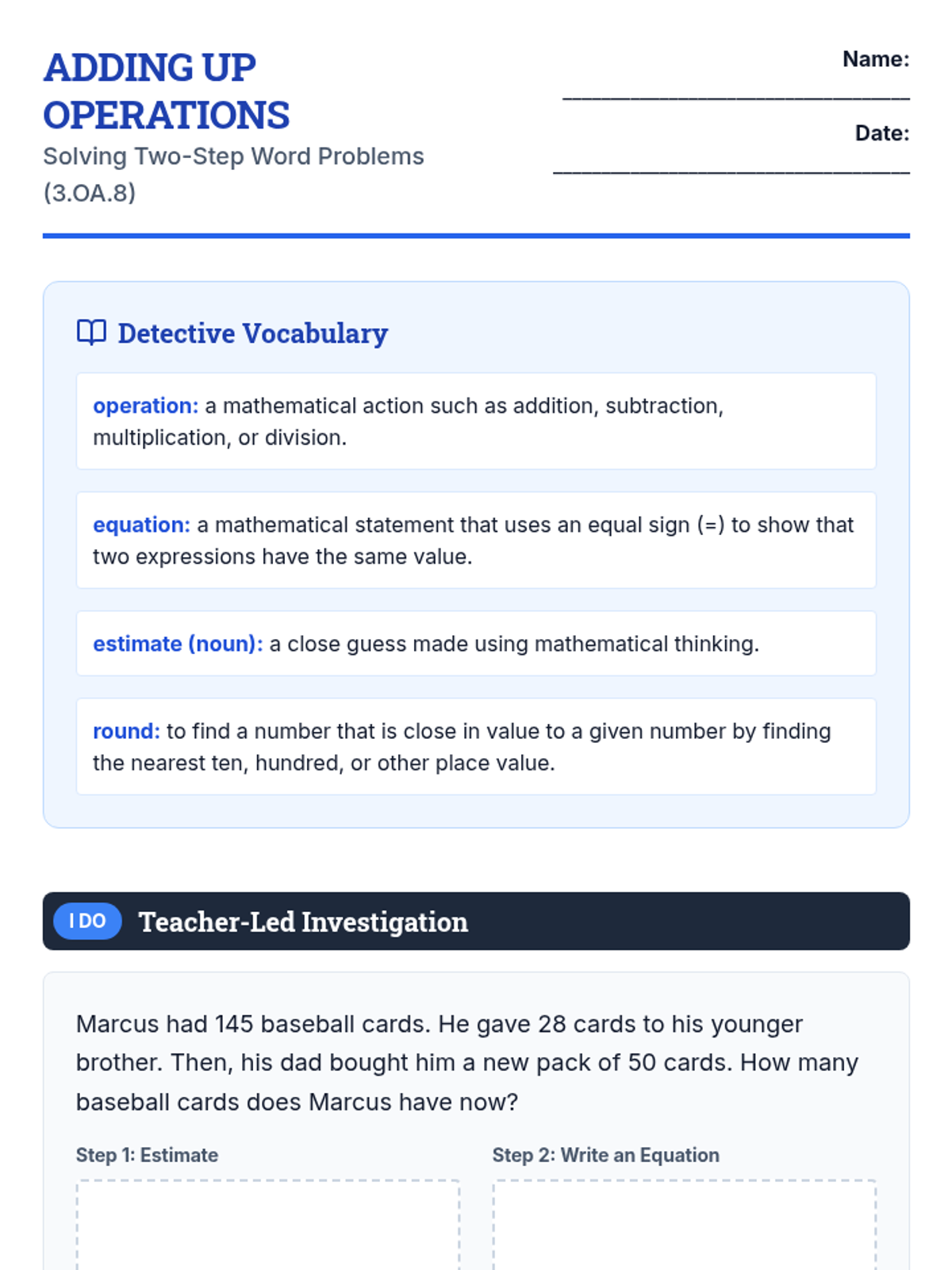
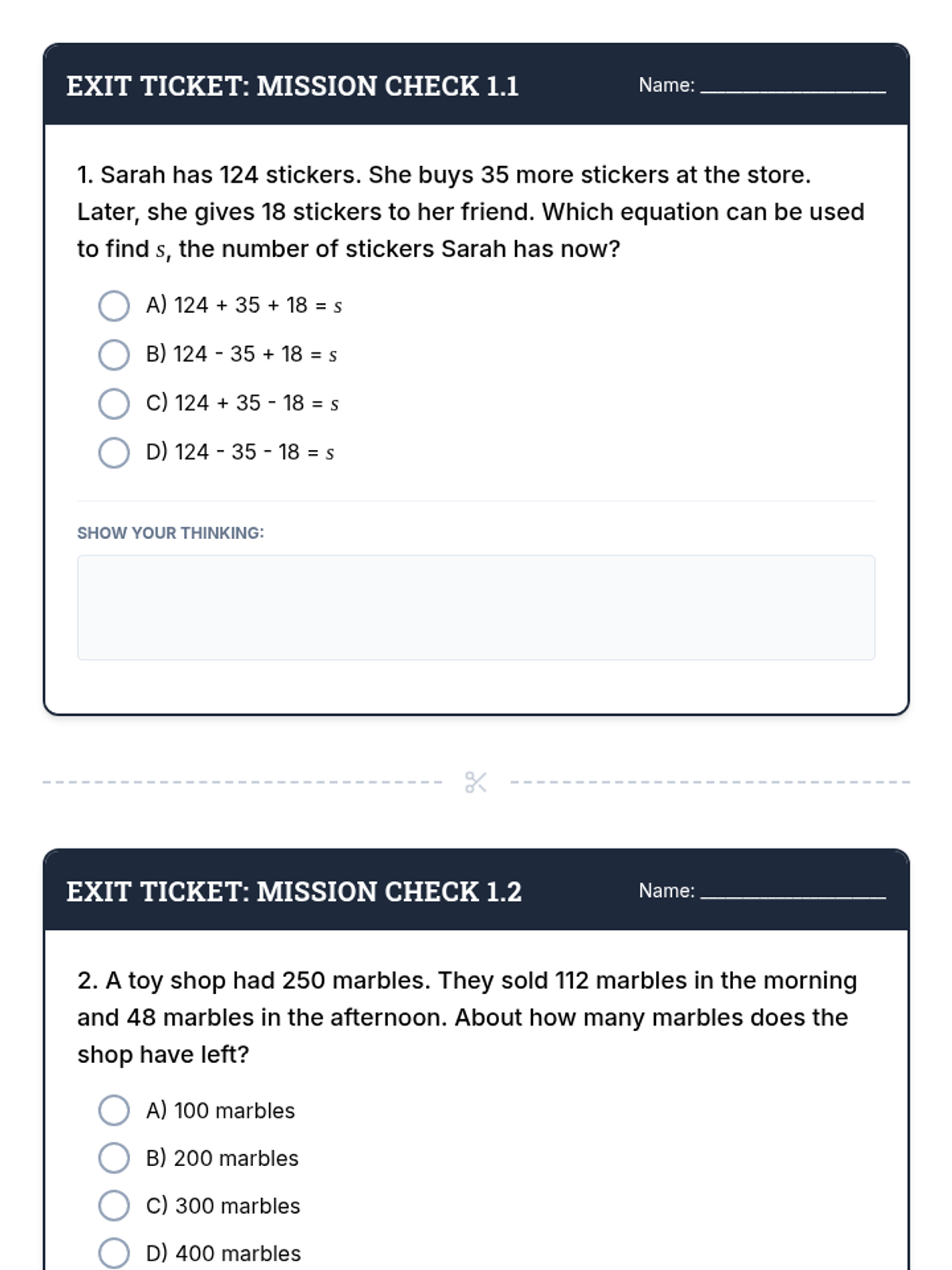
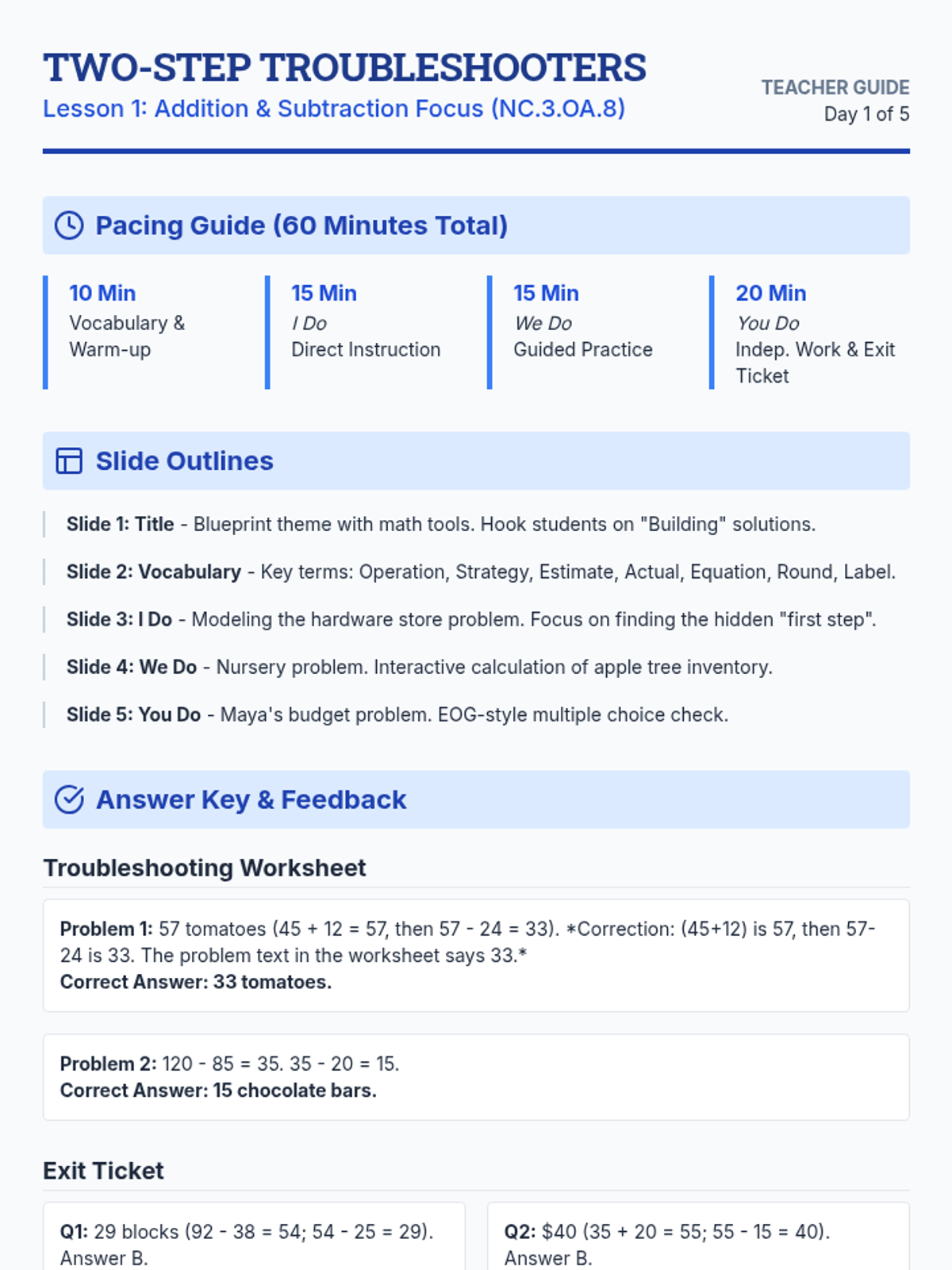
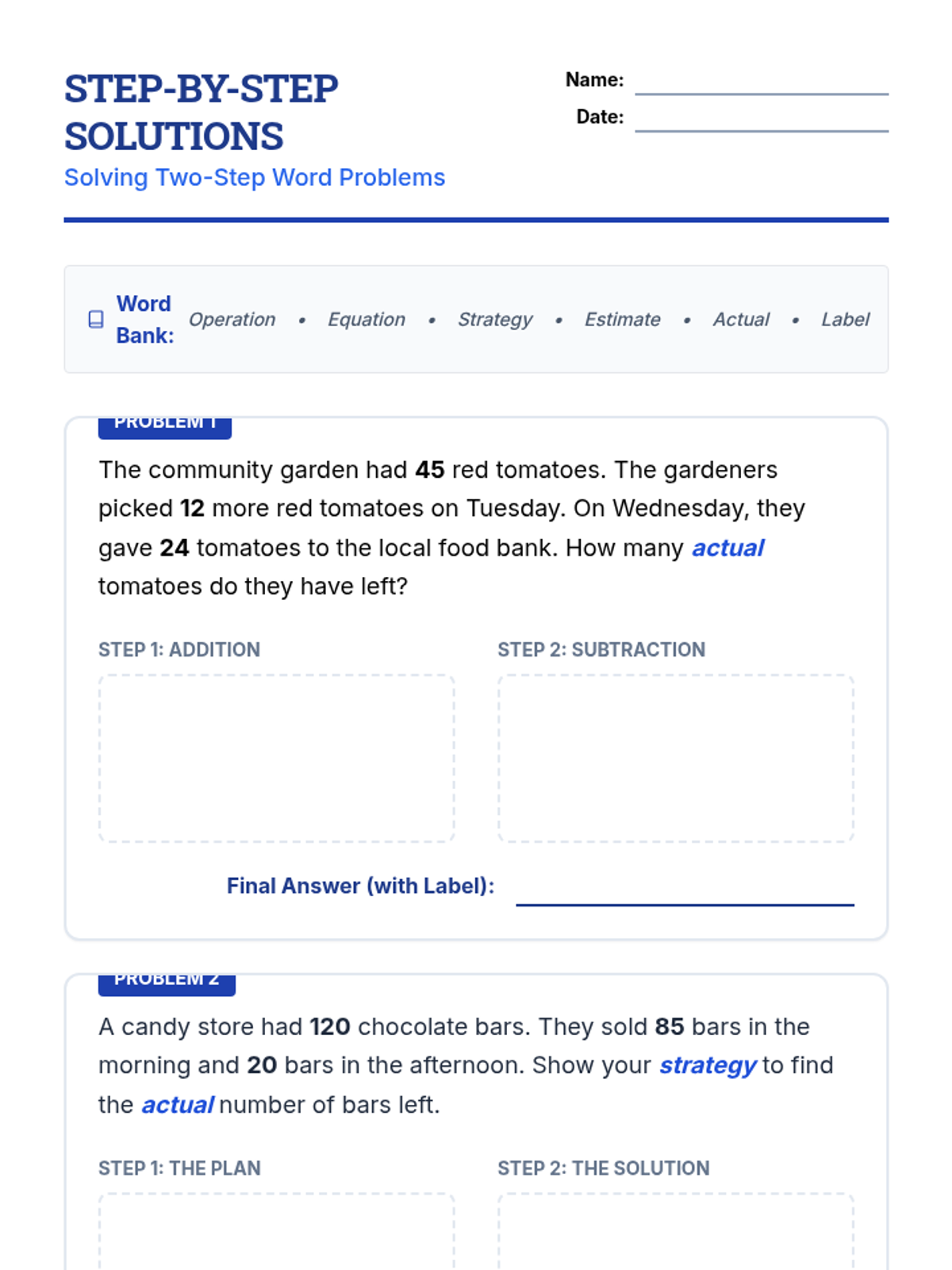
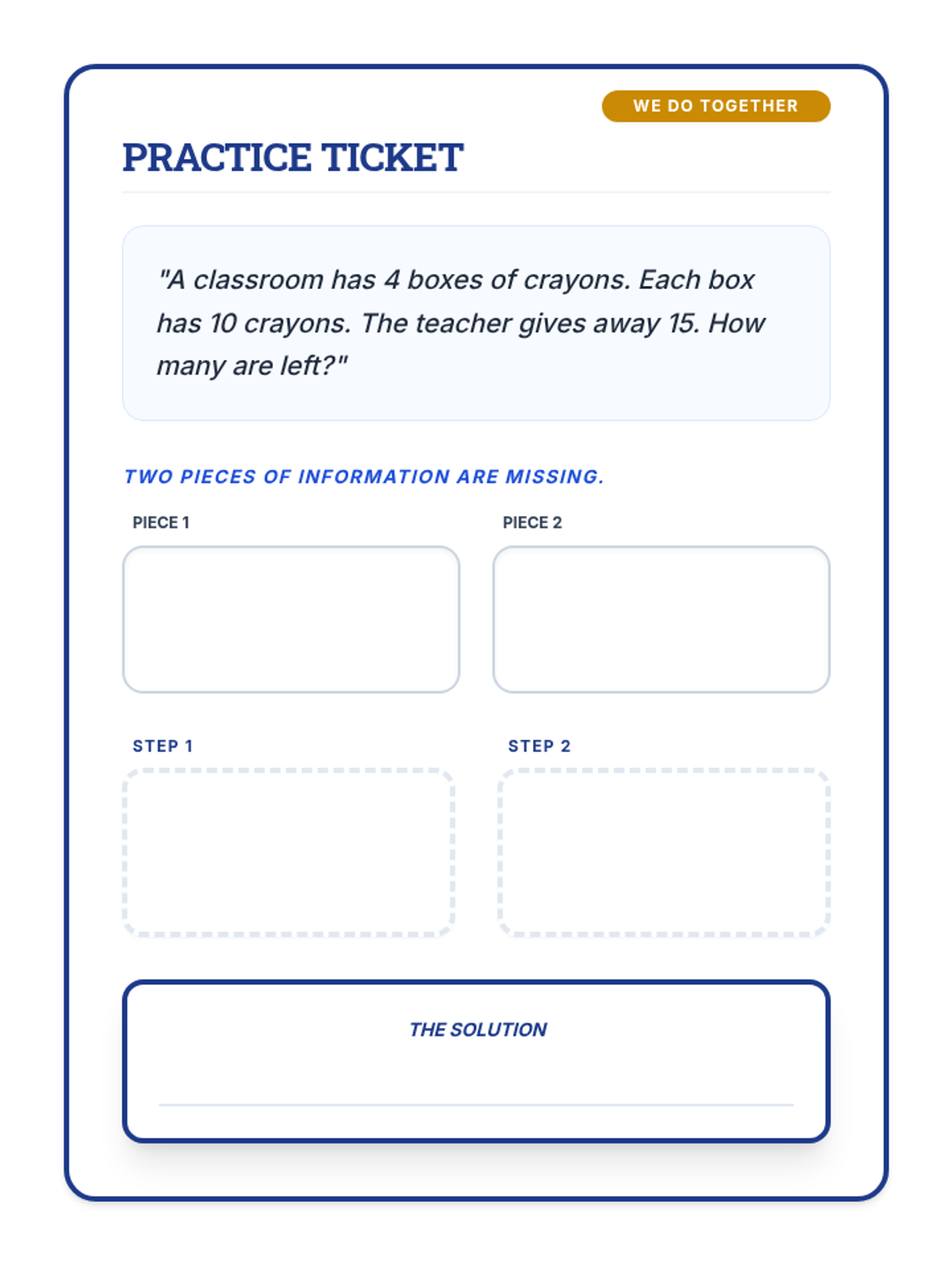
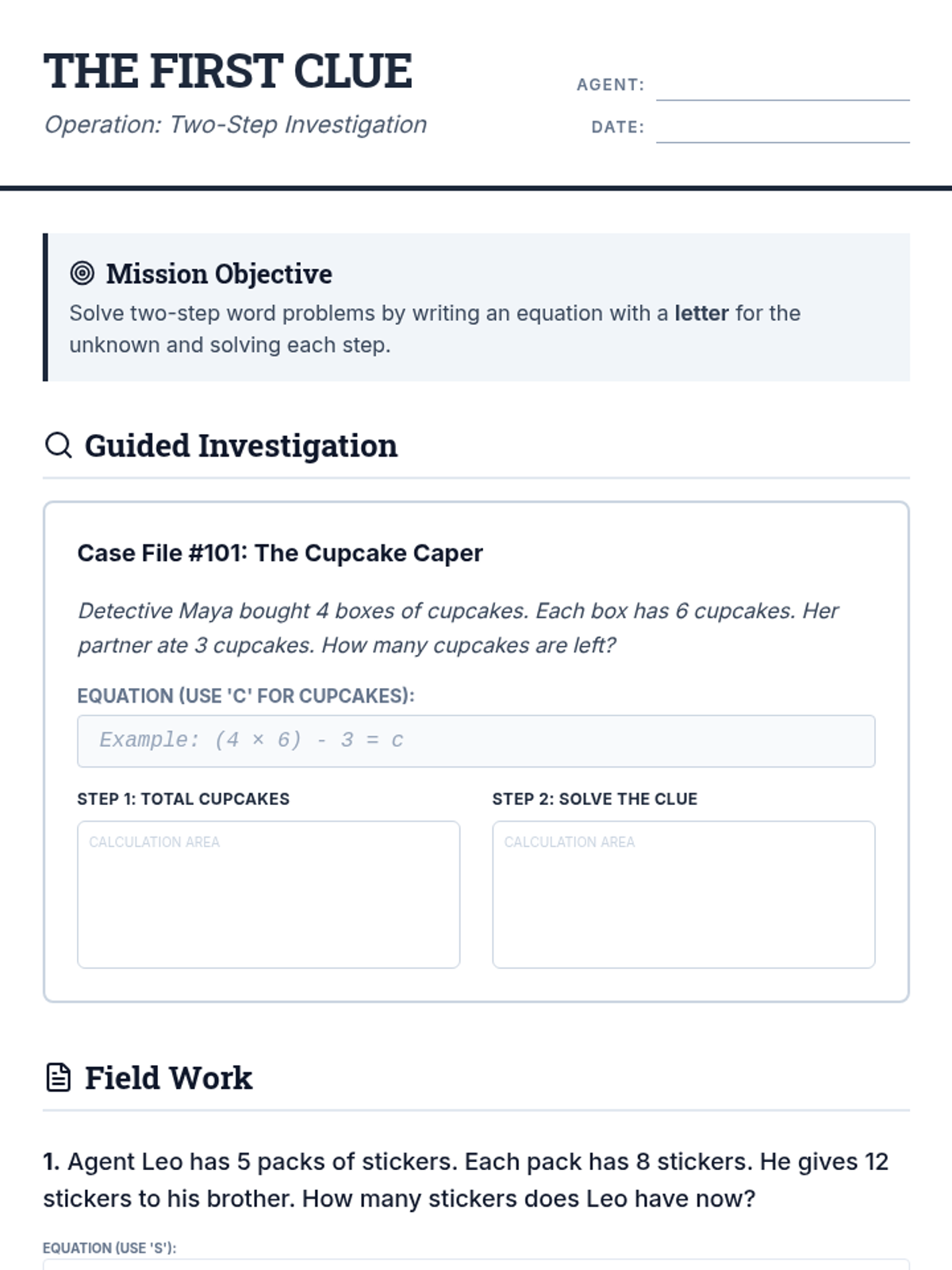
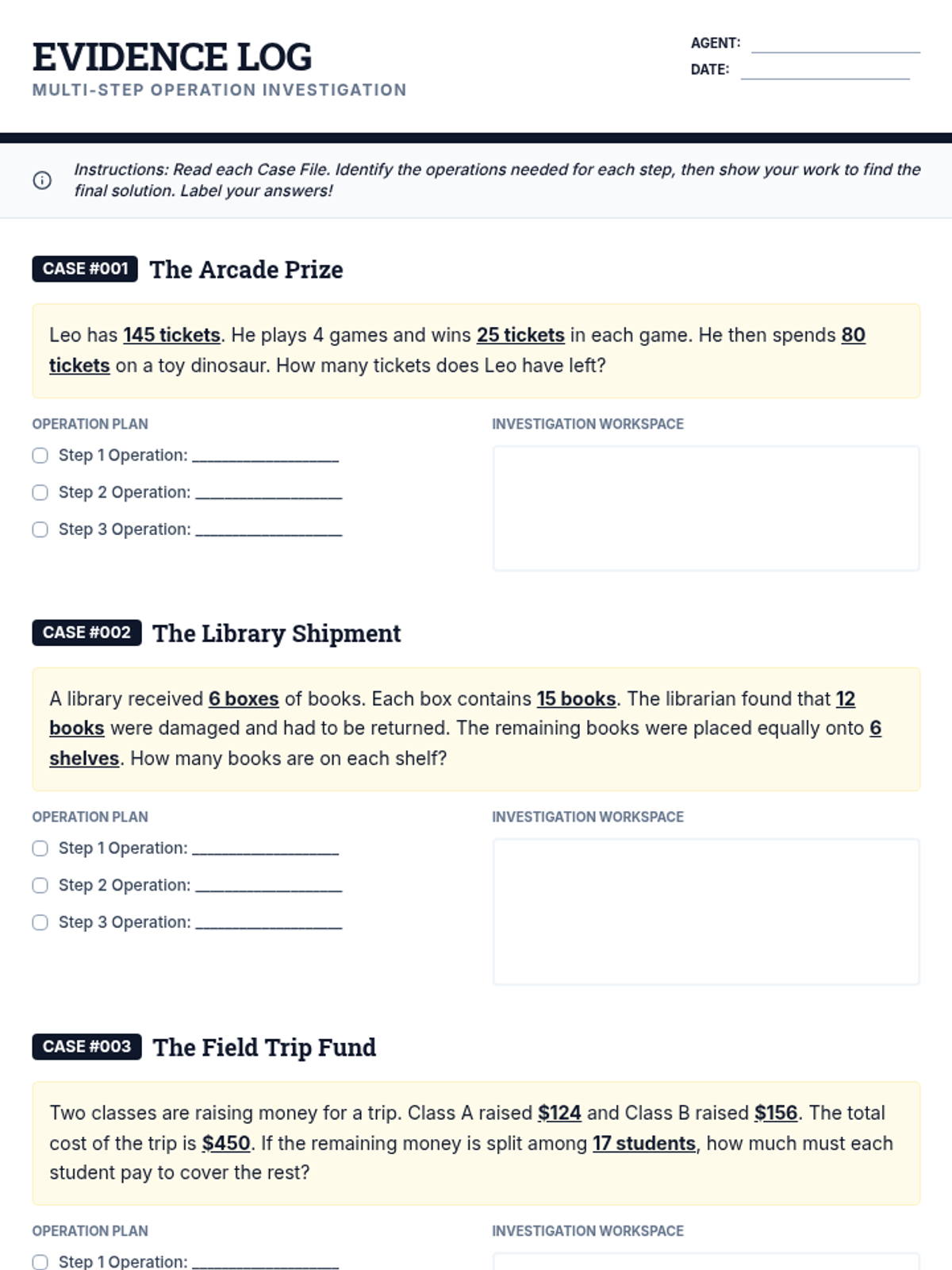
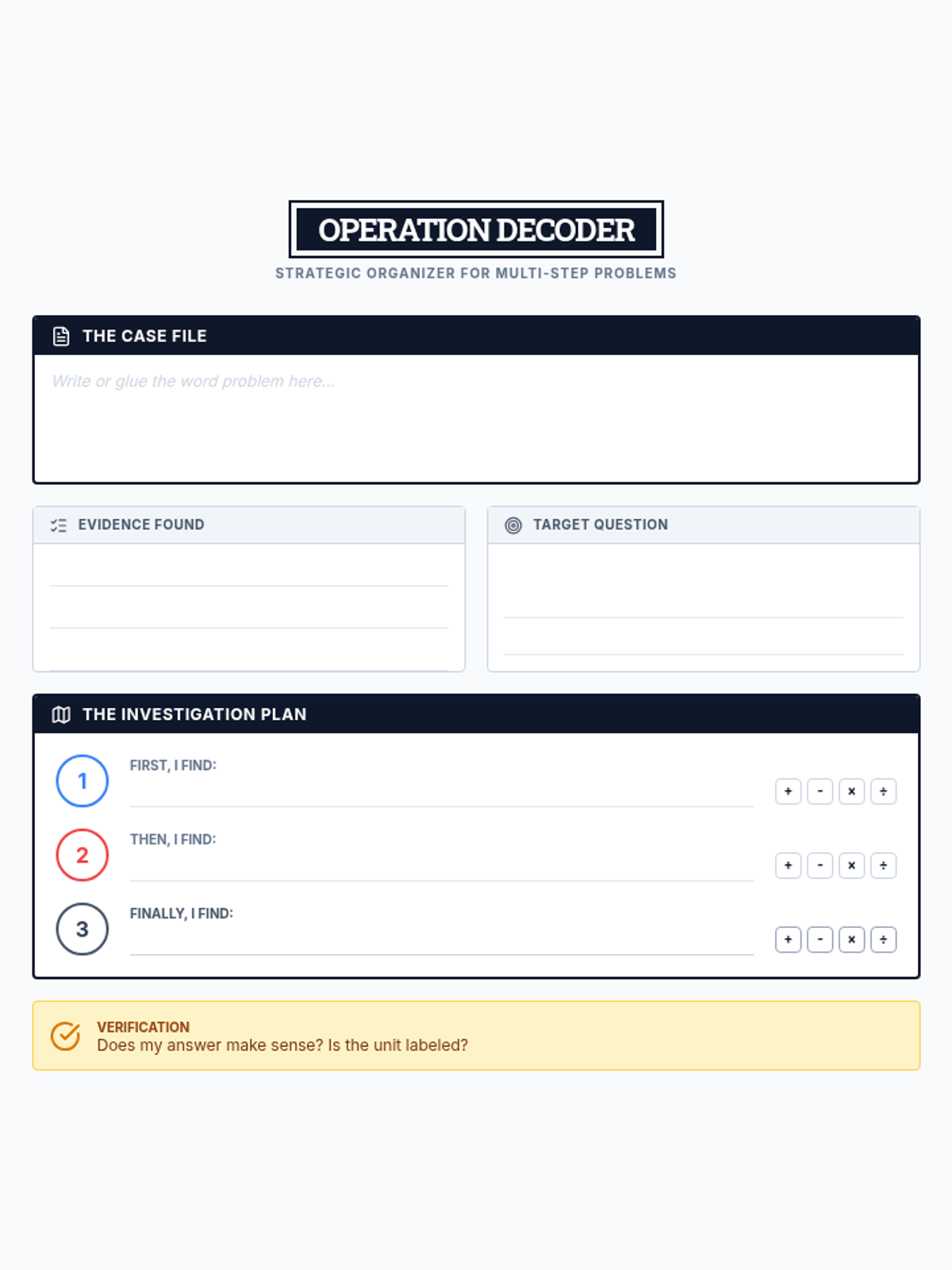
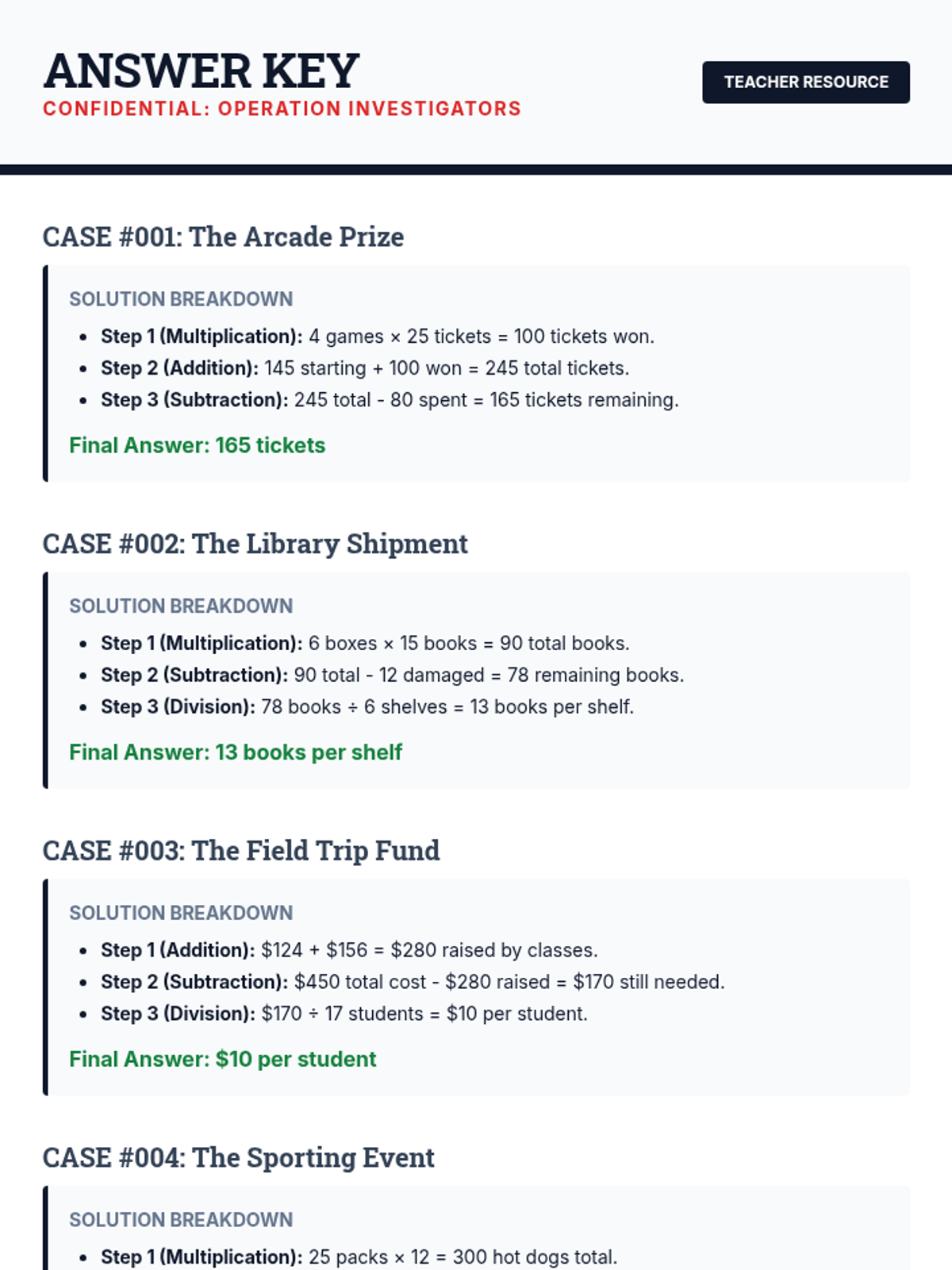
A comprehensive unit where students become 'Problem Detectives,' learning to decode word problems using linguistic cues and cloze-style paragraph writing to explain their mathematical reasoning.
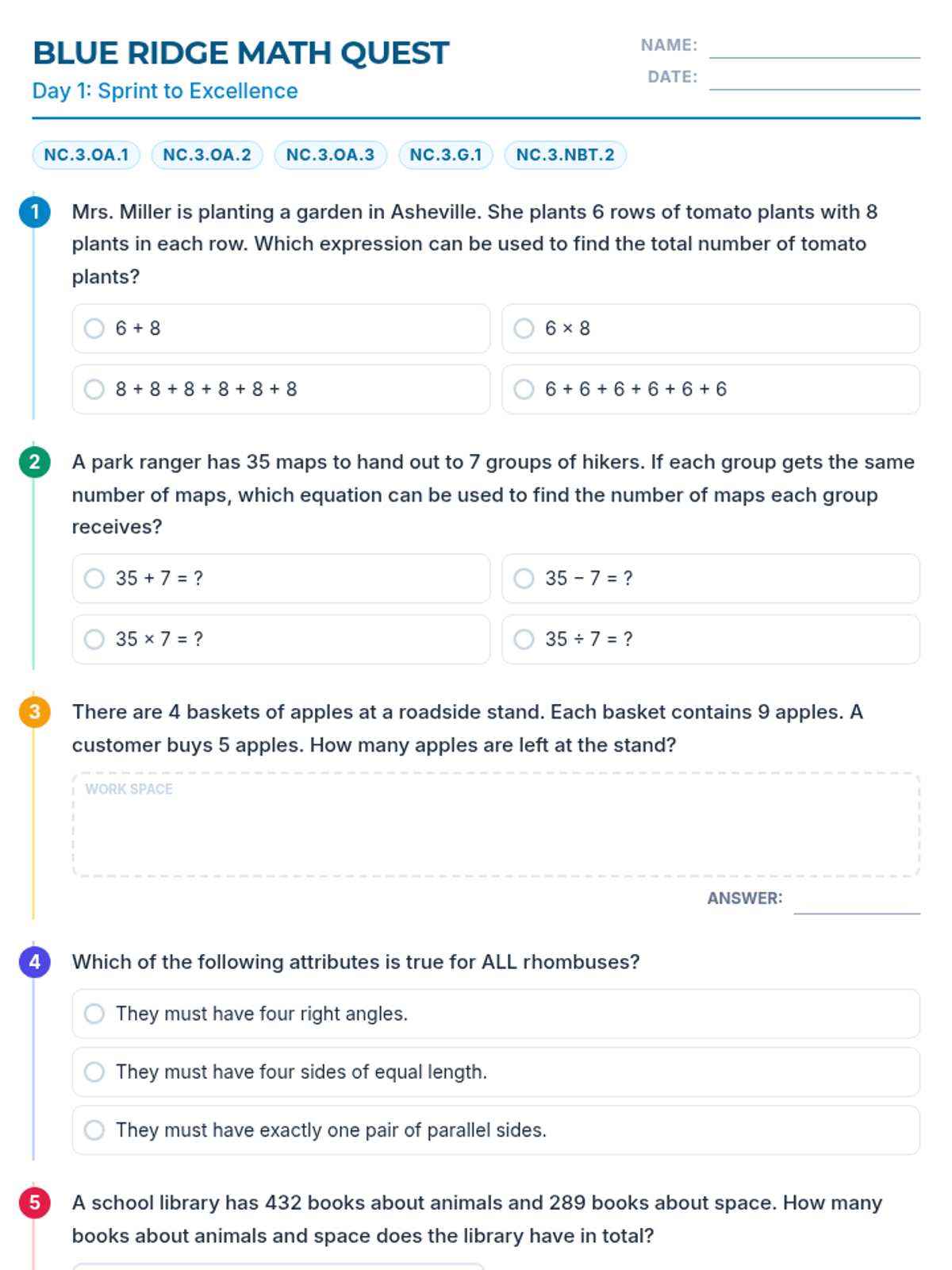
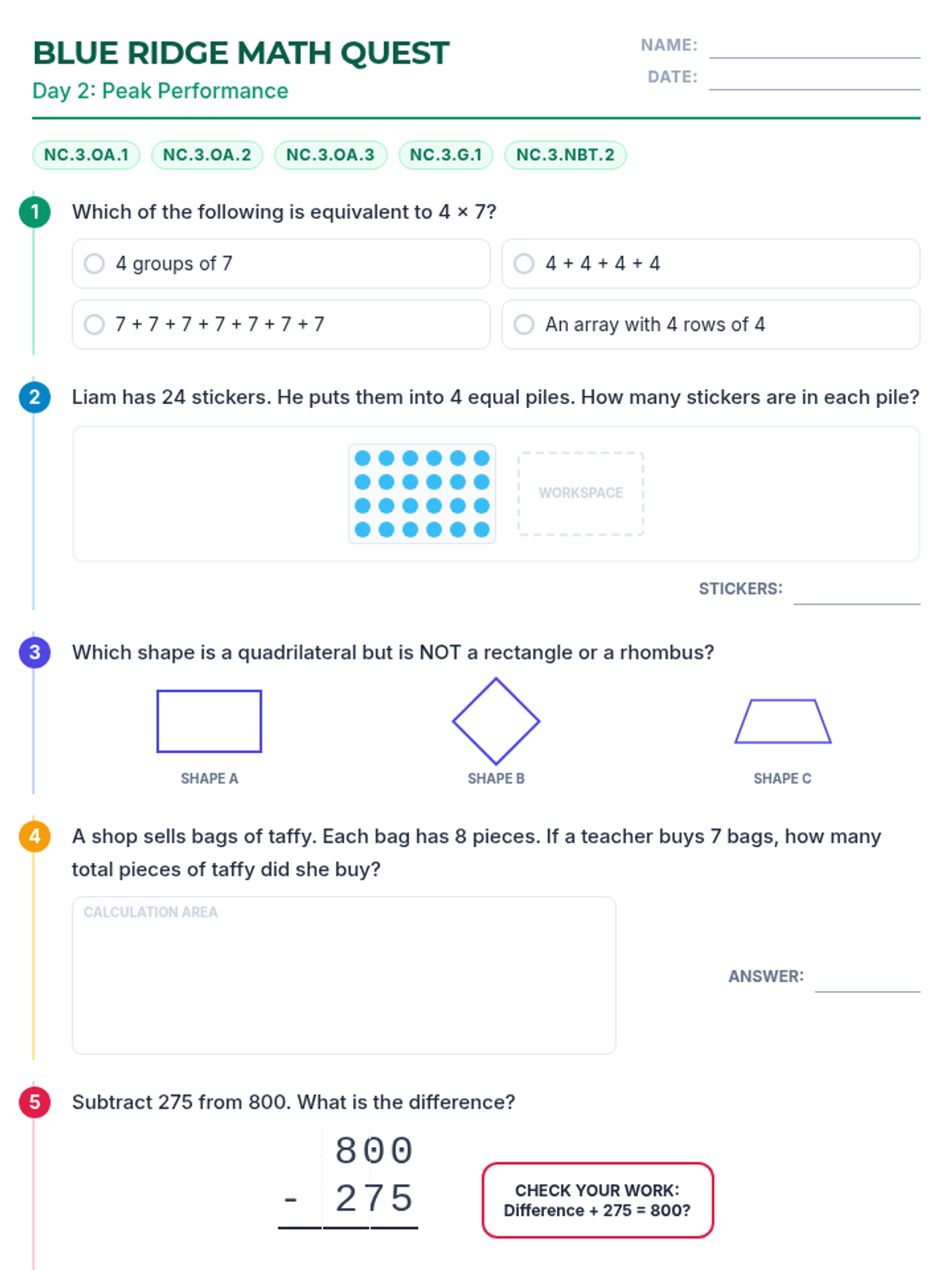
A week-long daily multiplication fluency program designed to build rapid recall of facts from 0-12 through repeated, varied practice.
A playful, detective-themed math sequence for 3rd grade students to master number comparison. Students become 'Digit Detectives' as they investigate place value mysteries, solve 'blunders' made by a messy professor, and create their own case files using concrete models like base-ten blocks and number lines.
A lesson sequence focused on understanding and converting volume units (liters and milliliters) to compare capacities through interactive games and visual models.
A math remediation sequence for 3rd and 4th graders focused on place value concepts, specifically periods (units and thousands) and the structural role of commas in large numbers.
A targeted remediation unit focusing on 3rd-grade place value through the lens of number patterns and sequences. Students use visual analysis to identify which digits change within a place value chart to determine addition and subtraction rules.
A lesson sequence focused on decomposing numbers up to 10,000 using Concrete, Pictorial, and Abstract (CPA) representations. Students move from physical blocks to abacus sketches and finally to expanded form equations.
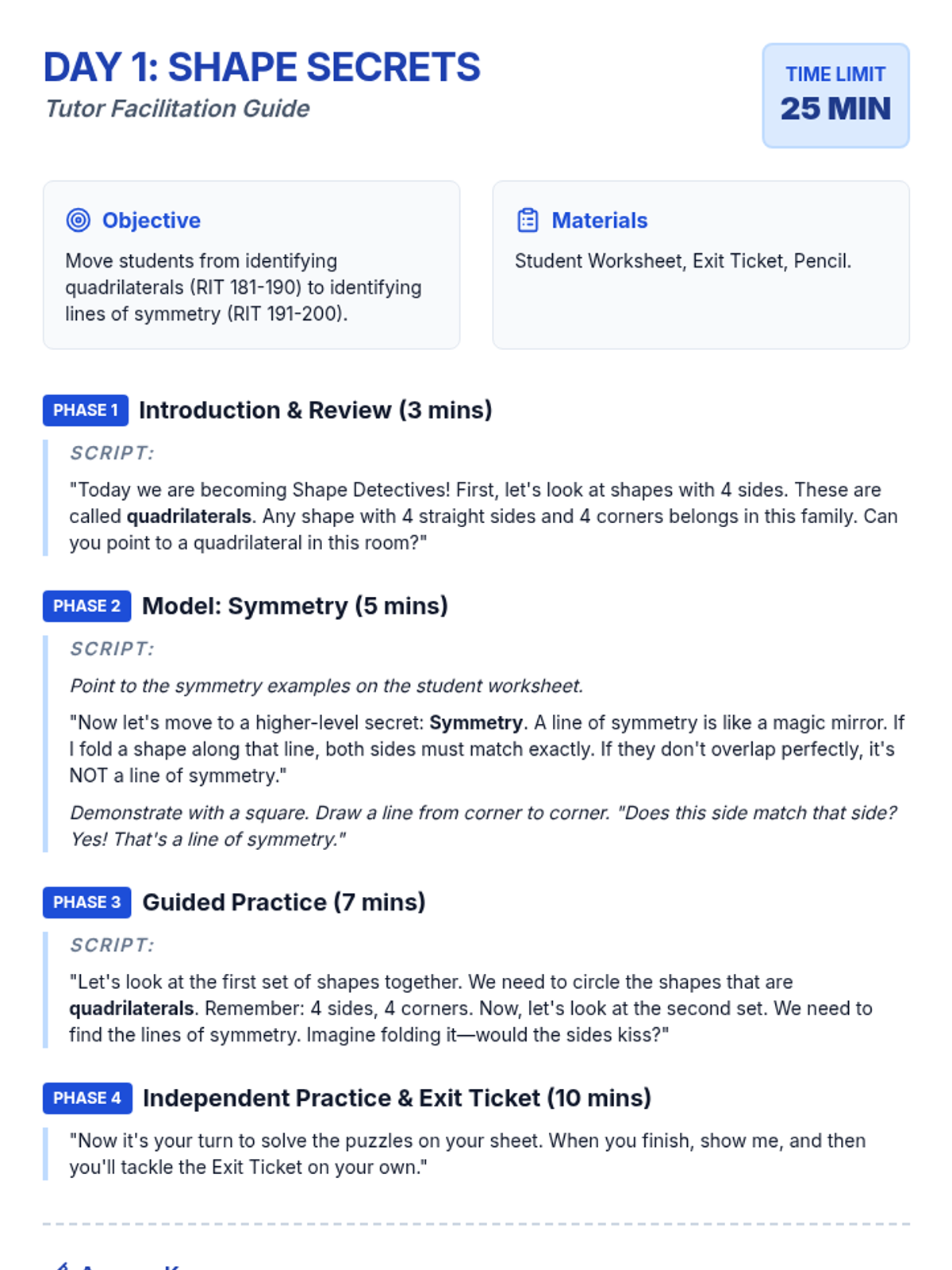
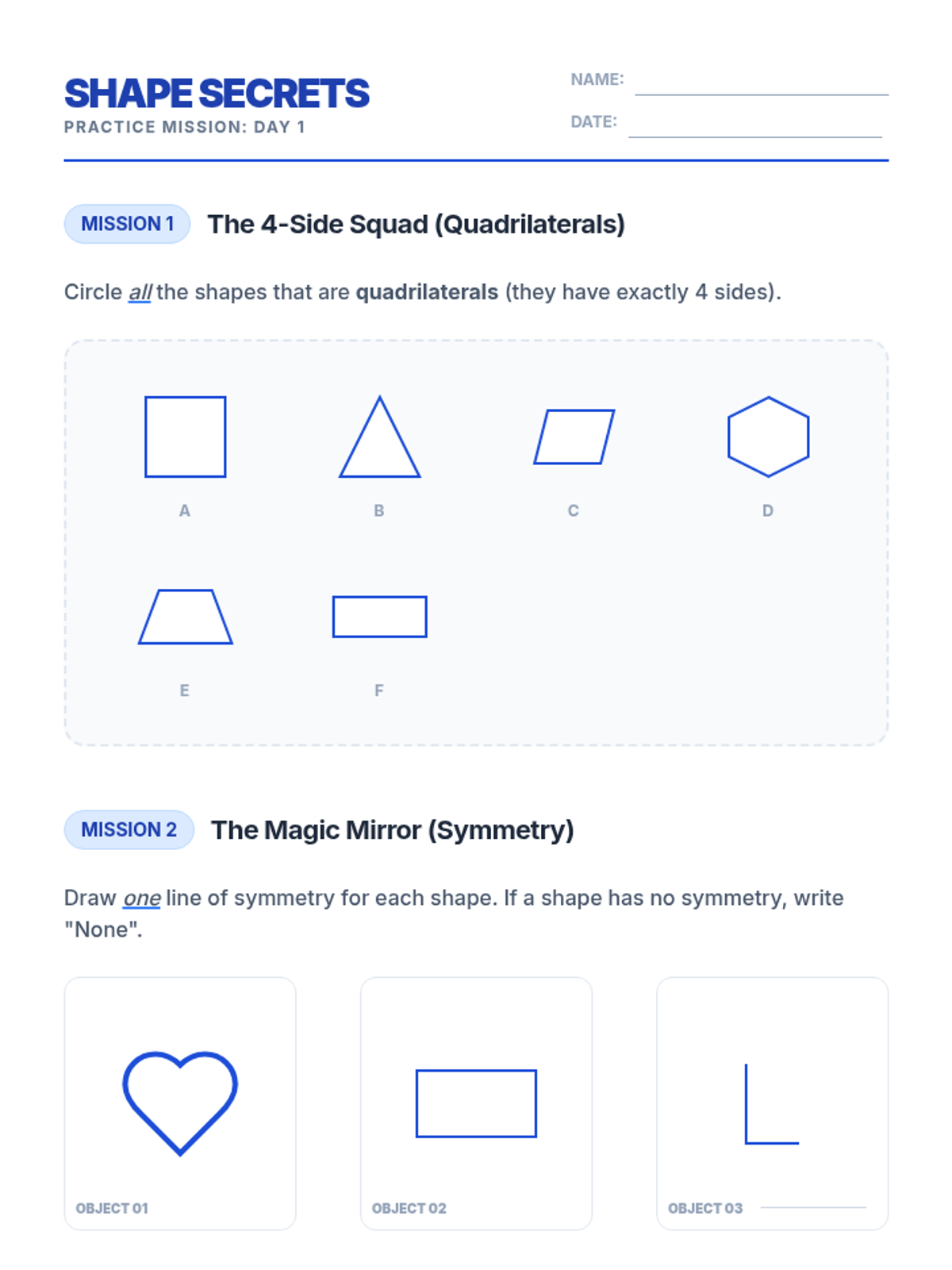
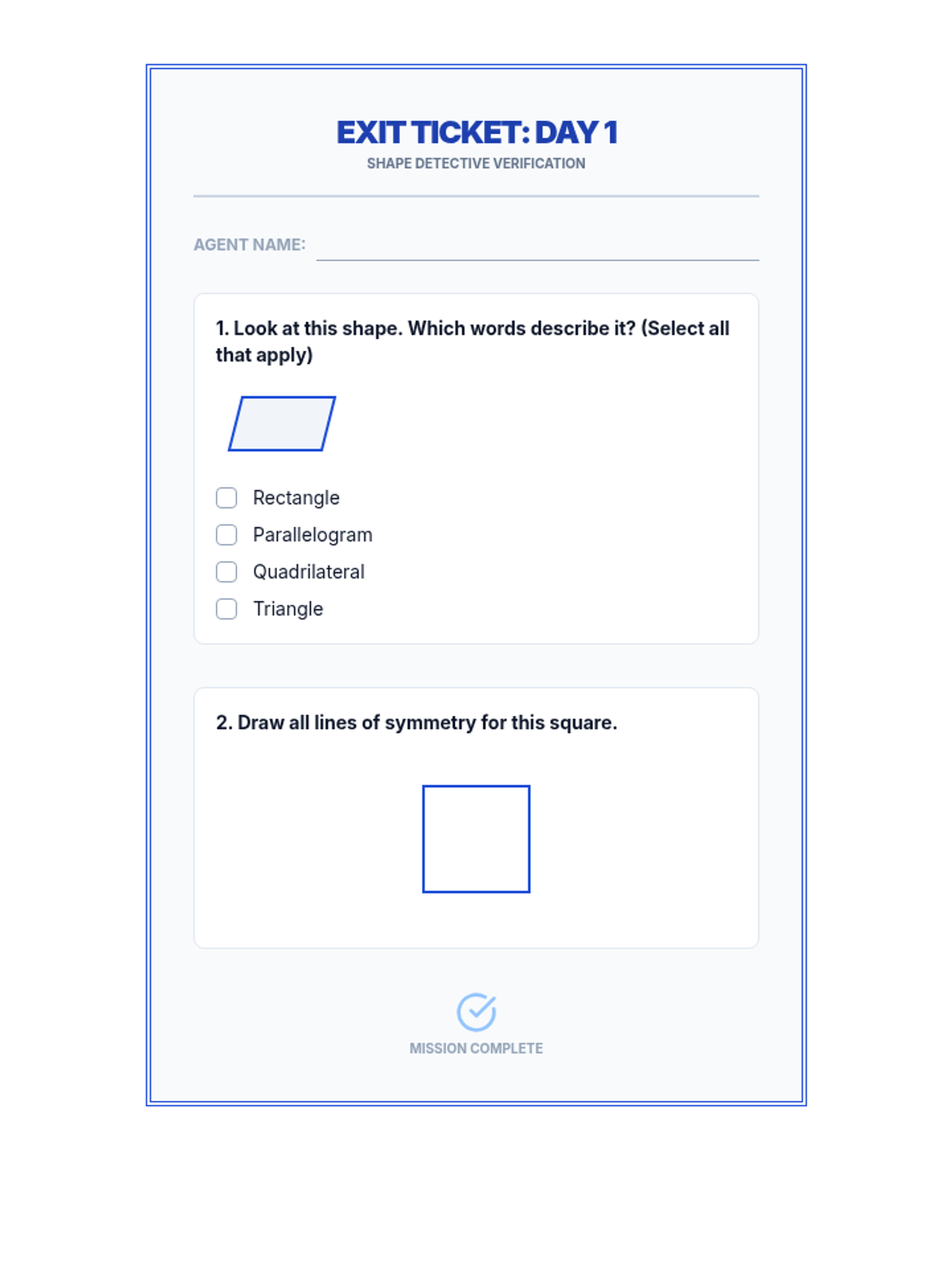
A series of lessons focused on geometry and spatial reasoning, where students explore the properties of 2D shapes, symmetry, and patterns.
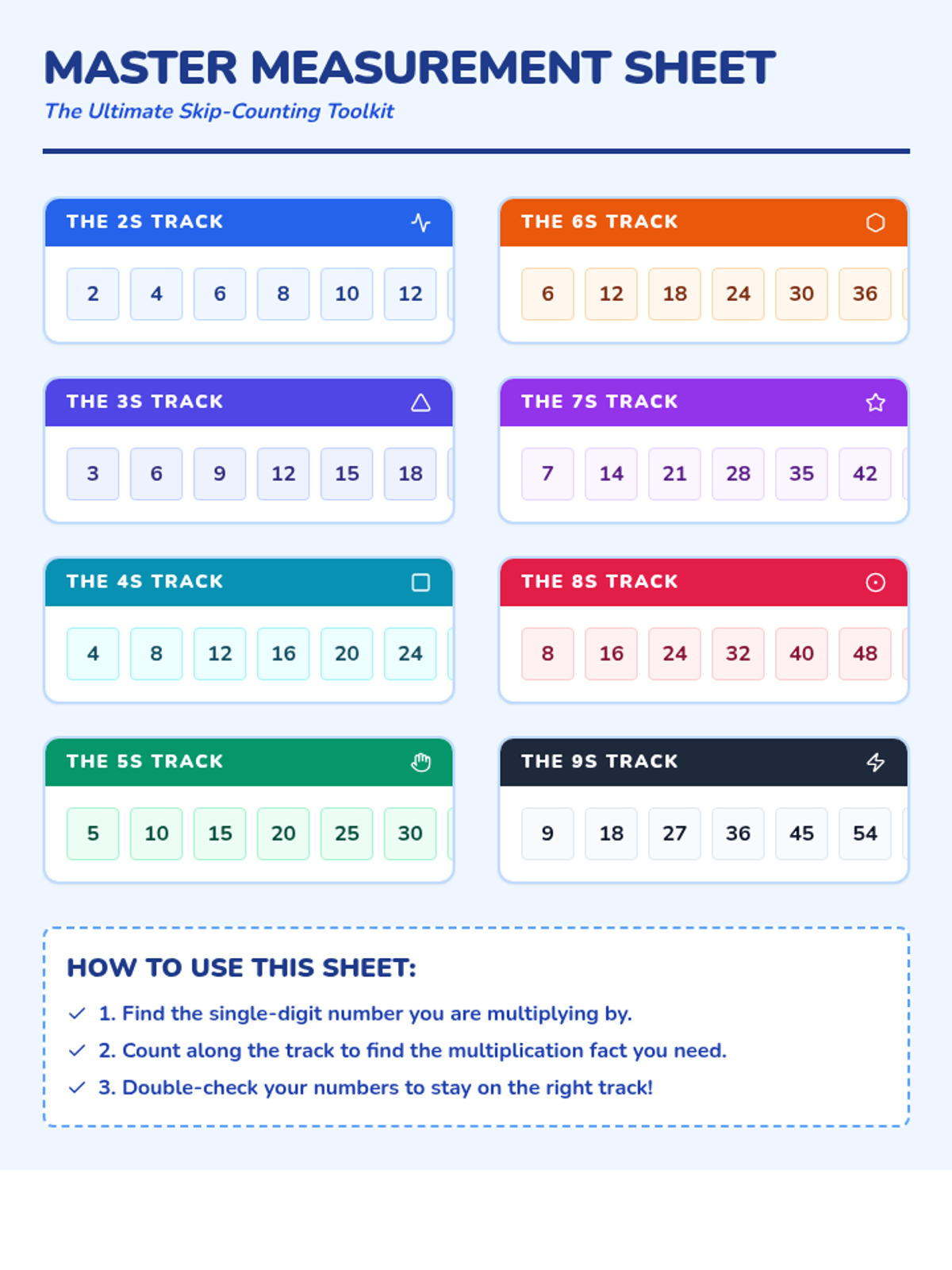
A series of lessons focused on mastering skip counting patterns to build a strong foundation for multiplication and place value. Students engage in physical movement, musical rhythms, and visual aids to internalize counting by different intervals.
A hands-on sequence designed for students needing academic support to master fraction equivalence and operations through concrete modeling. Students use physical manipulatives like towers, blocks, and overlays to bridge the gap between abstract symbols and conceptual understanding.
This sequence uses the Concrete-Representational-Abstract (CRA) framework to teach decimal place value through the lens of financial literacy. Students move from manipulating physical currency to drawing models and finally using standard algorithms to manage budgets.
This sequence utilizes base-ten blocks and area models to scaffold multi-digit multiplication and division, providing a visual and tactile framework for students who struggle with standard algorithms. By connecting physical area models to expanded form and eventually the standard algorithm, students build a conceptual foundation that supports future algebraic learning.
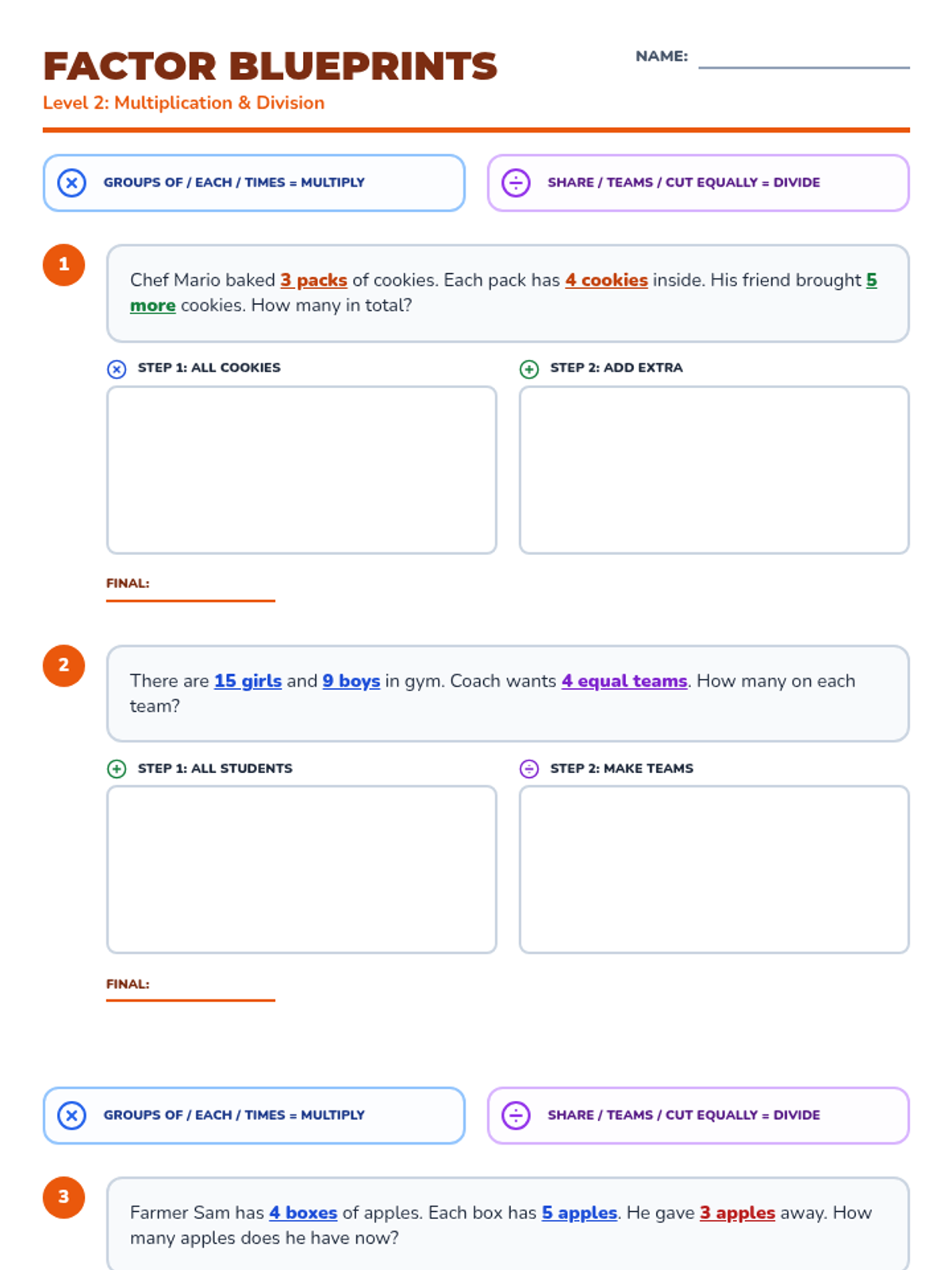
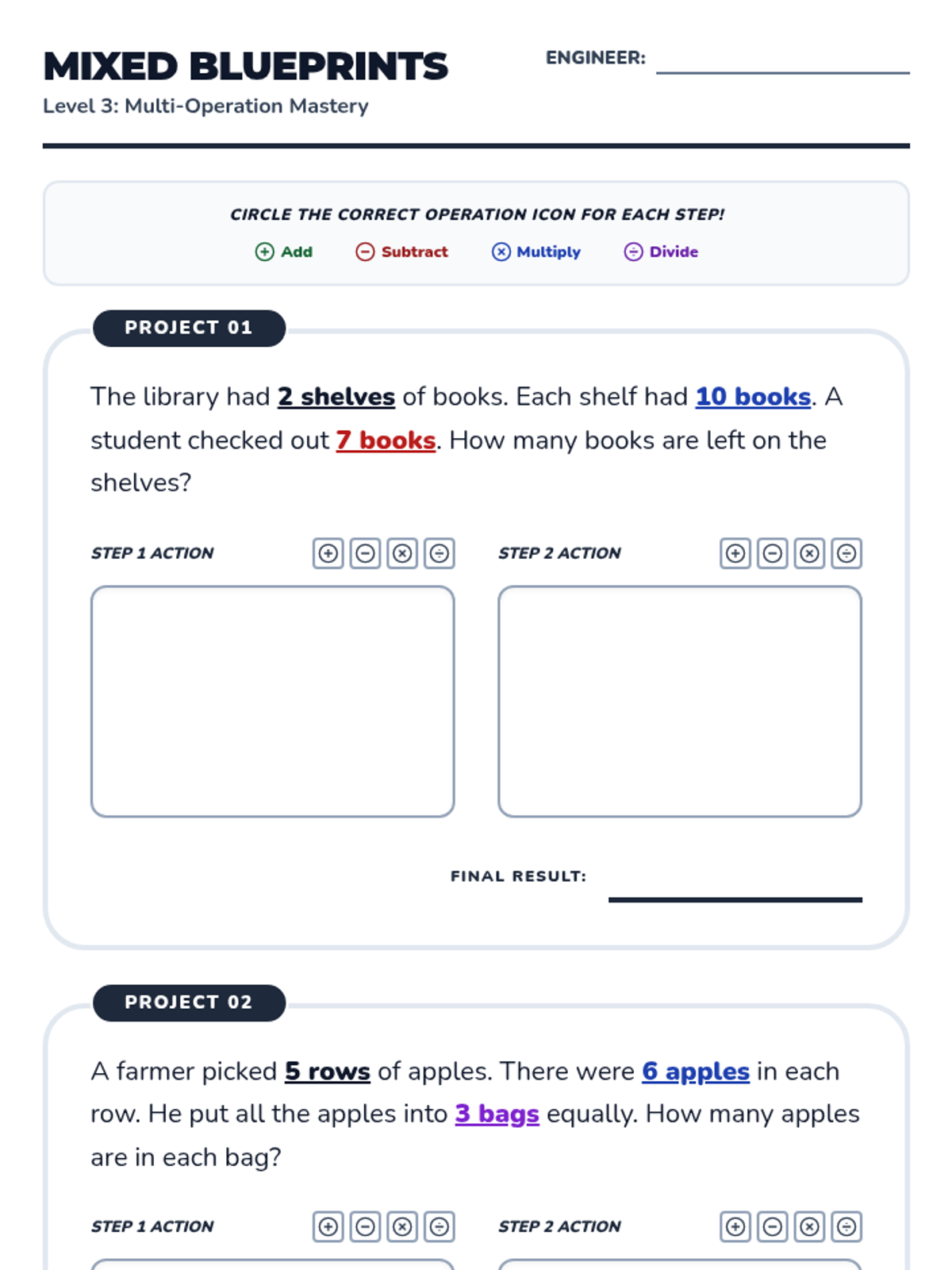
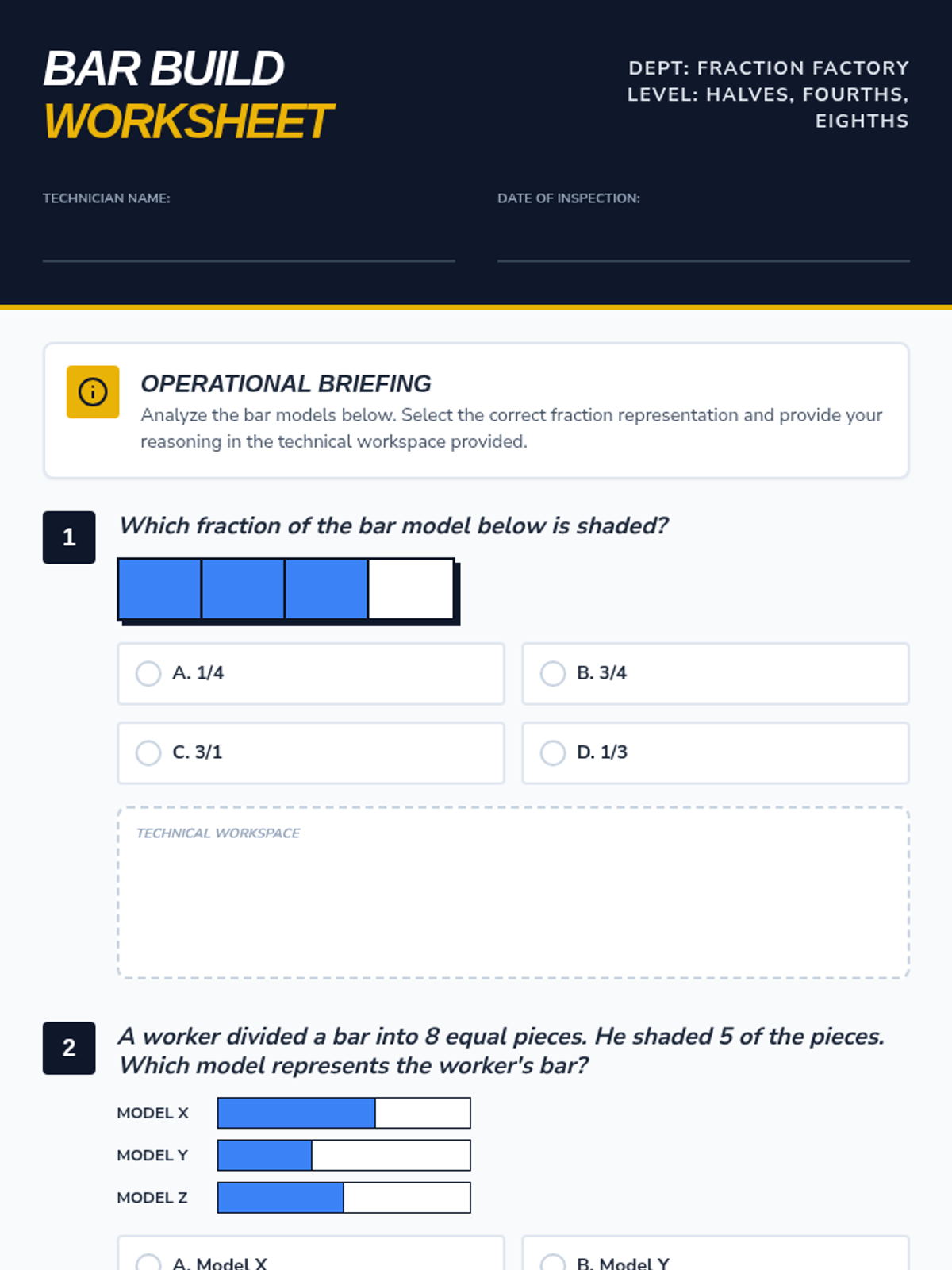
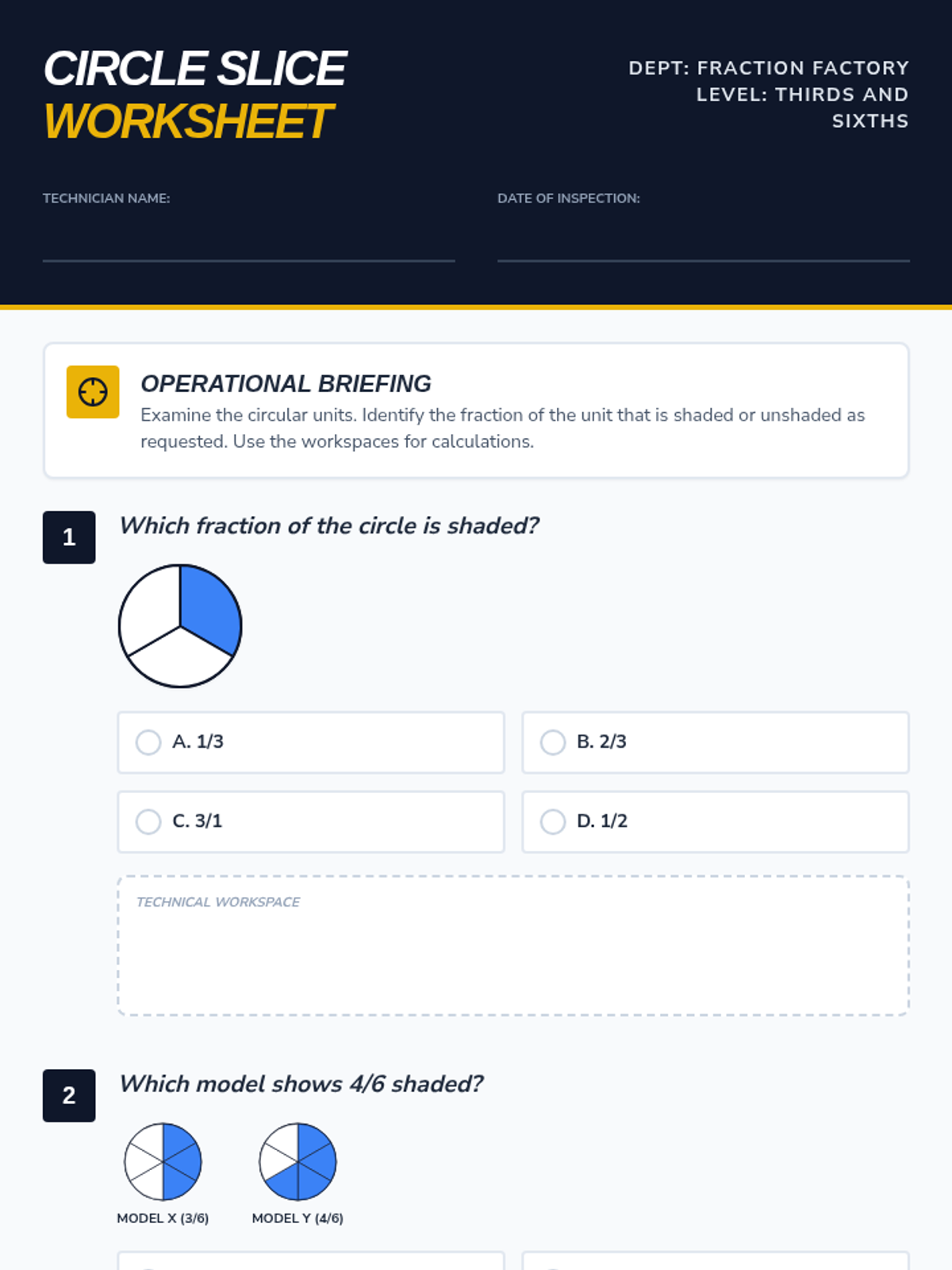
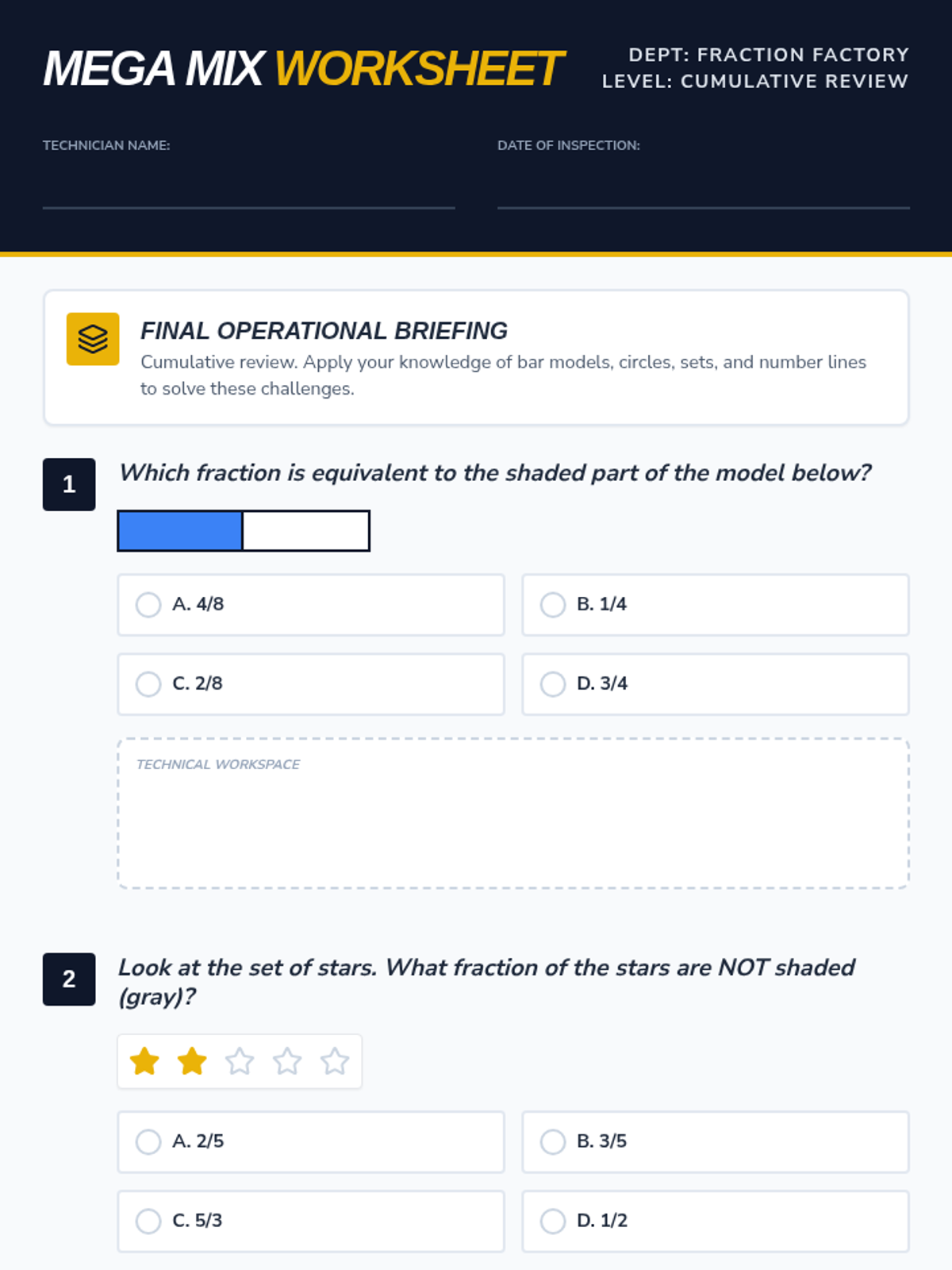
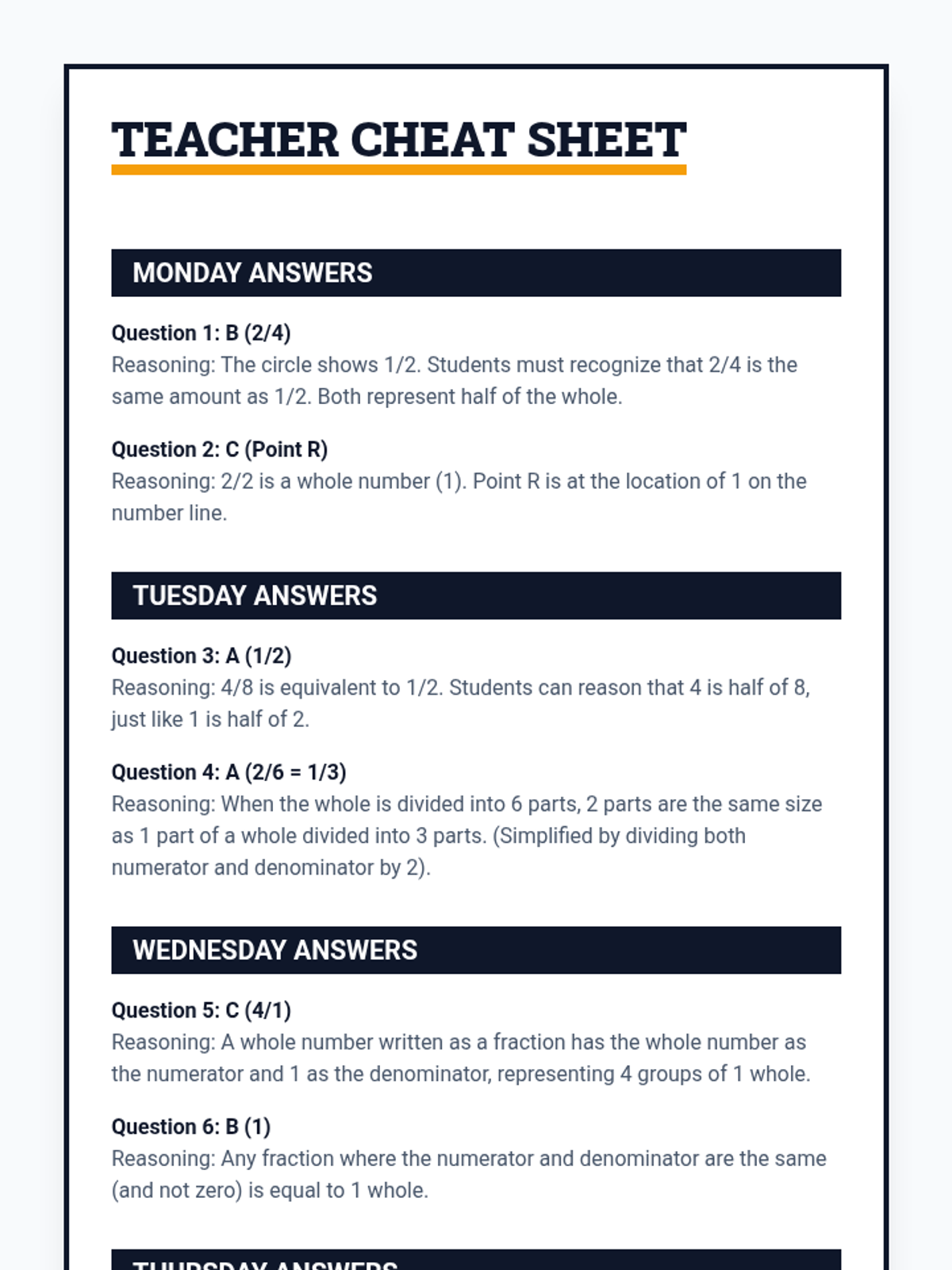
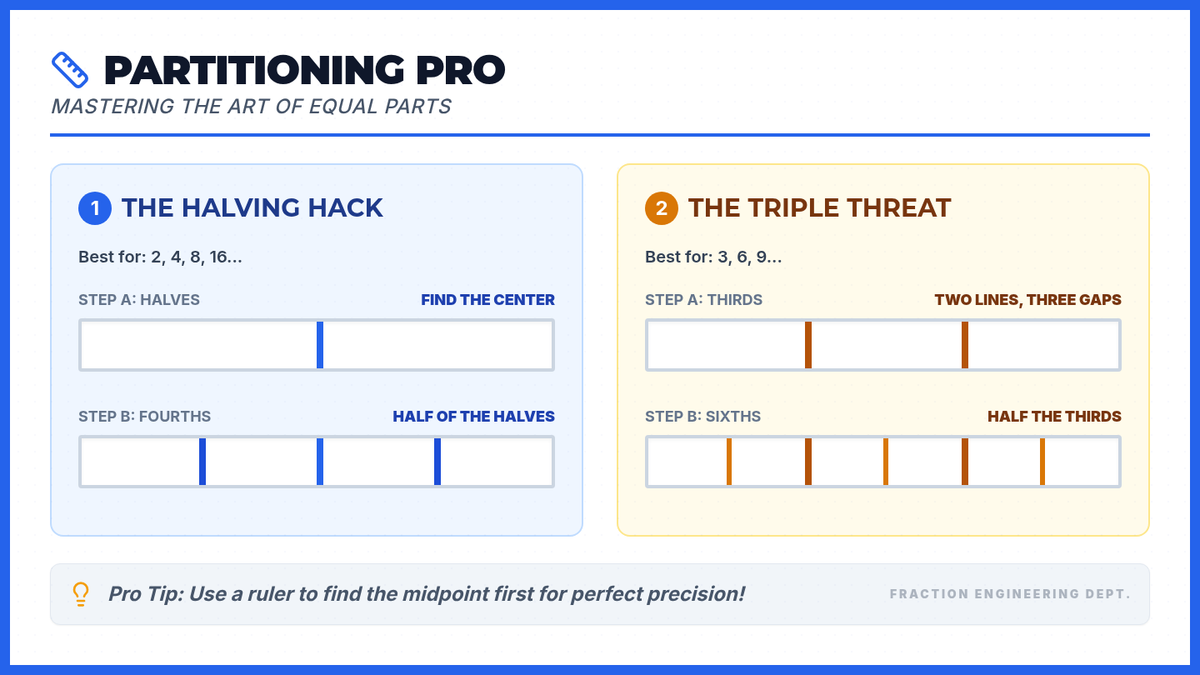
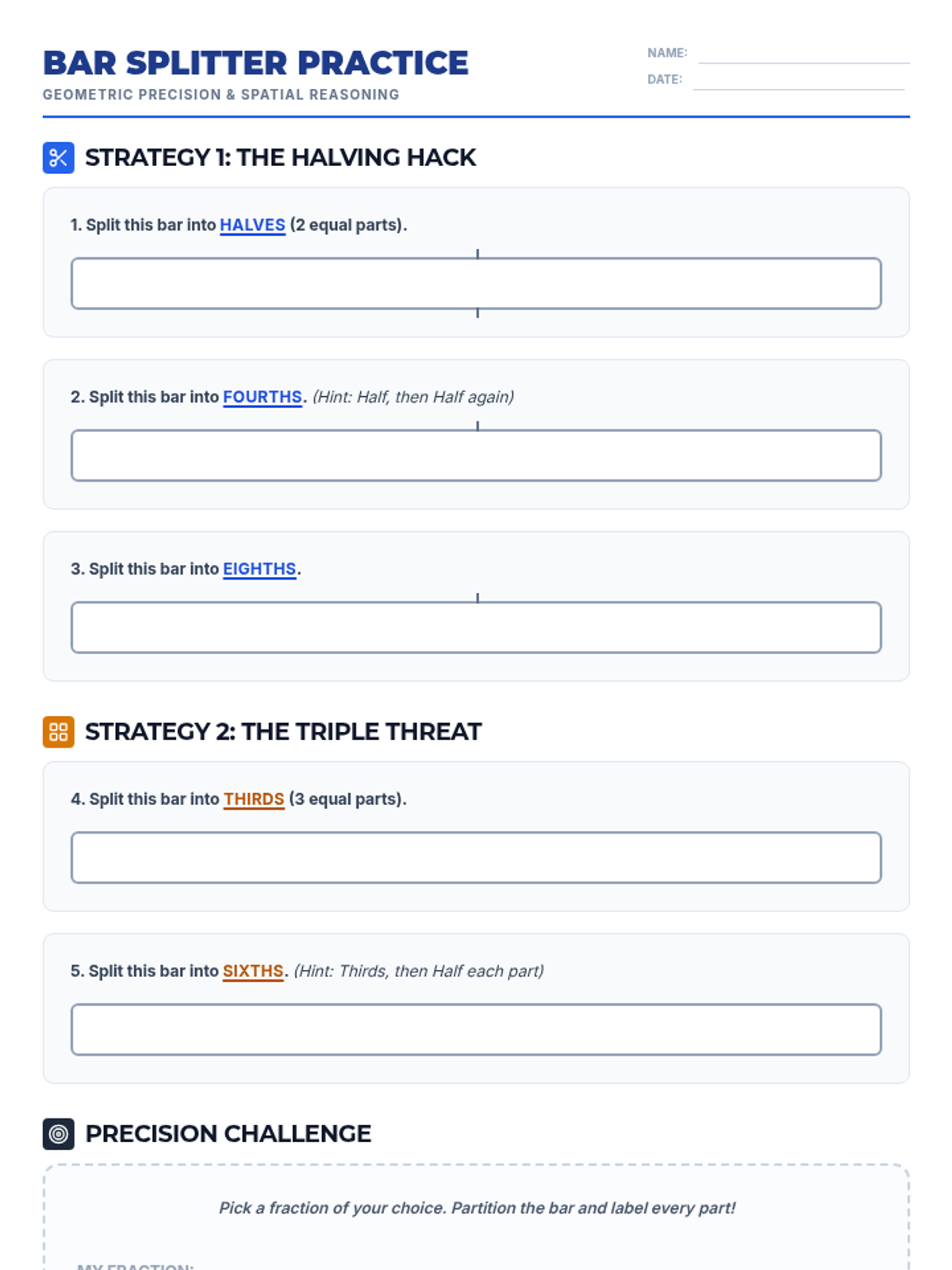
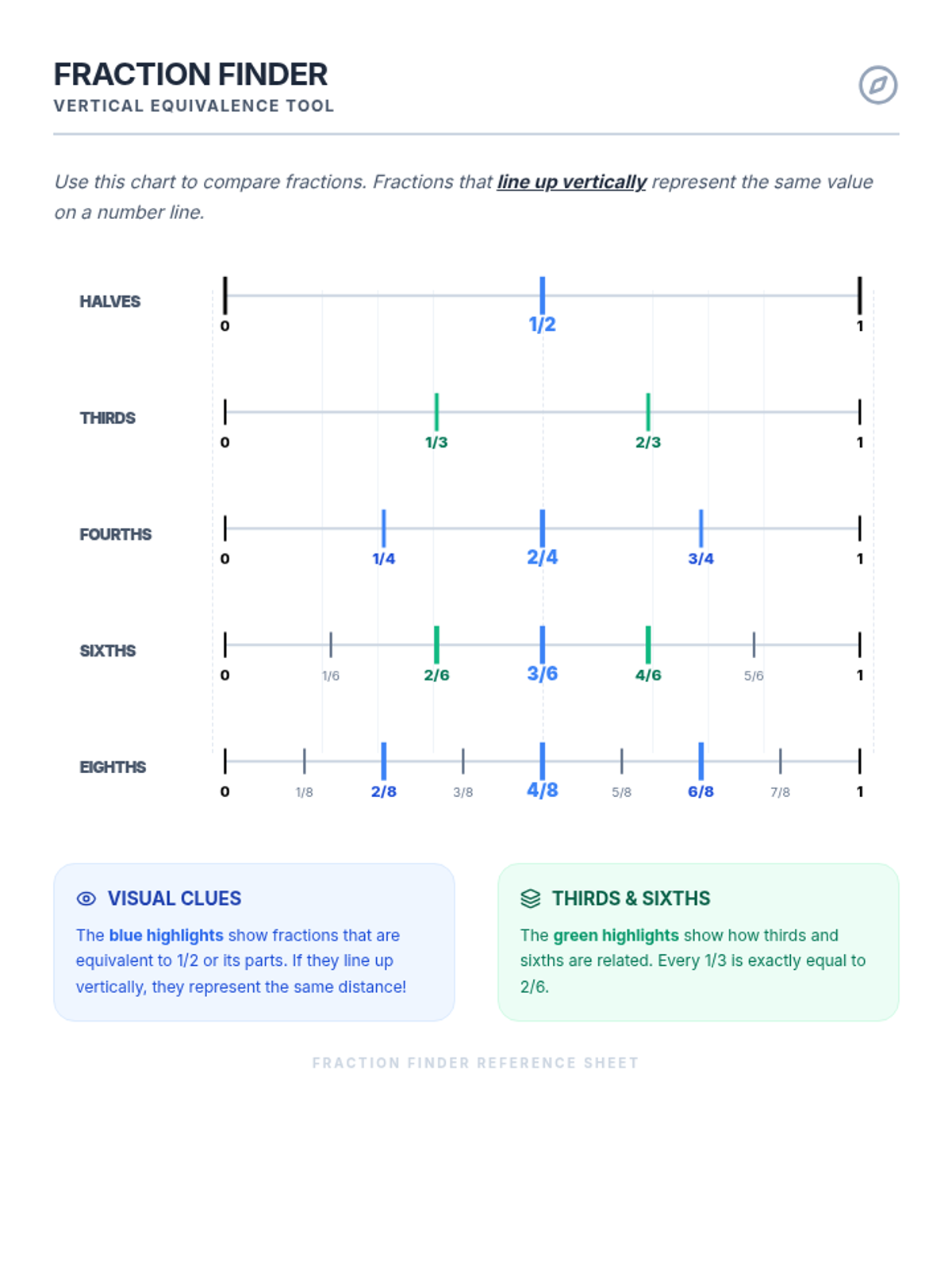
A 5-lesson series for 3rd-grade students focusing on hands-on fraction understanding using manipulatives like playdough, fraction tiles, and number lines. Students move from physical partitioning to abstract numerical representations and equivalence.
A foundational multiplication and division sequence for 3rd-grade students requiring academic support. This unit uses counters and arrays to help students visualize multiplication as repeated addition and division as fair sharing, providing physical anchors for abstract concepts.
A 5-lesson sequence for 4th-grade students (Special Education support) focused on using manipulatives like fraction strips and tiles to understand equivalence and comparison. The sequence moves from concrete exploration of denominators to abstract placement on a number line, culminating in a student-created reference guide.
A specialized math sequence for 3rd Grade students focusing on visual strategies for multiplication and division. This unit uses arrays, equal groups, and area models to build conceptual understanding for students who benefit from spatial and visual support.
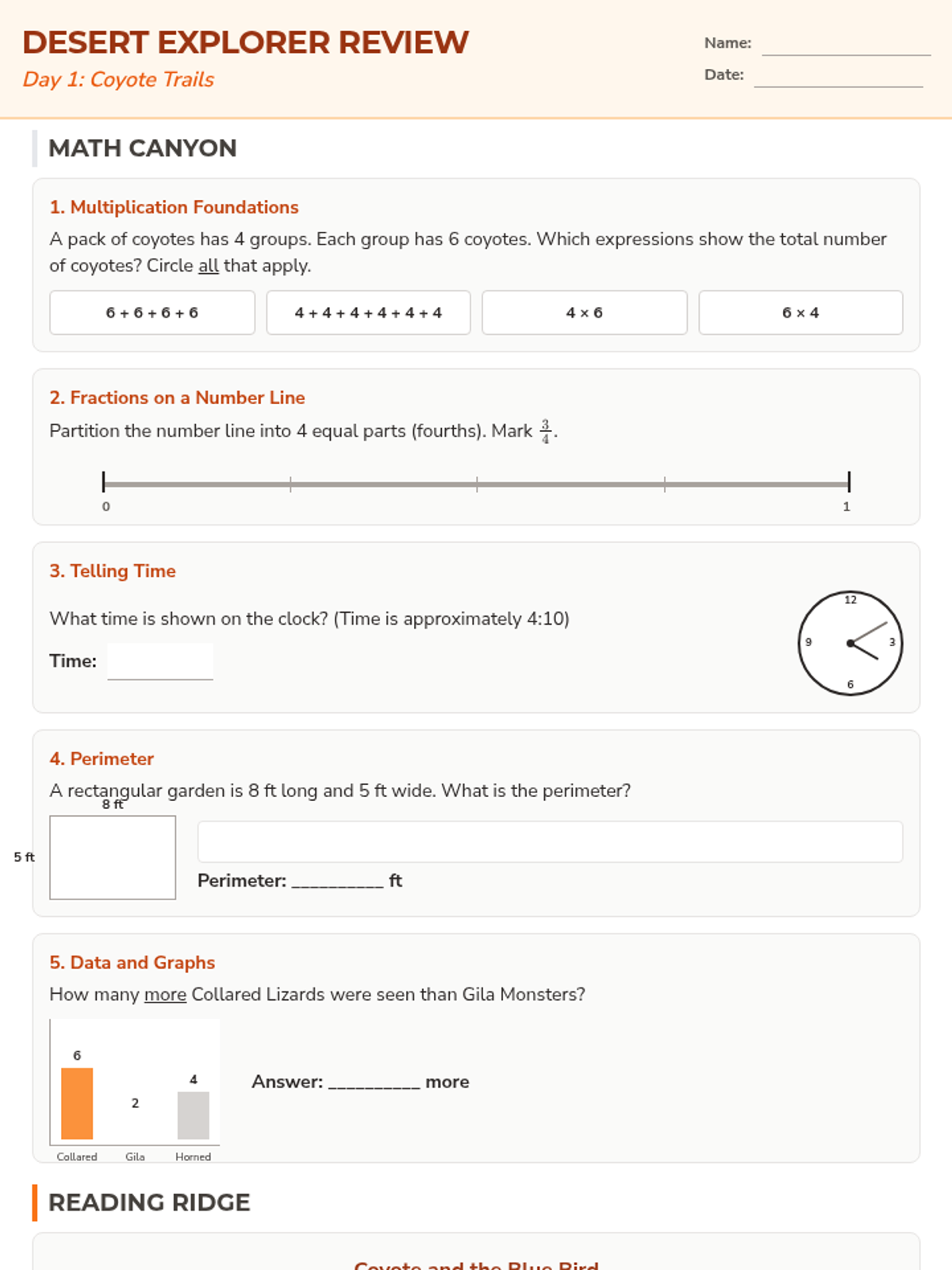
A specialized sequence for 3rd-grade students focusing on using number lines as visual cognitive scaffolds. Students progress from physical movement on a floor-sized line to using 'open' number lines for addition, subtraction, elapsed time, and fractions, providing a consistent strategy for solving complex problems.
This 3rd-grade sequence introduces the Concrete-Representational-Abstract (CRA) framework using bar models (tape diagrams) to visualize additive relationships. Students transition from physical linking cubes to drawn rectangles, mastering part-part-whole and comparison models to decode and solve word problems.
This sequence addresses the conceptual hurdles of fraction operations by utilizing number lines as a concrete visual anchor. Students move from placing fractions on a line to visually estimating and calculating sums and differences using movement and length to represent value.
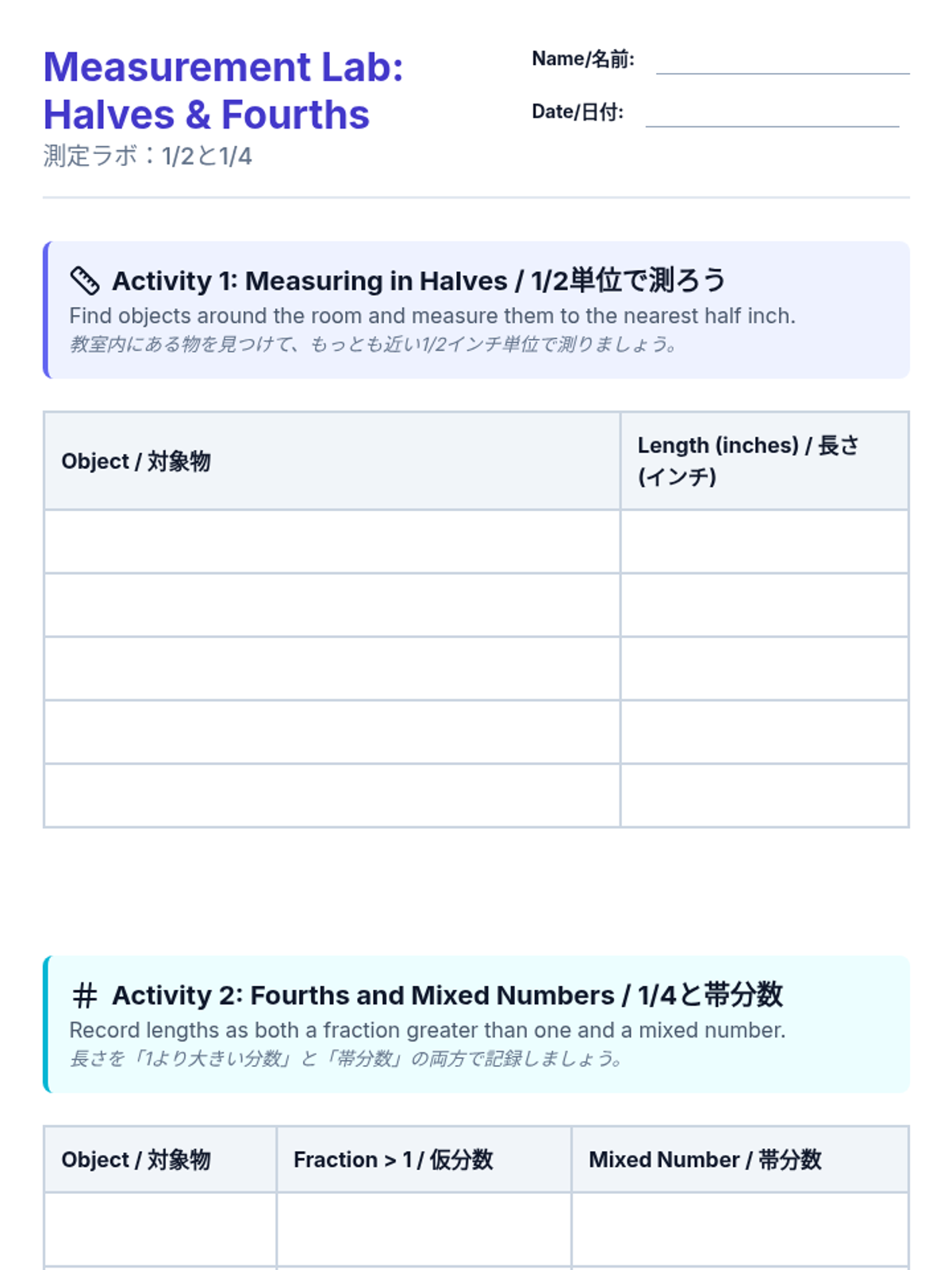
A comprehensive 3rd-grade sequence introducing students to the fundamental skills of linear measurement using both U.S. Customary and Metric systems, moving from non-standard units to fractional precision.
A 5-lesson sequence for 3rd graders focused on understanding mass using metric units (grams and kilograms). Students progress from qualitative comparisons to using pan balances, standard weights, digital scales, and finally applying their skills in a realistic market simulation.
This workshop-style sequence bridges geometry and early fraction concepts through the study of symmetry and partitioning. Students progress from identifying balance in nature to dividing shapes into halves, thirds, and fourths, emphasizing that equal shares must be identical in area even if they look different.
A multi-disciplinary unit exploring line symmetry and reflection through folding, mirrors, nature observation, and artistic creation. Students bridge mathematics and science to understand how balance and congruence appear in the world around them.
This 3rd-grade sequence guides students from recognizing basic shapes to analyzing their defining attributes, such as sides and vertices. Students explore polygons, distinguish between defining and non-defining attributes, and culminate their learning in a 'Geometry Gallery' project.
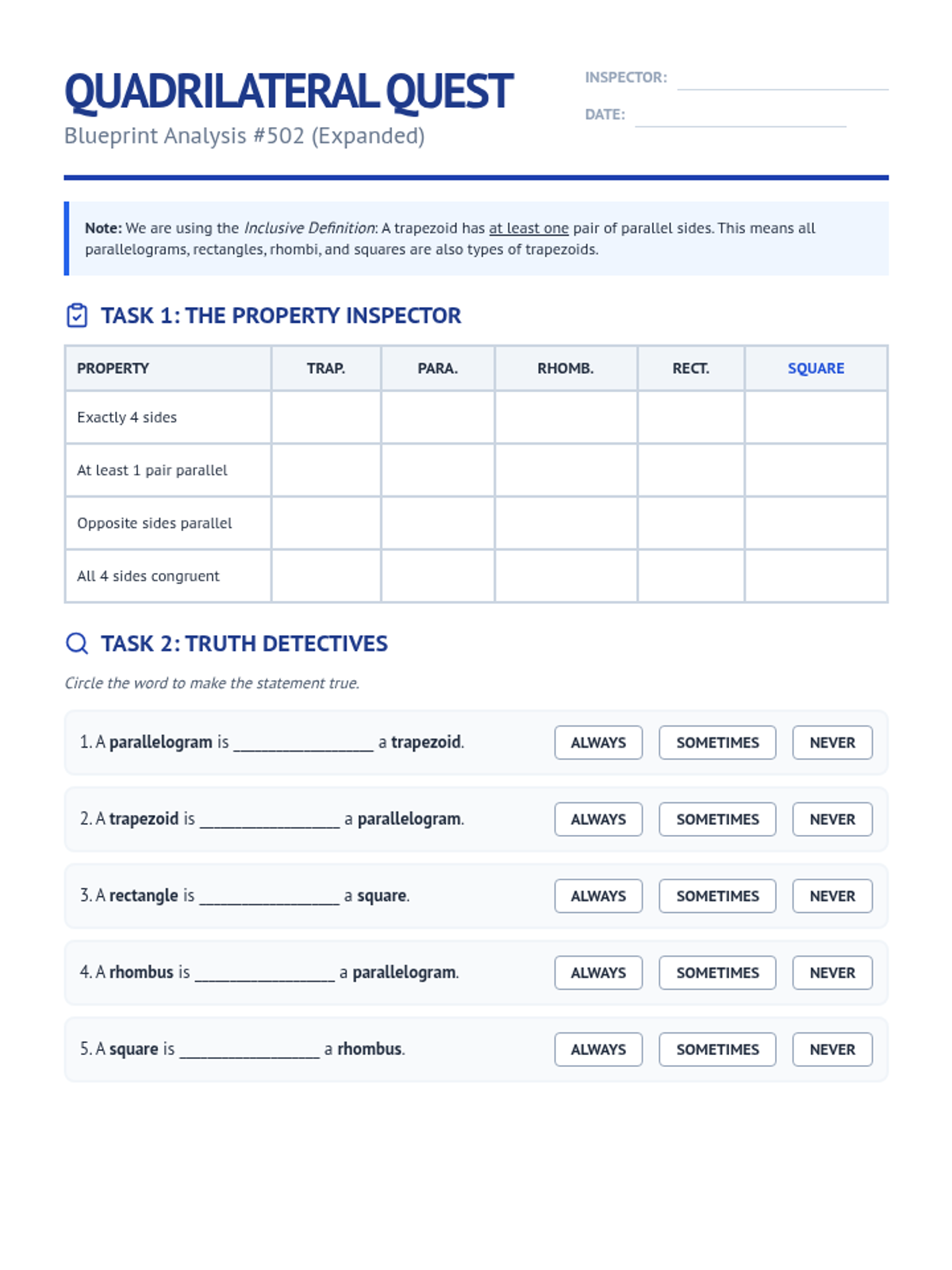
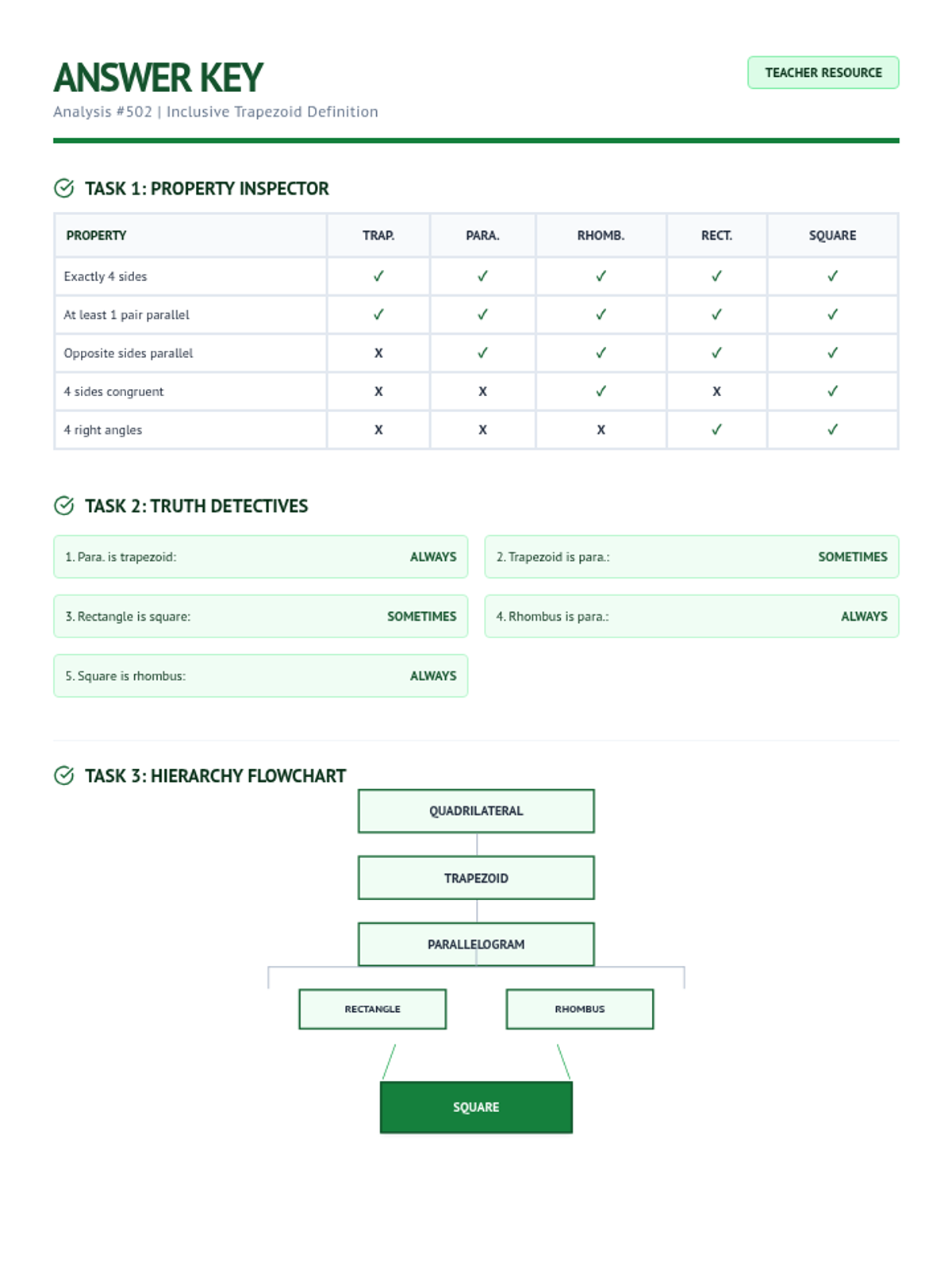
This sequence guides third graders through the hierarchical classification of quadrilaterals. Students move from basic sorting to understanding complex relationships, such as why a square is both a rectangle and a rhombus, using hands-on sorting, Venn diagrams, and a final design project.
An engineering-focused sequence where 3rd Grade students explore the relationship between 2D shapes and 3D solids. Students investigate physical properties like rolling and stacking, analyze geometric features, and apply their knowledge to structural engineering challenges.
A 5-lesson unit for 3rd-grade students focused on comparing and ordering simple fractions through visual models, logical reasoning, and interactive games. Students move from basic same-denominator comparisons to using benchmark fractions and ordering sets of fractions.
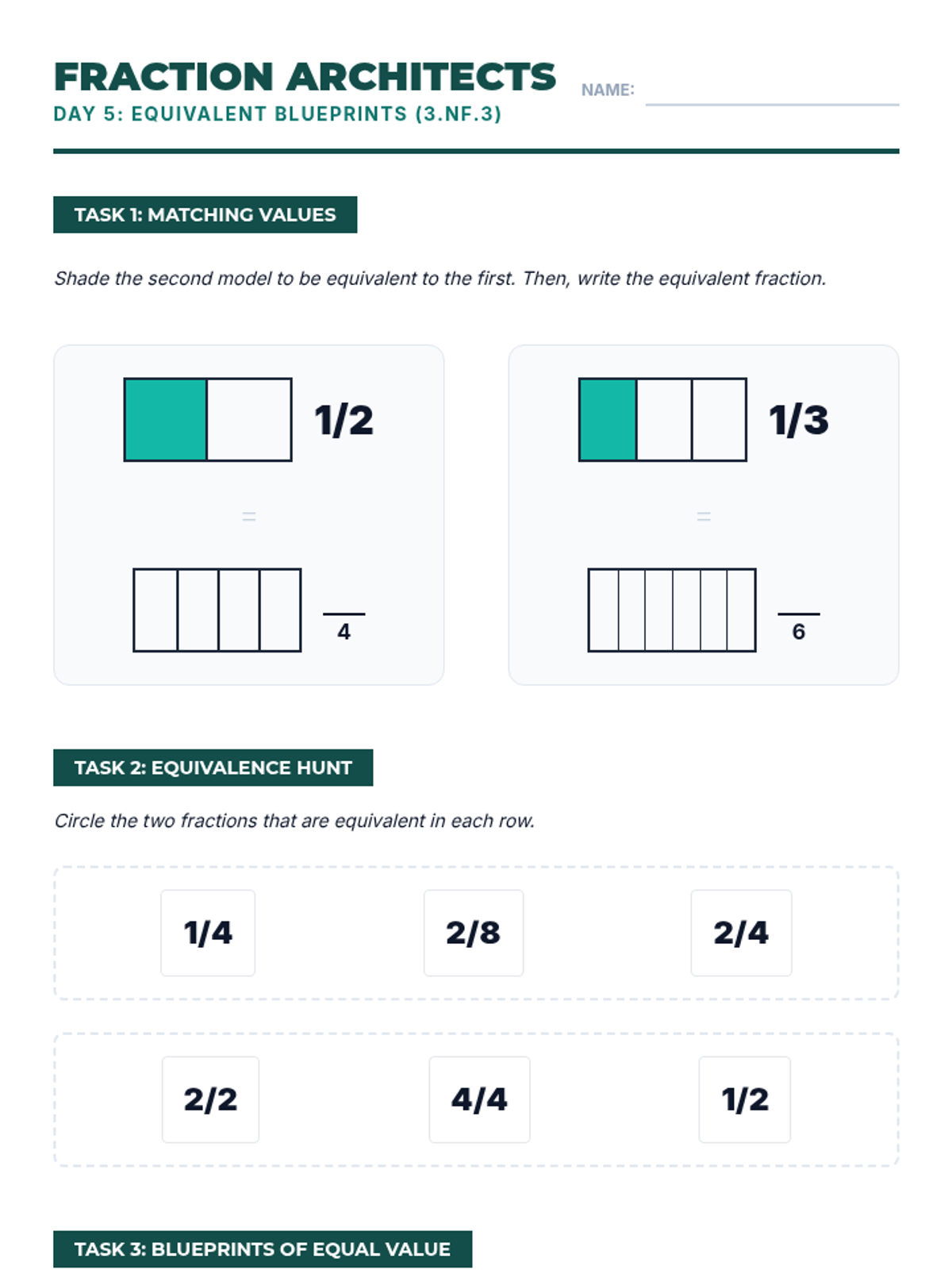
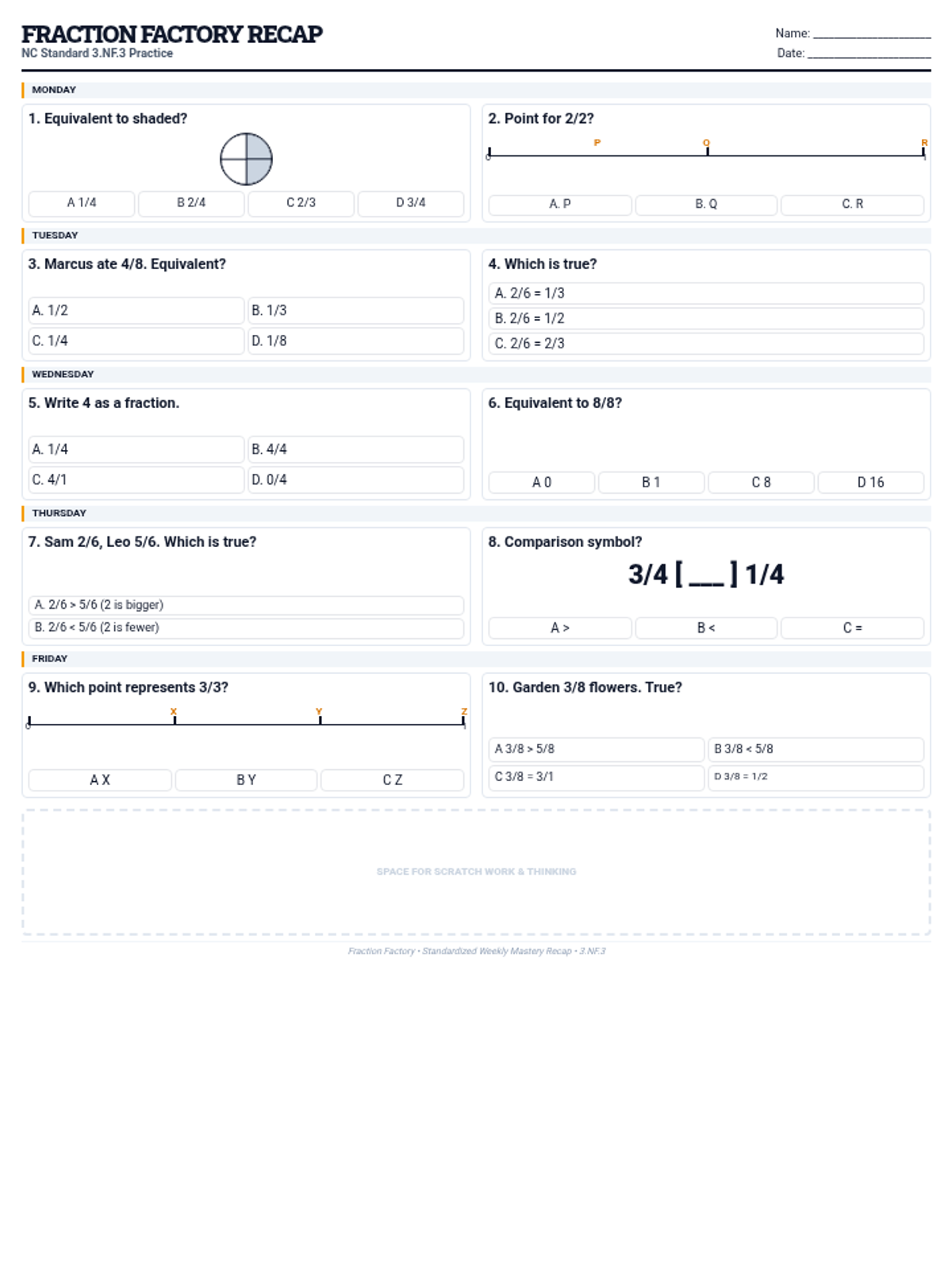
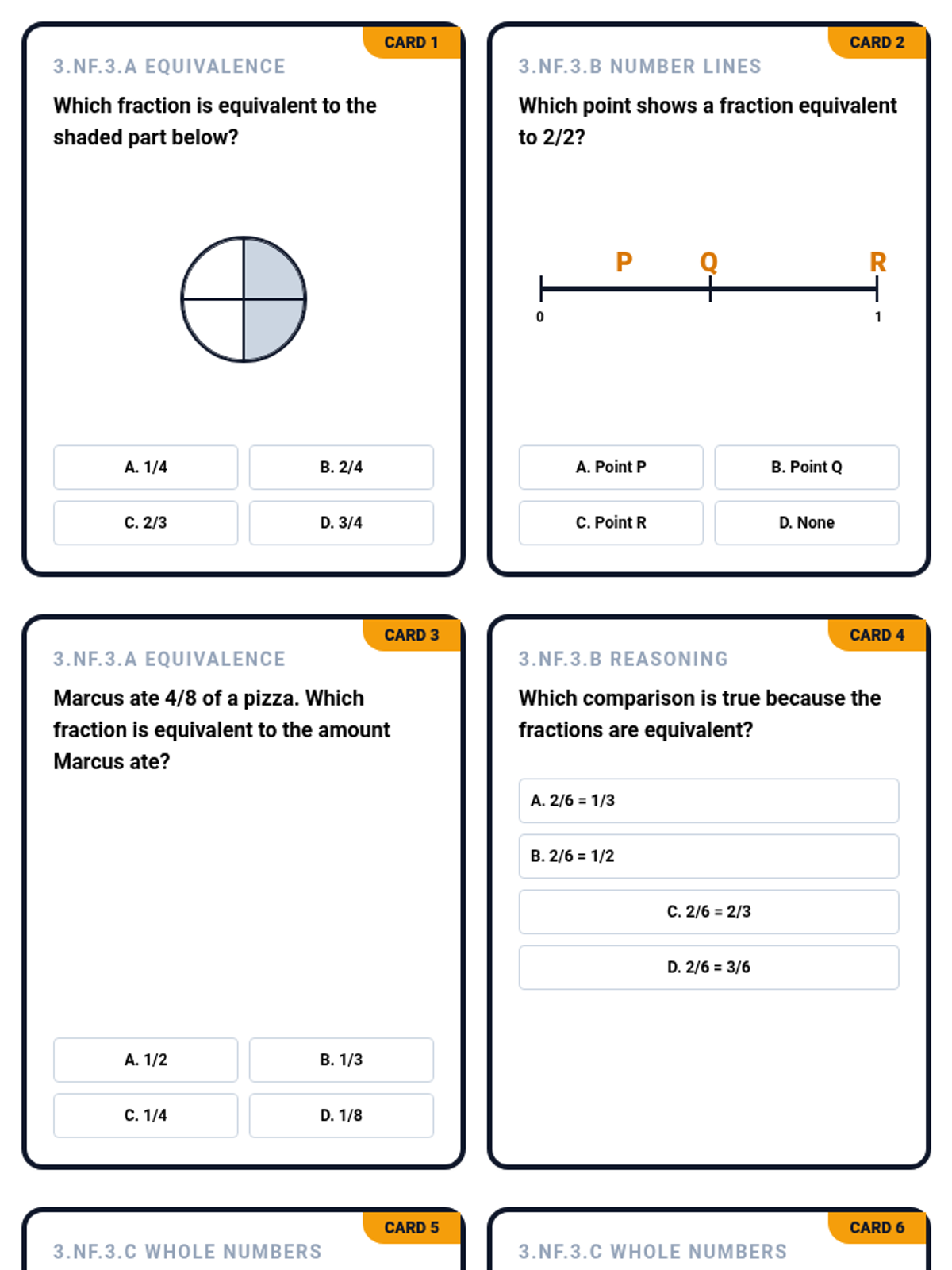
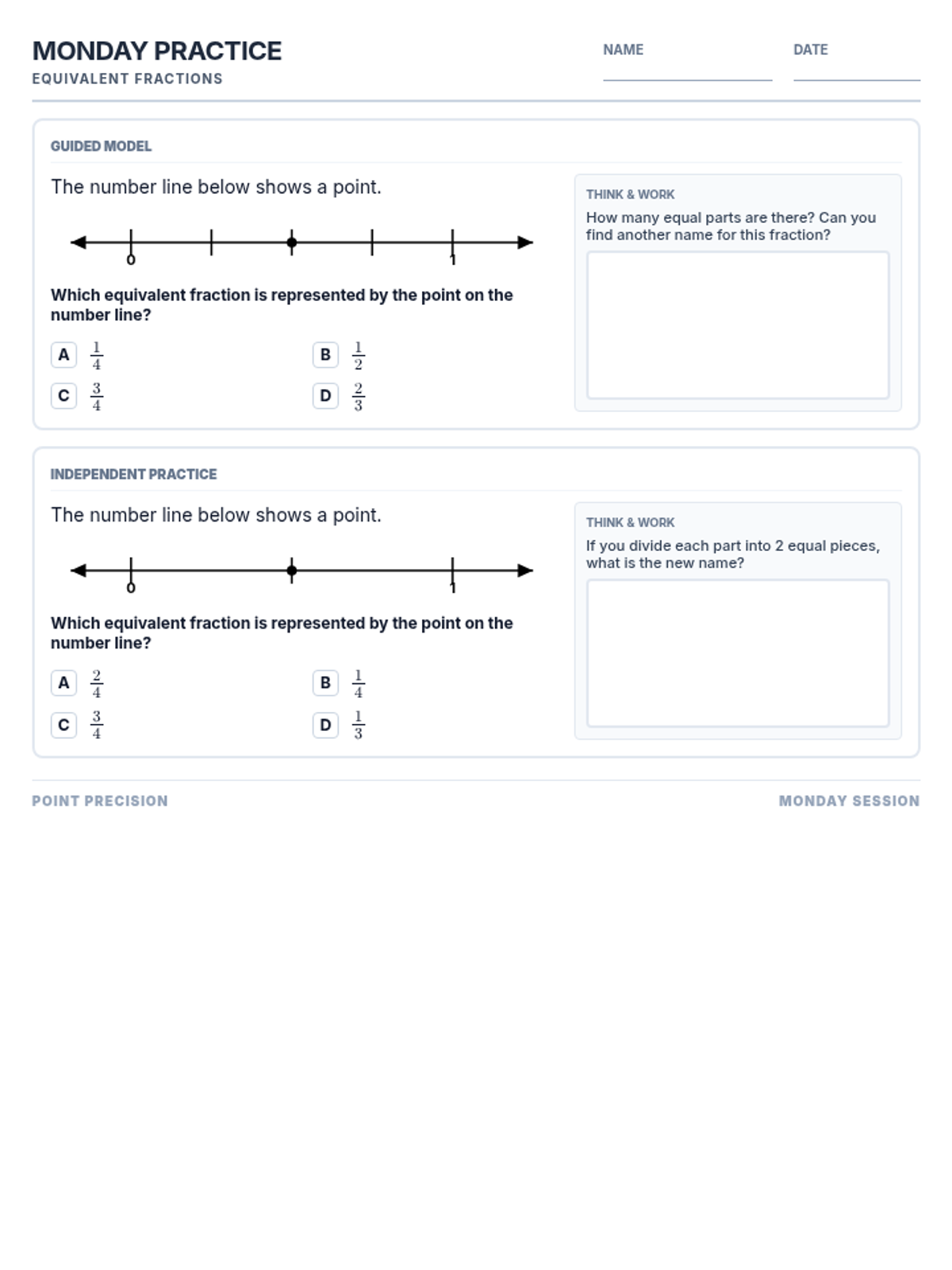
A 3rd-grade sequence exploring equivalent fractions through paper folding, number lines, area models, and project-based learning. Students move from concrete visualizations to conceptual understanding of how different numbers represent the same quantity.
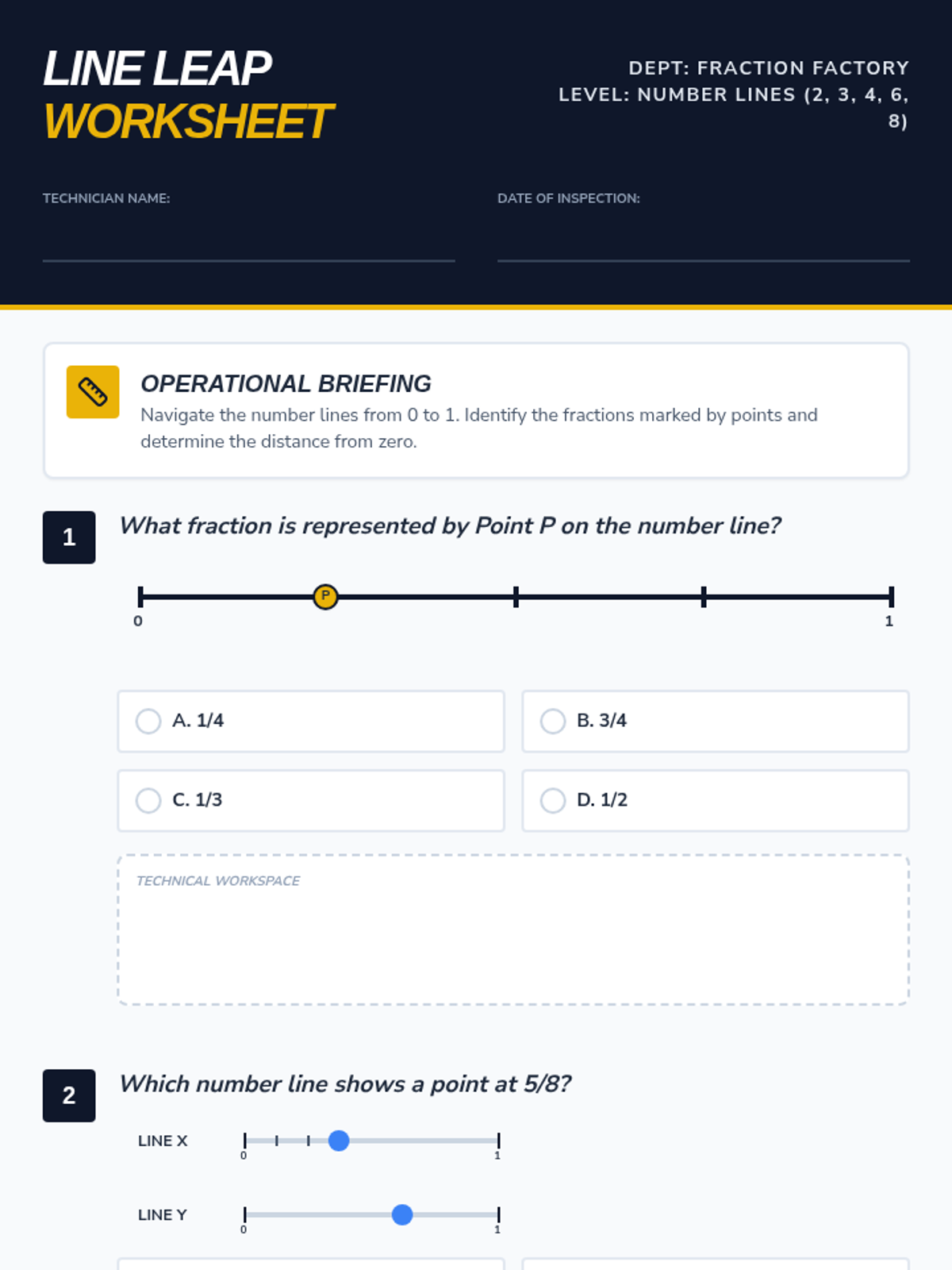
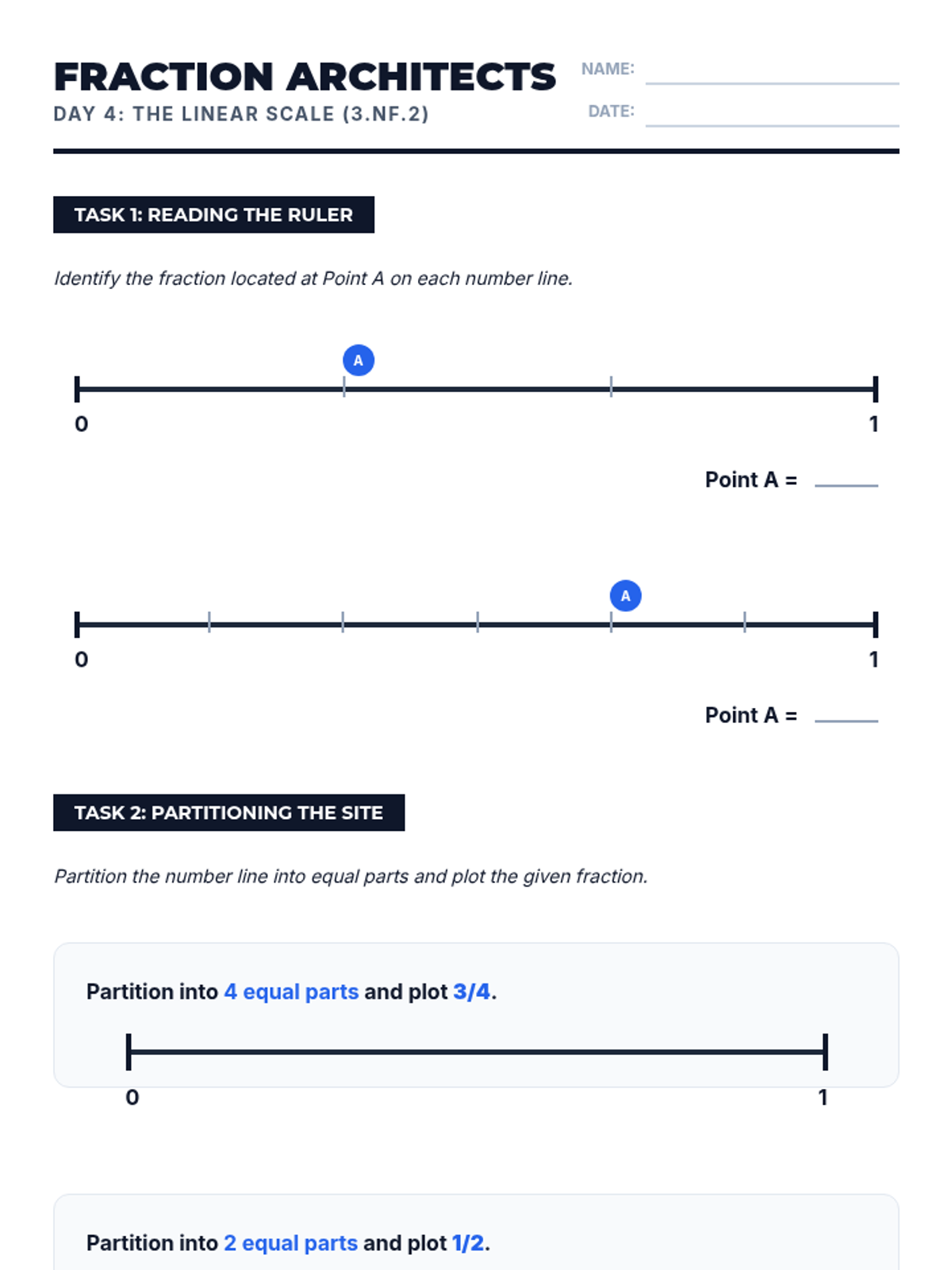
A comprehensive journey from area models to linear representations of fractions. Students explore the interval between whole numbers, partition number lines into equal segments, and locate fractions as distances from zero, extending their understanding to values greater than one.
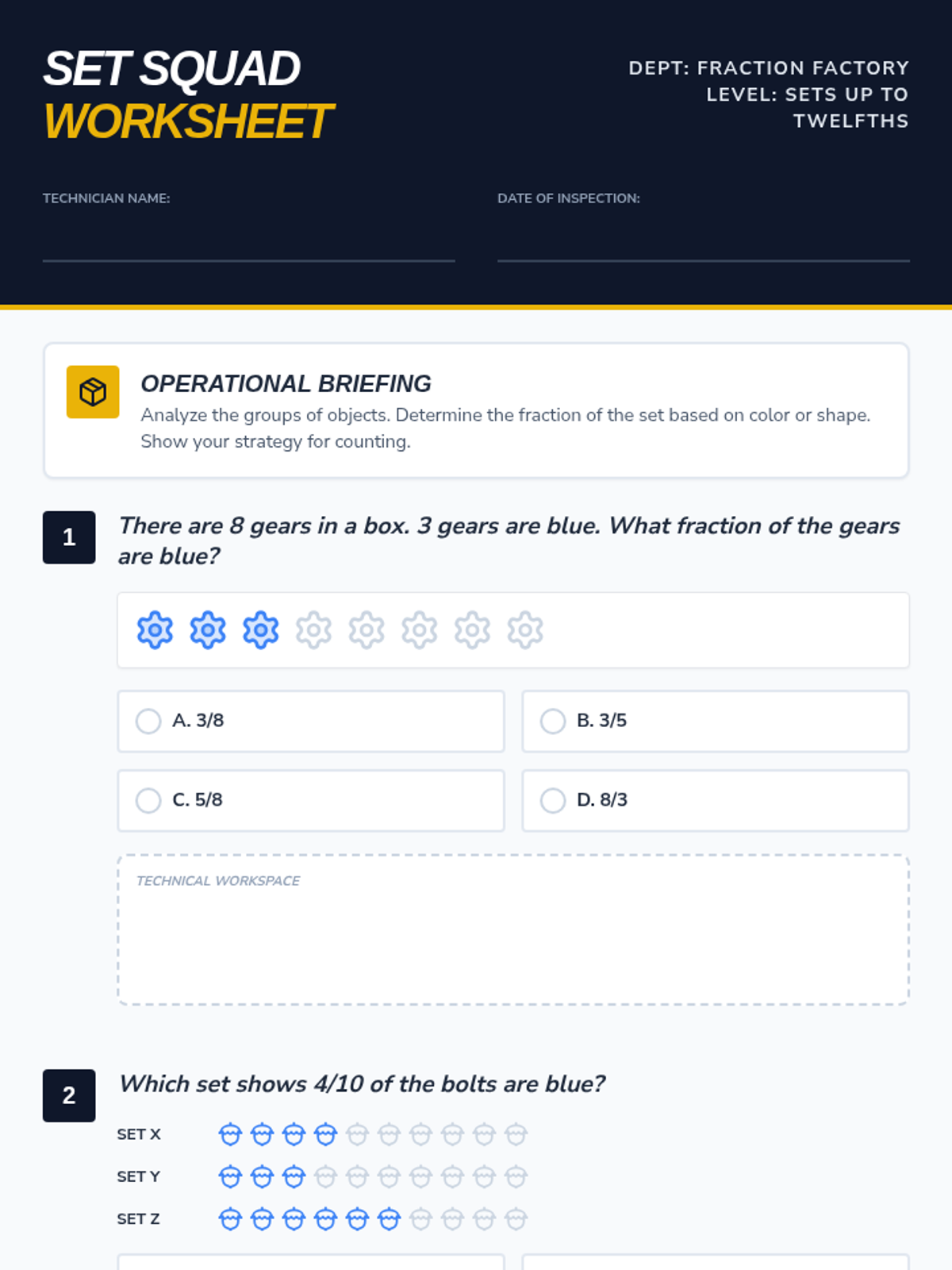
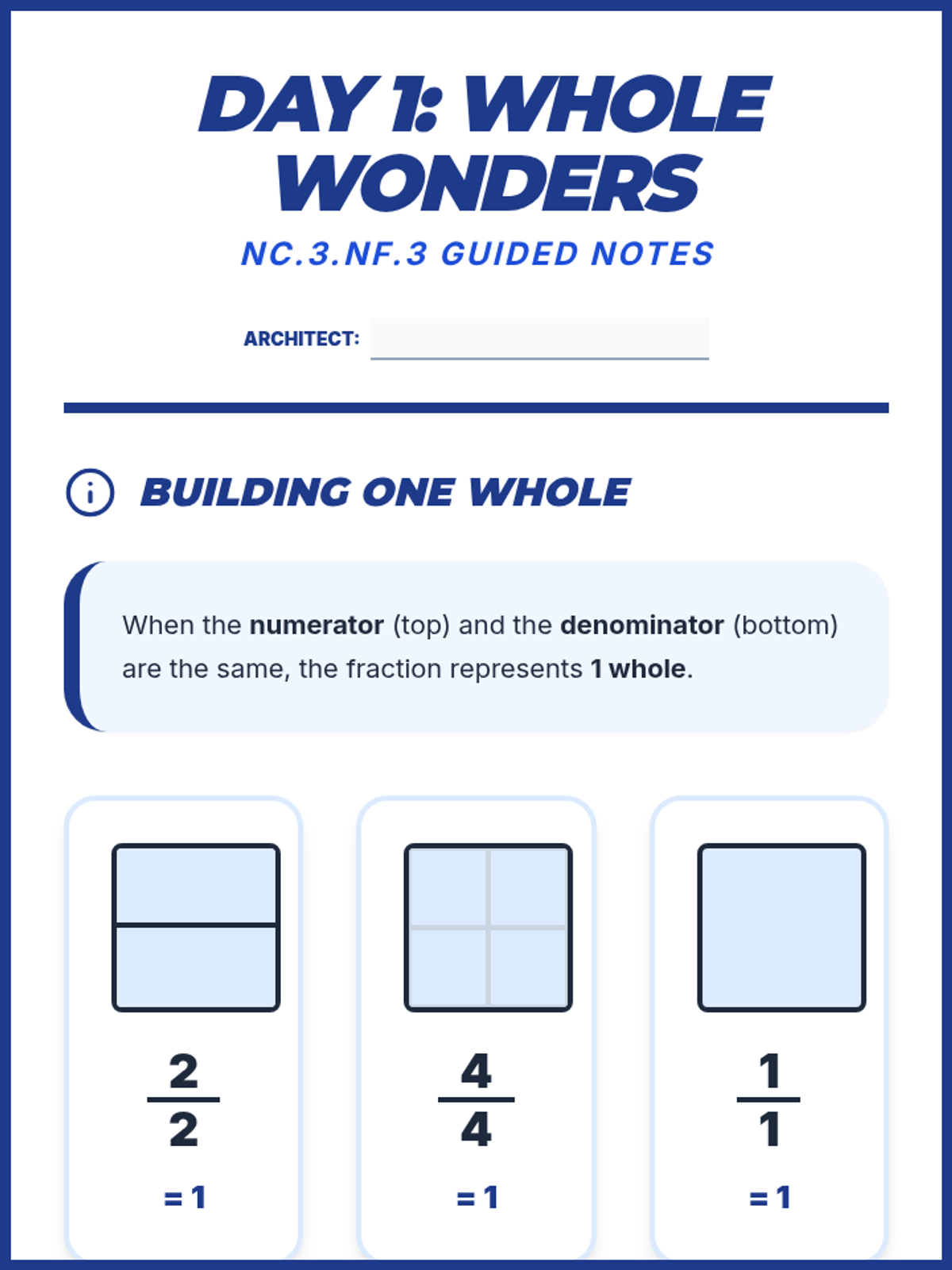
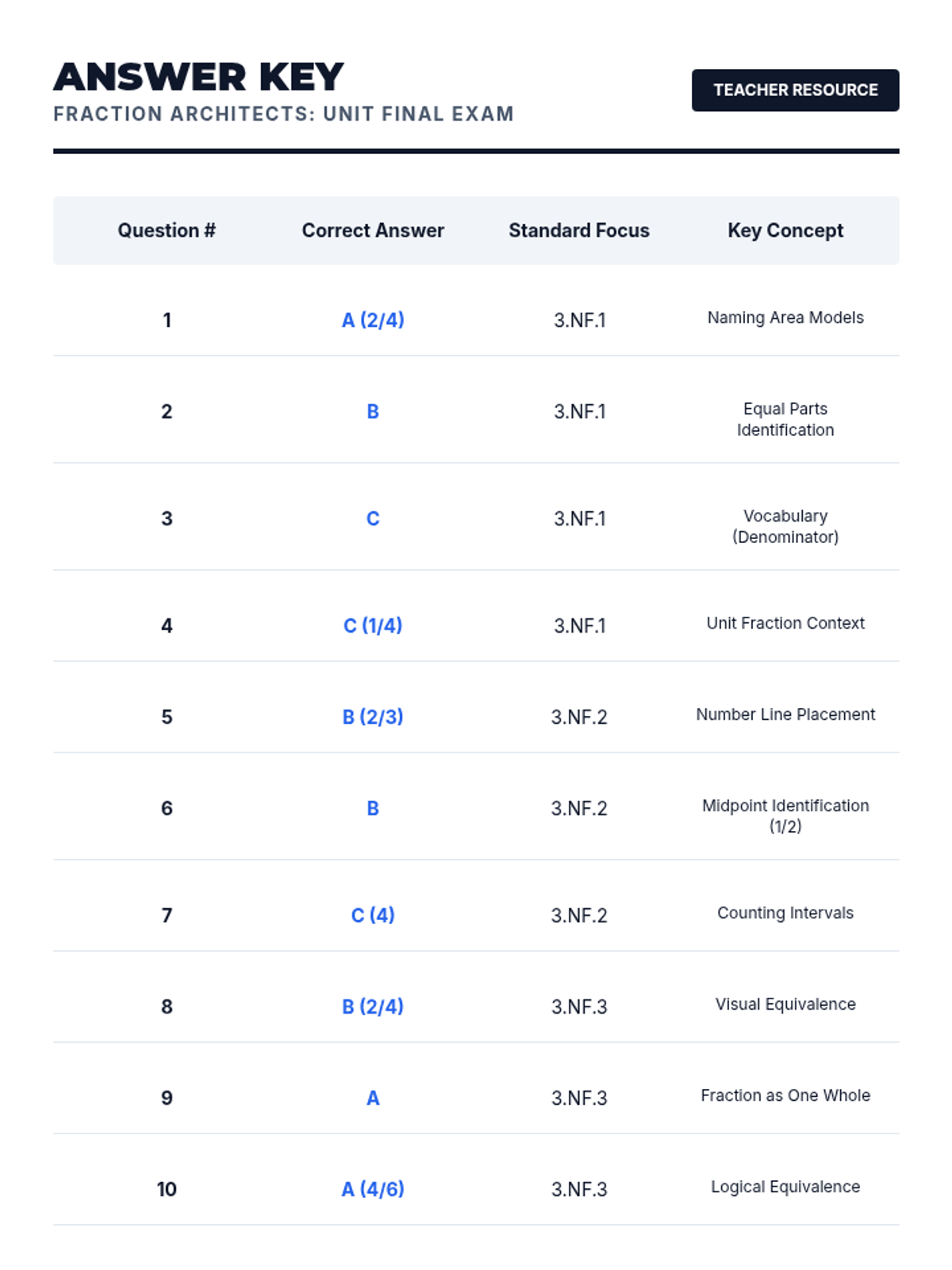
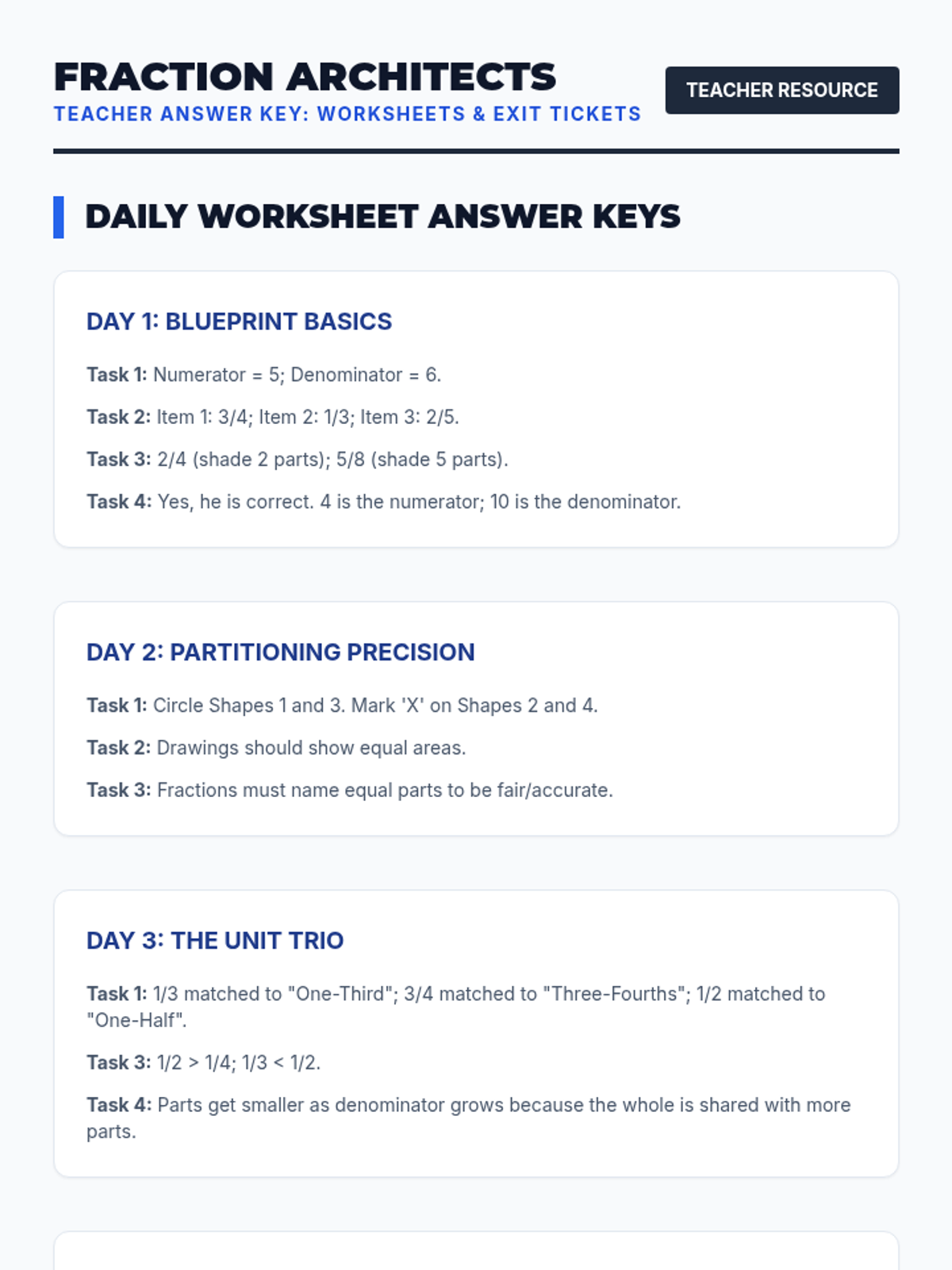
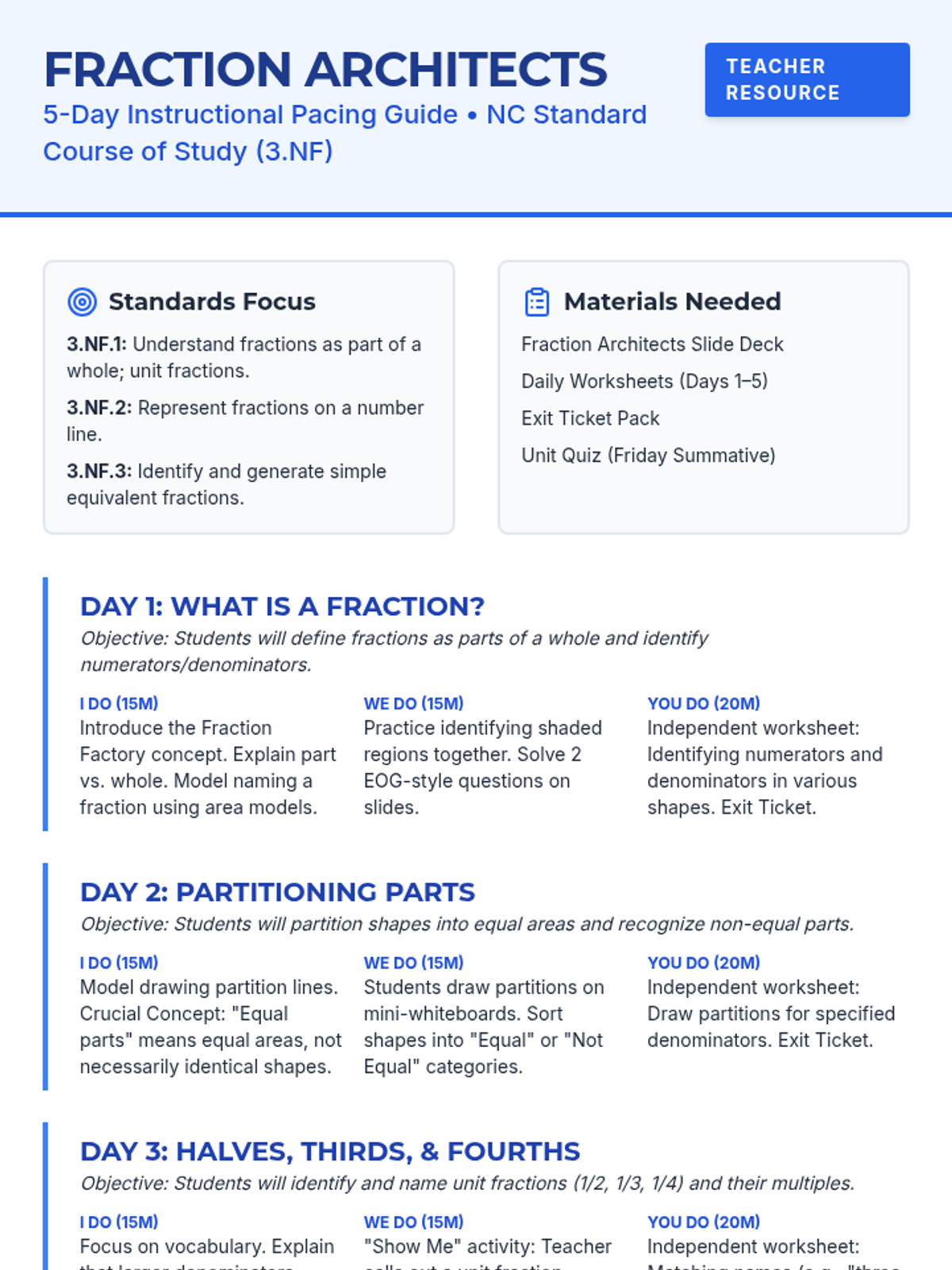
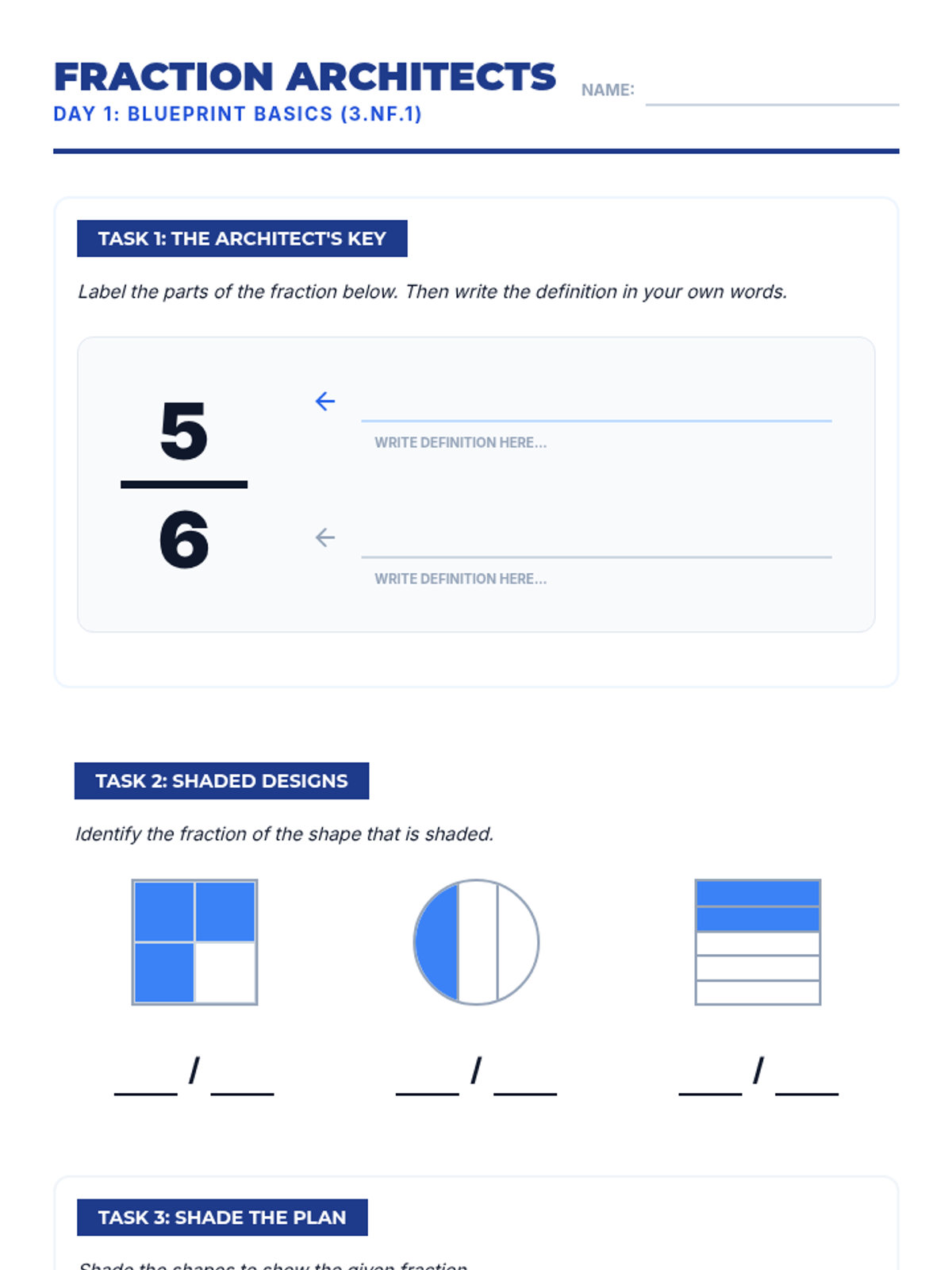
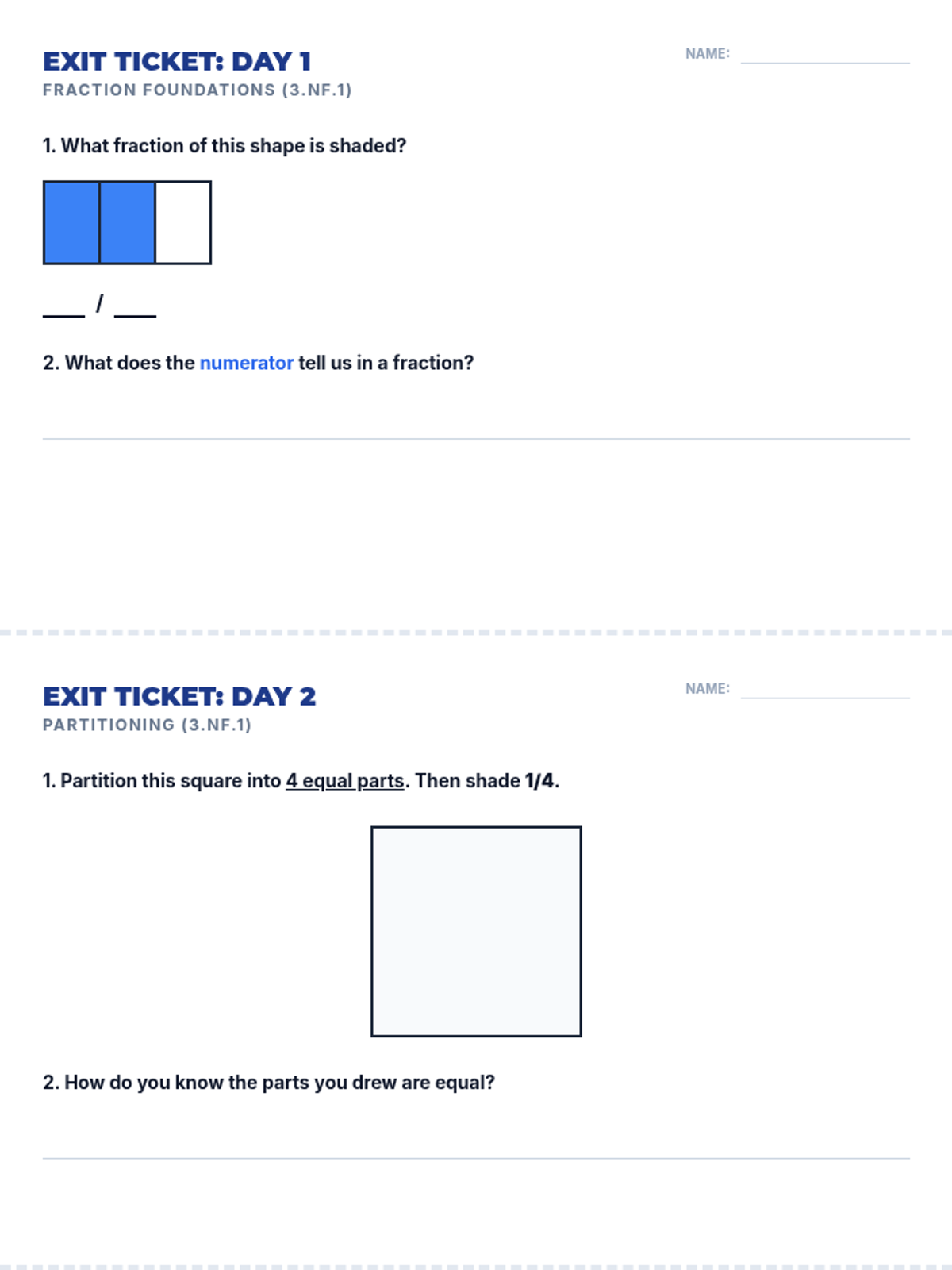
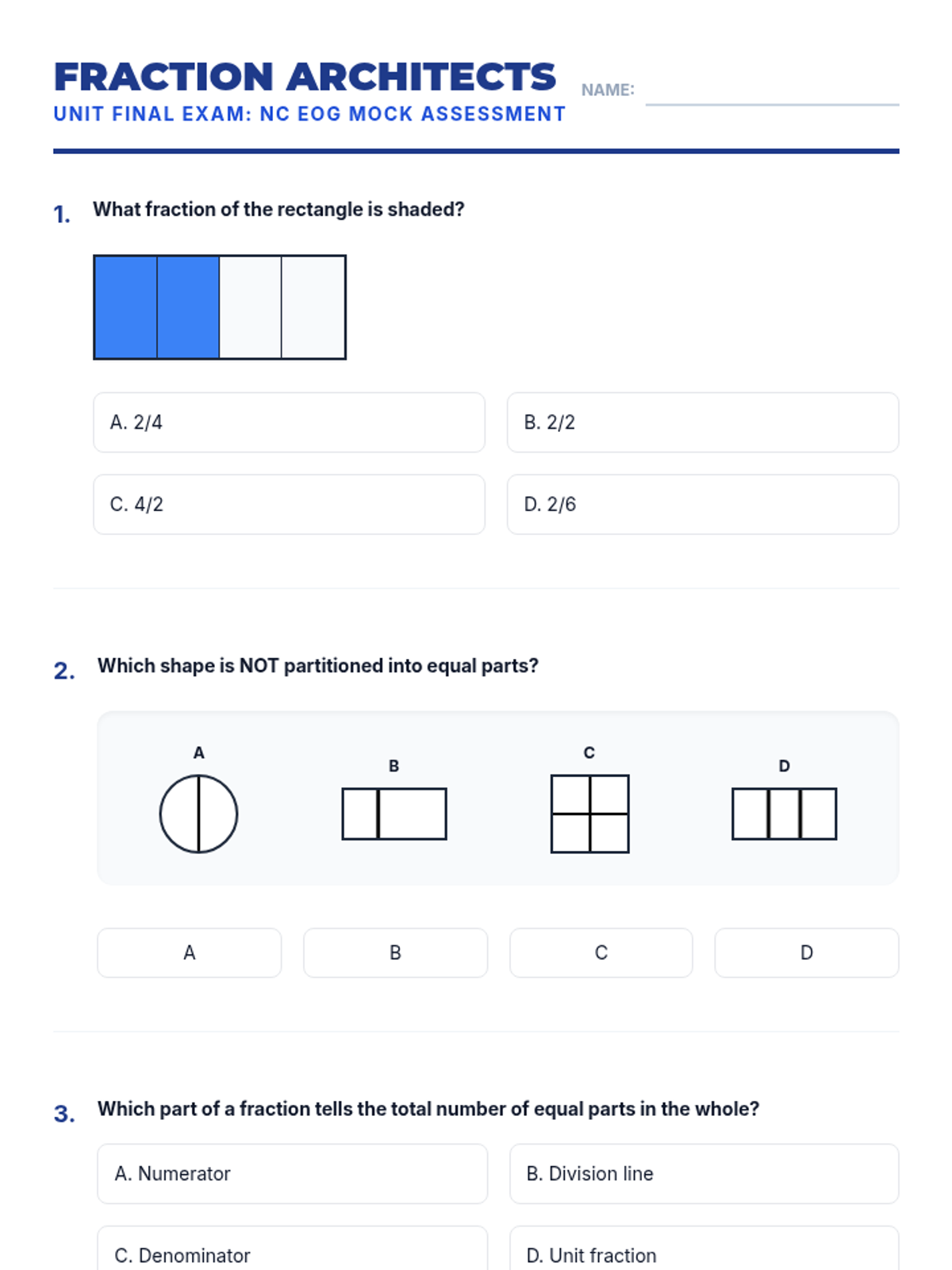
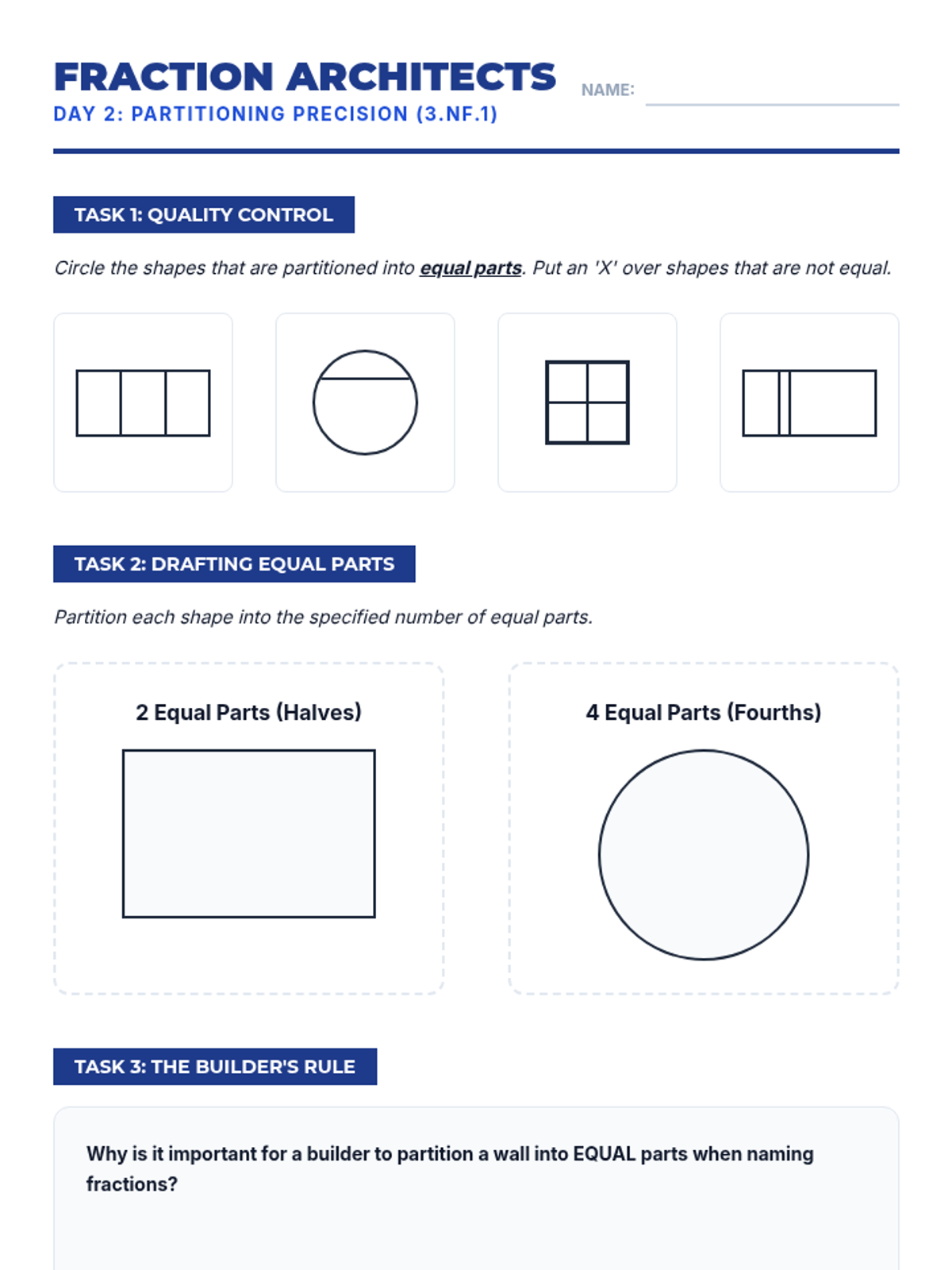
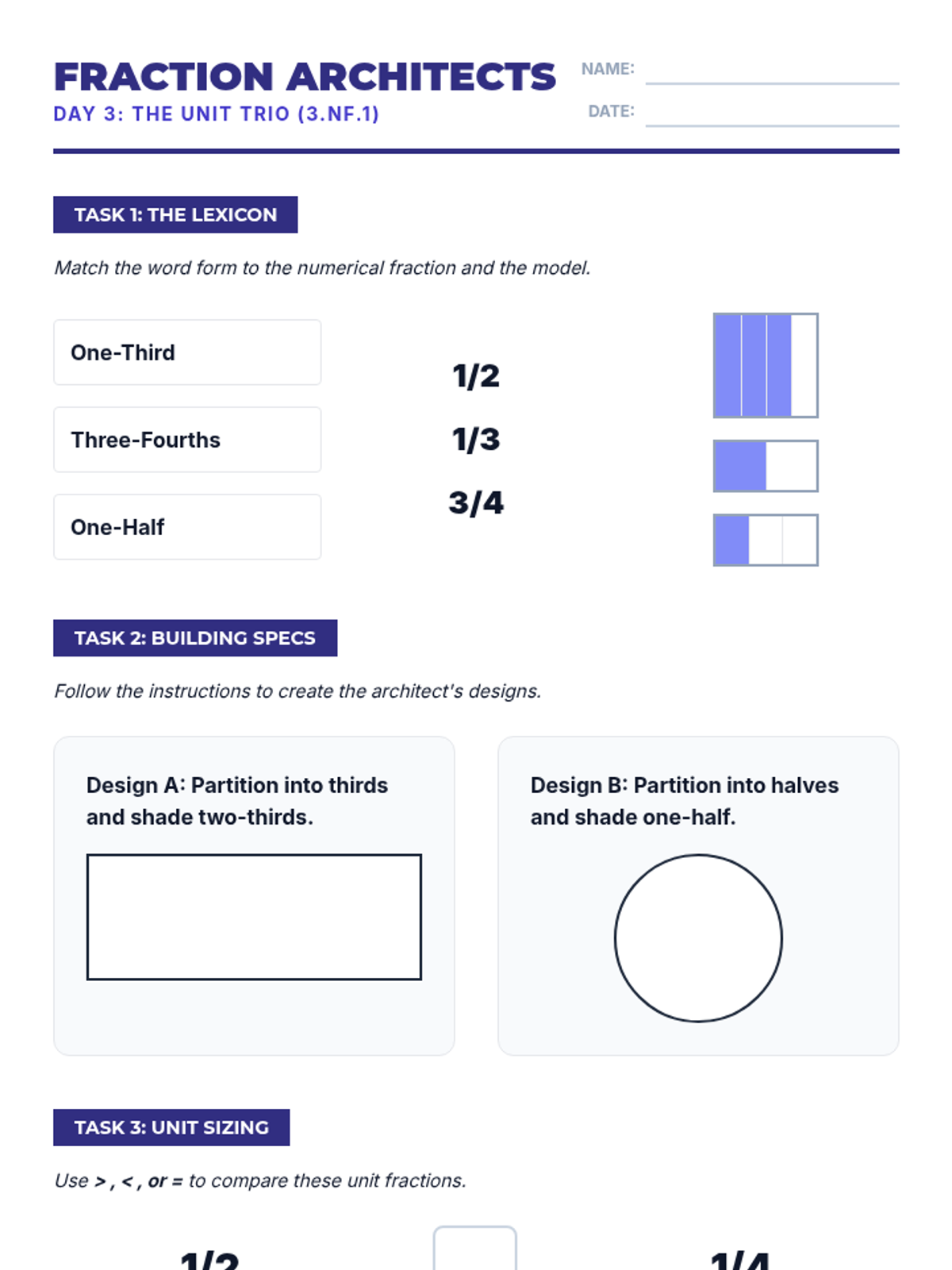
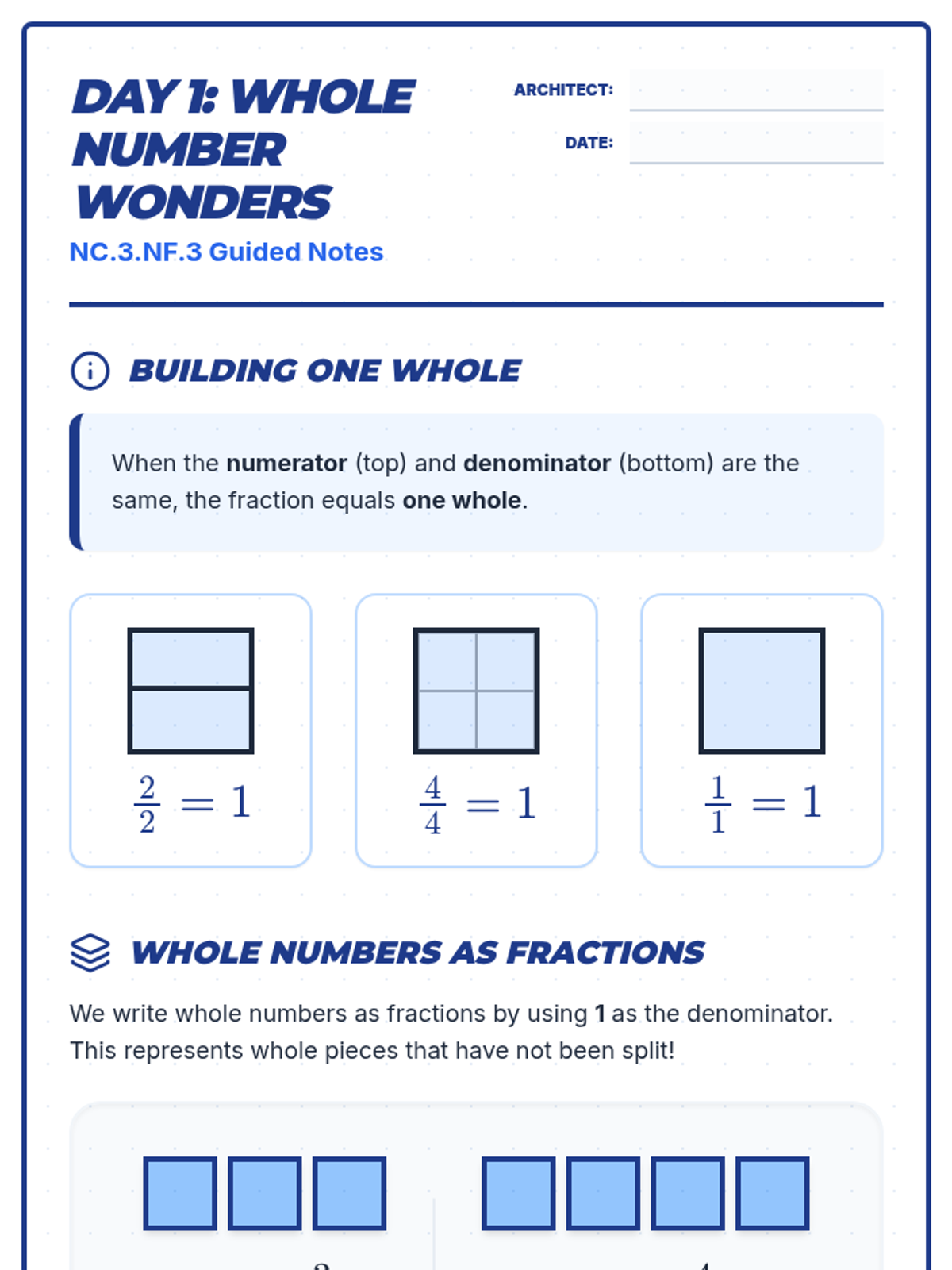
This sequence introduces 3rd-grade students to fractions as numbers. It covers partitioning shapes into equal shares, identifying numerators and denominators, composing non-unit fractions from unit fractions, and comparing fractions of a whole versus fractions of a set.
A 5-lesson unit for 3rd graders exploring the additive nature of angles. Students move from kinesthetic turns to calculating missing measurements in complementary, supplementary, and complex angle diagrams.
A project-based unit where 3rd-grade students learn to construct angles and geometric figures using protractors and straightedges. The sequence culminates in an 'Angle Art' project where students apply their precision drawing skills to create a labeled masterpiece.
A hands-on geometry sequence where students explore the building blocks of angles, identify right angles in their environment, and classify angles as acute, obtuse, or straight through inquiry and shape analysis.
An integrated 3rd-grade sequence focused on solving real-world word problems involving time, liquid volume, and mass. Students act as professionals in various fields, applying measurement concepts to complex scenarios and simulations.
A comprehensive unit for 3rd graders to master the concept of mass. Students progress from distinguishing between grams and kilograms using physical benchmarks to using scales, estimating mass, and solving multi-step word problems involving measurement.
Students explore liquid volume through an inquiry-based approach, focusing on liters. They move from conceptual understanding to estimation, measurement with beakers, and solving arithmetic word problems involving volume.
A comprehensive 3rd-grade math unit focusing on reading analog clocks to the minute, calculating elapsed time using number lines, and solving complex time-based word problems. Students progress from basic clock reading to designing their own optimized daily schedules.