Students explore relief printing using soft foam plates, focusing on positive and negative space, inking techniques, and pattern creation. The sequence culminates in a professional-style edition of prints and a gallery walk critique.
This sequence explores the representation of apes in the film 'Rise of the Planet of the Apes', focusing on the transition from scientific subjects to sentient leaders. Students analyze the use of motion-capture technology and narrative techniques used to humanize non-human characters.
Une formation immersive de 12 heures destinée aux professeurs-documentalistes pour maîtriser les codes de la littérature adolescente actuelle et concevoir des stratégies de médiation innovantes au CDI.
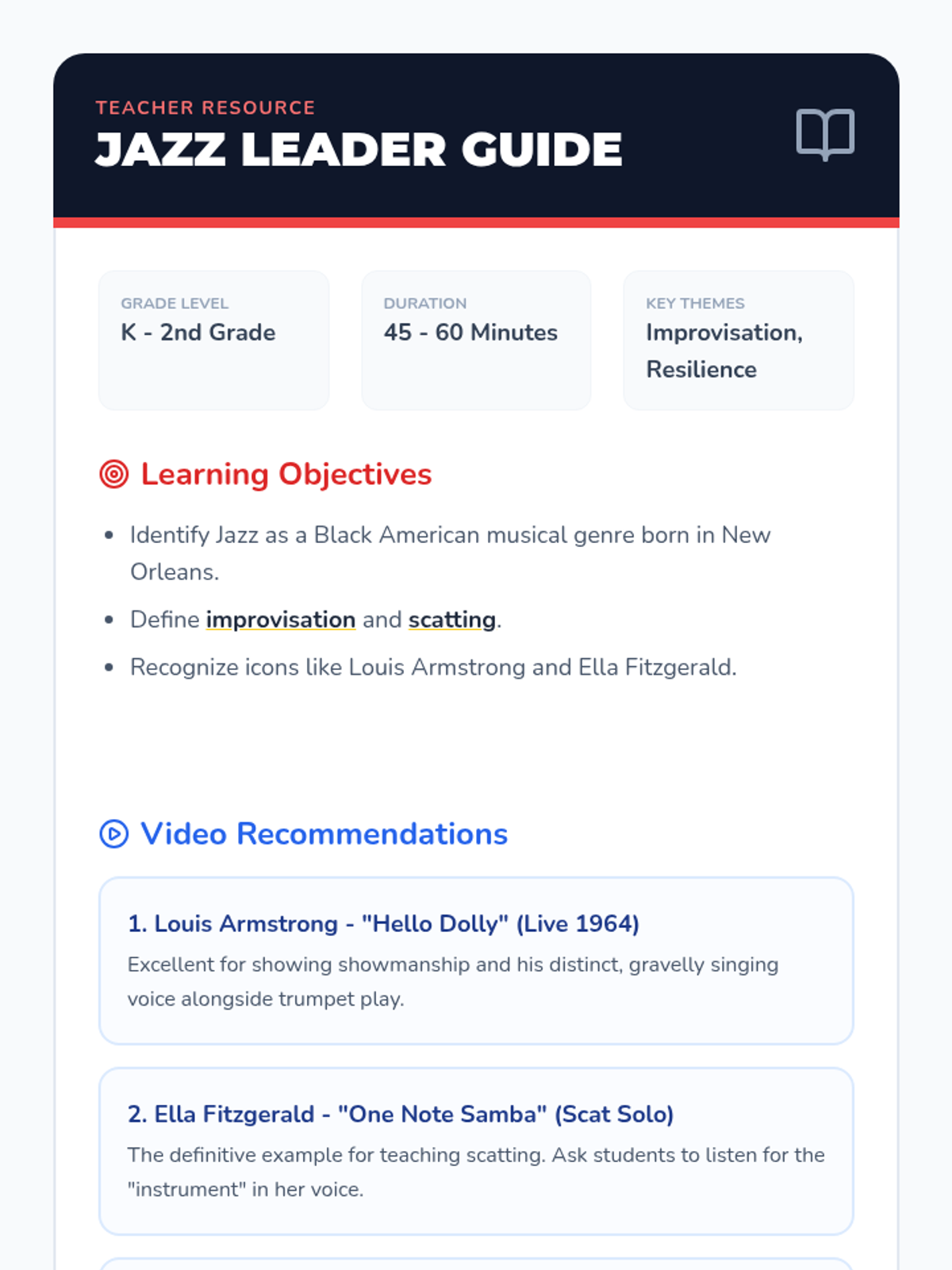
A comprehensive 6-lesson unit for 5th graders exploring the history, evolution, and legendary figures of American Jazz, from its New Orleans roots to its global legacy today.
A high-energy, interactive unit focused on mastering rhythm and tempo through digital gameplay and body percussion, designed specifically for paperless classrooms.
A comprehensive unit for middle school band students to master the chromatic scale, focusing on note identification, enharmonics, and instrument-specific fingerings through a 'blueprint' technical aesthetic.
A comprehensive workshop sequence on goal setting and visual manifestation.
A journey through the 20th and 21st centuries, exploring how technology like electric guitars and synthesizers shaped genres from Rock 'n' Roll to Pop. Students analyze rhythm, structure, and sound to build a chronological timeline of musical evolution.
A global musical expedition for 2nd graders to discover how geography and culture shape instruments and traditions across four continents. Students explore materials, physics of sound, and the cultural roles of music through inquiry and hands-on activities.
An immersive workshop-style sequence for 2nd graders exploring the roots of Jazz, Blues, and Folk music through call-and-response, syncopation, and improvisation. Students trace American musical history from work songs to the Swing era through active music-making.
A 5-lesson sequence for 2nd graders exploring how classical composers use musical elements to tell stories and express emotions. Students 'meet' famous composers like Vivaldi and Beethoven, identifying tempo, dynamics, and leitmotifs in iconic works.
A comprehensive introduction to the four families of the orchestra for 2nd graders. Students explore timbre, mechanics, and historical roles of strings, woodwinds, brass, and percussion, culminating in a conductor simulation.
A 5-lesson sequence for 3rd graders exploring the music and instruments of West Africa, Asia, the Andes, and North America, focusing on how geography and culture shape sound.
This sequence explores how technology—from the electric guitar to digital software—transformed music from the mid-20th century to today, focusing on genre evolution, song structure, and production.
A comprehensive introduction to the orchestra and the Classical era for 3rd graders, covering instrument families, specific sections, key composers (Mozart and Beethoven), and the art of conducting.
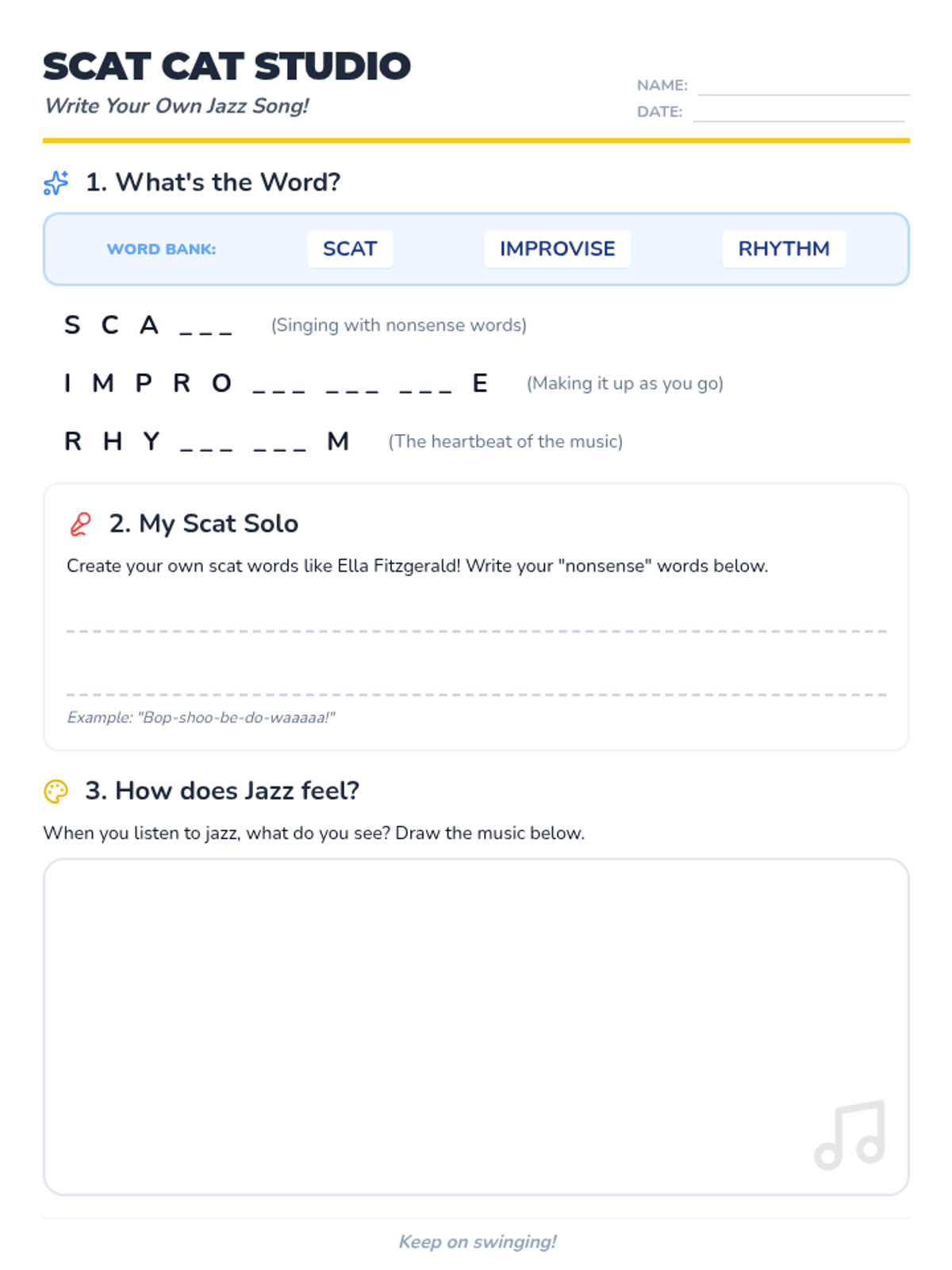
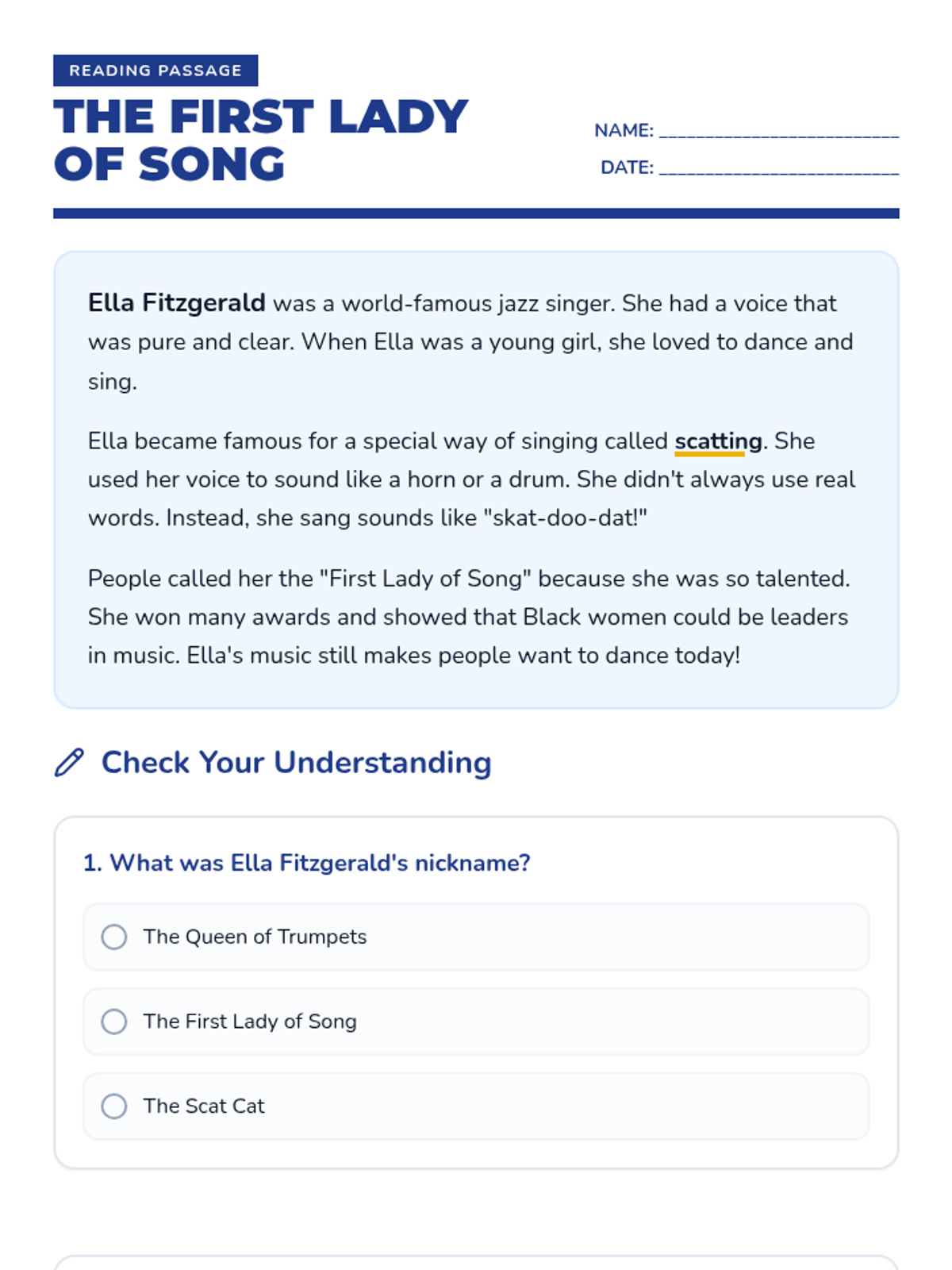
Students explore the world of Jazz through rhythm, syncopation, and improvisation. They'll meet legends like Louis Armstrong and Ella Fitzgerald while learning to find their own musical voice through 'swing' and scat singing.
A 3rd-grade music history and appreciation unit exploring the roots of American folk and blues music, focusing on oral traditions, storytelling, and musical structures like call-and-response and the AAB blues form.
This sequence investigates how the technological explosion of the 20th and 21st centuries, from the electric guitar to AI, redefined music genres and creation. Students analyze production techniques, listen for layers, and explore the concept of technology as a musical instrument.
This project-based sequence takes students on a global tour as ethnomusicologists, examining how geography and culture influence musical instruments and sounds. Students classify instruments using the Hornbostel-Sachs system and explore rhythms and scales from Africa, Asia, and Latin America.