A Pre-K sequence designed to help students distinguish between reality and fiction by creating their own narratives. Students learn to recount true personal events and then modify them with imaginative, impossible elements.
This Pre-K sequence focuses on developing oral retelling and sequencing skills using the transition words 'first,' 'next,' and 'last.' Students engage in hands-on activities, dramatic play, and collaborative games to master the order of events in simple narratives.
A Pre-K sequence introducing narrative structure (beginning, middle, end) through daily routines, familiar stories, and interactive sorting activities. students learn to identify key story parts and arrange events in chronological order.
A foundational Pre-K ELA sequence that teaches students to identify character motivations (wants) and the resulting actions. Through interactive play, visual organizers, and creative drama, children learn why characters move through stories.
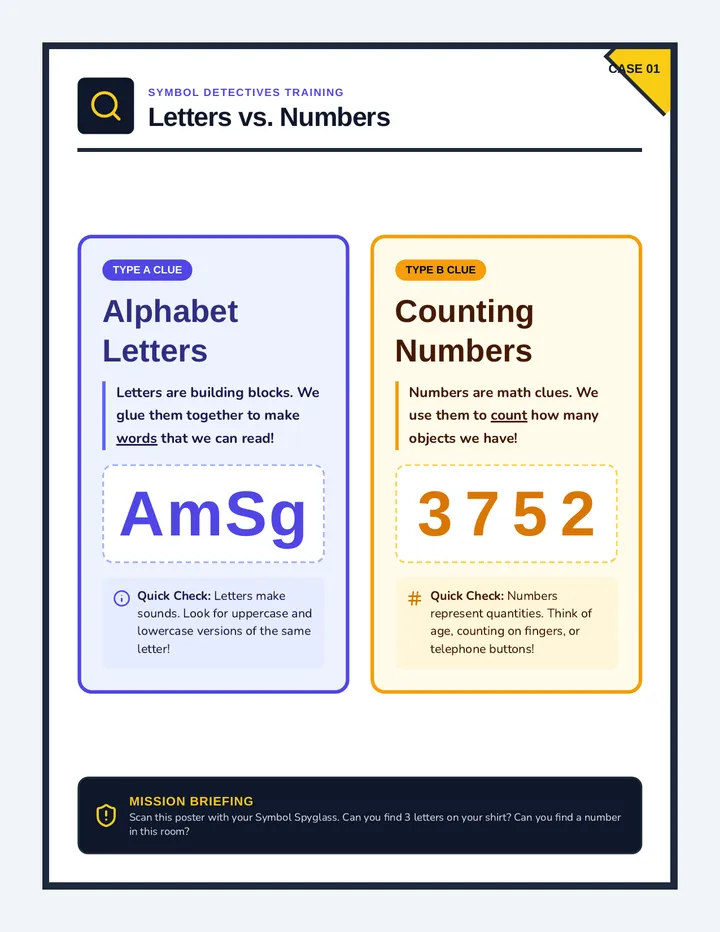
A comprehensive Pre-K sequence focused on identifying main characters, interpreting their facial expressions and body language, and developing vocabulary for personality traits. Students use detective-themed visual cues to understand character emotions and internal traits through picture books and interactive activities.
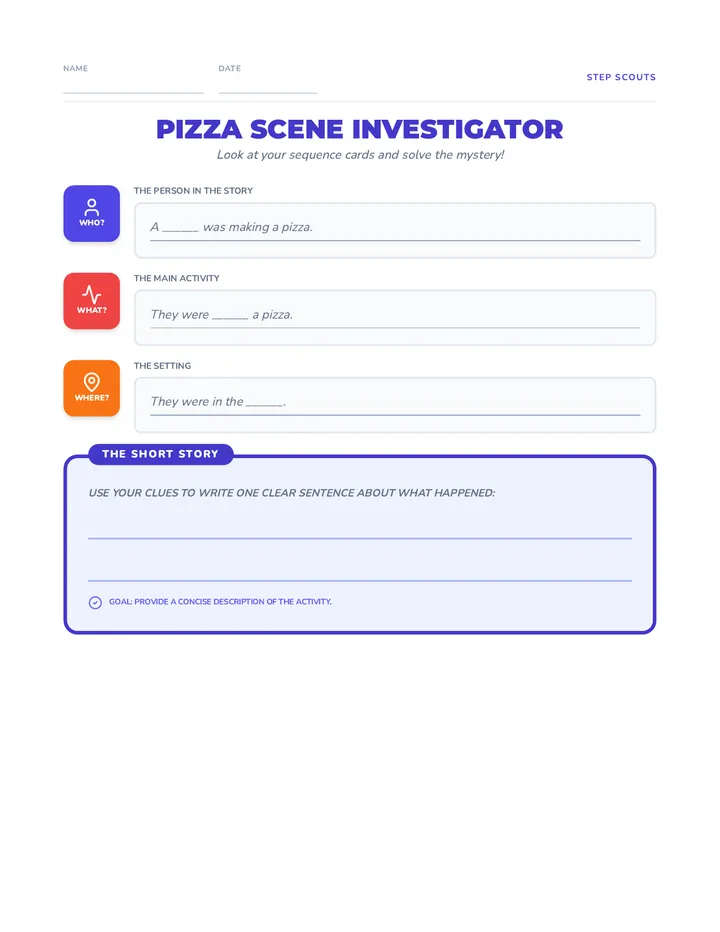
A Pre-K sequence introducing characters and settings through dramatic play, sensory exploration, and interactive sorting. Students learn to identify 'who' and 'where' in stories using puppets, mirrors, and sensory bins.
A foundational Pre-K sequence focused on understanding the chronological order of stories (Beginning, Middle, and End) through familiar routines, character introductions, problem-solving, and visual retelling projects.
A project-based sequence where Pre-K students become authors by creating their own decodable mini-books. Students learn to use phonetic knowledge to name characters, illustrate actions, and write simple captions, culminating in an Author's Chair celebration.
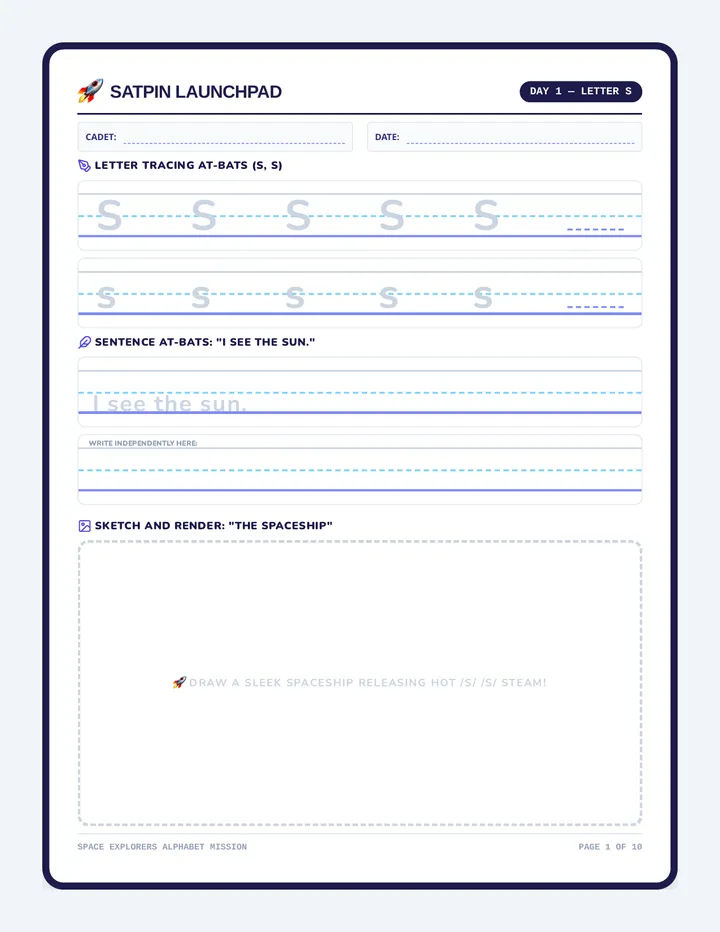
A Kindergarten sequence focused on developing fine motor skills through a multi-sensory approach, moving from tactile play to precision pencil-and-paper tasks. Students progress through sensory writing, gross motor air-tracing, path navigation, and dot-connecting to master the fundamental strokes of handwriting.
A Pre-K sequence focused on reading comprehension through informational texts about transportation. Students learn to categorize vehicles by land, water, and air while developing print awareness, vocabulary, and comparative language skills.
A culminating Pre-K sequence where students become 'Community Reporters,' mastering the six question words (Who, What, Where, When, Why, How) through role-play, peer interviews, and a guest inquiry project to learn about their world.
A foundational Pre-K sequence introducing the concepts of beginning, middle, and end through interactive read-alongs. Students learn to identify narrative structure, spot story problems, and sequence events using visual aids.