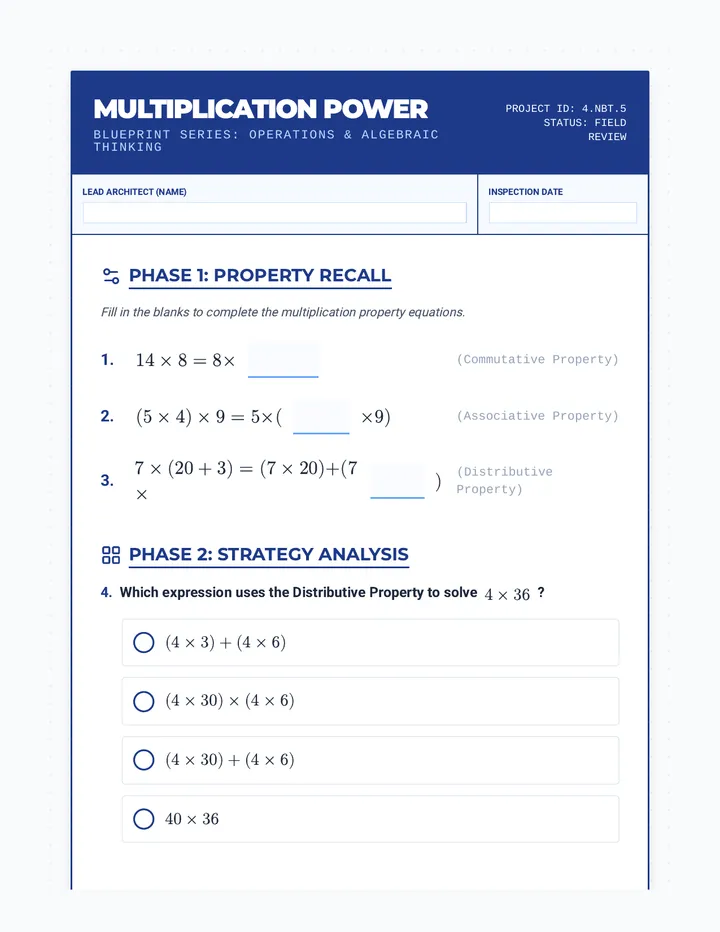
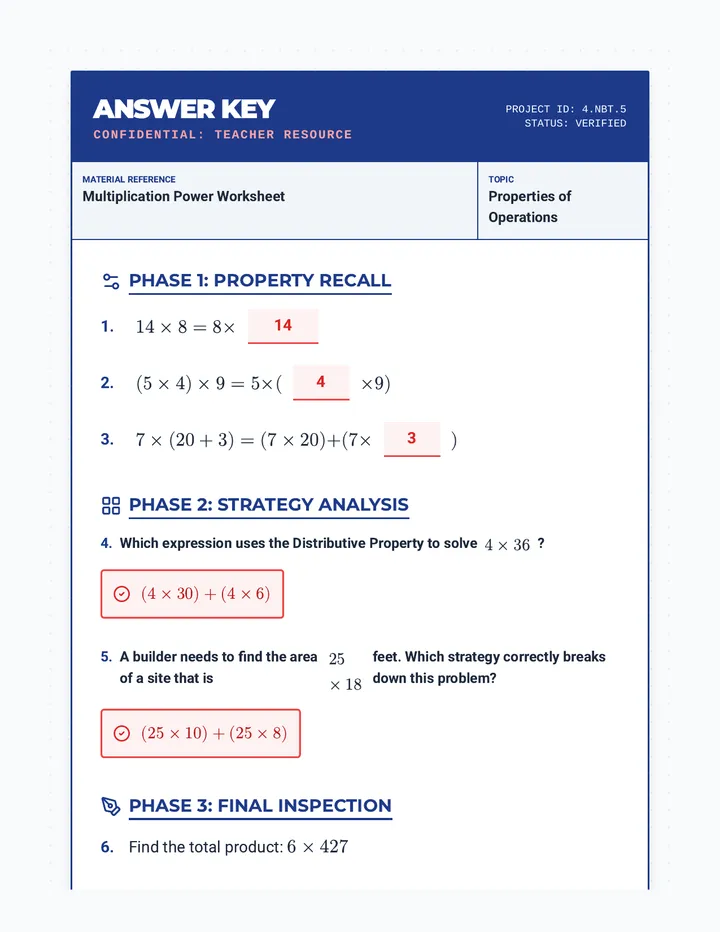
A 4th-grade math sequence exploring numerical patterns, input-output tables, factors, multiples, and prime/composite numbers to build algebraic thinking.
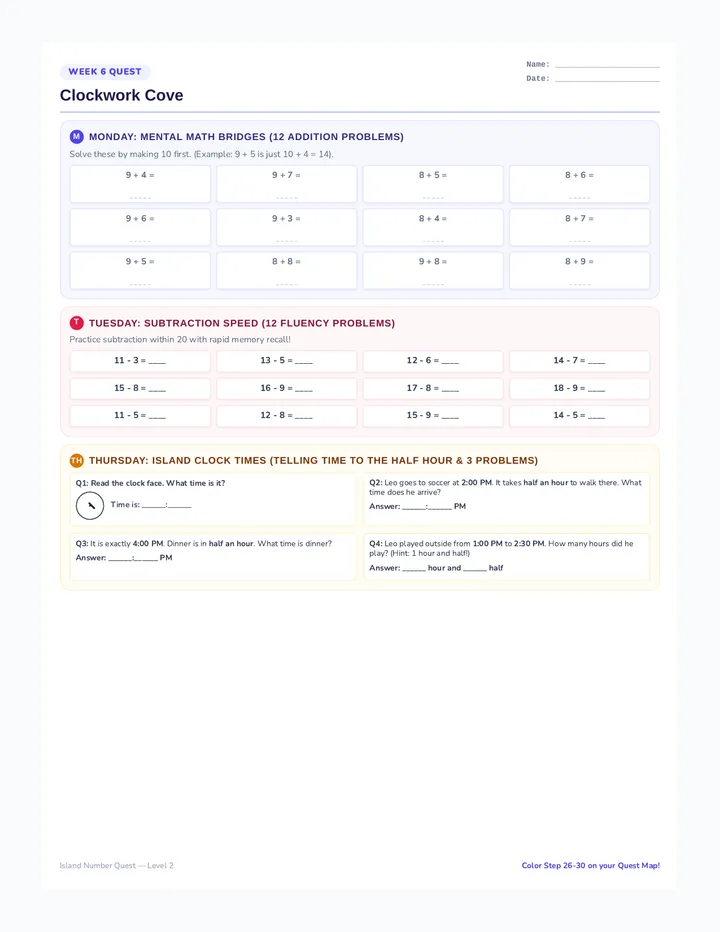
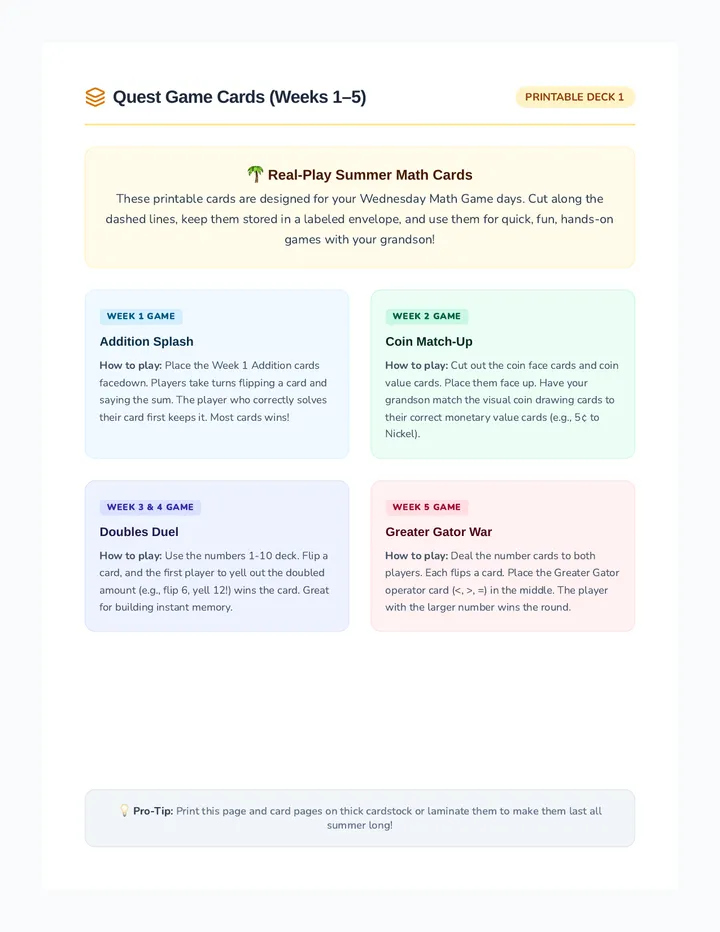
A comprehensive week-long math unit focused on identifying coin values and performing addition and subtraction of money up to $20 using a calculator in real-world contexts.
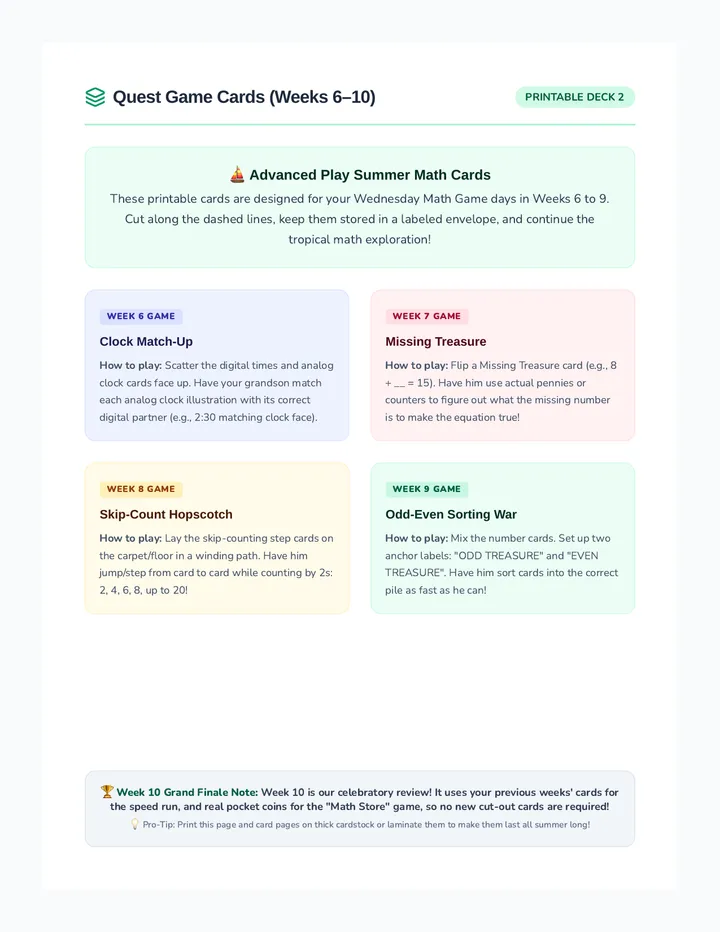
A comprehensive unit on calculating elapsed time, progressing from simple one-hour intervals to quarter-hour and five-minute increments using scenarios and analog clocks.
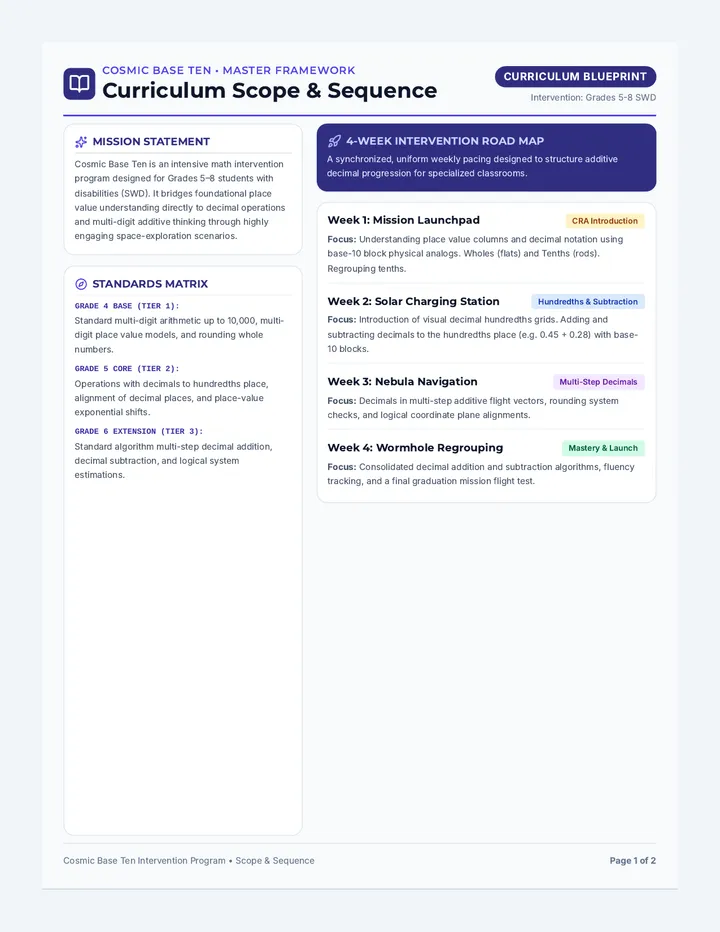
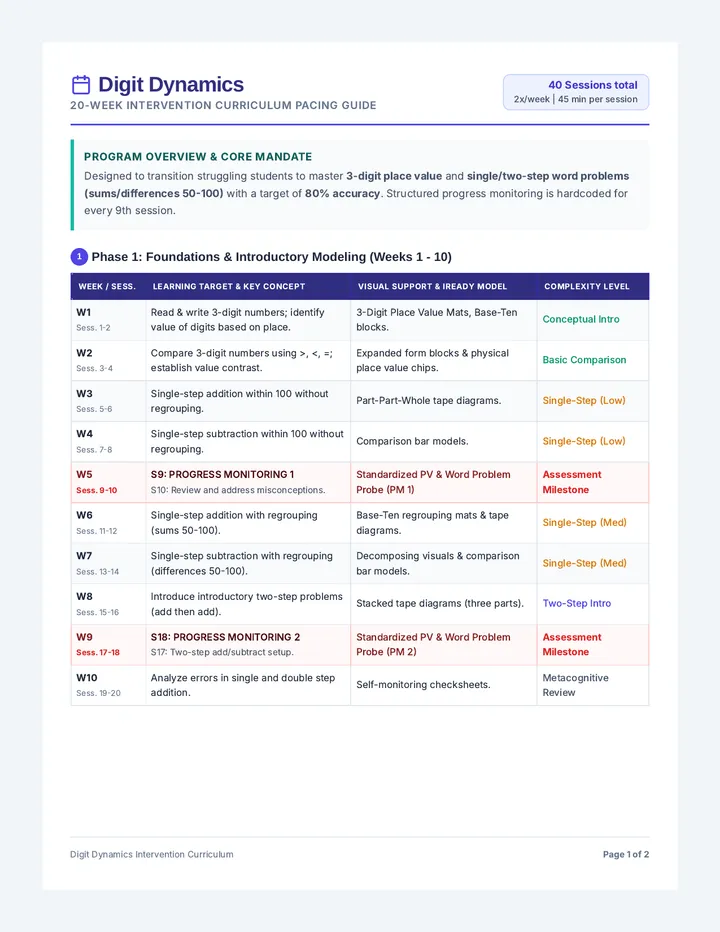
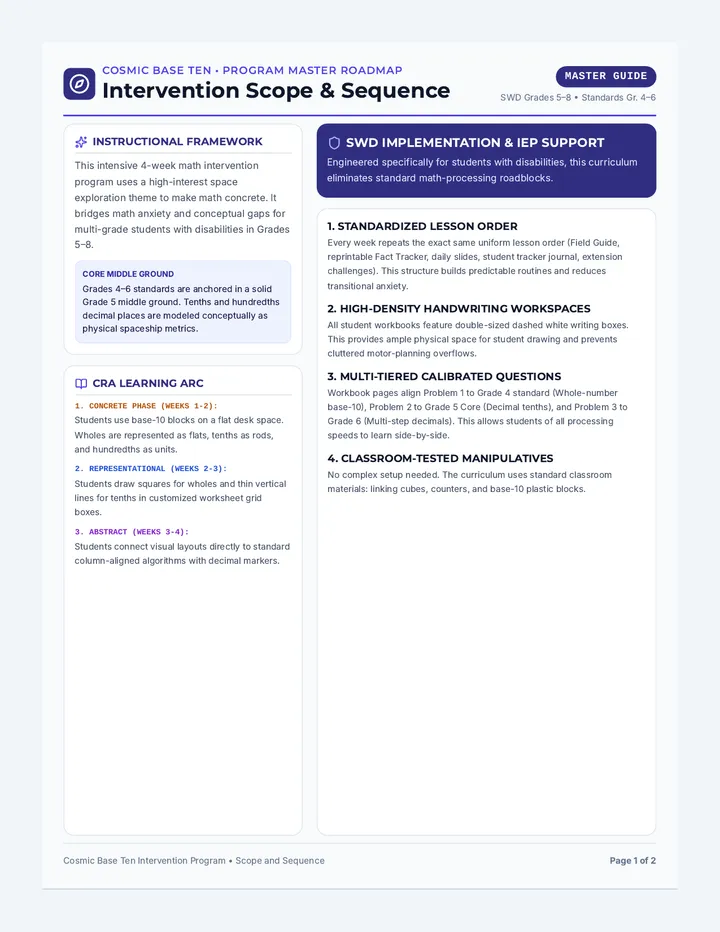
A 12-lesson intervention sequence focused on building flexible thinking with place value and fractions for 6th-grade students performing at 4th-6th grade levels. The sequence uses a 'Number Navigators' theme to explore decimal relationships, fractional equivalence, and the bridge between the two.
A set of resources for 4th-grade students to practice solving single-operation word problems involving adding, subtracting, and multiplying fractions by whole numbers, all within a charming bakery theme.
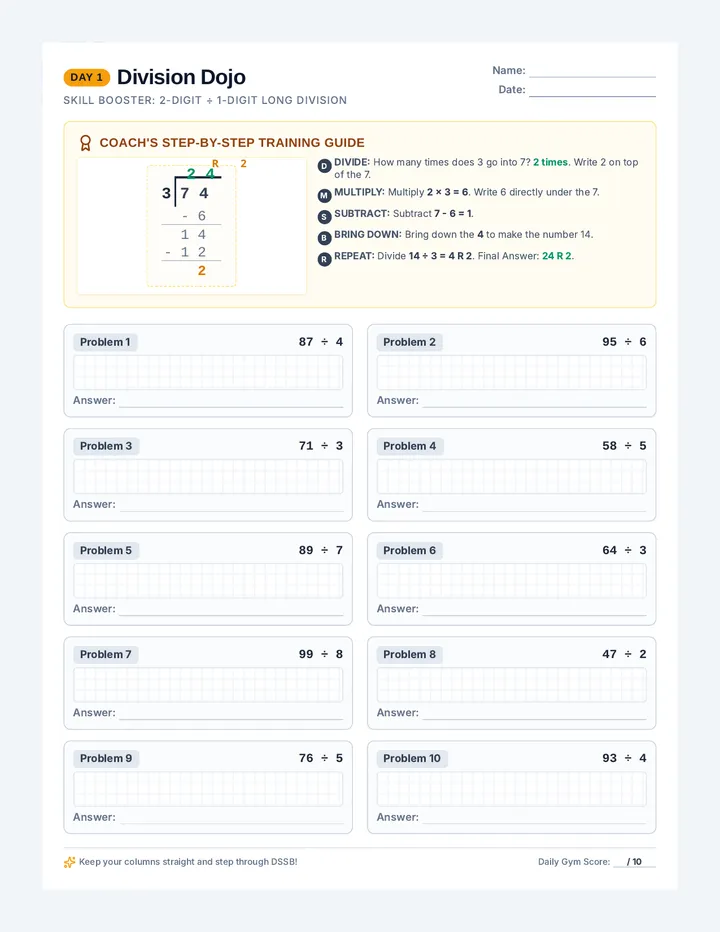
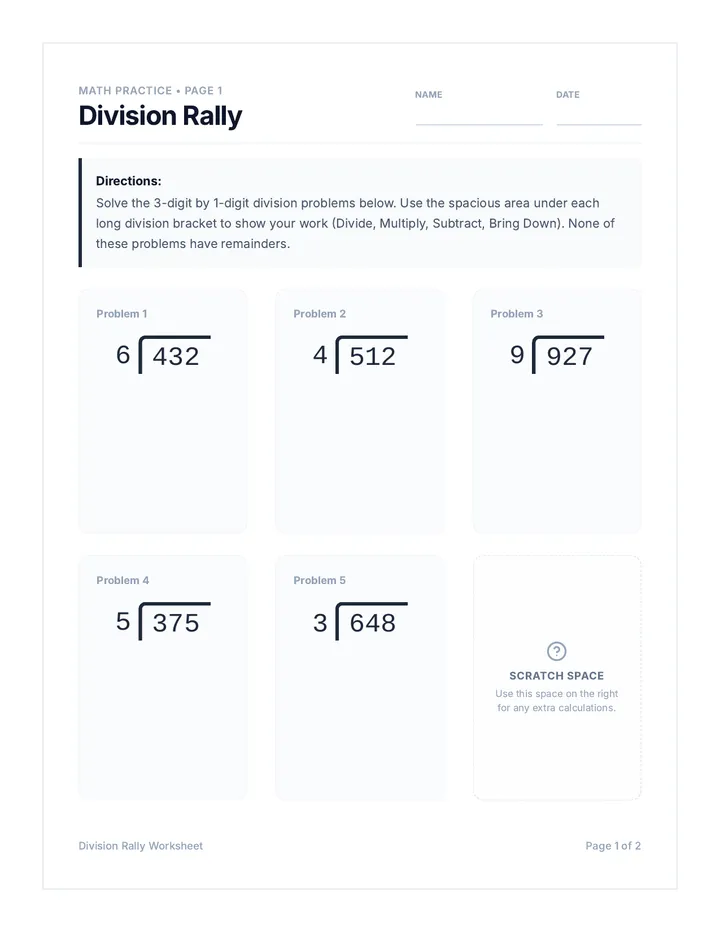
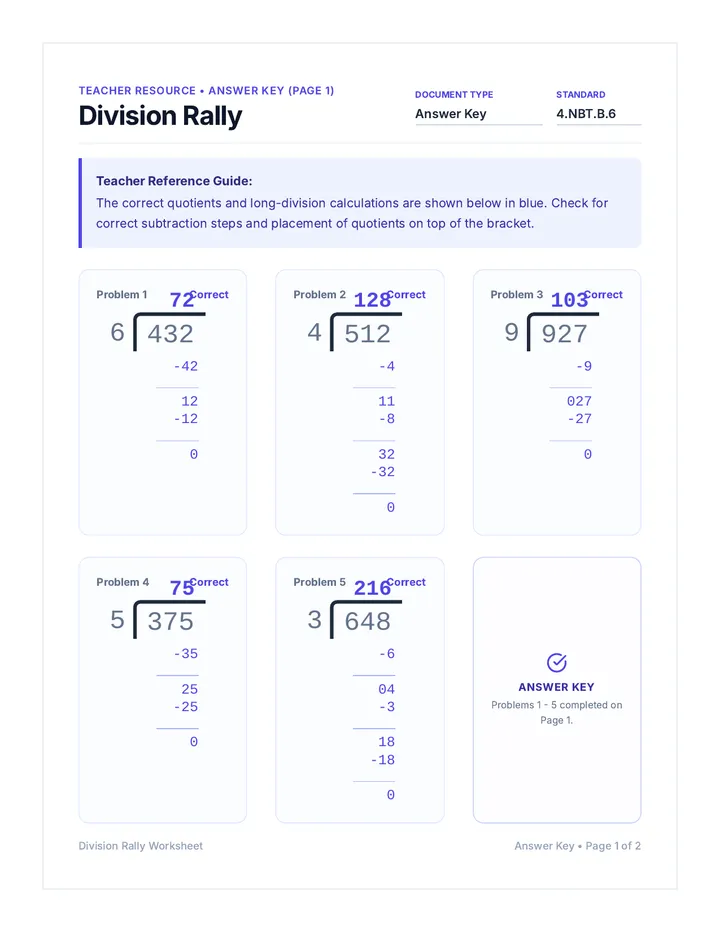
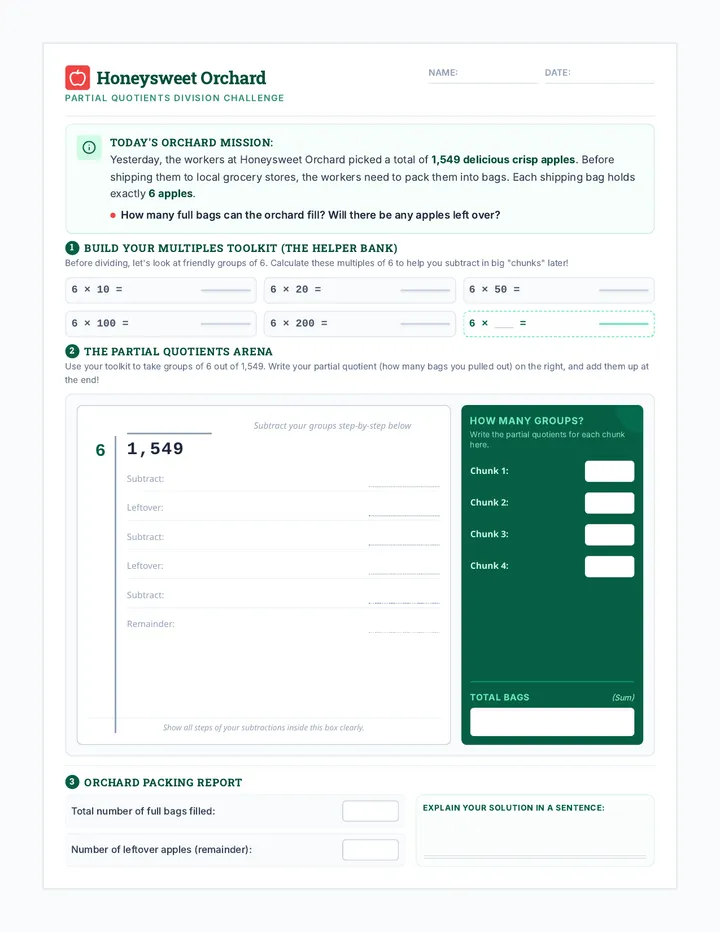
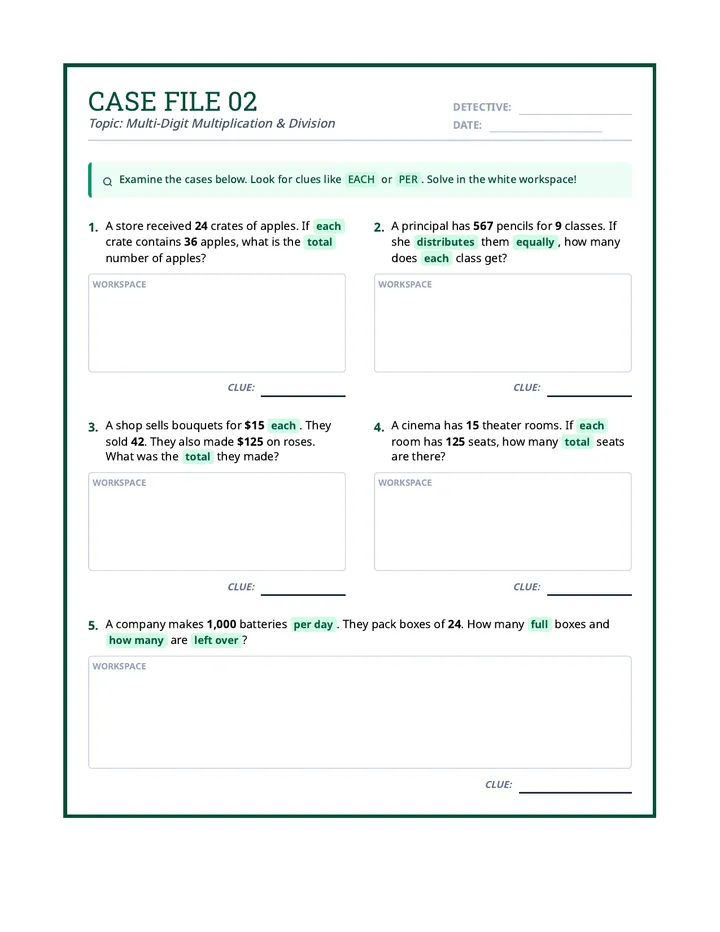
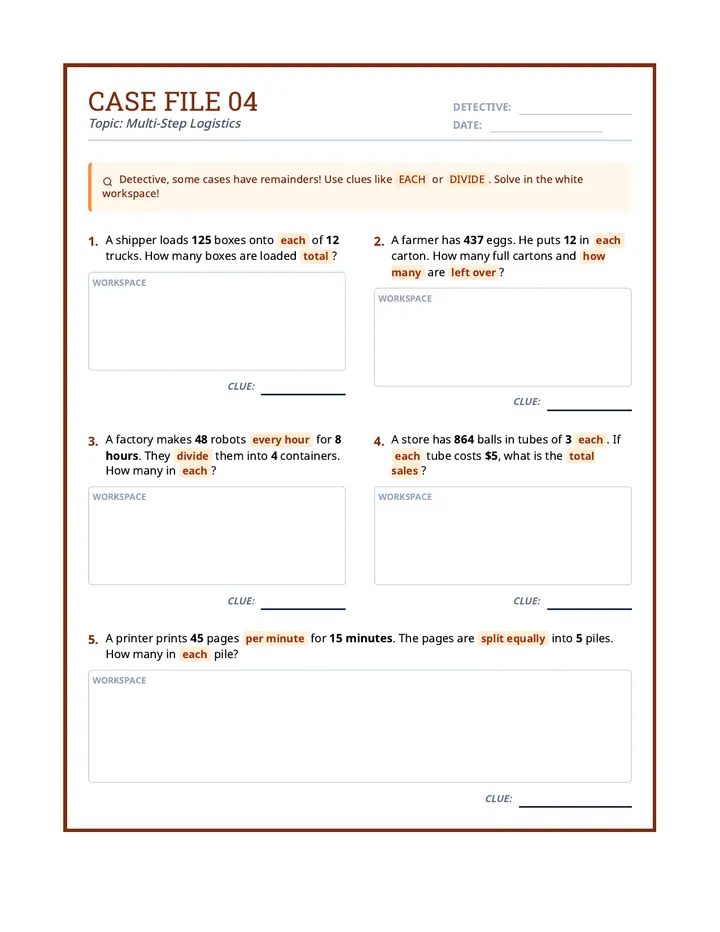
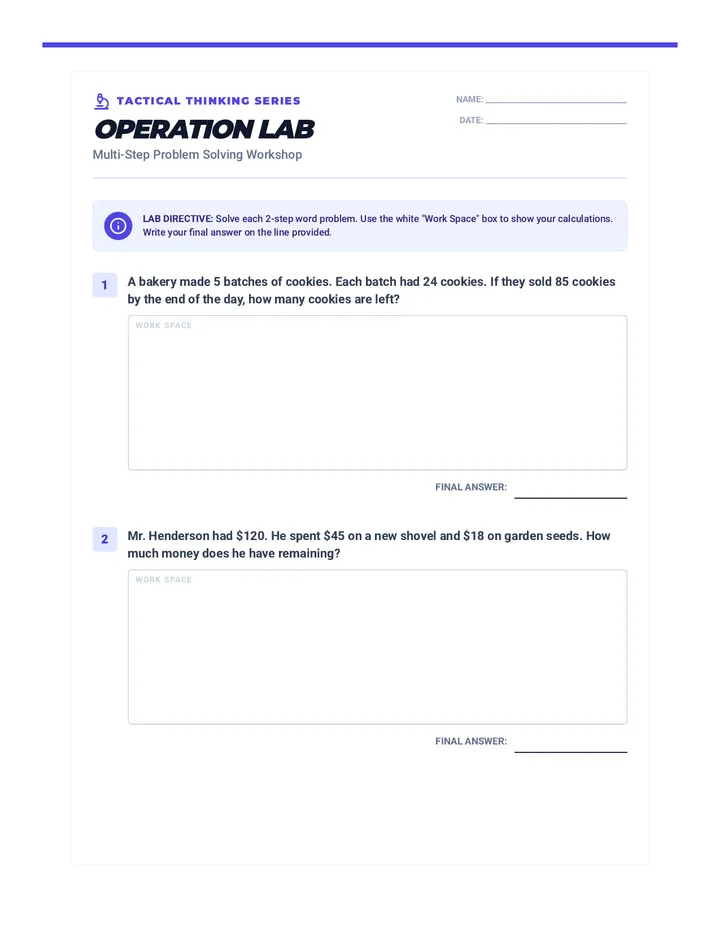
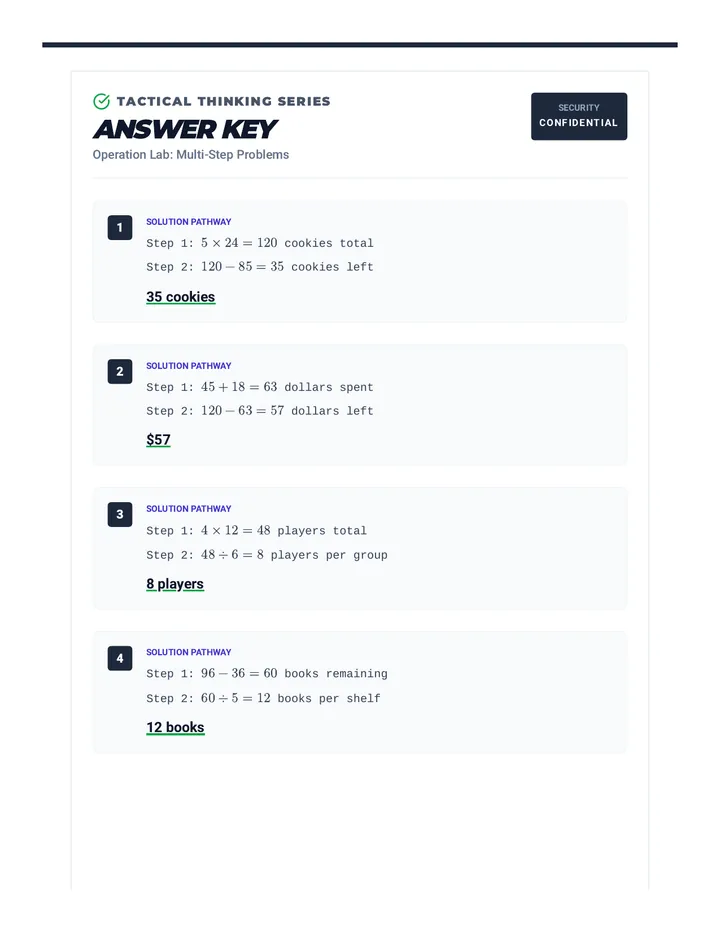
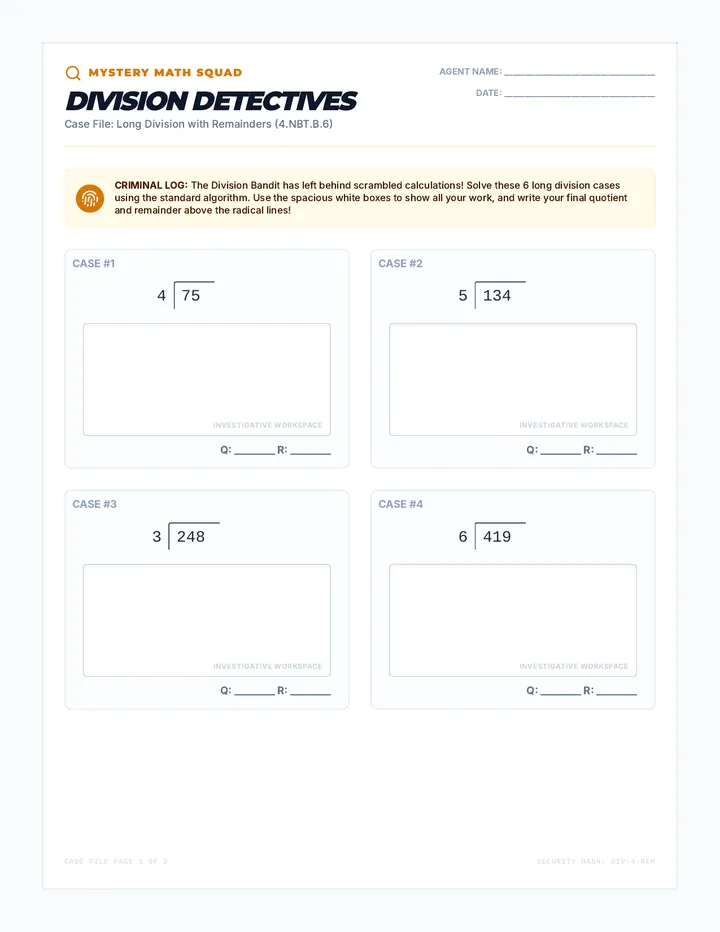
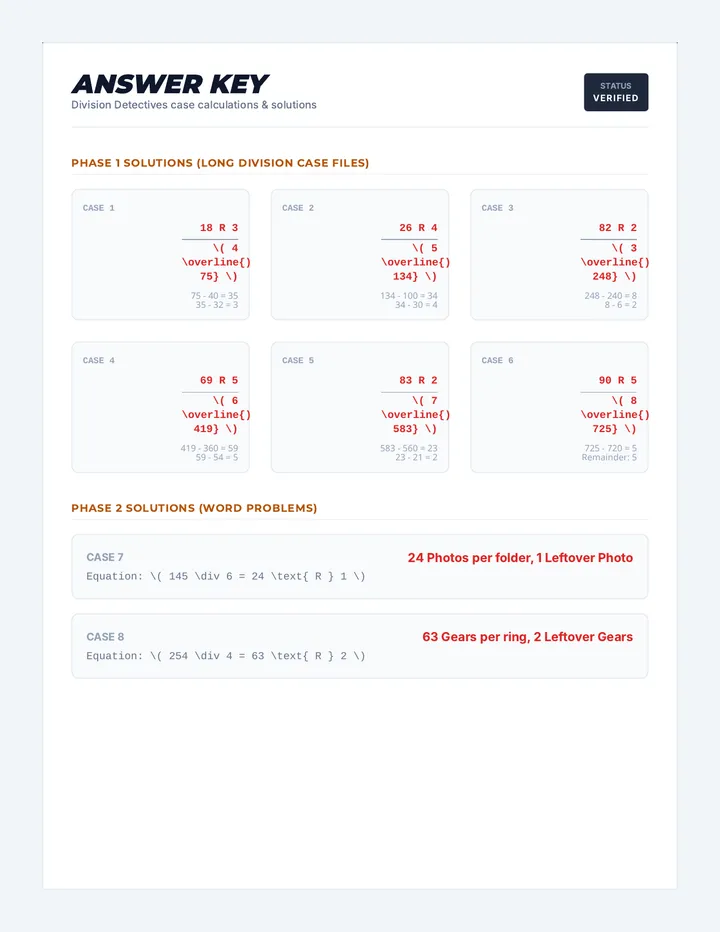
A 3-day intensive mission focusing on multi-digit multiplication, division strategies, and solving multi-step word problems with remainders. Students act as 'agents' to decode and solve mathematical challenges.
A sequence of lessons helping 4th-grade students with autism master division word problems through structured visual supports and familiar daily scenarios at school and in the community.
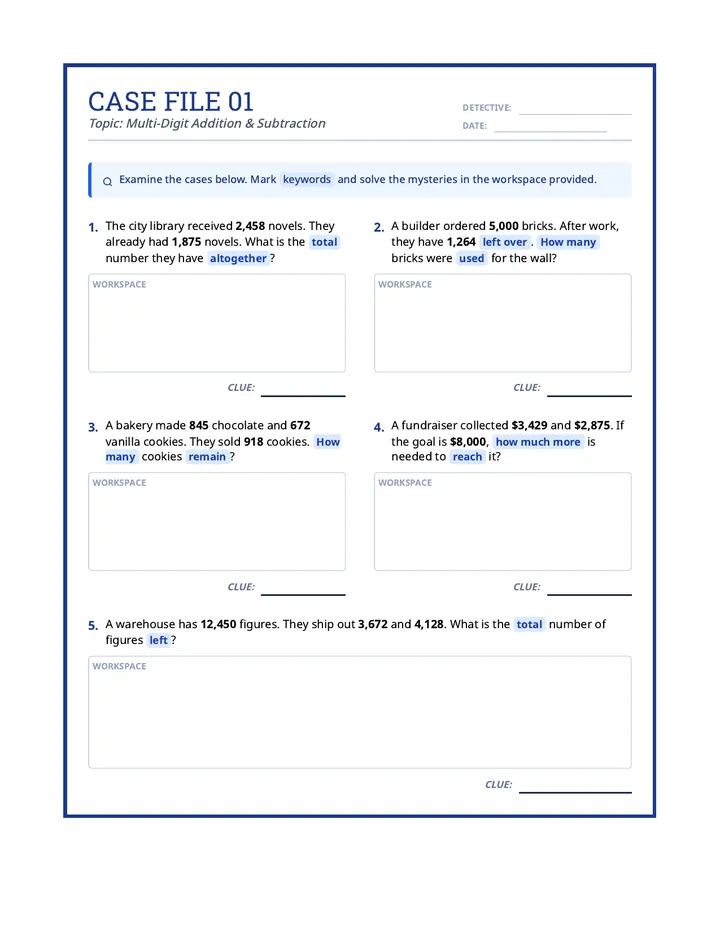
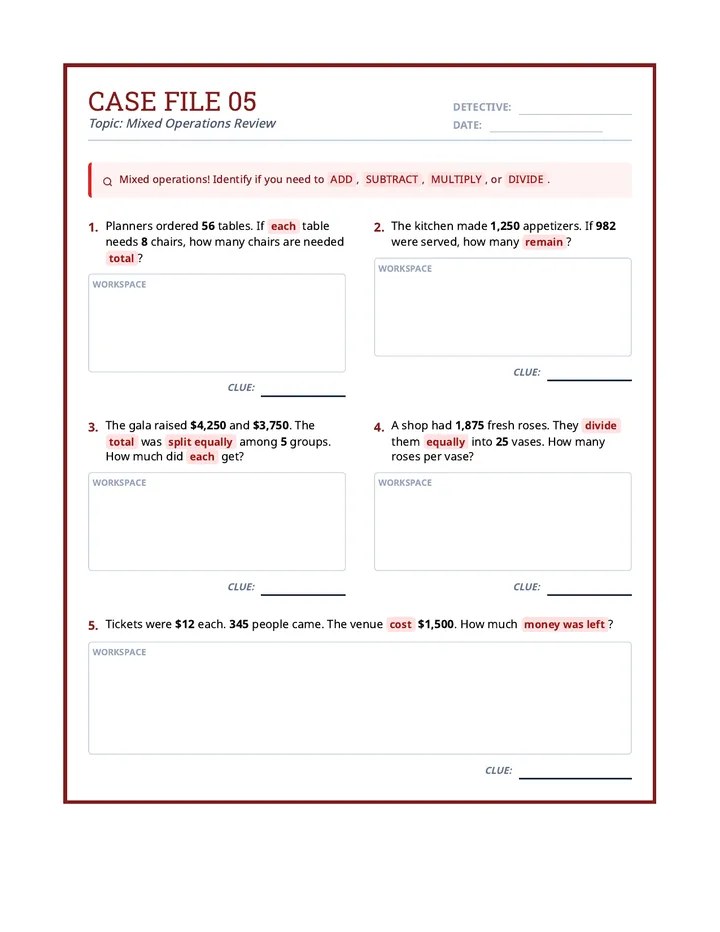
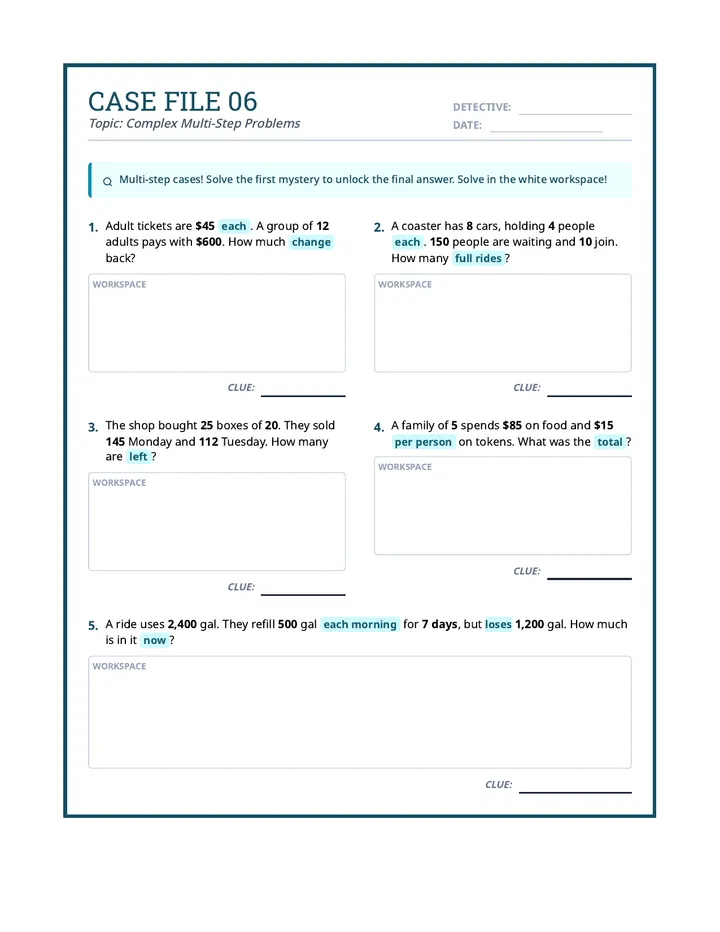
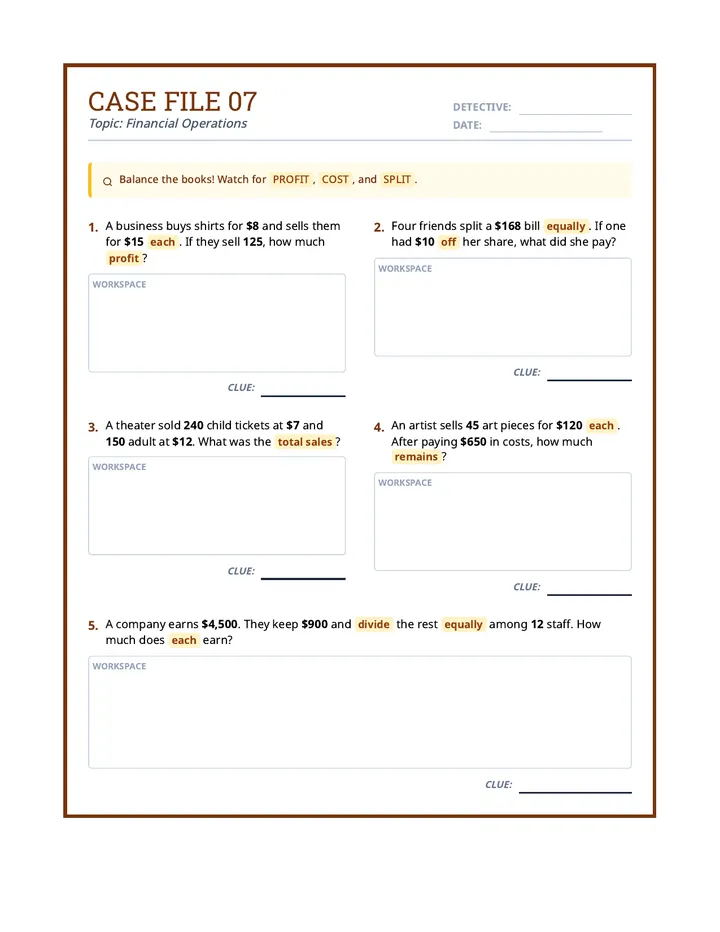
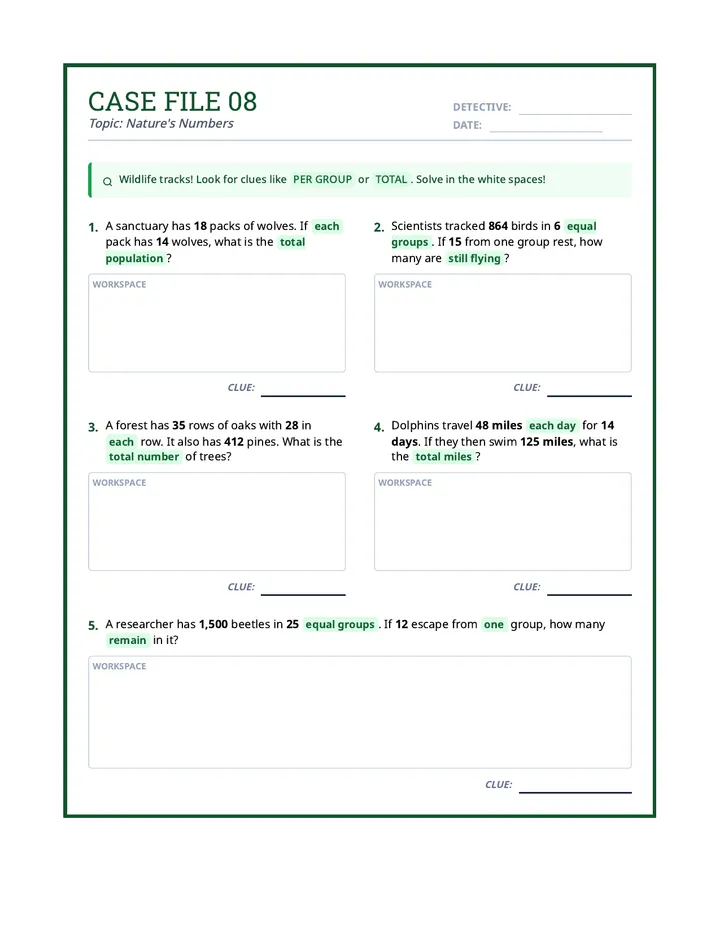
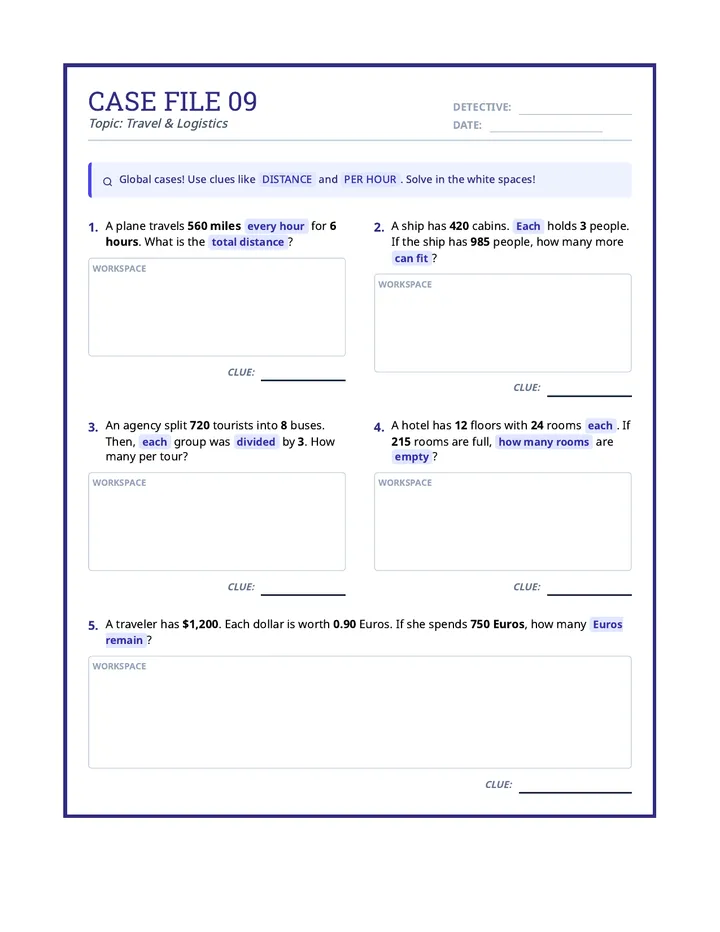
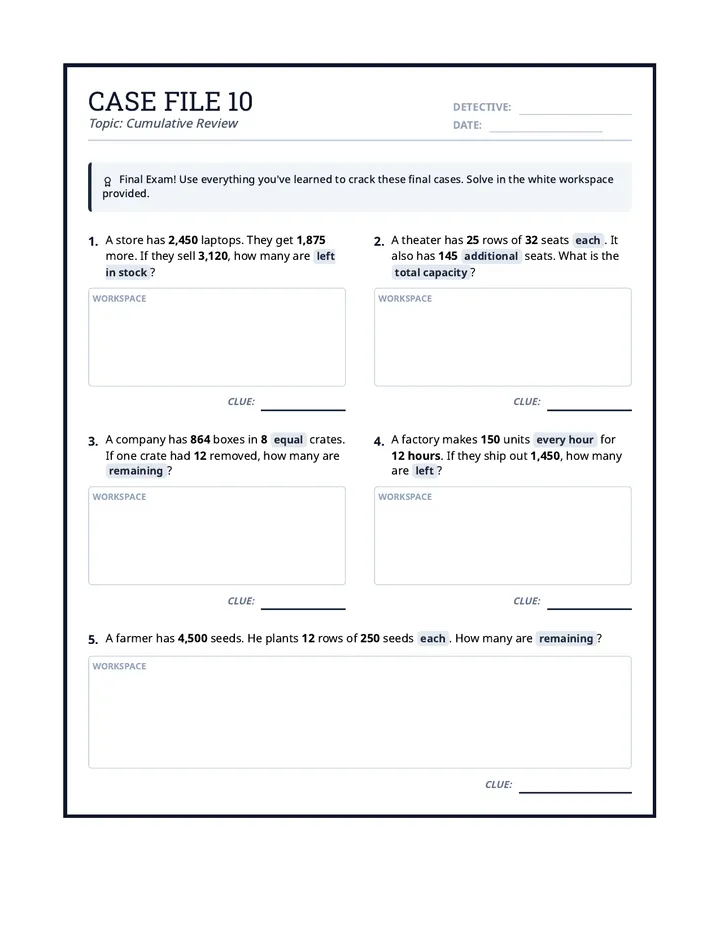
A comprehensive unit where students become 'Problem Detectives,' learning to decode word problems using linguistic cues and cloze-style paragraph writing to explain their mathematical reasoning.
A 6-week comprehensive practice program focusing on 6+ digit addition and subtraction. Includes weekly homework assignments with increasing complexity and a final summative assessment, all featuring an architectural blueprint theme to emphasize precision and structure.
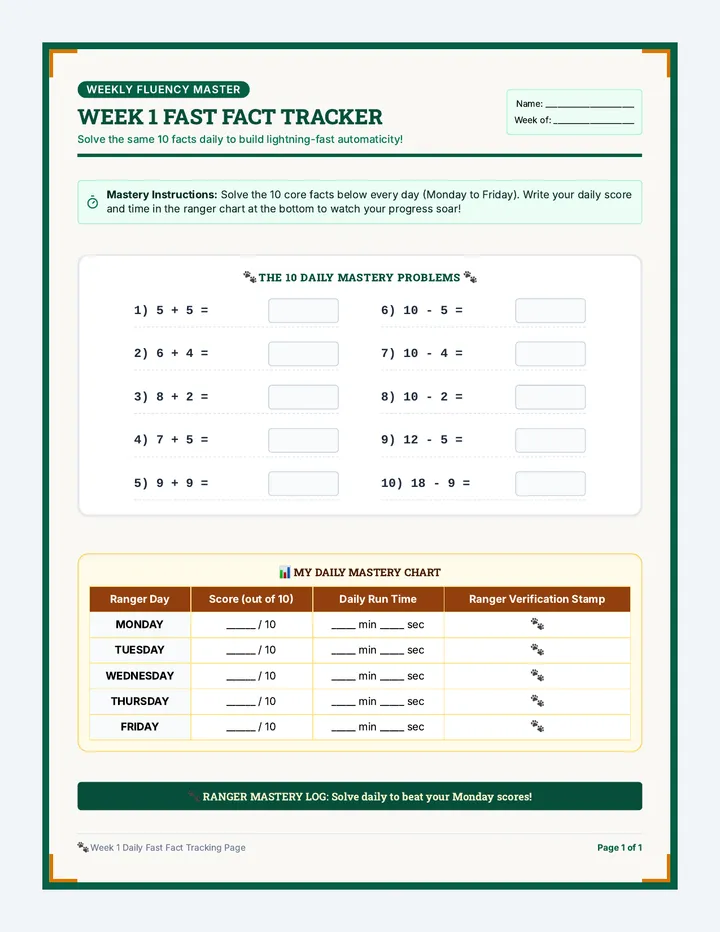
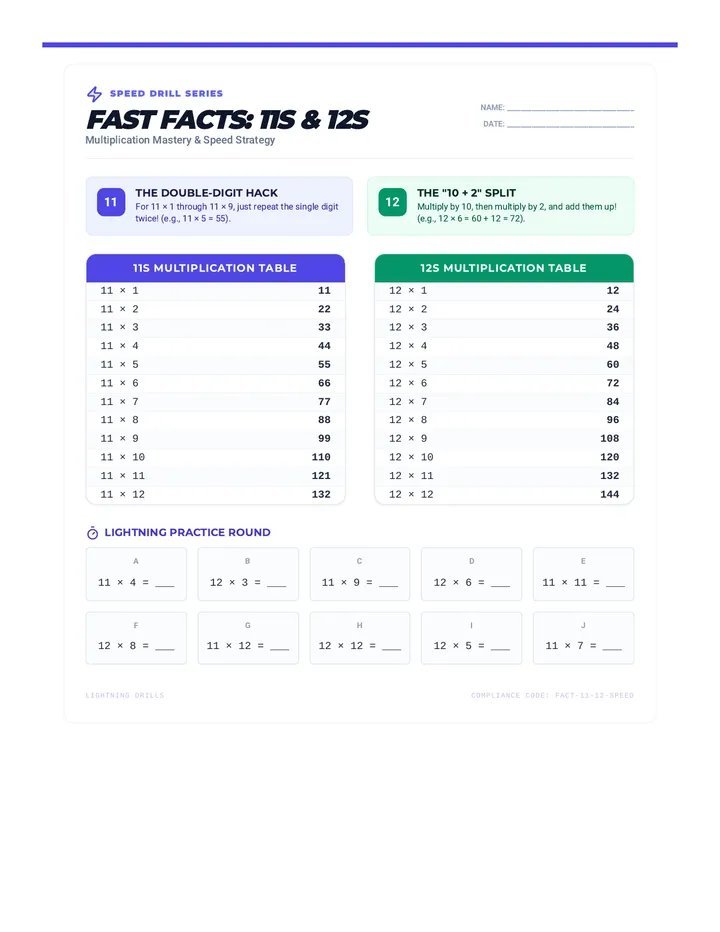
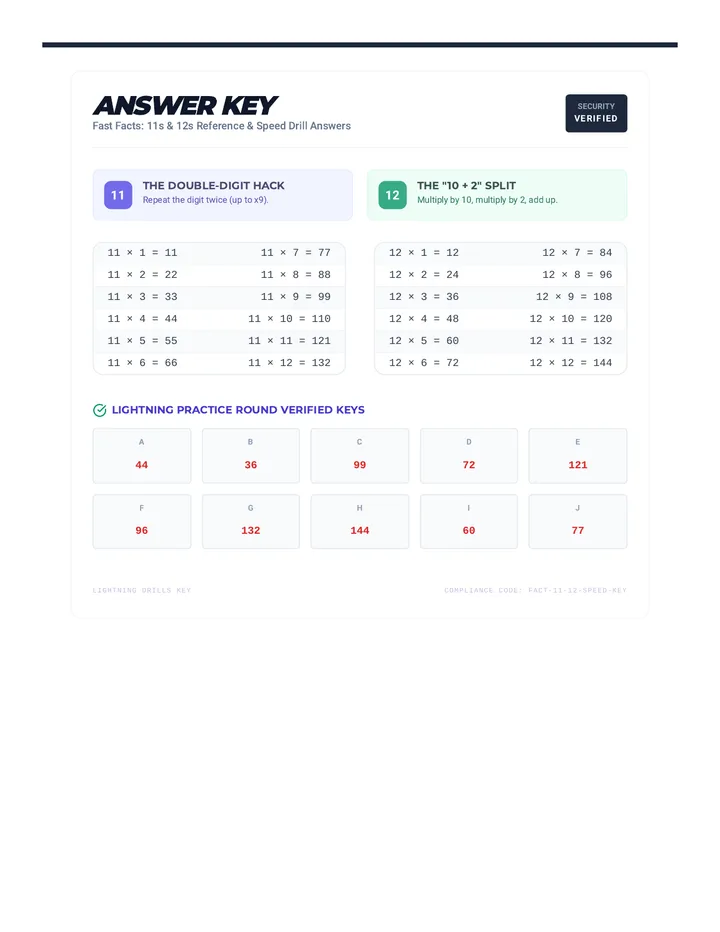
A week-long daily multiplication fluency program designed to build rapid recall of facts from 0-12 through repeated, varied practice.
A 10-day math practice sequence focused on 6-digit addition and subtraction. Each week features a blueprint-themed worksheet with 10 problems to reinforce place value and regrouping skills.
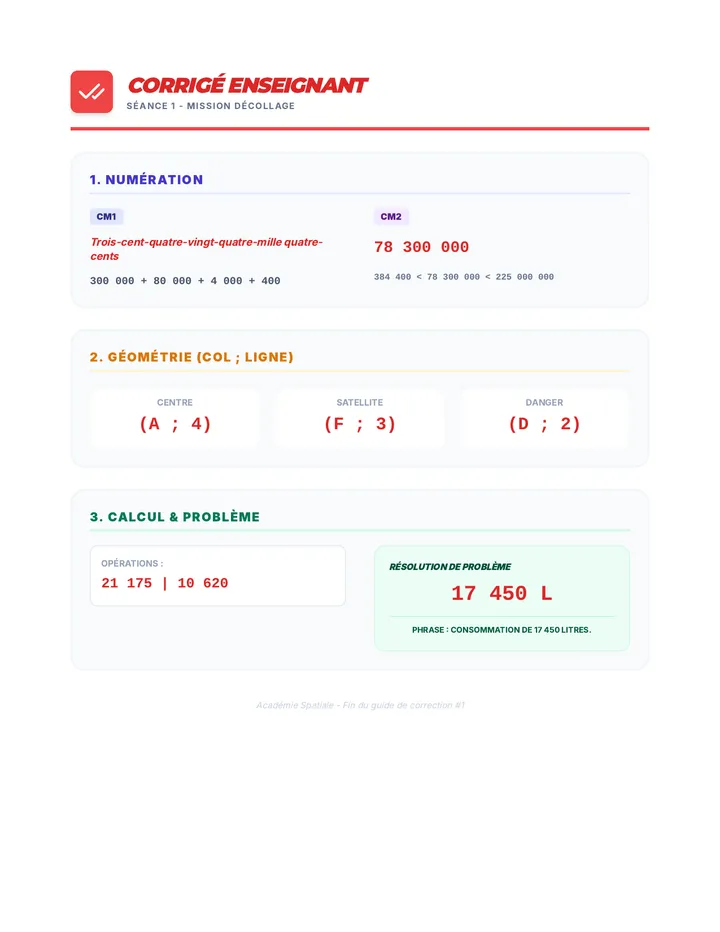
A series of lessons focused on spatial reasoning, map skills, and coordinate logic for elementary students.
A math sequence focused on understanding and calculating the perimeter of irregular quadrilaterals through real-world scenarios like fencing a farm.
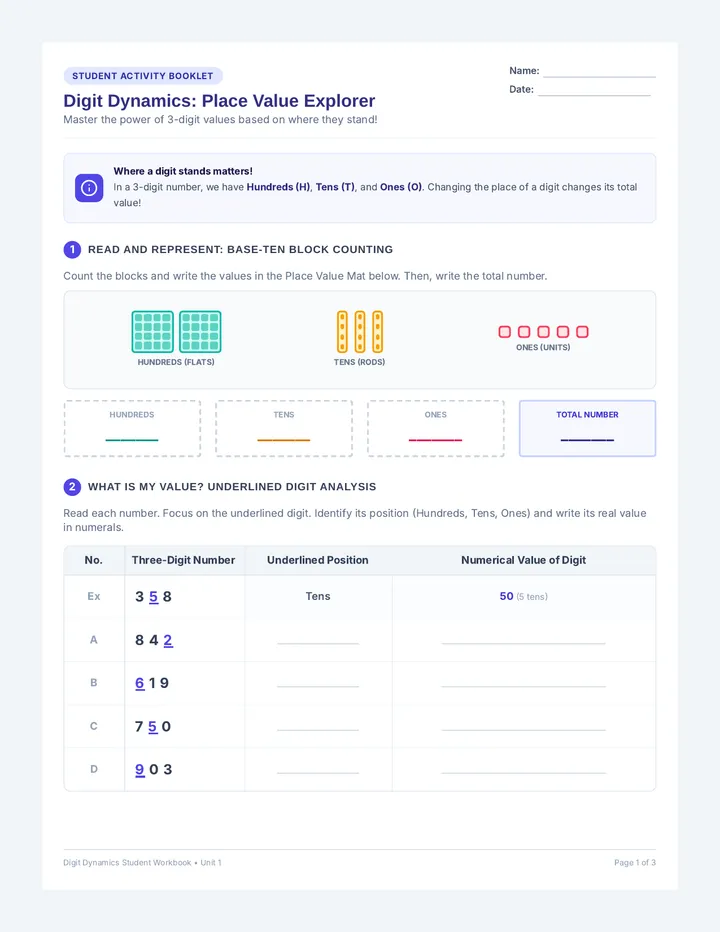
A math remediation sequence for 3rd and 4th graders focused on place value concepts, specifically periods (units and thousands) and the structural role of commas in large numbers.
A comprehensive math lesson focused on solving multi-step real-world problems involving standard measurement unit conversions using a 'Maker Lab' theme.
A sequence focused on data representation and analysis using fractions, where students collect real-world data and use line plots to interpret their findings.
A comprehensive sequence focused on mastering mixed number operations through visual modeling, hands-on manipulatives, and algorithmic fluency.
A math sequence for 4th graders focused on mastering the perimeter formula for squares, specifically applying multi-digit multiplication in real-world contexts.
A unit focused on identifying and applying mathematical patterns to solve complex problems with ease, specifically targeting multiplication and division of large numbers.
A series of lessons exploring the foundations of algebra, focusing on variables, expressions, and basic problem-solving.
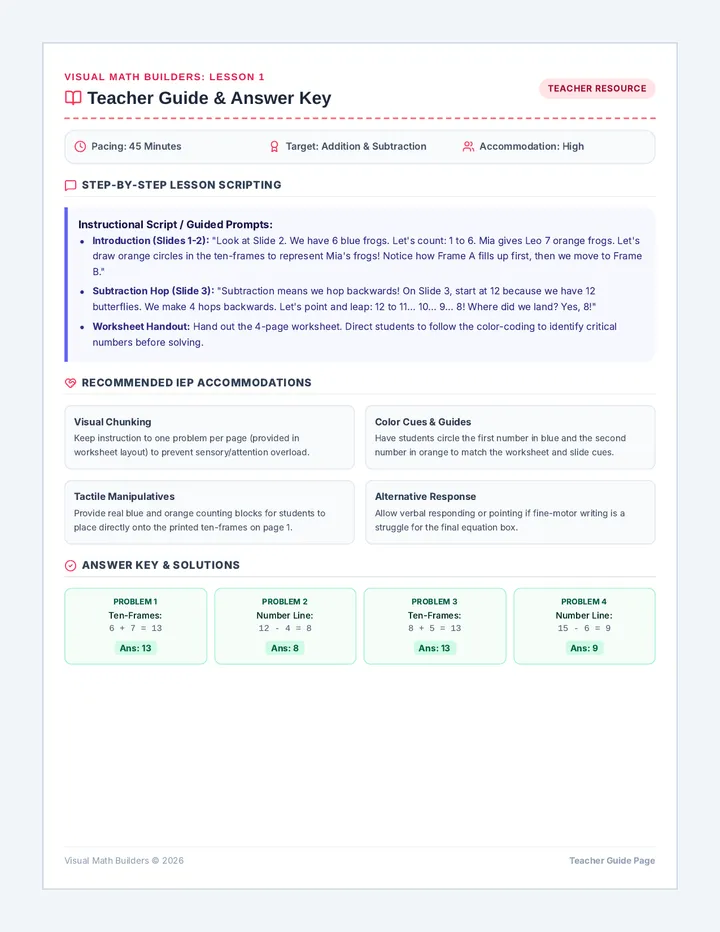
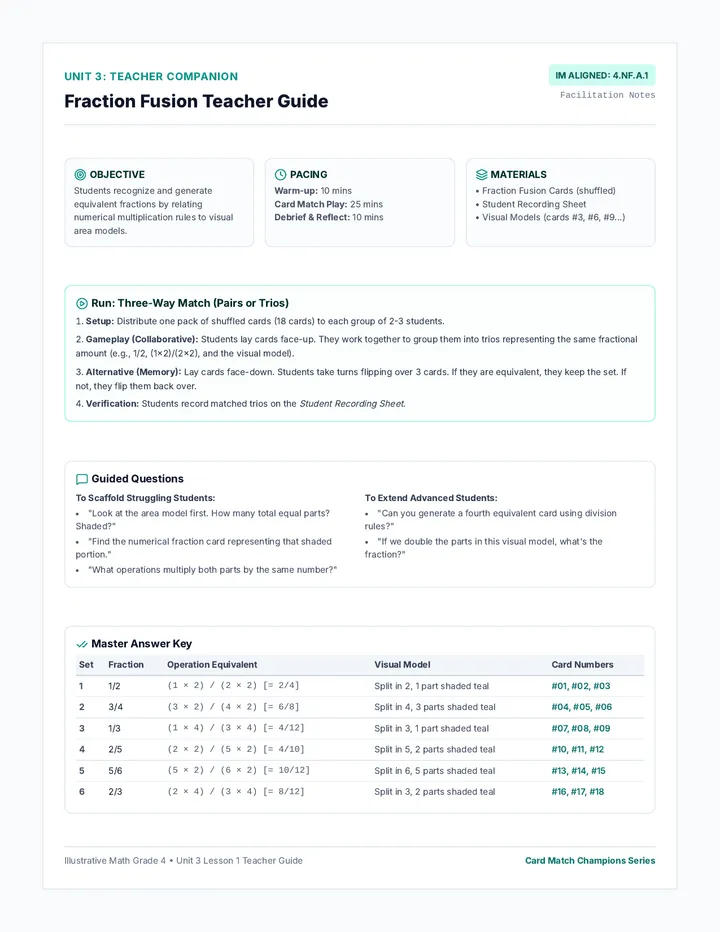
A hands-on sequence designed for students needing academic support to master fraction equivalence and operations through concrete modeling. Students use physical manipulatives like towers, blocks, and overlays to bridge the gap between abstract symbols and conceptual understanding.
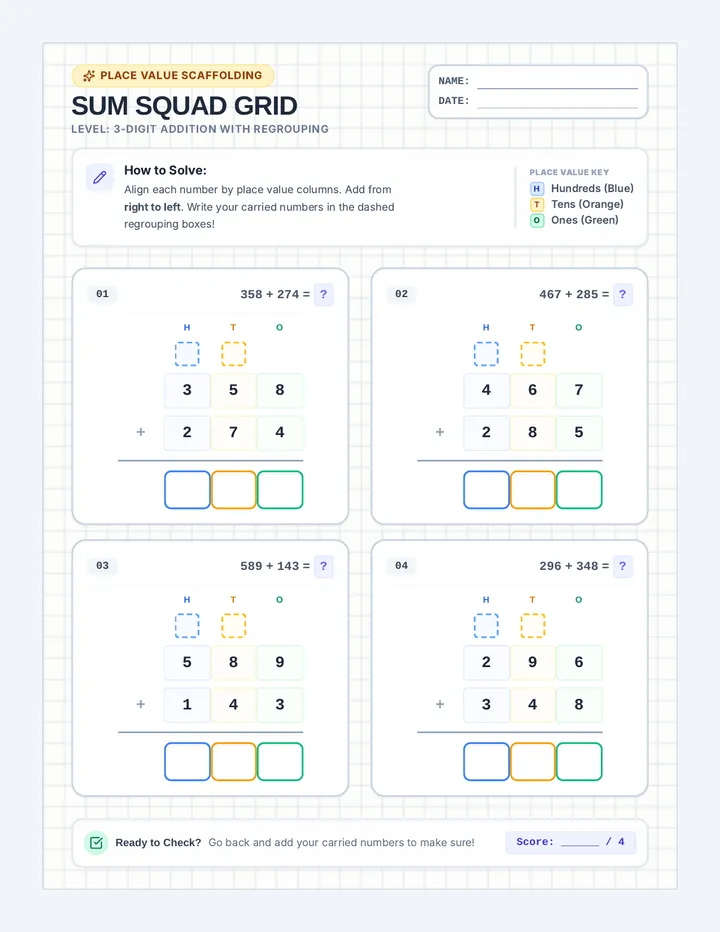
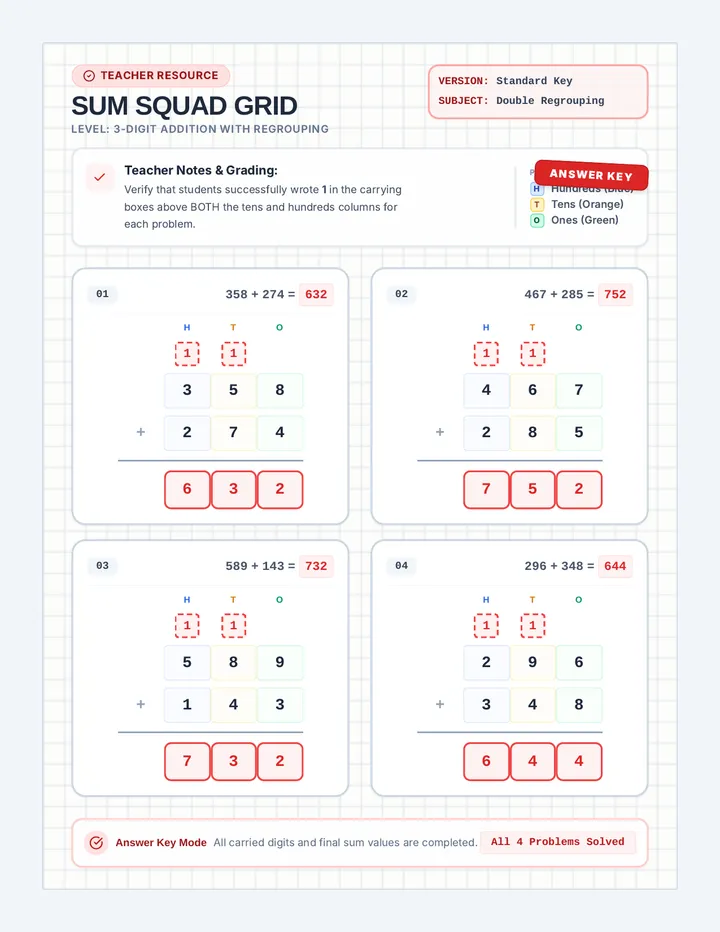
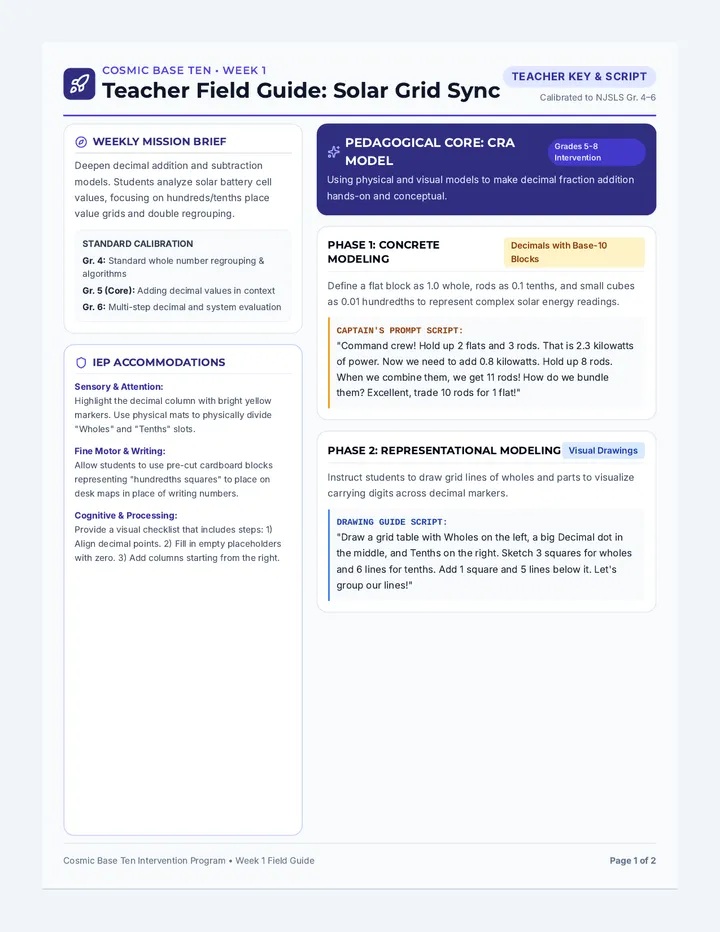
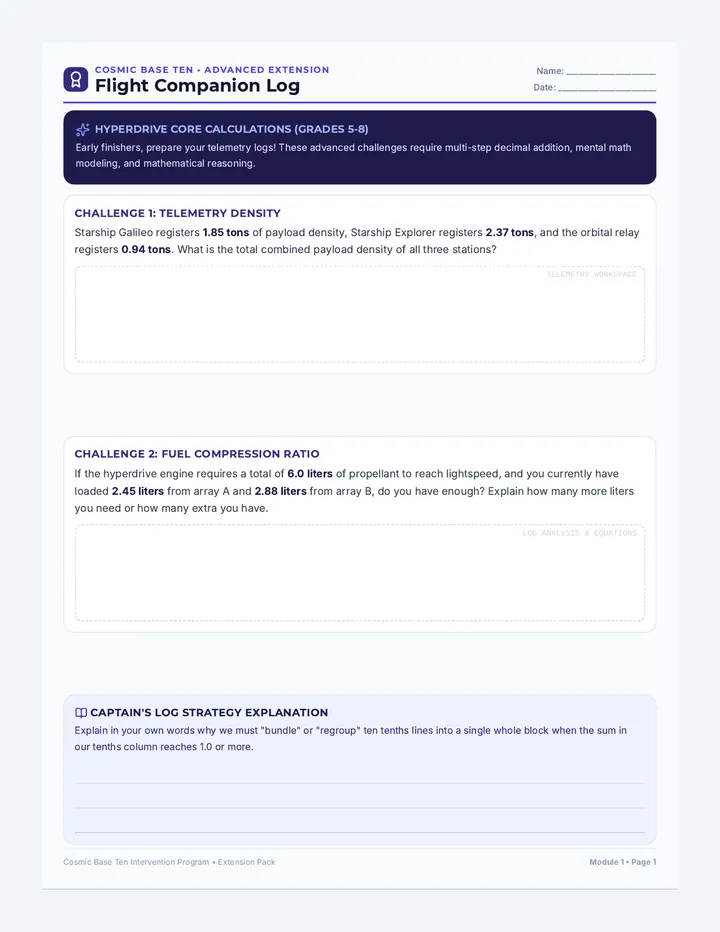
This sequence uses the Concrete-Representational-Abstract (CRA) framework to teach decimal place value through the lens of financial literacy. Students move from manipulating physical currency to drawing models and finally using standard algorithms to manage budgets.
This sequence utilizes base-ten blocks and area models to scaffold multi-digit multiplication and division, providing a visual and tactile framework for students who struggle with standard algorithms. By connecting physical area models to expanded form and eventually the standard algorithm, students build a conceptual foundation that supports future algebraic learning.

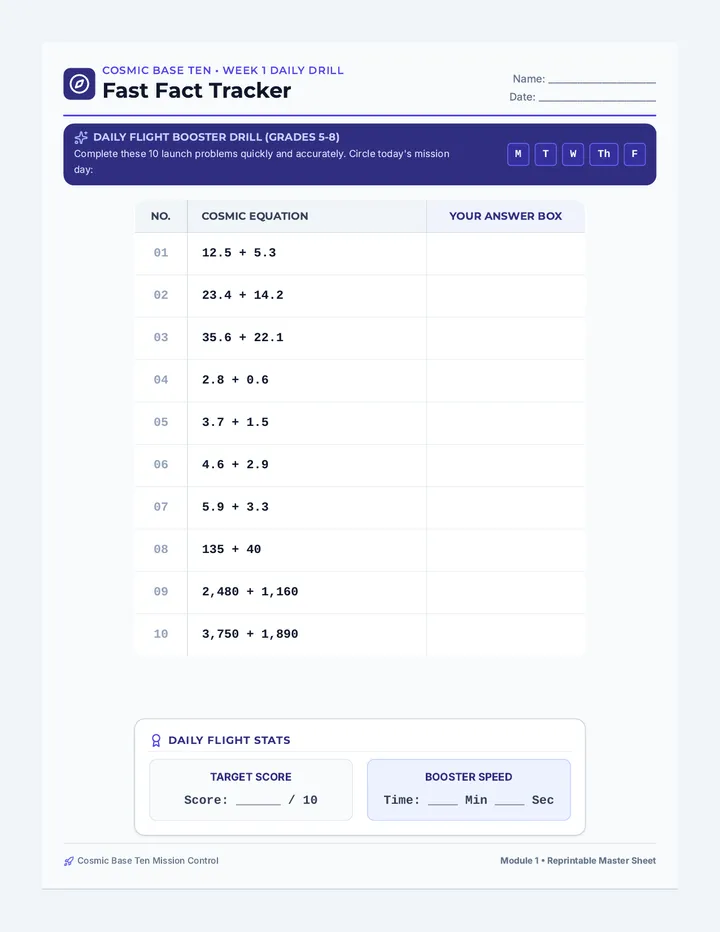
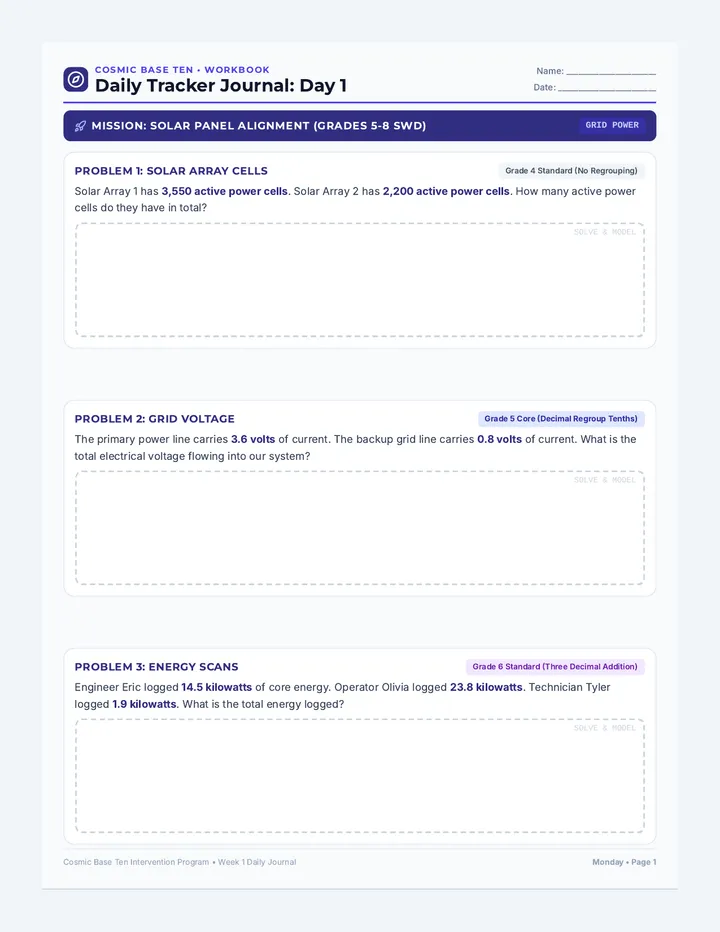
This sequence uses the Concrete-Representational-Abstract (CRA) framework to teach decimal operations through the lens of financial literacy. Students move from physical base-ten blocks representing currency to visual grid models and finally to standard algorithms for real-world budgeting.