A vibrant, hands-on introduction to Spanish and Latin American art masters for Pre-K students. Children explore self-expression, shapes, lines, and community through the works of Kahlo, Picasso, Miró, Rivera, and Mexican folk art.
Une formation immersive de 12 heures destinée aux professeurs-documentalistes pour maîtriser les codes de la littérature adolescente actuelle et concevoir des stratégies de médiation innovantes au CDI.
A high-energy, interactive unit focused on mastering rhythm and tempo through digital gameplay and body percussion, designed specifically for paperless classrooms.
A journey through the 20th and 21st centuries, exploring how technology like electric guitars and synthesizers shaped genres from Rock 'n' Roll to Pop. Students analyze rhythm, structure, and sound to build a chronological timeline of musical evolution.
This sequence explores how technology—from the electric guitar to digital software—transformed music from the mid-20th century to today, focusing on genre evolution, song structure, and production.
A comprehensive introduction to the orchestra and the Classical era for 3rd graders, covering instrument families, specific sections, key composers (Mozart and Beethoven), and the art of conducting.
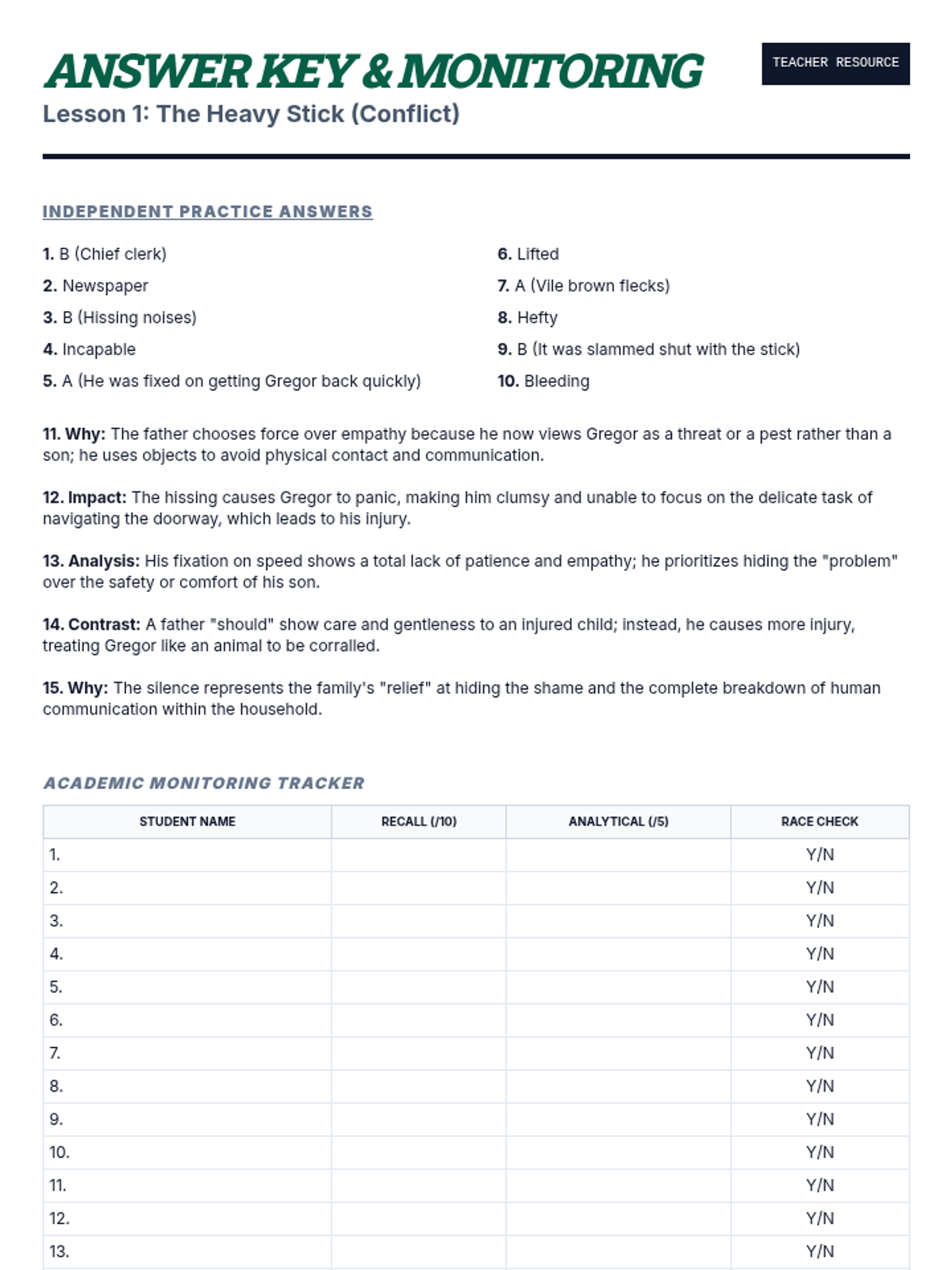
A 5th-grade music history sequence exploring the development of Jazz and Blues, from African call-and-response roots to the birth of Rock n' Roll. Students investigate structural forms like the 12-bar blues, concepts like syncopation and improvisation, and the cultural resilience behind the music.
This sequence guides 5th-grade students through the evolution of Western Classical music from the Baroque period to the 20th century. Students will explore how societal shifts influenced orchestral size, musical texture, and form through active listening and analytical activities.
A global musical journey for Kindergarten students to explore traditional folk music, instruments, and rhythms from West Africa, East Asia, the Andes, and North America. Students build cultural awareness and musical skills through hands-on drumming, melodic improvisation, and storytelling songs.
A Kindergarten music appreciation unit exploring program music. Students learn how composers use tempo, pitch, and timbre to represent animals, characters, and settings, culminating in the creation of their own musical narrative.
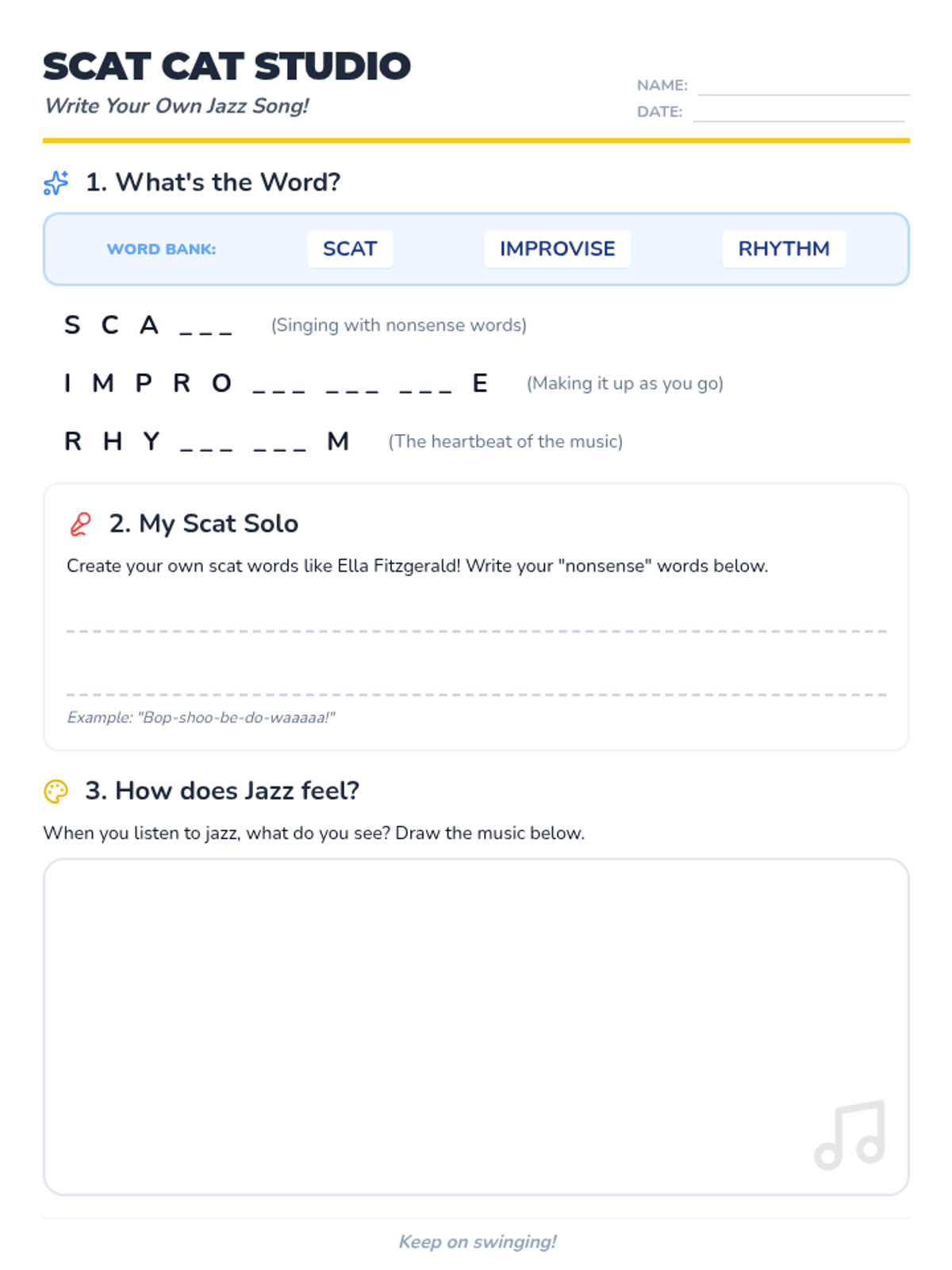
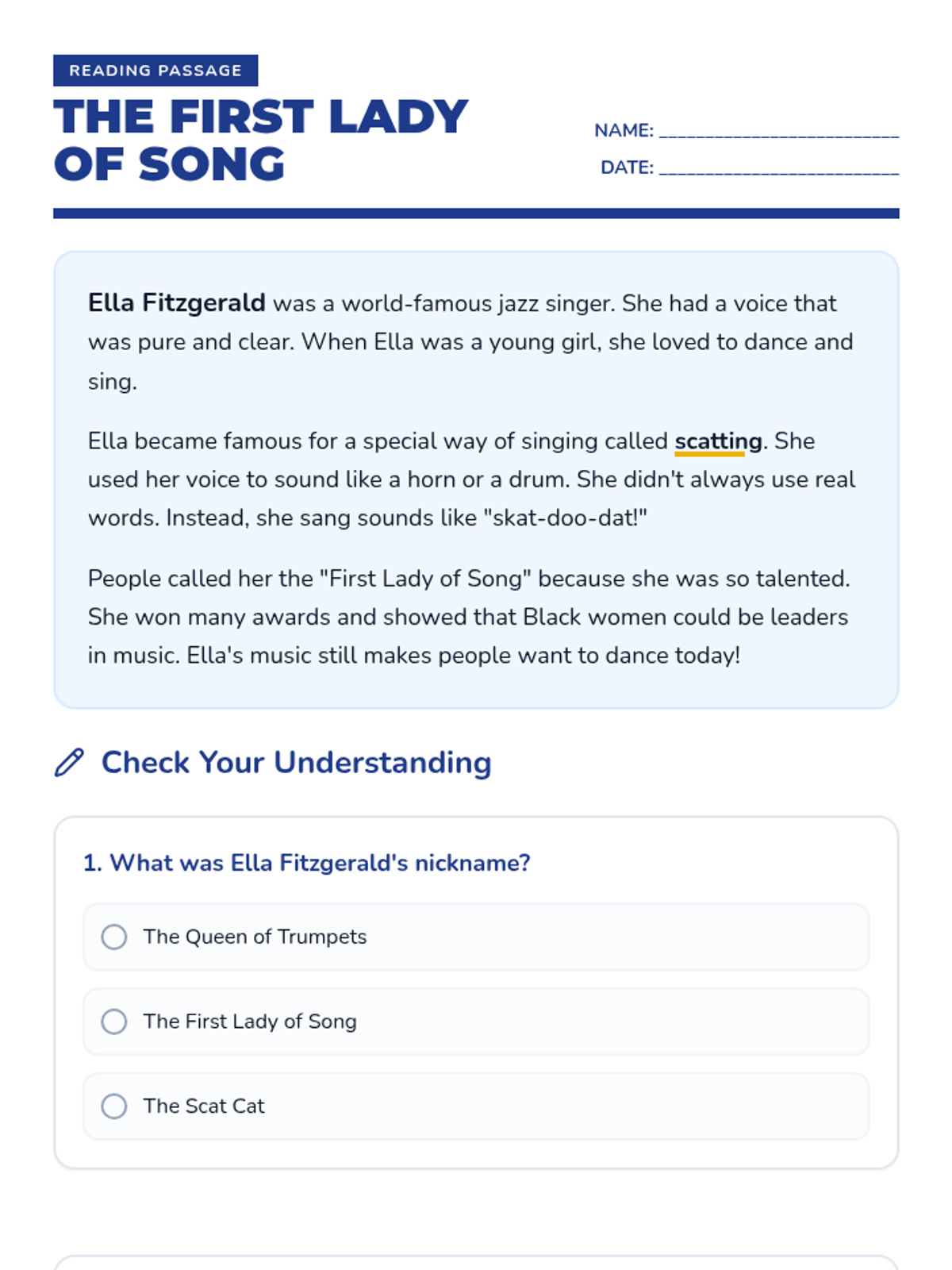
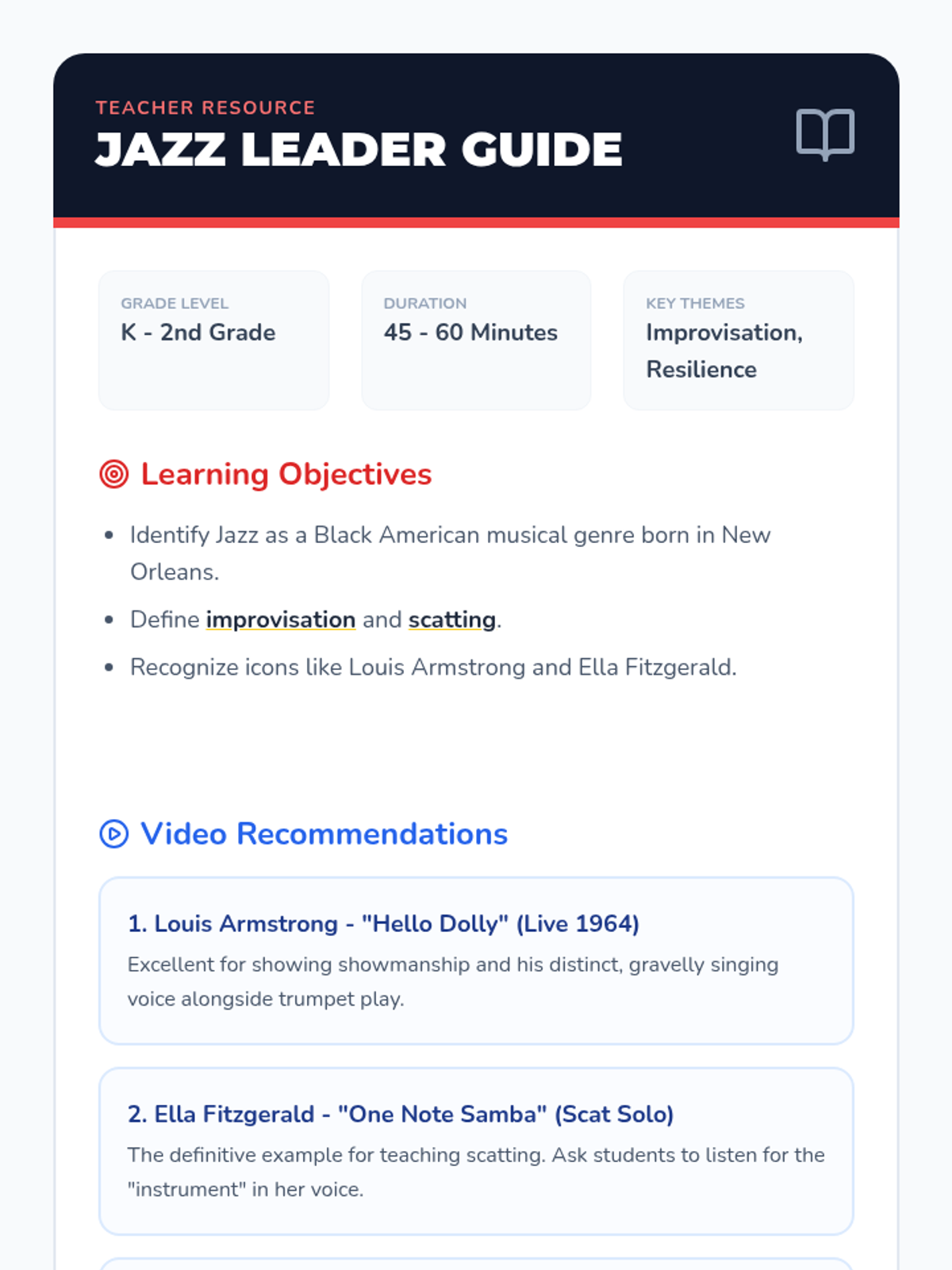
This sequence introduces Kindergarteners to the distinctly American art forms of Jazz and Blues, focusing on emotion and spontaneity. Students explore the 'swing' feel, improvisation, and scat singing through active movement and vocal play.
A musical journey for Kindergarteners to discover the four families of the orchestra, explore dynamics, and experience the role of the conductor through active listening and movement.
A graduate-level exploration of music history through the lenses of migration, diaspora, and cultural hybridity, moving beyond Western-centric narratives to examine how global movement shapes musical evolution.
A graduate-level exploration of how technological advancement (from notation to algorithms) acts as a primary driver of musical aesthetics and evolution. Students analyze the reciprocal relationship between material culture and musical expression using media theory and organology.
This 4th-grade music history sequence explores the evolution of American music from African roots to Jazz. Students investigate how historical context, community struggle, and cultural migration shaped genres like Spirituals, Blues, Ragtime, and Jazz through active listening, writing, and performance.