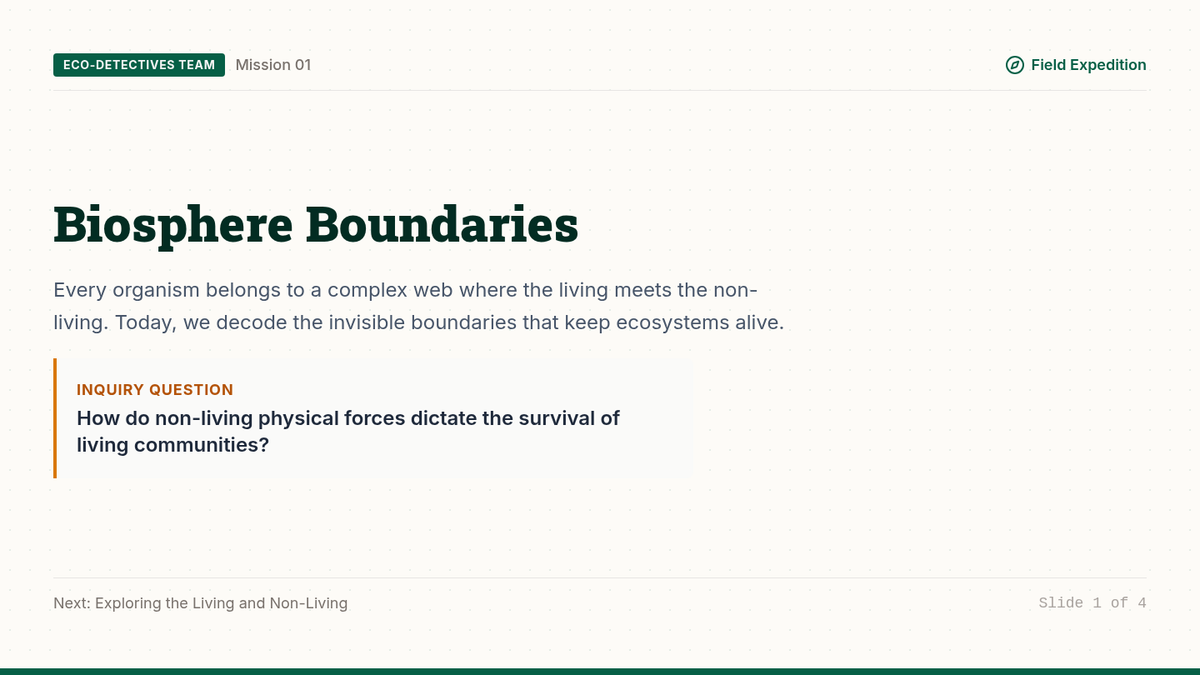
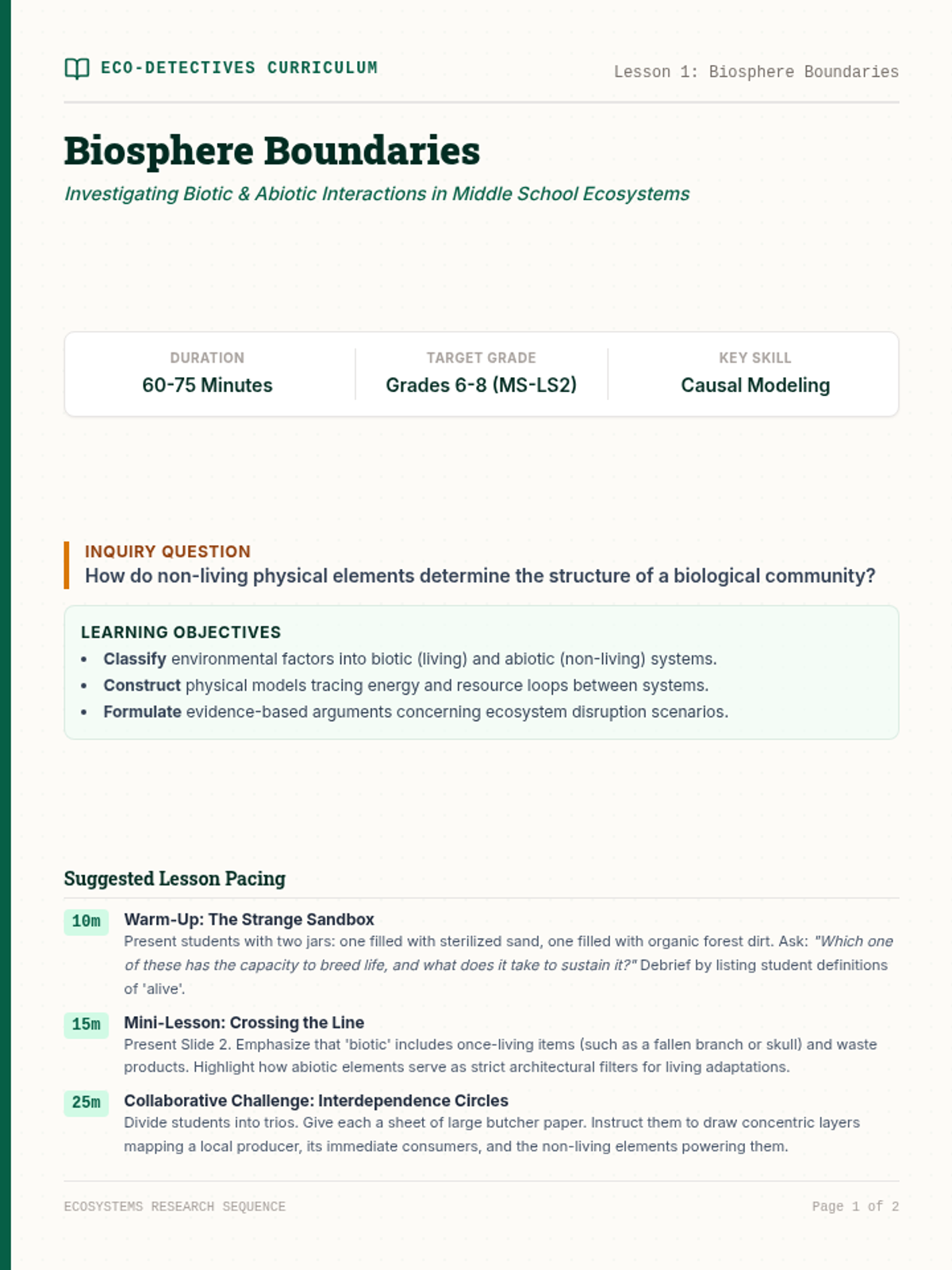
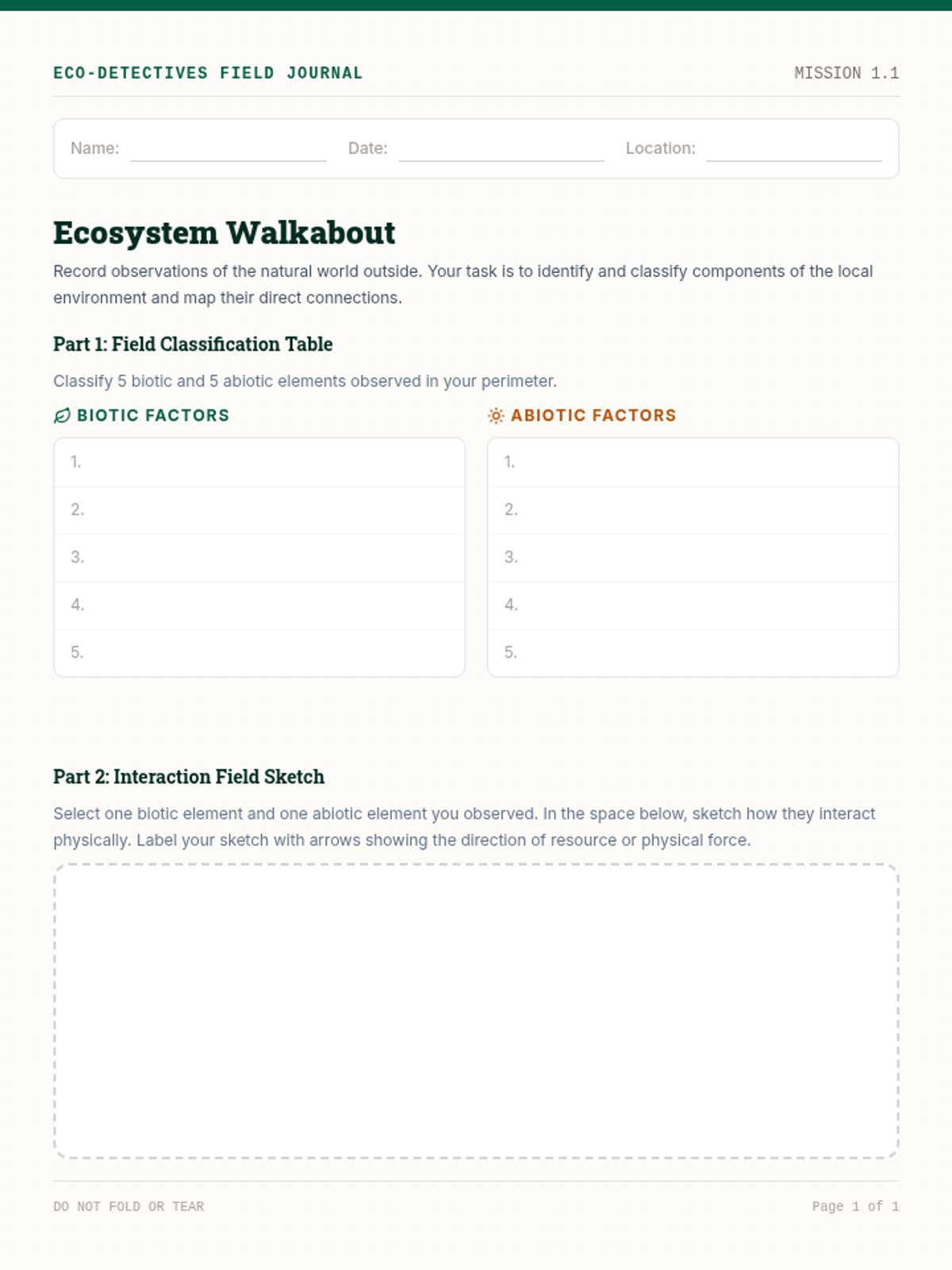
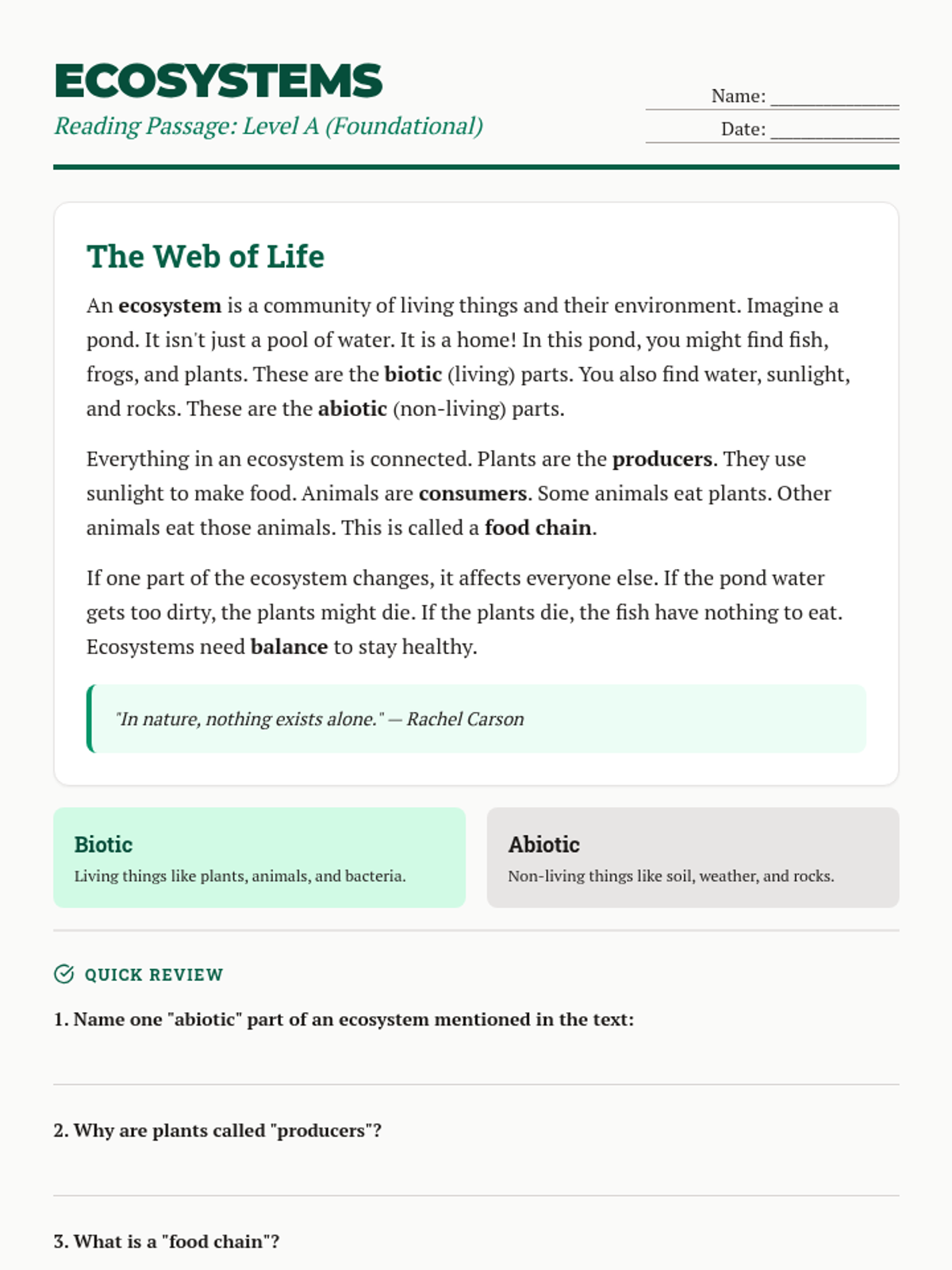
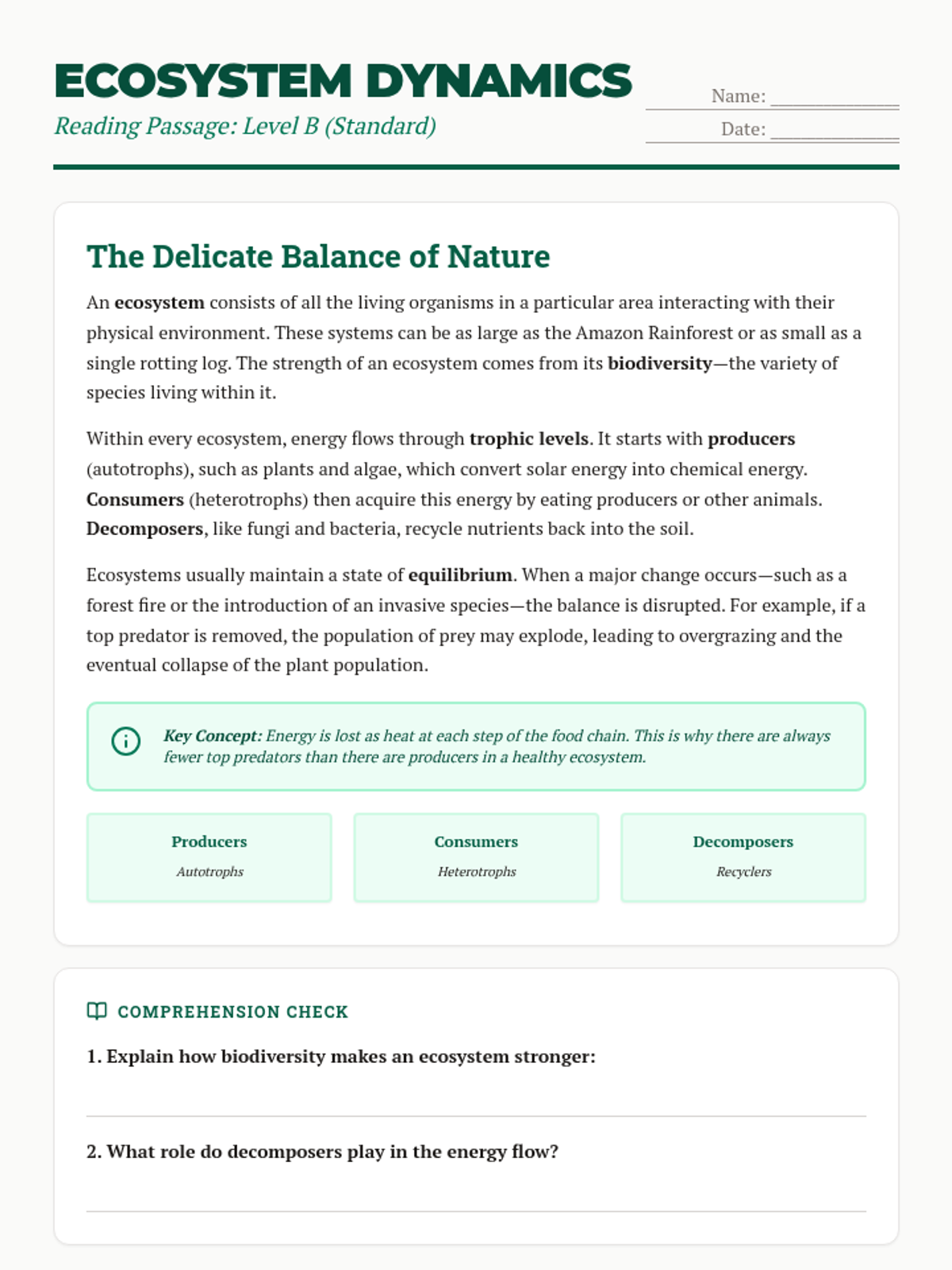
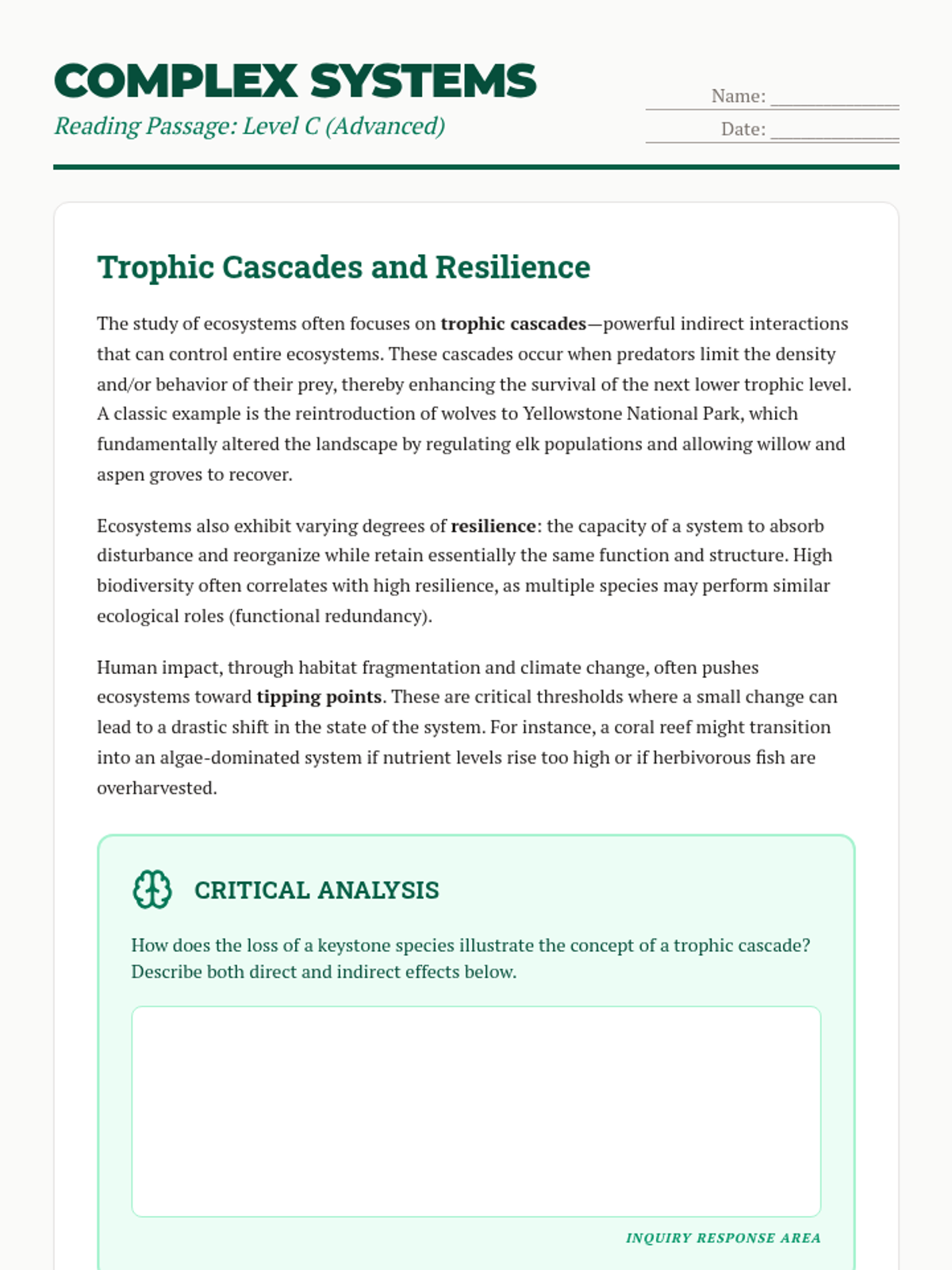
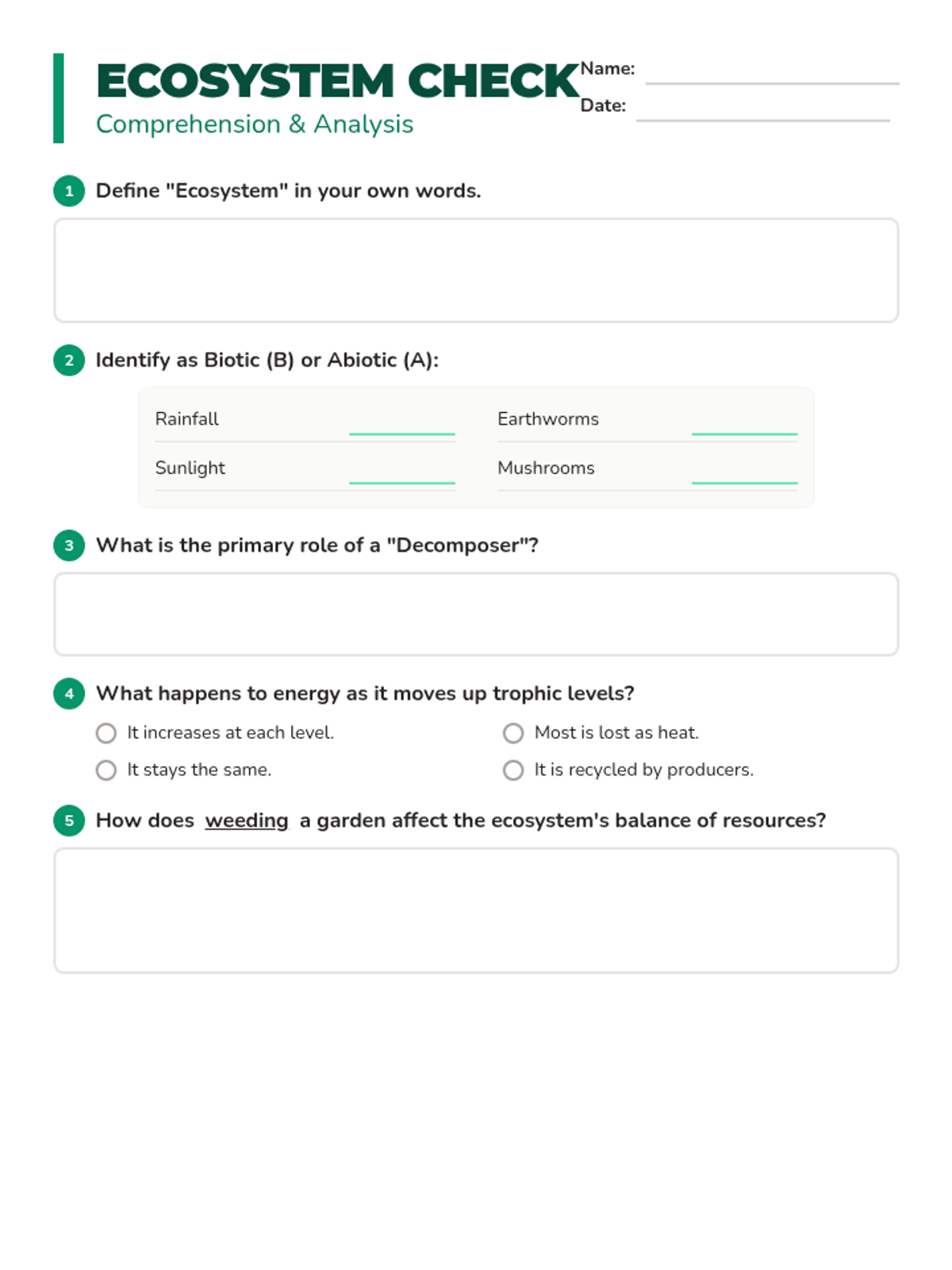
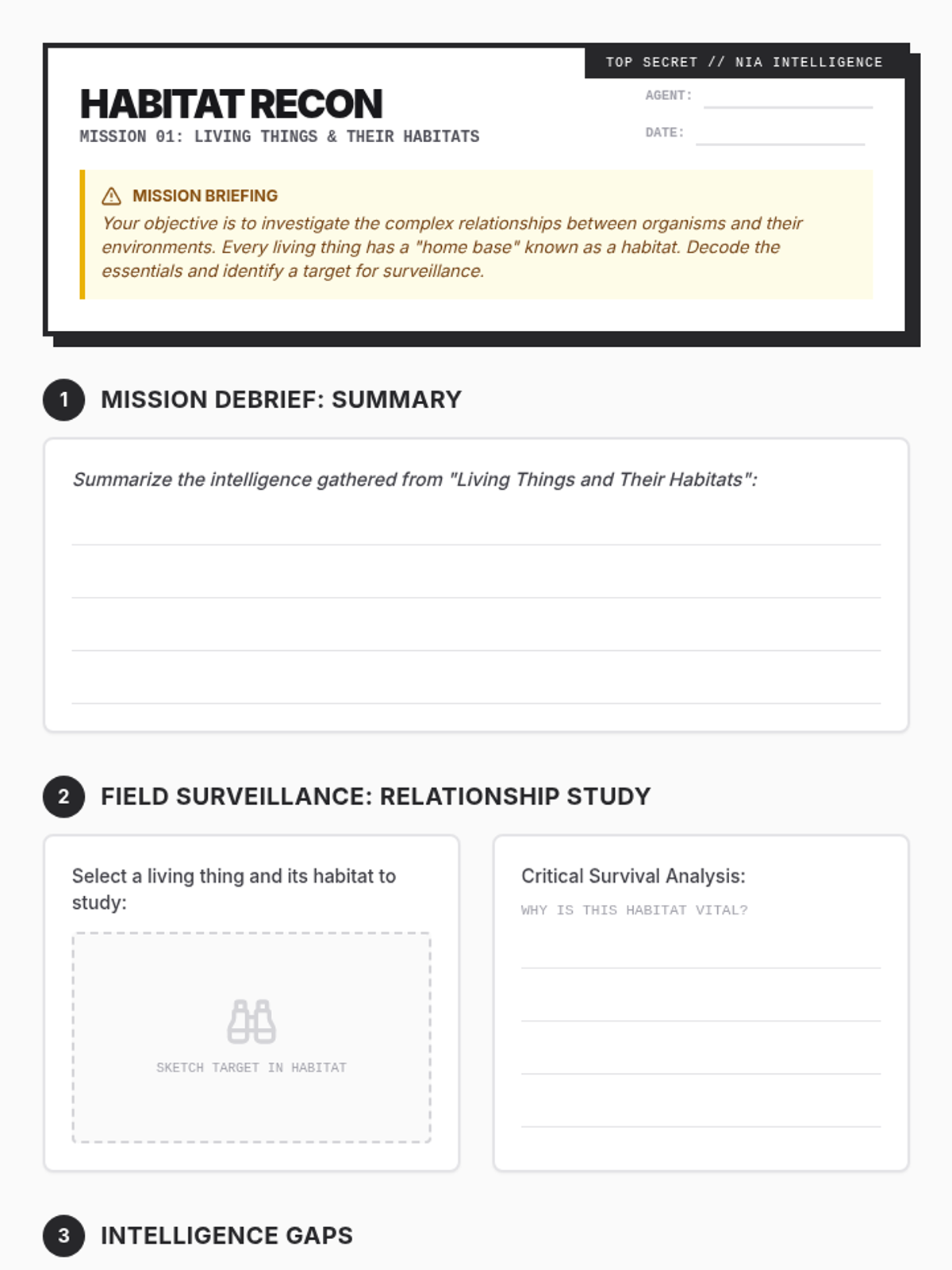
Explore the complex web of interactions within ecosystems, emphasizing energy flow, interdependence, and the ripple effects of environmental changes through hands-on simulations and case studies.
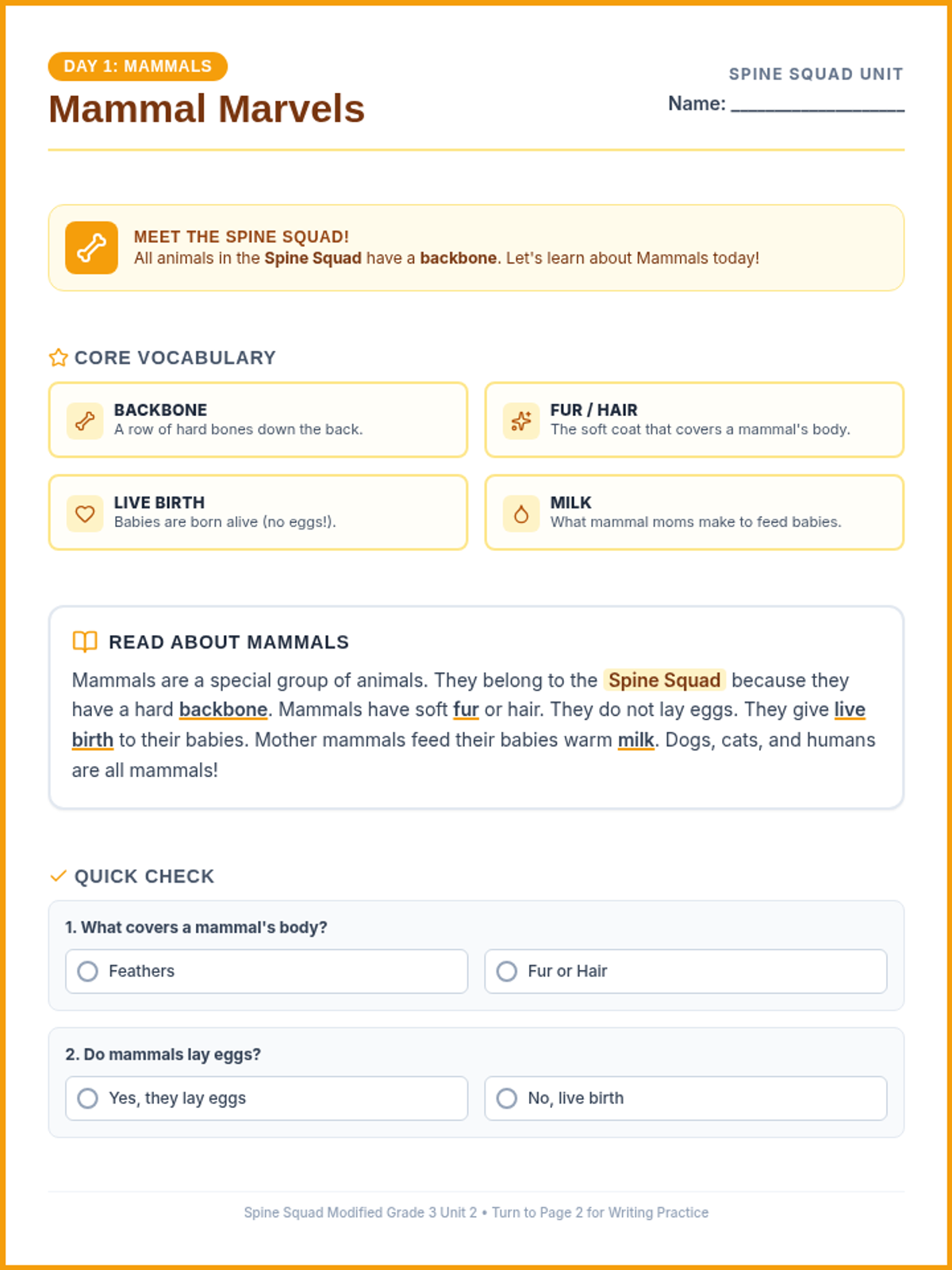
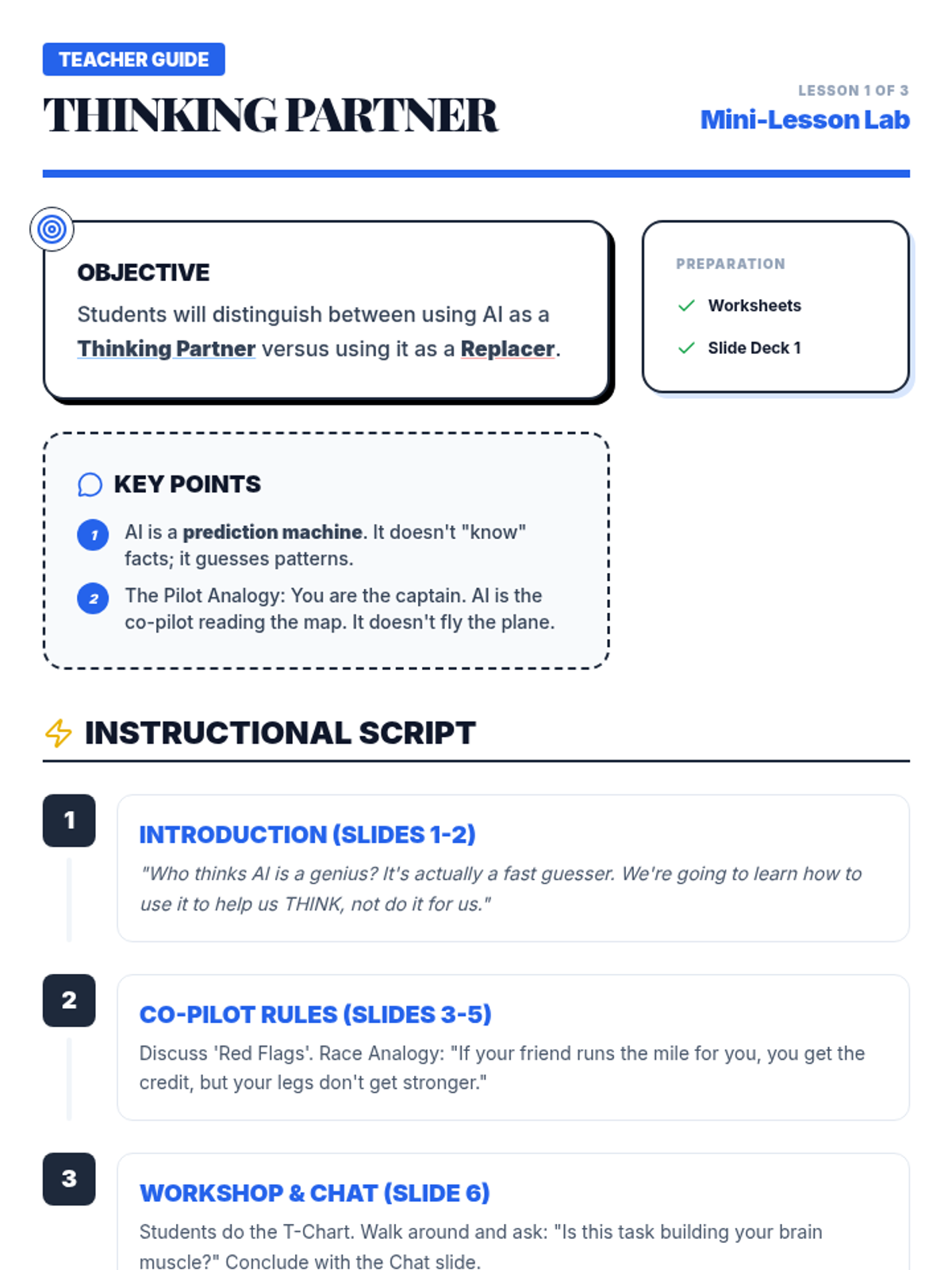
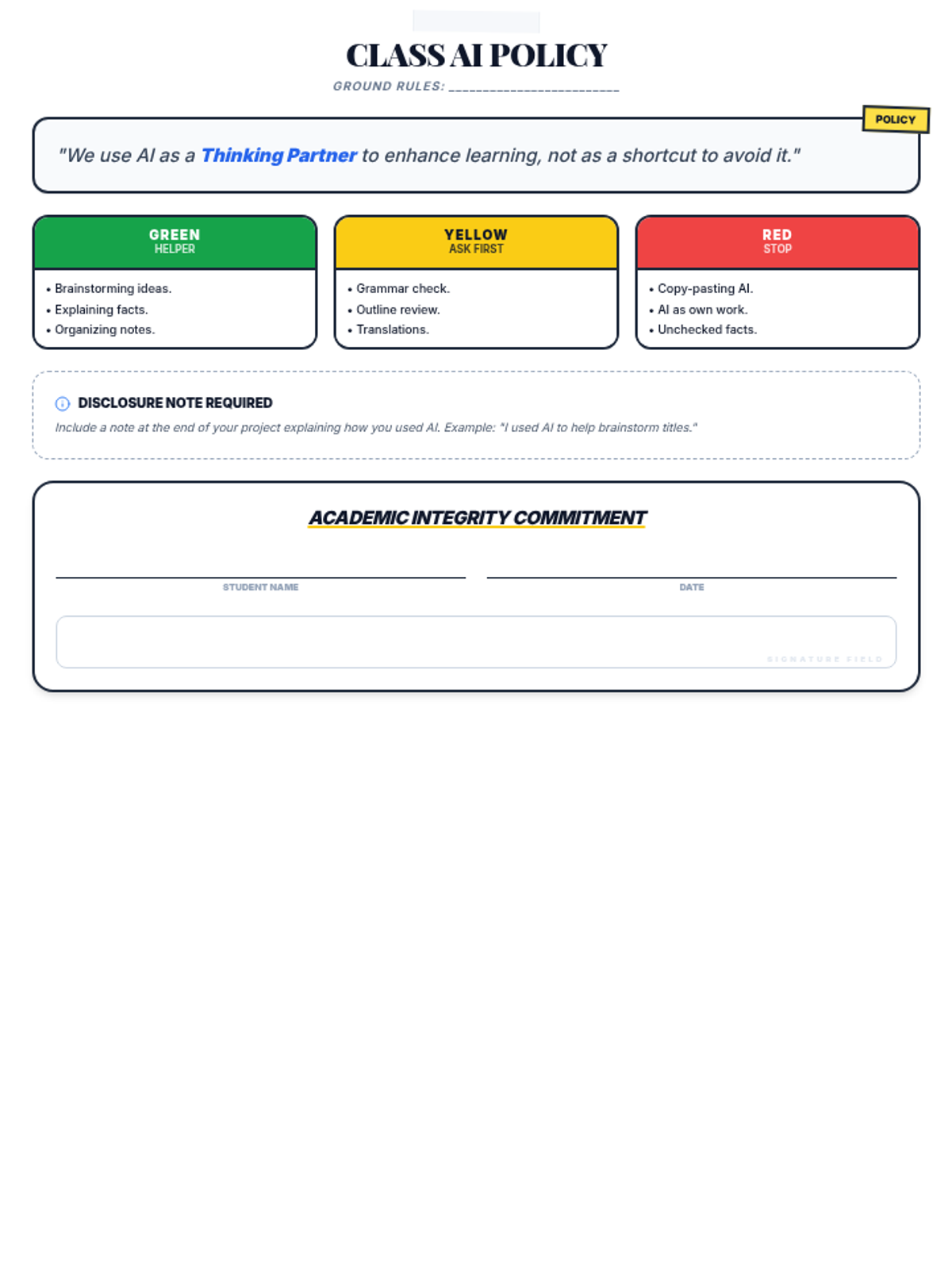
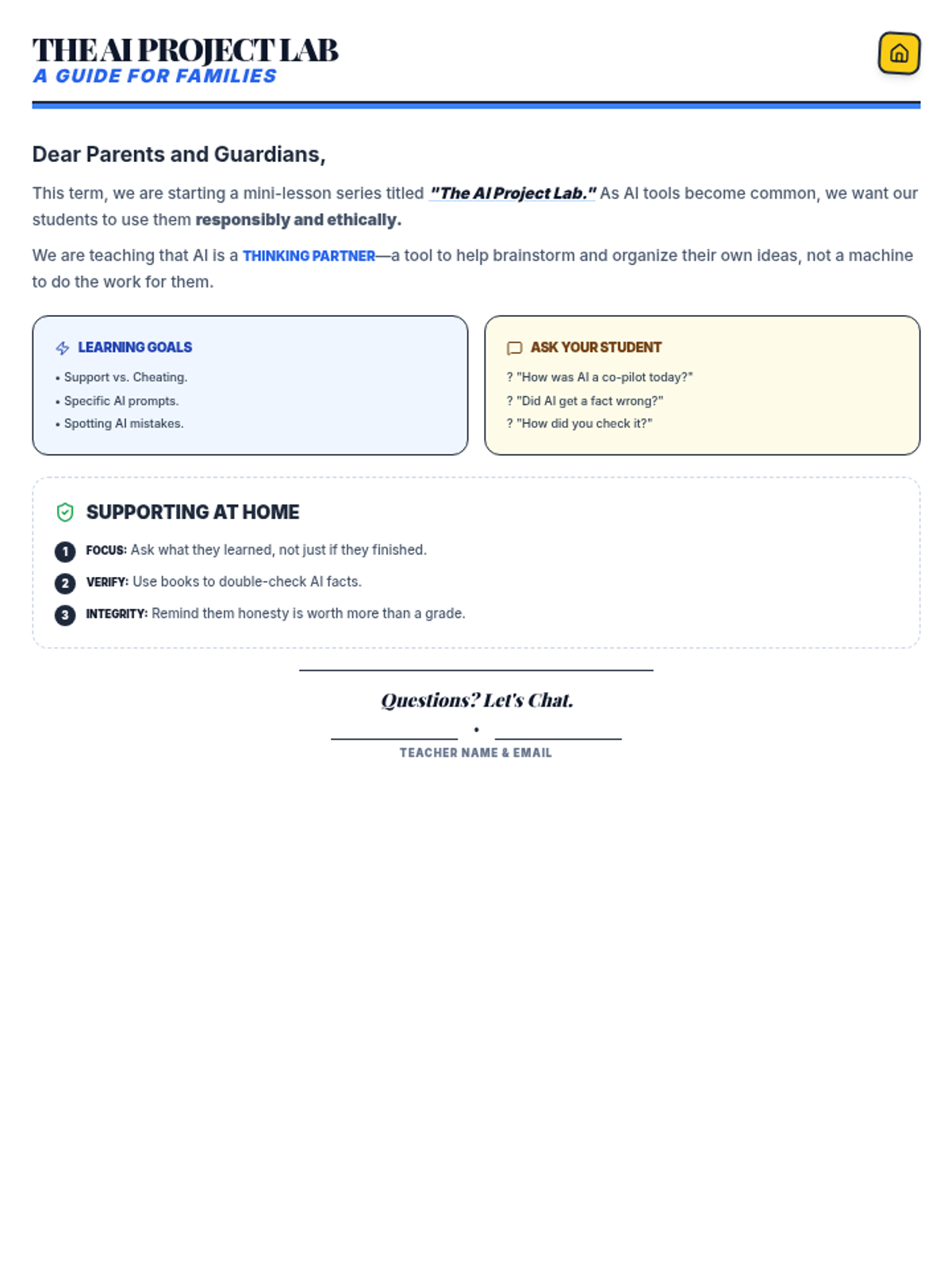
A comprehensive K-8 curriculum designed to build foundational AI literacy through understanding, evaluation, application, and ethics. Each grade level tackles a specific theme, progressing from basic robot concepts to complex algorithmic bias and societal impact.
A comprehensive 3-lesson unit exploring the science, chemistry, and purpose of bioluminescence in nature. Students dive into the deep sea, experiment with chemical reactions, and analyze how light is used for survival.
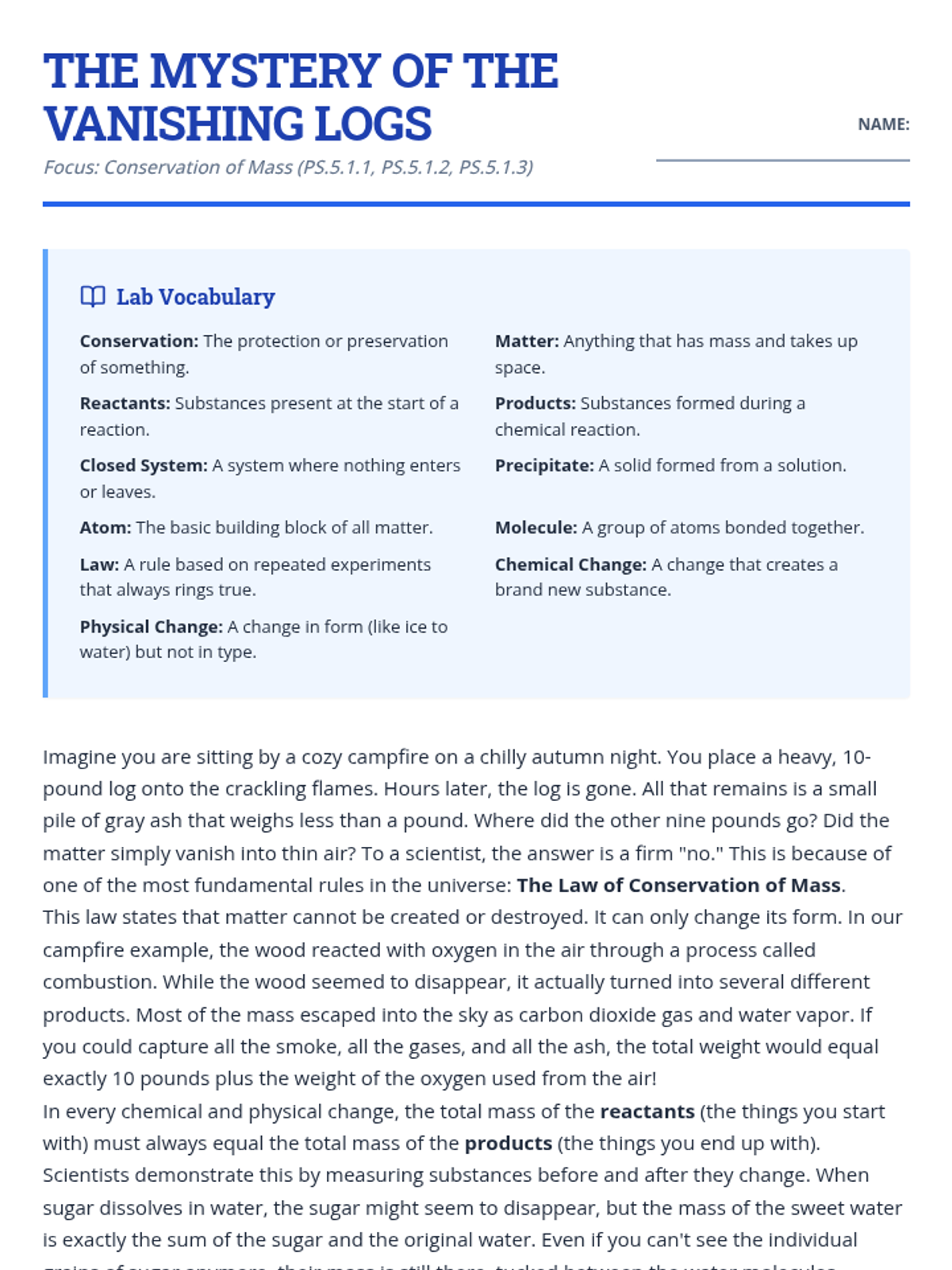
A collection of lessons focused on building foundational skills in both scientific modeling and literary analysis for 4th-grade students.
A three-day exploration of the interconnected roles of chloroplasts and mitochondria in cycling matter through ecosystems. Students use a lunar colony hypothetical lab to apply the scientific method to real-world gas exchange scenarios.
An introductory sequence for 3rd graders exploring how energy flows through food chains, starting with sun-powered producers and moving through various levels of consumers.
A two-day unit exploring the carbon cycle's movement through diverse ecosystems, focusing on how carbon storage and release impact global stability. Students examine oceans, rainforests, tundra, and local environments to understand ecological balance.
A collection of project-based STEM and social studies lessons designed to engage 3rd and 6th grade students in creative exploration and technical skill-building.
A two-part interdisciplinary unit for middle school students exploring the science and art of the Three Rs: Reduce, Reuse, and Recycle. Students analyze the environmental impact of waste through scientific data and then apply creative design thinking to upcycle materials into functional art.
A comprehensive technology applications sequence covering Internet Safety & Ethics, Computer Hardware, and Spreadsheet Data Management. Designed for middle or high school students to build foundational digital literacy and technical skills.
A comprehensive unit exploring the science of hearing, the technology used to assist hearing loss, and the personal impact of being D/deaf or hard of hearing. Students will build a 3D ear model, learn to read audiograms, and understand the difference between hearing aids and cochlear implants.
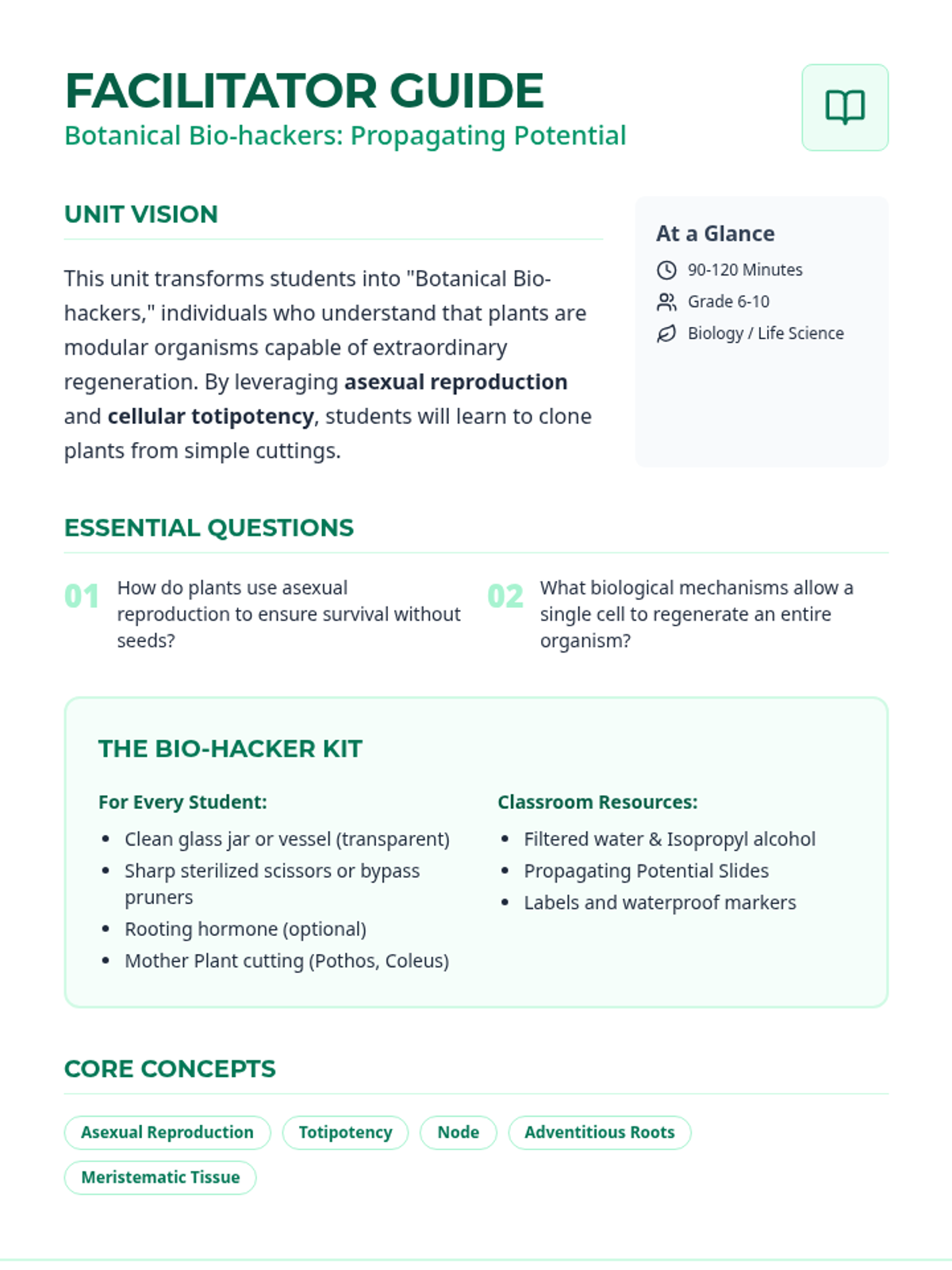
A 2-3 day project-based learning sequence where students explore the relationship between photosynthesis and cellular respiration, culminating in a creative project where they explain the cycling of matter and flow of energy in ecosystems.
A comprehensive unit on meteorology focusing on air mass interactions, pressure systems, and frontal boundaries. Students learn to interpret data to predict local weather events like thunderstorms and clear sky periods.