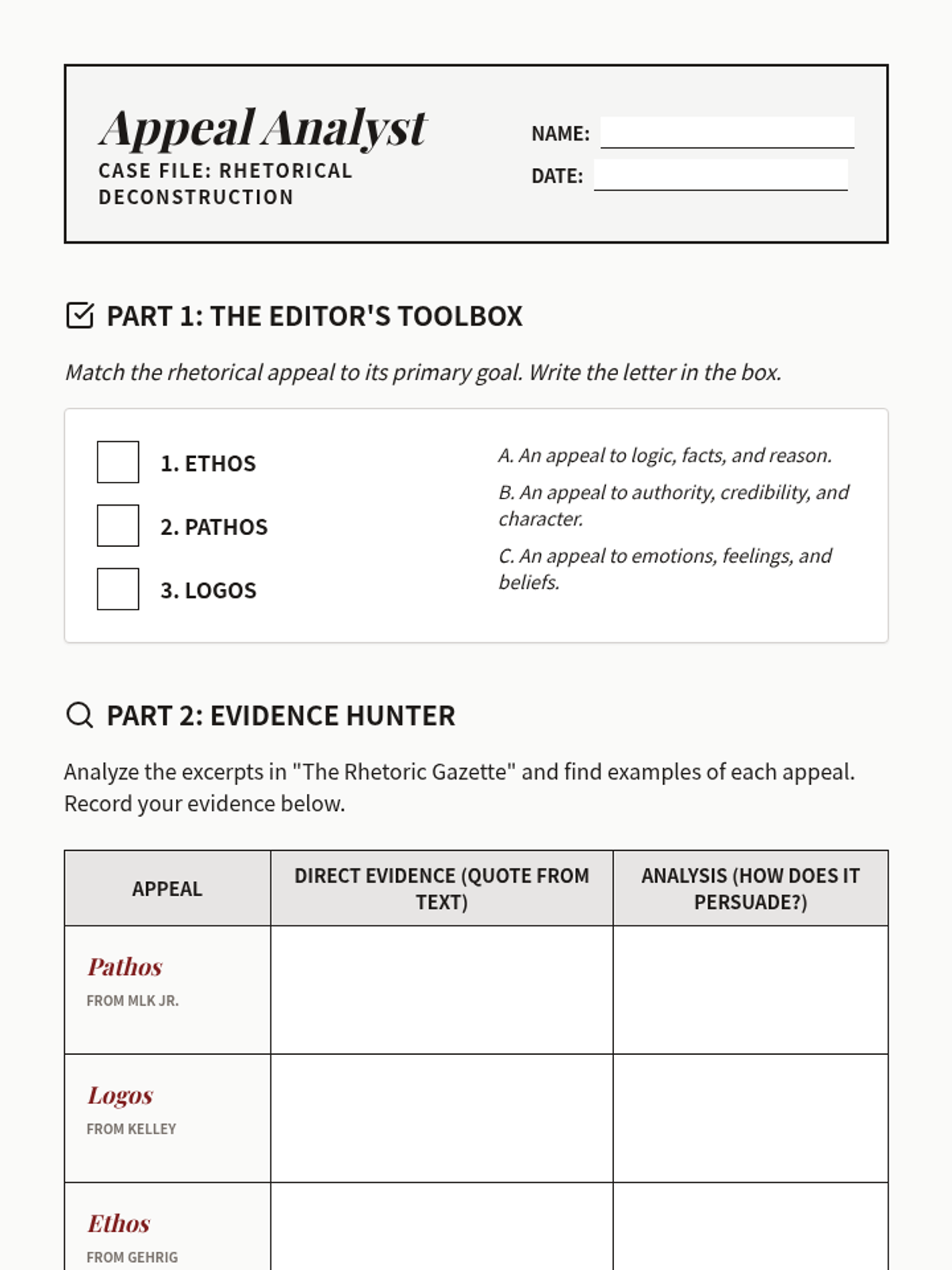
A reading collection of historical speech excerpts from Dr. Martin Luther King Jr., Florence Kelley, and Lou Gehrig, formatted as a vintage newspaper. Provides high-quality text for rhetorical analysis of ethos, pathos, and logos.
A multi-sensory spelling and writing worksheet. Includes syllable clapping, word builders, and creative sentence-writing with B and W words, using spacious writing lines to prevent visual crowding.
A 2-page dyslexia-friendly structured routine packet. Page 1 offers structured trace, read, and repeated reading check-offs. Page 2 provides an oral reading assessment with a built-in teacher evaluation rubric.
A printable sheet of 16 double-coded matching task cards. Features 8 word cards and 8 matching high-contrast picture cards, split between blue-themed B words and yellow-themed W words.
A color-coded visual reference anchor chart for letters B and W designed for older students. Includes anatomical mouth-shape cues, high-interest sight words (brave, brain, build, boss, work, world, wave, wise), and mature picture scaffolding.
A printer-friendly, ink-saving version of the one-page Theme Navigator Reference Sheet for 'Prisoner B-3087'. It replaces heavy dark blocks and rich colors with clean white backgrounds, high-contrast borders, and grayscale-optimized typography, ensuring perfect clarity in black-and-white printing while preserving all rich structural scaffolds.
A comprehensive teacher guide and lesson plan for Day 5, featuring speed-dating peer review protocols, diagnostic rubrics, and final synthesis facilitation guides.
A double-sided student dossier sheet called the Case File Profile Dossier, containing the final profile summary template and a Peer Feedback scorecard for the Speed-Dating peer-review activity.
A comprehensive teacher guide and lesson plan for Day 4, featuring independent research facilitation scripts, student conferencing protocols, and questioning frameworks for 1-on-1 check-ins.
A double-sided student research organizer called the Evidence Locker Graphic Organizer, featuring a Root Cause analysis tree and a Charity Impact matrix to map local community support systems.
A double-sided student worksheet called the Credibility Clues Field Guide, where students practice applying the 5 Ws to a sample charity website and then evaluate their own digital sources.
A highly visual, engaging slide presentation for Day 3, introducing the 5 Ws framework, mission statements, and evaluating charity transparency with no text smaller than 24px.
A comprehensive teacher guide and lesson plan for Day 3, featuring standards alignment, a detailed pacing guide, classroom discussion scripts, and model answers for the 5 Ws framework.
A 2-page complete teacher answer key and facilitation guide providing exact fill-in-the-blank answers, sample student text-evidence sentences, and answers for task cards 1-12.