A teacher answer key and instructional guide for the Word Workshop Sort Worksheet. It provides correctly categorized word lists and teaching tips for explaining Compound and VC/CV syllable patterns.
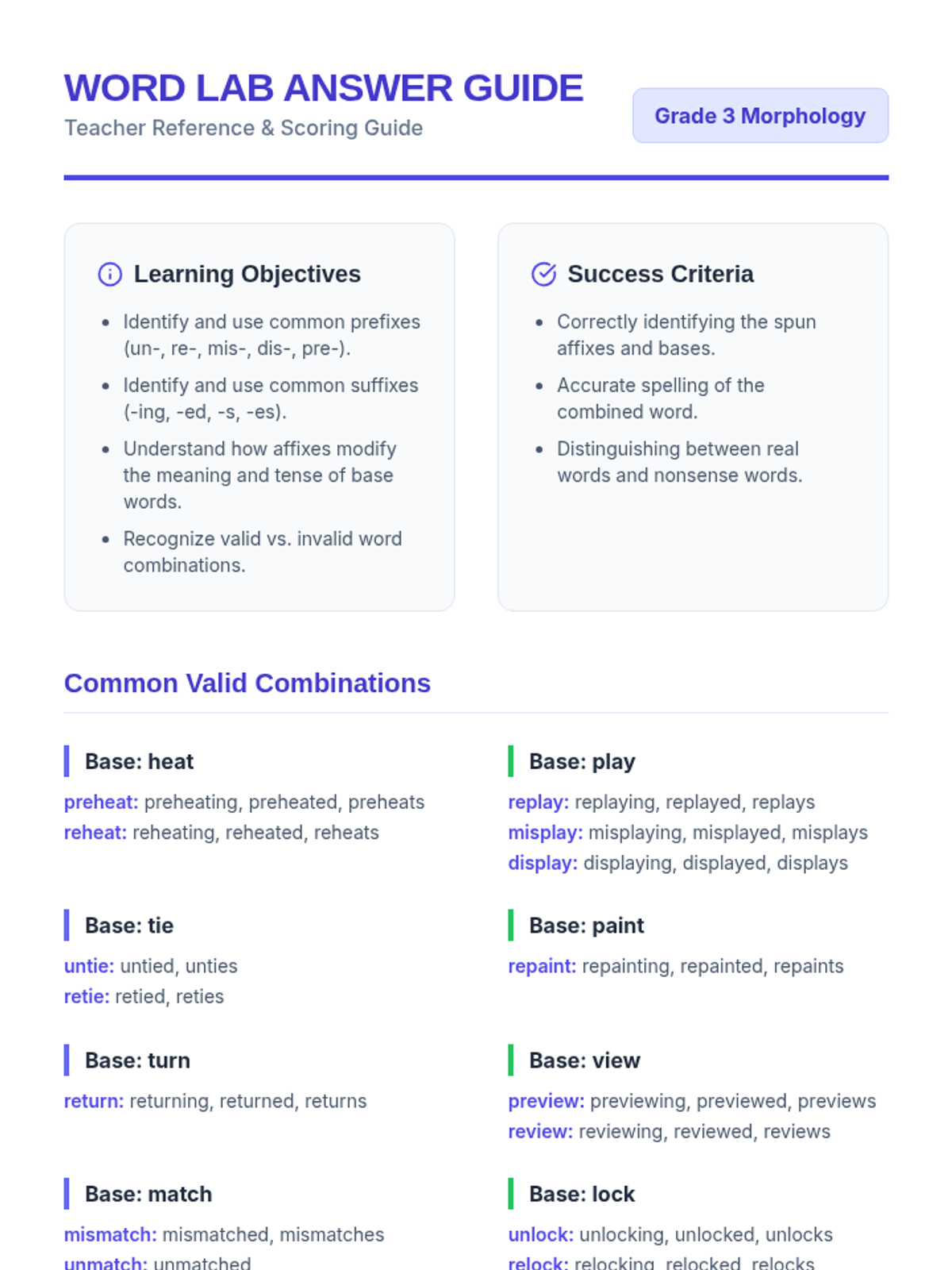
A teacher's answer guide and reference sheet for the Word Lab Spinner Worksheet. It includes common valid word combinations, learning objectives, and discussion prompts for students.
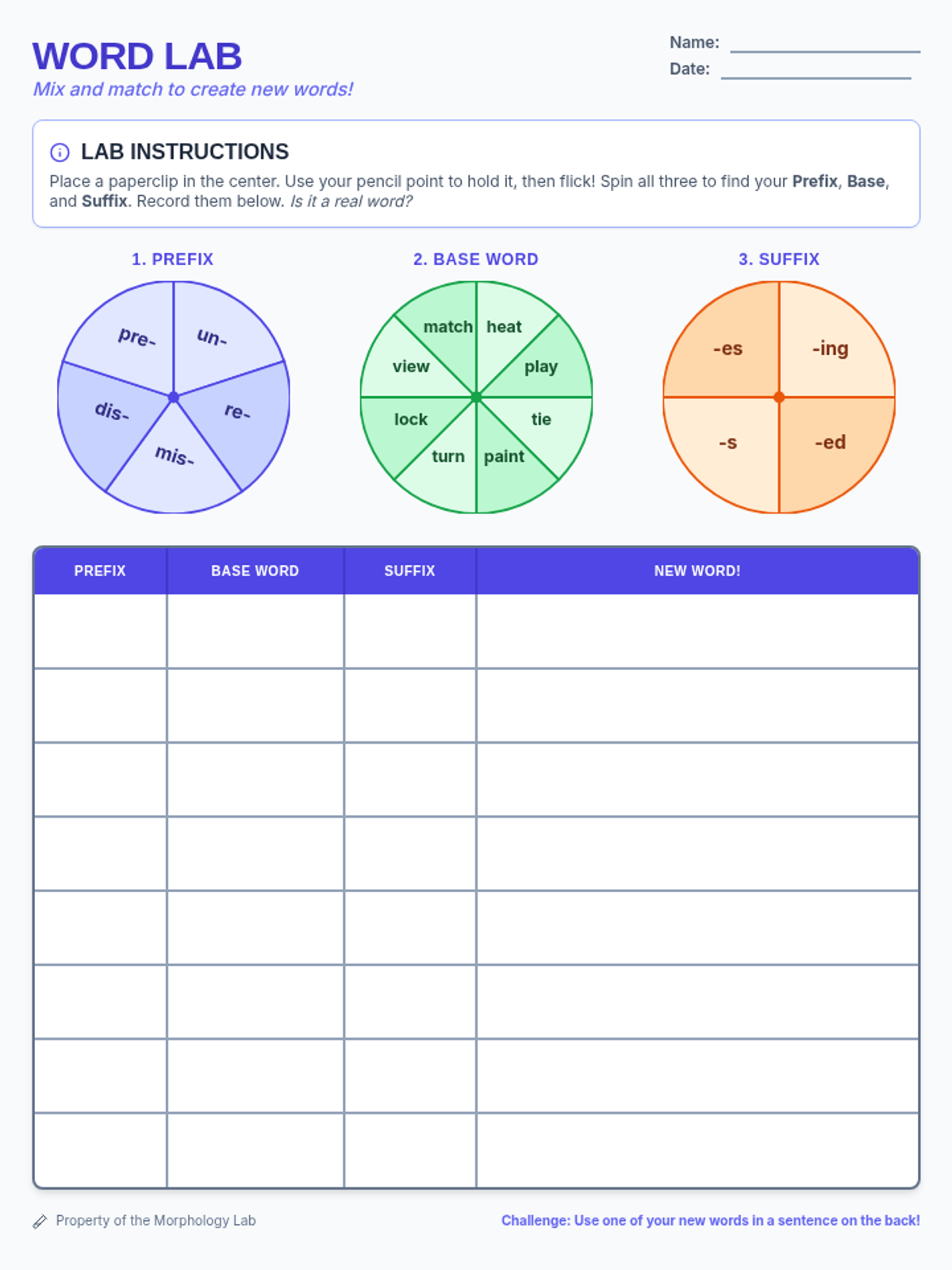
A hands-on morphology worksheet featuring three spinners for prefixes, base words, and suffixes. The recording chart has been optimized with smaller columns for affixes and a larger space for the final word.
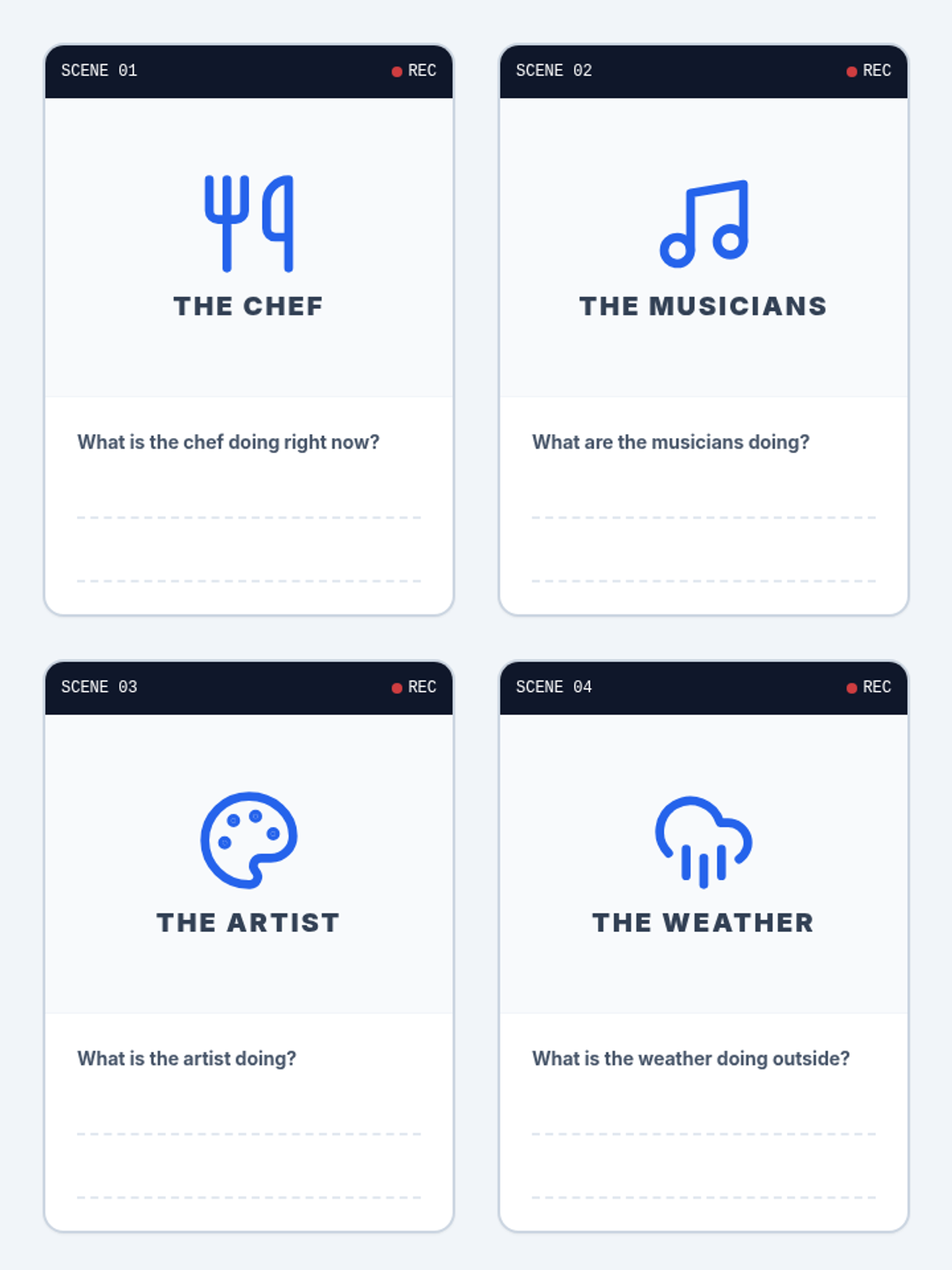
A set of 8 themed task cards for small group practice, featuring icons as visual prompts for students to generate present progressive sentences.
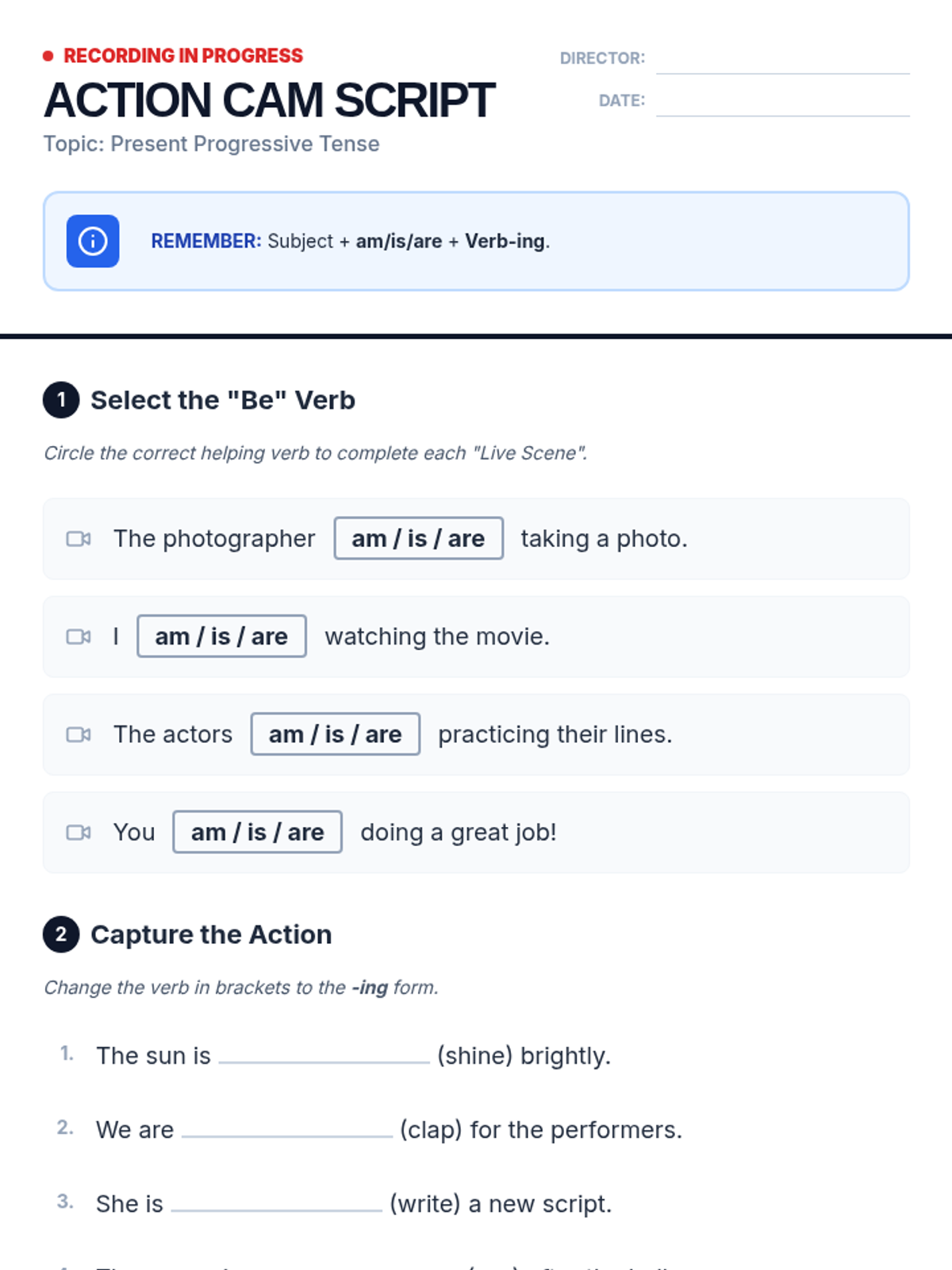
A 3rd-grade practice worksheet where students choose the correct be-verb, apply -ing spelling rules, and write their own present progressive sentences.
A vibrant, high-energy slide deck that introduces the Present Progressive tense using a filmmaker theme, featuring guided practice and interactive checks.
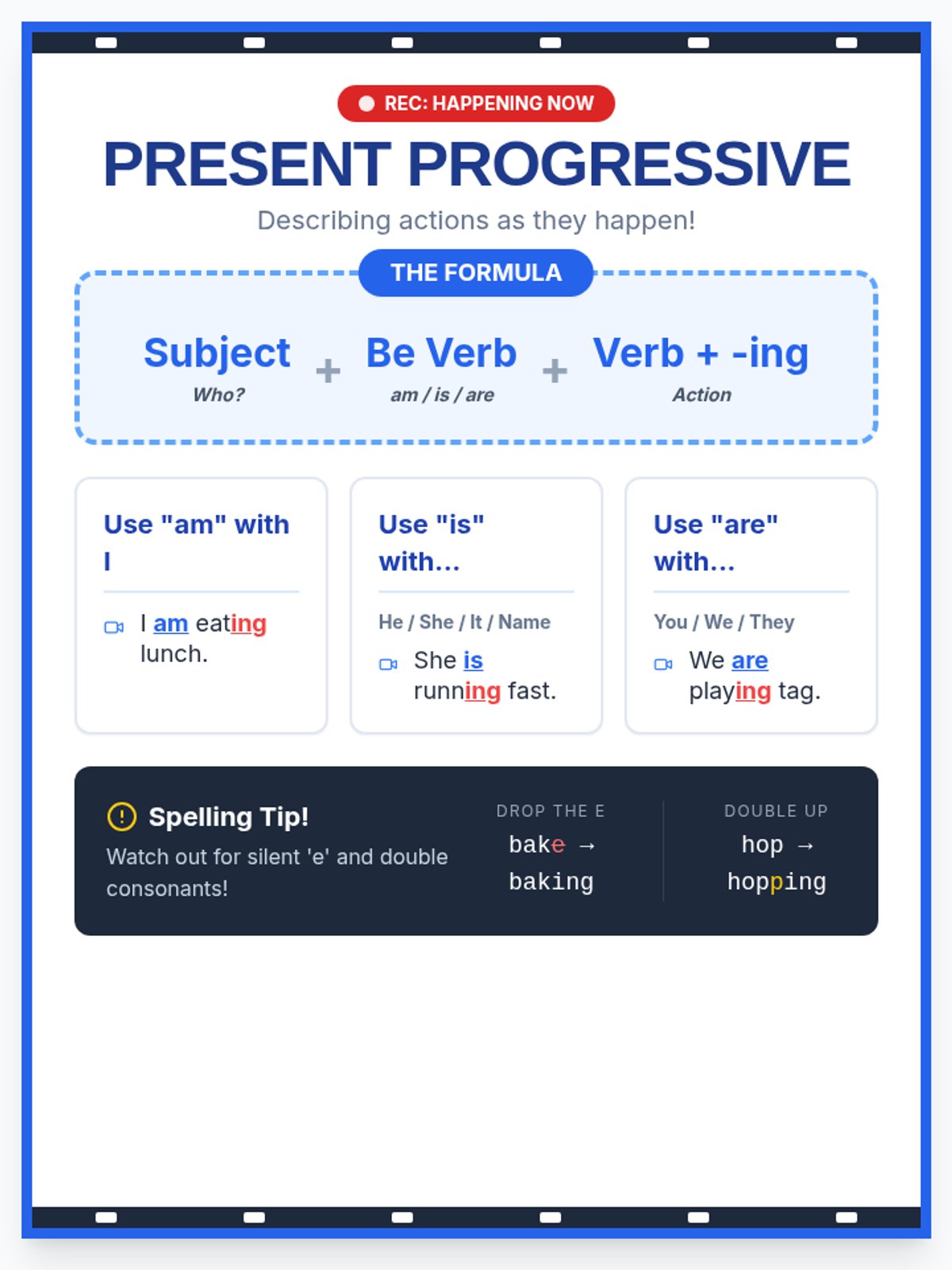
A high-contrast anchor chart that breaks down the Present Progressive formula (am/is/are + verb-ing) with clear examples and spelling tips.
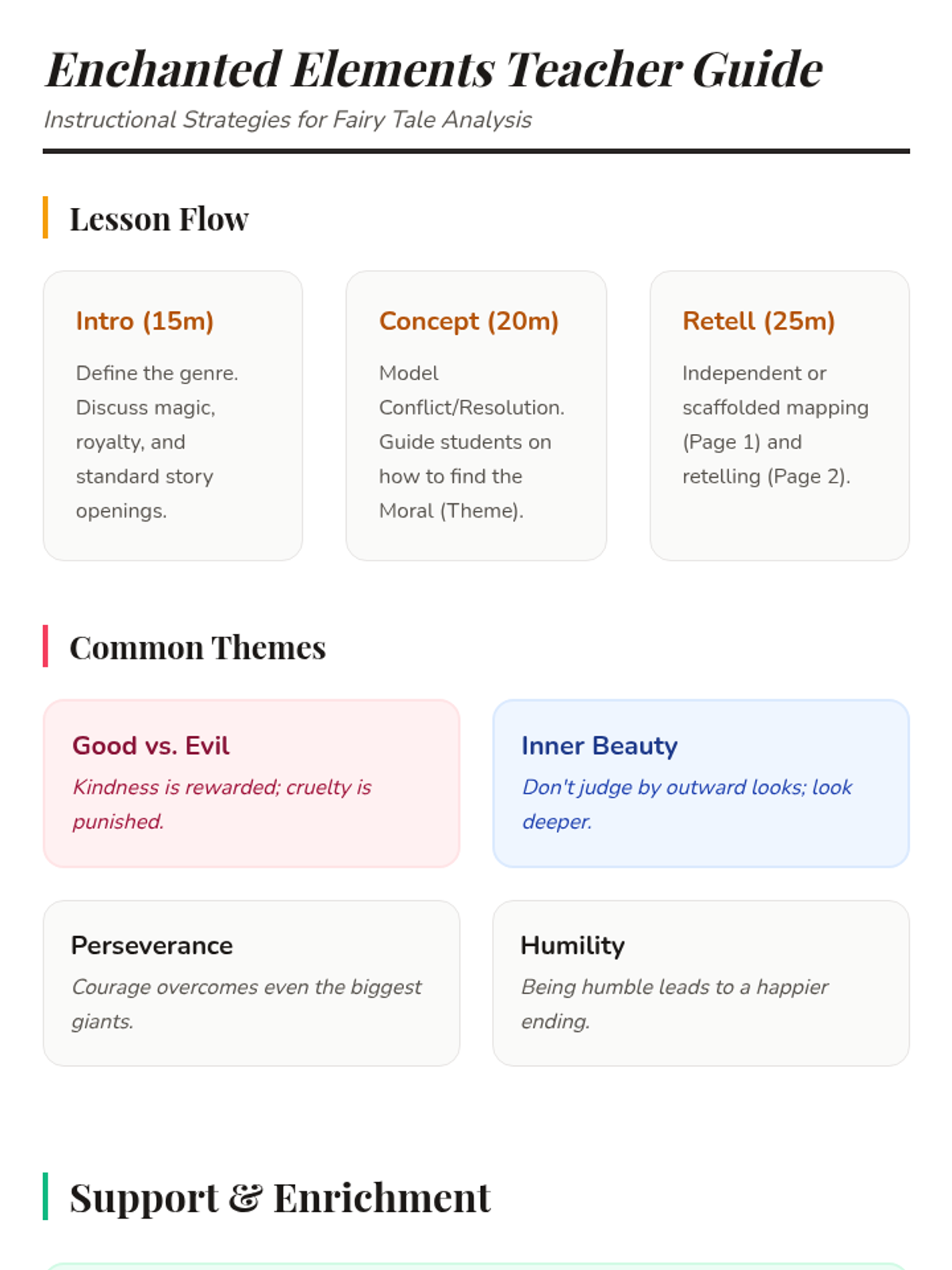
A comprehensive guide for teachers to facilitate fairy tale analysis and retelling lessons, featuring pacing, common themes, and differentiation tips.
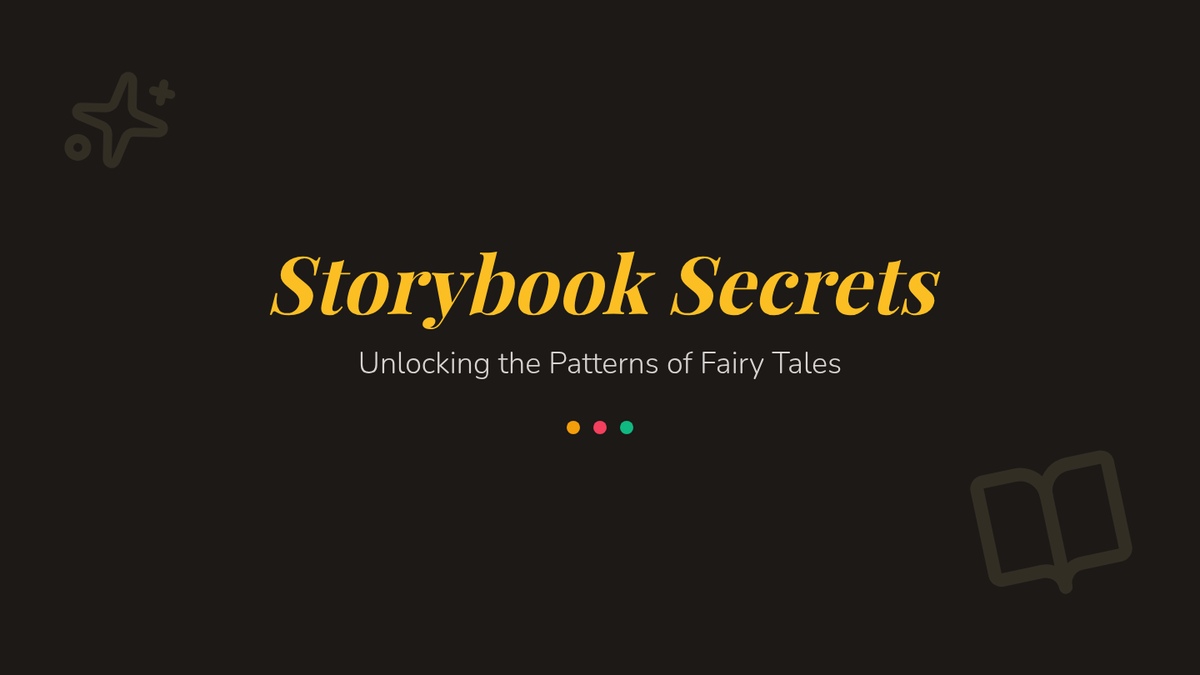
An introductory slide deck for teaching fairy tale elements, focusing on conflict, resolution, and theme.
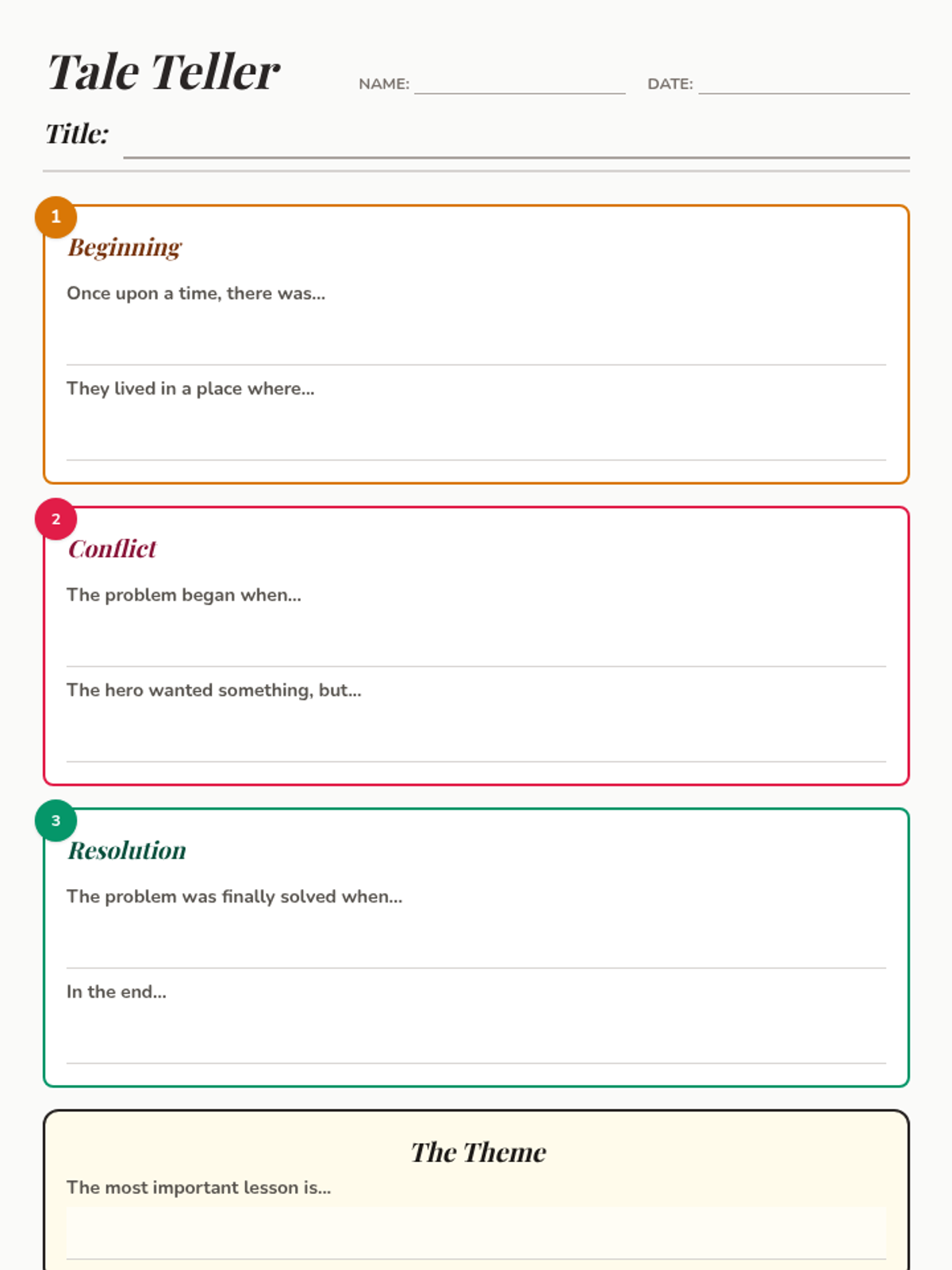
A scaffolded graphic organizer with sentence starters to help students identify plot points and retell the story using sequencing words.
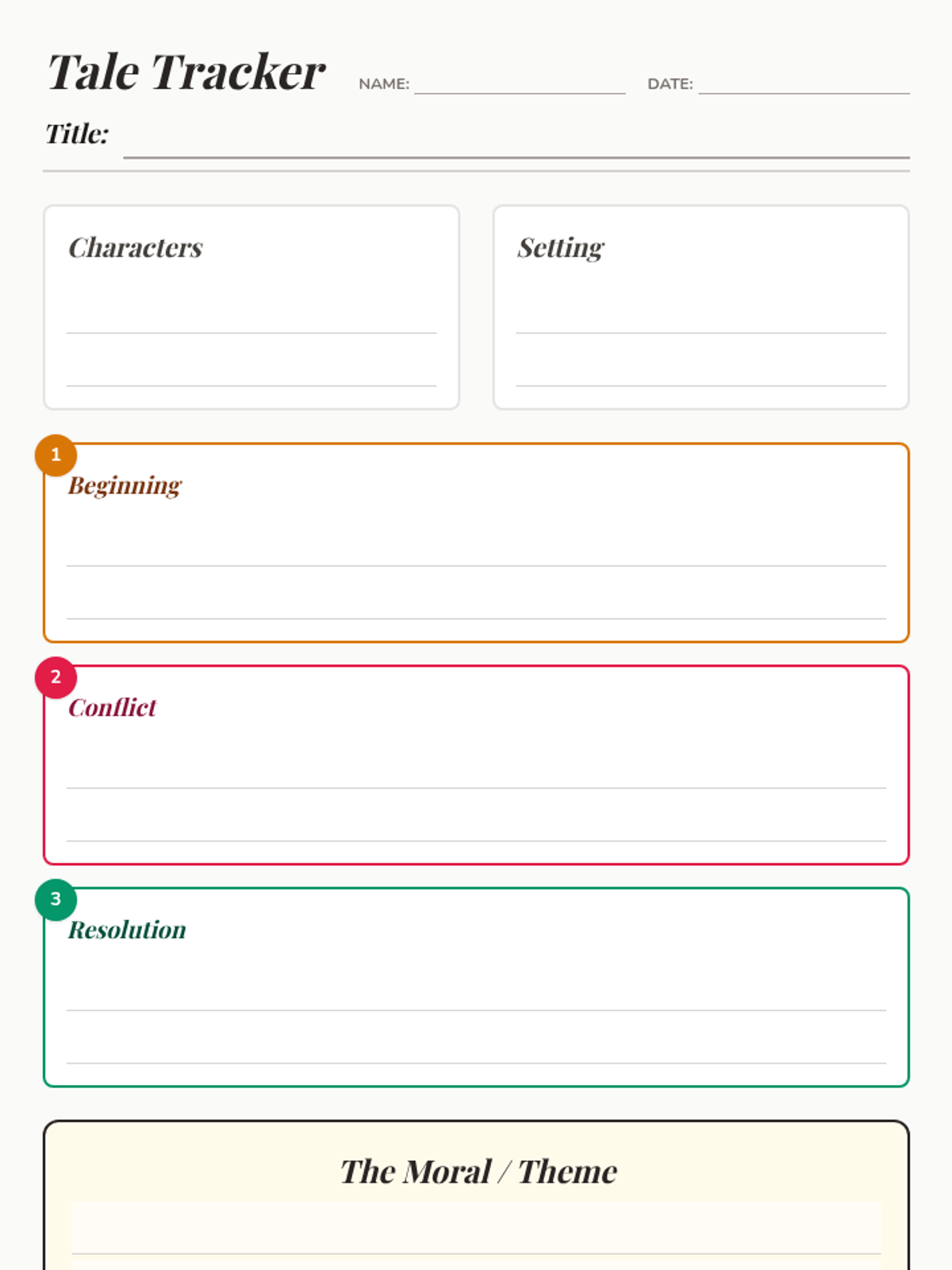
An independent graphic organizer for tracking the plot, characters, conflict, resolution, and theme of any fairy tale, now including a dedicated story retelling page.
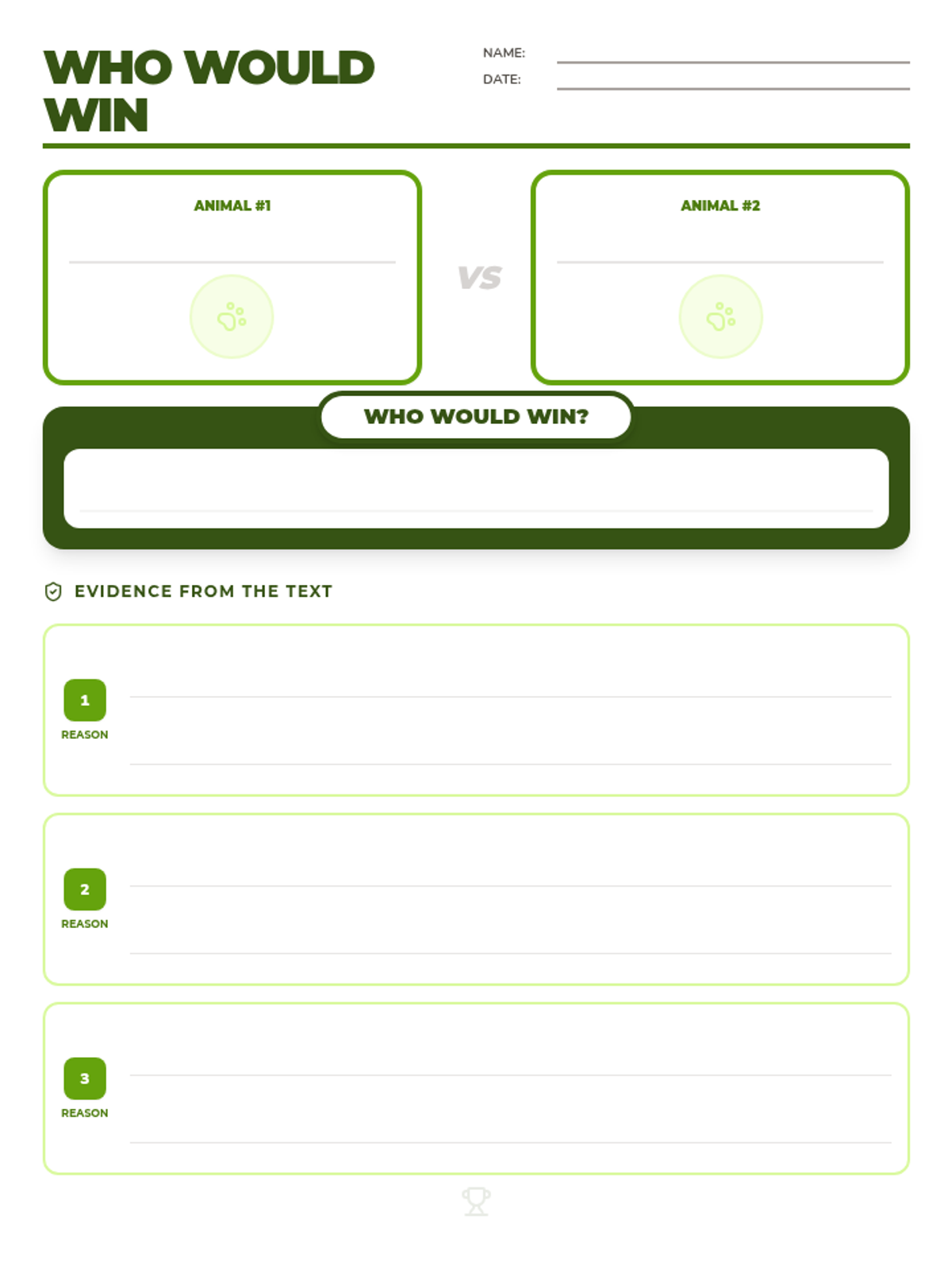
An engaging 'Who Would Win' graphic organizer for comparing two animals based on informational text. Includes space to name contenders, make a prediction, and provide three supporting reasons with evidence. Optimized for single-page layout.
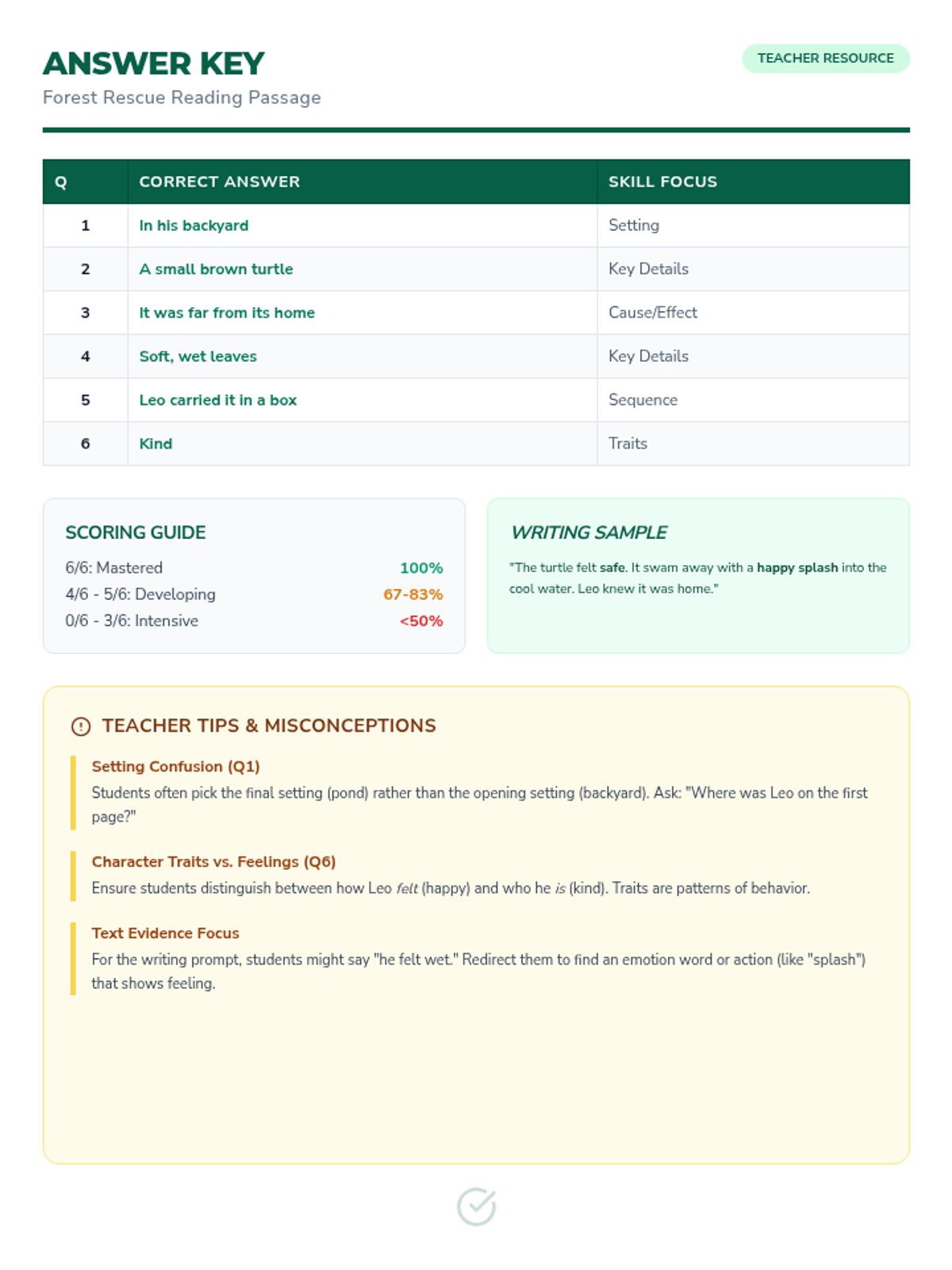
Teacher answer key for the Forest Rescue passage, including correct answers, standards alignment, scoring guide, and common student misconceptions. Revised to fit onto a single page.
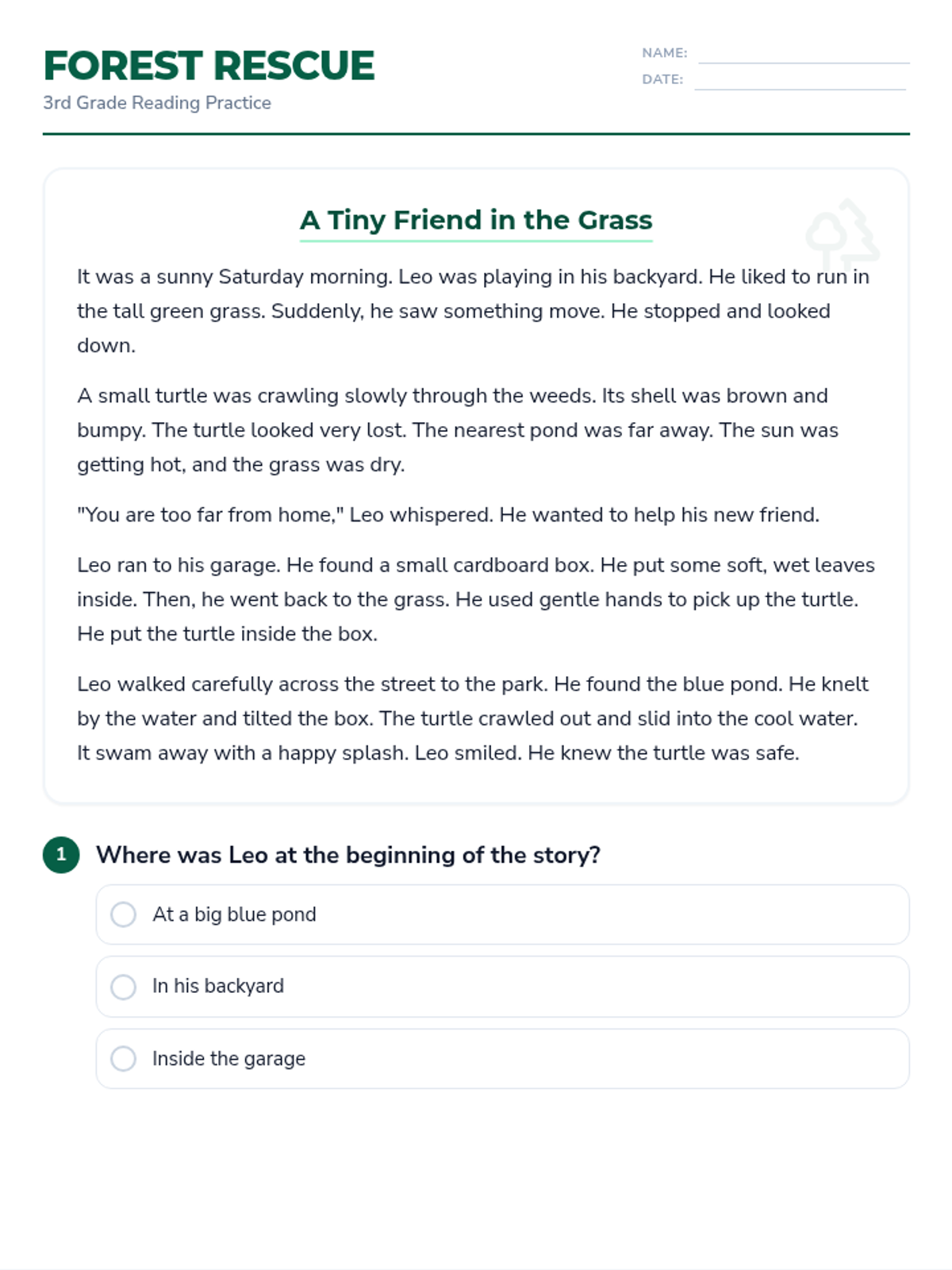
Reading passage and multiple-choice questions for 3rd-grade students about a boy rescuing a turtle. Includes simplified vocabulary and 3 answer choices per question for accessibility. Revised for better layout and page breaks.
Introductory slide deck for the Forest Rescue lesson, featuring learning goals, vocabulary support, and reading strategies for 3rd-grade students.
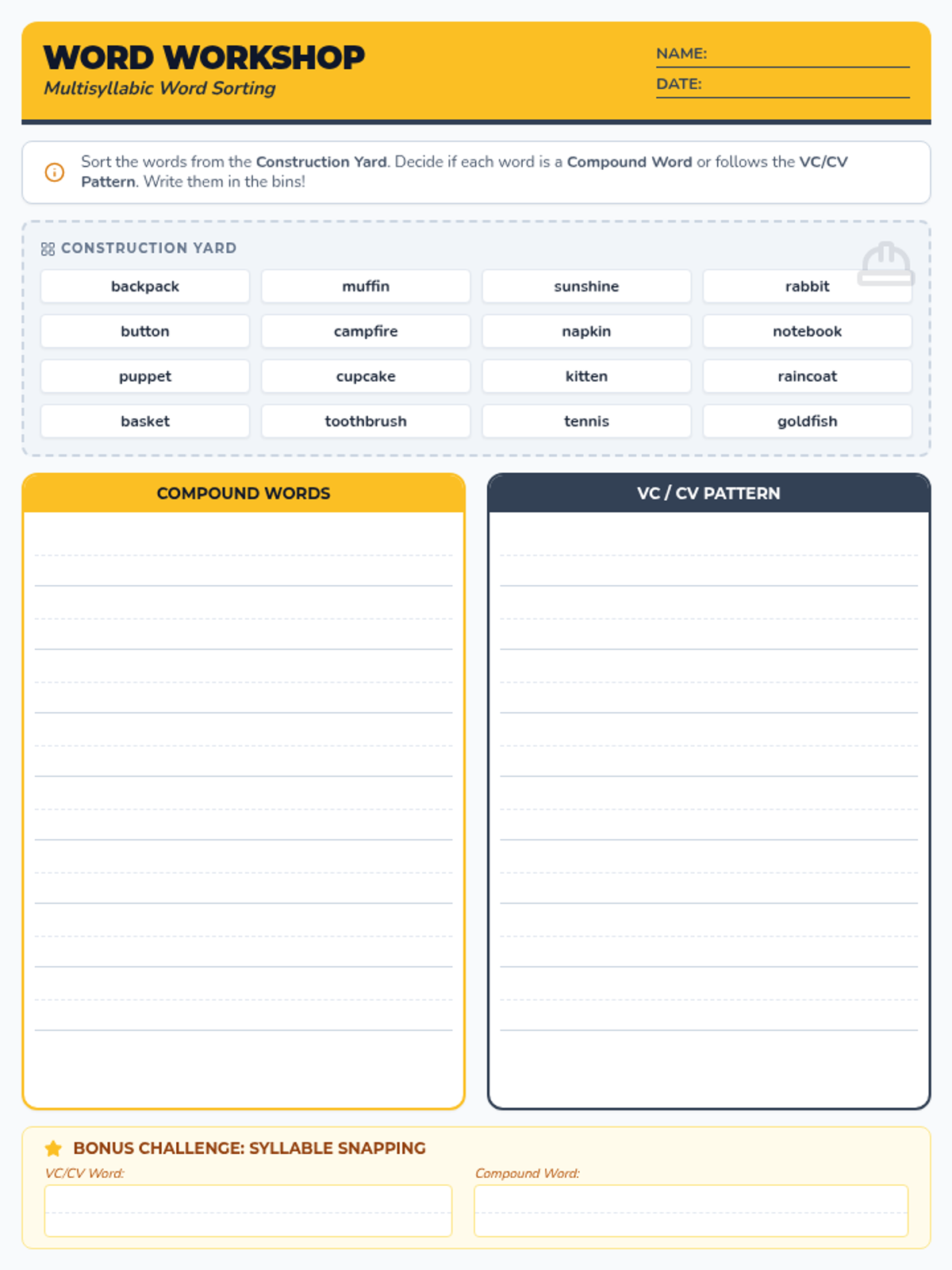
A construction-themed sorting worksheet for 3rd-grade students to categorize words into Compound Word and VC/CV (Rabbit) syllable patterns. It features a word bank and designated sorting bins with primary handwriting lines.
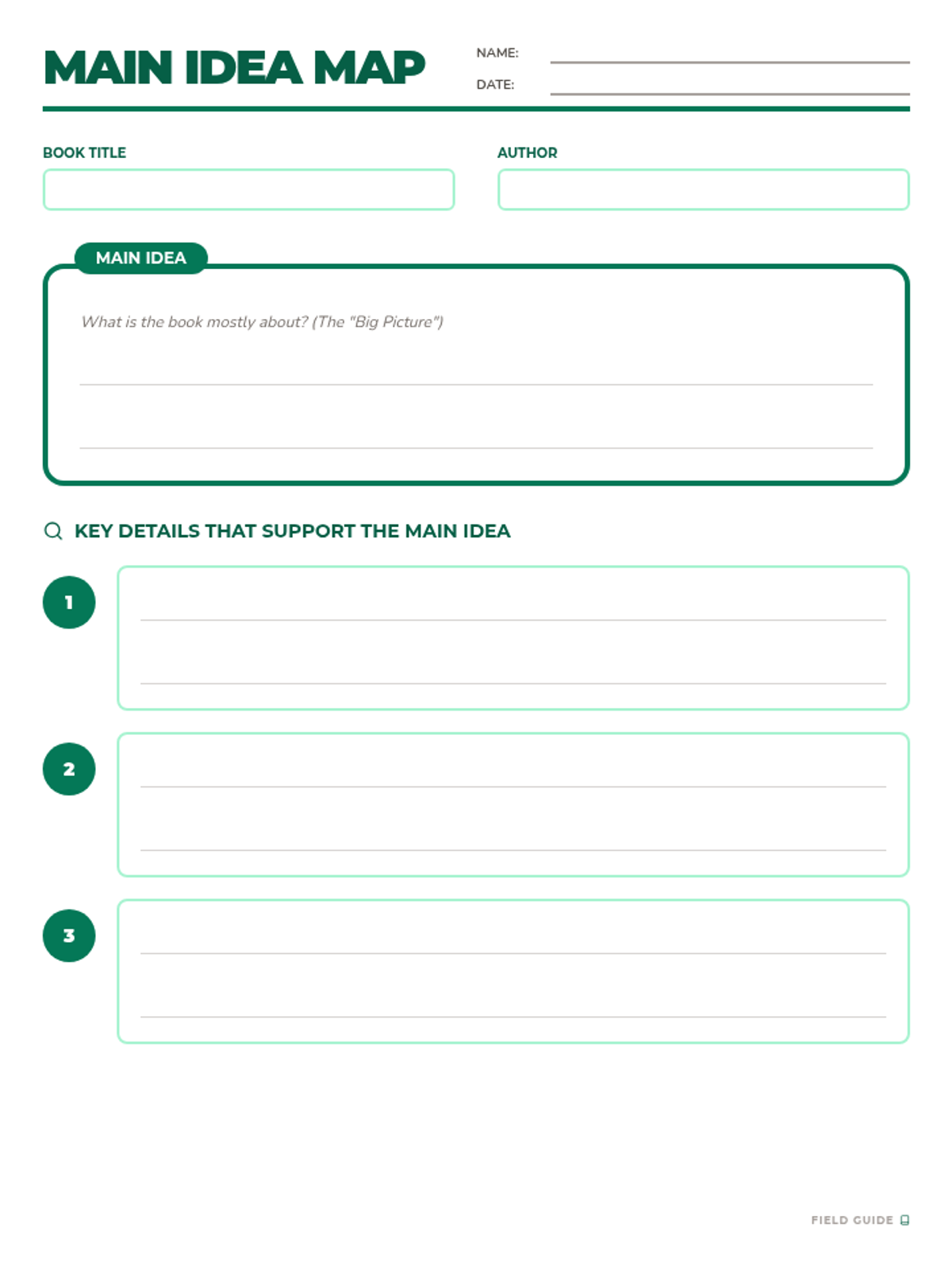
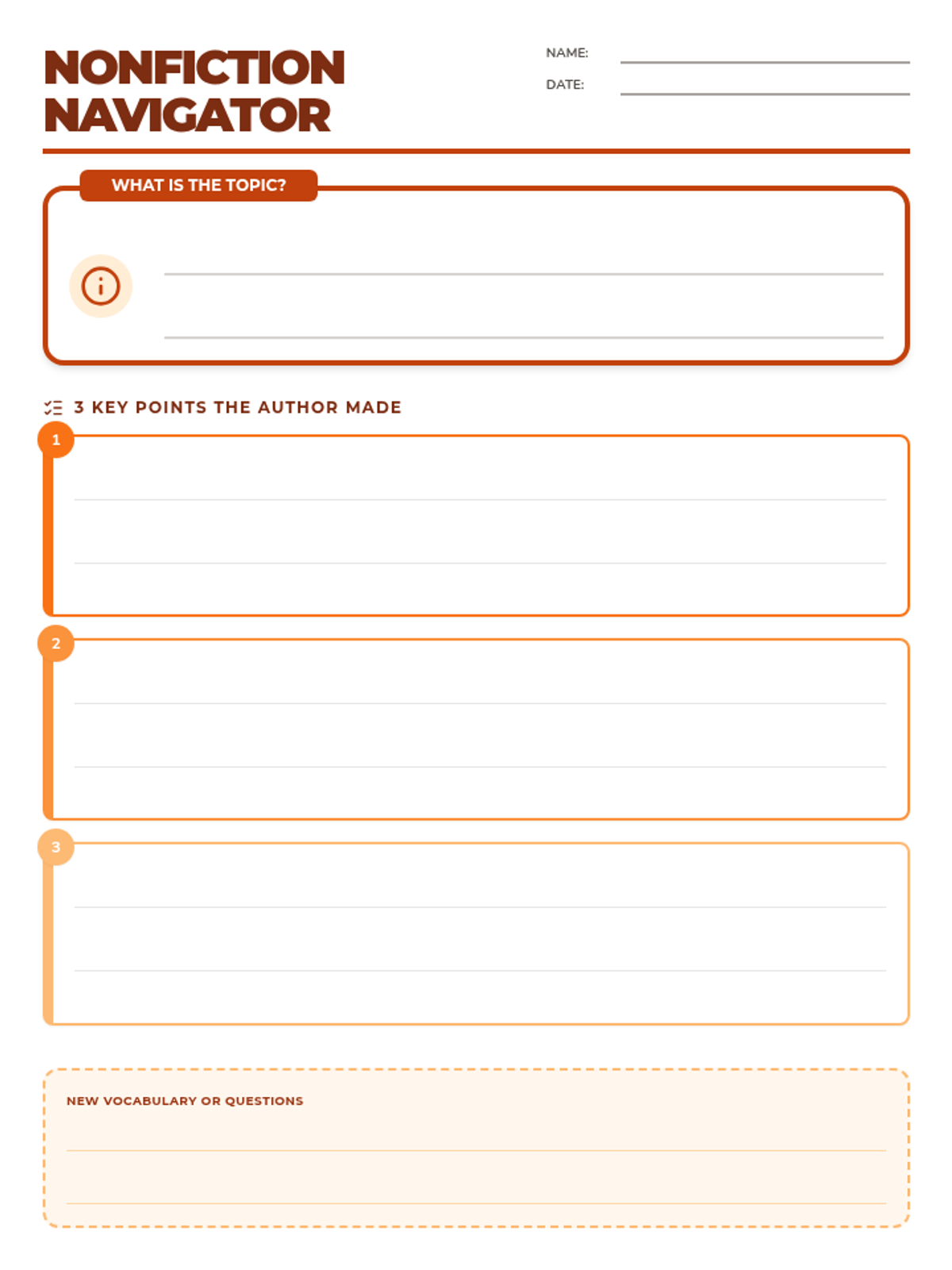
A specialized graphic organizer for nonfiction texts, helping students identify the central topic and three key points or arguments presented by the author. Optimized for single-page layout with visible writing lines. Removed footer decoration to ensure single-page print.
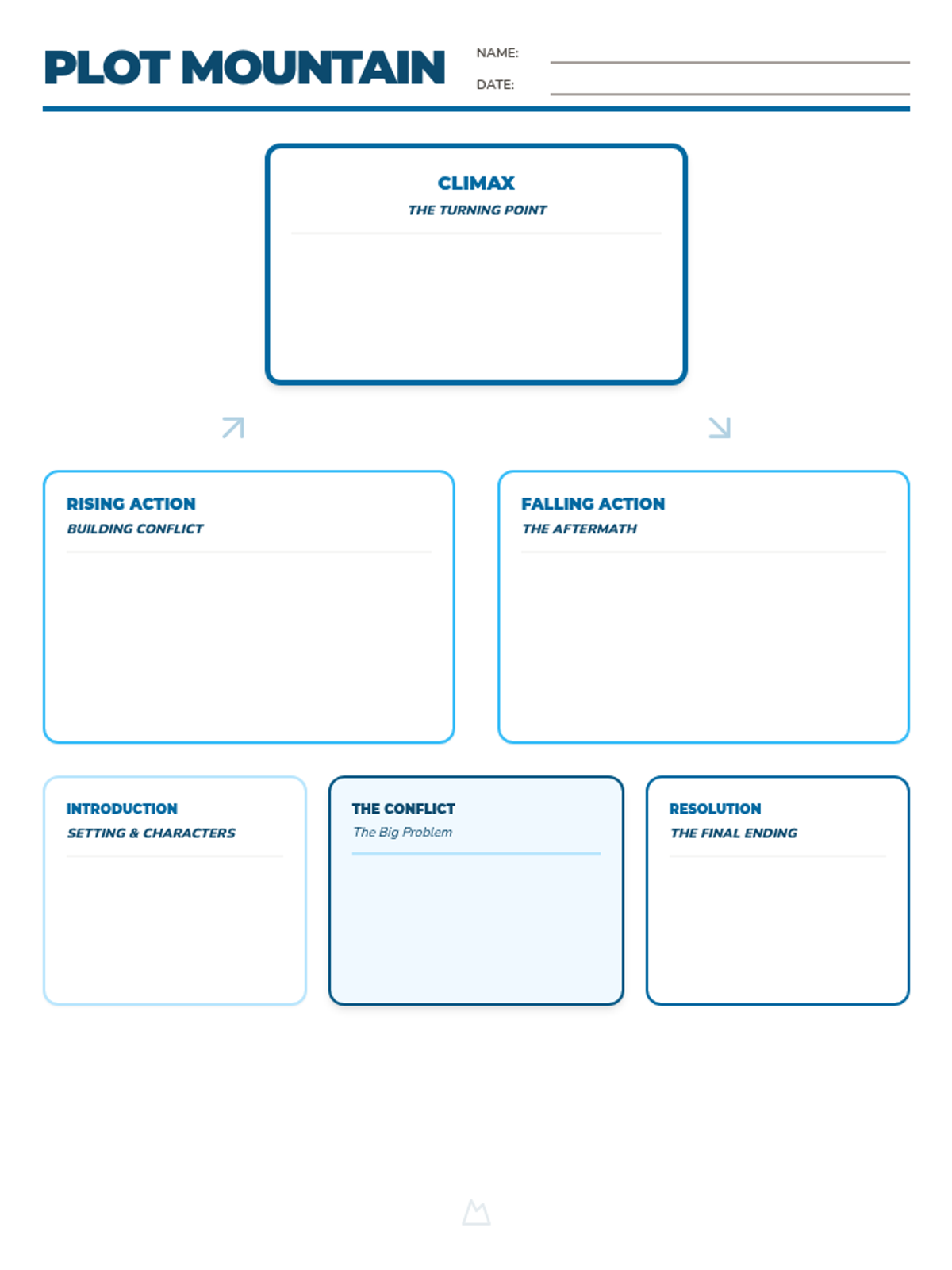
A visual 'Plot Mountain' graphic organizer for students to map out the narrative arc of a story, featuring a robust grid-based layout for reliable printing. Includes Introduction, Conflict, Rising Action, Climax, Falling Action, and Resolution. Now with improved contrast and consistent box sizes.
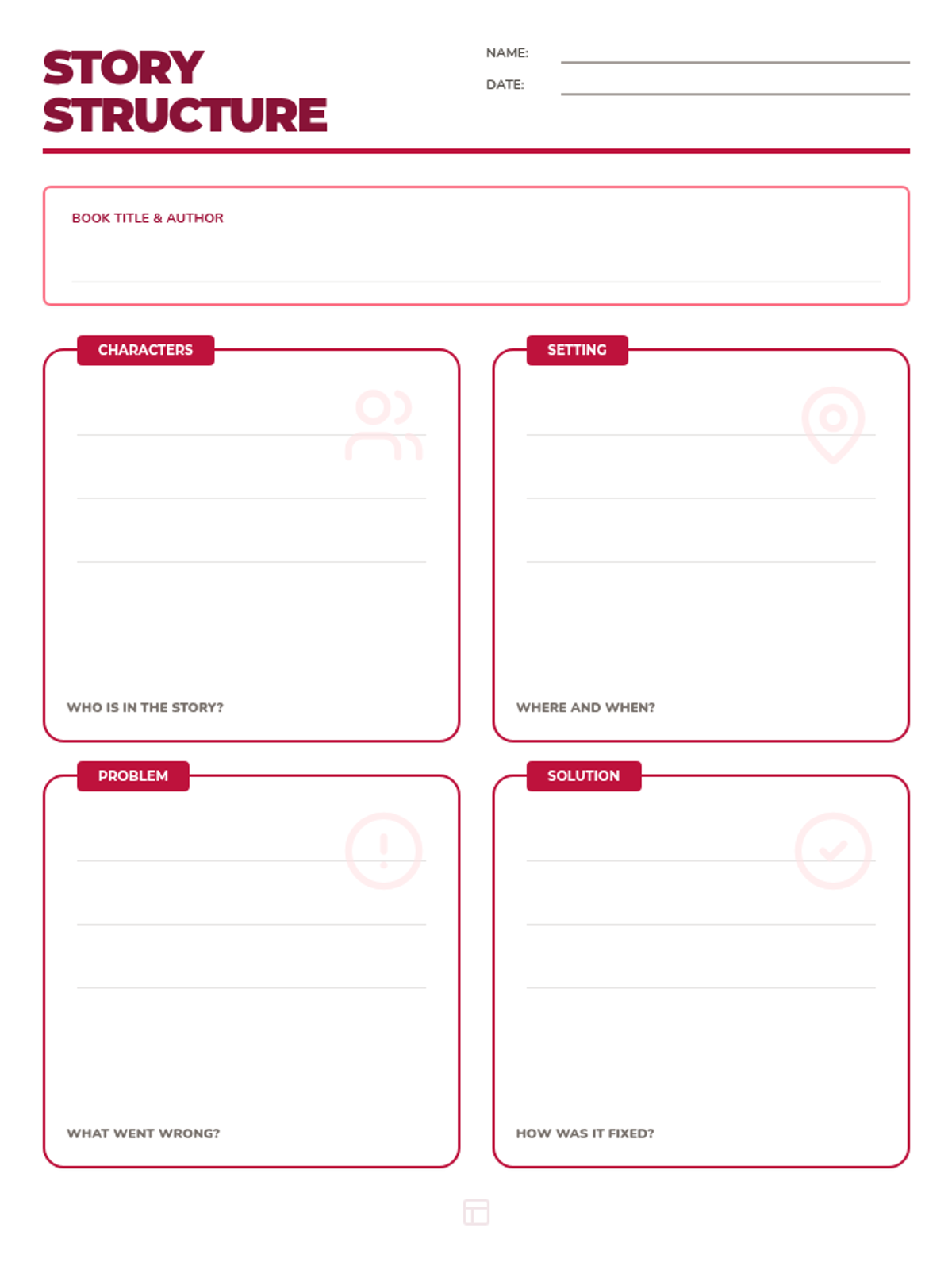
A fundamental graphic organizer for fiction stories, focusing on the core elements: Characters, Setting, Problem, and Solution. Ideal for building foundational comprehension. Icons moved to corner for legibility.
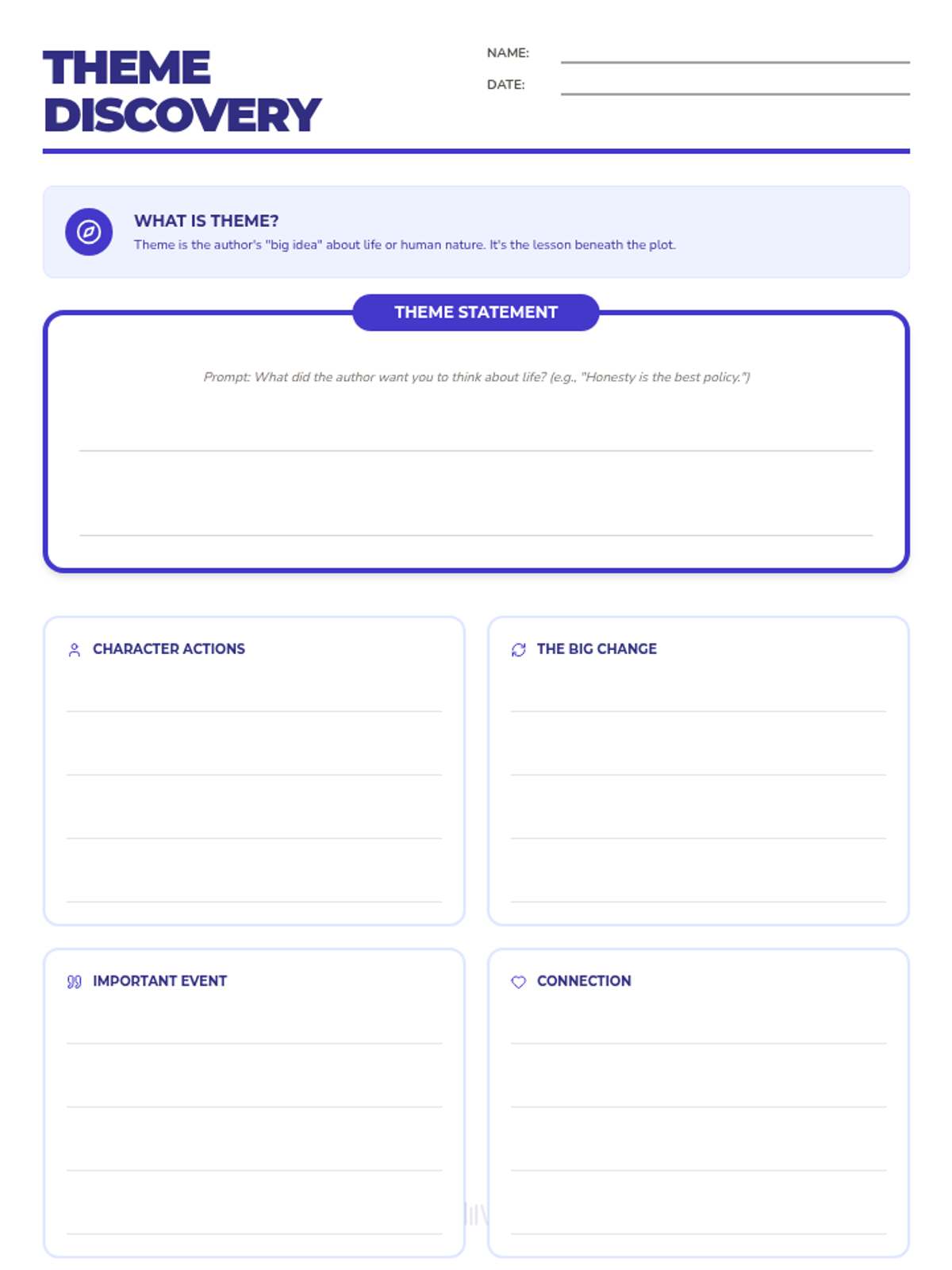
A sophisticated graphic organizer for older primary or middle school students to explore the theme of a text through character analysis, key events, and real-world connections. Now includes writing lines in all boxes.
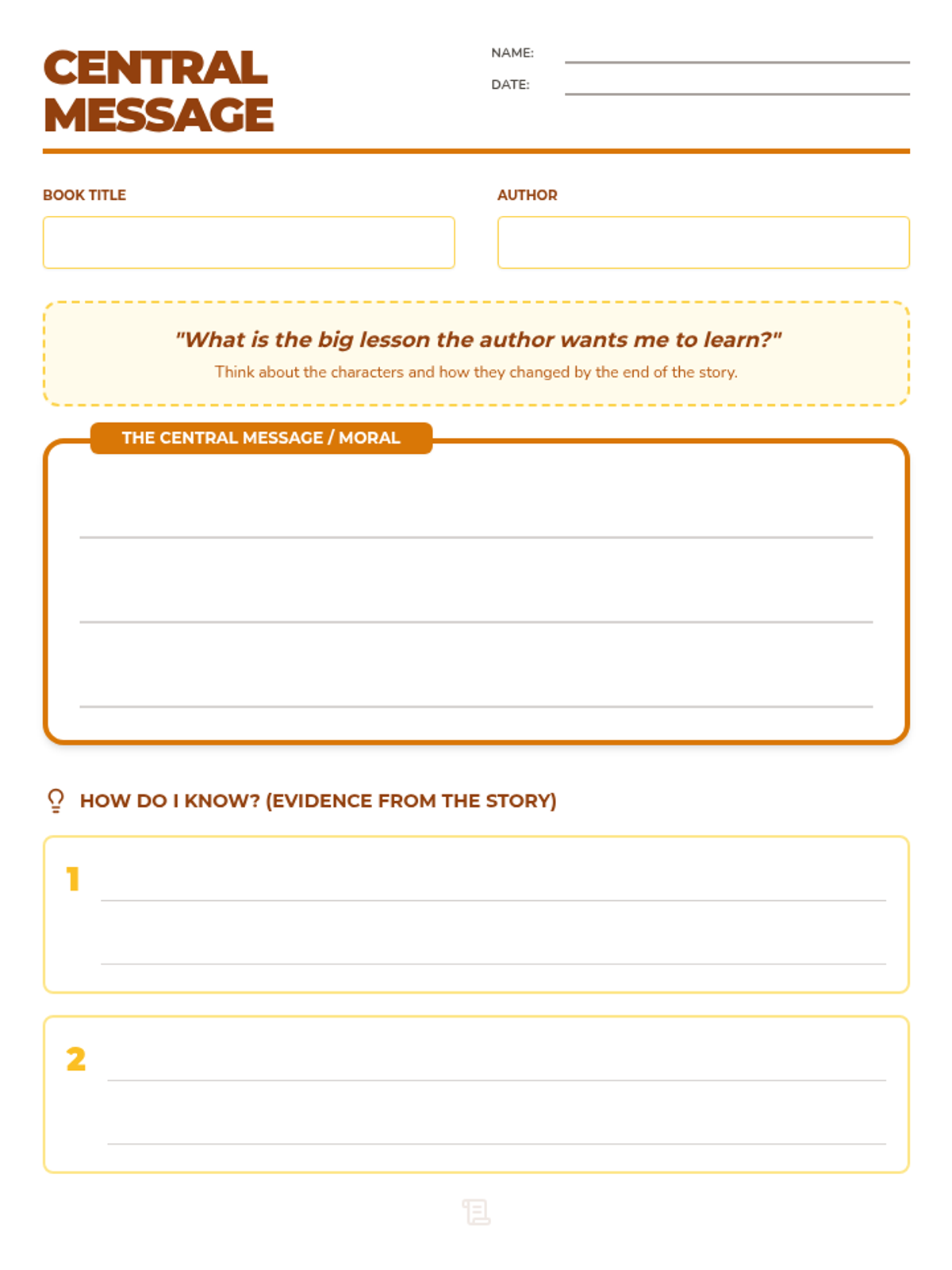
A reflective graphic organizer for identifying the central message or moral of a story, including space for students to provide evidence from the text with clear writing lines.
A clean, structured graphic organizer for students to identify the main idea and three supporting details from a text. Featuring a field-guide aesthetic with clear work areas and writing lines. Spacing optimized for single-page print.
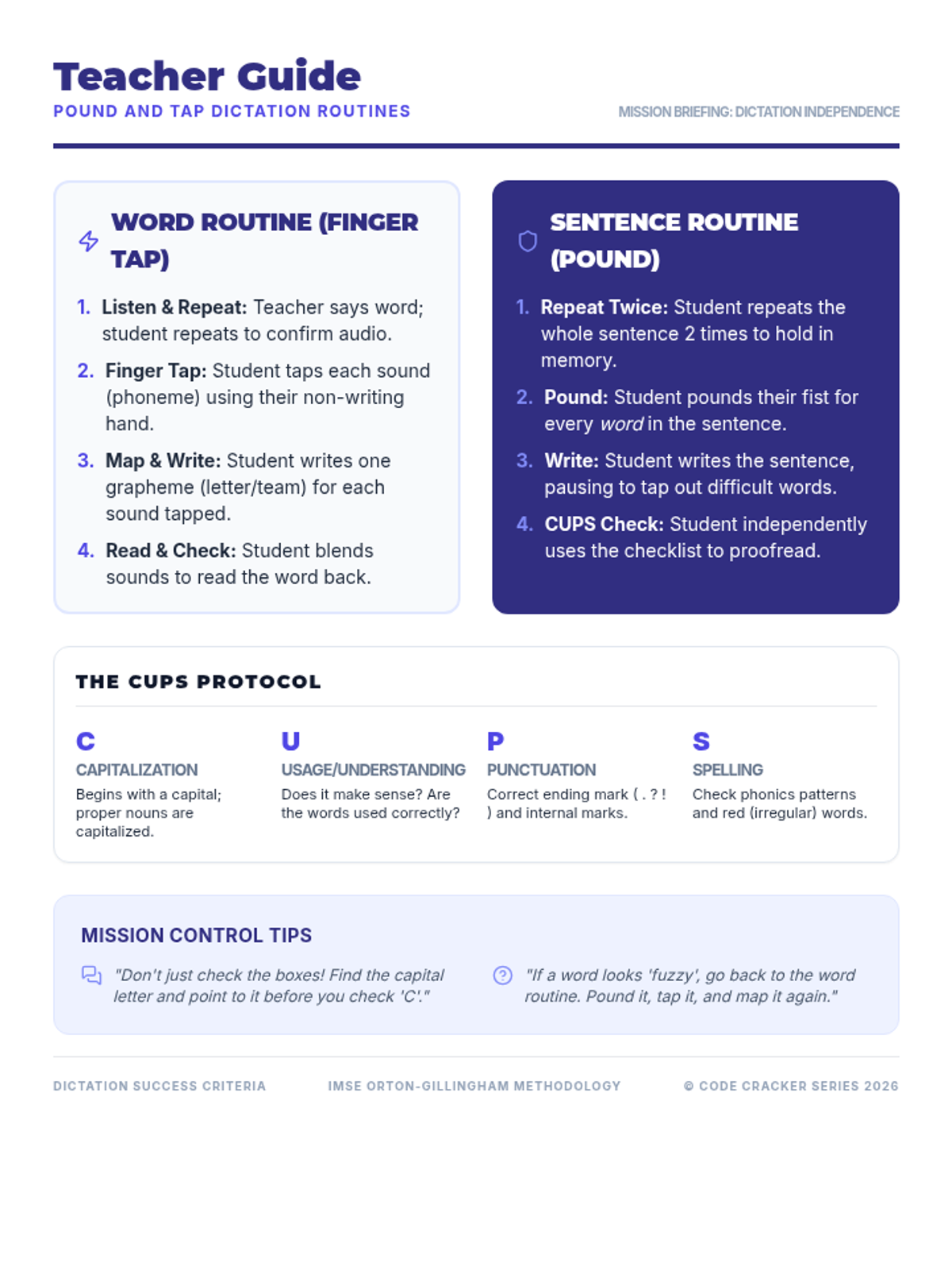
A comprehensive facilitator's guide. Revised to define CUPS, include 'Pound and Tap' routines, and integrate the Code Cracker theme onto one page.
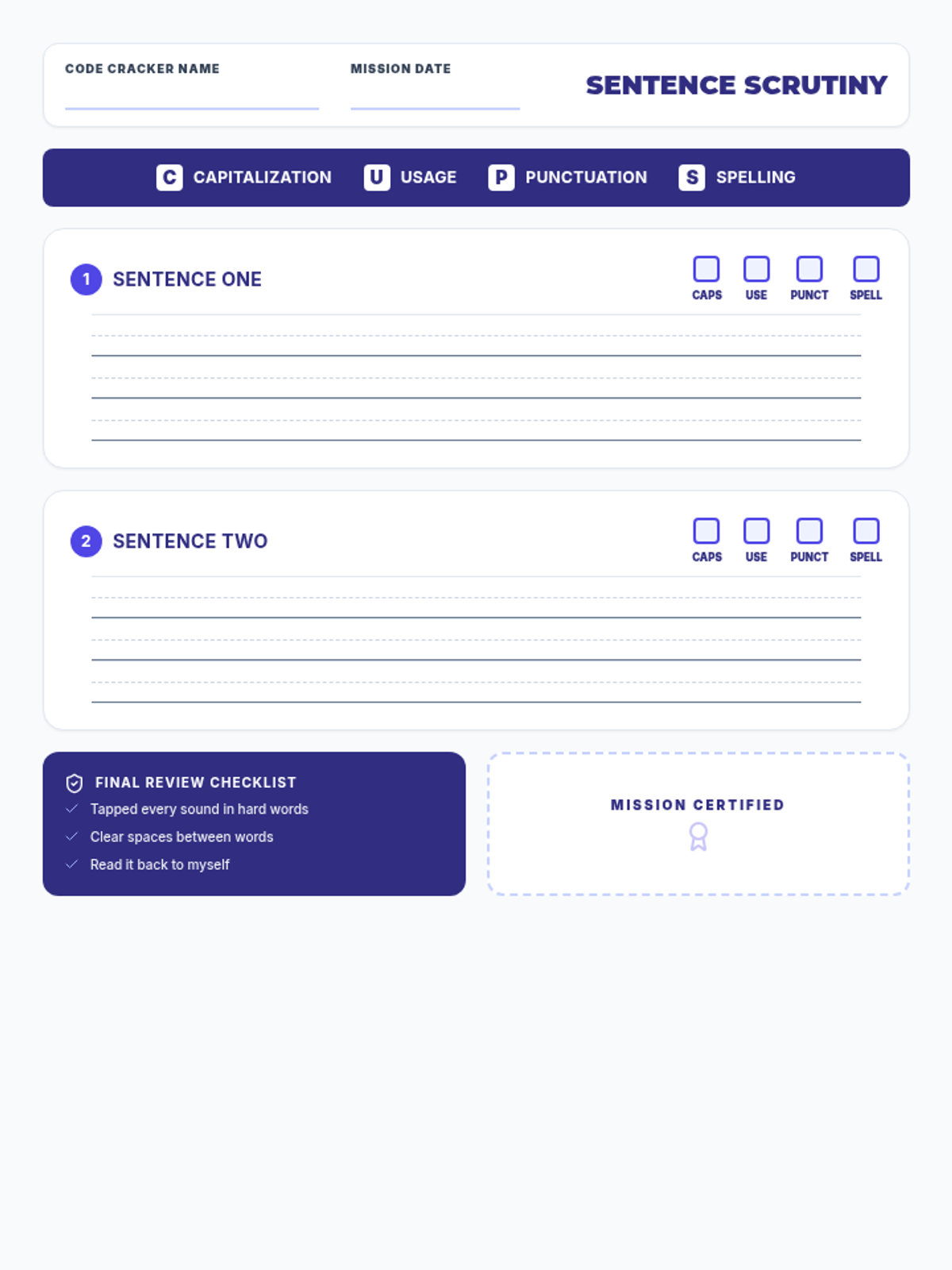
A structured worksheet for sentence dictation practice. Revised with primary handwriting lines, CUPS legend, and higher contrast labels. Consolidate to one page.
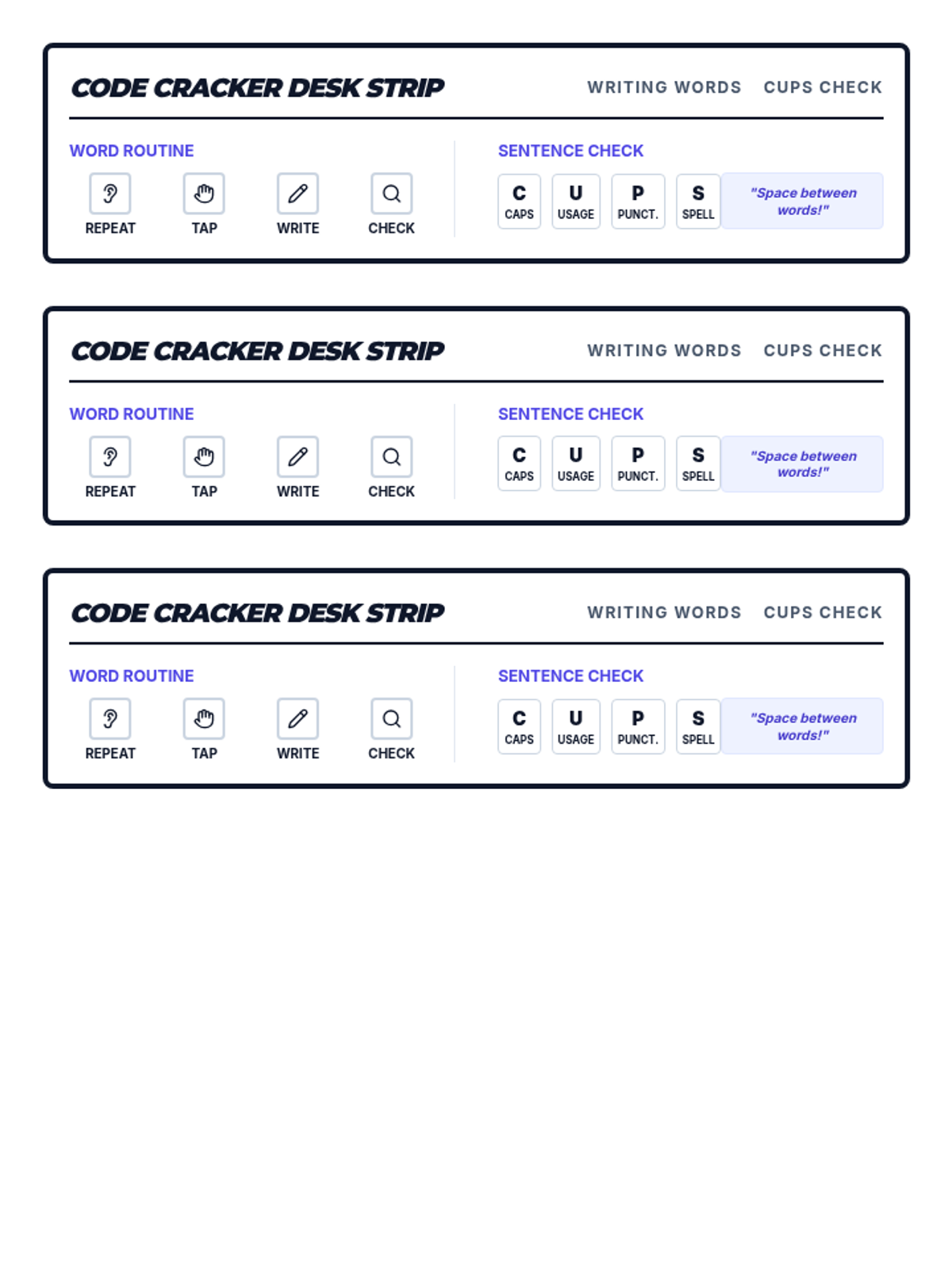
Printable desk strips for students to have a miniature version of the success criteria for dictation right at their workspace. Revised for higher contrast and clarity.
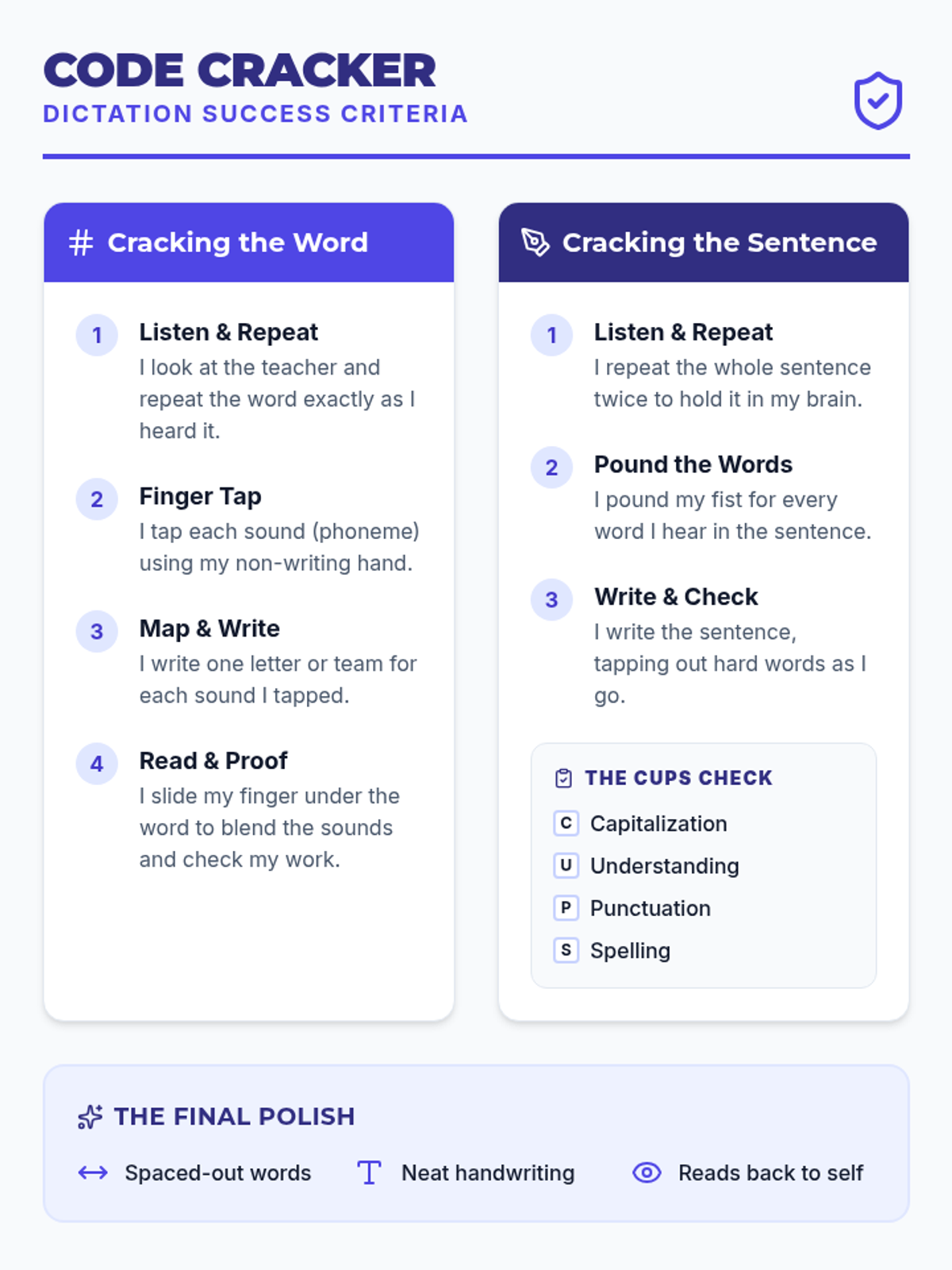
A visual success criteria reference sheet for students following the IMSE Orton-Gillingham dictation routines for words and sentences.