A comprehensive teacher's guide for the Wildflower Warriors lesson, outlining learning objectives, materials, and a step-by-step instructional sequence for teaching pollinator ecology and garden design.
A visual presentation for the Dream Builders Expo. Includes an introduction to the engineering mindset, the design process loop, and overview slides for each workshop rotation (Bridge Blitz, Launch Pad, Community Machine).
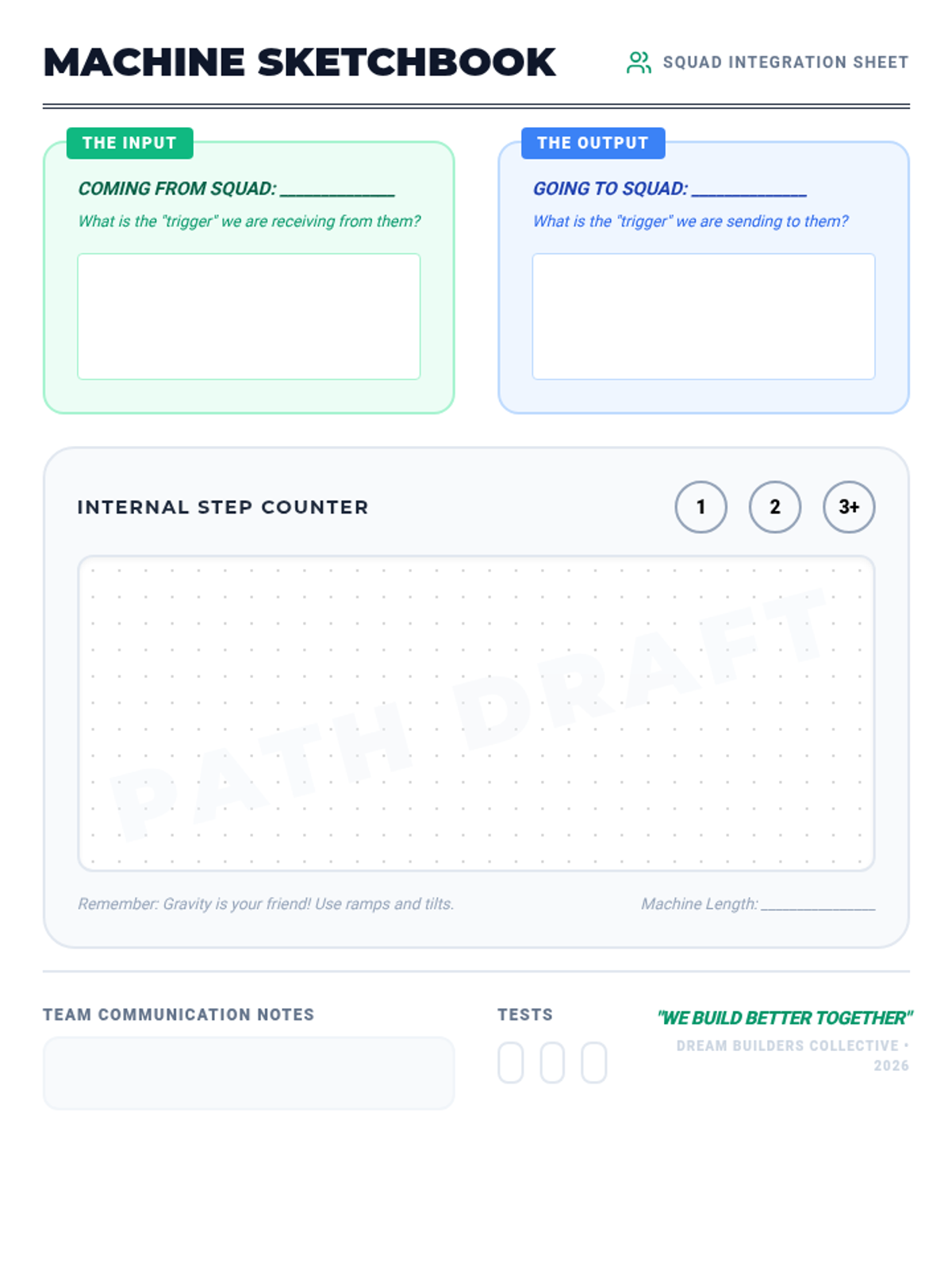
A student worksheet for the 'Community Machine' activity. It features a collaborative design space for mapping 'Input' and 'Output' triggers between squads, as well as an internal sketching grid for their specific machine module.
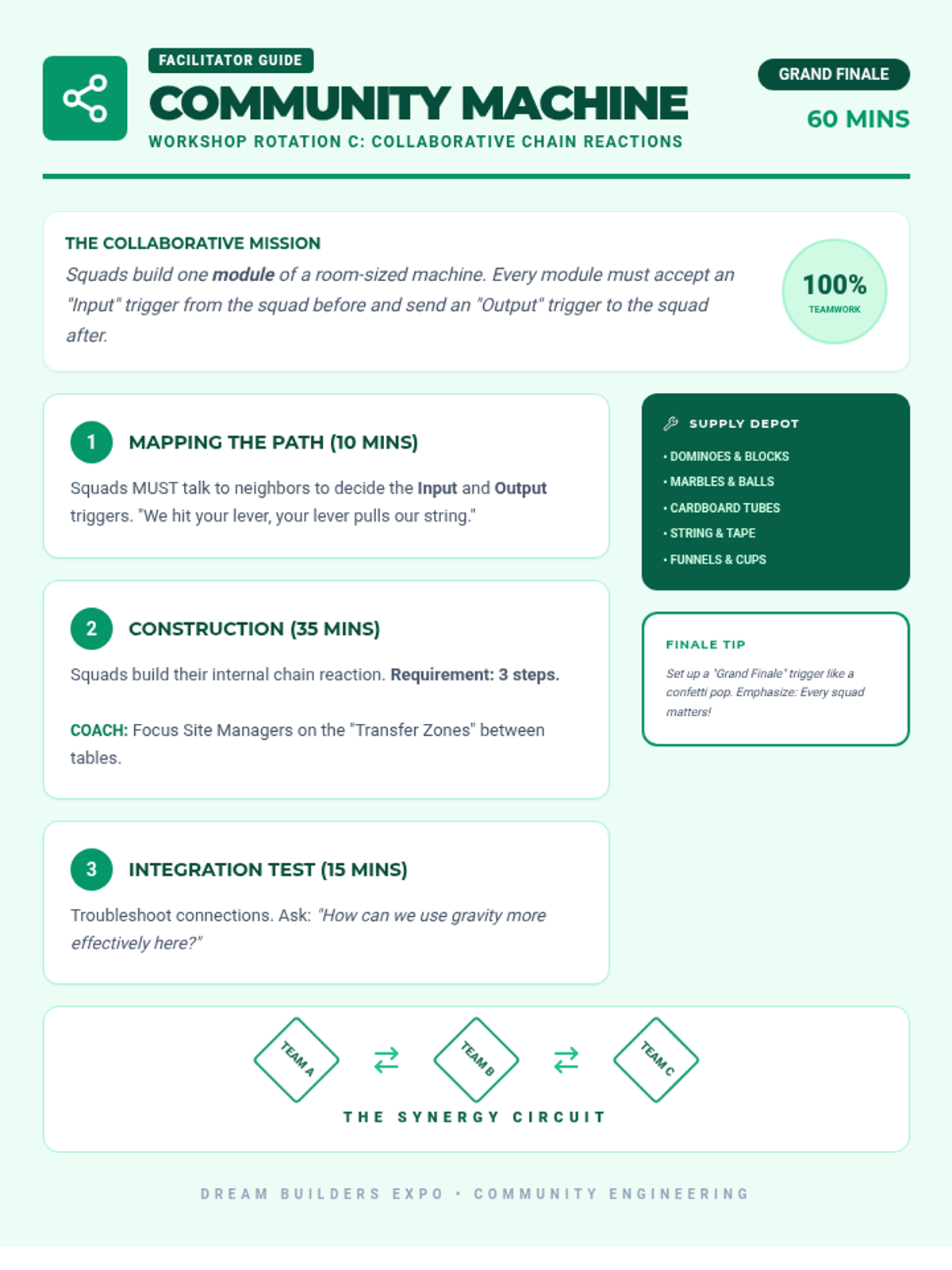
A facilitator guide for the 'Community Machine' workshop. This final rotation focuses on collaborative engineering, where squads build connected modules for a massive Rube Goldberg machine, emphasizing interdependence and communication.
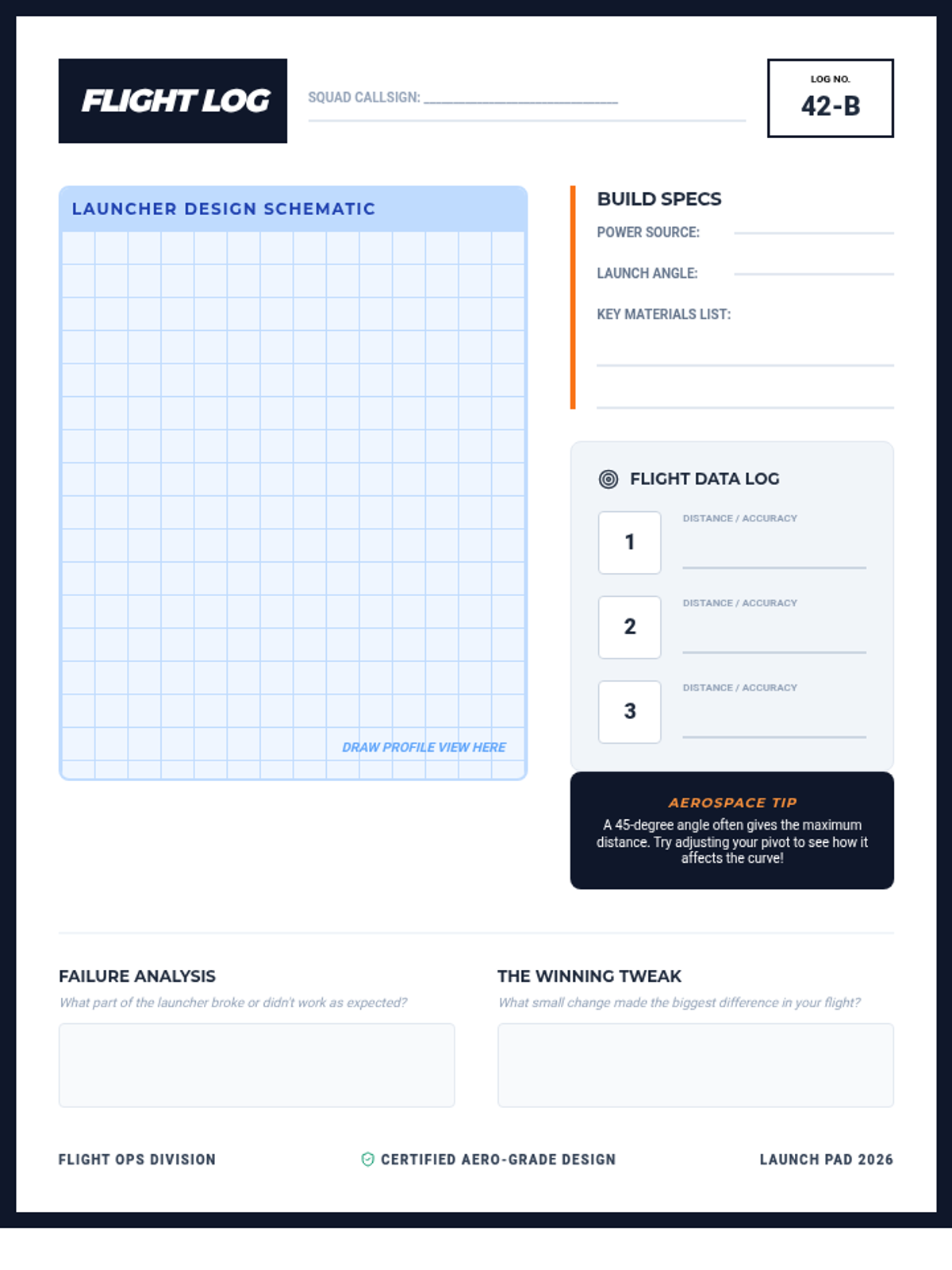
A student flight log worksheet for the 'Launch Pad' activity. Includes a technical design grid, flight data recorder for three tests, and a 'Failure Analysis' section to promote iterative engineering design.
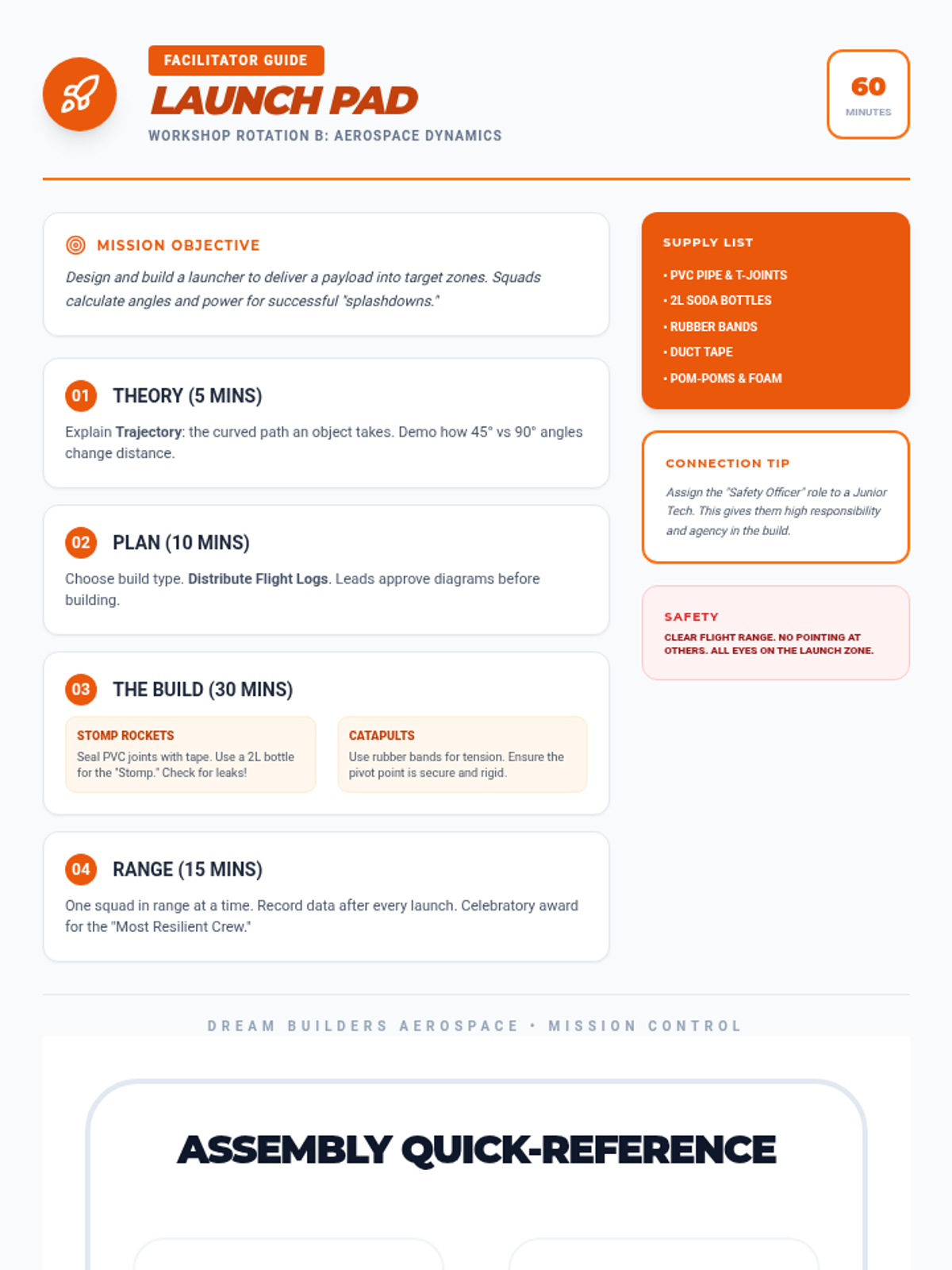
A facilitator guide for the 'Launch Pad' aerospace workshop. Features a mission-oriented protocol for building catapults or stomp rockets, including aerospace theory basics and safety guidelines for mixed-age groups. Includes assembly diagrams.
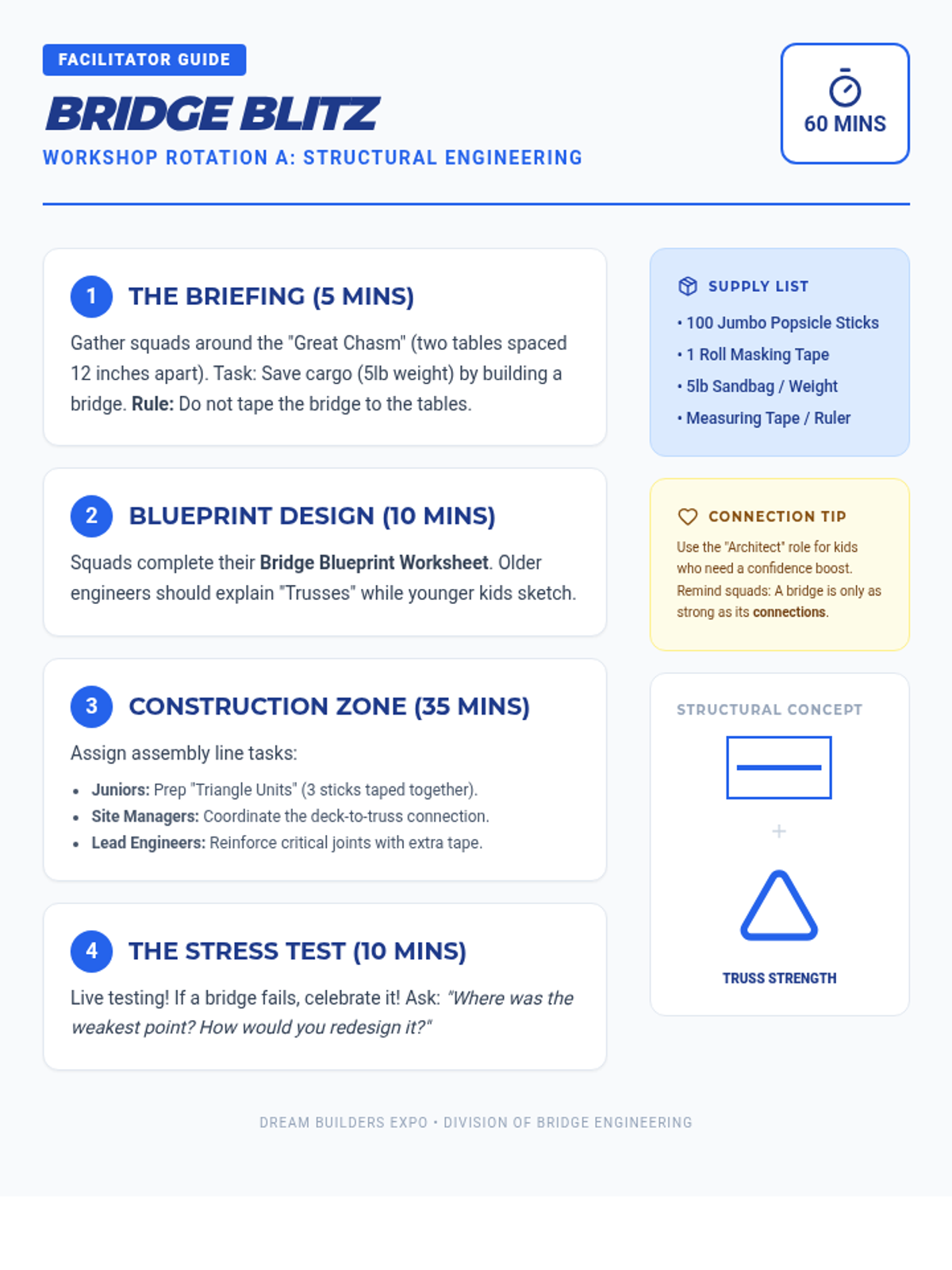
A detailed facilitator guide for the Bridge Blitz workshop. Includes step-by-step instructions for a 60-minute session, a supply list, and specific tips for fostering social connection and collaboration among mixed-age groups.
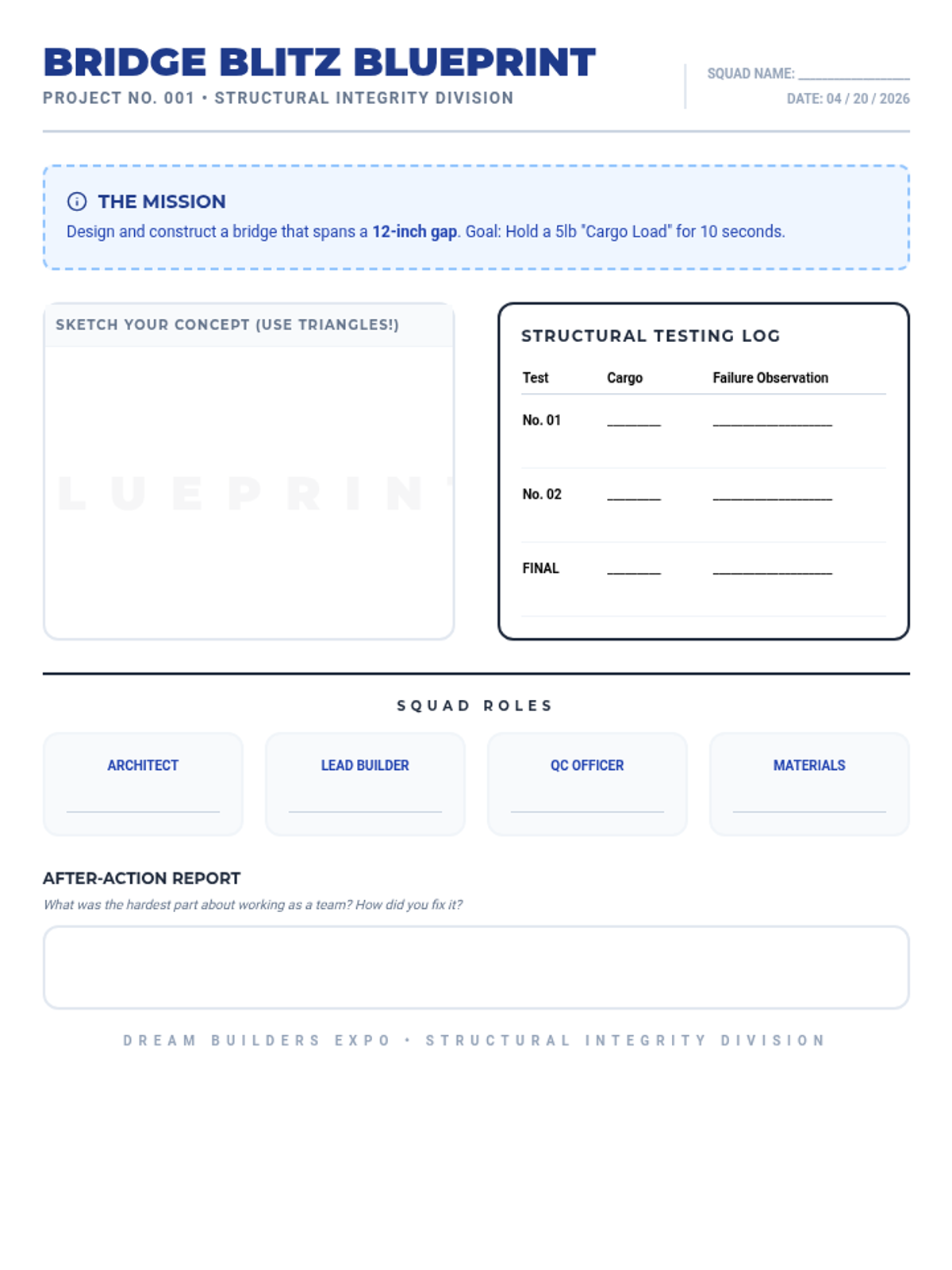
A student worksheet for the 'Bridge Blitz' challenge. Includes a blueprint-style sketching area, roles for mixed-age squads, and a testing log for structural integrity.
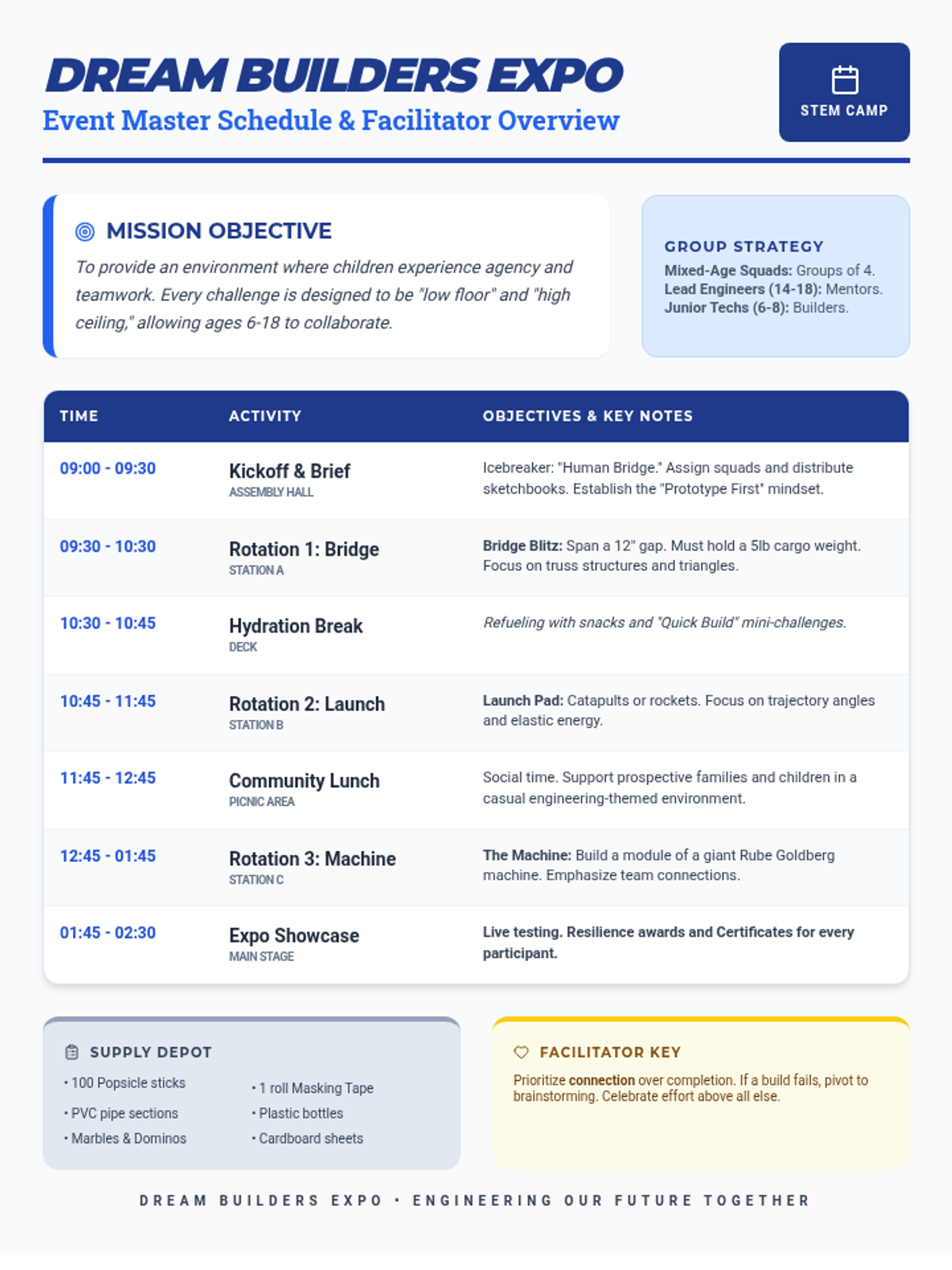
A comprehensive event schedule and facilitator overview for the Dream Builders Expo STEM camp. It outlines the 5.5-hour schedule, core philosophy, and group strategies for mixed-age rotations.
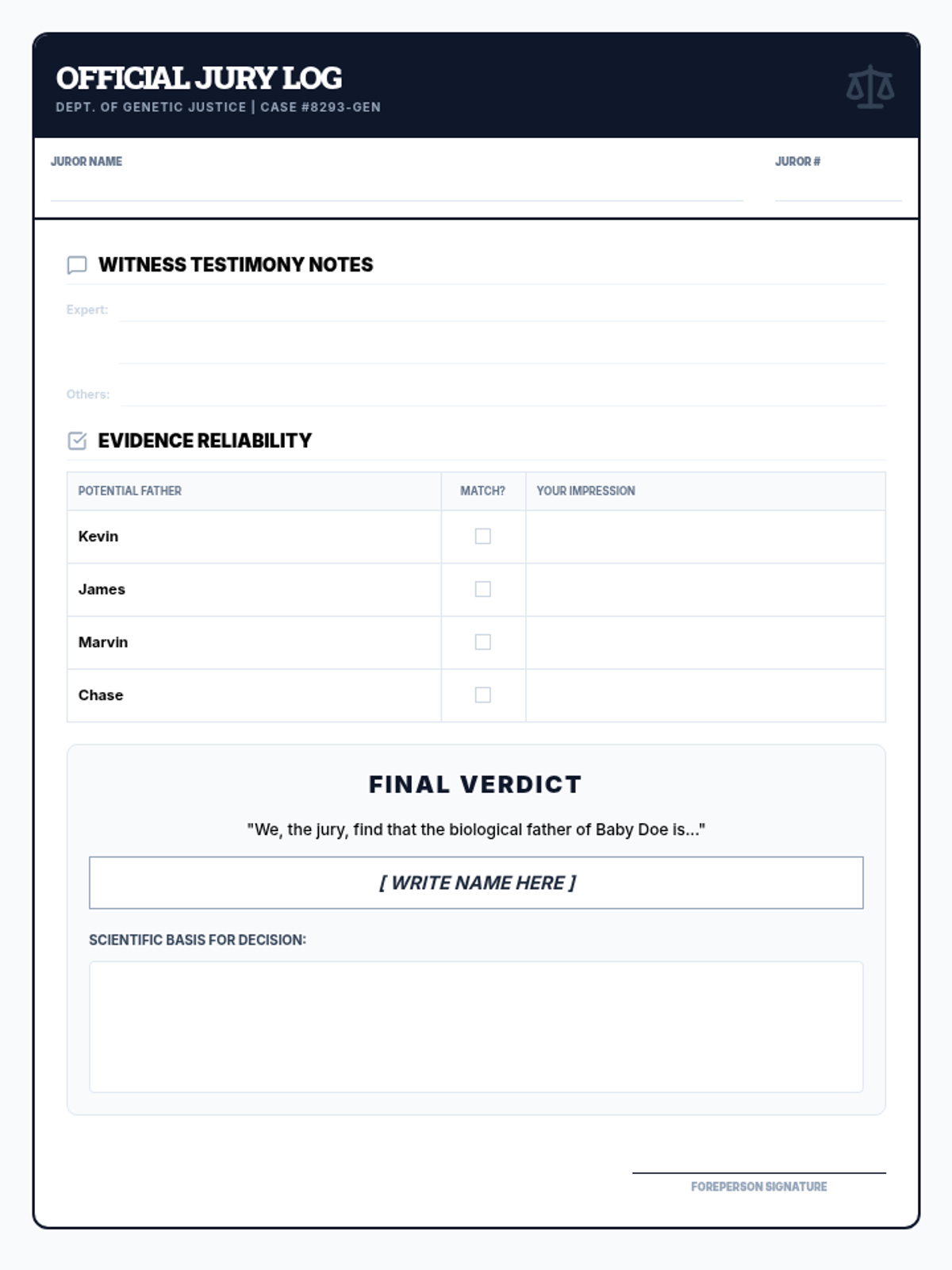
An evidence tracking worksheet for students acting as the jury during the role-play. It helps them organize witness testimony, evaluate potential fathers, and record a final group verdict.
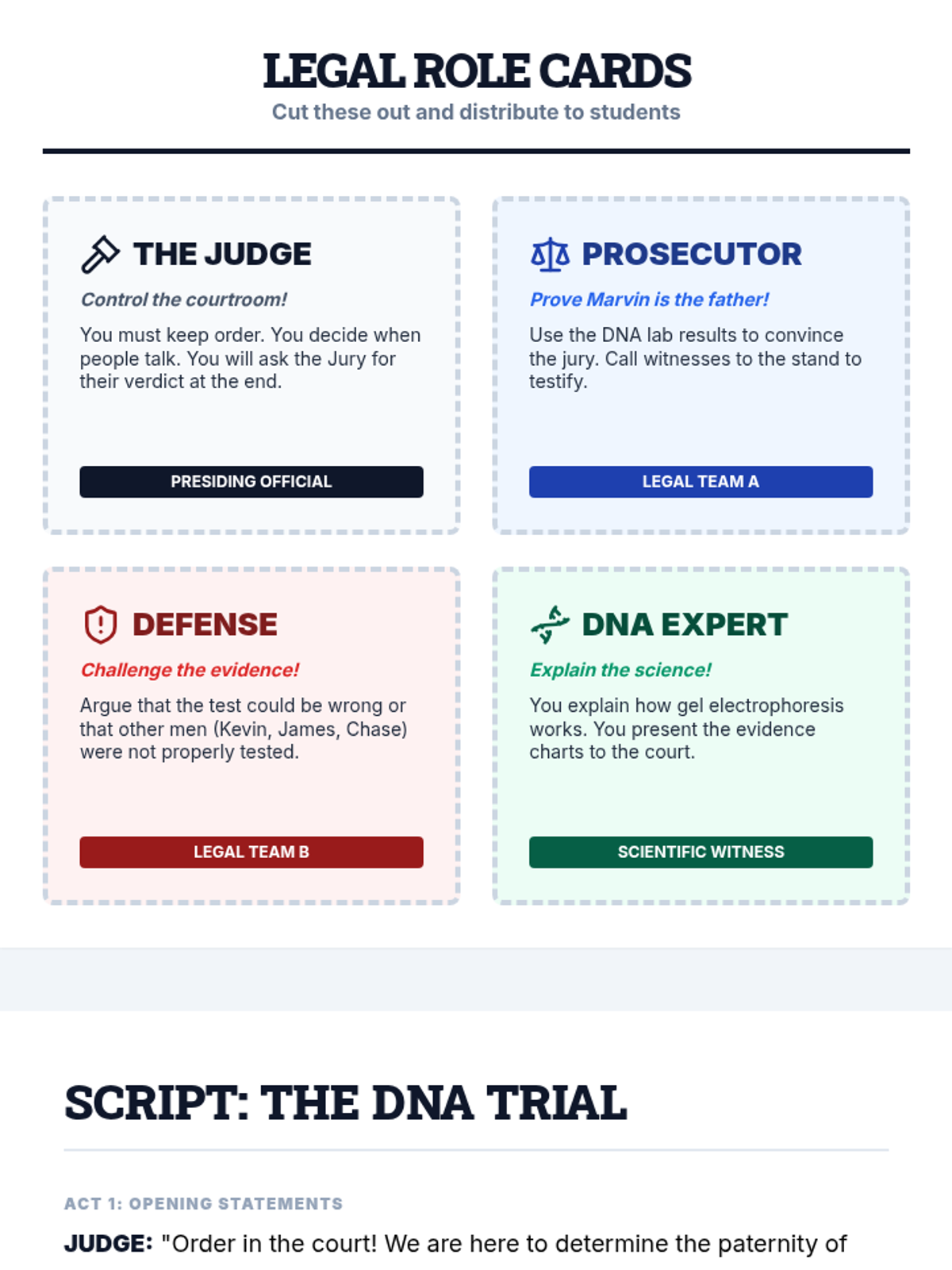
A set of printable role cards and a structured script for the paternity trial role-play activity. Includes roles for a judge, lawyers, experts, and witnesses, with embedded sentence stems for student dialogue.
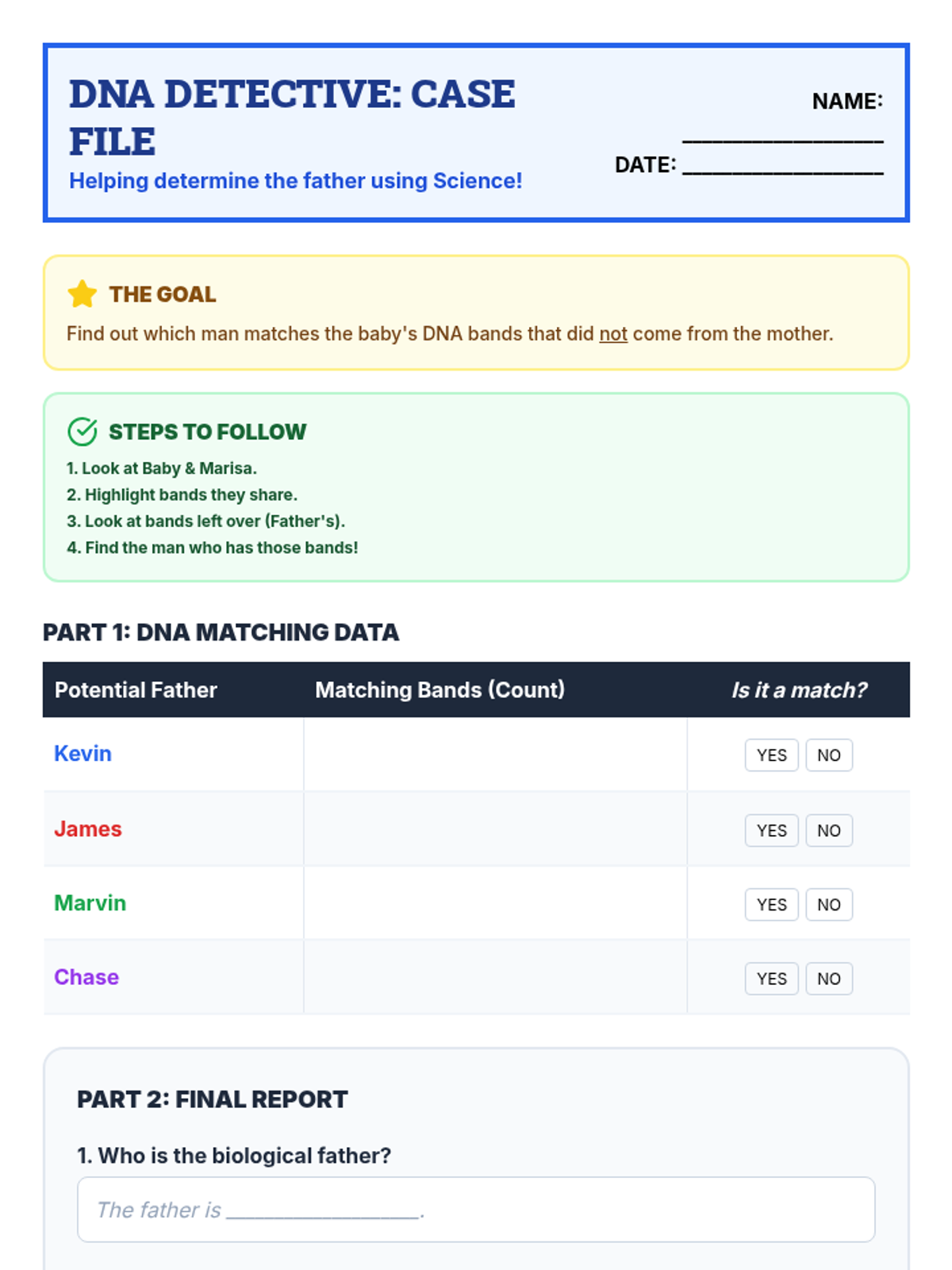
A scaffolded DNA analysis worksheet featuring chunked instructions, visual icons, sentence stems, and a more accessible layout designed for students who benefit from extra support and modeling.
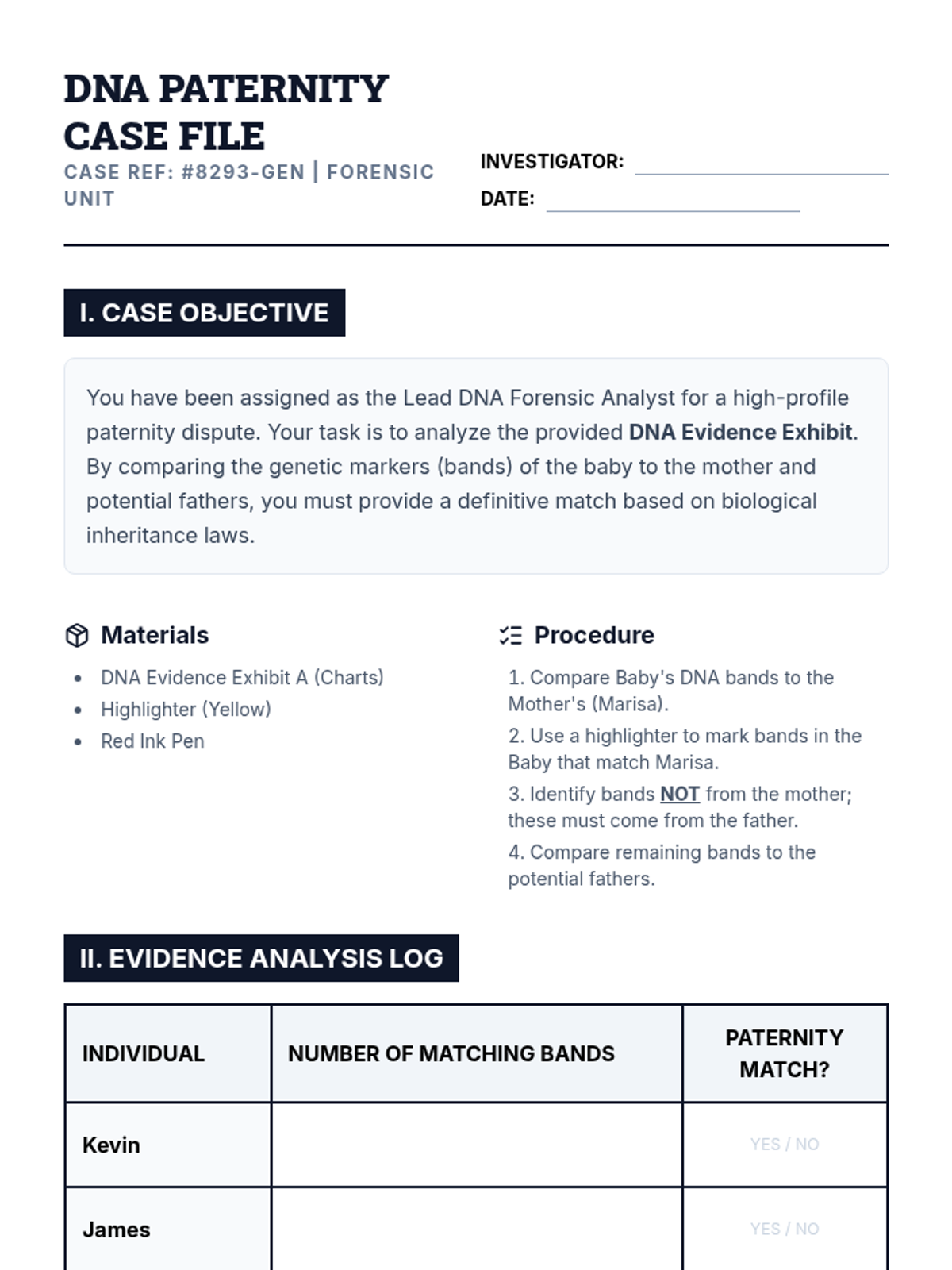
A comprehensive DNA analysis worksheet for students to record their observations, compare banding patterns, and justify their paternity findings. Features a forensic case file aesthetic suitable for standard middle or high school levels.
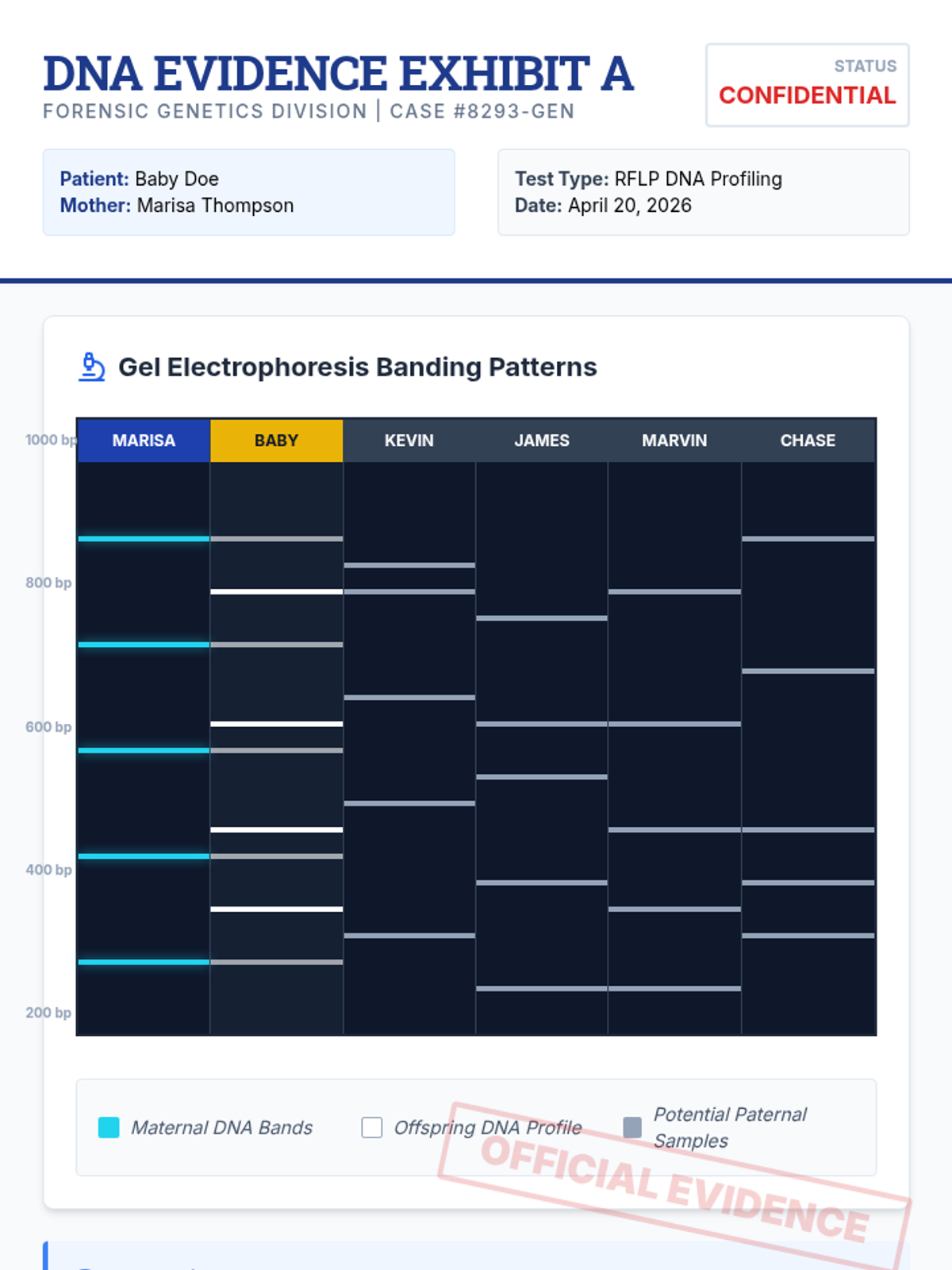
A visual DNA banding chart exhibit for a paternity simulation, featuring gel electrophoresis profiles for a mother, baby, and four potential fathers. This material serves as the primary data source for the lab analysis.
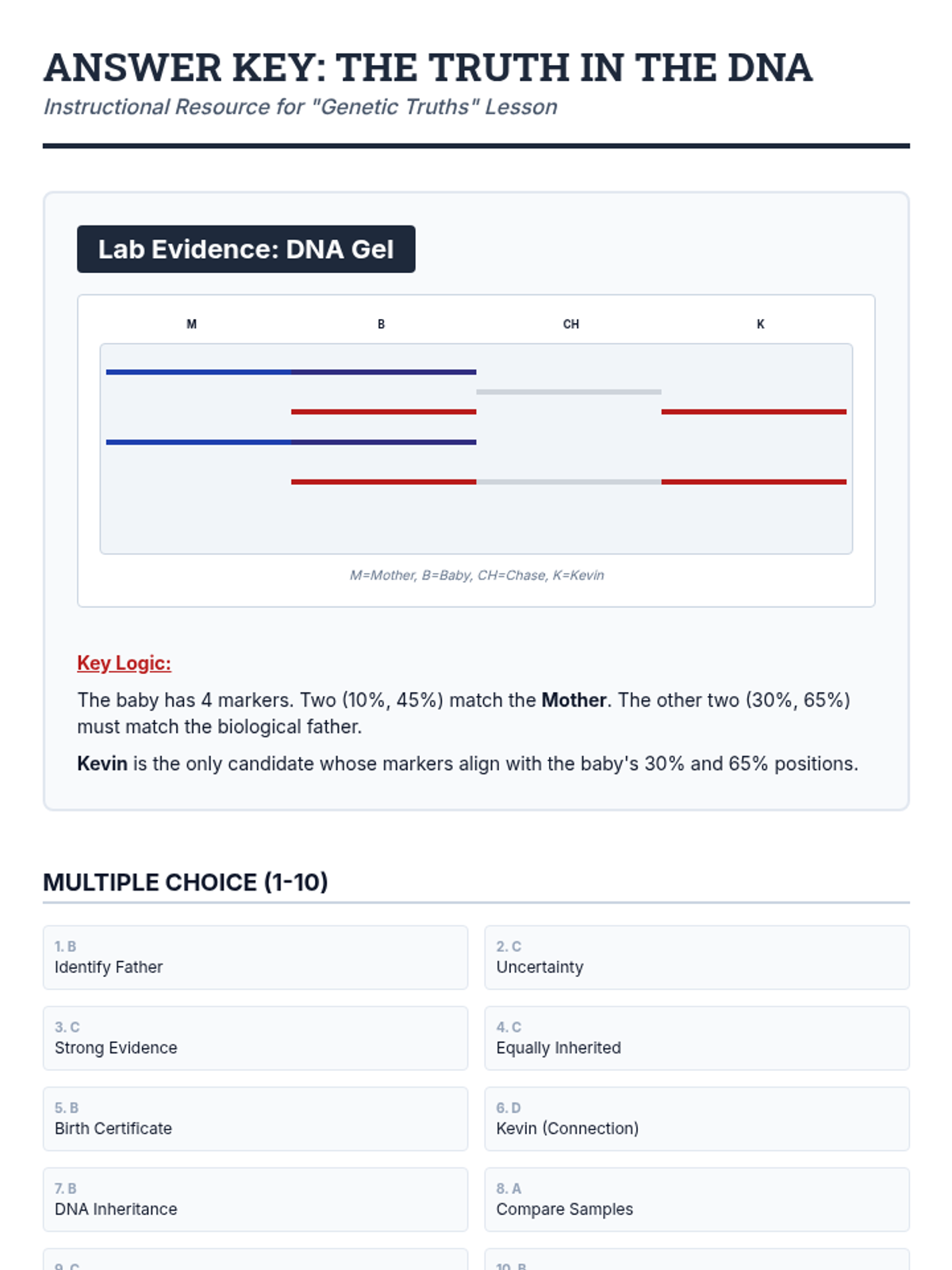
An updated answer key including guidance for the CER Writing Activity, along with the gel analysis, multiple-choice answers, and short answer prompts. Optimized layout to prevent text cutoff and stranded phrases. Guidance included for all 20 questions.
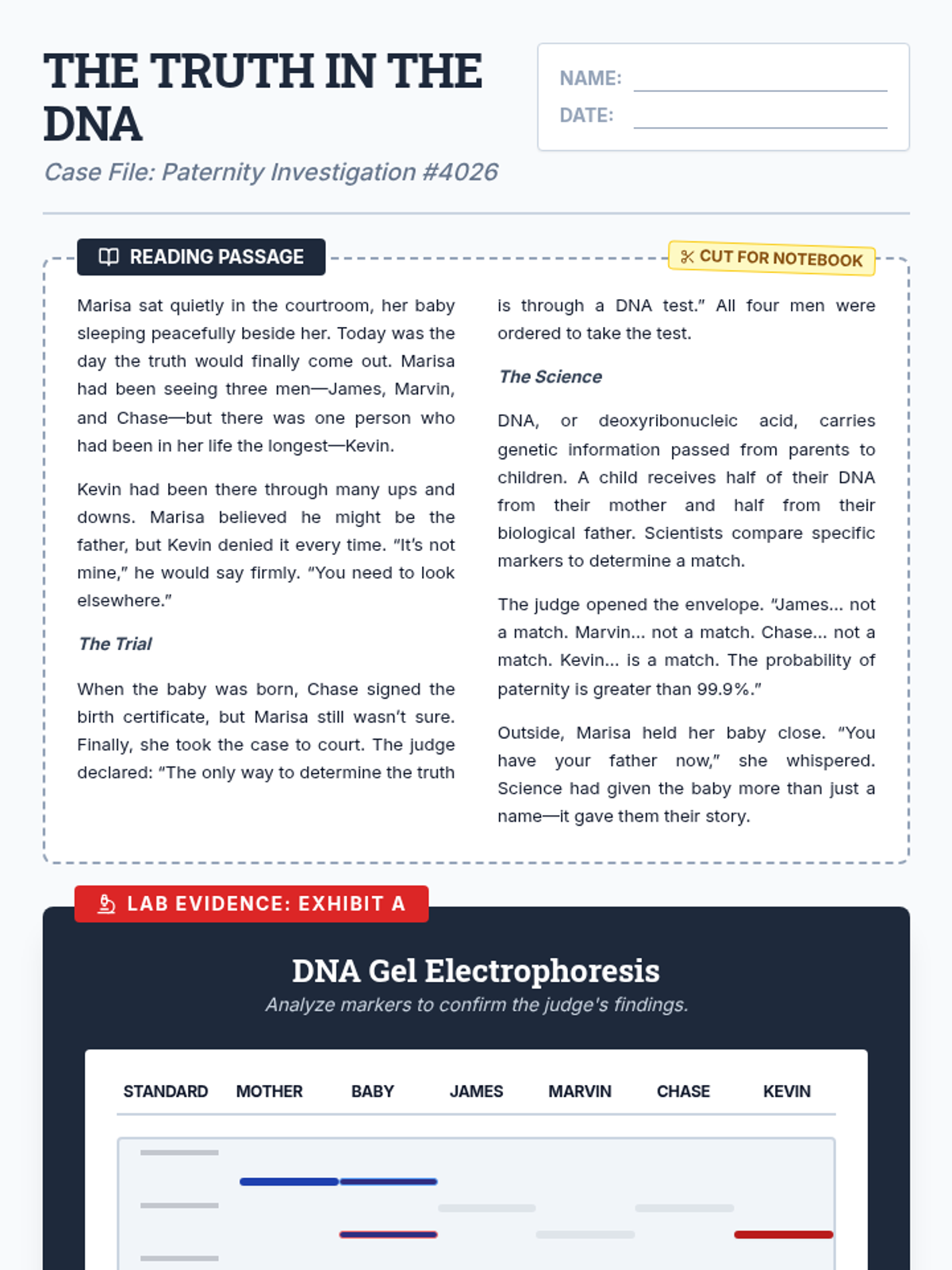
An updated interactive notebook-style worksheet including the narrative, DNA gel analysis, Punnett square practice, 20 comprehension questions, and a new PART 2: CER Writing Activity. Layout optimized for 4 pages with improved visual clarity and scientific accuracy. Darkened text for maximum legibility. Each page is a dedicated case file section. DNA bands are monochrome to provide a genuine matching challenge.
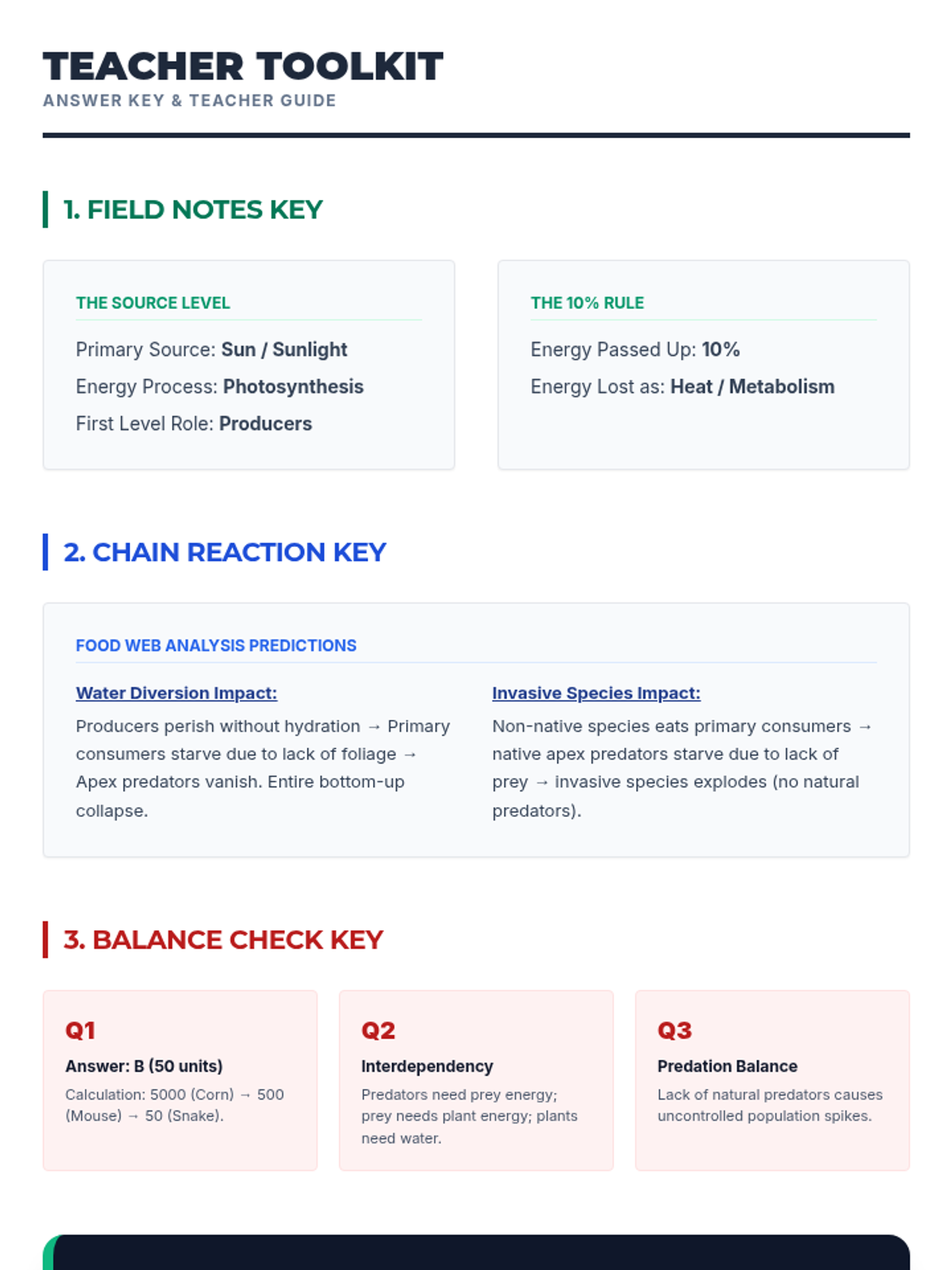
Comprehensive answer keys and teacher facilitation notes for all student materials in the Wild Web Balance lesson.
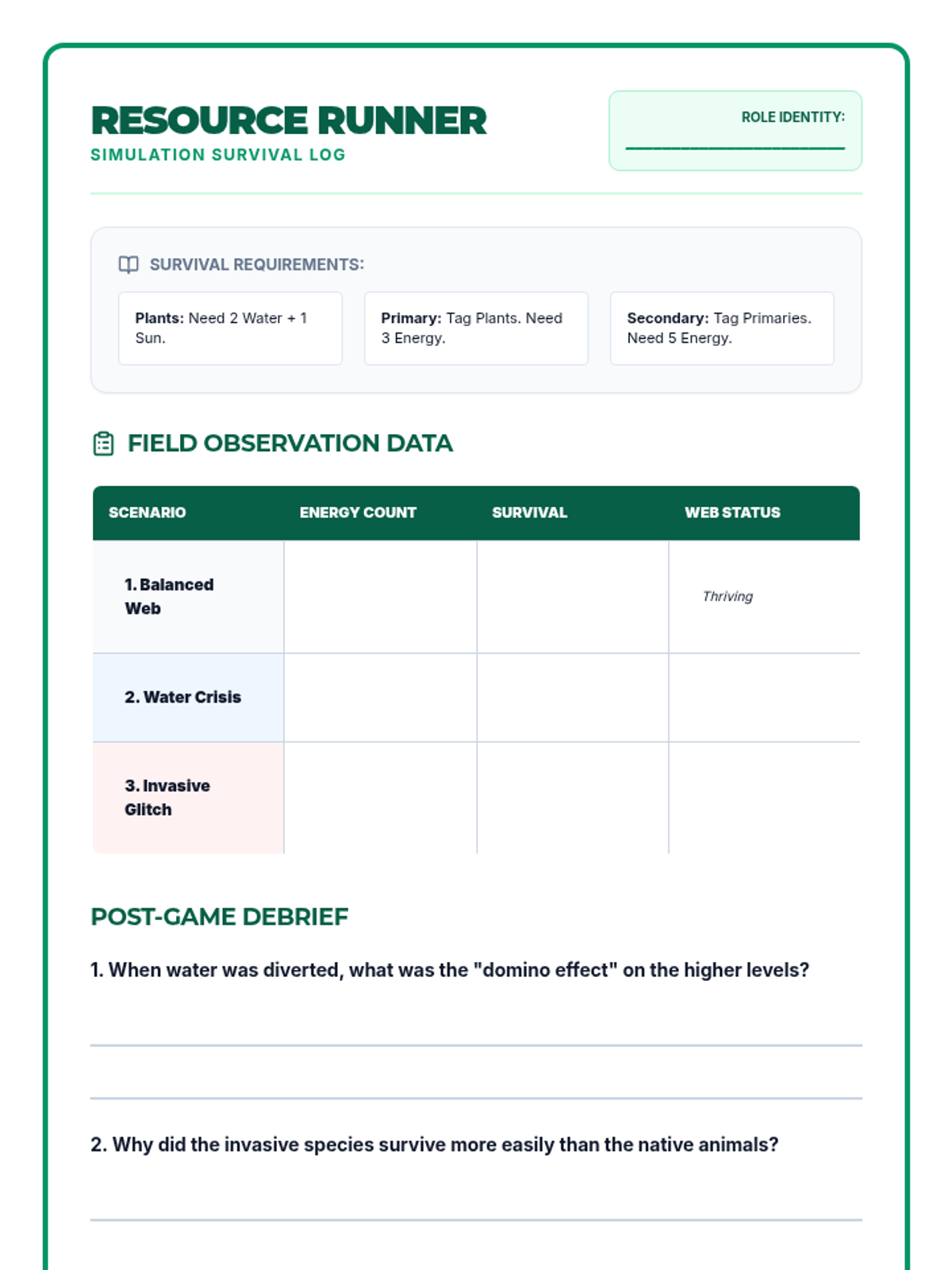
A data-collection worksheet for the "Resource Runner" simulation, allowing students to track their survival through various environmental scenarios.
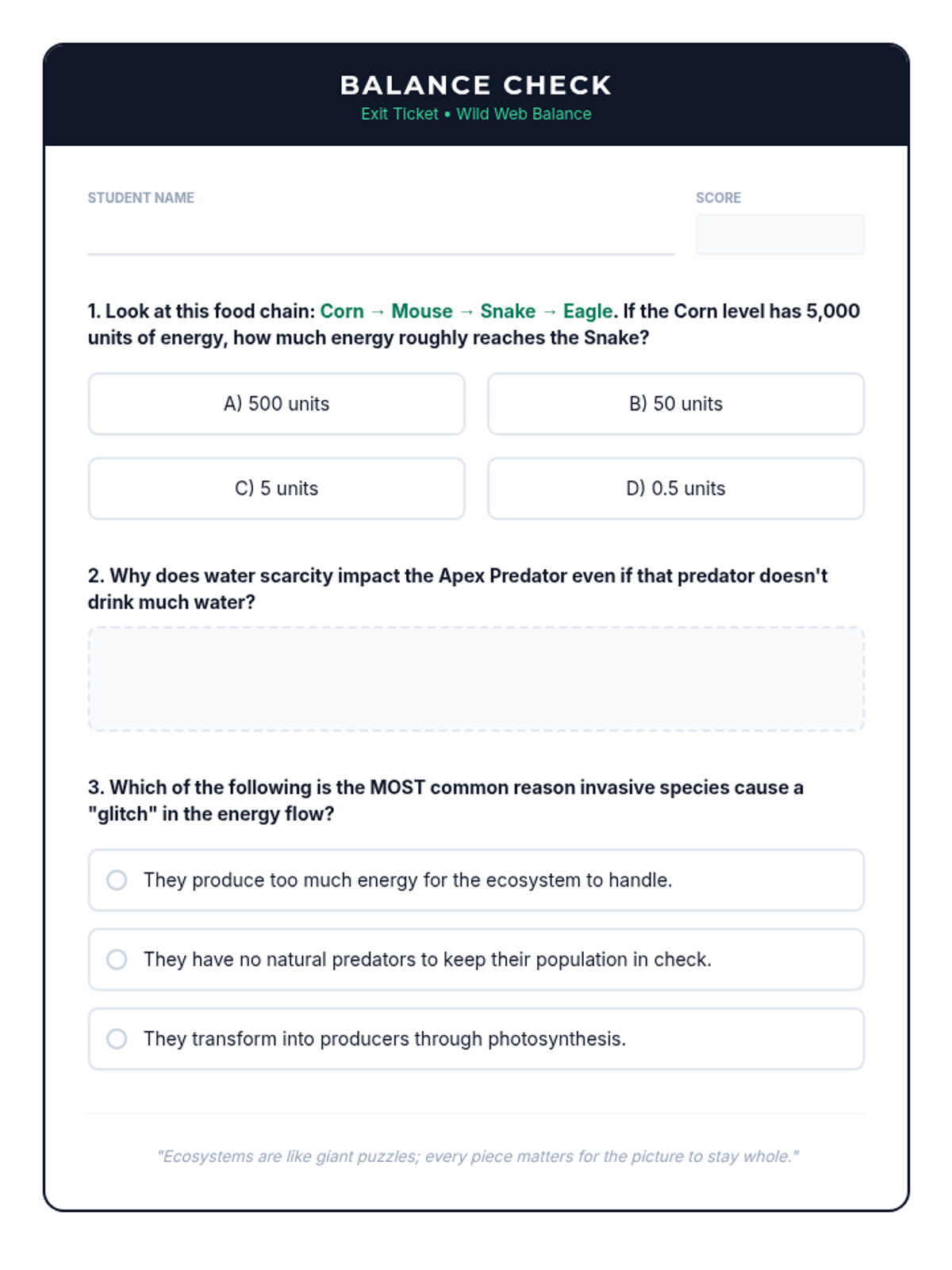
A quick individual assessment checking for understanding of the 10% rule, the impact of water scarcity on food chains, and the role of invasive species.