A comprehensive teacher's answer key for the Wild World Explorer Worksheet, including a mapping of every question to its corresponding NC 5th Grade Life Science standard. Designed to fit on a single page.
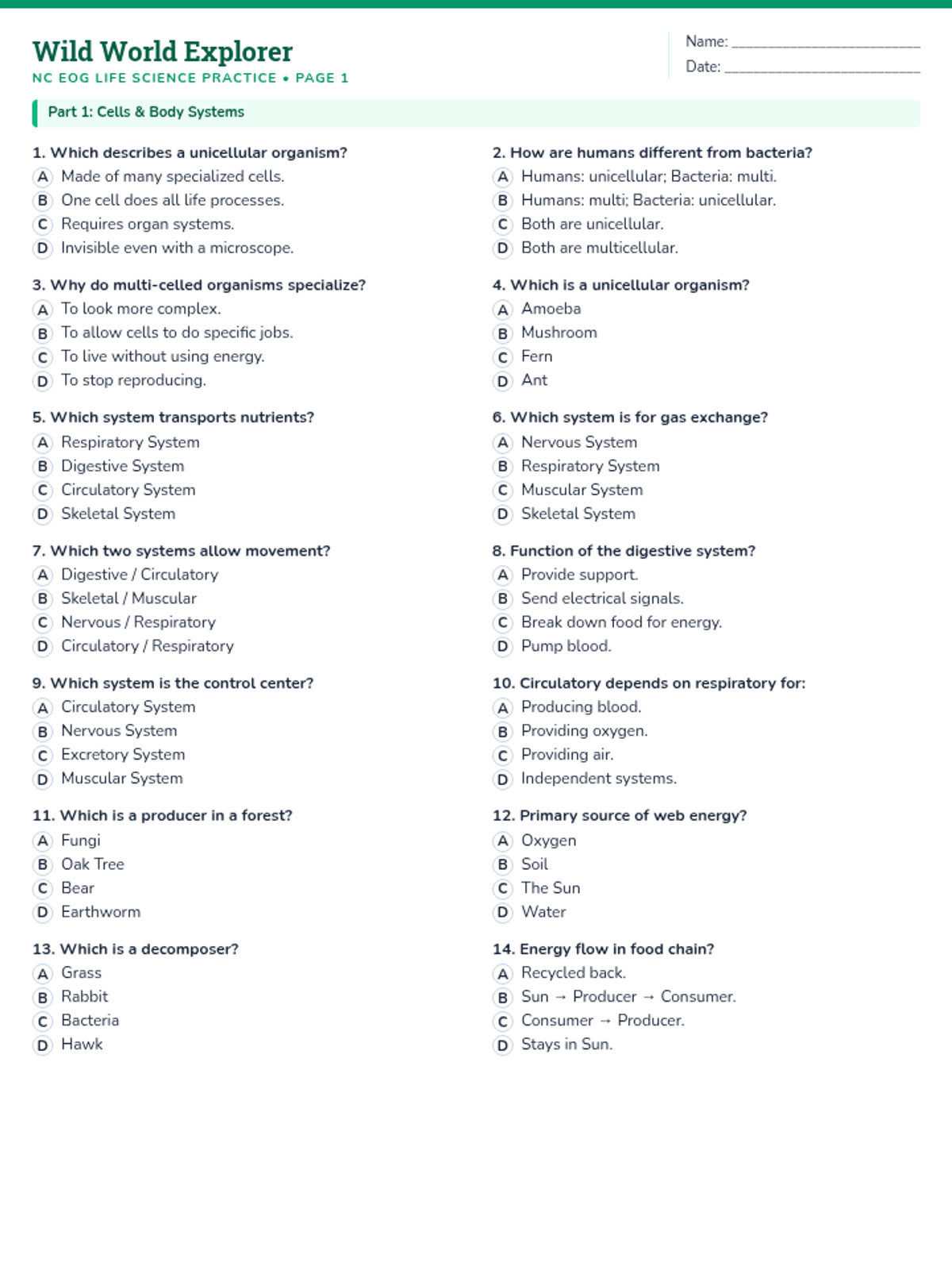
A 40-question multiple-choice worksheet covering the 5th Grade NC Life Science standards, including cells, body systems, ecosystems, and genetics. It is designed for EOG preparation with a clean, field-guide aesthetic. Now with corrected page headers and improved layout.
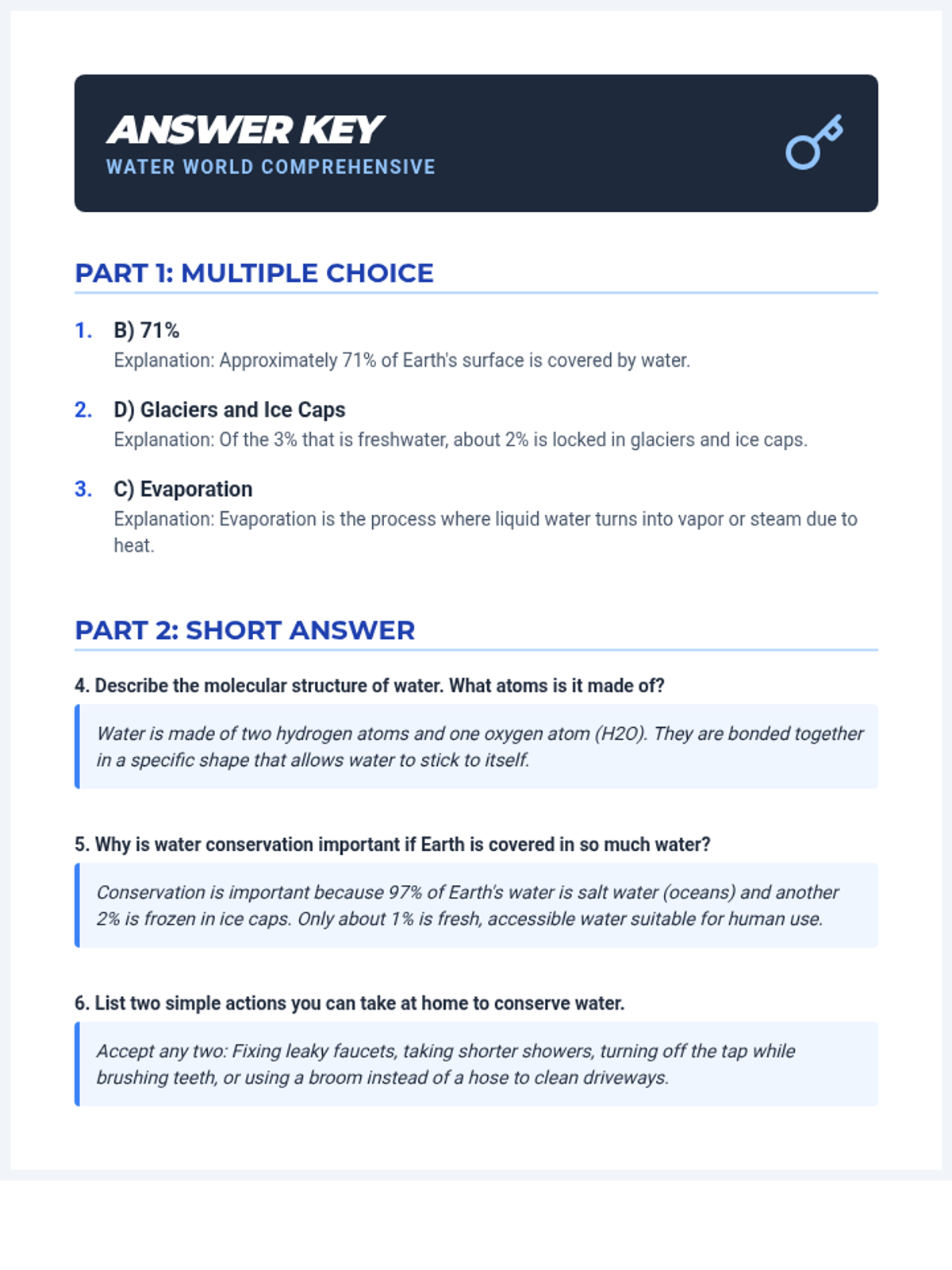
An answer key for the Water World comprehension worksheet, providing correct choices for multiple-choice questions and sample responses for short-answer items.
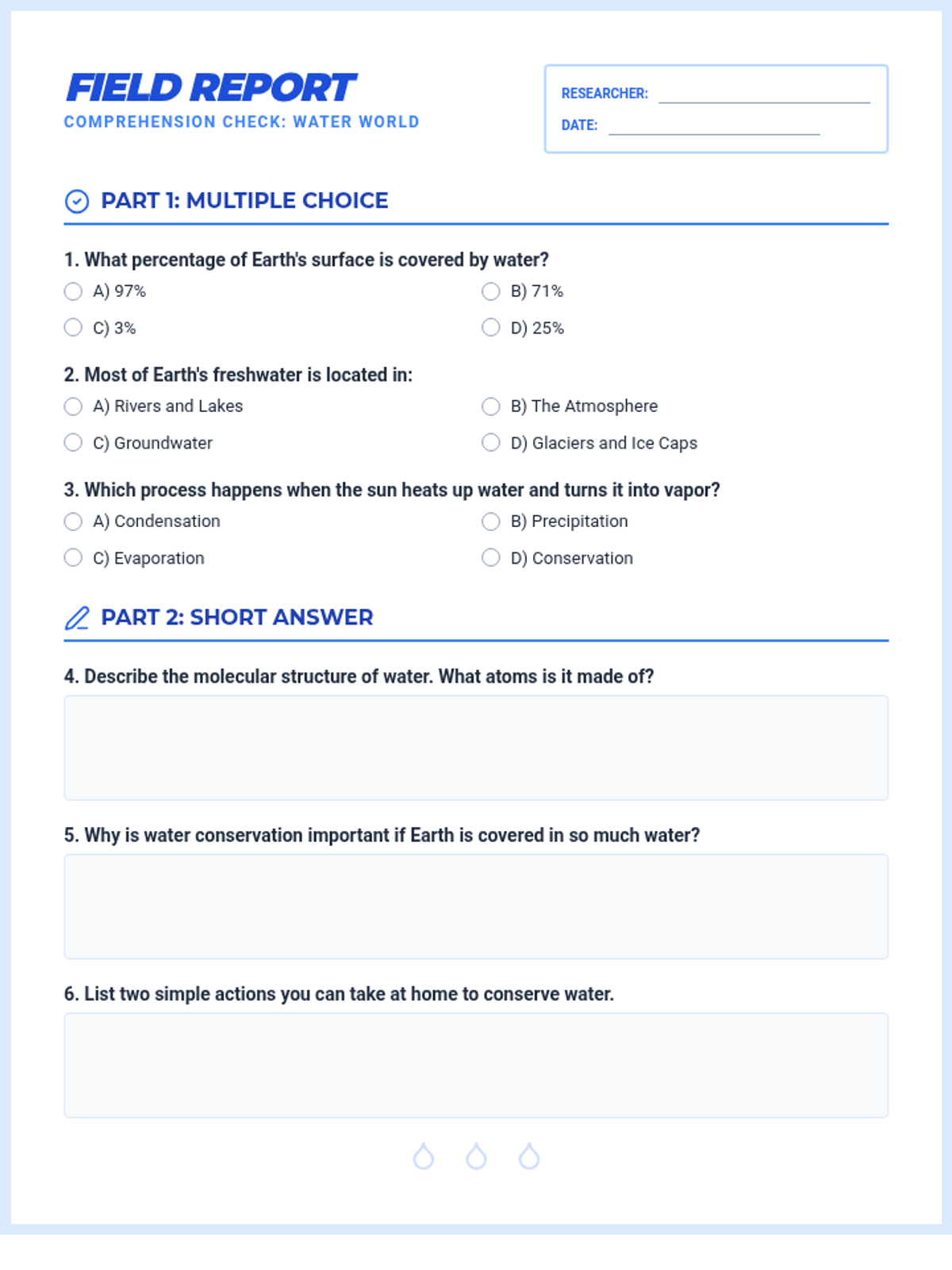
A comprehension worksheet with multiple-choice questions on water distribution and the water cycle, and short-answer questions on molecular structure and conservation. Revised to fit all content on a single page.
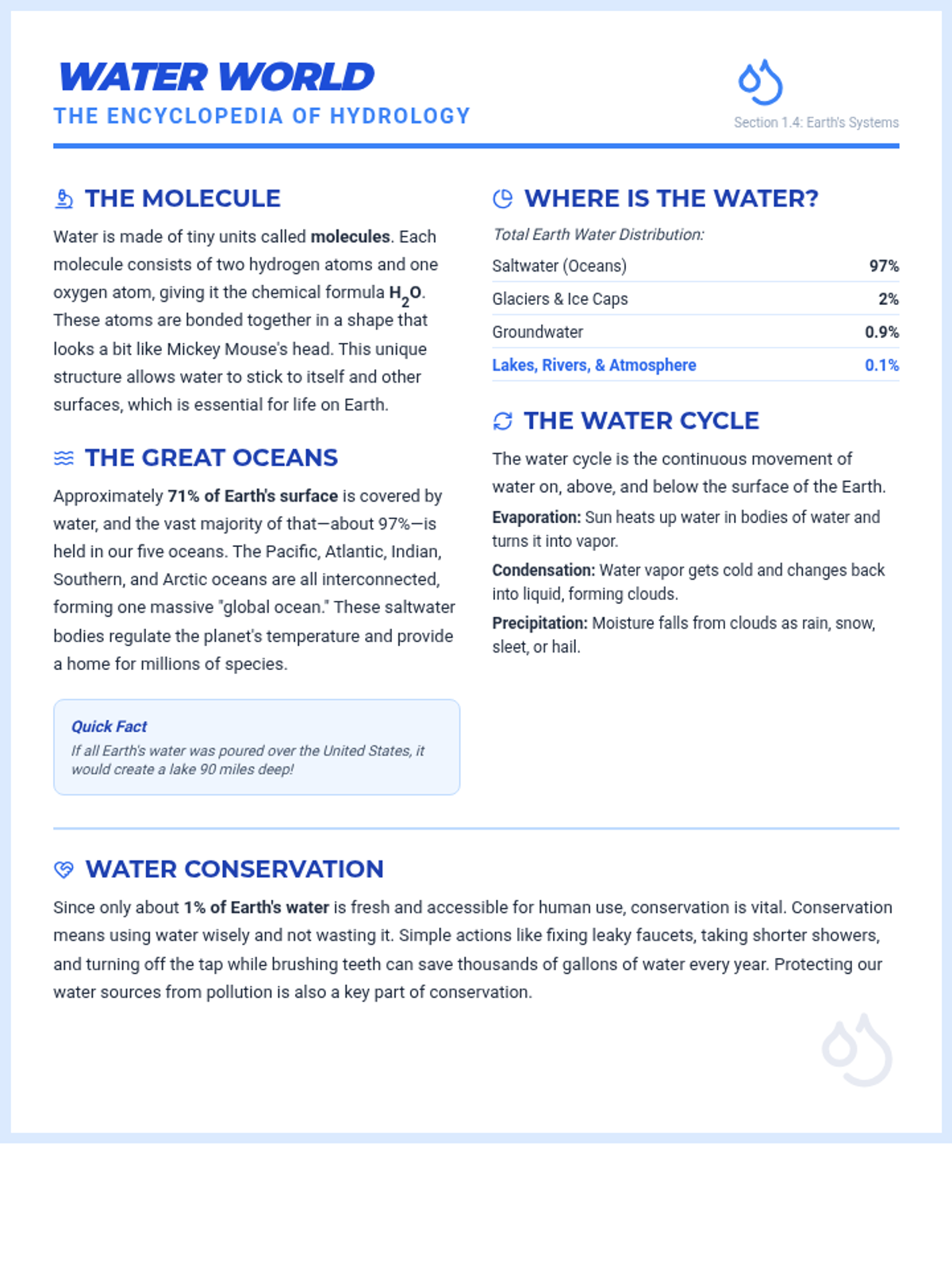
A detailed reading passage designed as an encyclopedia page, covering H2O molecules, ocean statistics, global water distribution, the water cycle stages, and the importance of conservation. Revised to fit on a single page with corrected subscript rendering.
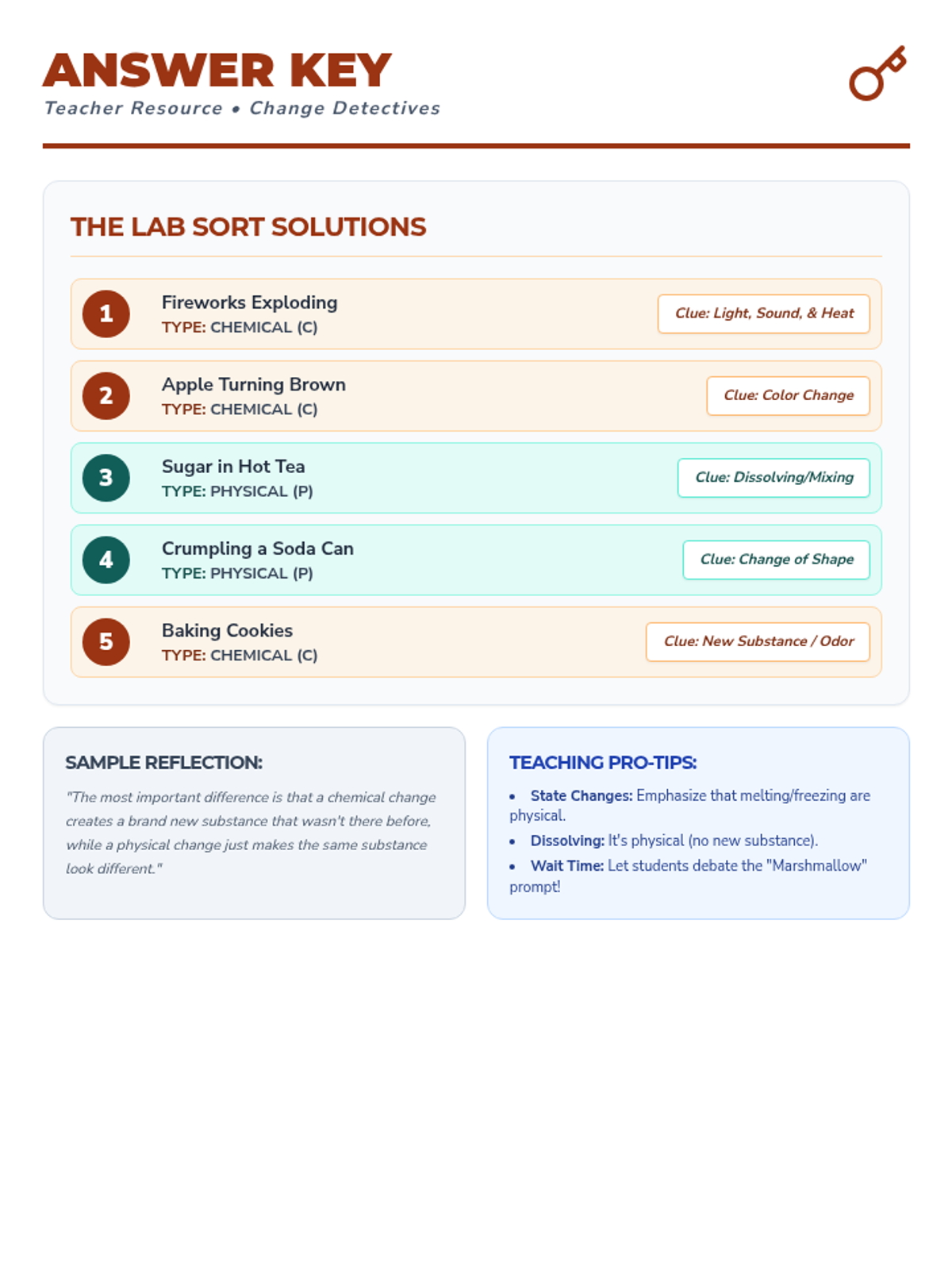
A comprehensive answer key and teacher resource for the Matter Makeovers lesson, updated with the new scenario solutions.
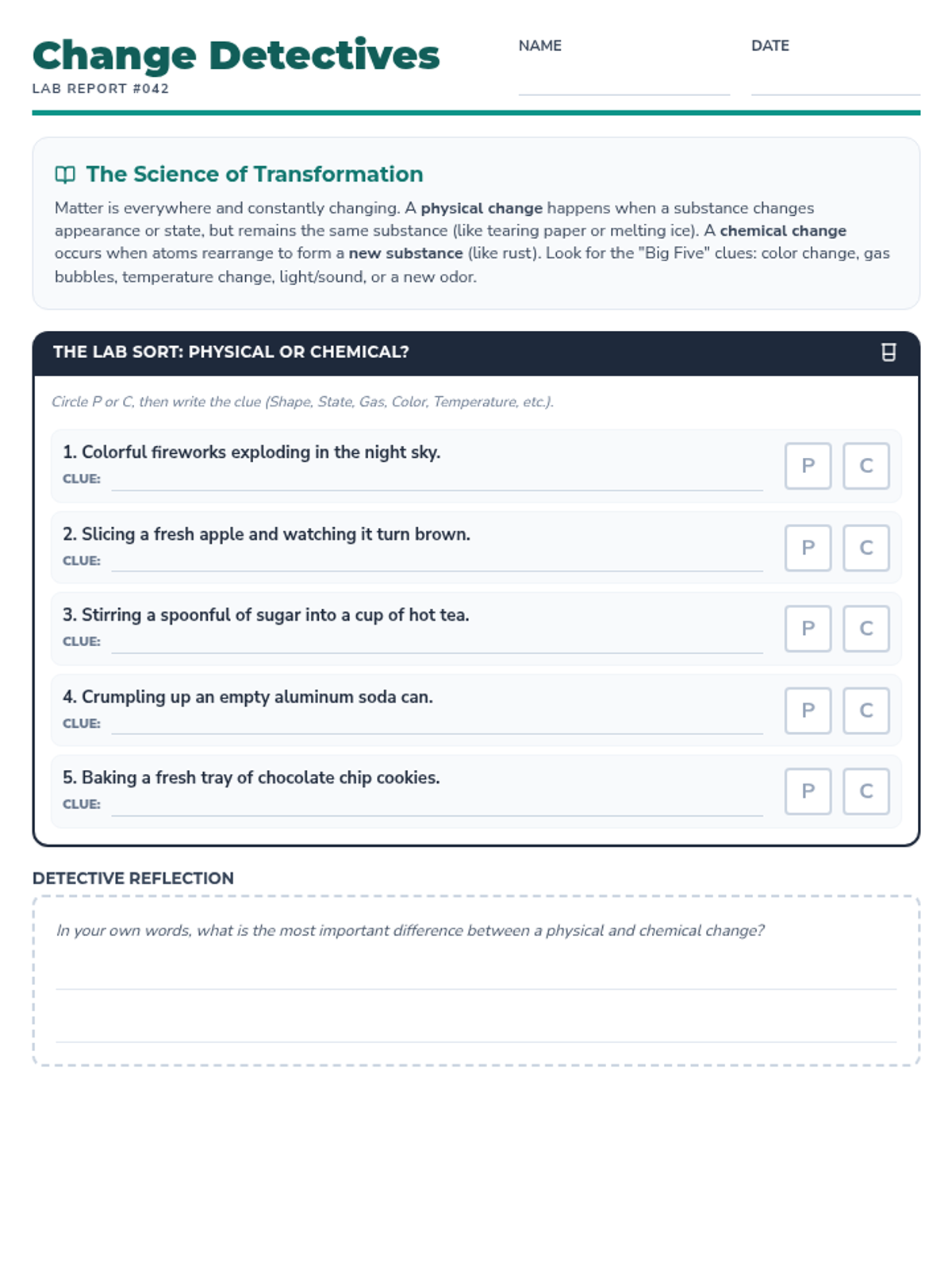
A student worksheet featuring a reading passage on matter transformation and a categorizing activity for physical vs. chemical changes with updated scenarios.
An engaging slide deck explaining physical and chemical changes with visual examples and the '5 Clues' for detection.
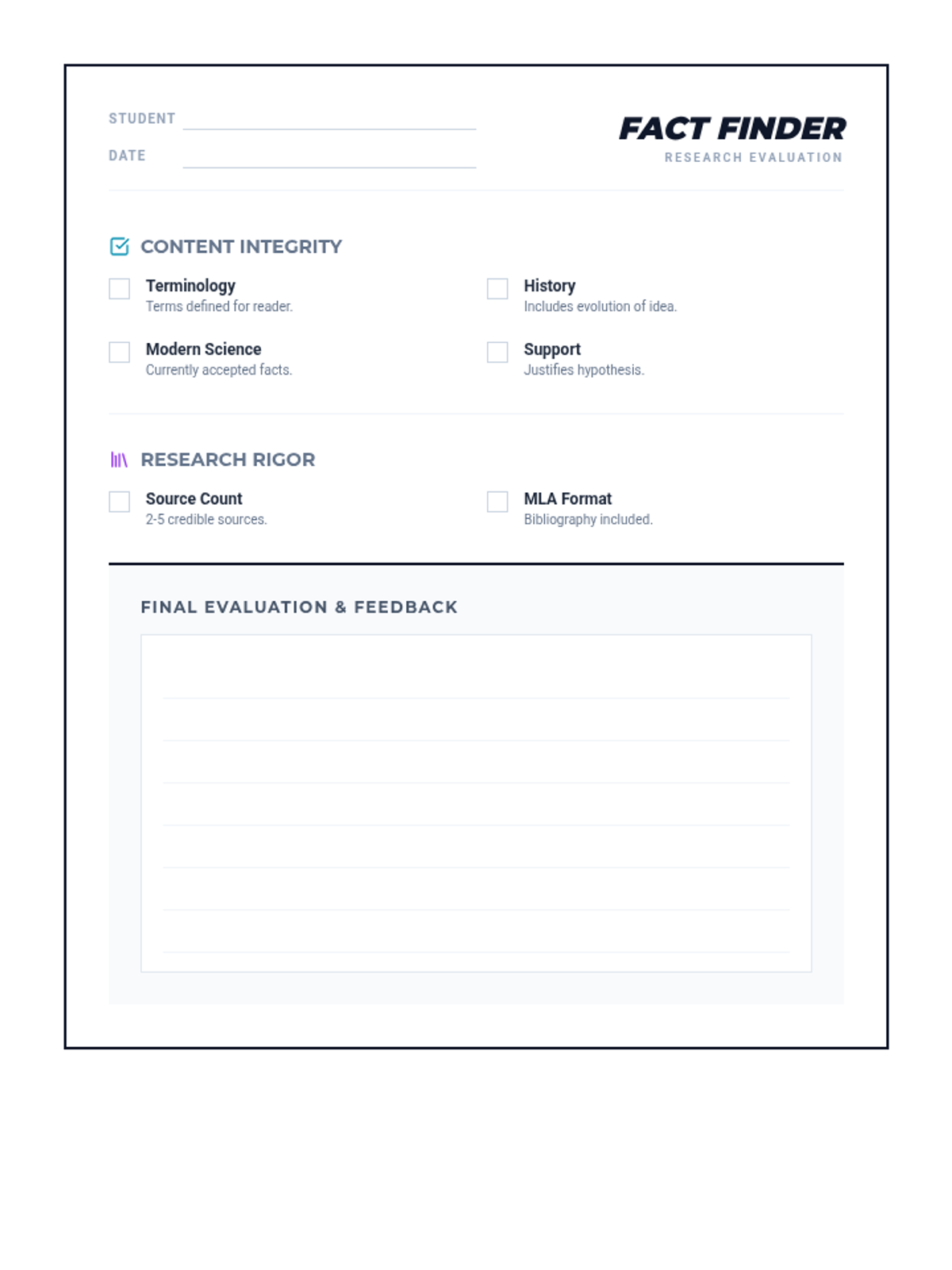
A checklist for both teachers and students to ensure all project requirements—terminology, history, modern science, and MLA citations—are met.
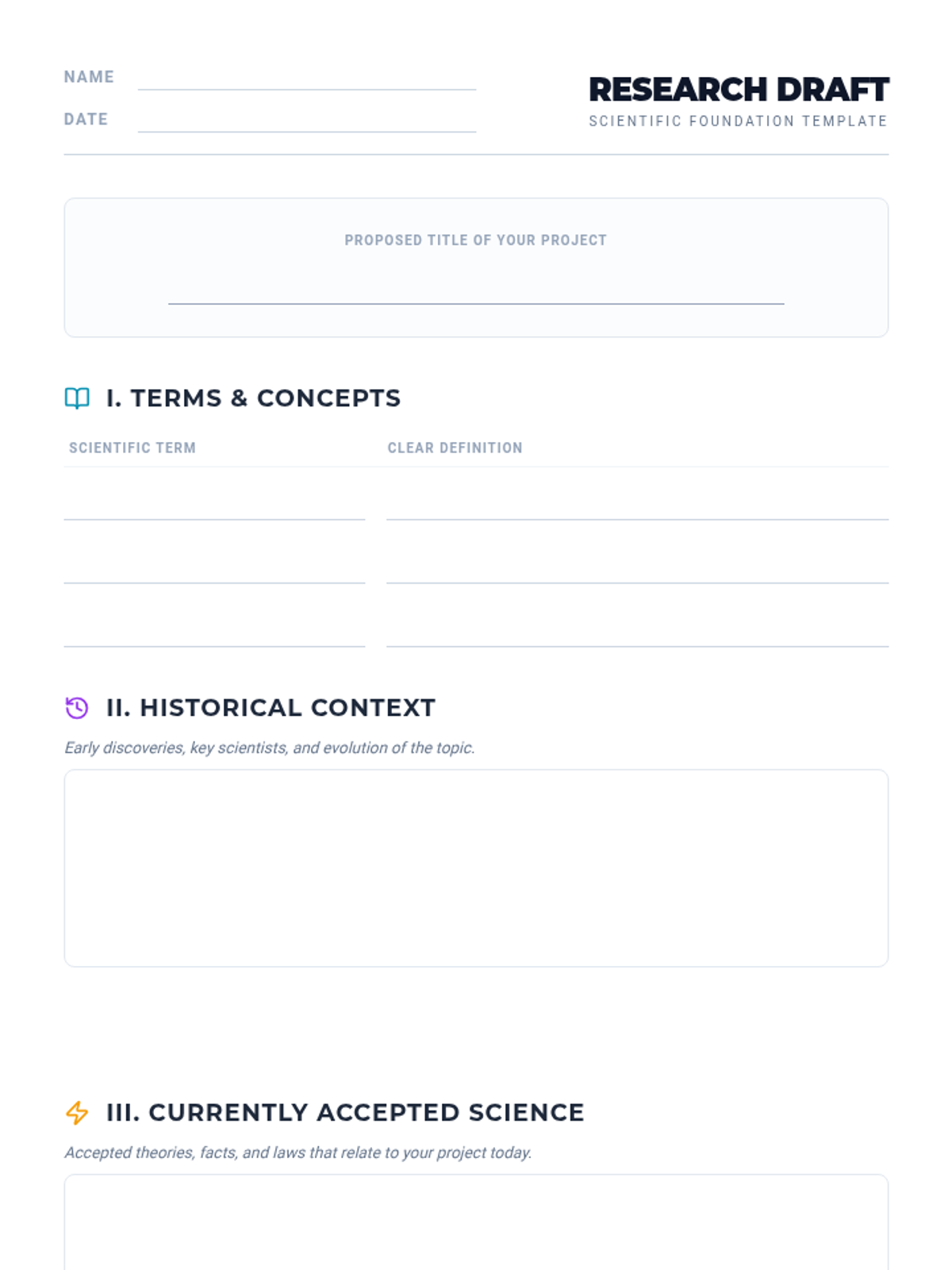
A multi-page research paper template with structured sections for terminology, history, current theories, hypothesis support, and MLA citations.
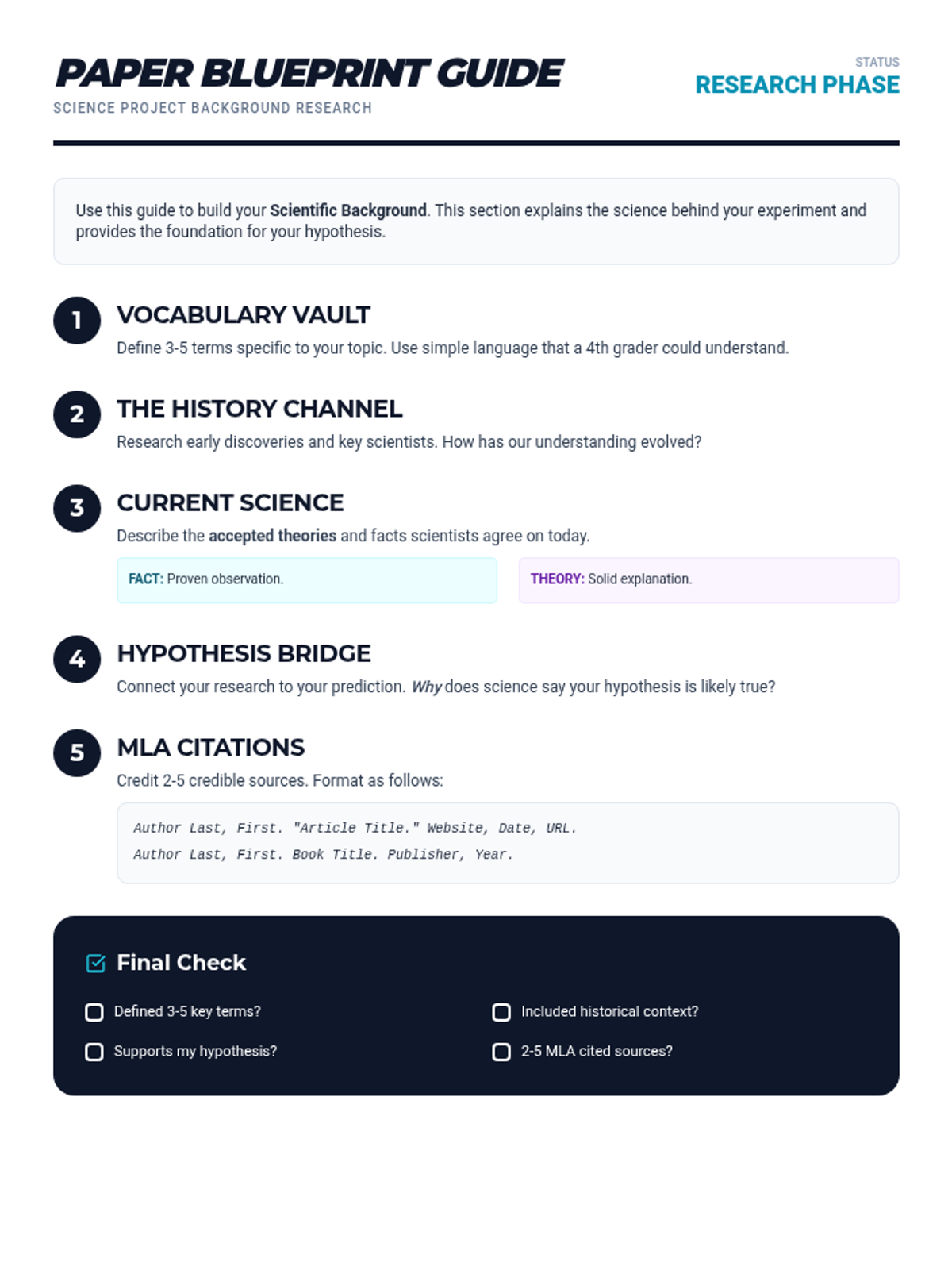
A step-by-step guide for students to navigate the research and writing process, broken down into five clear stages with an included final checklist.
A visual presentation introducing the components of a science research paper, emphasizing source credibility and MLA formatting.
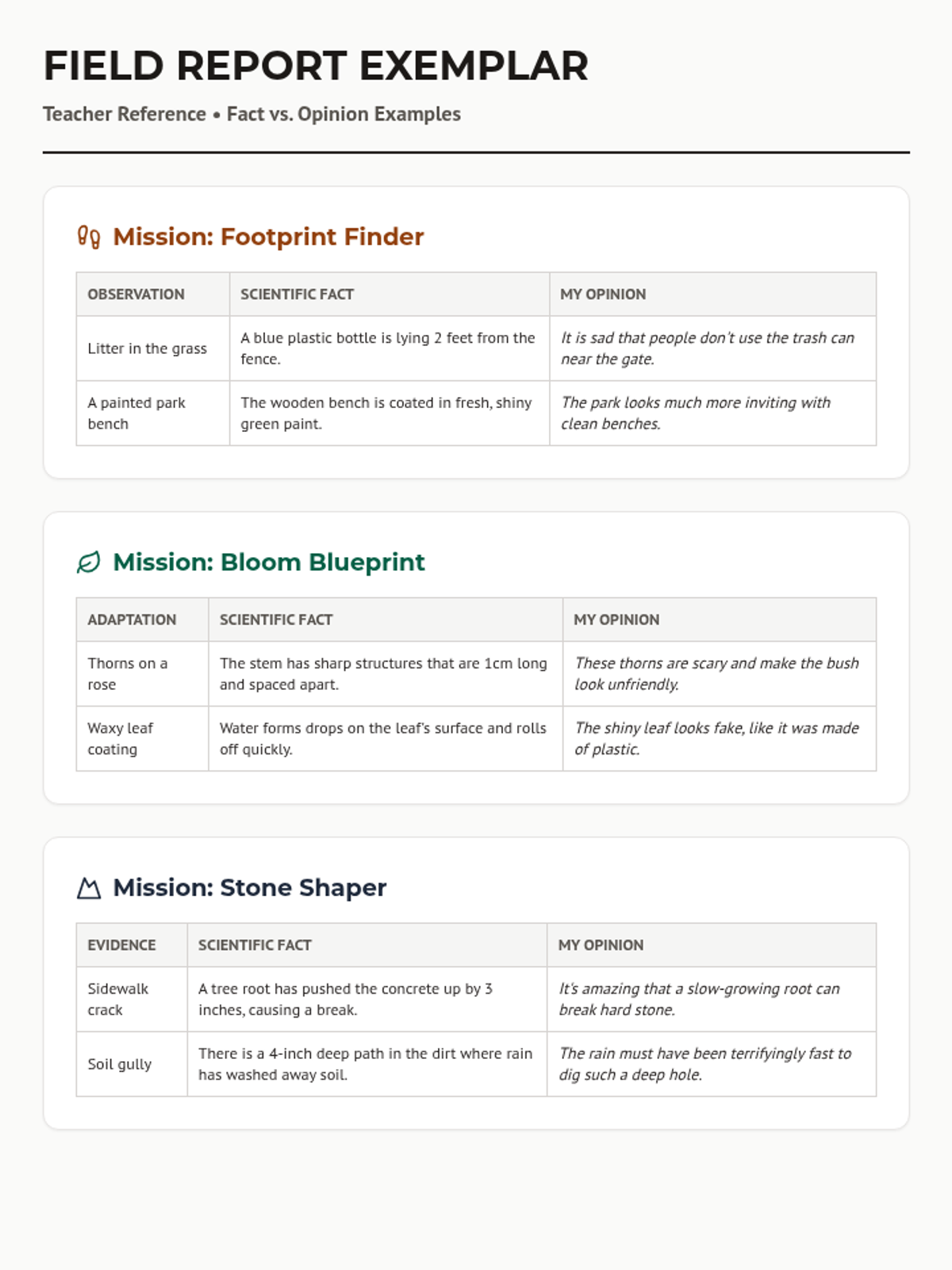
An answer key and exemplar resource for teachers, providing concrete examples of how students should record facts and opinions across the three science topics.
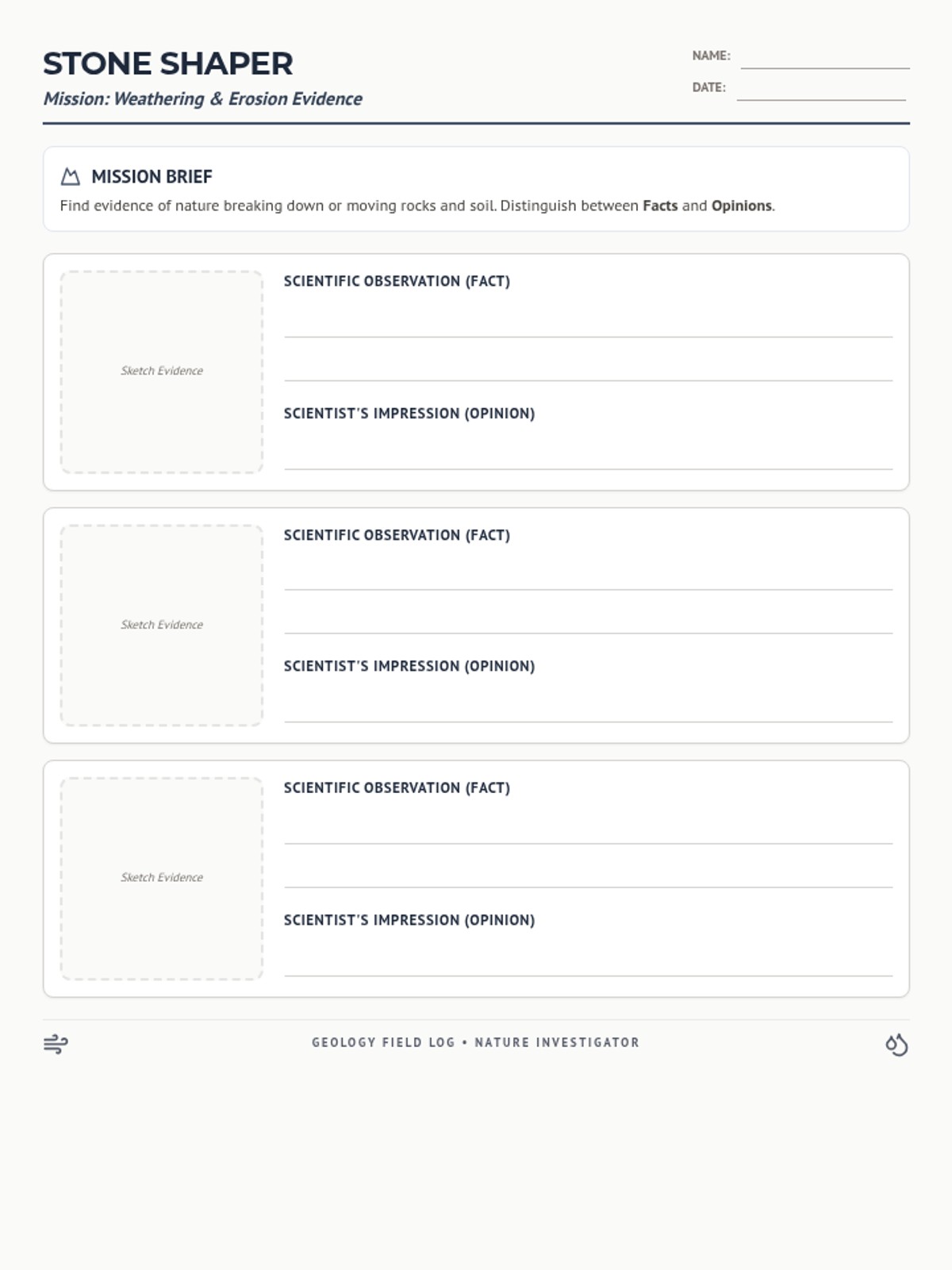
A nature-based graphic organizer for recording evidence of weathering and erosion. Encourages students to separate objective observations from subjective feelings through sketching and writing.
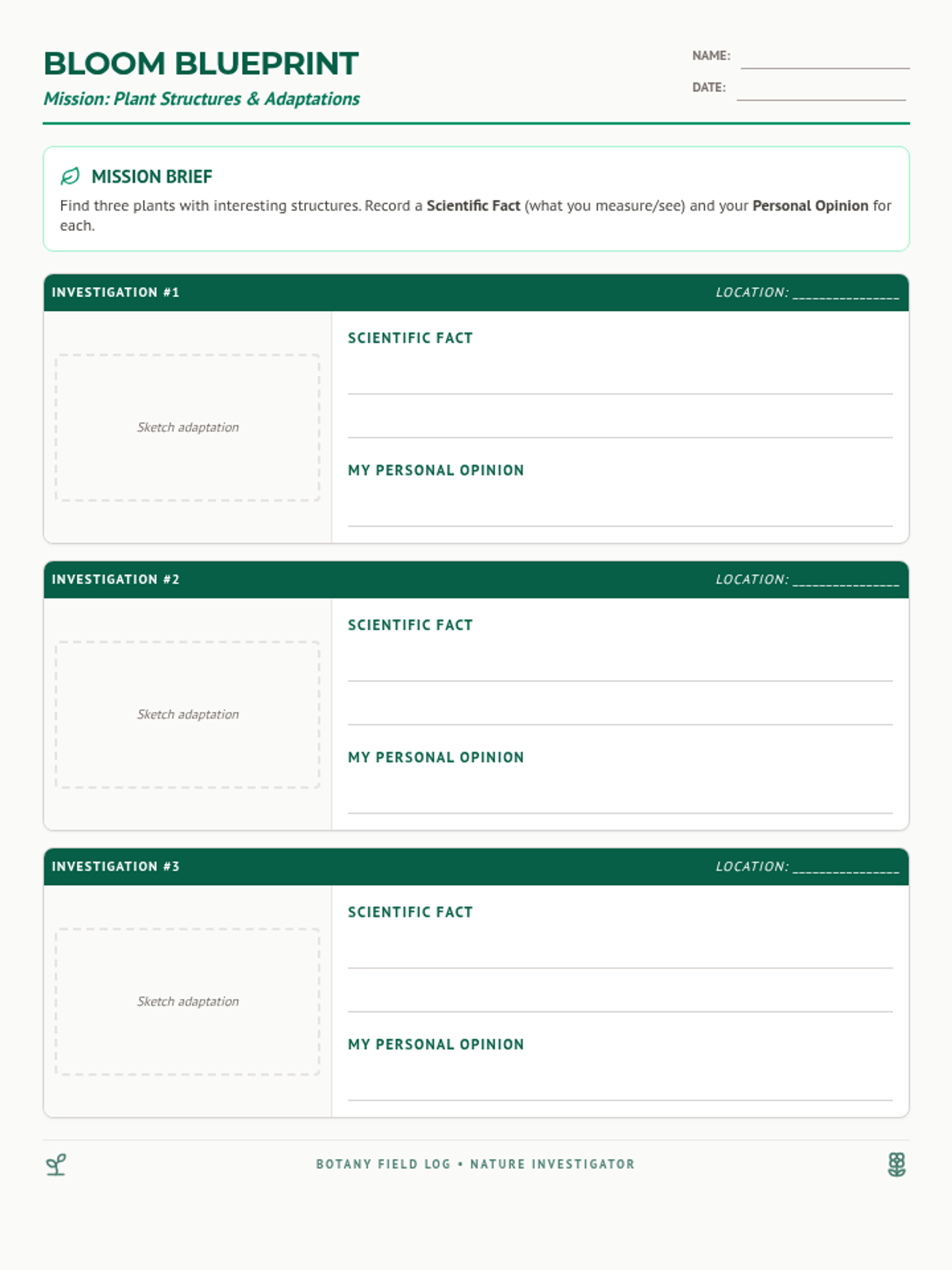
A graphic organizer focused on plant structures and adaptations. Students sketch plant parts and distinguish between verifiable scientific facts and subjective opinions.
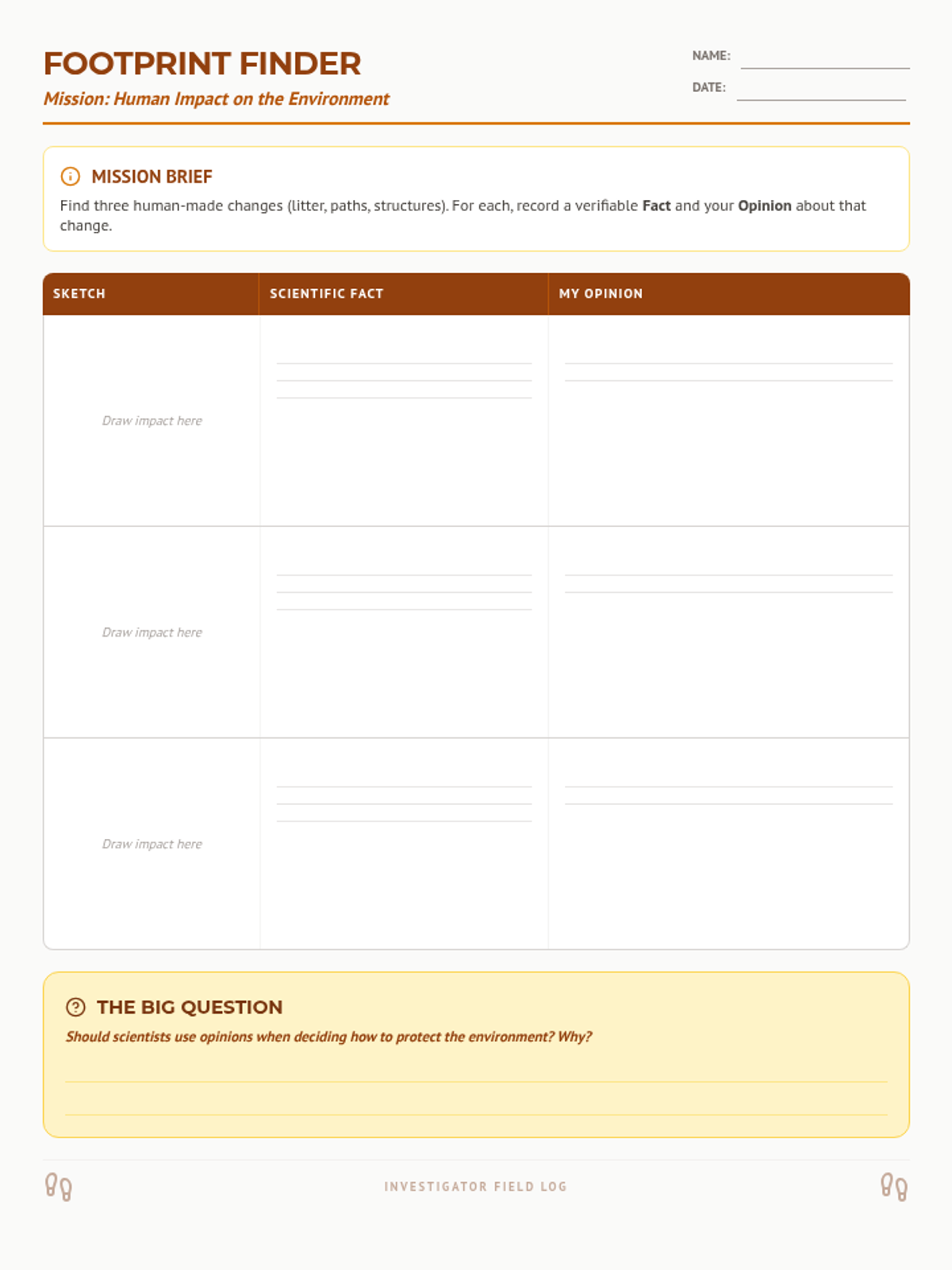
An outdoor graphic organizer for students to record human impact on the environment. Features a table for sketching observations and writing corresponding facts and opinions.
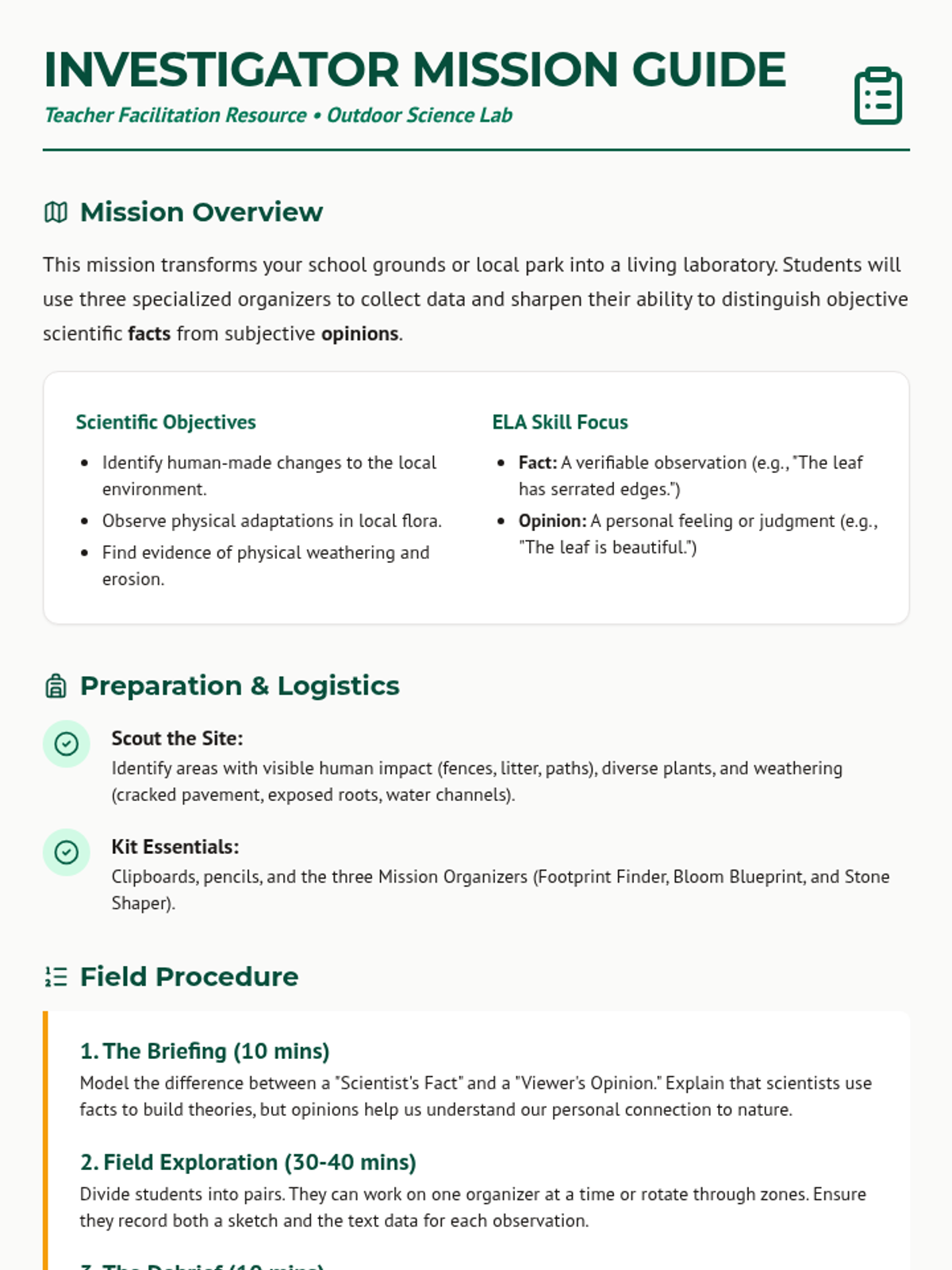
A comprehensive teacher's guide for conducting outdoor science observations. Includes setup instructions, ELA integration tips for fact vs. opinion, and differentiation strategies.
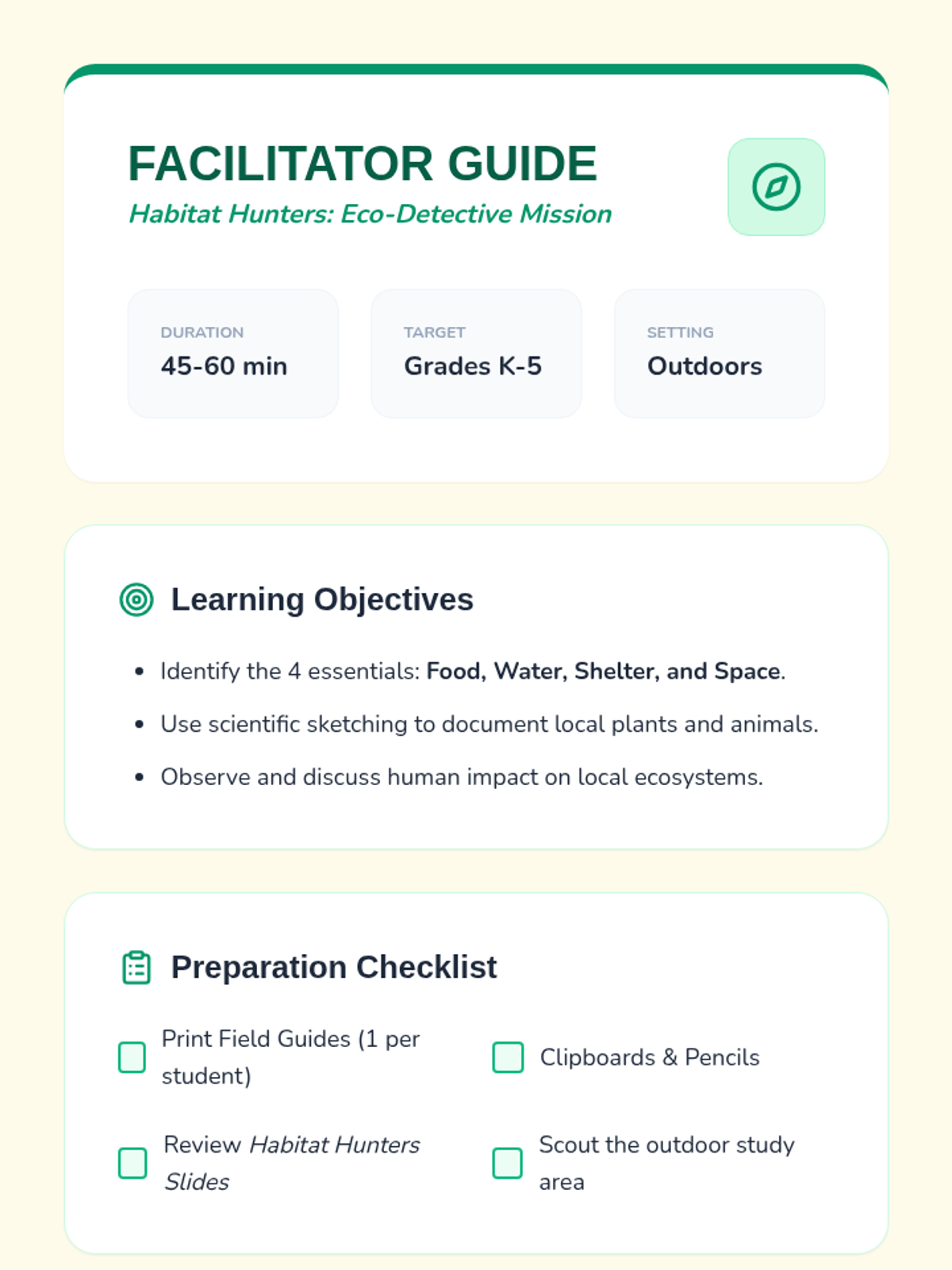
A teacher-facing instructional guide for facilitating the Habitat Hunters outdoor lesson, revised to improve page flow, remove blank pages, and clarify slide references.