A visual presentation covering the definitions, motion, and examples of transverse and longitudinal waves. Includes diagrams for crests, troughs, compressions, and rarefactions, and a comparative showdown table.
Visually stunning introduction slides for a Tron: Legacy lesson. Covers key terms (The Grid, Users vs. Programs), essential gear (Identity Discs), and major character bios to prepare students for the movie.
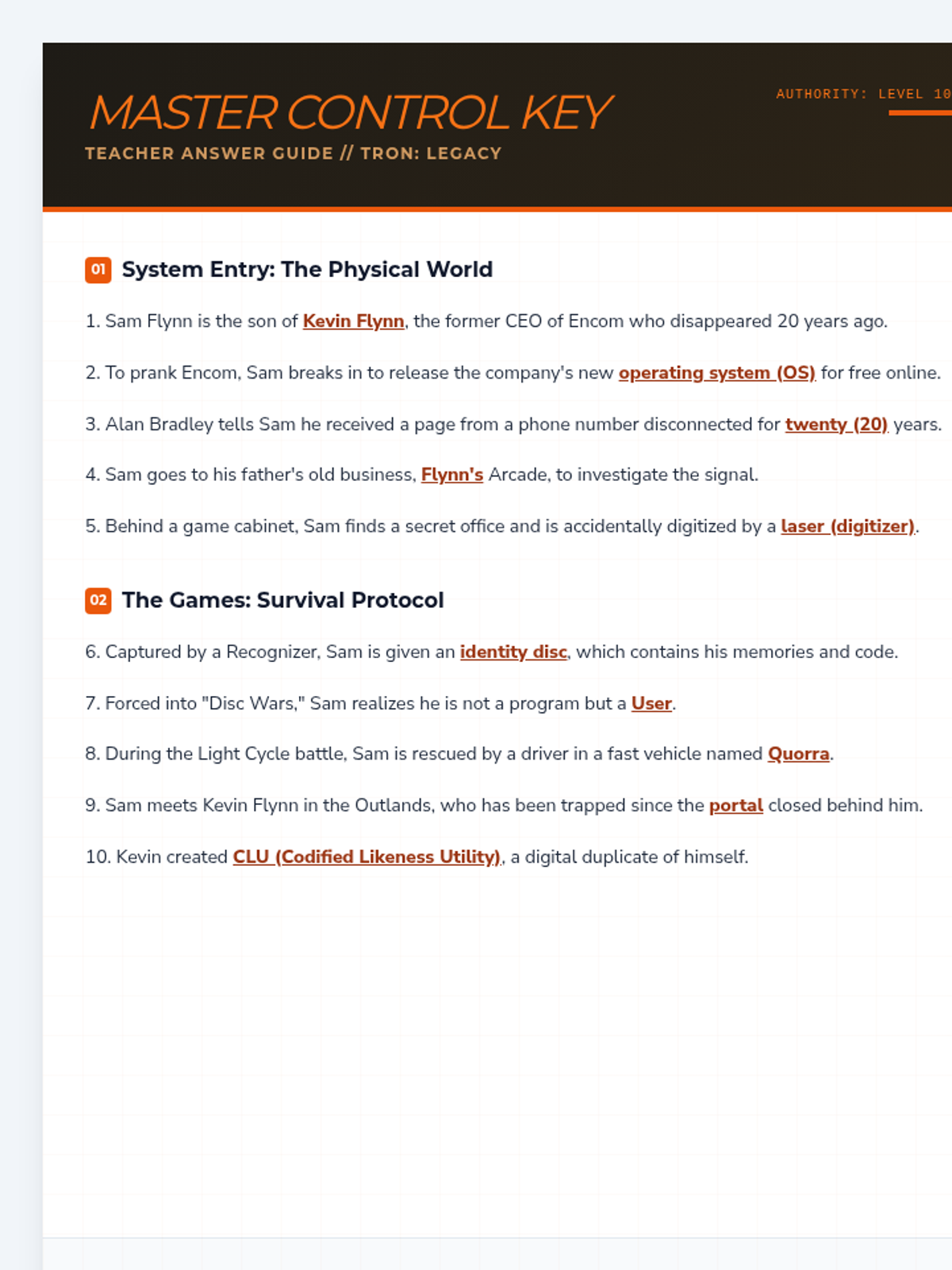
The teacher's answer key for the Tron: Legacy Grid Mission worksheet, featuring all fill-in-the-blank answers and discussion points for the reflection section.
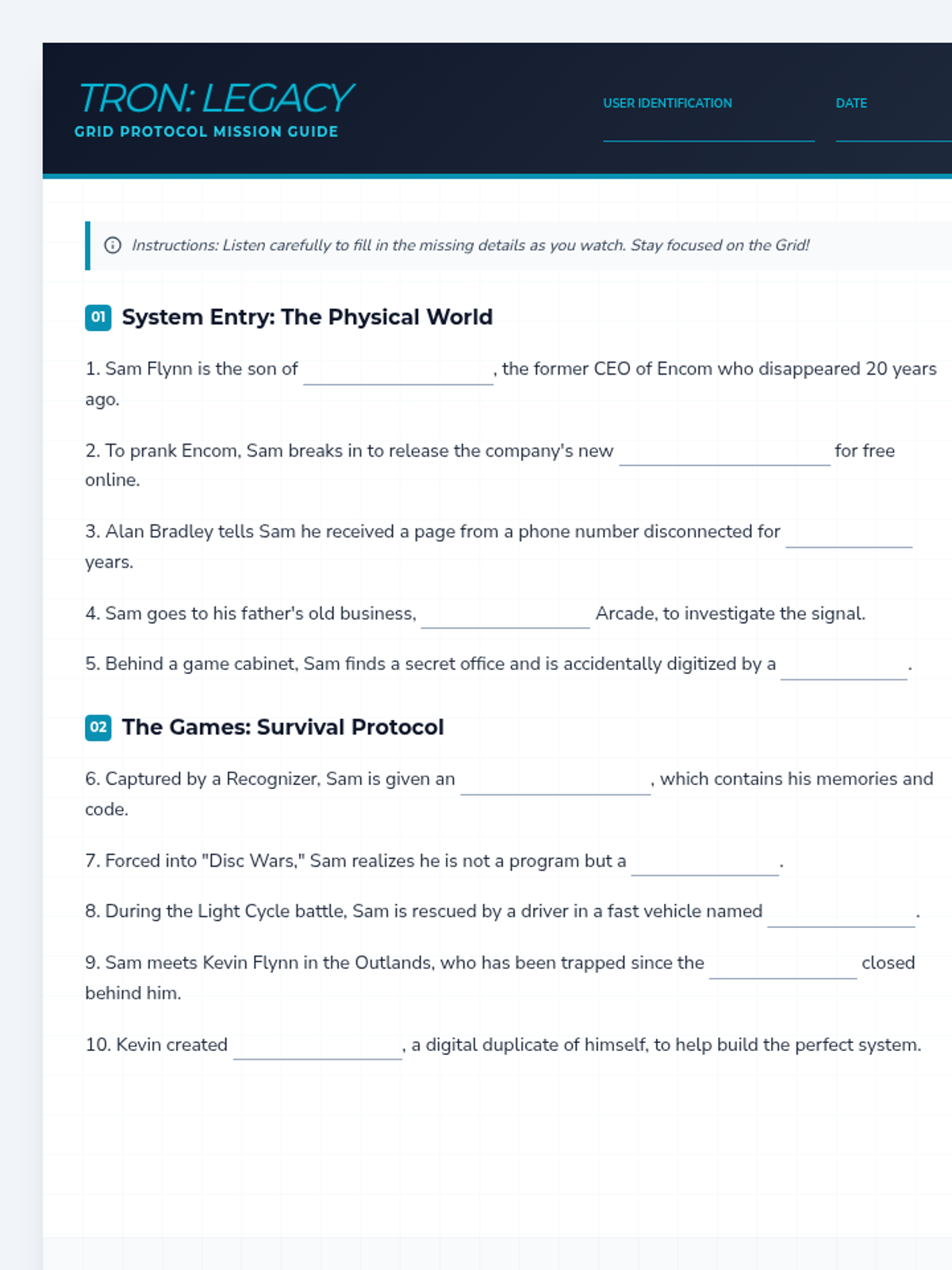
A high-quality, movie-themed student worksheet for Tron: Legacy (2010). Features a "Grid Mission" aesthetic with 20 chronological fill-in-the-blank questions and critical thinking reflection prompts.
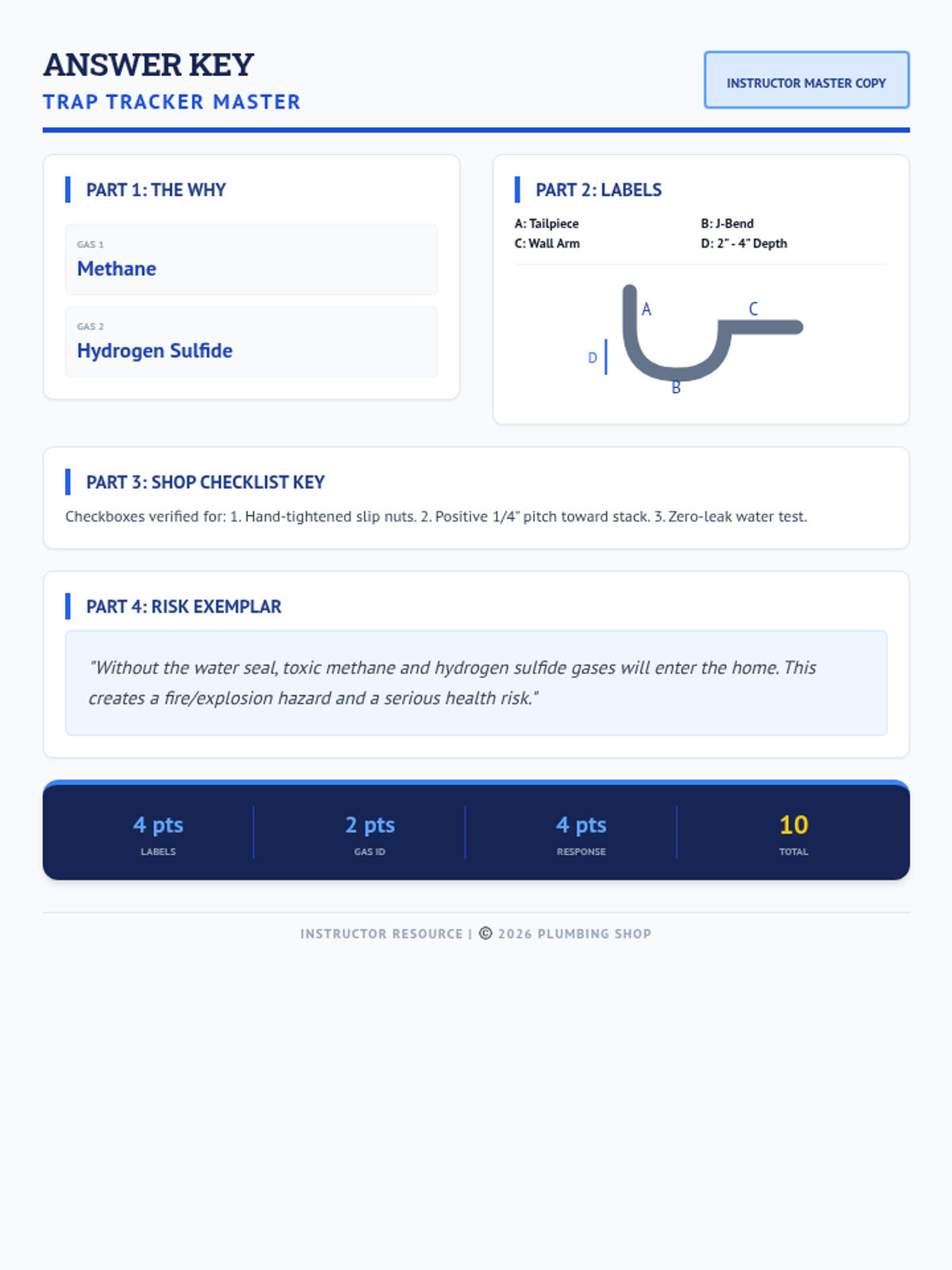
An answer key for the Trap Tracker Worksheet. Revised to include Part 3 content, visual label references, and improved page layout for the grading rubric.
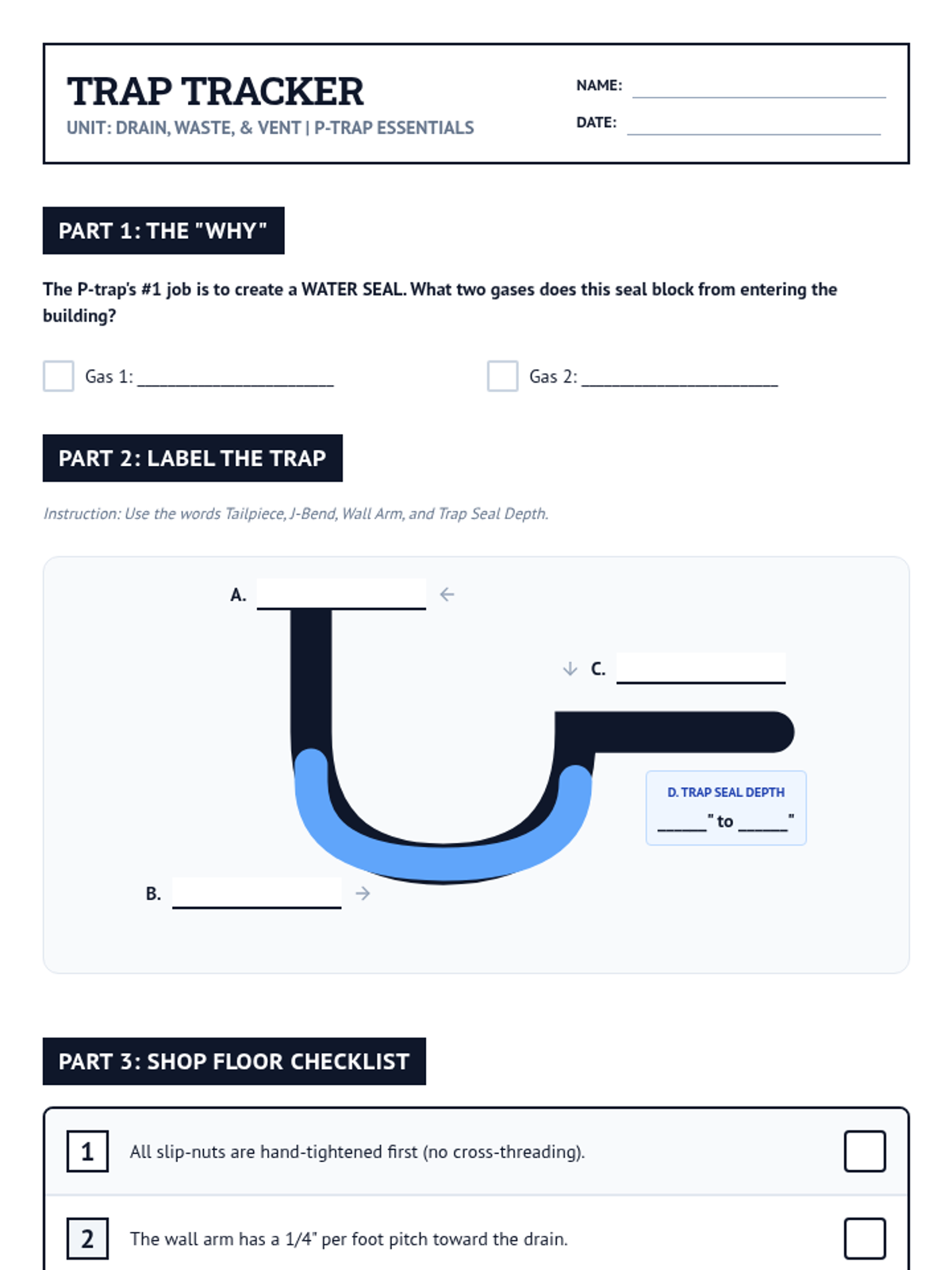
A student-facing worksheet for junior plumbing students. Revised with a standardized P-trap diagram, improved page breaks, and guided writing lines for accessibility.
Visual presentation slides covering the importance of P-traps. Revised with improved diagrams, higher contrast for accessibility, and corrected text content.
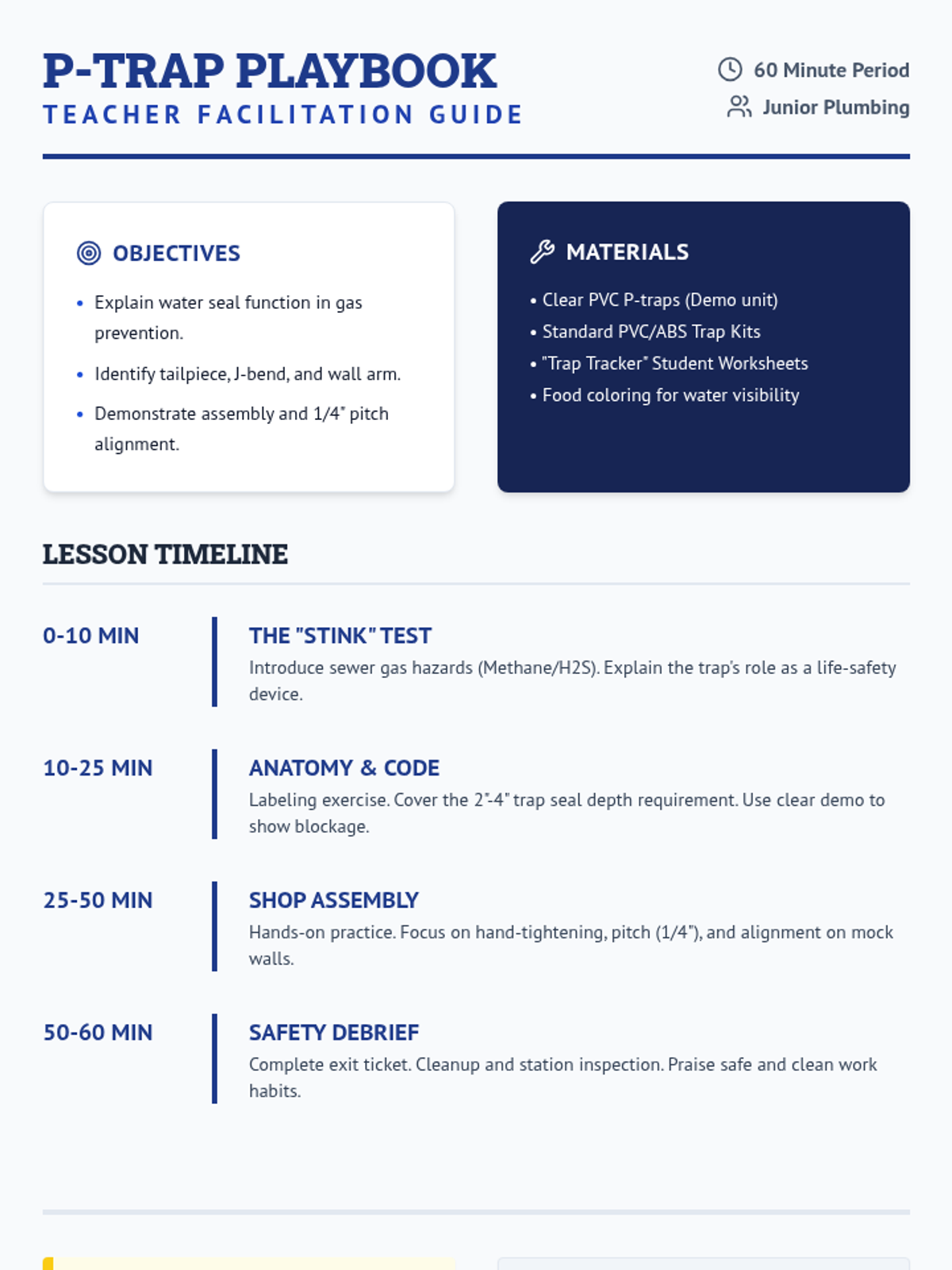
A comprehensive facilitation guide for plumbing instructors teaching the importance of P-traps. It includes specific IEP/504 instructional strategies, shop-floor pacing, and a breakdown of the 60-minute lesson. Revised for improved layout and page flow.
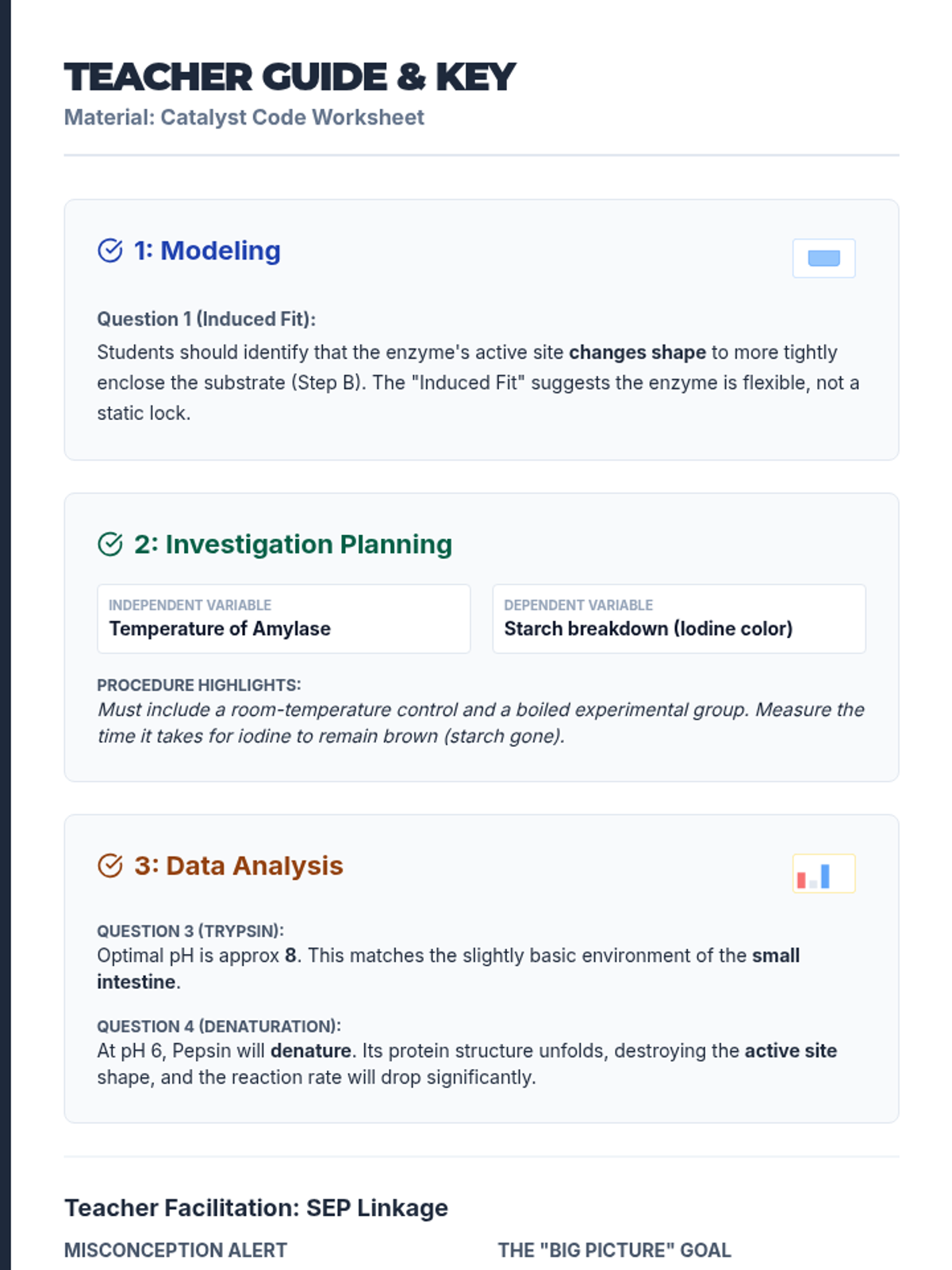
The answer key and teacher facilitation guide for the Catalyst Code Inquiry worksheet, including expected student responses and pedagogical notes on SEP integration with improved visibility and layout.
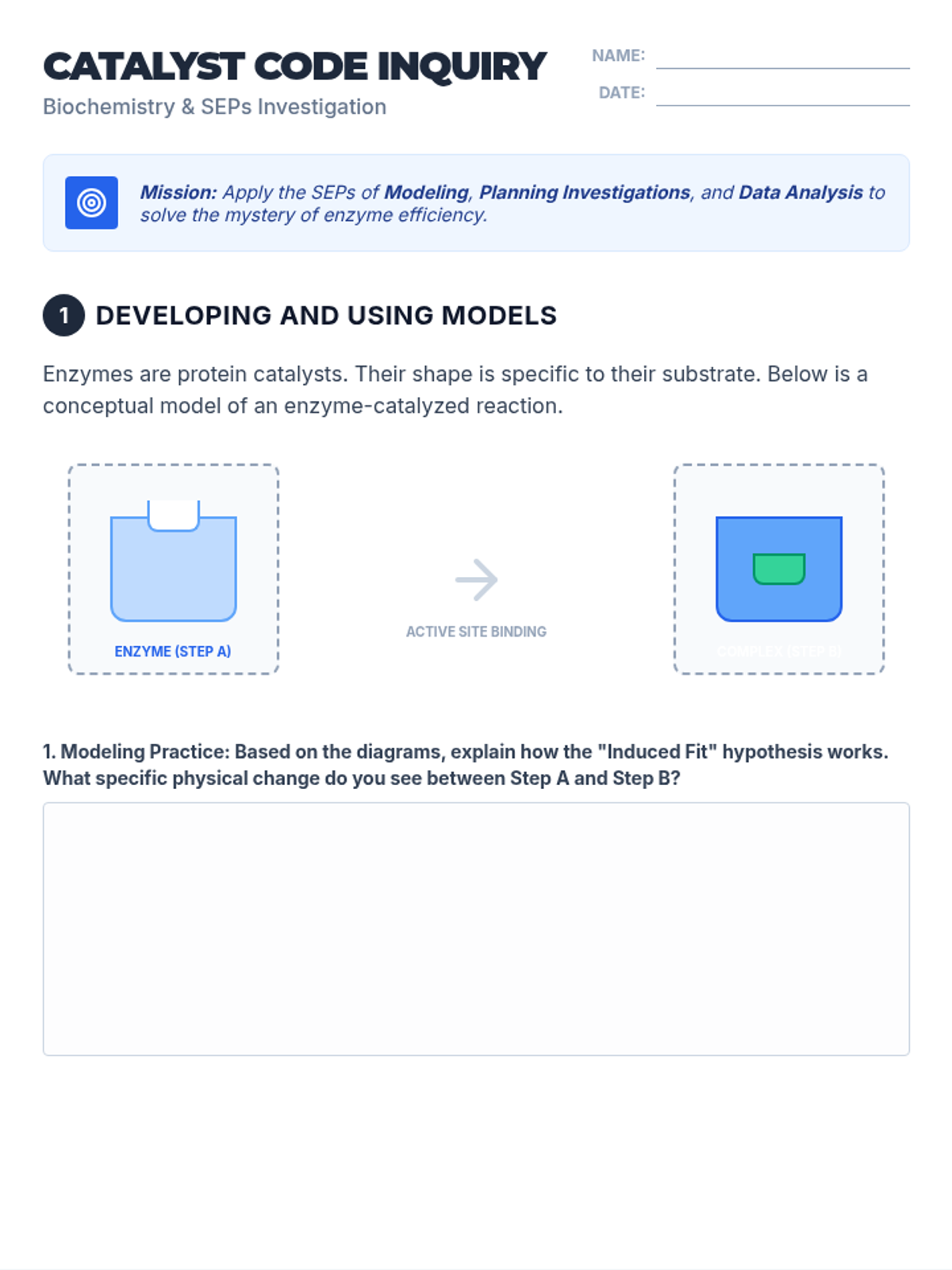
A guided inquiry worksheet focusing on biochemistry (enzymes) that requires students to engage in modeling, experimental planning, and data interpretation with improved layout and page-break management.
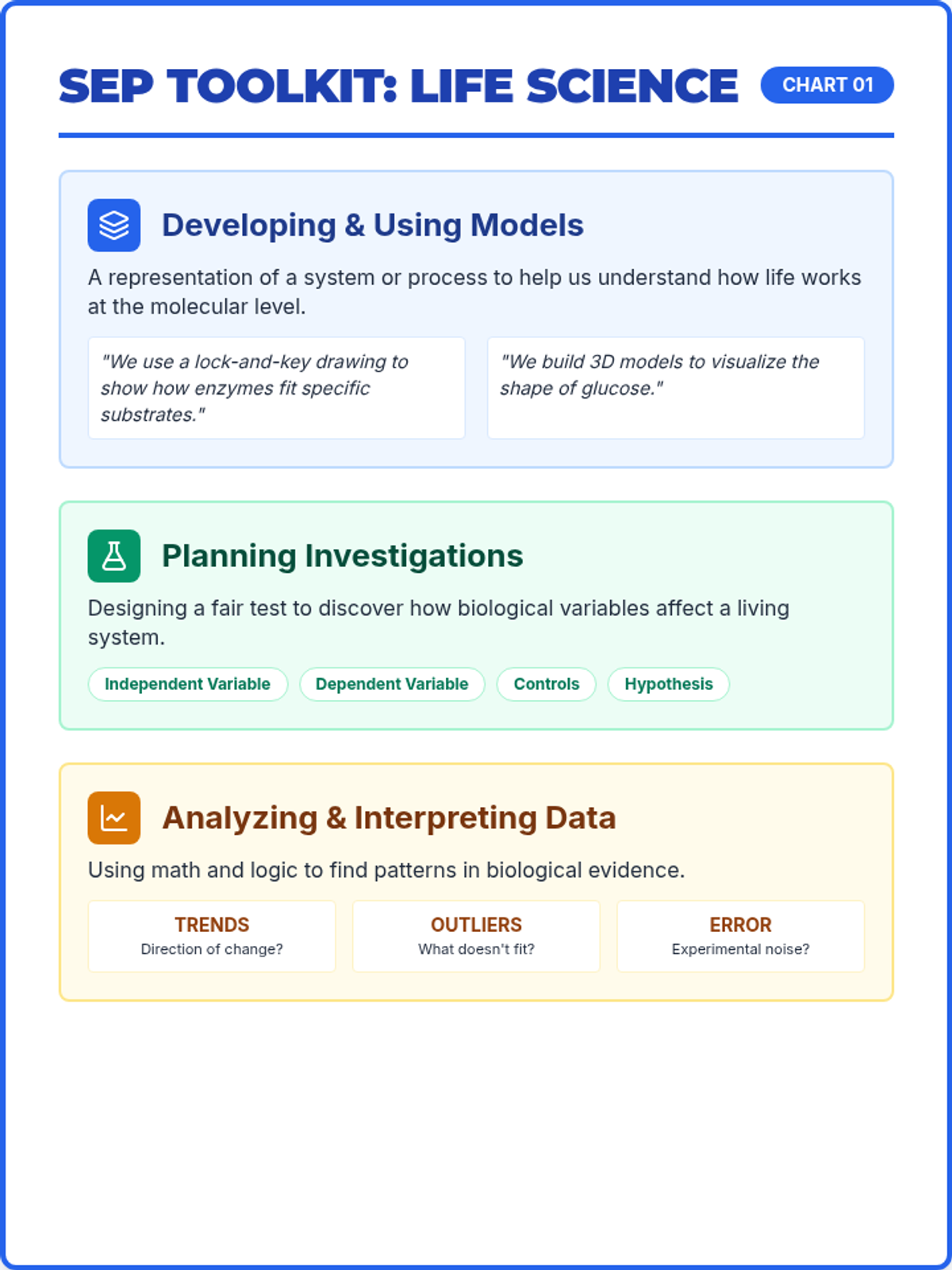
A set of two anchor charts visually defining key Science and Engineering Practices (SEPs) and fundamental biochemistry vocabulary, using a clean technical blueprint aesthetic with improved layout for printing.
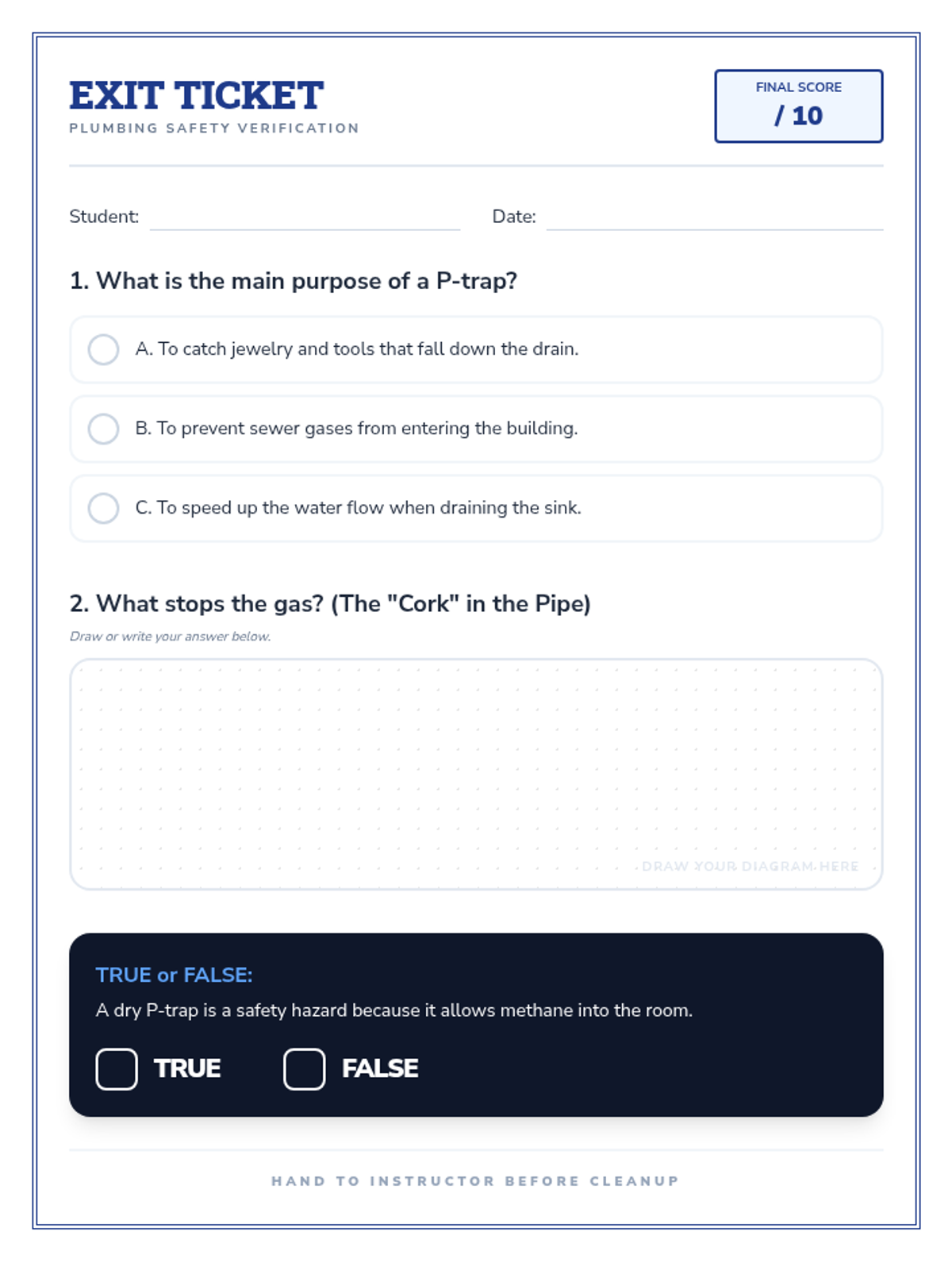
Revised exit ticket with increased drawing space for Question 2 and improved page layout to ensure all content stays on one page. Hand-tailored for shop use with high contrast.
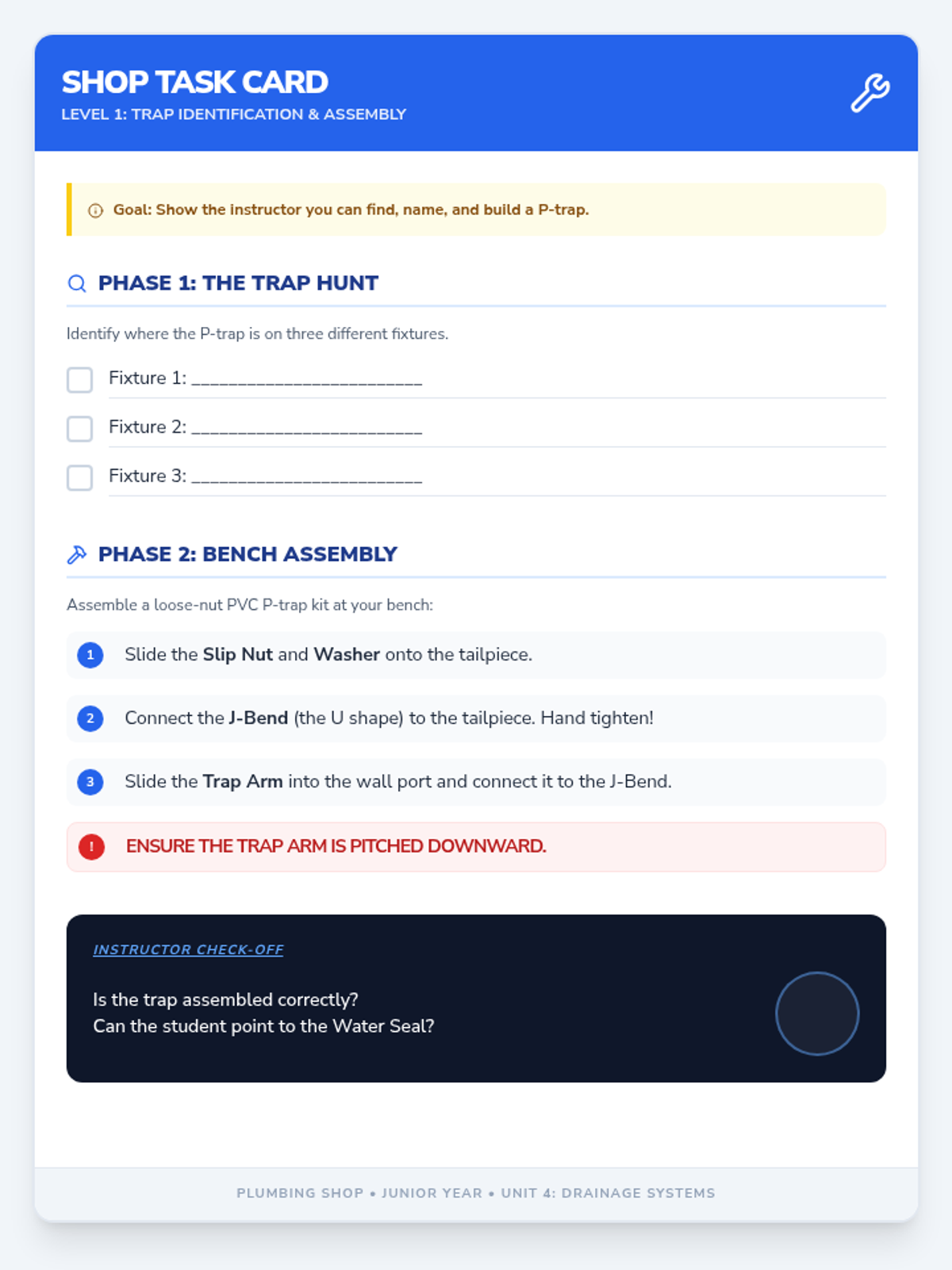
Revised shop task card with improved page layout to ensure the instructor check-off stays on the first page. Updated checklist items and icon styling for clarity.
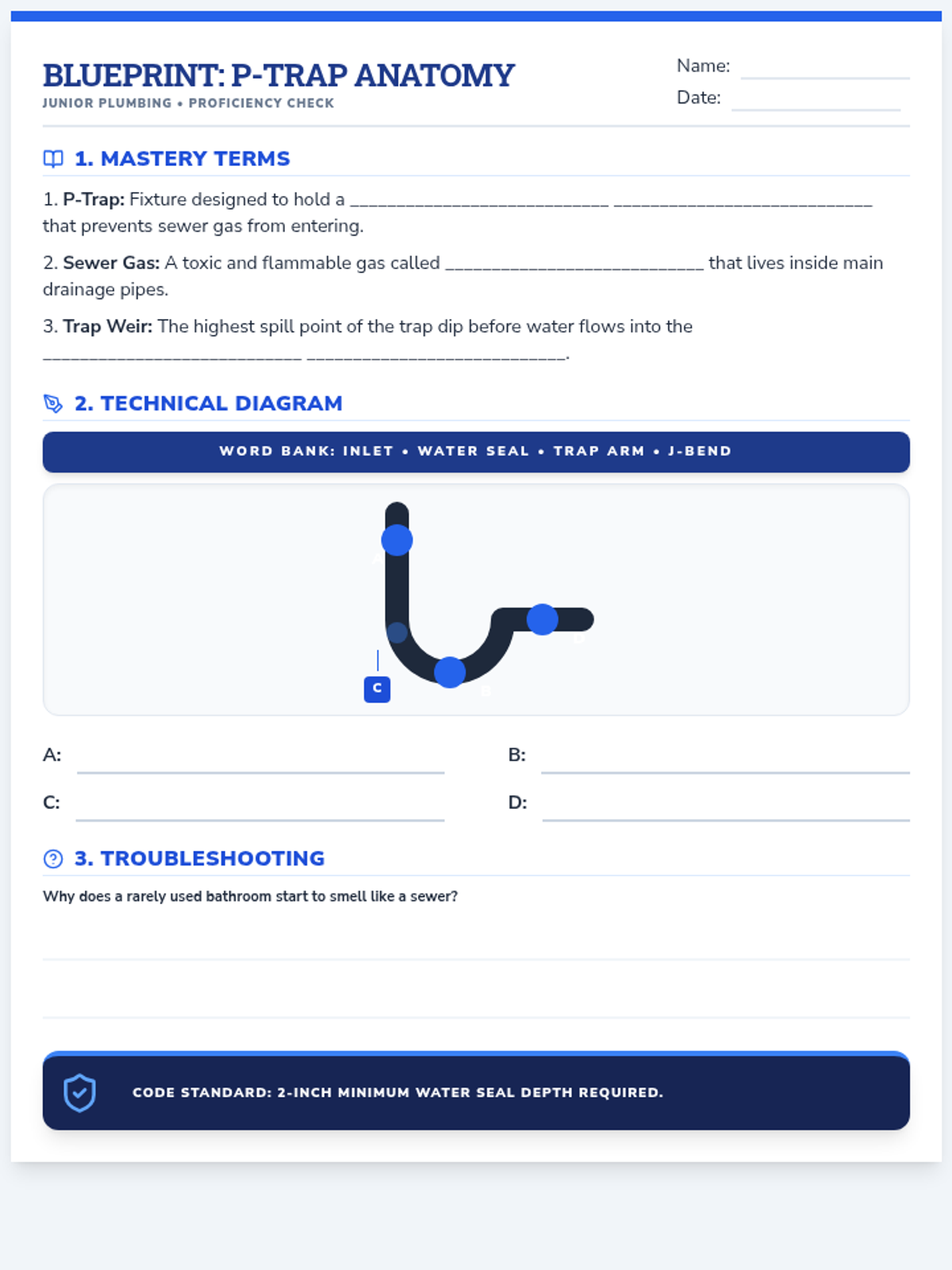
Revised scaffolded guided notes for plumbing students. Improved diagram accuracy, labeling points, and page layout to ensure all content stays on one page. Hand-tailored leader lines for labeling parts. Improved writing space for IEP/504 accommodations.
Visual presentation for junior plumbing students, revised with improved icon visibility and an enhanced P-trap diagram. Improved text contrast on Slide 4 for accessibility. Added specific shop goal checklist on final slide.
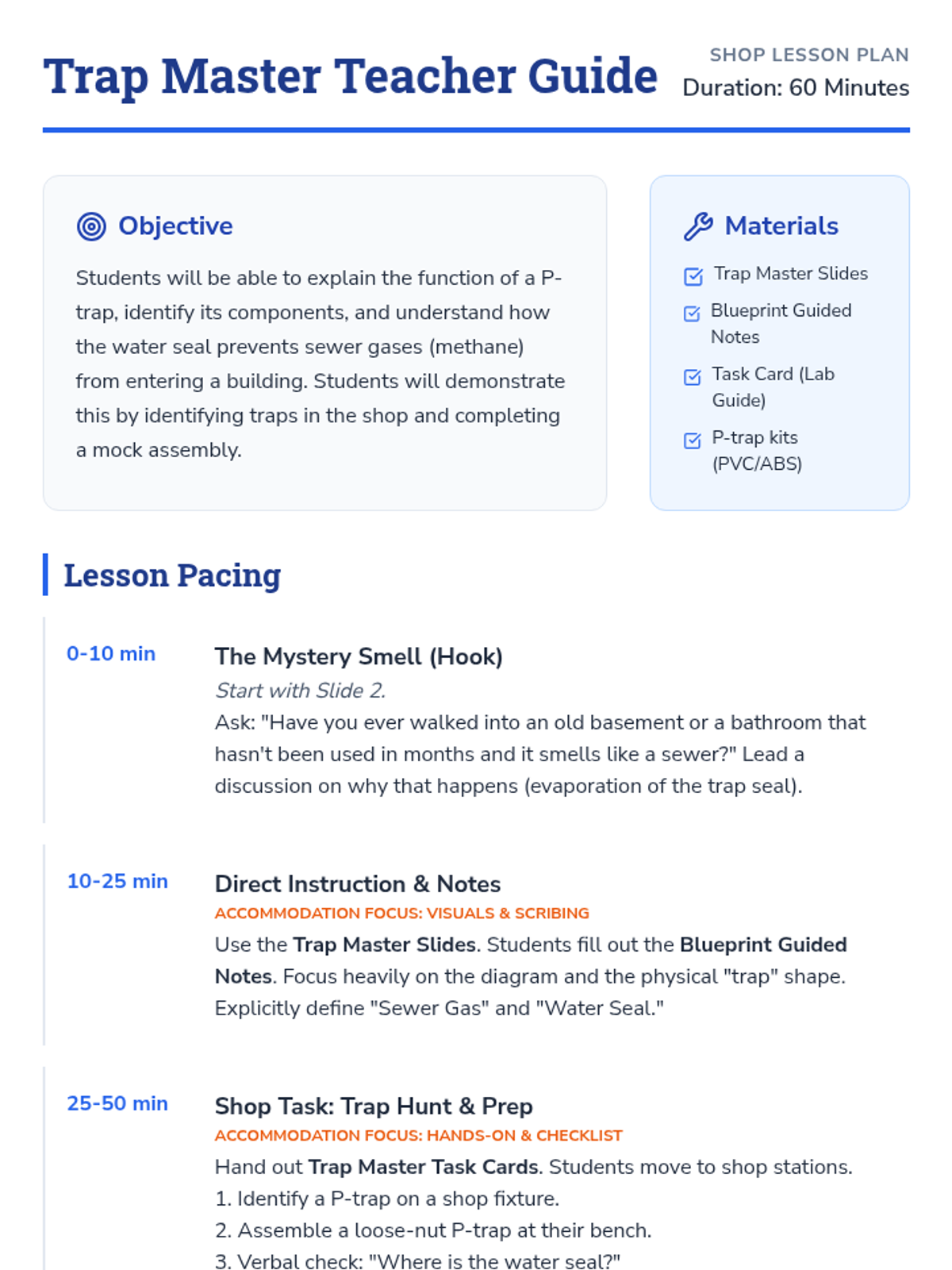
A comprehensive teacher guide for a 60-minute lesson on P-traps, revised with improved page breaks and formatting.
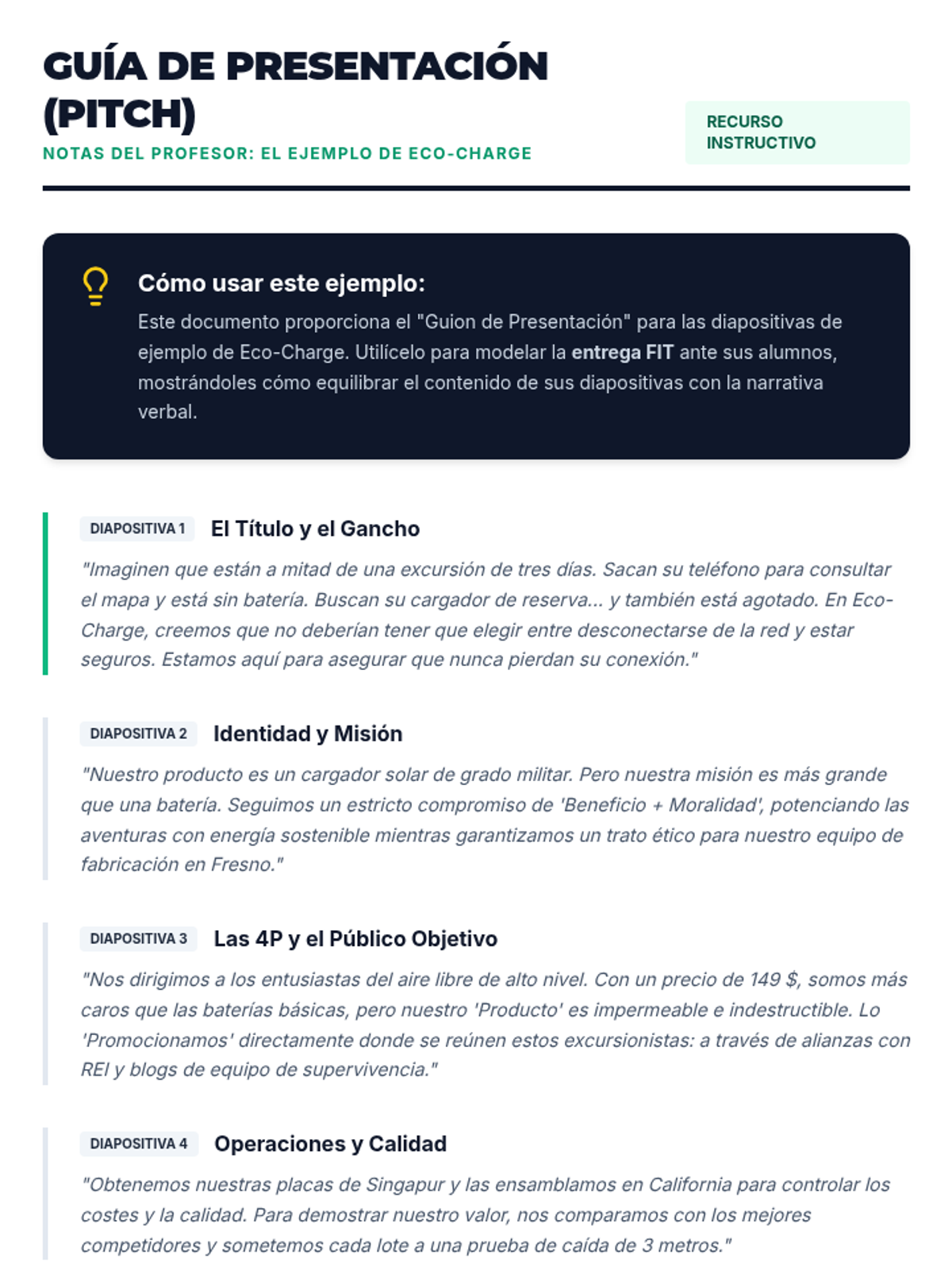
A teacher's guide and script for the Eco-Charge student example. It provide a sequential script for all 8 slides and includes a requirements checklist verifying the product picture, no Q&A, and font size choices.
A model student pitch presentation for 'Eco-Charge', a portable solar power bank company. It follows the 8-slide roadmap and integrates strategy, marketing, operations, ethics, and valuation concepts. Includes a visual product mockup.
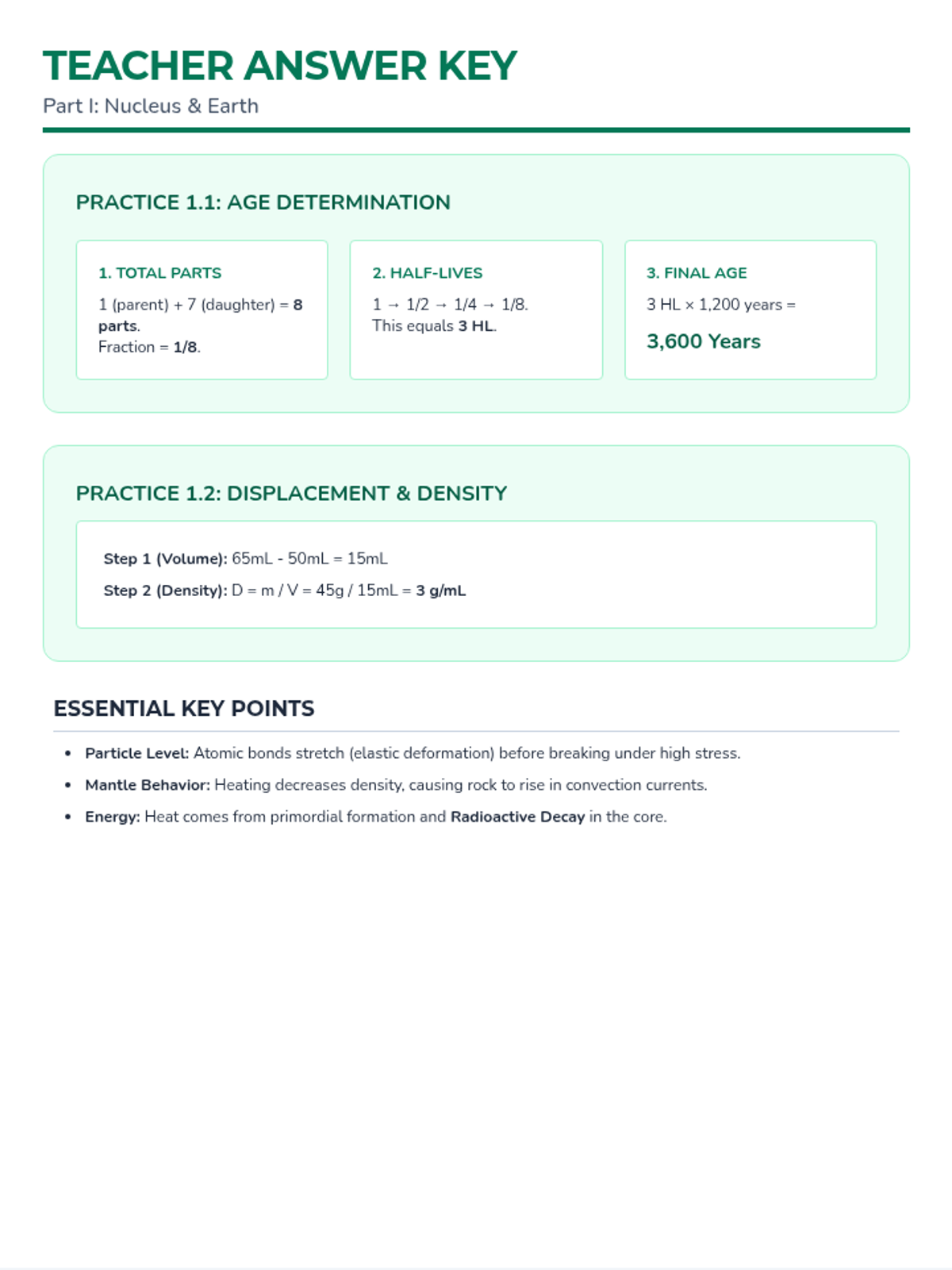
A polished 3-page teacher answer key for the Physics Final Study Guide, providing clear solutions, worked math problems, and conceptual explanations.
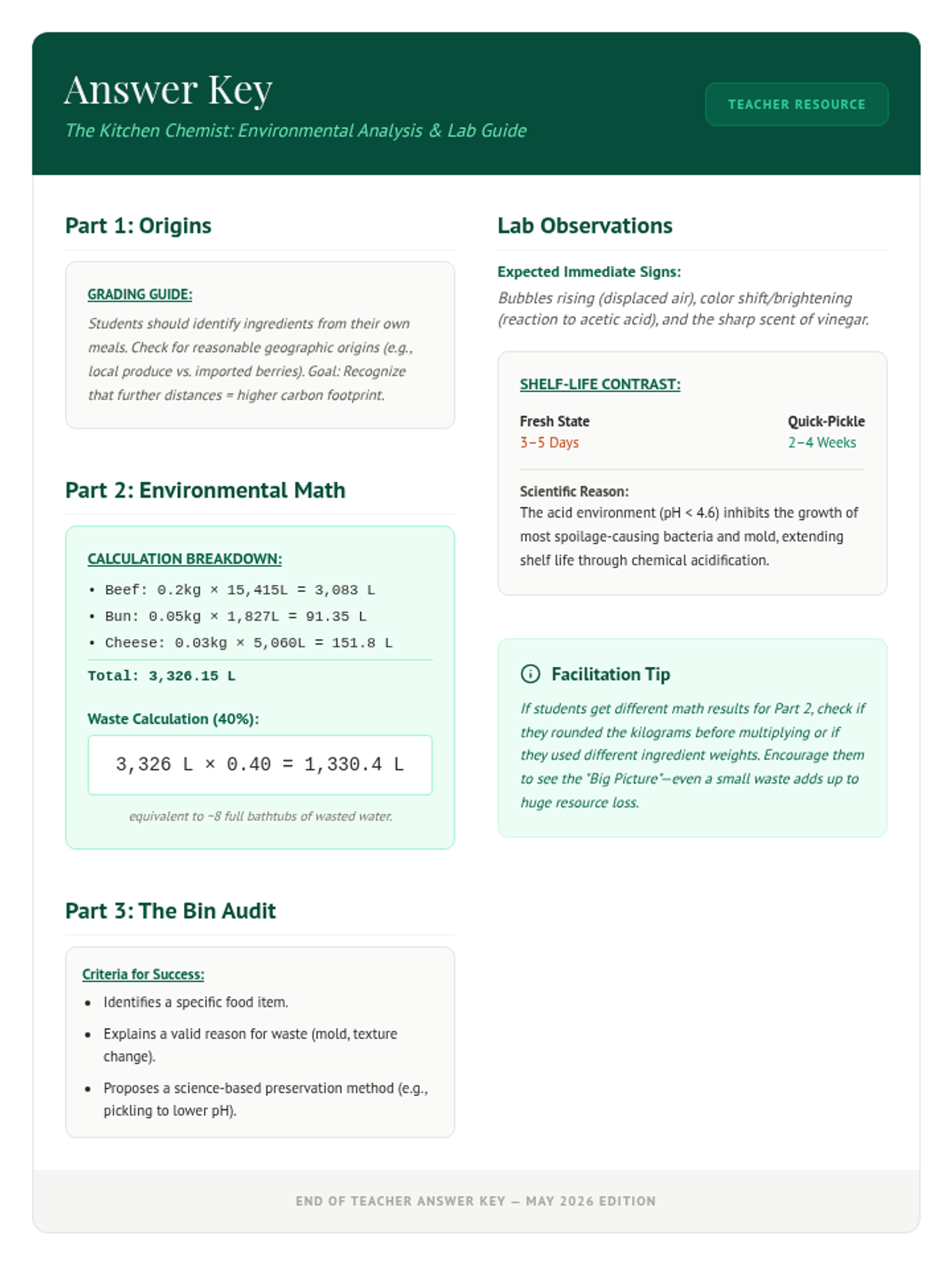
An answer key for 'The Kitchen Chemist' materials, providing correct calculations for the water footprint math and guidance for discussing meal analysis and lab observations.
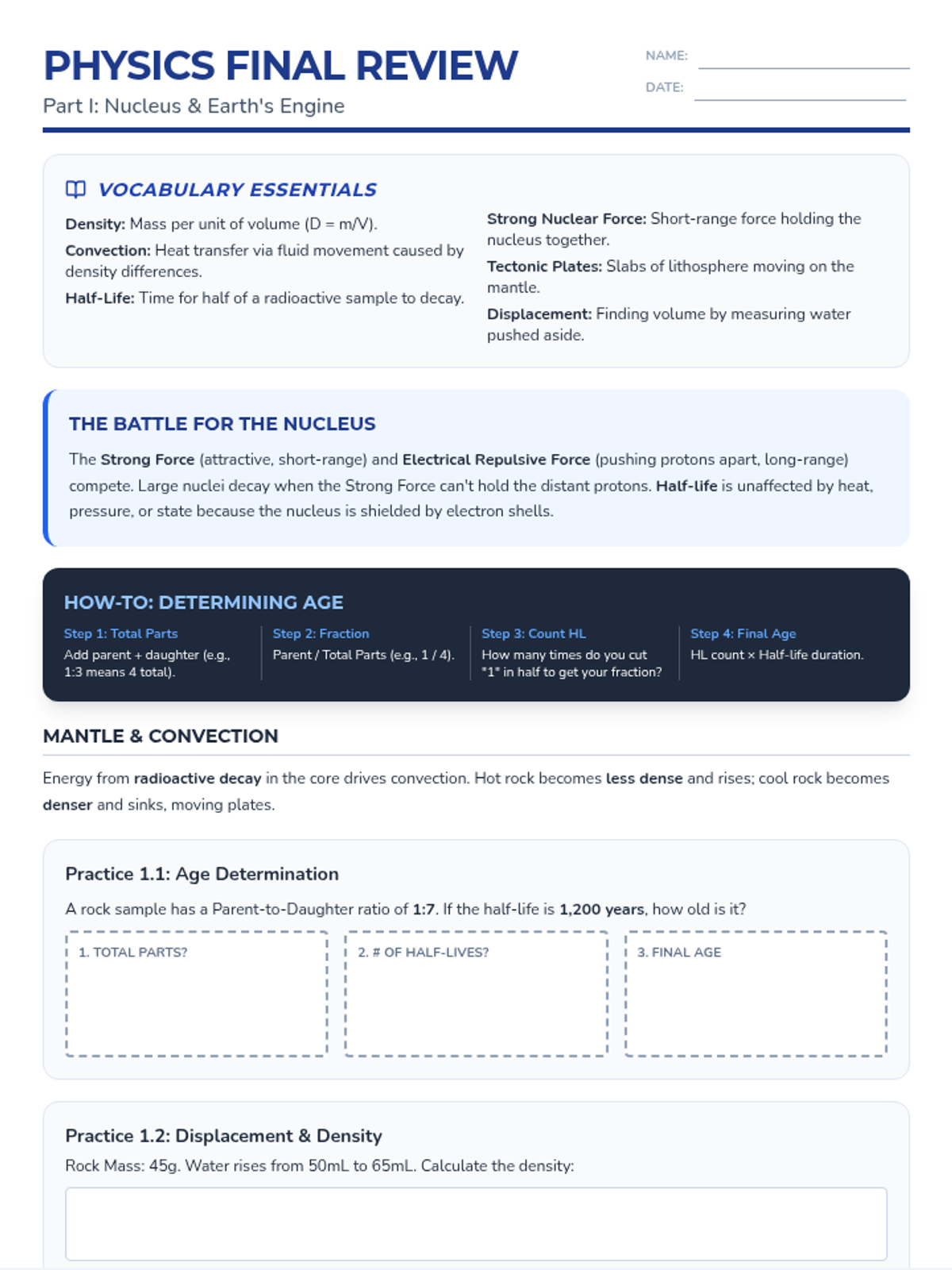
An updated 3-page study guide for 9th-grade Conceptual Physics, featuring a "How-To" guide for determining rock age via radioactive half-lives and enhanced visual elements for better photocopier clarity.
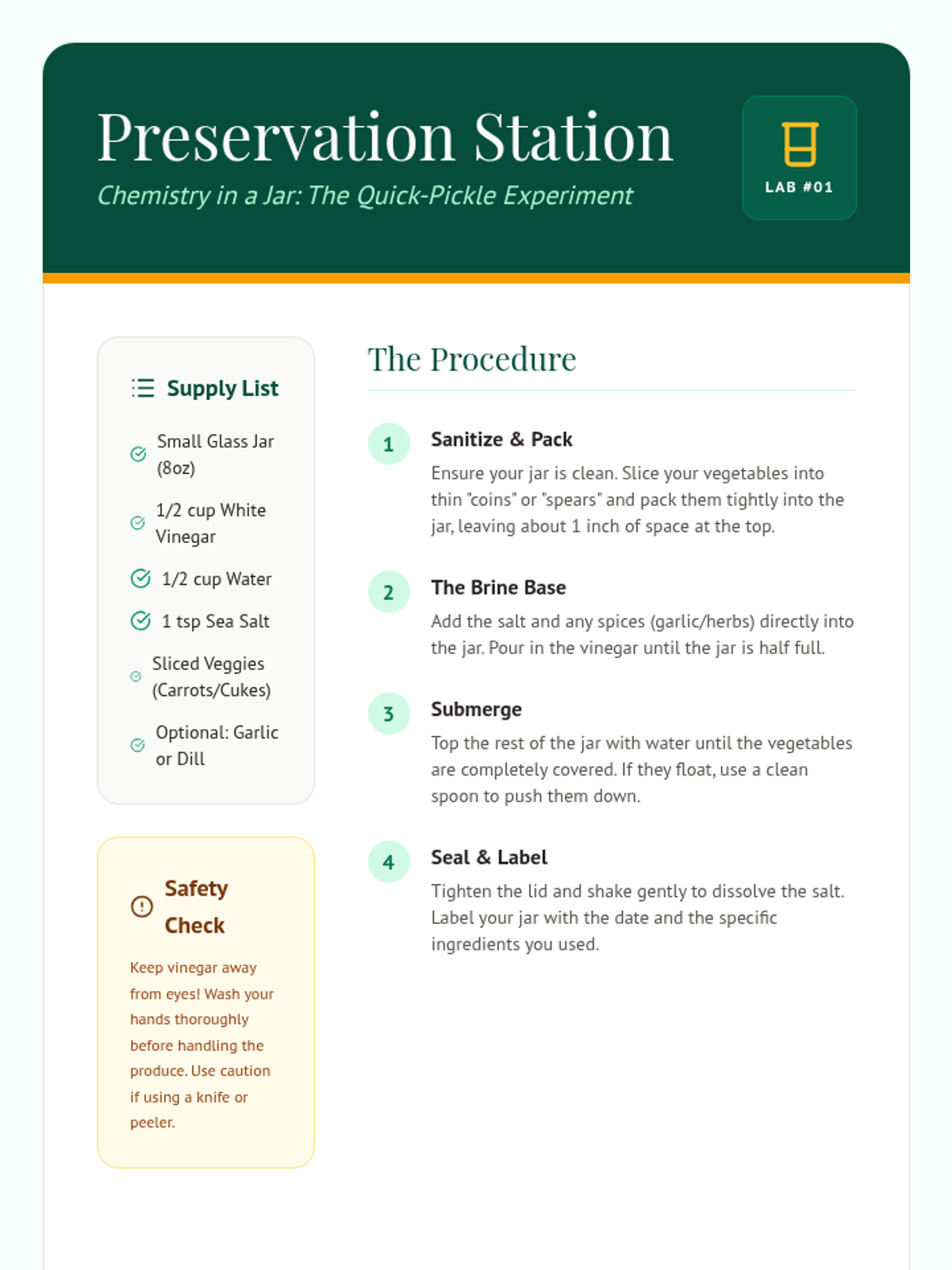
A hands-on activity guide for a food preservation lab. Students learn the 'quick-pickling' method to understand how acidification extends shelf life and prevents food waste.
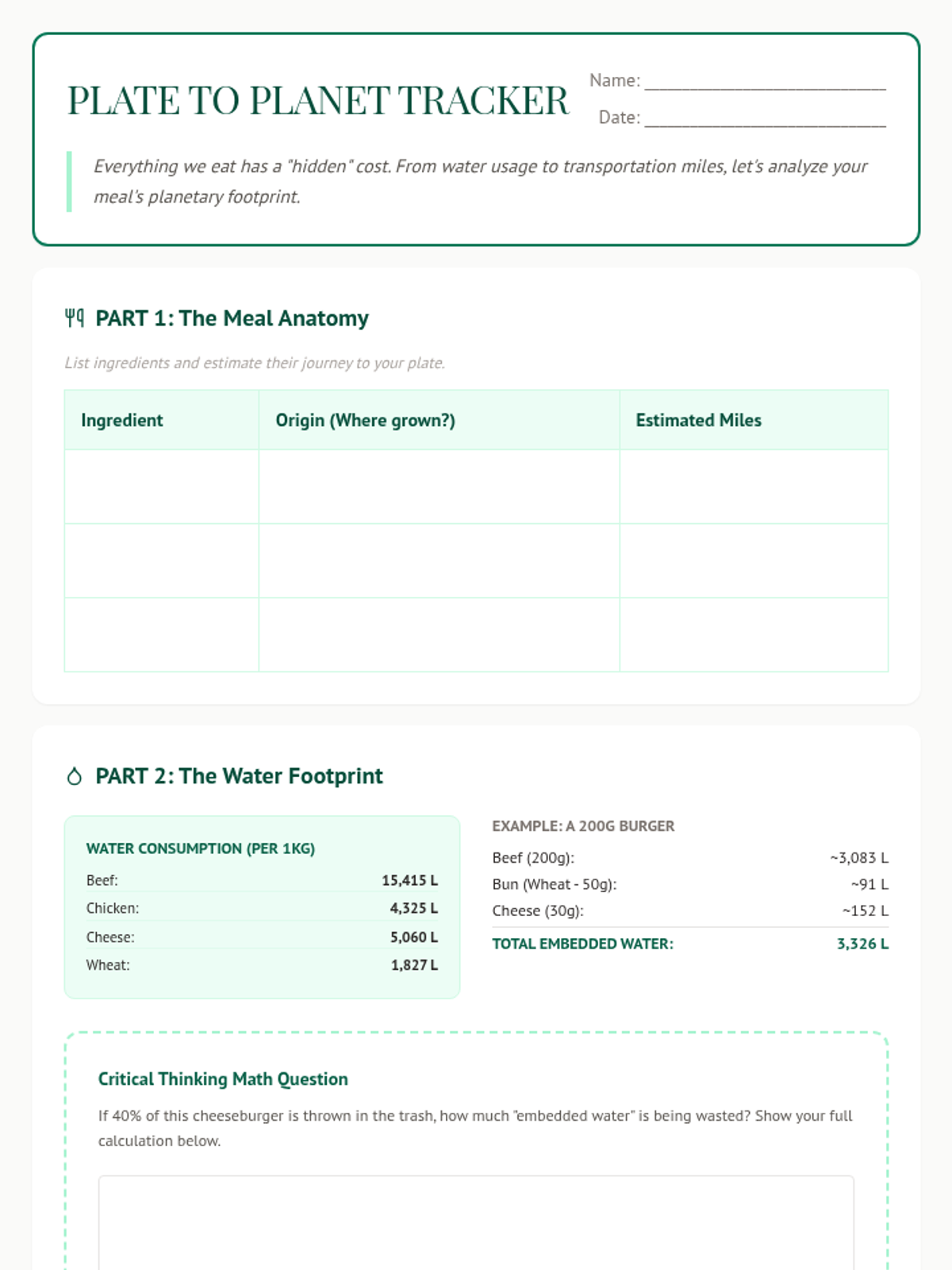
A meal analysis worksheet where students calculate the environmental footprint of common food items, focusing on 'embedded water' costs and the impact of food waste.
An engaging presentation for 'The Kitchen Chemist' lesson, featuring statistics on global food waste, the science of microbial spoilage, and clear instructions for the quick-pickling lab activity.
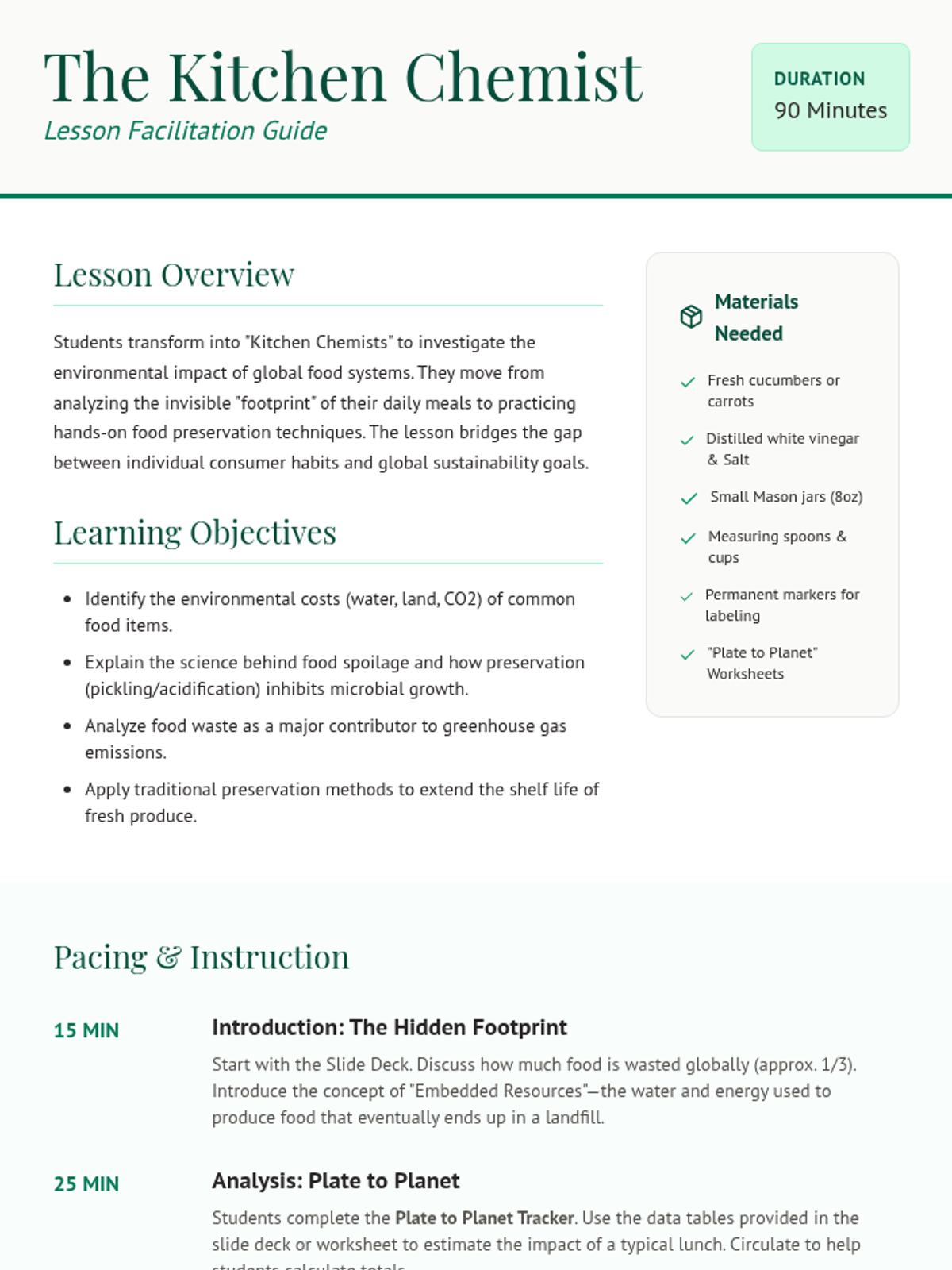
A detailed lesson plan for 'The Kitchen Chemist' workshop, including learning objectives, a 90-minute pacing guide, material lists, and instructional tips for teaching food sustainability and preservation science.
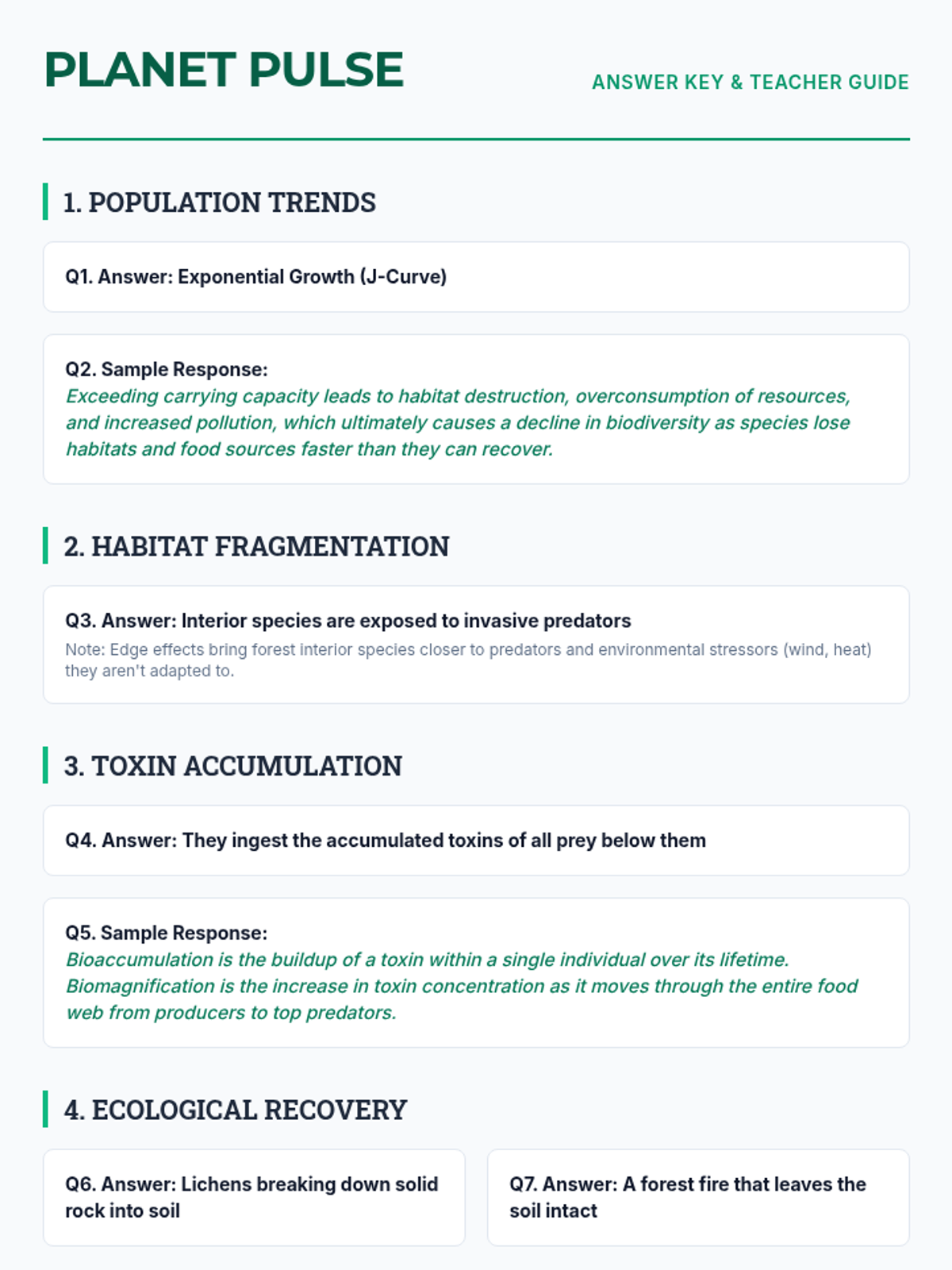
The teacher guide and answer key for the Planet Pulse Worksheet, providing correct answers, rationales for multiple-choice questions, sample open-ended responses, and instructional tips.
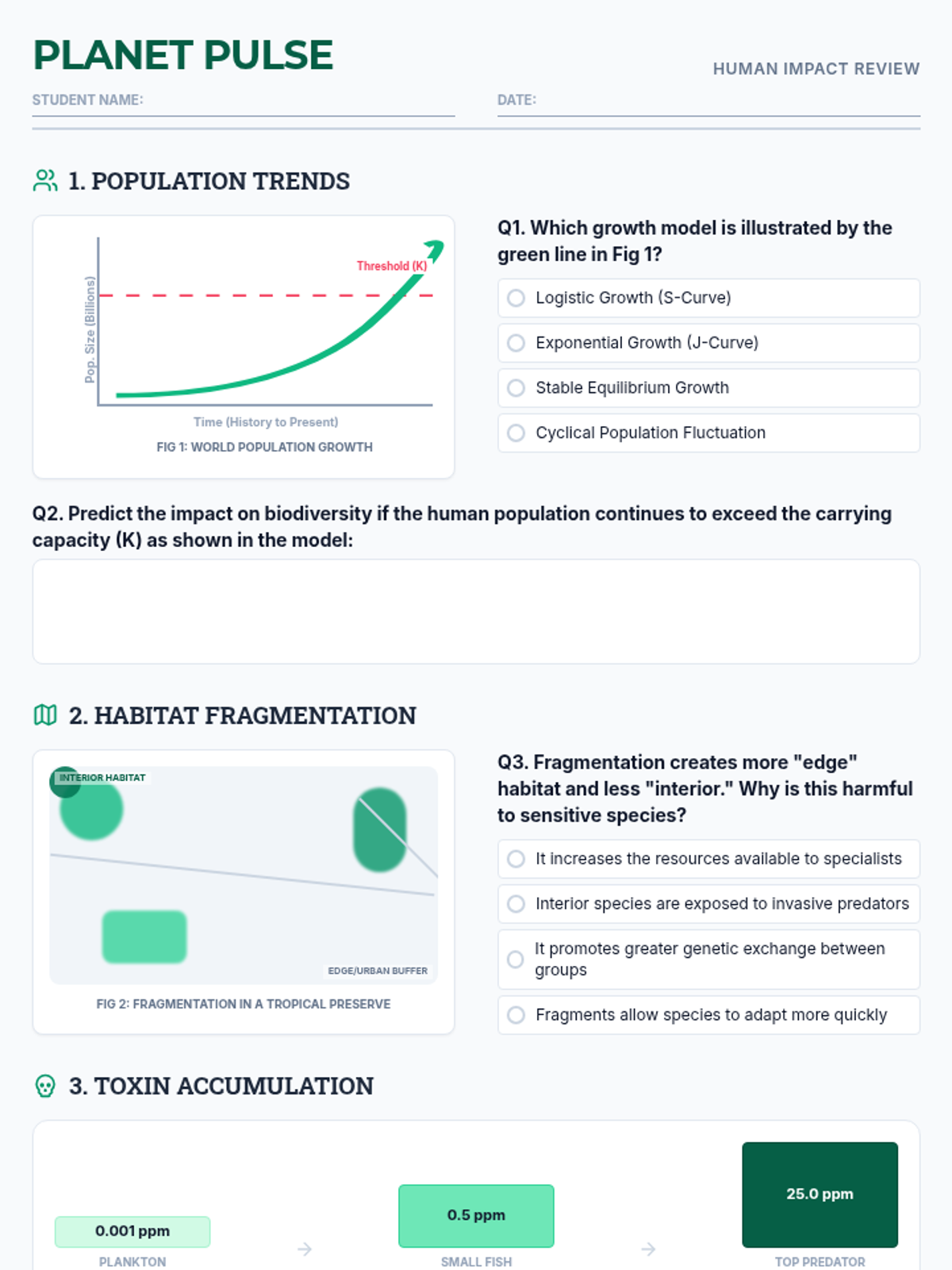
A comprehensive review worksheet for high school biology or environmental science, covering human population trends, biodiversity loss, biomagnification, ecological succession, and waste management. Includes data interpretation tasks, map analysis, and multiple-choice questions.
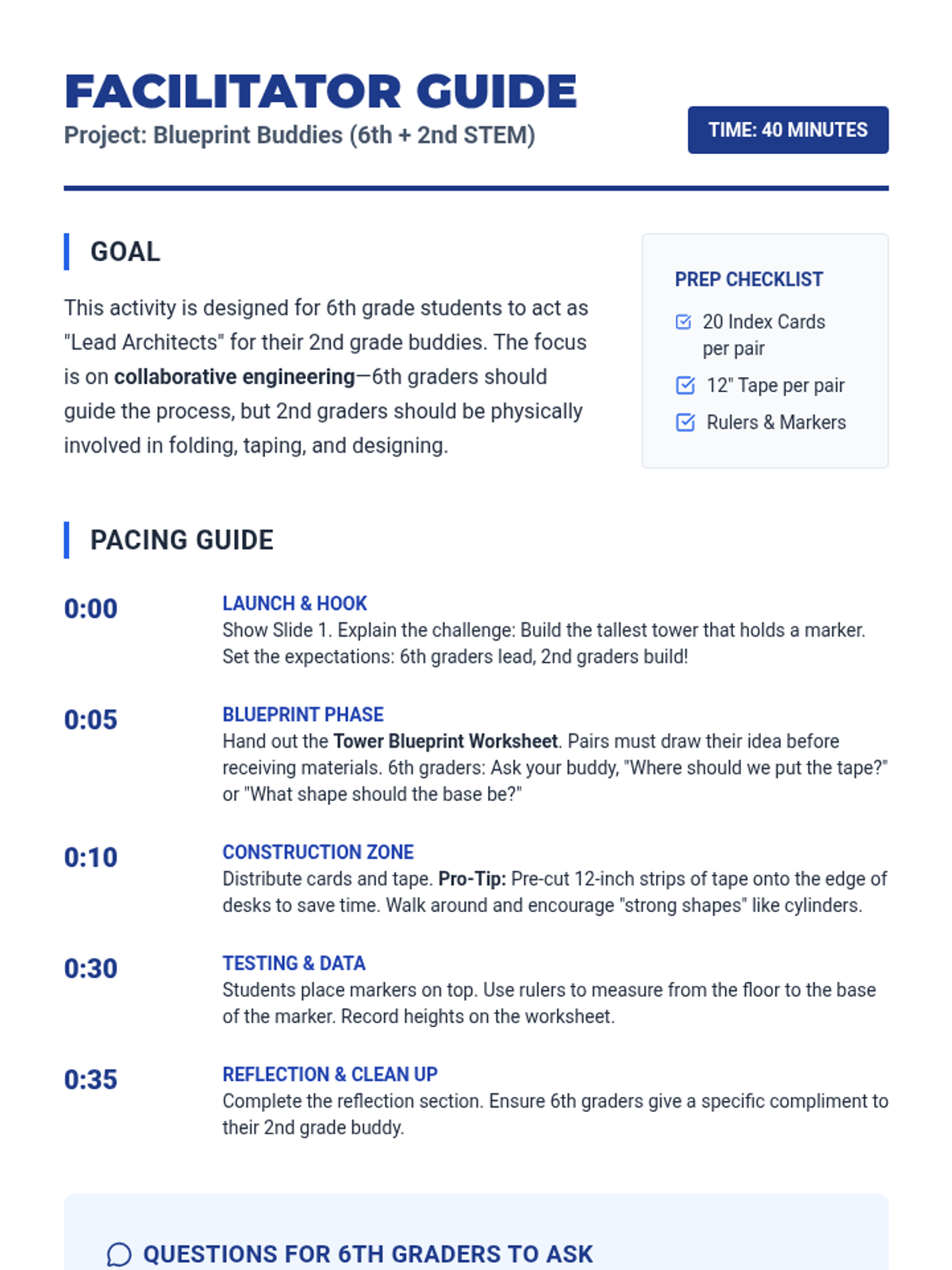
A comprehensive teacher/facilitator guide for managing the buddy STEM challenge. Includes a 40-minute pacing guide, material setup instructions, and specific guiding questions for 6th graders to use to mentor their 2nd grade buddies.
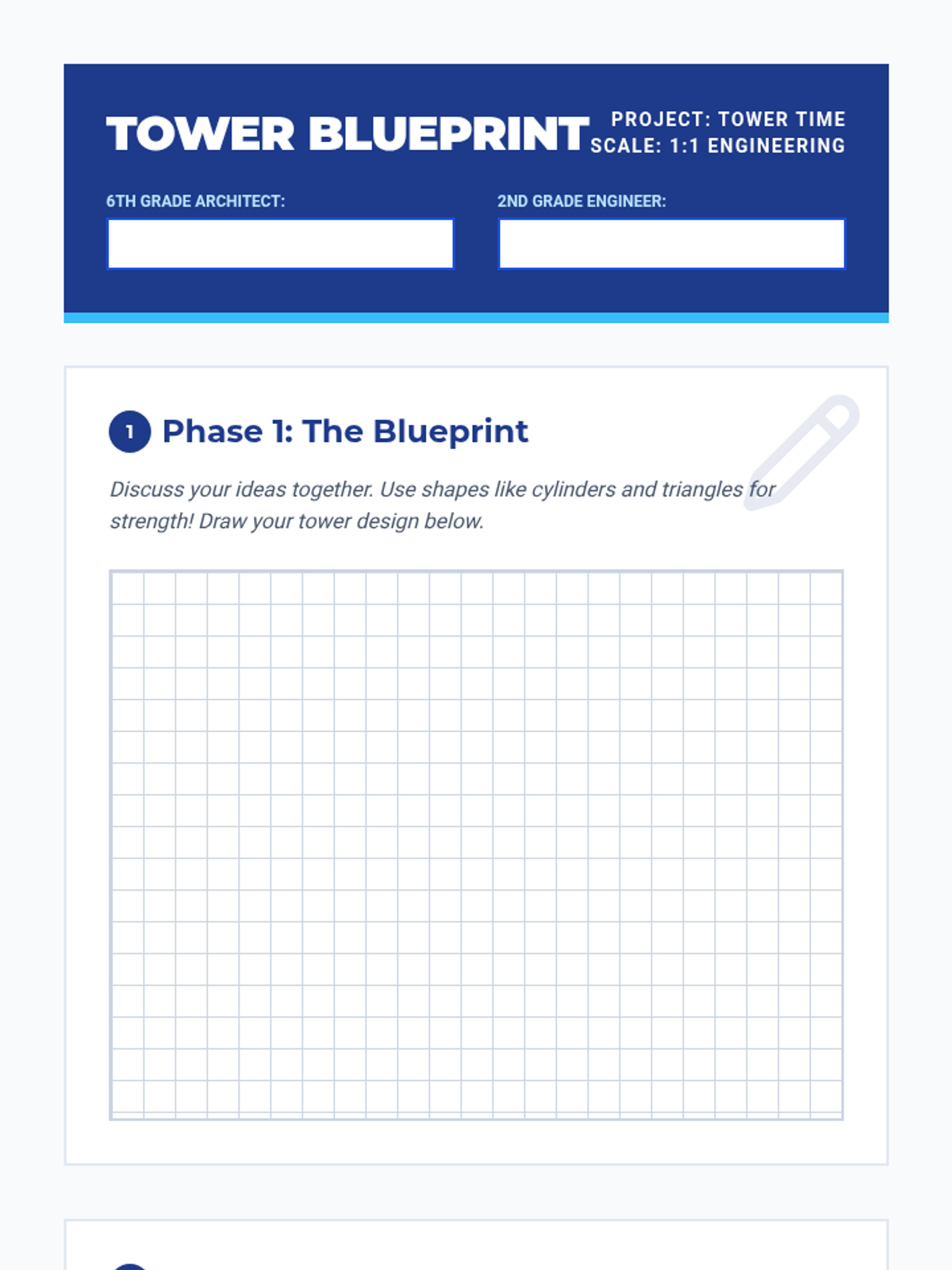
A blueprint-themed worksheet for 6th and 2nd grade buddies to collaborate on during the tower challenge. Includes a grid-based sketching area, a data collection section for measurements, and reflection prompts for the buddy pair.
A visual guide for a 6th and 2nd grade buddy STEM challenge. These slides introduce the 'Tower Time' challenge, list materials, provide engineering tips, and outline the 40-minute schedule.
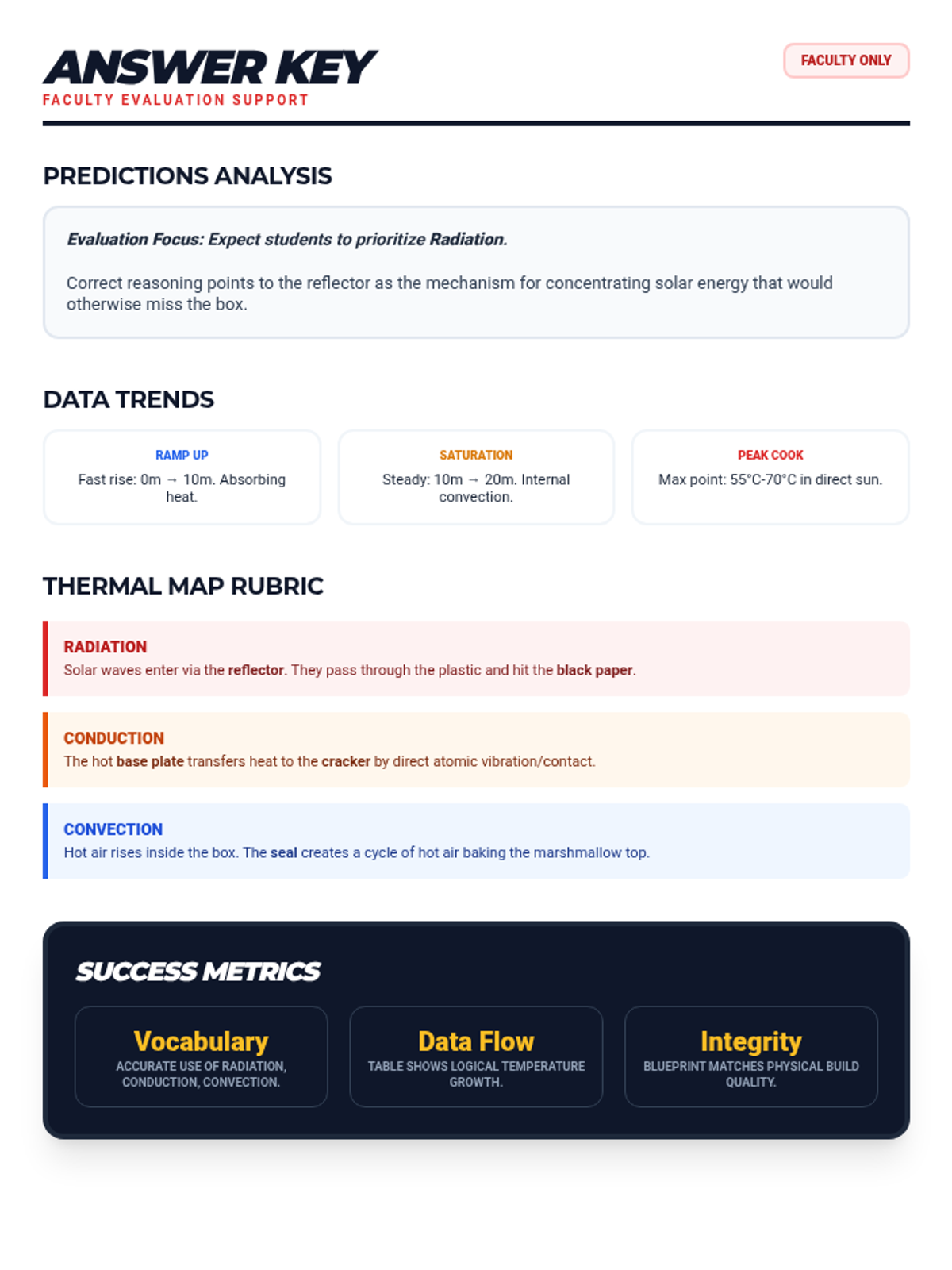
A teacher-facing answer key and evaluation guide. Revised to fix page break issues, improve text contrast for expected reasoning, and fix grid rendering in the success metrics section.
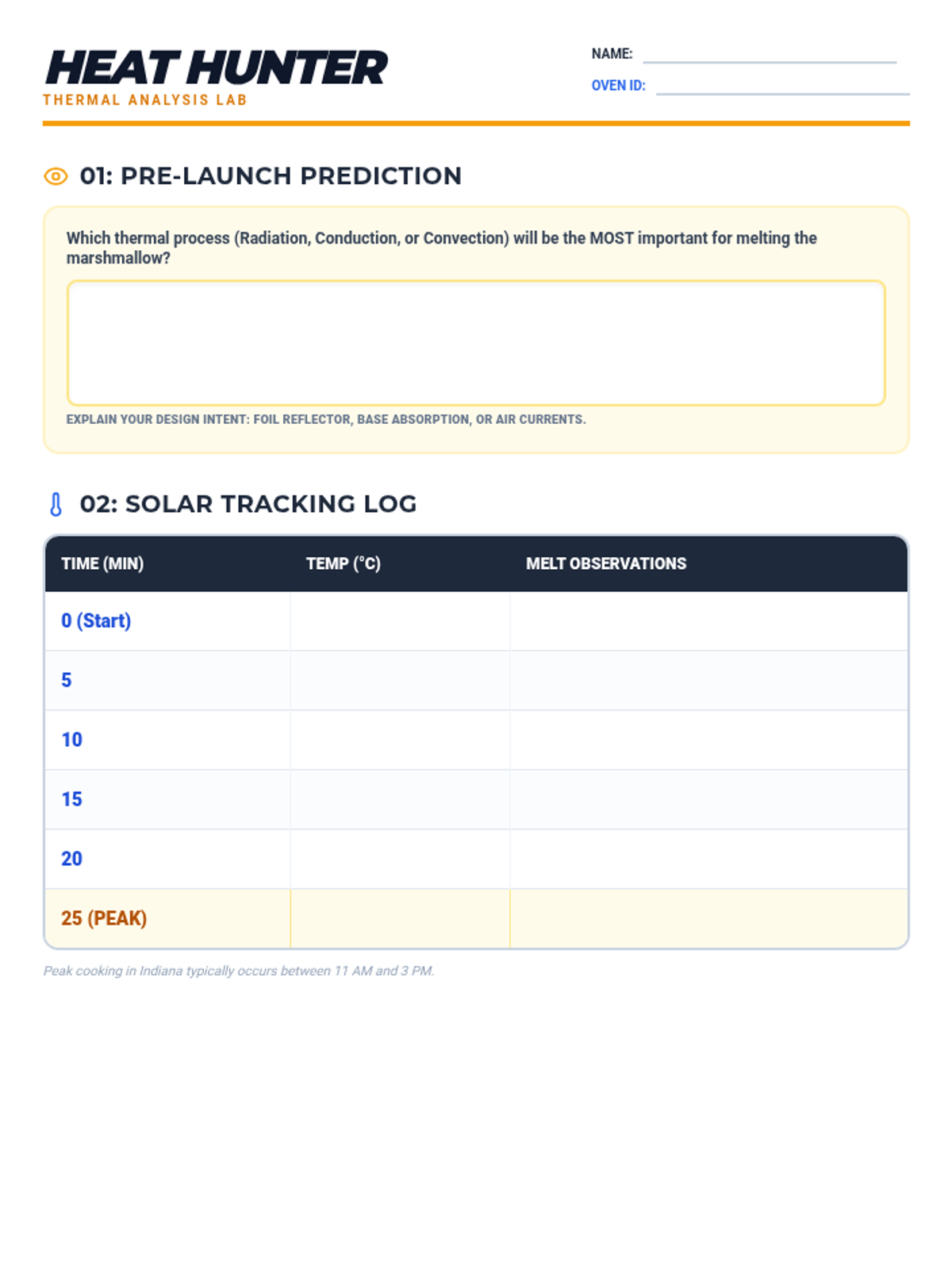
A student worksheet for recording temperature data and analyzing heat transfer methods. Revised with fixed page breaks, increased student work space (h-32), and clearly defined work areas.