A visual presentation featuring a warm-up, embedded abacus tutorial video, and examples of standard vs. expanded form decomposition.
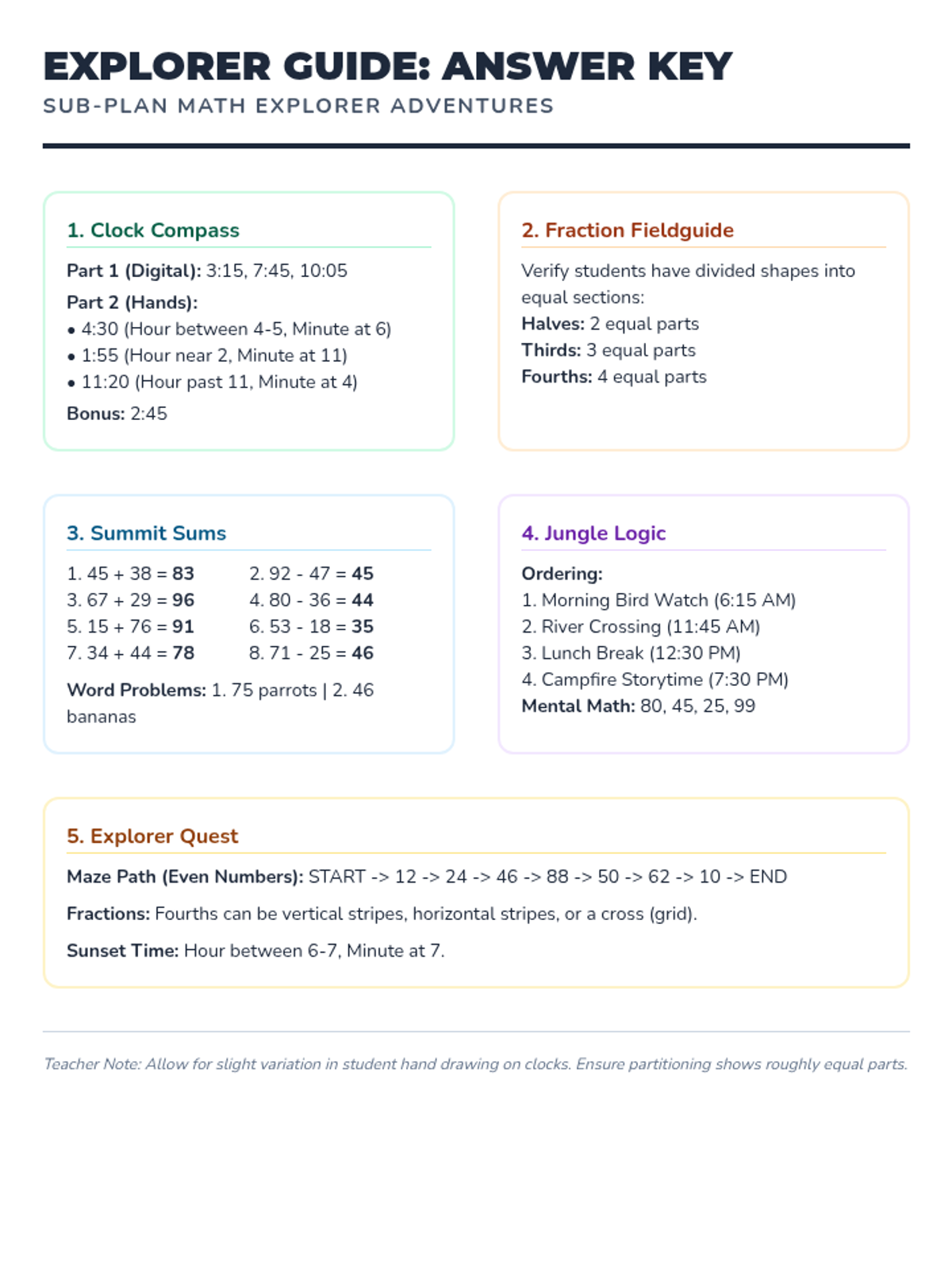
A condensed teacher's answer key for the 5-page Math Explorer Adventures sub-plan packet.
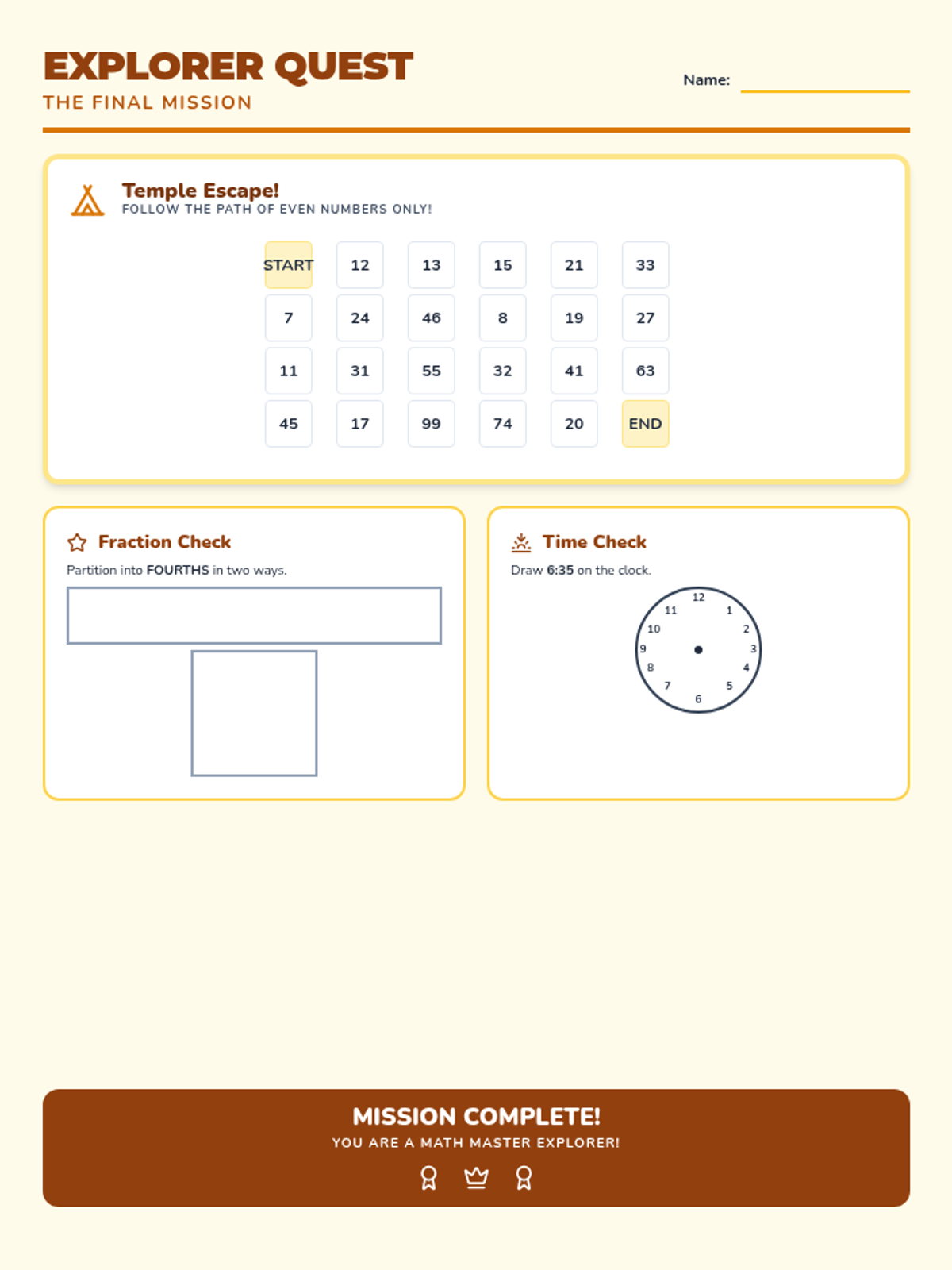
A final review worksheet in a maze format. This version fixes the maze logic (continuous even-number path), adds all clock numbers, and ensures everything fits on a single page.
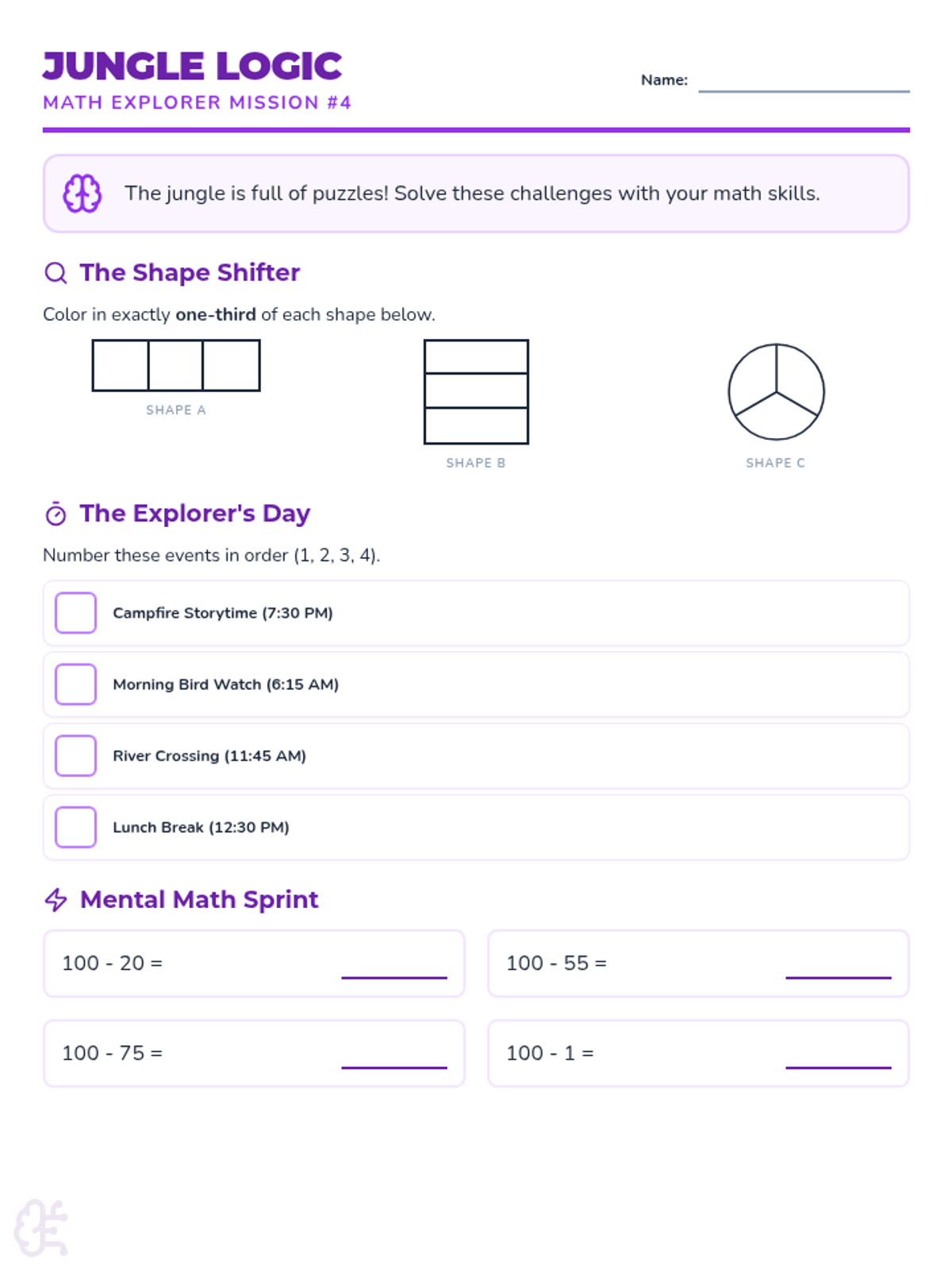
A critical thinking worksheet featuring fractions, time sequencing, and mental math subtraction. This version ensures all content fits on one page with high contrast for work areas.
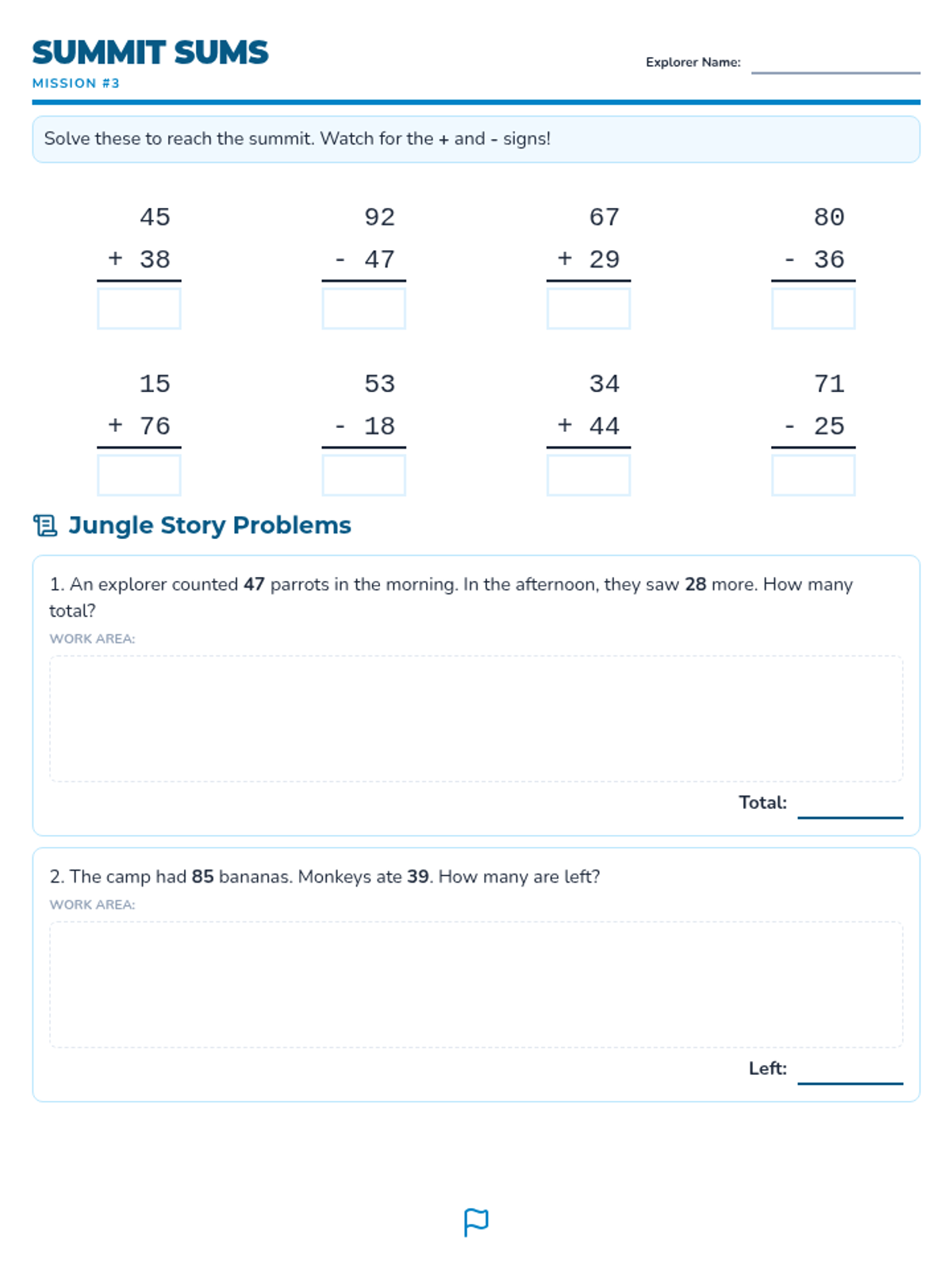
An addition and subtraction worksheet featuring two-digit numbers with and without regrouping. This version provides large work areas for students and fits on a single page.
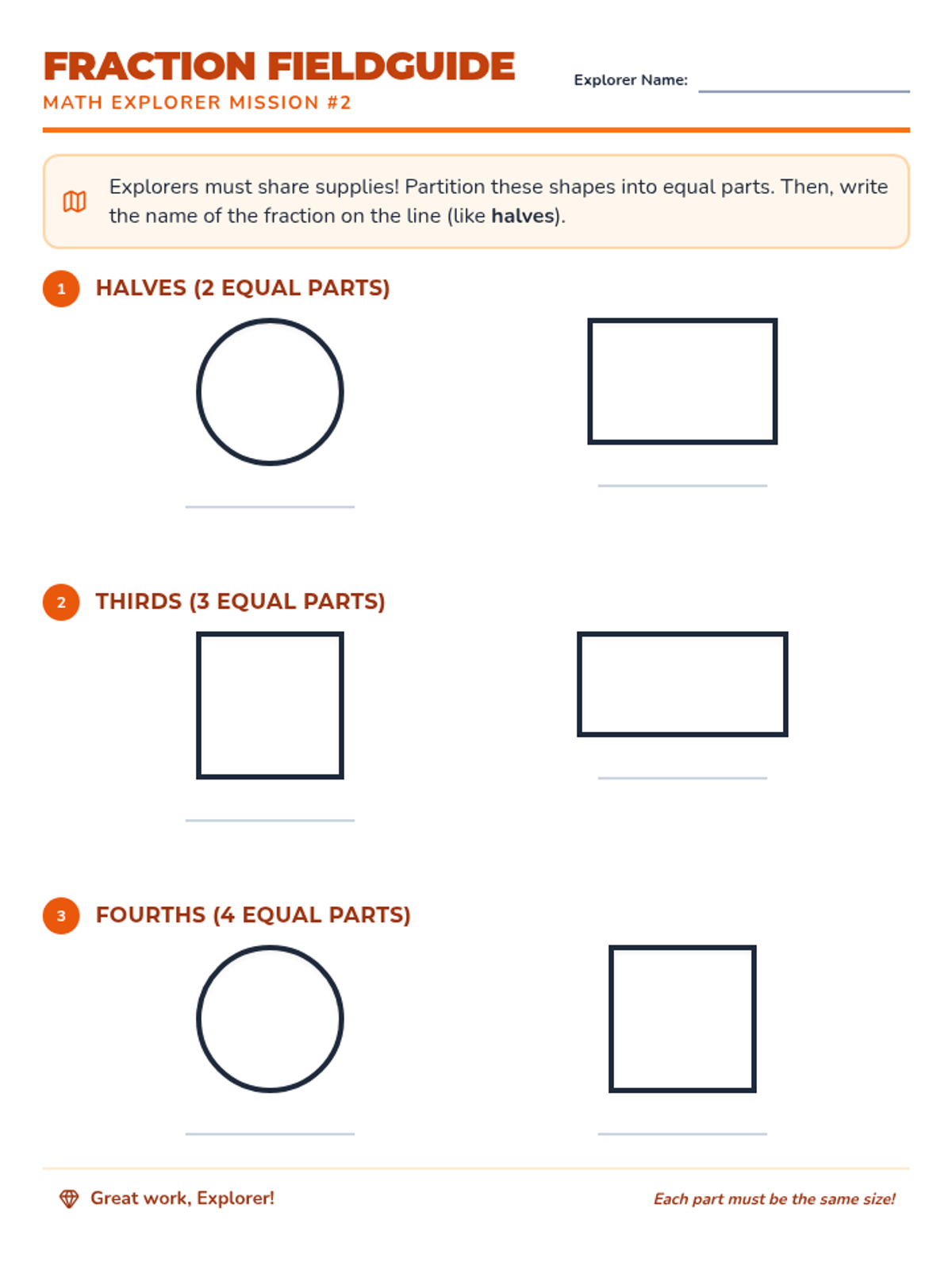
A geometry-focused worksheet where students practice partitioning circles, squares, and rectangles into halves, thirds, and fourths. This version fits on a single page with labeling lines.
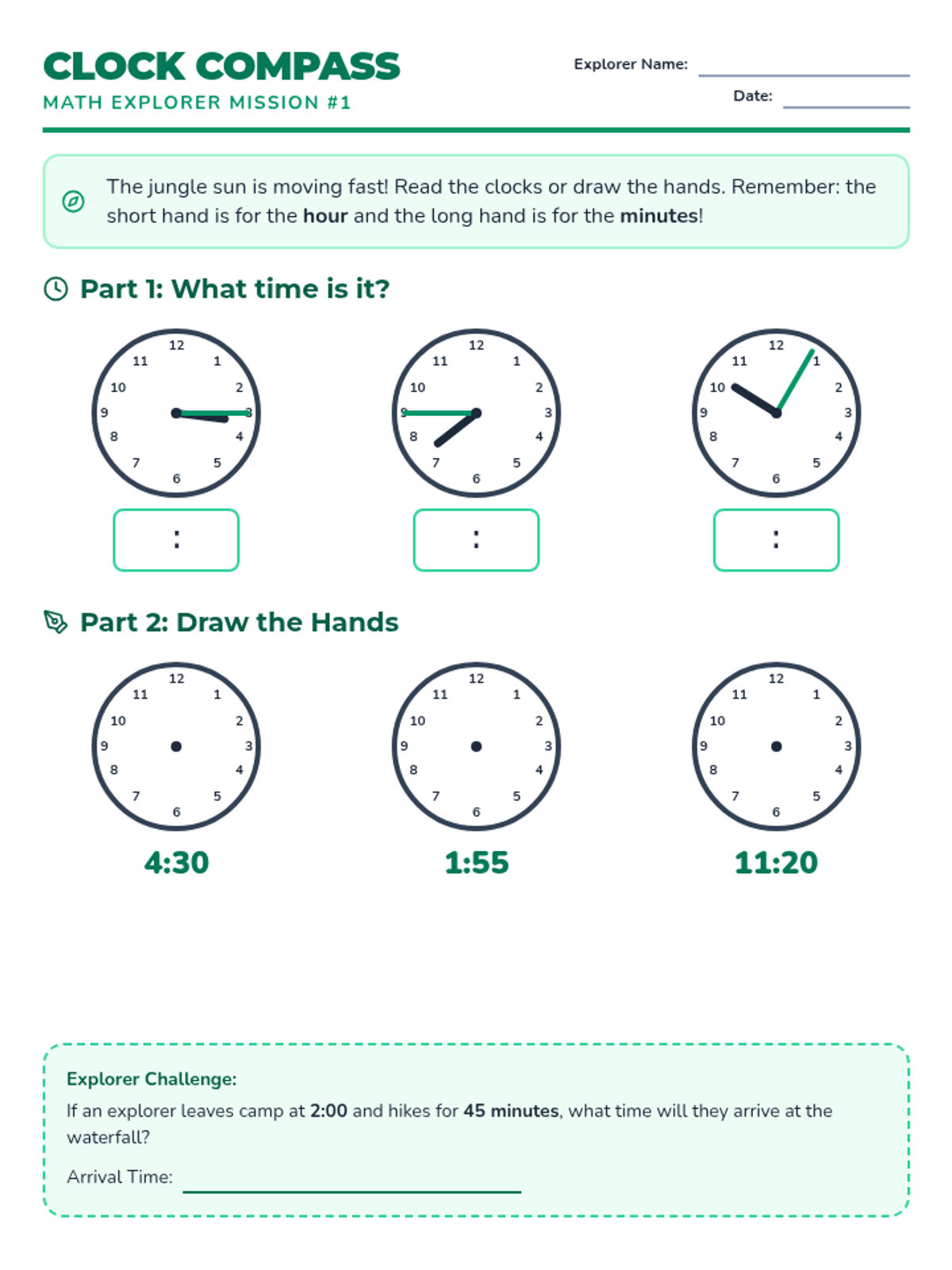
A clock-themed worksheet for 2nd graders to practice telling time to the nearest 5 minutes, including reading clocks and drawing clock hands. This version includes all clock numbers and fits on a single page.
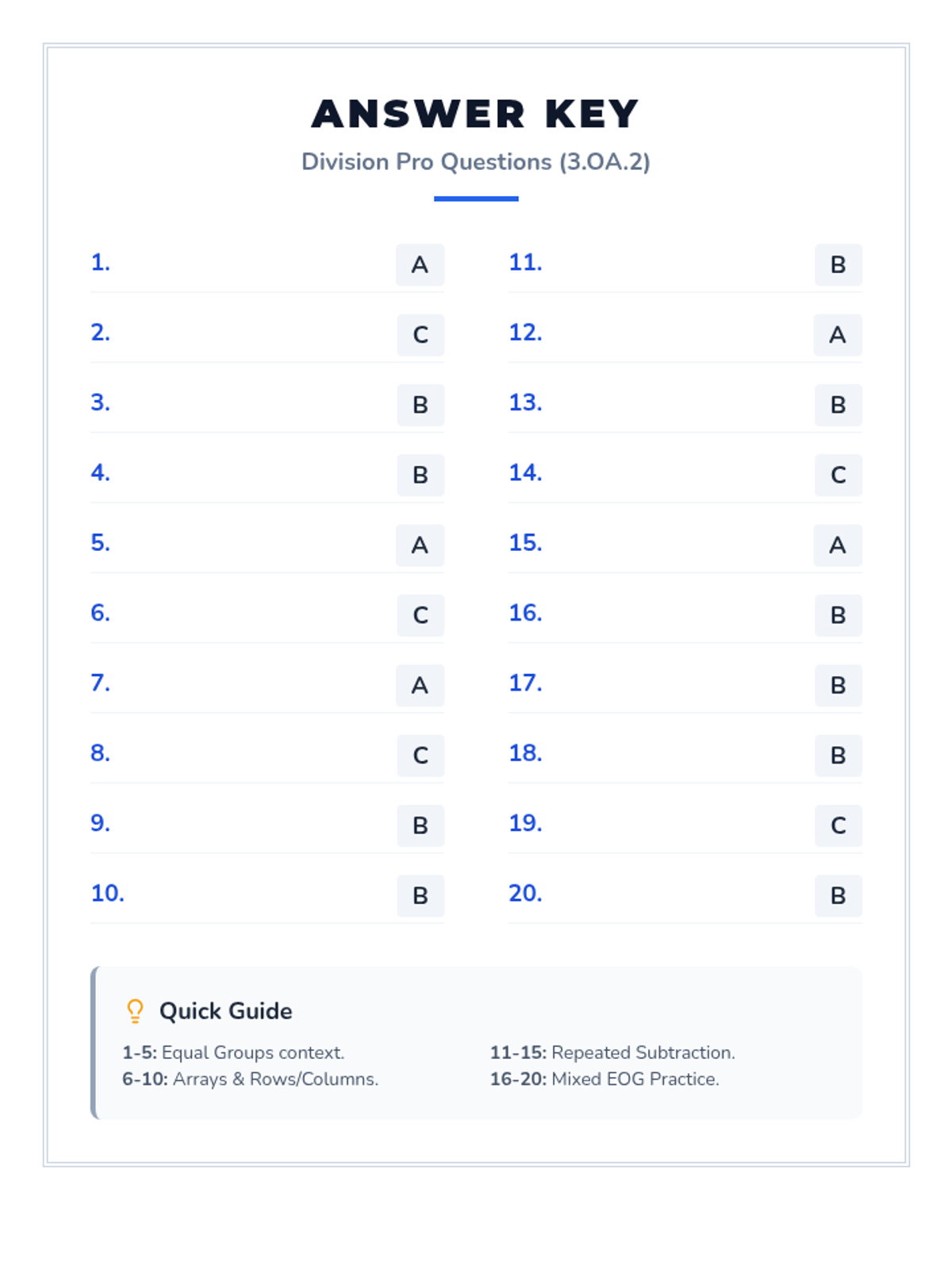
Answer key for the Division Pro Questions, including quick reference table and grading tips.
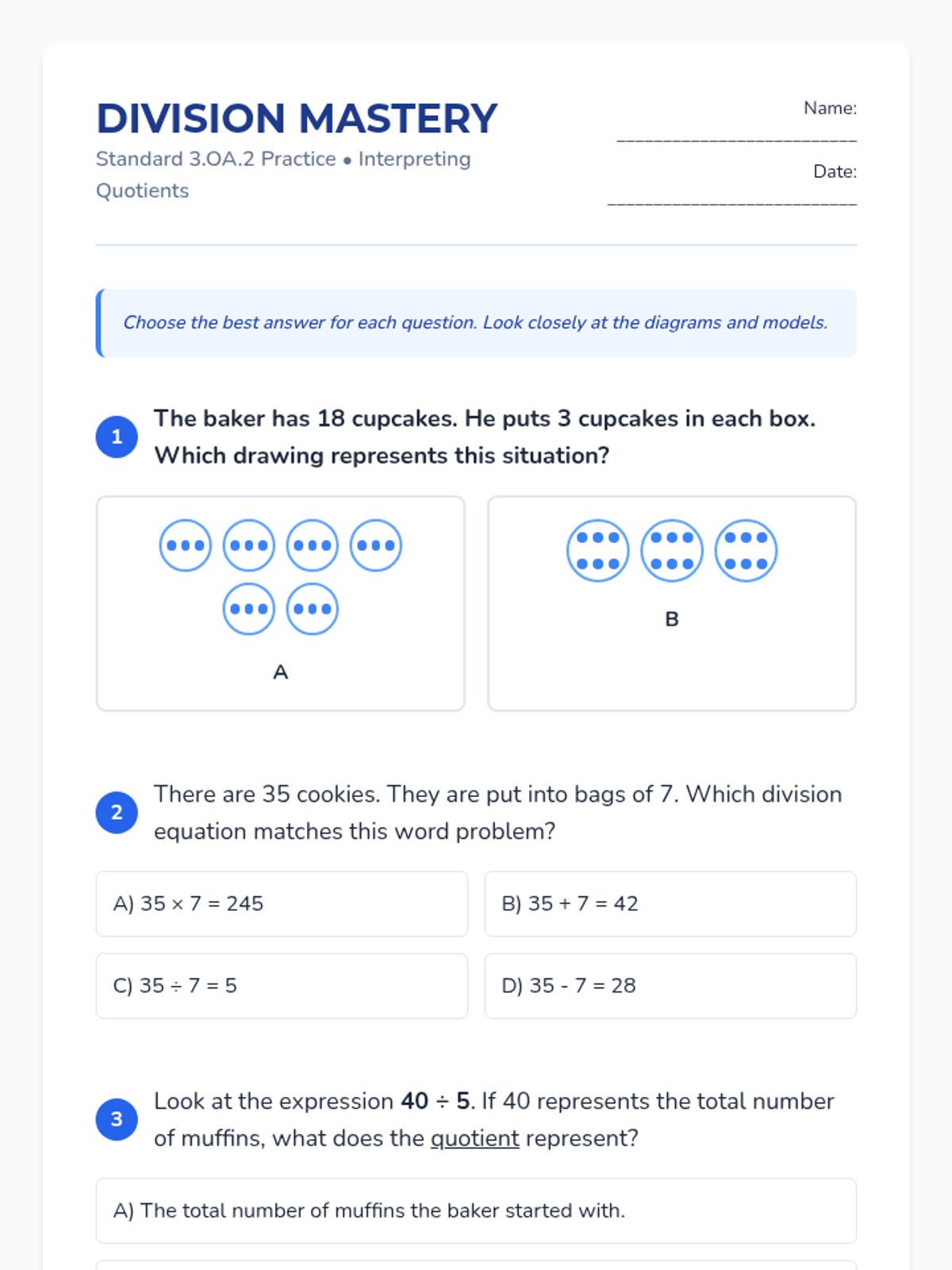
A 20-question multiple-choice practice document covering equal groups, arrays, and repeated subtraction for standard 3.OA.2.
A presentation introducing three core models for division (equal groups, arrays, and repeated subtraction) using a bakery theme, aligned with 3.OA.2.
Instructional slides for Day 5 cumulative review. Consolidates multi-step problem solving and geometric hierarchy concepts to prepare students for the final mastery check.
Instructional slides for Day 4 covering 3.G.1 (attribute hierarchy). Explores the relationship between squares, rectangles, and rhombuses using logic and categorization.
Instructional slides for Day 3 introduction to 3.G.1. Covers quadrilateral attributes, shared properties of rectangles/rhombuses, and identifying pentagons and hexagons. Revised for better alignment and visibility.
Instructional slides for Day 2 covering 3.OA.8 (multiplication/mixed operations). Features step-by-step problem breakdowns and collaborative equation building.
Instructional slides for Day 1 covering 3.OA.8 (addition/subtraction). Includes vocabulary, 'I Do' modeling, 'We Do' collaborative practice, and the 'You Do' independent mission.
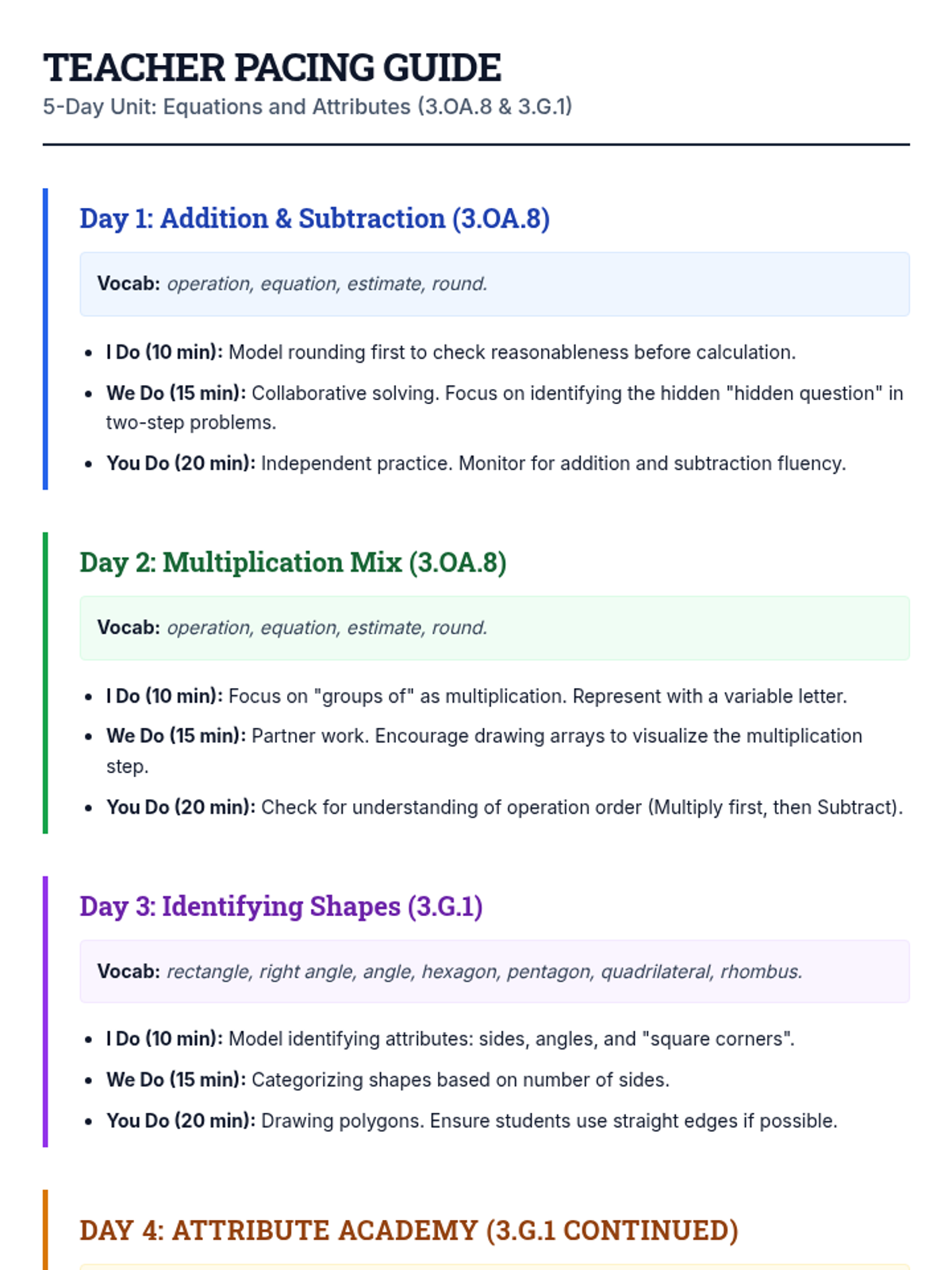
A comprehensive teacher's guide and pacing manual for the 5-day unit. Revised with full vocabulary definitions and a high-legibility answer key section.
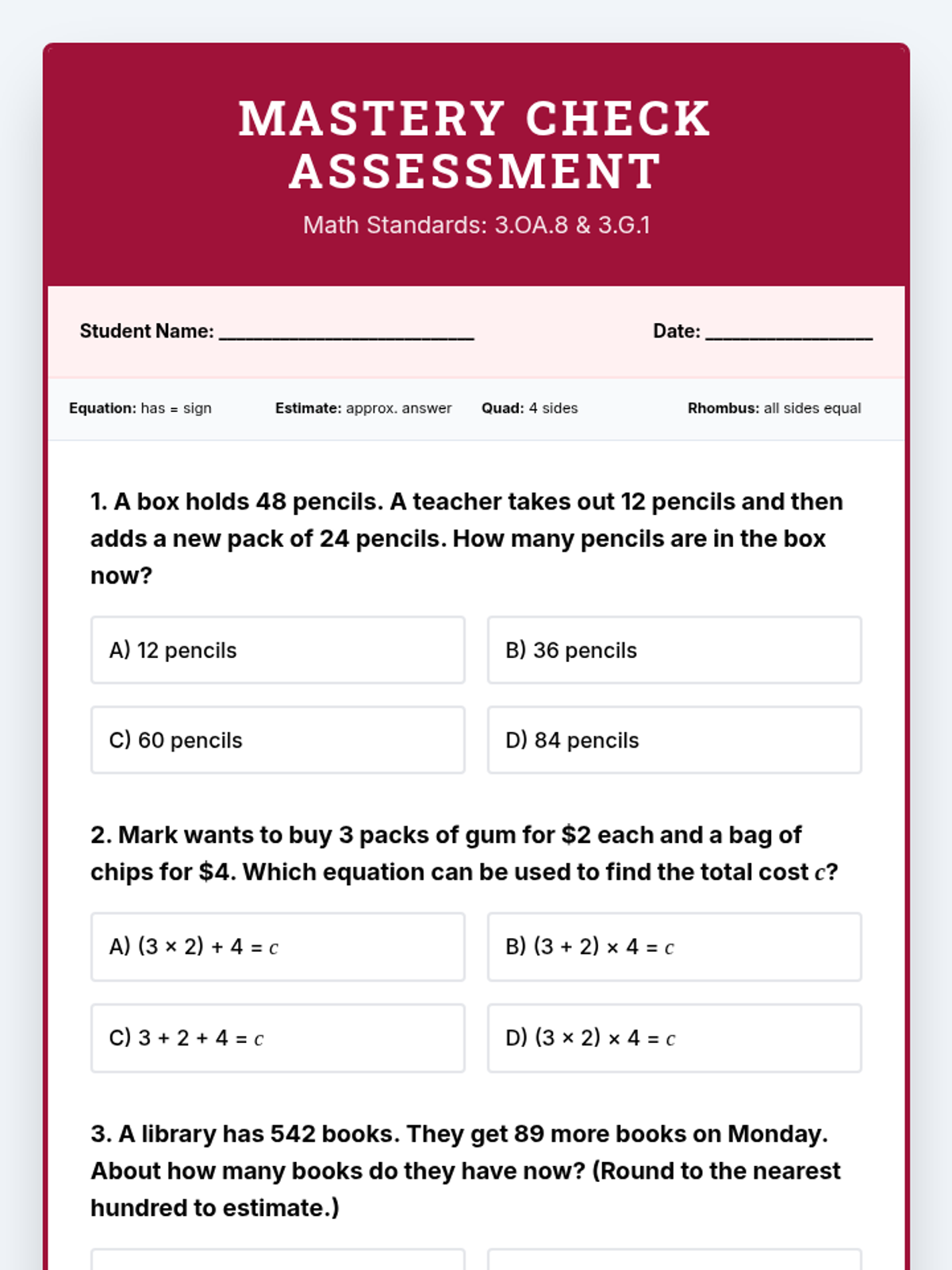
A 10-question final assessment covering 3.OA.8 and 3.G.1. Revised to eliminate awkward page breaks, standardize work area styling, and include a helpful vocabulary reference.
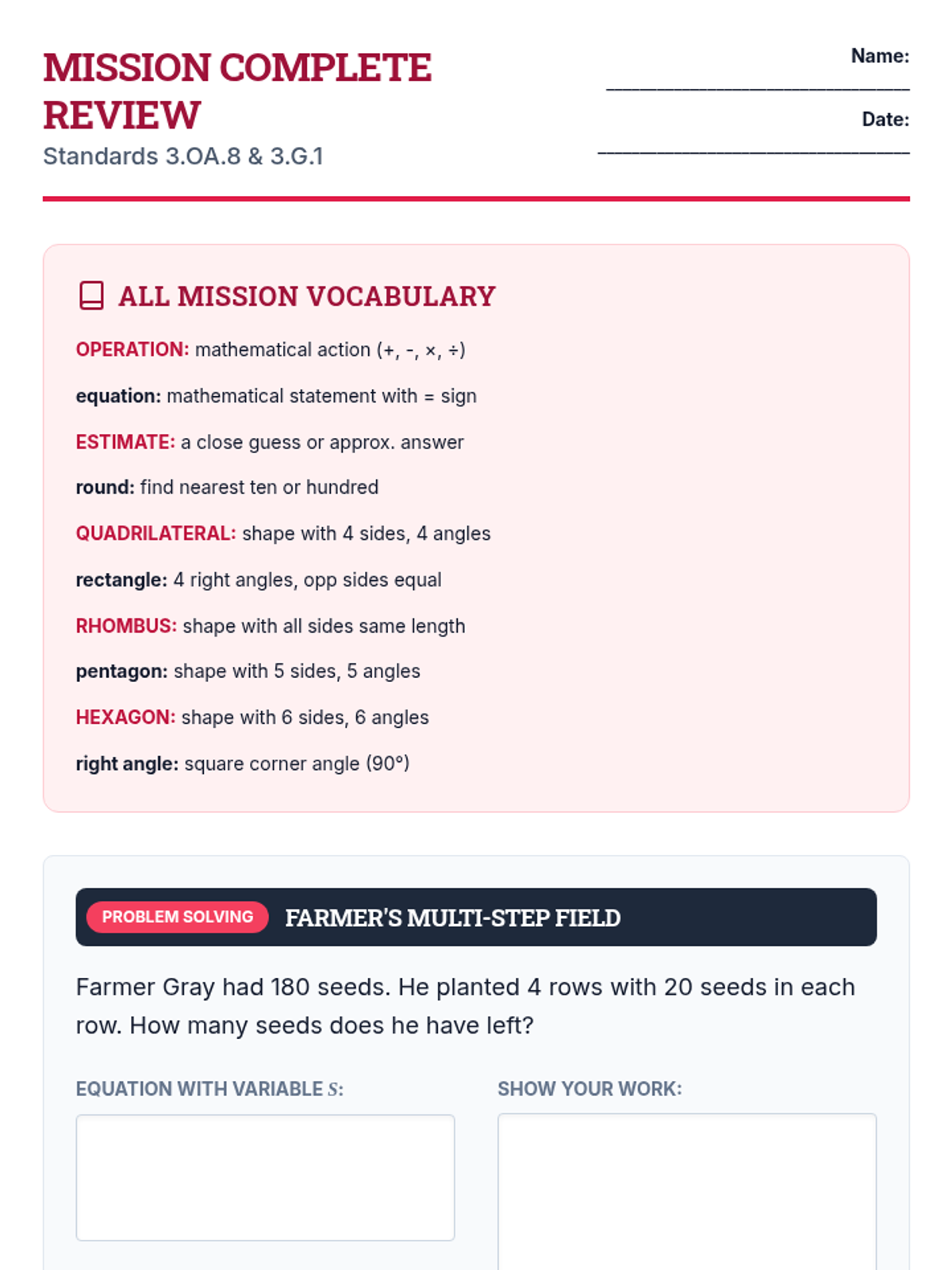
A Day 5 comprehensive review worksheet. Revised with much better font sizing for vocabulary and larger student workspaces. Fits review content on a single page for efficiency.
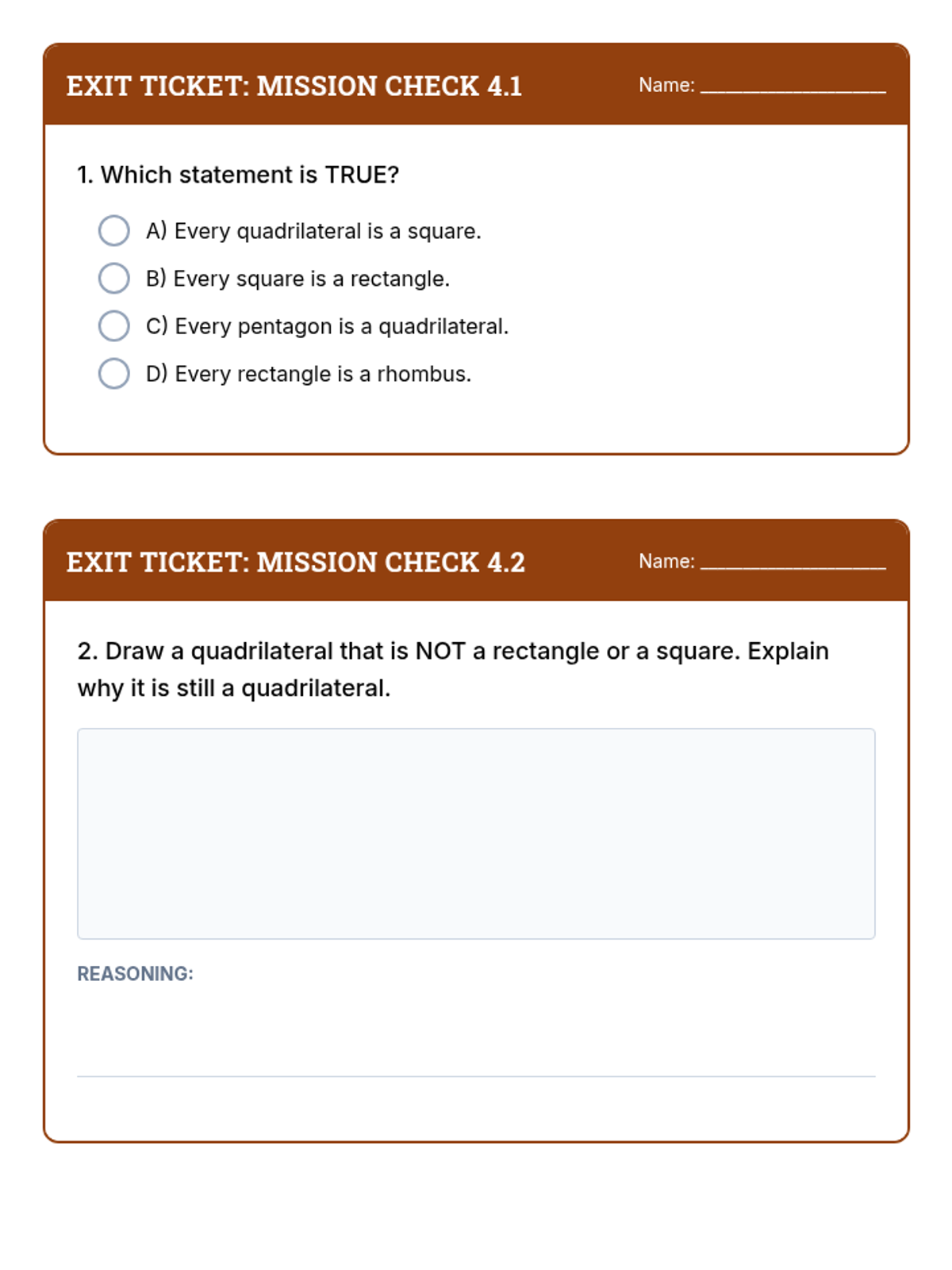
Two EOG-style exit tickets for Day 4. Focuses on logical statements about shape categories and drawing/justifying non-standard quadrilaterals.
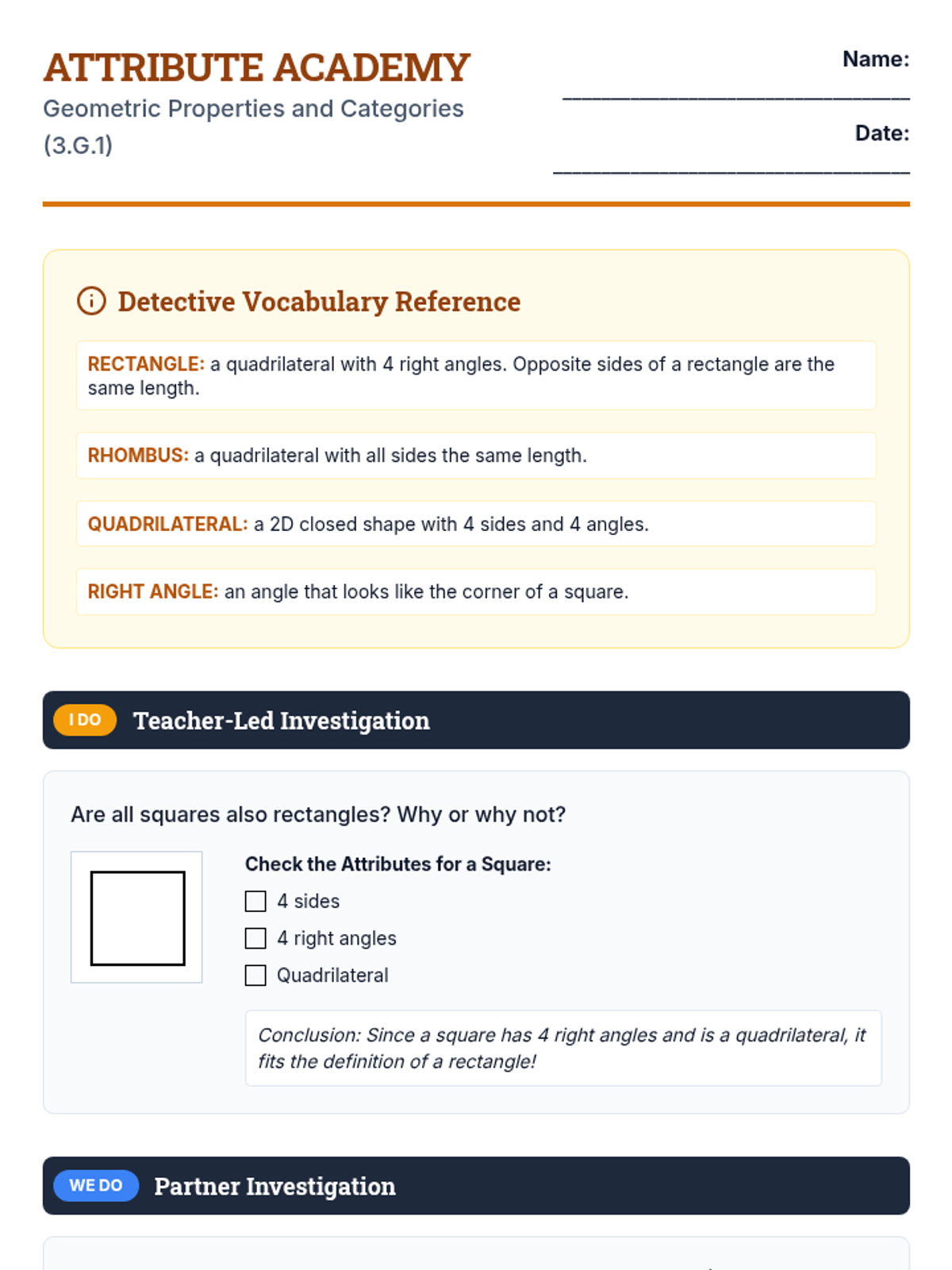
A daily worksheet for Day 4 covering 3.G.1 (geometric attributes). Revised with larger sorting boxes and a more spacious classification table.
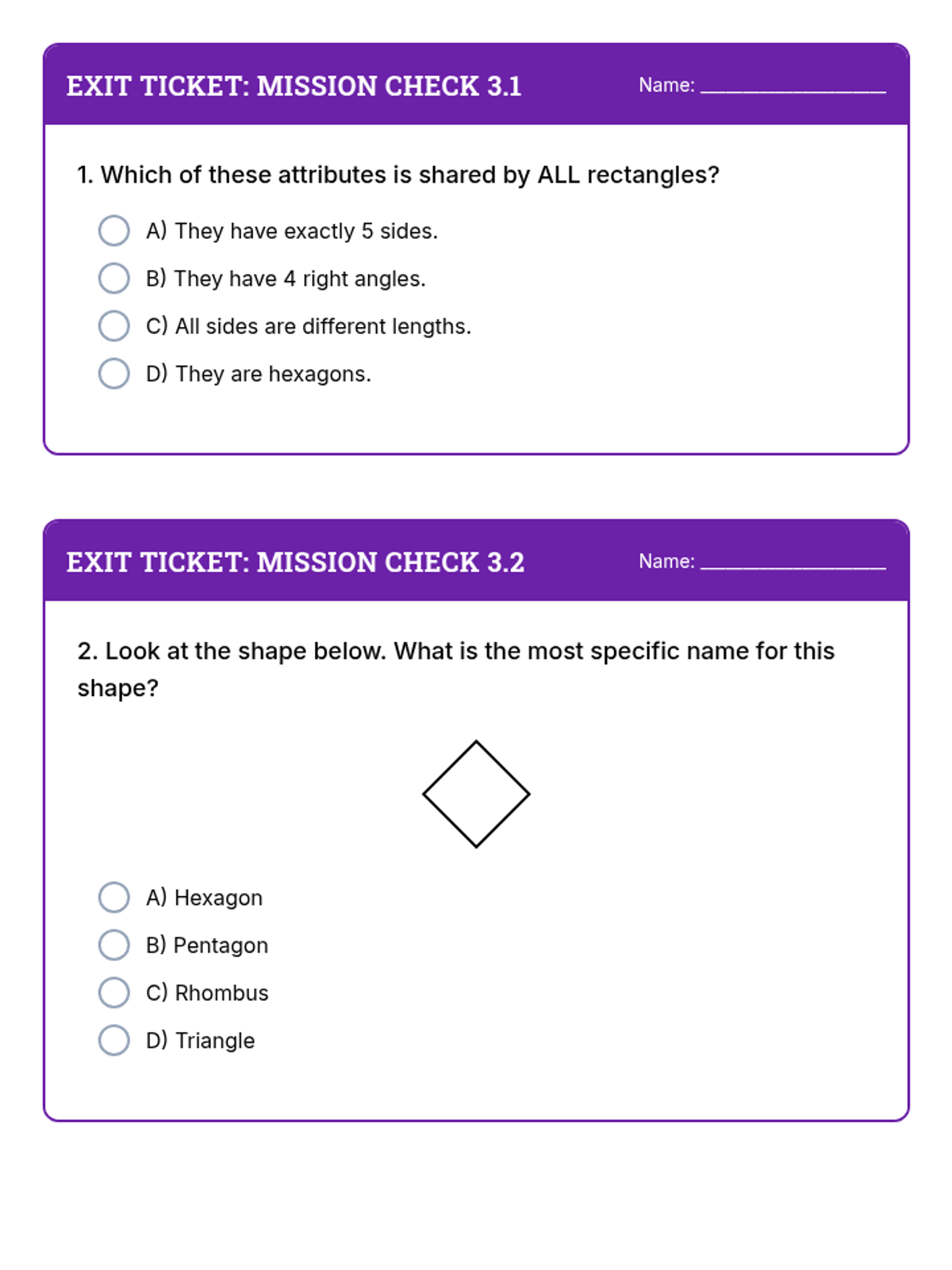
Two EOG-style exit tickets for Day 3. Focuses on identifying shared attributes of rectangles and correctly naming quadrilaterals like rhombuses.
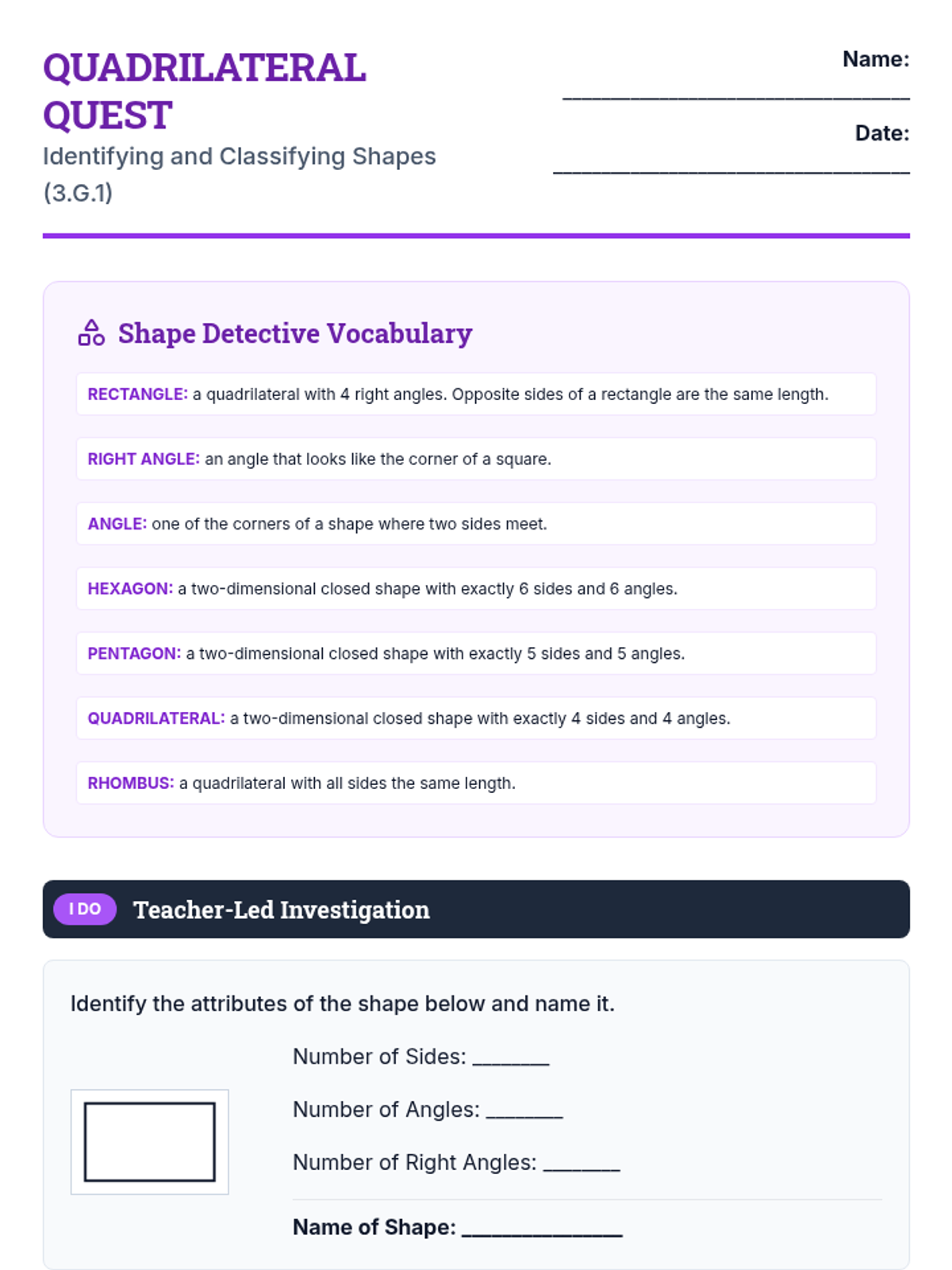
A daily worksheet for Day 3 covering 3.G.1. Revised with improved section distribution across pages and larger drawing/work areas for students.
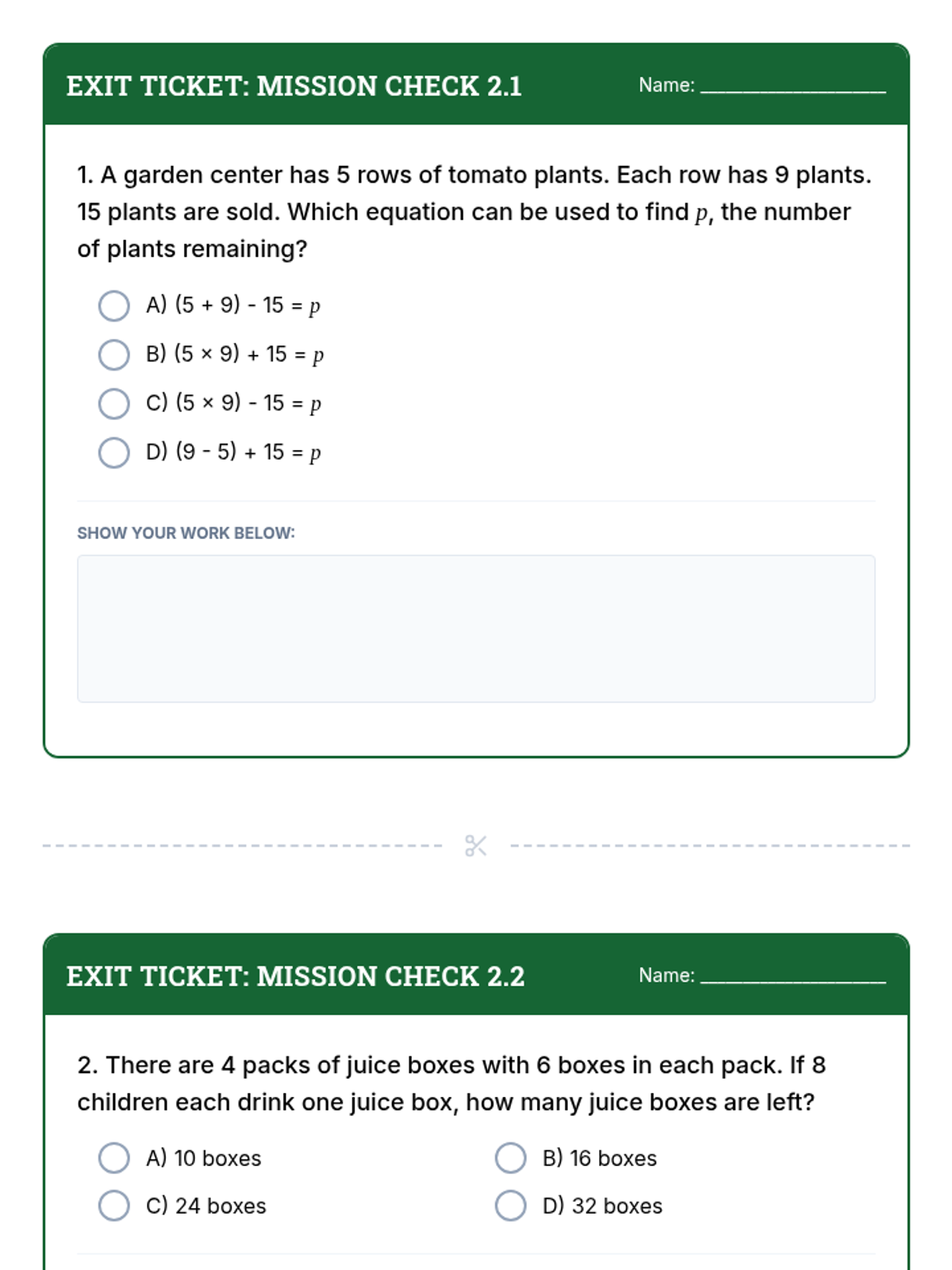
Two EOG-style exit tickets for Day 2. Revised with deeper show-your-work areas and consistent layout across both tickets.
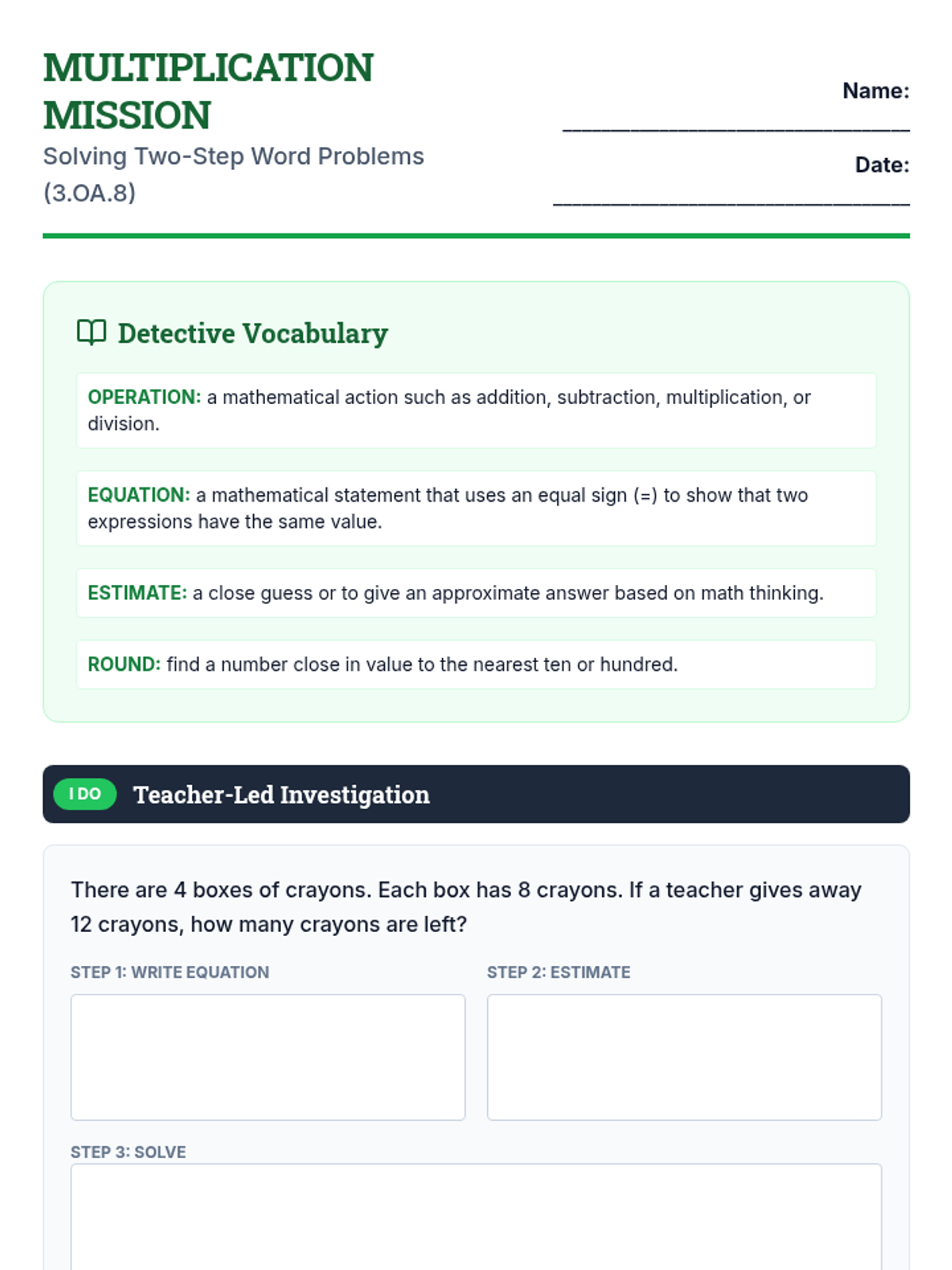
A daily worksheet for Day 2 covering 3.OA.8 (multiplication/division focus). Revised for consistent work box sizes and improved page break stability.
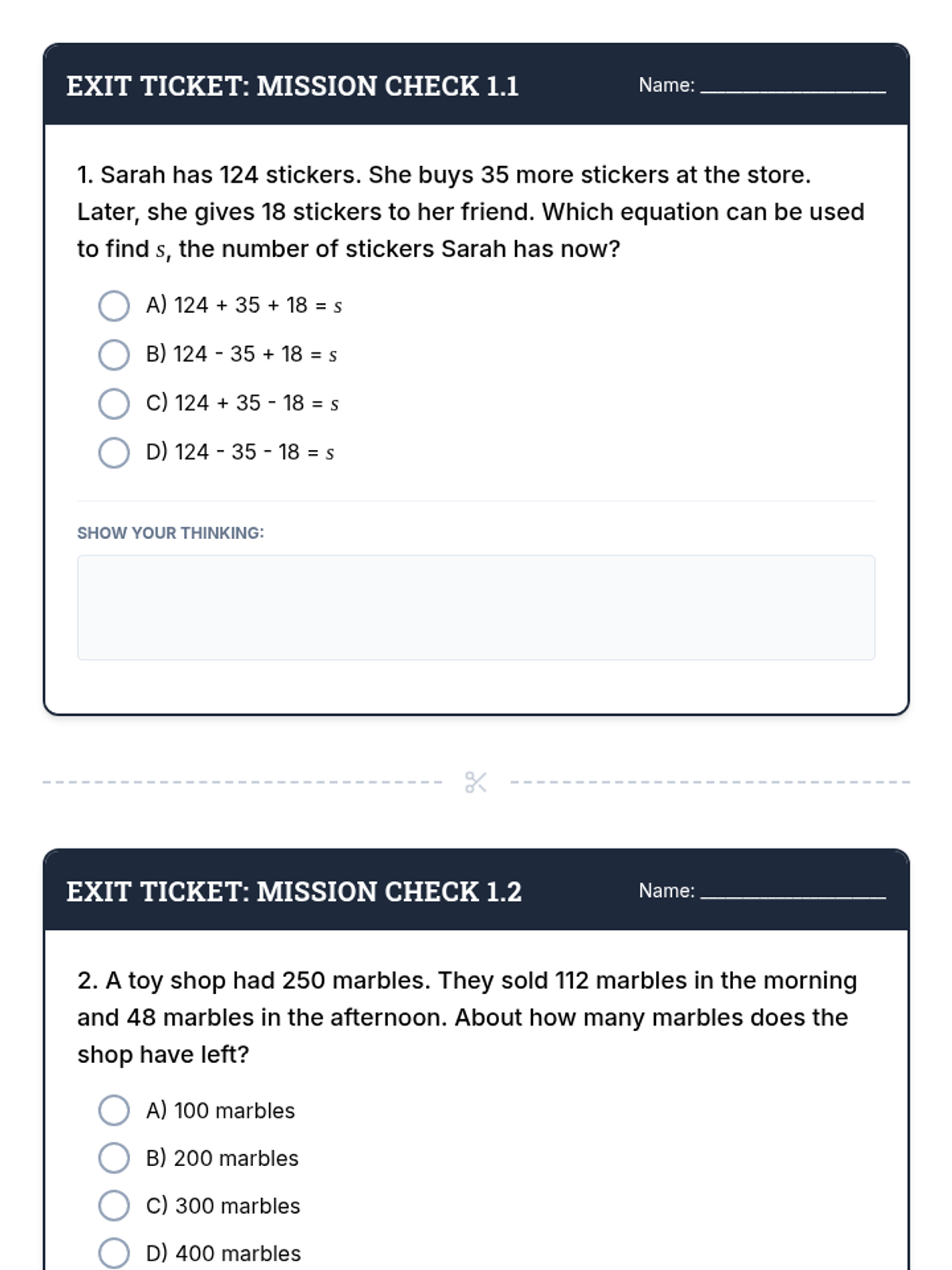
Two EOG-style exit tickets for Day 1. Revised with show-your-work areas and clear cutting guides for classroom use.
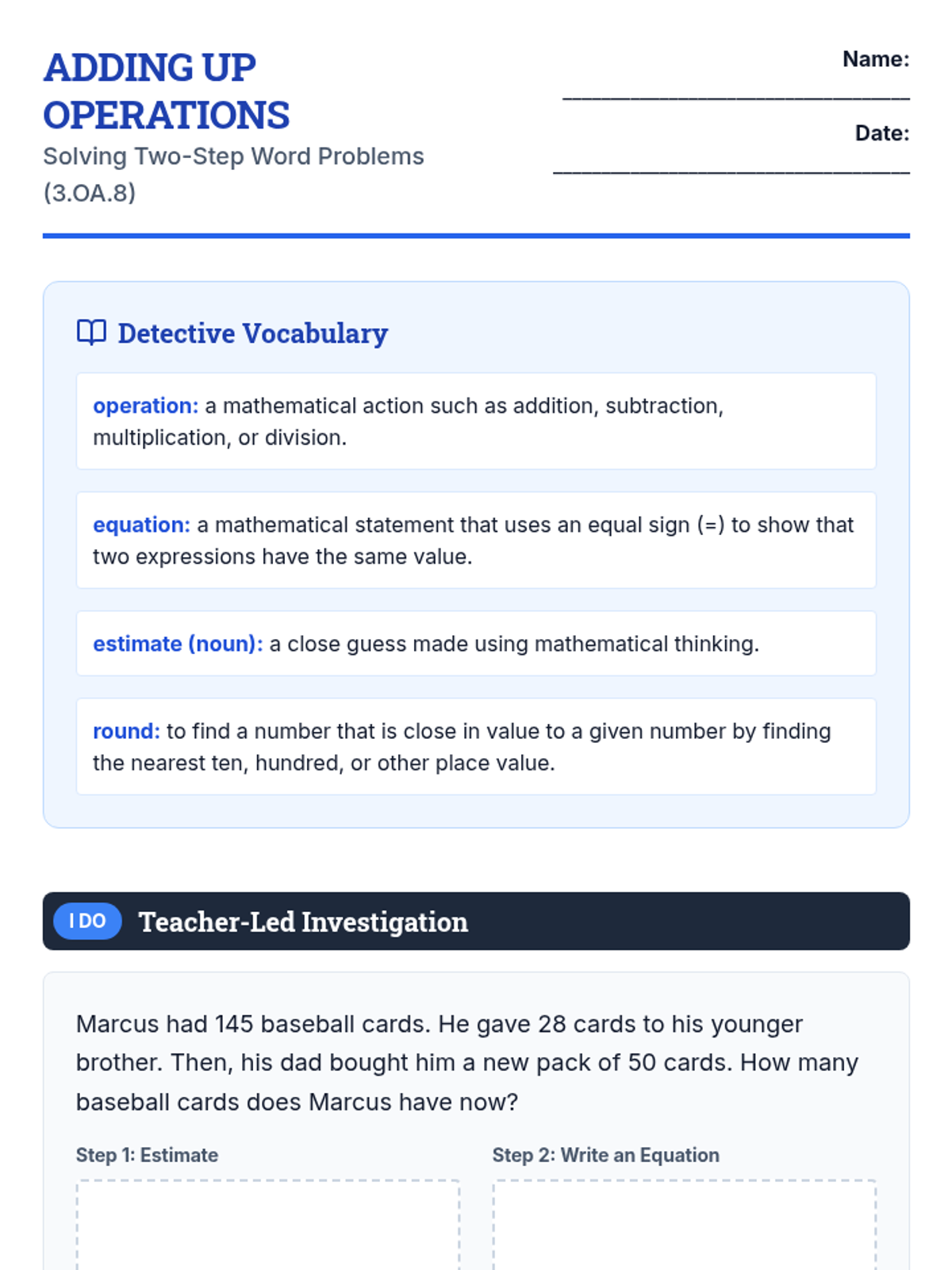
A daily worksheet for Day 1 covering 3.OA.8 (addition/subtraction). Includes a vocabulary reference, and structured sections for 'I Do', 'We Do', and 'You Do' problem-solving steps. Revised for better page breaks and layout consistency.