A structured analytical worksheet for graduate actors to break down monologues into beats and assign specific transitive verbs for tactical performance.

A high-fidelity visual mockup of the final bulletin board design, featuring a layered black background, rainbow piano key borders, 3D-styled typography, and diverse musician illustrations with detailed cultural clothing patterns.
An 8-slide presentation for Chapter 3 of Treasure Island, covering character introductions of Long John Silver and Captain Smollett, nautical vocabulary, key plot points in Bristol, and thematic discussion questions. Designed with a bold maritime aesthetic.
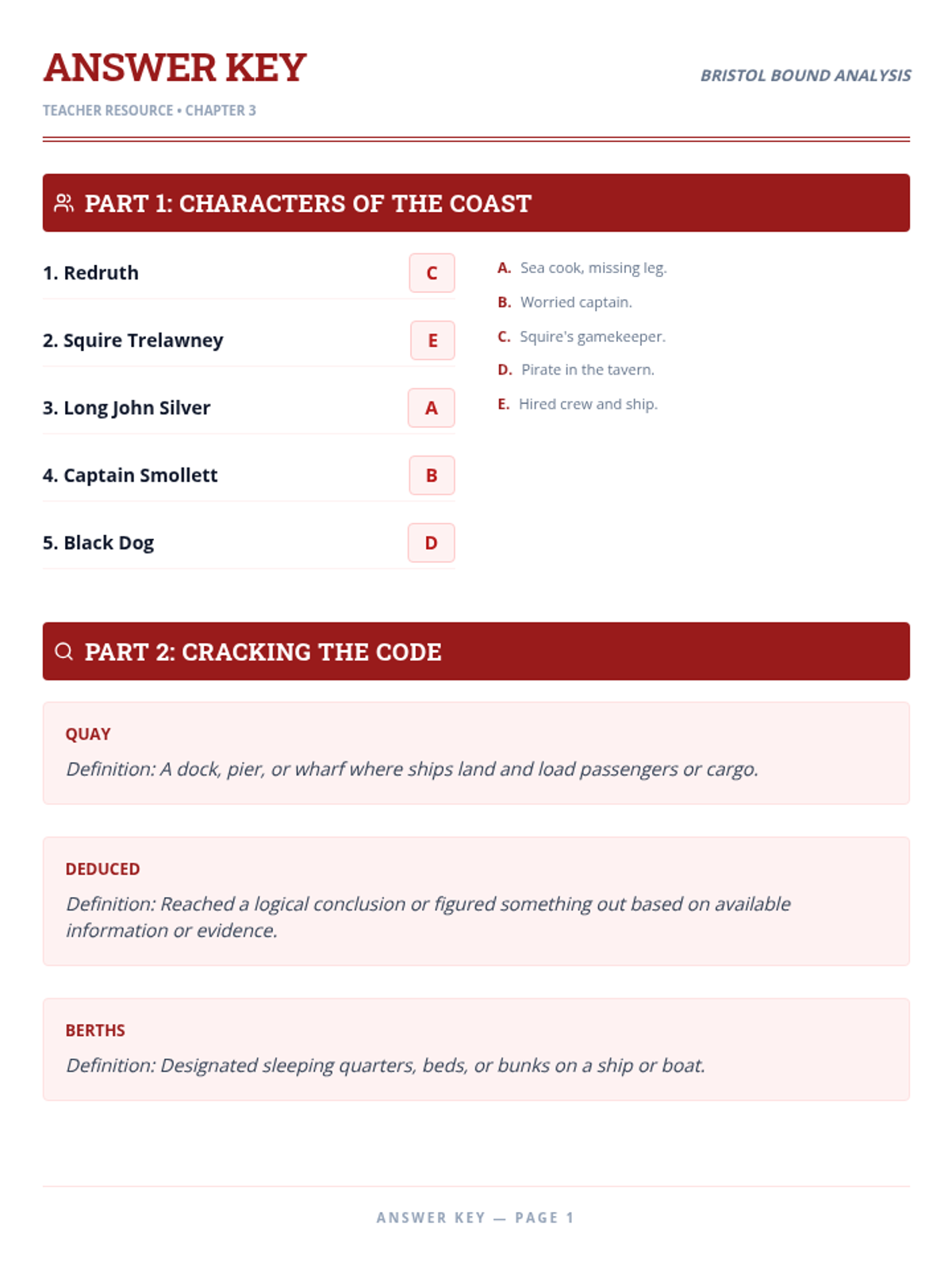
A 2-page answer key for the revised Bristol Bound Worksheet, providing correct matches, definitions, and comprehension answers for Chapter 3 of Treasure Island.
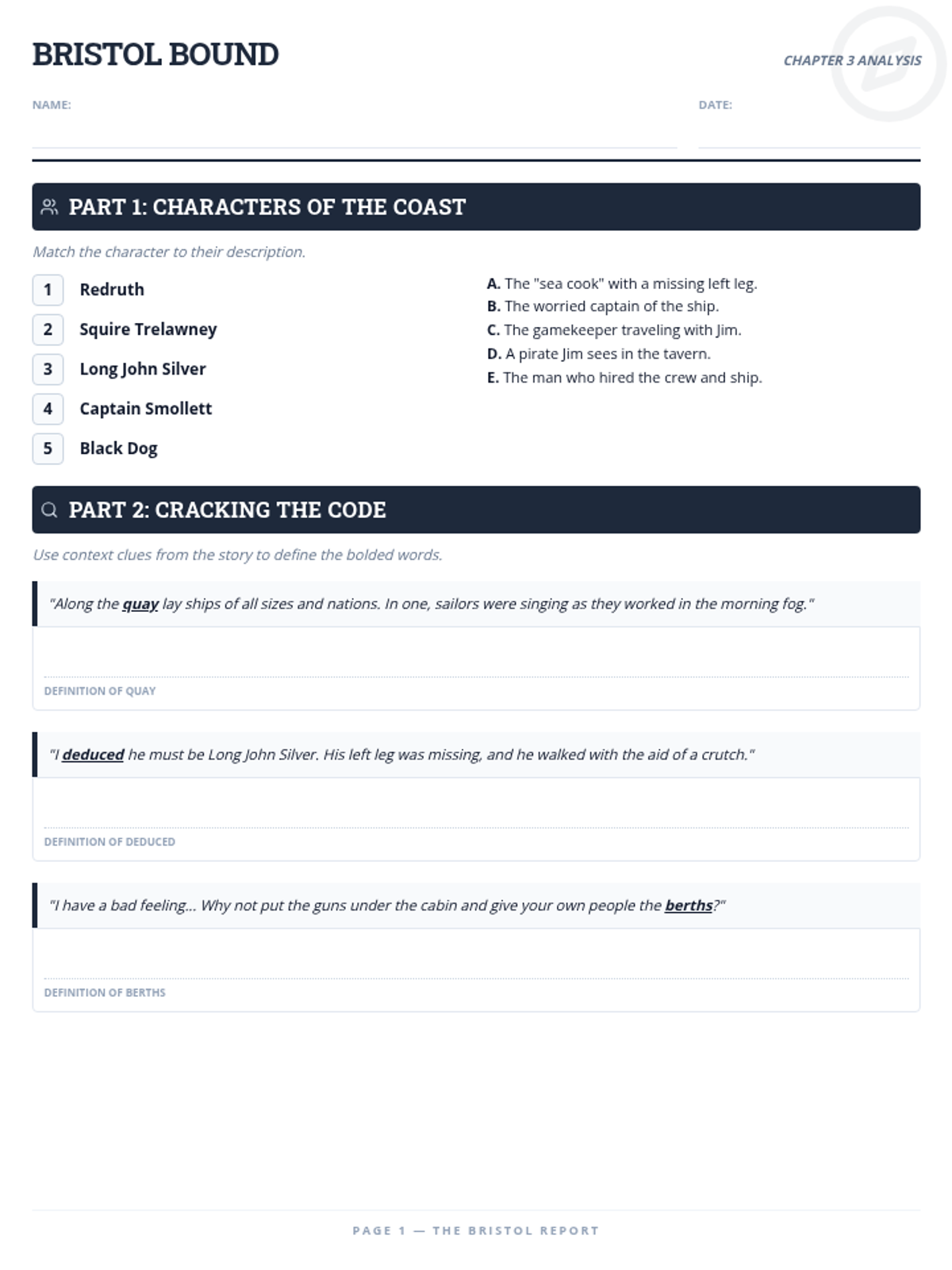
A revised 2-page student worksheet for Chapter 3 of Treasure Island, featuring character matching, context clue vocabulary exercises, true/false comprehension, and nautical terminology. Redesigned to fix page break and layout issues.
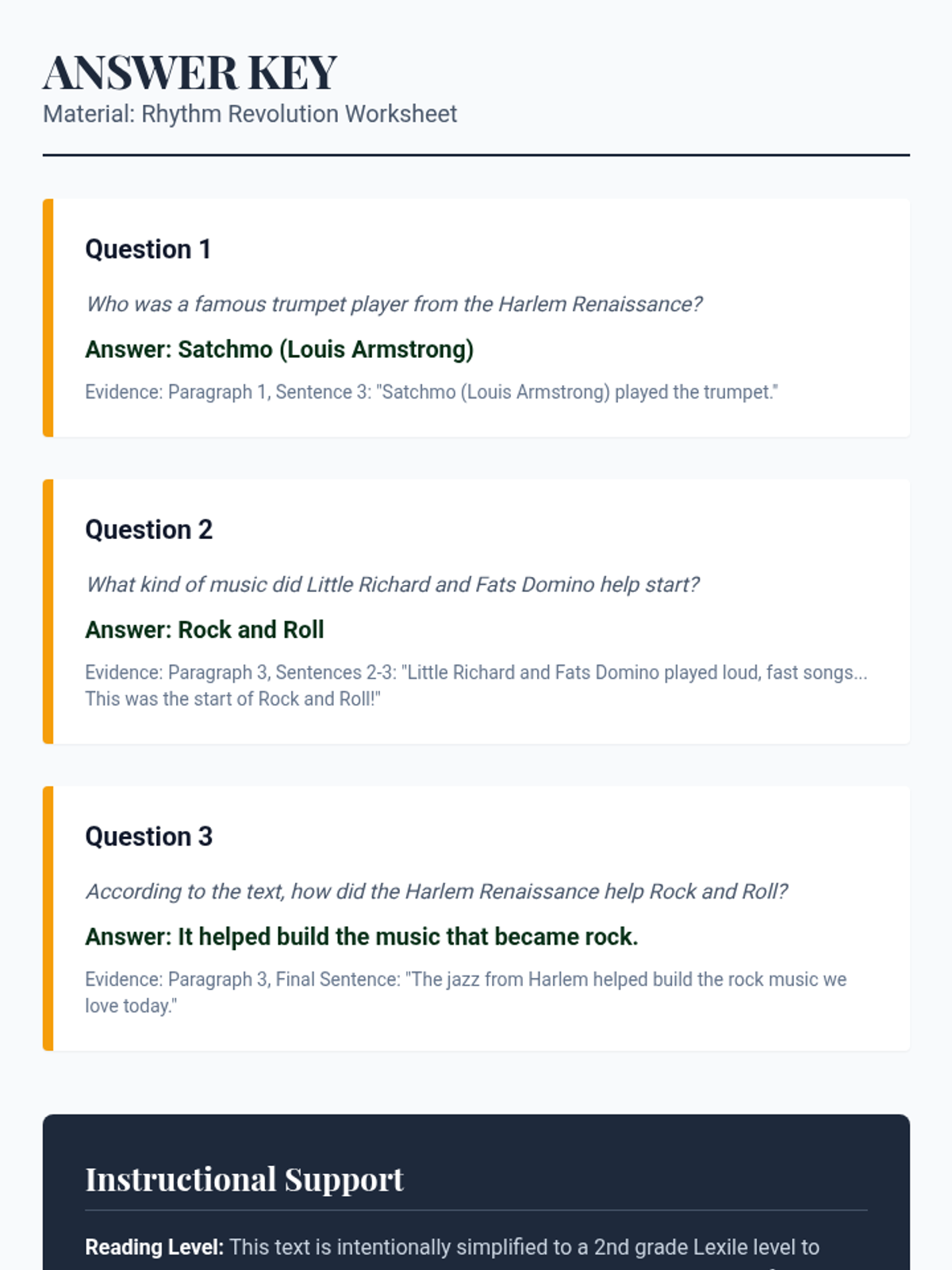
An answer key and instructional guide for the Rhythm Revolution Worksheet. Fixes issues with heading orphans and text contrast.
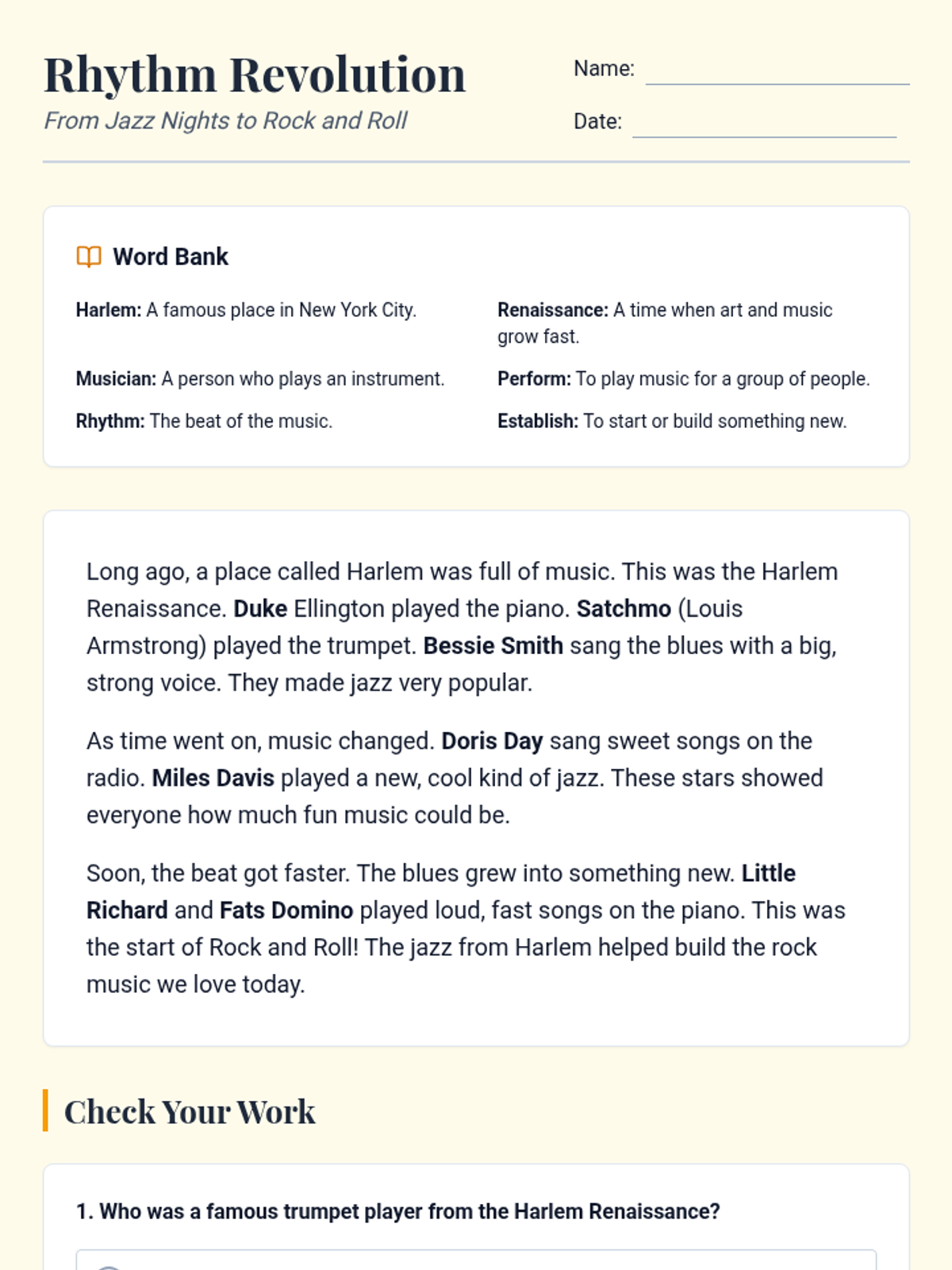
A reading comprehension worksheet about the transition from the Harlem Renaissance to Rock and Roll, written at a second-grade level for middle school students. Fixes issues with question page breaks and alignment.
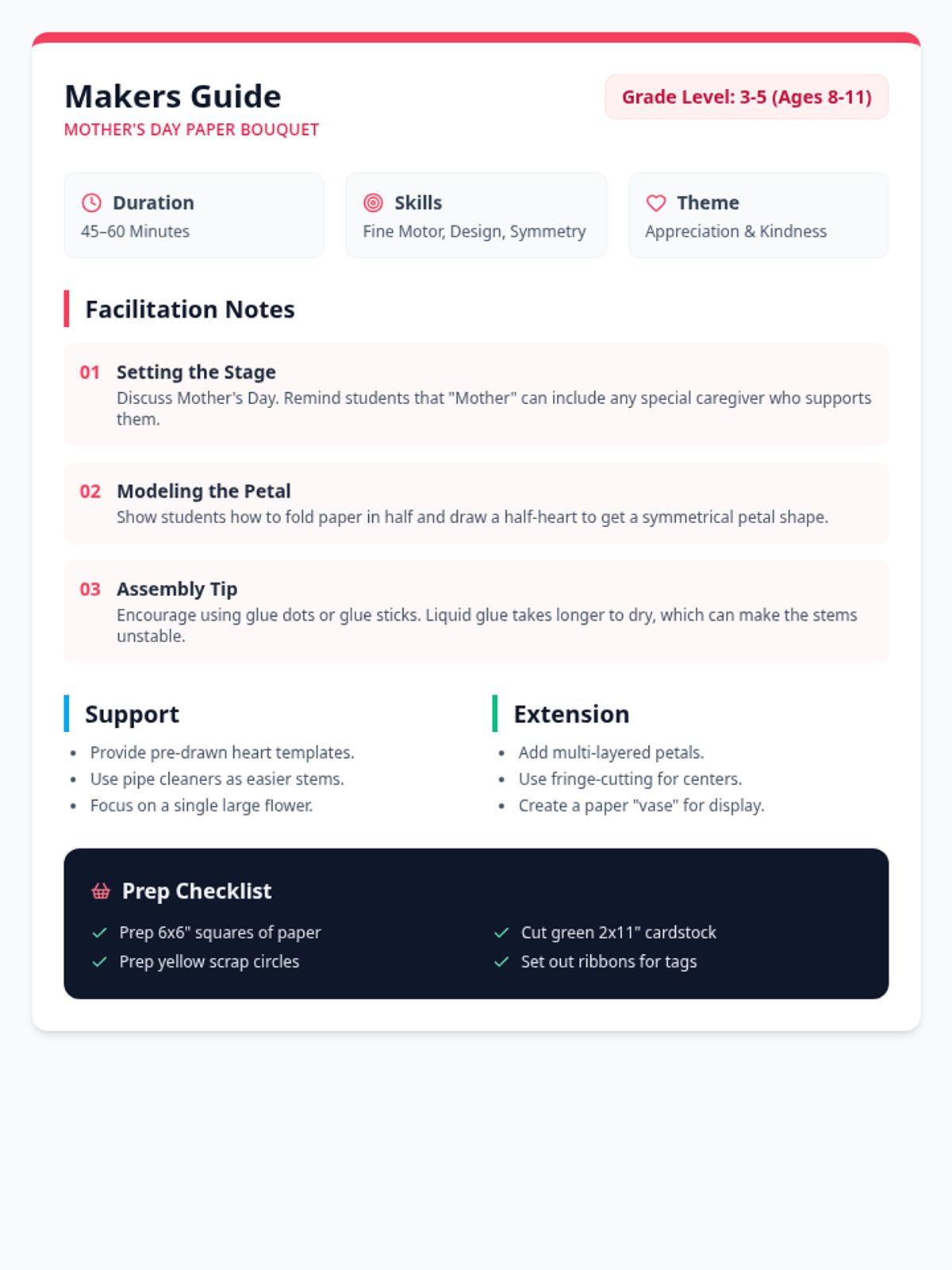
A teacher facilitation guide for the Blooming Bouquet craft, including timing, differentiation strategies, and a prep checklist, optimized for a single-page layout.
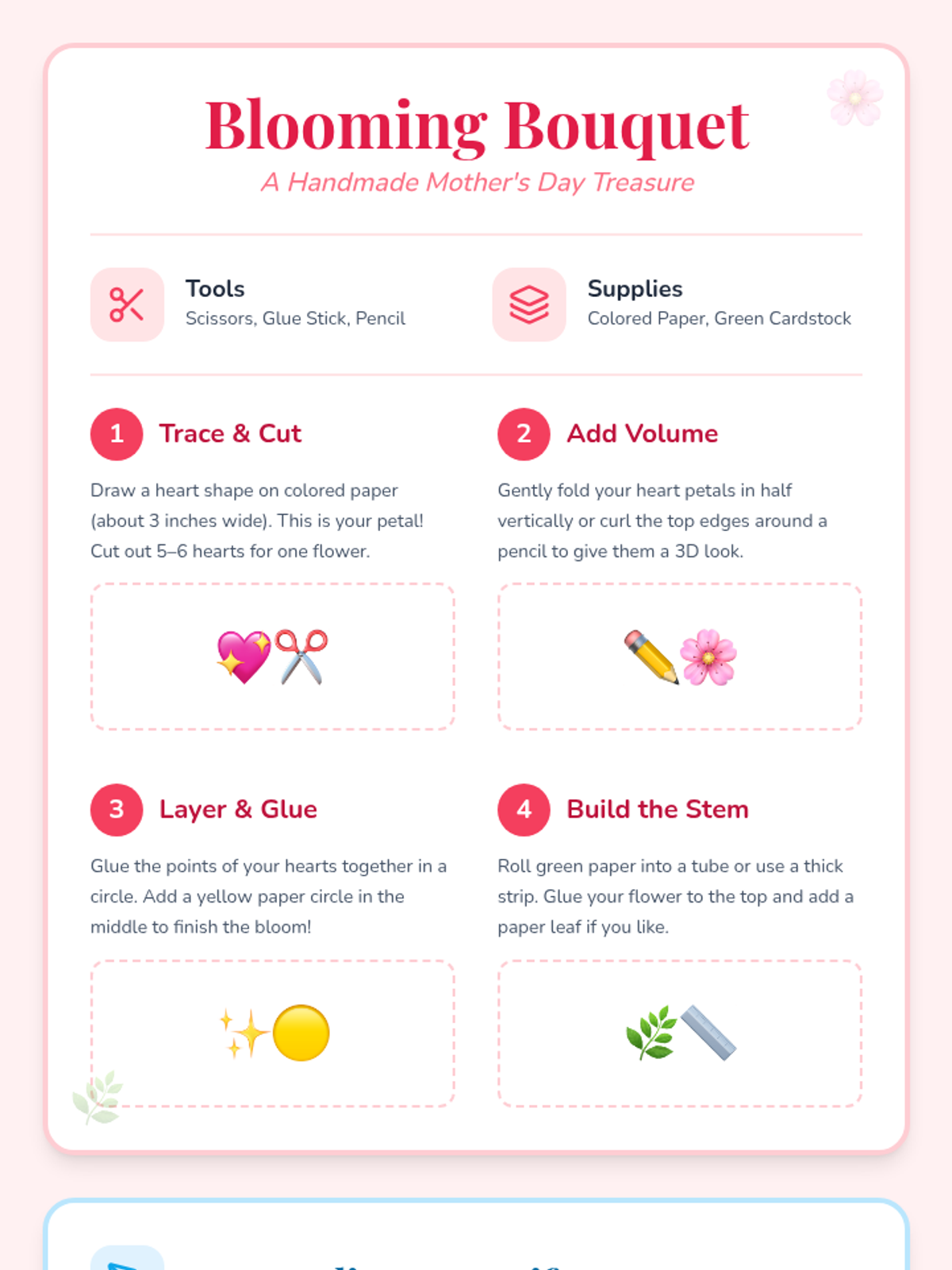
A two-page visual instruction sheet for a paper flower bouquet craft, including step-by-step instructions and a design planning page.
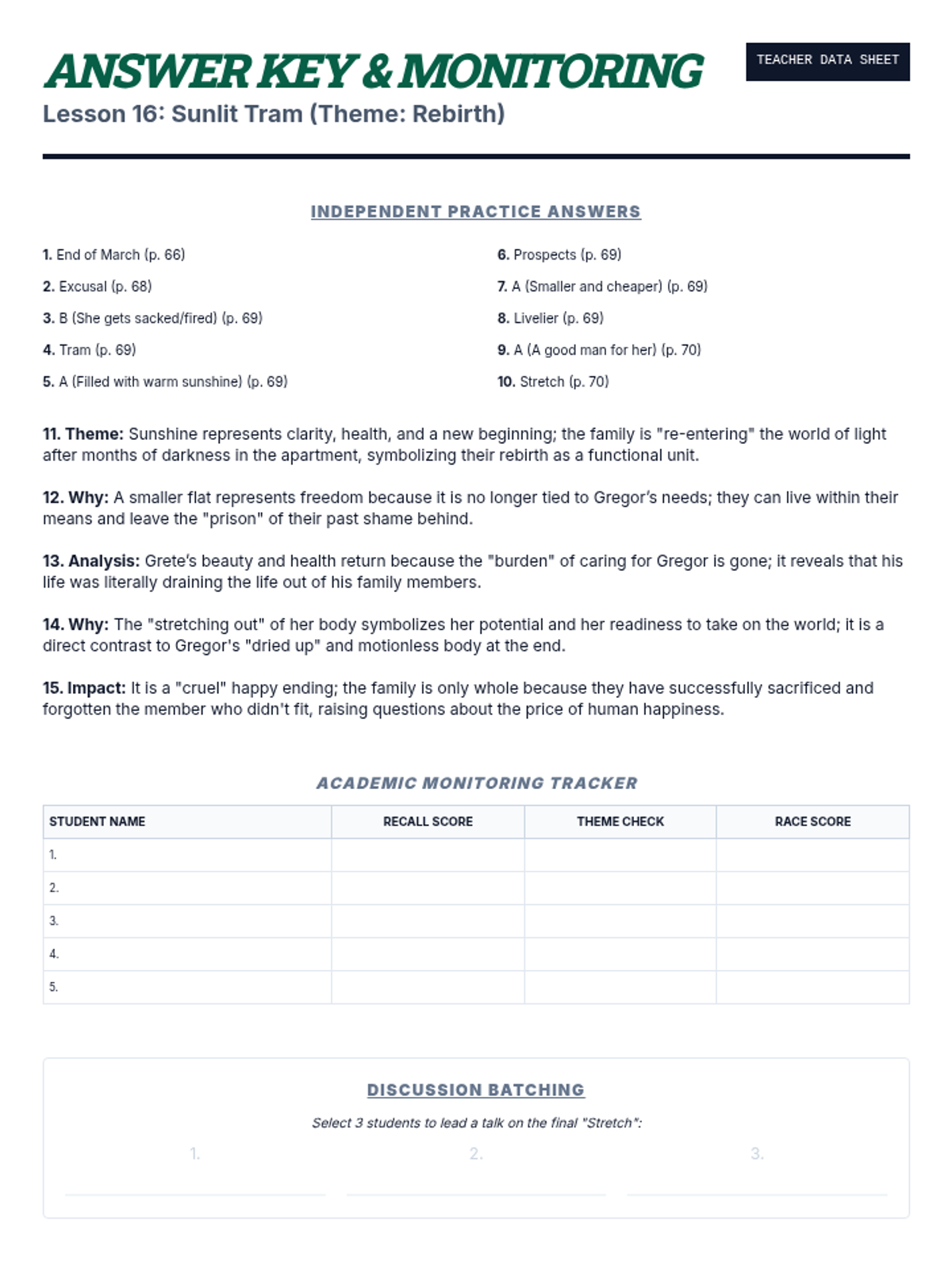
Teacher answer key for Lesson 16 (Sunlit Tram) with a 25-student tracker and discussion batching area. Focuses on the theme of rebirth.
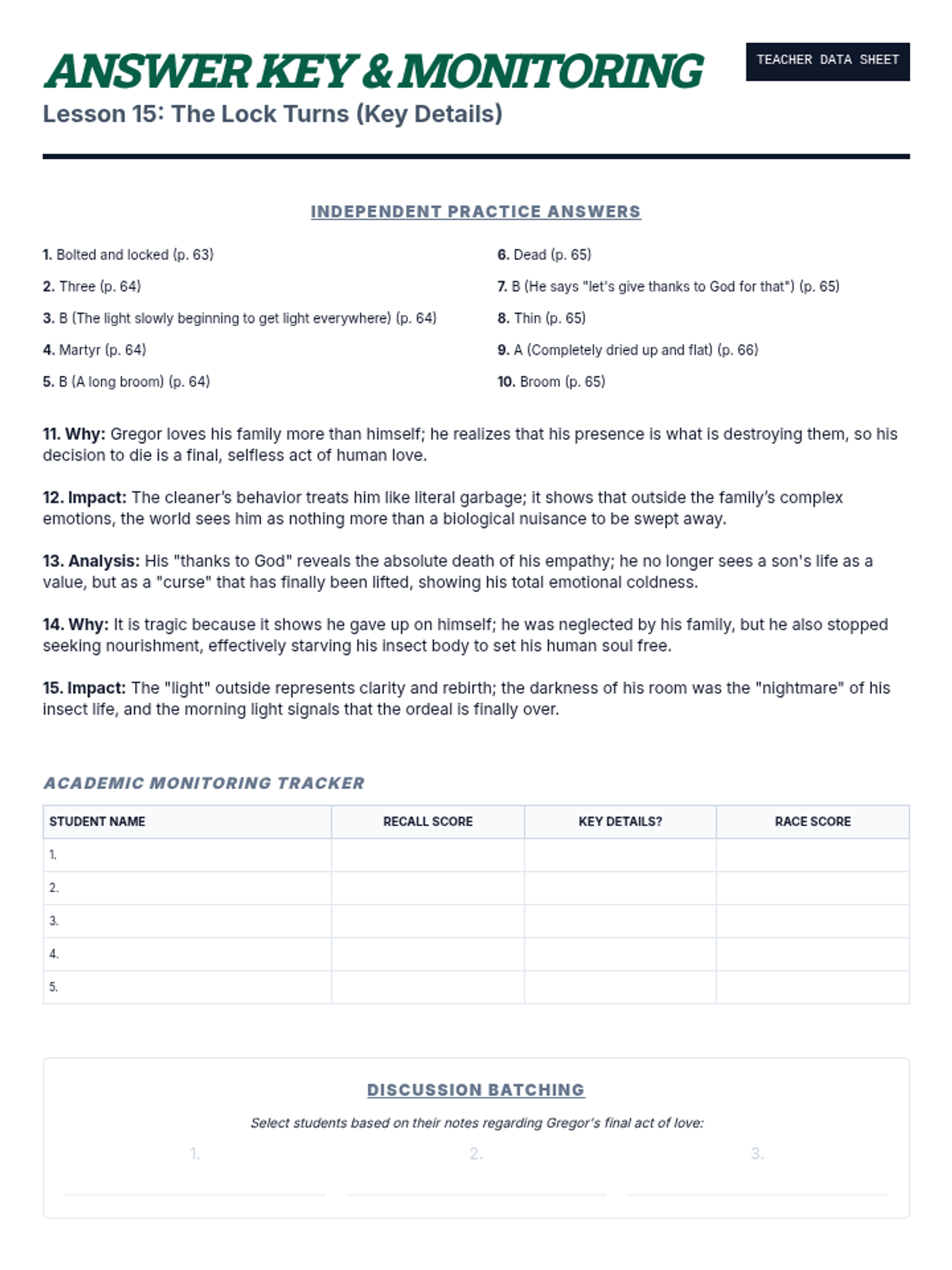
Teacher answer key for Lesson 15 (The Lock Turns) with a 25-student tracker and discussion batching area. Focuses on the key details of Gregor's death.
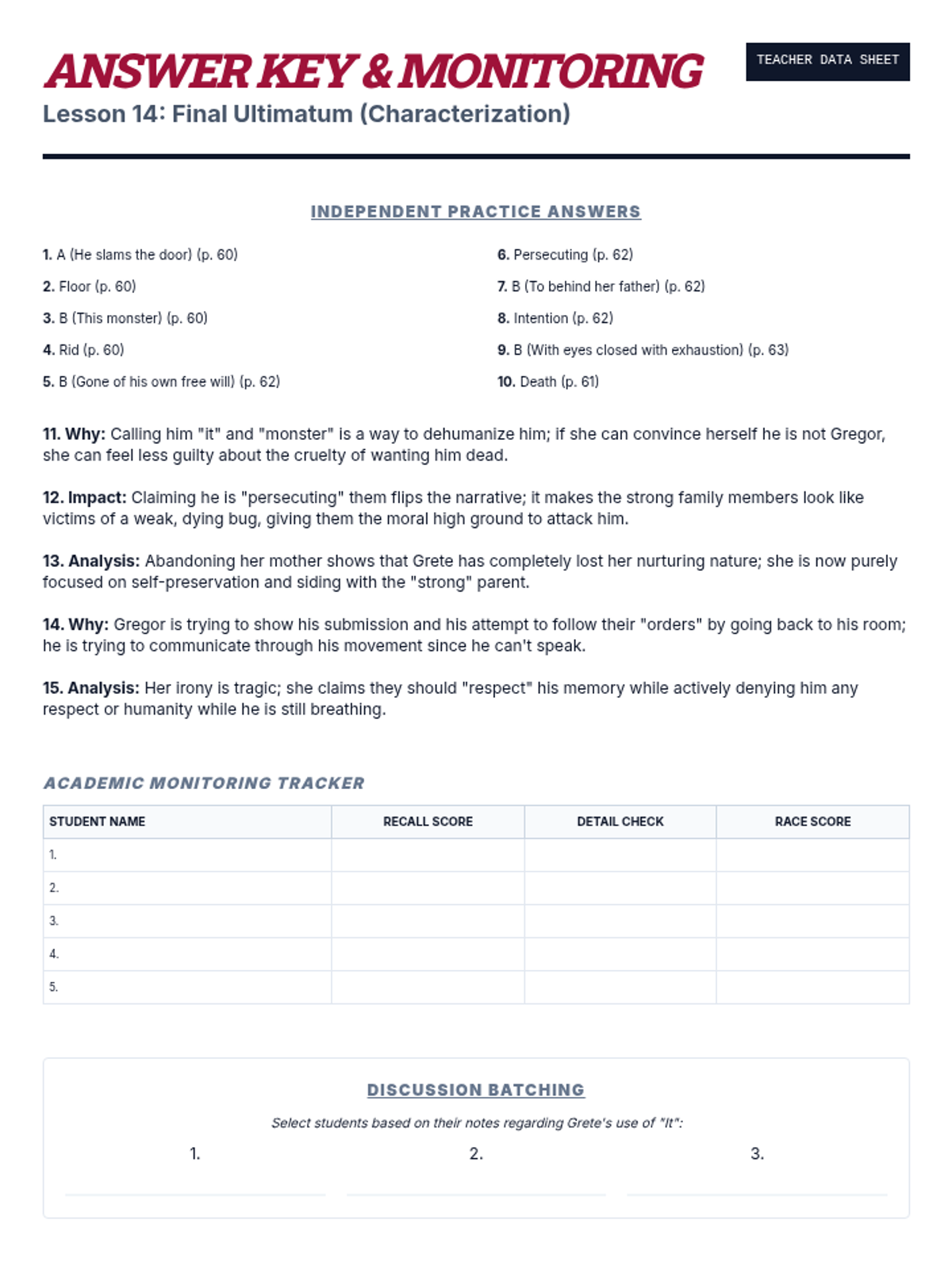
Teacher answer key for Lesson 14 (Final Ultimatum) with a 25-student tracker and discussion batching area. Focuses on Grete's transformation.
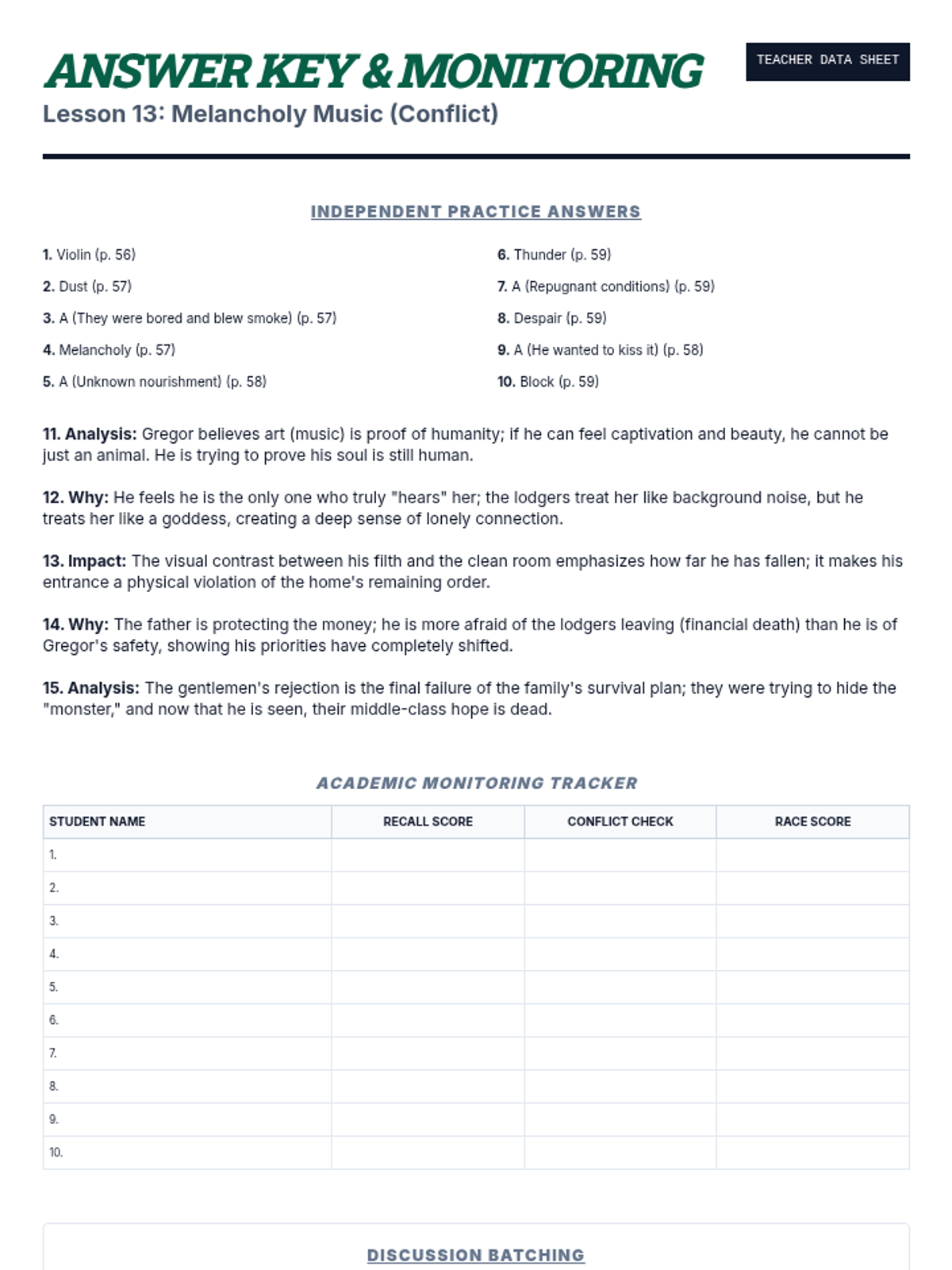
Teacher answer key for Lesson 13 (Melancholy Music) with a 25-student tracker and discussion batching area. Focuses on the conflict of humanity.
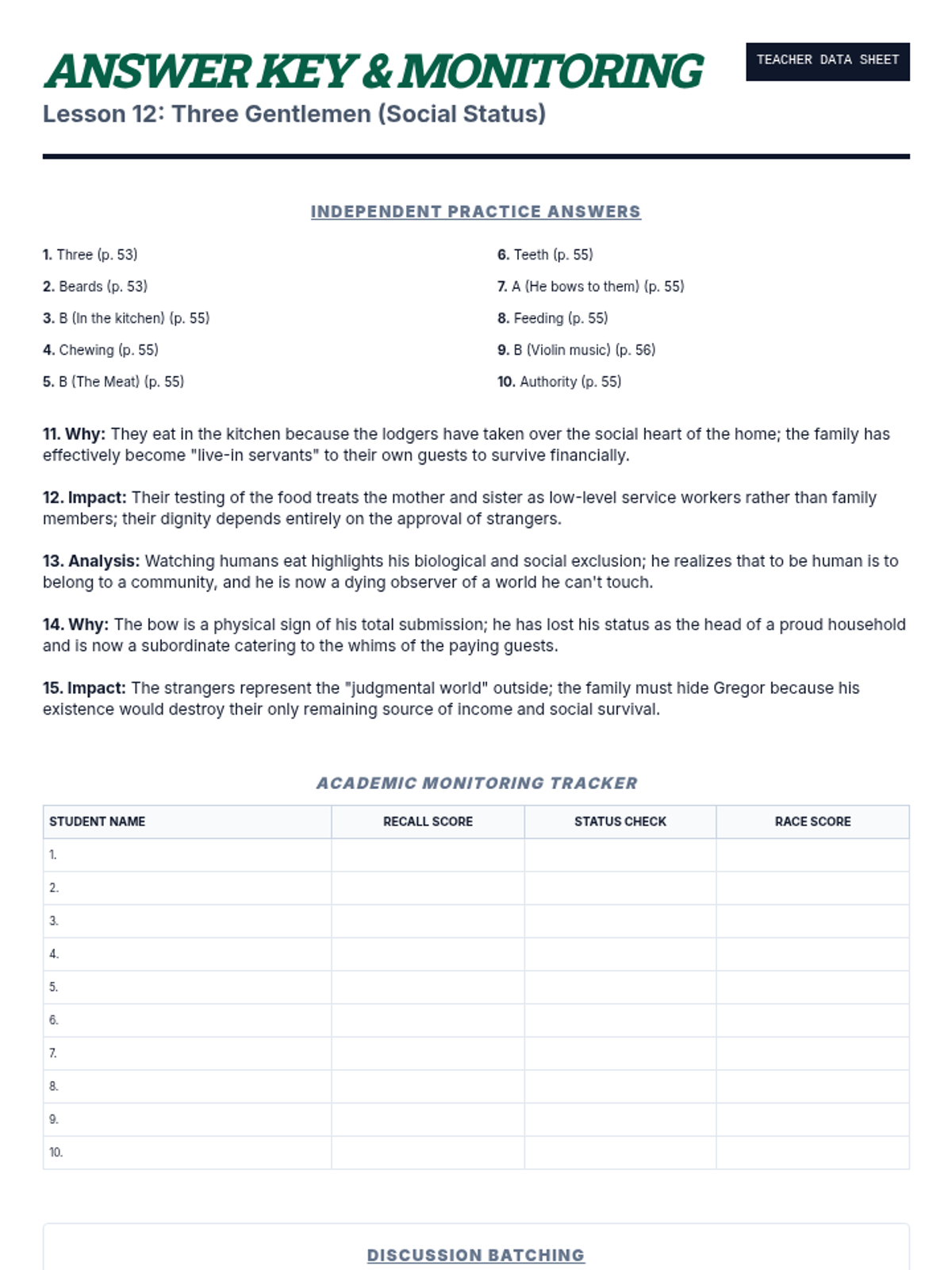
Teacher answer key for Lesson 12 (Three Gentlemen) with a 25-student tracker and discussion batching area. Focuses on the theme of social status.
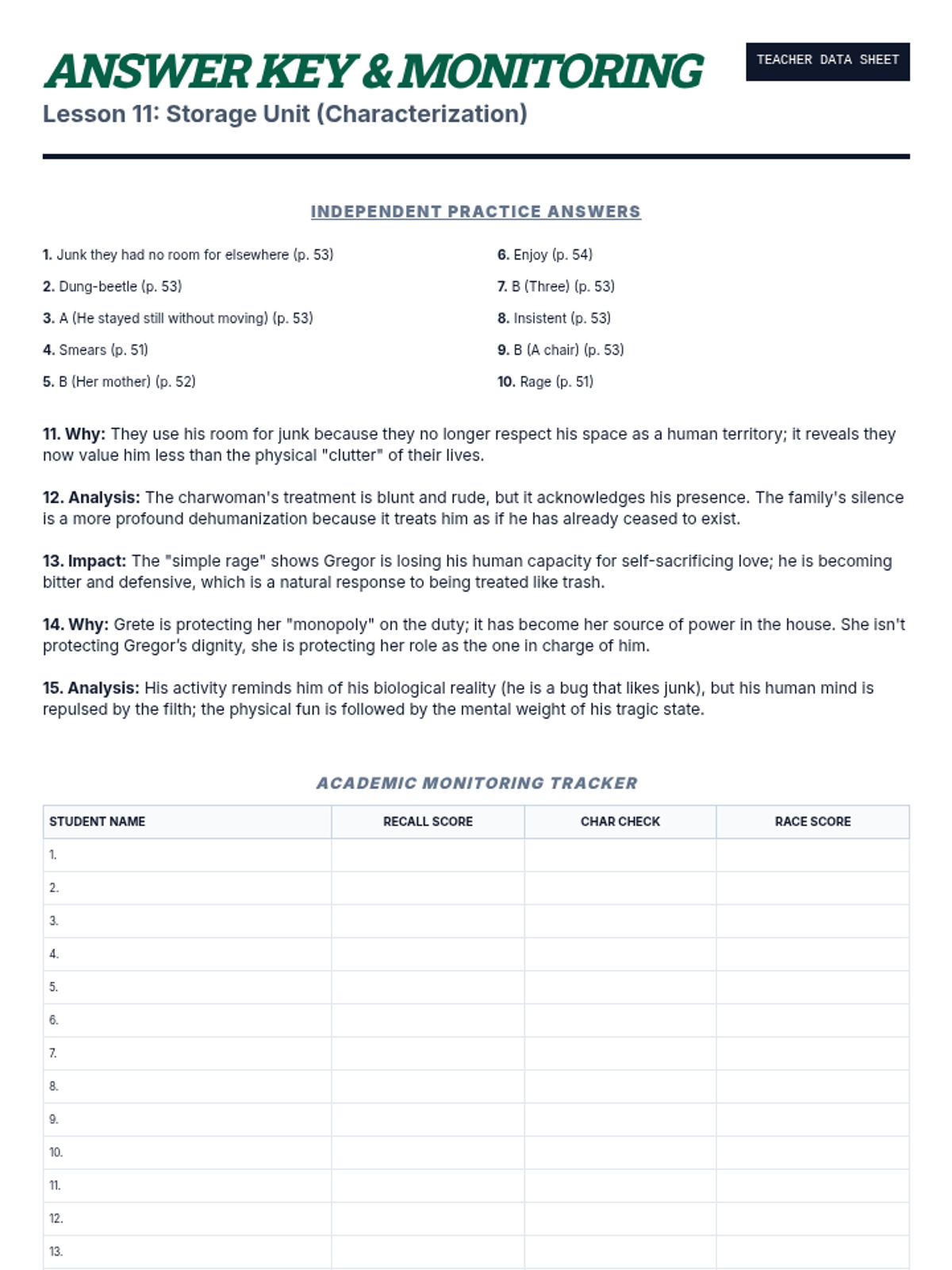
Teacher answer key for Lesson 11 (Storage Unit) with a 25-student tracker and discussion batching area. Focuses on characterization.
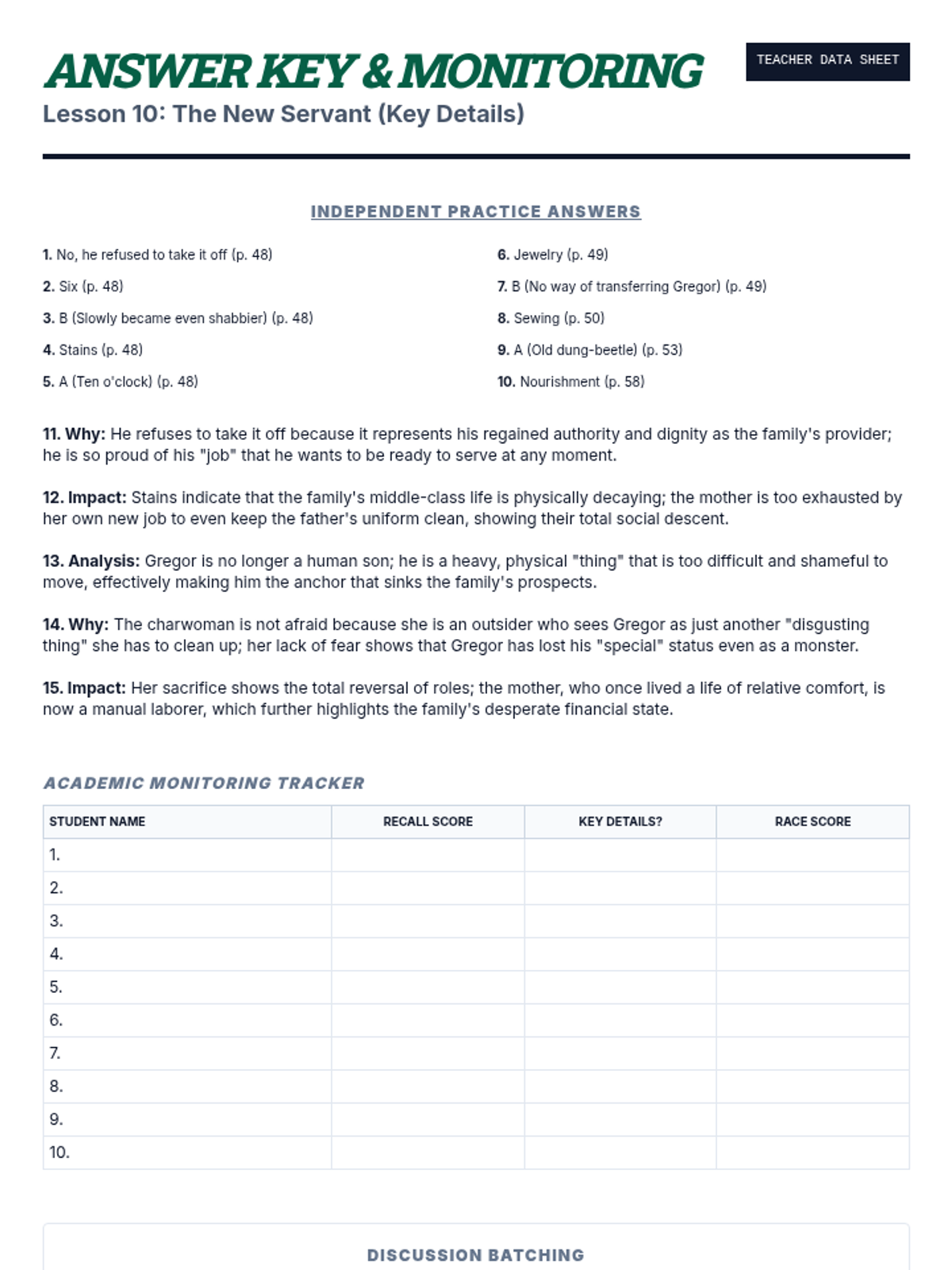
Teacher answer key for Lesson 10 (The New Servant) with a 25-student tracker and discussion batching area. Focuses on the details of social decline.
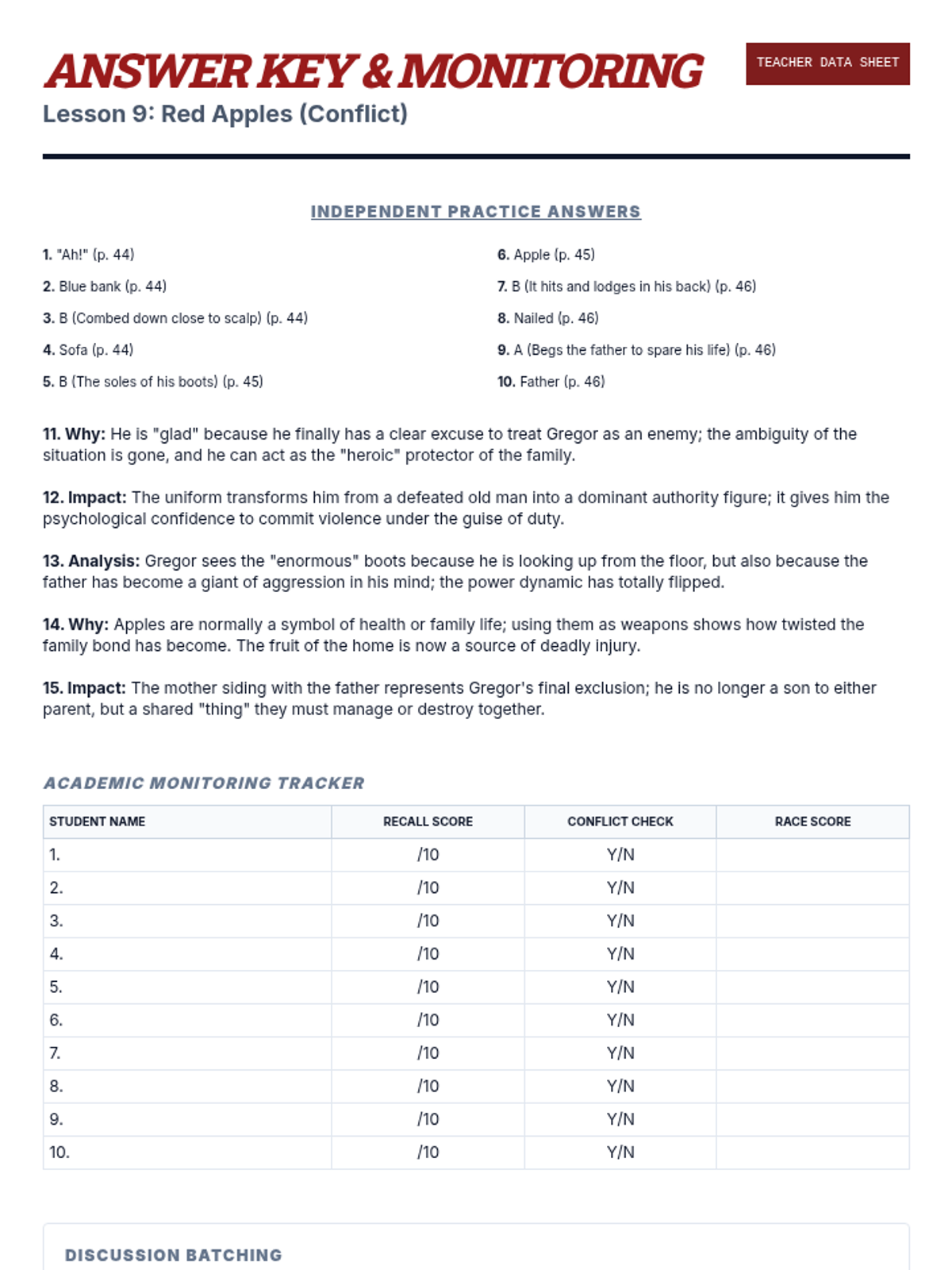
Teacher answer key for Lesson 9 (Red Apples) with a 25-student tracker and discussion batching area. Focuses on the violent conflict of the apple bombardment.
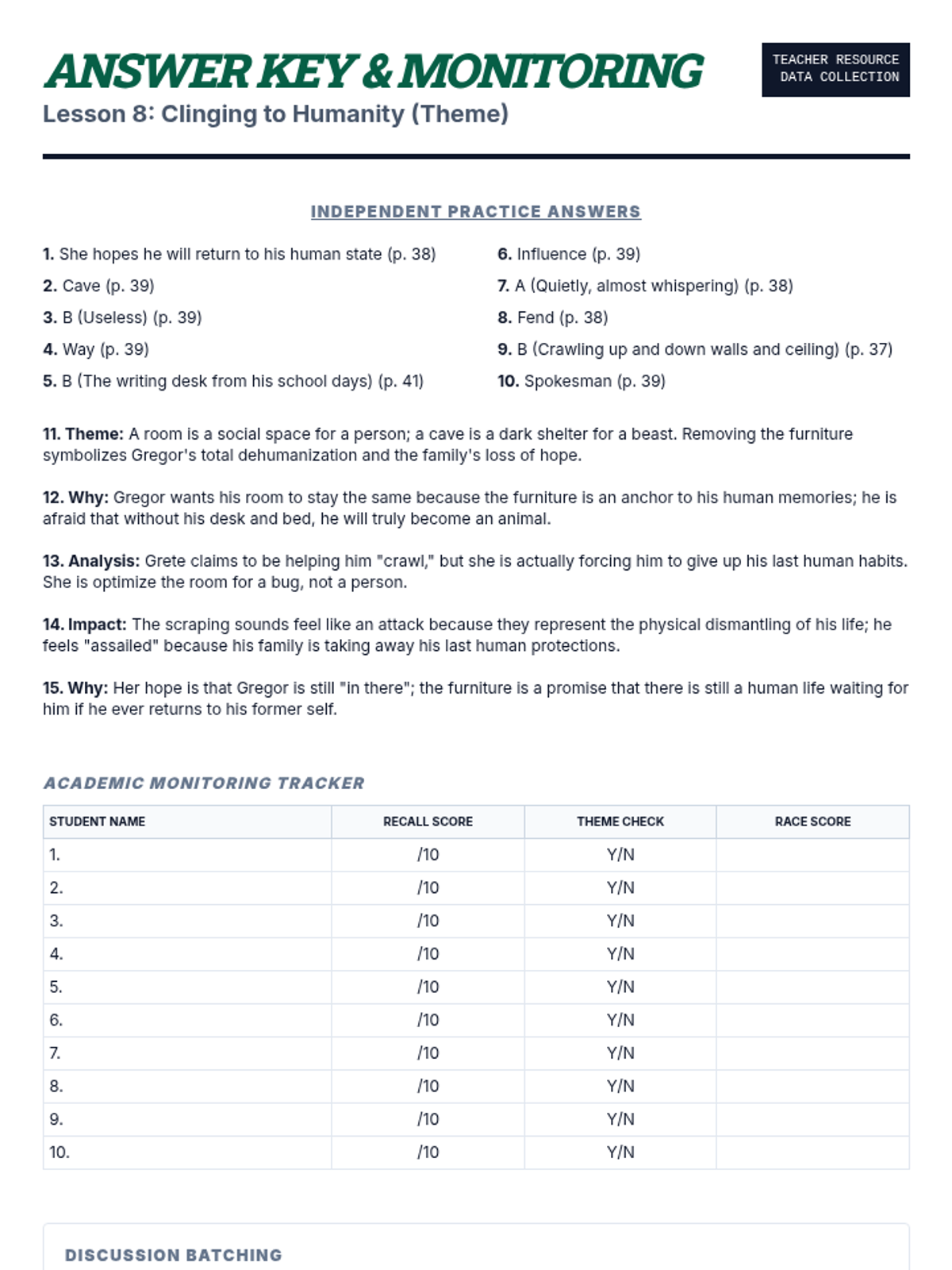
Revised Lesson 8 answer key with a 25-student tracker and discussion batching area. Focuses on the theme of dehumanization.
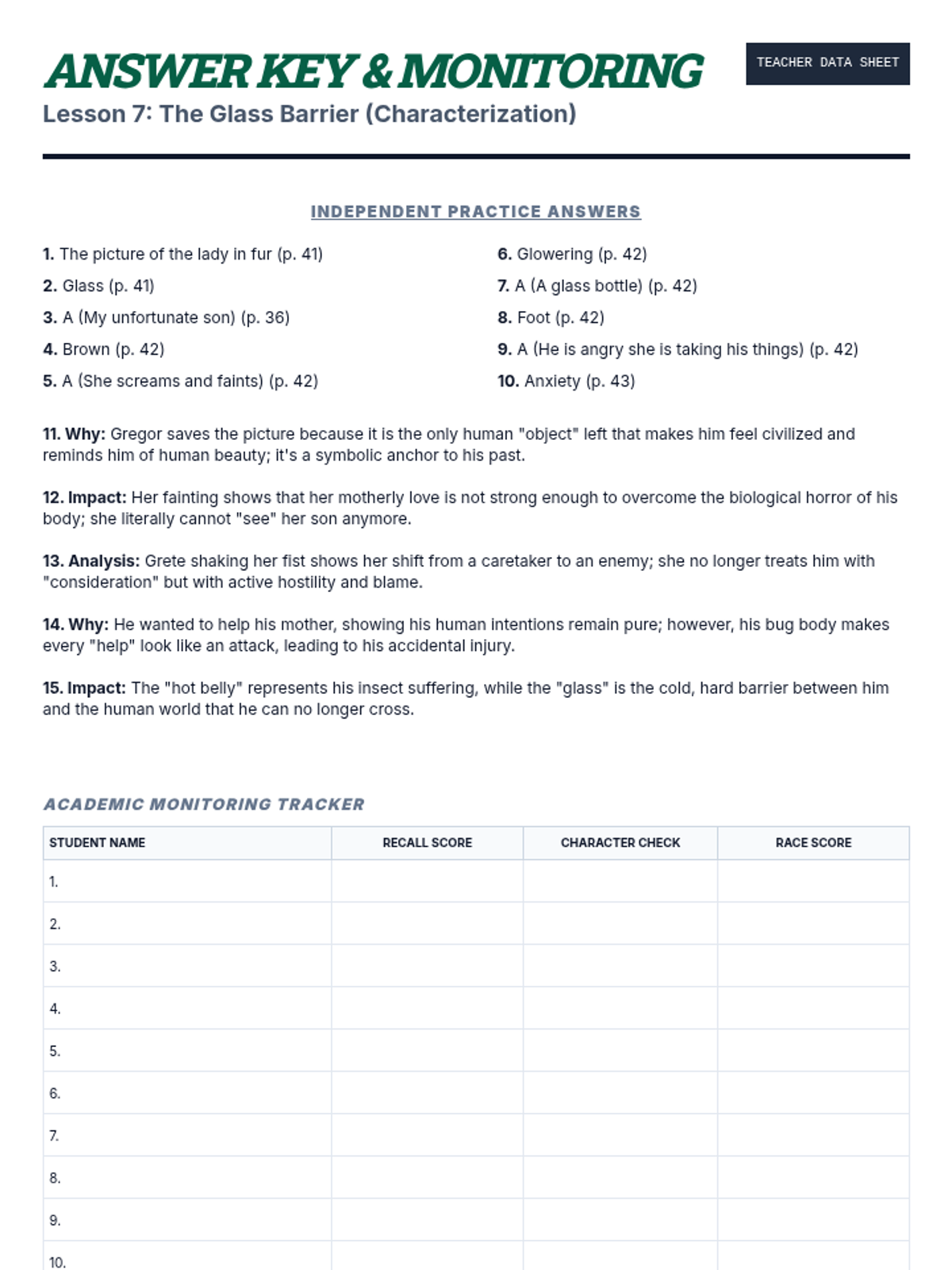
Teacher answer key for Lesson 7 (The Glass Barrier) updated with answers for all 15 questions and a 25-student data tracker.
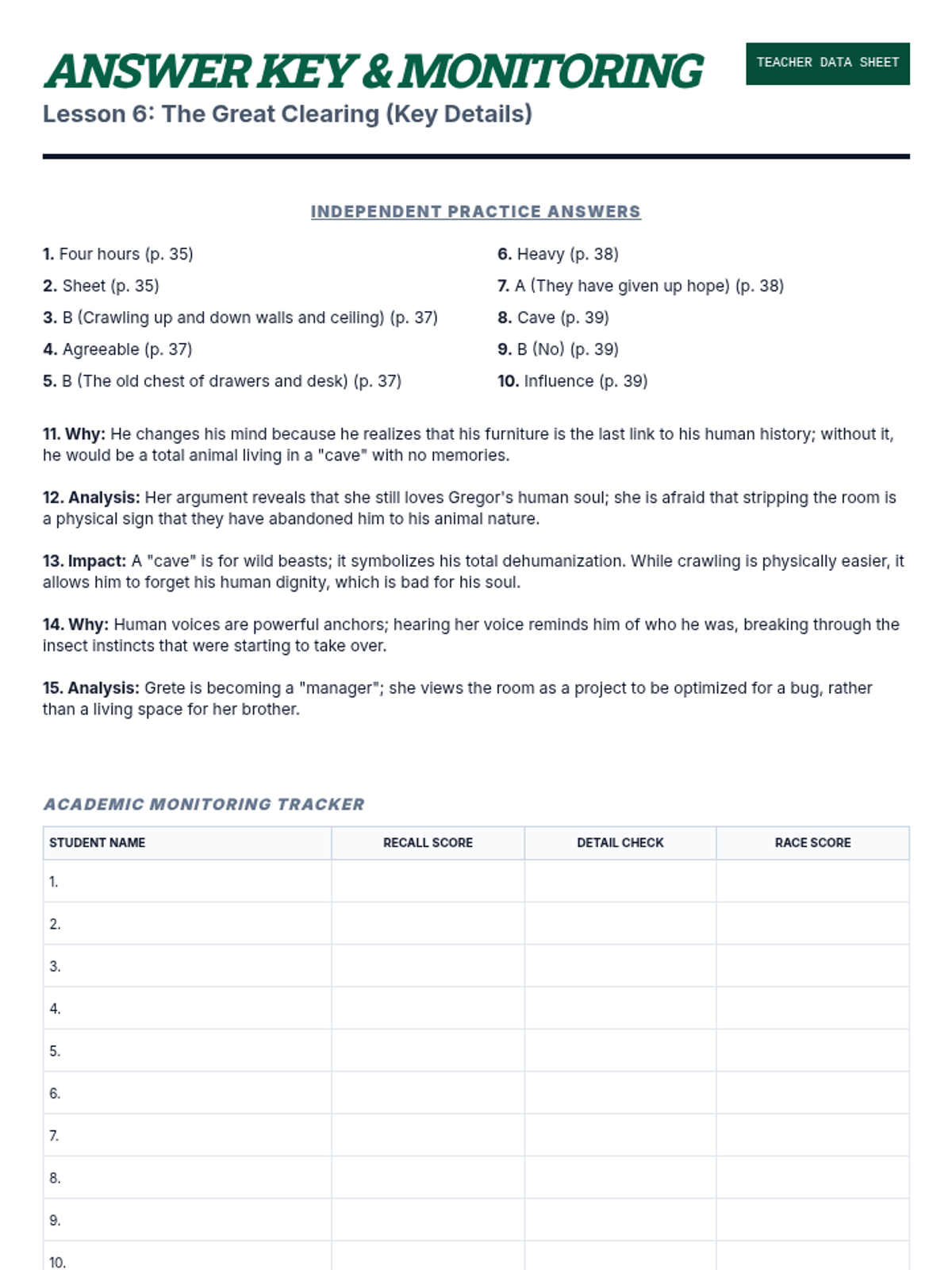
Teacher answer key for Lesson 6 (The Great Clearing) with a 25-student tracker and discussion batching area.
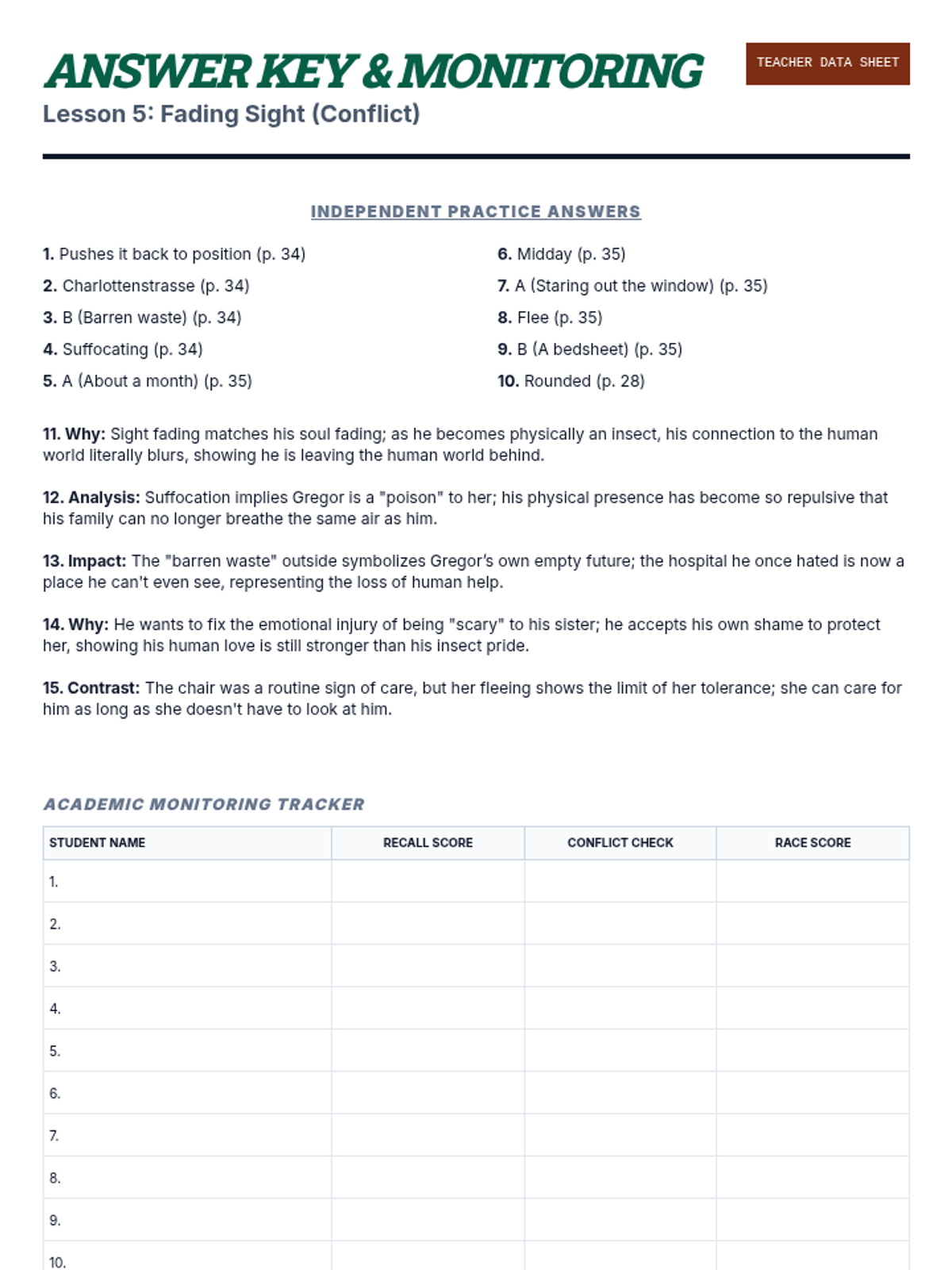
Teacher answer key for Lesson 5 (Fading Sight) with a 25-student tracker and discussion batching area.
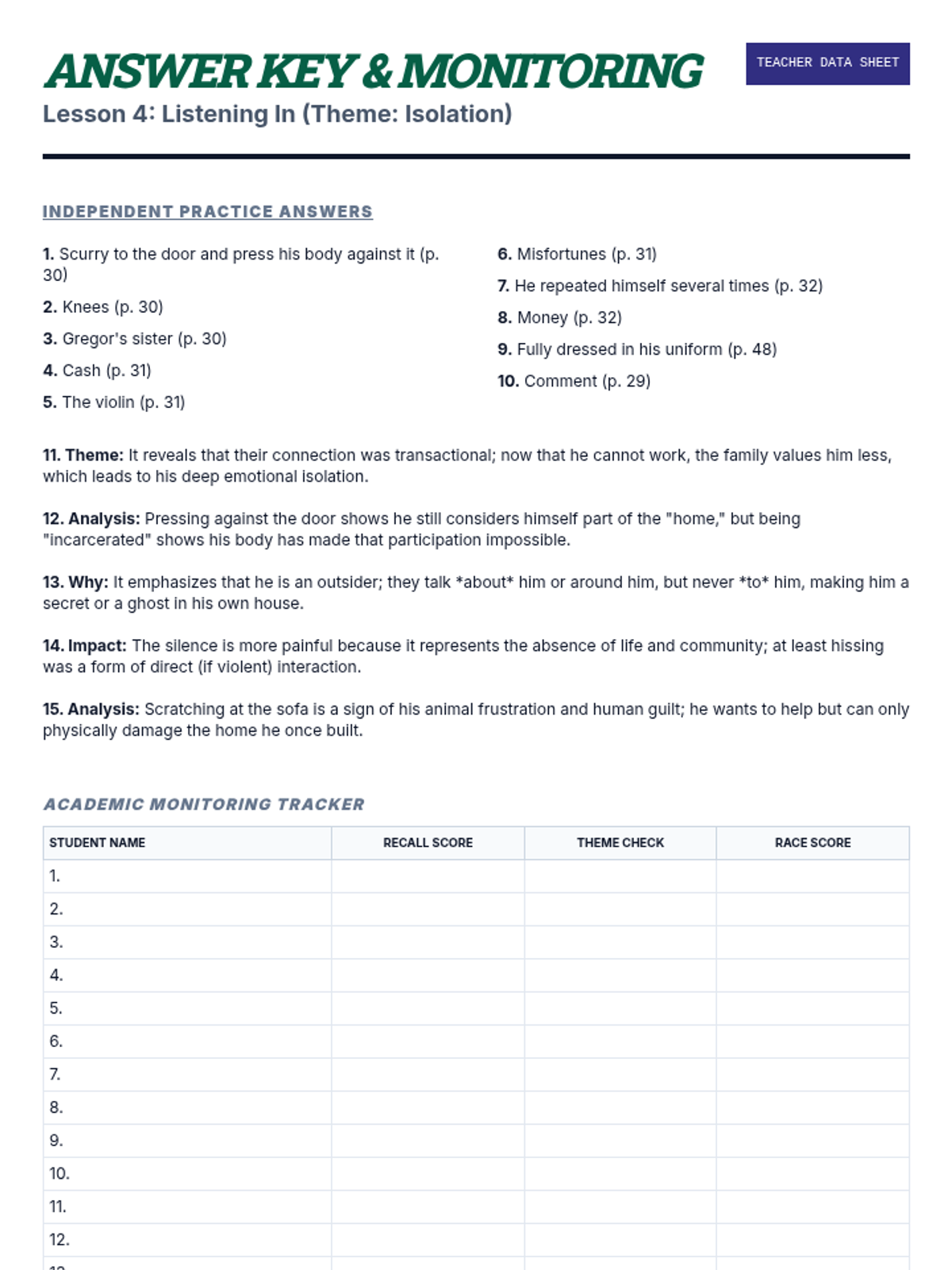
Teacher answer key for Lesson 4 (Listening In) with a 25-student tracker and discussion batching area. Focuses on the theme of isolation.
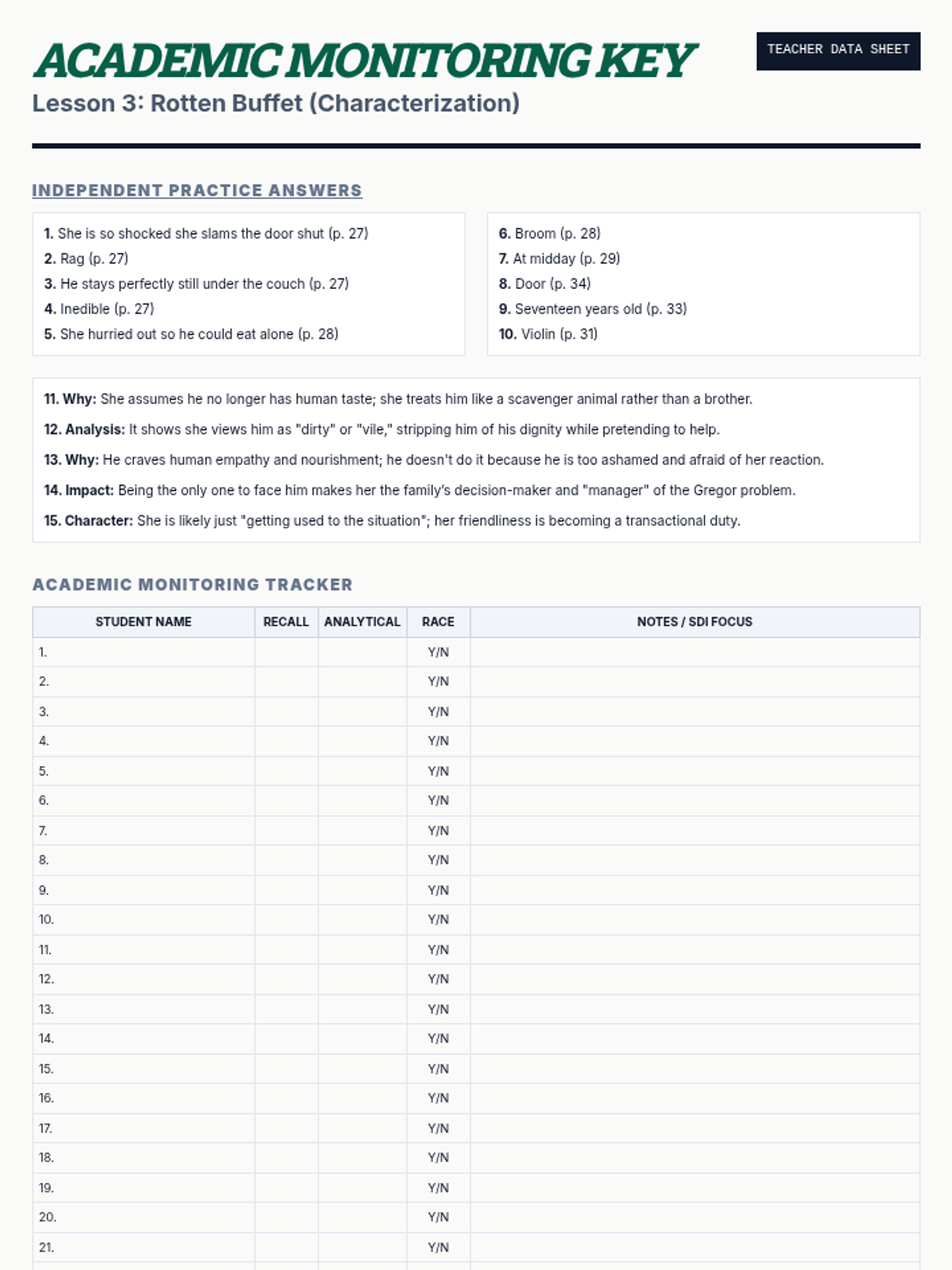
Teacher answer key for Lesson 3 (Rotten Buffet) with a monitoring tracker and discussion batching section.
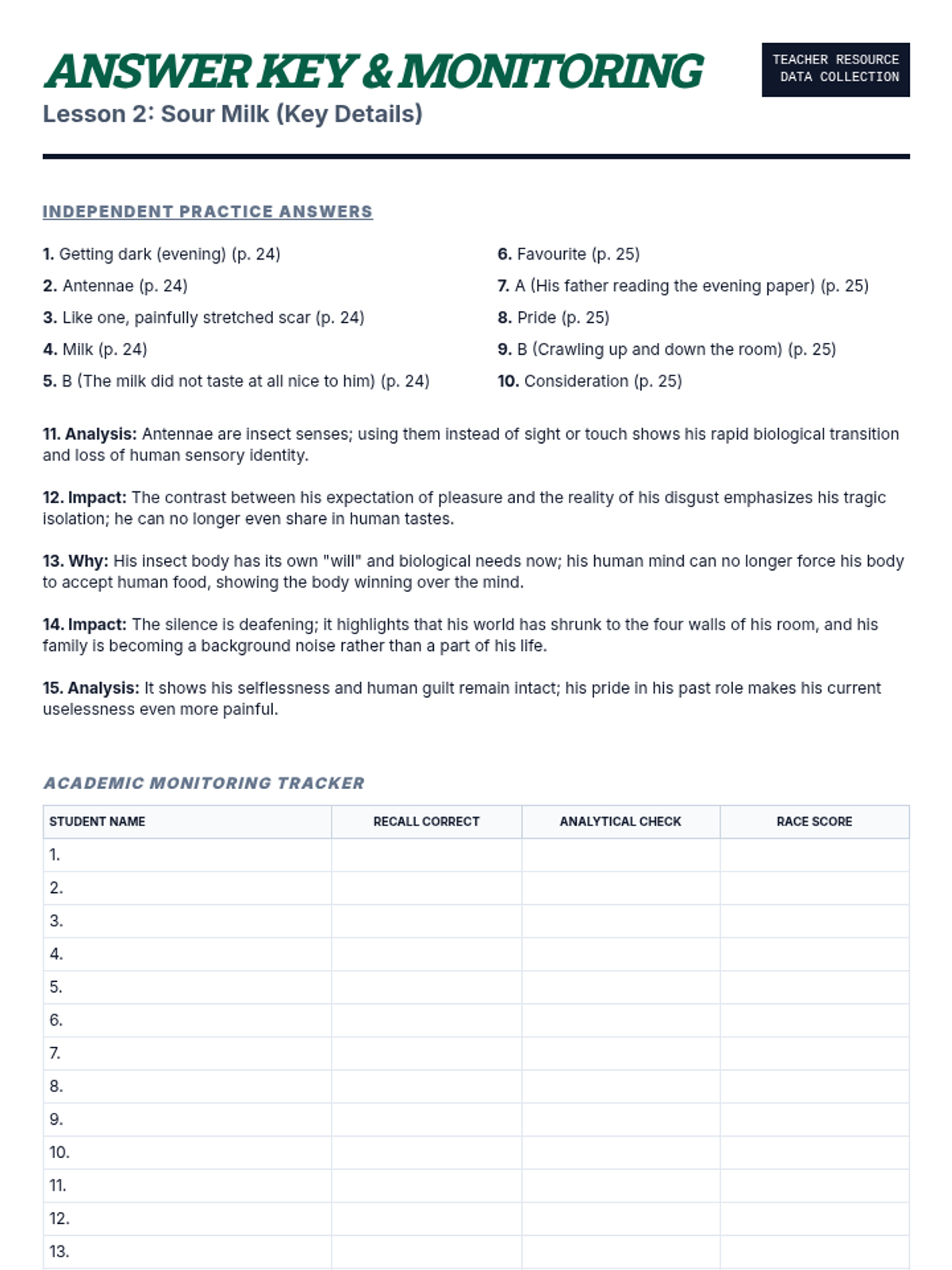
Teacher answer key for Lesson 2 (Sour Milk) featuring answers for all 15 questions, including analytical guidance and a 25-student data tracking table.
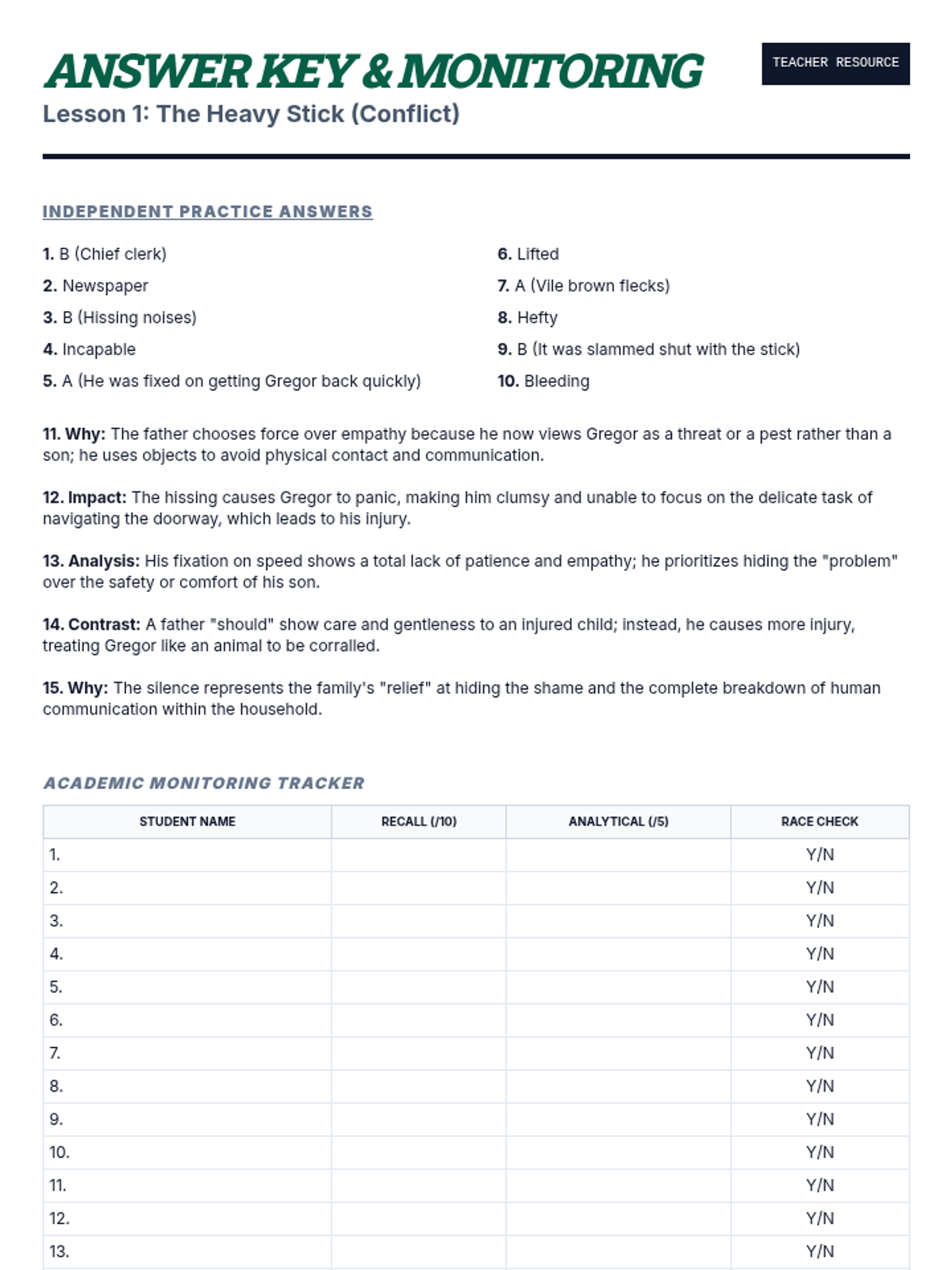
A teacher answer key for Lesson 1 (The Heavy Stick) updated with answers for all 15 questions, including analytical and recall sections, and a 25-student data tracker.
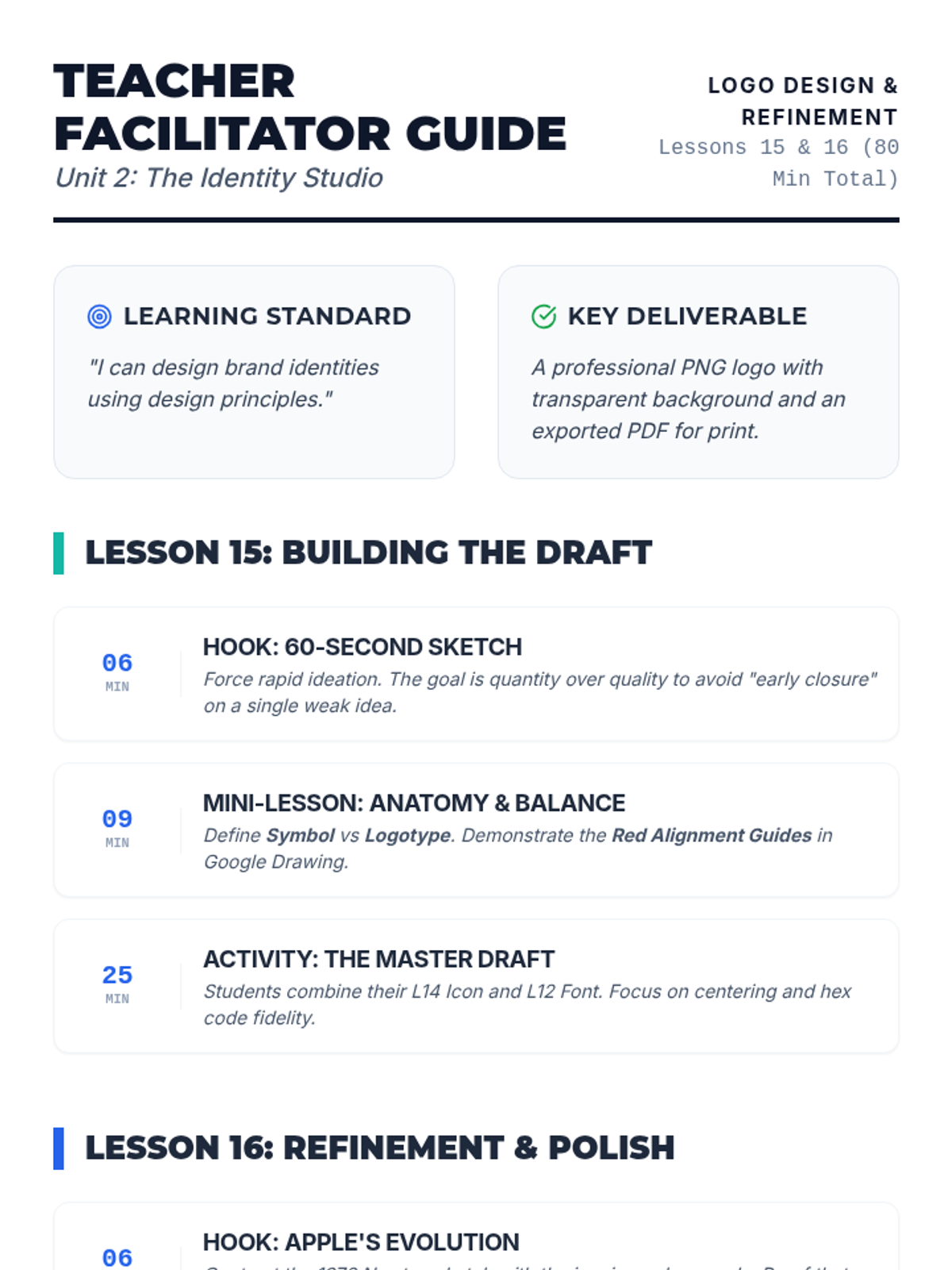
A joint teacher's guide for Lessons 15 and 16, providing pacing, instructional strategy for the 'Squint Test,' and technical troubleshooting for Google Drawing logo exports.
A professional slide deck for Lesson 16, focusing on the concepts of simplicity in design, negative space, and the technical requirements for exporting brand assets in PNG and PDF formats.
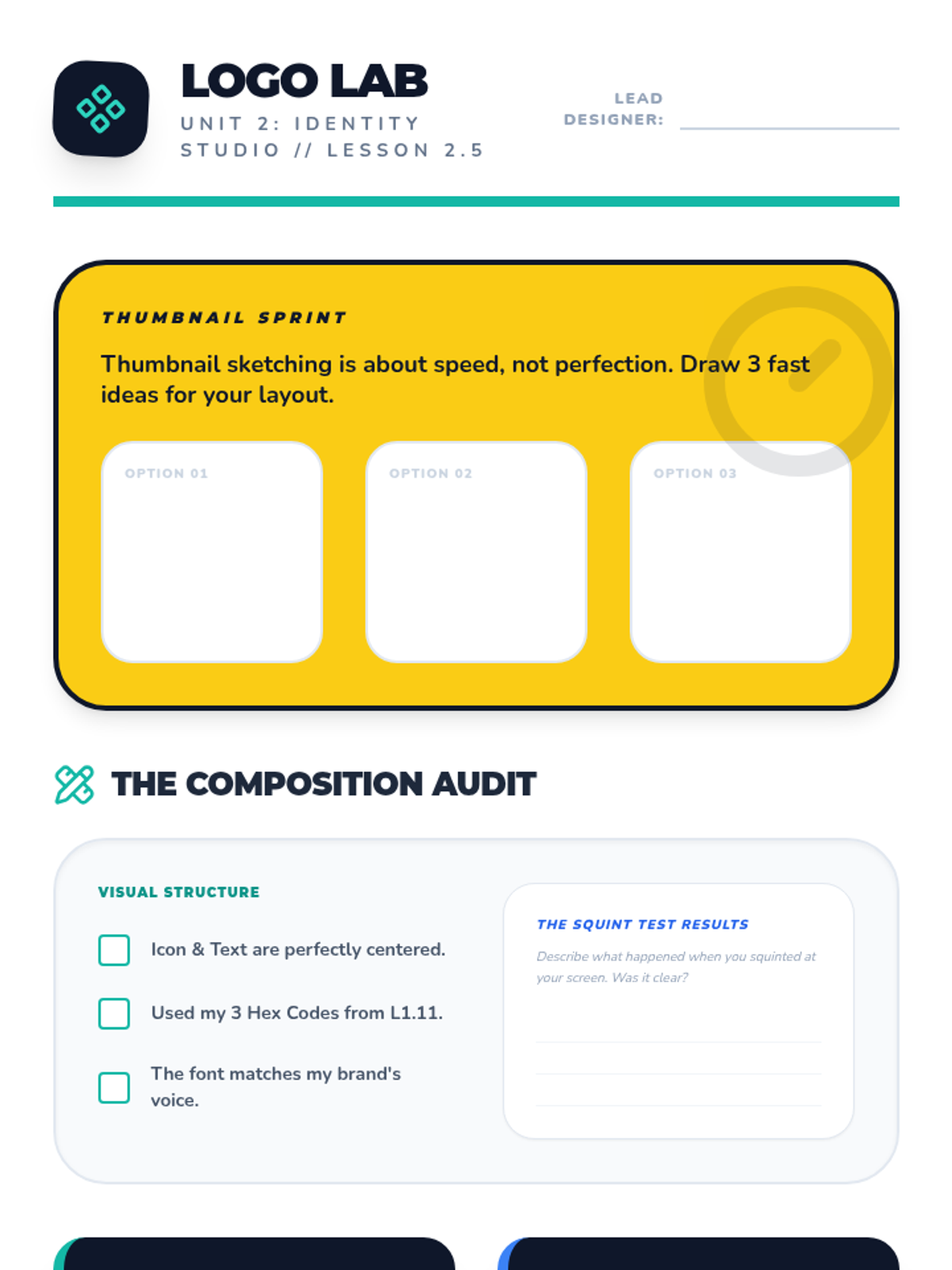
A student logo drafting worksheet featuring a thumbnail sketching sprint area, a composition audit checklist, and a dedicated space for documenting the results of the 'Squint Test.'
A professional, high-energy slide deck for Lesson 15, guiding students through the anatomy of a logo and the technical construction of their first brand mark draft using Google Drawing.
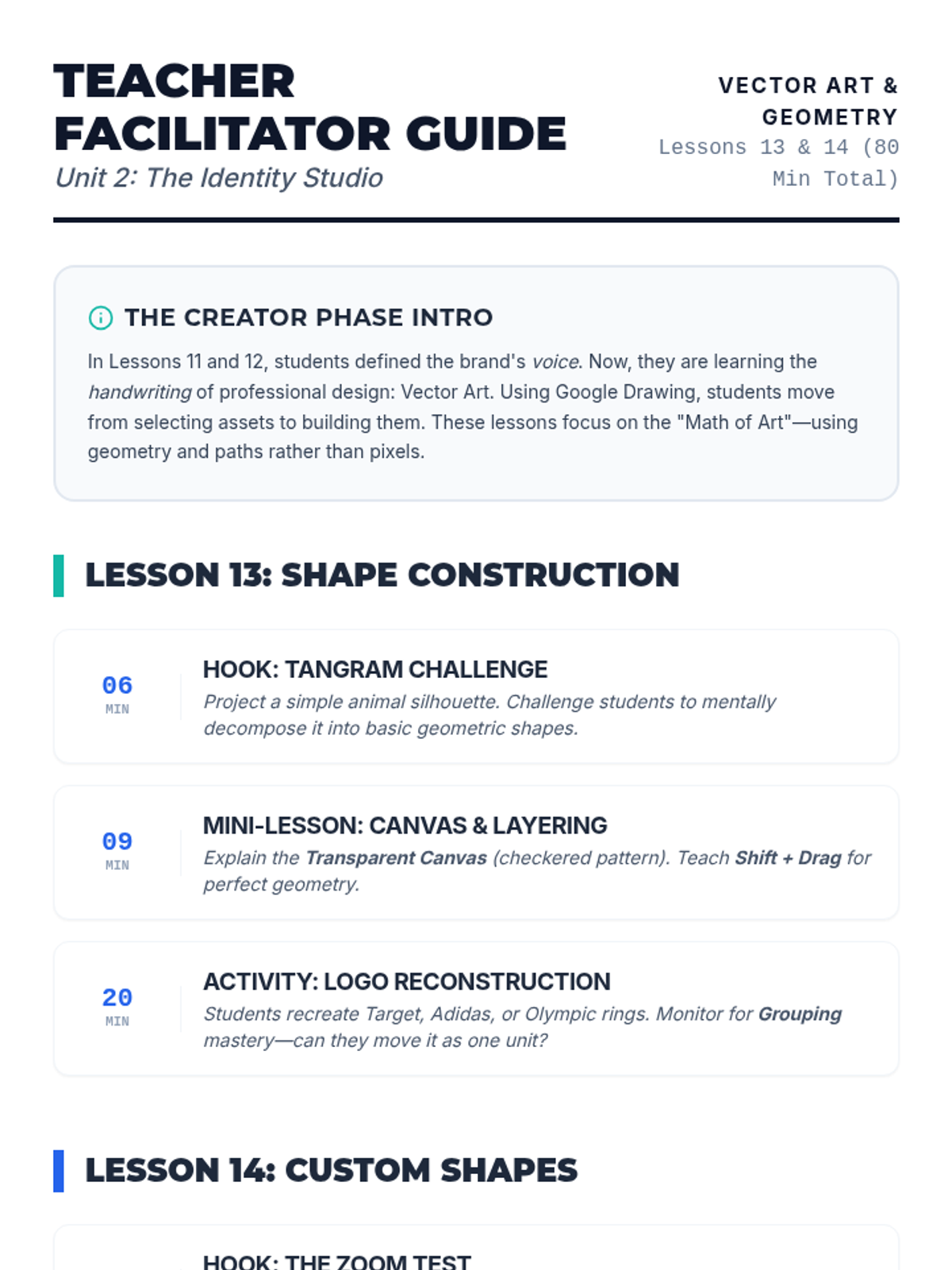
A joint teacher's guide for Lessons 13 and 14, providing pacing, technical troubleshooting for Google Drawing, and instructional tips for teaching vector construction.
A professionally designed slide deck for Lesson 14, teaching custom vector shape creation (polyline/curve) and exploring the technical necessity of vector scalability and transparent PNG exports.
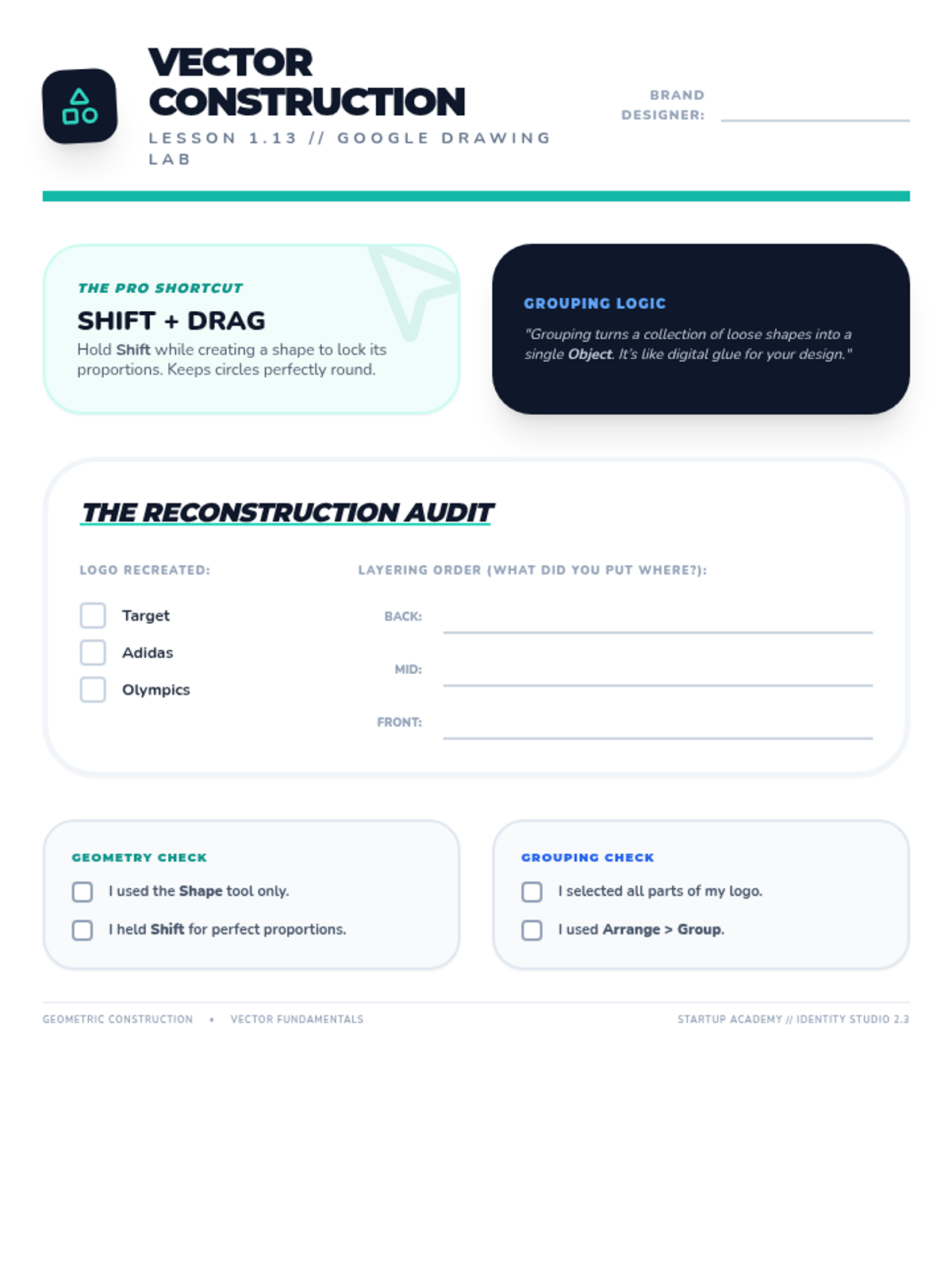
A student activity guide for Lesson 13, helping students document their logo reconstruction process in Google Drawing, including layer ordering and technical grouping checks.
A high-energy, visually engaging slide deck introducing students to vector design in Google Drawing, focusing on building complex logos from simple geometric shapes, grouping, and layering.
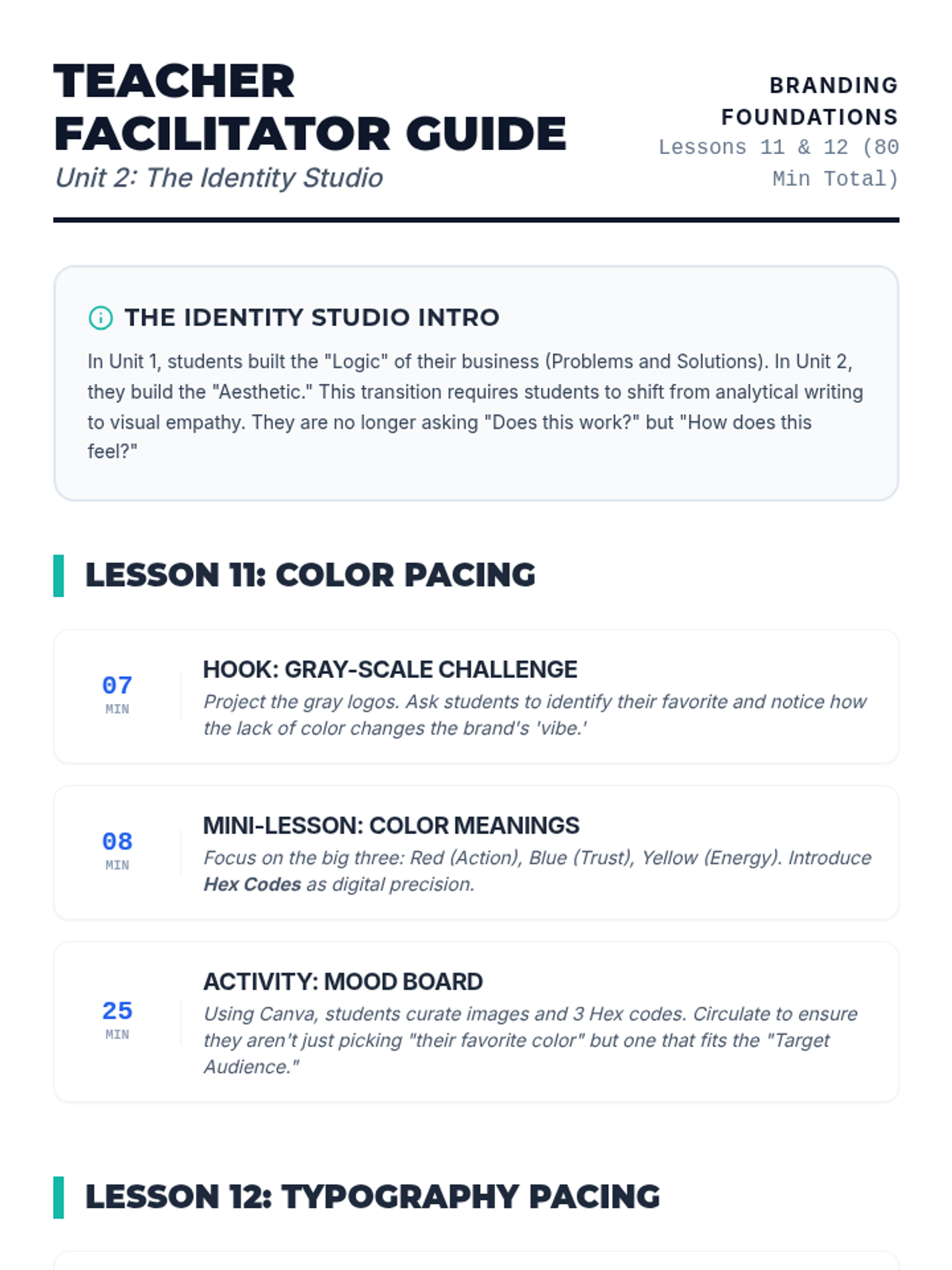
A joint teacher guide for Lessons 11 and 12, providing instructional support for transitioning students from Unit 1's analytical phase to Unit 2's visual branding phase.
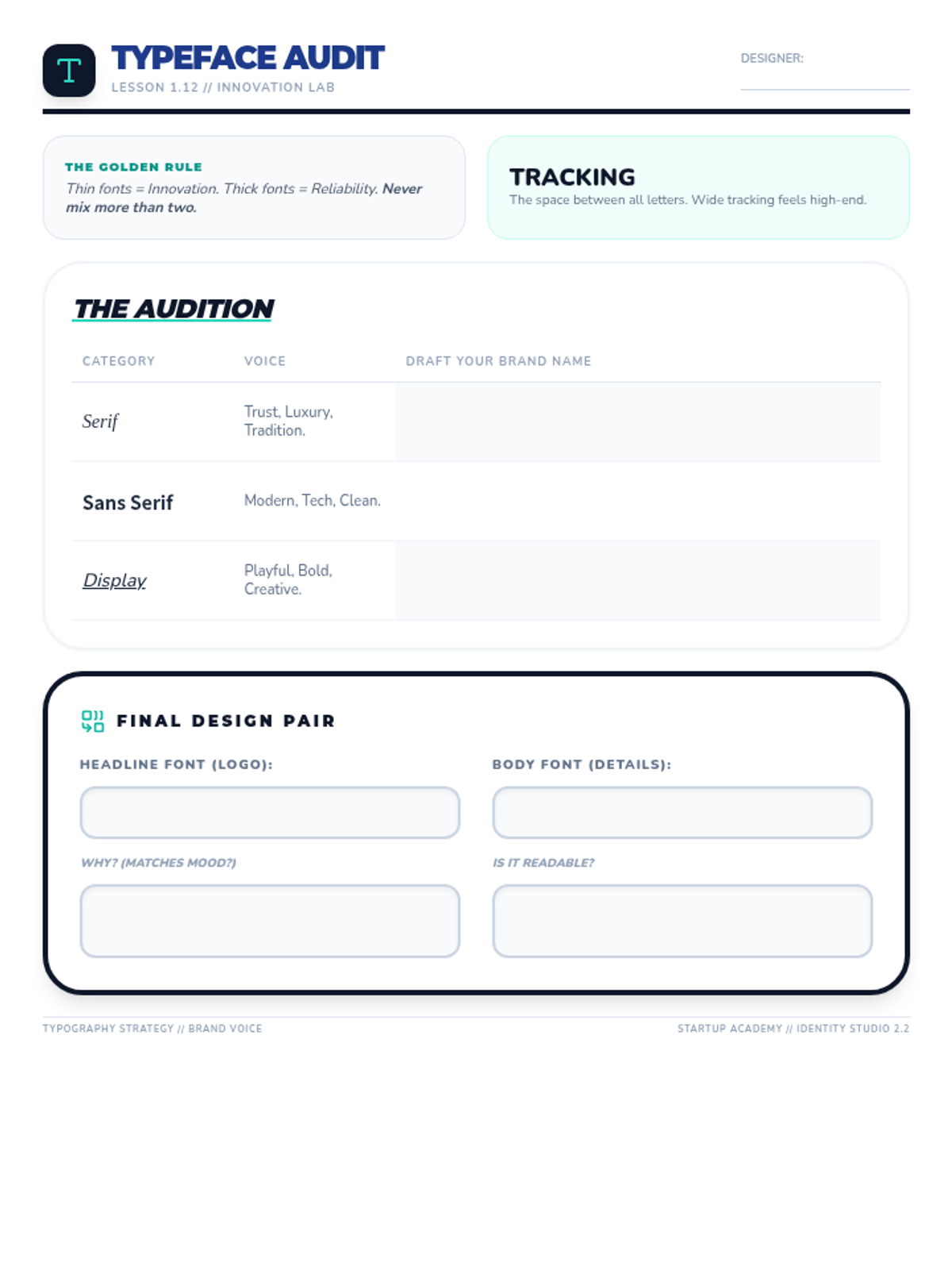
A student typeface analysis sheet for Lesson 12, guiding students through the process of auditing serif, sans serif, and display fonts to find their brand's voice.
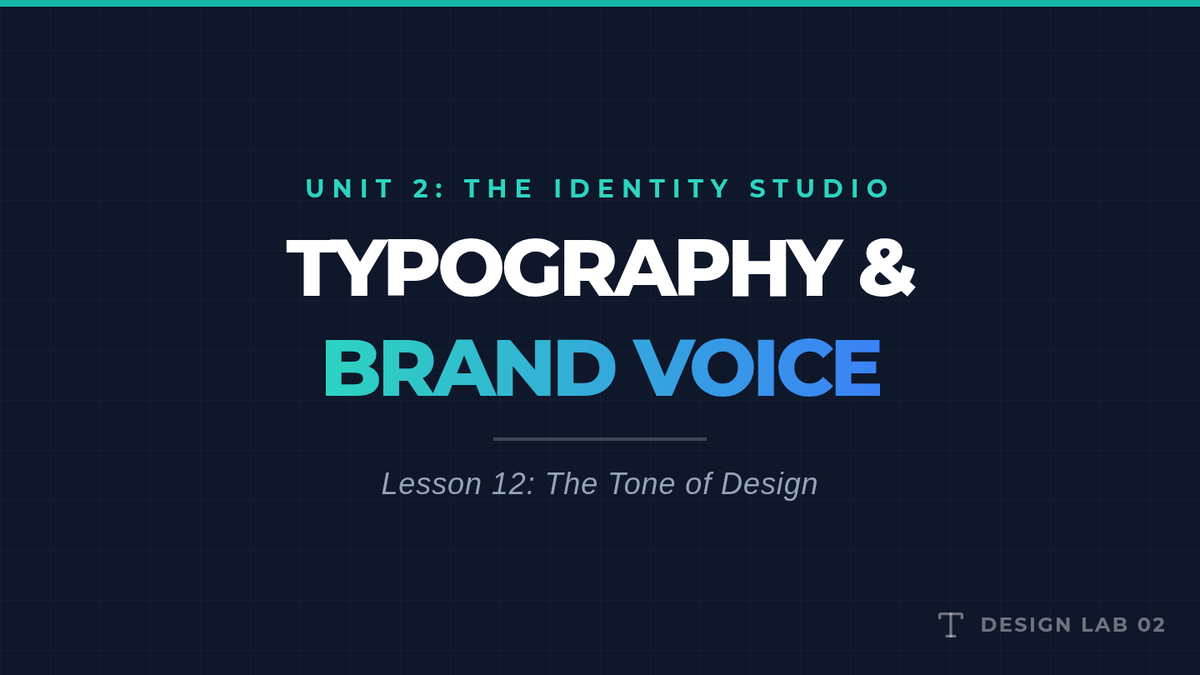
A professional, typography-focused slide deck for Lesson 12, teaching the difference between serif, sans serif, and display fonts, while exploring how letter spacing (tracking) affects brand identity.
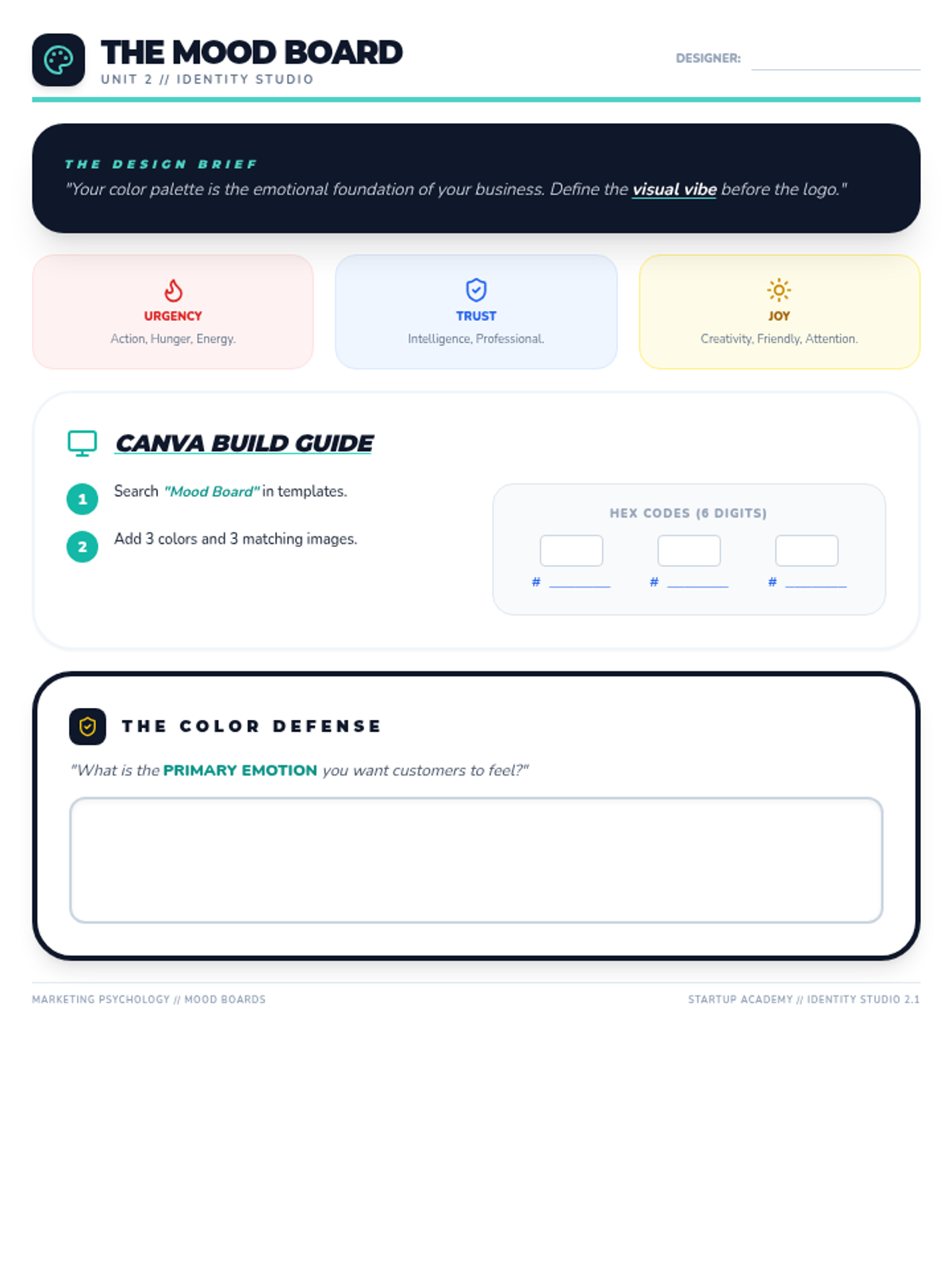
A professional design guide for students building a brand mood board in Canva, featuring color psychology anchors, technical instructions for Hex codes, and an exit ticket drafting area.
A sleek, visually striking slide deck for Lesson 11, introducing color theory, marketing psychology, and the technical skill of using Hex codes to build brand mood boards.
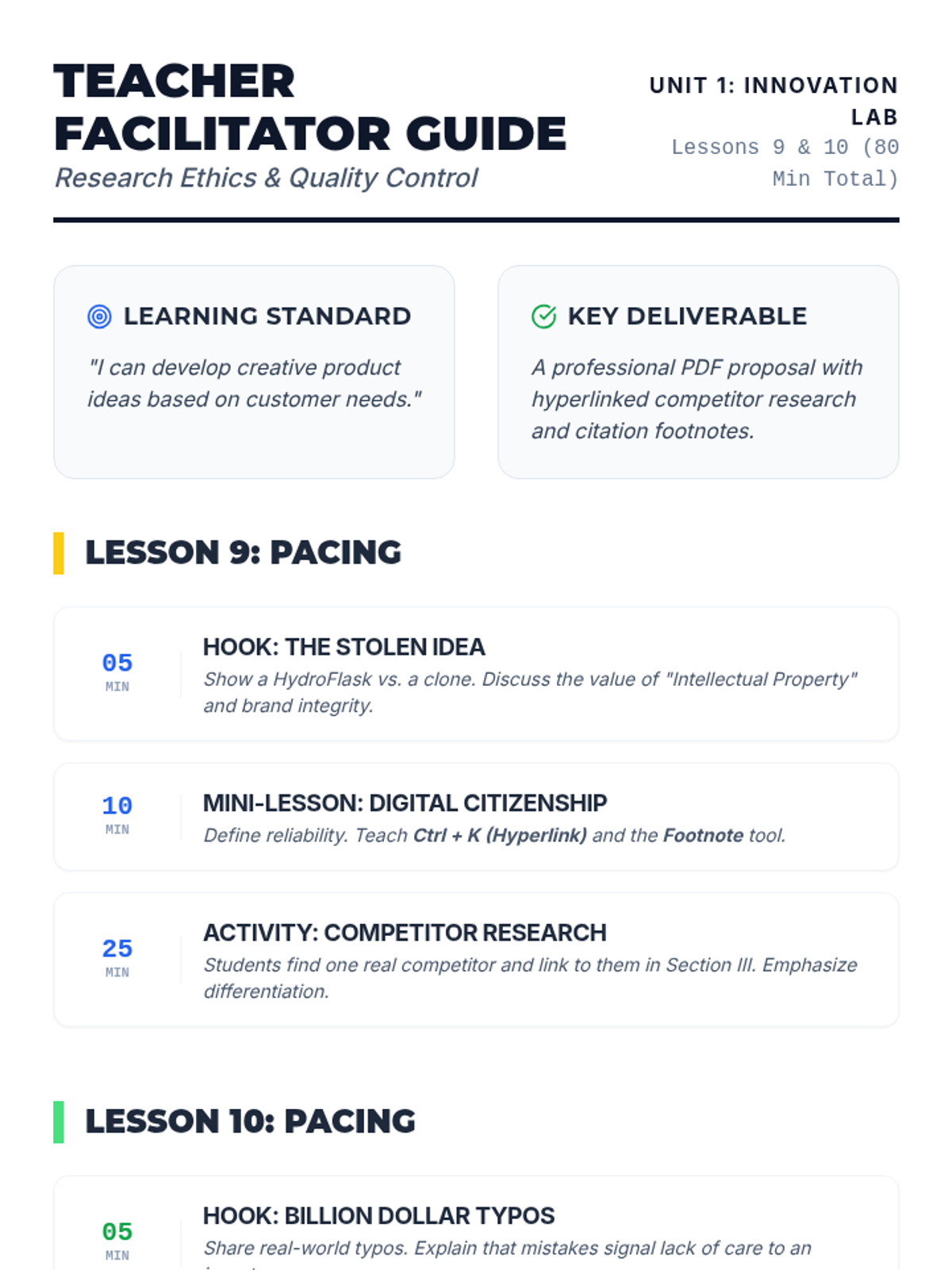
A joint teacher facilitator guide for Lessons 9 and 10, covering intellectual property, source reliability, peer review protocols, and professional quality control.
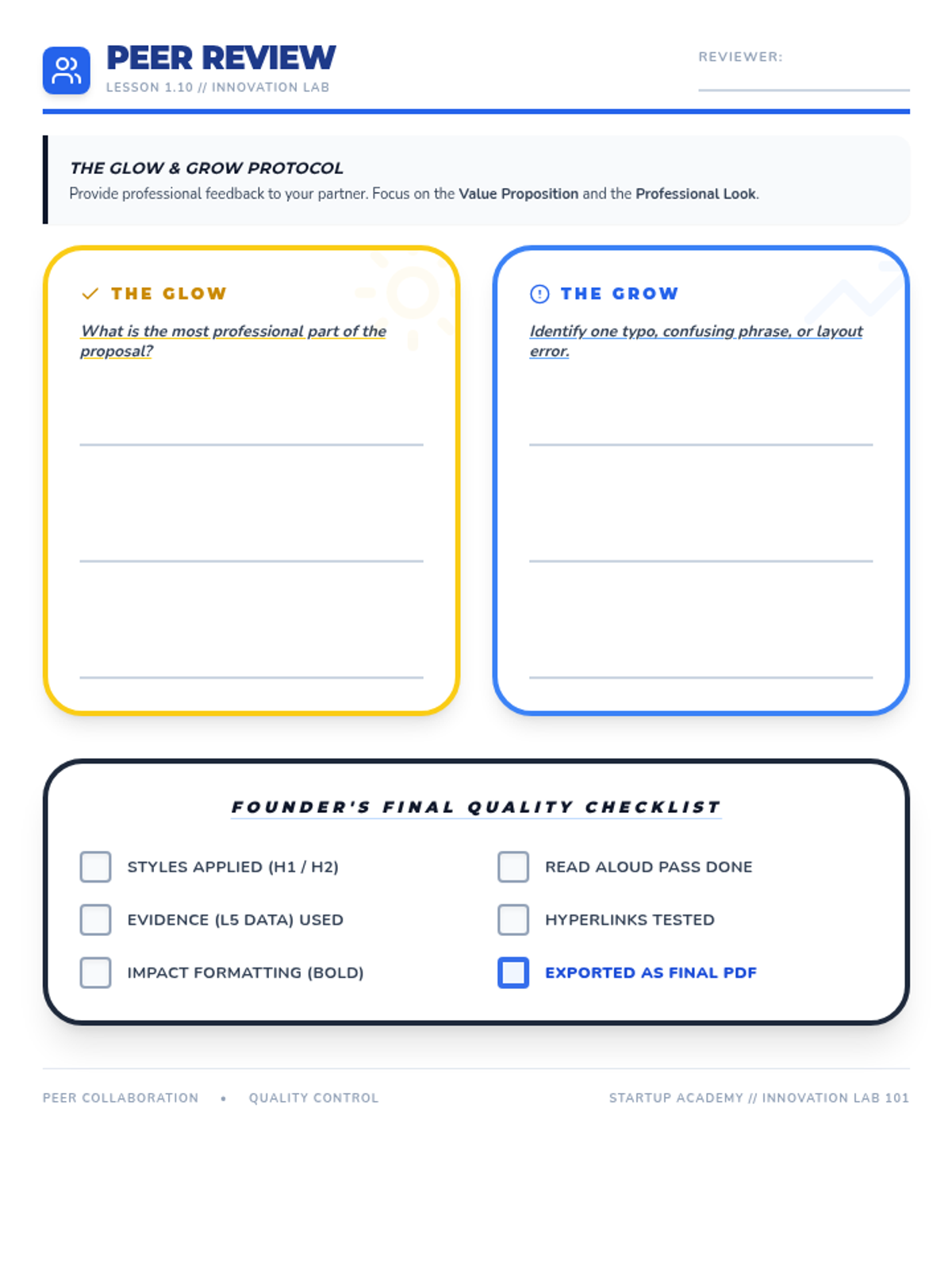
A peer review feedback form and final quality control checklist for Lesson 10, designed to guide students through the 'Glow and Grow' feedback process and professional submission requirements.
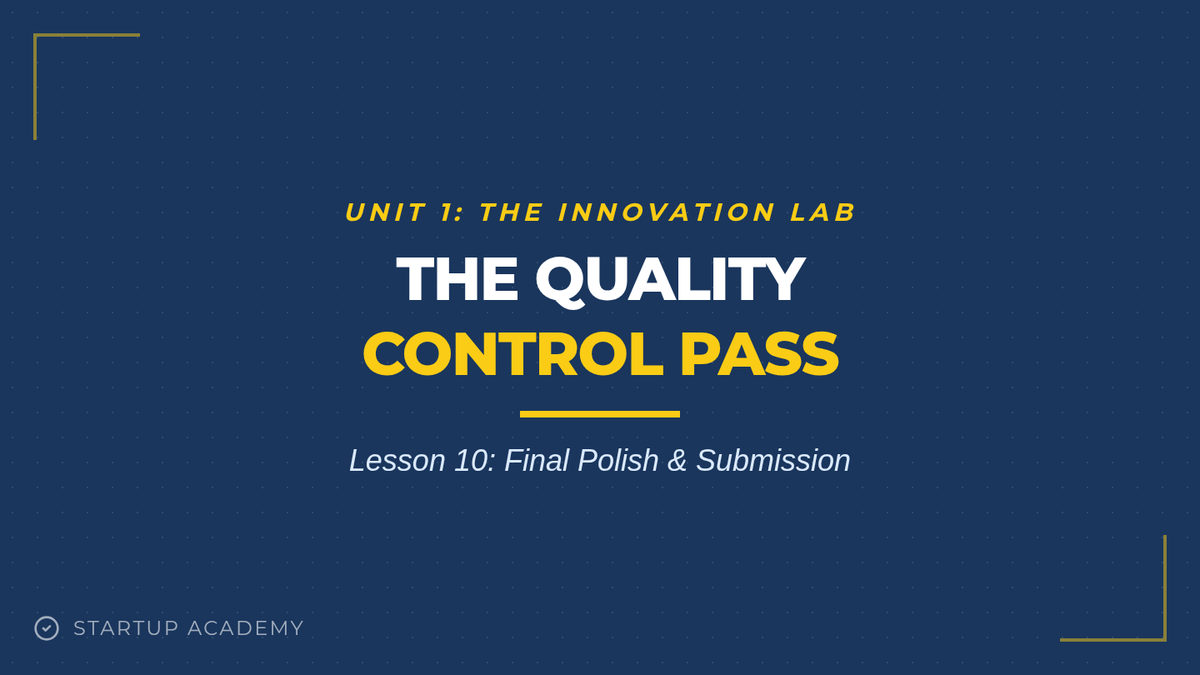
A high-energy slide deck for Lesson 10 of the Innovation Lab, focusing on final document editing, peer review feedback, the 'Read Aloud' proofing trick, and professional PDF exportation.
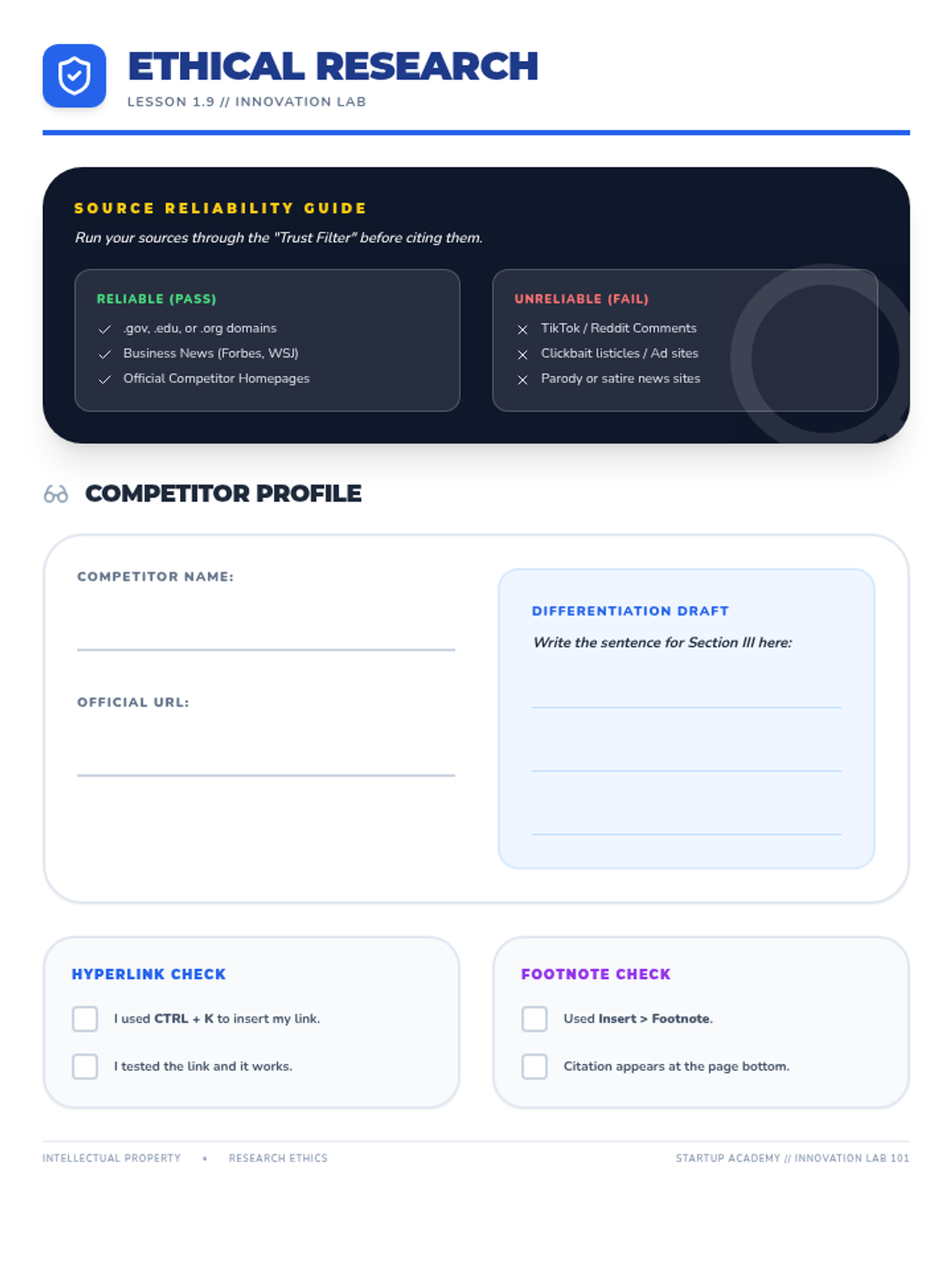
A student research and reliability handout for Lesson 9, featuring a source evaluation guide, competitor analysis template, and a technical software skills checklist for hyperlinking and footnotes.
A high-energy slide deck for Lesson 9 of the Innovation Lab, focusing on intellectual property, source reliability, and technical software skills for hyperlinking and footnotes.
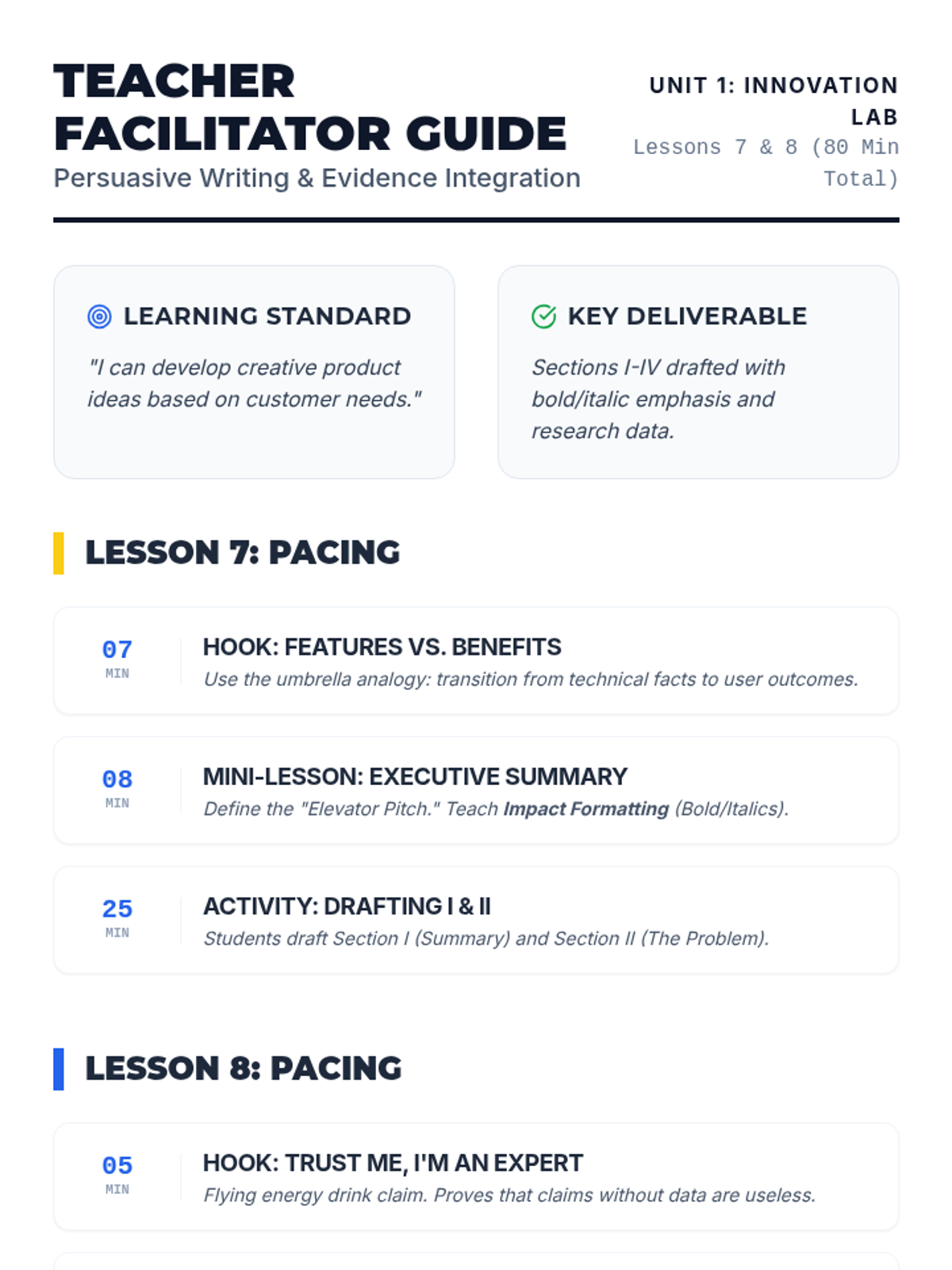
A joint teacher's guide for Lessons 7 and 8, covering persuasive business writing, features vs. benefits, and the integration of research evidence into a formal proposal.
A slide deck focused on using market research as evidence in business writing, featuring technical instruction on integrating quotes, lead-in phrases, and using indentation for block quotes.
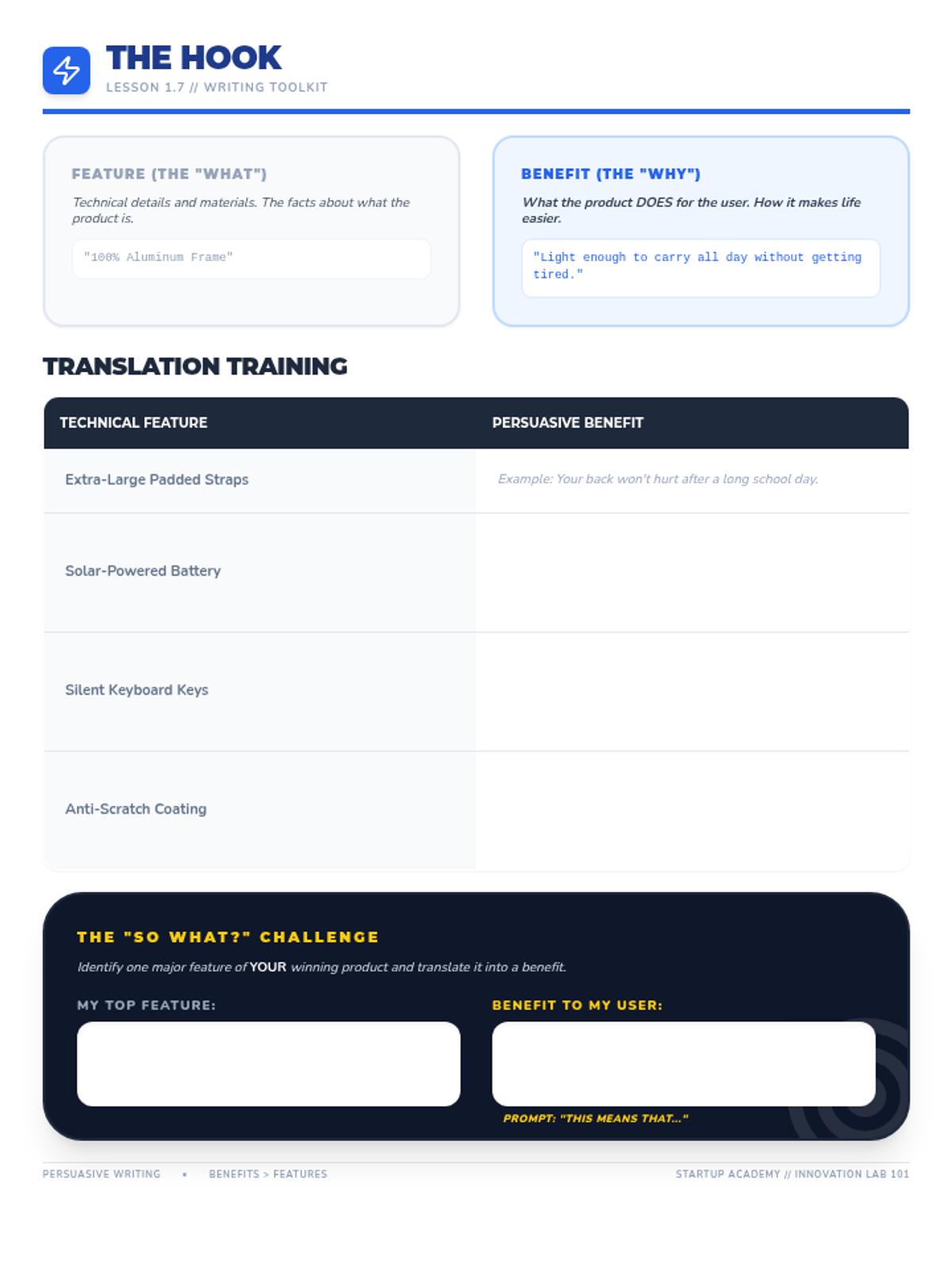
A persuasive writing toolkit for students to practice translating technical product features into customer benefits before drafting their business proposals.
A high-energy slide deck teaching the difference between product features and customer benefits, with technical software instruction on using bold and italics for impact in an Executive Summary.
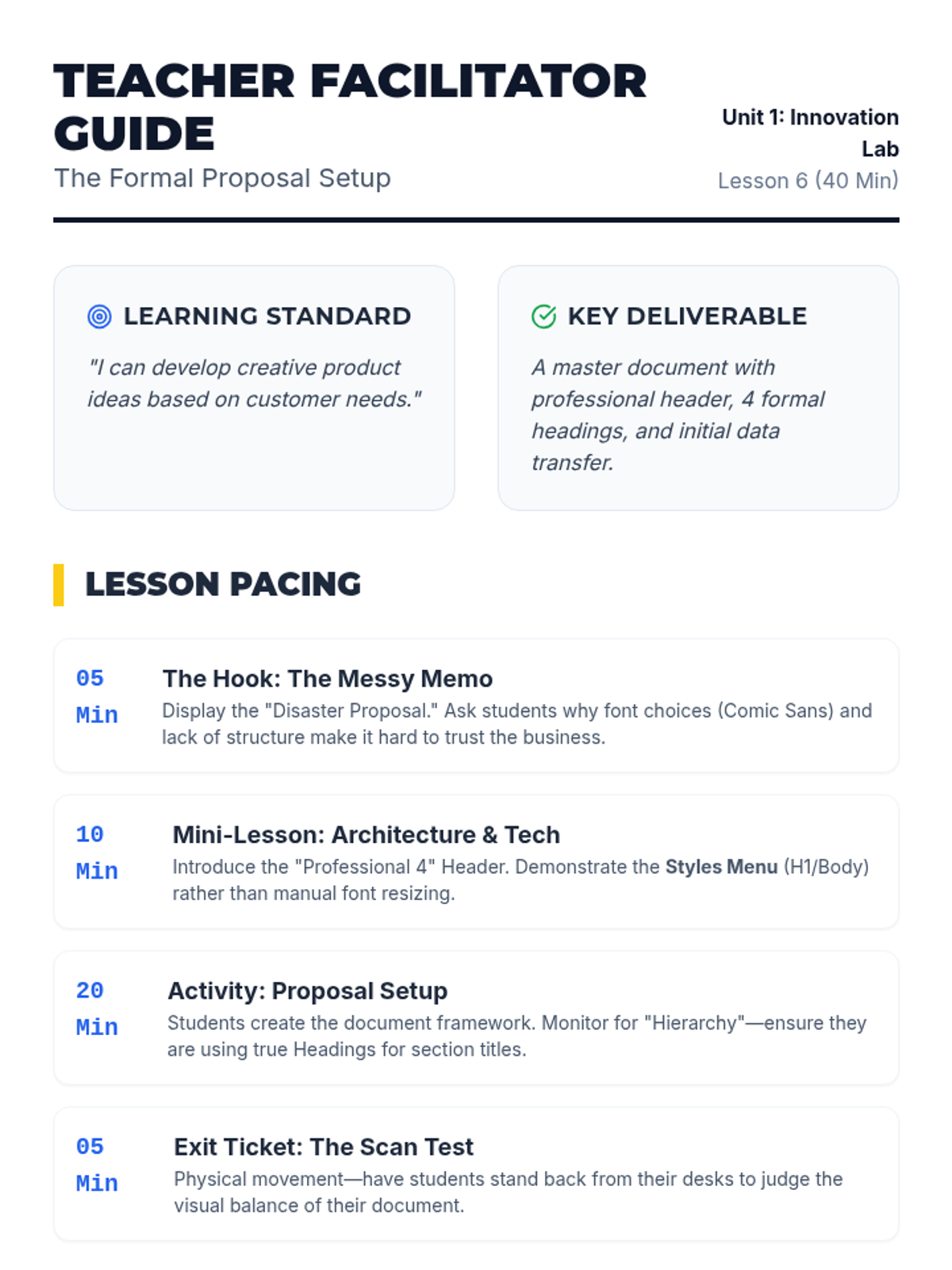
A comprehensive teacher's guide for Lesson 6, providing pacing, discussion prompts, and technical tips for facilitating the formal business proposal setup.
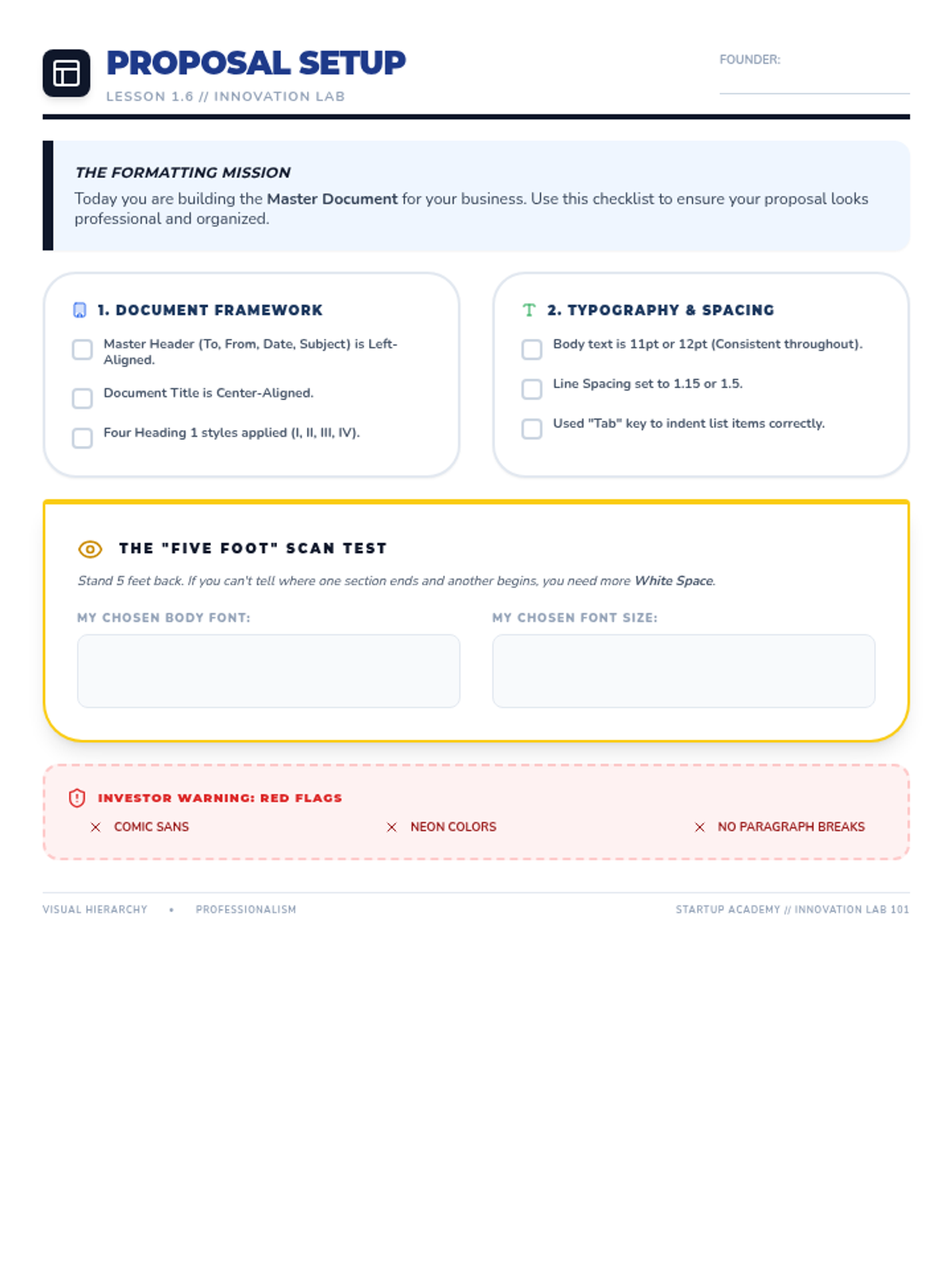
A student-facing formatting checklist and architecture guide for setting up a formal business proposal, featuring technical requirements for alignment, typography, and spacing.
A professional, visually striking slide deck for teaching document architecture and formal business proposal formatting, featuring blueprint design elements and technical software skill guides.
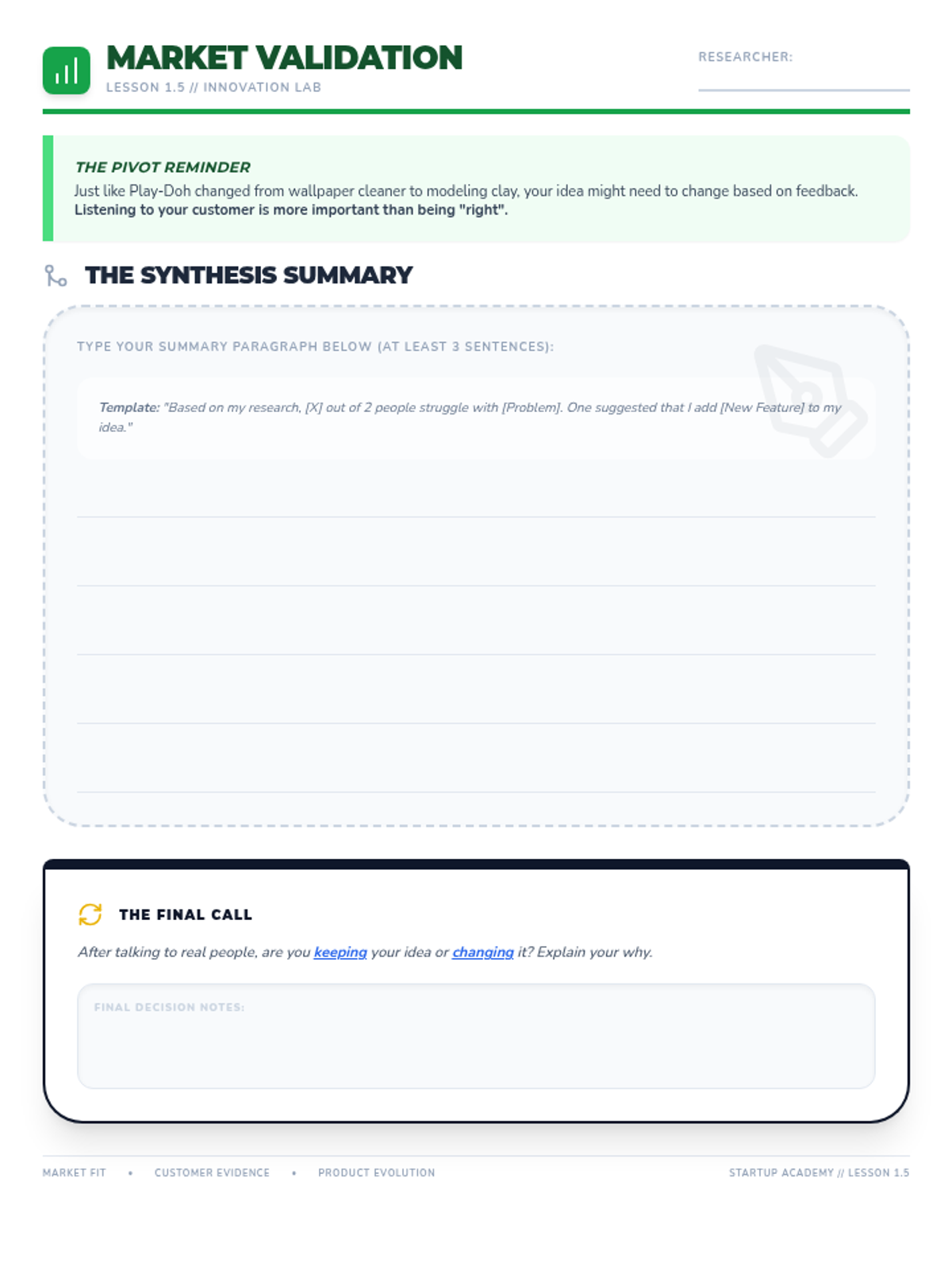
A student synthesis worksheet for Lesson 5, guiding students through the process of writing a summary paragraph based on their market research and deciding whether to pivot their product idea.