A teacher's guide for modeling annotation and critical thinking during the "Viral Influence" lesson. Includes think-aloud scripts for all reading sections (Paras 1-9) and strategies for overcoming student resistance.

A set of printable mixer cards for a professional development ice breaker activity, featuring paired items like 'Coffee & Donut' and 'Burger & Fries' to help teachers find a partner and share successes.
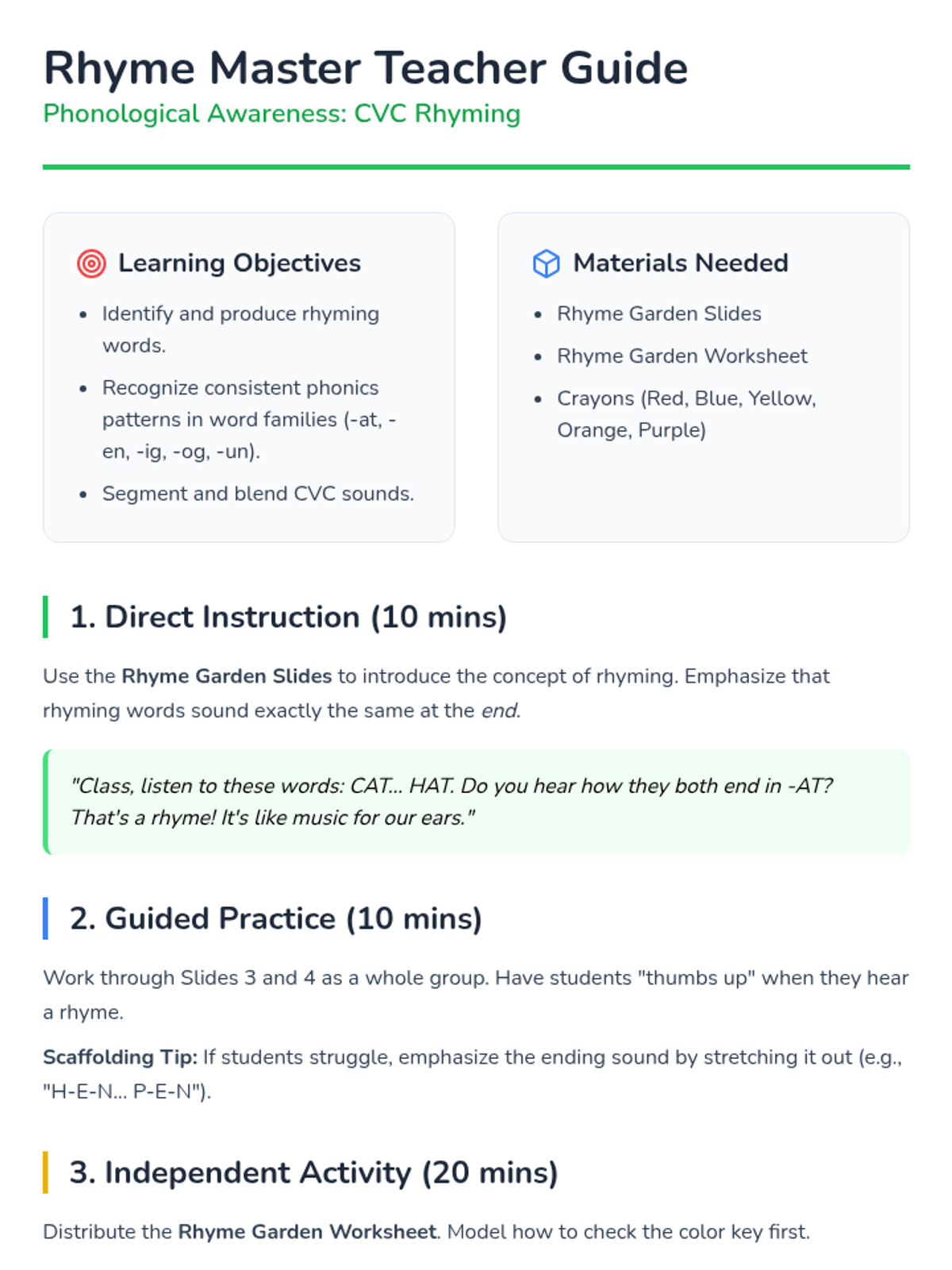
A comprehensive teacher guide for the Rhyme Garden lesson, including learning objectives, a detailed delivery script, scaffolding tips, and differentiation strategies.
An instructional slide deck that introduces rhyming concepts and provides guided practice before students start their independent coloring activity.
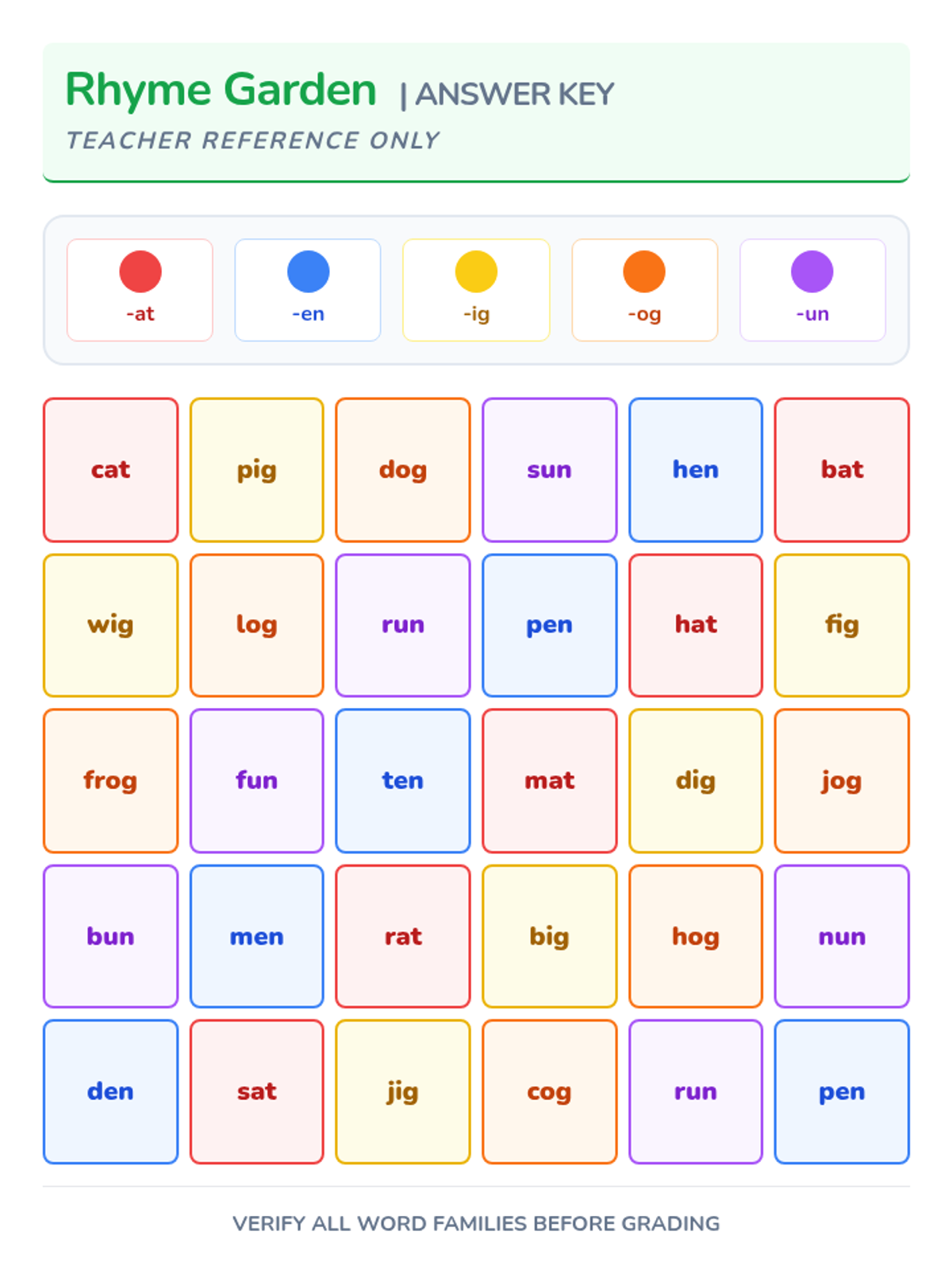
The answer key for the Rhyme Garden worksheet, updated to match the revised worksheet layout and content.
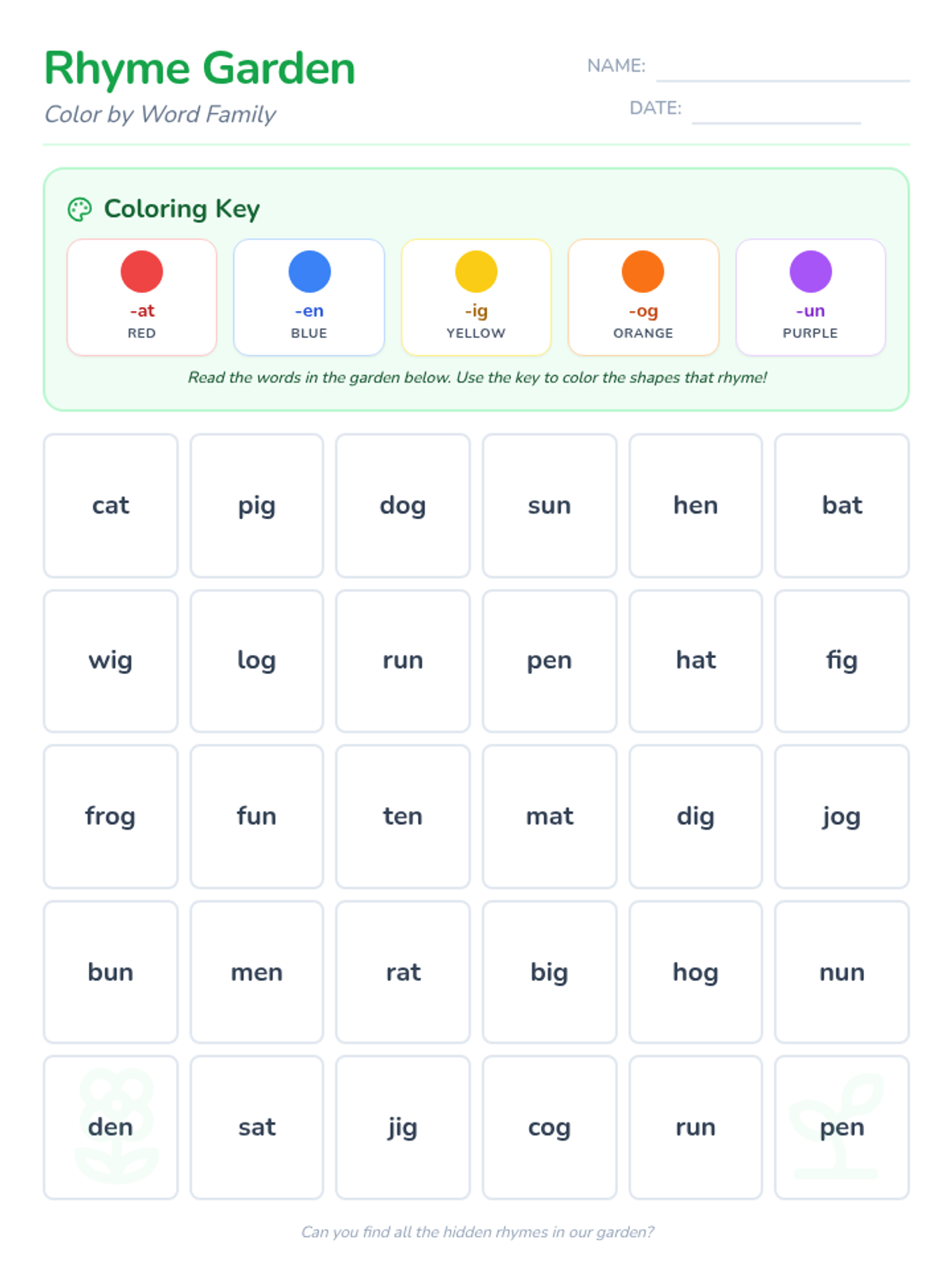
A color-by-code worksheet where students identify CVC word families to reveal a colorful mosaic garden. Includes -at, -en, -ig, -og, and -un rhyme groups. Fixes layout and content issues.
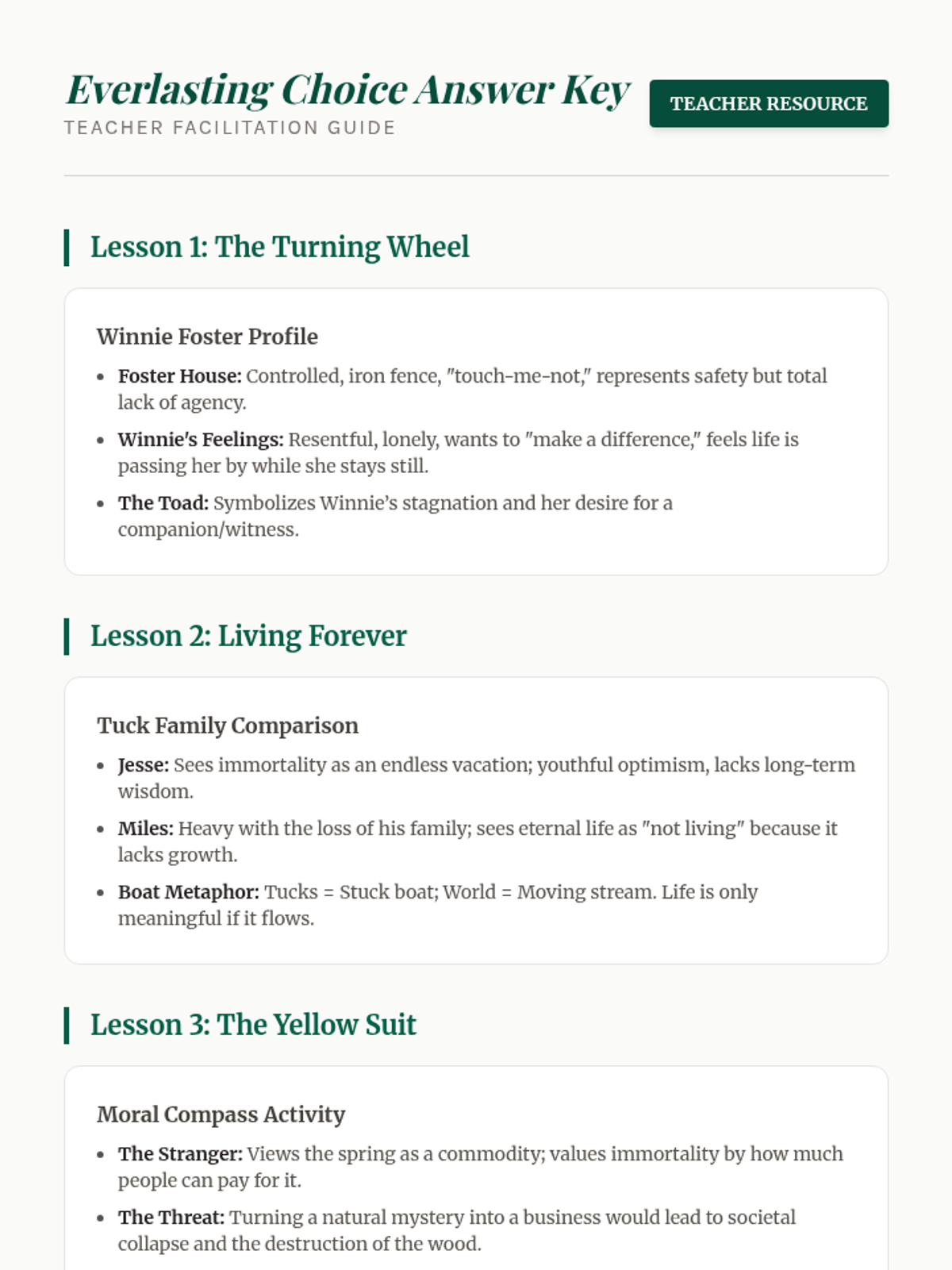
Teacher answer key and grading guide for all student worksheets and assessments in the Everlasting Choice unit.
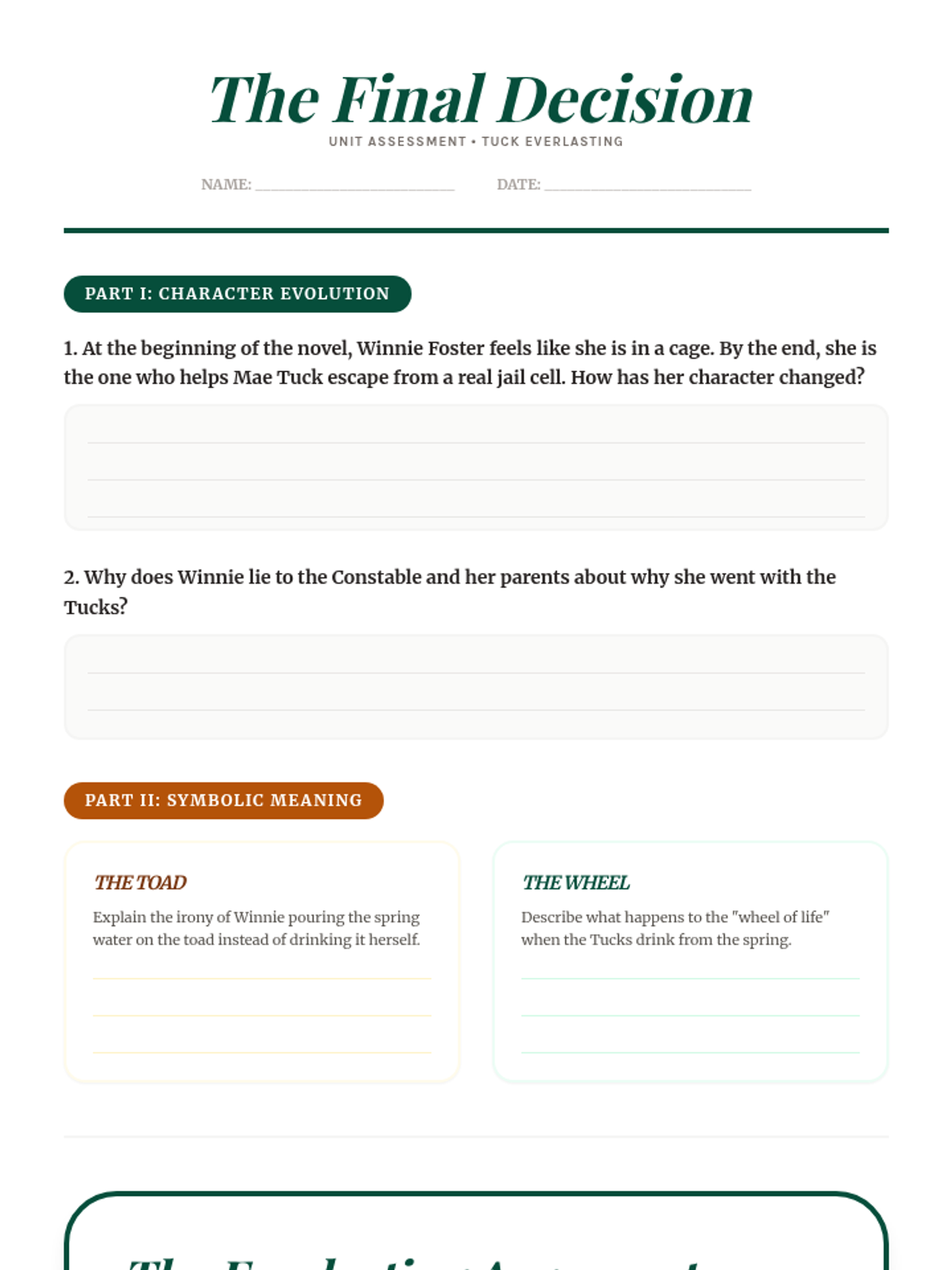
A final assessment for the Tuck Everlasting unit, covering character development, symbolism, and a thematic essay on immortality.
Final presentation analyzing the resolution of the novel, Winnie's choice to pour the water on the toad, and the meaning of the epilogue.
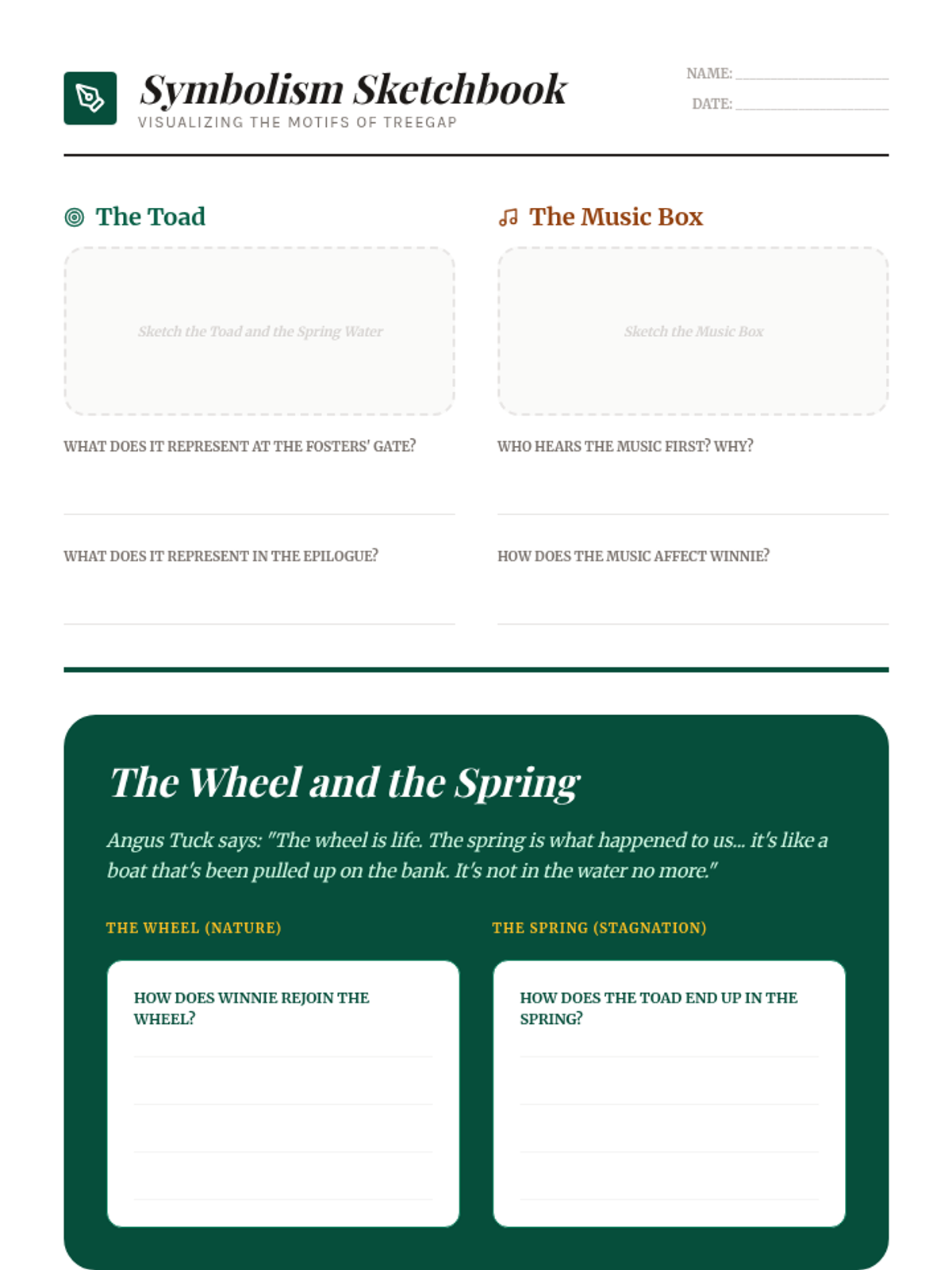
An interactive worksheet for students to sketch and analyze the major symbols in the novel, including the music box, the toad, and the wheel.
Presentation focusing on the symbolic importance of the toad, the music box, and the gallows in Tuck Everlasting.
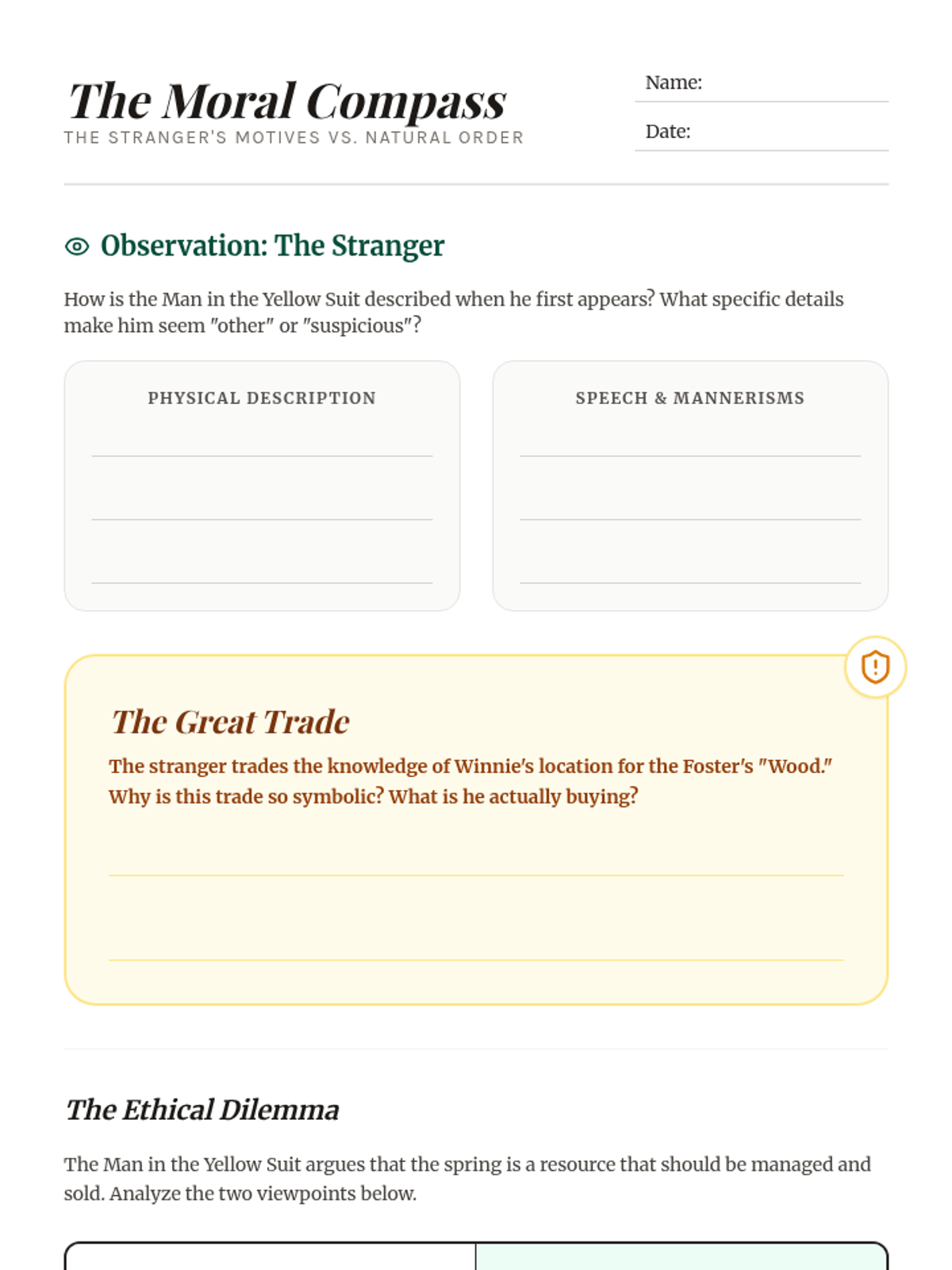
A worksheet focusing on the Man in the Yellow Suit's character and motives, comparing his capitalistic approach to the Tucks' protective ethics.
Presentation analyzing the Man in the Yellow Suit as an antagonist, contrasting his greed with the Tucks' desire to protect the natural order.
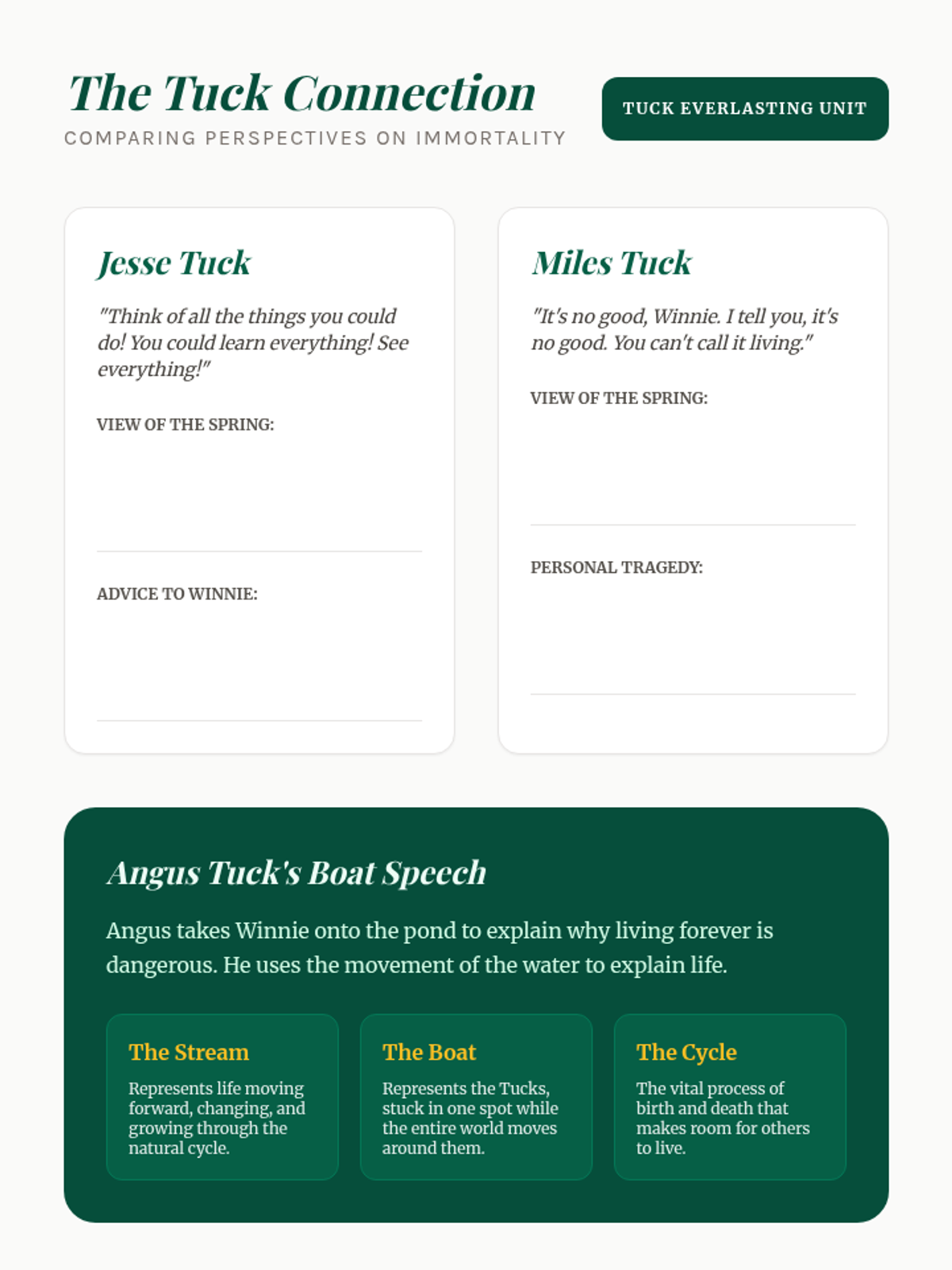
A comparison worksheet for Jesse and Miles Tuck, focusing on their differing views on immortality and Angus Tuck's metaphor of the boat on the pond.