A 2-page review worksheet for 3rd graders on thermal energy, adapted from a 6th-grade assessment. It features simplified language, molecule diagrams, and ample space for written responses.
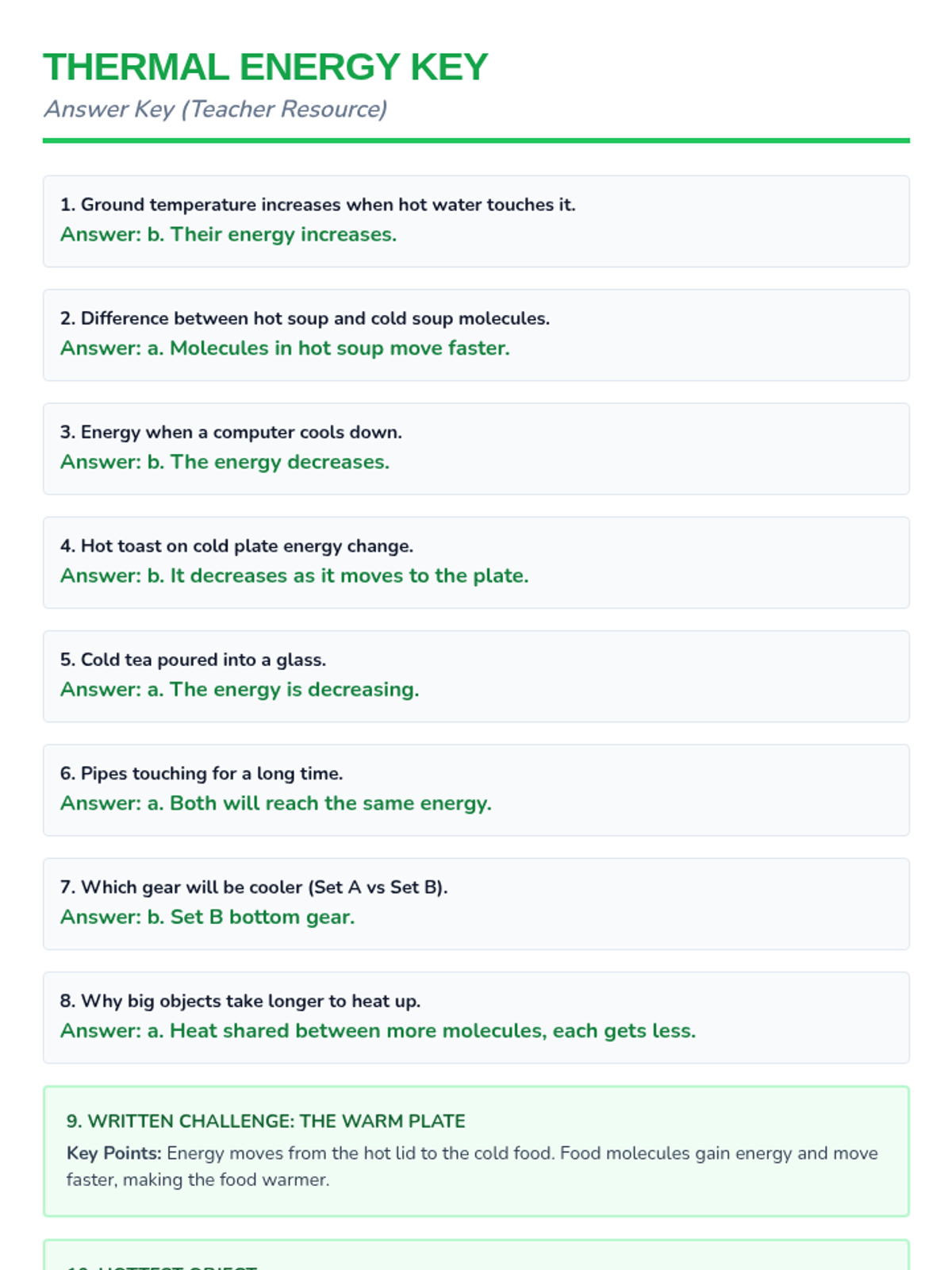
An answer key for the Thermal Energy Worksheet, providing correct answers and explanations for the 10 questions on thermal energy and molecules.
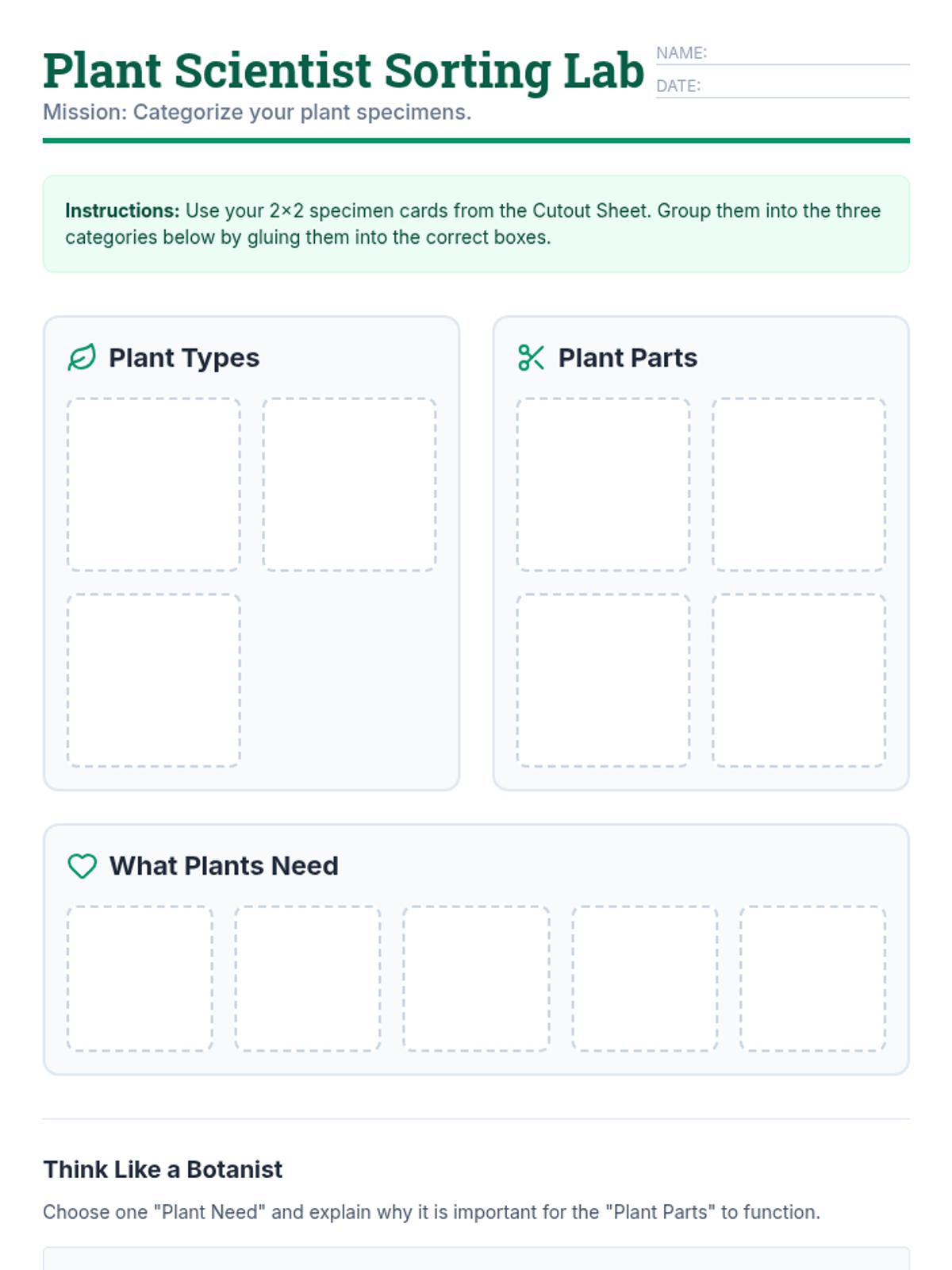
A sorting mat where students paste their plant cutout cards into three categories: Plant Types, Plant Parts, and Plant Needs. Includes a reflection question.
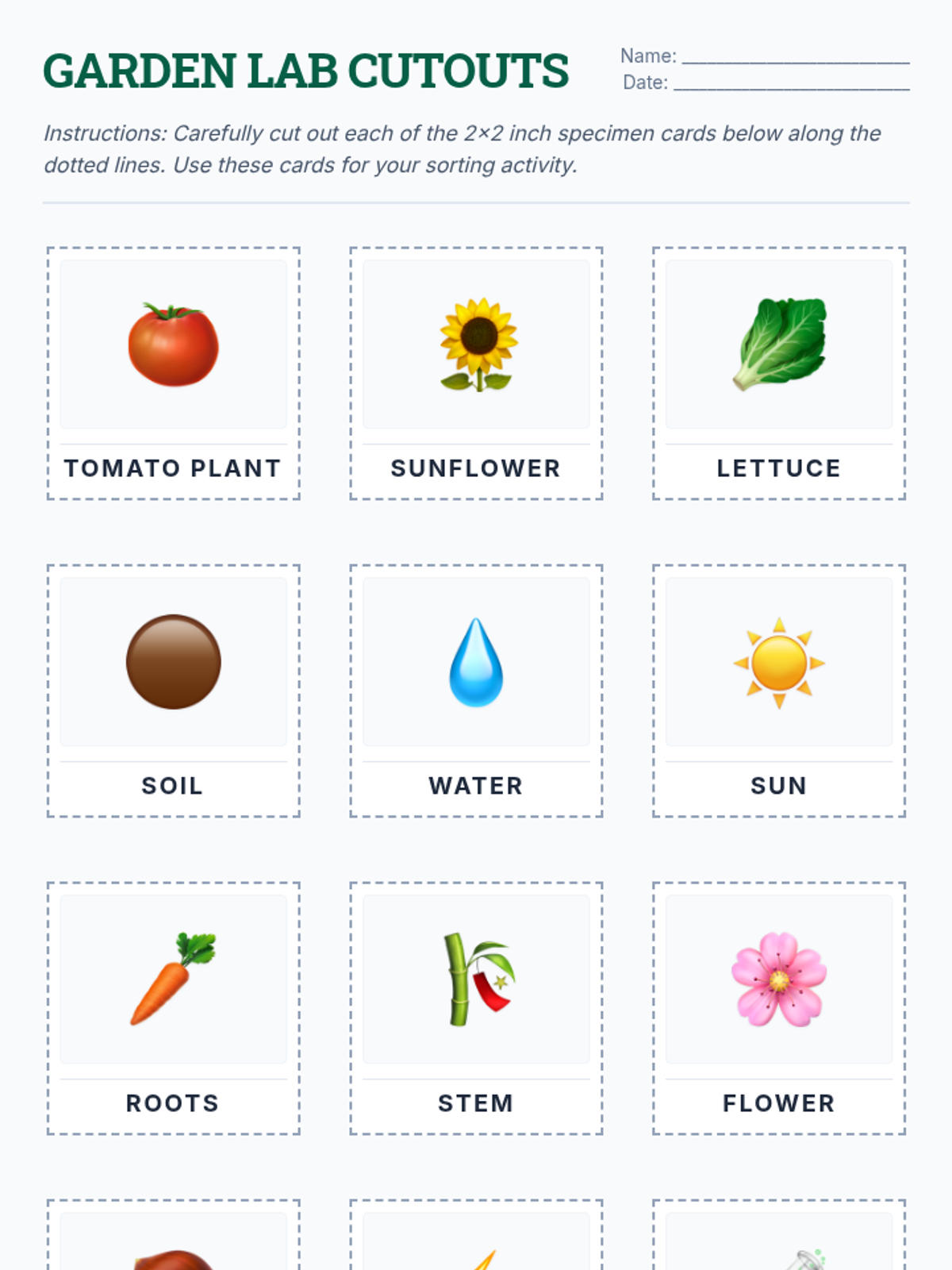
A set of 12 printable 2x2 inch cutout cards featuring plant types, parts, and needs with visual icons and labels. Designed for hands-on sorting activities.
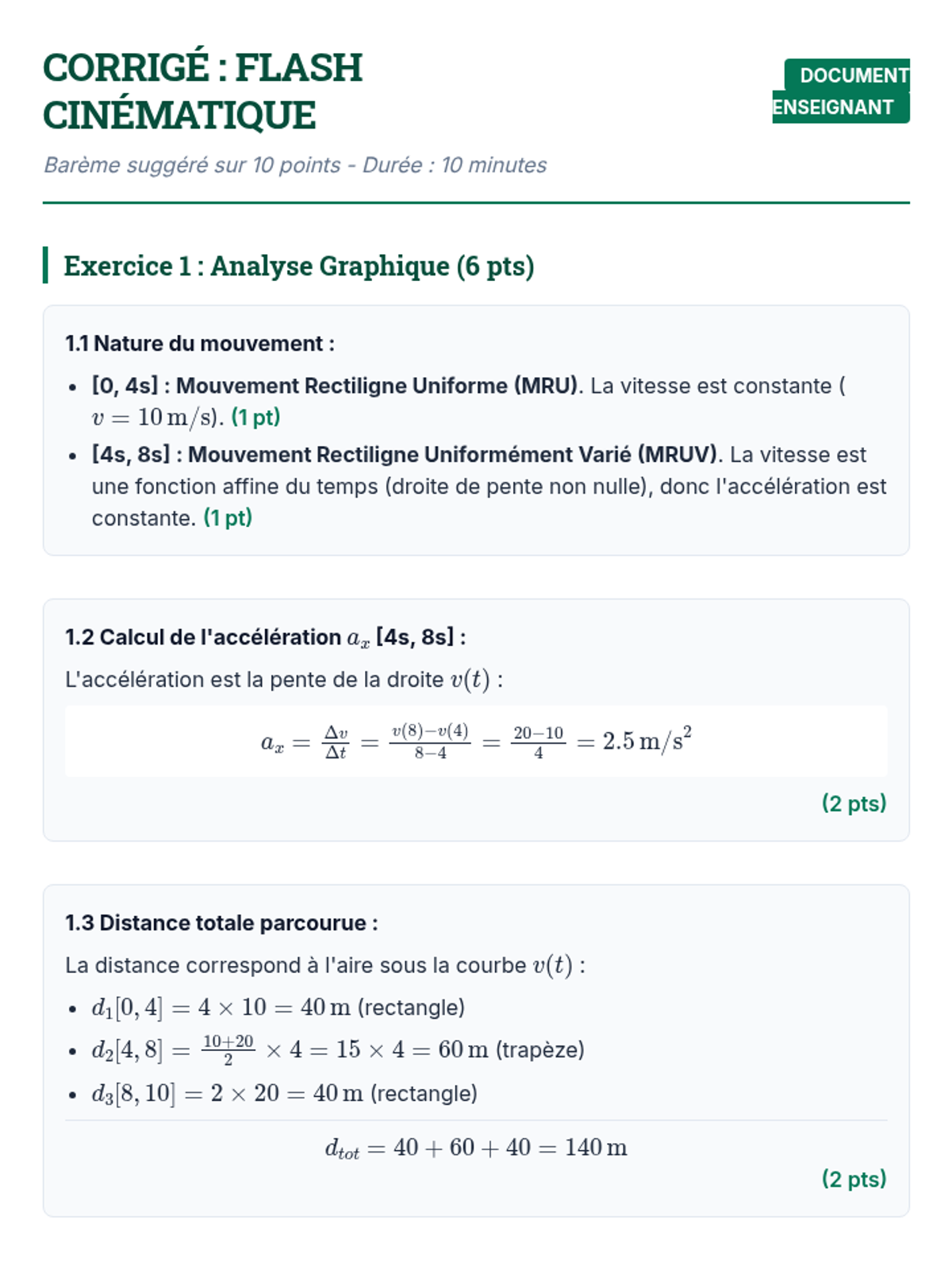
Le corrigé détaillé du test de cinématique avec barème et explications pour chaque question. Idéal pour une correction rapide en classe ou en autonomie.
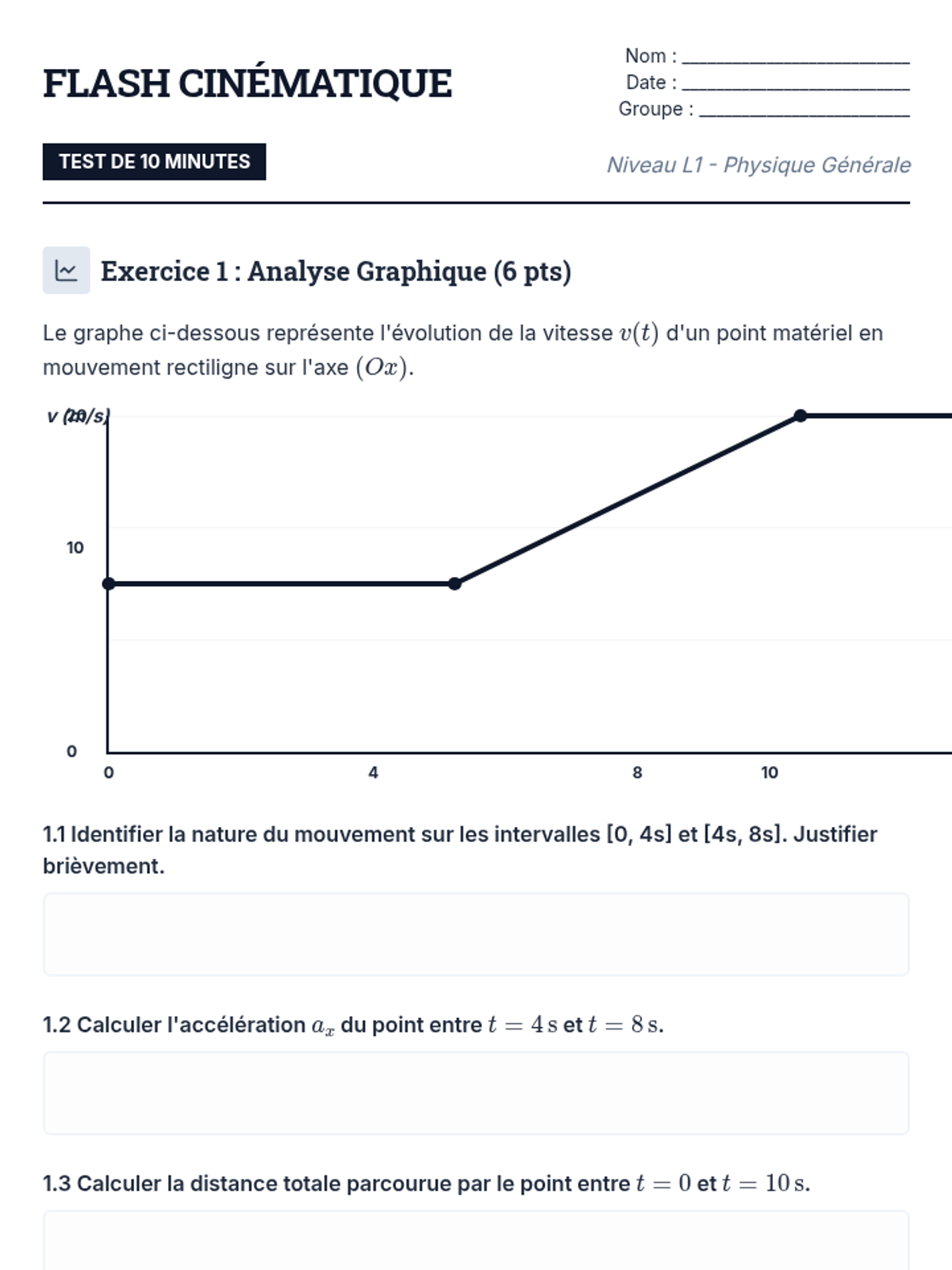
Un test de 10 minutes sur la cinématique pour étudiants L1. Il comprend une analyse de graphe v(t) (MRU/MRUV) et une application directe sur le mouvement circulaire en coordonnées polaires.
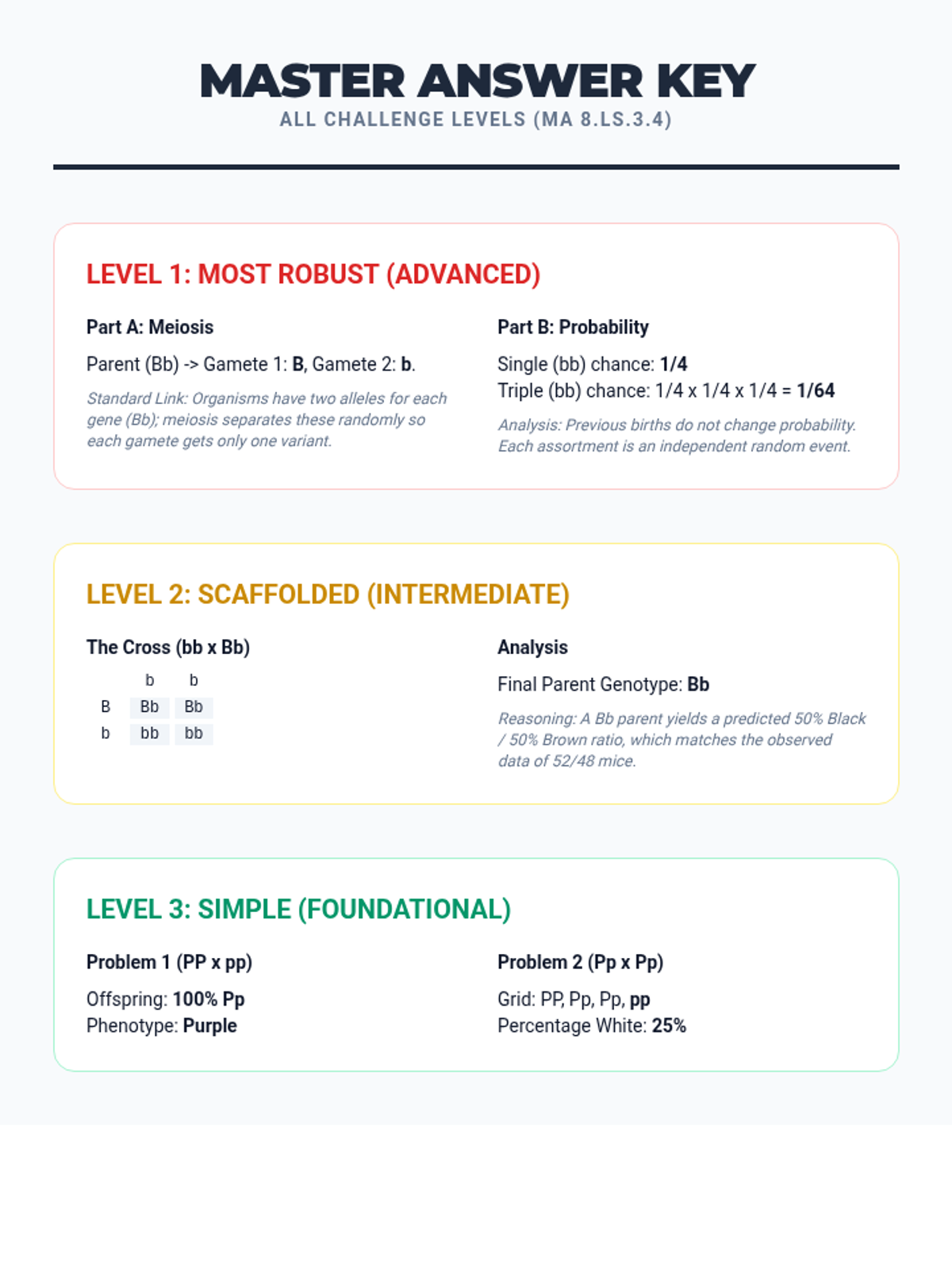
A comprehensive master answer key covering all three tiered challenge levels (Robust, Scaffolded, and Simple).
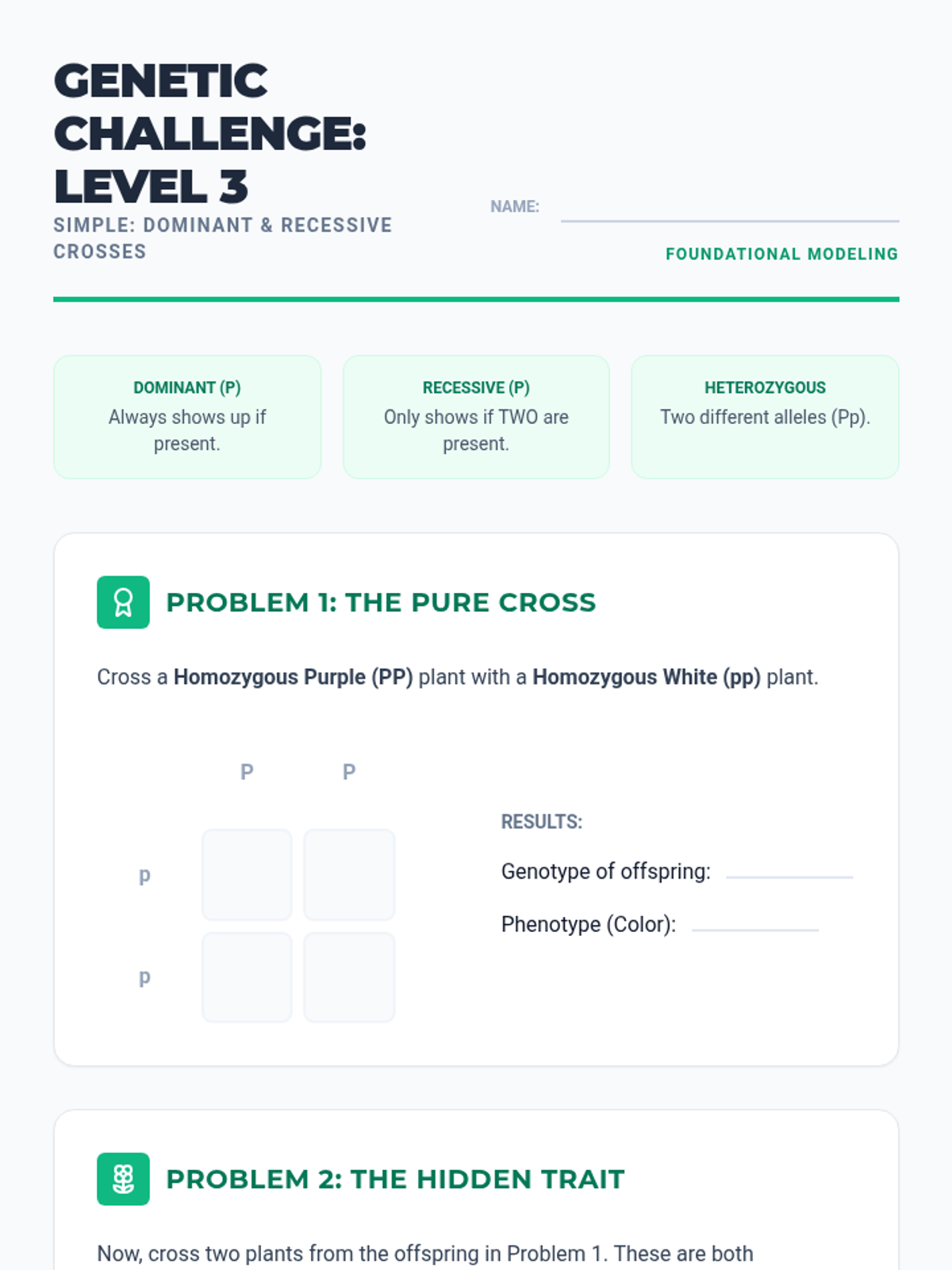
Level 3: Simple. A foundational genetic modeling worksheet focusing on basic monohybrid crosses (F1 and F2 generations) using pea plant traits.
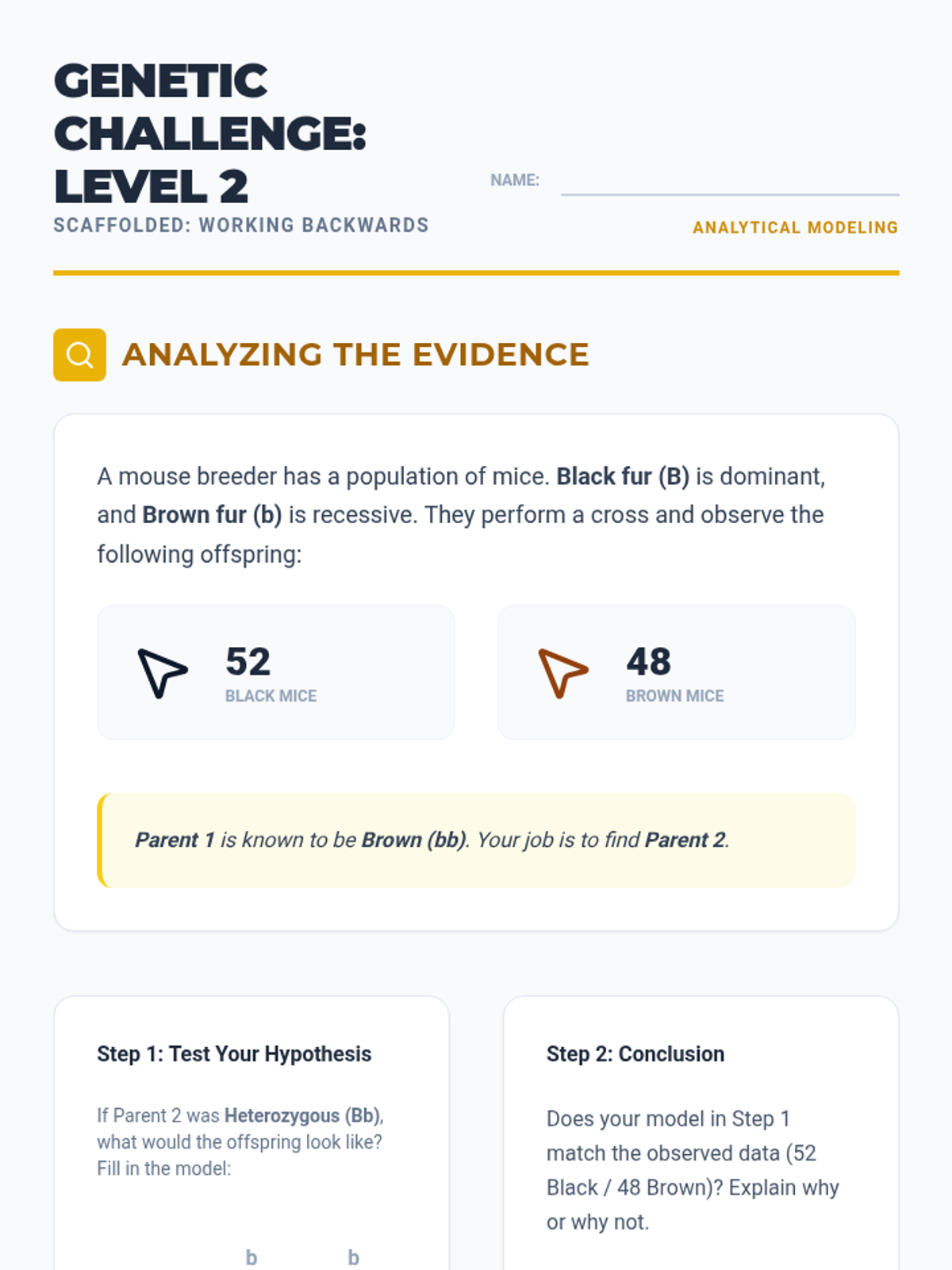
Level 2: Scaffolded. A genetic modeling worksheet focusing on reverse-engineering parent genotypes from offspring data, featuring a guided hypothesis-testing structure.
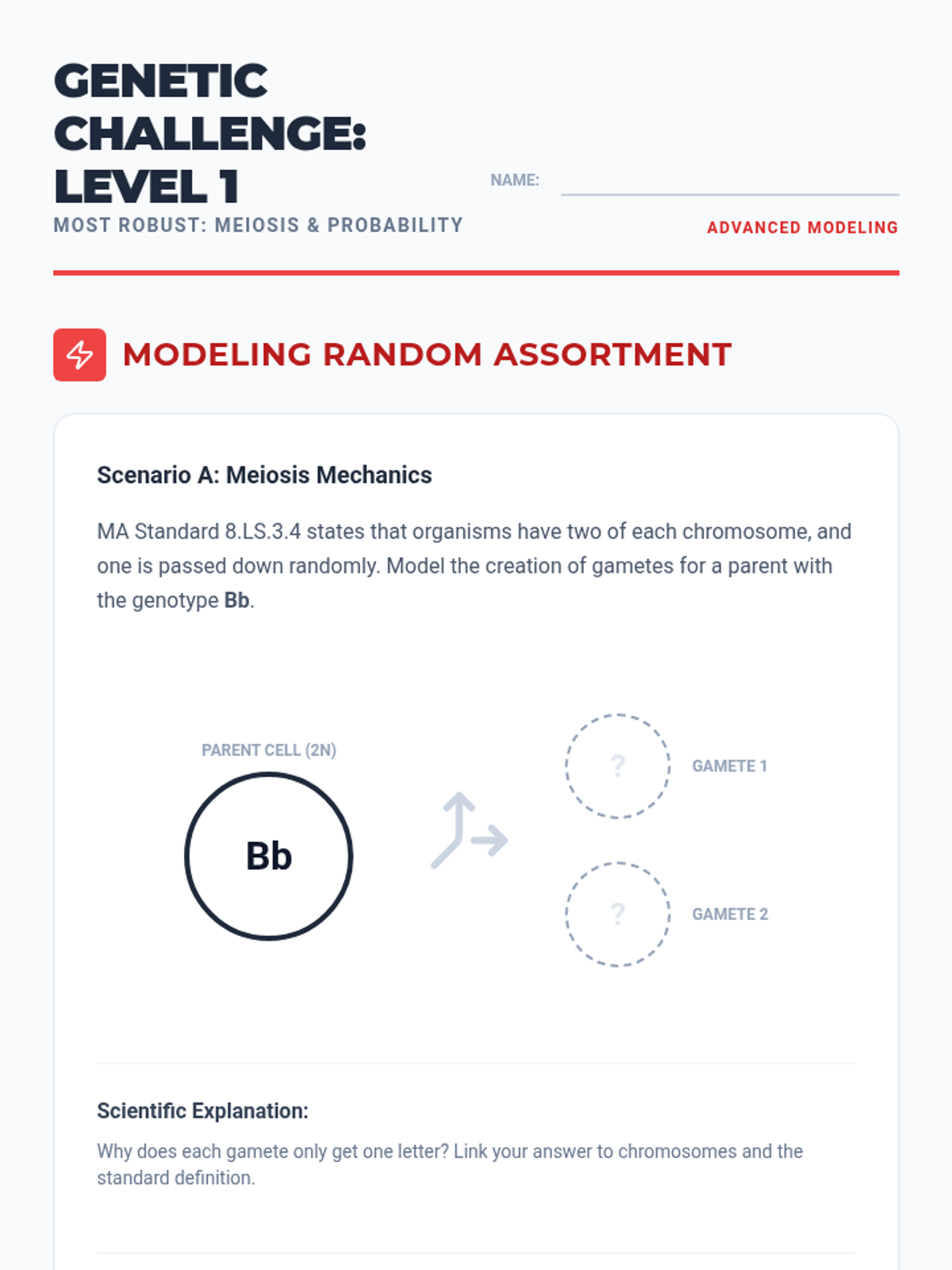
Level 1: Most Robust. An advanced genetic modeling worksheet focusing on meiosis, random assortment mechanics, and multi-event probability calculations.
Tiered slide presentation updated to match the hierarchy: Level 1 (Robust), Level 2 (Scaffolded), and Level 3 (Simple). Features color-coded previews and modeling protocols.
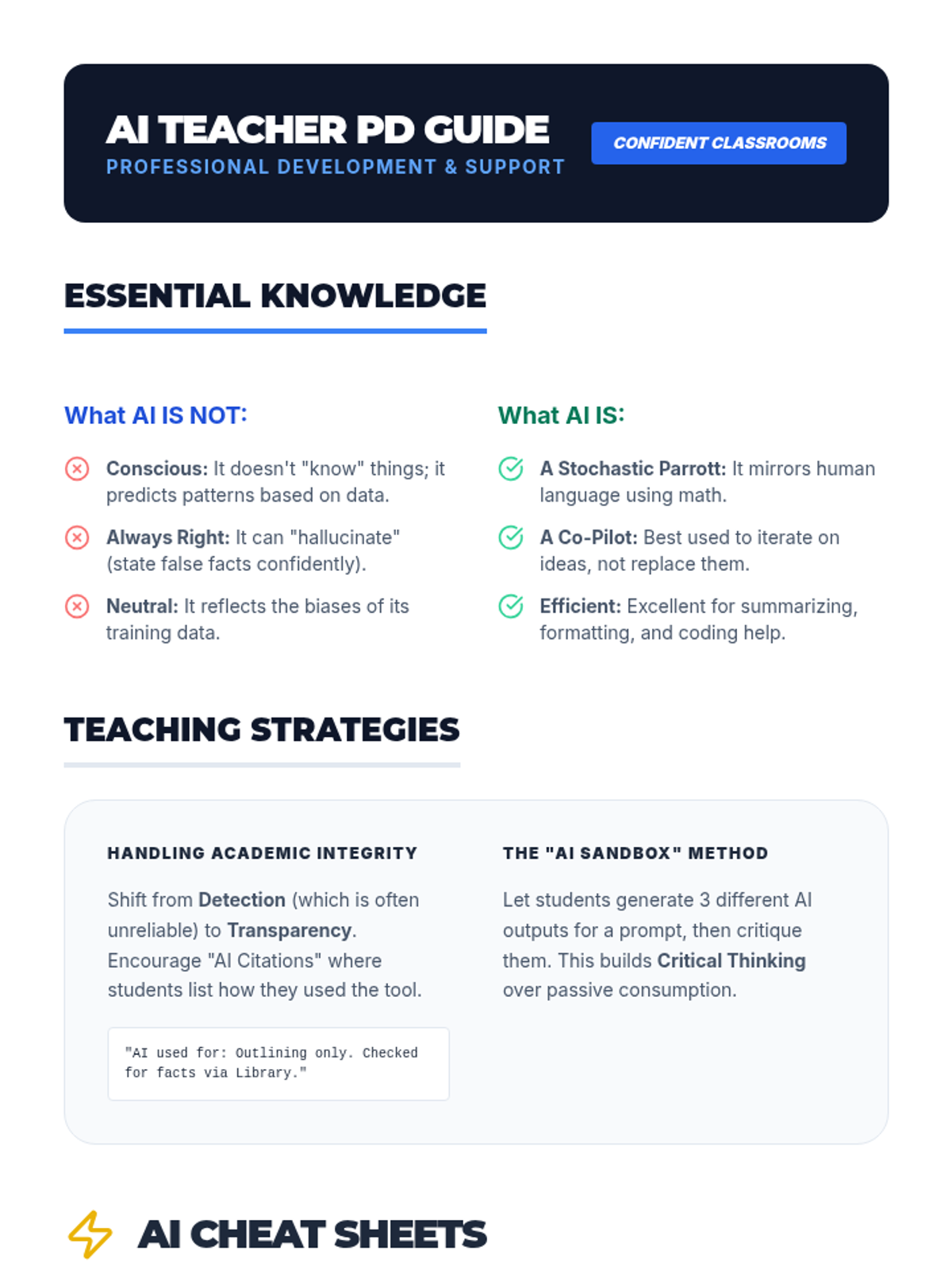
A comprehensive teacher professional development guide including essential AI concepts, facilitation strategies, and quick-reference prompt cheat sheets.
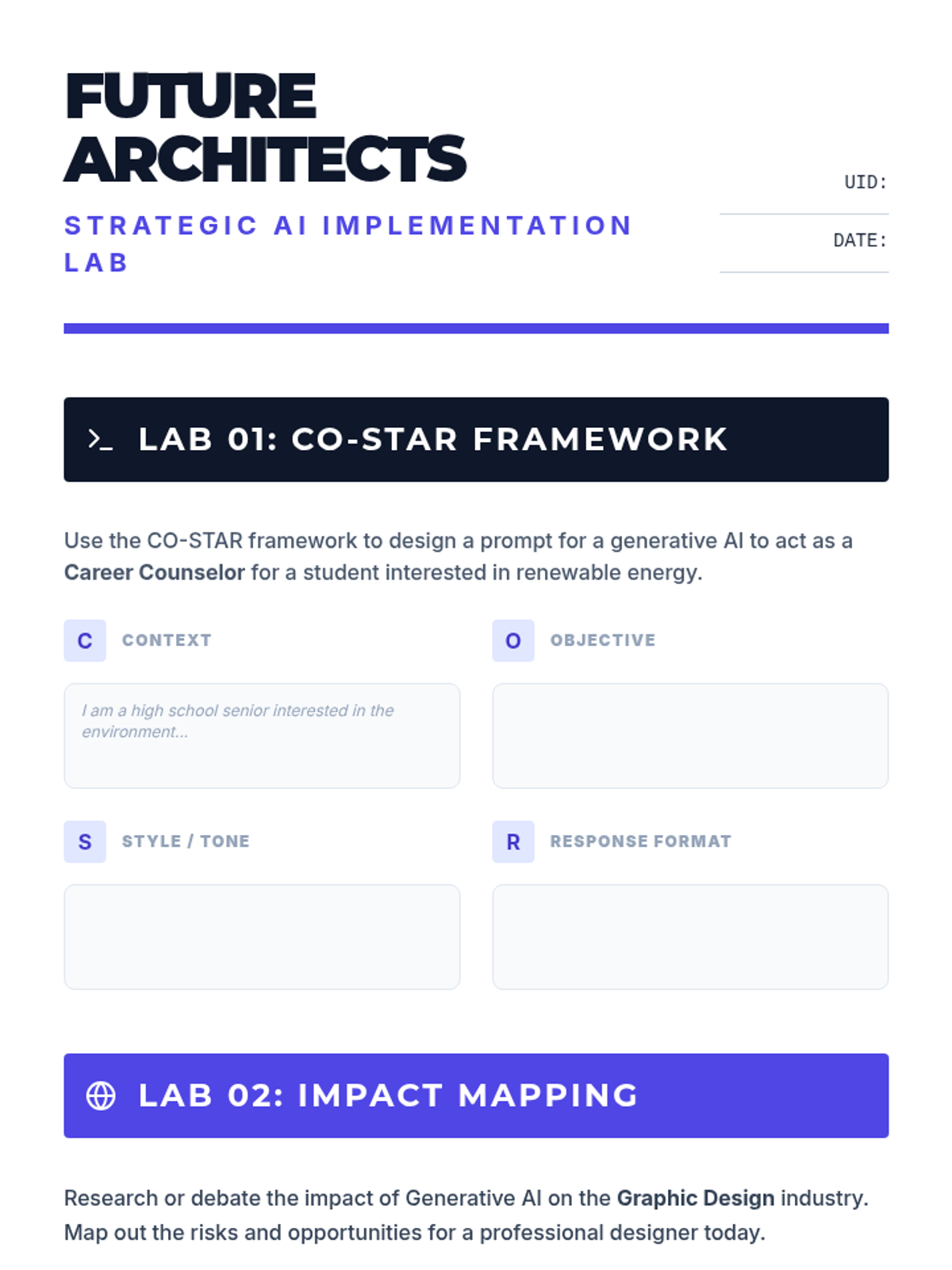
A high school activity sheet requiring students to apply the CO-STAR prompt engineering framework, map industry impacts, and draft ethical AI policies.
Advanced slide deck for high school students exploring generative AI paradigms, professional prompt engineering frameworks (CO-STAR), and the future of work.
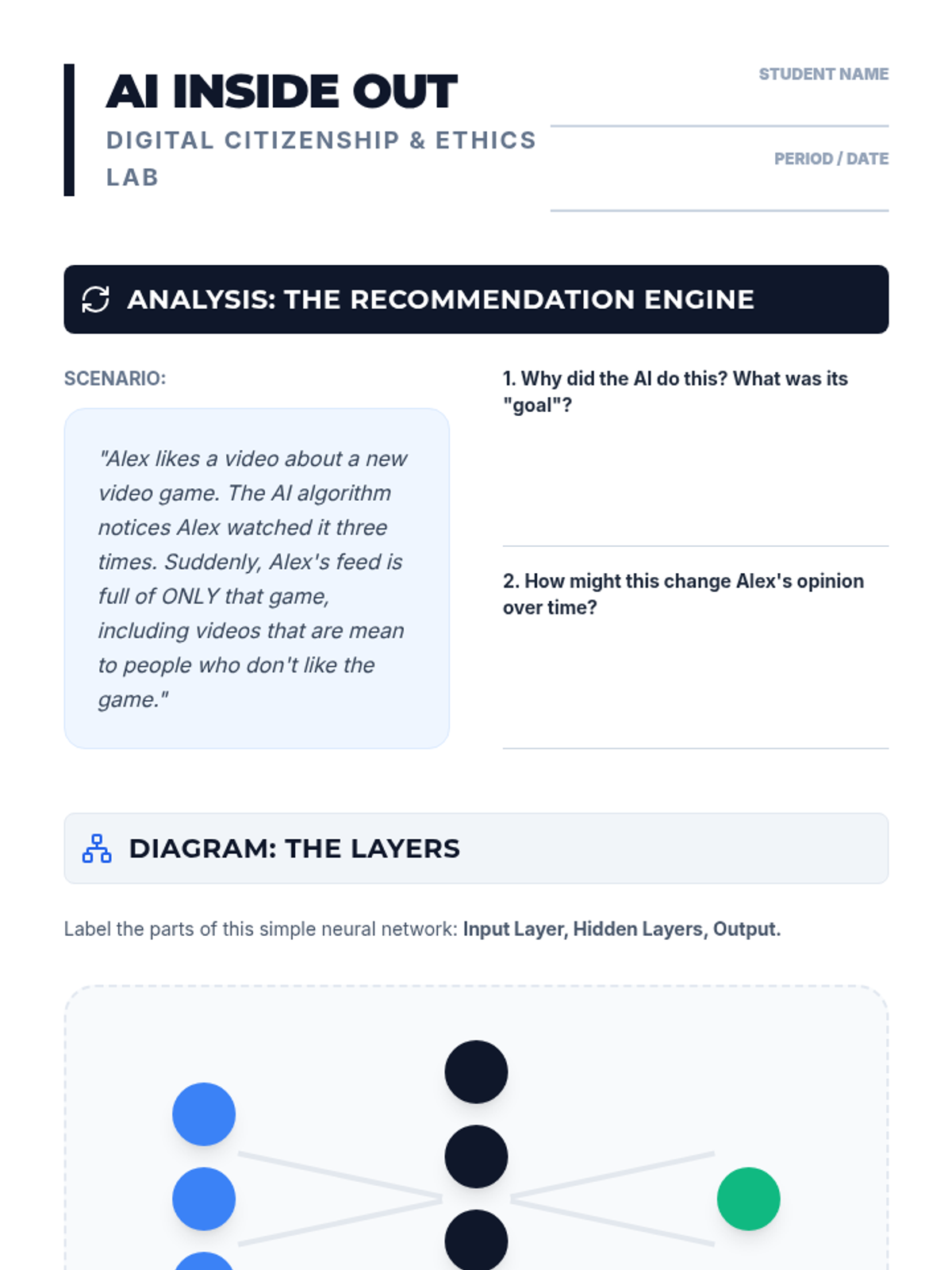
A middle school activity sheet involving ethical analysis of recommendation engines, labeling neural network structures, and debating facial recognition bias.
A middle school slide deck focused on the technical basics of neural networks and the ethical challenges of recommendation engines and deepfakes.
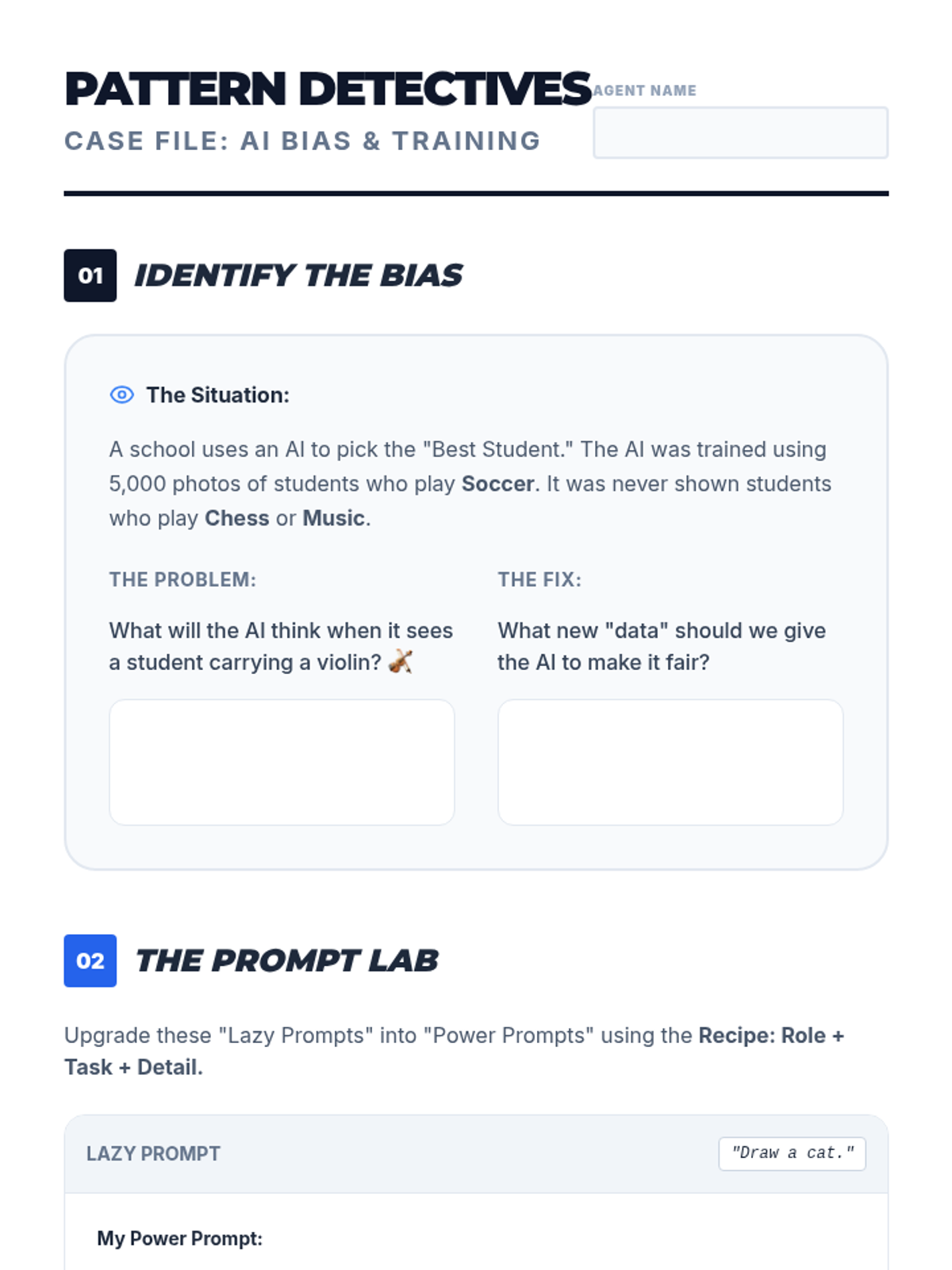
A grade 3-5 worksheet focusing on analyzing AI bias scenarios and practicing prompt engineering using a structured 'Role + Task + Detail' framework.
Instructional slides for grades 3-5, focusing on 'Pattern Detectives' - understanding data, spotting bias, and learning the basics of effective prompting.
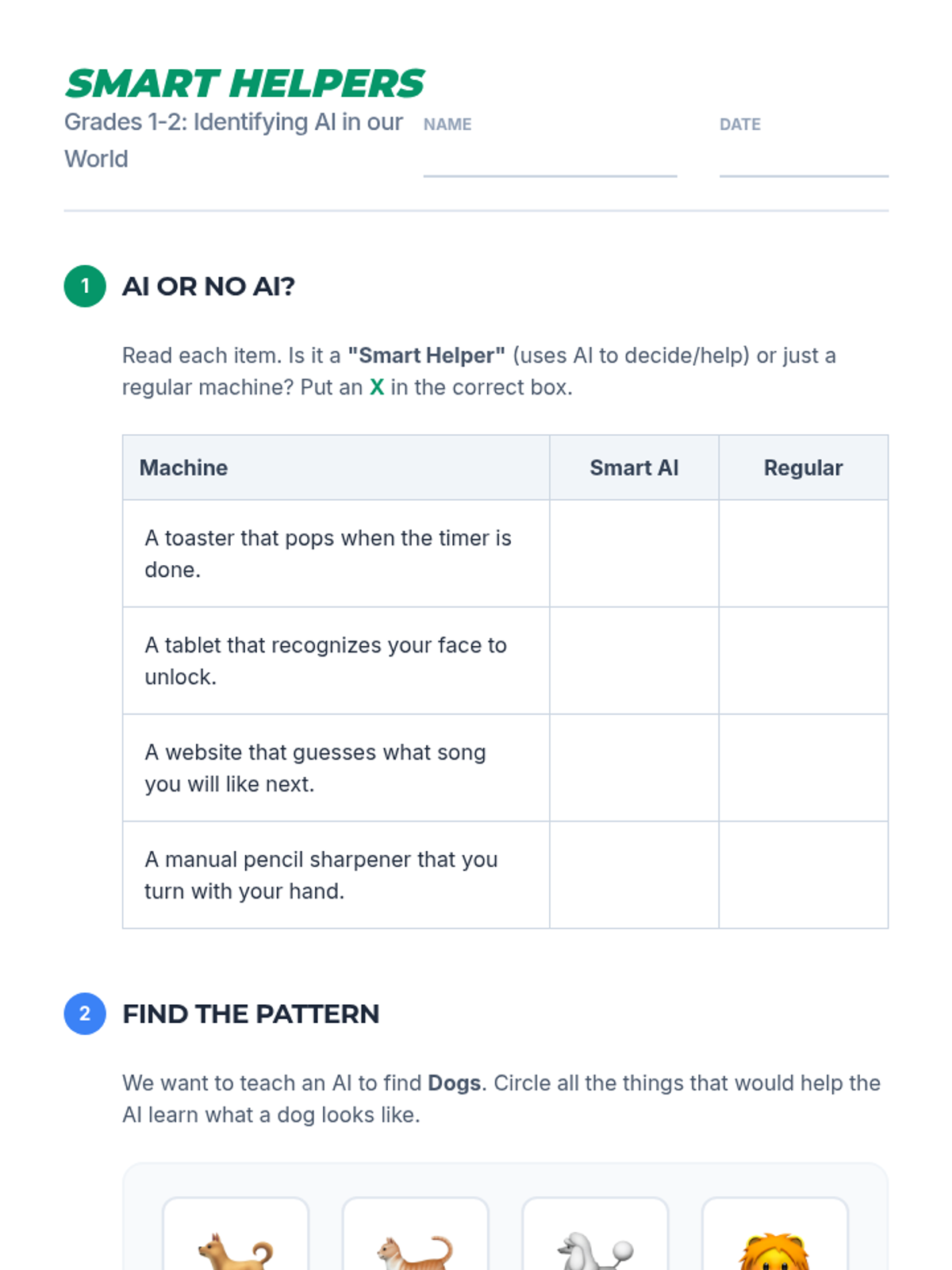
An activity sheet for grades 1-2 focusing on distinguishing between traditional machines and AI, and designing an AI solution for a simple problem.
Instructional slides for grades 1-2 focused on 'Smart Helpers' - identifying AI in the world and understanding simple machine learning patterns.
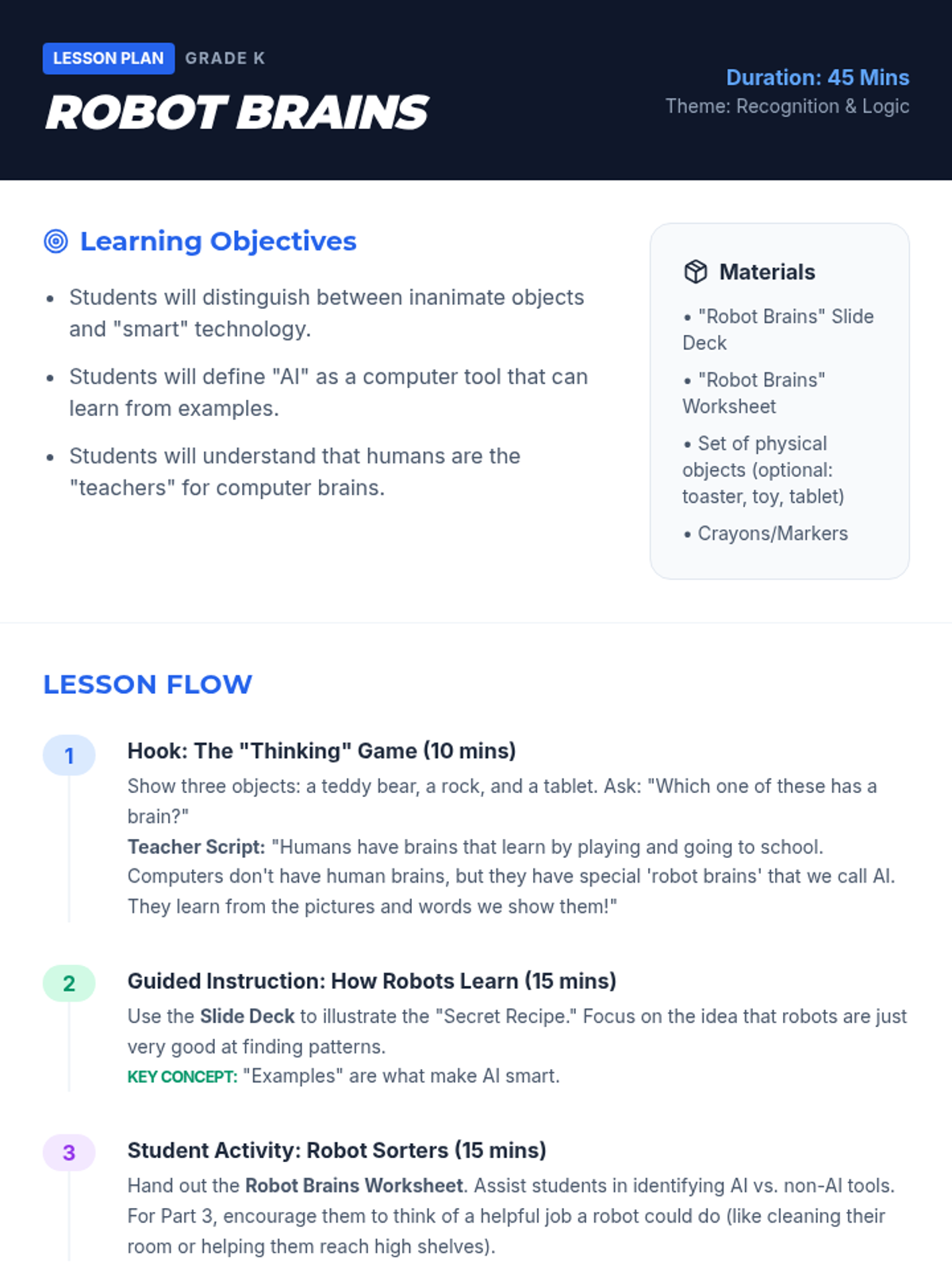
A comprehensive teacher guide for the 'Robot Brains' lesson, including a script, instructional sequence, and differentiation tips for Kindergarten.
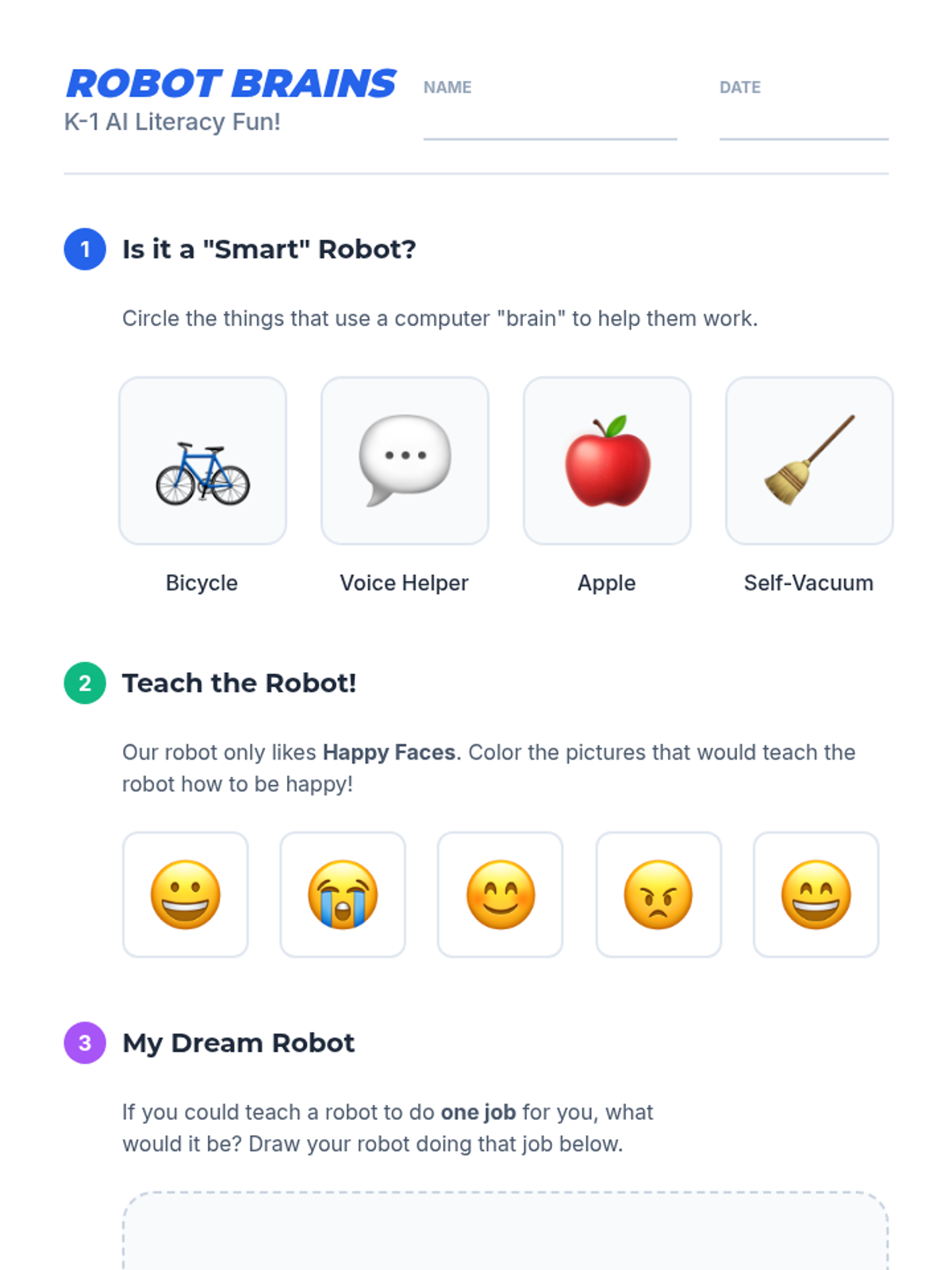
A simple, visual worksheet for Kindergarten students to practice identifying AI and 'training' a robot.
Introductory slide deck for Kindergarten students exploring the difference between human brains and computer 'brains'.
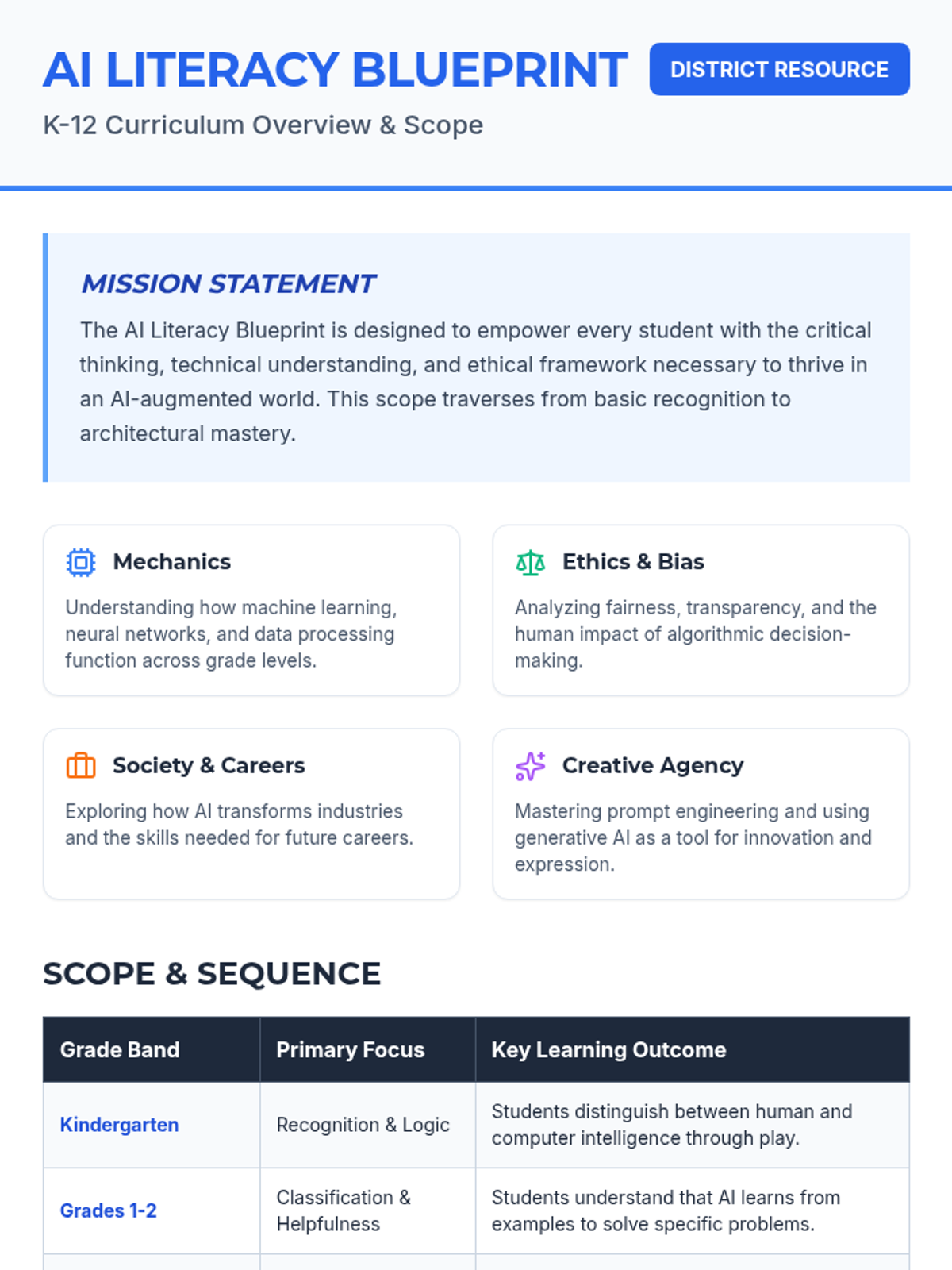
The comprehensive K-12 AI literacy curriculum scope and implementation guidelines for district-wide alignment.
A visual presentation slide deck designed for EOC Biology review, covering evolution, natural selection, ecological flow, and succession with clear diagrams and STAAR-specific testing tips.
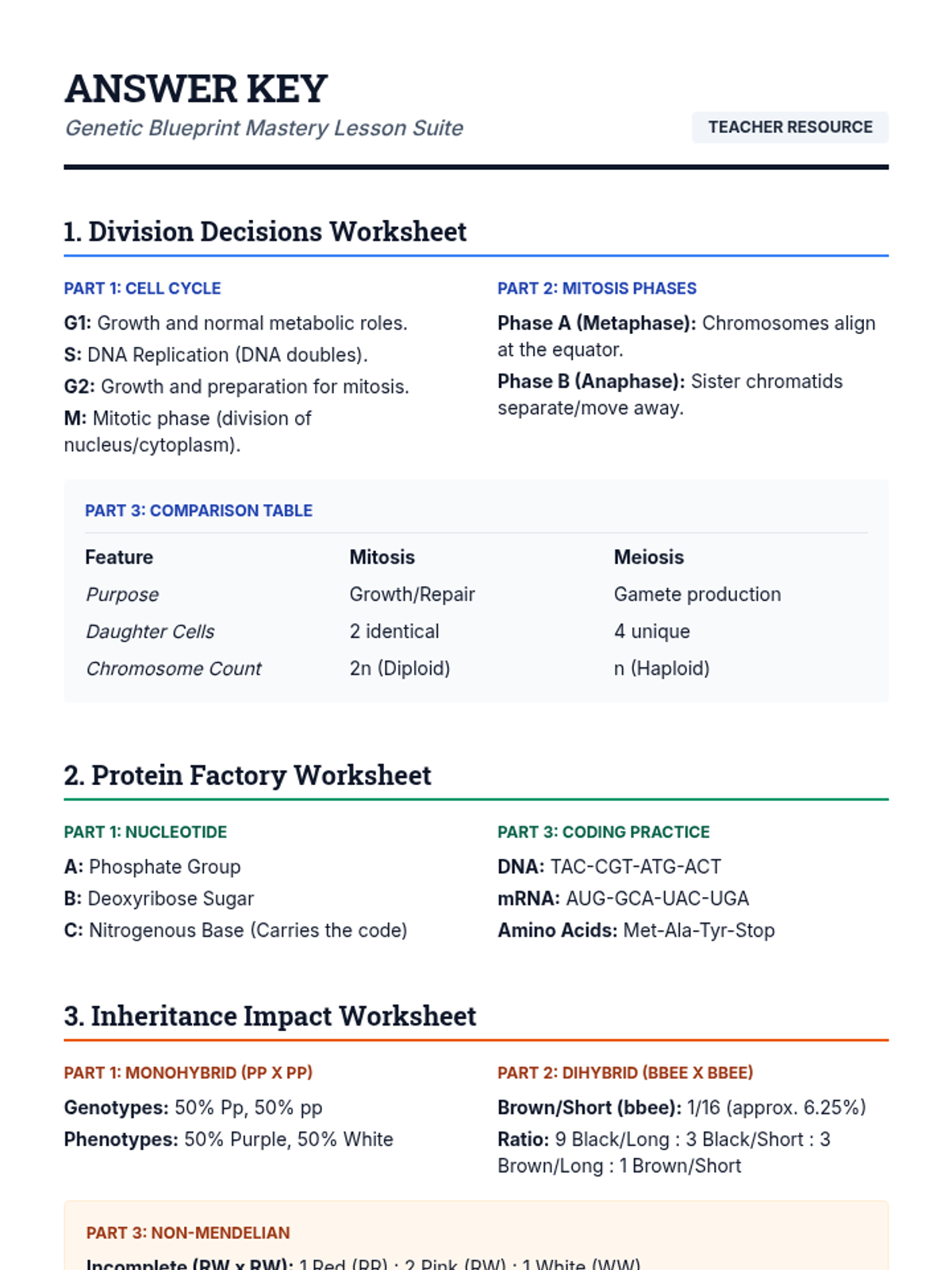
A comprehensive answer key for the Genetic Blueprint Mastery lesson. It provides solutions and explanations for the Division Decisions, Protein Factory, and Inheritance Impact worksheets, as well as the 10-question Genetics Mastery Quiz.
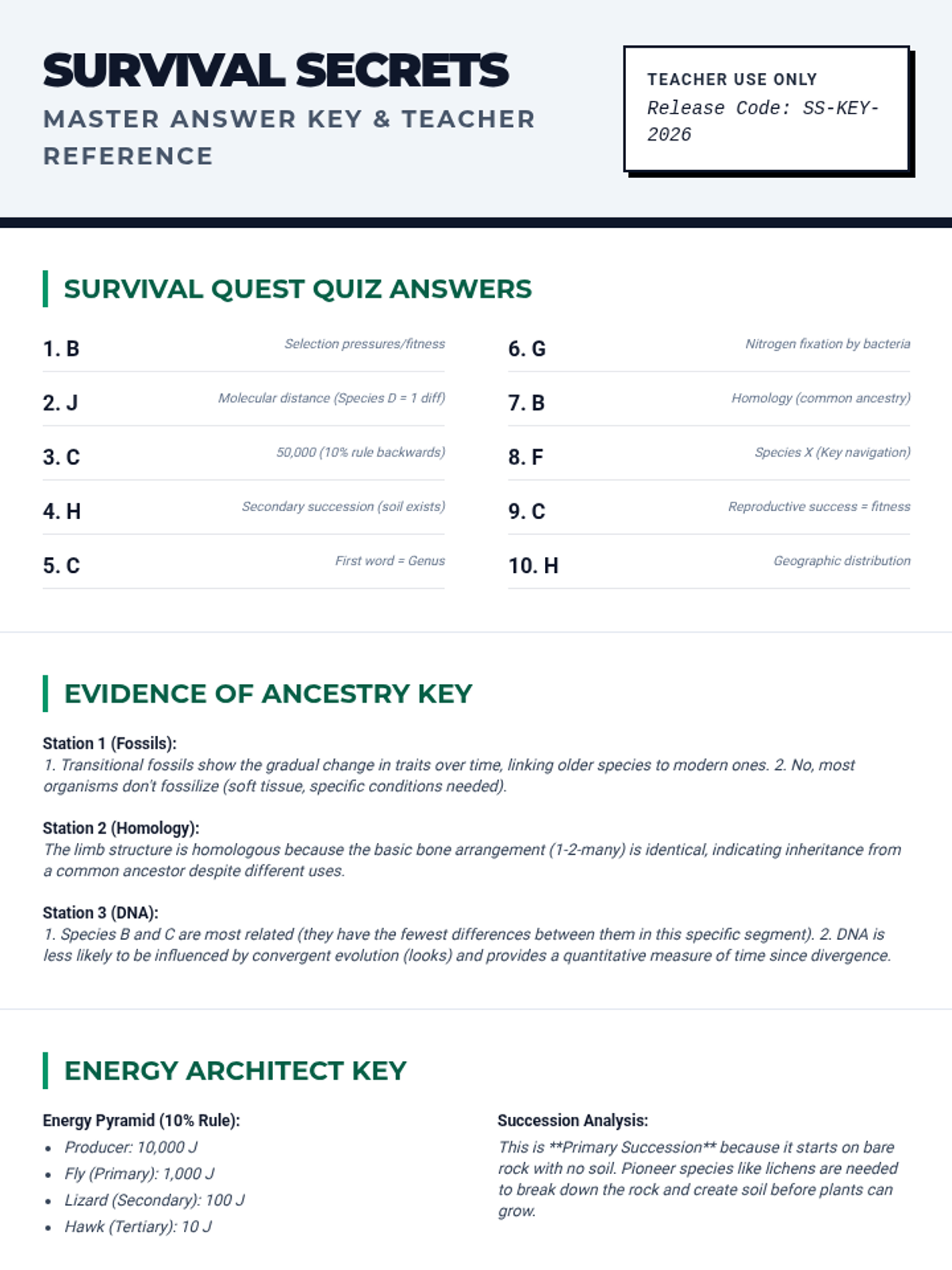
A comprehensive answer key for all student worksheets and the assessment quiz in the Survival Secrets lesson, including expected responses and common student misconceptions.
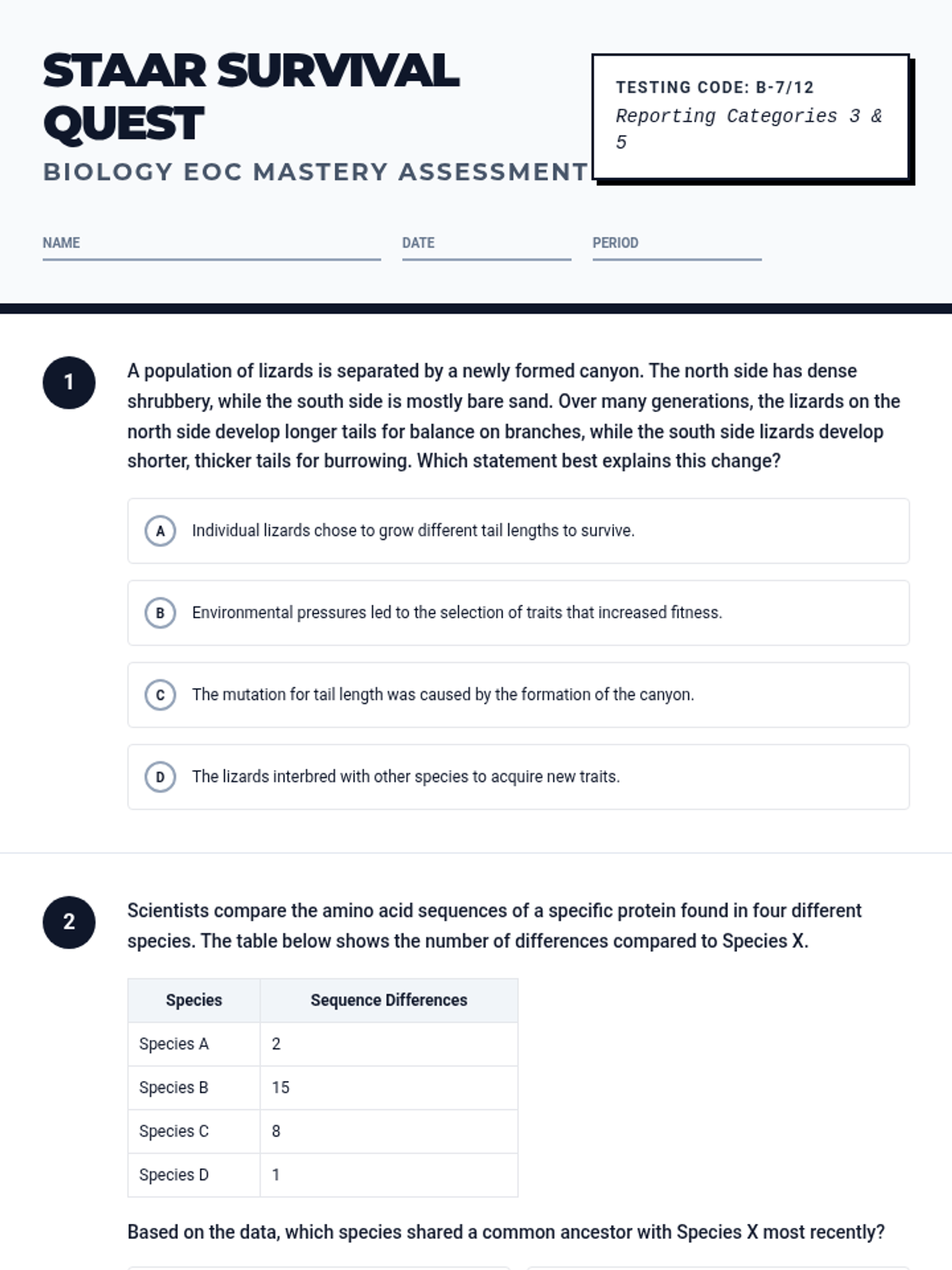
A 10-question multiple-choice assessment designed in the STAAR Biology EOC format, covering evolution, natural selection, taxonomy, and ecology. Includes diagrams and tables to mirror state testing standards.
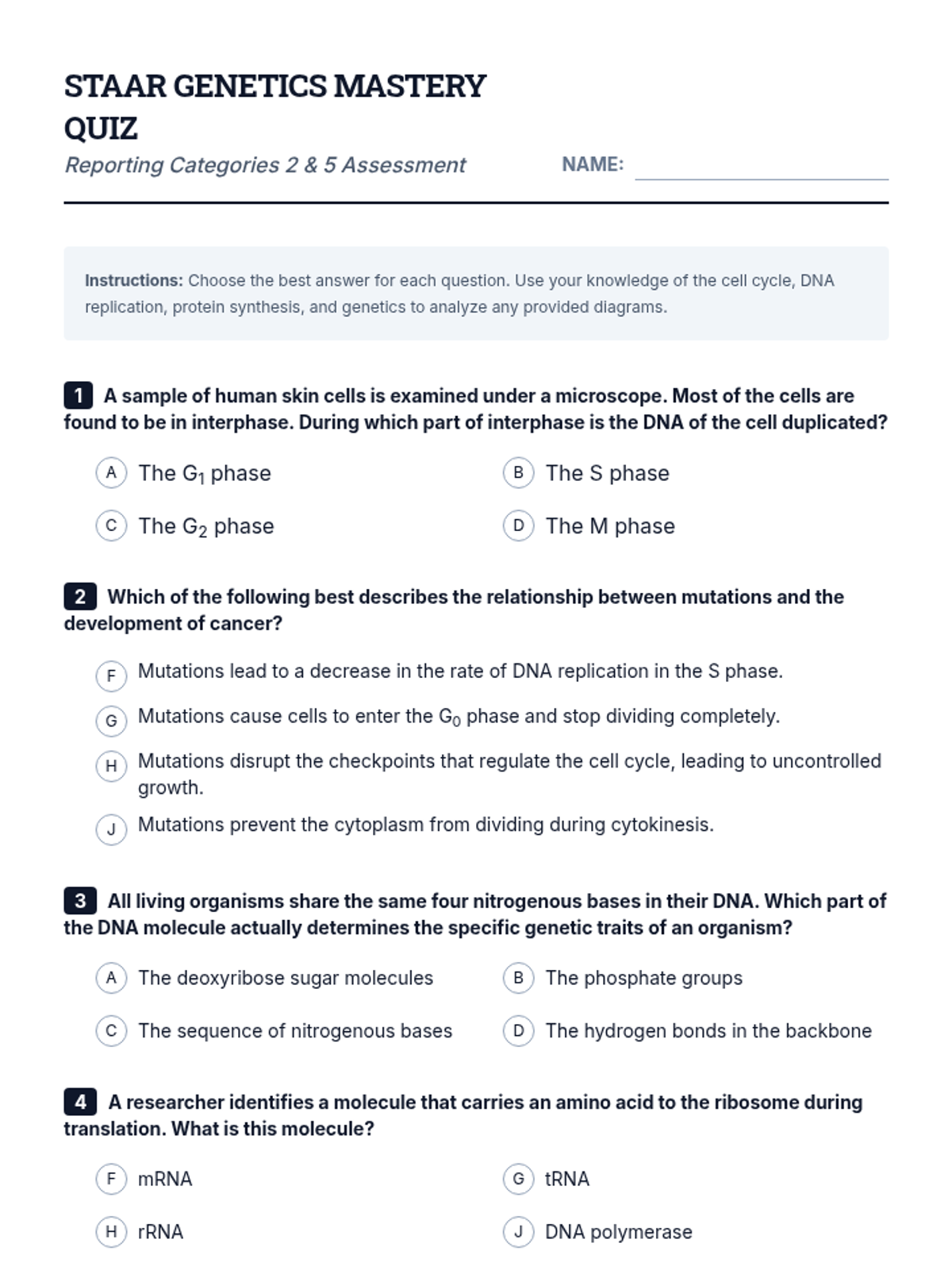
A 10-question multiple-choice assessment modeled after the STAAR Biology EOC. It covers cell cycle regulation, DNA structure, protein synthesis, and Mendelian/non-Mendelian genetics, focusing on Reporting Categories 2 and 5.
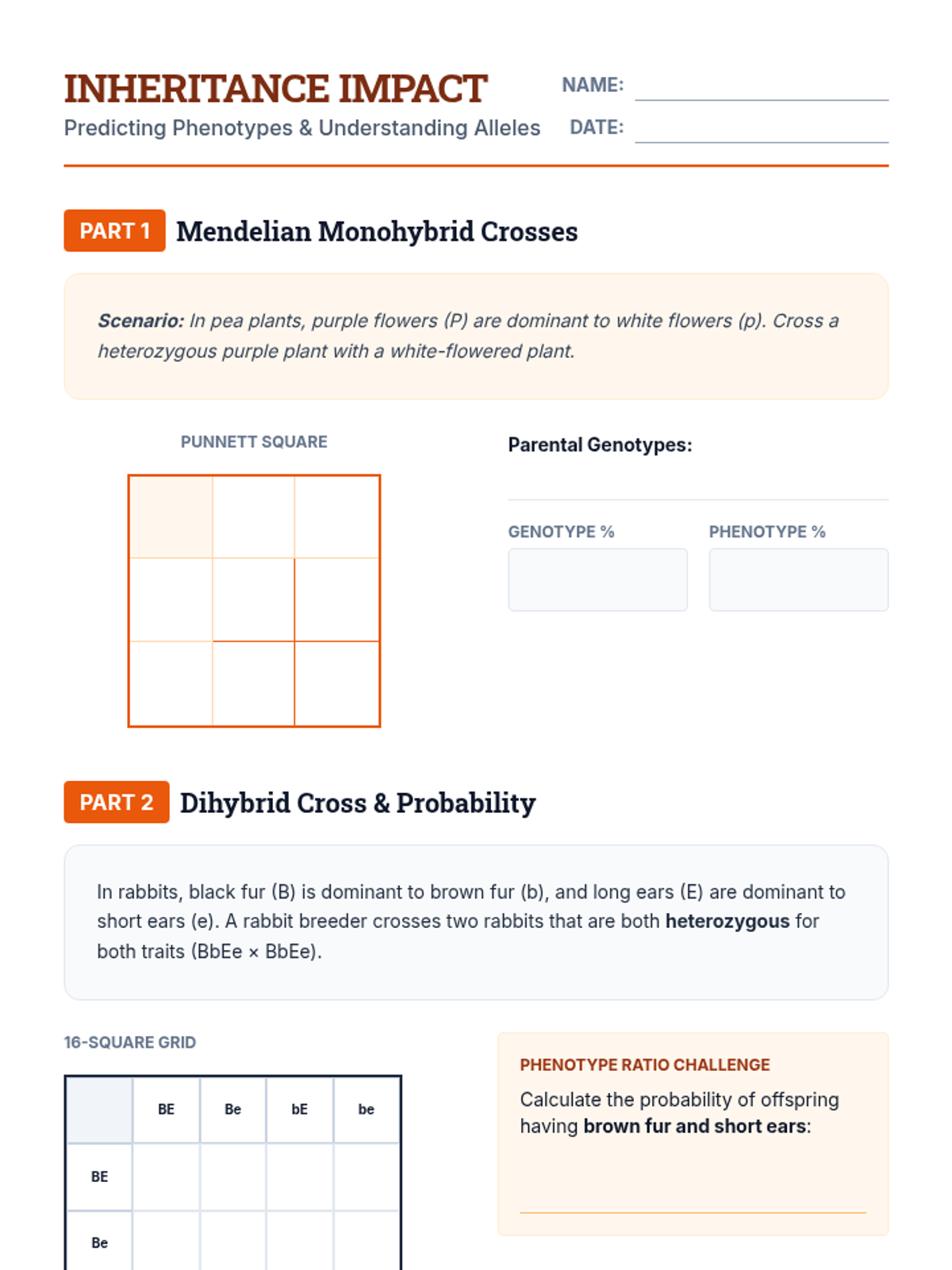
A student worksheet focusing on Mendelian and non-Mendelian inheritance. It provides practice problems for monohybrid and dihybrid crosses, incomplete dominance, codominance, and sex-linked traits with dedicated spaces for Punnett squares and ratio analysis.
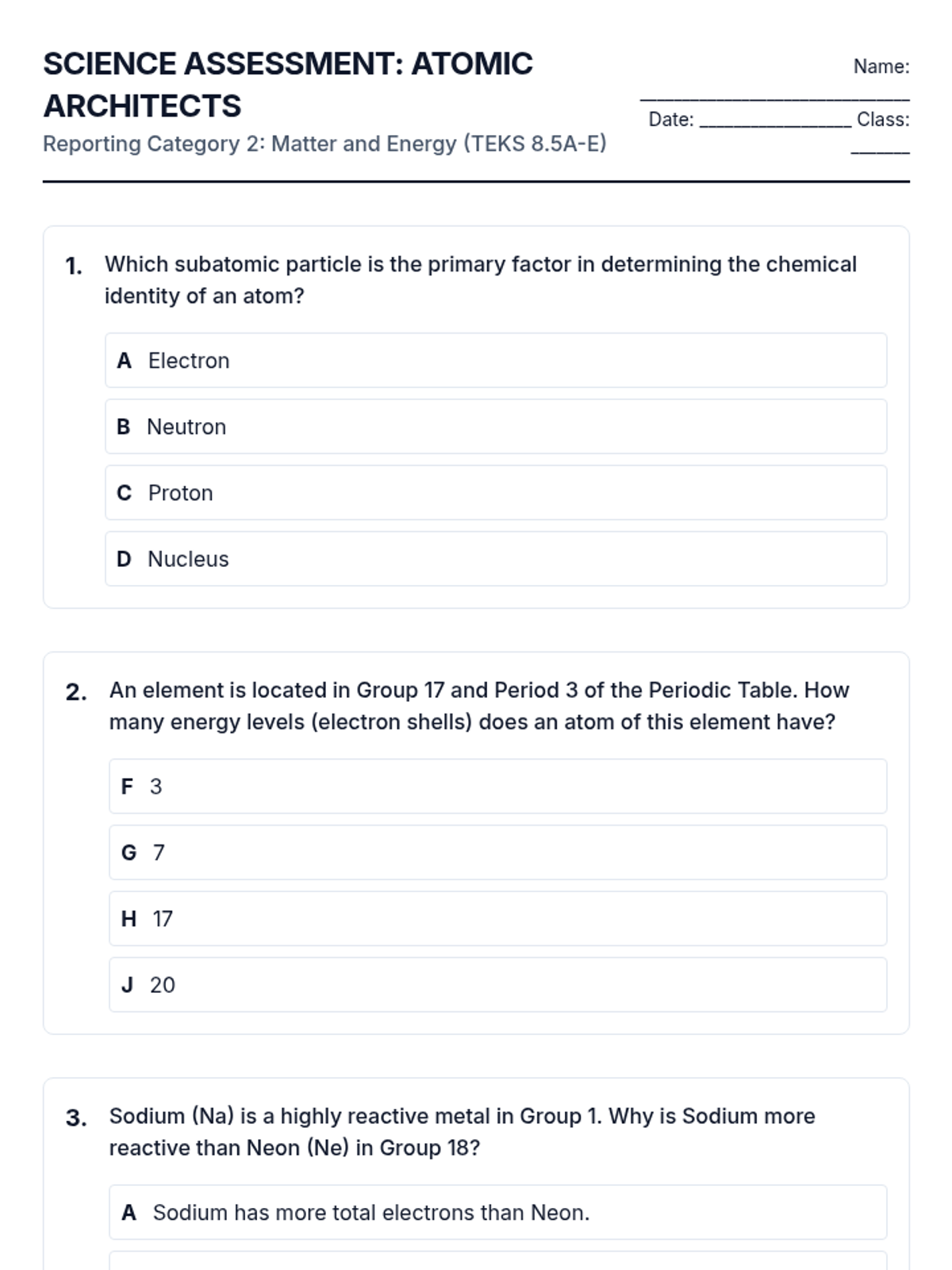
A set of 8 STAAR-format multiple-choice questions covering TEKS 8.5A-E, focusing on atomic structure, periodic table trends, chemical formulas, and the law of conservation of mass.
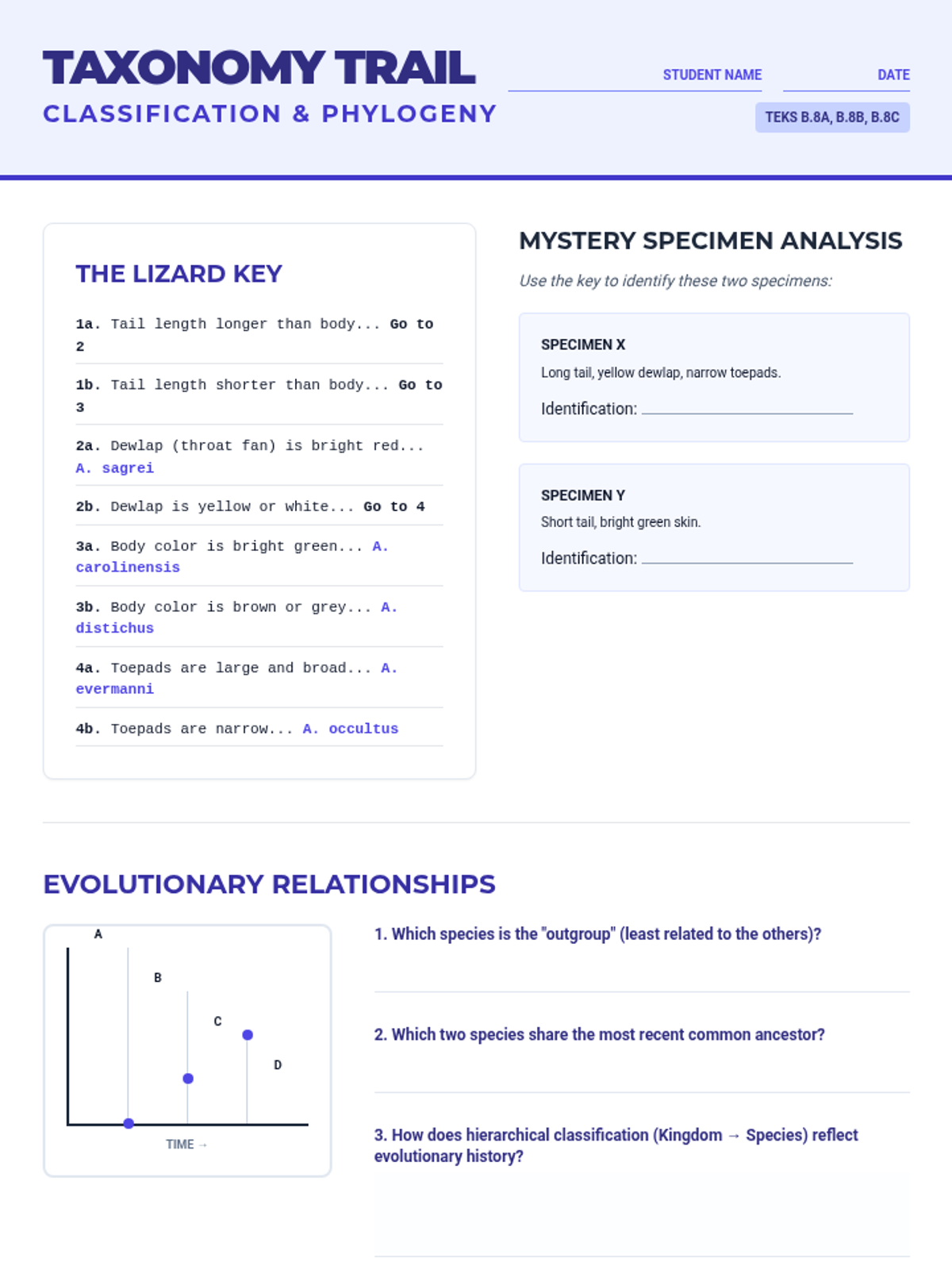
A student worksheet focusing on taxonomy, biological classification, dichotomous keys, and phylogenetic relationships within the context of the lizard case study.
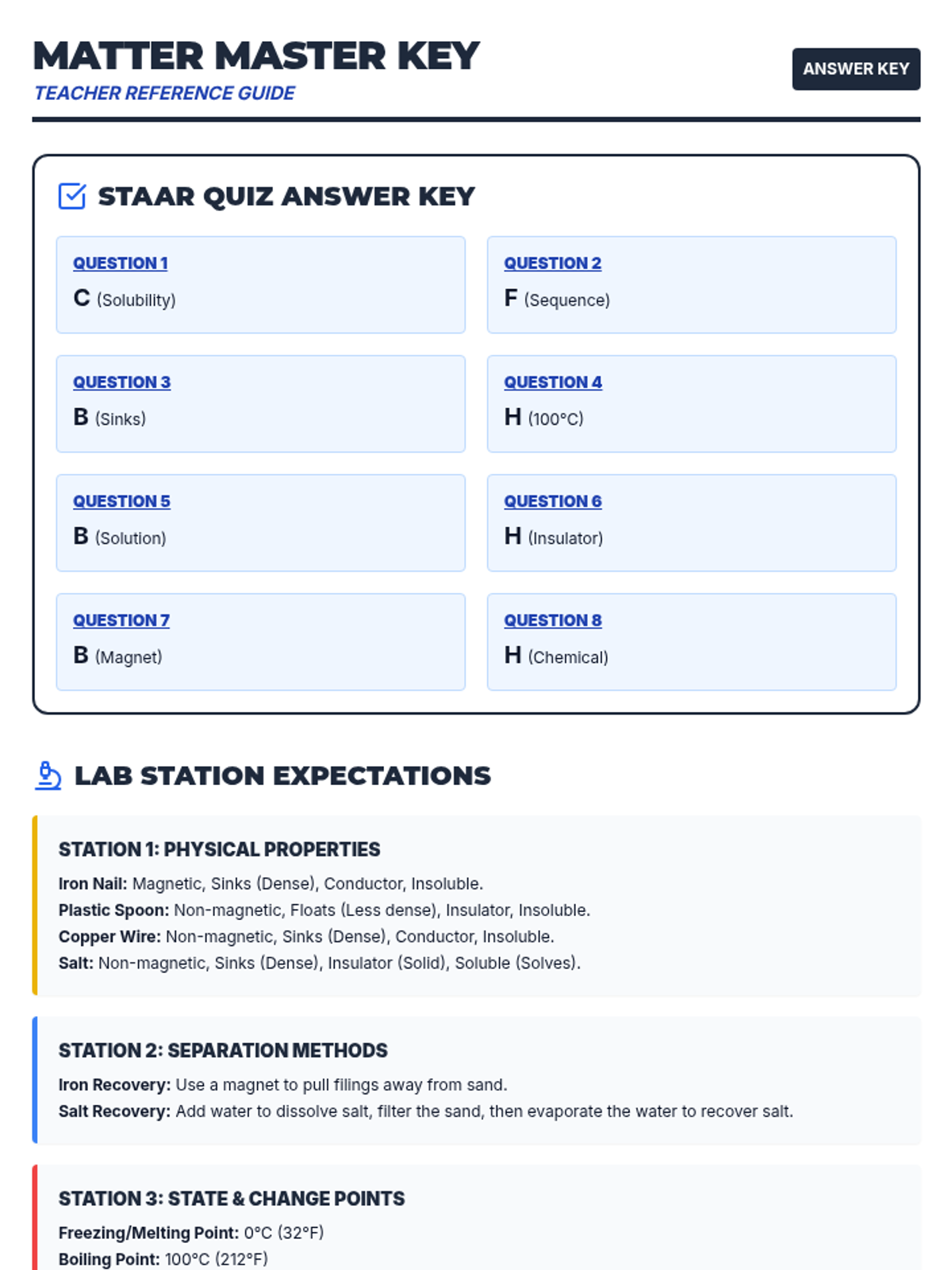
A teacher reference material providing answer keys for the Matter Master STAAR Quiz and sample data/exemplar responses for the laboratory stations. Includes CER writing exemplars.