A visual reference sheet for first graders featuring basic technology terms, icons, and kid-friendly definitions. Revised for better page-break handling and print-friendliness.

A presentation deck demonstrating the Law of Conservation of Momentum. Now includes a comparison between Elastic (bouncing) and Inelastic (sticking) collisions, showing that total momentum is conserved in both cases. Revised for visual clarity and contrast.
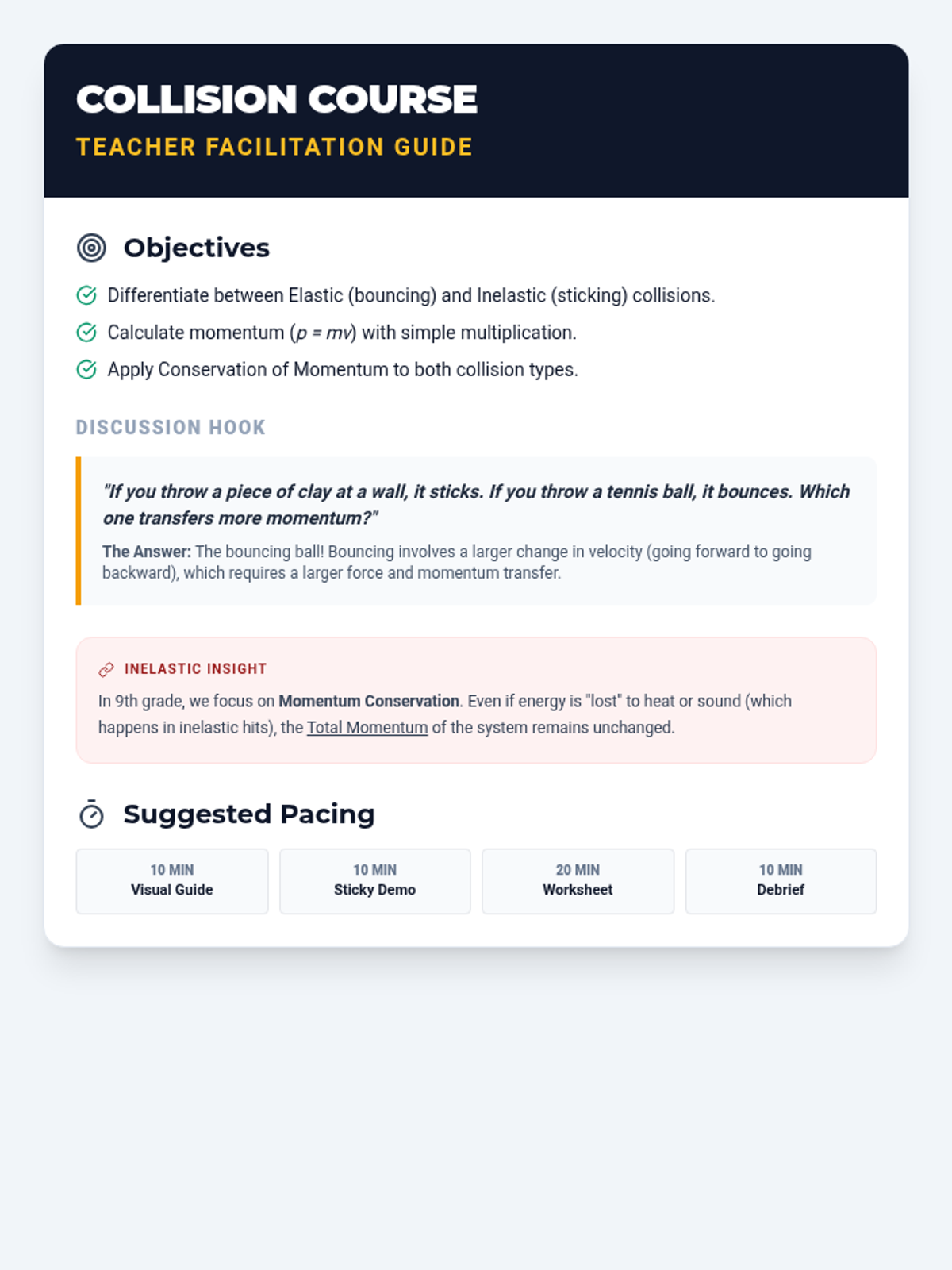
Teacher's facilitation guide for the Collision Course lesson. Updated to include instructional strategies for teaching the difference between elastic and inelastic collisions.
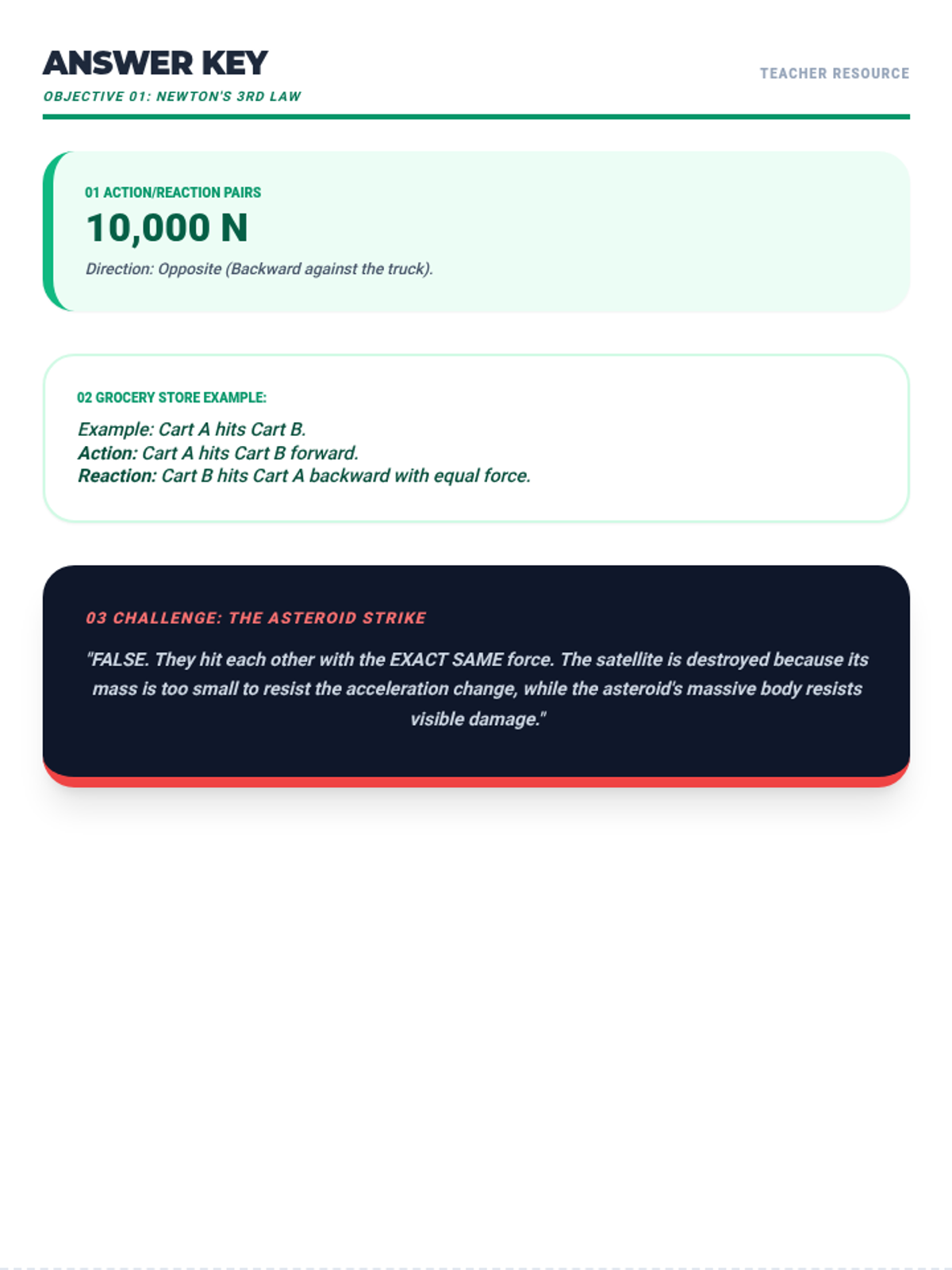
Expanded 4-page answer key for the Crash Lab Worksheet. Now includes worked solutions for student-designed scenarios, challenge questions about asteroids and satellites, and the predictive math for train engine couplings. Revised for renumbering, unit consistency, and scientific terminology.
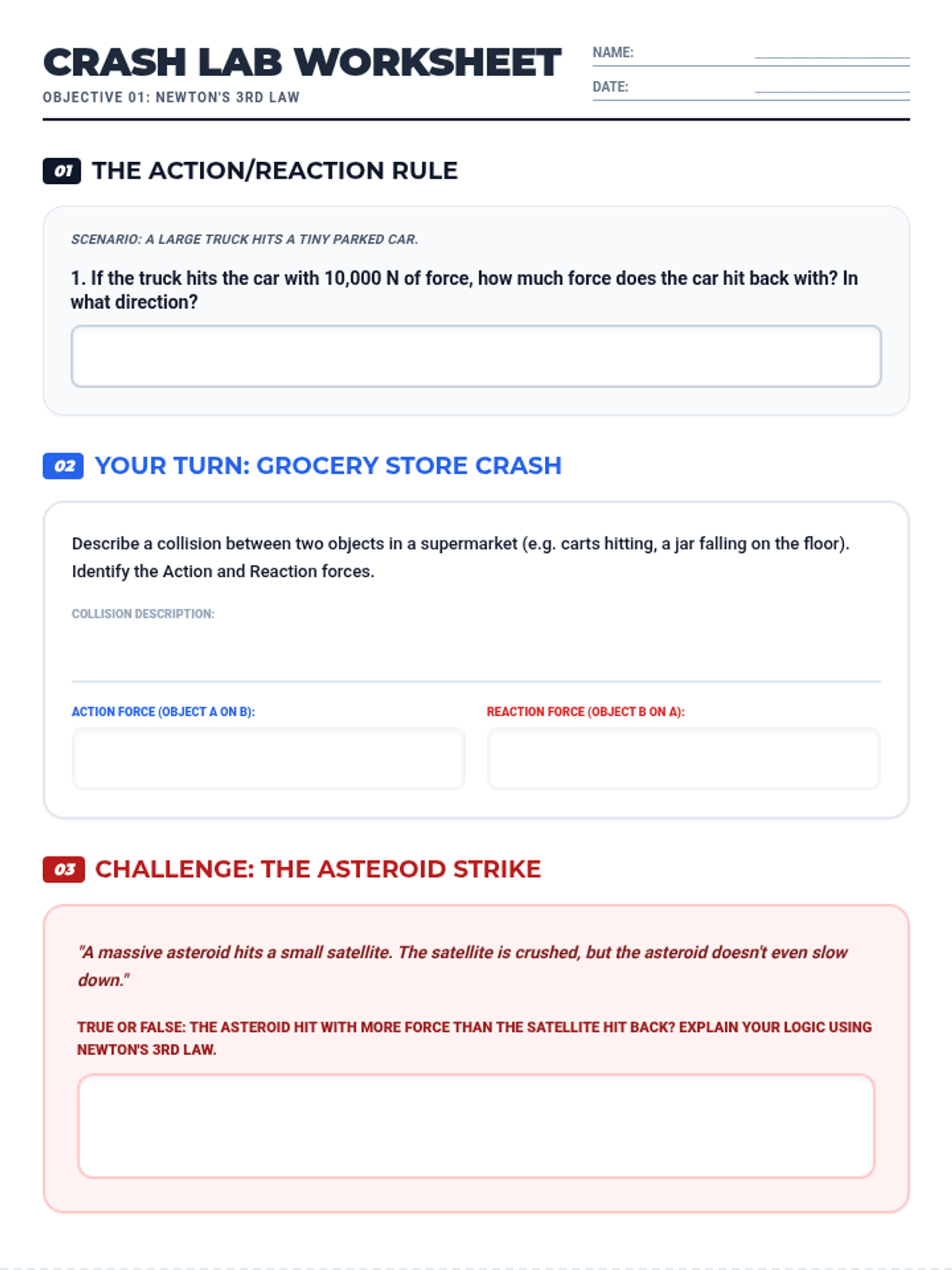
An enhanced 4-page student worksheet featuring student-designed scenarios, higher difficulty challenge questions, and a predictive math section where students calculate the outcomes of inelastic train collisions. Optimized for conceptual depth and practical math. Revised to use "Grocery Store" examples and fixed page break overflows.
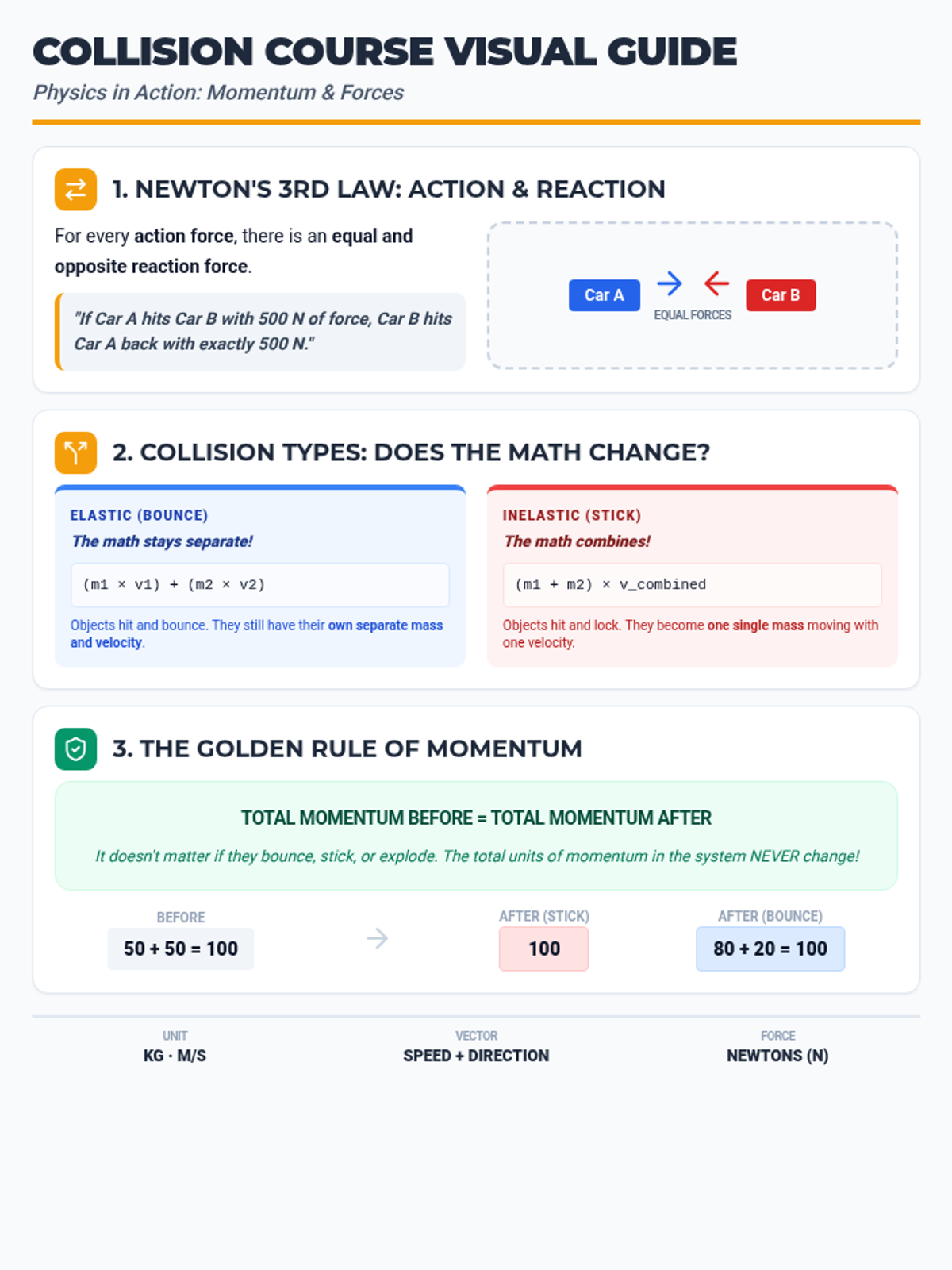
A one-page visual anchor chart for 9th-grade physics. Explains Newton's 3rd Law, momentum (p=mv), and Conservation of Momentum. Now includes a comparison between Elastic and Inelastic collisions.
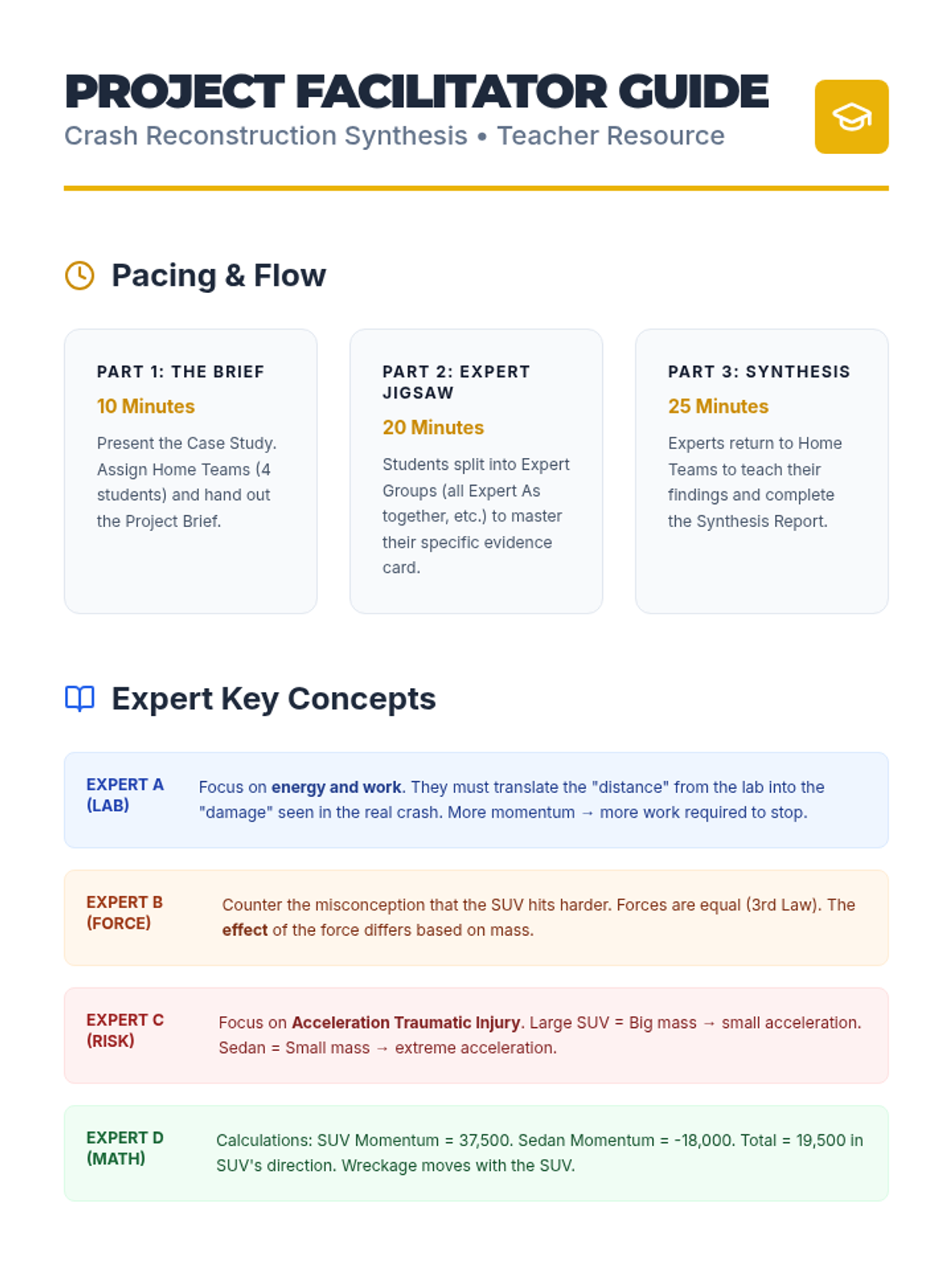
A teacher facilitation guide for the Crash Engineering Project. Includes pacing suggestions, answer keys for the jigsaw expert tasks, a grading rubric, and tips for addressing common physics misconceptions.
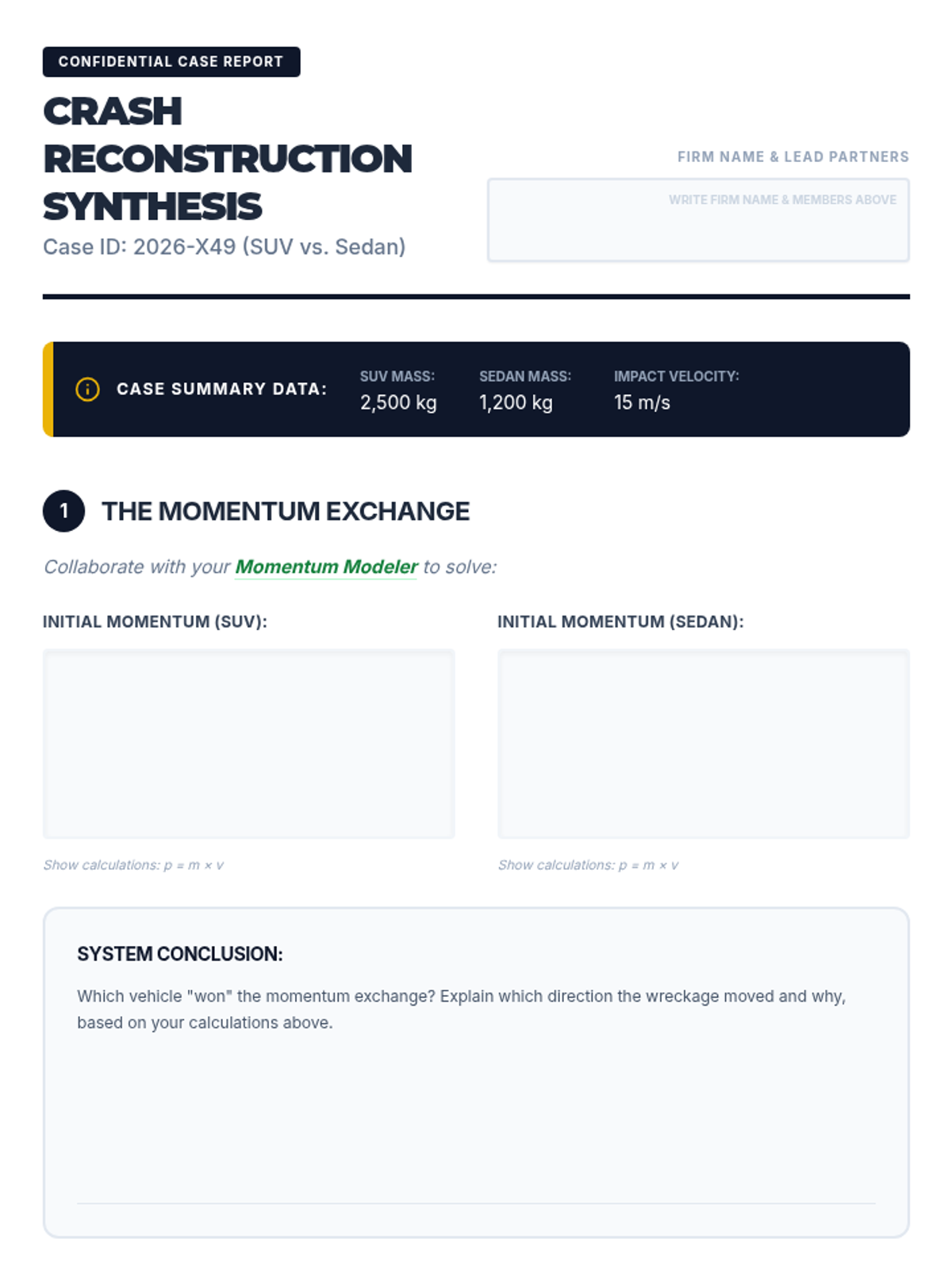
Revised team synthesis report template. Fixed page break issues and expanded student work areas for momentum calculations. Improved visual polish for a professional engineering look. Added a case data summary sidebar for easy reference.
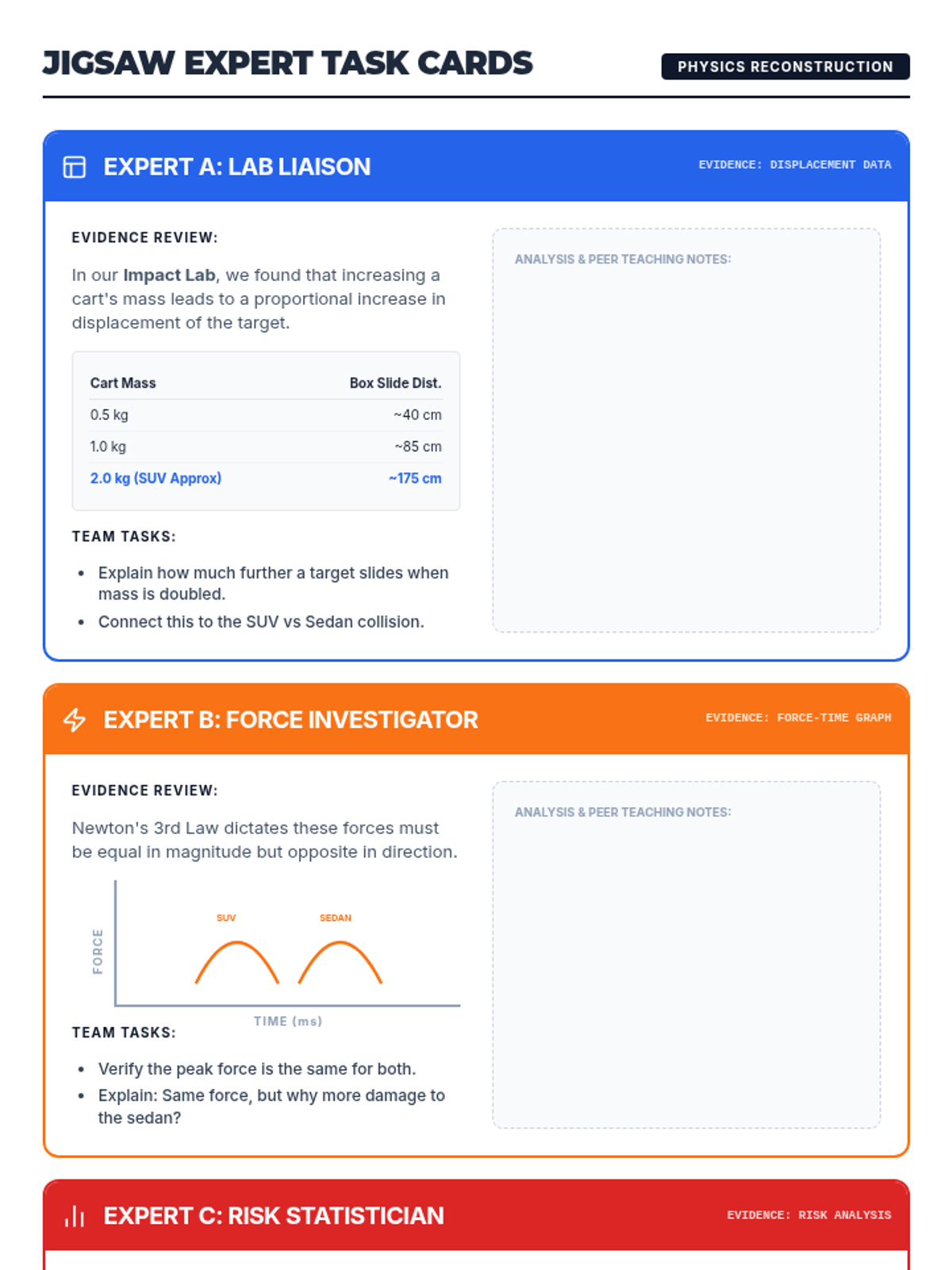
Revised expert cards for the jigsaw activity. Fixed clipping issues and added missing graph labels. Optimized layout to fit two cards per page consistently and expanded student note areas. Fixed subscript rendering issues.
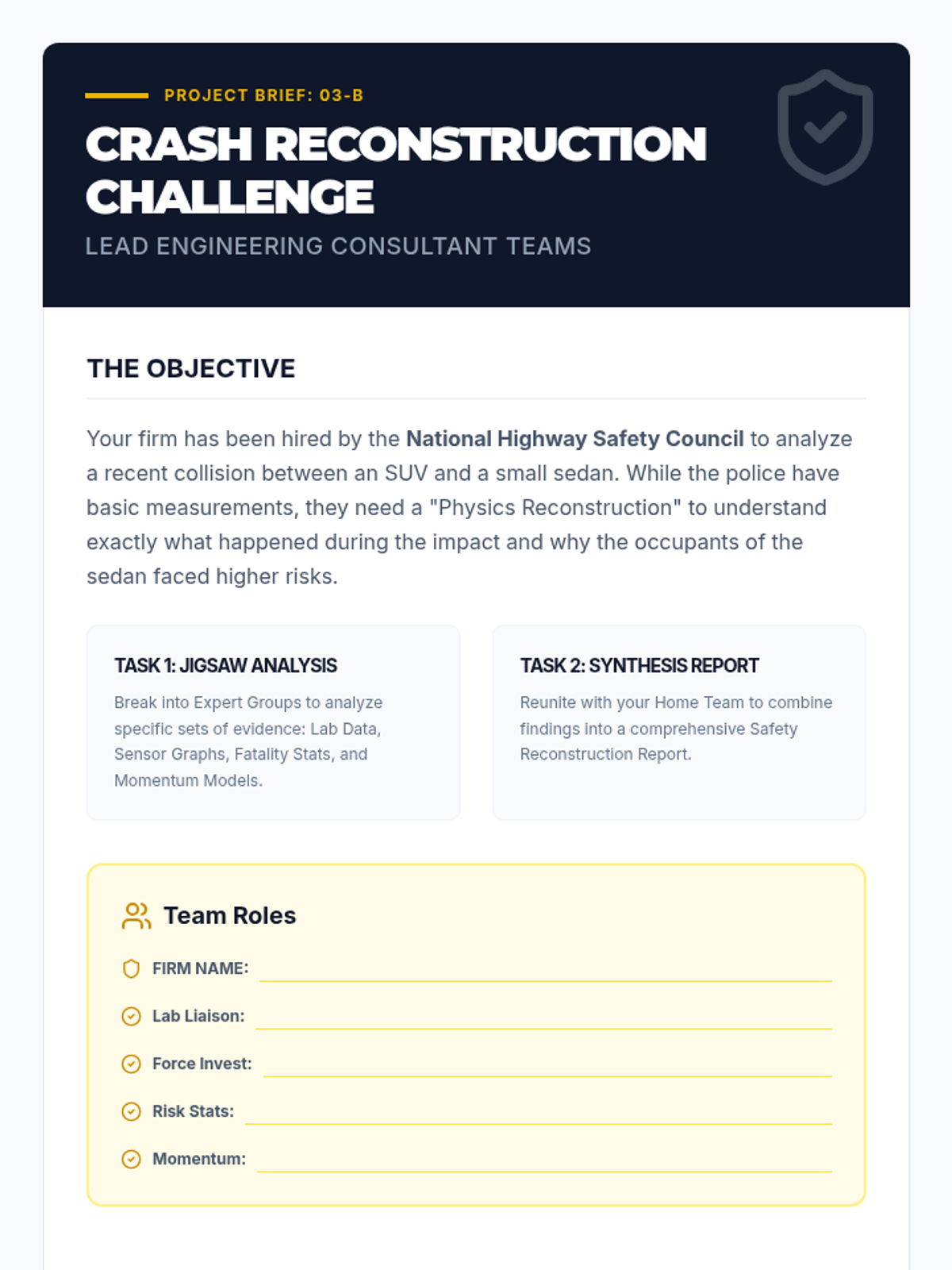
Revised project introduction handout for students. Outlines the team roles and the case study parameters. Fixed page break issues and sidebar layout for better readability.
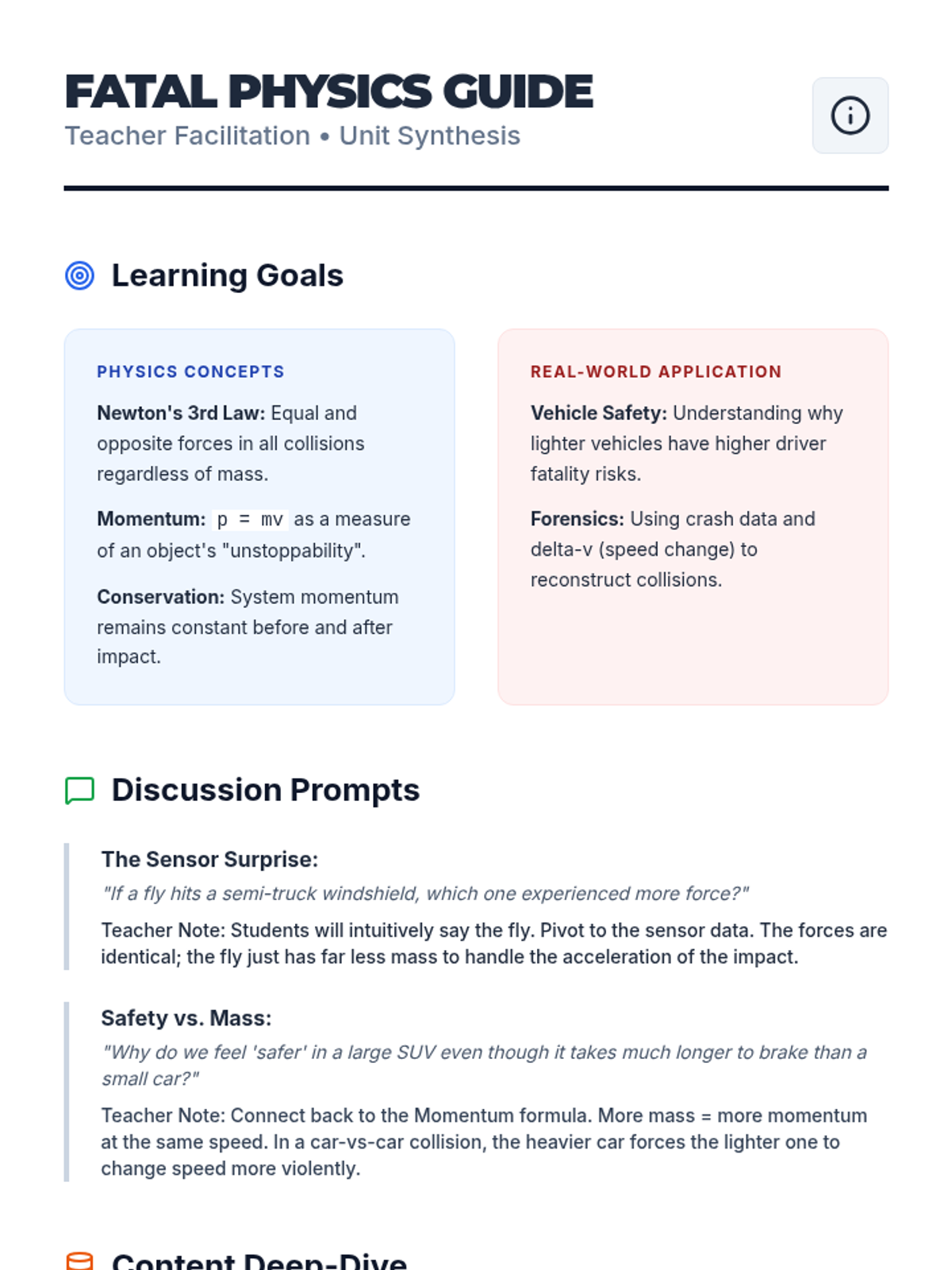
A teacher facilitation guide for the Momentum Mechanics lesson. Revised for better page organization and guaranteed rendering of mathematical concepts.
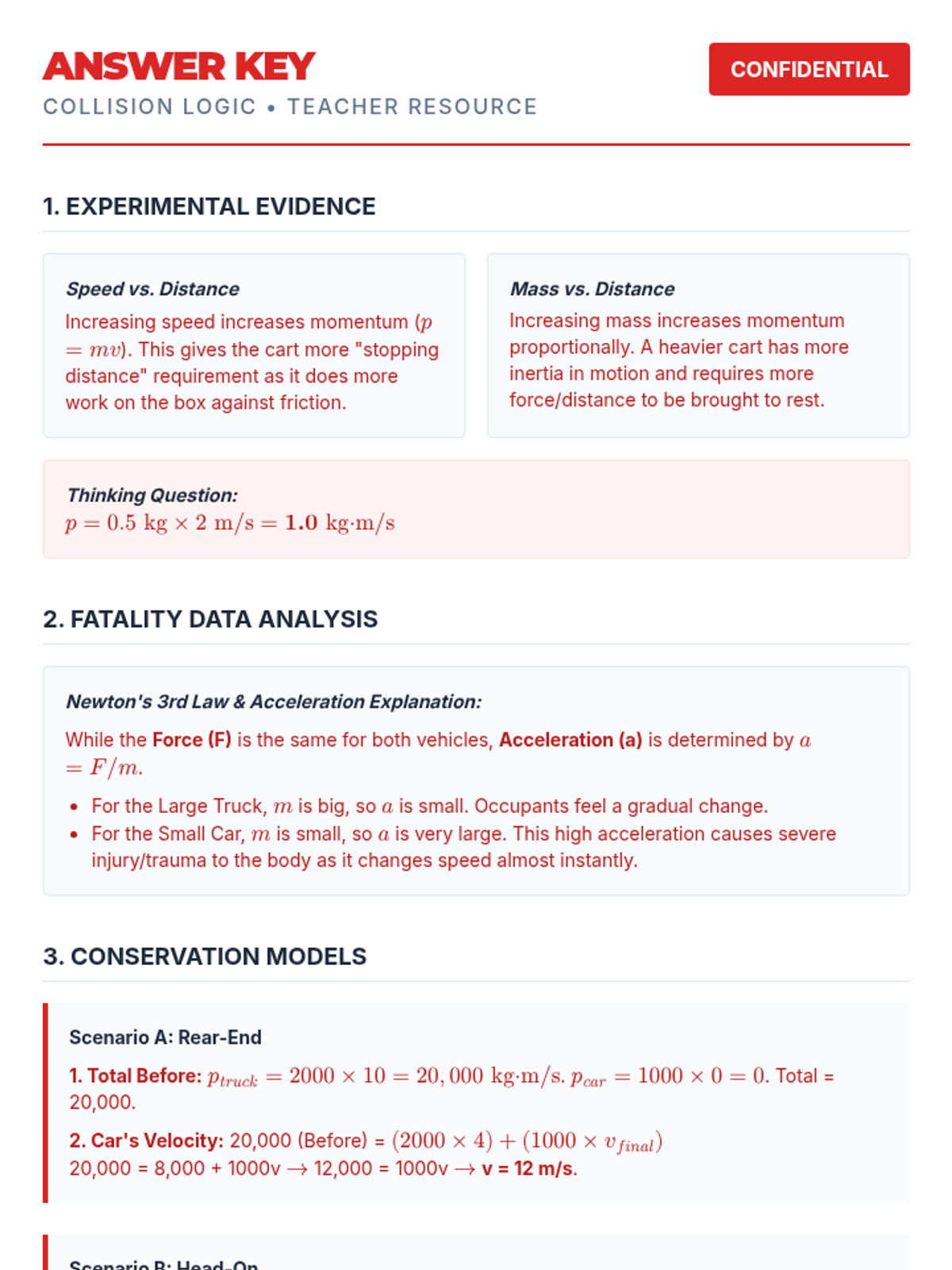
Detailed teacher answer key for the Collision Logic worksheet. Includes step-by-step mathematical derivations for momentum conservation and clear conceptual explanations for Newton's laws.
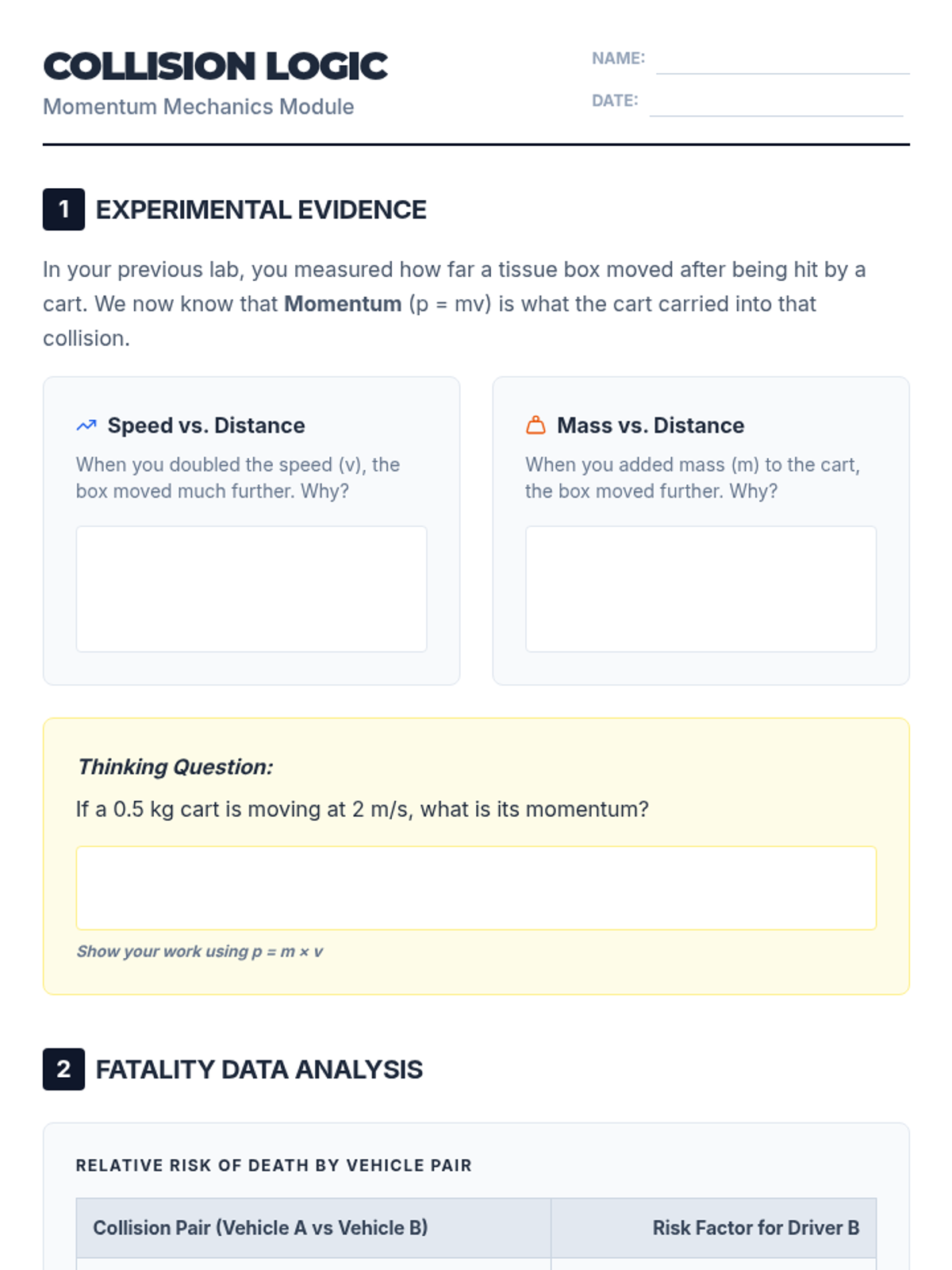
A practice worksheet where students connect their lab observations to the mathematical model of momentum. Revised for better page flow and rendering reliability.
A visual presentation connecting experimental lab results to Newton's Third Law, momentum conservation, and real-world vehicle safety data. Includes diagrams of force-time graphs and fatality risk tables. Revised for improved rendering and accessibility.
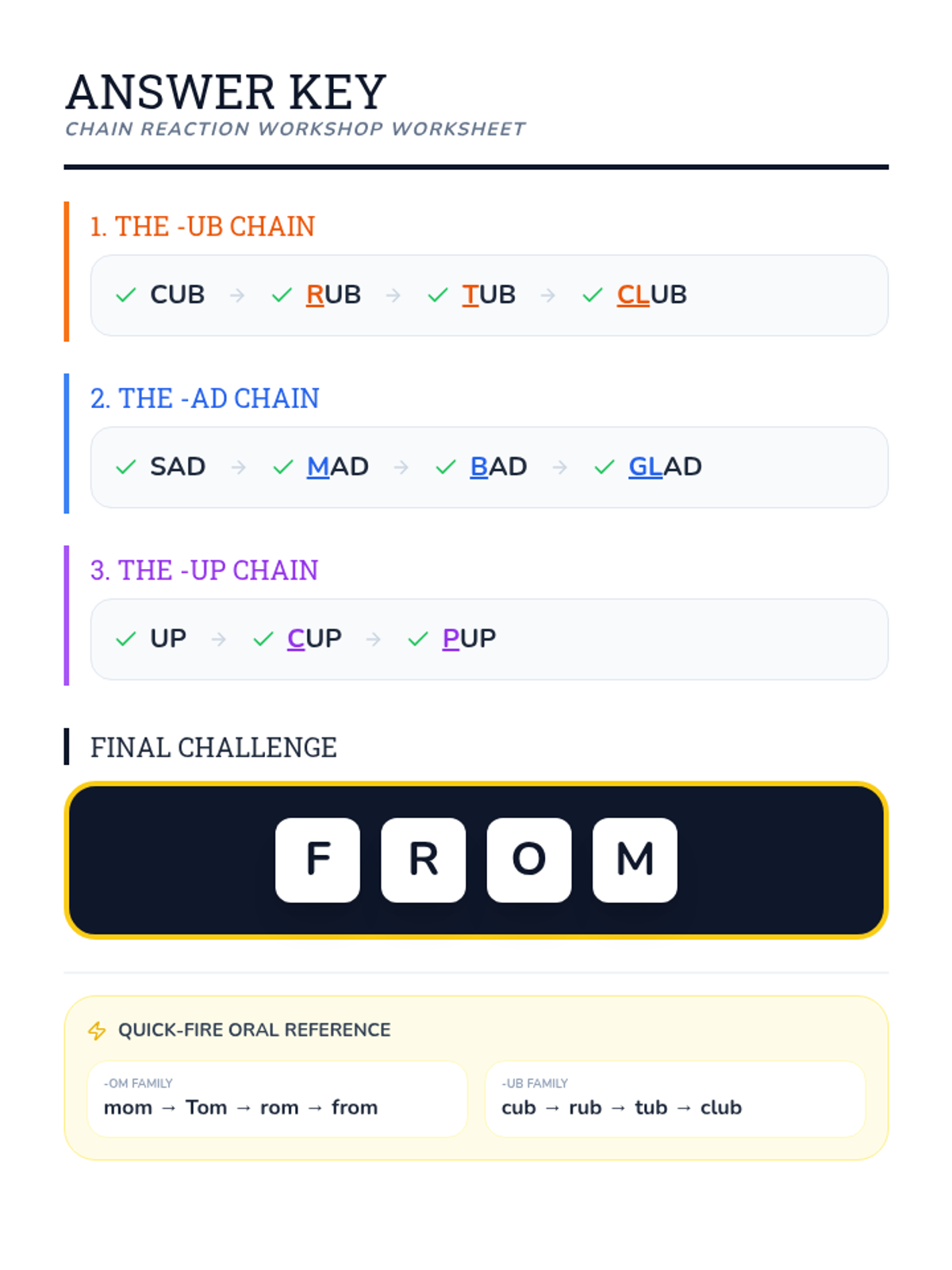
A concise answer key for the 'Chain Reaction Workshop' worksheet, featuring highlighted letter substitutions and clear visual layout for easy grading and teacher reference.
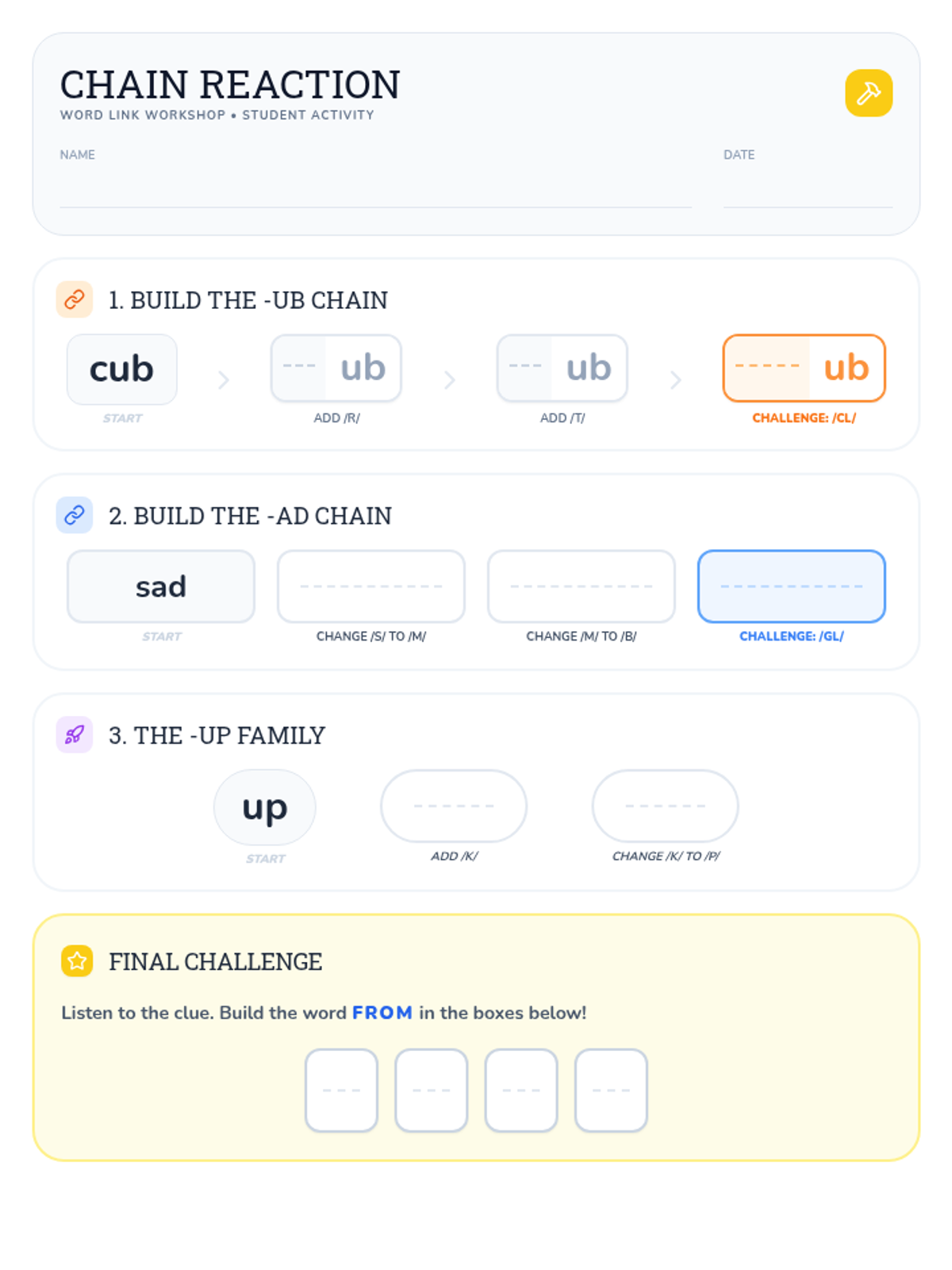
A student-facing worksheet for practicing word chains. Includes guided prompts for substituting sounds in CVC and CCVC words with -ub and -ad rimes, plus a challenge section for the word 'from'.
A dynamic presentation slide deck with high-contrast visuals designed to support a teacher-led word chain lesson. Includes visual sound boxes and highlighted onset/rime divisions for kindergarten students.
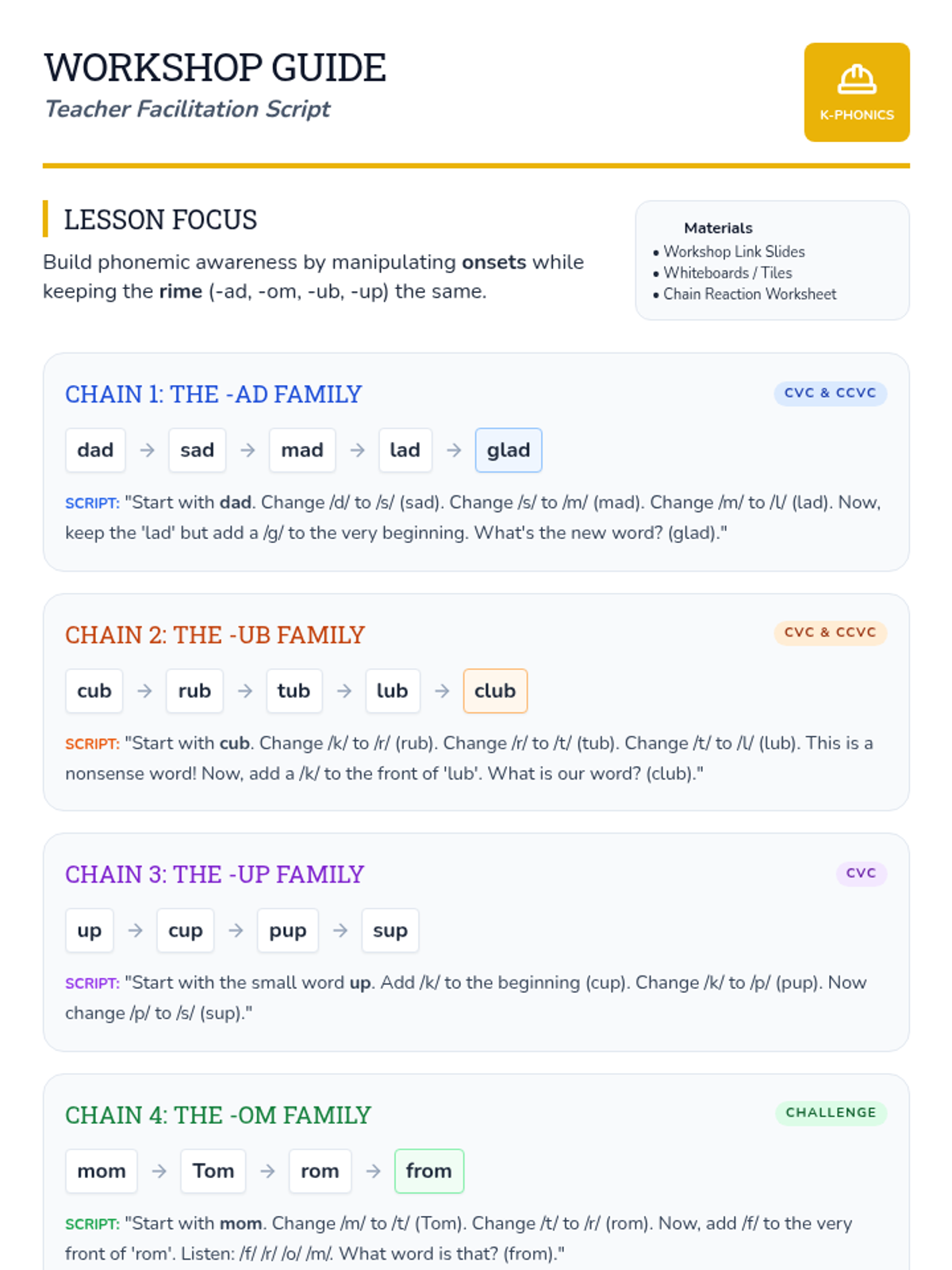
A detailed teacher guide for a Kindergarten word chain lesson, featuring specific scripts and word sequences for CVC and CCVC words using the -ad, -om, -ub, and -up rimes.
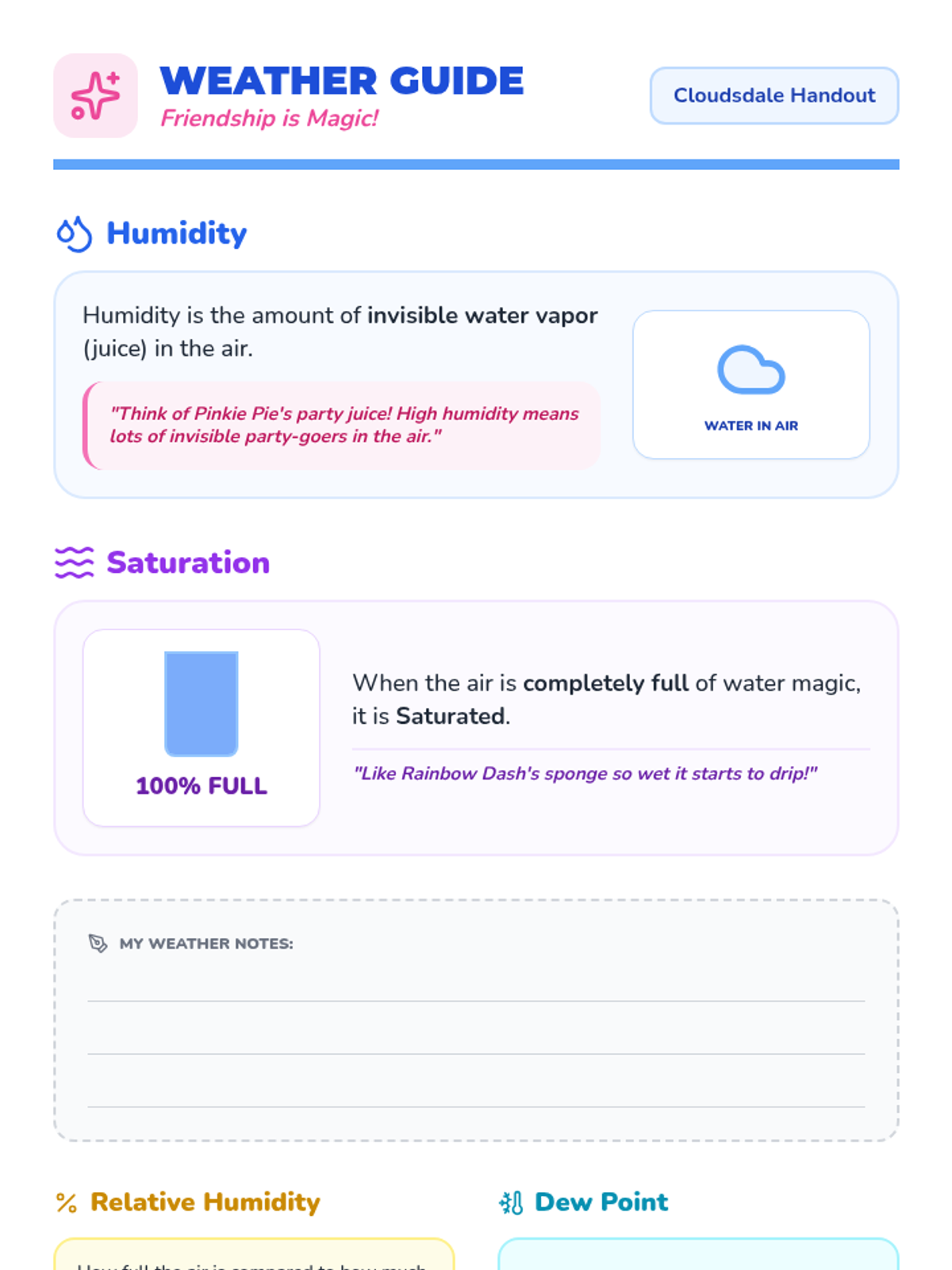
A printable study guide and handout version of the lesson slides, optimized for US Letter paper. Features clear visual metaphors, simplified definitions, and key concept summaries with My Little Pony thematic elements.
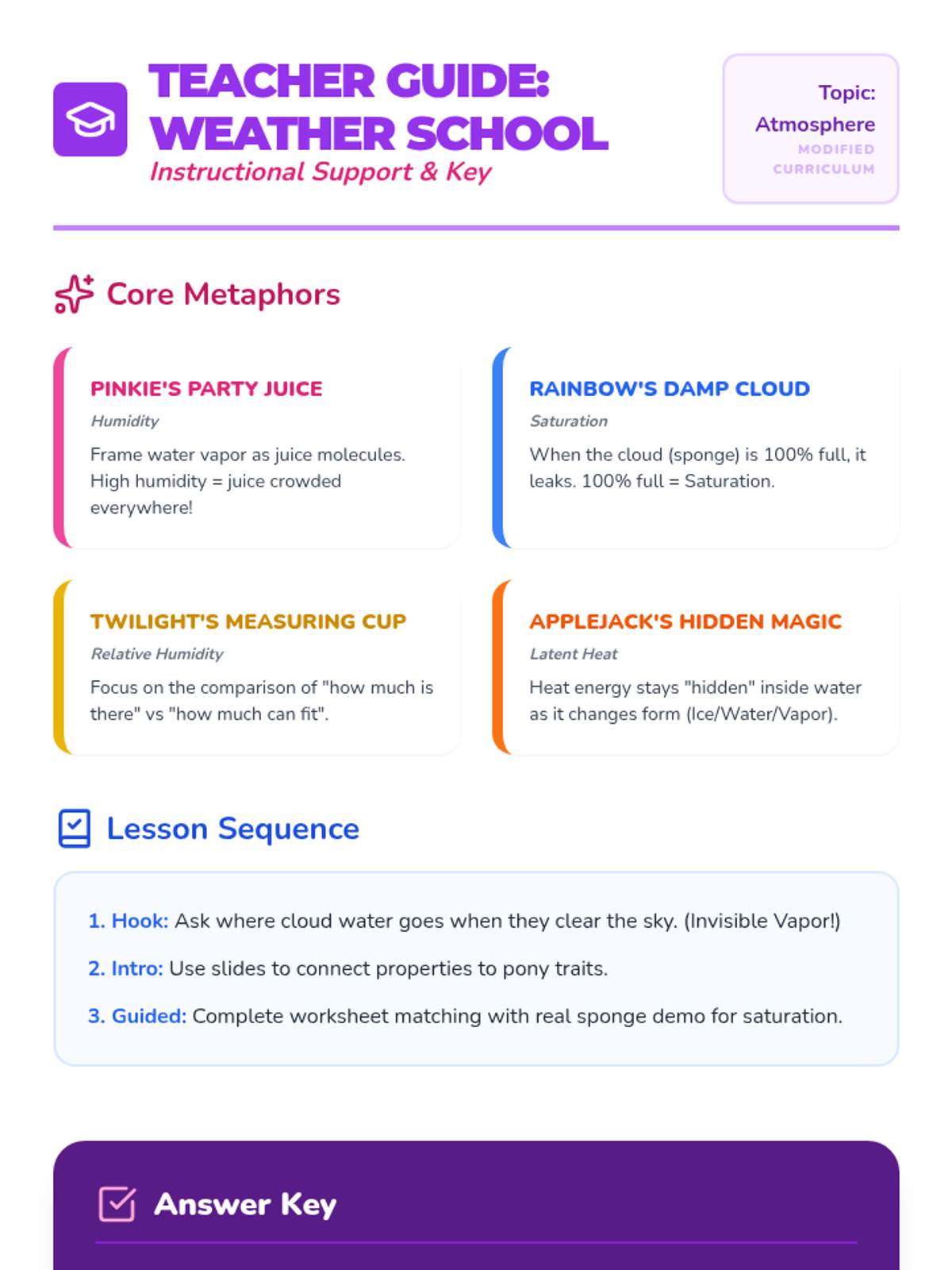
A teacher's guide and answer key for the Ponyville Weather School lesson, providing instructional metaphors, inclusion strategies, and clear answers. Optimized for printing on US Letter paper.
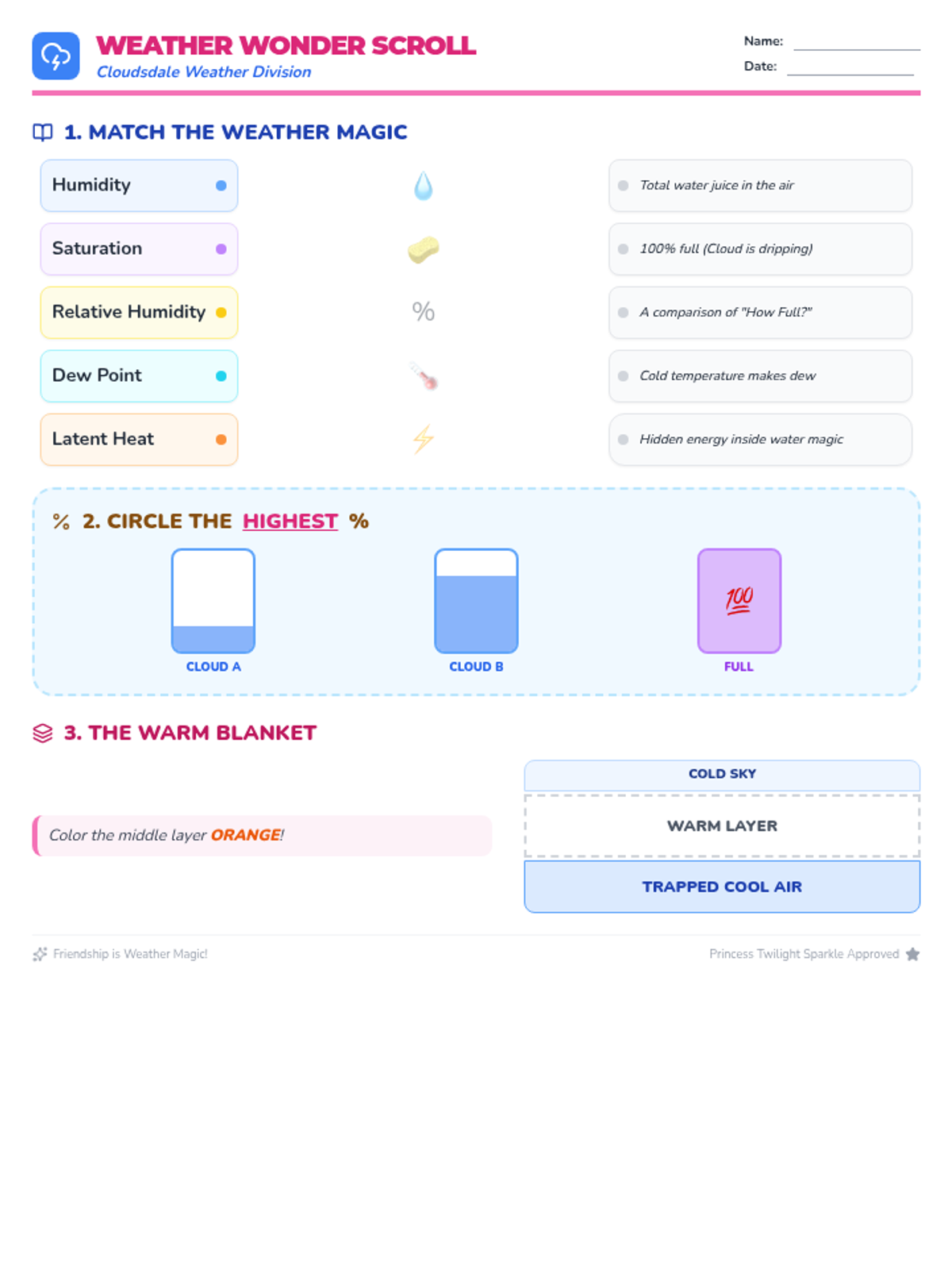
A student worksheet for atmosphere properties featuring symbol-supported matching, visual comparisons of humidity, and a creative task for temperature inversion. Optimized for printing on US Letter paper with improved contrast and layout.
A visually rich slide deck themed after My Little Pony: Friendship is Magic, explaining core atmospheric properties through clear metaphors and symbols for modified curriculum students.
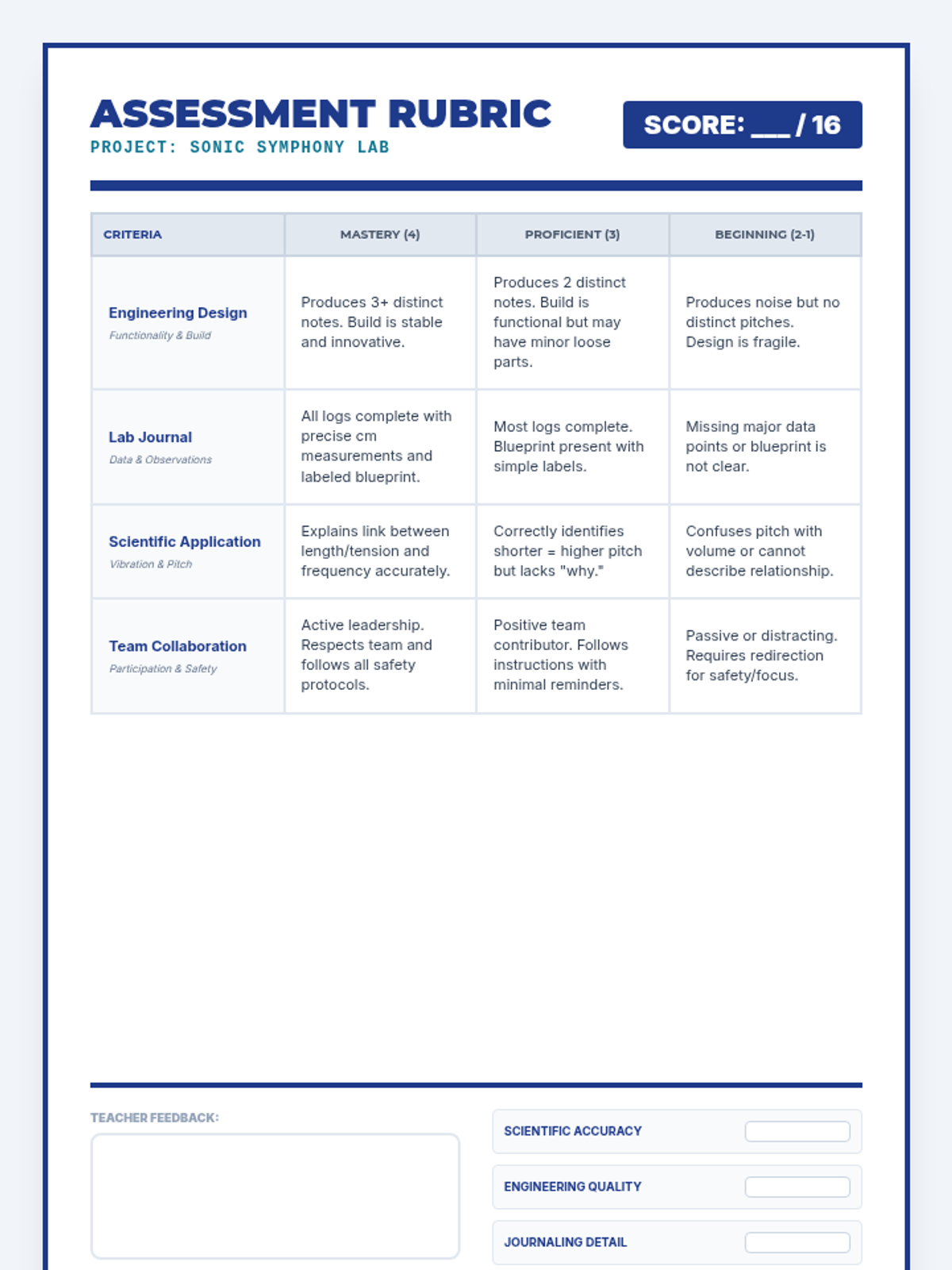
A comprehensive assessment rubric for the Sonic Symphony Lab. Revised to fit onto a single page with improved layout, professional feedback areas, and clear criteria for engineering and physics.
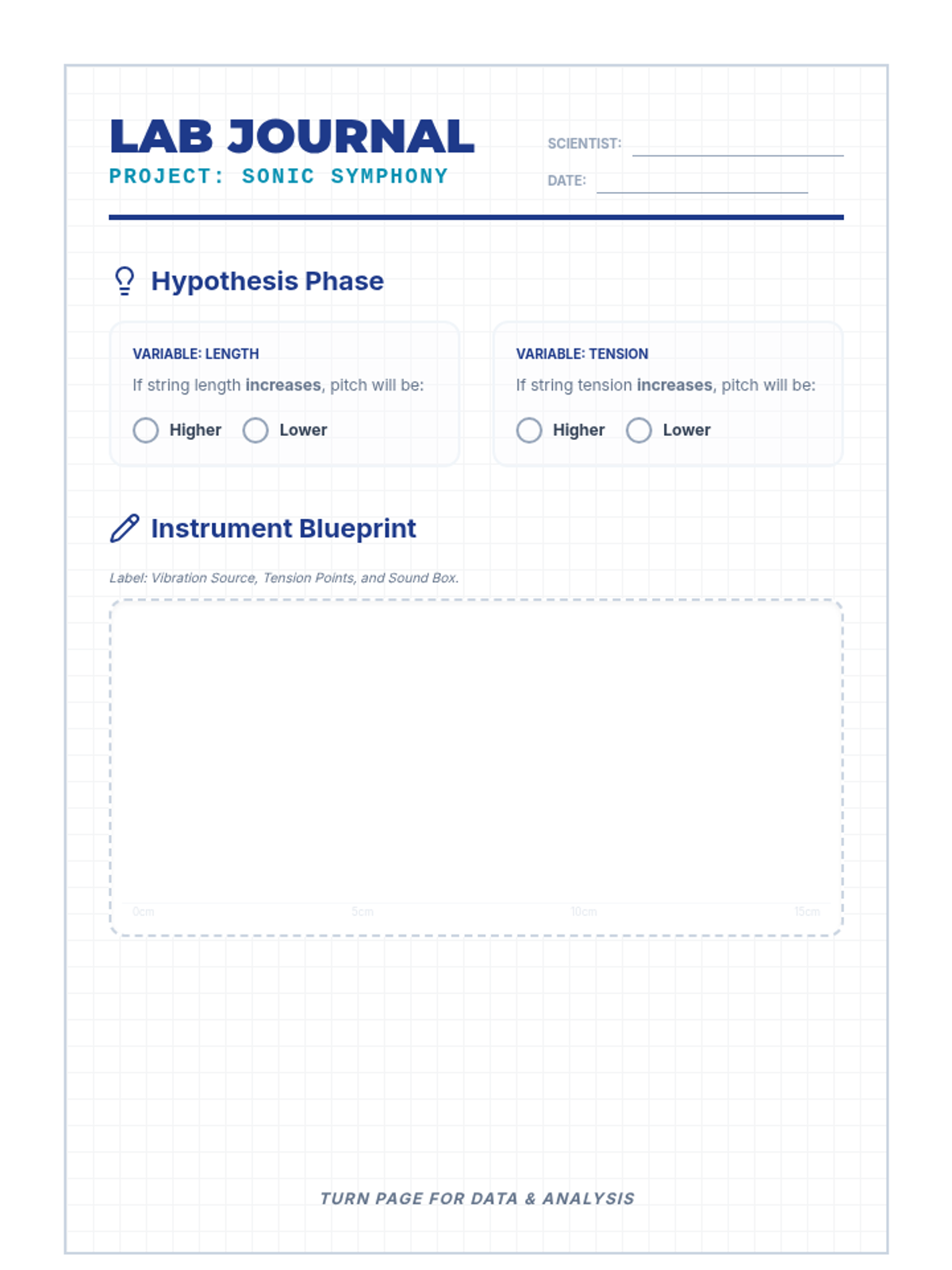
A student lab journal for the Sonic Symphony investigation. Revised with improved page breaks, white student work areas, and complete analysis sections to ensure a professional lab experience.
A visually engaging presentation for the Sonic Symphony Lab, introducing vibration, pitch, and engineering analysis. Revised to include a concrete wave visual and an advanced acoustic engineering slide for middle school students.
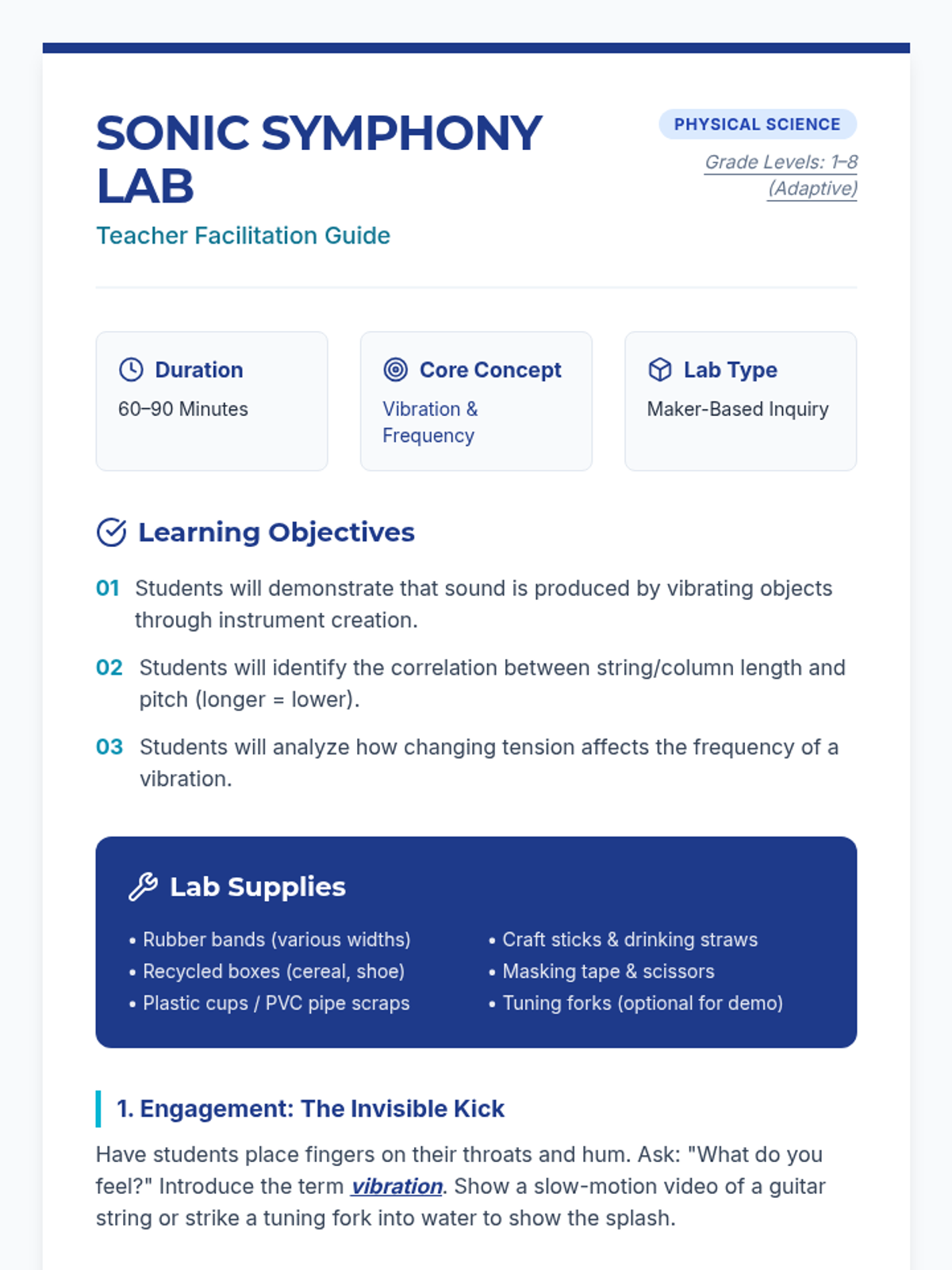
A comprehensive teacher facilitation guide for the Sonic Symphony Lab, featuring learning objectives, materials list, step-by-step procedures, and differentiation strategies for grades 1-8. Revised to include full grade-level scaling and professional formatting.
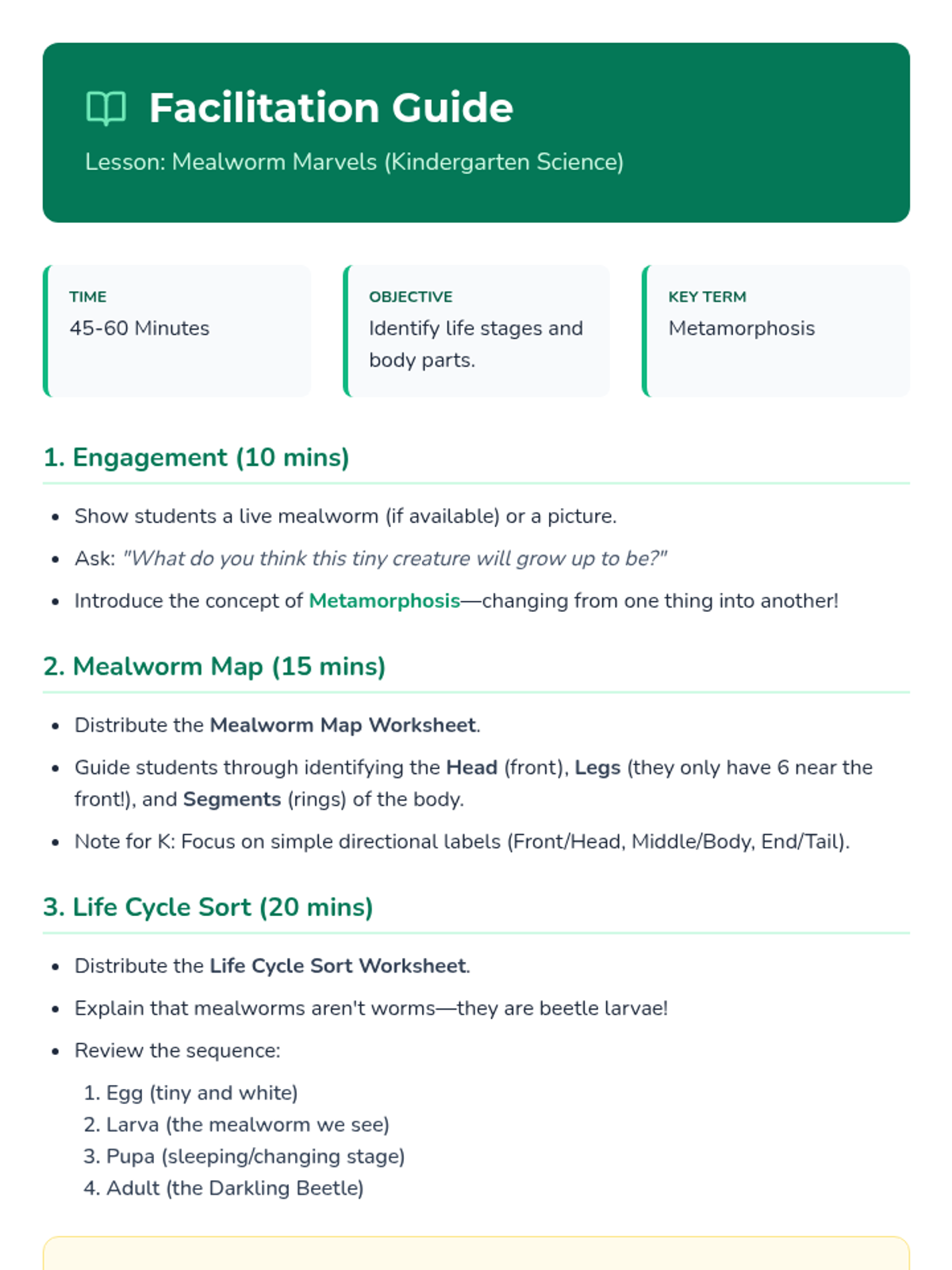
A teacher-facing facilitation guide for the Mealworm Marvels lesson, including instructional steps, key vocabulary, and common student misconceptions.
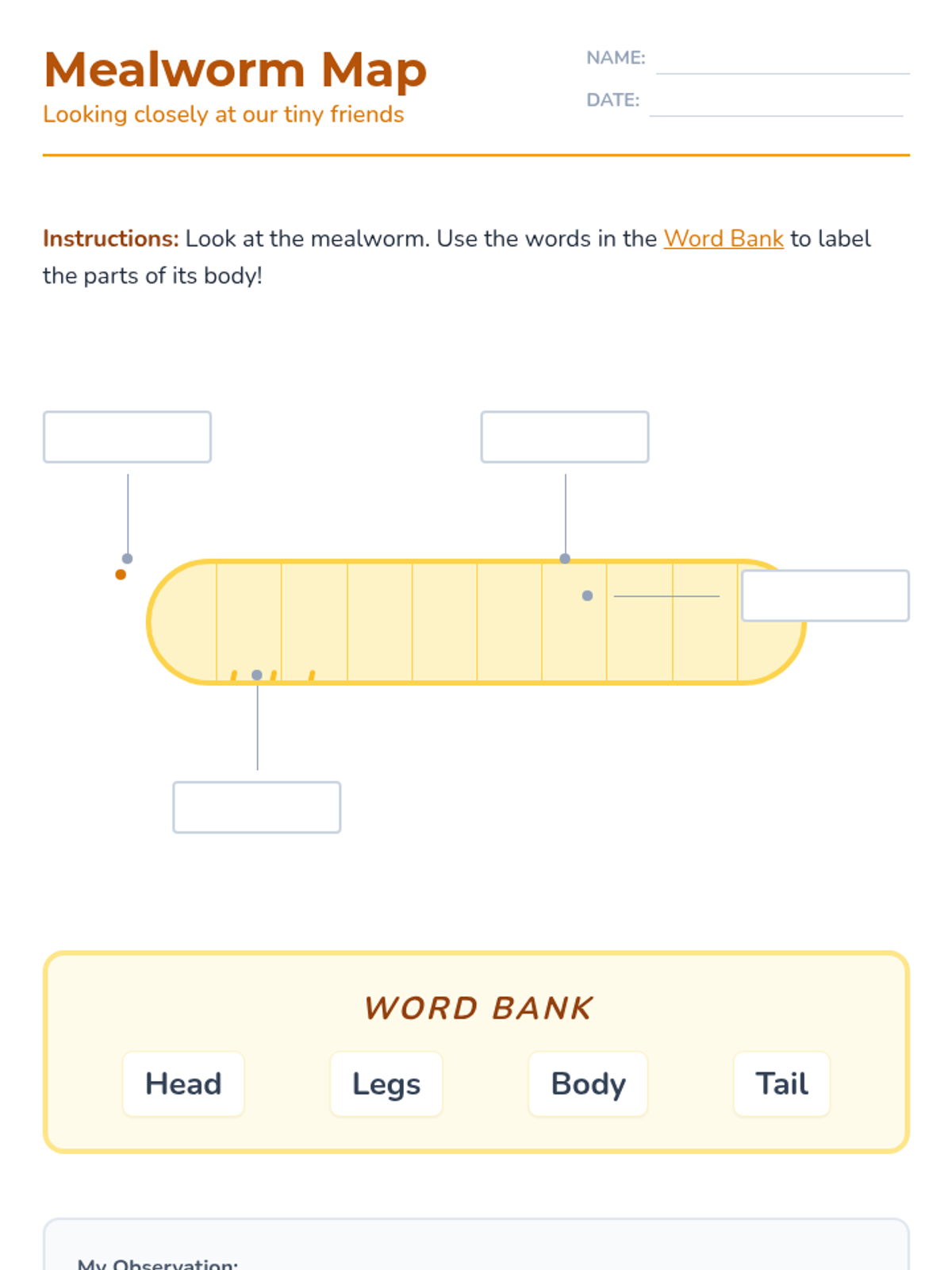
A labeling worksheet for kindergarten students to identify the basic body parts of a mealworm larva, featuring a word bank and a space for drawing observations.
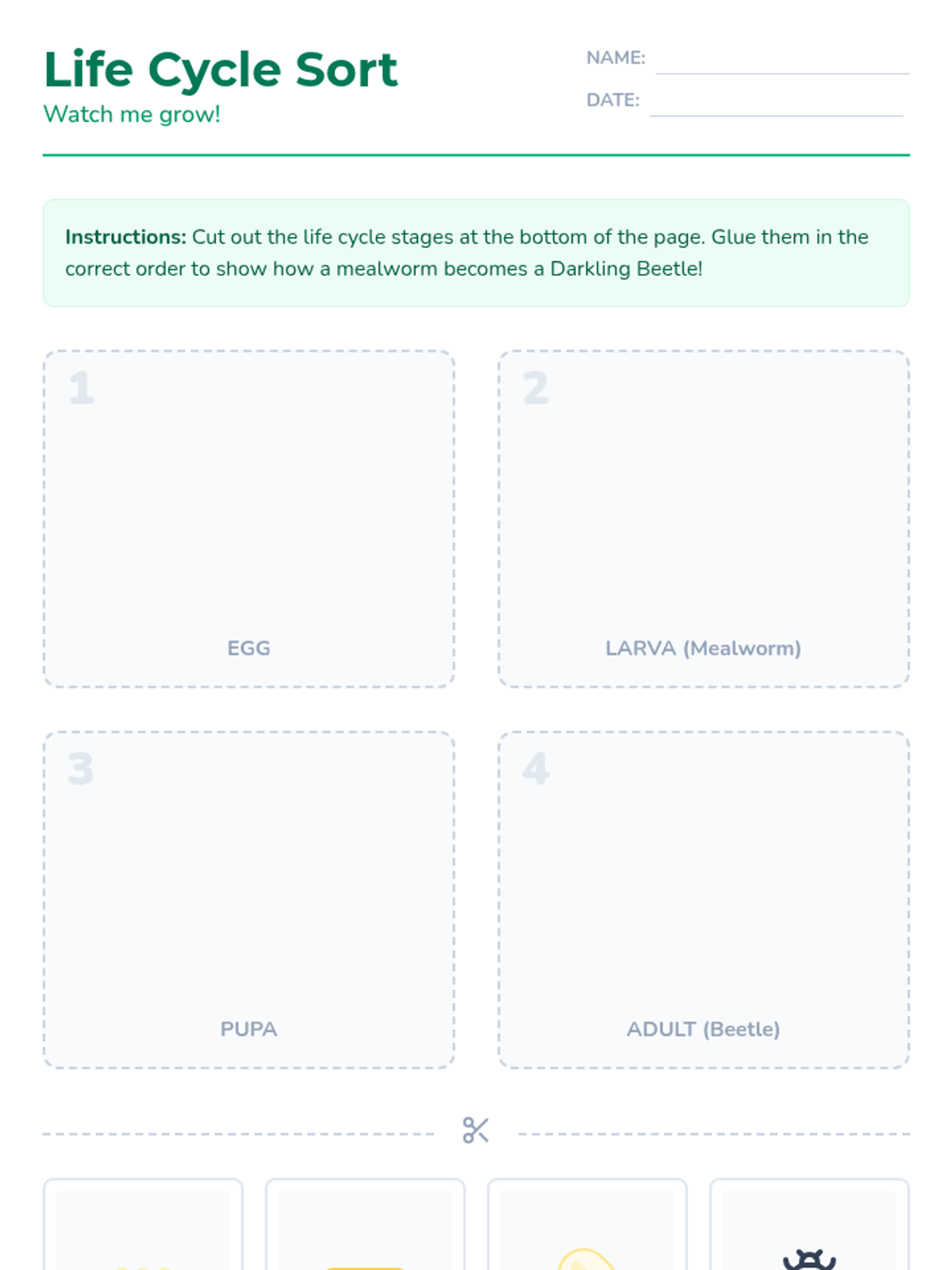
A cut-and-paste activity for kindergarten students to sequence the four stages of the mealworm life cycle: egg, larva, pupa, and adult.
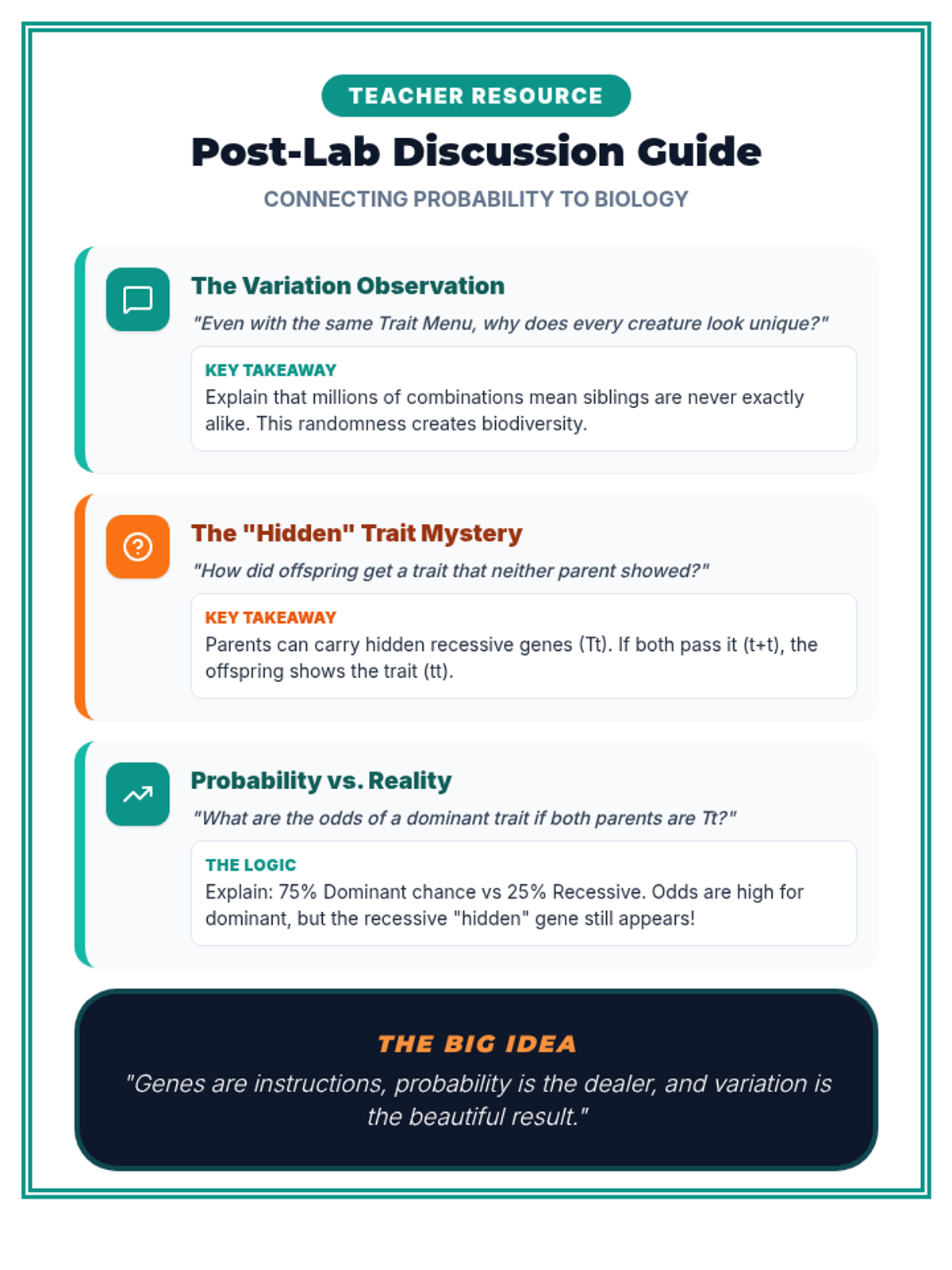
A teacher-facing discussion guide designed to facilitate a deep dive into the results of the Trait Traders activity. It provides structured prompts and key takeaways on topics like biological variation, recessive trait inheritance, and Punnett square probability.
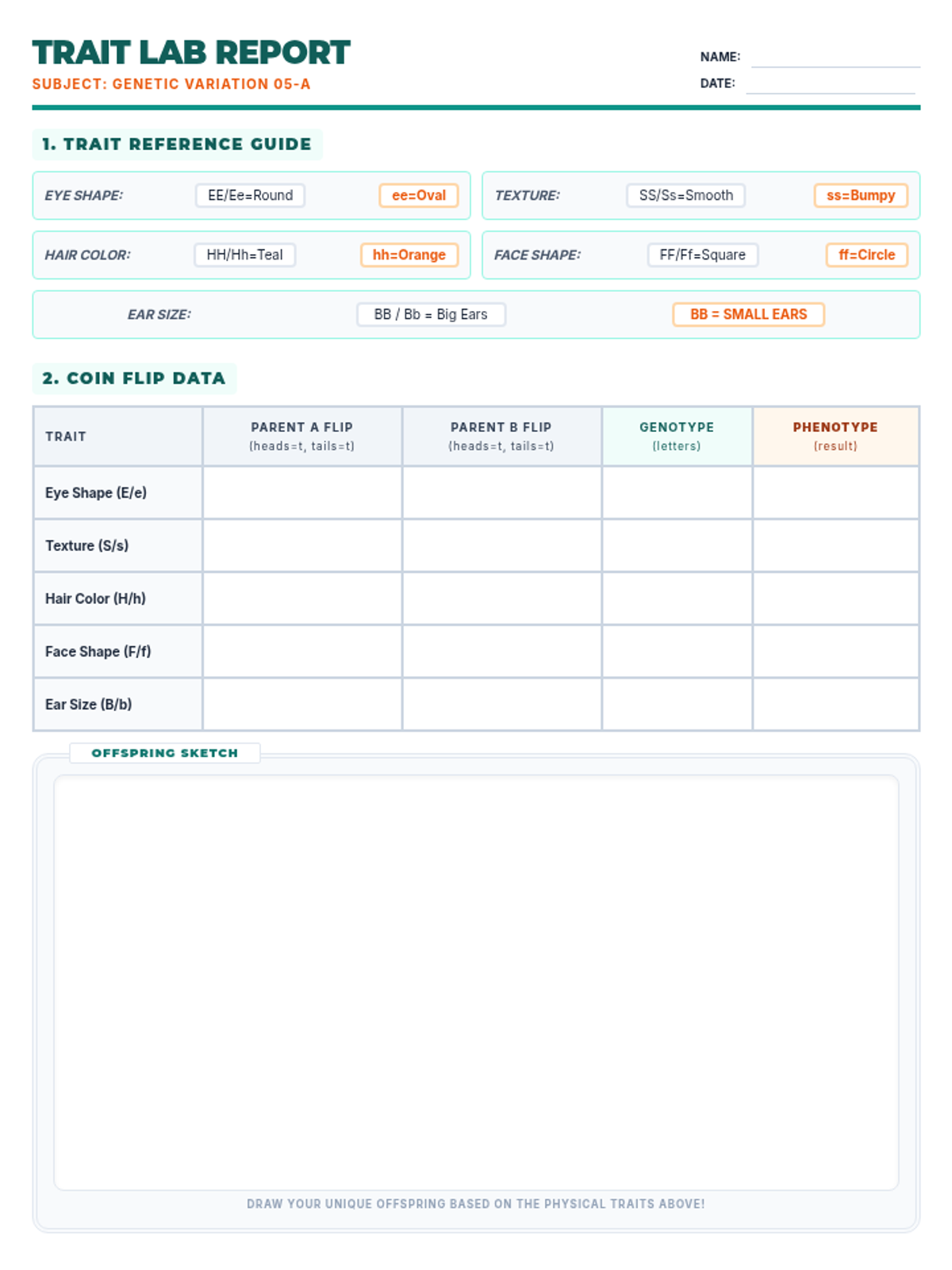
A dual-page student activity sheet for the Trait Traders lesson. Includes a structured data table for recording coin flips (genotypes) and their resulting physical traits (phenotypes), a dedicated area for drawing the unique offspring, a trait reference guide, and critical thinking analysis questions.
A vibrant 16:9 presentation for the Trait Traders lesson. It introduces the concepts of DNA, genes, dominant vs. recessive traits, and the coin-flip activity rules using engaging visuals and large, readable text.
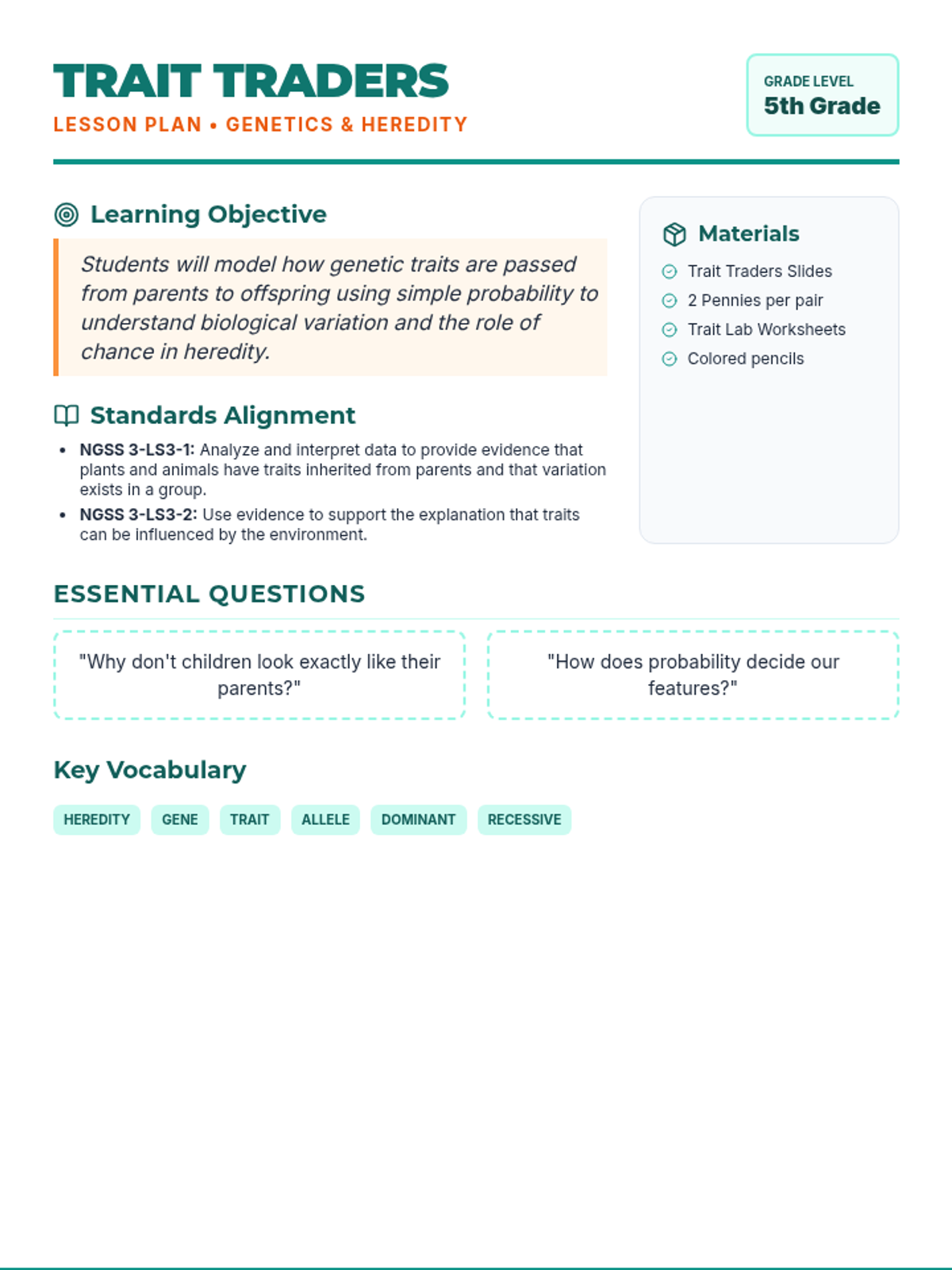
A comprehensive teacher guide for the Trait Traders lesson, including learning objectives, NGSS standards, materials list, and a detailed 5-step instructional plan for teaching heredity and variation to 5th graders.
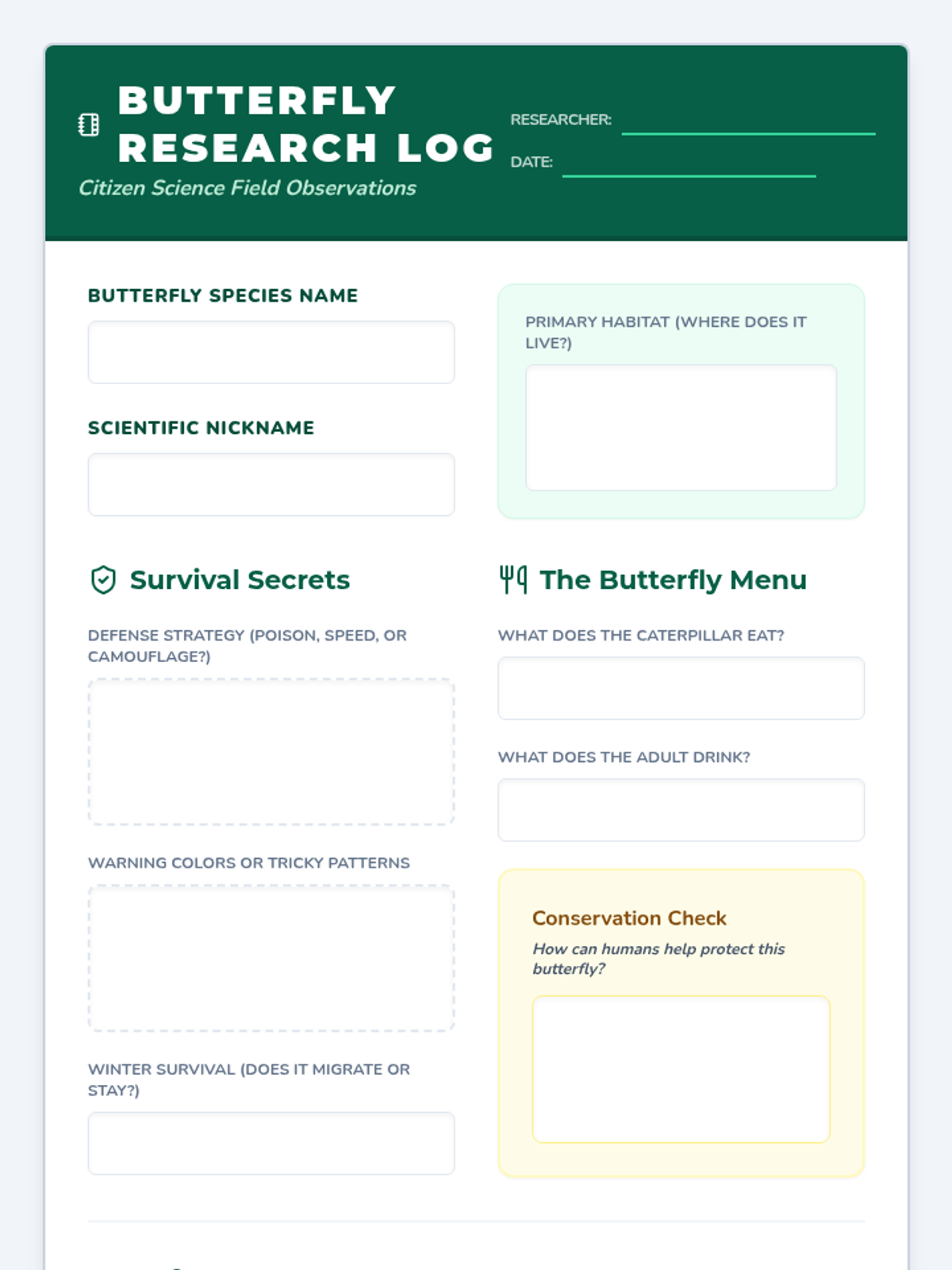
A structured research organizer for students to record findings from butterfly species articles, including habitat, survival strategies, life cycle details, and conservation facts.
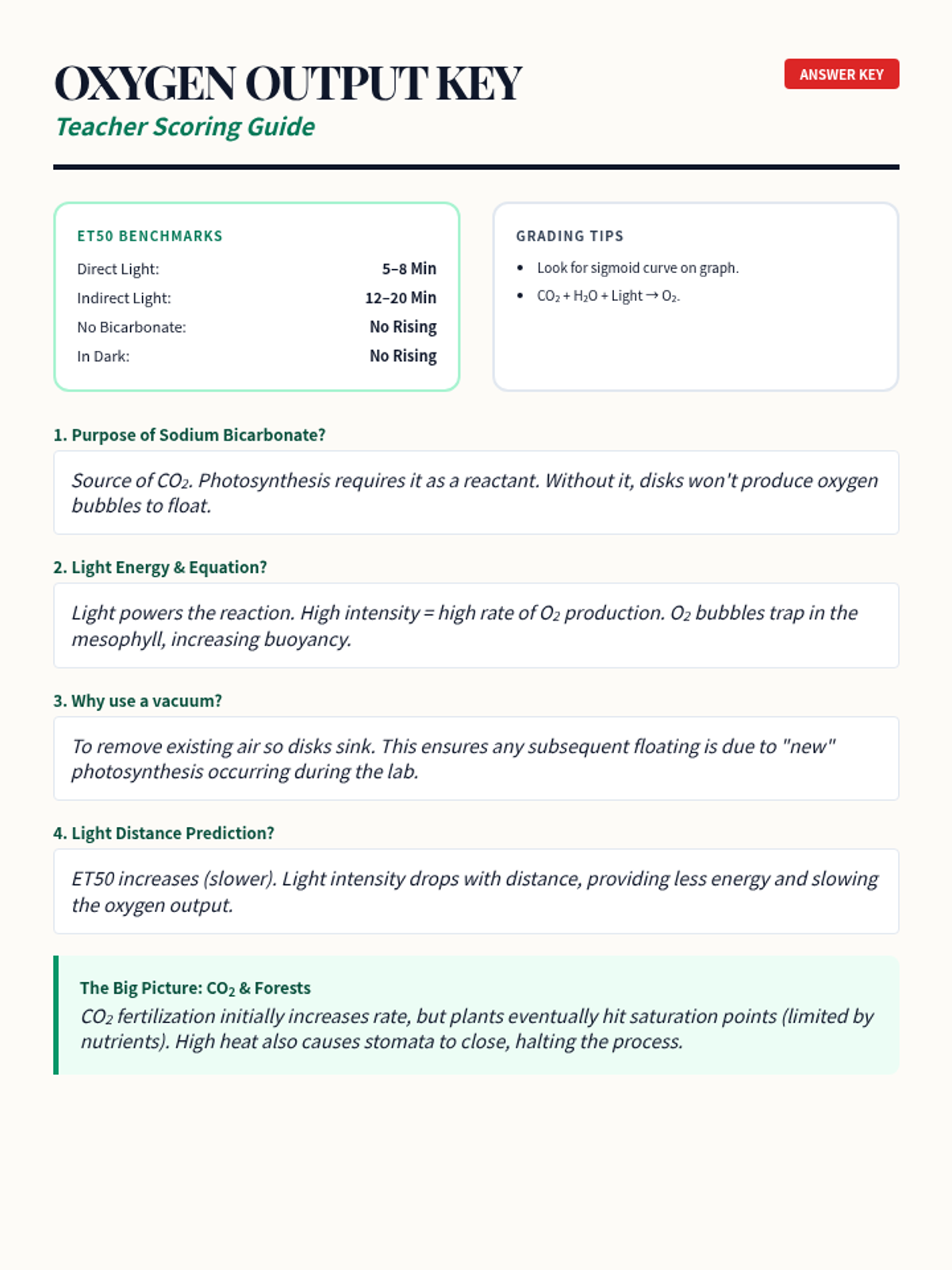
An answer key for the Oxygen Output Log, providing benchmark data for the ET50, expected graph trends, and detailed answers to analysis questions for teacher grading.
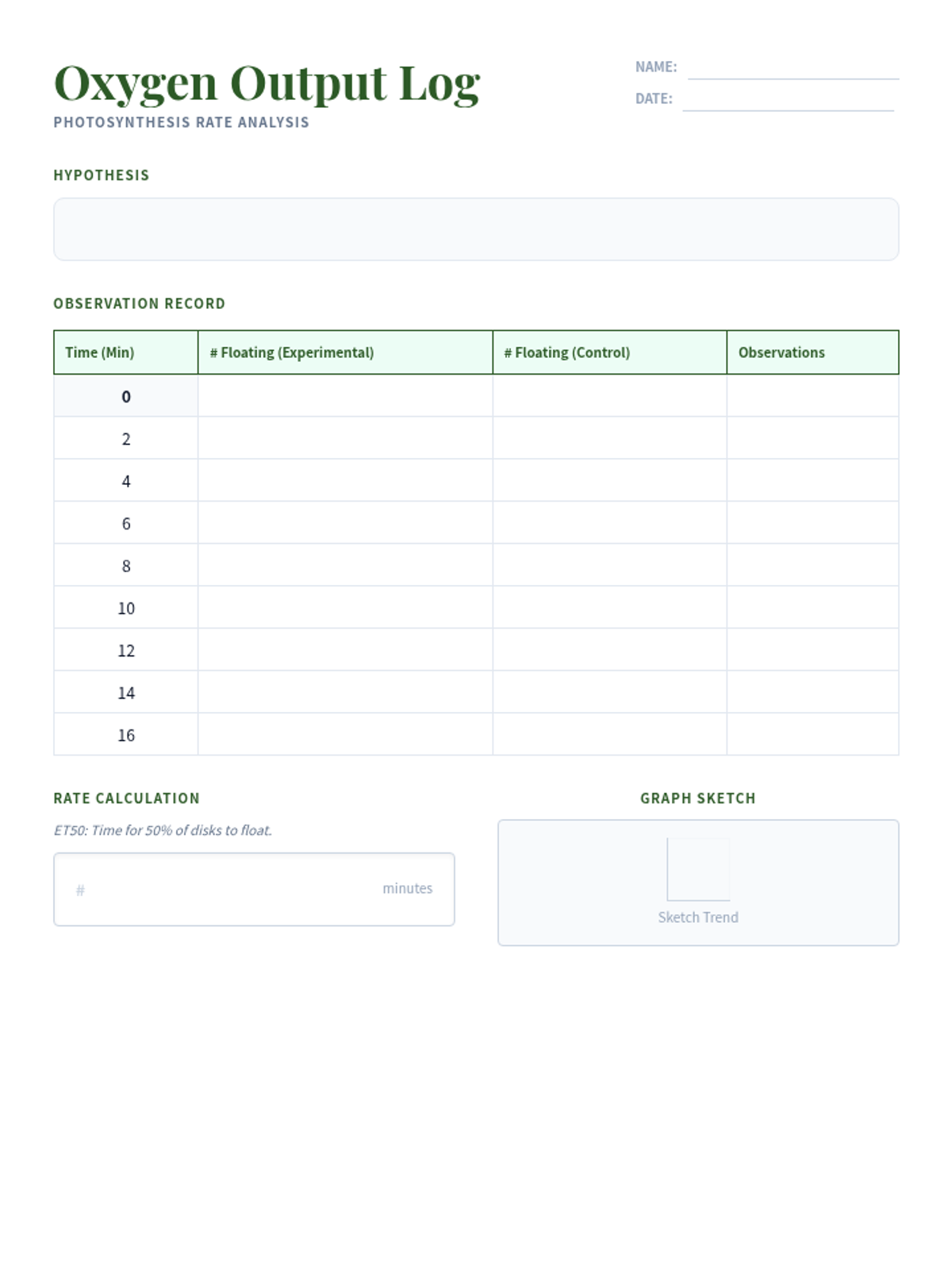
A structured lab worksheet for 9th-grade students to record data, calculate ET50, and analyze the results of their floating leaf disk experiment. Includes a graph area and critical thinking questions.
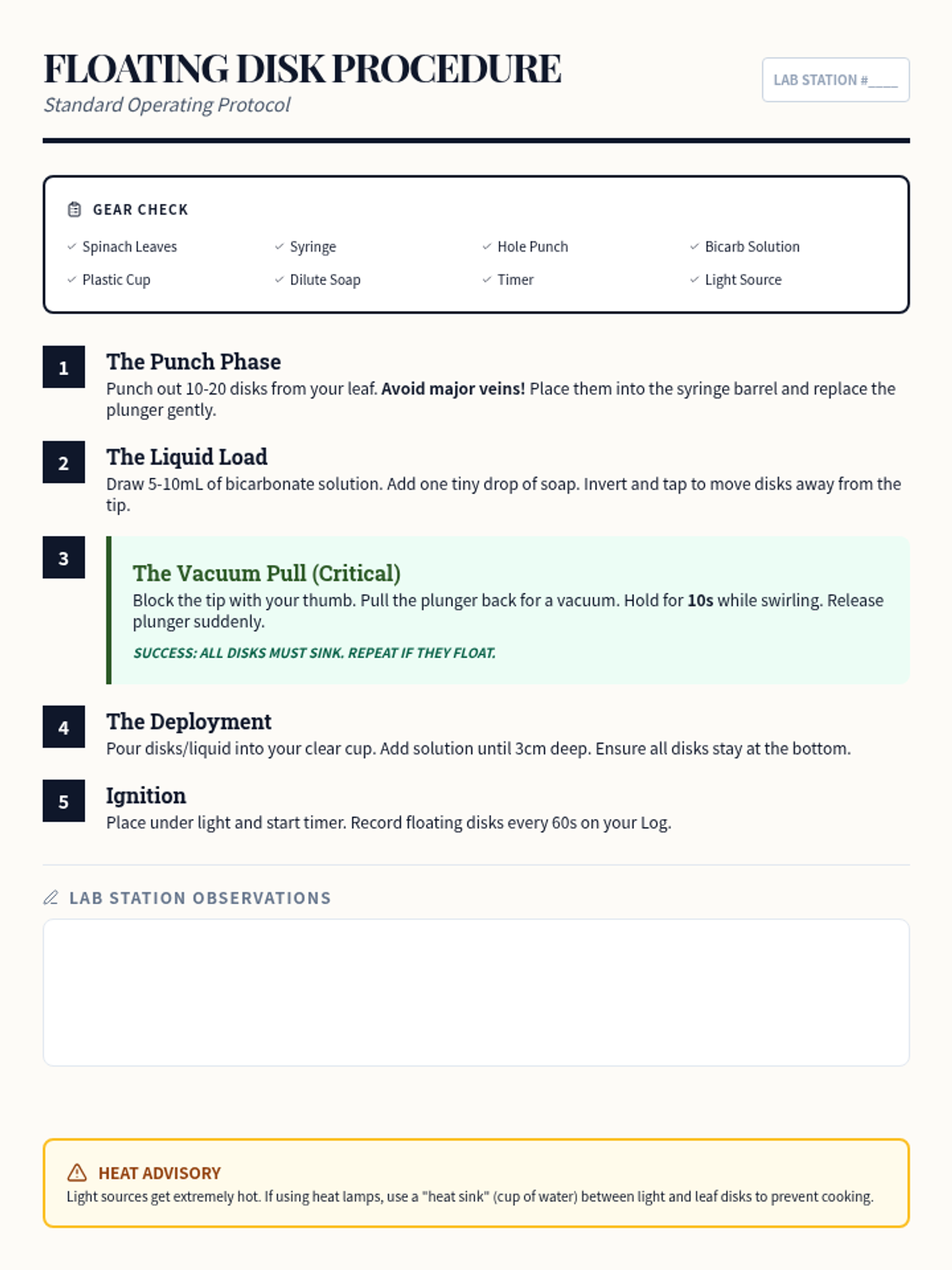
A student-facing procedural guide for the floating leaf disk assay. It features clear, numbered steps with a focus on the critical vacuum extraction process and safety warnings.
A visually engaging presentation that explains the biological mechanics of leaf buoyancy, the photosynthesis equation, and the scientific principles behind the floating disk assay.
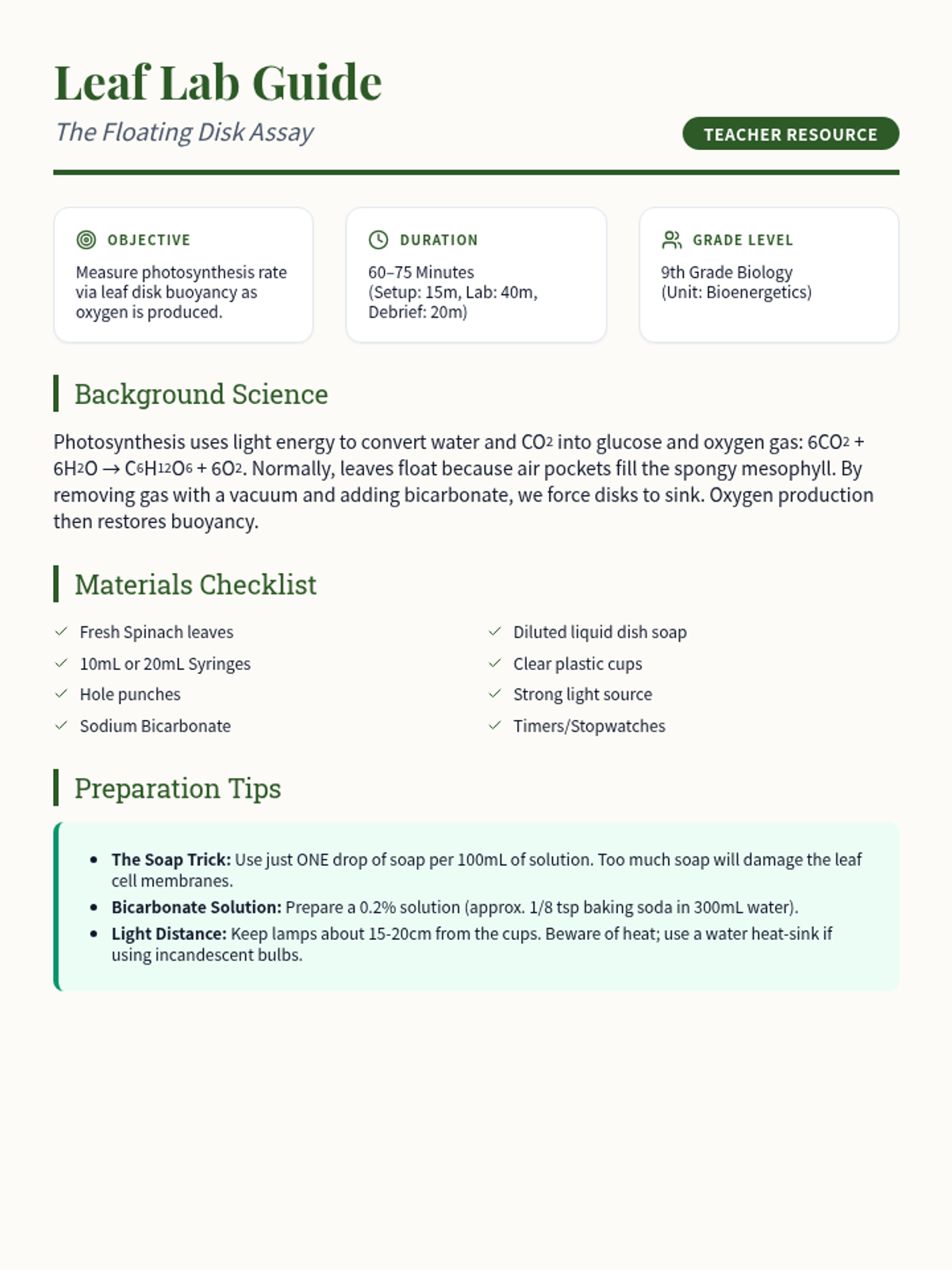
A comprehensive teacher guide for the floating leaf disk assay, including background science, materials checklist, and a 5E instructional flow tailored for 9th-grade biology.
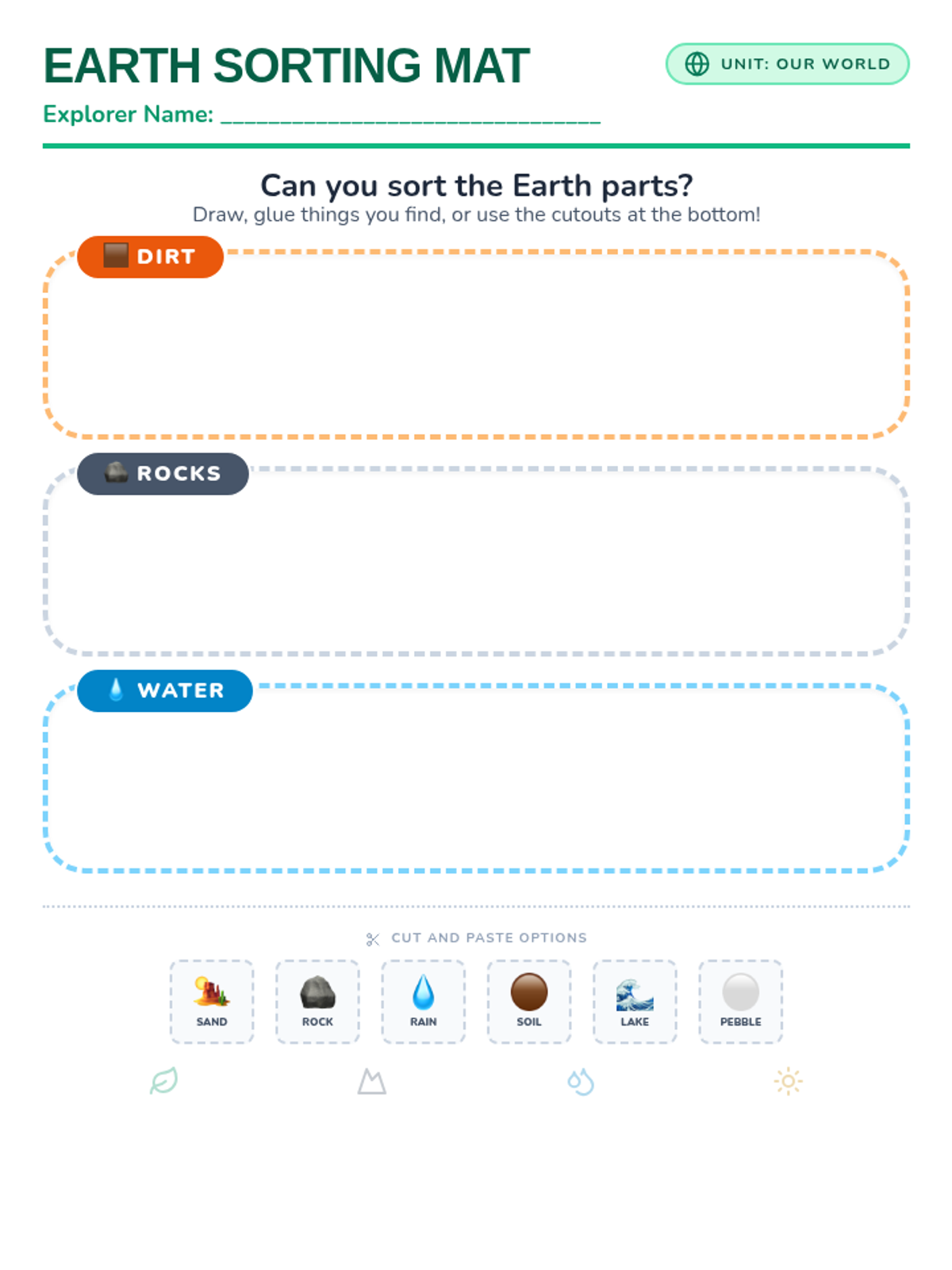
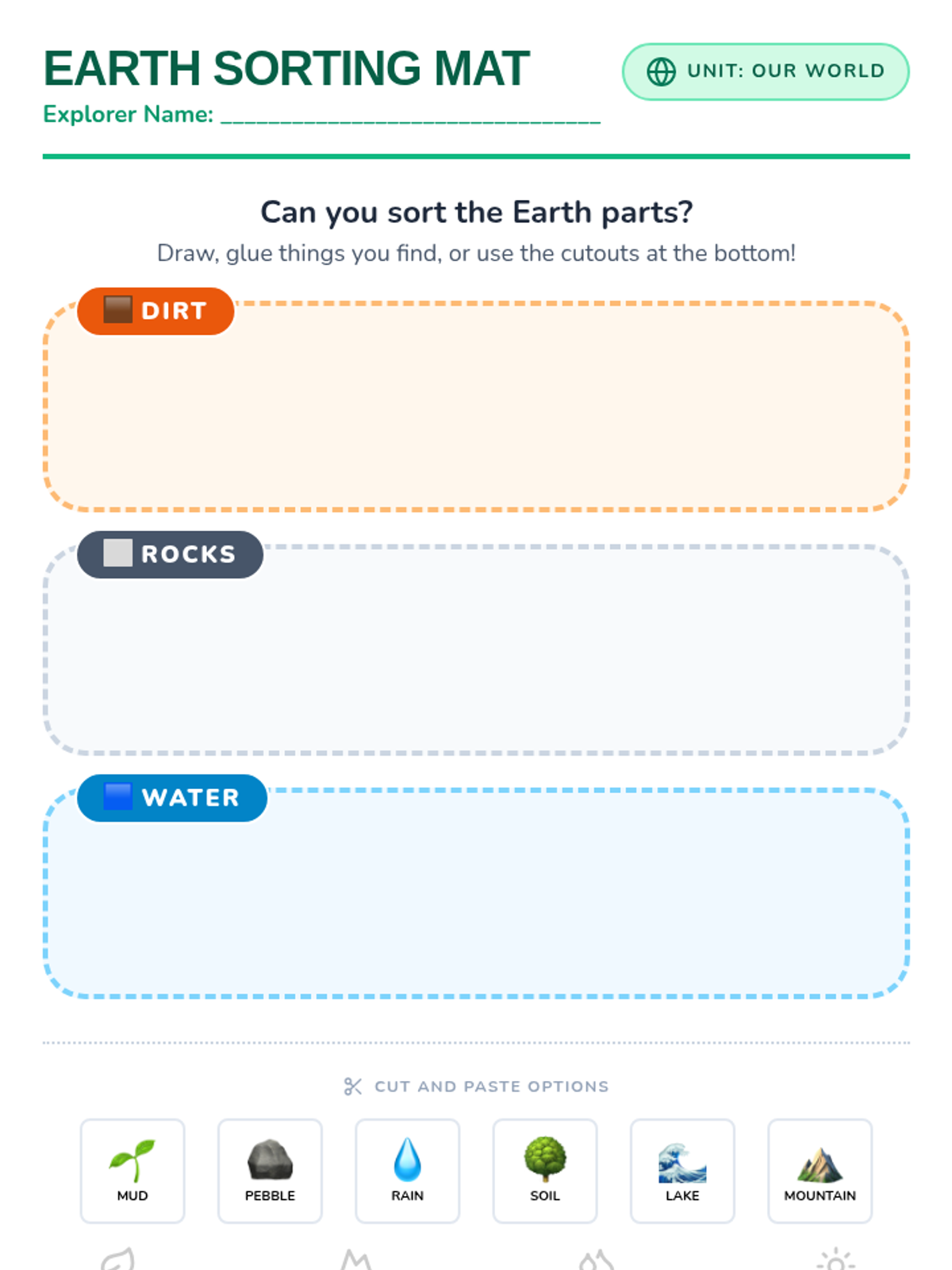
A printable sorting mat for Pre-K students to categorize pictures or drawings of dirt, rocks, and water. includes large white work areas and cut-out options at the bottom. Fits on one page.
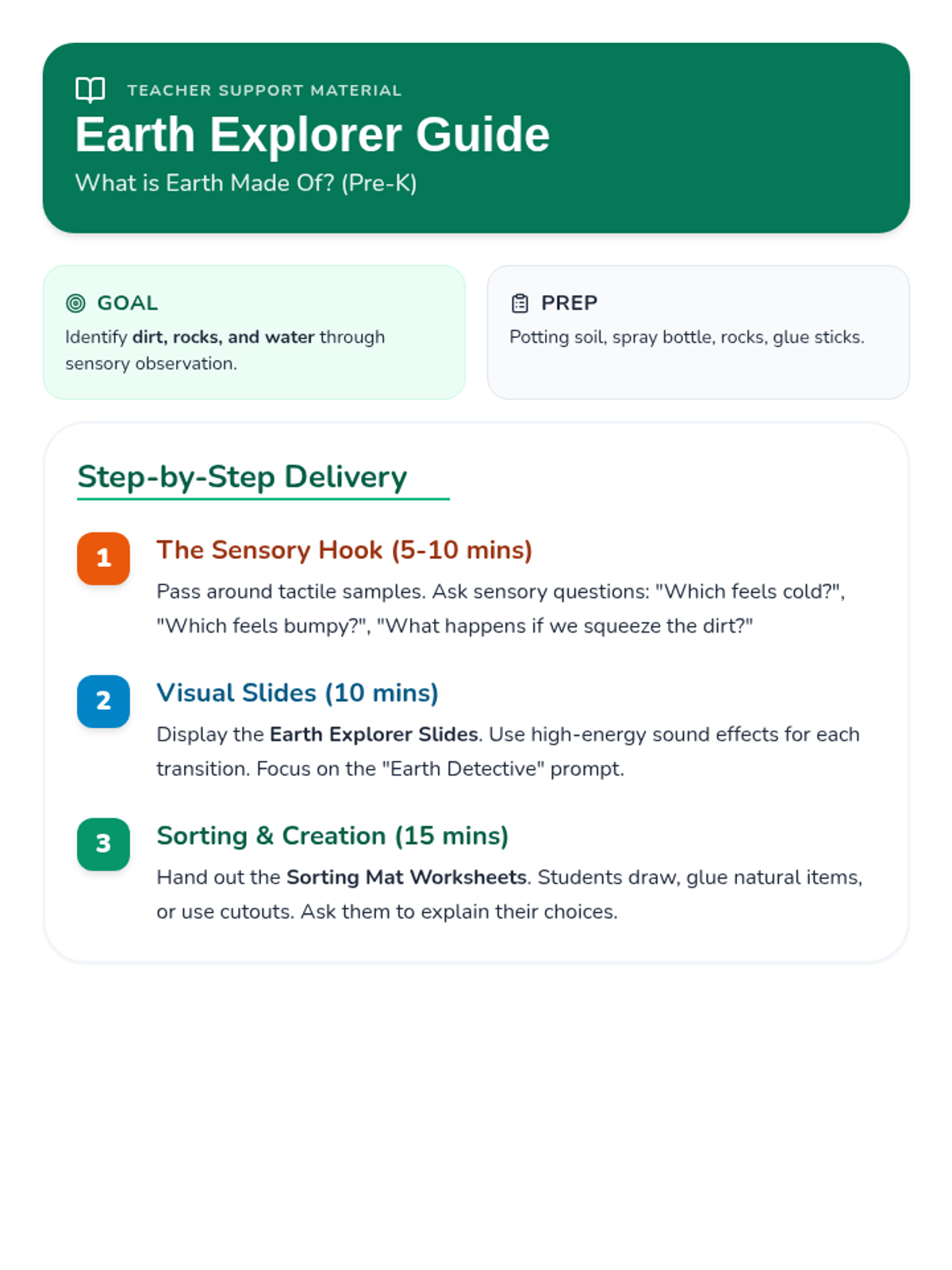
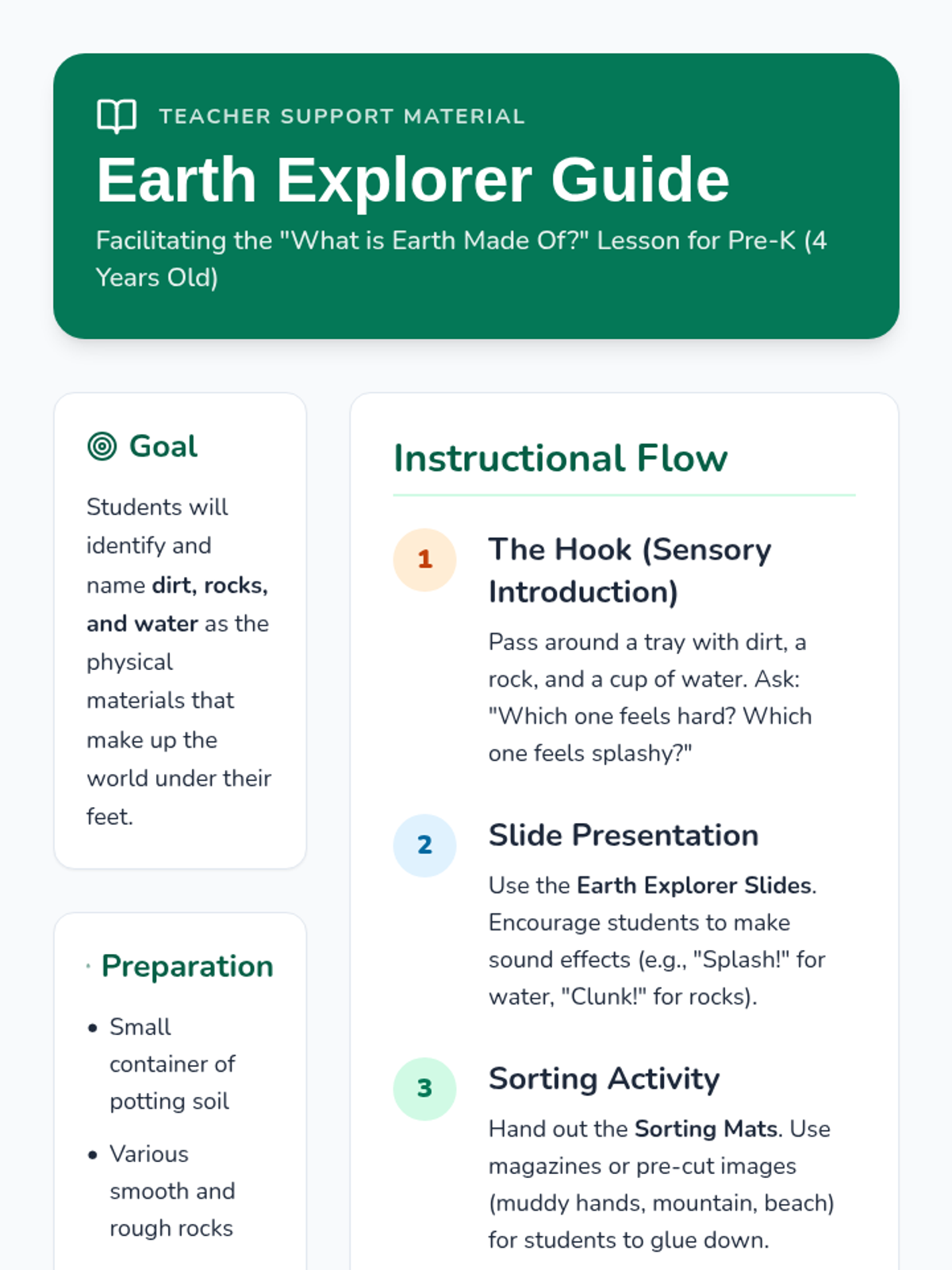
A consolidated teacher guide for the Earth Explorer lesson. Features sensory activities, instructional steps, and extension ideas. Polished for print with clear page transitions.
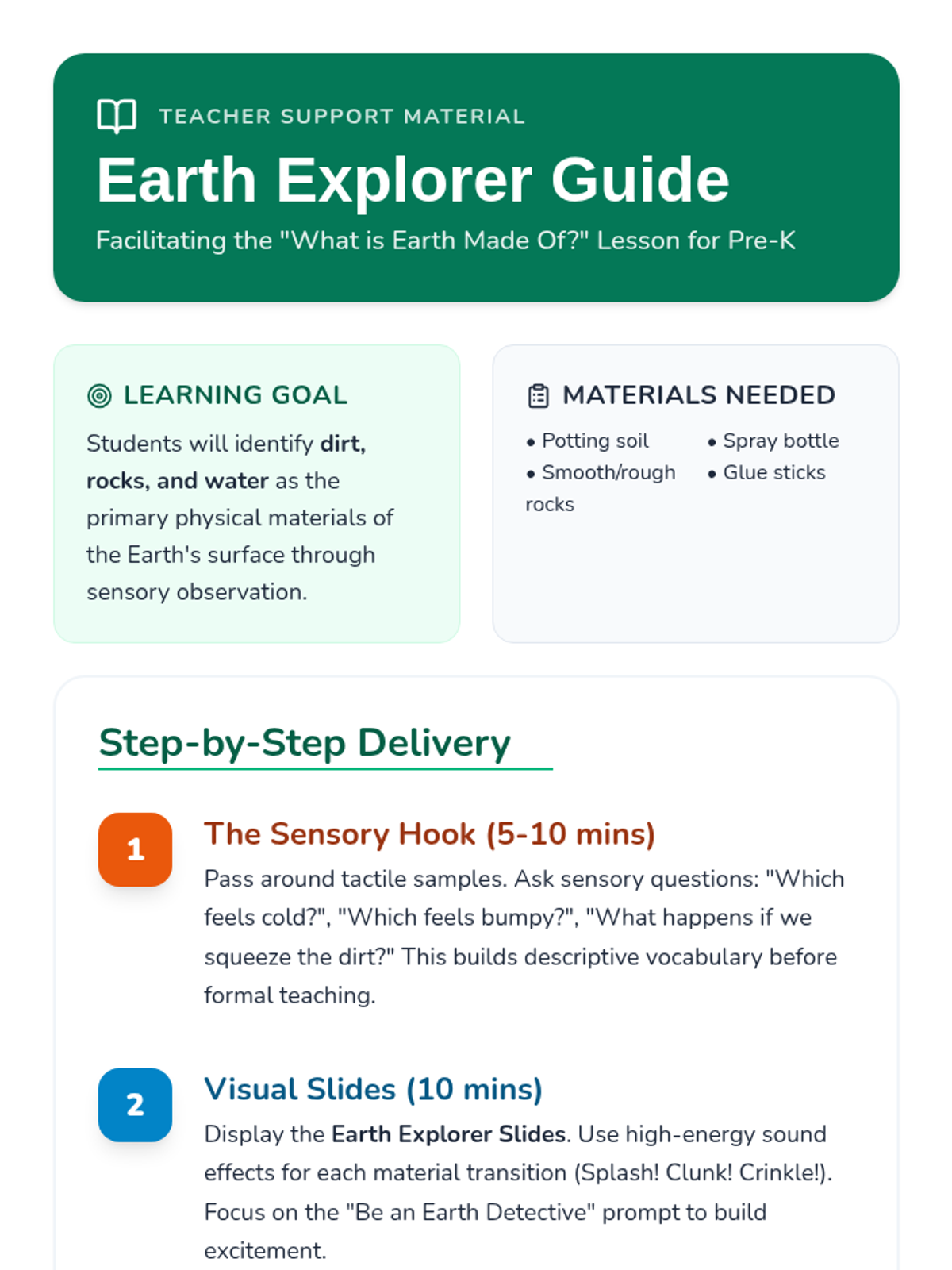
A comprehensive teacher guide for leading the Earth Explorer lesson, featuring sensory activity ideas, vocabulary, and preparation checklists specifically designed for the Pre-K classroom. Includes clear instructional steps and extensions.
A comprehensive teacher guide for leading the Earth Explorer lesson, featuring sensory activity ideas, vocabulary, and preparation checklists specifically designed for the Pre-K classroom.
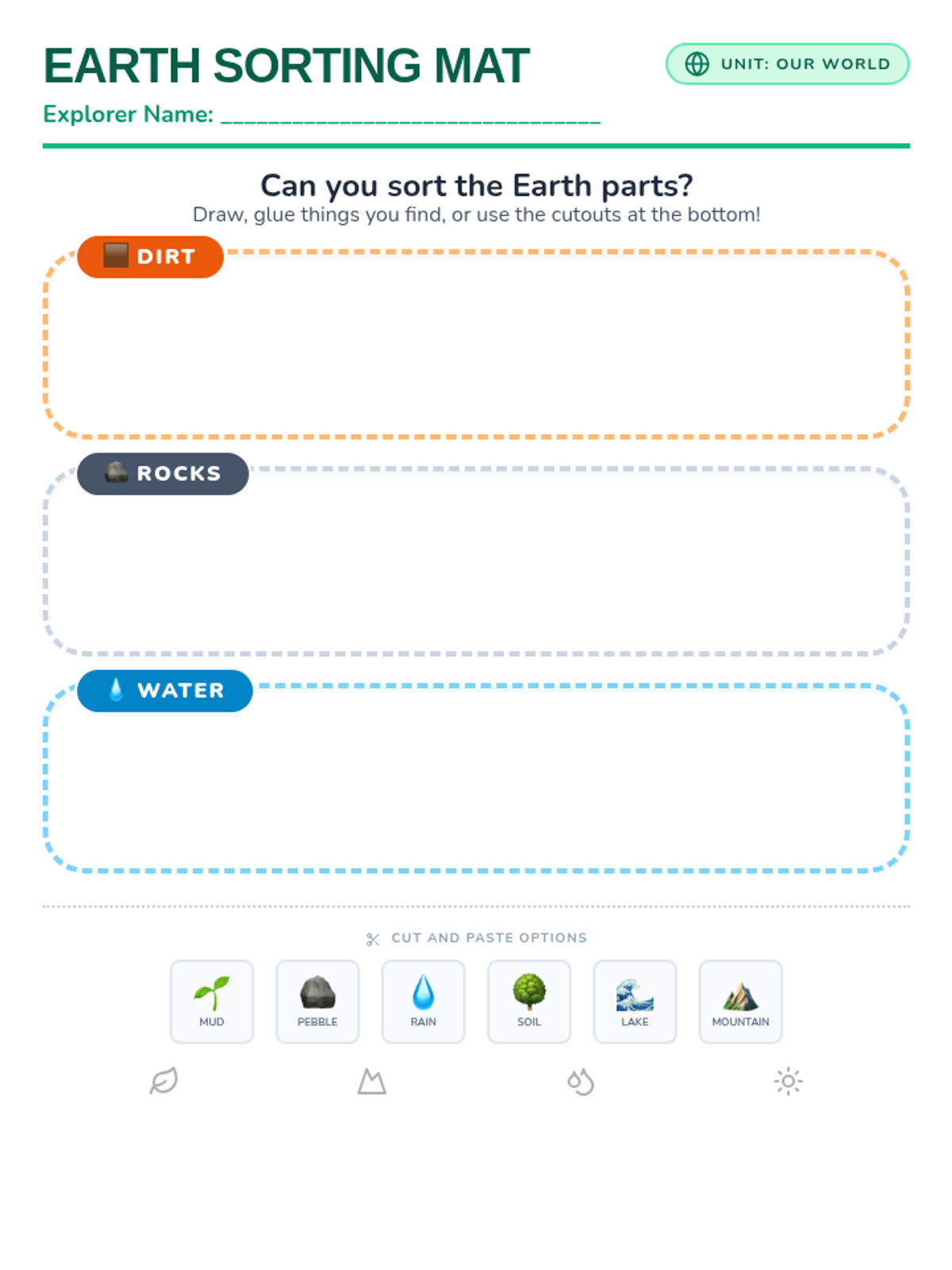
A printable sorting mat for Pre-K students to categorize pictures or drawings of dirt, rocks, and water. includes large work areas and cut-out options at the bottom.
A visual slide presentation for 4-year-olds introducing the three main components of Earth's surface: dirt, rocks, and water using high-contrast visuals and simple language.
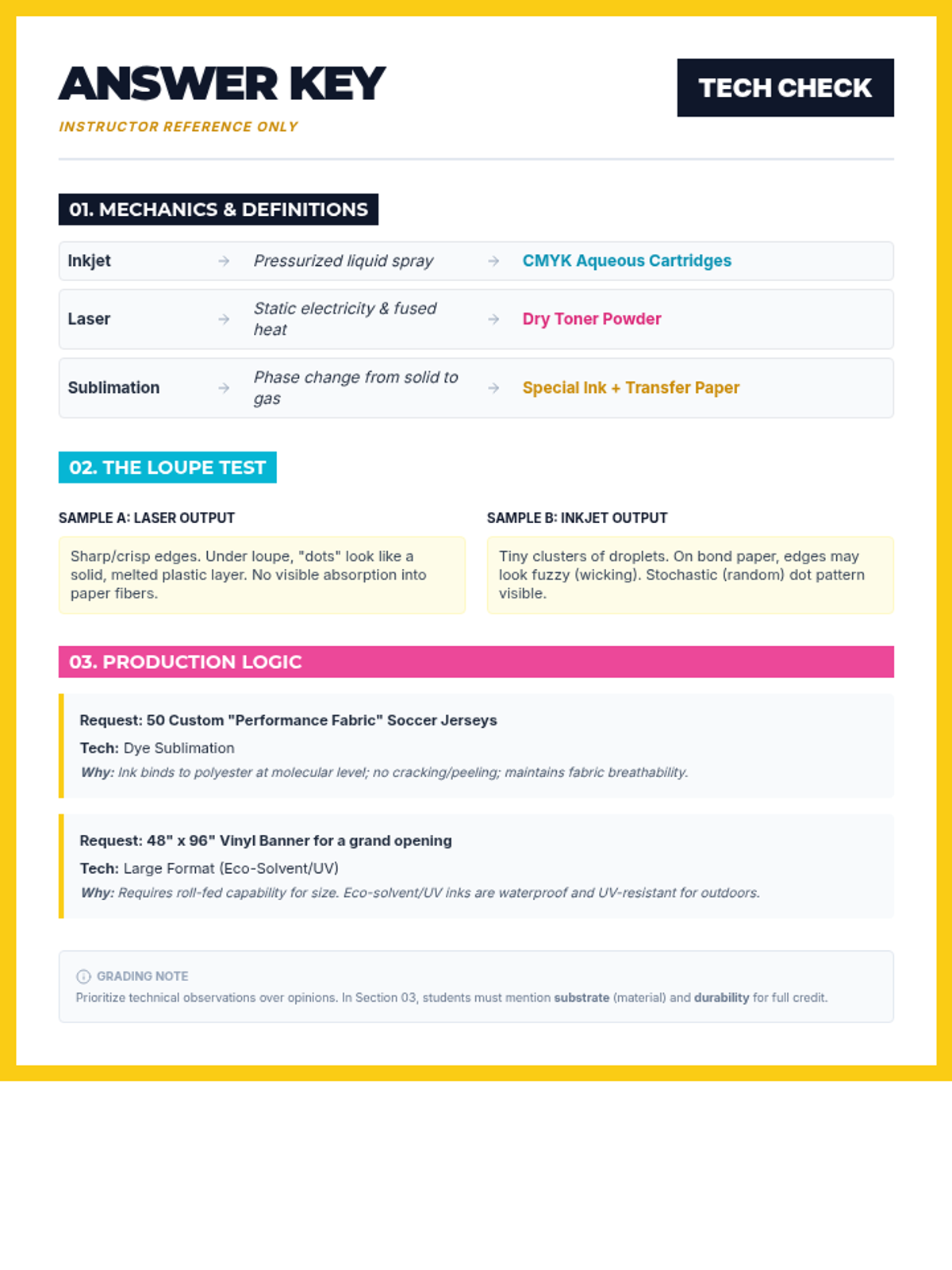
An instructor answer key for the 'Print Tech Check' worksheet. Revised to ensure all answers fit on a single page within the decorative border and fixed HTML semantics.
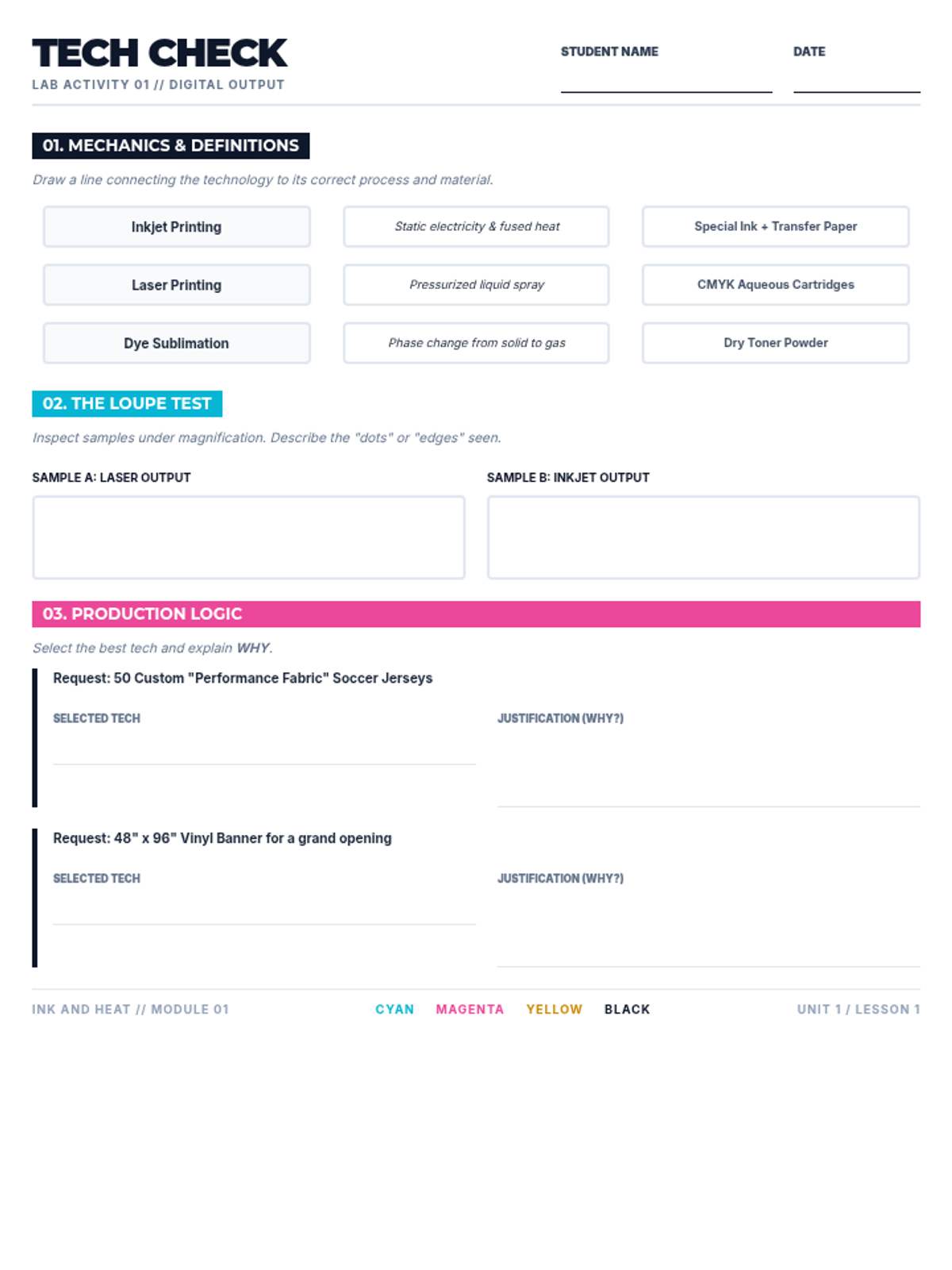
A student-facing worksheet for the 'Ink and Heat' lesson. Revised to fit all content on a single page, improve writing space, and ensure work area clarity. Darkened labels for better accessibility. Increased writing space for justifications.
Visual presentation slides covering the core digital printing technologies: Inkjet vs. Laser, Large Format roll-to-roll, and the chemistry of Dye Sublimation. Includes scenario-based discussion prompts.
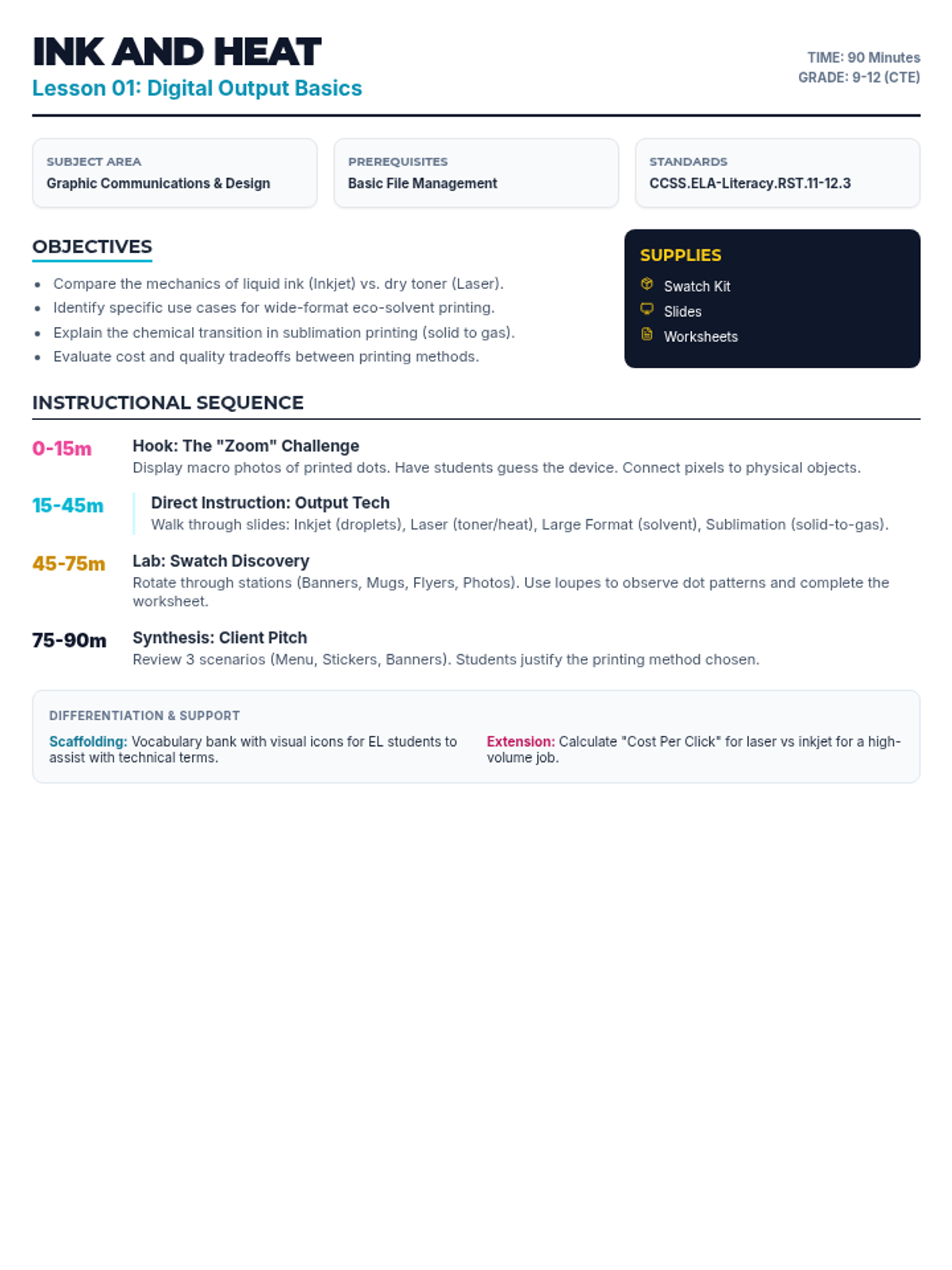
A comprehensive teacher guide for the 'Ink and Heat' lesson. Revised to ensure all instructional steps fit on one page and column widths are optimized for readability. Content hierarchy refined for clarity.
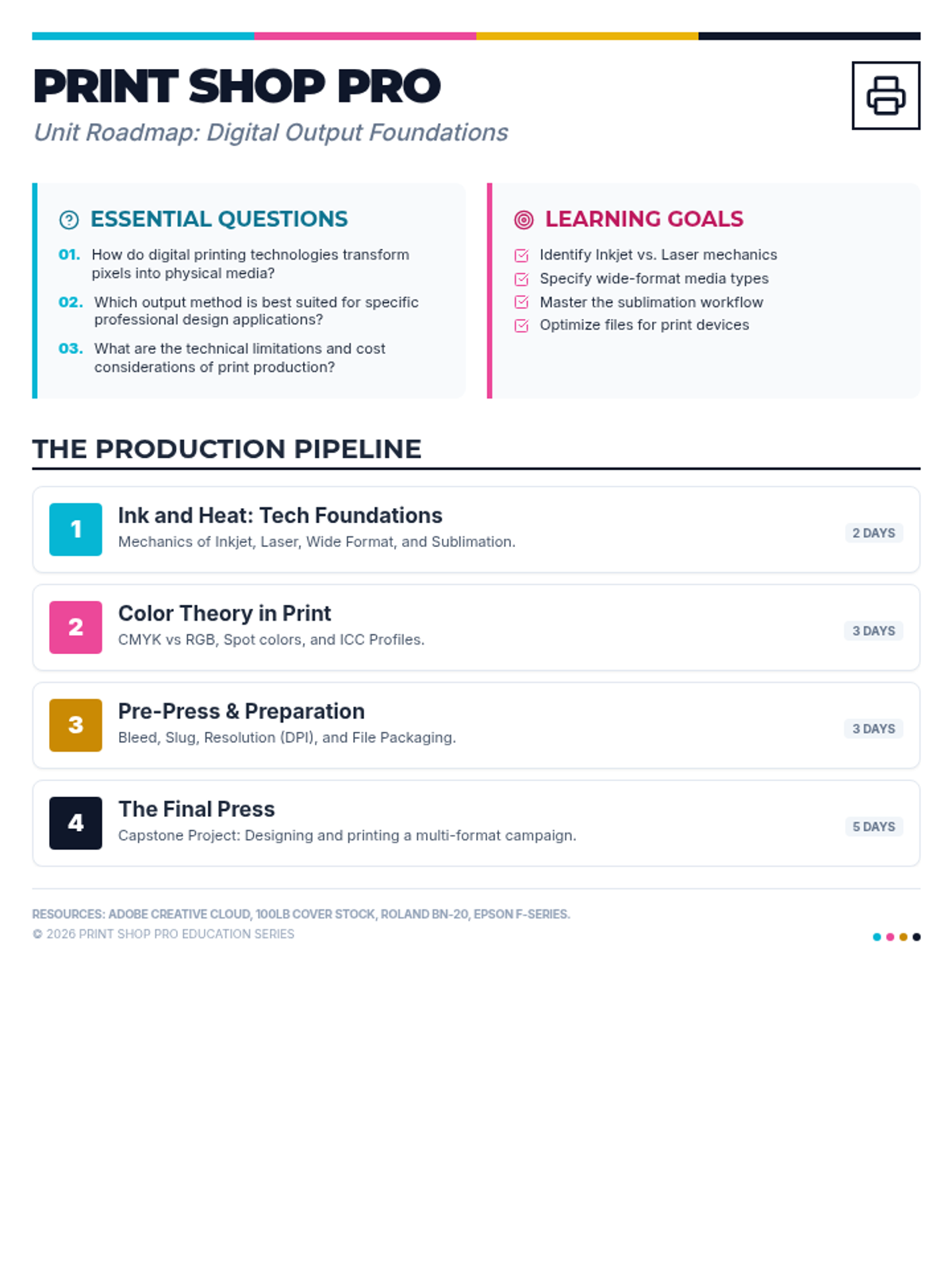
A high-level unit map for the Print Shop Pro curriculum, detailing essential questions, learning goals, and the four-lesson production pipeline from foundations to final press. Revised for improved accessibility and layout. Content hierarchy refined for clarity.