A teacher's script featuring a high-energy "Late Night" monologue hook, guided discussion questions, and transitional dialogue to bring the story of David Letterman to life in the classroom.

A visually dynamic slide deck exploring David Letterman's life, from his Indianapolis childhood to his career in comedy and his philanthropic legacy in Indiana.
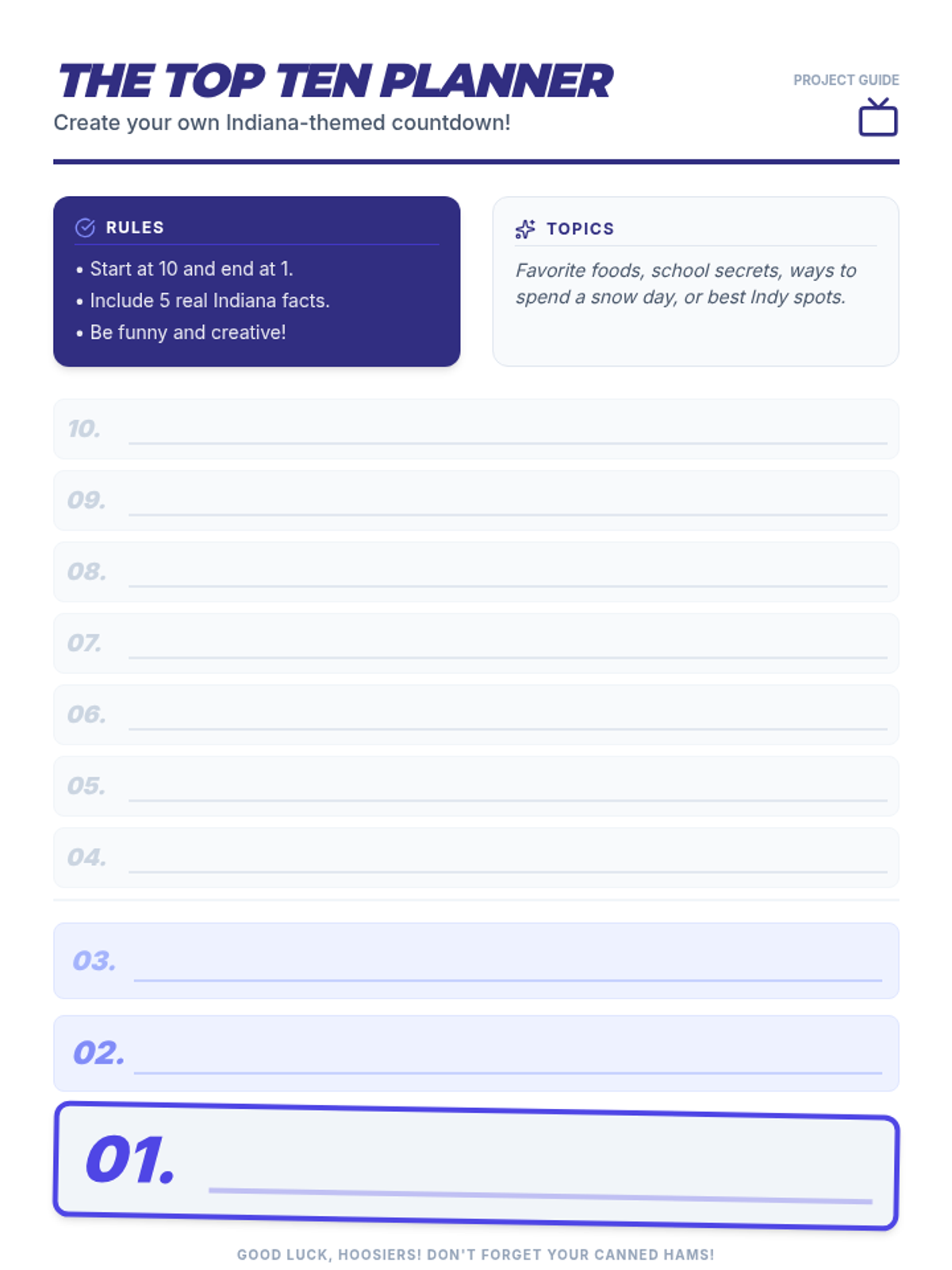
A creative project guide for students to create their own Indiana-themed "Top Ten List," mirroring David Letterman's iconic comedy segment while incorporating state facts.
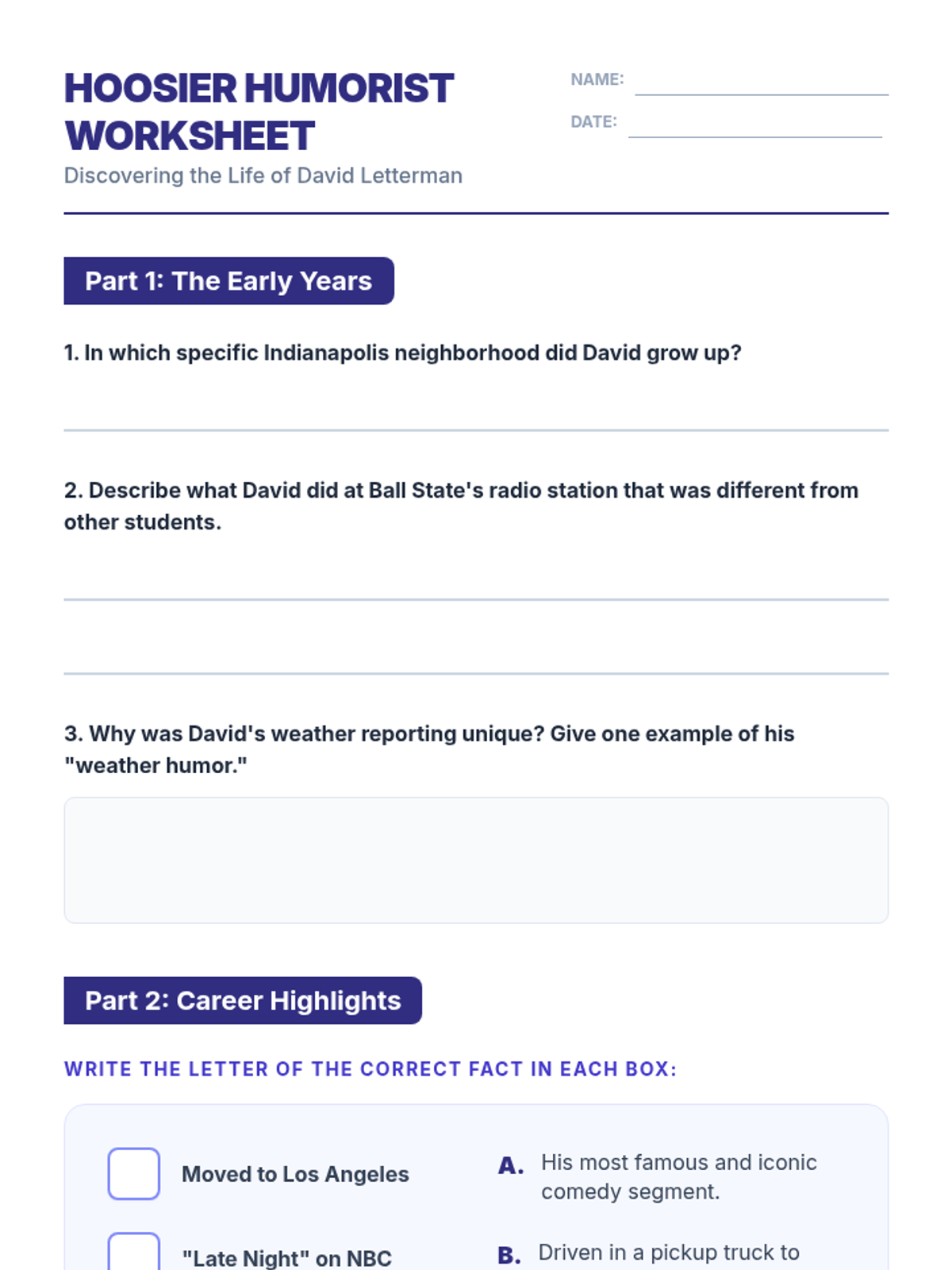
A comprehension and reflection worksheet covering the biography of David Letterman, including matching exercises, short answer questions, and personal reflection on state pride.
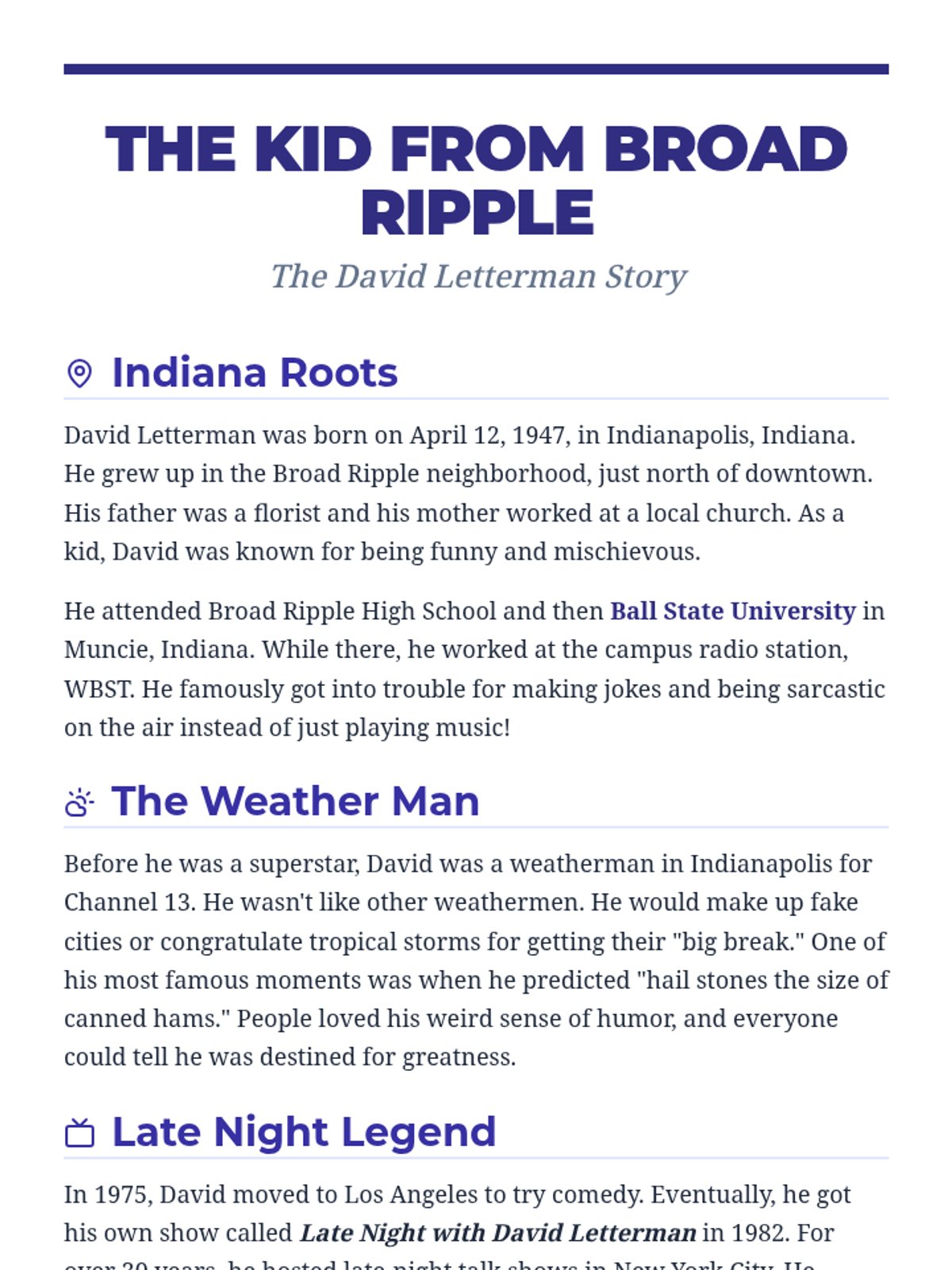
An engaging 4th-grade level biography of David Letterman, highlighting his childhood in Indianapolis, his college years at Ball State, and his rise to late-night television fame.
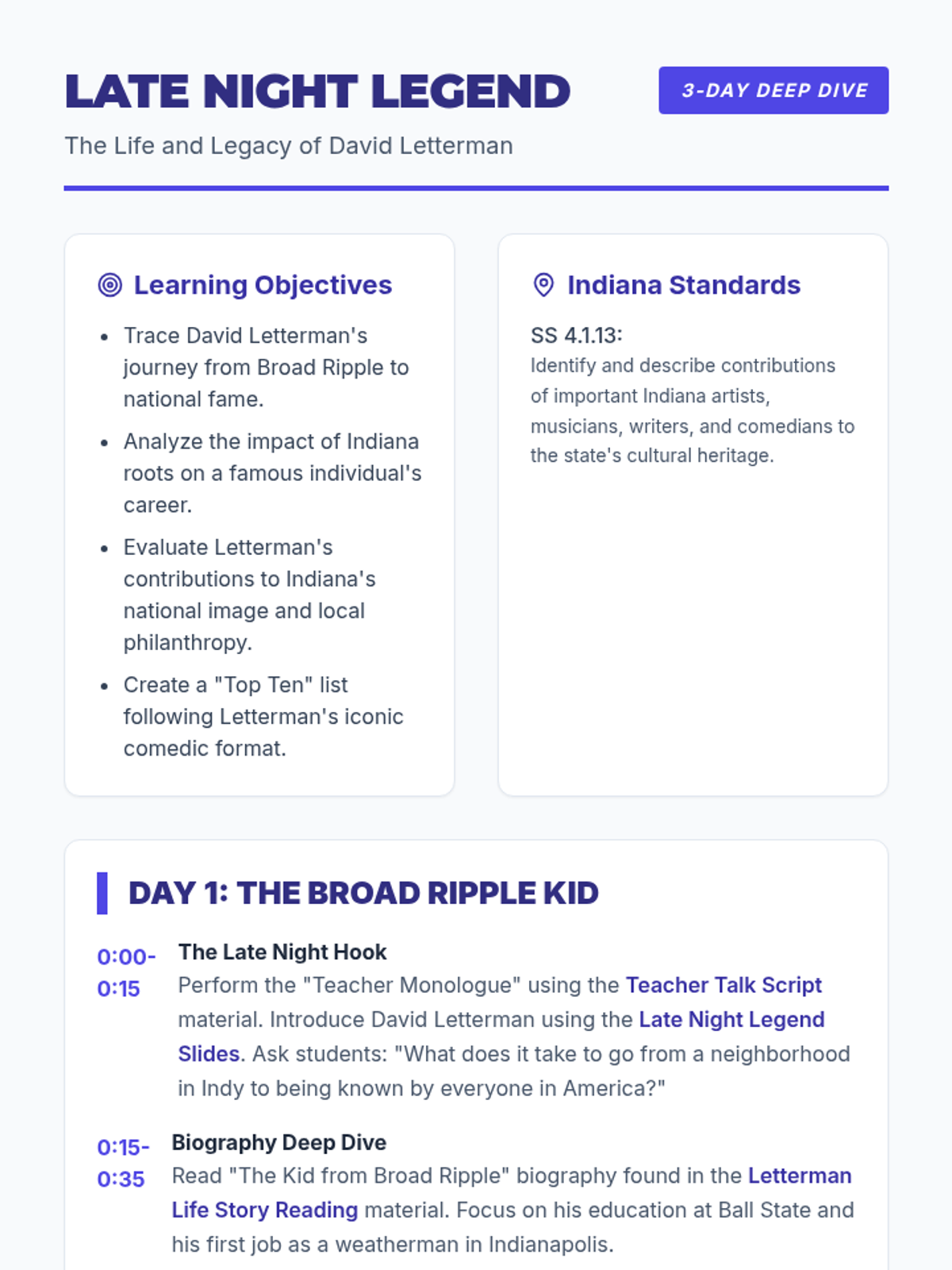
A detailed 3-day lesson plan for 4th-grade teachers, outlining learning objectives, state standards, and a step-by-step instructional sequence for teaching the biography of David Letterman.
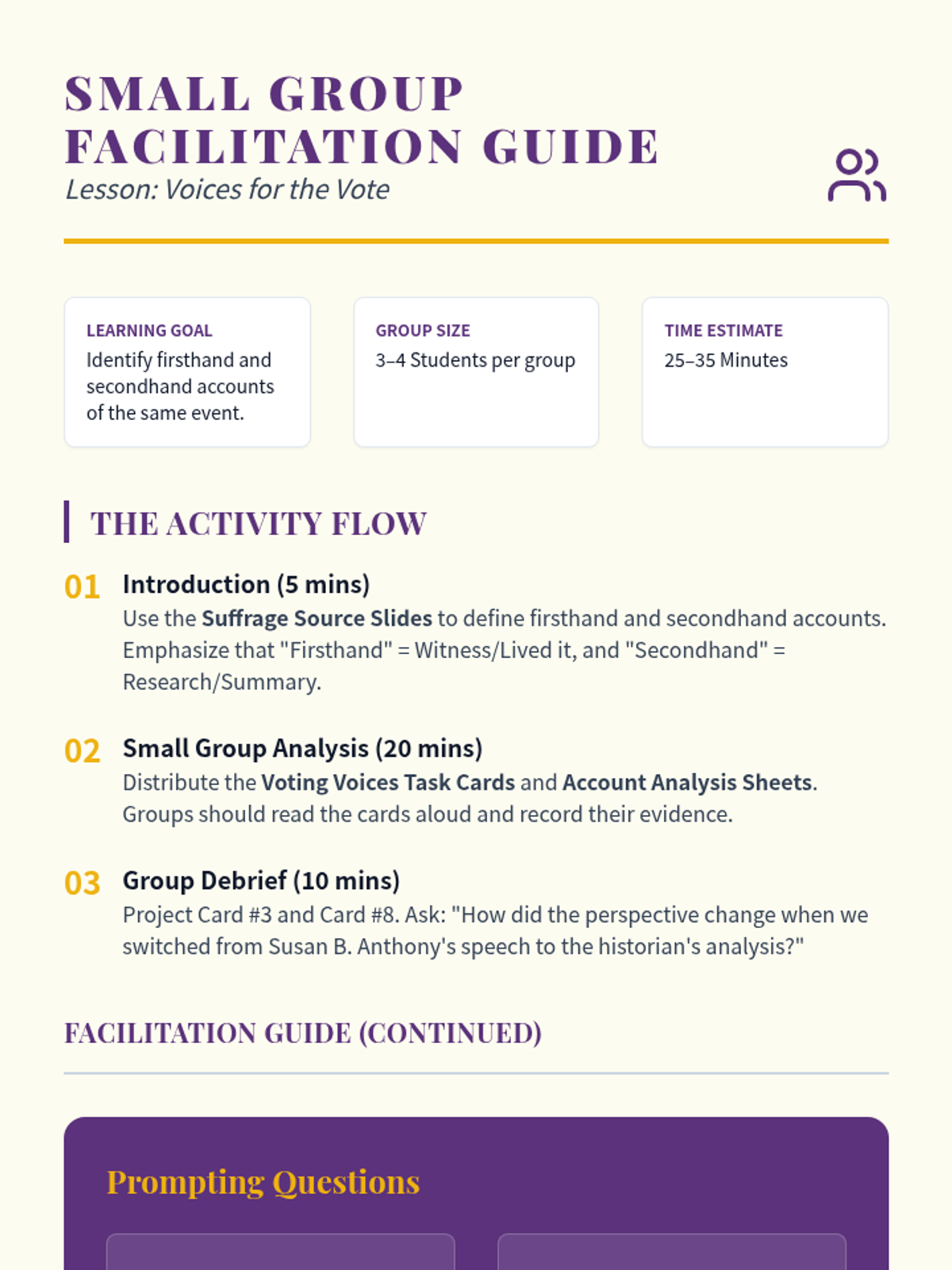
A facilitation guide for teachers to lead the "Voices for the Vote" small group activity. It includes pacing suggestions, discussion prompts, and differentiation strategies, with optimized layout for printing.
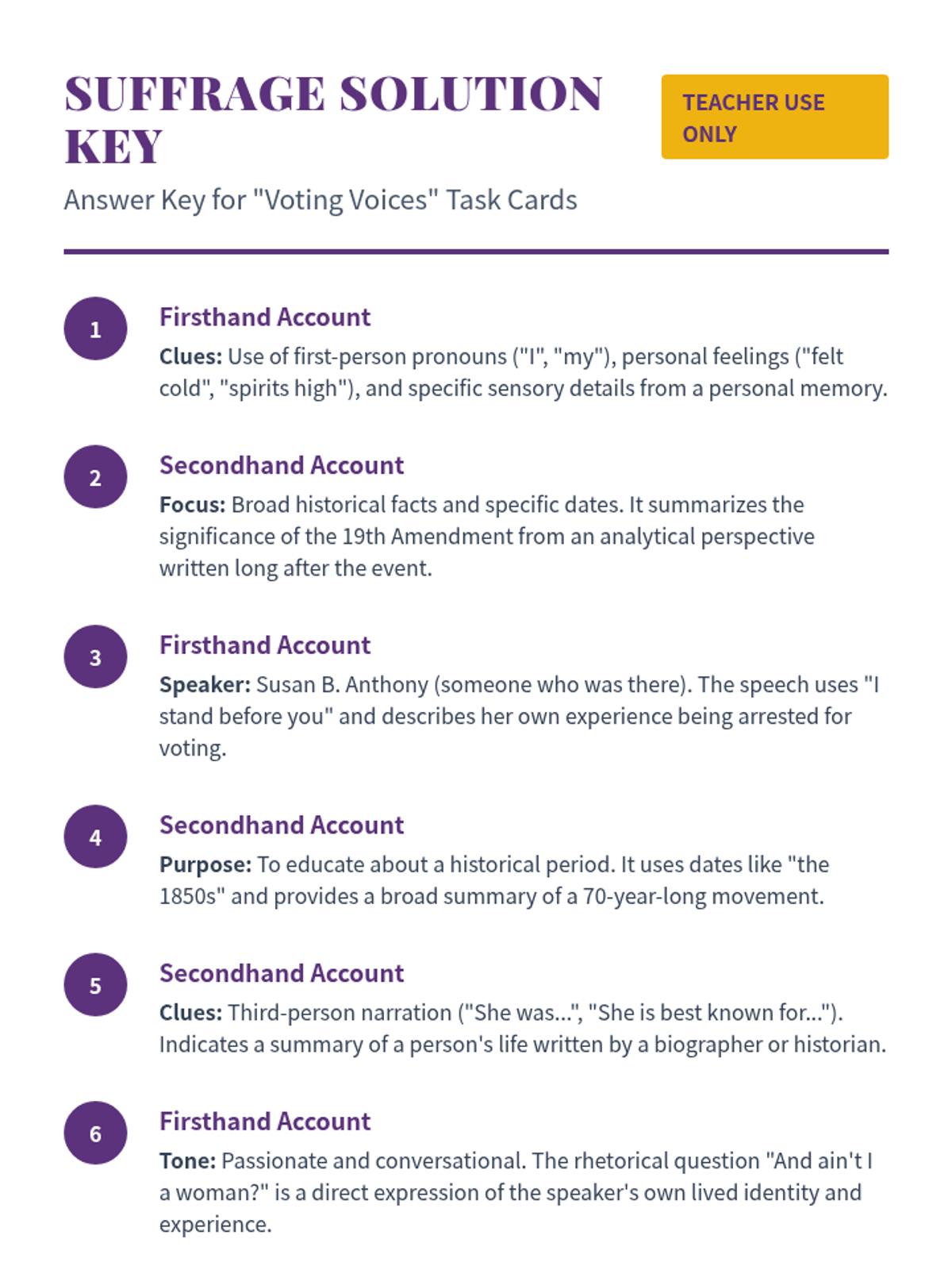
A complete answer key for the Voting Voices task cards, including explanations of clues and evidence for each account type to assist teachers in grading or facilitating discussion. Labels and formatting have been cleaned for clarity.
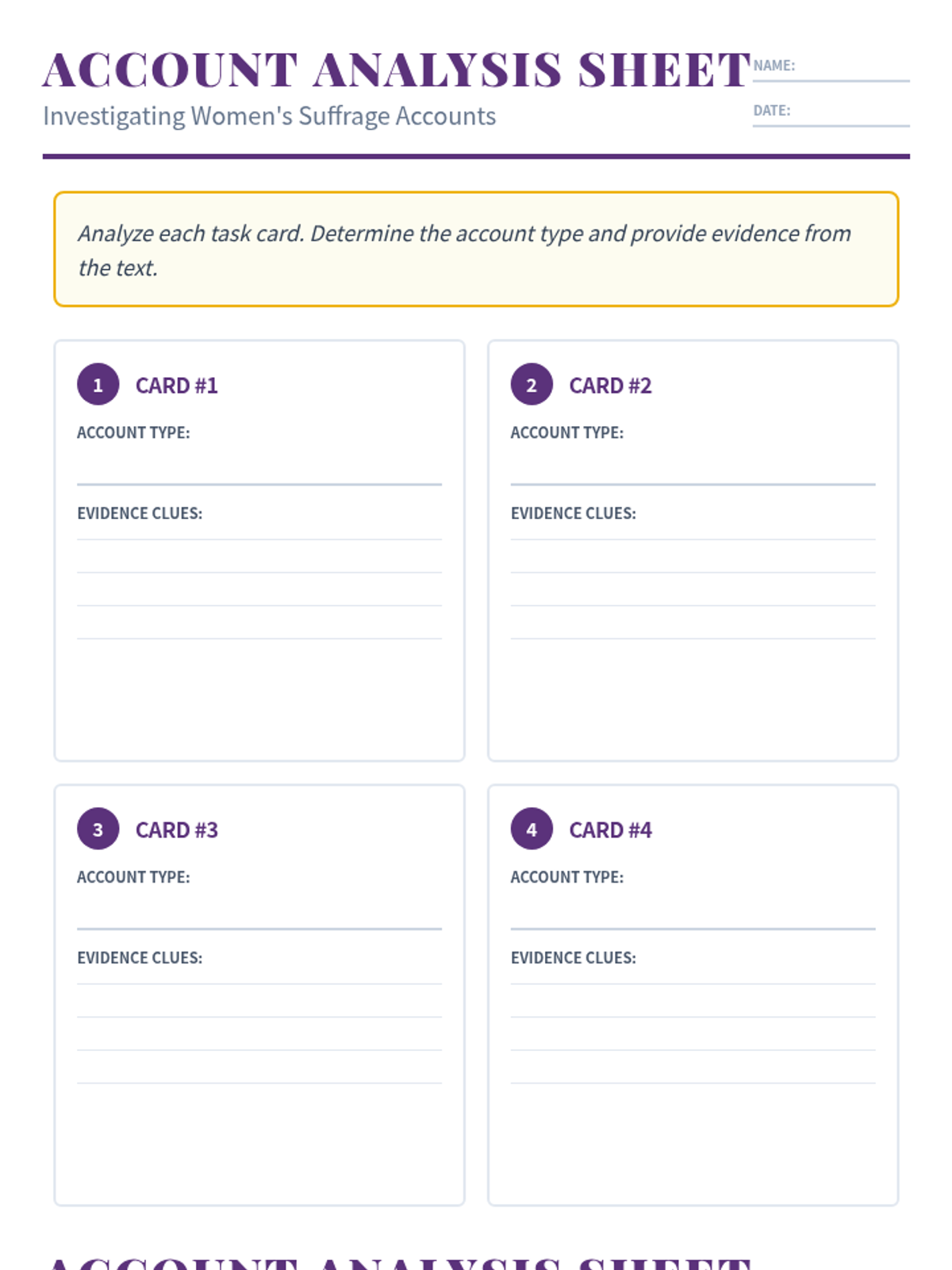
A student recording sheet for the Voting Voices task cards, providing structured space for students to identify the account type and provide detailed evidence for all 8 cards across two pages. Header and spacing optimized for printing.
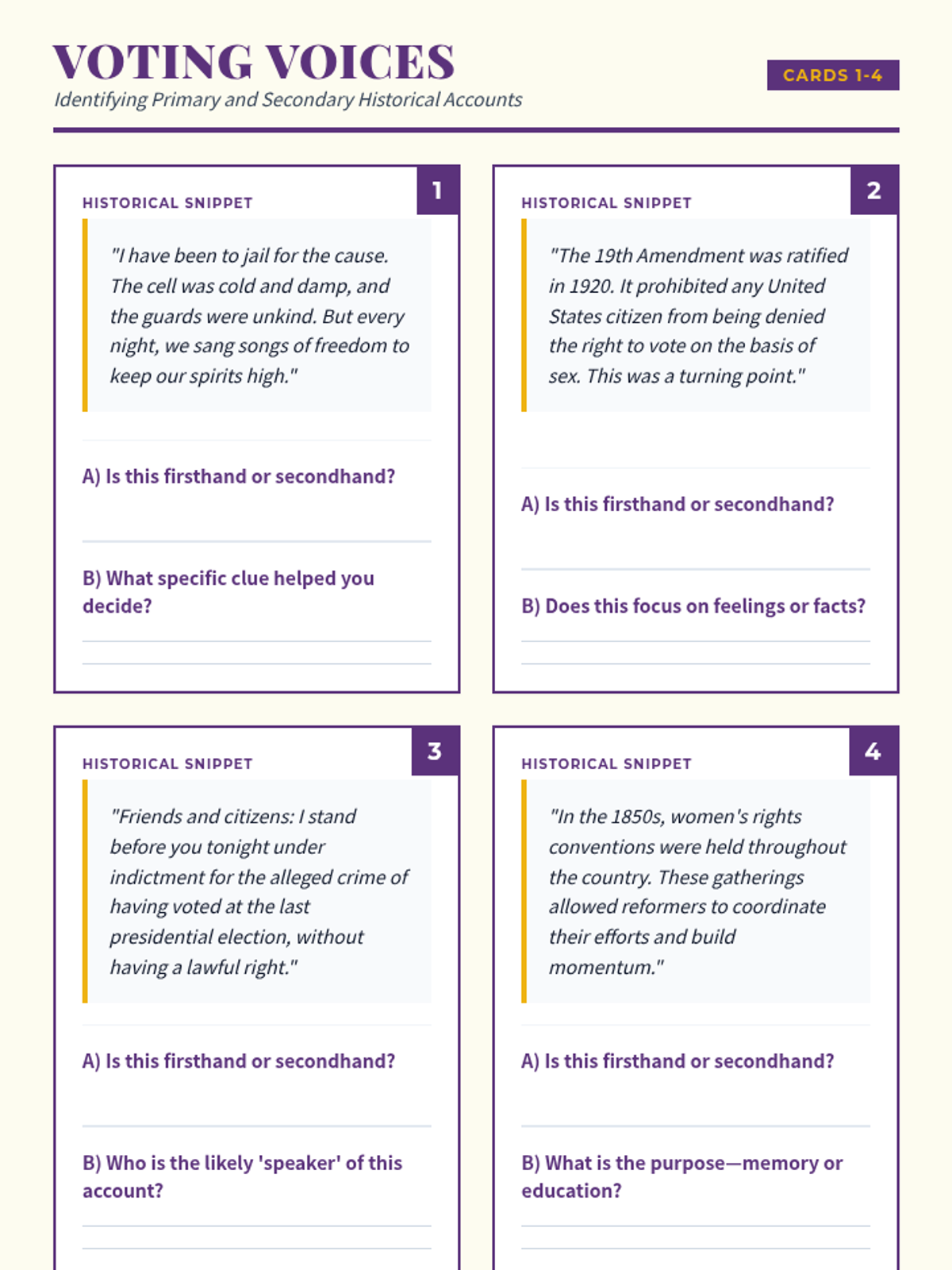
A set of 8 historical task cards featuring primary and secondary source snippets about the Women's Suffrage Movement, each with analysis questions and handwriting lines to help students identify the type of account. Card layout and text density have been optimized for printing.
A 5-slide presentation introducing firsthand and secondhand accounts using the context of the Women's Suffrage Movement, featuring a case study comparison and clear definitions. Layout and text spacing have been optimized for clarity.