A teacher resource providing lesson pacing, standards alignment, answer keys for student materials, and common student misconceptions about aquatic ecosystems.
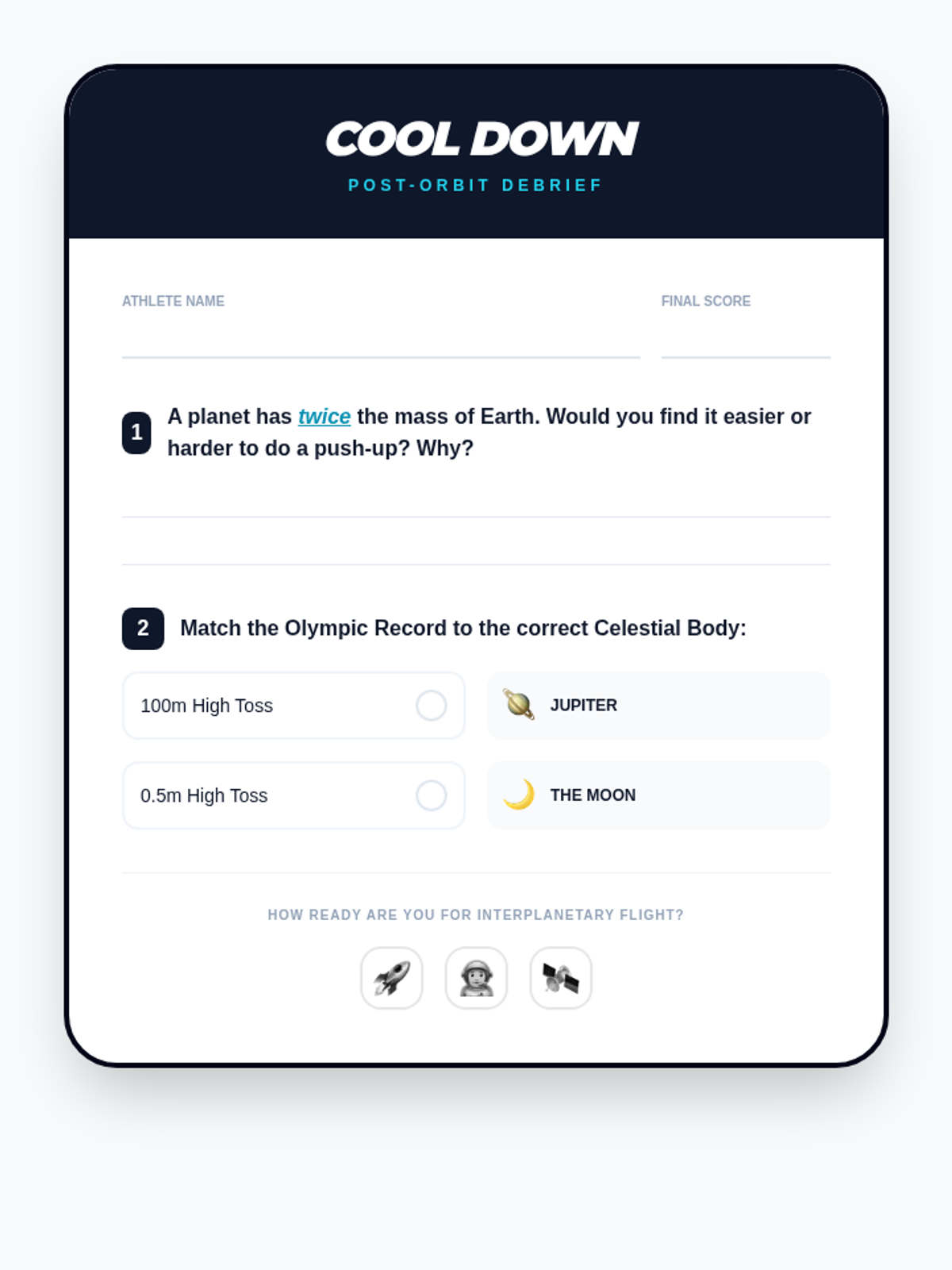
A "Post-Orbit Debrief" exit ticket that assesses student understanding of the relationship between planetary mass and gravitational pull through conceptual questions and matching.
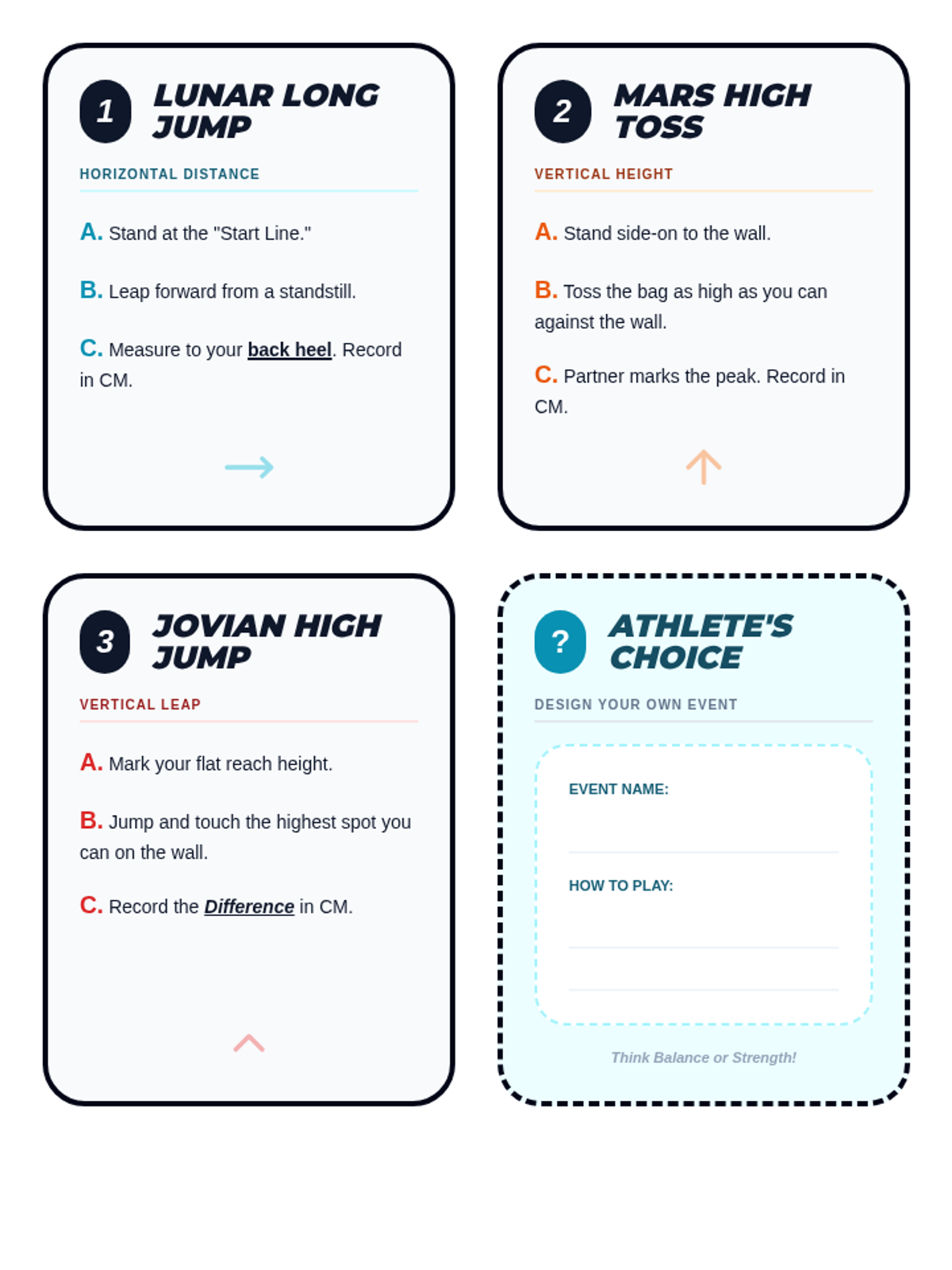
Station cards for "The Gravity Games" activity, providing clear instructions for the three primary Olympic events and a template for students to design their own.
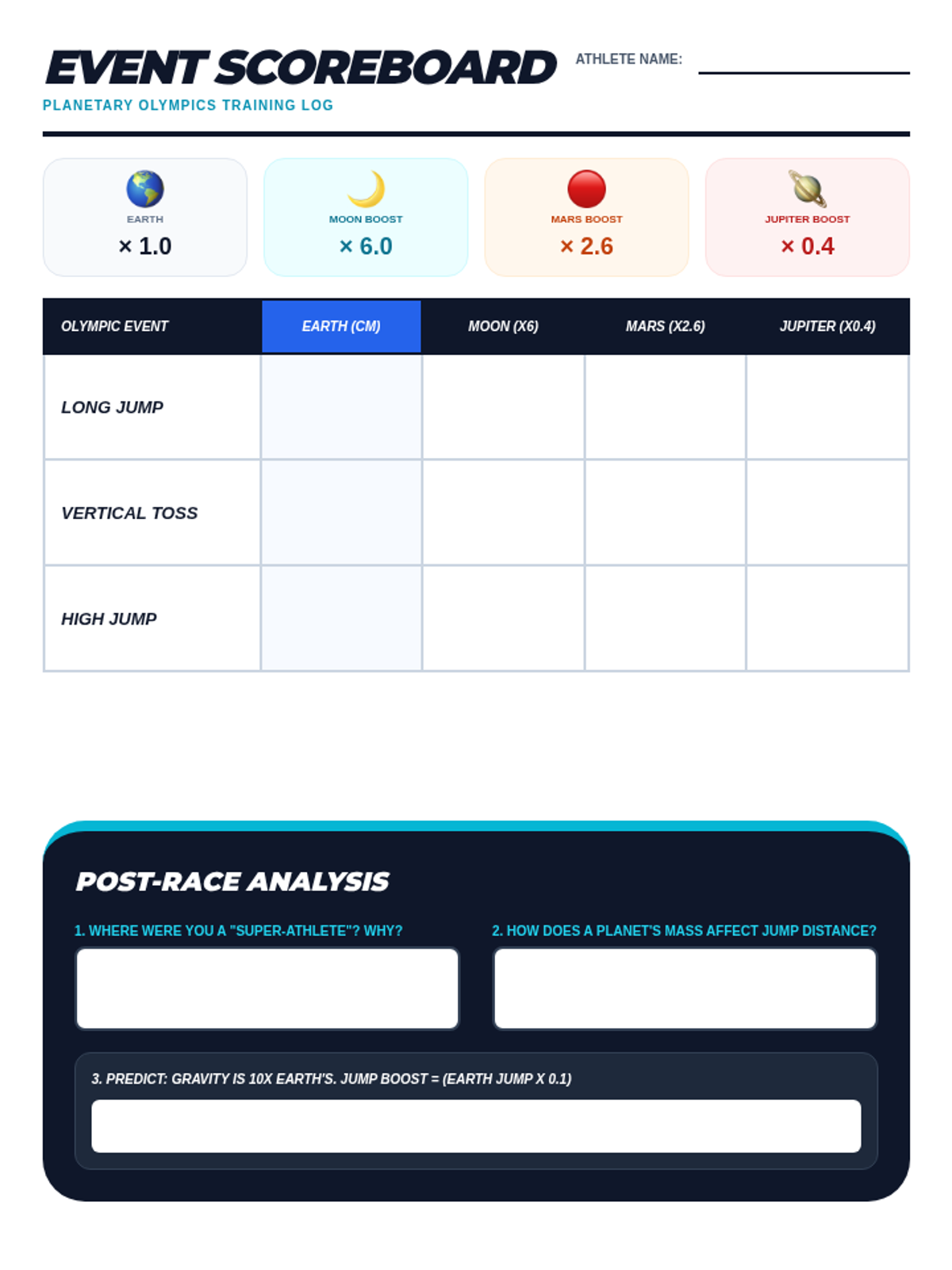
An "Event Scoreboard" worksheet where students record their Earth athletic records and calculate their performance on other planets using gravitational multipliers.
A high-energy slide deck for "The Gravity Games," introducing the science of gravitational pull, planetary G-factors, and the mathematical formulas for the activity.
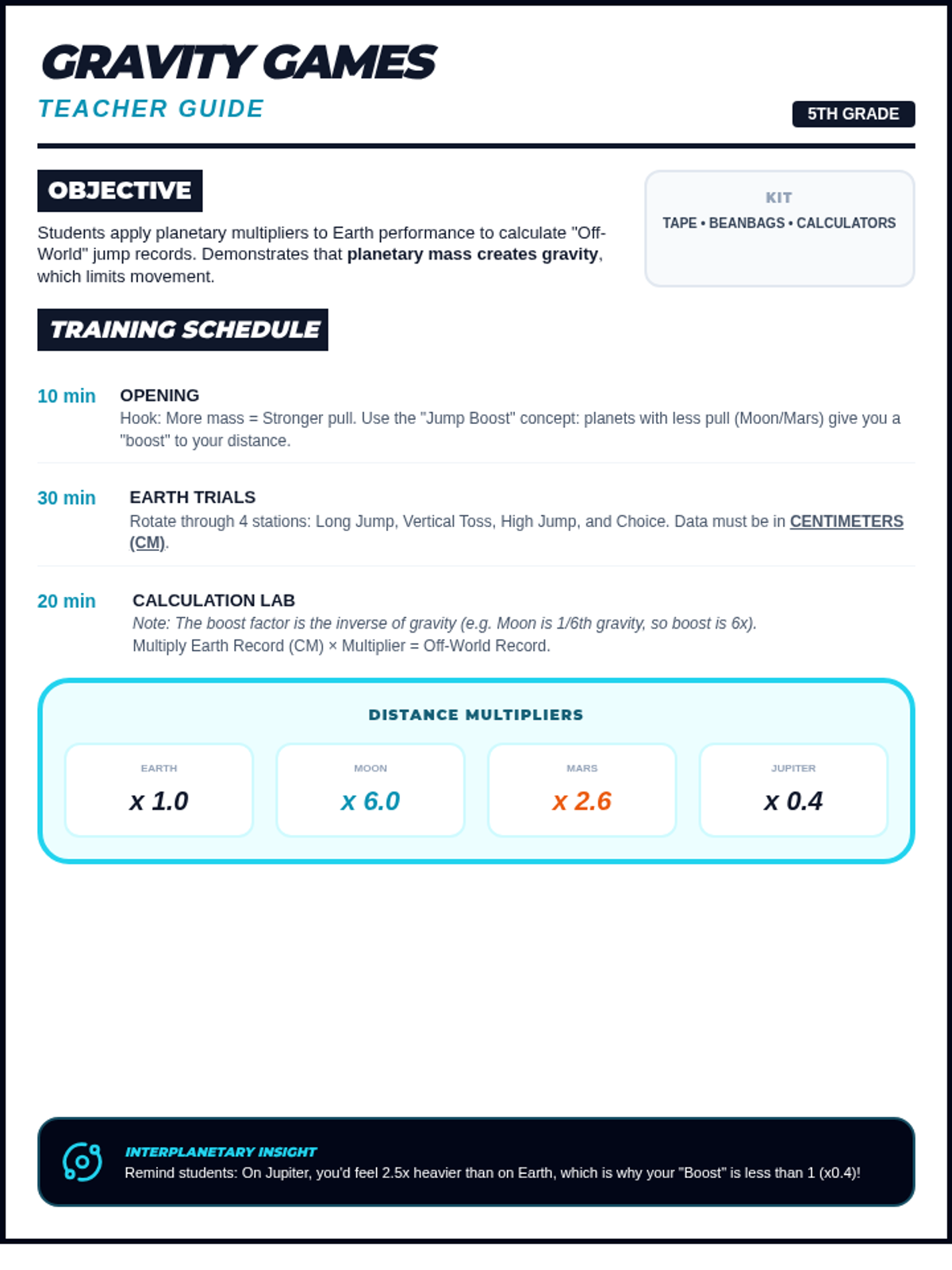
A teacher's lesson plan for "The Gravity Games," outlining instructional steps, learning objectives, and the mathematical formulas needed for the activity.
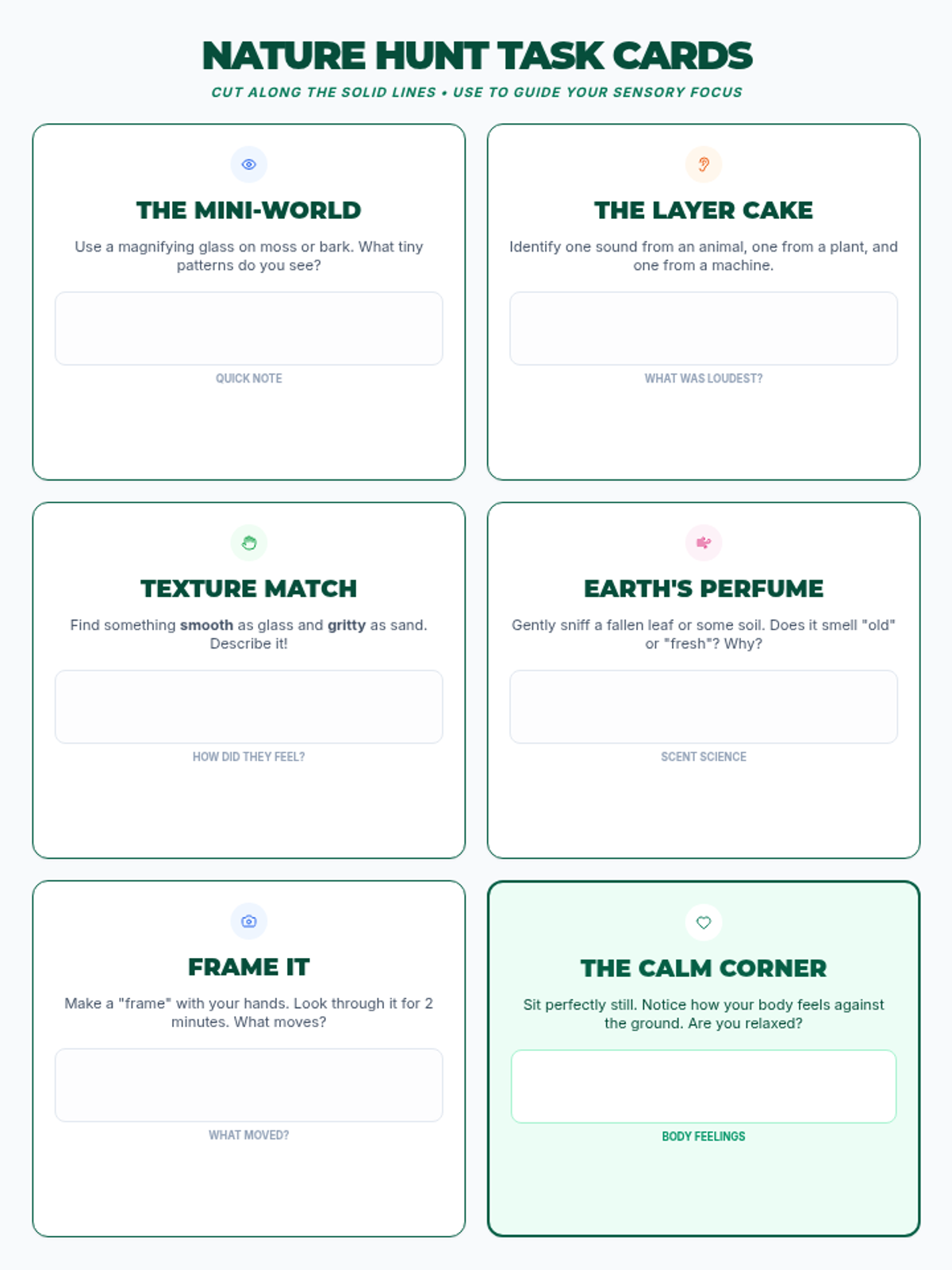
A set of six sensory-focused task cards designed to guide students' exploration in nature, including specific prompts for sight, sound, touch, smell, and mindfulness.
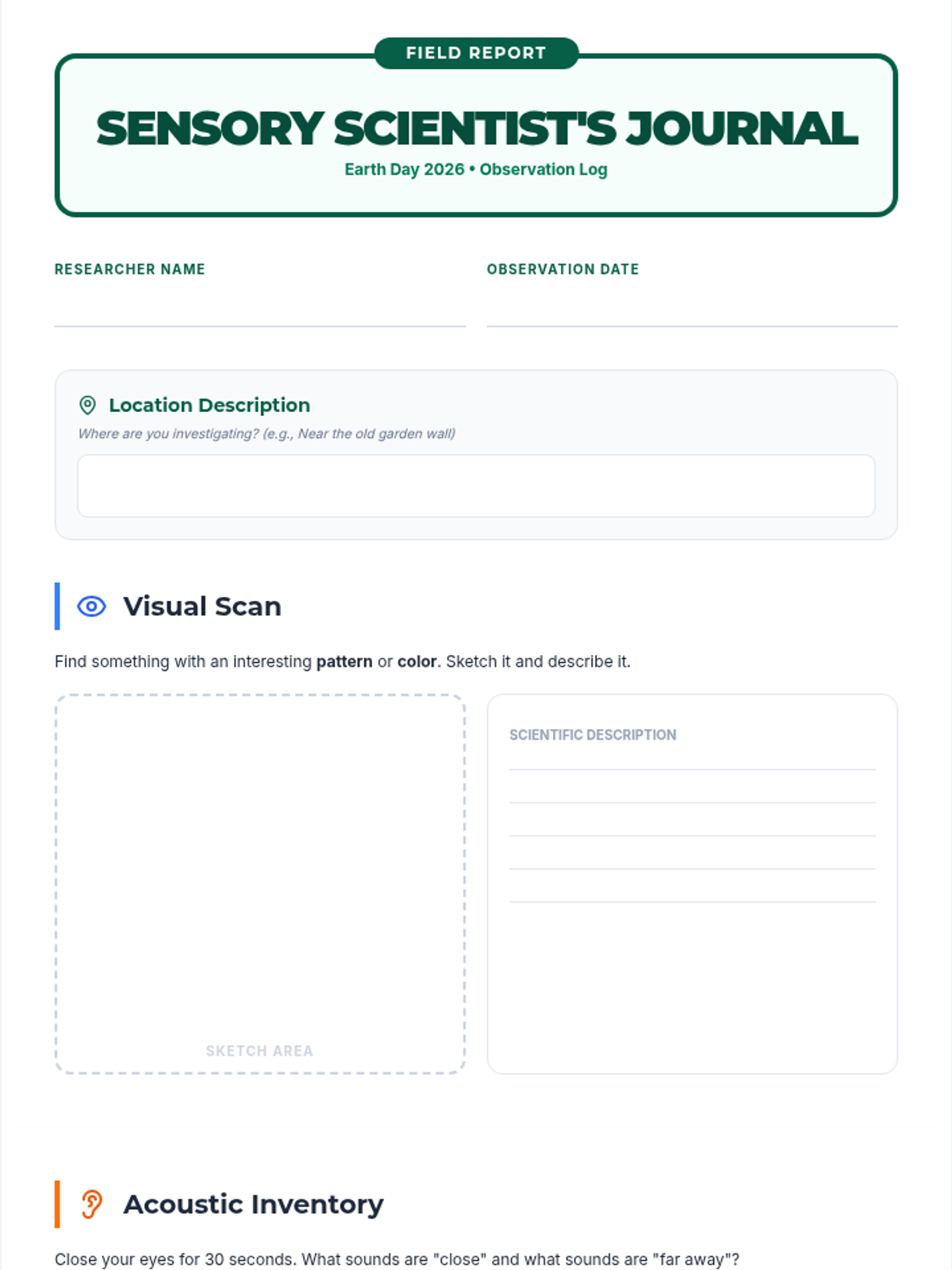
A 3-page field journal for students to record their sensory observations during the Earth Day walk, featuring dedicated sections for sight, sound, touch, and smell, along with a scientist's reflection.
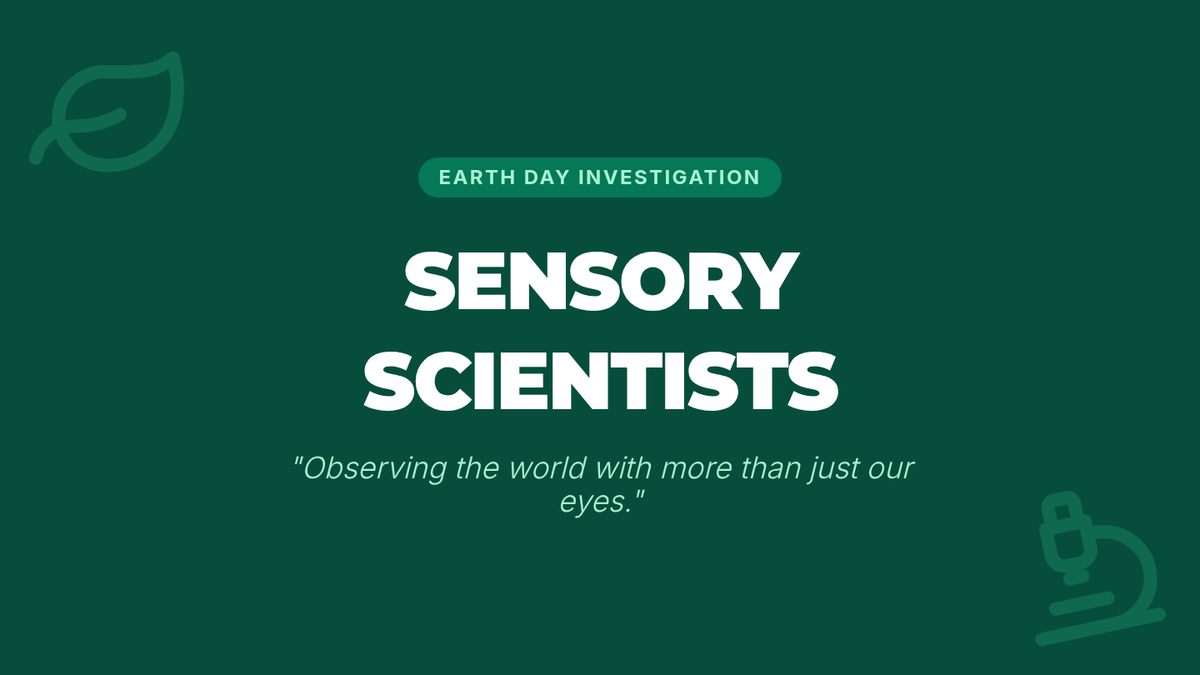
A visual presentation to introduce the Sensory Scientist concept, the four safe senses for observation, and practice with descriptive scientific language.
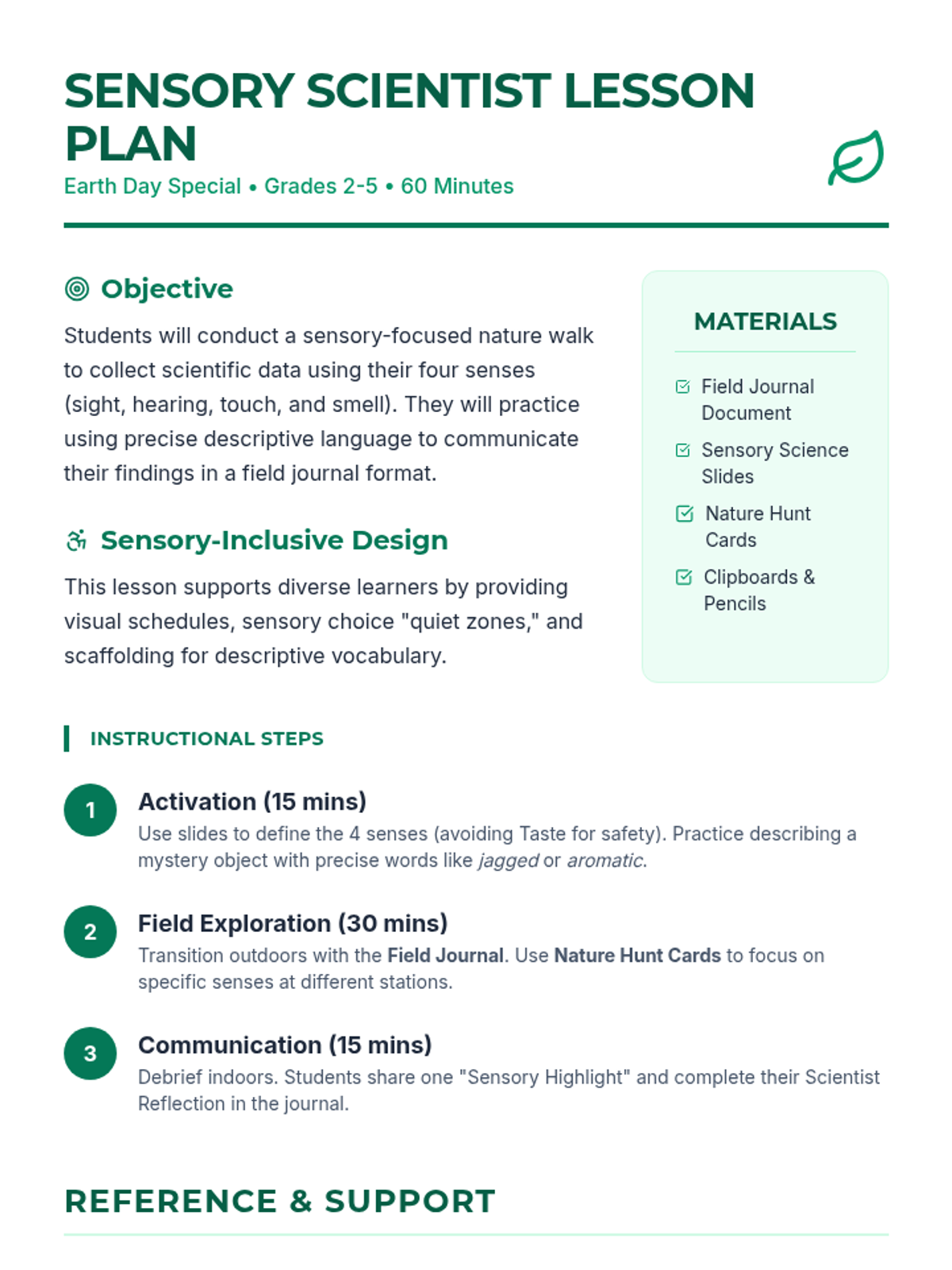
A comprehensive teacher's guide for the Sensory Scientist lesson, including instructional steps, sensory-inclusive design tips, and a descriptive vocabulary word bank.
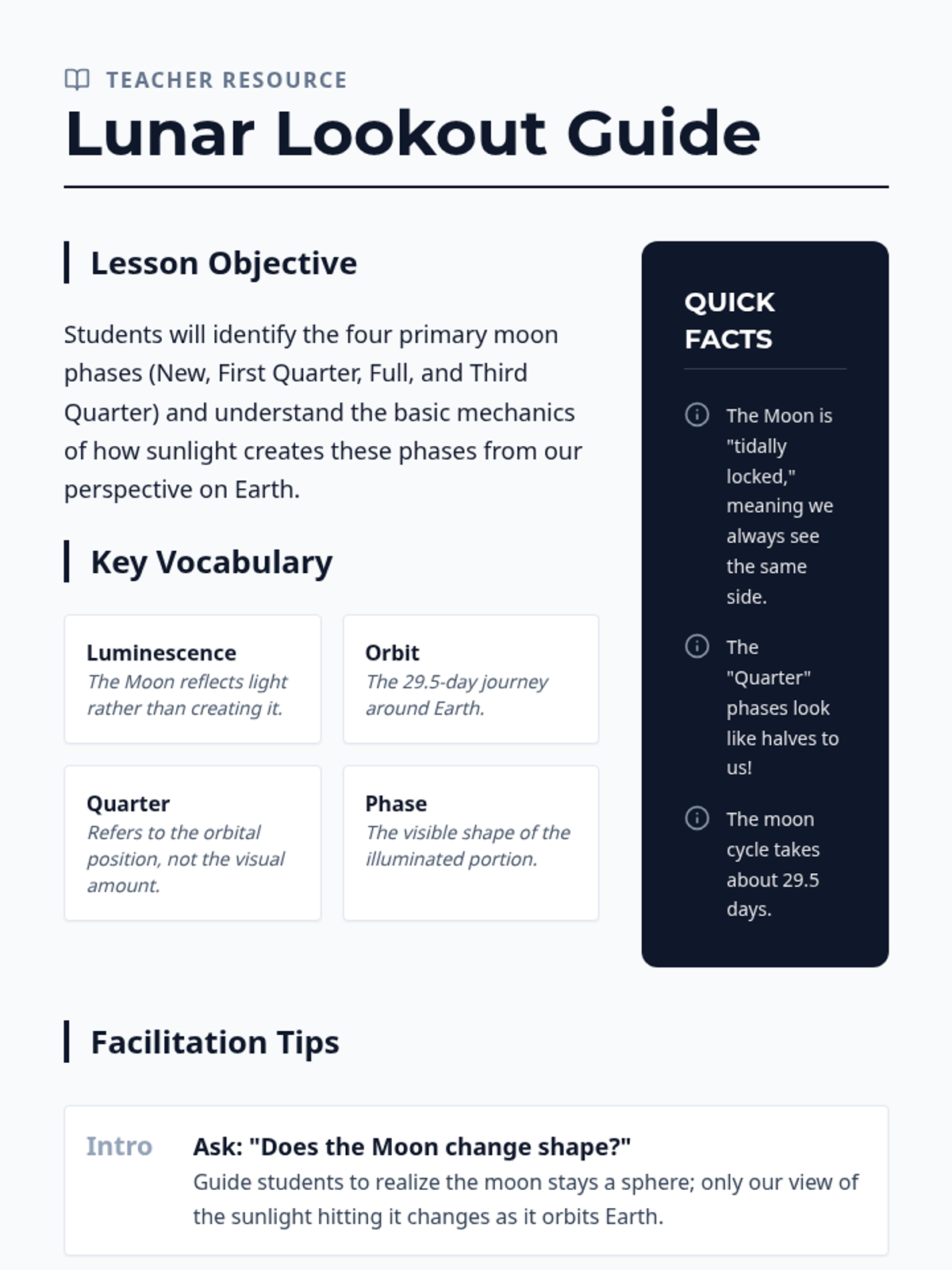
A teacher's facilitation guide for the Lunar Lookout lesson, providing discussion prompts, key facts, and an answer key for the student worksheet.
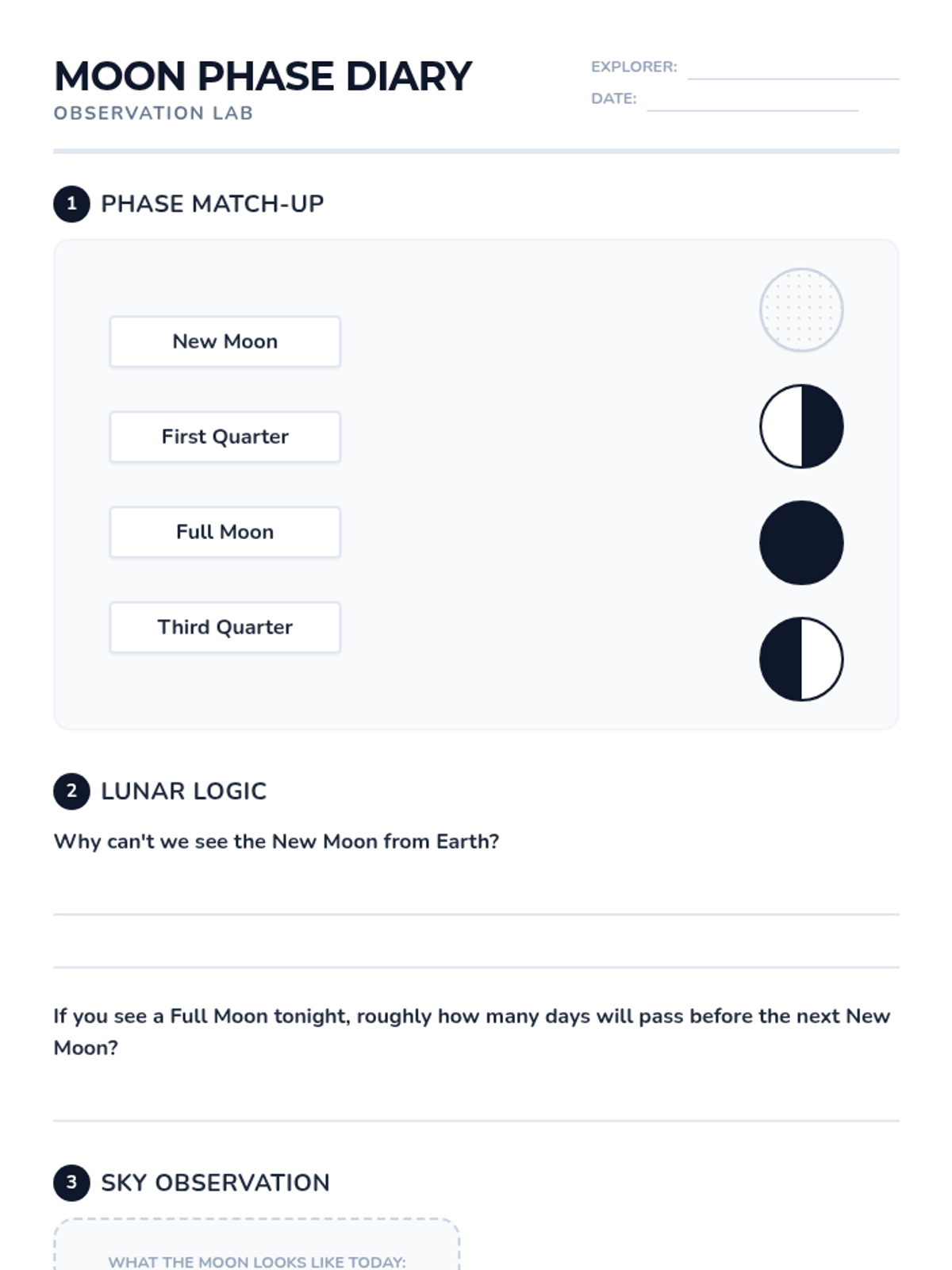
A student worksheet designed to reinforce moon phase identification through matching, short-answer questions, and a drawing exercise based on current observations.
An introductory 7-slide presentation covering the four primary moon phases (New, First Quarter, Full, and Third Quarter) with clear visual diagrams and key characteristics of each.
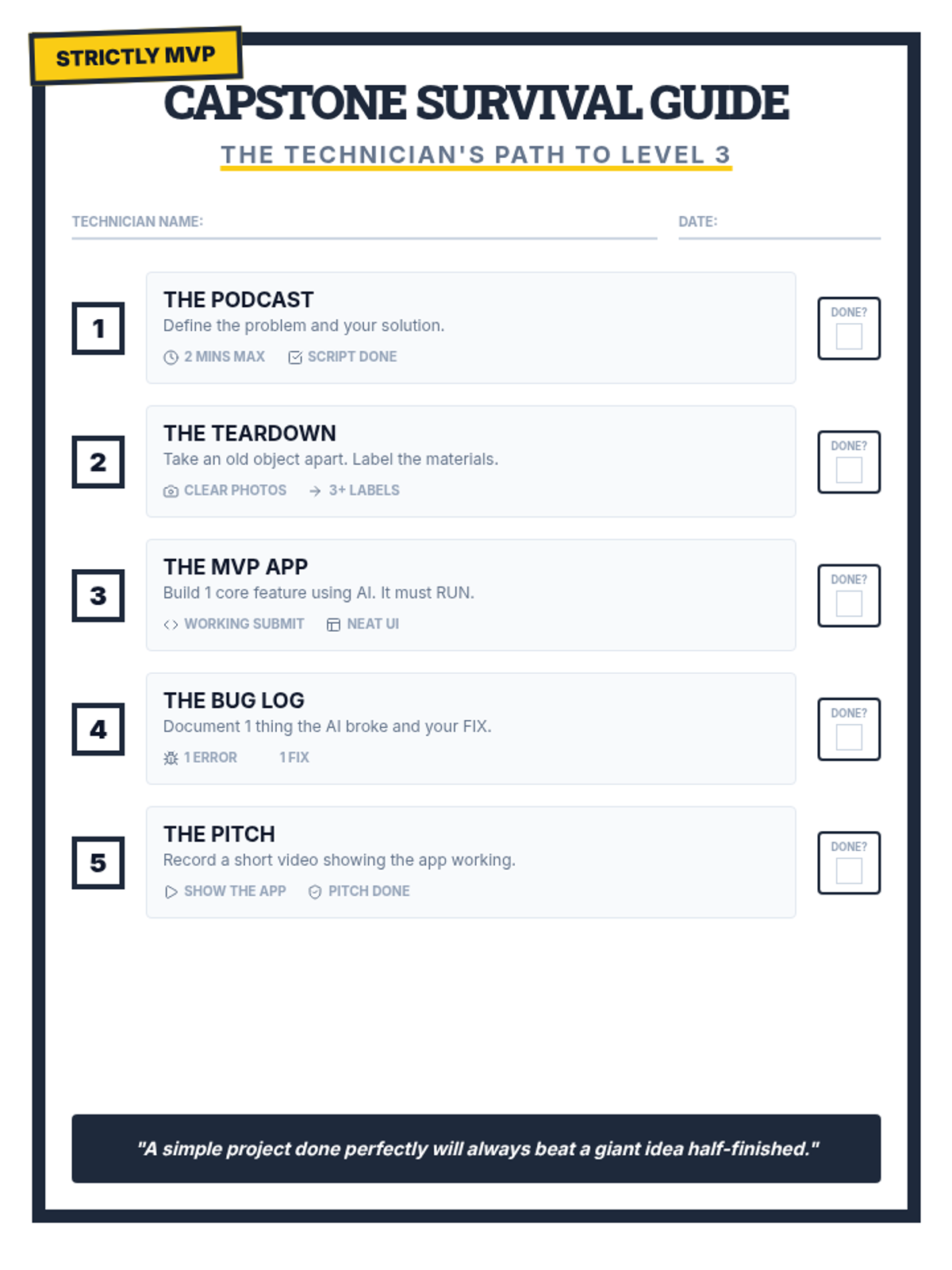
A student-facing 'Survival Guide' checklist for the 5-week Capstone project, summarizing weekly goals and the MVP mindset.
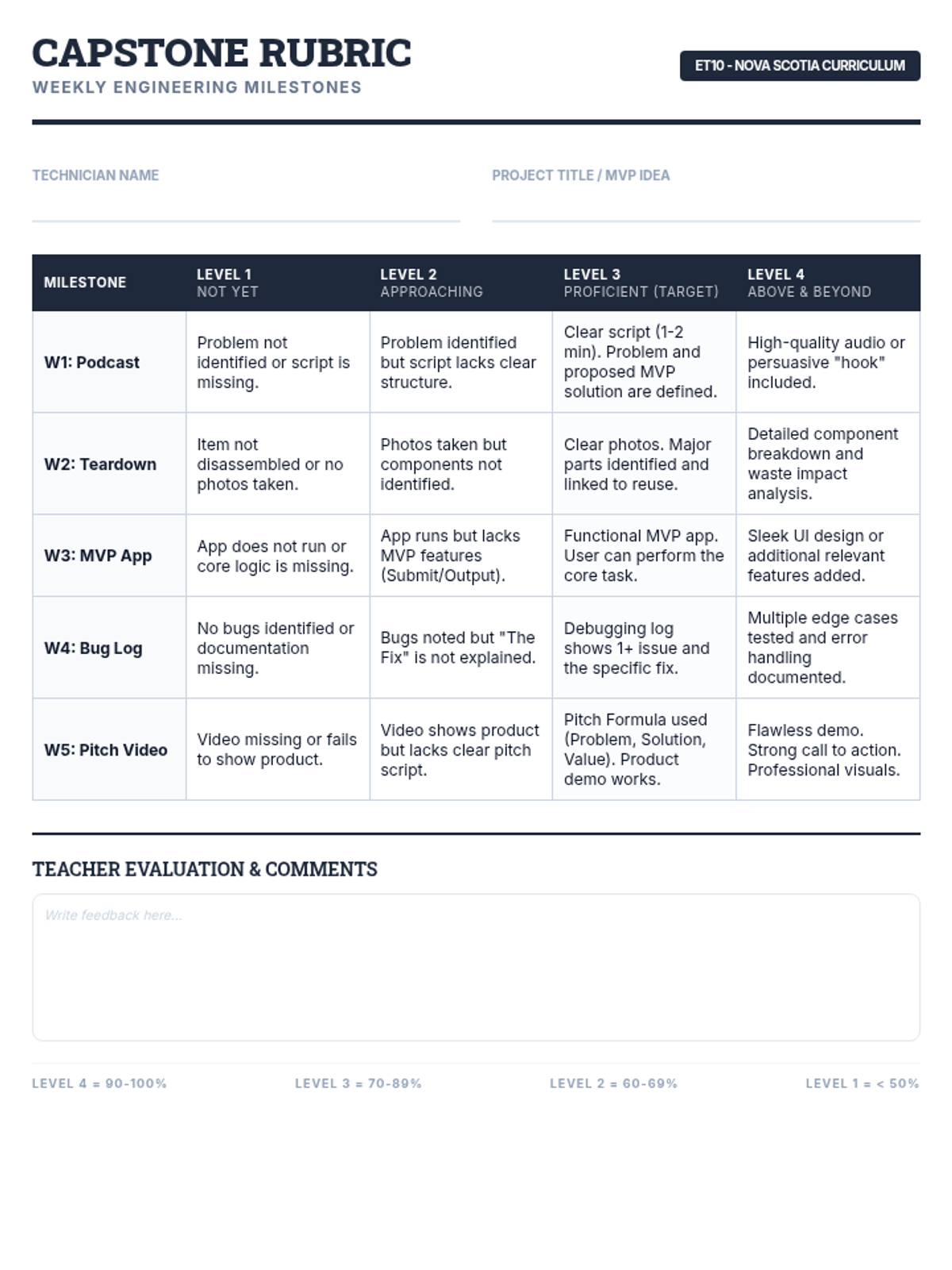
A comprehensive weekly milestone rubric for the 5-week Tech Capstone project, aligned with the Level 1-4 grading scale used in Nova Scotia schools.
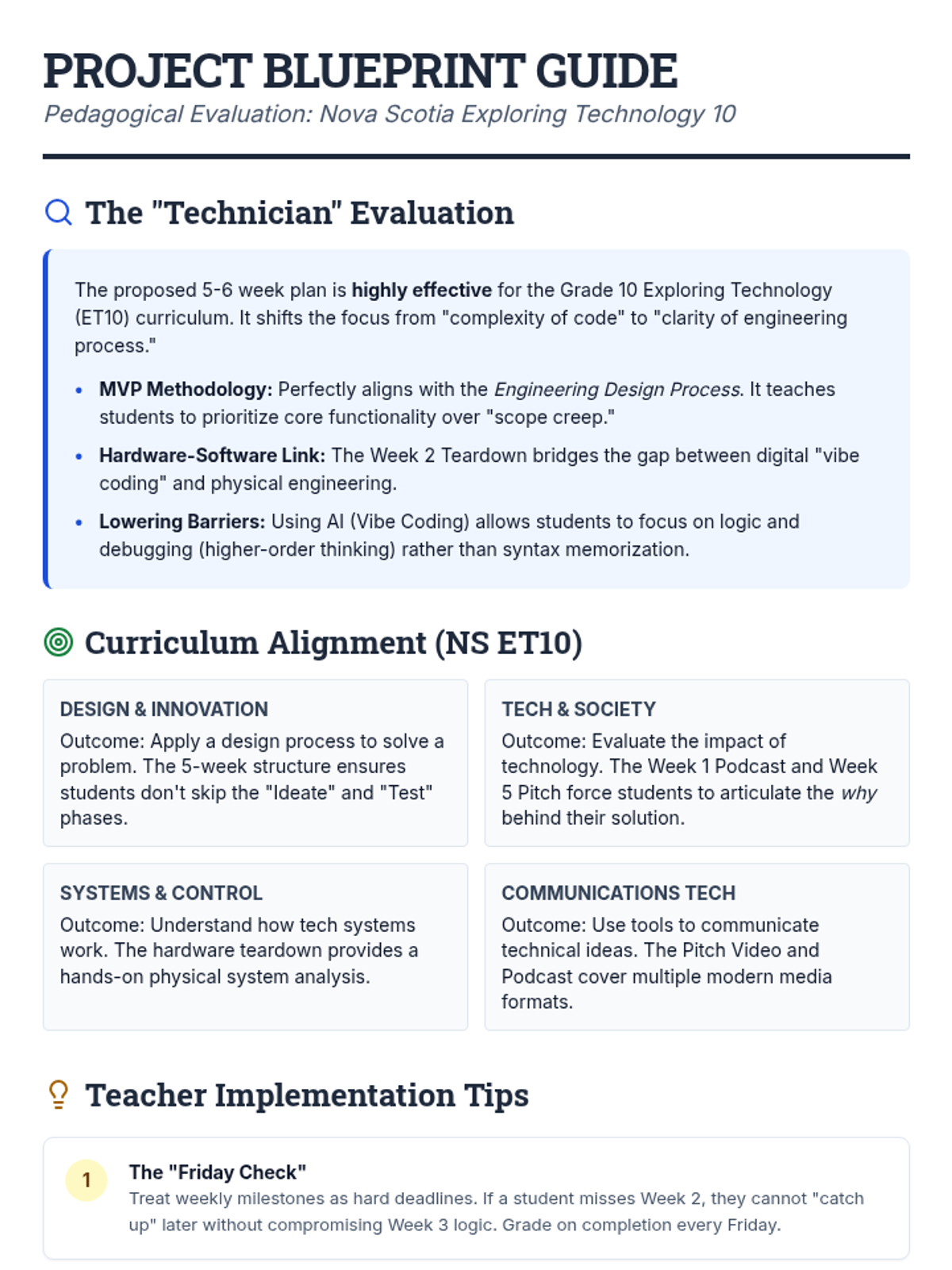
Teacher-facing evaluation and pedagogical explanation of the 5-week Tech Capstone project, including curriculum alignment for Nova Scotia Exploring Technology 10.
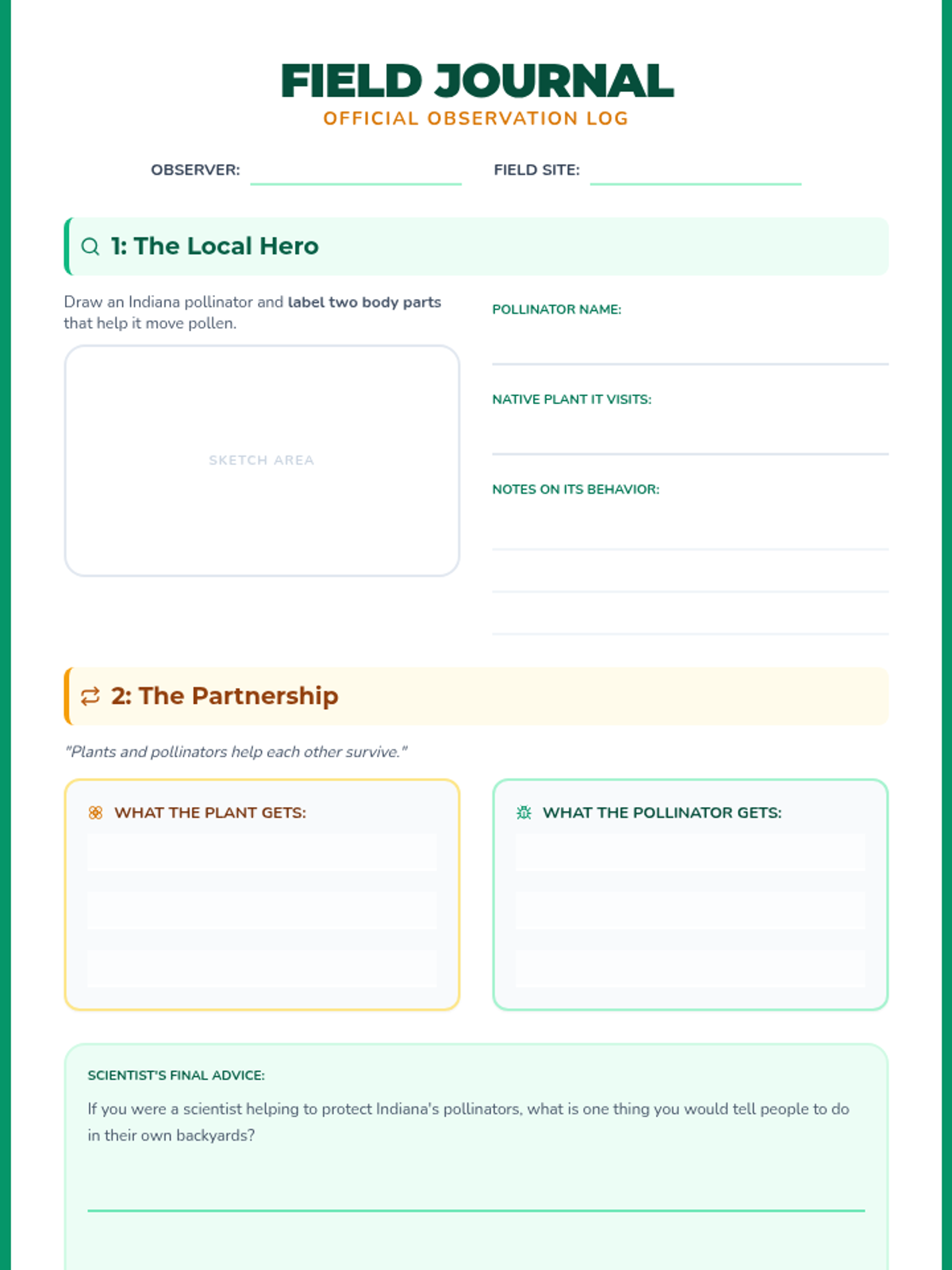
A student-facing Field Observation Journal for recording scientific inquiries. Includes sections for sketching local Indiana pollinators with detailed labeling, analyzing the symbiotic relationship between plants and animals, and reflecting on conservation efforts.
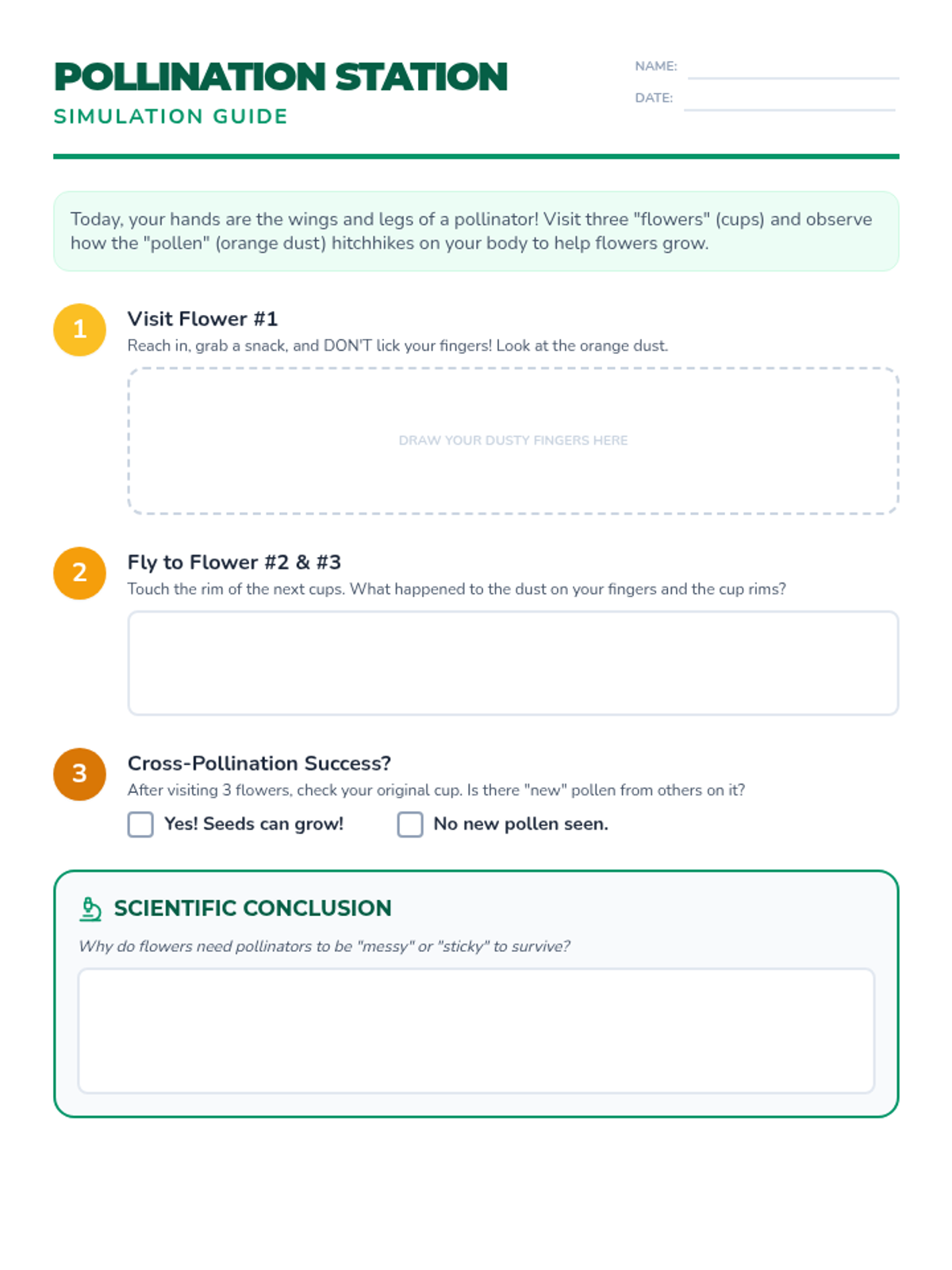
A student-facing activity sheet for the pollination simulation. It guides students through a hands-on modeling exercise using cheese puffs to visualize pollen transfer, with designated spaces for drawing observations and reflecting on scientific results.