Worksheet for finding horizontal and vertical tangents. Includes a detailed cardioid analysis, a rose curve bounding box challenge, and an introduction to indeterminate slopes at the pole.
A set of four hands-on field missions for students to experiment with daylight estimation, historical nautical timekeeping, fractal scaling, and sun-based coordinate mapping. All missions now feature consistent, professional layouts with scientific sidebars.
A comprehensive quiz covering fixed-point navigation, coordinate axes, microcosms vs macrocosms, and different types of symmetry. Refactored for standard portrait format.
A reference page explaining Longitude as the X-axis of navigation, along with advanced symmetry concepts like Rotational and Logarithmic Spirals. Updated for scientific accuracy regarding the difficulty of longitude and spiral patterns. Standard portrait format.
A conceptual worksheet for students to identify patterns of symmetry and scale in nature. Updated with 'Mission Break' callouts after Section 1 and Section 2 to guide students to specific field activities.

A two-page reference sheet covering the North Star (Polaris) as a navigation tool on page one, and the concepts of symmetry and scale (Microcosm/Macrocosm) in nature on page two. Updated for scientific accuracy and refactored for standard portrait format with small, professional font sizes.
A teacher guide providing a 15-minute pacing plan, discussion script, and answer key for the Cosmic Symmetry lesson. Updated for scientific accuracy regarding precession and terminology. Standard portrait format.
A student worksheet focused on identifying microcosm/macrocosm patterns and using coordinate symmetry (reflection) to complete a geometric compass rose design. Refactored for standard portrait format with an added 'Mission Break' callout.
A visual slide deck distinguishing between the North Star (fixed points) and Nature's Symmetry (repeating patterns) as tools for ancient navigation, now updated with integrated 'Mission Break' slides to signal field work timing.
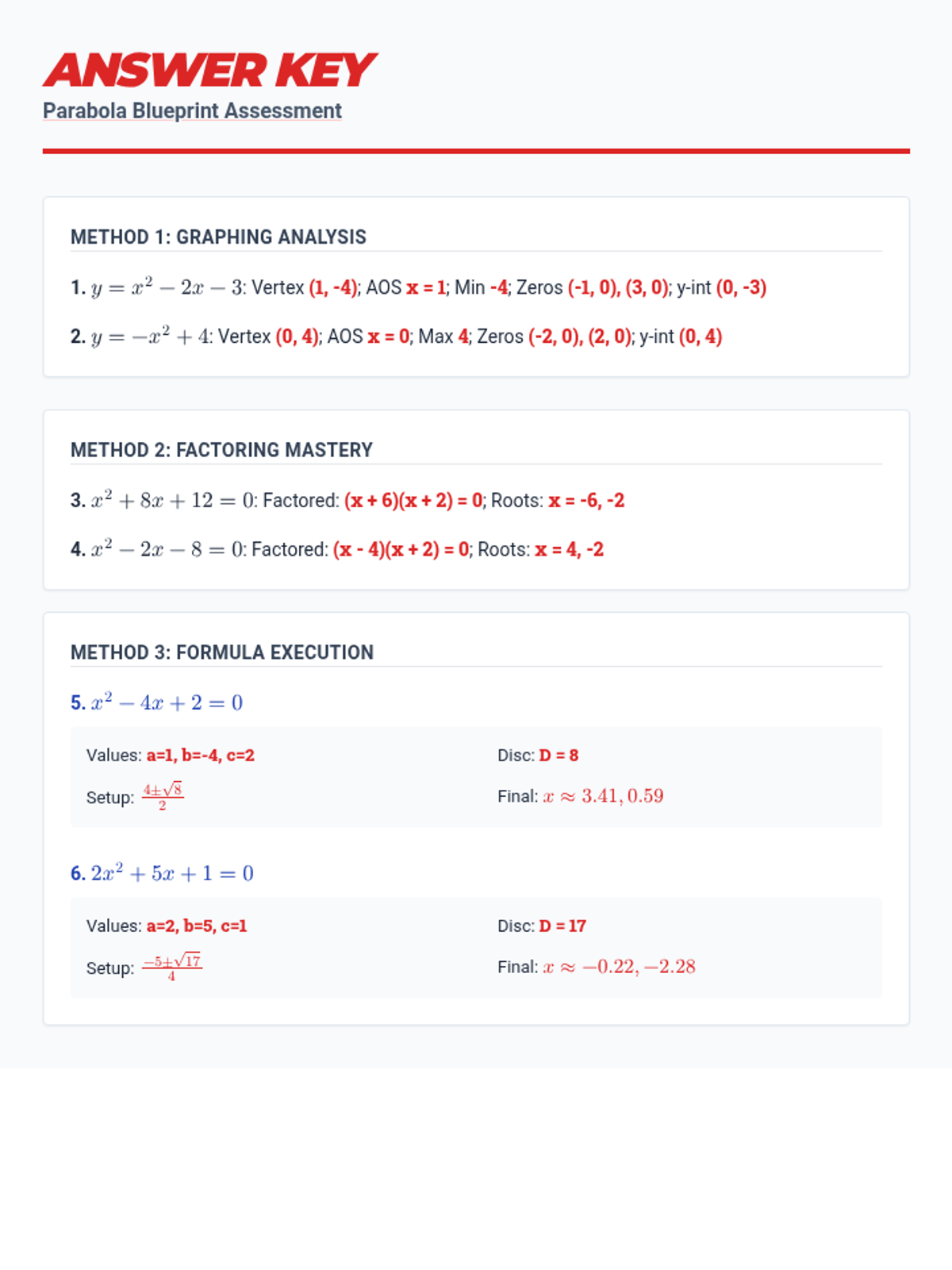
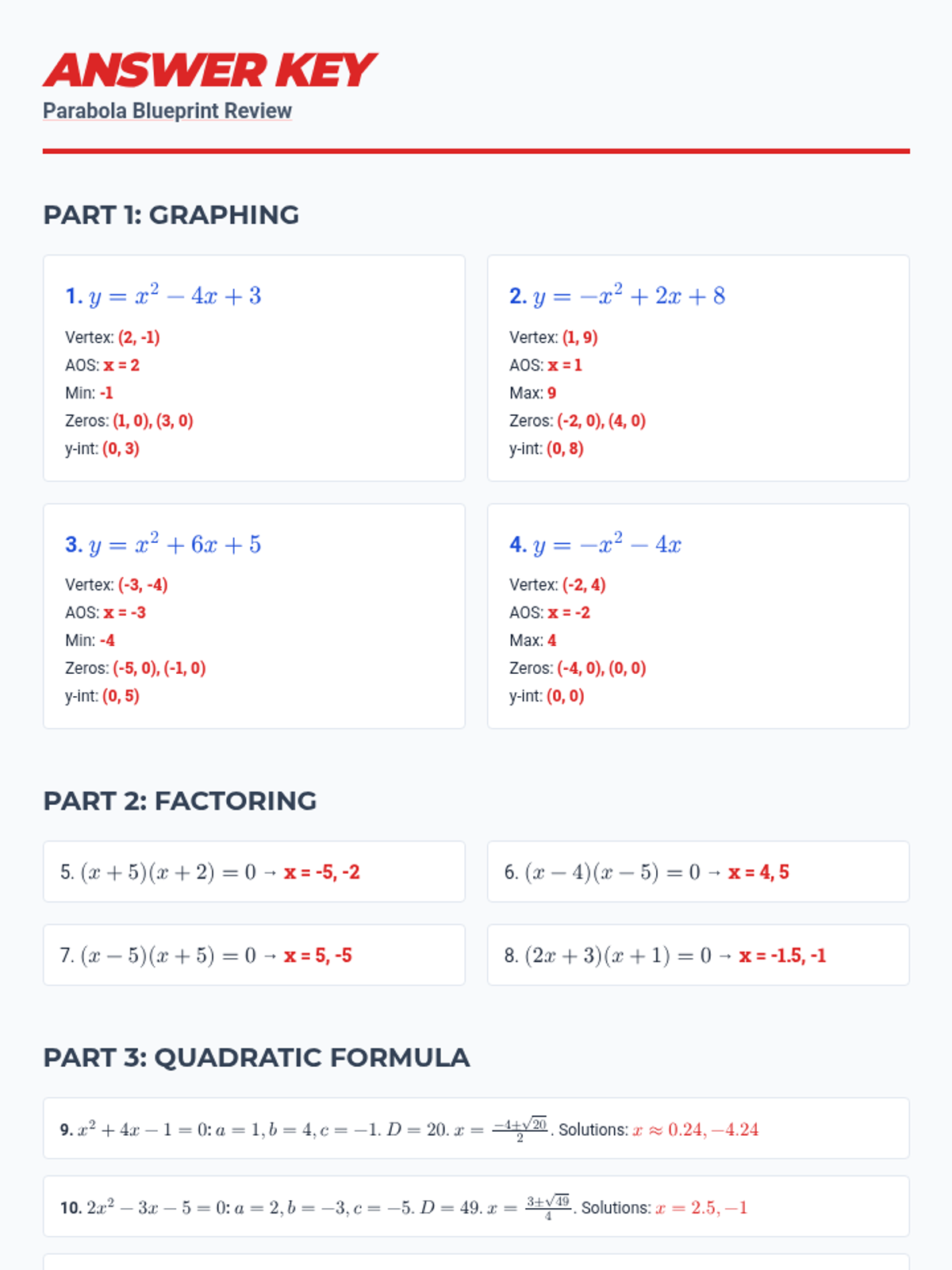
A teacher's answer key for the Factoring Forge Worksheet, providing step-by-step factoring and final solutions for all practice problems.
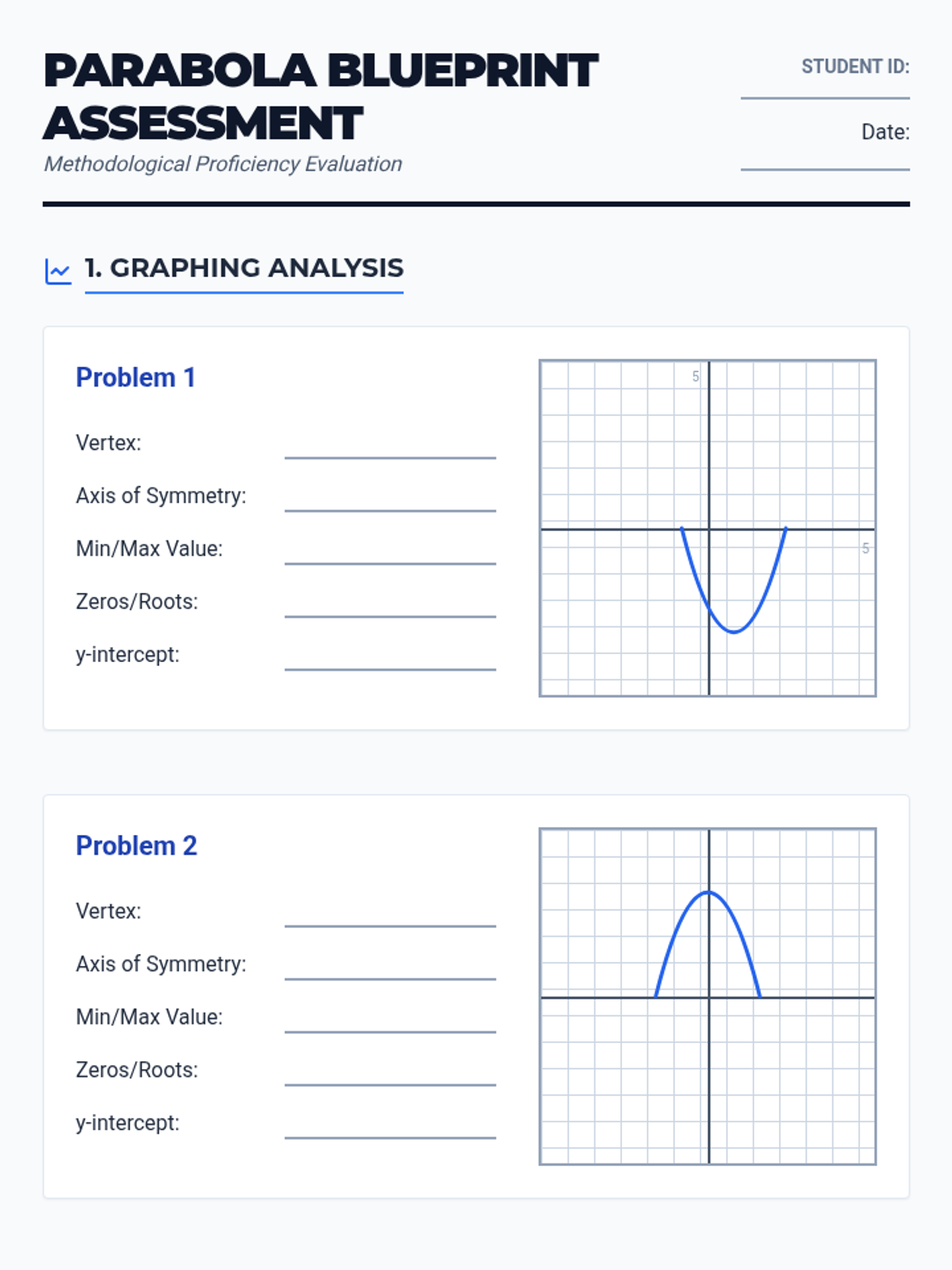
A blacksmith-themed practice worksheet for solving quadratic equations by factoring, featuring leveled problems from GCF to complex trinomials.
A visual presentation for teaching quadratic factoring strategies, featuring clear examples of GCF, difference of squares, and trinomial methods.
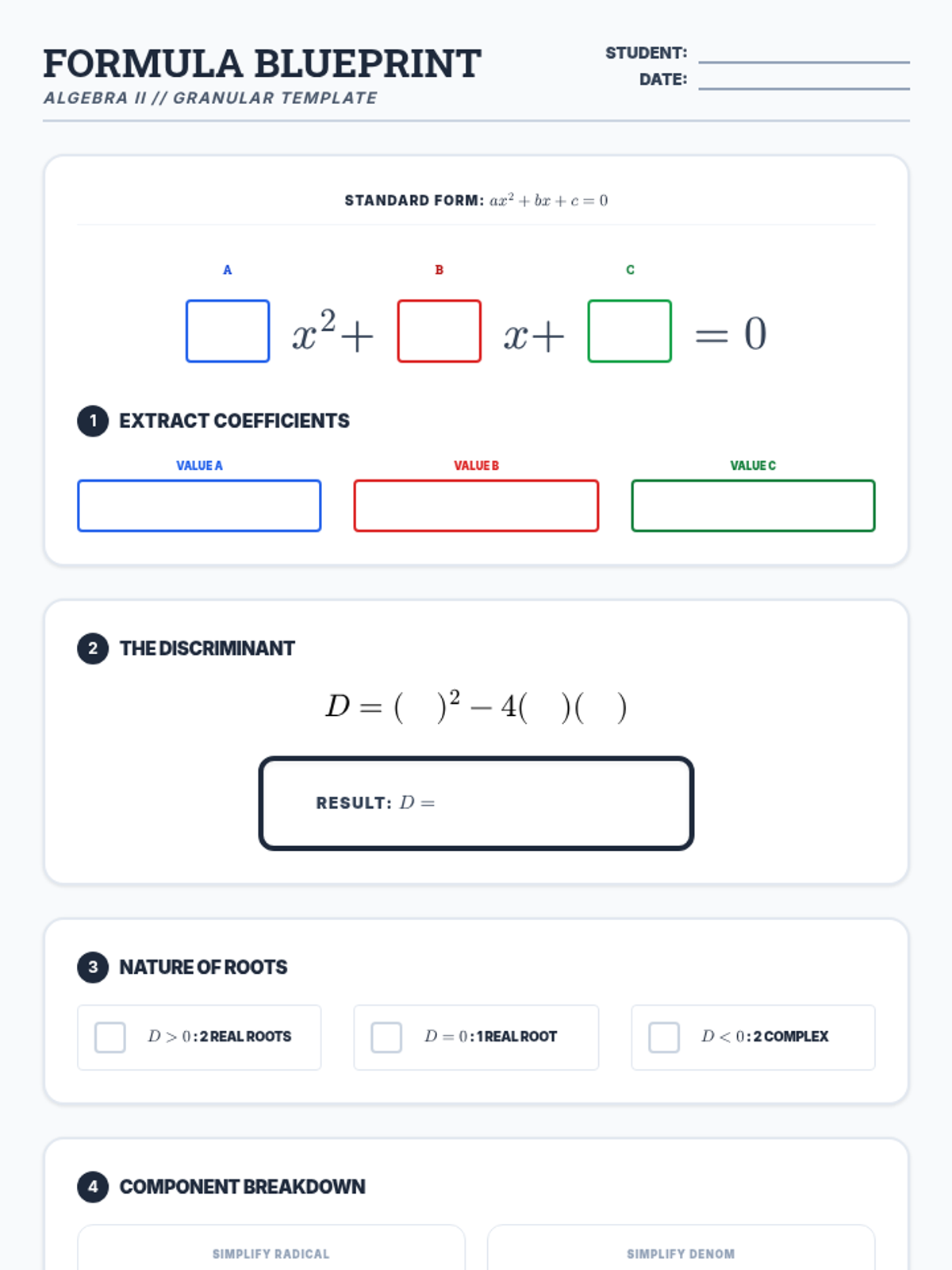
A blueprint-themed graphic organizer designed to help students navigate different quadratic factoring strategies including GCF, difference of squares, and trinomial methods.
A printer-friendly final review quiz covering all core series topics with high-contrast design and optimized layout for ink-efficient printing.
A printer-friendly exit ticket for percentages, utilizing a clean layout and high-contrast design for efficient student assessment.
A printer-friendly percentages worksheet covering financial calculations like tax, interest, and goals, designed with minimal color and maximum clarity.
A printer-friendly exit ticket for fraction operations, designed with minimal color usage and efficient layout for high-volume printing.
A printer-friendly fractions worksheet covering all basic operations in real-world contexts, designed for clarity and minimal ink consumption.
A printer-friendly exit ticket for decimal operations, designed with high contrast and minimal ink usage for assessments.
A printer-friendly decimal operations worksheet focused on real-world financial and technical scenarios with minimal ink consumption.
A printer-friendly exit ticket for Lesson 1, featuring high-contrast text and ample workspace for student responses with minimal ink usage.
A printer-friendly multi-digit multiplication and division worksheet featuring four real-world scenarios and a mastery challenge, designed with minimal color usage.
A printer-friendly final review answer key, designed for clear teacher reference with high contrast and efficient formatting.
A printer-friendly answer key for percentages, utilizing a high-contrast design and underlined answers for efficient teacher reference.
A printer-friendly answer key for fraction foundations, utilizing high-contrast formatting and underlined final answers for quick teacher evaluation.
A printer-friendly answer key for decimal operations, utilizing clear formatting and underlined answers for efficient teacher use.
A printer-friendly answer key for Lesson 1, using high-contrast black and white design and underlined answers for clear teacher reference.
Printer-friendly instructional slides for percentages, utilizing clean white backgrounds and high-contrast black text for professional presentation and visibility.
Printer-friendly instructional slides for fraction operations, featuring high-contrast black and white design for clean presentation.
Printer-friendly instructional slides for decimal operations, utilizing a clean black and white aesthetic for high visibility and professional presentation.
Printer-friendly instructional slides for Lesson 1, utilizing high-contrast black and white design for clear presentation and minimal ink consumption.
A 16:9 presentation deck introducing drug concentration modeling and guiding students through the ibuprofen rational function problem.
A student worksheet containing two multi-part word problems involving rational functions in medical contexts, with dedicated space for algebraic work and critical thinking.
A detailed, step-by-step solution guide for the ibuprofen concentration rational function problem, featuring a clean medical lab aesthetic.
An expanded 4-page recording sheet for students, now featuring much larger workspace boxes (4 per page) for solving the 15 radical equation challenges.
A set of 15 large-format posters for the scavenger hunt. Each poster features a large 'previous answer' from the loop and a new radical equation for students to solve.
Teacher guide for the Root Runner scavenger hunt, including setup instructions, learning objectives, and a complete answer key for the 15 radical equation stations.
A teacher's guide for the Hoops Logic lesson. It provides step-by-step facilitation instructions, sample word problems across three different grade levels (elementary, middle, and high school), and differentiation strategies.
A visual presentation to introduce the "Hoops Logic" word problem strategy. It walks students through the four key steps: The Tip-Off, Scouting Report, The Playbook, and Post-Game Analysis.
A basketball-themed graphic organizer for students to break down math word problems. It features themed sections for the problem statement, goal identification, data scouting, strategic execution, and final solution checking.
A teacher's answer key and instructional guide for the Boundary Blueprints card sort, including STAAR performance level alignment and common misconception notes.
A comprehensive card sort activity featuring 8 domain and range problems with a professional blueprint aesthetic. Includes question cards, answer modules, and a student recording sheet.
A teacher facilitation guide for the Boundary Lines lesson. Includes a detailed lesson timeline, learning objectives, common student misconceptions, differentiation strategies, and high-level discussion prompts.
A quick assessment for the end of the lesson featuring three problems: graphing an inequality, writing an inequality from a graph, and translating a real-world scenario.
A complete answer key for the Boundary Lines worksheet, providing correct inequality symbols, completed graphs, and equation translations for all problems.
A comprehensive student worksheet with four parts: decoding verbal cues into symbols, graphing inequalities on number lines, writing inequalities from graphs, and solving real-world scenario problems. Features a road-sign theme for engagement.
A high-energy, street-sign themed presentation on graphing inequalities on a number line. It covers real-world examples, boundary markers (open vs. closed circles), and shading directions with visual walkthroughs.
A 5-slide presentation for Day 10 of EOC review covering Asymptotes and Correlation Coefficients with tips on calculator setup.
A 5-slide presentation for Day 9 of EOC review covering Exponential Growth and Decay with a real-world depreciation problem.
A 5-slide presentation for Day 8 of EOC review covering quadratic Roots and Zeros with an easy mnemonic and a factored practice question.
A 5-slide presentation for Day 7 of EOC review covering Quadratic Vertex and Axis of Symmetry with formula visuals and a practice question.