A comprehensive teacher guide for leading a 2nd-grade sunflower inquiry, including Indiana standards, materials, and step-by-step experiment procedures.
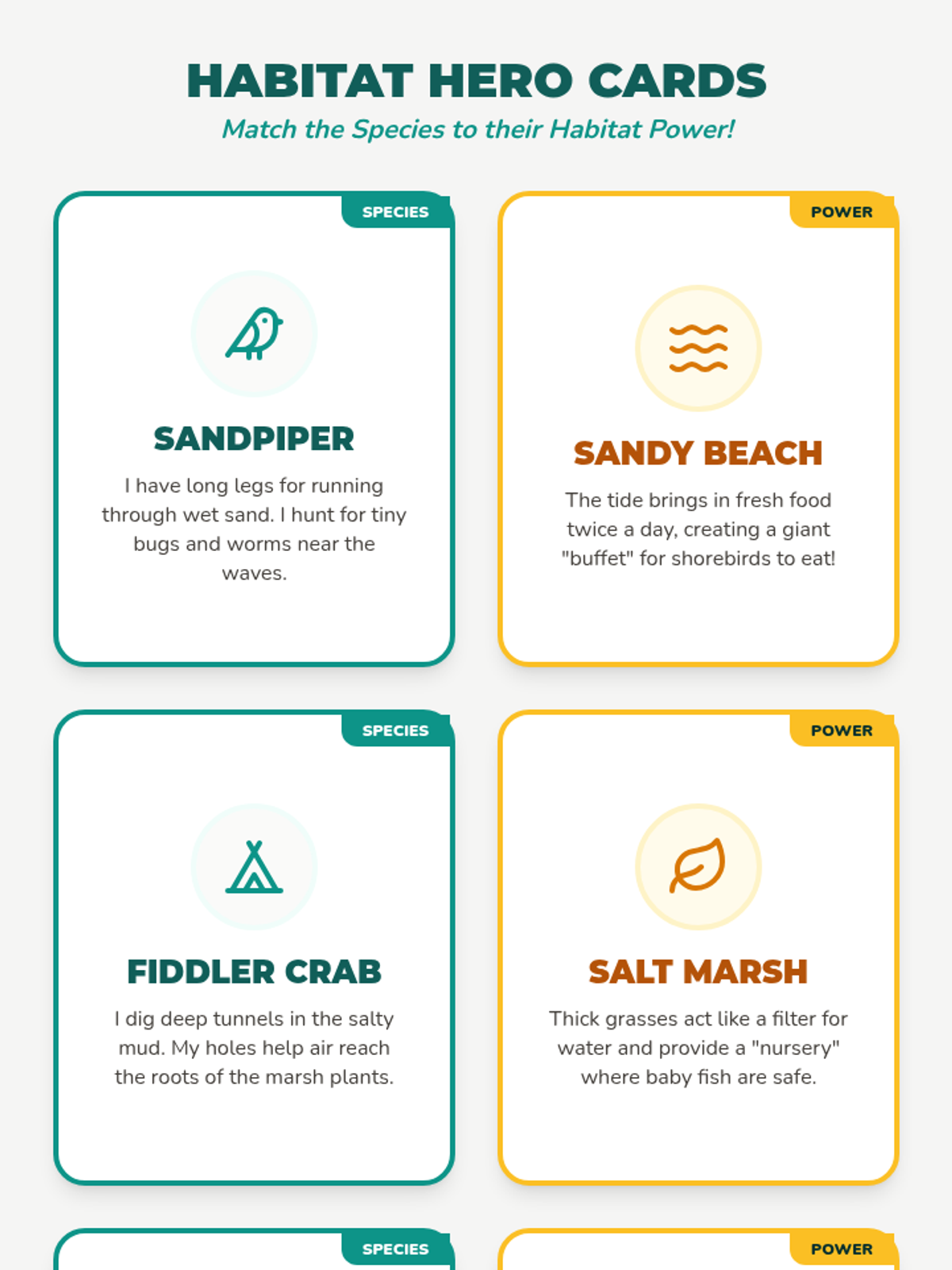
Matching activity cards for second graders to learn about native Cape Cod species and the specific habitat 'powers' or benefits those environments provide, designed for hands-on classroom exploration.
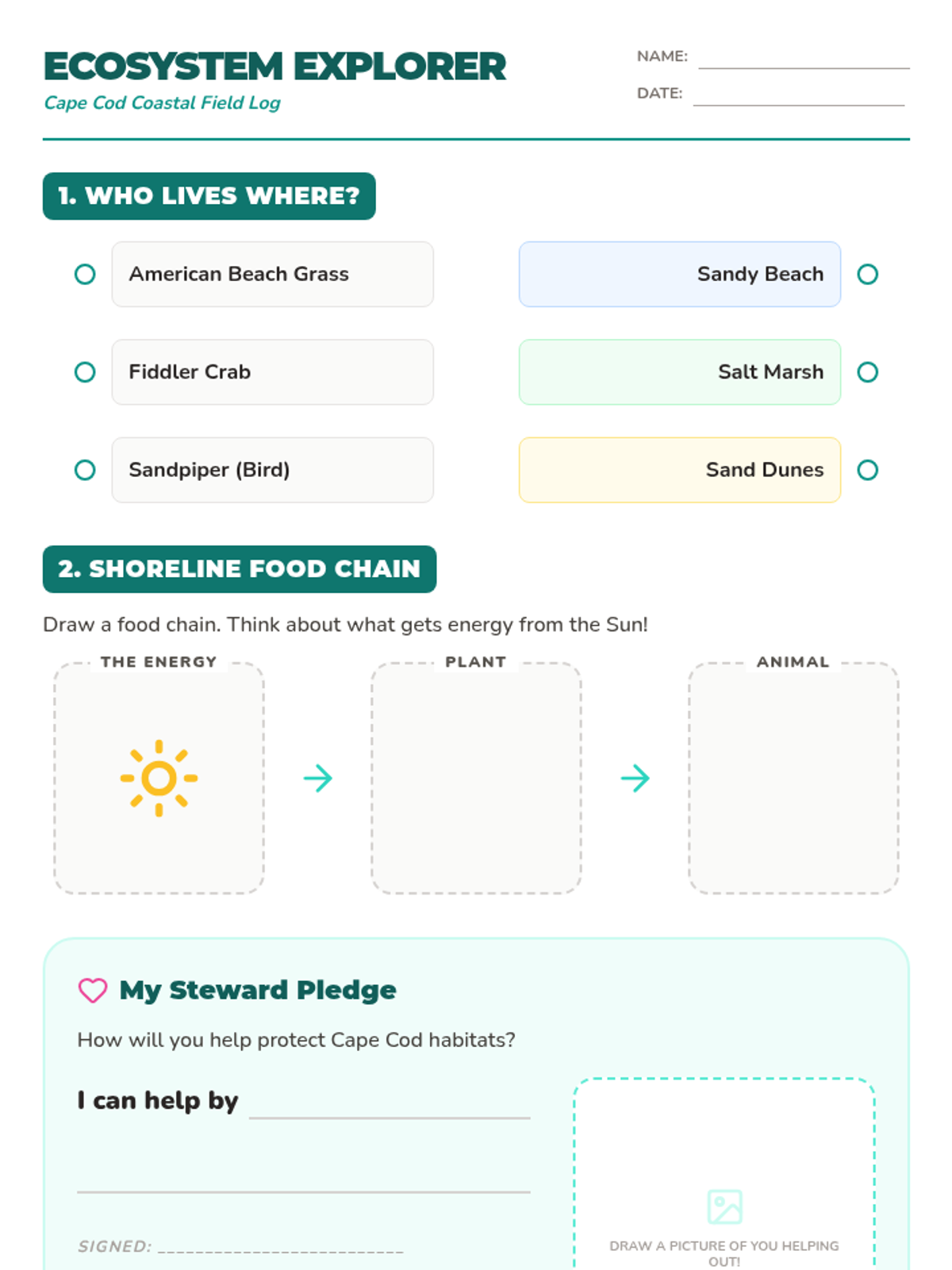
A student worksheet for exploring Cape Cod ecosystems, featuring habitat matching, a food chain drawing activity, and a stewardship pledge for second-grade science students.
An engaging slide deck for second graders exploring Cape Cod's coastal ecosystems, featuring sections on the Sandy Beach, Salt Marsh, and Dunes, with a focus on plant and animal interdependence and environmental stewardship.
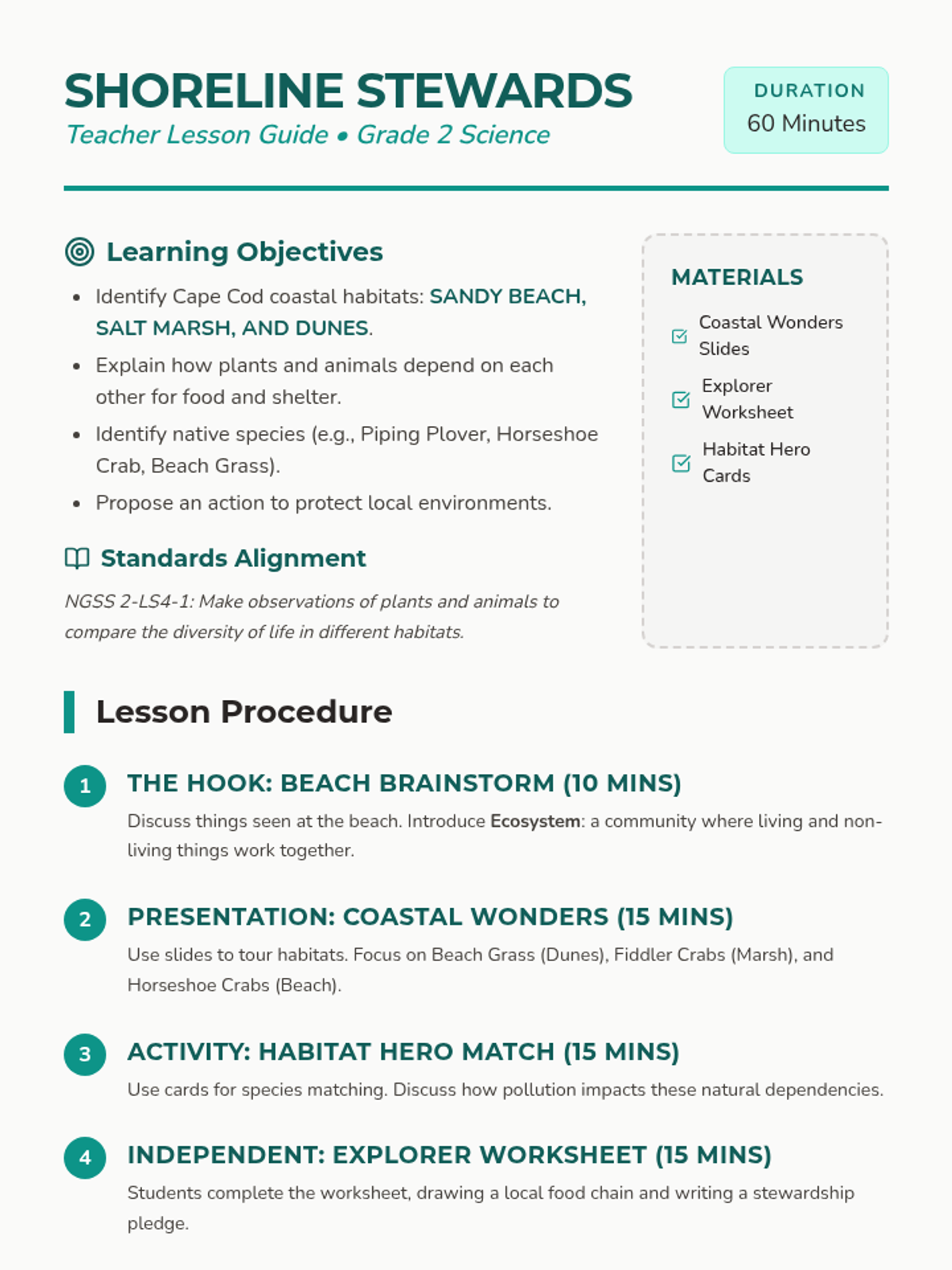
A comprehensive teacher's guide for the Shoreline Stewards lesson, featuring learning objectives, step-by-step procedures, key vocabulary, and common misconceptions for teaching second-grade coastal science.
A presentation deck demonstrating the Law of Conservation of Momentum. Now includes a comparison between Elastic (bouncing) and Inelastic (sticking) collisions, showing that total momentum is conserved in both cases. Revised for visual clarity and contrast.
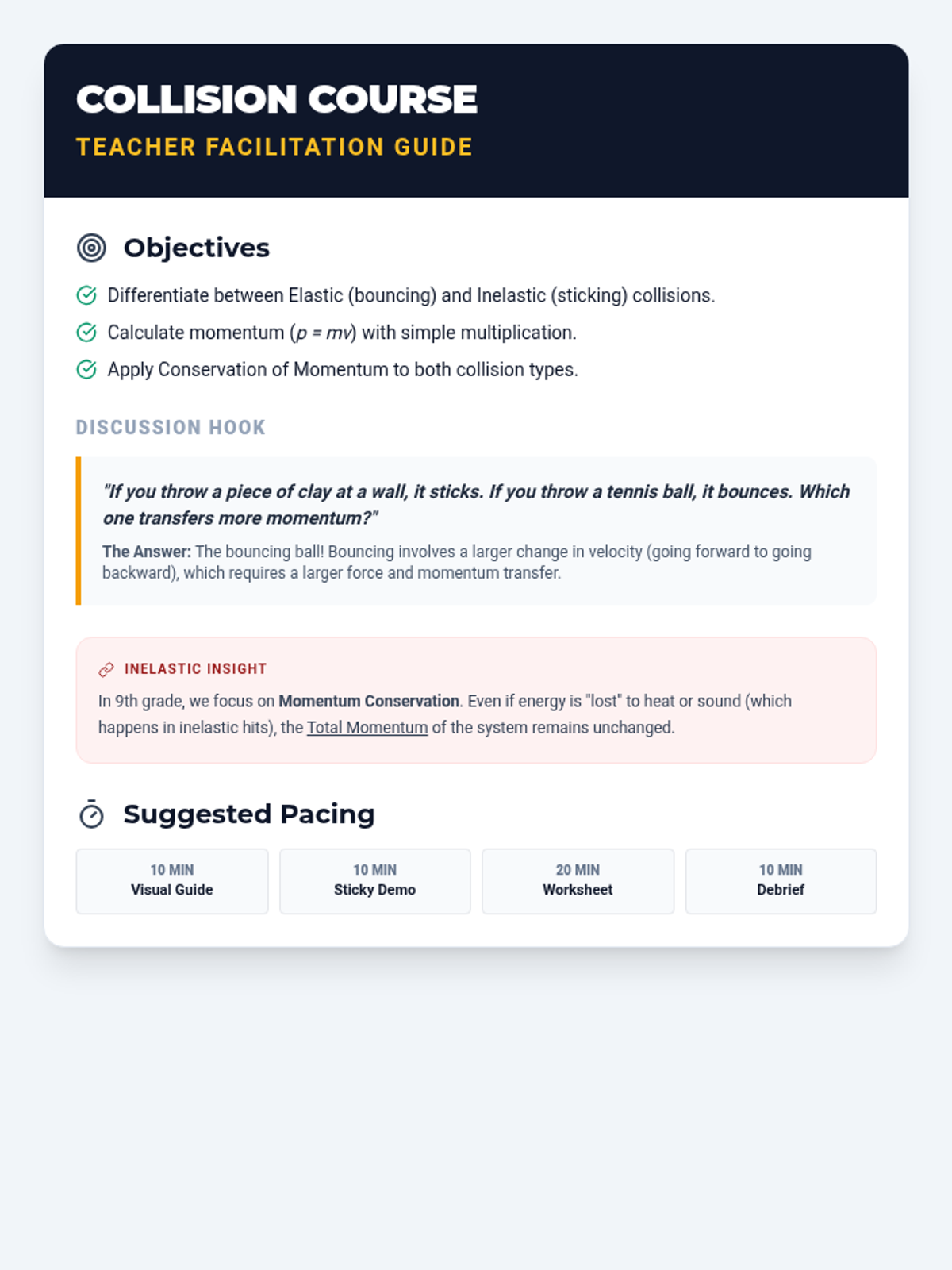
Teacher's facilitation guide for the Collision Course lesson. Updated to include instructional strategies for teaching the difference between elastic and inelastic collisions.
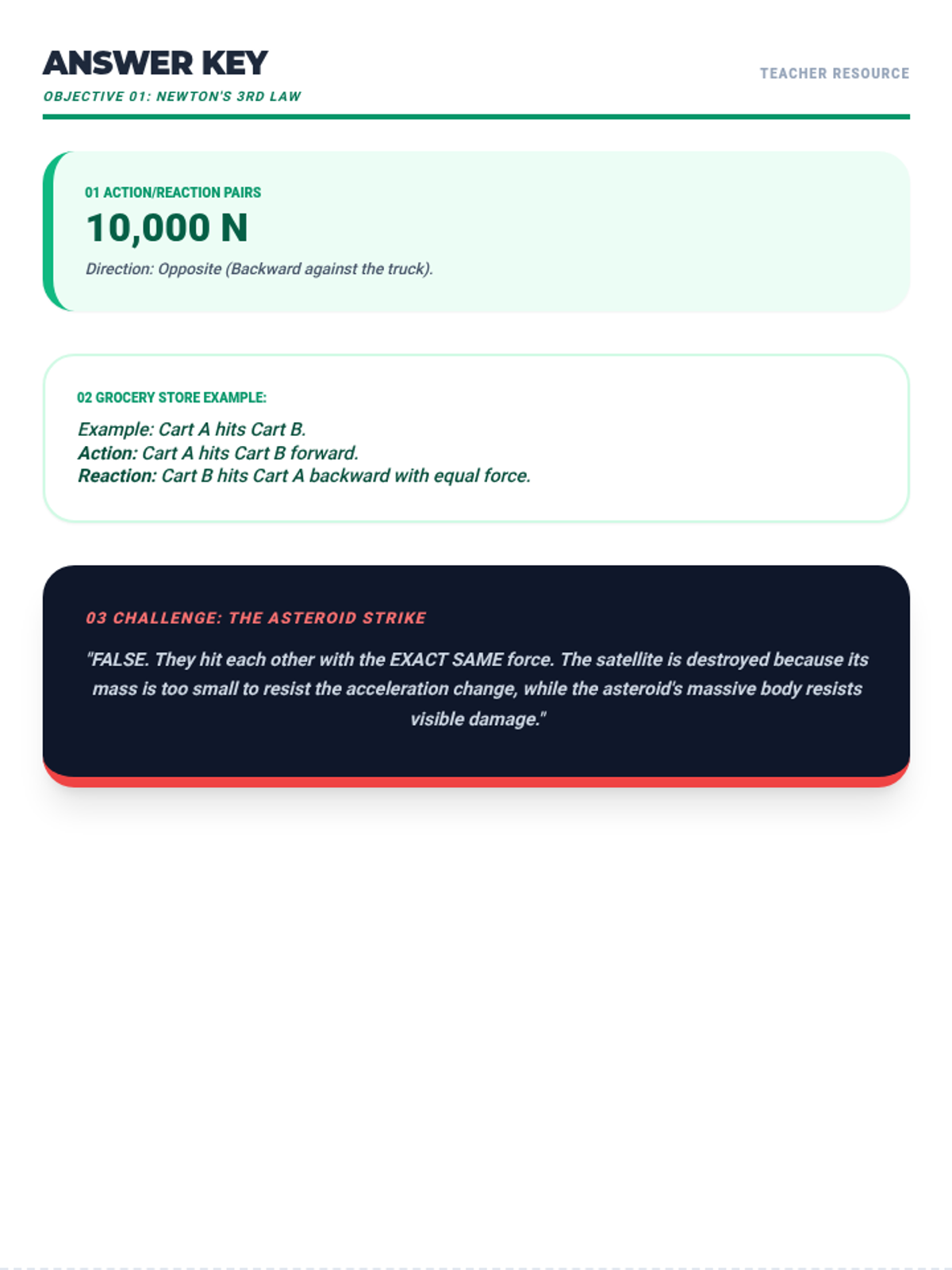
Expanded 4-page answer key for the Crash Lab Worksheet. Now includes worked solutions for student-designed scenarios, challenge questions about asteroids and satellites, and the predictive math for train engine couplings. Revised for renumbering, unit consistency, and scientific terminology.
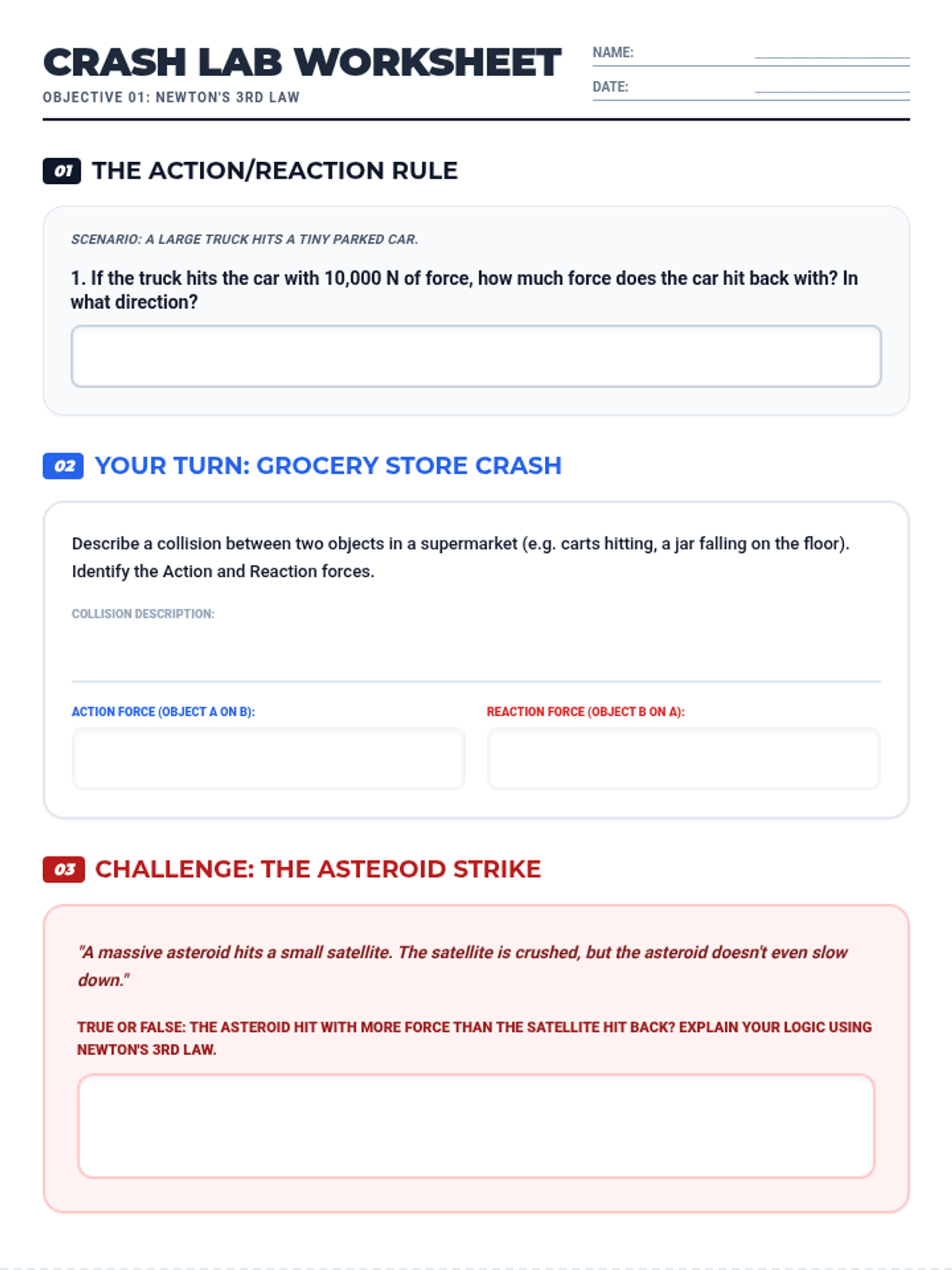
An enhanced 4-page student worksheet featuring student-designed scenarios, higher difficulty challenge questions, and a predictive math section where students calculate the outcomes of inelastic train collisions. Optimized for conceptual depth and practical math. Revised to use "Grocery Store" examples and fixed page break overflows.
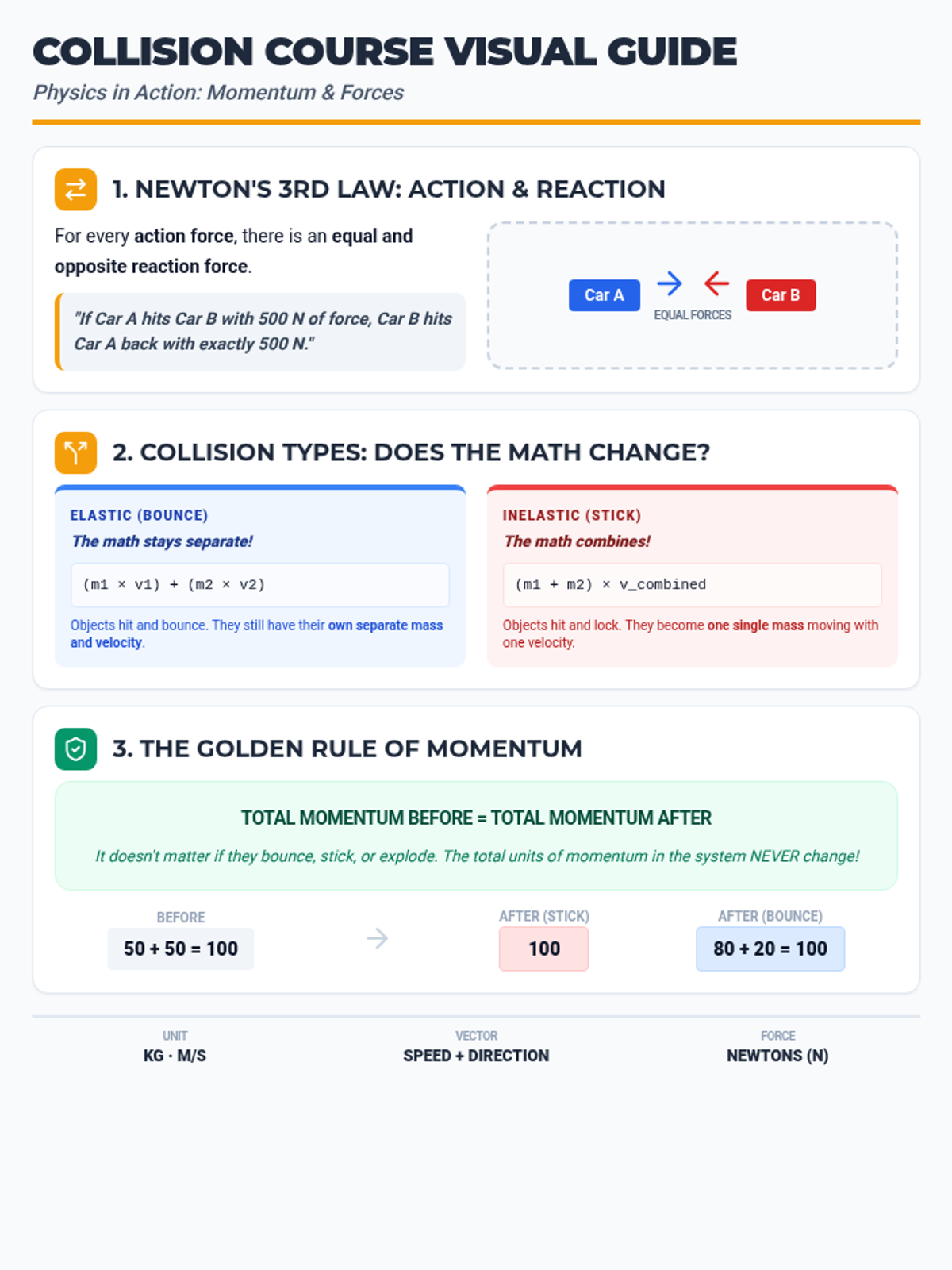
A one-page visual anchor chart for 9th-grade physics. Explains Newton's 3rd Law, momentum (p=mv), and Conservation of Momentum. Now includes a comparison between Elastic and Inelastic collisions.
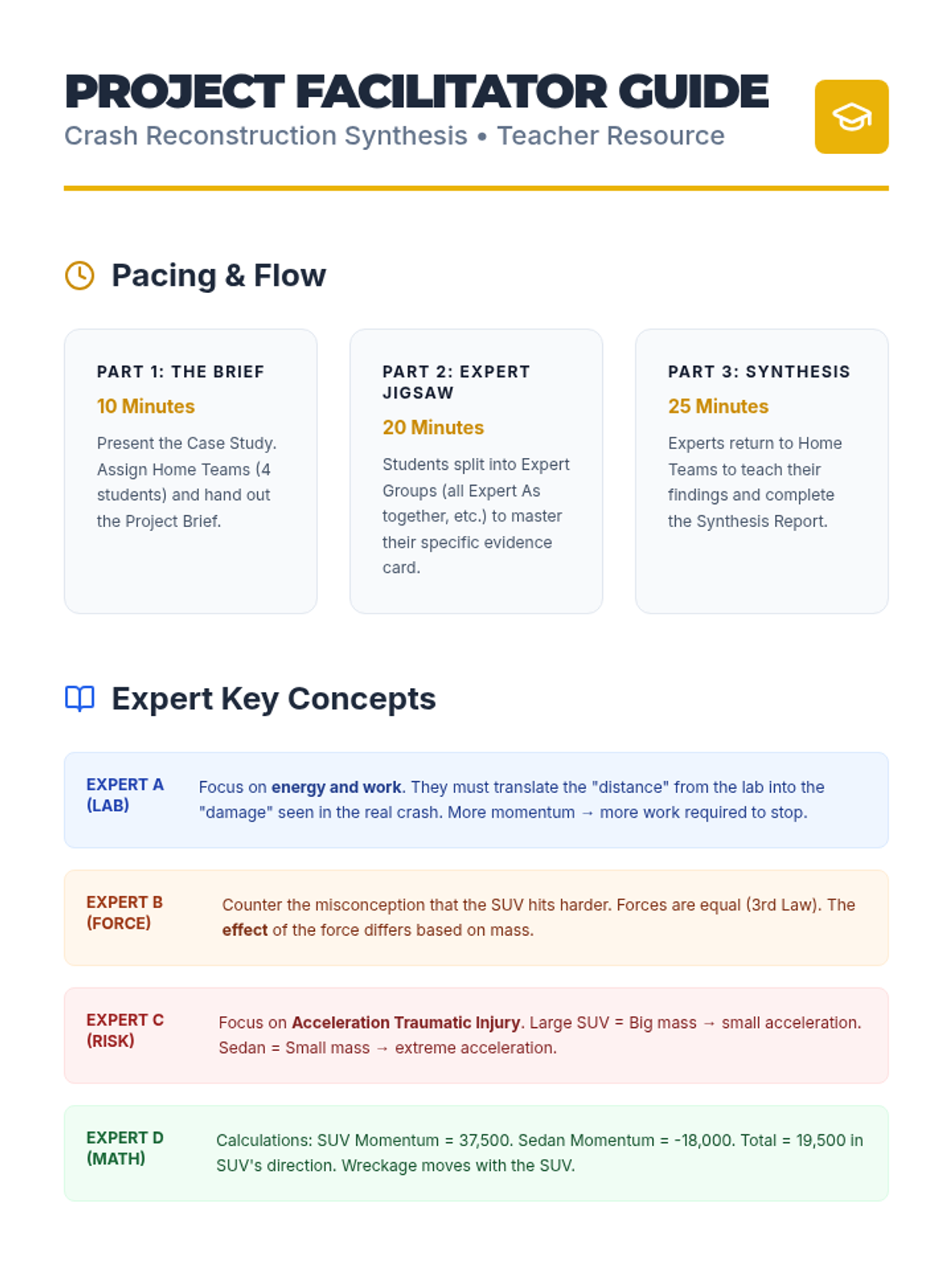
A teacher facilitation guide for the Crash Engineering Project. Includes pacing suggestions, answer keys for the jigsaw expert tasks, a grading rubric, and tips for addressing common physics misconceptions.
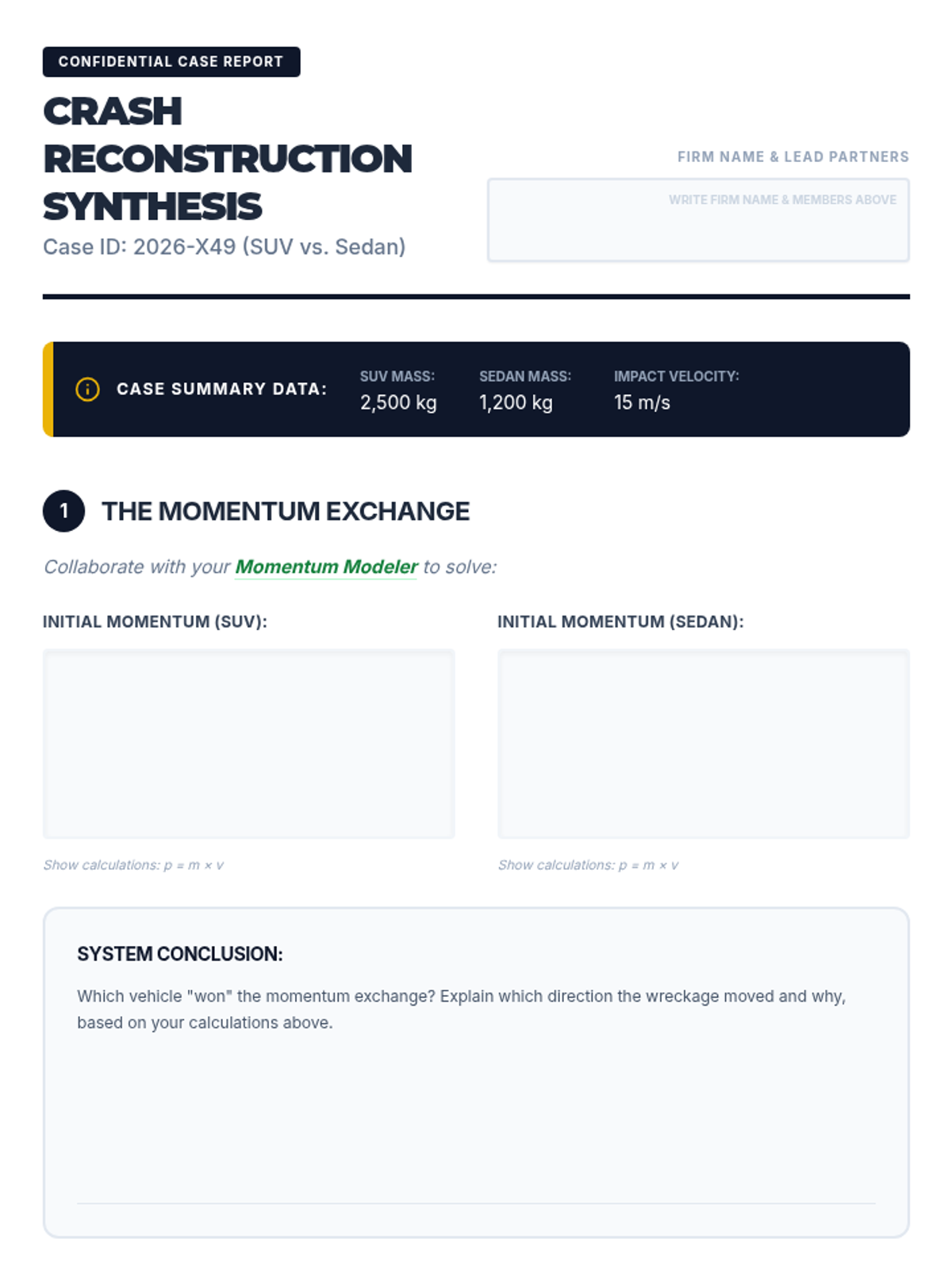
Revised team synthesis report template. Fixed page break issues and expanded student work areas for momentum calculations. Improved visual polish for a professional engineering look. Added a case data summary sidebar for easy reference.
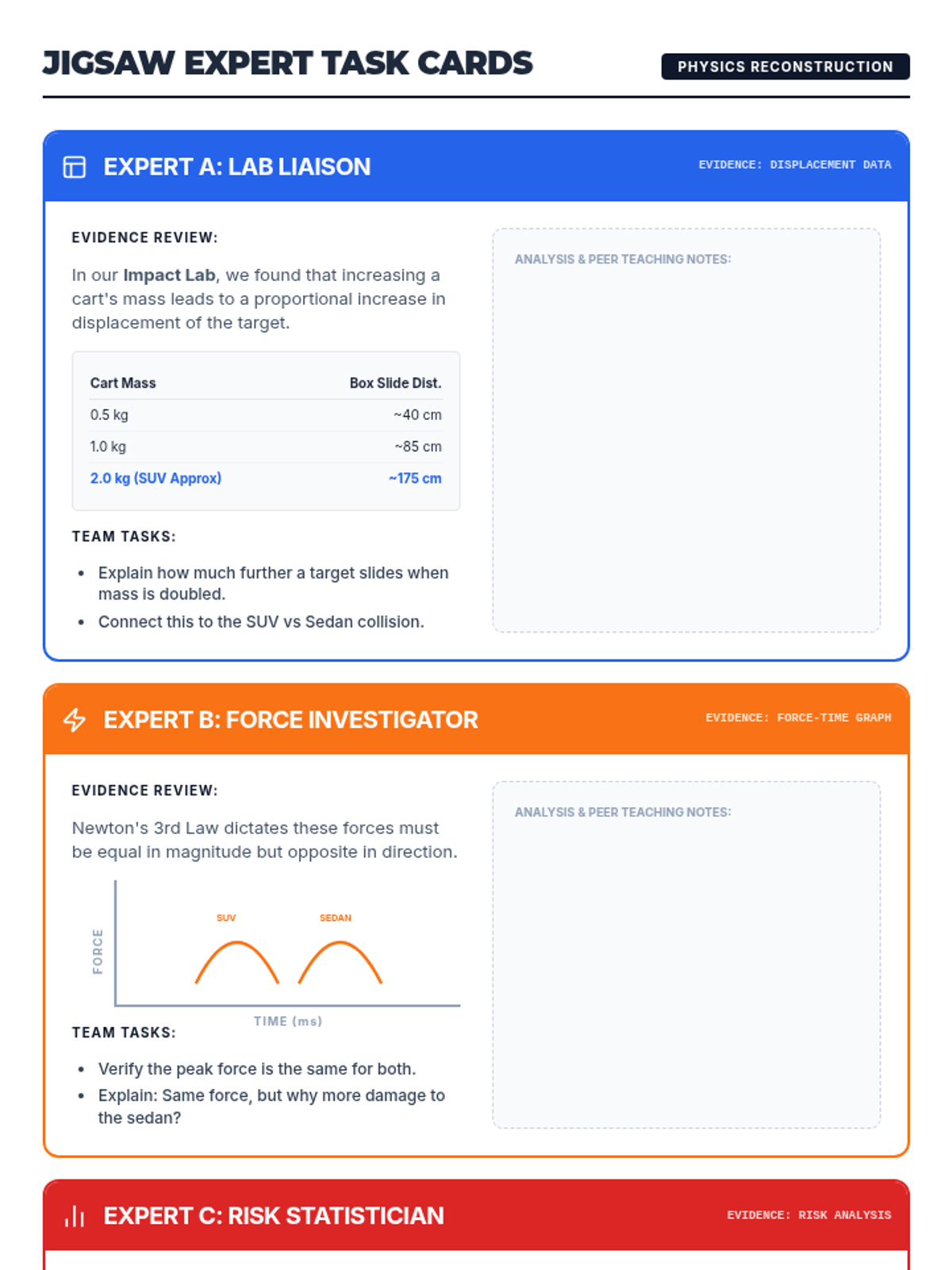
Revised expert cards for the jigsaw activity. Fixed clipping issues and added missing graph labels. Optimized layout to fit two cards per page consistently and expanded student note areas. Fixed subscript rendering issues.
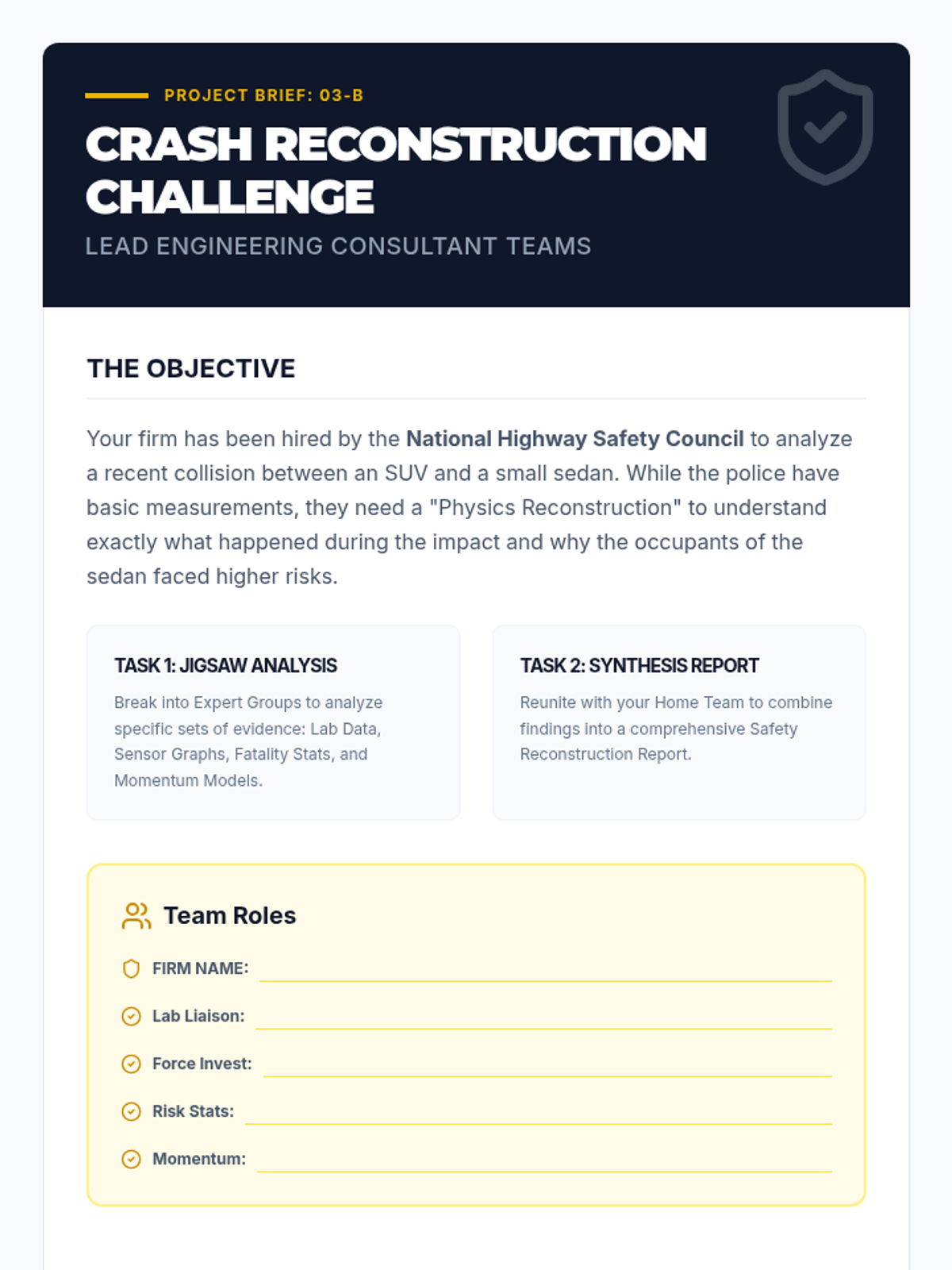
Revised project introduction handout for students. Outlines the team roles and the case study parameters. Fixed page break issues and sidebar layout for better readability.
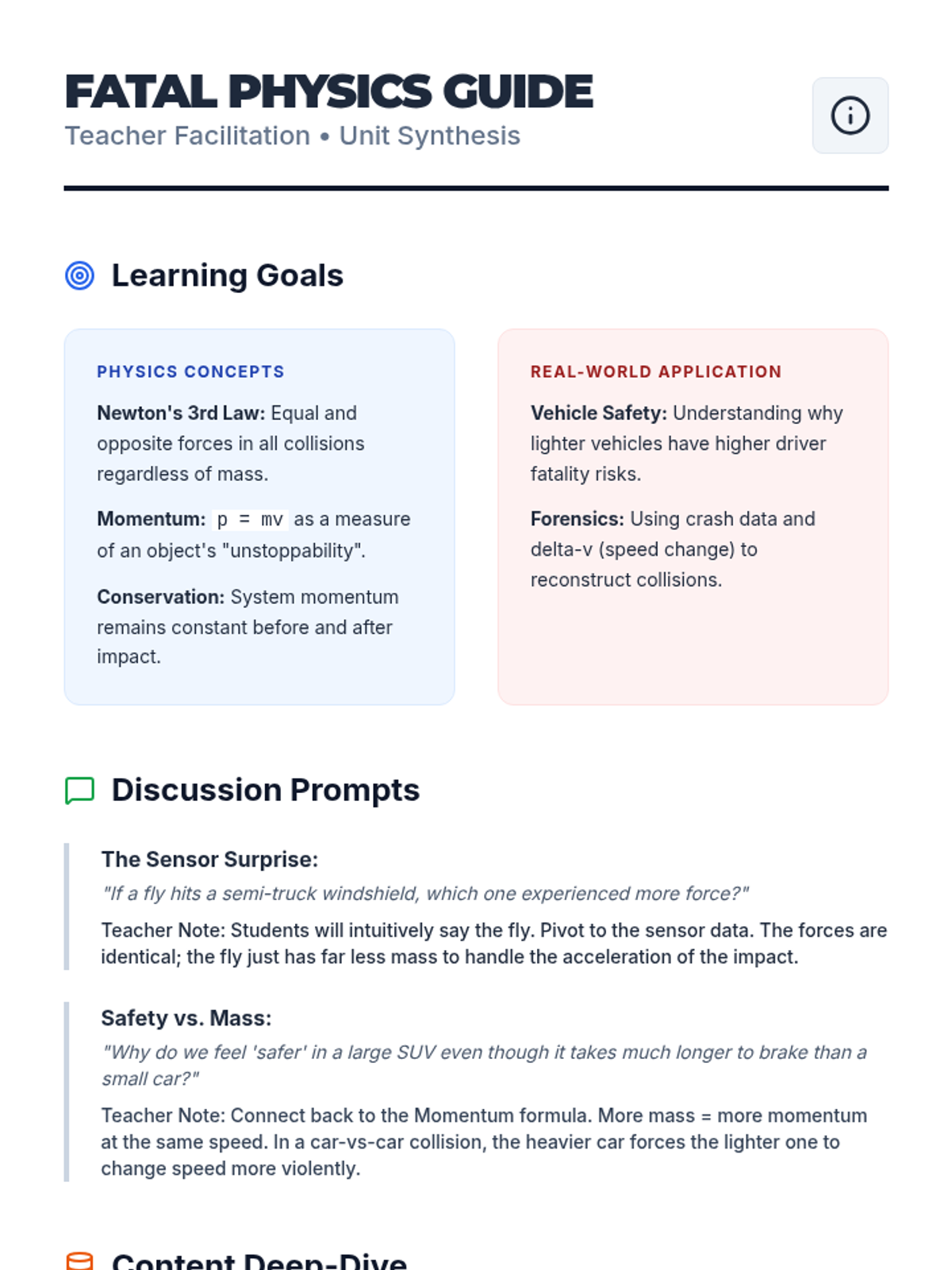
A teacher facilitation guide for the Momentum Mechanics lesson. Revised for better page organization and guaranteed rendering of mathematical concepts.
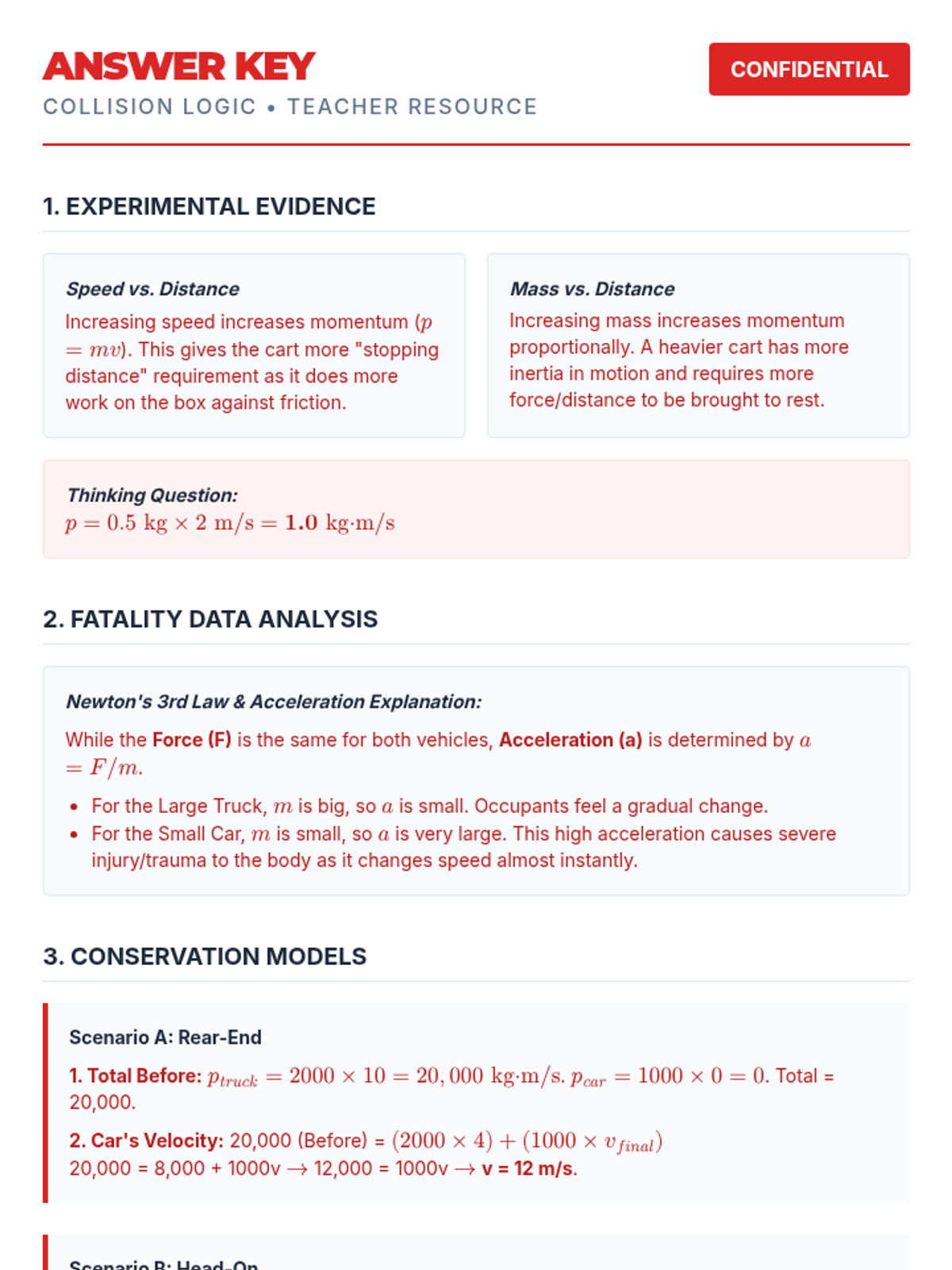
Detailed teacher answer key for the Collision Logic worksheet. Includes step-by-step mathematical derivations for momentum conservation and clear conceptual explanations for Newton's laws.
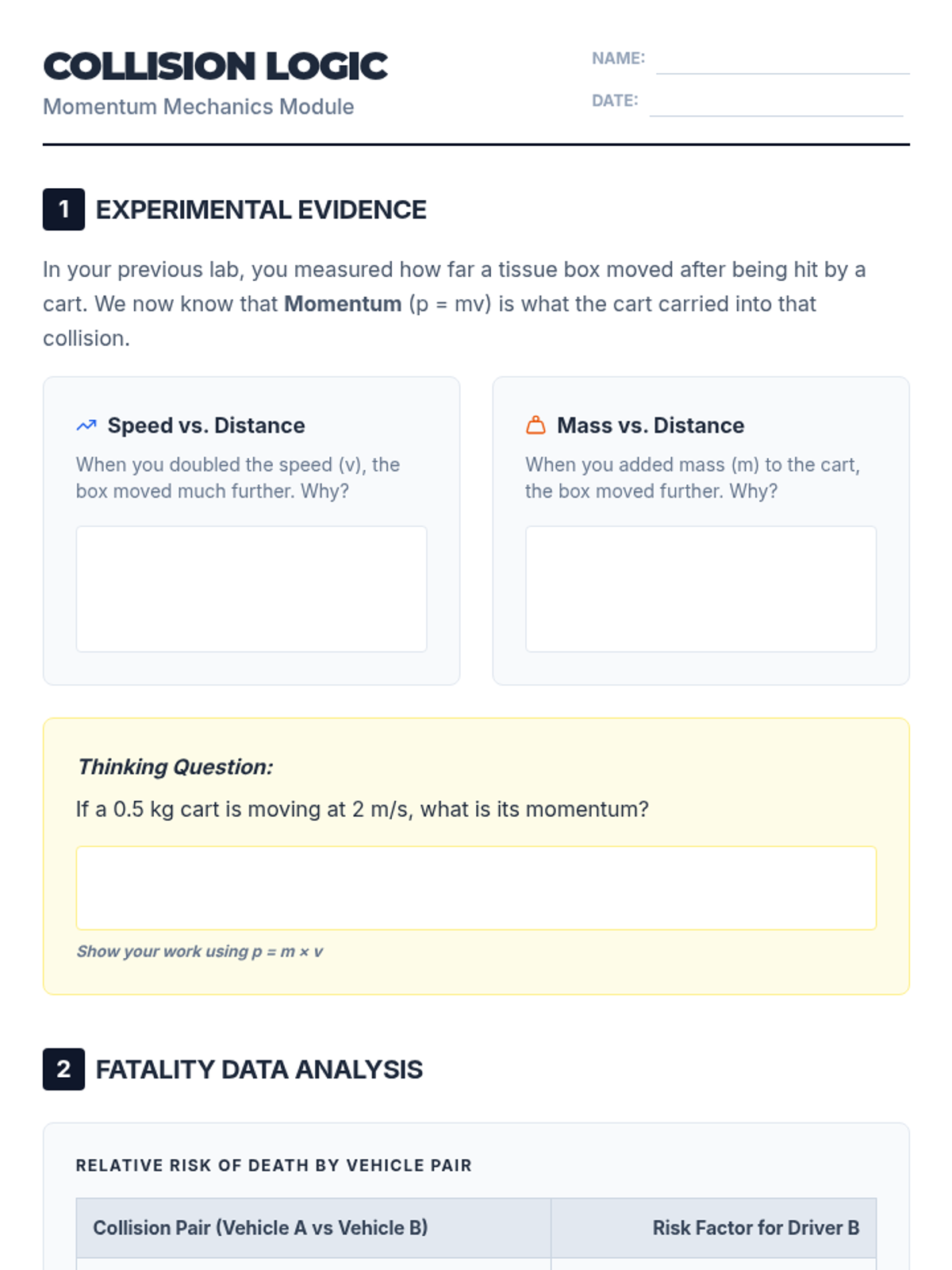
A practice worksheet where students connect their lab observations to the mathematical model of momentum. Revised for better page flow and rendering reliability.
A visual presentation connecting experimental lab results to Newton's Third Law, momentum conservation, and real-world vehicle safety data. Includes diagrams of force-time graphs and fatality risk tables. Revised for improved rendering and accessibility.
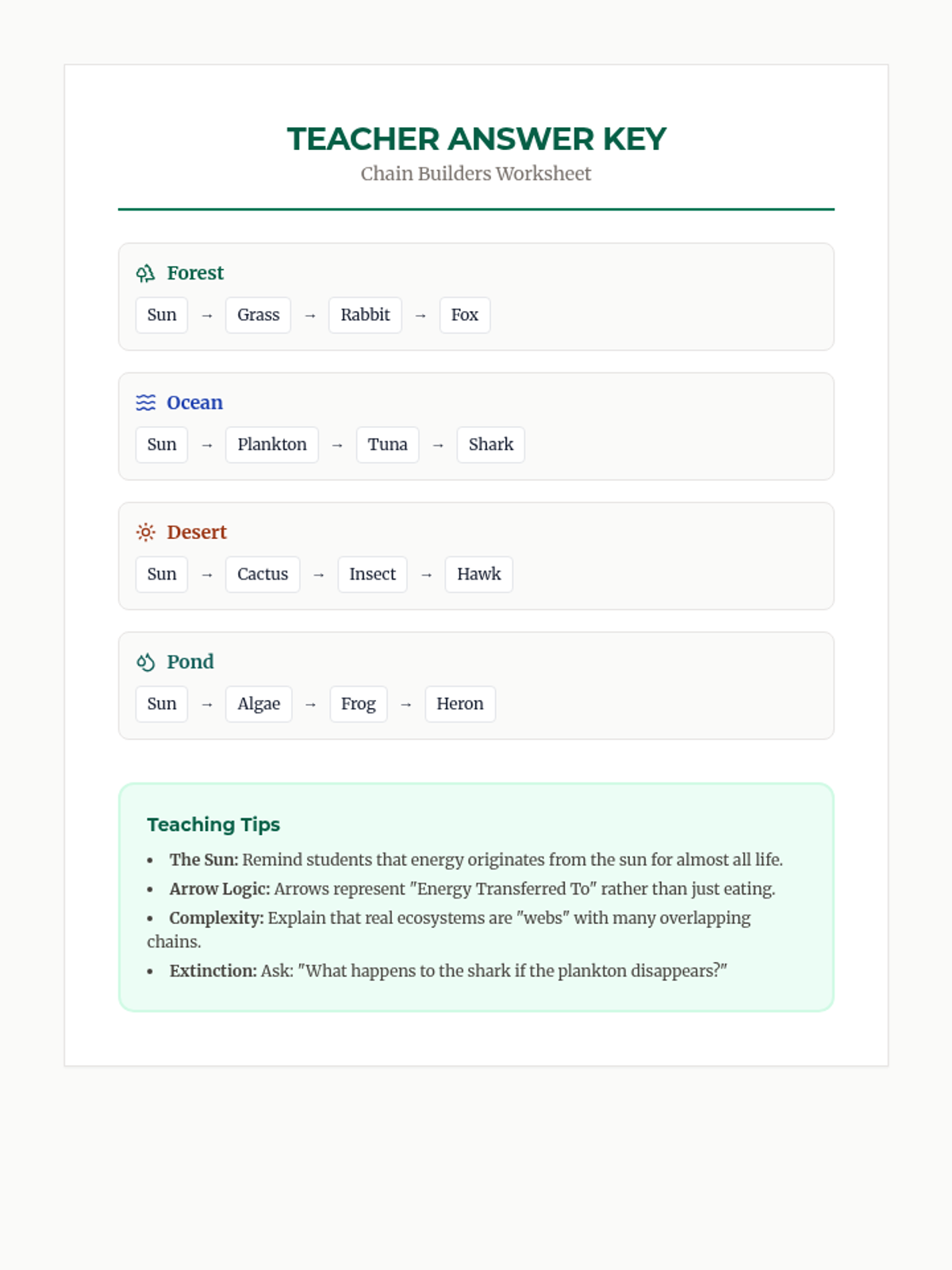
Answer key for the Chain Builders activity with teaching tips for instructors.
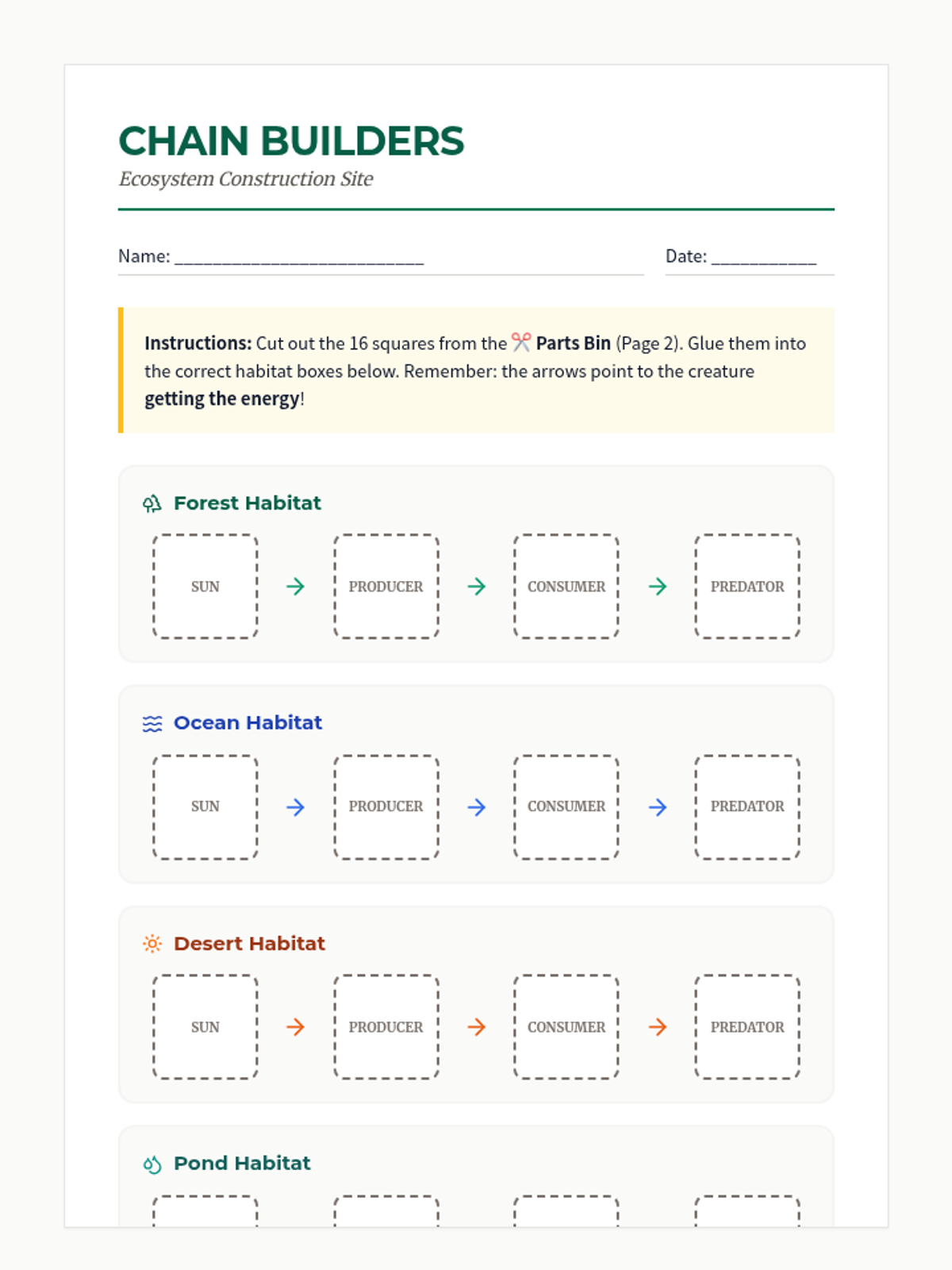
An interactive cut-and-paste activity where students build food chains for four different habitats: Forest, Ocean, Desert, and Pond.
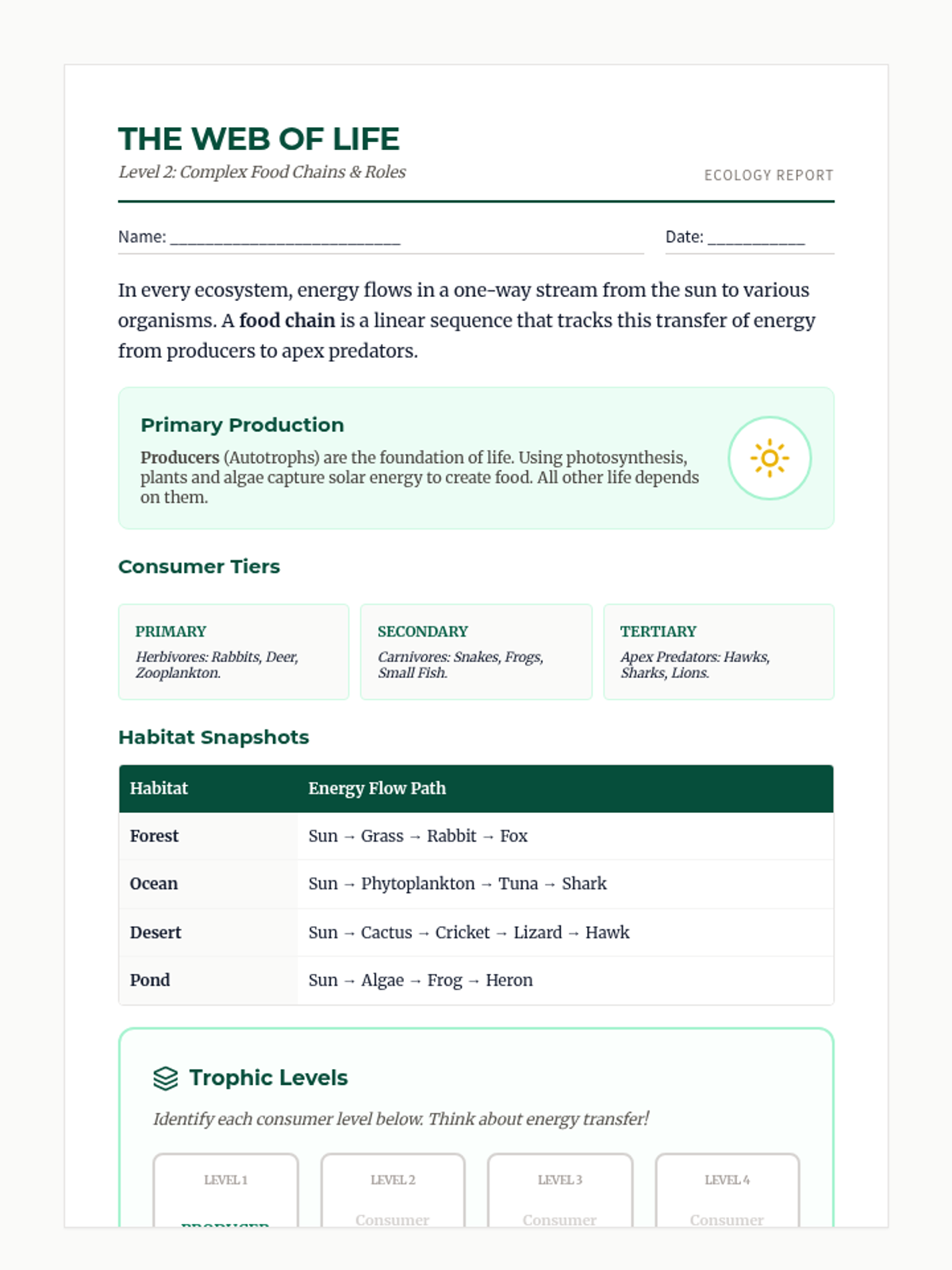
A more advanced reading passage for intermediate readers covering trophic levels, herbivores, carnivores, and the 10% energy rule.