Introductory slide deck for the 'Station Sync' lesson, covering instrument standardization, systematic data logging, and the importance of tracking weather trends.
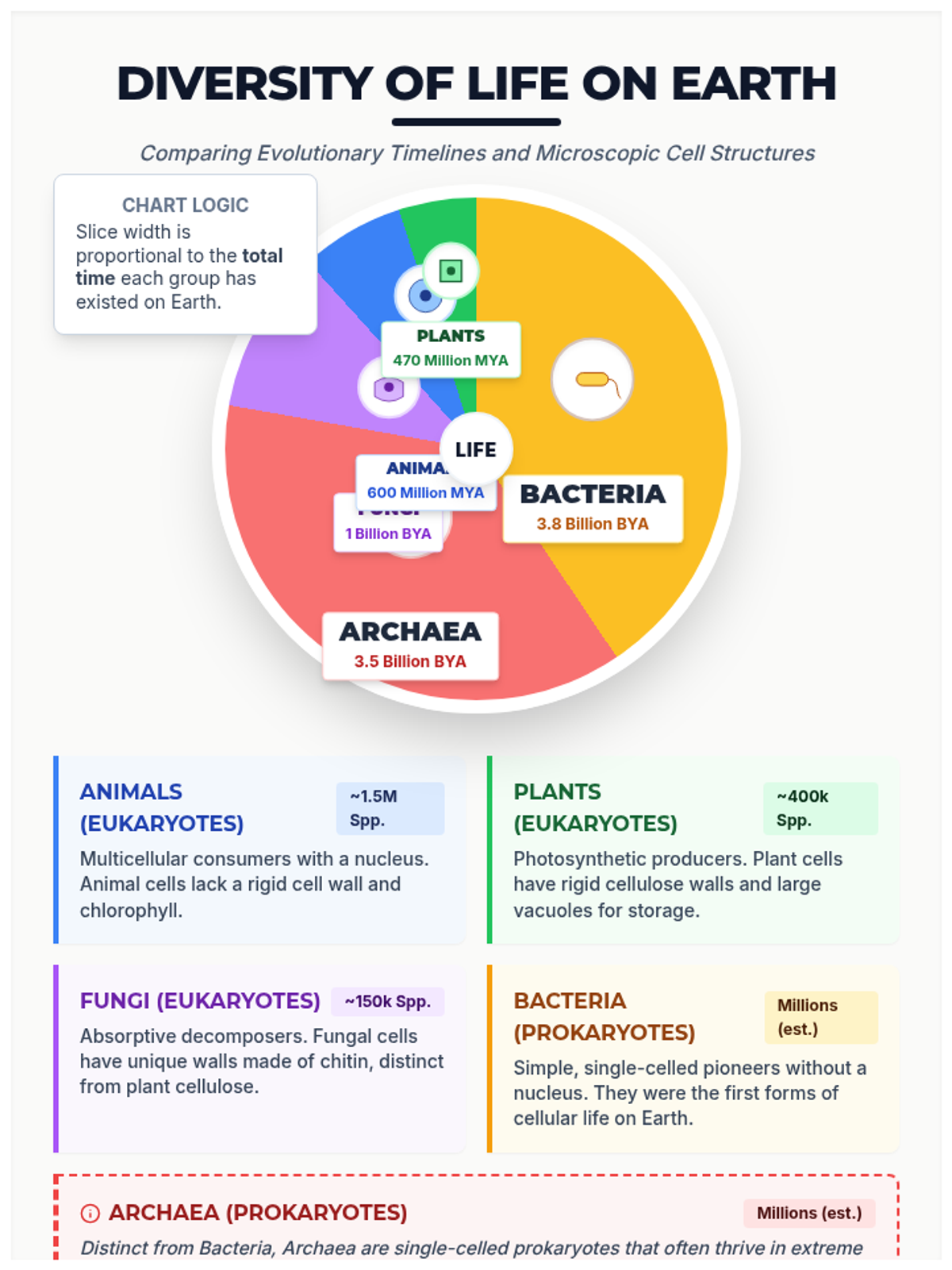
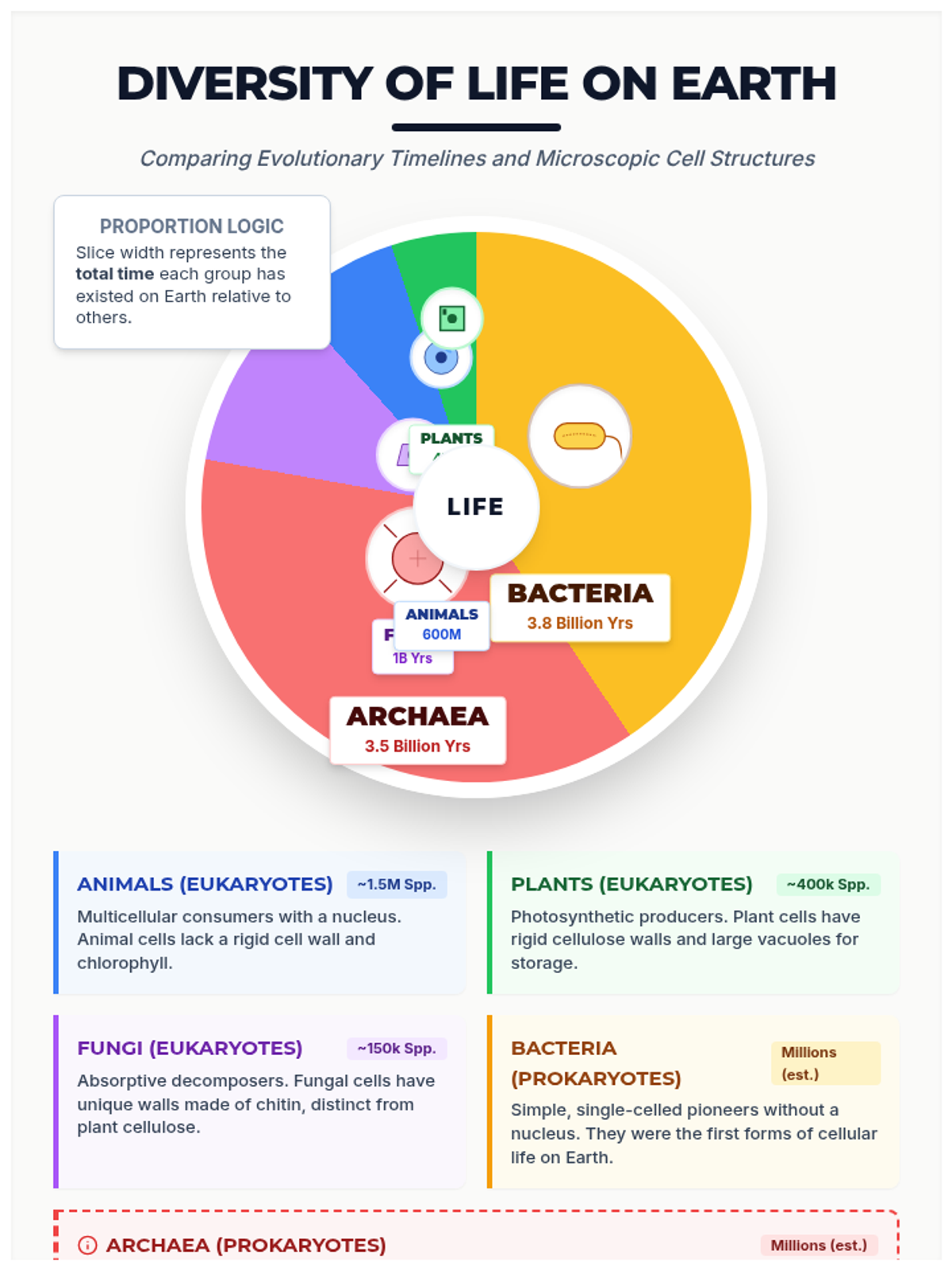
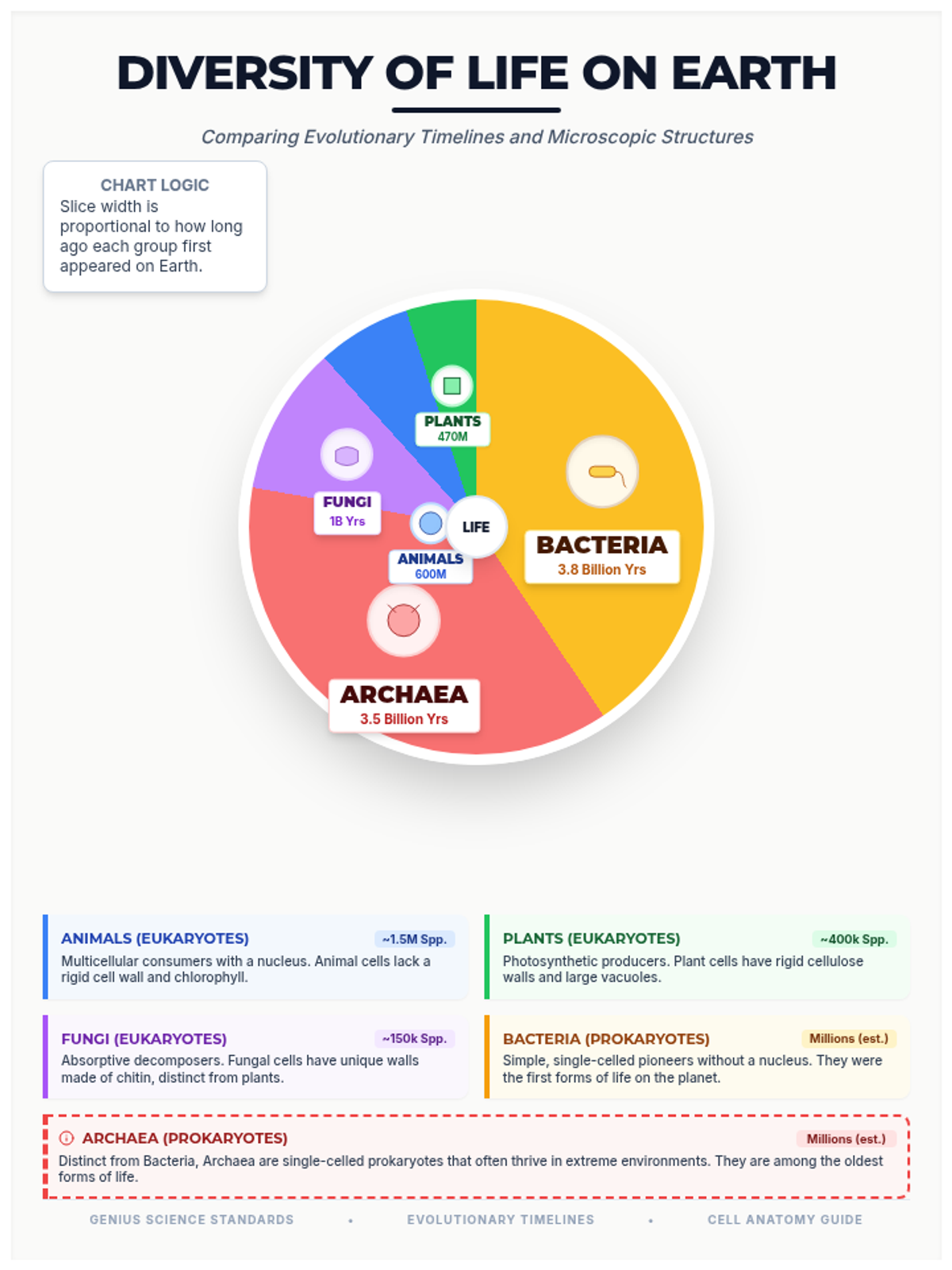
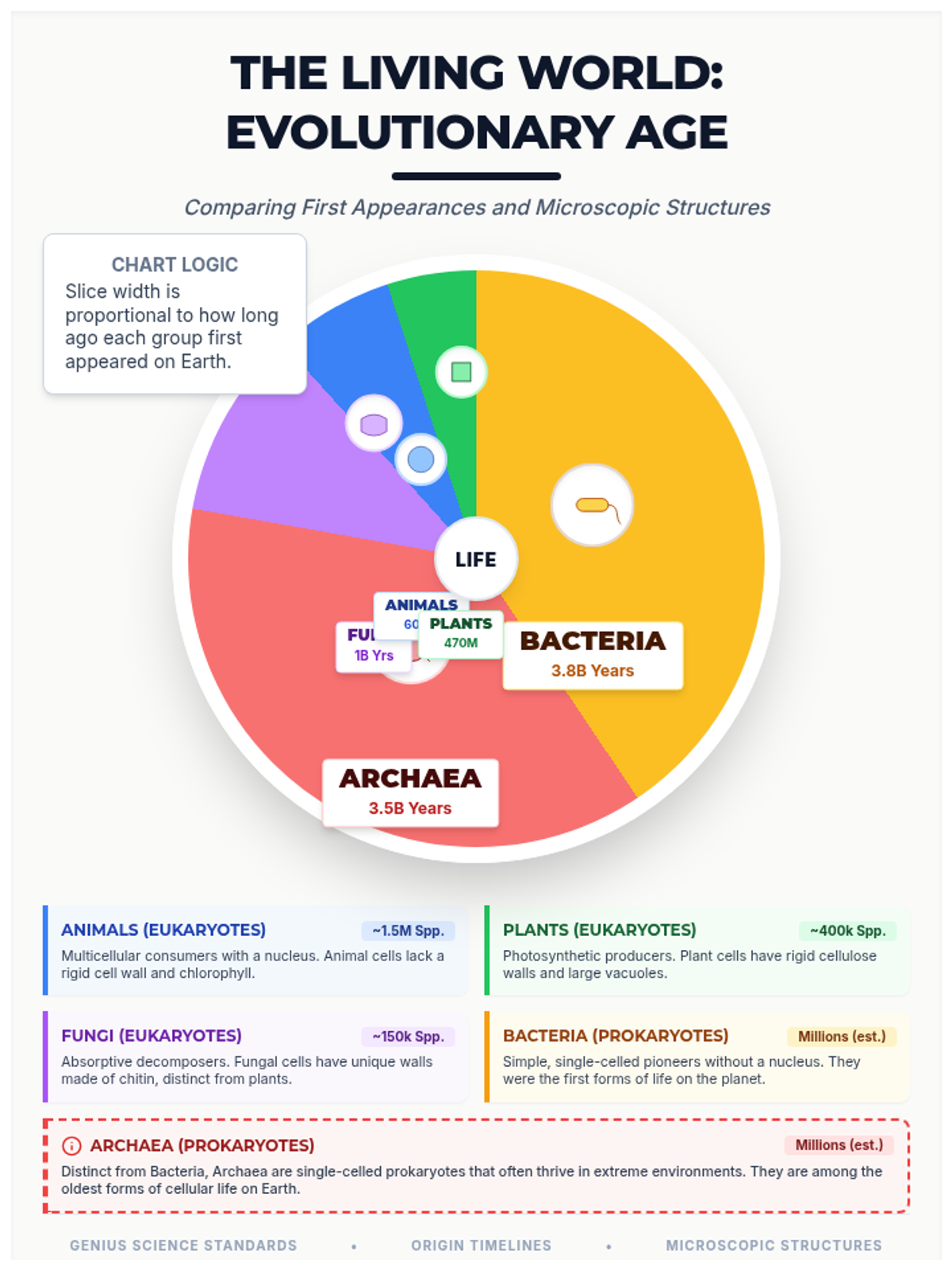
An updated Kingdoms of Life classroom poster where the pie chart slices are proportional to the time each group has existed on Earth. The Virus slice has been replaced by Archaea (Prokaryotes), and each slice includes a detailed visual representation of a cell and the group's origin date. Labels have been repositioned for maximum legibility.
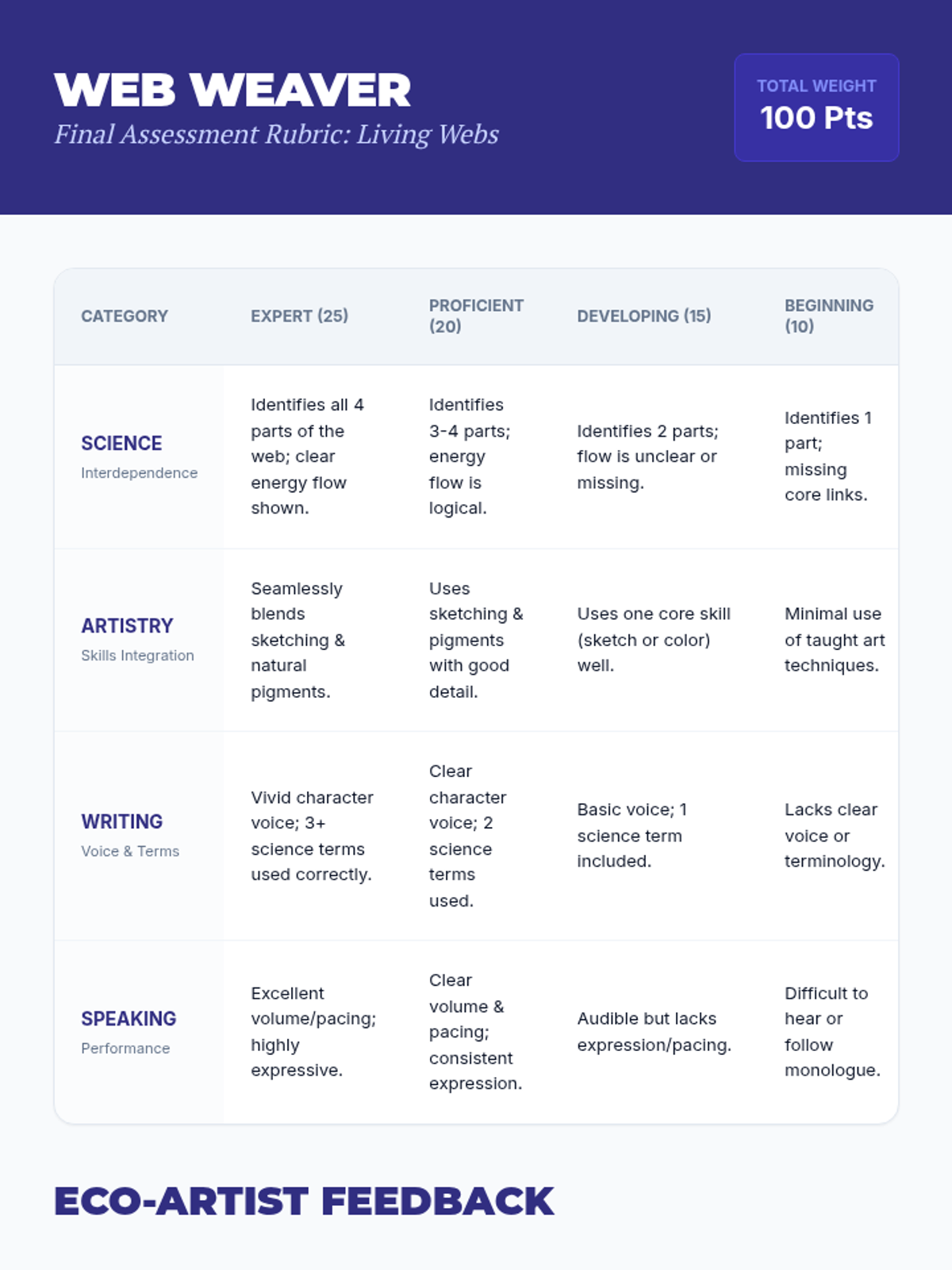
Professional assessment tool for teachers. Fixed incomplete point scale, improved category label visibility, and corrected feedback box page breaks. Increased space for teacher notes.
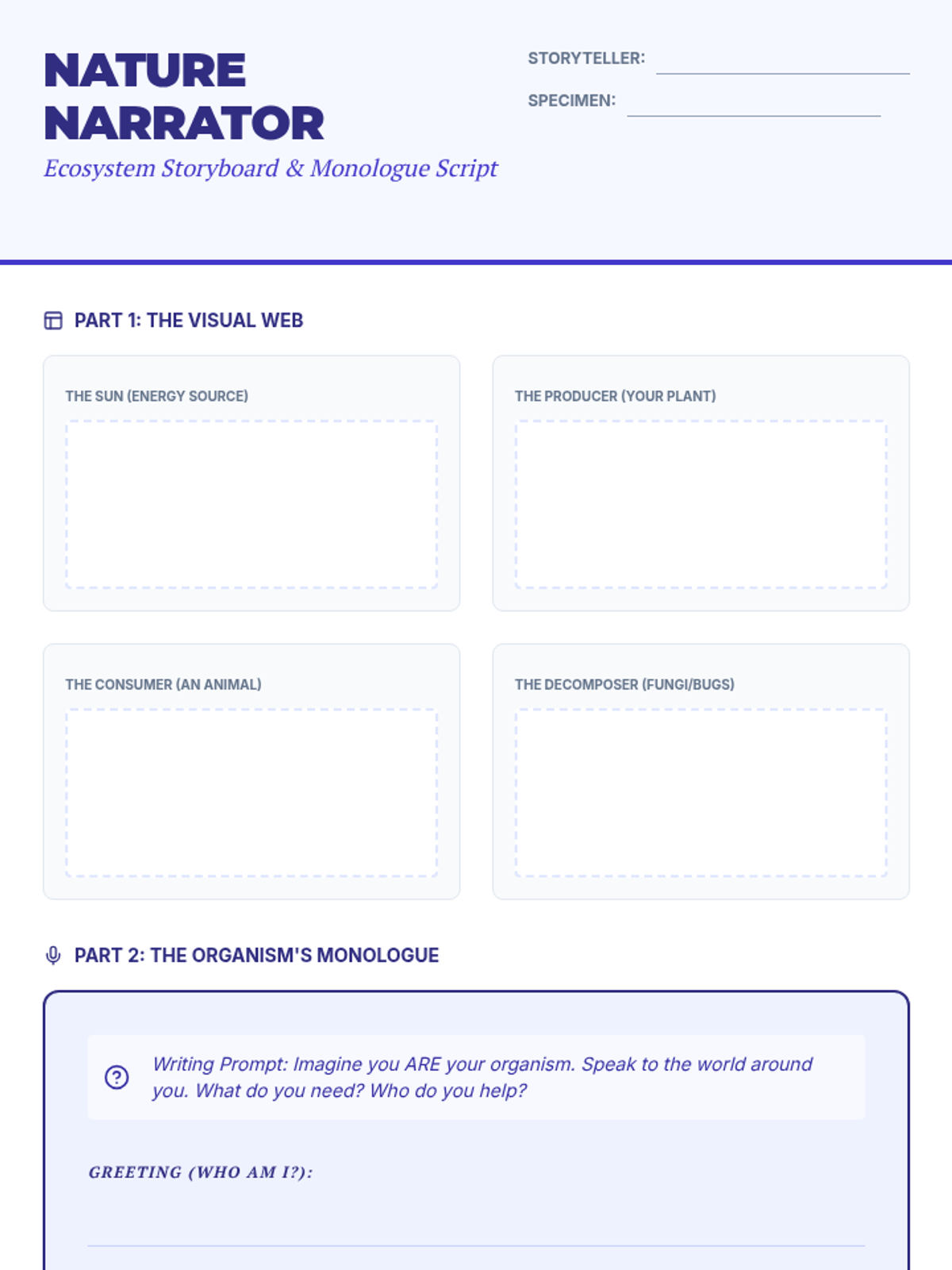
Creative planning sheet for ecosystem storyboards and monologues. Fixed illegible dark work areas and orphaned sections. Increased drawing box sizes.
A presentation that bridges science and storytelling, teaching students about ecological interdependence and how to translate scientific concepts into narrative art.
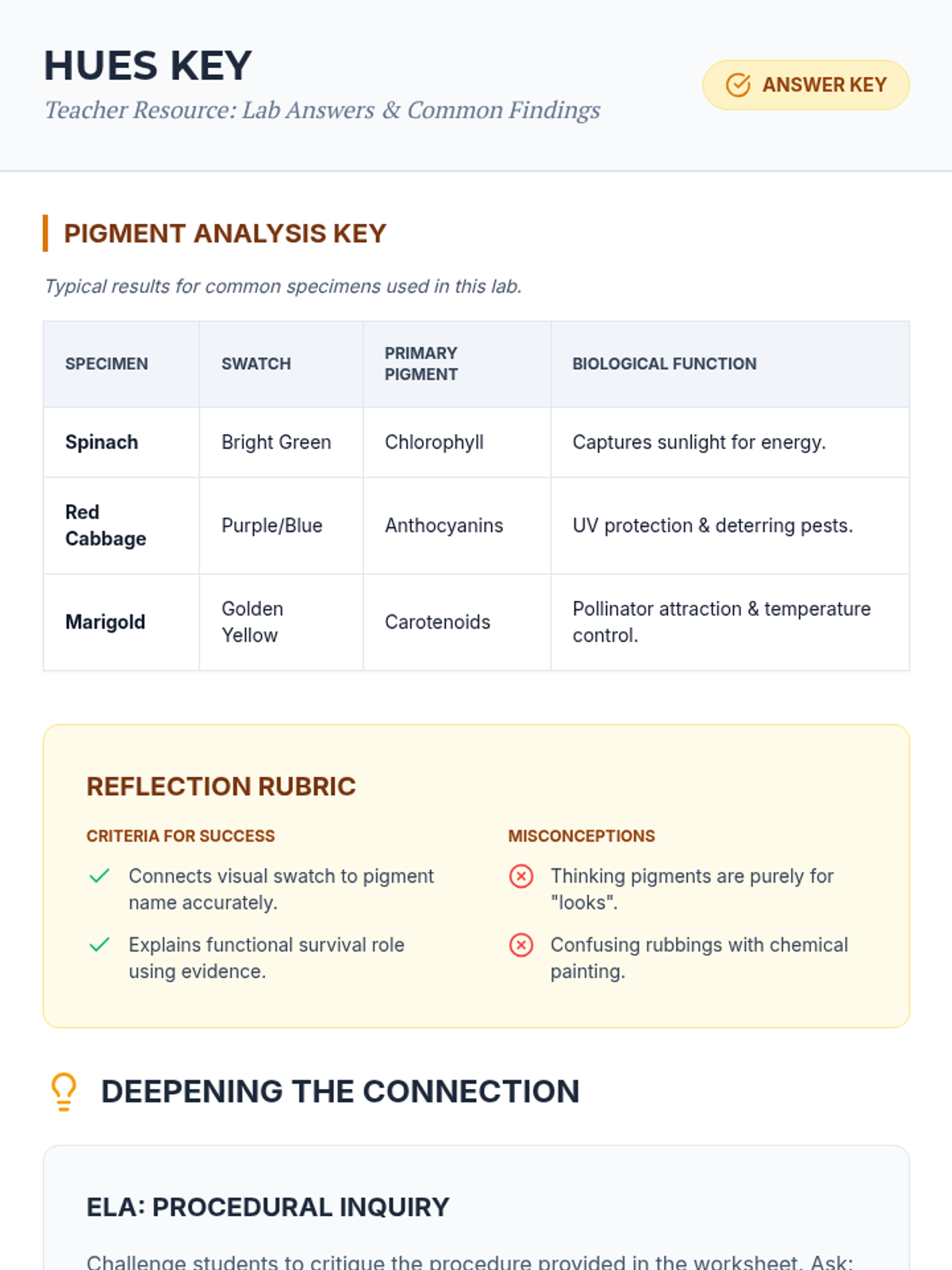
Teacher answer key and reference for the Pigment Passport lab. Fixed orphaned headers and improved layout distribution with expanded extension activities.
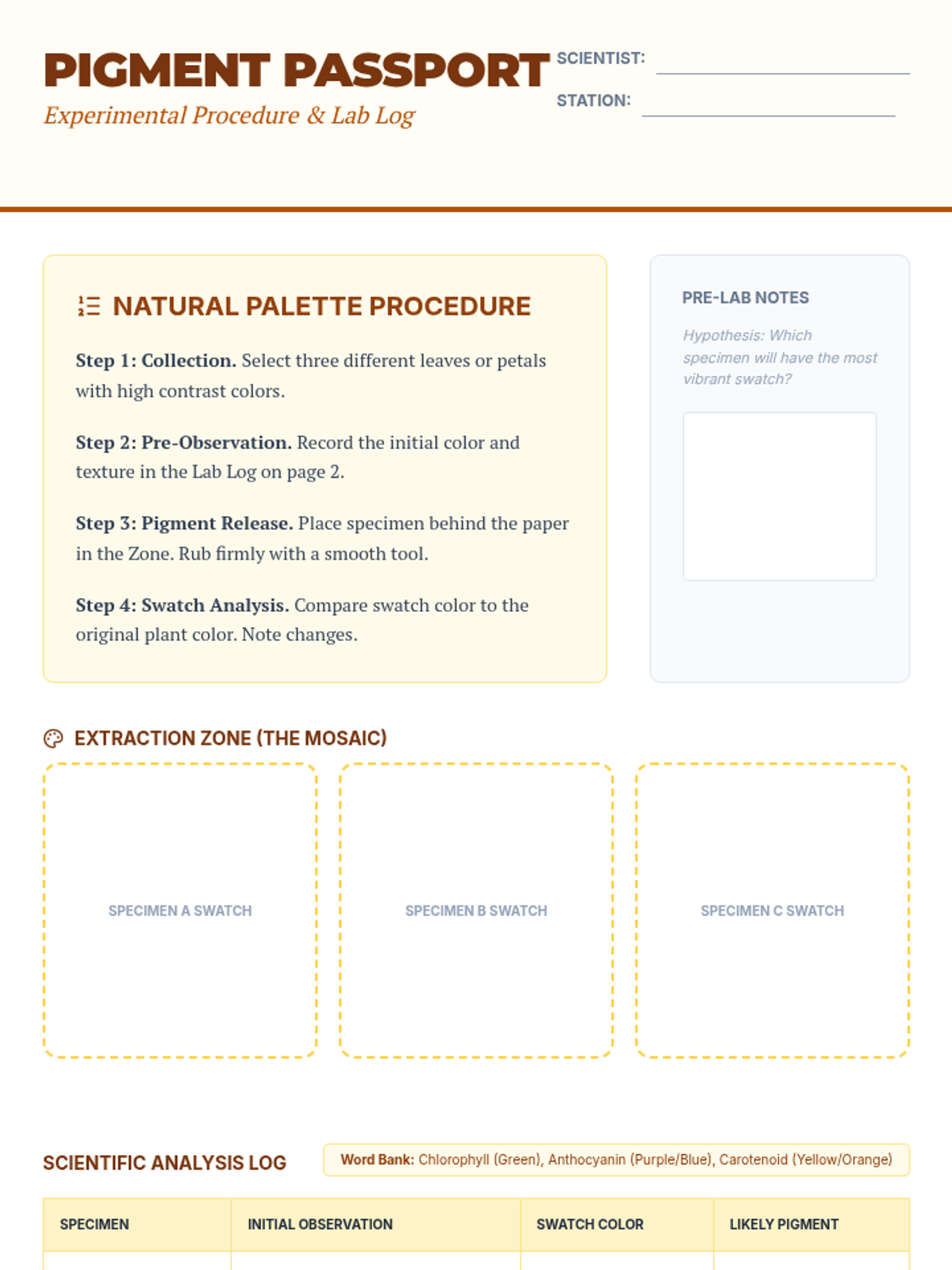
Lab report template for plant pigment extraction. Fixed dark work areas, cramped table rows, and added a pre-lab notes section for layout balance. Includes a tiny pigment word bank.
A visual presentation exploring the chemistry of plant pigments, their biological functions, and the process of natural extraction for artistic use.
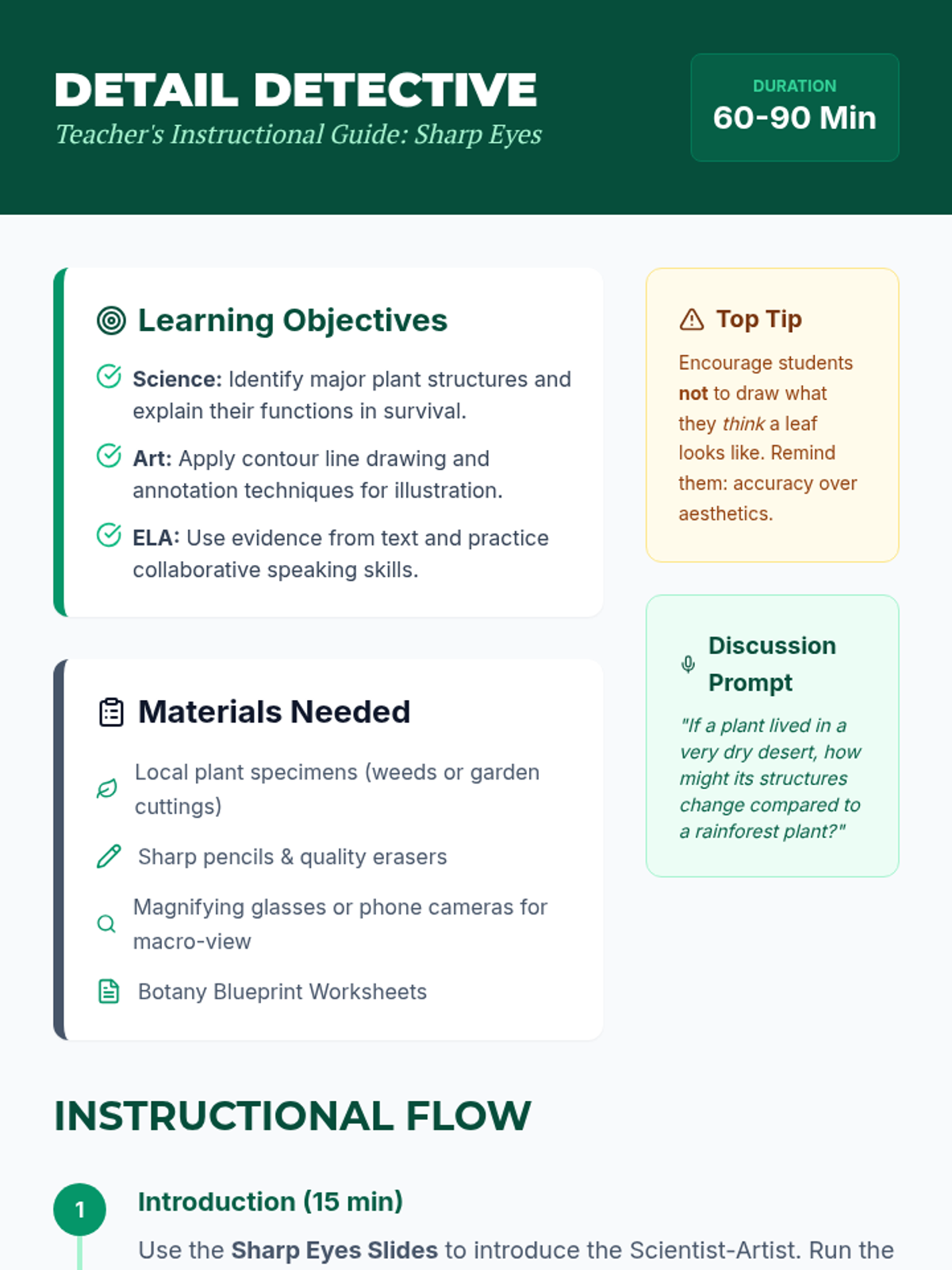
A detailed instructional guide for teachers, providing learning objectives, material lists, discussion prompts, and a step-by-step lesson flow. Fixed page breaks and layout spacing.
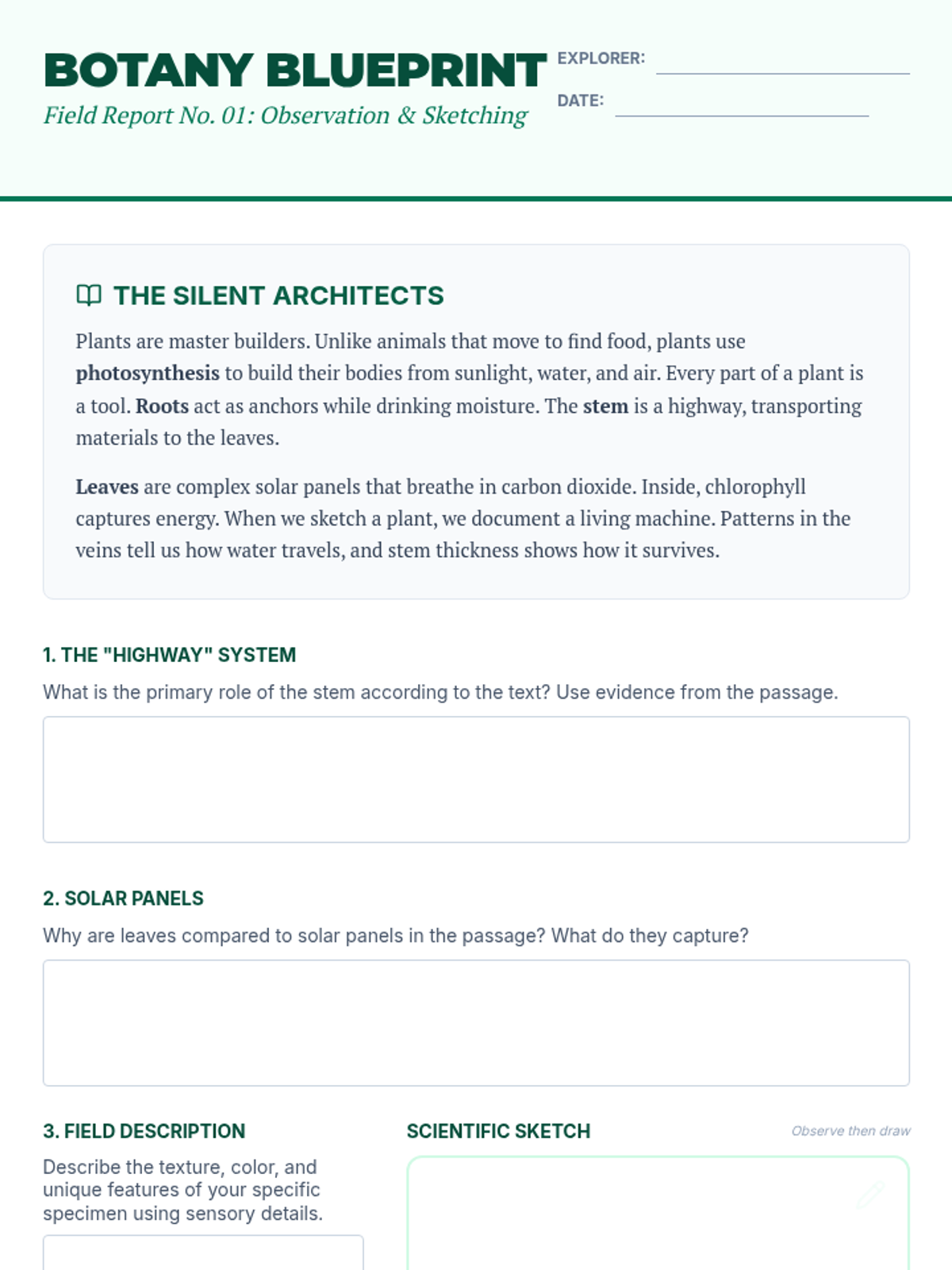
Comprehensive worksheet combining reading comprehension on plant biology with a dedicated area for scientific sketching and peer feedback. Optimized to 2 pages with improved space utilization and larger response areas.
An engaging slide deck introducing students to the intersection of botanical science and observational art, featuring plant anatomy and scientific sketching techniques.
Instructional slides for the Survival Strategies lesson, covering ecological niches, traits of generalists and specialists, and their respective survival outcomes in changing vs. stable environments. Includes field vocabulary and conservation risks.
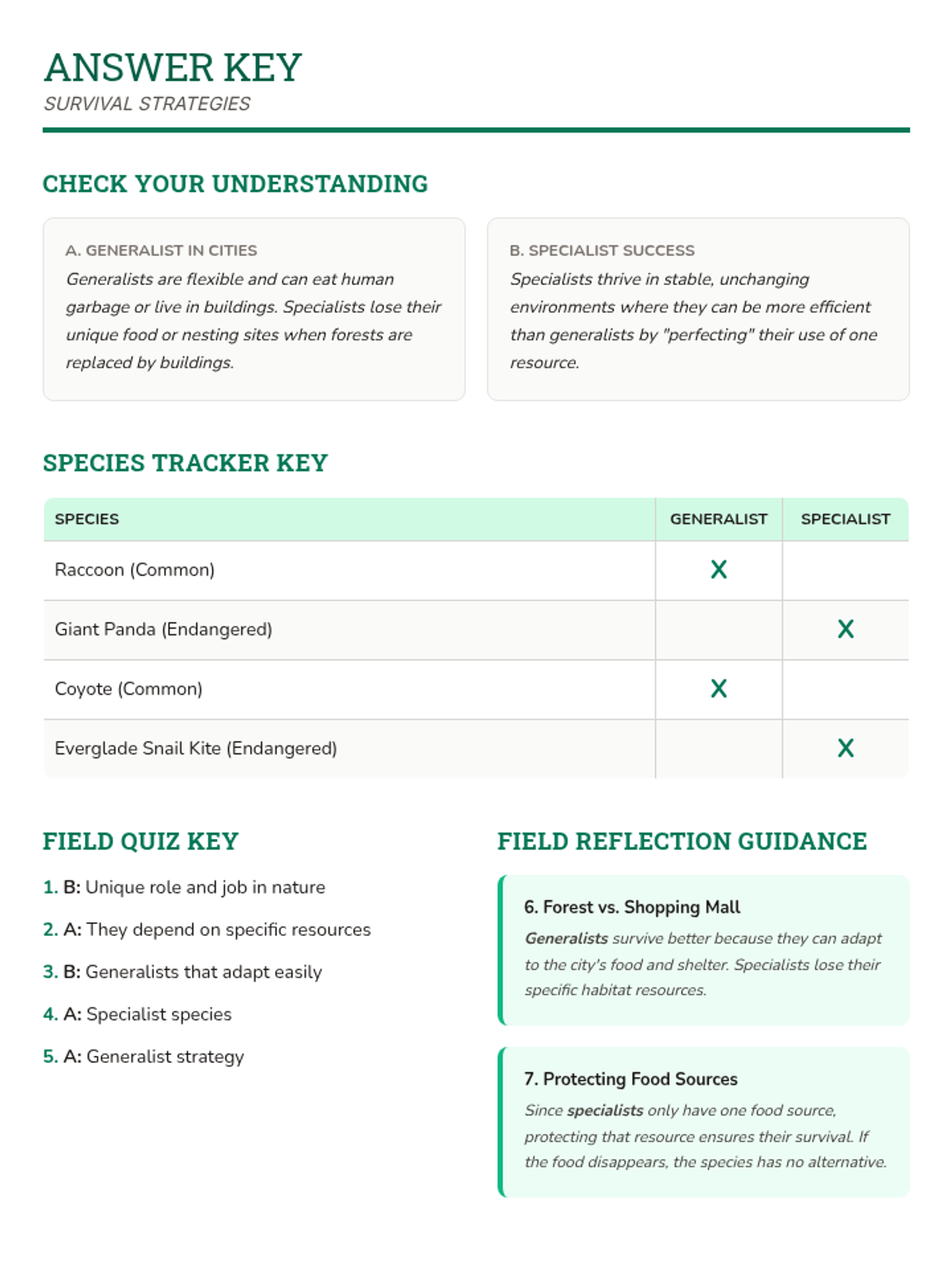
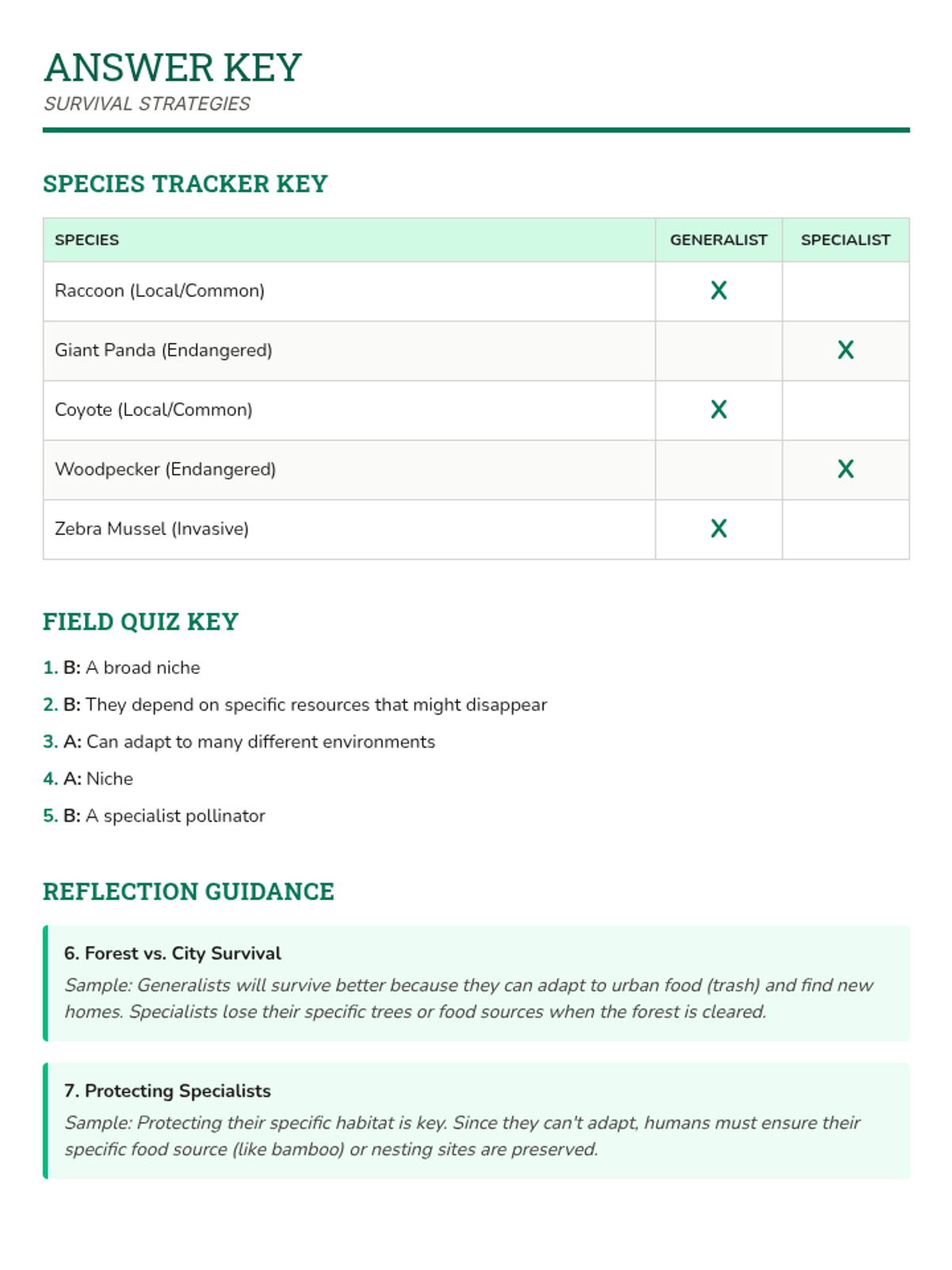
Revised teacher answer key for the Survival Strategies worksheet. Compact design to fit on a single page with improved visual alignment.
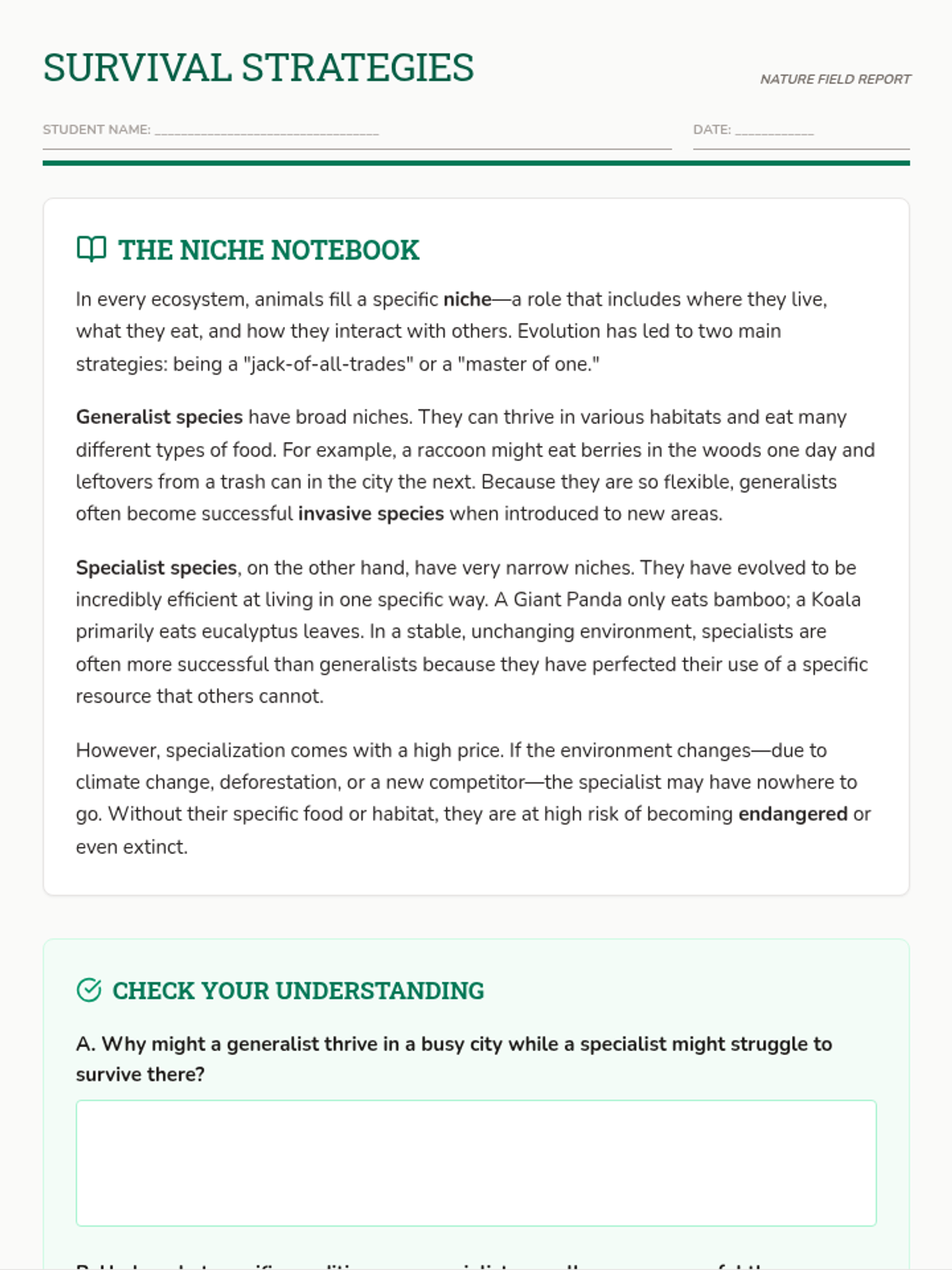
Revised Survival Strategies worksheet featuring a new 'Field Vocabulary' section, an expanded reading passage about generalist and specialist niches, new 'Check Your Understanding' short-answer questions, and a streamlined tracker and quiz layout.
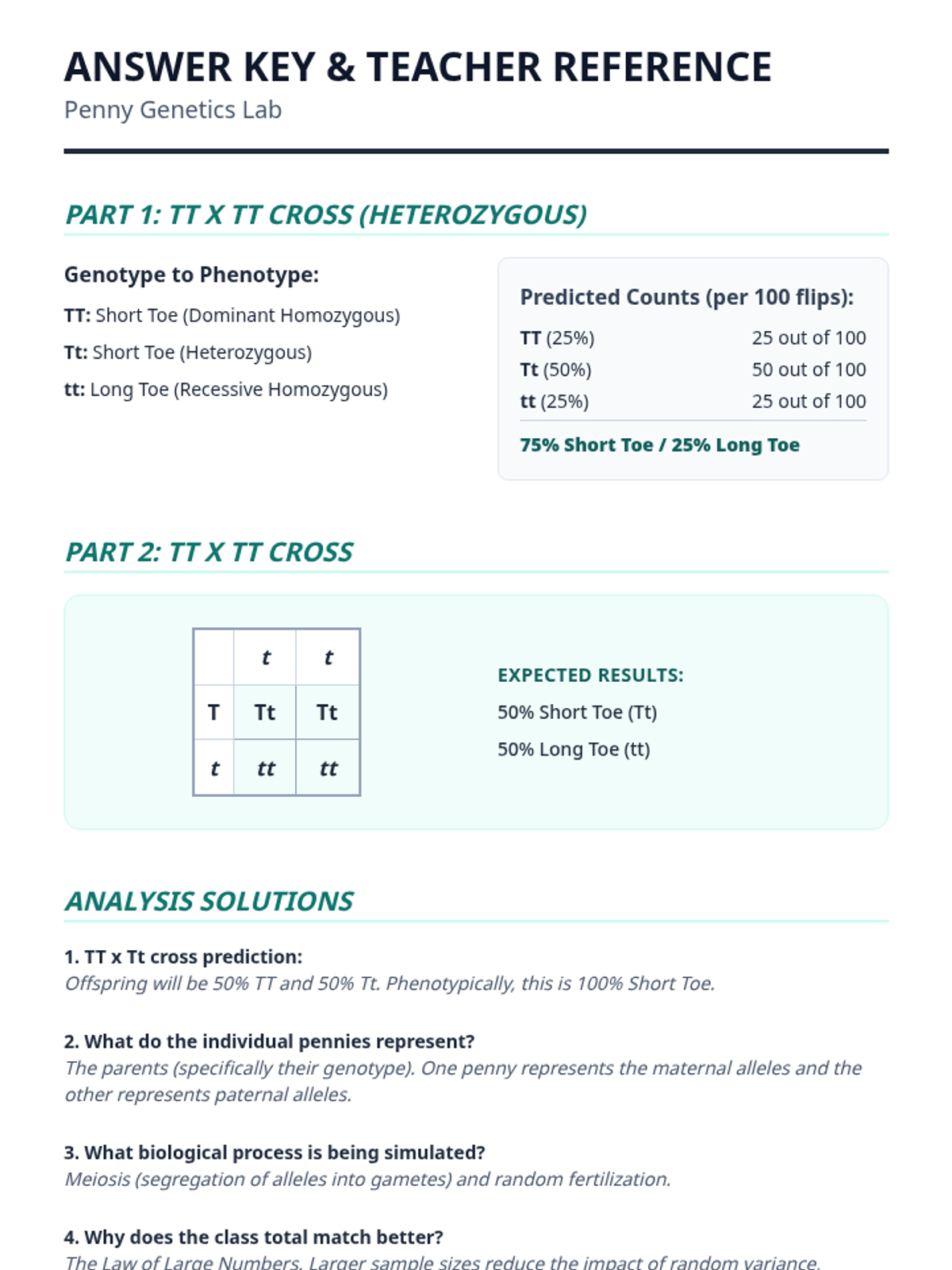
Answer key for the Penny Genetics Lab, providing Punnett square solutions, expected ratios, and sample answers for the analysis questions.
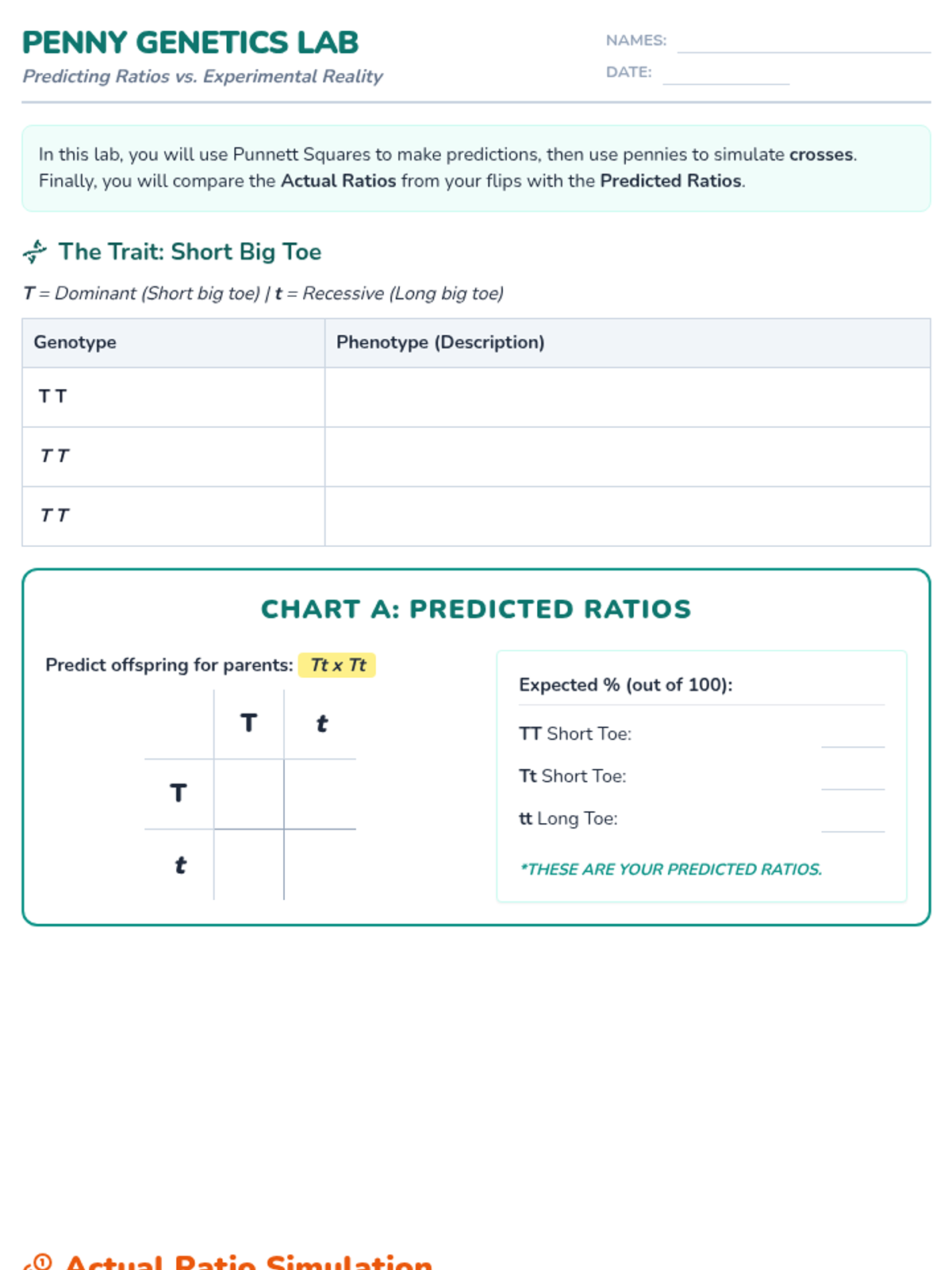
A redesigned 3-page student lab worksheet for the Penny Genetics activity. It includes space for Punnett square predictions, 100 coin-flip tallies, comparison charts, and analysis questions.
Slide deck for the Penny Genetics lesson, covering the science of chance, lab setup instructions, and the importance of sample size.
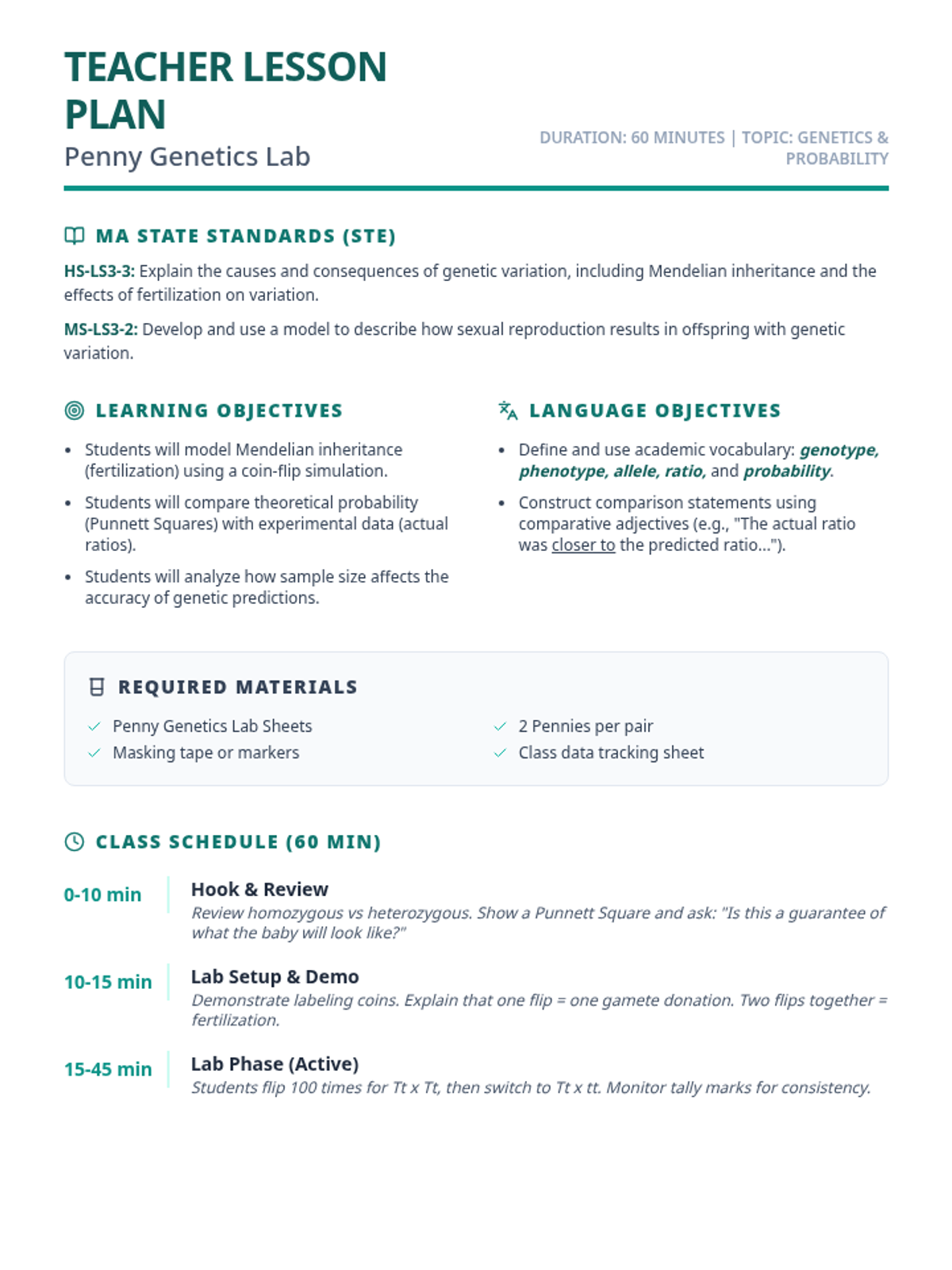
Teacher lesson plan for the Penny Genetics Lab, detailing the 60-minute class structure, required materials, and discussion prompts. Updated with MA State Standards, Learning Objectives, and Language Objectives.
A visual review slide deck for teaching carrying capacity, limiting factors, and human environmental impact. Includes high-impact graphics, clear definitions, and a case study prompt. Revised for clarity and corrected typos.
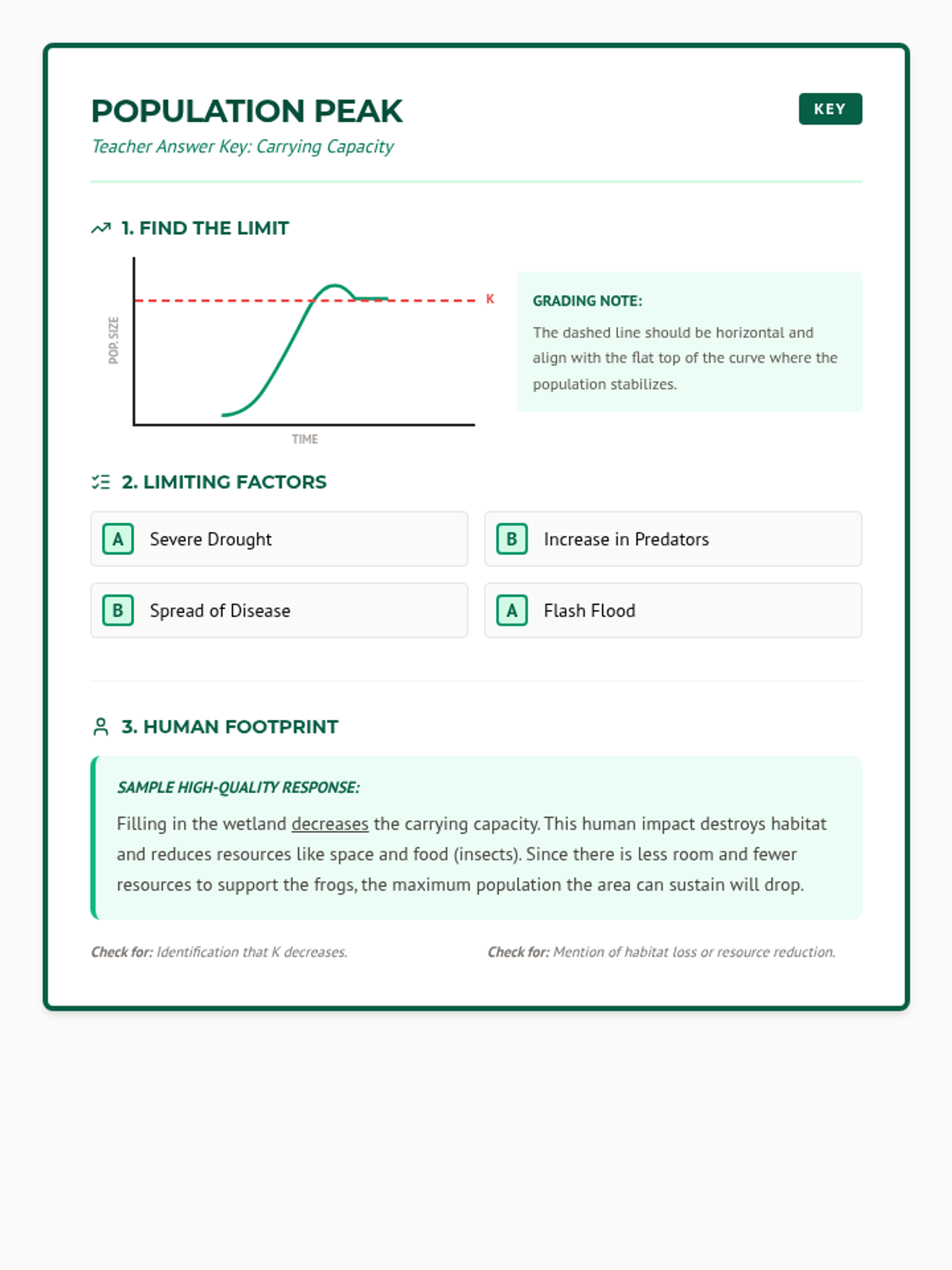
An answer key for the Population Peak exit ticket, providing correct graph placement, limiting factor classifications, and a sample high-quality response for the human impact question.
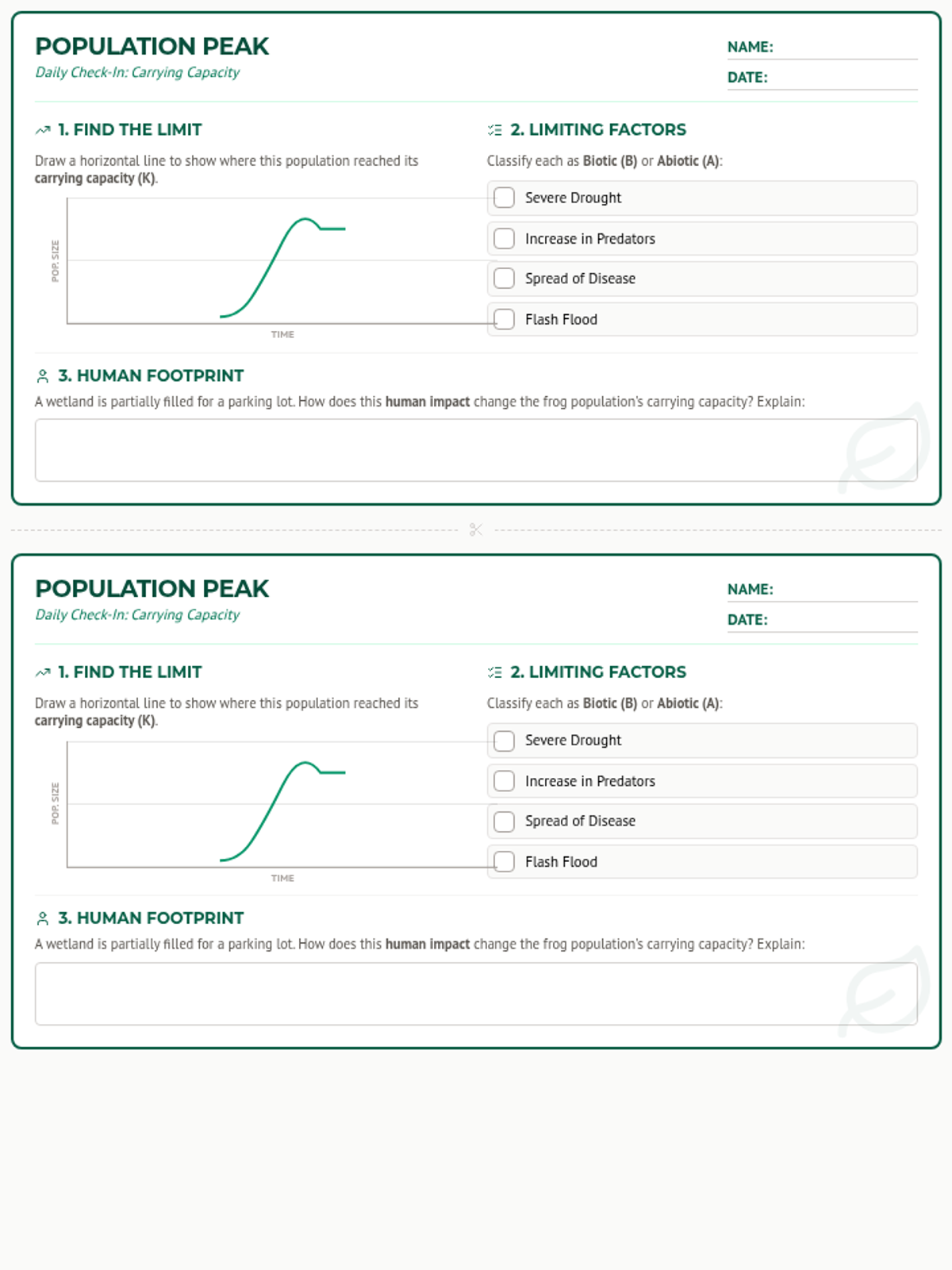
A set of two printable exit tickets on a single page designed to review carrying capacity. It includes a graph interpretation task, a sorting activity for biotic and abiotic limiting factors, and a short response question on human environmental impact. Revised for strict height constraints to ensure both fit on one page.
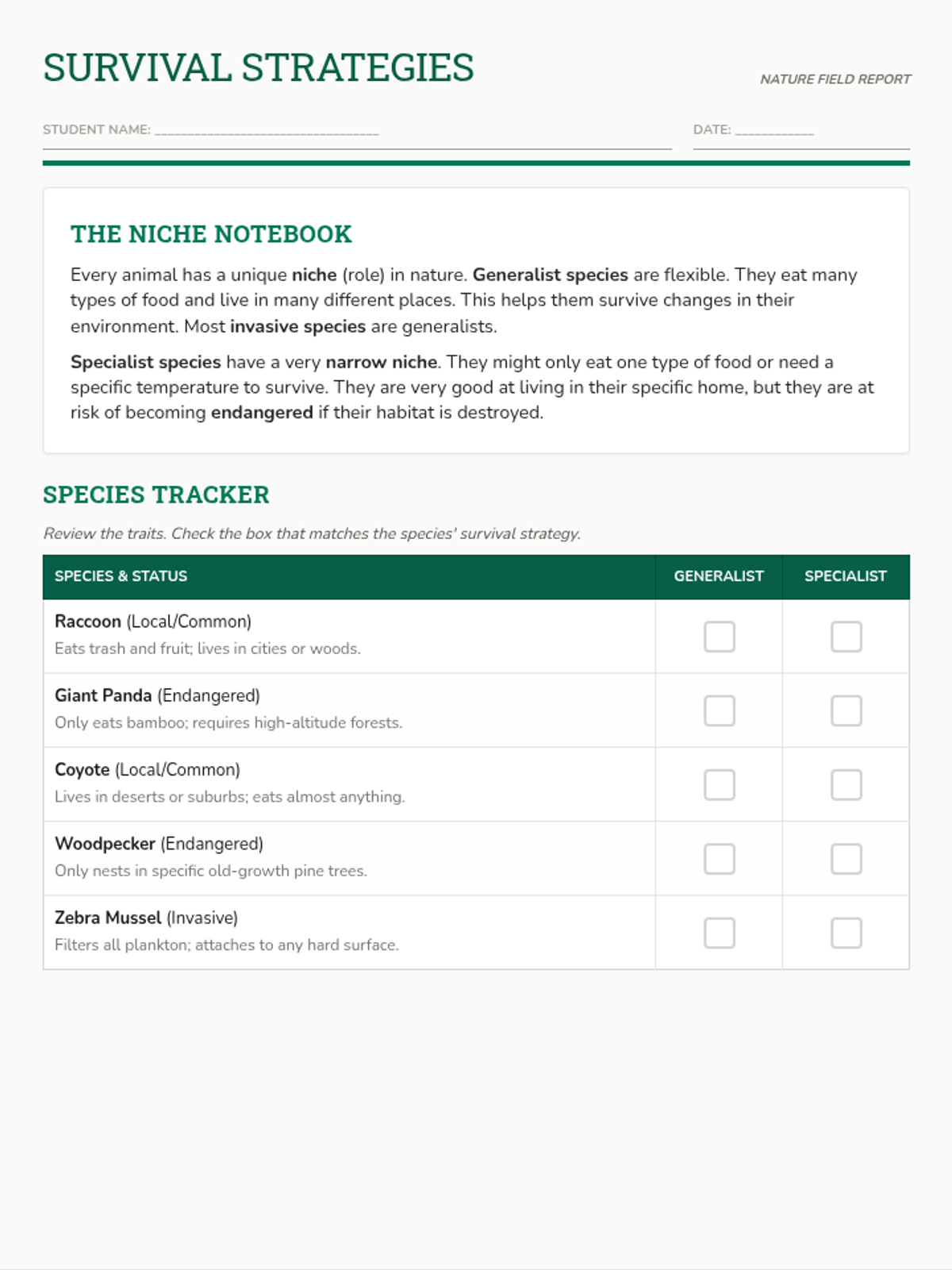
Final version of the Survival Strategies worksheet. Compact, two-page layout optimized for print with reading, tracker, quiz, and reflection.
A visual presentation exploring the differences between generalist and specialist species. Includes comparisons for Raccoons vs. Koalas, Coyotes vs. Pandas, and Rats vs. Polar Bears.
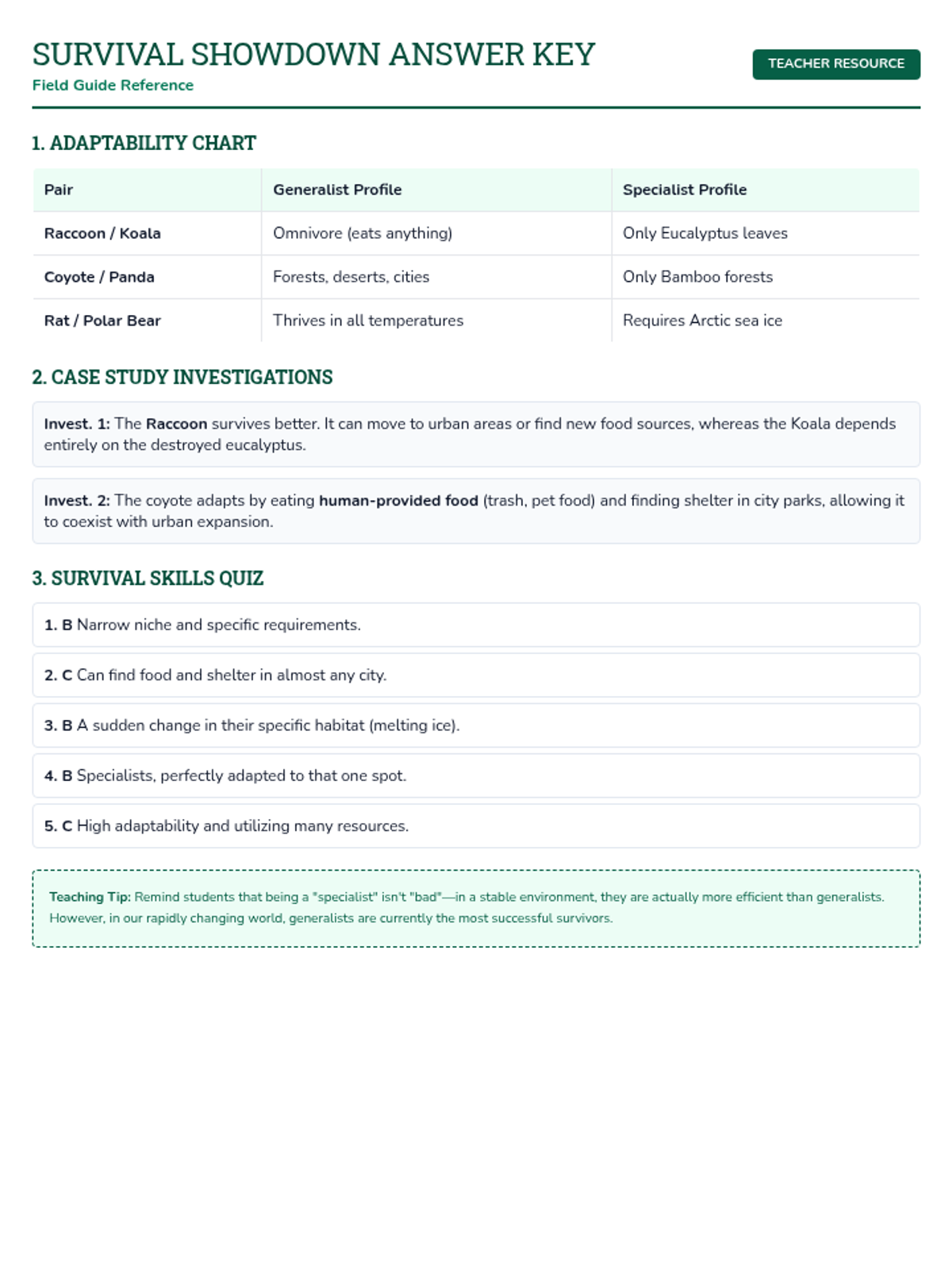
The teacher answer key for the Survival Showdown worksheet, providing sample responses for open-ended questions and correct choices for the multiple-choice quiz. Optimized for one-page reference.
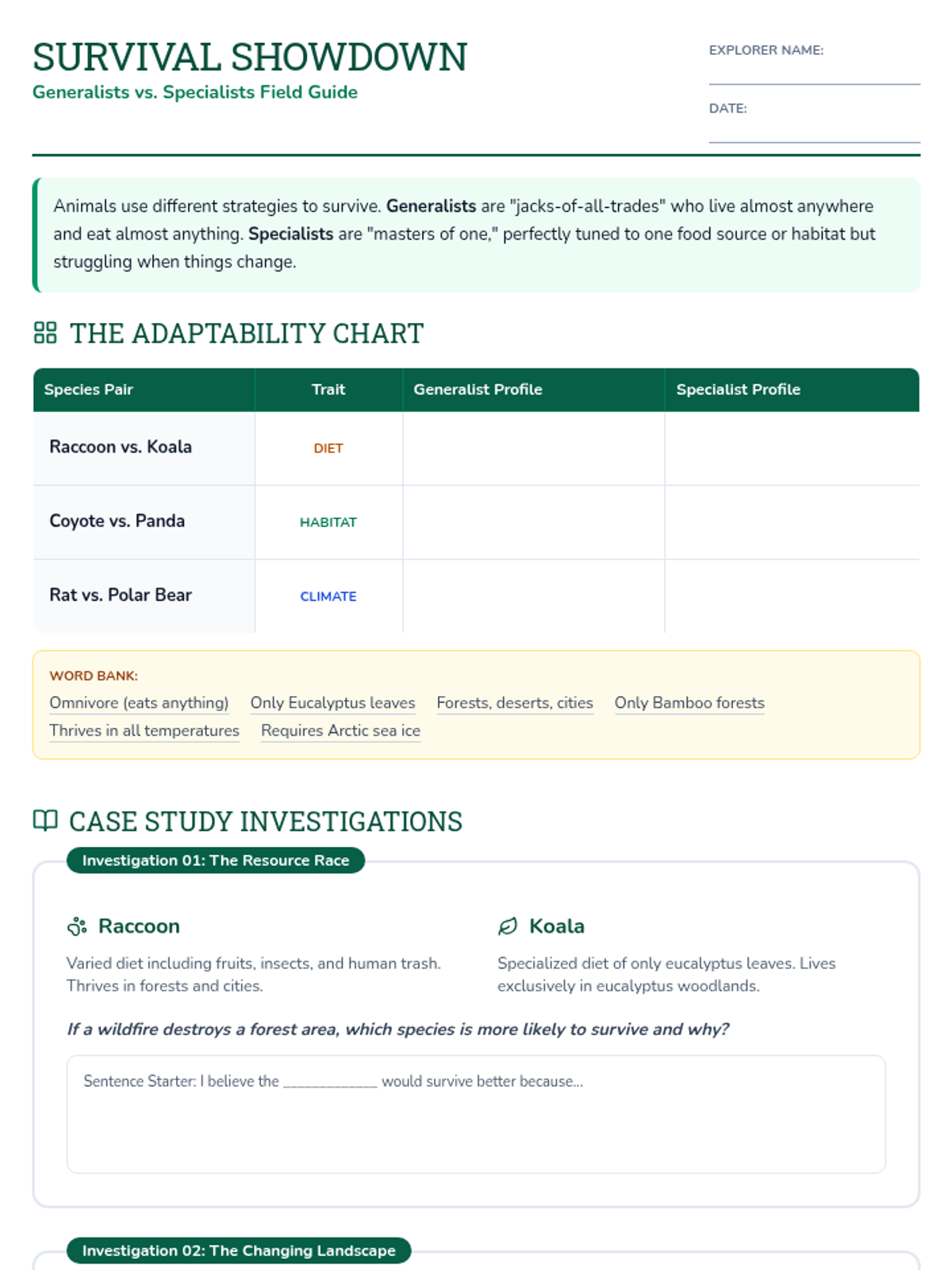
A comprehensive worksheet exploring the survival strategies of generalist and specialist species through three animal pairings. Includes a comparison chart with word bank, detailed case studies with sentence starters, and a multiple-choice assessment. Condensed to fit comfortably within a 3-page printable format.
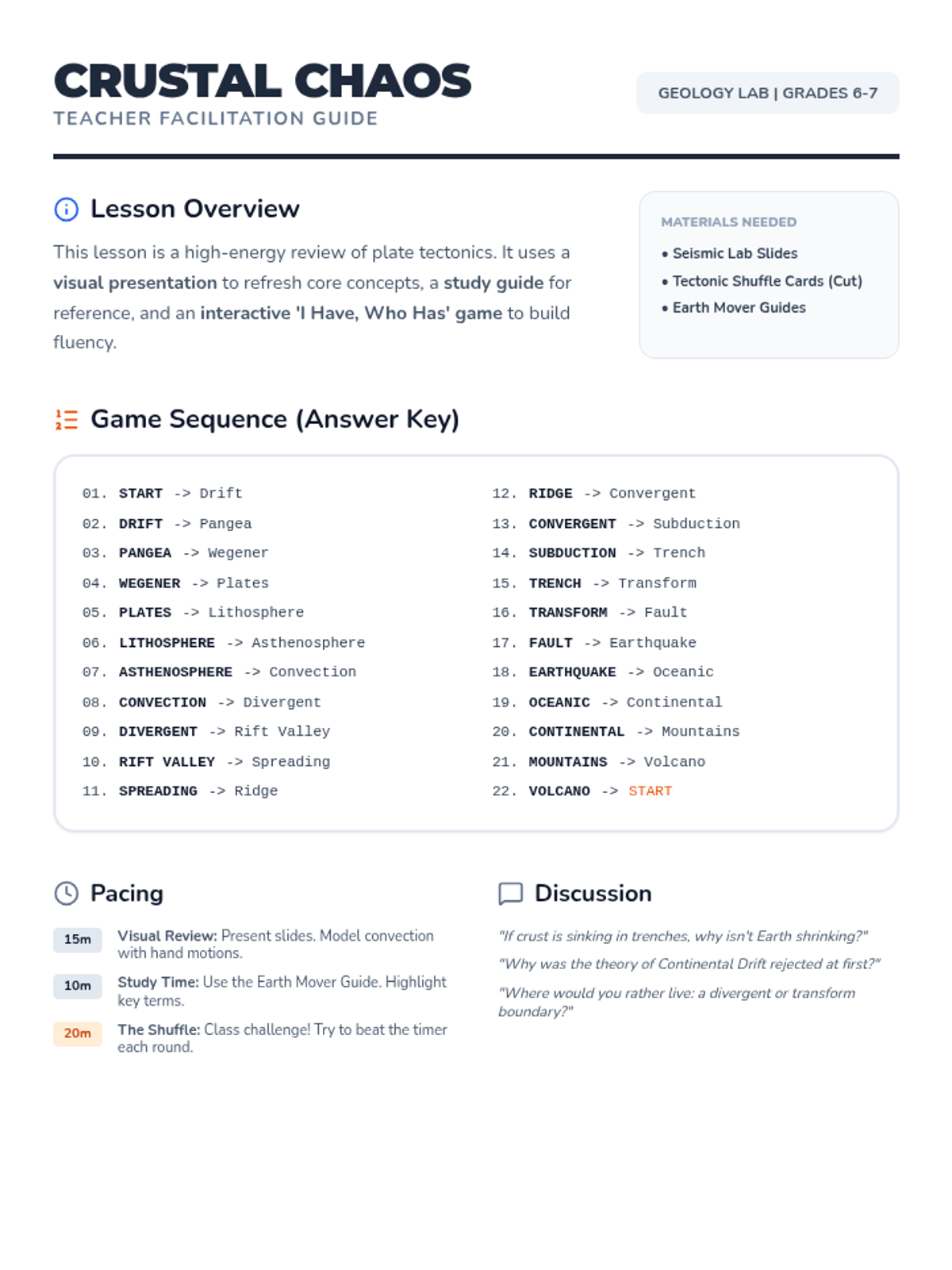
A teacher facilitation guide for the 'Crustal Chaos' lesson. Includes a game sequence answer key, pacing suggestions, and higher-order thinking discussion prompts. Designed to minimize prep time and maximize classroom flow.
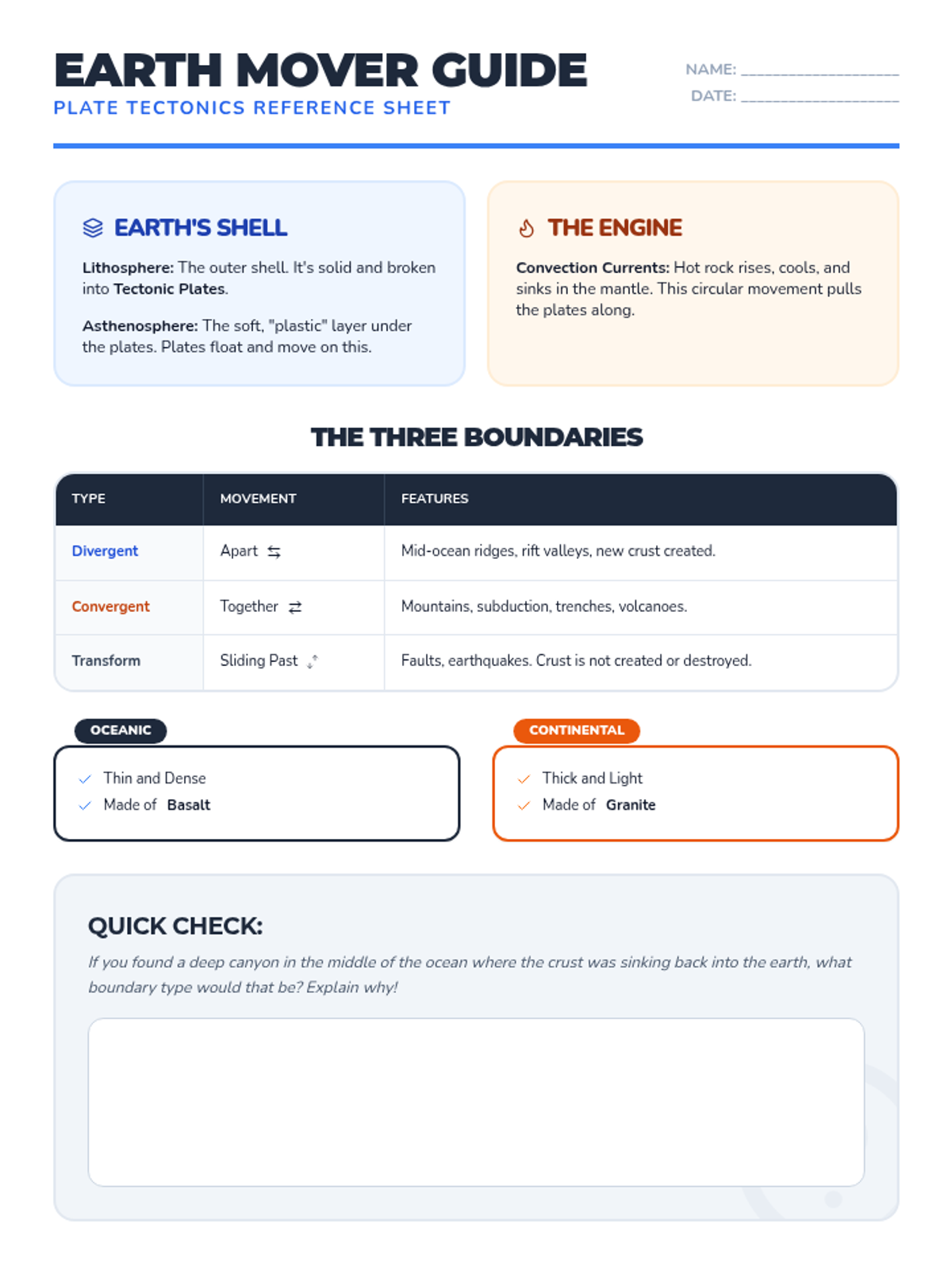
A student-facing reference sheet and study guide for plate tectonics. Includes clear definitions of Earth's layers, a matrix of boundary types, and a comparison of oceanic versus continental crust. Designed with a 6th-grade reading level in mind.
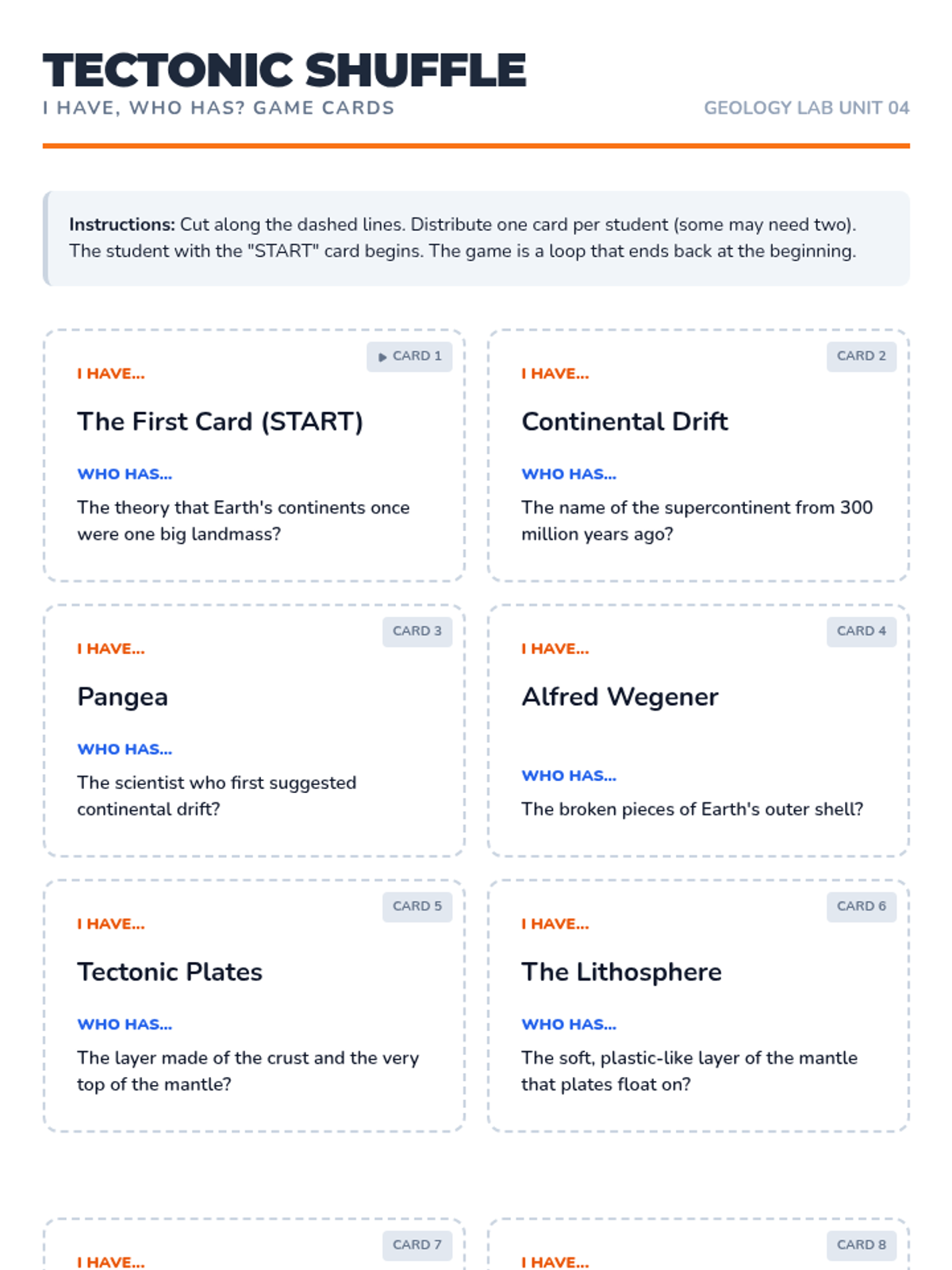
A set of 22 'I Have, Who Has' cards covering key plate tectonics vocabulary. Designed to be cut out and used in a collaborative classroom game. Each card follows a logical sequence to create a complete loop.
A visual slide deck reviewing key plate tectonics concepts including layers of the Earth, convection currents, boundary types, and crust differences. Designed for high engagement with a modern 'Seismic Lab' aesthetic.
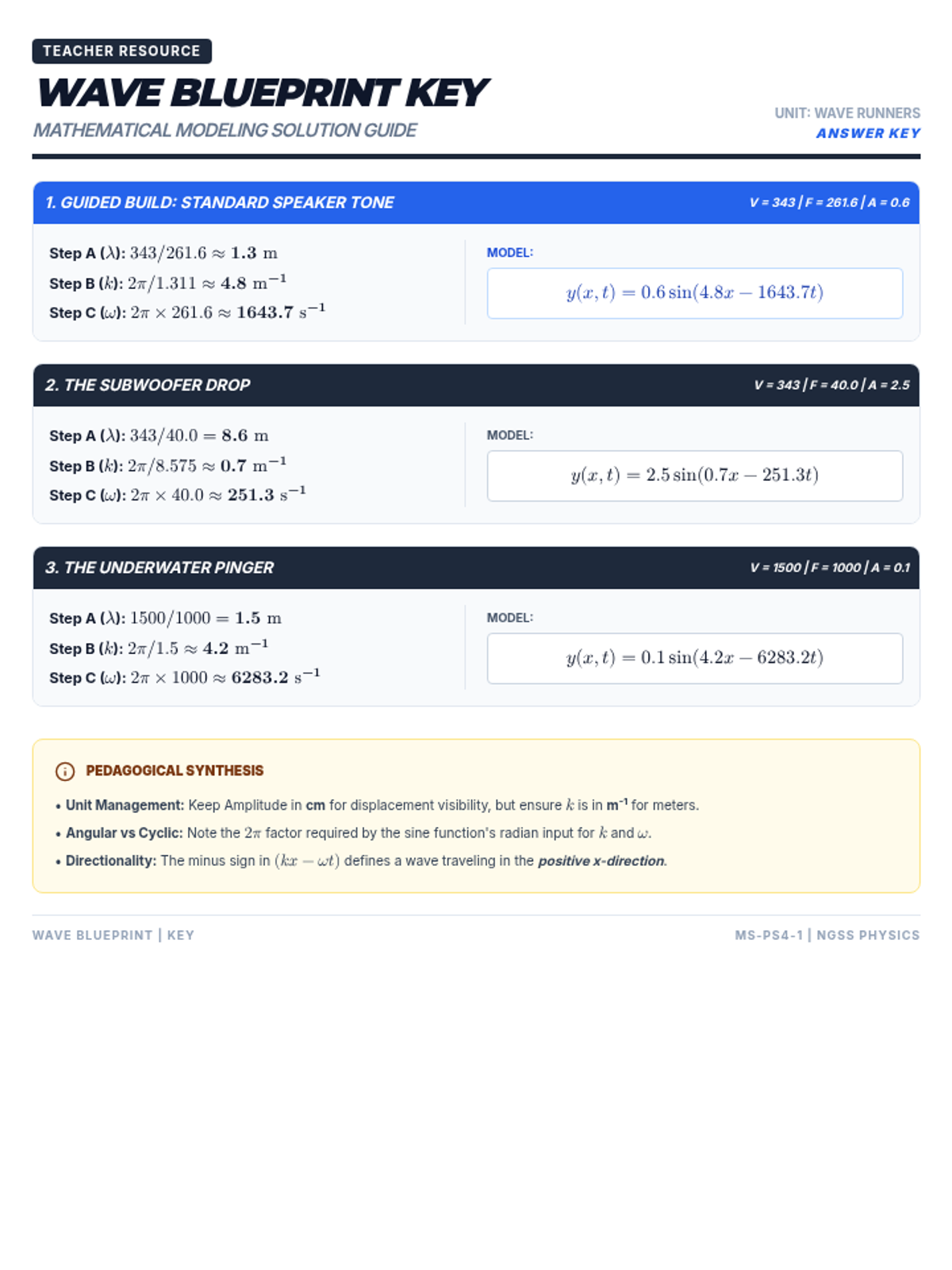
A comprehensive teacher answer key for the Wave Blueprint worksheet. Provides step-by-step calculations for wavelength, wave number, and angular frequency, along with the final mathematical wave functions for three different speaker scenarios. Revised for consistency and clarity.
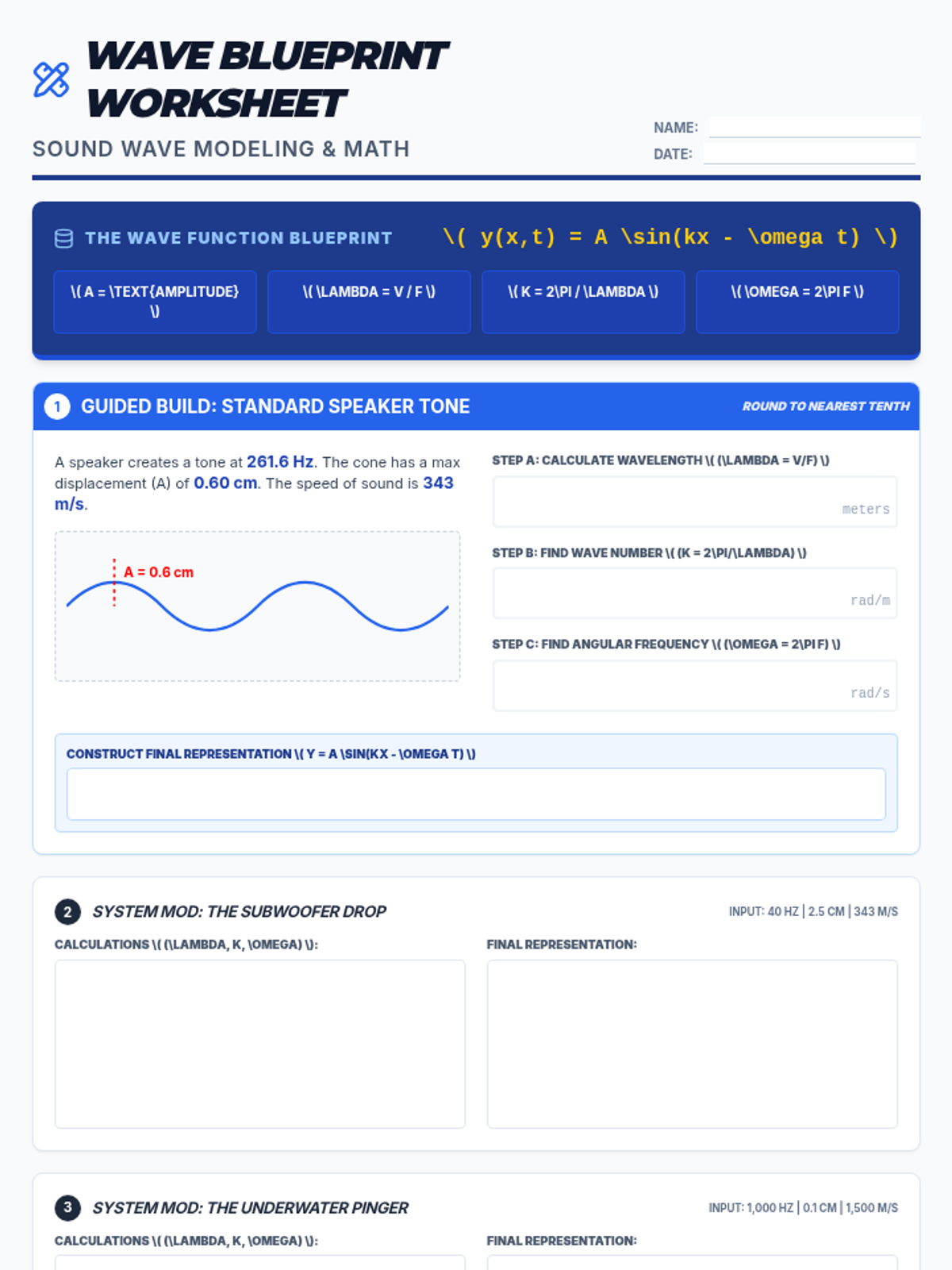
A worksheet designed to guide students through constructing mathematical representations (wave functions) of sound waves. Includes a guided problem using speaker frequency and amplitude, followed by independent practice problems in different scenarios like subwoofers and underwater pingers. Revised for better page flow, contrast, and formula rendering.
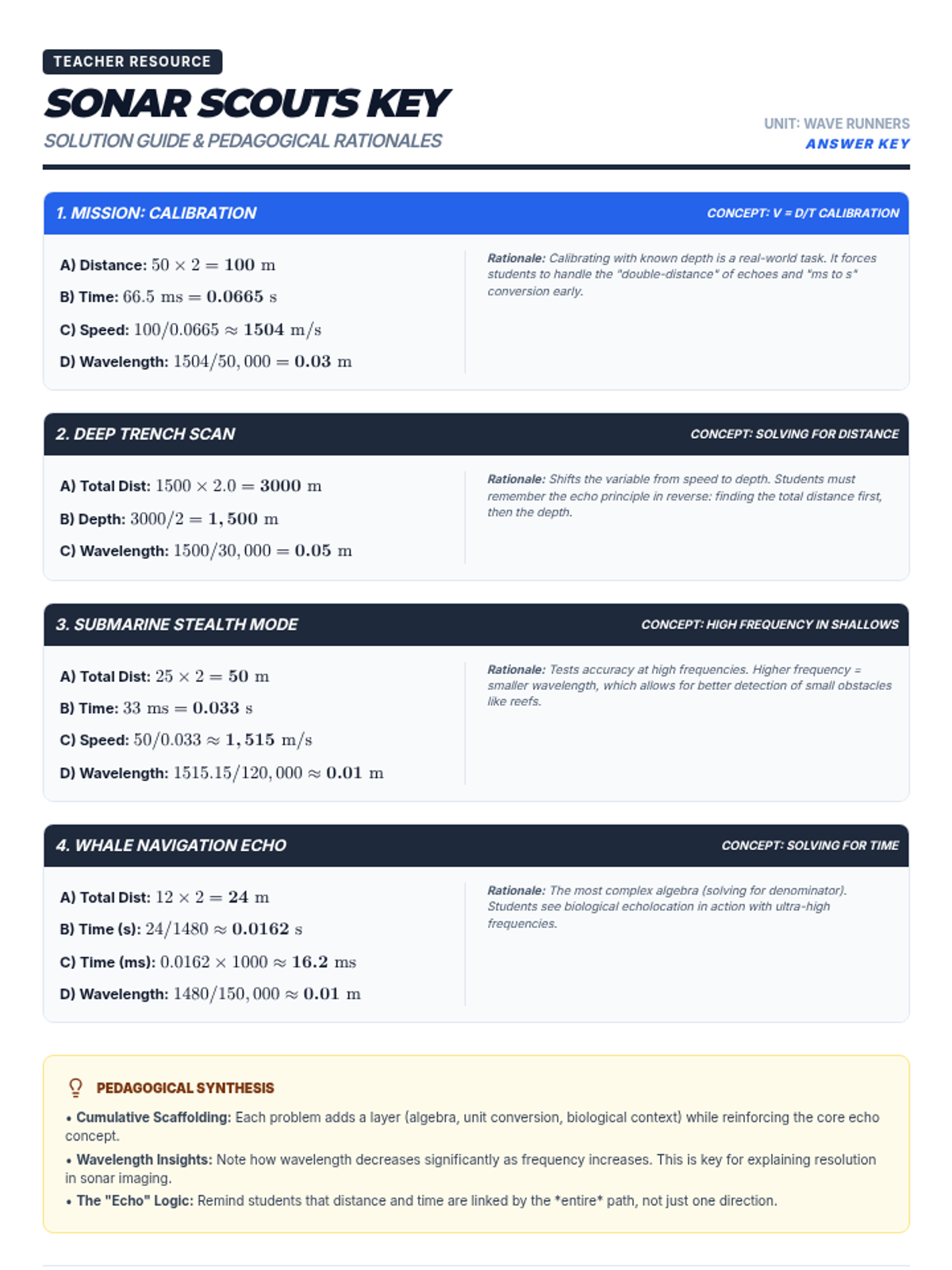
A comprehensive teacher answer key for the Sonar Scouts worksheet, including full step-by-step solutions for all four problems, unit conversion checks, and pedagogical tips for addressing common student errors. Now includes rationales for each problem. Revised for better page flow and detail.