A comprehensive visual presentation for the Spin and Slide lesson, now featuring the "Grand Prix of Shapes" with 5 race objects, podium rankings, and a comparative analysis of the "spin tax" vs. linear speed.
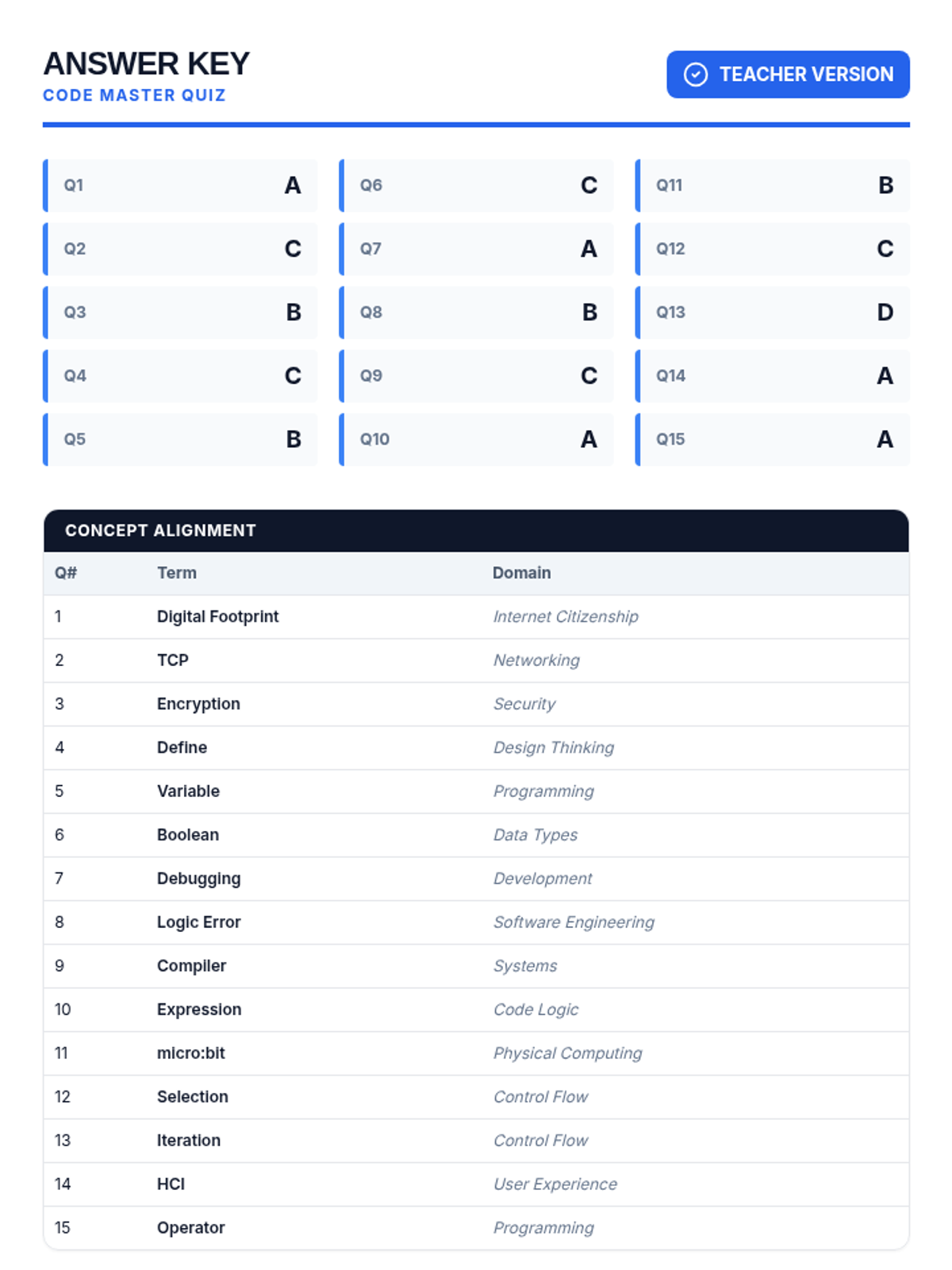
A teacher's answer key for the Code Master Quiz, featuring a quick-reference answer grid, a concept alignment table, and post-assessment review suggestions.
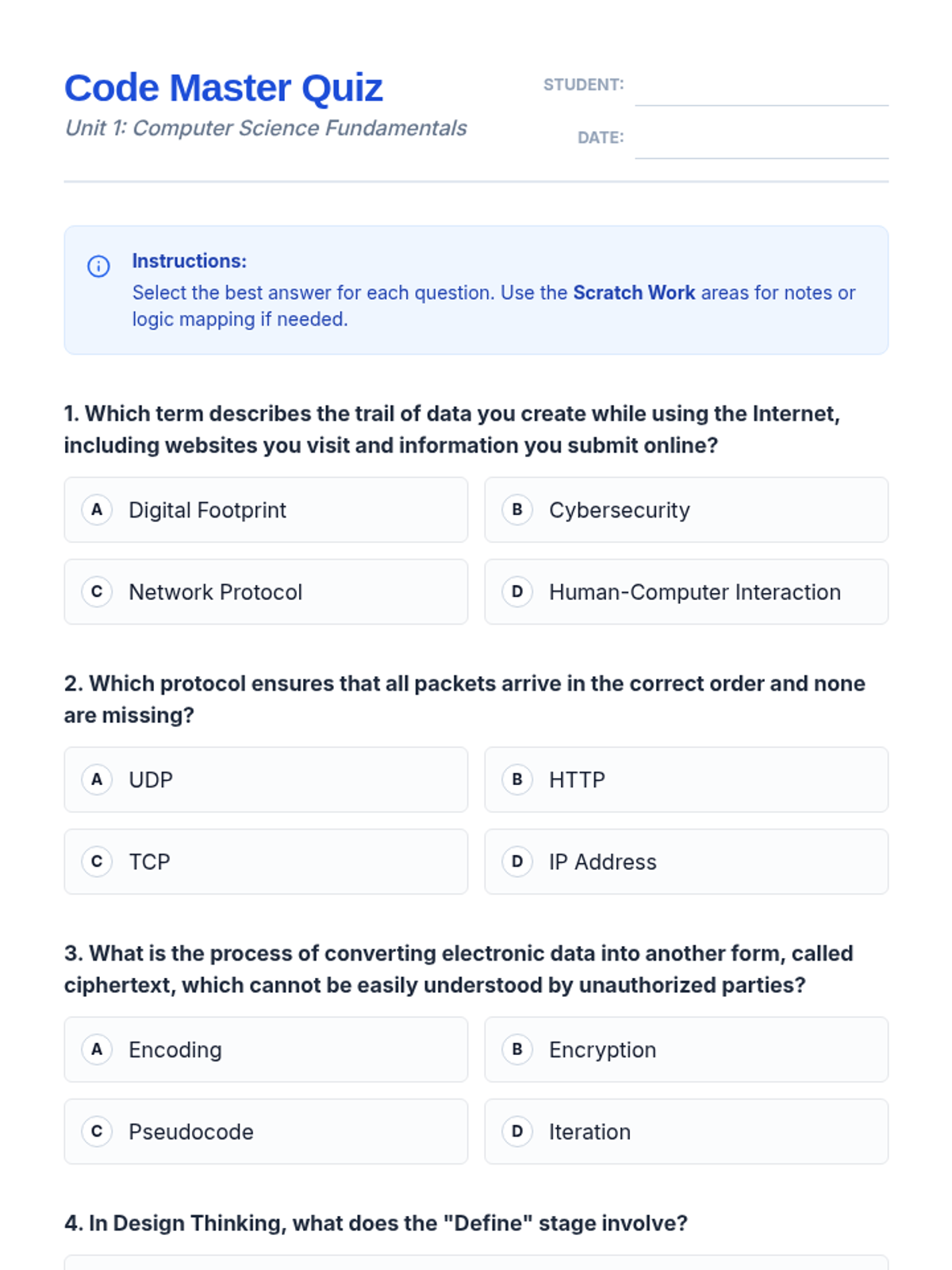
Revised Code Master Quiz Worksheet with standardized layout, 1-column answer choices for consistency, and improved name/date fields. Content tightened to reduce wasted space.
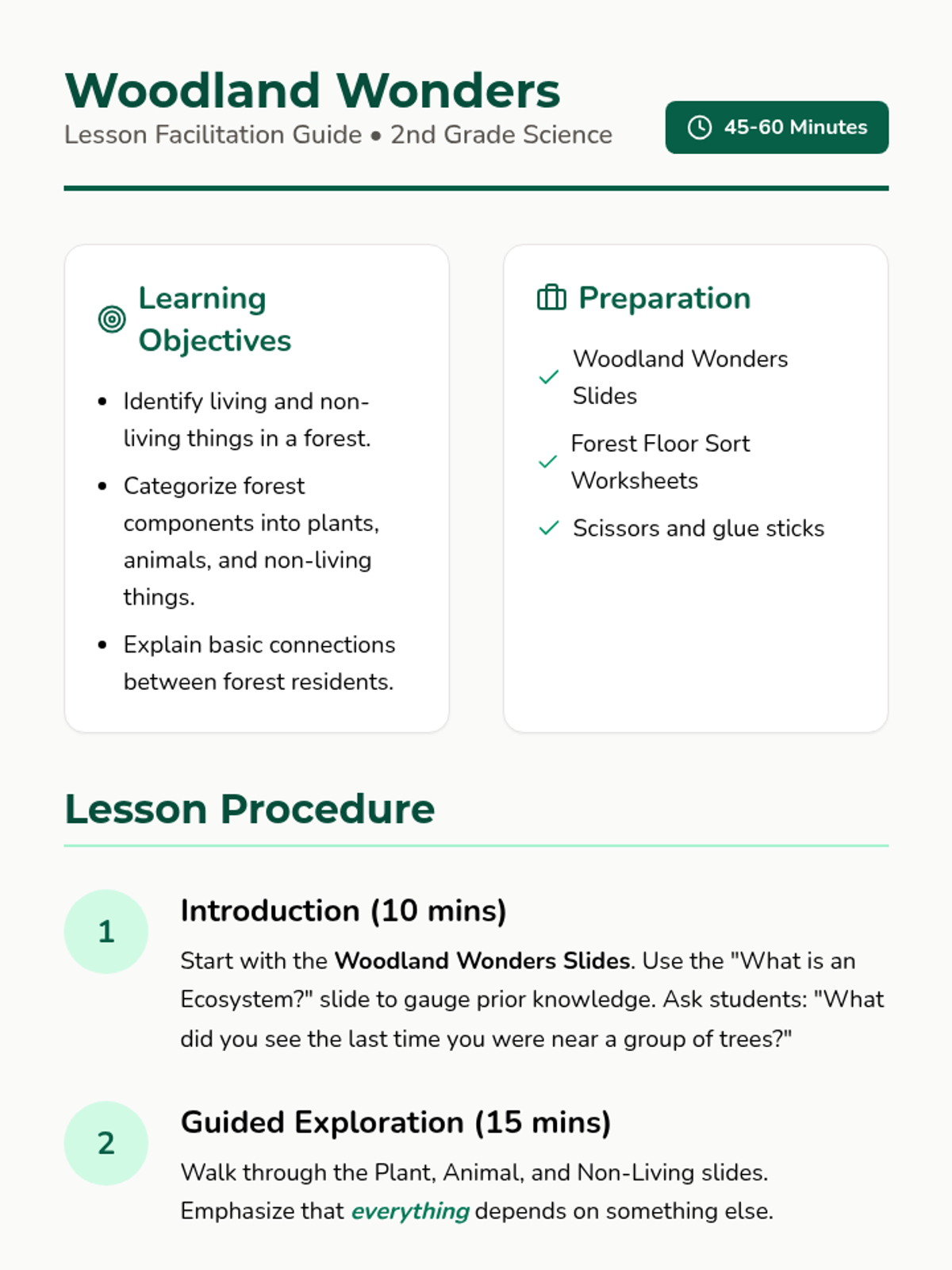
Comprehensive teacher guide for the Woodland Wonders lesson, including learning objectives, step-by-step procedures, and differentiation strategies for 2nd grade science.
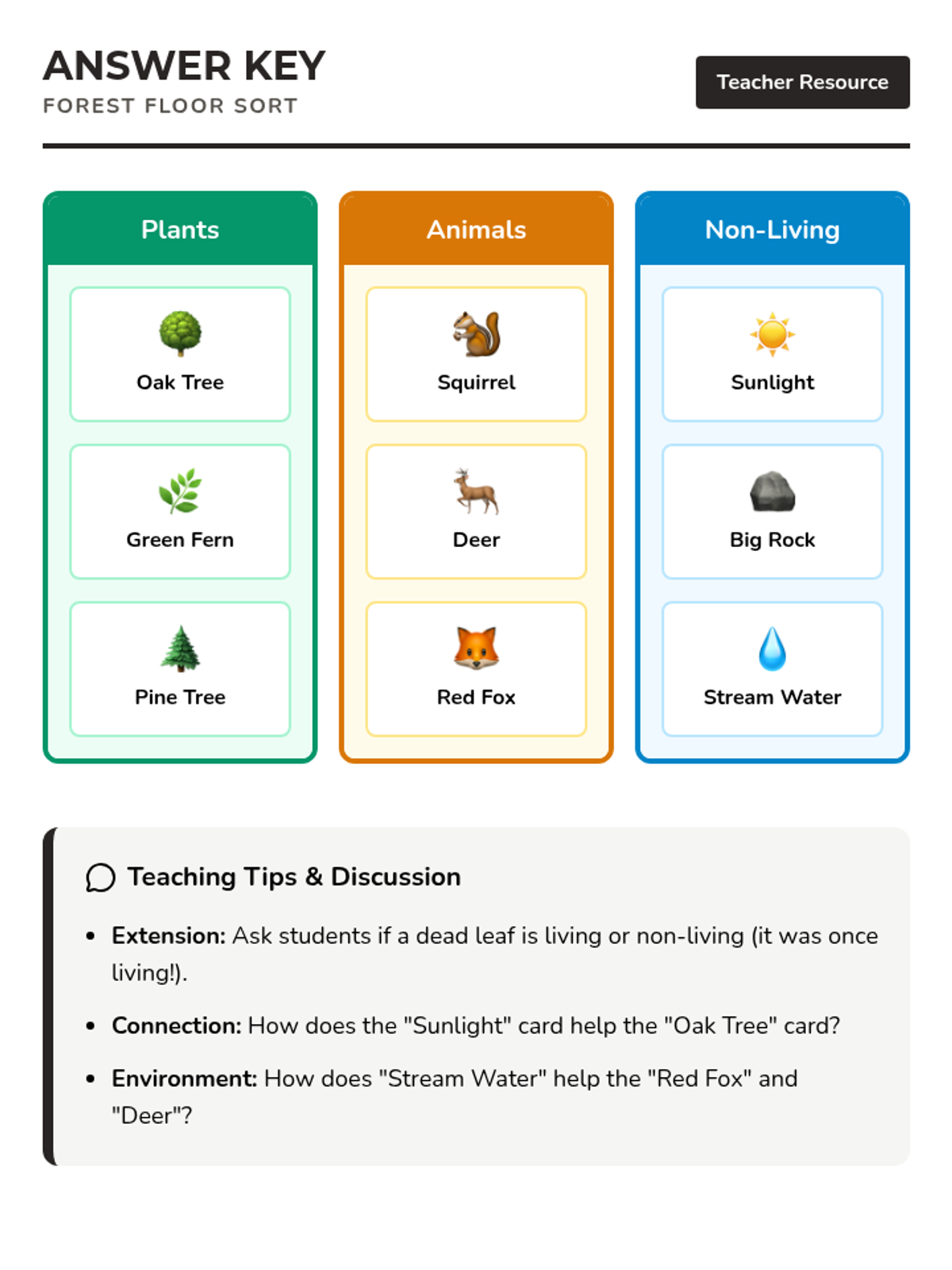
Teacher answer key for the Forest Floor Sort Activity, providing correctly categorized items and discussion prompts for class review.
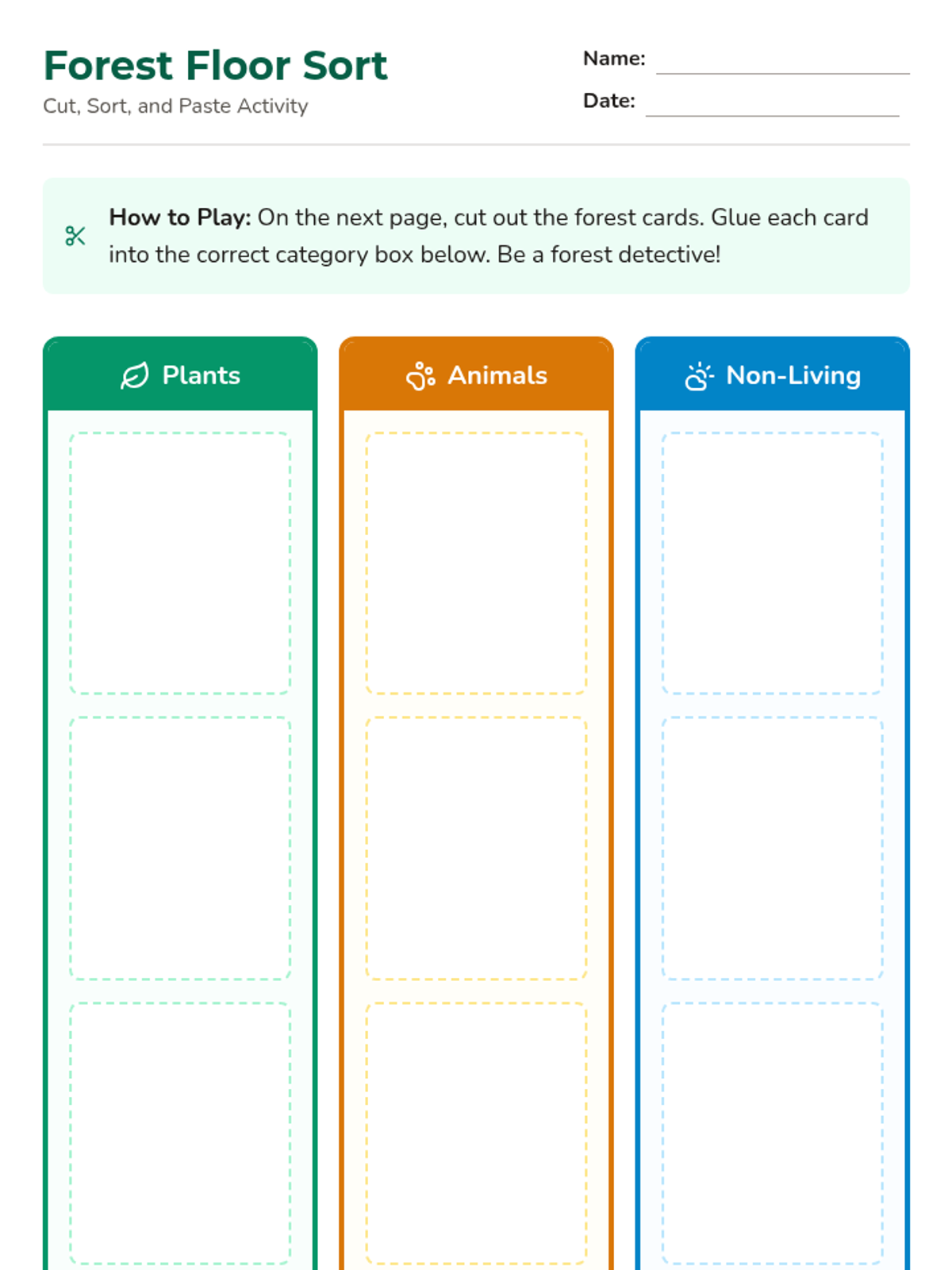
A 2-page cut-and-paste sorting activity for 2nd graders to categorize forest ecosystem components into plants, animals, and non-living things. Includes a sorting board and a cutout sheet.
A vibrant slide deck introducing second graders to the forest ecosystem, covering living things (plants and animals) and non-living components.
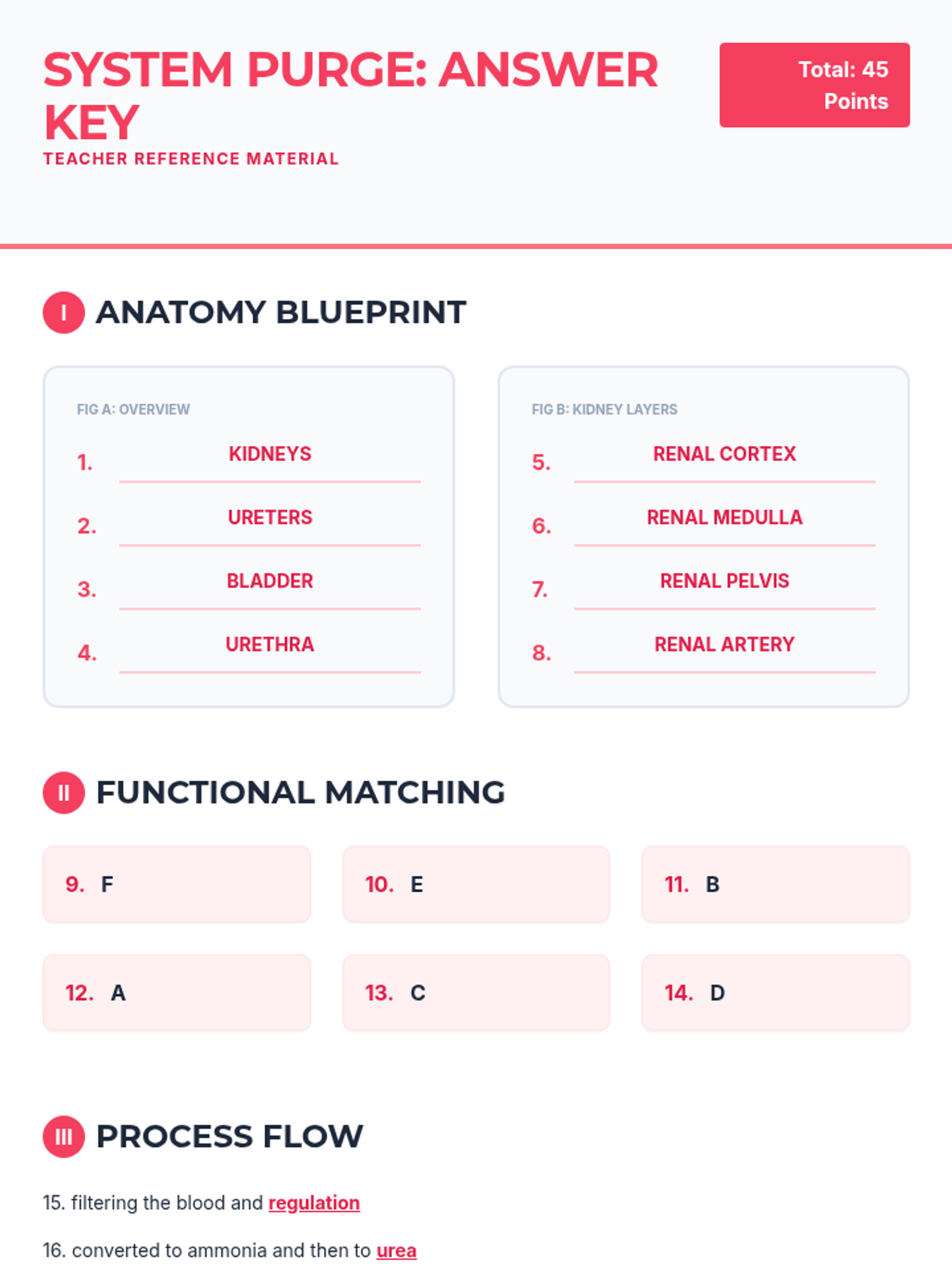
An answer key for the Urinary System Review Worksheet, providing correct answers for all 45 questions. Revised to ensure correct numbering and professional formatting.
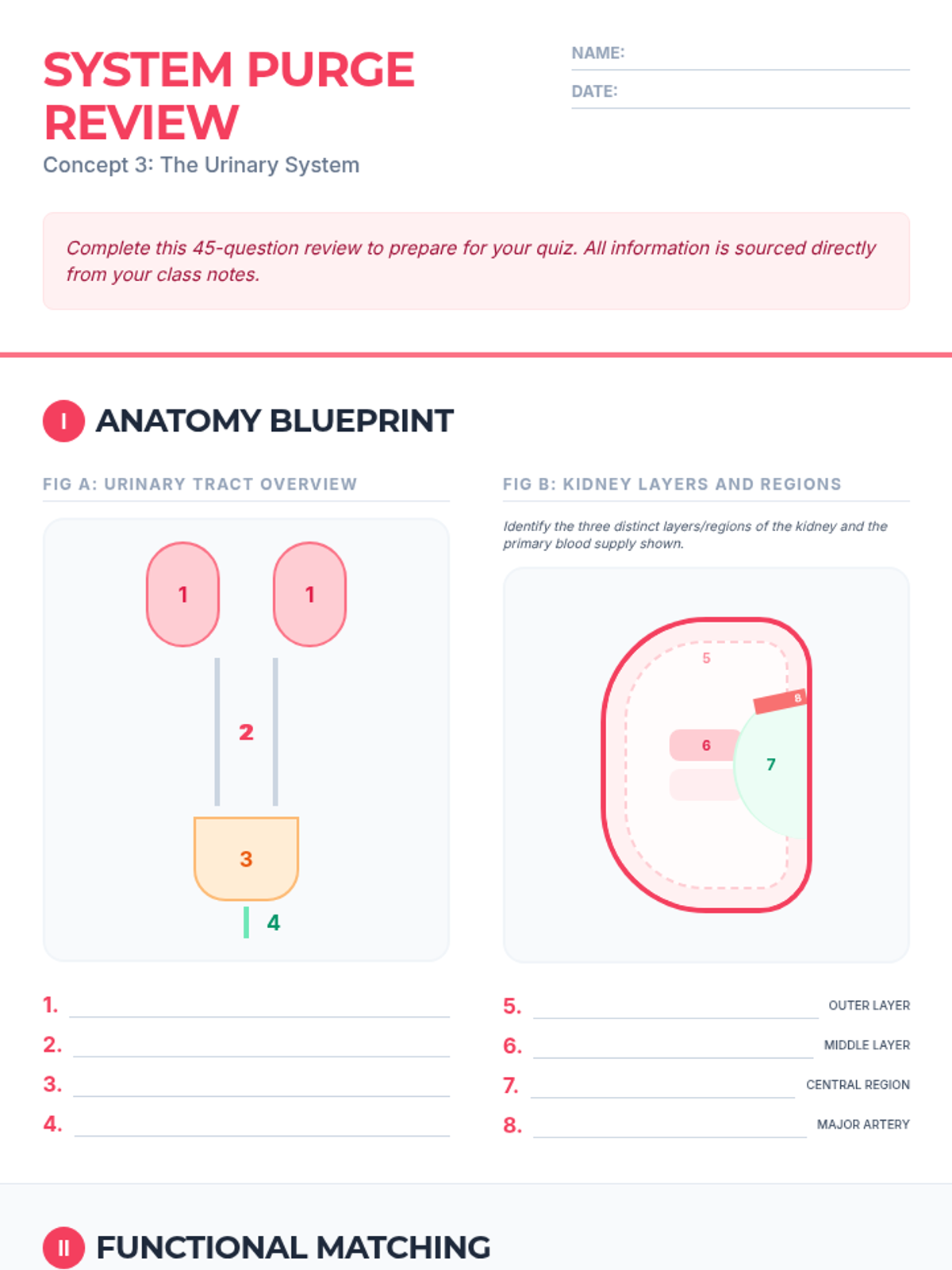
A comprehensive 45-question review worksheet for the urinary system, covering anatomy, nephron function, and regulation. Revised Figure B to specifically focus on identifying the three layers of the kidney.
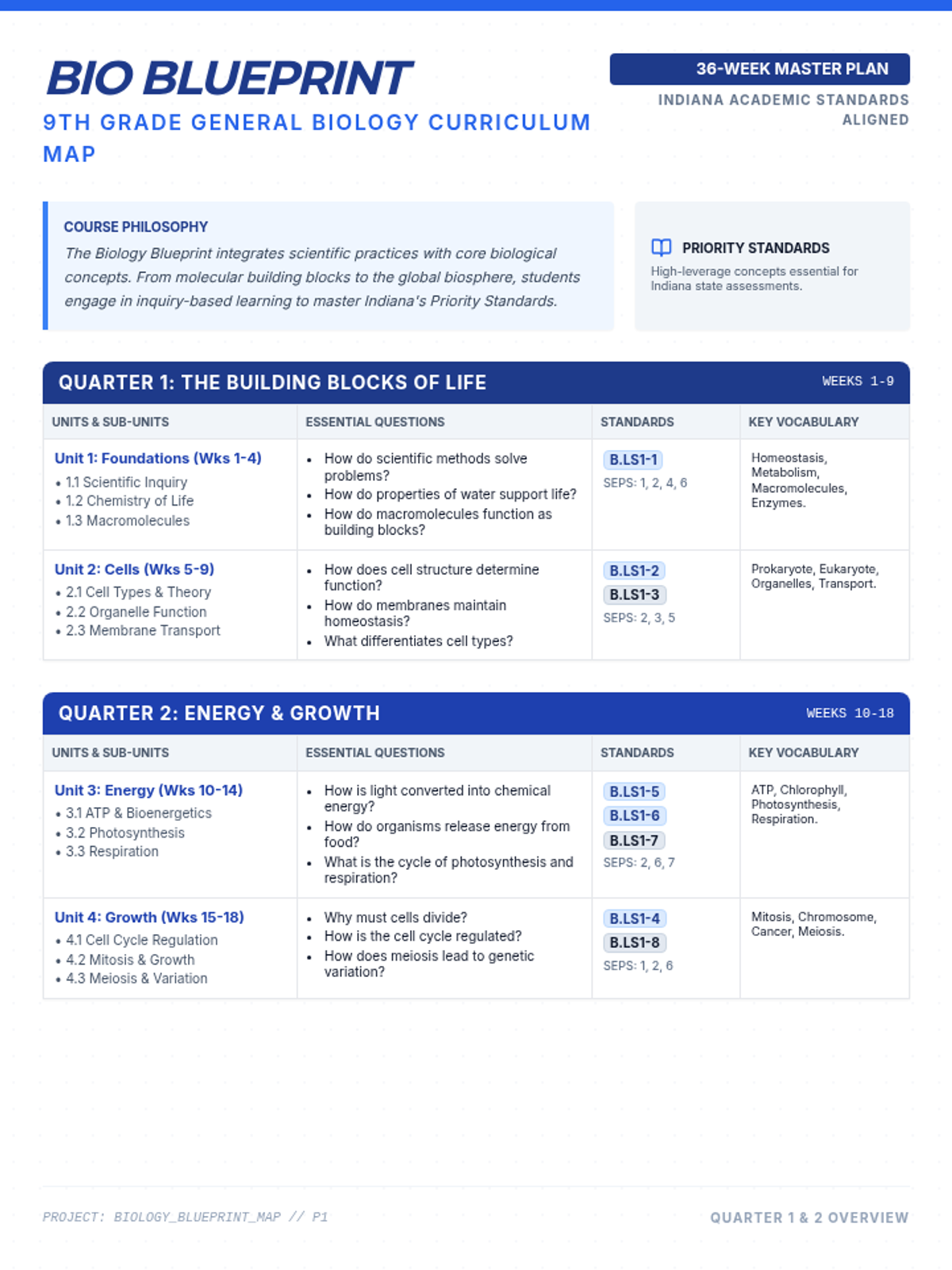
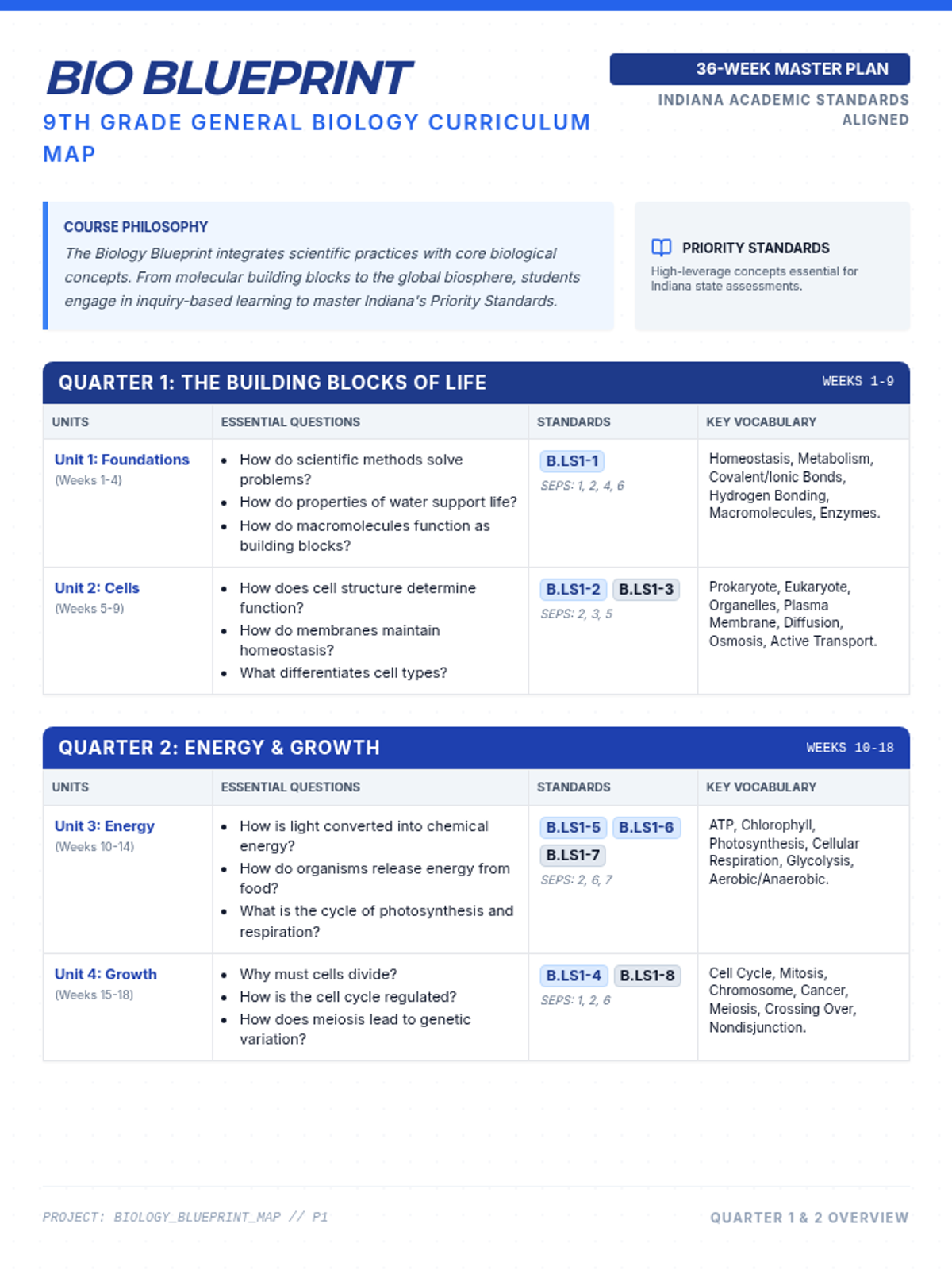
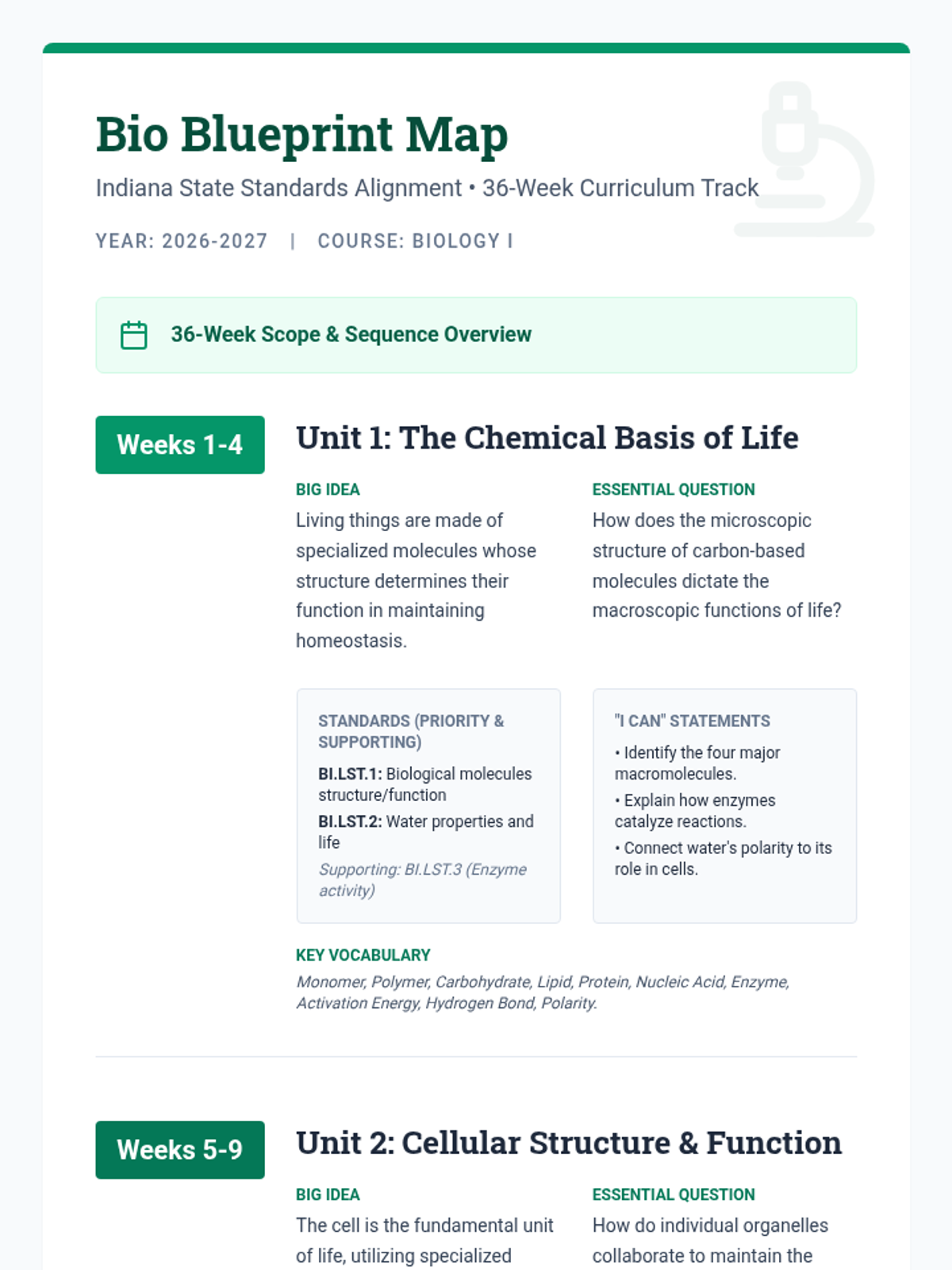
A detailed 36-week curriculum map for 9th-grade biology, organized by quarters and units. Each unit is now divided into specific sub-units for clearer pacing. Includes essential questions, standards, and key vocabulary.
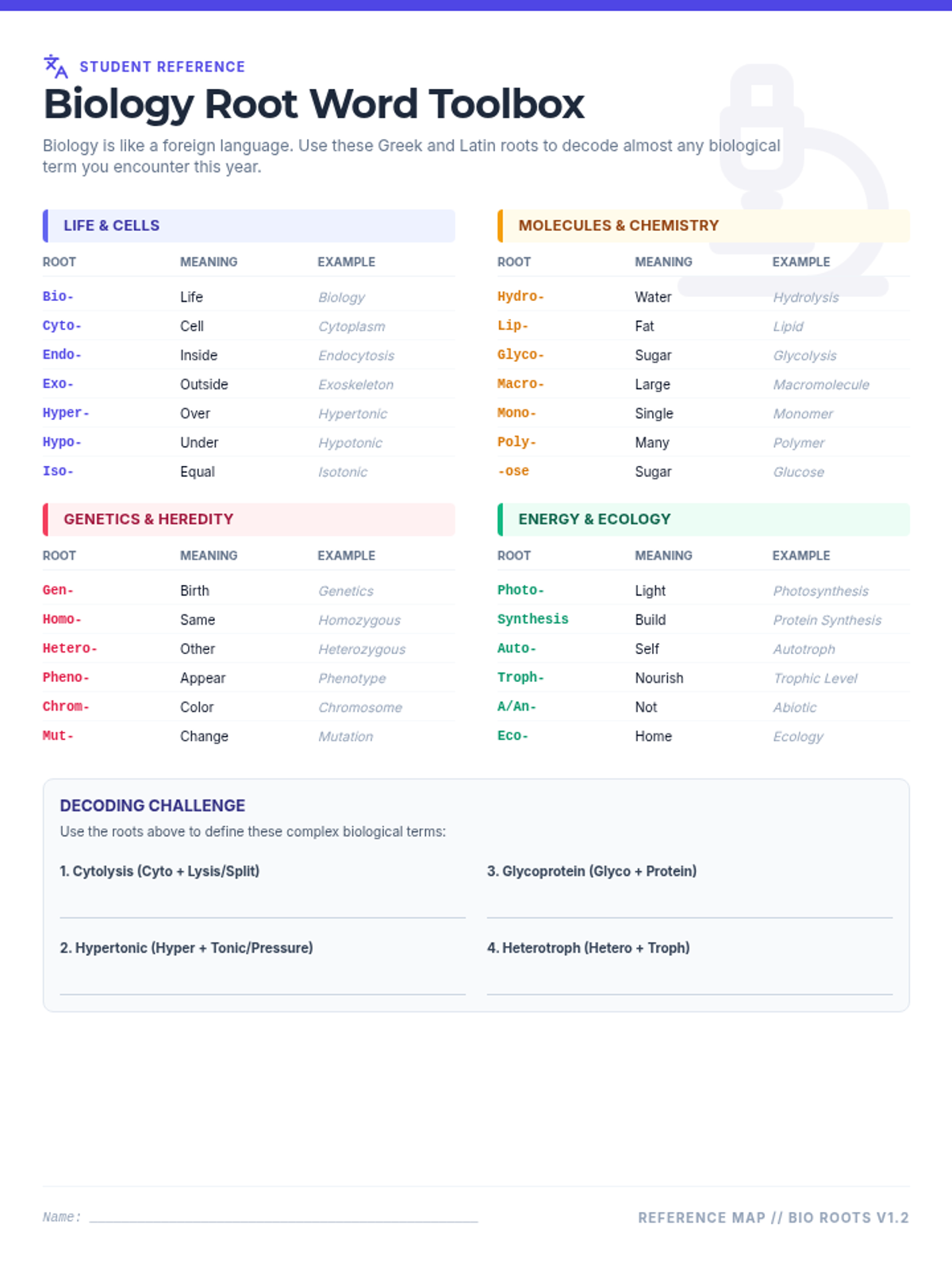
A student reference sheet providing Greek and Latin roots for common biological terms. Organized by unit topics to support vocabulary acquisition across the 36-week curriculum. Revised for single-page fit and better layout.
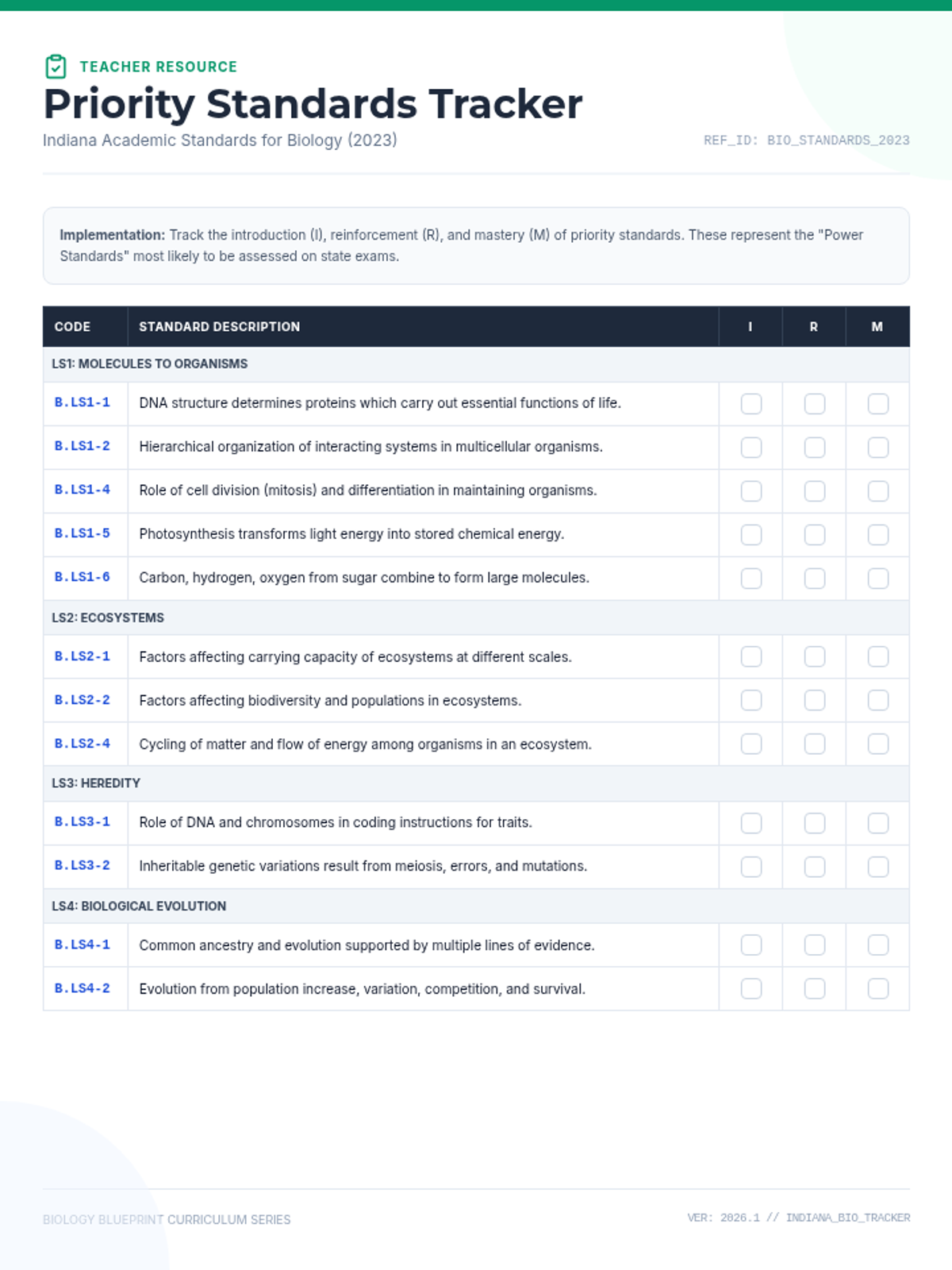
A checklist for teachers to track the implementation and mastery of Indiana's Priority Biology Standards across the 36-week school year. Includes codes and full descriptions of key standards. Revised for better formatting and single-page fit.
A detailed 36-week curriculum map for 9th-grade biology, organized by quarters and units. Includes essential questions, priority/supporting Indiana state standards, and key vocabulary for each unit. Revised for better page breaks and formatting.
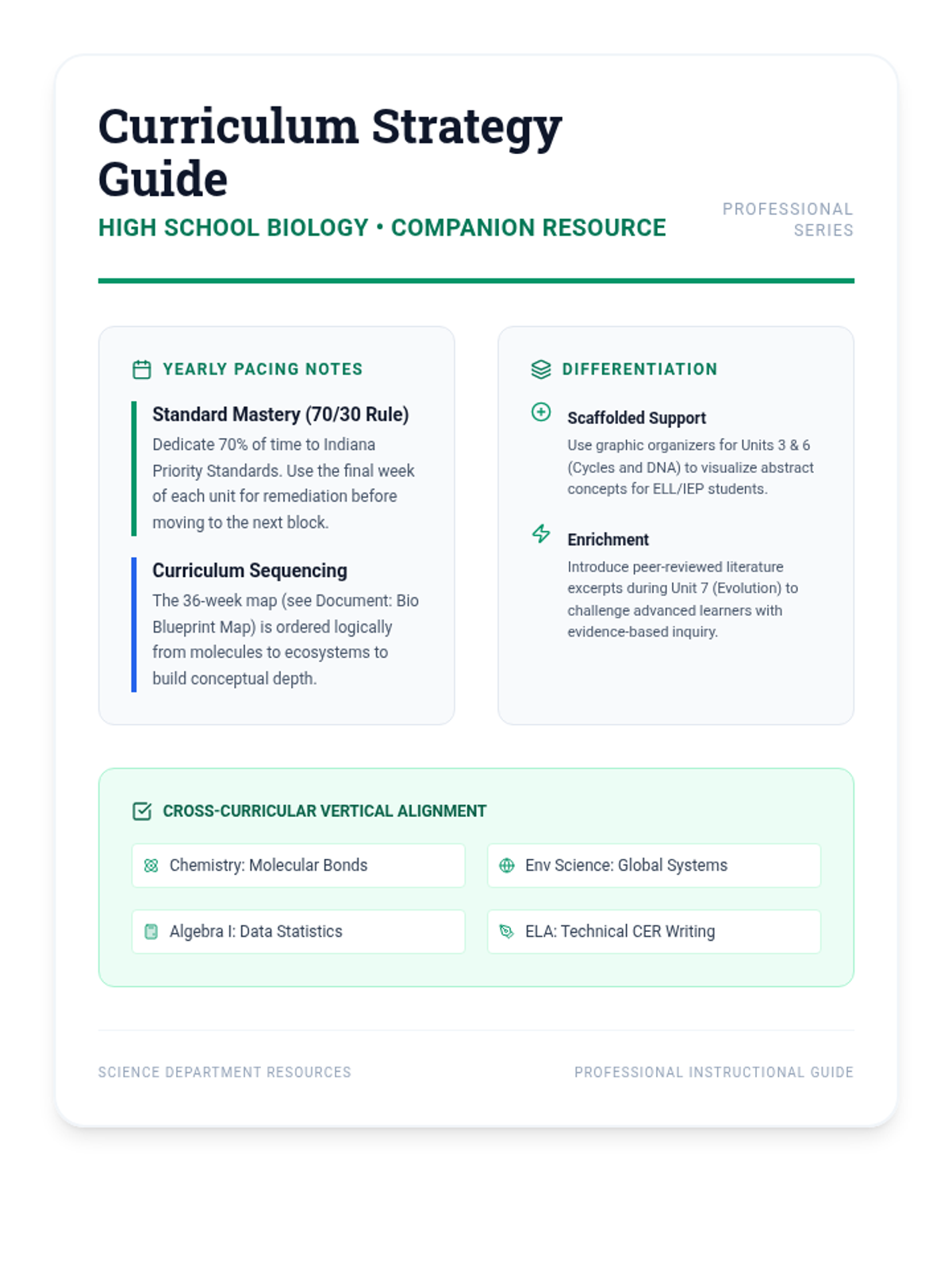
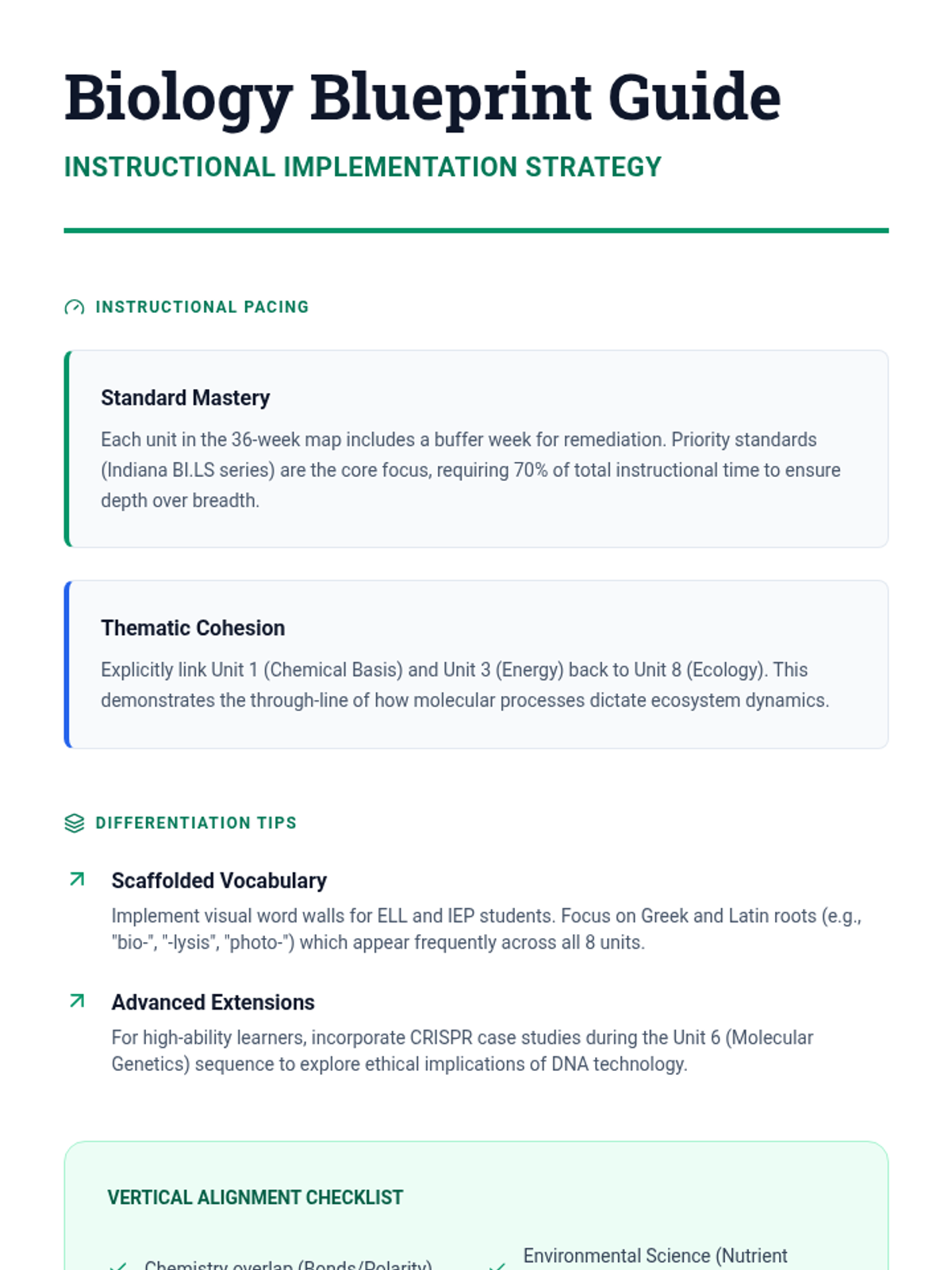
A professional, single-page implementation guide for biology teachers, providing pacing tips, differentiation strategies, and vertical alignment goals to support the 36-week curriculum map.
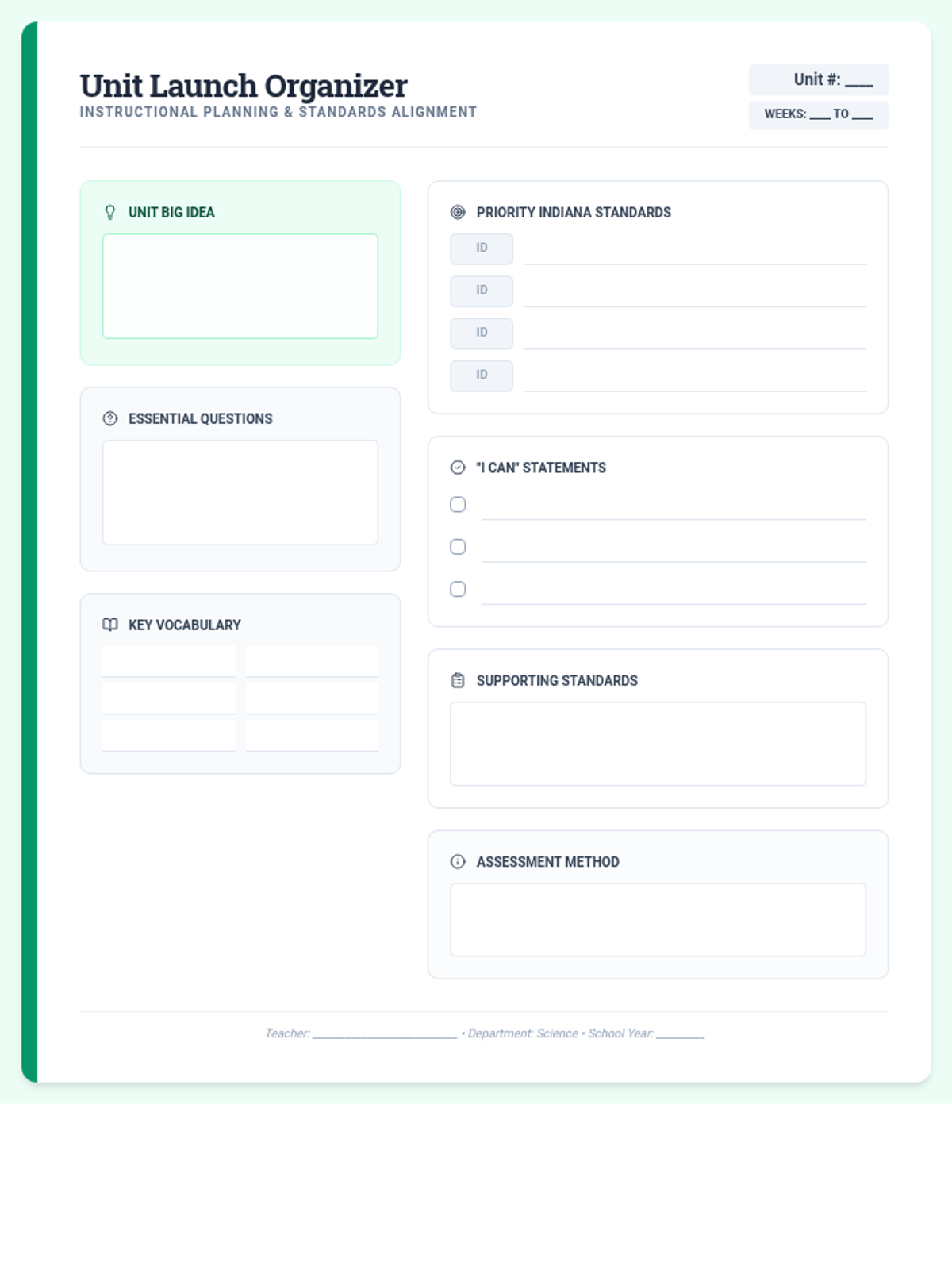
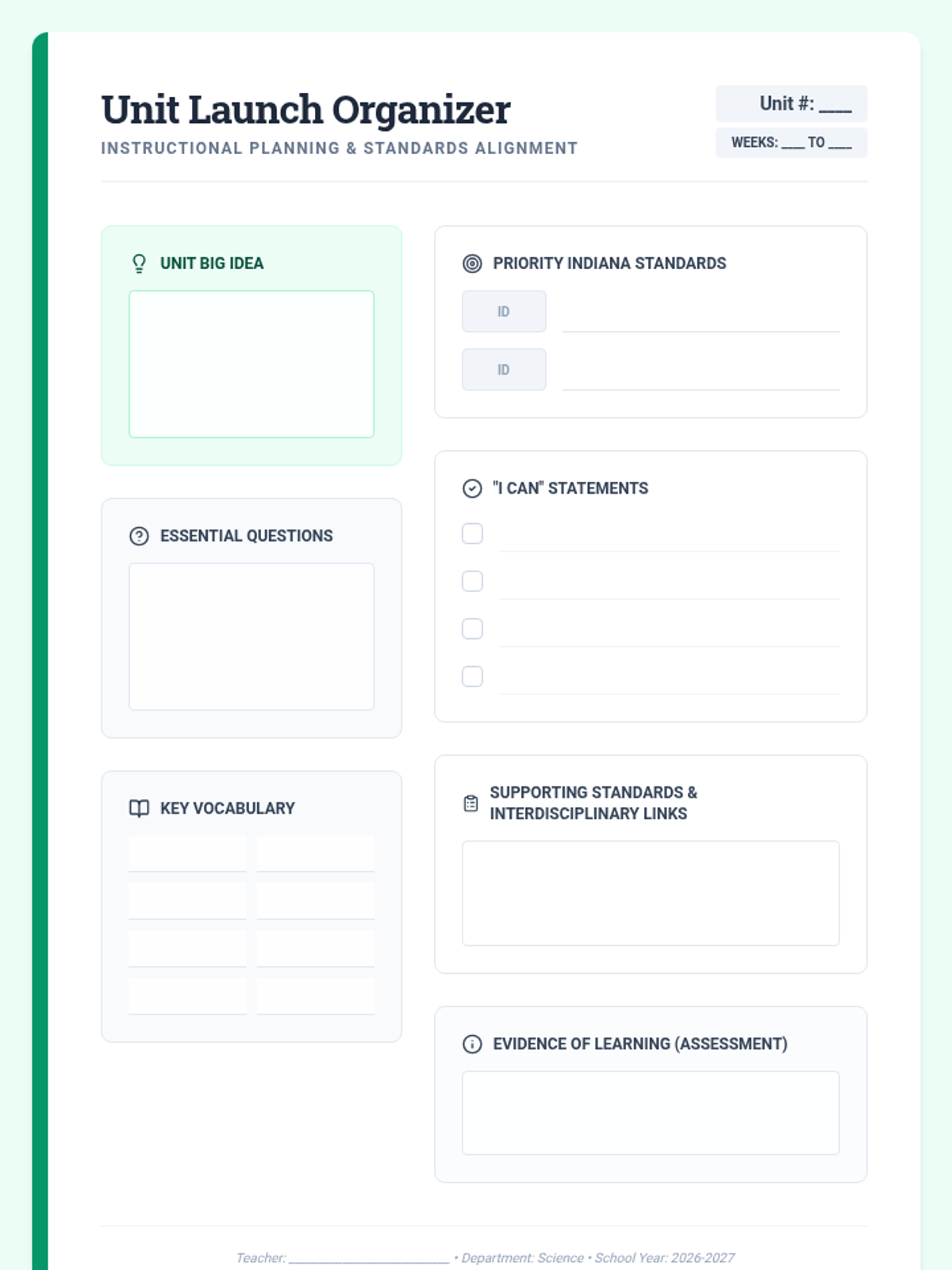
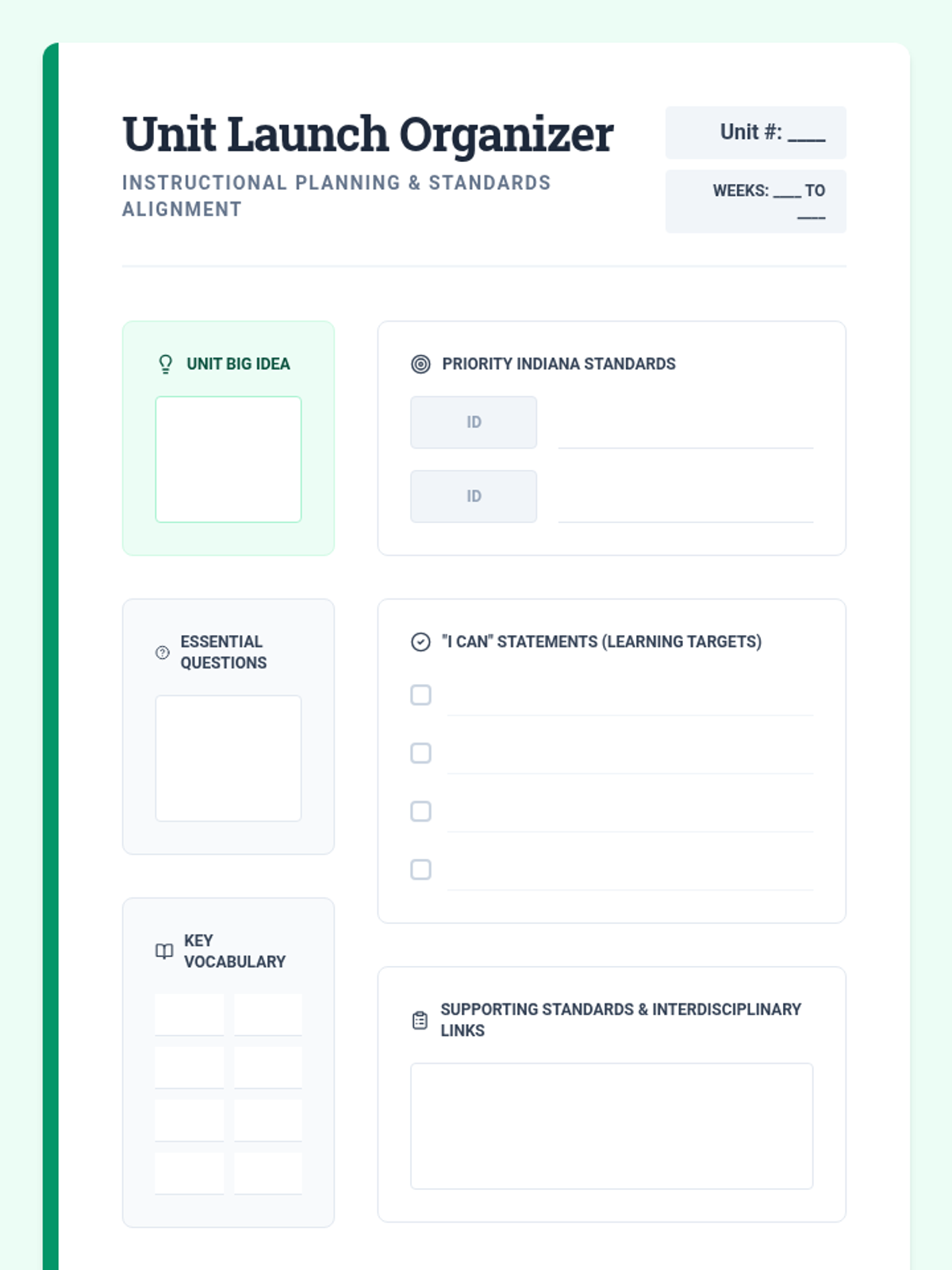
A teacher-facing unit launch template designed for zooming into specific biology units, featuring work areas for standards, essential questions, "I Can" statements, and vocabulary. Optimized for single-page printing.
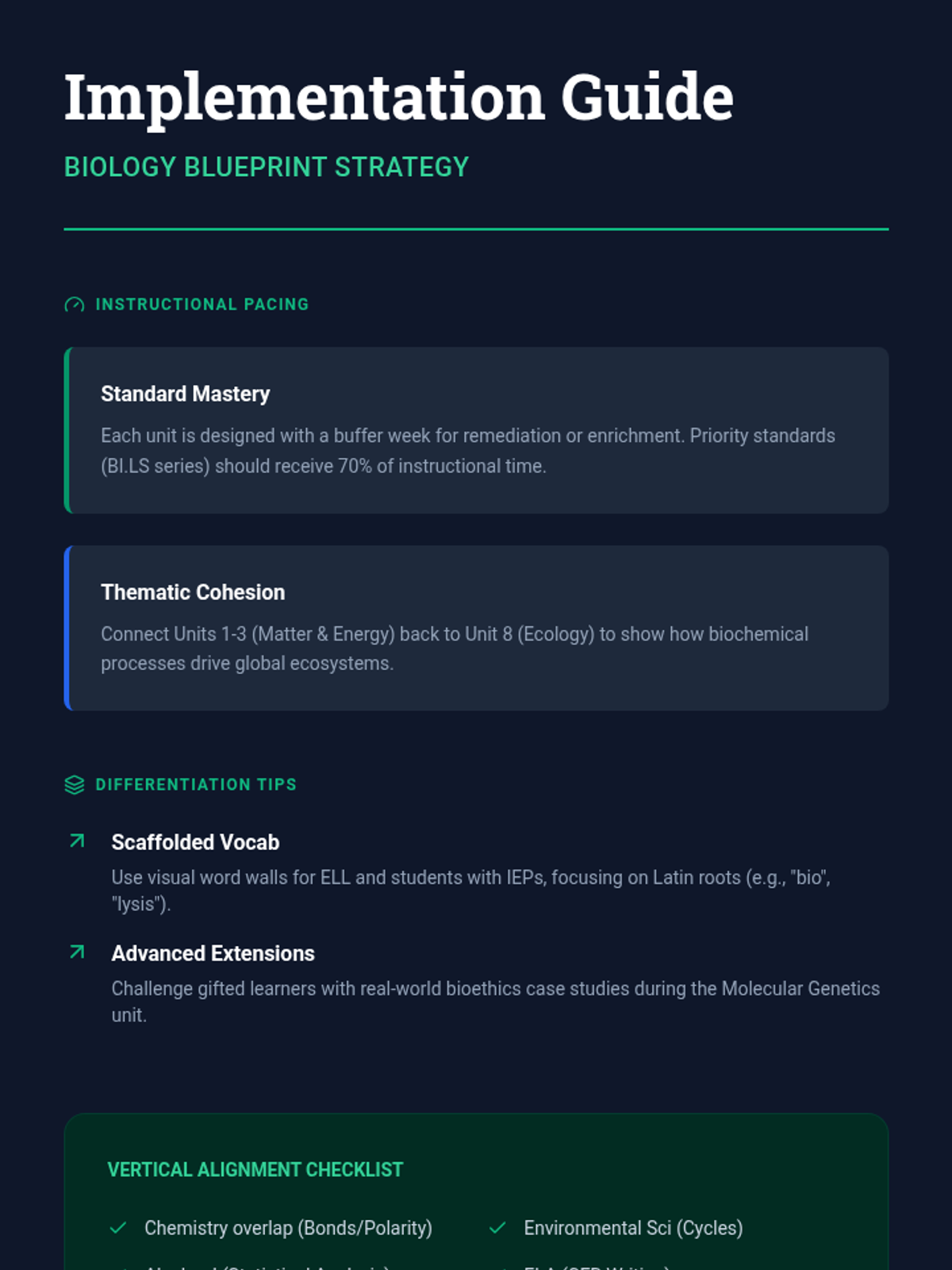
A high-contrast, print-friendly instructional guide for biology teachers, providing pacing strategies, differentiation tips, and alignment checklists for the year-long curriculum.
A professional instructional guide for high school biology teachers, providing pacing strategies, differentiation tips, and vertical alignment checklists for the 36-week curriculum.
A teacher-facing unit launch template designed for zooming into specific biology units, featuring work areas for standards, essential questions, "I Can" statements, and vocabulary.
A comprehensive 36-week high school biology curriculum map aligned with Indiana State Standards, featuring units, big ideas, essential questions, priority standards, "I Can" statements, and key vocabulary. Corrected for page-breaks and content.
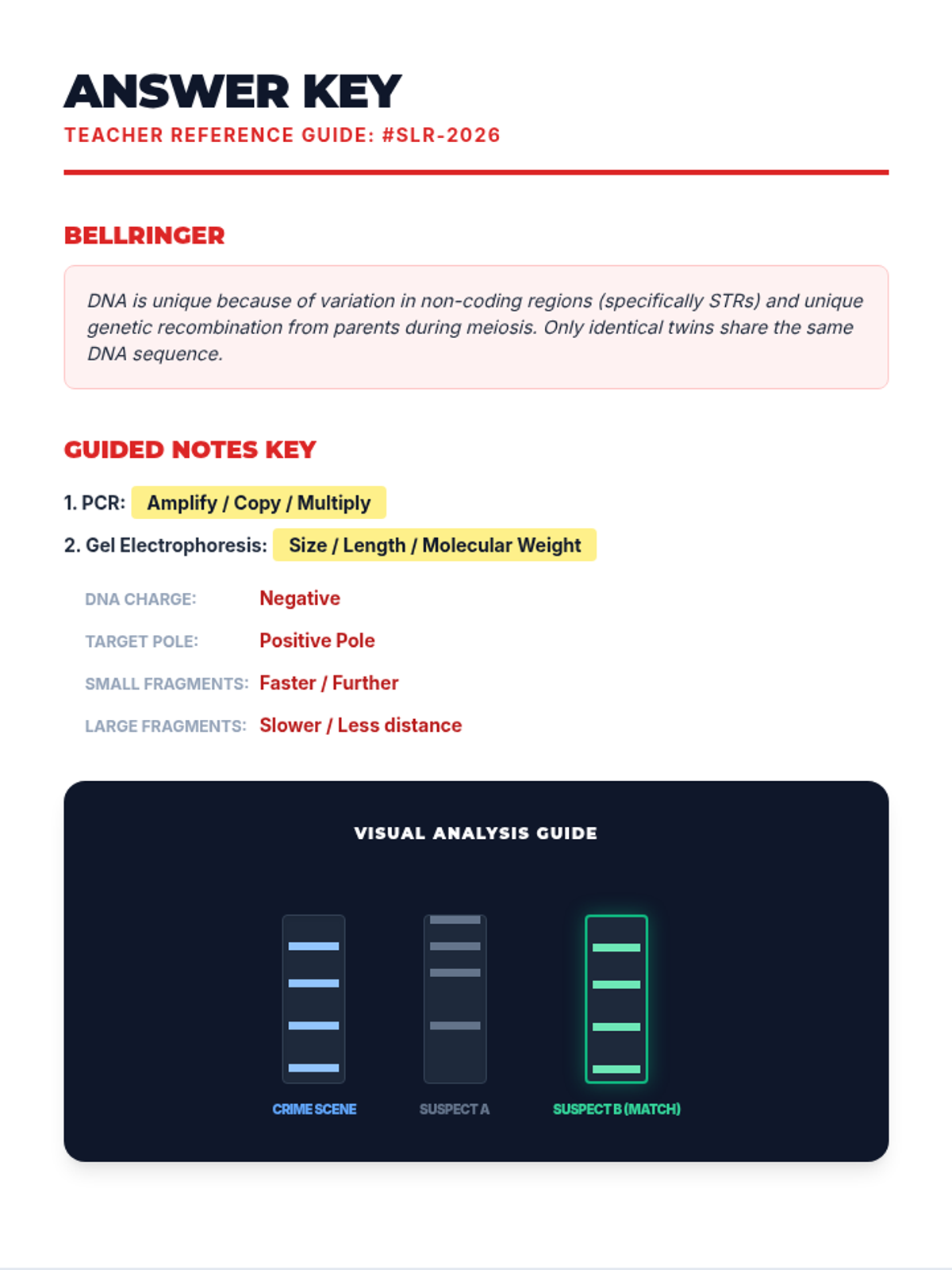
A 2-page answer key for the Biotech Detectives lesson. Provides correct answers for the bellringer, guided notes, suspect DNA comparison, independent practice questions, and a model CER response.
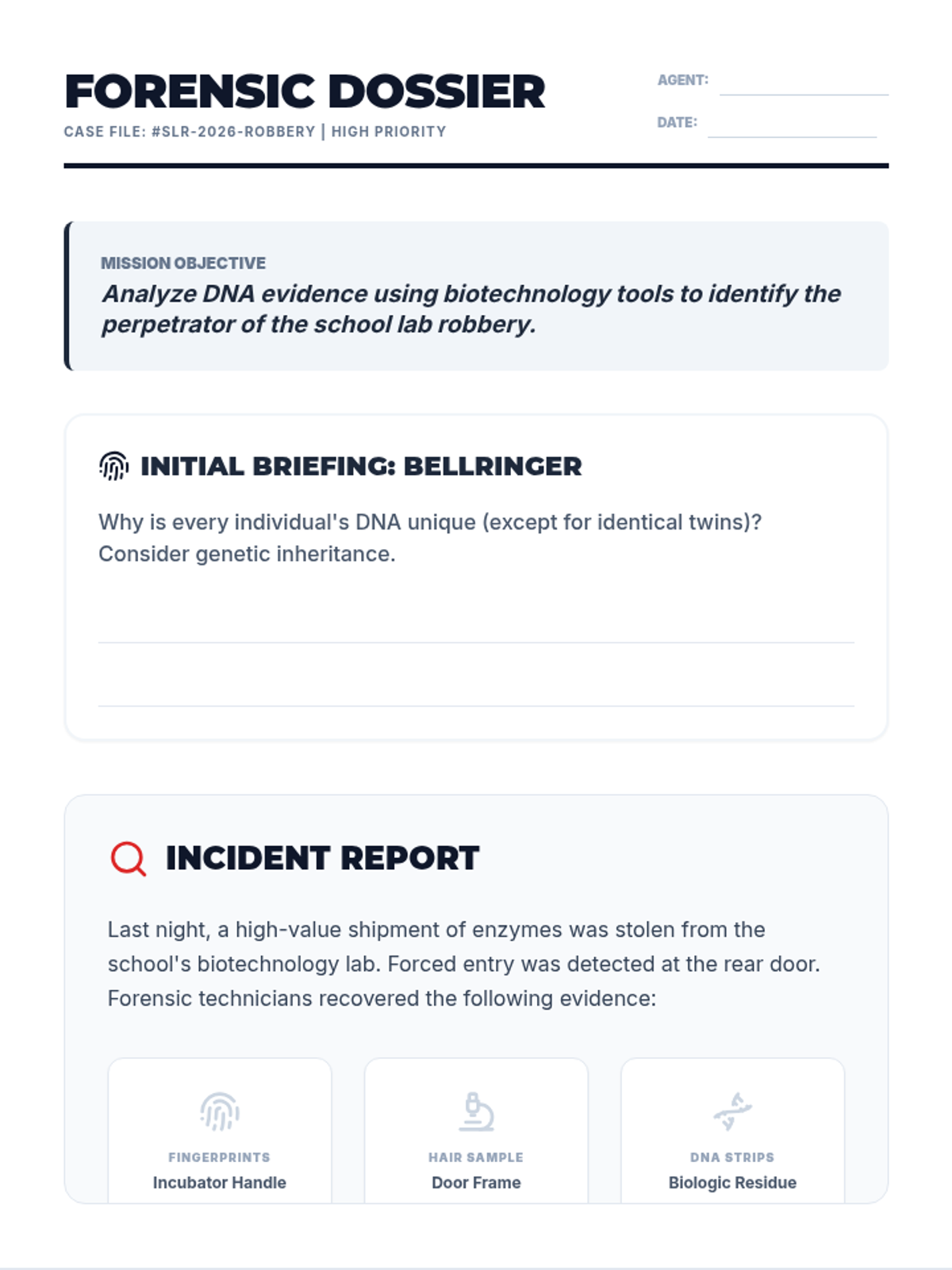
A 4-page student packet for a DNA technology and forensics lesson. Includes a case briefing, guided notes on PCR and gel electrophoresis, a parabolic movement graphing activity, a suspect DNA comparison, independent practice questions, and a CER final verdict section.
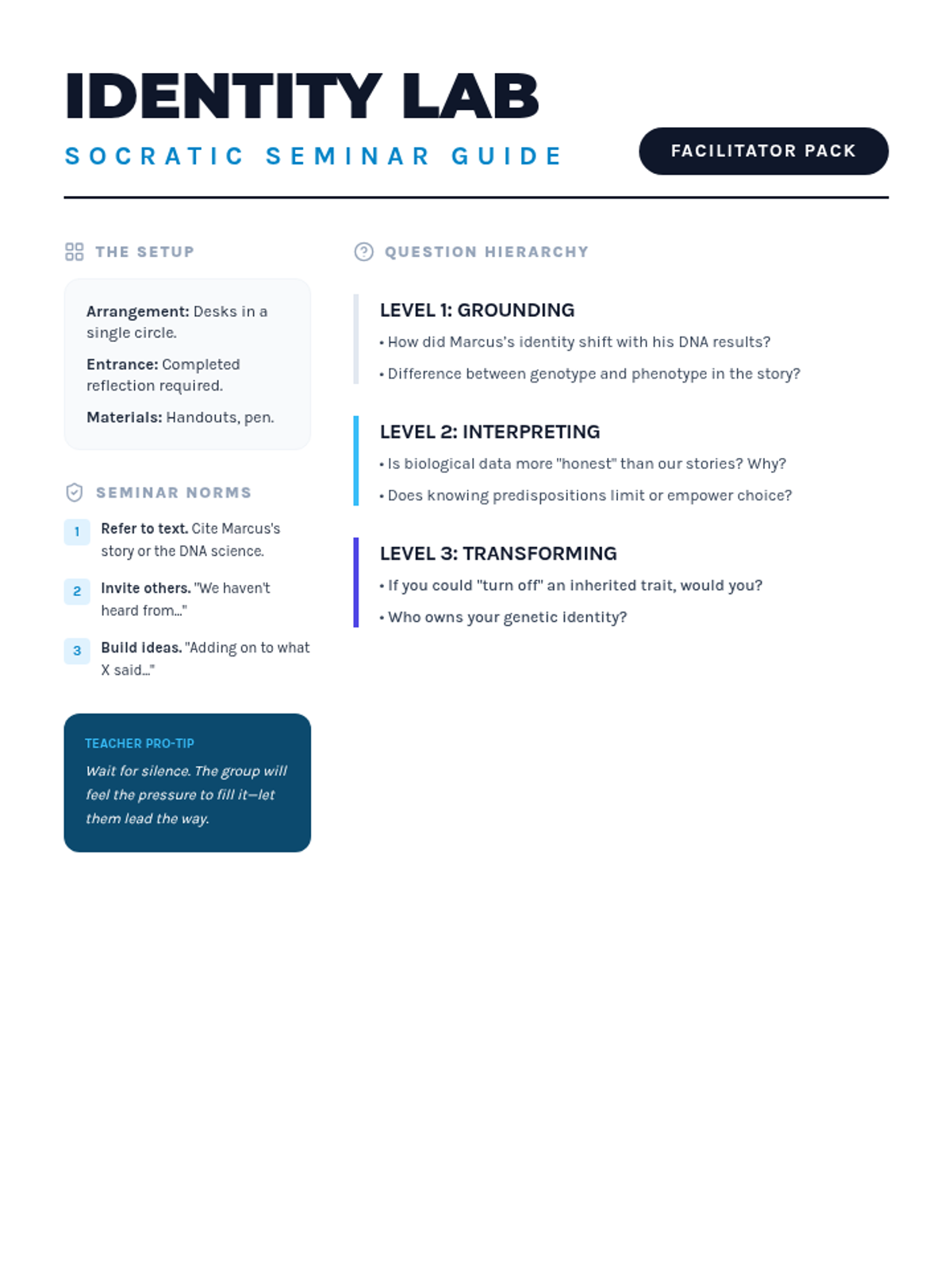
A teacher facilitation guide for a Socratic seminar focusing on DNA and Identity. Revised to fix page breaks, consolidate content, and expand the observation tracker to 25 student rows. Layout highly optimized for single-page use.
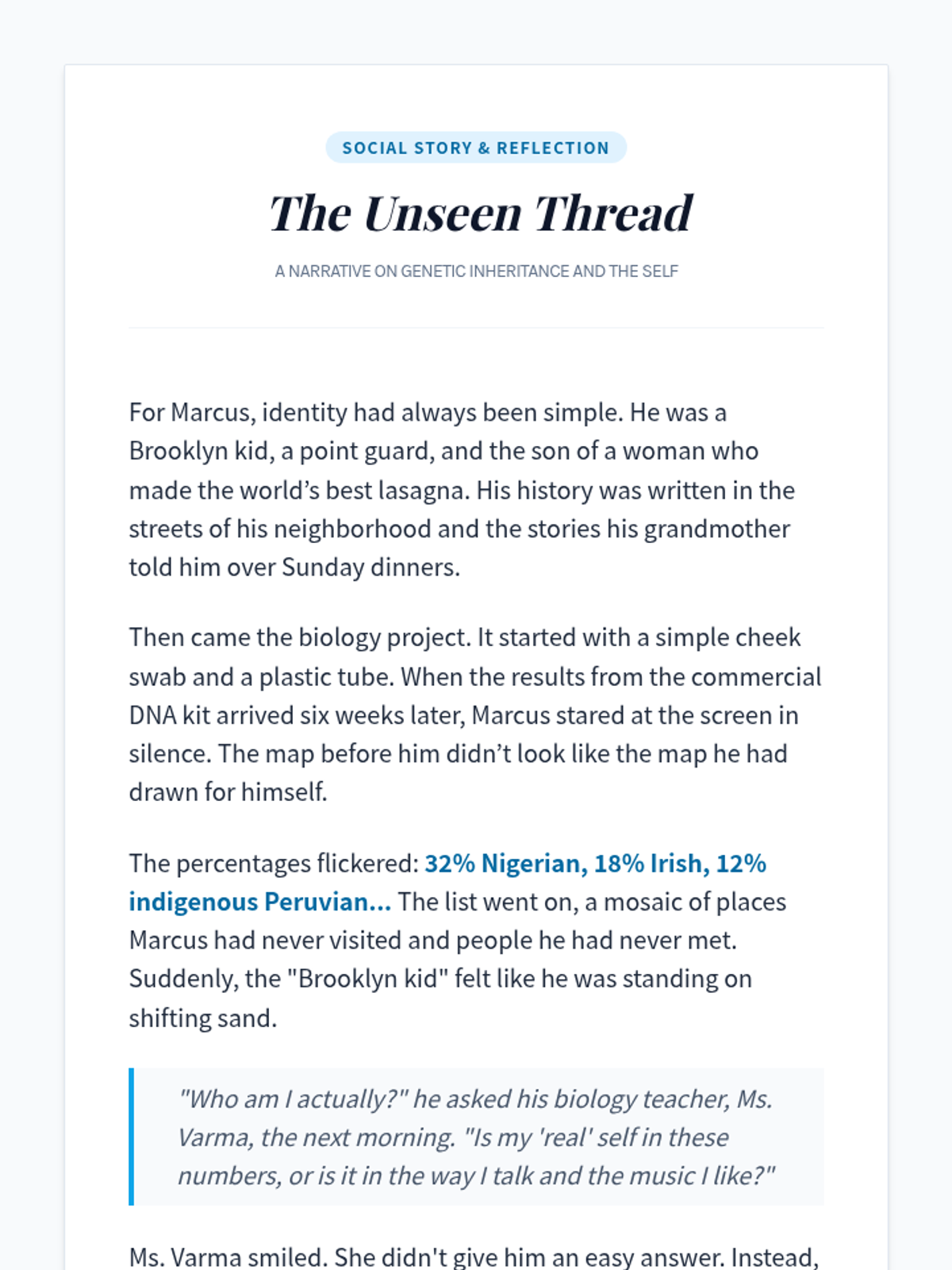
A reflective social story about a student discovering their genetic ancestry and grappling with the meaning of identity. Revised to fix page breaks, increase student work space, and improve label accessibility.
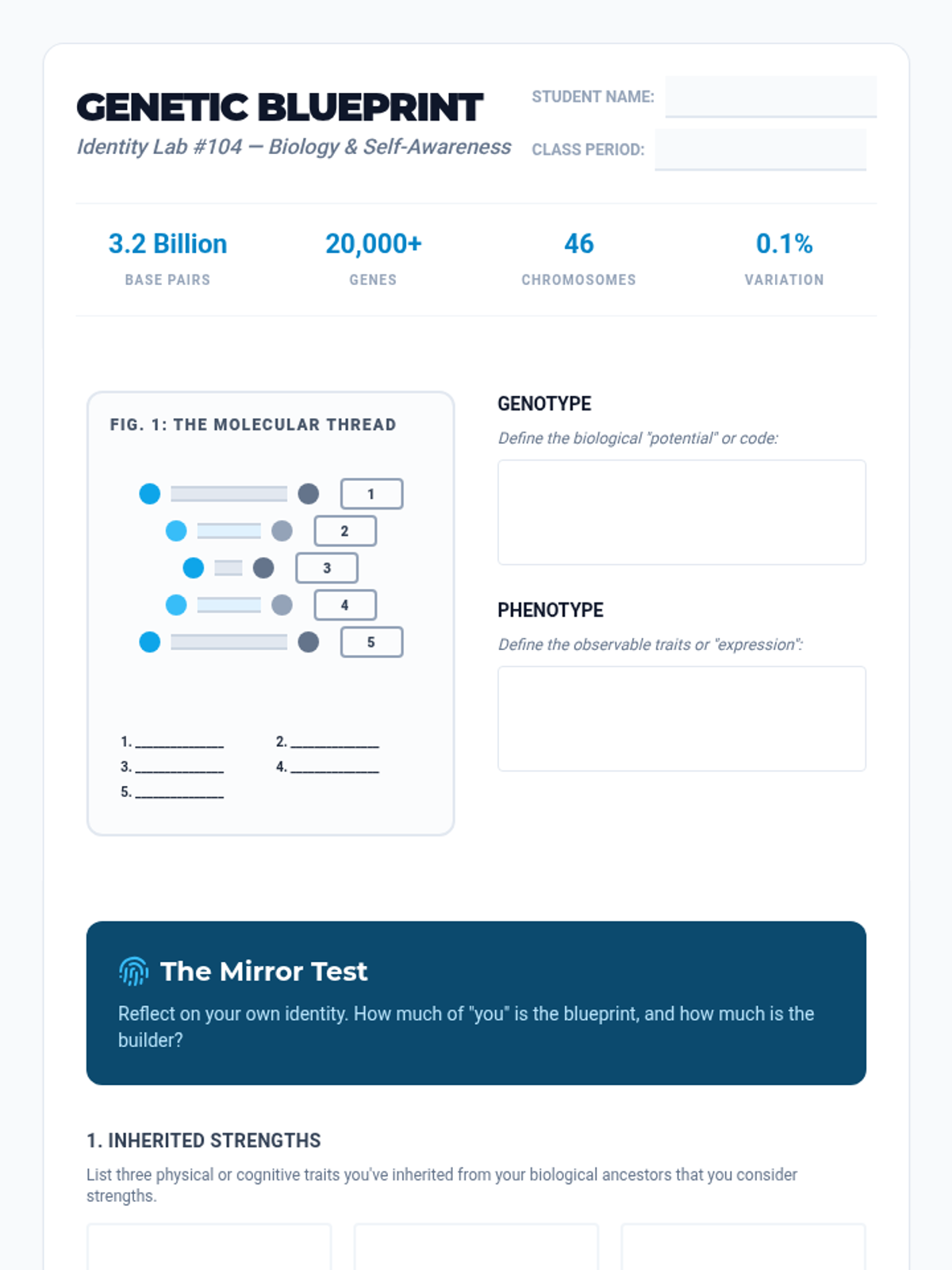
A visual guided notes worksheet that balances scientific diagrams of DNA with SEL reflection questions. Students label the structure of DNA while analyzing their own inherited and environmental traits. Revised with improved diagram, 5-label key, and white work areas.
A high-impact slide deck for teaching DNA through the lens of identity. Features visuals on genomic similarity, epigenetics, and the 'Bio-Mirror' reflection prompt. Includes guidelines for the Socratic seminar.
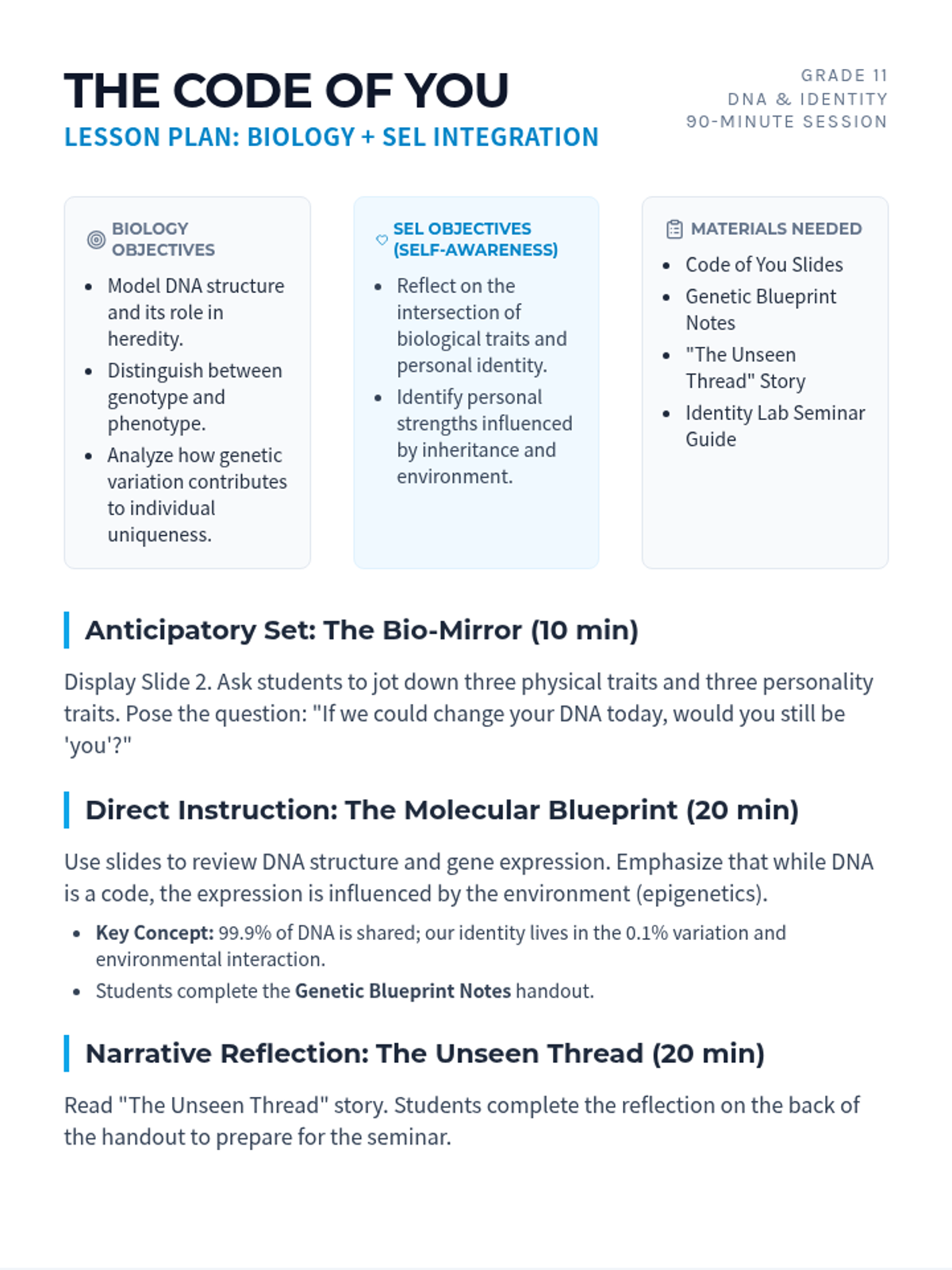
A comprehensive 90-minute lesson plan integrating Biology (DNA structure/heredity) and SEL (Self-Awareness/Identity). Revised to fix page breaks and include Exit Ticket work area. Content condensed to fit on 2 pages.
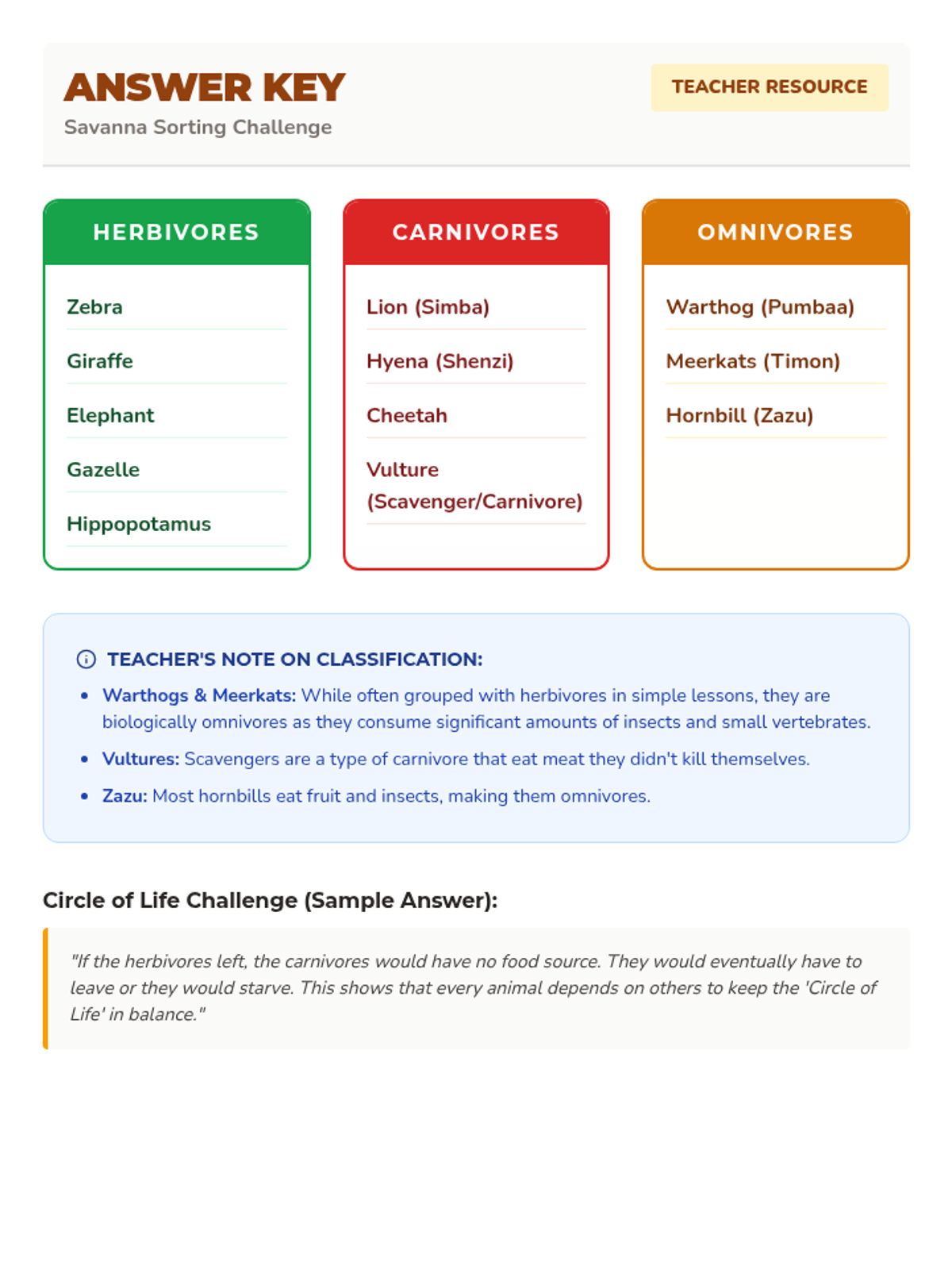
An answer key for the Savanna Sorting Worksheet, including biological notes for teachers regarding complex dietary classifications like omnivorous warthogs.
A polished 5-slide instructional presentation explaining animal diets and ecological balance with Lion King characters. Now features improved contrast, accurate icons, and a circular diagram of the Circle of Life.
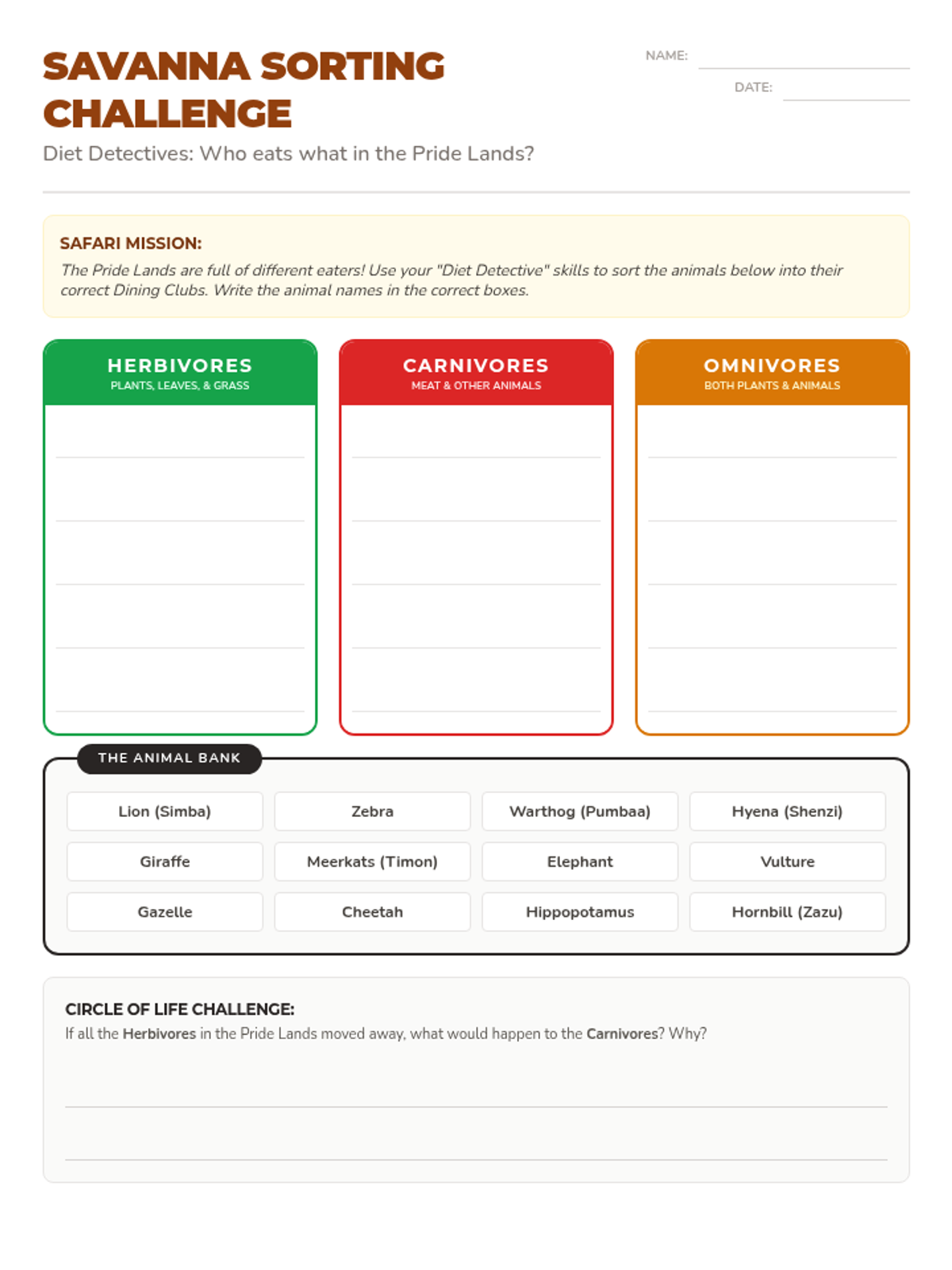
A single-page sorting activity where students categorize characters and savanna animals by diet, featuring a clear animal bank and reflection section.
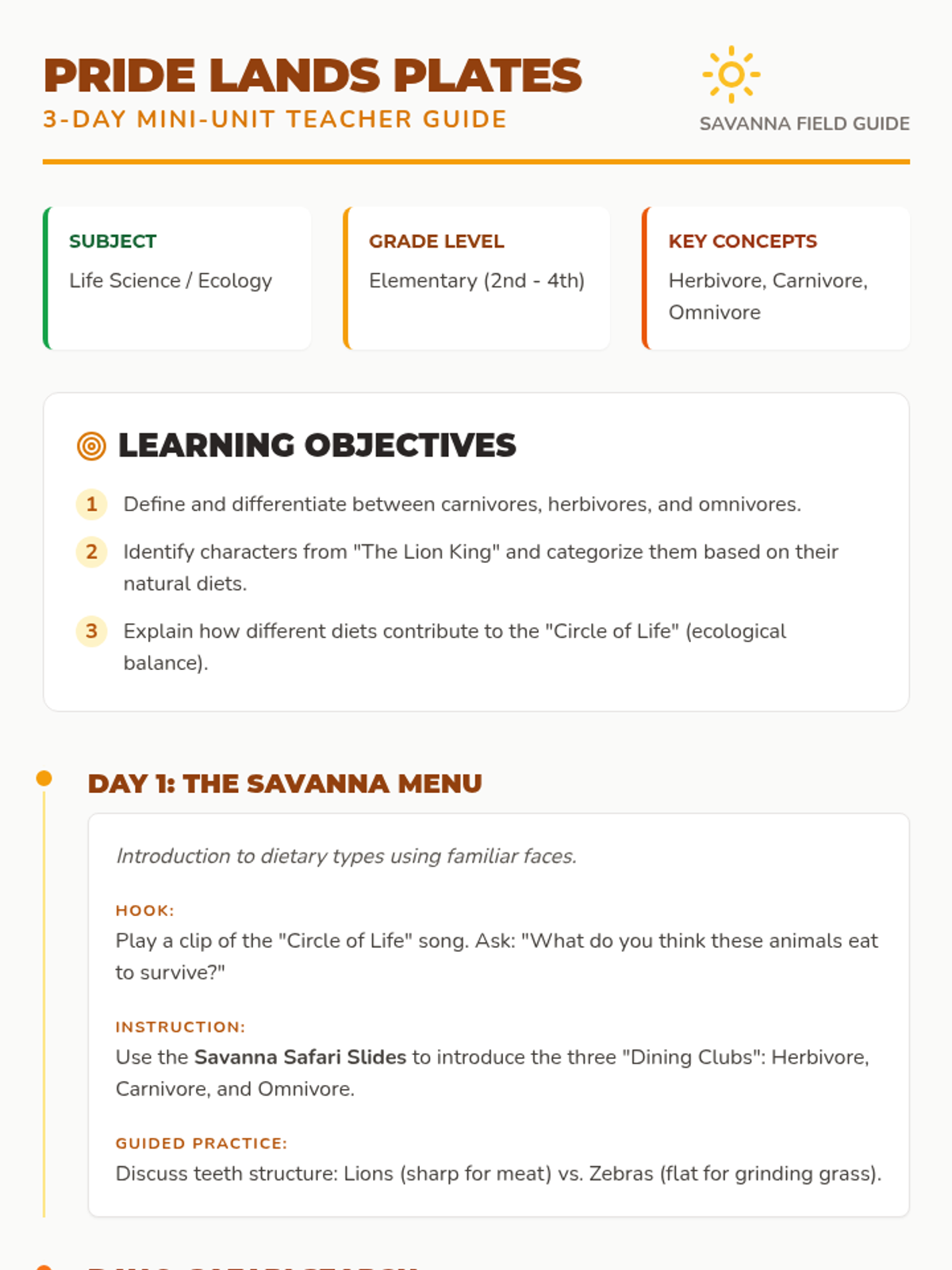
A comprehensive 3-day teacher guide for the Pride Lands Plates unit, including daily lesson breakdowns, learning objectives, and references to accompanying materials.
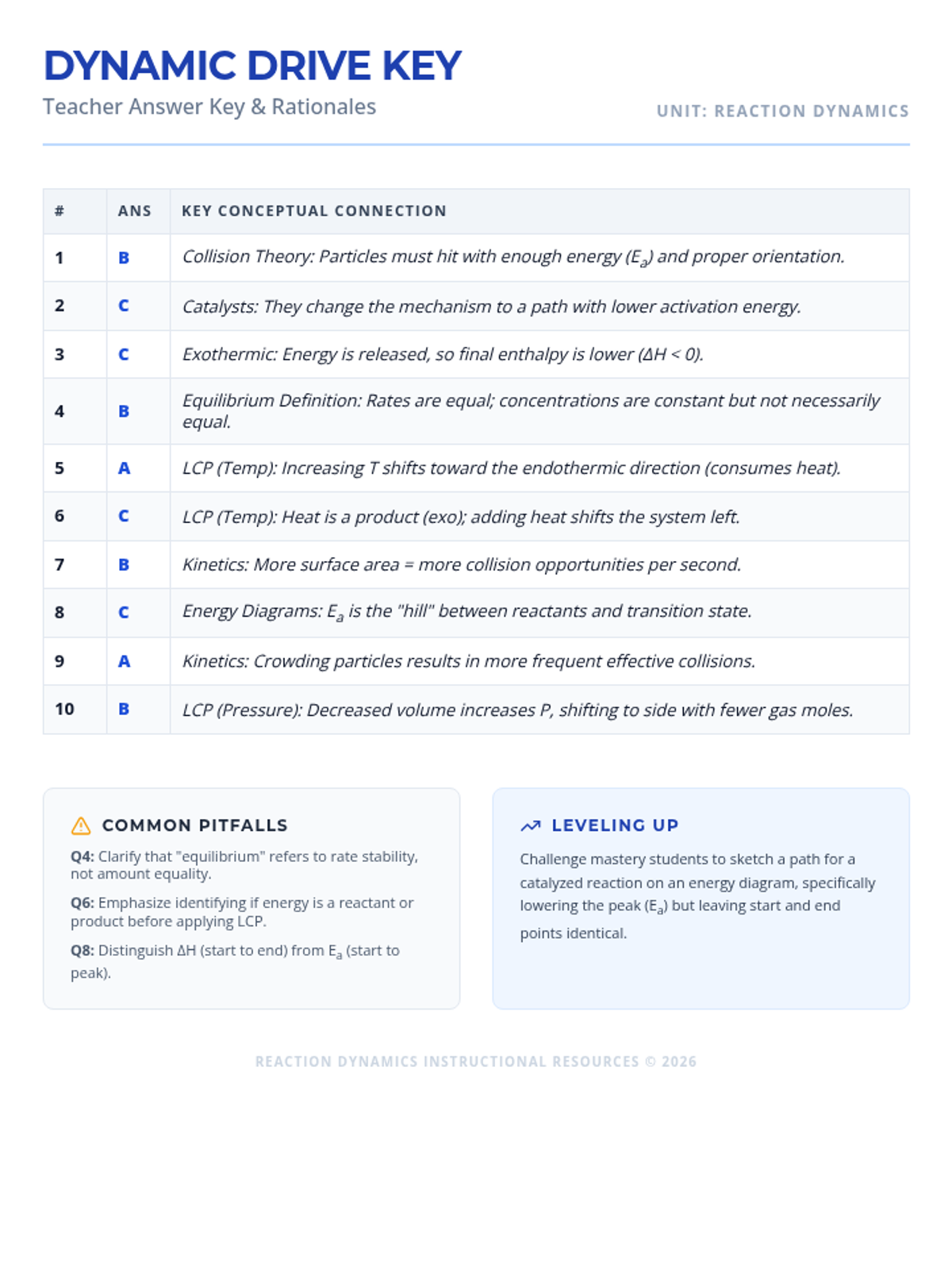
A teacher answer key for the Dynamic Drive MCQs. It provides the correct answers, conceptual rationales for each question, and a guide to common student misconceptions for classroom debriefing. Revised for better page breaks and math rendering.
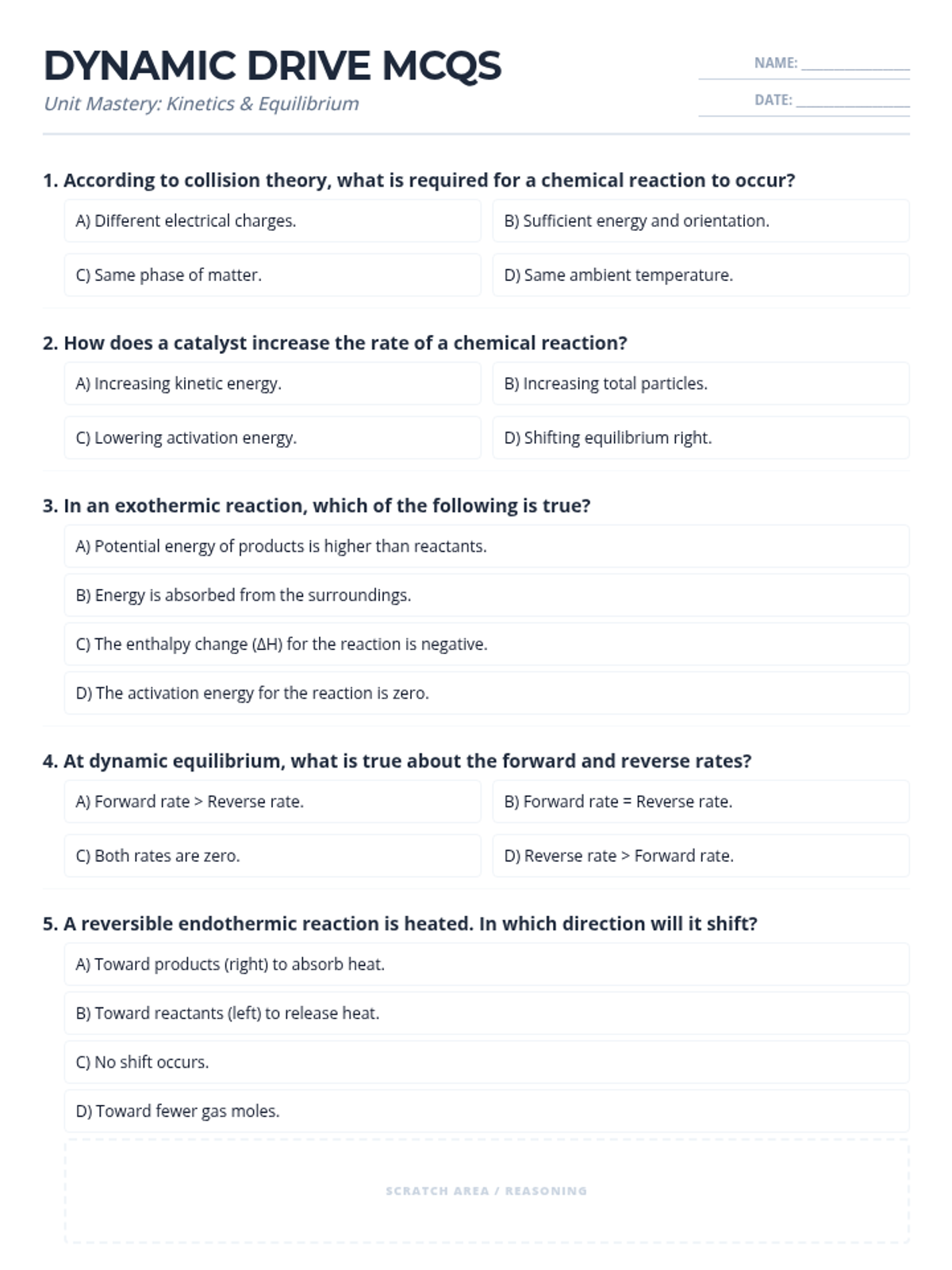
A student assessment consisting of 10 multiple-choice questions covering the key concepts of the Reaction Dynamics unit, including kinetics, energy pathways, and equilibrium shifts. Features uniform answer styling for unbiased testing. Revised for better page breaks, legibility, and technical rendering.
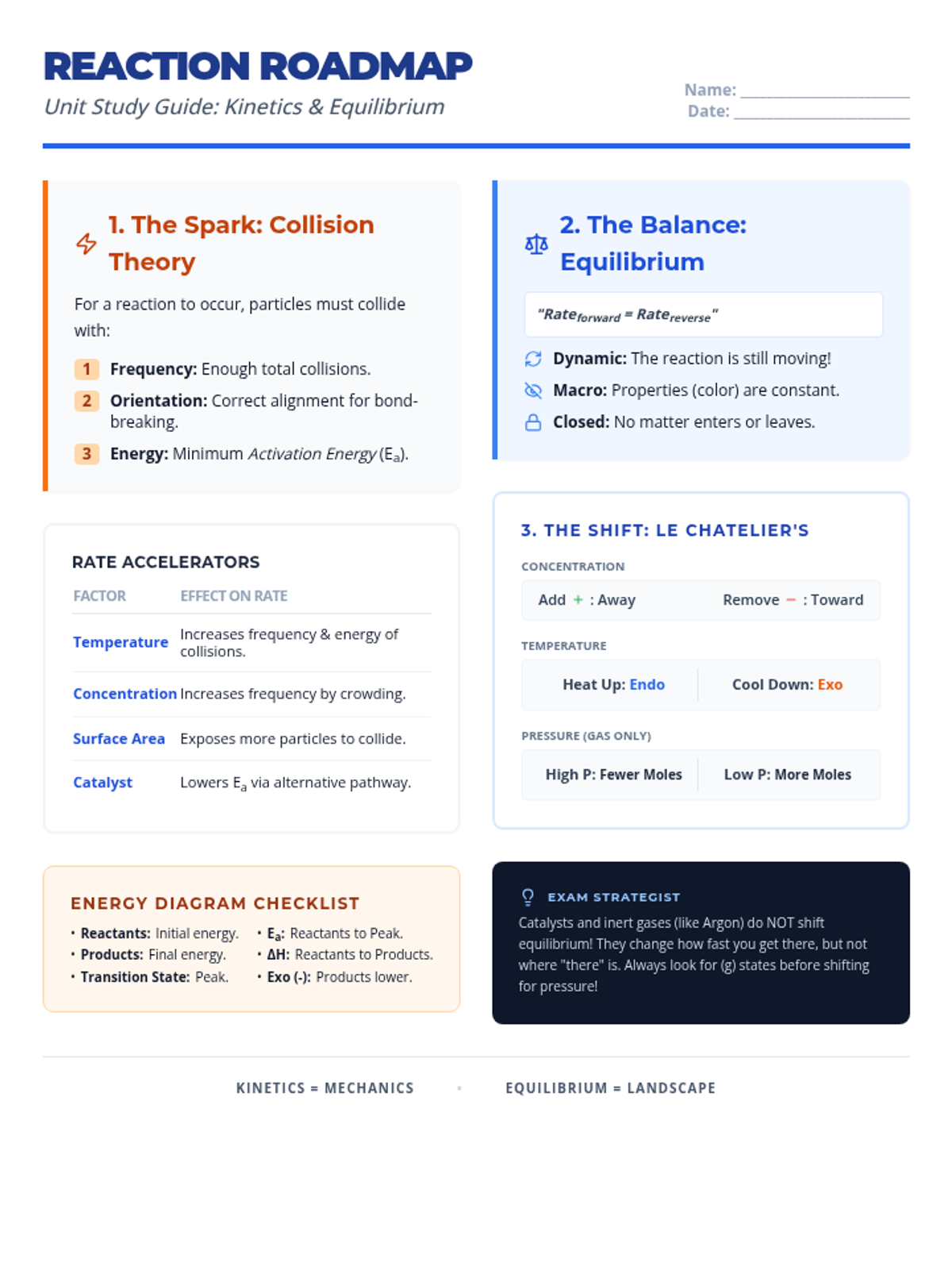
A comprehensive one-page study guide for the Reaction Dynamics unit. It summarizes collision theory, reaction rate factors, energy diagram components, the dynamic nature of equilibrium, and Le Chatelier's Principle shift rules in a visually organized, technical layout. Revised for better page fitting, legibility, and technical rendering.
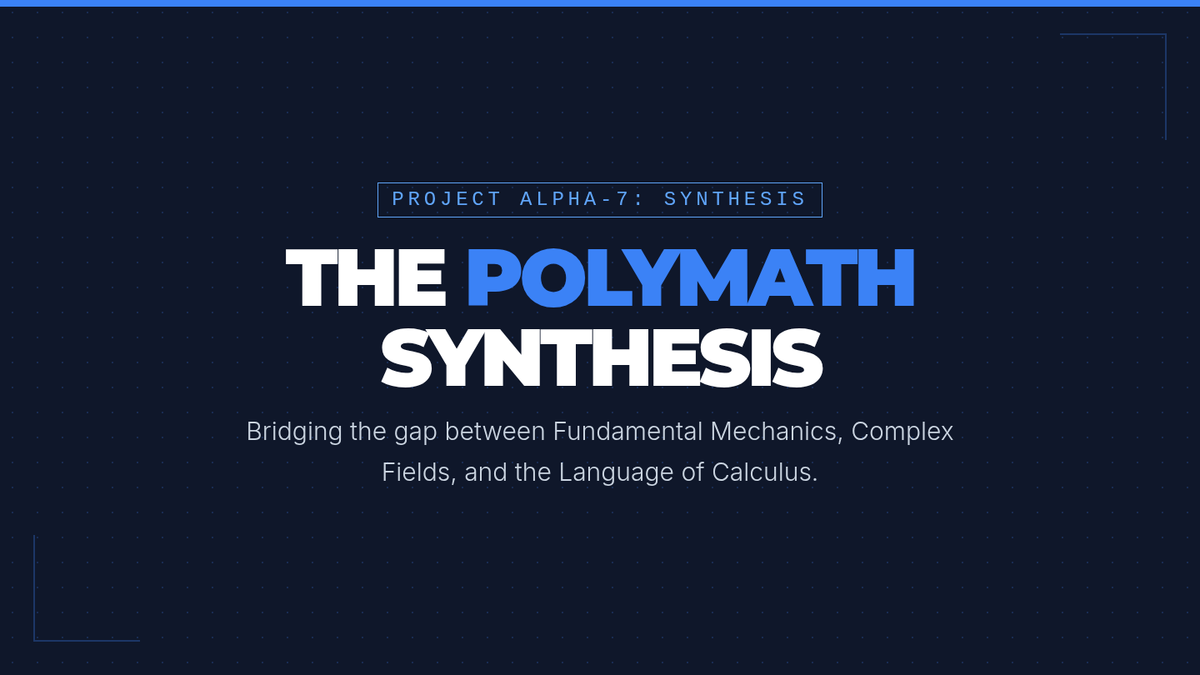
An introductory slide deck for the Polymath Synthesis project, outlining the requirements for integrating AP Physics 1, AP Physics 2, and AP Calculus BC. It features a technical blueprint aesthetic and provides visual layout guidance for scientific posters.
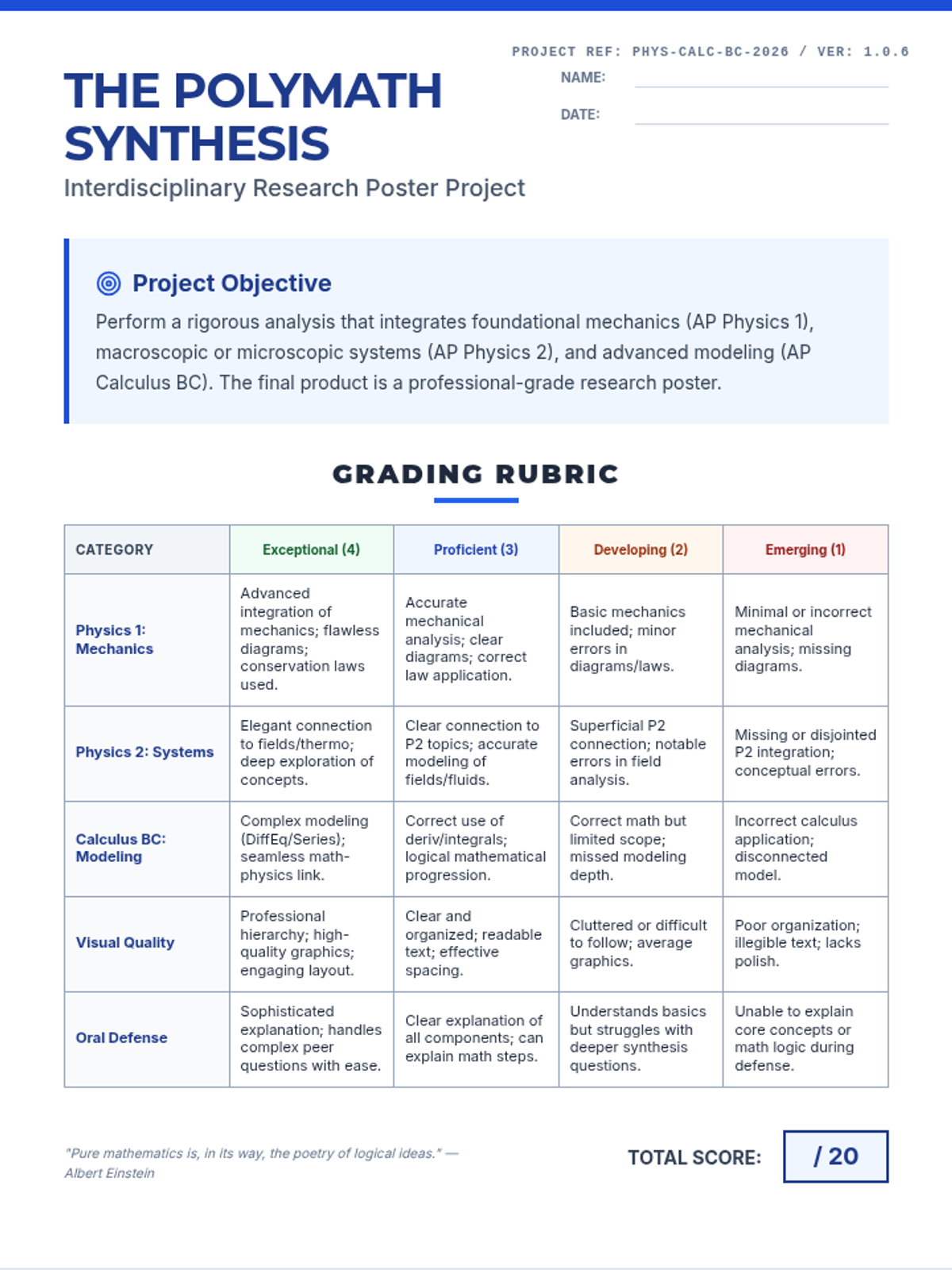
A comprehensive grading rubric and project planner for the Polymath Synthesis poster project. It includes specific criteria for AP Physics 1, AP Physics 2, and AP Calculus BC integration, along with topic inspiration and a structured planning workspace for students.
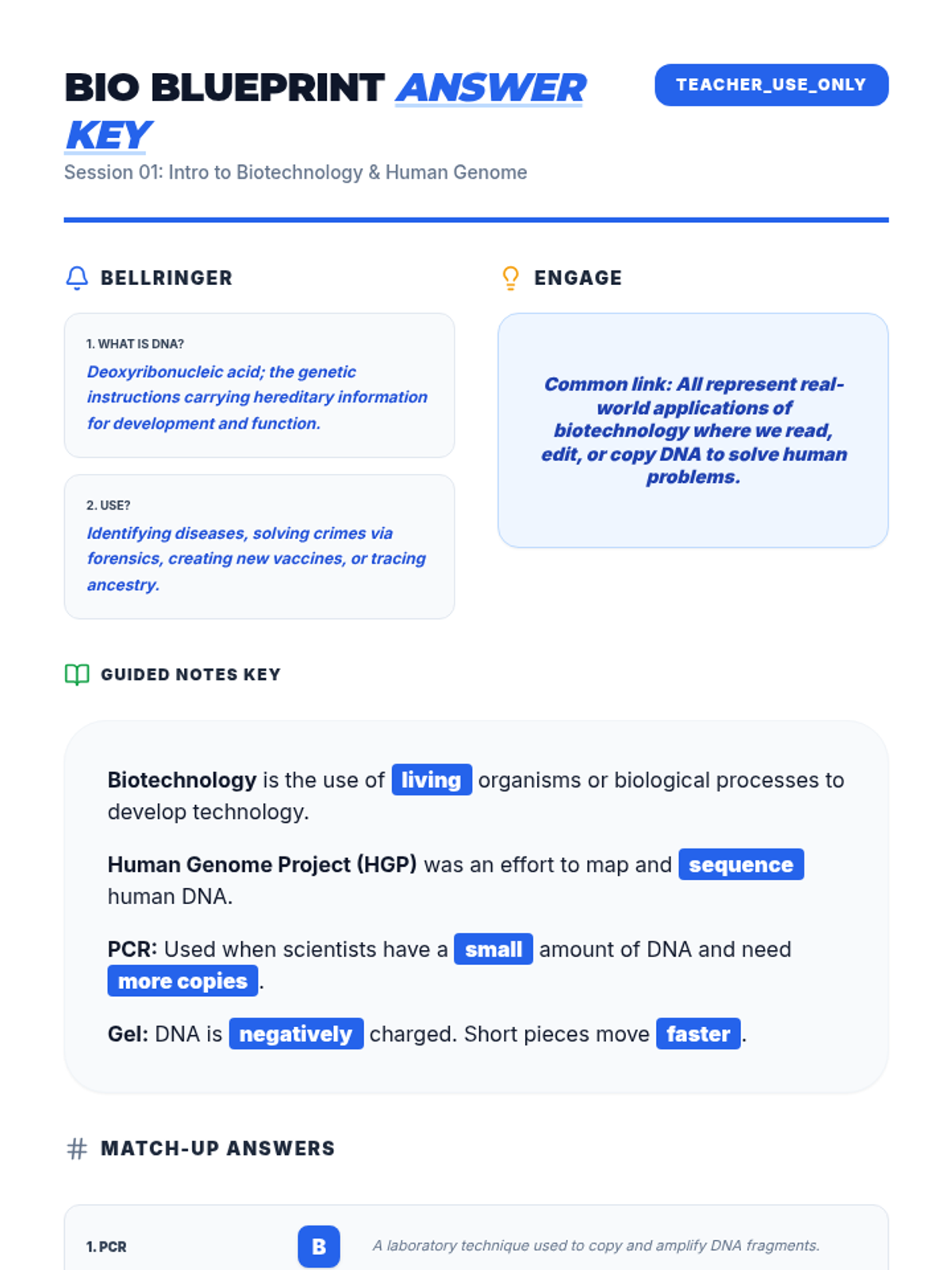
A comprehensive answer key for the Bio Blueprint worksheet, featuring filled-in guided notes, correct vocabulary matches, a completed timeline, and exemplar responses, now with a light-themed exit ticket for consistency. Vertical alignment and page utilization improved.
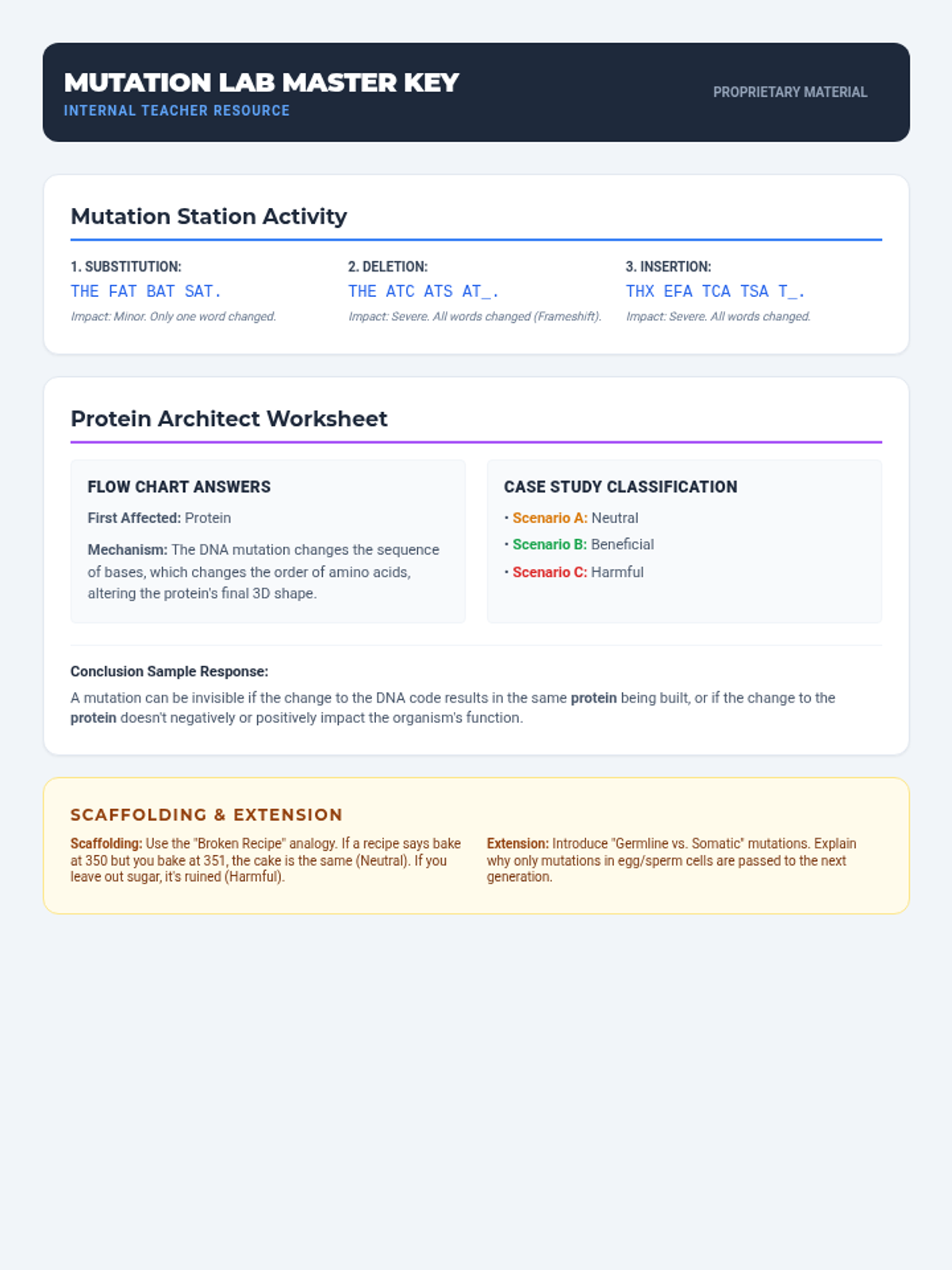
A teacher's answer key and grading guide for all materials in the Mutation Lab lesson, including specific student response examples and scaffolding tips.
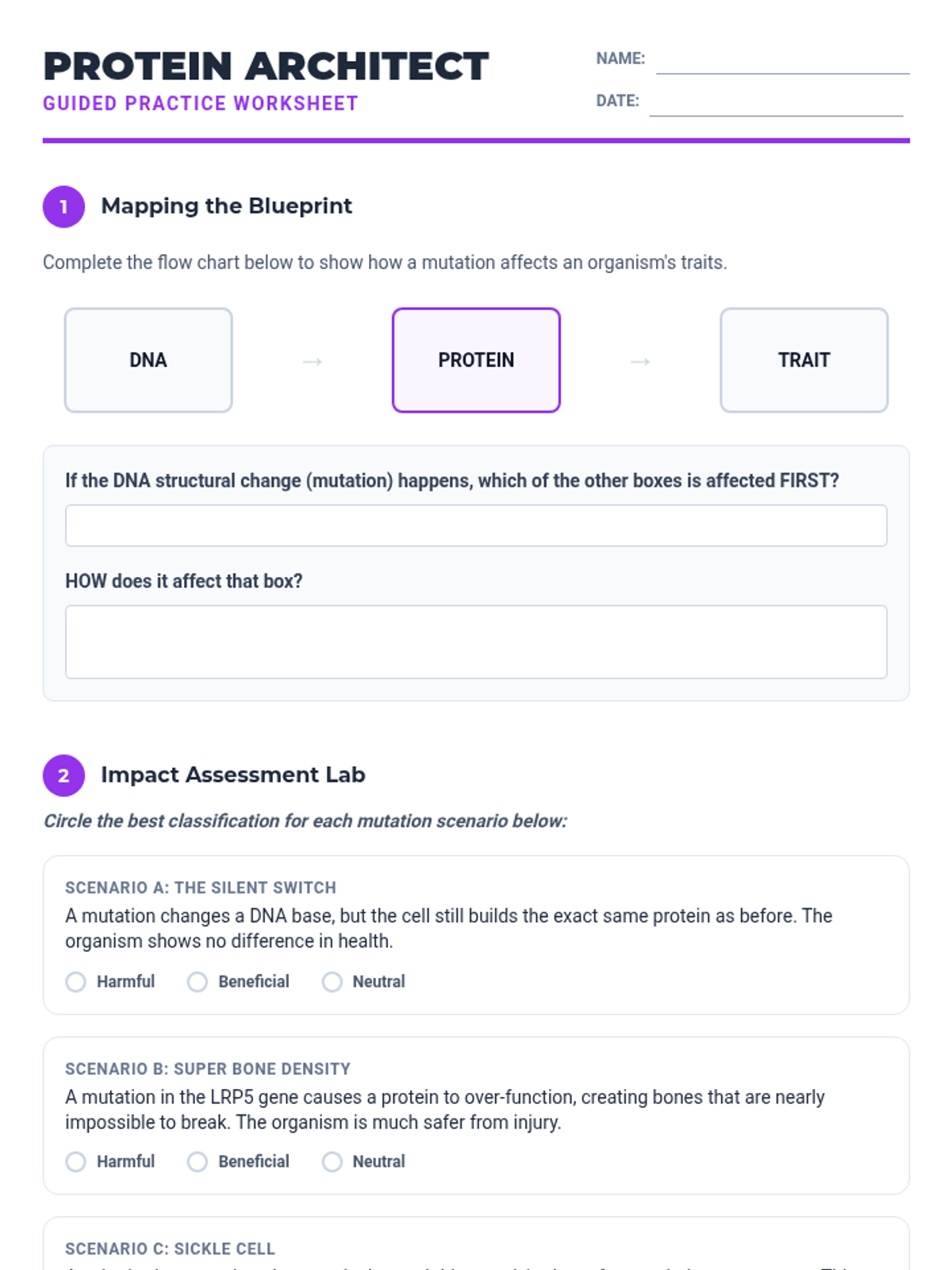
A guided practice worksheet focusing on modeling the flow of genetic information and categorizing real-world mutation examples as harmful, beneficial, or neutral.
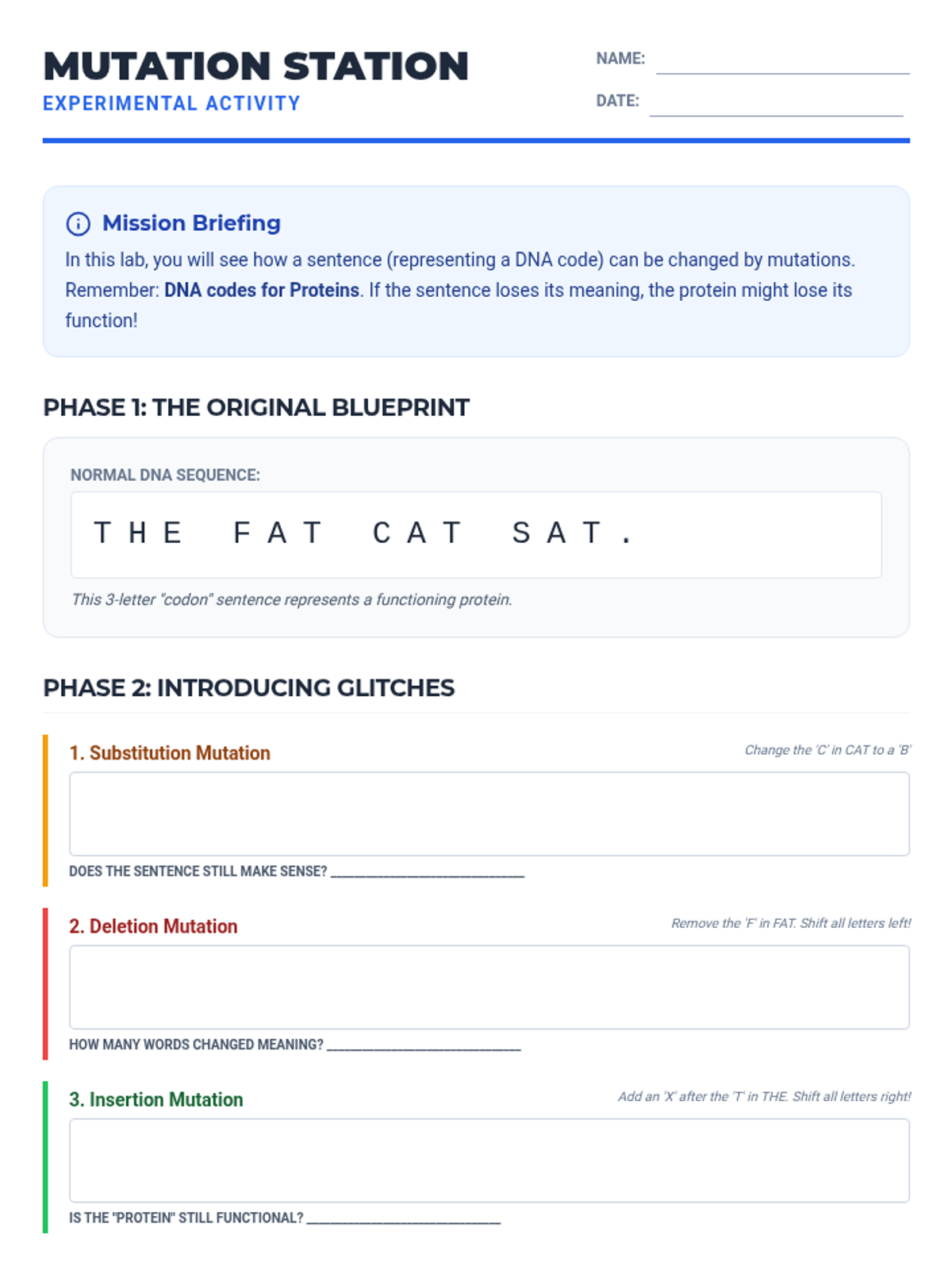
A hands-on student activity worksheet using sentence analogies to model substitution, deletion, and insertion mutations and their effects on protein "meaning."
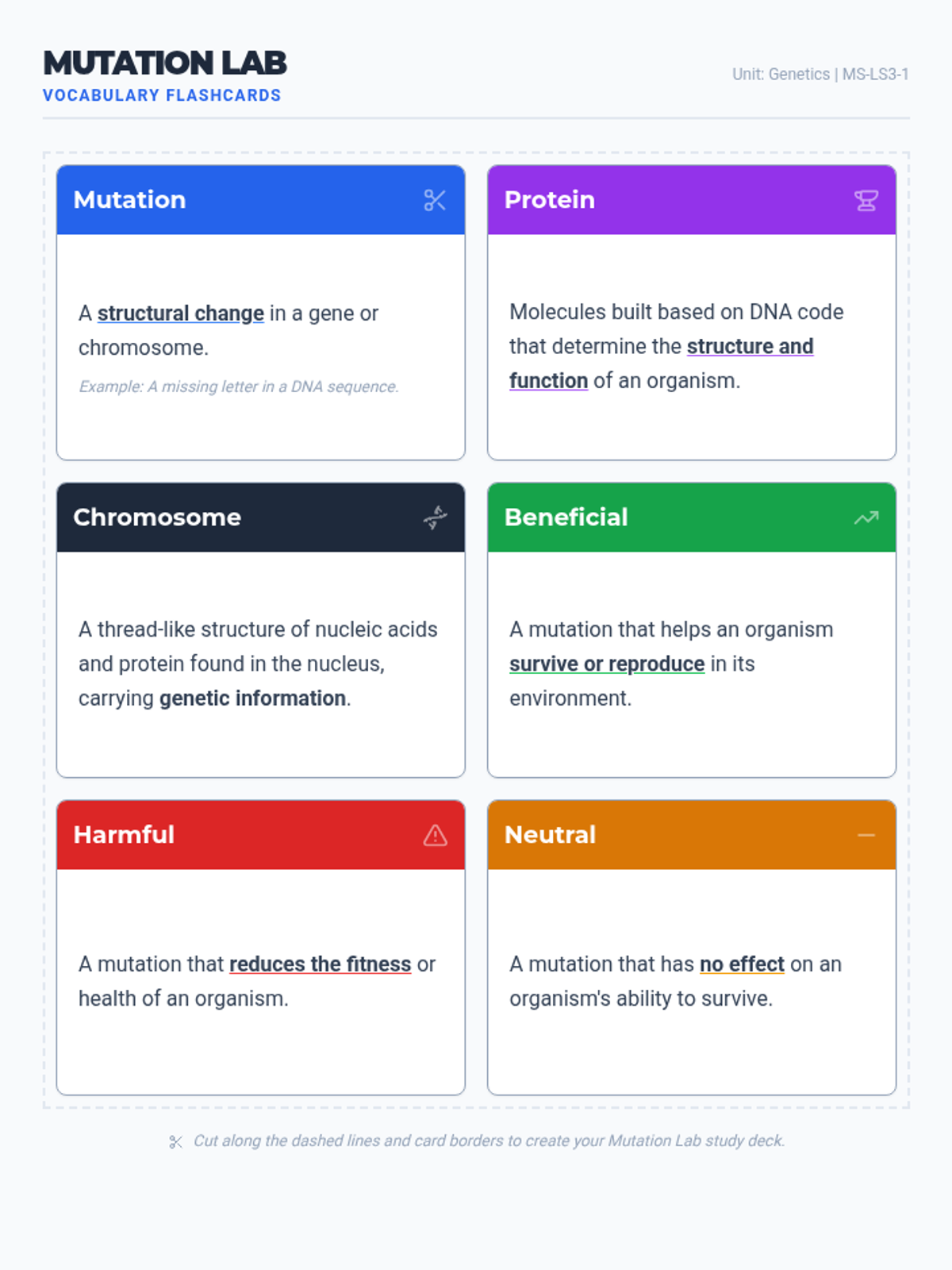
A set of six essential vocabulary cards for the Mutation Lab lesson, featuring clear definitions and visual icons for key genetic terms.