These role-play scenarios challenge students to inhabit the perspectives of different stakeholders—such as biologists, developers, and rangers—to explore the ethical and practical conflicts surrounding habitat loss, poaching, and pollution.
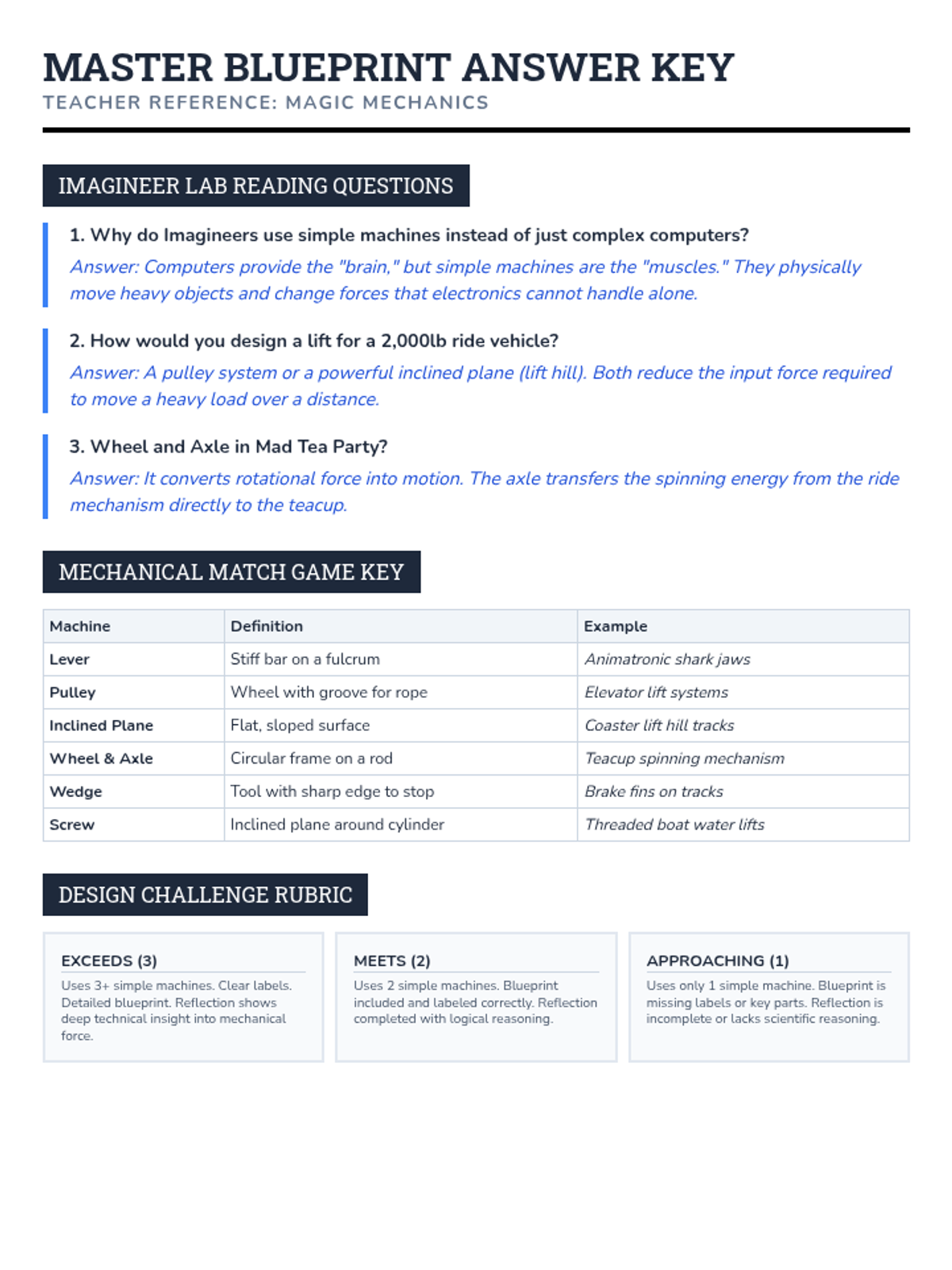
A teacher resource containing answer keys for the Imagineer Lab reading questions, the correct pairings for the Mechanical Match Cards, and a simplified grading rubric for the ride design challenge. Revised for a compact 1-page layout.
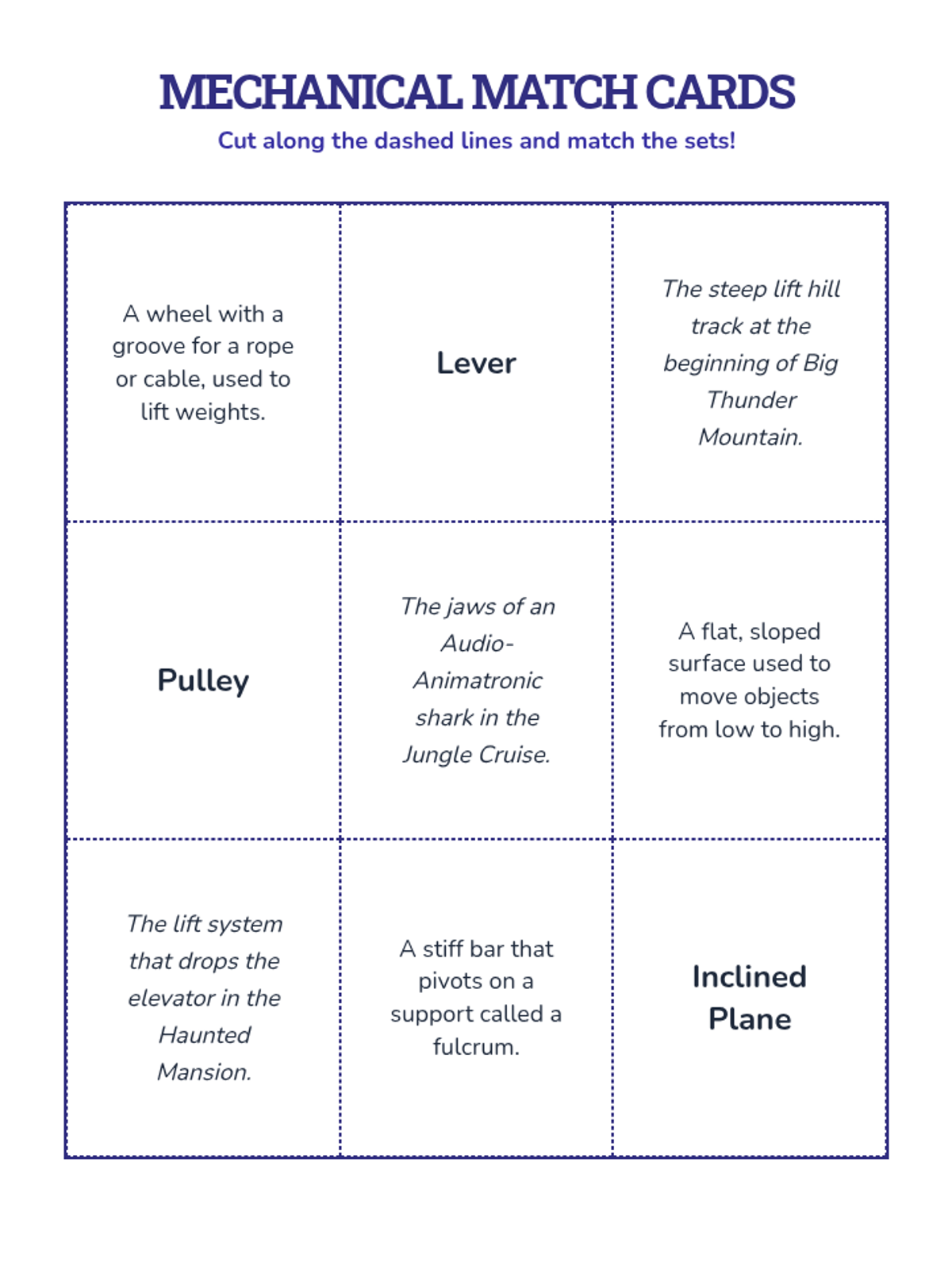
A vocabulary matching game featuring the six simple machines. Includes three sets of cards for students to match: the machine name, its scientific definition, and a specific real-world example from a theme park attraction. All cards have identical styling with small corner labels identifying them as Machine, Definition, or Example. Darkened labels for better print contrast.
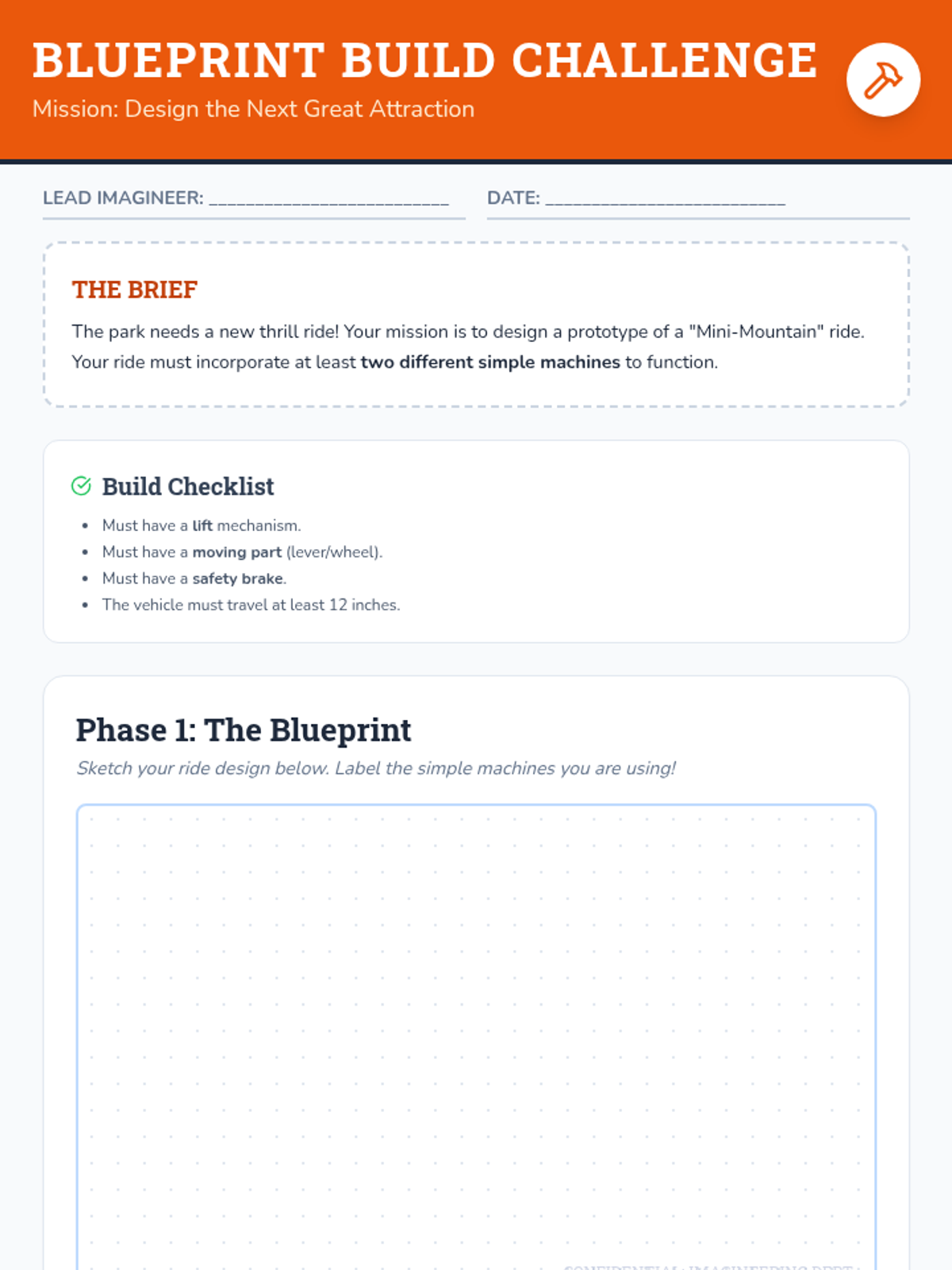
A simplified "Rapid Prototyping" engineering challenge where students build and test a single mechanical feature (lift, spinner, or launcher) using common classroom supplies. Includes a blueprint drawing area and reflection questions.
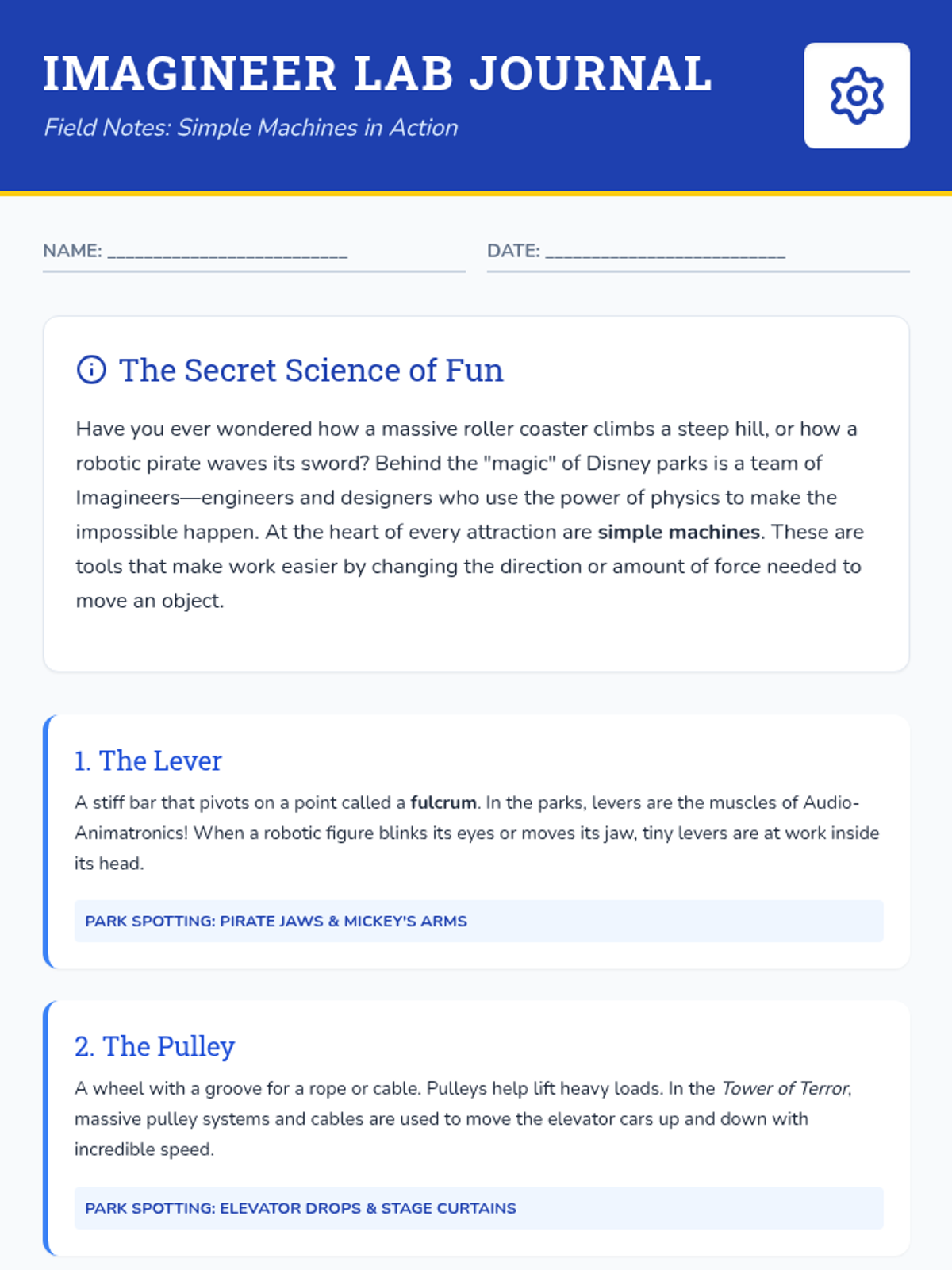
An informational text reading activity that explains the six types of simple machines through examples found in famous Disney theme park attractions, including comprehension questions and a sketching area. Revised to move the Lab Analysis to its own page (Page 3) and balance the machines across Pages 1 and 2.
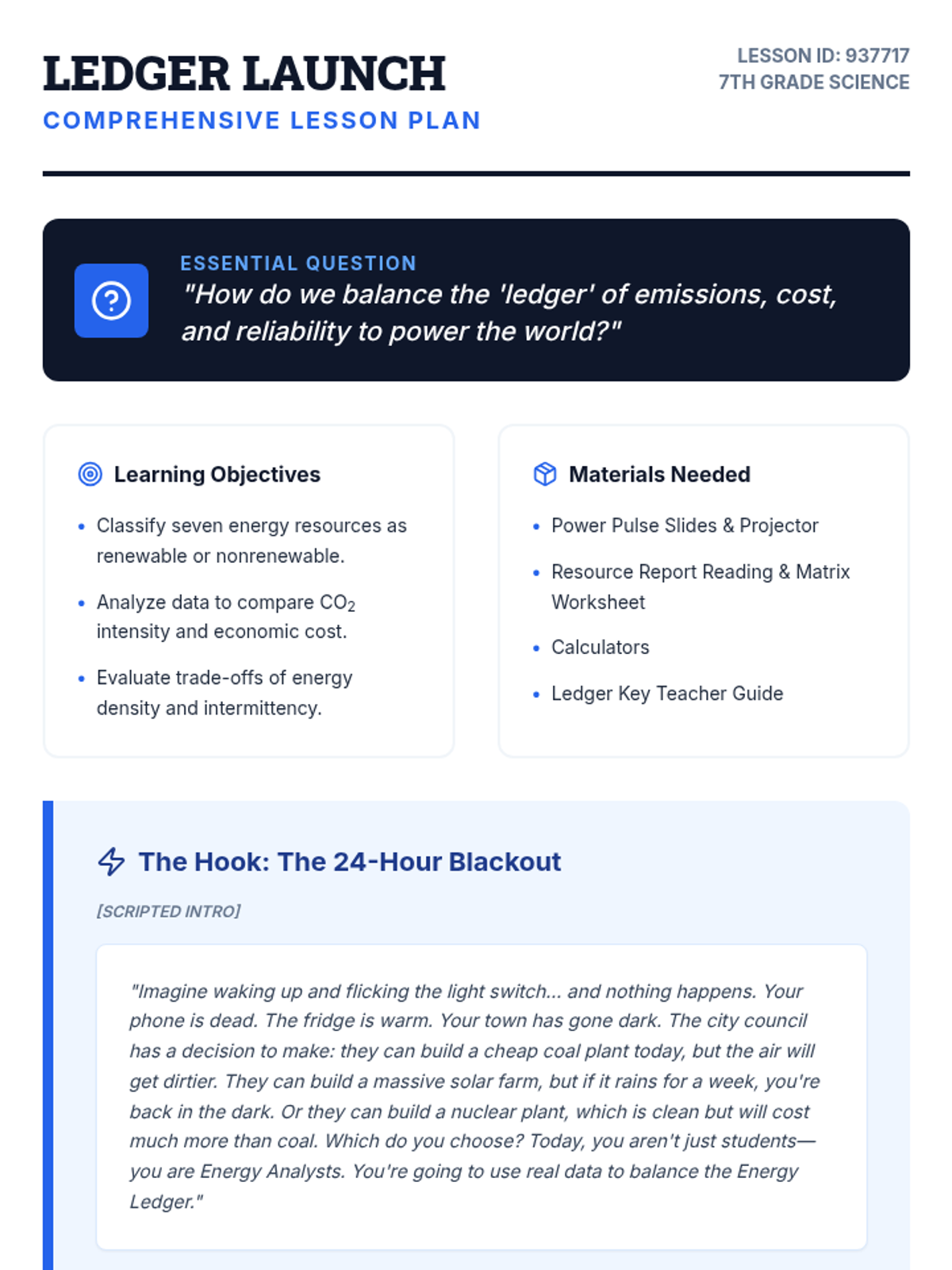
A refined lesson plan for the Energy Ledger lesson, featuring a scripted hook, instructional script, timed phases, and differentiation strategies, optimized for efficiency and professional printing.
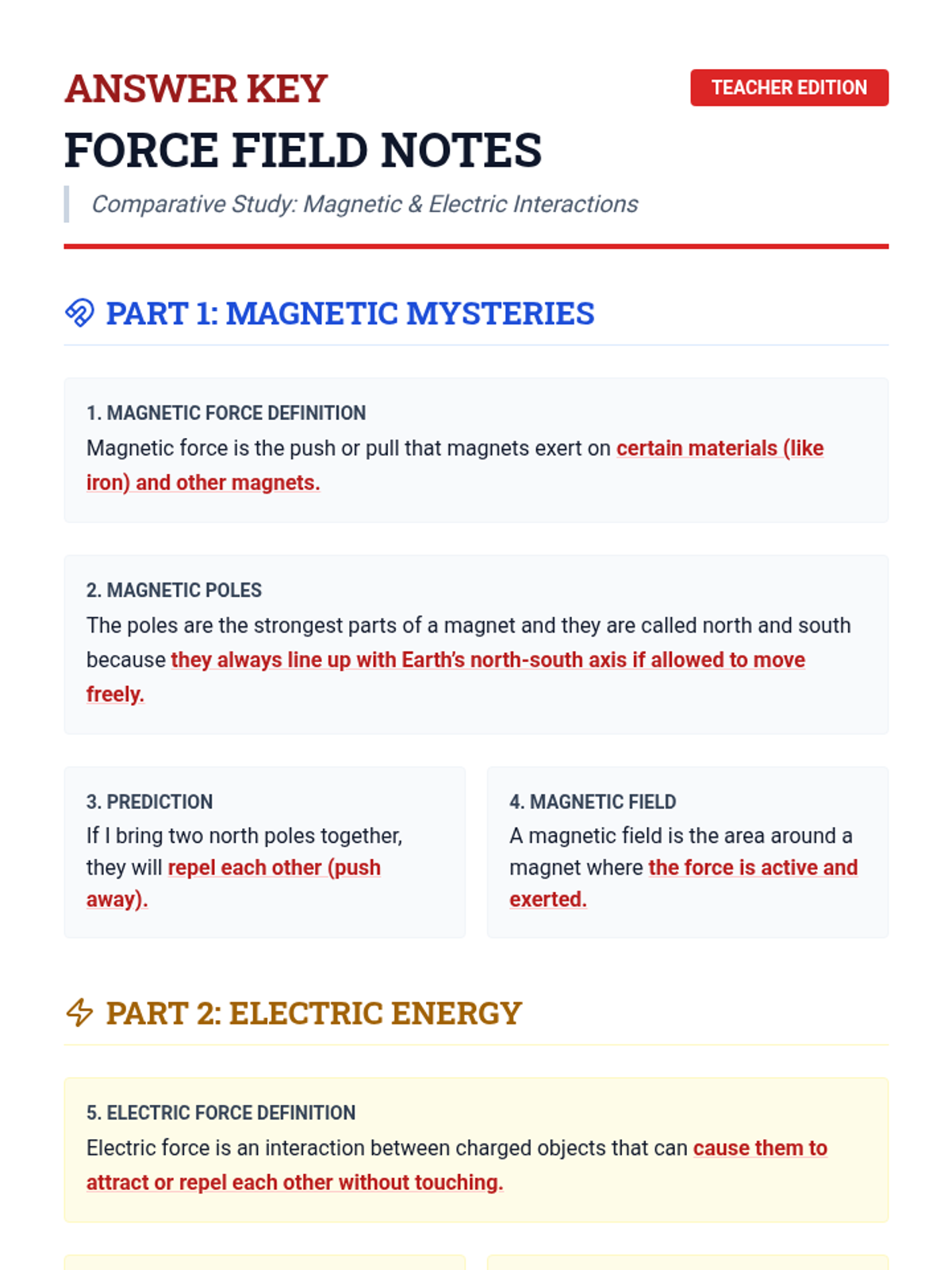
A teacher answer key for the Force Field Notes Worksheet, providing completed sentence starters and instructional guidance.
A visual presentation introducing magnetic and electric forces, explaining their properties, and highlighting the electromagnetic connection between them.
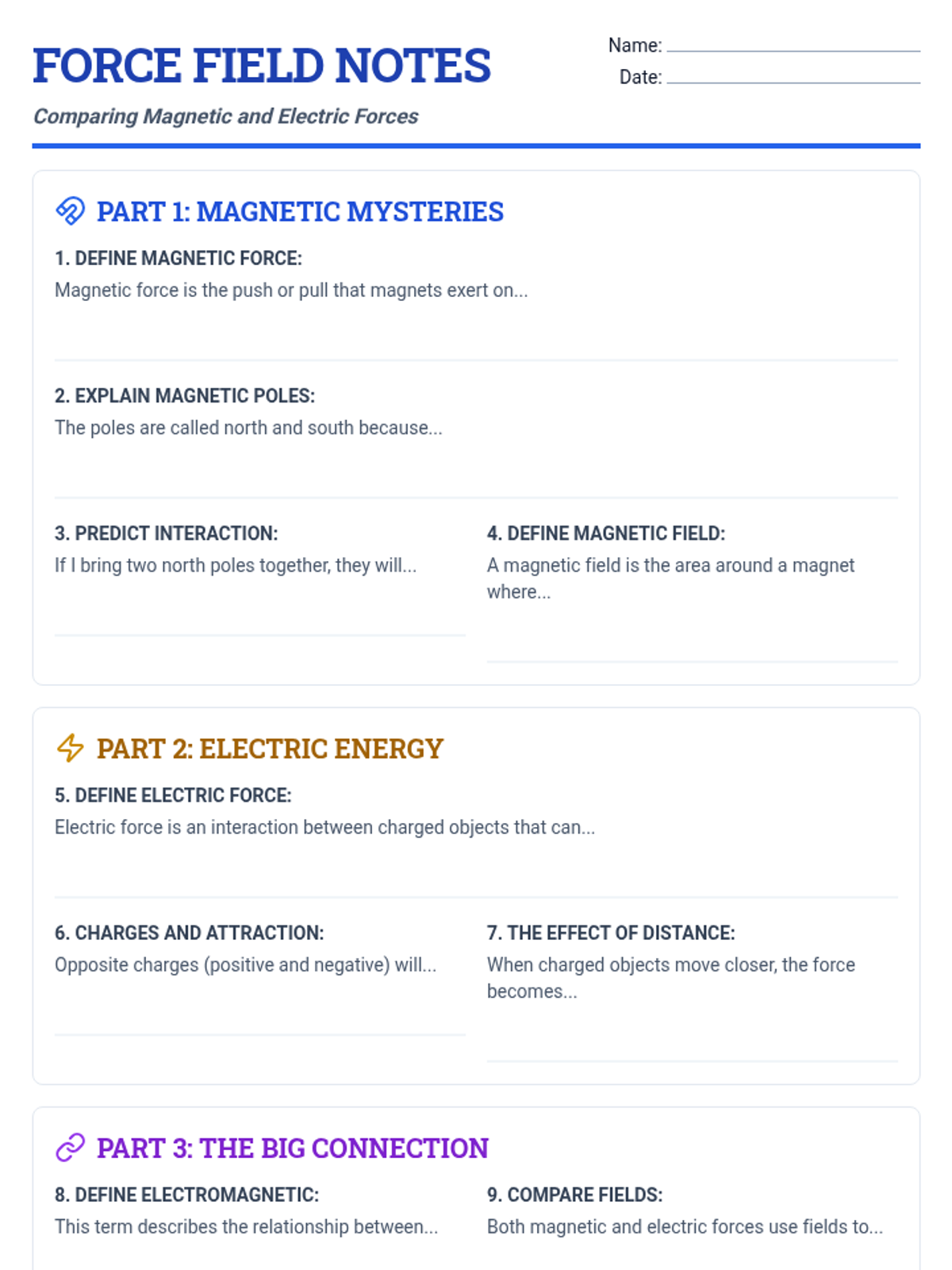
A student worksheet focusing on the comparison between magnetic and electric forces, featuring sentence starters to support student writing and conceptual understanding.
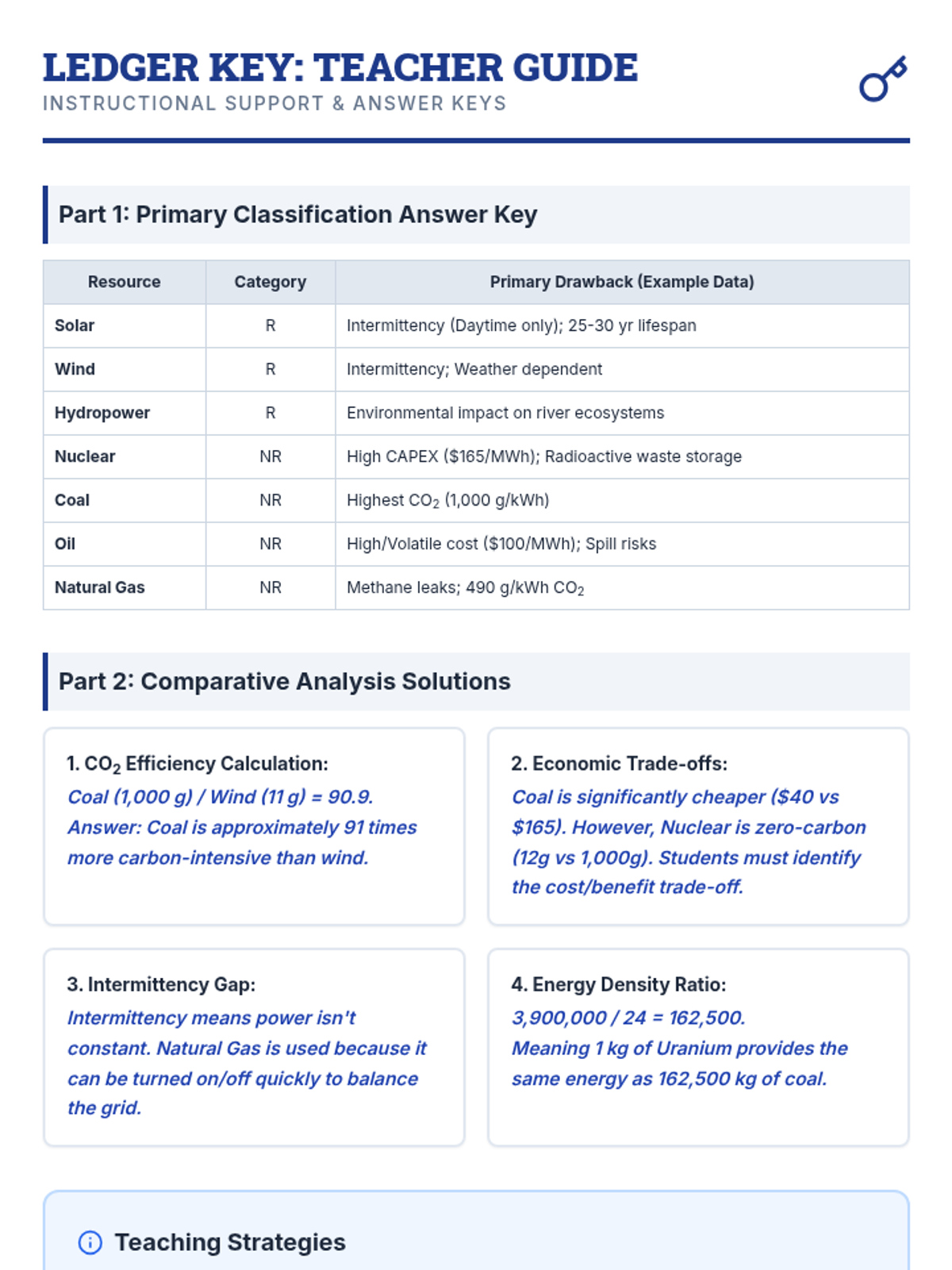
A comprehensive teacher's guide containing the answer key for the analysis worksheet, mathematical breakdown of data comparisons, and instructional tips for discussing energy trade-offs.
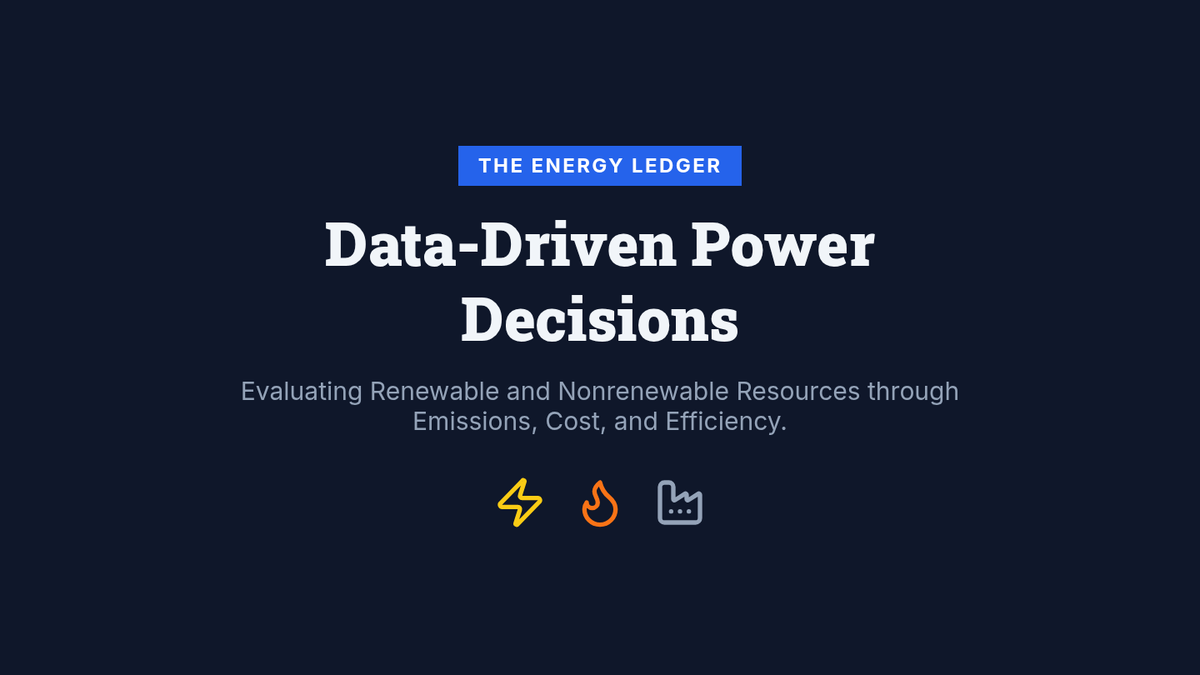
A visual presentation guiding students through the data-heavy analysis of energy resources, including comparisons of CO2 emissions and costs, with a discussion on grid balancing.
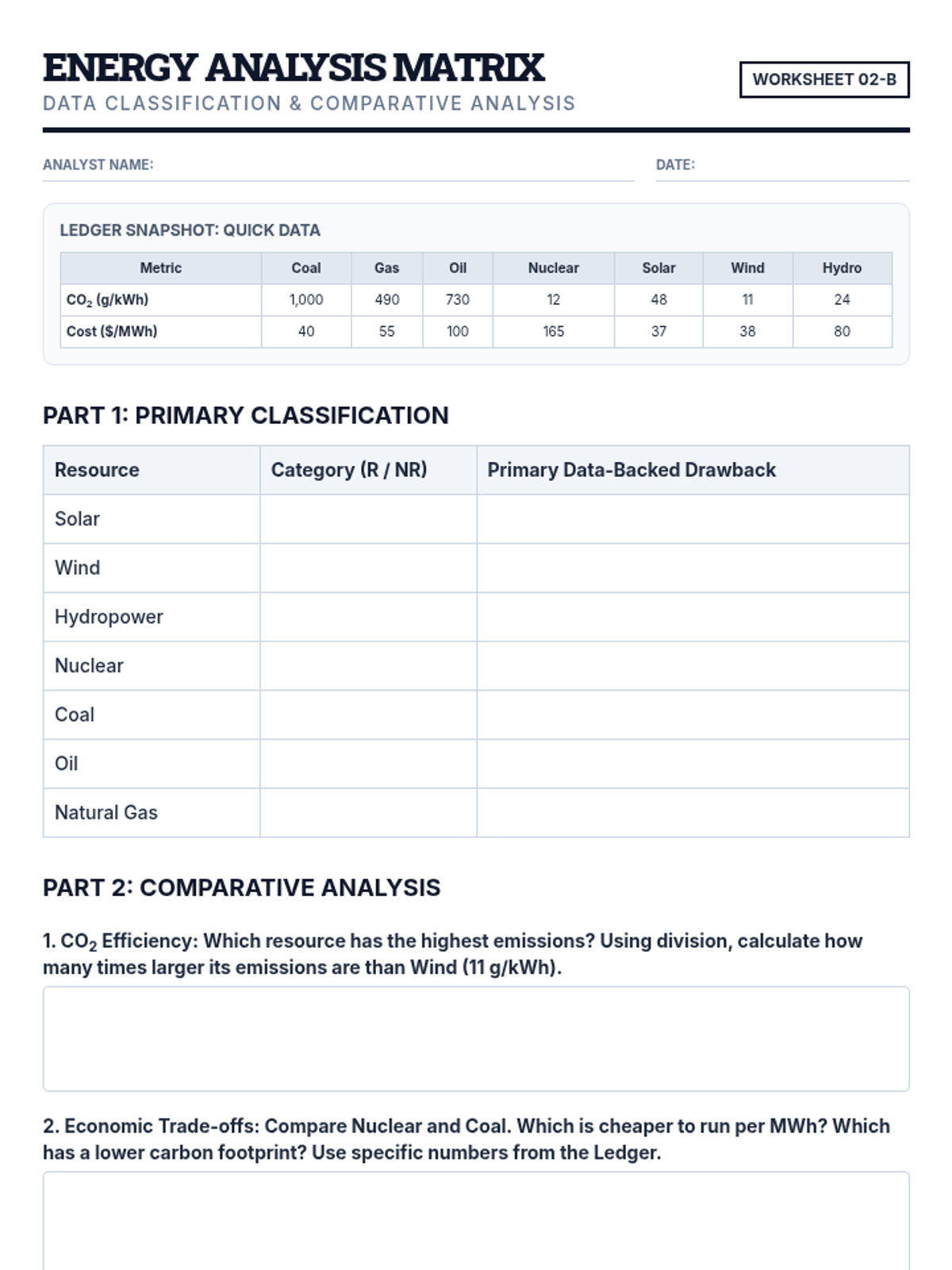
A structured graphic organizer and analysis sheet for students to classify energy sources and perform data-driven comparisons based on CO2 emissions, cost, and energy density.
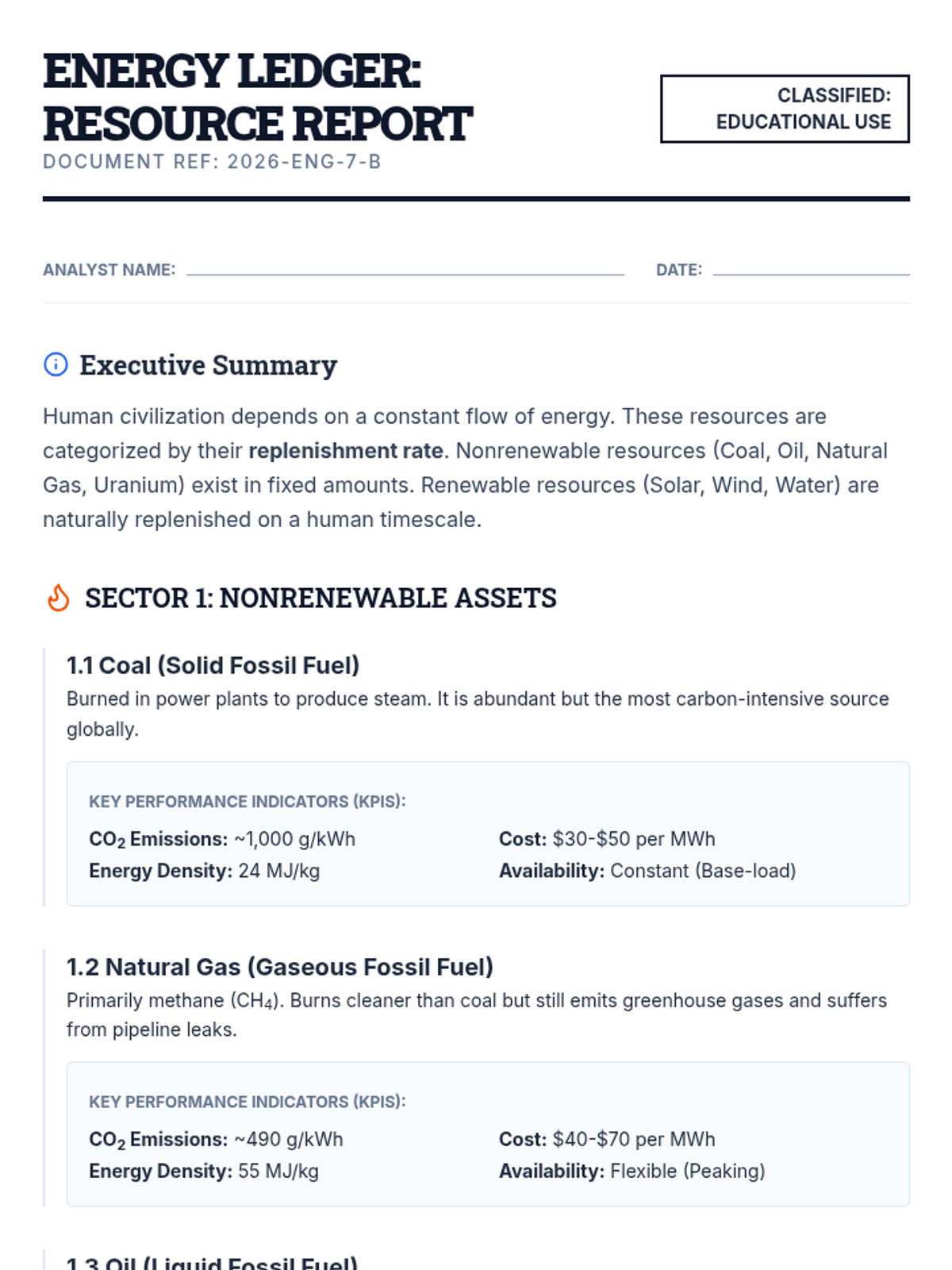
A data-dense reading passage for 7th-grade students detailing the performance indicators (CO2 emissions, cost, and energy density) of seven key energy resources.
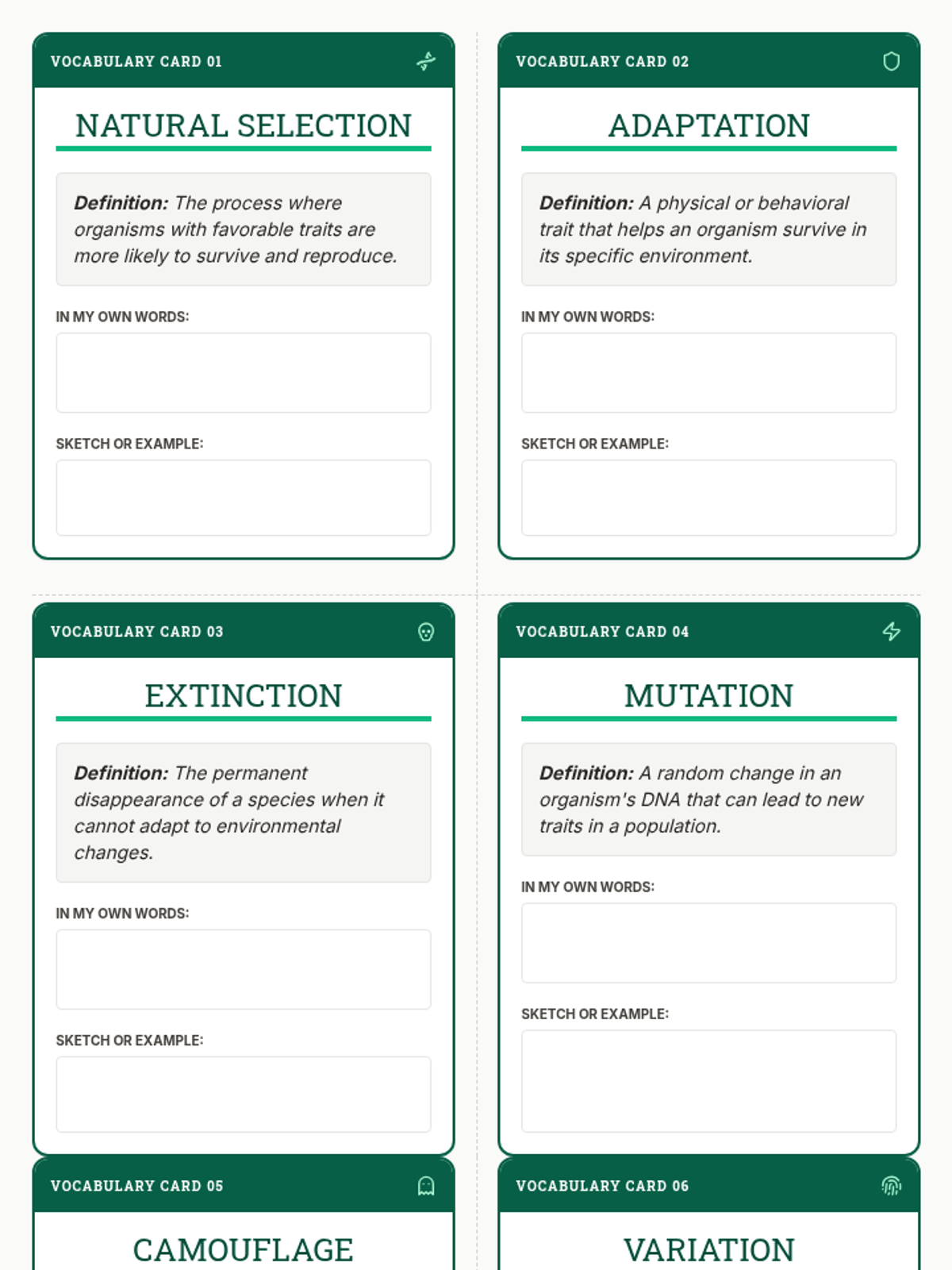
A set of eight printable vocabulary cards for the Natural Selection lesson, featuring key terms like Adaptation, Mutation, and Extinction. Each card includes a formal definition and space for students to write their own explanation and sketch an example.
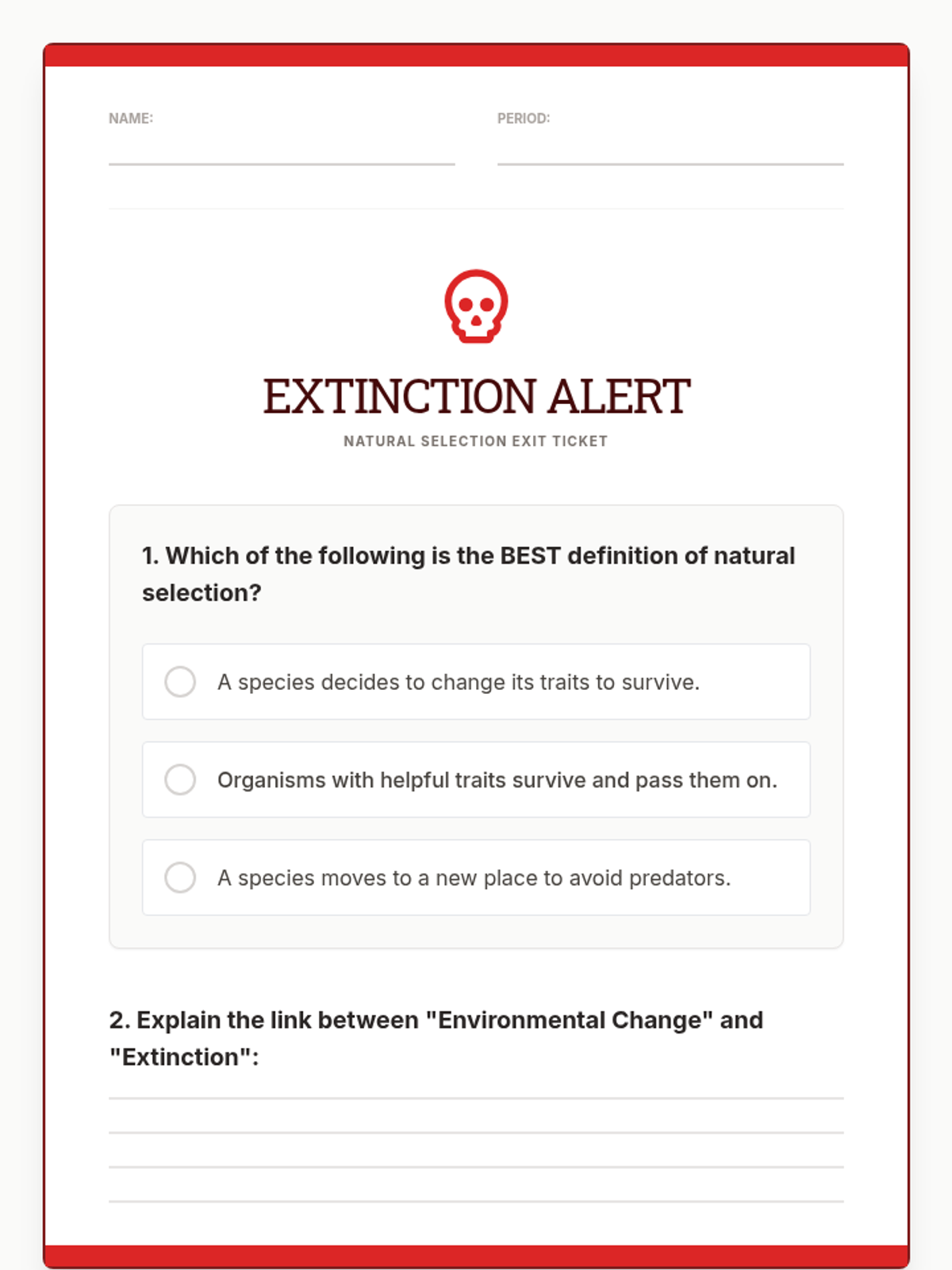
A quick formative assessment exit ticket to measure student understanding of the core definition of natural selection and the relationship between environmental changes and extinction.
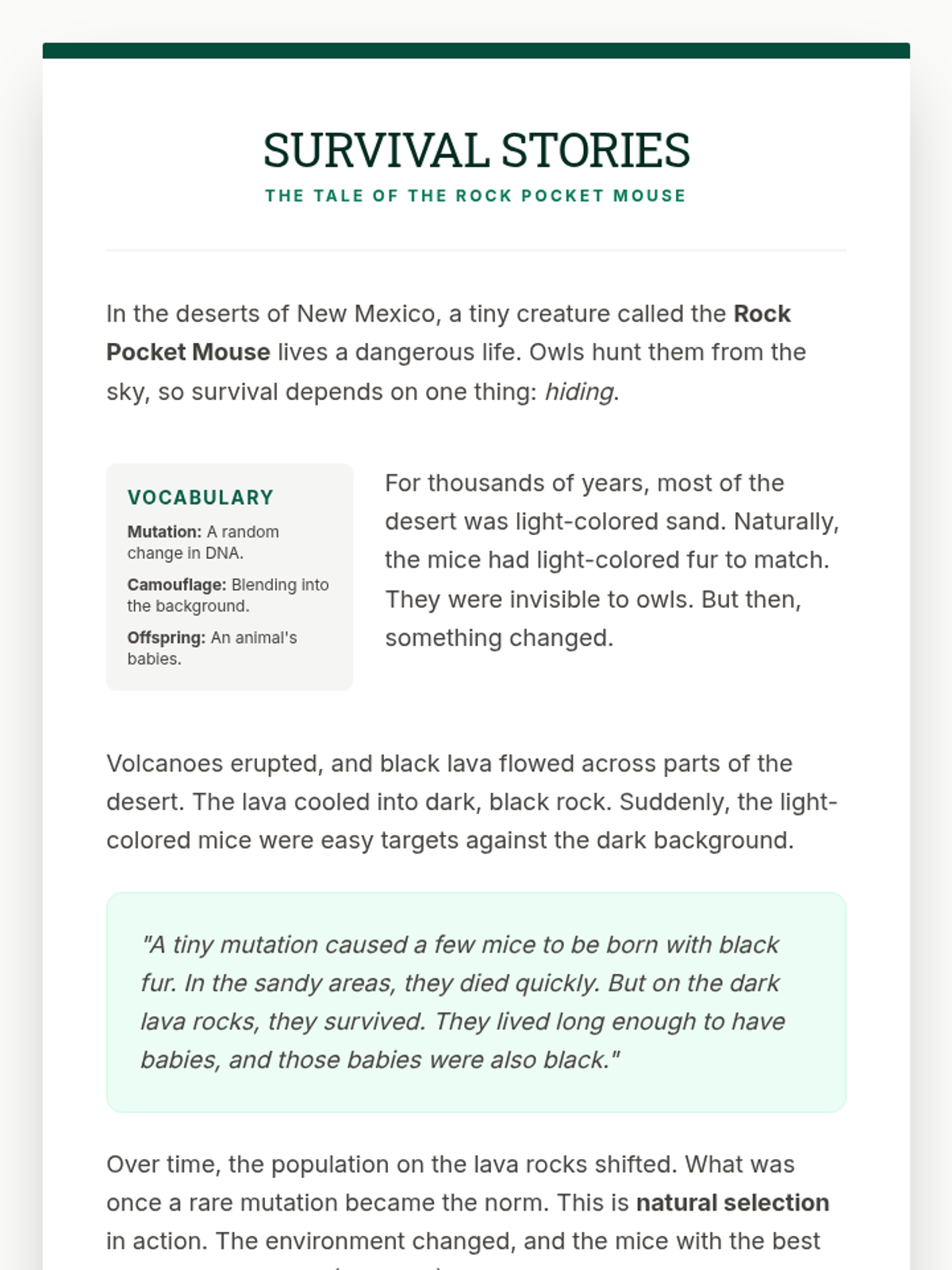
A modified, high-interest reading passage about the Rock Pocket Mouse, illustrating the concepts of mutation, camouflage, and natural selection. Includes vocabulary support and comprehension questions.