A 6-question multiple-choice assessment in EOG format, testing students' ability to identify author purpose, bias, and source reliability based on the Red Wolf Dossier.
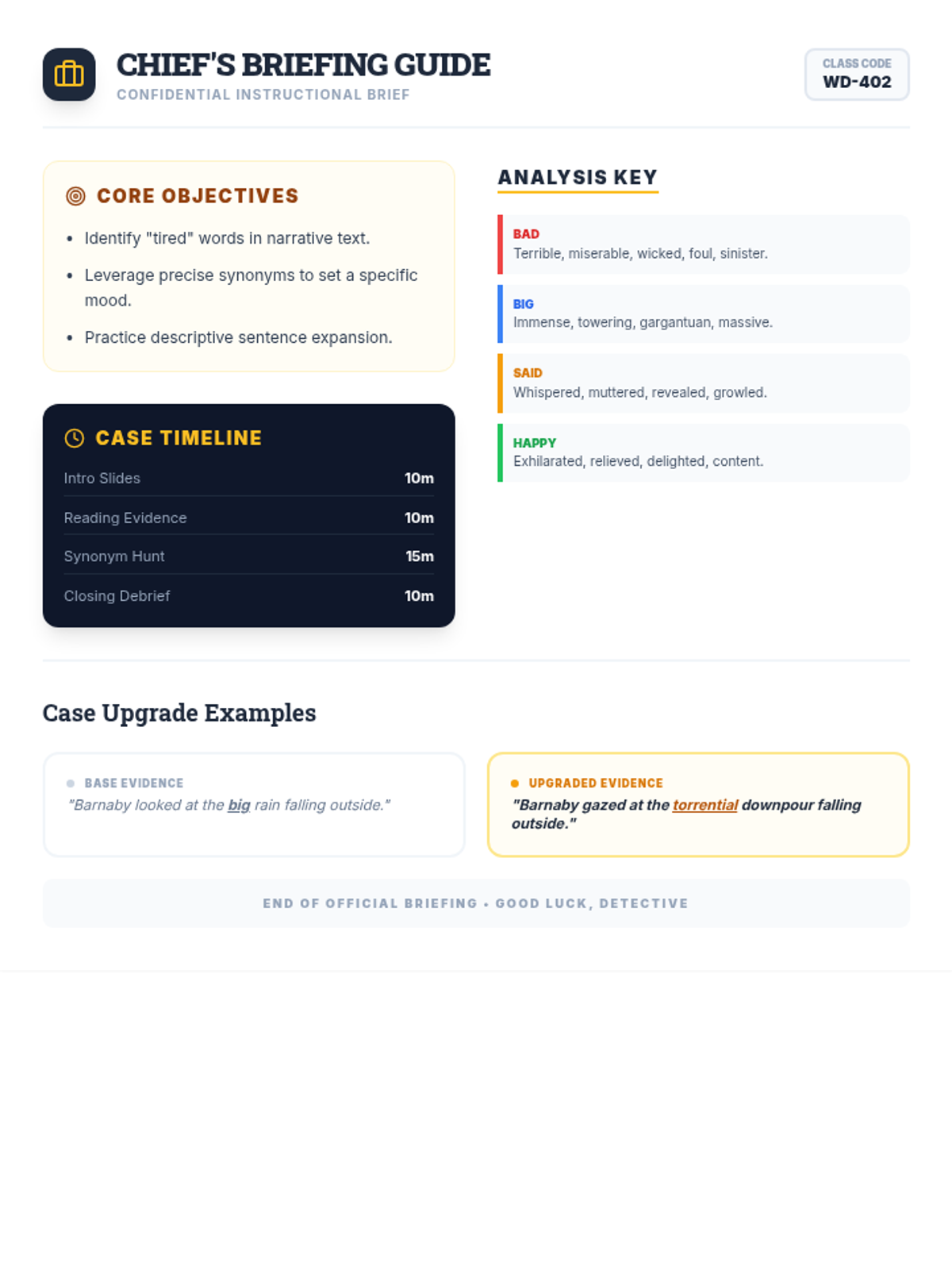
A teacher guide containing instructional goals, pacing, answer keys, and discussion prompts for the Word Detectives lesson.
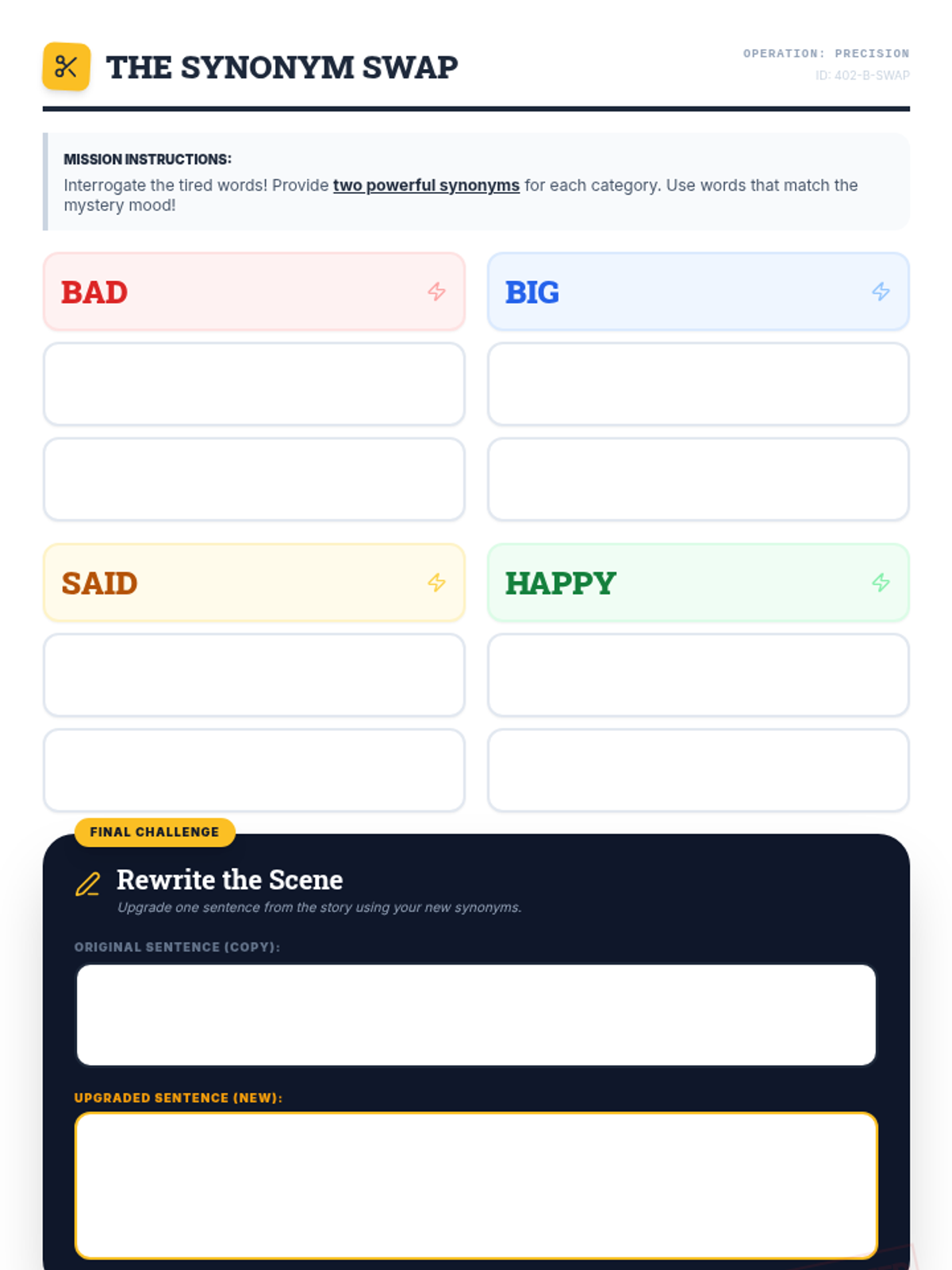
A worksheet for students to brainstrom powerful synonyms for overused words identified in the 'Bland Street Mystery' story.
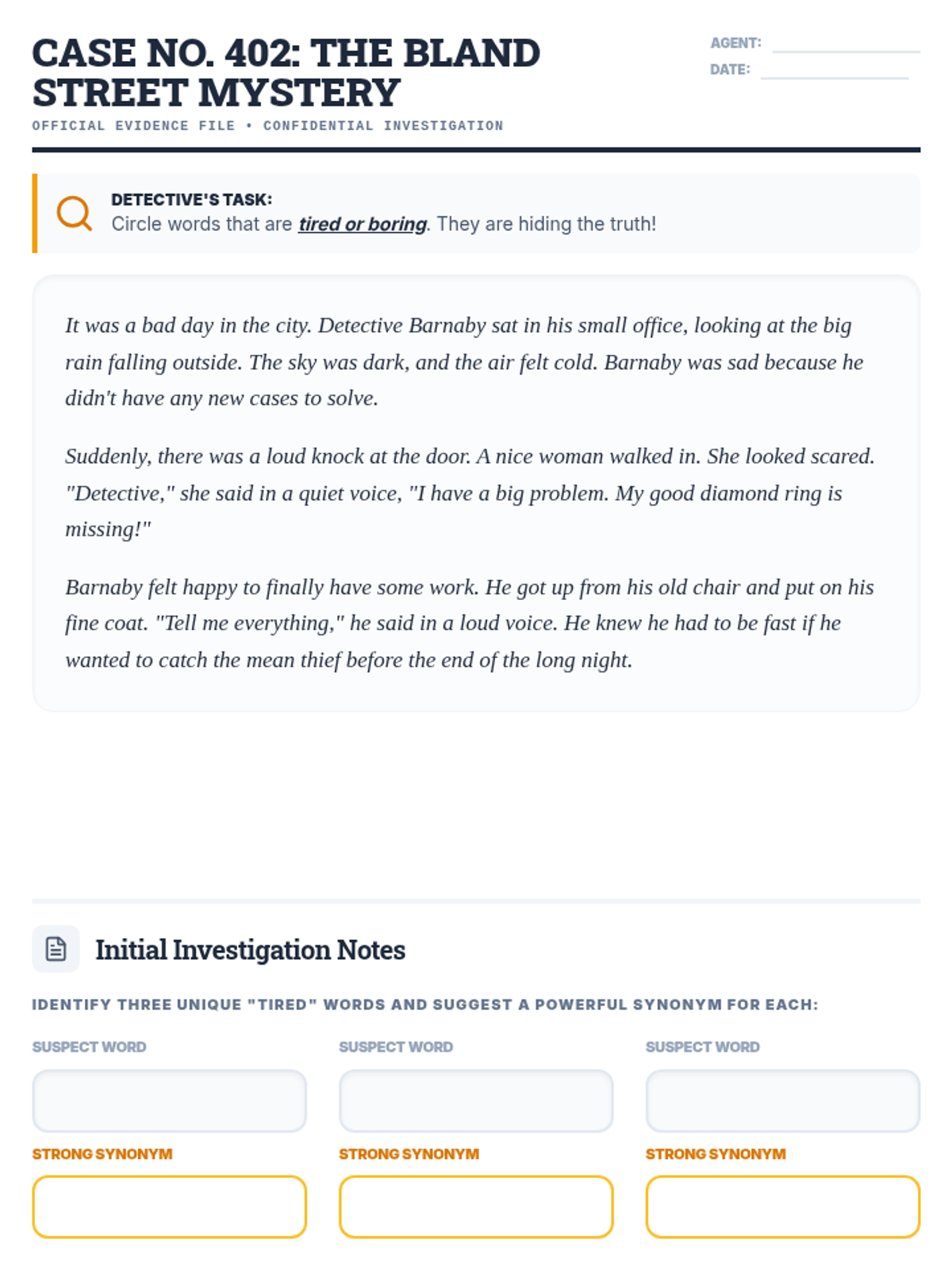
A narrative reading passage featuring Detective Barnaby, intentionally written with overused 'tired' words for students to identify.
A detective-themed slide deck that introduces the concept of overused 'tired' words and the power of synonyms to enhance descriptive writing.
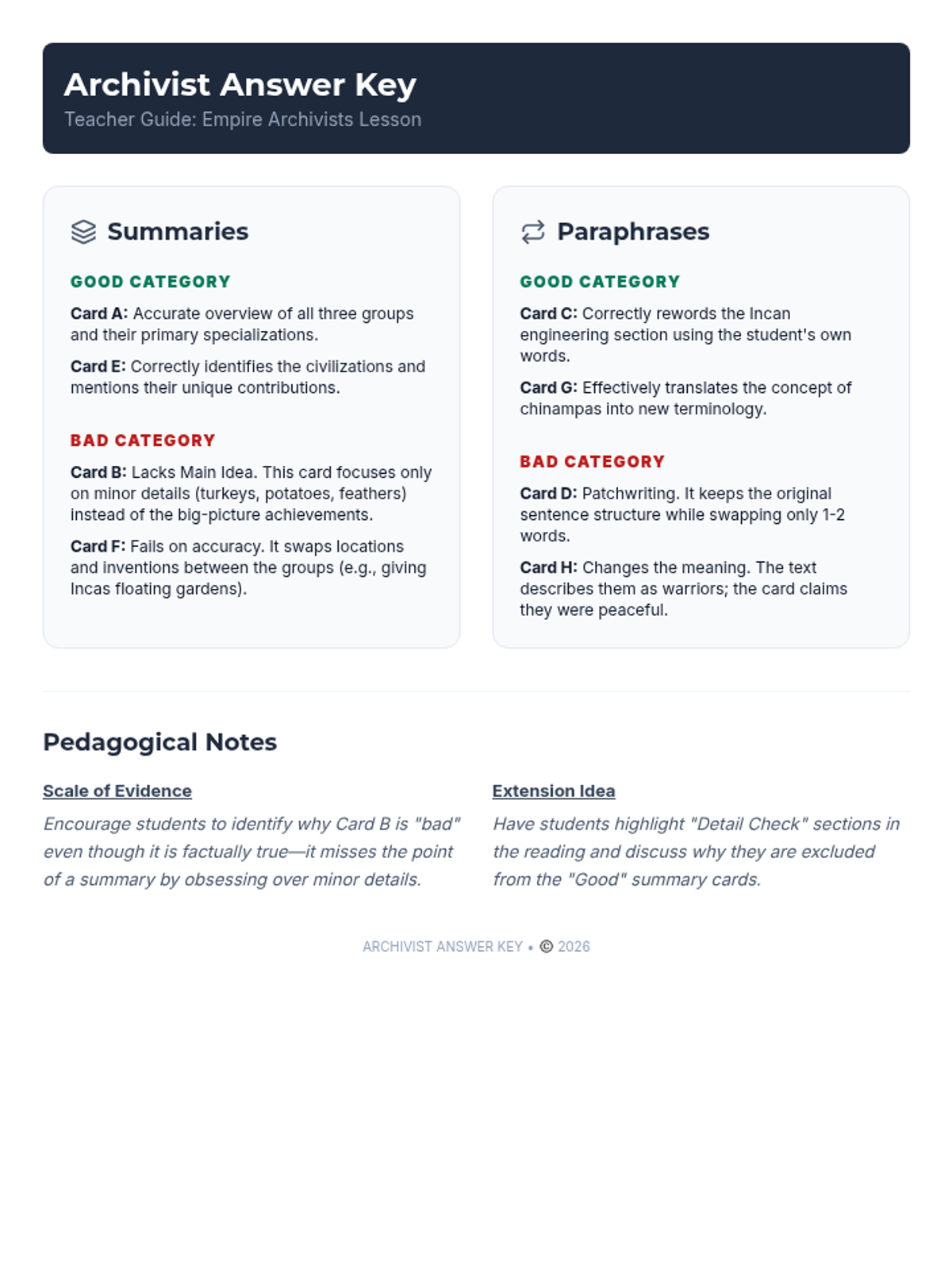
A comprehensive teacher's guide and answer key for the Empire Archivists lesson. Includes explanations for why each card belongs in its category and instructional tips for teaching the differences between summarizing, paraphrasing, and patchwriting.
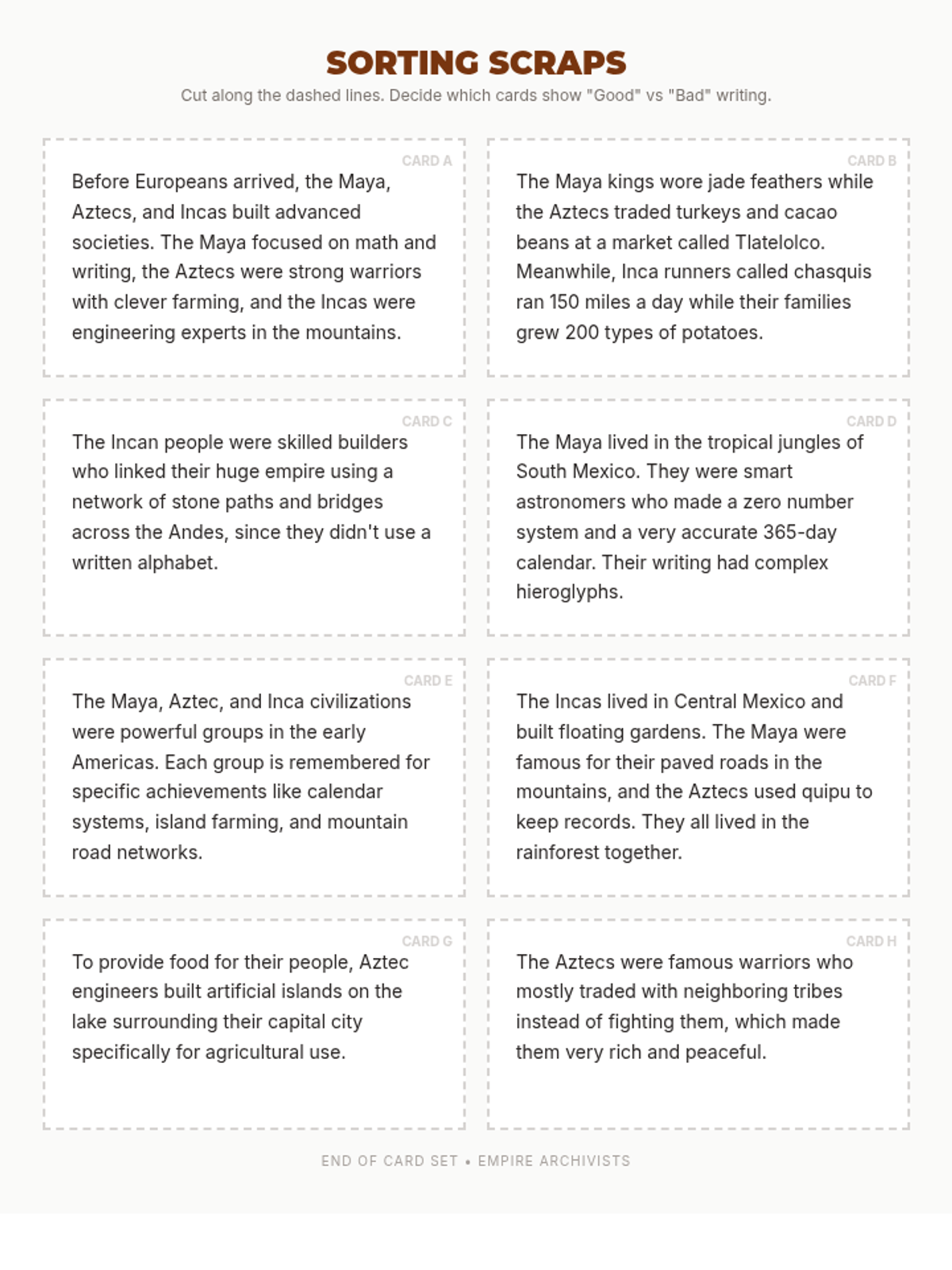
The cut-out cards for the Empire Archivists activity. Contains eight distinct examples of summaries and paraphrases, designed to challenge students to identify accuracy, plagiarism, and appropriate detail levels.
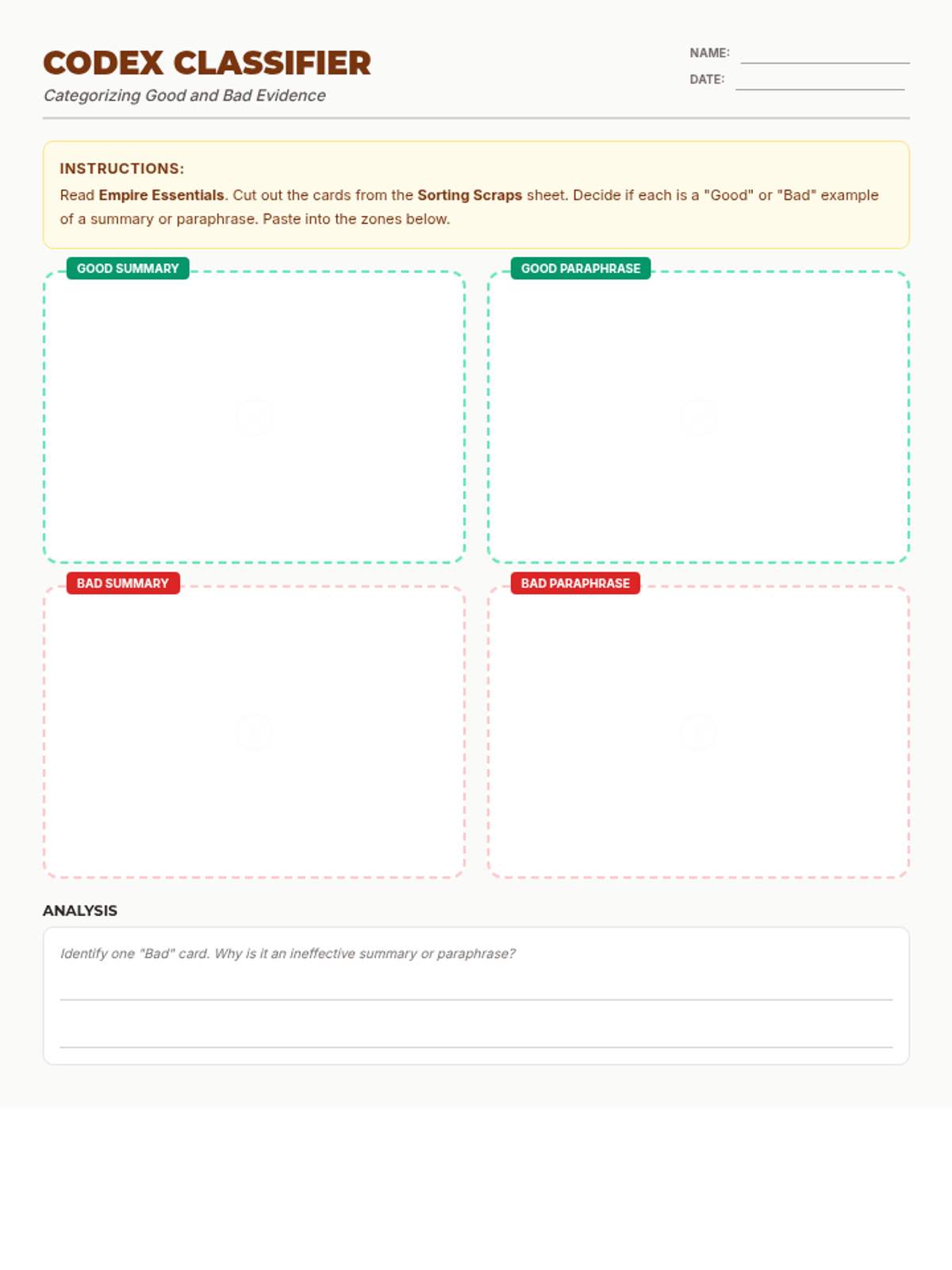
A student-facing sorting board for categorizing paraphrases and summaries. Includes distinct zones for 'Good' and 'Bad' examples and a reflection question to deepen understanding of effective writing techniques.
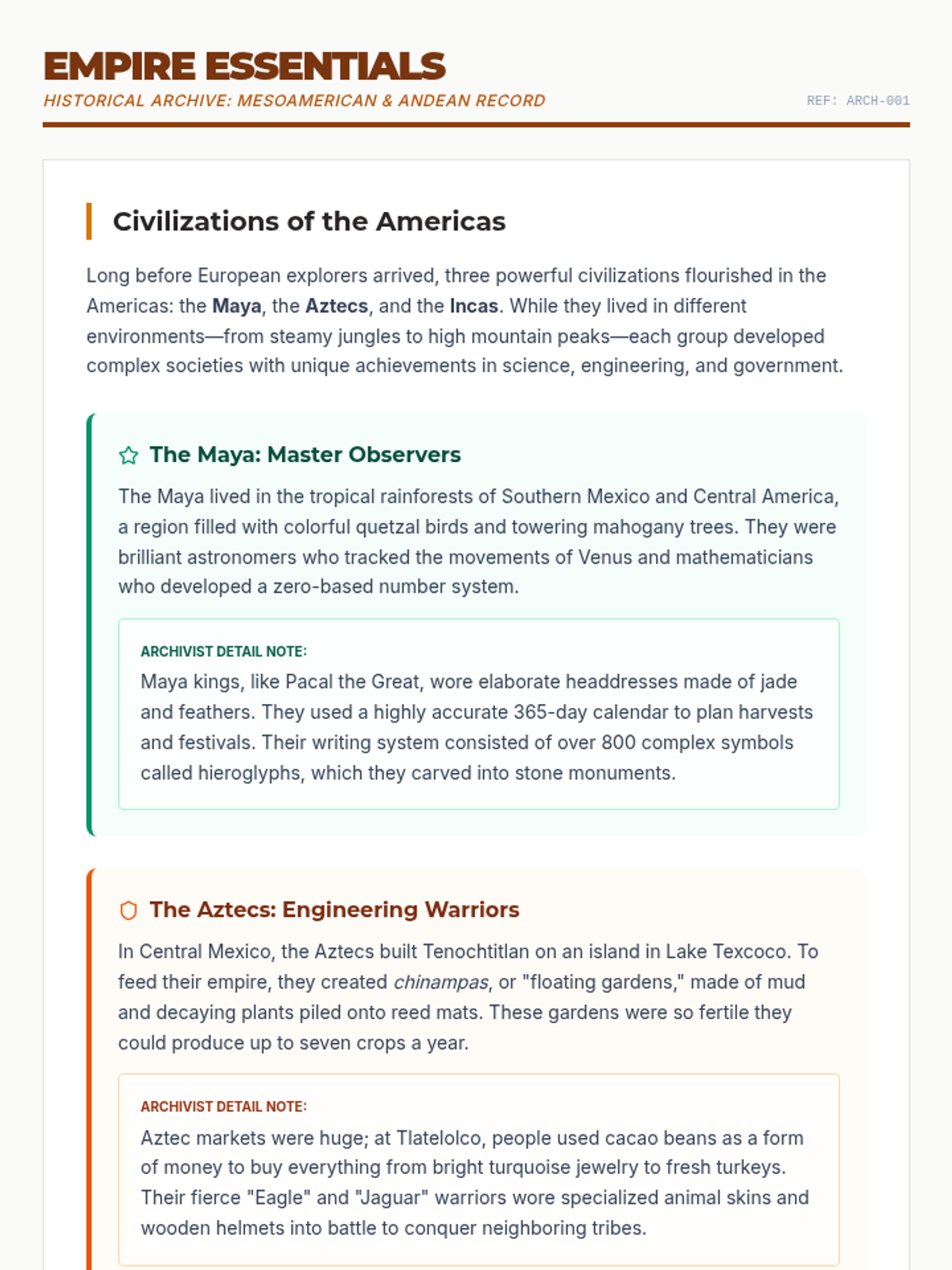
A foundational reading passage for 6th grade students detailing the locations and key achievements of the Maya, Aztec, and Inca civilizations. This text serves as the source material for the subsequent paraphrasing and summarizing activity.
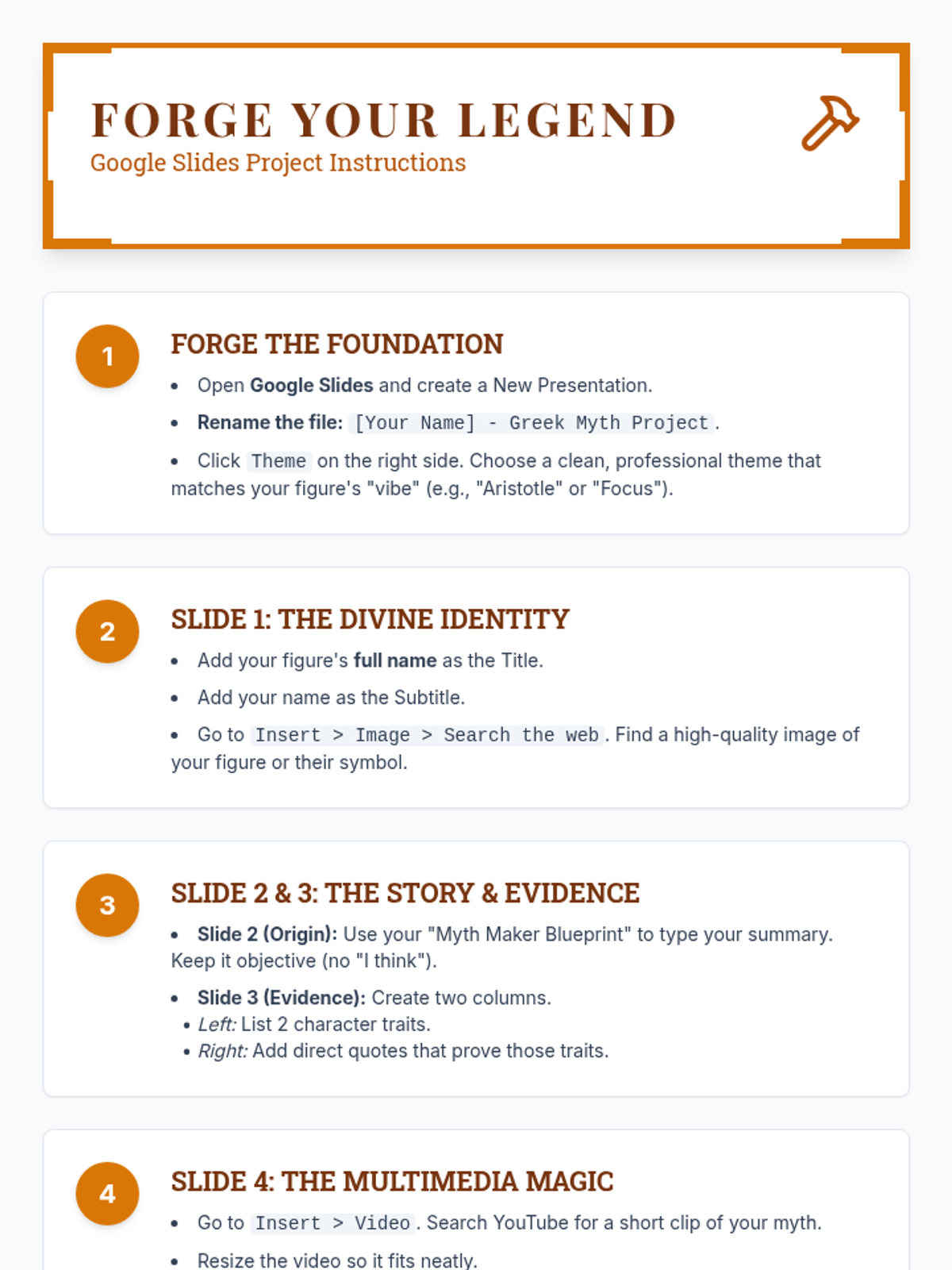
A student-facing step-by-step instruction sheet for creating a 5-slide Greek Mythology project using Google Slides, including technical tips and standard alignments.
A 10-slide presentation deck introducing figurative language concepts (Simile, Metaphor, Personification, etc.) with scrambled review questions on each slide to reinforce learning.
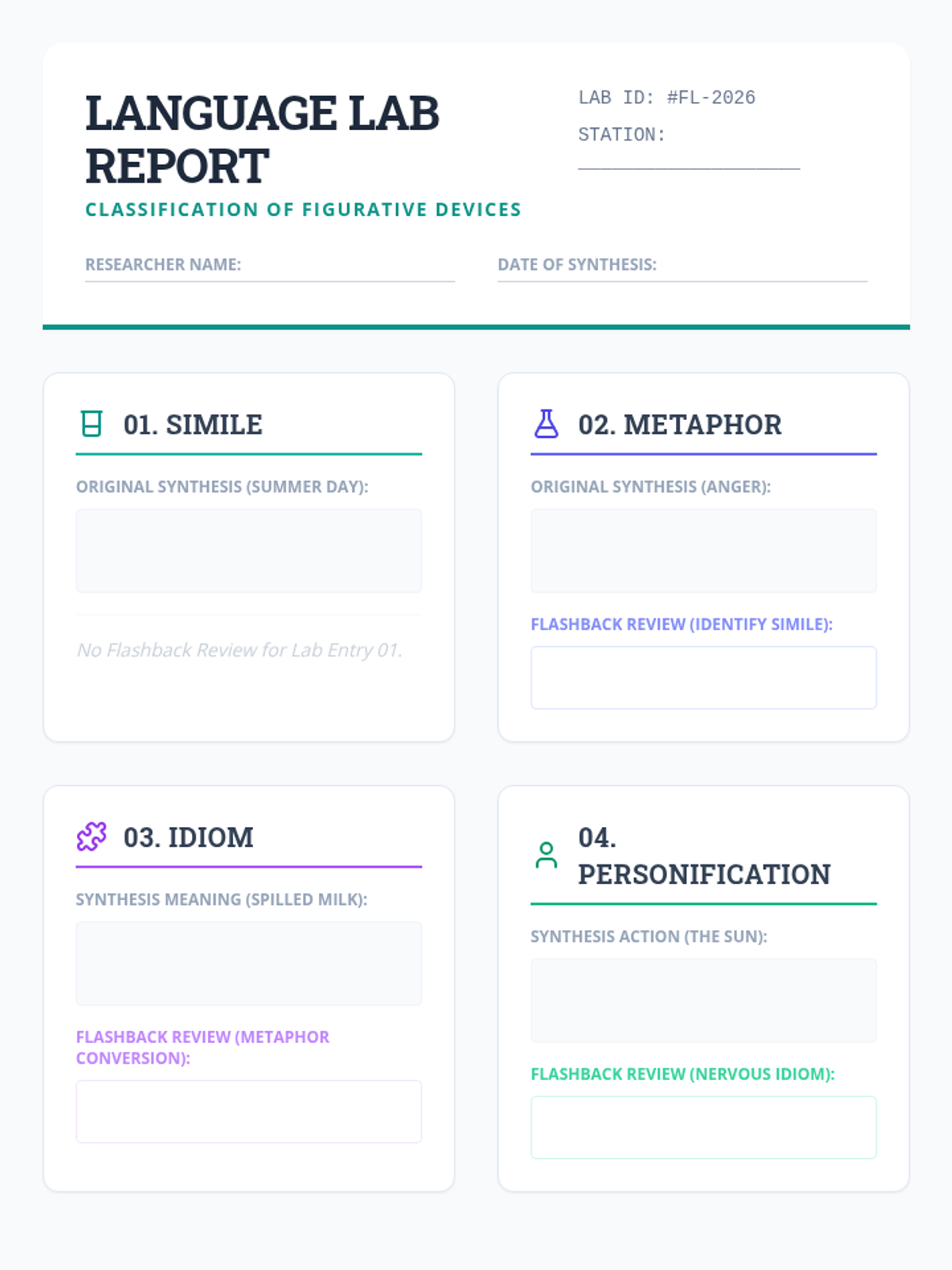
A 2-page student worksheet designed to accompany the Language Lab slides. It features dedicated sections for each figurative language device, providing space for students to record their original examples and respond to flashback review questions.
A 12-slide presentation deck covering 9 types of figurative language. Each slide includes a definition, a 'Lab Example', a student 'Research Task' to create their own example, and a 'Yesterday's Review' question to reinforce cumulative learning.
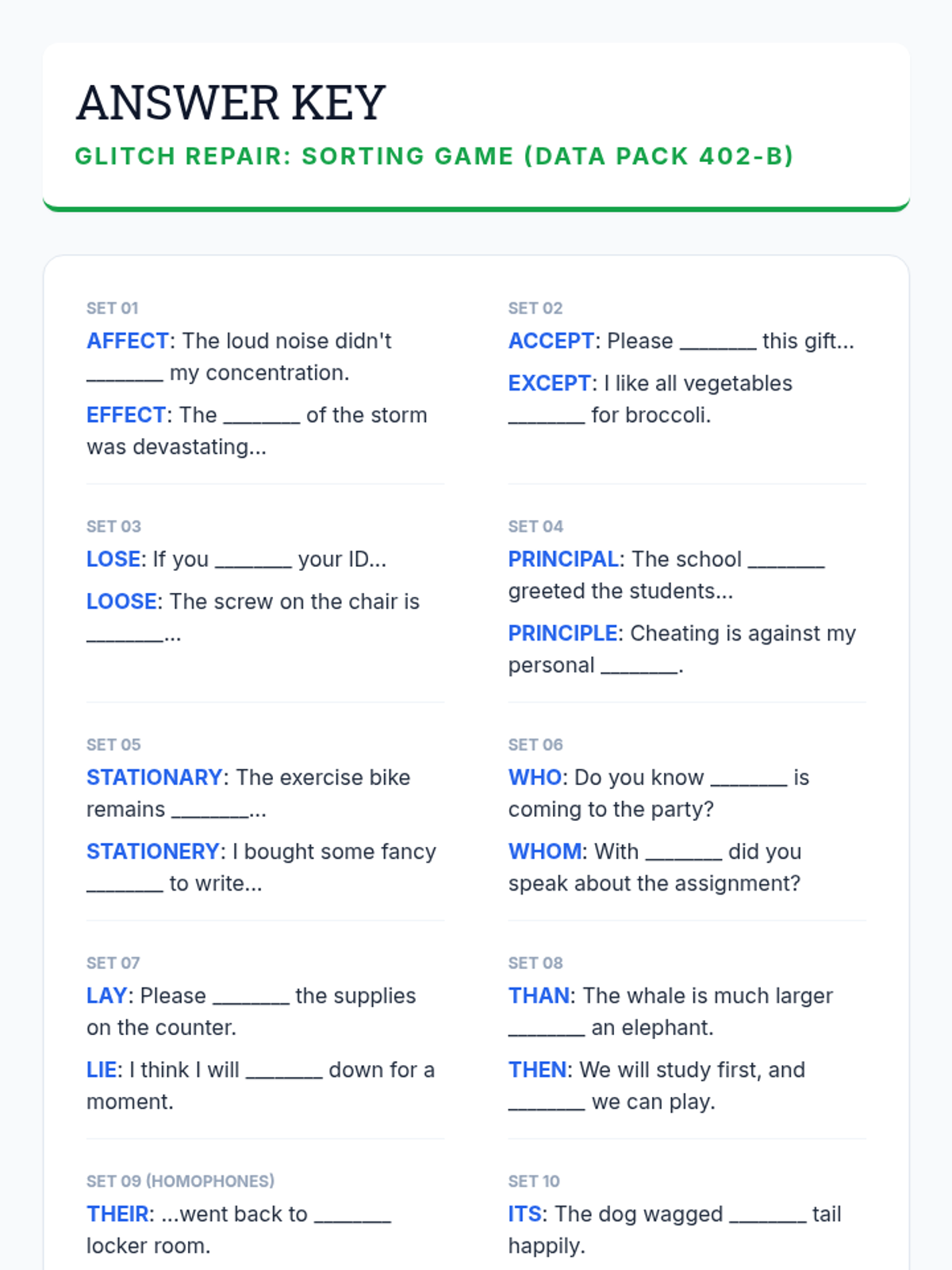
A teacher's answer key for the Glitch Repair sorting game, providing the correct matches for all word and sentence cards to facilitate quick grading and feedback.
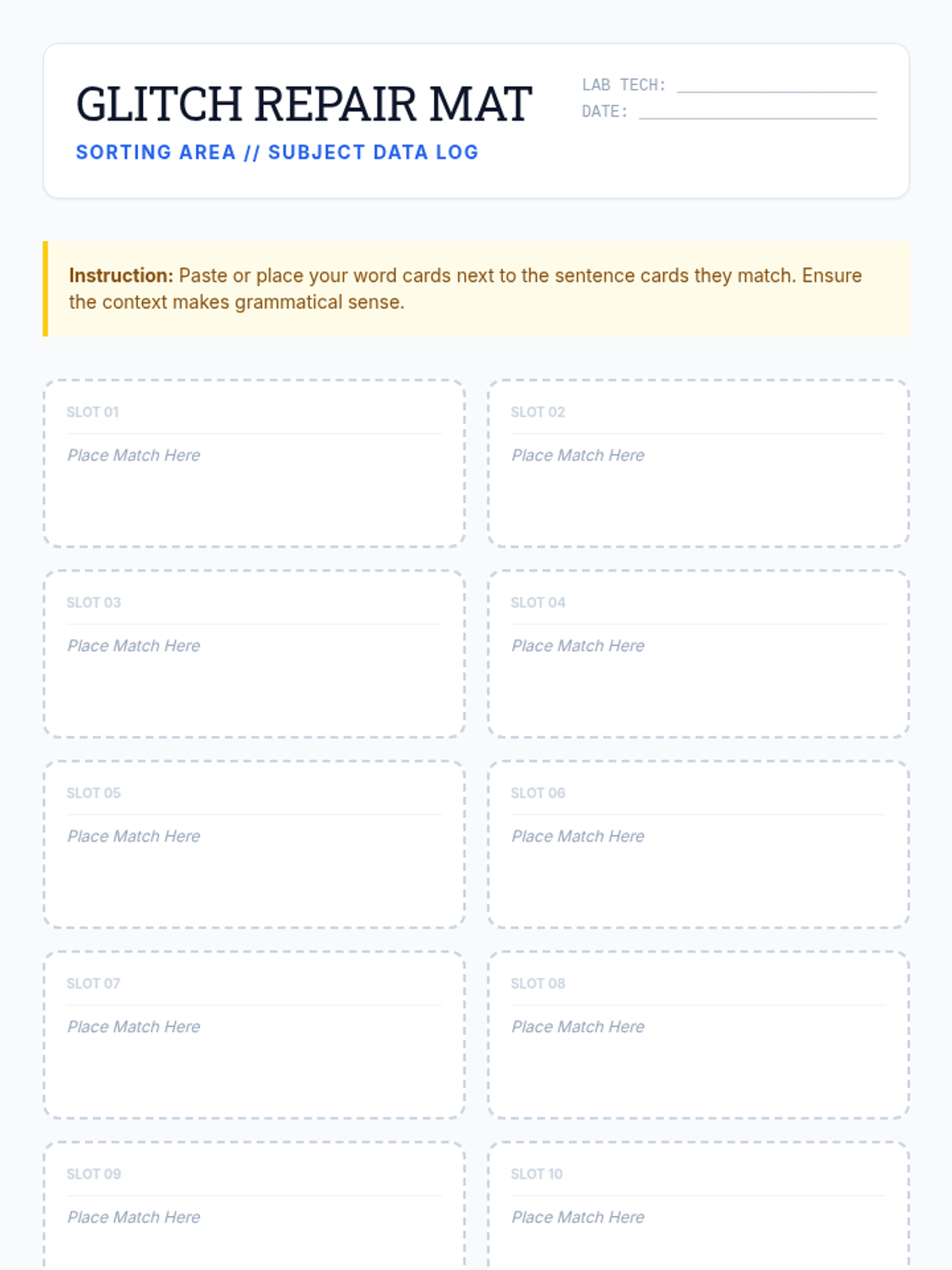
A printable sorting mat for the Glitch Repair game, providing students with a structured workspace to organize and match word and sentence cards.
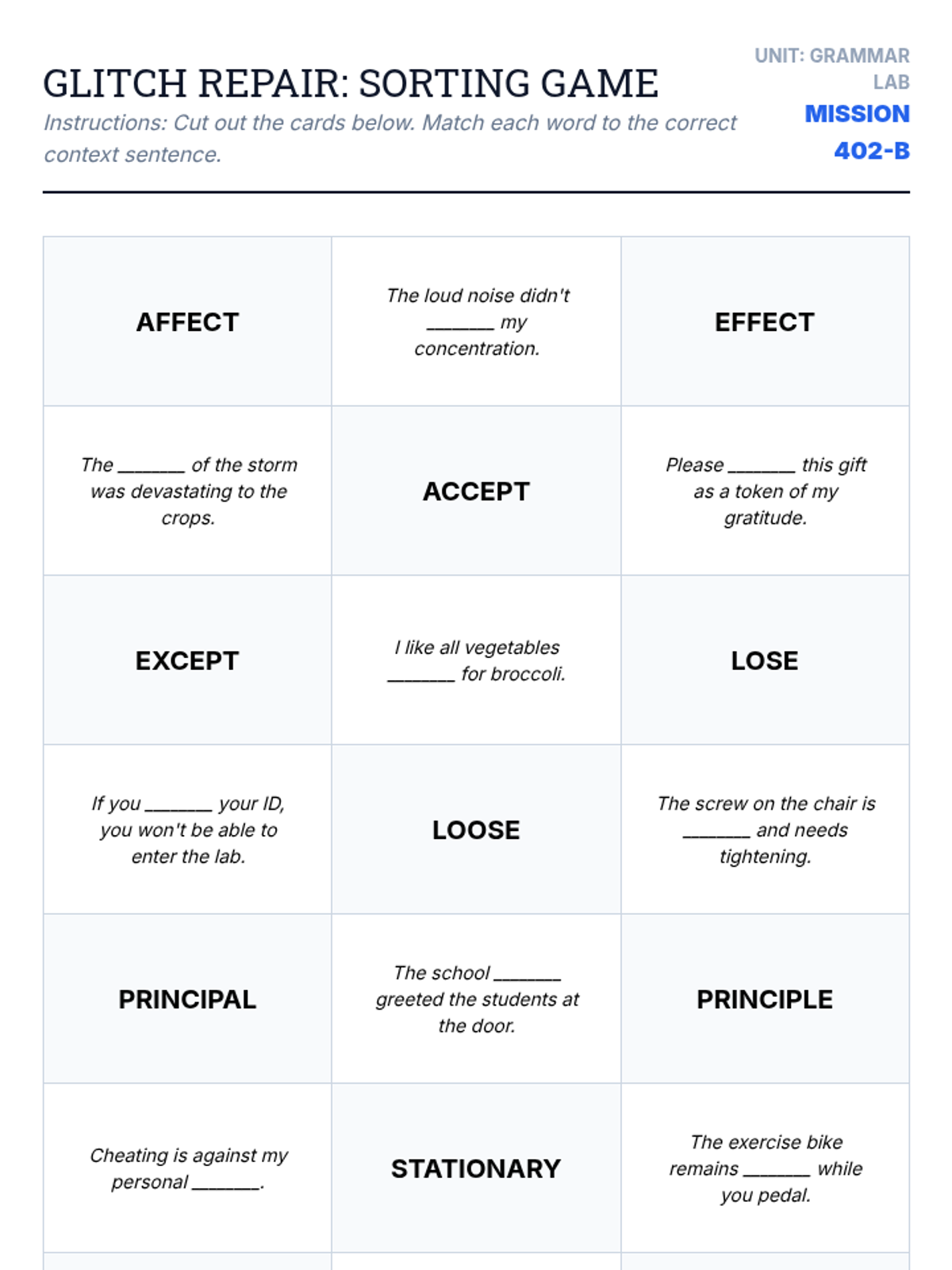
A set of 24 printable cards featuring words and context sentences for a sorting game. Students must match the correct commonly confused word with the sentence that fits its definition.
A visually striking slideshow designed for direct instruction on 12 pairs of commonly confused words. Includes memory triggers, definitions, visual hints, and interactive practice sentences for each word group.
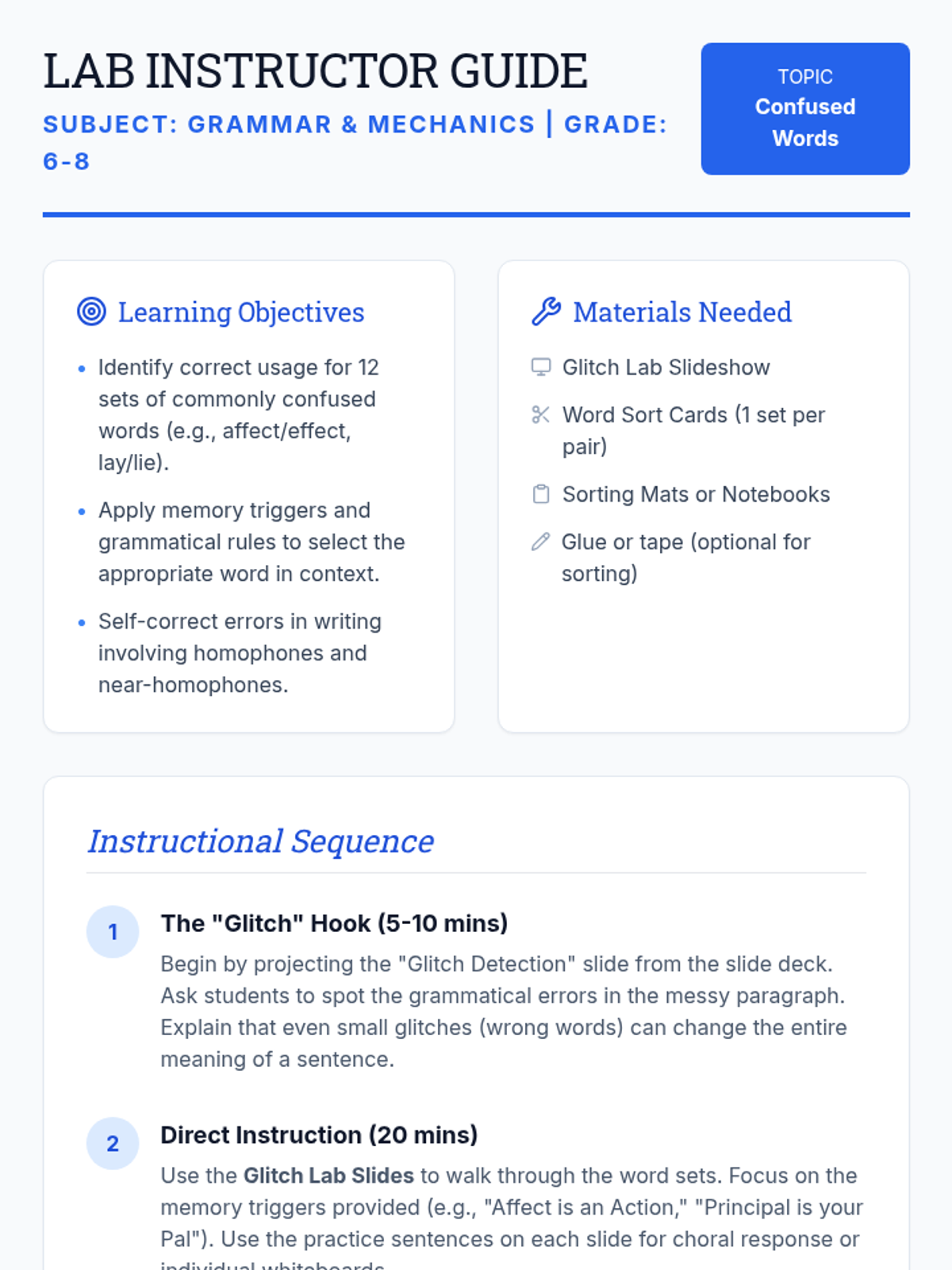
A detailed teacher's guide for the Grammar Lab lesson, including learning objectives, a list of required materials, a step-by-step instructional sequence, and practical teaching tips for middle school classrooms.