An activity worksheet designed as a technical blueprint where students sketch an original acoustic instrument. It includes specific sections for explaining vibration sources, pitch control, and resonance mechanisms.
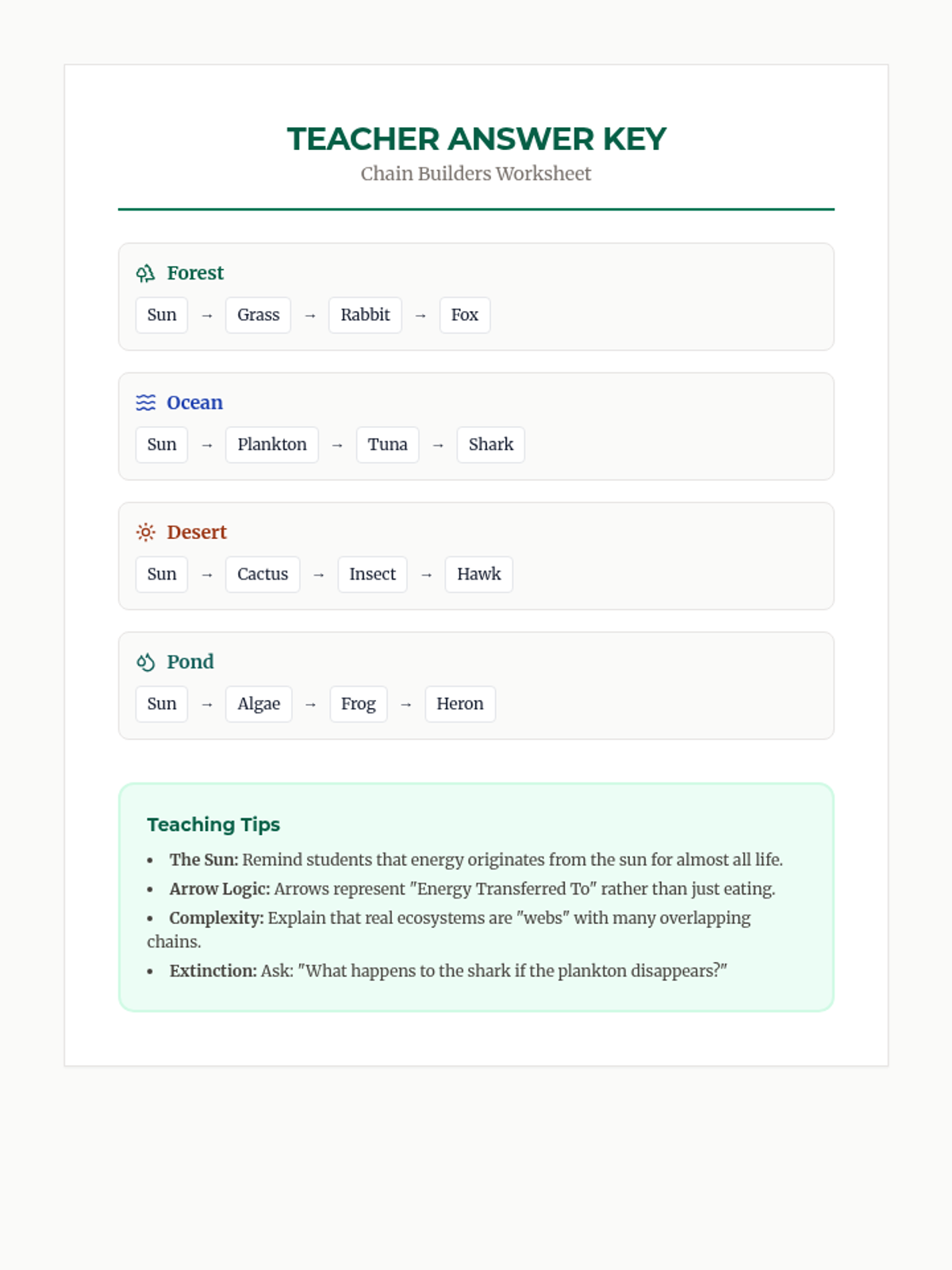
Answer key for the Chain Builders activity with teaching tips for instructors.
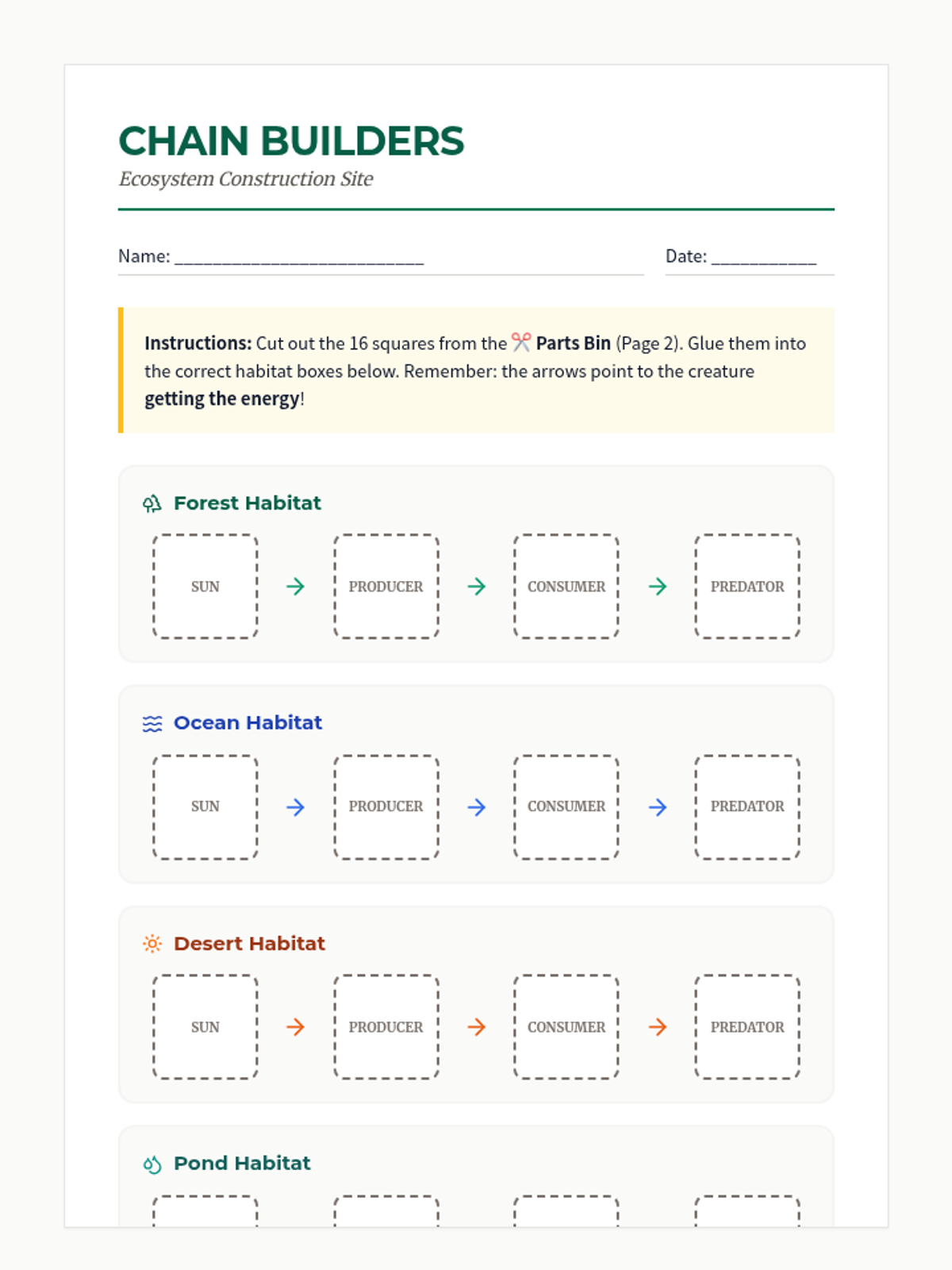
An interactive cut-and-paste activity where students build food chains for four different habitats: Forest, Ocean, Desert, and Pond.
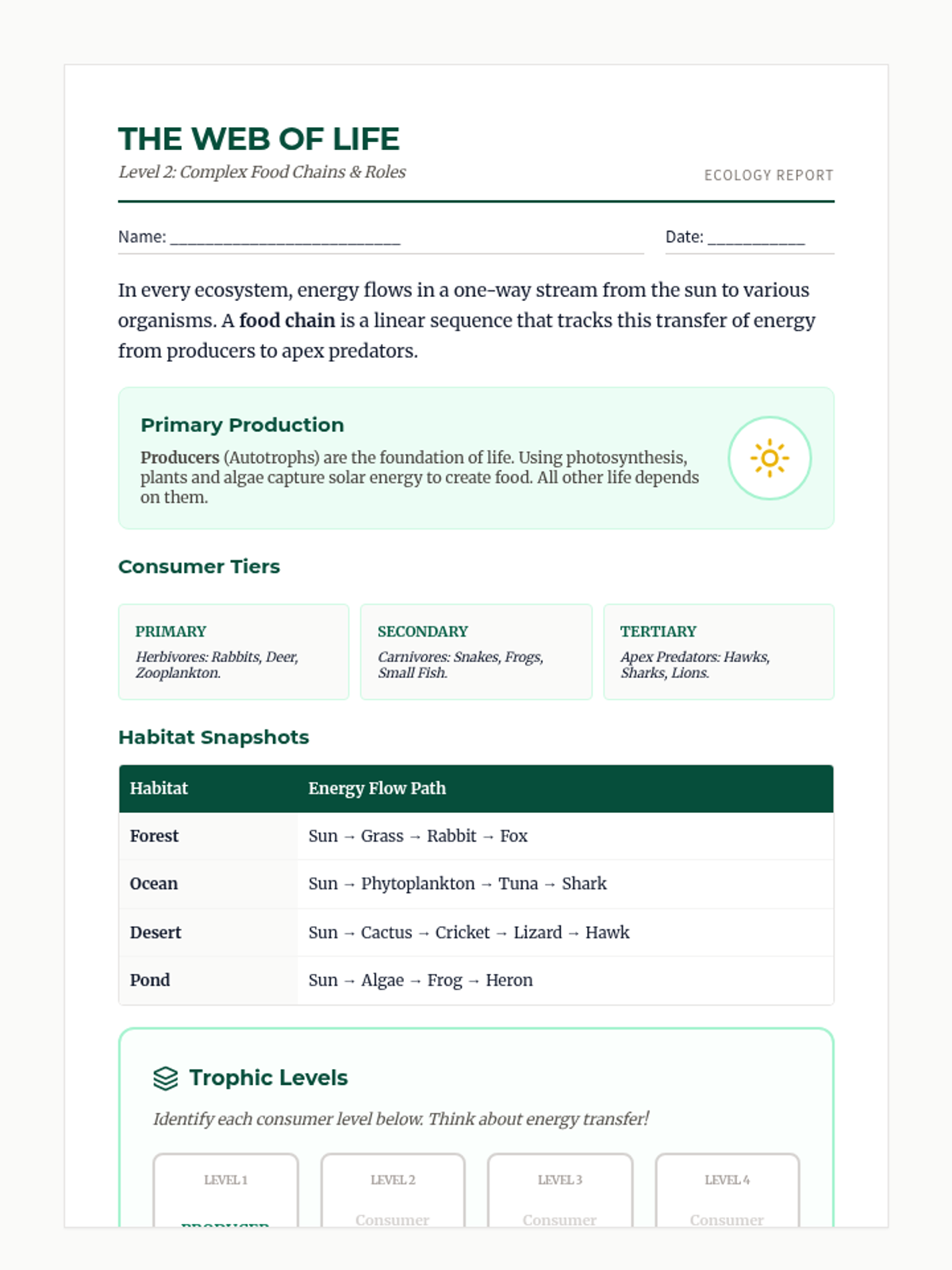
A more advanced reading passage for intermediate readers covering trophic levels, herbivores, carnivores, and the 10% energy rule.
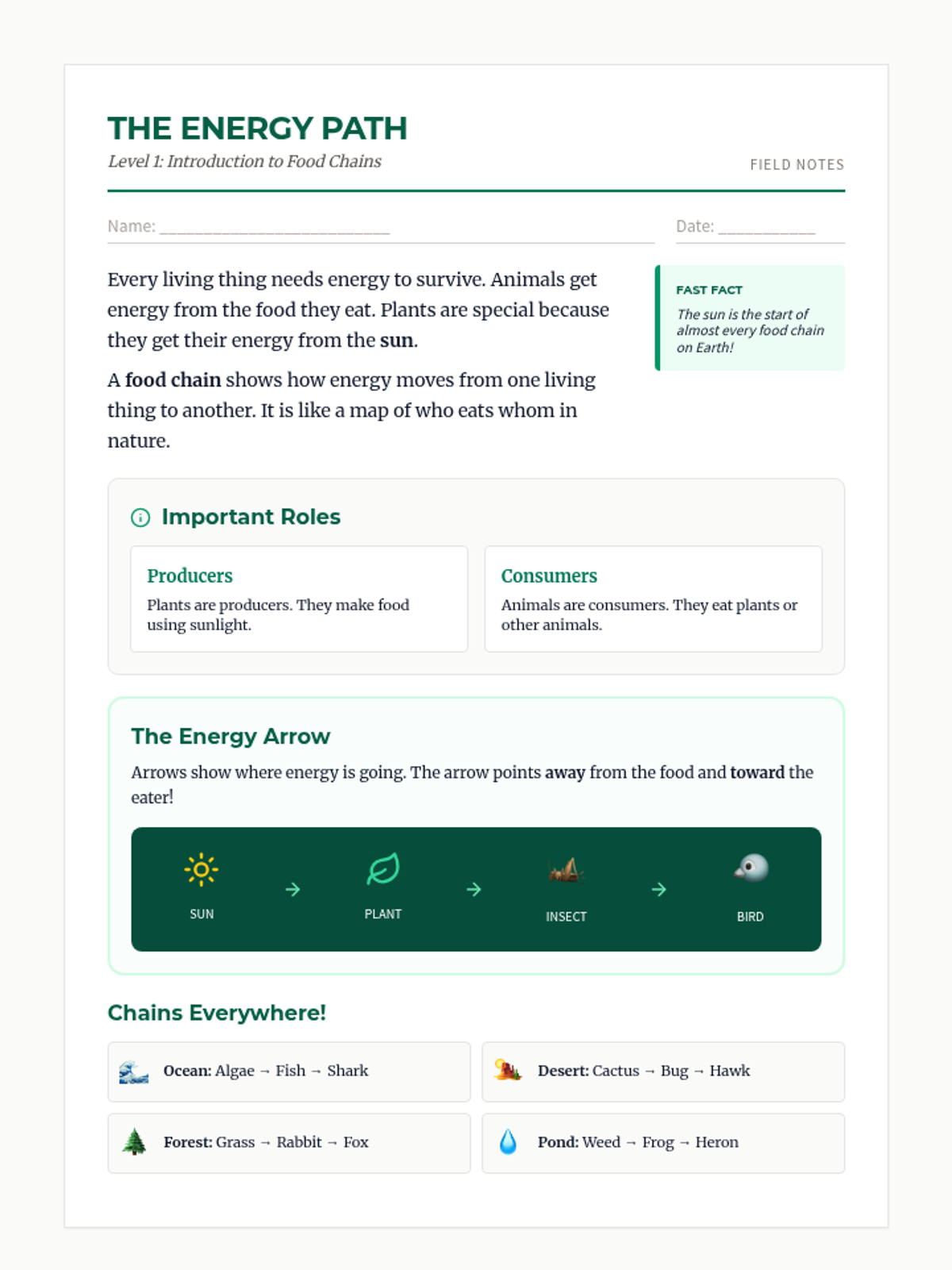
An introductory reading passage about food chains for beginner readers, explaining basic concepts like producers, consumers, and energy flow.
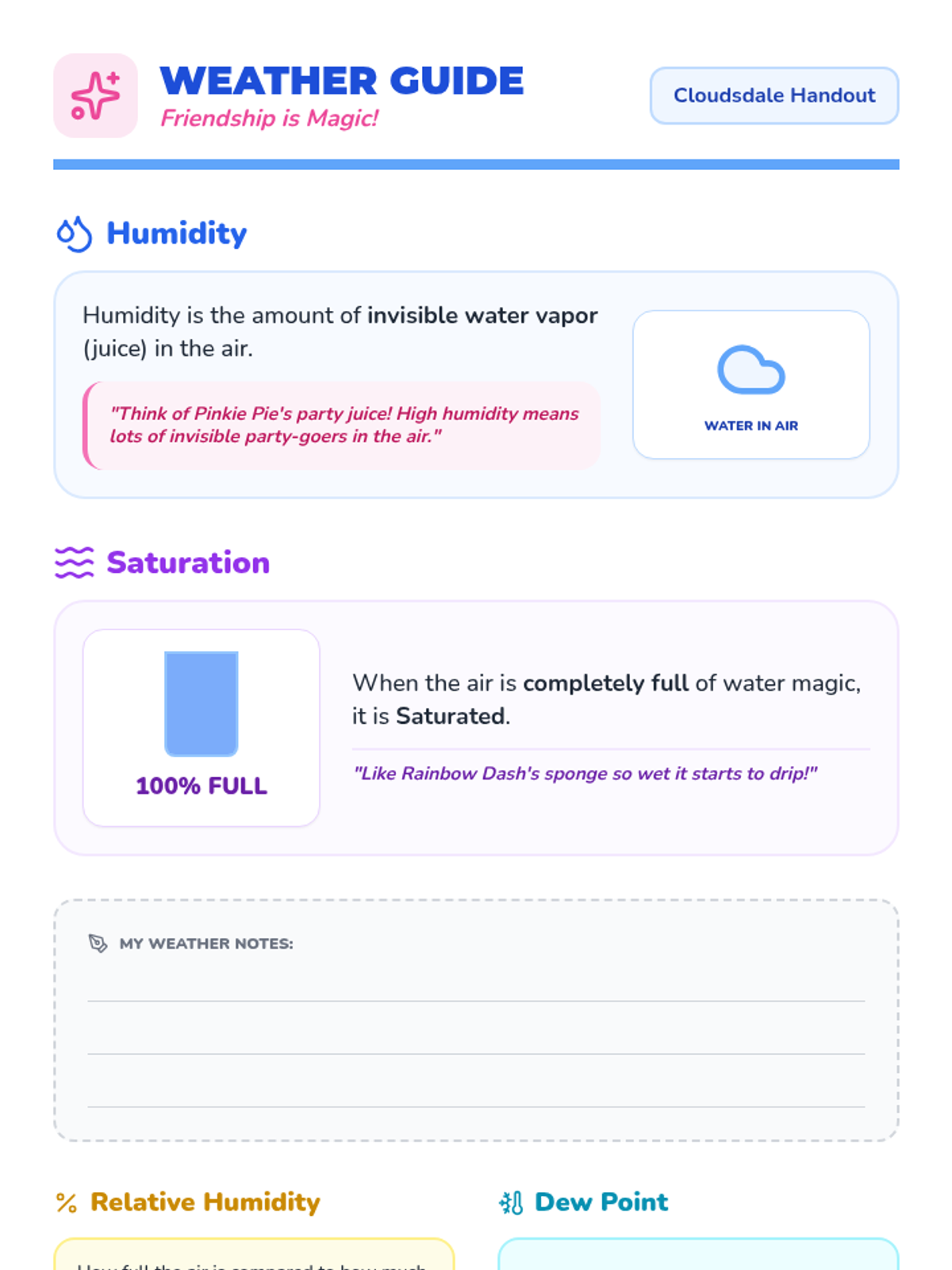
A printable study guide and handout version of the lesson slides, optimized for US Letter paper. Features clear visual metaphors, simplified definitions, and key concept summaries with My Little Pony thematic elements.
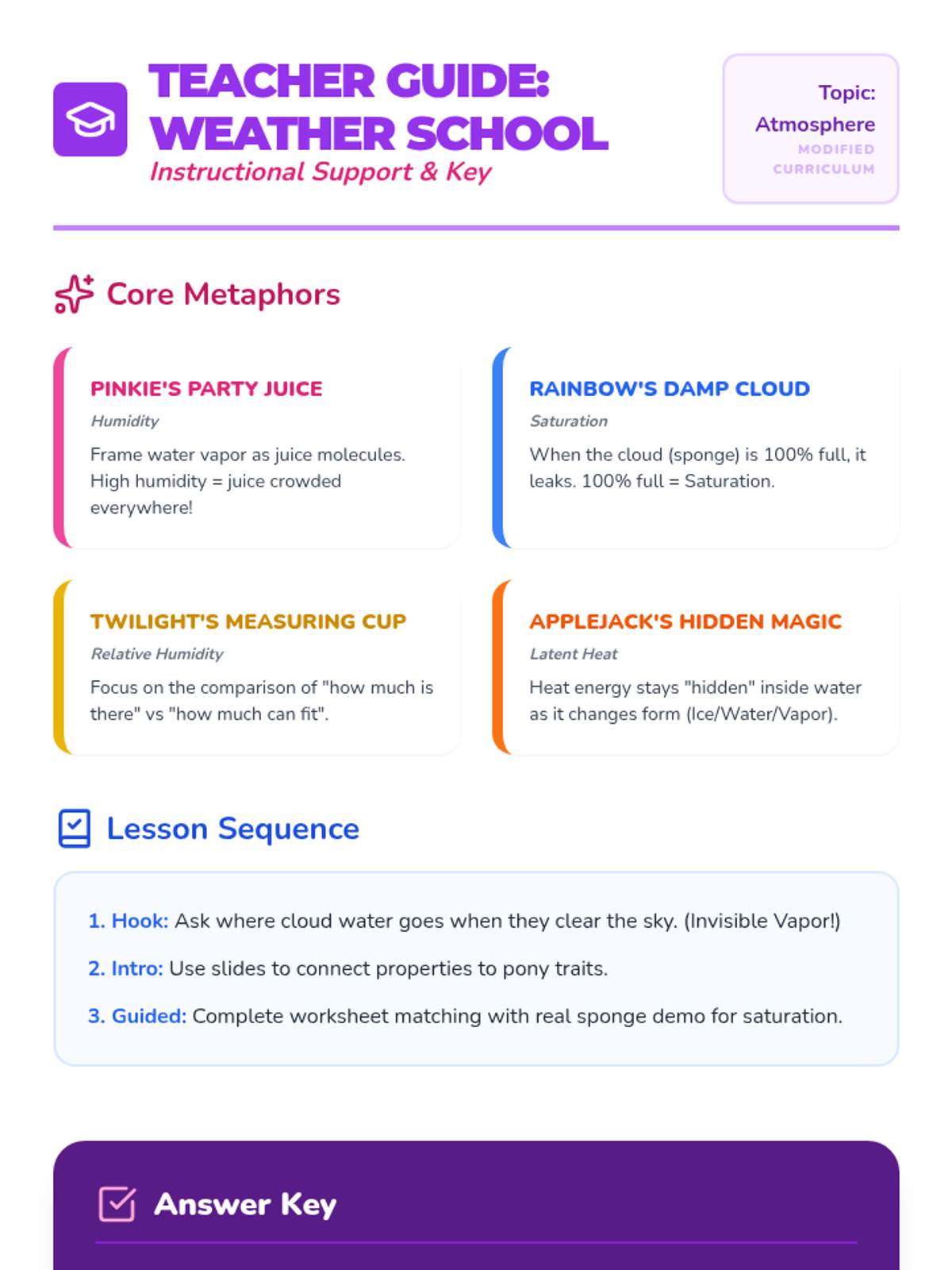
A teacher's guide and answer key for the Ponyville Weather School lesson, providing instructional metaphors, inclusion strategies, and clear answers. Optimized for printing on US Letter paper.
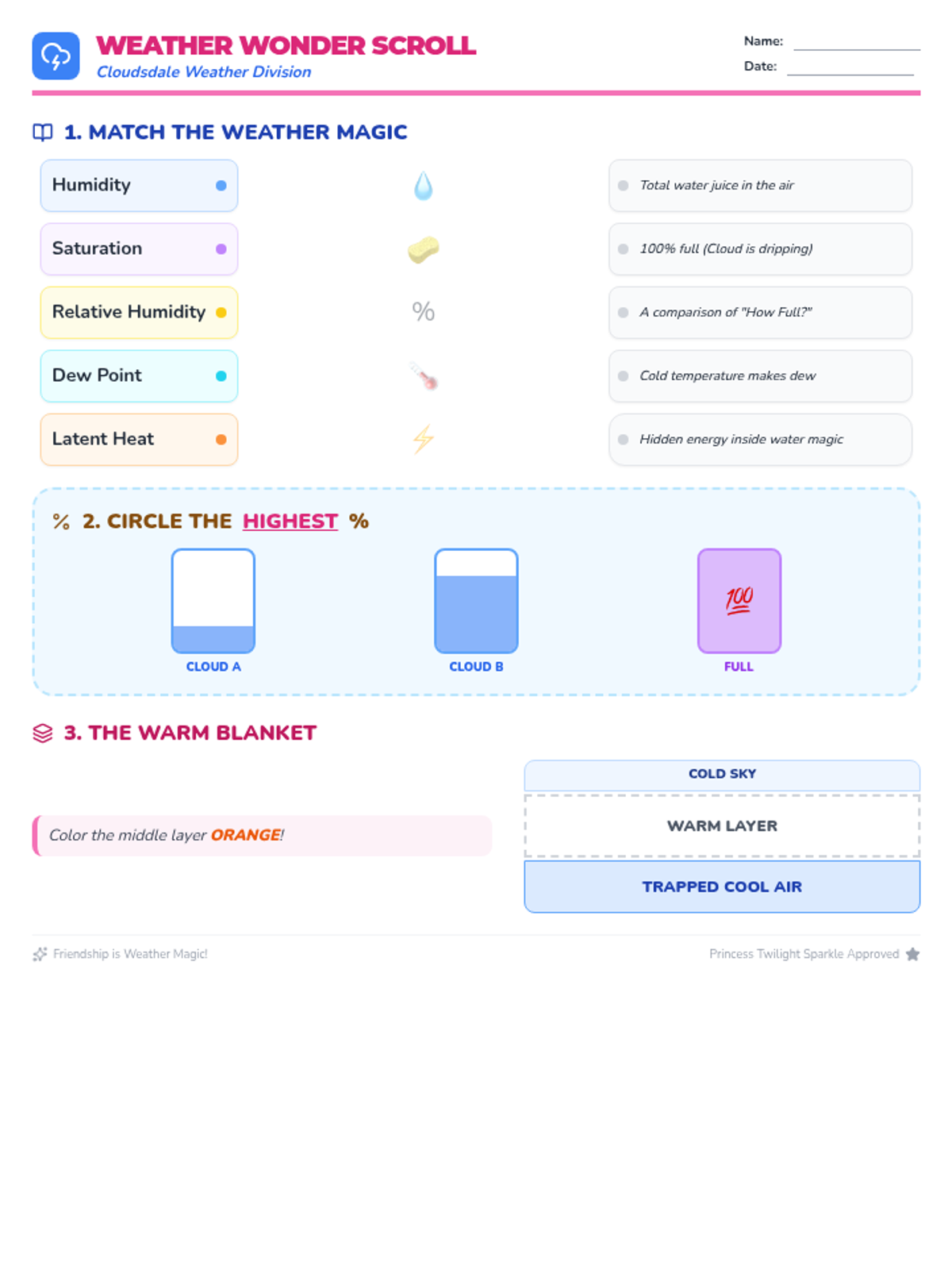
A student worksheet for atmosphere properties featuring symbol-supported matching, visual comparisons of humidity, and a creative task for temperature inversion. Optimized for printing on US Letter paper with improved contrast and layout.
A visually rich slide deck themed after My Little Pony: Friendship is Magic, explaining core atmospheric properties through clear metaphors and symbols for modified curriculum students.
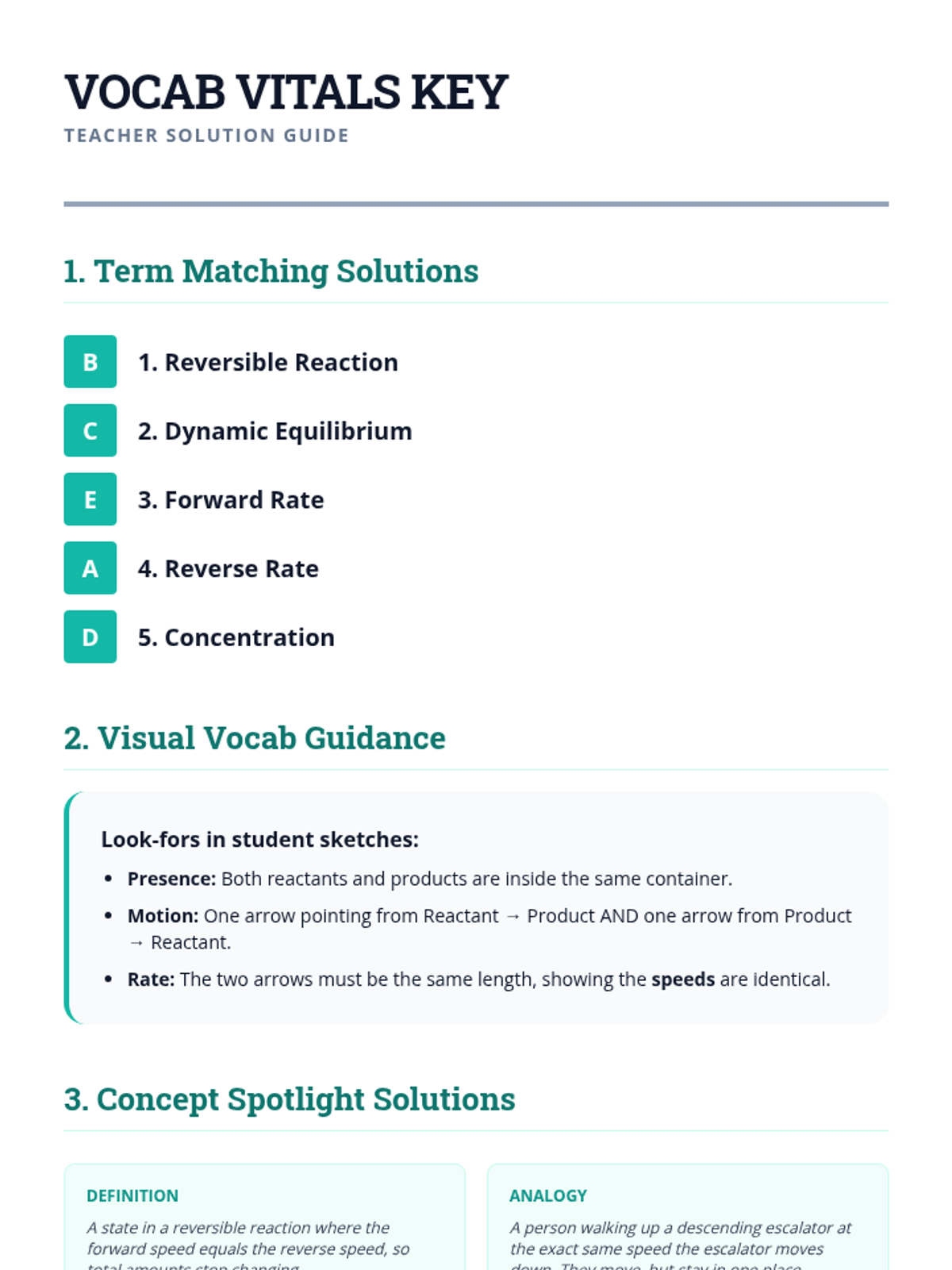
Teacher answer key for the Vocab Vitals activity, providing matching solutions, particle model look-fors, and sample conceptual responses.
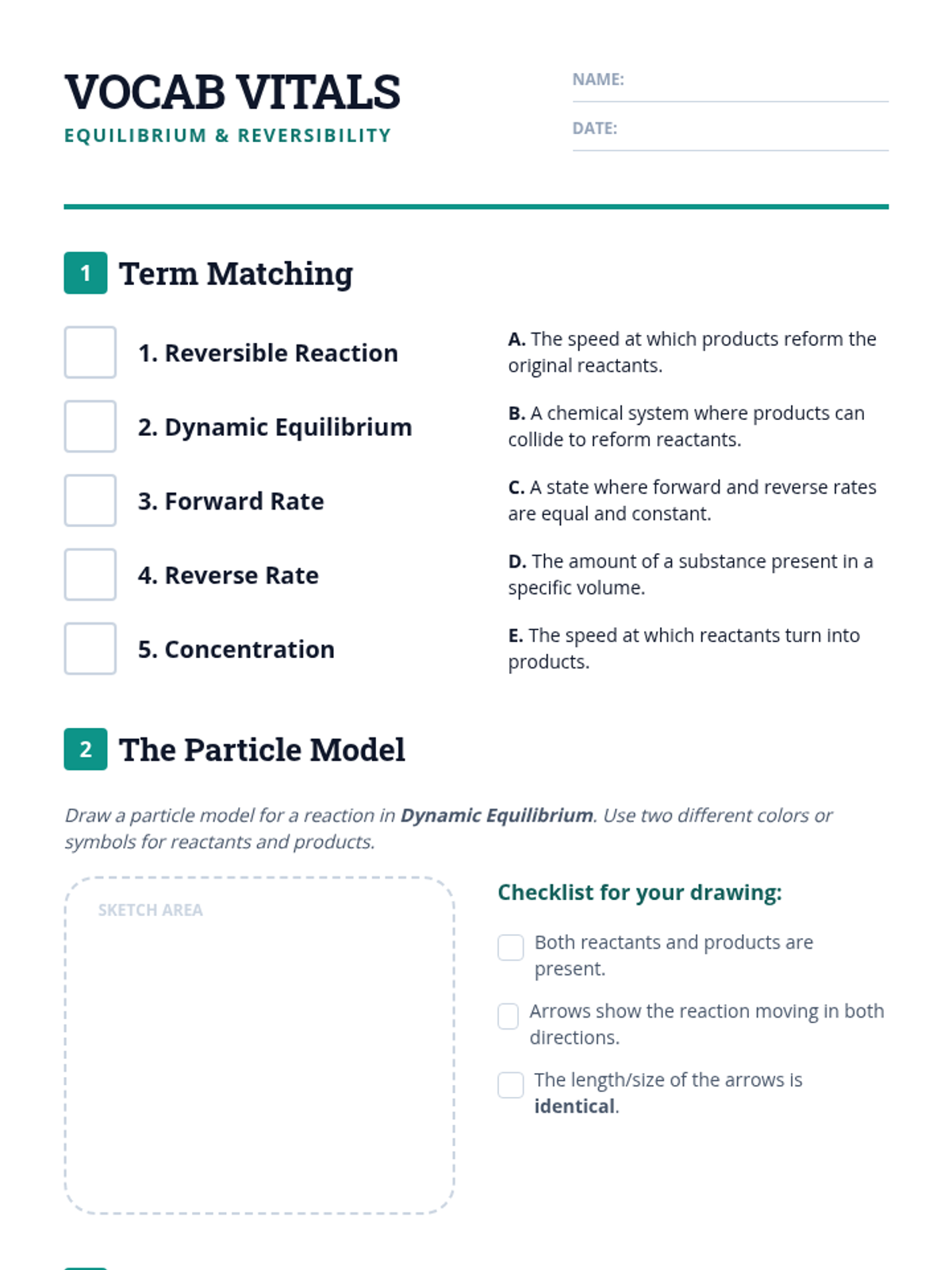
A vocabulary activity focusing on equilibrium terms, featuring matching, particle modeling, and a Frayer-style concept map for dynamic equilibrium.
A detailed teacher answer key for the Color Shift Lab. Includes expected data, sample analysis responses, and instructional tips for success. Revised for better page breaks and math rendering.
A visual presentation covering Le Chatelier's Principle, including concentration and temperature stresses, the collision theory reasoning behind shifts, and a case study using a household black tea equilibrium system. Revised for better label positioning and legibility.
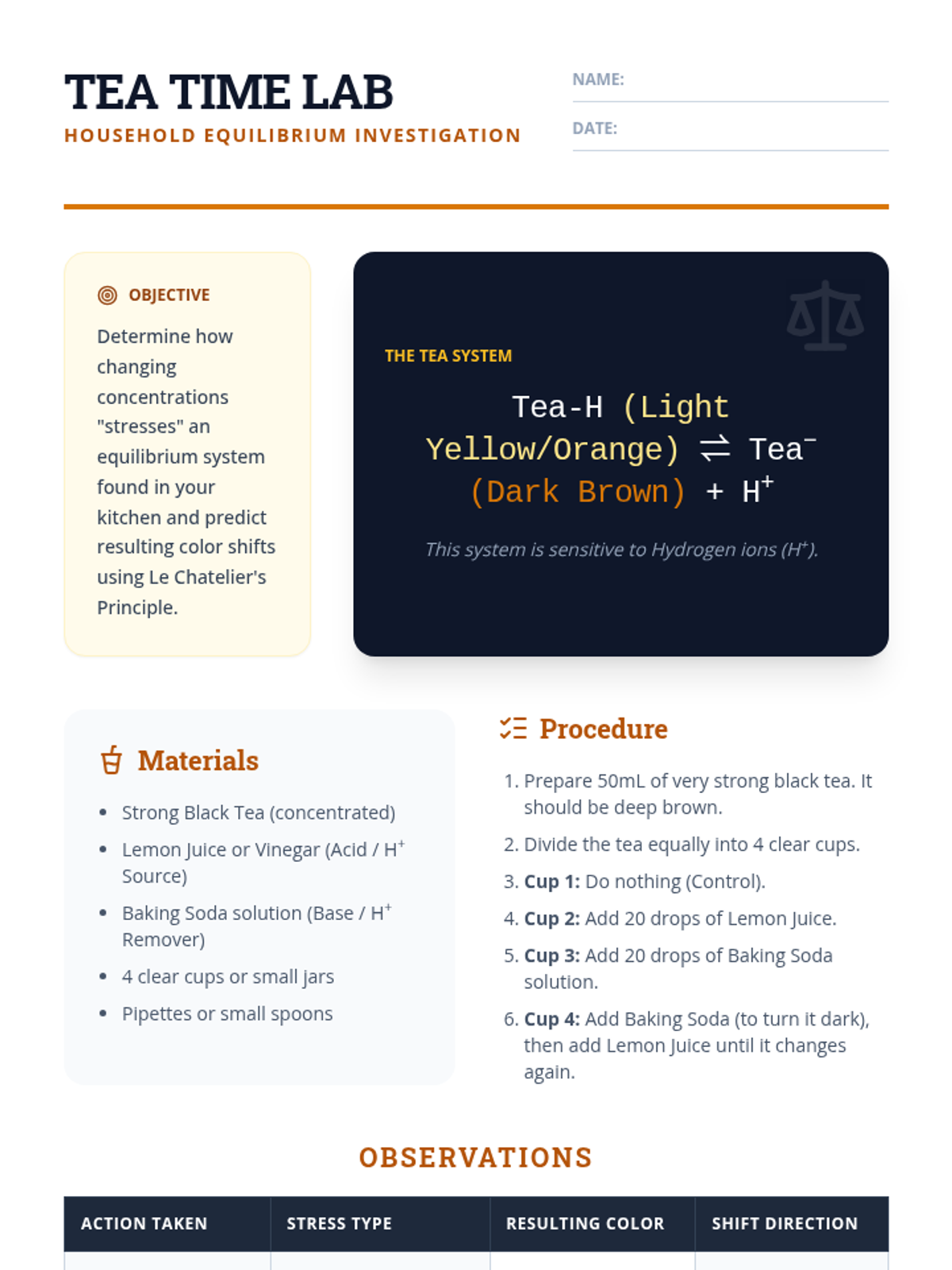
A household-friendly lab guide using black tea, lemon juice, and baking soda to investigate Le Chatelier's Principle. Includes clear procedures for concentration shifts and a formal CER assessment with sentence stems.
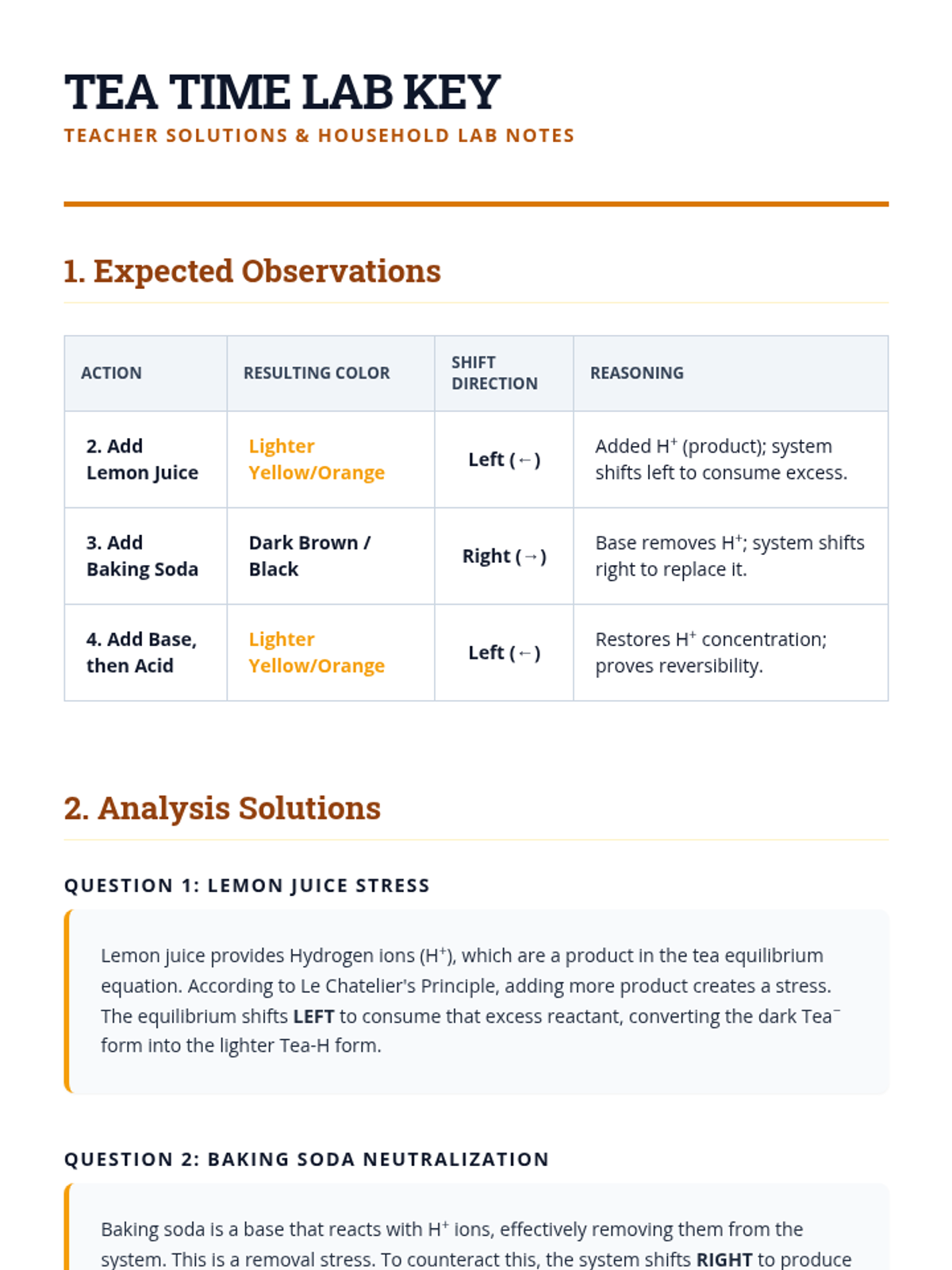
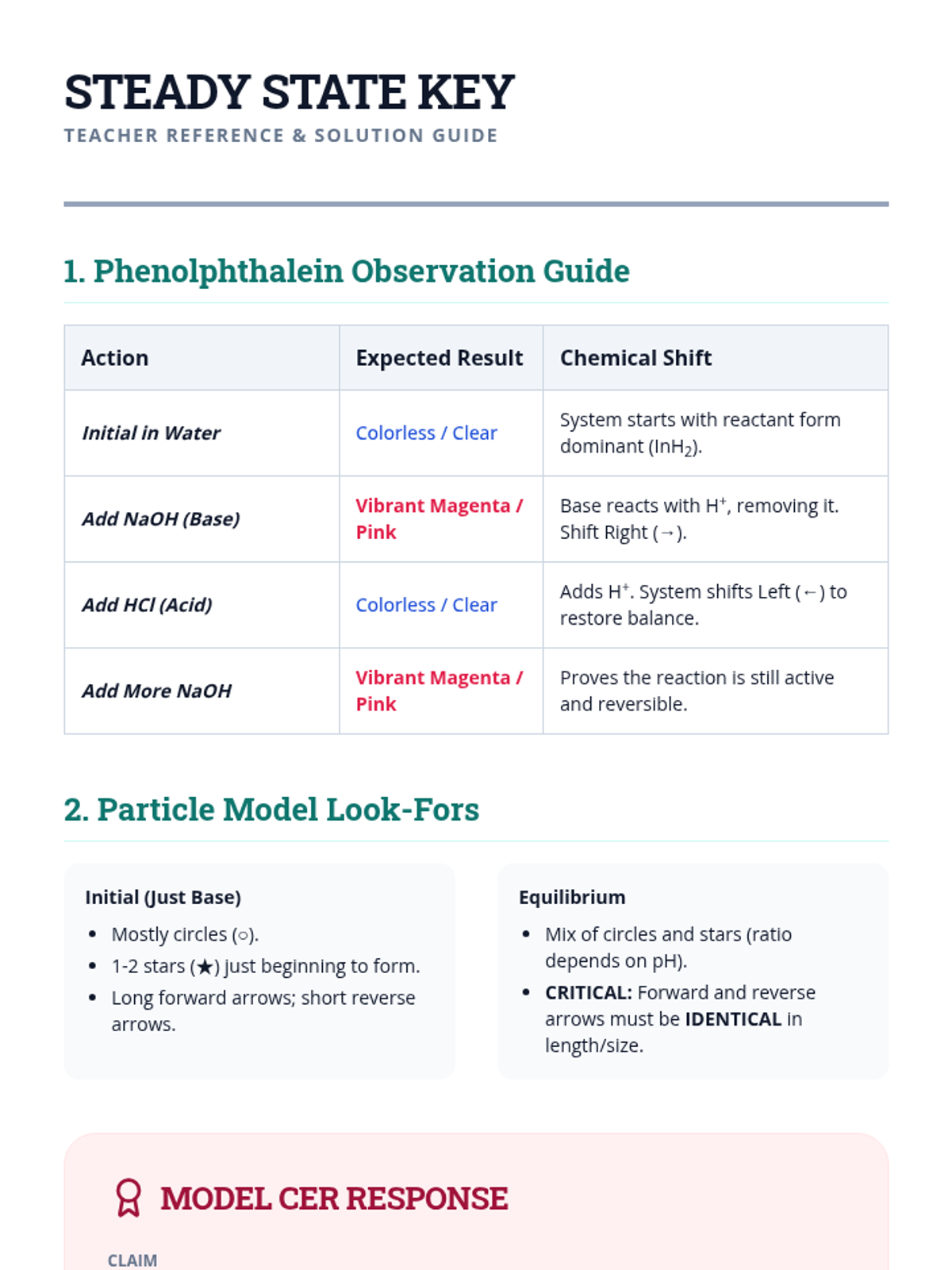
A comprehensive answer key and teacher guide for the Steady State lesson. Includes expected lab results, particle modeling "look-fors", a high-quality sample CER response, and notes on common student misconceptions. Revised for better page breaks and math rendering.
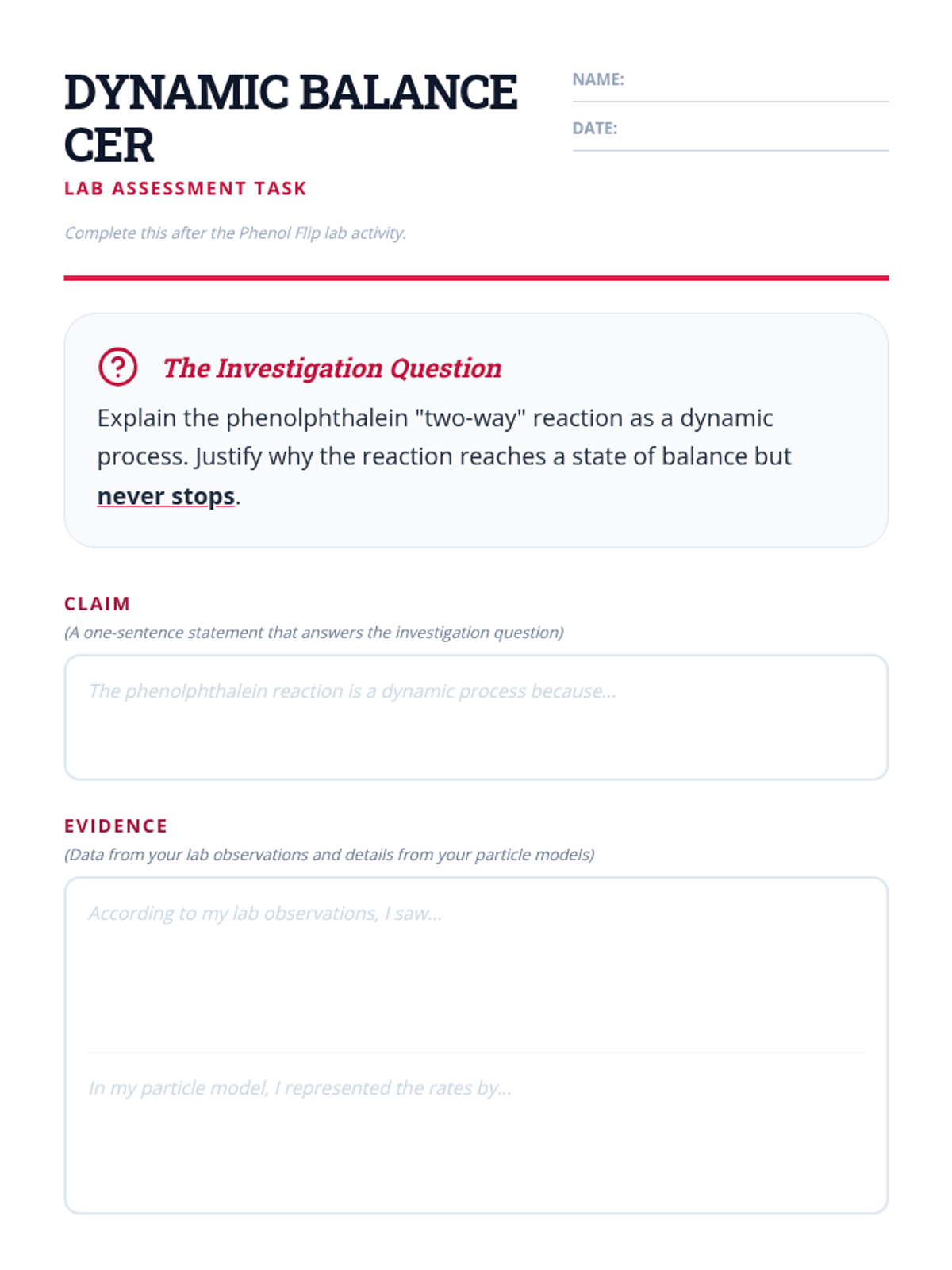
A CER assessment focused on the phenolphthalein equilibrium lab. Includes sections for claim, evidence, and reasoning with a teacher-facing rubric. Students must justify why equilibrium is a dynamic process using both macroscopic and microscopic evidence. Revised to include sentence stems for scaffolding.
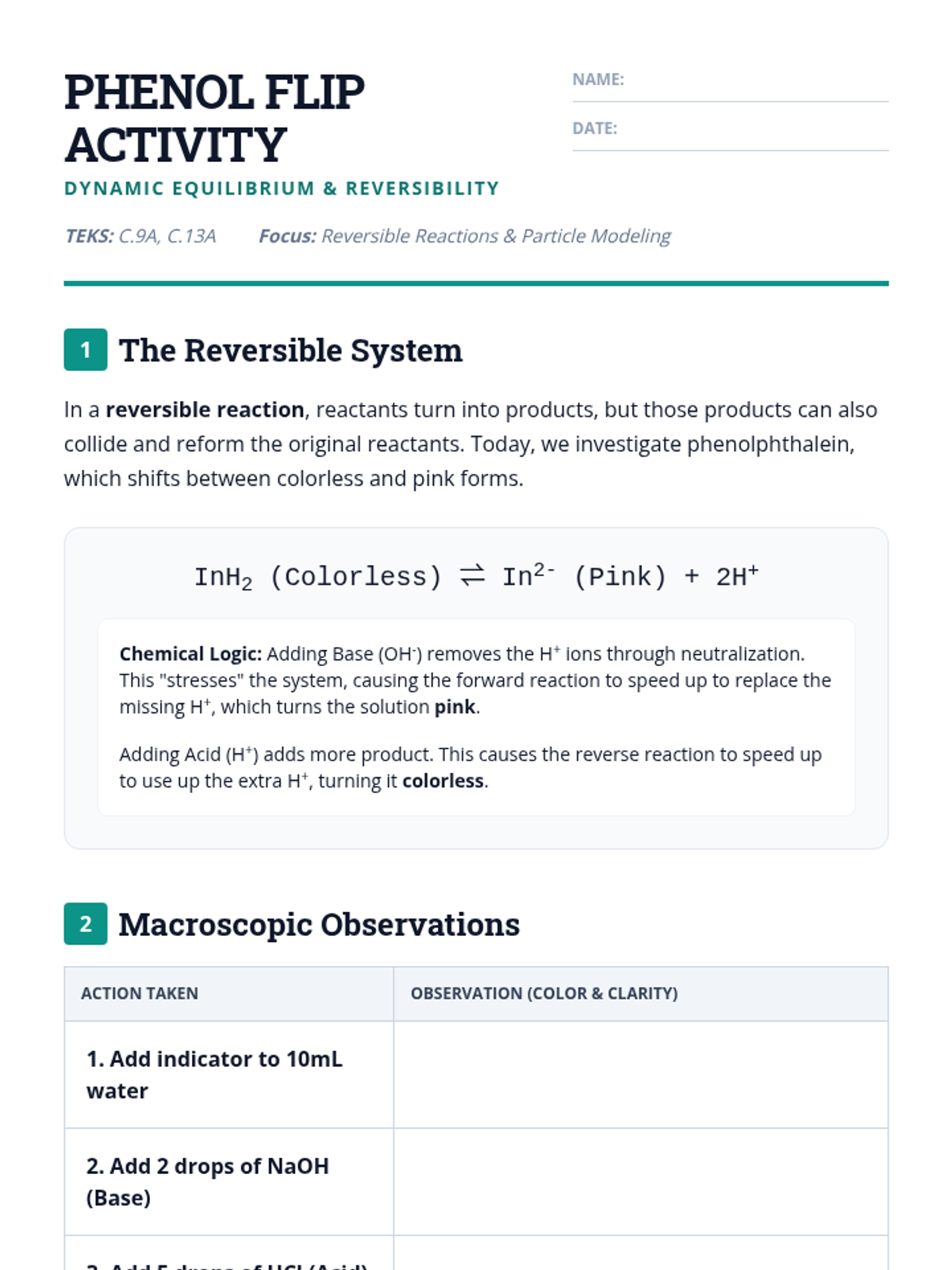
A 3-page student activity investigating reversible reactions using phenolphthalein. Includes data tables for macroscopic observations, a particle modeling section for visualizing rates, and synthesis questions connecting kinetics to equilibrium. Revised for better page breaks and math rendering.
A visual presentation covering reversible reactions, the definition of dynamic equilibrium, and the phenolphthalein system. Includes rate-vs-time graphs, particle-level modeling, and conceptual analogies like the escalator. Revised for better label positioning and legibility.
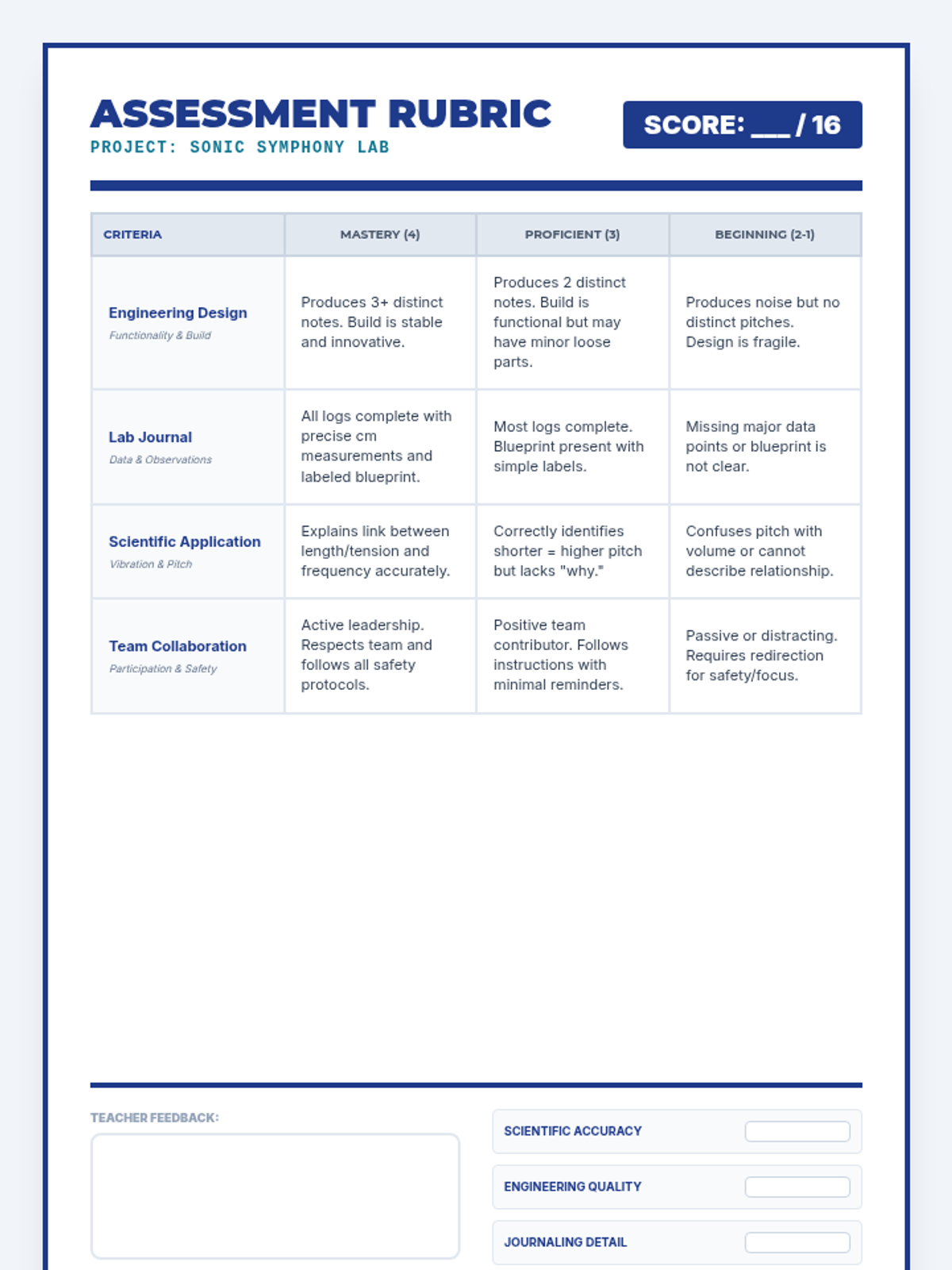
A comprehensive assessment rubric for the Sonic Symphony Lab. Revised to fit onto a single page with improved layout, professional feedback areas, and clear criteria for engineering and physics.
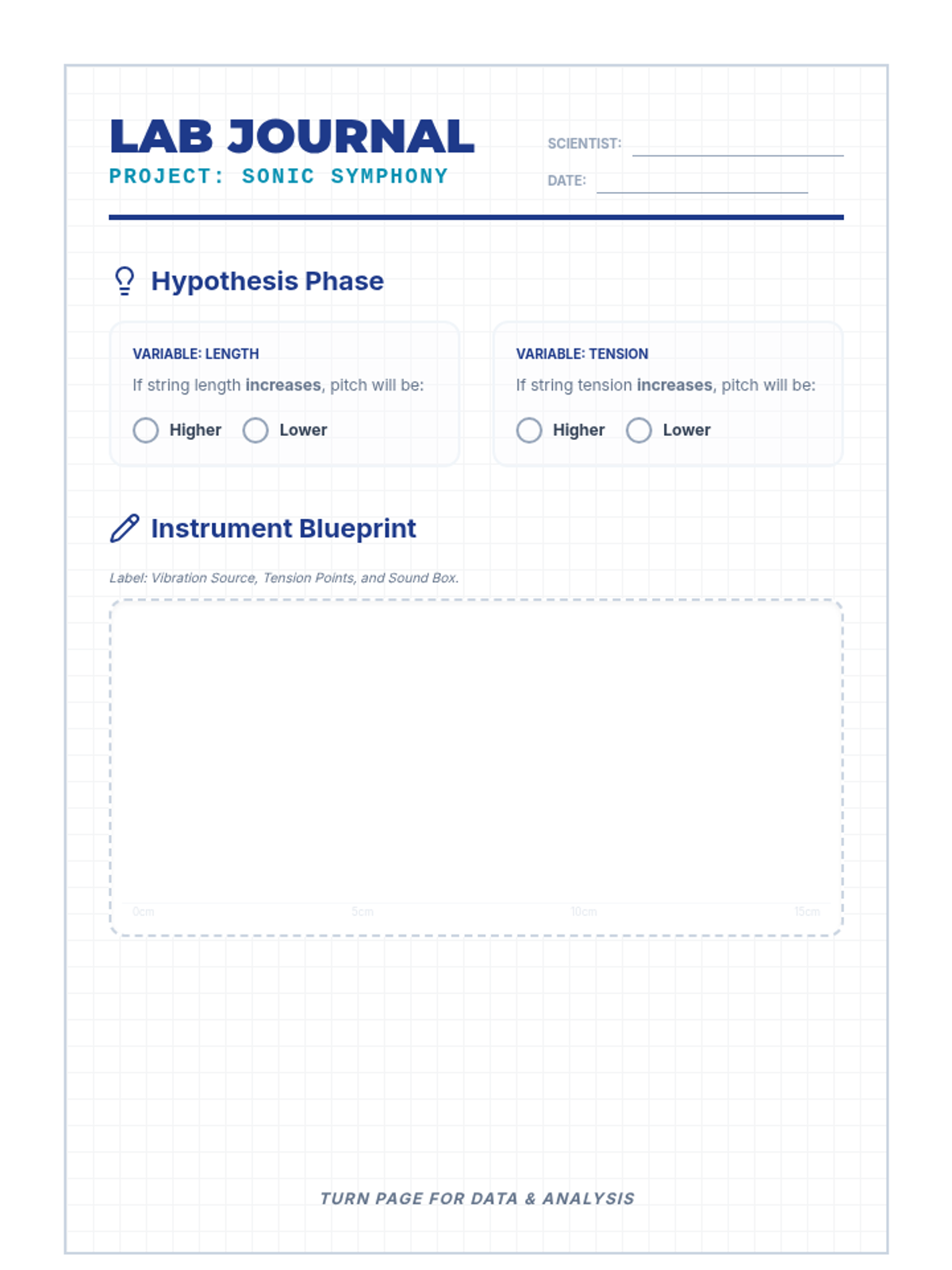
A student lab journal for the Sonic Symphony investigation. Revised with improved page breaks, white student work areas, and complete analysis sections to ensure a professional lab experience.
A visually engaging presentation for the Sonic Symphony Lab, introducing vibration, pitch, and engineering analysis. Revised to include a concrete wave visual and an advanced acoustic engineering slide for middle school students.
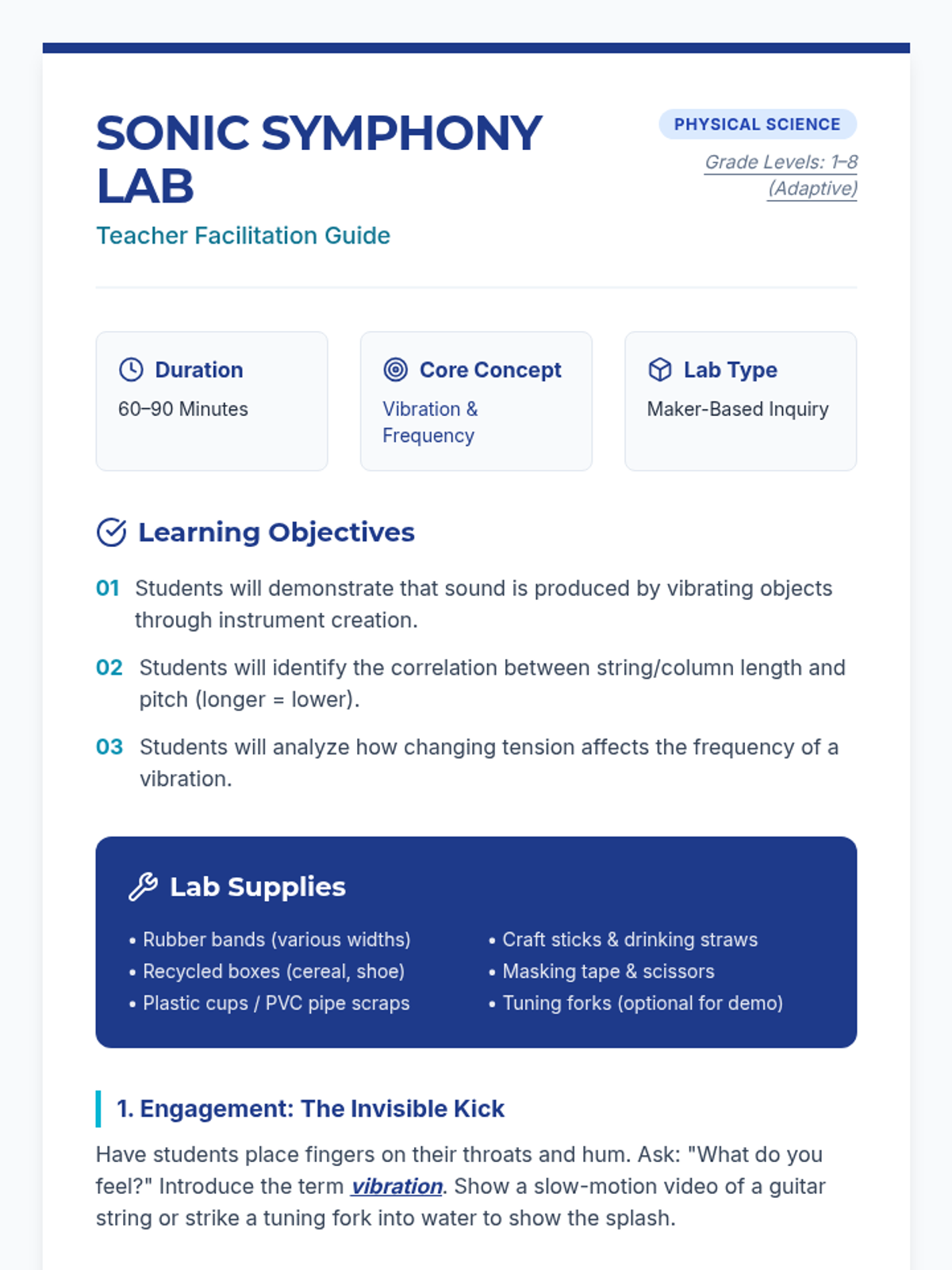
A comprehensive teacher facilitation guide for the Sonic Symphony Lab, featuring learning objectives, materials list, step-by-step procedures, and differentiation strategies for grades 1-8. Revised to include full grade-level scaling and professional formatting.
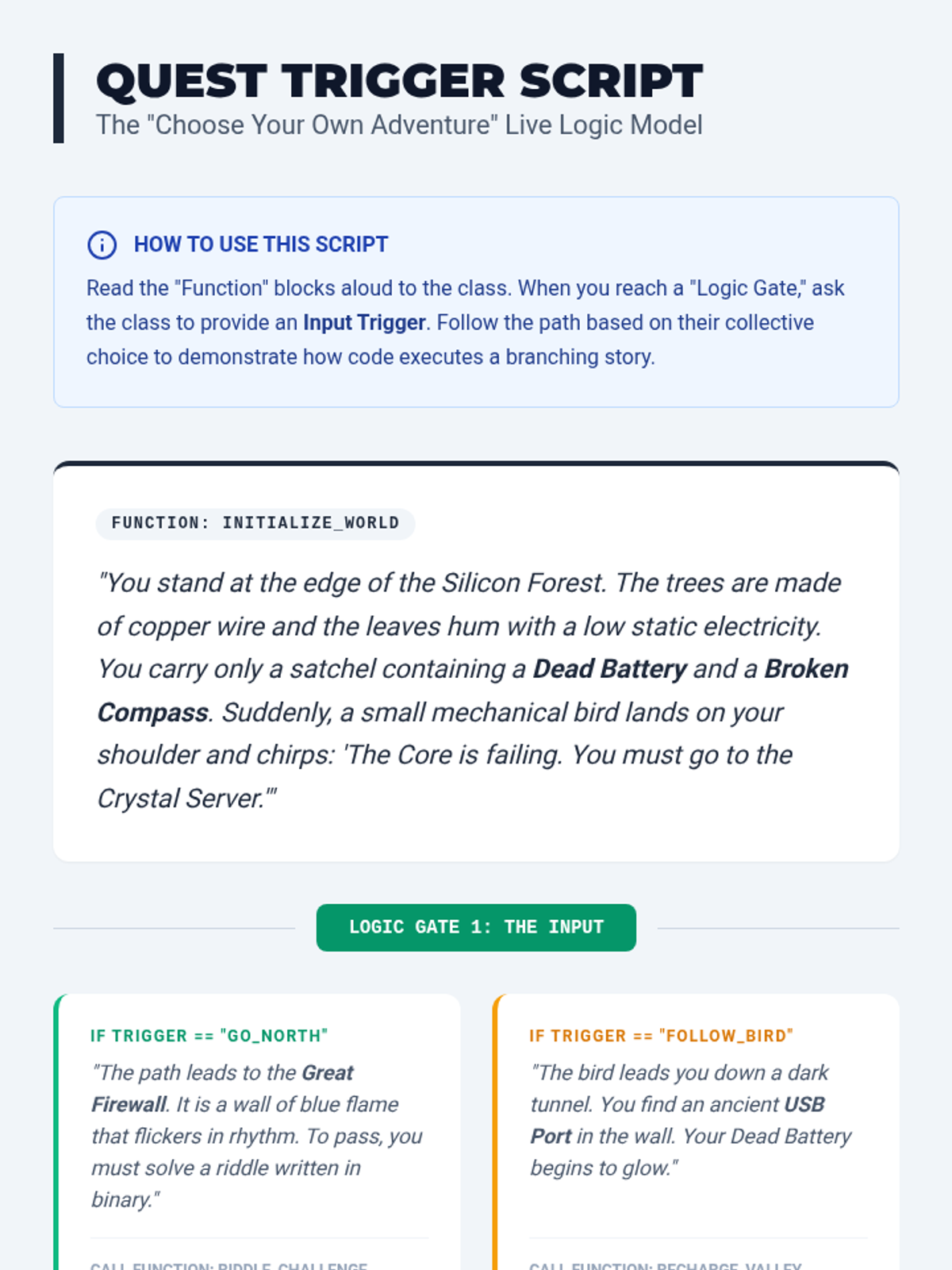
A teaching script that provides a narrative framework for a live classroom activity. It models how story functions and input triggers create a branching story, including a section on more complex "State Logic" using variables.
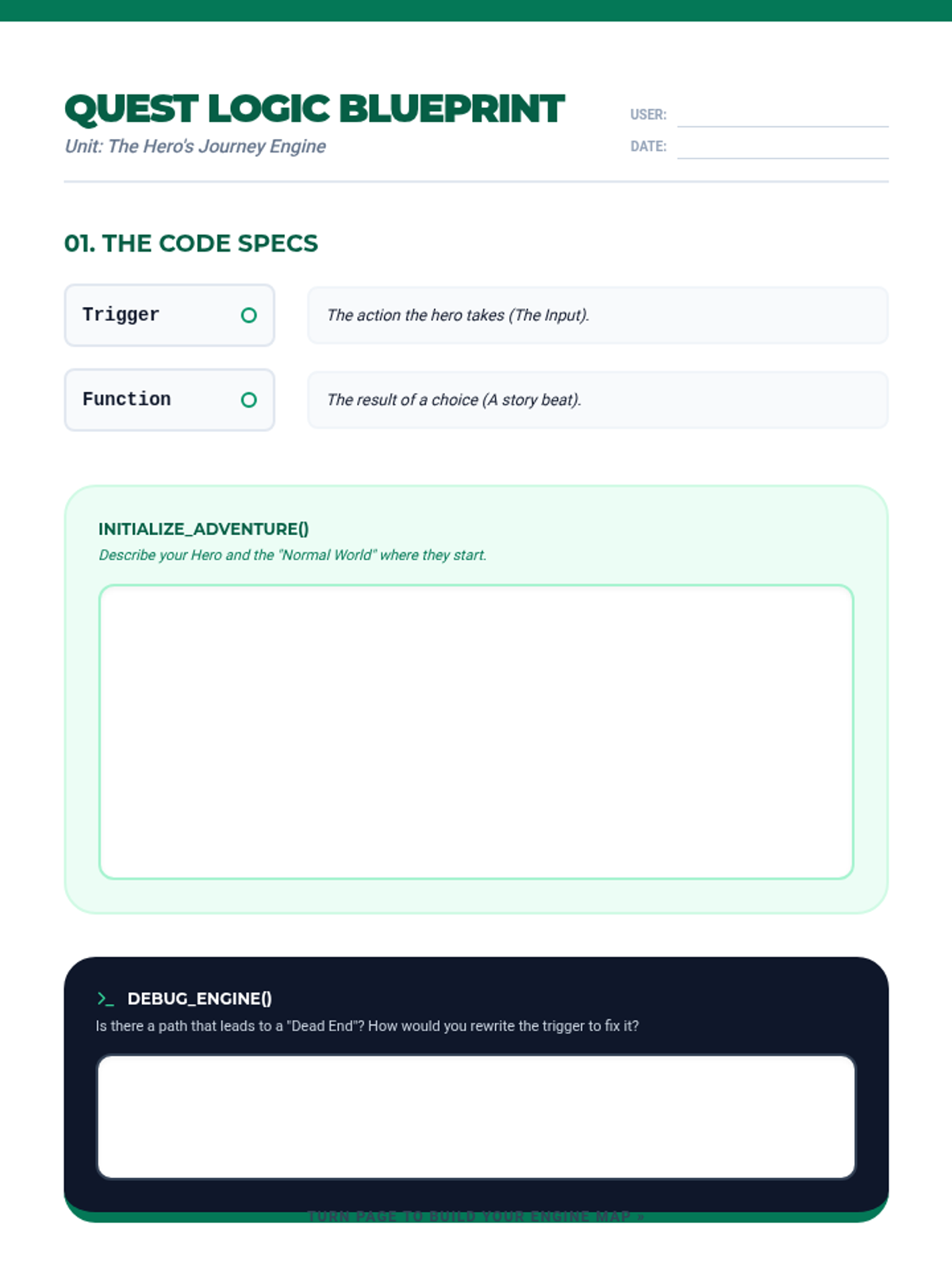
A structured student worksheet for designing a branching narrative logic map. It includes a coding vocabulary matching section, a visual flow-charting area for story triggers and functions, and a debugging reflection prompt.
An engaging slide presentation for 5th-6th graders that visualizes the connection between linear story structure and event-driven branching logic. Includes diagrams of triggers and functions within a Hero's Journey framework.
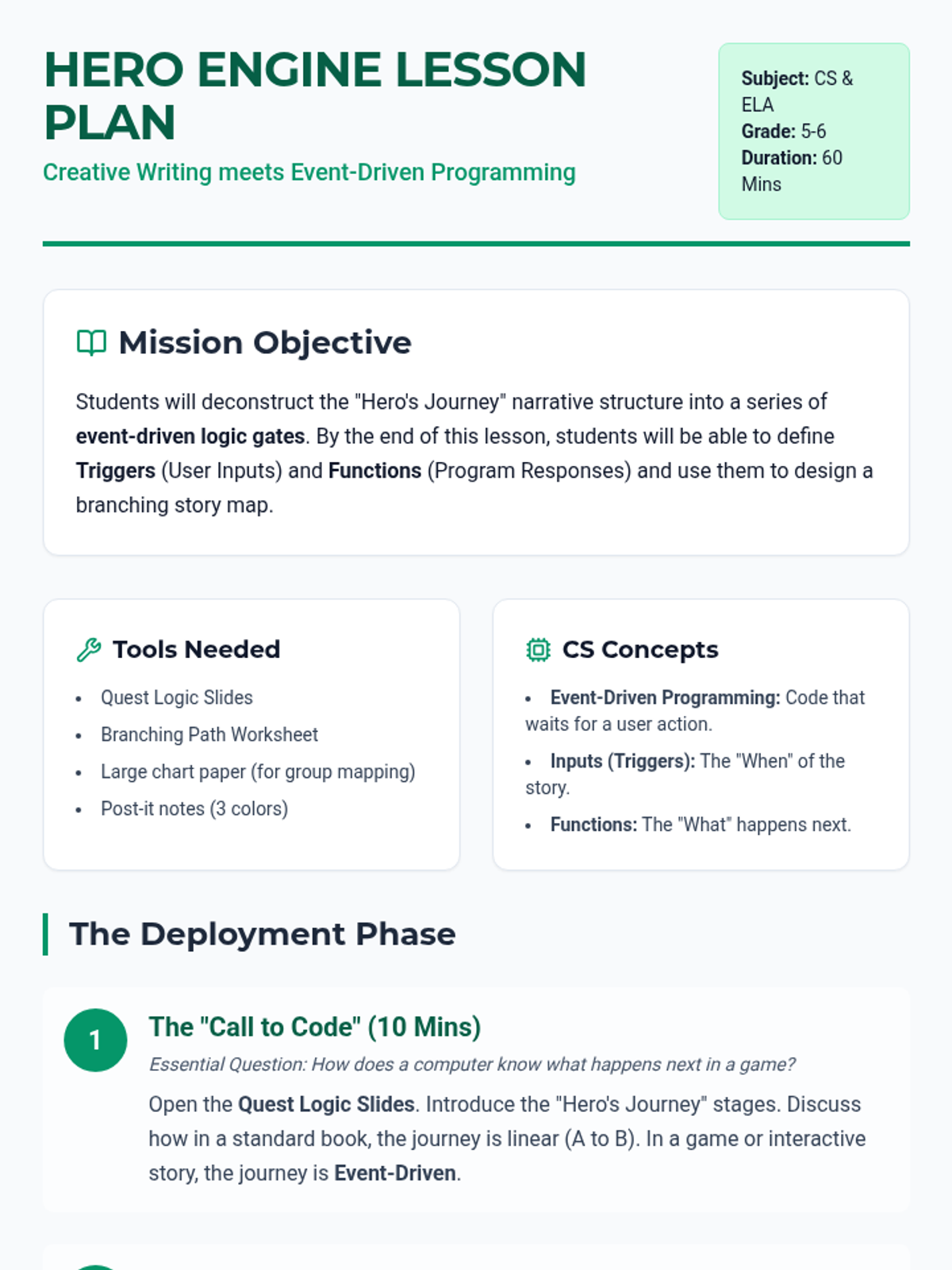
A comprehensive teacher guide for the Hero's Journey Engine lesson, detailing objectives, standard alignment, and a step-by-step instructional sequence for teaching event-driven programming through story mapping.
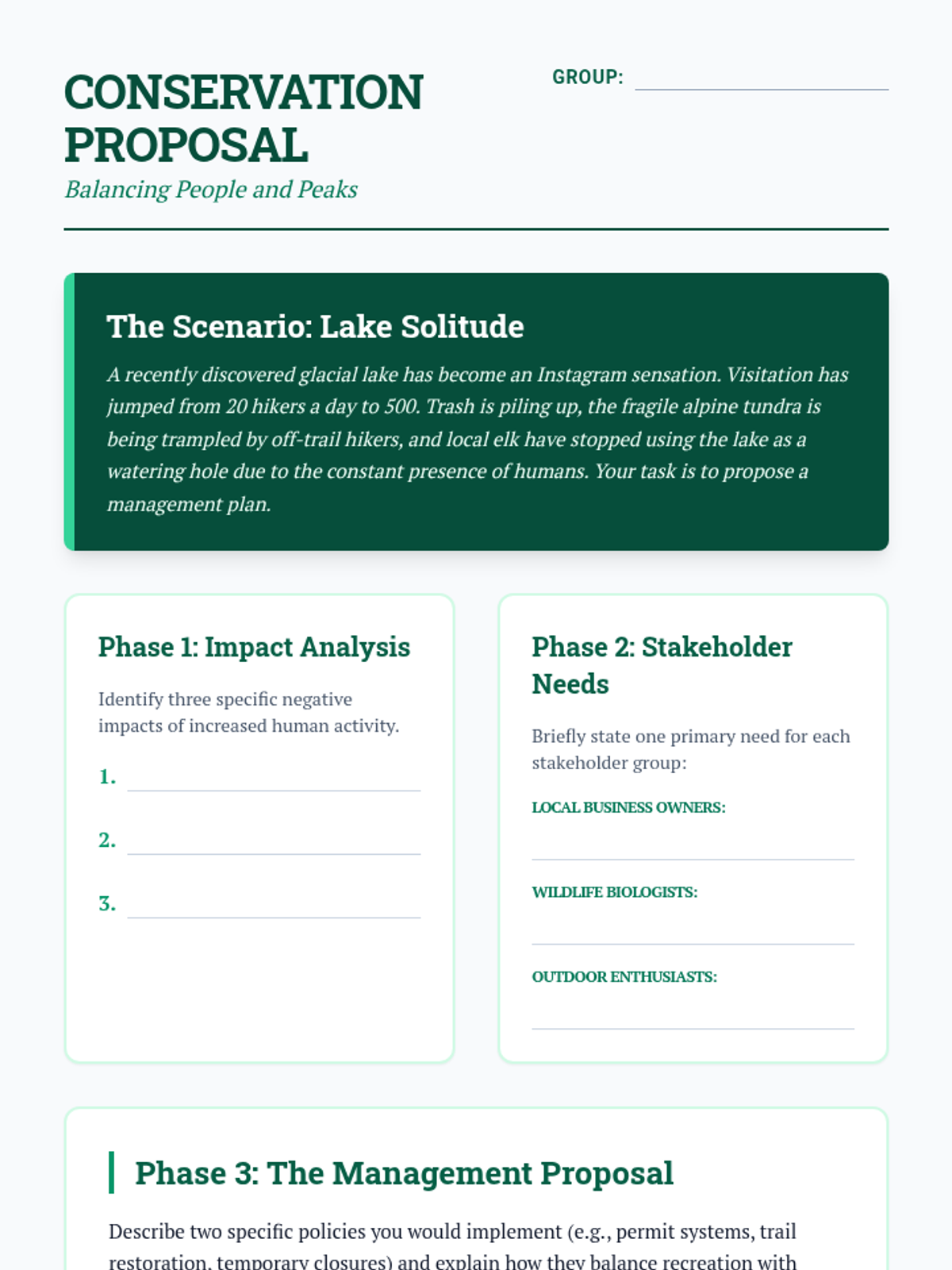
A group activity worksheet where students analyze a hypothetical conservation scenario and propose a management plan to balance tourism and environmental protection.
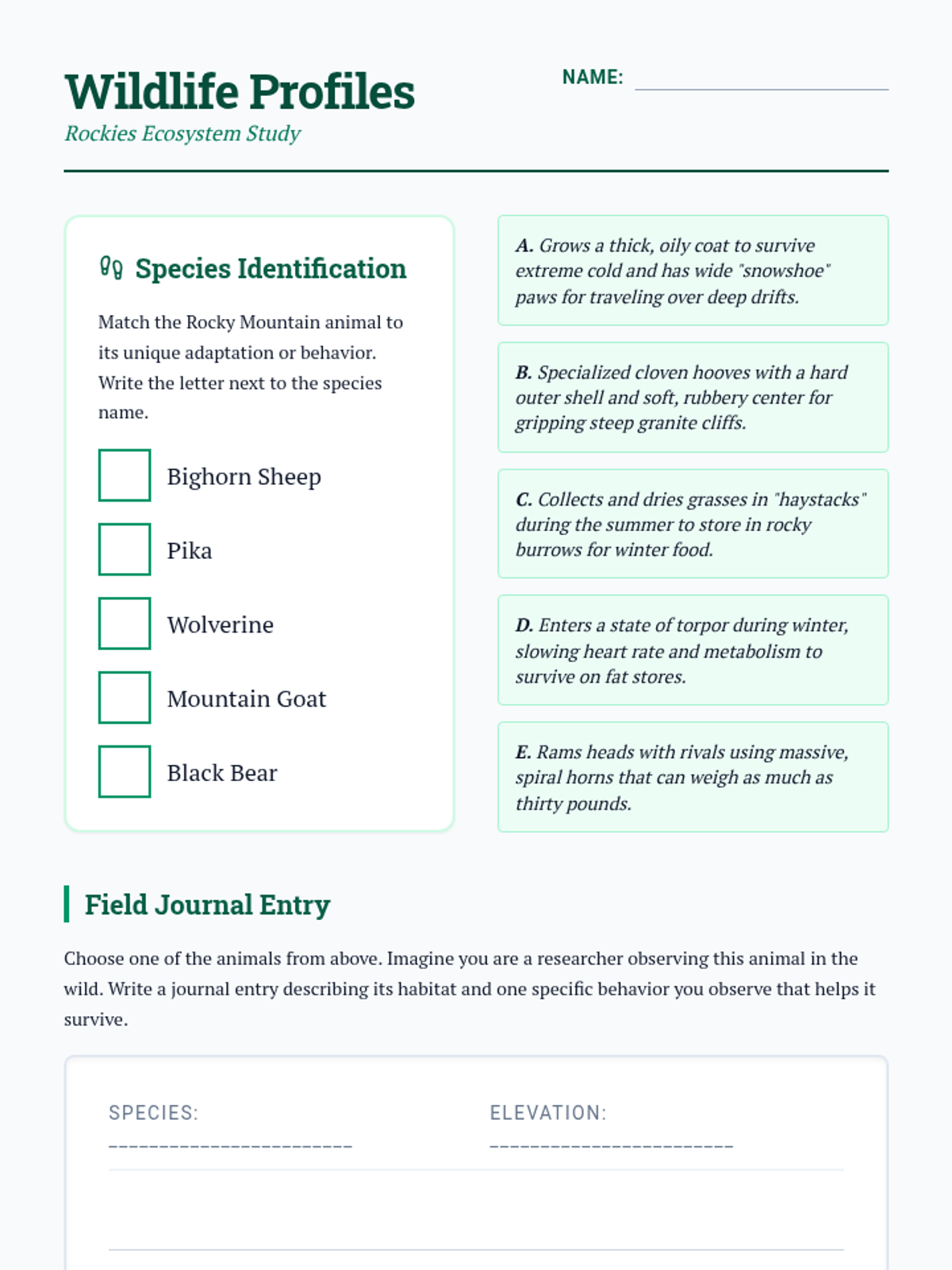
An activity sheet for identifying Rocky Mountain wildlife adaptations and writing a creative field journal entry from a researcher's perspective.