A matching recording sheet for the task cards, with labeled spaces for students to write the identified purpose and a supporting clue for each of the eight passages. Clue boxes are sized for handwriting.
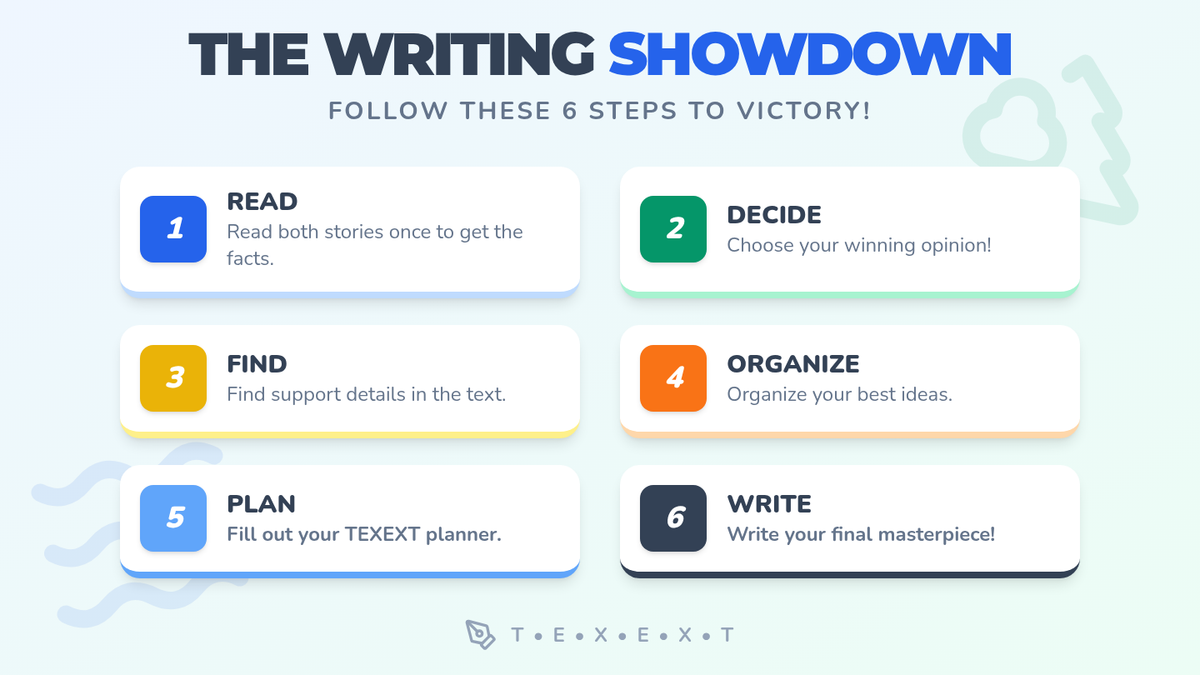
A clear instructional slide outlining the 6 steps of the TEXEXT opinion writing activity, featuring large text and a thematic adventure design.
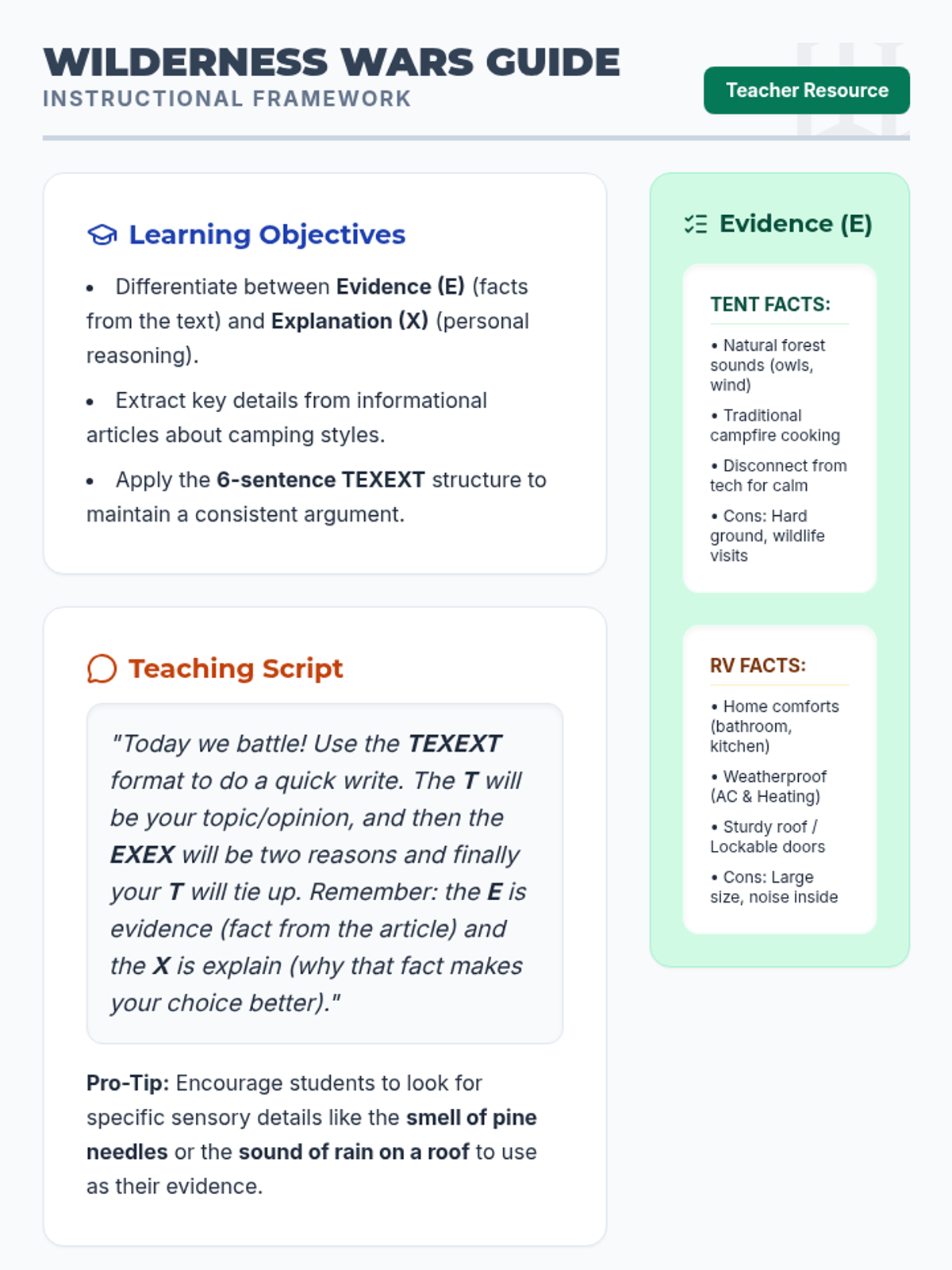
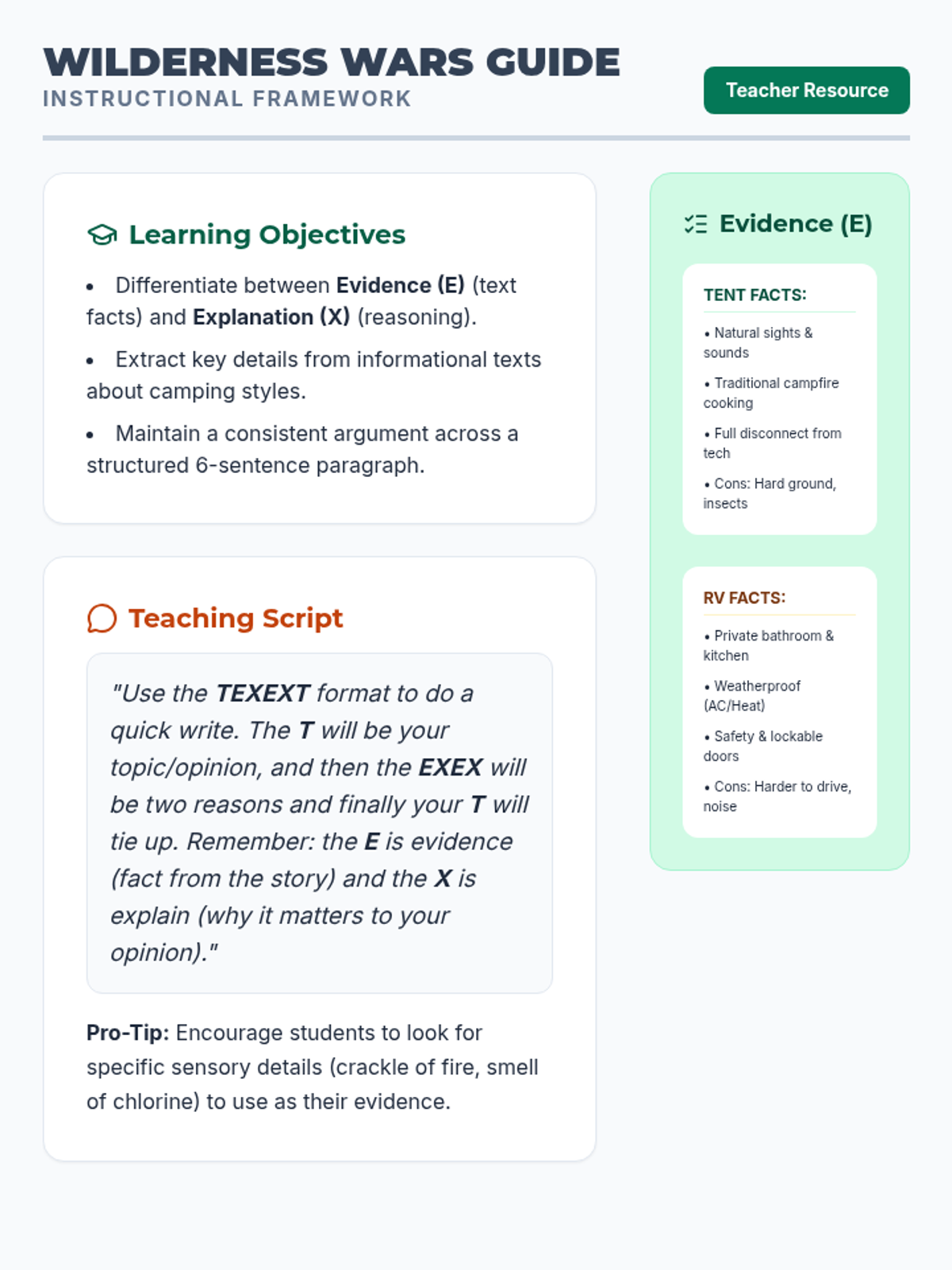
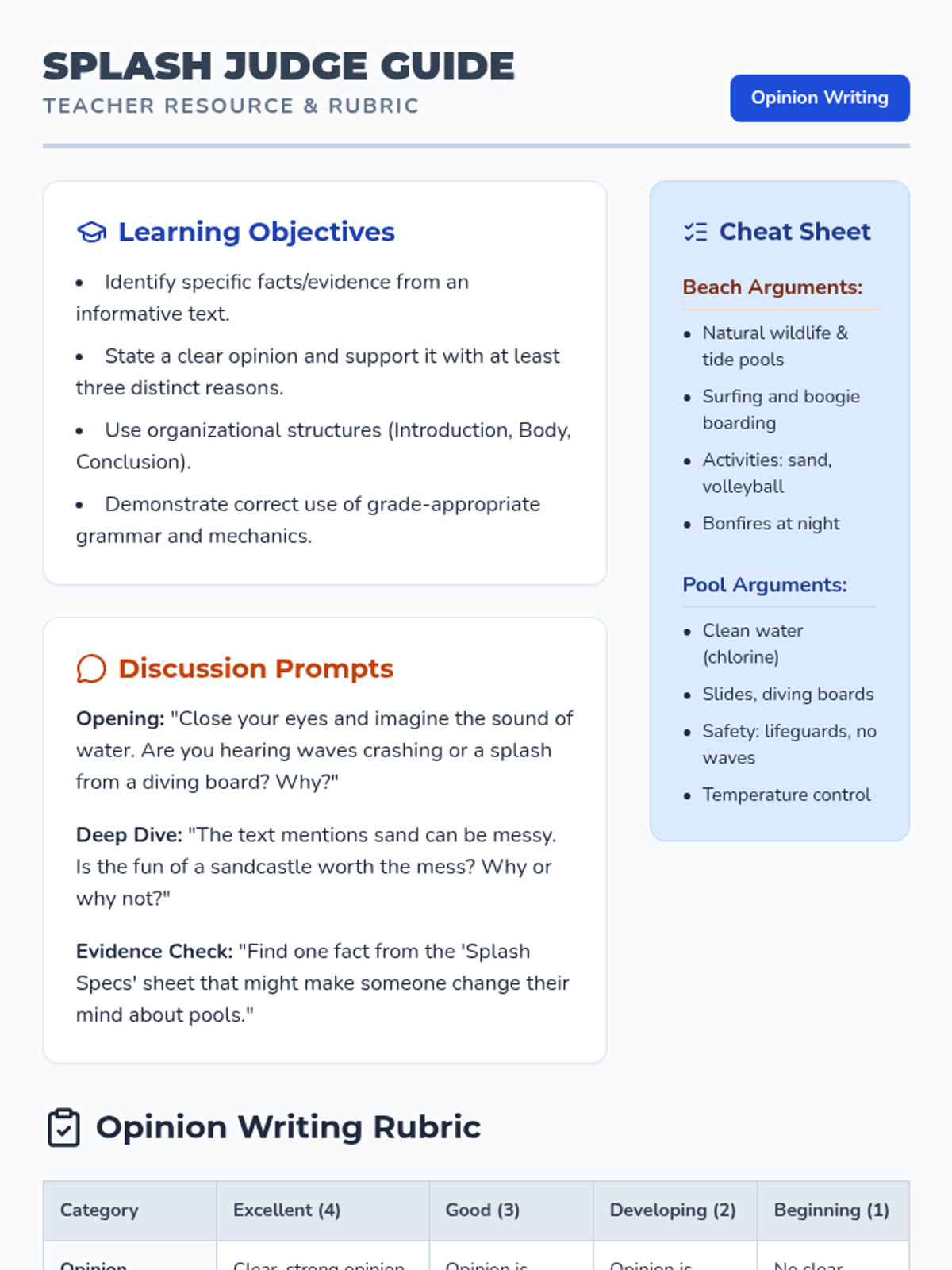
A teacher's guide for the camping-themed opinion writing lesson. Includes instructional script, objectives, evidence cheat sheet, and a 6-sentence TEXEXT rubric. Includes full informational article references (~400 words each).
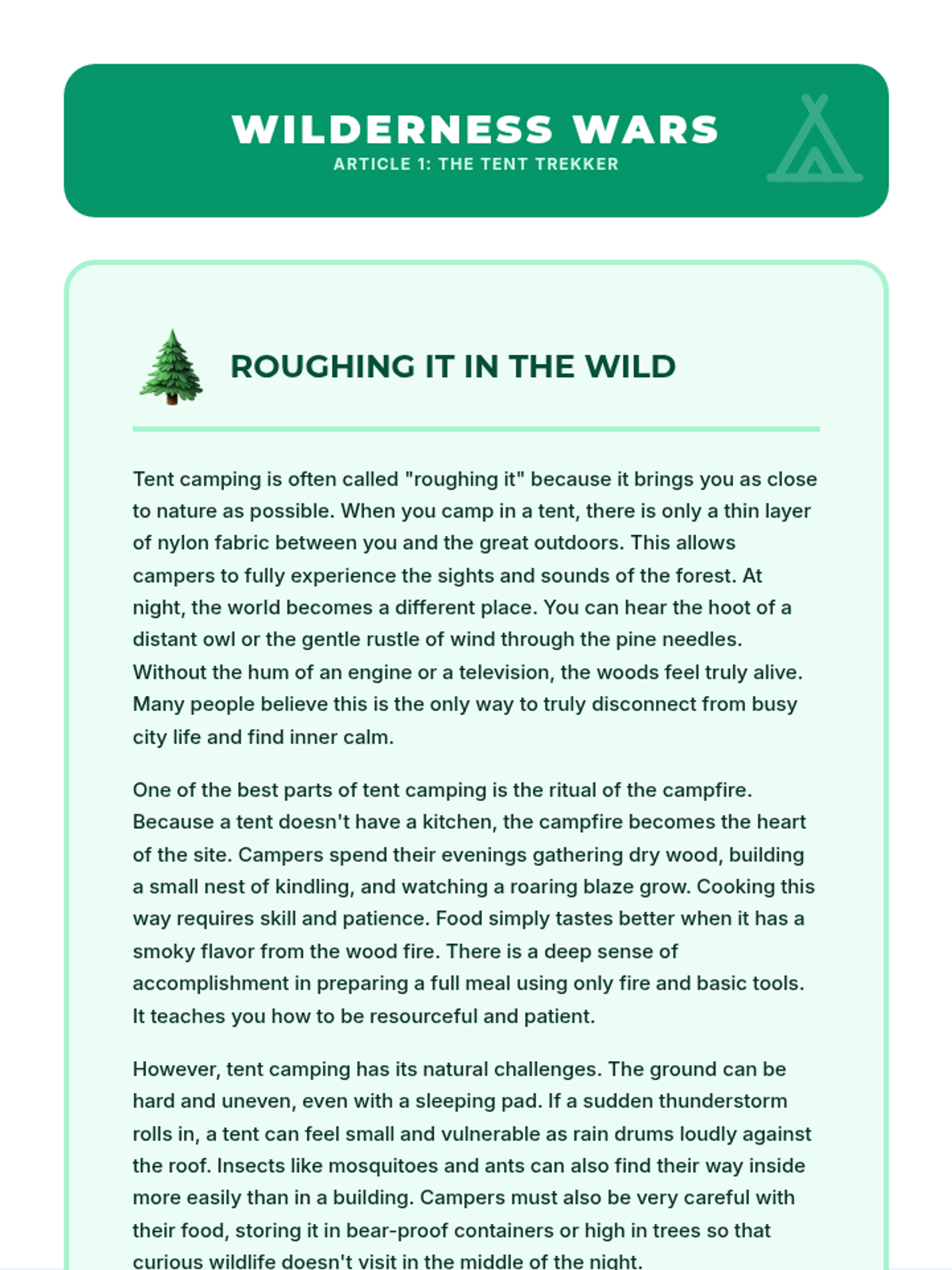
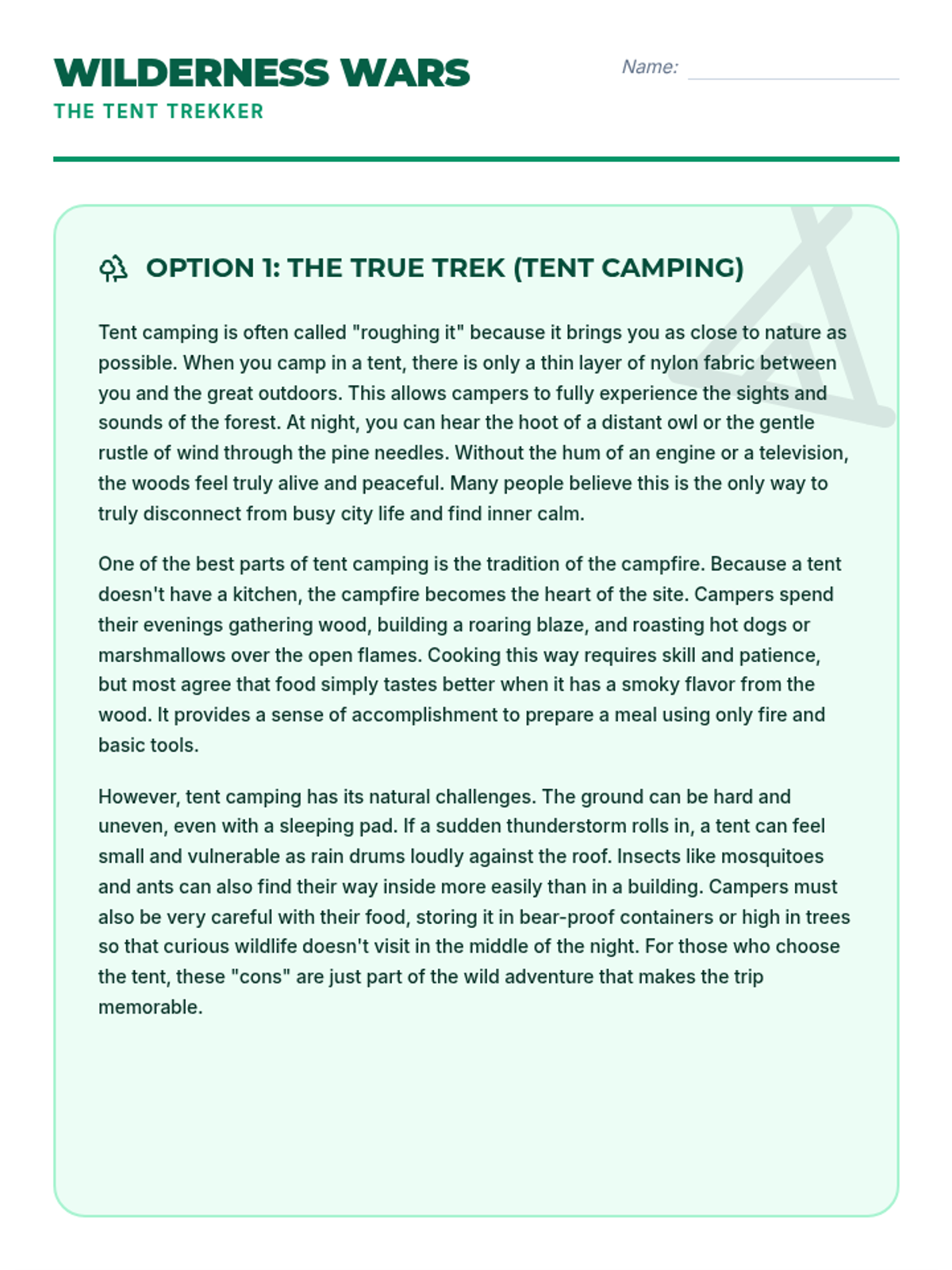
A comprehensive 4-page student packet for a camping-themed opinion writing task. Includes full informational texts on tent vs. RV camping, a 6-sentence TEXEXT planner, and a final drafting area.
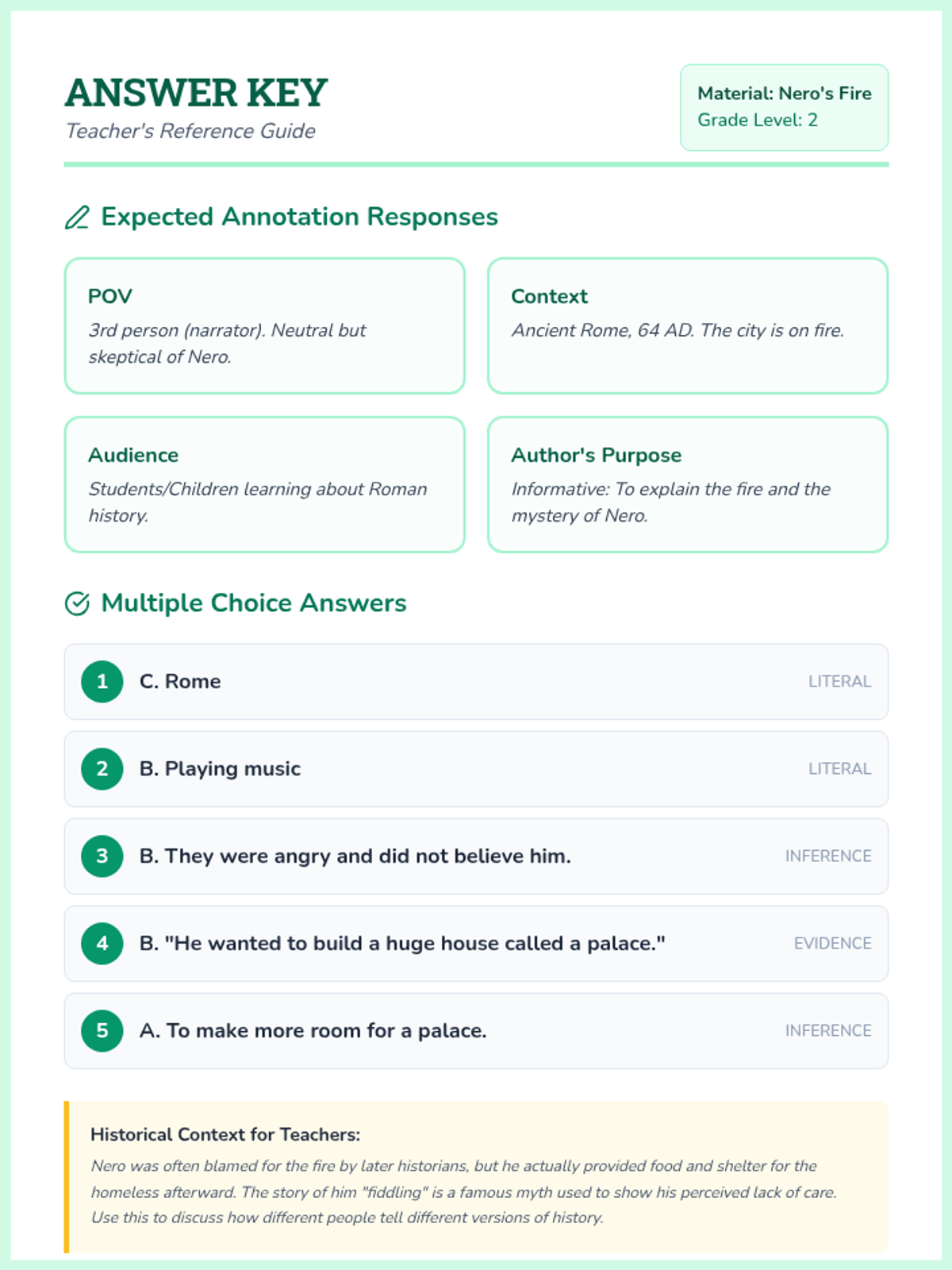
An answer key and teaching guide for the Nero's Fire worksheet. It provides suggested annotation responses for each corner box and correct answers for the multiple-choice comprehension questions, along with brief explanations for the teacher.
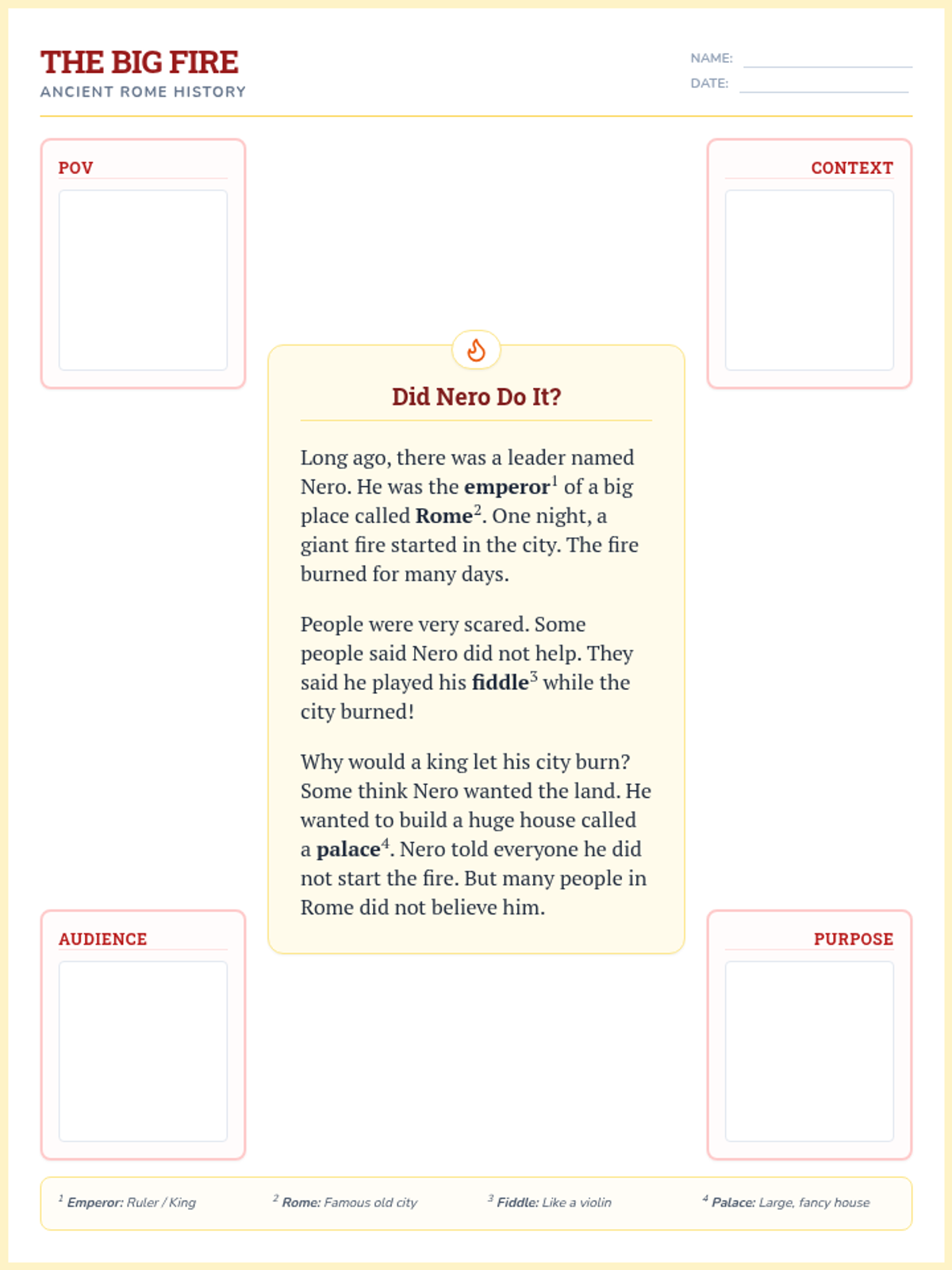
A double-sided worksheet featuring a 2nd-grade level text about the Great Fire of Rome with corner annotation boxes for POV, Context, Audience, and Purpose. The reverse side includes five multiple-choice questions focusing on literal comprehension, inference, and evidence selection.
A teacher's guide for the camping-themed opinion writing lesson. Includes instructional script, objectives, evidence cheat sheet, and a 6-sentence TEXEXT rubric.
A comprehensive 4-page student packet for a camping-themed opinion writing task. Includes informational texts on tent vs. RV camping, a 6-sentence TEXEXT planner, and a final drafting area.
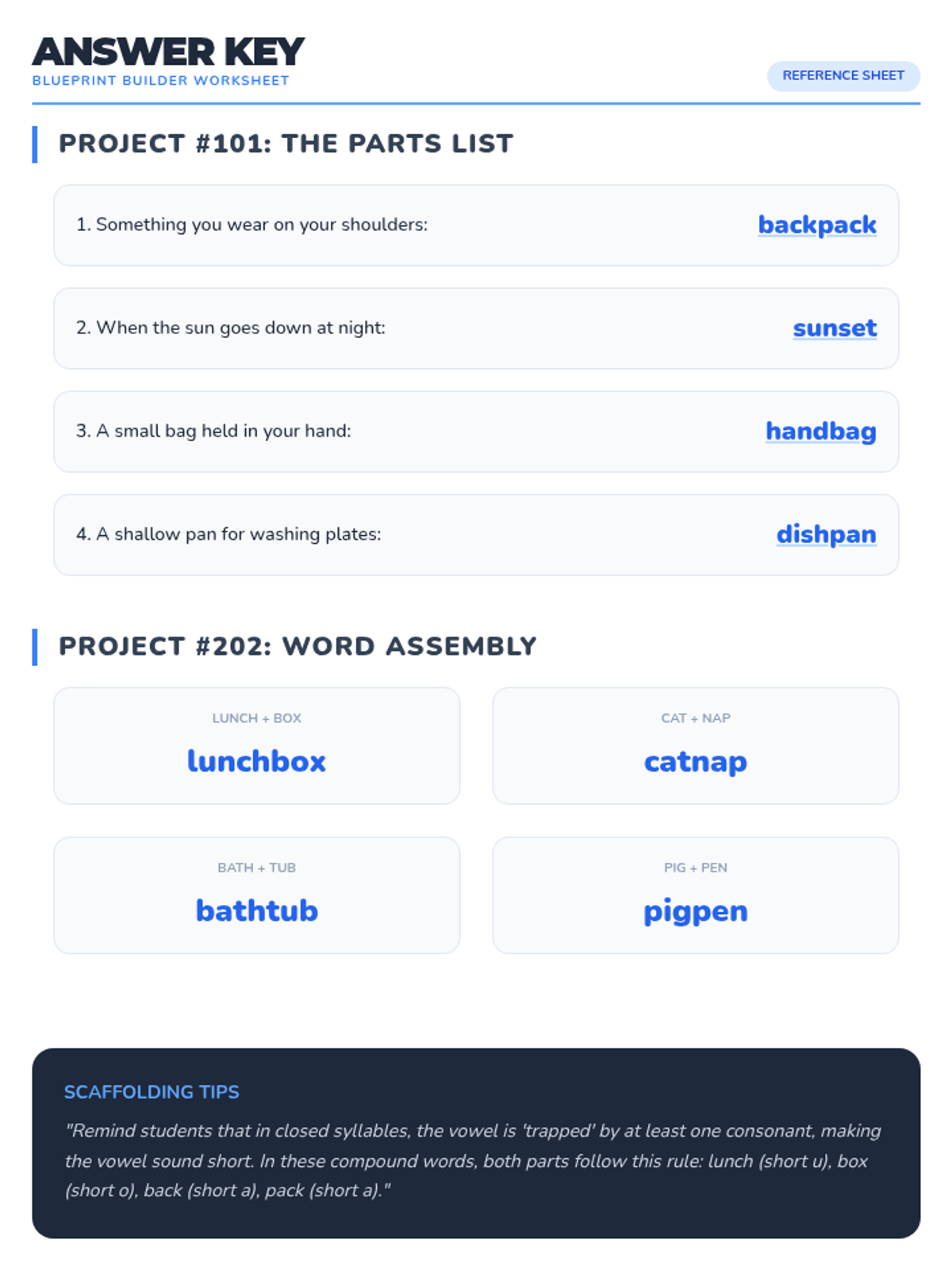
Teacher answer key for the Blueprint Builder Worksheet, providing assembled words and phonics-based teaching tips.
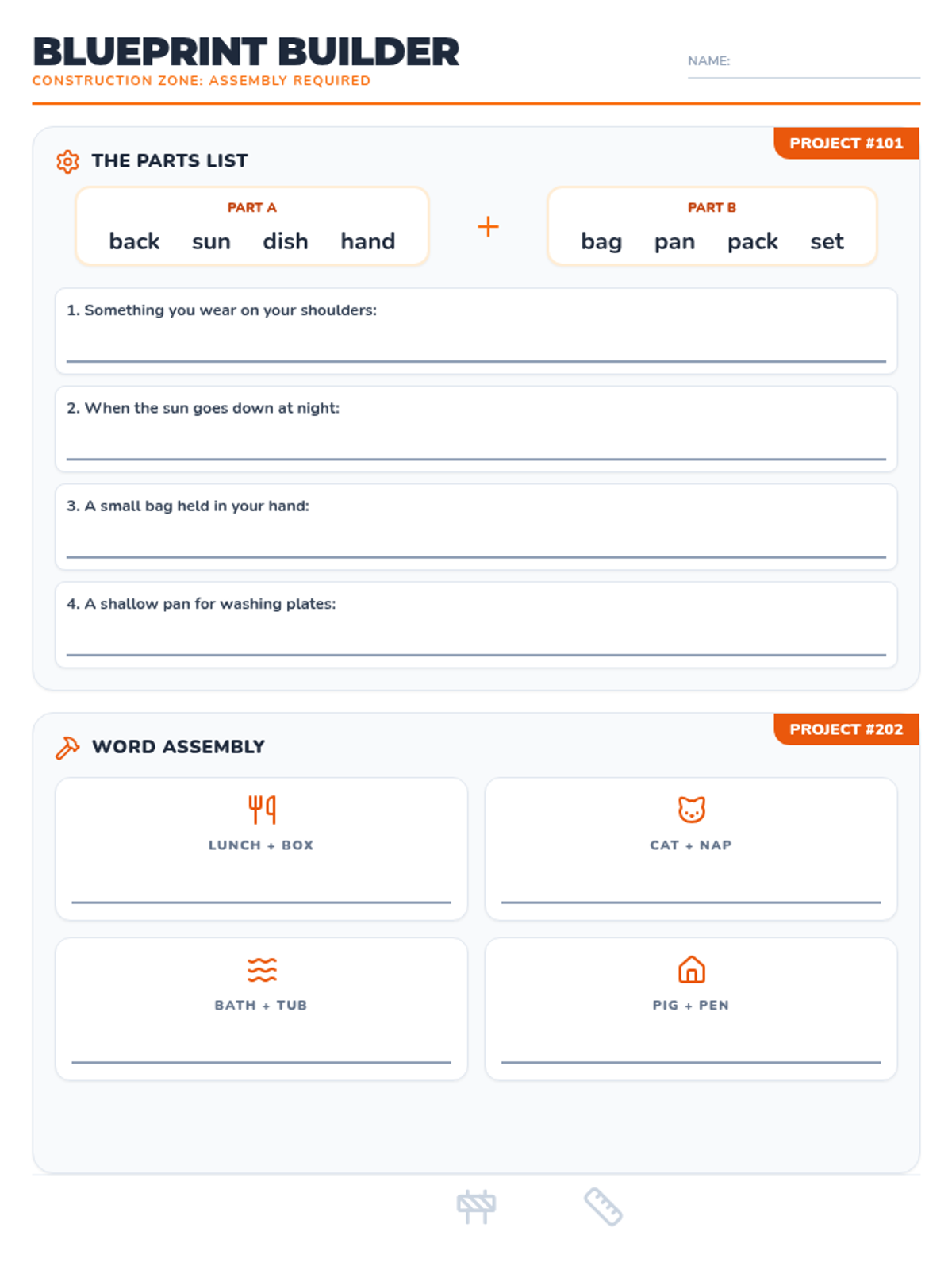
A construction-themed worksheet where students assemble compound words from provided word parts to match clues and icons. Revised to fix layout and improve contrast.
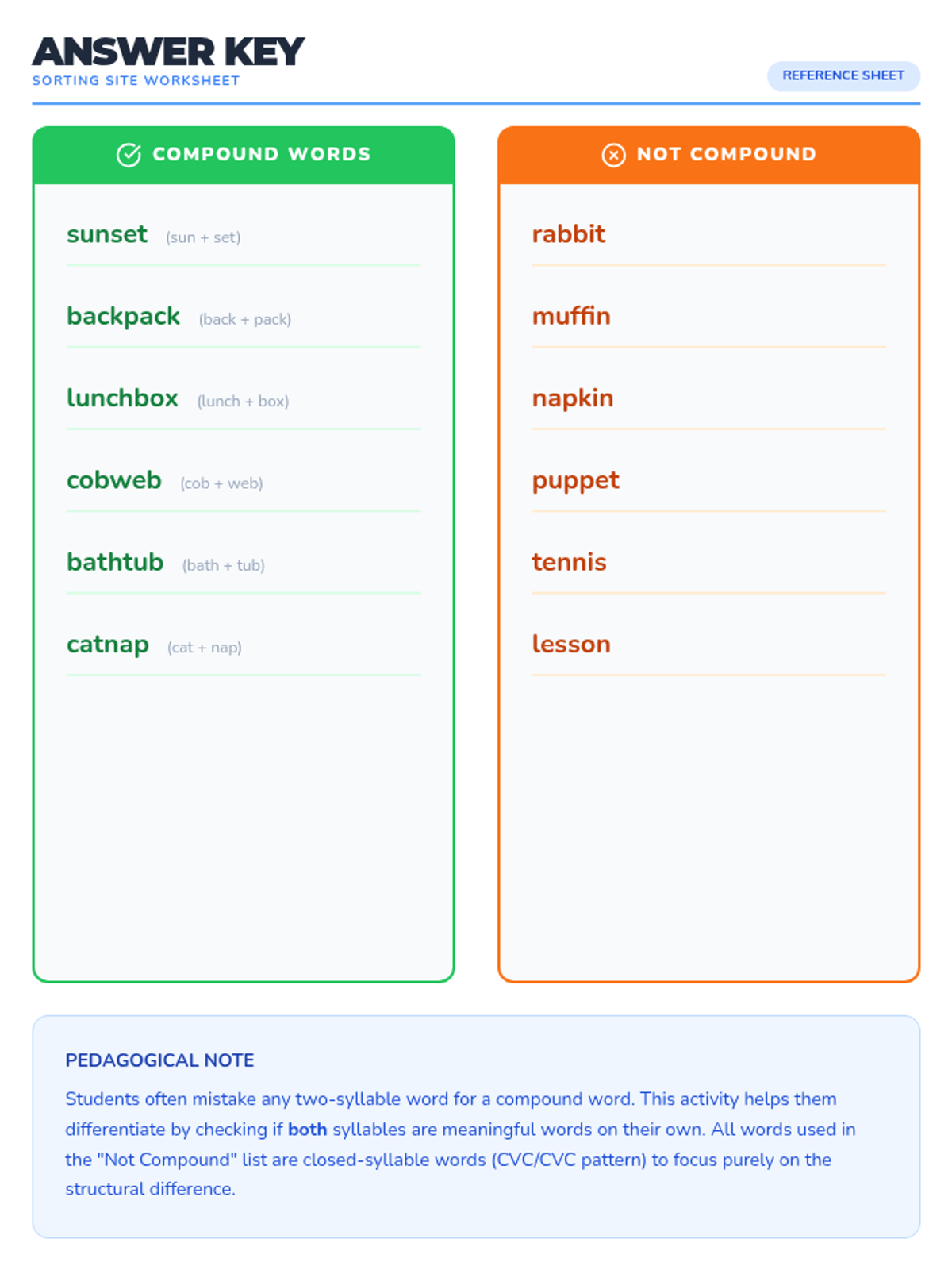
Teacher answer key for the Sorting Site Worksheet, clarifying the difference between compound words and two-syllable words.
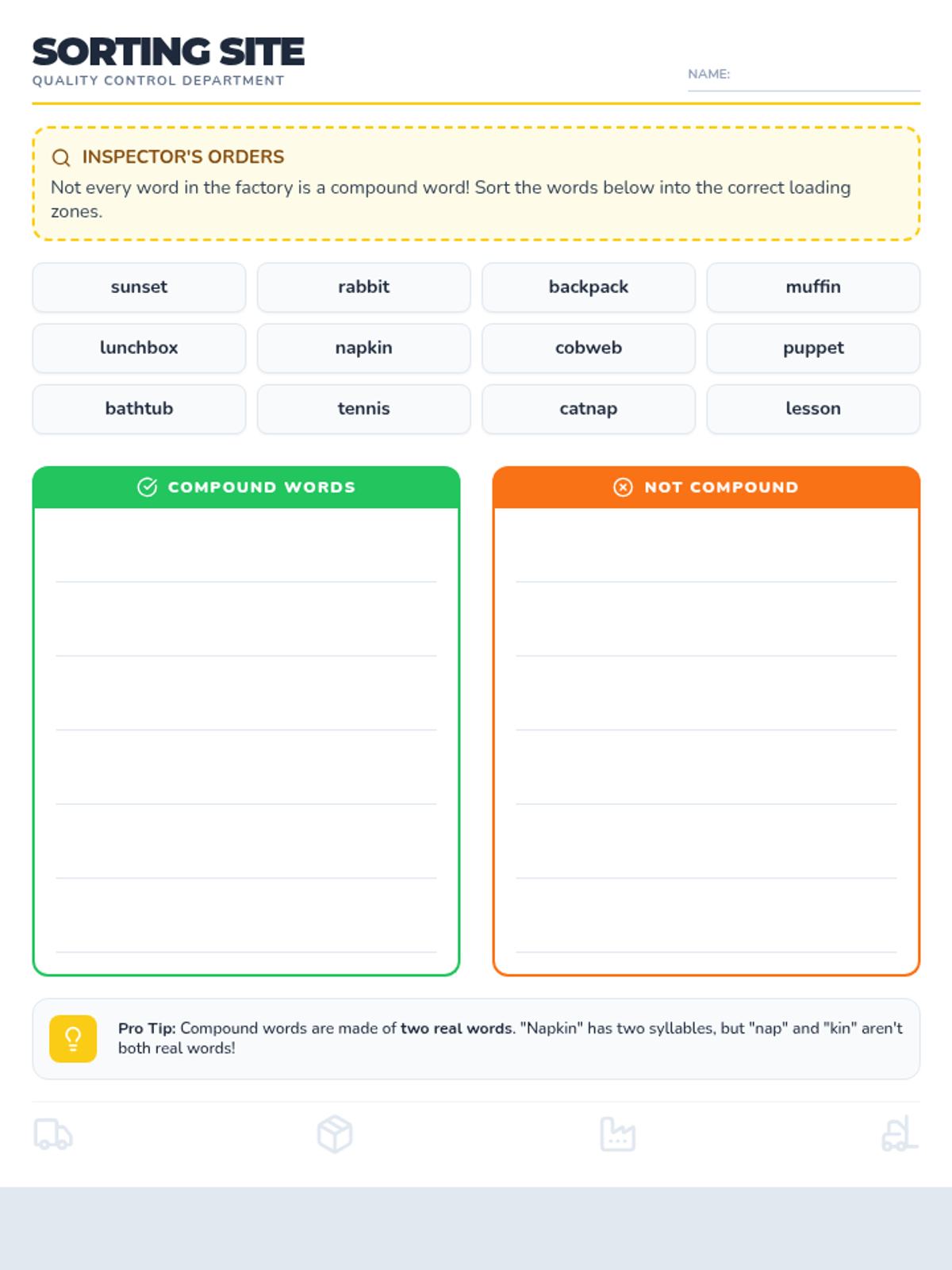
A sorting worksheet where students differentiate between compound words with two closed syllables and simple two-syllable words. Revised to fix layout and improve student work area.
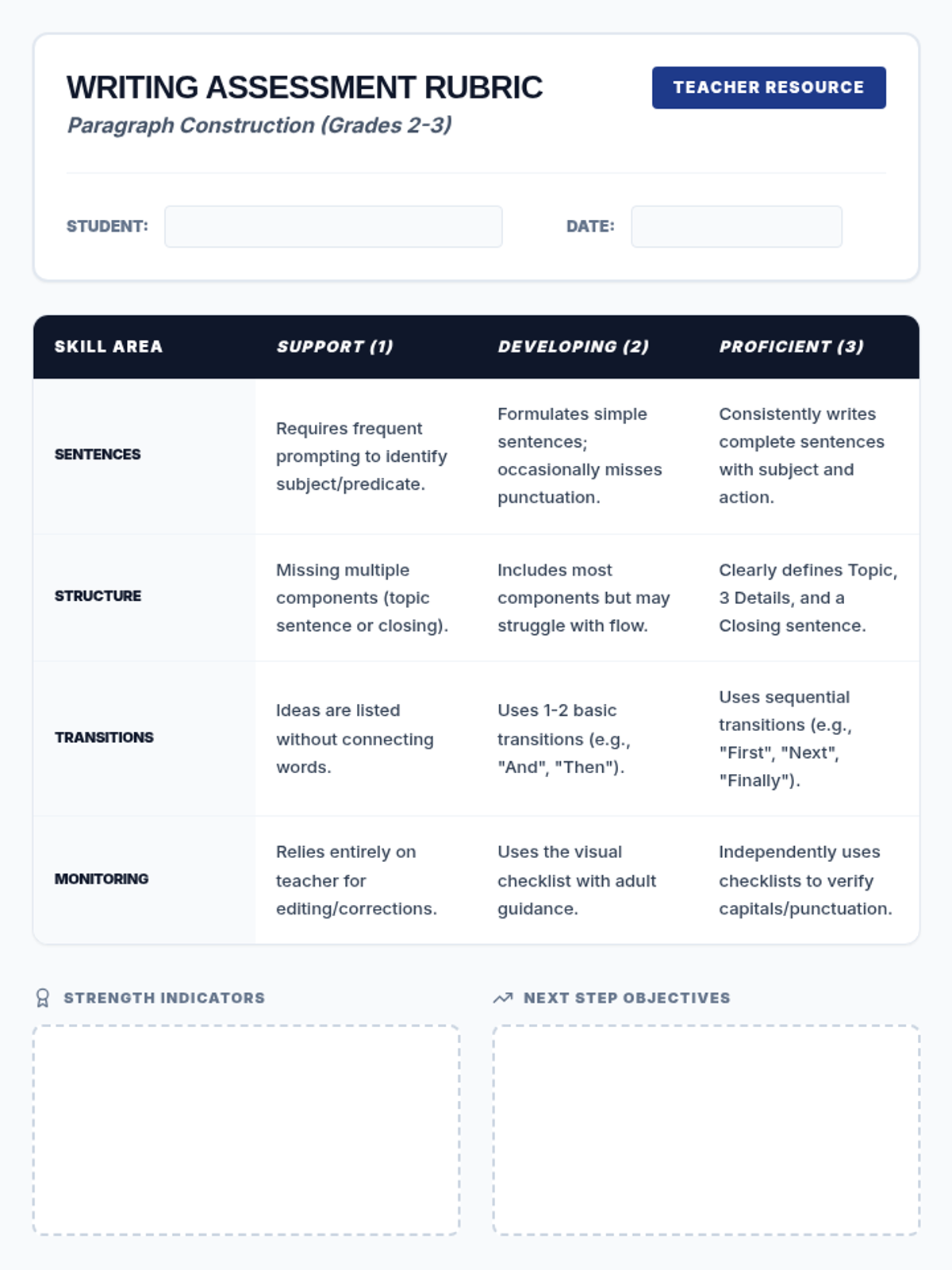
A teacher-facing assessment tool for evaluating paragraph writing in 2nd and 3rd-grade students. Specifically focuses on organization and executive function skills like self-monitoring and sequential logic, providing clear criteria for students with ADHD or language formulation challenges.
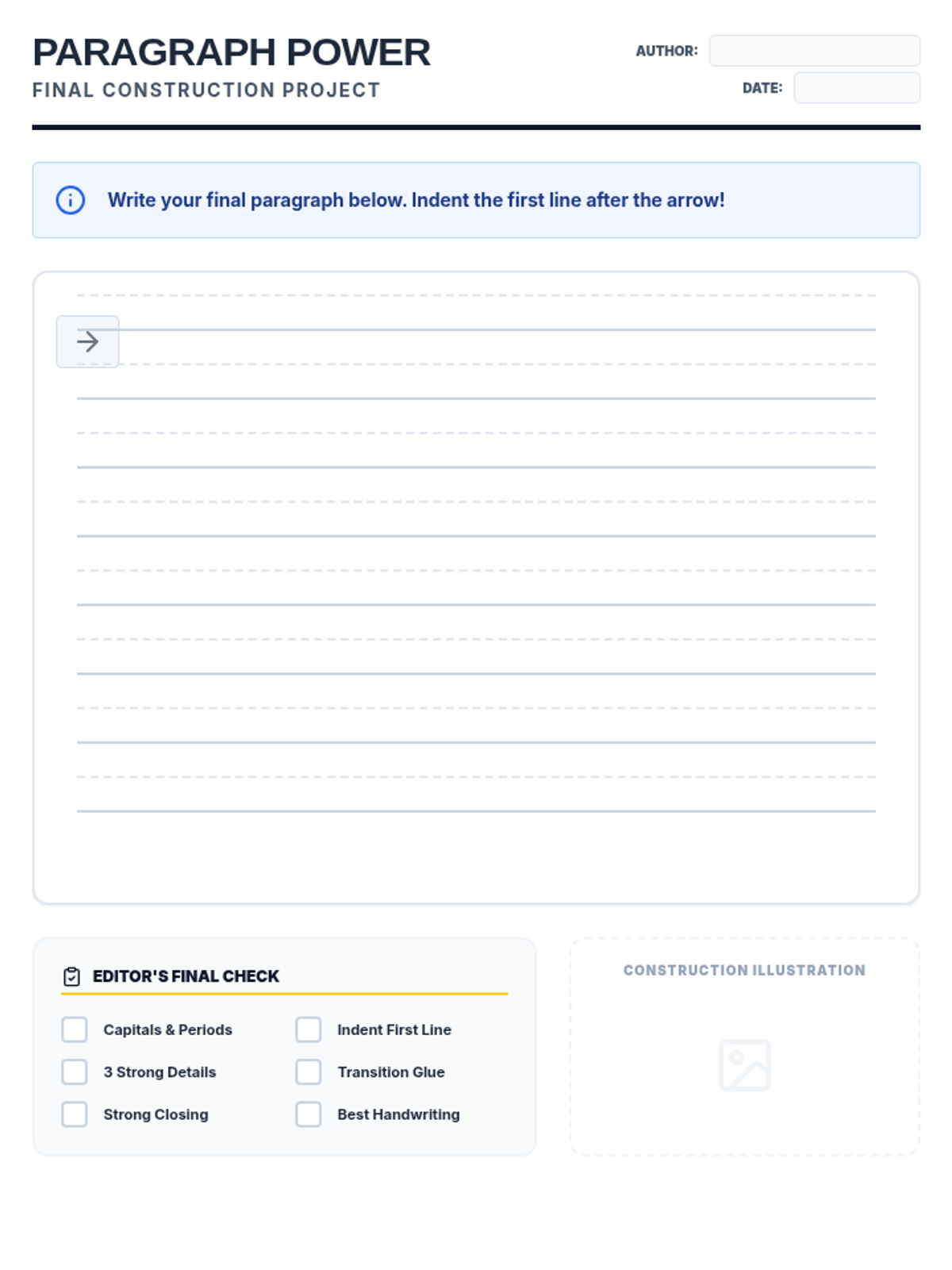
A final writing document for 2nd and 3rd-grade students to draft and 'publish' a complete paragraph. Provides a clean writing space with visual cues for indentation and a detailed 'Editor's Check' to support self-monitoring, a key skill for students with ADHD.
Consolidation slides for 2nd and 3rd-grade students, focusing on the final steps of paragraph construction: editing, using transition 'glue', and the physical layout of a paragraph (indentation). Ideally suited for students with ADHD who benefit from explicit, repeated structural checklists.
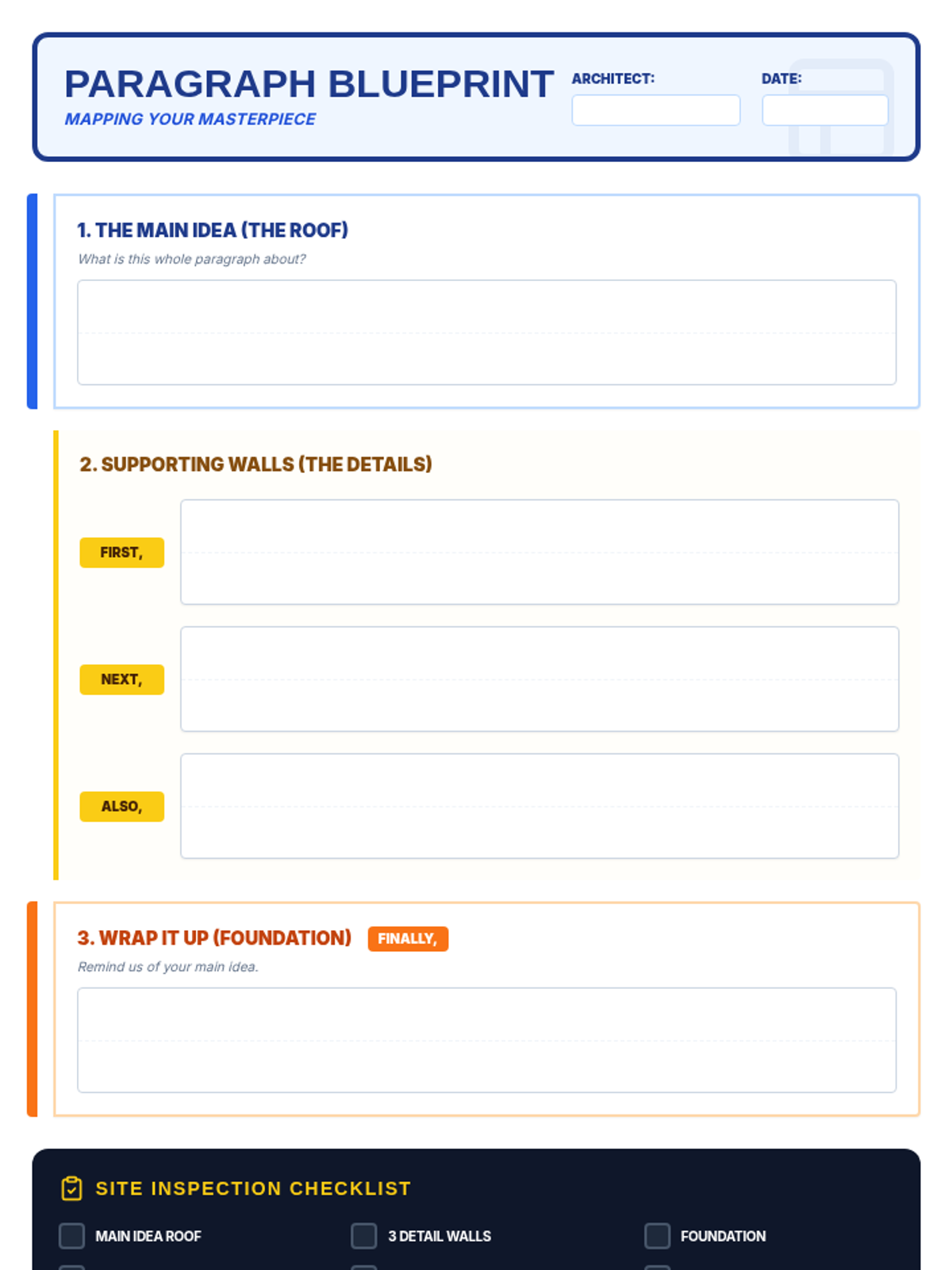
A structured worksheet for 2nd and 3rd-grade students to organize their thoughts into a paragraph. Uses visual scaffolding (blueprint roof, walls, foundation) and transition word prompts to support students with ADHD in sentence formulation and sequencing.
Presentation slides for 2nd and 3rd-grade students that visualize the structure of a paragraph. Uses a 'house' analogy (roof, walls, foundation) to help students with language organization difficulties understand how to group and sequence their sentences.
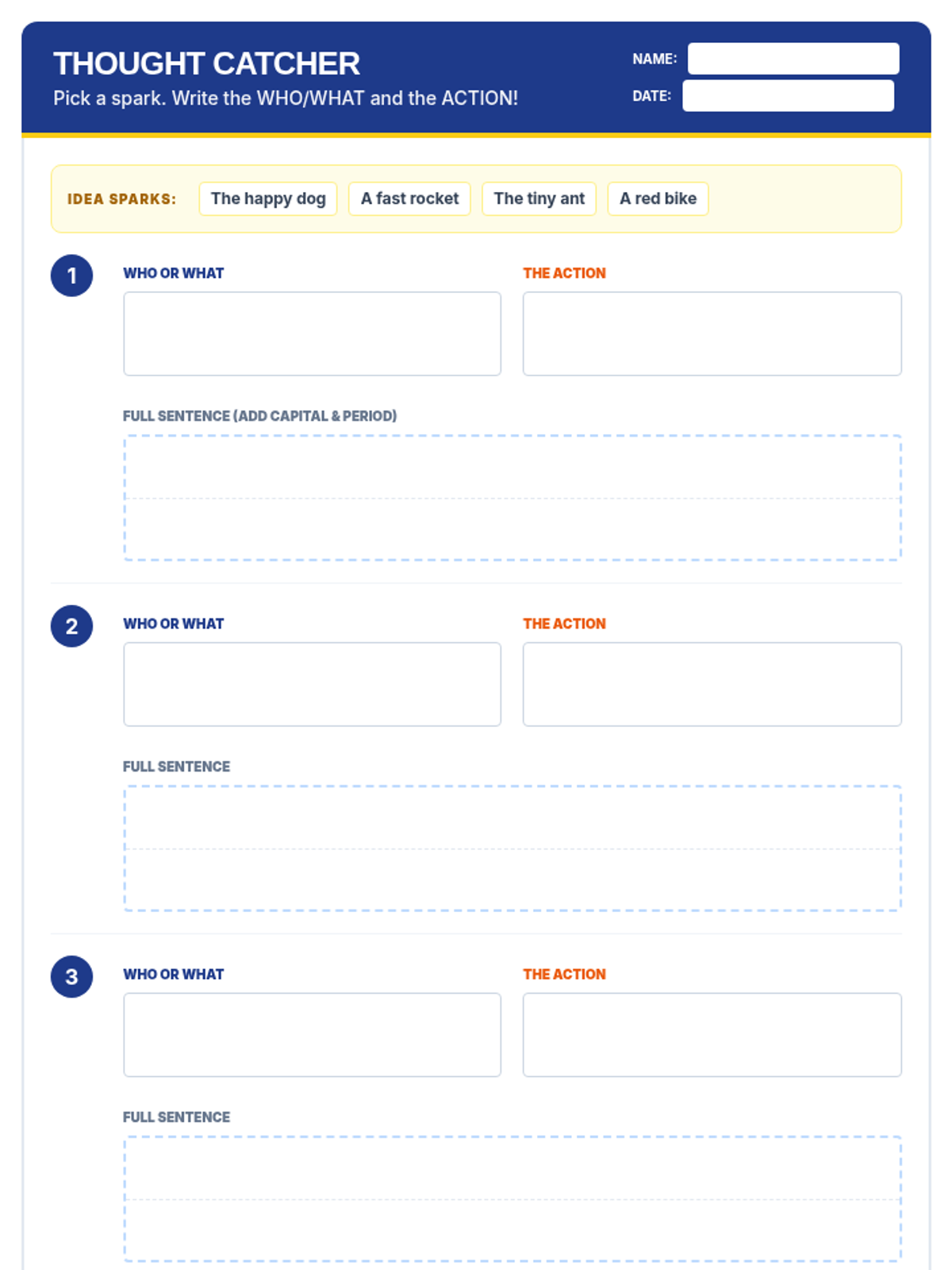
A graphic organizer for 2nd and 3rd-grade students to practice building complete sentences. Breaks the process down into discrete steps (subject and action) before combining them, providing a clear visual structure for students with ADHD.
Introductory slides for 2nd and 3rd-grade students focused on building complete sentences. Uses a blueprint theme with high visual contrast to help students with ADHD identify sentence components (subject and predicate).
A colorful presentation for introducing compound words with two closed syllables, using a construction theme to engage 2nd-grade students.
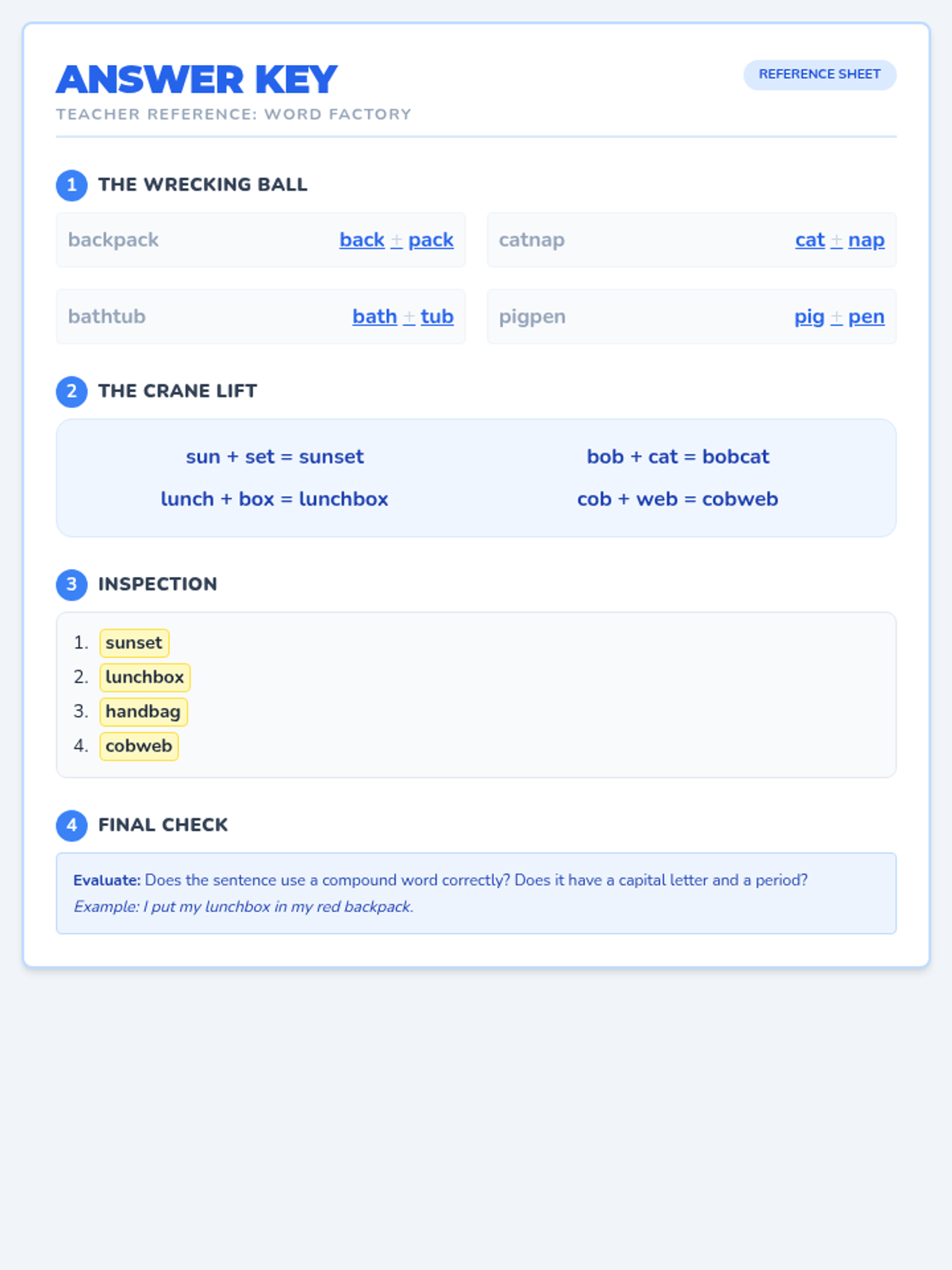
Teacher answer key for the Word Factory Worksheet, providing clear solutions and grading guidance for each activity. Updated to remove references to "bedbug".
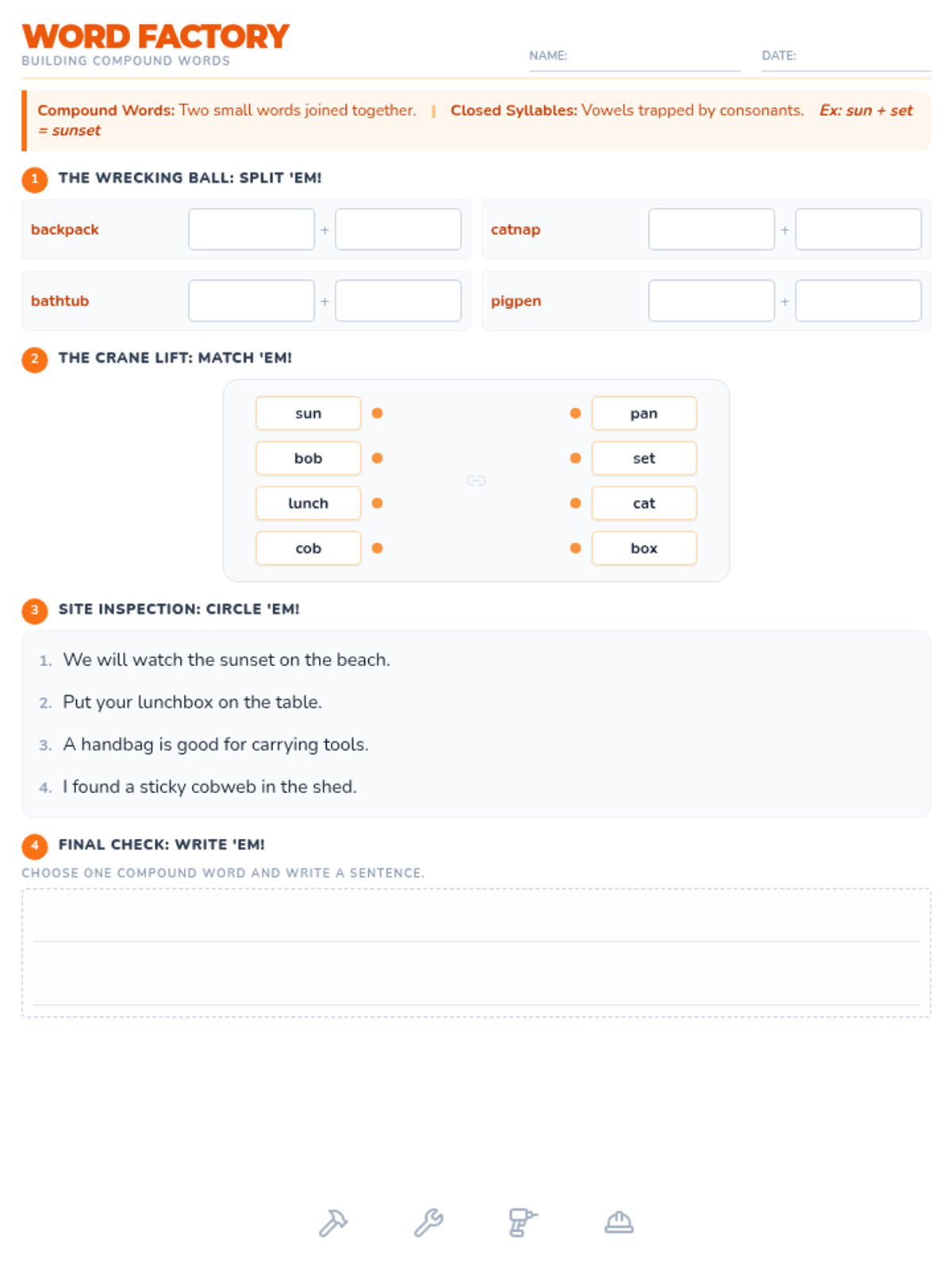
A student worksheet featuring multiple activities for practicing compound words with two closed syllables, including splitting, matching, and identifying words in context. Updated to remove references to "bedbug" and improve layout.
A vibrant introductory slide deck for the Spelling Quest lesson, featuring "Heart Word" visual cues, spelling rules, and a whole-class practice activity. Designed to build excitement and visual memory for irregular words. Includes icons for each word as requested. Unified branding and clear layout. Fixes slide 4 padding. Highlighting for 'friend' now consistently shows 'ie'. Better icon alignment.
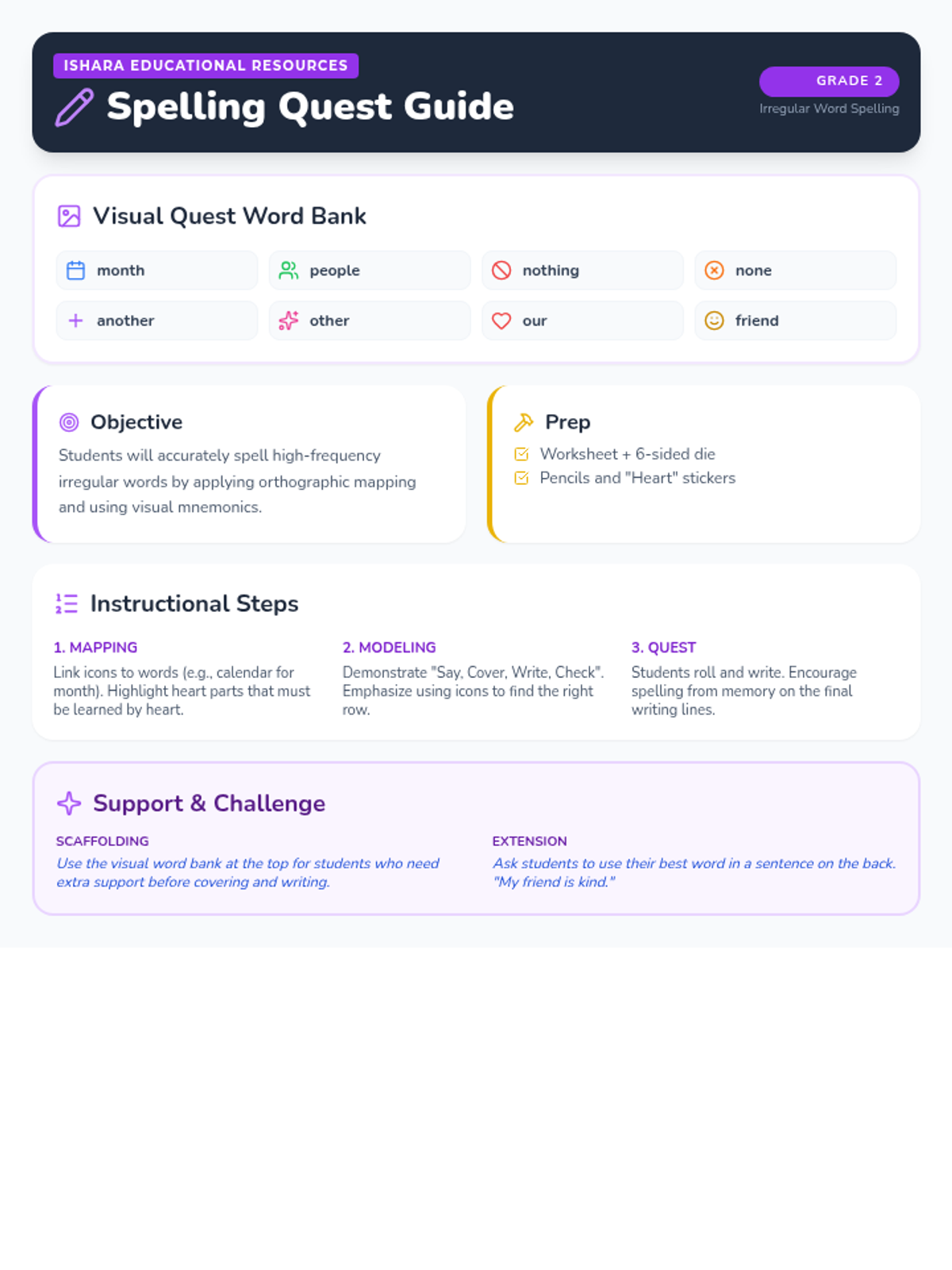
A detailed teacher guide for the Spelling Quest activity, focusing on orthographic mapping and heart-word strategies for 2nd-grade irregular words. Compacted to a single page with 'Ishara' branding. Includes visual word bank.
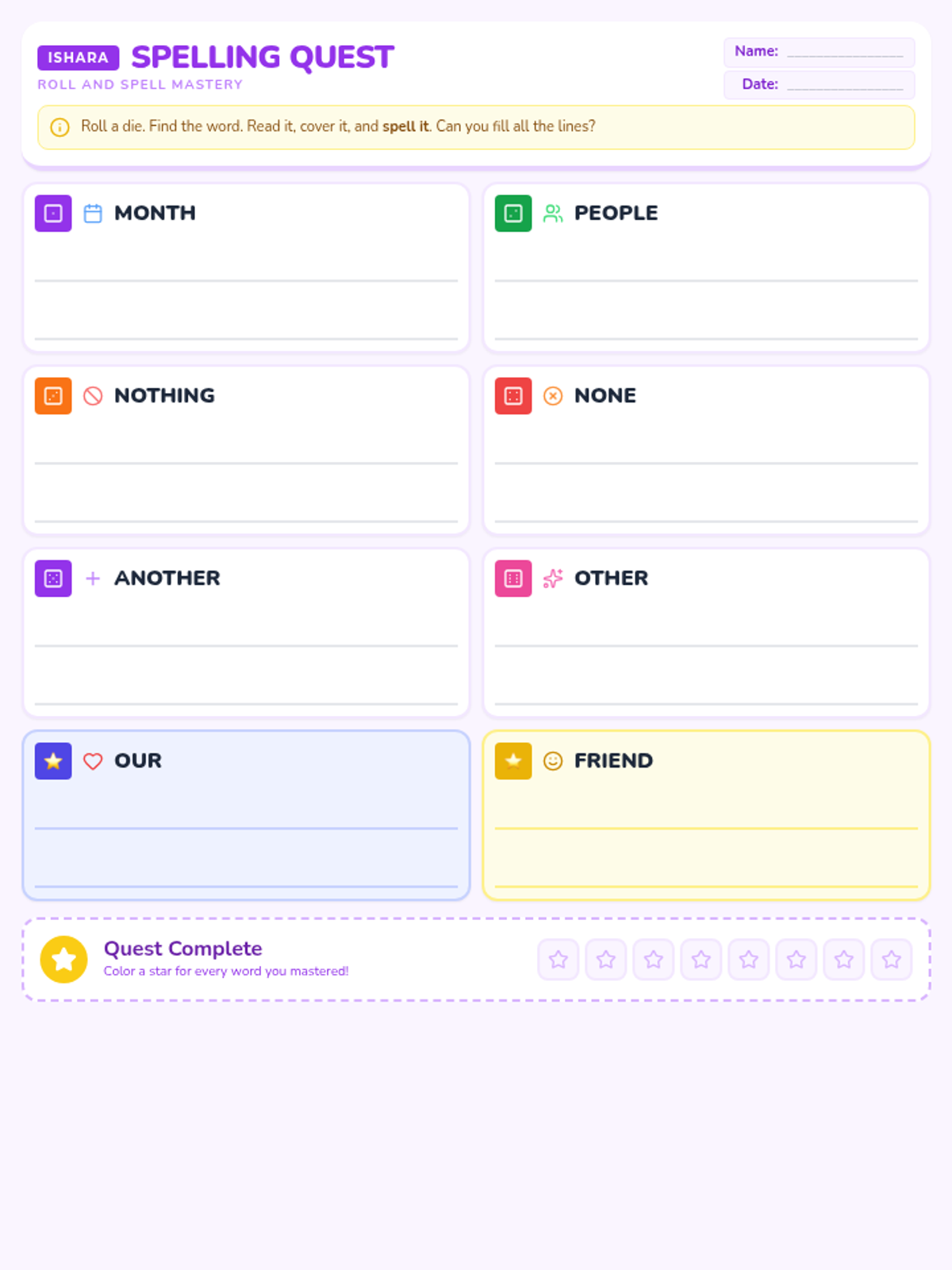
A high-energy, colorful Roll and Spell worksheet featuring 8 irregular words with writing lines and visual icons. Designed for 2nd-grade students to practice spelling through a repetitive gaming mechanic. Features 'Ishara' branding. Tightened layout to fit on one page. Darker writing lines for better legibility. Mastery section now consistent with stars.
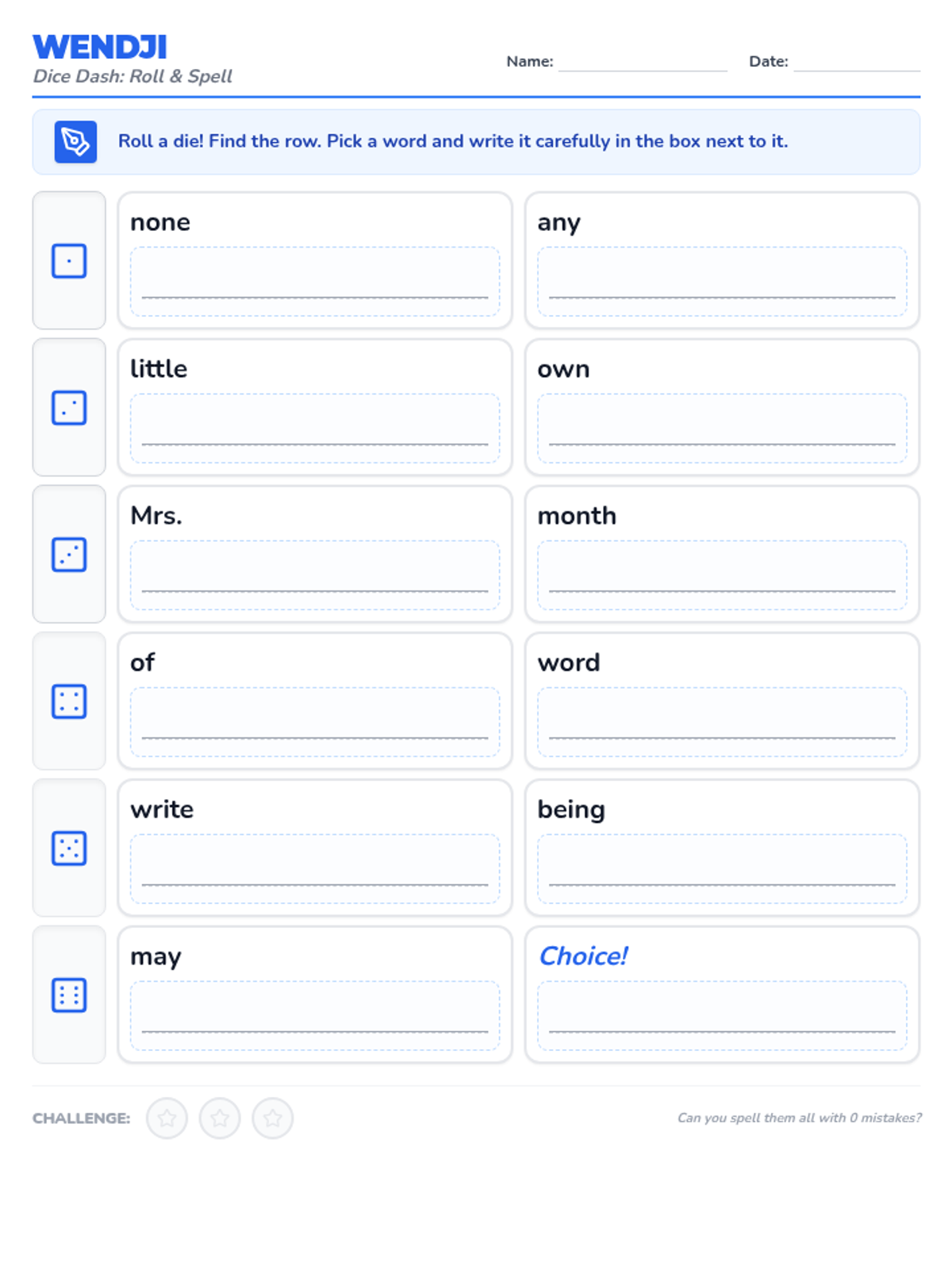
A printable Roll and Spell worksheet where students roll a die to select a row of high-frequency words and then practice spelling them in dedicated handwriting boxes.
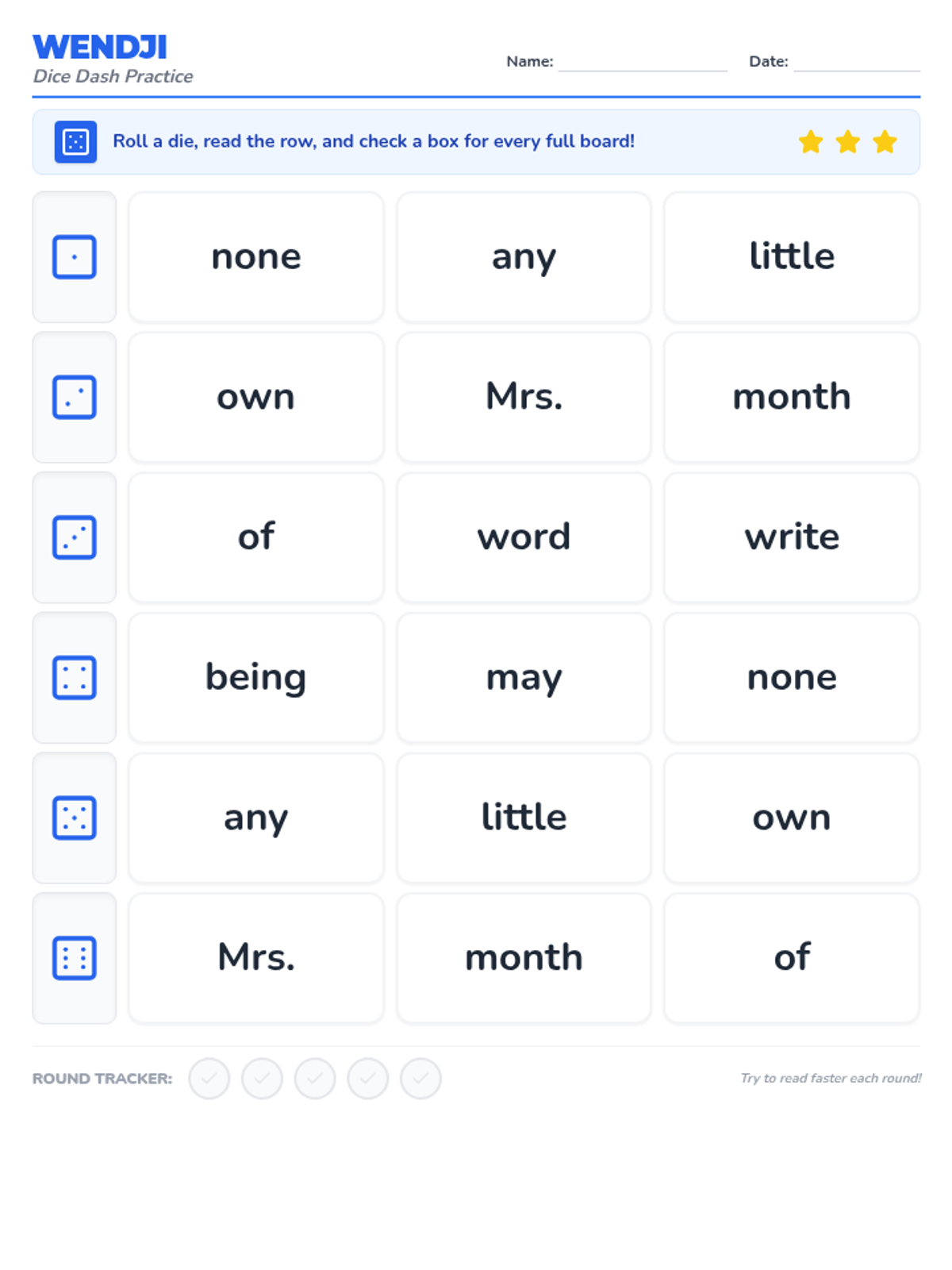
A printable Roll and Read worksheet featuring 11 specific high-frequency words for 2nd-grade reading practice. Includes large font and a dice-based game layout.
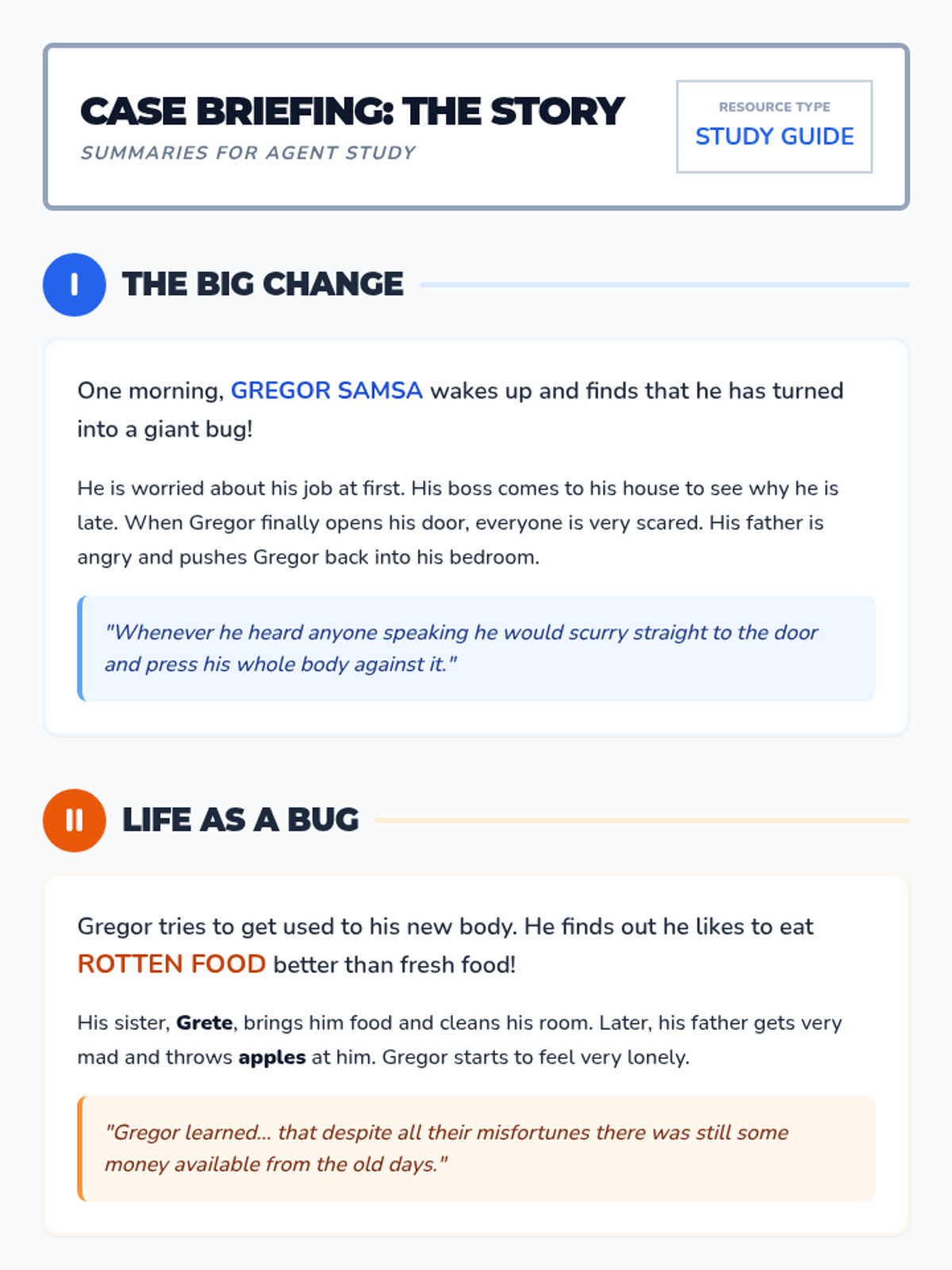
Simplified story summaries for Kafka's Metamorphosis, written at a 4th-grade reading level. Includes key quotes from each section to support textual evidence and character analysis. All emojis have been removed for a cleaner look.
A teacher's guide for the narrative-based 6-sentence TEXEXT lesson, including learning objectives, discussion prompts, a scoring rubric with Developing column, and full narrative references.