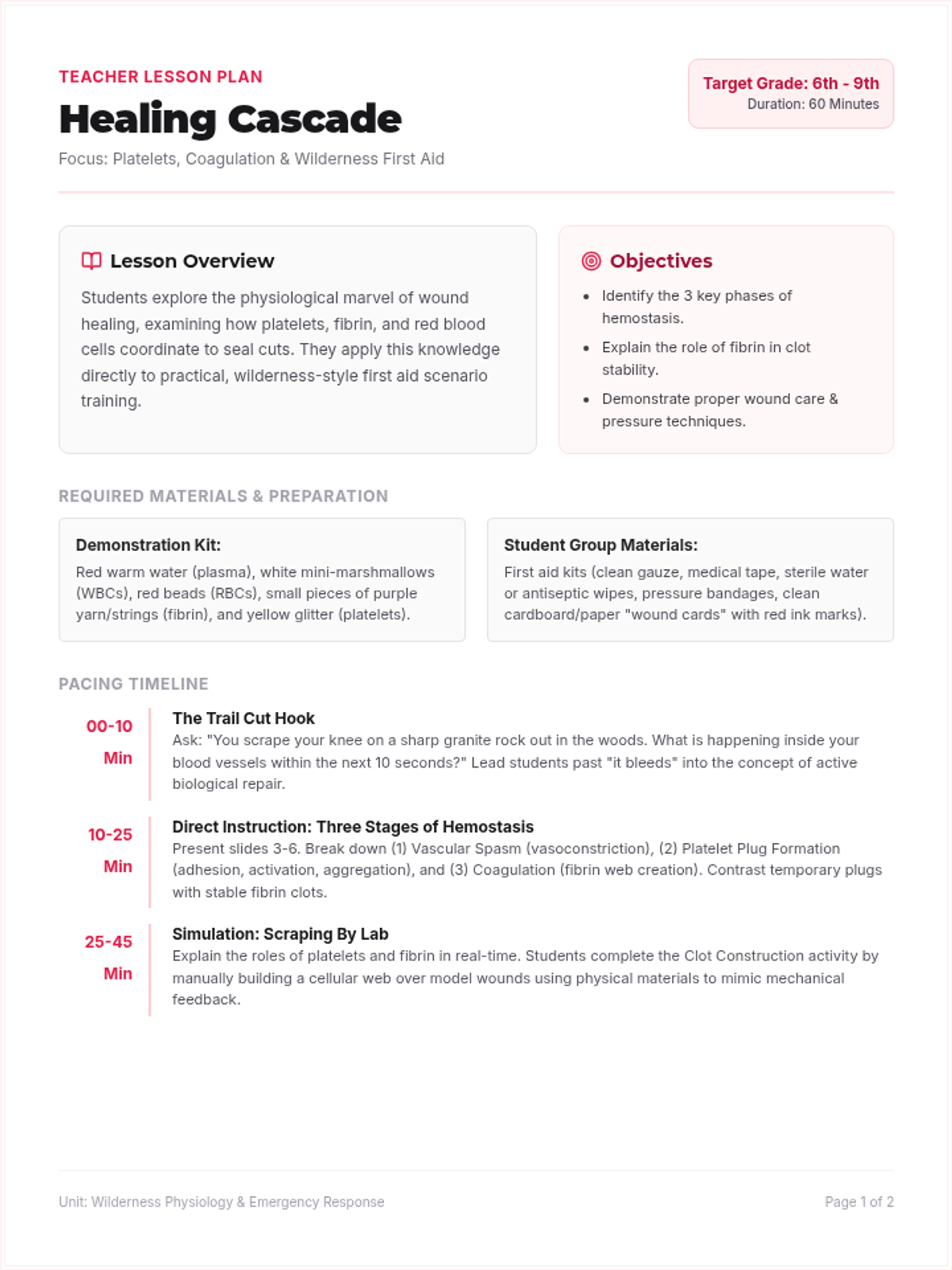
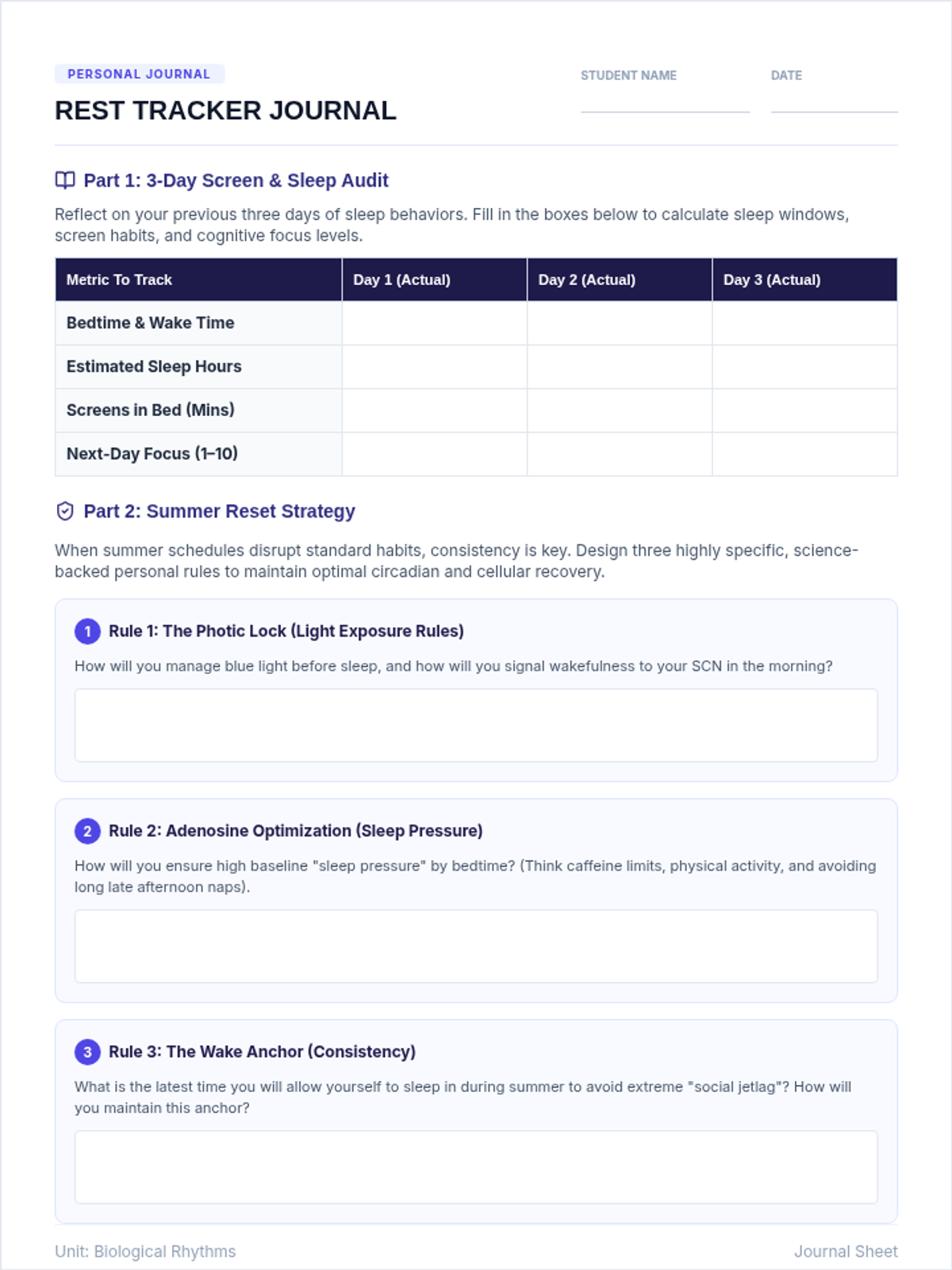
A teacher facilitation guide for Lesson 3, focusing on the social and defensive uses of light in nature, including discussion prompts and a classroom activity guide.
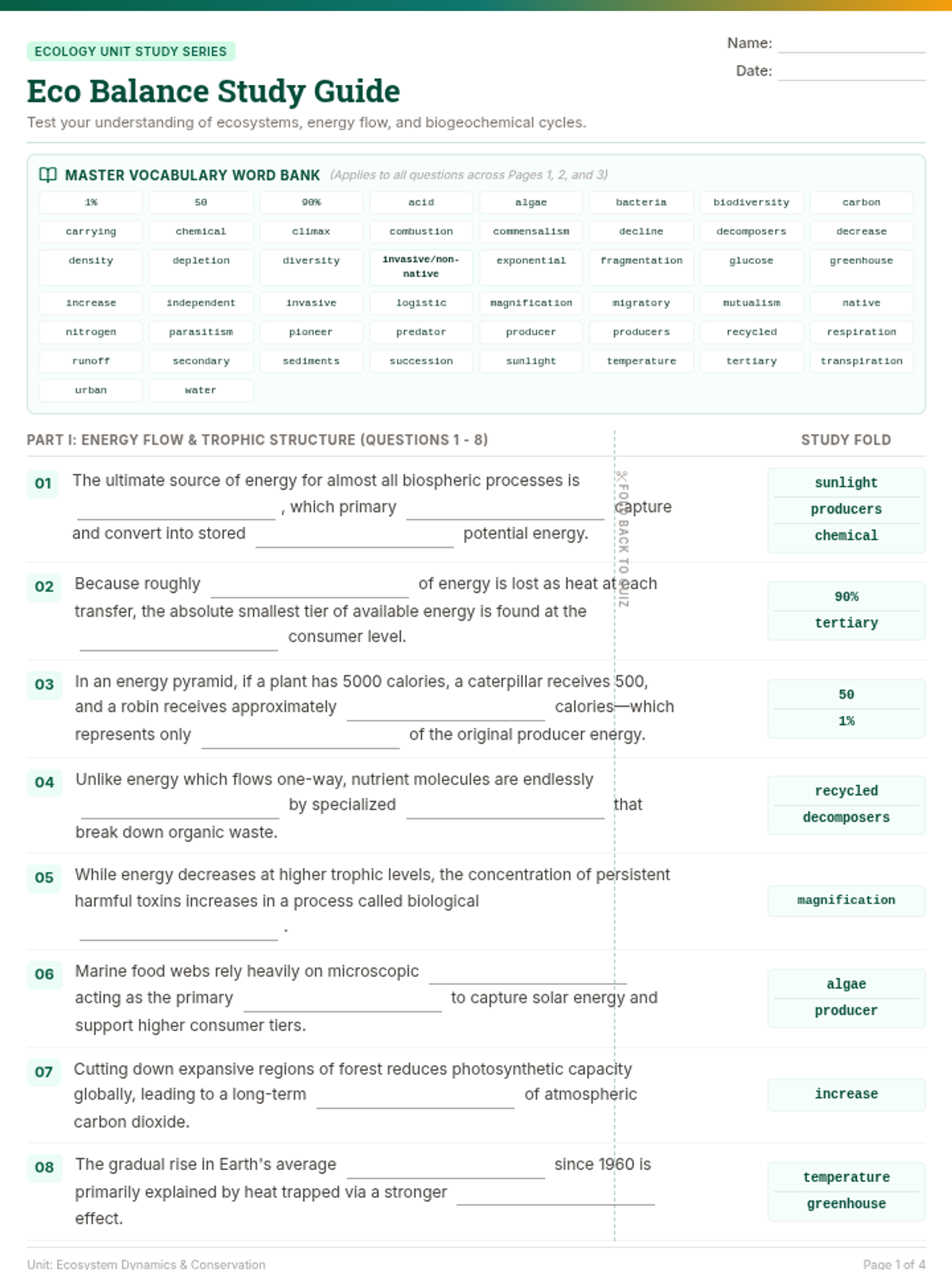
A multi-grade collection of scientific reading comprehension and response booklets designed to build disciplinary literacy in Earth, Life, and Physical sciences across elementary and middle school levels.
An interactive STEM lesson where students apply concepts of force, motion, gravity, and energy to design their own safe, high-thrill playground. Students analyze playground equipment physics and present their engineered blueprints.
A 5th-grade reading passage and worksheet that teaches the differences between scientific observations and inferences through nature-based examples. Includes comprehension questions and an active sorting challenge.
An action-packed, hands-on 8-day 4-H camp program focusing on Head, Heart, Hands, and Health. Students tackle engineering, teamwork, ecology, nutrition, and art challenges through daily active learning.
A lesson where students in grades 3 to 5 design paper-prototype arcade games, playtest them, and practice debugging loops and logic rules using constructive feedback.
A 1-page structured assessment rubric grading physics concepts, engineering blueprint accuracy, and team pitches.
A comprehensive high school physics curriculum sequence aligned with the Connecticut Next Generation Science Standards (CT-NGSS), focusing on core concepts, quantitative problem-solving, and visual models.
A hands-on physical simulation lesson where 4th and 5th graders act as computer processors and memory, using physical boxes as 'treasure chests' (variables) to learn how variables store, reference, and update values.
A 2-page hands-on student activity worksheet. Page 1 guides students through calculating forces and energy of swings, slides, and see-saws. Page 2 provides a blueprint drafting grid for sketching their ultimate playground.
A year-long, self-paced entrepreneurship curriculum spanning September to May for alternative education students in work-study placements. Students transform real-world work experience into a modular business plan and slide presentation.
A hands-on, kinesthetic lesson where fourth and fifth-grade students physically act out bubble sort and merge sort algorithms to understand how computers organize data and compare step-by-step efficiency.
A visually striking engineering blueprint themed presentation deck mapping out playground physics, potential/kinetic energy, sliding friction, torque, and instructions for the group activity.