Planning document for the facilitation practicum, requiring students to architect a 5-minute movement session with somatic anchors and safety audits.
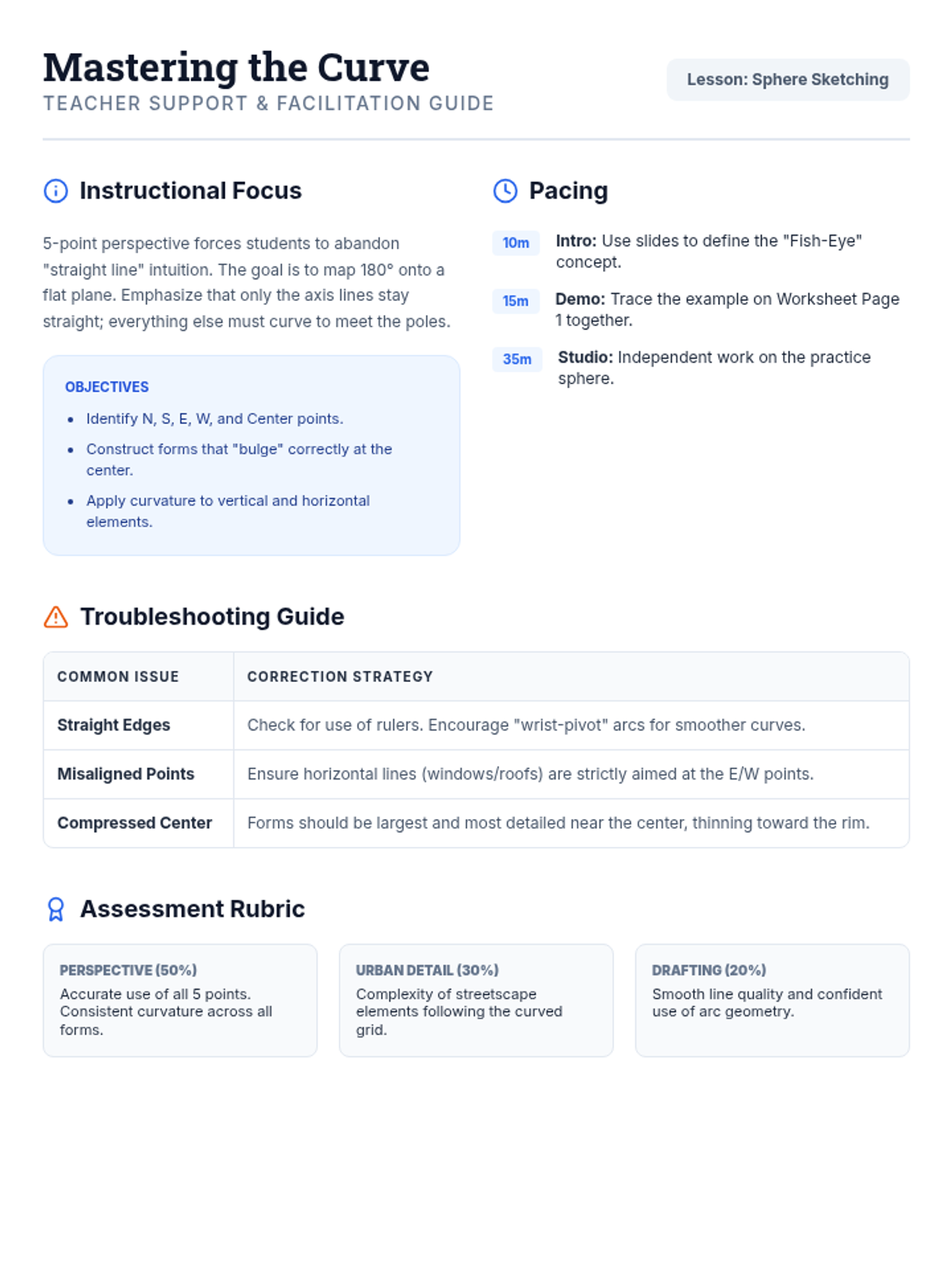
Teacher-facing guide for facilitating the 5-point perspective lesson. Includes instructional objectives, a detailed pacing guide, common student mistakes with suggested fixes, and a clear assessment rubric for evaluating curvilinear sketches.
Visual presentation slides covering the core concepts of 5-point perspective. Includes clear diagrams of the five vanishing points, explanations of the "fish-eye" effect, and specific rules for drawing urban architectural features like skyscrapers and streets on a curved grid.
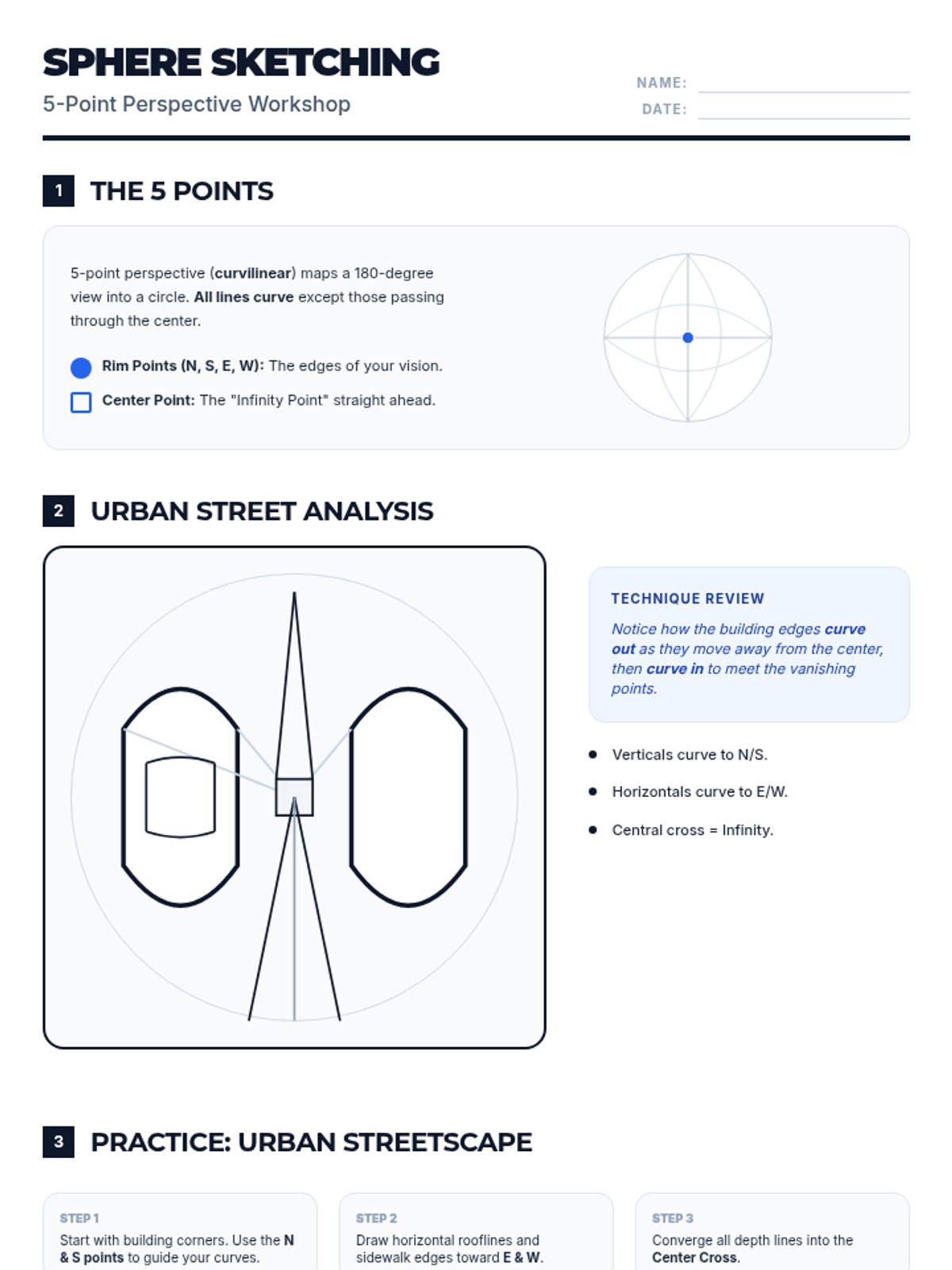
A comprehensive 2-page worksheet for mastering 5-point perspective. Includes a detailed visual guide on curvilinear points, a worked urban city street example for analysis, and a full-page practice area with a pre-formatted spherical grid for student sketching.
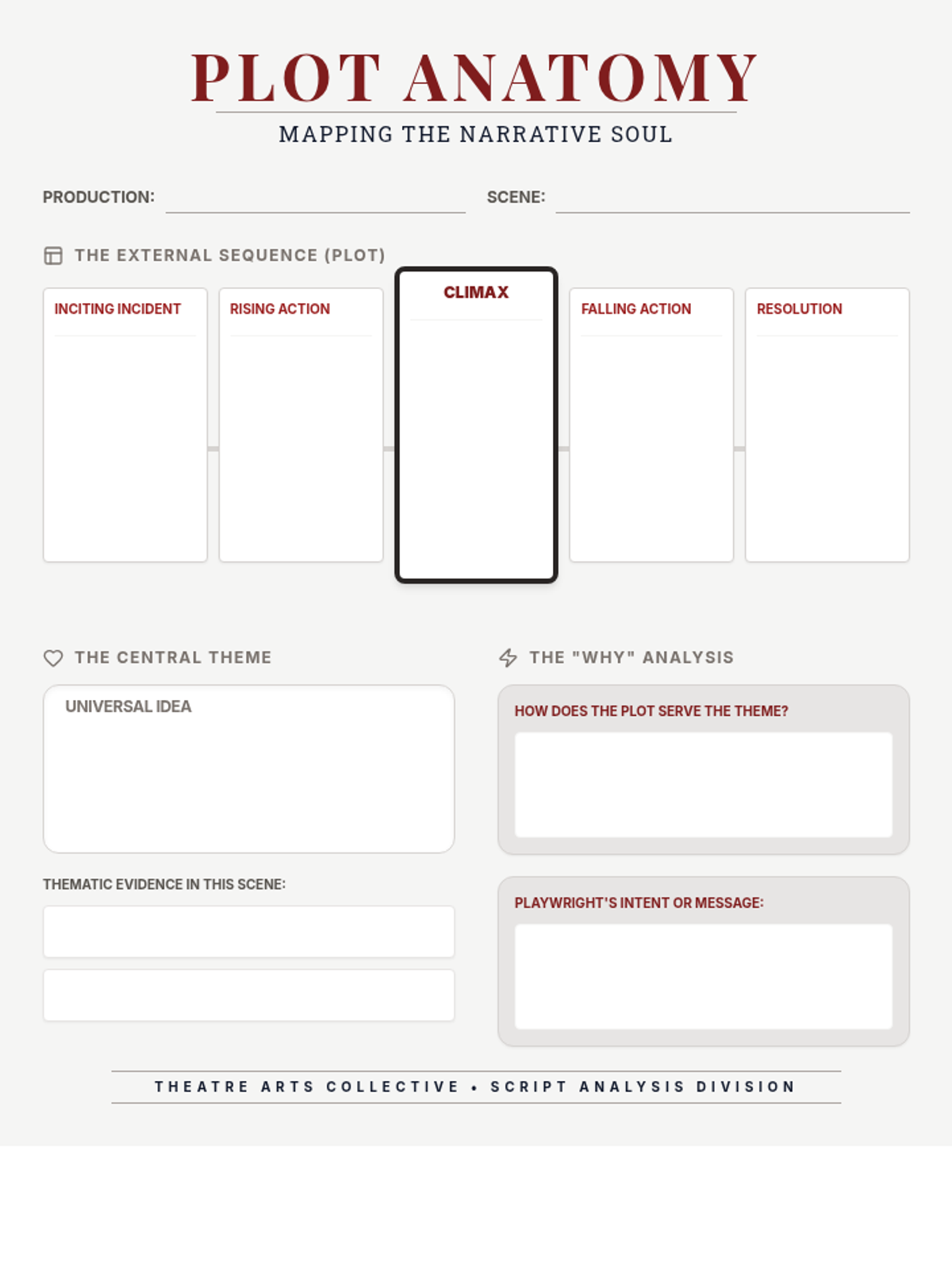
A graphic organizer for theatre students to bridge the gap between plot (what happens) and theme (what it means). Features a narrative arc skeleton and dedicated space for thematic evidence and 'why' analysis.
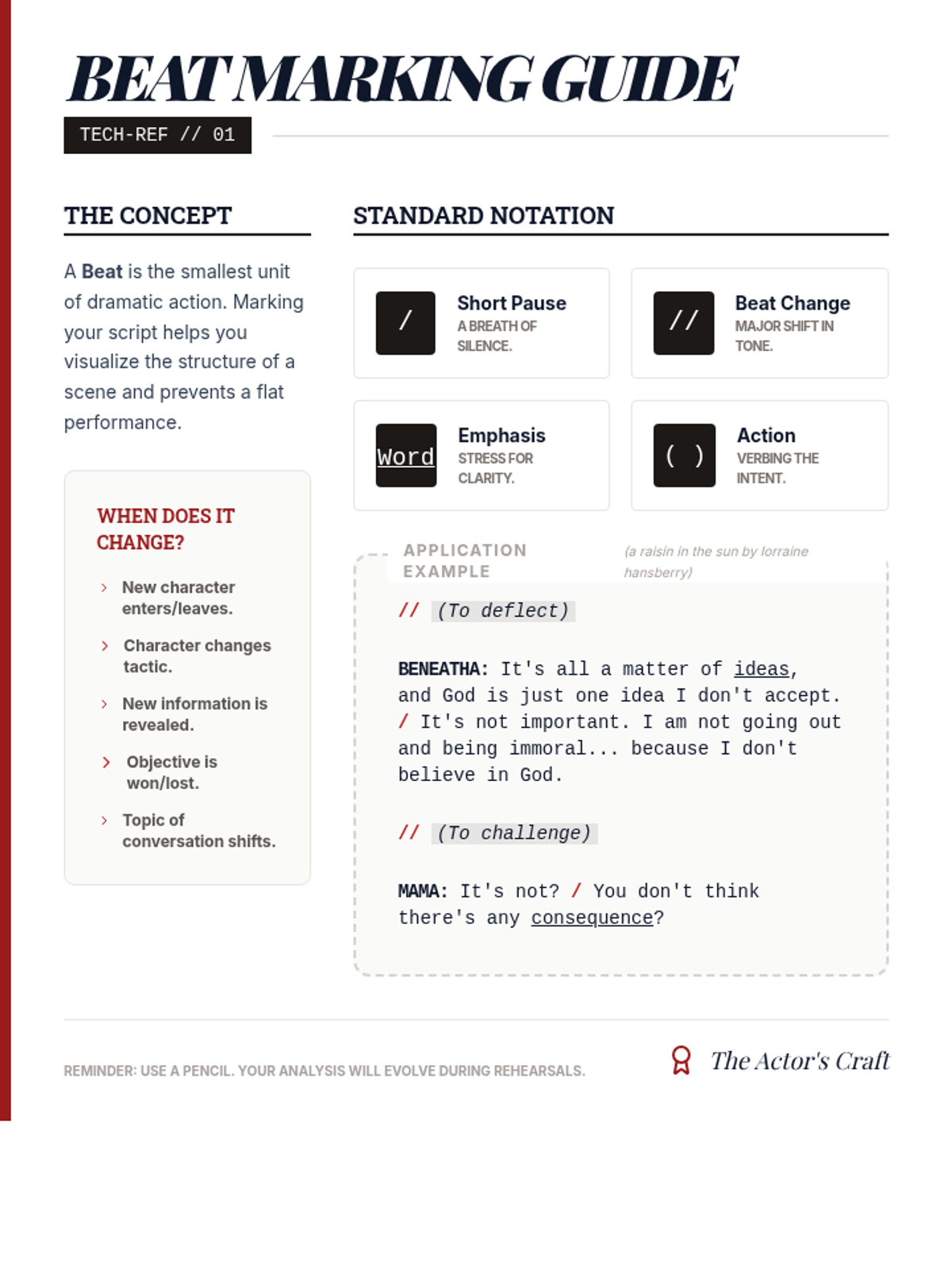
A technical reference sheet for theatre students explaining script notation symbols and the concept of 'beats'. Includes standard symbols for pauses, emphasis, and tactical shifts with a practical example.
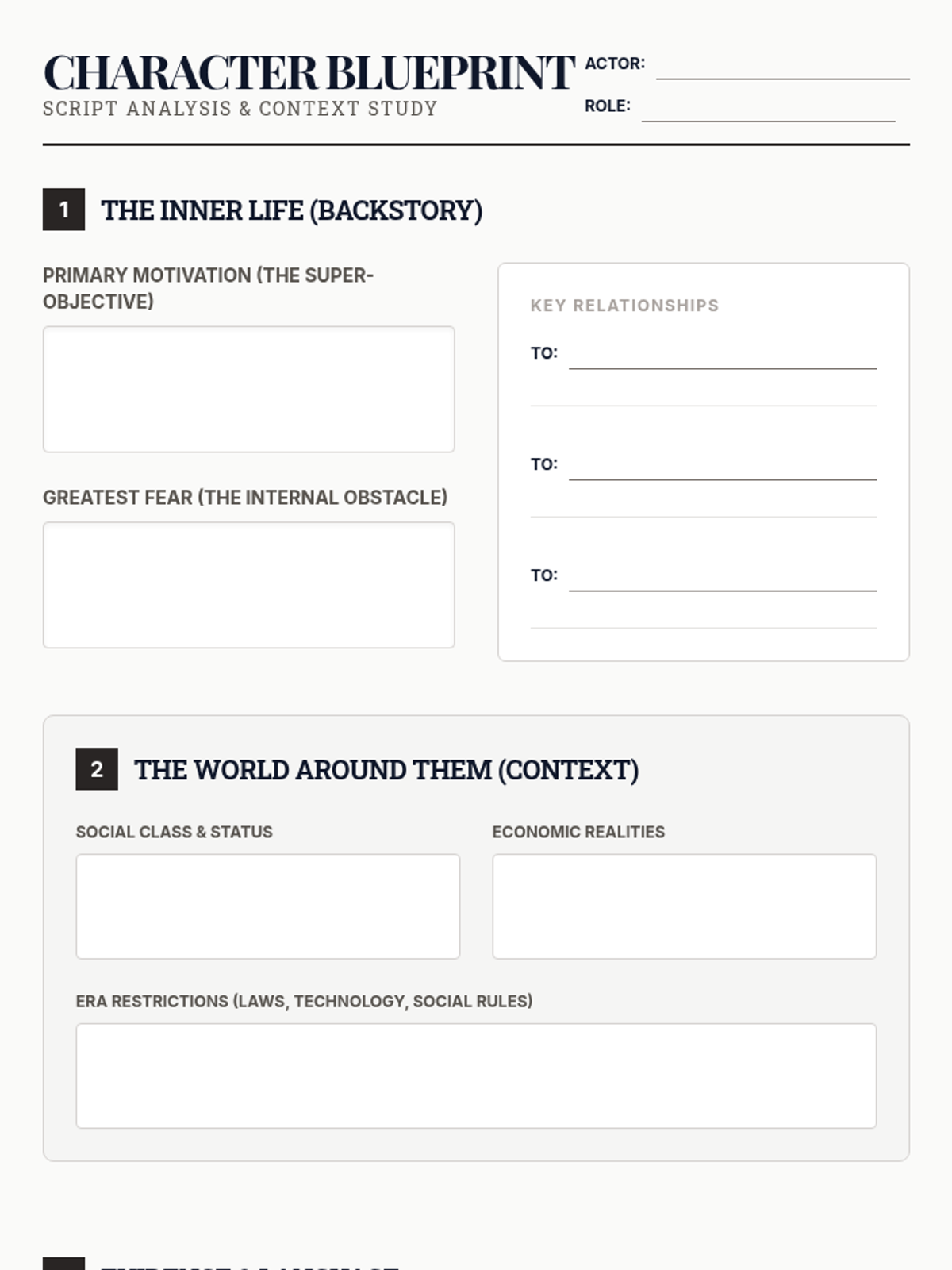
A character analysis worksheet for theatre students to develop deep backstories, explore historical context, and cite script evidence for their roles during the table work phase.
A visual guide for theatre students introducing the concepts of table work, plot versus theme, historical context, and the technical skill of beat marking. Includes vocabulary definitions and discussion prompts for script analysis.
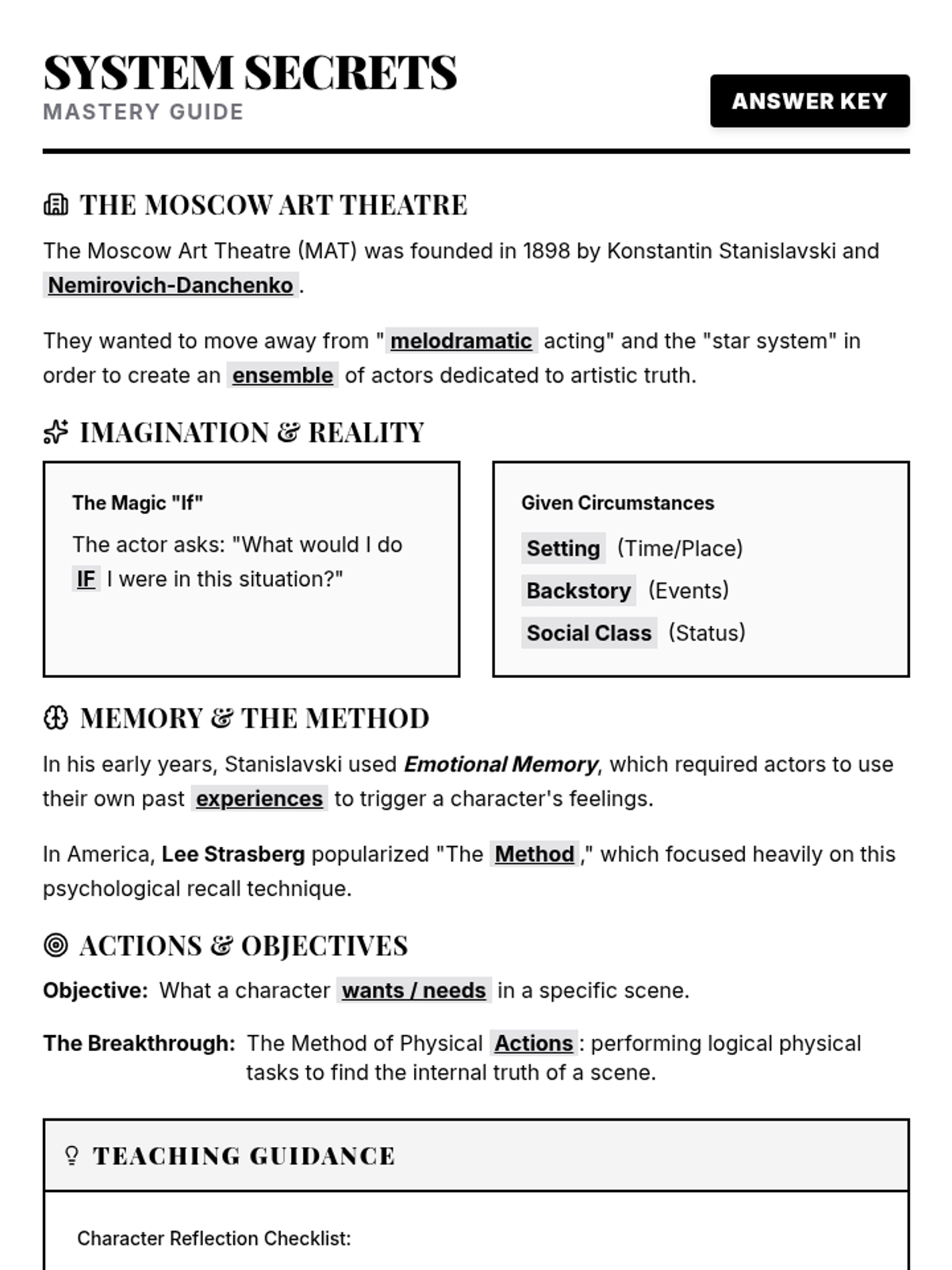
A high-contrast, black and white optimized version of the Stanislavski answer key, matching the student worksheet for consistency.
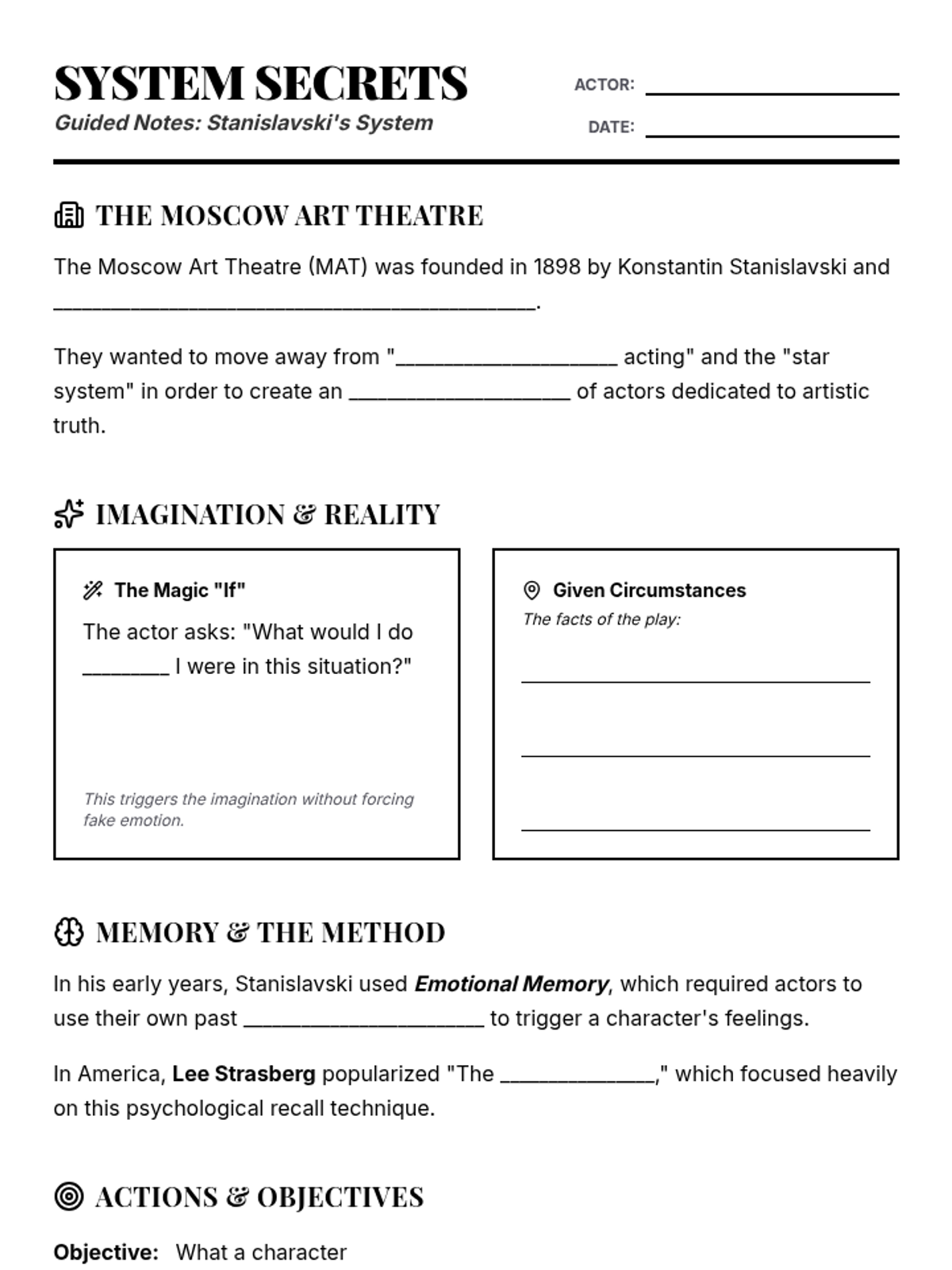
A high-contrast, black and white optimized version of the Stanislavski guided notes worksheet, ideal for printing and student use.
A visually striking slideshow covering the Moscow Art Theatre, the Magic If, Given Circumstances, and the evolution from Emotional Memory to Physical Actions in Stanislavski's System.
A high-fidelity visual mockup of the final bulletin board design, featuring a layered black background, rainbow piano key borders, 3D-styled typography, and diverse musician illustrations with detailed cultural clothing patterns.
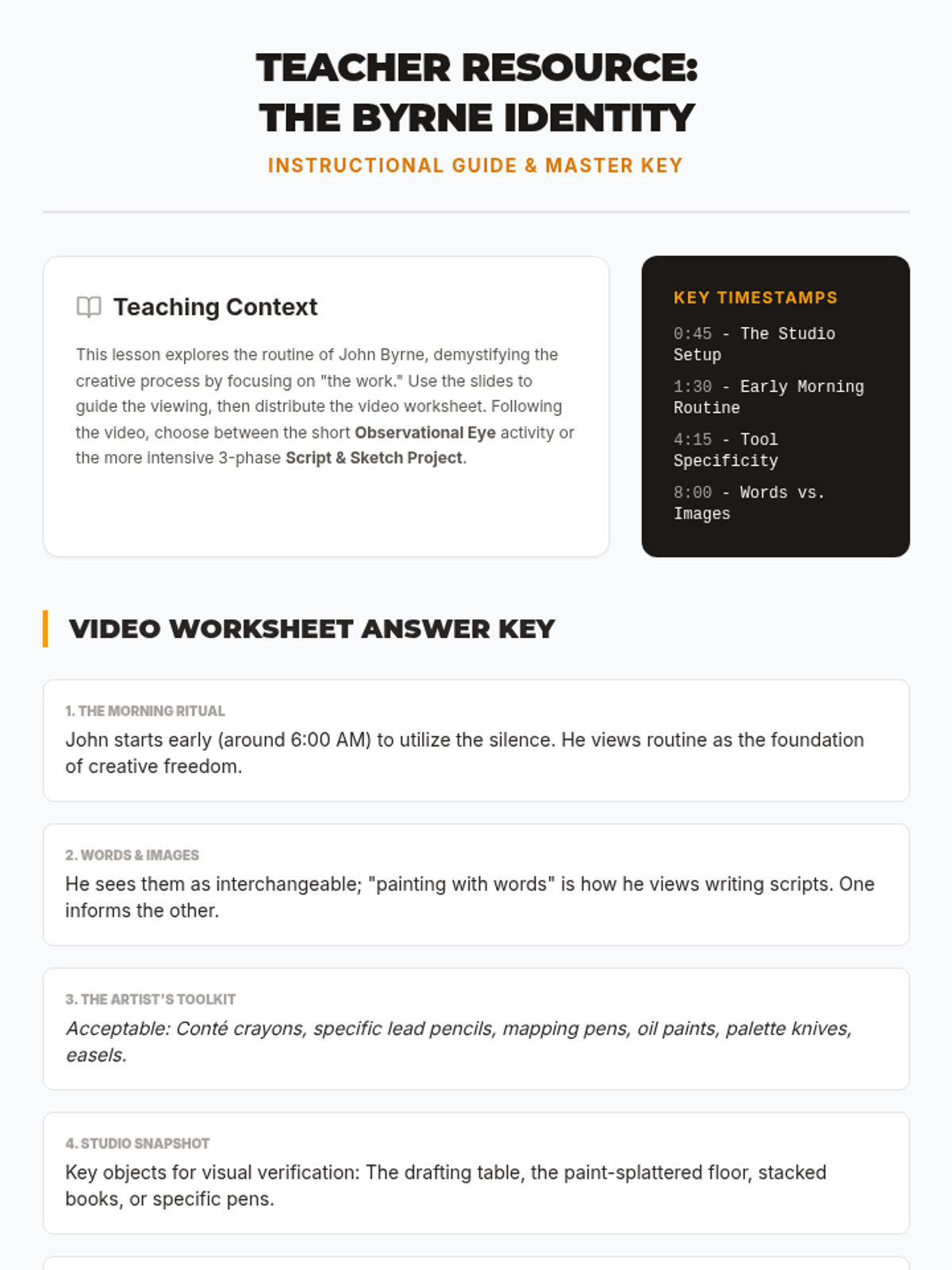
Teacher's guide for the John Byrne lesson. Includes timestamped highlights, answer key for the video worksheet, and instructional tips for the expanded Script & Sketch Story Project.
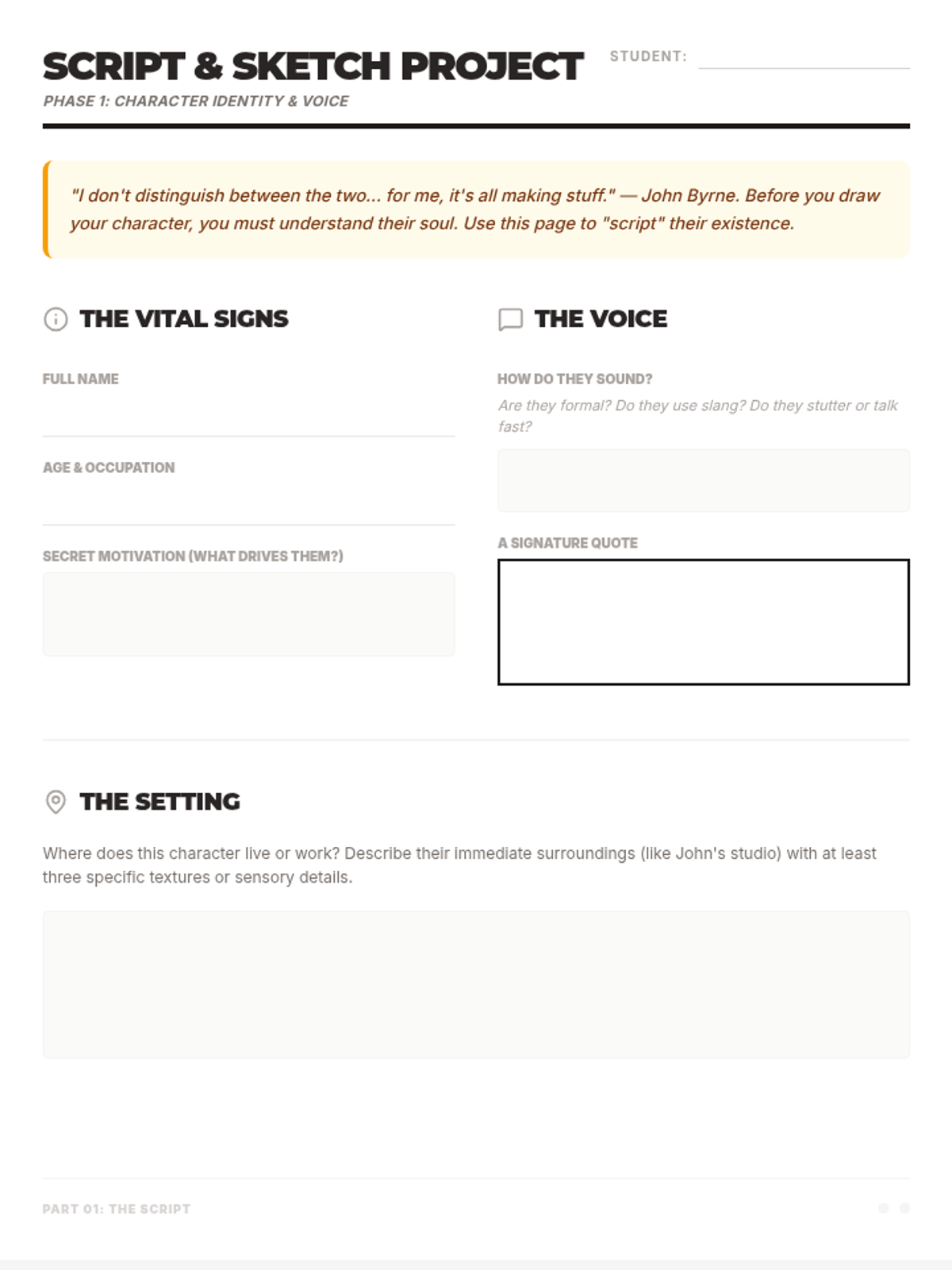
An expanded character-building project that spans three phases: identity/scripting, visual anatomy/sketching, and a short story/narrative scene. Inspired by John Byrne's multidisciplinary career.
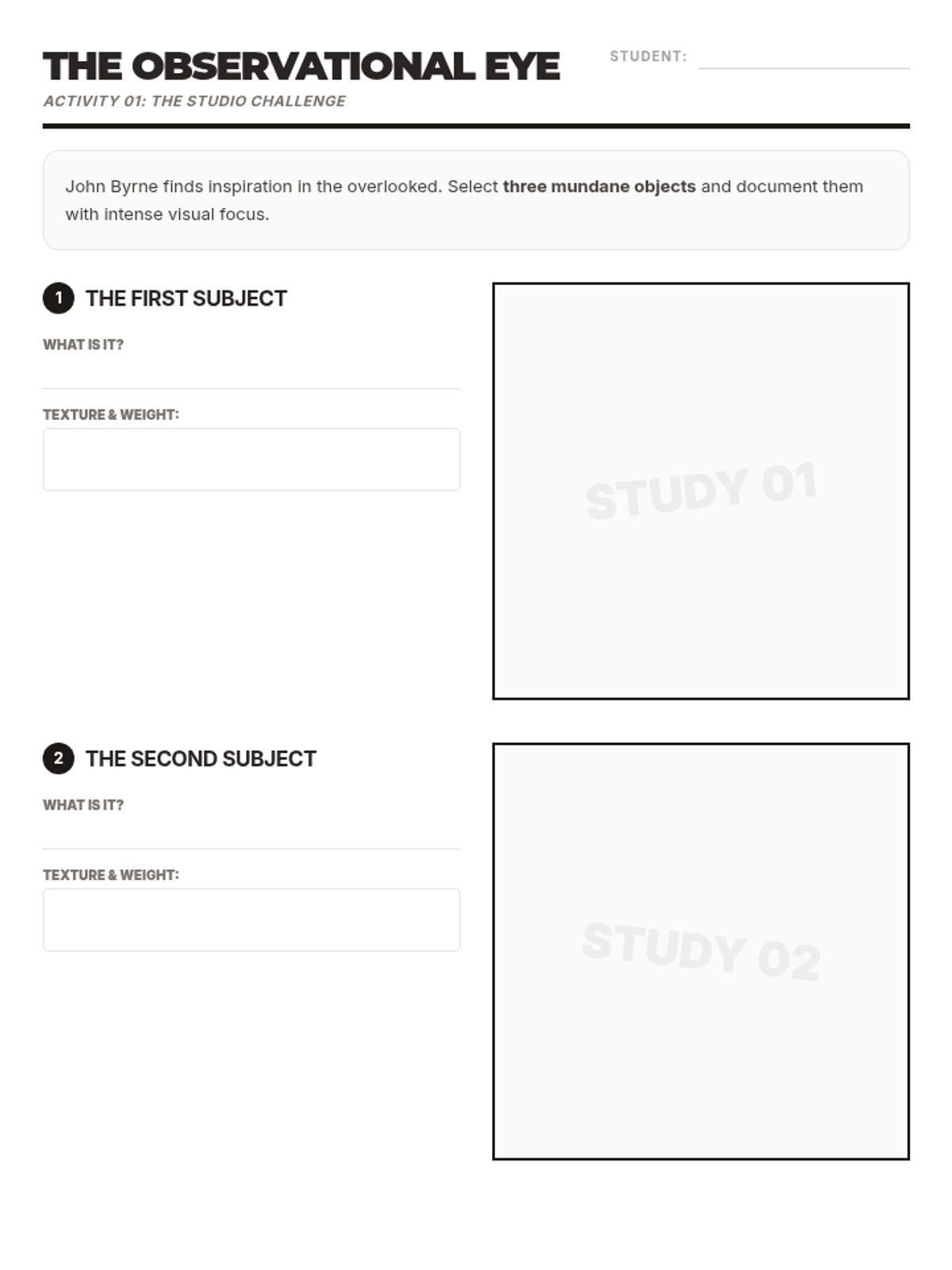
A sketching activity focused on observation and detail, encouraging students to draw and describe three mundane objects. Corrected for a clean 2-page flow.
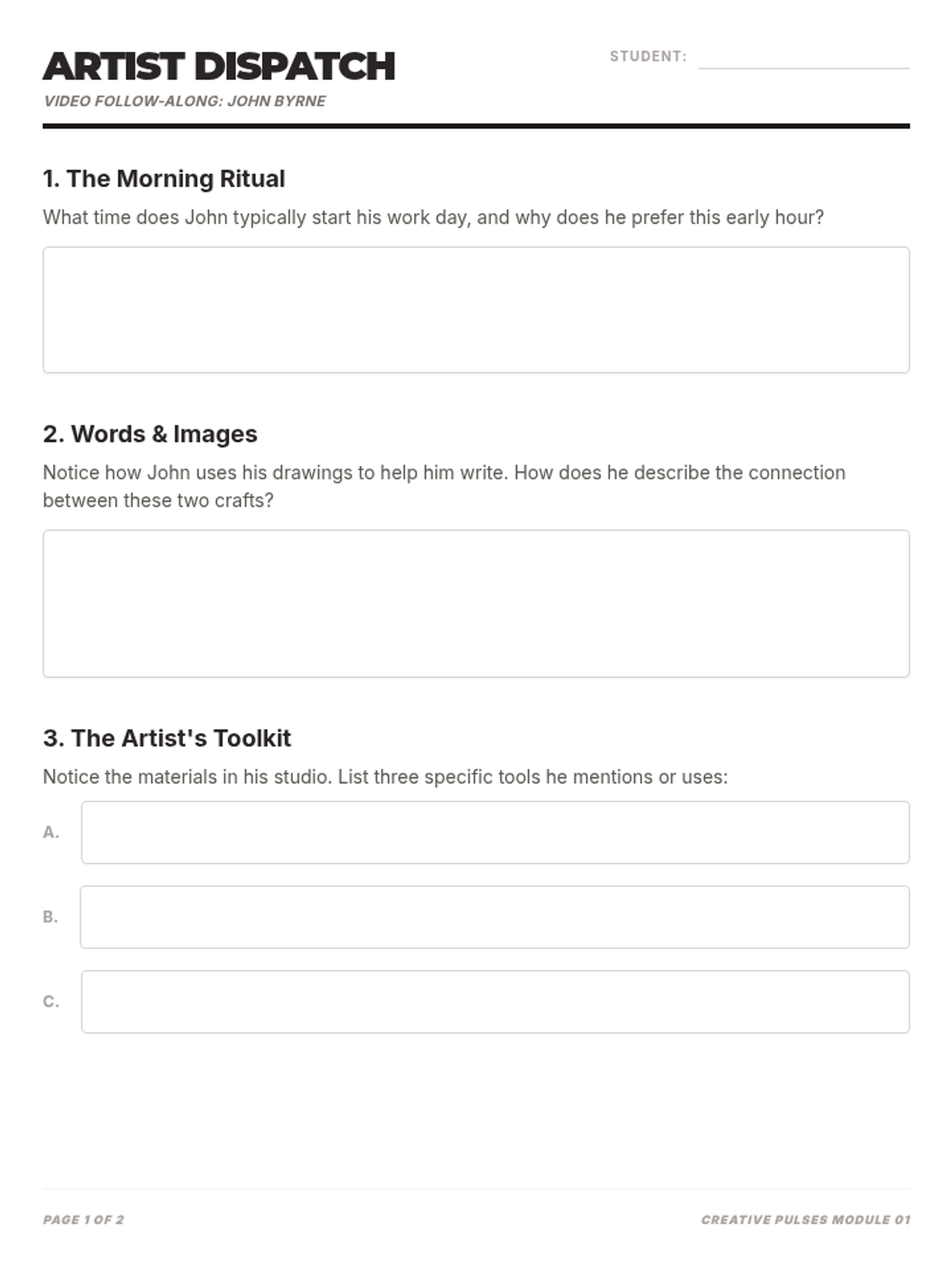
A two-page follow-along worksheet for the John Byrne documentary. Question #4 and #5 are moved to the second page to allow for a larger sketch area. Revised for footer consistency and watermark clarity.
A presentation slide deck introducing John Byrne, his work as a painter and playwright, and embedding the documentary for classroom viewing.
An 8-slide presentation for Chapter 3 of Treasure Island, covering character introductions of Long John Silver and Captain Smollett, nautical vocabulary, key plot points in Bristol, and thematic discussion questions. Designed with a bold maritime aesthetic.
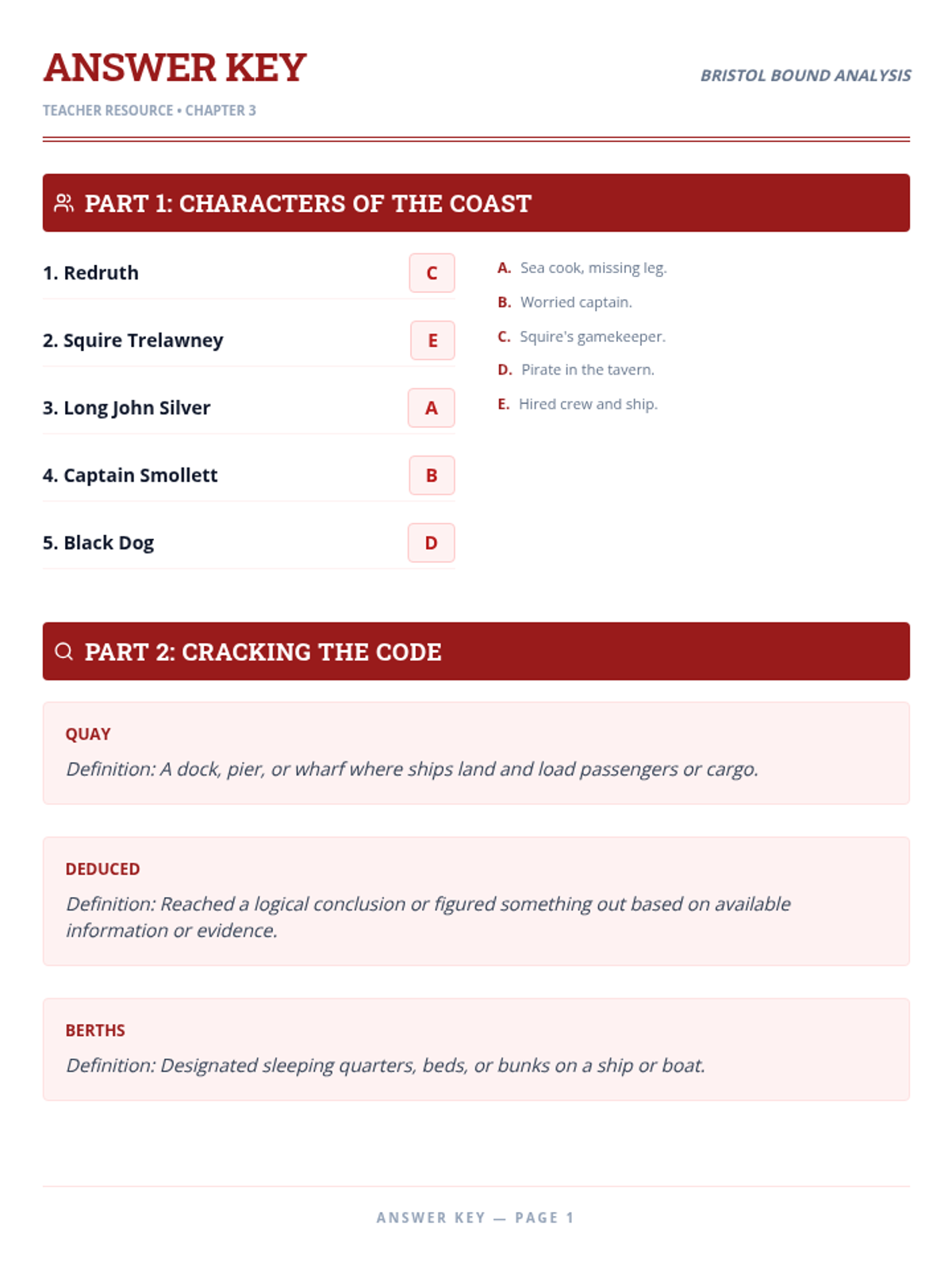
A 2-page answer key for the revised Bristol Bound Worksheet, providing correct matches, definitions, and comprehension answers for Chapter 3 of Treasure Island.
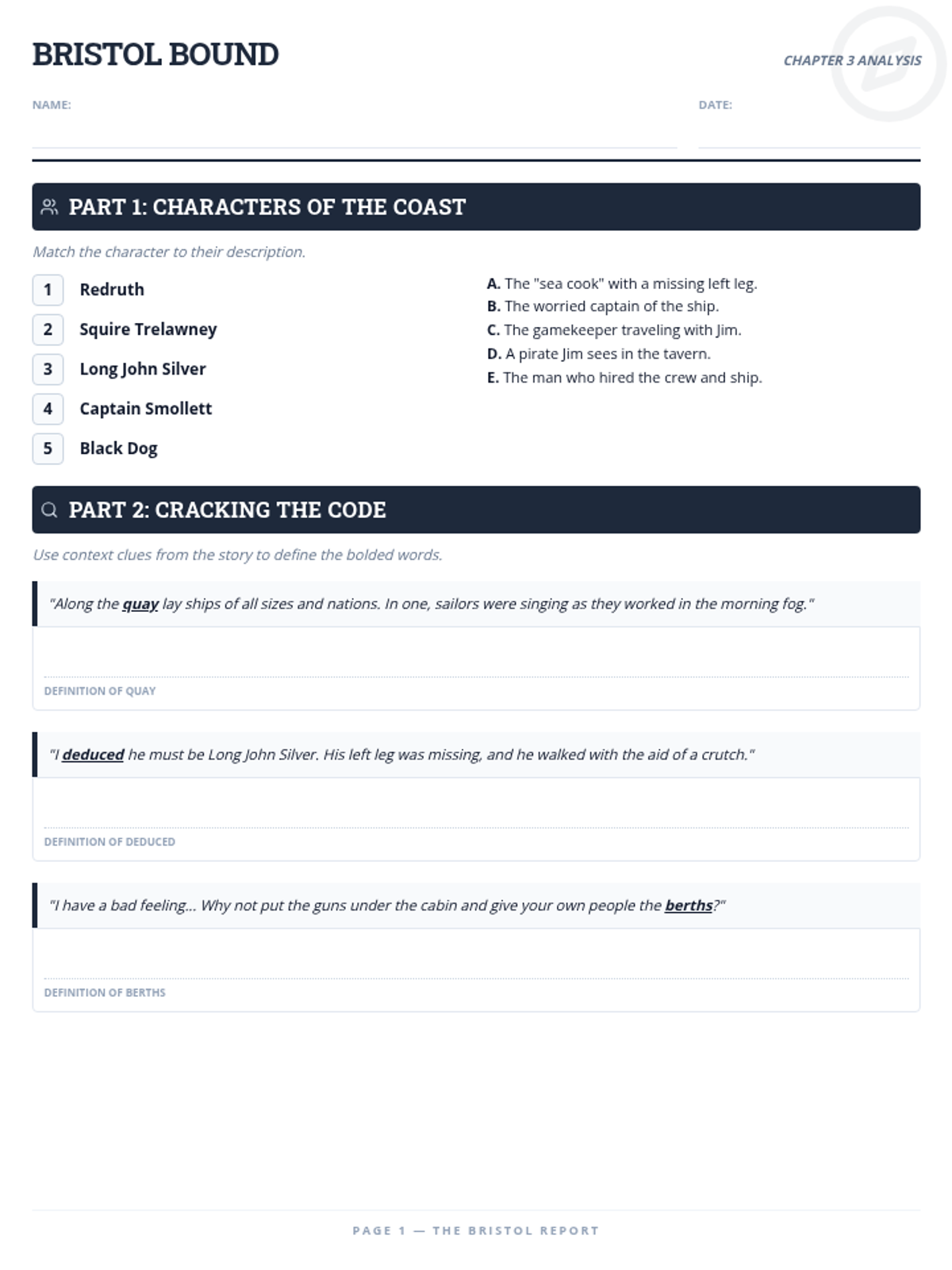
A revised 2-page student worksheet for Chapter 3 of Treasure Island, featuring character matching, context clue vocabulary exercises, true/false comprehension, and nautical terminology. Redesigned to fix page break and layout issues.
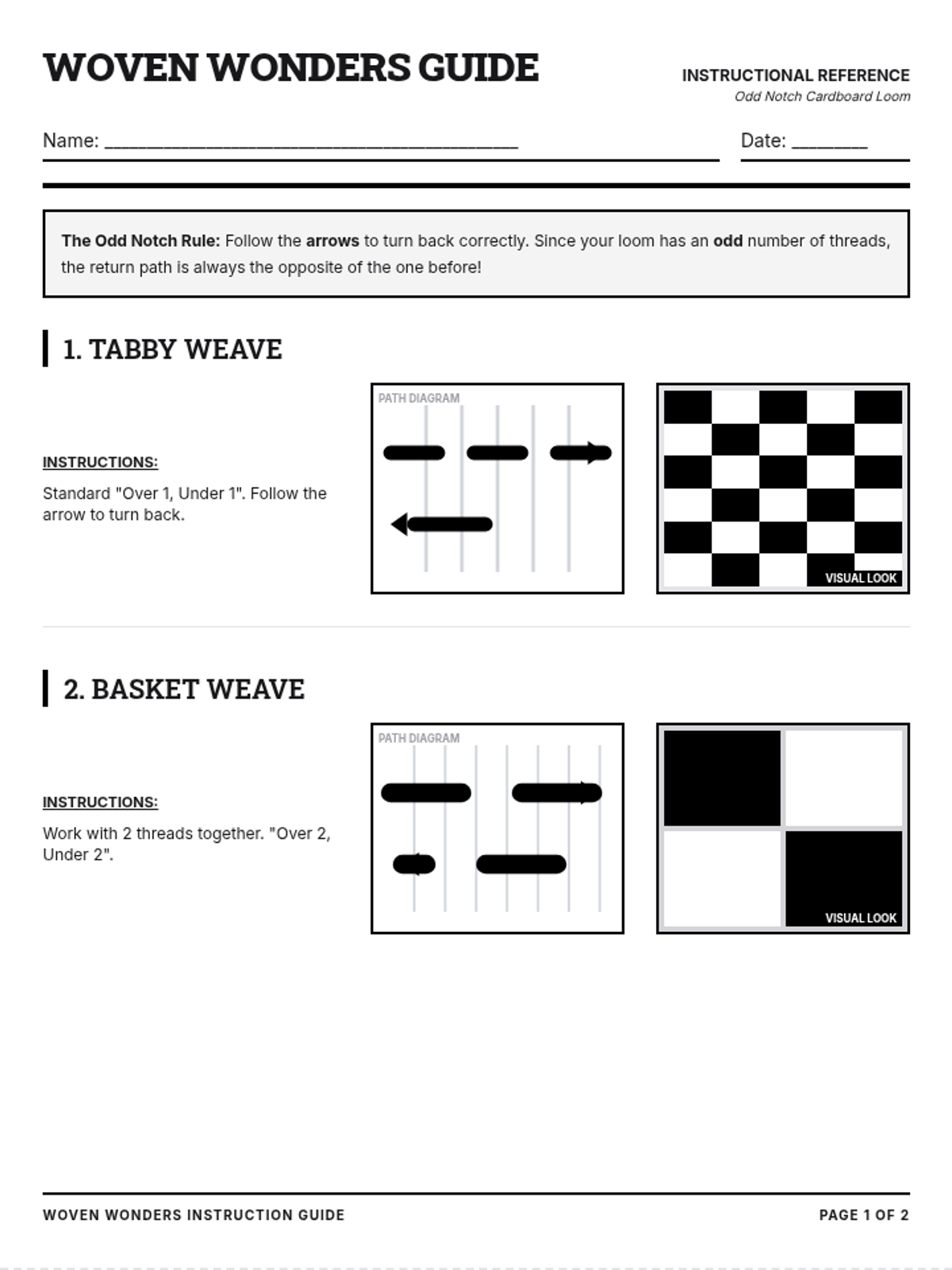
A comprehensive student worksheet for weaving on cardboard notch looms. It combines step-by-step instructions with improved high-contrast diagrams for Tabby, Basket, Checkerboard, and Soumak techniques, plus a reflection log.