A visually striking slideshow covering the Moscow Art Theatre, the Magic If, Given Circumstances, and the evolution from Emotional Memory to Physical Actions in Stanislavski's System.
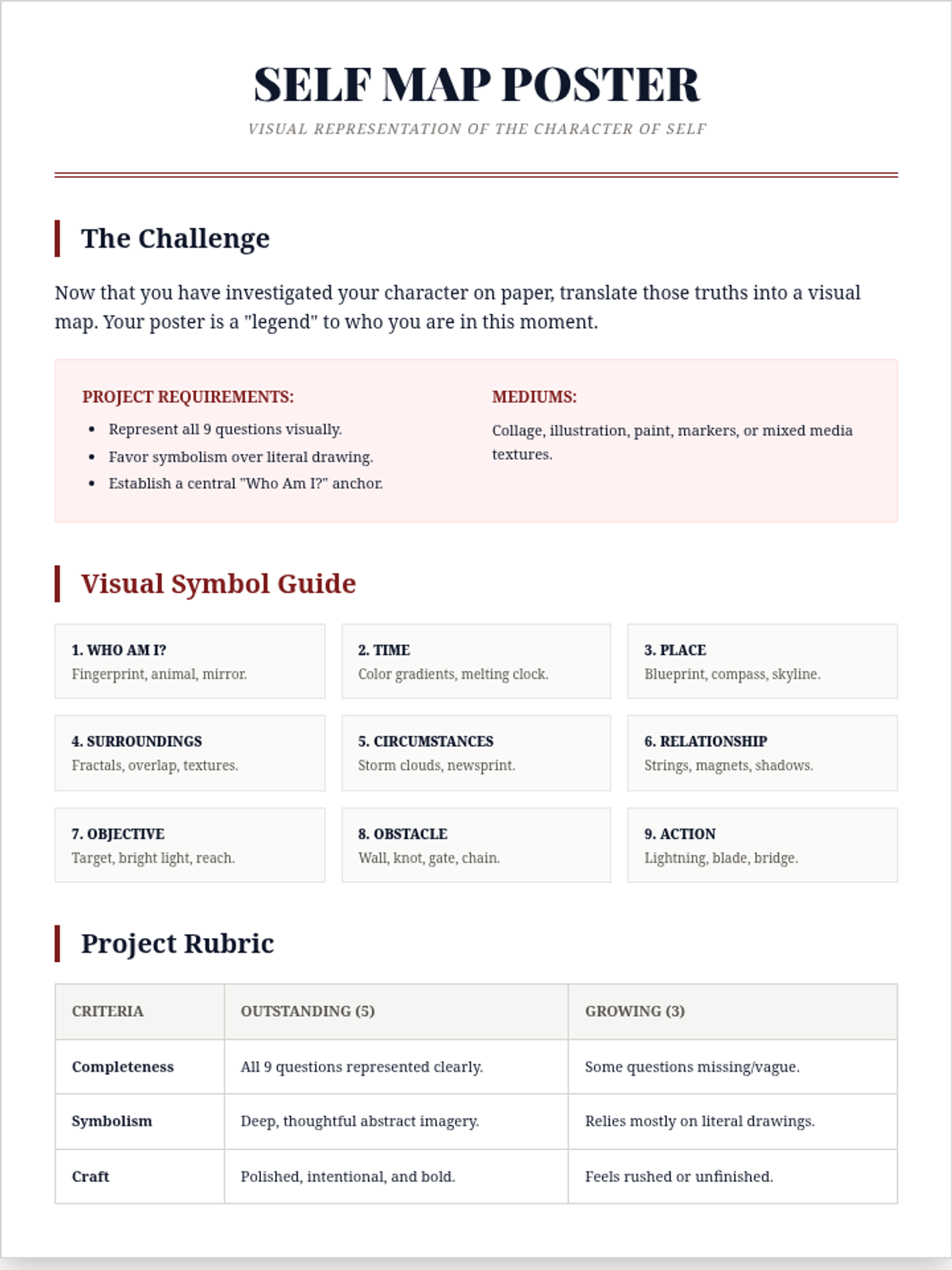
A project guide and rubric for Day 2, instructing students on how to translate their Hagen investigation into a visual character map poster using symbolism and creative layout.
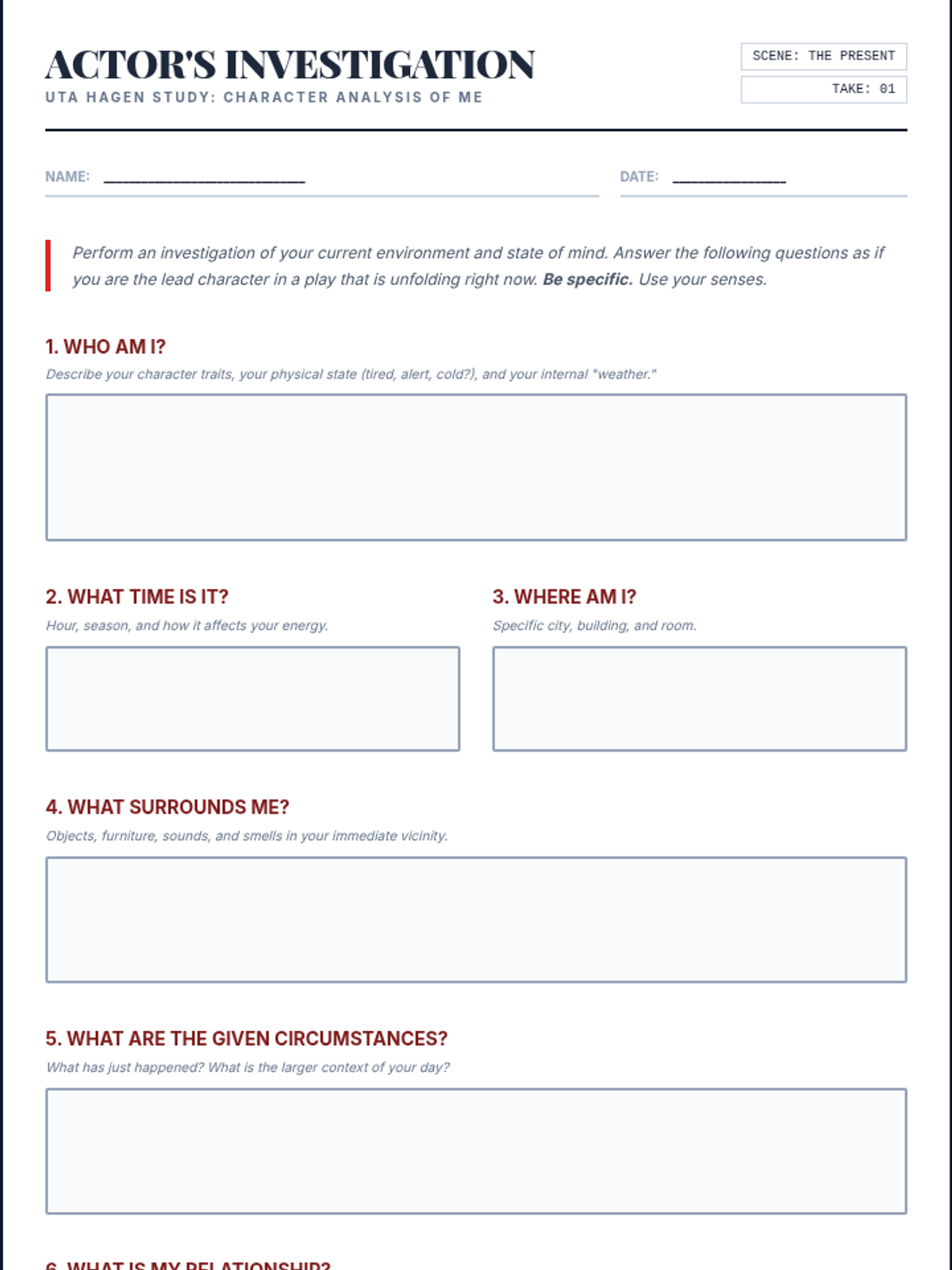
A structured character study worksheet based on Uta Hagen's 9 Questions, prompting students to analyze themselves as characters in their own lives with ample space for reflective writing.
A visual presentation introducing Uta Hagen and her 9 questions for the actor, designed to guide students through the Day 1 introduction of their self-study project.
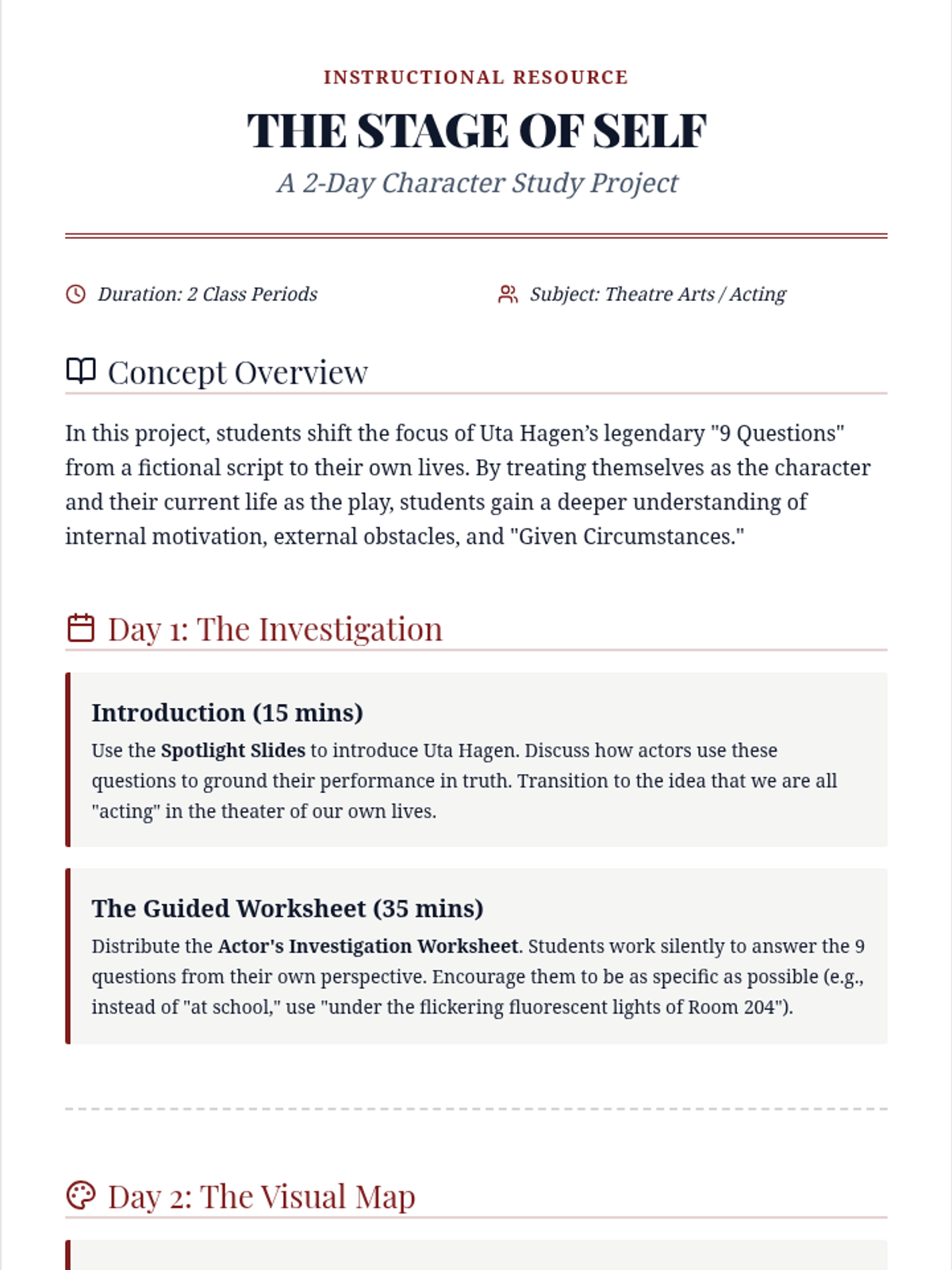
A comprehensive teacher's guide for a 2-day drama project, outlining lesson plans, teaching tips, and instructional strategies for using Uta Hagen's 9 Questions in a self-study character project.
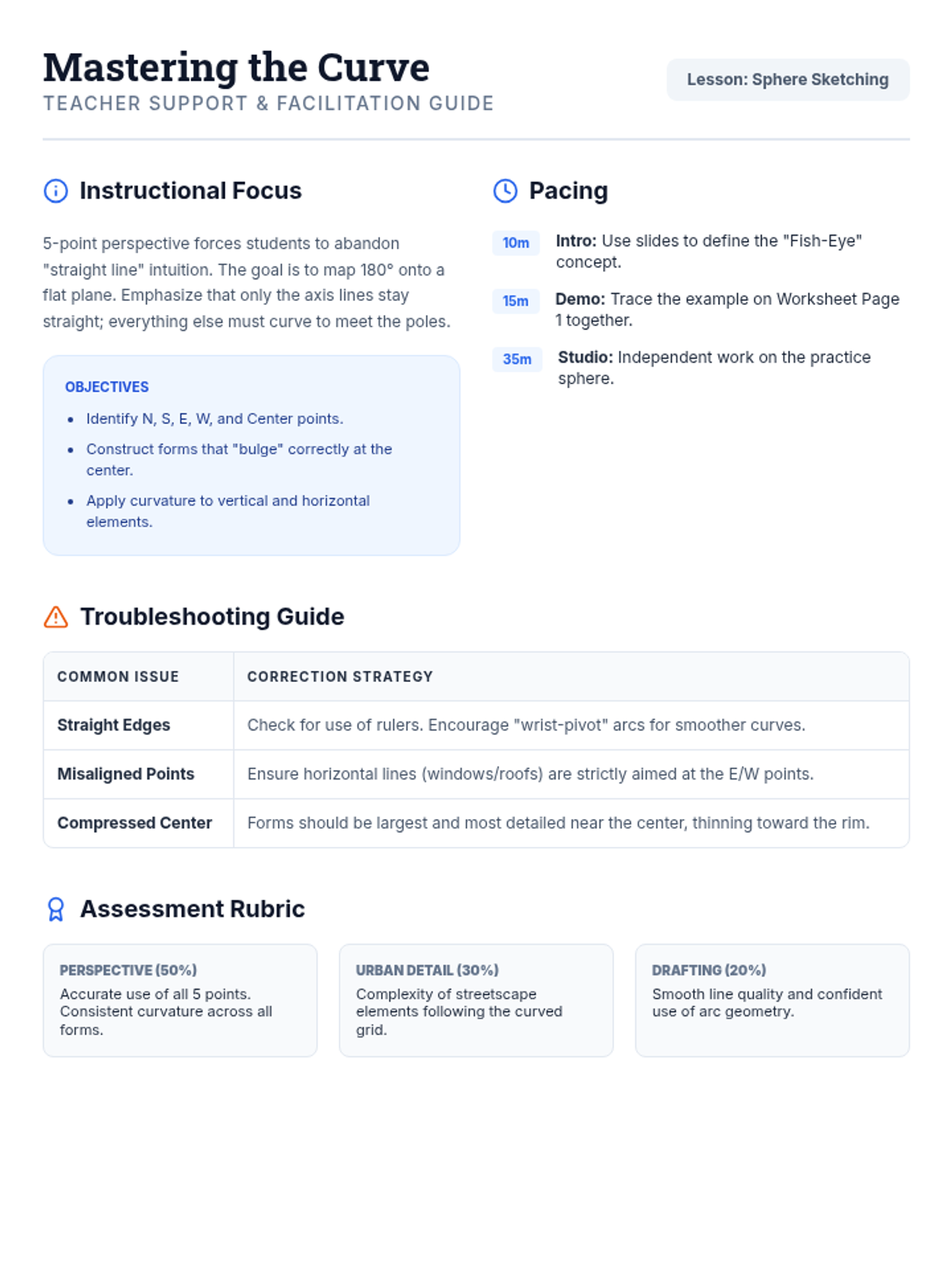
Teacher-facing guide for facilitating the 5-point perspective lesson. Includes instructional objectives, a detailed pacing guide, common student mistakes with suggested fixes, and a clear assessment rubric for evaluating curvilinear sketches.
Visual presentation slides covering the core concepts of 5-point perspective. Includes clear diagrams of the five vanishing points, explanations of the "fish-eye" effect, and specific rules for drawing urban architectural features like skyscrapers and streets on a curved grid.
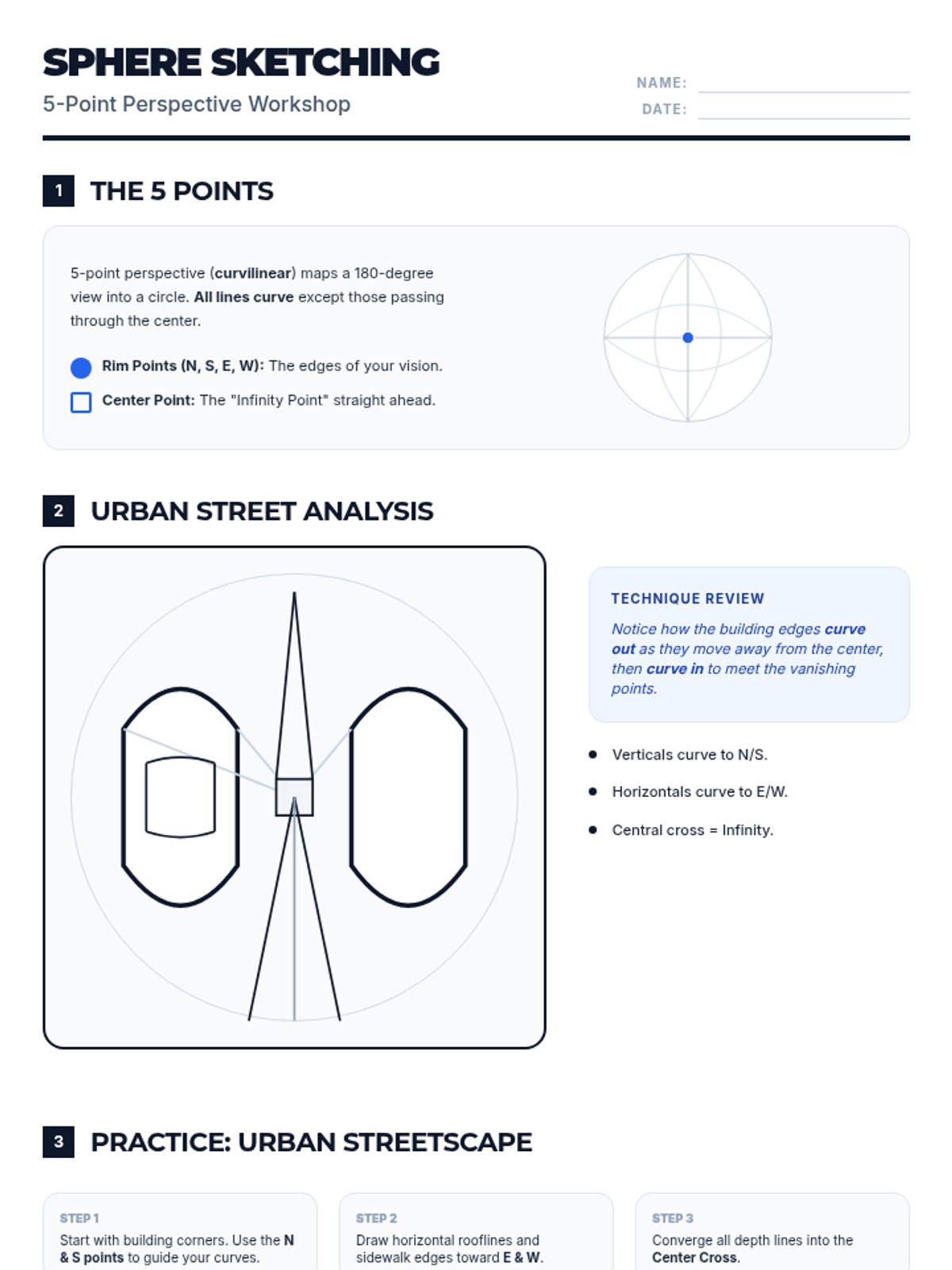
A comprehensive 2-page worksheet for mastering 5-point perspective. Includes a detailed visual guide on curvilinear points, a worked urban city street example for analysis, and a full-page practice area with a pre-formatted spherical grid for student sketching.
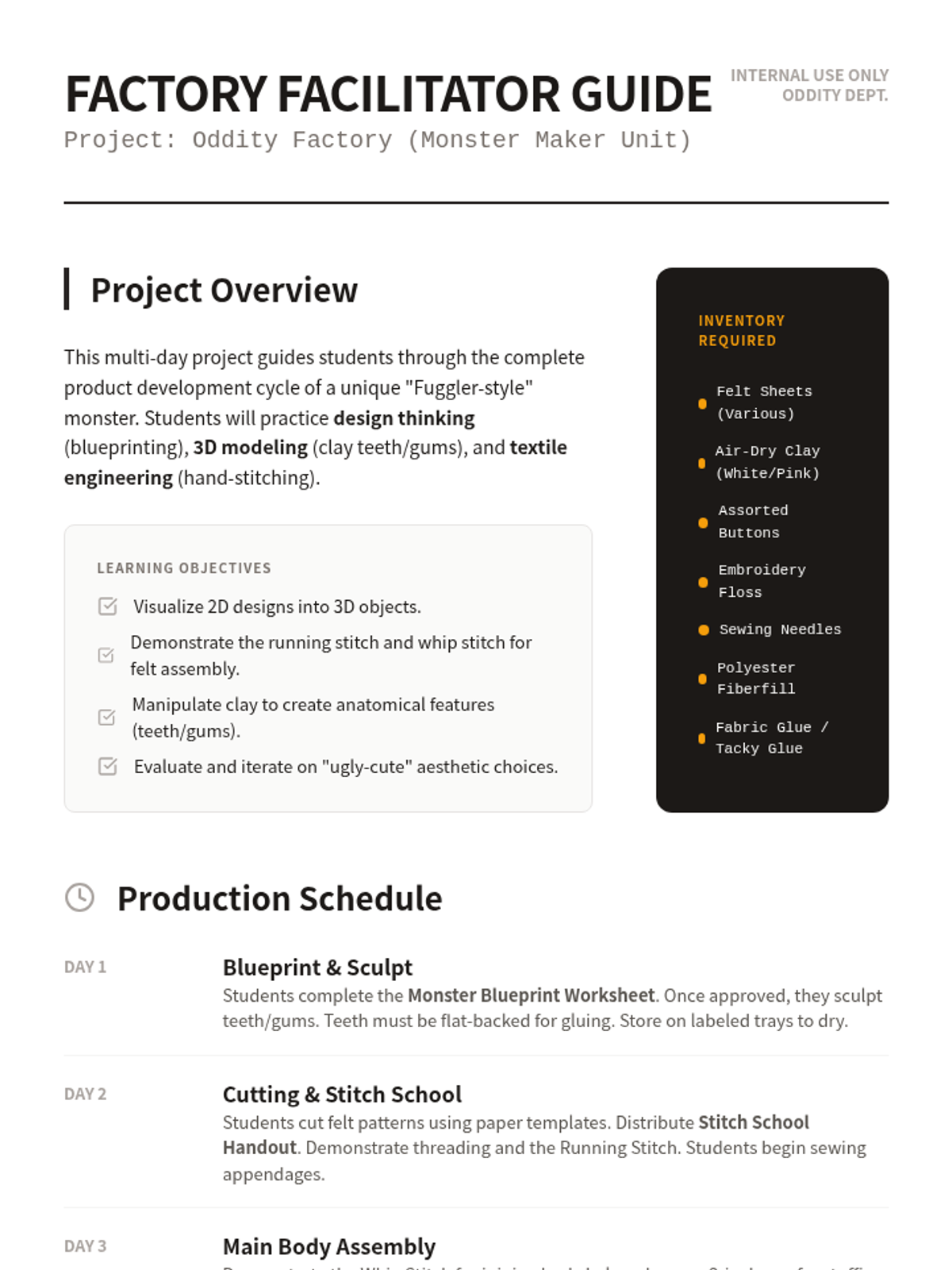
A teacher facilitation guide outlining pacing, learning objectives, material lists, and troubleshooting tips for managing the multi-day monster-making project.
An introductory slide deck for the project, covering the 'funny-ugly' aesthetic, project timeline, clay modeling tips, and basic hand-stitching overview.
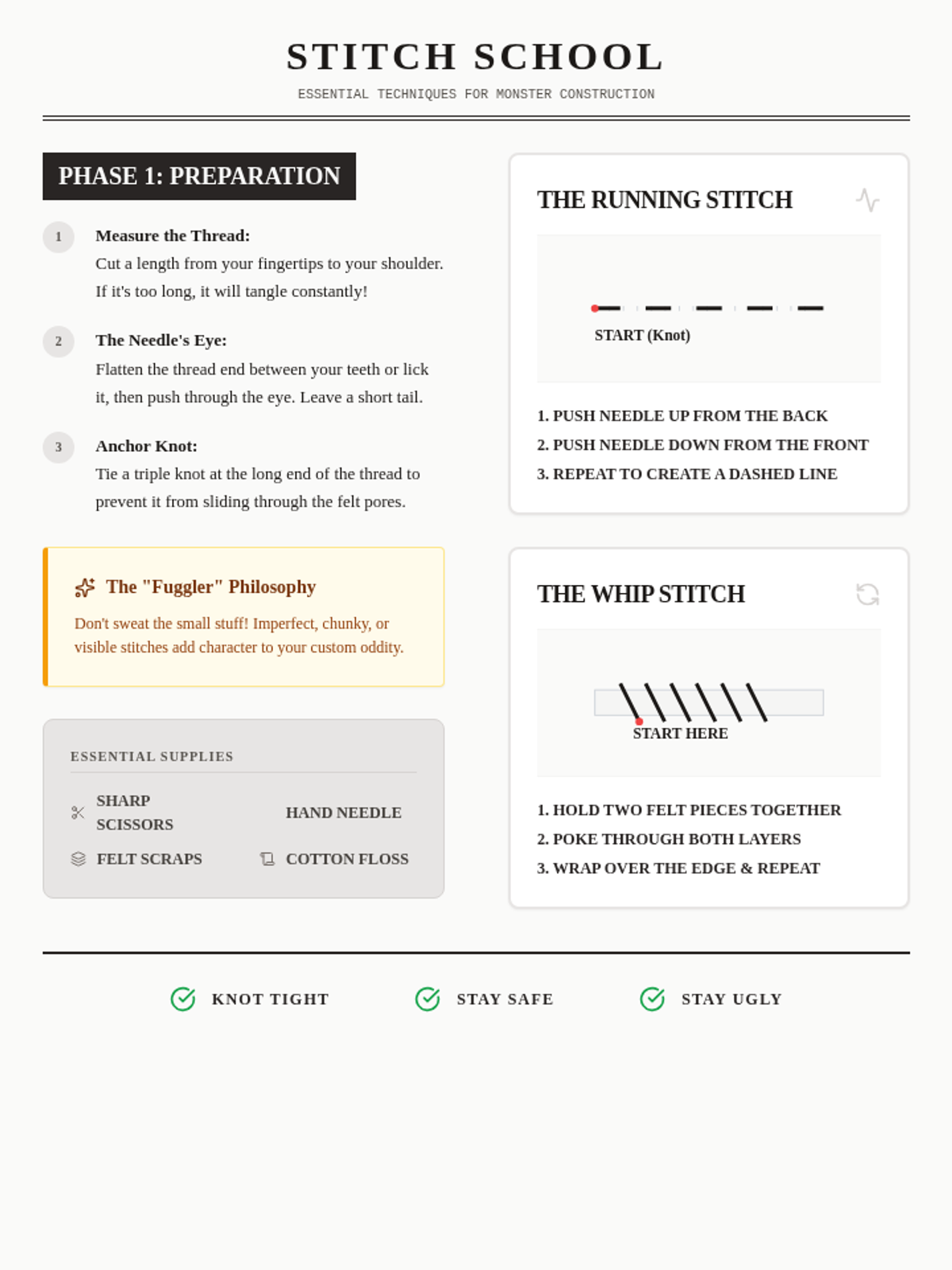
An illustrated reference sheet teaching the basics of threading a needle, tying knots, and performing the running and whip stitches for felt assembly.
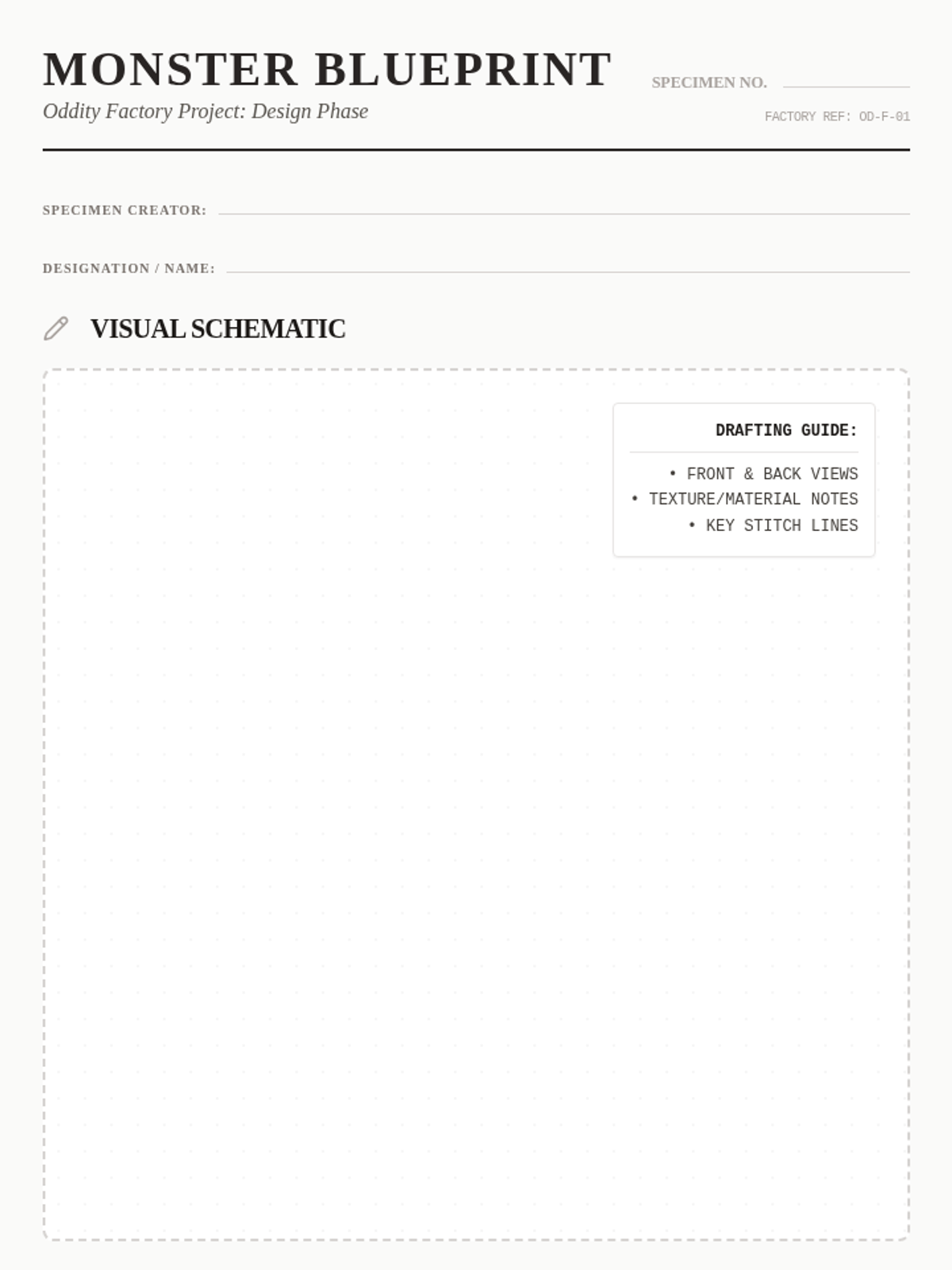
A detailed design planning worksheet for students to sketch their monster, plan materials (felt, buttons, clay), and conceptualize the unique 'ugly-cute' features of their creation.
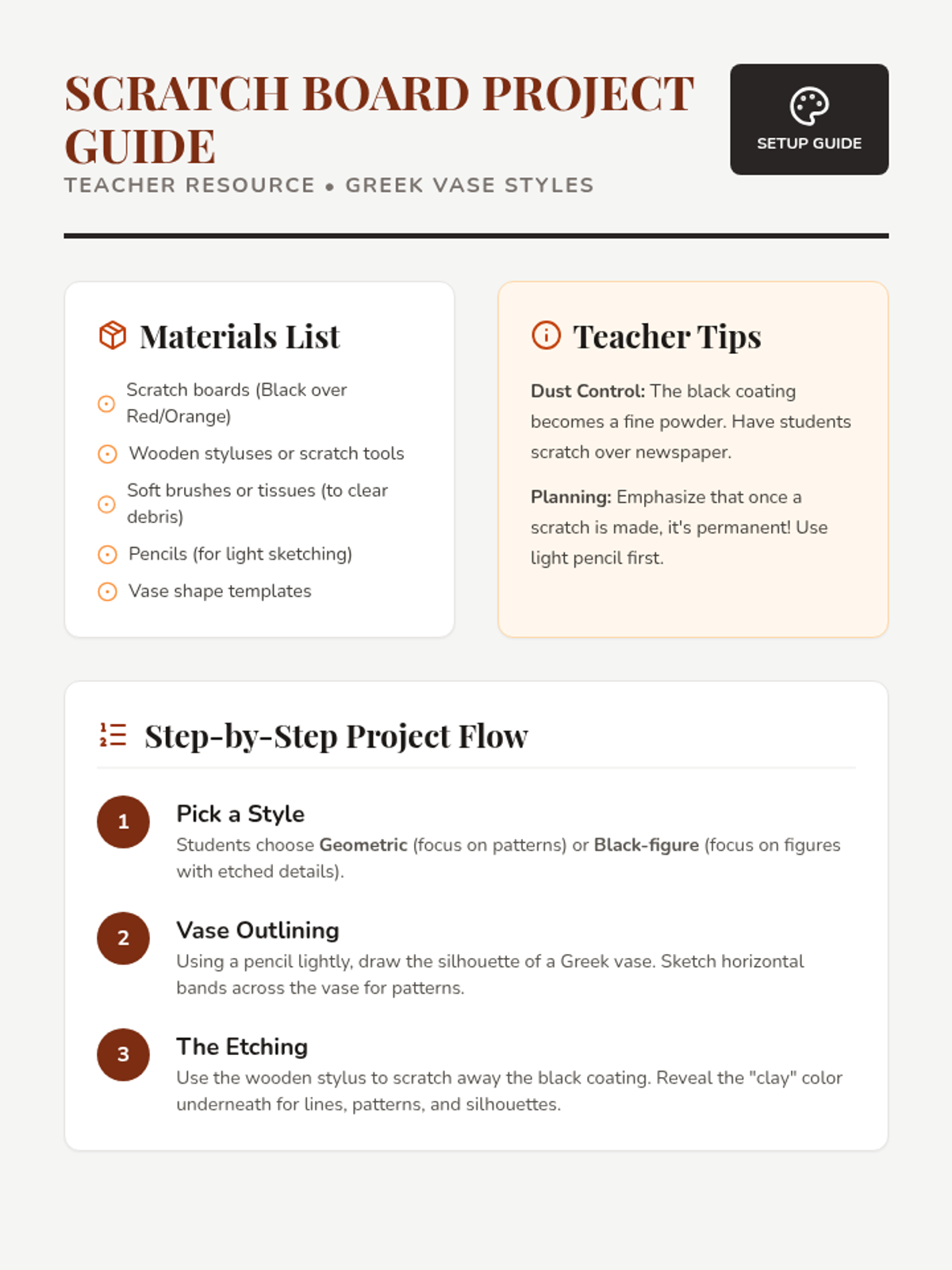
A teacher's guide for the scratch board art project, including materials, prep tips, step-by-step student instructions, and historical discussion prompts.
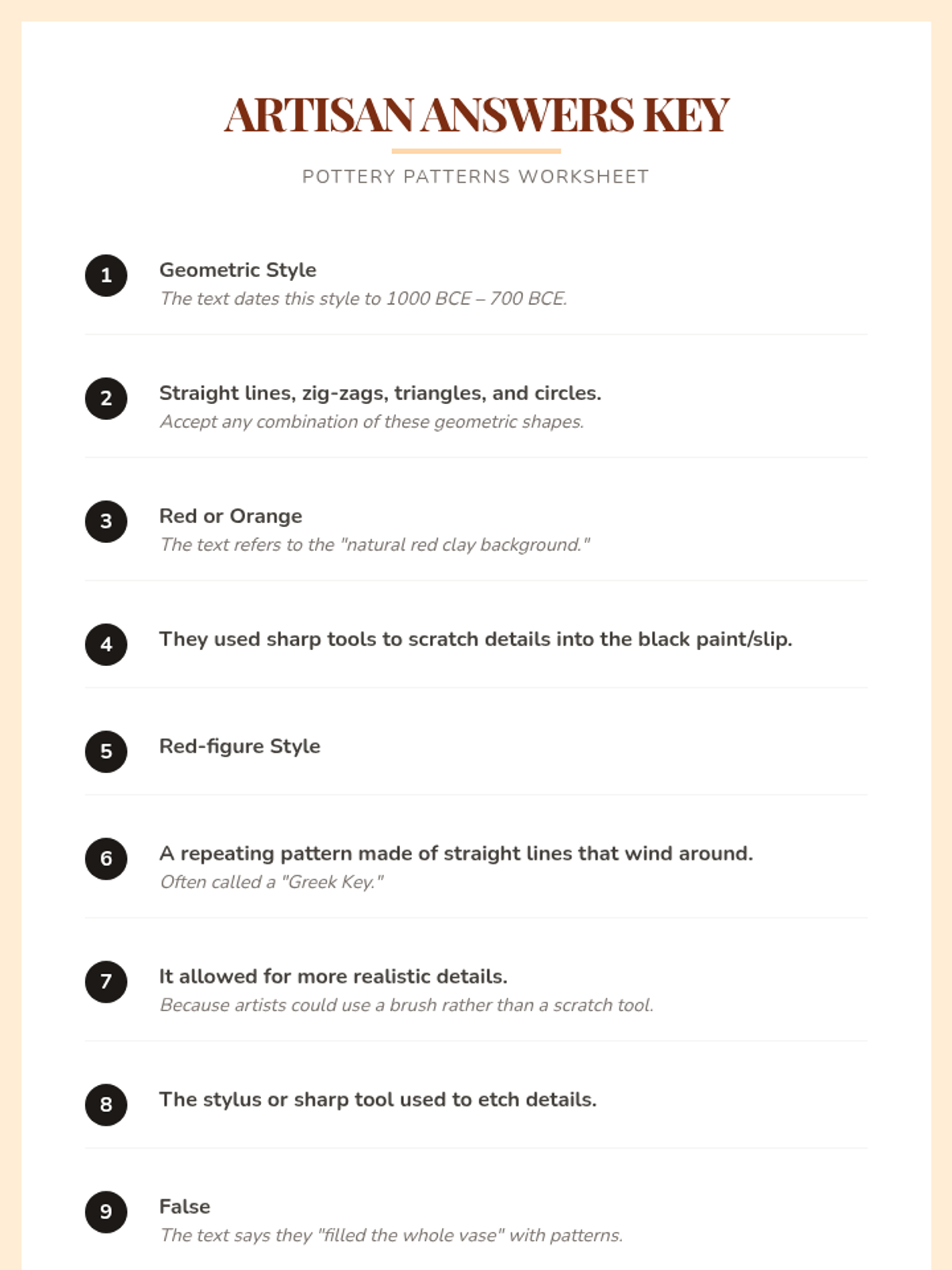
An answer key for the Pottery Patterns Worksheet, providing clear answers and teacher notes for all 10 questions.
Instructional slides introducing the history and visual characteristics of Geometric, Black-figure, and Red-figure pottery. Includes a project introduction slide connecting the history to scratch board art.
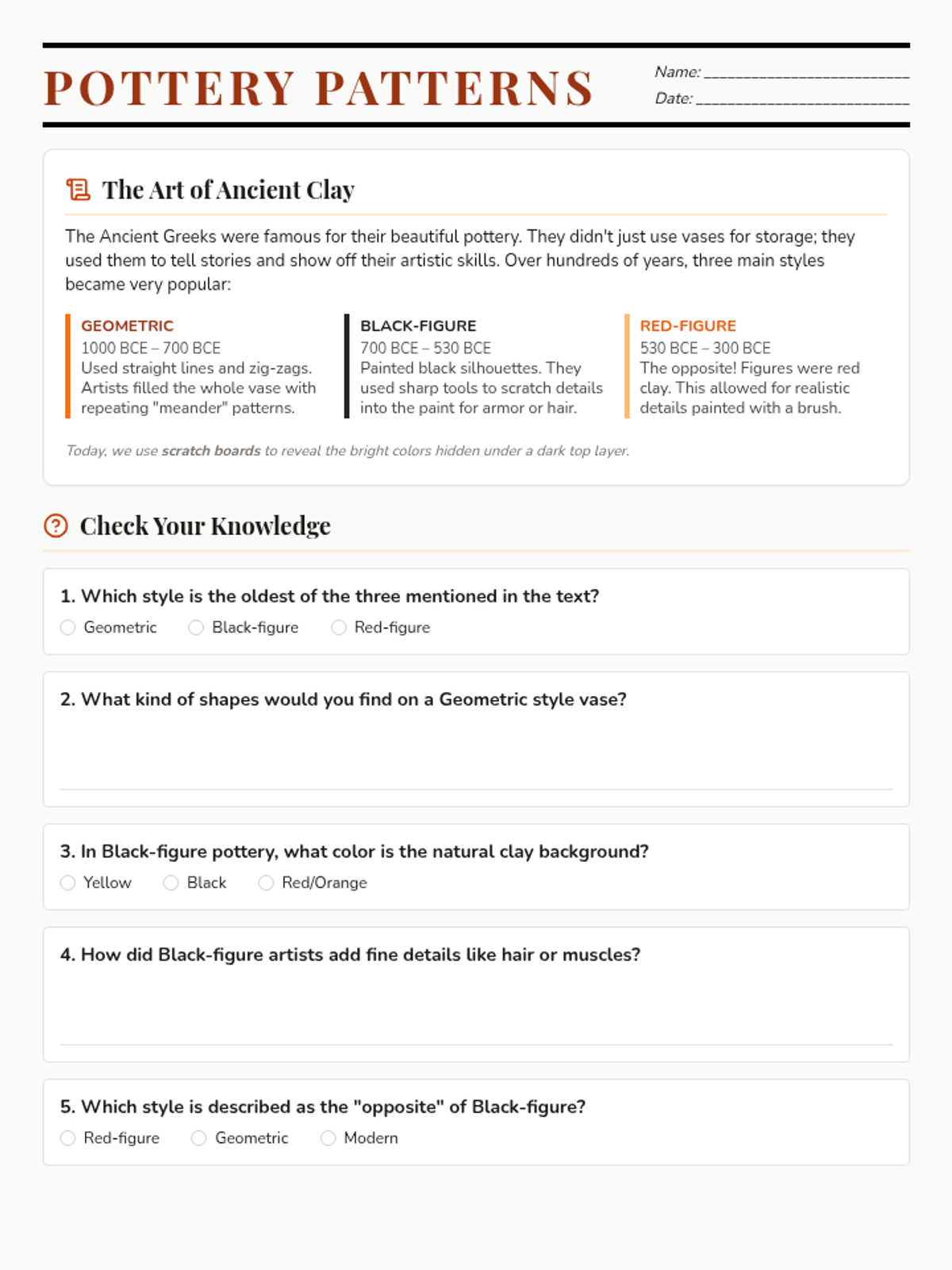
An introductory reading passage about Geometric, Black-figure, and Red-figure Greek pottery styles followed by 10 comprehension questions. Designed for primary/middle school students to build background knowledge before an art project.
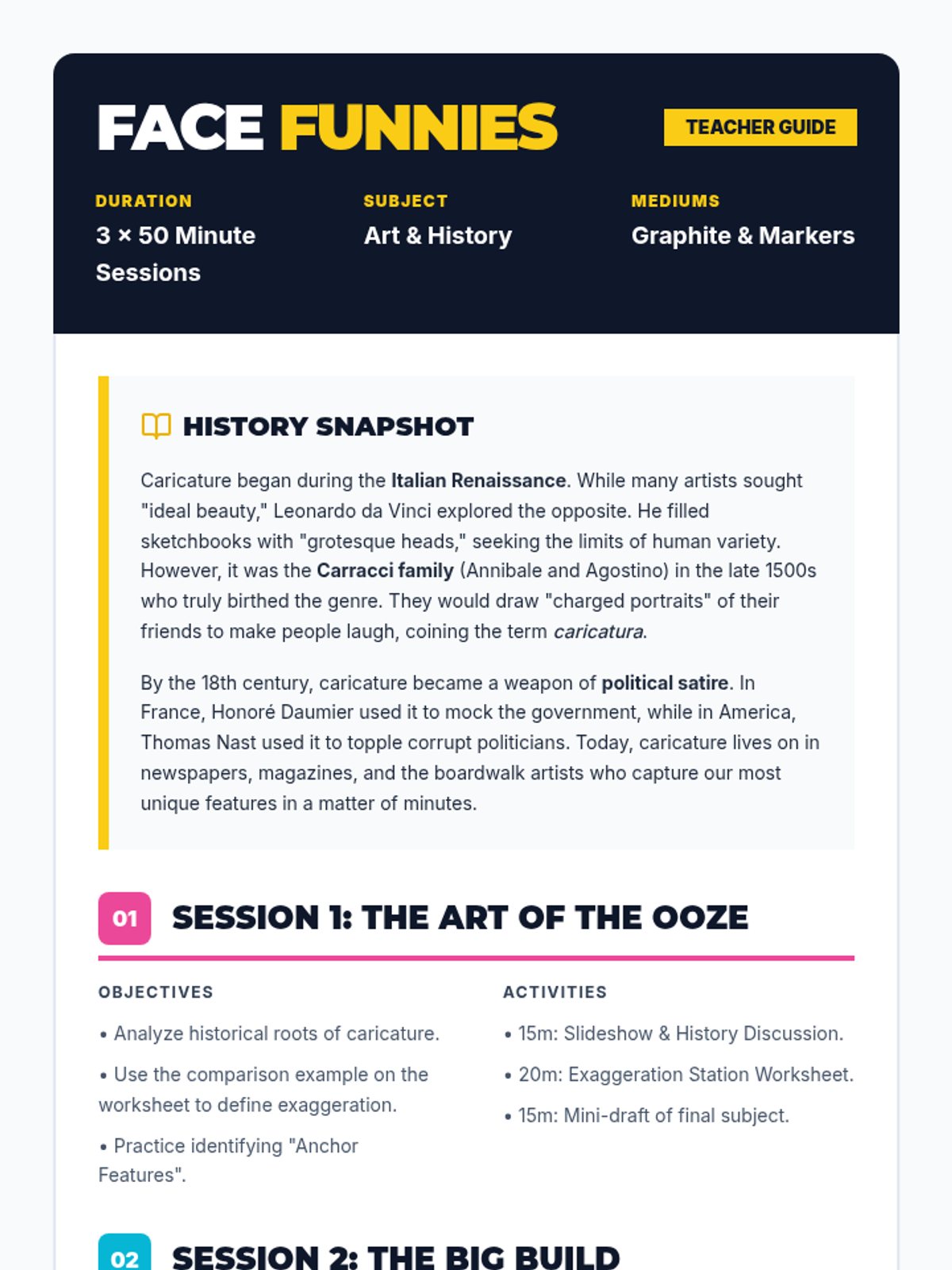
A comprehensive instructional guide for teachers, detailing the lesson's three-session structure, historical context, key learning objectives, and classroom facilitation tips.
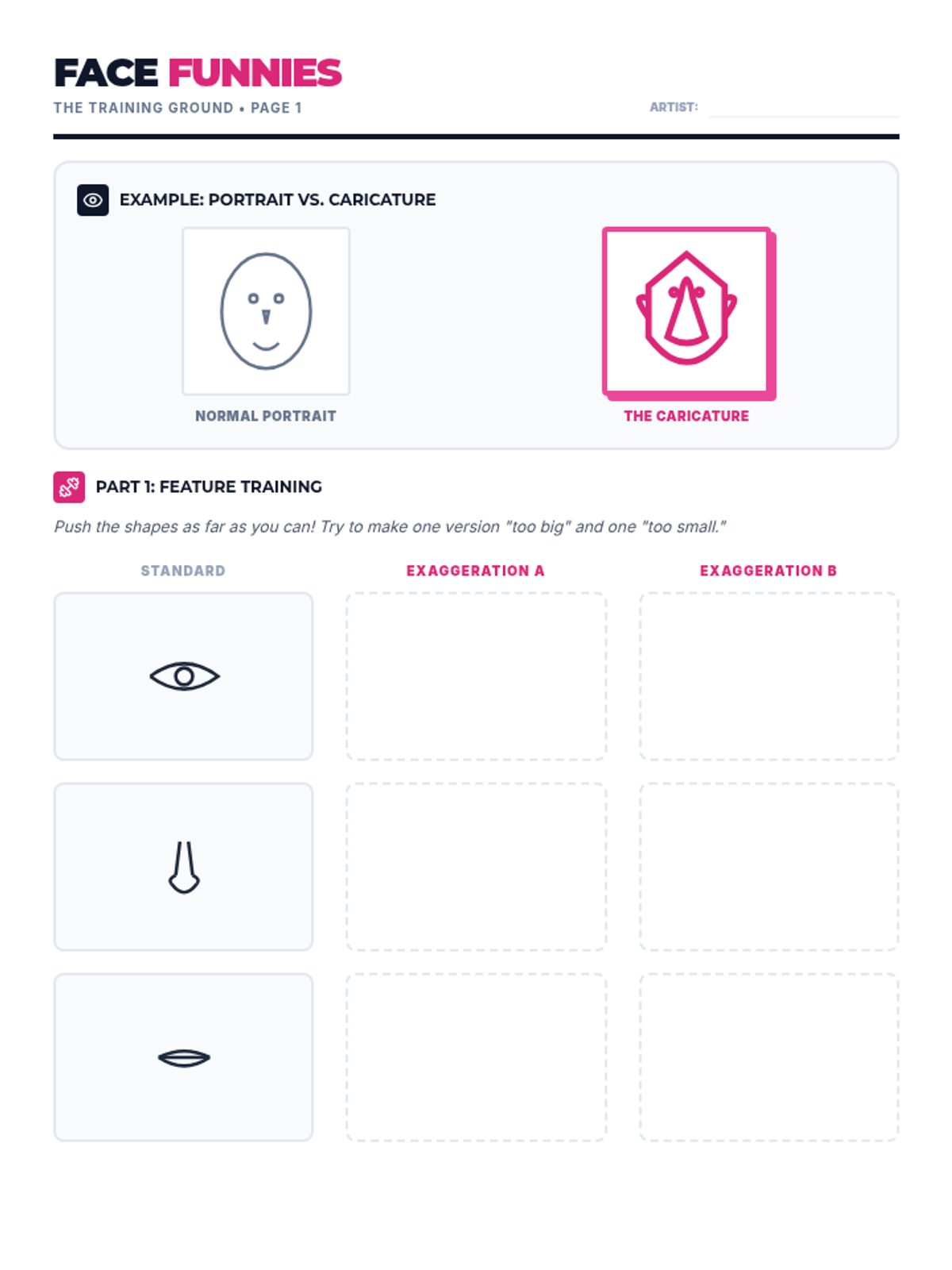
A student worksheet for practicing the fundamental skills of caricature: observing features and applying varied levels of exaggeration before attempting a full sketch. Now includes a generous two-page layout for better practice space.
A visual presentation introducing caricature art, its history from the Renaissance to modern times, and a step-by-step guide for creating an exaggerated portrait using graphite and markers.
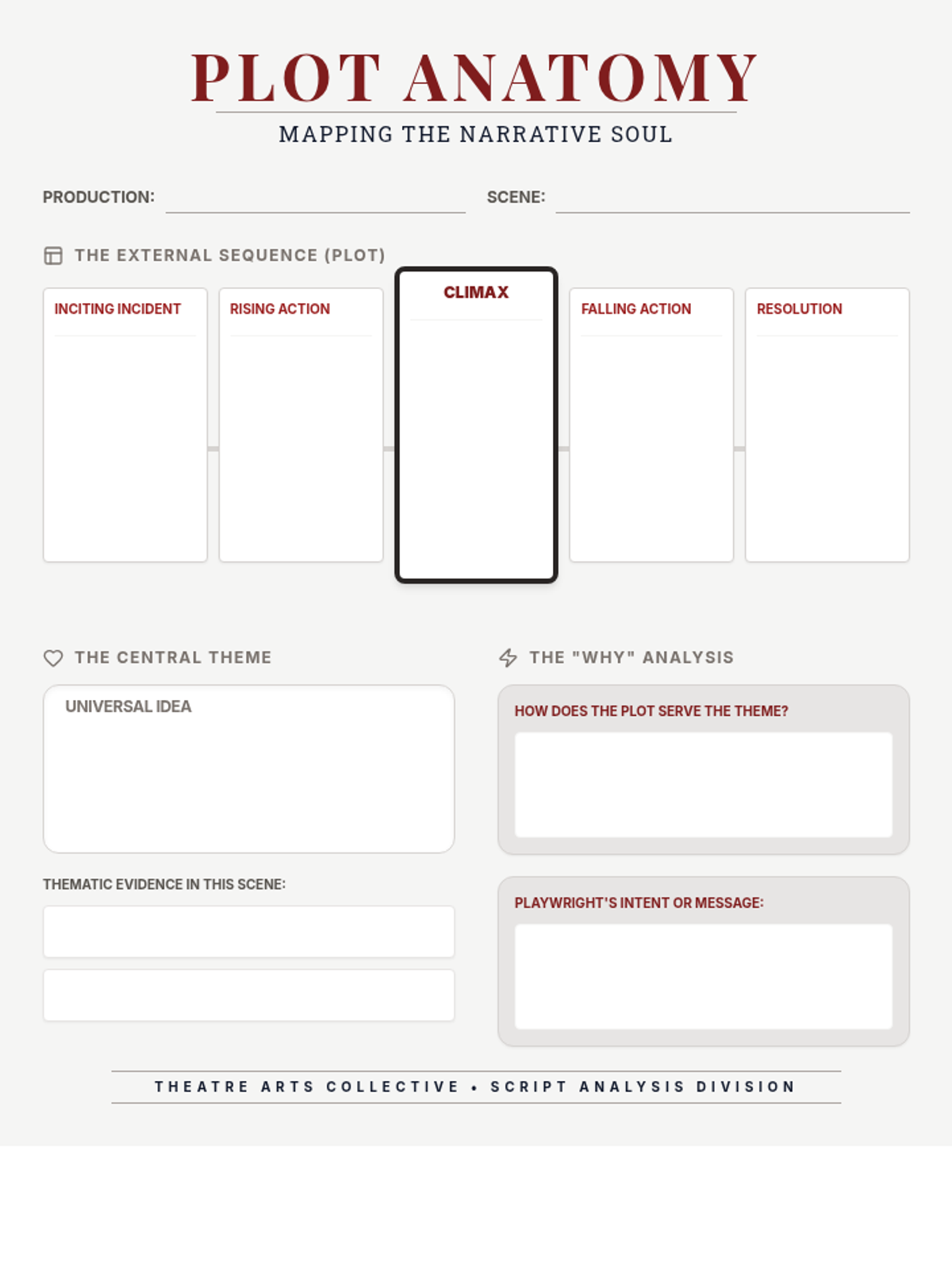
A graphic organizer for theatre students to bridge the gap between plot (what happens) and theme (what it means). Features a narrative arc skeleton and dedicated space for thematic evidence and 'why' analysis.
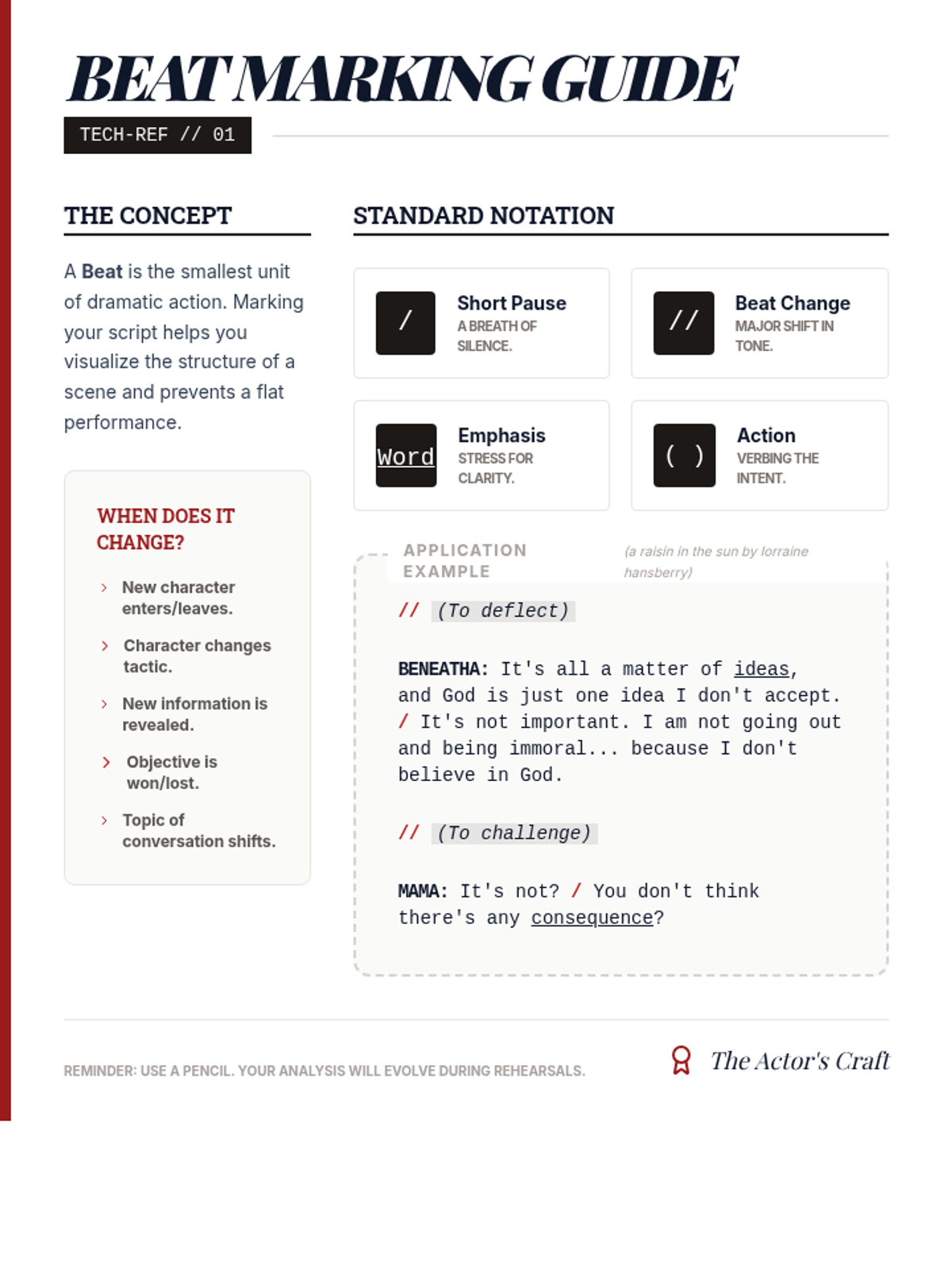
A technical reference sheet for theatre students explaining script notation symbols and the concept of 'beats'. Includes standard symbols for pauses, emphasis, and tactical shifts with a practical example.
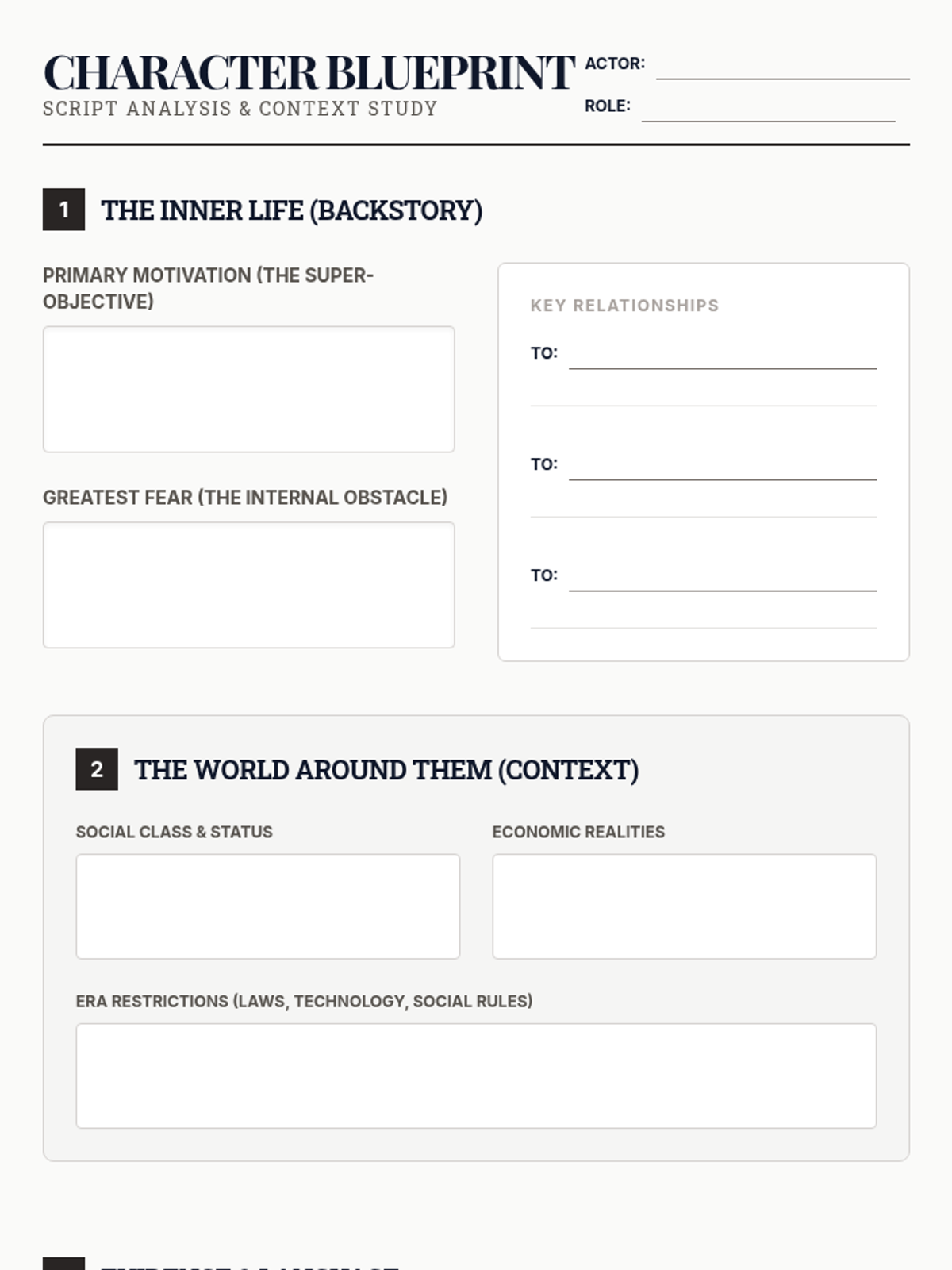
A character analysis worksheet for theatre students to develop deep backstories, explore historical context, and cite script evidence for their roles during the table work phase.
A visual guide for theatre students introducing the concepts of table work, plot versus theme, historical context, and the technical skill of beat marking. Includes vocabulary definitions and discussion prompts for script analysis.
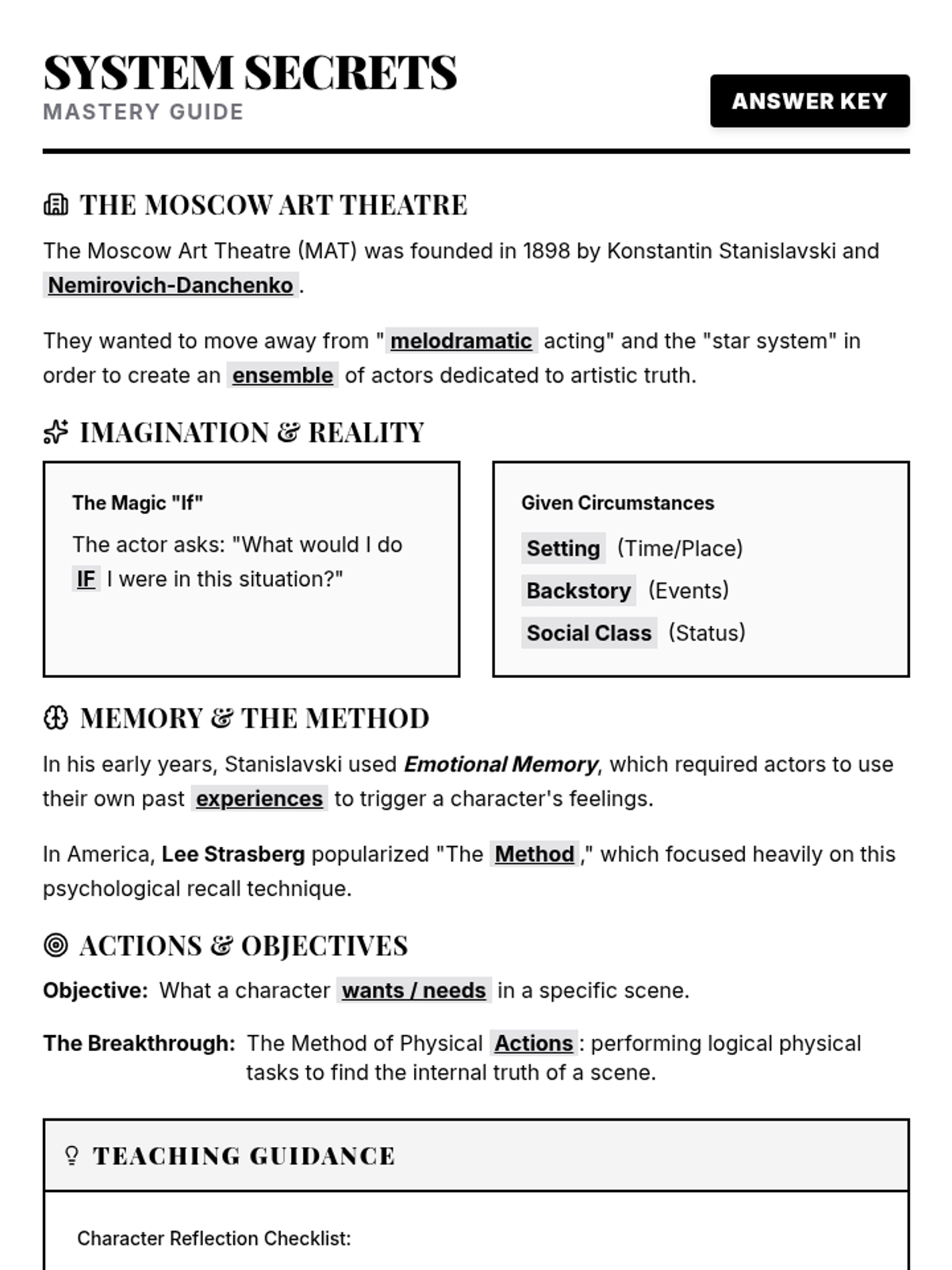
A high-contrast, black and white optimized version of the Stanislavski answer key, matching the student worksheet for consistency.
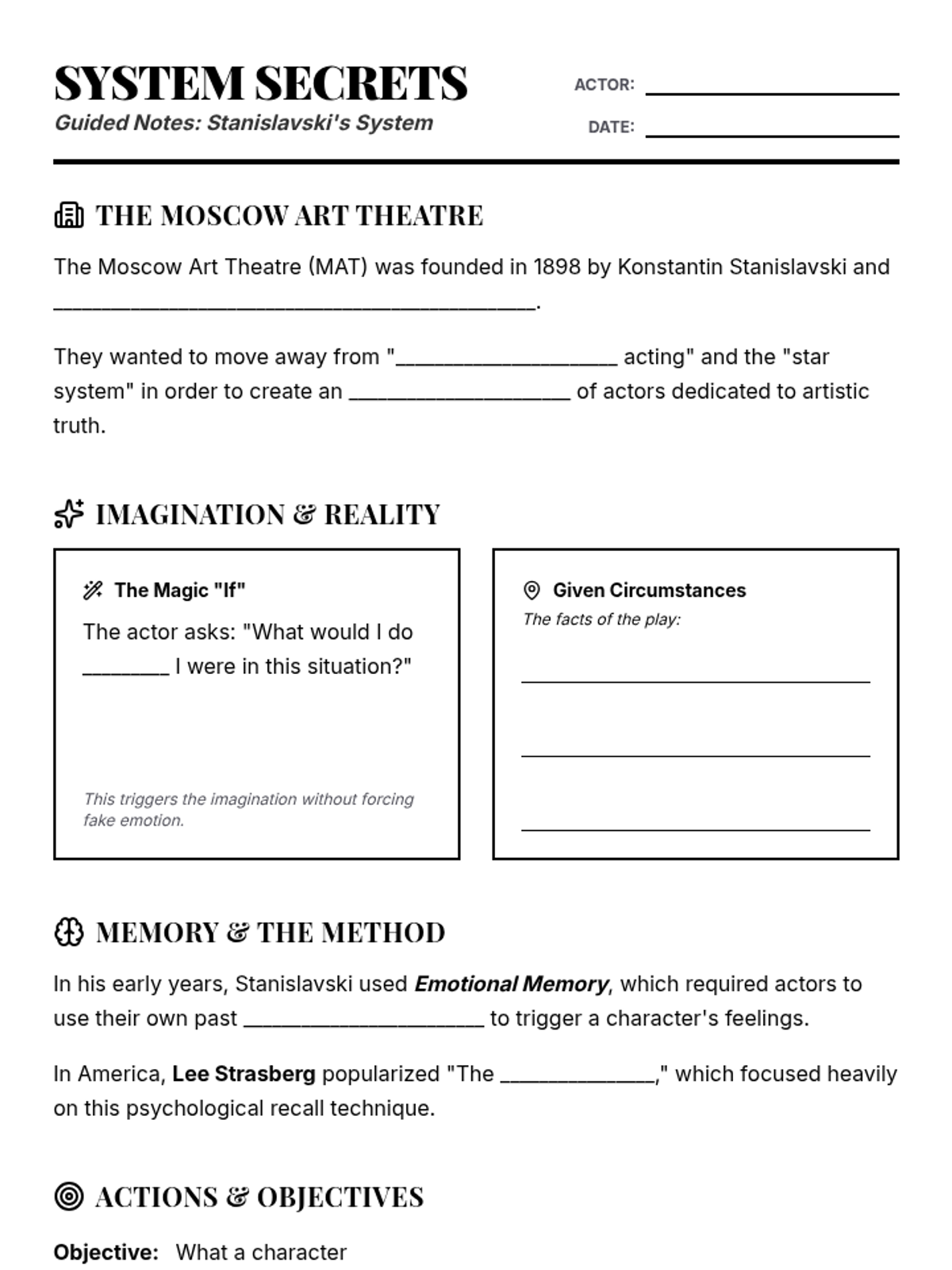
A high-contrast, black and white optimized version of the Stanislavski guided notes worksheet, ideal for printing and student use.