Student worksheet for Lesson 1 guiding students through impulse calculations and technical analysis of real-world automotive safety features. Includes space for calculations and conceptual reflection.
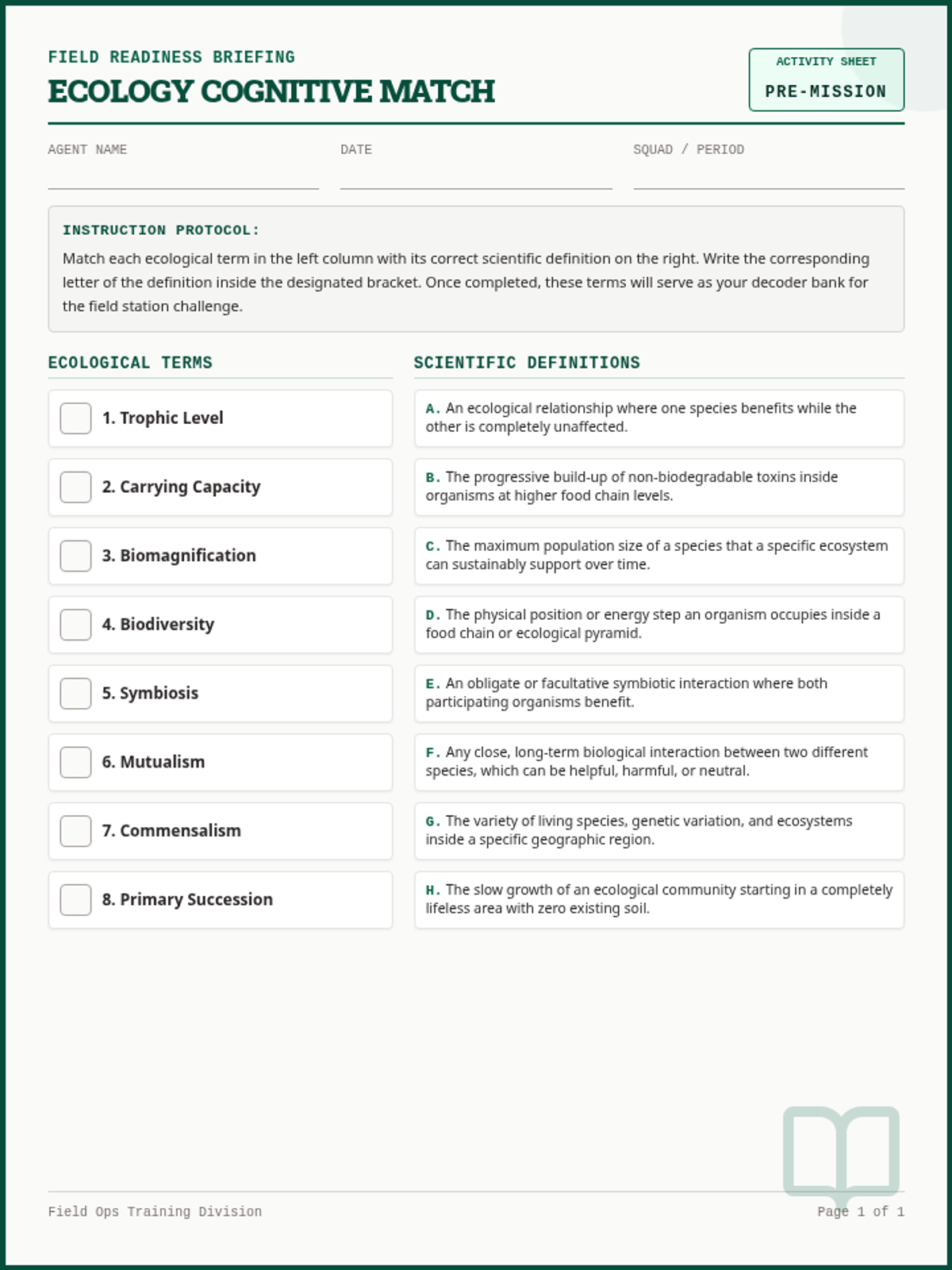
A 1-page vocabulary matching worksheet reviewing 12 critical ecological terms used in the scavenger hunt. It includes name/date fields and space for student definitions.
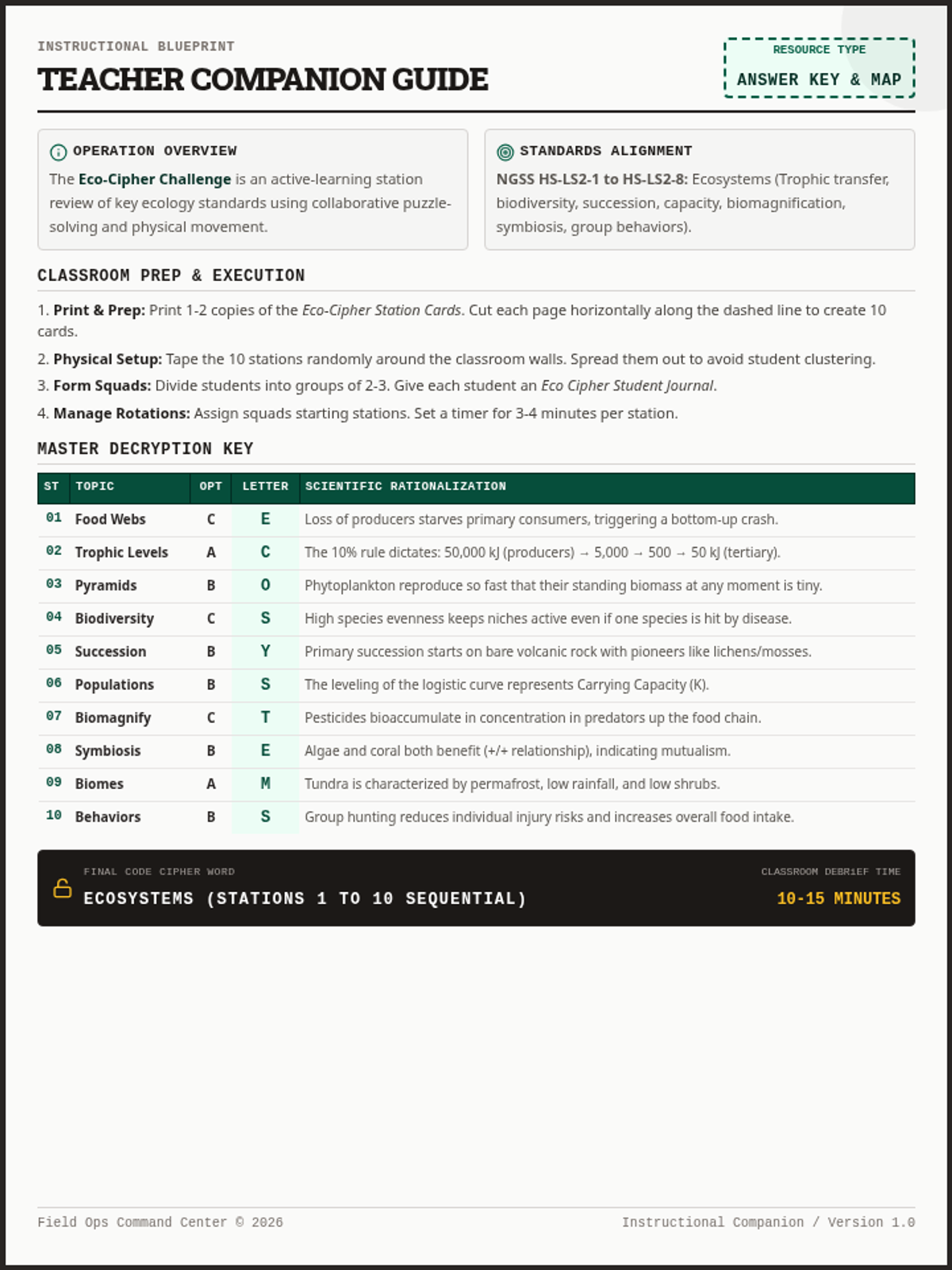
A 1-page instructional overview and implementation manual for teachers. It details standards alignment, physical classroom setup, pacing instructions, and a comprehensive master answer key for the 10 stations and final cipher.
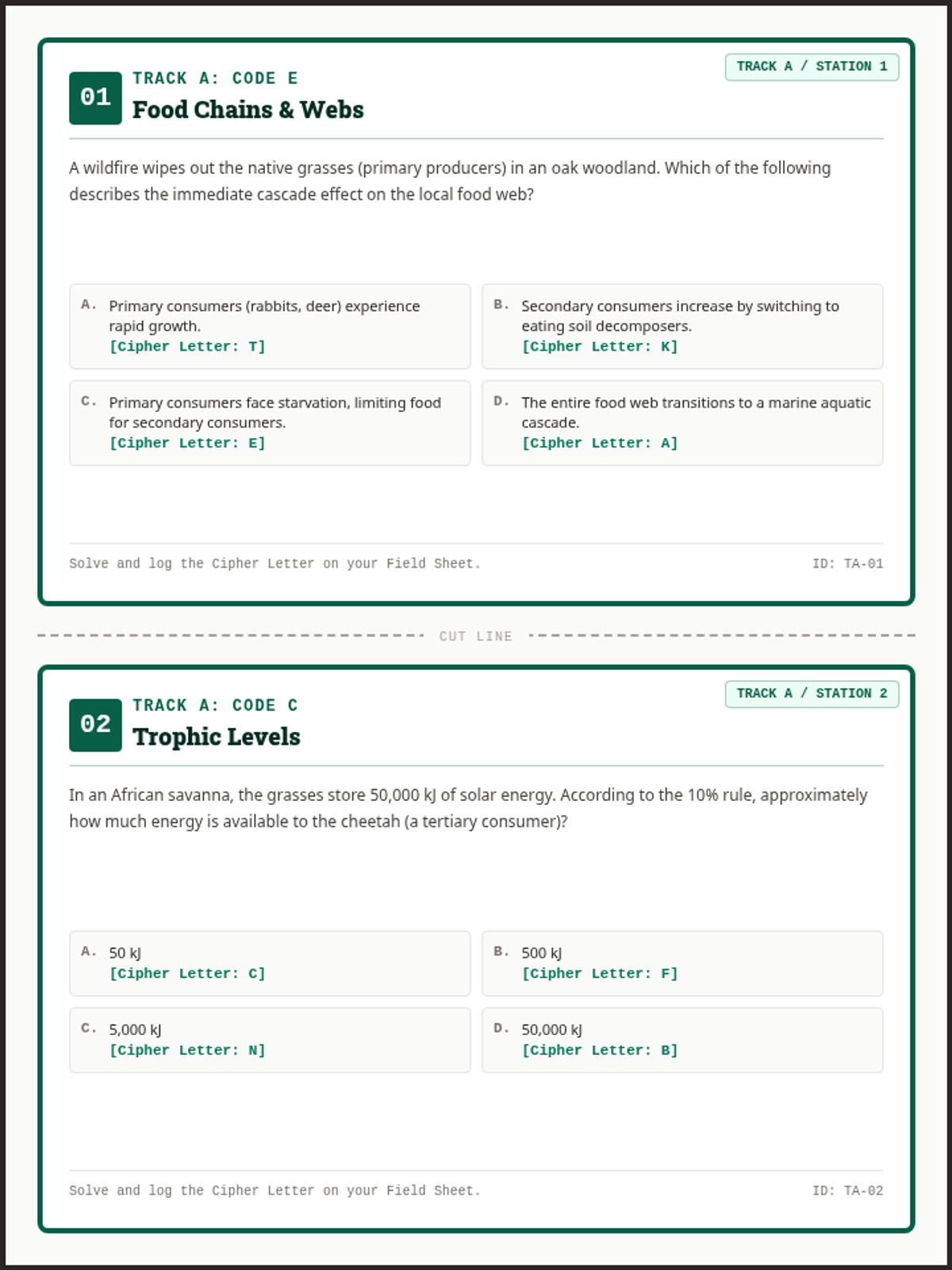
A complete set of 30 printable station cards (2 per page, 15 pages total) split into three distinct 10-station tracks: Track A ('ECOSYSTEMS'), Track B ('BIODIVERSE'), and Track C ('ADAPTATION') for flexible, differentiated, or multi-round review.
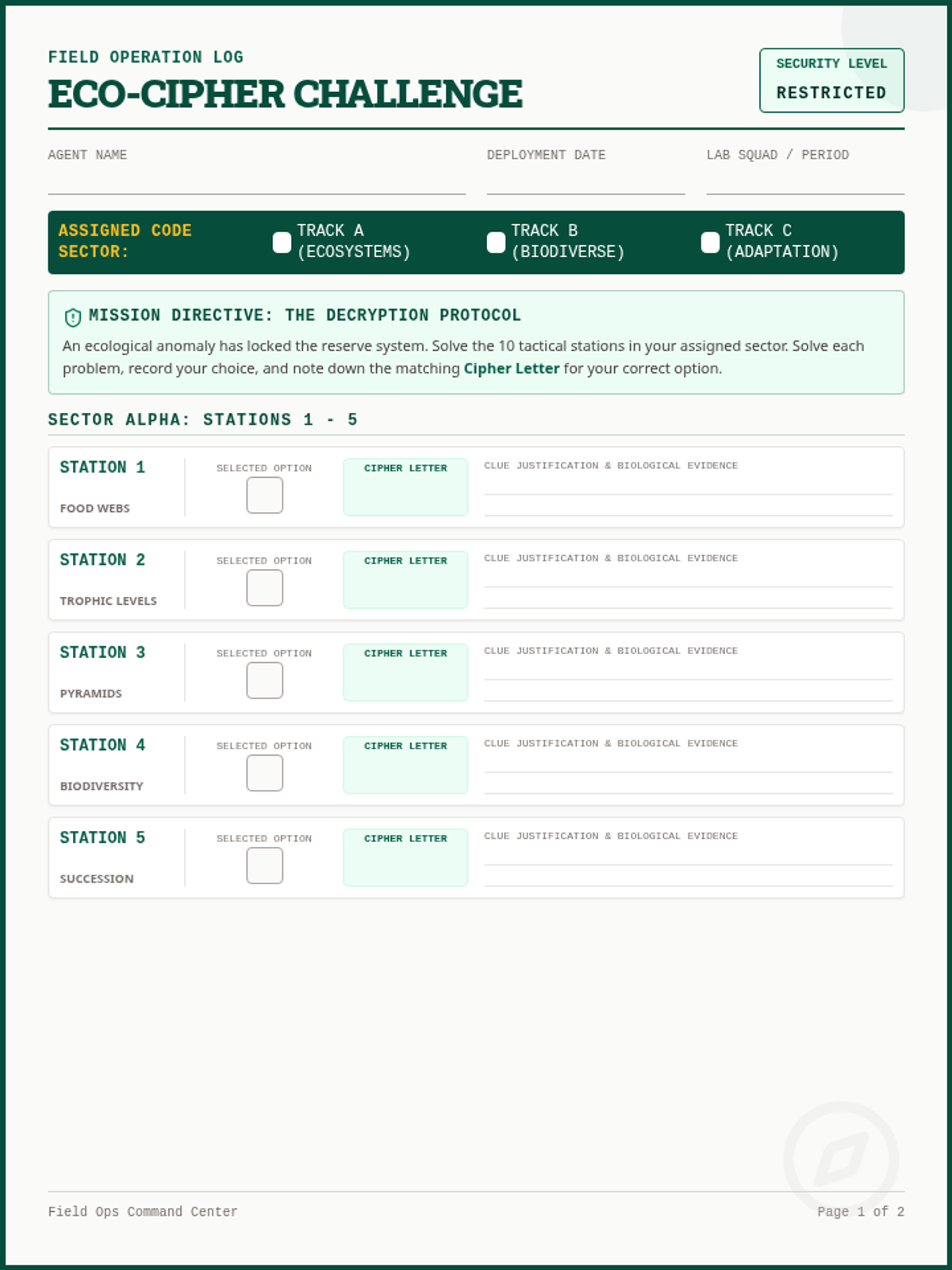
A print-ready student recording sheet and field log where students record their answers, write down evidence-based explanations for each station, and decode the final secret word.
A 2-page print-ready teacher instructional plan and facilitation guide for running the Force Field Engineers magnet maze lab. Includes NGSS standards, a materials checklist, lesson pacing, inquiry prompts, a 3-tier grading rubric, and classroom troubleshooting tips.
A 2-page collection of printable layout templates, assembly components, and cutouts for building custom student magnet mazes. Includes a 1-inch printable grid board and a materials folding lab sheet.
A 2-page print-ready student lab handbook for the Magnet Maze engineering challenge. It includes a material testing matrix, maze blueprinting grid, testing logs, and reflective engineering prompts.
A 2-page teacher facilitation guide containing next-generation science standards (NGSS) alignments, a detailed 60-minute pacing guide, visual setup directions, a structured engineering design rubric, and a guide to solving common student misconceptions.
A 5-slide visual presentation for teachers to introduce non-contact forces, magnetic fields, attraction/repulsion, and the step-by-step engineering constraints of the Magnet Maze challenge.
A 3-page student activity guide and engineering worksheet for the magnet maze challenge. Includes design constraints, a layout sketching grid, material testing logs, and conceptual reflection questions on non-contact forces and poles.
A single-page formative assessment exit ticket where students analyze vague steps for logical loopholes, practice writing highly precise instructions, and explain why exact detail is crucial for programming.
A highly-structured 2-page student worksheet that helps kids brainstorm, sketch, and systematically draft chronological, step-by-step algorithms for building a marshmallow fluff and jelly sandwich.
A comprehensive, step-by-step facilitation guide for teachers on how to execute the literal-interpretation marshmallow fluff and jelly demo, complete with loophole guides, common student instruction errors, and reflection prompts.
A vibrant, projection-ready slide presentation that guides students through the 'Exact Instructions Challenge'. It establishes the rules of the robot-teacher demo, showcases ingredients, sets up the writing activity, and leads the class debrief on the importance of clarity.
A 2-page complete teacher facilitation guide and answer key for the Microbot Mission viewing unit. It provides lesson timelines, pre- and during-viewing classroom discussion prompts, and fully explained numerical solutions for all math and geometry challenges.
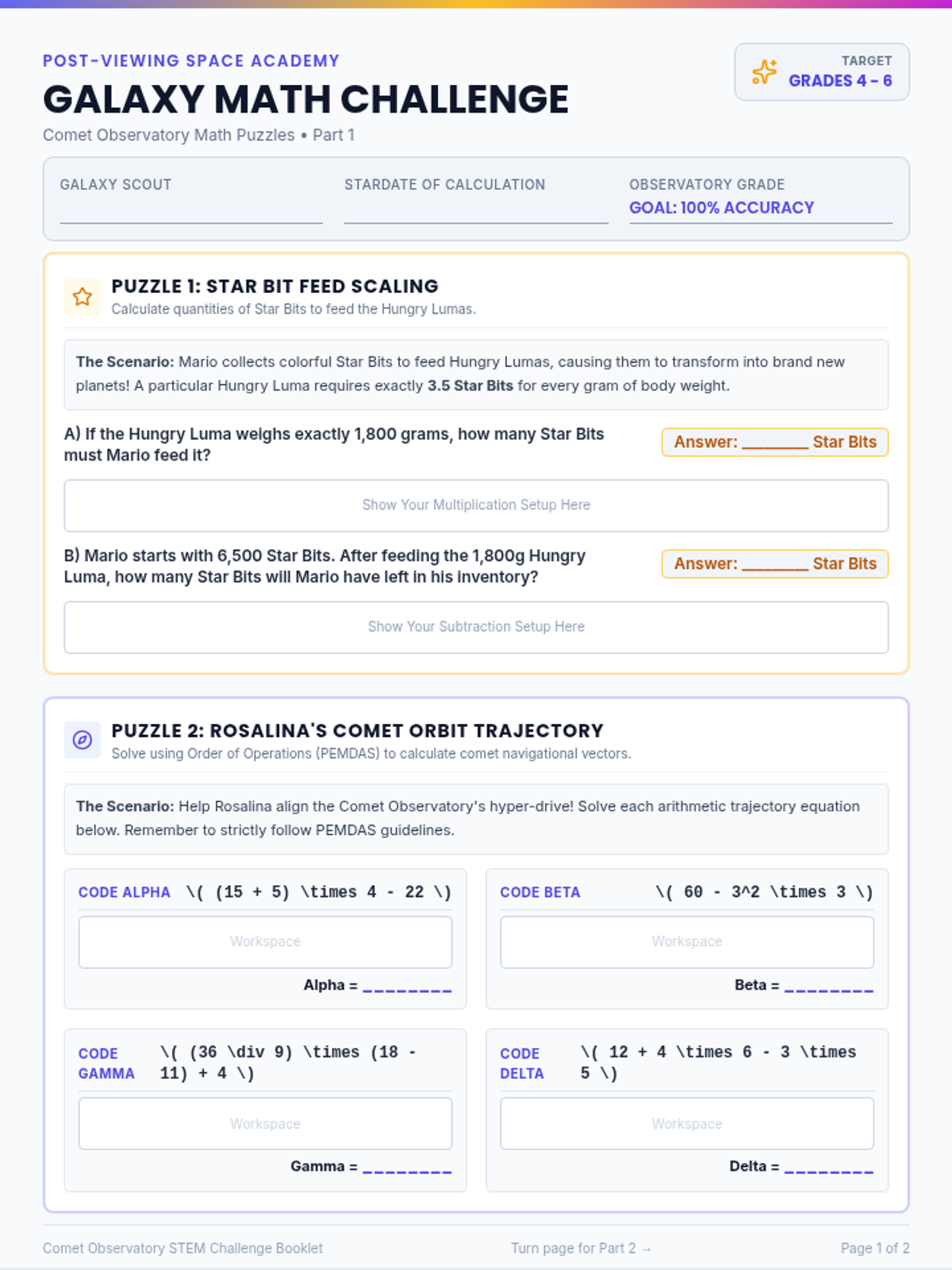
A high-energy 2-page math challenge booklet based on the physics, orbits, and story of Super Mario Galaxy. It presents Grade 4-6 aligned puzzles covering Star Bit scaling, PEMDAS navigational vectors, distance word problems, and orbital geometry.
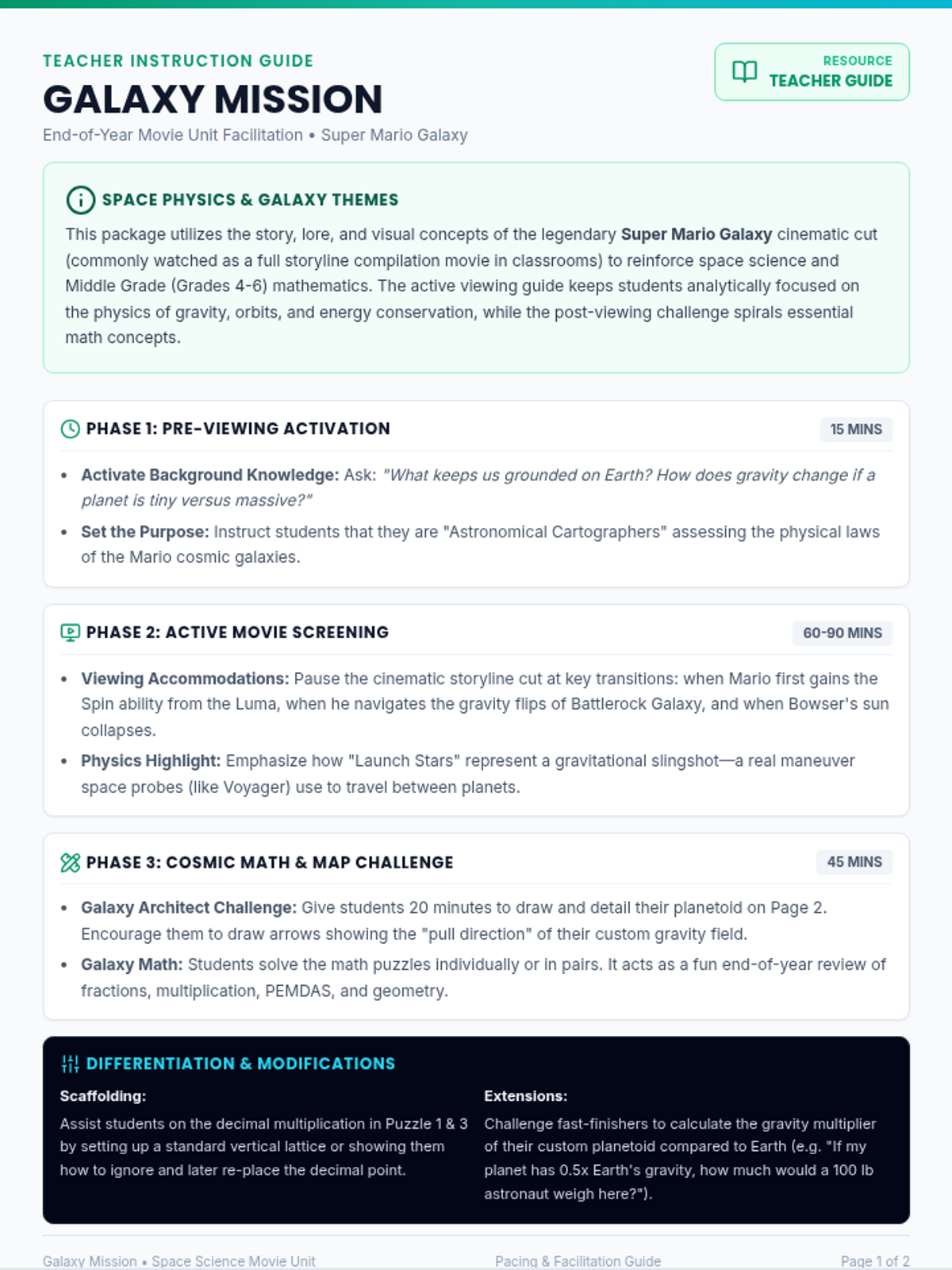
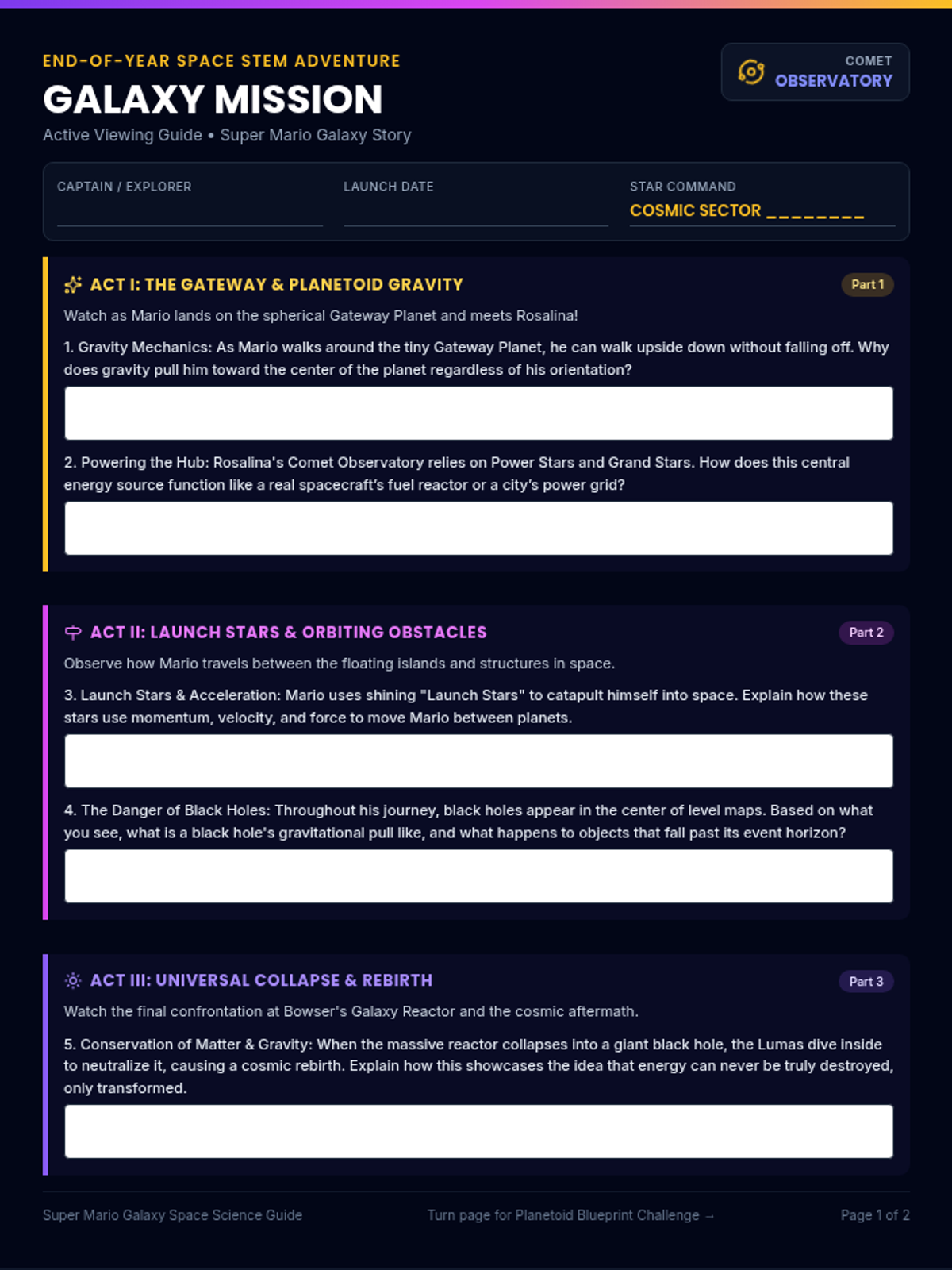
A 2-page active viewing and creative space-science guide based on the story of Super Mario Galaxy. Students explore gravity, orbits, energy transfer, and black holes, followed by designing and mapping their own gravitational planetoid.
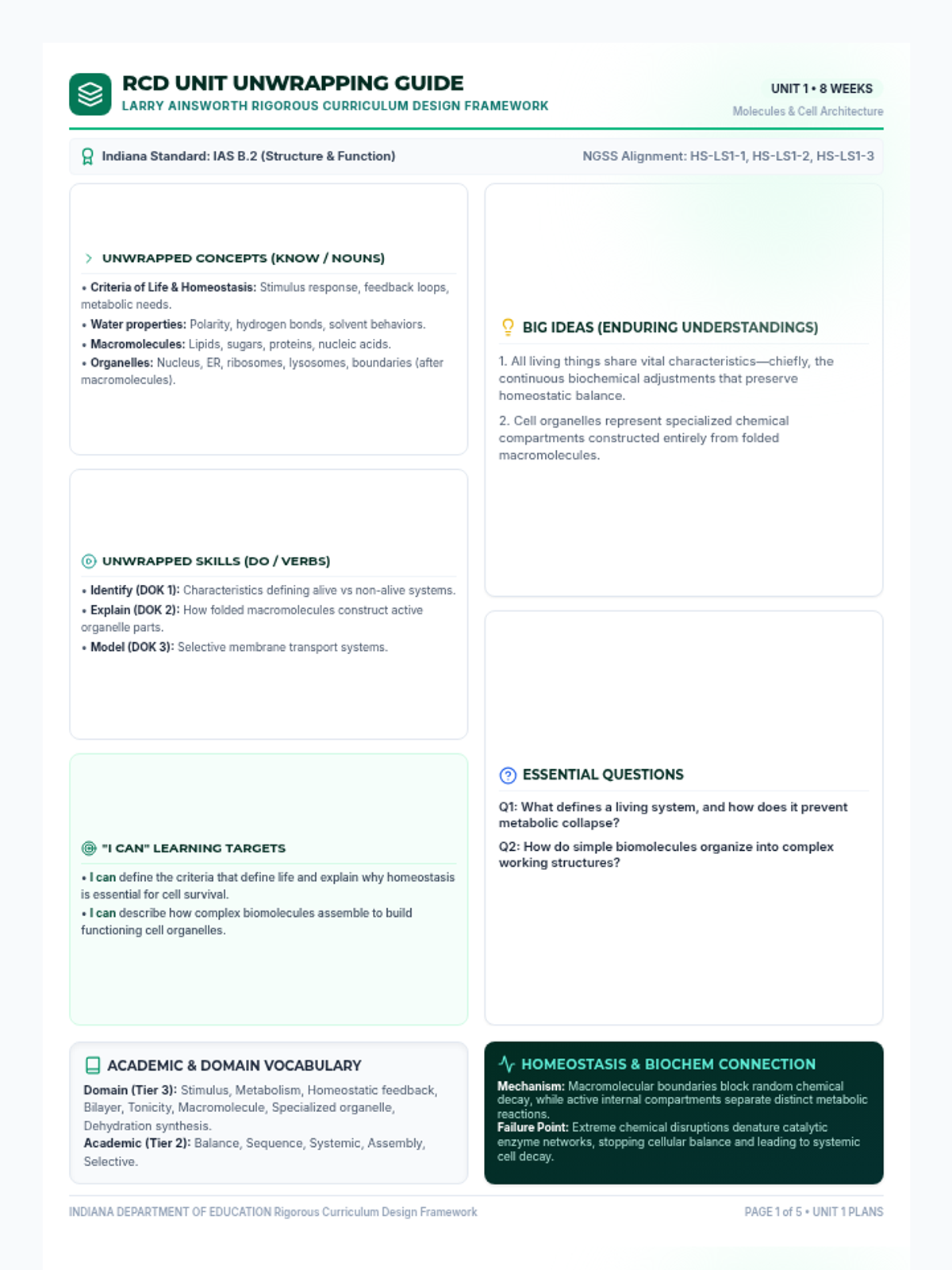
A set of five Larry Ainsworth RCD style unit unwrapping guides mapping Big Ideas, Essential Questions, Nouns/Verbs (Know/Do), vocabulary, and Indiana Biology Standards for all units.
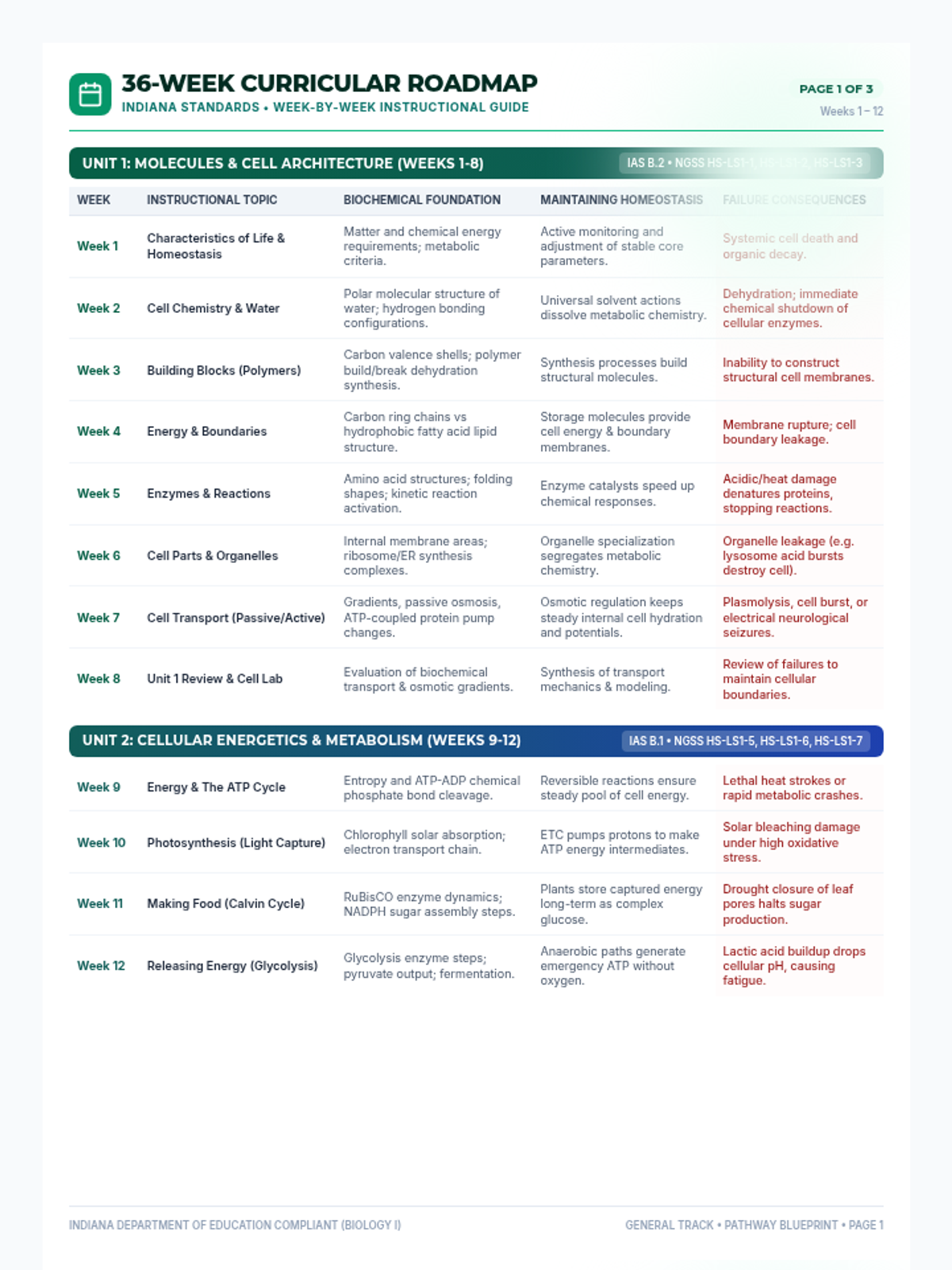
A highly structured week-by-week curriculum roadmap detailing all 36 weeks of General Biology, aligned with Indiana Standards and highlighting biochemistry and homeostasis mechanisms.
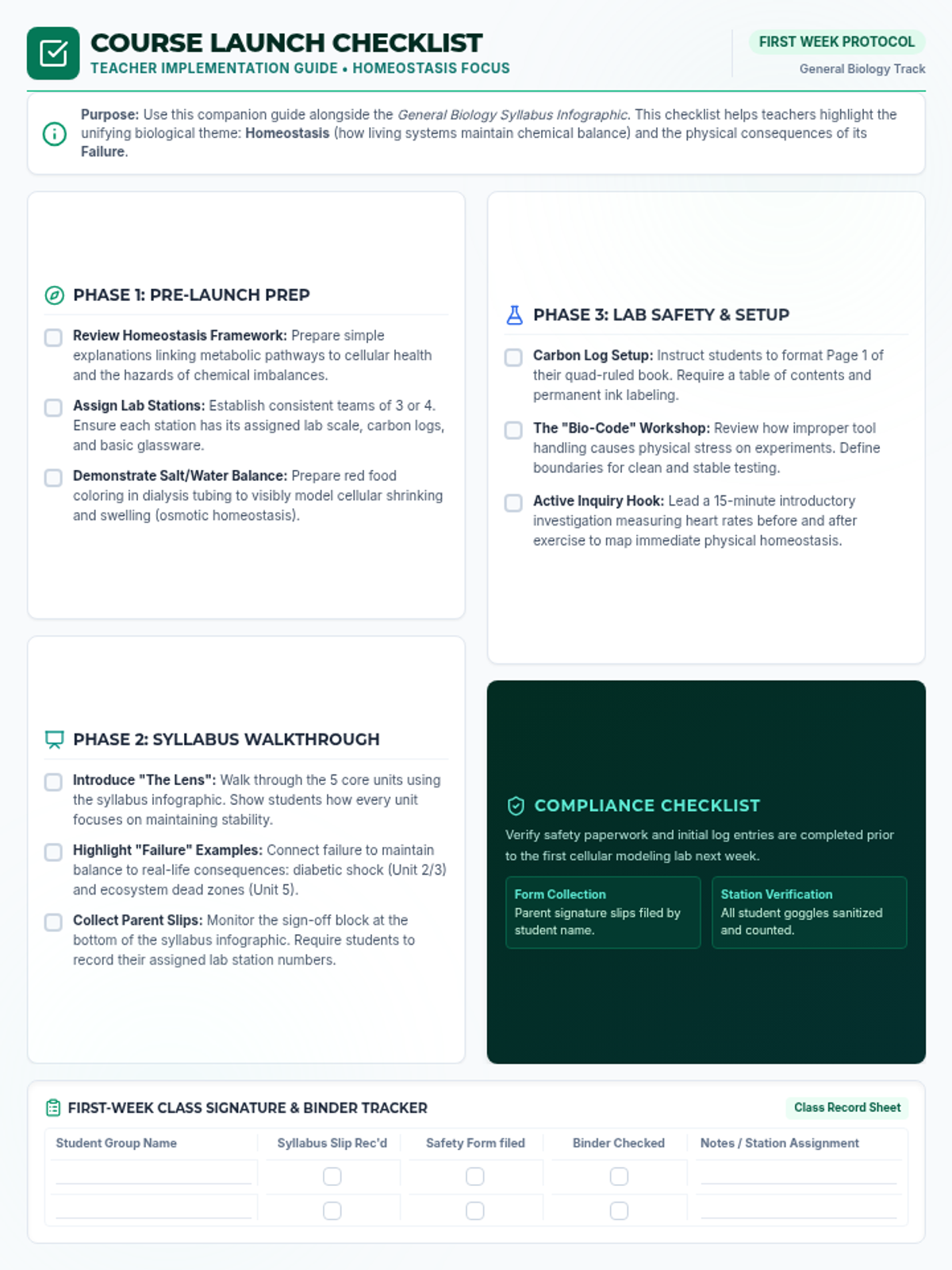
A checklist teacher guide to align first-week classroom logistics, lab safety setups, and Indiana biochemistry integration milestones for General Biology.
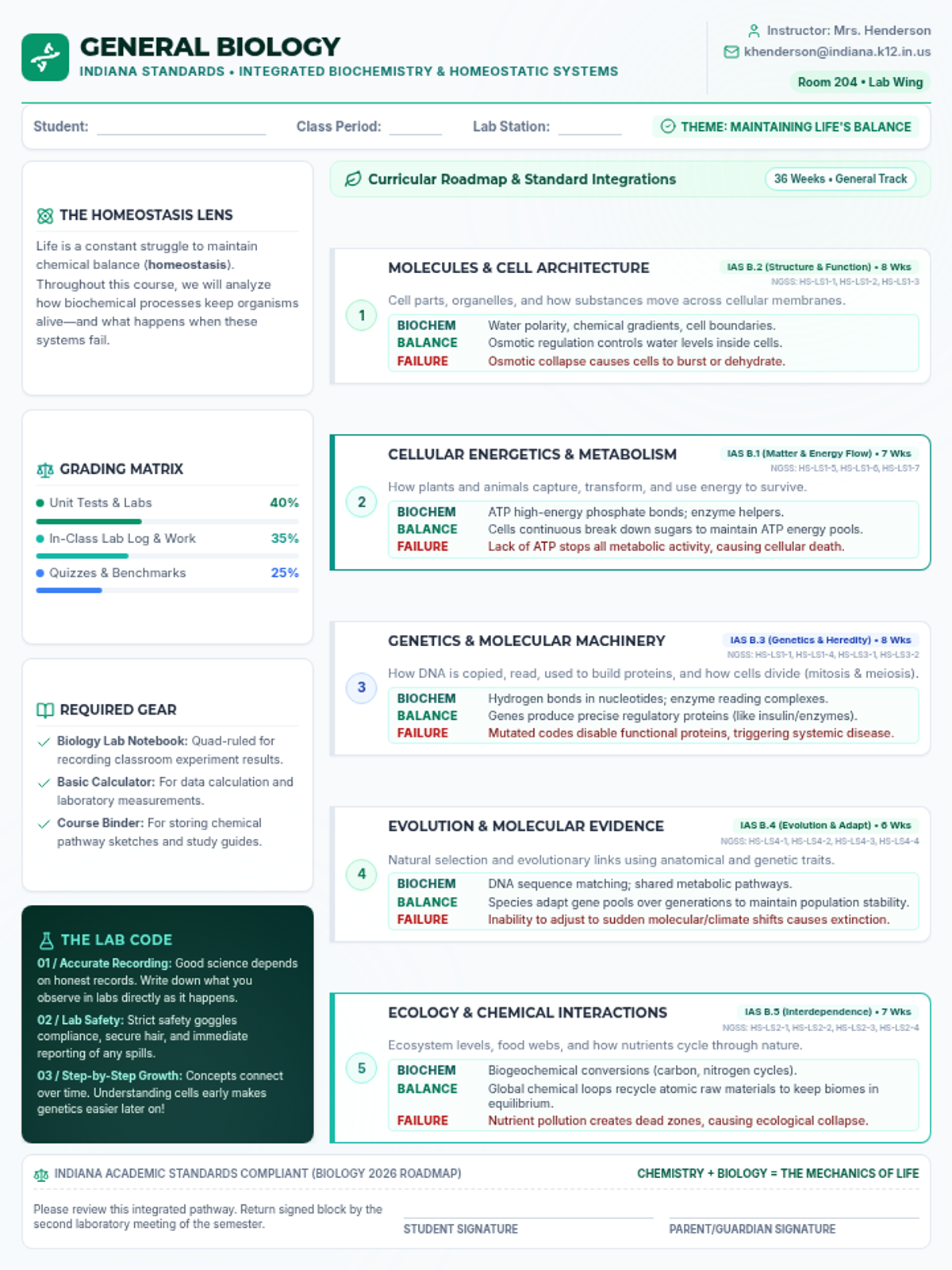
A visual one-pager syllabus infographic integrating Indiana Biology standards with foundational biochemistry concepts for each units, featuring course policies and grading breakdown.
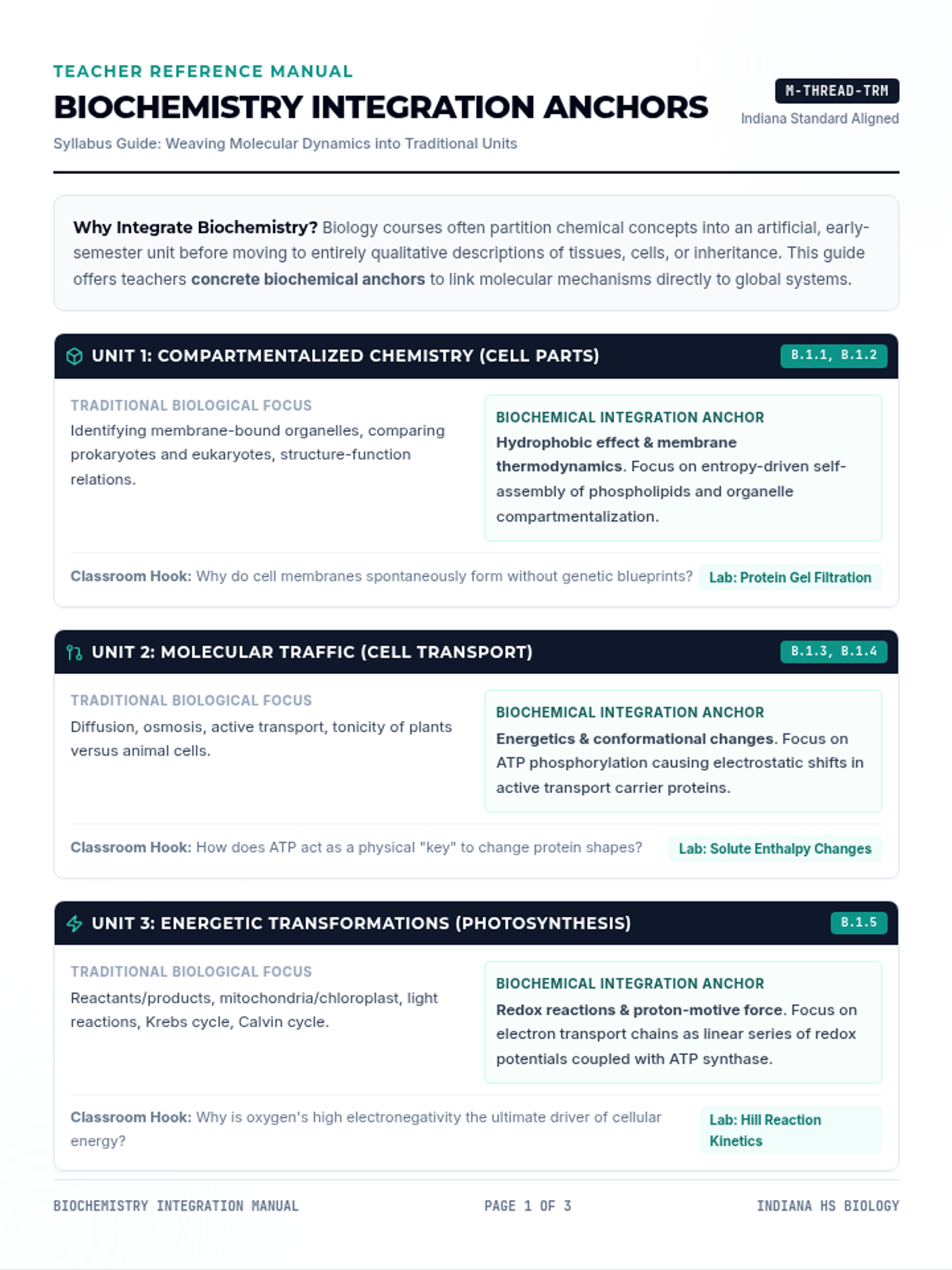
A comprehensive teacher guide/curriculum map detailing the specific biochemical concepts, molecular mechanisms, chemical "anchors", laboratory investigations, and classroom activities that bridge biochemistry with cell structures, genetics, evolution, and ecology.
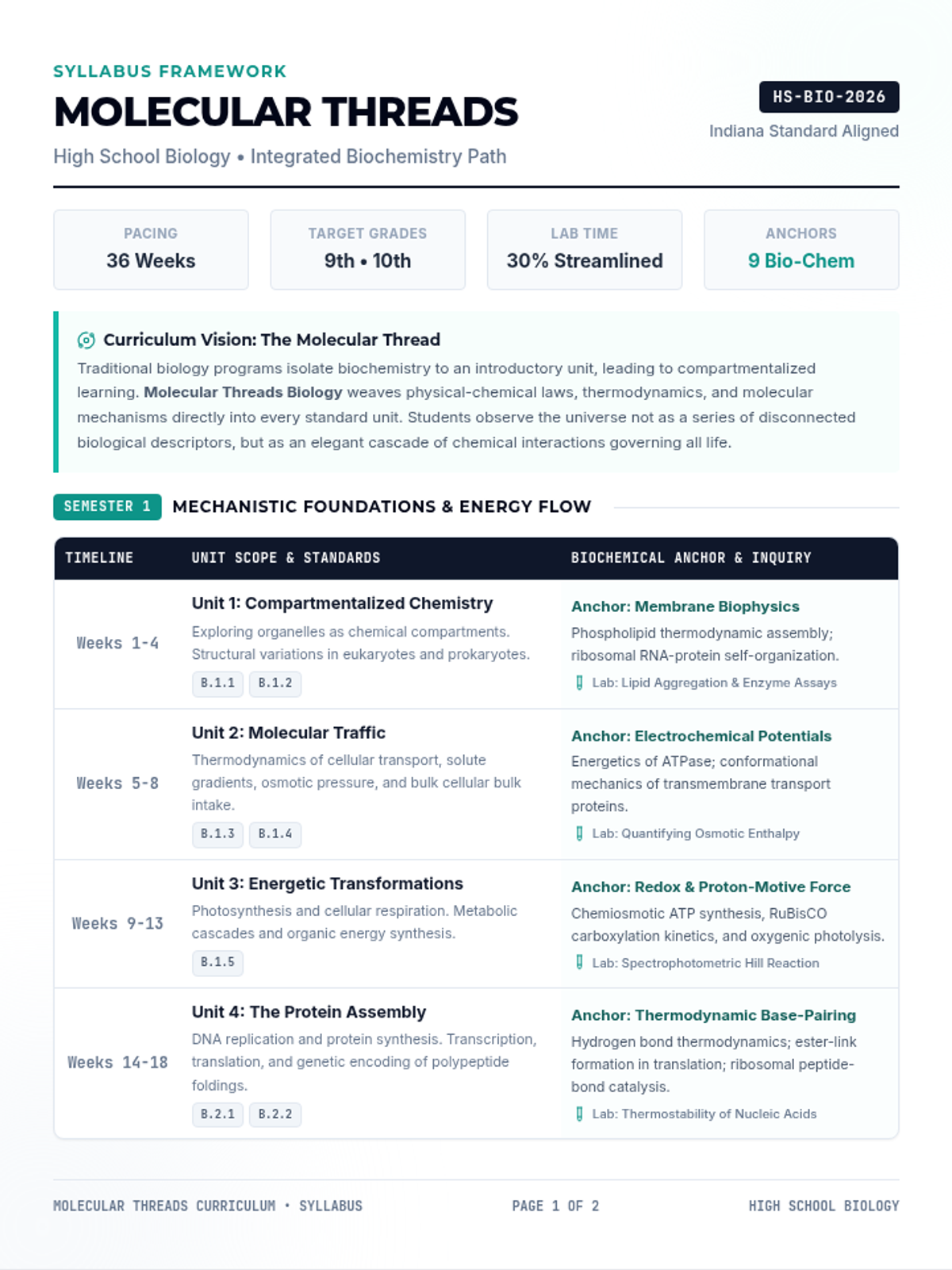
A comprehensive high school biology syllabus fully aligned to Indiana Academic Standards, mapping out a 36-week schedule across 9 units with detailed biochemistry integration anchors and inquiry-based laboratory focus areas.
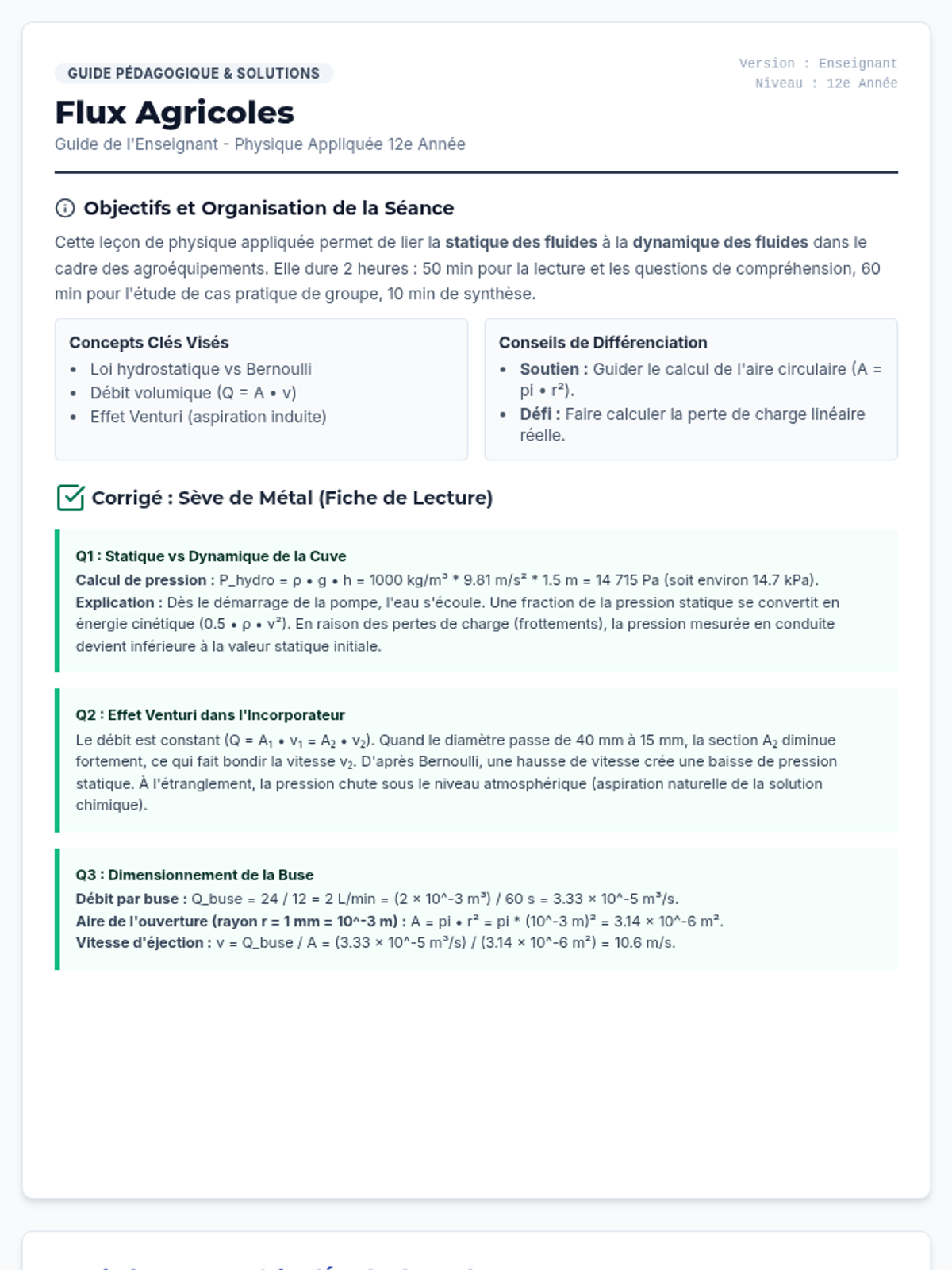
Un guide pédagogique détaillé destiné à l'enseignant pour la leçon de dynamique des fluides agricoles. Il présente les objectifs d'apprentissage, le déroulement de la séance, ainsi que les corrigés complets avec calculs détaillés pour la fiche de lecture et l'étude de cas sans notations LaTeX complexes.