A visual presentation introducing students to Compare & Contrast and Cause & Effect text structures with signal words, graphic organizers, and practice examples.
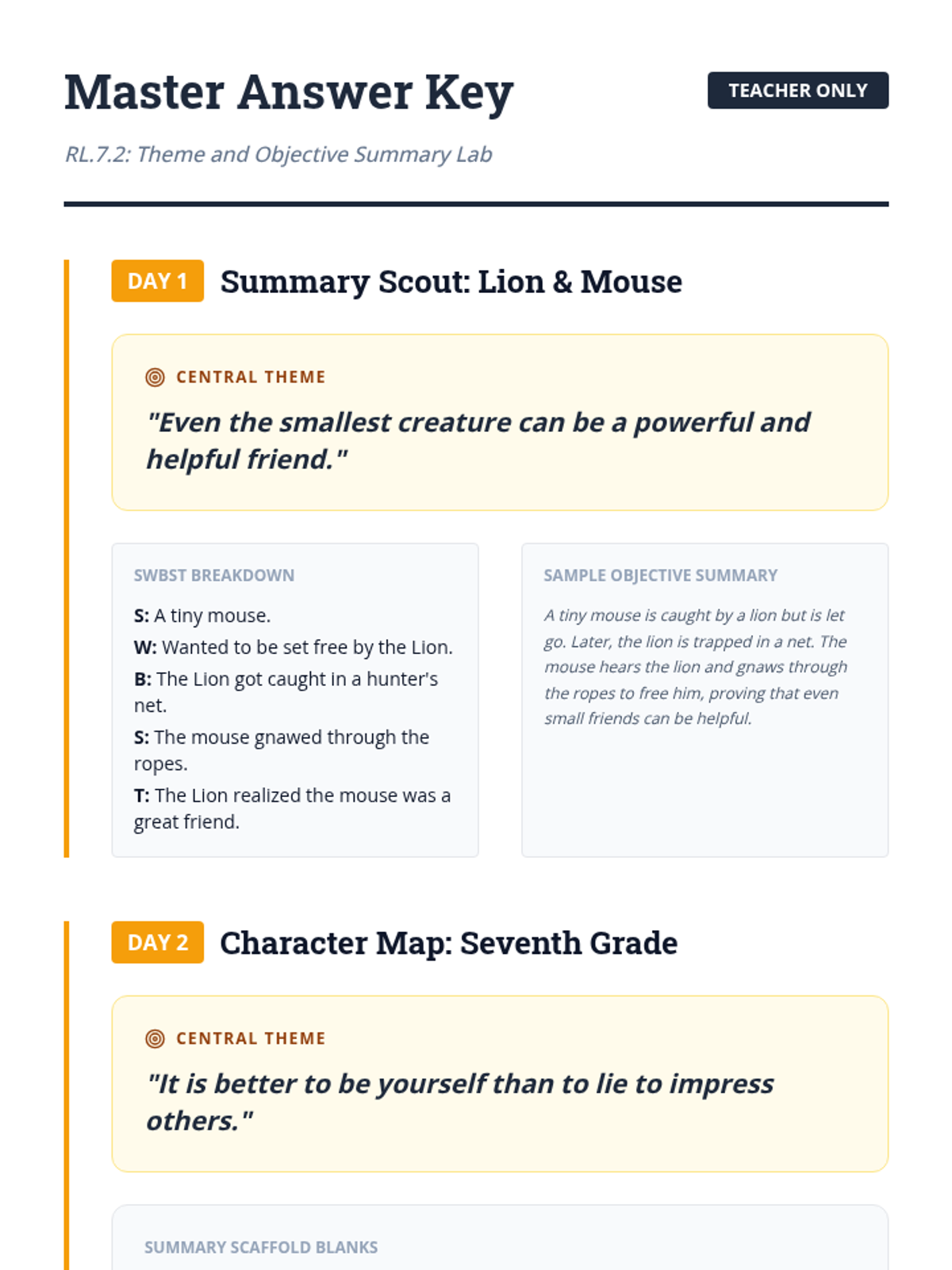
A comprehensive answer key and teacher resource for the 3-day RL.7.2 unit. Includes correct answers for multiple-choice questions, sample SWBST summaries, and detailed explanations for why certain options are 'subjective' to help teachers explain misconceptions during small group sessions.
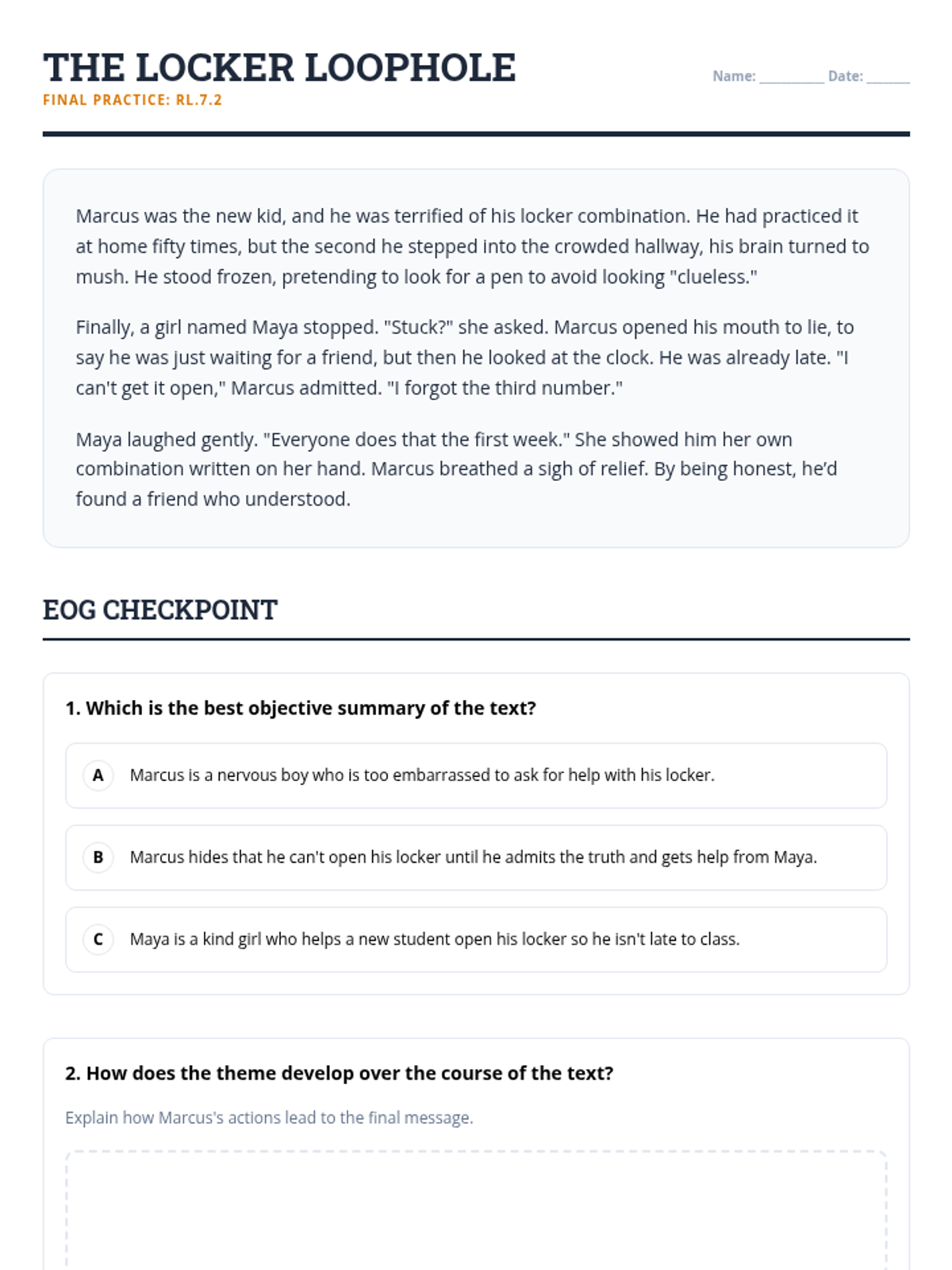
An EOG-style reading assessment for the final day of the reading unit. Features an original realistic fiction passage about school struggles, multiple-choice questions focusing on objective summary and theme development, and a final theme-writing task. Includes visual scaffolds for test-taking strategies.
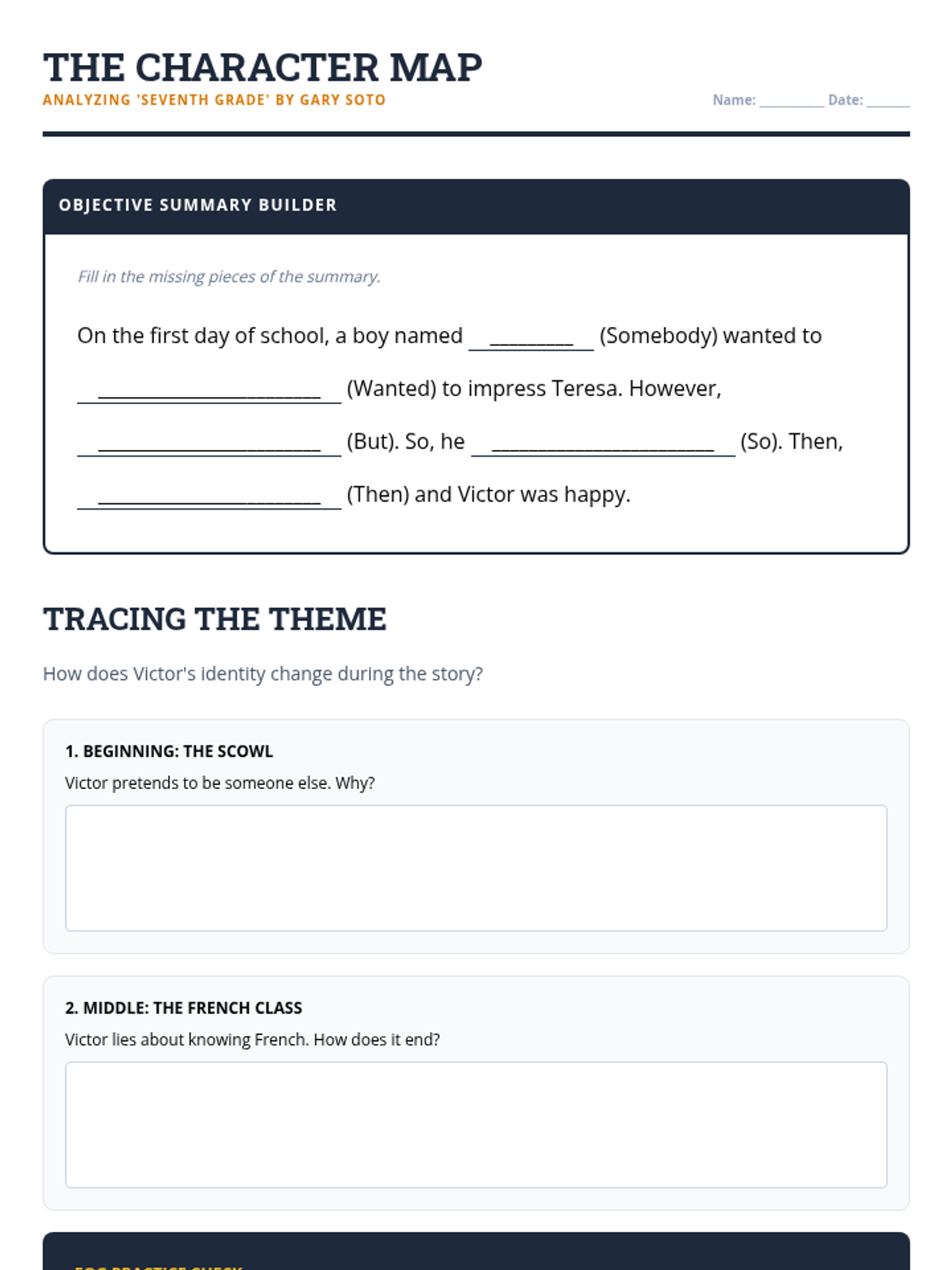
A focused character and theme analysis sheet for Gary Soto's 'Seventh Grade'. Includes a fill-in-the-blank SWBST summary scaffold to support special education students in objective writing, and a three-step theme development tracker. Ends with an EOG-style multiple choice question on objective vs. subjective writing.
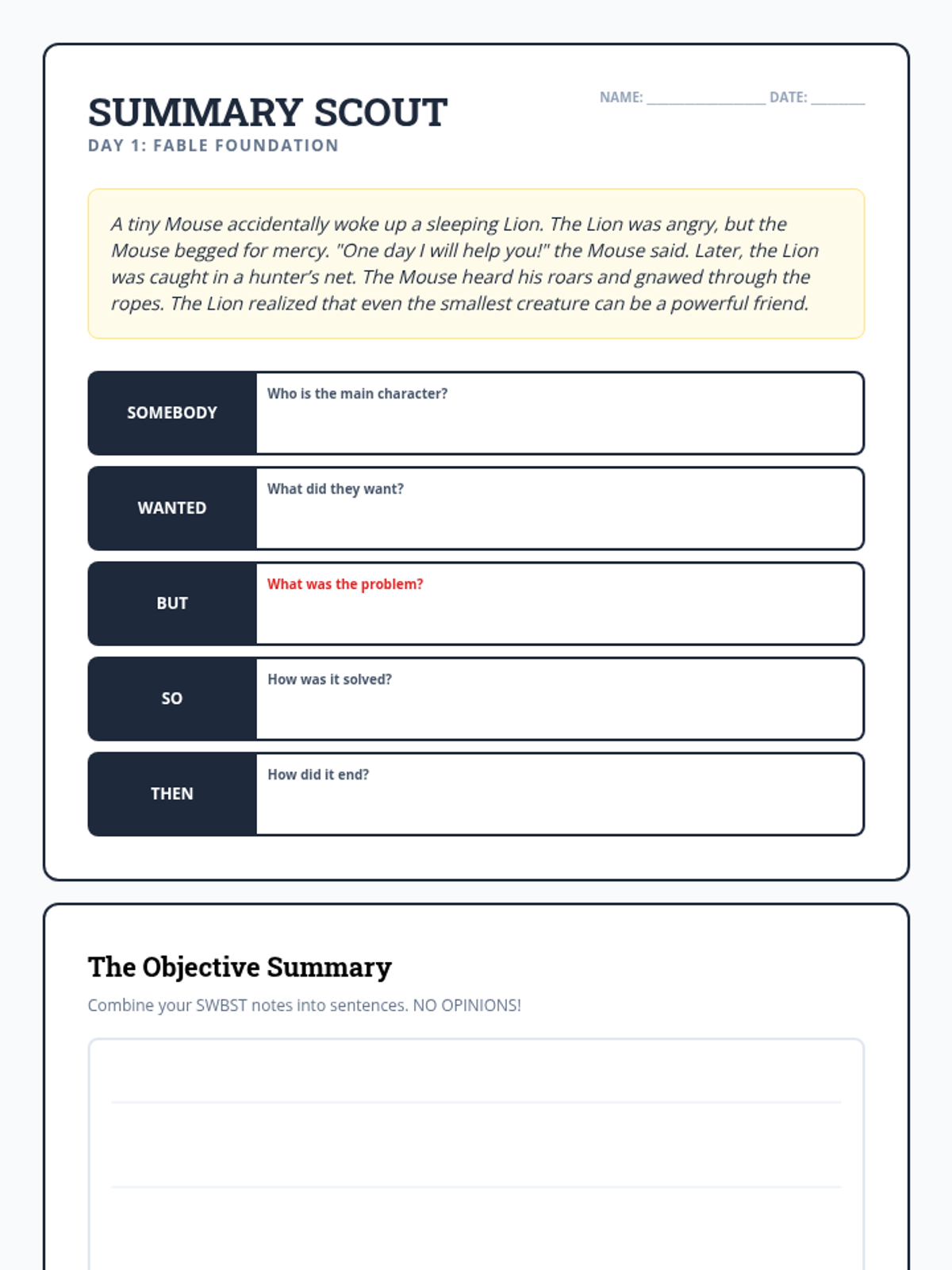
A heavily scaffolded worksheet for Day 1 of the RL.7.2 unit. Includes the text of 'The Lion and the Mouse', a structured SWBST (Somebody Wanted But So Then) graphic organizer for objective summaries, and a step-by-step theme tracker to help students bridge the gap between topic and message.
A visually engaging slide deck designed for small-group instruction. It covers the definitions of theme vs. topic, the SWBST summary strategy, and how theme develops through character actions, specifically using examples from Gary Soto's 'Seventh Grade'. Includes EOG-specific test-taking strategies for SpEd students.
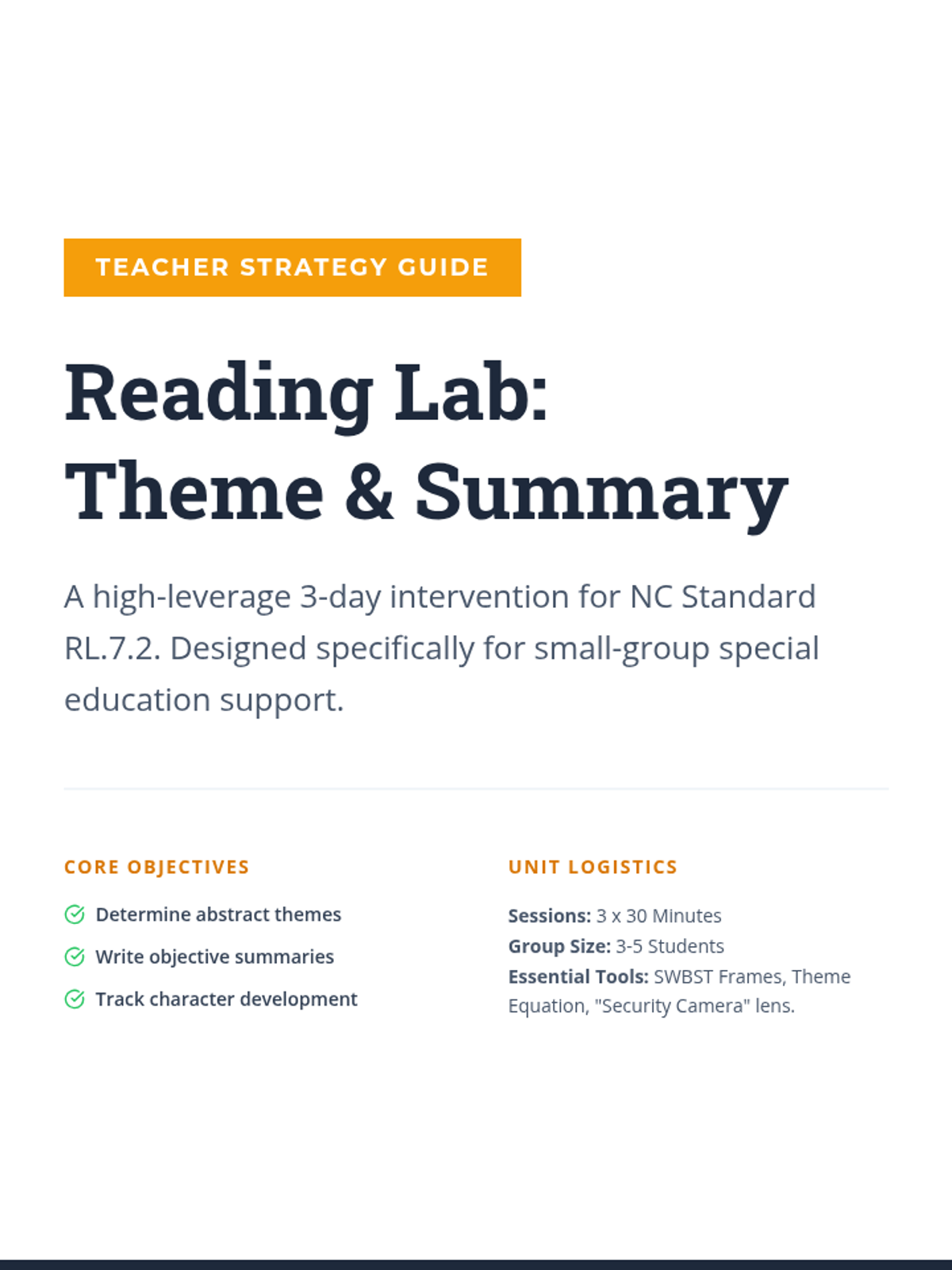
A comprehensive teacher's guide for a 3-day small-group reading intervention focusing on RL.7.2. Includes daily pacing, key scaffolding strategies for special education, and specific instructional moves for the selected texts.
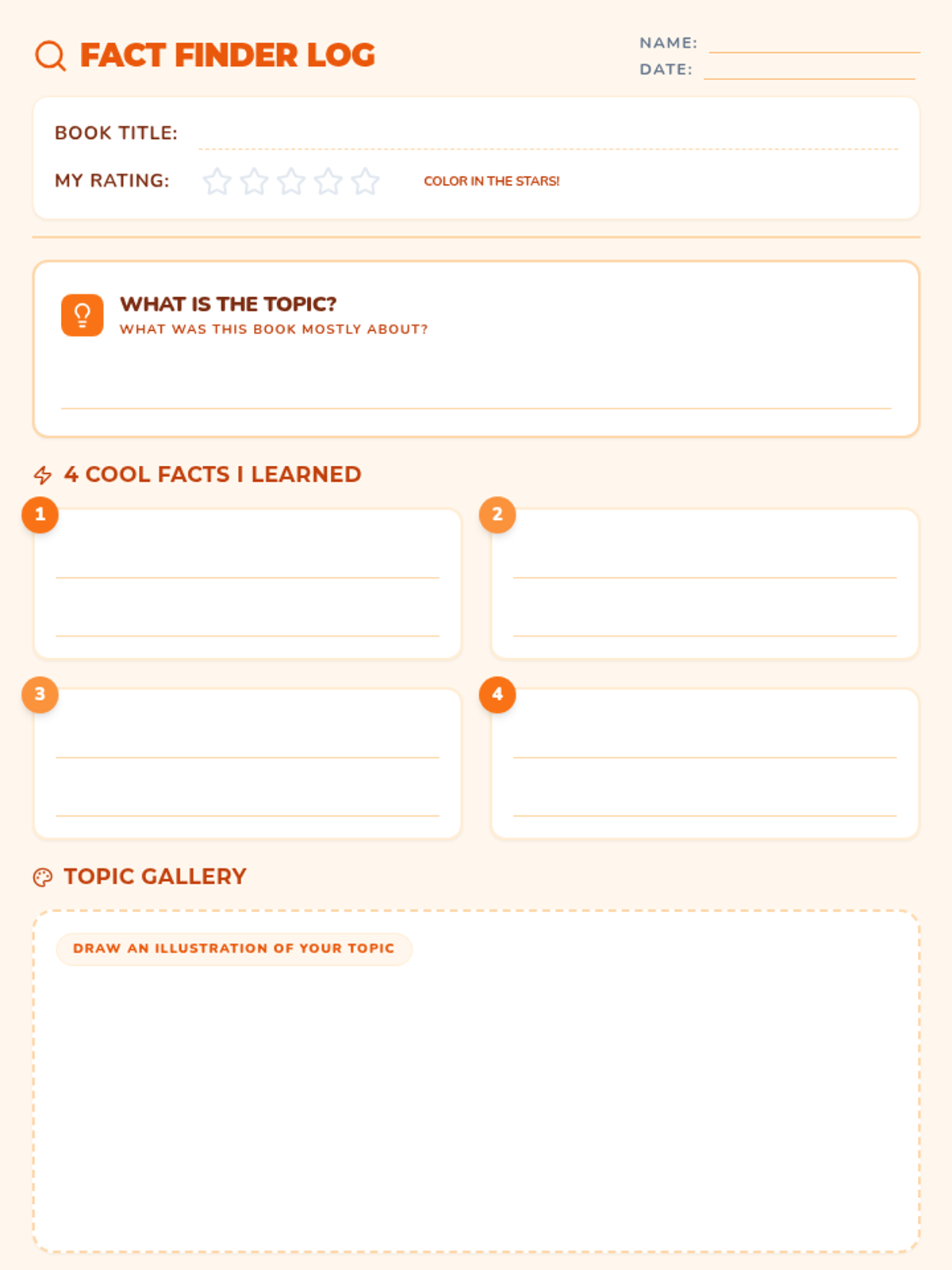
A dynamic nonfiction book report template focused on information gathering, featuring a topic identification section, space for four distinct facts, a 5-star rating scale, and a large illustration area for visualizing the subject.
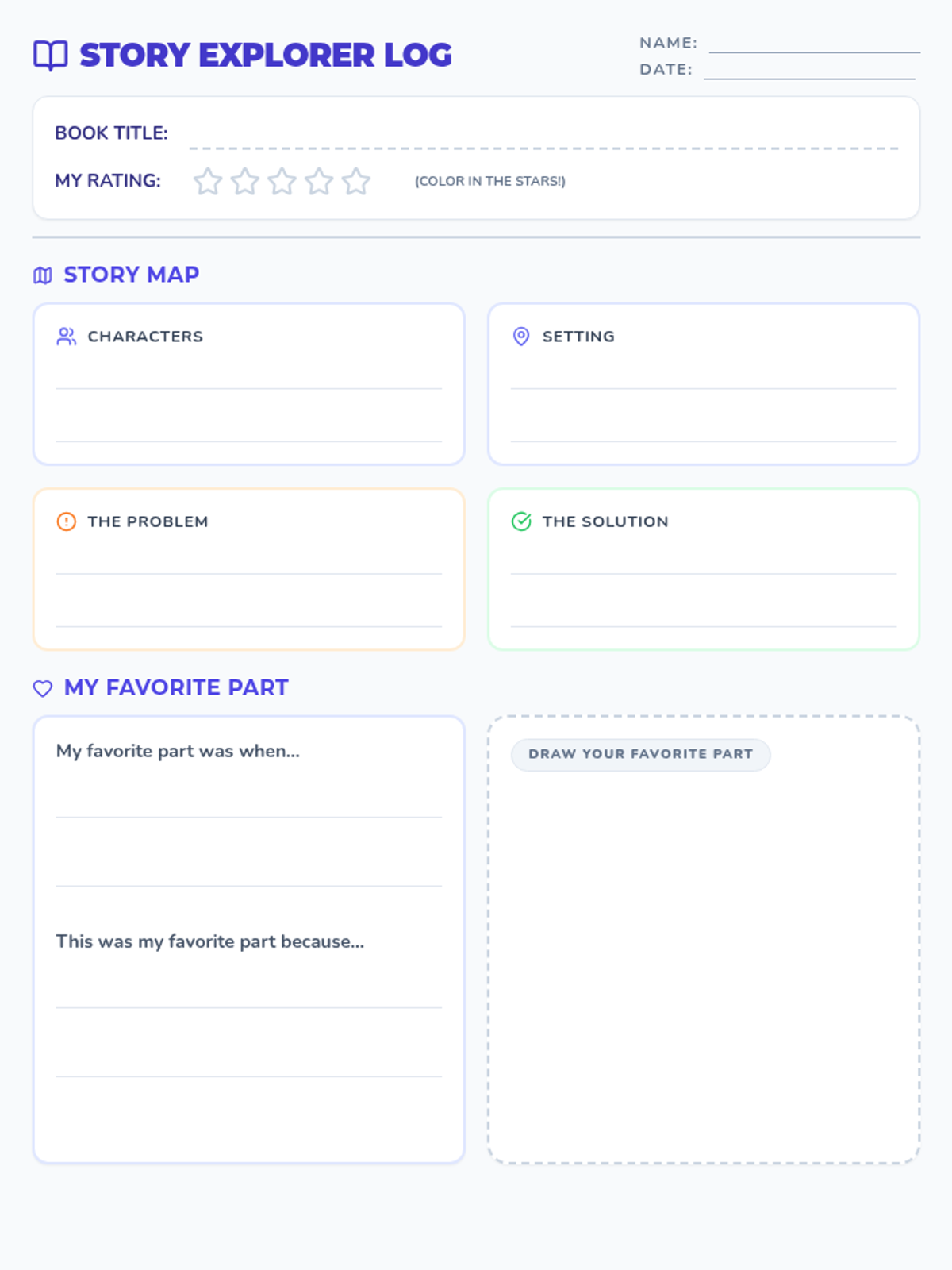
An engaging fiction book report template featuring sections for story structure (characters, setting, problem, solution), a 5-star rating system, and a creative space for students to write about and illustrate their favorite part of the story.
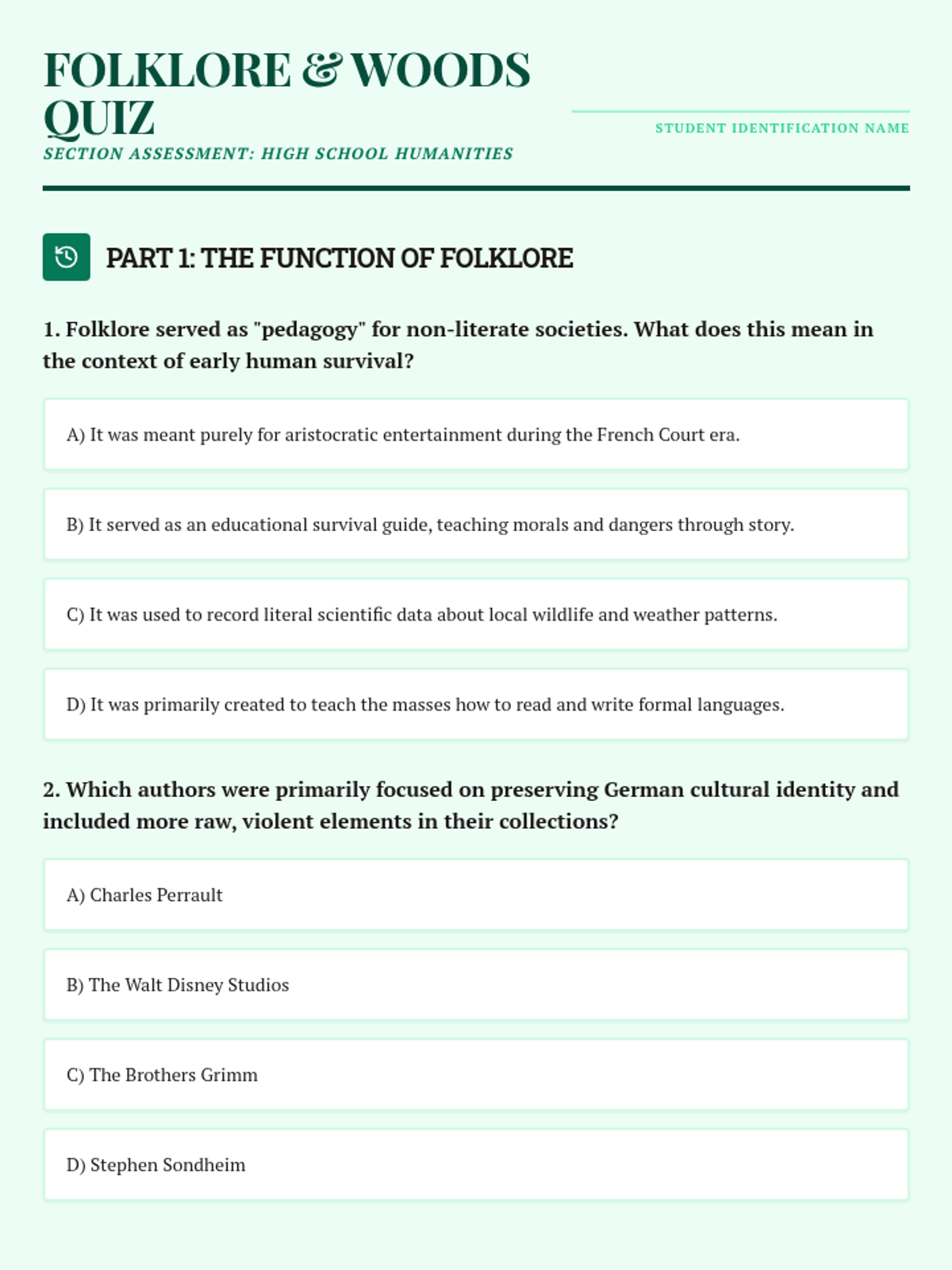
A high-school level quiz covering the purpose of folklore, literary history (Perrault/Grimm), and thematic subversion in 'Into the Woods'.
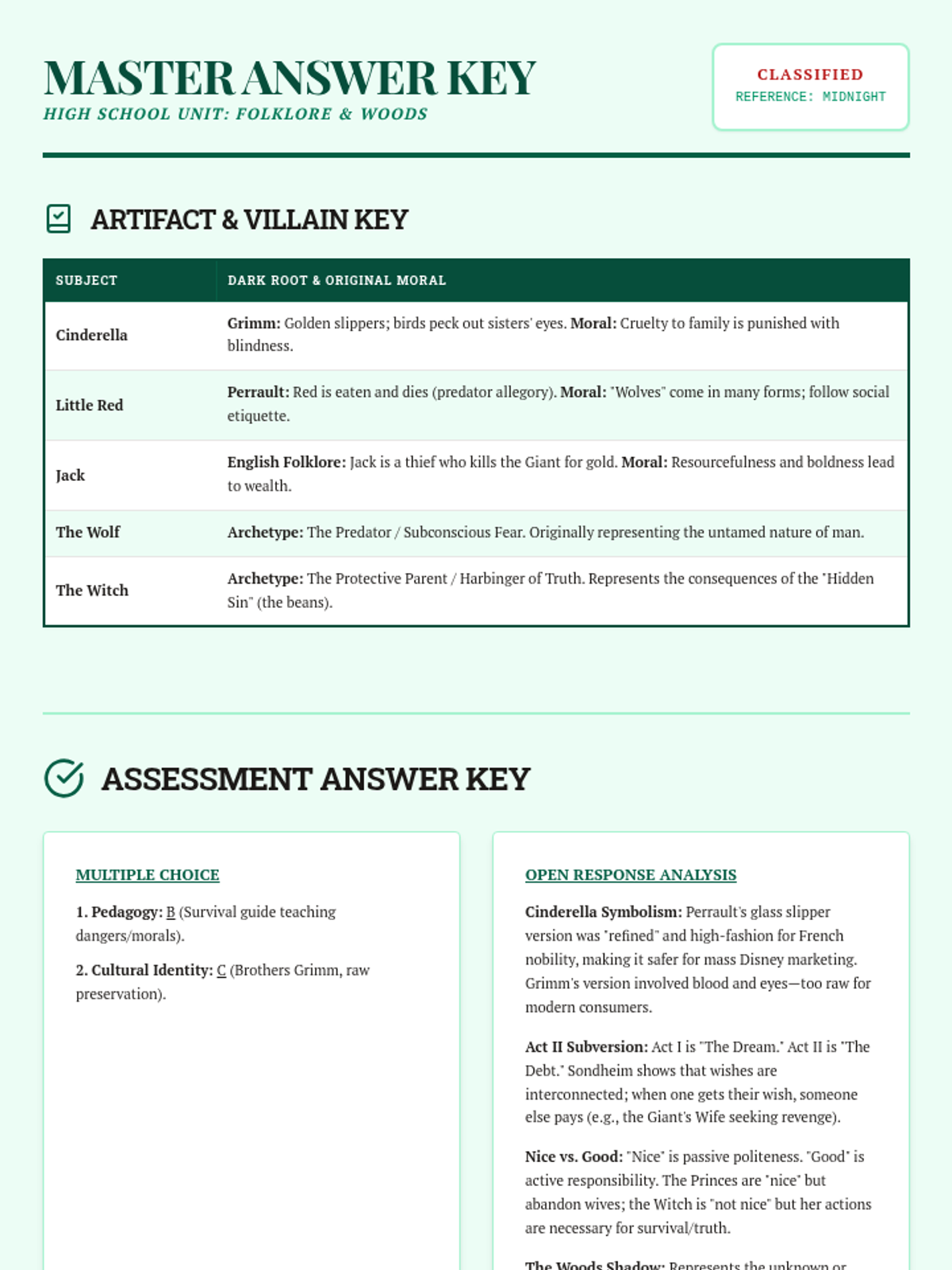
A comprehensive answer key for the high-school folklore unit, including character origins, literary history, and assessment answers.
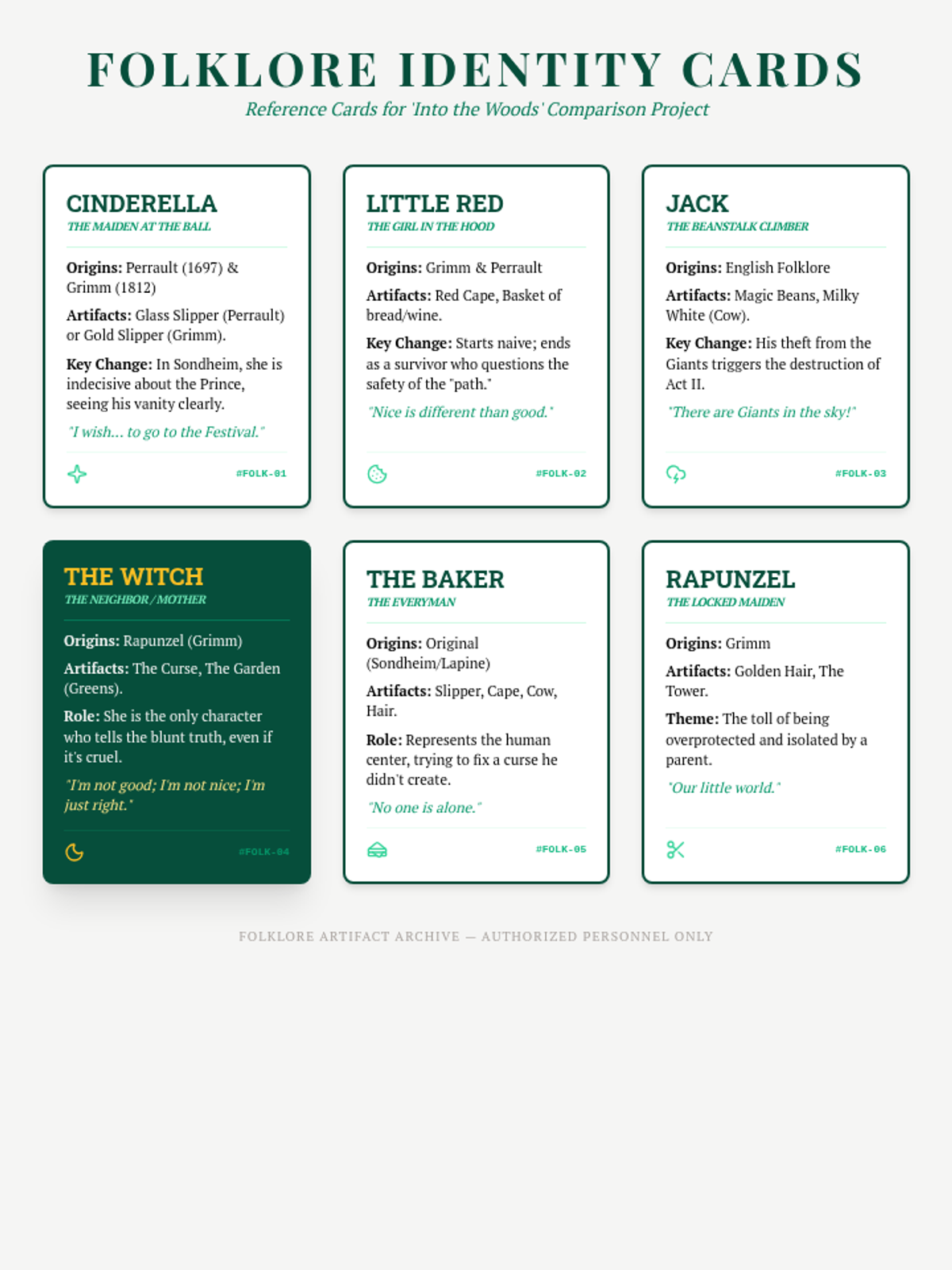
A set of reference cards for 'Into the Woods' characters, including their folklore origins, artifacts, and key changes in the musical adaptation.
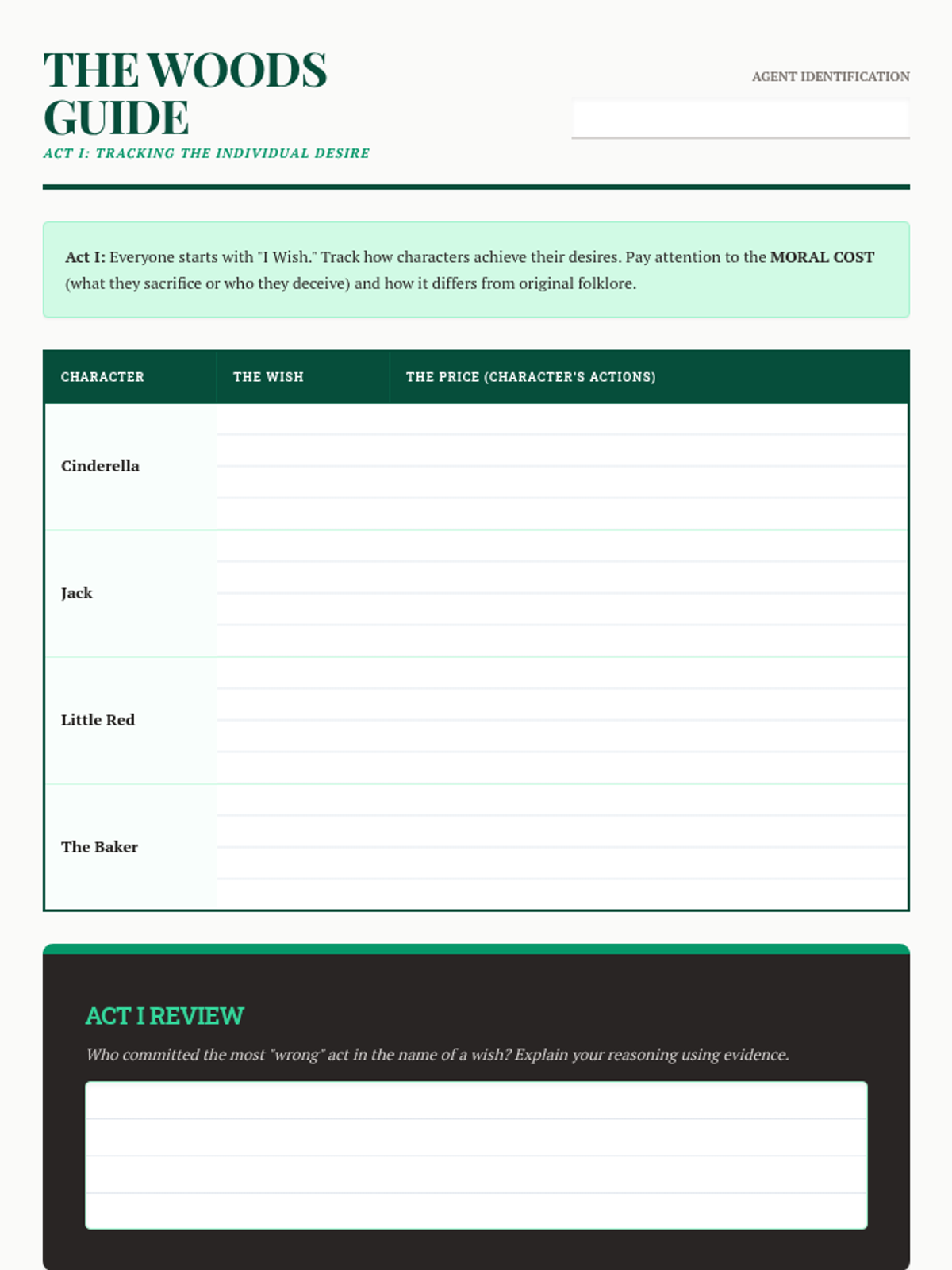
A detailed watching guide for 'Into the Woods' that tracks character wishes in Act I and their consequences in Act II.
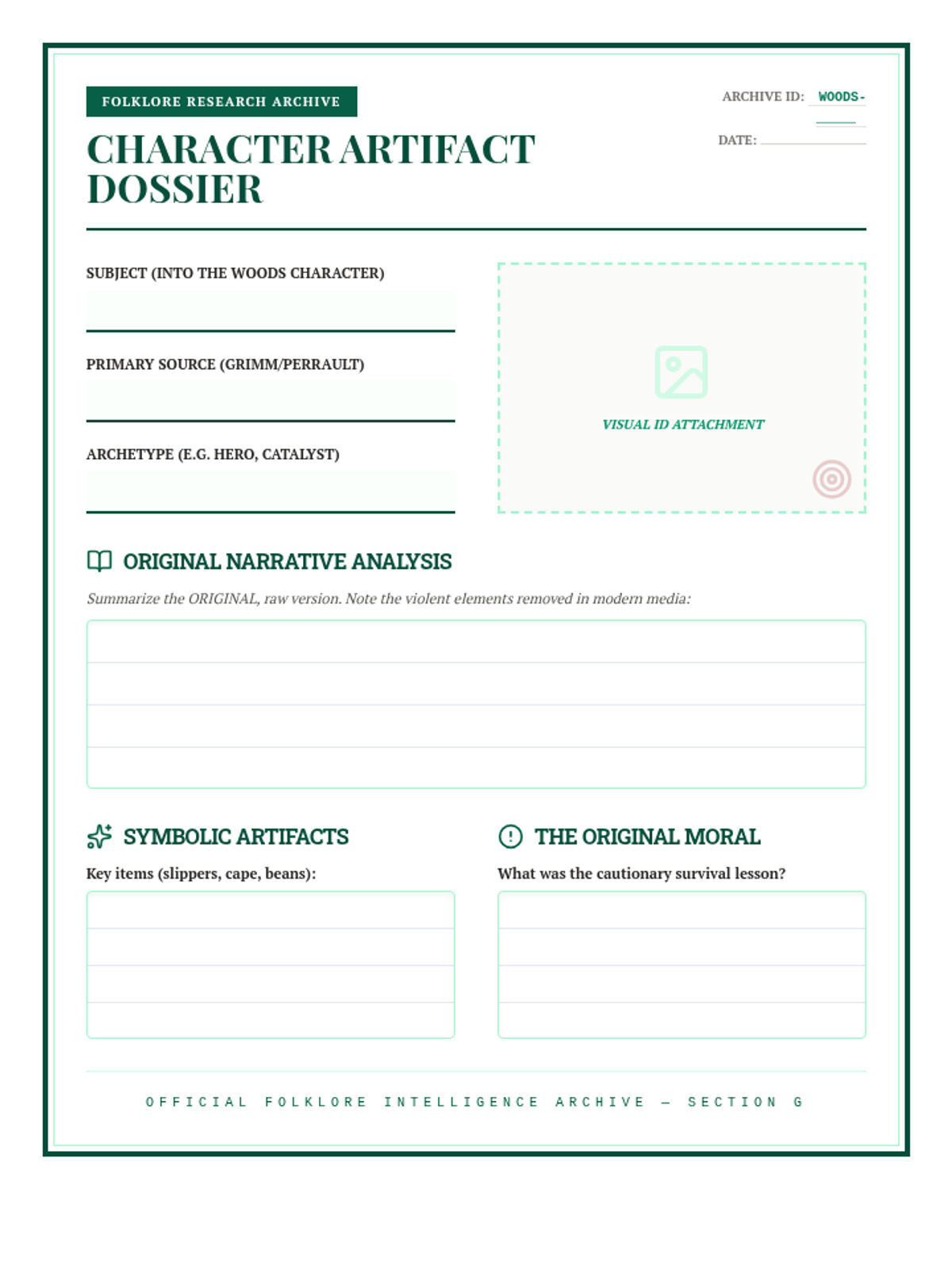
A research worksheet for students to document the original versions of fairytale characters, their attributes, and their cultural endurance.
High-school introductory slides for the 'Into the Woods' folklore project, exploring the purpose of stories, literary history, and Sondheim's deconstruction.
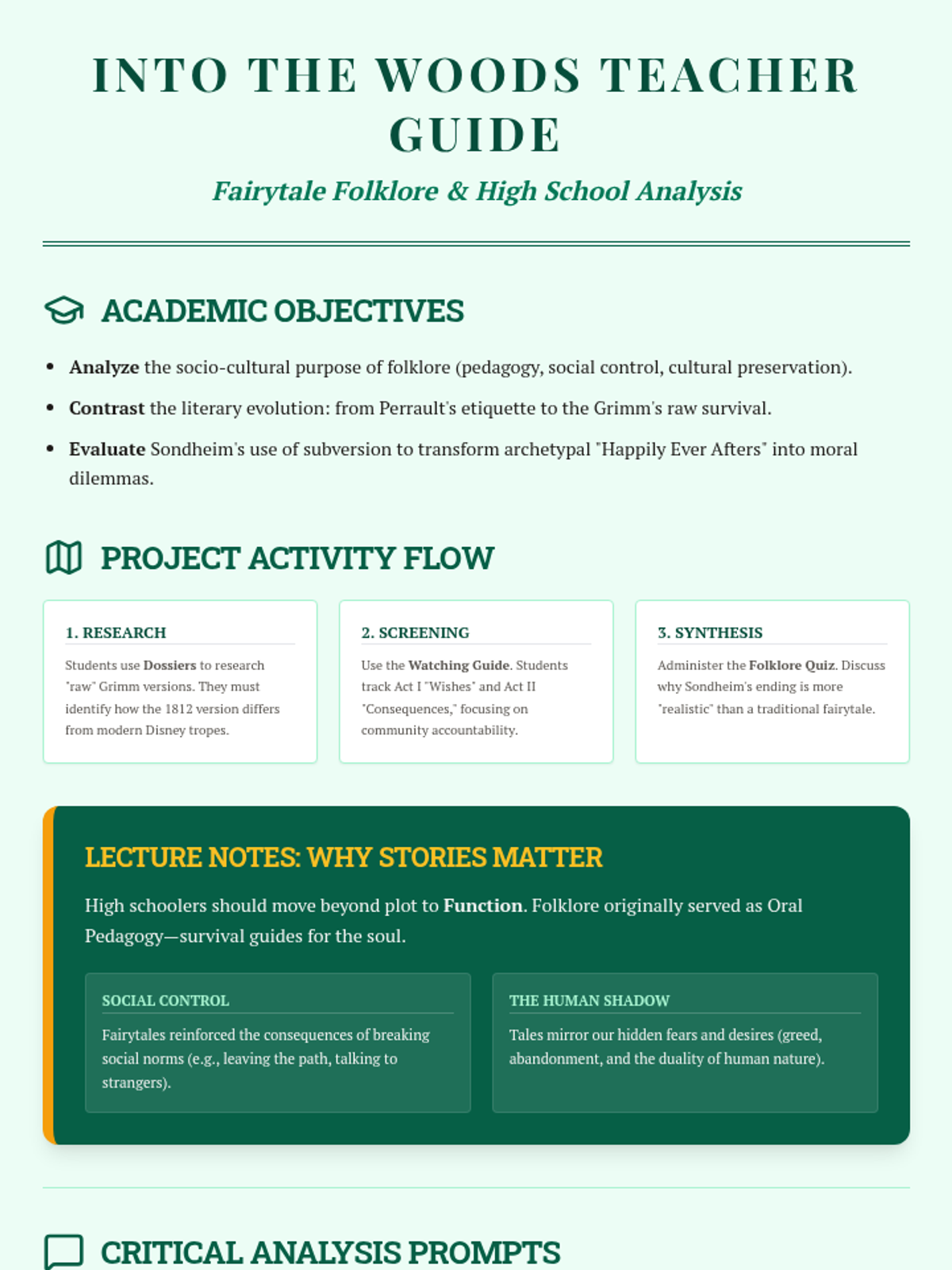
A high-school level teacher facilitation guide for the 'Into the Woods' folklore project, focusing on cultural value, literary history, and thematic analysis.
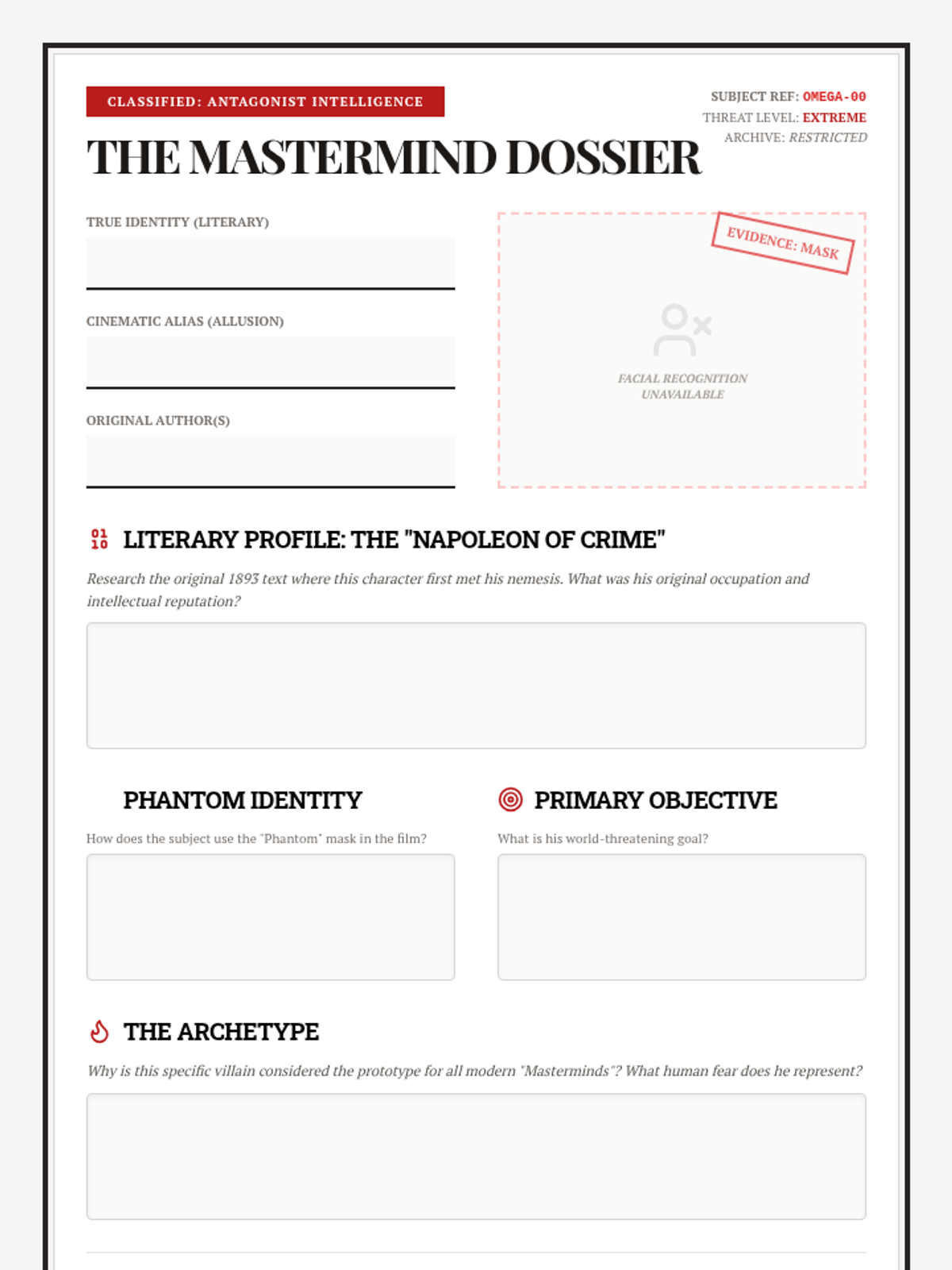
A specialized research dossier for the film's main antagonist, focusing on Professor Moriarty's literary origins and his 'Phantom' dual identity.
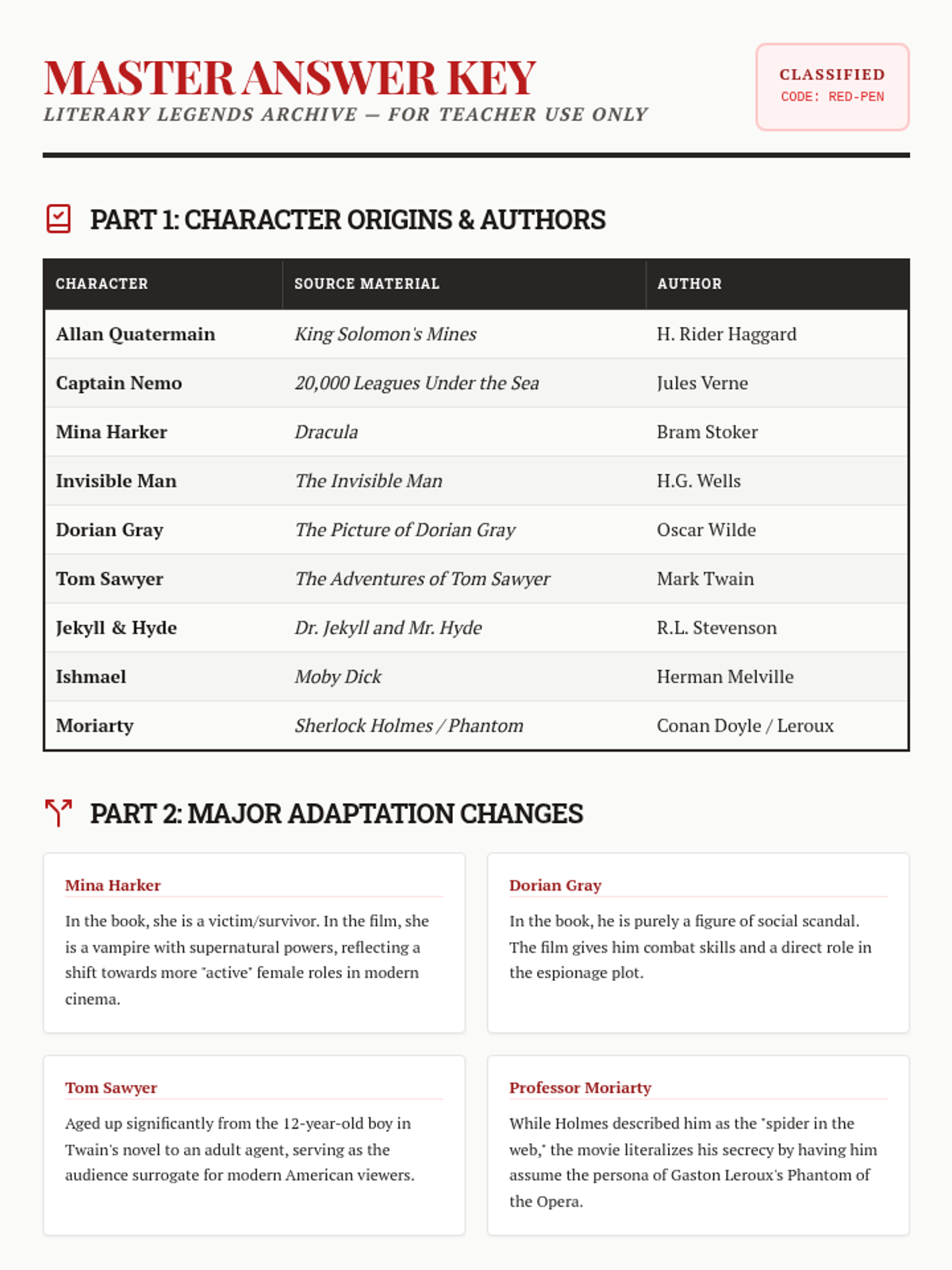
A comprehensive answer key for teachers, including character origins, adaptation differences, and explanations for the film's literary idioms and allusions.
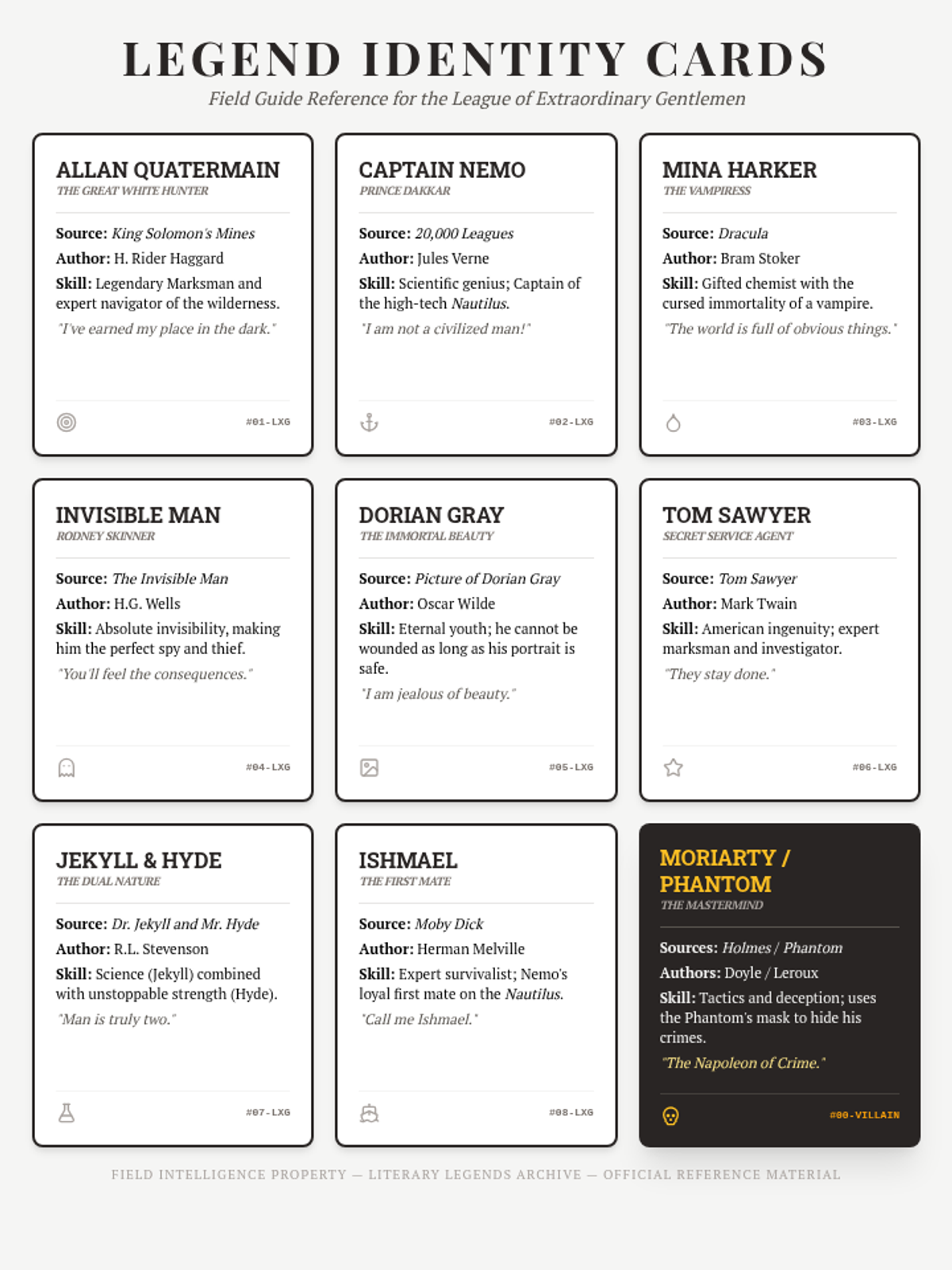
A set of reference cards for the main characters, including their literary origins, authors, skills, and key quotes.
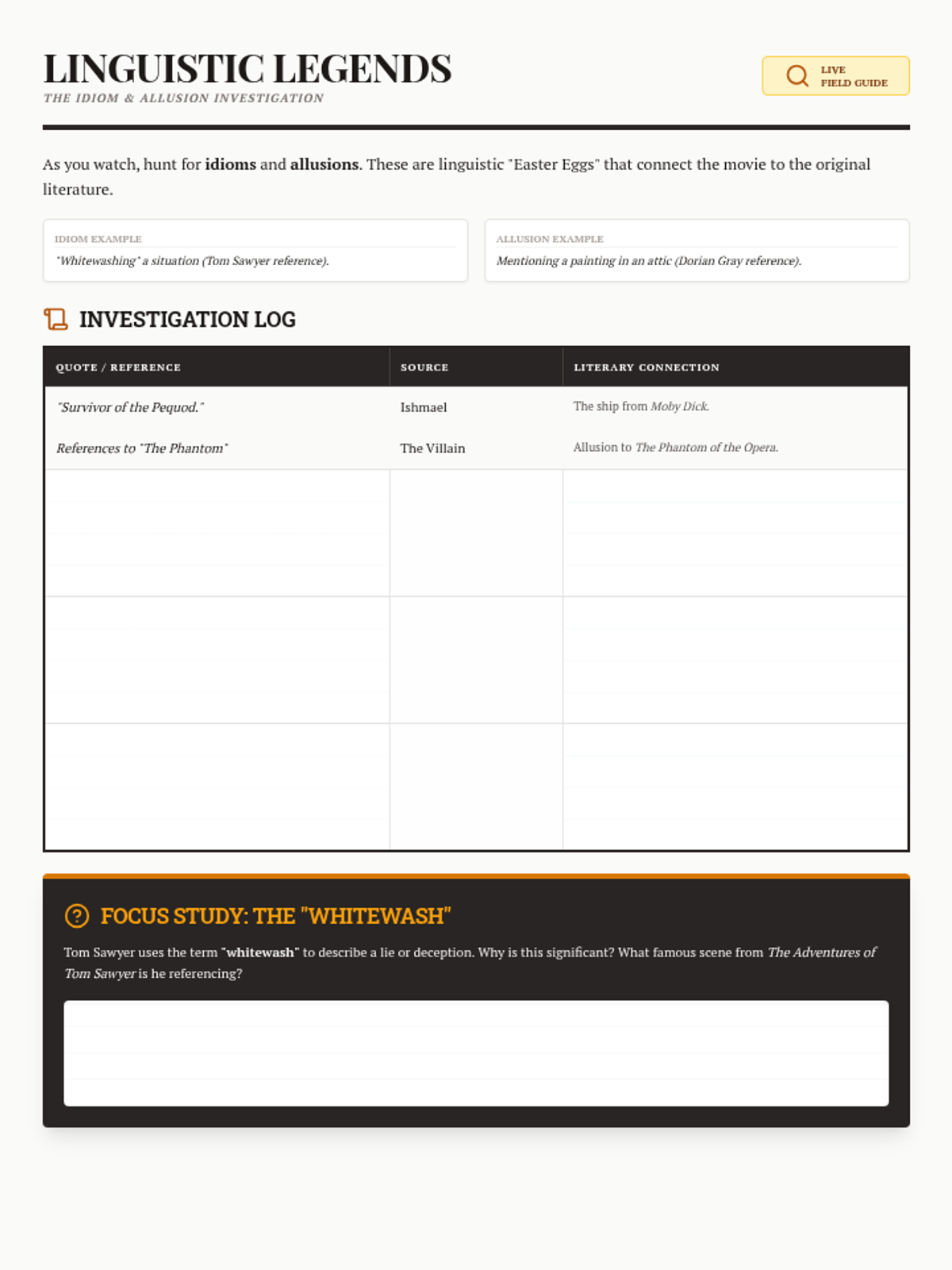
A watching guide focused on identifying literary idioms and allusions used by the characters throughout the film.